
Submitted:
15 April 2026
Posted:
16 April 2026
You are already at the latest version
Abstract
Improving regional environmental performance is crucial for strengthening environmental governance. Polycentric governance theory, which emphasizes the interaction of multiple actors—including market, government, and society—within rule-based constraints, provides an essential framework for understanding the mechanisms that shape environmental performance in complex institutional contexts. This paper, set within the context of China’s environmental governance, applies polycentric governance theory to develop a three-dimensional analytical framework of "economic pressure–government attention–social supervision." Using panel data from 30 Chinese provinces between 2015 and 2023, the study employs dynamic Qualitative Comparative Analysis (dynamic QCA) to examine the asymmetric impacts of various governance factors on regional environmental performance and their dynamic evolutionary mechanisms. The study finds that: (1) no single factor is necessary for either high or low environmental performance; (2) six configurational paths for achieving high environmental performance are identified, categorized into three types: "industry structure-driven," "multi-dimensional collaboration-driven," and "economic output–social media opinion dual-driven"; (3) these paths remain relatively stable over time but exhibit periodic fluctuations, with a clear evolution point around 2021; (4) these pathways show significant spatial differentiation. This study uncovers the multi-dimensional driving mechanisms behind improvements in regional environmental performance, offering both theoretical insights and practical guidance for local governments to develop differentiated environmental governance strategies tailored to regional contexts.
Keywords:
polycentric governance
; regional environmental performance
; dynamic QCA
1. Introduction
Amid escalating global climate change and increasingly stringent resource and environmental constraints, achieving a balance between economic development and ecological protection has become a central challenge in sustainable development. In contrast to general environmental issues, China’s ecological and environmental governance is shaped by distinct institutional drivers. Since the 18th National Congress of the Communist Party of China, the construction of ecological civilization has been incorporated into the core agenda of the national governance system, and green development has become a key component of the national development strategy. This shift has led to a series of institutional reforms, such as the implementation of the new Environmental Protection Law, the establishment of a central environmental inspection system, and the introduction of the “carbon peak and carbon neutrality” goals. These reforms have strengthened regulatory mechanisms and incentive structures, significantly altering the behavior of local governments and how market and societal actors engage in environmental governance.
As a result of sustained institutional support and policy pressure, China’s environmental governance model has evolved significantly, transitioning from a government-led, command-and-control approach to a more collaborative governance structure involving government, market, and society. In this process, environmental governance performance has shown a general improvement.However, disparities in environmental governance effectiveness persist across regions, influenced by factors such as resource endowments [1], industrial structures [2], and stages of development [3]. This suggests that under a unified institutional framework and policy constraints, the formation of environmental governance performance is not a linear process but rather a dynamic outcome shaped by the interaction of multiple conditions. Therefore, identifying the diverse pathways through which regions achieve high environmental governance performance is crucial for enhancing China’s ecological governance effectiveness and promoting regionally coordinated, sustainable development.
Theoretical frameworks based on a single actor or factor struggle to explain the variability in environmental performance across complex institutional contexts. Polycentric governance theory, as proposed by the Ostroms, emphasizes that effective governance of public affairs emerges from the coordination and collaboration of multiple governance centers, each with independent decision-making functions, while adjusting within rule-based constraints [4,5]. This perspective is particularly useful for understanding multi-actor interactions and their impact on environmental performance. When applied to environmental governance, polycentric theory highlights that regional environmental performance is the result of nonlinear interactions and synergistic matches between multiple factors, such as economic development pressure, government attention, and social supervision intensity, within specific institutional contexts.
A review of existing research reveals that most studies have explored the influencing factors of environmental governance performance from a single dimension. For example, from the market dimension, attention has been paid to the level of economic development [6], green technology innovation [7], and the degree of marketization [8]; from the government dimension, studies have examined environmental inspections [9] and target responsibility assessments [10]; and from the social dimension, public participation [11] has been analyzed. While these studies have made important progress in identifying the marginal “net effects” of individual factors, they remain largely rooted in a reductionist approach and struggle to reveal the interactions among multiple factors or the complex causal structures that lead to different performance outcomes. Although some research has begun to adopt a configurational perspective [12], most of it relies on cross-sectional data and lacks a systematic examination of the dynamic evolution of multiple condition configurations over time
This study is grounded in the institutional context of environmental governance in China and integrates polycentric governance theory with a configurational perspective to construct a three-dimensional analytical framework of “economic pressure—government attention—social supervision.” The study uses panel data from 30 provinces in mainland China (excluding Tibet) between 2015 and 2023 as the sample and employs dynamic Qualitative Comparative Analysis (dynamic QCA) to examine the combinatory paths through which multiple factors influence regional environmental performance. Specifically, this study aims to answer the following questions: (1) Is there a single necessary condition that affects regional environmental performance? (2) How do multiple governance elements interact and match to form differentiated driving pathways? (3) What evolutionary patterns do different condition configurations exhibit over time? Exploring these questions, this study aims to optimize the synergistic mechanisms of multiple regional factors, thereby providing references for pathways and empirical insights to improve regional environmental performance.
The contributions of this paper are threefold. First, from a polycentric governance perspective, it analyzes environmental performance within an institutional context characterized by the synergistic interaction of multiple actors, thereby expanding the theoretical explanatory framework of relevant research. Second, it constructs an integrated analytical framework of “economic pressure–government attention–social supervision” to reveal the synergistic effects of multiple key factors from a configurational perspective. Third, using provincial panel data from 2015 to 2023 and employing dynamic Qualitative Comparative Analysis (dynamic QCA), it identifies the dynamic evolutionary pathways of environmental performance formation, addressing the limitations of static analyses in existing studies.
2. Literature Review and Analytical Framework
2.1. Polycentric Governance Theory
Polycentric theory emphasizes that within a governance arena, there exist multiple governance actors with independent decision-making authority. These actors mutually adjust under competitive and rule-based constraints, participating in public affairs by establishing contracts, engaging in collaboration, and building conflict resolution mechanisms [13]. The theory transcends the “Hobbesian” premise of a single sovereign center and absolute rationality, proposing an institutional construction centered on the mechanisms of “deconcentration of power” and “overlapping jurisdiction” [14]. It provides a systemic pathway beyond binary opposition for resolving the “tragedy of the commons” in environmental governance, thereby improving the efficiency of public goods provision. In short, the essence of polycentric governance lies in coordinating and leveraging the heterogeneous advantages of multiple actors,including the government, the market, and society to build an interdependent, synergistic, and interactive governance network, ultimately achieving sustainable good governance of public affairs [15].
In the deconstruction of the institutional logic of environmental governance, the explanatory tension of polycentric theory is primarily mapped onto three core dimensions:
(1) The coupling of multiple actors and the system of self-governance. As a typical example of “common-pool resources” (CPRs), environmental resources are characterized by non-excludability and subtractability, which easily induce free-riding behavior [16]. Polycentric theory points out that the governance arena is not a closed bureaucratic pyramid but rather a “complex adaptive system” composed of multiple governance nodes with independent decision-making authority, including the government, market capital, social organizations, and others. By decentralizing and granting multiple actors the right to provide institutional arrangements in specific micro-contexts, the limited rationality of a single actor can be effectively overcome, information asymmetry can be reduced through endogenous rules, and thus the internalization of environmental externality costs can be achieved.
(2) Cross-scale matching of social-ecological systems (SES) and institutional redundancy. Facing the uncertain evolutionary characteristics of natural ecosystems, polycentric theory creatively reconceptualizes “jurisdictional overlap” as “institutional interplay” that maintains system stability [17]. That is, authoritative centers at different levels and with different attributes mutually adjust through competition and collaboration, forming cross-scale governance overlaps [18]. This multi-layered institutional design implies that when environmental regulations at a local level experience functional disorders, other levels can quickly activate substitution and intervention mechanisms, significantly enhancing the fault tolerance of the overall governance network in responding to complex ecological crises such as climate change and transboundary pollution.
(3) The mechanism of social capital gaming under multiple institutional logics. The functioning of polycentric order is by no means a disorderly fragmentation of power, but rather relies heavily on a social capital network underpinned by mutual trust and reciprocity. In long-term environmental games, the polycentric system grants stakeholders equal rights to negotiation and oversight, prompting various actors to conclude cross-boundary contracts and generate conflict resolution mechanisms through repeated interactions [19]. This process effectively curbs self-interested motives driven by absolute rationality, transforms non-cooperative games into positive-sum games of collective rationality, and achieves a profound transformation in the supply structure of public goods.
In summary, the polycentric governance concept not only deconstructs the path dependency of traditional sovereign-centric approaches to addressing environmental crises but also reveals that the creation of public value stems from the synergy and co-governance of heterogeneous actors. This lays a solid theoretical foundation for this study to further explore how multiple factors interact and match to drive high environmental performance.
2.2. Influencing Factors of Environmental Performance
Polycentric governance theory emphasizes the synergistic interaction of multiple actors. However, in empirical research, the actors themselves are often difficult to quantify. Therefore, it is necessary to approach the issue from their behaviors and decision-making performance, transforming actor performance into observable dimensions.
Existing studies have measured the behavioral performance of governance actors from various dimensions. For example, some scholars, from the perspectives of economic development constraints and structural transformation, have used indicators of economic pressure to capture the incentives and constraints faced by market actors and regional development [20]. At the government level, relevant studies often reflect the allocation of resources and prioritization among multiple governance goals through government attention distribution [21]. At the social level, indicators such as public participation, information disclosure, and media supervision are widely used to measure the external constraints and feedback mechanisms of social oversight on the governance process [22]. Building on this foundation, this paper integrates the above research and defines economic pressure, government attention, and social supervision as the key analytical dimensions of the behaviors of market, government, and social actors, respectively, thereby theoretically transforming the logic of polycentric governance actors into observable conditions.
2.2.1. Economic Pressure
Economic pressure constitutes the most fundamental material basis and structural constraint within the polycentric environmental governance arena. The Environmental Kuznets Curve (EKC) hypothesis provides a classic analytical framework for understanding the complex role of this constraint, suggesting that the relationship between the level of economic development and environmental degradation typically follows an inverted U-shaped pattern [23].That is, the impact of economic pressure on environmental performance exhibits pronounced stage-specific and nonlinear characteristics. As shown in Figure 1.
In specific governance contexts, economic pressure corresponding to different stages of development exhibits differentiated mechanisms of influence. On the one hand, for regions in the rising phase of the EKC curve, they face strong growth-oriented pressure. Based on the “race to the bottom” and “pollution haven” hypotheses [24], under intense regional competition and capital flow constraints, market actors tend to concentrate in areas with relatively lax environmental regulations, thereby exerting “race-to-the-bottom” pressure on local governance [25]. In this context, local governments may respond by adjusting regulatory intensity and resource allocation—for example, by lowering environmental access thresholds or prioritizing productive investment—which can crowd out investment in environmental governance and ultimately lead to declining environmental performance. On the other hand, when regional economic development approaches or crosses the EKC turning point, economic pressure gradually shifts from growth-oriented pressure to structural adjustment pressure. According to the Porter Hypothesis [24], moderate transition pressure can stimulate green technology innovation and facilitate the phase-out of highly polluting production capacity, thereby improving environmental performance. Therefore, the impact of economic pressure on environmental performance is dualistic, and its direction depends on the stage of development and the institutional environment.Overall, it is necessary to comprehensively examine economic pressure from two dimensions.
2.2.2. Government Attention
Under the polycentric governance framework, the behavior of the government, as a key institutional provider, is not determined simply by resource endowments but is profoundly shaped by the mechanism of attention allocation. Scholars such as Herbert A. Simon and James G. March were among the first to emphasize the central role of attention in organizational decision-making, laying the foundation for research on attention in organizational contexts [26].Thereafter, William Ocasio formally defined attention allocation as the process by which organizational decision-makers notice, encode, interpret, and devote time and effort to specific issues and alternatives [27]. Since then, scholars have begun to analyze government decision-making from the perspective of attention allocation.
In the field of environmental governance, existing research shows that government attention allocation to ecological and environmental issues significantly affects local environmental quality [28]. Many scholars have adopted the dictionary method, using the proportion of keyword frequencies to measure government attention [29]. However, using only textual statements as a measure may conflate superficial policy declarations with substantive decision-making inputs, making it difficult to fully capture the true allocation of government attention.
From a governance practice perspective, government attention is reflected not only in policy discourse but also through resource allocation. It should be comprehensively examined from the two dimensions of policy input and fiscal expenditure.
2.2.3. Social Supervision
As an external accountability mechanism within the polycentric governance system, social supervision plays an important role in advancing the modernization of the national governance system. Existing research shows that social supervision helps mitigate information asymmetry in environmental governance [30], enhances policy implementation transparency and accountability mechanisms, and thus exerts a critical impact on environmental performance. In terms of its mechanisms, social supervision operates primarily through two dimensions: public supervision and media supervision.
On the one hand, public supervision manifests as individuals’ attention to and response to relevant issues based on environmental preferences. Through sustained attention to environmental problems and information acquisition, the public can facilitate the diffusion and aggregation of related information, thereby generating potential external pressure to a certain extent. Relevant research indicates that the higher the level of public concern over environmental issues, the more likely it is to prompt governments and enterprises to strengthen environmental governance behaviors, thus compelling them to enhance environmental governance [20].
On the other hand, media supervision primarily operates through news reporting and information disclosure mechanisms. Based on information asymmetry and reputational constraints, the media generates public pressure through continuous reporting and amplification of environmental issues, thereby forcing governments to strengthen regulation and prompting enterprises to adjust their behaviors [31]. Compared with public supervision at the individual level, media supervision has a stronger amplification effect in terms of the scope of information diffusion and depth of impact, serving as an important intermediary mechanism connecting social attention and institutional response.
2.3. Configurational Perspective and Analytical Framework
Under the polycentric governance framework, environmental performance is shaped jointly by multiple governance factors. Existing studies have explored the relationships between various factors and environmental performance. However, overall, there remain certain limitations in the relevant research. First, most existing studies focus on the marginal “net effect” of a single type of actor behavior or a single factor, overlooking the coupling and synergistic processes of multiple governance factors in real-world contexts. Second, current research largely relies on static analytical frameworks, paying insufficient attention to the temporal evolution of factor configurations in the formation of environmental performance. Third, existing studies generally neglect the synergistic mechanisms and substitution relationships among different governance factors.
To address the limitations of existing research, this paper constructs an integrated analytical framework of “economic pressure–government attention–social supervision” based on polycentric governance theory, as shown in Figure 2. This framework moves beyond traditional linear analytical approaches centered on a single factor, treating environmental performance as the outcome of the joint effects of multiple antecedent conditions. It aims to identify, from a configurational perspective, the diverse pathways that drive improvements in environmental performance under different governance contexts, thereby providing theoretical support for differentiated regional environmental governance strategies.
3. Research Design
3.1. Research Methods
As noted above, environmental performance results from the joint shaping of multiple governance factors. Conventional regression analysis, however, is typically predicated on the assumption that predictor variables are independent of one another, rendering it inadequate for capturing the complex mechanisms of interdependence and synergistic interaction among multiple actors. Qualitative Comparative Analysis (QCA), grounded in Boolean algebra and set theory, is the most widely employed method in configurational research and offers distinct advantages in addressing complex causal relationships [32]. Nevertheless, traditional QCA approaches predominantly handle cross-sectional data, thereby neglecting the influence of time on outcome variables. This limitation introduces biases in the temporal selection of samples and may lead to non-robust configurational conclusions [33]. Given that environmental governance is characterized by multi-actor participation and dynamic evolution, analyzing condition configurations for a single year in isolation cannot sufficiently reveal the underlying complex causal relationships or the configurational effects across the longitudinal dimension.
Building on this, the present study adopts the descriptive measurement approach proposed by Ragin and draws on the dynamic Qualitative Comparative Analysis (dynamic QCA) method developed by Garcia-Castro et al. [34]. Measurement is conducted across three dimensions: between-group, within-group, and pooled levels. Specifically, BECONS (between-case consistency) captures the cross-sectional consistency for each year in the panel data, while WICONS (within-case consistency) reflects the temporal consistency of each case across different periods. Accordingly, this approach yields BECONS for N annual observations, WICONS for M cases, and a pooled consistency measure (POCONS) at the aggregate level [34]. The stability of consistency across both the temporal and case dimensions is then assessed using the consistency adjustment distance.
Given that both the outcome and condition variables are predominantly continuous, this study applies the dynamic Qualitative Comparative Analysis (DQCA) method to panel data, with the analysis conducted using R software.
3.2. Sample Selection
This study takes 30 provincial-level administrative units in China as the research objects. On the one hand, provincial governments are key actors in China’s environmental governance system. On the other hand, the sample provinces exhibit varying degrees of differences in economic development levels, policy environments, and resource endowments, which meet the medium-sized sample requirements of qualitative comparative analysis (QCA), thereby ensuring sufficient heterogeneity for configurational analysis and enhancing the external validity of the conclusions.
The period from 2015 to 2023 is selected as the sample interval, during which a series of major environmental policies were intensively introduced. For example, the new Environmental Protection Law came into effect in 2015; the central environmental inspection system was fully rolled out in 2016; the 19th National Congress of the Communist Party of China in 2017 designated pollution prevention and control as one of the three critical battles for building a moderately prosperous society in all respects; the “carbon peak and carbon neutrality” goals were formally proposed in 2020; and in 2021, with the start of the 14th Five-Year Plan, a gradual transition began from dual control of energy consumption to dual control of carbon emissions. The convergence of these policy milestones makes the 2015–2023 period a window of dramatic change in both the intensity of environmental regulation and the allocation of local government attention in China.
3.3. Condition Variables
3.3.1. Outcome Variable Measurement
Drawing on the study by Hsuan-Shih Lee [35], this paper employs the model to measure local government environmental governance performance from both input and output dimensions. This method avoids the bias inherent in traditional CCR and BCC models, which fail to account for the slackness of input–output variables, and thus offers stronger explanatory power in evaluating performance.The specific calculation method is presented in formula.
The regional environmental performance evaluation system constructed in this study is shown in Table 1. Regarding input indicators,drawing on Yan et al. [36], this study selects labor input, capital input, and energy input as input variables. The desirable output is economic output, while the undesirable output consists of the “Three industrial wastes”.
The average measurement results of environmental performance for each province between 2015 and 2023 are detailed in Figure 3.
3.3.2. Condition Variable Measurement
This paper examines the synergistic effects of six conditional factors on regional environmental performance from three dimensions: economic development, government attention allocation, and social supervision. The specific indicator selection and measurement methods are as follows:
(1) GDP per capita. Compared with gross domestic product, GDP per capita eliminates differences in population size and more accurately reflects the average economic level and degree of productivity development in a region. Therefore, this study uses the per capita gross regional product of each province as a proxy variable for regional economic development level.
(2) Secondary Industry Value Added. Secondary Industry Value Added refers to the newly created value and the transferred value of fixed assets generated during the production process of the secondary industry. It intuitively reflects the degree of industrialization and production structure of a region. Compared with the primary and tertiary industries, the secondary industry typically exhibits higher resource intensity and pollution emission intensity, making it a key factor affecting regional environmental performance [37]. Therefore, this study uses the Secondary Industry Value Added of each province as a proxy variable for measuring regional industrial structure characteristics.
(3) Fiscal Expenditure. Regional environmental protection fiscal expenditure refers to the government funds allocated by local governments for environmental protection work, covering areas such as environmental protection management affairs, environmental monitoring and supervision, pollution prevention and control, and ecological conservation [38]. This study uses the local environmental protection fiscal expenditure of each province as a proxy variable for the hard input of local government environmental attention.
(4) Policy input. The frequency of environment-related terms in government work reports serves as an important indicator for measuring the soft input of local government attention to environmental governance. By conducting textual analysis of local government work reports, the frequency of keywords related to environmental governance (e.g., “environmental protection,” “energy conservation and emission reduction,” “green development,” “carbon peak,” “carbon neutrality”) appearing in the full text of the reports is counted to assess the degree of local government attention to environmental governance.
(5) Public supervision. As the largest Chinese-language search engine in China, Baidu is built on user search behavior data. The Baidu Index is generated by calculating the weighted search frequency of specific keywords in web searches. In environmental governance research, the Baidu Index is often used to measure public environmental concern [20]. Therefore, this study uses the annual average Baidu Search Index for the keyword “environmental pollution” in each province as a proxy variable for public supervision.
(6) Media Supervision. The news media indicator is used to measure the extent of media attention to environmental issues and the intensity of their dissemination [31]. This study measures media supervision based on the frequency of keywords such as “environmental protection,” “pollution control,” and “ecological construction” appearing in environmental news reports from each province, reflecting the role of mainstream media in public oversight of environmental governance issues.
4. Data Analysis and Research Findings
4.1. Descriptive Statistics and Calibration of Variables
The descriptive statistics and calibration results for the outcome and condition variables are presented in Table 2. From the maximum and minimum values of the outcome variable “environmental performance,” significant differences are observed across provinces, reflecting regional heterogeneity in environmental performance. This variation is conducive to exploring the multi-factor driving paths of high environmental performance in this study.
According to Fiss, during the calibration process, this study adopts the direct calibration method to convert the variables into fuzzy sets [32]. Based on the distribution of the variables across the sample, the 75th, 50th, and 25th percentiles are used as the calibration anchors for full membership, the crossover point, and full non-membership, respectively [39]. To avoid excluding cases with a fuzzy-set membership score of exactly 0.5 from the analysis, this study follows Du and Jia [40] by replacing the 0.5 membership score with 0.501.
4.2. Necessity Analysis of Single Conditions
Before conducting the configurational analysis, it is necessary to test whether each condition variable constitutes a necessary condition for the outcome variable. If a necessary condition exists, it indicates that the condition is a key factor in producing high or low environmental performance. The traditional QCA criterion is that if the overall consistency level is higher than 0.9, the variable is considered a necessary condition for the outcome variable [41]. However, in panel data QCA analysis, in addition to examining the overall consistency level, it is also necessary to further analyze the between-group consistency distance and within-group consistency distance. This study follows the calculation method of the adjustment coefficient from Garcia-Castro et al. [34], setting the threshold for consistency distance at 0.2. When the consistency distance is less than 0.2, further tests of the necessity of the condition are required.The results of the single condition necessity analysis are presented in Table 3.
It can be seen that, except for the Public attention condition variable, the pooled consistency of the between-consistency for the other five conditions is less than 0.9, and the between-consistency adjustment distance is less than 0.2, indicating that none of these five conditions is a necessary condition for achieving a high level of environmental performance. For the Public attention condition variable, the between-consistency distance exceeds 0.2, requiring further analysis; the results are shown in Table 4.
The results in Table 4 show that high levels of public supervision in 2018, 2019, and 2020, as well as low levels of public supervision in 2016 and 2017, have consistency greater than 0.9 and coverage greater than 0.5.As shown in Figure 4, the X-Y scatter plot test reveals that for the high levels of public supervision in 2017 and 2018, as well as the low level of public supervision in 2016, more than one-third of the case points lie above the diagonal. According to the study by Schneider and Wagemann, although the consistency of this condition variable passed the test, it cannot be considered a necessary condition for high environmental performance. In the cases of high public supervision in 2020 and low public supervision in 2017, the majority of case points are concentrated near the right side of the Y-axis, indicating that this condition did not pass the necessity test [42].This result indicates that none of the six variables constitute necessary conditions for high or low environmental performance.
4.3. Sufficiency Analysis of Condition Configurations
4.3.1. Summary of Results
This study adopts the approach proposed by Ragin et al., establishing parameters with a consistency threshold of 0.8 and a case frequency of 3. In accordance with the research conducted by Lu Ruoyu, Zhang Likai, and others, this paper sets the PRI threshold at 0.65 [43]. Given the lack of a unified conclusion regarding the impact of causal conditions on regional environmental performance, this study does not preset the direction of causal conditions. That is, the presence or absence of individual conditions may contribute to the improvement of regional environmental performance. The final results include complex, simple, and intermediate solutions. This study primarily references the intermediate solution, with the nested relationship between the intermediate and simple solutions used as an auxiliary reference, leading to six configurations for achieving high levels of environmental performance, as shown in Table 5.
As shown in Table 5, the overall consistency of the configurations is 0.842, indicating that 84.2% of the provinces that meet these six configurations have achieved high levels of environmental performance. According to the research criteria of Zhang Ming and Du Yunzhou, an overall consistency greater than 0.8 can be determined as a sufficient condition configuration for high environmental performance. According to Fiss [32], the overall coverage is 0.617, indicating that these six configurations account for approximately 61.7% of the high-performance cases, thus meeting the analytical standards set by dynamic QCA.
4.3.2. Configurational Analysis
This study identifies six effective configurations for achieving high levels of environmental performance through configurational analysis. Based on the distribution of core conditions, these configurations can be further categorized into three types. The following section discusses each pattern for achieving high environmental performance and its dynamic process of change.
(1) Industry structure-driven.This type mainly refers to the critical role of industrial structure in driving the improvement of environmental performance. From the perspective of core conditions, both configurations S1 and S4 emphasize the importance of the value added by the secondary industry, which reflects a higher demand for local environmental governance and serves as the intrinsic driving force for enhancing environmental performance.
From the perspective of configuration S1, in addition to the core condition, the auxiliary conditions include the presence of GDP per capita and fiscal expenditure, as well as the absence of policy input. This configuration reveals the following logic: on the one hand, the value added by the secondary industry, as a core condition, indicates the prominent role of the industrial economy in regional development, while also implying substantial environmental pressure; on the other hand, the coexistence of GDP per capita and environmental fiscal expenditure as auxiliary conditions suggests a relatively high level of economic development and sufficient fiscal capacity, enabling the transformation of economic strength into tangible environmental investment. Provinces corresponding to this configuration include Anhui, Guangdong, and Fujian.
Taking Guangdong as an example, as a major economic province in eastern China with a high proportion of secondary industry, its environmental governance improvements are not merely due to its economic status but are driven by a combination of sustained fiscal support and targeted policy actions. Since 2015, Guangdong has consistently ranked first in environmental fiscal expenditure, and this financial investment has played a crucial role in driving its environmental governance reforms. The province’s continuous improvement in environmental performance, evidenced by its “excellent” rating in the national pollution prevention and control assessment since 2020, demonstrates how a synergy between fiscal resources and policy enforcement contributes to long-term environmental success. This sustained fiscal support, coupled with strategic policy implementation, has enabled Guangdong to maintain its high environmental governance performance for five consecutive years.
S4 takes the presence of media supervision as an auxiliary condition. This configuration indicates that even in regions with a high proportion of industrial activity, insufficient proactive governmental attention to environmental protection, and weak public supervision, media discourse can still exert external pressure through information dissemination and agenda-setting. To some extent, it substitutes for fiscal input and policy advocacy, thereby significantly promoting improvements in regional environmental performance. Provinces corresponding to this configuration include Shanxi, Hebei, Henan, Hunan, and Liaoning.
Taking Shanxi as an example, as a resource-based region rich in coal and heavily reliant on the secondary industry, it has long faced severe environmental pollution. Due to relatively low economic development and limited environmental investment, as well as strong dependence on industry, the government tends to avoid excessive policy signaling. However, continuous media exposure of major environmental violations—such as falsified environmental monitoring data and illegal waste disposal—has imposed substantial public pressure on governmental and judicial authorities, prompting stronger regulatory actions. Under media supervision, Shanxi gradually expanded coal-restriction zones during the 13th Five-Year Plan period, with the composite air quality index declining by 10.9% year-on-year. During the 14th Five-Year Plan period, enforcement efforts were further strengthened, with 2,436 environmental criminal cases solved, involving a total amount of 7.7 billion yuan. These measures have indirectly reinforced the effectiveness of environmental governance.
(2) Multi-dimensional collaboration-driven.This type is characterized by the coordinated involvement of economic pressure, governmental attention, and social supervision in enhancing regional environmental performance. From the perspective of core conditions, both configurations S2 and S5 take GDP per capita and environmental fiscal expenditure as core conditions. The difference lies in the form of social supervision: S2 emphasizes public supervision as the core condition, whereas S5 highlights media supervision. This configuration indicates that regions under this type are relatively economically developed, providing a solid material foundation for environmental governance. Governmental environmental fiscal expenditure offers essential financial support, while a higher level of public environmental awareness and active participation forms an effective mechanism of social supervision. Provinces corresponding to this type of configuration include Shandong, Jiangsu, Hubei, Tianjin, among others.
Taking Shandong Province as an example, Shandong is a major industrial and economic province in China, with a consistently high proportion of secondary industry. Resource-intensive industries are highly concentrated, and environmental pollution exhibits typical structural characteristics. During the 13th to 14th Five-Year Plan periods, with the deepening of the national campaign for pollution prevention and control, Shandong faced considerable pressure in energy conservation, emission reduction, and environmental quality improvement. Driven by such pressure, Shandong continuously increased its environmental fiscal expenditure, which ranked among the top nationwide from 2015 to 2023, reaching a peak of 30.649 billion yuan. Meanwhile, environmental authorities in Shandong actively responded to public concerns regarding environmental issues. According to the 2023 government work report of the ecological environment department, public satisfaction with the ecological environment in Shandong reached 95.4%. Under the combined influence of fiscal input and public supervision, Shandong has successively promoted systematic governance measures in air, water, and soil pollution control, significantly improving environmental quality. During the 14th Five-Year Plan period, Shandong has received an “excellent” rating in the national pollution prevention and control assessment for five consecutive years, indicating strong continuity and stability in its environmental governance performance.
(3) Economic output—social media opinion dual-driven.This type is characterized by a relatively high level of GDP per capita, which provides an economic foundation for environmental governance, and media supervision, which generates public opinion pressure—these two elements constitute the basic driving forces. This indicates that the improvement of regional environmental performance depends not only on the material foundation provided by economic development but is also significantly influenced by the public opinion pressure generated by media supervision.
S3 takes the presence of secondary industry value added and policy input as auxiliary conditions. This indicates that such regions possess a certain industrial base, while local governments actively emphasize environmental issues in their policy agendas, thereby forming formal discursive support. Typical regions corresponding to this configuration include Zhejiang Province and Beijing.
Taking Zhejiang Province as an example, as a region with a well-developed private economy and a relatively optimized industrial structure, its environmental governance benefits from stable economic support. At the same time, the provincial government continuously enhances policy attention and implementation capacity by strengthening the emphasis on ecological and environmental issues in government work reports. In practice, Zhejiang has adopted ecological civilization demonstration initiatives as its core pathway, promoting the “Beautiful Zhejiang” campaign and becoming China’s first ecological province. The “Thousand Villages Demonstration, Ten Thousand Villages Renovation” project has won the UN “Champions of the Earth” Award, and the province has taken the lead in building a demonstration zone for a “Beautiful China.” Public satisfaction with the ecological environment has increased for nine consecutive years.
S6 building on the core conditions of this type, incorporates public supervision as a key supplementary factor, while secondary industry value added, environmental fiscal expenditure, and policy input are all absent. This configuration suggests that the achievement of high environmental performance does not rely on traditional governmental input or industrial foundations, but rather stems from a relatively high level of economic development and a lighter industrial structure that generates lower environmental pressure. On this basis, media supervision and public attention partially substitute for direct government intervention, thereby sustaining improvements in environmental performance. Regions corresponding to this configuration include Hainan, Guangxi, and Guizhou.
Taking Hainan Province as an example, its environmental governance path exhibits a typical “light industrial structure–social constraint dominated” pattern. As a region led by tourism and modern service industries, Hainan has relatively limited industrial pollution sources and inherently low environmental pressure. Meanwhile, under the development of the Free Trade Port, the province’s economic level has continued to improve, providing institutional and infrastructural support for maintaining environmental quality. In terms of governance mechanisms, Hainan relies on strong media supervision and public participation, forming a bottom-up “information–feedback” constraint mechanism.
4.3.3. Between-Group Results Analysis
To address the issue of temporal blindness in traditional QCA methods, this study further explores the temporal effects of configurations based on Table 5 by employing between-group consistency. The results show that the between-group consistency distance of each individual configuration is below the threshold of 0.2 [34], indicating that there are no significant differences in the explanatory power of these configurations across different years.
As shown in Figure 5, based on the consistency trends of each configuration from 2015 to 2023, the between-group consistency exhibits clear stage-wise fluctuations. During the period from 2015 to 2020, the consistency levels of most configurations remained above 0.85, indicating strong and stable explanatory power of these configurations for high environmental performance. Within this stage, some fluctuations can still be observed. For instance, a slight decline in consistency occurred for certain configurations during 2018–2019, which is closely related to factors such as the mid-term evaluation of the 13th Five-Year Plan, phased adjustments in the implementation intensity of environmental policies, and the diminishing marginal effects following the normalization of central environmental inspections. This is also supported by the 2019 report reviewed by the Standing Committee of the National People’s Congress, Report of the State Council on the Status of the Environment and the Completion of Environmental Protection Targets in 2018, which pointed out the phenomenon of “diminishing marginal effects” in environmental governance. These factors—including fluctuations in policy intensity, the phased achievement of planning targets, and diminishing marginal governance effects—jointly constitute the institutional background for the slight decline in configuration consistency during 2018–2019.
During the period from 2021 to 2022, the consistency of all configurations showed a significant downward trend, generally falling to between 0.73 and 0.80, with configurations 3 and 6 experiencing particularly notable declines, reflecting a weakening of explanatory power in this stage. This fluctuation is associated with the impact of the COVID-19 pandemic. During pandemic control, local governments reallocated fiscal resources toward public health, resulting in a relative contraction of environmental expenditures. At the same time, the slowdown in economic activity altered both corporate pollution behaviors and regulatory rhythms. In addition, public and media attention shifted from environmental issues to pandemic-related information, leading to a decline in the representational effectiveness of environmental news indices and public search indices. These external factors temporarily disrupted the sufficiency relationship between the original configuration conditions and high levels of environmental performance.
In 2023, the consistency of all configurations rebounded rapidly, showing an overall trend of converging toward pre-pandemic levels. Among them, S4 and S6 rebounded to 0.975 and 0.927, respectively, while S1, S2, S3, and S5 rebounded to levels between 0.775 and 0.852. This rebound is closely related to the resumption of socioeconomic activities following the optimization and adjustment of pandemic prevention and control policies, the gradual recovery of environmental fiscal expenditure, and the return of public and media attention to environmental issues. Notably, configurations characterized by media supervision and government discourse as core conditions (e.g., S4), as well as S6, which relies on the primary or tertiary industry as its economic foundation and is driven by media supervision, exhibited more pronounced recovery in consistency. In contrast, configurations relying on multi-dimensional synergy (e.g., S2 and S5) recovered at a relatively slower pace, primarily due to the multiplicity and coupling dependency of their core conditions.
4.3.4. Within-Group Analysis Results
As shown in Table 5, the within-group consistency adjustment distances for all six configurations are below 0.2, indicating that the explanatory power of these configurations is generally consistent across different provinces. Given that the explanatory power does not differ substantially, further analysis of the within-group coverage of each configuration is required to examine the regional distribution characteristics of the cases explained by each configuration.
According to the mean regional coverage values shown in Table 6, the cases explained by Type 1 are mainly concentrated in the eastern, central, and northeastern regions. The central and northeastern regions are traditional industrial bases in China, with a relatively high share of secondary industry value added, which aligns with the basic logic of this type having the secondary industry as its core condition. The cases explained by Type 2 are mainly concentrated in the western region. In recent years, the western region has experienced accelerated economic development, received substantial central fiscal transfer payments, and seen enhanced environmental expenditure capacity of local governments. At the same time, ecological fragility has triggered social supervision and participation, making the three-dimensional synergistic pathway of “economic development–government fiscal expenditure–social supervision” most concentrated in this region. The cases explained by Type 3 are concentrated in the eastern region. The eastern region has a leading GDP per capita, a highly developed media industry, abundant environmental news coverage, and a strong public environmental awareness. These factors jointly provide robust support for achieving high environmental performance.
4.4. Robustness Test
This study adopts the robustness testing method proposed by Oana et al., examining the robustness of the results by adjusting the consistency threshold and comparing the consistency indices and case coverage of different configurations. The original consistency threshold is set at 0.8, and the adjusted threshold is set at 0.85. After conducting the robustness test, six configurations are identified, with an overall consistency of 0.8306, case coverage of 0.633, and a proportion of overlapping cases of 0.609. These results indicate that the six configurations obtained in this study exhibit good robustness.
5. Conclusions and Policy Implications
5.1. Conclusions
Based on the theory of multi-governance, this study constructs a conditional analysis model for improving regional environmental performance. The empirical results lead to the following conclusions:
(1) According to the results of the necessity analysis of individual conditions, economic development pressure, government attention allocation, and social supervision cannot independently constitute necessary conditions for achieving either high or low environmental performance across different periods;
(2) Six configurations are identified that can lead to high levels of environmental performance, which can be categorized into three types: the “industry structure-dominant type,” the “multi-dimensional synergistic driving type,” and the “dual-driving type of economic output and social media public opinion”;
(3) The between-group consistency analysis shows that the six configurations remained stable and exhibited strong explanatory power during the period from 2015 to 2020, with a clear turning point emerging around 2021;
(4) The within-group consistency analysis indicates that the explanatory power of each configuration is generally consistent across provinces, while the coverage exhibits distinct spatial characteristics.
(5) The findings suggest that in strong-state contexts, polycentric governance implies not decentralization but functional differentiation among actors. The state remains central, complemented by diverse actors (e.g., market, social organizations) performing distinct yet interdependent roles. This differentiation enables a flexible, adaptive structure where actors take on specialized functions in response to changing challenges. Thus, polycentric governance in such settings balances state authority with actor collaboration, rather than simply shifting power to local or non-state actors.
5.2. Policy Implications
The findings of this study provide the following policy implications for improving environmental performance across Chinese provinces:
(1) For regions explained by the “industry structure-driven” policy focus should be placed on industrial structure characteristics, with differentiated strategies based on local industrial foundations. Specifically, for economically developed provinces, greater environmental fiscal expenditure is required to transform economic advantages into effective environmental governance outcomes. For relatively less developed regions, media supervision should be utilized as an effective channel to establish rapid response mechanisms for environmental issues, thereby using public opinion pressure to compel local governments and polluting enterprises to fulfill their environmental responsibilities.
(2) For regions explained by the “multi-dimensional collaboration-driven,” the core experience lies in constructing a three-dimensional governance network integrating “economic development–government fiscal input–social supervision.” On the one hand, the central government should continue to increase targeted environmental transfer payments to western regions to compensate for local fiscal constraints, while establishing performance evaluation systems to ensure that funds are effectively allocated to key pollution control areas. On the other hand, as western regions undertake industrial transfers from the eastern region, they must simultaneously raise environmental entry thresholds. It is recommended to establish provincial-level green industry development funds and provide tax and credit incentives for enterprises adopting cleaner production technologies.
(3) For regions explained by the “economic output—social media opinion dual-driven,” the dual advantages of economic development and media development should be fully leveraged. For provinces with a significant industrial base, it is necessary to maintain continuous investment in environmental fiscal expenditure and government policies to ensure stable improvements in environmental performance under industrial pressure. For service-oriented developed regions, governance should shift toward a “small government, large society” model, establishing a closed-loop “information–feedback” mechanism driven by media and public participation, thereby reducing administrative costs through social self-governance.
5.3. Limitations and Future Research Directions
This study introduces the dynamic QCA method into the analysis of regional environmental performance, effectively addressing the “temporal blind spot” of traditional QCA research. By comprehensively measuring environmental performance through multi-dimensional indicators, it avoids the limitations of single indicators. Nevertheless, certain limitations remain. Specifically, the sample is confined to 30 provincial-level administrative regions, while significant heterogeneity exists among prefecture-level cities within each province in terms of industrial structure, fiscal capacity, media activity, and other factors. Future research could disaggregate the unit of analysis to the prefecture-level city level to examine the applicability and robustness of the configurational paths at a finer scale, thereby further revealing subregional differences in environmental performance and their driving mechanisms.
Author Contributions
Conceptualization, methodology, software, validation, formal analysis, Su Yang; data curation, writing—original draft preparation, Su Yang and Li Wenfeng; visualization, supervision, Wu Manchang. All authors have read and agreed to the published version of the manuscript.
Funding
This research was funded by The National Social Science Fund of China, grant number 20BFX170.
References
- Ren, F.R.; Wu, T.F.; Zhang, Q.Q. Ecological–environmental transformation efficiency in China: regional disparities, modeling challenges, and prospects for long-term sustainability governance. Hum. Soc. Sci. Commun. 2025, 12, 1734. [Google Scholar]
- Huang, L.; Xiao, X.; Sun, X. The same sky, different urban and rural environmental treatment: analysis based on Chinese general social survey data. Environ. Dev. Sustain. 2025, 27, 27427–27460. [Google Scholar] [CrossRef]
- Li, S.; Ding, Y.; Shen, H. The impact of industrial structure and economic development on environmental quality: Evidence from rural China. Sustainability 2025, 18, 112. [Google Scholar] [CrossRef]
- Morrison, T.H.; Adger, W.N.; Brown, K.; Lemos, M.C.; Huitema, D.; Phelps, J.; Evans, L.; Cohen, P.; Song, A.M.; Turner, R. The black box of power in polycentric environmental governance. Glob. Environ. Change 2019, 57, 101934. [Google Scholar] [CrossRef]
- Marshall, G. Polycentricity and adaptive governance. In 15th Biennial Global Conference of the International Association for the Study of the Commons, Edmonton, AB, Canada; 2015; pp. 1–19. [Google Scholar]
- Du, K.; Cheng, Y.; Yao, X. Environmental regulation, green technology innovation, and industrial structure upgrading: The road to the green transformation of Chinese cities. Energy Econ. 2021, 98, 105247. [Google Scholar] [CrossRef]
- Shang, L.; Tan, D.; Feng, S.; Zhou, W. Environmental regulation, import trade, and green technology innovation. Environ. Sci. Pollut. Res. 2022, 29, 12864–12874. [Google Scholar] [CrossRef]
- Mol, A.P.J.; Carter, N.T. China’s environmental governance in transition. Environ. Polit. 2006, 15, 149–170. [Google Scholar] [CrossRef]
- Dong, X.H.; Hu, Y.L.; Li, W.X. A international comparisons and historical analysis on China’s environmental governance efficiency: Based on the model of DEA. Stud. Sci. Sci. 2008, 26, 1221–1230. [Google Scholar]
- Tang, R.W.; Li, C. Strategy choice of China’s environmental governance from the perspective of metagovernance. China Popul. Resour. Environ. 2014, 24, 18–22. [Google Scholar]
- Tsang, S.; Burnett, M.; Hills, P.; Welford, R. Trust, public participation and environmental governance in Hong Kong. Environ. Policy Gov. 2009, 19, 99–114. [Google Scholar] [CrossRef]
- Zhai, H.; Yang, Y.; Ding, H.; Zhou, Y. Research on the configuration path of regional green innovation in space and time: Dynamic QCA analysis based on provincial panel data. Sustainability 2025, 17, 1871. [Google Scholar] [CrossRef]
- Schaefer, A. Polycentricity and adaptation: A multilevel selectionist approach. J. Econ. Behav. Organ. 2023, 210, 265–287. [Google Scholar] [CrossRef]
- McGinnis, M.D.; Ostrom, E. Social-ecological system framework: initial changes and continuing challenges. Ecol. Soc. 2014, 19, 374–386. [Google Scholar] [CrossRef]
- Huitema, D.; Jordan, A.; Munaretto, S.; Hildén, M. Policy experimentation: core concepts, political dynamics, governance and impacts. Policy Sci. 2018, 51, 143–159. [Google Scholar] [CrossRef] [PubMed]
- Project, E.S.G.; Biermann, F.; Betsill, M.M.; Gupta, J.; Kanie, N.; Lebel, L.; Liverman, D.; Schroeder, H.; Siebenhüner, B. Earth system governance: People, places and the planet. Environ. Policy Collect. 2009, 10, 277–298. [Google Scholar]
- Kreps, G.L.; Neuhauser, L. New directions in eHealth communication: opportunities and challenges. Patient Educ. Couns. 2010, 78, 329–336. [Google Scholar] [CrossRef]
- Epstein, G.; Pittman, J.; Alexander, S.M.; Berdej, S.; Dyck, T.; Kreitmair, U.; Rathwell, K.J.; Villamayor-Tomas, S.; Vogt, J.; Armitage, D. Institutional fit and the sustainability of social–ecological systems. Curr. Opin. Environ. Sustain. 2015, 14, 34–40. [Google Scholar] [CrossRef]
- Berardo, R.; Scholz, J.T. Self-organizing policy networks: Risk, partner selection, and cooperation in estuaries. Am. J. Polit. Sci. 2010, 54, 632–649. [Google Scholar] [CrossRef]
- Chan, Y.E.; Krishnamurthy, R.; Mann, J.; Sabherwal, R. Public participation in policy making: Evidence from a citizen advisory panel. Public Perform. Manag. Rev. 2022, 45, 1308–1345. [Google Scholar] [CrossRef]
- Irvin, R.A.; Stansbury, J. Citizen participation in decision making: is it worth the effort? Public Adm. Rev. 2004, 64, 55–65. [Google Scholar] [CrossRef]
- Wu, S.; Zhang, H.; Wei, T. Corporate social responsibility disclosure, media reports, and enterprise innovation: Evidence from Chinese listed companies. Sustainability 2021, 13, 8466. [Google Scholar] [CrossRef]
- Grossman, G.M.; Krueger, A.B. Environmental impacts of a North American free trade agreement (NBER Working Paper No. 3914); National Bureau of economic research: Cambridge, Mass., USA, 1991. [Google Scholar]
- Purcel, A.A. New insights into the environmental Kuznets curve hypothesis in developing and transition economies: a literature survey. Environ. Econ. Policy Stud. 2020, 22, 585–631. [Google Scholar] [CrossRef]
- Mahmoodi, M.; Dahmardeh, N. Environmental kuznets curve hypothesis with considering ecological footprint and governance quality: Evidence from emerging countries. Front. Environ. Sci. 2022, 10, 849676. [Google Scholar] [CrossRef]
- Millett, J.D. Administrative behavior: A study of decision-making processes in administrative organization, by Herbert A. Simon. Polit. Sci. Q. 1947, 62, 602–603. [Google Scholar] [CrossRef]
- Ocasio, W. Towards an attention-based view of the firm. Strateg. Manag. J. 1997, 18(S1), 187–206. [Google Scholar] [CrossRef]
- Kumar, S.; Thakur, M.K. Attention dynamics: Evolution of attention-based view and its implications. Manag. Rev. Q. 2025, 75, 3727–3772. [Google Scholar] [CrossRef]
- van der Voet, J.; Lerusse, A. Performance information and issue prioritization by political and managerial decision-makers: A discrete choice experiment. J. Public Adm. Res. Theory 2024, 34, 582–597. [Google Scholar] [CrossRef]
- Zhang, H.; Dong, J.; Zhang, W.; Luo, J. Public environmental supervision, environmental non-governmental organizations, and industrial green and low-carbon transformation. Front. Environ. Sci. 2023, 10, 1074267. [Google Scholar] [CrossRef]
- Yan, X. Media attention, urban environmental regulation and corporate environmental responsibility. Finance Res. Lett. 2023, 58, 104532. [Google Scholar] [CrossRef]
- Fiss, P.C. Building better causal theories: A fuzzy set approach to typologies in organization research. Acad. Manag. J. 2011, 54, 393–420. [Google Scholar] [CrossRef]
- Miranda, S.; Tavares, P.; Queiró, R. Perceived service quality and customer satisfaction: A fuzzy set QCA approach in the railway sector. J. Bus. Res. 2018, 89, 371–377. [Google Scholar] [CrossRef]
- Garcia-Castro, R.; Ariño, M.A. A general approach to panel data set-theoretic research. J. Adv. Manag. Sci. Inf. Syst. 2016, 2(63-76), 526. [Google Scholar] [CrossRef]
- Lee, H.S. Integrating SBM model and Super-SBM model: A one-model approach. Omega 2022, 113, 102693. [Google Scholar] [CrossRef]
- Yan, Y.; Ye, G.Y.; Liang, X.M. Institutional pressure, local government response and regional environmental performance—A qualitative comparative analysis based on data from 30 provinces. Stud. Sci. Sci. 2024, 42, 300. [Google Scholar]
- Luan, B.; Zou, H.; Chen, S.; Huang, J. The effect of industrial structure adjustment on China’s energy intensity: Evidence from linear and nonlinear analysis. Energy 2021, 218, 119517. [Google Scholar] [CrossRef]
- Tang, Z.; Zhang, Z.; Deng, W. Government environmental expenditure, budget management, and regional carbon emissions: Provincial panel data from China. Sustainability 2024, 16, 6707. [Google Scholar] [CrossRef]
- Huarng, K.H.; Roig-Tierno, N. Qualitative comparative analysis, crisp and fuzzy sets in knowledge and innovation. J. Bus. Res. 2016, 69, 5181–5186. [Google Scholar] [CrossRef]
- Du, Y.; Jia, L. Configuration perspective and Qualitative Comparative Analysis (QCA): A new path for management research. Manag. World 2017, 6, 155. [Google Scholar]
- Douglas, E.J.; Shepherd, D.A.; Prentice, C. Using fuzzy-set qualitative comparative analysis for a finer-grained understanding of entrepreneurship. J. Bus. Ventur. 2020, 35, 105970. [Google Scholar] [CrossRef]
- Schneider, C.Q.; Wagemann, C. Set-theoretic methods for the social sciences: A guide to qualitative comparative analysis; Cambridge University Press: Cambridge, UK, 2012. [Google Scholar]
- Lu, R.; Zhang, L.; Chen, X.; Zhou, D. A study on the configuration and path of influencing factors of industrial development based on science: QCA analysis of pharmaceutical manufacturing in 31 provinces of mainland China. Sci. Technol. Prog. Policy 2022, 39, 20–28. [Google Scholar]
Figure 1.
Environmental Kuznets Curve (EKC).
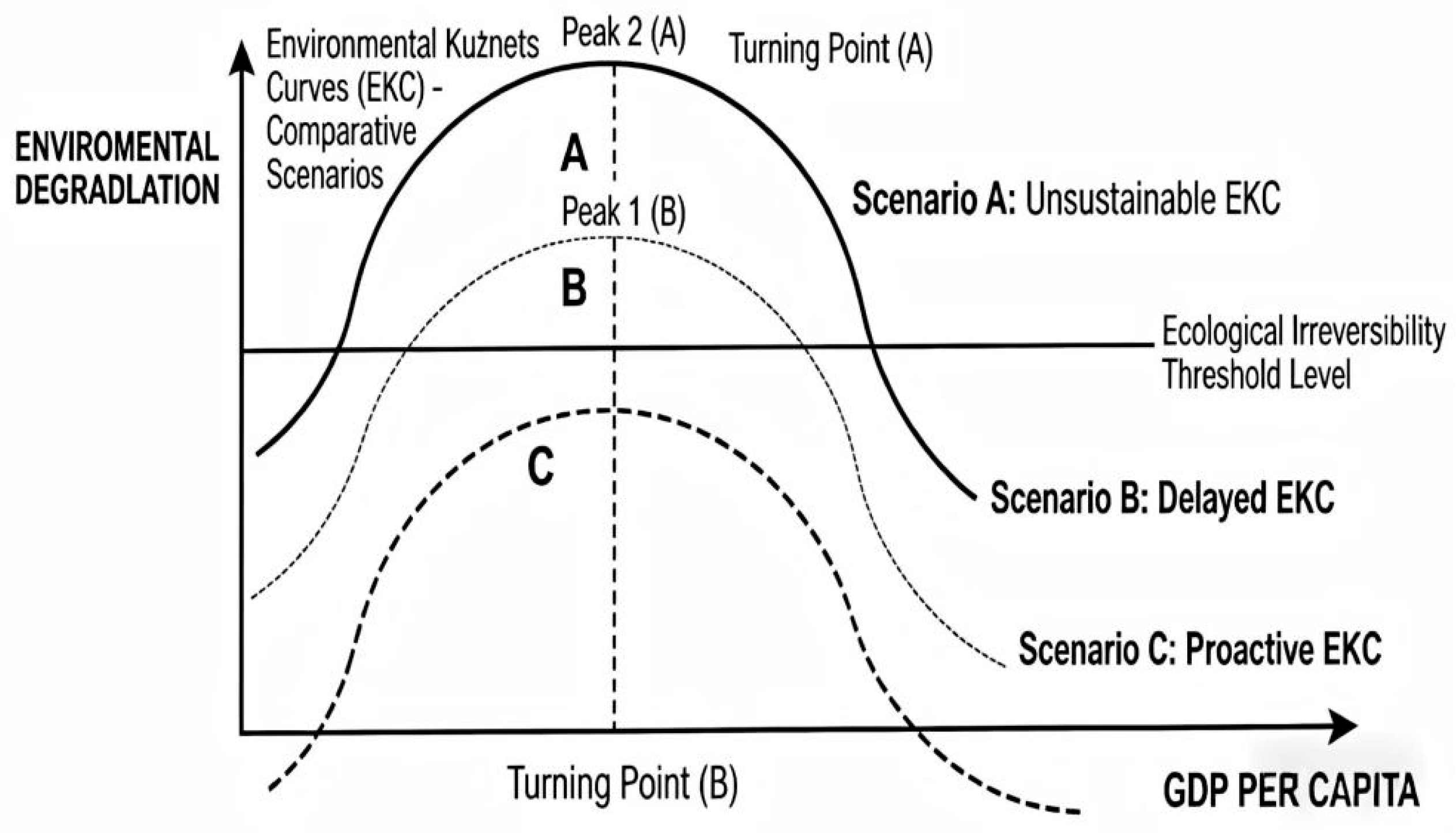
Figure 2.
Analysis framework.
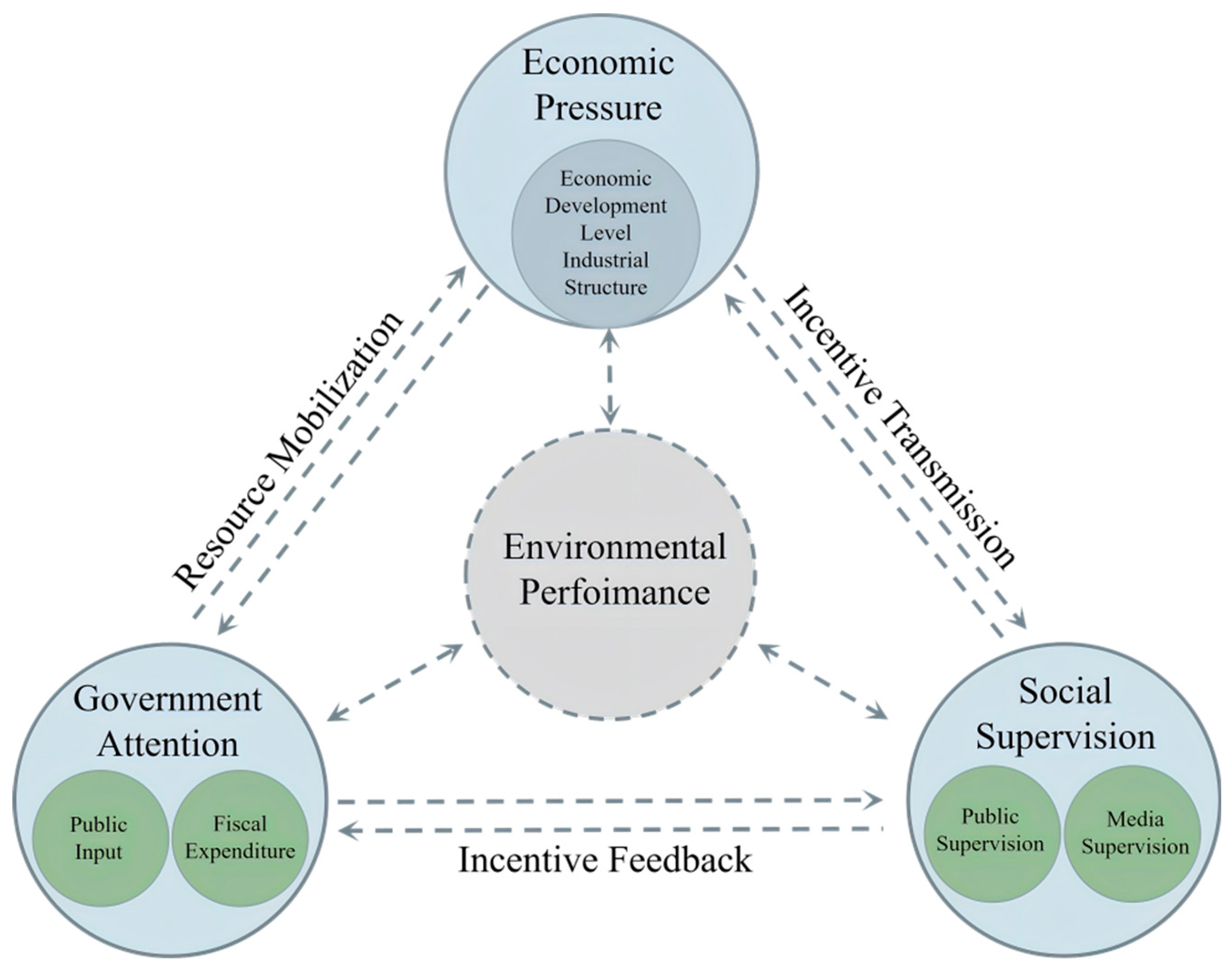
Figure 3.
Regional environmental performance mean distribution.
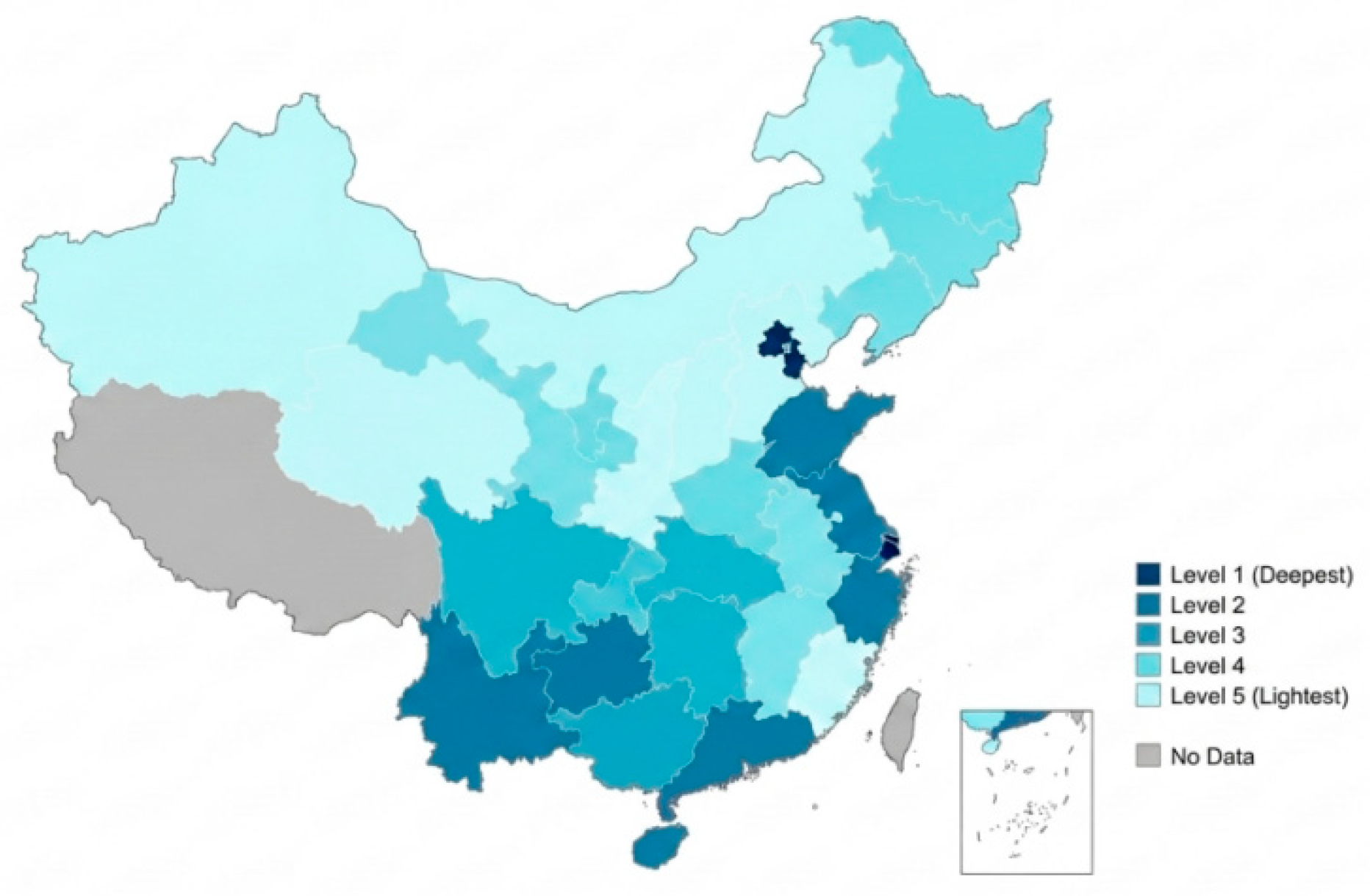
Figure 4.
Scatter plot group for necessity test.
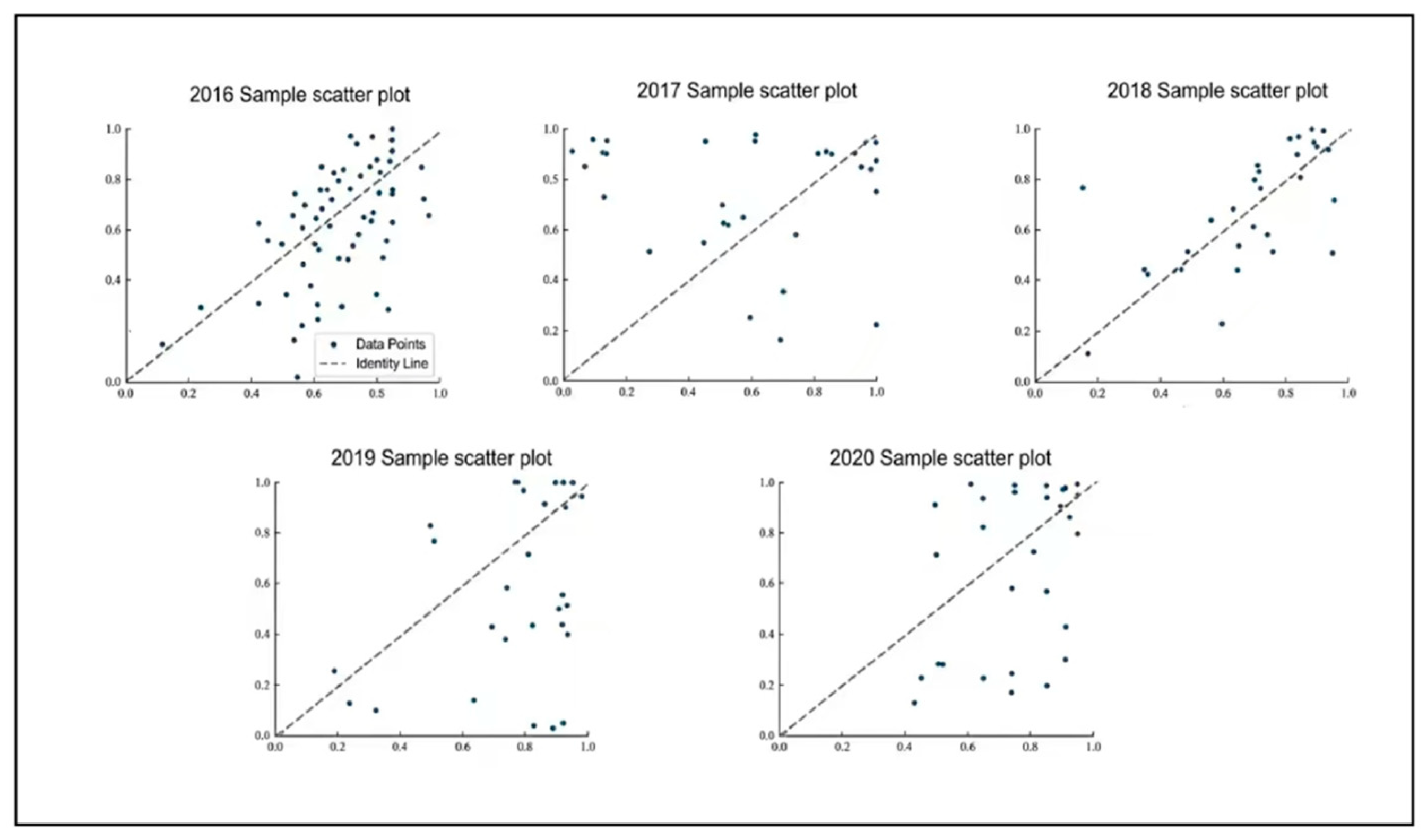
Figure 5.
Level of change in between-group consistency.
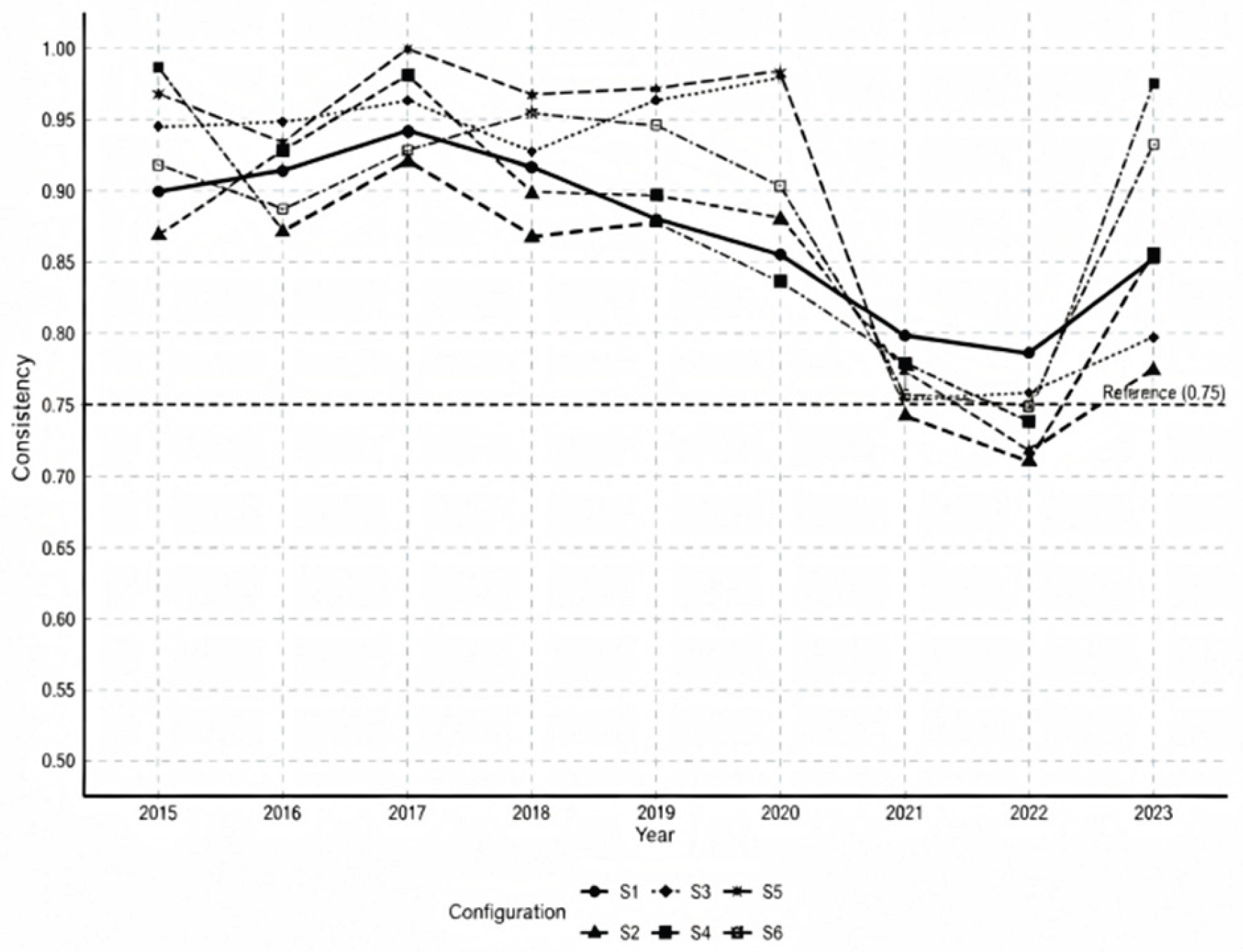

Table 1.
Regional environmental performance evaluation system.
| First-level Indicators | Second-level Indicators | Data Sources | ||
|---|---|---|---|---|
| Input | Labor Input | Number of Employed Persons in Urban Areas (10,000 persons) | China Labour Statistical Yearbook (2015–2023) | |
| Capital Input | Fixed Asset Investment (100 million RMB) | China Statistical Yearbook (2015–2023) | ||
| Energy Input | Total Energy Consumption (10,000 tons of coal equivalent) | China Energy Statistical Yearbook (2015–2023) | ||
| Output | Expected output | Economic Output | Gross Domestic Product (GDP) (100 million RMB) | China Statistical Yearbook (2015–2023) |
| Unexpected output | Pollution Emissions | Industrial SO₂ Emissions (10,000 tons) | China Environmental Statistical Yearbook (2015–2023) | |
| Industrial Wastewater COD Emissions (10,000 tons) | ||||
| Industrial Solid Waste Generation (10,000 tons) | ||||
Table 2.
Descriptive statistics and calibration.
| Variable | Descriptive statistics | Calibration | |||||
|---|---|---|---|---|---|---|---|
| Mean | Standard Deviation | Maximum | Minimum | Full Non-Membership | Crossover Point | Full Membership | |
| Environmental performance | 0.274 | 0.24 | 1.323 | 0.113 | 0.165 | 0.21 | 0.253 |
| GDP per capita | 71016.915 | 35472.237 | 216722 | 26883 | 47512.5 | 60173 | 82346 |
| Secondary Industry Value Added | 12751.02 | 11359.506 | 57329.8 | 761.1 | 4868.125 | 9518.1 | 16806.825 |
| Fiscal Expenditure | 179.5 | 103.796 | 747.439 | 29.057 | 109.402 | 161.96 | 224.248 |
| Policy Input | 217.259 | 52.759 | 383 | 96 | 184.25 | 213 | 249 |
| Public Supervision | 29179.634 | 42084.5 | 199521.28 | 28.943 | 145.483 | 11196.616 | 37494.14 |
| Media Supervision | 1382.489 | 1073.389 | 9680 | 86 | 559.25 | 1190 | 1959.25 |
Note: “~” denotes a non-high level.
Table 3.
Necessity analysis of single conditions.
| Condition variables | High Environmental Performance | ~High Environmental Performance | ||||||
|---|---|---|---|---|---|---|---|---|
| overall consistency | overall coverage | between-group consistency distance | within-group consistency distance | overall consistency | overall coverage | between-group consistency distance | within-group consistency distance | |
| GDP per capita | 0.736 | 0.747 | 0.109 | 0.096 | 0.736 | 0.747 | 0.107 | 0.117 |
| ~GDP per capita | 0.381 | 0.377 | 0.192 | 0.117 | 0.381 | 0.377 | 0.130 | 0.078 |
| Secondary industry value added | 0.696 | 0.715 | 0.030 | 0.082 | 0.696 | 0.715 | 0.091 | 0.132 |
| ~Secondary industry value added | 0.413 | 0.404 | 0.054 | 0.131 | 0.413 | 0.404 | 0.146 | 0.120 |
| Fiscal expenditure | 0.654 | 0.661 | 0.063 | 0.087 | 0.654 | 0.661 | 0.097 | 0.124 |
| ~Fiscal expenditure | 0.452 | 0.45 | 0.104 | 0.120 | 0.452 | 0.45 | 0.133 | 0.093 |
| Policy input | 0.519 | 0.522 | 0.101 | 0.090 | 0.519 | 0.522 | 0.100 | 0.078 |
| ~Policy inpu | 0.573 | 0.572 | 0.086 | 0.075 | 0.573 | 0.572 | 0.084 | 0.082 |
| Public supervision | 0.574 | 0.58 | 0.249 | 0.060 | 0.574 | 0.58 | 0.066 | 0.078 |
| ~Public supervision | 0.512 | 0.509 | 0.315 | 0.071 | 0.512 | 0.509 | 0.079 | 0.070 |
| Media supervision | 0.696 | 0.694 | 0.127 | 0.068 | 0.696 | 0.694 | 0.076 | 0.113 |
| ~Media supervision | 0.408 | 0.411 | 0.191 | 0.119 | 0.408 | 0.411 | 0.132 | 0.080 |
Note: “~” denotes a non-high level.
Table 4.
Summary of cases with between-group consistency greater than 0.2.
| Year | Public supervision/Environmental performance | ~Public supervision/Environmental performance | ||||
|---|---|---|---|---|---|---|
| Between-group consistency | Between-group coverage | Between-group consistency | Between-group coverage | |||
| 2015 | 0.776 | 0.867 | 0.877 | 0.585 | ||
| 2016 | 0.638 | 0.842 | 0.906 | 0.535 | ||
| 2017 | 0.873 | 0.938 | 0.926 | 0.661 | ||
| 2018 | 0.932 | 0.608 | 0.861 | 0.321 | ||
| 2019 | 0.941 | 0.541 | 0.869 | 0.312 | ||
| 2020 | 0.97 | 0.525 | 0.877 | 0.305 | ||
| 2021 | 0.984 | 0.486 | 0.93 | 0.25 | ||
| 2022 | 0.8 | 0.634 | 0.403 | 0.384 | ||
| 2023 | 0.64 | 0.748 | 0.542 | 0.425 | ||
Table 5.
Configurations of highlevel environmental performance.
| Variable | High environmental performance | |||||
|---|---|---|---|---|---|---|
| S1 | S2 | S3 | S4 | S5 | S6 | |
| GDP per capita | ● | ● | ● | ● | ● | |
| Secondary industry value added | ● | ● | ● | ● | U | |
| Fiscal expenditure | ● | ● | ● | U | ||
| Policy input | U | ● | U | ● | U | |
| Public supervision | ● | U | ● | ● | ||
| Media supervision | ● | ● | ● | ● | ||
| Consistency | 0.823 | 0.802 | 0.907 | 0.933 | 0.908 | 0.858 |
| PRI | 0.747 | 0.72 | 0.87 | 0.894 | 0.856 | 0.717 |
| Coverage | 0.287 | 0.361 | 0.225 | 0.171 | 0.167 | 0.065 |
| Unique coverage | 0.01 | 0.048 | 0.071 | 0.089 | 0.027 | 0.022 |
| Between-group consistency adjustment distance | 0.049 | 0.055 | 0.0524 | 0.058 | 0.056 | 0.057 |
| Within-group consistency adjustment distance | 0.059 | 0.067 | 0.053 | 0.033 | 0.054 | 0.053 |
| Overall consistency | 0.842 | |||||
| Overall PRI | 0.793 | |||||
| Overall coverage | 0.617 | |||||
Note: ● indicates that the condition exists; U indicates that the condition exists; a blank space indicates that the condition may or may not exist.
Table 6.
Mean regional coverage.
| Region | S1 | S2 | S3 | S4 | S5 | S6 |
|---|---|---|---|---|---|---|
| Eastern region | 0.303 | 0.317 | 0.337 | 0.163 | 0.166 | 0.332 |
| Central region | 0.335 | 0.414 | 0.204 | 0.387 | 0.179 | 0.039 |
| Western region | 0.27 | 0.449 | 0.214 | 0.251 | 0.282 | 0.0523 |
| Northeastern region | 0.151 | 0.167 | 0.143 | 0.2631 | 0.071 | 0.209 |
Disclaimer/Publisher’s Note: The statements, opinions and data contained in all publications are solely those of the individual author(s) and contributor(s) and not of MDPI and/or the editor(s). MDPI and/or the editor(s) disclaim responsibility for any injury to people or property resulting from any ideas, methods, instructions or products referred to in the content. |
© 2026 by the authors. Licensee MDPI, Basel, Switzerland. This article is an open access article distributed under the terms and conditions of the Creative Commons Attribution (CC BY) license (http://creativecommons.org/licenses/by/4.0/).
Copyright: This open access article is published under a Creative Commons CC BY 4.0 license, which permit the free download, distribution, and reuse, provided that the author and preprint are cited in any reuse.


