

Submitted:
14 April 2026
Posted:
16 April 2026
You are already at the latest version
Abstract
Acute and chronic diseases such as sepsis, trauma, cancer cachexia, heart failure, COPD, and organ failure share a common metabolic feature: the hypercatabolic state (HCS). HCS is driven by systemic inflammation and neuroendocrine activation, leading to a marked increase in basal metabolic rate, a profound energy deficit, and accelerated skeletal muscle proteolysis with concomitant anabolic resistance. In this context, skeletal muscle functions as a reservoir of amino acids (AAs), which are mobilized to sustain energy production, gluconeogenesis, and biosynthetic processes essential for immune and organ function. If inadequately addressed, this metabolic adaptation results in loss of lean body mass, sarcopenia, and cachexia, conditions that independently worsen clinical outcomes. Standardized protein recommendations are often insufficient due to the high interindividual variability of metabolic responses in HCS. Moreover, AAs are not metabolically equivalent: beyond serving as substrates, they act as signaling molecules (metabokines) that regulate key metabolic pathways. This underscores the limitation of calorie-centered nutritional strategies, which fail to capture the functional and regulatory roles of proteins and AAs. This narrative review highlights the need for an integrated nutritional paradigm that jointly considers energy intake, protein quality, AAs composition, and individual physiology to optimize metabolic management in hypercatabolic conditions.
Keywords:
calories
; proteins
; amino-acids
; hyper-catabolism
; diseases
; metabolism
; ultra-processed food
; overfeeding
1. Introduction
The central clinical problem in the interaction between energy (calories), proteins, and amino acids (AAs) is the need to integrate physiological and metabolic knowledge to optimize nutritional therapy, adapting it to the patient’s physio-pathological conditions and their specific energy and protein needs. Despite their clinical diversity, acute and chronic diseases such as sepsis, severe trauma, advanced cancer with cachexia, chronic heart failure, COPD, renal and liver failure and/or autoimmune diseases share a unifying physio-pathological metabolic denominator: the hypercatabolic state (HCS). It is defined as a pathological state where systemic inflammation and neuroendocrine activation drive the basal metabolic rate (BMR) far beyond physiological necessity, creating a devastating energy gap and a massive shift in protein metabolism. Indeed, to meet the increased energy demands and the need for biosynthetic precursors, the body initiates a significant process of muscle proteolysis induced by a potent cocktail of pro-inflammatory cytokines and stress hormones, which simultaneously promote catabolism and induce anabolic resistance, locking the patient in a cycle of self-consumption particularly of the skeletal muscle.
In the HCS, skeletal muscle is no longer viewed as a motor for movement, but as a primary reservoir of “totipotent” biochemical molecules: AAs. Once liberated through breakdown, these AAs undergo deamination and their carbon skeletons are strategically repurposed as versatile metabolic intermediates. They can be funneled into the Krebs cycle to sustain ATP production or used as substrates for gluconeogenesis and lipogenesis, supporting the high-intensity metabolic requirements of the immune system and vital organs. This systematic “mining” of AAs from muscle tissue, if not identified and treated with specific therapeutic strategies, causes loss of lean body mass in patients with the development of sarcopenia and subsequently cachexia, which are independent factors capable of influencing the patient’s quality of life, the length of hospital stay and/or recovery time, and even their survival to a much greater extent than total caloric intake [1,2,3,4]. We believe that understanding these biochemical mechanisms is crucial for the management of protein/caloric malnutrition in HCS patients.
Although there are many recommendations aimed at defining the optimal protein intake, the individual nature of the metabolic response makes it difficult to standardize dosages for different clinical populations [5]. It is interesting to note that while proteins can act as energy substrates, not all the AAs derived from them are metabolized in the same way but may have different metabolic fates based on their biochemical characteristics. Indeed, beyond the traditional classification into essential and non-essential, AAs should not be viewed merely as passive substrates for protein synthesis or energy production. Instead, each AA possesses unique biochemical properties that allow it to function as a distinct signaling molecule. These individual AAs can trigger specific metabolic pathways and modulate cellular responses. Due to this regulatory capacity, several AAs have been increasingly recognized as “metabokines” demonstrating a sophisticated ability to orchestrate systemic metabolism far beyond their structural roles [6,7]. Therefore, in the HCS, it is important to understand how total caloric balance modulates protein utilization and tissue preservation.
It is crucial to distinguish between “calories” as units of energy and “proteins” as functional biological molecules. While calories represent a general energy concept, proteins constitute biological structures and catalysts (enzymes) without which cellular functions are not possible. Furthermore, protein metabolism involves energetic costs and metabolic responses that are not adequately described by calorie counting alone. This distinction is important when evaluating nutrition, metabolism, energy balance, and clinical outcomes [8,9]. As a consequence, a nutritional approach based solely on calories has obvious limitations: i) it ignores individual variability in metabolism, ii) it fails to consider the qualitative effects of nutrients, iii) it neglects metabolic and psychological adaptations, and iv) it may be insufficient to explain the complex relationships between diet, body composition, and metabolic health.
Recent literature supports a more nuanced paradigm that combines energy quantity with nutritional quality, individual physiology, and dynamic metabolic processes [10,11,12]. The importance of the close interdependence between energy, dietary protein sources, and AAs composition in regulating metabolism is a fundamental concept that must guide different nutritional strategies across different physiological and pathological conditions [8].
This narrative review aims to provide an integrated view of the evidence on how calories, proteins, and AAs have profoundly different functions on metabolism, especially in HCS conditions. These elements interact to determine dietary quality, energy balance, and regulate biological pathways to influence metabolic health. This paper is therefore designed to rethink and challenge existing nutritional paradigms, rather than present a systematic review or introduce new findings, encouraging the reader to consider broader conceptual frameworks in nutrition.
To this aim, we considered the relevant scientific literature in the main online scientific databases, focusing on the most recent studies, using combination of keywords such as “protein metabolism”, “essential amino acids”, “hyper-catabolism”, and “critical illnesses”. Where possible, primary basic and clinical research studies were prioritized over review articles. To improve the transparency of all aspects of this narrative and qualitative research, we followed the indications proposed by the Standards for Reporting Qualitative Research (SRQR) [13].
2. Protein Metabolism: Beyond Energy Provision
It is necessary to separate the concept of protein from that of an “energy substrate”.
In terms of energy, protein catabolism provides an average of about 4 kcal per gram. However, unlike carbohydrates and lipids, proteins are not a “pure” energy substrate. In fact, part of their potential energy is lost during the digestion of dietary proteins and throughout AAs metabolism, including protein synthesis, deamination and transamination reactions, as well as the synthesis and excretion of urea. Consequently, the net energy yield from proteins is relatively low. The primary function of proteins (as their name implies) is structural and functional rather than energy-producing.
Under physiological conditions, when the body is not in an HCS, energy balance is stable, and the digestive system is functioning properly, ingested proteins are broken down into their fundamental building blocks: AAs. Once absorbed into the bloodstream, these AAs are mainly utilized for the synthesis of new proteins that are essential for life. This complex assembly process is highly regulated and far from random; it is finely tuned to metabolic demands and controlled by specific molecular signaling pathways.
Given this mechanism, the quality and digestibility of dietary proteins become paramount. “High-quality” proteins are defined as those that provide an abundant supply of essential-AAs (EAAs), which the human body cannot synthesize endogenously. It is important to note, however, that even the best dietary protein sources rarely contain more than approximately 40% EAAs. Despite this limitation, their presence is crucial: EAAs do far more than serve as mere building blocks, as they also act as key regulators of the metabolic pathways that initiate and sustain new protein synthesis [14,15]. Indeed, recent literature suggests that the concept of protein metabolism extends beyond traditional measures of intake, incorporating aspects such as food source, protein quality, and interactions with metabolic signaling pathways [16]. Some of the most recent reviews of protein metabolism are summarized in Table 1.
Understanding protein quality through metrics such as the digestible indispensable amino acid score (DIAAS) deepens our understanding of the metabolic impacts of dietary protein, linking digestibility and EAAs content with anabolic responses [21]. Furthermore, protein/AAs-induced modulation of insulin resistance aligns metabolic regulation with anabolic signaling pathways, highlighting the complex interactions between diet and metabolism [19]. Consequently, adequate daily protein intake supplies AAs necessary for body protein synthesis and essential metabolic functions. Indeed, protein metabolism is very complex and regulated by sensing and signaling networks involving hormones, regulatory molecules, and multiple upstream and downstream pathways. Key mediators include insulin, IGF-1, FGF21, mTORC1, AMP-activated protein kinase, and the GCN2/ATF4 system, as well as AA transporters which dynamically modify their uptake and release adjusting intracellular AAs availability [22].
To emphasize the multifactorial role of proteins, their main functions beyond energy provision can be summarized as follows.
Proteins act as structural (plastic) substrates, providing cells with dynamic and adaptable architecture. Their ability to undergo conformational changes, post-translational modifications, and regulated assembly into higher-order complexes enables cellular remodeling in response to mechanical, biochemical, and environmental stimuli, thereby supporting adaptability and homeostasis [23,24,25,26]. In addition to their nutritional and plastic value, food proteins contain peptide sequences capable of exerting numerous physiological effects, such as antioxidant, antihypertensive, immunomodulatory, and anti-inflammatory activities [27,28]. Indeed, proteins also function as central mediators of metabolic signaling, integrating nutrient availability with cellular and systemic responses. Protein hormones such as insulin regulate anabolic pathways via receptor-mediated signaling [29], while intracellular protein complexes such as mTORC1 act as nutrient and energy sensors controlling protein synthesis, autophagy, and mitochondrial metabolism [30,31]. AAs, particularly leucine, directly modulate mechanistic target of rapamycin complex-1 (mTORC1) activity through specific protein sensors [32,33], whereas energy stress activates AMPK to promote catabolic pathways and inhibit anabolic signaling [34]. In parallel, reversible post-translational modifications further fine-tune metabolic regulation [35]. Secreted proteins such as myokines, adipokines, and hepatokines coordinate whole-body energy homeostasis, with FGF21 representing a key example of endocrine metabolic regulation [36]. Finally, proteins serve as immune modulators, orchestrating both innate and adaptive immune responses. Cytokines and chemokines regulate immune cell activation through protein-mediated signaling pathways [37,38], while pattern recognition receptors such as Toll-like receptors (TLR) initiate host defense mechanisms upon pathogen detection [39]. Immune checkpoint proteins, including PD-1 and CTLA-4, ensure immune tolerance by negatively regulating T-cell activation [40]. Recent evidence also highlights the immunomodulatory potential of specific protein–protein interactions, such as HSP60-derived peptides targeting TLR4/MD-2 complexes, underscoring their relevance for peptide-based immunotherapies [41].
Bioactive peptides derived from food proteins are short AA sequences (generally ranging from 2–20 AA), that are released from their parent proteins through enzymatic hydrolysis, fermentation, or gastrointestinal digestion. Growing evidence highlights their significant health-promoting properties, particularly in the management of hypertension, cancer, oxidative stress, and liver diseases. In addition, these bioactive peptides have been shown to modulate lipid and glucose metabolism as well as immune system function, positioning them as promising bioactive agents for the development of next-generation immune-nutritional strategies [42].
In summary, food proteins and the bioactive peptides derived from them play also an important role in immune modulation, acting on finely regulated metabolic signaling pathways to maintain the tissue and whole-organism homeostasis.
3. Fate of Proteins in Caloric Deficit
Under conditions of caloric deficit, such as HCS, the body’s protein metabolism undergoes significant adaptations to maintain essential physiological functions while simultaneously meeting energy needs. Energy deficiency shifts substrate utilization toward increased lipid oxidation. However, without adequate dietary protein intake coupled with resistance exercise, endogenous proteins, especially those from skeletal muscle, become a significant source of amino acids for gluconeogenesis and energy production [43]. This leads to a negative NB, characterized by elevated muscle breakdown, suppression of protein synthesis and consequent sarcopenia which, if not prevented, can become muscle cachexia with important consequences on the patient’s health [44].
Indeed, energy deficit triggers a complex hormonal cascade that promotes proteolysis to provide AAs for energy (gluconeogenesis). This catabolic state is caused by a reduction in anabolic hormones (insulin, testosterone) and an increase in catabolic hormones (cortisol, ghrelin) [10]. However, a randomized controlled trial of 39 adults assigned to diets providing daily protein at 0.8 (RDA), 1.6, and 2.4 g/kg for 31 days, showed that even under hypocaloric conditions, increased protein intake can attenuate lean mass loss by stimulating muscle protein synthesis and reducing proteolysis. This suggests that consuming dietary protein at levels exceeding the RDA may protect muscle mass during short-term weight loss [45,46]. Consistent with this observation, a study conducted on muscle biopsies from 15 healthy but overweight men subjected to calorie restriction (3.2 kcal/kg body weight/day) plus exercise (45 min of one-arm cycling + 8 h of walking) for 4 days, followed by a control diet for 3 days, with a caloric content similar to the pre-intervention diet, demonstrated that in cases of severe energy deficit, levels of phosphorylate glycogen synthase kinase-3β (pSer9GSK3β) decrease and skeletal muscle becomes refractory to the anabolic effects of whey protein ingestion, regardless of contractile activity. These muscle changes were associated with changes in leptin, insulin, amino acids, cortisol, total cortisol/testosterone, and lean mass [47]. Another study involving 28 male college students not performing resistance training showed that a high protein intake alone was insufficient to prevent lean mass loss associated with a 6-week moderate energy restriction [48]. More recently also suggests that protein quality, AAs composition, and meal timing play a critical role in determining protein fate during caloric deficits, with important implications for metabolic health, immune competence, and physical performance [49].
3.1. Protein Sparing Effect of Calories
Under normal conditions, the human body uses glucose and fat as its main energy sources. Only if energy intake is insufficient, the body is forced to mobilize muscle protein reserves to convert them into glucose (gluconeogenesis) for energy, accelerating protein loss and compromising lean mass [50]. In fact, historical metabolic studies conducted on pigs demonstrated that the introduction of carbohydrates in low-protein or low-calorie diets can significantly improve nitrogen retention, highlighting a marked protein-sparing effect [51]. Therefore, adequate calorie intake reduces the need for protein breakdown and protects against muscle catabolism. This effect has important clinical implications, as inadequate caloric intake, even in the presence of sufficient protein intake, can lead to an increase in protein turnover and a loss of lean mass.
The protein-sparing effect of calories describes the phenomenon whereby adequate energy intake — primarily in the form of carbohydrates and/or lipids — reduces the degradation of endogenous proteins (primarily muscle), thus preserving lean mass in conditions of caloric deficit or catabolism. This effect has important clinical implications, as inadequate caloric intake, even in the presence of sufficient protein intake, can lead to an increase in protein turnover and a loss of lean mass. This concept underpins many clinical nutritional strategies, such as the protein-sparing modified fast (PSMF) and nutritional support therapies in critically ill patients [52,53,54,55]. PSMF therapies have been developed to address protein-energy malnutrition in hospitalized patients, particularly those with metabolic stress (e.g., trauma, sepsis, etc.), demonstrating a reduction of nitrogen losses and preservation of lean mass [53].
However, we must emphasize that HCS are characterized by increased energy expenditure, systemic inflammation, insulin resistance, and accelerated muscle protein degradation. In this context, maintaining lean body mass depends critically on the interaction between total caloric intake and protein intake, rather than the amount of protein or heat administered alone. Notably, in severe acute HCS conditions, even a high protein intake may be insufficient to counteract muscle catabolism, because the body develops anabolic resistance to AAs [56,57].
This metabolically feature is confirmed by a clinical trial which show that high-dose protein intake in the acute phases of 16,000 critically ill patients fail to demonstrate an improvement in mortality, indicating that the energy-protein balance is complex and not always linear [56]. Therefore, understanding the metabolic mechanisms underlying the protein-sparing effect represents a key element in planning nutritional interventions aimed at preserving muscle mass and improving clinical outcomes.
4. Protein Turnover and Nitrogen Balance
Protein turnover is a critical process for maintaining tissue homeostasis and metabolic health. NB is a classic indicator of body protein status, reflecting the difference between the amount of nitrogen consumed and excreted; this correlates with net protein gain or loss [58]. A positive NB indicates anabolic states, while a negative NB is characteristic of catabolic conditions such as fasting, disease, aging, and energy deficit [59]. Protein turnover is highly dynamic and regulated by dietary protein intake, AAs availability, hormonal signals (e.g., insulin, glucocorticoids), and physiological stressors (e.g., exercise or inflammation) [60,61]. However, while NB provides valuable integrative information at the whole-body level, it is not sensitive enough to detect tissue-specific changes in protein metabolism, particularly in skeletal muscle [62,63].
A recent systematic review and meta-analysis including data from 395 individuals estimated an average nitrogen requirement of 104.2 mg N/kg/day. No significant differences were observed according to sex, age group (<60 vs. ≥60 years), climate, or protein source (animal, plant, or mixed). However, substantial heterogeneity across studies was identified. Consequently, although the estimated mean nitrogen requirement is consistent with previous values, the marked variability in the data precludes the drawing of definitive conclusions [64].
A balanced, randomized, double-blind crossover study of 14 young, healthy, moderately to well-trained participants, compared metabolic and hormonal responses to isocaloric intake of whey protein alone (1.2 g kg-1) versus carbohydrate alone. The results demonstrated that the protein-induced insulin response was independent of glucose and mediated by increases in plasma AAs and glucagon-like peptide-1 (GLP-1). By contrast, the plasma concentration of glucose-dependent insulinotropic polypeptide (GIP) was higher after glucose intake. Additionally, protein-only intake increased urinary nitrogen excretion, primarily between 2 and 8 hours after intake and for up to 24 hours [65].
An interesting recent meta-analysis quantitatively compared protein requirements derived from the NB method (777 participants) with those obtained using the indicator AAs oxidation method (IAAO; 186 participants). The data demonstrated that protein requirements estimated by IAAO were approximately 30% higher than those calculated using NB [66]. These findings suggest a potential paradigm shift in the assessment of protein requirements in humans and underscore the need to re-evaluate current recommendations across different physiological conditions.
5. More than Just Building Blocks: Essential, Non-Essential and Conditionally Essential Amino Acids
A common misconception in clinical nutrition is the tendency to regard dietary protein as a monolithic entity, often detached from the specific AAs that compose it. The nutritional and metabolic value of a protein is determined by its AAs composition, as individual AA possesses distinct biosynthetic origins and autonomous metabolic functions. In human nutrition, proteinogenic AAs are traditionally classified into three major categories based on the body’s capacity to synthesize them and their dietary necessity.
EAAs are those that the human body cannot synthesize endogenously in sufficient quantities to meet physiological demands and therefore must be supplied through the diet. Humans require nine EAAs (histidine, isoleucine, leucine, lysine, methionine, phenylalanine, threonine, tryptophan, and valine). A deficiency in any of these AAs leads to impaired protein synthesis and adverse effects on growth, maintenance, and metabolic homeostasis because they cannot be produced quickly enough from other substrates under normal conditions [9,67]. It follows that supplementation with one EAA or a few EAAs, such as only BCAAs, could lead to effects opposite to those expected. In fact, a deficiency of other EAAs can promote muscle proteins breakdown to obtain the deficient EAAs.
By contrast, NEAAs are those that the body can synthesize de novo at rates sufficient to satisfy typical physiological requirements in healthy adults. These include alanine, aspartic acid, asparagine, glutamic acid, and serine, among others. Under basal conditions, these NEAAs do not require dietary intake because endogenous metabolic pathways generate them from intermediary metabolites such as glycolytic or tricarboxylic acid (TCA) cycle intermediates [68].
Importantly, the distinction between EAAs and NEAAs is not absolute but depends on physiological context and metabolic demand. This leads to the classification of certain AAs as conditionally essential.
Conditionally essential or semi-essential (CEAAs) are typically considered NEAAs under normal, healthy conditions because the body can synthesize them. However, during periods of rapid growth, physiological stress, illness, trauma, or specific life stages (e.g., infancy or pregnancy), the rate of endogenous synthesis may become insufficient relative to metabolic demand, rendering their exogenous supply necessary. Common examples include arginine, cysteine, glutamine, glycine, proline, and tyrosine [9]. This conditional essentiality reflects a dynamic nutritional requirement: for example, arginine synthesis may not meet demand in young children or individuals with severe catabolic stress, and glutamine demand can exceed endogenous production during critical illness or injury. These contexts illustrate how metabolic stressors can turn normally NEAAs into nutritionally limiting substrates, with implications for clinical nutrition and dietary planning [9].
From a nutritional standpoint the categorization of AAs into these three groups has important implications for protein quality assessment and dietary recommendations, including the evaluation of limiting AAs in dietary proteins and the formulation of clinical nutrition strategies for vulnerable populations [68]. In summary, while calories fulfill energetic requirements, AAs, particularly EAAs ones, represent the limiting factor for protein synthesis especially in HCS conditions.
6. Hypercatabolic States and Nutritional Implications
Hyper catabolism is a complex metabolic condition driven by systemic inflammation and stress responses, in which catabolic processes overwhelm anabolic pathways, leading to increased energy expenditure and accelerated loss of body protein. Pro-inflammatory cytokines (TNFα, IL-1, IL-6) and stress hormones (cortisol, catecholamines, and glucagon) induce insulin resistance, enhance proteolysis and gluconeogenesis, and suppress anabolic signaling. In addition, mitochondrial dysfunction further reduces metabolic efficiency. These mechanisms result in muscle wasting, impaired immune function, and worse clinical outcomes, particularly in critical illness and severe trauma [1,3,43,69].
Nutritional status is a crucial determinant in all HCS conditions, ranging from physiological ageing to neoplastic diseases. The risk of malnutrition is particularly high in the elderly population, with an estimated prevalence of around 45% in individuals living in the community, greater than 50% in hospitalized patients, and between 84% and 100% in subjects institutionalized in long-term care facilities [70]. These conditions negatively impact clinical outcomes and prognosis. In the oncology setting, a significant proportion of patients (30–90%) exhibit malnutrition, attributable to multiple factors such as anorexia, reduced caloric intake, taste alterations, malabsorption, digestive deficiencies, metabolic imbalances, and inadequate food consumption. Furthermore, almost all oncology patients develop a persistent HCS, responsible for marked protein degradation at the systemic and tissue levels. This increase in protein catabolism causes metabolic alterations that manifest clinically with the onset of sarcopenia; in the absence of adequate intervention, this condition can evolve into cachexia, contributing significantly to the increased mortality [71,72].
It is crucial to know that impaired protein turnover is the most important metabolic consequence underlying all chronic and HCS. Specifically, the degradation of skeletal muscle and globular proteins as albumin, releases AAs to meet the body’s essential energy needs, thereby reducing skeletal and cardiac physiological and metabolic functions [1,69].
Studies on chronic stable heart failure patients show that about 30% of patients with exhibit reduced serum albumin (<3.5 g/dL) [73] and these conditions are related to increased morbidity, hospitalization, and mortality, independent of primary diseases [74,75].
Interestingly, eating-related proteins disorders are common in most chronic HCS patients. Indeed, up to 50% of patients with severe chronic disease exhibit altered protein metabolism contributing to inadequate nutritional intake and reduced availability of all nutrients, particularly EAAs. It is important to underline that protein disarray does not only act on skeletal and cardiac muscle and albumin but also affects proteins which regulate and/or guarantee biochemical functions and/or structure of various body organs and/or systems [69].
It is interesting to note that adequate energy (caloric) intake alone is not sufficient to prevent skeletal muscle loss if EAAs are not available to support protein synthesis. Indeed, muscle protein synthesis (MPS) is acutely and chronically regulated by the availability of EAAs, which serve as both substrates and signaling molecules for anabolic pathways, including the mTORC1 [30]. Under conditions of energy restriction, increased caloric intake from non-nitrogenous sources does not maintain post-exercise MPS unless accompanied by sufficient EAAs, as demonstrated by recent studies showing that only EAAs-enriched proteins, and not the addition of carbohydrates, preserve post-exercise anabolism during starvation [76]. Similarly, stimulating MPS in older adults requires adequate EAAs concentrations, with low doses of EAAs significantly increasing muscle fractional synthetic rate (FSR) independent of total caloric intake [77]. Furthermore, supplementation with EAAs during hypocaloric diets has been shown to favor lean body mass preservation over fat loss, underscoring that calorie per se cannot prevent catabolic muscle loss without sufficient EAAs provision [78].
During senescence and especially in conditions of increased metabolic demand due to disease, dietary EAAs and caloric intake may be insufficient to meet physiological needs, negatively impacting both health and lifespan. In this regard, a preclinical study compared the effect of isocaloric and iso-nitrogenic diets with different EAA/NEAA stoichiometric ratios on longevity. The results demonstrated that lifespan was inversely correlated with the percentage of NEAAs consumed through the diet. Both EAAs restriction and NEAAs excess induced rapid and permanent structural changes in skeletal muscle and adipose tissue independently of total caloric intake. Indeed, EAAs deficiency, even when accompanied by increased caloric intake, has led to body wasting and reduced longevity. These data suggest that a balanced intake of EAAs, provided by high-quality dietary protein or by supplementation, represents a preferable nutritional strategy aimed at maintaining health [67].
Dietary protein can exert a true lean mass maintenance effect only when supported by an adequate total caloric intake as recently demonstrated. Indeed, a single-center, open-label, randomized, controlled clinical trial, 220 acutely ill adult hospitalized patients at nutritional risk (NRS-2002 ≥ 3), but without severe hypophagia, and with an expected length of stay ≥ 7 days, were randomly assigned to receive a high-protein oral nutritional supplement (containing 300 kcal and 18 g of proteins, twice a day) or nutritional supplement on demand. Patients receiving nutritional supplementation improved muscular mass evaluated by BIVA (phase angle), body weight, and muscle strength. Additionally, hospital stay was reduced by two days [79].
Interestingly, in HCS, energy (calories) is a permissive factor that allows proteins and AAs to perform their structural and functional roles, as well as their protein-sparing effect. Without adequate energy availability, increased protein intake does not translate into effective lean mass maintenance. Conversely, adequate energy availability but a lack of EAAs promote muscle resorption. Collectively, these data indicate that the anabolic response to nutritional support is fundamentally limited by EAAs availability rather than caloric content alone. In addition, we must consider that in HCS, energy provision alone fails to suppress muscle protein breakdown, because the energy introduced is oxidized or stored as fat but does not stimulate muscle protein synthesis. However, despite optimal calorie and protein intake, in more severe HCS, skeletal muscle anabolic resistance persists due to chronic inflammation and insulin resistance [80], indicating a significant metabolic difficulty in obtaining the necessary EAAs from dietary protein. Therefore, supplementing all EAAs, in a balanced ratio, is essential to circumvent this obstacle and mitigate or counteract all HCS.
Considering the evidence discussed before, it is essential to highlight the distinct and non-overlapping roles of dietary protein, free-form AAs, and energy intake. Proteins and AAs should not be regarded solely as structural substrates, nor merely as “nitrogen-containing calories.” This distinction is particularly relevant in individuals experiencing HCS characterized by elevated muscle proteolysis. In such conditions, energy intake undoubtedly plays an important role; however, its effectiveness is contingent upon adequate availability of high–biological value protein and/or supplementation with EAAs. Consequently, increasing caloric intake per se does not equate to preservation of body protein stores. In the absence of sufficient availability of all EAAs, higher energy intake may paradoxically exacerbate protein loss rather than attenuate it. Table 2 summarizes the effect of total caloric intake combined with protein intake on the maintenance of lean mass in HCS.
7. Nutritional Supplementation of Proteins and EAA
In HCS both whole protein supplementation and EAAs supplementation aim to counteract accelerated muscle protein breakdown and support anabolism, but they have distinct profiles of benefits and limitations. Whole protein sources (e.g., complete dietary proteins or protein powders) provide a broad spectrum of AAs that support overall nitrogen balance and have been associated with modest improvements in muscle mass, strength, and physical function in malnourished or elderly patients, although evidence quality varies and effects are sometimes small due to study heterogeneity and anabolic resistance in these populations (as shown in mixed clinical studies) [85,86]. Table 3 summarizes the main studies aimed at elucidating the relationship between energy and protein intake and the preservation of lean body mass (LBM) in HCS patients. Overall, despite considerable heterogeneity among studies, the evidence suggests that while protein intake above a certain threshold does not lead to significant gains in LBM, inadequate energy intake contributes to the limitation or loss of LBM.
Interestingly, the excessive protein intake does not consistently exert a beneficial effect on LBM as recent systematic reviews of randomized controlled trials (RCTs) conducted in intensive care unit (ICU) patients, suggest (see Table 4).
We believe that the conflicting results emerging from studies in HCS patients with proteins supplementation could be due to heterogeneity of treatment protocols and outcomes evaluated.
Moreover, many factors, able to influence these complex metabolic phenomena and consequently the clinical results, were not adequately considered. Indeed, it is known that the biological quality of the proteins administered, total energy availability and the patient’s medical conditions could influence the magnitude and duration of postprandial muscle protein synthesis. Indeed, it is well known that this process is largely determined by protein’s content of EAAs and dietary protein digestion with subsequent AAs intestinal absorption. All of them are essential factors able to influence AAs blood availability and related muscle proteins synthesis in humans [15]. These limitations highlight the need for further well-designed and comprehensive studies based on our complete knowledge of these complex metabolic and clinical phenomena.
Notably, supplementation of special mixture of Free-form EAAs which, therefore, do not have to be released by the digestion of food proteins but are readily assimilable and available in the blood of patients, are able to maintain muscle size and attenuate systemic inflammation in acute and subacute clinical settings especially when enriched for key anabolic triggers such as leucine even in the context of reduced dietary intake [1,103,104]. However, if total protein intake is already sufficient, additional EAAs alone may not confer further functional advantages and can be cost-inefficient (as highlighted in recent clinical nutrition analyses) [105]. A central practical difference is that protein supplementation also contributes to total caloric and nitrogen intake, which is valuable in generalized malnutrition, whereas isolated EAAs supplements bypass digestive protein processing and can be better tolerated in some patients with impaired digestion or appetite loss. However, it is important to note that EAAs supplement must contain all EAAs in balanced proportions to avoid incomplete anabolic signaling.
Preclinical experimental studies demonstrate that administration of specific balanced mixtures of EAAs exert many beneficial effects on cell metabolism in different experimental conditions. Indeed, has been demonstrated that a diet with EAAs deficiency significantly reduces survival in an EAAs concentration–dependent manner, whereas EAAs excess increases survival [106,107]. Interestingly, under normal physiological conditions, the efficiency of recycling muscular proteins to obtain EAAs is limited (approximately 70%). As consequence, the supplementation with single EAA, even at higher doses, is not sufficient to maintain or increase muscle protein synthesis [63]. This effect is significantly worse in HCS. This means that an anabolic state cannot be induced without the presence of all EAAs in adequate proportions required by the cellular metabolic state. Indeed, has been demonstrated that supplementation with a stoichiometrically balanced mixture of all free EAAs, formulated according the humans needs, promoted protein anabolism under numerous experimental conditions from senescence [108,109,110] to chemotherapy [111,112] and colon cancer cell in vitro and in vivo [113,114]. These effects depend on the activation of endothelial nitric oxide synthase (eNOS), which stimulates mitochondrial biogenesis in skeletal and cardiac muscle of mice and reduces the production of reactive oxygen species (ROS), as well as on the activation of mTORC1 [30,115]. From a translational point of view this point is particularly important especially for patients with chronic diseases such as diabetes, senescence and CHF, whose muscles have strongly compromised mitochondrial activities and heavy alterations in energy metabolism [116,117]. Importantly, these observations indicate that specific individual AAs, much like vitamins, cytokines, or hormones, can influence key metabolic pathways. For this reason, they have been defined as metabokines [118].
These positive results are confirmed in human beings. Healthy individuals who intakes of 20–30 g of protein (or 0.25–0.30 g/kg body mass) or ~10 g of free-form EAAs (or 0.10 g/kg body mass) per dose optimally stimulate muscle protein synthesis particularly following resistance exercise and when energy availability is sufficient [119]. A study involving 16 healthy men and women demonstrated that a balanced EAAs formulation combined with whey protein is highly anabolic compared with a whey protein–based recovery product. The anabolic response was approximately threefold and sixfold greater for the low and high doses of free EAA/protein, respectively, and was shown to be dose dependent [120]. Another study performed on 38 healthy elderly subjects showed that an EAAs-based multi-ingredient nutritional supplementation of 12 weeks is not effective to change myoelectric manifestation of fatigue and time to perform the task failure but can positively affect muscle mass, muscle strength, muscle power and VAT, counterbalancing more than one year of age-related loss of muscle mass and strength [121]. Interestingly, the increase in plasma concentration of free EAAs is more rapid than that of those derived from proteins in both young and elderly subjects. Free EAAs induce a greater anabolic effect than those derived from whole proteins due to the simultaneous arrival of all EAAs at the sites of protein synthesis [122].
Other clinical studies confirm the effects. Oral supplementation of special mixture of single EAAs (45 g/day) added to normal protein intake in older subjected (>71 years) to 10 days bed rest, preserve muscle function during compulsory inactivity, suggesting that EAAs supplementation is potentially an efficient method of increasing protein intake without affecting satiety [123]. A stable isotope tracer study showed that a low dose (3.6 g) of a high-leucine EAAs formulation with arginine significantly increased muscle protein fractional synthetic rate in older adults, with ~80% of ingested EAAs incorporated into muscle protein. These findings indicate that low-dose EAAs formulations can effectively stimulate muscle protein synthesis in older [77].
Thus, it is important to emphasize that consuming high-biological-value proteins with high presence of EAAs promotes protein metabolism throughout the body and, especially in older adults, in skeletal muscle. On the contrary, plant-based protein sources rich in fiber and micronutrients can be valuable, but they have less anabolic potential than animal proteins [124]. Notably, mixture of free-EAAs has positive effects also in patients with HCS such as heart failure. Indeed, several clinical studies show that administration of balanced mixtures of free-EAAs, formulated according to human nutritional requirements, can prevent malnutrition, enhance muscle mass and strength, and improve quality of life in these patients [69,103,104,125].
The effects of free-EAAs are extensively studied in patients with HCS sepsis-induced. Indeed, septic patients have profound metabolic disturbances that impair protein synthesis with loss of skeletal muscle mass and strength, termed sepsis-associated muscle waste [126]. Experimental data show that sepsis prevents the increase in protein synthesis induced by electrically stimulated muscle contraction by a mechanism likely dependent on mTOR [127]. As demonstrated EAAs supplementation may counteract inflammation and post-sepsis sarcopenia through mTOR pathway activation, suppressing hyper-autophagy, a key driver of muscle atrophy. Preclinical studies support the protective role of branched-chain amino acids (BCAAs) against sepsis-induced muscle protein degradation via inhibition of autophagy signaling in skeletal muscle [128]. These results are confirmed in a mouse model of cecal ligation and puncture–induced sepsis, administration of glutamine and/or leucine has been shown to reduce muscle degradation and to promote the expression of myogenic genes. Leucine treatment alone exerted more pronounced effects in preserving muscle mass during sepsis. In contrast, combined glutamine and leucine administration did not demonstrate synergistic benefits in attenuating sepsis-induced muscle atrophy [128].
In patients with sepsis, metabolic abnormalities result in reduced muscle synthesis, resulting in decreased total muscle mass. It follows that supplementation with AAs, particularly BCAAs, plays an important role, mediated by mTOR activation, in counteracting sarcopenia following sepsis, by intervening on the continuous activation of autophagy, which is one of the causes of muscle atrophy. Although pre-clinical studies have shown that BCAAs supplementation can prevent sepsis-induced muscle protein degradation by inhibiting the autophagy signaling pathway in skeletal muscles, clinical trials are still ongoing [129]. Notably, evidence from a pilot study with 46 patients orally supplemented with mixture of EAAs reduced inflammation in both inflamed and infected patients [130]. Even in the case of food supplementation, it is very important to keep in mind that AAs and their metabolites could be capable of influencing cellular metabolism and intra-organs/systems crosstalk by acting as metabokines [6]. Figure 1 schematically summarizes the different role of calories and proteins/AAs as a function of the subject’s metabolic state.
8. Ultra-Processed Foods and Chronic Caloric Overfeeding: Health Implications
Ultra-processed foods (UPF) promote chronic caloric overfeeding, which paradoxically contributes to malnutrition by supplying excess energy while being poor in essential nutrients, including proteins.
UPF are often the predominant component of modern diets worldwide. It has recently been highlighted that high UPF consumption is consistently associated with very poor diet quality, namely, high saturated fat, sugar, and sodium content, low fiber and micronutrient intake, and very high caloric density. In addition, over the past 60 years, approximately 10,000 additives have been approved by the FDA for UPF [131]. These factors facilitate the accumulation of adipose tissue and promote metabolic disorders, chronic low-grade inflammation, hormonal disturbances, and alterations in the gut microbiome [132]. It follows that limiting UPF consumption can promote the body’s metabolic health.
In healthy man, a study of overfeeding energy by 50% of fat and carbohydrate for 14 days each compared to requirements, showed that excess carbohydrate intake progressively increased carbohydrate oxidation and total energy expenditure, resulting in the storage of approximately 75–85% of the surplus energy. In contrast, excess fat intake had minimal effects on fat oxidation and total energy expenditure, leading to the storage of about 90–95% of the excess energy. Consequently, dietary fat overfeeding promotes greater fat accumulation than carbohydrate overfeeding, with the difference being most pronounced during the early phase of the overfeeding period [133].
Overfeeding with carbohydrates and/or fats induces body composition changes that differ markedly from those observed during protein overfeeding. A common assumption is that 3,5 kcal corresponds to 0.45 kg of body fat and that predictable changes in body weight will occur with equivalent alterations in energy balance. However, the existing overfeeding literature does not support this simplistic model.
Instead, dietary protein appears to exert a protective effect against fat gain during periods of energy surplus, particularly when combined with resistance training [134]. Human studies have further confirmed that higher-protein diets lead to more favorable changes in body composition during overfeeding, indicating that an intake of approximately 1.05 g/kg/day is sufficient to maintain lean mass. Increasing protein intake beyond 1.2 g/kg/day does not confer additional benefits for lean mass preservation in sedentary individuals under hypercaloric conditions [135,136] Overall, the evidence suggests that dietary protein is the key macronutrient for promoting favorable body composition outcomes during overfeeding [134].
A study of 29 healthy men (27±5 years; BMI 25.5±2.3 kg m-2) overfed by 40% of their baseline energy intake for 8 weeks showed a 7.6±2.1 kg increase in body weight and a reduction in insulin sensitivity to both low and high insulin doses. The initial stages of insulin resistance were accompanied by a modest reduction in respiratory quotient during sleep and during a clamp, with no changes in fasting respiratory quotient or signs of metabolic inflexibility, suggesting that metabolic inflexibility does not cause insulin resistance [137].
In a study of 35 young adults subjected to 8 weeks of overfeeding at 40% above baseline energy requirements, sleeping metabolic rate and 24-hour sedentary energy expenditure (24h-SEE) were assessed before and after the intervention. After adjustment for gains in fat-free mass and fat mass, sleeping metabolic rate increased marginally (+43±123 kcal/day; P=0.05) and 24h-SEE showed no significant change, indicating little evidence of systematic metabolic adaptation to overfeeding, despite substantial interindividual variability. At the 6-month follow-up, individuals with a lower-than-predicted sleeping metabolic rate during overfeeding retained a greater proportion of the fat mass gained, whereas those with higher-than-predicted sedentary 24h-SEE lost significantly more fat. These findings suggest that individual variability in EE responses to overfeeding may play a key role in long-term fat mass retention following periods of positive energy balance. Metabolic adaptation to overfeeding was on average very small and variable across subjects, revealing “thrifty” metabolic phenotypes that correlated with body weight loss 6 months later [138].
A recent retrospective exploratory analysis of a longitudinal overfeeding study involving 28 healthy men investigated the impact of sleep duration on overeating-induced changes in carbohydrate metabolism and insulin sensitivity. Participants were overfed by 40% above weight-maintenance energy requirements for 8 weeks. The resulting weight gain (7.3±0.4 kg) significantly impaired insulin sensitivity in the liver, adipose tissue, and whole body among individuals with short sleep duration, whereas no such deterioration was observed in those with longer sleep duration. Therefore, promoting adequate sleep during short periods of overeating may prevent negative effects on glucose metabolism [139].
In critically ill patients, overfeeding can lead to serious and sometimes fatal metabolic complications. Therefore, it is essential to repeatedly monitor patients’ response to nutritional support to best tailor it to maintain metabolic stability and promote recovery. Indeed, in these patients, excessive energy intake compared to actual expenditure can exacerbate metabolic disorders and lead to serious clinical complications such as 1) Hyperglycemia and insulin resistance secondary to excess carbohydrate intake, increasing the risk of infections and endothelial dysfunction. 2) Hypertriglyceridemia and hepatic steatosis due to excess fat or total energy intake. 3) Azotemia and metabolic acidosis with protein overfeeding, especially when nitrogen clearance is impaired. 4) Hypercapnia secondary to carbohydrate hyper oxidation, which may compromise ventilation in patients with respiratory failure [140,141,142,143]. These complications can increase the length of intensive care unit (ICU) stay and have been associated with increased mortality in observational clinical studies [143]. A prospective cohort study of pediatric patients in an intensive care unit at a tertiary academic center has highlighted that the use of predictive equations to estimate energy requirements in critically ill patients can lead to significant overestimations, resulting in the accumulation of unwanted energy and the risk of overfeeding [144].
However, a specific risk in severely malnourished patients should not be underestimated: refeeding syndrome. This is a serious electrolyte and metabolic imbalance that can arise when excess energy is administered too quickly after a period of fasting or prolonged malnutrition. This syndrome, if not properly managed, can lead to hypotension, respiratory failure, arrhythmias, and even death [145,146].
In summary, in healthy individuals, energy overload systematically leads to increased body weight and fat mass, with metabolic alterations that progressively increase with the duration and amount of the caloric surplus. In HCS subjects, overfeeding is associated not only with worsening metabolic profiles (hyperglycemia, steatosis, hypertriglyceridemia) but also with worse clinical outcomes, including mortality. Therefore, accurately determining energy requirements tailored to the patient’s condition is essential to avoid the harms associated with overfeeding in vulnerable populations.
9. Clinical Implications and Future Directions
Considering the latest scientific evidence, in the context of modern nutrition, the relationship between calories and protein requires profound revaluation. Indeed, the traditional approach, which considers calories as equivalent energy units regardless of their origin, is severely limited in describing the metabolic and physiological effects of different macronutrients. Protein, at the same caloric intake, exhibits a distinct impact compared to carbohydrates and lipids, specifically influencing satiety, diet-induced thermogenesis, body composition, and the maintenance of muscle mass. Furthermore, adequate dietary protein density and/or supplementation with all EAAs play a key role in regulating spontaneous energy intake and preventing lean tissue loss under conditions of calorie restriction. For this reason, it is necessary to move beyond a purely quantitative view of energy intake and adopt a qualitative model that integrates metabolic function, physiological adaptations, and long-term health goals.
In protein nutrition, it is not enough to simply consider the total amount of protein consumed; it is crucial to evaluate its AAs profile, or quality. Indeed, dietary proteins differ in their content, bioavailability, and proportion of EAAs, particularly those involved in muscle protein synthesis and metabolic regulation processes. High-quality protein sources therefore provide an adequate supply of EAAs, promoting anabolic efficiency and maintaining physiological functions. Therefore, attention to protein quality and, where appropriate, EAAs supplementation are key elements in nutritional support, particularly for critically ill patients.
It is necessary to move beyond a purely caloric view of nutrition in favor of a “signal-based” paradigm, in which nutrients, particularly EAAs, must be considered primarily as biological signals capable of modulating metabolic, hormonal, and epigenetic pathways that regulate appetite, body composition, energy metabolism, and long-term health. Therefore, the physiological impact of a food depends not solely on its energy content, but on its ability to trigger specific adaptive responses in the body. “Signal-based” nutrition therefore offers a more solid conceptual foundation than simple calorie counting. Figure 2 provides a schematic overview of the interaction between HCS and protein/energy availability and how this relationship influences prognosis.
10. Conclusions
Protein and AAs requirements in HCS cannot be extrapolated from healthy individuals, and energy provision alone is insufficient to preserve LBM. The interaction between protein and energy intake is strongly dependent on metabolic status. In HCS, protein and AAs requirements, particularly EAAs ones, become partially uncoupled from energy needs, challenging the traditional calorie-centered nutritional approach in favor of “signal-based” nutrition.
Author Contributions
Conceptualization, G.C and E.P.; methodology, G.C and E.P.; software, G.C.; writing—original draft preparation, G.C. and E.P.; writing—review and editing, G.C. and E.P.; supervision, G.C.; project administration, G.C. The authors have read and agreed to the published version of the manuscript.
Funding
This research received no external funding.
Institutional Review Board Statement
not applicable.
Informed Consent Statement
not applicable.
Data Availability Statement
not applicable. Being a review, the data can be extrapolated from the references.
Acknowledgments
We thank Cristina Antonelli for the linguistic revision of the text.
Conflicts of Interest
The authors declare no conflicts of interest.
Abbreviations
The following abbreviations are used in this manuscript:
| AAs | Amino acids |
| CEAAs | Conditionally essential amino acids |
| DIAAS | Digestible indispensable amino acid score |
| EAAs | Essential amino acids |
| eNOS | Endothelial nitric oxide synthase |
| GLP-1 | Glucagon-like peptide-1 |
| HCS | Hyper catabolic state |
| ICU | Intensive care unit |
| LBM | Lean body mass |
| MPS | Muscle protein synthesis |
| mTORC1 | Mechanistic target of rapamycin complex-1 |
| NB | Nitrogen balance |
| NEAAs | Non-essential amino acids |
| PSMF | protein-sparing modified fast |
| TLR | Toll-like receptors |
| UPS | Ultra-processed foods |
References
- Pasini, E.; Aquilani, R.; Dioguardi, F.S.; D’Antona, G.; Gheorghiade, M.; Taegtmeyer, H. Hypercatabolic syndrome: molecular basis and effects of nutritional supplements with amino acids. Am J Cardiol. 2008, 101(11A), 11E–15E. [Google Scholar] [CrossRef] [PubMed]
- Hsu, C.C.; Sun, C.Y.; Tsai, C.Y.; Chen, M.Y.; Wang, S.Y.; Hsu, J.T.; Yeh, C.N.; Yeh, T.S. Metabolism of Proteins and Amino Acids in Critical Illness: From Physiological Alterations to Relevant Clinical Practice. J Multidiscip Healthc 2021, 14, 1107–1117. [Google Scholar] [CrossRef]
- Zhang, J.; Luo, W.; Miao, C.; Zhong, J. Hypercatabolism and Anti-catabolic Therapies in the Persistent Inflammation, Immunosuppression, and Catabolism Syndrome. Front Nutr. 2022, 9, 941097. [Google Scholar] [CrossRef]
- Chadda, K.R.; Puthucheary, Z. Persistent inflammation, immunosuppression, and catabolism syndrome (PICS): a review of definitions, potential therapies, and research priorities. Br J Anaesth 2024, 132(3), 507–518. [Google Scholar] [CrossRef] [PubMed]
- Burstad, K.M.; Lamina, T.; Erickson, A.; Gholizadeh, E.; Namigga, H.; Claussen, A.M.; Slavin, J.L.; Teigen, L.; Hill Gallant, K.M.; Stang, J.; Steffen, L.M.; Harindhanavudhi, T.; Kouri, A.; Duval, S.; Butler, M. Evaluation of dietary protein and amino acid requirements: a systematic review. Am J Clin Nutr 2025, 122(1), 285–305. [Google Scholar] [CrossRef]
- Pasini, E.; Corsetti, G.; Dioguardi, F.S. Behind Protein Synthesis: Amino Acids-Metabokine Regulators of Both Systemic and Cellular Metabolism. Nutrients 2023, 15(13), 2892. [Google Scholar] [CrossRef]
- Burrin, D.G.; Davis, T.A. Proteins and amino acids in enteral nutrition. Curr Opin Clin Nutr Metab Care 2004, 7(1), 79–87. [Google Scholar] [CrossRef]
- Corsetti, G.; Pasini, E.; Scarabelli, T.M.; Romano, C.; Singh, A.; Scarabelli, C.C.; Dioguardi, F.S. Importance of Energy, Dietary Protein Sources, and Amino Acid Composition in the Regulation of Metabolism: An Indissoluble Dynamic Combination for Life. Nutrients 2024, 16, 2417. [Google Scholar] [CrossRef]
- Petkova, D.; Stoyanova, S.; Dinkov, G.; Bogdanov, M.G. Beyond Protein Building Blocks: A Review of Biological Roles and Therapeutic Potential of Free Amino Acids. Int J Mol Sci 2025, 26, 11264. [Google Scholar] [CrossRef] [PubMed]
- Theodorakis, N.; Kreouzi, M.; Pappas, A.; Nikolaou, M. Beyond Calories: Individual Metabolic and Hormonal Adaptations Driving Variability in Weight Management-A State-of-the-Art Narrative Review. Int J Mol Sci 2024, 25(24), 13438. [Google Scholar] [CrossRef]
- Hall, K.D.; Farooqi, I.S.; Friedman, J.M.; Klein, S.; Loos, R.J.F.; Mangelsdorf, D.J.; O’Rahilly, S.; Ravussin, E.; Redman, L.M.; Ryan, D.H.; Speakman, J.R.; Tobias, D.K. The energy balance model of obesity: beyond calories in, calories out. Am J Clin Nutr 2022, 115(5), 1243–1254. [Google Scholar] [CrossRef] [PubMed]
- Lucan, S.C.; DiNicolantonio, J.J. How calorie-focused thinking about obesity and related diseases may mislead and harm public health. An alternative. Public Health Nutr. 2015, 18(4), 571–81. [Google Scholar] [CrossRef] [PubMed]
- O’Brien, B.C.; Harris, I.B.; Beckman, T.J.; Reed, D.A.; Cook, D.A. Standards for reporting qualitative research: A synthesis of recommendations. Acad Med 2014, 89, 1245–1251. [Google Scholar] [CrossRef]
- Wu, G. Amino acids: metabolism, functions, and nutrition. Amino Acids 2009, 37(1), 1–17. [Google Scholar] [CrossRef]
- Gorissen, S.H.M.; Crombag, J.J.R.; Senden, J.M.G.; Waterval, W.A.H.; Bierau, J.; Verdijk, L.B.; van Loon, L.J.C. Protein content and amino acid composition of commercially available plant-based protein isolates. Amino Acids 2018, 50(12), 1685–1695. [Google Scholar] [CrossRef]
- FAO. Dietary protein quality evaluation in human nutrition. Report of an FAO Expert Consultation. FAO Food and Nutrition Paper 92. 2013. Available online: https://www.fao.org/ag/humannutrition/35978-02317b979a686a57aa4593304ffc17f06.pdf.
- Cruz-Pierard, S.; Iñiguez-Jiménez, S. Synergistic Effects of Protein Intake and Exercise on Biomarkers of Sarcopenia: A Systematic Review. Biomolecules 2026, 16, 195. [Google Scholar] [CrossRef]
- Prokopidis, K.; Brouer, I.C.; Lett, A.M. Food matrix in the context of muscle and whole-body protein synthesis: a scoping review. Nutr Metab (Lond) 2025, 22(1), 151. [Google Scholar] [CrossRef]
- Coker, M.S.; Coker, R.H. Dietary proteins, amino acids and insulin resistance: mini-review. Front Nutr 2025, 12, 1671286. [Google Scholar] [CrossRef] [PubMed]
- Yimam, M.A.; Andreini, M.; Carnevale, S.; Muscaritoli, M. Postprandial aminoacidemia following the ingestion of alternative and sustainable proteins in humans: a narrative review. Nutrients 2025, 17(2), 211. [Google Scholar] [CrossRef] [PubMed]
- Matthews, J.J.; Arentson-Lantz, E.J.; Moughan, P.J.; Wolfe, R.R.; Ferrando, A.A.; Church, D.D. Understanding Dietary Protein Quality: Digestible Indispensable Amino Acid Scores and Beyond. J Nutr 2025, 155(10), 3152–3167. [Google Scholar] [CrossRef] [PubMed]
- Tomé, D.; Benoit, S.; Azzout-Marniche, D. Protein metabolism and related body function: mechanistic approaches and health consequences. Proc Nutr Soc 2021, 80(2), 243–251. [Google Scholar] [CrossRef]
- Discher, D. E.; Janmey, P.; Wang, Y.-L. Tissue cells feel and respond to the stiffness of their substrate. Science 2025, 310(5751), 1139–1143. [Google Scholar] [CrossRef] [PubMed]
- Ingber, D.E.; Tensegrity, I. Cell structure and hierarchical systems biology. Journal of Cell Science 2023, 116(7), 1157–1173. [Google Scholar] [CrossRef] [PubMed]
- Janmey, P.A.; McCulloch, C.A. Cell mechanics: integrating cell responses to mechanical stimuli. Annual Review of Biomedical Engineering 2007, 9, 1–34. [Google Scholar] [CrossRef]
- Rief, M.; Gautel, M.; Oesterhelt, F.; Fernandez, J.M.; Gaub, H.E. Reversible unfolding of individual titin immunoglobulin domains by AFM. Science 1997, 276(5315), 1109–1112. [Google Scholar] [CrossRef]
- Chakrabarti, S.; Jahandideh, F.; Wu, J. Food-derived bioactive peptides on inflammation and oxidative stress. Biomed Res Int 2014, 2014, 608979. [Google Scholar] [CrossRef] [PubMed]
- Machado, M.; Bautista-Hérnandez, I.; Gómez-García, R.; Silva, S.; Costa, E.M. Bioactive Food Proteins: Bridging Nutritional and Functional Benefits with Sustainable Protein Sources. Foods 2025, 14, 3035. [Google Scholar] [CrossRef]
- Saltiel, A.R.; Kahn, C.R. Insulin signaling and the regulation of glucose and lipid metabolism. Nature 2001, 414(6865), 799–806. [Google Scholar] [CrossRef]
- D’Antona, G.; Ragni, M.; Cardile, A.; Tedesco, L.; Dossena, M.; Bruttini, F.; Caliaro, F.; Corsetti, G.; Bottinelli, R.; Carruba, M.O.; et al. Branched-chain amino acid supplementation promotes survival and supports cardiac and skeletal muscle mitochondrial biogenesis in middle-aged mice. Cell Metab 2010, 12, 362–372. [Google Scholar] [CrossRef]
- Laplante, M.; Sabatini, D.M. mTOR signaling in growth control and disease. Cell 2012, 149(2), 274–93. [Google Scholar] [CrossRef]
- Saxton, R.A.; Sabatini, D.M. mTOR Signaling in Growth, Metabolism, and Disease. Cell Erratum in: Cell 2017, 169(2), 361-371. doi: 10.1016/j.cell.2017.03.035.. 2017, 168(6), 960–976. [Google Scholar] [CrossRef] [PubMed]
- Wolfson, R.L.; Chantranupong, L.; Saxton, R.A.; Shen, K.; Scaria, S.M.; Cantor, J.R.; Sabatini, D.M. Sestrin2 is a leucine sensor for the mTORC1 pathway. Science 2016, 351(6268), 43–8. [Google Scholar] [CrossRef] [PubMed]
- Hardie, D.G.; Ross, F.A.; Hawley, S.A. AMPK: a nutrient and energy sensor that maintains energy homeostasis. Nat Rev Mol Cell Biol. 2012, 13(4), 251–62. [Google Scholar] [CrossRef] [PubMed]
- Choudhary, C.; Weinert, B.T.; Nishida, Y.; Verdin, E.; Mann, M. The growing landscape of lysine acetylation links metabolism and cell signalling. Nat Rev Mol Cell Biol 2014, 15(8), 536–50. [Google Scholar] [CrossRef] [PubMed]
- Kharitonenkov, A.; Adams, A.C. Inventing new medicines: the FGF21 story. Molecular metabolism 2014, 3(3), 221–229. [Google Scholar] [CrossRef] [PubMed]
- O’Shea, J.J.; Plenge, R. JAK and STAT signaling molecules in immunoregulation and immune-mediated disease. Immunity 2012, 36(4), 542–50. [Google Scholar] [CrossRef]
- Tanaka, T.; Narazaki, M.; Kishimoto, T. IL-6 in inflammation, immunity, and disease. Cold Spring Harb Perspect Biol 2014, 6(10), a016295. [Google Scholar] [CrossRef]
- Akira, S.; Uematsu, S.; Takeuchi, O. Pathogen recognition and innate immunity. Cell 2006, 124(4), 783–801. [Google Scholar] [CrossRef] [PubMed]
- Sharpe, A.H.; Pauken, K.E. The diverse functions of the PD1 inhibitory pathway. Nat Rev Immunol 2018, 18(3), 153–167. [Google Scholar] [CrossRef] [PubMed]
- Vila-Casahonda, R.G.; Lozano-Aponte, J.; Fragoso-Medina, J.A.; et al. Integrative in vitro and in silico evaluation of HSP60-derived peptides as immunomodulators of the TLR4/MD-2 complex. Sci Rep 2025, 15, 44897. [Google Scholar] [CrossRef]
- Omeje, A.; Ogbu, C.P.; Ngozi Aguchem, R.; Uzochukwu Okagu, I. Food proteins and bioactive peptides as nutraceutical intervention against immune system disorders: a review. Food Nutrition 2026, 2(1), 100051. [Google Scholar] [CrossRef]
- Wolfe, R.R. The underappreciated role of muscle in health and disease. Am J Clin Nutr 2006, 84(3), 475–82. [Google Scholar] [CrossRef] [PubMed]
- Phillips, S.M.; Van Loon, L.J. Dietary protein for athletes: from requirements to optimum adaptation. J Sports Sci 2011, 29 Suppl 1, S29–38. [Google Scholar] [CrossRef] [PubMed]
- Pasiakos, S.M.; Cao, J.J.; Margolis, L.M.; Sauter, E.R.; Whigham, L.D.; McClung, J.P.; Rood, J.C.; Carbone, J.W.; Combs, G.F., Jr.; Young, A.J. Effects of high-protein diets on fat-free mass and muscle protein synthesis following weight loss: a randomized controlled trial. FASEB J 2013, 27(9), 3837–47. [Google Scholar] [CrossRef] [PubMed]
- Hector, A.J.; Phillips, S.M. Protein Recommendations for Weight Loss in Elite Athletes: A Focus on Body Composition and Performance. Int J Sport Nutr Exerc Metab. 2018, 28(2), 170–177. [Google Scholar] [CrossRef] [PubMed]
- Martin-Rincon, M.; Perez-Suarez, I.; Pérez-López, A.; et al. Protein synthesis signaling in skeletal muscle is refractory to whey protein ingestion during a severe energy deficit evoked by prolonged exercise and caloric restriction. Int J Obes 2019, 43, 872–882. [Google Scholar] [CrossRef]
- Roth, C.; Rettenmaier, L.; Behringer, M. High-Protein Energy-Restriction: Effects on Body Composition, Contractile Properties, Mood, and Sleep in Active Young College Students. Front Sports Act Living 2021, 3, 683327. [Google Scholar] [CrossRef]
- Wolfe, R.R.; Church, D.D.; Ferrando, A.A.; Moughan, P.J. Consideration of the role of protein quality in determining dietary protein recommendations. Front Nutr. 2024, 11, 1389664. [Google Scholar] [CrossRef]
- Weijs, P.J.; Cynober, L.; DeLegge, M.; Kreymann, G.; Wernerman, J.; Wolfe, R.R. Proteins and amino acids are fundamental to optimal nutrition support in critically ill patients. Crit Care 2014, 18(6), 591. [Google Scholar] [CrossRef]
- Fuller, M.F.; Crofts, R.M.J. The protein-sparing effect of carbohydrate: 1. Nitrogen retention of growing pigs in relation to diet. British Journal of Nutrition 1977, 38(3), 479–488. [Google Scholar] [CrossRef]
- Vazquez, J.A.; Kazi, U.; Madani, N. Protein metabolism during weight reduction with very-low-energy diets: evaluation of the independent effects of protein and carbohydrate on protein sparing. The American Journal of Clinical Nutrition 1995, 62(1), 93–103. [Google Scholar] [CrossRef]
- Thomas, D.D.; Istfan, N.W.; Bistrian, B.R.; Apovian, C.M. Protein sparing therapies in acute illness and obesity: a review of George Blackburn’s contributions to nutrition science. Metabolism 2018, 79, 83–96. [Google Scholar] [CrossRef]
- Bakhach, M.; Shah, V.; Harwood, T.; Lappe, S.; Bhesania, N.; Mansoor, S.; Alkhouri, N. The Protein-Sparing Modified Fast Diet: An Effective and Safe Approach to Induce Rapid Weight Loss in Severely Obese Adolescents. Glob Pediatr Health 2016, 22(3), 2333794 × 15623245. [Google Scholar] [CrossRef]
- Formisano, E.; Schiavetti, I.; Gradaschi, R.; Gardella, P.; Romeo, C.; Pisciotta, L.; Sukkar, S.G. The Real-Life Use of a Protein-Sparing Modified Fast Diet by Nasogastric Tube (ProMoFasT) in Adults with Obesity: An Open-Label Randomized Controlled Trial. Nutrients 2023, 15, 4822. [Google Scholar] [CrossRef]
- Hartl, W.H.; Kopper, P.; Bender, A.; Scheipl, F.; Day, A.G.; Elke, G.; Küchenhoff, H. Protein intake and outcome of critically ill patients: analysis of a large international database using piece-wise exponential additive mixed models. Crit Care 2022, 26(1), 7. [Google Scholar] [CrossRef]
- Bels, J.L.M.; Ali Abdelhamid, Y.; van de Poll, M.C.G. Protein supplementation in critical illness: why, when and how? Curr Opin Clin Nutr Metab Care 2023, 26(2), 146–153. [Google Scholar] [CrossRef] [PubMed]
- Basisty, N.; Meyer, J.G.; Schilling, B. Protein Turnover in Aging and Longevity. Proteomics 2018, 18(5-6), e1700108. [Google Scholar] [CrossRef] [PubMed]
- Wolfe, R.R.; Miller, S.L. The recommended dietary allowance of protein: a misunderstood concept. JAMA Erratum in: JAMA. 2008 Oct 15;300(15):1763. 2008, 299(24), 2891–3. [Google Scholar] [CrossRef]
- Biolo, G.; Tipton, K.D.; Klein, S.; Wolfe, R.R. An abundant supply of amino acids enhances the metabolic effect of exercise on muscle protein. Am J Physiol 1997, 273 1 Pt 1, E122-9. [Google Scholar] [CrossRef] [PubMed]
- Rennie, M.J.; Tipton, K.D. Protein and amino acid metabolism during and after exercise and the effects of nutrition. Annu Rev Nutr 2000, 20, 457–83. [Google Scholar] [CrossRef] [PubMed]
- Phillips, S.M. Dietary protein requirements and adaptive advantages in athletes. Br J Nutr 2012, 108(2), S158–67. [Google Scholar] [CrossRef] [PubMed]
- Wolfe, R.R. Branched-chain amino acids and muscle protein synthesis in humans: Myth or reality? J Int Soc Sports Nutr 2017, 14, 30. [Google Scholar] [CrossRef] [PubMed]
- Suzuki, D.; Hayamizu, K.; Uno, C.; Hasegawa, Y.; Kuwahata, M.; Kido, Y.; Suzuki, Y. Nitrogen Requirements in Healthy Adults: A Systematic Review and Meta-Analysis of Nitrogen Balance Studies. Nutrients 2025, 17, 2615. [Google Scholar] [CrossRef] [PubMed]
- Clauss, M.; Puissant, C.; Bastani, N.E.; Nielsen, L.L.K.; Skålhegg, B.S.; Jeppesen, P.B.; Jensen, J. Effect of high intakes of protein-only and carbohydrate-only on plasma metabolites and hormones, in addition to nitrogen excretion. Front Endocrinol 2025, 16, 1618142. [Google Scholar] [CrossRef]
- Tagawa, R.; Watanabe, D.; Inoue, Y.; Takaragawa, M.; Jin, Q.; Ito, K.; Yamazaki, K.; Sanbongi, C.; Hatamoto, Y.; Miyachi, M. Comparison of Protein Requirements Based on the Nitrogen Balance and Indicator Amino Acid Oxidation Methods: An Umbrella Review and Meta-analysis. J Nutr 2025, 155(11), 3877–3885. [Google Scholar] [CrossRef]
- Romano, C.; Corsetti, G.; Flati, V.; Pasini, E.; Picca, A.; Calvani, R.; Marzetti, E.; Dioguardi, F.S. Influence of diets with varying essential/nonessential amino acid ratios on mouse lifespan. Nutrients 2019, 11(6), 1367. [Google Scholar] [CrossRef]
- Paoletti, A.; Courtney-Martin, G.; Elango, R. Determining amino acid requirements in humans. Front Nutr 2024, 11, 1400719. [Google Scholar] [CrossRef] [PubMed]
- Pasini, E.; Corsetti, G.; Aquilani, R.; Romano, C.; Picca, A.; Calvani, R.; Dioguardi, F.S. Protein-amino acid metabolism disarrangements: The hidden enemy of chronic age-related conditions. Nutrients 2018, 10, 391. [Google Scholar] [CrossRef]
- Visvanathan, R.; Chapman, I.M. Undernutrition and anorexia in the older person. Gastroenterol Clin North Am 2009, 38(3), 393–409. [Google Scholar] [CrossRef]
- Heber, D.; Tchekmedyian, N.S. Cancer cachexia and anorexia; Heber, Nutritional oncology D., Blackburn, G.L., Go, V.L.W., Eds.; Academic Press: California, 1999; pp. 537–546. [Google Scholar]
- Hall, D.T.; Ma, J.F.; Marco, S.D.; Gallouzi, I.E. Inducible nitric oxide synthase (iNOS) in muscle wasting syndrome, sarcopenia, and cachexia. Aging 2011, 3(8), 702–715. [Google Scholar] [CrossRef] [PubMed]
- Liu, M.; Chan, C.P.; Yan, B.P.; Zhang, Q.; Lam, Y.Y.; Li, R.J.; Sanderson, J.E.; Coats, A.J.; Sun, J.P.; Yip, G.W.; Yu, C.M. Albumin levels predict survival in patients with heart failure and preserved ejection fraction. Eur J Heart Fail 2012, 14, 39–44. [Google Scholar] [CrossRef] [PubMed]
- Aquilani, R.; Opasic, C.; Dossena, M.; Iadarola, P.; Gualco, A.; Arcidiaco, P.; Viglio, S.; Boschi, F.; Verri, M.; Pasini, E. Increased skeletal muscle amino acid release with light exercise in deconditioned patients with heart failure. J Am Coll Cardiol 2005, 45, 154–164. [Google Scholar] [CrossRef]
- Anker, S.D.; Ponikowski, P.; Varney, S.; Chua, T.P.; Clark, A.L.; Webb-Peploe, K.M.; Harrington, D.; Kox, W.J.; Poole-Wilson, P.A.; Coats, A.J. Wasting as independent risk factor for mortality in chronic heart failure. Lancet 1997, 349, 1050–1053. [Google Scholar] [CrossRef]
- Gwin, J.A.; Church, D.D.; Allen, J.T.; Wilson, M.A.; Carrigan, C.T.; Murphy, N.E.; Varanoske, A.N.; Margolis, L.M.; Wolfe, R.R.; Ferrando, A.A.; Pasiakos, S.M. Consuming Whey Protein with Added Essential Amino Acids, Not Carbohydrate, Maintains Postexercise Anabolism While Underfed. Med Sci Sports Exerc. 2025, 57(1), 70–80. [Google Scholar] [CrossRef]
- Church, D.D.; Ferrando, A.A.; Wolfe, R.R. Stimulation of muscle protein synthesis with low-dose amino acid composition in older individuals. Front Nutr 2024, 11, 1360312. [Google Scholar] [CrossRef] [PubMed]
- Annunziata, G.; Verde, L.; D’Orsi, V.; Caprio, M.; Gorini, S.; Savastano, S.; Colao, A.; Muscogiuri, G.; Barrea, L. Supplementation with essential amino acids in the early stage of carbohydrate reintroduction after a very-low energy ketogenic therapy (VLEKT) improves body cell mass, muscle strength and inflammation. J Transl Med 2025, 23(1), 111. [Google Scholar] [CrossRef]
- Cereda, E.; Borioli, V.; Caraccia, M.; Uggè, A.; De Simeis, F.; Bruno, R.; Corsico, A.G.; Di Sabatino, A.; Pedrazzoli, P.; Caccialanza, R. Systematic high-calorie, high-protein oral nutritional support in hospitalized, moderately hypophagic patients at nutritional risk: A randomized-controlled trial. Clin Nutr 2026, 56, 106532. [Google Scholar] [CrossRef]
- Chapela, S.P.; Simancas-Racines, D.; Montalvan, M.; Frias-Toral, E.; Simancas-Racines, A.; Muscogiuri, G.; Barrea, L.; Sarno, G.; Martínez, P.I.; Reberendo, M.J.; Llobera, N.D.; Stella, C.A. Signals for Muscular Protein Turnover and Insulin Resistance in Critically Ill Patients: A Narrative Review. Nutrients 2023, 15(5), 1071. [Google Scholar] [CrossRef]
- Weijs, P.J.; Looijaard, W.G.; Beishuizen, A.; Girbes, A.R.; Oudemans-van Straaten, H.M. Early high protein intake is associated with low mortality and energy overfeeding with high mortality in non-septic mechanically ventilated critically ill patients. Crit Care 2014, 18(6), 701. [Google Scholar] [CrossRef] [PubMed]
- Mohamed, A.; Doleman, B.; Phillips, B.E.; Williams, J.P. The effects of protein nutrition on muscle function in critical illness: a systematic review and meta-analysis. Nutrients 2025, 17(16), 2613. [Google Scholar] [CrossRef] [PubMed]
- Casaer, M.P.; Mesotten, D.; Hermans, G.; Wouters, P.J.; Schetz, M.; Meyfroidt, G.; Van Cromphaut, S.; Ingels, C.; Meersseman, P.; Muller, J.; et al. Early versus late parenteral nutrition in critically ill adults. N Engl J Med 2011, 365(6), 506–17. [Google Scholar] [CrossRef]
- ESPEN Expert Group. ESPEN guideline on clinical nutrition in the intensive care unit. Clin Nutr 2019, 38, 48–79. [Google Scholar] [CrossRef]
- Hagiyama, A.; Yamamoto, N.; Watanabe, J.; Tsuge, T.; Nakashima, Y.; Nakao, S.; Sato, H.; Yorifuji, T. Efficacy of Protein and Essential Amino Acid Supplementation in Lower Limb Surgeries: A Systematic Review and Meta-Analysis. Cureus 2024, 16(9), e69212. [Google Scholar] [CrossRef] [PubMed]
- Cheng, H.; Kong, J.; Underwood, C.; Petocz, P.; Hirani, V.; Dawson, B.; O’Leary, F. Systematic review and meta-analysis of the effect of protein and amino acid supplements in older adults with acute or chronic conditions. Br J Nutr 2018, 119(5), 527–542. [Google Scholar] [CrossRef]
- Stein, W.; Sauer, H.J.; Oberänder, N.; Weimann, A.; Fischer, M. Effects of Additional Protein Intake on Lean Body Mass in Patients Undergoing Multimodal Treatment for Morbid Obesity. Nutrients 2024, 16(6), 864. [Google Scholar] [CrossRef] [PubMed]
- Nunes, E.A.; Colenso-Semple, L.; McKellar, S.R.; Yau, T.; Ali, M.U.; Fitzpatrick-Lewis, D.; Sherifali, D.; Gaudichon, C.; Tomé, D.; Atherton, P.J.; et al. Systematic review and meta-analysis of protein intake to support muscle mass and function in healthy adults. J Cachexia Sarcopenia Muscle 2022, 13(2), 795–810. [Google Scholar] [CrossRef] [PubMed]
- Arends, J.; Bachmann, P.; Baracos, V.; et al. ESPEN guidelines on nutrition in cancer patients. Clinical Nutrition 2017, 36(1), 11–48. [Google Scholar] [CrossRef] [PubMed]
- Longland, T.M.; Oikawa, S.Y.; Mitchell, C.J.; Devries, M.C.; Phillips, S.M. Higher compared with lower dietary protein during an energy deficit combined with intense exercise promotes greater lean mass gain and fat mass loss: a randomized trial. Am J Clin Nutr 2016, 103(3), 738–46. [Google Scholar] [CrossRef]
- Villet, S.; Chiolero, R.L.; Bollmann, M.D.; Revelly, J.P.; Cayeux, R.N.M.C.; Delarue, J.; Berger, M.M. Negative impact of hypocaloric feeding and energy balance on clinical outcome in ICU patients. Clin Nutr 2005, 24(4), 502–9. [Google Scholar] [CrossRef]
- Paddon-Jones, D.; Sheffield-Moore, M.; Zhang, X.J.; Volpi, E.; Wolf, S.E.; Aarsland, A.; Ferrando, A.A.; Wolfe, R.R. Amino acid ingestion improves muscle protein synthesis in the young and elderly. Am J Physiol Endocrinol Metab 2004, 286(3), E321-8. [Google Scholar] [CrossRef]
- Wolfe, R.R. Protein metabolism in critical illness and injury. Annual Review of Nutrition 2000, 20, 105–130. [Google Scholar] [CrossRef]
- Wolfe, R.R.; Goodenough, R.D.; Burke, J.F.; Wolfe, M.H. Response of protein and urea kinetics in burn patients to different levels of protein intake. Ann Surg 1983, 197(2), 163–71. [Google Scholar] [CrossRef]
- Hu, Y.; Xu, T.; Wei, J.; Zhu, P.; Shi, D.; Liu, J. The impact of protein intake on kidney adverse events in critically Ill patients: a systematic review and meta-analysis. Int Urol Nephrol 2025. [Google Scholar] [CrossRef]
- Castro, S.; Tomé, A.; Granja, C.; Macedo, A.; Binnie, A. High vs low protein intake in chronic critical illness: A systematic review and meta-analysis. Clin Nutr ESPEN 2025, 65, 249–255. [Google Scholar] [CrossRef]
- Badpeyma, M.; Ghalichi, F.; Molani-Gol, R.; Valizadeh, H.; Javadzadeh, Y.; Rasouli, A.; Alizadeh, M.; Kheirouri, S. Protein intake and clinical outcomes in critically ill patients: A dose-response and pairwise meta-analysis of randomized controlled trials. Health Promot Perspect 2025 (1), 15(2), 98–109. [Google Scholar] [CrossRef]
- Badpeyma, M.; Sedaghat, A.; Moghaddam, A.B.; et al. The efficacy of high-protein nutritional support on mortality, clinical outcomes, and nutritional adequacy in critically ill patients: a double-center randomized controlled trial. Nutr Metab (Lond) 2025 (2), 22, 116. [Google Scholar] [CrossRef]
- O’Keefe, G.E.; Brown, S.P.; Shelton, M.M.; Qiu, Q.; Bisgaard, E.K.; Wilson, I.M.; Robinson, J.L.; Roubik, D.J.; Malloy, A.; May, S. Enteral protein supplementation in critically ill trauma and surgical patients: A single-center randomized clinical trial. J Trauma Acute Care Surg 2025, 99(4), 635–642. [Google Scholar] [CrossRef] [PubMed]
- Wang, Y.; Ye, Y.; Xuan, L.; Xu, L.; Wang, P.; Ma, J.; Wang, Y.; Chen, Y.; Miao, J.; Wang, W.; Zhou, L. Impact of early high protein intake in critically ill patients: a randomized controlled trial. Nutr Metab (Lond) 2024, 21(1), 39. [Google Scholar] [CrossRef] [PubMed]
- Qin, Y.; Huang, J.; Ping, X.; Zheng, H.; Zhang, K.; Xu, X.; Yu, J. No benefit of higher protein dosing in critically ill patients: a systematic review and meta-analysis of randomized controlled trials. Peer J 2024, 12, e17433. [Google Scholar] [CrossRef] [PubMed]
- Blaauw, L.; Schoonees, A.; Robertson, N.; Visser, J. The impact of guideline recommended protein intake on mortality and length of intensive care unit and hospital stay in critically ill adults: A systematic review. Clin Nutr ESPEN 2024, 61, 356–368. [Google Scholar] [CrossRef]
- Rondanelli, M.; Opizzi, A.; Antoniello, N.; Boschi, F.; Iadarola, P.; Pasini, E.; Aquilani, R.; Dioguardi, F.S. Effect of essential amino acid supplementation on quality of life, amino acid profile and strength in institutionalized elderly patients. Clin Nutr 2011, 30(5), 571–577. [Google Scholar] [CrossRef]
- Aquilani, R.; D’Antona, G.; Baiardi, P.; Gambino, A.; Iadarola, P.; Viglio, S.; Pasini, E.; Verri, M.; Barbieri, A.; Boschi, F. Essential amino acids and exercise tolerance in elderly muscle-depleted subjects with chronic diseases: a rehabilitation without rehabilitation? Biomed Res Int 2014, 341603. [Google Scholar] [CrossRef] [PubMed]
- Negro, M.; Crisafulli, O.; D’Antona, G. Effects of essential amino acid (EAA) and glutamine supplementation on skeletal muscle wasting in acute, subacute, and postacute conditions. Clin Nutr ESPEN 2024, 62, 224–233. [Google Scholar] [CrossRef]
- Mitchell, W.K.; Wilkinson, D.J.; Phillips, B.E.; Lund, J.N.; Smith, K.; Atherton, P.J. Human skeletal muscle protein metabolism responses to amino acid nutrition. Adv Nutr 2016, 7, 828S–838S. [Google Scholar] [CrossRef]
- Corsetti, G.; Pasini, E.; Romano, C.; Calvani, R.; Picca, A.; Marzetti, E.; Flati, V.; Dioguardi, F.S. Body weight loss and tissue wasting in late middle-aged mice on slightly imbalanced essential/non-essential amino acids diet. Front Med 2018, 5, 136. [Google Scholar] [CrossRef]
- Corsetti, G.; Stacchiotti, A.; D’Antona, G.; Nisoli, E.; Dioguardi, F.S.; Rezzani, R. Supplementation with essential amino acids in middle age maintains the health of rat kidney. Int J Immunopathol Pharmacol 2010, 23, 523–533. [Google Scholar] [CrossRef]
- Corsetti, G.; Stacchiotti, A.; Tedesco, L.; D’Antona, G.; Pasini, E.; Dioguardi, F.S.; Nisoli, E.; Rezzani, R. Essential amino acid supplementation decreases liver damage induced by chronic ethanol consumption in rats. Int J Immunopathol Pharmacol 2011, 24, 611–619. [Google Scholar] [CrossRef] [PubMed]
- Corsetti, G.; D’Antona, G.; Ruocco, C.; Stacchiotti, A.; Romano, C.; Tedesco, L.; Dioguardi, F.; Rezzani, R.; Nisoli, E. Dietary supplementation with essential amino acids boosts the beneficial effects of rosuvastatin on mouse kidney. Amino Acids 2014, 46, 2189–2203. [Google Scholar] [CrossRef]
- Corsetti, G.; Romano, C.; Pasini, E.; Scarabelli, T.; Chen-Scarabelli, C.; Dioguardi, F.S. Essential amino acids-rich diet increases cardiomyocytes protection in Doxorubicin-treated mice. Nutrients 2023, 15, 2287. [Google Scholar] [CrossRef] [PubMed]
- Tedesco, L.; Rossi, F.; Ragni, M.; Ruocco, C.; Brunetti, D.; Carruba, M.O.; Torrente, Y.; Valerio, A.; Nisoli, E. A special amino-acid formula tailored to boosting cell respiration prevents mitochondrial dysfunction and oxidative stress caused by Doxorubicin in mouse cardiomyocytes. Nutrients 2020, 12, 282. [Google Scholar] [CrossRef]
- Ragni, M.; Fornelli, C.; Nisoli, E.; Penna, F. Amino Acids in Cancer and Cachexia: An Integrated View. Cancers (Basel) 2022, 14(22), 5691. [Google Scholar] [CrossRef] [PubMed]
- Corsetti, G.; Romano, C.; Codenotti, S.; Pasini, E.; Fanzani, A.; Scarabelli, T.; Dioguardi, F.S. A Diet Rich in Essential Amino Acids Inhibits the Growth of HCT116 Human Colon Cancer Cell In Vitro and In Vivo. Int J Mol Sci 2025, 26, 7014. [Google Scholar] [CrossRef]
- Stacchiotti, A.; Corsetti, G.; Lavazza, A.; Rezzani, R. Microscopic features of mitochondria rejuvenation by aminoacids. In Current Microscopy Contributions to Advances in Science and Technology; Mendez-Vilas, A., Ed.; 2012; Volume 1, pp. 286–294. [Google Scholar]
- Neubauer, S. The failing heart--an engine out of fuel. N Engl J Med 2007, 356(11), 1140–51. [Google Scholar] [CrossRef]
- Petersen, K.F.; Dufour, S.; Befroy, D.; Garcia, R.; Shulman, G.I. Impaired mitochondrial activity in the insulin-resistant offspring of patients with type 2 diabetes. N Engl J Med 2004, 350(7), 664–71. [Google Scholar] [CrossRef]
- MacCannell, A.D.; Roberts, L.D. Metabokines in the regulation of systemic energy metabolism. Curr Opin Pharmacol 2022, 67, 102286. [Google Scholar] [CrossRef]
- Gwin, J.A.; Church, D.D.; Wolfe, R.R.; Ferrando, A.A.; Pasiakos, S.M. Muscle Protein Synthesis and Whole-Body Protein Turnover Responses to Ingesting Essential Amino Acids, Intact Protein, and Protein-Containing Mixed Meals with Considerations for Energy Deficit. Nutrients 2020, 12, 2457. [Google Scholar] [CrossRef]
- Park, S.; Church, D.D.; Azhar, G.; Schutzler, S.E.; Ferrando, A.A.; Wolfe, R.R. Anabolic response to essential amino acid plus whey protein composition is greater than whey protein alone in young healthy adults. J Int Soc Sports Nutr 2020, 17(1), 9. [Google Scholar] [CrossRef]
- Negro, M.; Perna, S.; Spadaccini, D.; Castelli, L.; Calanni, L.; Barbero, M.; Cescon, C.; Rondanelli, M.; D’Antona, G. Effects of 12 Weeks of Essential Amino Acids (EAA)-Based Multi-Ingredient Nutritional Supplementation on Muscle Mass, Muscle Strength, Muscle Power and Fatigue in Healthy Elderly Subjects: A Randomized Controlled Double-Blind Study. J Nutr Health Aging 2019, 23(5), 414–424. [Google Scholar] [CrossRef]
- Rondanelli, M.; Aquilani, R.; Verri, M.; Boschi, F.; Pasini, E.; Perna, S.; Faliva, A.; Condino, A.M. Plasma kinetics of essential amino acids following their ingestion as free formula or as dietary protein components. Aging Clin Exp Res 2017, 29(4), 801–805. [Google Scholar] [CrossRef] [PubMed]
- Ferrando, A.A.; Paddon-Jones, D.; Hays, N.P.; Kortebein, P.; Ronsen, O.; Williams, R.H.; McComb, S.; Symons, T.B.; Wolfe, R.R.; Evans, W. EAA supplementation to increase nitrogen intake improves muscle function during bed rest in the elderly. Clin Nutr 2010, 29, 18–23. [Google Scholar] [CrossRef] [PubMed]
- Berrazaga, I.; Micard, V.; Gueugneau, M.; Walrand, S. The Role of the Anabolic Properties of Plant- versus Animal-Based Protein Sources in Supporting Muscle Mass Maintenance: A Critical Review. Nutrients 2019, 11(8), 1825. [Google Scholar] [CrossRef]
- Ispoglou, T.; Witard, O.C.; Duckworth, L.C.; Lees, M.J. The efficacy of essential amino acid supplementation for augmenting dietary protein intake in older adults: implications for skeletal muscle mass, strength and function. Proc Nutr Soc 2021, 80(2), 230–242. [Google Scholar] [CrossRef]
- Yoshihara, I.; Kondo, Y.; Okamoto, K.; Tanaka, H. Sepsis-Associated muscle wasting: a comprehensive review from bench to bedside. Int J Mol Sci 2023, 24, 5040. [Google Scholar] [CrossRef]
- Steiner, J.L.; Lang, C.H. Sepsis Attenuates the Anabolic Response to Skeletal Muscle Contraction. Shock 2015, 43(4), 344–351. [Google Scholar] [CrossRef] [PubMed]
- Hou, Y.C.; Wu, J.M.; Chen, K.Y.; Wu, M.H.; Yang, P.J.; Lee, P.C.; Chen, P.D.; Yeh, S.L.; Lin, M.T. Glutamine and leucine administration attenuates muscle atrophy in sepsis. Life Sci 2023, 314, 121327. [Google Scholar] [CrossRef]
- Xue, Q.; Zhang, D.; Zou, J.; Wang, H.; Shi, R.; Dong, L. Treatment advances of sepsis-induced myopathy (Review). Biomed Rep 2024, 22(2), 19. [Google Scholar] [CrossRef] [PubMed]
- Aquilani, R.; Zuccarelli, G.C.; Maestri, R.; Boselli, M.; Dossena, M.; Baldissarro, E.; Boschi, F.; Buonocore, D.; Verri, M. Essential amino acid supplementation is associated with reduced serum C-reactive protein levels and improved circulating lymphocytes in post-acute inflamed elderly patients. Int J Immunopathol Pharmacol 2021, 35, 20587384211036823. [Google Scholar] [CrossRef]
- Vadiveloo, M.K.; Gardner, C.D.; Bleich, S.N.; Khandpur, N.; Lichtenstein, A.H.; Otten, J.J.; Rebholz, C.M.; Singleton, C.R.; Vos, M.B.; Wang, S.; et al. Ultraprocessed Foods and Their Association With Cardiometabolic Health: Evidence, Gaps, and Opportunities: A Science Advisory From the American Heart Association. Circulation 2025, 152, e245–e263. [Google Scholar] [PubMed]
- Godsey, T.J.; Eden, T.; Emerson, S.R. Ultra-Processed Foods and Metabolic Dysfunction: A Narrative Review of Dietary Processing, Behavioral Drivers and Chronic Disease Risk. Metabolites 2025, 15, 784. [Google Scholar] [CrossRef]
- Horton, T.J.; Drougas, H.; Brachey, A.; Reed, G.W.; Peters, J.C.; Hill, J.O. Fat and carbohydrate overfeeding in humans: different effects on energy storage. Am J Clin Nutr 1995, 62(1), 19–29. [Google Scholar] [CrossRef]
- Leaf, A.; Antonio, J. The Effects of Overfeeding on Body Composition: The Role of Macronutrient Composition—A Narrative Review. Int J Exerc Sci 2017, 10(8), 1275–1296. [Google Scholar] [CrossRef] [PubMed]
- Webb, P.; Annis, J.F. Adaptation to overeating in lean and overweight men and women. Hum Nutr Clin Nutr 1983, 37(2), 117–131. [Google Scholar]
- Bray, G.A.; Smith, S.R.; de Jonge, L.; Xie, H.; Rood, J.; Martin, C.K.; Most, M.; Brock, C.; Mancuso, S.; Redman, L.M. Effect of dietary protein content on weight gain, energy expenditure, and body composition during overeating: a randomized controlled trial. JAMA 2012, 307(1), 47–55. [Google Scholar] [CrossRef]
- Peterson, C.M.; Zhang, B.; Johannsen, D.L.; Ravussin, E. Eight weeks of overfeeding alters substrate partitioning without affecting metabolic flexibility in men. Int J Obes (Lond) 2017, 41(6), 887–893. [Google Scholar] [CrossRef]
- Johannsen, D.L.; Marlatt, K.L.; Conley, K.E.; Smith, S.R.; Ravussin, E. Metabolic adaptation is not observed after 8 weeks of overfeeding but energy expenditure variability is associated with weight recovery. Am J Clin Nutr 2019, 110(4), 805–813. [Google Scholar] [CrossRef]
- Singh, P.; Beyl, R.A.; Marlatt, K.L.; Ravussin, E. Sleep Duration Alters Overfeeding-mediated Reduction in Insulin Sensitivity. J Clin Endocrinol Metab 2025, 110(5), e1625–e1630. [Google Scholar] [CrossRef]
- Klein, C.J.; Stanek, G.S.; Wiles, C.E., 3rd. Overfeeding macronutrients to critically ill adults: metabolic complications. J Am Diet Assoc 1998, 98(7), 795–806. [Google Scholar] [CrossRef] [PubMed]
- Tappy, L. Metabolic consequences of overfeeding in humans. Curr Opin Clin Nutr Metab Care 2004, 7(6), 623–8. [Google Scholar] [CrossRef]
- Yartsev, A. Complications of overfeeding the critically ill patient. 28/06/2015 Last updated 04/03/2025 – in. Available online: https://derangedphysiology.com/main/required-reading/gastrointestinal-intensive-care/Chapter-3121/consequences-malnutrition-critically-ill-patient (accessed on 27_02_2026).
- Cehan, V.D.; Cehan, A.R.; Pui, M.C.; Lazar, A. A New Perspective on Overfeeding in the Intensive Care Unit (ICU): Challenges, Dangers and Prevention Methods. Life (Basel) 2025, 15(5), 828. [Google Scholar] [CrossRef] [PubMed]
- Mehta, N.M.; Bechard, L.J.; Dolan, M.; Ariagno, K.; Jiang, H.; Duggan, C. Energy imbalance and the risk of overfeeding in critically ill children. Pediatr Crit Care Med 2011, 12(4), 398–405. [Google Scholar] [CrossRef] [PubMed]
- Mehanna, H.M.; Moledina, J.; Travis, J. Refeeding syndrome: what it is, and how to prevent and treat it. BMJ. 2008, 336(7659), 1495–8. [Google Scholar] [CrossRef] [PubMed]
- McGrath, K.; Culkin, A. Putting the PENG 2018 refeeding syndrome guidance into practice. Clinical Nutrition ESPEN 2023, 57, 844–845. [Google Scholar] [CrossRef]
Figure 1.
Schematic indication of the role played by calories and proteins according to metabolic state. ICU: Intensive Care Unit.
Figure 1.
Schematic indication of the role played by calories and proteins according to metabolic state. ICU: Intensive Care Unit.
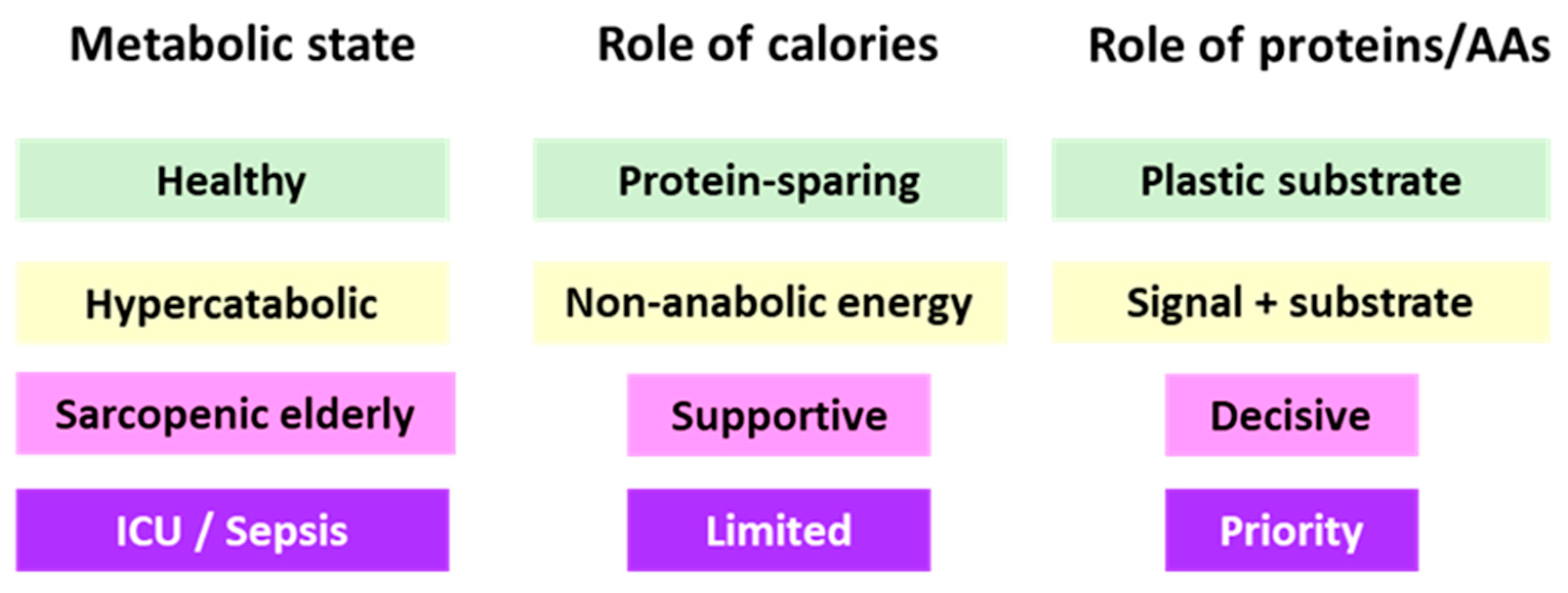
Figure 2.
Schematic representation of the interaction between the hypercatabolic state and protein/energy availability. A) A hypercatabolic state associated with protein and caloric deficiency promotes skeletal muscle breakdown to supply amino acids (AAs), particularly essential-AAs (EAAs). These substrates are predominantly diverted toward energy production (large gray lines) to support an already impaired cellular metabolism, rather than being used for anabolic processes. B) When adequate protein/EAAs and caloric intake are available, muscle proteolysis is attenuated. AAs and EAAs derived from dietary proteins and/or nutritional supplementation are preferentially utilized to sustain anabolic pathways (large gray lines), thereby counteracting the hypercatabolic state and its associated deleterious effects.
Figure 2.
Schematic representation of the interaction between the hypercatabolic state and protein/energy availability. A) A hypercatabolic state associated with protein and caloric deficiency promotes skeletal muscle breakdown to supply amino acids (AAs), particularly essential-AAs (EAAs). These substrates are predominantly diverted toward energy production (large gray lines) to support an already impaired cellular metabolism, rather than being used for anabolic processes. B) When adequate protein/EAAs and caloric intake are available, muscle proteolysis is attenuated. AAs and EAAs derived from dietary proteins and/or nutritional supplementation are preferentially utilized to sustain anabolic pathways (large gray lines), thereby counteracting the hypercatabolic state and its associated deleterious effects.
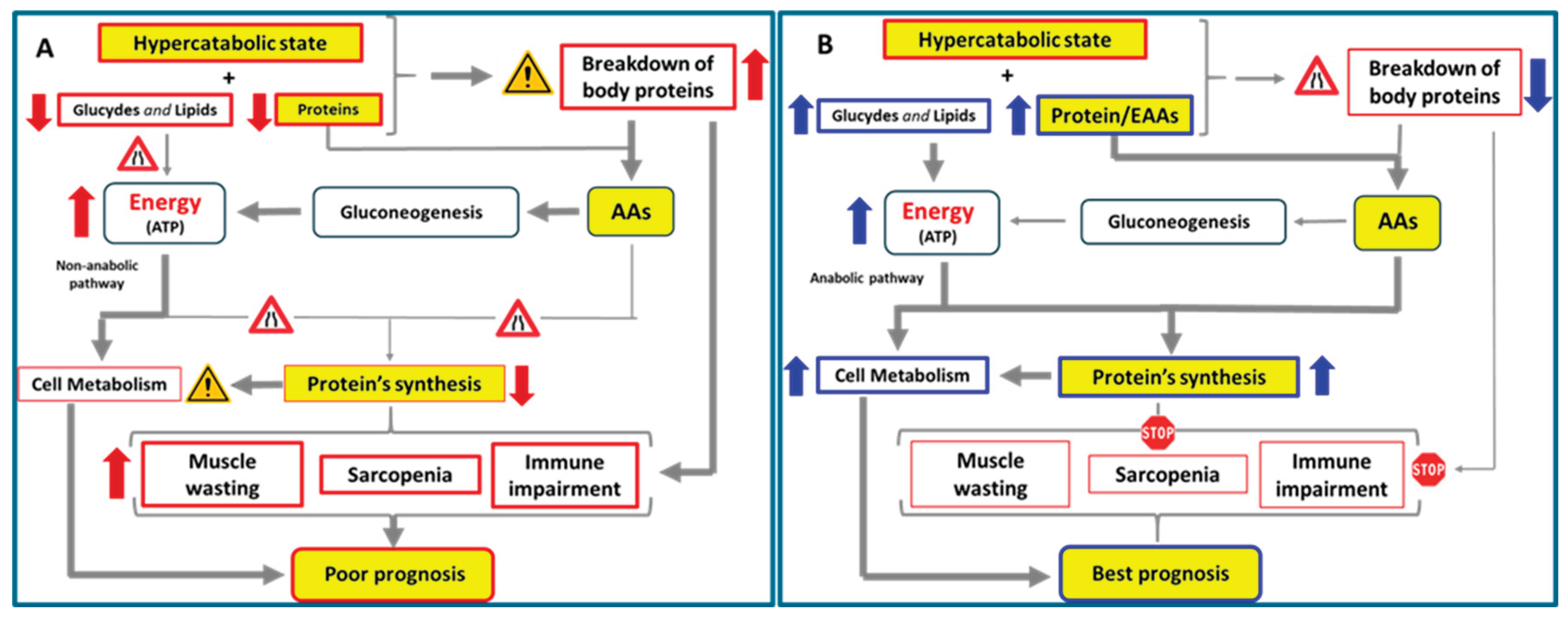

Table 1.
Most recent review regarding protein metabolism. MPS = muscle protein synthesis; EAAs = essential amino acids; AAs = amino acids.
Table 1.
Most recent review regarding protein metabolism. MPS = muscle protein synthesis; EAAs = essential amino acids; AAs = amino acids.
| Study [Ref] | Title | Main Message |
|---|---|---|
| Cruz-Pierard, et al. 2026 [17] |
Synergistic effects of protein intake and resistance exercise. | Systematic review showing protein supplementation combined with resistance exercise enhances metabolic and anabolic biomarkers related to MPS, suggesting an interplay between nutrition and physical activity. |
| Prokopidis, et al. 2025 [18] |
Food matrix in the context of muscle and whole-body protein synthesis: a scoping review. | Highlights how the food matrix (nutrient interactions within whole foods) may influence MPS and whole-body protein synthesis beyond isolated protein dose. Limited data available, calling for future trials examining whole-food context. |
| Coker, & Coker, 2025 [19] |
Dietary proteins, AAs and insulin resistance: mini review. | Discusses how dietary protein and EAAs (especially leucine) influence insulin sensitivity and metabolic regulation, balancing anabolic stimulus with risks of chronic mTOR activation under nutrient overload. |
| Yimam, et al. 2025 [20] |
Postprandial aminoacidemia after alternative protein sources. | Focuses on postprandial AAs kinetics following ingestion of alternative proteins, underlining differences in AAs availability that can modulate metabolic responses and protein turnover. |
| Matthews, et al. 2025 [21] |
Understanding dietary protein quality. | Reviews methods to assess dietary protein quality emphasizing how quality metrics relate to digestibility, EAAs content, and metabolic impacts including protein synthesis stimulation. |
Table 2.
Effect of total caloric intake combined with protein intake on maintenance of lean body mass (LBM) in hypercatabolic states. E.E. = Energy Expenditure; N.B. = Nitrogen Balance; AAs = Amino Acids. Arrow down = decrease; Arrow up = increase.
Table 2.
Effect of total caloric intake combined with protein intake on maintenance of lean body mass (LBM) in hypercatabolic states. E.E. = Energy Expenditure; N.B. = Nitrogen Balance; AAs = Amino Acids. Arrow down = decrease; Arrow up = increase.
| Nutritional strategy |
Total caloric intake % E.E. |
Protein intake g/kg/day |
Effect on N.B. | Effect on LBM |
Predominant mechanisms |
[Ref.] |
|---|---|---|---|---|---|---|
| Very low calories + low protein |
<50% | <1.0 | Strongly negative | Rapid loss | ↑ gluconeogenesis from AA, ↑ proteolysis, ↓ protein synthesis |
[59,81] |
| Low calories + high protein |
<60–70% | ≥1.5–2.0 | Negative | Partial preservation |
AAs oxidation for energy purposes, incomplete protein-sparing effect | [56,57] |
| Adequate calories + adequate protein |
70–100% | 1.2–1.5 | Moderately negative or neutral | Better preservation |
↓ AAs oxidation, ↓ gluconeogenesis, insulin effect |
[79,81] |
| Adequate calories + high protein |
70–100% | 1.5–2.0 | Neutral or slightly positive | Maximum possible preservation (Stable phase) |
↓ proteolysis, ↑ protein synthesis (Limited by anabolic resistance) |
[56,82] |
| High calories + Very high protein |
>110–120% | ≥2.0 | Variable | No additional benefits |
Overfeeding, lipogenesis, ↑ metabolic stress |
[83,84] |
Table 3.
Summary of main studies on total energy and protein intake and lean body mass (LBM) preservation in HC states. RE = resistance exercise.
Table 3.
Summary of main studies on total energy and protein intake and lean body mass (LBM) preservation in HC states. RE = resistance exercise.
| Study [Ref] | Population | Study design |
Energy intake | Protein Intake g/kg/day |
Comparator | Outcome on LBM | Key findings |
|---|---|---|---|---|---|---|---|
| Stein, et al. 2024. [87] |
Obese | Additional protein intake in preservation of LBM | Hypo | 1.5 |
Lower intake (1 g/kg/day) |
significantly reduced in both groups | no differences in weight loss between the groups |
| Nunes, et al., 2022 [88] |
healthy adult (18 years or older) |
Randomized controlled trial | Normo | 1.2–1.59 and >1.6 |
Placebo or no intervention | increasing daily protein ingestion may enhance gains in LBM in studies enrolling subjects in RE | increasing protein ingestion results in small additional gains in LBM and lower body muscle strength gains. |
| Arends, et al. 2017 [89] |
Cancer patients | Clinical guidelines (ESPEN) | Normo/ Hyper |
1.2–1.5 | Inadequate intake | Partial preservation of LBM | Energy adequacy required to overcome anabolic resistance |
| Longland, et al., 2016 [90] |
Young man | Single-blind, randomized, parallel-group trial. RE training with high-intensity interval training. |
Hypo | 2.4 | Lower intake (1.2 g/kg/day) |
LBM increased in the higher protein group and loss of fat mass. | High protein diet was more effective in promoting increases in LBM and losses of fat mass when combined with high intensity RE and anaerobic exercise. |
| Weijs, et al. 2014 [81] |
ICU patients | Observational cohort | ≥80% measured energy expenditure | ≥1.2 | Lower intake | Reduced mortality and muscle loss | Best outcomes when energy and protein targets met together |
| Casaer, et al. 2011 [83] |
ICU patients | Randomized controlled trial | Early vs late parenteral nutrition | ~1.2 | Early high-calorie PN | Less muscle wasting with delayed calories | Early full calories blunt benefits of protein in acute phase |
| Villet, et al. 2005 [91] |
ICU patients | Prospective observational study | Hypo | ~1.0 | Adequate energy/protein | Progressive LBM loss | Energy deficit strongly associated with loss of fat-free mass |
| Paddon-Jones, et al. 2004 [92] |
Healthy adults (catabolic model) | Controlled feeding trial | Normo | High-quality protein + EAAs | Lower protein | Improved muscle protein synthesis | Adequate energy enhances anabolic response to protein |
| Wolfe, et al. 2000 [93] |
Critically ill patients | Narrative review of metabolic studies | Iso/ Hyper |
≥1.5 | Hypocaloric, low protein | Partial preservation of LBM | Energy–protein synergy limits endogenous protein oxidation |
| Wolfe, et al. 1983 [94] |
Severe burn patients | Metabolic balance study | Hyper | 2.0–2.5 | Lower protein intake | Improved nitrogen balance; reduced LBM loss | Adequate calories are required for protein to exert anabolic effects |
Table 4.
More recent systematic reviews of RCTs on effects of protein supplementation in critical illness. SR = systematic review; MA = meta-analysis; RCT = randomized clinical trial; ICU = intensive care unit.
Table 4.
More recent systematic reviews of RCTs on effects of protein supplementation in critical illness. SR = systematic review; MA = meta-analysis; RCT = randomized clinical trial; ICU = intensive care unit.
| Study [Ref] | Study design |
Study objective | Main findings |
|---|---|---|---|
| Hu, et al., 2025 [95] |
SR+MA | To evaluate the association between different levels of protein intake and renal adverse events and mortality in critically ill patients | Protein intake >1.3 g/kg/day was not associated with an increased risk of renal adverse events; no significant differences in 28-day, ICU, or hospital mortality were observed |
| Castro, et al. 2025 [96] |
SR+MA | To assess the impact of different protein intakes in patients with chronic critical illness | Higher protein intake (>1.3 g/kg/day) was associated with reduced early mortality, with no effect on late mortality or other clinical outcomes |
| Badpeyma, et al., 2025(1) [97] |
MA | Evaluating dose-response between high vs low protein in ICU patients | No significant effect on mortality or length of stay; reduction in muscle atrophy with high protein intake |
| Badpeyma, et al., 2025(2) [98] |
RCT | Comparing high protein (2.2 g/kg/day) vs conventional (1.0 g/kg/day) on mortality and clinical outcomes | High protein dose showed no clear improvement in mortality or major outcomes, highlighting uncertainties about efficacy and safety |
| Mohamed, et al., 2025 [82] |
SR+MA | To systematically determine the effect of protein dose (high >2.2 g/kg/day vs low <1.2 g/kg/day) on skeletal muscle strength in critically ill patients | Significant difference in skeletal muscle strength with higher vs lower protein intakes. Inconsistency was evident across the included studies. |
| O’Keefe, et al., 2025 [99] |
RCT | To test the hypothesis that supplementing enteral protein intake (2 g/kg/day vs standard nutritional care) would improve outcomes. | Protein supplementation did not improve outcomes but was associated with increased complications |
| Wang, et al., 2024 [100] |
RCT | To evaluate whether early high protein intake (1.5 g/kg/day) improves prognosis compared with low intake (0.8 g/kg/day) | No significant reduction in 28-day mortality; potential favorable effects on muscle preservation and duration of mechanical ventilation were reported |
| Qin, et al., 2024 [101] |
SR+MA | To compare higher (≥1.2 g/kg/day) vs lower (<1.2 g/kg/day) protein intake on clinical outcomes in adult ICU patients | No significant differences were found in mortality, ICU or hospital length of stay, duration of mechanical ventilation, or incidence of acute kidney injury |
| Blaauw, et al., 2024 [102] |
SR | To compare a protein intake group (≥1.2 g/kg/day) with a lower protein intake group (<1.2 g/kg/day) in critically ill adult patients on mortality, length of ICU and hospital stay. | Higher protein group results in little to no difference in mortality, with a probable slight increase in length of ICU stay and length of hospital stay. |
| Bels, et al., 2023 [57] | SR | Protein supplementation in ICU patients. | Protein supplementation has shown positive effects on recovery and mortality. |
Disclaimer/Publisher’s Note: The statements, opinions and data contained in all publications are solely those of the individual author(s) and contributor(s) and not of MDPI and/or the editor(s). MDPI and/or the editor(s) disclaim responsibility for any injury to people or property resulting from any ideas, methods, instructions or products referred to in the content. |
© 2026 by the authors. Licensee MDPI, Basel, Switzerland. This article is an open access article distributed under the terms and conditions of the Creative Commons Attribution (CC BY) license (http://creativecommons.org/licenses/by/4.0/).
Copyright: This open access article is published under a Creative Commons CC BY 4.0 license, which permit the free download, distribution, and reuse, provided that the author and preprint are cited in any reuse.


