
Submitted:
09 April 2026
Posted:
10 April 2026
You are already at the latest version
Abstract
Agroecology systems integrate social and ecological principles into agricultural practices. Current assessments do not adequately consider animal welfare. This study introduces a new agroecology assessment tool by adding livestock sustainability and animal welfare criteria based on the Five Domains. Through a cross-sectional survey of 14 case studies, we examine how livestock sustainability and animal welfare are integrated into agroecological systems. Surveyors gathered data from farms in Kenya (10), Thailand (1), Italy (1), Vietnam (1), and Mexico (1). Results indicate that certain management practices within agroecological systems, specifically import of feed edible for human consumption, impact sustainability and painful beak trimming and stressful transport, negatively impact animal welfare. These findings highlight the need to strengthen agroecological assessment methods by including sustainability and animal welfare indicators. Doing so can help drive food-system change that improves health, reduces disease risk, and enhances animals’ ecological and social contributions. The paper concludes that better policy and knowledge are essential to improving the wellbeing of both animals and farmers in agroecological systems. The integrated tool could help researchers and farmer organizations improve animal welfare on agroecological farms across different contexts. Better animal welfare could also support the wider adoption and scaling of livestock integration in agroecology.
Keywords:
agroecology
; animal wellbeing
; livestock sustainability transition
; positive animal welfare
1. Introduction
Agroecology, originated around the 1930s as a scientific discipline, evolving over time into both a set of agricultural practices and a social movement aimed at promoting sustainable, culturally respectful, socially just, and economically viable farming systems [1]. By the late 1990s, it had become the ecology of the entire food system [2].
Under this vision, integrating agroecological principles into livestock farming offers a path to transform the sector from a major source of greenhouse gases (~14%), land and water competition, and ecosystem pollution [3] Intensive livestock systems raise concerns about deforestation, loss of biodiversity, GHG emission, antibiotic resistance, disease transmission [4] and unfair labor conditions [5]. These concerns conflict with agroecology core principles, therefore integrating livestock into agroecological farming is not a simple solution, it requires a fundamental re-evaluation of how animals are raised and maintained to ensure alignment with agroecological values [6]. Livestock in agroecology contributes to nutrient cycling, enhances biodiversity, bolsters economic viability, supports food security, and upholds cultural significance [7]. The integration of animals into agroecological systems enhances the sustainability and resilience of farming practices, making them an essential component of holistic agricultural approaches [8]. Agroecological practices that promote crop-livestock integration based on habitat conservation, effectively prevent viral zoonoses at various scales, addressing global challenges like climate resilience, biodiversity conservation, and animal health and welfare [9]. In addition, rotational grazing practices can reduce parasite loads, and the use of diverse forage species can improve overall health and resilience against diseases [10] The diversity of feed resources as well, such as grasslands and legume crops, can provide more balanced and nutritious diets for animals, contributing to their well-being while supporting the development of floristically rich phytocoenoses [11]. Conversely, livestock can help in nutrient cycling by converting plant materials into manure that mitigate land degradation and improve soil fertility [12]. Furthermore, agroecology promotes the use of diverse animal breeds and species within farming systems, emphasizing the selection of animals adapted to harsh environments and using breeding practices that enhance adaptation and strengthen immunity [13,14] By incorporating local and indigenous breeds, farmers can maintain and increase genetic pool diversity, which is crucial for resilience against diseases and market fluctuations. Additionally, local and rare breeds are specially adapted to specific or extreme environments, linked to local knowledge, and usually provide high-quality locally valued products [15]. Agroecology typically promotes more extensive and less intensive farming practices, which increases biodiversity and can lead to improved animal welfare. A diverse ecosystem can provide a variety of habitats and food sources, supporting a more resilient animal population [16]
Undoubtedly, agroecology offers a framework for redesigning animal production systems to address social, economic, environmental, health, and welfare challenges. Despite this, agroecology paid little attention to livestock systems until recently [7]. Altieri and Dumont et al., [16,17] introduced principles and framework for sustainable livestock practices, which include integrated animal health management, reduced external inputs, pollution mitigation, enhanced diversity for resilience, and biodiversity preservation. Agroecology’s framework aims to bridge theoretical perspectives and practical applications, offering a more nuanced lens through which to understand the complexities of transitioning to agroecological animal production [19]. Gliessman [20] noted that animal production systems have been ignored in most agroecological thinking; he infers that the problem lies on the disconnectedness of animals from the land and emphasizes the beneficial roles animals play in agroecosystems: producing protein-rich food for humans from inedible resources (e.g., crop residues, byproducts, grasslands), providing ecosystem services (e.g., carbon sequestration, biodiversity), recycling plant nutrients and providing social benefits. However, much of the research to date has been foundational and primarily focused on the beneficial roles that animals play in the ecosystems or on the profitability impact of agroecology management practices, not on the benefits for the animals themselves.
Animals are generally considered to experience a better quality of life in agroecological systems compared to conventional industrial farming systems [16]. However, to our knowledge, there are no studies in the field of agroecology that explore the welfare status of animals beyond their health, and more specifically if animals have the potential to experience Positive Animal Welfare (PAW) outcomes in agroecological systems. Providing outdoor access, not overcrowded spaces, local food, local breeds, and interaction with other species are certainly beneficial aspects for animals but alone do not guarantee that animals live positive experiences [21] The field of animal welfare is an inclusive one, containing ideas from philosophy, ethics, law, agriculture and fisheries, tourism and veterinary care and goes beyond the environmental and physical conditions as it considers animal sentience (the capacity to feel) [22] A good life for animals is one in which animals flourish through the experience of predominantly positive mental states, this includes the development of competence and resilience, enabling them to pursue rewarding experiences, have choices, and achieve desired outcomes [21] To achieve a good life for animals, where animals experience overwhelmingly positive mental states, their physical environment must be designed to meet their physical, behavioral, and mental needs [23]
To address if animal has the potential to experience positive welfare outcomes in agroecological systems, we developed a refined set of criteria based on Sustainability frameworks and the Five Domains model [24] aligning with two widely used assessment tools. We examined 14 case studies covering diverse geography where we assessed the resource inputs that might lead to positive welfare outcomes for animals and discuss how the founding principles of agroecology and animal welfare can be integrated to improve animal production systems and conclude on recommendations for promoting integration of animal welfare on agroecological food system.
2. Materials and Methods
To explore the potential for animals to experience PAW outcomes in agroecological systems we employed a mixed-method approach that integrates various methodologies:
Literature Review: a thorough review of existing research to examine animal integration in agroecological systems and assess animal welfare within these systems. This review covered academic studies and grey literature to establish a baseline understanding of the current situation and identify knowledge gaps.
Design a new tool: following a holistic perspective, we propose a new tool to enhance existing agroecology assessment schemes by incorporating livestock sustainability and higher animal welfare criteria based on the Five Domains model.
Cross-sectional survey: tailored data collection has been designed to gather first-hand data from farms that employ different levels of agroecology and animal welfare practices.
This multi-faceted approach ensures that the cases are grounded in both existing knowledge and real-world data, offering a comprehensive and evidence-based understanding of how animals live in agroecological systems.
2.1. Combining Agroecology Livestock Sustainibility and Animal Welfare Assessment in a Tool
To explore if animals can experience positive welfare outcomes in agroecological systems we designed a new tool named “The Equitable Humane and Sustainable (EHS) data collection tool”. The tool was developed in three key steps:
I. Screening the existing agroecology livestock sustainability and animal welfare assessment tools
Based on the results of the literature review of the available assessment tools in agroecology livestock sustainability and animal welfare, we identified tools focused solely on agroecology, on sustainability and those specifically addressing animal welfare, and any that might attempt to bridge the three. For this study, we excluded all the agroecology tools that did not consider livestock or considered only livestock health aspects. The tools we included enabled broad study screening, provided an evaluation framework, and facilitated on-farm data collection and interpretation. We excluded animal welfare science assessments that are species-specific (e.g., Welfare Quality® assessment protocols) and included measurable animal welfare criteria. To align with the agroecology assessment tool’s characteristics, such as practicality, ease of data collection, and real-time results we included criteria drawing upon the Five Domains model to evaluate animal welfare. The Five Domains model is a framework for assessing animal welfare that considers how the physical environment influences an animal’s mental state, either positive or negative [24] The four physical domains (nutrition, physical environment, health, behavioral interactions) contribute to the animals’ individual experience, which is described by the fifth domain: mental state [24]. The outcomes of the tool were intended to be comparable with other agroecology studies, demonstrating the potential of integrating livestock in these systems and showcasing the potential for animals to experience PAW outcomes and its inherent benefits. For the purpose of this paper, the economic dimension of sustainability was deliberately excluded from the analytical framework. Given the breadth and complexity of the topic, incorporating economic criteria would have exceeded the scope of the present work; this dimension is therefore identified as a priority avenue for future research.
II. Re-designing details to combine existing agroecology assessment tool with livestock sustainability animal welfare criteria
Based on the evaluation in step one, three agroecology assessment tools were chosen as the foundation for the integration: the Farm Level Agroecology Criteria Tool (F-ACT), the Bussiness Agroecology Criteria Tool (B-ACT) and the Tool for Agroecology Performance evaluation (TAPE). F-ACT [25] and B-ACT [26] are developed by Biovision and are a digital decision-making tool that enables agroecological farmers and enterprises to identify ways for making their farms and business more efficient, resilient, equitable, and ultimately agroecological. TAPE was commissioned by FAO [27] is a comprehensive tool that aims to measure the multi-dimensional performance of agroecological systems across the different dimensions of sustainability. It applies to a stepwise approach at the household/farm level, but it also collects information and provides results at a community and territorial scale. The new tool aims to be highly practical for on-farm use, requires minimal training, and provides farmers with immediate feedback. The particularities of the selected data collection tools included pre-filled answers and real-time interpretation of results. We reviewed the indicators within the selected agroecology tools to identify gaps in livestock sustainability and animal welfare coverage, subsequently introducing additional questions to address these gaps and integrating them with existing criteria. For these new criteria, we developed the existing method for evaluating agroecological principles, assigning scores from 1 to 3. The re-design process ensured that the integrated tool is logically structured, avoids redundancy, and provides a coherent assessment of the interconnectedness between agroecological practices and animal welfare outcomes.
III. Testing and revising
The re-designed tool was tested during a farmer workshop in Thailand. After the testing several questions were re-worded and some merged. The pilot testing also generated initial data on agroecological, livestock sustainability and animal welfare indicators using the new tool. This data was analyzed to assess the tool’s ability to capture relevant information and identify any inconsistencies or ambiguities.
After this first phase, we ran a consultation process with four organizations that work with agroecological farmers worldwide. Feedback was actively sought from individuals who used the tool (e.g., farmers, researchers, assessors) regarding its clarity, ease of use, time efficiency, and perceived relevance. Based on data analysis and stakeholder feedback, the assessment tool was further revised and refined. This involved clarifying wording of the tool, removing indicators based on their relevance, and developing clear guidelines and training materials for using the tool effectively.
IV. Equitable, Humane, and Sustainable assessment tool
The EHS data collection tool comprises a total of 100 questions, categorized into three main sections: farm agroecology and livestock sustainability assessment, animal welfare assessment, and farm economic assessment. The farm agroecology livestock sustainability assessment with a total of 46 questions is subdivided into three categories, aligning with the 13 principles of agroecology (Figure 1). The first category is “improvement of resource efficiency”, focusing on recycling and input reduction. The second is “strengthening resilience”, which encompasses soil health, biodiversity, synergies, economic diversification, and social equity. Third is “secure social equity”, which consists in co-creation of knowledge, social value in diet, fairness, connectivity, land and natural resource governance, and participation. The animal welfare assessment is segmented into five categories, each representing one of the five animal welfare domains. These categories encompass nutrition, water, enrichment, physical environment, health, and human-environmental behavioral interaction, with a total of 31 questions. Lastly, the farm economic assessment comprises 33 questions evaluating aspects such as capital, assets, waste, and other products.
2.2. Study Design and Sampling Strategy
A cross-sectional study was conducted between June and September 2024 to collect data on agroecology and animal welfare practices. The case selection was based on World Animal Protection’s country offices’ knowledge and work, and on our partner network. World Animal Protection partnered up with organizations that are trusted locally and already work closely with multiple farmers. All questionnaires were completed in person, utilizing local partners to facilitate any language barriers. To ensure consistency in response and reduce respondent bias, farmers were guided through the completion of the questionnaire, provided standardized response options, and were allowed to ask clarifying questions as needed. By offering standardized response options and framing key questions in varied ways, the tool helps to avoid misinterpretation and enhances the reliability of the data. Additionally, the real-time analysis provides immediate feedback, improving the engagement with the farmers, allowing for early identification of trends and issues, which can be addressed promptly during the data collection process. This approach not only streamlines data gathering but also improves the overall accuracy and depth of the insights generated.
This approach allowed us to gain multiple farmer contacts, earning their trust, and sharing basic data and insights, while also understanding and influencing how other organizations perceived animal welfare and agroecology. Having the support of local expertise helped to contextualise the results of the data analyses in the socio-economic, cultural, and environmental complexities avoiding oversimplified or even misleading interpretations of the data.
Farmers were surveyed in Kenya (n = 10), with the support of “Biovision Africa”, Thailand (n = 1), Italy (n =1) with the support of “Mondeggi bene comune”, Mexico (n = 1) with the support of “Slow Food”, and in Vietnam (n =1) supported by “EverGreen”. Participation of farmers was on a voluntary basis and informed consent was obtained from the respondents.
Given the long-standing implementation of agroecological principles in Kenya, we collected a larger number of cases there. In contrast, we anticipated fewer agroecological principles in Thailand and Vietnam, as these farms are participating in animal welfare programs. Mexico and Italy were chosen to represent older, traditional farming methods that align with agroecological principles and often embody high animal welfare. Training for enumerators that have a deep understanding of the local context was provided.
2.3. Statistical Analysis
Microsoft Excel (Microsoft Excel 365) was used for data collection, management, cleaning and descriptive analysis.
3. Results
The selection of case study was compiled from different sources with the aim to cover the diversity in terms of scale, biogeographical conditions, and actors. In total we visited 14 farmers; 10 in Kenya, East-Africa; 1 in Thailand, 1 in Casentino, Central-Italy; 1 in Yucatan, Mexico, and 1 in Vietnam. All farms have multiple crops and livestock breeds. They are part of local networks and farmers markets. All the farms in Kenya practice agroecology; the farms in Thailand and Vietnam recently started implementing high animal welfare practices. The farms in Italy and Mexico follow some agroecology principles and local- traditional agriculture practices. Table 1 summarises the key information for each farm, by location, livestock, crops, agroecological practices, and self-sufficiency, with a focus on diversity and sustainability indicators.
3.1. Livestock Sustainibility Practices and Animal Welfare Outcomes in Agroecological Systems
All the farms’ approaches to animal care have both strengths and weaknesses in relation to the potential to experience PAW outcomes. In this section the results are systematically presented across each of the four physical animal welfare domains. Assessment of potential welfare outcomes related to transport are presented separately.
3.1.1. Feed Origins – Water and Pasture Management - Nutrition
In most of the farms visited, trained surveyors noted, and farmers reported that animals receive balanced nutrition and clean water (n = 12). Feed was reported to be nutritious (combination of nutrients, substances, microorganisms, other feed constituents), palatable, and containing fiber. In six Kenyan farms visited, farmers reported that animals graze on pasture for less than six months per year and more than 50% of feed is purchased from import markets. In all Kenyan farms, farmers reported that less than 50% of one type of livestock feed is produced onsite or by neighboring farms (e.g., pasture, fodder, hay, silage). Few farms (n = 2) reported poor water management due to lack of infrastructure and high cost of energy. Four farms manage animals in a zero-grazing system, with all livestock feed reported to be sourced from import markets, and containing cereals and crops (e.g., soya, corn) edible for humans. However, six of the farms visited practice rotational or regenerative grazing (e.g., mob-grazing) (Table 2).
3.1.2. Physical Environment
Regarding the physical environment, most farms (n = 10) reported that animal’s benefit from access to grazing and space that exceeds local industry requirements, with good management of indoor climate and air quality in almost all farms. However, four farms reported that they lack separate areas for eating, resting, and waste, and that a significant portion of animals had dirty bodies due to limited hygiene. In these farms less than 50% of animals were reported to have manure on their body or visible skin injuries. Less than 50% of the litter (of natural local material) was reported to be partially covered with manure. In six farms where animals have separate space for eating, resting, and defecating, the litter was reported to be minimally covered with manure (less than 10% of the entire surface) and animals had no significant soiling on their body. In all six farms the litter was of natural local materials (biodegradable), had good absorbency, there was no dust, and the odor was mild.
One farm reported that animals had limited access to the outdoors, no grazing opportunities, and no shelter. In this farm animals were provided six hours of natural light per day. Moreover, the space per animal was limited in line with local industry requirements, with no separate space for eating, resting, and toileting. This farm reported that more than 50% of animals had manure on their body, injuries, and the litter was significantly covered with manure. One farm reported that the litter was not of natural materials (not biodegradable) and had poor absorbency, there was moderate dust, the odor was pungent, and more than 50% of animals had soling on their lower body.
In ten farms animals were reported to spend all their time in natural lighting conditions, have consistent access to the outdoors with limited shelter, and the indoor climate was monitored using standard measurements (e.g., average temperatures, ammonia levels, rate of air exchange) (Table 3).
Enrichment was reported to be used and available in all visited farms, constructed using local materials. Manipulable material (e.g., husk, straws) and edible enrichment (e.g., root, fruits) was reportedly provided to pigs in Mexico, Italy and Kenya. Perches, tree branches, ramps, and platforms were reported to be provided on all chicken farms (Table 3).
3.1.3. Health
In general animal health was reported to be well-monitored and antibiotic use is managed by a licensed veterinarian on all the farms visited. Zero disease outbreaks in the last three years were reported in ten farms and three farms reported zero outbreaks in the last year. One farmer made their own herbal medicine to sell. Measurements of the incidence of disease were carried out continuously in eight farms (e.g., the average proportion of animals affected by recorded health problems). In 13 farms less than 50% of animals were reported to have suffered disease at least once a year and mortality was reported to be less than 10%. One farm reported that around 50% of the animals experienced illness annually (Table 4).
3.1.4. Human and Environmental Behavioral Interaction
In terms of social interaction and behaviour, all the farms reported maintaining multiple livestock species (minimum of 2, maximum of 5) that were adapted to the local climate, and allowed animals to engage in natural behaviors. The production cycle and weaning times reported to be appropriate to meet the behavioral needs of the animals on seven farms. All farmers reported that less than 10% of animals fear humans and show aggressive behaviors. The majority of farms reported to source animals from local breeders, with higher welfare outcomes and local genetics (n = 8), the rest reported to source animals from livestock markets (n = 5). Some chicken farms reported that painful procedures like beak trimming were performed with (n = 6) and without pain relief (n = 1) (Table 5).
3.1.5. Welfare During Transport
The majority of farms reported that over 50% of the animals exhibit fear and aggressive behaviors, indicating issues with human interaction and handling during transport (n = 8).
Animals are transported for short distances on four of the farms visited, about four to five km. One farm reported that animals are transported for long journeys up to 123 km, mostly on pick-up trucks, and sometimes in cages tied on motor bikes, with all four legs tied in case of larger animals. Some are handheld when the buyer is on foot.
3.2. Characteristics of Agroecological Principles and Livestock Sustainibility
Although an agroecology assessment was conducted for this study, the complete findings are not detailed in this manuscript. Instead, we specifically examine the living conditions of animals within these systems. All the collected case studies share several key characteristics: they focus on short supply chains that strengthen local connections between producers and consumers, enabling fresh, locally sourced goods (input reduction). Farmers engage in diversified production, incorporating both crop and livestock farming with multiple animal species (n = 13), which supports ecosystem balance and resilience (economic diversification). Only the Vietnamese farm focused only on meat chicken production. The farmers participate in platforms for co-creating knowledge, allowing farmers to exchange expertise and innovation (synergies and co-creation of knowledge). Co-creation of knowledge is an inclusive process where farmers collaborate with scientists, consumers, and other stakeholders to jointly develop practices. This is achieved through various participatory approaches designed to create a common understanding of issues and goals. These farms are active in farmer and consumer networks, fostering community support and shared learning.
Each farm also emphasizes individualized animal health management, maintaining very low antibiotic usage (animal health). They adopt resource recycling practices, using manure as a natural fertilizer to enhance soil quality and reduce dependence on chemical fertilizers (recycling). Additionally, crop rotation and cultivation of local plant varieties and livestock breeds are common, promoting biodiversity and adaptability to local climates and soil conditions (soil health). Financially, these farms generate enough income to support the farm and the family, but they all struggle to produce surplus funds for reinvestment and expansion (Table 6).
4. Discussion
This study aimed to evaluate the potential sustainability and animal welfare status within existing agroecological smallholder farms by applying a new assessment tool in 14 farms in five different countries. The study aimed to understand how well these systems currently provide PAW outcomes alongside agroecological principles. Overall, in the farms we visited in Mexico and Italy, where historically livestock has been raised traditionally following agroecological principles, animals had a higher potential to experience positive welfare [28]. In Thailand and Vietnam, farms had a high animal welfare focus, however the integration with other crops and soil management is poor and the level of integration with agroecology is poor. This aspect can reduce the ecosystems’ ability to deliver critical services, such as water purification and maintaining soil fertility, causing soil erosion, water pollution from runoff, and greenhouse gas emissions [29]. Incorporating multiple livestock species and integrating various crops and livestock enhances ecological interactions and resilience, improving biodiversity [14]. In Kenya, where the integration of animal farming into agroecology is expanding, painful procedures and stressful handling during transport remained prevalent, failing to ensure animals the opportunity to live good lives dominated by PAW experiences. A possible explanation for this is that animal science research in agroecology is limited, and animal welfare research even more so. Livestock has often been overlooked in agroecology due to several factors, including the historical focus of agroecology on crop production, the environmental impacts of conventional animal farming, the complexity of integrating livestock into sustainable systems [7] and may be due to the common perception that extensive systems offer more advantages for animal welfare as compared to smaller, integrated systems [30]. This lack of evidence likely restricts knowledge sharing among agroecological farmers that have livestock. Dumont et al. developed several holistic approaches to explore animal ecological services [18,31] and a framework [14] to discover barriers and challenges to scale up the integration of livestock into agroecology. However, animal welfare aspects only reflected the health risks associated with incorporating diversity into animal production systems and pointed out that mixing different animal species can lead to health risks, such as cross-species disease transmission [10] For example, co-grazing sheep and cattle can facilitate the spread of bacterial diseases, and some infectious agents, like influenza viruses, can adapt and increase their virulence when transmitted between species [16] A recent cross-sectional survey found that keeping multiple livestock species in a household significantly increases the risk of abortion in sheep and goat flocks. Specifically, households with more than two other livestock species had a higher incidence of abortion [32] In our study farms, animals mainly died from predators, not diseases spreading between species. Most farmers (13) kept several animal types, but usually only focused on selling one for profit, using the others for their own food or as a financial safety net. This demonstrates that the value that animals add to agroecosystems goes well beyond their direct products. They are flexible assets that can be sold in times of crisis or moved to escape disasters or local social instabilities. In mixed systems, livestock also increases total farm and land productivity by providing draught power and fertilizer and by converting crop residues into valuable protein [33].
Martín-Collado et al., [29] are of the opinion that integrating animals into agroecosystems is complex and requires careful management. Based on our findings, we can infer that the challenge lies in optimizing the interaction between animals and ecological processes to deliver ecosystem services and ensure economic viability. Livestock farming can present several challenges, especially when farming methods aren’t sustainable or when there is lack of understanding on how different parts of the system interact. Our results showed that farmers that have higher number of animals often adopt management practices that are typical of intensive agriculture, including painful mutilation, use of zero-grazing systems, limited exposition to natural light, and use of imported commodity feed. Demonstrating that high livestock number is unsustainable for high welfare and agroecology practices that prevent disease or regenerate the soil such as pasture and grazing [34]. Another observed practice that aligns with intensive agriculture is the substitution of diverse, local breeds with high-yielding commercial breeds, which can reduce genetic diversity within livestock populations, as is the case with crop varieties. This loss of biodiversity can make agroecosystems more vulnerable to diseases and environmental changes, ultimately affecting their resilience and sustainability [29]. Across case studies, breed diversity was evident, though high-density farms predominantly used high-performing commercial breeds. Determining the distinct contributions of breeds versus farming practices to ecosystem service delivery remains a source of ambiguity. Overemphasizing the contributions of certain breeds without considering the broader context of the agroecosystem can lead to misguided policies and practices that do not effectively support sustainable outcomes [35]. The current livestock breeding strategy emphasizes high-yielding breeds, this practice has significantly reduced the diversity of indigenous livestock breeds. As a result, the cultural value and genetic diversity offered by locally adapted breeds have largely been overlooked [36]In agroecology, breeding goals are shifting from prioritizing production traits to emphasizing functional traits that enhance animal robustness, health, sustainability and welfare [37]. Key research areas include assessing animal robustness, exploring alternative feed resources, and designing systems that promote biological diversity and component interactions [31] Our findings showed that only three Kenyan farms and the Vietnamese farm use commercial breeds that are not adapted locally and selected for high production traits. Two farmers replaced indigenous chickens with Kenbro breed, a free-range dual-purpose bird that is resistant to disease, but that is a commercial, genetically selected breed. Evidence suggests that while indigenous chickens have desirable traits and play a significant role in rural economies, their production performance is generally lower than commercial breeds, indicating that replacing them with Kenbro or other commercial breeds may be more cost-effective for higher production, however they have a higher replacement cost [38]
Another potential challenge that may hinder animals from living positive experiences in agroecological systems is the lack of adequate resources. Falconnier [39] challenged the idea that smallholder farmers in sub-Saharan Africa can improve yields using only legumes and manure without more mineral fertilizer. After reviewing extensive research, he concluded that while agroecological practices are common, they are insufficient due to severely degraded soils. Cutting back on mineral fertilizers could limit productivity and drive further agricultural expansion and deforestation [39]. In our case studies we noticed that almost all farmers visited in Kenya buy imported feed, highlighting the resource scarcity and difficult to produce in loco. A cross-sectional survey in Ethiopia, also found that local feed resources provided sufficient dry matter, digestible crude protein, and metabolizable energy only during a few months of the year, highlighting the seasonal limitations of feed availability ( [40]. The author recommends the adoption of better forage species and practices to enhance the nutritional quality of available feed and storage.
Other challenges faced by farmers who integrate livestock into agroecology include the short shelf life of animal products, which requires efficient local markets and infrastructure that are often lacking. Small-scale farmers have limited access to alternative retail systems and little influence on food policy decisions. Economic vulnerability is high, especially where incomes rely heavily on livestock. Strengthening short supply chains requires investment, coordination, and inclusive governance; areas that remain underdeveloped in many regions [41] All the farms we visited were part of a farmers/consumers’ network and sold directly to consumers. The successful implementation of agroecological practices is often linked to engaging and empowering local communities, including fostering consumer awareness and preferences for agroecological products [14]. Based on 14 farm examples, we found that the principles of connectivity, synergies, social values & diets, and are broadly applicable across regions and generally well met (Table 6). All farm owners actively engage in community initiatives supporting local production and circular economic practices. Strong engagement and cooperation among various stakeholders, including farmers, researchers, and civil society organizations was also a positive outcome of the five case studies collected in different European regions [14]. This multiactor approach facilitated knowledge sharing, co-creation of solutions, and encouraged participatory practices, which are essential for scalable agroecological transitions. The two principles concerning the economy of inputs, and the reduction of pollution emerged in nearly all case studies. This could be explained by the economic and regulatory constraints affecting animal production. Dumont et al., [14] found that a key barrier to expanding agroecological animal production systems is that current agricultural policies often prioritize conventional commercial farming, with subsidies and incentives largely favoring industrial agriculture over sustainable practices, thus creating economic disincentives for farmers. However, further research is needed to explore policy subsidies and the economics of integrating agroecology with high animal welfare livestock production.
4.1. Recommendations
The reviewed literature and case studies analysis have highlighted the strategic approaches required to further assist farmers and other players to adopt additional measures to safeguard livestock sustainability and animal welfare. Critical success factors include changes that affect not only the management of farms, or production and consumption patterns at the food system level, but also the institutional framework conditions and the way in which we measure the performance of agricultural and food systems.
Planning and knowledge: Farmers need to create a strategic plan to incorporate diversity into their production systems by evaluating their farm’s specific needs, understanding the ecological context, and choosing compatible species or breeds that work well together. Providing training and resources to farmers on best practices for animals and resources management, storage, and utilization can significantly improve animal welfare.
Economic Viability: While agroecological systems can be economically viable, they often require lower dependency on off-farm inputs and may involve higher initial investments, which can be a barrier for some farmers. Research from multiple countries shows that agroecological systems can be economically viable, producing higher yields and positive financial returns when adapted to local conditions [42,43,44]. The 2019 HLPE report, commissioned by the Committee on World Food Security (CFS), examines agroecological and other innovative approaches to sustainable agriculture, showed that agroecology has economic potential, but broader, more comprehensive studies are needed to confirm its viability across different contexts [45].
Need for New Skills: Implementing agroecological practices integrated with high animal welfare may require new technical skills and knowledge, which can be a challenge for farmers transitioning from conventional systems. Engaging with other farmers, researchers, and agricultural organizations can provide valuable insights and support. Collaboration can help in sharing best practices and learning from the experiences of others who have successfully implemented diversity in their systems.
Policies and investments: Securing livestock keepers’ access to resources, including land and knowledge is also key to poverty reduction and food security, especially for women. Dumont et al., [14] proposed innovative public policies, including a collective bonus alongside basic payments (awarded when at least 50% of a cropping system’s area adopts targeted practices), could better facilitate this shift. Moreover, administrative and technical support for implementing innovative agroecological practices (e.g., compost use) could enhance their adoption.
Market: Market studies demonstrated that the more suitable options for connecting the production and the consumption of agroecological food products are represented by Alternative Food Networks (AFNs). These networks are systems of food production, distribution, and consumption that aim to create more humane, sustainable, equitable, and localized food systems compared to conventional food networks, which include a range of market organizations based on partnership and social cooperation between consumers and small-scale farmers at local level. These studies emphasized the importance of the active role of consumers as a powerful force for driving the transition process towards agroecological food systems. However, these studies also identify a relevant weakness of AFNs, mainly related to their small dimensions that, ultimately, represents an important obstacle for the spread of agroecology on a large scale. Therefore, there is a need of further studies aimed at identifying complementary market solutions that would allow an effective and wider linkage between production and consumption of agroecological food products [46]
Research: Interdisciplinary research is crucial to bridge gaps between fields, fostering synergy by overcoming differences in goals, methods, and terminology. A comprehensive and consistent way to assess agroecological systems is fundamental to produce strong evidence and guide the transition to an equitable, humane, and sustainable food system. A review on farm and wild animal sciences emphasizes the need for integrating animal ecology and animal production science to address societal challenges like ecosystem resilience and sustainable farming. It advocates for applying agroecology principles to animals, leveraging functional diversity to boost resilience in wild and farmed systems, and utilizing modern monitoring tools to assess welfare and adaptability. The review highlights the strengths of each discipline, ecology’s focus on biodiversity and natural adaptations, and production science’s expertise in breeding, management, and economics and calls for unified approaches, such as participatory modelling and knowledge integration, to enhance animal system management [47]
4.2. Limitations
This study on how livestock sustainability and animal welfare fits into agroecology is limited by its reliance on 14 specific case studies, most of which were developed in a single country. This could potentially restrict the generalizability of findings due to diverse socio-ecological conditions present in different regions. Its primarily qualitative approach, while providing in-depth insights, introduces inherent biases and limits quantitative analysis. The lack of longitudinal data offers only a snapshot, missing the dynamic evolution of these practices. Furthermore, the analysis of animal welfare based on a single observation might fail to capture its dynamic nature and temporal changes, introducing observer subjectivity, hindering detection of subtle issues, limiting generalizability and potentially overlooking welfare concerns. Future research should use robust, longitudinal methods involving repeated, objective, species specific measurements for a more accurate understanding and improvement of animal welfare. These limitations suggest caution in interpreting the results and highlight the need for broader, more quantitative, longitudinal, and interdisciplinary research to fully assess livestock sustainability and animal welfare in agroecological systems.
5. Conclusions
Animals in agroecology systems generally experience better health and welfare due to practices that prioritize natural processes, reduced chemical inputs, and enhanced biodiversity. These systems also contribute to social and environmental sustainability and resilience, which indirectly benefits animal well-being. However, the successful inclusion of animal welfare in agroecological principles requires local-territorial systems-based approaches with strategies, management models, or analytical frameworks that focus on a specific, geographically bounded area, also considering the diversity of climates, soils and agroecosystem complexities as well as the level of on-farm resources available to small-holder farmers, and their knowledge and ability to handle animals.
Supplementary Materials
The following supporting information can be downloaded at the website of this paper posted on Preprints.org.
Author Contributions
Agnese Balzani conceptualized and designed the study, carried out the analysis, and wrote the manuscript. Hannah Larsen, Monica List and Michela Pirredda contributed to editing and revising the first draft. All authors reviewed and approved the final manuscript.
Funding
This research received no external funding.
Informed Consent Statement
Informed consent was obtained from all subjects involved in the study.
Data Availability Statement
data supporting reported results can be requested.
Acknowledgments
The authors extend their heartfelt gratitude to all the farmers and organizations who generously shared their time, experiences, and insights, making this work possible. Beryl Okumu, Paew Pirom, and Patrick Muinde, responsible for data collection.
Conflicts of Interest
The authors declare no conflicts of interest.
References
- Lenné, J. Editorial: Why Agroecology? Outlook Agric. 2023, 52, 243–246. [Google Scholar] [CrossRef]
- Gliessman, S. Defining Agroecology. Agroecology and Sustainable Food Systems 2018, 42, 599–600. [Google Scholar] [CrossRef]
- Muxi, Cheng; Bruce, McCarl; Chengcheng, Fei. Climate Change and Livestock Production: A Literature Review. Atmosphere (Basel). 2022, 140, 13. [Google Scholar] [CrossRef]
- Van Boeckel, T.P.; Pires, J.; Silvester, R.; Zhao, C.; Song, J.; Criscuolo, N.G.; Gilbert, M.; Bonhoeffer, S.; Laxminarayan, R. Global Trends in Antimicrobial Resistance in Animals in Low- And Middle-Income Countries. Science (1979). 2019, 365. [Google Scholar] [CrossRef]
- Hostiou, N.; Vollet, D.; Benoit, M.; Delfosse, C. Employment and Farmers’ Work in European Ruminant Livestock Farms: A Review. J. Rural Stud. 2020, 74, 223–234. [Google Scholar] [CrossRef]
- Shanmugam, P.M.; Sangeetha, S.P.; Prabu, P.C.; Varshini, S. V.; Renukadevi, A.; Ravisankar, N.; Parasuraman, P.; Parthipan, T.; Satheeshkumar, N.; Natarajan, S.K.; et al. Crop–Livestock-Integrated Farming System: A Strategy to Achieve Synergy between Agricultural Production, Nutritional Security, and Environmental Sustainability. Front. Sustain. Food Syst. 2024, 8, 1338299. [Google Scholar] [CrossRef]
- Alexandre, G.; Rodriguez, L.; Arece, J.; Delgadillo, J.; Garcia, G.W.; Habermeier, K.; Almeida, A.M.; Fanchone, A.; Gourdine, J.L.; Archimède, H. Agroecological Practices to Support Tropical Livestock Farming Systems: A Caribbean and Latin American Perspective. Trop. Anim. Health Prod. 2021, 53. [Google Scholar] [CrossRef]
- Dumont, B.; Groot, J.C.J.; Tichit, M. Review: Make Ruminants Green Again - How Can Sustainable Intensification and Agroecology Converge for a Better Future? Animal 2018, 12, S210–S219. [Google Scholar] [CrossRef] [PubMed]
- Ratnadass, A.; Deguine, J.P. Crop Protection Practices and Viral Zoonotic Risks within a One Health Framework. Sci. Total Environ. 2021, 774. [Google Scholar] [CrossRef] [PubMed]
- Dumont, B.; Fortun-Lamothe, L.; Jouven, M.; Thomas, M.; Tichit, M. Prospects from Agroecology and Industrial Ecology for Animal Production in the 21st Century. Animal 2013, 7, 1028–1043. [Google Scholar] [CrossRef] [PubMed]
- Chabuz, W.; Kulik, M.; Sawicka-Zugaj, W.; Żółkiewski, P.; Warda, M.; Pluta, M.; Lipiec, A.; Bochniak, A.; Zdulski, J. Impact of the Type of Use of Permanent Grasslands Areas in Mountainous Regions on the Floristic Diversity of Habitats and Animal Welfare. Glob. Ecol. Conserv. 2019, 19, e00629. [Google Scholar] [CrossRef]
- Liu, S.; Wang, J.; Pu, S.; Blagodatskaya, E.; Kuzyakov, Y.; Razavi, B.S. Impact of Manure on Soil Biochemical Properties: A Global Synthesis. Science of The Total Environment 2020, 745, 141003. [Google Scholar] [CrossRef] [PubMed]
- Dumont, B.; Puillet, L.; Martin, G.; Savietto, D.; Aubin, J.; Ingrand, S.; Niderkorn, V.; Steinmetz, L.; Thomas, M. Incorporating Diversity Into Animal Production Systems Can Increase Their Performance and Strengthen Their Resilience. Front. Sustain. Food Syst. 2020, 109, 4. [Google Scholar] [CrossRef]
- Dumont, B.; Barlagne, C.; Cassart, P.; Duval, J.E.; Fanchone, A.; Gourdine, J.L.; Huguenin-Elie, O.; Kazakova, Y.; Klötzli, J.; Lüscher, A.; et al. Principles, Barriers and Enablers to Agroecological Animal Production Systems: A Qualitative Approach Based on Five Case Studies. animal 2025, 19, 101367. [Google Scholar] [CrossRef]
- Velado-Alonso, E.; Gómez-Sal, A.; Bernués, A.; Martín-Collado, D. Disentangling the Multidimensional Relationship between Livestock Breeds and Ecosystem Services. Animals 2021, Vol. 11 11, 2548. [Google Scholar] [CrossRef]
- Dumont, B.; Puillet, L.; Martin, G.; Savietto, D.; Aubin, J.; Ingrand, S.; Niderkorn, V.; Steinmetz, L.; Thomas, M. Incorporating Diversity Into Animal Production Systems Can Increase Their Performance and Strengthen Their Resilience. Front. Sustain. Food Syst. 2020, 4, 544360. [Google Scholar] [CrossRef]
- Altieri, M.A. Agroecology: Principles and Strategies for Designing Sustainable Farming Systems. In Agroecology in action; 2000. [Google Scholar]
- Dumont, B.; Fortun-Lamothe, L.; Jouven, M.; Thomas, M.; Tichit, M. Prospects from Agroecology and Industrial Ecology for Animal Production in the 21st Century. Animal 2012, 7, 1028–1043. [Google Scholar] [CrossRef]
- Dumont, B.; Barlagne, C.; Cassart, P.; Duval, J.E.; Fanchone, A.; Gourdine, J.L.; Huguenin-Elie, O.; Kazakova, Y.; Klötzli, J.; Lüscher, A.; et al. Principles, Barriers and Enablers to Agroecological Animal Production Systems: A Qualitative Approach Based on Five Case Studies. animal 2025, 19, 101367. [Google Scholar] [CrossRef]
- Gliessman, S.R. Agroecology: The Ecology of Sustainable Food Systems, Second Edition; 2006. [Google Scholar] [CrossRef]
- Rault, J.L.; Bateson, M.; Boissy, A.; Forkman, B.; Grinde, B.; Gygax, L.; Harfeld, J.L.; Hintze, S.; Keeling, L.J.; Kostal, L.; et al. A Consensus on the Definition of Positive Animal Welfare. Biol. Lett. 2025, 21. [Google Scholar] [CrossRef]
- Broom, D.M. Concepts and Interrelationships of Awareness, Consciousness, Sentience, and Welfare. Journal of Consciousness Studies 2022, 29, 129–149. [Google Scholar] [CrossRef]
- Rowe, E.; Mullan, S. Advancing a “Good Life” for Farm Animals: Development of Resource Tier Frameworks for On-Farm Assessment of Positive Welfare for Beef Cattle, Broiler Chicken and Pigs. Animals 2022, 12, 565. [Google Scholar] [CrossRef]
- Mellor, D.J.; Beausoleil, N.J.; Littlewood, K.E.; McLean, A.N.; McGreevy, P.D.; Jones, B.; Wilkins, C. The 2020 Five Domains Model: Including Human–Animal Interactions in Assessments of Animal Welfare. Animals 2020, 10, 1–24. [Google Scholar] [CrossRef]
- Biovision Farm Level Agroecology Criteria Tool (F-ACT).
- Biovision Business Agroecology Criteria Tool (B-ACT).
- FAO Tool for Agroecology Performance Evaluation (TAPE). (accessed on 4 December 2024).
- Rosado-May, F.J.; Tec Tun, J.M.; Cuevas-Albarrán, V.B.; Ramírez-Silva, J.H. Constructing an Indigenous Knowledge Approach to Agroecology and Regenerative Agriculture: The Case of Yucatec Maya. Elementa 2025, 13. [Google Scholar] [CrossRef]
- Martín-Collado, D.; Boettcher, P.; Bernués, A. Opinion Paper: Livestock Agroecosystems Provide Ecosystem Services but Not Their Components - the Case of Species and Breeds. Animal 2019, 1–3. [Google Scholar] [CrossRef] [PubMed]
- Temple, D.; Manteca, X. Animal Welfare in Extensive Production Systems Is Still an Area of Concern. Front. Sustain. Food Syst. 2020, 4. [Google Scholar] [CrossRef]
- Dumont, B.; Bernués, A. Editorial: Agroecology for Producing Goods and Services in Sustainable Animal Farming Systems. Animal 2014, 8 8, 1201–1203. [Google Scholar] [CrossRef]
- Alemayehu, G.; Mamo, G.; Alemu, B.; Desta, H.; Tadesse, B.; Benti, T.; Bahiru, A.; Yimana, M.; Wieland, B. Causes and Flock Level Risk Factors of Sheep and Goat Abortion in Three Agroecology Zones in Ethiopia. Front. Vet. Sci. 2021, 8. [Google Scholar] [CrossRef] [PubMed]
- FAO Livestock and Agroecology. (accessed on 5 December 2024).
- Delandmeter, M.; de Faccio Carvalho, P.C.; Bremm, C.; dos Santos Cargnelutti, C.; Bindelle, J.; Dumont, B. Integrated Crop and Livestock Systems Increase Both Climate Change Adaptation and Mitigation Capacities. Science of The Total Environment 2024, 912, 169061. [Google Scholar] [CrossRef]
- Tilahun, M.; Mitiku, M.; Ayalew, W.; Ortiz, L.T. Agroecology Is Affecting Village Chicken Producers’ Breeding Objective in Ethiopia. In Scientifica (Cairo).; 2022. [Google Scholar] [CrossRef]
- Marsoner, T.; Egarter Vigl, L.; Manck, F.; Jaritz, G.; Tappeiner, U.; Tasser, E. Indigenous Livestock Breeds as Indicators for Cultural Ecosystem Services: A Spatial Analysis within the Alpine Space. Ecol. Indic. 2018, 94, 55–63. [Google Scholar] [CrossRef]
- Phocas, F.; Belloc, C.; Bidanel, J.; Delaby, L.; Dourmad, J.; Dumont, B.; Ezanno, P.; Fortun-Lamothe, L.; Foucras, G.; Frappat, B.; et al. Review: Towards the Agroecological Management of Ruminants, Pigs and Poultry through the Development of Sustainable Breeding Programmes: I-Selection Goals and Criteria. Animal 2016, 10 11, 1749–1759. [Google Scholar] [CrossRef]
- Nderitu Monica, Wangechi; Christopher, Oludhe; Ali, Adan. A Look at the Social and Enviromental Opportunities Brought by Climate Variability and Change in Kenya. 2016, 24. [Google Scholar]
- Falconnier, G.N.; Cardinael, R.; Corbeels, M.; Baudron, F.; Chivenge, P.; Couëdel, A.; Ripoche, A.; Affholder, F.; Naudin, K.; Benaillon, E.; et al. The Input Reduction Principle of Agroecology Is Wrong When It Comes to Mineral Fertilizer Use in Sub-Saharan Africa. Outlook Agric. 2023, 52, 311–326. [Google Scholar] [CrossRef]
- Ayele, J.; Tolemariam, T.; Beyene, A.; Tadese, D.A.; Tamiru, M. Assessment of Livestock Feed Supply and Demand Concerning Livestock Productivity in Lalo Kile District of Kellem Wollega Zone, Western Ethiopia. Heliyon 2021, 7. [Google Scholar] [CrossRef] [PubMed]
- Niggli, U.; Sonnevelt, M.; Kummer, S. Pathways to Advance Agroecology for a Successful Transformation to Sustainable Food Systems. In Science and Innovations for Food Systems Transformation; Springer, 2023; ISBN SBN978-3-031-15703-5. [Google Scholar]
- van der Ploeg, J.D.; Barjolle, D.; Bruil, J.; Brunori, G.; Costa Madureira, L.M.; Dessein, J.; Drąg, Z.; Fink-Kessler, A.; Gasselin, P.; Gonzalez de Molina, M.; et al. The Economic Potential of Agroecology: Empirical Evidence from Europe. J. Rural Stud. 2019, 71, 46–61. [Google Scholar] [CrossRef]
- Estepa Mohedano, L.; Amador Hidalgo, L.; Nekhay, O. ¿Es Económicamente Viable La Agricultura Orgánica y Agroecológica? Un Estudio de Caso En Paraguay. Rev. Fom. Soc. 2024, 235–266. [Google Scholar] [CrossRef]
- Kumar, R.; Gupta, P.K.; Gulati, A. Viable Agroforestry Models and Their Economics in Yamunanagar District of Haryana and Haridwar District of Uttaranchal. Indian Forester 2004, 130, 131–148. [Google Scholar]
- HLPE Agroecological and Other Innovative Approaches for Sustainable Agriculture and Food Systems That Enhance Food Security and Nutrition. A report by the High Level Panel of Experts on Food Security and Nutrition of the Committee on World Food Security, Rome., 2019.
- Fiore, V.; Borrello, M.; Carlucci, D.; Giannoccaro, G.; Russo, S.; Stempfle, S.; Roselli, L. The Socio-Economic Issues of Agroecology: A Scoping Review. Agricultural and Food Economics 2024, 12. [Google Scholar] [CrossRef]
- Destoumieux-Garzón, D.; Bonnet, P.; Teplitsky, C.; Criscuolo, F.; Henry, P.-Y.; Mazurais, D.; Prunet, P.; Salvat, G.; Usseglio-Polatera, P.; et al. Animal Board Invited Review: OneARK: Strengthening the Links between Animal Production Science and Animal Ecology. Animal 2020, 15 1, 100053. [Google Scholar] [CrossRef] [PubMed]
Figure 1.
Diagram representing the 13 principles of agroecology. Credits illustrations Dorottya poor.
Figure 1.
Diagram representing the 13 principles of agroecology. Credits illustrations Dorottya poor.
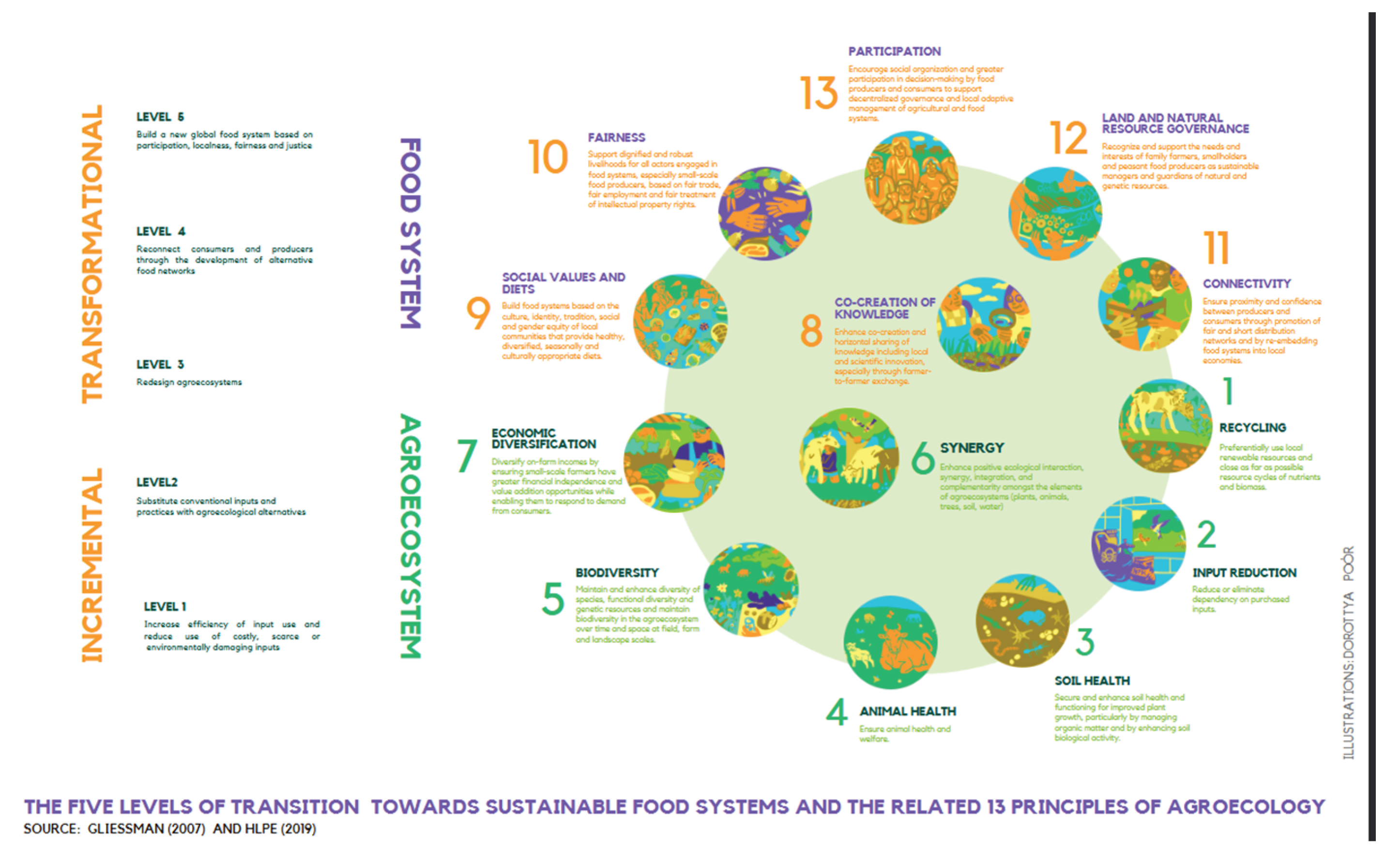

Table 1.
Summary of Farm Characteristics and Practices by Country.
| Country / Region | Livestock | Crops | Agroecological Sustainibility Practices | Self-Sufficiency |
|---|---|---|---|---|
| Kenya (Kiambu, Muranga) | Chickens (20–3046; 11 farms), cows (5–10; 7 farms), goats (1–4; 4 farms), pigs (18; 1 farm), sheep (5–10; 2 farms), turkeys (20; 1 farm), bees (4 farms) | Avocado, cabbage, kale, spinach, black nightshade (managu), maize (mostly for self-consumption), banana, plantain, grevillea, wood trees | 3 farms use biogas for energy; 5 have rainwater harvesting systems for clean water; livestock integrated to support crop income | Half of the feed is imported |
| Thailand | Chickens (varied numbers) | Rice, lotuses, Microphylla (small-leaved plants), fish | Rainwater harvesting, wastewater recycling, renewable energy powers almost all farm needs; minimal fossil fuel use | Half of the feed is imported |
| Vietnam | Chickens only | Some animal feed crops, trees for shade and perches | Basic agroecological structures for animal housing; low diversity of farming activities | Half of the feed is imported |
| Yucatán (Mexico) | Pigs (50), chickens (120) | Milpa system: maize, beans, squash (polyculture) | Traditional Indigenous agroecology; sustainable and biodiversity-enhancing practices | Self-sufficient in feed |
| Italy | Sheep (200), pigs (4), cows (5), donkeys (2), chickens (20), shepherd dogs (20) | No specific crops mentioned; woodland grazing land | Cheese production, shepherd dog training, rotational woodland grazing (400 ha), natural breeding, manual milking; minimal input use | Self-sufficient in feed; pork sold locally; eggs/chickens for household consumption |
Table 2.
Summary of Feed origins, Nutrition, Water and Pasture management, aspects and observations reported in each visited farm.
Table 2.
Summary of Feed origins, Nutrition, Water and Pasture management, aspects and observations reported in each visited farm.
| Aspect | Observation | Number of Farms |
|---|---|---|
| Balanced nutrition and clean water | Animals receive balanced nutrition and clean water. | 12 |
| Feed characteristics | Feed is nutritious (combination of nutrients, substances, microorganisms, other feed constituents) and palatable, containing fibers. | 12 |
| Pasture grazing (Kenyan farms) | Animals graze on pasture for less than six months per year. More than 50% of feed is purchased from the imported market. | 6 |
| Onsite livestock feed production | Less than 50% of one type of livestock feed (e.g., pasture, fodder, hay, silage) is produced onsite or by neighbouring farms. | 6 |
| Water management issues | Poor water management due to lack of infrastructure and high energy costs. | 2 |
| Zero-grazing systems | Animals are confined in zero-grazing systems; all livestock feed is imported and contains cereals and crops edible for humans (e.g., soya, corn). | 4 |
| Rotational or regenerative grazing | Rotational or regenerative grazing (e.g., mob-grazing) is practiced. | 6 |
Table 3.
Summary of physical environment and enrichment aspects and observations reported in each visited farm.
Table 3.
Summary of physical environment and enrichment aspects and observations reported in each visited farm.
| Observation | Number of Farms | |
|---|---|---|
| Rotating pastures and space | Animals benefit from access to rotating pastures/grazing and space exceeding industry requirements. | 10 |
| Indoor climate and air quality | Indoor climate and air quality are well managed. | 10 |
| Hygiene issues | Lack separated areas for eating, resting, and waste; some animals have dirtied bodies (less than 50%). | 4 |
| Separated spaces with hygiene | Separated areas for eating, resting, and waste; clean animals and minimal litter coverage (<10% manure). | 6 |
| Natural light and shelter | Consistent access to outdoor with shelter and monitored indoor climate using professional tools. | 10 |
| Limited outdoor access | Limited outdoor access, no pastures, limited space, poor litter quality (non-biodegradable, poor absorbency). | 1 |
| Natural materials for litter | Biodegradable litter with good absorbency, no dust, mild odor. | 6 |
| Hygiene issues in limited farm | More than 50% animals with manure on bodies, poor litter, moderate dust, pungent odor. | 1 |
| Animal health indoors | Less than 10% of animals weak, shivering, or panting. | 10 |
| Enrichment standards | Enrichment provided for all farms using local materials (e.g., husks, roots, fruits, branches, ramps). | All |
| Specific enrichment for pigs | Manipulative (husk, straws) and edible (roots, fruits) enrichment provided for pigs in Mexico, Italy, and Kenya. | 3 |
| Specific enrichment for chickens | Perches, tree branches, ramps, and platforms provided for chickens. | All chicken farms |
Table 4.
Summary of health aspects and observations reported in each visited farm.
| Aspect | Observation | Number of Farms |
|---|---|---|
| Health monitoring | Animal health is well-monitored, and antibiotic use is managed by veterinary doctors. | All |
| Disease outbreaks (3 years) | Zero disease outbreaks reported in the last three years. | 10 |
| Disease outbreaks (1 year) | Zero disease outbreaks reported in the last year. | 3 |
| Herbal medicine | Farmer produces and sells herbal medicine. | 1 |
| Disease incidence measurement | Continuous measurement of disease incidence (e.g., proportion of animals affected by health problems). | 8 |
| Annual disease incidence | Less than 50% of animals suffered disease annually, with mortality less than 10%. | 13 |
| High annual disease incidence | Around 50% of animals experienced illness annually. | 1 |
Table 5.
Summary of human and environment behavioural interaction aspects and observations reported in each visited farm.
Table 5.
Summary of human and environment behavioural interaction aspects and observations reported in each visited farm.
| Aspect | Observation | Number of Farms |
|---|---|---|
| Livestock species | Multiple livestock species (minimum 2, maximum 5) adapted to the local climate. | All |
| Natural behaviours | Animals allowed to engage in natural behaviours. | All |
| Production cycle and weaning time | Appropriate to meet behavioural needs. | 7 |
| Fear of humans and agonistic behaviours | Less than 10% of animals fear humans or show agonistic behaviours. | All |
| Local breeding and genetics | Majority of animals bred locally with high welfare and local genetics. | 8 |
| Livestock purchases | Farmers buy livestock from the market infrequently. | 5 |
| Painful procedures for chickens | Beak trimming performed with pain relief. | 6 |
| Painful procedures without pain relief | Beak trimming performed without pain relief. | 1 |
Table 6.
Shows the average agroecological, livestock sustainability and high animal welfare outcomes of the 14 farms visited. The scoring system is the same used by FAO in the TAPE tool, to facilitate comparison with other reports. The results are reported using a color-coded system to indicate the level of sustainability or desirability of the evaluated criteria. The scoring thresholds are as follows: Green (desirable): Score ≥ 70% (or specific average scores depending on the indicator). Yellow (acceptable): Score ≥ 50% and < 70%. Orange (unsustainable): Score < 50%. For example, in the context of soil health assessment, the average score is categorized as: Green (desirable): Average score ≥ 2-3. Yellow (acceptable): Average score ≥ 1 and < 1.9. Orange (unsustainable): Average score < 1.
Table 6.
Shows the average agroecological, livestock sustainability and high animal welfare outcomes of the 14 farms visited. The scoring system is the same used by FAO in the TAPE tool, to facilitate comparison with other reports. The results are reported using a color-coded system to indicate the level of sustainability or desirability of the evaluated criteria. The scoring thresholds are as follows: Green (desirable): Score ≥ 70% (or specific average scores depending on the indicator). Yellow (acceptable): Score ≥ 50% and < 70%. Orange (unsustainable): Score < 50%. For example, in the context of soil health assessment, the average score is categorized as: Green (desirable): Average score ≥ 2-3. Yellow (acceptable): Average score ≥ 1 and < 1.9. Orange (unsustainable): Average score < 1.
| Elements of Agroecology | Thailand (n=1) | Mexico (n=1) | Italy (n=1) | Vietnam (n=1) | Kenya (n=10) | Average | Interpretation |
|---|---|---|---|---|---|---|---|
| Recycling | 1.6 | 1 | 1.5 | 0.5 | 1.28 | 1.18 | Moderate Agroecological Practice |
| Input Reduction | 1.4 | 1.5 | 1.2 | 0.2 | 0.32 | 0.92 | Need improvements |
| Soil Health | 1.5 | 2.4 | 1.7 | 1 | 1.42 | 1.60 | Moderate Agroecological Practice |
| Biodiversity | 2.2 | 2.2 | 2.2 | 2.2 | 1.14 | 1.99 | Moderate Agroecological Practice |
| Synergies | 2.2 | 1.6 | 1.8 | 0.6 | 0.83 | 1.41 | Moderate Agroecological Practice |
| Economic Diversification | 1.7 | 1 | 1.6 | 1.7 | 1.28 | 1.46 | Moderate Agroecological Practice |
| Co-Creation of Knowledge | 2 | 2.5 | 2.5 | 1 | 0.2 | 1.64 | Moderate Agroecological Practice |
| Social Values & Diets | 2.5 | 3 | 3 | 1 | 0.2 | 1.94 | Good Agroecological Practice |
| Fairness | 0.5 | 1 | 3 | 2 | 1.1 | 1.52 | Moderate Agroecological Practice |
| Connectivity | 3 | 3 | 3 | 2 | 1.73 | 2.55 | Good Agroecological Practice |
| Land & Natural Resource Governance | 2.4 | 2 | 1 | 2.7 | 0.63 | 1.75 | Moderate Agroecological Practice |
| Participation | 3 | 2 | 2 | 2.5 | 0.1 | 1.92 | Moderate Agroecological Practice |
| Elements of Animal Welfare | |||||||
| Animal nutrition | 1.8 | 2.2 | 2.2 | 0.5 | 1.99 | 1.74 | Nutritional needs moderate |
| Animal water | 2 | 0.6 | 0.6 | 2 | 2.49 | 1.54 | Water needs moderate |
| Enrichment | 1.6 | 1.7 | 2.5 | 2.4 | 2.05 | 2.05 | Enrichment needs moderate |
| Physical environment | 1.9 | 2.6 | 1.5 | 2.4 | 2.44 | 2.17 | Environment needs moderate |
| Health | 2.6 | 1.4 | 1 | 2.3 | 1.97 | 1.85 | Health needs moderate |
| Human and Environment Behavioural Interaction | 2.2 | 2 | 2.2 | 1.8 | 2.09 | 2.06 | Behavioral needs moderate |
| Average | 1.99 | 1.87 | 1.92 | 1.59 | 1.29 | 1.73 | Moderate Agroecological and Good life practice |
Disclaimer/Publisher’s Note: The statements, opinions and data contained in all publications are solely those of the individual author(s) and contributor(s) and not of MDPI and/or the editor(s). MDPI and/or the editor(s) disclaim responsibility for any injury to people or property resulting from any ideas, methods, instructions or products referred to in the content. |
© 2026 by the authors. Licensee MDPI, Basel, Switzerland. This article is an open access article distributed under the terms and conditions of the Creative Commons Attribution (CC BY) license (http://creativecommons.org/licenses/by/4.0/).
Copyright: This open access article is published under a Creative Commons CC BY 4.0 license, which permit the free download, distribution, and reuse, provided that the author and preprint are cited in any reuse.


