
Submitted:
05 April 2026
Posted:
08 April 2026
You are already at the latest version
Abstract
The construction industry is a key energy consumer and greenhouse gas emitter, and its green low-carbon transformation is critical to achieving China's "dual carbon" strategy. This study focuses on carbon emissions from the construction industry in Hunan Province, central China, using data from 2005 to 2022. An improved STIRPAT extended model combined with ridge regression is applied to identify key driving factors, and a CNN-LSTM-Attention hybrid model is constructed for multi-scenario carbon peak prediction from 2023 to 2040. The results show that industrial scale, urbanization rate, and energy intensity are the top three influencing factors, with energy intensity being the only significant inhibitory factor. Carbon emissions will continue to rise without peak under the high-carbon scenario, peak in 2035 under the baseline scenario, and peak in 2030 under the low-carbon scenario. The low-carbon scenario is the optimal path to meet Hunan's 2030 carbon peak target for the construction industry. Targeted policy suggestions are proposed for regional low-carbon development.
Keywords:
construction industry carbon emissions
; Hunan Province
; STIRPAT model
; CNN-LSTM-attention
; carbon peak prediction
; multi-scenario analysis
1. Introduction
According to the latest AR6 research report released by the Intergovernmental Panel on Climate Change (IPCC),the global surface temperature has increased by more than 1.1 °C compared with the pre-industrial revolution level. Global warming caused by excessive emissions of greenhouse gases dominated by carbon dioxide has become a major non-traditional security threat to the sustainable development of human beings. Under the national strategic framework of “carbon peak by 2030 and carbon neutrality by 2060”, the construction industry, as one of the three key carbon emission sectors in China, its low-carbon transformation has become a core link to achieve the dual carbon goals. As a major construction province in central China, Hunan Province’s total construction output value accounted for 29% of the province’s GDP in 2022, and the industry’s carbon emissions accounted for 35% of the province’s industrial sector. Among them, carbon emissions from cement clinker production accounted for 70% of the total emissions of the building materials industry, and energy consumption is dominated by coal, forming an industrial characteristic of “high energy consumption and high emissions”. The Implementation Plan for Carbon Peak in Urban and Rural Construction of Hunan Province issued in 2023 clearly requires the construction industry to achieve carbon peak before 2030. This is not only an inevitable requirement for implementing the national strategy, but also an urgent task for promoting the “Three Highs and Four News” strategy and realizing the green industrial upgrading of Hunan Province.
In the field of research on carbon emissions in the construction industry, Tong et al. [1] (2022) selected 280 prefecture-level and above cities in China as research samples, divided them into two groups of growing cities and two groups of shrinking cities, and conducted an empirical test on the core influencing factors of carbon emissions in different types of cities with the aid of the extended STIRPAT model. Yu et al. [2] (2022) comprehensively adopted the structural decomposition model, input-output analysis method and energy consumption accounting method to conduct an in-depth study on the structural driving factors of carbon emissions from energy consumption in China’s service industry from 2007 to 2017, providing solid theoretical support and practical guidance for formulating more accurate and efficient emission reduction strategies for the service industry from the input-output perspective. Fan et al. [3] (2019) applied the input-output-based structural decomposition analysis (IO-SDA) method to decompose the changes in carbon dioxide emissions in the Beijing-Tianjin-Hebei region from 1997 to 2012 into five driving factors: population size, carbon emission efficiency, production structure, final use structure and regional per capita GDP. The results show that population size and regional per capita GDP exert positive driving effects on carbon emissions in all regions within the area, while the improvement of carbon emission efficiency is the core factor inhibiting the growth of carbon emissions. In 2008, Zagheni et al. [4] introduced stochastic process theory into the IPAT model framework for the first time, established a dynamic coupling model of population, economy and carbon emissions based on Brownian motion, and constructed a stochastic dynamic correlation system between national carbon emissions and driving factors with the United States as an example, laying a foundation for subsequent research on multi-factor influencing factors of carbon emissions.
Although the research on construction carbon emissions is gradually improving, there are still some limitations. Current research in this field has limitations in the screening of influencing factors, failing to fully consider the characteristics of the construction industry. In terms of prediction methods, most studies rely on regression statistical models, which have weaker fault tolerance and lower prediction accuracy compared with intelligent methods such as machine learning. Even though some studies have used neural network algorithm models for carbon emission prediction, the single type of model and its inherent defects limit the prediction accuracy. This paper collects data related to construction carbon emissions in Hunan Province from 2005 to 2022, calculates carbon emissions using the carbon emission coefficient method, and quantitatively describes the current emission status and dynamic change process. Based on the IPAT model, factor decomposition is carried out from the dimensions of population, economy, technology and industry. Combined with the STIRPAT theoretical framework, SPSS and ridge regression are used to evaluate the influencing factors and their action weights, providing methodological support and data verification for the analysis of carbon emission structure.
According to the analysis results, existing energy conservation and emission reduction policies, and previous academic research, three carbon emission growth scenarios are constructed, and a CNN-LSTM-Attention model is established to conduct multi-scenario simulation analysis of construction carbon emissions from 2023 to 2040, so as to provide decision support for Hunan Province to plan the carbon peak path.
Different from previous studies that use single regression or neural network models, this paper combines the STIRPAT model to screen key influencing factors and constructs a CNN-LSTM-Attention hybrid prediction model, which significantly improves the prediction accuracy. The multi-scenario analysis provides targeted decision support for Hunan Province to formulate carbon peak policies for the construction industry.”
2. Materials and Methods
2.1. Carbon Emission Accounting Method
The carbon emission factor method quantifies and converts greenhouse gases from energy use and material transformation using standardized emission parameters issued by authoritative authorities [5]. This method directly adopts the emission conversion coefficients approved by the IPCC or government agencies, avoiding complex modeling, and has the characteristics of simple operation and strong comparability of results [9]. It is suitable for rapid and batch assessment of total carbon emissions in regions or industries. In the accounting of building carbon emissions, the internationally accepted IPCC standard adopts an ideal model with 100% carbon oxidation rate, which is inconsistent with China’s actual energy use efficiency. Based on the national conditions difference, this study adopts the carbon oxidation rate parameters from the Guidelines for the Preparation of Provincial Greenhouse Gas Inventories to improve the calculation accuracy.
The total greenhouse gas emissions from the construction sector are the sum of direct emissions and indirect emissions. Classified accounting can fully reflect the life-cycle environmental impact of buildings:
where: ECi-Consumption of the i-th energy source (10,000 tons); ACVi: Low calorific value of the i-th energy source; Ci: Carbon content of the i-th energy source; CORi: Carbon oxidation rate of the i-th energy source; 44/12: Conversion coefficient from elemental carbon to carbon dioxide; Ee/Eh: Consumption of electric power/heat; fe/fh: Carbon emission factor of electric power/heat; CBMj: Consumption of the j-th building material (10,000 tons); CFBj: Carbon emission factor of the j-th building material (kg/m3); αj: Recovery coefficient of the j-th building material.
For basic energy data, the energy calorific value parameters refer to GB/T 2589-2020 General Rules for Calculation of Comprehensive Energy Consumption. The energy consumption of Hunan’s construction industry is obtained from the energy balance table in China Energy Statistical Yearbook. For building material consumption data, the consumption of main building materials (steel, wood, cement, glass, etc.) comes from China Construction Industry Statistical Yearbook. For emission calculation parameters, the carbon oxidation rate adopts the Guidelines for the Preparation of Provincial Greenhouse Gas Inventories, and the standard carbon emission factors are based on GB/T 51366-2019 Standard for Building Carbon Emission Calculatio [6].
2.2. Stirpat Model
Based on the IPAT model and combined with the characteristics of Hunan’s construction industry, this paper analyzes the influencing factors of construction carbon emissions from four dimensions: population, economy, technology and industry. The classic IPAT model is extended to the stochastic STIRPAT model as follows:
where: I: Carbon dioxide emission equivalent of the construction industry; P: Population factor; A: Economic indicator; T: Technical parameter; a: Model coefficient; b, c, d: Elastic coefficients, reflecting the marginal impact degree of the three types of factors respectively; e: Random error term for model deviation correction. Logarithmic transformation is performed on both sides of the equation to eliminate heteroscedasticity, as shown in Equation (3):
On the basis of previous academic research and combined with the development status of Hunan’s construction industry, this paper selects 10 influencing factors: total population, urbanization rate [7], number of employees in the construction industry [8], per capita GDP [9], gross output value of the construction industry [10], added value of the tertiary industry, energy intensity [11], technical equipment rate of construction enterprises [12], industrial scale of the construction industry [13], and labor input [14]. These factors are taken as independent variables, and the construction carbon emissions of Hunan Province are taken as the dependent variable, which are introduced into Equation (3) to construct the extended STIRPAT model:
where: C: Carbon emissions from Hunan’s construction industry; P1: Total population; P2: Urbanization rate; P3: Number of employees in the construction industry; E1: Per capita GDP; E2: Gross output value of the construction industry; E3: Added value of the tertiary industry; T1: Energy intensity; T2: Technical equipment rate of construction enterprises; B1: Industrial scale of the construction industry; B2: Labor input; a: Constant term; b~k: Elastic coefficients, which quantify the fluctuation range of carbon emissions caused by a 1% change in each variable respectively; lne: Error term.
2.3. Cnn-Lstm-Attention Model
(1) CNN Model
Convolutional Neural Network (CNN) is a deep learning model specially designed for processing grid-structured data [15]. By simulating the hierarchical processing mechanism of the human visual cortex for image features, it effectively reduces the number of model parameters and improves generalization ability.
CNN consists of convolutional layers, pooling layers and fully connected layers. It extracts features through the sliding of convolution kernels on the data, compresses the data dimension through pooling operations, and finally performs classification or regression tasks through the fully connected layer. It can automatically learn the inherent features of the data, and its structure is shown in Figure 1
(2) LSTM Model
Long Short-Term Memory (LSTM) is a variant of Recurrent Neural Network (RNN) [16]. By introducing the cell state and three gating mechanisms (forget gate, input gate and output gate), it can effectively memorize the long-term dependent information in long sequences, and is widely used in natural language processing, speech recognition, time series prediction and other fields. Its calculation logic is realized through the following formulas and the structure shown in Figure 2:
As the core transmission channel of LSTM, the cell state undertakes the key role of long-distance information transmission. At time t, the update of the cell state Ct is completed through the collaboration of the forget gate ft and the input gate:
where: σ: Sigmoid activation function, which compresses the output to the interval (0,1) to control the proportion of information retained; tanh: Hyperbolic tangent function, which generates the candidate cell state ; : Element-wise multiplication; ft: Forget gate, which determines the information discarded from the cell state Ct−1 at the previous moment; it: Input gate, which controls the inflow of new information at the current moment.
After updating the cell state, LSTM calculates the hidden state ht at the current moment through the output gate :
The output gate ot adjusts the output of information in the cell state Ct according to the current input and historical hidden state, and finally generates the hidden state ht for downstream tasks. This gating mechanism enables LSTM to adaptively capture the long-term dependence in sequence data, avoiding the interference of short-term information on long-term memory.
(3) Attention Mechanism
Attention is a model component that simulates human attention allocation [17]. Its core is to enable the model to automatically learn the importance of information at different positions in sequence processing, assign corresponding weights, focus on key features and suppress secondary information.
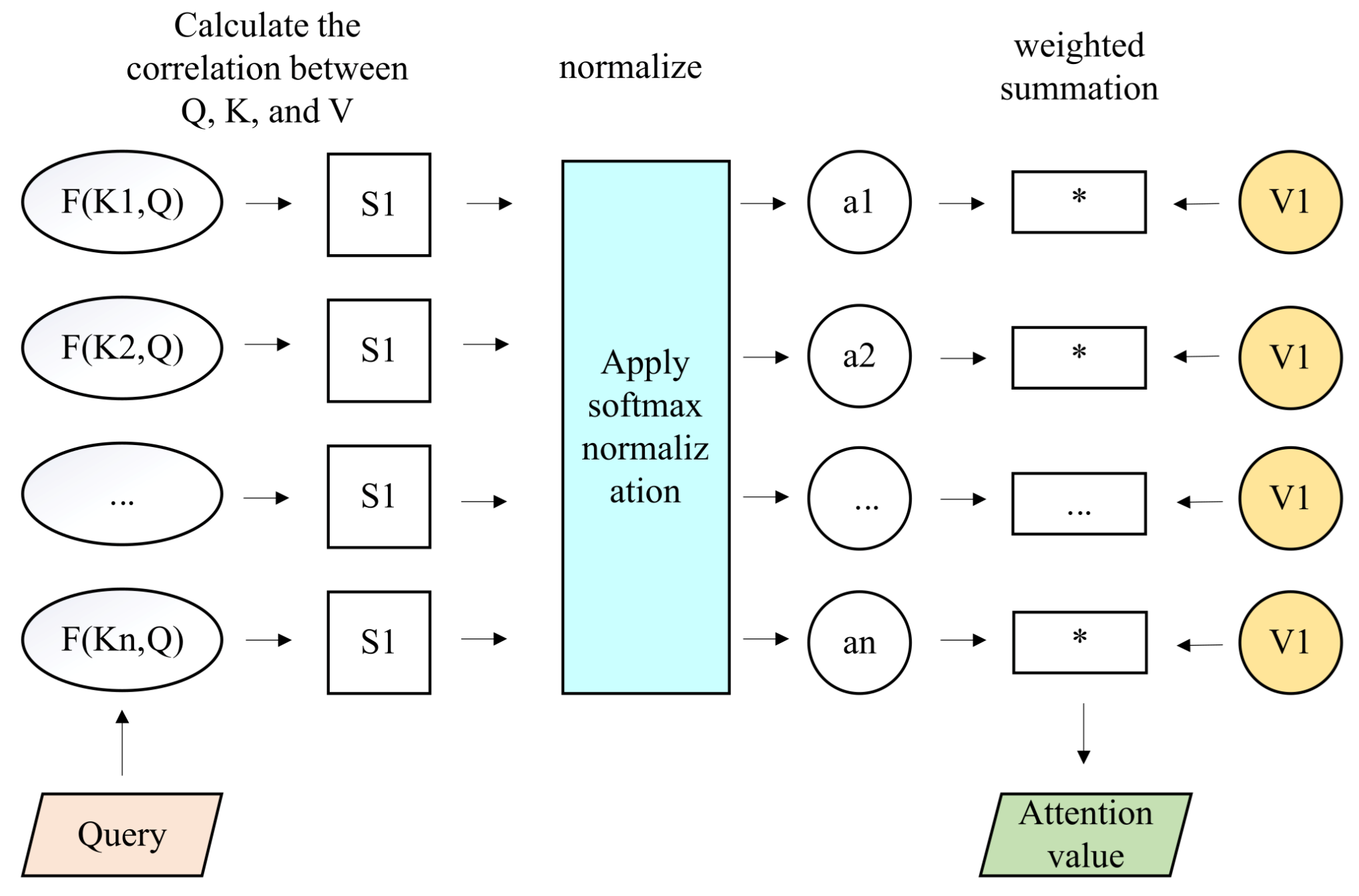
This mechanism acts on the output sequence of LSTM, calculates the weight of the hidden state at each time, screens out the key temporal features, and inputs them to the subsequent prediction layer, so as to improve the sensitivity and prediction accuracy of the model. Its core components include Query, Key and Value: by calculating the similarity between the Query and all Keys, a weight distribution is generated, and then the output is obtained by weighted summation of the Values. This mechanism enables the model to flexibly capture long-distance dependencies.
Figure 3.
Schematic Diagram of the Attention Structure.
3. Results and Analysis
3.1. Calculation of Carbon Emissions from Hunan’s Construction Industry
As shown in Figure 4, from 2005 to 2022, the carbon dioxide emissions of Hunan’s construction industry maintained an overall growth trend. There was a phased decline in emissions in 2021, which was mainly related to the reduction in the number of construction projects started during the COVID-19 pandemic from 2020 to 2021 [18], and the reduction in construction activities directly led to lower emissions. Indirect carbon emissions have always dominated the total annual emissions, with the proportion maintained at over 90% of the total emissions for a long time, which is significantly higher than direct emissions.
3.2. Analysis of Influencing Factors
Taking lnC as the dependent variable and lnP1, lnP2, lnP3, lnE1, lnE2, lnE3, lnT1, lnT2, lnB1, lnB2 as independent variables, multiple linear regression analysis was carried out using SPSS 26 software. The analysis results are shown in Table 1. The R2 value of the model reaches 95.8%, which is close to 1, indicating that the regression model has an excellent fitting effect on the data and can highly accurately explain the change trend of the dependent variable.
Further collinearity test was carried out. As shown in Table 2, the VIF (Variance Inflation Factor) values of some variables are greater than 50. The correlation test Figure 5 shows that the correlation coefficient between some influencing factors is as high as 0.9, indicating that there may be a strong multicollinearity problem.
To accurately evaluate the relationship between variables, ridge regression analysis was adopted. The significance test was based on the threshold of 0.05. When the p value is less than the threshold, the variable has a significant impact on the dependent variable. Through ridge regression, the independent variables with larger p values were eliminated, and ridge regression analysis was performed again until the p values of all independent variables were less than 0.05.

Table 3.
Ridge Regression Results.
| Variable | Before Screening | After Screening | ||||
|---|---|---|---|---|---|---|
| B | Standard Error | p | B | Standard Error | p | |
| Constant | −21.784 | 10.187 | 0.070 * | 7.522 | 0.915 | 0.000 *** |
| lnP1 | 3.379 | 1.118 | 0.019 ** | — | — | — |
| lnP2 | 0.356 | 0.054 | 0.000 *** | 0.479 | 0.09 | 0.000 *** |
| lnP3 | 0.117 | 0.042 | 0.027 ** | — | — | — |
| lnE1 | 0.089 | 0.015 | 0.001 *** | 0.11 | 0.031 | 0.001 *** |
| lnE2 | 0.075 | 0.01 | 0.000 *** | 0.101 | 0.018 | 0.000 *** |
| lnE3 | 0.082 | 0.011 | 0.000 *** | 0.117 | 0.021 | 0.000 *** |
| lnT1 | −0.12 | 0.027 | 0.003 *** | −0.135 | 0.045 | 0.012 ** |
| lnT2 | −0.046 | 0.089 | 0.617 | — | — | — |
| lnB1 | 0.408 | 0.102 | 0.005 *** | 0.683 | 0.244 | 0.017 ** |
| lnB2 | 0.104 | 0.113 | 0.388 | — | — | — |
| Before screening: k = 0.6, R2 = 0.929, F = 9.222, sigF = 0.004 ***; | ||||||
| After screening: k = 0.2, R2 = 0.931, F = 24.637, sigF = 0.000 ***. Significance levels: * p < 0.1, ** p < 0.05, *** p < 0.001. | ||||||
The screening results show that when k = 0.2, R2 = 0.931 and sigF = 0.000, which is far less than 0.1%, indicating that the model has extremely strong statistical significance. Except that the p values of lnT1 and lnB1 are less than5%, and the p value of lnE1 is less than 1%, the other variables all pass the significance test of 0.1%. Based on this, the carbon emission prediction model of Hunan’s construction industry is constructed:
It can be seen from Equation (5) that urbanization rate, per capita GDP, gross output value of the construction industry, added value of the tertiary industry, and industrial scale of the construction industry have significant positive impacts on the construction carbon emissions of Hunan Province, while energy intensity has a significant negative impact. For every 1% increase in the above six influencing factors, carbon emissions increase by 0.479%, 0.110%, 0.101%, 0.117%, 0.683%, and −0.135% respectively. Among them, the industrial scale of the construction industry has the greatest impact on the construction carbon emissions of Hunan Province, followed by urbanization rate, energy intensity, added value of the tertiary industry, per capita GDP, and the gross output value of the construction industry has the smallest impact.
4. Scenario-Based Carbon Emission Prediction and Analysis
4.1. Scenario Parameter Setting
Based on the historical carbon emission data of Hunan’s construction industry, social development status, relevant plans, policy documents such as the Implementation Plan for Carbon Peak in Hunan Province and the 14th Five-Year Plan for National Economic and Social Development and the Long-Range Objectives Through the Year 2035 of Hunan Province, and referring to relevant research [19], three development scenarios of Hunan’s construction industry from 2023 to 2040 are set: high-carbon, baseline and low-carbon. The high-carbon scenario continues the current development inertia, without strengthening carbon emission reduction policies, and economic development is dominated by traditional high energy-consuming industries [19]. The baseline scenario implements relevant plans, promotes the transformation of economic and energy structure. The low-carbon scenario strengthens emission reduction measures on the basis of the baseline mode, and accelerates the achievement of the carbon neutrality goal through strict energy structure adjustment policies, improved energy efficiency standards, and promotion of clean technology applications.
(1) Urbanization Rate
According to the development goals set in the 14th Five-Year Plan for New Urbanization of Hunan Province, the urbanization level of Hunan Province will rise to 72% by 2035. Based on the urbanization rate of 60.3% in 2022, and considering the average annual growth rate of 1.8% from 2019 to 2022, the urbanization process in the baseline scenario from 2023 to 2030 is set to maintain an average annual growth rate of 0.7%, with a decreasing trend in the subsequent stages. The specific values are shown in Table 4.
(2) Per Capita GDP
The per capita GDP of Hunan Province in 2022 was 73,598 yuan, with an average annual growth rate of 7.69% from 2019 to 2022. The Implementation Plan for Carbon Peak in Hunan Province proposes to maintain the economic operation within a reasonable range during the 14th Five-Year Plan period. Combined with the actual situation of Hunan Province, the goal of an average annual growth rate of more than 6% is set. Under the baseline scenario, the growth rate is gradually adjusted with steady transformation, slightly declining in the medium term and stabilizing in the later period. The growth rate of per capita GDP under the baseline scenario from 2023 to 2030 is set at 6%, and then gradually slows down on this basis.
(3) Gross Output Value of the Construction Industry
The average annual growth rate of the gross output value of Hunan’s construction industry from 2019 to 2022 was 10.88%. The 14th Five-Year Plan for Construction Industry Development of Hunan Province proposes that “by 2025, the proportion of construction industry added value in GDP will be stabilized at about 6.5%”. The current proportion of construction industry added value in GDP is about 6.2%. Under the baseline scenario from 2023 to 2030, the growth rate of the gross output value of the construction industry is set at 7.5%, and then gradually slows down on this basis.
(4) Added Value of the Tertiary Industry
The Implementation Plan for Carbon Peak in Hunan Province mentions that the proportion of added value of core digital economy industries in GDP will exceed 11% by 2025. The 14th Five-Year Plan proposes that the average annual growth rate of the service industry is higher than that of GDP. The 14th Five-Year Plan for Modern Service Industry Development of Hunan Province proposes that the proportion of producer services will exceed 60% by 2030. The growth rate of added value of the tertiary industry in Hunan Province in 2022 was 5.72%. Therefore, the growth rate of added value of the tertiary industry under the baseline scenario from 2023 to 2030 is set at 6.0%.
(5) Industrial Scale of the Construction Industry
According to the Implementation Plan for Carbon Peak in Hunan Province and the 14th Five-Year Plan, Hunan’s construction industry is accelerating the transformation to green and environmental protection and prefabricated construction, emphasizing the coordinated development of intelligent construction and ecological buildings, and setting the goal that 70% of new buildings will be green buildings by 2025. The average annual growth rate of the construction industry scale from 2020 to 2022 was 2%. The Implementation Plan requires that the proportion of prefabricated buildings will reach 30% by 2025, and the application proportion of green building materials will exceed 50% by 2030. Setting a 2% growth rate not only meets the planning requirements, but also reflects the demand for industrial structure optimization.
(6) Energy Intensity
Hunan Province has established clear energy efficiency goals in the 14th Five-Year Comprehensive Work Implementation Plan for Energy Conservation and Emission Reduction, planning to reduce the unit GDP energy consumption by 14% compared with the 2020 baseline by 2025. Based on this policy orientation, this study sets the average annual growth rate of energy use efficiency from 2023 to 2030 at −3.5% under the baseline scenario, with a decreasing trend in the subsequent stages.
4.2. Construction of the Cnn-Lstm-Attention Model
Six influencing factors are taken as input data, and the annual carbon emissions are taken as output data. In the model structure, the CNN module adopts 2 convolutional layers, with 32 convolution kernels in the first layer and 64 convolution kernels in the second layer, both using ReLU activation. The LSTM module adopts a Dropout layer with 30% probability to prevent overfitting. The Adam adaptive optimizer is used, with a learning rate of 0.0001, 120 iterations, and a batch size of 1. The Attention module implements the Squeeze-and-Excitation (SE) attention mechanism, which adaptively adjusts the feature weights through the dependencies between channels.
Figure 6.
Schematic Diagram of the CNN-LSTM-Attention Model Structure.
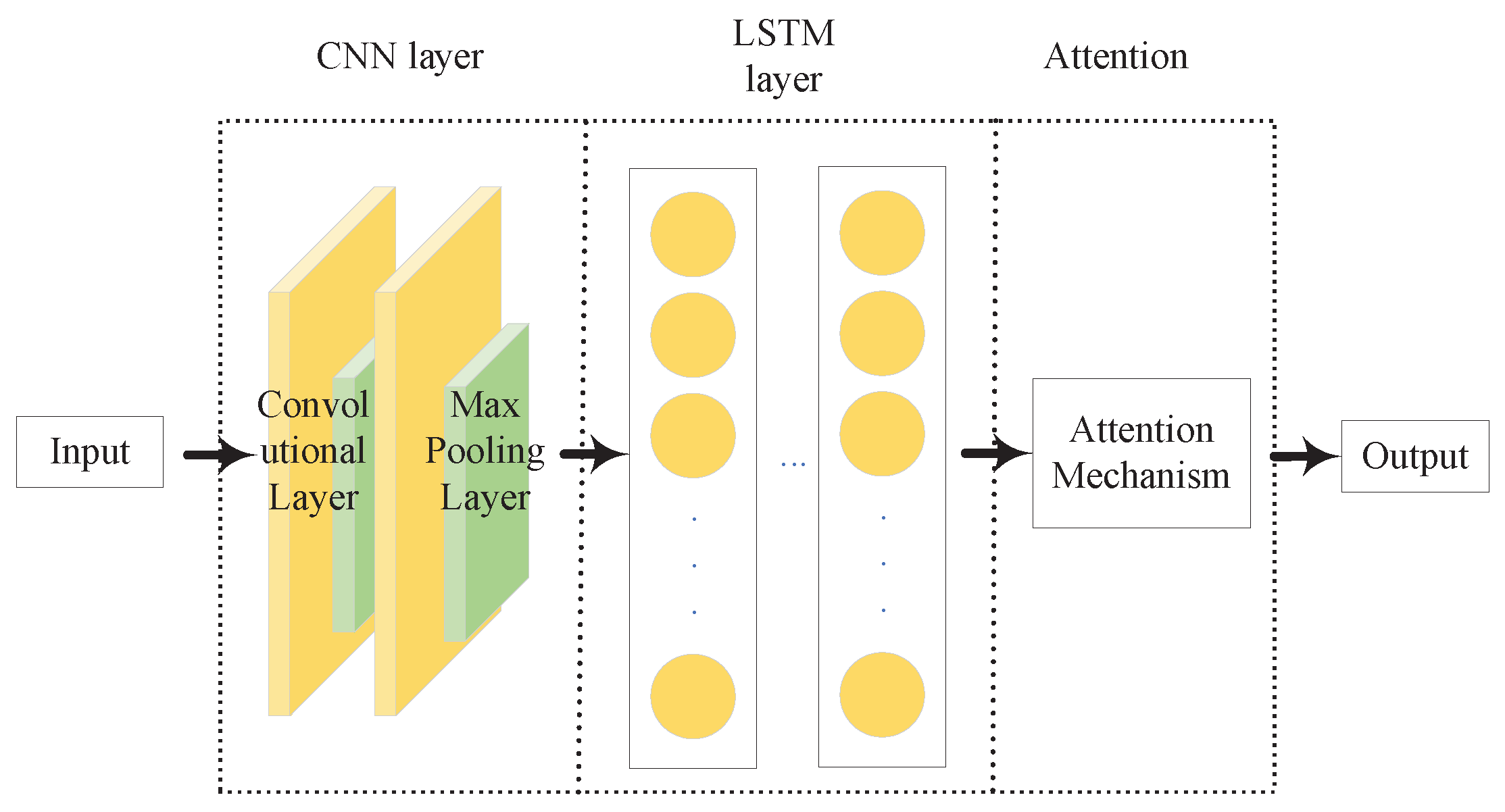
Figure 7.
CNN-LSTM-Attention prediction on training set.
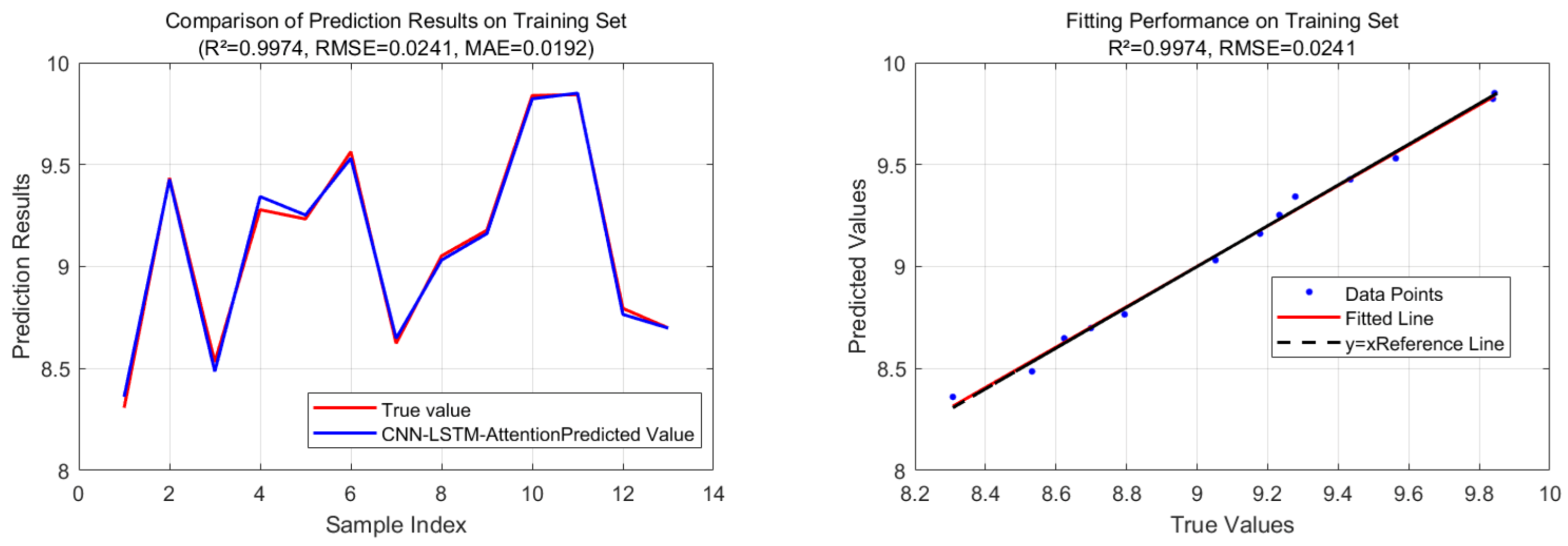
The Mean Square Error (MSE), Root Mean Square Error (RMSE) and coefficient of determination (R2) are used to judge the accuracy of the prediction model. R2 is a key indicator in statistical modeling, which can measure the goodness of fit between the predicted value and the real value. When its value is close to 1, the model can not only capture the core change law of the dependent variable, but also fully explain its complex variability. The results show that the R2 of the CNN-LSTM-Attention model reaches 99.7%, which can capture 99.7% of the influencing factors and change laws of construction carbon emissions in Hunan Province, with an excellent fitting effect. RMSE measures the deviation between the predicted value and the real value, reflecting the prediction accuracy, and MSE measures the difference between the two. The smaller the two values, the smaller the error. It can be seen from Table 5 that the CNN-LSTM-Attention model has the highest prediction accuracy.
4.3. Analysis of Prediction Results
Figure 8.
Prediction of Construction Carbon Emissions in Hunan Province Under Different Scenarios.
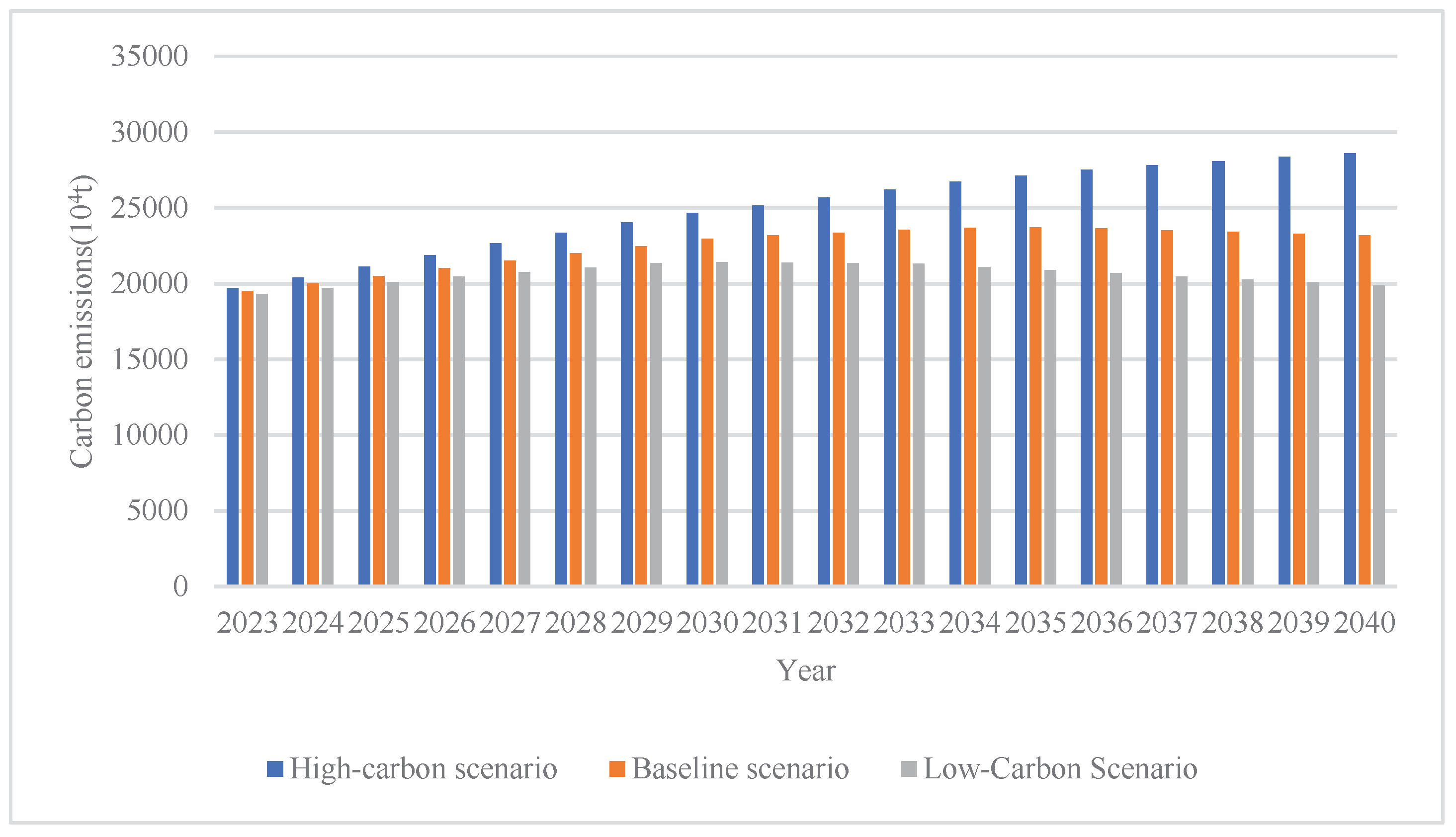
Under the high-carbon scenario, the construction carbon emissions of Hunan Province rise from 197.1 Mt in 2023 to 286.20 Mt in 2040, failing to achieve carbon peak. Although the growth rate slows down in the later period, the total amount remains at a high level. This is mainly attributed to the fact that this scenario continues the traditional development mode, lacks carbon emission reduction policies, and the energy structure and technical mode have not been effectively innovated. The expansion of the construction industry scale and its dependence on high energy consumption mode lead to great carbon emission pressure, which is contrary to the carbon peak goal, and effective measures need to be taken to reverse it.
Under the baseline scenario, the carbon emission reduction policies of the construction industry are implemented, and carbon emissions first rise and then fall. It increases from 2023 to 2035, reaches the peak of 237.15 Mt in 2035, and then decreases. Compared with the high-carbon scenario, the policy intervention has achieved remarkable results, with carbon emissions reduced by 14.44% in the same period. It shows that institutional emission reduction measures have played a key role in curbing the growth rate of industry carbon emissions. By promoting the transformation of economic and energy structure, improving the carbon emission statistical accounting system, and initially establishing a carbon market mechanism, the growth of carbon emissions has been effectively controlled.
Under the low-carbon scenario, energy intensity and per capita GDP are further reduced, the scale of the construction industry is reasonably slowed down, enterprises are promoted to transform to green operation and maintenance and intelligent construction services, and the proportion of green buildings and the application rate of prefabricated buildings are rapidly increased. The construction carbon emissions of Hunan Province reach the peak of 214.37 Mt in 2030, which verifies that this path is the most practical strategic choice for carbon governance in the regional construction sector. Government departments should take target-tool-efficiency as the guidance, upgrade the emission reduction policy toolbox, strengthen carbon quota and green building standards in the system, promote the large-scale application of prefabricated buildings and clean energy substitution in technology, improve the carbon trading and green financial incentive policies in the market. Through the coordination of policy regulation, technological innovation and market driving force, a systematic solution for the low-carbon transformation of the construction industry should be constructed.
5. Discussion
This section discusses the key findings, comparisons with existing literature, policy implications, research limitations, and future directions of this study.
5.1. Key Findings and Interpretation
The results of this study reveal three core characteristics of carbon emissions from the construction industry in Hunan Province.
First, indirect carbon emissions dominate the total emissions, accounting for more than 90% throughout the study period. This structural feature is consistent with most provinces in China, where building materials production (especially cement, steel, and glass) and energy consumption in upstream industrial chains contribute far more than on-site construction activities. The high proportion of indirect emissions indicates that low-carbon governance of Hunan’s construction industry must focus on upstream material production and energy structure optimization, rather than only on construction-site management.
Second, industrial scale and urbanization rate are the strongest driving forces for carbon emission growth. With the rapid advancement of new-type urbanization in Hunan Province, a large number of housing, infrastructure, and public building projects have been launched. The expansion of the construction industry scale directly increases material consumption and energy use, leading to continuous growth in carbon emissions. This finding is consistent with studies on other central provinces such as Hubei, Jiangxi, and Anhui, which all confirm that urbanization and industrial scale are core positive drivers of construction carbon emissions.
Third, energy intensity is the only significant inhibitory factor, meaning that improving energy efficiency and reducing energy consumption per unit output can effectively suppress carbon emissions. This result highlights the critical role of technological progress, equipment renewal, and clean energy substitution in emission reduction. In addition, per capita GDP, gross output value of the construction industry, and added value of the tertiary industry all show positive driving effects, reflecting that economic development and industrial upgrading are still accompanied by increased carbon demand in the short term.
5.2. Comparison with Previous Studies
Compared with existing national-level or single-city construction carbon emission studies, this study has both similarities and regional particularities.
On the one hand, our results are consistent with the mainstream conclusion that STIRPAT-based factor analysis can effectively identify driving forces of construction carbon emissions. Similar to Tong et al. [1]. and Zhang et al. [18]., we confirm that population urbanization, economic development, and industrial scale are dominant positive drivers, while energy efficiency plays a restraining role.
On the other hand, this study improves prediction accuracy by combining ridge regression and the CNN-LSTM-Attention hybrid model. Traditional studies often use single neural network models or statistical regression models, which have limitations in capturing long-term time-series features and key influencing factors. The CNN-LSTM-Attention model used in this study achieves an R2 of 0.9974, which is significantly higher than BP, LSTM, and CNN-LSTM models, indicating stronger stability and accuracy in multi-scenario carbon peak prediction. This improvement provides a methodological reference for regional construction carbon emission prediction.
In terms of peak time, our results show that under the low-carbon scenario, Hunan’s construction industry can achieve carbon peak by 2030, which is aligned with the national goal and the requirements of the Implementation Plan for Carbon Peak in Urban and Rural Construction of Hunan Province. Most existing studies predict that China’s construction industry will peak between 2025 and 2035; our results fill the gap of provincial-level peak path simulation for Hunan Province.
5.3. Policy and Practical Implications
The findings of this study have clear policy value for the low-carbon transformation of Hunan’s construction industry.
First, strictly control the scale of blind expansion of the construction industry. The government should reasonably regulate the scale of new construction projects, promote the transformation from extensive scale growth to high-quality development, and reduce redundant construction and material waste.
Second, accelerate the promotion of green building materials and prefabricated buildings. Since indirect emissions from building materials are the main source, replacing traditional high-carbon materials with low-carbon cement, green steel, and recycled materials can significantly reduce embodied carbon.
Third, strengthen energy efficiency improvement and clean energy substitution. Energy intensity has a significant inhibitory effect; therefore, promoting renewable energy such as photovoltaic and wind power in building construction and operation, and upgrading high-energy-consuming equipment are effective ways to reduce emissions.
Fourth, improve the carbon emission accounting and supervision system. Establish a full-life-cycle carbon accounting platform for buildings, clarify carbon emission responsibilities of all parties, and support the implementation of carbon trading and green financial policies.
5.4. Research Limitations
This study also has several limitations that need to be improved in future research.
First, the research scope only covers 2005–2022, and the latest data after 2023 are not included due to availability constraints. Short-term data fluctuations may slightly affect the long-term prediction results.
Second, this study focuses on provincial-level overall analysis and does not conduct spatial differentiation research on prefecture-level cities such as Changsha, Zhuzhou, and Xiangtan. The driving factors and peak paths may vary among regions.
Third, the carbon emission accounting mainly adopts the carbon emission factor method, and more detailed division of construction stages (e.g., material production, construction, operation, demolition) can be carried out in the future to improve the accuracy of accounting.
5.5. Future Research Directions
Based on the above limitations, future research can be expanded in three directions:
Carry out spatial-temporal dynamic analysis at the city level to reveal the regional heterogeneity of construction carbon emissions in Hunan Province.
Introduce more detailed life-cycle assessment (LCA) to subdivide carbon emissions in each stage of buildings.
Combine policy simulation models (e.g., LEAP, system dynamics) to design more refined emission reduction paths for different types of buildings (residential, public, industrial).
6. Conclusions
This study systematically analyzed the current status, driving factors, and carbon peak paths of construction industry carbon emissions in Hunan Province from 2005 to 2022. Over the past 17 years, total carbon emissions have shown an overall continuous growth trend, with indirect emissions accounting for more than 90% of the total, which is the dominant emission source. Based on the extended STIRPAT model and ridge regression analysis, six key influencing factors were screened out, and their impact degrees were ranked as follows: construction industry scale > urbanization rate > energy intensity > added value of the tertiary industry > per capita GDP > gross output value of the construction industry. Except for energy intensity which has an inhibitory effect, all other factors show positive driving effects on carbon emissions.
A CNN-LSTM-Attention hybrid prediction model was established to simulate carbon emission trends under three development scenarios. The results indicate that under the high-carbon scenario, carbon emissions will continue to grow until 2040 without reaching a peak. Under the baseline scenario, the peak will occur in 2035 with a peak value of 237.15 Mt, which lags behind the provincial target. Only under the low-carbon scenario, by strengthening emission reduction policies, optimizing energy structure, and promoting green building technology, can the construction industry achieve carbon peak in 2030 as required.
This study fills the gap of provincial-level carbon peak path research for Hunan’s construction industry, and the proposed hybrid model provides a methodological reference for regional carbon emission prediction. The findings can provide scientific decision support for Hunan Province to formulate targeted low-carbon policies, promote the green transformation of the construction industry, and ensure the smooth realization of the “dual carbon” goals.
Author Contributions
Conceptualization, Z.L. and H.Y.; Methodology, H.Y.; Software, H.Y.; Validation, Z.L. and W.H.; Formal Analysis, H.Y.; Investigation, Z.L.; Resources, W.H.; Data Curation, H.Y.; Writing—Original Draft, H.Y.; Writing—Review & Editing, Z.L. and W.H.; Visualization, H.Y.; Supervision, W.H.; Project Administration, W.H.; Funding Acquisition, W.H.
Data Availability Statement
All data used in this study are derived from publicly available statistical yearbooks (China Energy Statistical Yearbook, China Construction Industry Statistical Yearbook) and are fully presented in the manuscript and its figures/tables. No additional datasets are required for the reproduction of the results.
Conflicts of Interest
The authors declare no conflict of interest.
References
- Tong, X.; Guo, S.; Duan, H.; Duan, Z.; Gao, C.; Chen, W. Carbon-Emission Characteristics and Influencing Factors in Growing and Shrinking Cities: Evidence from 280 Chinese Cities. Int. J. Environ. Res. Public Health 2022, 19, 2120. [Google Scholar] [CrossRef] [PubMed]
- Yu, J.; Yu, Y.; Jiang, T. Structural factors influencing energy carbon emissions in China’s service industry: An input-output perspective. Environ. Sci. Pollut. Res. 2022, 29, 49361–49372. [Google Scholar] [CrossRef] [PubMed]
- Fan, J.-L.; Cao, Z.; Zhang, X.; Wang, J.-D.; Zhang, M. Comparative study on the influence of final use structure on carbon emissions in the Beijing-Tianjin-Hebei region. Sci. Total Environ. 2019, 668, 271–282. [Google Scholar] [CrossRef] [PubMed]
- Zagheni, E.; Billari, F.C. A cost valuation model based on a stochastic representation of the IPAT equation. Popul. Environ. 2007, 29, 68–82. [Google Scholar] [CrossRef]
- Luo, Y.P.; Bong, V.N.S.; Bamgbade, J.A.; Alam, M.; Liew, S.C. A comparative review of whole-life-cycle carbon emission assessment in the building sector: Progress, challenges, and trends in China and globally. Build. Environ. 2026, 292, 114294. [Google Scholar] [CrossRef]
- Wang, M.Q.; Huang, B.; Yuan, H.; Tang, Y.; Mao, J.; Xiong, L. Development of a carbon emission calculation and evaluation grading framework for public building certification schemes: Integrating BIM and LCA. Smart Sustain. Built Environ. 2025. [Google Scholar] [CrossRef]
- Chen, L.; Yang, H.-N.; Xiao, Y.; Tang, P.-Y.; Liu, S.-Y.; Chang, M.; Huang, H. Exploring spatial pattern optimization path of urban building carbon emission based on low-carbon cities analytical framework: A case study of. Sustain. Cities Soc. 2024, 111, 105551. [Google Scholar] [CrossRef]
- Al-Ahmad, A.K.; Hajar, H.A.A.; Hatamleh, M.T. Multi-Dimensional sustainability assessment of the construction sector in Jordan. Results Eng. 2026, 29, 109874. [Google Scholar] [CrossRef]
- Li, X.; Lin, C.; Lin, M.; Jim, C.Y. Drivers and spatial patterns of carbon emissions from residential buildings: An empirical analysis of Fuzhou city (China). Build. Environ. 2024, 257, 111534. [Google Scholar] [CrossRef]
- Li, M.; Chen, W.; Song, J.; Zhang, S. Research on economic and social impact of carbon emissions in the construction industry at a regional scale: A case of Shandong, China. Environ. Sci. Pollut. Res. 2023, 30, 86437–86453. [Google Scholar] [CrossRef] [PubMed]
- Han, B.; Clevenger, C.M. Augmented Reality and Mixed Reality Implementation Status Survey in the Architecture, Engineering, and Construction Industry: Benefits, Limitations, and Future Directions. J. Archit. Eng. 2025, 31. [Google Scholar] [CrossRef]
- Elsaid, M.; Albasyouni, W. Assessing the impact of infection rate on the productivity of resources in the construction industry: Lessons from covid-19 pandemic. Rev. Constr. 2025, 24, 491–504. [Google Scholar]
- Sun, X.; Zhang, X. Assessment and Driving Factors of Embodied Carbon Emissions in the Construction Sector: Evidence from 2005 to 2021 in Northeast China. Sustainability 2024, 16, 5681. [Google Scholar] [CrossRef]
- Shah, S.K.; Graham, P.; Burton, C.; Harrington, P. An Assessment of Long-Term Climate Change on Building Energy in Indonesia. Energies 2023, 16, 7231. [Google Scholar] [CrossRef]
- Assemlali, H.; Bouhsissin, S.; Sael, N. Deep learning-driven CNN model for detection and classification of dynamic obstacles. Green Energy Intell. Transp. 2026, 5, 100334. [Google Scholar] [CrossRef]
- Li, S.X.; Qin, H.G.; Xia, F.Y.; Xu, X.; Cai, Y. Application of LSTM coupled models in runoff simulation and prediction: A review. Appl. Water Sci. 2026, 16, 89. [Google Scholar] [CrossRef]
- Zhang, C.; Luo, H. Research on carbon emission peak prediction and path of China’s public buildings: Scenario analysis based on LEAP model. Energy Build. 2023, 289, 113053. [Google Scholar] [CrossRef]
- Zhang, L.Y.; Lin, X.; Hui, E.C.M.; Shen, J.F. Health resilience of green buildings in a Dense City: Evidence from COVID-19 infections in Hong Kong. Cities 2026, 173, 106975. [Google Scholar] [CrossRef]
- Zhang, S.; Wang, M.; Zhu, H.; Jiang, H.; Liu, J. Impact factors and peaking simulation of carbon emissions in the building sector in Shandong Province. J. Build. Eng. 2024, 87, 109141. [Google Scholar] [CrossRef]
Figure 1.
Structure of the CNN Model.
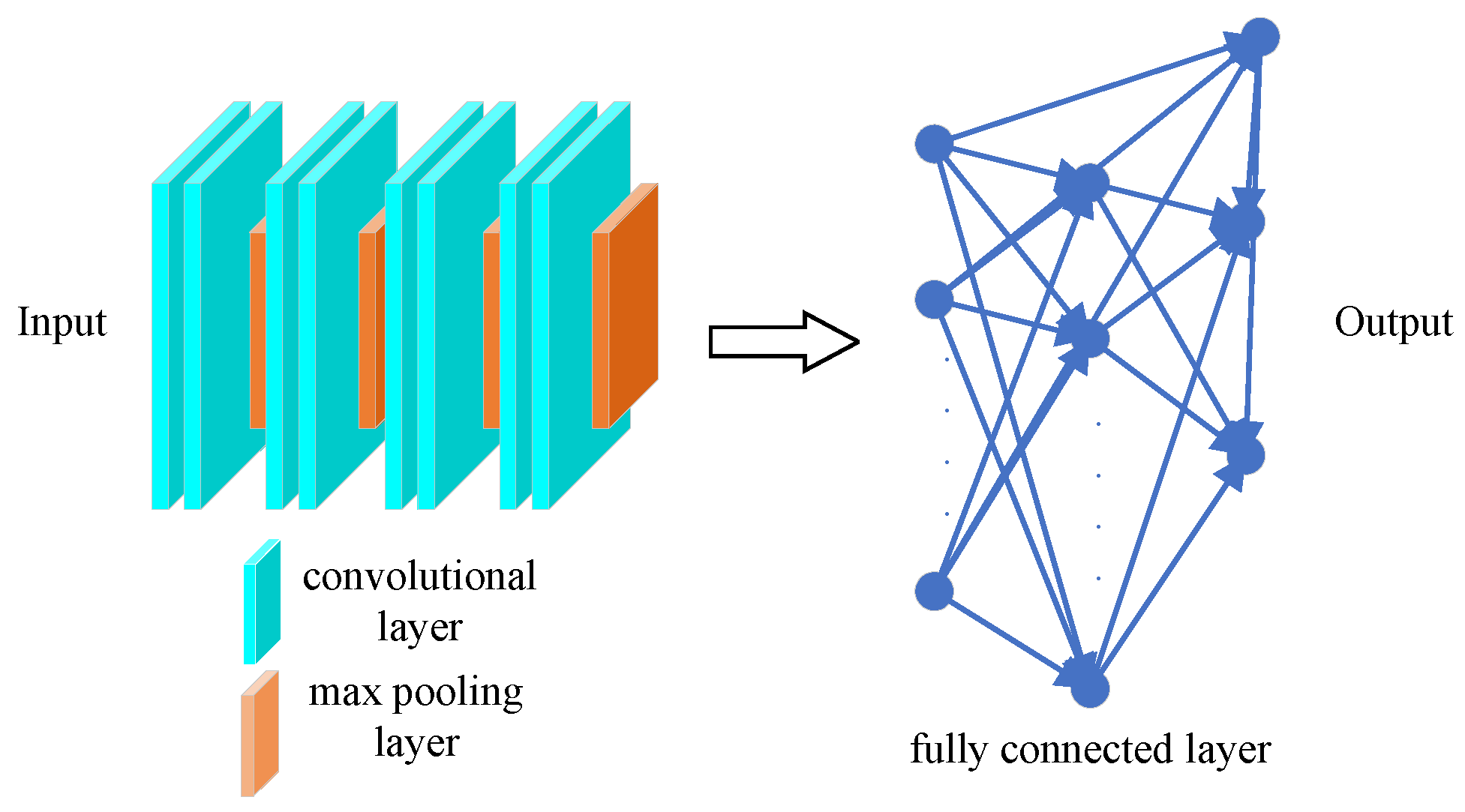
Figure 2.
Schematic Diagram of the LSTM Unit Structure.
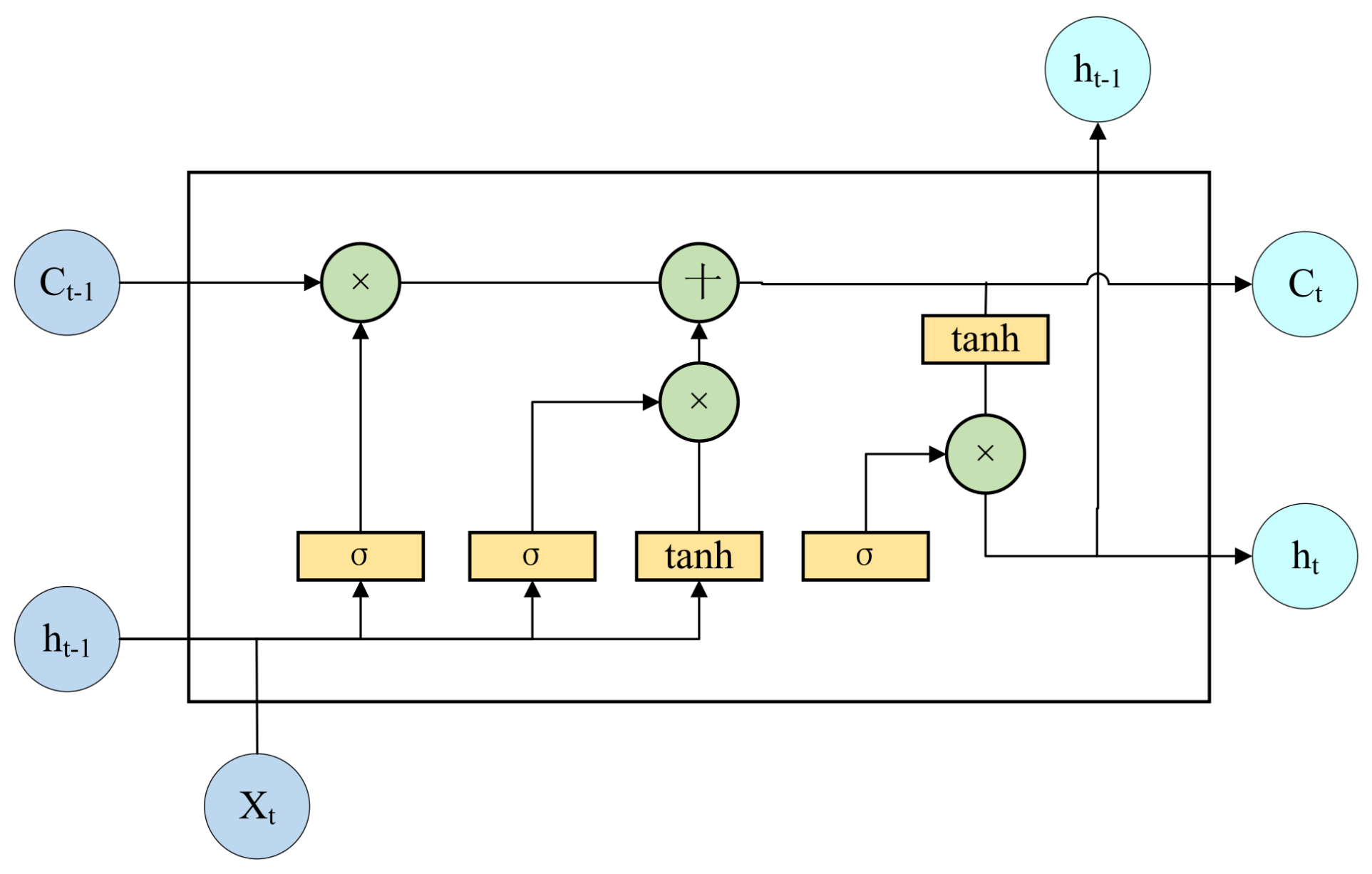
Figure 4.
Carbon Emissions from the Construction Industry in Hunan Province, 2005–2022.
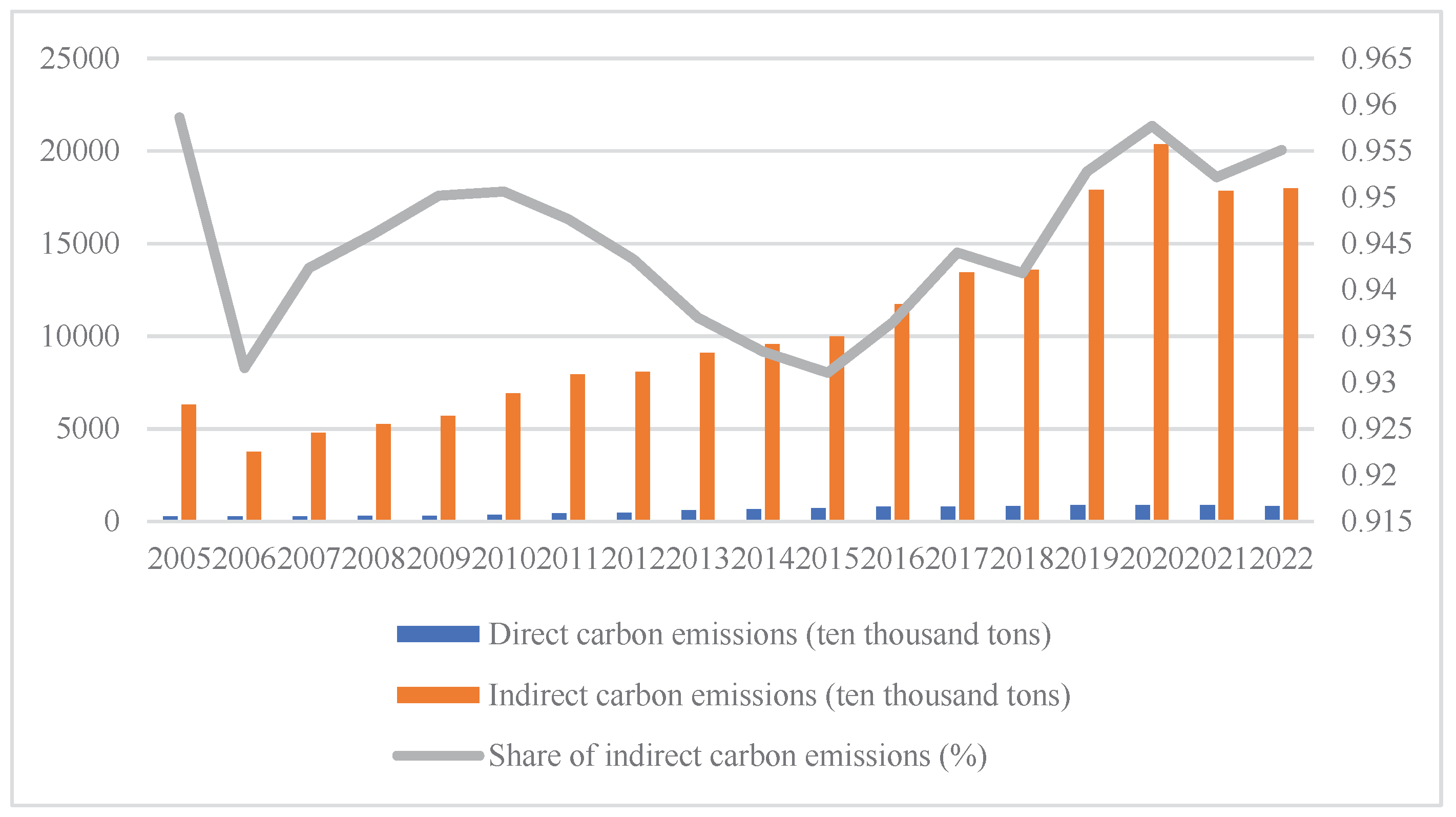
Figure 5.
Spearman Correlation Coefficient Test of Variables.
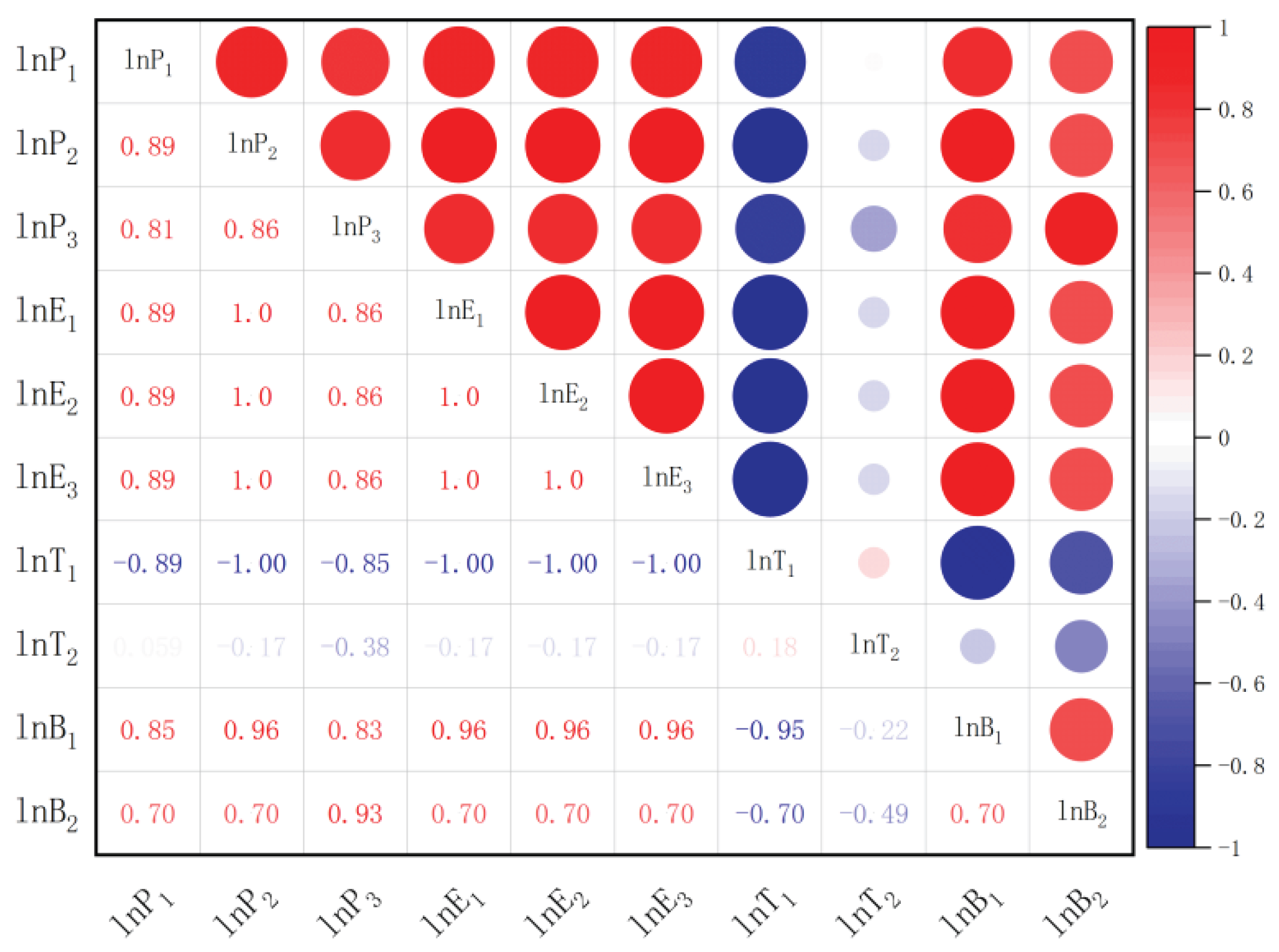
Table 1.
Model Fitting Performance.
| Goodness of Fit | ||
|---|---|---|
| R | R2 | Adjusted R2 |
| 0.979 | 0.958 | 0.921 |
Table 2.
Multiple Linear Regression Results.
| Model | Unstandardized Coefficient | Standardized Coefficient | Collinearity Statistics | ||
|---|---|---|---|---|---|
| B | Standard Error | Beta | Tolerance | VIF | |
| (Constant) | −81.474 | 107.394 | |||
| lnP1 | 10.732 | 14.349 | 0.39 | 0.017 | 58.544 |
| lnp2 | −0.986 | 5.883 | −0.306 | 0.001 | 714.833 |
| lnE1 | −2.743 | 1.919 | −3.375 | 0.001 | 1198.822 |
| lnE3 | 2.811 | 1.789 | 4.015 | 0.001 | 1403.267 |
| lnT1 | −0.332 | 0.995 | −0.301 | 0.006 | 174.99 |
| lnT2 | −0.263 | 0.233 | −0.172 | 0.199 | 5.019 |
| lnB1 | 0.227 | 1.446 | 0.072 | 0.022 | 44.588 |
| lnB2 | −0.416 | 0.438 | −0.183 | 0.125 | 8.011 |
| Dependent variable: lnC | |||||
Table 4.
Scenario Parameter Setting.
| Stage | Urbanization Rate | Per Capita GDP | Gross Output Value of the Construction Industry | Added Value of the Tertiary Industry | Energy Intensity | Construction Industry Scale | |
|---|---|---|---|---|---|---|---|
| High-Carbon Scenario | 2023 −2030 |
1.00% | 6.50% | 8.00% | 6.50% | −3.00% | 2.50% |
| 2031 −2035 |
0.80% | 5.50% | 7.60% | 6.30% | −3.20% | 2.30% | |
| 2036 −2040 |
0.50% | 4.50% | 7.30% | 6.10% | −3.40% | 2.10% | |
| Baseline Scenario | 2023 −2030 |
0.7% | 6.00% | 7.50% | 6% | −3.50% | 2% |
| 2031 −2035 |
0.50% | 5.80% | 7.30% | 5.80% | −3.70% | 1.80% | |
| 2036 −2040 |
0.30% | 5.60% | 7.10% | 5.60% | −3.90% | 1.60% | |
| Low-Carbon Scenario | 2023 −2030 |
0.30% | 5.40% | 7.00% | 5.50% | −4.00% | 1.50% |
| 2031 −2035 |
0.20% | 5.30% | 6.90% | 5.30% | −4.50% | 1.30% | |
| 2036 −2040 |
0.10% | 5.20% | 6.80% | 5.00% | −5.00% | 1.00% |
Table 5.
Comparison of Evaluation Indicators of Different Models.
| Evaluation Indicator | BP | LSTM | CNN-LSTM | CNN-LSTM-Attention |
|---|---|---|---|---|
| MSE | 0.0042 | 0.0399 | 0.0050 | 0.0006 |
| RMSE | 0.0647 | 0.1999 | 0.0706 | 0.0241 |
| R2 | 0.9649 | 0.8845 | 0.9731 | 0.9974 |
Disclaimer/Publisher’s Note: The statements, opinions and data contained in all publications are solely those of the individual author(s) and contributor(s) and not of MDPI and/or the editor(s). MDPI and/or the editor(s) disclaim responsibility for any injury to people or property resulting from any ideas, methods, instructions or products referred to in the content. |
© 2026 by the authors. Licensee MDPI, Basel, Switzerland. This article is an open access article distributed under the terms and conditions of the Creative Commons Attribution (CC BY) license (http://creativecommons.org/licenses/by/4.0/).
Copyright: This open access article is published under a Creative Commons CC BY 4.0 license, which permit the free download, distribution, and reuse, provided that the author and preprint are cited in any reuse.


