

Submitted:
01 April 2026
Posted:
03 April 2026
You are already at the latest version
Abstract
This study presents a comprehensive characterization of recycled aluminum briquettes produced by cold pressing of Al–Si–Mg alloy machining chips, along with an evaluation of their behavior during subsequent remelting. The objective was to assess the density, porosity, chemical composition, and metallurgical yield of the briquettes before and after melting, as well as to determine their suitability for use as deoxidizing additives in steelmaking. The cold-pressed briquette (Sample A) exhibited a low density of 2.29 g.cm-³ and a porosity of 12.1%, resulting from intergranular voids and residual lubricants. After melting and resolidification (Sample B), the density increased to 2.388 g.cm-3 and the porosity decreased to 8.15%. XRF chemical analysis confirmed a high degree of elemental homogeneity after melting with no indication of segregation, while SEM–EDS microstructural analysis verified the absence of significant intermetallic phases and revealed only a thin surface oxide layer. The metallurgical yield reached 94.2% with a low dross content (2.25%). The results demonstrate that, following appropriate preprocessing and optimized compaction, recycled aluminum briquettes constitute a stable and efficient secondary aluminum material suitable for steel deoxidation, and they can significantly reduce the environmental impact of metallurgical production.
Keywords:
recycled aluminum
; aluminum briquettes
; cold pressing
; density and porosity
; chemical homogeneity
; remelting behavior
1. Introduction
The circular economy and the reduction of carbon emissions are among the key priorities of the contemporary metallurgical industry. One of the most effective ways to achieve these objectives is the efficient processing of secondary aluminum resources, particularly machining chips. Aluminum chips represent a valuable but technologically challenging material, as they contain residual lubricants and coolants, surface oxide layers, and ferromagnetic contaminants. Their direct remelting leads to increased metal losses, intensive dross formation, and reduced metallurgical stability. At the same time, aluminum recycling is one of the most energy efficient metallurgical operations, as secondary production requires up to 95% less energy than primary production, significantly lowering the environmental burden.
Cold pressing of chips into compact briquettes has therefore become a promising technology that improves handling, reduces melting losses, and enables the production of recycled aluminum additives with well defined properties. Cold pressed briquettes exhibit high density, low porosity, and stable mass, making them suitable for use as deoxidizers in steelmaking. Aluminum is one of the most effective steel deoxidizers, and its combination with elements such as Mg, Si, or Mn can promote the formation of complex oxides and improve the cleanliness of the steel melt. At the same time, the pressure to demonstrate the recycled content in metallurgical products—driven by ESG reporting and EU regulatory requirements—is increasing the industrial relevance of recycled deoxidizers.
A key prerequisite for the use of recycled briquettes in steelmaking is their chemical homogeneity and compositional stability. The input chips often originate from different alloy systems (e.g., AlSi, AlMgSi), which may lead to variations in the content of alloying elements and trace impurities. The processes of collection, cleaning, and compaction can further influence the distribution of elements, the presence of oxides, or residual steel particles. Verifying the chemical composition of the briquettes before and after melting is therefore essential for assessing their suitability as deoxidizers. However, variability in the input scrap can result in unpredictable fluctuations in Fe, Mn, or Cr content, which may subsequently affect the formation of intermetallic phases and the metallurgical behavior of the briquettes during melting.
Although recycled aluminum briquettes are mentioned in the literature primarily in relation to their mechanical properties, porosity, or melting yield, considerably less attention has been devoted to the detailed analysis of their chemical homogeneity. Yet this parameter is crucial for the predictable behavior of briquettes in steelmaking, where the stability of Al, Mg, Si, and trace-element contents directly influences the deoxidation efficiency and the formation of oxide inclusions. However, systematic studies evaluating the chemical homogeneity of briquettes after remelting are virtually absent from the available literature, despite the fact that this parameter is fundamental for ensuring a stable deoxidizing effect.
The aim of this work is to address the identified gap in current research and to provide the first comprehensive assessment of the chemical homogeneity of recycled aluminum briquettes before and after remelting. Accordingly, the objectives of this study are to:
- analyze the chemical composition of cold pressed aluminum briquettes produced from recycled machining chips,
- evaluate their chemical homogeneity after remelting,
- identify the presence of trace elements and potential contaminants,
- assess their suitability for use as deoxidizers in steelmaking.
This work represents the first step in a broader research program focused on the comprehensive evaluation of recycled aluminum deoxidizers, which includes microstructural analyses, assessments of porosity, meltability, and yield, as well as comparison with loose chips. The findings are relevant for industrial enterprises seeking sustainable and economically efficient alternatives to primary aluminum deoxidizers. They also provide industrial partners with a basis for optimizing scrap separation, quality control, and certification of recycled deoxidizers in accordance with the requirements of modern steelmaking operations.
The presented study offers the first systematic evaluation of the chemical homogeneity of recycled aluminum briquettes after remelting—a critical yet previously overlooked parameter for their use as deoxidizing agents in steel production.
1.1. State of the Art
The recycling of aluminum chips and their transformation into compact briquettes represents a rapidly developing area of research driven by the need to reduce the carbon footprint and increase the efficiency of secondary raw material processing. Recent studies focus primarily on understanding oxidation processes, chemical compositional homogeneity, and the metallurgical behavior of recycled aluminum materials. Nevertheless, most published works evaluate mainly the mechanical and technological properties of briquettes, while the chemical homogeneity after remelting has received only limited attention.
Recent research shows that aluminum chips undergo intensive oxidation already during machining and handling, which significantly affects their subsequent recyclability. Brocq et al. [1] demonstrated that oxide layers develop a complex morphology and their thickness increases progressively with exposure time to air. Due to this dynamic oxidation, it is essential to minimize any additional oxygen contact to improve metal yield during recycling. Chen et al. [2] provide a comprehensive overview of remelting technologies and confirm that combining mechanical degreasing, preheating, and controlled melting conditions can substantially improve the metallurgical quality of secondary aluminum alloys while simultaneously reducing oxidation related losses.
Briquetting of aluminum chips is among the most effective methods of processing such material, as it significantly increases bulk density, improves handling, and reduces melting losses. Pavlasek et al. [4] demonstrated that high density briquettes exhibit more stable melting behavior and generate less dross compared to loose chips. Penchev et al. [6] further reported that impact controlled briquetting produces highly compact briquettes with low porosity, thereby directly enhancing metallurgical efficiency. Another important research area concerns the proportion of recycled material in alloys; Vlach et al. [5] showed that an appropriate fraction of recycled chips in AlSi7Mg0.3 castings does not impair mechanical properties, provided that material cleanliness and compositional homogeneity are maintained.
Oxidation, inclusion formation, and their interaction with the melt are key factors influencing the metallurgical quality of secondary aluminum alloys. Vallejo Olivares et al. [7] demonstrated that compaction of aluminum foil reduces oxidation reactions during melting, a behavior analogous to that observed for chips. Cinkilic et al. [8] developed a new recycled Al–Si–Mg alloy and confirmed that appropriate control of Mg and Si levels is essential for maintaining high alloy quality when using secondary feedstock. The issue of iron contamination has been extensively analyzed by Nunes et al. [9], who showed that excessive Fe promotes the formation of brittle intermetallic phases, increases porosity, and degrades corrosion resistance. Similarly, Javidani and Larouche [10] described the evolution of intermetallic phases in multicomponent Al–Si systems and emphasized the need for strict control of Fe, Mg, and Cu during recycling.
Aluminum is also one of the most effective deoxidizing agents in steelmaking. Sasai [11] provides a detailed description of the kinetics of Al₂O₃ inclusion formation and growth in molten steel, highlighting their complex behavior and significant influence on final steel quality. Zhang and Thomas [12] further expand the understanding of oxide inclusion behavior in the melt stream and their interactions with metallurgical processes. Wu et al. [13] demonstrated that the presence of Mg in Al–Ti deoxidized systems can alter oxide morphology and enhance inclusion flotation. Jin et al. [14] pointed out the influence of sulfur content during combined Al–Ti–Mg deoxidation, particularly on the formation of complex oxides. Wang et al. [15] observed that different deoxidation practices lead to distinct inclusion characteristics, underscoring the need for stable and compositionally uniform deoxidizers. In this context, Kem [16] notes that recycled aluminum briquettes can be effectively used as deoxidizers provided they exhibit adequate chemical purity and a low oxide content. Article [17] presents an overview of emerging trends and concepts developed to identify recyclable content in products intended for aluminum chip recycling via hot extrusion. The study shows that although achieving sustainability requires a holistic optimization of the entire processing environment, hot extrusion technology plays a key role in improving the quality of recycled aluminum products. Research in extrusion technology continues to advance, focusing primarily on achieving optimal mechanical and physical properties as well as on modeling and optimization of extrusion parameters. Study [18] further demonstrates that complex Al₂O₃–TiOₓ–(FeOₓ) inclusions form during reoxidation in Al–Ti deoxidation of ultra low carbon steel rather than under thermodynamic equilibrium, and these inclusions are responsible for nozzle clogging and surface defects, emphasizing the need to minimize reoxidation phenomena.
The available literature also highlights several areas that remain insufficiently explored. These include a detailed analysis of the chemical homogeneity of briquettes before and after melting, the influence of different chip types (e.g., AlSi, AlMgSi) on the composition and stability of recycled materials, the quantification of trace elements (Fe, Mn, Cr) in recycled deoxidizers, and the connection between microstructural changes and metallurgical behavior in steelmaking processes. Systematic comparisons between recycled and primary deoxidizers under industrial conditions are likewise lacking. These gaps create opportunities for research focused on the chemical composition, homogeneity, and metallurgical stability of recycled aluminum briquettes—topics that form the core of the present study. Additionally, studies comparing the effectiveness of recycled briquettes with commercial primary deoxidizers are absent, despite their importance for industrial implementation.
2. Materials and Methods
The aim of the present study was to verify the chemical composition and chemical homogeneity of aluminum deoxidation briquettes produced from recycled aluminum chips cold pressed without any binding additives. The purpose of the measurements was to comprehensively characterize the chemical composition of the recycled aluminum briquettes and to assess the stability of the main alloying elements (Mg, Si, Mn, Fe), including trace impurities that play a decisive role in their metallurgical behavior during steelmaking processes.
The experiment was designed to systematically address three essential questions concerning the quality and stability of recycled aluminum briquettes. The first objective was to determine the average chemical composition of the cold pressed briquette as the final product. The second objective was to evaluate the degree of chemical homogeneity throughout the entire volume of the material after remelting. The third objective was to verify whether the applied production technology—comprising the collection, cleaning, and compaction of aluminum chips—results in undesirable enrichment with impurities or losses of alloying elements.
The obtained results provide an important basis for communication with customers in the metallurgical sector, support certification processes, and serve as a foundation for collaborative research activities between the partner company and our institution aimed at optimizing recycled aluminum deoxidation additives.
The recycled aluminum briquettes were supplied by FENEGA Ltd. (Prešov, Slovakia), a company specializing in the processing of machining chips and the production of deoxidation additives for the metallurgical industry. The briquettes were manufactured from chips generated during the machining of AlSi- and AlMgSi-type alloys. The input material was first collected from machining facilities and subsequently cleaned mechanically. Lubricants and coolant residues were removed by centrifugation, while ferromagnetic contaminants were eliminated using magnetic separation. This procedure significantly reduces the content of oils and steel particles that would otherwise increase dross formation and oxide inclusions during melting.
After pretreatment, the chips were cold pressed at 20–30 °C using a hydraulic press operating at a pressure of 100–160 MPa. Pressing without binding agents ensured high material compactness and stable briquette geometry. The resulting cylindrical briquettes measured 60.5 × 62.9 × 45.7 mm and had an average mass of 322.8 g.
The compaction process was carried out in a single stage hydraulic cycle consisting of the following steps:
- filling the pressing chamber with loose chips,
- pre compression at a low pressure of approximately 10–20 MPa,
- the main pressing step at 100–160 MPa,
- maintaining the pressure for 3–5 s to stabilize the shape and reduce elastic springback,
- pressure release and ejection of the briquette from the chamber.
The ram speed ranged from 5 to 15 mm·s⁻¹, which is typical for chip compaction where uniform venting and gradual densification must be ensured. The total duration of a single pressing cycle was 12–20 s, depending on the chip type and their bulk density.
This processing cycle ensures:
- uniform material compaction,
- minimization of internal voids,
- stable briquette geometry,
- reproducibility of production.
Cold pressing of aluminum chips was employed because this method minimizes the formation of new Al₂O₃ oxide layers, which typically develop at elevated temperatures and negatively affect metallurgical yield. At the same time, it is an energy efficient process that does not require preheating of the material or tooling, thereby reducing operating costs and enabling continuous production. Cold pressing preserves the original microstructure of the chips and eliminates the risk of selective oxidation of alloying elements—particularly Mg and Si—which are highly susceptible to losses at higher temperatures. Moreover, cold pressing enhances process safety, as the low temperatures prevent ignition of residual lubricants and coolants. Finally, cold pressing is technologically compatible with industrial recycling lines, allows processing of a wide variety of chip types, and produces briquettes with high density and low porosity, which is essential for their behavior during melting.
The compaction process represents a critical factor determining the quality of recycled deoxidizers and their suitability for industrial use. It directly influences the density, porosity, and resulting metallurgical yield of the briquettes. Compacting chips into a consolidated form significantly affects the melting behavior and overall metal recovery. Higher density and lower porosity lead to [19,20]:
- reduced oxidation during heating,
- limited metal loss in the form of fine particulate matter,
- improved stability of chemical composition,
- higher aluminum yield (80–90%, depending on the melting method).
2.1. Sample Preparation
For the purpose of evaluating chemical homogeneity, two types of samples were prepared:
- Sample A – the cold pressed briquette in its original state
This sample represents a real industrial product and was used for the analysis of chemical composition, microstructure, and porosity (Figure 1). The dimensions of the pressed briquette were:
x (length) = 60.5 mm,
y (width) = 62.9 mm,
z (height) = 45.7 mm.
- Sample B – the remelted and resolidified block
The briquette was melted in an induction furnace at a temperature of approximately 850 °C and cast into a simple mold. The dimensions of Sample B, produced by remelting the pressed briquette, were:
x (length) = 116.2 mm,
y (width) = 41.4 mm,
z (height) = 23.8 mm,
and the mass was 251.9 g.
Six measurement points were defined on the polished cross section (four corners and two mid side positions) in order to capture any potential elemental segregation after melting.
2.2. Chemical Composition Analysis (XRF)
The chemical composition of the samples was analyzed using energy dispersive X ray fluorescence spectroscopy (ED XRF). Measurements were performed using a handheld XRF spectrometer DELTA INNOV.X (Olympus Innov X Systems Inc., Waltham, MA, USA), distributed by BAS Rudice spol. s r.o. (Rudice, Czech Republic). The instrument is equipped with a 4 W X ray tube, a large area SDD detector, and an optimized tight geometry configuration to enhance sensitivity to light elements (Mg, Al, Si). Signal processing was carried out using a floating point architecture processor enabling real time application of Fundamental Parameters (FP).
Measurements were conducted in Alloy Mode with an acquisition time of 60 s per point. Each measurement was repeated three times on three separate samples, and the resulting value represents the arithmetic mean. For Sample A, one central point located in the core region of the briquette was analyzed to minimize surface gradients caused by pressing. For Sample B, six measurement points were defined and evenly distributed at the corners and mid side positions of the polished face (Figure 2). This layout made it possible to detect potential elemental segregation between the core and peripheral regions after remelting.
The surfaces of the samples were ground using abrasive papers with grit sizes P600 → P1200 → P2500 and subsequently polished to minimize surface effects typical of XRF analysis. The surface was degreased with ethanol. According to the manufacturer’s specifications, the detection limit for light elements (Mg, Al, Si) ranged from several to several tens of ppm.
The spectra were evaluated using the instrument’s proprietary software (Olympus DELTA PC Software), applying:
- FP corrections (Fundamental Parameters),
- automatic deconvolution of overlapping peaks,
- internal calibration models for aluminum alloys.
Anomalous values caused by local inclusions or surface defects were identified and excluded when necessary, following standard procedures recommended by the manufacturer.
2.3. Microstructural and Local Chemical Analysis (SEM–EDS)
The microstructure and local chemical composition of the samples were analyzed using a field emission scanning electron microscope JEOL JSM 7000F (JEOL Ltd., Tokyo, Japan) equipped with an SDD type energy dispersive detector with an energy resolution of 129 eV at the Mn Kα line. The measurements were performed at an accelerating voltage of 15 kV, a working distance of 10–12 mm, and an electron beam current of 10–15 µA. Prior to analysis, the sample surfaces were prepared by sequential grinding (P600 → P1200 → P2500), polishing, and degreasing with ethanol; no carbon coating was applied to preserve the representativeness of the surface layer. EDS acquisition was carried out with an exposure time of 60 s per point, and each measurement was conducted in duplicate. The spectra were processed using the JEOL Analysis Station software employing a deconvolution algorithm and normalization of both weight and atomic percentages. This method enabled the identification of oxide layers, the analysis of elemental distribution within the microstructure, and the detection of Al, O, Mg, Si, Mn, Fe, and any potential intermetallic phases.
2.4. Surface Topography and 3D Profilometry
The macroscopic surface morphology of the samples was analyzed using a Keyence VHX-6000 digital microscope (Keyence Corp., Osaka, Japan) equipped with a VH-ZST objective providing a continuous magnification range from 20× to 2000× (Figure 3). The system enables 3D surface reconstruction using the Depth-from-Defocus method, roughness measurement, depth characterization of surface defects, and the acquisition of fully focused images through its depth-stacking function. Measurements were performed at magnifications between 50× and 200×, with a vertical resolution of approximately 1 µm. Prior to analysis, the sample surfaces were cleaned of loose particles and residual lubricants to ensure stable optical imaging and accuracy of the profilometric data. The resulting 3D models and height profiles were processed using the Keyence MultiFile Analyzer software, which enables quantitative assessment of surface irregularities, pores, and cavities. This method was primarily used to evaluate the surfaces of the pressed briquettes and to identify pores, surface voids, and inclusions that may influence the density, homogeneity, and metallurgical behavior of the briquettes during melting.
2.5. Density, Porosity and Compaction Analysis
Density, porosity, and the degree of compaction are among the key physical parameters that determine the quality and metallurgical behavior of recycled aluminum briquettes during melting. These characteristics predominantly influence oxidation losses, dross formation, the stability of chemical composition, and the overall metallurgical yield.
Determination of the bulk density of the briquettes:
When evaluating density, a distinction is made between the theoretical density of AlSi- and AlMgSi type aluminum alloys and the actual bulk density of the briquette ρ, which is reduced due to residual porosity. The density of Sample B was determined as the average of three independent cast specimens, each measured using the same procedure.
Geometrical method (for regular shapes):
The geometrical method for determining the volume and density of a cuboid (referred to in the context of metallurgical briquettes as the determination of the apparent bulk density) is a non destructive technique based on precise measurement of the linear dimensions of the body. This method assumes that the specimen has a regular stereometric shape, while any surface irregularities are minimized through statistical processing of the measurements. The dimensions of each specimen (length, width, height, or diameter and height) were measured using a digital caliper at three points along each axis, and the final value was taken as the arithmetic mean. The volume of cylindrical briquettes was calculated according to the following equation:
For cuboid-shaped bodies according to the following relationship:
The bulk density was subsequently calculated as:
where m is the mass of the briquette determined using analytical scales. The resulting density reflects the degree of compaction and the amount of residual voids formed during the chip pressing process.
Hydrostatic weighing:
To increase measurement accuracy, the volume of selected samples was also determined by hydrostatic weighing according to Archimedes’ principle:
This method eliminates errors caused by surface irregularities and provides a more accurate estimate of the actual volume of the briquette.
Calculation of porosity and degree of compaction:
The volumetric porosity was determined by comparing the measured density with the theoretical density of the alloy:
The degree of compaction was defined as a dimensionless coefficient:
Interpretation of the values:
- C < 0.70 – low compaction, high porosity
- 0.70 ≤ C ≤ 0.90 – standard industrial compaction
- C > 0.90 – highly compact briquettes with minimal porosity and high metal yield.
Digital metrology and 3D correlation:
The accuracy of the volume determination was further verified using digital metrology in the PTC Creo CAD (PTC Inc., Boston, USA) environment. The volume was calculated based on 3D scanning and numerical integration, which allowed the elimination of errors caused by surface irregularities. The results for density and porosity were subsequently correlated with 3D profilometry and microstructural analysis, which identified local regions with higher porosity or the presence of inclusions.
Determination of metallurgical yield:
The metallurgical yield of aluminum was determined using a melting test in which the briquette was melted in a ceramic crucible and, after dross removal, cast into a mold. The yield was calculated as:
For properly compacted briquettes, the yield typically ranges between 80–90%, depending on the melting procedure and the method of briquette immersion into the molten metal. A comprehensive analysis of density, porosity, and compaction therefore provides an important basis for optimizing the pressing process, ensuring quality control, and enabling reliable prediction.
3. Results
3.1. Analysis of Sample A
3.1.1. Chemical Composition Analysis (XRF)
Sample A represents an aluminum briquette produced by cold pressing recycled chips of the Al–Si–Mg alloy system under applied pressures of 100–160 MPa. This type of briquette corresponds to a real industrial product commonly used in steelmaking as a deoxidizing additive. The characterization of the sample focused on determining its chemical composition, density, porosity, and the morphological features formed during chip compaction.
The chemical composition was analyzed using X-ray fluorescence spectroscopy (XRF) performed with a handheld analyzer. The XRF method is based on measuring the intensity of fluorescent radiation emitted by atoms upon excitation by an X-ray beam, where the energy levels correspond to individual elements and the signal intensity reflects their concentration.
Repeated measurements were carried out on three Sample A briquettes, each measured at a central point. The results (Table 1) show low variability in the main alloying elements (Al, Mg, Si), confirming the compositional stability of the pressed recycled material. Deviations in trace elements such as Fe, Mn, and Cr remained within the accuracy limits of the handheld XRF device.
The measured composition is favorable for deoxidation applications, as it does not increase the risk of forming undesirable intermetallic phases in steel. The fluctuation of aluminum content within ±0.1% is typical for heterogeneous recycled mixtures composed of chips of various origins. The elements magnesium and silicon exhibit natural variability due to the non-uniform distribution of individual chips within the pressed volume. In contrast, chromium and manganese are among the more stable trace elements; therefore, their variability remains minimal. Iron may locally appear in trace amounts, most commonly as a result of steel smearing, machining-related contamination, or residues remaining after magnetic separation.
3.1.2. Density, Porosity, and Degree of Compaction of Sample A
The physical parameters of Sample A represent key indicators of the quality of the cold pressed aluminum briquette and significantly influence its behavior during subsequent melting and metallurgical application. The density, porosity, and degree of compaction were determined using a combination of precise geometrical measurements, 3D CAD modeling, and surface morphology analysis performed with a Keyence VHX digital microscope.
Geometrical parameters and density determination:
The dimensions of Sample A (60.5 × 62.9 × 45.7 mm) and its average mass of 322.8 g were complemented by an accurate volume approximation derived from a 3D CAD model, which eliminated the effects of surface irregularities on the briquette. The resulting volume was determined to be 141.1 cm³, which enabled the calculation of the bulk density as follows:
Porosity and degree of compaction:
Comparison of the measured density with the actual density of the aluminum alloy enabled quantification of the porosity and the degree of compaction. The porosity was calculated according to the following relationship:
The degree of compaction was 87.9%, which corresponds to a standard cold pressed briquette produced from secondary aluminum chips and confirms that the material contains a high proportion of intergranular voids. This structural discontinuity is typical for briquettes pressed at room temperature and cannot be eliminated without material plasticization at elevated temperatures.
Surface morphology and pore characteristics:
Figure 4 presents an optical micrograph of the surface morphology of the examined sample. The micrograph provides an overview of the macroscopic texture and surface characteristics of the material. Surface analysis performed using the Keyence VHX digital microscope revealed a markedly heterogeneous lamellar texture with a high degree of surface complexity, directly reflecting the origin of the chip-based precursor material. Automated image analysis identified 4,450 individual surface features (pores, microcracks, and oxide fragments), with a total areal coverage of 1.63%. The average maximum diameter of the surface features was approximately 20 µm.
The image shows a heterogeneous lamellar structure formed by overlapping aluminum chips compressed during cold briquetting. Distinct surface features can be observed, including flattened chip segments, microcracks generated by mechanical deformation, and numerous pores and cavities at the micrometer scale irregularly distributed across the surface. The darker regions indicate areas potentially enriched in oxides (Al₂O₃), whereas the lighter regions correspond to exposed metallic surfaces. The morphology reflects the high intergranular porosity (12.1%) and confirms the presence of mechanically induced discontinuities that contribute to the reduced bulk density of the briquette.
The physical properties of the pressed briquette play a key role in its metallurgical performance, as lower density and increased porosity have a dual effect on its melting behavior. On the one hand, the larger specific surface area promotes faster wetting and fragmentation of the briquette, leading to more efficient kinetics of deoxidation reactions. On the other hand, such a briquette tends to remain on the melt surface for a longer time, exhibits a higher susceptibility to surface oxidation (so called burn off), and may contribute to increased dross formation. Sample A therefore represents a material with a typical degree of compaction found in recycled aluminum chips pressed at room temperature, with its physical parameters directly influencing both metallurgical yield and the dynamics of the deoxidation process.
3.2. Analysis of Sample B
3.2.1. Chemical Composition of the Remelted Briquette (Sample B)
The chemical composition of Sample B was analyzed using ED-XRF at six measurement points evenly distributed across the polished cross-section of the casting. On the polished cross-section of the three examined samples, six measurement locations were defined: four positioned at the corners and two at the midpoints of the side surfaces, allowing potential elemental segregation after melting to be detected. The surface was ground and polished prior to measurement to minimize the surface-related effects typical of XRF analysis.
The values BM1–BM6 in Table 2 represent the average of three independent castings, with each measurement point being measured three times and subsequently averaged. Aluminum is the dominant element, with its content ranging narrowly between 97.21 and 97.51 wt.%. The silicon content varies between 0.67 and 0.85 wt.% and magnesium between 0.33 and 0.55 wt.%. The trace elements Mn, Fe, and Cr occur at low concentrations, with iron showing the largest variability (0.38–0.63 wt.%).
The graph in Figure 5 shows the median chemical composition calculated from the measurements performed at six locations on three Sample B specimens. Aluminum is the dominant element, with its content exceeding 97 wt.%, while the remaining elements are present in trace to low concentrations. The use of a logarithmic Y-axis enables visual enhancement of the differences between elements occurring at distinct orders of magnitude, providing a clear interpretation of their relative proportions.
The visualization confirms that the chemical composition of Sample B is stable and exhibits no significant deviations among the individual elements. The concentrations of Mg, Si, Mn, Fe, and Cr fall within the ranges typical for secondary AlSiMg alloys produced from recycled chips. These results support the conclusion that the melting and resolidification process ensured sufficient homogenization of the material, which is essential for its use as a deoxidizer in steelmaking.
The variability of individual elements across the measurement points is low, indicating good chemical homogeneity after remelting. The aluminum content fluctuates by only ±0.15%, which is negligible within the accuracy limits of ED XRF. Similarly stable are the values of Mn (0.36–0.41 wt.%) and Mg (0.33–0.55 wt.%). The slightly higher variability in Fe (0.38–0.63 wt.%) may be associated with the local occurrence of fine Fe rich inclusions.
Silicon, a key alloying element in AlSiMg type alloys, exhibits stable concentrations within the range of 0.67–0.85 wt.% with no indication of segregation between the core and the peripheral regions of the casting.
Based on the measured data, it can be concluded that Sample B demonstrates a high degree of chemical homogeneity. Differences between the corner and mid side regions are minimal, confirming that melting at ~850 °C followed by unidirectional solidification effectively homogenized the originally heterogeneous pressed material.
The highest relative variability was observed for Fe; however, even in this case, the values fall within the typical range for secondary AlSiMg alloys produced from recycled chips. The presence of trace Cr (0.038–0.091 wt.%) is consistent with minor contamination of the input scrap and shows no signs of segregation.
A homogeneous distribution of elements after remelting is crucial for using the briquettes as deoxidizers in steelmaking. Stable contents of Al, Mg, and Si ensure predictable oxide formation, while low and uniformly distributed concentrations of Fe and Mn minimize the risk of unwanted intermetallic phases. The findings thus confirm that recycled briquettes, once remelted, exhibit sufficient chemical stability for metallurgical applications.
3.2.2. Microstructural and Local Chemical Analysis (SEM–EDS) of Sample B
The microstructural and local analytical characterization of Sample B was carried out using a field-emission scanning electron microscope JEOL JSM-7000F equipped with an SDD-type EDS detector with an energy resolution of 129 eV at the Mn Kα line. Measurements were performed at three designated points on Sample B. The SEM–EDS method complements the ED-XRF results and provides a detailed insight into the local chemical composition, surface morphology, and the presence of oxides or intermetallic phases.
The surface morphology of Sample B was analyzed using SEM in secondary electron mode. Figure 6 shows the typical surface texture with local discontinuities and fine pore structures. Point EDS analysis confirmed the dominant presence of aluminum and the secondary presence of oxygen, indicating a thin passivation layer of Al₂O₃.
The second measurement point (Figure 7) exhibits a similar morphology but with a slightly lower oxygen content. This suggests local variations in the thickness of the oxide layer, which are typical for recycled AlSiMg materials.
The third measurement point (Figure 8) confirms a consistent surface morphology and stable chemical composition. The slightly elevated oxygen content may be associated with a local microcrack or pore, where oxidation is preferentially promoted.
Observations in secondary electron (SE) mode revealed that the surface of the remelted and resolidified block exhibits:
- a fine grained metallic structure typical of AlSiMg type aluminum alloys,
- a regular texture with oriented grinding and polishing traces resulting from sample preparation,
- local discontinuities, fine micropores, and small material pull outs that represent potential nucleation sites for oxidation,
- occasional darker inclusions corresponding to Fe rich particles or oxide agglomerates.
The obtained micrographs confirm that after melting, a continuous yet slightly porous microstructure characteristic of secondary aluminum is formed, without large voids or segregation defects. The detected micropores are typical for secondary aluminum melts, especially when melting material with an increased specific surface area (such as the original chips).
Point EDS analysis was performed at an accelerating voltage of 15 kV with an exposure time of 60 s in spot analysis mode. The evaluation was carried out using the ZAF correction algorithm, which compensates for matrix effects related to absorption, fluorescence, and atomic number.
Key findings of the analysis:
- The surface of Sample B is covered by a thin Al₂O₃ oxide layer:
All three EDS spectra show the presence of oxygen in the range of 3.8–5.9 wt.%, which is typical for a naturally formed oxide layer on aluminum.
- 2.
- Aluminum is the dominant element in all measurement points:
In all three EDS analyses, the Al content ranges between 94.06–95.66 wt.% (normalized values). This is consistent with the XRF results (97.2–97.5 wt.%). The difference arises because EDS also captures the surface oxide layer, whereas XRF probes deeper into the material.
- 3.
- EDS does not confirm the presence of Mg, Si, Mn, or Fe at the analyzed points:
The three provided spectra contain only Al and O. Importantly, this does not imply that these elements are absent from the material — XRF clearly detects them. Rather, it indicates that in the analyzed microlocations (surface, homogeneous regions), no intermetallic phases or Fe-, Mn-, Si-, or Mg-rich inclusions were observed. This supports the conclusion of good chemical homogeneity.
- 4.
- The surface is microstructurally homogeneous, without inclusions or segregated phases:
SEM images show:
- a uniform texture,
- fine pores typical of secondary aluminum,
- no Fe-rich or Si-rich intermetallic particles,
- no oxide agglomerates.
- 5.
- The oxygen content at the measured points indicates the presence of a surface oxidation layer typical of aluminum alloys:
However, the measurements do not allow determination of the thickness or continuity of this layer.
- 6.
- EDS confirms the XRF-based conclusions regarding chemical homogeneity:
Although EDS is a localized method, its results are fully consistent with XRF. In the analyzed microlocations, no evidence was found of:
- local enrichment by Fe, Mn, Si, or Mg,
- intermetallic phases,
- segregation phenomena after remelting.
3.2.3. Density, Porosity, and Degree of Compaction of Sample B
Sample B represents a remelted and resolidified block obtained by melting the pressed briquette (Sample A) in an induction furnace at approximately 850 °C, followed by unidirectional solidification in a simple mold. This process enables the quantification of the actual metallurgical yield, verification of the degree of oxidation, and determination of the physical parameters that characterize the quality of the resulting casting. Density, porosity, and the degree of compaction were determined using a combined geometrical–mass method analogous to that used for Sample A.
Geometrical parameters and density determination:
After casting, Sample B had dimensions of 116.2 × 41.4 × 23.8 mm and an average mass of 273.41 g. The sample volume calculated from the stereometric dimensions was 114.5 cm³.
Bulk density:
The value is higher than the density of briquette A (2.29 g·cm⁻³), which corresponds to the reduced porosity and the elimination of gaps between chips after their transformation into a compact metallic volume during remelting.
Porosity and degree of compaction:
The actual porosity was determined by comparing the measured density with the theoretical density of the Al–Si–Mg aluminum alloy (≈ 2.60 g·cm⁻³):
The density of the casting therefore reaches:
which represents a significantly higher degree of compaction compared to the pressed briquette A (87.9%). A compaction level above 90% is typical for compact aluminum castings produced from secondary alloys, with the remaining porosity being caused primarily by gas pores (hydrogen, decomposition products of oils) formed during the melting of recycled chips.
Weight loss, yield, and dross fraction:
Based on the input mass of briquette A (290.25 g) and the output mass of the B casting, the following parameters were determined:
- weight loss:
- metallurgical metal yield:
- dross fraction (oxide residues):
These values are consistent with typical results reported for the melting of recycled briquettes, where a yield of 90–96% represents the standard for secondary aluminum with minor contamination by oils and oxides.
The results show that:
- the melting process led to a significant reduction in porosity from 12.1% (Sample A) to 8.15% (Sample B),
- the density increased to 2.388 g·cm⁻³, confirming the complete transformation of the chip-based material into a compact metallic volume,
- the yield of 94.2% confirms the high quality of the briquette as an input raw material,
- the residual dross fraction of 2.25% indicates a standard level of oxidation during the melting of chip-based recycled material.
The combination of increased compaction and low variable porosity is advantageous for the use of the material as a steel deoxidation additive: the casting exhibits a homogeneous character, stable chemical composition, and predictable metallurgical behavior.
4. Discussion
The results obtained from the analysis of the pressed briquette (Sample A) and the corresponding remelted casting (Sample B) enable a comprehensive assessment of the physical, chemical, and microstructural changes occurring during the recycling of aluminum chips. This discussion synthesizes the key findings and compares them with established knowledge in the literature, particularly in the context of oxidation, the homogeneity of secondary aluminum alloys, and the influence of recycled deoxidizers on metallurgical processes.
4.1. Changes in Density and Porosity During the Transition from Pressed Briquette to Casting
Sample A exhibits a relatively low density of 2.29 g.cm-³ and a high porosity of 12.1%, which is typical for cold pressed briquettes made from Al–Si–Mg–Cu alloy chips. This is caused not only by the mechanical porosity between individual chips but also by the presence of residual cutting oils and emulsions entrapped during compaction. These substances do not contribute to the solid fraction of the material—upon heating, gas expansion and oil decomposition directly contribute to mass loss and increased gas induced porosity in the resulting casting.
After melting the briquette, the resulting casting (Sample B) reaches a density of 2.388 g.cm-³ and a significantly lower porosity of 8.15%. This decrease confirms that most mechanical voids are eliminated during melting, the material becomes compacted, and only metallurgical porosity remains. This residual porosity is associated primarily with dissolved hydrogen and oxidation processes occurring during the melting of aluminum chips. This mechanism is consistent with the literature describing rapid formation of Al₂O₃ on chip surfaces and the high content of entrapped gas in loose or partially compacted recycled feedstocks.
However, the density of the casting remains lower than that of a fully dense ingot (2.6 g.cm-³), demonstrating that the secondary material retains remnants of the original microstructural discontinuity and contamination. This phenomenon is also highlighted in studies on recycled AlSiMg alloys, where porosity persists as one of the limiting factors affecting the metallurgical stability of secondary raw materials.
4.2. Mechanisms of Oxidation and Dross Formation
The formation of dross and process related metal losses represents a critical aspect of the quality of recycled briquettes. Sample B exhibits:
- a dross fraction of 2.25%,
- a relative melting loss of 3.55%,
- a yield of 94.2%.
These values fall within the typical range for the melting of briquettes with densities between 2.15 and 2.40 g.cm-³, confirming that the process is accompanied by significant surface oxidation of the chips. During melting, the oxide layers (Al₂O₃) originally present on the fragmented chips separate into the dross phase rather than becoming part of the metallic matrix.
The literature describes how oxide layers on chips thicken even during short exposure to air and subsequently cause metal losses and inclusion formation during melting. SEM–EDS analysis of Sample B confirmed the presence of oxygen at levels of 3.8–5.9 wt.%, which is consistent with values typical for secondary aluminum. Although this is primarily a surface related phenomenon, its presence explains the increased dross fraction and the observed metal burn-off.
4.3. Chemical Homogeneity After Remelting and Its Significance for Metallurgical Applications
The chemical analysis of Sample B (six XRF measurement points across three specimens) demonstrated that remelting the briquette results in highly effective homogenization of the originally heterogeneous chip based mixture. The aluminum content (97.21–97.51 wt.%) shows minimal deviations of ±0.15%, as do Mg, Si, Mn, and Cr. The slight variability in Fe (0.38–0.63 wt.%) is associated with the random distribution of iron rich inclusions originating from machining or contamination of the input scrap.
EDS analyses did not confirm the presence of intermetallic phases enriched in Fe, Mn, or Si, indicating that no significant compositional differences were detected between the edge and core regions at the sampled points. Homogeneity is a crucial factor for deoxidation applications: stable composition ensures predictable kinetics of oxide formation and a uniform contribution of active elements (Al, Mg, Si) during the steelmaking process.
Compared with literature reports that emphasize the risks of Fe and Cr segregation in recycled materials, the examined sample exhibits favorable chemical behavior, enhancing its suitability as a recycled deoxidizer.
4.4. Influence of Process-Related Contaminants and Gas Porosity
A significant factor affecting the density of Sample A as well as the quality of the casting in Sample B is the presence of cutting emulsions and oils entrapped between the chips. These organic substances:
- reduce the density of the briquette,
- decompose and release gas during heating,
- promote the formation of gas porosity in the casting,
- increase metal burn off,
- reduce the overall yield.
This phenomenon is consistent with the conclusions of modern research, which indicate that proper pretreatment of chips (drying, centrifuging, and degreasing) is essential for minimizing melting losses and improving the metallurgical stability of secondary materials. The surface visualization of Sample A (Keyence VHX) confirms the presence of a highly complex lamellar structure, multiple oxide sites, and as many as 4,450 identified pore type features over an area of 88.79 mm².
Therefore, the porosity of Sample B is not predominantly the result of segregation during solidification but directly reflects residual contamination and the original microstructure of the chips.
4.5. Industrial Implications for the Use of Recycled Briquettes
From the perspective of application in the steelmaking industry, two aspects are of primary importance:
- the compaction level of the briquette (85–88% for Sample A),
- the density after melting (2.388 g.cm-³ for Sample B).
Briquettes with densities between 2.20 and 2.40 g.cm-³ are considered optimal for steel deoxidation in industrial practice because they:
- fragment rapidly,
- submerge beneath the molten metal surface when added appropriately,
- provide a large reactive surface area,
- achieve yields of 90–96%.
However, excessively high porosity and elevated oil content can lead to explosive reactions, increased gas porosity, and higher metal burn off. The results therefore highlight the need for thorough chip pretreatment and optimization of the pressing pressure to achieve densities above 2.35 g.cm-³.
4.6. Key Findings of the Discussion
The results clearly show that the melting of the pressed briquette leads to a significant increase in density and a simultaneous reduction in material porosity, while part of the gas induced porosity remains due to residual gases and the decomposition of oils. The chemical homogeneity after remelting is very good, with no evidence of segregation of major alloying or trace elements, confirming the stability of the alloy system after remelting. The formation of dross and the overall process related loss are directly influenced by the oil content, the oxidized surfaces of the chips, and the degree of compaction achieved during pressing. The achieved metallurgical yield of 94.2% further confirms the suitability of pressed briquettes as a secondary deoxidizer in steelmaking. Microstructural observations provide a consistent explanation for the origin of porosity, confirm the link between the structure of the chip based precursor and casting quality, and support the interpretation of the density, chemical, and morphological analyses.
5. Conclusions
The present study provides a comprehensive evaluation of recycled aluminum briquettes produced by cold pressing and subsequently remelted into cast blocks, with particular emphasis on density, porosity, chemical homogeneity, and metallurgical yield. The results showed that the pressed briquette (Sample A) exhibits typical characteristics of a chip based precursor, including pronounced intergranular porosity, the presence of residual oils, and a heterogeneous surface structure, which together resulted in a low density of 2.29 g.cm-³ and a porosity of 12.1%. After melting and resolidification of the briquette (Sample B), a clear compaction of the material was observed, with the density increasing to 2.388 g.cm-3 and the porosity decreasing to 8.15%. This reduction confirms that melting effectively eliminates mechanical voids between chips, although part of the porosity associated with gas release during oil decomposition remains.
XRF chemical analysis demonstrated a high degree of compositional homogeneity after remelting, with no evidence of segregation of alloying elements. The composition of Sample B showed only minimal deviations across all six measurement locations. Microstructural analysis confirmed the absence of pronounced intermetallic phases and revealed that residual oxidation manifests only as thin surface layers. Surface oxidation was not identified as a factor significantly influencing the bulk chemical composition of the analyzed material. The metallurgical yield of 94.2% and the low dross fraction of 2.25% classify the examined material as a fully viable secondary aluminum additive suitable for steel deoxidation, with results consistent with typical industrial values reported for the melting of recycled aluminum.
The findings underscore the importance of chip pretreatment—particularly the removal of oils and reduction of surface oxidation—as well as optimization of pressing pressure to increase briquette density and reduce porosity. At the same time, they confirm that properly processed recycled briquettes can achieve stable chemical properties, high metallurgical yield, and predictable melting behavior even in demanding applications such as steel deoxidation. The results constitute an important contribution to the development of sustainable metallurgical processes that promote greater utilization of recycled aluminum materials in industrial practice.
Author Contributions
Conceptualization, J.M. and P.B.; methodology, V.S. and J.M.; software, P.B.; validation, J.M., V.S. and P.B.; formal analysis, J.M. and V.S.; investigation, J.M and P.B..; resources, J.M.; data curation, J.M. and P.B.; writing—original draft preparation, J.M. and P.B.; writing—review and editing, P.B.; visualization, P.B.; supervision, J.M.; project administration, P.B. and J.M.; funding acquisition, P.B. All authors have read and agreed to the published version of the manuscript..
Funding
The article was prepared thanks to the support of The Ministry of Education, Research, Development and Youth of the Slovak Republic through the grants KEGA number 009TUKE-4/2024. The article processing charge was funded by KEGA number 009TUKE-4/2024.
Data Availability Statement
The data presented in this study are available on request from the corresponding author. The data are not publicly available due to restrictions on funding sources.
Conflicts of Interest
The authors declare no conflicts of interest.
References
- Laurent Brocq, M.; Lilensten, L.; Pinot, C.; Schulze, A.; Duchaussoy, A.; Bourgon, J.; Leroy, E.; Tekkaya, A.E. Solid State Recycling of Aluminium Chips: Multi Technique Characterization and Analysis of Oxidation. Materialia 2023, 31, 101864. [Google Scholar] [CrossRef]
- Chen, X.; Ben Saada, M.; Lavisse, B.; Ammar, A. Recent Advances in the Remelting Process for Recycling Aluminium Alloy Chips: A Critical Review. Int. J. Mater. Form. 2025, 18, 42. [Google Scholar] [CrossRef]
- Gudić, S.; Vrsalović, L.; Krolo, J.; Nagode, A.; Labetić, I.D.; Lela, B. Corrosion Behaviour of Recycled Aluminium AlSi9Cu3(Fe) Machining Chips by Hot Extrusion and Thixoforming. Sustainability 2024, 16, 1358. [Google Scholar] [CrossRef]
- Pavlasek, L.; Bernatik, M.; Cervenakova, T.; Trojan, J. Behaviour of High Density Aluminium Briquette During Melting in Laboratory Conditions. Arch. Foundry Eng. 2025, 25(2). [Google Scholar] [CrossRef]
- Vlach, T.; Cais, J.; Horký, R. Influence of Aluminium Waste Chips Contenton the Final Properties of AlSi7Mg0.3 Alloy Casts. Manufacturing Technology 2024. [Google Scholar] [CrossRef]
- Penchev, T.; Altaparmakov, I.; Karastojanov, D. Briquetting of Metal Chips by Controlled Impact: Experimental Study. Available online: https://www.inase.org/library/2014/athens/bypaper/ENVEC/ENVEC-10.pdf.
- Vallejo Olivares, A.; Philipson, H.; Gökelma, M.; Roven, H.; Furu, T.; Kvithyld, A.; Tranell, G. Compaction of Aluminium Foil and Its Effect on Oxidation and Recycling Yield. In Light Metals; Springer, 2021. [Google Scholar] [CrossRef]
- Cinkilic, E.; Moodispaw, M.; Zhang, J.; Miao, J.; Luo, A.A. A New Recycled Al–Si–Mg Alloy for Sustainable Structural Die Casting Applications. Metall. Mater. Trans. A 2022, 53, 2861–2873. [Google Scholar] [CrossRef]
- Nunes, H.; Madureira, R.; Vieira, M.F.; Reis, A.; Emadinia, O. Excessive Fe Contamination in Secondary Al Alloys: Microstructure, Porosity, and Corrosion Behaviour. Metals 2025, 15, 451. [Google Scholar] [CrossRef]
- Javidani, M.; Larouche, D..; Chen, X. G. Assessment of Post-eutectic Reactions in Multicomponent Al-Si Foundry Alloys Containing Cu, Mg, and Fe. Metallurgical and Materials Transactions A 2015, 46(7), 1–14. [Google Scholar] [CrossRef]
- ISBN 10.1007/s11661-015-2856-x.
- Sasai, K. Kinetics on Formation, Growth, and Removal of Alumina Inclusions in Molten Steel. ISIJ Int. 2022, 62, 426–436. [Google Scholar] [CrossRef]
- Zhang, L.; Thomas, B. Alumina Inclusion Behavior During Steel Deoxidation. 7th European Electric Steelmaking Conference, May 26-29, 2002; pp. 2.77–2.86. [Google Scholar]
- Wu, Z.; Zheng, W.; Li, G.; Matsuura, H.; Tsukihashi, F. Effect of Inclusions’ Behavior on the Microstructure in Al–Ti Deoxidized and Mg Treated Steel. Metall. Mater. Trans. B 2015, 46, 1226–1241. [Google Scholar] [CrossRef]
- Jin, P.; Yang, Y.; Cao, L.; Yuan, X.; Wang, G. Effects of S Content on Inclusion Formation in Al and Ti–Mg Complex Deoxidized Steel. Steel Research International 2023, 94(7). [Google Scholar] [CrossRef]
- Wang, D.; Li, B.; Huang, L.; Zhan, D.; Gao, H. Effects of Deoxidation Processes on Inclusions in Environmentally Friendly Free Cutting Steel. Metals 2025, 15, 1018. [Google Scholar] [CrossRef]
- Kem, A.Y. Applications of Powder Metallurgy to the Production of Recycled Iron and Aluminum Deoxidation Briquettes for In Ladle Use. Metallurgist 2019. [Google Scholar] [CrossRef]
- Wang, J.; Wang, L.; Li, X.; Li, J.; Chen, C.; Li, C.; Zhuang, C. Study on the Thermodynamic Stability and Evolution of Inclusions in Al–Ti Deoxidized Steel. High Temp. Mater. Processes 2022, 41, 206–2015. [Google Scholar] [CrossRef]
- Cha, W.-Y.; Kim, W.-Y. In situ Observation of Inclusion Formation Behavior in Ultra Low Carbon Steel with Al–Ti Complex Deoxidation. ISIJ Int. 2025, 65, 1631–1641. [Google Scholar] [CrossRef]
- Vallejo-Olivares, A.; Philipson, H.; Gökelma, M.; Roven, H.J.; Furu, T.; Kvithyld, A.; Tranell, G. Compaction of Aluminium Foil and Its Effect on Oxidation and Recycling Yield. In Light Metals 2021; Springer Nature: Cham, Switzerland, 2021; pp. 735–741. [Google Scholar] [CrossRef]
- Ulus, A.; Ekici, H.; Güler, E. Optimization of Recovery Efficiency for Briquetted Aluminum Chips up to Briquetting Parameters. In Light Metals 2017; Ratvik, A.P., Ed.; Springer: Cham, Switzerland, 2017; pp. 925–932. [Google Scholar] [CrossRef]
Figure 1.
Shape of the briquette after cold pressing.
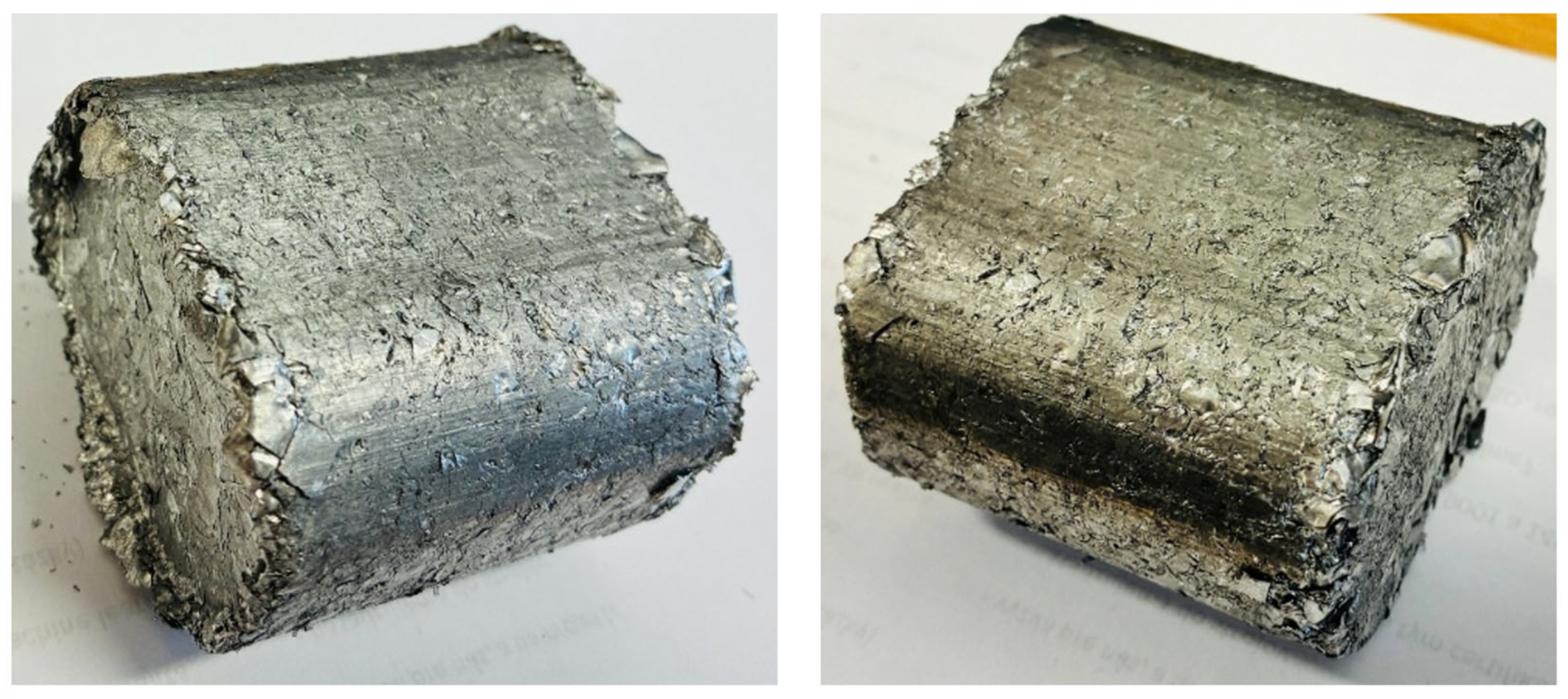
Figure 2.
Shape of Sample B after remelting with indicated measurement locations.
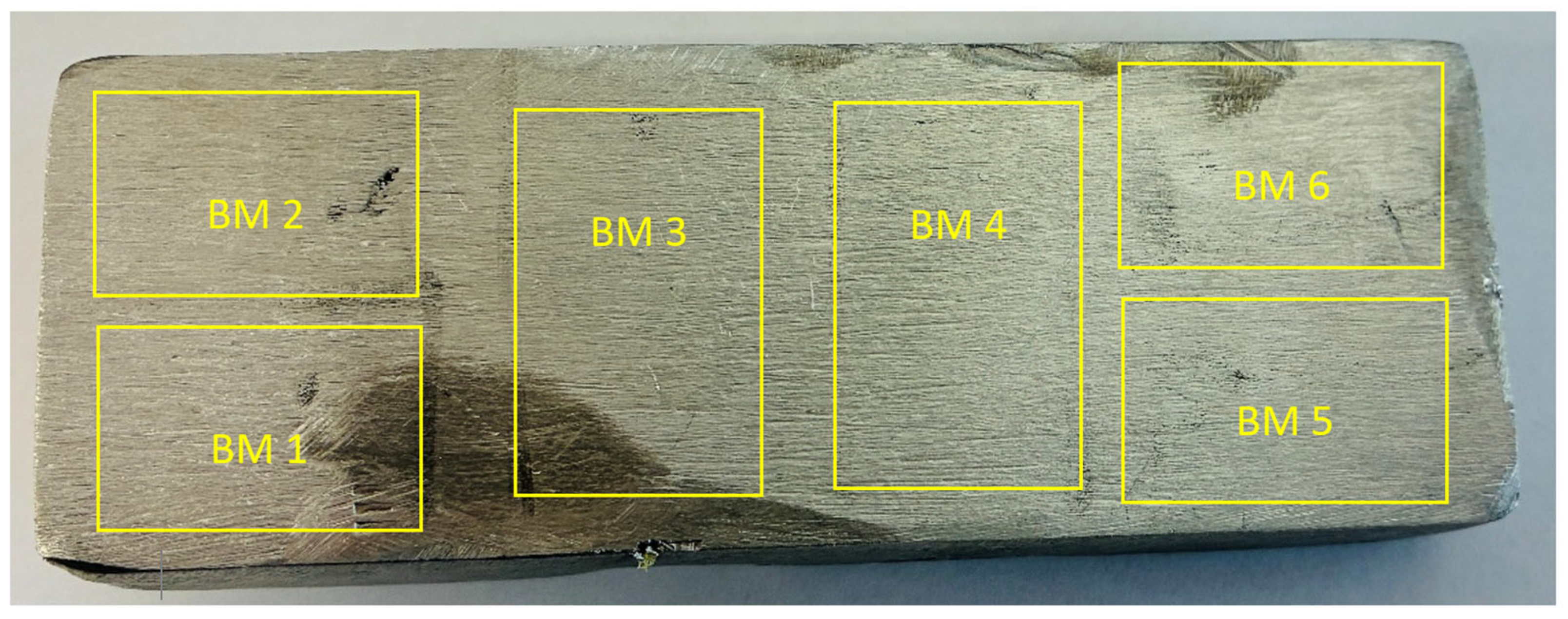
Figure 3.
Keyence VHX-6000 digital microscope used for 3D surface analysis of the pressed briquettes.
Figure 3.
Keyence VHX-6000 digital microscope used for 3D surface analysis of the pressed briquettes.
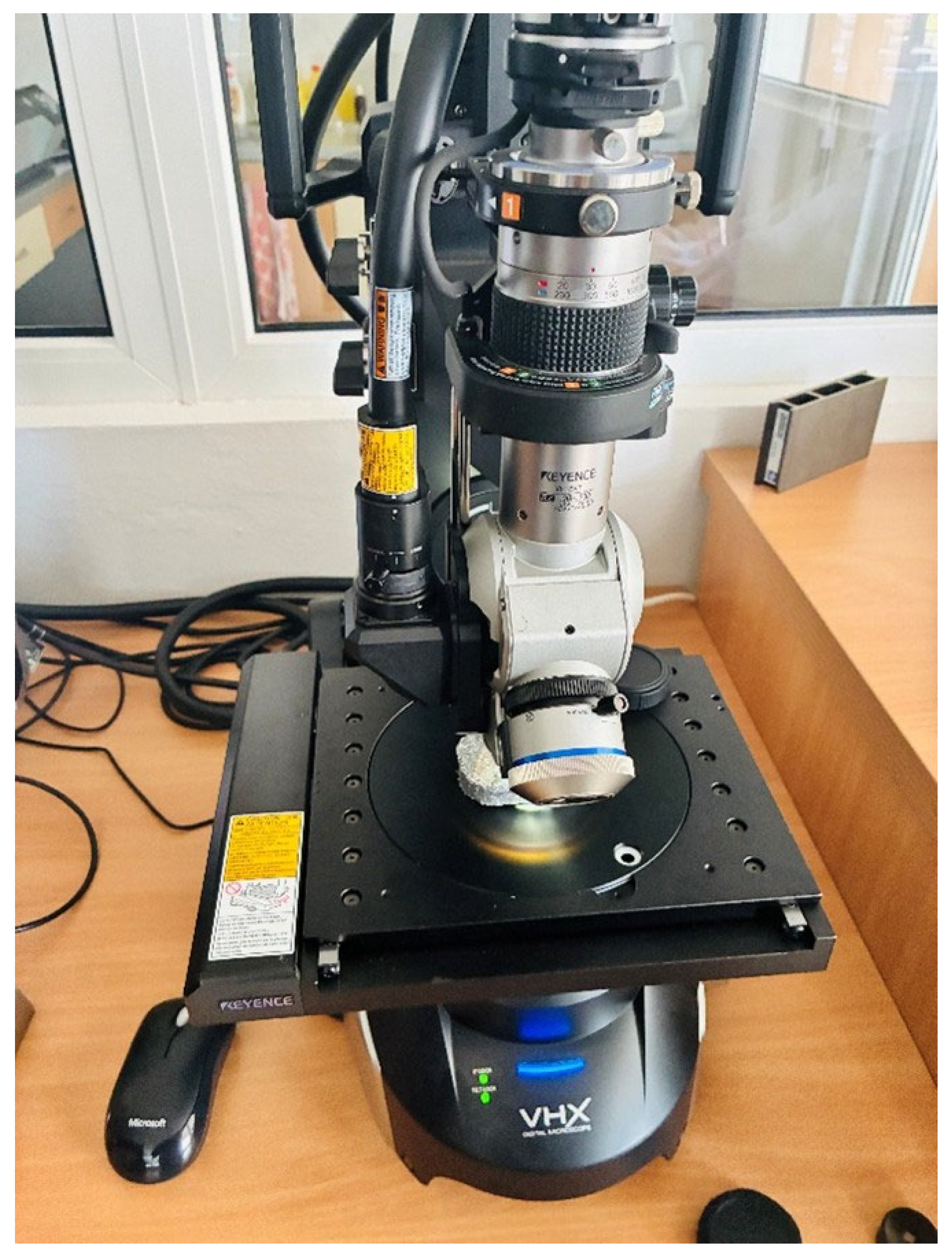
Figure 4.
Surface morphology of Sample A obtained by optical microscopy (Keyence VHX).
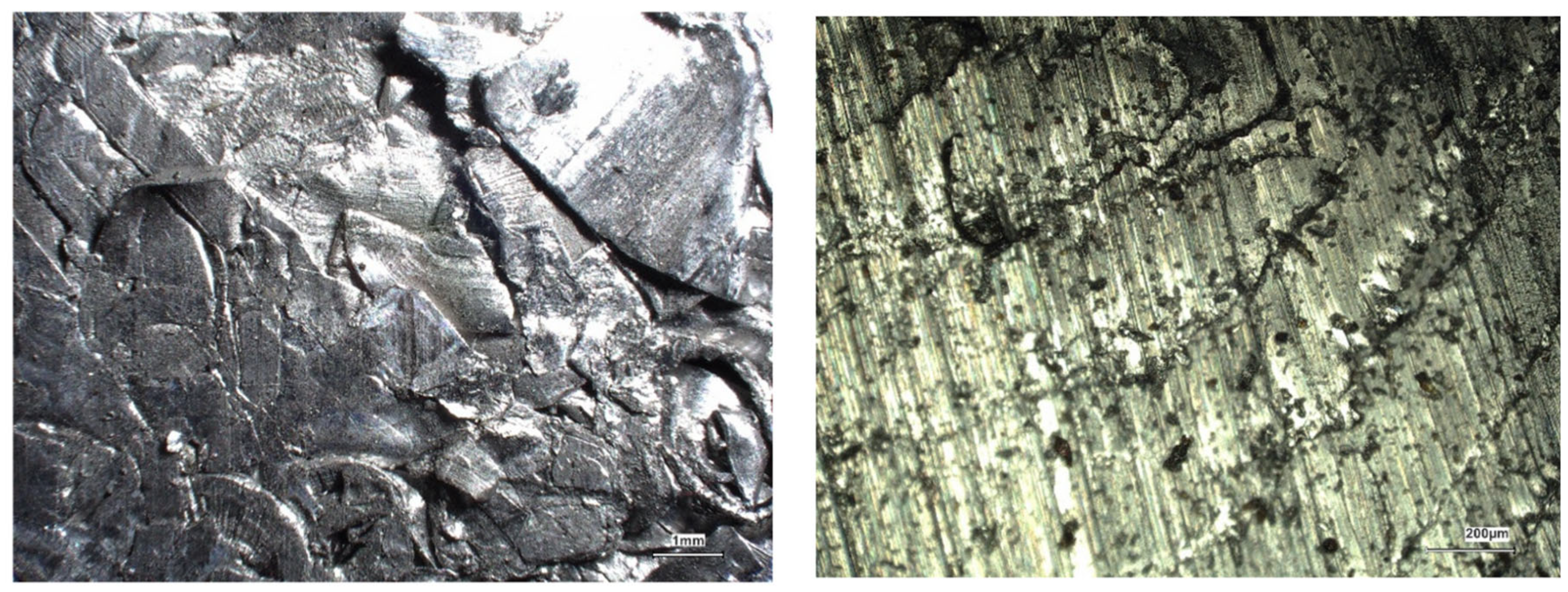
Figure 5.
Median chemical composition of the remelted briquette (Sample B) displayed using a logarithmic Y-axis.
Figure 5.
Median chemical composition of the remelted briquette (Sample B) displayed using a logarithmic Y-axis.
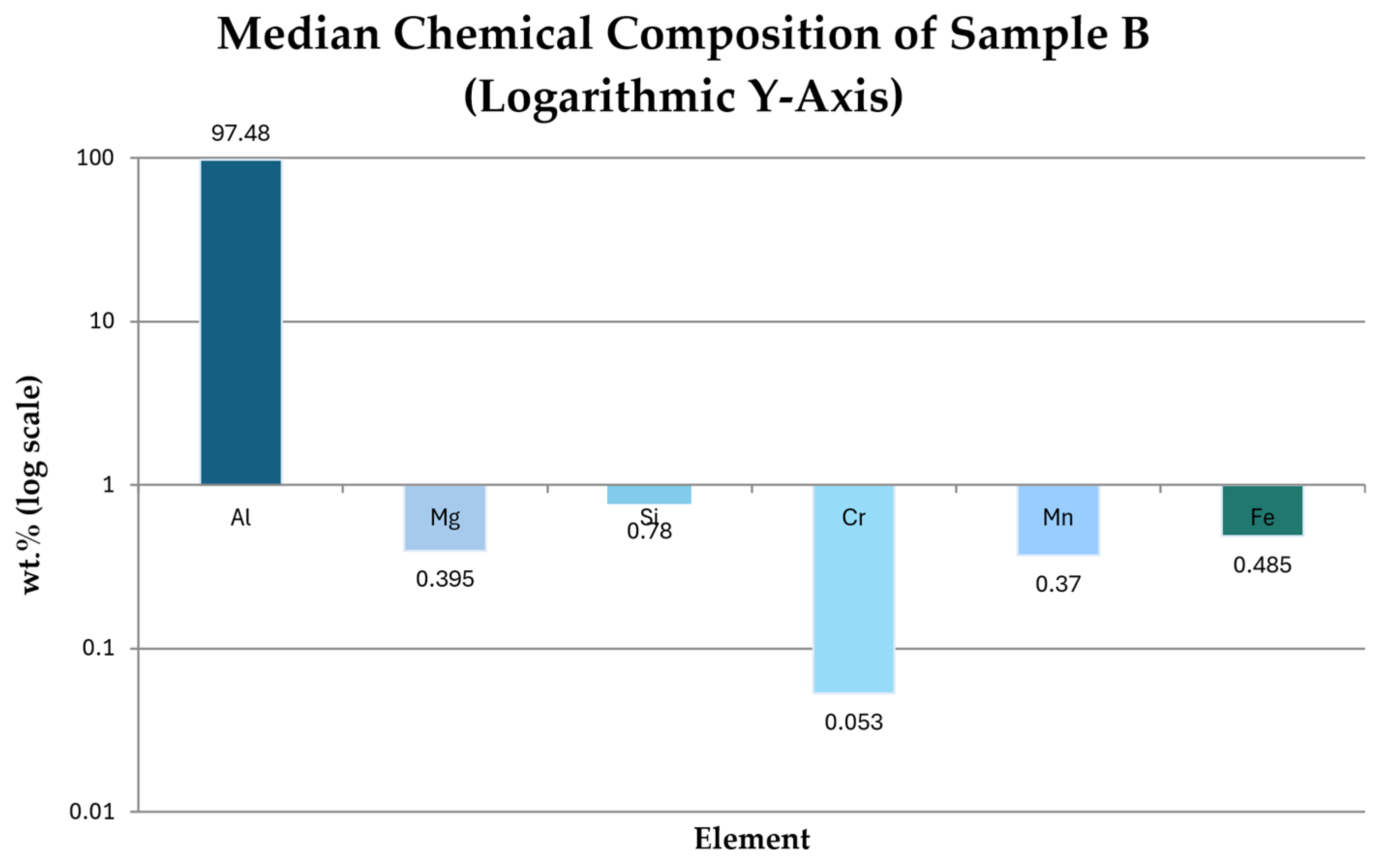
Figure 6.
SEM–EDS micrograph of Sample B showing surface morphology and elemental composition at Measurement Point 1.
Figure 6.
SEM–EDS micrograph of Sample B showing surface morphology and elemental composition at Measurement Point 1.
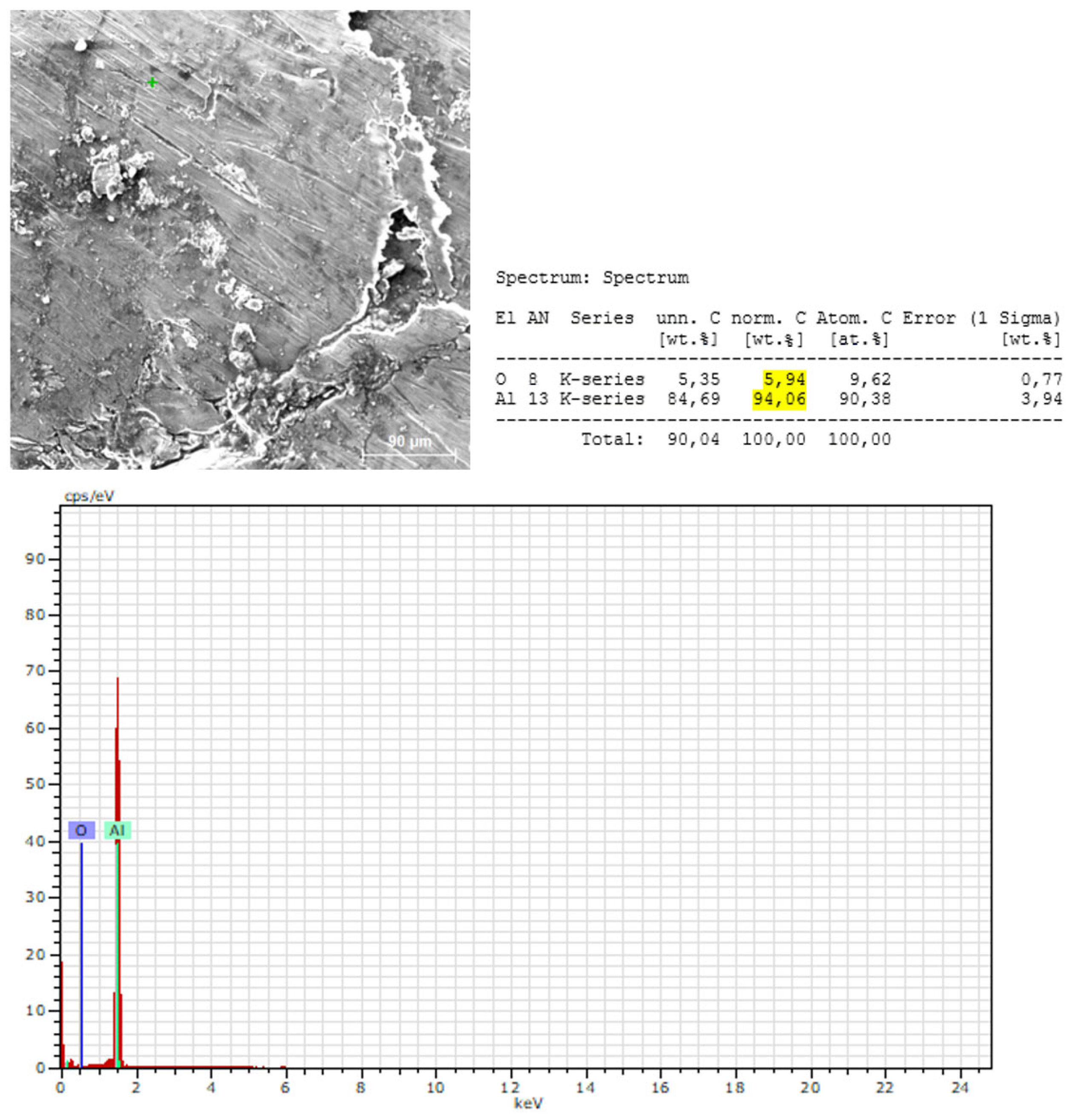
Figure 7.
SEM–EDS micrograph of Sample B showing elemental composition at Measurement Point 2.
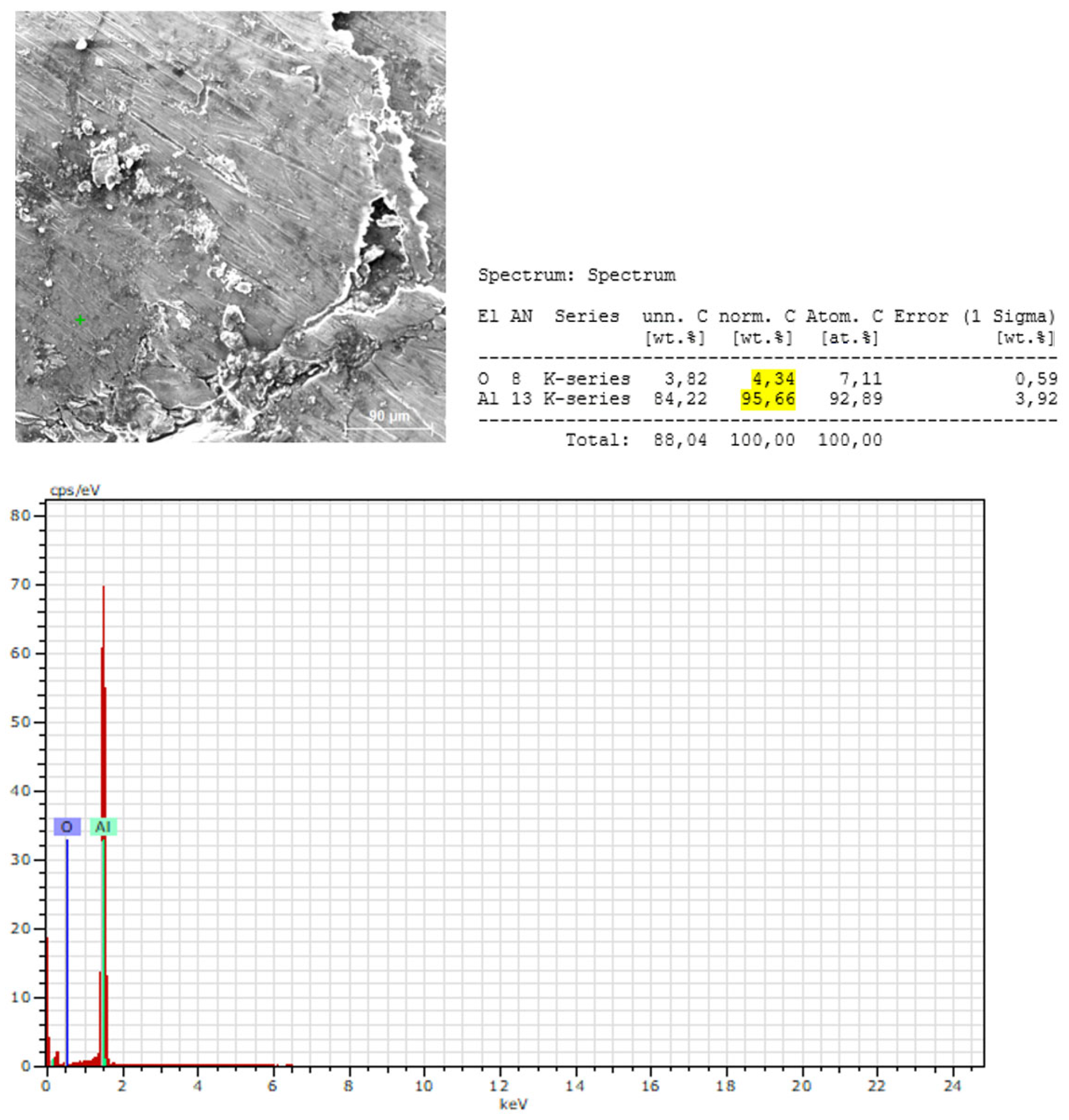
Figure 8.
SEM–EDS micrograph of Sample B showing elemental composition at Measurement Point 3.
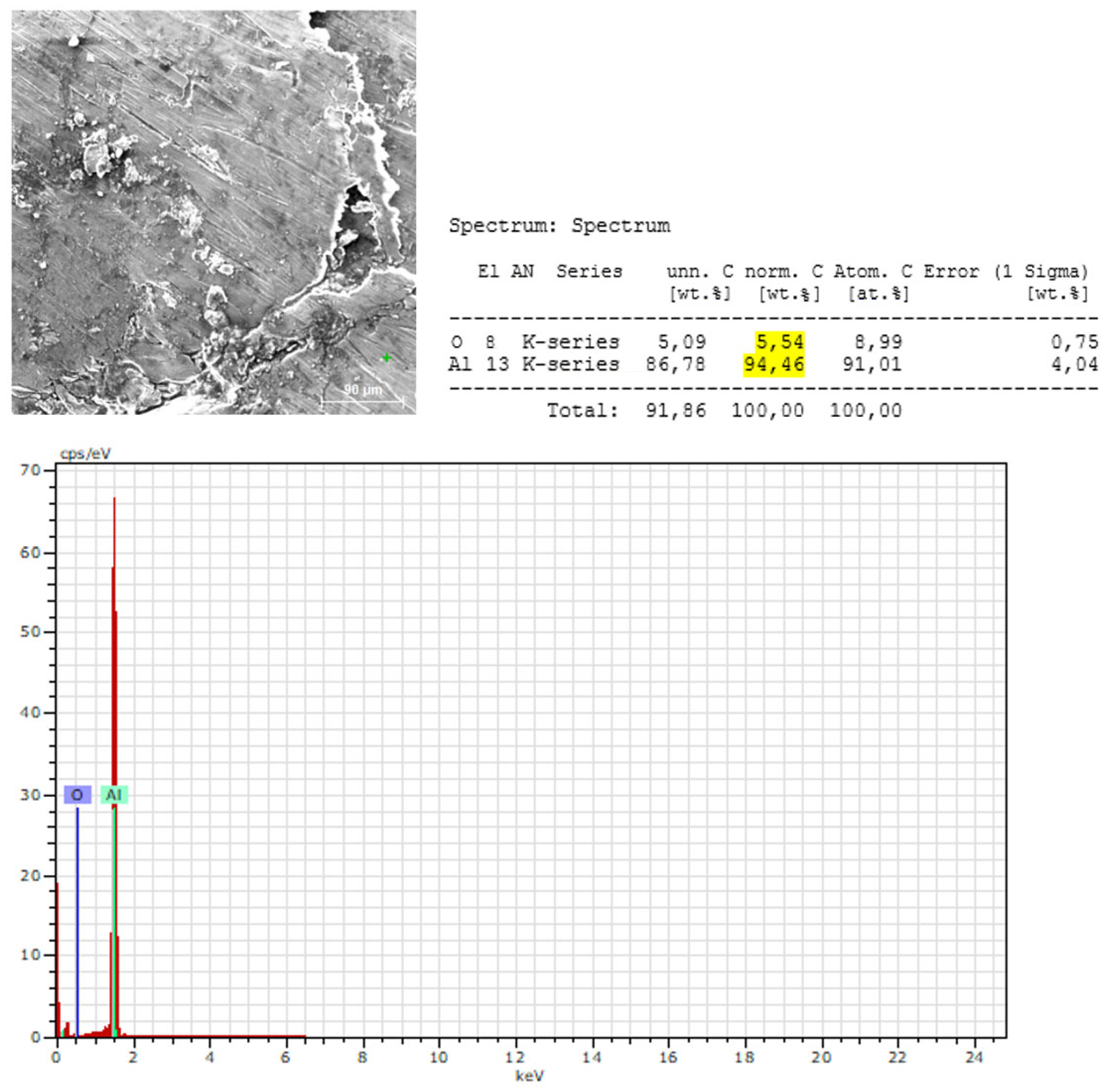

Table 1.
Chemical Homogeneity Assessment of the Briquette (Sample A).
| Measurement Location | Description of Measurement Position | Chemical Composition [%] | |||||
| Al | Mg | Si | Cr | Mn | Fe | ||
| AM 1 | Center | 96.70 | 1.00 | 1.15 | 0.15 | 0.31 | - |
| AM 2 | Center | 96.62 | 1.07 | 1.12 | 0.14 | 0.33 | 0.02 |
| AM 3 | Center | 96.78 | 0.96 | 1.18 | 0.16 | 0.30 | 0.01 |
Table 2.
Chemical Homogeneity Assessment of the Remelted Briquette (Sample B): XRF Results from Six Measurement Points.
Table 2.
Chemical Homogeneity Assessment of the Remelted Briquette (Sample B): XRF Results from Six Measurement Points.
| Measurement Location | Description of Measurement Position | Chemical Composition [%] | |||||
| Al | Mg | Si | Cr | Mn | Fe | ||
| BM 1 | Bottom-left corner | 97.21 | 0.49 | 0.77 | 0.091 | 0.36 | 0.41 |
| BM 2 | Top-left corner | 97.29 | 0.38 | 0.85 | 0.051 | 0.41 | 0.44 |
| BM 3 | Center – left face | 97.51 | 0.55 | 0.78 | 0.088 | 0.38 | 0.53 |
| BM 4 | Center – right face | 97.50 | 0.41 | 0.67 | 0.043 | 0.36 | 0.63 |
| BM 5 | Top-right corner | 97.50 | 0.33 | 0.78 | 0.038 | 0.36 | 0.38 |
| BM 6 | Bottom-right corner | 97.46 | 0.38 | 0.84 | 0.054 | 0.38 | 0.59 |
Disclaimer/Publisher’s Note: The statements, opinions and data contained in all publications are solely those of the individual author(s) and contributor(s) and not of MDPI and/or the editor(s). MDPI and/or the editor(s) disclaim responsibility for any injury to people or property resulting from any ideas, methods, instructions or products referred to in the content. |
© 2026 by the authors. Licensee MDPI, Basel, Switzerland. This article is an open access article distributed under the terms and conditions of the Creative Commons Attribution (CC BY) license (http://creativecommons.org/licenses/by/4.0/).
Copyright: This open access article is published under a Creative Commons CC BY 4.0 license, which permit the free download, distribution, and reuse, provided that the author and preprint are cited in any reuse.