

Submitted:
31 March 2026
Posted:
01 April 2026
You are already at the latest version
Abstract
Mangrove forests in northern Mozambique were impacted by human and natural pressures that caused channel blockage, permanent flooding, and tree die back. To address the issue, hydrological restoration was carried out in August 2024, excavating 6.88 km of canals with impact in 38 ha of degraded mangrove. This study reports on the monitoring results carried out 4 and 10 months later. Site salinity approached optimal levels for mangrove growth by dropping 56% in high salinity areas, and increasing above 100% in freshwater invaded areas. The intervention also homogenized the previously distinct upper, middle and lower zones (Dunn Post-Hoc: p > 0.05). Moreover, seedling density increased from 57.1±44.1 to 4864±1778.6 seedlings/ha; and regenerating species went increase in number (1 to 3 in middle zone; and 0 to 3 in lower zone). More regenerating classes (63:1:1 in upper, 11:1:0 in middle and 6:1:0 in lower) and die back of competing species Juncus kraussii and Cyperus articulates was also recorded. These changes result from the improved tidal flow and general habitat conditions in the restored site. This restoration offers a model for scaling restoration efforts across the region, where ecological restoration remains underrepresented in many mangrove restoration initiatives.
Keywords:
ecological restoration
; coastal resilience
; natural regeneration
; cyclone impact
; Mozambique
1. Introduction
Mangrove forests are essential for a variety of coastal ecosystem services in tropical and subtropical regions, such as regulating greenhouse gases and carbon sequestration (Djamaluddin et al., 2019; Ruiz-Guevara et al., 2025); providing coastal protection against wave energy-induced erosion, coastal storms and cyclones; as well as harboring a great diversity of fauna and flora (Esguerra-Rodríguez, 2024). Mangroves are nonetheless sensitive and threatened by a variety of human and natural impacts that cause a reduction in coverage area and bring alterations to the soil, fauna and flora (Esguerra-Rodríguez, 2024).
In recent years, in recognition to the importance of mangroves and the negative impacts of their degradation, there has been an increase in restoration and conservation initiatives around the world (Djamaluddin et al., 2019; Pérez-Ceballos et al., 2020), led by government institutions, civil society organizations, local communities, and educational institutions (Balidy et al., 2019; Teutli-Hernández et al., 2020). Restoration approaches are usually limited to active planting of propagules and seedlings, aiming to recover degraded areas’ fauna and flora. Despite the efforts, many of the initiatives have failed to achieve success due to the use of inappropriate methods (Bandeira et al., 2016; Gatt et al., 2024), in many cases, not eliminating the primary cause of degradation (Lewis III, 2005).
Depending on the level of the degradation, mangrove forests have the ability to successfully self-restore or undergo secondary succession within 15 to 30 years if the normal tidal hydrology has not been affected. Hence any restoration planning should first consider assessing the tidal and inundation conditions, the need to restore the hydrology and address any pressure that may interfere with natural recruitment (Lewis III, 2005).
Hydrological restoration, also considered a passive restoration method, is a form of Ecological Restoration (ER) whose purpose is to recover hydrological conditions by removing the impacts that obstruct water flow in the degraded, damaged or destroyed ecosystem, to allow natural regeneration (Lewis III, 2005, Djamaluddin et al., 2019; Pérez-Ceballos et al., 2020; Beeston et al., 2023). Being an Ecological Restoration method, hydrological restoration serves as an activator to initiate or accelerate and potentiate processes such as salinity stabilization and natural seed input, which results in the full natural recovery of a mangrove ecosystem (Teutli-Hernández et al., 2020; Pérez-Ceballos et al., 2020; Beeston et al., 2023; Ruiz-Guevara et al., 2025;). This method is particularly effective when human manipulation and cyclone impact are the primary cause of degradation, and the ecological conditions have been lost to such an extent that natural regeneration has become unfeasible (Djamaluddin et al., 2019). This includes abandoned salt pan areas and rice fields, deforested areas where frequent exposure to solar radiation increased temperature and salinity, and areas affected by coastal development, dam construction and diversion of water courses (Teutli-Hernández et al., 2020).
The method has been extensively used in Mexico (Isla del Carmen, Campeche, Sian Ka’an, Quintana Roo, and Progreso, Yucatán (Pérez-Ceballos et al., 2020; Teutli-Hernández et al., 2020), Indonesia (Djamaluddin et al., 2019), and other parts of the world, but records of this method date back to the late 1930’s, in the USA Delaware (Turner & Lewis, 1996). The method gained particular global attention in the field of coastal wetland restoration in the early 2000’s (Lewis III, 2005; Rivera-Monroy et al., 2017) due to its effectiveness and low cost, as it generally does not require the establishment of nurseries or the planting of seedlings or propagules, avoiding costs of planting labor, transport, and associated equipment after implementation (Glamore et al., 2021). Moreover, by creating the adequate conditions for spontaneous seedling recruitment, this method produces a restored forest that is much more similar to a natural forest in terms of forest structure and functioning, instead of the silvicultural-like monospecific stands that planting produces (Wodehouse & Rayment, 2019; Ferreira et al., 2022). Despite this, a widespread reluctance to move from the traditional planting persists in many mangrove restoration initiatives (Rodriguez-Rodriguez et al., 2021). Additionally, the progress of mangrove recovery after this type of intervention remains poorly documented, even when it is applied (Gerona-Daga & Salmo III, 2022).
In Africa at large, and in the WIO region in particular, the application of this method has been barely documented. However, it has been proven successful where it was tested (Bandeira and Balidy, 2016). This article documents the early outcomes of a hydrological restoration initiative carried out in northern Mozambique. The study is a concrete example of how ecological restoration approach can be used to recover ecosystems that have been deeply degraded by natural and human factors, producing restored forests that are closer to natural ones. It also provides guidance for follow-up measures in order to maintain speed recovery of the forest.
2. Materials and Methods
2.1. Study Area
The Muanangome mangrove forest is located in the Mossuril District, Nampula province, in northern Mozambique (Figure 1). The population of the district is estimated at 203 727 inhabitants, with a density of 54 inhab/km2. The coastal population is highly dependent on natural resources for livelihood, and the main economic activities include fishing, tourism, agriculture and informal trade.
Mangroves play an important role providing valuable resources, such as wood, firewood and animal protein to the communities. The forests are dominated by Avicenia marina, but other species, such as, Ceriops tagal, Rhizophora mucronata, S. alba and L. racemosa also occur. Mangrove associates Juncus kraussii, Cyperus articulatus, Typha latifolia and Salicornia sp. (Figure 2) dominated the landward margin of the forest in areas with high mangrove dieback. The presence of these species indicates low soil and water salinity. The forest was also impacted by excessive logging, permanent freshwater flooding, channel blockage, conversion to salt pans and rice fields, sedimentation and cyclone impact (cyclone Gombe, 2022). The mangroves were restored in August of 2024, following hydrological restoration approach, which consisted in the opening of 6.88 km of mangrove channel. Nineteen channels were opened manually, with community participation, and reestablishing tidal inundation in 38 ha of mangrove forest. Reference data covering pH, salinity, temperature, species composition and seedling density were collected prior to the intervention, to allow the identification of changes over time. The average soil/water salinity prior to restoration was 46.65 ±7.44 PSU, with differences across tidal range: Upper zone 3.59 ± 1.13 PSU; lower zone 63.42 ± 7.50; and middle zone 72.95 ± 5.02 PSU. The average pH before the intervention was 7.02 ± 0.17, distributed as 7.77 ± 0.08 in the lower zone; 6.63±0.21 in the middle zone and 6.67±0.32 in the Upper zone. The average temperature before the intervention was 30.43 ± 0.78 °C. On what regards to regeneration, only RCII was found across all zones before the intervention.
2.2. Monitoring
Based on the site characteristics and mangrove species composition, the study area was divided in 3 zones across the tidal gradient. Table 1 summarizes the biophysical characteristics of each zone, highlighting the differences.
Twenty-one 10x10 plots were randomly set across the restored area, 7 in each zone (Figure 3). Within each plot, soil and water salinity, pH and temperature were measured, using a Hanna HI98194 Multiparameter. Additionally, the number of wild seedlings per species and regeneration class was counted. The regenerating classes considered were: seedlings up to 40 cm; sapling 40-150 cm; small tree 150-300 cm. A visual assessment of the channels in the area was made to assert maintenance needs. Monitoring campaigns were carried out in December 2024 and June 2025, 4 and 10 months after the intervention, respectively.
2.3. Statistical Analysis
Statistical analysis was performed using software PAST 5.2.2, IBM SPSS Statistics 25 and R-Studio. Shapiro-Wilk and Levene testes were used to assess data normality and homogeneity of variances for seedling densities and environmental parameters. Average values of seedling density and environmental parameters were compared across the upper, medium and lower zones and through monitoring periods using ANOVA. Post-Hoc Dunn Testes were then used to identify the distinct groups. A principal component analysis (PCA) was carried out considering the environmental parameters to understand the spatial distribution of the three zones over time. Non-parametric analyses (Kruskal-Wallis) was used to compare seedling density across mangrove zones, before and after restoration.
3. Results
3.1. Monitoring of Environmental Parameters
3.1.1. Salinity
In the first monitoring the average salinity was 38.14 ±4.50 PSU and the last monitoring was 25.28 ±3.98 PSU. This represented a reduction of the salinity in 33.72% from the first to last monitoring and a reduction of 45.82% from the baseline value to the last monitoring.
The upper zone showed an increasing trend in salinity, with 19.23 ± 3.60 and 14.26 ± 6.32 PSU after 4 and 10 months. In contrast, salinity dropped after the intervention in the lower and middle zones, mean values being 42.64 ± 7.77 PSU and 52.55 ± 5.61 PSU four months later; and 27.73 ± 7.28 PSU and 33.84 ± 5.63 PSU 10 months after the intervention, respectively (Table 2).
Two-way ANOVA revealed statistically significant differences in salinity when comparing averages per monitoring period [ANOVA: F(2,54)= 39.95, p < 0.0001] and mangrove zones [ANOVA: F(2,54)= 10.01, p = 0.0002].
3.1.2. pH
In the first and second monitoring’s, average pH values were similar 6.81 ± 0.10 and 6.88 ±0.13, respectively. After 4 months, mean pH decreased slightly in all mangrove zones, reaching 7.33±0.09, 6.54±0.06 and 6.56±0.16 in the lower middle and upper zones, respectively. On the tenth month, there was another slight decrease in the mean pH in the Lower zone, with 6.84±0.09. Mean pH in the middle zone did not present any noticeable change, recording 6.50±0.13. Meanwhile, in the Upper zone, mean pH increased to 7.30±0.32 (Table 3).
Monitoring period had no statistically significant effect on pH [ANOVA: F(2,54) = 0.99, p = 0.3789], but in contrast, there was a significant effect of the zones in pH [ANOVA: F(2,54) = 12.54, p < 0.001].
3.1.3. Temperature (°C)
Four and 10 months after the intervention, the average temperature was 32.99 ± 0.34 °C and 27.97 ± 0.40 °C respectively.
In the Lower zone, the mean temperature was high before the intervention, 32.78 °C and decreased to 27.06 °C on the tenth month. The middle zone showed an increase in mean temperature from the baseline value (28.12 °C) to 33.52 °C after 4 months, followed by a noticeable decrease to 28.40 °C after 10 months. The Upper zone followed a similar pattern, with temperatures rising from 30.38 °C to 32.71 °C after 4 months then dropping to 27.93 °C after 10 months (Table 4).
The analysis revealed a significant effect of the monitoring period [ANOVA: F(2,54) = 26.40, p < 0.0001], with temporal changes in soil temperature across the sampling periods. However, there was no significant effect of zones [ANOVA: F(2,54) = 0.71, p = 0.4952]. Temporal changes in temperature were not uniform across zones. This was shown by a significant interaction between monitoring period and zones [ANOVA: F(4,54) = 3.64, p = 0.0107].
3.1.4. PCA
The principal component analyses (PCA) showcase a visual representation of the variations of placement of the 3 zones, associated with the variations in the salinity, pH and temperature after hydrological restoration. Prior to the intervention there was a clear separation between the zones with pronounced differences in salinity, with upper zone standing out with very low salinity values (Figure 4:A). Meanwhile, middle and lower zones clustered near the salinity and temperature vectors, reflecting the environmental gradient in these parameters. This gradient is showcased by their slight overlap of their figures.
Post-restoration there was an increased overlap between all zones (Erro! A origem da referência não foi encontrada.Figure 4:B). By June 2025, the PCA shows a trend toward homogenization of the zones, with more evident overlap among the Upper, Middle, and Lower zones, and less distinction along the salinity gradient (Figure 4: C). This may reflect an improvement in hydrological connectivity and the gradual reentry of saltwater into previously isolated areas, especially in the Upper zone.
3.2. Monitoring of Natural Regeneration
3.2.1. Seedling Density
Prior to the intervention seedlings’ mean density was 57±44 seedlings/ha. Four months later, mean density increased to 357±212 seedlings/ha then to 4864±1779 seedlings/ha after 10 months.
The lower zone had no seedlings recorded before the intervention. Seedlings were observed 4 months after the intervention, with a mean density of 350 ±350 seedlings/ha and a mean density of 2375 ±1076 seedlings/ha after 10 months. Both middle and upper zone had low seedling density before the intervention, with 33 ±33 and 150 ±150 seedlings/ha. After 4 months, mean seedling density the middle zone increased to 517±458 seedlings/ha and slightly increased in the upper zone to 125 ±75 seedlings/ha. The highest seeding density was recorded in the last monitoring period, being 6450 ±3461 in the middle zone and 4975 ±3679 seedlings/ha in the upper zone (Figure 5).
There were no statistically significant differences when comparing seedling density across mangrove zones (Kruskal-Wallis: H(df=2) = 0.135, n = 2, p = 0.935). However, seedlings density changed significantly with time (Kruskal-Wallis: H(df=2) = 25.600, n = 2, p = 0.00), steadily increasing throughout all zones.
Seedling species composition also changed, as initially the middle and Upper zones were monospecific with R. mucronata and A. marina, respectively. After 4 months, A. marina seedlings dominated all mangrove zones, comprising 100%, 93.5% and 100% of the seedlings in the lower, middle and upper, respectively. Rhizophora mucronata seedlings were only found in the middle zone, and comprised 6.5% of the total.
Ten months later the number of recruiting species had increased from 2 to 3 in the middle zone, as L. racemosa now contributed with 0.5% of the seedlings (Figure 6). The lower zone remained dominated by A. marina (87.4%), but two new species emerged, these being L. racemosa (5.3%) and S. alba (7.4%). In the upper zone (which had no regeneration prior to the intervention) A. marina remained the only species.
Changes were also observed when comparing regeneration classes.
Figure 7.
Distribution of regeneration classes of natural recruitment in the restoration area among the upper, mid, and low zones over time.
Figure 7.
Distribution of regeneration classes of natural recruitment in the restoration area among the upper, mid, and low zones over time.
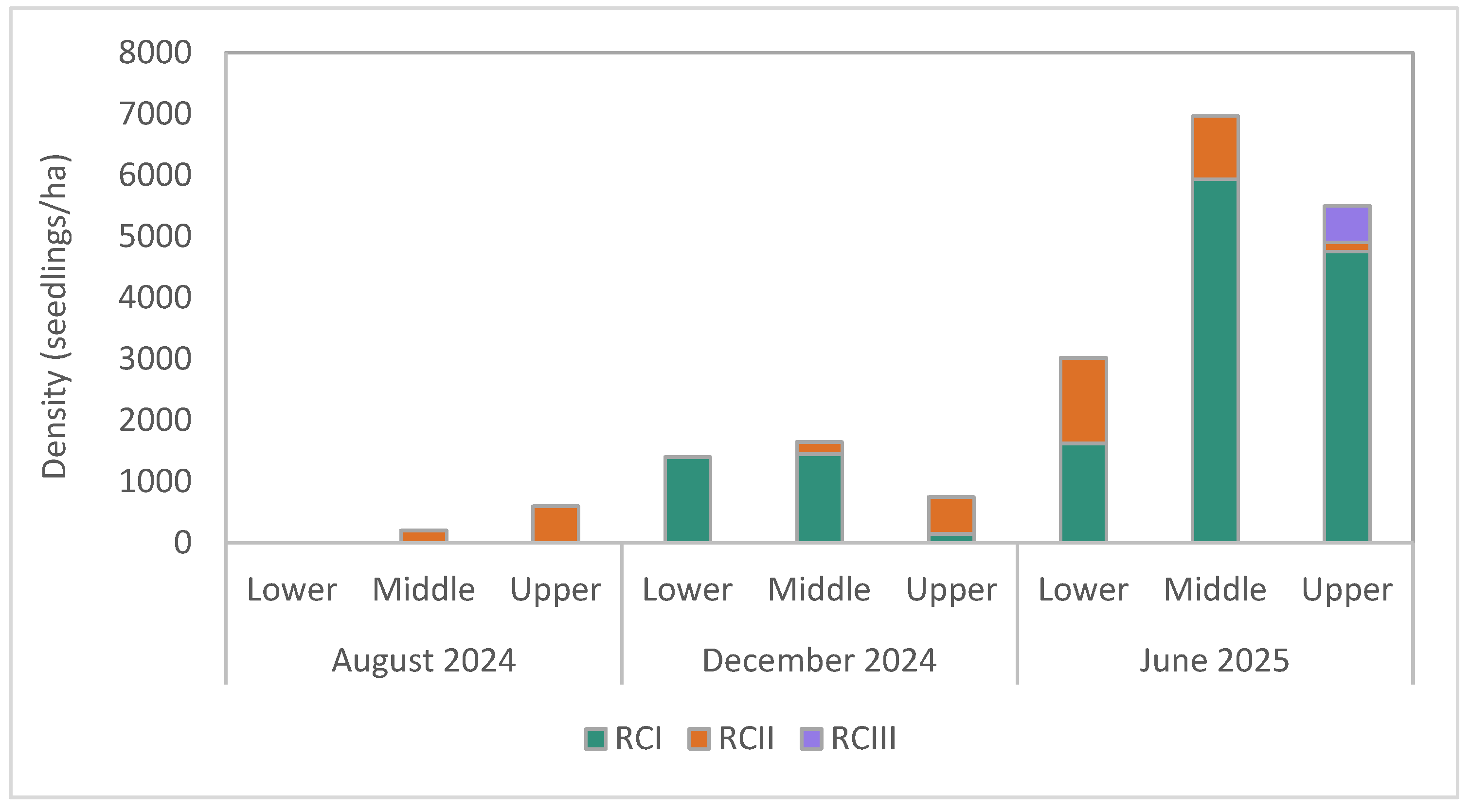
Four months after the intervention RCI, which did not exist before restoration, was observed in all zones: 1400±00 seedlings/ha (100%) in the lower zone; 1450 ±1350 seedlings/ha (93.5%) in the middle zone and 150±50 seedlings/ha (33.3%) in the upper zone. Ten months later RCI dominated all zones and RCIII was also observed in the upper zone. The upper zone had all 3 RCs (4750±3555, 150 ±50 and 600 ±00 seedlings/ha corresponding to 95.5%, 1.5%, and 3% for RCI, RCII and RCIII, respectively); the middle zone had 5933 ±3212 seedlings/ha for RCI and 1033 ±884 saplings/ha for RCII which corresponded to 92.0% and 8.0% respectively. The Lower zone which started with no seedlings, had 1620 ±882 and 1400 ±00 seedlings and saplings per hectare (RCI and RCII), corresponding to 85.3% and 14.7%, respectively.
4. Discussion
4.1. Mangrove Degradation and the Need for Hydrological Restoration
This study reports on the changes that occurred in a mangrove forest, after an intervention to restore the hydrology of the site was made. The study site had been impacted by river sedimentation that changed the local hydrology, blocking water passages, and causing permanent flooding in some areas while reducing tidal flooding in others. The local communities also reported that cyclone Gombe (2022) had recently brought new sediments and blocked channels, whilst also causing mechanical damage and massive die back. Moreover, intense wood harvesting was reported in the site. These changes hindered forest natural regeneration and exacerbated heterogeneity in the intertidal area (lower, middle and upper), as presented in Figure 4:A.
Excessive sediment input is often associated to natural phenomena, such as cyclones, heavy rains and even natural sedimentation patterns. Excessive sedimentation can be detrimental to mangroves due to the burial of roots and channel blockage, which is associated to altered flooding regimes and water stagnation (Ngole-Jeme et al., 2016; Lopez-Adame et al., 2026; Medina et al., 1990). Stagnated sea water evaporates over time, increasing water and soil salinity to levels that are incompatible with mangrove growth (Medina-Calderón, et al., 2021; Ahmed, et al., 2022). Stagnated water also gets rapidly oxygen-depleted, as a result of the continued organic matter decomposition, creating anoxic conditions in the water and in the soil (Monsalve & Vergara, 2023). Such conditions quickly lead to the death of organisms, including mangrove fauna and flora. The subsequent organic matter decomposition under anoxic conditions produces toxic gases, such as hydrogen sulfide (H2S), methane (CH4, which is simultaneously a greenhouse gas) and ammonia (NH3) (Sánchez-Carrillo et al., 2021). Water stagnation can also induce algal blooms. All these conditions lead to mangrove loss and degradation (Radabaugh et al., 2021), if water circulation is not re-established.
Healthy and structurally complex mangrove forests are capable to withstand the impacts of cyclones and recover to pre-cyclones conditions in relatively short time (Blankespoor, et al., 2017; Herrera-Silveira, et al., 2022; Sunkur, et al., 2023). However, unhealthy and frequently impacted forests may need longer periods to recover, and in some instances the damages may be permanent (Macamo et al., 2016; Blankespoor, et al., 2017; Asbridge, et al., 2025). The northern Mozambique region has been impacted by at least 6 cyclones in the last 20 years (https://www.unocha.org/), some of which expected to have caused direct or residual impacts to the mangroves. Climate changes are altering the frequency and intensity of cyclones in many parts of the globe, and in Nampula province there seems to be an increase in both frequency and intensity (Table 5). This may represent a big challenge to mangrove ecosystem conservation. Cyclone Gombe made landfall in Mossoril district in 2022. The category 3 cyclone had maximum wind speed of 190 km/ha, and caused heavy rainfall of up to 200 mm in 24 hours (Table 5). The strong winds and storm surges caused tree uprooting and mechanical damage to trees, mangroves included. The heavy rainfall also increased river flow and sediment input, which is consistent with the reported impact of heavy sedimentation and freshwater flooding in the mangroves. The total mangrove area impacted by cyclone Gombe is yet to be quantified. However, by evaluating the pre-intervention ecological conditions, this study shows how the cyclone potentially created significant changes along the forest gradient, even in an area as small as 38 ha.
Mangrove cutting reduces forest cover and creates large canopy gaps that expose the soil to solar radiation, increasing evaporation rate, changing its characteristics and preventing forest regeneration (Ellis and Bell, 2004; Alongi and Carvalho, 2008; Simon, 2012; Ahidjo, et al., 2015; Ahmed, et al., 2022). However, when conducted in small scale, mangrove logging can stimulate rapid forest regeneration and produce high quality mangrove poles (Murdiyarso, et al., 2021). In the present study site, mangrove cutting did not seem sustainable, as trees were clear-cut in large extensions. In some instances, it also seemed that trees were cut after dead, in which case the ecological impacts are reduced.
By restoring the hydrology of the area, permanently flooded areas were drained (Figure 8: A), while dry areas started to be regularly flooded. Regular, but not permanent sea water flooding reduced the salinity in very saline areas, and increased the salinity in low salinity areas, homogenizing the environmental conditions to those closer to a healthy mangrove forest. Ideal conditions also include pH, which ranged within normal mangrove values of between 5.6 and 9.4 (Muttaqin et al., 2024).
Moreover, mangrove competitive species (e.g.,: Juncus kraussii, Typha latifolia and Salicornia sp) were completely wiped out in most of the mangrove areas as the ideal conditions for mangrove growth were reestablished (Figure 8:B).
4.2. Seed Recruitment and Natural Regeneration
Soil and water salinity is key for mangrove forest natural regeneration. In general, seedlings show optimum growth at salinities between 5 and 20 PSU, but some species can cope with salinity levels up to 35 PSU (Chen and Ye, 2014; Silva and Amarasinghe, 2021). In the present study the density and species richness of seedlings increased significantly after the hydrological restoration, a trend that had been reported from other sites (Teutli-Hernández et al., 2017). Opened channels brought seeds and propagules from other areas, which then recruited and germinated in the most suitable sites (Teutli-Hernández et al., 2017; Su et al., 2020). Seedlings of Lumnitzera racemosa, (adult trees only occurred in the lower zone), were observed in the middle zone 10 months after the intervention (Figure 9), reinforcing the idea that the artificial channels reestablished the connectivity between zones, and that such connectivity is key for ecosystem diversity and health (Teutli-Hernández et al., 2017, Numbare, 2021).
The increase in seedling density in the study site was remarkable, and remained stable despite the occurrence of cyclones Chido (December 2024) and Diikeledi (January 2025) (INGD, 2024; INGD, 2025). Both events caused severe destruction in the province’s infrastructure, and negatively impacted the reproductive cycle of mangrove species, particularly A. marina, which seed maturation period matched with cyclone landfall (Rodrigues, 2024). Local communities also reported loss of seedlings and damages in mangrove nurseries (U. Amade, personal communication, June 22, 2025). Given this, it seems reasonable to believe that seedling density could be much higher without the cyclones, and that wild seedlings from hydrological restoration resilient to extreme climatic events, because only the fittest seed will germinate, and only at the best spots in the forest (Teutli-Hernández et al., 2017; Lewis III, 2005).
Before the hydrological restoration, the regeneration potential in all zones was far from the minimum ecological ratio for mangrove forest regeneration of 6:3:1 as described by FAO (1994). In the upper and middle zones, regeneration was restricted to saplings (0:1:0), with no seedlings or young trees. There was no regeneration at all in the lower zone (0:0:0), reflecting severe environmental constraints, likely associated with excessive salinity. Shortly after the intervention, a positive response in natural regeneration was recorded, particularly in the middle zone, where the proportion shifted to 15:1:0. The upper zone also showed improvement (1:2:0), while the lower zone exhibited an initial recovery (1:0:0), with A. marina seedlings. In the upper zone, regeneration ratio reached 63:1:1, indicating massive recruitment of seedlings and the first occurrence of young trees, suggesting the beginning of structural maturity of new plants. The middle and lower zones maintained high seedling abundance (11:1:0) and (6:1:0), respectively but lacked young trees.
5. Conclusion
The hydrological restoration implemented in Muanangome has shown clear ecological benefits within a relatively short time frame. Restoration efforts effectively reduced salinity levels, improved soil pH and stabilized the temperature, enhancing drainage in the middle and lower zones. These changes created more favorable conditions for seedling establishment and survival, directly supporting natural regeneration processes. The expansion of Lumnitzera racemosa seedlings to new areas further indicates that hydrological restoration facilitated seed dispersal and forest connectivity. The progressive emergence of RCIII individuals in the Upper zone also suggests early signs of structural maturation in the forest. This hydrological reconnection contributed to a more balanced distribution of species and regeneration classes across the landscape, a critical component for the resilience and long-term stability of the ecosystem. Given the positive results of this project, it is recommended a wider use of hydrological restoration for mangroves restoration in the country and in the WIO region. The method should be included in more mangrove restoration guidelines, which should bring more cases of success and encourage the use of this method when planting does not seem to be appropriate.
Author Contributions
Alberto Fernando – Conceptualization; Data collection and field work implementation; Monitoring; Data Curation and data analysis; Writing – Original Draft Preparation; Visualization Henriques Balidy – Methodology, Field work implementation, Writing – Original Draft Preparation; Maria Cuambe – Data collection and field work implementation; Monitoring. Faustino César – Data collection and field work implementation; Monitoring. Célia Macamo – Conceptualization; Methodology, Writing – Original Draft Preparation; Supervision; Writing – Review & Editing; Project Coordination; Resources and Funding Acquisition.
Acknowledgments
This study was conducted within the framework of the Blue Future Project – Building a Blue Future for Ecosystems and People on the East African Coast (https://wcsbluefuture.com/en/) , implemented by the Wildlife Conservation Society (WCS) Mozambique. The project is primarily funded by the Blue Action Fund (supported by the Green Climate Fund), Oceans 5, Margaret A. Cargill Philanthropies, and Bloomberg Philanthropies. This study also forms part of the main author’s MSc dissertation and the scholarship supporting his programme of study is funded by BIOFUND through the PLCM – Programa de Liderança para a Conservação de Moçambique.
Conflicts of interest
The authors declare no conflict of interest.
References
- Ahidjo, S.; Hayatou, E.; Ayang, P. Evaluating the outcomes of small–scale cutting of mangrove forests in the ecosystem. African Journal of Ecology and Ecosystems 2015, 2(2), 095–102. Available online: https://www.Internationalscholarsjournals.org.
- Ahmed, S.; Sarker, S.; Friess, D.; Kamruzzaman, M.; Jacobs, M.; Islam, M.; Alam, A.; Suvo, M.; Sani, N.; Dey, T.; Naabeh, C.; Pretzsch, H. Salinity reduces site quality and mangrove forest functions. From monitoring to understanding. Science of The Total Environment 2022. [Google Scholar] [CrossRef] [PubMed]
- Alongi, D.; Carvalho, N. The effect of small-scale logging on stand characteristics and soil biogeochemistry in mangrove forests of Timor Leste. In Forest Ecology and Management; 2008. [Google Scholar] [CrossRef]
- Amade, U. Personal Communication . Mangrove nursery operator from the Geba Community, Memba District, Nampula, Mozambique, 2025. [Google Scholar]
- Asbridge, E.; Krause, C.; Lucas, R.; Owers, C.J.; Rogers, K.; Lymburner, L.; Mueller, N.; Ai, E.; Wong, S. Characterising the shortand long-term impacts of tropical cyclones on mangroves using the Landsat archive. Cambridge Prisms: Coastal Futures 2025, 3(e4), 1–14. [Google Scholar] [CrossRef]
- Balidy, H.; Bandeira, S.; Macamo, C.; Mechisso, M.; Laissone, J. Community-Based Mangrove Restoration: The Cases of the Limpopo Estuary and Quelimane Municipality. WIOMSA Symposium, 2019; Available online: https://symposium.wiomsa.org/wp-content/uploads/2019/06/551-906-1-SM.pdf.
- Bandeira, S.; Macamo, C.; Mahazule, R.; Mabilana, H. Estudo de Lições Aprendidas e Boas Práticas de Reabilitação do Mangal. Avaliação do programa de restauração de mangal no Estuário do Limpopo (Gaza), Tsolombane em Matutuine (Maputo), Nhangau (Sofala), Inhassunge e Macuze (Zambézia) e Mecúfi e Metuge (Cabo Delgado). 71PP. 2016. Available online: https://biblioteca.biofund.org.mz/wp-content/uploads/2021/02/1612900739-Li%C3%A7oes%20Aprendidas_Reabilita%C3%A7%C3%A3o%20mangais_em%20Mocambique-FINAL.pdf.
- Bandeira, S.; Balidy, H. Limpopo estuary mangrove transformation, rehabilitation and management. In Estuaries: a Lifeline of Ecosystem Services in the Western Indian Ocean; Salif, D, Scheren, P., Eds.; Springer, 2016; p. Chapter 14. 17p. [Google Scholar] [CrossRef]
- Best Practice Guidelines for Mangrove Restoration. In Global Mangrove Alliance; Beeston, M., Cameron, C., Hagger, V., Howard, J., Lovelock, C., Sippo, J., Tonneijk, F., van Bijsterveldt, C., van Eijk, P., Eds.; 2023; p. 278 pp. Available online: https://www.mangrovealliance.org/best-practice-guidelines-for-mangrove-restoration/.
- Blankespoor, R.; Dasgupta, S.; Lange, G. Mangroves as protection from storm surges in a changing climate. Ambio 2016, 46(4), 478–491. [Google Scholar] [CrossRef]
- Chen, Y.; Ye, Y. Effects of Salinity and Nutrient Addition on Mangrove Excoecaria agallocha. PLOS ONE 2014, 9(4), e93337. [Google Scholar] [CrossRef]
- Djamaluddin, R.; Brown, B.; Lewis, R., III. The practice of hydrological restoration to rehabilitate abandoned shrimp ponds in Bunaken National Park, North Sulawesi, Indonesia. Biodiversitas 2019, 20(1), 160–170. [Google Scholar] [CrossRef]
- Ellis, W.; Bell, S. Canopy gaps formed by mangrove trimming: an experimental test of impact on litter fall and standing litter stock in Southwest Florida (USA). Journal of Experimental Marine Biology and Ecology 2004, 311, 201–222. [Google Scholar] [CrossRef]
- Esguerra-Rodríguez, D.; De León-Lorenzana, A.; Teutli, C.; Prieto-Davó, A.; García-Maldonado, J.; Silveira, J.; Falcón, L. Do restoration strategies in mangroves recover microbial diversity? A case study in the Yucatan peninsula. PLOS ONE 2024, 19. [Google Scholar] [CrossRef]
- FAO. Mangrove Forest Management Guidelines. (FAO Forestry Paper 117). Rome, 1994. Available online: https://www.fao.org/4/ap428e/ap428e00.pdf.
- Ferreira, A.; Freire, F.; Rodrigues, J.; Bezerra, L. Mangrove Recovery in Semiarid Coast Shows Increase of Ecological Processes from Biotic and Abiotic Drivers in Response to Hydrological Restoration; Wetlands, 2022; p. 42. [Google Scholar] [CrossRef]
- Gatt, Y.; Walton, R.; Andradi-Brown, D.; Spalding, M.; Acosta-Velázquez, J.; Adame, F.; Barros, F.; Beeston, M.; Bernardino, A.; Buelow, C.; Cadier, C.; Vela, A.; Canty, S.; Dahdouh-Guebas, F.; Gomes, L.E.; Duncan, C.; Eger, A.; Enright, J.; Frausto-Illescas, T.; Worthington, T. The Mangrove Restoration Tracker Tool: Meeting local practitioner needs and tracking progress toward global targets. One Earth 2024, 7. [Google Scholar] [CrossRef]
- Gerona-Daga, M.E.; Salmo, S.G. A systematic review of mangrove restoration studies in Southeast Asia: Challenges and opportunities for the United Nation’s Decade on Ecosystem Restoration. Frontiers in Marine Science 2022, 9, 987737. [Google Scholar] [CrossRef]
- Glamore, W.; Rayner, D.; Ruprecht, J.; SadatNoori, M.; Khojasteh, D. Eco-hydrology as a driver for tidal restoration: Observations from a Ramsar wetland in eastern Australia. PLoS ONE 2021, 16(8), e0254701. [Google Scholar] [CrossRef] [PubMed]
- Herrera-Silveira, J. A.; Teutli-Hernandez, C.; Secaira-Fajardo, F.; Braun, R.; Bowman, J.; Geselbracht, L.; Musgrove, M.; Rogers, M.; Schmidt, J.; Robles-Toral, P. J.; Canul-Cabrera, J. A.; Guerra-Cano, L. Hurricane Damages to Mangrove Forests and Post-Storm Restoration Techniques and Costs; The Nature Conservancy: Arlington, VA, 2022. [Google Scholar] [CrossRef]
- INGD. Balanço da Época Chuvosa e Ciclónica 2023/2024. Instituto Nacional de Gestão e Redução do Risco de Desastres (INGD), 2024. Available online: https://ingd.gov.mz/wp-content/uploads/2025/07/Relatorio_do_Balanco_da_ECC_2023-2024-.pdf.
- INGD. PLANO ANUAL DE CONTINGÊNCIA 2025-202. Instituto Nacional de Gestão e Redução do Risco de Desastres (INGD), 2025. Available online: https://ingd.gov.mz/wp-content/uploads/2025/10/PC-2025-26-CM.pdf.
- Kairo, J.G.; Mangora, M. Guidelines on Mangrove Ecosystem Restoration for the Western Indian Ocean Region Western Indian Ocean Region. 2020. Available online: https://www.nairobiconvention.org/CHM%20Documents/WIOSAP/guidelines/GuidelinesonMangroveRestorationForTheWIO.pdf.
- Lewis, R., III. Ecological engineering for successful management and restoration of mangrove forests. Ecological Engineering 2005, 24, 403–418. [Google Scholar] [CrossRef]
- Lopez-Adame, H.; Zaragoza-Méndez, F.; Lara, A.; Alvarado-Barrientos, M.; Mariño-Tapia, I.; Sáinz-Hernández, E.; Rosela, P.; Zaldivar-Jiménez, A.; López-Portillo, J. Effectiveness of hydrological restoration in the mangrove of a coastal lagoon in the Gulf of Mexico. Ecological Engineering 2026, 223, 107848. [Google Scholar] [CrossRef]
- Macamo, C.; Massuanganhe, E.; Nicolau, D.; Bandeira, S.; Adams, J. Mangrove’s response to cyclone Eline (2000): What is happening 14 years later. Aquatic Botany 2016, 134. [Google Scholar] [CrossRef]
- Medina, E.; Cuevas, E.; Popp, M.; Lugo, A. Soil Salinity, Sun Exposure, and Growth of Acrostichum aureum, the Mangrove Fern. Botanical Gazette 1990, 151. [Google Scholar] [CrossRef]
- Medina-Calderón, J.; Mancera-Pineda, J.; Castañeda-Moya, E.; Rivera-Monroy, V. Hydroperiod and Salinity Interactions Control Mangrove Root Dynamics in a Karstic Oceanic Island in the Caribbean Sea (San Andres, Colombia). Frontiers in Marine Science 2021, 7(). [Google Scholar] [CrossRef]
- Monsalve, R.; Verduga, L. Water and Sediment Quality Changes in Mangrove Systems with Shrimp Farms in the Northern Ecuadorean Coast. In Applied Sciences; 2023. [Google Scholar] [CrossRef]
- Murdiyarso, D.; Sasmito, S.; Sillanpää, M.; Mackenzie, R.; Gaveau, D. Mangrove selective logging sustains biomass carbon recovery, soil carbon, and sediment. Scientific Reports 2021, 11, 12325. [Google Scholar] [CrossRef]
- Muttaqin, A.; Soemarno, S.; Purnomo, M.; Zakiyah, U. Analysis of the Mangrove Ecosystem Due to the Influence of Mount Bromo’s Cold Lava Material on Permata Pilang Beach, Probolinggo. Ecological Engineering & Environmental Technology 2024, 25, 272–281. [Google Scholar] [CrossRef]
- Ngole-Jeme, V.; Fonge, B.; Tabot, P.; Mumbang, C. Impact of logging activities in a tropical mangrove on ecosystem diversity and sediment heavy metal concentrations. Journal of Coastal Conservation 2016, 20(3). [Google Scholar] [CrossRef]
- Numbere, A. Natural Seedling Recruitment and Regeneration in Deforested and Sand-Filled Mangrove Forest at Eagle Island, Niger Delta Nigeria. In Ecology and Evolution; 2021. [Google Scholar] [CrossRef]
- Pérez-Ceballos, R.; Zaldívar-Jiménez, A.; Canales-Delgadillo, J.; López-Adame, H.; López-Portillo, J.; Merino-Ibarra, M. Determining hydrological flow paths to enhance restoration in impaired mangrove wetlands. PLOS ONE 2020, 15(1), e0227665. [Google Scholar] [CrossRef]
- Preferred by Nature. Ecosystem Restoration. Report for Eden Reforestation Projects. Sofala Province, Mozambique. 2022. Available online: https://www.preferredbynature.org/sites/default/files/publicsummaries/Eden%20Reforestation%20Projects%20Sofala%20ER%20ver%2022%20-%20PS_0.pdf.
- Radabaugh, K.; Dontis, E.; Chappel, A.; Russo, C.; Moyer, R. Early indicators of stress in mangrove forests with altered hydrology in Tampa Bay, Florida, USA. Estuarine, Coastal and Shelf Science 2021, 254. 107324. [Google Scholar] [CrossRef]
- Rivera-Monroy, V.; Lee, S.; Kristensen, E.; Twilley, R. Mangrove Ecosystems: A Global Biogeographic Perspective: Structure, Function, and Services; 2017. [Google Scholar] [CrossRef]
- Rodríguez- Rodríguez, A.; Mancera-Pineda, J.; Tavera, H. Mangrove restoration in Colombia: Trends and lessons learned. Forest Ecology and Management 2021, 496, 119414. [Google Scholar] [CrossRef]
- Rodrigues, M. Moçambique Preso a um Ciclo Vicioso de Reconstrução e Perdas pós-Ciclones. Instituto Nacional de Meteorologia (INAM) Relatório do Estado do Clima de Moçambique em 2023. 2024. Available online: https://www.inam.gov.mz.
- Ruiz-Guevara, S.; Quintero-Castañeda, C.; Hernandez, L.; Sierra Carrillo, M. Environmental Psychology and Mangrove Reforestation in the Ciénaga Grande de Santa Marta, Colombia: An Approach to Ecosystem Restoration. World 2025, 6(24). [Google Scholar] [CrossRef]
- Sánchez-Carrillo, S.; Garatuza-Payan, J.; Sánchez-Andrés, R.; Cervantes, F.J.; Bartolomé, M.C.; Merino-Ibarra, M.; Thalasso, F. Methane Production and Oxidation in Mangrove Soils Assessed by Stable Isotope Mass Balances. Water 2021, 13((13) 1867). [Google Scholar] [CrossRef]
- Silva, W.; Amarasinghe, M. Response of mangrove plant species to a saline gradient: Implications for ecological restoration. Acta Botanica Brasilica 2021, 35, 151–160. [Google Scholar] [CrossRef]
- Simon, L. Assessing ecosystem effects of small–scale cutting of Cameroon mangrove forests. Journal of Ecology and the Natural Environment 2012, 4(5). [Google Scholar] [CrossRef]
- Su, C.J.; Hsieh, S.Y.; Chiang, M.W.; Pang, K.L. Salinity, pH and temperature growth ranges of Halophytophthora isolates suggest their physiological adaptations to mangrove environments. Mycology 2020, 11(3), 256–262. [Google Scholar] [CrossRef]
- Sunkur, R.; Kantamaneni, K.; Bokhoree, C.; Ravan, S. Mangroves’ role in supporting ecosystem-based techniques to reduce disaster risk and adapt to climate change: A review. Journal of Sea Research 2023, 196. [Google Scholar] [CrossRef]
- Teutli-Hernández, C.; Herrera-Silveira, J.A.; Comín, F.A.; López, M.M. Nurse species could facilitate the recruitment of mangrove seedlings after hydrological rehabilitation. Ecological Engineering 2017. [Google Scholar] [CrossRef]
- Teutli-Hernández, C.; Herrera-Silveira, J.A.; Cisneros-de la Cruz, D.J.; Román-Cuesta, R. Mangrove ecological restoration guide: Lessons learned. Mainstreaming Wetlands into the Cli mate Agenda: A multilevel approach (SWAMP); CIFOR/CINVESTAV-IPN/UNAM-Sisal/PMC, 2020; p. 42p. [Google Scholar] [CrossRef]
- Turner, R.; Lewis, R. Hydrologic restoration of coastal wetlands. Wetlands Ecology and Management 1996, 4, 65–72. [Google Scholar] [CrossRef]
- Wodehouse, D.; Rayment, M. Mangrove area and propagule number planting targets produce sub-optimal rehabilitation and afforestation outcomes. Estuarine, Coastal and Shelf Science 2019, 222. 91–102. [Google Scholar] [CrossRef]
Figure 1.
Geographic location of the study area. Red line Shows the contour of the restoration area in the mangrove forest of Muanangome. Made in ArcMap by Alberto Fernando.
Figure 1.
Geographic location of the study area. Red line Shows the contour of the restoration area in the mangrove forest of Muanangome. Made in ArcMap by Alberto Fernando.
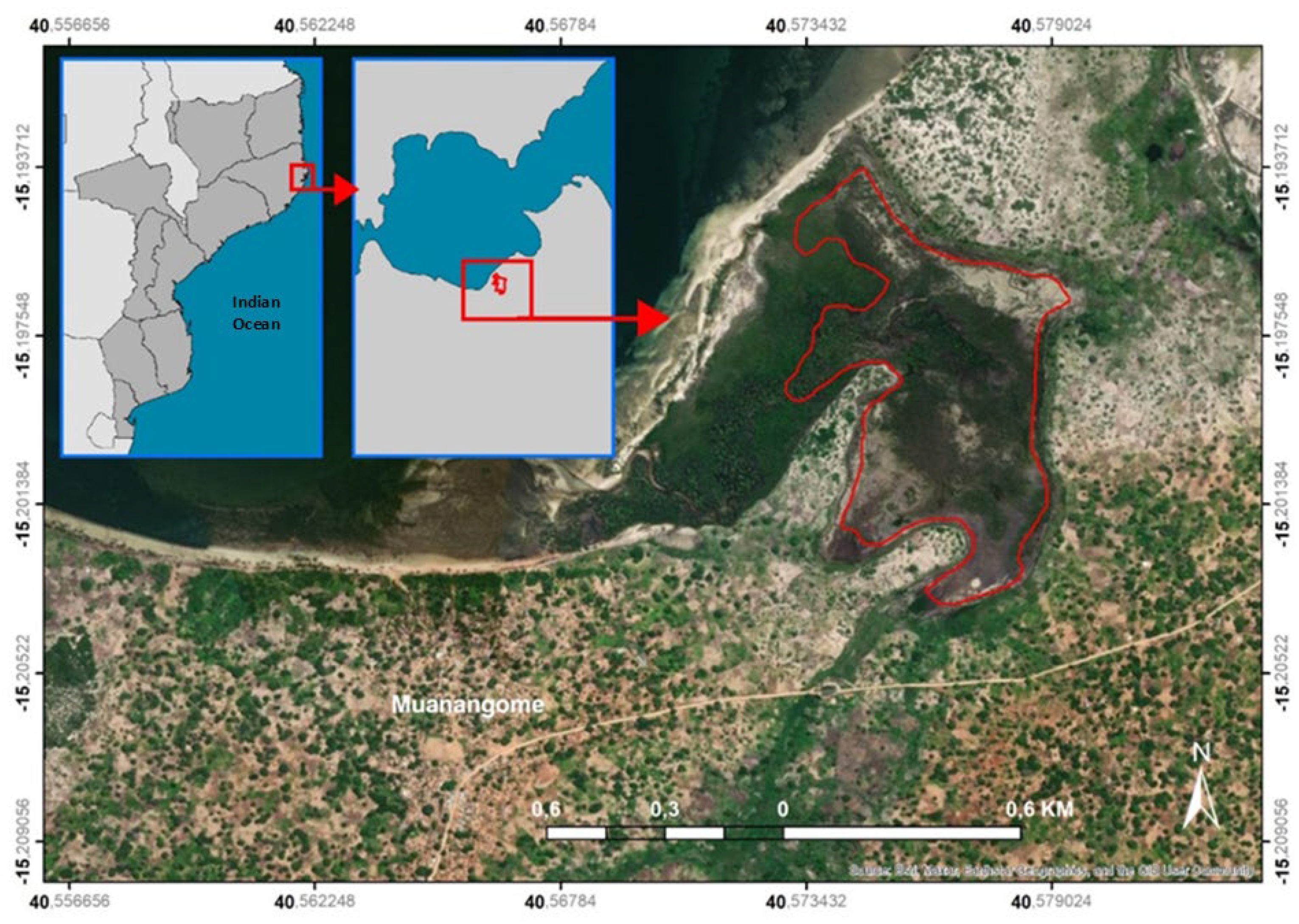
Figure 2.
Images from the degraded mangrove in Muanangome. Photos ® Alberto Fernando.
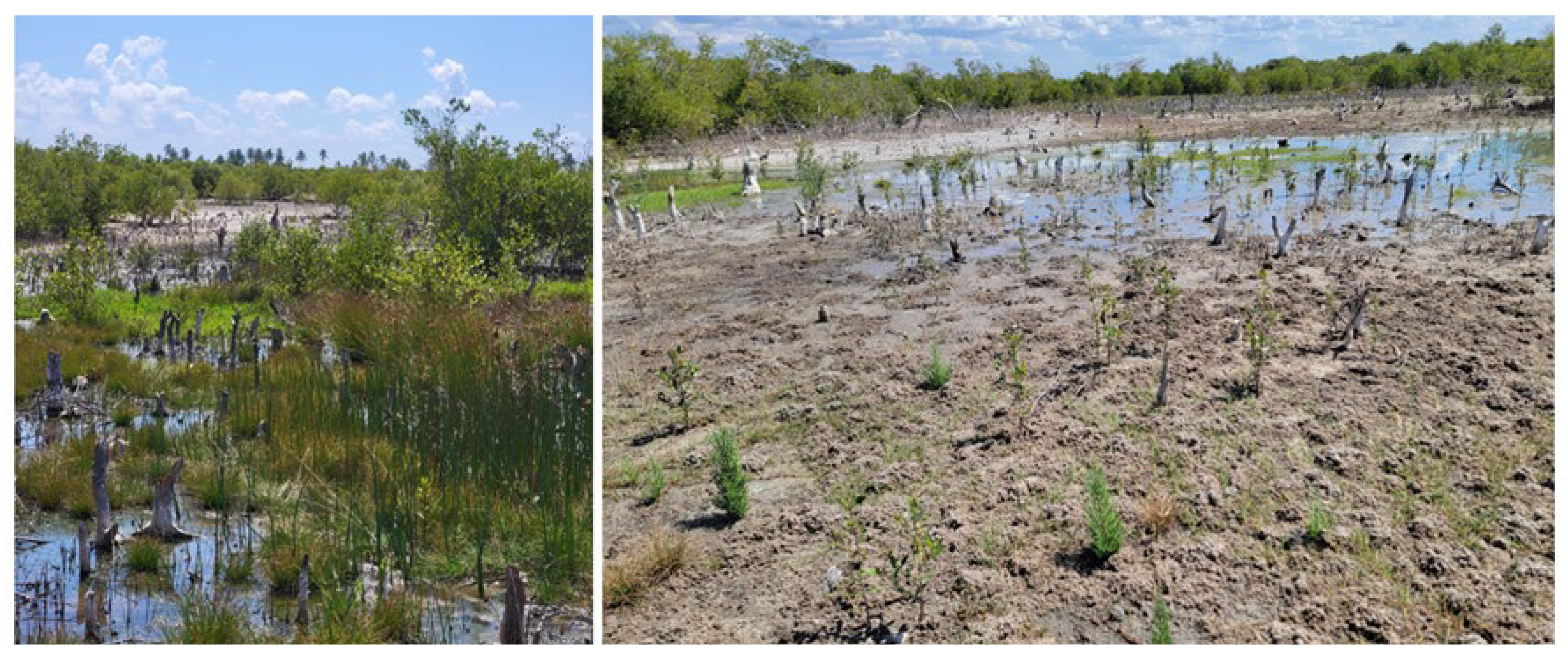
Figure 4.
PCA analysis shows the distribution of mangrove zones before and after hydrological restoration in an orthogonal space.
Figure 4.
PCA analysis shows the distribution of mangrove zones before and after hydrological restoration in an orthogonal space.
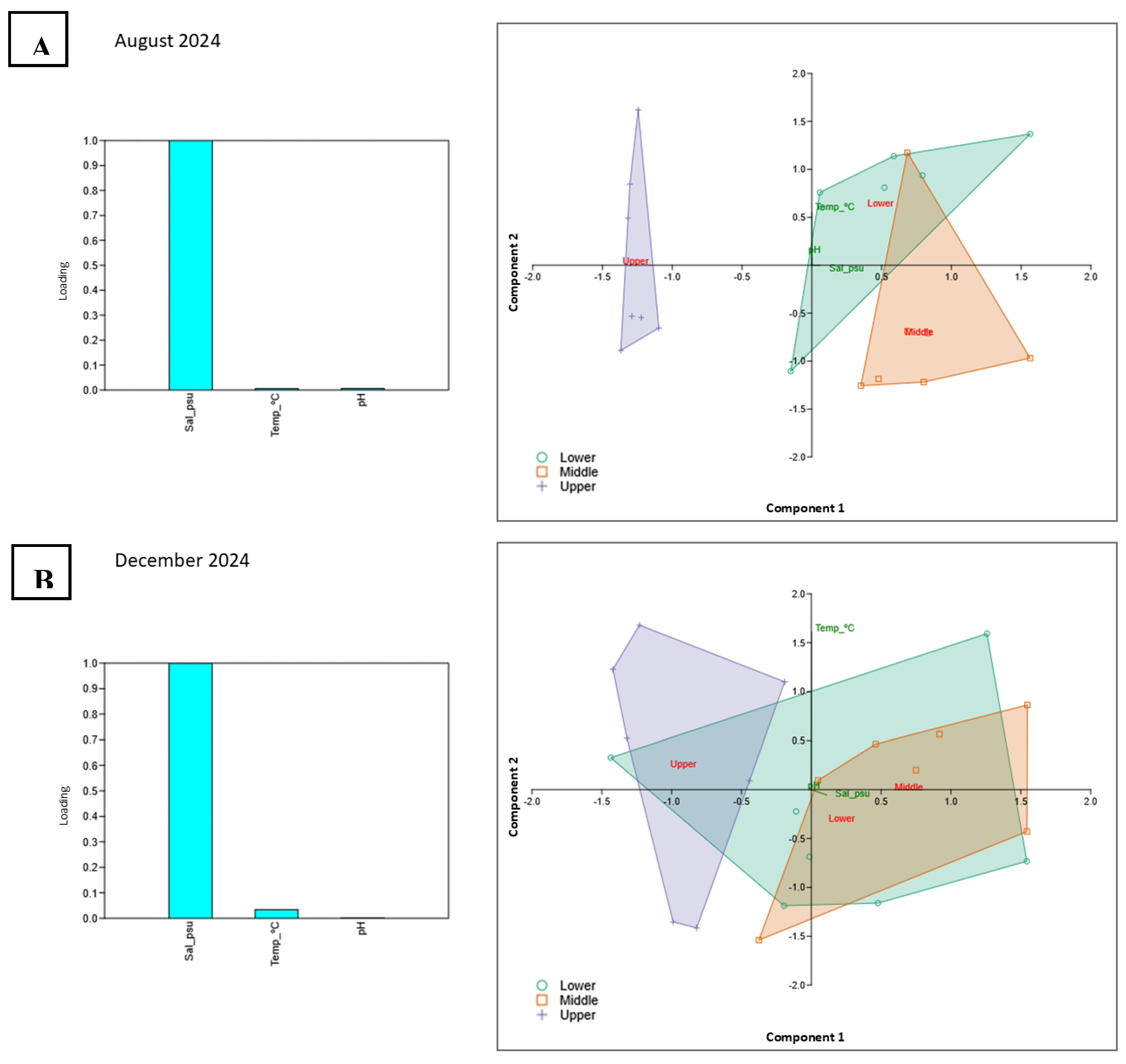
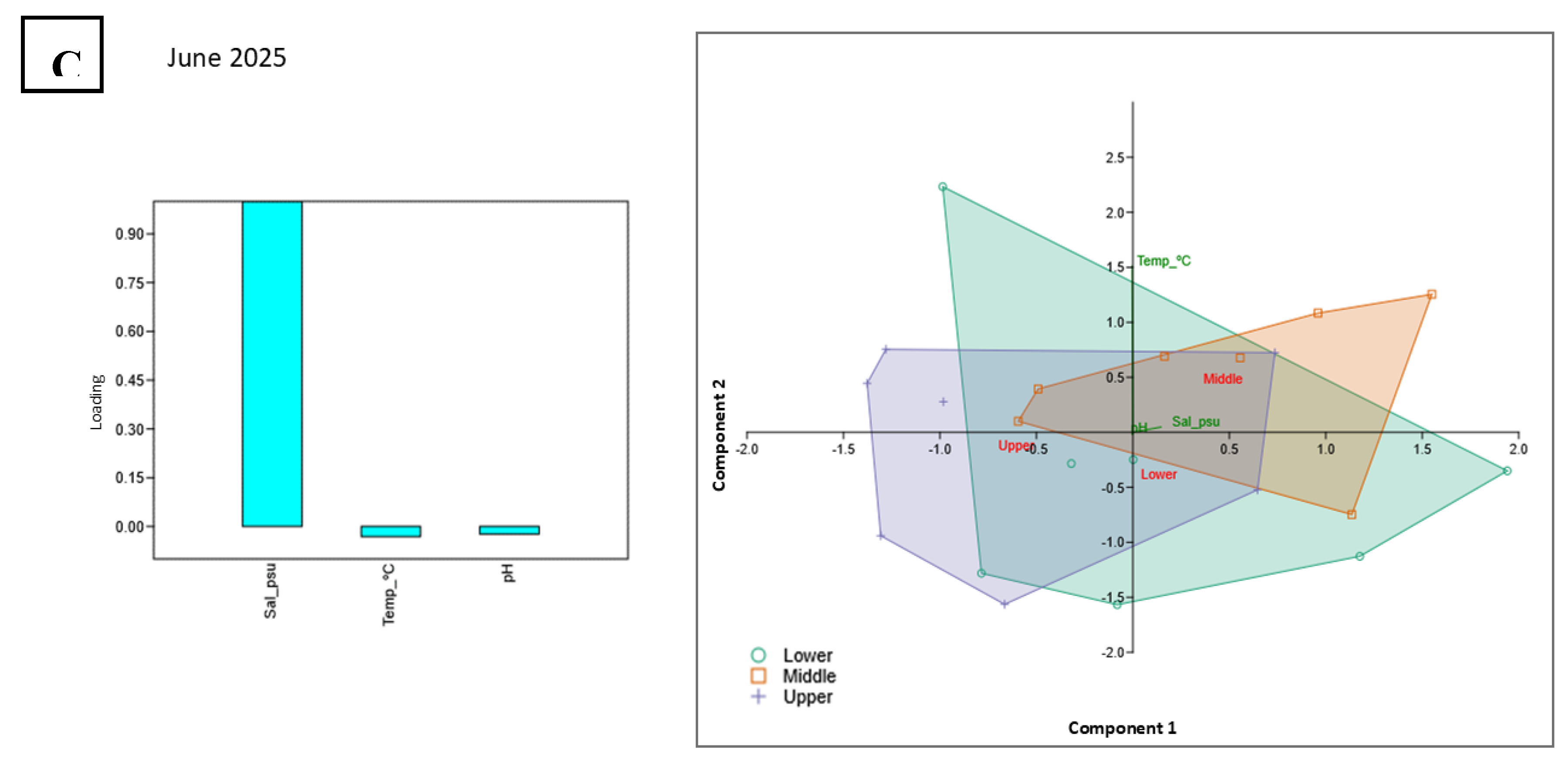
Figure 5.
Seedling mean density in the upper, middle and lower zones (mean ± se).
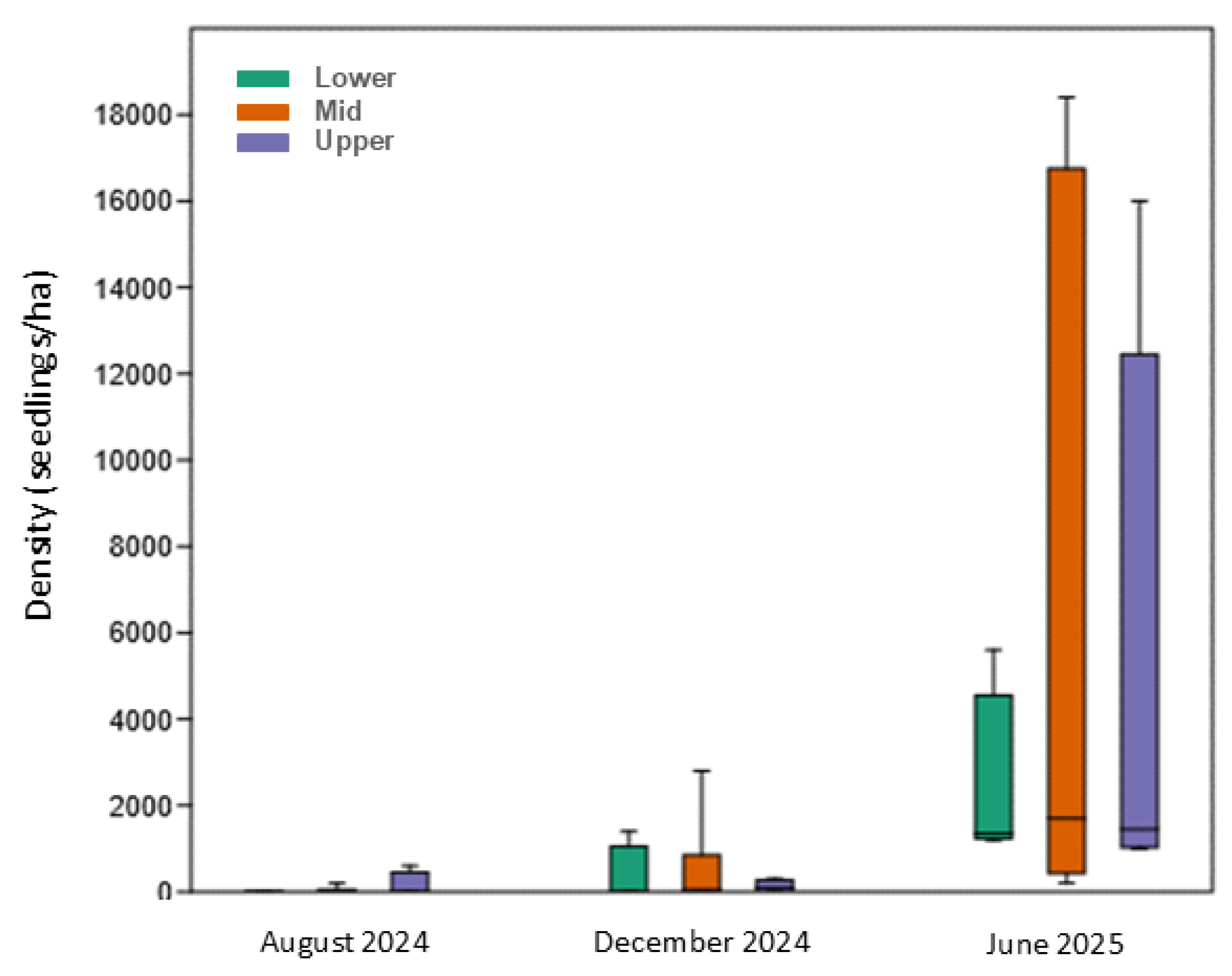
Figure 6.
Variation in seedling distribution after hydrological restoration.
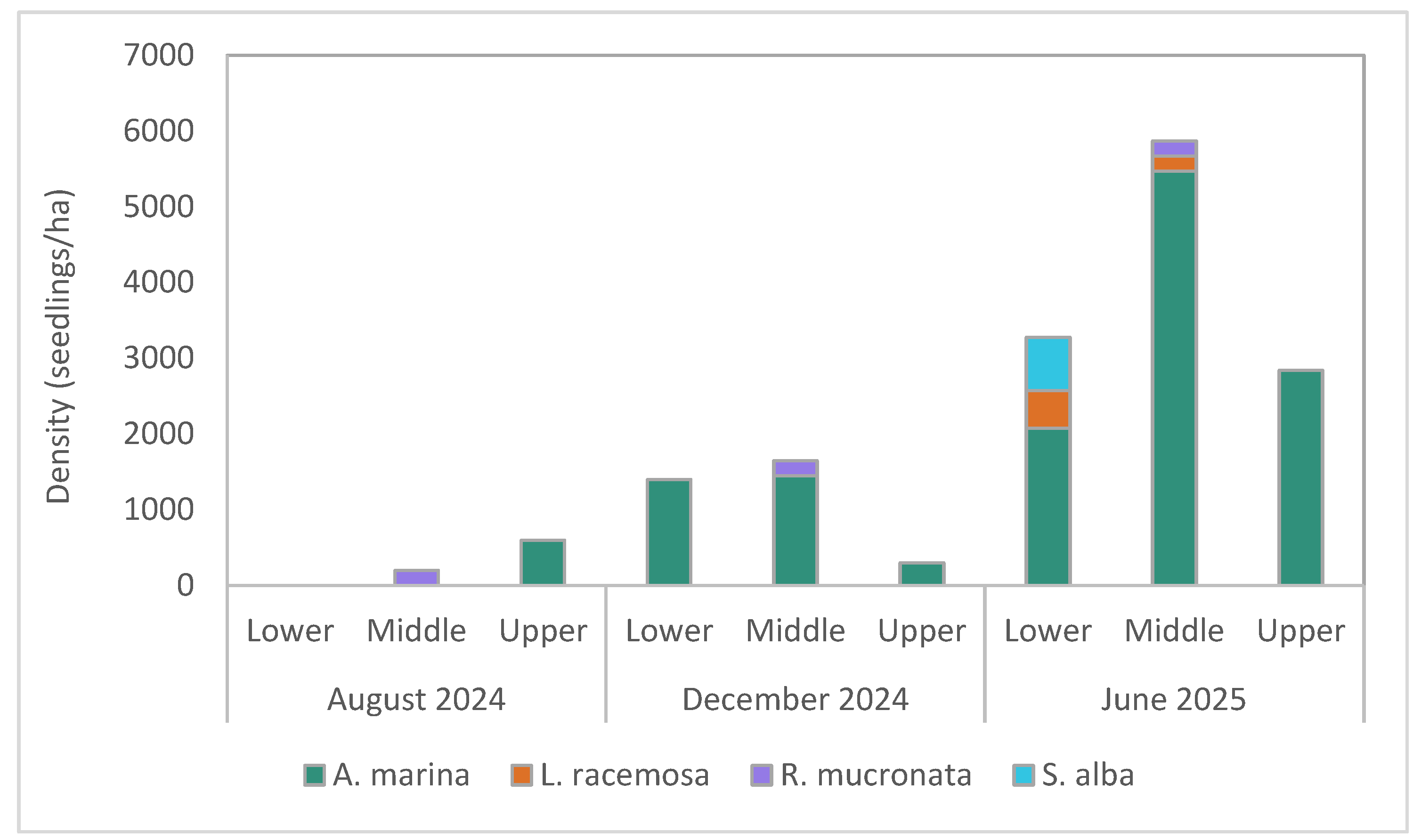
Figure 8.
Photos of the degraded mangrove forest before hydrological restoration (left) and the changes after the artificial channels were opened (right). Photos ® Alberto Fernando.
Figure 8.
Photos of the degraded mangrove forest before hydrological restoration (left) and the changes after the artificial channels were opened (right). Photos ® Alberto Fernando.
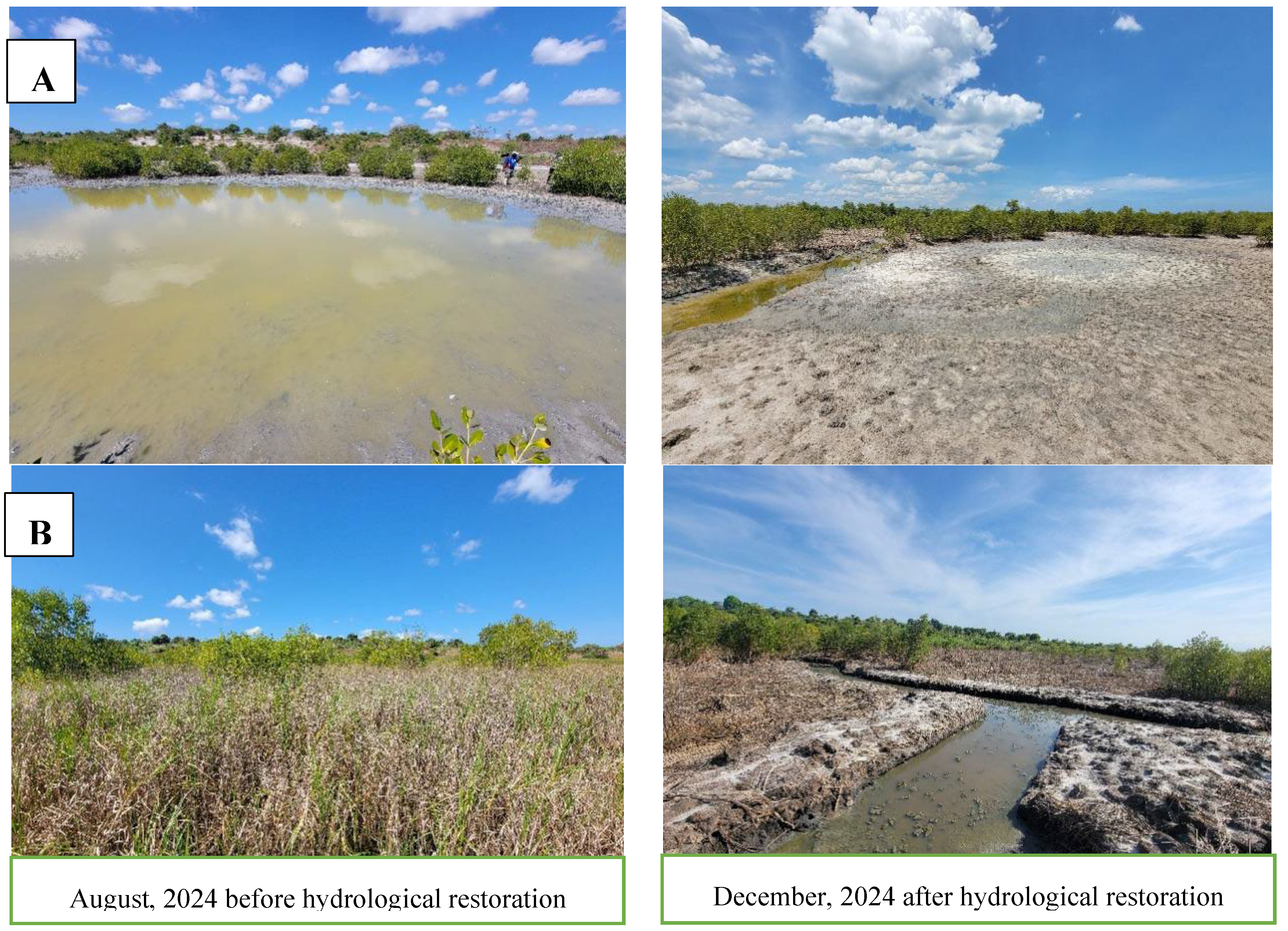
Figure 9.
Representation of the distribution of mangrove seedlings per species after hydrological restoration, and the expansion of Lumnitzera racemosa to the middle zone.
Figure 9.
Representation of the distribution of mangrove seedlings per species after hydrological restoration, and the expansion of Lumnitzera racemosa to the middle zone.
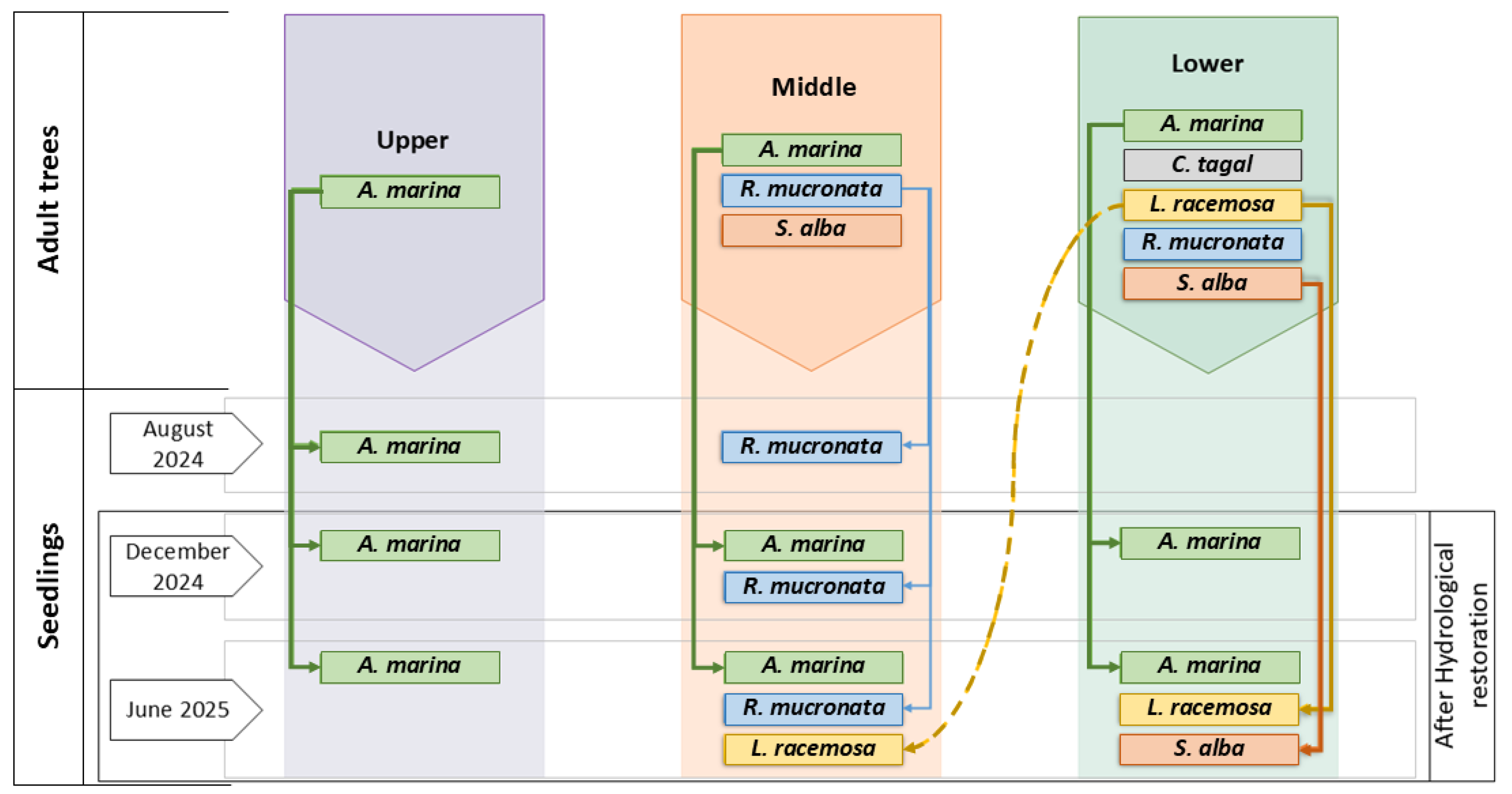

Table 1.
Main characteristics of the three mangrove zones in the restoration area.
| Zones | Characteristics |
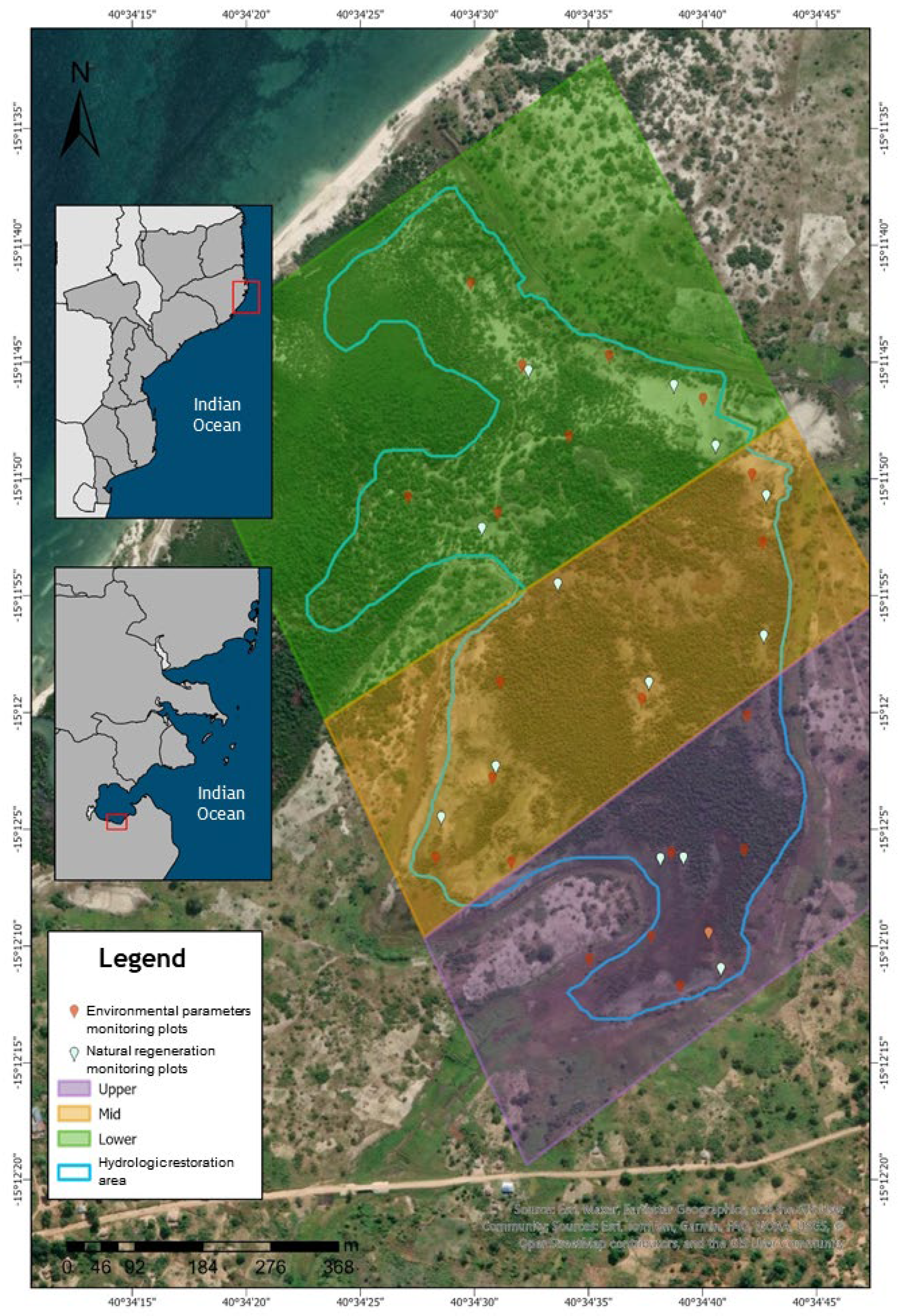 Figure 3. Main mangrove zones defined in the study area. Figure 3. Main mangrove zones defined in the study area. |
| Upper | Salinity: 0 to 30 Soil: sand and clay, firm to soft Mangrove species: A. marina. Other characteristics: dominated by associated species Typha latifolia and Cyperus sp.; river influence and stagnation of fresh water |
|
| Middle | Salinity: 50 to above 100; Soil: sand and clay, firm to soft; Mangrove species: A. marina, R. mucronata and S. alba; Other characteristics: intensive logging, canopy gaps; high density of associated species Juncus kraussii and Salicornia sp.; stagnant fresh and salt water |
|
| Lower | Salinity: 50 to 100 Soil: sandy, firm to soft Mangrove species: A. marina, C. tagal, R. mucronata, S. alba and L. racemosa; Other characteristics: intensive logging, canopy gaps |
Table 2.
Mean salinity variation over the monitoring periods within the three mangrove zones.
| Zones | Baseline | Monitorings | |
|---|---|---|---|
| August 2024 | December 2024 | June 2025 | |
| Lower | 63.42 ±7.50 (a,1) | 42.64 ±7.77 | 27.73 ±7.28 (a) |
| Middle | 72.95 ± 5.02(b,2) | 52.55 ± 5.61 (3) | 33.84 ± 5.63 (b) |
| Upper | 3.59 ± 1.13 (c,1,2) | 19.23 ± 3.60 (c,3) | 14.26 ± 6.32 |
a,b,c Statistically dissimilar monitoring periods (Dunn Post-Hoc: P < 0.05) within zones. 1,2,3 Statistically dissimilar zones (Dunn Post-Hoc: P < 0.05).
Table 3.
Mean pH variation over the monitoring periods within the three mangrove zones.
| Zones | Baseline | Monitorings | |
|---|---|---|---|
| August 2024 | December 2024 | June 2025 | |
| Lower | 7.77±0.081 2 | 7.33±0.093 4 | 6.84±0.09 |
| Middle | 6.63±0.211 | 6.54±0.063 | 6.50±0.13 |
| Upper | 6.67±0.322 | 6.56±0.164 | 7.30±0.32 |
1,2,3,4 Statistically dissimilar zones (Dunn Post-Hoc: P < 0.05).
Table 4.
Mean temperature variation over the monitoring periods within the three mangrove zones.
| Zones | Baseline | Monitorings | |
|---|---|---|---|
| August 2024 | December 2024 | June 2025 | |
| Lower | 32.78±1.15 (a) | 32.73±0.61 | 27.06±0.94 (a) |
| Middle | 28.12±1.17 (b) | 33.52±0.56 (b,c) | 28.40±0.44 |
| Upper | 30.38±1.27 | 32.71±0.64 (d) | 27.93±0.62 (d) |
a,b,c,d Statistically dissimilar monitoring periods (Dunn Post-Hoc: P < 0.05) within zones.
Table 5.
Cyclones that made landfall in Nampula province 2008 to 2025. Source: https://www.unocha.org ; https://mozambique.unfpa.org/; https://ingd.gov.mz/relatorio-das-epocas-chuvosas/.
Table 5.
Cyclones that made landfall in Nampula province 2008 to 2025. Source: https://www.unocha.org ; https://mozambique.unfpa.org/; https://ingd.gov.mz/relatorio-das-epocas-chuvosas/.
| Cyclone, year | Category (Saffir-Simpson scale) | Characteristics | Main impacts Nampula province (Mozambique) |
|---|---|---|---|
| JOKWE, March 2008 | 1 – Tropical cyclone | Landfall site: Nampula Province, between Nacala and Moz. Island |
|
| GOMBE, March 2022 | 3 – Tropical cyclone | Wind speeds up to 190 km/h; 200 mm in 24 hours; Most affected areas: Mozambique island, Lunga; |
Affected 642 383 people, 53 deaths and 77 injured; over 23 994 people displaced; damages to electricity infrastructure; 707 km of road impacted. Damage estimated at USD 81.9 million. |
| CHIDO, December 2024 | 4-equivalent – Tropical cyclone | Wind speeds up to 120km/h and reaching 260 km/h; 250 mm in 24hours; Most affected areas: Cabo Delgado, Nampula and Niassa; |
Affected 175 169 people, 493 injured and 45 people dead (37 in Cabo Delgado, 5 in Nampula and 3 in Niassa) |
| DIKELEDI, January 2025 | 2 – Tropical cyclone | Wind speed: 150 km/ha up to 180km/h; 210.4 to 247 mm; Most affected areas: Nampula Province, between Nacala Porto and Liupo |
Affected 283 333 people, 48 heath facilities, 221 schools |
| JUDE, March 2025 | 1 - Hurricane | Wind speed: 120 km/ha; more than 200mm in 24 hours; Most affected areas: Nampula Province between Memba and Mossuril |
Affected over 390 000 people, 13 deaths, 135 injured. 81 health facilities, 272 schools, 18 bridges, 48 water systems, and 73km of electricity lines |
Disclaimer/Publisher’s Note: The statements, opinions and data contained in all publications are solely those of the individual author(s) and contributor(s) and not of MDPI and/or the editor(s). MDPI and/or the editor(s) disclaim responsibility for any injury to people or property resulting from any ideas, methods, instructions or products referred to in the content. |
© 2026 by the authors. Licensee MDPI, Basel, Switzerland. This article is an open access article distributed under the terms and conditions of the Creative Commons Attribution (CC BY) license (http://creativecommons.org/licenses/by/4.0/).
Copyright: This open access article is published under a Creative Commons CC BY 4.0 license, which permit the free download, distribution, and reuse, provided that the author and preprint are cited in any reuse.


