

Submitted:
31 March 2026
Posted:
01 April 2026
You are already at the latest version
Abstract
Periodontal disease (PD) affects a large proportion of adults and is increasingly associated with systemic inflammation and neurodegenerative risk. However, current therapies have limited efficacy in disrupting biofilms and modulating systemic responses. In this pilot study, we evaluated epigallocatechin-3-gallate-palmitate (EGCG-palmitate or EC16) nanoparticles (NPs), a lipid-soluble derivative of epigallocatechin-3-gallate (EGCG), generated using Facilitated Self-Assembling Technology (FAST), a green nanotechnology that enables spontaneous formation of stable nanoparticles without surfactants or carrier materials. We hypothesized that EC16 NPs could inhibit periodontal pathogens and modulate neuroinflammatory responses. Antimicrobial activity was assessed in vitro, and potential therapeutic effects were evaluated in a ligature + pathogen-induced mouse model of periodontitis. EC16 NPs inhibited the growth of Porphyromonas gingivalis. Oral administration of EC16 NPs (0.02% w/v equivalent to 16-20 mg/kg) significantly reduced bacterial load and decreased alveolar bone loss by approximately 50% compared with controls. Importantly, biodistribution analysis using Cy5-labeled EC16 NPs demonstrated detectable signals in mouse brain tissue following oral gavage, indicating EC16 NPs can cross the blood–brain barrier. This represents, to our knowledge, the first evidence that an orally administered EGCG derivative in nanoparticle form reaches the central nervous system and induces biological responses. In addition, EC16 NP treatment was associated with increased regulatory T cell (Treg) populations in cervical lymph nodes and reduced expression of inflammatory (IL-1β) and senescence-related markers (p16, p53) in brain tissue. These findings demonstrate that EC16 nanoparticles possess dual local and systemic activity and support further investigation of FAST-enabled nanoformulations as a novel therapeutic strategy for periodontal disease and inflammation-related brain conditions.
Keywords:
periodontal disease
; Alzheimer’s disease
; neuroinflammation
; blood-brain barrier
; EGCG
; EGCG-palmitate
; nanoparticles
; Porphyromonas gingivalis
1. Introduction
Periodontal disease (PD) is one of the most prevalent chronic inflammatory conditions, affecting up to 90% of adults worldwide [1]. Beyond oral pathology, PD contributes substantially to the global disease burden and has been increasingly linked to systemic conditions, including neurodegenerative diseases such as Alzheimer’s disease (AD) [2,3]. Accumulating evidence supports a mechanistic connection between PD and AD, driven in part by Porphyromonas gingivalis (Pg), a key periodontal pathogen. Pg-derived virulence factors, including gingipains (proteolytic enzymes) and small extracellular vesicles (sEVs), have been shown to cross the blood–brain barrier (BBB), delivering proteases and pro-inflammatory mediators (e.g., IL-1β, IL-6) that exacerbate neuroinflammation and promote amyloid-β (Aβ) pathology [4,5,6]. Indeed, Pg and its components have been detected in the brains of AD patients, supporting a potential PD–AD axis mediated through microbial invasion and systemic inflammation [5,7,8,9].
Epidemiological data further reinforces this association. A cohort study of individuals aged ≥50 years with chronic periodontitis (CP) for more than 10 years reported a significantly increased risk of developing AD, with an adjusted hazard ratio (HR) of 1.707 (95% CI: 1.152–2.528; p = 0.0077), corresponding to approximately a 70% increased risk compared to matched controls [5]. These findings are consistent with systematic reviews indicating that PD contributes to AD pathogenesis through both inflammatory and microbial pathways [2,10,11]. Mechanistically, Pg, gingipains, and microbially induced sEVs may disseminate from the oral cavity to the central nervous system (CNS), where they amplify inflammatory cascades and promote Aβ deposition [4,9,12,13,14,15,16,17]. Given the high prevalence of PD and its systemic implications, there is a critical unmet need for therapeutic strategies that address both local periodontal pathology and its systemic consequences.
Current PD treatments, including mechanical debridement (scaling and root planing) and adjunctive antibiotics, are limited in their ability to disrupt established biofilms or mitigate systemic inflammation [18,19,20,21]. Similarly, commonly used oral rinse formulations containing antimicrobial agents (e.g., cetylpyridinium chloride, chlorhexidine, povidone-iodine, ethanol, or surfactants such as sodium dodecyl sulfate) show variable efficacy against biofilm-associated or intracellular Pg, particularly within deep periodontal pockets. Moreover, potential cytotoxic effects on oral tissues raise additional concerns regarding long-term use [22]. These limitations highlight the need for safe, effective, and noninvasive therapeutic approaches.
Epigallocatechin-3-gallate (EGCG), a major polyphenol derived from green tea, has demonstrated antimicrobial, antioxidant, and anti-inflammatory effects, including activity against Pg in preclinical PD models [23]. However, its clinical translation has been hindered by poor stability, particularly rapid self-oxidation in aqueous environments, and limited bioavailability. To overcome these limitations, nanoparticle (NP) formulations of EGCG have been explored [24,25,26]. For example, encapsulated EGCG nanoparticles have shown efficacy in reducing Pg biofilms, reactive oxygen species (ROS), and alveolar bone loss in animal models [27]. Nevertheless, these approaches rely on native EGCG, which would retain susceptibility to self-oxidative degradation and systemic metabolism, thereby limiting formulation stability, shelf life and bioavailability.
In contrast, EGCG-palmitate (EC16), a patented lipid-soluble derivative of EGCG, exhibits significantly improved chemical stability [28]. Using Facilitated Self-Assembling Technology (FAST), we have developed EC16 nanoparticles (NPs) without the need for polymers, surfactants, stabilizers, lipids, or metals [29]. These self-assembled nanoparticles display a strong surface charge (−50 to −60 mV), which is associated with enhanced colloidal stability compared to conventionally engineered EGCG nanoparticles (typically −10 to −30 mV) [24,26]. The FAST platform enables scalable and reproducible generation of nanoparticles under mild, food-grade conditions.
Our previous studies have demonstrated that EC16 and EC16 NPs exhibit broad-spectrum antimicrobial activity, including superior efficacy against Pg compared to native EGCG-based formulations [30,31,32,33,34,35,36]. Given their antimicrobial and anti-inflammatory properties, combined with scalability and Generally Recognized as Safe (GRAS) status (FDA GRAS Notice 772), EC16 nanoparticles represent a promising candidate for oral delivery applications. A simple formulation consisting of water, glycerol, and EC16 NPs may provide a practical approach for preventing PD and potentially modulating systemic and CNS inflammation.
In this pilot study, we hypothesize that EC16 nanoparticles administered via drinking water can exert dual effects: (1) prevention and attenuation of PD through disruption of Pg biofilms and modulation of local inflammation, and (2) reduction of neuroinflammation via systemic and CNS-targeted mechanisms. This pilot proof-of-concept study was designed to evaluate these hypotheses.
2. Materials and Methods
2.1. Materials
Epigallocatechin-3-gallate-palmitate (EC16) was obtained from Camellix, LLC (Evans, GA, USA). Cy5 hydrazide (non-sulfonated, excitation 646 nm, emission 662 nm) was purchased from ApexBio Technology (Houston, TX, USA). P. gingivalis and bacteria growth medium were purchased from ATCC. EC16 nanoparticles were generated by FAST method described previously [29]. The nanoparticle size ranges from 80 to 230 nm with concentration at 109 particles/ml. The Zeta potential ranges from -50 to -60 mV [29].
2.2. Porphyromonas Gingivalis (Pg) and Response to EC16 NPs In Vitro
Pg strain 381 was obtained from ATCC (ATCC BAA1703). Pg was maintained anaerobically in (10% H2, 10% CO2, and 80% N2) in a Coy lab vinyl anaerobic chamber (Coy Laboratory Products,Inc., GrassLake, MI, USA) at 37o C in Wilkins–Chalgren anaerobe broth. Bacterial cells were maintained until the mid-log phase. EC16 NPs were diluted in the broth to 0, 0.02, 0.04, 0.08 and 1% w/v, followed by incubation for 48 h. Three duplicated samples were tested. Bacterial colony forming units (CFU) were calculated based on a spectrophotometer OD 660 (13).
2.3. Animals and Procedures
The Institutional Animal Care and Use Committee (IACUC) of Augusta University (protocol #2022-1073) approved all experimental procedures. Detailed mouse periodontitis disease (PD) induction was previously described [37,38]. Briefly, adult BAL/C mice were subjected to ligature-induced periodontitis were randomly divided into 2 groups control group (water) and intervention group (EC16 NPs in water at 0.02% w/v) (n=5). ligating the upper right second molar with a black silk suture to induce inflammation and alveolar bone loss, as described previously [39]. In addition, oral gavage with Pg was applied every other day for 21 days before tissue and sample collection for further analysis, as illustrated in the experimental design (Figure 1). For oral gavage, 109 CFU of Pg, were suspended in 2%CMC (Carboxymethyl cellulose) in sterile PBS and administered every other day [13]. At the end of the 3 weeks, animals were euthanized; maxilla bone, adjacent lymph nodes, brain and gingival tissues were harvested from each the animals and further processed for flowcytometry, micro-CT, and Western blotting. Ligatures and oral swaps were collected for bacteria count.
2.4. Nanoparticle Tracking Analysis of EC16
Nanoparticle tracking analysis (NTA) was used to analyze and visualize the size and density of EC16, Cy5, and EC16/Cy5 hybrid nanoparticales [40]. Briefly, 50 µL of the sample was diluted to a final volume of 1 mL using 1× PBS buffer and was loaded into the sample chamber of the ZetaView PMX 120 instrument (Particle Metrix, Meerbusch, Germany) at 23oC. Samples were diluted in 5% PBS for Zeta potential measurement. Data about the size distribution and concentration of the sample were generated by the ZetaView software (8.02.28).
2.5. Flow Cytometry and Antibodies
The detailed method was performed as previously described [41]. Staining of cell suspensions was conducted on ice using FACS Staining Buffer (Thermo Fisher Scientific, Waltham, MA, USA). Fc receptors were blocked using FcR-blocking reagent (Miltenyi Biotec, Auburn, CA, USA) for 15 min on ice and protected from light. Fluorophore-conjugated antibodies were added at the recommended concentrations and incubated for 30 min on ice. Cells were then washed and resuspended in FACS buffer. Following surface staining, cells were fixed and permeabilized using a fixation/permeabilization buffer set (eBioscience, Thermo Fisher Scientific, Waltham, MA, USA) according to the manufacturer’s protocol. Intracellular staining was performed by incubating cells with conjugated antibodies in 1× permeabilization buffer for 1 h at room temperature, protected from light. Cells were washed and resuspended in FACS buffer prior to acquisition. Data were acquired using a MACSQuant flow cytometer (Miltenyi Biotec, Auburn, CA, USA) and analyzed with MACSQuantify software (version 2.13.3). Antibodies used were anti-mouse CD3e FITC; clone 145-2C11(Invitrogen, Thermofisher Scientific, Waltham MA, USA; Cat#11-0031-82), anti-mouse CD4 (Thermofisher Scientific, Waltham MA, USA Catalog # 11-0041-82), FOXP3 Monoclonal Antibody (FJK-16s), and IL-17A Monoclonal Antibody FITC (eBioscience™ Thermo Fisher Scientific, Waltham, MA, USA Catalog # 11-7177-81).
2.6. Western Blotting and Antibodies
As previously described (39), brain tissue lysates were extracted by the addition RIPA buffer with a protease/phosphatase inhibitor cocktail and incubation was undertaken for 30 min on ice. After denaturation, protein separation was performed utilizing 4–15% Mini-PROTEAN TGX Precast Protein Gel (Bio-Rad Laboratories, Hercules, CA, USA; Cat#: 4568084), then transferred to PVDF membranes (Bio-Rad laboratories, Hercules, CA, USA; Cat#: 1620177). Subsequently, membranes were blocked with 5% nonfat dry milk in TBST for 1 h followed by incubation with primary antibodies at 4o C overnight. After washing with TBST, membranes were incubated with HRP-conjugated secondary antibodies for 1 h at room temperature the following day. Membranes were washed and developed with a Femto kit (Thermofisher Scientific, Waltham, MA, USA; Cat#: 34095) and imaged with ChemiDoc MP Imaging Gel (Bio-Rad laboratories, Hercules, CA, USA). Antibodies used were Anti-mouse anti p21Waf1/Clip1 (#64016) (Cell Signaling Technology, Danvers, MA, USA). Anti-mouse anti p16 INK4A PA1030670 (Thermofisher Scientific, Waltham MA, USA) and anti p53 (#2524) (Cell Signaling Technology, Danvers, MA, USA). Secondary antibody used was Anti-rabbit IgG, HRP-linked Antibody (#7074) (Cell Signaling Technology, Danvers, MA).
2.7. Micro-CT Imaging and Bone Parameter Analysis
The maxillae were scanned using a 1272 Skyscan System (Bruker, Belgium). Three-dimensional reconstruction was performed using NRecon 1276 software (Skyscan), and alveolar bone loss around the ligated maxillary second molar was analyzed using CTAn software v.1.18 (Skyscan). Scanning parameters were set at 9.5 μm image pixel size with a 0.25 mm Al filter, 0.2 rotation step, and frame averaging of 4. The region of interest (ROI) was standardized across all samples, starting at the cementoenamel junction of the mesial surface of the second molar and extending to the root apex (40 slices) in the occluso-apical direction. The mesio-distal direction was defined from the distal end of the maxillary first molar to the mesial end of the maxillary third molar. Bone volume (BV, μm3) around the second molars was quantified, and 3-D models were generated, including teeth. The un-ligated contralateral molar was an internal control for alveolar bone volume quantification [39].
2.8. In Vivo Live Animal Imaging System (IVIS) Imaging
Brain exposure of EC16/Cy5 hybrid nanoparticles was delivered by oral gavage. To assess the ability of the nanoparticles to cross the BBB, fluorescent nanoparticles were tracked in vivo, as previously described [38,41]. Brain exposure of the nanoparticles of orally delivered or injected were visualized by an in vivo imaging system (xenogen IVIS Lumina) at 24 h. An in vitro fluorescence measurements of the EC16/Cy5 hybrid nanoparticles were performed prior to the in vivo tracking [23].
2.9. Statistical Analysis
This pilot study was not powered for definitive statistical conclusions but designed to establish feasibility and effect size for subsequent powered studies. Data was analyzed using GraphPad Prism 10 (GraphPad Software, La Jolla, CA, USA). One-way or two-way ANOVA with significance defined as p < 0.05 and a confidence level of 95% confidence interval followed by Tukey’s multiple-comparisons test were used for data analysis. Values are expressed as mean ± standard deviation (SD) and experiments were repeated 3 times.
For the flow cytometry results, normality of distribution was tested using the D’Agostino and Pearson and the Shapiro-Wilk tests. For the other data sets with a smaller number of value formalities were assumed. Unpaired t-tests were used to compare control to a single treated group, with an F test to compare variances and Welch’s correction if the variances differed significantly. For two-way ANOVA, normality of distribution and sphericity were assumed. Sidak’s multiple comparisons test (alpha=0.05) was used to compare the effects of dose at each time point (simple effects within dose), and the effects of time at each dose (simple effects within time).
3. Results
3.1. To determine a suitable EC16 NP concentration for the animal study, EC16 NPs at different concentrations were incubated with Pg bacterial culture medium and OD 660 was measured at 0, 3. 6, 12, 24, and 48 hours. As shown in Figure 2, at 0% EC16, the bacterial growth continued in the culture, reaching a plateau at about 24 hr. The growth curve showed a good fit to a sigmoidal curve (non-linear regression, R2 0.87, adjusted R2 0.86, p=0.13 for replicate test for lack of fit).
In contrast, after a lag of about 3 hrs, EC16 nanoparticles at all concentrations from 0.02-0.10% began to significantly reduce the amount of Pg, as determined by OD660. By 12 hrs, all concentrations had reduced the OD660 to baseline, with an average overall reduction of 71.6% at 48hrs. Between 3 and 6 hrs, 0.08 and 0.10% EC16 showed a complete reduction, while 0.02% showed a 30.5% reduction, and 0.04% a 49.5% reduction. Two-way ANOVA (repeat measures within time) showed significant effects for Time (p<0.0001), Dose (p<0.0001) and interaction (p<0.0001), but no significant effect for repeat measures (p=0.39). Sidak’s multiple comparisons test showed no significant differences at 3 hrs between the four doses and the control (p=0.60-1.00). By 6 hrs, with the exception of 0.08 and 0.10% (p=1.00), all doses were significantly different from each other and from the 0% control (p=0.039-<0.0001), with 0.02 and 0.04% showing the smallest difference from each other (0.04% 24.7% lower than 0.02%; p=0.039). By 12 hrs, there was no significant difference in the level of Pg between any of the EC16 doses (p=1.00), and all were significantly lower than the 0% control (p<0.0001).
3.2. EC16 NPs added in drinking water significantly reduced bacterial load and bone loss in a mouse model of periodontitis. As shown in Figure 3, EC16 NPs, generated via the FAST platform [42], reduced Pg load to baseline with EC16 NP treatment (Figure 3B) by quantitative PCR [39]. As measured by micro-CT, the alveolar bone loss in the EC16 NP consuming group (17.76 + 6.71%) was reduced significantly (p=0.022, unpaired two-tailed t-test) by approximately 50% compared to the water consuming group (35.23+10.22%) (Figure 3 A and 3C). The body weight was recorded during the 21 day-period with no statistical difference was found at the end of study.
3. Mice consuming drinking water with 0.02% EC16 NPs showed an increased Treg population in draining submandibular and cervical lymph nodes in the neck, as determined by the % of FOXP3+ cells. (p=0.008, unpaired t-test). There was no difference in the level of Th17 (p=0.93; unpaired t test with Welch’s correction). Therefore, EC16 reduced the Th-17/Treg ratio in submandibular and cervical Lymph nodes of mice with experimental periodontitis.
4. EC16 NPs in drinking water reduced inflammatory and senescence markers in the brains.
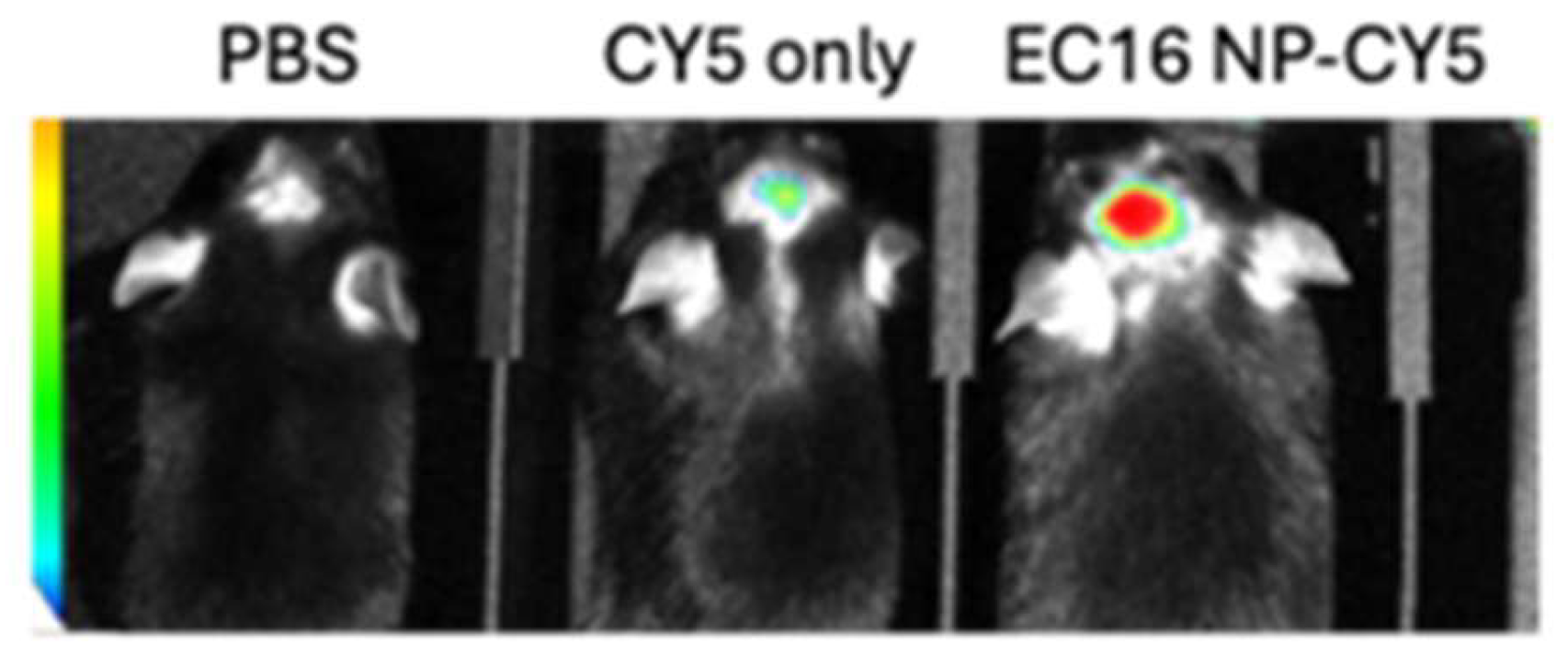
5. CNS exposure of orally administered EC16 NPs. Following oral gavage of PBS, Cy5 alone, or Cy5/EC16 hybrid nanoparticles, in vivo IVIS™ imaging revealed robust brain-associated fluorescence in mice receiving Cy5/EC16 hybrid nanoparticles at 24 h, whereas only minimal signal was detected in the Cy5-alone group.
Discussion
Green tea polyphenols, particularly epigallocatechin-3-gallate (EGCG), have been extensively studied for their antimicrobial, anti-inflammatory, and antioxidant properties. Epidemiological and clinical evidence suggests potential benefits of EGCG-containing formulations in periodontal disease (PD), with reported improvements in probing pocket depth, bleeding on probing, gingival index, clinical attachment level, and biochemical markers such as total antioxidant capacity and glutathione-S-transferase activity [43]. However, these benefits have not translated into reduced disease burden at the population level. Notably, countries with high green tea consumption, such as China and Japan, continue to report high absolute numbers of PD cases [44]. Similarly, despite advanced dental care systems, the United States exhibits a high incidence of PD alongside substantial healthcare expenditures [44,45]. These discrepancies highlight a critical limitation of EGCG—namely, its poor stability and low oral bioavailability—which likely constrain its clinical effectiveness.
Beyond oral health, EGCG has demonstrated broad neuroprotective potential in preclinical studies, including effects relevant to Alzheimer’s disease, Parkinson’s disease, Huntington’s disease, amyotrophic lateral sclerosis, and other neurodegenerative conditions [46]. However, similar translational barriers persist, as EGCG’s instability and limited systemic exposure restrict its therapeutic applicability, particularly for central nervous system (CNS) targets.
The present pilot study sought to address three key translational questions: (1) whether EC16 nanoparticles (NPs) administered via drinking water can mitigate PD progression, (2) whether orally delivered EC16 NPs can cross the blood–brain barrier (BBB), and (3) whether brain exposure to EC16 NPs modulates inflammation and senescence-associated pathways. Our findings provide preliminary evidence supporting all three hypotheses.
In a ligature + Porphyromonas gingivalis (Pg)–induced PD mouse model, daily consumption of approximately 16-20 mg/kg EC16 NPs significantly reduced Pg burden to near-baseline levels despite repeated bacterial challenge (Figure 3B). Correspondingly, alveolar bone loss was reduced by approximately 50% (Figure 3A, 3C), indicating meaningful preservation of periodontal structure. Furthermore, an increased regulatory T cell (Treg) population in cervical lymph nodes suggests enhanced local immunomodulation (Figure 4), consistent with anti-inflammatory activity. These findings, together with in vitro Pg inhibition (Figure 2), support a dual antimicrobial and host-modulatory mechanism of EC16 NPs.
However, the study design does not fully distinguish between preventive and therapeutic effects, as continuous exposure via drinking water may have suppressed early biofilm formation. Future studies incorporating defined treatment windows will be necessary to delineate these mechanisms.
Importantly, oral administration of EC16 NPs was associated with reduced expression of IL-1β, p53, and p16 in brain tissue (Figure 5), suggesting modulation of neuroinflammatory and senescence pathways. Whether these effects result from direct CNS activity of EC16 or indirectly via attenuation of PD-associated systemic inflammation—potentially mediated by Pg-derived virulence factors, cytokines, or bacterial translocation—remains to be determined.
A key finding of this study is the demonstration that EC16 NPs can cross the BBB following oral administration. Using EC16:Cy5 (999:1) hybrid nanoparticles, fluorescence signals were detected in brain tissue 24 hours post-gavage (Figure 6), indicating successful CNS delivery. Complementary in vitro data using RAW 264.7 cells showed sustained nanoparticle association over time [40], suggesting that EC16 NPs exhibit sufficient stability to avoid rapid degradation. These results represent, to our knowledge, the first evidence of a lipid-soluble EGCG derivative achieving measurable brain exposure via oral delivery.
Moreover, the FAST platform enables the formation of hybrid nanoparticles, allowing co-delivery of additional functional molecules into the CNS. This capability may provide a versatile strategy for enhancing delivery of therapeutics that otherwise exhibit poor bioavailability or limited BBB penetration.
Collectively, these findings support a conceptual framework in which PD-associated dysbiosis and inflammation contribute to CNS pathology through microbial and immune-mediated pathways. Targeting both microbial burden and systemic inflammation may therefore represent a unified strategy for addressing oral–systemic disease connections. EC16 NPs, generated via the FAST platform using food-grade materials under mild conditions [29,40], offer advantages over conventional nanotechnologies that rely on surfactants, polymers, and high-energy processing [24,25,26]. The scalability and reproducibility of this approach further support its translational potential.
Nevertheless, this study has several limitations. As a pilot study, it is limited by sample size, statistical power, and the absence of detailed pharmacokinetic and biodistribution analyses. Future studies should incorporate larger cohorts, multiple dosing regimens, comprehensive toxicity assessments, and mechanistic investigations across both oral and CNS disease models.
Conclusion
In summary, this pilot study provides the first evidence that orally administered EC16 nanoparticles can simultaneously modulate periodontal disease progression and achieve measurable brain exposure, with associated reductions in neuroinflammatory and senescence markers. These findings address key translational limitations of EGCG by improving its stability, bioavailability, and CNS accessibility. The ability of EC16 NPs to cross the blood–brain barrier and exert biological effects highlights their potential as a novel platform for targeting both oral and neurodegenerative diseases. While further validation in larger and more comprehensive studies is required, the FAST-enabled EC16 nanoformulation represents a promising strategy for bridging the gap between natural compound bioactivity and clinical application.
Institutional Review Board Statement
The Institutional Animal Care and Use Committee (IACUC) of Augusta University (protocol #2022-1073, date 19 November 2024) approved all experimental procedures.
Conflicts of Interest
The authors declare no conflict of interest.
References
- Gasner, N. S., & Schure, R. S. (2025). Periodontal Disease. In StatPearls [Internet]. Treasure Island (FL): StatPearls Publishing.
- Kamer, A. R., Craig, R. G., Dasanayake, A. P., et al. (2008). Inflammation and Alzheimer’s disease: Possible role of periodontal diseases. Alzheimer’s & Dementia, 4(4), 242–250. [CrossRef]
- Costa, F. O., Cota, L. O. M., Lages, E. J. P., et al. (2023). Chronic Periodontitis Exposure and the Risk of Alzheimer’s Disease: A Retrospective Cohort Study. Dentistry Journal, 12(10), 331.
- Alba-Castro, V., Fabbricatore, M., Gaviraghi, A., Piras, G., Rossi, V., Sartoris, C., Scarlata, D., & Tonoli, G. (2024). Reciprocal Interactions Between Periodontal Disease and Alzheimer’s Disease: Implications for Mutual Triggering, Exacerbation, and Treatment Interventions—A Comprehensive Review of the Literature. Life, 14(6), 81. [CrossRef]
- Chen, C.-K., Wu, Y.-T., & Chang, Y.-C. (2017). Association between chronic periodontitis and the risk of Alzheimer’s disease: A retrospective, population-based, matched-cohort study. Alzheimer’s Research & Therapy, 9, 56. [CrossRef]
- Leira, Y., Domínguez, C., Seoane, J., Seoane-Romero, J., Pías-Peleteiro, J. M., Takkouche, B., ... & Aldrey, J. M. (2017). Is periodontal disease associated with Alzheimer’s disease? A systematic review with meta-analysis. Neuroepidemiology, 48(1-2), 21–31. [CrossRef]
- Sparks Stein, P., Steffen, M. J., Smith, C., Jicha, G., Ebersole, J. L., Abner, E., & Dawson, D. (2012). Serum antibodies to periodontal pathogens are a risk factor for Alzheimer’s disease. Alzheimer’s & Dementia, 8(3), 196–203. [CrossRef]
- Ide, M., Harris, M., Stevens, A., Sussams, R., Hopkins, V., Culliford, D., ... & Holmes, C. (2016). Periodontitis and cognitive decline in Alzheimer’s disease. PLoS One, 11(3), e0151081. [CrossRef]
- Dominy, S. S., Lynch, C., Ermini, F., et al. (2019). Porphyromonas gingivalis in Alzheimer’s disease brains: Evidence for disease causation and treatment with small-molecule inhibitors. Science Advances, 5(1), eaau3333. [CrossRef]
- Hosseini, H., Arab, S., Kiani, Z., Zafarian, N., Taghizadeh-Boroujeni, S., & Shokouhi, P. (2024). Periodontal Disease and Alzheimer’s: Insights from a Systematic Literature Network Analysis. The Journal of Prevention of Alzheimer’s Disease. 2024;4(11):1148-1165. [CrossRef]
- Bouziane, A., Yahyaoui, H., El-Hassani, A., et al. (2023). Effect of Periodontal Disease on Alzheimer’s Disease: A Systematic Review. Dentistry Journal, 11(1), 14.
- Teixeira, F. B., Saito, M. T., Matheus, F. C., Prediger, R. D., Yamada, E. S., Maia, C. S. F., & Lima, R. R. (2017). Periodontitis and Alzheimer’s disease: A possible comorbidity between oral chronic inflammatory condition and neuroinflammation. Frontiers in Aging Neuroscience, 9, 327. [CrossRef]
- Elashiry, M., Carroll, A., Yuan, J., Liu, Y., Hamrick, M., Cutler, C. W., Wang, Q., & Elsayed, R. (2024). Oral microbially-induced small extracellular vesicles cross the blood–brain barrier. International Journal of Molecular Sciences, 25(8), 4509. [CrossRef]
- Elsayed, R., Carroll, A., Elashiry, M., Cutler, C., Hamrick, M., Liu, Y., & Wang, Q. (2024). Oral microbially-induced exosomes cross blood-brain barrier contributing to neuroinflammation and Alzheimer’s disease pathogenesis. The Journal of Immunology, 212(1_Supplement), 1340–6038.
- Wang, R. P. H., Huang, J., Chan, K. W. Y., Leung, W. K., Goto, T., Ho, Y. S., & Chang, R. C. C. (2023). IL-1β and TNF-α play an important role in modulating the risk of periodontitis and Alzheimer’s disease. Journal of Neuroinflammation, 20, 71. [CrossRef]
- Seyedmoalemi, M. A., & Saied-Moallemi, Z. (2025). Association between periodontitis and Alzheimer’s disease: A narrative review. IBRO Neuroscience Reports, 18, 360–365. [CrossRef]
- Jimenez-Harrison DM, Butler MJ, Ijaz H. et al. (2025). Ligature-induced periodontitis in a transgenic mouse model of Alzheimer’s disease dysregulates neuroinflammation, exacerbates cognitive impairment, and accelerates amyloid pathology. Brain, Behavior, & Immunity - Health. 44, 100969. [CrossRef]
- Kwon T, Lamster IB, Levin L. Current Concepts in the Management of Periodontitis. Int Dent J. 2021 Dec;71(6):462-476. Epub 2021 Feb 19. [CrossRef]
- Graziani, F., Cei, S., La Ferla, F., Vano, M., Gennai, S., Filice, N., Gabriele, M., & D’Aiuto, F. (2010). Systemic inflammation following non-surgical periodontal therapy: A systematic review and meta-analysis. Journal of Clinical Periodontology, 46(3), 241–254.
- Yue H, Xu X, Liu Q, et al. Effects of non-surgical periodontal therapy on systemic inflammation and metabolic markers in patients undergoing haemodialysis and/or peritoneal dialysis: a systematic review and meta-analysis. BMC Oral Health. 2020 Jan 22;20:18. [CrossRef]
- Herrera, D., Montero Sánchez, T., Loyola-Rodríguez, J. P., Roldán, S., Martín, C., & Sanz, M. (2022). Treatment of stage IV periodontitis: The EFP S3-level clinical practice guideline. Journal of Clinical Periodontology, 49(S24), 165–181. [CrossRef]
- Heinz-Dieter Müller, Sigrun Eick, Andreas Moritz, Adrian Lussi, Reinhard Gruber. Cytotoxicity and Antimicrobial Activity of Oral Rinses In Vitro. Biomed Res Int. 2017 Mar 19;2017:4019723. [CrossRef]
- Cai J, Chen Z, Liu H et al. Green tea epigallocatechin-3-gallate alleviates Porphyromonas gingivalis-induced periodontitis in mice. Int Immunopharmacol. 2015 Dec;29(2):839-845. [CrossRef]
- Joshi, V., Singh, K., Singh, G., Sharma, D., & Sharma, M. (2018). EGCG nanoparticles attenuate aluminum chloride induced neurobehavioral deficits, beta amyloid and tau pathology in a rat model of Alzheimer’s disease. Frontiers in Aging Neuroscience, 10, 244. [CrossRef]
- Cano A, Ettcheto M, Chang JH, Barroso E et al. Dual-drug loaded nanoparticles of Epigallocatechin-3-gallate (EGCG)/Ascorbic acid enhance therapeutic efficacy of EGCG in a APPswe/PS1dE9 Alzheimer’s disease mice model. J Control Release. 2019 May 10;301:62–75. Polymer, surfactant (Tween 80). [CrossRef]
- Cano A, Ettcheto M, Espina M et al. Epigallocatechin-3-gallate loaded PEGylated-PLGA nanoparticles: A new anti-seizure strategy for temporal lobe epilepsy. Nanomedicine: Nanotechnology, Biology and Medicine. 14 (4) 2018, 1073-1085. [CrossRef]
- Tian M, Chen G, Xu J, et al. Epigallocatechin gallate-based nanoparticles with reactive oxygen species scavenging property for effective chronic periodontitis treatment. Chemical Engineering Journal Volume 433, Part 2, 1 April 2022, 132197. Formaldehyde subgingival injection. [CrossRef]
- Jiarong Zhong, Douglas Dickinson, Lester Sampath, Stephen Hsu. Effects of Epigallocatechin-3-Gallate-Palmitate (EC16) on In Vitro Norovirus Infection. Microbiol Infect Dis. 2021; 5(5): 1-7. [CrossRef]
- Nicolette Frank, Douglas Dickinson, Yutao Liu, Hongfang Yu, Jingwen Cai and Stephen Hsu. Facilitated Self-Assembling Technology (FAST) for the Preparation of Nanoparticles to Increase the Solubility and Bioavailability of Hydrophobic Molecules. Fortune Journal of Health Sciences, 8 (2025): 283-295. [CrossRef]
- Nicolette Frank, Douglas Dickinson, Caroline Dudish, Wesley James, Garrison Lovett, Yutao Liu, Hongfang Yu, Jingwen Cai, Bo Yao, Xiacui Jiang and Stephen Hsu. Potential Therapeutic Use of EGCG-Palmitate Nanoparticles for Norovirus Infection. Biomed J Sci & Tech Res 59(1)-2024. BJSTR. [CrossRef]
- Frank, N.; Dickinson, D.; Lovett, G.; Liu, Y.; Yu, H.; Cai, J.; Yao, B.; Jiang, X.; Hsu, S. Evaluation of Novel Nasal Mucoadhesive Nanoformulations Containing Lipid-Soluble EGCG for Long COVID Treatment. Pharmaceutics 2024, 16, 791. [CrossRef]
- Nicolette Frank, Douglas Dickinson, William Garcia, Yutao Liu, Hongfang Yu, Jingwen Cai, Sahaj Patel, Bo Yao, Xiaocui Jiang, and Stephen Hsu. Feasibility Study of Developing a Saline-Based Antiviral Nanoformulation Containing Lipid-Soluble EGCG: A Potential Nasal Drug to Treat Long COVID. 2024. Viruses. 16:196. [CrossRef]
- Dickinson D, Marsh B, Shao X, Sampath L, Yao B, Jiang X, and Stephen Hsu S. Virucidal activities of novel hand hygiene and surface disinfectant formulations containing EGCG-palmitate (EC16). American Journal of Infection Control. 2022; 50 (11), 1212-1219. [CrossRef]
- Dickinson D, Tufo MD, Liu E, Shao X and Hsu S. Bactericidal and Fungicidal Activities of Novel ProtecTeaV Formulations - Alcohol-Based Hand Hygiene and Surface Disinfectant Prototypes Containing Epigallocatechin-3-Gallate-Palmitate (EC16). Microbiol Infect Dis. 2021; 5(5): 1-8. [CrossRef]
- Tinchun Chu, Lee H. Lee, Ayuni Yussof, Sabrina Lopez, Gabriela Herrera, Priscilla Luna, Mahfuza Uddin, Laying Wu, John A. Murzaku, Douglas Dickinson, Stephen Hsu. Enhanced Sporicidal Activity of Alcohol and Epigallocatechin-Palmitate-Based Hand Hygiene Formulations Comprised of Plant-Derived Compounds. Journal of Biosciences and Medicines, 2020, 8, 89-99.
- Tinchun Chu, Lee H. Lee, Theresa Aponte, Sabrina Lopez, Giselle Lalata, Gabriela Herrera, Ayuni Yussof, Douglas Dickinson, and Stephen Hsu. Sporicidal Activity of Novel Formulations Containing Lipophilic Epigallocatechin-3-Gallate and Natural Ingredients. Microbiology & Infectious Diseases. 2019; 3:1-6. [CrossRef]
- Elsayed, R.; Kurago, Z.; Cutler, C.W.; Arce, R.M.; Gerber, J.; Celis, E.; Sultan, H.; Elashiry, M.; Meghil, M.; Sun, C.; et al. Role of dendritic cell-mediated immune response in oral homeostasis: A new mechanism of osteonecrosis of the jaw. Faseb j 2020, 34, 2595-2608. [CrossRef]
- Elashiry, M.; Elashiry, M.M.; Elsayed, R.; Rajendran, M.; Auersvald, C.; Zeitoun, R.; Rashid, M.H.; Ara, R.; Meghil, M.M.; Liu,Y.; et al. Dendritic cell derived exosomes loaded with immunoregulatory cargo reprogram local immune responses and inhibit degenerative bone disease in vivo. J. Extracell. Vesicles 2020, 9, 1795362. [CrossRef]
- Xiaogang Chu, Mahmoud Elashiry, Angelica Carroll, Celine Joyce Cornelius Timothius, Christopher W Cutler, Ranya Elsayed. The Role of Senescence in Experimental Periodontitis at the Causal Level: An in Vivo Study. Cells. 2025 Feb 5;14(3):226. [CrossRef]
- Jingwen Cai, Caroline Dudish, Amani Mouna, Angelena Jacob, Wesley James, Douglas Dickinson, Hongfang Yu, Yutao Liu, Ashish K. Sarker, Mustafa Culha, Diya Garrepally, Mizuho Kittaka, Stephen. Food-Grade Preparation of Nutraceutical Nanoparticles Using Facilitated Self-Assembling Technology (FAST) for A New Generation of Nutritional Supplements. Journal of Nanotechnology Research 8 (2026): 01-11. [CrossRef]
- Elsayed, R.; Elashiry, M.; Liu, Y.; Morandini, A.C.; El-Awady, A.; Elashiry, M.M.; Hamrick, M.;Cutler, C.W. Microbially-Induced Exosomes from Dendritic Cells Promote Paracrine Immune Senescence: Novel Mechanism of Bone Degenerative Disease in Mice. Aging Dis. 2023, 14, 136-151. [CrossRef]
- Nicolette Frank, Douglas Dickinson, Yutao Liu, Hongfang Yu, Jingwen Cai and Stephen Hsu. Facilitated Self-Assembling Technology (FAST) for the Preparation of Nanoparticles to Increase the Solubility and Bioavailability of Hydrophobic Molecules. Fortune Journal of Health Sciences, 8 (2025): 283-295. [CrossRef]
- Magdalena Paczkowska-Walendowska, Jan Grzegorzewski, Jakub Kwiatek, Marta Leśna, Judyta Cielecka-Piontek. Green Tea: A Novel Perspective on the Traditional Plant’s Potential in Managing Periodontal Diseases. Pharmaceuticals (Basel). 2025 Mar 14;18(3):409. [CrossRef]
- Yadong Wang a, Yadong Wu b, Jukun Song b. Global and Regional Burden of Periodontal Disease in Adults (1990-2021). Int Dent J. 2025 Sep 3;75(6):103883. [CrossRef]
- M Jevdjevic 1, S Listl. Global, Regional, and Country-Level Economic Impacts of Oral Conditions in 2019. J Dent Res. 2024 Nov 13;104(1):17–21. [CrossRef]
- Kamboj N, Sharma S, Kumar R. Neuroprotective insights into epigallocatechin gallate (EGCG) for neurodegenerative disorders. Explor Neurosci. 2025;4:100673. [CrossRef]
Figure 1.
in vivo Experimental Design.
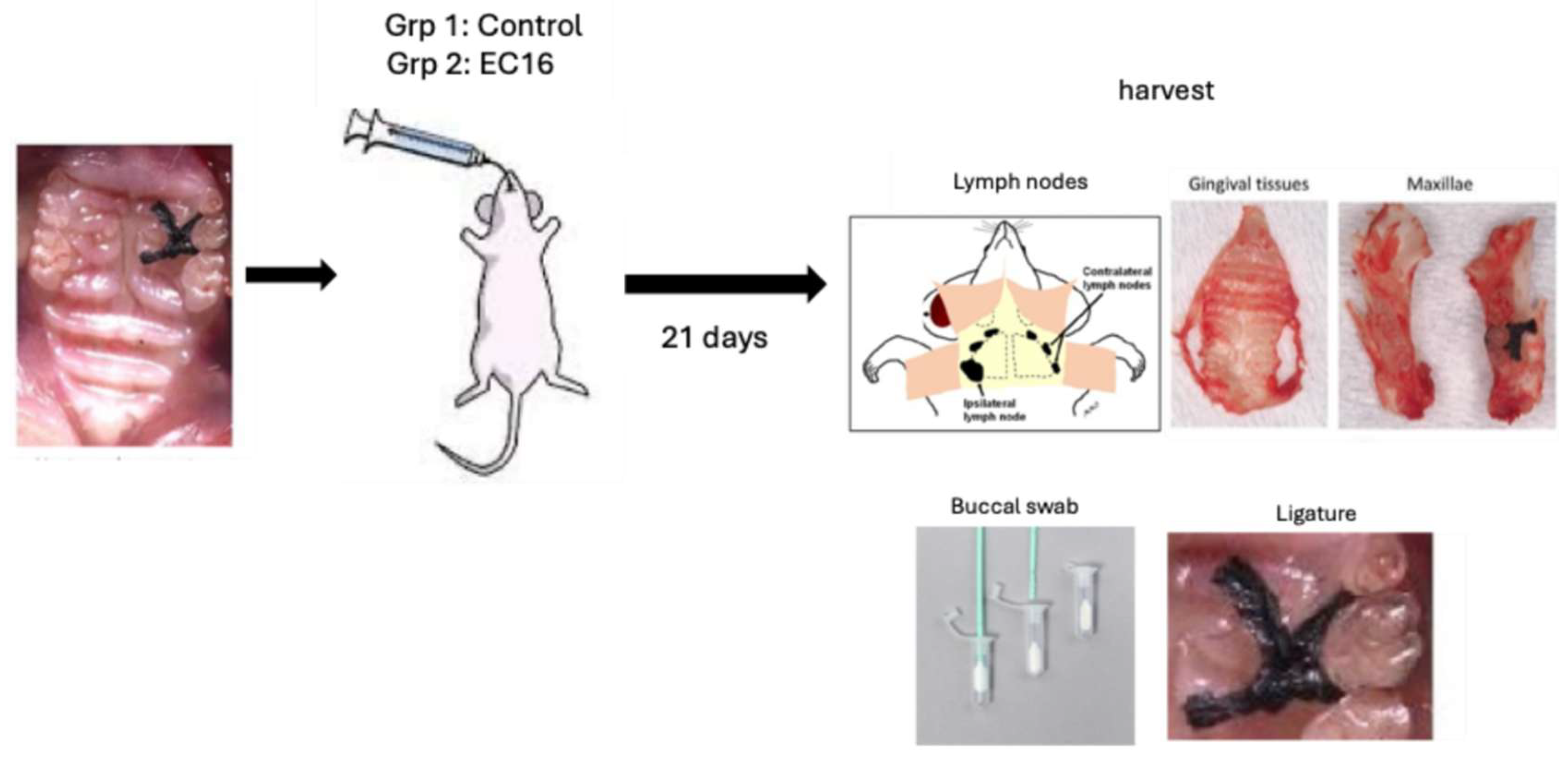
Figure 2.
EC16 NPs at different concentrations inhibited Pg growth in Wilkins–Chalgren anaerobe broth. Black line/dots: Control without EC16 NPs. Green line/dots: 0.02% w/v EC16 NPs. Red line/square: 0.04% w/v EC16 NPs. Yellow line/dots: 0.08% w/v EC16 NPs. Blue line/dots: 0.1% w/v EC16 NPs.
Figure 2.
EC16 NPs at different concentrations inhibited Pg growth in Wilkins–Chalgren anaerobe broth. Black line/dots: Control without EC16 NPs. Green line/dots: 0.02% w/v EC16 NPs. Red line/square: 0.04% w/v EC16 NPs. Yellow line/dots: 0.08% w/v EC16 NPs. Blue line/dots: 0.1% w/v EC16 NPs.
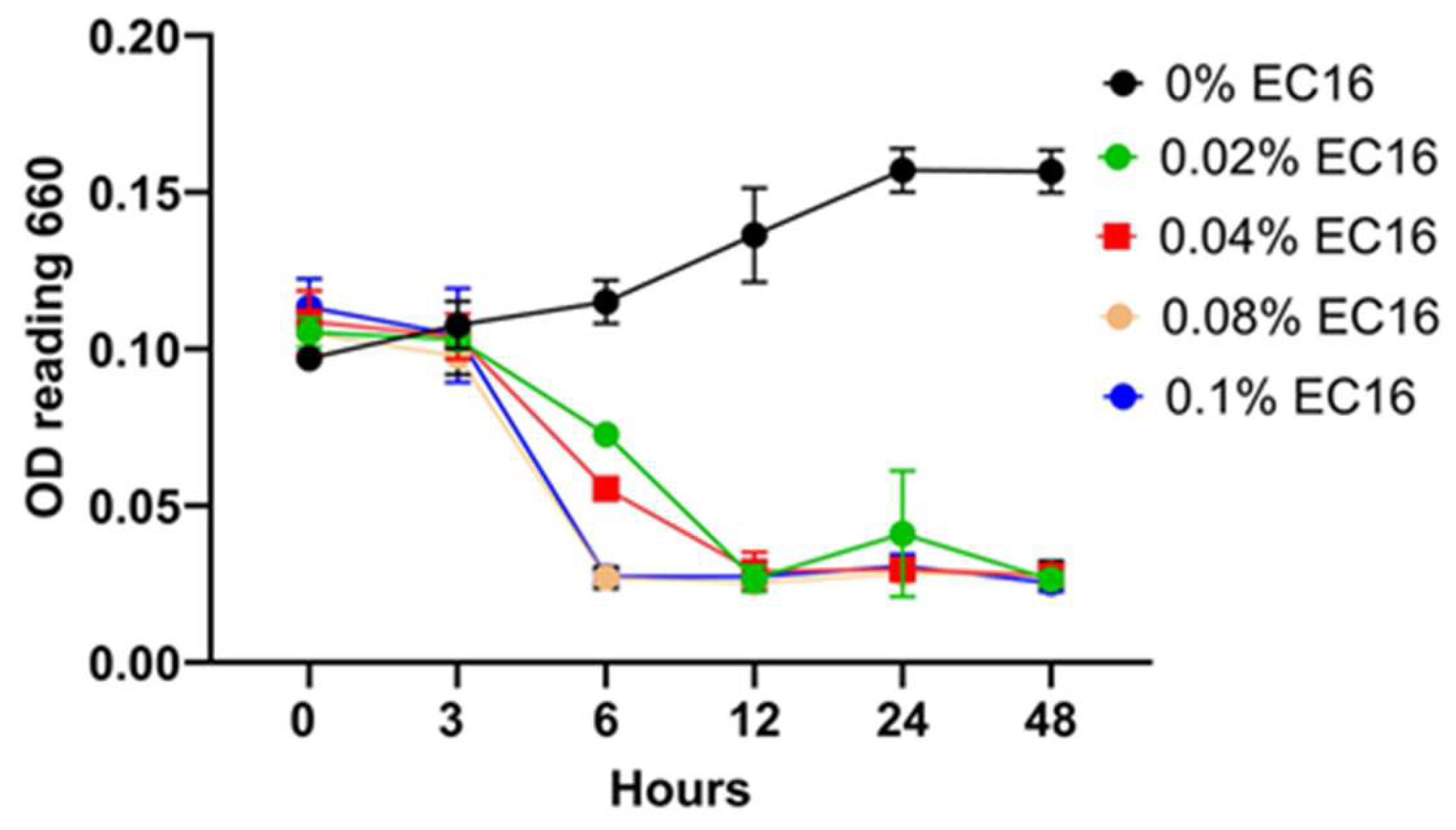
Figure 3.
A. micro-CT analysis showing reduced bone loss in animals treated with EC16NP. B. qPCR showing decreased Pg bacterial load in animals treated with EC16 NP. C. Percentage of alveolar bone loss in water consuming and EC16 NP-water consuming groups.
Figure 3.
A. micro-CT analysis showing reduced bone loss in animals treated with EC16NP. B. qPCR showing decreased Pg bacterial load in animals treated with EC16 NP. C. Percentage of alveolar bone loss in water consuming and EC16 NP-water consuming groups.
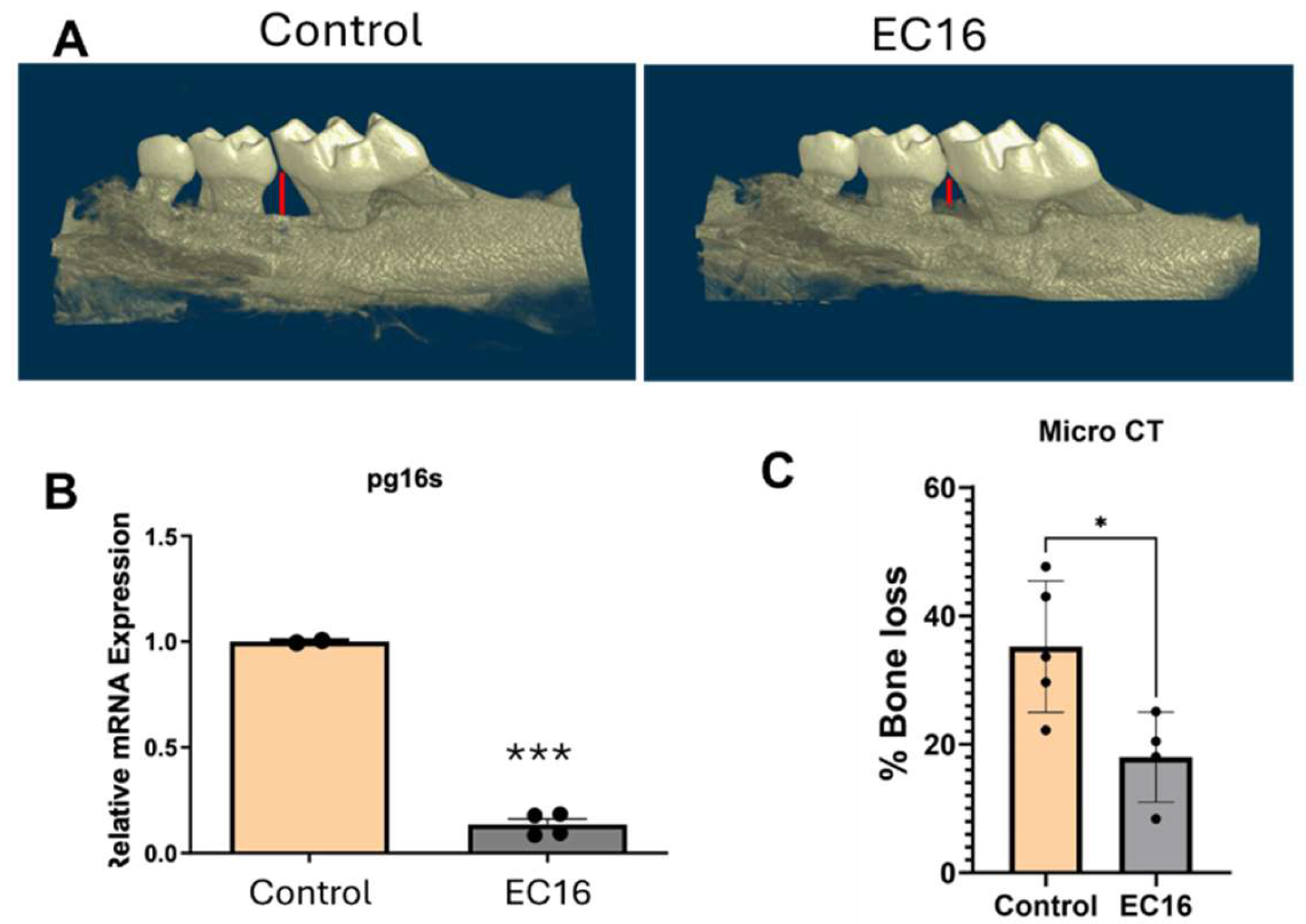
Figure 4.
A. Gating strategy for Flow cytometry analysis of head/neck lymph nodes. B. FACS plots and summary graph showing Tregs population increased in animals with EC16 NP in drinking water.
Figure 4.
A. Gating strategy for Flow cytometry analysis of head/neck lymph nodes. B. FACS plots and summary graph showing Tregs population increased in animals with EC16 NP in drinking water.
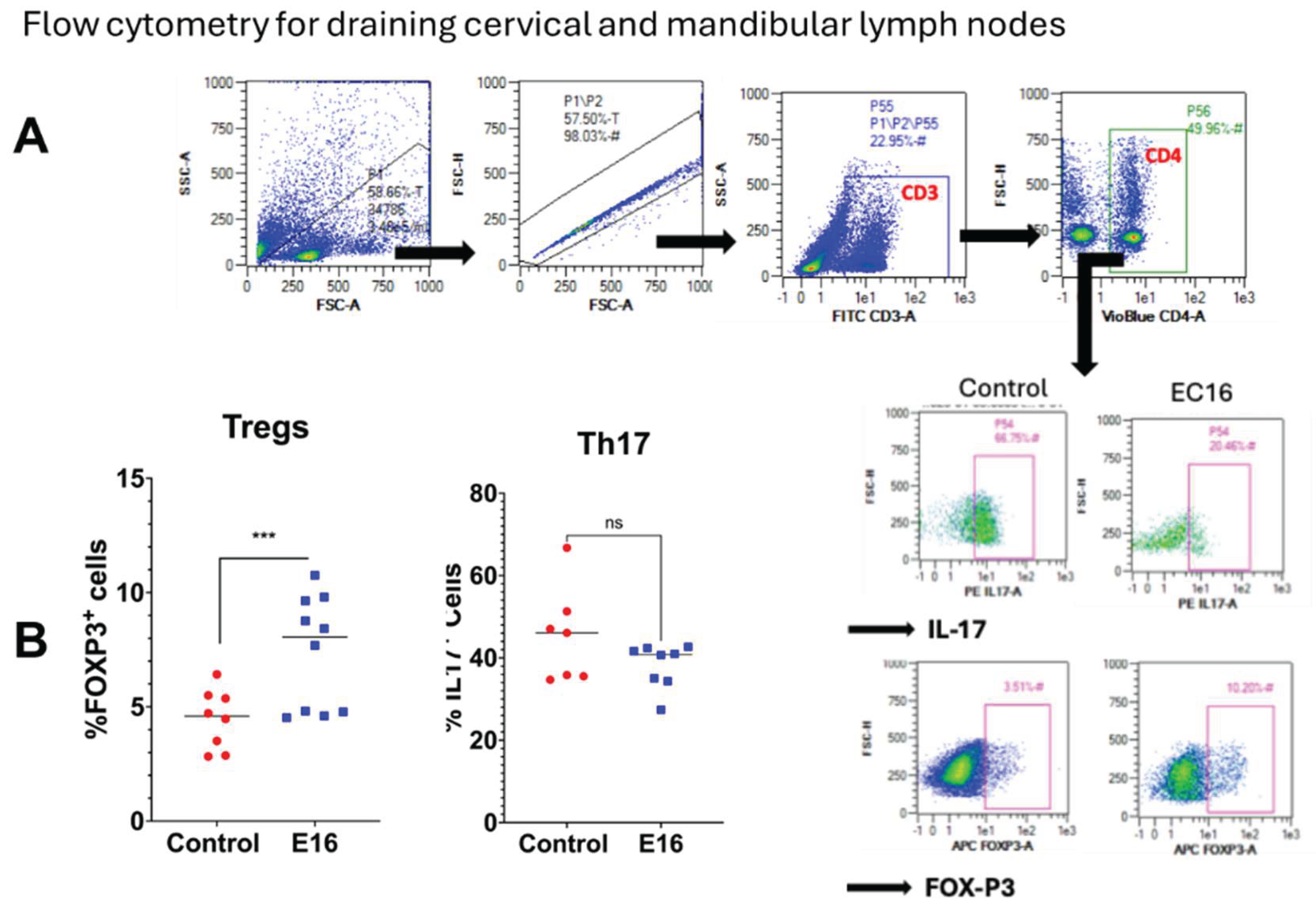
Figure 5.
Western blot showing protein levels of inflammatory marker IL-1β and senescence markers p53, p16 in brain tissue lysate of the control and EC16 NP-fed mice.
Figure 5.
Western blot showing protein levels of inflammatory marker IL-1β and senescence markers p53, p16 in brain tissue lysate of the control and EC16 NP-fed mice.
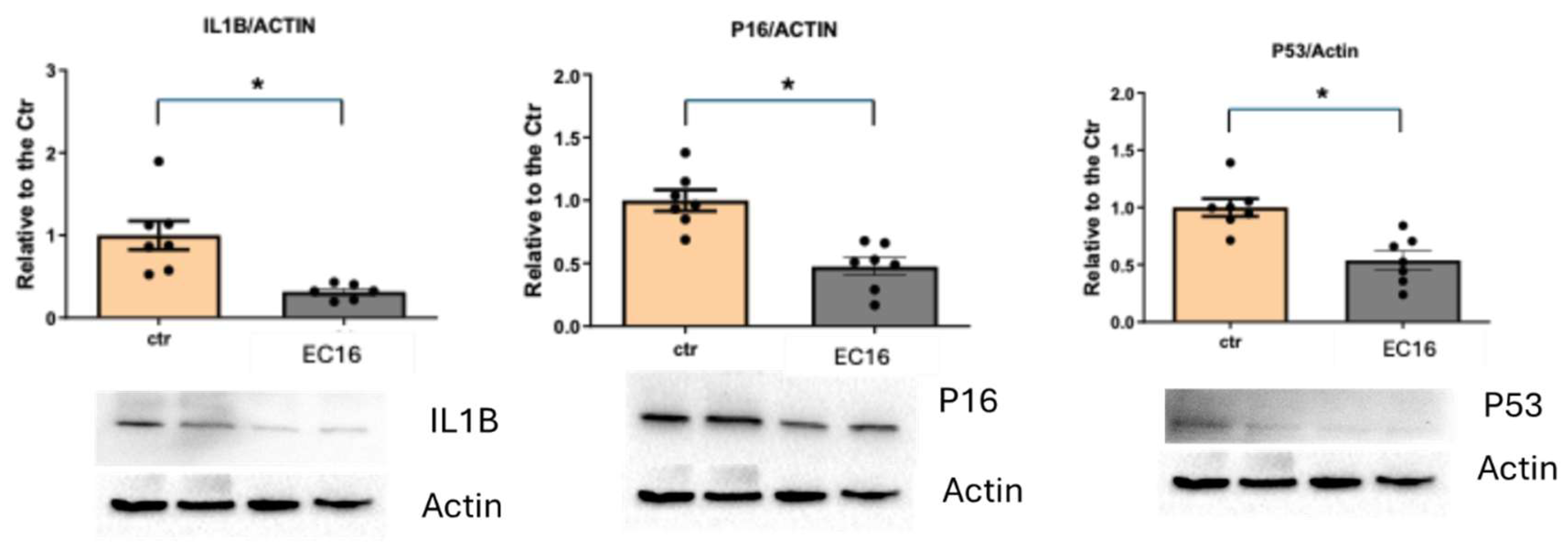
Figure 6.
IVIS imaging demonstrating Cy5-labeled EC16 nanoparticles in mouse brain tissue 24 h after oral gavage of EC16/Cy5 hybrid nanoparticles. The cranial fur was depilated prior to imaging to reduce optical interference.
Figure 6.
IVIS imaging demonstrating Cy5-labeled EC16 nanoparticles in mouse brain tissue 24 h after oral gavage of EC16/Cy5 hybrid nanoparticles. The cranial fur was depilated prior to imaging to reduce optical interference.
Disclaimer/Publisher’s Note: The statements, opinions and data contained in all publications are solely those of the individual author(s) and contributor(s) and not of MDPI and/or the editor(s). MDPI and/or the editor(s) disclaim responsibility for any injury to people or property resulting from any ideas, methods, instructions or products referred to in the content. |
© 2026 by the authors. Licensee MDPI, Basel, Switzerland. This article is an open access article distributed under the terms and conditions of the Creative Commons Attribution (CC BY) license (http://creativecommons.org/licenses/by/4.0/).
Copyright: This open access article is published under a Creative Commons CC BY 4.0 license, which permit the free download, distribution, and reuse, provided that the author and preprint are cited in any reuse.


