

Submitted:
09 March 2026
Posted:
11 March 2026
You are already at the latest version
Abstract
The study was based on a large database of morphometric measurements of the ground beetle Carabus granulatus. It was compiled between 2006 and 2025 and includes over 10,000 individuals of this species, captured in 14 major regions of Russia and Western Europe. Beetles were captured with Barber traps across a spectrum of anthropogenic impacts—urban areas, suburbs, agricultural lands, and natural biotopes. They were then transported to the Institute of Ecology of the Academy of Sciences of the Republic of Tatarstan, where they were measured using a unified method for six linear traits. SSD was assessed using two methods. Using the standard Lovich formula, SSD for all traits was significantly higher, on average in all six traits, in beetle populations from suburban areas. Application of the second method, RMAII, showed that the slope of the regression curve is generally higher in females, indicating greater sensitivity of Carabus granulatus females to environmental factors. At the same time, a comparison of the results obtained by the aforementioned methods did not support the thesis that SSD increases with beetle size. The curves for SSD variability in both urban and non-urban populations were sawtooth-shaped. This conclusion may be due to the fact that the variability of both structural traits and SSD for them is not described by a monotonic curve. This necessitates studying the variability of SSD in other ground beetle species (or genera) using the same data set and a unified methodology.
Keywords:
Sexual Size Dimorphism
; ground beetles
; gradient of urbanization
; RMAII models
; sex-biased sensitivity
1. Introduction
Land-use change is considered the primary source of biodiversity loss worldwide [1], and urbanization represents one of the most intense and long-lasting modifications of natural systems [2]. Urbanization gradients, typically extending from rural areas to highly developed city centers, have long been a major target of ecologists' research. Such gradients include extensive changes in habitat structure, including habitat loss and fragmentation [3] and increased soil impermeability, leading to the subsequent urban heat island effect.
With all this diversity of changes in the urban environment, it is not surprising that the response of the biotic component to urbanization can be diametrically opposed. For example, it has been shown that some butterfly species are completely absent from cities, although they inhabit adjacent areas [4], while the abundance of some midge and spider mite species in urban ecosystems increases [5].
As for ground beetles, a meta-analysis based on publications from 14 European and American cities showed that it is not so much the number of beetles that changes in cities, but rather the structure of communities. Changes occur in size composition (in favor of small species), flight ability (in favor of macropterans and dimorphic species), and trophic preference (in favor of herbivorous species and species with mixed feeding) [6]. At the same time, these authors note that despite the close relationship with these parameters, other sources of variability in urban ground beetle communities must be considered, as no correlation with either city size or its history (date of foundation) has been established, and some ground beetle species demonstrate diametrically opposed spatial exploration strategies in the cities studied.
Anthropogenic transformation in invertebrates leads to increased plasticity of physiological traits, while plasticity of morphological traits decreases. Anthropogenic influence is more detrimental to animal populations compared to fluctuations in the natural environment, since it leads to more rapid restructuring [7]. Thus, changes in the external environment in general, and anthropogenic influence in particular, can lead to maladaptation of populations. To avoid extinction, populations develop responses (increased fitness, population size, etc.). Recently, increasing attention in this regard has been paid to phenotypic plasticity [8,9], which is defined as changes in the phenotype of an organism under the influence of the environment. In some cases, such plasticity is adaptive and allows a population to “jump” from one peak of fitness to another, by passing the “passage” of fitness valleys [8,10].
Morphological features make it possible to expand the scope ecological-functional responses of a guild (in this case, ground beetles) from local to global scales, thus bypassing a purely taxonomic approach based on a regional species pool [11]. A similar concept from local to global is outlined by Pizzolotto et al. [12], but only for chorological traits, where a new index of biogeographic specificity is proposed that emphasizes the value of endemic species for different types of biotopes. The use of species traits in terrestrial habitats provides a new opportunity to assess the degree of disturbance of a biotope if the ecology, morphology, physiology, and life cycles of a taxon are well studied.
Morphology is the main phenotype of an organism, directly related to how it interacts with the environment [13]. Therefore, the study of the morphological characteristics of species, their diversity, and variability complements knowledge about populations and communities, provides insight into factors influencing organisms' responses to environmental changes.
Our research was inspired by a review publication by Estonian researchers, where sexual dimorphism was assessed based on the degree of variability in the sizes of females and males, which, according to the authors, reflects the sensitivity of the sexes to environmental factors [14]. To quantitatively describe the relationship between the sizes of females and males, we used type II regression (RMA II), which involves constructing a regression curve of the logarithm of male sizes on the logarithm of female sizes. The model constant (Intercept), slope, and statistical significance are also calculated. The results of the regression analysis were interpreted as follows. A positive slope of the regression curve indicated that environmental conditions influenced the sizes of females and males in the same direction, i.e., male size increased with increasing female size. This result allowed us to unambiguously rank the samples according to the degree of favorability of environmental conditions. Furthermore, a zero model constant implied a proportional increase in the sizes of males and females as conditions improved. A positive model constant indicated that females increased in size relatively faster than males, with males being more sensitive to environmental conditions. A negative model constant indicated the opposite trend. These parameters allowed us to draw conclusions about the dependence of sexual dimorphism on environmental conditions. In particular, it is easy to see that sex differences in the sensitivity of body size to environmental conditions should lead to different size ratios of females and males in different environments. Accordingly, with increasing environmental quality, the greater sensitivity of female body size will lead to more pronounced sexual dimorphism in species with larger females. The latter includes the ground beetle species C. granulatus, which we studied. If the model constant is negative, the slope of the regression curve will be greater than 1, and, accordingly, males are more sensitive in this case. All conclusions about the dependence of sexual dimorphism on body size and environmental conditions were made at the meta-level. For this purpose, a vote-counting method was used (positive versus negative slopes; positive or negative model constants). The parameters of each intraspecific relationship were treated as separate observations.
In our study, we essentially replicated the methodology discussed above, but applied RMA II models specifically to the analysis of beetle size variability depending on collection location within a range. Carabus granulatus L. was chosen as the model species due to its widespread distribution, sufficient eurybionticity, and well-studied ecology. Similar studies have been conducted previously on other ground beetle species. Thus, in relation to the mountain ground beetle Carabus cummanus, different sensitivity of females and males to the vegetation conditions of the biotope was shown [15], and in other species of ground beetles - Carabus odoratus, Carabus exaratus, Pterostichus montanus - different patterns of variability of individual organs in females and males at different altitudes in the mountains [16]. In the present study, we aimed to determine the nature of variability in the sizes of beetles of both sexes depending on the habitat. The latter was assessed by the degree of urbanization - cities, suburbs, natural biotopes. At the same time, we predicted: (i) the direction of size variability should be the same for females and males at all captured points; (ii) in urban habitats, males will be more sensitive to environmental conditions, that is, their size will increase at a greater rate compared to females; (iii) accordingly, sexual dimorphism in urban habitats will be expressed to a lesser extent compared to suburbs and natural biotopes.
2. Materials and Methods
2.1. Object of Study
C. granulatus is a large beetle that measures 18-26 mm in length, with a bronze or copper upper surface, often with a green sheen, and sometimes bronze black (Figure 1). The femora is sometimes red. The pronotum is uniformly densely punctate. The antennae are long, reaching halfway along the elytra in males. The elytra are sinuate before the apex with elytral eripleura abruptly near the upper edge of sinuation and have a sharp sculpture consisting of ridges and chains of tubercles. The pits on the elytra are small and barely noticeable [17,18].
This species is hygrophilous and eurytopic with a transpalaearctic distribution throughout the Eurasian continent from the lowlands to the mountains. It inhabits riparian ecosystems or moist floodplain meadows with dense vegetation. The species has a life cycle; in the northern taiga, it is found only in meadows, while in floodplain forests, its occurrences are rare [19]. In more southern regions, this moisture-preferential species is observed in moist to wet forests, especially floodplain [20,21]. In general, it is a spring breeder without larvae, but with an obligatory adult diapause [21]. It hibernates, often gathering in groups, under the loose bark of trees. Both adults and larvae are predators. The larva moults three times before pupation and, in the laboratory, beetles have been successfully reared from eggs in 53 days.
2.1. Study Area and Trapping
This study is part of a larger project on the morphometric variability of the ground beetle C. granulatus. As part of this study, a large team of carabidologists has been collecting samples of this beetle for many years, which are then transported to the Institute of Ecology and Subsoil Use of the Academy of Sciences of the Republic of Tatarstan (Kazan, Russia) for morphometric analysis. A detailed description of the beetle collection sites and collection methods is provided in our recent publication, which examined the latitudinal gradient of size variability in this species of beetle [22]. Since then, we have added beetle samples from Italy, Czech Republic, some regions from Russia. Thus, the database with morphometric measurements of six linear traits of beetles has reached 10,172 individuals.
2.2. Morphometric Data
All measurements were conducted using a unified methodology adopted by us, described in previously published articles [23,24,25]. Studied plots differed in some environmental parameters. But taking into account that our investigation was large-scale and remembering the huge number of sampling plots and measured individuals, we argue that our approach was the high-throughput one. The last became very popular the last decades, when the authors compiled data even not their own research and make conclusions on the given topic [26].
Measurements included six traits: elytra length, elytra width, pronotum length, pronotum width, head length and distance between eyes (Figure 3).
2.3. Statistical Analysis
We used the R statistical environment.
An ANOVA was conducted to assess the influence of environmental factors.
Specific SSD values were calculated using the generally accepted Loveich and Gibbson formula: SSD = females/males-1.
To estimate the allometry of the PDR, type II regression models were used, using the reduced major axis method (RMA). The logarithm of the quantile distribution of the studied male traits was calculated as a linear function of the logarithms of the quantile distribution of these sizes in females. The model is output to a text file, Y = άXβ. Positive values of the regression coefficient (β) indicate the same direction of change in the trait in males and females; in other words, as the trait value increases in females, the values of the same trait in males also increase. Positive values of the model constant (Intercept) indicate that females increase in size faster than males, meaning that females are more sensitive to environmental changes; negative values indicate the opposite [14]. RMA and SMA should be used when there is a high correlation (we have this - on average about 75% and higher with a high level of reliability p<0.001 according to Pearson), and also when the number of points is more than 67 (we had that) [27]. The lmodel2 library was used to calculate the RMA regression coefficients [28]. For example
result_ <- lmodel2(el_l_male_log ~ el_l_female_log, data = data,
range.y = "relative",
range.x = "relative",
nperm = 1000)
print(result_)#(factor «range» was taken for estimation of Ranged Major Axis)
Regression results
Method Intercept Slope Angle (degrees) P-perm (1-tailed)
1 OLS 3.914979 0.7519160 36.94009 0.000999001
2 MA 1.189834 0.9910264 44.74177 0.000999001
3 SMA 1.165074 0.9931990 44.80450 NA
4 RMA 1.397337 0.9728197 44.21066 0.000999001
Confidence intervals
Method 2.5%-Intercept 97.5%-Intercept 2.5%-Slope 97.5%-Slope
1 OLS 2.0799836 5.749974 0.5911750 0.912657
2 MA -1.5281748 3.384476 0.7984635 1.229511
3 SMA -0.8141801 2.849755 0.8453812 1.166863
4 RMA -1.2463576 3.567658 0.7823908 1.204783
Eigenvalues: 0.7612505 0.1052455
H statistic used for computing C.I. of MA: 0.01142403
To calculate the regression, we used logarithmic mean trait values for males, based on the mean trait value for females from each sampling point. There were 67 sampling points in total, including 43 from natural habitats, 10 from suburbs, and 14 from cities.
The fragment of data frame used: locality anthropel_l_male_logel_l_female_log
<int><int><dbl><dbl>
1 1 1 2.56 2.42
2 2 1 2.56 2.44
3 3 1 2.56 2.42
4 4 1 2.55 2.42
5 5 1 2.56 2.44
6 6 2 2.54 2.41
7 7 2 2.52 2.41
8 8 3 2.53 2.48
9 9 3 2.52 2.48
10 10 3 2.55 2.42
3. Results
The ANOVA showed that the level of anthropogenic impact on ground beetle habitats influenced the size of their traits. Table 2 presents the results for the effect of anthropogenic pressure on elytra length, showing that the level of anthropogenic impact and sex, as well as their interaction, influence elytra size in the studied ground beetle species.
Roughly similar results were obtained for other traits (Appendix A, Table A1, Table A2, Table A3, Table A4, Table A5, Table A6, Table A7, Table A8, Table A9, Table A10 and Table A11), but there were some differences. For example, no statistically significant combined effects of the "Anthropogenic" and "Gender" factors or the effect of suburban habitat were observed for elytra width. No effects of urban and suburban habitat were observed for pronotal length. Variability in pronotum width depended solely on gender, and the interaction of the "Anthropogenic" and "Gender" factors affected head parameters.
Thus, it was demonstrated that not only the level of anthropogenic impact but also its interaction with gender influenced beetle size. The involvement of gender in regulating the biota's response to anthropogenic impact led to changes in SSD.
We first calculated the average SSD values in plots with different levels of anthropogenic impact (Figure 4). To our surprise, the highest SSD values were consistently recorded for all six studied traits in suburban areas: SSD values for elytra and pronotal length, as well as distance between eyes, were statistically significantly higher in suburban populations compared to those from the city and natural habitats. SSD values for elytra and pronotum width did not differ between beetles from natural habitats and suburban areas, and for head length, they were similar between beetles from suburban and urban areas.
To further our understanding of the mechanisms underlying this SSD variability, we analyzed the data using the RMAII method (Table 3).
The slope of the regression curve was positive in all cases, meaning that the sizes of females and males vary in the same direction depending on habitat. Generally, a pattern was observed: if the model constant was negative, the slope of the regression curve was greater than 1; if it was positive, it was less than 1. The two curves examined were an exception (12%).
If we consider each trait separately, we see that, under virtually all types of anthropogenic impact (cities, suburbs, and natural habitats), females exhibited greater sensitivity to environmental conditions. Regression curve slopes were greater than 1 in only three cases: elytra width in cities, pronotum width in suburbs, and interocular distance in natural habitats. In other words, urban habitat increased male sensitivity to the "elytra width" trait; suburban habitat increased sensitivity to the "pronotum width" trait; and in natural habitats, males were sensitive to the "interocular distance" trait. It should be noted that, regardless of the factor, body width traits were involved in the phenomenon of increased male sensitivity.
The final aspect of our research concerns the confirmation of the hypothetical figure presented in the article by Teder and Tammaru [14], whose work we relied on for our experiments. The figure presented by the aforementioned authors suggests that SSD should decrease with a negative Intercept and, accordingly, a regression slope greater than 1. This is observed because male size increases faster than female size, and in species with female-biased SSD.
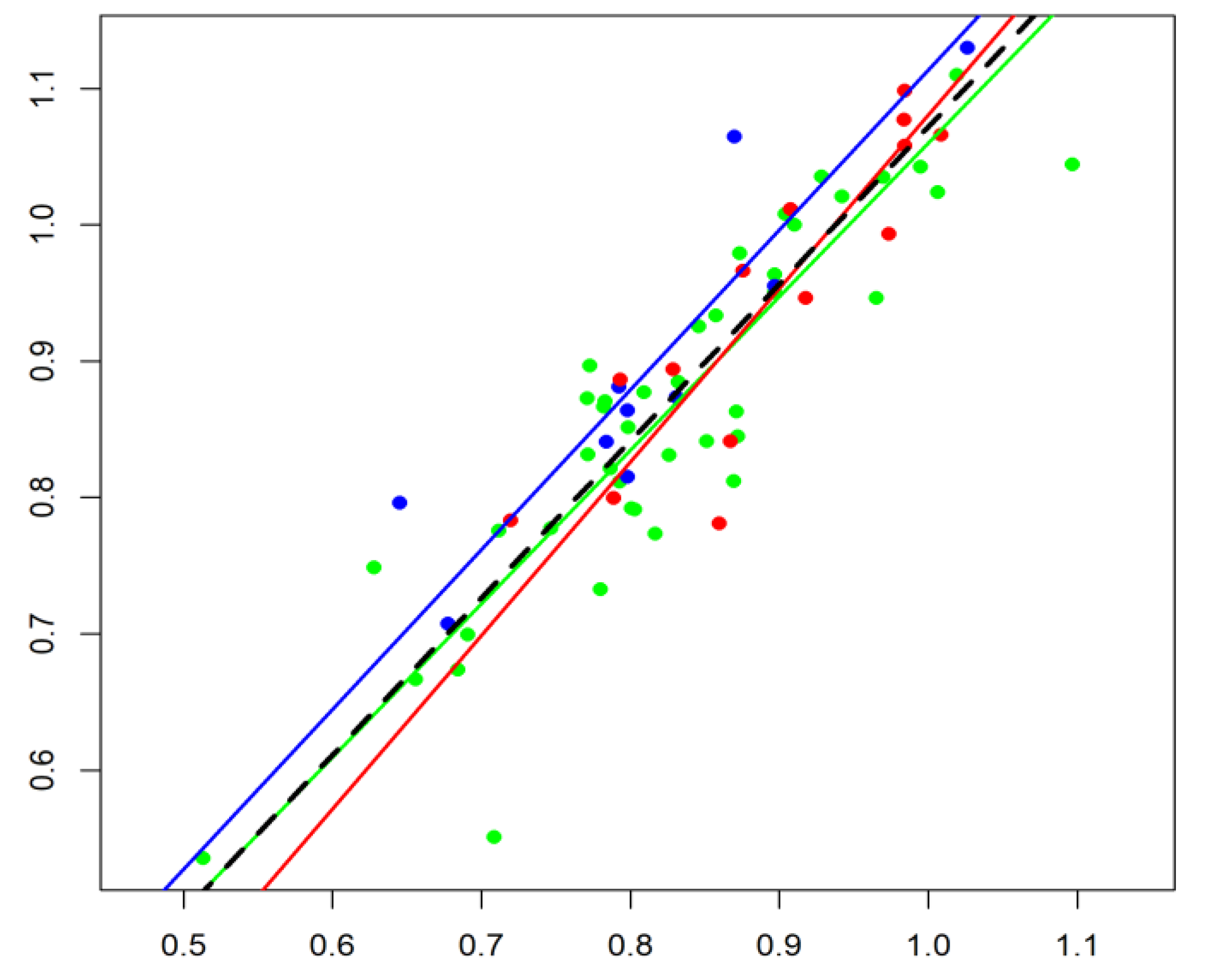
We conducted a generalized RMAII analysis, which results in a logmale/logfemale regression curve for C. granulatus beetles as a whole for each studied trait. Specific beetle collection locations are indicated by colored circles in these same figures (Figure 5, Appendix B, Figures B1-B5).
Since each point marked in Figure 5 corresponded to a specific beetle sample (identified by a number in our database), we were able to calculate the SSD value for each sample to test whether SSD value indeed increases with beetle size and how this applies to samples from urban, suburban, and natural habitats.
To implement this hypothesis, we calculated the SSD value in each of the studied localities, arranging the data in the figures sequentially in order of increasing trait size. To illustrate this analysis, we present Figure 6, which presents SSD variability for a number of traits in C. granulatus populations in urban habitats.
For each curve, we calculated the R2 value of the trend line. Similar calculations were performed for C. granulatus populations inhabiting suburban and natural habitats, figures for which are presented in the Appendix B, Figures B1, B2.
Next, we analyzed the hypothesis that SSD values should decrease with a negative Intercept of the models, and increase with a positive one [14]. In conducting our analysis, we relied on the same hypothetical assumptions [14] that SSD values should decrease with a negative Intercept of the models, and increase with a positive one. Similar regression curves for other traits are shown in Appendix B, Figures B3-B7. We estimated the direction of actual changes in SSD values with increasing trait size based on the slope of the regression curves for trait variability. The results are presented in Table 4, which shows that the assumption of directional variability in SSD with increasing trait value was not confirmed. Only in 8 cases out of 18 did the actual calculated SSD values corresponded to their position on the regression curve.
4. Discussion
The topic of SSD in relation to ground beetles raised in this article is not new. In the past decade, a significant number of studies have appeared presenting data on the different patterns of size variability in female and male carabids. Sexual dimorphism in ground beetles is female-biased, and this has been confirmed across a fairly large number of species [29]. Latitudinal size variability has typically been studied, and the curves for male size variability have always been lower than those for females [23,25]. Statistically significant size differences were observed in the ground beetle Carabus aeruginosus between populations at different edges of its range, due in part to sexual differences [30]. In some regions, the sizes of females and males were comparable, but even for small ground beetle species, for example, in the genus Poecilus, the phenomenon persists that the curves of male size variation across a latitudinal gradient, although mirroring those of females, are significantly lower [31].
Similar sex-related size differences are also observed when analyzing ground beetle variability across an altitudinal gradient. In both Carabus and Pterostichus beetles, males are generally smaller than females at all altitudinal levels [32,33]. Moreover, many of the cited studies provide specific data on sexual dimorphism across both latitudinal and altitudinal gradients. The curve of sexual dimorphism variability along the latitudinal gradient is sawtooth-shaped, with SSD values increasing or decreasing abruptly from one region to another. Even more interesting findings were observed along the altitudinal gradient. The curve of SSD variability is concave, with minimal values in the mid-mountain regions, and correlates with the population sizes of the studied ground beetle species at these altitudes [16].
Regarding the species discussed in this article—C. granulatus—recently published studies have shown that the sizes of both females and males in this species tended to decrease across a latitudinal gradient, with the male variation curve also located at a lower level [22,24].
The topic of SSD was also addressed in these studies: its variation curve across a latitudinal gradient was sawtooth-shaped with a slight downward trend. Moreover, the highest SSD values were observed for elytral length and pronotum width.
In this article, we are more interested in studies that estimate SSD values based on RMAII results rather than directly calculated using the generally accepted formula [35]. The first such study on ground beetles was published quite a while ago [29]. The analysis of regression curves for 12 species presented there showed that their slopes were generally less than 1, indicating that the SSD in carabids was female-biased. This topic was subsequently raised repeatedly at conferences [e.g., 36, 37], where evidence was presented of variability in the position of the regression curve depending on the beetles' habitat—city, suburb, or natural habitat.
Our article also showed that urbanization influenced RMAII results. Looking at the RMAII results for all six traits (figures in Appendix B), we see that the regression curve plotted separately for biotopes with varying degrees of anthropogenic pressure (urban, suburban, natural) could change its position. However, this variability did not have a specific direction.
Our experimental data in no way detract from the merits of the Estonian authors, who were among the first to conduct a meta-analysis of SSD variability in insects. In recent decades, this approach has become increasingly popular because, as the saying goes, "big things can be seen from afar." In such publications, authors collect a large body of literature, extract factual data from it, compile information on a specific issue, and draw a general conclusion. Such publications are certainly welcome, if only because they address fundamental issues.
Some discrepancies between experimental data and hypothetical concepts of SSD variability are easily explained by logic.
Linear morphometric traits commonly used in field entomology do not correspond to simple theoretical expectations derived from body mass. The observed variability likely reflects complex, nonlinear response norms across multiple traits, rather than the uniform, monotonic response typically associated with biomass.
Given advances in computer technology, it is reasonable to assume that the use of RMAII cannot address the researchers' intended objectives. A more appropriate approach is the use of iteratively reweighted least square (IRLS) methods, which we have begun to explore.
Given that meta-analysis is increasingly becoming a practice for synthesizing data from different researchers and formulating general biological patterns, greater attention should be paid to large-scale studies conducted at the intraspecific level and using a unified methodology.
5. Conclusions
Our data demonstrate a non-monotonic response of SSD to the urbanization gradient. The peak values in suburbs may indicate that moderate anthropogenic environmental transformation (the ecotone effect) creates conditions for the maximum realization of potential differences in growth and development between males and females. In turn, under conditions of severe stress (urban) or a stable environment (nature), these differences are neutralized.
Deviations from the general pattern were observed exclusively for traits related to body width. This suggests that these "volume" characteristics are the most sensitive indicator of male physiological state under anthropogenic stress, possibly due to differences in energy accumulation and expenditure strategies between the sexes.
Despite the lack of a universal trend across all traits, R² analysis revealed that the highest proportion of explained variance in SSD change with increasing body size was observed for elytra and pronotum length in urban biotopes, elytra width in suburbs, distance between eyes in natural biotopes. This suggests that different body parts obey different allometric rules in response to urbanization.
Author Contributions
Conceptualization, R.S. and A.S.; methodology, R.S.; software, R.G..; validation, I.S., T.T. and S.L.; formal analysis, D.S.; investigation, R.G.; resources, V.L., A.B., A.R., A.A., C.F. and V.A.; data curation, R.G.; writing—original draft preparation, R.S.; writing—review and editing, V.A., D.S. and S.L..; visualization, R.G., K.M.; supervision, R.S.; project administration, A.S.; funding acquisition, R.S., A.R. All authors have read and agreed to the published version of the manuscript.
Funding
The research is partially funded by: the State Task Theme 730000P.16.1.OH17AA106000 “BiologicaldiversityofEasternEuropeundertheinfluenceofnaturalandclimaticfactorsinhistorical and modern contexts”, the grants VEGA 1/0603/25 Data integration (Big data) for spatial modeling ofbiodiversity in different ecosystem conditions, KEGA No. 010UKF-4/2025 Data science for biology, and by the Russian Science Foundation, grant number 22-14-00026-Π, the grant provided by the Academy of Sciences of the Republic of Tatarstan to scientific and scientific-pedagogical workers of separate structural divisions of the Academy of Sciences of the Republic of Tatarstan with the aim of stimulating them to defend doctoral dissertations and carry out research work, by the Ministry of Science and Higher Education of the Russian Federation under state contract FEWS-2024-0011. A.B. Ruchin's research was carried out at the expense of a grant from the Russian Science Foundation No. 22-14-00026-П.".
Data Availability Statement
The original contributions presented in this study are included in the article. Further inquiries can be directed to the corresponding author.
Acknowledgments
the authors are thankful for Enrico Busato and Michela Miglio for their support with the pictures.
Conflicts of Interest
The authors declare no conflicts of interest.
Appendix A

Table A1.
Results of the ANOVA for the effect of anthropogenic pressure and sexon elytra length in C. granulatus.
Table A1.
Results of the ANOVA for the effect of anthropogenic pressure and sexon elytra length in C. granulatus.
| Estimate | Std.Error | t-value | Pr(>|t|) | |
| (Intercept) | 12.23332 | 0.02167 | 564.454 | <2e-16*** |
| sex2 | -1.1369 | 0.02656 | -42.801 | <2e-16*** |
| anthrop1 | -0.1527 | 0.04101 | -3.723 | 0.000198*** |
| anthrop2 | -0.31692 | 0.04478 | -7.078 | 1.58e-12*** |
| sex2:anthrop1 | 0.21852 | 0.051 | 4.285 | 1.85e-05*** |
| sex2:anthrop2 | 0.24729 | 0.05556 | 4.451 | 8.66e-06*** |
Residual standard error: 0.8822 on 8160 degrees of freedom.Multiple R-squared: 0.2443,Adjusted R-squared: 0.2439.F-statistic: 527.7 on 5 and 8160 DF, p-value: < 2.2e-16.
Table A2.
Results of the ANOVA for the effect of anthropogenic pressure and sexon elytra width in C. granulatus.
Table A2.
Results of the ANOVA for the effect of anthropogenic pressure and sexon elytra width in C. granulatus.
| Df | SumSq | MeanSq | F value | Pr(>F) | |
| anthrop | 2 | 13 | 6.25 | 12.162 | 5.32E-06*** |
| sex | 1 | 194 | 194.5 | 378.222 | <2.00E-16*** |
| anthrop:sex | 2 | 2 | 0.78 | 1.521 | 0.219 |
| Residuals | 8160 | 4196 | 0.51 |
Table A3.
Results of the ANOVA for the effect of anthropogenic pressure and sexon elytra width in C. granulatus.
Table A3.
Results of the ANOVA for the effect of anthropogenic pressure and sexon elytra width in C. granulatus.
| Estimate | Std.Error | t-value | Pr(>|t|) | |
| (Intercept) | 5.19321 | 0.01762 | 294.79 | <2e-16*** |
| sex2 | -0.34364 | 0.02159 | -15.916 | <2e-16*** |
| anthrop1 | -0.09227 | 0.03334 | -2.768 | 0.00566** |
| anthrop2 | 0.06919 | 0.0364 | 1.901 | 0.05733. |
| sex2:anthrop1 | 0.0721 | 0.04145 | 1.739 | 0.08201. |
| sex2:anthrop2 | 0.01402 | 0.04516 | 0.31 | 0.75624 |
Residual standard error: 0.7171 on 8160 degrees of freedom.Multiple R-squared: 0.04735,Adjusted R-squared: 0.04677. F-statistic: 81.12 on 5 and 8160 DF, p-value: < 2.2e-16.
Table A4.
Results of the ANOVA for the effect of anthropogenic pressure and sexon pronotum length in C. granulatus.
Table A4.
Results of the ANOVA for the effect of anthropogenic pressure and sexon pronotum length in C. granulatus.
| Df | SumSq | MeanSq | F value | Pr(>F) | |
| anthrop | 2 | 20.3 | 10.145 | 99.53 | 2.00E-16*** |
| sex | 1 | 22.6 | 22.648 | 222.21 | 2.00E-16*** |
| anthrop:sex | 2 | 7.1 | 3.537 | 34.7 | 9.84E-16*** |
| Residuals | 8160 | 831.7 | 0.102 |
Table A5.
Results of the linear regression for the effect of anthropogenic pressure and sexon pronotumlengthin C. granulatus.
Table A5.
Results of the linear regression for the effect of anthropogenic pressure and sexon pronotumlengthin C. granulatus.
| Estimate | Std.Error | t-value | Pr(>|t|) | |
| (Intercept) | 3.377645 | 0.007843 | 430.669 | <2e-16*** |
| sex2 | -0.154943 | 0.009612 | -16.119 | <2e-16*** |
| anthrop1 | 0.021276 | 0.014841 | 1.434 | 0.15174 |
| anthrop2 | 0.011181 | 0.016203 | 0.69 | 0.49018 |
| sex2:anthrop1 | 0.153176 | 0.018454 | 8.3 | <2e-16*** |
| sex2:anthrop2 | 0.055421 | 0.020105 | 2.757 | 0.00585** |
Residual standard error: 0.3193 on 8160 degrees of freedom.Multiple R-squared: 0.05672,Adjusted R-squared: 0.05614. F-statistic: 98.14 on 5 and 8160 DF, p-value: < 2.2e-16.
Table A6.
Results of the ANOVA for the effect of anthropogenic pressure and sexon pronotumwidth in C. granulatus.
Table A6.
Results of the ANOVA for the effect of anthropogenic pressure and sexon pronotumwidth in C. granulatus.
| Df | Sum Sq | Mean Sq | F value | Pr(>F) | |
| anthrop | 2 | 0.1 | 0.06 | 0.317 | 0.728 |
| sex | 1 | 162.7 | 162.7 | 925.94 | <2e-16*** |
| anthrop:sex | 2 | 0.8 | 0.39 | 2.201 | 0.111 |
| Residuals | 8160 | 1433.8 | 0.18 |
Table A7.
Results of the linear regression for the effect of anthropogenic pressure and sexon pronotum width in C. granulatus.
Table A7.
Results of the linear regression for the effect of anthropogenic pressure and sexon pronotum width in C. granulatus.
| Estimate | Std.Error | t-value | Pr(>|t|) | |
| (Intercept) | 4.39367 | 0.0103 | 426.663 | <2e-16*** |
| sex2 | -0.29819 | 0.01262 | -23.627 | <2e-16*** |
| anthrop1 | -0.02255 | 0.01949 | -1.157 | 0.247 |
| anthrop2 | 0.02515 | 0.02127 | 1.182 | 0.237 |
| sex2:anthrop1 | 0.03106 | 0.02423 | 1.282 | 0.2 |
| sex2:anthrop2 | -0.03404 | 0.0264 | -1.289 | 0.197 |
Residual standard error: 0.4192 on 8160 degrees of freedom.Multiple R-squared: 0.1024,Adjusted R-squared: 0.1019. F-statistic: 186.2 on 5 and 8160 DF, p-value: < 2.2e-16.
Table A8.
Results of the ANOVA for the effect of anthropogenic pressure and sexon head length in C. granulatus.
Table A8.
Results of the ANOVA for the effect of anthropogenic pressure and sexon head length in C. granulatus.
| Df | SumSq | MeanSq | F value | Pr(>F) | |
| anthrop | 2 | 25.5 | 12.742 | 82.939 | <2e-16*** |
| sex | 1 | 20 | 20.034 | 130.402 | <2e-16*** |
| anthrop:sex | 2 | 1.3 | 0.634 | 4.128 | 0.0161* |
| Residuals | 8160 | 1253.6 | 0.154 |
Table A9.
Results of the linear regression for the effect of anthropogenic pressure and sexon head lengthin C. granulatus.
Table A9.
Results of the linear regression for the effect of anthropogenic pressure and sexon head lengthin C. granulatus.
| Estimate | Std.Error | t-value | Pr(>|t|) | |
| (Intercept) | 2.445742 | 0.009629 | 253.997 | <2e-16*** |
| sex2 | -0.106944 | 0.011801 | -9.062 | <2e-16*** |
| anthrop1 | 0.037445 | 0.018221 | 2.055 | 0.0399* |
| anthrop2 | -0.087249 | 0.019893 | -4.386 | 1.17e-05*** |
| sex2:anthrop1 | 0.043252 | 0.022657 | 1.909 | 0.0563. |
| sex2:anthrop2 | -0.039606 | 0.024684 | -1.605 | 0.1086 |
Residual standard error: 0.392 on 8160 degrees of freedom.Multiple R-squared: 0.03598,Adjusted R-squared: 0.03539. F-statistic: 60.91 on 5 and 8160 DF, p-value: < 2.2e-16.
Table A10.
Results of the ANOVA for the effect of anthropogenic pressure and sexon distance between eyes in C. granulatus.
Table A10.
Results of the ANOVA for the effect of anthropogenic pressure and sexon distance between eyes in C. granulatus.
| Df | SumSq | MeanSq | F value | Pr(>F) | |
| anthrop | 2 | 14 | 6.984 | 79.05 | <2e-16*** |
| sex | 1 | 19.4 | 19.419 | 219.81 | <2e-16*** |
| anthrop:sex | 2 | 12.3 | 6.159 | 69.72 | <2e-16*** |
| Residuals | 8160 | 720.9 | 0.088 |
Table A11.
Results of the linear regression for the effect of anthropogenic pressure and sexon distance between eyes in C. granulatus.
Table A11.
Results of the linear regression for the effect of anthropogenic pressure and sexon distance between eyes in C. granulatus.
| Estimate | Std.Error | t-value | Pr(>|t|) | |
| (Intercept) | 2.022138 | 0.007302 | 276.944 | <2e-16*** |
| sex2 | -0.162509 | 0.008949 | -18.16 | <2e-16*** |
| anthrop1 | -0.041885 | 0.013817 | -3.031 | 0.00244** |
| anthrop2 | -0.085441 | 0.015085 | -5.664 | 1.53e-08*** |
| sex2:anthrop1 | 0.200894 | 0.017181 | 11.693 | <2e-16*** |
| sex2:anthrop2 | 0.084315 | 0.018718 | 4.505 | 6.74e-06*** |
Residual standard error: 0.2972 on 8160 degrees of freedom.Multiple R-squared: 0.05962, Adjusted R-squared: 0.05904. F-statistic: 103.5 on 5 and 8160 DF, p-value: < 2.2e-16.
Appendix B
Figure A1.
SSD variation in different traits in suburbs habitats in C. granulatus.
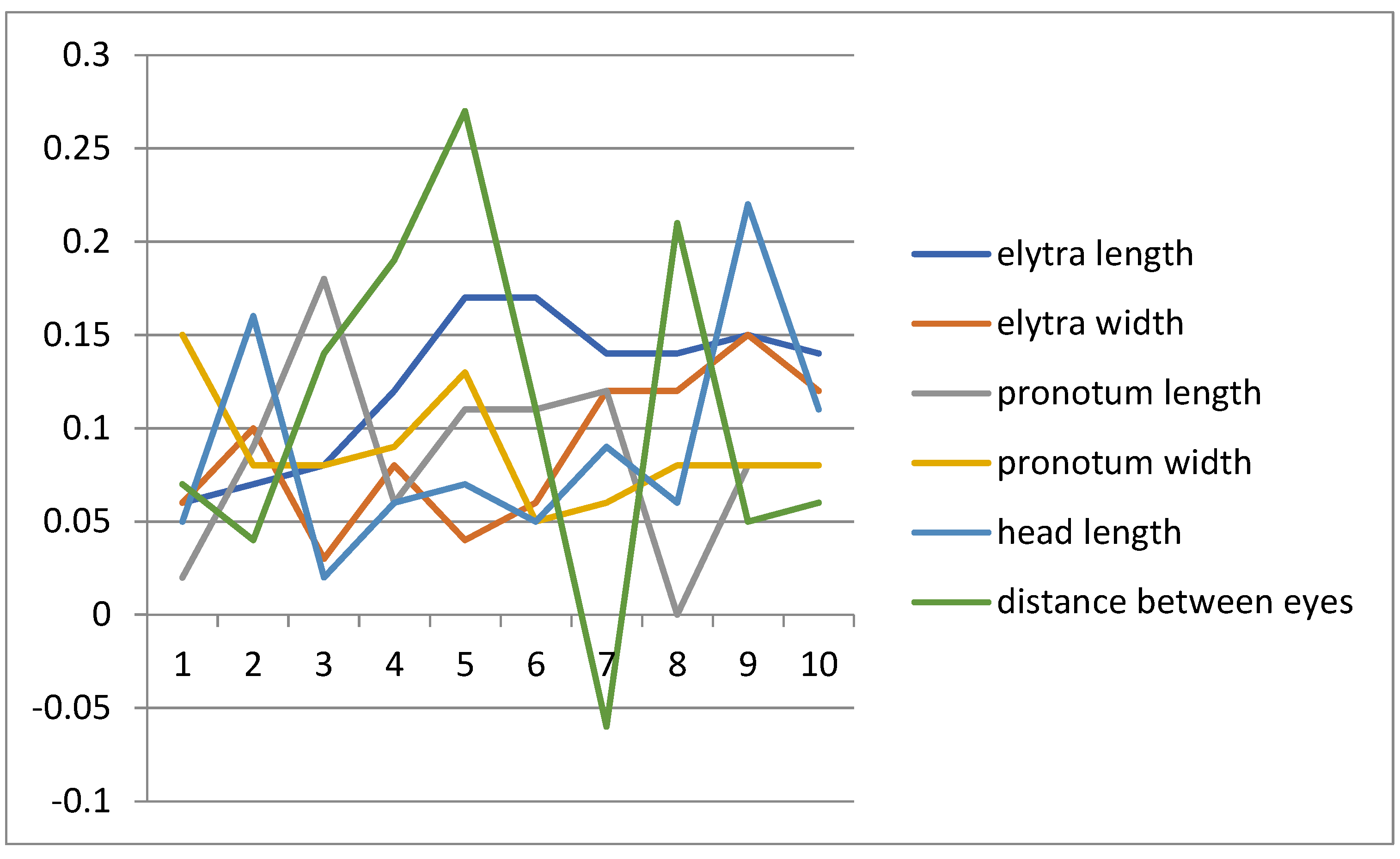
Figure A2.
SSD variation in different traits in natural habitats in C. granulatus.
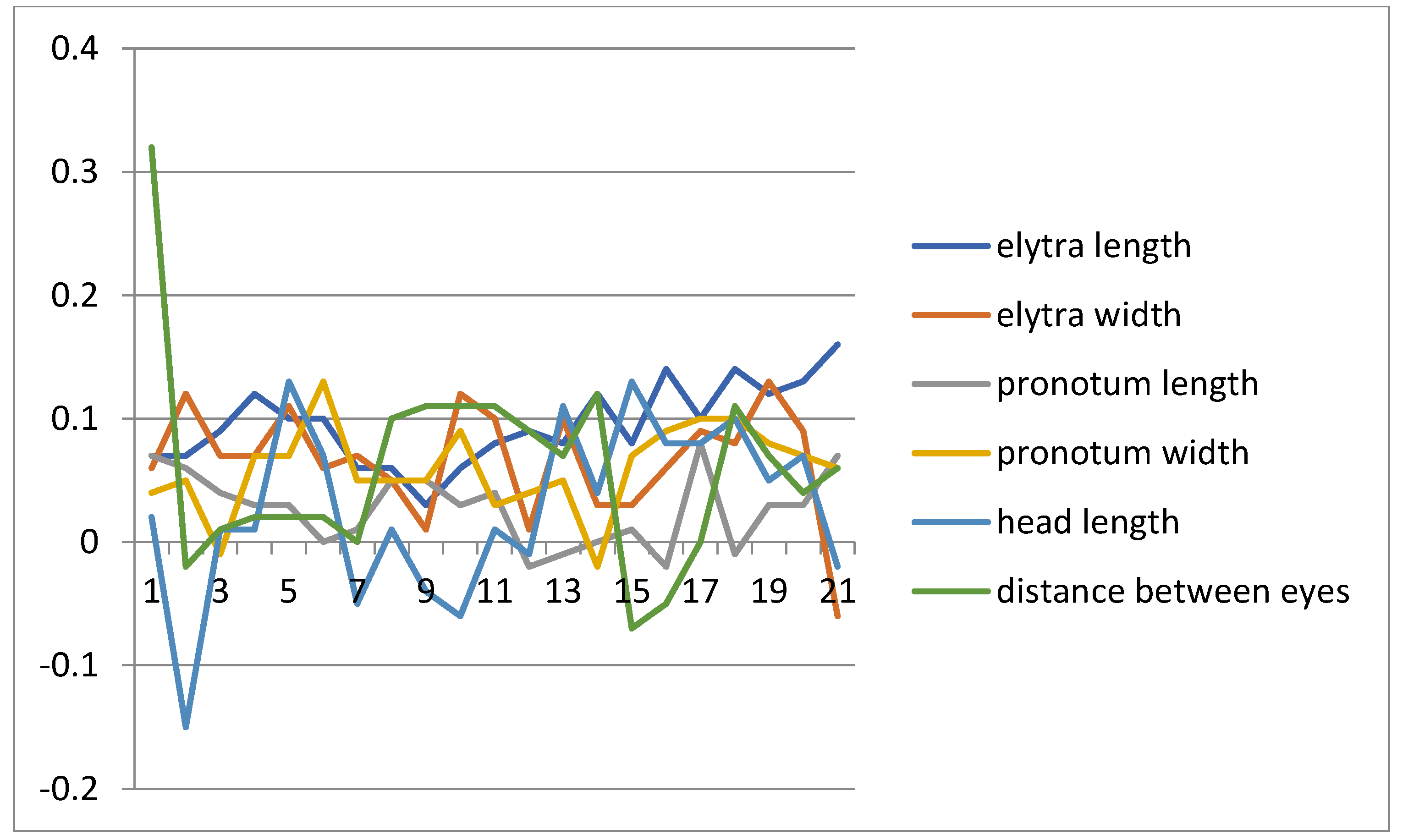
Figure A3.
Regression curve log of males/log of females in elytra width variation in C.granulatus (dotted line). Painted over circles denote samples, taken in city (red), suburbs (blue) and natural (green) habitats.
Figure A3.
Regression curve log of males/log of females in elytra width variation in C.granulatus (dotted line). Painted over circles denote samples, taken in city (red), suburbs (blue) and natural (green) habitats.
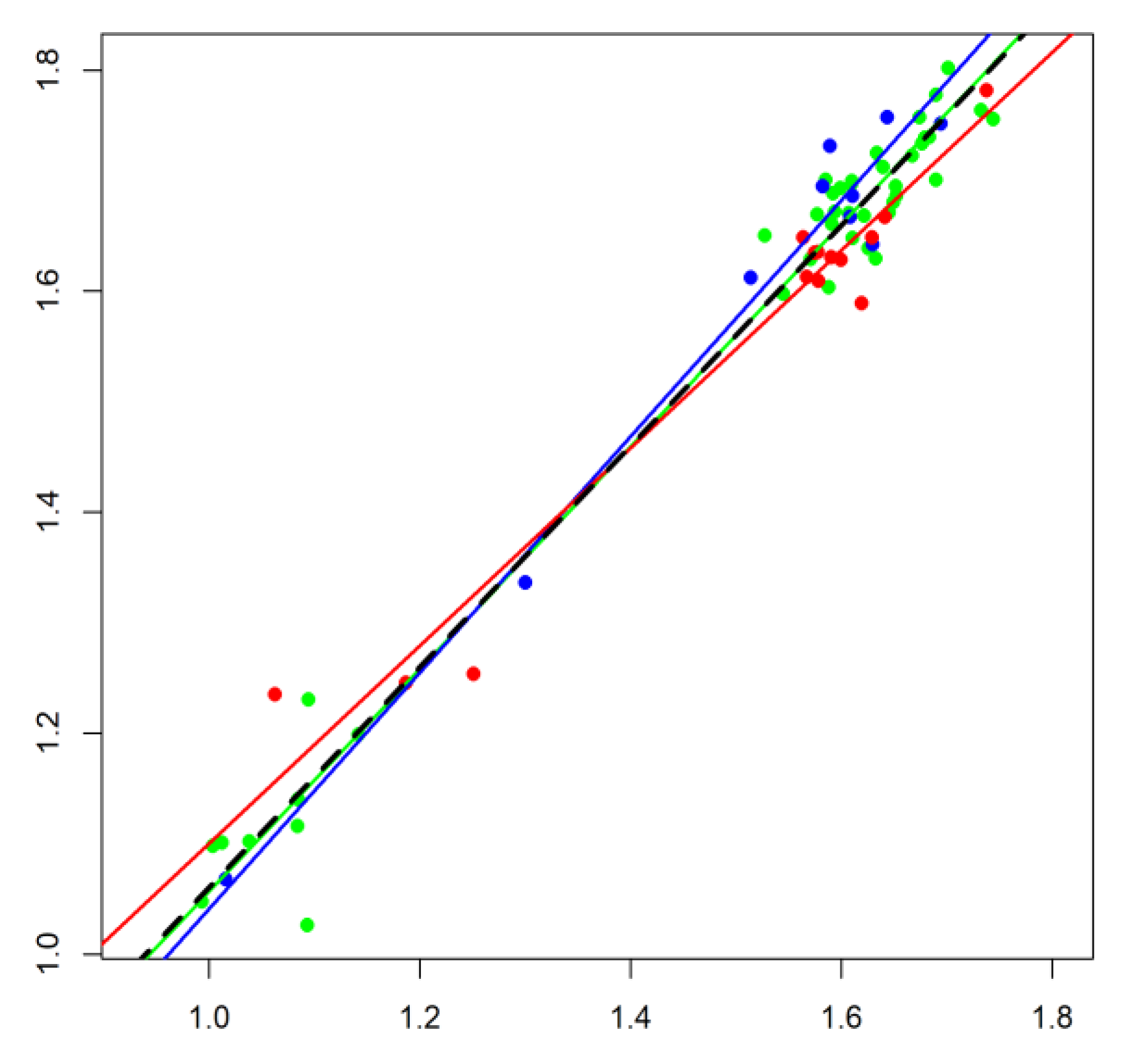
Figure A4.
Regression curve log of males/log of females in pronotum length variation in C.granulatus (dotted line). Painted over circles denote samples, taken in city (red), suburbs (blue) and natural (green) habitats.
Figure A4.
Regression curve log of males/log of females in pronotum length variation in C.granulatus (dotted line). Painted over circles denote samples, taken in city (red), suburbs (blue) and natural (green) habitats.
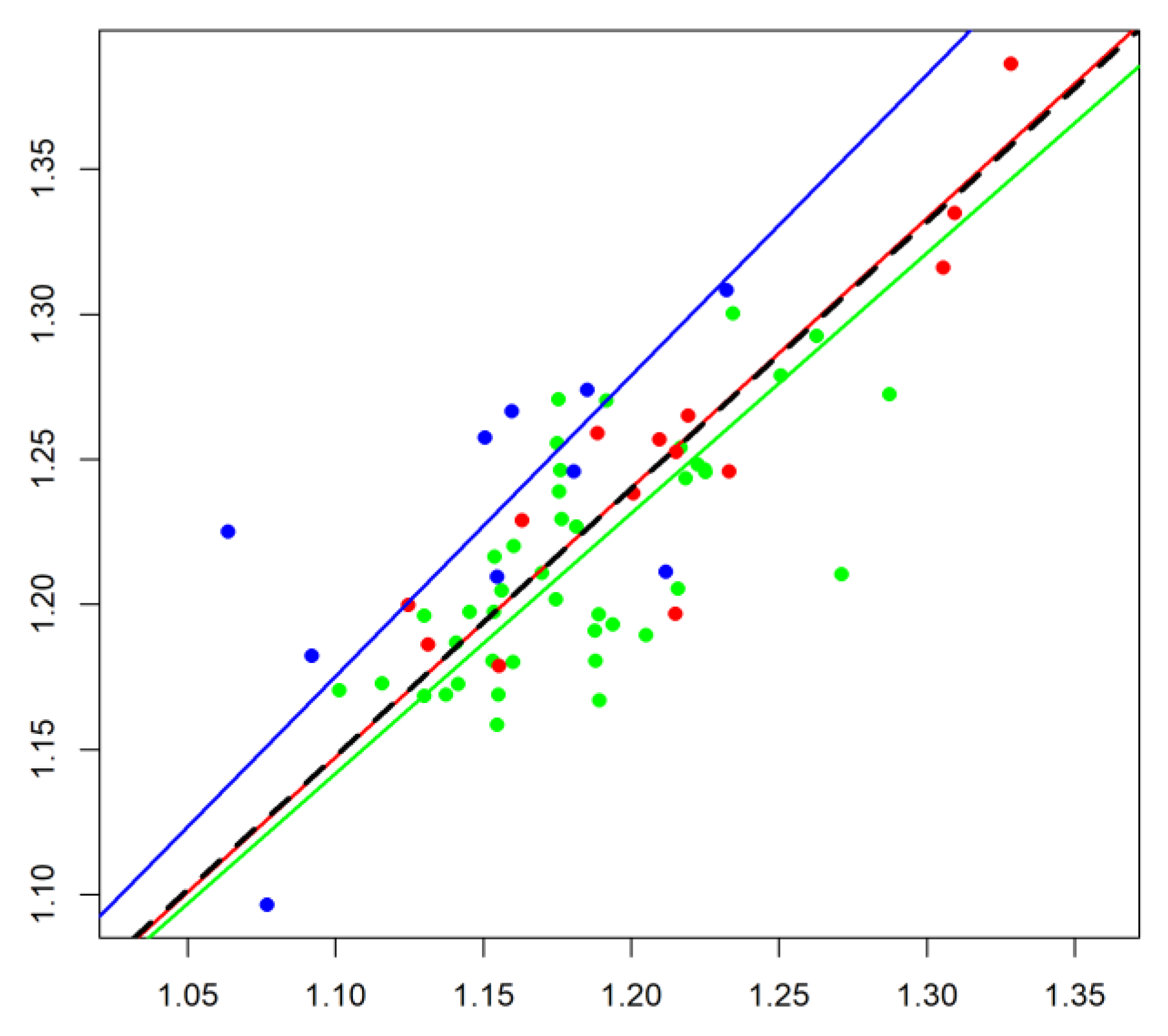
Figure A5.
Regression curve log of males/log of females in pronotum width variation in C.granulatus (dotted line). Painted over circles denote samples, taken in city (red), suburbs (blue) and natural (green) habitats.
Figure A5.
Regression curve log of males/log of females in pronotum width variation in C.granulatus (dotted line). Painted over circles denote samples, taken in city (red), suburbs (blue) and natural (green) habitats.
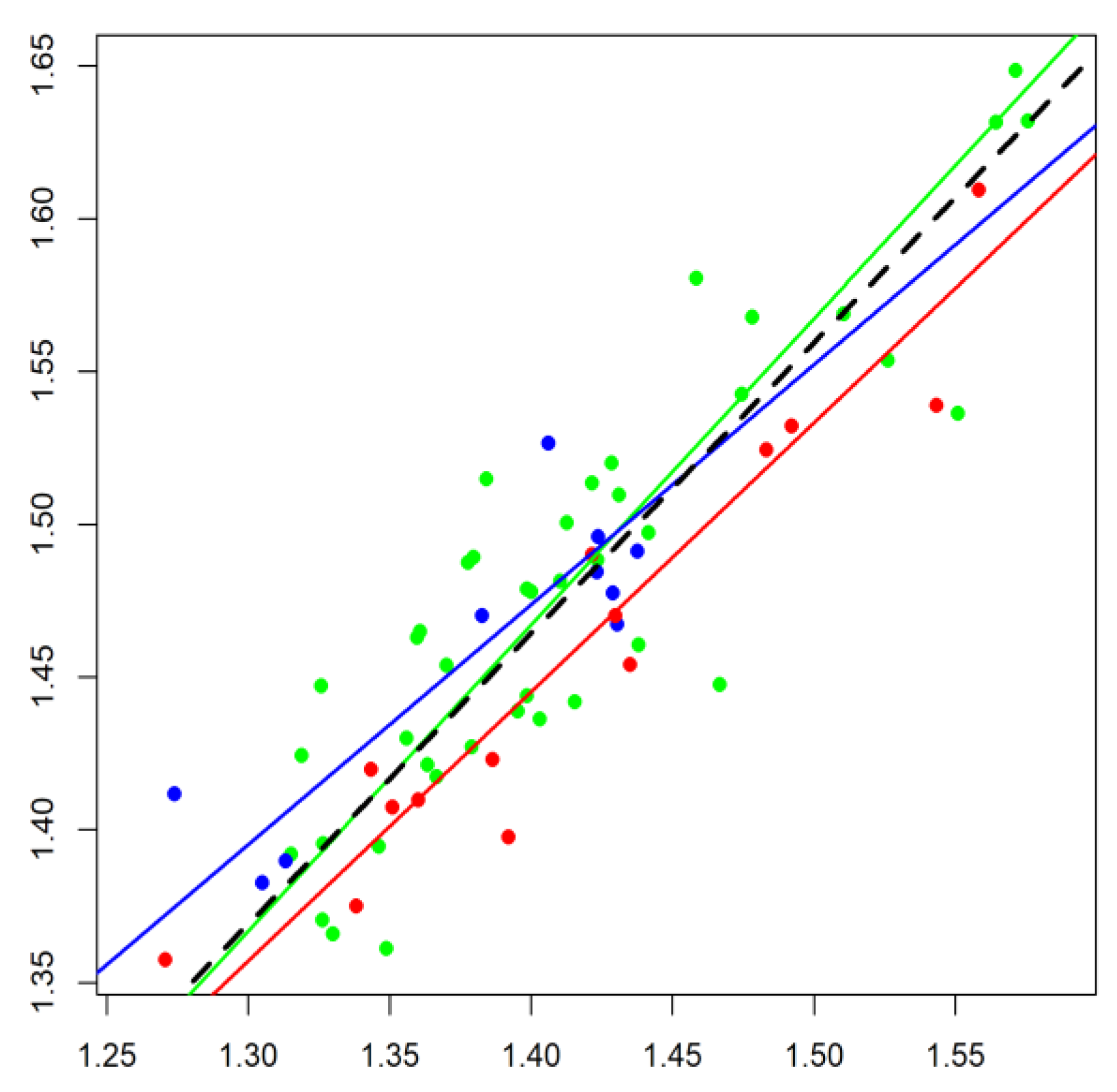
Figure A6.
Regression curve log of males/log of females in head length variation in C.granulatus (dotted line). Painted over circles denote samples, taken in city (red), suburbs (blue) and natural (green) habitats.
Figure A6.
Regression curve log of males/log of females in head length variation in C.granulatus (dotted line). Painted over circles denote samples, taken in city (red), suburbs (blue) and natural (green) habitats.
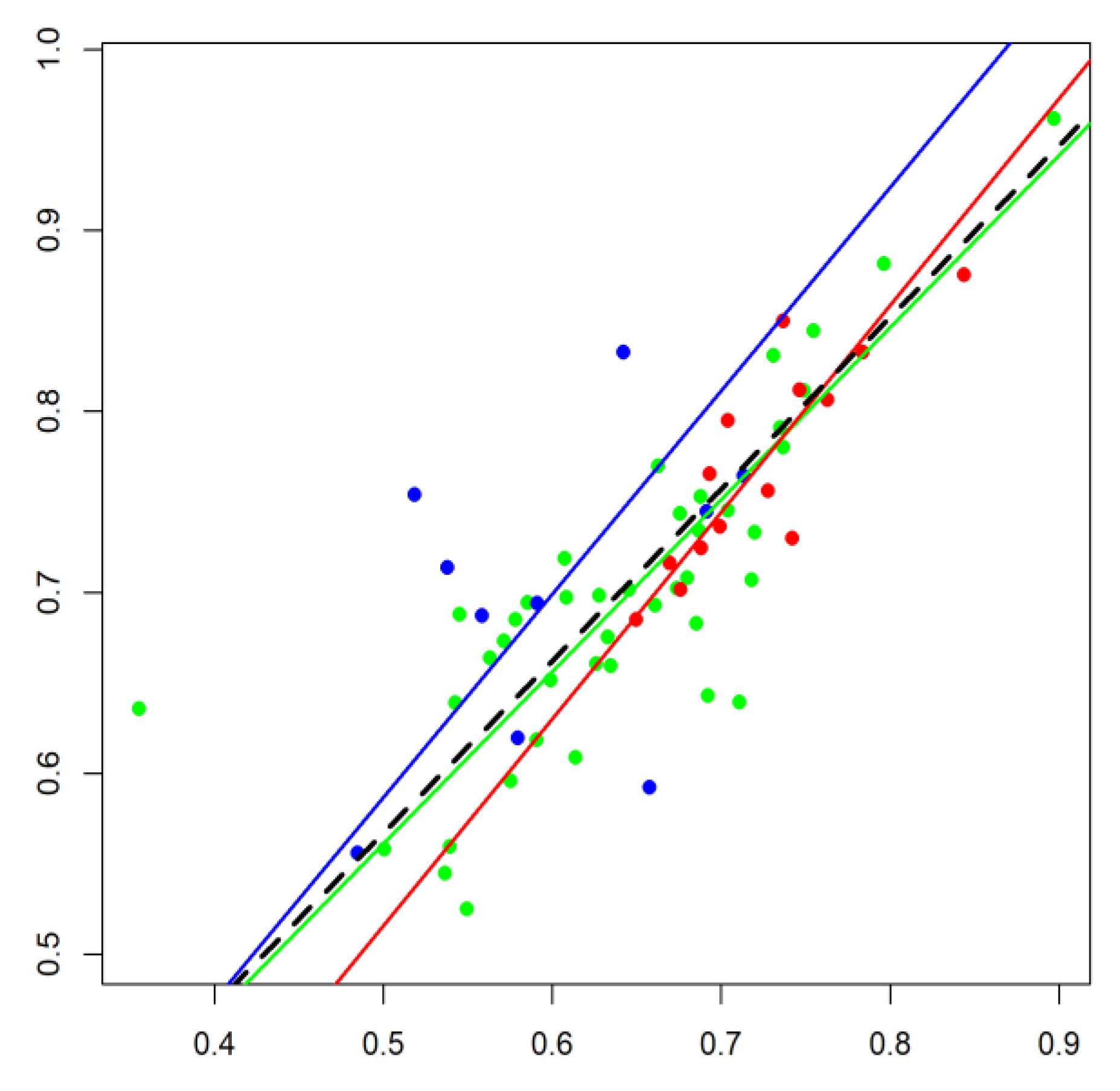
Figure A7.
Regression curve log of males/log of females in distance between eyes variation in C.granulatus (dotted line). Painted over circles denote samples, taken in city (red), suburbs (blue) and natural (green) habitats.
Figure A7.
Regression curve log of males/log of females in distance between eyes variation in C.granulatus (dotted line). Painted over circles denote samples, taken in city (red), suburbs (blue) and natural (green) habitats.
References
- Sala, O.E.; Stuart Chapin, F., Iii; Armesto, J.J.; Berlow, E.; Bloomfield, J.; Dirzo, R.; Huber-Sanwald, E.; Huenneke, L.F.; Jackson, R.B.; Kinzig, A.; Leemans, R.; Lodge, D.M.; Mooney, H.A.; Oesterheld, M.; Poff, N.L.; Sykes, M.T.; Walker, B.H.; Walker, M.; Wall, D.H. Global Biodiversity Scenarios for the Year 2100. Science 2000, 287, 1770–1774. [Google Scholar] [CrossRef] [PubMed]
- Shochat, E.; Warren, P.; Faeth, S.; Mcintyre, N.; Hope, D. From Patterns to Emerging Processes in Mechanistic Urban Ecology. Trends in Ecology & Evolution 2006, 21, 186–191. [Google Scholar] [CrossRef]
- Donnelly, R.; Marzluff, J.M. Relative Importance of Habitat Quantity, Structure, and Spatial Pattern to Birds in Urbanizing Environments. Urban Ecosystems 2006, 9, 99–117. [Google Scholar] [CrossRef]
- Blair, R.B.; Launer, A.E. Butterfly Diversity and Human Land Use: Species Assemblages along an Urban Grandient. Biological Conservation 1997, 80, 113–125. [Google Scholar] [CrossRef]
- Ehler, L.E.; Frankie, G.W. Arthropod fauna of live oak in urban and natural stands in Texas. II. Characteristics of the mite fauna (Acari). Journal of the Kansas Entomological Society 1979, 52, 86–92. [Google Scholar]
- Martinson, H.M.; Raupp, M.J. A Meta-analysis of the Effects of Urbanization on Ground Beetle Communities. Ecosphere 2013, 4, 1–24. [Google Scholar] [CrossRef]
- Vitousek, P.M.; Mooney, H.A.; Lubchenco, J.; Melillo, J.M. Human Domination of Earth’s Ecosystems. Science 1997, 277, 494–499. [Google Scholar] [CrossRef]
- Ghalambor, C.K.; McKAY, J.K.; Carroll, S.P.; Reznick, D.N. Adaptive versus Non-adaptive Phenotypic Plasticity and the Potential for Contemporary Adaptation in New Environments. Functional Ecology 2007, 21, 394–407. [Google Scholar] [CrossRef]
- Gienapp, P.; Teplitsky, C.; Alho, J. S.; Mills, J. A.; Merilä, J. Climate Change and Evolution: Disentangling Environmental and Genetic Responses. Molecular Ecology 2008, 17, 167–178. [Google Scholar] [CrossRef] [PubMed]
- Price, T.D.; Qvarnström, A.; Irwin, D.E. The Role of Phenotypic Plasticity in Driving Genetic Evolution. Proc. R. Soc. Lond. B 2003, 270, 1433–1440. [Google Scholar] [CrossRef] [PubMed]
- Fountain-Jones, N.M.; Baker, S.C.; Jordan, G.J. Moving beyond the Guild Concept: Developing a Practical Functional Trait Framework for Terrestrial Beetles. Ecological Entomology 2015, 40, 1–13. [Google Scholar] [CrossRef]
- Pizzolotto, R.; Gobbi, M.; Brandmayr, P. Changes in Ground Beetle Assemblages above and below the Treeline of the D Olomites after Almost 30 Years (1980/2009). EcologyandEvolution 2014, 4, 1284–1294. [Google Scholar] [CrossRef]
- Salmon, S.J.; Fennis, B.M.; De Ridder, D.T.D.; Adriaanse, M.A.; De Vet, E. Health on Impulse: When Low Self-Control Promotes Healthy Food Choices. Health Psychology 2014, 33, 103–109. [Google Scholar] [CrossRef] [PubMed]
- Teder, T.; Tammaru, T. Sexual Size Dimorphism within Species Increases with Body Size in Insects. Oikos 2005, 108, 321–334. [Google Scholar] [CrossRef]
- Sukhodolskaya, R.A.; Avtaeva, T.A.; Saveliev, A.A.; Vavilov, D.N. Sexual Size Dimorphism in Ground Beetle Carabus cumanus Fischer von Waldheim, 1823 (Coleoptera,Carabidae) and its Variation in Different Traits. Baltic J. Coleopterol. 2019, 19, 89–100. [Google Scholar]
- Sukhodolskaya, R.; Ananina, T.; Avtaeva, T.; Saveliev, A. Sexual Size Dimorphism in Ground Beetles and its Variation in Altitude Gradient. In Advances in Medicine and Biology; Berhardt, L.V., Ed.; Nova Science Publishers: NY, USA, 2021; Volume 191, pp. 1–61. [Google Scholar] [CrossRef]
- Hůrka, K. Carabidae of the Czech andSlovak Republics; Zlín,Kabourek, 1996; pp. 1–565. [Google Scholar]
- Isaev, A.Y.; Egorov, L.V.; Egorov, L.A. Zhestkokrylye (Insecta, Coleoptera) lesostepiSrednegoPovolzh’ya [Coleoptera (Insecta, Coleoptera) of the forest-steppe of the Middle Volga region]; UlSU publishing: Ulyanovsk, Russia, 2004; pp. 1–72. [Google Scholar]
- Sharova, I.H.; Filippov, B.Y. Ekologiyazhuzheliclesov v del’teSevernojDviny [Ecology of Ground Beetles of the Forests in the Delta of the Northern Dvina]; Pomorski State University: Arkhangelsk, Russia, 2004; pp. 1–116. [Google Scholar]
- Fedorenko, D.N. Fauna zhuzhelic (Coleoptera, Carabidae) Moskovskojoblasti. In NasekomyeMoskovskojoblasti. Problemykadastraiohrany [Fauna of ground beetles (Coleoptera, Carabidae) of Moscow region]; Rasnitsyn, A.P., Ed.; Nauka: Moscow, Russia, 1988; pp. 20–46. [Google Scholar]
- The Genus Carabus in Europe: A Synthesis, First published. In Fauna EuropeanInvertebrata; Turin, H., Penev, L., Casale, A., Eds.; Pensoft: Sofia-Moscow, Leiden, 2003; pp. 1–512. [Google Scholar]
- Ferracini, C.; Busato, E.; Alexanov, V.; Solodovnikov, I. A.; Teofilova, T.; Langraf, V.; Borisovskiy, A.; Luzyanin, S.; Ruchin, A.; Stočes, D.; Anciferov, A. L.; Gorbunov, R. P.; Sukhodolskaya, R. A. Sexual Size Dimorphism Depends Drastically on Environment: The Case Study in Ground Beetles. Insects 2025, 16, 1249. [Google Scholar] [CrossRef]
- Luzyanin, S.; Saveliev, A.; Ukhova, N.; Vorobyova, I.; Solodovnikov, I.; Anciferov, A.; Shagidullin, R.; Teofilova, T.; Nogovitsyna, S.; Brygadyrenko, V.; Alexanov, V.; Sukhodolskaya, R. Modeling Sexual Differences of Body Size Variation in Ground Beetles in Geographical Gradients: A Case Study of Pterostichus melanarius (Illiger, 1798) (Coleoptera, Carabidae). Life 2022, 12, 112. [Google Scholar] [CrossRef]
- Langraf, V.; Luzyanin, S.; Alexanov, V.; Teofilova, T.; Anciferov, A.; Szyszko-Podgórska, K.; Vorobyova, I.; Solodovnikov, I.; Gorbunov, R.; Sukhodolskaya, R. Geographic Gradients in a Functional Trait: Variation in Body Size of the Ground Beetle Carabus granulatus Linnaeus (Coleoptera, Carabidae). Acta Zool. Bulg. 2025, 77, 421–430. [Google Scholar] [CrossRef]
- Sukhodolskaya, R.A.; Luzyanin, S.L.; Teofilova, T. M.; Langraf, V.; Ukhova, N. L.; Avtaeva, T. A.; Maksimovich, K. Yu.; Belosludcev, A. D.; Gorbunov, R. P. Geographic Gradients in a Functional Trait: Variation of Body Size and Size Diversity in Ground Beetle Poecilus cupreus (Linnaeus, 1758) (Coleoptera, Carabidae). Acta Biologica Sibirica 2025, 11, 449–462. [Google Scholar] [CrossRef]
- Stillwell, R.C.; Blanckenhorn, W.U.; Teder, T.; Davidowitz, G.; Fox, C.W. Sex Differences in Phenotypic Plasticity Affect Variation in Sexual Size Dimorphism in Insects: From Physiology to Evolution. Annu. Rev. Entomol. 2010, 55, 227–245. [Google Scholar] [CrossRef]
- Legendre, P. Model II regression user’s guide, R edition. R Vignette 1998, 14. [Google Scholar]
- Legendre, P. Lmodel2: Model II Regression. 2008, 1.7–4. [Google Scholar] [CrossRef]
- Sukhodolskaya, R.A.; Saveliev, A.A.; Muhammetnabiev, T.R. Sexual Dimorphism of Insects and Conditions of Its Manifestation. Research Journal of Pharmaceutical, Biological and Chemical Sciences 2016, 7, 1992–2001. [Google Scholar]
- Ukhova, N.L.; Eremeeva, N.I; Sukhodolskaya, R.A. Geographic variation in functional and structural traits in ground beetles (the case study of Carabus aeruginosus F. W., 1822). In Proceedings of the All-Russia Scientific Conference, Ulan-Ude, Russian Federation, 15 June 2021. [Google Scholar]
- Sukhodolskaya, R.A.; Luzyanin, S.L.; Teofilova, T.M.; Langraf, V.; Ukhova, N.L.; Avtaeva, T.A.; Maksimovich, K.Yu.; Belosludcev, A.D.; Gorbunov, R.P. Geographic gradients in a functional trait: variation of body size and size diversity in ground beetle Poecilus cupreus (Linnaeus, 1758) (Coleoptera, Carabidae). Acta Biologica Sibirica 2025, 11, 449–462. [Google Scholar] [CrossRef]
- Ananina, T.; Sukhodolskaya, R.; Saveliev, A. Altitudinal variation of sexual Size Dimorphism in Ground Beetle Carabus odoratus Shill. GSC Biological and Pharmaceutical Sciences 2020, 12, 27–36. [Google Scholar] [CrossRef]
- Sukhodolskaya, R. A.; Ananina, T. L.; Saveliev, A. A. Variation in Body Size and Sexual Size Dimorphism of Ground Beetle Pterostichus montanus Motsch. (Coleoptera, Carabidae) in Altitude Gradient. Contemporary Problems of Ecology 2021, 14, 62–70. [Google Scholar] [CrossRef]
- Gorbunov, R.P.; Alexanov, V.V.; Teofilova, T.M.; Langraf, V.; Solodovnikov, I.A.; Sukhodolskaya, R.A. Variation in body size along geographical gradients in ground beetles (the case study in Carabus granulatus l.). Russian Journal of Applied Ecology 2025. N2, 14–23. [Google Scholar] [CrossRef]
- Lovich, J.E.; Gibbons, J.W. A review of techniques for quantifying sexual size dimorphism. Growth Dev. Aging 1992, 56, 269–281. [Google Scholar]
- Sukhodolskaya, R.A.; Saveliev, A.A. Urbanization effect on sexual size dimorphism in ground beetle Pterostichus melanarius. Proceedings of International Symposium “Ecology and Evolution”, Ekaterinburg, Russian Federation, 1 April 2019. [Google Scholar]
- Sukhodolskaya, R.A.; Eremeeva, N.I.; Saveliev, A.A. Towards the development of approaches to assessing the degree of urbanization based on parameters of sexual size dimorphism (the case study in ground beetles). Proceedings of All-Russia Scientific Conference, Yoshkar-Ola, Russian Federation, 20 April 2020. [Google Scholar]
Figure 1.
Carabus granulatus in nature. Photos were taken from Internet.
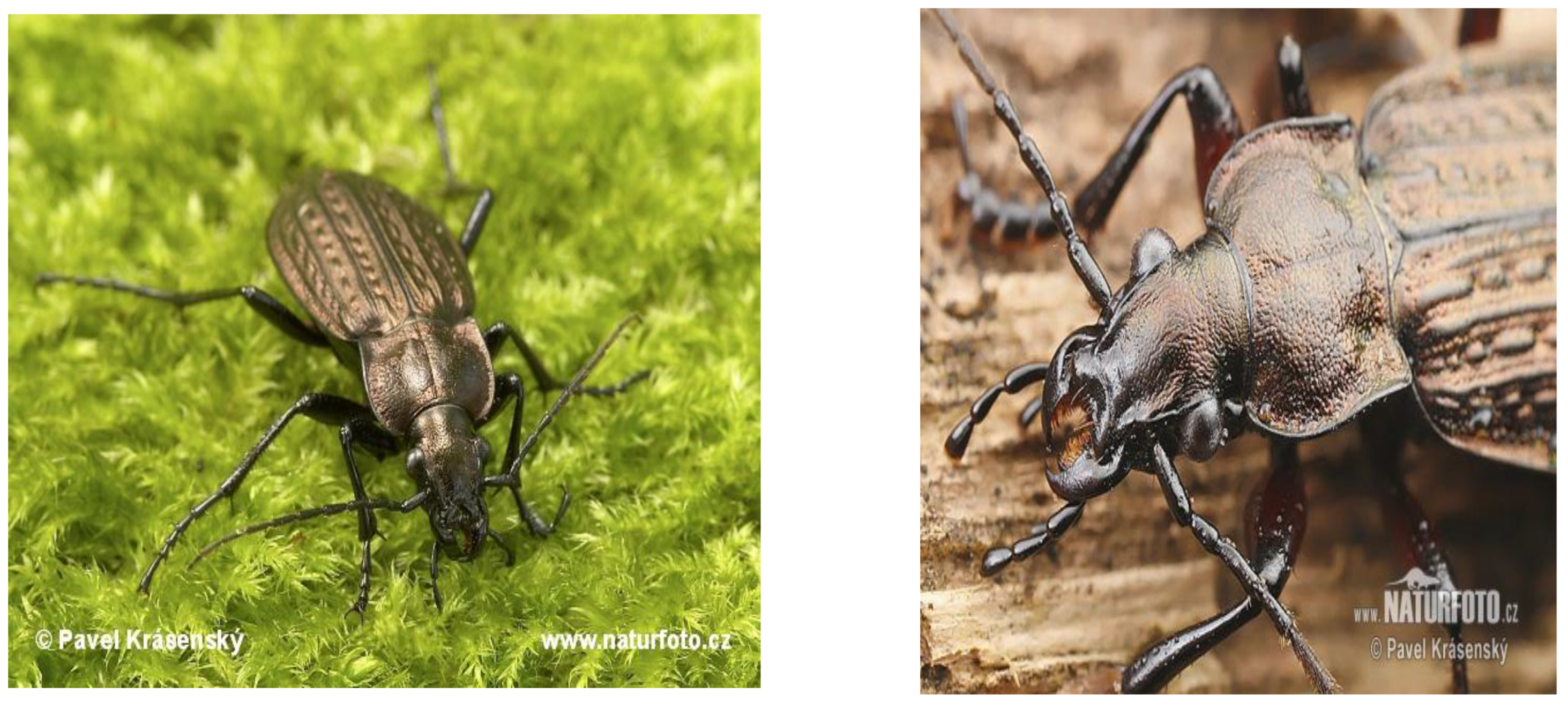
Figure 2.
Map of the study area.
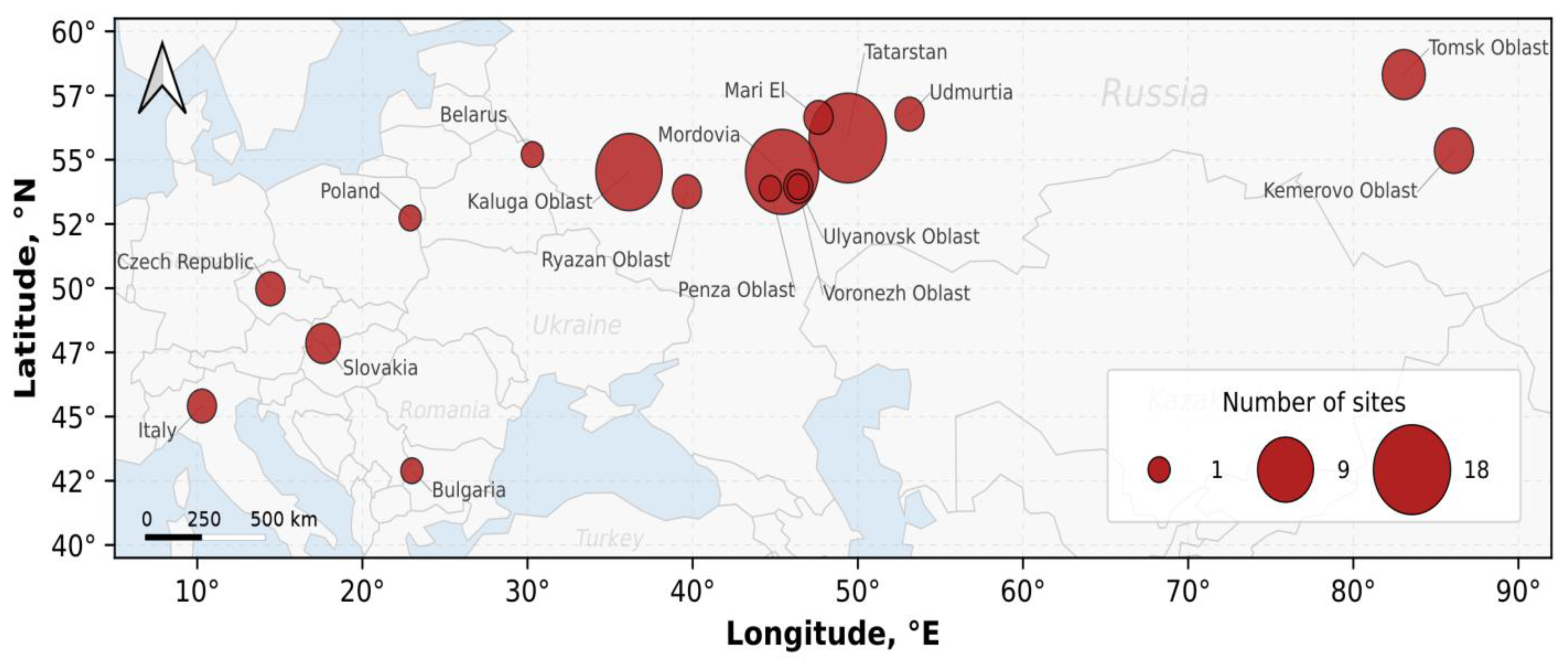
Figure 3.
Male (left) and female (right) of C. granulatus. Males are slightly smaller than females, the main difference when differentiating the sample by sex is the expanded segments of the front legs of males.
Figure 3.
Male (left) and female (right) of C. granulatus. Males are slightly smaller than females, the main difference when differentiating the sample by sex is the expanded segments of the front legs of males.
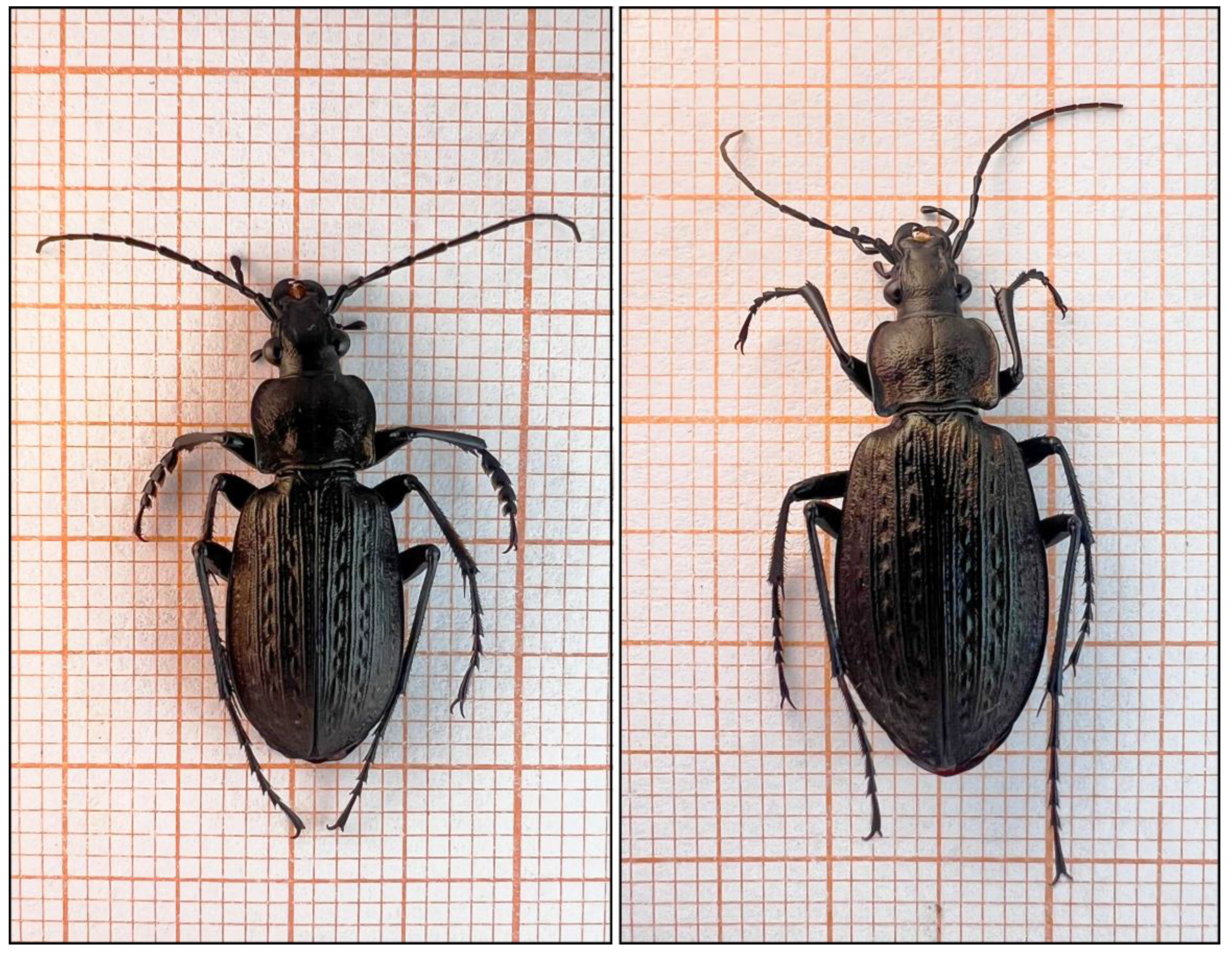
Figure 4.
SSD values in different traits in localities with differing anthropogenic press.
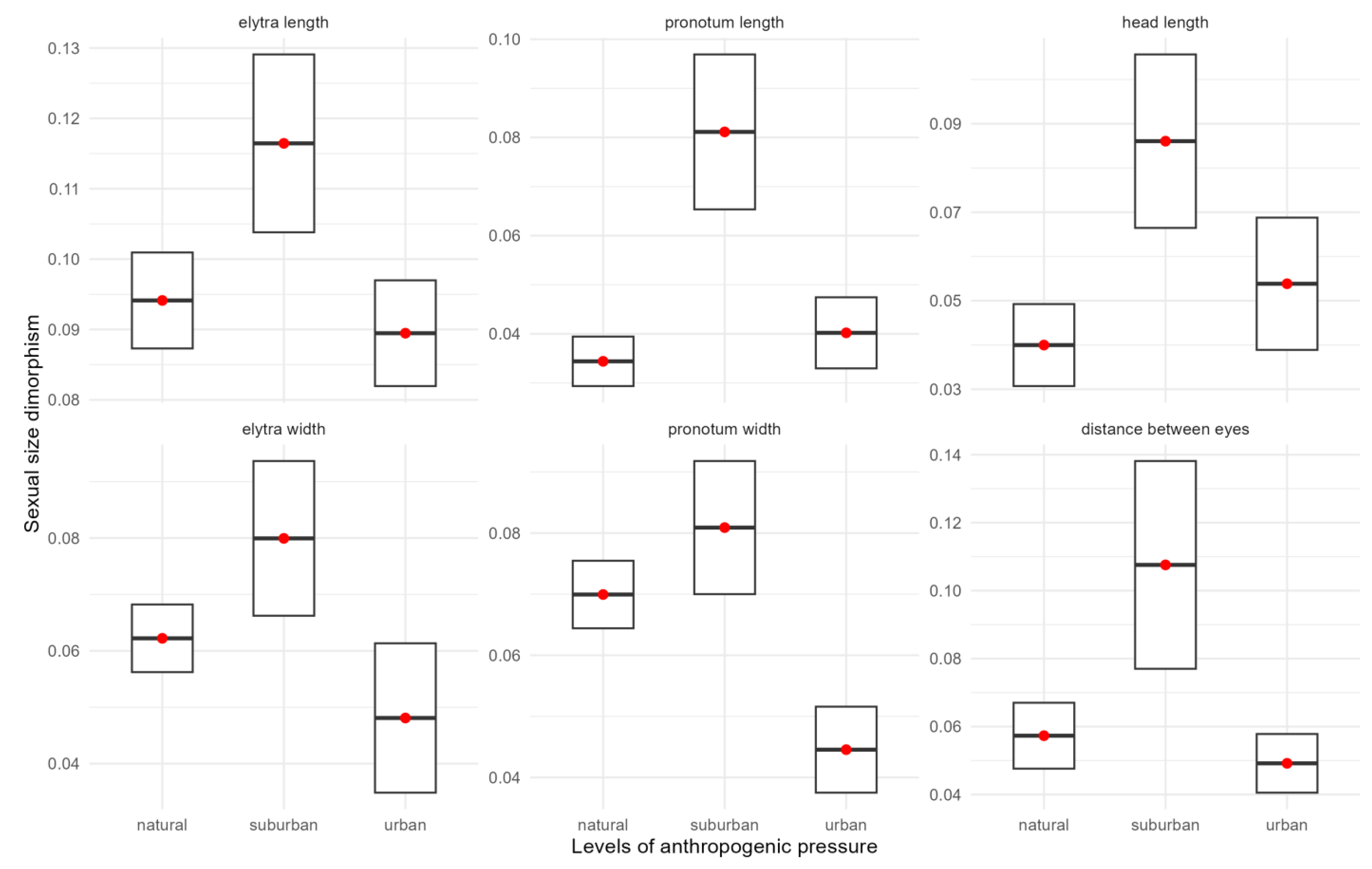
Figure 5.
Regression curve log of males/log of females in elytra length variation in C.granulatus (dotted line). Painted over circles denote samples, taken in city (red), suburbs (blue) and natural (green) habitats.
Figure 5.
Regression curve log of males/log of females in elytra length variation in C.granulatus (dotted line). Painted over circles denote samples, taken in city (red), suburbs (blue) and natural (green) habitats.
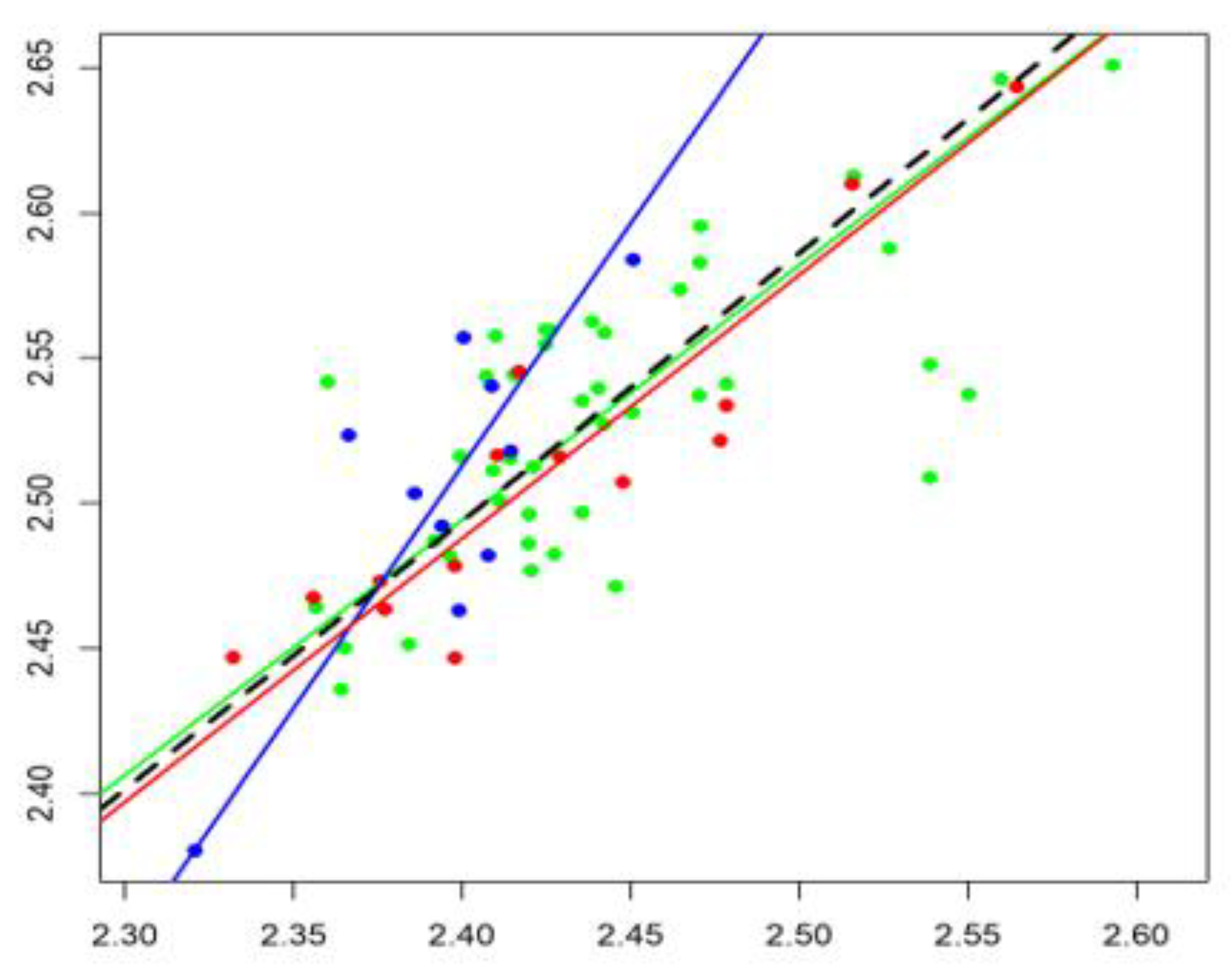
Figure 6.
SSD variation in different traits in city habitats in C. granulatus.
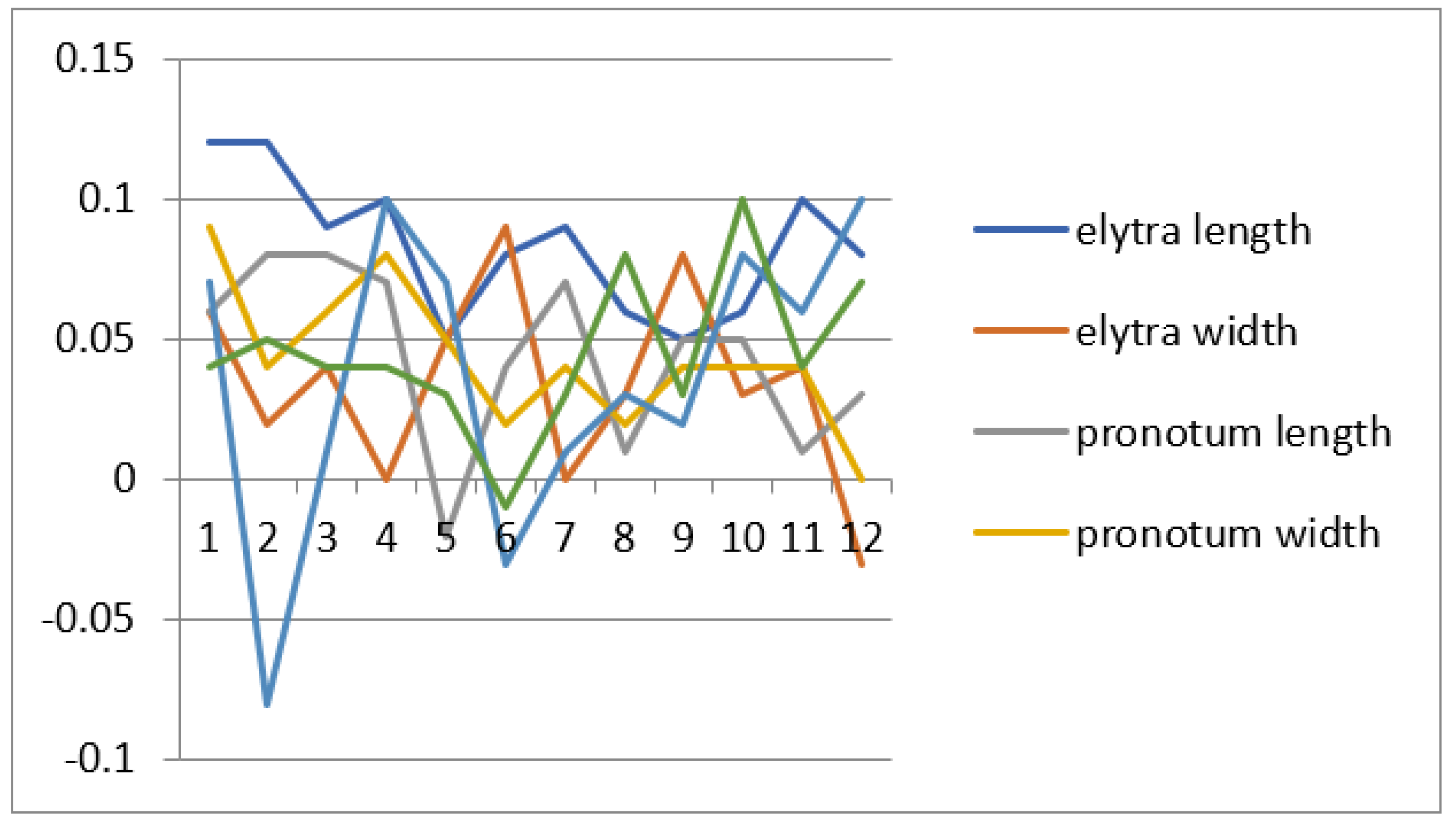
Table 1.
Regions of sampling plots, geographical coordinates, number of plots, and sample size.
| Country/Region in Russia | Number of Plots | Latitude | Longitude | Females | Males | Total |
| Tatarstan Republica | 18 | 55.846 | 49.387 | 1193 | 1245 | 2438 |
| Kemerovo Oblasta | 4 | 55.352 | 86.091 | 96 | 112 | 208 |
| Udmurtia Republica | 2 | 56.777 | 53.134 | 301 | 307 | 608 |
| Mariy El Republica | 2 | 56.649 | 47.616 | 84 | 131 | 215 |
| Belarus | 1 | 55.205 | 30.293 | 39 | 90 | 129 |
| Kaluga Oblasta | 13 | 54.521 | 36.143 | 1530 | 3733 | 5263 |
| Bulgaria | 1 | 42.891 | 22.999 | 60 | 34 | 94 |
| Slovakia | 3 | 47.848 | 17.616 | 71 | 72 | 143 |
| Poland | 1 | 52.731 | 22.893 | 80 | 80 | 160 |
| Mordovia Republica | 16 | 54.529 | 45.407 | 256 | 200 | 456 |
| Penza Oblast a | 1 | 53.885 | 44.700 | 1 | 2 | 3 |
| Ryazan Oblasta | 2 | 53.761 | 39.652 | 18 | 25 | 43 |
| Ulyanovsk Oblasta | 2 | 53.960 | 46.392 | 118 | 110 | 228 |
| Voronezh Oblast a | 1 | 53.951 | 46.392 | 12 | 1 | 13 |
| Italy | 2 | 45.412 | 10.285 | 53 | 52 | 105 |
| Czech Republic | 2 | 49.974 | 14.430 | 16 | 52 | 66 |
| Total | 71 | 3928 | 6246 | 10172 |
Legend: the apex “a” corresponds to Russia. The Region number refers to a database of ground beetles constantly updated as beetles are collected from new regions. The species C. granulatus analyzed in our study, was not collected in all regions of the database. Therefore, the region numbering is not sequential. Beetles in every region were pitfall trapped using the standard methodic in the period 2006-2025.
Table 2.
Results of the ANOVA for the effect of anthropogenic pressure and sex on elytra length in C. granulatus.
Table 2.
Results of the ANOVA for the effect of anthropogenic pressure and sex on elytra length in C. granulatus.
 |
Table 3.
RMAII results in C. granulatus populations.
| Factor_ | Parameter | N | Intercept | Slope | p_val |
| Urban | Elytra.Length | 642 | 0.23 | 0.87 | 0.00 |
| Urban | Elytra.Width | 642 | -0.19 | 1.08 | 0.00 |
| Urban | Pronotum.Length | 642 | 0.01 | 0.99 | 0.00 |
| Urban | Pronotum.Width | 642 | 0.03 | 0.93 | 0.00 |
| Urban | Head.Length | 642 | 0.04 | 0.94 | 0.00 |
| Urban | Eye.Distance | 642 | 0.22 | 0.71 | 0.00 |
| Suburban | Elytra.Length | 537 | 0.22 | 0.88 | 0.00 |
| Suburban | Elytra.Width | 537 | -0.04 | 0.98 | 0.00 |
| Suburban | Pronotum.Length | 537 | 0.00 | 0.97 | 0.00 |
| Suburban | Pronotum.Width | 537 | -0.10 | 1.01 | 0.00 |
| Suburban | Head.Length | 537 | -0.06 | 1.00 | 0.815 |
| Suburban | Eye.Distance | 537 | -0.02 | 0.96 | 0.00 |
| Natural | Elytra.Length | 1790 | 0.40 | 0.80 | 0.00 |
| Elytra.Width | 1790 | 0.04 | 0.93 | 0.00 | |
| Natural | Pronotum.Length | 1790,00 | 0.03 | 0.93 | 0.00 |
| Natural | Pronotum.Width | 1790 | 0.15 | 0.85 | 0.00 |
| Natural | Head.Length | 1790 | 0.05 | 0.90 | 0.00 |
| Natural | Eye.Distance | 1790 | -0.09 | 1.01 | 0.00 |
Table 4.
Correspondence between the direction of SSD values variation in real populations and the hypothetical figure of the cited article [14].
Table 4.
Correspondence between the direction of SSD values variation in real populations and the hypothetical figure of the cited article [14].
| Traits/Biotopes | Urban | Suburbs | Natural | |||
| Expected change in SSD value | Direction and R2 in the linear trend of trait variation | Expected change in SSD value | Direction and R2 in the linear trend of trait variation | Expected change in SSD value | Direction and R2 in the linear trend of trait variation | |
| Elytra length | ↑ | ↓ 0.286 | ↑ | ↑ 0.137 | ↑ | ↓ 0.001 |
| Elytra width | ↓ | ↓ 0.053 | ↓ | ↑ 0.462 | ↑ | ↓ 0.040 |
| Pronotum length | ↑ | ↓ 0.212 | ↑ | → 0.008 | ↑ | ↑ 0.112 |
| Pronotum width | ↑ | ↓ 0.499 | ↓ | ↓ 0.237 | ↑ | ↑ 0.114 |
| Head length | ↑ | ↑ 0.137 | -* | → 0.008 | ↑ | ↓ 0.004 |
| Distance between eyes | ↑ | ↑ 0.128 | ↓ |
↓ 0.012 |
↓ | ↑ 0.212 |
Disclaimer/Publisher’s Note: The statements, opinions and data contained in all publications are solely those of the individual author(s) and contributor(s) and not of MDPI and/or the editor(s). MDPI and/or the editor(s) disclaim responsibility for any injury to people or property resulting from any ideas, methods, instructions or products referred to in the content. |
© 2026 by the authors. Licensee MDPI, Basel, Switzerland. This article is an open access article distributed under the terms and conditions of the Creative Commons Attribution (CC BY) license (http://creativecommons.org/licenses/by/4.0/).
Copyright: This open access article is published under a Creative Commons CC BY 4.0 license, which permit the free download, distribution, and reuse, provided that the author and preprint are cited in any reuse.


