

Submitted:
09 March 2026
Posted:
10 March 2026
You are already at the latest version
Abstract
Climate change is making it more difficult for farmers in Nigeria to grow crops, ensure food security, and compete in global agricultural markets. One main, however often overlooked, factor including strain to food crops is ultraviolet (UV) radiation. This study examines how introducing UV radiation sensors to Nigeria's climate information system could make agriculture trade more climate-resilient and support the SDGs. The study discovered seasonal and regional UV variations that correspond to Nigeria's cropping cycles and agricultural trade activities using satellite UV data, agricultural production, crop calendars, and export records from 2021 to 2024. This paper also found that precise UV monitoring can notify farmers and exporters of any weather threats. This may also help them to make better planting, crop growth, and harvest decisions with this knowledge. The study also emphasizes that expanding UV sensors in crop production and trade, the value of integration, data availability, and technical competence must be addressed. The study concludes that Nigeria needs an enhanced UV sensor to increase weather adaptation to satisfy international crop standards, food production and protection, and to stay competitive in agricultural global markets despite climate change. This UV sensing integration into the climatic system is important to Nigeria's agricultural crop growth and trade sustainability.
Keywords:
UV radiation sensors
; food security
; climate information systems
; clear sky erythemal daily dose
; crop calendar
1. Introduction
Climate change is especially harmful to emerging nations like Nigeria, which threaten world peace and security (IPCC, 2023). Agriculture is vital to Nigeria’s economy, one of Africa’s biggest country. Heat waves, flash floods, and droughts are threatening this business more (Ogar, 2025). Climate change is threatening the country’s exports and commerce and food security. The majority of Nigeria’s population depends on agriculture, therefore even little environmental changes may affect the economy and society (FAO, 2022; Alehile, 2023). Empirical data found that excessive ultraviolet-B (UV-B) radiation may impair maize and cassava yields by 18% in regions with excessive UV exposure, revealing the essential role that solar depth plays in crop performance. Smallholder farmers’ financial instability, limited irrigation infrastructure, and rain-fed farming increase Nigeria’s agricultural vulnerability (Omokaro, 2025). Solar radiation, especially UV exposure, also affects crop development (Egbuim et al., 2022; Olatona & Oyedokun, 2024). Elemo et al. (2021) note that plants have been negatively impacted by ozone depletion-induced increases in UV radiation. Alatona and Oyedokun (2024) and Diehl et al. (2024) found that UV-tracking IoT systems improved planting and harvesting timing by 20% and reduced productivity losses in northern Nigeria trial projects. This shows that climate-smart technologies and policies are needed to protect Nigeria’s agricultural future in a changing climate.
Climate change is affecting Nigeria’s regional and global food trade as well as agricultural output. Rice, beans, maize, yam, and cassava exports are less competitive and high-quality due to unpredictable yield losses (Okon et al., 2021). Farmers and exporters are already struggling to meet strict global safety and quality standards, and shifting climatic patterns are causing pest and disease outbreaks (Lopian, 2018). Farmers who used early warning systems and ultraviolet (UV) sensors had 7 to 12% fewer bean and yam shipments rejected at international borders, increasing their access to international markets (Lopian, 2018; Okon et al., 2021). This shows that climate change affects Nigeria’s trade and macroeconomic stability beyond agriculture.
Several researchers say climate data access and trust are essential for adaptation, ccording to empirical models, climatic information structures (CIS) and ultraviolet (UV) monitoring improved agricultural trade balances by nine percent and household food security by ten to fifteen percent in three agro-ecological zones (Mabhaudhi et al., 2024). Kayusi et al. (2024) state that CIS systems can record past and present rainfall, temperature, and UV radiation. As UV tracking became more integrated, agricultural illness early warning systems improved by 15–23%, helping exporters and farmers plan (Kayusi et al., 2024; Chavula, 2025). Only a small percentage of Nigerian farmers have access to CIS tools with UV functionality due to high prices, low digital literacy, and insufficient institutional support (Gumel et al., 2020; Diehl, 2024). Elemo et al. (2021) and Egbuim et al. (2022) found that Nigerian agriculture workers, farm animals, and plants are constantly exposed to UV radiation levels above WHO guidelines. Although UV tracking has been integrated into Nigeria’s CIS framework, technological, institutional, and behavioural barriers continue to limit the process of turning this data into useful information for exporters and farmers (Diehl et al., 2024).
Accurate UV radiation monitoring can increase weather-resistant crop yields in Nigeria by 1.2 million tonnes by 2030, affecting food security and trade stability (Sahoo et al., 2024). This study examines the complicated interaction between climate variability, information systems, and adaptive capability in Nigeria, including ultraviolet (UV) radiation as an important but generally neglected stress factor. This study is important because the new data shows that many of the country’s adaption strategies cannot handle the increasing severity climate change. Climate data, especially UV forecasts, must be more accurate and accessible to increase agricultural resilience, trade decisions, and sustainable development. If exporters and farmers used these targeted data to manage production risks, improve productivity, and stay competitive, Nigeria’s food systems and economy would be more stable. Climate change is straining Nigerian agriculture, so this study critically examines how climate information systems, specifically UV radiation tracking, can improve food security, agricultural trade, and SDG attainment. The specific objectives include: (i) analysing the relationship between daily UV radiation, Nigeria’s traditional planting season, and crop production. (ii) examining the impacts of climate change and UV radiation on Nigeria’s agricultural trade and food security. (iii) Recognising factors that help or hinder agricultural exporters and producers use climatic records.
2. Literature Review
African agriculture trade is vulnerable to climate change. This has changed how adaptation and focussing on new technologies can help and hurt resilience (Eriksen et al., 2021; IPCC, 2023). Climate change, which includes more extreme heat, unpredictable rain, and UV radiation exposure, affects food crop yields, agricultural value chains, rural livelihoods, and national food supplies (Egbuim et al., 2022). In response, climate information systems (CIS) and digital innovation have become crucial to African policy and training strategies to help people adapt. Early African CIS studies emphasised the power of simple climate forecasting and seasonal prediction to inform farm-stage decisions and risk control (Sutanto et al., 2024). Real-world evidence has shown that simple weather advice cannot address complex, localised climate risks in recent decades. Recent research shows that CIS is rapidly becoming unified, tech-driven platforms that provide real-time data, actionable advisories, and dynamic threat analytics to small farmers, commercial farmers, and agri-exporters (Ouedraogo et al., 2025). Grgorieva et al. (2023) suggest using digital climate information systems (CIS) to link climate risk alerts and encourage flexible trade, logistics, and agricultural production.
Sensor systems are essential for accurate microclimate and environmental stressor records in today’s high-tech world. In situ sensors that measure temperature, rainfall, humidity, and more UV radiation enable better risk assessment decisions for specific regions (Elemo et al., 2021). UV sensors in climate system have helped us understand radiation levels year-round and during the day. This is now known to significantly impact crop strain, pest dynamics, and post-harvest food spoilage (Egbuima et al., 2022). UV monitoring is crucial in Nigeria’s most important crop production areas because “very high” annual UV index values affect maize, groundnut, and vegetable yields and farmers’ health (Mmbando, 2024). Good sensor systems aid short-term adaptation by making real-time decisions and long-term resilience by aiding crop breeding, land use planning, and input allocation.
Remote sensing and satellite technology with UV sensors are needed for African agribusiness. TOMS and OMI collect large amounts of UV radiation data over large areas and time. This data maps national threats, predicts seasonal crop yields, and assesses climate change (Zhou et al., 2019). CIS is more useful with remote sensing than without infrastructure. It monitors distributed production zones on network edges. These improvements allow mobile apps and cloud dashboards to use satellite data. CIS becomes more accessible and useful for smallholders, aggregators, and exporters (Mashala et al., 2023). Several developing countries have made great achievements in adding UV radiation sensing technology to climate information systems (CIS) to strengthen agriculture and boost agricultural trade. Nigeria can learn from these examples; Kenyan small farmers can get real-time weather data from buried UV radiation and soil moisture sensors connected to mobile platforms. This integration has improved decision-making and crop yields by 15% in pilot projects (Mwikamba et al., 2024). Effective collaboration between government, research institutions, and private companies is the key to this success. This provides accurate information and builds user trust (Sutanto et al., 2022).
South Africa, however, is more industrialised and regulated, the Rural Research Council uses satellite UV remote sensors to manage crops and ensure export quality (Bégué et al., 2020). Effective environmental monitoring increases the use of high-value exports, making the South more competitive globally. However, India is also using this concept to build sensor-based CIS in a distributed, participatory model for farmers. This method provides personalised, real-time advice in multiple languages and links sensor data to crop insurance programs, according to Sahoo and Jena (2025) and Giri and Meher (2024). This stabilises smallholder farmers financially, demonstrating how Nigeria can use collaborative innovation, strict rule enforcement, and financial integration to adopt sensing technologies to boost agricultural productivity and trade resilience. Despite these successes, infrastructure, digital literacy, privacy, and data governance remain issues (Bégué et al., 2020; Sahoo & Jena, 2025). Most of these three countries emphasise using sensor technology in fair, socioeconomically inclusive institutions that help people build skills. Theories like Rogers’ Diffusion of Innovations (2003) help explain adoption strategies, these models include communication channels and perceived benefits. The Sustainable Livelihoods approach (Minishi-Majanja & Kiplang’at, 2013) also uses climate data systems with sensors to increase resources and reduce climate risk in crop production. Porter’s competitiveness framework (1985) shows how quality control, regulatory requirements, and UV sensor data can boost a company’s global market position, as in South Africa. These instructions sound like Nigeria needs more than technology. Instead, we need a systemic approach that promotes stakeholder collaboration, aligns sensor use with trade policies and economic mechanisms, and ensures equal access. Nigeria must take a holistic approach to use UV and other environmental sensors to improve weather-resistant farming, boost exports, and achieve its Sustainable Development Goals. Due to changing market conditions and government regulations, African agribusiness develops new technologies. Suppliers must demonstrate climate-smart technology and environmental monitoring in their supply chains to satisfy international customers who value food safety, traceability, and climate risk control (FAO, 2021). CIS and sensor data are used in quality control, export logistics, and post-harvest protocols (Konfo et al., 2023). This makes Nigeria and Africa more competitive in global value chains. According to market logic, government and the private sector should invest in digital infrastructure and skills, though innovations can also vary by region and farm type.
Farmers must be involved in climate information systems (CIS) and sensor technology development, according to new studies. Farmers, investors, and locals working together to make this gear works well for adaptation (Enete et al., 2021; Kadi, 2021). The FAO (2021) reports that tests in Nigeria and East Africa show that involving users builds trust, improves climate updates, and makes new farming technology more common. Policy and research should go beyond technology, they should also consider social, institutional, and behavioural factors that help technology support resilient, accessible agri-food systems (Ogundari, 2023; World Bank, 2023.2). The African Continental Free Trade Area (AfCFTA) is crucial for agriculture and climate change adaptation. It advises farmers to invest in digital technologies, traceability systems, and climate facts systems to simplify trade and set rules. This reduces risks and simplifies farmer market access (UNECA, 2022; UNCTAD, 2021). Food, drinks, and climate-sensitive items need accurate environmental data, including UV radiation monitoring, to meet global safety and special requirements (FAO, 2021). The African Union’s green healing action plan (AU-GRAP) recommends using technology and addressing climate issues to recover from the pandemic. It invests in digital climate services and sensor-based evaluation to improve early warning systems, crop losses, and smallholder farmers’ resilience (AU, 2022; Kadi et al., 2021). Agro-meteorological services should include ecological sensors like UV radiation sensors. According to Antwi-Agyei et al. (2023), people are becoming more aware of risks and the need for planned adjustments.
As a whole, the SDGs help people worldwide deal with climate change, trade, and new technologies. SDG 2 aims to end hunger and sustain farming. New technologies and stable food production are its priorities (Ogundari, 2023; FAO, 2021). SDG 8 promotes formal value chains and digital infrastructure for efficiency and market performance (UNCTAD, 2021). Economic growth and job creation increase. Climate change requires immediate action under SDG 13. It suggests strong climate-risk-aware rules, plans, and data systems (UN, 2015). Nigeria’s agriculture and trade strategy emphasises climate information services, digital monitoring, and skill development. Sustainable development goals are followed (Enete et al., 2021; Ituen, 2023) New regulations required regional cooperation, UV and environmental data use, and farmer and supplier information. These improvements show that more policymakers agree that AfCFTA, AU-GRAP, and SDG frameworks must integrate climate-resilient, technology-based growth (AU, 2022; UNECA, 2022; Ogundari, 2023).
3. Methodology
A concise and comprehensive method is very important for looking at how ultraviolet (UV) radiation impacts crop yields and trade adaptability in Nigeria, especially when the climate is changing. This part talks about how the UV data were gathered, arranged, and examined at. It also talks about the modelling and integration techniques used to look into the relationship between UV exposure and trade outcomes in agriculture. The paper also talks about why the chosen study region was chosen and what its main problems are. It puts the results in the larger perspective of climate information systems (CIS) research (Egbuima et al., 2022; Elemo et al., 2021).
3.1. Data Sources and Processing
Clear Sky Erythemal Daily Dose (CEDD) is the study’s main dataset. It indicates biologically active UV radiation reaching Earth’s surface in clear skies (Fountoulakis et al., 2020). Hierarchical Data Format version 5 (HE5) is for geospatial and environmental data. NASA’s Earth Observing System satellite archives provided this data (2023). The dataset’s spatial and temporal detail allows it to predict UV radiation variations in Nigeria’s specific agricultural-ecological zones (Kayusi et al., 2024). However, due to HE5 files are too complex for statistical approaches, Panoply, a NASA-approved multi-dimensional scientific data analysis application (NASA, 2023), was used to convert and visualise the data. Paloply can transform HE5 data into tables and graphs, allowing CEDD values to be examined daily, monthly, and annually without compromising geographic accuracy.
3.2. Plotting, Statistical Analysis, and Visualisation
OriginLab was used for scientific graphing and statistical analysis after collecting Clear Sky Erythemal Daily Dose (CEDD) data (OriginLab, 2022). Also developed graphs of daily and annual UV radiation changes using OriginLab, focussing on seasonal trends and year-to-year fluctuations. Then, estimated average movement and standard deviations to identify extremely high or low UV exposure (Egbuima et al., 2022). These extensive investigations laid the groundwork for combining UV data with crop production and trade statistics. We ensured that UV levels and agricultural or trade effects were supported by strong statistical evidence. This method improves the knowledge of how UV radiation affects Nigerian farming and exports, guiding climate change adaptation plans.
3.3. Integration with Crop Production and Trade Data
UV radiation data was combined with crop production and export figures next. Statista provided accurate agricultural growth data for Nigeria from early 2019 to late 2024. The agricultural sector and UV radiation trends were compared using this data (Statista, 2024). The USDA’s Production Estimates and Crop Assessment Division’s crop calendar shows planting, growth, and harvest for Nigerian staples like corn, rice, sorghum, soybeans, millet, and wheat (USDA, 2023). This calendar shows when crops are most susceptible to UV radiation (Ayanlade & Jegede, 2016). To determine if high UV levels aligned with vulnerable crop stages, we compared UV peak timing to these crucial stages (Enete et al., 2021). The data showed UV peaks conflict with typical planting seasons, suggesting altering planting schedules could lessen UV-related crop stress. Climate-smart agriculture research suggests modifying planting schedules to changing climatic circumstances to improve crop resilience (Ogundari, 2023).
3.4. Spatial Analysis
Spatial analysis was conducted using ArcGIS to overlay maps of average and extreme UV exposure with major crop-producing regions and export logistics corridors. These overlays revealed geographic disparities in UV risk and highlighted the spatial concentration of both vulnerability (e.g., high UV–low canopy cover) and resilience (e.g., regions with agroforestry or irrigated systems) (World Bank, 2023). Moran’s I and hotspot analysis tested for significant clustering, while GIS-based visualisation enabled policymakers to identify areas requiring targeted CIS interventions (Mase et al., 2015).
3.5. Study Area and Contextual Limitations
Nigeria is heterogeneous agro-climatic landscape ranging from the humid Niger Delta (lat 4°N) to the arid northeast (lat 13°N) necessitated a spatially explicit approach (Egbuima et al., 2022). State-level UV and crop data were used where available, but national averages were sometimes required due to limitations in data resolution. The cross-latitudinal comparison is strengthened by recent multi-decadal studies that have identified substantial geographic variability in UV exposure across Nigeria (Egbuima et al., 2022; Elemo et al., 2021).
Methodological restrictions must be noted, while satellite sensors don’t always pick up local environmental factors like cloud cover and aerosols, they often alter ground exposure (Kerr & Fioletov, 2008). The timing of UV exposure and crop growth and agricultural trade data may also be problematic. Crop data is recorded daily, but agricultural trade data is aggregated seasonal or quarterly. Thus, temporal aggregation may obscure short-term excesses (FAO, 2021). Third, logistics, market dynamics, and policy shocks might mediate climatic impacts, complicating trade data integration (World Bank, 2023). Finally, Panoply and OriginLab have great analytical skills, but their results depend on input datasets and analyst-set criteria. Enete and Kadi et al. (2021) emphasise that institutional data on ultraviolet light monitoring in Nigerian climate information systems is inadequate and erroneous, therefore the study cannot analyse the actual consequences of CIS-driven adaptation. Despite these limitations, sector-specific crop and trade data, remote sensing, statistical, and geographical analysis can be used to understand and mitigate climate risk in Nigeria’s agriculture industry.
4. Results
4.1. Annual UV Radiation Trends (2021–2024)
In 2021, daily UV radiation exhibited strong seasonal variation across Nigeria. As shown in Figure 1, radiation peaked in September (≈ 6,818 J/m²) during the harvest season and again in May (≈ 6,615 J/m²), coinciding with the onset of planting. These peaks occur when most smallholder farmers are preparing or reaping crops, meaning plants are particularly exposed to intense sunlight. Excessive UV during these stages may impair photosynthesis and reduce crop vigour (Egbuima et al., 2022). Such findings illustrate how solar intensity interacts with Nigeria’s cropping calendar and underlines the importance of incorporating UV monitoring into early warning systems to enhance adaptive capacity.
As depicted in Figure 2, the 2022 pattern mirrors the preceding year. The highest UV value of 6,662.8 J/m² was recorded in May, coinciding with major cereal planting season and a secondary peak of 6,472 J/m² occurred in early September. These dual peaks align with the main agronomic cycles. In sustainable agriculture terms, this consistency presents an opportunity: reliable radiation forecasting can support climate-smart practices such as staggered sowing, canopy management, and precision irrigation key actions promoted under SDG 2 (Zero Hunger) and SDG 13 (Climate Action) (FAO, 2021).
As shown in Figure 3, 2023 experienced slightly higher UV intensity than previous years, peaking at 6,674.5 J/m² in September and 6,578 J/m² in May. These figures reflect lower atmospheric moisture and cloud density during the late wet season. Such elevated radiation levels at critical crop stages may heighten physiological stress, especially for maize and cassava, two of Nigeria’s main staples. Integrating UV sensors within Climate Information Systems (CIS) can therefore help farmers anticipate risk and implement shading or irrigation interventions, contributing to long-term resilience and sustainable productivity (Kayusi et al., 2024).
In 2024, UV radiation peaked in May (≈ 6,672 J/m²) and August (≈ 6,503 J/m²) (Figure 4). These patterns reveal that intense UV exposure persists even within the rainy season, particularly during short dry spells such as the August break. While rainwater and cloud cover provide partial protection, temporary clear skies can increase stress on crops. Understanding these micro-seasonal shifts is essential for promoting sustainable land use and reducing yield volatility under changing climate conditions (Akinwumi et al., 2023).
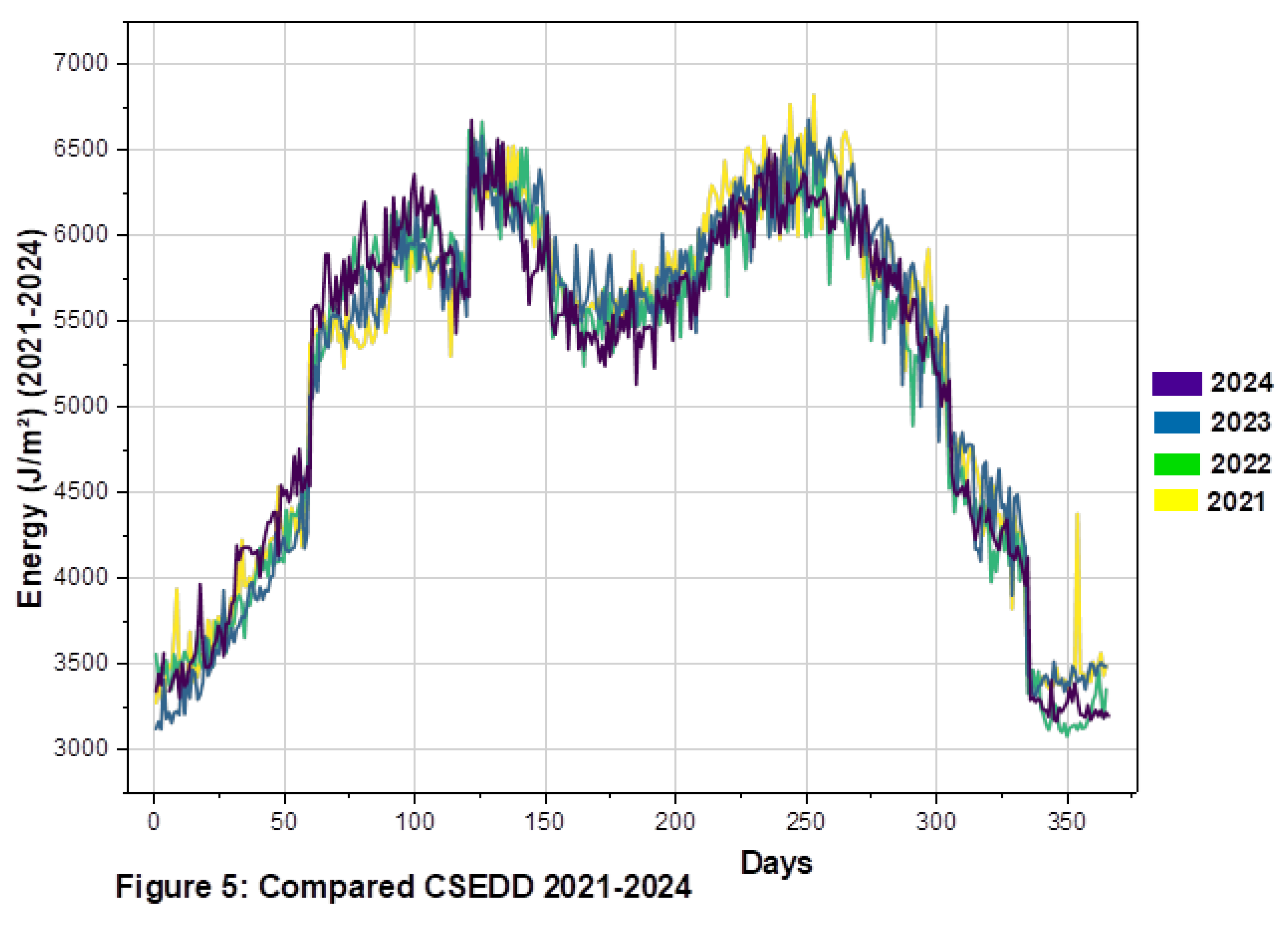
Figure 5 compares the Clear Sky Erythemal Daily Dose (CSEDD) from 2021 to 2024. While the overall patterns across these years appear similar, subtle discrepancies are evident in the intensity and timing of UV radiation peaks. These variations highlight the dynamic nature of UV exposure, which can fluctuate due to atmospheric conditions and seasonal changes. Integrating real-time UV sensor data into Climate Information Systems (CIS) is therefore essential, as it enables more precise monitoring and timely updates. Such enhanced UV monitoring can support farmers and traders in making informed decisions about planting, harvesting, and export timing, ultimately improving crop production and agricultural trade resilience under variable climate conditions.
4.2. Seasonal and Regional UV Variations
Across the four-year dataset, UV exposure consistently rose from March to May, exceeding 6,000 J/m², coinciding with the start of the growing season. It then declined modestly between June and early July (≈ 5,100 J/m²) as rainfall intensified. By August to September, UV levels again peaked above 6,400 J/m², aligning with pollination and grain filling. These fluctuations influence plant physiology, pest dynamics, and soil moisture retention (Thuma et al., 2023). Geographically, the northern regions, such as Sokoto and Borno, recorded the highest radiation values (≈ 6,800 J/m²) due to lower cloud cover typical of the Sahel (Ojo et al., 2015). The southern zones, notably Lagos and Rivers recorded lower peaks (<6,400 J/m²), moderated by frequent rainfall and dense vegetation. Eastern states like Enugu consistently reported higher exposure than western counterparts at similar latitudes, suggesting that regional microclimates influence UV distribution (Kayusi et al., 2024). This regional variation underscores the importance of localised adaptation planning. Sustainability-oriented agricultural systems in Africa must account for these differences by tailoring UV monitoring tools to regional conditions ensuring equitable access to technology and climate information.
4.3. Linking UV Radiation to Crop Cycles and Agricultural Growth
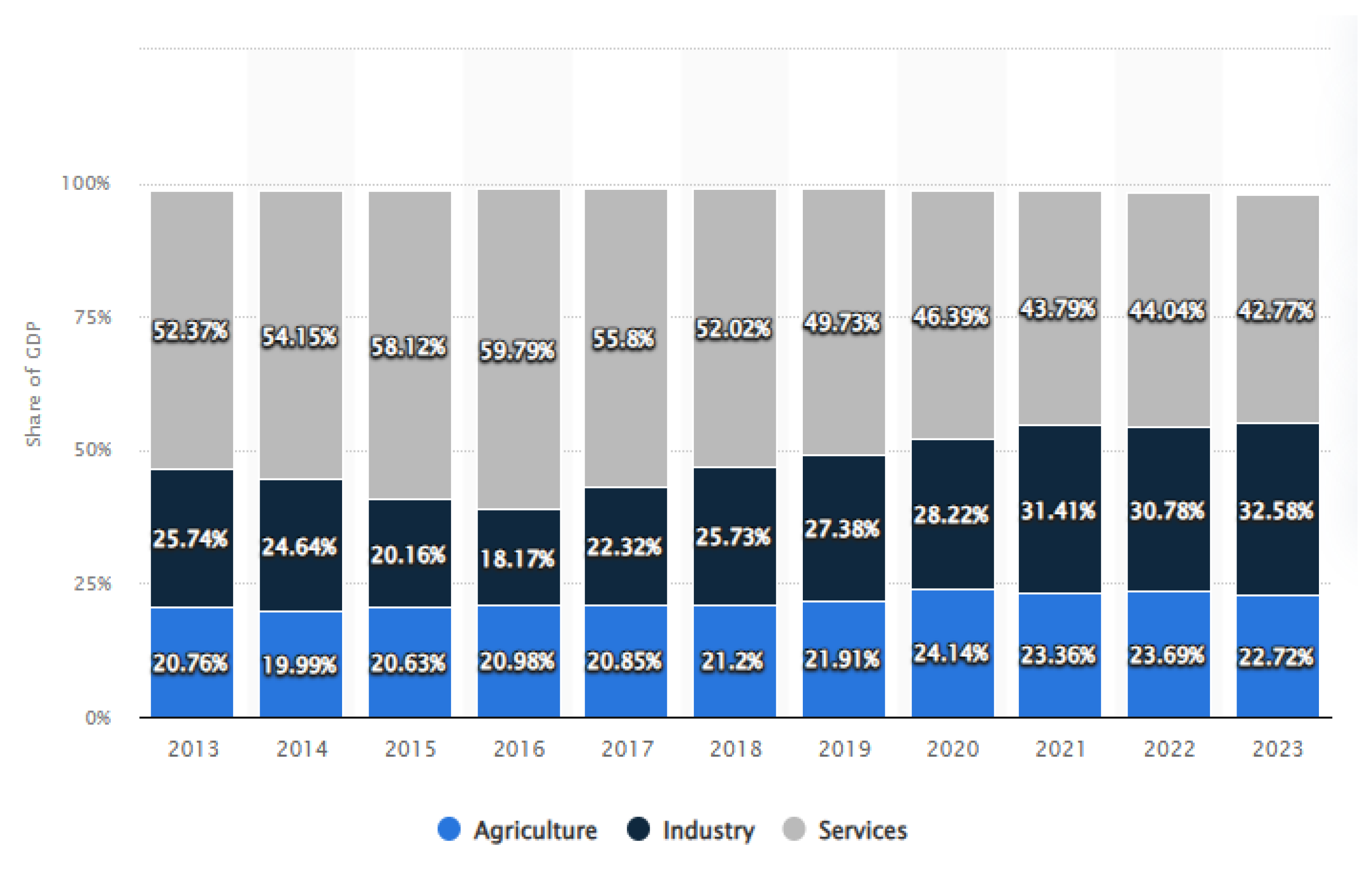
When the CSEDD results are compared with the USDA crop calendar (Figure 6) and production data (Figure 7), a close relationship emerges between UV fluctuations and agricultural performance. The main planting window (March–June) coincides with the highest UV intensity, creating stress conditions for seedlings. For instance, periods of unusually high radiation such as Q2 2021, when UV levels spiked and rainfall was delayed, were associated with reduced crop growth (1.36%, down from 3.87% in Q1 2021) (Statista, 2024). Conversely, Q2 2023, which experienced moderate radiation and timely rainfall, saw improved productivity. This relationship reinforces the argument that sustainable agricultural strategies in Africa must integrate UV radiation data into early warning systems and decision-support tools. By linking solar data to agronomic cycles, farmers can reduce resource waste, improve water efficiency, and anticipate climate-related losses in key principles of sustainable intensification (Mabhaudhi et al., 2024; FAO, 2025). Furthermore, as Figure 8 indicates, agriculture contributes roughly 25% of Nigeria’s GDP, demonstrating its central role in livelihoods and trade. A sustainable future for African agriculture depends on building resilience to climatic stressors including UV radiation through data-driven planning, farmer education, and green innovation.
4.4. Implications for Agricultural Trade, Export, and Food Security
The findings extend beyond Nigeria’s borders. The UV patterns and their agricultural effects reflect wider sustainability challenges across Africa, where most farming is rain-fed and sensitive to climatic extremes. Similar studies in Kenya and South Africa show that integrating UV and soil sensors into CIS can improve yield prediction, reduce export rejection rates, and enhance compliance with global food safety standards (Mwikamba et al., 2024; Bégué et al., 2020). These outcomes align with continental frameworks such as the African Union’s Green Recovery Action Plan (AU-GRAP) and the African Continental Free Trade Area (AfCFTA), both of which advocate for digital innovation to strengthen climate adaptation and trade resilience (AU, 2022; UNECA, 2022). Incorporating UV monitoring into national CIS networks thus represents a critical step toward achieving sustainability, competitiveness, and climate-smart trade across African economies.
5. Discussion
5.1. Climate Resilience and Agricultural Trade Implications
Due to astronomical cycles and local weather, Ojo et al. (2015) observed that clear-sky erythemal UV doses in Nigeria fluctuate greatly by season and location. Earth’s motion causes major sun height variations: January’s shorter days and higher sun zenith angle, close to the winter solstice, diminish UV-B radiation. July is the northern hemisphere’s summer solstice and the month when the Sun is nearly overhead, therefore days are longer and UV-B irradiance is stronger despite rain and clouds (Feister et al., 2015). The agricultural calendar follows seasonal trends. In January, less UV radiation helps seedlings survive and establish crops, but in July, when there are many clouds, sensitive crops can undergo physiological stress during peak UV hours. These UV fluctuations are more than biophysical oddities, they affect agricultural productivity and Nigeria’s trade patterns. High UV doses and the rainy season (June–September) accelerate crop maturation and suppress disease, but they also cause photodamage and yield decline, which affects export surpluses to regional and global markets (FAO, 2024). Climate change and market integration have exacerbated price volatility, export contract losses, and food security issues (Godde et al., 2021).
5.2. Benefits and Challenges of UV Sensing
Innovative UV monitoring devices have helped Nigeria adjust to climatic change. Remotely sensed UV data, notably clear sky erythemal dose indices, can improve sowing dates, crop selections, and post-harvest activities in real time (IPCC, 2023). UV information helps decide when to plant, which crops to utilise, and whether to use shade netting or mulch (Mmbando, 2024). Strong UV monitoring improves farmer weather forecasts, agricultural insurance risk, and supply chain reliability (Sahoo et al., 2024). Obstacles remain. Many rural individuals lack the competence to operate UV detection devices. Unreliable weather stations, internet, and electricity prevent remote areas from receiving these services (Deng et al., 2024). Farmers may struggle to use UV information because to their lack of meteorological understanding, fear of digital tools, and dependence on conventional projections. To maximise its potential, stakeholders must collaborate and get specific training (Manzvera & Asomanin, 2023).
5.3. Technology Adoption and Scaling
It is critical to invest and get engaged if Nigeria wants its agricultural and food sectors to use UV sensing technologies more effectively. National agencies might fund real-time, networked climate data systems and integrate international satellite data to ground-based UV sensor networks (Ogar et al., 2025). Rapid adoption of this technology requires open data sharing, public-private partnership, and multidisciplinary collaboration. Farmer and local actor participation in climate service design boosts demand-side adaptation capability. Digital technology like radio, smartphone apps, and SMS notifications may turn ultraviolet (UV) data into agricultural management advice (Oti et al., 2019). Agri-insurance and credit programmes should assess UV risk to incentivise adaptation (Omokaro, 2025). Integrating indigenous and scientific knowledge builds trust and grassroots acceptability (Egbuim et al., 2022). When UV technology adoption supports SDG 2, 9, and 13, investments boost inclusive, resilient, and sustainable growth. Climate literacy across the agriculture value chain is needed to reap these advantages, which requires institutional change and political will.
5.4. Integrating Seasonal, Astronomical, and Crop Dynamics
UV dose levels shift empirically throughout months and years due to Earth’s seasonality and atmospheric filtering. January ground-level UV-B irradiance decreases due to a high sun zenith angle and potential Harmattan aerosols (Bojilova et al., 2022). However, longer days and greater sun intensity in July promote peak UV-B exposure, with seasonal cloud cover regulating it less (Sutanto et al., 2024). Precipitation, cloud percentage, atmospheric composition, and even minute solar output or sensor calibration variations cause year-to-year differences like those between July 2023 and July 2024. Early crop establishment in January lowers photodamage, but other reasons may restrict growth. In contrast, prolonged or intense UV-B exposure in July can reduce leaf area, metabolism, and yield in crops, approaching or exceeding their physiological thresholds without adequate rainfall and adaptive management (Ogunrinde et al., 2019). UV data must be integrated with crop calendars, production growth measurements, and rainfall timing for climate-smart agriculture and resilient trade scheduling, according to Statista (2024) and the USDA (2025).
5.5. Technology Adoption Barriers and Opportunities in Nigeria and Africa
In Nigeria and Africa, institutional, social, and economic barriers impede the broad deployment of climate information system technology, notably UV sensing. Scientific infrastructure is underfunded systemically. Lack of digital networks and reliable ultraviolet (UV) sensors in many marginal and rural areas, as well as inadequate maintenance, frequent power outages, and restricted connection at meteorological stations, hinders timely access to climatic data (Oti et al., 2019). UV detectors are tougher to use due to social and economic constraints. Most Nigerian smallholder farmers don’t want to risk or can’t afford new gear due to unstable profits. UV sensors, subscriptions, and training are expensive, making this work harder (Abiri et al., 2023). Lack of meteorological or technical understanding can also make UV data difficult to understand and apply. Many farmers still use ancient ways because they don’t trust computerised weather predictions (Kayusi et al., 2024).
Even with these problems, new opportunities are coming up. More people are using mobile phones, private climate service providers, and governments and donors are supporting digital agriculture. All of these things are making it easier to deploy new technologies (Arthur et al., 2024). Learning can go faster with personalised extension services, regional training, and cooperation between the public and private sectors. Adding UV data to farm security and credit products can make farmers more likely to try new things. If investments are made in a coordinated way and regulations are in place to support them, UV sensing could grow from being an optional instrument to a key feature of climate-resilient agricultural and trade in Nigeria and all of Africa (IPCC, 2023).
6. Policy and Trade Implications: Mainstreaming Sensor Technologies for Climate-Resilient Agriculture and Trade
6.1. Introduction: The Imperative for Technology Integration in Policy
Climate change is an important risk to Nigeria’s ability to succeed in the international agro-export market, as well as to farming productivity and food security (Ogar, 2025). More and more individuals are realising that employing advanced sensor technology, such as measuring ultraviolet (UV) radiation, in food production and trade policies is important for adjusting to climate change and promoting sustainable development (Mmbando, 2024). This part talks about the policies, institutions, and trade systems that need to be in place for sensor technology to be used in Nigeria’s and the region’s agri-food sectors.
6.2. Policy Mainstreaming of Sensor Technologies
To make sensor technologies a regular part of crop production in Nigeria, it’s important to set clear guidelines for them. This means making sure that sensor calibration, connectivity, and data privacy standards in the United States are in accordance with international norms (FAO, 2022). Standards organisations and research institutes need to work together to verify UV and temperature sensors so that people will trust them and use them (Mashala et al., 2023). Governments can encourage people to use certified sensors and other ICT infrastructure by giving them tax reductions, removing import tariffs, or by offering them grants. Adding sensors to national climate-smart agriculture plans shows that the government is serious about the subject and helps get funds from corporations and donors (United Nations, 2025).
To use sensors effectively, you need a strong data infrastructure and knowledge platforms which are easy to use. National weather and agriculture organisations should spend money on centralised data storage and cloud-based platforms that combine UV sensor data with information about the weather, crops, and trade (Oweibia et al., 2024). These systems must have access to NASA and FAO databases and be easy for multilingual and average people to use. Open data legislation should be extended to researchers, agribusinesses, and farmer groups. Real-time sensor networks can connect to climatic information portals for early warning, extension, and export compliance (Ogunrinde et al., 2019).
6.3. Leveraging Sensor Technologies for Agri-Trade Competitiveness
Nigeria may satisfy international SPS rules by adding sensor data to export certification. Always monitoring UV and temperature helps establish successful product tracking systems. Farmers and exporters can ensure their products meet international safety and quality requirements (Akin-Olagunju et al., 2022). Highly valued horticultural exports are rigorously tested for photodamage and mycotoxins, making it essential. Digital monitoring tools that use UV sensor data reduce trade rejections and improve Nigeria’s global reputation (Thuma et al., 2023; Oruma, 2021).
Trade policy should do more to promote adaptive risk management by adding UV and climate sensor data to agricultural insurance, loan schemes, and market information services. Smallholder farmers are more likely to use climate-smart techniques when they get risk-adjusted insurance payments and financial assistance according to sensor data about UV stress or pest outbreaks (Okon et al., 2021). Export incentives should be changed so that enterprises that employ sensor-based monitoring and keep value chains that are easy to detect and can handle climate change get more money. This would assist Nigeria’s trade industry keep up with global trends towards sustainable sourcing and low-carbon agri-food networks (FAO, 2025).
6.4. Institutional Coordination and Regional Policy Alignment
The integration of sensor technologies into national policy requires the coordination of mandates, resources, and technical standards via inter-ministerial task teams (Mabhaudhi et al., 2024). According to Konfo et al. (2023), organisations such as the World Bank and the African Development Bank provide financial backing for pilot projects, capacity development, and technology transfer. Meanwhile, public-private partnerships involving sensor makers, telecom providers, farmer groups, and agri-tech startups help to speed up deployment and remove operational barriers. To improve intra-African commerce, decrease compliance costs, and fortify food systems, Nigeria should collaborate with ECOWAS, the African Union, and the AfCFTA Secretariat to standardise the exchange of sensor data, export certification, and digital traceability protocols (UNDP, 2025).
6.5. Mainstreaming in Food Security and SDG Policy Agendas
For governments to be more proactive in responding and making better use of resources, sensor-driven information systems should be integrated into national and regional food security strategies (Schröter et al., 2024). As a result, early warning systems for drought, pests, and agricultural diseases will be enhanced. In order for policy improvements to have an inclusive impact, it may be necessary for input providers and agricultural extension agents to incorporate sensor-generated guidance. This advice should specifically target women, youth, and marginalised farmers (Omokaro, 2025). Accelerating progress on SDG 2 (Zero Hunger), SDG 9 (Industry, Innovation and Infrastructure), SDG 12 (Responsible Consumption and Production), and SDG 13 (Climate Action) can be achieved by incorporating sensor technologies into Nigeria’s SDG implementation frameworks. This will position sensor-enabled climate information systems as measurable indicators and attract investment from donors and private companies for their widespread adoption.
6.6. Addressing Barriers and Ensuring Equitable Adoption
To promote widespread adoption of sensor technologies, policies must focus on affordability, accessibility, and local capacity building by subsidising sensor costs for smallholders, supporting local manufacture, and investing in extension training on digital climate tools. Providing advisory services in regional dialects and on mobile devices can assist close the gaps in digital and climate literacy. However, strong laws are needed to protect data sovereignty and privacy, making sure that data governance is open, fair, and in line with human rights standards. To keep Nigeria’s agriculture and trade sectors’ climate information systems efficient, inclusive, and resilient, they need to be constantly monitored and evaluated, and policies need to be flexible enough to change based on user feedback and new technologies.
7. Conclusion
Nigerian researchers discovered that adding UV radiation sensors to meteorological information systems increased agriculture, food security, and trade sustainability. Real-time UV data may help exporters and farmers optimise planting and harvesting, foresee weather threats, and meet international quality requirements to stay competitive amid climate change. Sensor technology in agricultural and trade contexts supports SDGs 2 (Zero Hunger), 9 (Industry, Innovation, and Infrastructure), and 13 (Climate Action) in Africa. Addressing data governance, low digital literacy, and high costs requires inclusive policies, regional collaboration, and local manufacturing. Increased institutional coordination and capacity-building across Africa can lead to fair access to sensor-driven systems, higher export quality, and a more sustainable, data-informed agricultural food chain.
References
- Abiri, R.; Rizan, N.; Balasundram, S. K.; Shahbazi, A. B.; Abdul-Hamid, H. Application of digital technologies for ensuring agricultural productivity. Heliyon 2023, 9(12), e22601. [Google Scholar] [CrossRef] [PubMed]
- Africa Policy Research Institute. Climate Action Strategies, Practices and Initiatives: Challenges and Opportunities for Locally-Led Adaptation in Nigeria. APRI. 15 March 2023. Available online: https://afripoli.org/climate-action-strategies-practices-and-initiatives-challenges-and-opportunities-for-locally-led-adaptation-in-nigeria.
- African Union. African Union Green Recovery Action Plan. African Union. 2021. Available online: https://au.int/sites/default/files/documents/40790-doc-AU_Green_Recovery_Action_Plan_ENGLISH1.pdf.
- African Union. African union climate change and resilient development strategy and action plan. 2023. Available online: https://au.int/sites/default/files/documents/41959-doc-CC_Strategy_and_Action_Plan_2022-2032_08_02_23_Single_Print_Ready.pdf.
- Afzal, A.; Khan, S.; Daud, S.; Butt, A. Addressing the Digital Divide: Access and Use of Technology in Education. In ResearchGate; The Rustam Model School and College (Rustam) Mardan; 2023; Available online: https://www.researchgate.net/publication/371575436_Addressing_the_Digital_Divide_Access_and_Use_of_Technology_in_Education.
- Akin-Olagunju, O. A.; Falusi, A. O.; Yusuf, S. A. Trade Effects of Sanitary and Phytosanitary Measures on Cocoa Export in Nigeria. Moor Journal of Agricultural Research. 2022. Available online: https://www.researchgate.net/publication/363281262_Trade_Effects_of_Sanitary_and_Phytosanitary_Measures_on_Cocoa_Export_in_Nigeria.
- Akinwumi, S. A.; Ayo-Akanbi, O. A.; Omotosho, T. V.; Mastorakis, Nikos. E. Monthly and Seasonal Variation of Cloud Cover, Humidity and Rainfall in Lagos, Nigeria. wseas transactions on environment and development 2023, 19, 1371–1379. [Google Scholar] [CrossRef]
- Alehile, K. S. Climate Change Effects on Employment in the Nigeria’s Agricultural Sector. In World Scientific Publishing Co Pte Ltd; 2023; pp. 1–23. [Google Scholar] [CrossRef]
- Arthur, K. K.; Bannor, R. K.; Masih, J.; Oppong-Kyeremeh, H.; Appiahene, P. Digital innovations: Implications for African agribusinesses. Smart Agricultural Technology 2024, 7, 100407–100407. [Google Scholar] [CrossRef]
- Azizi, S.; Aliniaeifard, S.; Zarbakhsh, S.; Esmaeili, S.; Baghalian, K.; Gruda, N. S. Photobiology, photosynthesis, and plant responses under artificial lighting in controlled environment agriculture. Scientia Horticulturae 2025, 349, 114248. [Google Scholar] [CrossRef]
- Bégué, A.; Leroux, L.; Soumaré, M.; Faure, J.-F.; Diouf, A. A.; Augusseau, X.; Touré, L.; Tonneau, J.-P. Remote Sensing Products and Services in Support of Agricultural Public Policies in Africa: Overview and Challenges. Frontiers in Sustainable Food Systems 2020, 4. [Google Scholar] [CrossRef]
- Bojilova, R.; Mukhtarov, P.; Miloshev, N. Dependence of the Index of Biologically Active Ultraviolet Radiation on the Season and Time of Day. Atmosphere 2022, 13(9), 1455. [Google Scholar] [CrossRef]
- Burattini, C.; Borra, M.; Vespasiano, F.; Bisegna, F. UV Solar Energy and Erythemal Exposure: Mathematical Models to Assess the Dose on Vertical and Inclined Planes in Different Sky Conditions. Energies 2024, 17(22), 5718. [Google Scholar] [CrossRef]
- Chavula, P.; Kayusi, F.; Lungu, G.; Uwimbabazi, A. The Current Landscape of Early Warning Systems and Traditional Approaches to Disaster Detection. LatIA 2025, 3, 77. [Google Scholar] [CrossRef]
- Chinda, A. P.; Danladi, T. E. Evidence of Climate Change on Derived Precipitation Effectiveness Indices and Anomalous Precipitaion Pattern of Jos South Local Government Area of Plateau State, Nigeria; 2019; Volume VIII(VIII), pp. 2278–2540. Available online: https://www.researchgate.net/publication/351769822_Evidence_of_Climate_Change_on_Derived_Precipitation_Effectiveness_Indices_and_Anomalous_Precipitaion_Pattern_of_Jos_South_Local_Government_Area_of_Plateau_State_Nigeria.
- Clauzel, L.; Anquetin, S.; Lavaysse, C.; Bergametti, G.; Thomas, J. Solar radiation estimation in West Africa: impact of dust conditions during the 2021 dry season. Atmospheric Chemistry and Physics 2025, 25(2), 997–1021. [Google Scholar] [CrossRef]
- Deng, Y.; Zhang, Y.; Pan, D.; Yang, S. X.; Gharabaghi, Bahram. Review of Recent Advances in Remote Sensing and Machine Learning Methods for Lake Water Quality Management. Remote Sensing 2024, 16(22), 4196–4196. [Google Scholar] [CrossRef]
- Diehl, K.; Breitbart, E. W.; de Buhr, Y.; Görig, T. The National Cancer Aid monitoring (NCAM-online) of ultraviolet radiation risk and protection behavior: a population-based observational trend study with four annual online survey waves. BMC Public Health 2024, 24(1). [Google Scholar] [CrossRef]
- Egbuim, T. C.; Onyeuwaoma, N. D.; Okere, B. I.; Ezenwugo, M. H.; Chukwudi, A. O.; Uhiene, G. O.; Ugwuozor, N. D.; Shaibu, B. I.; Ugboma, E. A.; Ewim, D. R. E. Erythemal UV radiation across Nigeria: where do we stand? Heliyon 2022, 8(8), e10158. [Google Scholar] [CrossRef] [PubMed]
- El Mahrad, B.; Newton, A.; Icely, J.; Kacimi, I.; Abalansa, S.; Snoussi, M. Contribution of Remote Sensing Technologies to a Holistic Coastal and Marine Environmental Management Framework: A Review. Remote Sensing 2020, 12(14), 2313. [Google Scholar] [CrossRef]
- Elemo, E. O.; Ogobor, E. A.; Mangete, O. E.; Ayantunji, B. G.; Doherty, K. B.; Sani, H. A.; Tomori, O. S.; Abdulkareem, M. L. Ultraviolet Radiation Index over Abuja, Nigeria. OAlib 2021, 08(09), 1–17. [Google Scholar] [CrossRef]
- Eriksen, S.; Schipper, E. L. F.; Scoville-Simonds, M.; Vincent, K.; Adam, H. N.; Brooks, N.; Harding, B.; Khatri, D.; Lenaerts, L.; Liverman, D.; Mills-Novoa, M.; Mosberg, M.; Movik, S.; Muok, B.; Nightingale, A.; Ojha, H.; Sygna, L.; Taylor, M.; Vogel, C.; West, J. J. Adaptation interventions and their effect on vulnerability in developing countries: Help, hindrance or irrelevance? World Development 2021, 141(1), 105383. [Google Scholar] [CrossRef]
- FAO. Nigeria at a glance | FAO in Nigeria | Food and Agriculture Organization of the United Nations. Www.fao.org. 2022. Available online: https://www.fao.org/nigeria/fao-in-nigeria/nigeria-at-a-glance/en/.
- FAO. 7. Adverse effects of elevated levels of ultraviolet (UV)-B radiation and ozone (O3) on grop growth and productivity. Fao.org. 2024. Available online: https://www.fao.org/4/W5183E/w5183e09.htm.
- FAO. FAO Cereal Supply and Demand Brief | World Food Situation | Food and Agriculture Organization of the United Nations. Www.fao.org. 2025. Available online: https://www.fao.org/worldfoodsituation/csdb/en/.
- Feister, U.; Cabrol, N.; Häder, D. UV Irradiance Enhancements by Scattering of Solar Radiation from Clouds. Atmosphere 2015, 6(8), 1211–1228. [Google Scholar] [CrossRef]
- Gershon, O.; Mbajekwe, C. Investigating the nexus of climate change and agricultural production in Nigeria. International Journal of Energy Economics and Policy 2020, 10(6), 1–8. [Google Scholar] [CrossRef]
- Giri, A.; Meher, M. Enhancing agricultural resilience: exploring the role of insurance and risk mitigation strategies in sustainable farming 2024, 116–133. [CrossRef]
- Godde, C. M.; Mason-D’Croz, D.; Mayberry, D. E.; Thornton, P. K.; Herrero, M. Impacts of climate change on the livestock food supply chain; a review of the evidence. Global Food Security 2021, 28(2211-9124), 100488. [Google Scholar] [CrossRef]
- Grigorieva, E.; Livenets, A.; Stelmakh, E. Adaptation of Agriculture to Climate Change: A Scoping Review. Climate 2023, 11(10), 202. [Google Scholar] [CrossRef]
- Gumel, I. A.; Aplin, P.; Marston, C. G.; Morley, J. Time-Series Satellite Imagery Demonstrates the Progressive Failure of a City Master Plan to Control Urbanization in Abuja, Nigeria. Remote Sensing 2020, 12(7), 1112. [Google Scholar] [CrossRef]
- IPCC. Synthesis report of the IPCC Sixth Assessment Report (AR6) Summary for Policymakers. IPCC, 2023; Intergovernmental Panel on Climate Change. Available online: https://www.ipcc.ch/report/ar6/syr/downloads/report/IPCC_AR6_SYR_SPM.pdf.
- Kakou, P.-C. K.; Laouali, D.; Aka, B.; Osei, J. A.; Nicaise; Frey, G. Multi-Timescale Validation of Satellite-Derived Global Horizontal Irradiance in Côte d’Ivoire. Remote Sensing 2025, 17(6), 998–998. [Google Scholar] [CrossRef]
- Kayusi, F.; Kasulla, S.; Malik, S. J.; Chavula, P. Climate Information Services (CIS): A Vital Tool for Africa’s Climate Resilience. Asian Journal of Advanced Research and Reports 2024, 18(10), 108–117. [Google Scholar] [CrossRef]
- Konfo, T. R. C.; Djouhou, F. M. C.; Hounhouigan, M. H.; Dahouenon-Ahoussi, E.; Avlessi, F.; Sohounhloue, C. K. D. Recent advances in the use of digital technologies in agri-food processing: A short review. Applied Food Research 2023, 3(2), 100329. [Google Scholar] [CrossRef]
- Lopian, R. Climate change, sanitary and phytosanitary measures and agricultural trade. The State of Agricultural Commodity Markets (SOCO) 2018: Background paper. Rome, FAO. 48 pp; Licence: CC BYNC-SA 3.0 IGO; 2018. [Google Scholar]
- Mabhaudhi, T.; Dirwai, T. L.; Taguta, C.; Senzanje, A.; Abera, W.; Govid, A.; Dossou-Yovo, E. R.; Aynekulu, E.; Petrova Chimonyo, V. G. Linking weather and climate information services (WCIS) to Climate-Smart Agriculture (CSA) practices. Climate Services 2024, 37, 100529. [Google Scholar] [CrossRef]
- Manzvera, J.; Asomanin, K. Use of Digital Climate Services and Uptake of Climate Smart Technologies Among Smallholder Farmers in Africa: A Review. The Biennial Climate Smart Agriculture Conference, 2023. [Google Scholar] [CrossRef]
- Mashala, M. J.; Dube, T.; Mudereri, B. T.; Ayisi, K. K.; Ramudzuli, M. A Systematic Review on Advancements in Remote Sensing for Assessing and Monitoring Land Use and Land Cover Changes Impacts on Surface Water Resources in Semi-Arid Tropical Environments. Remote Sensing 2023, 15(16), 3926–3926. [Google Scholar] [CrossRef]
- Minishi-Majanja, M. K.; Kiplang’at, J. The diffusion of innovations theory as a theoretical framework in Library and Information Science research. South African Journal of Libraries and Information Science 2013, 71(3). [Google Scholar] [CrossRef]
- Mmbando, G. S. Harnessing UV radiation for enhanced agricultural production: benefits on nutrition, quality, and sustainability. All Life 2024, 17(1). [Google Scholar] [CrossRef]
- Mwikamba, J. N.; Otieno, D. J.; Oluoch-Kosura, W. Effect of using a mobile phone on technical efficiency and productivity of climate-smart horticulture farmers in Taita-Taveta county, Kenya. Heliyon 2024, 10(17), e36917–e36917. [Google Scholar] [CrossRef]
- NASA. HDF5 Data Model, File Format and Library—HDF5 1.6 | NASA Earthdata. NASA Earthdata. 20 May 2021. Available online: https://www.earthdata.nasa.gov/about/esdis/esco/standards-practices/hdf5.
- NASA. NASA GISS: Panoply 4 netCDF, HDF and GRIB Data Viewer. Www.giss.nasa.gov. 2025. Available online: https://www.giss.nasa.gov/tools/panoply/.
- Ogar, E.; Wahab, I.; Zubairu, K.; Galadima; Bamidele, J.; Afanwoubo. The Effects of Climate Change on Agricultural Productivity in Northern Nigeria. IIARD International Journal of Geography & Environmental Management 2025, 11(2), 2025. [Google Scholar] [CrossRef]
- Ogar, O. Impact of Climate Change on Food Production in Nigeria (A Case Study of Bekwarra, Obudu and Obanliku Local Government Areas of Cross River State). IIARD International Journal of Geography & Environmental Management 2025, 11(2). [Google Scholar] [CrossRef]
- Ogunrinde, A. T.; Oguntunde, P. G.; Akinwumiju, A. S.; Fasinmirin, J. T. Analysis of recent changes in rainfall and drought indices in Nigeria, 1981–2015. Hydrological Sciences Journal 2019, 64(14), 1755–1768. [Google Scholar] [CrossRef]
- Ojo, O. S.; Adedayo, K.; Emmanuel, I. Spatial Analysis of Rainfall in the Climatic Regions of Nigeria using Insitu Data. ResearchGate 2015, 5(18). Available online: https://www.researchgate.net/publication/282355255_Spatial_Analysis_of_Rainfall_in_the_Climatic_Regions_of_Nigeria_using_Insitu_Data.
- Okon, E. M.; Falana, B. M.; Solaja, S. O.; Yakubu, S. O.; Alabi, O. O.; Okikiola, B. T.; Awe, T. E.; Adesina, B. T.; Tokula, B. E.; Kipchumba, A. K.; Edeme, A. B. Systematic review of climate change impact research in Nigeria: implication for sustainable development. Heliyon 2021, 7(9), e07941. [Google Scholar] [CrossRef]
- Okoronkwo, D. J.; Ozioko, R. I.; Ugwoke, R. U.; Nwagbo, U. V.; Nwobodo, C.; Ugwu, C. H.; Okoro, G. G.; Mbah, E. C. Climate smart agriculture? Adaptation strategies of traditional agriculture to climate change in sub-Saharan Africa. Frontiers in Climate 2024, 6. [Google Scholar] [CrossRef]
- Olatona, G. I.; Oyedokun, S. M. Analysing the Impact of Solar and Ultraviolet Radiations on Human Health and Agriculture: a Case Study of Nigerian and the Us Cities. 2024. [Google Scholar] [CrossRef]
- Omokaro, G. O. Multi-impacts of climate change and mitigation strategies in Nigeria: agricultural production and food security. Science in One Health 2025, 100113–100113. [Google Scholar] [CrossRef] [PubMed]
- OriginLab. Origin: Data Analysis and Graphing Software. Www.originlab.com. 2025. Available online: https://www.originlab.com/origin.
- Oruma, S. O.; Misra, S.; Fernandez-Sanz, L. Agriculture 4.0: An Implementation Framework for Food Security Attainment in Nigeria’s Post-Covid-19 Era. IEEE Access 2021, 9(12), 83592–83627. [Google Scholar] [CrossRef]
- Oti, O. G.; Enete, A. A.; Nweze, N. J. Effectiveness of climate change adaptation practices of farmers in Southeast Nigeria An Empirical Approach. International Journal of Agriculture and Rural Development 2019, 22(1), 4094–4099. Available online: https://www.researchgate.net/publication/354521105_Effectiveness_of_climate_change_adaptation_practices_of_farmers_in_Southeast_Nigeria_An_Empirical_Approach.
- Ouedraogo, A.; Ouedraogo, M.; Egyir, I. S.; Läderach, P.; Mensah-Bonsu, A.; Baptist, J. Climate services bundles preferences of smallholder farmers in West Africa: a stated choice modelling. Frontiers in Climate 2025, 7. [Google Scholar] [CrossRef]
- Oweibia, M.; Elemuwa, U. G.; Akpan, E.; Daniel, E. T. E. T.; Oruikor, G. J.; Tarimobowei, E.; Okoho, E. E.; Elemuwa, C. O.; Raimi, M. O.; Babatunde, A. Analyzing Nigeria’s Journey Towards Sustainable Development Goals: A Comprehensive Review From Inception to Present. In Qeios; 2024. [Google Scholar] [CrossRef]
- Porter, M. E. Competitive advantage; The Free Press, 1985. [Google Scholar]
- Sahoo, S. K.; Jena, A. Harnessing Artificial Intelligence for Agricultural Advisory Services: A Critical Review of Farmer Led Experiences with the “Ama Krushi” Chatbot in Odisha. Archives of Current Research International 2025, 25(8), 600–608. [Google Scholar] [CrossRef]
- Sahoo, S.; Singha, C.; Govind, A.; Moghimi, A. Review of Climate-Resilient Agriculture for Ensuring Food Security: Sustainability Opportunities and Challenges of India. Environmental and Sustainability Indicators 2024, 25, 100544. [Google Scholar] [CrossRef]
- Sarku, R.; Appiah, D. O.; Adiku, P.; Alare, R. S.; Dotsey, S. Digital Platforms in Climate Information Service Delivery for Farming in Ghana. African Handbook of Climate Change Adaptation 2021, 1–31. [Google Scholar] [CrossRef]
- Schröter, K.; Schweizer, P.-J.; Gräler, B.; Cumiskey, L.; Bharwani, S.; Parviainen, J.; Kropf, C.; Hakansson, V. W.; Drews, M.; Irvine, T.; Dondi, C.; Apel, H.; Löhrlein, J.; Hochrainer-Stigler, S.; Bagli, S.; Huszti, L.; Genillard, C.; Unguendoli, S.; Steinhausen, M. Invited perspectives: Fostering interoperability of data, models, communication and governance for disaster resilience through transdisciplinary knowledge co-production 2024. [CrossRef]
- Statista. Nigeria: crop production GDP growth 2019-2021. Statista. 2024. Available online: https://www.statista.com/statistics/1193512/crop-production-growth-in-nigeria/.
- Statista. Available online: https://www.statista.com/statistics/382311/nigeria-gdp-distribution-across-economic.
- Sutanto, S. J.; Paparrizos, S.; Kranjac-Berisavljevic, G.; Jamaldeen, B. M.; Issahaku, A. K.; Gandaa, B.; Supit, I.; van Slobbe, E.; 65. The Role of Soil Moisture Information in Developing Robust Climate Services for Smallholder Farmers: Evidence from Ghana. Agronomy 2022, 12(2), 541–541. [Google Scholar] [CrossRef]
- Sutanto, S. J.; Paparrizos, S.; Kumar, U.; Datta, D. K.; Ludwig, F. The performance of Climate Information Service in delivering scientific, local, and hybrid weather forecasts: A study case in Bangladesh. Climate Services 2024, 34, 100459–100459. [Google Scholar] [CrossRef]
- Tchonkouang, R. D.; Onyeaka, H.; Nkoutchou, H. Assessing the vulnerability of food supply chains to climate change-induced disruptions. Science of the Total Environment 2024, 920(0048-9697), 171047. [Google Scholar] [CrossRef]
- Thuma, J. A.; Duff, C. J.; Pitera, M.; Januario, N.; Orians, C. M.; Starks, P. T. Nutrient enrichment and rainfall affect plant phenology and floral resource availability for pollinators. Frontiers in Ecology and Evolution 2023, 11. [Google Scholar] [CrossRef]
- Tossa, F.; Faga, Y.; Abdou, W.; Ezin, E. C.; Gouton, P. Wireless Sensor Network Deployment: Architecture, Objectives, and Methodologies. Sensors 2025, 25(11), 3442–3442. [Google Scholar] [CrossRef]
- UNDP. Sustainable Development Goals | United Nations Development Programme. UNDP. 2023. Available online: https://www.undp.org/sustainable-development-goals/industry-innovation-and-infrastructure.
- UNDP. Turning the African Continental Free Trade Area (AfCFTA) into a reality for small and mid-sized businesses in Africa. UNDP. 2025. Available online: https://www.undp.org/africa/blog/turning-african-continental-free-trade-area-afcfta-reality-small-and-mid-sized-businesses-africa.
- United Nations. Goal 8 | Department of Economic and Social Affairs; United Nations; United Nations, 2023; Available online: https://sdgs.un.org/goals/goal8.
- United Nations. Goal 13 | Department of Economic and Social Affairs; United Nations, 2025; Available online: https://sdgs.un.org/goals/goal13.
- USDA. Usda.gov. 2025. Available online: https://ipad.fas.usda.gov/countrysummary/images/NI/cropcalendar/wafrica_ni_1_calendar.png.
- World Bank. Toward Climate-Resilient Development in Nigeria Countries and Regions. 2013. Available online: https://documents1.worldbank.org/curated/en/707851468100141797/pdf/Toward-climate-resilient-development-in-Nigeria.pdf.
- World Bank. The African Continental Free Trade Area. World Bank. 27 July 2020. Available online: https://www.worldbank.org/en/topic/trade/publication/the-african-continental-free-trade-area.
- World Bank. Connecting to Compete 2023 Trade Logistics in the Global Economy The Logistics Performance Index and Its Indicators. 2023a. Available online: https://lpi.worldbank.org/sites/default/files/2023-04/LPI_2023_report_with_layout.pdf.
- World Bank. DIGITAL PROGRESS AND TRENDS REPORT. 2023b. Available online: https://documents1.worldbank.org/curated/en/099031924192524293/pdf/P180107173682d0431bf651fded74199f10.pdf.
- World Food Programme. WFP and the Sustainable Development Goals (SDGs) | World Food Programme. Www.wfp.org. 2024. Available online: https://www.wfp.org/sdgs.
- Zhou, Y.; Meng, X.; Belle, J. H.; Zhang, H.; Liu, Y. Compilation and spatio-temporal analysis of publicly available total solar and UV irradiance data in the contiguous United States. Environmental Pollution 2019, 253. [Google Scholar] [CrossRef]
Figure 1.
Daily Clear Sky Erythemal Dose (CSED) in 2021.
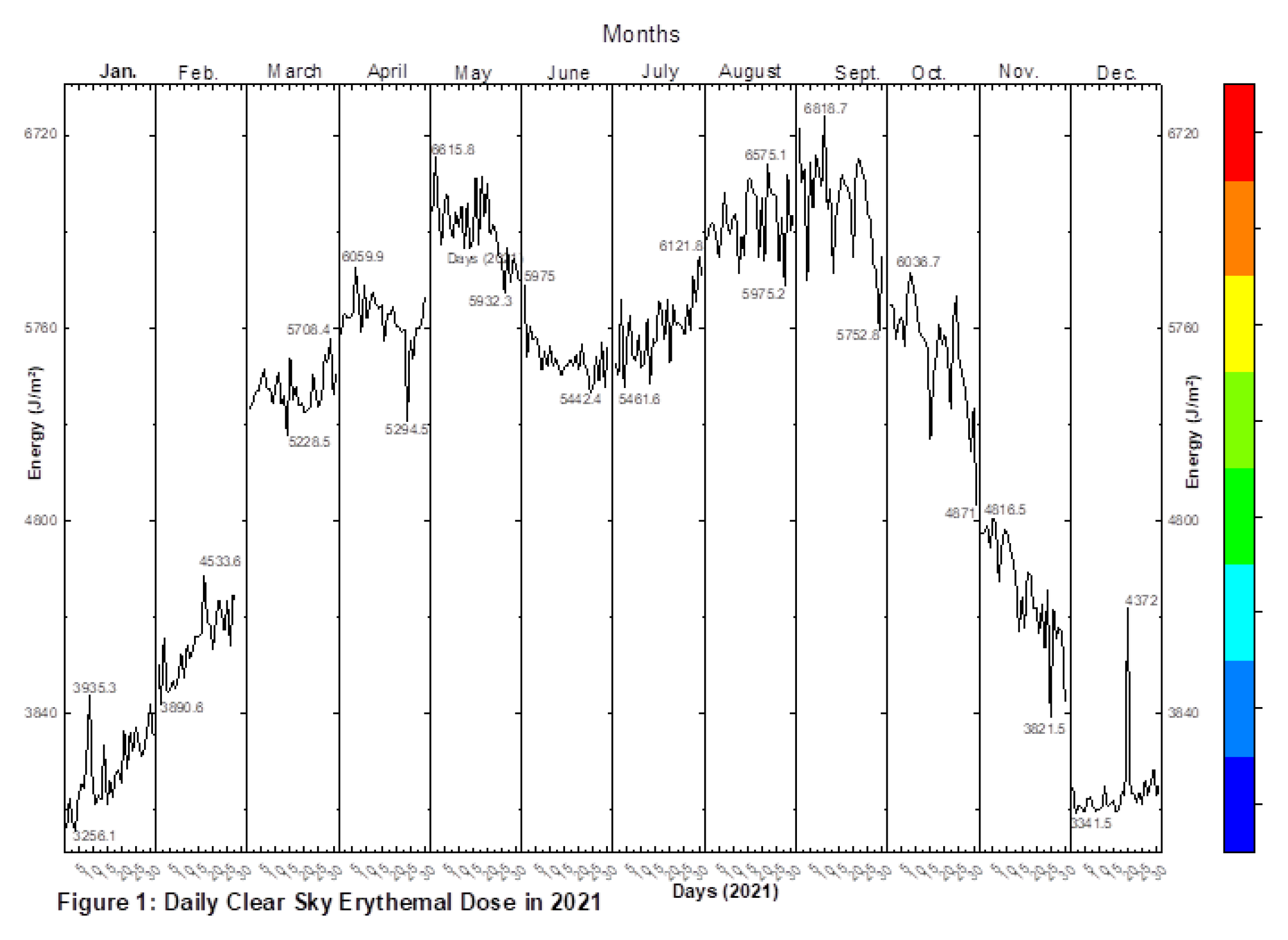
Figure 2.
Daily Clear Sky Erythemal Dose (CSED) in 2022.
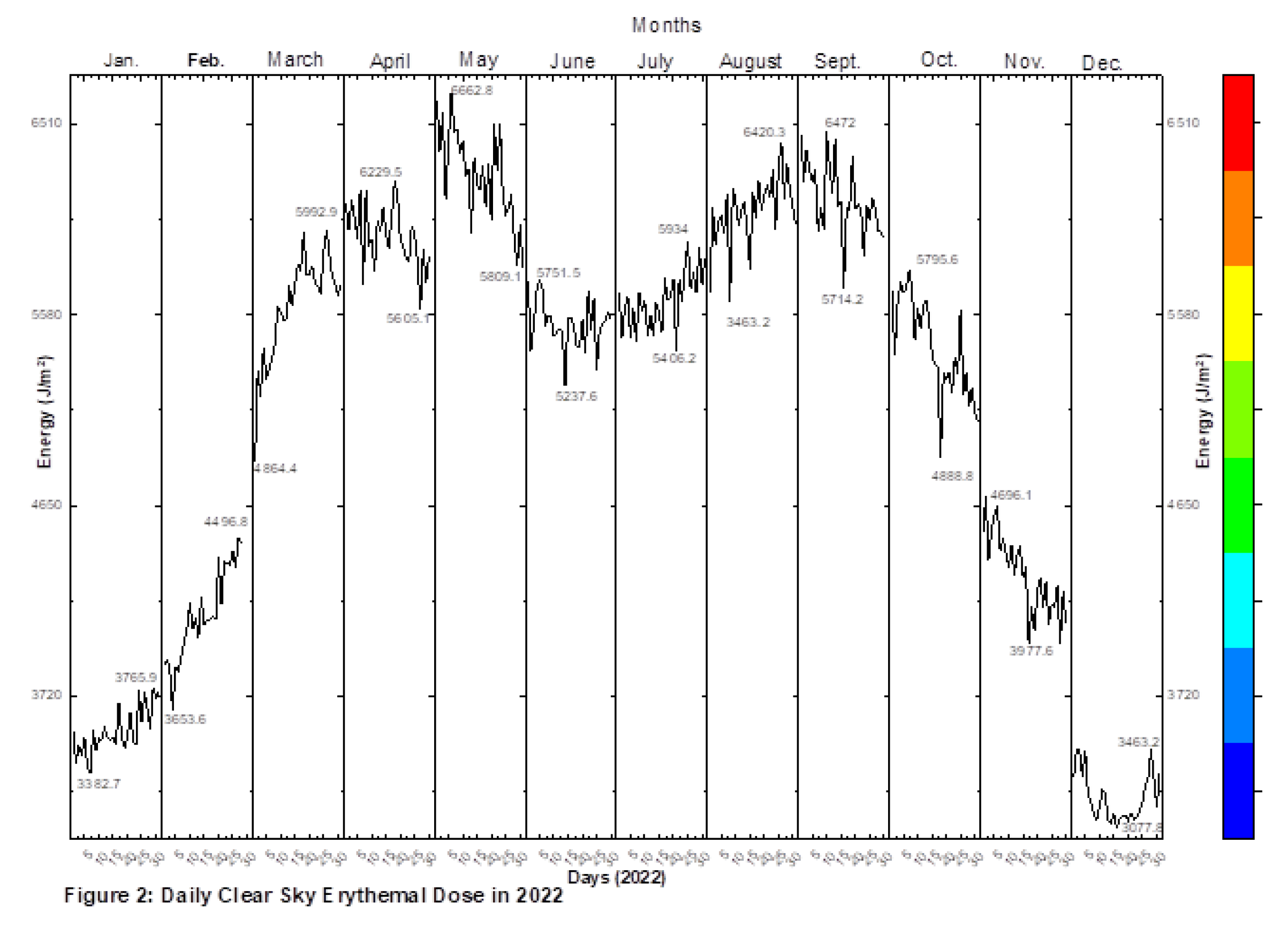
Figure 3.
Daily Clear Sky Erythemal Dose (CSED) in 2023.
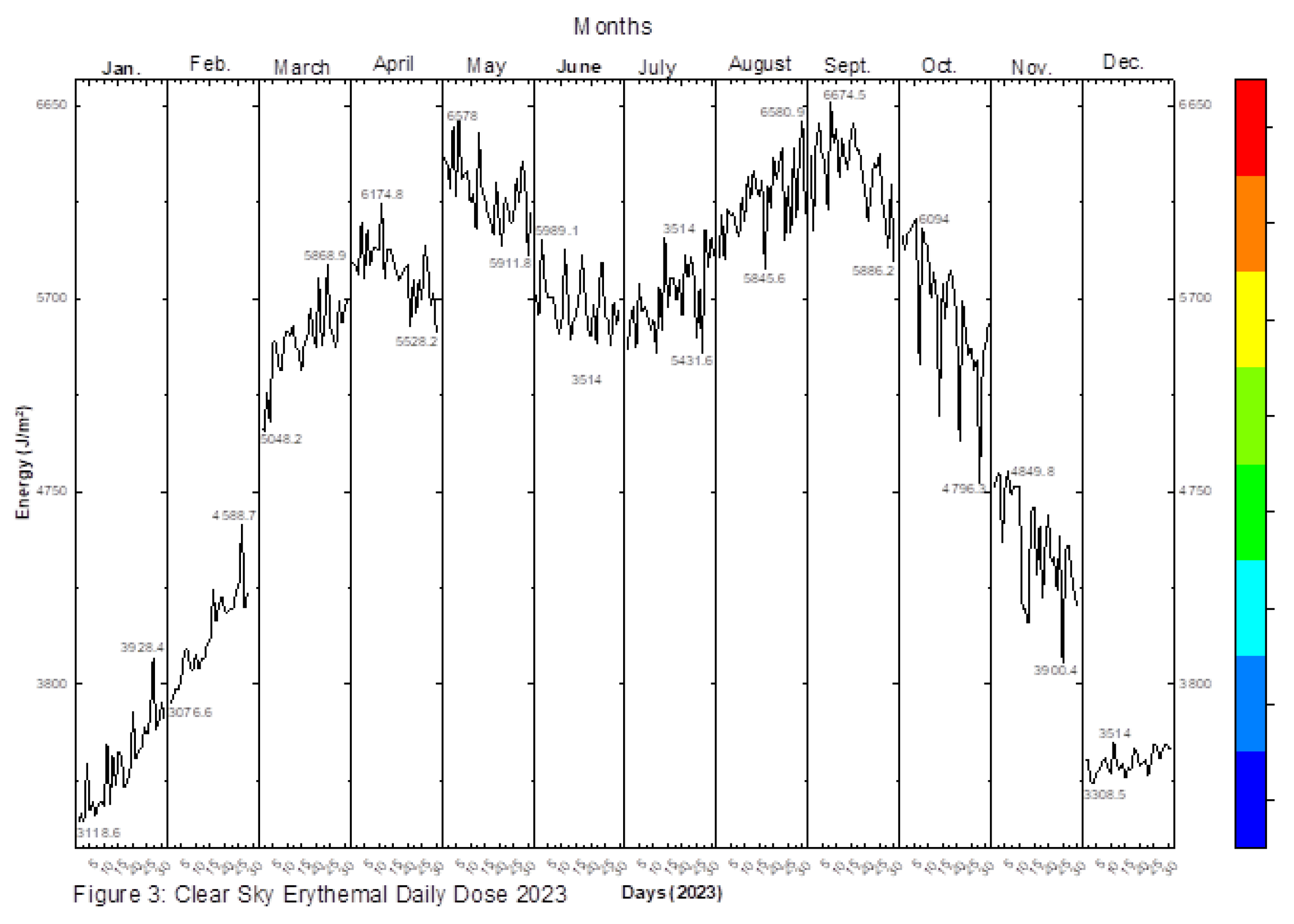
Figure 4.
Daily Clear Sky Erythemal Dose (CSED) in 2024.
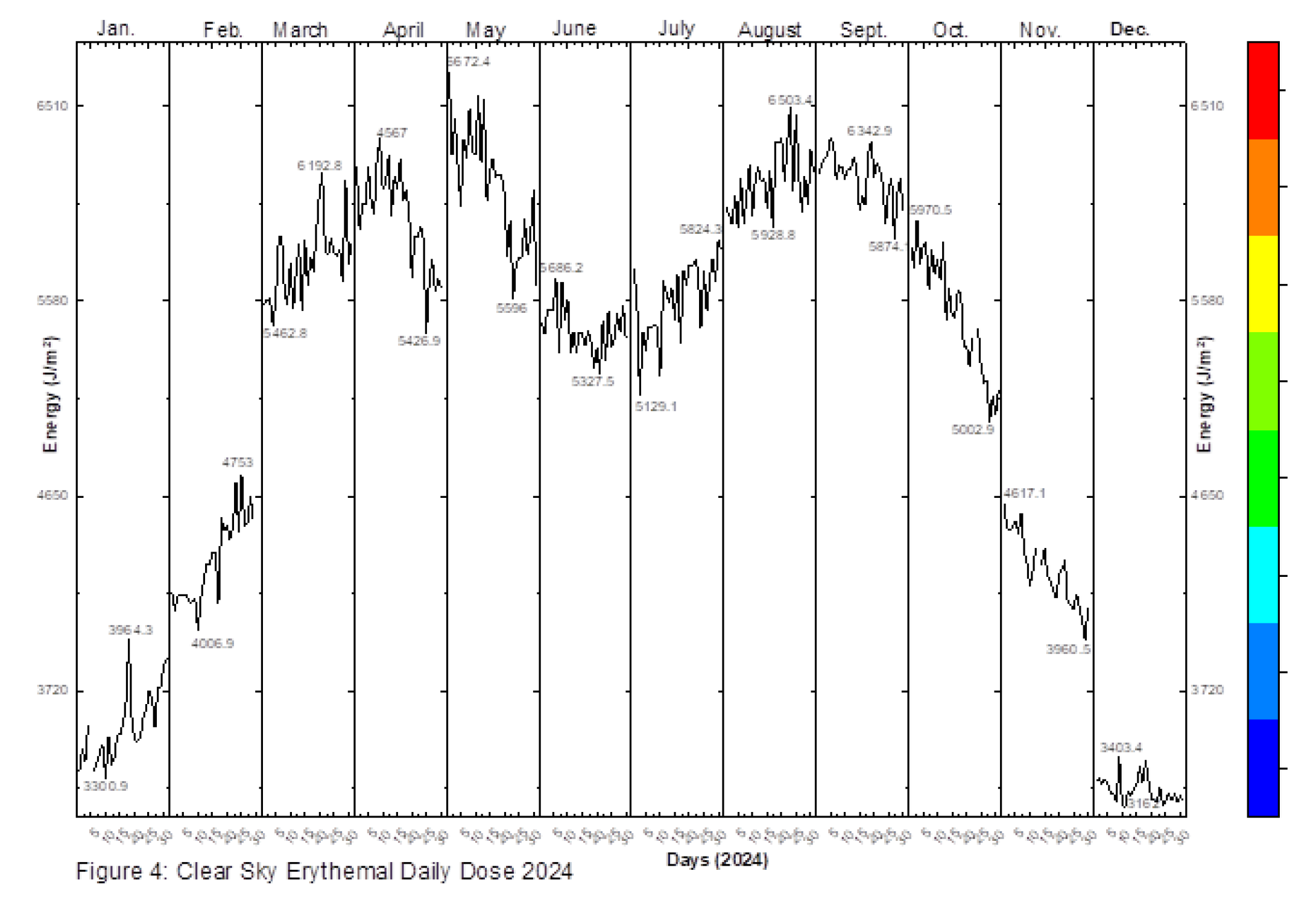
Figure 6.
USDA Production Estimates and Crop Assessment Division (PECAD).
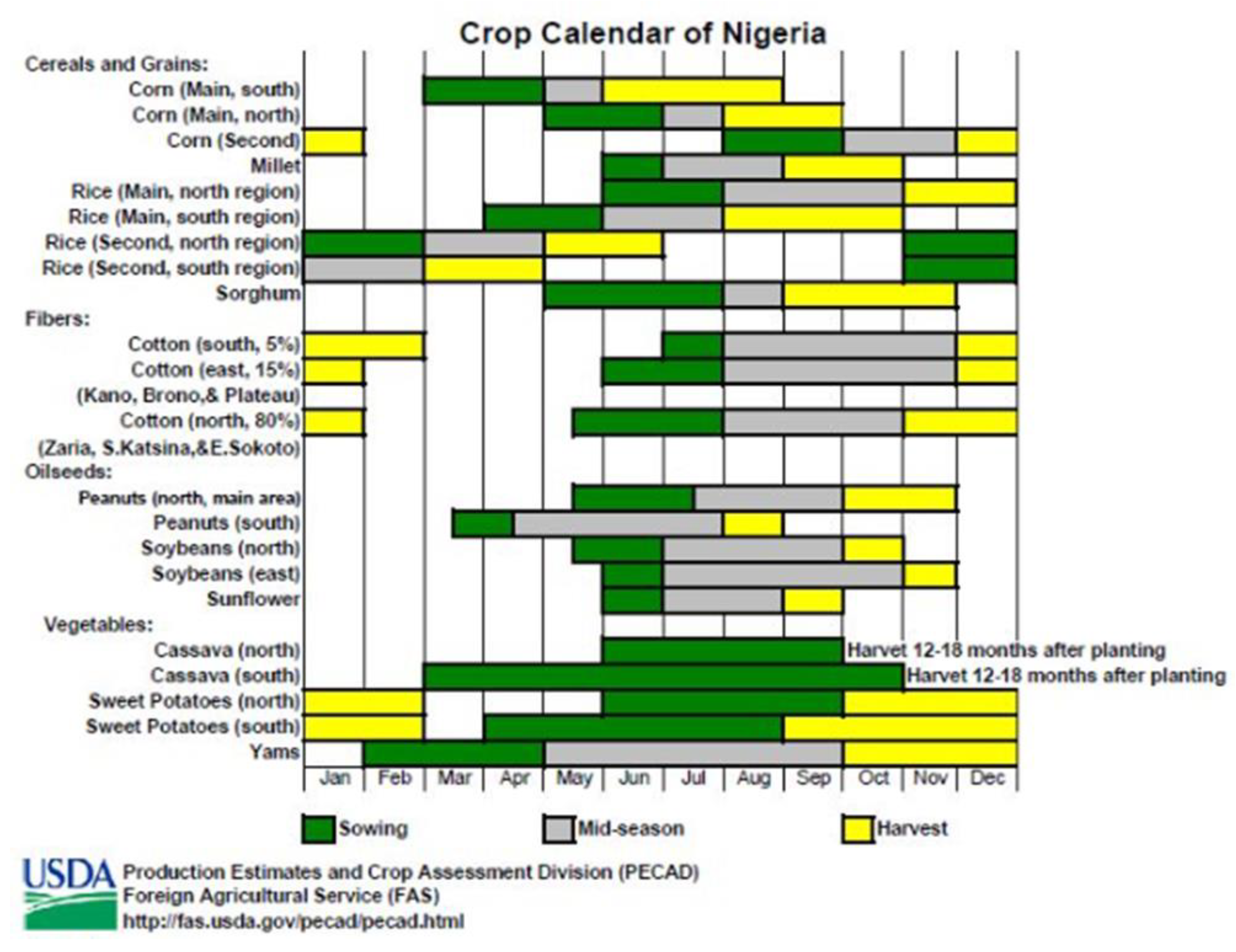
Figure 7.
Crop production growth in Nigeria from 1st quarter 2019 to 3rd quarter 2024.
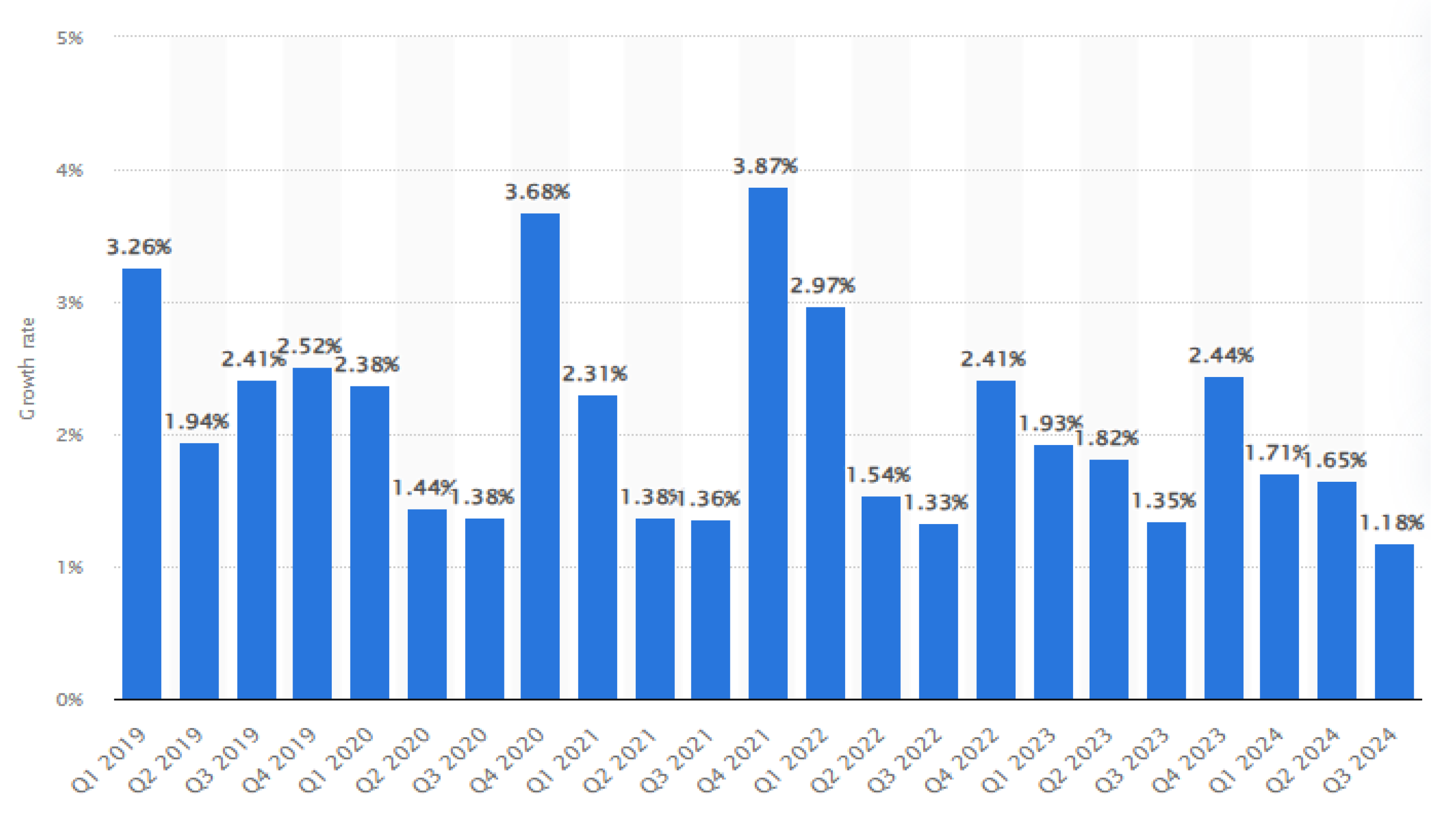
Figure 8.
GDP Distribution Across Economic Sectors (Statista).
Disclaimer/Publisher’s Note: The statements, opinions and data contained in all publications are solely those of the individual author(s) and contributor(s) and not of MDPI and/or the editor(s). MDPI and/or the editor(s) disclaim responsibility for any injury to people or property resulting from any ideas, methods, instructions or products referred to in the content. |
© 2026 by the authors. Licensee MDPI, Basel, Switzerland. This article is an open access article distributed under the terms and conditions of the Creative Commons Attribution (CC BY) license.
Copyright: This open access article is published under a Creative Commons CC BY 4.0 license, which permit the free download, distribution, and reuse, provided that the author and preprint are cited in any reuse.