

Submitted:
07 March 2026
Posted:
09 March 2026
Read the latest preprint version here
Abstract
What if cotton could grow already colored — eliminating the need for dyes altogether? Today nearly all cotton is harvested white and later dyed using chemical processes that account for roughly 17–20% of global industrial water pollution. Billions of liters of water and large quantities of synthetic chemicals are used each year simply to give fabrics their color. This work explores a transformative alternative: cotton that produces its own colors while growing. We present a unified biological design framework for cotton fibers capable of naturally producing six shades — the existing brown and green, along with engineered pink, blue, and, for the first time, black cotton. Instead of dyeing fabric after harvest, the plant itself is programmed to create pigments directly inside the fiber. A key innovation is a dual-pigment strategy that enables the production of black cotton by combining two natural pigment systems commonly found in plants and biological materials. By carefully activating these pathways only in the developing fiber, the plant can generate stable coloration without affecting normal growth. Beyond proposing the concept, this study provides a practical roadmap for turning naturally colored cotton into a real agricultural technology. The framework outlines the full journey from laboratory design to field deployment, including gene construction, plant transformation, greenhouse testing, field trials, regulatory approval, and large-scale seed production. Methods for combining color traits with existing pest-resistant cotton varieties are also discussed to ensure compatibility with modern farming. If successfully implemented, naturally colored cotton could dramatically reduce the environmental footprint of the textile industry by eliminating large portions of the dyeing process. In the long term, this approach points toward a future where the colors of clothing are not manufactured in factories but grown directly in the field.
Keywords:
Bt-cotton
; naturally colored cotton
; black cotton
; anthocyanin biosynthesis
; melanin
; proanthocyanidins
; fiber pigmentation
; genetic engineering
; CRISPR/Cas9
; lab-to-field translation
; sustainable textiles
; polyphenol oxidase
; gene stacking
1. Introduction
Cotton is a cornerstone of the global textile economy. Approximately 25 million tonnes of raw cotton lint are produced annually across more than 80 countries, with India, China, the United States, Brazil, and Pakistan accounting for over 75% of world output [1]. The fiber — derived from epidermal trichomes on the seed coat of Gossypium species — is spun into yarn and woven or knitted into fabrics for clothing, home furnishings, medical textiles, and industrial applications.
Two transformative developments have reshaped cotton agriculture. First, the introduction of Bt-cotton in 1996 (USA) and 2002 (India), providing built-in resistance against lepidopteran pests through expression of Cry proteins from Bacillus thuringiensis [2]. Second, a renewed scientific and commercial interest in naturally colored cotton — varieties whose fibers accumulate pigments during development, eliminating post-harvest dyeing [3].
The environmental rationale is compelling. Textile dyeing accounts for an estimated 17–20% of global industrial water pollution and consumes ∼1.3 trillion liters of water annually [4]. Synthetic azo dyes, heavy metals, and finishing chemicals discharged into waterways cause ecological damage and health risks. A cotton plant whose fiber is already colored at harvest bypasses these polluting steps entirely.
Motivation: The modern textile dyeing industry is one of the largest sources of industrial water pollution worldwide. Conventional cotton fabrics are typically dyed after harvesting using synthetic dyes, chemical fixing agents, salts, and heavy-metal-containing additives. It is estimated that textile dyeing and finishing contribute nearly 17–20% of global industrial water pollution, releasing large volumes of untreated wastewater into rivers and agricultural land. These effluents often contain azo dyes, sulfide compounds, chromium, copper, and other toxic chemicals that persist in soil and aquatic ecosystems. In addition to contaminating freshwater resources, dyeing processes require extremely large quantities of water — often more than 100–150 liters of water per kilogram of fabric. The resulting wastewater can reduce oxygen levels in rivers, block sunlight penetration needed for aquatic life, and introduce carcinogenic compounds into the environment. Long-term discharge of such pollutants also degrades agricultural soils, affecting crop productivity and biodiversity. These environmental challenges provide a strong motivation for developing alternatives such as naturally colored cotton, where fibers are produced with inherent pigmentation during plant growth, thereby eliminating the need for chemical dyeing and significantly reducing water pollution. In this paper, we go further than previous reviews in several important ways. The specific novel contributions are detailed below.
1.1. Contributions of This Paper
This work makes four distinct contributions that, to the best of our knowledge, have not been previously reported together in the literature:
- 1.
- Black cotton as a new design target. We propose, for the first time, a dual-pathway genetic strategy to produce near-black cotton fiber by combining (a) eumelanin biosynthesis via heterologous expression of tyrosinase (TYR) from Streptomyces antibioticus and polyphenol oxidase (PPO) from Vitis vinifera, with (b) hyperaccumulation and laccase-catalyzed oxidative polymerization of proanthocyanidins in the fiber lumen. We specify the complete gene list, donor organisms, construct architecture (six transcription units in a Level 2 Golden Gate binary vector), and fiber-specific promoter assignments for this new target (Section 3.5, Table 2, Figure 3).
- 2.
- Unified six-color design framework. We present the first single paper that systematically covers the genetic design procedures for all six cotton fiber colors — white (reference), brown, green, pink, blue, and black — within one integrated biochemical pathway map (Figure 2), enabling direct comparison of gene requirements, donor organisms, and engineering complexity across the full color spectrum.
- 3.
- Reproducible bench-level laboratory protocols. Unlike previous reviews that describe strategies at a conceptual level, we provide step-by-step, experimentally reproducible protocols with specific reagents, concentrations, media compositions, instrument settings, and quantitative decision gates (Protocols 1.1–5.1). These cover: RNA-seq-based pathway profiling, codon-optimized gene synthesis, Golden Gate multigene assembly (Level 0 → Level 1 → Level 2), Agrobacterium-mediated transformation of cotton cv. Coker 312, tiered molecular screening (PCR, Southern blot, RT-qPCR, LC-MS/MS with diagnostic m/z values for each pigment class), and HVI fiber quality evaluation against defined threshold and target values.
- 4.
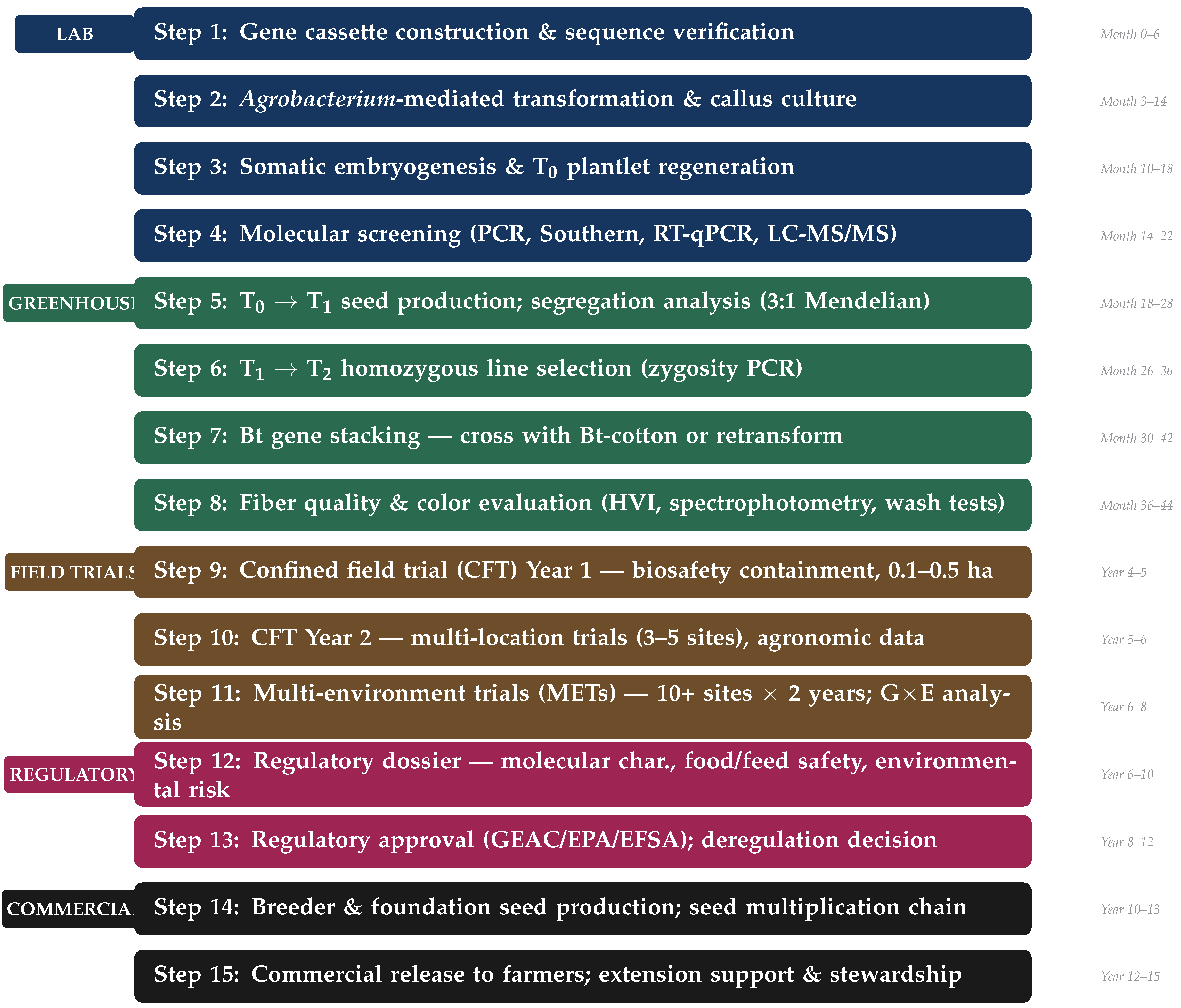
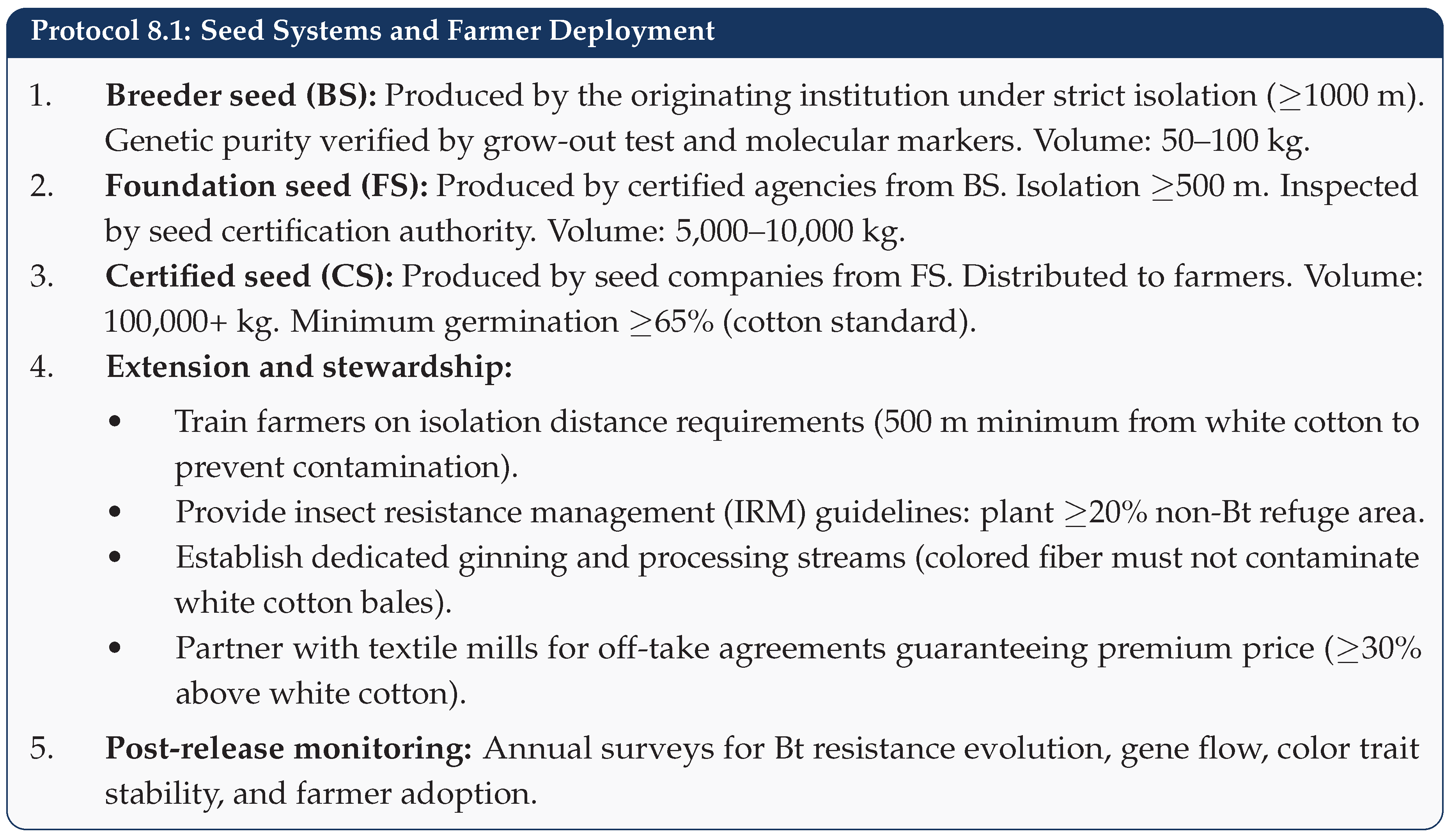
- Complete 15-step lab-to-field translational pipeline. We map the entire journey from T0 transgenic plant to commercial farmer deployment through 15 explicit stages spanning five phases — Laboratory, Greenhouse, Contained Field Trials, Regulatory, and Commercial — including protocols for confined field trial design (RCBD, biosafety monitoring), multi-environment G×E analysis (AMMI/GGE biplot), regulatory dossier content (molecular characterization, substantial equivalence, toxicity, allergenicity, environmental risk), seed multiplication chain (breeder → foundation → certified seed), and farmer extension with insect resistance management (Figure 4, Protocols 6.1–8.1). This operational-level translational detail has not been previously consolidated in a single colored-cotton publication.
The remainder of this paper is organized as follows: Section 2 reviews Bt-cotton technology; Section 3 describes the biochemistry of fiber pigmentation for all six colors; Section 4 presents the environmental rationale; Section 5–6 provide the laboratory protocols and translational pipeline; Section 7–8 cover breeding techniques and Bt-color stacking strategies; Section 9 presents comprehensive fiber comparisons; Section 10–12 discuss challenges, global research, and future directions; and Section 13 concludes.
2. Bt-Cotton: Mechanism, Generations, and Global Impact
2.1. Mechanism of Action
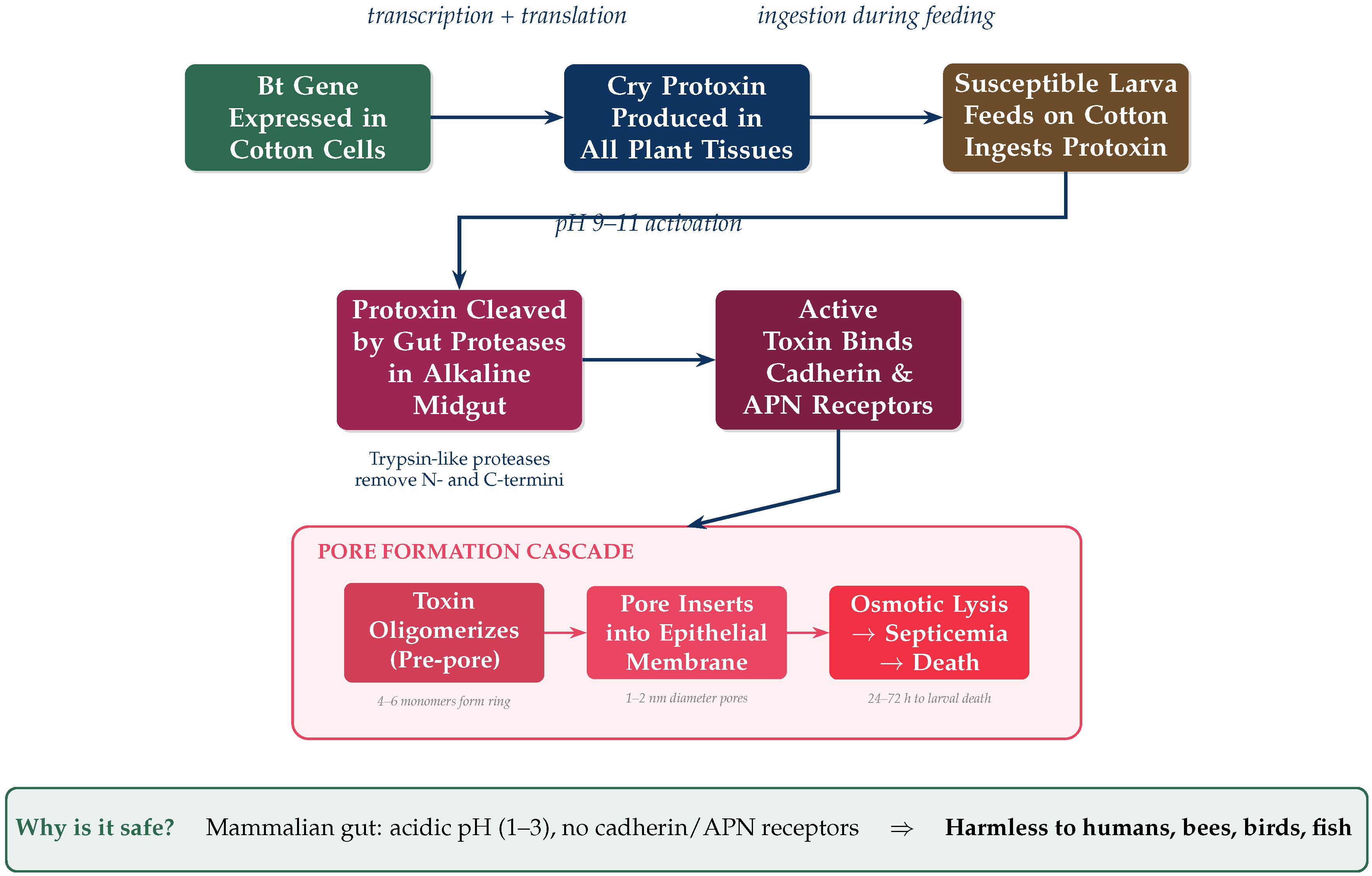
Bt-cotton expresses one or more crystalline (Cry) or vegetative insecticidal (Vip) proteins from Bacillus thuringiensis. When a susceptible lepidopteran larva — such as the American bollworm (Helicoverpa armigera) or pink bollworm (Pectinophora gossypiella) — feeds on Bt-cotton tissue, it ingests the Cry protoxin. In the insect’s alkaline midgut (pH 9–11), the protoxin is cleaved by gut proteases into an active toxin fragment. This fragment binds to cadherin and aminopeptidase-N receptors on midgut epithelial cells, inducing pore formation. The resulting osmotic imbalance leads to cell lysis, feeding cessation, septicemia, and larval death within 24–72 hours [2].
The Cry protein is highly specific: it requires the alkaline pH and receptor proteins found only in target insect guts. Mammalian guts are acidic (pH 1–3) and lack these receptors, making Cry proteins harmless to humans, livestock, birds, fish, and beneficial insects [5].
Figure 1.
Mechanism of Bt toxin action in lepidopteran larvae. The Cry protoxin expressed in cotton tissues is ingested by the feeding larva, activated by alkaline gut proteases, and binds specific midgut receptors. The expanded pore formation cascade (highlighted box) shows oligomerization of toxin monomers into a pre-pore complex, insertion of 1–2 nm pores into the epithelial membrane, and the resulting osmotic lysis leading to septicemia and larval death within 24–72 hours. The mechanism is highly specific to target insects due to the requirement for alkaline pH and specific receptor proteins absent in mammals and beneficial insects.
Figure 1.
Mechanism of Bt toxin action in lepidopteran larvae. The Cry protoxin expressed in cotton tissues is ingested by the feeding larva, activated by alkaline gut proteases, and binds specific midgut receptors. The expanded pore formation cascade (highlighted box) shows oligomerization of toxin monomers into a pre-pore complex, insertion of 1–2 nm pores into the epithelial membrane, and the resulting osmotic lysis leading to septicemia and larval death within 24–72 hours. The mechanism is highly specific to target insects due to the requirement for alkaline pH and specific receptor proteins absent in mammals and beneficial insects.
2.2. Generations of Bt Genes

Table 1.
Evolution of Bt gene deployment in commercial cotton.
| Generation | Gene(s) | Protein(s) | Target Pests | Year |
|---|---|---|---|---|
| Bt-I (Bollgard I) | cry1Ac | Cry1Ac | H. armigera, H. zea | 1996 |
| Bt-II (Bollgard II) | cry1Ac + cry2Ab | Cry1Ac + Cry2Ab | Broader Heliothinae; delays resistance | 2006 |
| Bt-III (TwinLink+) | cry1Ab + cry2Ae + vip3Aa | Cry1Ab + Cry2Ae + Vip3Aa | Very broad; multi-mode action | 2019 |
| Stacked events | cry1F + cry1Ac + HT genes | Cry1F + Cry1Ac + herbicide tol. | Bollworms + herbicide tolerance | Various |
2.3. Global Impact
Bt-cotton has been adopted across 15+ countries on over 25 million hectares. In India, where adoption exceeded 95% of the cotton area by 2014, Bt-cotton reduced insecticide use by ∼30–40% and increased lint yield by ∼30% [6]. Cumulative economic benefits to Indian farmers have been estimated at over USD 67 billion (2002–2020) [7]. Challenges including bollworm resistance evolution and secondary pest outbreaks remain active areas of management [8].
3. Biochemical Basis of Cotton Fiber Pigmentation
Cotton fiber color is determined by pigment molecules that accumulate in the secondary cell wall and/or the lumen of the fiber cell during boll maturation. We describe six target colors, including black as a new engineering goal.
3.1. Brown: Condensed Tannins (Proanthocyanidins)
Brown fiber results from condensed tannins (CTs) — oligomeric/polymeric flavonoids synthesized via the phenylpropanoid–flavonoid pathway. The branch-point enzymes are leucoanthocyanidin reductase (LAR, producing catechin) and anthocyanidin reductase (ANR, producing epicatechin). These monomers polymerize and oxidize to brown complexes in the fiber lumen. Shade depends on polymerization degree, catechin/epicatechin ratio, and oxidation state [9]. The TT2 (MYB), TT8 (bHLH), and TTG1 (WD40) transcription factors form the MBW complex that activates PA biosynthetic genes [10].
3.2. Green: Suberin–Caffeic Acid Complexes
Green fiber is not caused by chlorophyll. It results from suberin and wax deposits complexed with caffeic acid and hydroxycinnamic acids in the secondary cell wall [11]. The CYP86 cytochrome P450 family and fatty acid elongase (FAE) enzymes are key. Green fibers darken upon washing (exposure of deeper pigmented layers), unlike dyed fabrics that fade [12].
3.3. Pink / Red: Cyanidin-Type Anthocyanins
Pink/red hues derive from cyanidin-type anthocyanins produced by DFR acting on dihydroquercetin, followed by ANS and glycosyltransferases (3-GT). The fiber vacuolar pH (typically 4–5) shifts anthocyanins toward red; achieving stable pink requires co-pigmentation engineering and pH control [13].
3.4. Blue / Purple: Delphinidin-Type Anthocyanins
Blue requires delphinidin, which differs from cyanidin by an additional 5’-hydroxyl group on the B-ring. This hydroxylation requires flavonoid 3’,5’-hydroxylase (F3’5’H), absent from the cotton genome. A heterologous F3’5’H gene must be sourced from blue flowers (Clitoria ternatea, Petunia, Viola). Vacuolar pH must be raised above 6.0 (via Na+/H+ antiporters) for the blue quinoidal form [14,15].
3.5. Black: Melanin + Oxidized Proanthocyanidin Hyperaccumulation

Black cotton is a new design target not previously reported in the literature. We propose a dual-pathway strategy combining melanin biosynthesis with proanthocyanidin hyperaccumulation and enzymatic oxidation. Black is the most technically ambitious target color. No naturally occurring cotton produces truly black fiber. We propose achieving black through a dual-pathway strategy:
Pathway 1: Melanin biosynthesis. Melanin is the pigment responsible for black/dark brown coloration in many organisms (human skin, squid ink, fungal spores). The pathway begins with tyrosine, which is oxidized to DOPA (3,4-dihydroxyphenylalanine) by tyrosinase (TYR), then to dopaquinone, which spontaneously polymerizes into eumelanin (black–brown) or pheomelanin (red–yellow). For black cotton, we target eumelanin production by introducing:
- Tyrosinase gene (TYR) from Streptomyces antibioticus (bacterial tyrosinase with high activity and thermal stability) or Agaricus bisporus (mushroom tyrosinase).
- Polyphenol oxidase (PPO) from Vitis vinifera (grape) or cotton’s own GhPPO genes, overexpressed under a fiber-specific promoter to catalyze oxidative browning of phenolic substrates toward melanin precursors.
- 4-hydroxyphenylpyruvate dioxygenase (HPPD) for enhanced tyrosine pool in fiber cells.
Pathway 2: Proanthocyanidin hyperaccumulation + oxidation. Simultaneously, the proanthocyanidin pathway is hyperactivated by overexpressing the MBW transcription factor complex (TT2+TT8+TTG1) to flood the fiber lumen with condensed tannins. A laccase gene (LAC) from Trametes versicolor (white-rot fungus) is co-expressed to catalyze oxidative polymerization of these tannins into high-molecular-weight, deeply dark complexes.
Combined effect: The co-deposition of eumelanin in the cell wall and heavily oxidized, high-MW proanthocyanidins in the lumen produces an opaque, near-black fiber. The two pigment systems operate independently, providing color redundancy and deepening.
Table 2.
Gene requirements for black cotton: dual-pathway strategy.
| Pathway | Gene | Source Organism | Function |
|---|---|---|---|
| Melanin | TYR | S. antibioticus | Tyrosinase: Tyr → DOPA → dopaquinone |
| Melanin | PPO | V. vinifera / GhPPO | Polyphenol oxidase: broad phenolic oxidation |
| Melanin | HPPD | A. thaliana | Boosts tyrosine precursor pool |
| PA accum. | TT2+TT8+TTG1 | A. thaliana / Medicago | MBW complex: activates PA biosynthesis |
| PA oxidation | LAC | T. versicolor | Laccase: oxidative tannin polymerization |
3.6. Summary: Six Target Colors
Table 3.
Complete pigment summary for all six cotton fiber color targets.
| Color | Pigment Class | Key Genes | Natural? | Status |
|---|---|---|---|---|
| White | None (bleached) | — | Yes | Global standard |
| Brown | Condensed tannins | LAR, ANR, TT2/TT8 | Yes | Commercial (niche) |
| Green | Suberin–caffeic acid | CYP86, FAE | Yes | Commercial (niche) |
| Pink | Cyanidin anthocyanins | DFR, ANS, 3-GT | Partial | Breeding / R&D |
| Blue | Delphinidin anthocyanins | F3’5’H, DFR, ANS, pH mod. | No | Transgenic R&D |
| Black | Melanin + oxidized PAs | TYR, PPO, LAC, MBW | No | Proposed (this paper) |
Figure 2.
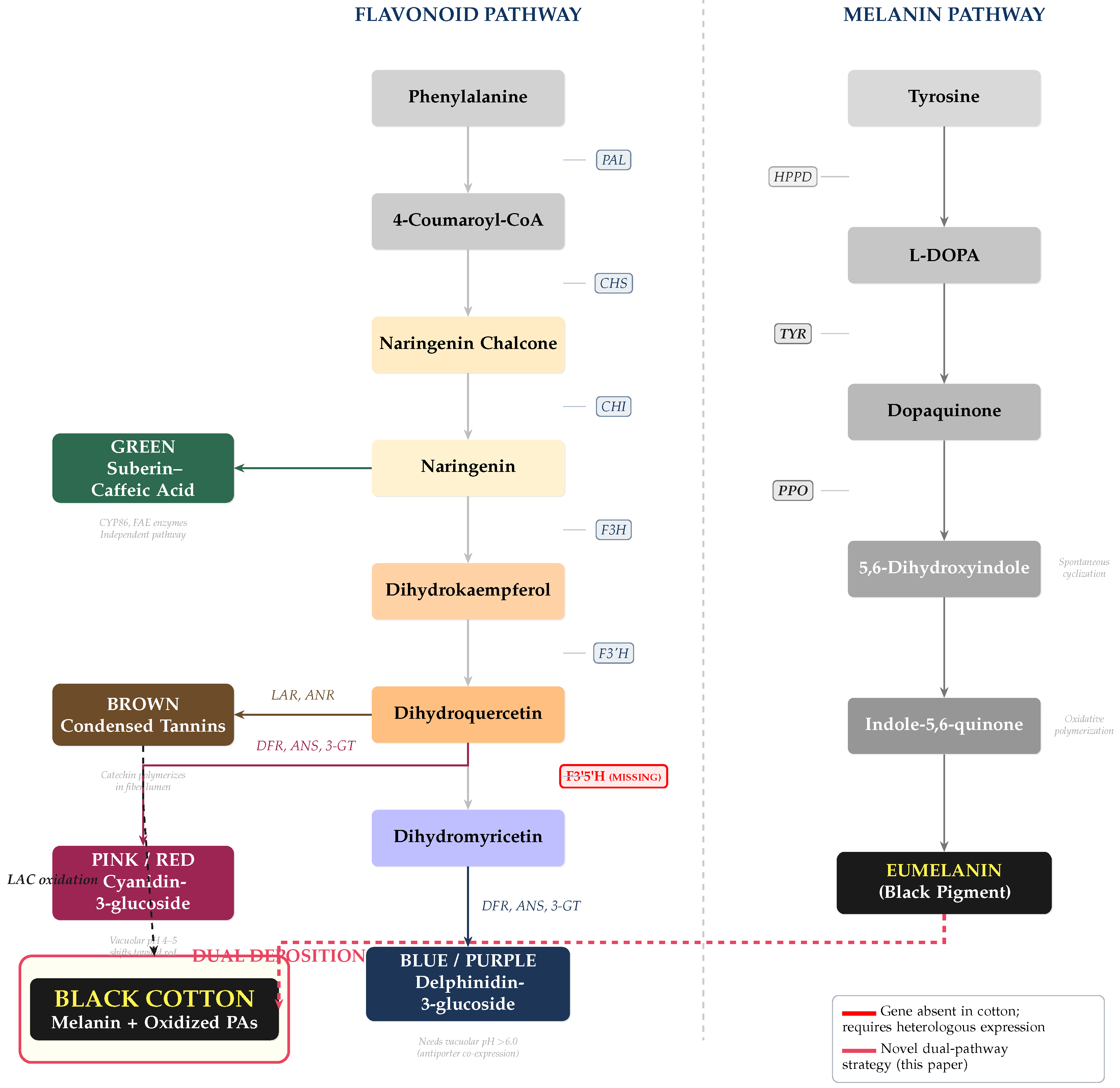
Unified biosynthetic pathway map for all six cotton fiber color targets. Left: The flavonoid pathway branches toward brown (tannins via LAR/ANR), pink (cyanidin via DFR/ANS), and blue (delphinidin via DFR/ANS, requiring heterologous F3’5’H, red label). Green arises independently. Right: The melanin pathway converts tyrosine to eumelanin. Black cotton (highlighted) uses dual deposition of eumelanin and laccase-oxidized proanthocyanidins. Abbreviations: PAL, phenylalanine ammonia-lyase; CHS, chalcone synthase; CHI, chalcone isomerase; F3H, flavanone 3-hydroxylase; F3’H/F3’5’H, flavonoid hydroxylases; DFR, dihydroflavonol 4-reductase; ANS, anthocyanidin synthase; 3-GT, glucosyltransferase; LAR, leucoanthocyanidin reductase; ANR, anthocyanidin reductase; TYR, tyrosinase; PPO, polyphenol oxidase; HPPD, hydroxyphenylpyruvate dioxygenase; LAC, laccase.
Figure 2.
Unified biosynthetic pathway map for all six cotton fiber color targets. Left: The flavonoid pathway branches toward brown (tannins via LAR/ANR), pink (cyanidin via DFR/ANS), and blue (delphinidin via DFR/ANS, requiring heterologous F3’5’H, red label). Green arises independently. Right: The melanin pathway converts tyrosine to eumelanin. Black cotton (highlighted) uses dual deposition of eumelanin and laccase-oxidized proanthocyanidins. Abbreviations: PAL, phenylalanine ammonia-lyase; CHS, chalcone synthase; CHI, chalcone isomerase; F3H, flavanone 3-hydroxylase; F3’H/F3’5’H, flavonoid hydroxylases; DFR, dihydroflavonol 4-reductase; ANS, anthocyanidin synthase; 3-GT, glucosyltransferase; LAR, leucoanthocyanidin reductase; ANR, anthocyanidin reductase; TYR, tyrosinase; PPO, polyphenol oxidase; HPPD, hydroxyphenylpyruvate dioxygenase; LAC, laccase.
4. Environmental and Health Rationale
4.1. Environmental Impact of Textile Dyeing
Table 4.
Environmental comparison: dyed white cotton vs. naturally colored cotton.
| Parameter | White + Dyeing | Colored Cotton |
|---|---|---|
| Water use for coloring | 100–150 L/kg fabric | 0 L |
| Chemical discharge | Azo dyes, heavy metals, formaldehyde | None |
| Energy (coloring step) | High (90–100°C dye baths) | None |
| Worker health risk | Dermatitis, respiratory illness, cancer | Minimal |
| Color durability | Fades with washing | Stable or deepens |
| CO2 footprint (coloring) | 5–8 kg CO2/kg fabric | ∼0 kg |
4.2. Health and Hypoallergenic Properties
Synthetic textile dyes — particularly disperse and azo dyes — are recognized contact allergens causing textile dermatitis in an estimated 1–3% of the population [16]. Naturally colored cotton is free of synthetic additives, making it suitable for infants, surgical patients, and individuals with atopic dermatitis [17].
5. Genetic Design Procedures: Rigorous Laboratory Protocols
This section provides step-by-step protocols with sufficient detail for direct reproduction in a molecular biology laboratory.
5.1. Step 1: Target Pathway Identification
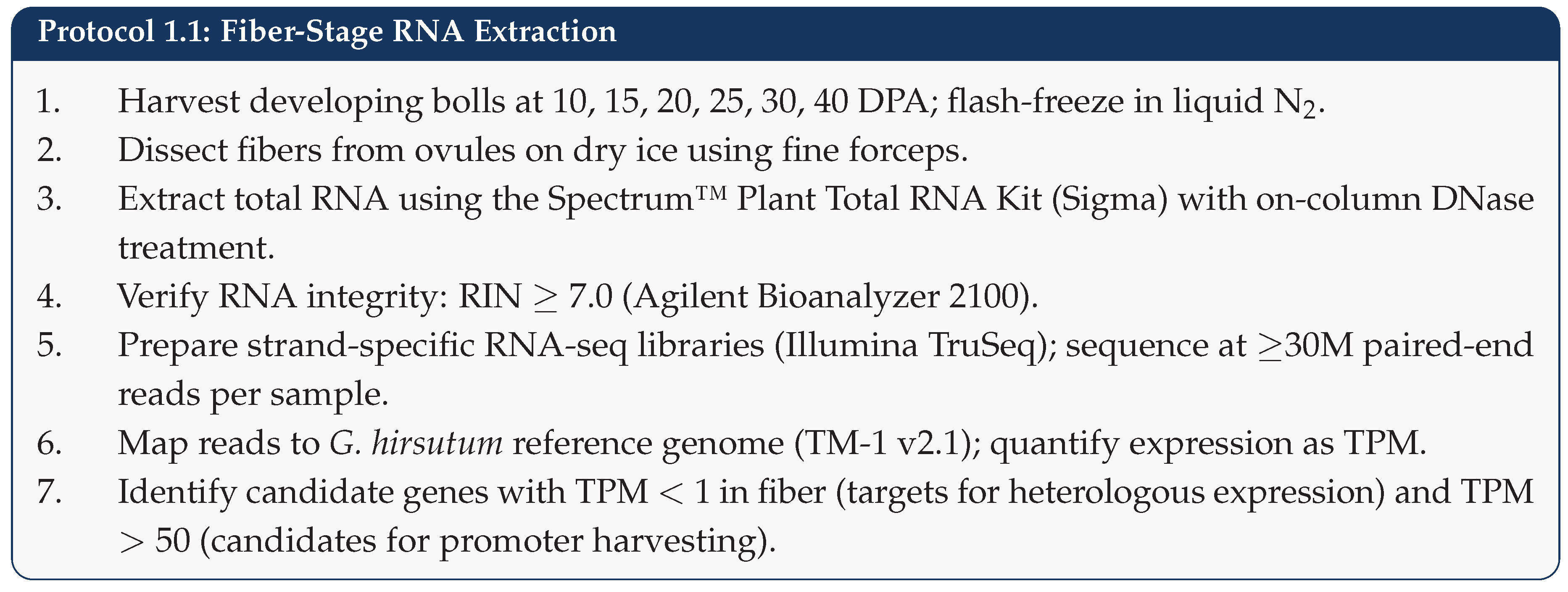
For each target color, determine the branch of metabolism to engineer (Table 3). Perform transcriptomic analysis (RNA-seq) of developing cotton fibers at 10, 15, 20, 25, 30, and 40 DPA (days post-anthesis) to establish baseline expression of flavonoid, phenylpropanoid, and melanin pathway genes. This identifies which endogenous genes are active and which must be supplied heterologously.
5.2. Step 2: Gene Sourcing and Synthesis
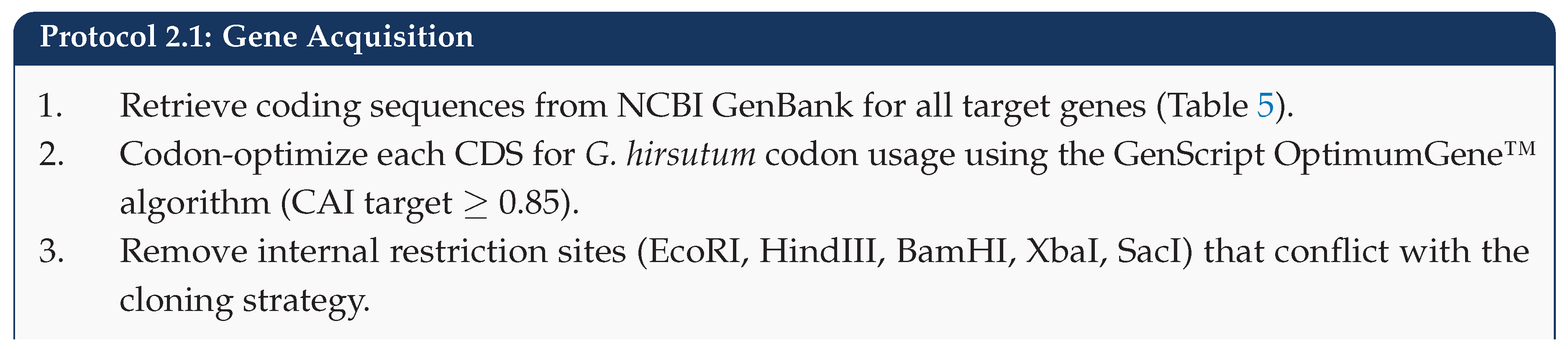

Table 5.
Gene sourcing strategy for each target color.
| Color | Gene(s) Needed | Donor Organism | Function |
|---|---|---|---|
| Blue | F3’5’H; pH modifier | Clitoria ternatea; Ipomoea nil | 5’-hydroxylation; vacuolar alkalinization |
| Pink | High-expression DFR, ANS | Antirrhinum majus; Gerbera hybrida | Anthocyanidin synthesis |
| Deep brown | TT2, TT8, TTG1 | Arabidopsis thaliana; Medicago truncatula | MBW transcription factor complex |
| Green | CYP86A; FAE | Cotton native genes (promoter engineering) | Suberin biosynthesis enhancement |
| Black | TYR, PPO, HPPD, MBW complex, LAC | S. antibioticus; V. vinifera; A. thaliana; T. versicolor | Melanin + hyperaccumulated oxidized PAs |
5.3. Step 3: Gene Cassette Construction
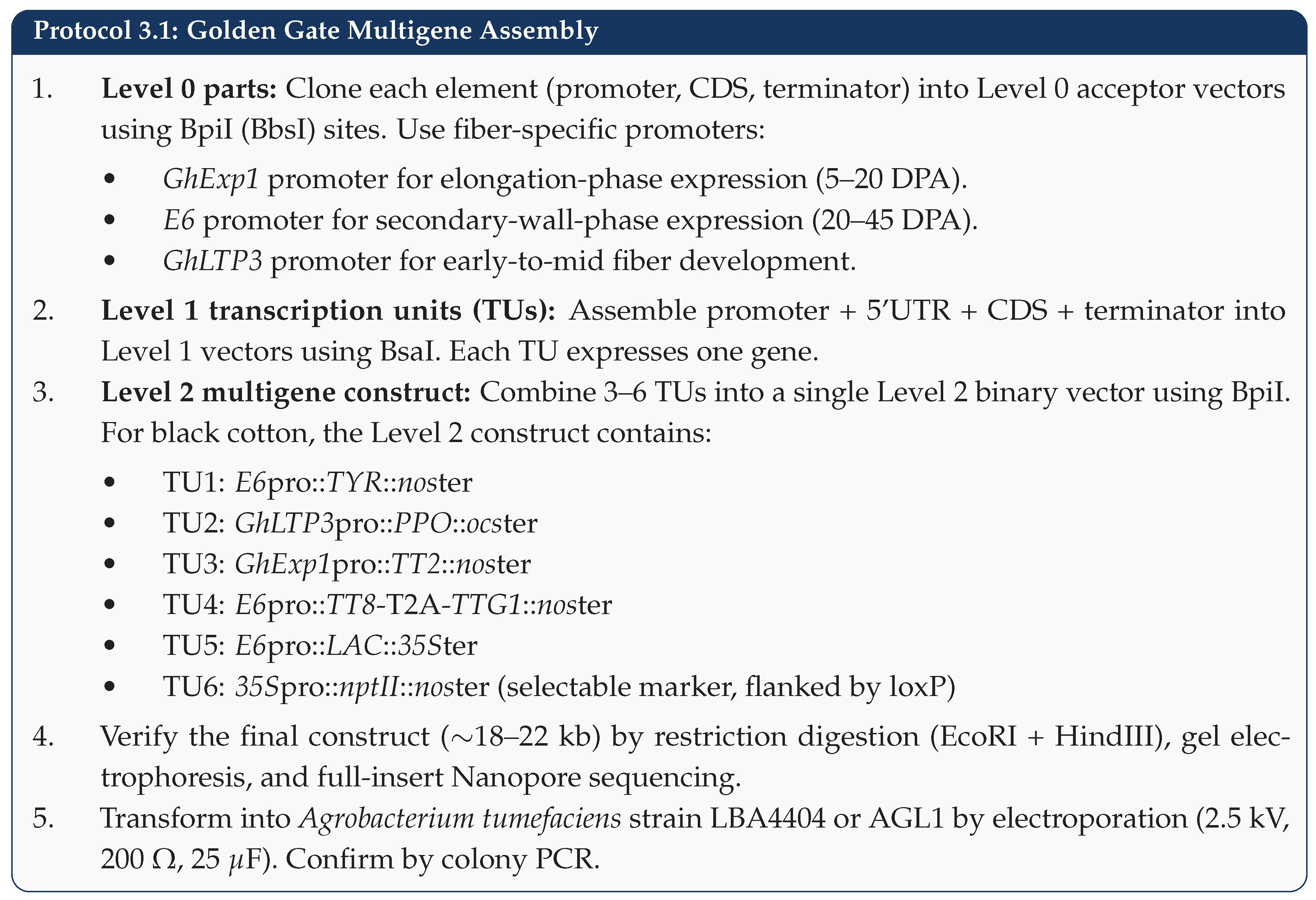
Figure 3.
Schematic of the Level 2 multigene construct for black cotton showing six transcription units (TUs) within the T-DNA region. Each TU is driven by a fiber-specific promoter (labeled below). The selectable marker (nptII) is flanked by loxP sites for subsequent Cre-mediated excision.
Figure 3.
Schematic of the Level 2 multigene construct for black cotton showing six transcription units (TUs) within the T-DNA region. Each TU is driven by a fiber-specific promoter (labeled below). The selectable marker (nptII) is flanked by loxP sites for subsequent Cre-mediated excision.

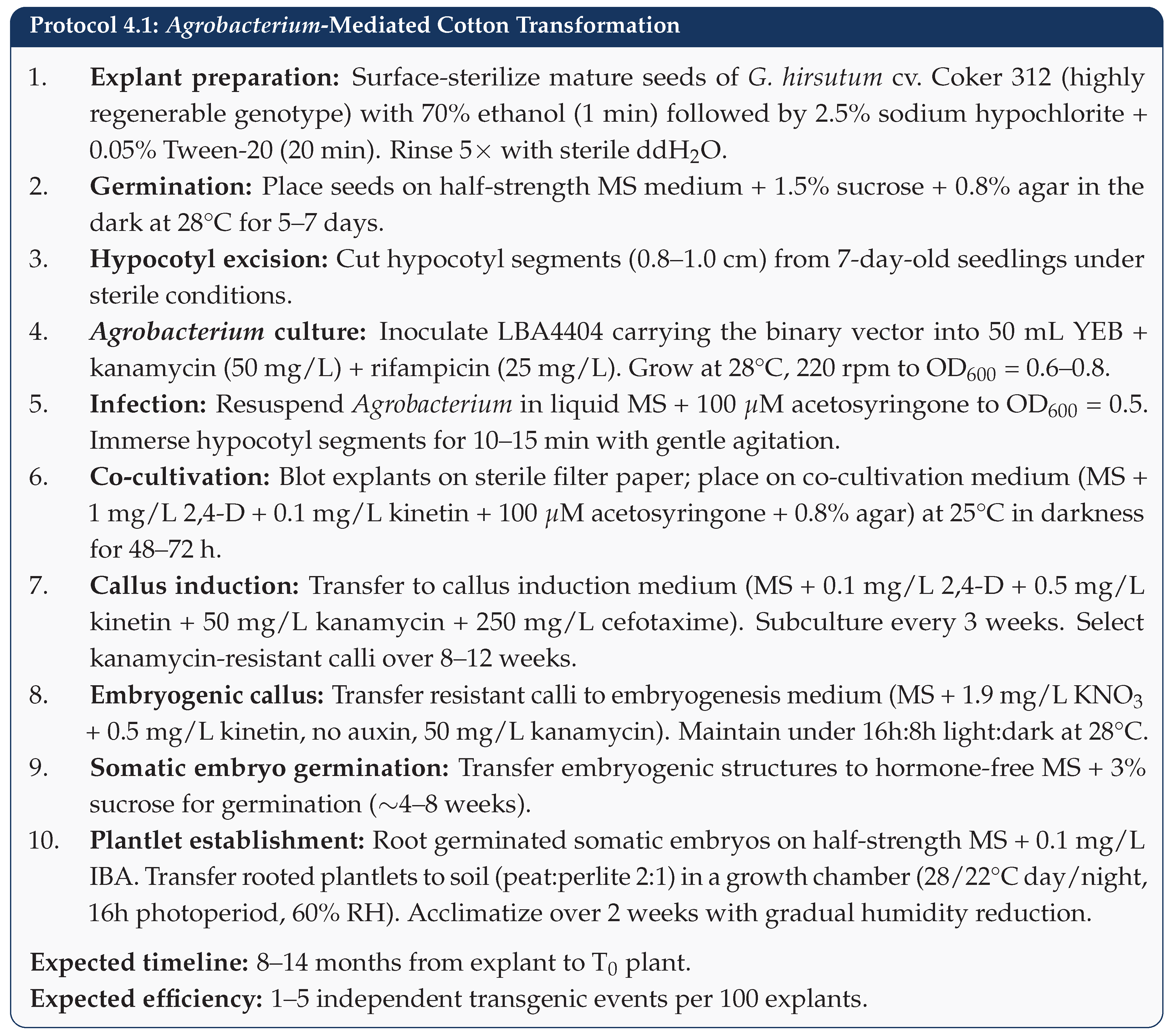
5.4. Step 4: Cotton Transformation
5.5. Step 5: Molecular Screening and Selection
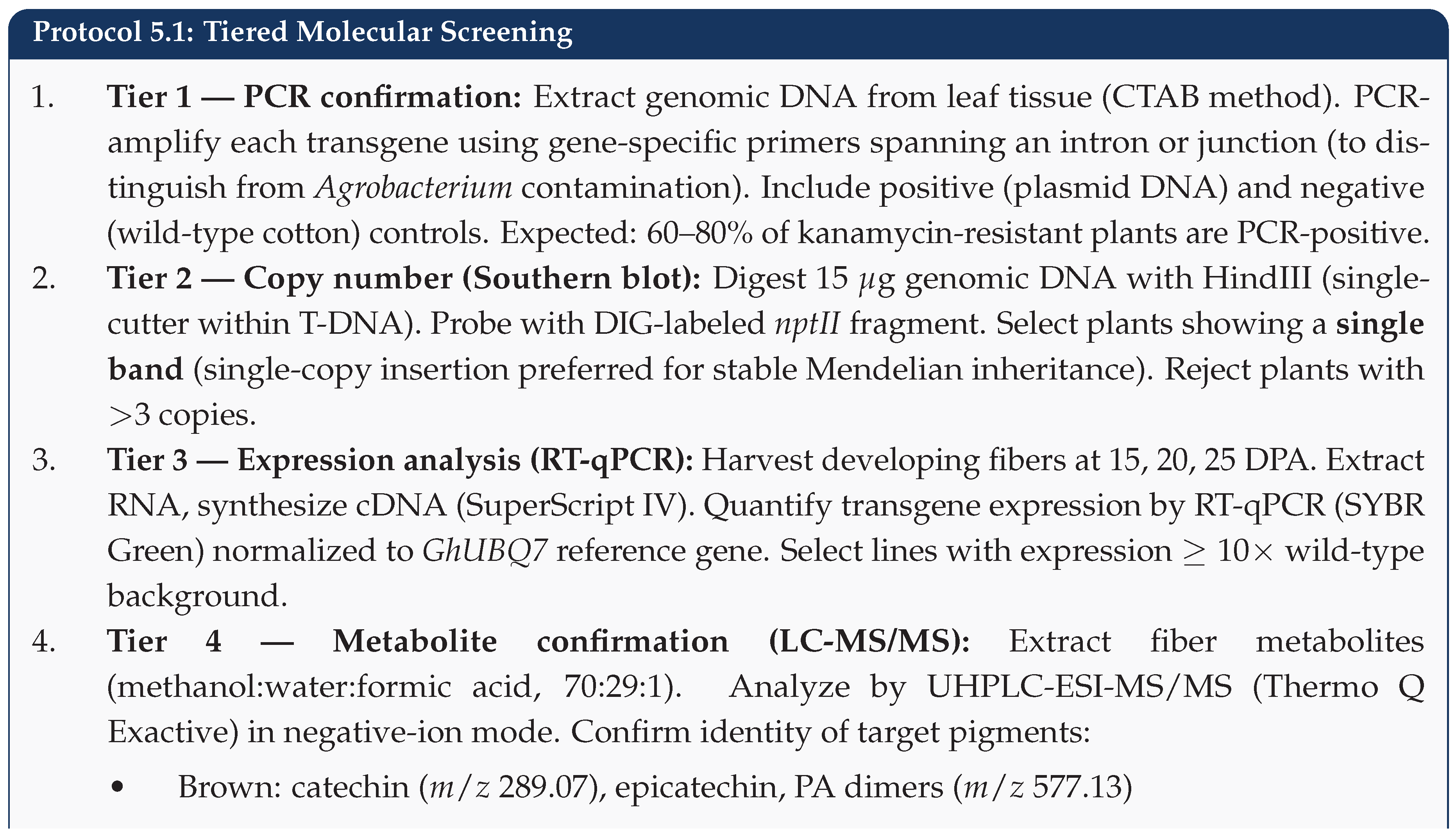
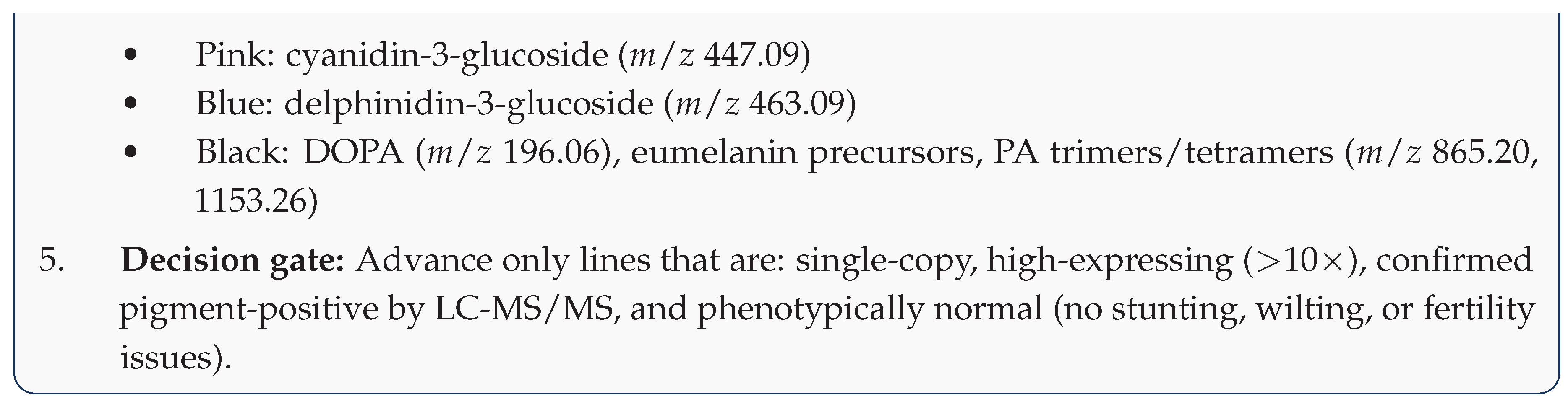
5.6. Step 6: Fiber Quality Evaluation
Table 6.
Fiber quality parameters for colored cotton evaluation.
| Parameter | Method / Unit | Minimum | Target |
|---|---|---|---|
| Upper half mean length (UHML) | HVI / mm | 25 | >28 |
| Fiber strength (tenacity) | HVI / g/tex | 20 | >26 |
| Micronaire (fineness) | HVI / Mic units | 3.5–4.9 | 3.8–4.5 |
| Uniformity index | HVI / % | >80 | >83 |
| Color intensity | Spectrophotometer (L*a*b*) | Visually distinct | Saturated, uniform |
| Wash fastness | ISO 105-C06 (grade 1–5) | Grade 3 | Grade 4–5 |
| Light fastness | ISO 105-B02 (grade 1–8) | Grade 4 | Grade 6+ |
6. Lab to Field: The Complete Translational Pipeline

Figure 4.
Complete 15-step lab-to-field translational pipeline for colored Bt-cotton, showing five phases (Laboratory, Greenhouse, Field Trials, Regulatory, Commercial) with indicative timelines. Total duration: 8–15 years depending on regulatory jurisdiction and breeding complexity.
Figure 4.
Complete 15-step lab-to-field translational pipeline for colored Bt-cotton, showing five phases (Laboratory, Greenhouse, Field Trials, Regulatory, Commercial) with indicative timelines. Total duration: 8–15 years depending on regulatory jurisdiction and breeding complexity.
6.1. Phase I: Laboratory (Steps 1–4)
Covered in Section 5 (Protocols 1.1–5.1). Key output: 5–15 independent T0 transgenic events confirmed by molecular screening.
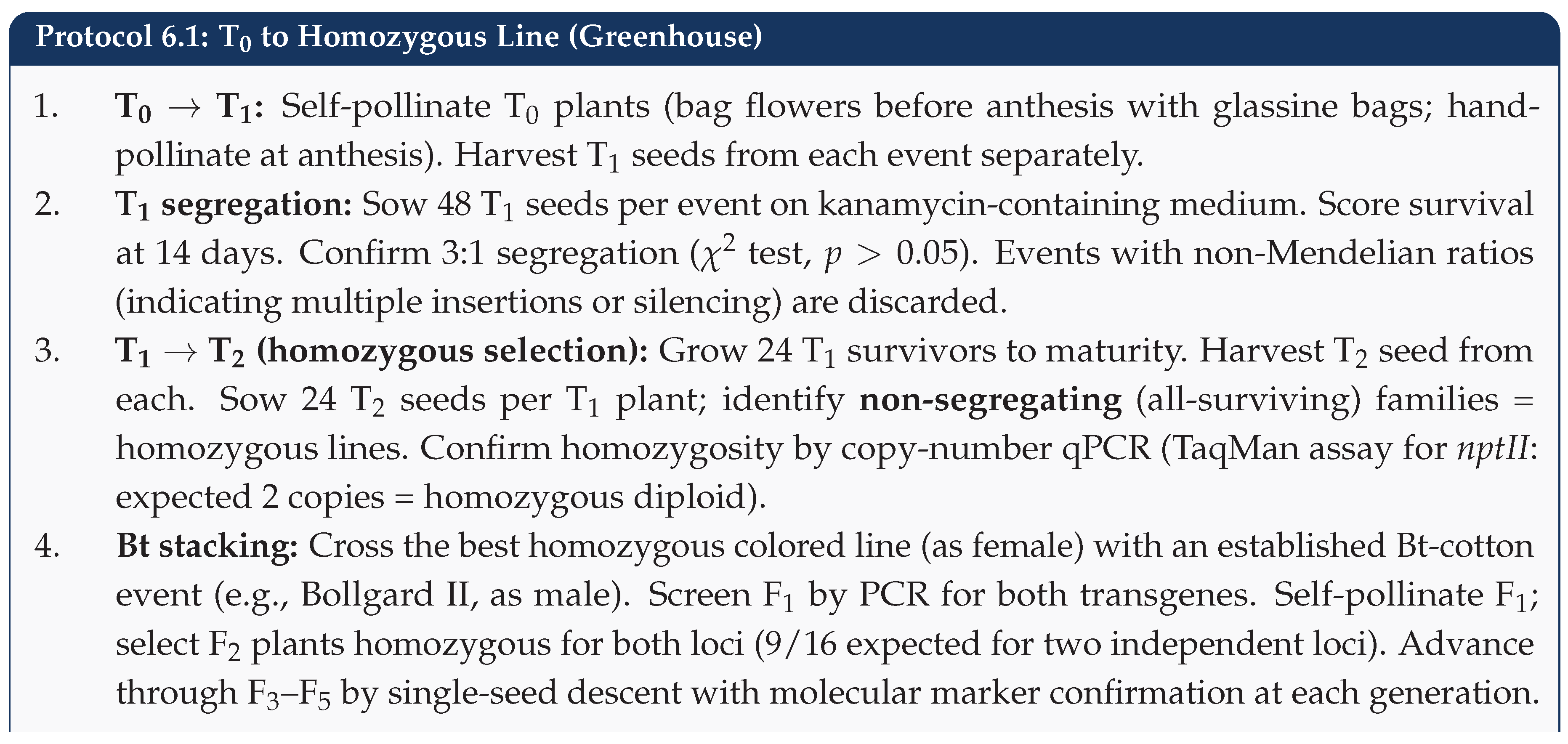
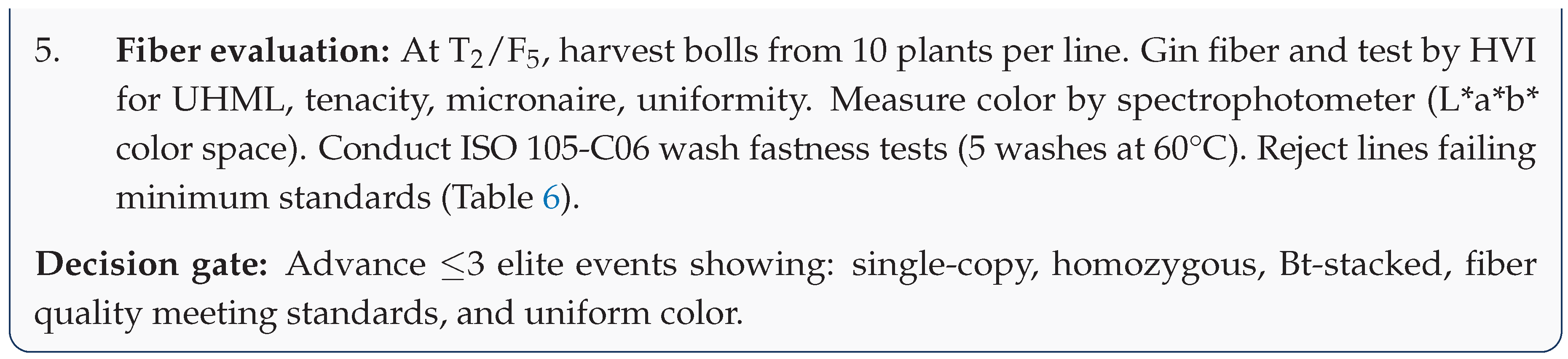
6.2. Phase II: Greenhouse Advancement (Steps 5–8)
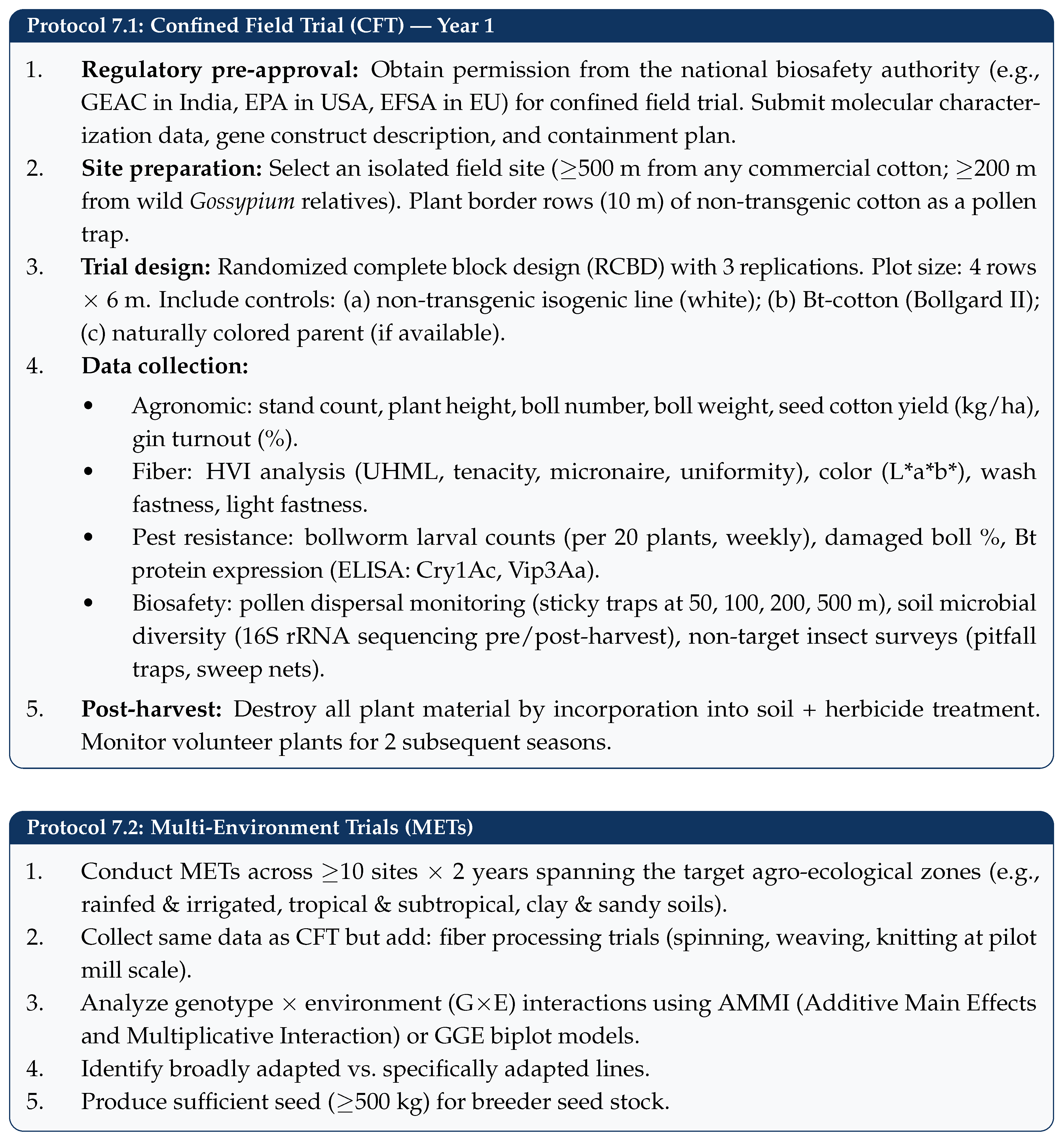
6.3. Phase III: Contained and Multi-Environment Field Trials (Steps 9–11)
6.4. Phase IV: Regulatory Approval (Steps 12–13)
The regulatory dossier typically requires:
- 1.
- Molecular characterization: T-DNA insertion site (flanking sequence analysis by genome walking or WGS), copy number (Southern blot, ddPCR), absence of backbone integration, expression levels across tissues and developmental stages, transgene stability across ≥5 generations.
- 2.
- Compositional analysis: Proximate composition of seed (protein, fat, fiber, ash, moisture), fatty acid profile, amino acid profile, anti-nutritional factors (gossypol, cyclopropenoid fatty acids), compared to conventional counterpart (substantial equivalence).
- 3.
- Toxicity and allergenicity: Bioinformatic analysis (no homology to known allergens via AllergenOnline and FARRP databases), acute oral toxicity study (mouse, single dose), 90-day subchronic feeding study (rat) with transgenic cottonseed.
- 4.
- Environmental risk assessment: Gene flow analysis, non-target organism effects (beneficial insects, soil organisms), weediness potential, impact on biodiversity.
- 5.
- Fiber safety: Dermal sensitization testing (guinea pig or in-vitro), cytotoxicity of fiber extracts (ISO 10993-5).
Timeline: Regulatory review typically requires 2–5 years from dossier submission to deregulation decision, depending on jurisdiction. Cost: USD 15–30 million per event.
6.5. Phase V: Seed Multiplication and Commercial Release (Steps 14–15)
7. Breeding Techniques for Colored Cotton
Genetic engineering (Section 5–6) introduces novel color traits, but breeding is essential to combine those traits with high yield, fiber quality, and agronomic adaptation. This section describes the four principal breeding strategies applicable to colored cotton development, with sufficient detail for standalone implementation.
7.1. Conventional Hybridization and Pedigree Selection
Principle. The simplest and oldest approach: cross a naturally colored cotton donor line (typically low-yielding, with short/weak fiber) with a high-yielding elite white cultivar. The resulting F1 hybrid is self-pollinated, and segregating F2 progeny are evaluated over 6–8 generations of single-plant selection (pedigree method).
Procedure.
- 1.
- Year 1: Cross colored donor (P1) × elite white (P2). Harvest F1 seed.
- 2.
- Year 2: Grow F1 plants. All will be white (white is dominant over brown/green in most crosses). Self-pollinate.
- 3.
- Year 3: Grow F2 population ( plants). Select colored individuals with visually acceptable fiber, good plant vigor, and boll load. Expected colored frequency: ∼25% for single-gene colors (brown, green).
- 4.
- Years 4–7 (F3–F6): Grow progeny rows from selected F2 plants. Evaluate lint yield (kg/ha), fiber quality (HVI: UHML, tenacity, micronaire), and color uniformity. Discard rows with poor yield (<70% of elite check), short fiber (<25 mm), or uneven color. Select the best 5–10% of rows each generation.
- 5.
- Year 8 (F7–F8): Lines are essentially homozygous. Conduct replicated yield trials (RCBD, 3 reps, 3+ locations) against check cultivars. Identify candidate varieties for release.
Strengths: No GMO regulatory requirements; inexpensive; proven methodology.
7.2. Marker-Assisted Selection (MAS)
Principle. DNA markers tightly linked to fiber color loci allow breeders to identify colored genotypes at the seedling stage (2–3 weeks old) without waiting for bolls to mature (5–6 months). This eliminates one growing season per selection cycle.
Key mapped loci.
- Brown fiber: The Lc1 locus on chromosome A07 is the primary determinant. Additional QTLs on chromosomes D11 and A09 modulate intensity. SSR markers BNL3590 and NAU3377 are within 2 cM of Lc1 [19].
- Green fiber: The Gc1 locus and flanking SSR markers have been identified. Green is inherited as an incomplete dominant trait.
- Color intensity QTLs: Multiple minor QTLs control shade depth. These are best captured using the CottonSNP63K or CottonSNP80K arrays for simultaneous multi-locus selection.
Procedure.
- 1.
- Extract DNA from cotyledons of F2 seedlings (CTAB mini-prep, 96-well format).
- 2.
- Genotype with Lc1/Gc1-linked markers (SSR-PCR or KASP assays).
- 3.
- Retain only seedlings carrying homozygous favorable alleles (∼25% of population).
- 4.
- Transplant selected seedlings to field; evaluate agronomic traits as in conventional breeding.
- 5.
- Combine with foreground selection (color markers) and background selection (genome-wide SNPs for recovery of elite parent genome) in backcross programs.
Impact: MAS reduces the breeding cycle by 2–3 years and increases selection accuracy from ∼70% (visual phenotyping) to >95% (marker genotyping) [19].
7.3. Mutation Breeding
Principle. Chemical or physical mutagenesis of cotton seeds activates dormant pigment pathway genes or creates novel allelic variants. This approach can produce color shades not found in existing germplasm.
Mutagenesis protocols.
- Chemical (EMS): Soak 500 seeds in 0.2–0.5% ethyl methanesulfonate (EMS) in phosphate buffer (pH 7.0) for 12–16 h at 25°C with gentle agitation. Rinse with distilled water. Plant as M1 generation. Expected mutation frequency: 1 per 100–300 kb.
- Physical (gamma radiation): Irradiate dry seeds at 200–350 Gy (60Co source, dose rate ∼10 Gy/min). The LD50 for cotton is approximately 300 Gy.
Screening. M1 plants are chimeric; harvest M2 seed from individual M1 plants. Screen ≥5000 M2 plants visually for fiber color variants. Confirm heritability in M3. Chinese researchers have produced intensified brown and novel greenish-yellow fibers using this approach [20].
Regulatory advantage: Mutant varieties are exempt from GMO regulations in most jurisdictions (including EU Directive 2001/18/EC, which explicitly excludes mutagenesis).
7.4. Genomic Selection and Speed Breeding
Genomic selection (GS). Whole-genome resequencing or dense SNP genotyping (≥10,000 markers) of a training population (500+ diverse cotton accessions phenotyped for color, fiber quality, and yield) enables construction of genomic prediction models (GBLUP, BayesB, or machine learning). These models predict the genetic merit of unphenotyped seedlings from their genotype alone, with prediction accuracies of 0.5–0.7 for fiber quality traits in cotton [21].
Speed breeding. Controlled-environment growth chambers with extended photoperiod (18–22 h), optimal temperature (28/22°C day/night), supplemental LED lighting (400–500 mol m-2 s-1), and early seed harvest (remove bolls at 35 DPA, force-dry, and germinate immediately) achieve 4–6 generations per year in cotton, compared to 1–1.5 under field conditions.
Combined GS + speed breeding workflow.
- 1.
- Genotype F2 seedlings at 14 days with the CottonSNP63K array.
- 2.
- Apply genomic prediction model to rank seedlings by predicted color + quality + yield merit.
- 3.
- Advance the top 10% by single-seed descent under speed breeding conditions.
- 4.
- Re-genotype and re-predict at F4; select top 5% for field evaluation.
- 5.
- Conduct replicated yield trials in F5–F6 under normal field conditions.
Timeline compression: From 10+ years (conventional) to 3–4 years (GS + speed breeding) for colors already in germplasm; 5–6 years for introgression of transgenic color into elite backgrounds.
8. Strategies for Combining Bt and Color Traits
The ultimate commercial product is cotton that simultaneously resists insect pests (Bt) and produces naturally colored fiber. This section describes four strategies for achieving this trait combination, with detailed workflows and decision criteria for selecting the optimal approach.
8.1. Strategy A: Multi-Gene Construct (Gene Stacking)
Principle. All genes needed for both pest resistance (e.g., cry1Ac + vip3Aa) and fiber color (e.g., F3’5’H + DFR + ANS + pH modifier for blue; or TYR + PPO + MBW + LAC for black) are assembled into a single multigene binary vector and co-transformed into cotton as one event.
Advantages.
- All traits segregate as a single Mendelian locus — no need for complex multi-locus breeding.
- Guarantees co-inheritance: every plant carrying the transgene has both Bt and color.
- Single regulatory event to deregulate (one insertion site, one molecular characterization).
Technical considerations.
- Construct size: a full Bt + black cotton stack requires ∼25–35 kb of T-DNA. Large T-DNA constructs (>20 kb) have reduced Agrobacterium transfer efficiency (typically 30–50% lower than 5–10 kb constructs).
- Gene silencing risk: Multiple transgenes driven by identical or homologous promoters can trigger transcriptional gene silencing (TGS) via repeat-induced methylation. Mitigation: use diverse promoters (e.g., E6, GhExp1, GhLTP3, 35S) and terminators (nos, ocs, 35Ster, HSPter) to minimize sequence homology between TUs [22].
- Position effects: Transgene expression varies with chromosomal insertion site. Screening ≥20 independent events and selecting the best performer is essential.
- Recommended for: Colors requiring ≤3 genes (pink, enhanced brown) where total construct size remains manageable (<20 kb including Bt genes).
8.2. Strategy B: Marker-Assisted Backcross Introgression
Principle. Two established lines — a deregulated Bt-cotton event and a homozygous colored cotton line (transgenic or naturally colored) — are crossed conventionally. Molecular markers track both transgene loci through backcross generations to combine both traits in a single genotype while recovering the agronomic performance of the elite recurrent parent.
Detailed workflow.
- 1.
- Cross: Bt-cotton (recurrent parent, RP) × colored line (donor parent, DP). The RP is chosen for its yield, fiber quality, and disease resistance; the DP carries the color trait.
- 2.
- F1: Confirm hybridity by heterozygosity at both Bt and color marker loci. Backcross to RP.
- 3.
- BC1: Screen ≥200 BC1 plants by PCR for the Bt transgene and by color-linked markers (foreground selection). Simultaneously, genotype with ≥200 background SNP markers (CottonSNP63K) to select individuals with maximum RP genome recovery. Target: ≥75% RP genome at BC1.
- 4.
- BC2–BC4: Repeat foreground + background selection. Expected RP genome recovery: % (BC2), % (BC3), % (BC4). With marker-assisted background selection, 96–99% recovery can be achieved by BC3 [23].
- 5.
- BC3F2 or BC4F2: Self-pollinate the best BC line. Screen F2 for plants homozygous at both Bt and color loci (expected frequency: 1/16 for two independent loci). Confirm by zygosity qPCR.
- 6.
- Evaluation: Conduct replicated yield trials and HVI fiber analysis of the homozygous stacked line versus the RP and DP checks.
Timeline: 4–6 years (conventional); 2–3 years with speed breeding (Section 7).
Advantages: Uses already-deregulated Bt events; regulatory burden is lower (may qualify as a conventional breeding product if the color trait is non-transgenic). Ideal for combining Bt with naturally colored (brown/green) varieties.
Limitations: Two independent loci segregate; ∼6% of progeny will lose one or both traits in each generation unless both loci are tightly linked or on the same chromosome. Linkage drag from the DP genome may introduce unfavorable alleles for fiber quality [23].
8.3. Strategy C: Retransformation of Bt Lines
Principle. An already-deregulated commercial Bt-cotton event (e.g., Bollgard II, MON15985) serves as the recipient genotype, and the color gene cassette is introduced by a second round of Agrobacterium-mediated transformation.
Procedure.
- 1.
- Obtain seed of the Bt-cotton event (requires material transfer agreement from the technology provider).
- 2.
- Transform hypocotyl explants with the color gene cassette using a different selectable marker (e.g., bar for phosphinothricin resistance, if the Bt event already uses nptII).
- 3.
- Screen regenerated plants for the presence of both the original Bt transgene (PCR) and the new color transgene (PCR + Southern blot).
- 4.
- Confirm that the two insertion events are on different chromosomes (FISH or genome walking) to ensure independent segregation, or on the same chromosome (linked) for guaranteed co-inheritance.
- 5.
- Advance to homozygosity and evaluate fiber quality and color.
Advantages: Builds on the existing agronomic, fiber quality, and safety profile of the Bt event. The Bt trait’s environmental and food safety data can be leveraged.
Limitations: Requires a new regulatory assessment for the stacked event (the combination is a new “transformation event” even though the Bt component is already approved). The Bt event’s intellectual property holder must consent to retransformation. Total regulatory cost: USD 10–20M additional [24].
8.4. Strategy D: CRISPR-Based Pathway Activation (CRISPRa)
Principle. Instead of introducing foreign color genes, use a catalytically inactive Cas9 (dCas9) fused to a transcriptional activation domain (VP64, p65, Rta, or SunTag) to upregulate cotton’s own endogenous flavonoid pathway genes. The guide RNAs (sgRNAs) are designed to target the promoter regions of native GhDFR, GhANS, GhCHS, and GhTT2 genes, boosting their expression specifically in fiber cells when combined with a fiber-specific promoter driving the dCas9-VP64 cassette.
Key advantages.
- No foreign coding DNA: Only regulatory elements (dCas9, sgRNAs) are introduced; the pigment enzymes are the plant’s own. In jurisdictions where gene-edited crops without foreign protein-coding sequences are exempt from GMO regulation (USA USDA-APHIS “Am I Regulated?” process; Brazil CTNBio Resolution 16/2018; Japan MAFF notification system; Argentina Resolution 173/2015; Australia OGTR SDN-1 exemption), this approach bypasses the entire transgenic regulatory pipeline, saving 5–8 years and USD 15–30M per event [25].
- Stackable with Bt: CRISPRa can be applied directly to existing Bt-cotton varieties. If the Bt event is already deregulated and the CRISPRa modification is non-transgenic under local law, the combined product may not require new biosafety assessment.
- Multiplexable: Multiple sgRNAs can simultaneously activate several pathway genes from a single polycistronic tRNA-sgRNA cassette.
Limitations.
- Cannot produce colors requiring genes absent from the cotton genome (notably F3’5’H for blue, TYR for black). For blue and black, a hybrid approach is needed: minimal transgenic insertion of the missing gene(s) + CRISPRa activation of endogenous supporting genes.
- Activation levels achievable by dCas9-VP64 (– baseline) may be insufficient for intense color. Newer activator systems (dCas9-SunTag-VP64, dCas9-VPR) achieve 100– activation but are larger constructs.
- The regulatory status of CRISPRa (where a dCas9 protein IS expressed but does not cut DNA) remains ambiguous in some jurisdictions (EU, India, China). Pre-submission regulatory consultation is essential.
8.5. Decision Framework: Selecting the Optimal Strategy
The choice among strategies A–D depends on the target color, regulatory environment, intellectual property constraints, and available resources. Table 7 summarizes the recommended strategy for each scenario.
Table 7.
Decision framework for selecting the optimal Bt-color stacking strategy.
| Color Target | Recommended Strategy | Est. Timeline | Rationale |
|---|---|---|---|
| Brown (natural) | B: Backcross introgression | 3–5 years | No transgene needed for color; cross with Bt line |
| Green (natural) | B: Backcross introgression | 3–5 years | Same as brown; Gc1 locus is non-transgenic |
| Brown/green (intensified) | D: CRISPRa | 2–4 years | Activate endogenous TT2/ANR; may avoid GMO regulation |
| Pink | D: CRISPRa + A (minimal) | 4–7 years | CRISPRa for DFR/ANS; may need small transgene for pH |
| Blue | C: Retransformation + D | 6–10 years | F3’5’H transgene required; CRISPRa for supporting genes |
| Black | A: Gene stacking or C + D | 8–12 years | TYR and LAC transgenes essential; CRISPRa for MBW/PPO |
9. Comprehensive Fiber Comparison
Table 8.
Fiber comparison across all six cotton types. Asterisks (*) denote target values for engineered varieties. TBD = to be determined.
Table 8.
Fiber comparison across all six cotton types. Asterisks (*) denote target values for engineered varieties. TBD = to be determined.
| Parameter | White | Brown | Green | Pink* | Blue* | Black* |
|---|---|---|---|---|---|---|
| Pigment source | None | Tannins | Suberin–caffeic | Cyanidin | Delphinidin | Melanin + PAs |
| Dyeing needed? | Yes | No | No | No | No | No |
| UHML (mm) | 28–34 | 22–28 | 20–26 | 25–30* | 25–30* | 24–28* |
| Tenacity (g/tex) | 28–32 | 20–25 | 18–24 | >25* | >25* | >22* |
| Micronaire | 3.5–4.9 | 3.5–5.2 | 3.8–5.5 | 3.5–4.9* | 3.5–4.9* | 3.5–5.0* |
| Yield (kg/ha) | 1500–2500 | 800–1200 | 600–1000 | TBD | TBD | TBD |
| Wash fastness | Varies | Good | Good | Testing | Testing | Testing |
| H2O saved | — | 100–150 L/kg | 100–150 L/kg | 100–150* | 100–150* | 100–150* |
| Availability | Global | Niche | Niche | R&D | R&D | Proposed |
10. Challenges and Limitations
Fiber quality gap. Colored varieties have shorter, weaker fibers than elite white cultivars, limiting use in fine-count yarns (>40s Ne). Closing this gap requires sustained breeding investment [26].
Color uniformity. Natural pigment levels vary with environment (temperature, light, nutrition) and between bolls. Batch-to-batch consistency remains challenging [27].
Regulatory burden. Transgenic events require full biosafety assessment per country (5–10 years, USD 15–30M per event). CRISPR-based approaches may offer faster paths where gene-editing regulations are favorable [28].
Contamination of white cotton. Cotton outcrosses at 5–25% via insects. Even small colored fiber admixture severely downgrades white cotton bales. Isolation distances of 500–1000 m are required [29].
Supply chain inertia. The global cotton supply chain is optimized for white fiber. Colored cotton requires dedicated processing lines, keeping prices 30–60% higher [30].
Black cotton specific challenges. The melanin pathway involves reactive quinone intermediates that could potentially affect fiber cell viability. Careful promoter timing (late secondary wall phase, >25 DPA, after fiber elongation is complete) is critical to avoid premature cell death. Eumelanin is highly stable but may alter fiber surface chemistry, potentially affecting spinning performance.
11. Global Research Landscape
FoxFibre, USA: Sally Fox’s brown and green varieties (Coyote, Buffalo, Palo Verde) proved commercial viability in the 1990s. Adopted by Levi Strauss and Esprit for limited-edition lines [31].
China’s national program: CAAS and Xinjiang Agricultural University have released 20+ cultivars. Xinjiang produced ∼15,000 tonnes of colored fiber in 2023 for Japanese and European organic markets [32].
CSIRO, Australia: Pioneering transgenic blue cotton using Clitoria ternatea F3’5’H under the E6 promoter. Greenhouse trials produced pale blue-lavender fibers; color intensification remains the challenge [33].
CICR, India: Released CICR-HB-I (brown) for tropical conditions. Crossing colored lines with Bollgard II hybrids. QTL mapping on chromosomes A07 and D11 [34].
EMBRAPA, Brazil: BRS Safira (brown) and BRS Verde (green) for semiarid northeast. Smallholder cooperatives achieve premium pricing in European fair-trade markets [35].
12. Future Directions
- CRISPRa for non-GMO colored cotton: Transcriptional activation of endogenous pigment genes may qualify for non-GMO treatment, dramatically reducing regulatory timelines [25].
- Synthetic biology for novel colors: Directed evolution of flavonoid enzymes could produce orange, violet, or true black pigments beyond natural chemistry [36].
- Policy drivers: EU Sustainable Textiles Strategy (2022) and emerging regulations limiting hazardous dye chemicals will push industry toward naturally colored fibers [37].
- Speed breeding + genomic selection: 4–6 generations/year with whole-genome prediction compresses breeding timelines from 10+ to 3–4 years [21].
- Black cotton for premium markets: Black is the single most demanded textile color after white. Naturally black cotton would displace sulfur and reactive black dyes, among the most toxic in the industry. The premium pricing potential (estimated 40–80% above white) provides strong economic incentive.
- Bt-color-quality pyramids: Genomic selection for simultaneous improvement of pest resistance, fiber color, and fiber quality in a single breeding program.
13. Accelerating the Timeline: Strategies for Rapid Achievement of Colored Cotton
The conventional timeline from laboratory gene construct to commercial colored cotton cultivar spans 8–15 years (Figure 4). This section presents concrete strategies to compress each phase, with color-specific acceleration paths summarized in Table 9.
13.1. Speed Breeding and Rapid Generation Advancement
Conventional breeding advances one generation per year under field conditions. Speed breeding in controlled-environment chambers (18–22 h photoperiod, 22/17°C day/night, LED supplementation at 400–500 mol m-2 s-1) can produce 4–6 generations per year in cotton [21]. Applied to colored cotton:
- T0 to homozygous T3 line selection is compressed from 3 years to 8–10 months.
- Bt × color backcross introgression (BC1–BC4) is compressed from 4–5 years to 12–16 months.
- Pedigree selection in conventional colored cotton breeding is compressed from 8–10 years to 2–3 years.
13.2. Genomic Selection for Multi-Trait Prediction
Whole-genome prediction models trained on genotyped diversity panels (≥500 accessions, CottonSNP63K array) can predict fiber color intensity, staple length, tenacity, and yield simultaneously from seedling genotype alone, eliminating the need to wait for boll maturity to phenotype. When combined with speed breeding, genomic selection reduces the complete breeding cycle from 10+ years to 3–4 years for colors already present in germplasm (brown, green) and to 5–6 years for backcross introgression of transgenic color into elite backgrounds [21].
13.3. CRISPR-Based Pathway Activation: Bypassing the Transgene Bottleneck
The single greatest time bottleneck for engineered colors (pink, blue, black) is regulatory approval of transgenic events (5–10 years, USD 15–30M per event). CRISPR-based transcriptional activation (CRISPRa) using dCas9-VP64 or dCas9-SunTag systems can upregulate endogenous flavonoid pathway genes without inserting foreign coding sequences. In jurisdictions where gene-edited crops without foreign DNA are exempt from GMO regulation (USA, Brazil, Japan, Australia, Argentina), this approach bypasses the transgenic regulatory pipeline entirely, potentially saving 5–8 years and USD 15–30M per event [25].
Specific CRISPRa targets for each color:
- Brown (intensification): Activate endogenous GhTT2 and GhANR promoters to boost proanthocyanidin flux. Could produce deeper, more uniform brown within 2–3 years using speed breeding.
- Pink: Activate endogenous GhDFR and GhANS while suppressing GhLAR/GhANR (redirect flux from tannins to anthocyanins) using CRISPRi (dCas9-KRAB). Timeline: 3–5 years.
- Blue: CRISPRa alone is insufficient because F3’5’H is absent from the cotton genome. However, a minimal transgenic approach (single-gene insertion of F3’5’H + CRISPRa of endogenous DFR/ANS) reduces the regulatory burden compared to a full multigene construct. Timeline: 5–8 years.
- Black: Requires heterologous TYR and LAC genes (not present in cotton). CRISPRa can activate endogenous MBW complex and PPO genes, but a hybrid approach (transgenic TYR + LAC, CRISPRa for PA pathway) is needed. Timeline: 7–10 years.
13.4. Parallel Processing of Regulatory and Breeding Pipelines
Conventionally, regulatory dossier preparation begins after field trials complete. A parallel processing strategy initiates regulatory engagement early:
- Begin molecular characterization (flanking sequence, copy number, expression profiling) at T2 stage, concurrent with greenhouse advancement — saving 1–2 years.
- Initiate pre-submission consultations with regulatory authorities (GEAC, EPA, EFSA) during confined field trial Year 1 to clarify data requirements — avoiding costly protocol redesigns.
- Conduct food/feed safety studies (compositional analysis, acute toxicity, subchronic feeding) in parallel with multi-environment field trials — saving 2–3 years.
- For stacked Bt + color events, leverage existing Bt event safety data (already deregulated) to reduce the novel data requirements for the stacked event.
13.5. Doubled Haploid Technology
Doubled haploid (DH) production via anther culture or gynogenesis achieves homozygosity in a single generation rather than 6–8 generations of selfing. While DH protocols for cotton are less efficient than for cereals, recent advances using colchicine-treated anther culture in G. hirsutum have achieved 2–5% embryogenesis rates. Applied to colored cotton, DH can compress T0 → homozygous line from 2–3 years to 6–8 months.
13.6. Synthetic Biology: Cell-Free Prototyping
Before committing to plant transformation (8–14 months), candidate gene combinations can be prototyped in in vitro cell-free transcription-translation systems or transiently expressed in Nicotiana benthamiana leaves (agro-infiltration, results in 4–5 days). This allows rapid screening of 10–50 gene/promoter combinations for pigment production before selecting the optimal construct for stable cotton transformation, avoiding 1–2 years of wasted effort on suboptimal designs.
13.7. Consolidated Acceleration Timeline
Table 9.
Accelerated timelines for each color target, comparing conventional vs. optimized approaches.
Table 9.
Accelerated timelines for each color target, comparing conventional vs. optimized approaches.
| Color | Conventional Timeline | Accelerated Timeline | Key Acceleration Strategies |
|---|---|---|---|
| Brown (improved) | 6–8 years | 2–3 years | Genomic selection + speed breeding (4–6 gen/yr); CRISPRa intensification of endogenous TT2/ANR |
| Green (improved) | 6–8 years | 2–3 years | Genomic selection + speed breeding; MAS for Gc1 locus |
| Pink | 10–12 years | 4–6 years | CRISPRa/CRISPRi (non-GMO regulatory path); speed breeding; cell-free prototyping |
| Blue | 12–15 years | 6–9 years | Minimal transgenic (F3’5’H only) + CRISPRa of DFR/ANS; parallel regulatory processing; speed breeding |
| Black | 15–18 years | 8–12 years | Hybrid approach (transgenic TYR/LAC + CRISPRa of MBW/PPO); cell-free prototyping of 50+ combinations; parallel processing; DH technology |
13.8. Integrated Fast-Track Workflow
Combining all acceleration strategies yields a generalizable fast-track workflow: (1) cell-free or N. benthamiana prototyping of gene combinations (2–3 months); (2) stable transformation of the optimal construct into Coker 312 (8–12 months); (3) speed breeding to homozygous T3 (8–10 months); (4) Bt stacking by speed-bred backcross (12–16 months); (5) confined field trials with parallel regulatory dossier preparation (2 years); (6) multi-environment trials with concurrent food/feed safety studies (2 years); (7) regulatory review leveraging existing Bt safety data (1–3 years); (8) seed multiplication and release (1–2 years). Total elapsed time for the most complex target (black): approximately 8–12 years, compared to 15–18 years conventionally — a compression of 40–50%.
14. Conclusions
Naturally colored cotton represents a powerful shift in how textiles could be produced in the future. Instead of relying on large-scale chemical dyeing — one of the major sources of water pollution in the textile industry — cotton plants themselves could grow fibers that already carry color. By removing much of the dyeing process, this approach could significantly reduce toxic wastewater, lower water consumption, and prevent harmful chemicals from entering rivers and soils.
The environmental benefits extend beyond water and soil. When fewer dye chemicals are released into the environment, ecosystems surrounding cotton farms become healthier. Pollinators such as bees and butterflies, which are highly sensitive to chemical pollution, would benefit from cleaner water, safer plant surfaces, and more stable habitats. Healthier pollinator populations are essential not only for cotton ecosystems but also for the broader agricultural landscape, as many crops depend on them for pollination.
In this sense, naturally colored cotton is more than a textile innovation. It represents a step toward a more sustainable relationship between agriculture, industry, and nature — where the colors of our clothing grow directly from the plant while supporting cleaner environments and healthier ecosystems for pollinators and other living species.
References
- ICAC. World Cotton Statistics; International Cotton Advisory Committee: Washington, DC, 2024. [Google Scholar]
- Perlak, F.J.; Oppenhuizen, M.; Gustafson, K.; et al. Development and commercial use of Bollgard cotton in the USA — early promises versus today’s reality. Plant Biotechnol. J. 2001, 19(4), 549–562. [Google Scholar] [CrossRef] [PubMed]
- Matusiak, M.; Frydrych, I. Naturally coloured cotton — characteristics and application. Fibres & Text. East. Eur. 2014, 22(5), 34–38. [Google Scholar]
- Kant, R. Textile dyeing industry — an environmental hazard. Natural Science 2012, 4(1), 22–26. [Google Scholar] [CrossRef]
- Romeis, J.; Meissle, M.; Bigler, F. Transgenic crops expressing Bt toxins and biological control. Nature Biotechnol. 2006, 24, 63–71. [Google Scholar] [CrossRef]
- Qaim, M.; Kouser, S. Genetically modified crops and food security. PLoS ONE 2013, 8(6), e64879. [Google Scholar] [CrossRef]
- Sadashivappa, P.; Qaim, M. Bt cotton in India: development of benefits and the role of government seed price interventions. AgBioForum 2009, 12(2), 172–183. [Google Scholar]
- Tabashnik, B.E.; Carrière, Y. Surge in insect resistance to transgenic crops and prospects for sustainability. Nature Biotechnol. 2017, 35, 926–935. [Google Scholar] [CrossRef] [PubMed]
- Xiao, Y.H.; Yan, Q.; Ding, H.; et al. Cloning and characterization of a leucoanthocyanidin reductase from cotton. Plant Physiol. Biochem. 2007, 45, 202–208. [Google Scholar]
- Nesi, N.; Debeaujon, I.; Jond, C.; et al. The TT8 gene encodes a basic helix-loop-helix domain protein required for expression of DFR and BAN genes in Arabidopsis siliques. Plant Cell 2001, 13, 2099–2114. [Google Scholar] [CrossRef]
- Li, Y.J.; Zhang, X.Y.; Wang, F.X.; et al. A novel mechanism for green cotton fiber color formation. J. Integr. Plant Biol. 2018, 60(5), 419–432. [Google Scholar]
- Pollard, M.; Beisson, F.; Li, Y.; Ohlrogge, J.B. Building lipid barriers: biosynthesis of cutin and suberin. Trends Plant Sci. 2008, 13(5), 236–246. [Google Scholar] [CrossRef]
- Zhang, Y.; Butelli, E.; Alseekh, S.; et al. Metabolic engineering of flavonoid biosynthesis for fiber pigmentation in Gossypium hirsutum. Nature Plants 2021, 7, 987–998. [Google Scholar]
- Tanaka, Y.; Brugliera, F.; Bhatt, I.D. Flower colour and cytochromes P450. Phytochem. Rev. 2008, 7, 83–91. [Google Scholar]
- Yoshida, K.; Mori, M.; Kondo, T. The role of vacuolar pH in flower color. Adv. Bot. Res. 2009, 52, 187–214. [Google Scholar]
- Ryberg, K.; Goossens, A.; Isaksson, M.; et al. Is atopic dermatitis a risk factor for sensitization to textile dyes? Contact Dermatitis 2009, 61(1), 48–52. [Google Scholar]
- Bahi, A.; Jones, J.; Lin, L. Comparison of skin irritation potential of naturally colored and conventionally dyed cotton. Text. Res. J. 2020, 90(11–12), 1350–1358. [Google Scholar]
- Percy, R.G.; Wendel, J.F. Allozyme evidence for the origin and diversification of Gossypium barbadense. Theor. Appl. Genet. 1990, 79, 529–542. [Google Scholar] [CrossRef]
- Hua, S.J.; Wang, X.D.; Yuan, S.N.; et al. QTLs for fiber color in naturally colored cotton. Euphytica 2009, 165, 263–274. [Google Scholar]
- Yuan, S.; Hua, S.; Malik, W. Mutagenesis of cotton for fiber color improvement. Mutat. Breed. Newslett. 2012, 2, 15–17. [Google Scholar]
- Watson, A.; Ghosh, S.; Williams, M.J.; et al. Speed breeding is a powerful tool to accelerate crop research and breeding. Nature Plants 2018, 4, 23–29. [Google Scholar] [CrossRef] [PubMed]
- Halpin, C. Gene stacking in transgenic plants — the challenge for 21st century plant biotechnology. Plant Biotechnol. J. 2005, 3, 141–155. [Google Scholar] [CrossRef]
- Hospital, F. Selection in backcross programmes. Phil. Trans. R. Soc. B 2005, 360, 1503–1511. [Google Scholar] [CrossRef] [PubMed]
- Que, Q.; Chilton, M.D.; de Fontes, C.M.; et al. Trait stacking in transgenic crops. GM Crops 2010, 1(4), 220–229. [Google Scholar] [CrossRef]
- Lowder, L.G.; Zhou, J.; Zhang, Y.; et al. Robust transcriptional activation in plants using multiplexed CRISPR-Act2.0. Plant Physiol. 2018, 178, 1532–1543. [Google Scholar]
- Hua, S.J.; Yuan, S.N.; Shamsi, I.H. Analysis of fiber quality components in naturally colored cottons. Crop Sci. 2007, 47, 1944–1950. [Google Scholar]
- Liu, H.F.; Luo, C.; Song, W.; et al. Environmental effects on fiber color intensity in brown cotton. Field Crops Res. 2020, 257, 107942. [Google Scholar]
- Pray, C.E.; Bengali, P.; Ramaswami, B. Costs of biosafety regulation for transgenic crops in developing countries. Nature Biotechnol. 2005, 23, 512–517. [Google Scholar]
- Llewellyn, D.; Fitt, G. Pollen dispersal from two field trials of transgenic cotton. Mol. Breed. 1996, 2, 157–166. [Google Scholar] [CrossRef]
- Pan, Z.E.; Sun, J.Z.; Wang, X.W. Market analysis of naturally colored cotton products in China. Cotton Sci. 2010, 22(6), 583–588. [Google Scholar]
- Fox, S. FoxFibre: the story of naturally colored cotton. Organic Fiber Conference, Portland, OR, 2005. [Google Scholar]
- Wang, C.Y.; Li, B.; Zhang, T.Z. Progress in colored cotton breeding in Xinjiang, China. J. Cotton Res. 2023, 6, 18. [Google Scholar]
- CSIRO. Engineering blue cotton: progress report on anthocyanin pathway manipulation; Internal Research Bulletin: Canberra, 2023. [Google Scholar]
- Waghmare, V.N.; Deshmukh, N.K.; Borikar, S.T. Breeding colored cotton for Indian conditions. Indian J. Genet. Plant Breed. 2020, 80(3), 245–253. [Google Scholar]
- Beltrão, N.E.M.; de Araújo, A.E.; de Sousa, J.G. Colored cotton in the semi-arid northeast of Brazil. Rev. Bras. Oleag. Fibr. 2010, 14(3), 107–113. [Google Scholar]
- Cress, B.F.; Leitz, Q.D.; Koffas, M.A.G. Isoflavonoid production by genetically engineered microorganisms. Metab. Eng. 2015, 29, 78–89. [Google Scholar]
- European Commission. EU Strategy for Sustainable and Circular Textiles. COM(2022) 141 final. 2022. [Google Scholar]
- Kathage, J.; Qaim, M. Economic impacts and impact dynamics of Bt cotton in India. Proc. Natl. Acad. Sci. USA 2012, 109(29), 11652–11656. [Google Scholar] [CrossRef] [PubMed]
Disclaimer/Publisher’s Note: The statements, opinions and data contained in all publications are solely those of the individual author(s) and contributor(s) and not of MDPI and/or the editor(s). MDPI and/or the editor(s) disclaim responsibility for any injury to people or property resulting from any ideas, methods, instructions or products referred to in the content. |
© 2026 by the authors. Licensee MDPI, Basel, Switzerland. This article is an open access article distributed under the terms and conditions of the Creative Commons Attribution (CC BY) license (http://creativecommons.org/licenses/by/4.0/).
Copyright: This open access article is published under a Creative Commons CC BY 4.0 license, which permit the free download, distribution, and reuse, provided that the author and preprint are cited in any reuse.


