
Submitted:
06 March 2026
Posted:
09 March 2026
You are already at the latest version
Abstract
Radon (222Rn86), the second leading cause of lung cancer, is common in indoor air. However, radon testing is generally low throughout the US. In this study, we utilized 134,496 short-term indoor air radon test results from Georgia, USA. We investigated the association of the radon testing rate with a total of 104 different independent variables belonging to 7 categories: 1) Demographic and Neighborhood Characteristics; 2) Housing Characteristics; 3) Literacy and Numeracy; 4) Employment and Economy; 5) Selected Social Factors; 6) Access to Computer/Internet; and 7) Status of Healthcare, Health, Well-being, and Life-Style. We used Bivariate Correlation, Multivariate Ordinary Least Squares (OLS) Regression, and Factor Analysis followed by Factor-Score-based OLS regression. Significant negative associations of the testing rates were observed with population diversity, residential segregation, urban population density, younger population, housing age, household size, low-literacy, unemployment, childcare cost burden, poverty, obesity, and frequency of mental- and physical-unhealthy days. In contrast, testing rates were positively associated with older population, home value, owner-occupied homes, higher literacy, higher institutional education, income, prevalence of social association, and life expectancy. Findings provide valuable insights for identifying the communities where socio-culturally relevant outreach activities would increase testing rates and minimize public health consequences of environmental radon.
Keywords:
indoor-air
; lung-cancer
; population density & diversity
; public health
; radon
1. Introduction
Radon (222Rn86) is a naturally occurring radioactive gas formed by the decay of uranium in soil and bedrock. It is colorless, tasteless, and odorless, entering buildings through foundations and accumulating in the indoor air. Radon exposure is responsible for approximately 21,000 deaths annually in the US, making it the second leading cause of lung cancer and the leading cause among nonsmokers [1−2].
Geological variation in radon potential results in significant geographic disparities across the United States. Georgia exhibits particularly diverse geologic features, with northern counties characterized by granite formations associated with elevated radon emissions [3]. Many of these counties are classified as Zone 1 or Zone 2 by the EPA, indicating high or moderate radon [4].
However, radon level in any given home cannot be predicted based solely on geography or building characteristics. Testing represents the critical first step in identifying indoor radon exposure and initiating mitigation (if needed) to substantially reduce radon exposures [5]. Yet national data indicate that only a minority of households pursue radon testing and testing rates show a remarkable geographical disparity. Disparities in testing uptake may perpetuate inequities in exposure awareness and health outcomes among communities.
While substantial research has focused on geological predictors of radon potential, building characteristics influencing radon entry, and the technical performance of mitigation systems, comparatively less attention has been given to the social and structural factors that influence radon testing behavior. Understanding the social determinants of exposure detection is increasingly recognized as essential for effective risk management. Indoor air quality is shaped not only by pollutant sources and building design, but also by human behavior, access to resources, and community-level conditions. Identifying population-level patterns in radon testing can inform more equitable, targeted, and culturally relevant outreach strategies, thereby improve indoor environmental quality and reduce preventable health risks. Emerging evidence suggests that radon testing rates may vary systematically according to demographic composition, housing tenure, education, income, and access to information or health resources [6,7]. Communities characterized by lower socioeconomic status, higher residential mobility, or limited health literacy may face barriers to radon awareness, testing, and mitigation, even when underlying radon potential is high. Another research suggests that income, educational attainment, homeownership, and geographic isolation influence radon testing behavior, which are linked to environmental health literacy, financial resources, and access to mitigation services [8]. However, most studies in this regard examined a narrow set of predictors or rely on small geographic areas, limiting their ability to capture the complex, multidimensional drivers of testing behavior.
Georgia has a remarkable demographic diversity and pronounced variation in socioeconomic and public health scenarios. Some of the state’s highest-radon counties are also among its poorest and most rural, raising concerns about environmental health inequity. Also, a large, long-term dataset of indoor radon test results for Georgia is available through the State Indoor Radon Program contributed by the testing laboratories. All these provide a unique landscape to examine the relationships of the important factors and people’s radon testing behavior. By linking radon testing rates with a broad range of demographic, socioeconomic, housing, literacy, and health indicators, this study addresses a critical knowledge gap at the intersection of indoor air quality, environmental health, and social determinants of health.
The primary objective of this study was to examine county-level associations between indoor radon testing rates and a comprehensive set of demographic, socioeconomic, housing, literacy, and health-related factors in the state of Georgia, United States. Specifically, this study aimed to: 1) Quantify indoor radon testing rates per 1,000 occupied housing units using short-term radon test data collected between 1990 and 2022;
2) Evaluate bivariate associations between radon testing rates and 104 independent variables across seven domains: demographic and neighborhood characteristics; housing characteristics; literacy and numeracy; employment and economy; selected social factors; access to computer and internet; and status of healthcare, health, wellbeing, and lifestyle;
3) Identify underlying patterns among predictors using factor analysis and assess dependence of radon testing rates on the predictors appropriate regression models;
4) Identify communities with systematically lower radon testing rates to support targeted, socio-culturally relevant public health outreach and indoor air quality interventions; and
5) Identify patterns relevant for public health policy and conducting socio-culturally relevant outreach activities that would increase testing rates and minimize public health consequences of environmental radon.
We hypothesize that 1) counties with higher socioeconomic status (income, education, homeownership, etc.) will show higher radon testing rates; 2) counties with higher smoking prevalence and other awkward public health indicators will not have correspondingly higher radon testing rates (creating pockets of elevated combined lung cancer risk). These hypotheses are grounded in a prior limited-scale study in DeKalb County, Georgia which found geographically uneven testing rates, and the low testing rates across the county was significantly driven by residential segregation which expanded over 25 years; however, the associations of radon testing rates with the other social indicators, such as income or education were weaker [9].
2. Materials and Methods
2.1. Indoor Air Radon Test Data
Each year the University of Georgia (UGA) radon program requests radon test data on short- and long-term radon test kits from major radon laboratories. These include Air Chek, Pro Lab, First Alert, AccuStar, and Dr. Home Air & Alpha Energy Laboratories. Residents voluntarily chose to test their dwellings with either envelope- and canister-type test kits, which are available from the state radon program, home supply or big box stores, or online. Both types of test kits contain activated charcoal which absorbs radon. Envelope-type kits are hung on interior walls for 3–7 days, whereas canister-type test kits are placed on countertops or other surfaces for 2–4 days according to ANSI/AARST-MAH standard [10]. After the duration of the test, the kits are shipped to manufacturers’ designated laboratories for radon analysis. Required decay correction is made to determine the final radon concentration. The average differences between the two types of short-term test kits are insignificant and have been reported as 27 Bq/m3 (0.73 pCi/L) by Dai et al. [11].
Figure 1 depicts the radon testing data collection, compilation, and handling procedure followed in this study. Testing laboratories report test results to the state program as requested each year. Included in the reports are information containing zip code, county, city, and test results, which are measured in picocuries per liter of air (pCi/L). This data is anonymized and does not contain identifying information. In this study, a large database of indoor air radon test results for the state of Georgia was built. The results were from voluntary tests conducted during 1990–2022. After excluding ambiguous/disqualified results, the database had a total of 134,496 test results. The data were segregated by 159 counties of the state of Georgia. A detailed description of these radon test data collection, compilation, and exclusion of outliers is available elsewhere [3].
The state of Georgia is divided into 5 physiographic provinces: Appalachian Plateau (APP), Valley and Ridge (VR), Blue Ridge (BR), Piedmont (P), and Coastal Plain (CP). Between the P and CP regions, there is a 20-mile-wide Fall-Line across the middle of the state (Figure 2). This is a geological boundary, a gently sloping region that rapidly loses elevation from the north to the south, thereby creating a series of waterfalls. During the Mesozoic Era (25.1–65.5 million years ago), the “Fall-Line” was the shoreline of the Atlantic Ocean. Today It separates the upper CP to the south from P to the north. The area above the Fall-Line sits on various crystalline rocks whereas the area below the “Fall-Line” has up to 7000 feet of unconsolidated sediments of marine origin. In our previous study, it was revealed the chances of getting equal to or greater than 4.0 pCi/L (the current action limit of USEPA) radon test results were 8–10 times higher in the area above the Fall-Line than in the area below the Fall-Line, which was primarily due to the contrasting underground geological features of the two regions.3 Therefore, we limited this study with a total of 106,264 test results (testing period: 1990-2022) from the 73 counties above the Fall-Line with higher indoor air radon potentials.
2.2. Socio-Economic and Public Health Data Collection
This study investigated the association of the radon testing rates with a total of 104 different independent variables belonging to 7 categories: 1) Demographic and Neighborhood Characteristics; 2) Housing Characteristics; 3) Literacy and Numeracy; 4) Employment and Economy; 5) Selected Social Factors; 6) Access to Computer/Internet; and 7) Status of Healthcare, Health, Well-being, and Life-Style. County level data for these variables for the state of Georgia were collected from the following reliable sources:
- Demographic, housing and occupancy characteristics, home value, income and poverty data were downloaded from the US Census Bureau in tabular forms (available online at: https://data.census.gov/table). These data were available for the year 2000, and for each year from 2010 to 2022.
- Literacy, numeracy, different tires of institutional education, employment status, type of occupations, poverty data were downloaded from the website of the Program for the International Assessment of Adulty Competencies (PIAAC) under National Center for Education Statistics under the US government (https://nces.ed.gov/surveys/piaac/state-county-estimates.asp). Most of these data were available for the years 2013 to 2017.
- Data for various public health variables were downloaded from County Health Rankings & Roadmaps (CHR&R) website, University of Wisconsin Population Health Institute (https://www.countyhealthrankings.org/). These data were available for each year from 2011 to 2022.
The median numeric data for any given socio-economic and public health variable for each county was used as the independent variables which were hypothesized to have potential effects on the radon testing rates (the dependent variable).
2.3. Data Analysis
The radon testing activities in the 73 counties above the “Fall-Line” were evaluated using the testing rates per 1,000 occupied housing units rather than actual number of tests because both number of tests and number of occupied housing units varied widely for the counties. To address spatial (county) variance, this study used a Spatial Empirical Bayes (SEB) method [12−14] of smoothing radon testing rates. This method was chosen because the small number of tests in some counties may make the crude testing rates fluctuated, which potentially may erroneously suggest low testing outliers [13]. The SEB method implemented relied on the spatial weights to estimate testing rates at each county by including testing observations in the neighboring counties within the study area (i.e. the area above the Fall-Line). For each county, this study used all immediate neighboring counties in its spatial weight calculation. This smoothing helped reduce variance in the radon testing rates in any given small area within the study area while preserving the local spatial variations.
The numeric ranges of the data for different socio-economic and public health variables (104 in total) were widely different, and they were on different units. Therefore, each of these datasets was standardized by dividing the absolute difference between the individual datapoint and the mean value by the standard deviation, essentially producing the Z-scores (or standardized score). It makes different datasets comparable by centering them at a mean of 0 and a standard deviation of 1 (z-scaling). This essentially prevents variables with larger numeric values from exerting dominant effect on the outcomes of statistical analysis (biased outcomes).
Using bivariate correlation and multivariate regression models, this study evaluated how radon testing rates were correlated with 104 different socio-economic and public health variables. The initial assessment started from a bivariate correlation analysis between the radon testing rates (dependent variable) and each of the 104 socio-economic and public health variables (the independent variables). The 55 out of 104 independent variables that had significant (at P ≤ 0.05) correlation coefficients with the dependent variable were taken for further analysis. First, a bivariate correlation matrix among these 55 independent variables with 1485 correlation coefficients was calculated to evaluate the presence of multicollinearity among them. The subsequent multivariate ordinary least square regression analysis was carried out using the radon testing rate as dependent variable and all 55 independent variables. The Variance Inflation Factors (VIF) and Kaiser–Meyer–Olkin (KMO) statistic were calculated and evaluated to determine if the presence of multicollinearity among the 55 independent variables affecting regression analysis. The multicollinearity issue was finally resolved through factor analysis followed by regression that used factor scores independent variables. Factor analysis evaluated the underlying structure of the 55 independent variables and then determined the best fit between these related variables and the latent uncorrelated factors. It initially used principal axis factoring (PAF) for extracting the factors from the dataset which focused on shared variance and is robust to non-normality. The PAF returns as many components (factors) as variables while capturing much of the variance from the data. The method then retained the principal axis factors which had Eigen value greater than one in the Scree plot. For computing loadings, we used oblique-simplimax rotation rather than any orthogonal rotations because we found a vast majority of the 55 independent variables were significantly correlated with each other. The technique maximized the loading of a variable on one factor and minimized its loadings on all others. In the first round of factor analysis, all 55 independent variables were included, and their Factor Loadings (correlation with Factor) Communalities (variance explained) were examined. In this step, 5 variables with factor loading and/or communality ≤0.4 were identified and excluded. The final round of factor analysis was carried out with the remaining 50 variables. Once suitable number of factors was determined and loading scores for each factor were computed, the final regression analysis of the dependent variable against the loading scores of the factors (independent variable) was carried out. The reliability of the factors and factor scores-based regression analysis was confirmed based on the standardized Cronbach’s alpha statistic for each factor. The flowchart of the statistical analyses used in this study as described above is presented in Figure 2.
3. Results
3.1. Number and Rates of Radon Tests
Figure 3 shows the total tests conducted in all 159 counties of Georgia and the Fall-Line dissecting the state. The area above the Fall-Line, which is the study area of this paper, sits on various crystalline rocks whereas the area below the Fall-Line has up to 7000 feet of unconsolidated sediments of marine origin. Statewide the total tests conducted in the 159 counties varied from 0 (none) to 18,592 with a mean of 760±2,318. Likewise, in the study area, the total number tests in the 73 counties varied widely from 1 to 15,418 with a mean of 1,134±2,589 (Figure 4). The testing rate per 1,000 housing units in the 73 counties of the study area also varied widely from 2 to 146 with a mean 36±34 (Figure 5)
3.2. Bivariate Correlation of the 104 Independent Variables with the Radon Testing Rates
We found 55 out 104 socioeconomic and public health independent variables had significant correlation coefficients with the independent variable, radon testing rates (Table 1). Out of these 55, 35 correlation coefficients (r >0.281) were significant at P ≤ 0.01 and the remaining 20 (r = 0.230 to 0.281) at 0.01≤P≤ 0.05. The description of these 55 independent variables, their actual correlation coefficients (r) along with the statistical significance (P-value) are presented in Table 2. These 55 independent variables were taken for further statistical analysis and the other 49 were excluded.
3.3. Correlation Matrix Among the 55 Independent Variables
As evident in Table 3 and Table 4, there were substantial multicollinearity among the 55 independent variables that had significant bi-variate correlations with the dependent variable (number of radon tests per 1000 occupied housing units). Out of 1485 bivariate combinations, 1015 had correlation coefficients, r>0.281 with P≤ 0.01 and 76 had had r = 0.230-0.281 with 0.01≥P≤ 0.05, demonstrating the fact that these variables are frequently intercorrelated which could affect the usual multiple linear regression analysis (Table 4).
3.4. Multivariate Least Square Regression Analysis of Radon Testing Rates (Independent) Versus 55 Independent Variables
The multivariate ordinary linear least square (OLS) regression analysis results are presented in Table 5. The Jarque-Bera (JB) statistic in the multivariate regression analysis of radon testing rates (dependent variable) versus 55 independent variables, was low (0.93) with high P-value (0.63), meaning the errors were likely to be normally distributed. This ensured that OLS estimators were themselves normally distributed (multivariate normal), allowing for valid statistical inference like hypothesis testing, though a fairly large sample size in this study could bypass the strict normality requirement due to the Central Limit Theorem, making OLS a Best Linear Unbiased Estimator (BLUE) regardless. While R-squared value (0.945) indicated that as much as 94.5% of the total variance explained by all 55 predictors, the adjusted R-squared value (0.444) greatly reduced. This suggests that there was a continued increase in R-squared with added predictors, whereas adjusted R-squared increased only if the added predictors significantly improved the model, otherwise it decreased. The observed large difference between R-squared and adjusted R-squared suggests that there was probably a good number of less useful predictors in the regression model. As such the F-statistic (1.885) was not significant with P-value of 0.217. Furthermore, the Omnibus statistic (1.657) was insignificant with P-value 0.437, suggesting that the 55 predictors collectively did not explain a significant amount of variance in the outcome, essentially revealing that the model was not better than a baseline (no predictors), i.e., an overall unsatisfactory model fit. The Durbin-Watson (DW) statistic for checking for autocorrelation (serial correlation) in the model's residuals was 2.11. As a rule of thumb, a DW-statistic between 1.5 and 2.5 generally suggest autocorrelation is not a major concern. The prediction coefficients for all 55 independent variables were statistically not significant with P>|t| ranging from 0.09 to 0.99.
Variance Inflation Factor (VIF) was invariably much higher than 10 and the smallest eigenvalue was close to zero (1.26 × 10⁻²⁹). Furthermore, the Kaiser–Meyer–Olkin (KMO) statistic was high (0.86). All these suggested that there was a substantial multicollinearity among the 55 predictor variables, usually a problem for OLS, which led OLS regression results presented in Table 5 to be less reliable. However, these observations are valuable because they suggest that the patterns of correlations among the predictor variable are relatively compact and this correlation is highly appropriate for reduction through structure-detection techniques like factor analysis [15]. This should yield distinct and reliable factors and reduce the dimensionality before running a multivariate Ordinary Least Squares (OLS) regression and thereby reducing potential issues with multicollinearity in the regression model. That means, the large number of correlated predictor variables can be successfully reduced into a few more manageable factors using a suitable statistical protocol. The scores of these factors can then be used in multivariate OLS regression, which would reliably model the dependent variable using a single set of predictors and yield a robust, reliable, and interpretable multivariate OLS regression model.
3.5. Factor Analysis and Factor Score-Based Regression Analysis
The results of factor analysis revealed that the eigenvalues of the 4 factors were greater than 1 (Figure 6) suggesting that the first 4 factors were suitable for use as independent variables in the regression analysis. The selected 4 factors explain the most variance (0.988) for “More_HS (proportion of population with education more than High School)” and the least (0.425) for “Primary Care Physicians (PCP) rate (#PCP per 100,000 population)” (Table 6)
The 1st, 2nd, 3rd, and 4th factors explained 57.89, 11.10, 7.94, and 4.41% of the total variance in all variables, respectively adding to a total of 81.35% (Table 6). Separately, the 1st factor explained 71.17% [(28.847÷ 40.674) × 100] of the variance, while the 2nd, 3rd, and 4th factors explained 13.65, 9.76, and 5.42% of the variance, respectively. It was possible to calculate Cronbach’s alpha (standardized) values for the 1st, 2nd, and 3rd factors only but not for the 4th factor because it had only one variable (%Owner-occupied housing units). Cronbach’s alpha values for the first 3 factors were high, ranging from 0.818 to 0.988 (Table 6), confirming that the grouping of the independent variables into factors by factor analysis implemented in this study was reliable and their scores were suitable for regression analysis. The factor loading scores given in Table 6 show the relationship between the independent variables investigated and factors. The bold values in the table show the highest correlation between the variables investigated and factors. The absolute values of the factor loadings of the 40 independent variables included in the 1st factor ranged from 0.473 to 0.990; the same of the 5 variables in the 2nd factor, 4 variables in the 3rd factor, and 1 variable in the 4th factor were from 0.649 to 0.857, 0.568 to 0.783, and 0.520, respectively.
The regression analysis results (Table 7) of the radon testing rates (the dependent variable) versus the factor scores (the independent variables) of the 4 factors show that the regression coefficients of Factor-1, Factor-2 and Factor-3 were statistically significant (P < 0.05) whereas that of Factor-3 was not significant (P = 0.275). The F-statistic was highly significant with a very low P-value of 8.94 × 10⁻⁶. The VIFs for the 4 factors were invariably lower than 10, ranged from 1.77 to 7.68. Thus, the observed multicollinearity issue among the socioeconomic and public health variables was properly resolved by factor analysis followed by factor score-based regression. And the 40 dependent variables in the 1st factor, 5 in 2nd factor, 4 in 3rd factor appeared as the significant determinants of the radon testing activities.
4. Discussion
This study provides a comprehensive, multi-scale assessment of indoor radon testing patterns in the 73 high-risk counties above the Fall-Line and demonstrates that testing rates are strongly structured by socio-economic and public health contexts. The findings advance the environmental health literature by showing that radon testing—a prerequisite for exposure reduction—is not simply a function of geologic risk but is deeply embedded within broader social determinants of health. Radon testing rates were higher in areas characterized by greater household income, higher literacy-numeracy-educational attainment, higher rates of homeownership, newer homes, higher home value, access to computer & internet, social association, availability of primary care physicians, and access to healthy foods. In contrast, testing activities were lower in the counties with higher population diversity & residential segregation, urban population density, unemployment, childcare cost burden, poverty, frequency of food stamps/SNAP recipients, and single parent households. These associations likely reflect differences in risk awareness, financial capacity to purchase test kits and mitigation services, and housing stability that incentivizes long-term investment in indoor environmental quality. Importantly, the persistence of these associations in multivariate models suggests that socio-economic advantage independently facilitates engagement with radon testing behaviors, reinforcing concerns that voluntary testing frameworks may systematically underserve lower-income, less-educated, and disadvantageous communities.
A previous study by Dai [9] demonstrated that in DeKalb County, Georgia, United States, the areas with lower residential segregation index between white and black population had substantially higher socioeconomic advantages in terms of bachelor's degree, median housing value, and median income and had 2 to 8 times greater radon testing rates which was substantiated by subsequent bivariate analysis, establishing consistent influence of higher-education level, i.e., bachelor's degree, and socioeconomic advantages on radon screening rates. Therefore, observed effect of segregation on radon screening decision was partially mediated through the difference in educational and socioeconomic differences. A good number of Multiple studies reported adverse effect of residential segregation and associated socioeconomic disadvantages on public health [16−18]; yet little is known about their consequence on environmental threats that could lead to adverse health effects. Darden et al. [19] and White and Borrell [20] reported that in communities with disadvantageous socioeconomic barriers, such as poor education and low income could affect public awareness of radon leading to lower radon testing activities. The socioeconomic constraints of people limit their potential decision making and thus may affect health promotion behaviors [21−22]. Socioeconomic disadvantages may directly influence radon knowledge and health risks homeowners perceive, which in turn lowers testing participation. Even though the area of this study has higher radon potential in Georgia, we found a reoccurring problem of a generally low and spatially heterogeneous testing activities as reported from several studies in other states or countries [23−25]. A widespread testing is less likely with poorer radon knowledge and risk perception because radon testing is voluntary in the United States. Despite outreach education activities through State Indoor Radon Programs for the past many years and abundant online resources on various aspects of radon, testing remains as low as 3% to 9% of homes nationwide [26−28]. While awareness about radon is often considered as the principal determinant of taking a test, as many as half of the homeowners in the low testing areas could stay away from taking a test even with their awareness [29] warranting investigating other factors affecting radon testing behaviors. The findings of this study highlight the importance of target-oriented radon awareness and educational campaigns not just based on geologic potential of radon rather incorporating socioeconomic and other variables affecting radon testing activities. As observed in previous studies [9,30], we also found that communities without lower literacy, numeracy and institutional education and with economic disadvantages indicated by employment and poverty were negatively associated with testing rates. Thus, this study makes a key contribution exposing county-level correlation of various demographic, housing, educational, and socioeconomic variables with the testing rates for indoor radon.
Public health indicators also emerged as significant determinants of radon testing activity. Areas with higher obesity, %physically inactive population, %adults reporting fair or poor health, Primary Care Physicians (PCP) ratio (#people served by one PCP), % Population with excessive drinking, average number of physically or mentally unhealthy days per month, smoking prevalence, and age-adjusted lung and bronchus cancer incidence rate cases per 100,000 people exhibited lower testing rates. This suggests that communities with higher smoking prevalence and other awkward public health situations are less likely to consider radon testing, thereby exposing them to more severe health consequences of indoor air radon. Given the well-established synergistic effect between radon exposure and smoking on lung cancer risk, the observed inverse association between smoking prevalence and testing rates is particularly concerning. This pattern implies that populations facing compounded lung cancer risk may simultaneously experience lower likelihood of radon risk detection, exacerbating existing health inequities.
A key contribution of this study is the identification of geographic mismatches between radon potential and testing activity. Several counties with moderate to elevated radon potential demonstrated persistently low testing rates due to socio-economic and public health factors discussed above, indicating potential under-recognition of environmental risk. From a public health perspective, these areas represent high-priority targets for intervention, as undetected exposure may lead to disease burden which could be preventable by radon testing and mitigation. The results underscore the limitations of relying on geologic risk maps alone and highlight the importance of integrating social and public health vulnerability metrics into radon surveillance and outreach strategies. The observed spatial disparities in radon testing suggest that existing public outreach interventions based on geologic potential have not substantially altered the underlying social gradient in radon testing. This finding aligns with broader environmental health research indicating that information-based voluntary testing often yields uneven benefits unless explicitly designed to address structural barriers.
Taken together, the findings position radon testing as both an environmental exposure issue and an indicator of socioeconomic and public health equity. The results support calls for more proactive, equity-oriented radon control strategies, including subsidized or free testing in high-risk and underserved areas, integration of radon education into primary care and smoking cessation programs, strengthen real estate disclosure requirements, and partnerships with local housing and community organizations. By reframing radon testing as a public health service rather than an individual consumer choice, policymakers may better address the social, public health, and geographic inequities documented in this study. While this analysis focuses on the high-risk areas above the Fall-Line in Georgia, the mechanisms identified—linking socio-economic conditions, public health situations, and environmental risk detection—are likely applicable to other states with heterogeneous radon potential and decentralized testing policies. As such, the findings contribute to a growing evidence base supporting the incorporation of social determinants and public health variables into environmental radon exposure prevention and lung cancer control strategies.
5. Conclusion
Indoor radon testing in Georgia is unevenly distributed and closely linked to a number of socio-economic and public health variables. The results of the study showed that there was a significant multicollinearity among various socioeconomic and public health variables, which were used as the potential determinants of the radon testing rates in the radon-prone areas of Georgia, US. Thus, instead of directly using these variables, the use of the factor analysis scores obtained from the variables reduced the risk of inaccurate interpretation of the parameters in the model according to the least squares method. Furthermore, using comparison, the study showed the applicability of the regression analysis results by using the classical, least squares method-based multiple linear regression versus factor analysis scores-based regression analysis in the case of multicollinearity among independent variables. Out of 104 socioeconomic and public health variables evaluated, 49 appeared as the reliable determinants of the radon testing activities in the study area. Socio-culturally relevant outreach activities designed based on these 49 variables would be effective to increase testing rates and minimize public health consequences of environmental radon. Thus, this study highlights the importance of incorporating social determinants into environmental health surveillance and policy design.
Limitations:
This study relies on reported radon tests, which may underestimate true testing activity. Ecological analyses cannot infer individual behavior, and some variables may be subject to measurement error. Nevertheless, the integrated, multi-scale approach provides valuable insights into population-level patterns.
Author Contributions
Conceptualization, U.S. and D.C.; methodology, U.S. and K.S.; software K.S.; validation, U.S. and K.S.; formal analysis, K.S. and U.S.; investigation, U.S., K.S., and P.T.; resources, P.T.; data curation, U.S. D.C., K.S.; writing—original draft preparation, U.S., P.T., K.S. and R.C.; writing—review and editing, U.S., P.T., K.S. D.C., and R.C.; visualization, U.S.; supervision, P.T.; project administration, P.T. All authors have read and agreed to the published version of the manuscript.
Funding
The study was partially funded by the EPA State Indoor Radon Grants (SIRG) program.
Data Availability Statement
The data presented in this study are available on request from thecorresponding author contingent to privacy restrictions. Approval will be subject to meeting the University’s Ethics processes, as well as signing a Non-Disclosure Agreement.
Conflicts Interest: The author(s) declare no potential conflicts of interest with respect to the research, authorship, and/or publication of this article.
Acknowledgments
The authors gratefully acknowledge radon testing laboratories Air Chek, Pro Lab, First Alert, AccuStar, and Dr. Home Air & Alpha Energy for sharing radon test results.
References
- USEPA (U.S. Environmental Protection Agency). Health Risk of Radon. 2025a. Available online: https://www.epa.gov/radon/health-risk-radon.
- WHO (World Health Organization). WHO Handbook on Indoor Radon: A Public Health Perspective. 2009. Available online: https://www.who.int/publications/i/item/9789241547673.
- Saha, U; Cooper, D; Turner, PR; Cantrell, RA; Singh, K. An analysis of the impact of geology on indoor air radon concentration. Indoor Environments 2025, 2(4), 100143. [Google Scholar] [CrossRef]
- USEPA (U.S. Environmental Protection Agency). EPA Maps of Radon Zones and Supporting Documents by State. EPA. 2025b. Available online: https://www.epa.gov/radon/epa-maps-radon-zones-and-supporting-documents-state.
- USEPA (U.S. Environmental Protection Agency). EPA assessment of risks from radon in homes. In Office of Air and Radiation, USEPA; Washington, DC, 2003. [Google Scholar]
- King, BA; Dube, SR; Homa, DM. Exposure to secondhand smoke and radon: A national survey of U.S. homes. American Journal of Preventive Medicine 2012, 42(2), 148–154. [Google Scholar]
- Duckworth, LT; Frank-Stromborg, M; Oleckno, WA. Relationship of perception of radon as a health risk and willingness to engage in radon testing and mitigation. Oncology Nursing Forum 2002, 29(7), 1099–1107. [Google Scholar] [CrossRef] [PubMed]
- Ou, JY; Ramsay, JM; Smith, J; Akerley, W; Martel, L; Harding, G.; Divver, H; Kirchhoff, AC; Kepka, D. Public awareness and perceptions surrounding radon testing in a state with high radon emission potential and low smoking rates. J. Environ. Health 2019, 82, 8–17. Available online: https://www.jstor.org/stable/26800398.
- Dai, D. Neighborhood characteristics of low radon testing activities: A longitudinal study in Atlanta, Georgia, United States. Science of The Total Environment 2022, 834, 155290. [Google Scholar] [CrossRef]
- American National Standards Institute/American Association of Radon Scientistsand Technologists (ANSI/AARST). Protocol for Conducting Measurements ofRadon and Radon Decay Products in Homes. MAH-2023. AARST Consortium onNational Standards: Hendersonville, NC, 2023. [Google Scholar]
- Dai, D; Neal, FB; Diem, J; Deocampo, DM; Stauber, C; Dignam, T. Confluentimpact of housing and geology on indoor radon concentrations in Atlanta, Georgia,United States. Sci. Total Environ. 2019, 668, 500–511. [Google Scholar] [CrossRef] [PubMed]
- Anselin, L. Spatial Econometrics: Methods and Models; Kulwer Academic: Dordrecht, the Netherlands, 1988. [Google Scholar]
- Anselin, L; Syabri, I; Kho, Y. GeoDa: an introduction to spatial data analysis. Geogr. Anal. 2006, 38, 5–22. [Google Scholar] [CrossRef]
- Cressie, N. Smoothing regional maps using empirical Bayes predictors. Geogr. Anal. 1992, 24, 75–95. [Google Scholar] [CrossRef]
- Sharma, S. Applied Multivariate Techniques; John Wiley & Sons, Inc: New York, 1996; p. 493p. [Google Scholar]
- Acevedo-Garcia, D. Residential segregation and the epidemiology of infectious diseases. Soc. Sci. Med. 2000, 51, 1143–1161. [Google Scholar] [CrossRef]
- Kershaw, KN; Pender, AE. Racial/ethnic residential segregation, obesity, and diabetes mellitus. Curr. Diabetes Rep. 2016, 16, 11. [Google Scholar] [CrossRef]
- Landrine, H; Corral, I; Lee, JGL; Efird, JT; Hall, MB; Bess, JJ. Residential segregation and racial cancer disparities: a systematic review. J. Racial Ethn. Health Disparities 2017, 4, 1195–1205. [Google Scholar] [CrossRef]
- Darden, JT; Rahbar, M; Jezierski, L; Li, M; Velie, E. The measurement of neighborhood socioeconomic characteristics and black and white residential segregation in metropolitan Detroit: implications for the study of social disparities in health. Ann. Assoc. Am. Geogr. 2010, 100, 137–158. [Google Scholar] [CrossRef]
- White, K.; Borrell, L.N. Racial/ethnic residential segregation: framing the context of health risk and health disparities. Health Place 2011, 17, 438–448. [Google Scholar] [CrossRef]
- Lutfi, K; Trepka, MJ; Fennie, KP; Ibanez, G; Gladwin, H. Racial residential segregation and risky sexual behavior among non-Hispanic blacks, 2006–2010. Soc. Sci. Med. 2015, 140, 95–103. [Google Scholar] [CrossRef] [PubMed]
- Thorpe, RJ; Kennedy-Hendricks, A; Griffith, DM; Bruce, MA; Coa, K; Bell, CN; Young, J; Bowie, JV; LaVeist, T A. Race, social and environmental conditions, and health behaviors in men. Fam. Community Health 2015, 38(4), 297–306. [Google Scholar] [CrossRef]
- Kitto, ME; Green, JG. Mapping the indoor radon potential in New York at the township level. Atmos. Environ. 2008, 42, 8007–8014. [Google Scholar] [CrossRef]
- Kropat, G; Bochud, F; Jaboyedoff, M; Laedermann, JP; Murith, C; Palacios, M.; Baechler, S. Major influencing factors of indoor radon concentrations in Switzerland. J. Environ. Radioact. 2014, 129, 7–22. [Google Scholar] [CrossRef]
- Zahnd, WE; Mueller-Luckey, GS; Ratnapradipa, K; Smith, T. Predictors and spatial variation of radon testing in Illinois, 2005–2012. J. Public Health Manag. Pract. 2018, 24, E1–E9. [Google Scholar] [CrossRef]
- Baldwin, G; Frank, E; Fielding, B. US women physicians' residential radon testing practices. Am. J. Prev. Med. 1998, 15, 49–53. [Google Scholar] [CrossRef] [PubMed]
- Hevey, D. Radon risk and remediation: a psychological perspective. Front. Public Health 2017, 5, 63. [Google Scholar] [CrossRef]
- Lantz, PM; Mendez, D; Philbert, MA. Radon, smoking, and lung cancer: the need to refocus radon control policy. Am. J. Public Health 2013, 103, 443–447. [Google Scholar] [CrossRef] [PubMed]
- Stauber, CE; Dai, DJ; Chan, SR; Diem, JE; Weaver, SR; Rothenberg, R. A pilot study to examine exposure to residential radon in under-sampled census tracts of DeKalb County, Georgia, in 2015. Int. J. Environ. Res. Public Health 2017, 14(3), 332. [Google Scholar] [CrossRef] [PubMed]
- Davis, SF; Johnston, JD; Magnusson, BM; Novilla, MLB; Torgersen, BK; Schnell, AJ; Crandall, AA. Predictors of radon testing among Utah residents using a theory-based approach. J. Environ. Health 2018, 80(6), 20–27. Available online: https://www.jstor.org/stable/26329888.
Figure 1.
Collection, compilation, and handling of indoor air radon test results for Georgia, 1990–2022.
Figure 1.
Collection, compilation, and handling of indoor air radon test results for Georgia, 1990–2022.
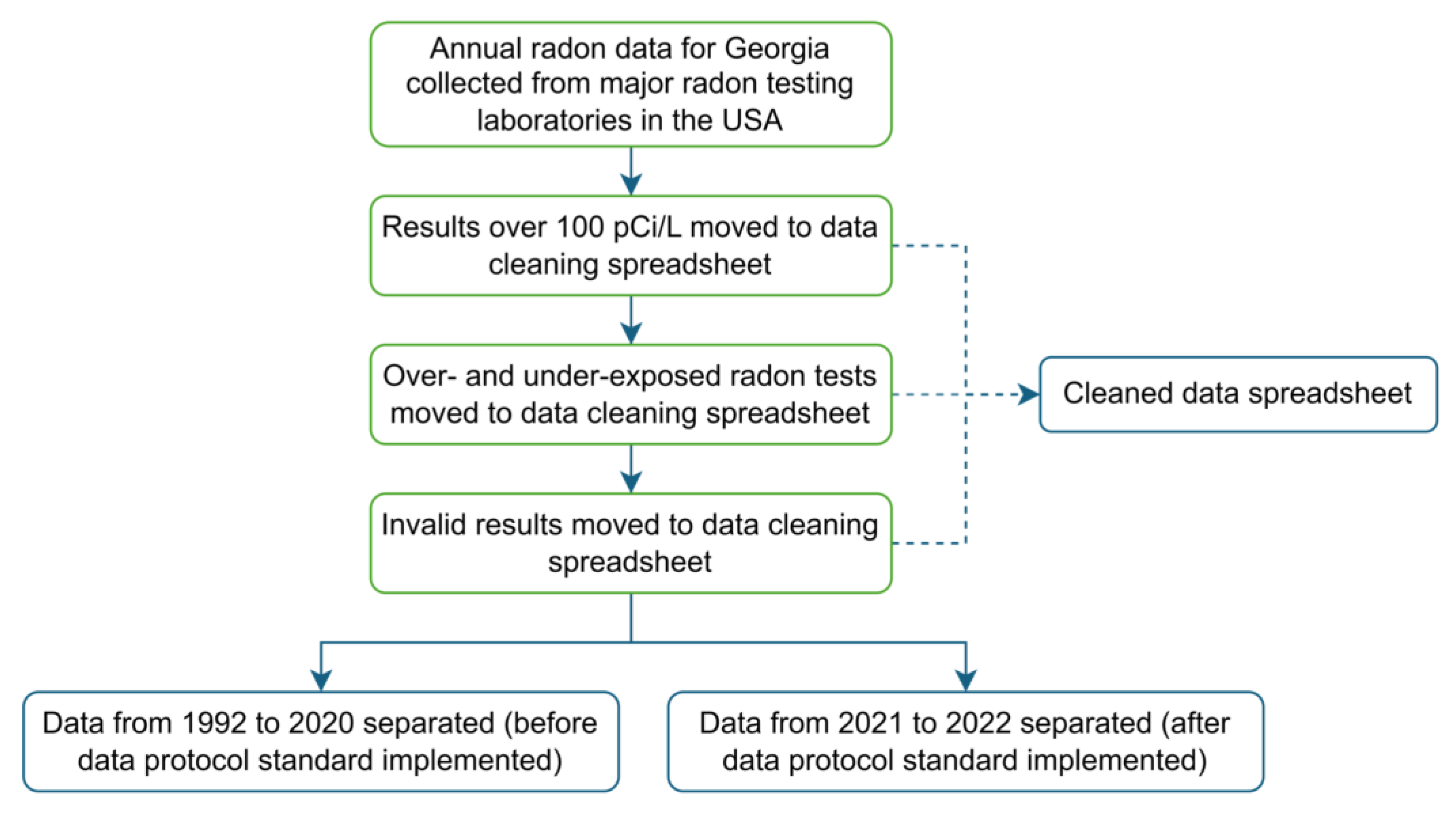
Figure 2.
Flowchart showing data analysis protocol.
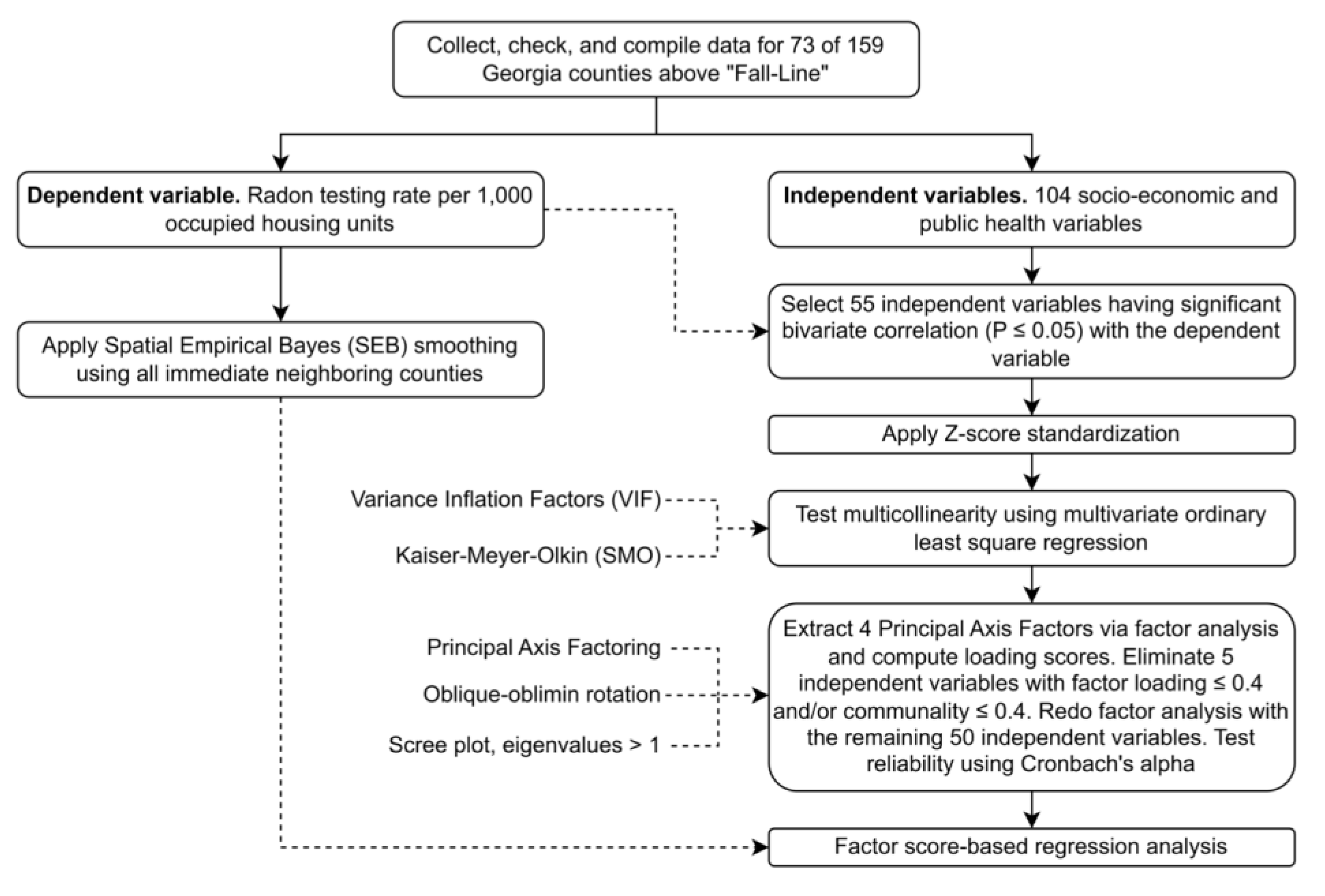
Figure 3.
Total number of radon test conducted in all 159 Georgia counties during 1990-2022.
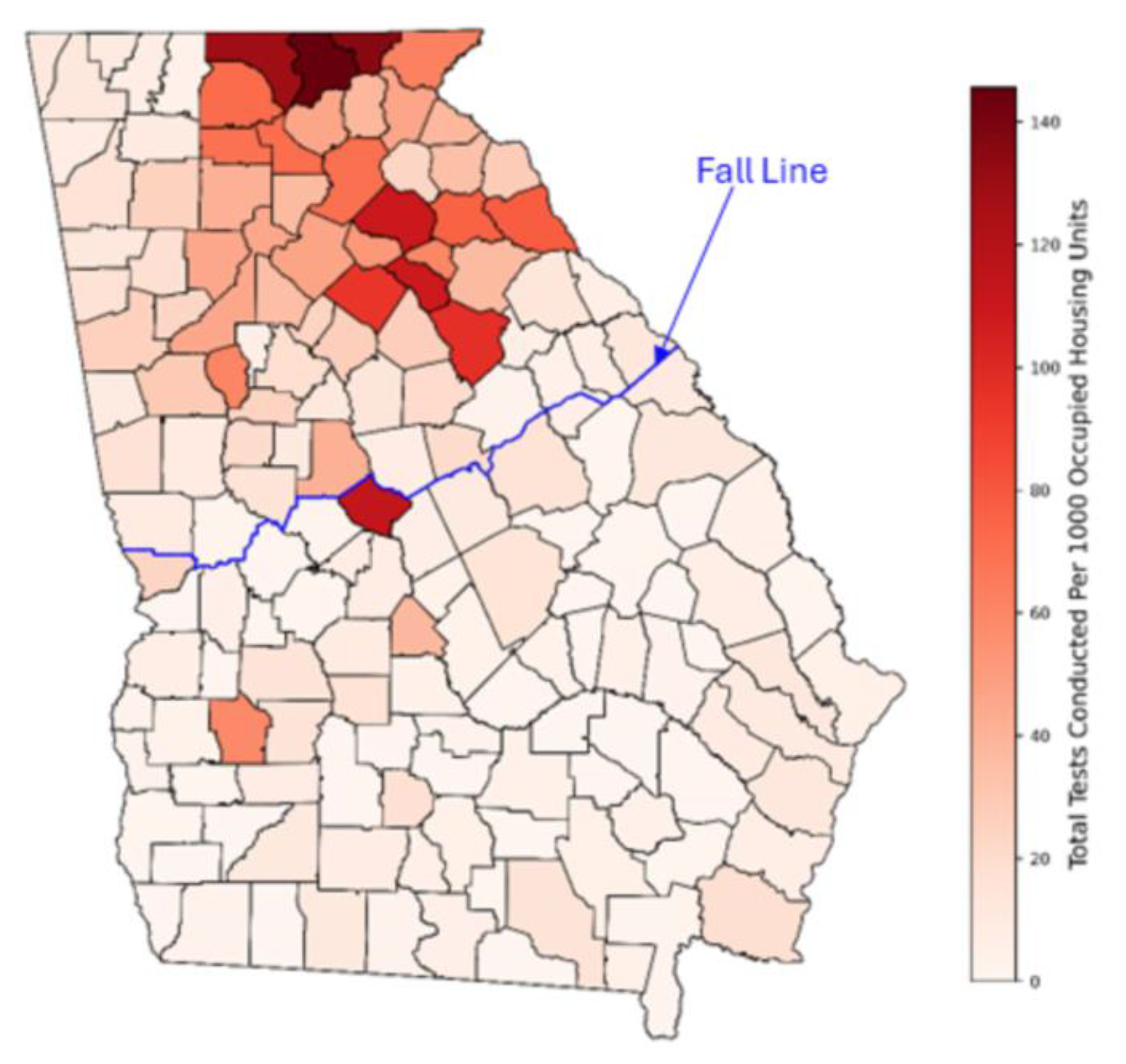
Figure 4.
Number of occupied housing units in the 73 Georgia counties above the Fall-Line (the study area).
Figure 4.
Number of occupied housing units in the 73 Georgia counties above the Fall-Line (the study area).
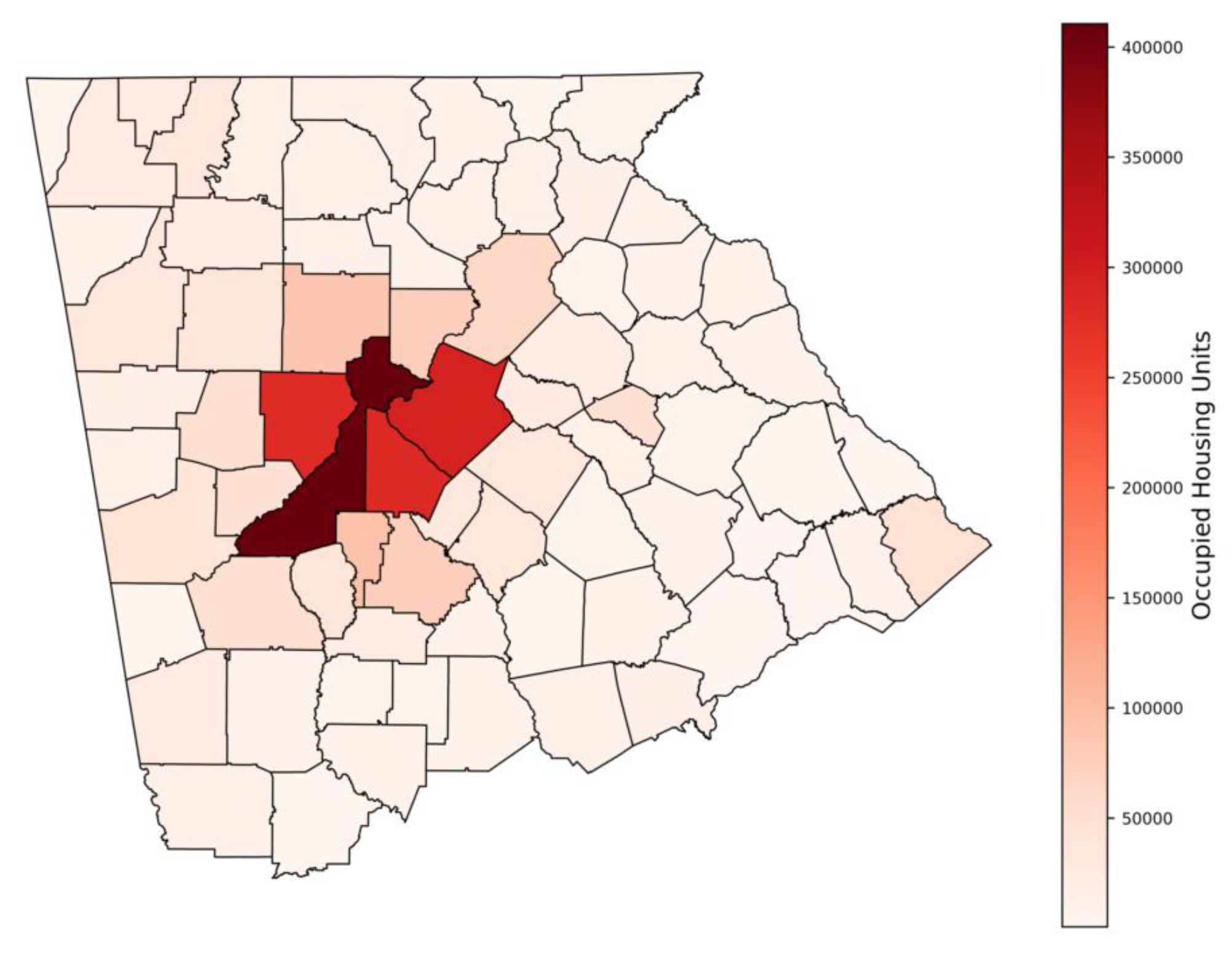
Figure 5.
Number of radon test conducted per 1000 occupied housing units (testing rates) in the 73 Georgia counties above the Fall-Line (the study area).
Figure 5.
Number of radon test conducted per 1000 occupied housing units (testing rates) in the 73 Georgia counties above the Fall-Line (the study area).
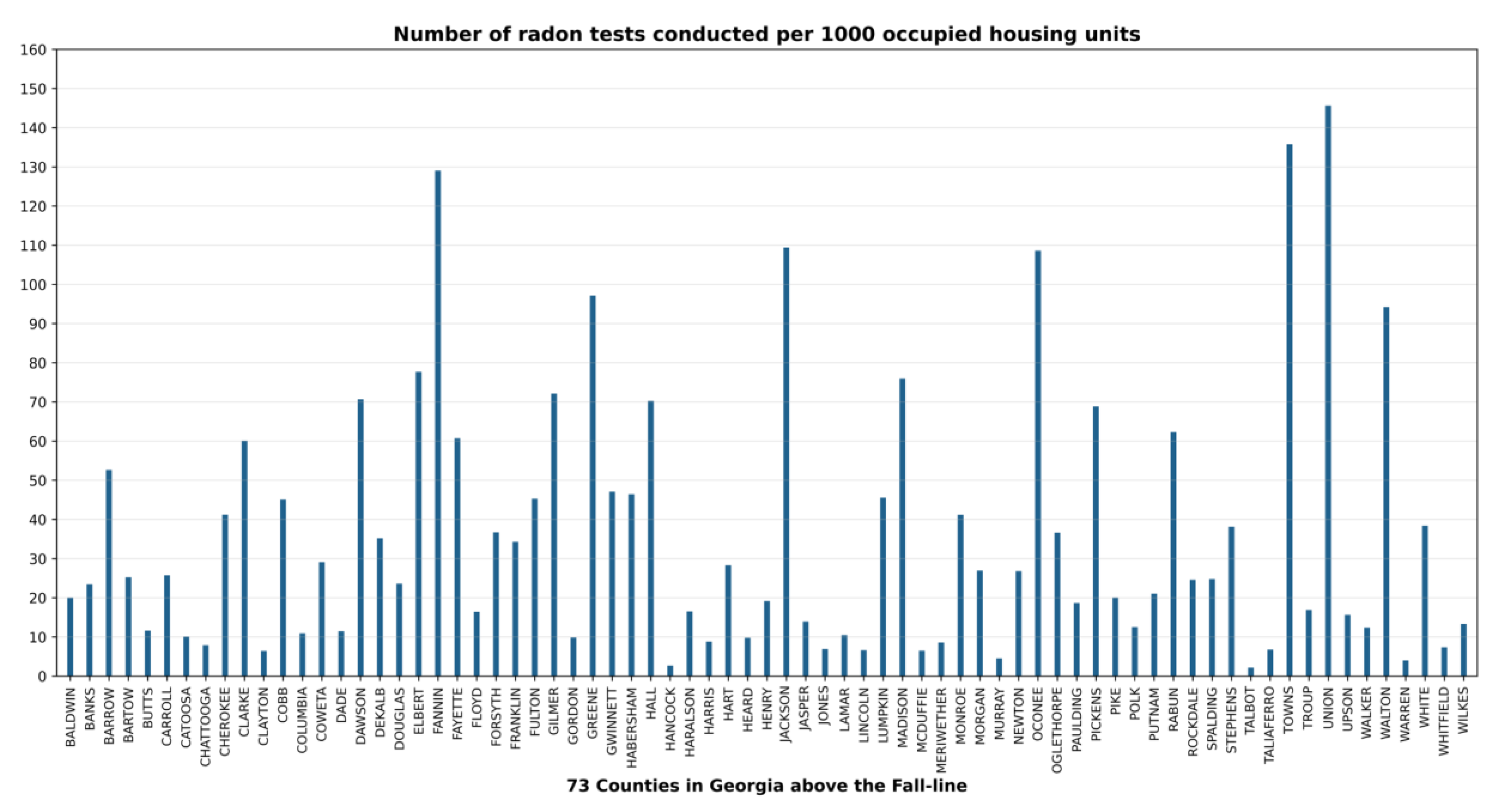
Figure 6.
Scree plot obtained in factor analysis showing 4 factors with Eigen values greater 1.0.
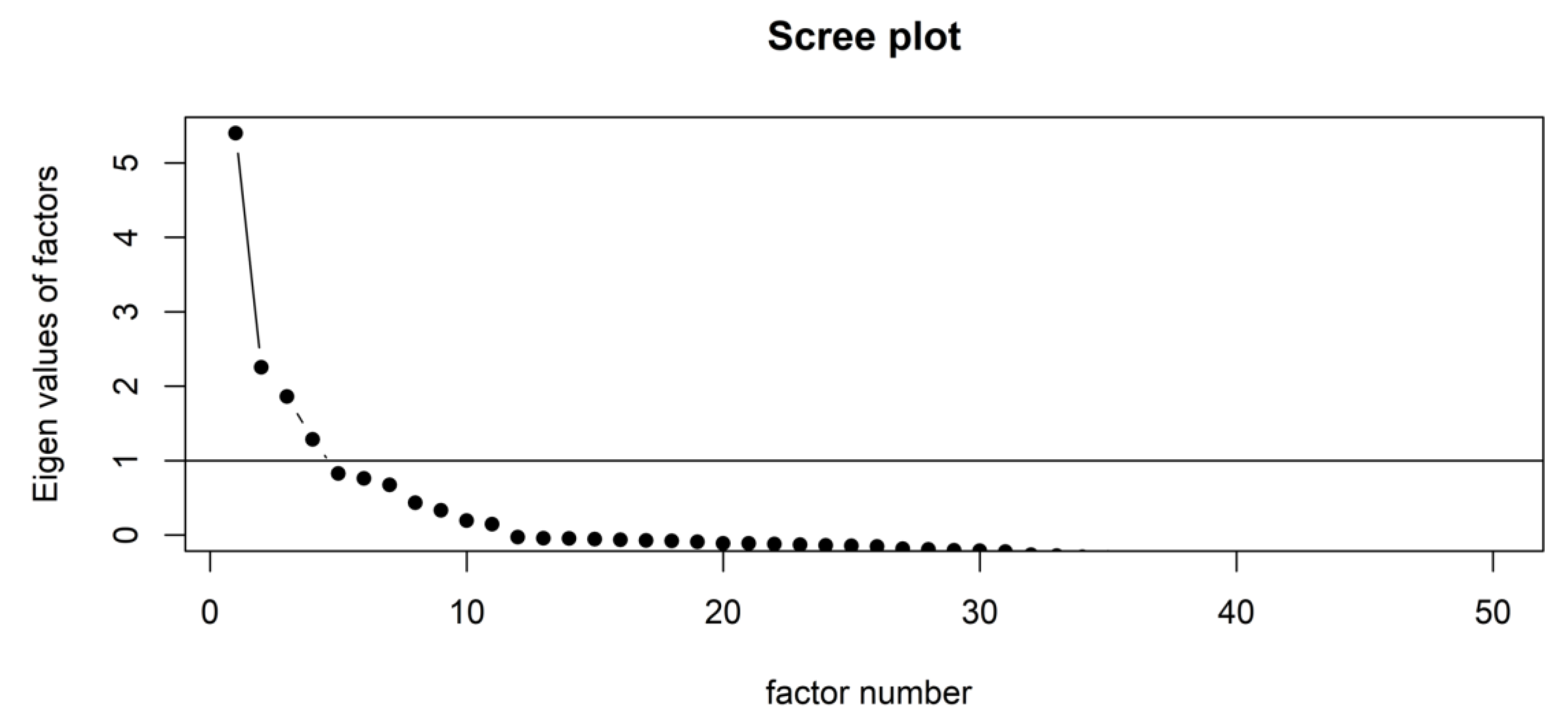

Table 1.
Summary of bivariate correlation between the dependent variable (number of radon tests conducted per 1000 occupied housing units) and 104 socioeconomic and public health independent variables.
Table 1.
Summary of bivariate correlation between the dependent variable (number of radon tests conducted per 1000 occupied housing units) and 104 socioeconomic and public health independent variables.
| Correlation coefficient, r (absolute value) | Number of bivariate combinations | Significance of correlation coefficient, r |
|---|---|---|
| >0.281 | 35 | P ≤ 0.01, 71 (73-2) df |
| 0.230-0.281 | 20 | 0.01>P ≤ 0.05, 71 (73-2) df |
| <0.230 | 49 | P > 0.05, 71 (73-2) df |
| Total | 104 |
Table 2.
Bivariate correlation coefficients between the number of radon tests per 1000 occupied housing units (dependent variable) and various independent socio-economic and public health variables (only 55 out of 104 independent variables having significant correlation coefficients are shown for the sake of brevity).
Table 2.
Bivariate correlation coefficients between the number of radon tests per 1000 occupied housing units (dependent variable) and various independent socio-economic and public health variables (only 55 out of 104 independent variables having significant correlation coefficients are shown for the sake of brevity).
| Parameter # | Parameter Description | Correlation Coefficient, r | P-value at 71 (73-2) df |
|---|---|---|---|
| 1.0 Demographic & Neighborhood Characteristics | |||
| 19 | Population diversity index | -0.3072 | 0.0092 |
| 22 | Residential segregation index: between Black & White population | -0.4087 | 0.0003 |
| 23 | Median age of the population | 0.3573 | 0.0019 |
| 24 | % Population below 18 years of age | -0.3561 | 0.0020 |
| 25 | % Population 65 years and older | 0.4238 | 0.0002 |
| 29 | Urban population density (per sq. miles) | -0.2537 | 0.0303 |
| 2.0 Housing Characteristics | |||
| 37 | % Occupied housing units | 0.2328 | 0.0475 |
| 39 | %Owner-occupied housing units | 0.2645 | 0.0237 |
| 40 | Median home value ($) | 0.4996 | 0.0001 |
| 43 | %Housing units built 1970 or earlier (older homes) | -0.4205 | 0.0002 |
| 45 | %Housing Units built 1990 or later (newer homes) | 0.3882 | 0.0007 |
| 46 | Average household size of owner-occupied unit | -0.2338 | 0.0474 |
| 47 | Average household size of renter-occupied unit | -0.2461 | 0.0358 |
| 50 | %Single-family homes detached | 0.2559 | 0.0288 |
| 52 | %Single-family homes, total: detached + attached | 0.2645 | 0.0237 |
| 55 | % Units in mobile homes | -0.2360 | 0.0444 |
| 3.0 Population Literacy and Numeracy | |||
| 57 | Lit_P1 (proportion of population with literacy level P1 and below) | -0.4354 | 0.0001 |
| 58 | Lit_P2 (proportion of population with literacy level at P2) | -0.2890 | 0.0132 |
| 59 | Lit_P3 (proportion of population with literacy level P3 and above) | 0.4105 | 0.0003 |
| 60 | Proportion of population with literacy level P2+P3 combined | 0.4365 | 0.0001 |
| 61 | Lit_A (literacy average score indirect estimates) | 0.4085 | 0.0003 |
| 62 | Num_P1 (proportion of population with numeracy level P1 and below) | -0.4316 | 0.0001 |
| 64 | Num_P3 (proportion of population with numeracy level P3 and above) | 0.3981 | 0.0005 |
| 65 | Proportion of population with numeracy level P2+P3 Combined | 0.4335 | 0.0001 |
| 66 | Num_A (numeracy average score indirect estimates) | 0.4074 | 0.0003 |
| 67 | Less_HS (proportion of population with education less than high school) | -0.3665 | 0.0014 |
| 68 | HS (proportion of population with education high school) | -0.2904 | 0.0127 |
| 69 | More_HS (proportion of population with education more than high school) | 0.3581 | 0.0019 |
| 70 | % Having some college education | 0.2331 | 0.0471 |
| 72 | %Having bachelor’s degree in population 25 years and older | 0.2701 | 0.0208 |
| 4.0 Employment and Economy | |||
| 76 | Unemployment (proportion of population with age 16-64 who are unemployed) | -0.2378 | 0.0428 |
| 78 | Occupation: Management (proportion of population age 16 and over who are in the labor force in management, business, science, and arts occupations) | 0.3062 | 0.0084 |
| 79 | Median household income | 0.2546 | 0.0297 |
| 81 | Childcare cost burden (% household Income spent/required for childcare expenses) | -0.3929 | 0.0006 |
| 82 | % Children in poverty | -0.2541 | 0.0301 |
| 84 | Poverty_100 (proportion of population who are below 100 percent of the poverty level) | -0.2625 | 0.0249 |
| 85 | Poverty_150 (proportion of population who are below 150 percent of the poverty level) | -0.2898 | 0.0129 |
| 87 | SNAP (proportion of households who receive Food Stamps/SNAP in the past 12 months) | -0.3884 | 0.0007 |
| 5.0 Social Factors | |||
| 92 | Resilience: % population with 1-2 risk factor | 0.2479 | 0.0345 |
| 96 | % Children in single-parent households | -0.2722 | 0.0198 |
| 97 | Social association rate (#social associations per 10,000 population) | 0.2369 | 0.0436 |
| 6.0 Internet Access | |||
| 94 | %Households with a computer | 0.2311 | 0.0491 |
| 95 | % Households with broadband internet subscription/access | 0.3327 | 0.0040 |
| 7.0 Healthcare, Health, and Well-being | |||
| 100 | Primary Care Physicians (PCP) rate (#PCP per 100,000 population) | 0.3274 | 0.0047 |
| 101 | Primary Care Physicians (PCP) ratio (#people served by one PCP) | -0.3822 | 0.0008 |
| 103 | Life expectancy | 0.3918 | 0.0006 |
| 104 | Food environment index (indicator of access to healthy foods: 0 is the worst, 10 is the best) | 0.3276 | 0.0047 |
| 105 | % Adults with obesity | -0.4751 | 0.0001 |
| 106 | % Population physically inactive | -0.4604 | 0.0001 |
| 107 | % Population with excessive drinking | -0.3573 | 0.0019 |
| 108 | % Adults that reported currently smoking | -0.3453 | 0.0028 |
| 109 | % Adults that reported having fair or poor health | -0.4115 | 0.0003 |
| 110 | Average number of physically unhealthy days per month | -0.3528 | 0.0022 |
| 111 | Average number of mentally unhealthy days per month | -0.2351 | 0.0452 |
| 113 | Age-adjusted lung & bronchus cancer incidence rate cases per 100,000 people | -0.2495 | 0.0332 |
Table 3.
A brief correlation matrix for a selected set of independent variables showing potential multicollinearity (all 1485 correlation coefficients among 55 independent variables are not shown for the sake of brevity, but a summary is presented in Table 4).
Table 3.
A brief correlation matrix for a selected set of independent variables showing potential multicollinearity (all 1485 correlation coefficients among 55 independent variables are not shown for the sake of brevity, but a summary is presented in Table 4).
| Population diversity index | Residential Segregation Index† | Median age of the population | % Population below 18 years of age | % Population 65 years and older | Urban population density (per sq. miles) | % Occupied housing units | %Owner-occupied housing Units | Median home value ($) | %Housing units built 1970 or earlier | |
|---|---|---|---|---|---|---|---|---|---|---|
| Population diversity index | 1 | |||||||||
| Residential segregation index† | -0.131 | 1 | ||||||||
| Median age of the population | -0.482** | -0.041 | 1 | |||||||
| % Population below 18 years of age | 0.407** | 0.084 | -0.659** | 1 | ||||||
| % Population 65 years and older | -0.470** | -0.057 | 0.932** | -0.829** | 1 | |||||
| Urban population density (per sq. miles) | 0.540** | -0.099 | -0.628** | 0.392** | -0.593** | 1 | ||||
| % Occupied housing units | 0.365** | -0.041 | -0.729** | 0.729** | -0.810** | 0.450** | 1 | |||
| %Owner-occupied housing Units | -0.265* | -0.014 | 0.312** | 0.052 | 0.162 | -0.312** | -0.154 | 1 | ||
| Median home value ($) | 0.005 | -0.326** | -0.075 | 0.069 | -0.131 | 0.193 | 0.240* | 0.378** | 1 | |
| %Housing units built 1970 or earlier | 0.099 | 0.244* | 0.037 | -0.056 | 0.098 | 0.112 | -0.169 | -0.506** | -0.660** | 1 |
*0.01>P ≤ 0.05, 71 (73-2) df; **P ≤ 0.01, 71 (73-2) df. †Residential Segregation Index between white and black population.
Table 4.
A summary from the correlation matrix among the 55 independent variables that have significant bi-variate correlations with the dependent variable (number of radon tests conducted per 1000 occupied housing units).
Table 4.
A summary from the correlation matrix among the 55 independent variables that have significant bi-variate correlations with the dependent variable (number of radon tests conducted per 1000 occupied housing units).
| Correlation coefficient, r (absolute value) | Number of bivariate combinations | Significance of correlation coefficient, r |
|---|---|---|
| >0.281 | 1015 | P ≤ 0.01, 71 (73-2) df |
| 0.230-0.281 | 76 | 0.01>P ≤ 0.05, 71 (73-2) df |
| <0.230 | 394 | P > 0.05, 71 (73-2) df |
|
Total |
1485 |
Table 5.
Multivariate regression analysis results of radon testing rates (independent) versus 55 socioeconomic and public health variables according to the least squares method.
Table 5.
Multivariate regression analysis results of radon testing rates (independent) versus 55 socioeconomic and public health variables according to the least squares method.
| Parameter Description | Coefficient | Standard Error | t-value | P>|t| | VIF† | |
|---|---|---|---|---|---|---|
| (Constant) | 32.20 | 2.80 | 11.523 | 0.000 | ||
| Population diversity index | 25.79 | 41.09 | 0.628 | 0.553 | 216.2 | |
| Residential segregation index: between Black & White population | -2.94 | 4.18 | -0.704 | 0.508 | Infinity | |
| Median age of the population | -79.38 | 43.44 | -1.827 | 0.117 | 241.61 | |
| % Population below 18 years of age | 8.70 | 27.00 | 0.322 | 0.758 | 93.35 | |
| % Population 65 years and older | 52.78 | 43.19 | 1.222 | 0.267 | 238.85 | |
| Urban population density (per sq. miles) | 5.14 | 20.73 | 0.248 | 0.812 | 55.02 | |
| % Occupied housing units | -12.81 | 21.16 | -0.605 | 0.567 | 57.34 | |
| %Owner-occupied housing units | -18.29 | 44.96 | -0.407 | 0.698 | 258.88 | |
| Median home value ($) | 56.27 | 27.93 | 2.015 | 0.091 | 99.91 | |
| %Housing units built 1970 or earlier (older homes) | -46.92 | 37.84 | -1.240 | 0.261 | 183.37 | |
| %Housing Units built 1990 or later (newer homes) | -39.59 | 28.68 | -1.381 | 0.217 | 105.3 | |
| Average household size of owner-occupied unit | -20.43 | 16.58 | -1.232 | 0.264 | 35.22 | |
| Average household size of renter-occupied unit | 0.25 | 16.70 | 0.015 | 0.989 | 35.73 | |
| %Single-family homes detached | 0.09 | 168.74 | 0.001 | 1 | 3645.96 | |
| %Single-family homes, total: detached + attached | 87.16 | 149.00 | 0.585 | 0.58 | 2842.87 | |
| % Units in mobile homes | 56.94 | 51.11 | 1.114 | 0.308 | 334.49 | |
| Lit_P1 (proportion of population with literacy level P1 and below) | -559.58 | 1724.10 | -0.325 | 0.757 | 380627.4 | |
| Lit_P2 (proportion of population with literacy level at P2) | -523.25 | 383.96 | -1.363 | 0.222 | Infinity | |
| Lit_P3 (proportion of population with literacy level P3 and above) | 578.58 | 1193.92 | 0.485 | 0.645 | Infinity | |
| Proportion of population with literacy level P2+P3 combined | 528.18 | 1946.45 | 0.271 | 0.795 | Infinity | |
| Lit_A (literacy average score indirect estimates) | -125.48 | 511.39 | -0.245 | 0.814 | 33487 | |
| Num_P1 (proportion of population with numeracy level P1 and below) | 517.85 | 1738.56 | 0.298 | 0.776 | 387039.2 | |
| Num_P3 (proportion of population with numeracy level P3 and above) | -934.98 | 573.56 | -1.630 | 0.154 | 42124.48 | |
| Proportion of population with numeracy level P2+P3 Combined | -421.19 | 2054.09 | -0.205 | 0.844 | 540274.3 | |
| Num_A (numeracy average score indirect estimates) | 221.73 | 824.40 | 0.269 | 0.797 | 87026.01 | |
| Less_HS (proportion of population with education less than high school) | 727.57 | 1258.44 | 0.578 | 0.584 | 202785.8 | |
| HS (proportion of population with education high school) | 575.85 | 1262.06 | 0.456 | 0.664 | 203956.1 | |
| More_HS (proportion of population with education more than high school) | 720.83 | 1896.37 | 0.380 | 0.717 | 460487.4 | |
| % Having some college education | 16.63 | 39.38 | 0.422 | 0.687 | 198.59 | |
| %Having bachelor’s degree in population 25 years and older | 5.10 | 33.38 | 0.153 | 0.884 | 142.68 | |
| Unemployment (proportion of population with age 16-64 who are unemployed) | 4.60 | 8.63 | 0.533 | 0.613 | 9.54 | |
| Occupation: Management (proportion of population age 16 and over who are in the labor force in management, business, science, and arts occupations) | -38.27 | 32.17 | -1.190 | 0.279 | 132.5 | |
| Median household income | -19.64 | 36.12 | -0.544 | 0.606 | 167.08 | |
| Childcare cost burden (% household Income spent/required for childcare expenses) | -2.01 | 23.31 | -0.086 | 0.934 | 69.56 | |
| % Children in poverty | 8.18 | 27.99 | 0.292 | 0.78 | 100.28 | |
| Poverty_100 (proportion of population who are below 100 percent of the poverty level) | -57.86 | 81.43 | -0.711 | 0.504 | 849.12 | |
| Poverty_150 (proportion of population who are below 150 percent of the poverty level) | -25.49 | 33.41 | -0.763 | 0.474 | 142.93 | |
| SNAP (proportion of households who receive Food Stamps/SNAP in the past 12 months) | -39.42 | 37.76 | -1.044 | 0.337 | 182.61 | |
| Resilience: % population with 1-2 risk factor | -12.16 | 14.33 | -0.849 | 0.429 | 26.3 | |
| % Children in single-parent households | -4.04 | 28.74 | -0.141 | 0.893 | 105.76 | |
| Social association rate (#social associations per 10,000 population) | 7.48 | 11.84 | 0.632 | 0.551 | 17.94 | |
| %Households with a computer | -48.30 | 34.87 | -1.385 | 0.215 | 155.69 | |
| % Households with broadband internet subscription/access | 20.13 | 26.44 | 0.761 | 0.475 | 89.48 | |
| Primary Care Physicians (PCP) rate (#PCP per 100,000 population) | 14.17 | 21.78 | 0.650 | 0.539 | 60.75 | |
| Primary Care Physicians (PCP) ratio (#people served by one PCP) | -4.60 | 18.39 | -0.250 | 0.811 | 43.32 | |
| Life expectancy | -38.43 | 26.95 | -1.426 | 0.204 | 93 | |
| Food environment index (indicator of access to healthy foods: 0 is the worst, 10 is the best) | -25.28 | 19.40 | -1.303 | 0.24 | 48.21 | |
| % Adults with obesity | -10.52 | 16.43 | -0.640 | 0.546 | 34.57 | |
| % Population physically inactive | -44.76 | 40.75 | -1.098 | 0.314 | 212.62 | |
| % Population with excessive drinking | 1.40 | 19.20 | 0.073 | 0.944 | 47.22 | |
| % Adults that reported currently smoking | -34.77 | 55.34 | -0.628 | 0.553 | 392.11 | |
| % Adults that reported having fair or poor health | 53.49 | 70.09 | 0.763 | 0.474 | 629.01 | |
| Average number of physically unhealthy days per month | -50.99 | 52.81 | -0.966 | 0.372 | 357.14 | |
| Average number of mentally unhealthy days per month | 22.04 | 20.16 | 1.093 | 0.316 | 52.02 | |
| Age-adjusted lung & bronchus cancer incidence rate cases per 100,000 people | 20.90 | 14.98 | 1.395 | 0.212 | 28.73 | |
| Notes:. | ||||||
| Jarque-Bera (JB) statistic | 0.93 | |||||
| Probability (JB Statistic): | 0.628 | |||||
| R-squared: | 0.945 | |||||
| Adjusted R-squared: | 0.444 | |||||
| F-statistic: | 1.885 | |||||
| Probability (F-statistic): | 0.217 | |||||
| Omnibus Statistic | 1.657 | |||||
| Probability (Omnibus): | 0.437 | |||||
| Durbin-Watson: | 2.111 | |||||
| The smallest eigenvalue | 1.26 × 10⁻²⁹ | |||||
| Kaiser–Meyer–Olkin (KMO) statistic | 0.86 | |||||
†VIF: Variance Inflation Factor.
Table 6.
Component loadings from factor analysis.
| Variable Description | Variable Label | PAF†-1 | PAF-2 | PAF-3 | PAF-4 | Communality |
|---|---|---|---|---|---|---|
| Median home value ($) | Housing Characteristics | 0.923 | 0.049 | -0.141 | 0.192 | 0.894 |
| %Housing units built 1970 or earlier (older homes) | -0.663 | 0.039 | -0.198 | -0.416 | 0.643 | |
| %Housing units built 1990 or later (newer homes) | 0.646 | -0.032 | 0.255 | 0.404 | 0.634 | |
| %single-family homes, total: detached + attached) | 0.650 | 0.147 | 0.535 | 0.386 | 0.782 | |
| % Units in mobile homes | -0.735 | -0.520 | -0.135 | -0.032 | 0.689 | |
| Lit_P1 (literacy Level P1 and below) | Population Literacy and Numeracy | -0.939 | 0.138 | -0.034 | -0.005 | 0.937 |
| Lit_P2 (literacy Level at P2) | -0.880 | -0.398 | 0.114 | 0.008 | 0.884 | |
| Lit_P3 (literacy Level P3 and above) | 0.971 | 0.089 | -0.035 | -0.001 | 0.984 | |
| Literacy level P2+P3 combined | 0.939 | -0.139 | 0.032 | 0.005 | 0.937 | |
| Lit_A (literacy average score indirect estimates) | 0.990 | 0.001 | 0.020 | -0.028 | 0.982 | |
| Num_P1 (numeracy Level P1 and below) | -0.951 | 0.145 | -0.100 | 0.038 | 0.983 | |
| Num_P3 (numeracy Level P3 and above) | 0.990 | 0.091 | -0.032 | -0.021 | 0.971 | |
| Numeracy level P2+P3 combined | 0.952 | -0.150 | 0.099 | -0.027 | 0.985 | |
| Num_A (numeracy average score indirect estimates) | 0.976 | -0.060 | 0.077 | -0.053 | 0.986 | |
| Less_HS (education less than high school) | Institutional Education Attainment | -0.850 | -0.133 | 0.140 | -0.171 | 0.764 |
| HS (education high school) | -0.859 | -0.410 | 0.170 | 0.003 | 0.887 | |
| More_HS (education more than High School) | 0.946 | 0.313 | -0.183 | 0.091 | 0.988 | |
| % Having some college education | 0.878 | 0.321 | -0.034 | 0.034 | 0.808 | |
| %Having bachelor’s degree in population 25 years and older | 0.856 | 0.414 | -0.197 | 0.142 | 0.914 | |
| Occupation: Management (proportion of population age 16 and over who are in the labor force in management, business, science, and arts occupations) | Type of Employment | 0.858 | 0.305 | -0.174 | 0.069 | 0.826 |
| Median household income | Employment, Economy, and Poverty | 0.893 | 0.286 | 0.239 | 0.259 | 0.878 |
| Childcare cost burden (% household Income spent/required for child care expenses) | -0.473 | 0.462 | -0.150 | -0.040 | 0.556 | |
| % Children in poverty | -0.891 | -0.099 | -0.408 | -0.047 | 0.920 | |
| Poverty_100 (proportion of population who are below 100 percent of the poverty level) | -0.823 | 0.025 | -0.328 | -0.209 | 0.824 | |
| Poverty_150 (proportion of population who are below 150 percent of the poverty level) | -0.887 | -0.017 | -0.247 | -0.210 | 0.870 | |
| SNAP (proportion of households who receive Food Stamps/SNAP in the past 12 months) | -0.874 | 0.008 | -0.008 | -0.228 | 0.804 | |
| %Households with a computer | Access to Computer and Internet | 0.840 | 0.349 | 0.275 | -0.099 | 0.787 |
| % Households with broadband internet subscription/access | 0.849 | 0.282 | 0.236 | -0.110 | 0.772 | |
| Primary Care Physicians (PCP) rate (#PCP per 100,000 population) | Access to Healthcare, Health & Well-being, and Lifestyle | 0.484 | 0.244 | -0.333 | -0.034 | 0.425 |
| Life expectancy | 0.857 | 0.186 | -0.142 | 0.311 | 0.845 | |
| Food Environment Index (indicator of access to healthy foods: 0 is the worst, 10 is the best) | 0.717 | -0.143 | 0.109 | 0.101 | 0.586 | |
| % Adults with obesity | -0.798 | 0.185 | 0.054 | 0.146 | 0.736 | |
| %Population physically inactive | -0.975 | 0.012 | 0.021 | -0.014 | 0.954 | |
| % Population with excessive drinking | 0.548 | -0.510 | -0.009 | -0.337 | 0.752 | |
| % Adults that reported currently smoking | -0.944 | -0.336 | 0.060 | -0.180 | 0.959 | |
| % Adults that reported having fair or poor health | -0.981 | 0.035 | -0.063 | -0.007 | 0.976 | |
| Average number of physically unhealthy days per month | -0.968 | -0.189 | -0.016 | -0.161 | 0.940 | |
| Average number of mentally unhealthy days per month | -0.770 | -0.412 | 0.027 | -0.304 | 0.764 | |
| Age-adjusted lung & bronchus cancer incidence rate cases per 100,000 people | -0.571 | -0.340 | 0.343 | -0.456 | 0.774 | |
| % Children in single-parent households | Social Factors | -0.680 | 0.159 | -0.355 | 0.185 | 0.715 |
| Population Diversity Index | Demographic & Neighborhood Characteristics | -0.003 | 0.853 | 0.039 | 0.253 | 0.770 |
| Median age of the population | -0.247 | -0.855 | -0.478 | 0.351 | 0.865 | |
| % Population 65 years and older | -0.317 | -0.857 | -0.666 | 0.274 | 0.964 | |
| Urban population density (per sq. miles) | 0.277 | 0.742 | 0.009 | -0.230 | 0.631 | |
| % Occupied housing units | Housing Characteristics | 0.456 | 0.649 | 0.572 | -0.251 | 0.739 |
| % Population below 18 years of Age | Demographic & Neighborhood Characteristics | 0.264 | 0.685 | 0.783 | -0.067 | 0.797 |
| Average household size of owner-occupied unit | Housing Characteristics | 0.376 | 0.551 | 0.744 | 0.158 | 0.718 |
| Average household size of renter-occupied unit | 0.101 | 0.323 | 0.680 | 0.049 | 0.440 | |
| %single-family homes detached | 0.562 | 0.051 | 0.568 | 0.395 | 0.748 | |
| %Owner-occupied housing units | Housing Characteristics | 0.343 | -0.360 | 0.289 | 0.520 | 0.680 |
| Variance | 28.947 | 5.551 | 3.971 | 2.205 | 40.674 | |
| %Variance | 57.89 | 11.10 | 7.94 | 4.41 | 81.35 | |
| Cronbach’s alpha (standardized) | 0.988 | 0.882 | 0.818 | N/A |
†Principal Axis Factor.
Table 7.
Regression analysis results based on the factor analysis results.
| Coefficients | Standard Error | t-value | P>|t| | VIF§ | Cronbach’s alpha (standardized) | ||
|---|---|---|---|---|---|---|---|
| Constant (b0) | 37.380 | 3.427 | 10.907 | 0.000 | 1.000 | ||
| PAF†-1 | 12.570 | 4.562 | 2.756 | 0.008 | 1.770 | 0.988 | |
| PAF-2 | ─37.726 | 7.480 | ─5.043 | 0.000 | 4.760 | 0.882 | |
| PAF-3 | ─20.454 | 9.494 | ─2.154 | 0.035 | 7.680 | 0.818 | |
| PAF-4 | 6.985 | 6.344 | 1.101 | 0.275 | 3.430 | N/A | |
| Notes:. | |||||||
| R-squared: | 0.362 | ||||||
| Adjusted R-squared: | 0.321 | ||||||
| F-statistic: | 8.925 | ||||||
| Probability (F-statistic): | 8.94 × 10⁻⁶ | ||||||
†Principal Axis Factor. §VIF: Variance Inflation Factor.
Disclaimer/Publisher’s Note: The statements, opinions and data contained in all publications are solely those of the individual author(s) and contributor(s) and not of MDPI and/or the editor(s). MDPI and/or the editor(s) disclaim responsibility for any injury to people or property resulting from any ideas, methods, instructions or products referred to in the content. |
© 2026 by the authors. Licensee MDPI, Basel, Switzerland. This article is an open access article distributed under the terms and conditions of the Creative Commons Attribution (CC BY) license.
Copyright: This open access article is published under a Creative Commons CC BY 4.0 license, which permit the free download, distribution, and reuse, provided that the author and preprint are cited in any reuse.


