

Submitted:
03 March 2026
Posted:
04 March 2026
You are already at the latest version
Abstract
The ZNF469 transcription factor and collagen-homologous matrix contributor, first related to recessively inherited brittle cornea syndrome, was found variant in 8 patients with Ehlers-Danlos syndrome and an additional 14 from the literature with related connective tissue findings. Systematic documentation of skin, skeletal, cardiovascular, and neuro-autonomic findings in the 8 patients supported the diagnosis of Ehlers-Danlos hypermobile type, component diagnoses of aneurysms-dissections or blue sclerae-skeletal change predominating in 9 patients having cardiovascular screening or 5 carriers among many in brittle cornea syndrome families. Locations of these 22 patient variants along with 60 related to EDS and 68 to brittle cornea syndrome from the ClinVar database were spread throughout the 3953 amino acid ZNF469 coding sequence. Heterozygous variants except for 3 in a zinc finger region were associated with diagnoses of Ehlers-Danlos syndrome or its component findings, all documented or inferred biallelic ZNF469 variations except for one associated with brittle cornea syndrome. Limitations of this study point to the need for matching of systematically evaluated patients with the multiple DNA variants inherent in complex disease, network action exemplified by the fibrillar participation and regulatory feedback of ZNF469.
Keywords:
Ehlers-Danlos syndrome (EDS)
; brittle cornea syndrome
; ZNF469 gene changes
; connective tissue dysplasia
; dysautonomia
; genomic testing
Introduction
The clinical and molecular delineation of Ehlers–Danlos syndrome (EDS) has been hampered by a continued focus on extreme findings [1,2] and one gene-one type correlations [3]. Skeletal and skin [1,2,3,4] but not integral neuro-autonomic findings [5] dominate diagnostic criteria [6] while mutations in genes like COL5A1/A2 are exclusively associated with EDS types--classical EDS 1 and 2 [7] in this case [130000/130010, 6 digit numbers referencing entries in the www.omim.org database, 8]--without acknowledging that collagen fibers are formed from multiple collagen types with type V being a catalyst for fibril formation [9]. Lacking in these approaches are a) the systematic documentation of findings that can differentiate the multisystemic patterns of EDS types, b) recognition that mutations of different type or position cause different disorders (seven diseases besides Marfan syndrome (154700] are associated with FBN1 gene mutations, 134797), c) assumptions, despite contrary evidence [9], that the striking trait of double-jointedness as manifest in EDS hypermobile type [4] was associated with no gene changes, and d) appreciation that one-copy (heterozygous) variants in a gene may contribute to different EDS phenotypes than two-copy (homozygous, compound heterozygous) variants. A cogent example is the Ulrich muscular dystrophy (616470) associated with biallelic collagen type XII alpha-1 chain COL12A1 (120320) variants versus the Bethlem myopathy/myopathic EDS overlap disorder (616471) associated with monoallelic variants [10,11].
Systematic documention of 120 history-physical findings in 1261 EDS patients coupled with whole exome sequencing in 906 of them [12,13] agreed with prior work [14,15] that showed type-independent, multigenic, and novel heterozygous variation in common forms of EDS [4,7]. Among the latter EDS patients were six (four in one family) with variations in the zinc finger 469 (ZNF469) gene (612078) that, when present in both gene copies, were previously associated with brittle cornea syndrome (229200). Brittle cornea syndrome shares an asthenic (Marfanoid) habitus, joint laxity, scoliosis, unusual scarring, and mitral valve prolapse with EDS but includes severe corneal fragility that leads to keratoconus and blindness [16,17]. Hypothesis that one-copy ZNF469 variants contribute to a milder connective tissue dysplasia best classified as hypermobile EDS is here addressed by describing 8 EDS patients plus 14 from the literature [18,19,20,21] with heterozygous ZNF469 gene variants.
Key for this study is holistic delineation [12] of craniofacial (myopia, corneal issues, high palate), skeletal (asthenic habitus, joint flexibility-instability), skin (elasticity, unusual scarring), cardiac (mitral valve prolapse, aneurysms), neural (migraines, neuropathy, poor balance), and dysautonomia findings that occur in EDS. The latter include those of postural orthostatic tachycardia syndrome or POTS [chronic fatigue, syncope, tachycardia, etc., 22], of mast cell activation syndrome or MACS [reactive skin, asthma, etc., 23], and of irritable bowel syndrome or IBS [irregularity, bloating-nausea, swallowing difficulties, etc., 24].
2. Materials and Methods
Prior reports [9,12,13] describe how 1979 EDS patients were evaluated and their DNA testing was coordinated and interpreted. Methods relevant to the current data are emphasized here.
2.1. Patient Evaluations
Evaluations of 1979 patients, 1899 diagnosed with EDS, 80 not meeting diagnostic criteria [6] diagnosed as Not EDS [12], were conducted from July 2011 through October 2020 in a Dallas private medical genetics practice. Online evaluations were conducted on 243 patients in different states or after the Dallas in person clinic closed in 2020. Findings in the first 638 EDS patients incorporated into systematic history (12 categories with 80 total findings) and physical (7 categories with 40 total findings) forms. Once developed, these forms were used to evaluate a subsequent 1261 of the EDS and 64 of the Not-EDS patients, scores of 12 or more history and 9 or more physical findings (21 of 80 total) corroborating consensus criteria [6] as diagnostic of EDS. An additional 112 patients were evaluated by online interaction from 2020 to 2026, including two (numbers 2 and 5) with ZNF469 gene mutations.
2.2. DNA Testing
Commercial whole exome sequencing using standard methods [25,26] was performed on 906 of the initial 1261 EDS patients, numbers 1, 3-4 in Table 1 having ZNF469 gene changes as shown. Patients 2 and 5 were evaluated by online interaction, commercial DNA testing scanning a panel of 37 EDS-related genes by NextGen DNA sequencing. Qualifications of DNA variants by the testing company [variants of uncertain significance, likely pathogenetic/pathogenetic, benign variants not reported--27, 28] were accepted but given additional qualifiers. The latter used a clinical protocol that assigned a 1-4+ scale of diagnostic utility [9,12,13]. Important aspects of this clinical qualification protocol include the relation of involved genes to tissue laxity-dysautonomia mechanisms of EDS and, when multiple relevant DNA variants are reported, qualifying them as having synergistic contribution to EDS-dysautonomia mechanisms or to other disorders [12] as done by a prior group [26].
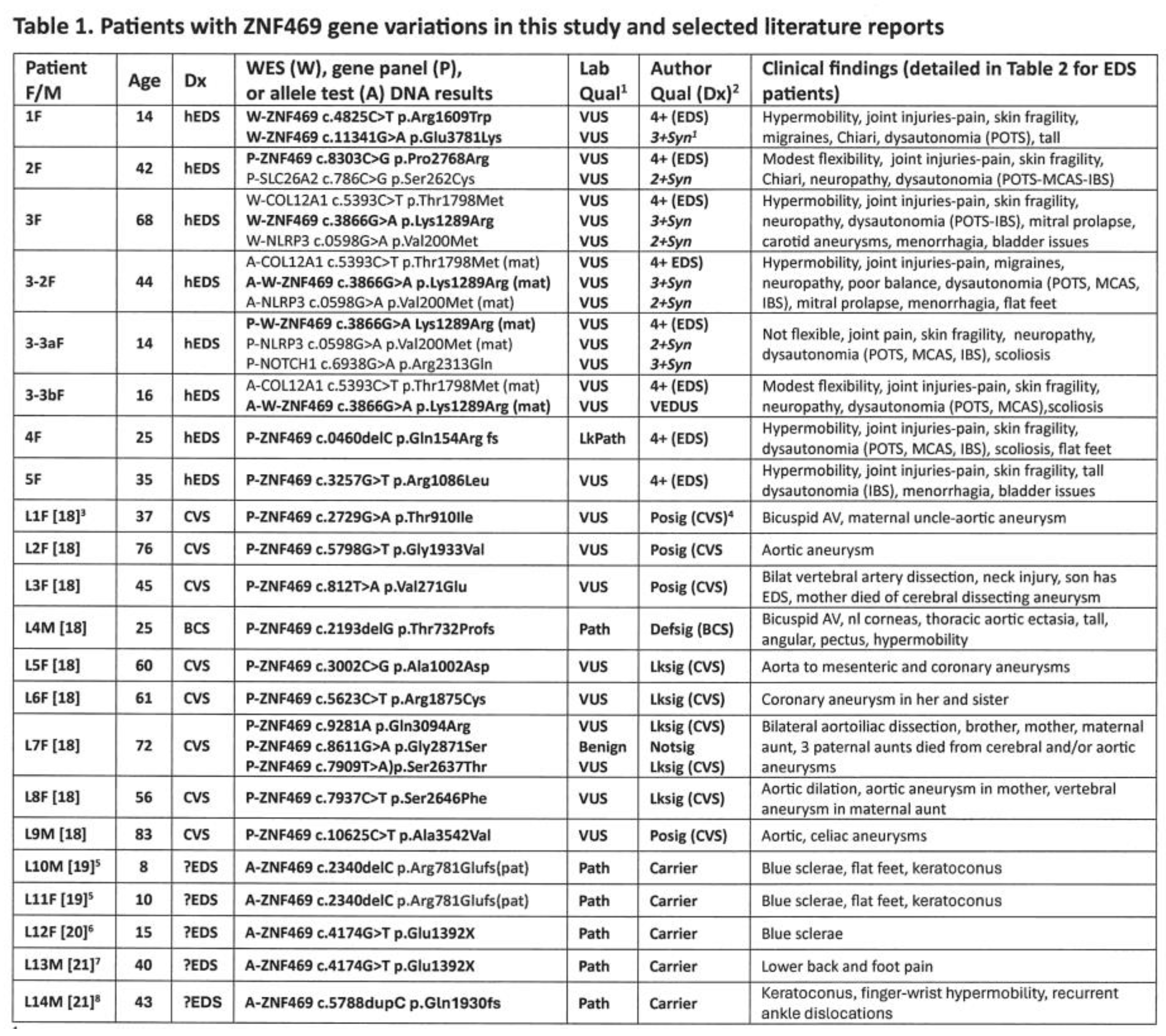
1Commercial laboratories use the consensus qualifications [28] VUS (variant of uncertain significance), likely pathogenic (LkPath), or pathogenic (Path), benign variants usually not reported: 2variants reported commercially are given 1-4+ diagnostic utility scores [12,13] based on the consensus qualification (VUS = 1+, Path = 2+), prior association with diagnosis or correlation of altered gene action with disease mechanism/patient findings ( 0-2+), relatives concordant for disease (0-1+), and presence of additional variants with synergistic (syn-1+) or other (other-0+) action. 3reference for literature cases; 4authors [18] indicate possible (Po), likely (Lk), or definite (Def) significance (sig); 5children of mother with BCS; 6sister of homozygous child, parents normal; 7father of homozygous child, mother same variant without symptoms; 8father of compound heterozygous child, normal mother with ZNF469 c.5788delC p.Gln1930Argfs from common ancestor; amino acid single or three letter symbols [9] with X for terminating codon and fs for frameshift; CVS, cardiovascular abnormality; Dx, diagnosis; F, female; hEDS or ?EDS, hypermobile EDS or possible EDS; M, male; (mat) from mother; (pat) from father; WES, whole exome sequencing.
2.3. Clinical-DNA Database
2.4. Literature and Database Searches
Open access articles on brittle cornea syndrome mentioning the ZNF469 gene were reviewed, those mentioning heterozygotes with findings typical of EDS or comparisons with EDS referenced in this study. The ClinVar database [29] was searched for ZNF469 gene variations, the text file transferred to MS Excel© for selection of exonic variants that mentioned EDS or brittle cornea syndrome as a testing indication.
2.5. Statistics
Significant differences at the p < 0.05 level were determined using the MedCalc online calculator that compares proportions by N-1 chi-squared tests [30].
3. Results
Clinical Presentations
Three patients of ages 13, 42, and 68 years (numbers 1-3 in Table 1) are presented in detail to show the variable impact of one-copy ZNF469 gene changes. It should be noted that neither these nor the other 5 EDS patients in Table 1 had the keratoconus, keratoglobus, or corneal ruptures typical of brittle cornea syndrome [16, 17--see Table 2]. Diagnoses of EDS provided benefits of understanding and therapy [wise exercise to build muscle around joints, bracing, hydration-salt to increase blood volume and decrease venous pooling/adrenergic stimulation, gluten-dairy restriction, 12], follow-up care and counseling not described here.
Patient 1
A 13-year-old female was referred for evaluation of connective tissue laxity after Chiari deformation and other typical symptoms caused her mother to suspect EDS. They reported 35 of 66 applicable history-physical findings (Table 2), significant impairment beginning at age 11 when activities such as dance were limited by joint pain, fatigue, and fractures (over 10 of her hands and ankles). She had infantile colic and was recognized to be hypermobile with ability to perform double-jointed tricks and clumsiness, developing knee subluxations and arthralgia in her shoulders, knees, and ankles. Other findings included need for orthodontics, slow healing, neurologic issues (migraines, chronic daily headaches, and neuralgia along with a 6-7 mm Chiari herniation), POTS findings (dizziness, chronic fatigue, tachycardia, brain fog, heat-cold sensitivity, salt fancy) with the asthma seen in MCAS and difficulty swallowing typical of IBS. Worsening headaches and fatigue plus trouble breathing with choking prompted a visit to Mayo Clinic where diagnoses of Chiari and POTS were made, the latter favored by a sleep study showing nonspecific arousals and poor latency despite a negative tilt-table testing. Perhaps unrelated were prior diagnoses of psoriasis and, at age 12, splenomegaly with mononucleosis infection.
Family history, partially diagrammed in Figure 1A, included a 10-year-old brother with early feeding problems and clumsiness, increased flexibility, joint injuries, easy bruising, and IBS symptoms. Mother had many suggestive symptoms including flexibility, several fractures, neck and back pain, ruptured tendon, easy bruising with scars, migraines with posterior headaches, menorrhagia, IBS with gastroparesis and cholecystectomy, and frequent rashes and hives with psoriasis. The maternal grandmother had similar symptoms with crippling rheumatoid arthritis, osteopenia, and migraines.
Physical examination showed tall stature (87th centile) with proportionate weight and without an asthenic or angular build. Her facial appearance was normal without chiseled features or tight skin. She had a high palate that correlated with her orthodontic treatment for crowded teeth, soft and translucent peripheral skin, ability to perform 7 of 9 Beighton maneuvers [31]. She could join hands, one over shoulder and the other around back and perform the reverse prayer (Namaskar) sign as a sign of large joint maneuvers but had normal strength and balance.
Clinical impression was EDS hypermobile type with dysautonomia and associated . Whole exome sequencing revealed the compound heterozygous ZNF469 mutation in Table 1, testing of the parents confirming the trans orientation with the more disruptive arginine to tryptophan amino acid change in mother.
Patient 2
A 42-year-old female was referred for a second opinion regarding her diagnosis of EDS and interpretation of DNA results, reporting 34 of 66 applicable findings in Table 2. She recognized increased flexibility with ability to perform double-jointed tricks when she was 11 or 12, having a knee ligament tear that limited her sports activities in high school. Diffuse joint pain began in later adolescence along with painful rib subluxations, clumsiness and flat feet contributing to poor balance. Posterior headaches and neuropathy symptoms in her 30s were explained in part by craniocervical instability and Chiari deformation demonstrated by upright head MRI studies. Dysautonomia symptoms included dizziness, syncope, tachycardia, and anxiety typical of POTS, hives-rashes and food-medicine intolerances typical of MCAS, and irregularity-nausea typical of IBS. She recognized color changes and swelling in her feet after standing that along with menorrhagia and bladder symptoms were signs of blood pooling in her lower limbs and pelvis.
Family history (not diagrammed) showed that only her 19-year-old son with flexibility, joint pain, easy bruising, and flat feet had some typical findings of EDS.
Physical findings included average stature with long fingers and ability to perform the Walker-Murdoch and Steinberg signs [32], soft and velvety skin without unusual scars, flat feet with toeing-in and poor balance while walking. Her Beighton score [31] was just above average (5/9) although it was probably higher when young. She had large joint flexibility shown by joining hands, one over shoulder and the other around back, and performing the reverse prayer sign.
Clinical impression was hypermobile EDS, DNA testing showed the disruptive ZNF469 proline to arginine replacement in Table 1 along with a solute carrier family SLC26A2 (606718) mutation that caused a serine to cystine amino acid replacement. The additional variant was qualified as having strong diagnostic utility with synergistic action (2+syn, Table 1) because its associated diseases, e. g., 226900, affected skeletal connective tissue.
Patient 3
A 68-year-old woman requested evaluation for chronic pain since childhood and later diagnoses of carotid artery aneurysms with fibromuscular dysplasia. She reported 43 of 70 applicable findings (Table 2), more severe symptoms beginning at age 12 with menorrhagia and fluctuating blood pressure. Infantile findings of colic-poor feeding and low muscle tone were recalled, the latter interesting in view of her collagen type XII alpha-1 chain (COL12A1, 120320) defect [10,11]. She recognized her flexibility and had early joint pain with 3 fractures involving her back and ankles that limited her adolescent activities. Later popping joints with TMJ issues and multiple joint surgeries were accompanied by back fractures, spinal arachnoid cyst and disc degeneration that needed orthopedic and neurosurgeries. Other issues included skin fragility (easy bruising, elasticity), menorrhagia with bladder issues (frequent infections), mitral valve prolapse, and inguinal hernia. Neuromuscular complaints ranged from migraines numbness and tingling, poor balance to neuropathy and muscle aches. She has constipation/diarrhea, bloating/reflux/stomach pain, gall bladder issues, difficulty swallowing, nausea as symptoms of IBS, several of POTS (orthostatic dizziness, syncope, sleep problems, and brain fog plus the the food-medication intolerances suggestive of MCAD. The carotid aneurysms were being monitored, one calcified and the other still at risk for bleeding, other diagnoses being a bowel perforation, Hirschsprung disease, ankylosing spondylitis, early hearing loss, and varicosities needing venous ablation.
Family history diagrammed in Figure 1B shows that her mother, grandmother, and sister had many symptoms of EDS-dysautonomia, findings in her daughter (patient 3-2) and two grandaughters (patients 3-3a, 3-3b) detailed in Table 2.
Physical exam showed an angular build of average height (wide wing span; long fingers, ability to perform the Walker-Murdoch and Steinberg signs) [32]; soft, translucent, and elastic skin; lordosis; and poor balance by tandem walk. Beighton score [31] was 9 of 9 even at her age and she could do the joining hand and reverse prayer signs of shoulder flexibility that were present in patients 1 and 2.
Clinical impression was hypermobile EDS with remarkable flexibility, multiple joint injuries, and significant neuro-autonomic complications. DNA testing documented heterozygous variation in the COL12A1, NLRP3, and ZNF469 genes, all causing disruptive amino acid changes. All three were tranmitted to the daughter (patient 3-2), the ZNF469 variant to both granddaughters. The ZNF469 variant was qualified as an additional variant with synergistic action since many EDS patients with COL12A1 variation had been reported, [10,11] including 22 in addition to patient 3 in reference [12]. Synergistic action of the NLRP3 gene (606416) variant was designated because among its associated disorders were those with joint pain and mast cell-like inflammation (e. g., 191190) .
Clinical and DNA Findings
Table 1 lists 8 EDS patients, 4 in the same family, and 14 from the literature with ZNF469 gene changes, all heterozygous except for patients 1 (compound heterozygous) and L7 (three heterozygous variants, cis or trans phase not determined). Clinical findings of the EDS patients are shown in the last column and detailed in Table 2, patients L1-L9 [18] and L10-L14 [19,20,21] the only ZNF469 heterozygotes with EDS-like symptoms found in the open access literature. Four patients (1, 3) had whole exome sequencing, others (2, 3a, 4-5, L1-9) 35 to 37-gene panels identified as TAAD (thoracic aortic aneurysm and dissection) by commercial companies, the rest testing for alleles from by exome-panel testing. These TAAD panels screen most genes commonly associated with connective tissue dysplasias including those causing Marfan (154700), forms of Loeys-Dietz (e. g., 609192), and the recognized types of Ehlers-Danlos syndrome [3].
Patients 1-2, 4-5, and the 3, 3-2, 3-3a, 3-3b family all had systematic evaluations for 120 findings (see Methods), patients 4-5 having similar finding patterns and diagnoses of EDS, hypermobile type, as those detailed in the patient presentations. All of their ZNF469 variants were qualified as variants of uncertain significance (VUS) except for patient 4’s frame-shift mutation judged as likely pathogenic. Based on the presence of ZNF469 variation in more than 3 EDS patients [27] and its homology with collagen type I [17], pluses were given for association with EDS-connective tissue dysplasia mechanisms [12] that converted VUS to 4+ diagnostic utility qualifications for the primary ZNF469 variants in patients 1, 2, 4, and 5 (column 6, Table 1). The additional ZNF469 variants in patient 3 and her family members contributed synergistically to 4+ diagnostic utility [12,26], their COL12A1 variant judged primary because of longer association with EDS.
The ZNF469 DNA variant is qualified as having synergistic contribution to the EDS-dysautonomia symptoms of patients 3, 3-2, and 3-3b as was the NLR family pyrin-containing NLRP3 (606416) DNA variant associated with inflammatory arthralgia-myalgia and MCAS findings (e. g., 191900) in patients 3, 3-2, and 3-3a. The sulfate-transporting solute carrer family SLC26A2 gene (606718) variant in patient 2 was also qualified as synergistic because of its association with connective tissue dysplasia (bone, i. e., 222600), as was the NOTCH1 transmembrane receptor (190198) variant in patient 3-3a associated with skin defects (616028) or aortic valve disease (109730).
Note the similar profiles of early childhood, facial, joint-skeletal, skin, neuromuscular, cardiac, dysautonomia, and genitourinary findings among the EDS patients with ZNF469 DNA variants in Table 2, equally resembling the profile of all female EDS patients with a higher frequency of infantile clumsiness (100 versus 55%) as the only significant difference. Some overlap of these EDS findings with those of brittle cornea syndrome is shown in the last column of Table 2, the qualitative descriptions of brittle cornea patients in the literature [17,18,19,20,21,33,34] requiring 1-4+ grades rather than quantitative proportions. Nevertheless, requisite findings of brittle cornea syndrome like corneal fragility and more consistent ones like myopia, blue sclerae, high palate, joint hypermobility, scoliosis, skin fragility, and mitral valve prolapse (3-4+ in Table 2) confirm its classification as a connective tissue dysplasia [35] that needed differentiation from the kyphoscoliotic type of EDS [16]. Overlap of findings like joint hypermobility, velvety skin, long fingers, and kyphoscoliosis is emphasized by the 5 brittle cornea patients with a 12 nucleotide deletion beginning at codon 2939 of the ZNF469 protein [36].
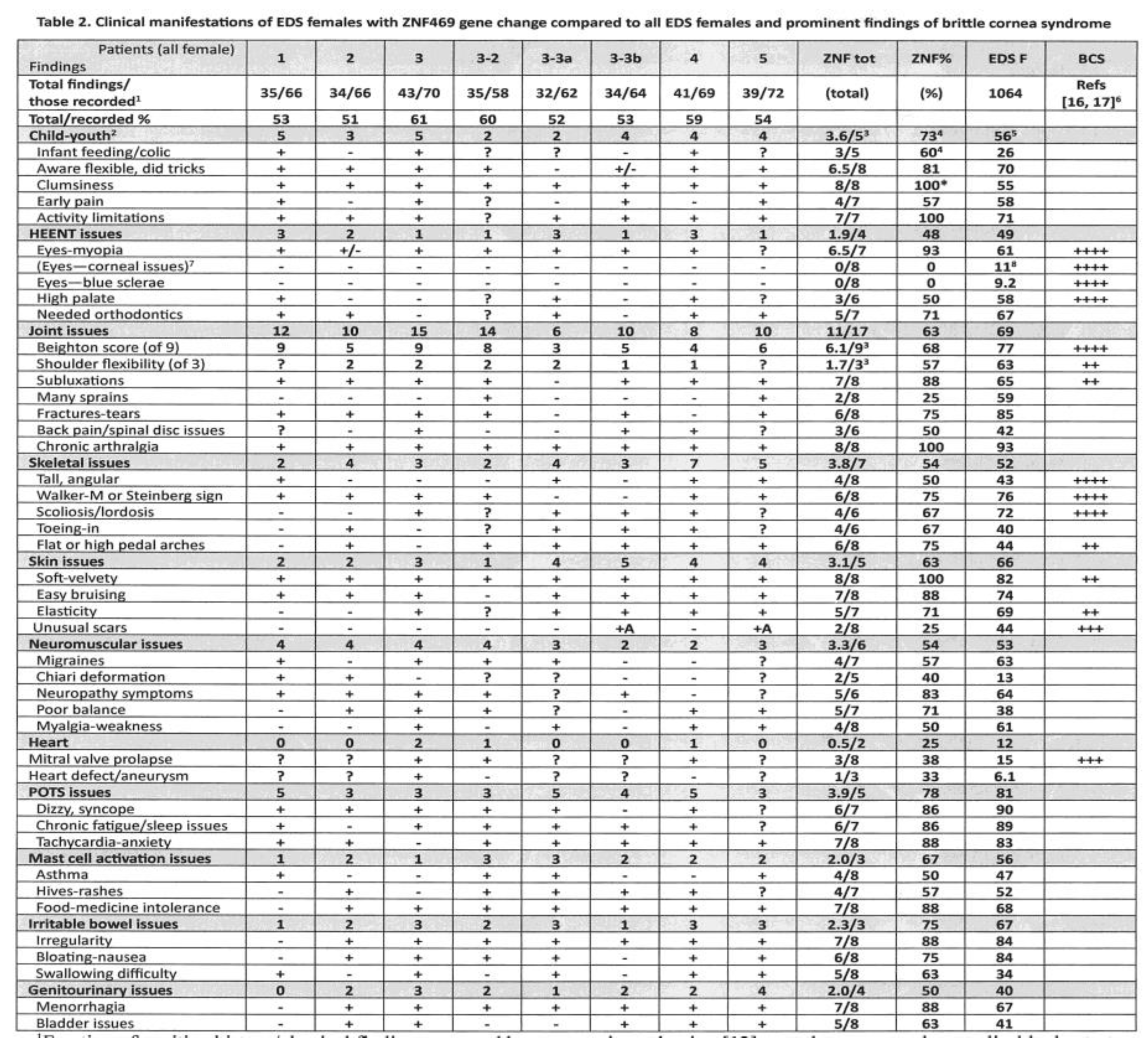
1Fraction of positive history/physical findings reported by systematic evaluation [12] over those assessed or applicable due to type of evaluation and age of ZNF patient; 2history-physical findings are combined into groups (shaded), selected ones listed below each group; 3average number of positive findings in ZNF patients/total findings in a category are given in the shaded lines (also for Beighton and shoulder flexibility scores); 4percentages of average or individual findings over the totals, e. g., 3.6 child-youth findings/5 total = 73%, 3 of 5 patients for whom infant/feeding issues registered = 60%); 5equivalent percentage of that finding in 1064 EDS females having systematic evaluations; 61-4+ symptom severity provided for brittle cornea syndrome (BCS) patients since systematic examinations were not reported [16,17,18,19,20,21,33,34]; 7corneal issues were not included on the systematic evaluation forms; 8dry eyes were the only corneal issue for EDS females, a finding volunteered rather than systematically evaluated; *significantly different p<0.05 [30]; A, atrophic white scars typical of hypermobile EDS [4] rather than papyraceous (knurled, discolored) scars typical of classical EDS [7]; BCS, brittle cornea syndrome; EDS, Ehlers-Danlos syndrome; HEENT, head-eyes-ears-nose-throat; Walker-M, Walker-Murdoch sign; ZNF, zinc finger 469 gene.
Multigenic contribution to EDS-dysautonomia symptoms is supported by the family histories in Figure 1, the probands having systematic evaluations and their relatives anecdotal descriptions from a checklist form listing 14 EDS-dysautonomia findings. Note the parental heterozygotes of patient 1, mother with the ZNF469 arginine to tryptophan substitution having 6 characteristic symptoms of EDS but father with the similarly disruptive glutamate to lysine substitution described by the historian mother as having less than two (in his case, chronic joint pain). Variable expression is also indicated by patient 1’s brother with the same mutation as their father but reported as having 7 EDS symptoms, another example perhaps being the mother of patient 4 who was less affected (8 symptoms) by the same ZNF469 frame-shift mutation although not systematically evaluated. The presence of several affected relatives in each family and the similarity of patient 3, 3-2, 3-3a/b profiles impacted by 2-3 DNA variants further suggests multigenic contribution to this more common (hypermobile) EDS phenotype.
A return to Table 1 further emphasizes the variable phenotypes of ZNF469 heterozygotes and the limitations of this study by listing the findings of 14 such patients from the literature [L1-L14, 18-21]. Patients L1-L9 [18], predominantly (7 of 9) female like the 8 with EDS, also had variants qualified as VUS with the exception of L4’s frame-shift mutation. The 9 patients with ZNF469 gene changes were drawn from 135 diagnosed with arterial aneurysms or dissections in a cardiovascular genetic practice [18], their brief clinical presentations understandably emphasizing vascular findings. Familial predisposition is again indicated by 5 of the 9 having relatives with aneurysms, patient L3 having a son diagnosed with EDS. Patient L4 also has findings like hypermobility with a tall, angular build and pectus that are suggestive of EDS as are the blue sclerae and flat feet of L10 and L11 [19], the blue sclerae, joint laxity or pain of L12-L14 [20,21]. The latter heterozygotes were ascertained as relatives of patients with brittle cornea syndrome, their DNA frame-shift and terminating ZNF469 mutations qualified as pathogenic because of that relationship. Variable expression in heterozygoes is again emphasized by the 3 asymptomatic relatives of patient L12 and by patient L13 with the same variant as L12.
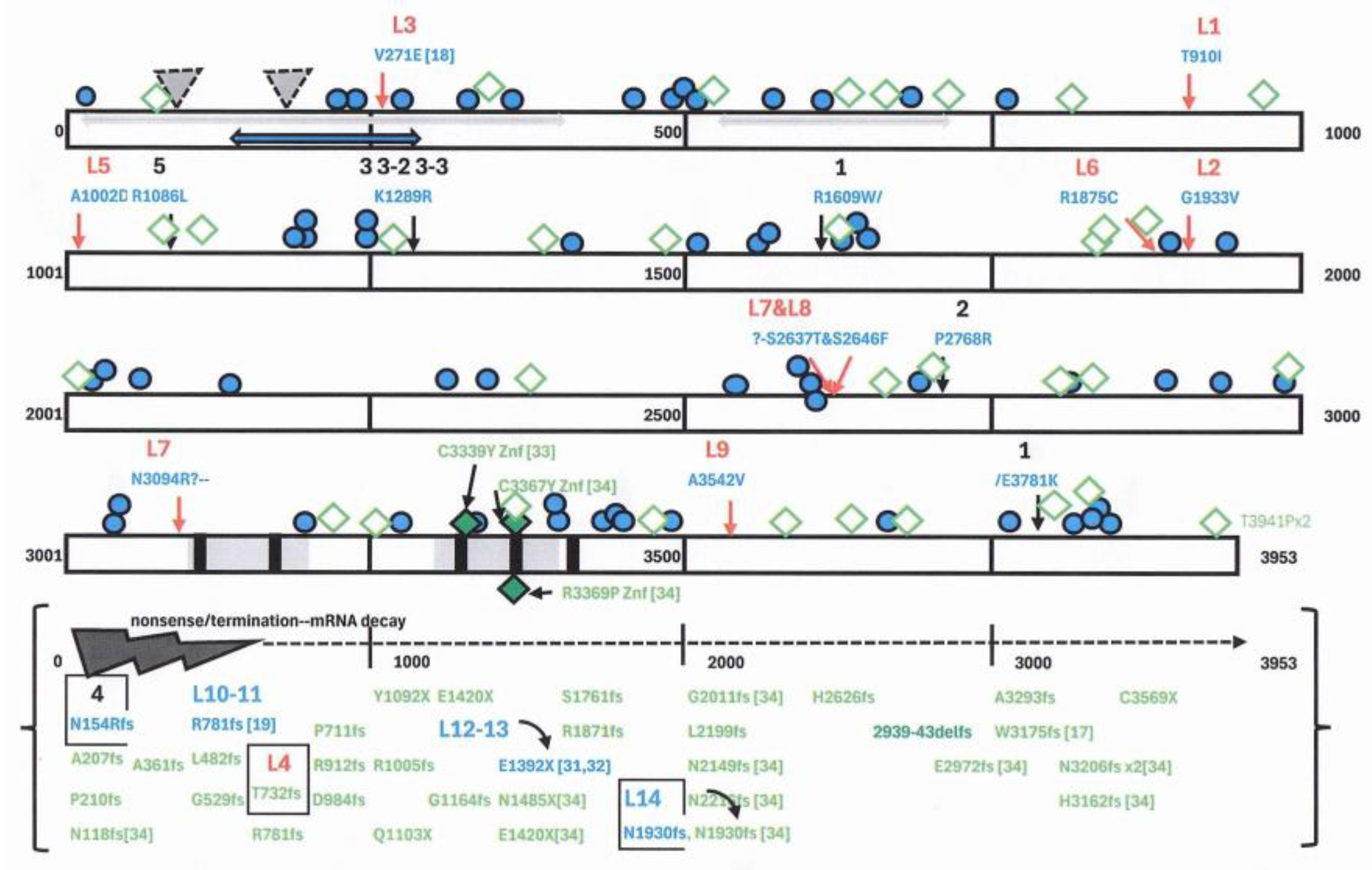
Locations of Table 1 patient and other selected literature mutations within the ZNF469 protein sequence are shown in Figure 2, missense mutations in the upper 4 rows (each representing 1000 amino acids) and those causing messenger RNA decay (frame-shift, terminating) in the lowest fifth (all 3953 amino acids graphed). Data conflict on the number of exons but the two introns between three are shown by inverted triangles as represented by MANE select [37], amino-terminal regions homologous to a herpes virus glycoprotein with deubiquinating activity [thin gray line, 38] or collagen type I [blue arrows, 17] and more carboxy-terminal zinc finger (black bars) or putative nucleotide binding sites (wide gray line) shown by reference to Uniprot [39]. EDS patients 1-5 are numbered in black, L1-L9 ascertained by aneurysm-dissection numbered in red [18], L10-L14 designated as brittle cornea carriers in blue [19,20,21], all DNA variants associated with EDS findings in blue and those with brittle cornea in green. Patient 1’s two missense variants are connected by / to show their trans conformation, the two in patient L7 accompanied by ‘-?’ to show that their cis or trans phase was not determined (the third benign ZNF469 variant of patient L7 in Table 1 is not shown).
Selected from the ClinVar database [29] are missense variants from 60 patients with EDS mentioned as the testing indication (blue circles) and 36 from patients with brittle cornea syndrome as the indication (green triangles), all of them having VUS or conflicting (benign-VUS- occasionally pathogenic) qualifications except for three in the zinc finger regions qualified as pathogenic [green-filled triangles, 33,34]. Two of the latter variants had very disruptive amino acid changes (C3339Y and C3367Y) that affected crucial cysteine residues in the consensus zinc finger sequence [40]. Another 32 frame-shift or chain-terminating DNA variants associated with brittle cornea syndrome are listed by codon position in the bottow row along with those of patients 4 and L10-L14 that would be associated with decay of messenger RNA from that allele.
The missense ZNF469 gene variants above and its message-decaying variants below are distributed across the coding region, the three zinc finger mutations providing the clearest genotype-phenotype correlation. Mutational hotspots may be emerging for regions around the family 3 and patient L3 variants within the collagen I homology region and for the distal regions around the patient L2-L6, L7-8, and patient 1 E3781K variants. It seems clear that variation in one ZNF469 allele likely contributes to an EDS phenotype, excepting those in zinc fingers [33,34], or the frame-shift in patient L4 [18], while those in both (excepting those in patients 1 and possibly L7) likely contribute to a brittle cornea syndrome phenotype. Even this conclusion is hampered by a paucity of clinical information and the fact that the 125 variants selected from ClinVar are characterized individually without reference to the presence or identity of a partner allele.
Discussion
The ZNF469 gene was first identified among DNA segments encoding large proteins in human brain [41], its mapping to chromosome 16q24.2 near the melanocyte-stimulating hormone receptor MSHR gene (155555); this may explain why some patients with ZNF469-related brittle cornea syndrome have red hair [42]. The latter syndrome was shown to have multiple findings of connective tissue dysplasia [16,17,18,19,20,21,33,34], correlating with ZNF469 as a transcription factor regulator of extracellular matrix structure [35] and its homology to the helical regions of COL1A2 (120160), COL4A1 (120130), and COL1A1 (120150) that are highly expressed in cornea [17]. It was not surprising, then, that brittle cornea syndrome was categorized as a type of EDS that had to be distinguished from other types with corneal fragility [16] or that the ZNF469 gene was found variant in 6 of 906 EDS patients having whole exome sequencing [12].
Seven heterozygous EDS patients (excluding patient 1) and 13 from the literature [18–21,?excluding patient L7] with connective dysplasia findings [18] plus 60 EDS patients from the ClinVar database [29] had low-frequency, disruptive, and heterozygous ZNF469 gene changes, providing strong evidence for correlation rather than coincidental association. The cases in Table 1 and Table 2 further correlate one-copy ZNF469 gene changes with EDS-like findings and two-copy changes with brittle cornea syndrome, exceptions being 3 missense one-copy mutations in the zinc finger region [32,33,34], patient L4, or the two-copy mutation in EDS patient 1. The predominance of female sex in all the EDS and in 9 of 14 literature cases may indicate enhanced expression of connective tissue findings in ZNF469 heterozygous females, correlating with the 85% of 2000-plus EDS patients who were female [9,12] as a reflexion of their greater flexibility [20% of women as opposed to 10% of men can perform over 4 Beighton maneuvers, 4] . teYet a conclusion has the same difficulties as the majority of medical insights from all-gene (genomic) testing.
Complicating the conclusion that heterozygous ZNF469 change can contribute to EDS is the fragmentary documentation of patient findings that accompany DNA results in the literature and in databases like ClinVar [29]. Too often extreme findings like corneal ruptures [16,17], aneurysms and dissections [18], or kyphoscoliosis [16] are mentioned rather than systematic documentation [12,13] that would determine if the extreme was an exceptional presentation of a condition or a different condition. Second is the application of biased perspectives from targeting of candidate genes [23,24], mentioned examples being the assumptions that all variations in collagen type V genes cause a classical type of EDS [7] and all collagen type XII gene variations cause Bethlem myopathy [10,11]. Network interactions and influence of background genes explain why the majority of 53 patients with collagen type V mutations were shown by systematic evaluation to have hypermobile rather than classical EDS [12]; even the classical homozygous sickle cell anemia mutation may cause milder symptoms in Jamaicans [43].
These facts lead to a key concept that will facilitate the use of genome sequencing for scientific investigation and precision medicine: Genetically influenced diseases, particularly the more common multisystemic, multifactorial ones like EDS, arise from alterations of mechanisms involving gene networks. Matching of clinical phenotypes with variant DNA sequence genotypes must therefore proceed by:
1) Delineating the patient’s specific type of disease by quantitative percentages of findings
2) Relating those finding profiles to underlying pathogenic mechanisms
3) Qualifying DNA variants hierarchically first by their relation to disease mechanisms (tissue laxity and dysautonomia-inflammation for EDS) and then, if sufficient variant matches have been found [27], to the patient’s specific disease
4) Recognizing that multiple gene changes will be involved in most diseases, many not recognized by commercial interpreters while others, as predicted by DNA sites that transcription factors like ZNF469 must bind to, remain undiscovered until the “dark” genome is characterized [44]
5) Scaled rather than dyadic variant qualification [e. g, with 1-4+ diagnostic utility--12, 13] to minimize the ubiquitous and unhelpful VUS qualifications that detering physician and insurance acceptance of genomic testing [45].
Further evidence linking ZNF469 with connective tissue dyplasias besides brittle cornea syndrome must come from systematic analysis of findings in families with keratoconus, brittle cornea syndrome, or disorders like EDS. The study documenting select symptoms in two ZNF469 heterozygotes [L13-14, 21] screened a total of 132 individuals in 11 familes with keratoconus and found 35 were heterozygous for 11 ZNF469 variants counting the 2 in Table 1. Of 54 family members with keratoconus, 16 (30%) had a variant compared to 19 of 78 (24%) of asymptomatic relatives, the insignificant difference suggesting a low penetrance for heterozygous ZNF469 gene change. Quantitative profiles rather than selected findings (aneurysms, keratoconus) or pattern diagnoses (fibromyalgia, chronic fatigue syndrome, premature assignment of EDS types) must complement ZNF469 heterozygous DNA variations if EDS or other associations are to be proven.
The participation of ZNF469 protein in tissue fiber formation suggested by collagen homology [17] and its ability as a transcription factor [46] to regulate connective tissue formation [35,46] supports a causal relationship between its DNA variations and the EDS-like findings in Table 1 [1,2,3,12,13], extending to the particular hypermobile type [4] in patients 1-8 as justified by their finding profiles in Table 2 [12]. Proof of this causal relationship, as for any of the myriad genomic changes being found in complex diseases, will require more insightful matching of finding-DNA variant combinations, an enterprise ideally suited to large-language models of artificial intelligence [47,48].
Funding
This research received no external funding
Institutional Review Board Statement
EDS patient clinical and DNA findings were entered into a password-protected MS Excel© GW patient database as approved by the North Texas IRB (centered at Medical City Hospital, Dallas) in 2014 (exempt protocol number 2014-054).
Informed consent statement
Verbal consents for deidentified entry of DNA results into public databases and journal articles was obtained during patient registration. Signed consents for reporting of secondary findings and deidentified DNA result sharing were part of the GeneDx requisition that was used by their counselors to coordinate DNA testing.
Data Availability Statement
Clinical and DNA data are available by request to the author.
Conflicts of Interest
The author declares no conflict of interest—patients came to the clinic through self- or physician referral, their payments through insurance or co-pays. Commercial DNA testing was coordinated by company genetic counselors and funded through insurance or patient payment to the company with no inducements or rewards to the author.
References
- Ehlers, E. Cutis laxa, Neigung zu ha Haemorrhagien in der Haut, Lokerung mehrerer Artikulationen. Dermatol Z 1901, 8, 173–174. [Google Scholar]
- Danlos, H. A. Un cas de cutis laxa avec tumeurs pare contusion chronique des coudes et des genoux (xanthoma juvénile pseudo-diabétique de MM Hallopeau et Macé de Lépinay). Bull Soc Fr Dermatol Syphilig 1908, 19, 70–72. [Google Scholar]
- Malfait, F.; Francomano, C.; Byers, P.; et al. The 2017 international classification of the Ehlers–Danlos Syndromes. Am J Med Genet C Semin Med Genet 2017, 175, 8–26. [Google Scholar] [CrossRef]
- Tinkle, B.T.; Levy, H.P. Symptomatic joint hypermobility: The hypermobile type of Ehlers-Danlos syndrome and the hypermobility spectrum disorders. Med Clin North Am 2019, 103, 1021–1033. [Google Scholar] [CrossRef]
- De Wandele, I.; Rombaut, L.; Leybaert, L.; et al. Dysautonomia and its underlying mechanisms in the hypermobility type of Ehlers-Danlos syndrome. Semin Arthritis Rheum 2014, 44, 93–100. [Google Scholar] [CrossRef]
- Ehlers-Danlos Society; Ehlers-Danlos Society. International Classification (2017). Available online: https://www.ehlers-danlos.com/2017-eds-international-classification/ www.ehlers-danlos.com/wp-content/uploads/2017/05/hEDS-Dx-Criteria-checklist-1.pdf (accessed on 2-26-2026).
- Bowen, J.M.; Sobey, G.J.; Burrows, N.P.; et al. Ehlers-Danlos syndrome, classical type. Am J Med Genet C Semin Med Genet 2017, 175, 27–39. [Google Scholar] [CrossRef]
- Online Mendelian Inheritance in Man (OMIM). Johns Hopkins University, Baltimore MD. Available online: https://www.omim.org (accessed 2-26-26).
- Tonk, S.S.; Wilson, G.N. Similar Ehlers–Danlos syndrome profiles produced by variants in multiple collagen genes. DNA 2025, 5, 11–28. [Google Scholar] [CrossRef]
- Coppens, S.; Desmyter, L.; Koch, M.; et al. Ehlers-Danlos/myopathy overlap syndrome caused by a large de novo deletion in COL12A1. Am J Med Genet A 2022, 188, 1556–1561. [Google Scholar] [CrossRef] [PubMed]
- Merlini, L.; Sabatelli, P.; Cenni, V.; et al. Myopathic Ehlers-Danlos syndrome (mEDS) related to COL12A1: Two novel families and literature review. Int J Mol Sci 2025, 26, 5387. [Google Scholar] [CrossRef]
- Wilson, G.N.; Tonk, V.S. Clinical-genomic analysis of 1261 patients with Ehlers–Danlos syndrome outlines an articulo-autonomic gene network (entome). Curr Issues Mol Biol 2024, 46, 2620–2643. [Google Scholar] [CrossRef]
- Wilson, G.N. A clinical qualification protocol highlights overlapping genomic influences and neuro-autonomic mechanisms in Ehlers-Danlos and long COVID-19 Syndromes. Curr Issues Mol Biol 2023, 45, 6003–6023. [Google Scholar] [CrossRef] [PubMed]
- Weerakkody, R.A.; Vandrovcova, J.; Kanonidou, C.; et al. Targeted next-generation sequencing makes new molecular diagnoses and expands genotype-phenotype relationship in Ehlers-Danlos syndrome. Genet Med 2016, 18, 1119–1127. [Google Scholar] [CrossRef] [PubMed]
- Vandersteen, A.M.; Weerakkody, R.A.; Parry, D.A.; et al. NIHR BioResource. Genetic complexity of diagnostically unresolved Ehlers-Danlos syndrome. J Med Genet 2024, 61, 232–238. [Google Scholar] [CrossRef] [PubMed]
- Al-Hussain, H.; Zeisberger, S.M.; Huber, P.R.; Giunta, C.; Steinmann, B. Brittle cornea syndrome and its delineation from the kyphoscoliotic type of Ehlers-Danlos syndrome (EDS VI): report on 23 patients and review of the literature. Am J Med Genet A 2004, 124A, 28–34. [Google Scholar] [CrossRef]
- Abu, A.; Frydman, M.; Marek, D.; et al. Deleterious mutations in the zinc-finger 469 gene cause brittle cornea syndrome. Am J Hum Genet 2008, 82, 1217–1222. [Google Scholar] [CrossRef]
- Wolf, A.; Moore, P.; Hong, C.; Sathyamoorthy, M.A. Possible phenotype-to-genotype association of novel single-nucleotide variants in the coding exons of the ZNF469 gene to arterial aneurysmal and dissection diseases. Int J Mol Sci 2024, 25, 13730. [Google Scholar] [CrossRef]
- Arce-González, R; Chacon-Camacho, O.F.; Ordoñez-Labastida, V.; Graue-Hernandez, E.O.; Navas-Pérez, A.; Zenteno, J.C. A novel homozygous ZNF469 variant causing brittle cornea syndrome is associated with corneal ectasias in heterozygous carriers. Int Ophthalmol 2023, 43, 807–815. [Google Scholar] [CrossRef]
- Khan, A.O.; Aldahmesh, M.A.; Mohamed, J.N.; Alkuraya, F.S. Blue sclera with and without corneal fragility (brittle cornea syndrome) in a consanguineous family harboring ZNF469 mutation (p.E1392X). Arch Ophthalmol 2010, 128, 1376–1379. [Google Scholar] [CrossRef]
- Davidson, A.E; Borasio, E.; Liskova, P.; et al. Brittle cornea syndrome ZNF469 mutation carrier phenotype and segregation analysis of rare ZNF469 variants in familial keratoconus. Invest Ophthalmol Vis Sci 2015, 56, 578–586. [Google Scholar] [CrossRef]
- Benarroch, E.E. Postural tachycardia syndrome: A heterogeneous and multifactorial disorder. Mayo Clin Proc 2012, 87, 1214–1225. [Google Scholar] [CrossRef]
- Wang, E.; Ganti, T.; Vaou, E.; Hohler, A. The relationship between mast cell activation syndrome, postural tachycardia syndrome, and Ehlers-Danlos syndrome. Allergy Asthma Proc 2021, 42, 243–246. [Google Scholar] [CrossRef]
- Thwaites, P.A.; Gibson, P.R.; Burgell, R.E. Hypermobile Ehlers-Danlos syndrome and disorders of the gastrointestinal tract: What the gastroenterologist needs to know. J. Gastroenterol. Hepatol 2022, 37, 1693–1709. [Google Scholar] [CrossRef]
- Bamshad, M.J.; Ng, S.B.; Bigham, A.W.; et al. Exome sequencing as a tool for Mendelian disease gene discovery. Nat Rev Genet 2011, 12, 745–755. [Google Scholar] [CrossRef]
- Posey, J.E.; Harel, T.; Liu, P.; et al. Resolution of disease phenotypes resulting from multilocus genomic variation. N Engl J Med 2017, 376, 21–31. [Google Scholar] [CrossRef]
- MacArthur, D.G.; Manolio, T.A.; Dimmock, D.P.; Rehm, H.L.; Shendure, J.; Abecasis, G.R. Guidelines for investigating causality of sequence variants in human disease. Nature 2014, 24, 469–476. [Google Scholar] [CrossRef]
- Richards, S.; Aziz, N.; Bale, S.; et al.; ACMG Laboratory Quality Assurance Committee Standards and guidelines for the interpretation of sequence variants: A joint consensus recommendation of the American College of Medical Genetics and Genomics and the Association for Molecular Pathology. Genet Med 2015, 17, 405–424. [Google Scholar] [CrossRef] [PubMed]
- ClinVar Available online: www.ncbi.nlm.nih.gov/clinvar/ (accessed 2-23-26).
- MedCalc Software Ltd. Available online: https://www.medcalc.org/calc (accessed 2-18-26).
- Beighton Maneuvers Illustrated, The Ehlers-Danlos Society Available online: https://www.ehlers-danlos.com/assessing-joint-hypermobility/ (accessed 2-26-26).
- Walker-Murdoch and Steinberg signs. Available online: https:// journals.lww.com/mamc/fulltext/2017/03020/wrist__walker_murdoch__and_thumb__steinberg__signs.15.aspx. (accessed 2-26-26).
- Christensen, A.E.; Knappskog, P.M.; Midtbø, M.; et al. Brittle cornea syndrome associated with a missense mutation in the zinc-finger 469 gene. Invest Ophthalmol Vis Sci 2010, 51, 47–52. [Google Scholar] [CrossRef] [PubMed]
- Burkitt Wright, E.M.; Porter, L. F.; Spencer, H.L.; et al. Brittle cornea syndrome: recognition, molecular diagnosis and management. Orphanet J Rare Dis 2013, 8, 68. [Google Scholar] [CrossRef]
- Charoenthanakitkul, D.; Boonto, T.; Nokkeaw, A.; Ariyachet, C. ZNF469 promotes extracellular matrix production in normal and keloid dermal fibroblasts. Mol Med Rep. 2025, 32, 303. [Google Scholar] [CrossRef] [PubMed]
- Al-Owain, M.; Al-Dosari, M.S.; Sunker, A.; Shuaib, T; Alkuraya, F.S. Identification of a novel ZNF469 mutation in a large family with Ehlers-Danlos phenotype. Gene 2012, 511, 447–50. [Google Scholar] [CrossRef]
- MANE select (ZNF469). Available online: https://www.ncbi.nlm.nih.gov/nuccore/NM_001367624 (accessed 2-23-26).
- Schlieker, C.; Korbel, G.A.; Kattenhorn, L.M.; Ploegh, H.L. A deubiquitinating activity is conserved in the large tegument protein of the herpesviridae. J Virol 2005, 79, 15582–15585. [Google Scholar] [CrossRef] [PubMed]
- Uniprot, ZNF469 Available online: https://www.uniprot.org/uniprotkb/Q96JG9/entry (accessed 2-23-26).
- The zinc finger consensus sequence is listed as #-A-C-A(1-5)-C-A3-#-A5-#-A2-H-A(3-6)-(H or C) by the above reference, # and A being any amino acid, # one important for zinc-binding structure, C cysteine and H histidine [from reference 39].
- Nagase, T.; Nakayama, M.; Nakajima, D.; Kikuno, R.; Ohara, O. Prediction of the coding sequences of unidentified human genes. XX. The complete sequences of 100 new cDNA clones from brain which code for large proteins in vitro . DNA Res 2001, 8, 85–95. [Google Scholar] [CrossRef]
- Ticho, U.; Ivry, M.; Merin, S. Brittle cornea, blue sclera, and red hair syndrome (the brittle cornea syndrome). Br J Ophthalmol 1980, 64, 175–177. [Google Scholar] [CrossRef]
- Serjeant, G.R. Sickle-cell disease. Lancet 1997, 350, 725–730. [Google Scholar] [CrossRef] [PubMed]
- Kiser, D.P.; Rivero, O.; Lesch, K.P. Annual research review: The (epi)genetics of neurodevelopmental disorders in the era of whole-genome sequencing--unveiling the dark matter. J Child Psychol Psychiatry 2015, 56, 278–295. [Google Scholar] [CrossRef]
- Reuter, C.M.; Kohler, J.N.; Bonner, D.; et al. Yield of whole exome sequencing in undiagnosed patients facing insurance coverage barriers to genetic testing. J Genet Couns 2019, 28, 1107–1118. [Google Scholar] [CrossRef]
- Steinhauser, S.; Estoppey, D.; Buehler, D.P.; et al. The transcription factor ZNF469 regulates collagen production in liver fibrosis. JCI Insight 2025, 10, e182232. [Google Scholar] [CrossRef]
- Terranova, N.; Venkatakrishnan, K. Machine learning in modeling disease trajectory and treatment outcomes: An emerging enabler for model-informed precision medicine. Clin Pharmacol Ther 2024, 115, 720–726. [Google Scholar] [CrossRef] [PubMed]
- Treder, M.S.; Lee, S.; Tsvetanov, K.A. Introduction to large language models (LLMs) for dementia care and research. Front Dement 2024, 3, 1385303. [Google Scholar] [CrossRef]
Figure 1.
ZNF469 patient pedigrees. Family histories of patients 1 and 3 are provided in the patient presentations, patient 2 with a single affected relative not diagrammed, those of patients 4 and 5 presented here. Number of findings (Sx) are shown for the patients (probands, darker symbols) after systematic evaluations, those for relatives (gray symbols) indicated from family history forms allowing selection of up to 14 symptoms for each relative.
Figure 1.
ZNF469 patient pedigrees. Family histories of patients 1 and 3 are provided in the patient presentations, patient 2 with a single affected relative not diagrammed, those of patients 4 and 5 presented here. Number of findings (Sx) are shown for the patients (probands, darker symbols) after systematic evaluations, those for relatives (gray symbols) indicated from family history forms allowing selection of up to 14 symptoms for each relative.
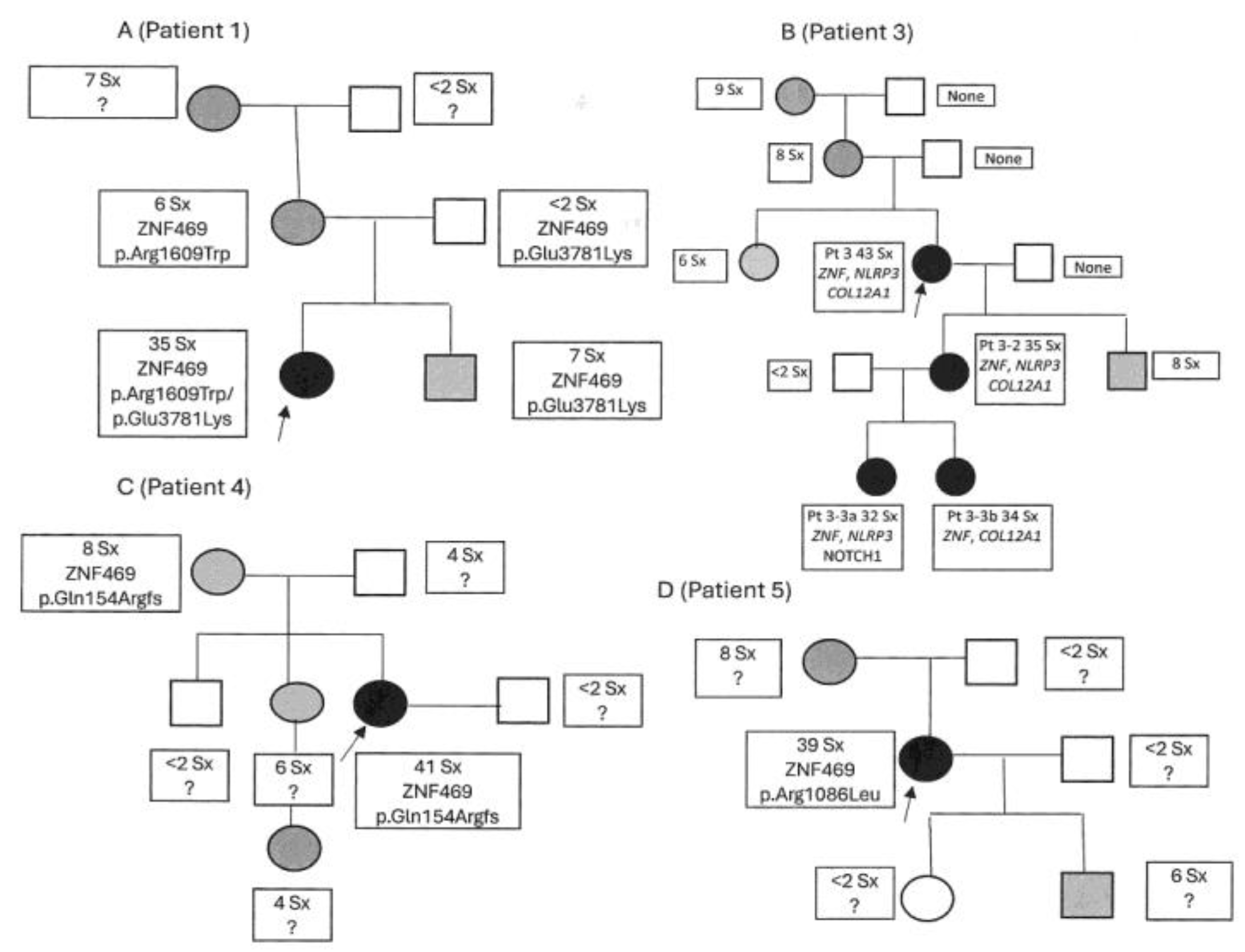
Figure 2.
Positions of ZNF469 mutations in EDS and literature patients. The upper 4 rows show 1000 amino acid segments of the 3953 residue ZNF469 protein on which positions of missense mutations are shown, inverted triangles show the position of introns [37], thin gray or blue arrows near the amino terminus indicating regions homologous to a herpes virus glycoprotein or collagen type I [38], 5 zinc finger regions toward the carboxyterminus indicated by black bars surrounded by putative nucleic acid binding regions in gray [39]. Mutations of patients 1-5 (EDS in black) and L1-L9 [cardiovascular findings in red, 18] are detailed while blue circles position 60 DNA variants associated with mention of EDS as the testing indication in ClinVar [27] and unfilled green triangles position 36 DNA variants associated with mention of brittle cornea syndrome, only the 3 filled with green (lower row) given pathogenic qualification. The lowest row shows the ZNF469 protein in 1000 amino acid increments upon which mutations (frame shift, fs; chain terminating, X) that lead to messenger RNA decay are positioned. Mutations detailed include those in EDS patient 4 (black), in patients L10-14 with findings related to EDS, and in 32 patients with brittle cornea syndrome (green) selected from the the literature [33,34,35]. All variants are heterozygous, paired in patient 1 (indicated by /) and possibly in patient L7 (indicated by ?--), likely combined with a second ZNF469 variant for those associated with brittle cornea syndrome in ClinVar (excepting the ones represented by filled green triangles).
Figure 2.
Positions of ZNF469 mutations in EDS and literature patients. The upper 4 rows show 1000 amino acid segments of the 3953 residue ZNF469 protein on which positions of missense mutations are shown, inverted triangles show the position of introns [37], thin gray or blue arrows near the amino terminus indicating regions homologous to a herpes virus glycoprotein or collagen type I [38], 5 zinc finger regions toward the carboxyterminus indicated by black bars surrounded by putative nucleic acid binding regions in gray [39]. Mutations of patients 1-5 (EDS in black) and L1-L9 [cardiovascular findings in red, 18] are detailed while blue circles position 60 DNA variants associated with mention of EDS as the testing indication in ClinVar [27] and unfilled green triangles position 36 DNA variants associated with mention of brittle cornea syndrome, only the 3 filled with green (lower row) given pathogenic qualification. The lowest row shows the ZNF469 protein in 1000 amino acid increments upon which mutations (frame shift, fs; chain terminating, X) that lead to messenger RNA decay are positioned. Mutations detailed include those in EDS patient 4 (black), in patients L10-14 with findings related to EDS, and in 32 patients with brittle cornea syndrome (green) selected from the the literature [33,34,35]. All variants are heterozygous, paired in patient 1 (indicated by /) and possibly in patient L7 (indicated by ?--), likely combined with a second ZNF469 variant for those associated with brittle cornea syndrome in ClinVar (excepting the ones represented by filled green triangles).
Disclaimer/Publisher’s Note: The statements, opinions and data contained in all publications are solely those of the individual author(s) and contributor(s) and not of MDPI and/or the editor(s). MDPI and/or the editor(s) disclaim responsibility for any injury to people or property resulting from any ideas, methods, instructions or products referred to in the content. |
© 2026 by the authors. Licensee MDPI, Basel, Switzerland. This article is an open access article distributed under the terms and conditions of the Creative Commons Attribution (CC BY) license (http://creativecommons.org/licenses/by/4.0/).
Copyright: This open access article is published under a Creative Commons CC BY 4.0 license, which permit the free download, distribution, and reuse, provided that the author and preprint are cited in any reuse.


