

Submitted:
03 March 2026
Posted:
04 March 2026
You are already at the latest version
Abstract
To establish standardized DNA fingerprinting and molecular identification systems for citrus, we analyzed 69 mandarin accessions via fluorescent SSR capillary electrophoresis to construct DNA molecular fingerprints and unique molecular identity cards. Eighteen highly polymorphic SSR primer pairs were screened, yielding 239 genotype calls and 147 alleles. The number of amplified alleles per primer pair ranged from 4 to 18, with polymorphic information content (PIC) values varying from 0.411 to 0.650. Ten core primer pairs were further selected, achieving a discrimination rate of 65.2% (45 out of 69 accessions distinguished). Utilizing these fluorescent SSR markers, we established DNA molecular fingerprints and unique molecular identity cards for all 69 accessions. Among them, 45 accessions possessed unique fingerprints, whereas the remaining 24 indistinguishable accessions were clustered into six groups. Each cluster contained both wild (4 accessions total) and cultivated (20 accessions total) resources with high genetic similarity, which merits further investigation. This study lays a theoretical basis for the authentication, conservation, and genetic relationship analysis of mandarin germplasm resources, and provides a practical tool for standardizing mandarin variety identification.
Keywords:
citrus
; capillary electrophoresis
; DNA fingerprint
; molecular identity card
1. Introduction
Mandarin citrus (Citrus reticulata Blanco), commonly known by the Chinese names “huangguo” and “guanggan”, is distinguished by its loosely adherent peel and encompasses a broad spectrum of tangerine and mandarin cultivars [1]. As the most extensively cultivated citrus group in China, mandarins exhibit substantial genetic diversity [2], with their taxonomic framework anchored in the seminal work of Barrett and Rhodes, who delineated just three true Citrus species: C. medica (citron), C. grandis (pummelo), and C. reticulata (mandarin) [3]. China serves as both a primary center of origin and a genetic diversity hotspot for mandarins [4,5], harboring a rich assemblage of cultivars—including Ponkan, Satsuma mandarin, Shatangju, and Nanfeng tangerine—that encompass both monoembryonic and polyembryonic genotypes [6].
Traditional identification of citrus cultivars relies heavily on morphological traits, a practice that proves inherently challenging for accessions with highly similar leaf morphology, owing to strong subjectivity and susceptibility to environmental interference. To circumvent these limitations, modern molecular biological techniques have emerged as powerful tools, enabling convenient, accurate, and reliable cultivar discrimination at the DNA level. Among these techniques, simple sequence repeat (SSR) markers are particularly valued for their high polymorphism, excellent reproducibility, and codominant inheritance patterns [7,8,9]. Nevertheless, conventional SSR genotyping based on polyacrylamide gel electrophoresis (PAGE) is plagued by operational cumbersomeness, the use of toxic reagents, low detection efficiency, and an inability to precisely quantify fragment sizes—drawbacks that constrain its applicability in large-scale germplasm analysis.
Fluorescent capillary electrophoresis (FCE) technology has been developed to overcome the limitations of traditional PAGE-based SSR detection, enabling stable, high-throughput, and precise determination of amplified fragment sizes. While FCE-coupled SSR analysis has been successfully deployed for DNA fingerprinting, molecular identity (ID) development, and cultivar authentication in major crops such as maize and rice [10,11,12,13], its application in citrus remains relatively limited. Advances in molecular marker technologies have further solidified the status of SSR markers as pivotal tools for citrus cultivar authentication, with numerous studies demonstrating their utility across diverse citrus research contexts [14,15]. For instance, Rohini et al. [16] employed 17 SSR loci to detect minimal genetic differentiation within Indian citrus germplasm; Yan et al. [17] validated genetic stability between ‘Guanxi’ pomelo and its bud sports using 15 SSR markers; and Lidija et al. [18] confirmed the efficacy of SSRs for citrus genotype characterization. Beyond genetic diversity assessments, SSR markers have been applied to practical citrus research: Fan et al. [19] established protocols for citrus seedling purity testing; Zeng et al. [20] developed cultivar-specific fingerprints for Nanfeng tangerine; Lei et al. [21] identified 12 polymorphic PAGE-based SSR primers for constructing citrus fingerprint databases; Li et al. [22] built a fingerprint library covering 500 citrus accessions using FCE; Biswas et al. [23] developed genome-derived SSR markers for citrus authentication; and Chen et al. [24] generated DNA fingerprints for the hybrid cultivar ‘Zhonggan No.5’ (a cross of ‘Egan No.30’ × ‘Shatangju’).
Despite mandarins ranking as the second most consumed fresh citrus fruit in China, standardized SSR-based molecular identification systems tailored specifically for this group remain inadequately developed. Against this backdrop, the present study aims to establish DNA fingerprints and molecular ID cards for 69 mandarin accessions using FCE-based SSR markers. This work provides a foundational reference framework for standardized varietal authentication, germplasm conservation, and genetic relationship analysis of mandarins and their related citrus taxa, thereby supporting the sustainable development of the global citrus industry.
2. Materials and Methods
2.1. Materials
Sixty-nine mandarin accessions (detailed in Table 1) were collected from the Citrus Germplasm Resource Preservation Nursery of the Guangxi Academy of Specialty Crops. All materials were propagated and maintained via grafting to ensure genetic consistency. Fresh tissue samples were collected and immediately stored at −80 °C to preserve DNA integrity for subsequent analysis.
2.2. DNA Extraction
Genomic DNA was extracted from the stored tissues following the method described by Lin and Walker [25], with minor modifications. DNA quality was evaluated using 1.2% agarose gel electrophoresis (stained with ethidium bromide) to assess for degradation and contamination. The purity (A260/A280 ratio) and concentration of extracted DNA were determined using a nucleic acid-protein quantifier. Only DNA samples with an A260/A280 ratio of 1.8–2.0 (indicating high purity) were used for subsequent SSR amplification.
2.3. Primer Design and Synthesis
SSR loci were identified from the clementine (Citrus reticulata) genome sequence. The minimum number of repeats for SSR loci was set as follows: 6 repeats for mononucleotide motifs, and 5 repeats each for di-, tri-, tetra-, penta-, and hexanucleotide motifs. Specific primers targeting these SSR loci were designed using Primer 5.0 software, adhering to the following criteria: primer length of 20–24 bp, GC content of 40–60%, annealing temperature (Tm) of 57–62 °C, and expected amplicon size of 100–350 bp. All primers were synthesized by a commercial biotechnology company, with the 5′ end of each forward primer labeled with a fluorescent dye (FAM, HEX, or ROX) to facilitate subsequent capillary electrophoresis detection.
2.4. Primer Screening
A three-step primer screening strategy was adopted to select high-quality polymorphic primers:
- Preliminary screening: Primers were initially tested via 2% agarose gel electrophoresis using genomic DNA from 8 randomly selected mandarin accessions. Each PCR reaction was performed in duplicate to verify reproducibility. Primers that yielded clear, non-smearing, and reproducible bands were selected for secondary screening.
- Secondary screening: Candidate primers from the preliminary step were further evaluated using 6% denaturing polyacrylamide gel electrophoresis (PAGE) to assess polymorphism. Each reaction was repeated twice, and primers exhibiting distinct polymorphic bands among the test accessions were retained.
- Final validation: Primers with satisfactory performance in secondary screening were subjected to final validation using SSR fluorescent capillary electrophoresis (FCE). This step confirmed their polymorphism, amplicon stability, and suitability for large-scale fingerprinting analysis of the 69 mandarin accessions.
2.5. Fingerprint Construction
Validated genotypes obtained from SSR primer amplification were used for DNA fingerprint construction. For each primer pair, the molecular weights of amplified alleles were sorted in descending order and assigned unique Arabic numerals (e.g., 1, 2, 3…) as genotype codes. An Excel-based DNA fingerprint map was generated, where the x-axis represented the molecular weights of amplified alleles for each primer pair, and the y-axis corresponded to the 69 mandarin accessions. This map provided an intuitive visualization of the DNA fingerprint profiles for all tested samples, enabling direct differentiation of accessions based on banding pattern differences.
2.6. Molecular Identity Card Construction
To establish standardized molecular identity (ID) cards, the amplified allele sizes of each primer pair were converted into unified numeric or alphabetic codes following a predefined rule:
- For each primer pair, the fragment sizes of amplified alleles were first sorted in ascending order;
- Unique band patterns (genotypes) among the 69 accessions were encoded sequentially using Arabic numerals 1–9;
- When the number of unique band patterns exceeded 9, uppercase English letters (A, B, C,…) were used to represent the 10th, 11th, 12th, and subsequent patterns;
- Null alleles (no amplification products) were denoted as "0".
Finally, the codes corresponding to each selected core primer pair were concatenated in a fixed order to form a unique molecular ID card for each mandarin accession.
3. Results and Analysis
3.1. Primer Design and Screening
Specific SSR primers were successfully designed based on the Citrus reticulata clementine genome, resulting in the synthesis of 96 novel primer pairs. To expand the primer pool, these 96 newly designed pairs were combined with 46 previously reported SSR primer pairs for subsequent screening. PCR amplification was first performed using genomic DNA from 6 randomly selected citrus accessions. Through a three-step screening process—2% agarose gel electrophoresis (for preliminary band quality verification), 6% denaturing polyacrylamide gel electrophoresis (for polymorphism preliminary evaluation), and fluorescent capillary electrophoresis (for final validation)—70 primer pairs with strong amplification stability and distinct polymorphism were identified for subsequent experiments.
3.2. Genetic Diversity Analysis of 69 Mandarin Accessions
3.2.1. Polymorphism Evaluation of SSR Primers
Fluorescent capillary electrophoresis analysis was conducted on the 69 mandarin accessions using the 70 screened primer pairs. Among these, 18 primer pairs exhibited significant polymorphism and stable amplification efficiency, and were thus selected for detailed genetic diversity analysis. The amplified fragment sizes ranged from 122 to 369 bp, with a total of 147 alleles detected across all 18 loci. The average number of alleles per primer pair (Na) was 8.16, with allele counts per locus varying from 4 to 18. Primer S90 produced the highest number of alleles, while primers S76 and S85 yielded the fewest. A total of 239 genotypes (amplified bands) were identified from the 18 primer pairs, with 6–30 genotypes per locus. Notably, the number of genotypes exceeded the number of alleles for all 18 primer pairs, indicating high heterozygosity and polymorphism of these loci.
The effective number of alleles (Ne) ranged from 1.883 to 6.089, reflecting substantial variation in allele frequency and potential functional importance of these loci. Shannon’s information index (I), a key indicator of genetic diversity, averaged 1.410 across the 18 primer pairs, with 9 pairs showing values above this average. The average observed heterozygosity (Ho) was 0.532, confirming high genetic diversity within the 69 mandarin accessions.
Polymorphic information content (PIC) values were used to classify primer polymorphism: primers with PIC > 0.5 were defined as highly polymorphic, and those with 0.4 ≤ PIC ≤ 0.5 as moderately polymorphic. The average PIC value of the 18 primer pairs was 0.621, with 9 pairs exceeding this average. All 18 primers exhibited PIC values ≥ 0.411, among which 12 were highly polymorphic and 6 were moderately polymorphic, indicating that these primers carry rich polymorphism information and are suitable for mandarin genetic diversity analysis and fingerprint construction (Table 2).
3.2.2. SSR Characteristic Fingerprint Information of 69 Mandarin Varieties
Among the 69 mandarin accessions, 29 possessed unique alleles that were not detected in other accessions. These unique alleles could serve as diagnostic markers for distinguishing these accessions from others. The number of specific unique alleles varied among these 29 accessions, providing a basis for their rapid and accurate identification (Table 3).
3.2.3. Cluster Analysis
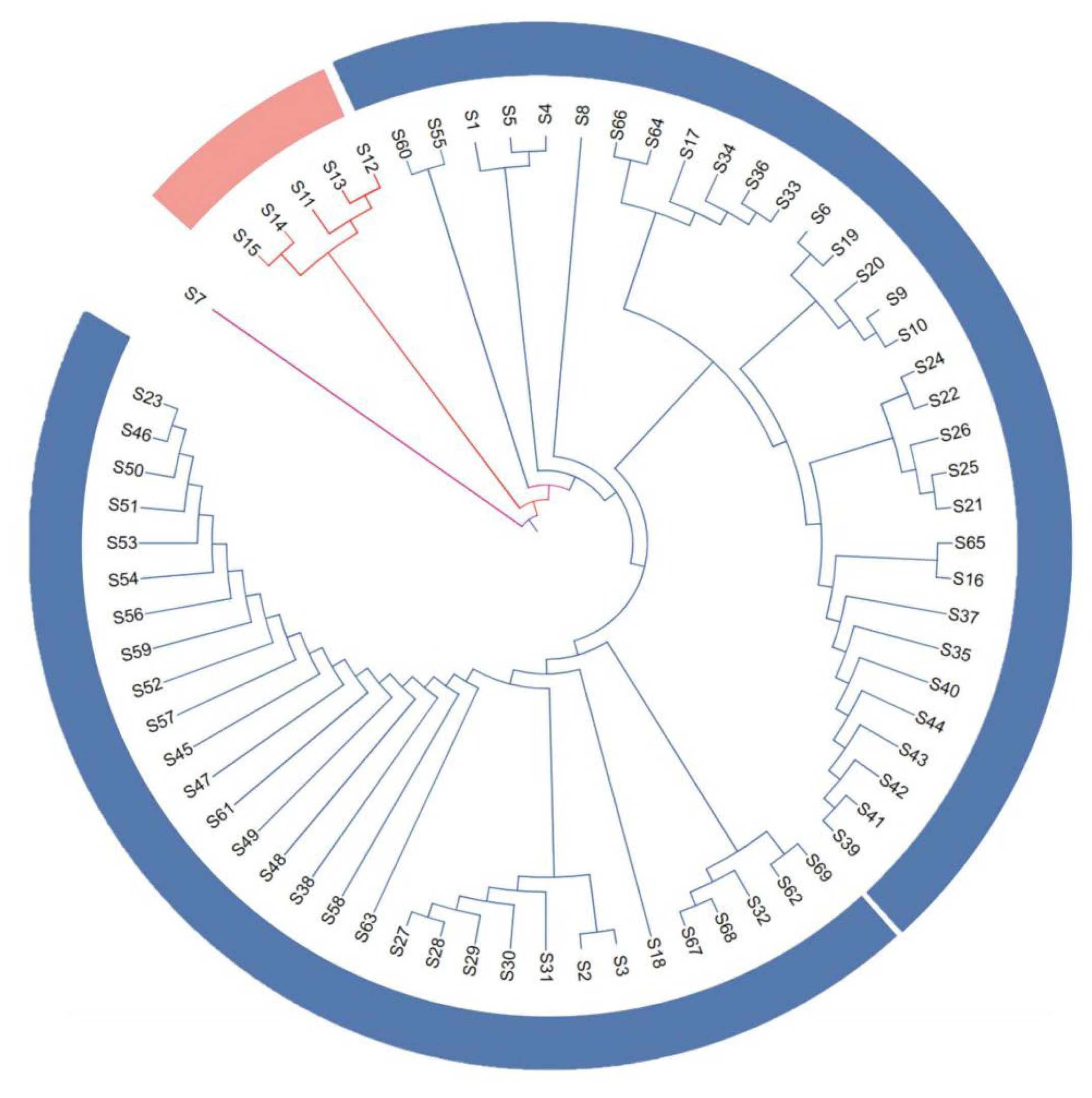
Based on polymorphism level, stability, and amplification efficiency, 10 primer pairs (S01, S11, S13, S17, S18, S21, S73, S76, S85, and S90) were selected as core primers for cluster analysis. A phylogenetic tree was constructed based on genetic distance using the unweighted pair-group method with arithmetic means (UPGMA), which clustered the 69 mandarin accessions into three distinct groups: Group I contained a single accession, ‘Yinduyeju’; Group II included 5 accessions, such as ‘Guposhan wild tangerine’ and ‘Mangshan wild tangerine’; Group III was the largest group, comprising 63 accessions, which were further subdivided into four subgroups. The clustering results were generally consistent with traditional citrus taxonomic classifications, reflecting the genetic relationships among different mandarin germplasms. Additionally, genetic differences were observed between certain wild accessions and cultivated hybrids, which may be attributed to the absence of distantly related germplasms (e.g., kumquat (Fortunella spp.) and trifoliate orange (Poncirus trifoliata)) in this study.
Figure 1.
Dendrogram of 69 C.reticulata varieties based on SSR markers using UPGMA.
3.3. Construction of DNA Fingerprint and Molecular Identity Card
3.3.1. DNA Fingerprint Construction
DNA fingerprints for the 69 mandarin accessions were constructed based on the validated genotypes and allele molecular weights determined by fluorescent capillary electrophoresis. Figure 2 presents the comprehensive DNA fingerprint map, where the vertical axis corresponds to the 69 mandarin accessions (with amplified alleles at each SSR locus), and the horizontal axis represents the molecular weights of amplified fragments across all tested loci. This map intuitively displays the distinct banding patterns of each accession, laying a foundation for rapid varietal discrimination.
3.3.2. Varietal Discrimination Using Core Primer Combinations
A single core primer pair (selected from the 10 core primers) failed to fully discriminate all 69 mandarin accessions. Among the individual primers, S90 exhibited the highest discrimination efficiency, distinguishing 20 accessions with a discrimination rate of 28.98%. When all 10 core primer pairs were combined, 45 out of 69 accessions (65.2% discrimination rate) were successfully differentiated (Table 4). The remaining 24 indistinguishable accessions were clustered into six groups, reflecting their close genetic relationships—likely attributed to conserved genomic sequences and similar genetic backgrounds, which may result from common ancestry or artificial selection.
3.3.3. Molecular Identity Card Construction
Following the predefined coding rule (numeric codes 1–9 and uppercase letters for additional genotypes, with "0" for null alleles), the amplified fragment sizes of the 69 mandarin accessions were encoded using the 10 core primer pairs (Table 5). This resulted in the generation of 69 unique molecular identity cards for the tested mandarin accessions (Table 6). Among these, 45 molecular identity cards were distinct, corresponding to the 45 discriminable accessions, indicating that these accessions possess unique allelic profiles that can serve as diagnostic markers for their accurate authentication.
4. Discussion
Mandarin citrus (Citrus reticulata) has evolved diverse local accessions through long-term cultivation and breeding. Accessions derived from bud mutations or seedling selection often share highly similar genetic backgrounds, posing challenges for accurate identification. Molecular markers, which capture allelic variations, are therefore crucial for revealing genetic relationships among citrus germplasms. In this study, several accessions with known genetic origins were included: extra-early-maturing tangerine (bud sport of ‘Nanfeng’ tangerine), ‘Miyakawa Bun’ (bud sport selection of ‘Miyagawa’), ‘Miyagawa’ (bud sport of Satsuma mandarin), ‘Hashimoto’ (bud sport of ‘Matsuyama Satsuma’), ‘Shiwen’ and ‘Shanxiahong’ (bud sports of ‘Miyagawa’), ‘Mingliutianju’ (bud sport of ‘Chuntian’ tangerine), ‘Huacheng No.1’ (seedling selection of sweet orange), ‘Xinshengxi No.3 Ponkan’ and ‘Taitian Ponkan’ (seedling selections of Ponkan), ‘Dajin No.4’ (seedling selection of Satsuma mandarin), ‘Okitsu’ (nucellar line of ‘Miyagawa’), and the hybrid ‘Tsunoka tangor’ (cross of ‘Kiyomi’ × ‘Okitsu’). Our results showed that germplasms with identical SSR banding patterns clustered together, reflecting genetic conservation in citrus, while divergent allelic variation sites indicated genetic differentiation. Notably, cluster analysis revealed co-grouping of certain wild and cultivated accessions that deviated from traditional taxonomic classifications, suggesting complex genetic affinities among mandarin germplasms.
4.1. Genetic Diversity of Mandarin Germplasms
Simple sequence repeat (SSR) markers are widely recognized as robust tools for assessing plant genetic variation and have been extensively applied in fruit tree genetic diversity studies, including pear [26], apple [27], and persimmon [28]. In this study, we combined SSR markers with fluorescent capillary electrophoresis to analyze the genetic diversity of 69 C. reticulata accessions. The mean Shannon’s information index (I = 1.480) indicated substantial genetic diversity within the tested mandarin germplasms. For 16 loci, observed heterozygosity (Ho) ranged from 0.319 to 0.833, and expected heterozygosity (He) spanned 0.530 to 0.836—further confirming high genetic diversity among these accessions. Polymorphic information content (PIC), which quantifies polymorphism more accurately than allele number alone by integrating allele frequency, is a key indicator of marker utility. Eight loci in this study exhibited PIC values exceeding 0.65 (the threshold for high polymorphism), indicating their strong potential for citrus germplasm characterization. It should be noted that PIC values are material-dependent, as they vary with allele frequency differences across experimental samples. These diversity indices collectively reflect the magnitude of genetic variation, with higher values corresponding to increased heterozygosity—findings consistent with the rich genetic diversity of mandarins in China, a primary center of origin [4,5].
4.2. Insights from Cluster Analysis
The 69 mandarin accessions were clustered into three major groups, with several notable patterns:
- ‘Yinduyeju’ formed a distinct single-accession group. Previous studies have debated its taxonomic status: Swingle [29] proposed it is a hybrid, while Yang et al. [30] clustered it with true citrons based on cpInDel markers, and Li et al. [31] suggested it is a primitive mandarin species. In contrast, ‘Mangshanyeju’ and ‘Mangshan wild mandarin’ did not cluster together, indicating a distant genetic relationship—consistent with the view that ‘Mangshan wild mandarin’ is more primitive than ‘Mangshanyeju’. Additionally, Tachibana orange (native to Taiwan, China, and Japan) did not cluster with ‘Yinduyeju’ and was separated from other cultivated and wild accessions, which contradicts the findings of Xie et al. [32]. This discrepancy may be attributed to material errors during multi-location transfers, requiring further verification with authenticated germplasms.
- ‘Mangshanyeju’ clustered with ‘Nieduyeju’ but separated from ‘Guposhanyeju’, indicating a closer genetic relationship between the former two. Liu et al. [33] identified ‘Mangshanyeju’ as the most ancient type among five wild mandarin types distributed in the Lingnan Mountains using SSR markers, and Zeng et al. [34] also considered it more primitive than Tachibana orange and ‘Daoxianyeju’. Shi [1989] noted high similarity between ‘Guposhanyeju’ and ‘Daoxianyeju’, the latter of which is regarded as a progenitor of mandarins due to its distant genetic relationship with most cultivated accessions [34].
- ‘Guposhanchougan’ clustered with ‘Mangshanyegan’ (both pointed-leaf and round-leaf types), consistent with the pollen morphology-based clustering results of Wu et al. [3]. ‘Cenxisuanju’, ‘Guangxihongpisuanju’, and ‘Hongpisuanju’ formed a distinct subgroup, separate from ‘Hezhouyeju’ and ‘Huangpisuanju’—indicating genetic relatedness among the former three, which aligns with molecular marker-based clustering by Liu et al. [35]. ‘Hezhouyeju’ and ‘Huangpisuanju’ co-clustered, suggesting a potential genetic relationship that requires further validation via genomic analyses. In contrast, ‘Shagan’ and ‘Biangan’ did not cluster together, which contradicts Wu et al.’s [3] pollen morphology results, necessitating additional research to resolve this inconsistency.
- Accessions with highly similar genetic backgrounds (e.g., bud sports) clustered closely, which is consistent with previous studies: ‘Shatangju’, early-ripening ‘Shatangju’, ‘Bayueju’, ‘Denglongju’, and ‘Jinkui tangerine’ co-grouped, matching Yan et al.’s [36] SRAP marker clustering; ‘Chuntian tangerine’, ‘Mingliutianju’, and ‘Yingxinju’ clustered with ‘Biangan’, while ‘Shagan’ and ‘Gonggan’ formed a separate subgroup; ‘Guangxiju’ clustered with Ponkan, and ‘Wogan’ grouped with ‘W. Murcott’—all suggesting potential kinship.
- Wild-cultivated germplasm relationships were also revealed: Group I contained Indian wild mandarin as a distinct lineage; Group II included wild wrinkled-skin mandarin and ‘Mangshan wild mandarin’, consistent with Wu et al. [3]; Group III comprised ‘Guposhan wild Yuanju’, ‘Mangshan wild mandarin’, ‘Niedu wild mandarin’, ‘Shengshan wild mandarin’, and the hybrid ‘Tsunoka’—the latter two may carry wild genetic components. ‘Hezhou wild mandarin’ and ‘Biangan’ co-clustered with ‘Shatangju’ and Ponkan, demonstrating kinship. However, definitive cultivated-wild relationships require advanced genomic sequencing.
Notably, Satsuma mandarin, Ponkan, and Shatangju accessions—primarily derived from bud sports or nucellar lines—clustered closely due to their genetic proximity. Bud sports arise from minor genomic alterations, which are difficult to detect using conventional molecular markers. Transposons (autonomous mobile DNA sequences) that transpose and insert adjacent to or within genes are a primary driver of bud sport formation [37]. Emerging techniques show promise for bud sport discrimination: Ke et al. [38] successfully distinguished citrus bud sports from conventional varieties using transposon display (TD) technology; Zhu et al. [39] established an efficient identification system using Target SSR-seq (an NGS-based SSR genotyping method), authenticating 60 citrus cultivars. While this study did not achieve complete differentiation of bud sports, the precise amplified fragment sizes obtained via SSR markers combined with fluorescent capillary electrophoresis provide a foundational reference for subsequent bud sport-focused research.
4.3. Value of DNA Fingerprints and Molecular Identity Cards
DNA fingerprinting, which visualizes PCR-amplified molecular markers, is widely adopted for cultivar identification due to its efficiency, accuracy, cost-effectiveness, and reproducibility. Previous studies have established citrus fingerprint databases using SSR markers: Li et al. [22] screened 362 SSR primer pairs to identify 21 highly polymorphic core primers, constructing a fingerprint database for 500 accessions spanning the Papeda and Citrus genera (including citron, lemon, lime, mandarin, and sweet orange); Lei et al. [21] selected 12 diagnostic primers from 200 SSR pairs to build fingerprints for 70 cultivated citrus accessions (oranges, pomelos, ponkan, tangors). Expanding on these efforts, our study incorporated both wild and cultivated mandarin accessions, developing DNA fingerprints for 69 germplasms using SSR markers combined with fluorescent capillary electrophoresis. To enhance visual discrimination, we converted fingerprint data into intuitive binary matrices in spreadsheets—facilitating rapid accession comparison.
Molecular identity (ID) cards, which transform molecular data into unique alphanumeric codes, have been widely applied in crop cultivar authentication, initially in rice and soybean, and later extended to fruit trees such as apple and pear. Lei et al. [14] used polyacrylamide gel electrophoresis (PAGE) to convert gel banding patterns into binary (0/1) matrices, generating cultivar-specific fingerprint codes by concatenating alphabetically coded primer sequences. However, conventional PAGE only approximates DNA fragment sizes via molecular weight marker comparison, lacking precision. In contrast, fluorescence-labeled SSR capillary electrophoresis enables precise fragment sizing with superior accuracy, sensitivity, and efficiency—addressing the limitations of PAGE.
In this study, we used fluorescent capillary electrophoresis to obtain exact fragment molecular weights, coded amplicons in ascending order using Arabic numerals and uppercase letters, and concatenated these codes to create unique molecular IDs for the 69 mandarin accessions. Similar approaches have been successfully applied in other citrus-related studies: Wu et al. [15] constructed 22 pummelo molecular IDs via fluorescent SSR capillary electrophoresis; Gao et al. [40] developed scannable QR-code IDs for 314 apple accessions using 6 SSR markers; Tang et al. [41] built molecular IDs for 145 mango germplasms with 12 fluorescent SSRs. To optimize cost-efficiency, we implemented a tiered screening strategy: agarose gel electrophoresis for preliminary amplification validation, PAGE for polymorphism assessment, and fluorescent capillary electrophoresis for precise sizing—yielding 225 genotypes and 139 alleles. While the capillary electrophoresis-based molecular IDs require further validation for direct citrus cultivar authentication, they represent a standardized tool for germplasm discrimination, variety protection, and breeding.
4.4. Limitations and Future Perspectives
This study successfully constructed DNA fingerprints and molecular IDs for 69 mandarin accessions, with 45 (65.22%) exhibiting unique IDs distinguishable using 10 core primer pairs. The remaining 24 undifferentiated accessions formed six clusters of genetically homologous germplasms, which require further analysis. A key limitation is the inability to fully differentiate bud sports, which is attributed to the minor genomic alterations underlying bud sport formation and the resolution limits of conventional SSR markers.
Future work will address these limitations by: (1) expanding the germplasm scope to include more wild and cultivated mandarin accessions, establishing a comprehensive molecular ID database; (2) integrating advanced technologies (e.g., transposon display, Target SSR-seq, and whole-genome sequencing) to improve bud sport discrimination; (3) validating the developed molecular IDs in multi-environment and multi-year trials to enhance their reliability for practical cultivar authentication; and (4) combining molecular IDs with phenotypic traits to resolve citrus nomenclature conflicts and clarify genetic relationships. These efforts will advance mandarin germplasm management, support intellectual property protection, and promote the sustainable development of the citrus industry.
Author Contributions
Conceptualization, X.W., S.W., B.L., P.L., C.C., H.F., Y.T., J.F. and C.D.; methodology, X.W., S.W., B.L., P.L., C.C., H.F., Y.T., J.F. and C.D.; software, X.W., S.W.and J.F.; validation, X.W., S.W. and C.D.; formal analysis, X.W., S.W. and H.F.; investigation, X.W., S.W., B.L., P.L., C.C., H.F., Y.T. and J.F.; resources, X.W., S.W.and J.F.; data curation, X.W., S.W. and C.D.; writing—original draft preparation, X.W., S.W.,D.H. and C.D.; writing—review and editing, X.W., S.W.,D.H., B.L., P.L., C.C., H.F., Y.T., J.F. and C.D.; supervision, X.W., B.L., C.C. and C.D.; project administration, X.W., B.L., C.C. and C.D. All authors have read and agreed to the published version of the manuscript.
Funding
This research was funded by Guangxi Citrus Innovation Team Project of National Modern Agricultural Industrial Technology System (nycytxgxcxtd-2021-05), the Science and Technology Major Project of Guangxi (Gui Ke AA22068092), the National Natural Science Fund (U23A20198) and Construction Project of Guangxi Characteristic Crop Experimental Station (TS202101).
Data Availability Statement
Data is contained within the article.
Conflicts of Interest
There were no conflict of interest from the authors.
References
- Shen, Y.G.; Zhu, F.N.; Lu, J.Q.; Chen, J.Y.; Zhou, M.; Wang, Q.; Yang, H.Y. Advances in research on quality characters and processing eligibility of Citrus reticulata. Acta Agriculturae Universitatis Jiangxiensis 2017, 39(04), 669–677. [Google Scholar]
- Wu, X.X.; Chen, C.W.; Liu, P.; Tang, Y.; Deng, C.L. Genetic Evolution and Taxonomic Status Analysis of Wild Citrus Resources Based on Resequencing in Guposhan Mountain in Guangxi Province. Acta Horticulturae Sinica 2022, 49(02), 407–415. [Google Scholar]
- Wu, X.X. Analysis of genetic Diversity of Native Citrus Germplasm Resources in Guangxi Province by Palynology and SNP; Guangxi normal university: Guangxi, 2018. [Google Scholar]
- Green, R.M.; Vardi, A.; Galun, E. The plastome of citrus physical map, variation among Citrus cultivars and species and comparison with related genera. Theoretical and Applied Genetics 1986, 72(2), 170–177. [Google Scholar] [CrossRef]
- Leng, X.P.; Li, H.R.; Zhong, G.Y. Employment of a new strategy for identification of looseskin mandarin (Citrus reticulata Blanco) cultivars using RAPD markers. Romanian Biotechnological Letters 2012, 17(2), 7073–7083. [Google Scholar]
- Yu, Q.M.; Li, G.G.; Xu, R.W.; Peng, Z.X.; Yuan, Z.Y.; Li, W.Y.; Tian, J.; Zeng, J.W.; Peng, S.A.; Xu, J. Physiological Mechanisms for the Phenomenon of“Blue albedo”Fruits of Citrus reticulata in Guangxi. Acta Horticulturae Sinica 2020, 47(06), 1172–1182. [Google Scholar]
- Zhang, S.l.; Li, Y.; Li, Y.; Zhang, Y.Q.; Hao, Y.B.; Hou, Z.X.; Qi, J.X. Development of SSR Markers for and Fingerprinting of Walnut Genetic Resources. Forests 2024, Vol.15(3), 405. [Google Scholar] [CrossRef]
- Snježana, B.; Aleš, V.; Kristina, B.L.; Đani, B. Genotyping of Croatian Olive Germplasm with Consensus SSR Markers. Horticulturae 2024, Vol.10(4), 417. [Google Scholar]
- Cao, Z.; Song, C.R.; Chen, D.; Chen, X.F. Analysis of Genetic Diversity of Cherry Germplasm Resources in Shandong Yantai Based on SSR Technology. Guangdong Agricultural Sciences 2025, 52(1), 24–36. [Google Scholar]
- Liu, X.F.; Yu, B.; Ren, G.P.; Yu, C.R.; Liu, C.; Sun, Y.B.; Zhong, R.H.; Feng, E.Y. Construction of Fingerprint Map of 12 Varieties Based on SSR Markers and Identification of Hybrid F1 Progenies in Gerbera hybrida. Guangdong Agricultural Sciences 2023, 50(9), 16–24. [Google Scholar]
- Nie, X.H.; Wang, Z.H.; Liu, N.W.; Song, L.; Yan, B.Q.; Xing, Y.; Zhang, Q.; Fang, K.F.; Zhao, Y.L.; Chen, X.; et al. Fingerprinting 146 Chinese chestnut (Castanea mollissima Blume) accessions and selecting a core collection using SSR markers. Journal of Integrative Agriculture 2021, 20(5), 1277–1286. [Google Scholar] [CrossRef]
- Hao, L.; Zhai, Y.G.; Zhang, G.S.; Lu, D.Y.; Huang, H.G. Efficient Fingerprinting of the Tetraploid Salix psammophila Using SSR Markers. Forests 2020, 11(2), 176. [Google Scholar] [CrossRef]
- Li, X.; Zheng, B.; Xu, W.T.; Ma, X.W.; Wang, S.B.; Qian, M.J.; Wu, H.X. Identification of F1 Hybrid Progenies in Mango Based on Fluorescent SSR Markers. Horticulturae 2022, 8(1122), 1122. [Google Scholar] [CrossRef]
- Wu, X.X.; Wu, S.M.; Chen, C.W.; Lou, B.H.; Tang, Y.; Feng, J.; Fang, H.M.; Deng, C.L. Research progress on fingerprinting of citrus. China Fruits 2024, 07, 16–24. [Google Scholar]
- Wu, S.M.; Lou, B.H.; Chen, C.W.; Tang, Y.; Deng, C.L.; Wu, X.X. Establishment of molecular identity of 22 pomelo varieties using fluorescent labeled SSR markers. Journal of Fruit Science 2023, 40(04), 605–614. [Google Scholar]
- Rohini, M.R.; Sankaran, M.; Rajkumar, S.; Prakash, K.; Gaikwad, A.; Chaudhury, R.; Malik, S.K. Morphological characterization and analysis of genetic diversity and population structure in citrus × jambhiri Lush using SSR markers. Genetic Resources and Crop Evolution 2020, 67(1), 1259–1275. [Google Scholar] [CrossRef]
- Yan, W.; Youheng, Q.; Wen, H. Genetic diversity of pummelo (Citrus grandis osbeck) germplasms in sichuan Basin inferred from SSR markers. AIP Conference Proceedings 2019, 2079(1), 02004-1-02004-6. [Google Scholar]
- Lidija, B.; Slavojka, M.; Natasa, S.; Teija, T.R.; Branka, J. Identification of citruses from montenegrobased on microsatellite clustering analyses. Erwerbs Obstbau 2020, 62(3), 1–8. [Google Scholar]
- Fang, D. DNA fingerprinting inspection technique for citrus nursery tree purity and Genuineness; Southwest University: Chongqing, 2011. [Google Scholar]
- Zeng, T. Construction of Fingerprinting and Analysis of Genetic Diversity with SSR Markers for Nanfeng Tangerine; Jiangxi agricultural university, 2012. [Google Scholar]
- Lei, T.G.; He, Y.R.; Wu, X.; Yao, L.X.; Peng, A.H.; Xu, L.Z.; Liu, X.F.; Chen, C.S. Construction of DNA Fingerprinting Database of Citrus Cultivars (Lines). Scientia Agricultura Sinica 2009, 42(08), 2852–2861. [Google Scholar]
- Li, Y.; Ma, X.F.; Tang, H.; Li, N.; Jiang, D.; Long, G.Y.; Li, D.Z.; Niu, Y.; Han, R.X.; Deng, Z.N. SSR Markers Screening for Identification of Citrus Cultivar and Construction of DNA Fingerprinting Library. Scientia Agricultura Sinica 2018, 51(15), 149–159. [Google Scholar]
- Biswas, M.K.; Xu, Q.; Mayer, C.; Deng, X.X. Genome wide characterization of short tandem repeat markers in sweet orange (Citrus sinensis). PloS One 2014, 9(8), 1–12. [Google Scholar] [CrossRef]
- Chen, Y.; Yu, X.; Cao, L.; LeiT, G.; Zhou, X.; Zhang, X.Y.; Peng, L.Z.; Lu, Z.M. Identification of CRIC 5 by using SSR Molecular markers. South China Fruits 2018, 47(03), 1–4. [Google Scholar]
- Hong, L.; Andrew, W.M. Extracting DNA from cambium tissue for analysis of grape rootstocks. HortScience 1997, 32(7), 1264–1266. [Google Scholar]
- Jason, D.Z.; April, N.; Sara, M.; Joseph, P.; David, N.; Nahla, B. A new SSR fingerprinting set and its comparison to existing SSR and SNP based genotyping platforms to manage Pyrus germplasm resources. Tree Genetics and Genomes 2020, 16(5), 1–10. [Google Scholar]
- Raja, W.H.; Yousuf, N.; Qureshi, I. Morpho-molecular characterization and genetic diversity analysis across wild apple (Malus baccata) accessions using simple sequence repeat markers. South African Journal of Botany 2022, 145, 378–385. [Google Scholar] [CrossRef]
- Li, Y.K.; Zhang, P.X.; Chachar, S.; Xu, J.C.; Y, Y.; Guang, C.F. A comprehensive evaluationof genetic diversity in persimmon (Diospyros kaki Thunb.) germplasms based on largescale morphological traits and SSR markers. Scientia Horticulturae 2023, 313, 111866. [Google Scholar] [CrossRef]
- Yan, J.W.; Wu, X.X.; Tang, Y.; Chen, C.W.; Deng, C.L. Analysis of Genetic Diversity of 11 Citrus Germplasm Resources by SRAP Molecular Markers. Molecular Plant Breeding 2021, 19(02), 664–671. [Google Scholar]
- Swingle, W.T.; Reece, P.C. The botany of citrus and its wild relatives; University of California, 1967. [Google Scholar]
- Wang, J.; Gong, G.Z.; Peng, Z.C.; Li, Y.B.; Wang, Y.B.; Hong, Q.B. Genetic and Phylogenetic Relationships Among Citrus and Its Close and Distant Relatives Based on COS Marker. Scientia Agricultura Sinica 2017, 50(02), 320–331. [Google Scholar]
- Li, Y.Z. Research on the genetic diversity and phylogenetic relationship of loose skin mandarins(Citrus reticulate Blanco); Huazhong Agricultural University, 2006. [Google Scholar]
- Xie, R.J. Taxonomic and phylogenetic relationships among the genera of the true citrus fruit trees group(Aurantioideae, Rutaceae),based on AFLP markers; Soutewest University, 2008. [Google Scholar]
- Liu, Y.; Wu, B.; Liu, D.C.; Sun, Z.H. On genetic diversity of Jiangxi native citrus and its wild varieties based on SSR markers. Acta Agriculturae Universitatis Jiangxiensis 2005, 04, 486–490. [Google Scholar]
- Liu, T.; Deng, C.L.; Cheng, Y.F.; Liu, Q.J.; Chen, C.W.; Liu, B.H.; Yi, H.L. Analyzing genetic diversity of citrus germplasm in Guangxi Province with SSR and SRAP markers. 2016; 35, 02. [Google Scholar]
- Zeng, B.Q. Genetic diversity of mandarin investigated by molecular markers; Hunan Agricultural University, 2009. [Google Scholar]
- Le, T.N.; Miyazaki, Y.; Takuno, S. Epigenetic regulation of intragenic transposable elements impacts gene transcription in Arabidopsis thaliana. Nucleic Acids Research 2015, 43(8), 3911–3921. [Google Scholar] [CrossRef]
- Ke, L.J.; Yu, H.W.; Xu, H.D.; Xie, Z.Z.; Deng, X.X.; Xu, Q. Identification the Citrus Bud Mutants by Transposon Display Technology. Acta Horticulturae Sinica 2017, 44(06), 1207–1216. [Google Scholar]
- Zhu, Y.S.; Zhang, Y.F.; Cheng, L.; Yang, S.N.; Zhao, W.T.; Jiang, D. Identification of 60 Citrus Accessions Using Target SSR-seq Technology. Scientia Agricultura Sinica 2022, 55(22), 4458–4472. [Google Scholar]
- Gao, Y.; Wang, K.; Wang, D.J.; Gong, X.; Liu, L.J.; Liu, F.Z. Molecular ID Establishment of Apple Cultivars by TP-M13-SSR. Acta Horticulturae Sinica 2016, 43(01), 25. [Google Scholar]
- Tang, Y.J.; Luo, S.X.; Huang, G.D.; Song, E.L.; Li, R.W.; Zhao, Y.; Zhang, Y.; Mo, Y.L.; Tang, Y.Y. Genetic Diversity Analysis and Molecular ID Construction of Mango Germplasm Based on SSR Fluorescence Markers. Chinese Journal of Tropical Crops 2023, 44(11), 2292–2304. [Google Scholar]
Figure 2.
Fingerprint identity IDs of 69 C.reticulata SSR.
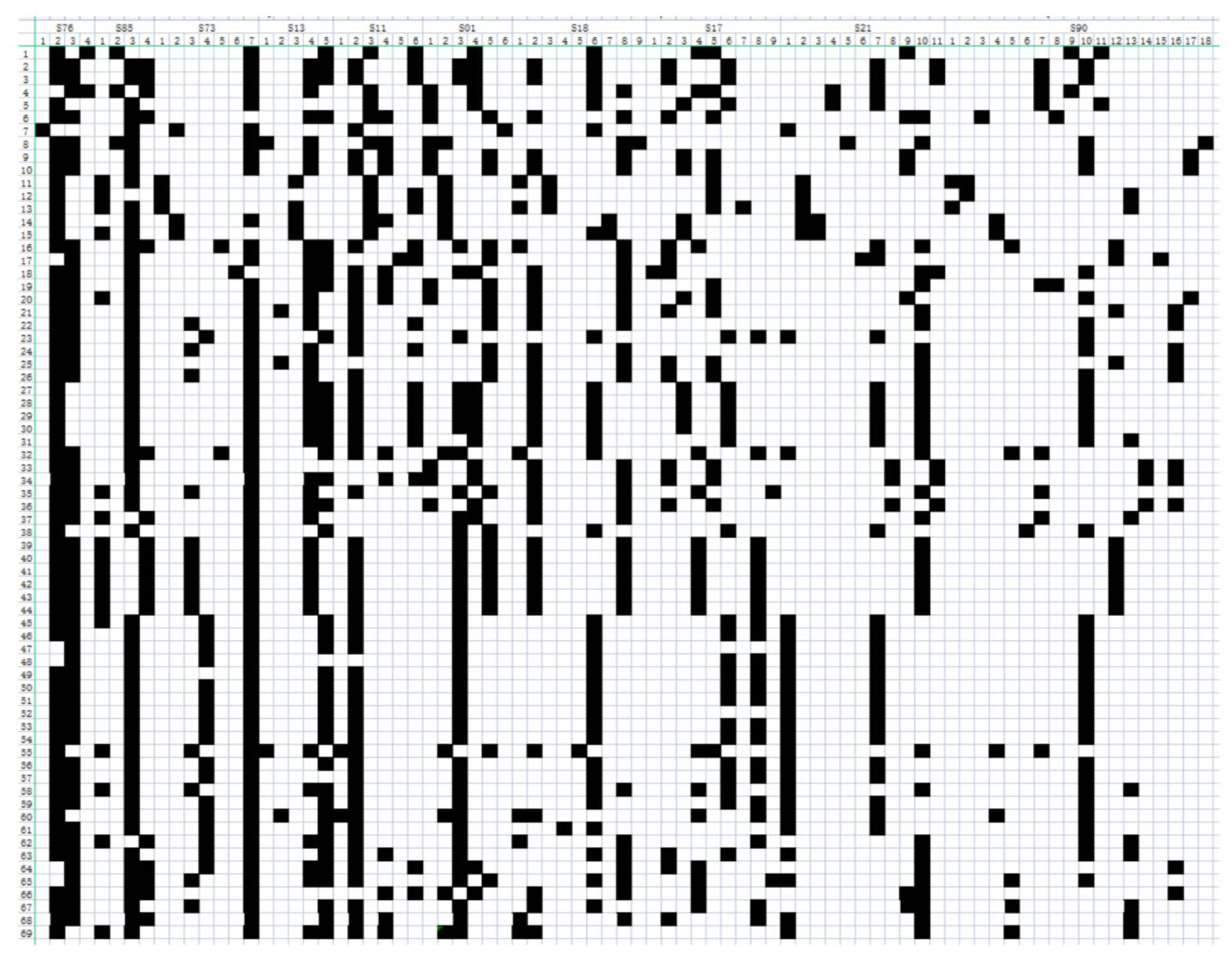

Table 1.
List of 69 experimental accessions.
| Code | Accession name | Scientific Name | Code | Accession name | Scientific Name |
|---|---|---|---|---|---|
| 1 | Guposhanyeju | Sinocitrus chuana | 36 | Yingxinju | C. reticulata |
| 2 | Xinganyeju | C. reticulata | 37 | Pixeju | C. reticulata |
| 3 | Daoxianyeju | C. daoxianensis | 38 | Bendizao | C. reticulata |
| 4 | Mangshanyeju | C. reticulata | 39 | Penggan No79-2 | C. reticulata |
| 5 | Niuduyeju | C. reticulata | 40 | Dong No13penggan | C. reticulata |
| 6 | Hezhouyeju | C. reticulata | 41 | Shi18penggan | C. reticulata |
| 7 | Yinduyeju | C. indica | 42 | Taitianpenggan | C. reticulata |
| 8 | Lihuaju | C. tachibana | 43 | Xinshengxipenggan No3 | C. reticulata |
| 9 | Cengxisuanju | C. reticulata | 44 | Wuhepenggan | C. reticulata |
| 10 | Guangxihongpisuanju | C. reticulata | 45 | Dafen No4 | C. reticulata |
| 11 | Guposhanchougan No2 | C. reticulata | 46 | Rinan No1 | C. reticulata |
| 12 | Guposhanchougan No5 | C. reticulata | 47 | Dapu No5 | C. reticulata |
| 13 | Guposhanchougan No6 | C. reticulata | 48 | Miyamoto | C. reticulata |
| 14 | Yuanyemangshanyegan | C. mangshanesis | 49 | Miyagawa | C. reticulata |
| 15 | Jianyemangshanyegan | C. mangshanesis | 50 | Hashikawa | C. reticulata |
| 16 | Shagan | C. nobilis Lour | 51 | Xingjin | C. reticulata |
| 17 | Biangan | C. reticulata | 52 | Yoshida | C. reticulata |
| 18 | Banyeshenggan | C. reticulata | 53 | Ichibun | C. reticulata |
| 19 | Huangpisuanju | C. reticulata | 54 | Yamasitabeni | C. reticulata |
| 20 | Hongpisuanju | C. reticulata | 55 | Katsuyamano | C. reticulata |
| 21 | Shatangju | C. reticulata | 56 | Ueno | C. reticulata |
| 22 | Zaoshushatangju | C. reticulata | 57 | Dajin No4 | C. reticulata |
| 23 | Yamada | C. reticulata | 58 | Zaoxiang | C. reticulata |
| 24 | Bayueju | C. reticulata | 59 | Sakikubo | C. reticulata |
| 25 | Denglongju | C. reticulata | 60 | Jinzhixiang | C. reticulata |
| 26 | Jinkuimiju | C. reticulata | 61 | Youliang | C. reticulata |
| 27 | Nanfengmiju1 | C. reticulata | 62 | Chunjian | C. reticulata |
| 28 | Nanfengmiju2 | C. reticulata | 63 | Nanxiang | C. reticulata |
| 29 | Tezaoshumiju | C. reticulata | 64 | Murcott | C. reticulata |
| 30 | Liuchengmiju | C. reticulata | 65 | Gonggan | C. reticulata |
| 31 | Guijuyihao | C. reticulata | 66 | Wogan | C. reticulata |
| 32 | Clementine | C. reticulata | 67 | Huangmeiren | C. reticulata |
| 33 | Mingliutianju | C. reticulata | 68 | Aiyuan No38 | C. reticulata |
| 34 | Chuntianju | C. reticulata | 69 | Mingrijian | C. reticulata |
| 35 | Guangxiju | C. reticulata |
Table 2.
Amplification information for 18 SSR primers.
| Primer | Amplified Bands | Na | Ne | I | Ho | He | PIC | Size Range(bp) |
|---|---|---|---|---|---|---|---|---|
| S17 | 19 | 9 | 6.089 | 1.884 | 0.833 | 0.836 | 0.814 | 166~200 |
| S81 | 15 | 10 | 5.678 | 1.916 | 0.507 | 0.824 | 0.802 | 167~192 |
| S90 | 30 | 18 | 4.784 | 2.109 | 0.529 | 0.791 | 0.776 | 148~202 |
| S21 | 19 | 11 | 4.535 | 1.780 | 0.638 | 0.78 | 0.751 | 244~269 |
| S70 | 18 | 14 | 4.411 | 1.854 | 0.783 | 0.773 | 0.747 | 218~248 |
| S01 | 13 | 6 | 3.492 | 1.462 | 0.493 | 0.714 | 0.677 | 282~307 |
| S11 | 10 | 6 | 2.346 | 1.16 | 0.492 | 0.574 | 0.539 | 172~191 |
| S13 | 8 | 6 | 2.537 | 1.111 | 0.381 | 0.606 | 0.527 | 230~251 |
| S28 | 9 | 6 | 2.836 | 1.239 | 0.319 | 0.647 | 0.582 | 308~322 |
| S18 | 15 | 9 | 3.749 | 1.517 | 0.681 | 0.733 | 0.689 | 230~249 |
| S23 | 12 | 8 | 2.260 | 1.248 | 0.435 | 0.558 | 0.535 | 139~189 |
| S71 | 13 | 6 | 3.614 | 1.438 | 0.681 | 0.723 | 0.681 | 211~237 |
| S73 | 9 | 7 | 2.130 | 1.141 | 0.529 | 0.53 | 0.503 | 344~369 |
| S76 | 6 | 4 | 2.073 | 0.81 | 0.696 | 0.518 | 0.411 | 168~186 |
| S74 | 8 | 6 | 2.383 | 1.151 | 0.338 | 0.58 | 0.538 | 182~203 |
| S82 | 17 | 9 | 3.084 | 1.437 | 0.368 | 0.676 | 0.622 | 122~158 |
| S84 | 10 | 8 | 2.557 | 1.225 | 0.471 | 0.609 | 0.561 | 265~292 |
| S85 | 8 | 4 | 1.883 | 0.889 | 0.406 | 0.469 | 0.432 | 125~137 |
Table 3.
SSR primers containing specific alleles.
| Primer | Number | Accession Name | Idiotype | Primer | Number | Accession Name | Idiotype | Primer | Number | Accession Name | Idiotype |
|---|---|---|---|---|---|---|---|---|---|---|---|
| S01 | 2 | Yinduyeju | 307/307 | S70 | 7 | Guposhanyeju | 230/232 | S84 | 3 | Guposhanchougan No5 | 170/170 |
| Lihuaju | 282/283 | Hezhouyeju | 226/240 | Yuanyemangshanyegan | 279/279 | ||||||
| S11 | 2 | Yinduyeju | 179/179 | Yinduyeju | 228/228 | Jianyemangshanyegan | 277/285 | ||||
| Biangan | 188/191 | Lihuaju | 224/224 | S90 | 19 | Guposhanyeju | 165/171 | ||||
| S13 | 2 | Lihuaju | 230/245 | Huangpisuanju | 234/248 | Mangshanyeju | 161/165 | ||||
| Yinduyeju | 251/251 | Guijuyihao | 230/244 | Nieduyeju | 161/171 | ||||||
| S17 | 5 | Biangan | 170/170 | Aiyuan No38 | 220/226 | Hezhouyeju | 152/164 | ||||
| Banyeshenggan | 166/170 | S71 | 4 | Mangshanyeju | 219/234 | Lihuaju | 166/202 | ||||
| Zaoxiang | 180/184 | Yinduyeju | 211/237 | Guposhanchougan No2 | 148/150 | ||||||
| Wogan | 180/180 | Clementine | 237/237 | Guposhanchougan No5 | 150/173 | ||||||
| Aiyuan No38 | 170/198 | Gonggan | 219/219 | Guposhanchougan No6 | 148/173 | ||||||
| S18 | 6 | Lihuaju | 247/249 | S74 | 2 | Yinduyeju | 191/191 | Shagan | 158/172 | ||
| Guposhanchougan No5 | 233/233 | Huangpisuanju | 182/203 | Biangan | 172/177 | ||||||
| Yuanyemangshanyegan | 246/246 | S81 | 5 | Guposhanyeju | 169/174 | Huangpisuanju | 161/164 | ||||
| Jianyemangshanyegan | 243/246 | Mangshanyeju | 173/176 | Kelimandingju | 158/161 | ||||||
| Katsuyamano | 231/239 | Hezhouyeju | 169/178 | Guangxiju | 161/161 | ||||||
| Youliang | 237/243 | Yinduyeju | 170/170 | Pixeju | 161/173 | ||||||
| S21 | 5 | Yinduyeju | 244/244 | Bendizao | 178/187 | Bendizao | 159/166 | ||||
| Lihuaju | 251/267 | S82 | 13 | Nieduyeju | 140/147 | Katsuyamano | 157/161 | ||||
| Biangan | 255/259 | Yinduyeju | 147/147 | Jinzhixiang | 157/166 | ||||||
| Banyeshenggan | 267/269 | Lihuaju | 122/150 | Gonggan | 158/166 | ||||||
| Bendizao | 259/259 | Yuanyemangshanyegan | 140/153 | Aiyuan No38 | 173/173 | ||||||
| S23 | 6 | Guposhanyeju | 163/163 | Jianyemangshanyegan | 153/153 | S76 | 2 | Yinduyeju | 168/168 | ||
| Nieduyeju | 163/169 | Huangpisuanju | 137/137 | Mangshanyeju | 180/186 | ||||||
| Hezhouyeju | 169/189 | Kelimandingju | 134/150 | S85 | 4 | Guposhanyeju | 129/129 | ||||
| Yinduyeju | 139/139 | Pixeju | 134/134 | Mangshanyeju | 129/137 | ||||||
| Lihuaju | 163/177 | Katsuyamano | 122/140 | Lihuaju | 129/133 | ||||||
| Murcott | 169/169 | Gonggan | 134/140 | Guposhanchougan No5 | 125/125 | ||||||
| S28 | 1 | Yinduyeju | 312/132 | Wogan | 134/158 | ||||||
| S73 | 2 | Jianyemangshanyegan | 345/345 | Huangmeiren | 128/158 | ||||||
| Banyeshenggan | 366/366 | Aiyuan No38 | 128/150 |
Table 4.
Discrimination ability of 10 primer combinations.
| Primer Combination | Number of Varieties Identified | Differentiation Rate (%) |
|---|---|---|
| S90 | 20 | 28.99 |
| S90+S18 | 23 | 33.33 |
| S90+S11 | 23 | 33.33 |
| S90+S17 | 24 | 34.78 |
| S90+S01 | 24 | 34.78 |
| S90+S73 | 21 | 30.43 |
| S90+S21 | 21 | 30.43 |
| S90+S85 | 22 | 31.88 |
| S90+S11+S13 | 23 | 33.33 |
| S90+S76+S11+S17+S13 | 24 | 34.78 |
| Total | 45 | 65.22 |
Table 5.
Allele size ranges amplified by SSR primers and encoding standard.
| Code | S76 | S85 | S73 | S13 | S11 | S01 | S18 | S17 | S21 | S90 |
|---|---|---|---|---|---|---|---|---|---|---|
| 1 | 168/168 | 125/125 | 344/344 | 230/230 | 172/179 | 282/283 | 230/231 | 166/170 | 224/259 | 148/150 |
| 2 | 174/174 | 125/133 | 345/345 | 230/245 | 178/185 | 282/296 | 230/233 | 170/170 | 224/267 | 148/173 |
| 3 | 174/180 | 125/137 | 345/369 | 239/245 | 179/179 | 282/299 | 230/243 | 170/180 | 244/244 | 150/173 |
| 4 | 174/186 | 129/129 | 348/348 | 239/248 | 179/185 | 283/283 | 230/247 | 170/182 | 244/259 | 152/164 |
| 5 | 180/180 | 129/133 | 348/369 | 242/242 | 179/191 | 283/290 | 231/239 | 170/184 | 244/267 | 157/157 |
| 6 | 180/186 | 129/137 | 356/369 | 242/248 | 182/182 | 283/296 | 231/243 | 170/198 | 246/246 | 157/161 |
| 7 | 133/133 | 359/369 | 245/245 | 182/185 | 283/299 | 231/247 | 172/172 | 246/248 | 157/166 | |
| 8 | 133/137 | 366/366 | 245/248 | 182/191 | 290/290 | 233/233 | 172/182 | 249/259 | 158/161 | |
| 9 | 369/369 | 248/248 | 185/191 | 290/296 | 237/243 | 172/184 | 251/267 | 158/166 | ||
| A | 251/251 | 188/191 | 290/299 | 243/243 | 180/180 | 255/259 | 158/172 | |||
| B | 296/296 | 243/246 | 180/182 | 259/259 | 158/173 | |||||
| C | 299/299 | 243/247 | 180/184 | 259/267 | 159/166 | |||||
| D | 307/307 | 246/246 | 180/198 | 259/269 | 161/161 | |||||
| E | 247/247 | 180/200 | 261/269 | 161/164 | ||||||
| F | 247/249 | 182/182 | 263/263 | 161/165 | ||||||
| G | 182/190 | 263/267 | 161/166 | |||||||
| H | 184/184 | 267/267 | 161/171 | |||||||
| I | 184/198 | 267/269 | 161/173 | |||||||
| J | 198/198 | 269/269 | 165/171 | |||||||
| K | 166/166 | |||||||||
| M | 166/173 | |||||||||
| N | 166/179 | |||||||||
| P | 166/182 | |||||||||
| Q | 166/202 | |||||||||
| R | 172/172 | |||||||||
| S | 172/177 | |||||||||
| T | 172/179 | |||||||||
| U | 173/173 | |||||||||
| V | 176/179 | |||||||||
| W | 179/179 |
Table 6.
Molecular IDs for C. reticulata accessions based on SSR markers.
| Germless Name | Molecular ID | Germless Name | Molecular ID |
|---|---|---|---|
| Guposhanyeju | 44998BABFJ | Yingxinju | 37980274EV |
| Xinganyeju | 38985965DG | Pixeju | 33970970HI |
| Daoxianyeju | 38985965DG | Bendizao | 279808AHBC |
| Mangshanyeju | 669762CB8F | Penggan No79-2 | 33573A7DHR |
| Niuduyeju | 279062A98H | Dong No13penggan | 33573A7DHR |
| Hezhouyeju | 38087374G4 | Shi No18penggan | 33573A7DHR |
| Yinduyeju | 173A3DA030 | Taitianpenggan | 33573A7DHR |
| Lihuaju | 359271F09Q | Xinshengxi No3penggan | 33573A7DHR |
| Cengxisuanju | 37974378FP | Wuhepenggan | 33573A7DHR |
| Guangxihongpisuanju | 37974378FP | Dafen No4 | 326938AI4K |
| Guposhanchougan No2 | 2215642F61 | Rinan No1 | 376938AI4K |
| Guposhanchougan No5 | 2110848F63 | Dapu No5 | 576938A04K |
| Guposhanchougan No6 | 2215842G62 | Miyamoto | 576008AI4K |
| Yuanyemangshanyegan | 273574D775 | Miyagawa | 379938AI4K |
| Jianyemangshanyegan | 222564B775 | Hashikawa | 376938AI4K |
| Shagan | 38785A43CA | Xingjin | 376938AI4K |
| Biangan | 5798ACE2AS | Yoshida | 376938A04K |
| Banyeshenggan | 37884971IK | Ichibun | 376938AI4K |
| Huangpisuanju | 3798437FHE | Yamasitabeni | 376938AI4K |
| Hongpisuanju | 32974378FP | Katsuyamano | 2253175B56 |
| Shatangju | 37933C74HT | Shangye | 376938AI4K |
| Zaoshushatangju | 37575C70HN | Dajin No4 | 376038AI4K |
| Yamada | 376938AI4K | Zaoxiang | 325838CC5M |
| Bayueju | 37575C70HN | Sakikubo | 376938AI4K |
| Denglongju | 37930C74HT | Jinzhixiang | 3764151D47 |
| Jinkuimiju | 37573C74HN | Youliang | 376938904K |
| Nanfengmiju1 | 27985969CK | Chunjian | 3368384JHM |
| Nanfengmiju2 | 27985969CK | Nanxiang | 376948C55M |
| Tezaoshumiju | 27985969CK | Murcott | 586859E3HW |
| Liuchengmiju | 27985969CK | Gonggan | 58583ACE59 |
| Guijuyihao | 27985B6HCM | Wogan | 3809967AGW |
| Clementine | 3879453D58 | Huangmeiren | 3759386DGB |
| Mingliutianju | 37900274EV | Aiyuan No38 | 389948465U |
| Chuntianju | 37989274EV | Mingrijian | 229845105B |
| Guangxiju | 32573A7EHD |
Disclaimer/Publisher’s Note: The statements, opinions and data contained in all publications are solely those of the individual author(s) and contributor(s) and not of MDPI and/or the editor(s). MDPI and/or the editor(s) disclaim responsibility for any injury to people or property resulting from any ideas, methods, instructions or products referred to in the content. |
© 2026 by the authors. Licensee MDPI, Basel, Switzerland. This article is an open access article distributed under the terms and conditions of the Creative Commons Attribution (CC BY) license.
Copyright: This open access article is published under a Creative Commons CC BY 4.0 license, which permit the free download, distribution, and reuse, provided that the author and preprint are cited in any reuse.


