

Submitted:
02 March 2026
Posted:
04 March 2026
You are already at the latest version
Abstract
This study evaluates the effects of Al2O3 and CeO2 nanoparticles as additives to standard diesel and biodiesel fuels on the combustion and emissions characteristics of a CR diesel engine with split injection (pilot and main injections). Three nanoparticle dosing levels (50 ppm, 100 ppm, and 150 ppm) were compared with undoped standard diesel and bio-diesel fuels. The results showed that the presence of both Al2O3 and CeO2 in biodiesel in-creased the ignition delay of the pilot fuel by about 8.0% at low load and about 3.5% at high load. The addition of both nanoparticles to diesel and biodiesel fuels had an insig-nificant effect on the main injection fuel's ignition delay, MBF50 position and combustion duration. The thermal efficiency was up to 1.0% lower. Al2O3 additive in diesel had no significant effect on NOx emissions. CO emissions were higher by 4.4-7.5% in most cases. The Al2O3 additive in biodiesel reduced NOx emissions by an average of 38%, 17.1%, and 9.4% at low, medium, and high engine loads, respectively. The reduction in CO emissions was on average 15%. The addition of CeO₂ nanoparticles to diesel fuel reduced NOₓ emis-sions by 22.5%, 8.5%, and 3.1% on average at low, medium, and high engine loads, re-spectively. When the engine was operated on CeO₂ doped biodiesel, NOₓ emissions were lower by an average of 25.7%, 9.6%, and 2.5% at low, medium, and high loads, respective-ly. Adding CeO₂ nanoparticles to diesel fuel increased CO emissions, whereas adding them to biodiesel significantly reduced CO emissions.
Keywords:
aluminium oxide
; cerium oxide
; nanoparticles
; nanofuel
; diesel engine
; combustion
; emission
1. Introduction
Despite the rise of electric vehicles, diesel engines remain essential in many sectors, especially heavy transport and agriculture. At the same time, they remain a major source of harmful emissions and greenhouse gases. Greenhouse gas emissions are partially reduced by using biodiesel. Therefore, optimising diesel engine efficiency while reducing their environmental impact is both a practical and necessary priority. Recently, many studies have been conducted to improve diesel engine performance and reduce emissions of harmful pollutants by using various nanoparticle additives in fuels.
Mei D. et al. [1] conducted an experimental investigation to evaluate the influence of ambient temperature, nanoparticle mass concentration, and nanoparticle size on the evaporation of nano-fuel droplets. Carbon nanotube (CNT) and CeO2 nanoparticles with sizes of 20 nm and 50 nm were used to prepare the nano-fuels. Evaporation experiments were performed on single suspended droplets of diesel and nano-fuels at ambient temperatures of 400°C and 700°C. Results showed that at 400°C, nano-fuel droplets exhibited steady evaporation, with nanoparticles suppressing evaporation. At 700°C, micro-explosions occurred, causing fluctuations in droplet diameter, with nanoparticles enhancing evaporation. Higher nanoparticle concentration suppressed evaporation at 400°C but promoted it at 700°C, increasing expansion and micro-explosion intensities.
Similar results were obtained by Dai M. et al. [2], who investigated the evaporation characteristics of diesel/cerium oxide nanofluid fuel droplets at 673 K and 873 K. At higher temperatures, both diesel and the nanofluid fuel expanded and exploded, but the nanofluid fuel was more prone to explosion and had a shorter evaporation duration.
Jiang G. et al. [3] studied the evaporation process and mechanism of Jatropha methyl ester-diesel blends to which cerium oxide nanoparticles at concentrations of 0.05%, 0.5%, 1%, and 2% were added. The evaporation characteristics of these fuels were analysed and compared at 873 K and 973 K using the suspension droplet technique. They found that adding nanoparticles can affect the evaporation characteristics of Jatropha methyl ester-diesel blends. At 873 K, a low concentration of nanoparticles (0.05%) promoted heat absorption and reduced the droplet's evaporation lifetime, whereas a high concentration (2%) restrained evaporation and increased the lifetime. At 973 K, the higher the nanoparticle concentration, the faster the evaporation rate, indicating improved heat absorption at high temperatures. The evaporation process was smooth without micro-explosion.
An experimental study of the evaporation of heptane droplets with the addition of aluminium nanoparticles, conducted by Javed I. et al. [4], showed the same patterns. At low temperatures (100-300°C), the evaporation rate of nanofluid fuel droplets was lower than that of pure heptane droplets due to the formation of a compact shell by large NP agglomerates. At high temperatures (above 400°C), the evaporation rate of nanofluid fuel droplets becomes higher than that of pure heptane droplets due to the formation of a highly porous shell by small NP agglomerates.
Molecular dynamics simulations of CeO2 nano-fuel performed by Zhang R. et al. [5] confirmed that the inclusion of nanoparticles leads to significant enhancements in both thermal conductivity and diffusion coefficients. The study showed that as the mass concentration of CeO2 nanoparticles increases, the nanofuel's thermal conductivity improves. The diffusion coefficient of fuel molecules also increases with increasing nanoparticle mass concentration. However, at higher concentrations, stronger nanoparticle aggregation partially limits the enhancement of diffusion, suggesting an upper limit to nanoparticles' ability to improve the diffusion coefficient.
Sa B. et al. [6] numerically investigated the effect of multi-walled carbon nanotubes (MCNT) on the nozzle flow and spray behaviours of diesel fuel. Spray simulation showed that during stable spray development, there was a positive linear relationship between the liquid penetration length and the MCNT content in diesel fuel, and a negative linear relationship between the droplet Sauter mean diameter (SMD) and the MCNT content. The addition of MCNTs reduced the liquid cone angle and had an insignificant influence on the vapour penetration length.
Mei D. et al. [7] experimentally and computationally studied the spray characteristics of diesel fuel with cerium oxide nanoparticles. In this study, nano-fuels showed longer spray penetration, a smaller cone angle, and a larger SMD than pure diesel. The difference in spray characteristics between nanofuel and diesel widened with increasing nanoparticle mass concentration. However, they note that injection pressure had the greatest influence on spray characteristics, followed by atmospheric pressure and then by nanoparticle mass concentration.
The results of most studies show that the addition of nanoparticles to diesel and bio-diesel fuel reduces ignition delay, reduces brake specific fuel consumption, improves brake thermal efficiency and reduces harmful emissions [8,9,10,11,12,13,14,15,16,17,18].
Soudagar M. et al. [19] investigated the effect of adding Al2O3 nanoparticles to a blend of honge oil methyl ester and diesel fuel on diesel engine performance, combustion, and emissions characteristics. In this study, the fuel blend with a 40 ppm nanoparticle concentration showed reduced ignition delay and combustion duration, increased peak in-cylinder pressure, and increased heat release rate. An increase in BTE of more than 10% was achieved, along with a significant reduction in CO, HC, and smoke emissions. However, NOx emissions were higher for all nanofuels. Similar trends were also observed by Hussain F. et al. [20], who studied the effects of adding cerium-coated zinc oxide nanoparticles to a 25% soybean biodiesel/diesel blend. The study conducted by Rajpoot A. et al. also noted an increase in efficiency, a reduction in CO and HC emissions, and an increase in NOx emissions when using CeO2 and CuO2 nanoparticles doped fuels [20]. In another study [21]. Aluminium oxide nanoparticles were added to neem oil biodiesel at concentrations of 25 and 50 ppm. The results showed similar improvements in engine performance and emissions. Meanwhile, the study by Hamzah A. et al. [23] showed the opposite effect of aluminium oxide nanoparticles on brake-specific fuel consumption (BSFC). The BSFC values for nanomaterial-blended fuels were higher than those for pure fuel.
Leach F. et al. [22] investigated the effect of cerium oxide (CeO2) nanoparticles dosed in diesel fuel on combustion and emissions from a modern high-speed diesel engine at two operating points - one low load and one high load. They found that at part load, CeO2 reduced soot and total hydrocarbon (THC) emissions by up to 30%. At high load, a minor (2-5%) reduction in NOx emissions was observed. No significant differences in fuel consumption were observed at either load point. An increase in ignition delay of up to 10% at high load was observed with CeO2 dosing. It's unclear exactly what causes this ignition delay, but the researchers believe it may be related to the time it takes for the cerium dioxide to reach its active temperature and to its heat capacity, which removes heat from the incipient combustion process.
Zhang Z. et al. [23] investigated the effects of using carbon nanotubes (CNT) and CeO2 nanoparticles of two sizes as diesel fuel additives on the performance and emissions of a Cummins ISB4.5 heavy-duty CR diesel engine. They found that fuels with nano-additives generally have lower emissions of CO, NOx, HC, and particulate matter (PM) than standard diesel fuel. However, the addition of nano-additives had no significant impact on the average brake specific fuel consumption of the diesel engine compared to standard diesel fuel.
In summary, nanoparticles exhibit several properties that can improve engine performance and combustion characteristics. These properties stem primarily from their high surface area-to-volume ratio, catalytic activity, and thermal properties, which collectively improve fuel oxidation, combustion efficiency, and emissions. Nanoparticles act as catalysts in combustion by increasing the rate of fuel oxidation. Their high surface-to-volume ratio facilitates better interaction with fuel molecules, promoting more complete and faster combustion reactions. Many nanoparticles, such as cerium oxide (CeO₂) and alumina (Al₂O₃), function as oxygen buffers. They supply additional oxygen during combustion, enhancing the air-fuel mixing and promoting more efficient oxidation of hydrocarbons. Nanoparticles improve the fuel's thermal conductivity, facilitating better heat transfer from the hot air to the fuel droplets. This leads to faster evaporation of the fuel droplets, improved atomization, promoting secondary atomization, and more uniform combustion.
An analysis of previous studies showed that most were conducted on previous-generation diesel engines, and there is a lack of research on modern diesel engines with a common-rail injection system and split injections. This work aimed to investigate the effects of nanoparticles in fuel on the performance, combustion process, and emissions of a modern light-duty diesel engine.
2. Materials and Methods
2.1. Test Fuels
Standard diesel fuel meeting the requirements of EN 590 and rapeseed methyl ester biodiesel meeting the requirements of EN 14214 were used as baseline fuels. Table 2 shows the main properties of those base fuels.
The nanoparticles used in the study were Aluminium Oxide (Al2O3) with a maximum size of 50 nm and Cerium Oxide (CeO2) with a maximum size of 25 nm. Both nanoparticles were purchased from Sigma Aldrich (Burlington, MA, USA). Nanoparticles were added to the base fuels at concentrations of 50 mg/l, 100 mg/l, and 150 mg/l. The nanoparticles and base fuels were first mixed using a magnetic stirrer and then sonicated using an ultrasonic device. The nanoparticle doped mineral fuels were labelled as DAl50, DAl100 and DAl150 for 25, 50 and 100 ppm of Al2O3, DCe50, DCe100 and DCe150 for 25, 50 and 100 ppm of CeO2, respectively. The nanoparticle doped biodiesel fuels were labelled as BAl50, BAl100 and BAl150 for 25, 50 and 100 ppm of Al2O3, BCe50, BCe100 and BCe150 for 25, 50 and 100 ppm of CeO2, respectively.
2.2. Engine and Instrumentation
The tests were conducted on a turbocharged, four-stroke, four-cylinder direct-injection diesel engine with a common rail fuel injection system. The main specifications of the test engine are listed in Table 1. The engine configuration, detailed specifications of the test bench, and other research equipment have been described in detail in previous publications [24,25].
In-cylinder pressure vs crank angle data were measured using a piezoelectric pressure transducer GU24D (AVL) coupled to the AVL MicroIFEM piezoelectric amplifier and signal acquisition platform IndiModul 622, and the AVL angle encoder 365C. In-cylinder pressure data were recorded for 300 cycles at a resolution of 0.1 CAD. Each data point presented in the results represents the mean of those 300 cycles. To calculate the heat release, in-cylinder pressure data averaged over 300 cycles were used. The heat release and mass burn fraction were calculated using AVL Concerto software. The injector control signal was used to determine the start of injection.
Figure 1.
Definitions of combustion characteristics.
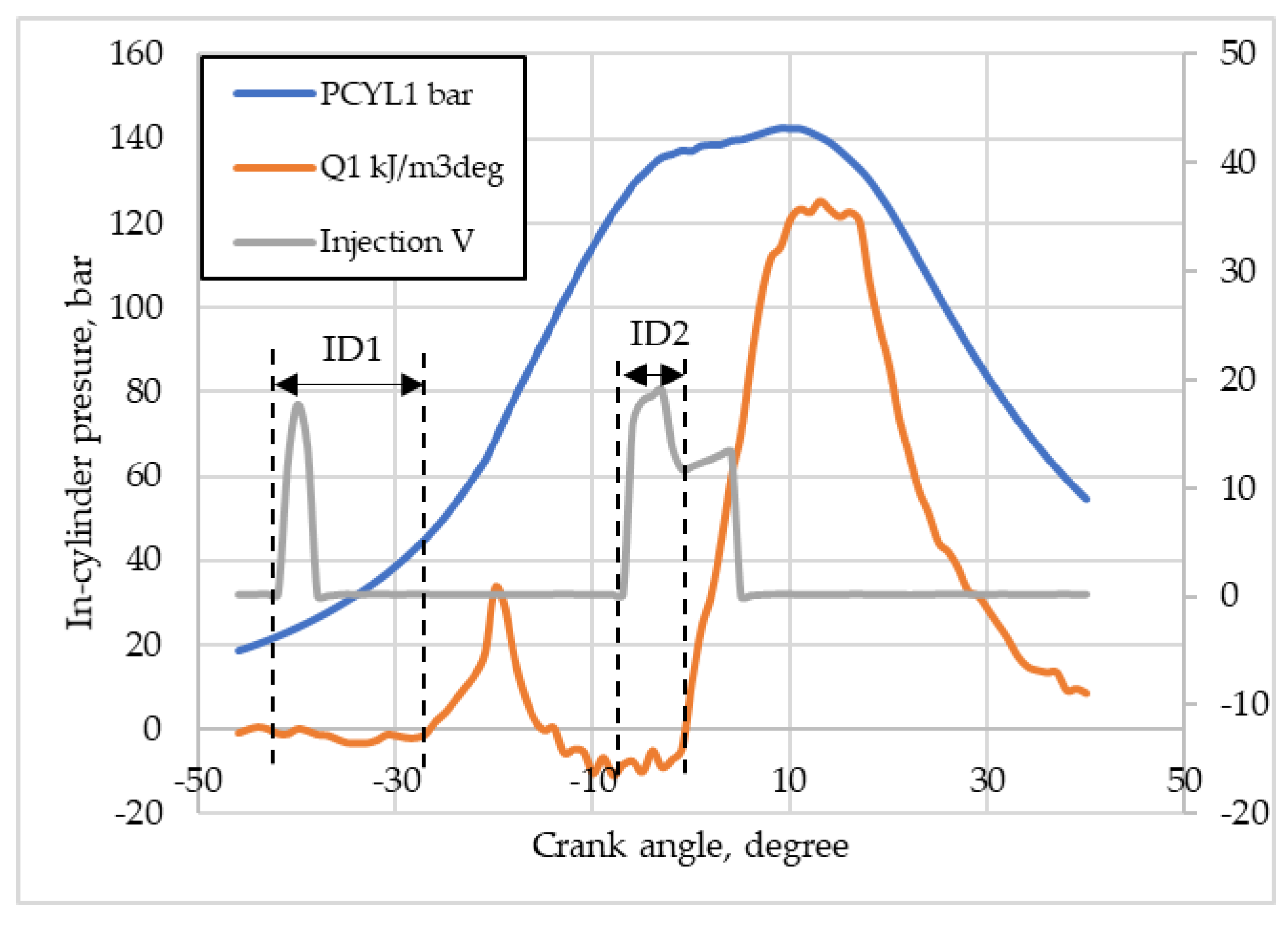
Experimental studies were initiated with the engine running on pure fuel to establish baseline levels of the studied parameters for each test condition, against which the data obtained when the engine was running on nanoparticle-doped fuel under the same conditions were compared. The same procedure was repeated for each fuel with different nanoparticle dosage ratios, maintaining the same operating conditions. Each time the fuel was changed, the engine was run for at least half an hour to purge the previously tested fuel from the engine's fuel system, and the fuel filter was replaced.
3. Results and Discussion
3.1. Combustion Characteristics
Modern diesel engine technologies typically employ multiple injections of fuel. Pilot injection is increasingly used to shorten the ignition delay between the start of injection and the start of combustion of the main injection. The combustion of the pilot-injection fuel with its entrained air raises the temperature of the mixture around the injector, thus reducing the ignition delay of the main-injection fuel. The shorter the delay, the less rapid the initial burning rate of the main fuel pulse. Because there is less time to “prepare” the early injected portion of the main injection for rapid combustion, the initial combustion-generated rate of pressure rise is reduced [26].
Figure 2a shows that at low engine load, the Al2O3 additive in the diesel fuel did not affect the pilot injection's ignition delay. At medium load (imep = 10 bar), the ignition delay of the pilot fuel portion was reduced by 4.3% and 7.2% when fuels containing nanoparticle additives at concentrations of 100 ppm and 150 ppm were used, respectively. At high load (imep = 14 bar), the ignition delay of the pilot portion was reduced by 5% and 7%, respectively. At a lower nanoparticle concentration (50 ppm), no noticeable effect on the ignition of the pilot fuel portion was observed.
Nanoparticles can reduce ignition delay through catalytic activity and accelerate the preparation of the combustible mixture through their higher thermal conductivity. However, the results of studies on the evaporation of fuel doped with nanoparticles show that at lower temperatures (about 600-700 K), which are present in the cylinder during the pilot injection at low engine load, nanoparticles can suppress fuel evaporation [1]. Perhaps this is why, at low loads, the nanoparticles did not affect the pilot fuel's ignition delay.
At low and medium loads, the nanoparticle additive had no significant effect on the ignition delay of the main injection fuel (Figure 2b). At high load, the ignition delay of the main injection fuel decreased by 1.6%, 1.6%, and 3.85% when the nanoparticle concentration in the fuel was 50, 100, and 150 ppm, respectively. It should be noted that pilot fuel injection significantly reduces the ignition delay of the main injection fuel - by approximately a factor of two compared to the standard diesel injection strategy. Such a short time limits the impact of nanoparticles on the auto-ignition process.
The MBF50 combustion point was estimated to understand better changes in fuel energy conversion efficiency resulting from the addition of nanoparticles. The MBF50 combustion mass point describes the point at which 50% of the cumulative (total) heat energy is released. In each engine, the MFB50 has an optimal value (after TDC) that is properly selected to achieve the best balance between heat loss and an acceptable expansion ratio.
Figure 3 shows the effect of aluminium oxide (Al2O3) nanoparticle concentration in diesel fuel on the MBF50 position and combustion duration. At low load, Al₂O₃ nanoparticles did not shift the MBF50 point closer to TDC, and the combustion duration also remained almost unchanged. At medium load (imep = 10 bar), nanoparticle concentrations of 100 ppm and 150 ppm shifted the MBF50 position closer to TDC by an average of 1.5%, while the combustion duration decreased by about 2.6%. At high load, the MBF50 position moved closer to TDC by approximately 1.6%, and the combustion duration was on average 1.8% shorter. The shift of the MBF50 point toward TDC was influenced by both a shorter ignition delay of the main fuel injection and by more intense heat release, as confirmed by the overall reduction in combustion duration.
Usually, more than 80% of fuel burns during the mixing-controlled phase [26]. Thus, nanoparticles can enhance the heat release rate primarily by increasing the fuel's thermal conductivity, accelerating the evaporation of fuel droplets, and enhancing thermal diffusion.
Figure 4a shows that a 50 ppm Al₂O₃ additive in biodiesel extended the ignition delay of the pilot injection fuel by 9.85%, 8.6%, and 7.3% at low, medium, and high loads, respectively. At higher nanoparticle concentrations (100 ppm and 150 ppm), the increase in ignition delay was smaller: on average 8.0%, 4.0%, and 2.7% at low, medium, and high loads, respectively. Thus, the addition of aluminium oxide nanoparticles to biofuels, unlike conventional diesel fuels, extended the ignition delay of pilot injection fuel. This may be due to more intense heat transfer from the surface to the droplet centre, driven by the higher thermal conductivity of nanoparticles and the higher initial boiling point of biofuels (Table 1).
The ignition delay (ID) of the main fuel injection at low load (imep = 6 bar) was longer by only 1.9%, 0.4%, and 0.9% for nanoparticle concentrations of 50 ppm, 100 ppm, and 150 ppm, respectively (Figure 4a). At medium load and 50 ppm nanoparticle concentration, the ID was practically the same as for pure biodiesel. Increasing the nanoparticle concentration to 100 ppm and 150 ppm shortened the main fuel injection ID by 3.3% and 6.4%, respectively. At high load, the trend in ID changes remained unchanged, although the magnitudes of the changes were within measurement error. The increase in ignition delay of the pilot-injection fuel had no significant effect on the ignition delay of the main-injection fuel.
Under low-load conditions, the addition of aluminium oxide nanoparticles to biodiesel did not affect the MBF50 position, and the combustion duration was on average only 1.5% shorter (Figure 5). The greatest effect was observed at medium load. In this operating mode, MBF50 shifted closer to TDC by 2.1%, 4.3%, and 4.9% when the engine was fuelled with biofuel containing 50 ppm, 100 ppm, and 150 ppm nanoparticle concentrations, respectively. The combustion duration in these cases was reduced by 1.8%, 3.4%, and 3.1%, respectively. When the load was increased, the effect of Al₂O₃ nanoparticles on the MBF50 position and combustion duration was negligible, with no effect exceeding 1.0%.
Figure 6a shows that the engine thermal efficiency increased slightly only when operating on diesel fuel containing 50 ppm of Al₂O₃ nanoparticles. The thermal efficiency was higher by 2.6%, 1.5%, and 0.2% at low (imep = 6 bar), medium (imep = 10 bar), and high (imep = 14 bar) loads, respectively. As nanoparticle concentration increased, the thermal efficiency decreased by up to 1.0% across all loads.
When the engine was operated on aluminium oxide nanoparticles doped biofuel, the thermal efficiency was lower in all operating modes compared to operation on pure biodiesel (Figure 6b). At medium and high loads, the thermal efficiency was on average 1.2%, 3.3%, and 4.4% lower as the nanoparticle concentration in the fuel increased from 50 ppm to 100 ppm and 150 ppm, respectively.
Figure 7a shows that the addition of 50 ppm CeO₂ nanoparticles to diesel fuel had virtually no effect on the ignition delay (ID) of the pilot injection fuel under all tested engine operating conditions. When the nanoparticle concentration was increased to 100 ppm, the ID was reduced by 1.2%, 2.6%, and 4.6% at low, medium, and high loads, respectively, compared to pure diesel operation. A higher nanoparticle concentration (150 ppm) further shortened the pilot injection fuel ignition delay. It was reduced by 2.45%, 7.8%, and 5.8% at low (imep = 4 bar), medium (imep = 10 bar), and high (imep = 14 bar) loads, respectively.
Meanwhile, the effect of CeO₂ nanoparticles on the ignition delay of the main injection fuel was significantly smaller. At low and medium loads, the ID was reduced (by 1.1%) only when using fuel with a nanoparticle concentration of 150 ppm. At high load, the ignition delay of the main fuel injection was on average 1.6% shorter, regardless of the nanoparticle concentration.
At low load, only fuel with a higher CeO₂ nanoparticle concentration (150 ppm) accelerated combustion, shifting MBF50 2.1% closer to TDC and reducing the combustion duration by 1.9% (Figure 8). At medium and high loads, these DCe150 fuel moved MBF50 closer to TDC by 2.2% and 2.8%, respectively, and shortened the combustion duration by 2.5% and 3.2%. When operating at medium load with DCe50 and DCe100 fuels, MBF50 shifted 1.2% and 2.3% closer to TDC, while combustion duration decreased by 1.4% and 2.5%, respectively. At maximum load, MBF50 moved 1.0% and 2.5% closer to TDC, and the combustion duration was reduced by 1.4% and 1.6%, respectively.
The results of the study show that the effect of cerium oxide nanoparticles on combustion characteristics—ignition delay, MBF50, and combustion time—was comparable to that of aluminium oxide.
Figure 9 shows that in RME fuel blends, CeO₂ nanoparticles affect the ignition delay of the pilot and main fuel injections differently than in standard diesel fuel. Across all load conditions, CeO₂ additives generally increased the pilot injection ID. At low load (imep = 6 bar), the pilot fuel injection ID increased by 8.2%, 8.5%, and 9.4% for CeO₂ concentrations of 50 ppm, 100 ppm, and 150 ppm, respectively. At medium load (imep = 10 bar), the effect of the nanoparticles was smaller—the pilot fuel ignition delay increased by 6.1%, 4.5%, and 8.7% for each respective CeO₂ concentration. At high load, the increase in pilot fuel ID was lower—5.6%, 3.6%, and 5.1%. This behaviour can be explained by the higher latent heat of vaporisation and boiling point of RME.
At low load, the ignition delay of the main fuel portion was longer by 4.6%, 2.4%, and 1.9% for CeO₂ concentrations of 50 ppm, 100 ppm, and 150 ppm, respectively, compared to pure RME (Figure 7b). At medium and high loads, the ID of all tested fuels was identical. Thus, as in the case of aluminium oxide particles, the addition of cerium dioxide nanoparticles to biodiesel fuel increased the ignition delay of the pilot fuel but had an insignificant effect on the ignition delay of the main injection fuel.
Larger changes in the MBF50 position were observed only at medium load (imep = 10 bar): MBF50 was closer to TDC by 1.2%, 3.8%, and 3.1% for BCe50, BCe100 and BCe150 fuels, respectively (Figure 10a). The maximum heat release rate under this operating mode was also higher by 0.8%, 3.7%, and 2.8%, respectively. At maximum load, the CeO₂ nanoparticle additive had virtually no effect on combustion duration (Figure 10b). At low and medium loads, nanoparticle concentrations of 100 ppm and 150 ppm reduced the combustion duration by an average of 2–3%.
The addition of CeO₂ nanoparticles to mineral diesel had no significant effect on the engine’s thermal efficiency (Figure 11a). At high loads, thermal efficiency practically remained the same as when the engine was operated on pure diesel, regardless of nanoparticle concentration. At medium loads, the decrease in thermal efficiency did not reach 1.0%. A slightly greater reduction, up to 1.5%, was observed at low engine load.
When the engine was operated on biodiesel with a CeO₂ nanoparticle additive, thermal efficiency decreased with increasing nanoparticle concentration in the fuel (Figure 11b). The smallest decrease in thermal efficiency (up to 0.7%) was obtained using fuel with a nanoparticle concentration of 50 ppm. Increasing the nanoparticle concentration to 100 ppm reduced thermal efficiency by 3.3%, 1.8%, and 1.5% at low, medium, and high engine loads, respectively, compared to operation on pure biodiesel and further increasing the nanoparticle concentration to 150 ppm reduced thermal efficiency by 4.5%, 2.8%, and 2.0%, respectively.
Researchers who studied the influence of nanoparticles in diesel fuel on the combustion process in modern diesel engines also note that this additive had no significant effect on specific fuel consumption and, consequently, thermal efficiency [22,23].
As the results show, even though in many cases the nanoparticles accelerated combustion and, as a result, MBF50—although only slightly—shifted closer to TDC, and the combustion duration decreased, the obtained thermal efficiency was lower. This can be explained by the fact that in each engine, MFB50 has an optimal value that is properly selected to achieve the best thermal efficiency. If the electronic engine control system operates according to an algorithm optimised for standard fuels, changes in fuel properties render the control strategy no longer optimal. Therefore, when using fuels with nanoparticles, adjustments to the control algorithm should be made to account for the changes in the combustion process.
3.2. Emissions Characteristics
This section analyses the effect of alumina and cerium oxide nanoparticles in standard diesel and biodiesel on nitrogen oxide and carbon monoxide emissions only. Since hydrocarbon emissions and exhaust opacity were very low when the engine was running on the base fuels tested, the effect of nanoparticles was insignificant, and these results are not presented in the paper.
At high load, the aluminium oxide nanoparticle additive increased nitrogen oxide (NO) emissions by 3.1–4.1% (Figure 12), likely due to more intense combustion, as confirmed by the slightly shorter combustion duration. Meanwhile, NO₂ emissions were 3.9–4.1% lower when the engine was operated on fuel containing nanoparticles. However, this did not reduce total NOₓ emissions, which remained, on average, 2.5% higher. At medium load, when the engine was operated on the tested fuels, the maximum NOₓ emissions fluctuated within about 10 ppm. The largest percentage reduction in NOₓ emissions with nanofuels was observed at low load, reaching 16.5%. Under these conditions, less intense combustion (a longer combustion duration) was also observed, which may have contributed to lower nitrogen oxide emissions.
When the engine was operated on biodiesel, total nitrogen oxides (NOₓ) emissions were higher by 31%, 23%, and 26% at low, medium, and high loads, respectively. A small Al₂O₃ nanoparticle additive (50 ppm) reduced NOₓ emissions by 43.5% at low load, 21.4% at medium load, and 14.7% at high load (Figure 13c). Increasing the nanoparticle concentration in the biofuel resulted in a smaller effect. Fuel with a 100 ppm reduced NOₓ emissions by 34.6%, 16.8%, and 7.6% at low, medium, and high loads, respectively. Further increasing the nanoparticle concentration (to 150 ppm) reduced nitrogen oxide emissions by 36.3%, 13.2%, and 5.8% at the respective loads.
It should be noted that the reduction in NOₓ was achieved as a result of decreased NO emissions (Figure 13a), since NO₂ emissions, when using biodiesel with an aluminium oxide nanoparticle additive, were higher compared to pure biodiesel (Figure 13b). Moreover, increasing the nanoparticle concentration in the fuel led to higher NO₂ emissions. When the engine was operated on biodiesel with the highest nanoparticle concentration (150 ppm), NO₂ emissions increased by 21.7%, 29.0%, and 47.3% at low, medium, and high loads, respectively, compared with pure biodiesel. Although NOₓ emissions decreased when the engine was operated on biodiesel with nanoparticles, they were lower than those obtained with pure mineral diesel fuel only at low loads.
Figure 14 shows CO emissions from mineral diesel and biodiesel doped with aluminium oxide nanoparticles. When the engine was operated on mineral diesel with a 50 ppm nanoparticle, CO emissions increased by 2.7%, 5.8%, and 16.6% at low, medium, and high loads, respectively (Figure 14a). Increasing the nanoparticle concentration to 100 ppm and 150 ppm resulted in an average CO emission increase of 4.4% at high engine load, compared to the emissions obtained when running on pure diesel. At medium load, the change in CO emissions was minimal. At low load, CO emissions were lower by 1.5% and 7.5% when using diesel with 100 ppm and 150 ppm aluminium oxide nanoparticles, respectively.
The effect of aluminium oxide nanoparticles in biodiesel on CO emissions was more pronounced (Figure 14b). At low load, CO emissions decreased by 11.8%, 13.3%, and 15.9% for nanoparticle concentrations of 50 ppm, 100 ppm, and 150 ppm, respectively. At high load, this reduction reached 14.0%, 18.4%, and 21.4%, respectively. At medium load, the effect was smaller, but the trend remained consistent.
Figure 15 shows that the addition of CeO₂ nanoparticles to diesel fuel reduced both NO and NO₂ emissions. Total NOₓ emissions decreased on average by 22.5%, 8.5%, and 3.1% at low, medium, and high engine loads, respectively, compared to emissions when running on pure diesel fuel. As engine load and nanoparticle concentration in the fuel increased, their effect on NOₓ emissions decreased. At high load and the highest cerium oxide nanoparticle concentration in the fuel, NOₓ emissions increased by 3.3%.
When the engine was operated on CeO₂ doped biodiesel, NOₓ emissions were lower in all tested cases compared to those obtained when running on pure biodiesel (Figure 15). At low load, NOₓ emissions decreased on average by 25.7%, at medium load by 9.6%, and at high load by 2.5%. The reduction in NOₓ emissions was due to a decrease in NO emissions, averaging 29.0%, 11.0%, and 3.2% at low, medium, and high loads, respectively. Meanwhile, NO₂ emissions were higher in all cases when the engine was operated on biodiesel with the CeO₂ additive.
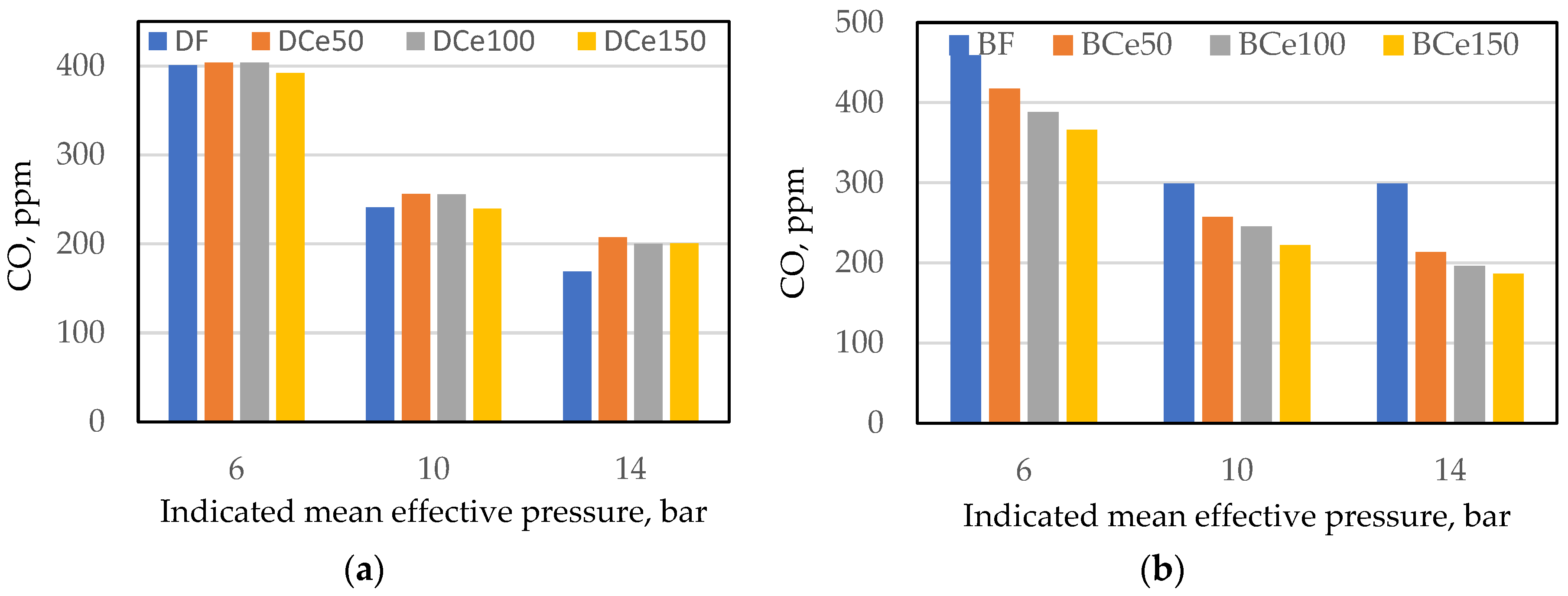
The addition of CeO₂ nanoparticles to diesel fuel had no significant effect on CO emissions at low load (Figure 17a). At medium load, CO emissions increased by 4.0% on average, regardless of the nanoparticle concentration in the fuel, and at high load, the increase reached 20.0%. In contrast, adding CeO₂ nanoparticles to biodiesel significantly reduced CO emissions (Figure 17b). When the engine was operated on biodiesel with a 50 ppm nanoparticle concentration, CO emissions decreased by 8.9%, 13.7%, and 28.8% at low, medium, and high engine loads, respectively. Increasing the nanoparticle concentration in the fuel further reduced CO emissions. At a nano-particle concentration of 150 ppm, CO emissions decreased by 20.3%, 25.8%, and 37.5% at low, medium, and high loads, respectively. The results of the study confirm that cerium oxide, being thermally stable, promotes CO and HC oxidation and nitrogen oxide reduction, i.e. acts as an effective catalyst [27].
Figure 16.
The effect of CeO2 nanoparticle additives to biodiesel fuel on nitrogen oxide (a), nitrogen dioxide (b) and total nitrogen oxides (c) emissions.
Figure 16.
The effect of CeO2 nanoparticle additives to biodiesel fuel on nitrogen oxide (a), nitrogen dioxide (b) and total nitrogen oxides (c) emissions.
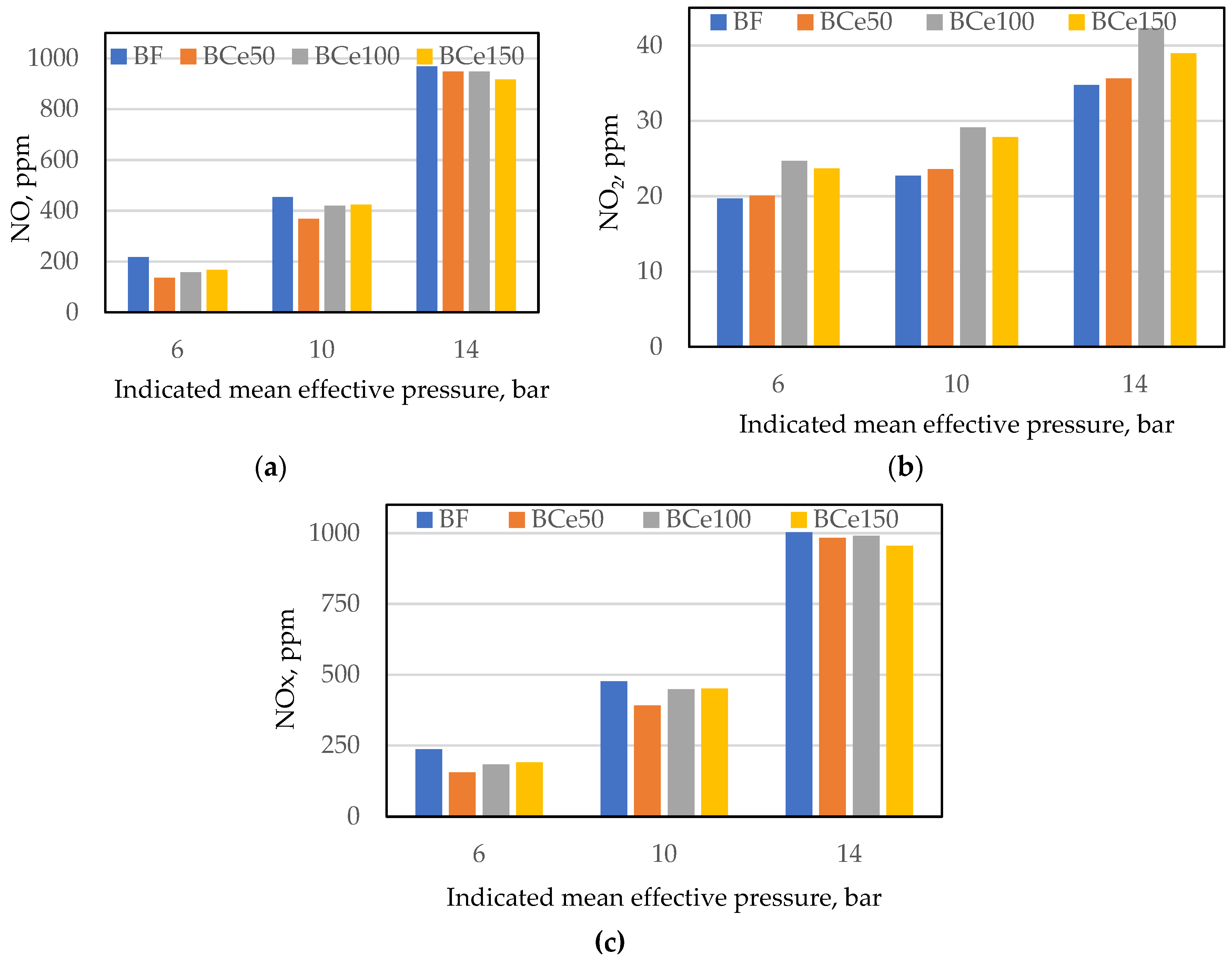
Figure 17.
The effect of CeO2 nanoparticle additives to mineral diesel fuel (a) and biodiesel fuel (b) on carbon oxide (CO) emissions.
Figure 17.
The effect of CeO2 nanoparticle additives to mineral diesel fuel (a) and biodiesel fuel (b) on carbon oxide (CO) emissions.
5. Conclusions
In this study, the effects of Al2O3 and CeO2 nanoparticles added to diesel fuel and biofuel on the combustion and emission characteristics of a modern CRDI diesel engine with pilot fuel injection were investigated. Three dosing levels (50 ppm, 100 ppm, and 150 ppm) of nanoparticles were compared against undoped standard diesel and biodiesel fuels under three engine load modes (imep=6 bar, imep=10 bar, and imep=14 bar) at 2500 rpm.
The results showed that the presence of 100 ppm and 150 ppm Al2O3 nanoparticles in diesel fuel shortened the pilot fuel ignition delay by approximately 5.0% and 7.0%, respectively, at medium and high loads. The effect of CeO2 nanoparticles was comparable. The ignition delay of the pilot fuel was shortened by about 4.0% and 7.0% at nanoparticle concentrations of 100 and 150 ppm, respectively. At low loads, the nanoparticles did not affect the pilot fuel's ignition delay. The presence of both Al2O3 and CeO2 in biodiesel increased the ignition delay of the pilot fuel by about 8.0% at low load and about 3.5% at high load.
The addition of both aluminium oxide and cerium dioxide nanoparticles to diesel and biodiesel fuels had an insignificant effect on the main injection fuel's ignition delay.
Nanoparticle additives in fuels brought the MBF50 position closer to VGT by an average of 1.5% and shortened the combustion duration by about 2.5%.
The addition of Al2O3 and CeO₂ nanoparticles to mineral diesel had no significant effect on the engine’s thermal efficiency. The thermal efficiency was up to 1.0% lower. When the engine was operated on biodiesel with a nanoparticle additive, thermal efficiency decreased with increasing nanoparticle concentration. At medium and high loads, thermal efficiency was on average 1.2%, 3.3%, and 4.4% lower as the Al2O3 nanoparticle concentration in the fuel increased from 50 ppm to 100 ppm and 150 ppm, respectively. Increasing the CeO₂ nanoparticle concentration from 50 ppm to 100 ppm and 150 ppm reduced thermal efficiency by 0.7%, 1.8%, and 2.8% at medium load, and by 0.7%, 1.5%, and 2.0% at high engine loads, respectively, compared to operation on undoped biodiesel.
Al2O3 additive in diesel had no significant effect on NOx emissions. At high load, NOx emissions were higher by an average of 2.5%, while at low load they were lower by 16.5%. CO emissions were higher by 4.4-7.5% in most cases. Al2O3 additive in biodiesel reduced NOx emissions by an average of 38% at low load, by 17.1% at medium load and by 9.4% at high load. The reduction in CO emissions was on average 15%.
The addition of CeO₂ nanoparticles to diesel fuel reduced NOₓ emissions by 22.5%, 8.5%, and 3.1% on average at low, medium, and high engine loads, respectively, compared with pure diesel. When the engine was operated on CeO₂ doped biodiesel, NOₓ emissions were lower by an average of 25.7%, 9.6%, and 2.5% at low, medium, and high loads, respectively. Adding CeO₂ nanoparticles to diesel fuel had no significant effect on CO emissions at low load. At medium load, CO emissions increased by 4.0% on average, and at high load, by 20.0%. Adding CeO₂ nanoparticles to biodiesel significantly reduced CO emissions. At a nano-particle concentration of 150 ppm, CO emissions decreased by 20.3%, 25.8%, and 37.5% at low, medium, and high loads, respectively.
Author Contributions
Conceptualization, S.S. and V.J.; methodology, S.S.; formal analysis, S.S.; investigation, V.J. and S.S; resources, S.S.; data curation, S.S.; writing—original draft preparation, S.S.; writing—review and editing, V.J.; visualization, V.J.; supervision, S.S.; project administration, S.S.; All authors have read and agreed to the published version of the manuscript.
Funding
This research received no external funding.
Conflicts of Interest
The authors declare no conflicts of interest.:
Abbreviations
The following abbreviations are used in this manuscript:
| imep | Indicated mean effective pressure |
| MBF50 | Crank angle corresponding to 50% of mass burned fraction |
| ID | Ignition delay |
| NOx | Total emission of nitrogen oxides |
| CO | Carbon monoxide |
References
- D. Mei, Y. Fang, D. Zhang, D. Guo, and Z. Chen, “Evaporation and micro-explosion performances of nano-fuel droplets,” Fuel, vol. 334, Feb. 2023. [CrossRef]
- M. Dai, J. Wang, N. Wei, X. Wang, and C. Xu, “Experimental study on evaporation characteristics of diesel/cerium oxide nanofluid fuel droplets,” Fuel, vol. 254, Oct. 2019. [CrossRef]
- G. Jiang, J. Yan, G. Wang, M. Dai, C. Xu, and J. Wang, “Effect of nanoparticles concentration on the evaporation characteristics of biodiesel,” Appl. Surf. Sci., vol. 492, pp. 150–156, Oct. 2019. [CrossRef]
- I. Javed, S. W. Baek, and K. Waheed, “Evaporation characteristics of heptane droplets with the addition of aluminum nanoparticles at elevated temperatures,” Combust. Flame, vol. 160, no. 1, pp. 170–183, Jan. 2013. [CrossRef]
- R. Zhang, J. Zhou, Y. Zhao, Z. He, W. Xi, and W. Zhao, “Molecular Dynamics Simulations of CeO2 Nano-Fuel: Thermodynamic and Kinetic Properties,” Symmetry (Basel)., vol. 17, no. 2, Feb. 2025. [CrossRef]
- B. Sa, V. Markov, Y. Liu, V. Kamaltdinov, and W. Qiao, “Numerical investigation of the effect of multi-walled carbon nanotube additive on nozzle flow and spray behaviors of diesel fuel,” Fuel, vol. 290, p. 119802, Apr. 2021. [CrossRef]
- D. Mei, Y. Fang, D. Adu-Mensah, W. Cai, and Y. Yuan, “Spray characteristics of fuel with cerium oxide nanoparticles,” Chem. Eng. Sci., vol. 266, Feb. 2023. [CrossRef]
- A. F. Chen, M. Akmal Adzmi, A. Adam, M. F. Othman, M. K. Kamaruzzaman, and A. G. Mrwan, “Combustion characteristics, engine performances and emissions of a diesel engine using nanoparticle-diesel fuel blends with aluminium oxide, carbon nanotubes and silicon oxide,” Energy Convers. Manag., vol. 171, pp. 461–477, Sep. 2018. [CrossRef]
- M. A. Fayad and H. A. Dhahad, “Effects of adding aluminum oxide nanoparticles to butanol-diesel blends on performance, particulate matter, and emission characteristics of diesel engine,” Fuel, vol. 286, Feb. 2021. [CrossRef]
- G. Addison, K. A. Milligan, and S. Ohlig, “Comparative analysis of ZnO and CeO2 nanoparticle additives for the improvement of hemp biofuels as a sustainable biodiesel alternative: A comprehensive review,” Aug. 01, 2024, Elsevier B.V. [CrossRef]
- A. Murugesan, A. Avinash, E. J. Gunasekaran, and A. Murugaganesan, “Multivariate analysis of nano additives on biodiesel fuelled engine characteristics,” Fuel, vol. 275, Sep. 2020. [CrossRef]
- M. Ponnusamy, B. Ramani, and R. Sathyamruthy, “A parametric study on a diesel engine fuelled using waste cooking oil blended with Al2O3 nanoparticle—Performance, emission, and combustion characteristics,” Sustainability (Switzerland), vol. 13, no. 13, Jul. 2021. [CrossRef]
- M. S. Mujaheed Khan, P. Kumar, I. Ansari, and N. Sahoo, “Experimental analysis of diesel engine characteristics powered with Al2O3 doped mesua ferrea linn vegetable oil-diesel blend,” Fuel, vol. 381, Feb. 2025. [CrossRef]
- Y. A. Mikky, A. A. Bhran, R. Y. El-Araby, A. M. A. Mohamed, A. G. Gadallah, and A. M. Shoaib, “Optimization of Biodiesel–Nanoparticle Blends for Enhanced Diesel Engine Performance and Emission Reduction,” Processes, vol. 12, no. 11, Nov. 2024. [CrossRef]
- R. George Roy et al., “Impact of synthesizing surfactant-modified catalytic ceria nanoparticles on the performance and environmental behaviors of coconut oil/diesel-fueled CI engine: An optimization attempt,” Energy, vol. 295, May 2024. [CrossRef]
- S. Kesharvani, M. Chhabra, G. Dwivedi, T. N. Verma, and A. Pugazhendhi, “Execution and emission characteristics of automotive compression ignition engine powered by cerium oxide nanoparticles doped water diesel emulsion fuel,” Fuel, vol. 349, Oct. 2023. [CrossRef]
- M. Mofijur et al., “Impact of nanoparticle-based fuel additives on biodiesel combustion: An analysis of fuel properties, engine performance, emissions, and combustion characteristics,” Jan. 01, 2024, Elsevier Ltd. [CrossRef]
- V. Pandey, I. A. Badruddin, S. Kamangar, and A. B. Alemayehu, “Size Effect of Nanoceria Blended with CIME Biodiesel on Engine Characteristics,” Nanomaterials, vol. 13, no. 1, Jan. 2023. [CrossRef]
- M. E. M. Soudagar et al., “An investigation on the influence of aluminium oxide nano-additive and honge oil methyl ester on engine performance, combustion and emission characteristics,” Renew. Energy, vol. 146, pp. 2291–2307, Feb. 2020. [CrossRef]
- A. S. Rajpoot, T. Choudhary, H. Chelladurai, U. Rajak, and M. K. Sahu, “Comparison of the effect of CeO2 and CuO2 nanoparticles on performance and emission of a diesel engine fueled with Neochloris oleoabundans algae biodiesel,” in Procedia Structural Integrity, Elsevier B.V., 2024, pp. 59–64. [CrossRef]
- Y. Kaushik, V. Verma, K. K. Saxena, C. Prakash, L. R. Gupta, and S. Dixit, “Effect of Al2O3 Nanoparticles on Performance and Emission Characteristics of Diesel Engine Fuelled with Diesel–Neem Biodiesel Blends,” Sustainability (Switzerland), vol. 14, no. 13, Jul. 2022. [CrossRef]
- F. C. P. Leach, M. Davy, and B. Terry, “Combustion and emissions from cerium oxide nanoparticle dosed diesel fuel in a high speed diesel research engine under low temperature combustion (LTC) conditions,” Fuel, vol. 288, p. 119636, Mar. 2021. [CrossRef]
- Z. Zhang et al., “Comparative study of using multi-wall carbon nanotube and two different sizes of cerium oxide nanopowders as fuel additives under various diesel engine conditions,” Fuel, vol. 256, Nov. 2019. [CrossRef]
- G. Labeckas, S. Slavinskas, and I. Kanapkienė, “The individual effects of cetane number, oxygen content or fuel properties on the ignition delay, combustion characteristics, and cyclic variation of a turbocharged CRDI diesel engine – Part 1,” Energy Convers. Manag., vol. 148, pp. 1003–1027, 2017. [CrossRef]
- G. Labeckas, S. Slavinskas, and I. Kanapkiene, “Study of the effects of biofuel-oxygen of various origins on a CRDI diesel engine combustion and emissions,” Energies (Basel)., vol. 12, no. 7, 2019. [CrossRef]
- J. B. Heywood, “Internal combustion engine fundamentals / John B. Heywood.,” Internal Combustion Engine Fundamentals, 2nd Edition, 2018.
- V. Sajith, C. B. Sobhan, and G. P. Peterson, “Experimental Investigations on the Effects of Cerium Oxide Nanoparticle Fuel Additives on Biodiesel,” Advances in Mechanical Engineering, vol. 2, Jan. 2010. [CrossRef]
Figure 2.
The effect of the Al2O3 nanoparticle additives to diesel fuel on pilot injection fuel (a) and main injection fuel (b) autoignition delay.
Figure 2.
The effect of the Al2O3 nanoparticle additives to diesel fuel on pilot injection fuel (a) and main injection fuel (b) autoignition delay.
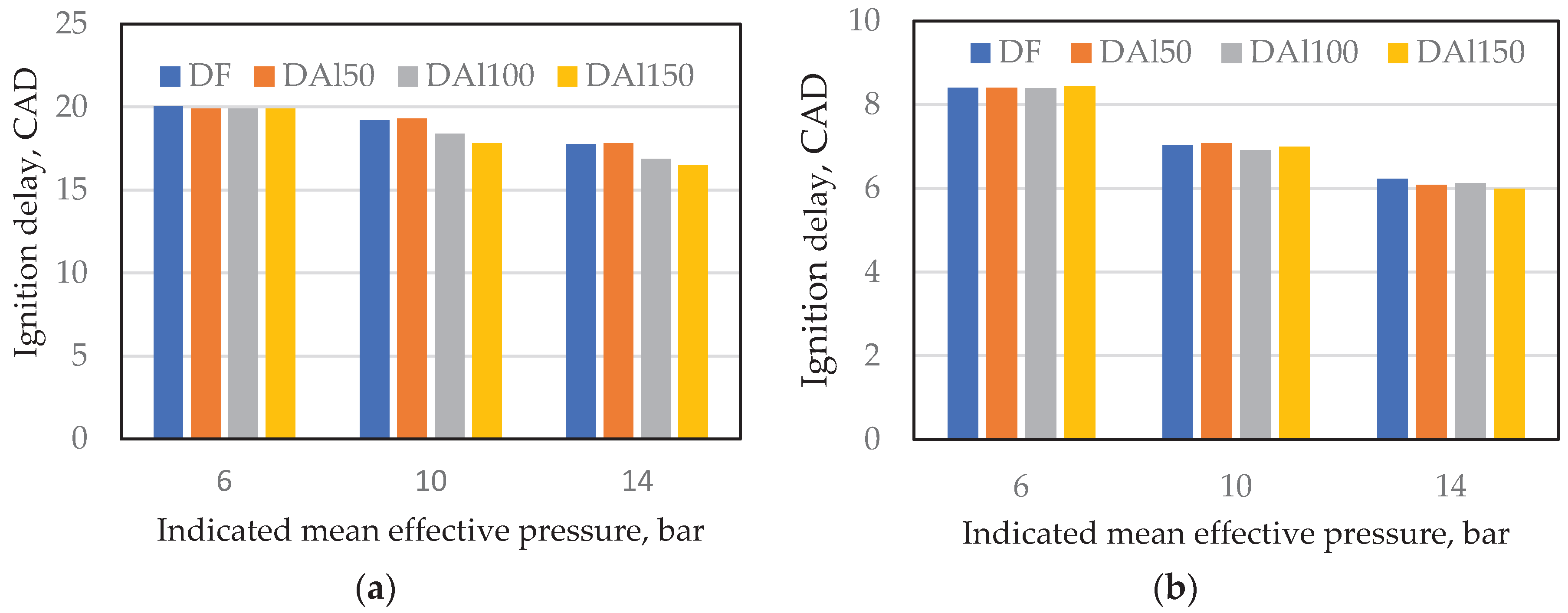
Figure 3.
The effect of the Al2O3 nanoparticle additives to diesel fuel on MBF50 position (a) and combustion duration (b).
Figure 3.
The effect of the Al2O3 nanoparticle additives to diesel fuel on MBF50 position (a) and combustion duration (b).
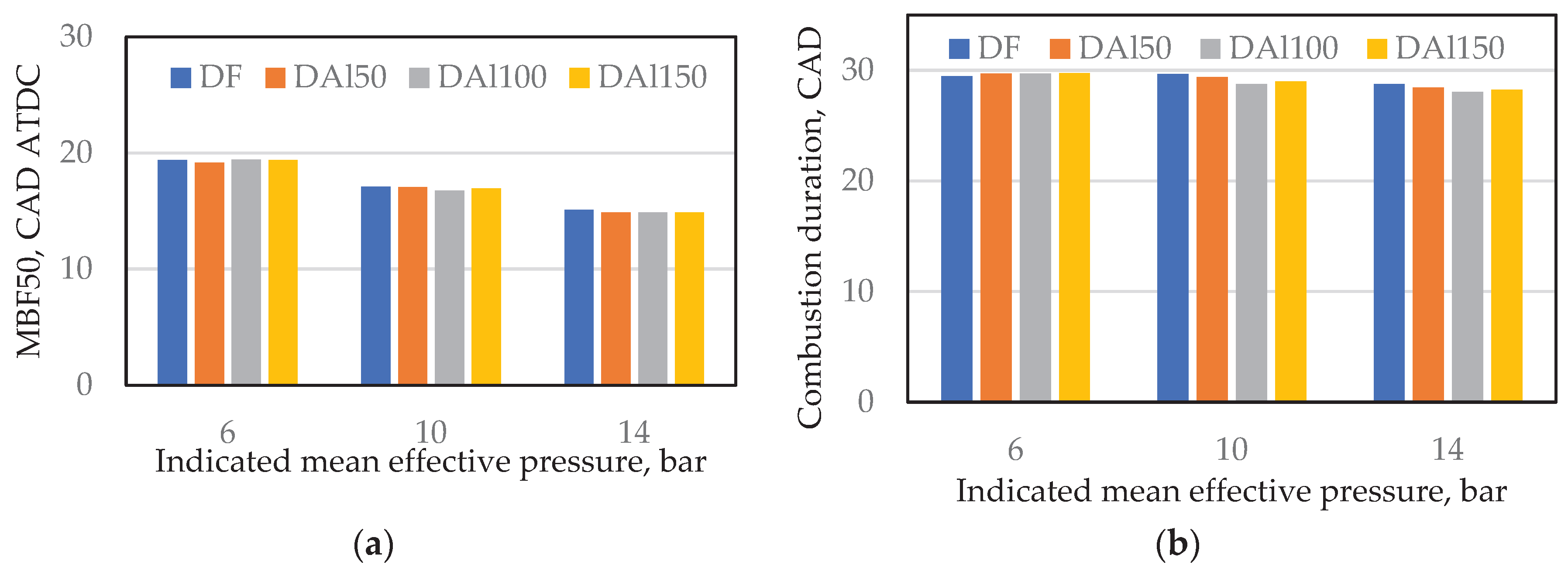
Figure 4.
The effect of the Al2O3 nanoparticle additives to biodiesel fuel on pilot injection fuel (a) and main injection fuel (b) autoignition delay.
Figure 4.
The effect of the Al2O3 nanoparticle additives to biodiesel fuel on pilot injection fuel (a) and main injection fuel (b) autoignition delay.
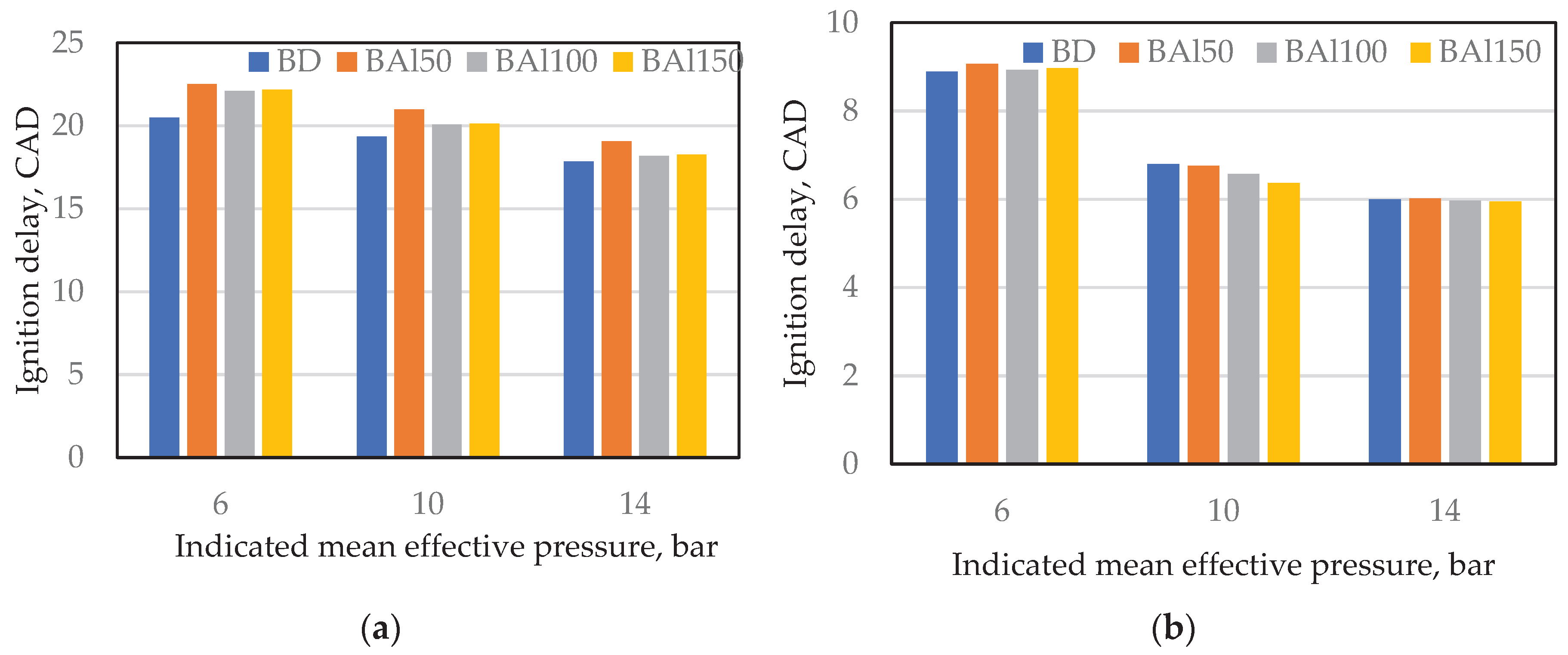
Figure 5.
The effect of the Al2O3 nanoparticle additives to biodiesel fuel on MBF50 position (a) and combustion duration (b).
Figure 5.
The effect of the Al2O3 nanoparticle additives to biodiesel fuel on MBF50 position (a) and combustion duration (b).
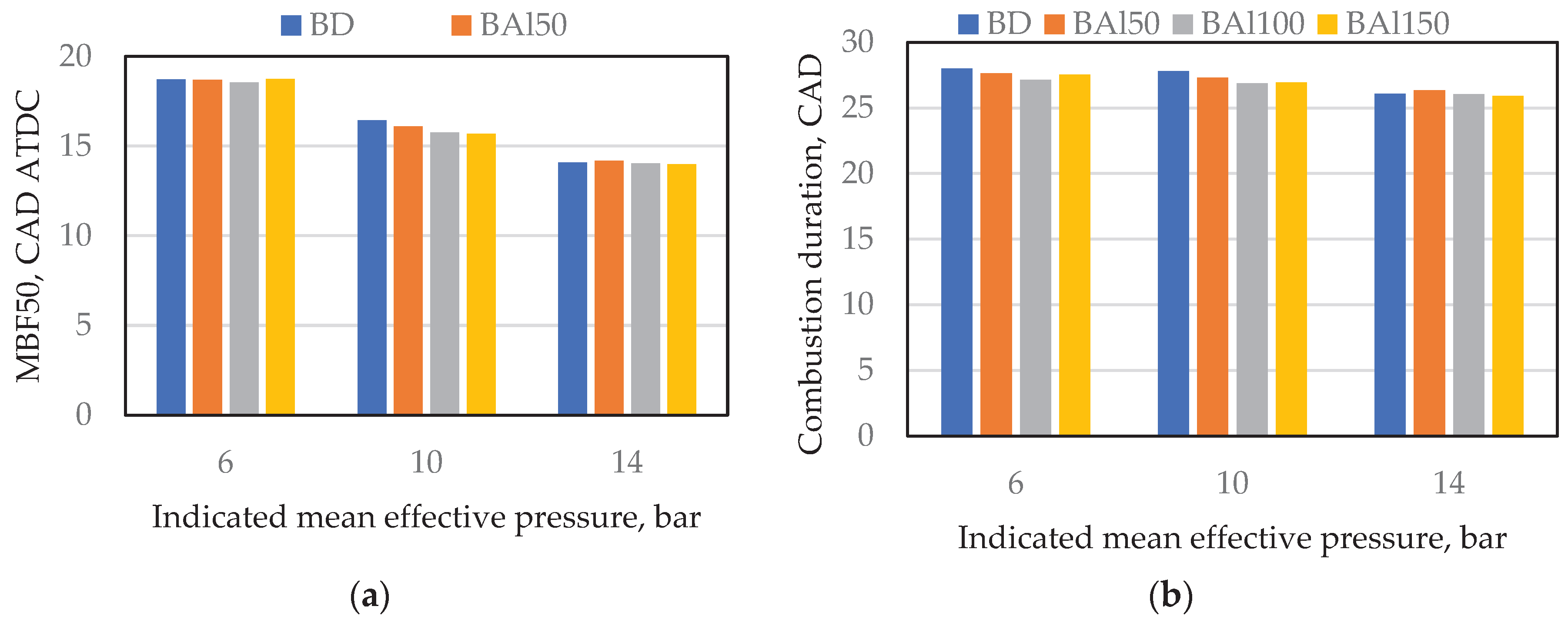
Figure 6.
The effect of the Al2O3 nanoparticle additives on thermal efficiency.
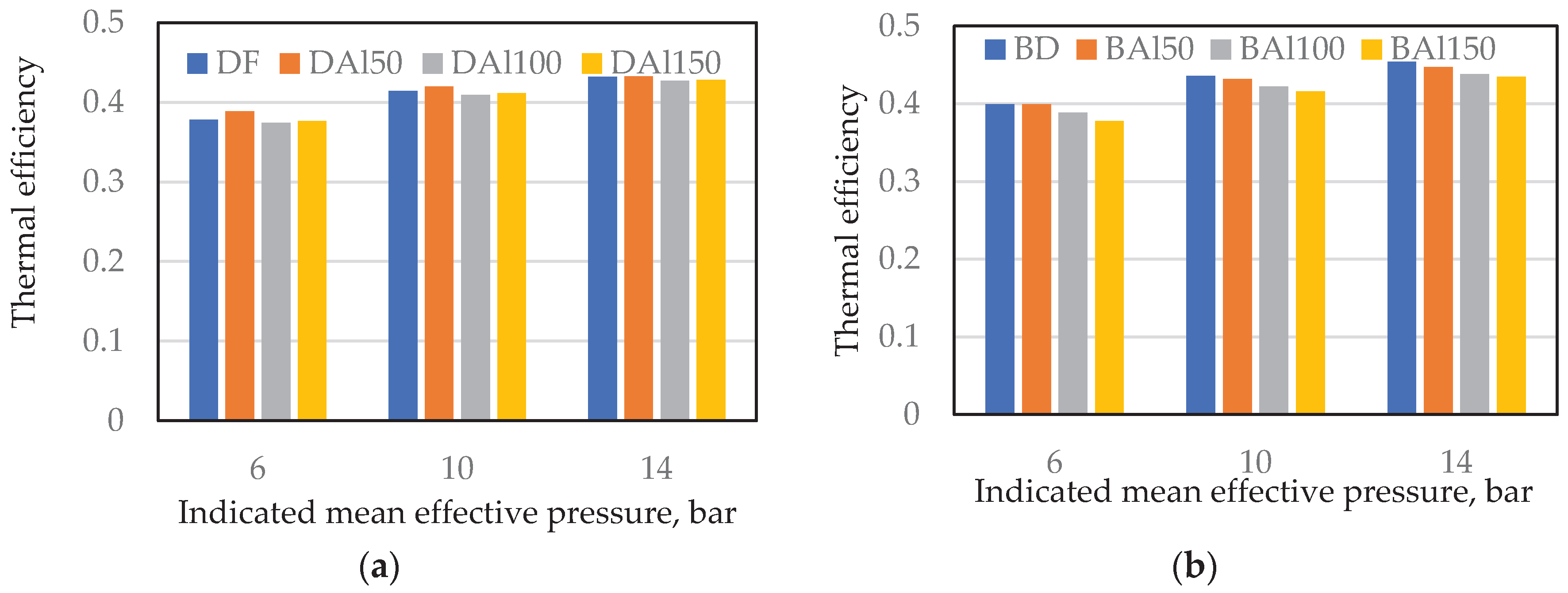
Figure 7.
The effect of the CeO2 nanoparticle additives to diesel fuel on pilot injection fuel (a) and main injection fuel (b) autoignition delay.
Figure 7.
The effect of the CeO2 nanoparticle additives to diesel fuel on pilot injection fuel (a) and main injection fuel (b) autoignition delay.
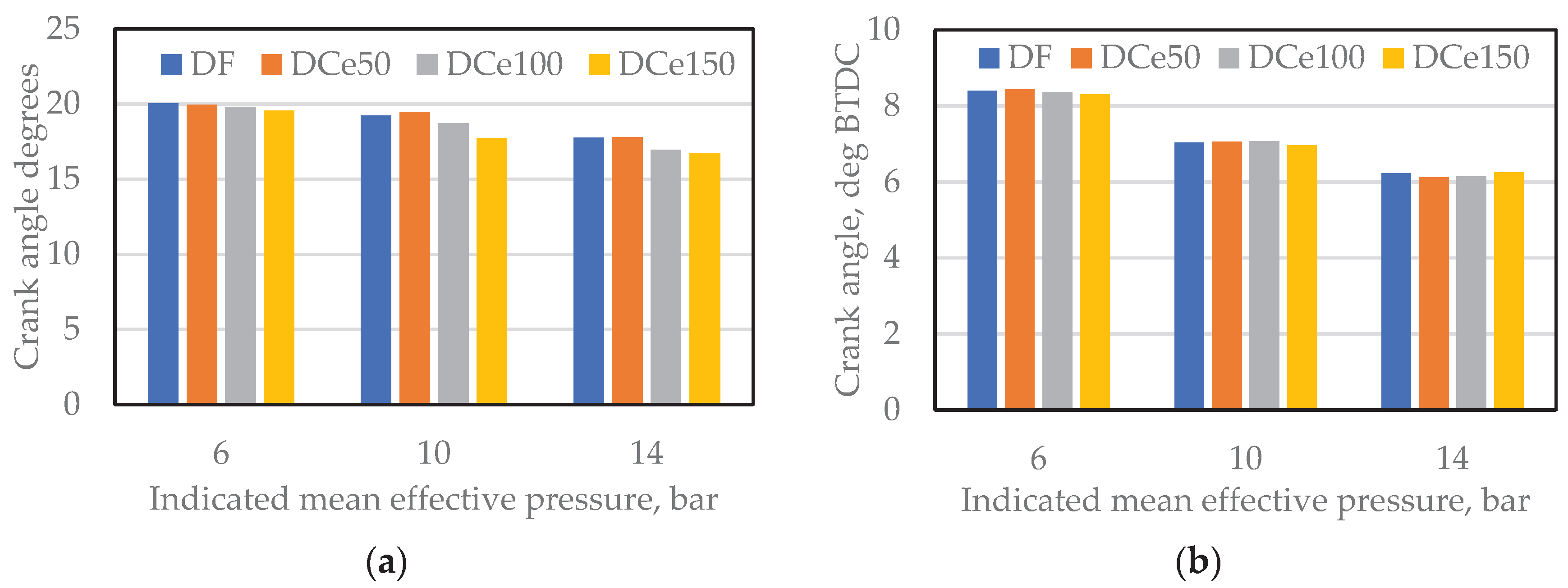
Figure 8.
The effect of the CeO2 nanoparticle additives in diesel fuel on MBF50 position (a) and combustion duration (b).
Figure 8.
The effect of the CeO2 nanoparticle additives in diesel fuel on MBF50 position (a) and combustion duration (b).
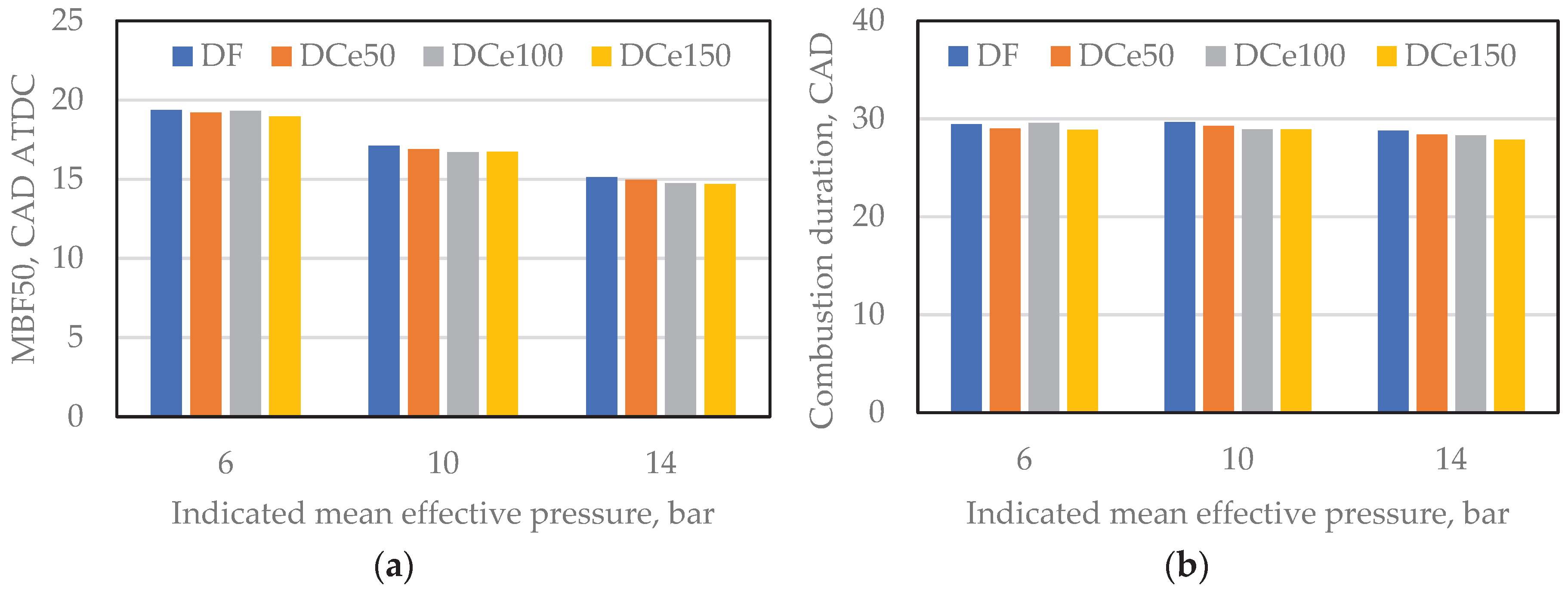
Figure 9.
The effect of the CeO2 nanoparticle additives to biodiesel fuel on pilot injection fuel (a) and main injection fuel (b) autoignition delay.
Figure 9.
The effect of the CeO2 nanoparticle additives to biodiesel fuel on pilot injection fuel (a) and main injection fuel (b) autoignition delay.
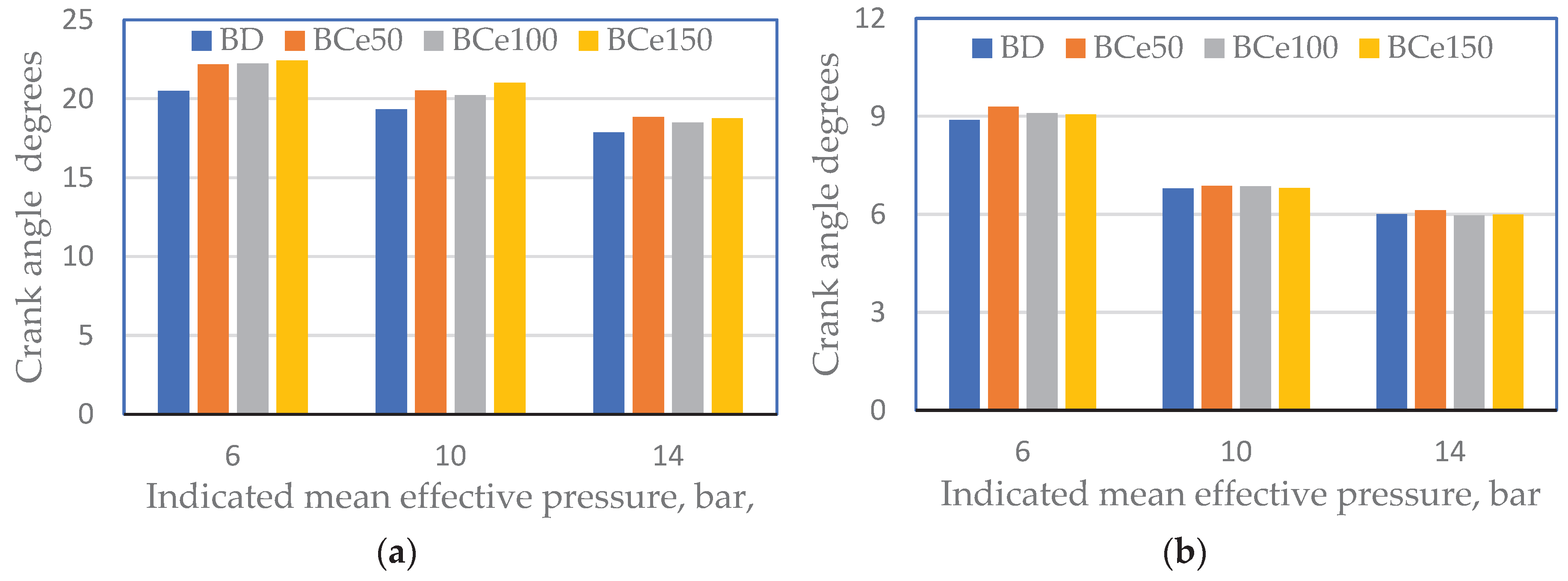
Figure 10.
The effect of the CeO2 nanoparticle additives to biodiesel fuel on MBF50 position (a) and combustion duration (b).
Figure 10.
The effect of the CeO2 nanoparticle additives to biodiesel fuel on MBF50 position (a) and combustion duration (b).
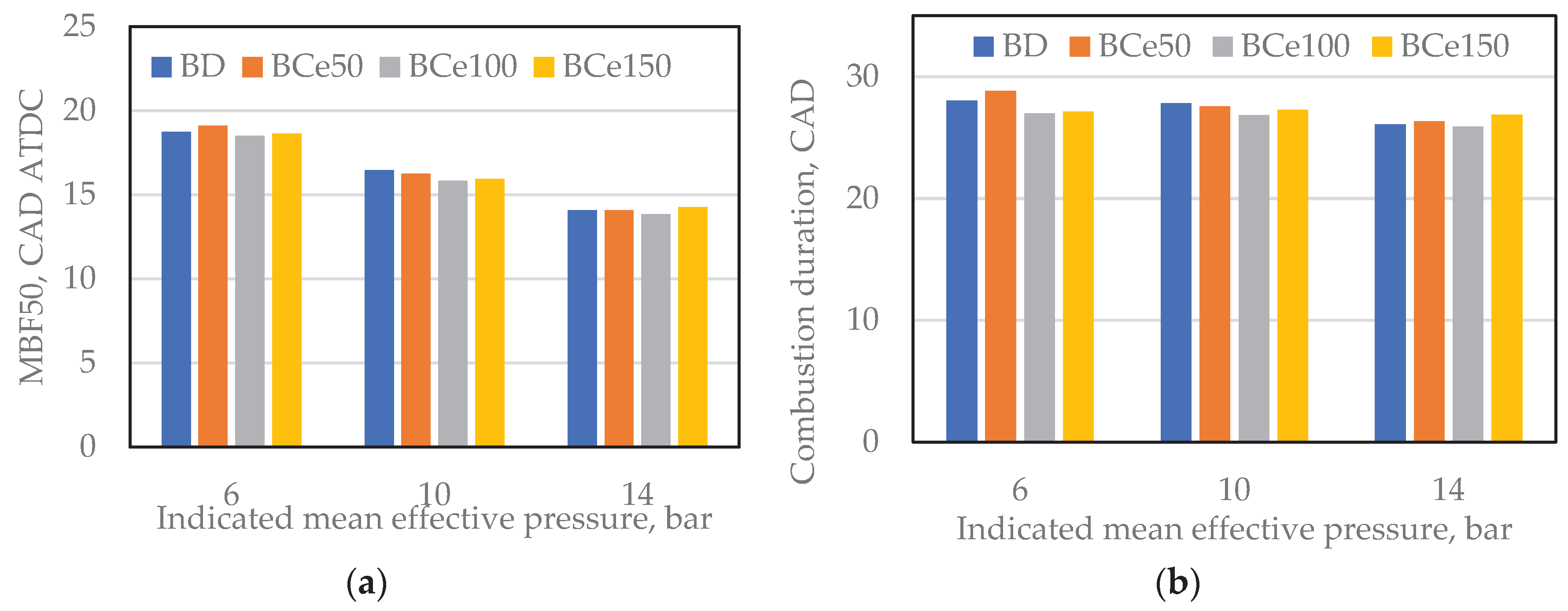
Figure 11.
The effect of the CeO2 nanoparticle additives to biodiesel fuel on thermal efficiency.
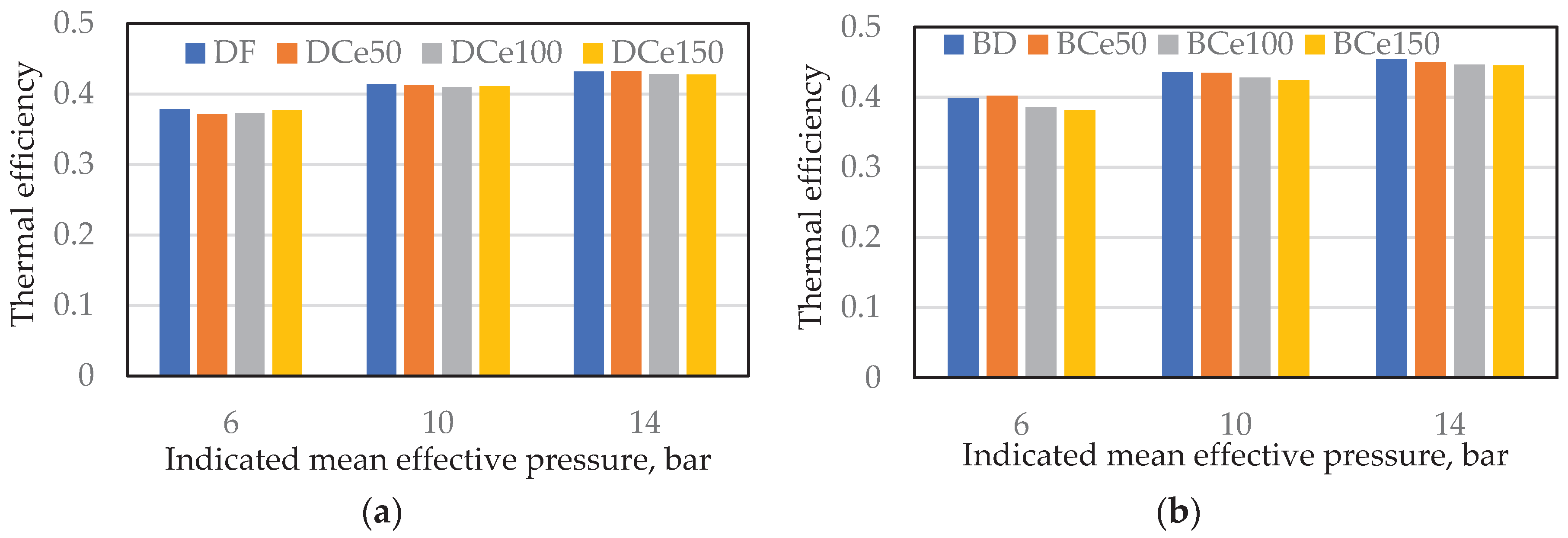
Figure 12.
The effect of the Al2O3 nanoparticle additives to diesel fuel on nitrogen oxide (a), nitrogen dioxide (b) and total nitrogen oxides (c) emissions.
Figure 12.
The effect of the Al2O3 nanoparticle additives to diesel fuel on nitrogen oxide (a), nitrogen dioxide (b) and total nitrogen oxides (c) emissions.
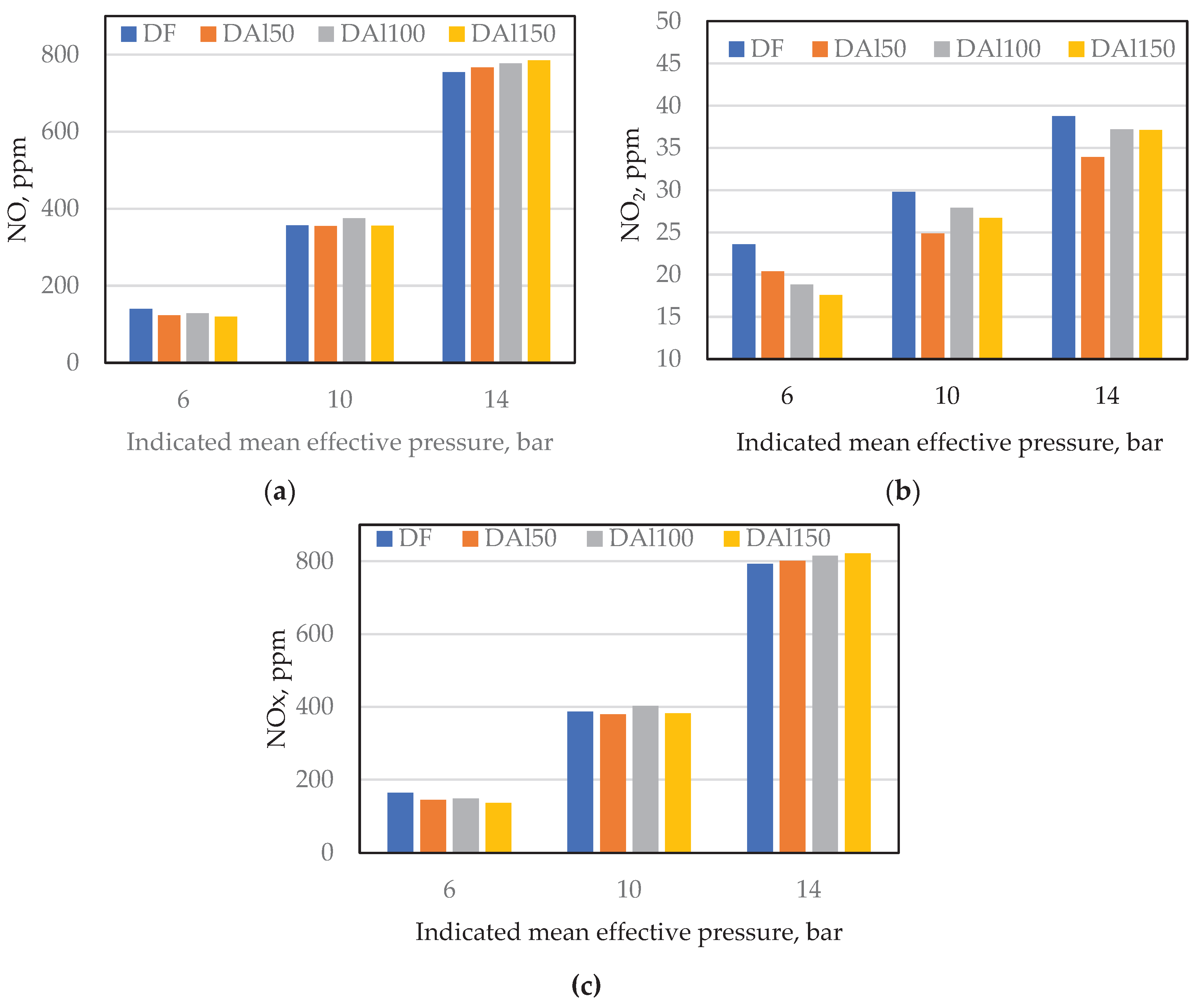
Figure 13.
The effect of Al2O3 nanoparticle additives to biodiesel fuel on nitrogen oxide (a), nitrogen dioxide (b) and total nitrogen oxides (c) emissions.
Figure 13.
The effect of Al2O3 nanoparticle additives to biodiesel fuel on nitrogen oxide (a), nitrogen dioxide (b) and total nitrogen oxides (c) emissions.
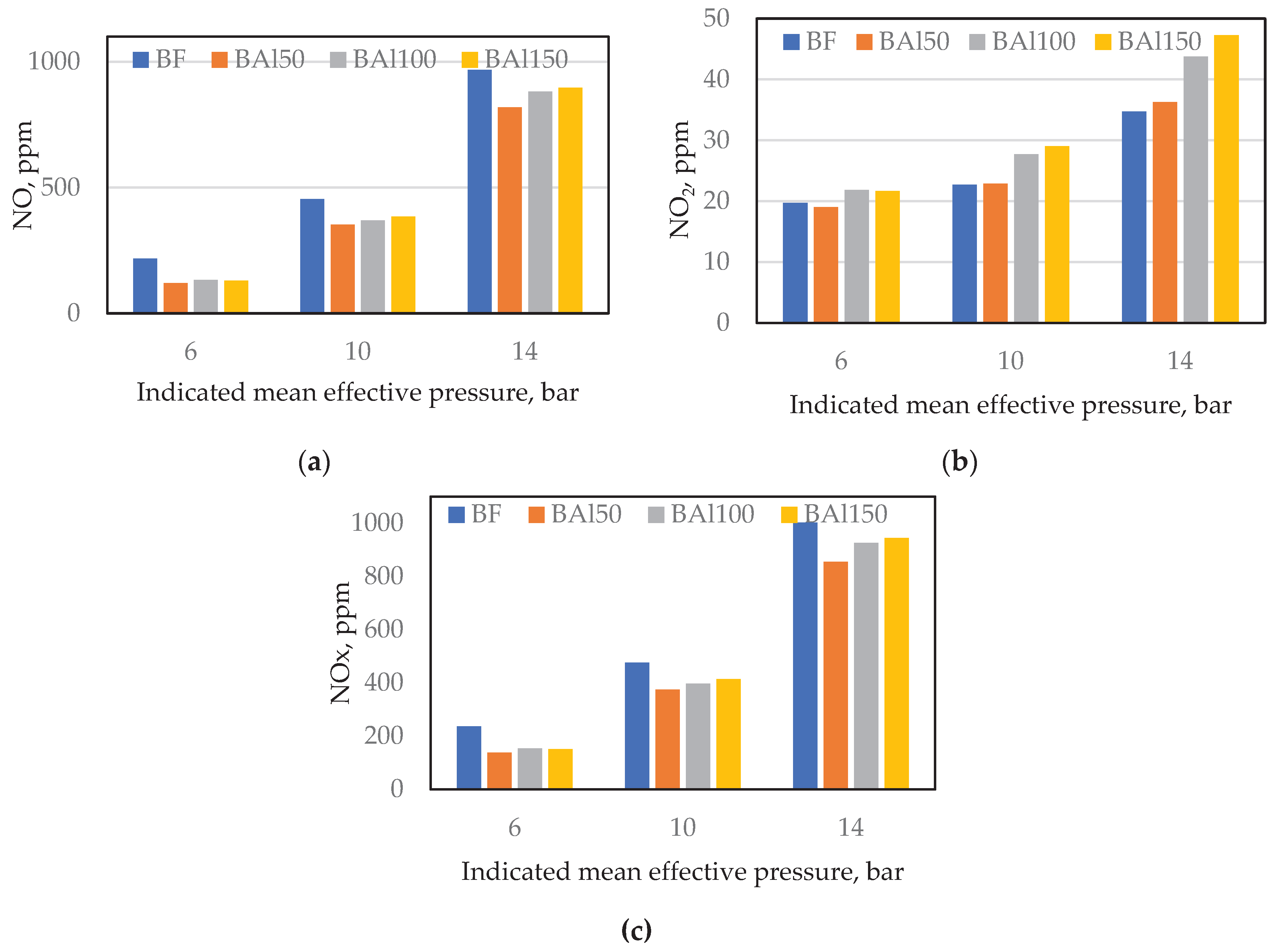
Figure 14.
The effect of Al2O3 nanoparticle additives to mineral diesel fuel (a) and biodiesel fuel (b) on carbon oxide (CO) emissions.
Figure 14.
The effect of Al2O3 nanoparticle additives to mineral diesel fuel (a) and biodiesel fuel (b) on carbon oxide (CO) emissions.
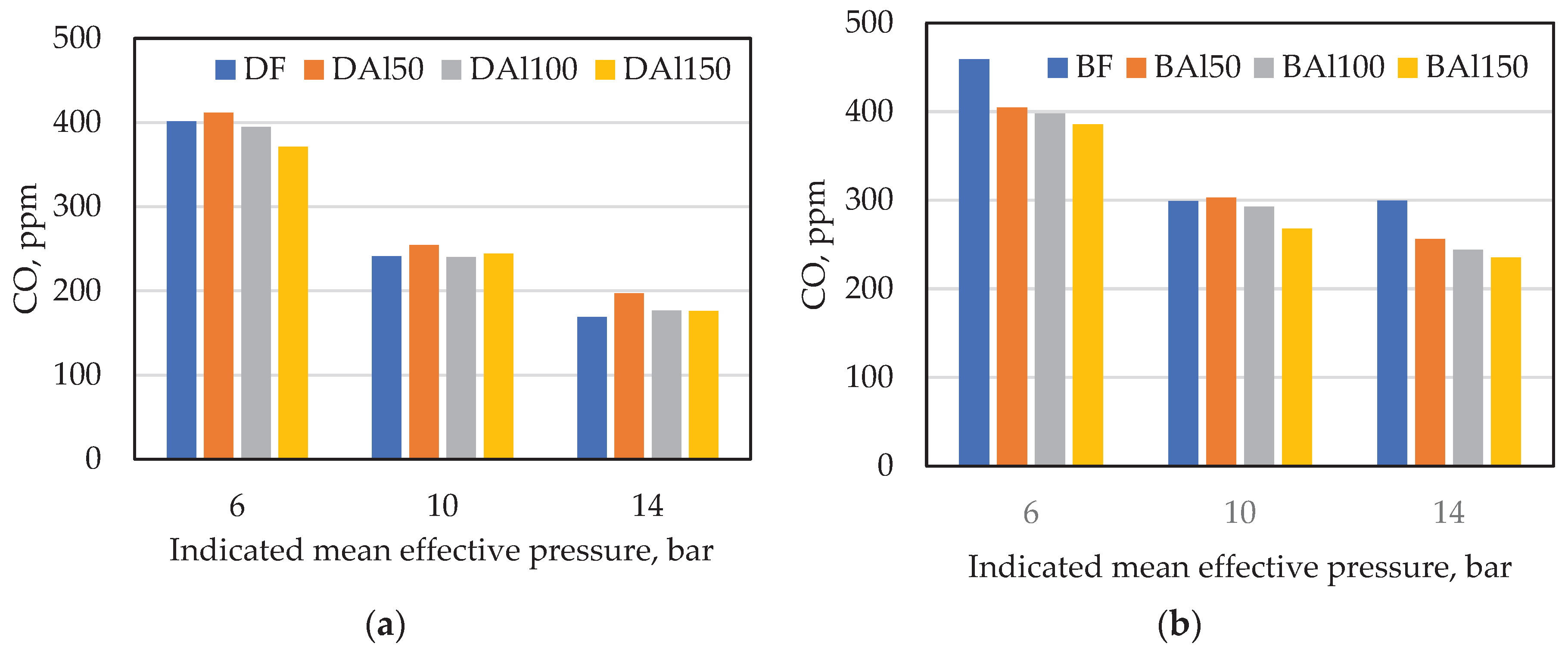
Figure 15.
The effect of CeO2 nanoparticle additives to diesel fuel on nitrogen oxide (a), nitrogen dioxide (b) and total nitrogen oxides (c) emissions.
Figure 15.
The effect of CeO2 nanoparticle additives to diesel fuel on nitrogen oxide (a), nitrogen dioxide (b) and total nitrogen oxides (c) emissions.
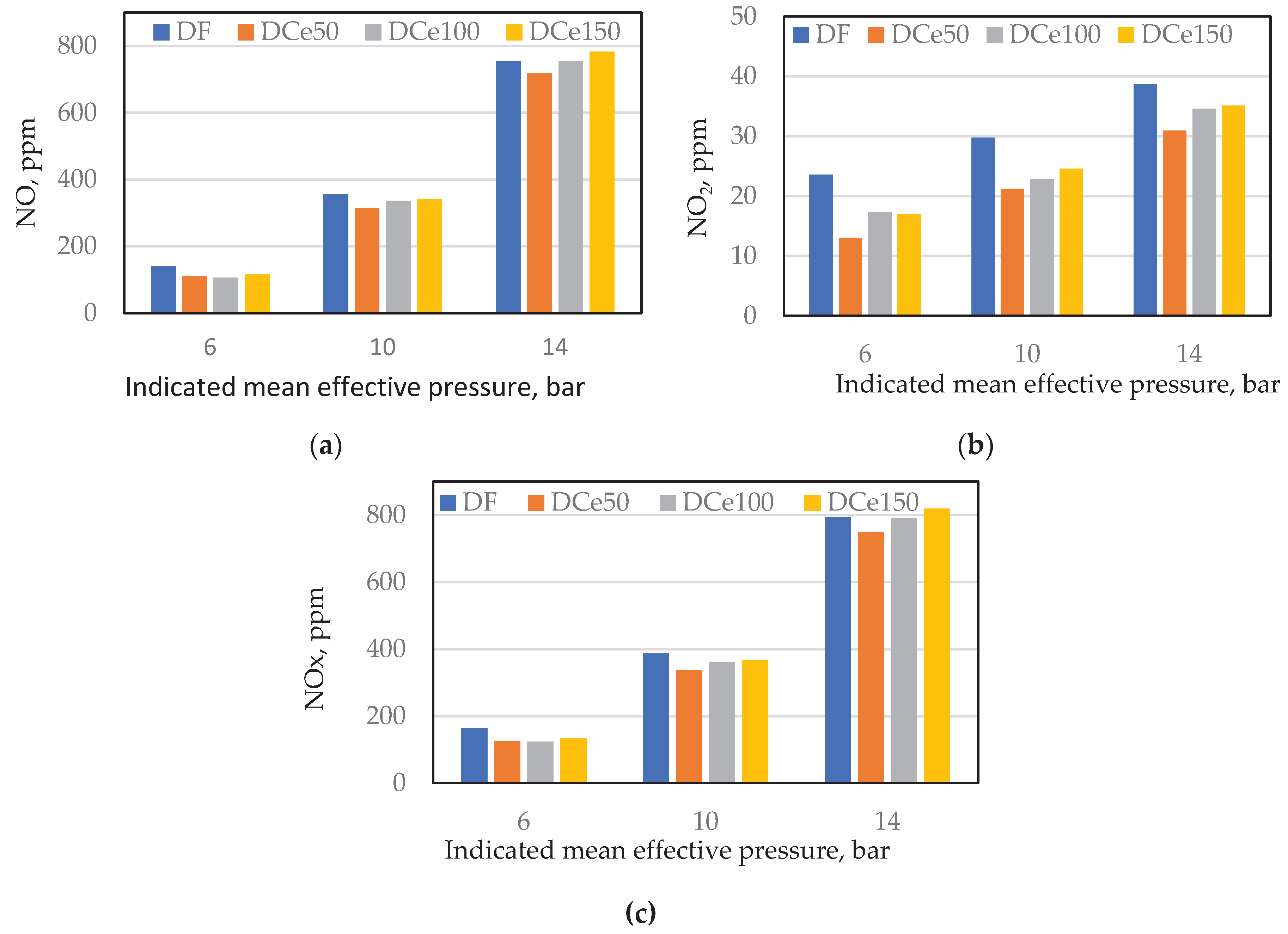

Table 2.
Main properties of the base diesel fuel and rapeseed biodiesel.
| Property | Test methods | Diesel fuel | Rapeseed biodiesel |
|---|---|---|---|
| Cetane number | EN ISO 4264 | 51,4 | 53,4 |
| Density@15 °C, kg/m3 | EN ISO 3675 | 835 | 883 |
| Kinematic viscosity at 40 °C, mm2/s | EN ISO 3140 | 2.88 | 4.47 |
| Initial/final boiling points, °C | EN ISO 3405:2011 | 177.8/345.0 | 346/366 |
| Sulfur, mg/kg | EN ISO 20846 | 6.5 | < 3 |
| Polycyclic aromatics, wt% | EN 12916 | 2.0 | - |
Table 1.
Basic parameters of the test engine.
| Parameter | Specification |
|---|---|
| Bore x Stroke | 82 mm x 90.4 mm |
| Displacement | 1910 cm3 |
| Fuel injection system | Common rail |
| Number of injections per cycle | 2 |
| Compression ratio | 18.0:1 |
| Rated power | 85 kW (115 HP) |
| Maximal torque | 255 Nm (EEC), at 2000 rpm |
Disclaimer/Publisher’s Note: The statements, opinions and data contained in all publications are solely those of the individual author(s) and contributor(s) and not of MDPI and/or the editor(s). MDPI and/or the editor(s) disclaim responsibility for any injury to people or property resulting from any ideas, methods, instructions or products referred to in the content. |
© 2026 by the authors. Licensee MDPI, Basel, Switzerland. This article is an open access article distributed under the terms and conditions of the Creative Commons Attribution (CC BY) license (http://creativecommons.org/licenses/by/4.0/).
Copyright: This open access article is published under a Creative Commons CC BY 4.0 license, which permit the free download, distribution, and reuse, provided that the author and preprint are cited in any reuse.


