

Submitted:
01 March 2026
Posted:
02 March 2026
You are already at the latest version
Abstract
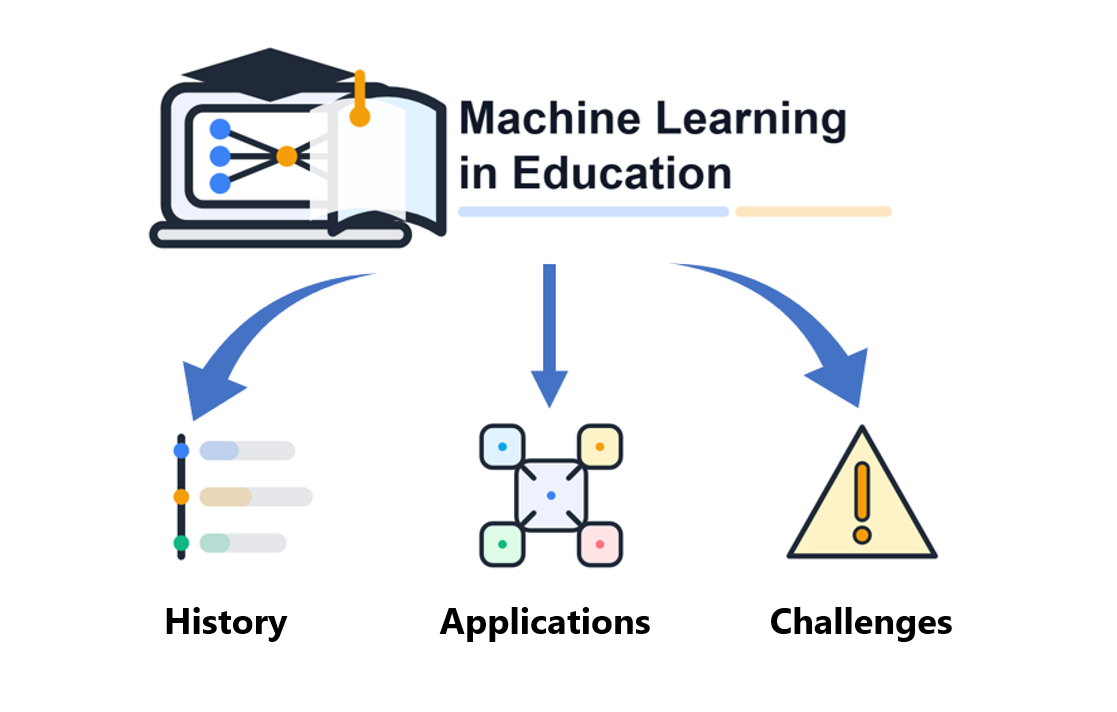
Machine Learning (ML) is fundamentally reshaping education, offering tools to personalize instruction, automate assessment, and predict student outcomes. This paper provides a comprehensive overview of ML's role in education, tracing its evolution from early computer-assisted instruction to today's generative artificial intelligence (AI). We explore key applications, including intelligent tutoring systems, early warning systems for at-risk students, and automated essay scoring, highlighting their potential to address the long-standing challenge of individualized learning at scale. However, this technological integration is fraught with significant challenges. Ethical concerns regarding algorithmic bias, data privacy, and the "black box" nature of complex models threaten to exacerbate existing educational inequities. The recent proliferation of generative AI, exemplified by tools like ChatGPT, has further disrupted traditional paradigms of assessment and academic integrity, prompting urgent questions about the nature of learning itself. By synthesizing current research, this paper argues that while ML holds immense transformative promise, its successful and equitable implementation depends not on technological prowess alone, but on a concerted, ethically-grounded effort involving educators, researchers, and policymakers to ensure these tools augment human expertise and serve all learners.
Keywords:
machine learning
; education
; historical development
; applications
; challenges
Copyright: This open access article is published under a Creative Commons CC BY 4.0 license, which permit the free download, distribution, and reuse, provided that the author and preprint are cited in any reuse.


