
Submitted:
01 November 2023
Posted:
02 November 2023
You are already at the latest version
Abstract
This article focuses on artificial intelligence in educational technology, starting with an introduction to educational technology, an interdisciplinary field of study that covers the design, development, utilization, and evaluation of technology and digital tools in educational Settings. A detailed description of its definition in an academic context - a multidisciplinary field of computer science and cognitive science that deals with the development of computational systems that exhibit intelligent behaviour, describing its areas of coverage and scope of application. It then introduces the benefits of AI in education technology, specifically addressing personalized learning, adaptive learning systems, automated scoring and feedback, virtual tutors and chatbots, data analytics, as well as content recommendations and natural language processing, accessibility and inclusion. Then it introduces the main concepts of AI personalized learning: AI personalized learning uses the power of artificial intelligence to meet the unique needs and preferences of individual learners, as well as its key principles and main characteristics. Adaptive learning systems harness the power of artificial intelligence and data analytics to tailor the learning experience to each student's needs and abilities, as well as its core principles and strengths. It also introduces the main operating principles of automated grading and feedback: it uses artificial intelligence and computer algorithms to evaluate and evaluate student assignments, tests and exams without the direct involvement of human graders, and its associated benefits. Secondly, the main concepts of virtual tutor are introduced: Virtual tutor is a computer-based system that uses artificial intelligence and machine learning algorithms to provide students with personalized and interactive educational support and its key characteristics and main advantages, and then the nature and benefits of chatbots and help in the field of education. The final conclusion summarizes the benefits and future challenges of integrating AI into educational technology.
Keywords:
educational technology
; artificial intelligence
; personalized learning
; adaptive learning systems
1. Introduction of Educational Technology
Educational Technology [1], often referred to as “EdTech,” is an interdisciplinary field of study that encompasses the design, development, utilization, and evaluation of technology and digital tools in educational settings [2]. This field combines elements of education, instructional design, and technology to enhance teaching and learning processes. Educational Technology aims to optimize and innovate educational practices by integrating various technological resources, including hardware, software, digital media, and internet-based platforms, into instructional strategies and educational environments [3].
In an academic context, the definition of Educational Technology can be stated as follows: according to Figure 1, “Educational Technology is a multidisciplinary field that focuses on the systematic design, implementation, and assessment of technology-based solutions in educational settings [4]. It involves the application of pedagogical principles, cognitive science, and instructional design principles to leverage technological tools and resources for the purpose of improving educational outcomes, enhancing teaching methodologies, and expanding access to knowledge [5]. Educational Technology encompasses a wide range of technologies, including computer software, interactive multimedia, virtual learning environments, and mobile applications, all of which are utilized to facilitate, support, and transform the teaching and learning processes [6].”
Educational Technology plays a critical role in modern education, providing opportunities for personalized learning, increased engagement, access to educational resources, and the development of 21st-century skills [7]. Researchers and practitioners in this field continually explore innovative ways to integrate technology into educational contexts to improve the overall quality of education. Paper structure is as in Figure 2:
2. Artificial Intelligence
Artificial Intelligence (AI) [8] is a multidisciplinary field of computer science and cognitive science concerned with the development of computational systems that exhibit intelligent behaviours [9], enabling them to perceive their environment, reason about it, learn from experience, and adapt to new situations [10]. AI systems are designed to replicate and simulate human-like cognitive processes [11], such as problem-solving, decision-making, language understanding, perception, and learning, through the utilization of algorithms, data, and computer hardware [12].
Artificial Intelligence is a scientific and engineering discipline that focuses on the creation and study of computational systems capable of emulating intelligent behaviours [13]. It encompasses a wide range of techniques, methods, and approaches, as in Figure 3, including machine learning [14], knowledge representation, natural language processing [15], computer vision [16], robotics, and expert systems, among others [17]. AI systems aim to process and interpret data, extract meaningful information, make informed decisions, and adapt to changing circumstances, often with the objective of achieving specific tasks or goals [18]. AI is a dynamic and evolving field, constantly advancing through research and innovation to extend the capabilities of intelligent machines [19].
AI has a broad spectrum of applications [20], from natural language processing and image recognition [21] to autonomous vehicles and healthcare diagnostics [22]. It is a field characterized by ongoing research, development, and experimentation as experts seek to push the boundaries of what AI systems can achieve [23].
3. AI helps Educational Technology
Artificial Intelligence (AI) plays a significant role in enhancing Educational Technology (EdTech) in various ways. AI-powered tools and systems have the potential to transform the educational landscape, making learning more personalized, efficient, and effective [24]. From Figure 4, here are several ways in which AI benefits Educational Technology:
Personalized Learning [25]: AI algorithms can analyse students’ performance and learning preferences to create personalized learning pathways [26]. Formalization of learning behaviour pattern set: n learners and m learning behaviour pattern data sets are set up as C:
Distance formula: The distance between two learners’ behaviour pattern vectors. The learner’s behaviour pattern has m dimensions. c and are represented as pattern vectors for the first and second learner, then:
The distance c (, ) between and is calculated by the formula:
The distance between any two learner i and j behaviour pattern vectors:
Through the above analysis, two clustering centres are obtained, which are the behavioural pattern sets of learners i and j.
By analysing the two sets of behaviour patterns, we can get the corresponding categories of learning styles and summarize the behavioural preferences of these learning styles.
This ensures that students receive content and assignments tailored to their individual needs and progress.
Adaptive Learning Systems [27]: AI can adapt the difficulty level of content or suggest additional resources based on a student’s performance [28]. This adaptive approach helps learners who need extra support or more challenging material.
Automated Grading and Feedback: AI can automatically grade assignments and provide instant feedback, allowing educators to focus on providing personalized assistance and guidance [29].
Virtual Tutors and Chatbots [30]: AI-powered virtual tutors and chatbots can assist students in answering questions, providing explanations, and offering support 24/7. This can alleviate the burden on educators and help students with immediate queries [31].
Data Analytics: AI can process vast amounts of data to identify patterns in student performance and engagement [32]. Educators can use these insights to make data-driven decisions, such as refining curricula and improving teaching strategies [33].
Content Recommendation: AI-driven recommendation systems suggest relevant educational materials, such as articles, videos, or books, based on a student’s interests and past interactions [34].
Natural Language Processing (NLP) [35]: NLP technology can be used for language learning and understanding, enabling translation, grammar correction, and language comprehension tools [36].
Accessibility and Inclusion: AI can assist students with disabilities by providing text-to-speech, speech-to-text, and other accessibility features that make learning materials more accessible to a wider range of students [37].
4. AI for Personalized Learning
AI for Personalized Learning is a transformative approach to education that leverages the power of Artificial Intelligence to cater to the unique needs and preferences of individual learners [38]. It involves the use of sophisticated algorithms and data analysis to create tailored learning experiences, optimizing educational outcomes. This paradigm shift in education is a response to the recognition that one-size-fits-all teaching methods may not be the most effective way to reach and engage diverse learners.
One key aspect of AI for Personalized Learning is the ability to assess and understand the strengths and weaknesses of each student [7]. Figure 5 shows the main process of artificial intelligence personalized learning. AI algorithms can analyse their learning history, assess their current performance, and even monitor real-time engagement with educational content [39]. This data is used to generate customized learning pathways, adjusting the difficulty level of content, suggesting additional resources, and pinpointing areas that require further attention. As a result, students receive precisely the support they need when they need it, fostering a deeper understanding of the subject matter.
Furthermore, AI-driven educational platforms often provide instant feedback and allow students to progress at their own pace, reducing the fear of failure and encouraging a growth mindset [40]. This approach not only promotes self-directed learning but also increases overall motivation and engagement [41]. Educators also benefit from AI for Personalized Learning by gaining valuable insights into student performance and engagement, allowing them to adapt their teaching strategies and content as necessary [42]. In essence, AI for Personalized Learning is revolutionizing the educational landscape, making learning more accessible, effective, and learner-cantered.
5. Adaptive Learning Systems
Adaptive Learning Systems [43] are a category of educational technology that harnesses the power of artificial intelligence and data analytics to tailor learning experiences to individual students’ needs and capabilities [44]. These systems are designed to provide personalized instruction, enabling students to learn at their own pace, in a way that suits their unique learning styles, and addressing their specific strengths and weaknesses [45]. The primary goal of adaptive learning is to maximize student understanding and retention by customizing the educational content and strategies [27].
The core principle of adaptive learning is the assessment of students’ knowledge and skills through continuous evaluation [25]. As shown in Figure 6, AI algorithms are employed to collect and analyse data on how students interact with learning materials and assessments. This data is then used to create a profile of each learner’s progress and comprehension [46]. Based on this profile, the system can recommend suitable learning resources, adjust the level of difficulty, and provide targeted feedback to help students overcome challenges and reinforce their strengths [47].
Adaptive learning systems offer significant benefits for both students and educators [48]. For students, these systems provide a more engaging and effective learning experience, as content is presented in a way that is more aligned with their abilities and learning preferences [49]. This approach can enhance motivation and confidence, as learners feel a sense of accomplishment. For educators, adaptive learning systems offer valuable insights into students’ performance, allowing them to fine-tune their teaching strategies and identify areas in which students may require additional support [50].
Adaptive learning systems are a dynamic and innovative approach to education that capitalizes on AI technologies [51]. They promote individualized learning experiences, help students succeed, and provide educators with tools to optimize their teaching methods [52]. As educational technology continues to evolve, adaptive learning systems hold promise for revolutionizing how students acquire knowledge and skills [53].
6. Automated Grading and Feedback
Automated grading and feedback is a modern educational technology approach that leverages artificial intelligence and computer algorithms to evaluate and assess students’ assignments, quizzes, and exams without the direct involvement of human graders [54]. This innovative method has become increasingly prevalent in educational settings, from elementary schools to universities, due to its efficiency and consistency. It allows for faster and more objective assessment while providing students with timely feedback on their performance [55].
One of the primary advantages of automated grading is its speed. By utilizing AI, assignments and assessments can be evaluated rapidly, which is especially valuable in large-scale education environments. As shown in Table 1. In traditional grading, educators may spend significant time assessing assignments, which can lead to delays in providing feedback. Automated grading can significantly reduce the turnaround time, allowing students to receive prompt feedback on their work, fostering a more dynamic learning process [56].
Automated grading and feedback systems are designed to maintain a high degree of accuracy and consistency in evaluating student work [57]. By using predefined grading criteria and machine learning algorithms, they can assess written responses, multiple-choice questions, and even complex assignments with a high level of reliability [58]. This approach mitigates the potential for subjectivity or bias in grading, resulting in fair and objective evaluations.
Furthermore, automated grading systems can offer students detailed feedback on their work, pointing out areas of improvement, suggesting additional resources, and explaining their grading rationale. This feedback not only helps students understand their mistakes but also facilitates the learning process by guiding them toward a deeper comprehension of the subject matter. Ultimately, automated grading and feedback systems are reshaping the assessment process in education by providing efficient, consistent, and constructive evaluation of student work [59].
7. Virtual Tutors
Virtual tutors are computer-based systems that use artificial intelligence (AI) and machine learning algorithms to provide personalized and interactive educational support to students [60]. These AI-driven systems aim to mimic the role of human tutors by offering individualized instruction and assistance in various subjects or skills. Virtual tutors can be deployed in a variety of educational settings, including online courses, remote learning, and traditional classrooms, to help students achieve their academic goals [27]. As shown in Figure 7, Advantages of virtual tutors.
One of the key features of virtual tutors is their ability to adapt to the specific needs of each student. These systems can assess a student’s performance, strengths, and weaknesses, and then tailor their instruction accordingly [61]. By analyzing student responses and engagement, virtual tutors can provide personalized exercises, explanations, and recommendations, ensuring that the learning experience is both effective and efficient [62].
Moreover, virtual tutors are available 24/7, providing students with on-demand support [63]. This accessibility means that students can receive assistance and guidance at any time, helping them address questions or challenges as they arise. Additionally, the availability of virtual tutors can reduce the burden on educators and provide more individualized attention to students, making education more inclusive and responsive to diverse learning needs [27].
Virtual tutors also contribute to the gamification of learning. By incorporating interactive elements, gamified challenges, and rewards, these systems engage and motivate students, making the learning process more enjoyable [64]. The interactive nature of virtual tutors can foster a sense of accomplishment and boost student confidence as they progress through their lessons [65].
Virtual tutors are AI-driven educational tools that offer personalized, interactive, and accessible support to students. They play a pivotal role in modern education by providing on-demand assistance, adapting to individual learning styles, and making learning a more engaging and rewarding experience [60]. Virtual tutors are particularly valuable in today’s digital education landscape, where remote and online learning environments are becoming increasingly prevalent [66].
8. Chatbot
Chatbots are computer programs or artificial intelligence applications designed to engage in natural language conversations with users, typically through text or voice-based interactions [67]. These virtual assistants are increasingly used in a variety of applications and industries, including customer service, healthcare, e-commerce, and education [68]. Chatbots are employed to provide instant responses to inquiries, offer information, assist with tasks, and even simulate human-like conversations. The benefits of chatbots are shown in Figure 8.
One of the primary benefits of chatbots is their ability to provide immediate and round-the-clock customer support [69]. Whether it’s resolving common queries, processing orders, or troubleshooting issues, chatbots can handle routine tasks efficiently and without human intervention. This saves time for both users and organizations, making customer service more efficient and accessible [68].
Chatbots can be highly versatile and adaptable, capable of interacting with users on various platforms, such as websites, mobile apps, or messaging services. They can also be integrated with other systems, databases, and software, enabling them to access and provide personalized information, recommendations, and solutions to users based on their specific needs or requests.
In education, chatbots are increasingly used to provide support and information to students, assist in administrative tasks, and even deliver educational content [70]. For example, chatbots can answer questions related to course schedules, assignments, and program requirements [71]. They can also provide tutoring and guidance in specific subjects, offering explanations and solutions to help students with their learning needs.
In summary, chatbots are AI-driven virtual assistants that facilitate natural language communication with users [72]. They are versatile tools used in various domains, offering rapid and automated responses to inquiries and assisting with a wide range of tasks [73]. In education, chatbots have the potential to enhance student support, streamline administrative processes, and provide an interactive learning experience. Their use continues to expand as technology advances and organizations seek more efficient and engaging ways to interact with their users.
9. Conclusions
In conclusion, the integration of Artificial Intelligence (AI) in Educational Technology represents a profound shift in the way we approach teaching and learning. AI-driven solutions offer the promise of personalized and adaptive education, making it possible to cater to individual learning styles, needs, and pacing [74]. This level of personalization can lead to improved learning outcomes, increased student engagement, and enhanced accessibility for learners of diverse backgrounds and abilities.
AI is also streamlining administrative tasks, freeing up educators to focus more on teaching and student support, while simultaneously providing them with valuable insights through data analytics [75]. This data-driven decision-making can lead to continuous improvements in educational practices and curricula [76]. Moreover, AI extends the reach of education through online and remote learning, offering opportunities for lifelong learning and global access to educational resources.
However, the successful integration of AI in education requires careful consideration of ethical, privacy, and equity concerns [77]. Addressing these challenges is crucial to ensure that the benefits of AI are accessible and beneficial to all learners. As technology continues to evolve, AI in Educational Technology holds the potential to revolutionize the educational landscape, making learning more efficient, engaging, and effective, ultimately preparing students for the demands of the 21st century [78].
Funding
This research did not receive any grants.
Acknowledgment
We thank all the anonymous reviewers for their hard reviewing work.
References
- Valtonen, T.; López-Pernas, S.; Saqr, M.; Vartiainen, H.; Sointu, E.T.; Tedre, M. The nature and building blocks of educational technology research. Comput. Hum. Behav. 2022, 128, 107123. [Google Scholar] [CrossRef]
- Archambault, L.; Leary, H.; Rice, K. Pillars of online pedagogy: A framework for teaching in online learning environments. Educ. Psychol. 2022, 57, 178–191. [Google Scholar] [CrossRef]
- Alenezi, M.; Wardat, S.; Akour, M. The Need of Integrating Digital Education in Higher Education: Challenges and Opportunities. Sustainability 2023, 15, 4782. [Google Scholar] [CrossRef]
- Rojas-Sánchez, M.A.; Palos-Sánchez, P.R.; Folgado-Fernández, J.A. Systematic literature review and bibliometric analysis on virtual reality and education. Educ. Inf. Technol. 2023, 28, 155–192. [Google Scholar] [CrossRef]
- Marougkas, A.; Troussas, C.; Krouska, A.; Sgouropoulou, C. Virtual reality in education: a review of learning theories, approaches and methodologies for the last decade. Electronics 2023, 12, 2832. [Google Scholar] [CrossRef]
- Alismaiel, O.A.; Cifuentes-Faura, J.; Al-Rahmi, W.M. ; Online learning; mobile learning, and social media technologies: An empirical study on constructivism theory during the COVID-19 pandemic. Sustainability 2022, 14, 11134. [Google Scholar] [CrossRef]
- Tapalova, O.; Zhiyenbayeva, N. Artificial Intelligence in Education: AIEd for Personalised Learning Pathways. Electron. J. E-Learn. 2022, 20, 639–653. [Google Scholar] [CrossRef]
- Wang, S.-H. Unilateral sensorineural hearing loss identification based on double-density dual-tree complex wavelet transform and multinomial logistic regression. Integr. Comput.-Aided Eng. 2019, 26, 411–426. [Google Scholar] [CrossRef]
- Zhang, Y. Smart detection on abnormal breasts in digital mammography based on contrast-limited adaptive histogram equalization and chaotic adaptive real-coded biogeography-based optimization. Simulation 2016, 92, 873–885. [Google Scholar] [CrossRef]
- Alkatheiri, M.S. Artificial intelligence assisted improved human-computer interactions for computer systems. Comput. Electr. Eng. 2022, 101, 107950. [Google Scholar] [CrossRef]
- Zhang, Y. A Rule-Based Model for Bankruptcy Prediction Based on an Improved Genetic Ant Colony Algorithm. Math. Probl. Eng. 2013, 2013, 753251. [Google Scholar] [CrossRef]
- Naseem, S.; Alhudhaif, A.; Anwar, M.; Qureshi, K.N.; Jeon, G. Artificial general intelligence-based rational behavior detection using cognitive correlates for tracking online harms. Pers. Ubiquitous Comput. 2023, 27, 119–137. [Google Scholar] [CrossRef]
- Raj, R.; Kos, A. Artificial Intelligence: Evolution, Developments, Applications, and Future Scope. Prz. Elektrotechniczny 2023, 99. [Google Scholar] [CrossRef]
- Kreuzberger, D.; Kühl, N.; Hirschl, S. Machine learning operations (mlops): Overview, definition, and architecture. IEEE Access 2023, 11, 31866–31879. [Google Scholar] [CrossRef]
- Khurana, D.; Koli, A.; Khatter, K.; Singh, S. Natural language processing: State of the art, current trends and challenges. Multimed. Tools Appl. 2023, 82, 3713–3744. [Google Scholar] [CrossRef]
- Yin, H.; Yi, W.; Hu, D. Computer vision and machine learning applied in the mushroom industry: A critical review. Comput. Electron. Agric. 2022, 198, 107015. [Google Scholar] [CrossRef]
- Tyagi, A.K.; Chahal, P. Artificial intelligence and machine learning algorithms. In Research Anthology on Machine Learning Techniques, Methods, and Applications; IGI Global: Hershey, PA, USA, 2022; pp. 421–446. [Google Scholar]
- Ali, S.; Abuhmed, T.; El-Sappagh, S.; Muhammad, K.; Alonso-Moral, J.M.; Confalonieri, R.; Guidotti, R.; Del Ser, J.; Díaz-Rodríguez, N.; Herrera, F. Explainable Artificial Intelligence (XAI): What we know and what is left to attain Trustworthy Artificial Intelligence. Inf. Fusion 2023, 99, 101805. [Google Scholar] [CrossRef]
- Mariani, M.M.; Machado, I.; Magrelli, V.; Dwivedi, Y.K. Artificial intelligence in innovation research: A systematic review, conceptual framework, and future research directions. Technovation 2023, 122, 102623. [Google Scholar] [CrossRef]
- Wang, S. Magnetic resonance brain classification by a novel binary particle swarm optimization with mutation and time-varying acceleration coefficients. Biomed. Eng. -Biomed. Tech. 2016, 61, 431–441. [Google Scholar] [CrossRef]
- Jasti, V.D.P.; Zamani, A.S.; Arumugam, K.; Naved, M.; Pallathadka, H.; Sammy, F.; Raghuvanshi, A.; Kaliyaperumal, K. Computational technique based on machine learning and image processing for medical image analysis of breast cancer diagnosis. Secur. Commun. Netw. 2022, 2022, 1–7. [Google Scholar] [CrossRef]
- Verma, M. Artificial Intelligence Role in Modern Science: Aims, Merits, Risks and Its Applications. Artif. Intell. 2023, 7. [Google Scholar]
- Wang, H.; Fu, T.; Du, Y.; Gao, W.; Huang, K.; Liu, Z.; Chandak, P.; Liu, S. Scientific discovery in the age of artificial intelligence. Nature 2023, 620, 47–60. [Google Scholar] [CrossRef] [PubMed]
- Bhutoria, A. Personalized education and artificial intelligence in the United States, China, and India: A systematic review using a human-in-the-loop model. Comput. Educ. : Artif. Intell. 2022, 3, 100068. [Google Scholar] [CrossRef]
- Kem, D. Personalised and adaptive learning: Emerging learning platforms in the era of digital and smart learning. Int. J. Soc. Sci. Hum. Res. 2022, 5, 385–391. [Google Scholar] [CrossRef]
- Smirani, L.K.; Yamani, H.A.; Menzli, L.J.; Boulahia, J.A. Using ensemble learning algorithms to predict student failure and enabling customized educational paths. Sci. Program. 2022, 2022, 1–15. [Google Scholar] [CrossRef]
- Alam, A. Employing adaptive learning and intelligent tutoring robots for virtual classrooms and smart campuses: reforming education in the age of artificial intelligence. In Advanced Computing and Intelligent Technologies: Proceedings of ICACIT 2022; Springer: Berlin/Heidelberg, Germany, 2022; pp. 395–406. [Google Scholar]
- Wang, S.; Christensen, C.; Cui, W.; Tong, R.; Yarnall, L.; Shear, L.; Feng, M. When adaptive learning is effective learning: comparison of an adaptive learning system to teacher-led instruction. Interact. Learn. Environ. 2023, 31, 793–803. [Google Scholar] [CrossRef]
- Celik, I.; Dindar, M.; Muukkonen, H.; Järvelä, S. The promises and challenges of artificial intelligence for teachers: A systematic review of research. TechTrends 2022, 66, 616–630. [Google Scholar] [CrossRef]
- Lakshmi, Y.V.; Majid, I. Chatbots in Education System. Univ. News A Wkly. J. High. Educ. 2022, 60, 15–18. [Google Scholar]
- Kurni, M.; Mohammed, M.S.; Srinivasa, K. Chatbots for Education. In A Beginner’s Guide to Introduce Artificial Intelligence in Teaching and Learning; Springer: Berlin/Heidelberg, Germany, 2023; pp. 173–198. [Google Scholar]
- Bagunaid, W.; Chilamkurti, N.; Veeraraghavan, P. AISAR: Artificial Intelligence-Based Student Assessment and Recommendation System for E-Learning in Big Data. Sustainability 2022, 14, 10551. [Google Scholar] [CrossRef]
- Teng, Y.; Zhang, J.; Sun, T. Data-driven decision-making model based on artificial intelligence in higher education system of colleges and universities. Expert Syst. 2023, 40, e12820. [Google Scholar] [CrossRef]
- Ivanović, M.; Klašnja-Milićević, A.; Paprzycki, M.; Ganzha, M.; Bădică, C.; Bădică, A.; Jain, L.C. Current trends in AI-based educational processes—An overview. In Handbook on Intelligent Techniques in the Educational Process: Vol 1 Recent Advances and Case Studies; Springer Nature: Berlin, Germany, 2022; pp. 1–15. [Google Scholar]
- Fanni, S.C.; Febi, M.; Aghakhanyan, G.; Neri, E. Natural language processing. In Introduction to Artificial Intelligence; Springer: Berlin/Heidelberg, Germany, 2023; pp. 87–99. [Google Scholar]
- Kumar, M.N. Artificial Intelligence and Linguistics: The Scientific Study of Natural Language Processing. Book Title, vol. 141, 2023.
- Zdravkova, K. The potential of artificial intelligence for assistive technology in education. In Handbook on Intelligent Techniques in the Educational Process: Vol 1 Recent Advances and Case Studies; Springer: Berlin/Heidelberg, Germany, 2022; pp. 61–85. [Google Scholar]
- Zhang, Y. Pathological brain detection in MRI scanning by wavelet packet Tsallis entropy and fuzzy support vector machine. SpringerPlus 2015, 4, 716. [Google Scholar] [CrossRef] [PubMed]
- Trabelsi, Z.; Alnajjar, F.; Parambil, M.M.A.; Gochoo, M.; Ali, L. Real-Time Attention Monitoring System for Classroom: A Deep Learning Approach for Student’s Behavior Recognition. Big Data Cogn. Comput. 2023, 7, 48. [Google Scholar] [CrossRef]
- Chan, C.K.Y.; Tsi, L.H. The AI Revolution in Education: Will AI Replace or Assist Teachers in Higher Education? arXiv 2023, arXiv:2305.01185. [Google Scholar]
- Sun, W.; Hong, J.-C.; Dong, Y.; Huang, Y.; Fu, Q. Self-directed learning predicts online learning engagement in higher education mediated by perceived value of knowing learning goals. Asia-Pac. Educ. Res. 2023, 32, 307–316. [Google Scholar] [CrossRef]
- Zhang, Y. Pathological brain detection in MRI scanning via Hu moment invariants and machine learning. J. Exp. Theor. Artif. Intell. 2017, 29, 299–312. [Google Scholar] [CrossRef]
- Srinivasa, K.; Kurni, M.; Saritha, K. Adaptive Teaching/Learning. In Learning, Teaching, and Assessment Methods for Contemporary Learners: Pedagogy for the Digital Generation; Springer: Berlin/Heidelberg, Germany, 2022; pp. 201–240. [Google Scholar]
- Srinivasa, K.; Kurni, M.; Saritha, K. Harnessing the Power of AI to Education. In Learning, Teaching, and Assessment Methods for Contemporary Learners: Pedagogy for the Digital Generation; Springer: Berlin/Heidelberg, Germany, 2022; pp. 311–342. [Google Scholar]
- Fan, X.; Li, J. Artificial Intelligence-Driven Interactive Learning Methods for Enhancing Art and Design Education in Higher Institutions. Appl. Artif. Intell. 2023, 37, 2225907. [Google Scholar] [CrossRef]
- Murtaza, M.; Ahmed, Y.; Shamsi, J.A.; Sherwani, F.; Usman, M. AI-based personalized e-learning systems: Issues, challenges, and solutions. IEEE Access 2022, 10, 81323–81342. [Google Scholar] [CrossRef]
- Zhang, Y. Feature Extraction of Brain MRI by Stationary Wavelet Transform and its Applications. J. Biol. Syst. 2010, 18, 115–132. [Google Scholar] [CrossRef]
- Muñoz, J.L.R.; Ojeda, F.M.; Jurado, D.L.A.; Peña, P.F.P.; Carranza, C.P.M.; Berríos, H.Q.; Molina, S.U.; Farfan, A.R.M.; Arias-Gonzáles, J.L.; Vasquez-Pauca, M.J. Systematic review of adaptive learning technology for learning in higher education. Eurasian J. Educ. Res. 2022, 98, 221–233. [Google Scholar]
- Wang, S. Detection of Dendritic Spines using Wavelet Packet Entropy and Fuzzy Support Vector Machine. CNS Neurol. Disord. —Drug Targets 2017, 16, 116–121. [Google Scholar] [CrossRef]
- George, B.; Wooden, O. Managing the strategic transformation of higher education through artificial intelligence. Adm. Sci. 2023, 13, 196. [Google Scholar] [CrossRef]
- Tan, S. Harnessing Artificial Intelligence for innovation in education. In Learning Intelligence: Innovative and Digital Transformative Learning Strategies: Cultural and Social Engineering Perspectives; Springer: Berlin/Heidelberg, Germany, 2023; pp. 335–363. [Google Scholar]
- Wang, S.-H.; Fernandes, S. AVNC: Attention-based VGG-style network for COVID-19 diagnosis by CBAM. IEEE Sens. J. 2022, 22, 17431–17438. [Google Scholar] [CrossRef]
- Singh, S.V. The Prospects for Advancing Adaptive Learning Technology through AI Methods. In 2023 Future of Educational Innovation-Workshop Series Data in Action; IEEE: Piscataway, NJ, USA, 2023; pp. 1–9. [Google Scholar]
- Gao, R.; Merzdorf, H.E.; Anwar, S.; Hipwell, M.C.; Srinivasa, A. Automatic assessment of text-based responses in post-secondary education: A systematic review. arXiv 2023, arXiv:2308.16151. [Google Scholar] [CrossRef]
- Darvishi, A.; Khosravi, H.; Sadiq, S.; Gašević, D. Incorporating AI and learning analytics to build trustworthy peer assessment systems. Br. J. Educ. Technol. 2022, 53, 844–875. [Google Scholar] [CrossRef]
- Paiva, J.C.; Leal, J.P.; Figueira, Á. Automated assessment in computer science education: A state-of-the-art review. ACM Trans. Comput. Educ. (TOCE) 2022, 22, 1–40. [Google Scholar] [CrossRef]
- Ramesh, D.; Sanampudi, S.K. An automated essay scoring systems: a systematic literature review. Artif. Intell. Rev. 2022, 55, 2495–2527. [Google Scholar] [CrossRef] [PubMed]
- Von Wangenheim, C.G.; ALVES, N.D.C.; Rauber, M.F.; Hauck, J.C.; Yeter, I.H. A Proposal for Performance-based Assessment of the Learning of Machine Learning Concepts and Practices in K-12. Inform. Educ. 2022, 21, 479–500. [Google Scholar] [CrossRef]
- Polat, H. Transforming Education with Artificial Intelligence: Shaping the Path Forward; ISTES Books: London, UK, 2023; pp. 3–20. [Google Scholar]
- Chen, Z. Artificial intelligence-virtual trainer: Innovative didactics aimed at personalized training needs. J. Knowl. Econ. 2023, 14, 2007–2025. [Google Scholar] [CrossRef]
- Kamalov, F.; Calonge, D.S.; Gurrib, I. New Era of Artificial Intelligence in Education: Towards a Sustainable Multifaceted Revolution. Sustainability 2023, 15, 12451. [Google Scholar] [CrossRef]
- Wong, B.T.-M.; Li, K.C.; Cheung, S.K. An analysis of learning analytics in personalised learning. J. Comput. High. Educ. 2022, 1–20. [Google Scholar] [CrossRef]
- Benke, M.; Brown, V.; Strigle, J. Online Student Services Optimize Success and Engagement for All Students. In Leading the eLearning Transformation of Higher Education; Routledge: Oxfordshire, UK, 2023; pp. 138–156. [Google Scholar]
- Alzahrani, F.K.J.; Alhalafawy, W.S. Benefits and challenges of using gamification across distance learning platforms at higher education: a systematic review of research studies published during The COVID-19 pandemic. J. Posit. Sch. Psychol. 2022, 6, 1948–1977. [Google Scholar]
- Mohd, C.K.; Nuraini, C.K.; Mohamad, S.N.M.; Sulaiman, H.; Shahbodin, F.; Rahim, N. A review of gamification tools to boost students’motivation and engagement. J. Theor. Appl. Inf. Technol. 2023, 101. [Google Scholar]
- Rosak-Szyrocka, J.; Żywiołek, J.; Zaborski, A.; Chowdhury, S.; Hu, Y.-C. Digitalization of higher education around the Globe during covid-19. IEEE Access 2022, 10, 59782–59791. [Google Scholar] [CrossRef]
- Joseph, A.; Eapen, N.G. Conversational Agents and Chatbots: Current Trends. In Machine Learning and Deep Learning in Natural Language Processing; CRC Press: Boca Raton, FL, USA, 12 January 2023; pp. 17–52. [Google Scholar]
- George, A.S.; George, A.H. A review of ChatGPT AI’s impact on several business sectors. Partn. Univers. Int. Innov. J. 2023, 1, 9–23. [Google Scholar]
- Mekni, M.; Baani, Z.; Sulieman, D. A smart virtual assistant for students. In Proceedings of the 3rd International Conference on Applications of Intelligent Systems, Las Palmas de Gran Canaria, Spain, 7–9 January 2020; pp. 1–6. [Google Scholar]
- Chen, Y.; Jensen, S.; Albert, L.J.; Gupta, S.; Lee, T. Artificial intelligence (AI) student assistants in the classroom: Designing chatbots to support student success. Inf. Syst. Front. 2023, 25, 161–182. [Google Scholar] [CrossRef]
- Khalil, M.; Rambech, M. Eduino: A telegram learning-based platform and chatbot in higher education. In Proceedings of the International Conference on Human-Computer Interaction, Changsha, China, 28–30 October 2022; pp. 188–204. [Google Scholar]
- Rane, A.; Ranade, C.; Bandekar, H.; Jadhav, R.; Chitre, V. AI driven Chatbot and its Evolution. In Proceedings of the 2022 5th International Conference on Advances in Science and Technology (ICAST), Mumbai, India, 2–3 December 2022; pp. 170–173. [Google Scholar]
- Hassani, H.; Silva, E.S. The role of ChatGPT in data science: how ai-assisted conversational interfaces are revolutionizing the field. Big Data Cogn. Comput. 2023, 7, 62. [Google Scholar] [CrossRef]
- Rivers, C.; Holland, A. Management Education and Artificial Intelligence: Toward Personalized Learning. In The Future of Management Education; Routledge: Oxfordshire, UK, 2022; pp. 184–204. [Google Scholar]
- Aggarwal, D. Integration of innovative technological developments and AI with education for an adaptive learning pedagogy. China Pet. Process. Petrochem. Technol. 2023, 23. [Google Scholar]
- Kaspi, S.; Venkatraman, S. Data-Driven Decision-Making (DDDM) for Higher Education Assessments: A Case Study. Systems 2023, 11, 306. [Google Scholar] [CrossRef]
- Schiff, D.; AI, E.F. not AI for education: The role of education and ethics in national AI policy strategies. Int. J. Artif. Intell. Educ. 2022, 32, 527–563. [Google Scholar] [CrossRef]
- Southworth, J.; Migliaccio, K.; Glover, J.; Reed, D.; McCarty, C.; Brendemuhl, J.; Thomas, A. Developing a model for AI Across the curriculum: Transforming the higher education landscape via innovation in AI literacy. Comput. Educ. Artif. Intell. 2023, 4, 100127. [Google Scholar] [CrossRef]
Figure 1.
The composition and application of educational technology.
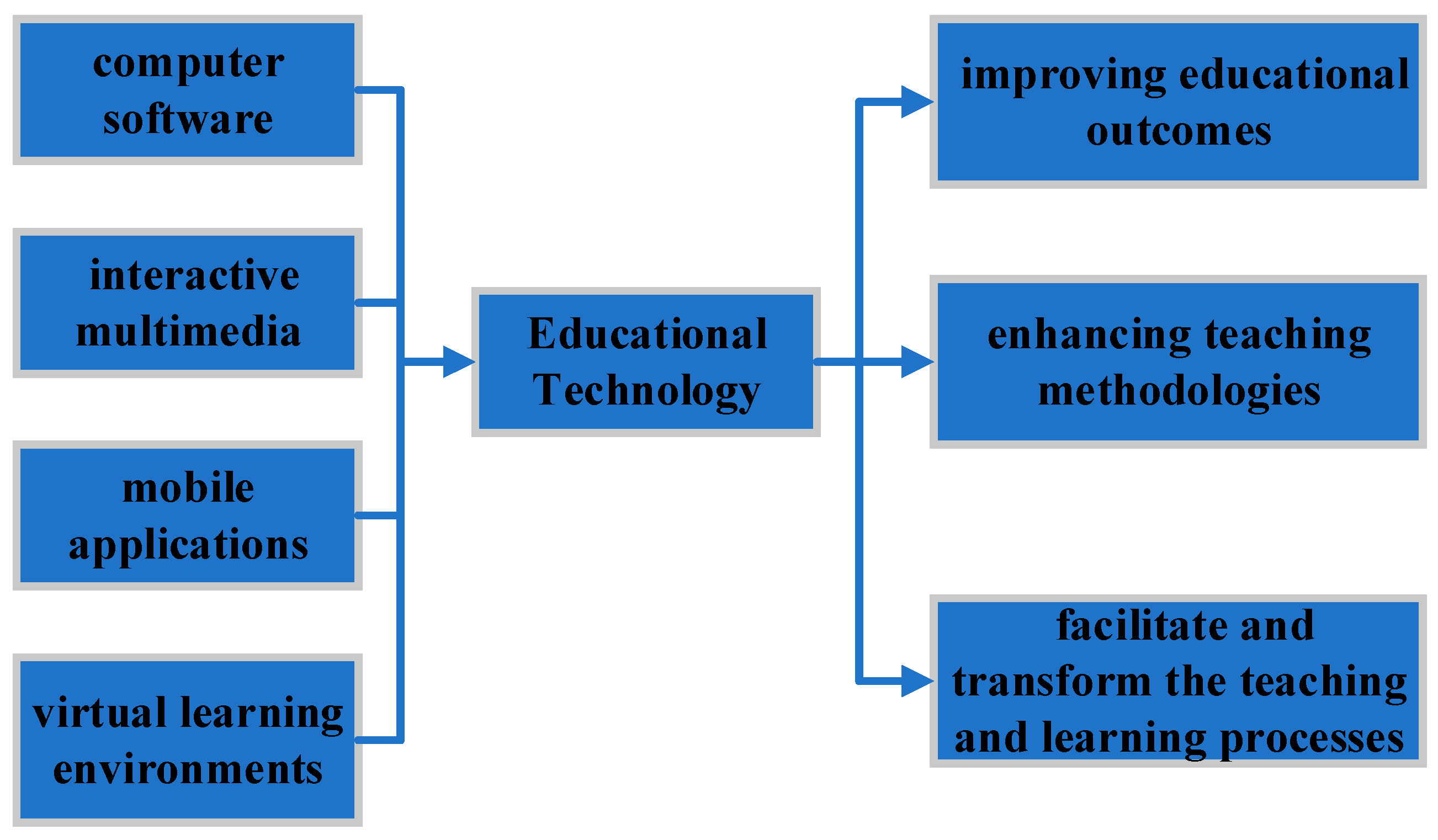
Figure 2.
Paper structure.
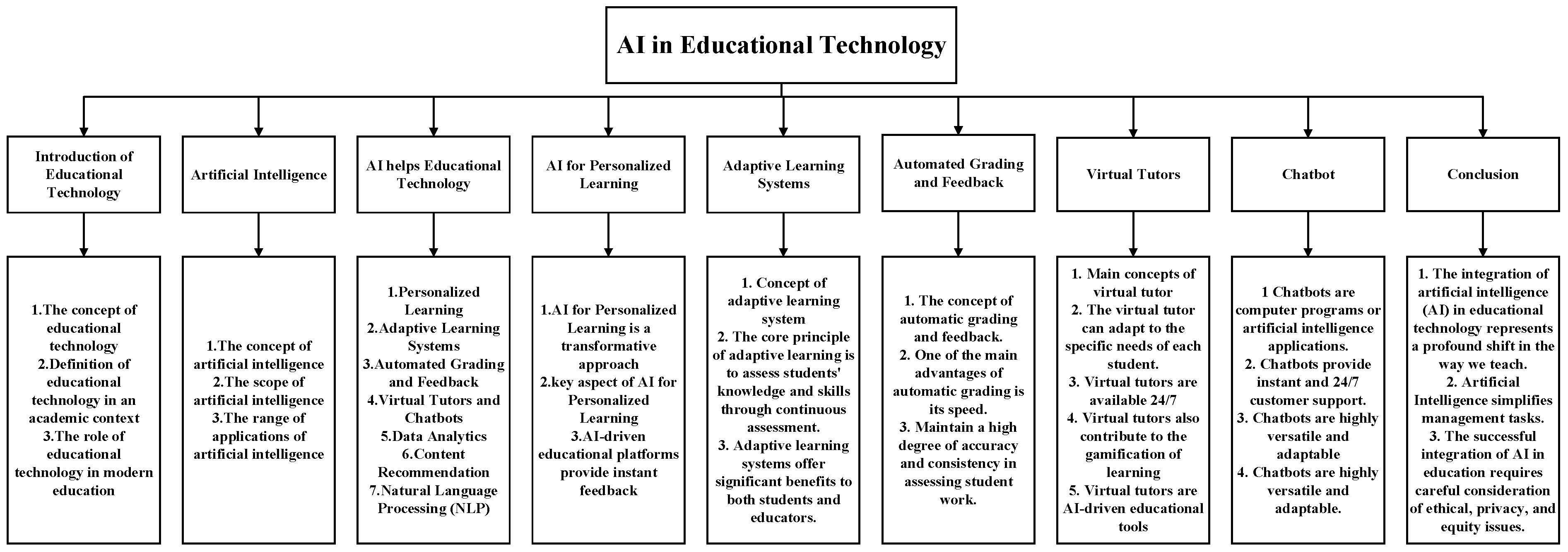
Figure 3.
The scope of artificial intelligence.

Figure 4.
The benefits of artificial intelligence for educational technology.

Figure 5.
The main process of artificial intelligence personalized learning.
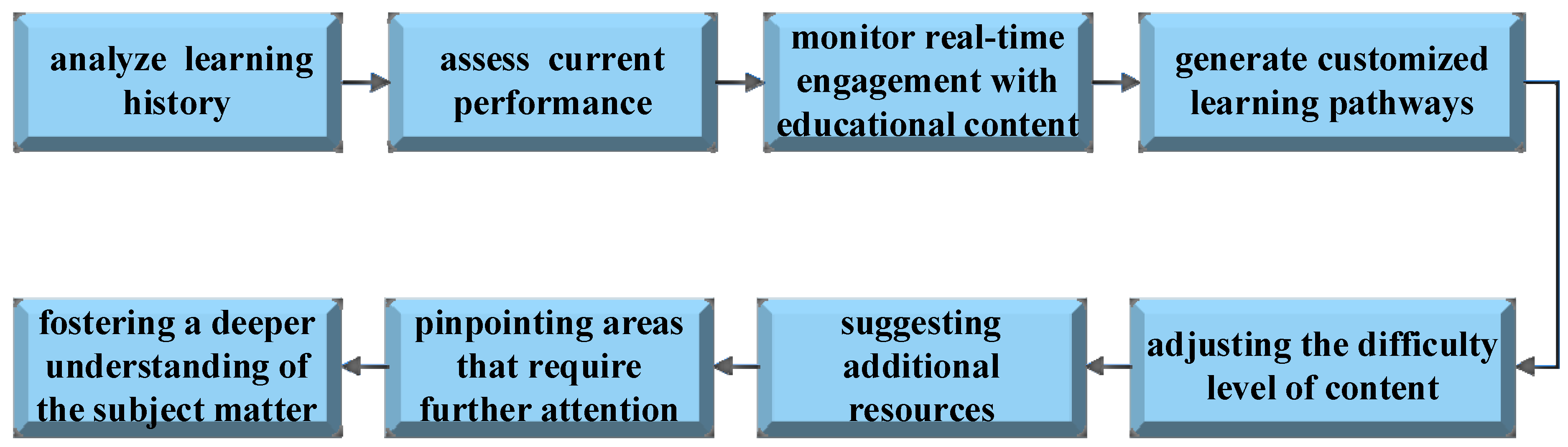
Figure 6.
How the adaptive learning system works.
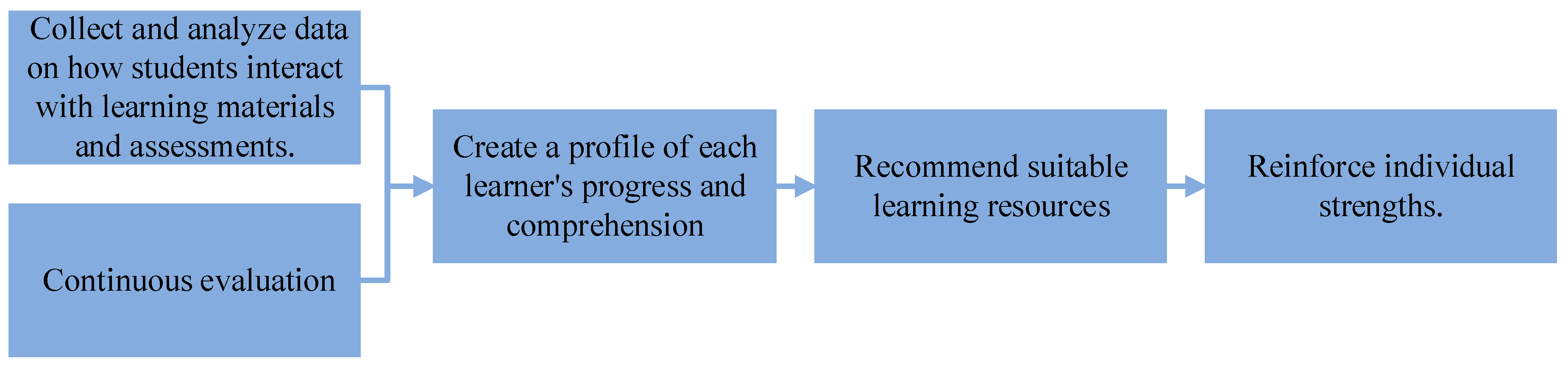
Figure 7.
Advantages of virtual tutors.
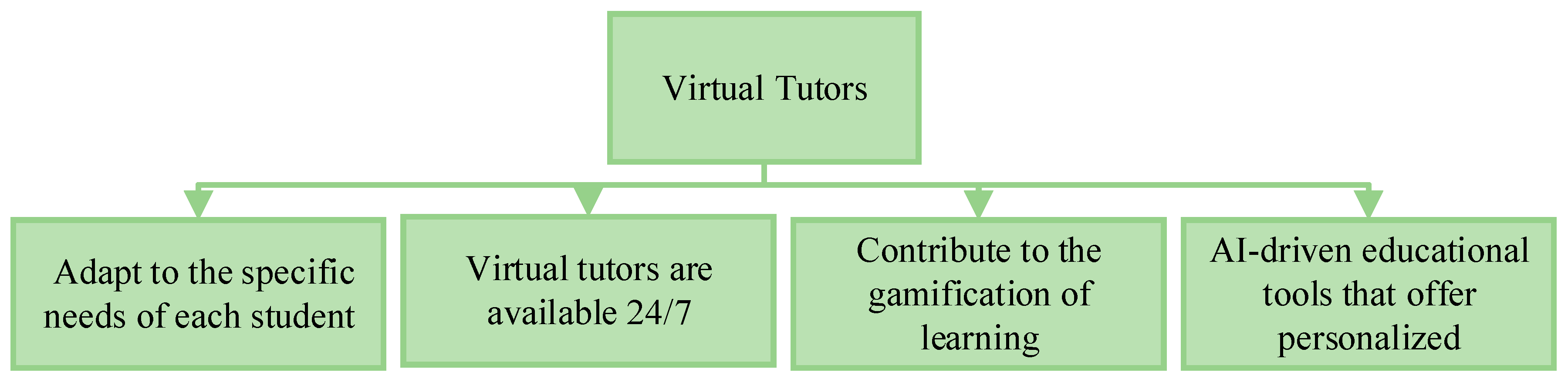
Figure 8.
Benefits of chatbots.
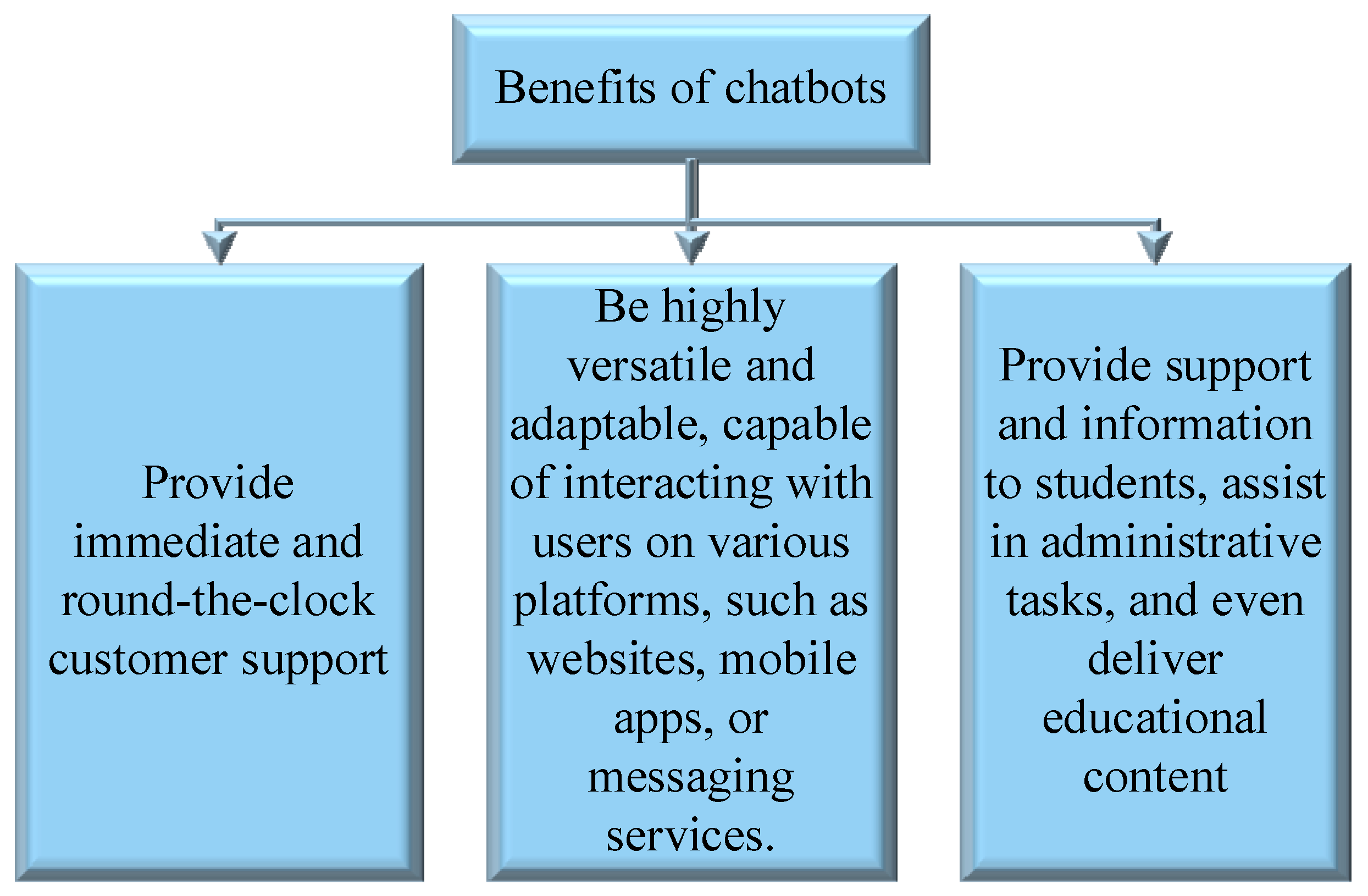

Table 1.
Benefits of automatic grading and feedback.
| Benefits of automatic grading and feedback | Teacher | Student |
|---|---|---|
| Efficiency | Save and shorten turnaround time | Point out specific errors to save revision time |
| Fairness | Ensure the impartiality of test papers and their work | Get a fair and impartial evaluation |
Disclaimer/Publisher’s Note: The statements, opinions and data contained in all publications are solely those of the individual author(s) and contributor(s) and not of MDPI and/or the editor(s). MDPI and/or the editor(s) disclaim responsibility for any injury to people or property resulting from any ideas, methods, instructions or products referred to in the content. |
© 2023 by the authors. Licensee MDPI, Basel, Switzerland. This article is an open access article distributed under the terms and conditions of the Creative Commons Attribution (CC BY) license (http://creativecommons.org/licenses/by/4.0/).
Copyright: This open access article is published under a Creative Commons CC BY 4.0 license, which permit the free download, distribution, and reuse, provided that the author and preprint are cited in any reuse.


