

Submitted:
28 February 2026
Posted:
02 March 2026
You are already at the latest version
Abstract
The art of Buddha carving represents a significant aspect of cultural and spiritual heritage, yet its survival is threatened by modernization, urbanization, and declining interest among younger generations. This study explores the use of Virtual Reality (VR) as an innovative tool for preserving and teaching the intricate craft of Buddha carving. By integrating haptic feedback, realistic tool simulations, and cultural narratives, a VR-based learning environment was developed to replicate the carving process. Expert evaluations highlighted the system’s effectiveness in usability, cultural relevance, and learning potential, achieving high engagement through immersive and interactive features. While the system demonstrated strong potential for democratizing access to traditional craft education, limitations in haptic technology and cultural diversity were noted. These findings underscore the transformative role of VR in safeguarding intangible cultural heritage, with implications for broader applications in traditional craft preservation. The study advocates for continued technological advancements and interdisciplinary collaboration to enhance the realism and accessibility of VR-based craft education.
Keywords:
Buddha carving
; virtual reality
; cultural heritage preservation
; traditional crafts
; immersive learning
1. Introduction
The traditional art of Buddha carving embodies cultural, spiritual, and artistic significance, particularly in Asian societies. For centuries, this craft has been passed down through generations, serving as a testament to the dedication and skill of artisans. However, the modern era has posed significant challenges to its preservation. Factors such as urbanization, generational shifts, and the absence of accessible learning platforms have led to a decline in the number of skilled practitioners (Zabulis et al., 2023). This decline threatens the continuity of this invaluable tradition, underscoring the urgent need for innovative solutions to preserve and pass down these intricate skills.
Virtual Reality (VR) has emerged as a transformative tool for education and cultural preservation, offering immersive, interactive environments where learners can practice traditional crafts. Unlike conventional methods, VR provides the opportunity to simulate the carving process with real-time feedback and unlimited repetition, eliminating the material costs and risks associated with physical training (Partarakis et al., 2020). By incorporating advanced features like haptic feedback and visual guidance, VR can replicate the nuances of Buddha carving, making the craft more accessible to learners while fostering cultural appreciation.
Recent applications of VR in traditional crafts, such as pottery and hand weaving, have demonstrated its effectiveness in enhancing learner engagement, skill acquisition, and the digitization of cultural practices (Guan et al., 2023; Yang, 2023). These findings suggest that VR holds significant potential for preserving and teaching Buddha carving, integrating technology with heritage to address modern challenges. This paper explores the role of VR as a teaching and preservation tool, examining its efficacy compared to traditional methods and its broader implications for safeguarding cultural heritage.
2. Literature Review
This section reviews the existing literature on the application of Virtual Reality (VR) in traditional craft education, the unique challenges of preserving cultural heritage, and the potential benefits of using immersive technologies to teach skills such as Buddha carving.
2.1. Traditional Methods of Craft Education
Traditional craft education, including Buddha carving, relies on apprenticeship models where learners acquire skills through direct mentorship. This practice provides hands-on experience, fostering the transfer of intricate techniques and cultural knowledge. However, this method has significant limitations, including dependence on the availability of skilled mentors, high costs of materials, and the declining number of artisans (Skovfoged et al., 2019). A study by Hallberg and Hirsto (2020) emphasized the challenges faced by traditional crafts in the face of modernization, particularly the reduced interest among younger generations.
Furthermore, traditional methods often lack standardized documentation, leading to inconsistencies in skill transmission. In efforts to bridge this gap, digital repositories and videos have been created to archive skills, but these tools lack interactivity and fail to replicate the experiential learning integral to craft mastery (Ringas et al., 2022). For instance, in preserving Japanese woodworking techniques, educational programs have started digitizing processes but remain inaccessible to larger audiences without significant technological integration (Skovfoged et al., 2019).
2.2. Virtual Reality in Education
VR offers transformative potential in education by creating immersive and interactive environments where learners can practice skills repeatedly without material constraints. This feature is especially beneficial for traditional crafts like Buddha carving, which require extensive practice to master fine motor skills. Research by Guan et al. (2023) highlighted how VR-based pottery education enabled students to achieve higher proficiency in less time compared to physical methods, attributing the success to VR’s ability to provide real-time feedback and simulate tactile interactions.
Similarly, studies by Partarakis et al. (2021) show that VR can effectively replicate the visual and physical aspects of crafting, such as hand movements and tool handling, which are critical in Buddha carving. Additionally, VR integrates multisensory learning, allowing students to engage through sight, sound, and touch, fostering deeper understanding and skill retention (Yang et al., 2023). Emerging studies also highlight the use of VR in facilitating group learning environments where multiple learners can interact and share feedback, further enhancing collaborative skill-building (Zabulis et al., 2020).
2.3. Application of VR in Cultural Heritage Preservation
One of VR’s most significant contributions lies in its ability to digitize and preserve cultural heritage. By recreating traditional crafts in virtual environments, VR ensures the preservation of endangered skills and their accessibility to a global audience. A notable example is the Tibetan Thangka painting project, which used VR to replicate intricate brushwork and layering techniques, making these practices available to learners worldwide (Yang et al., 2023). Similarly, Zabulis et al. (2020) explored VR’s role in archiving historical crafts, enabling users to interact with virtual replicas of traditional tools and techniques.
VR also enhances museum experiences by providing interactive demonstrations of traditional crafts. Studies by Ringas et al. (2022) found that VR exhibits not only engage visitors but also educate them about the cultural and historical significance of crafts, fostering appreciation and awareness. Furthermore, initiatives like the European project “Crafting Futures” use VR to create educational modules for craftspeople, combining technical skill development with storytelling to contextualize the cultural importance of crafts (Partarakis et al., 2021).
2.4. Challenges and Opportunities
While VR offers numerous advantages, its integration into craft education and cultural preservation faces challenges such as high costs, technical limitations, and resistance from traditional practitioners. Haptic technology, crucial for replicating tactile feedback in crafts, is still in its early stages and lacks the precision required for fine motor skills, such as those involved in Buddha carving (Partarakis et al., 2020). Moreover, the high cost of VR hardware and software limits its accessibility, especially in resource-constrained regions where traditional crafts are most at risk.
However, advancements in technology and decreasing costs present promising opportunities. Open-source VR platforms are being developed to make VR more accessible to smaller workshops and educational institutions. Collaborations between technologists, artisans, and educators are also emerging, enabling the development of VR tools tailored to specific crafts (Partarakis et al., 2023). Furthermore, integrating VR with other technologies, such as artificial intelligence and augmented reality, can enhance its capabilities, making it an even more powerful tool for cultural preservation and education (Zabulis et al., 2020).
3. Methodology
This section outlines the methodology used to evaluate the application of Virtual Reality (VR) as a tool for learning the craft of Buddha carving. The study combines qualitative and quantitative approaches to assess the effectiveness, user experience, and cultural impact of VR-based training.
3.1. Research Design
The research design followed a systematic R&D approach comprising three key phases: needs analysis, development, and evaluation. The needs analysis phase involved reviewing traditional Buddha carving teaching methods and consulting artisans to identify essential features for the VR system. The development phase focused on creating a prototype that simulated carving tools and techniques, which was iteratively refined based on artisan feedback. Finally, the evaluation phase assessed the system using expert reviews to measure satisfaction across multiple dimensions, including usability, authenticity, and cultural relevance. This design ensured that the VR environment was both functional and culturally significant.
3.2. VR Development
The development of the VR environment followed a structured process, incorporating requirements gathering, design and development, and prototyping phases to create an effective and culturally authentic learning tool.
3.2.1. Requirement Step
The requirements for the VR system were identified through extensive consultations with professional Buddha carvers, educators, and VR technologists. Key objectives included the accurate simulation of carving tools, realistic replication of carving techniques, and integration of cultural and historical narratives. The system needed to support interactive learning, allowing users to practice precision and control with virtual tools. Feedback from artisans emphasized the importance of tool fidelity, cultural authenticity, and the inclusion of guided tutorials for beginners. Technological requirements included the use of hand-tracking and haptic feedback technologies to enhance immersion and user engagement as shown in Figure 1.
3.2.2. Design and Development
The design phase focused on creating a user-friendly and immersive VR environment. The virtual tools were modeled based on real carving instruments, with adjustable settings for precision and pressure to replicate the experience of working with different materials. Guided tutorials were designed with visual and auditory instructions to provide step-by-step guidance for learners. Additionally, cultural integration was prioritized by embedding interactive elements that explained the historical and symbolic significance of Buddha carving. Development was carried out using Unity 3D software, a versatile platform for creating interactive VR experiences. The environment incorporated Leap Motion Controller technology for hand tracking, enabling users to interact naturally with the tools. Haptic feedback devices were integrated to simulate the tactile experience of carving. The development process was iterative, with regular feedback from artisans and educators ensuring the system aligned with real-world practices and educational goals.
3.2.3. Prototype of Virtual Reality
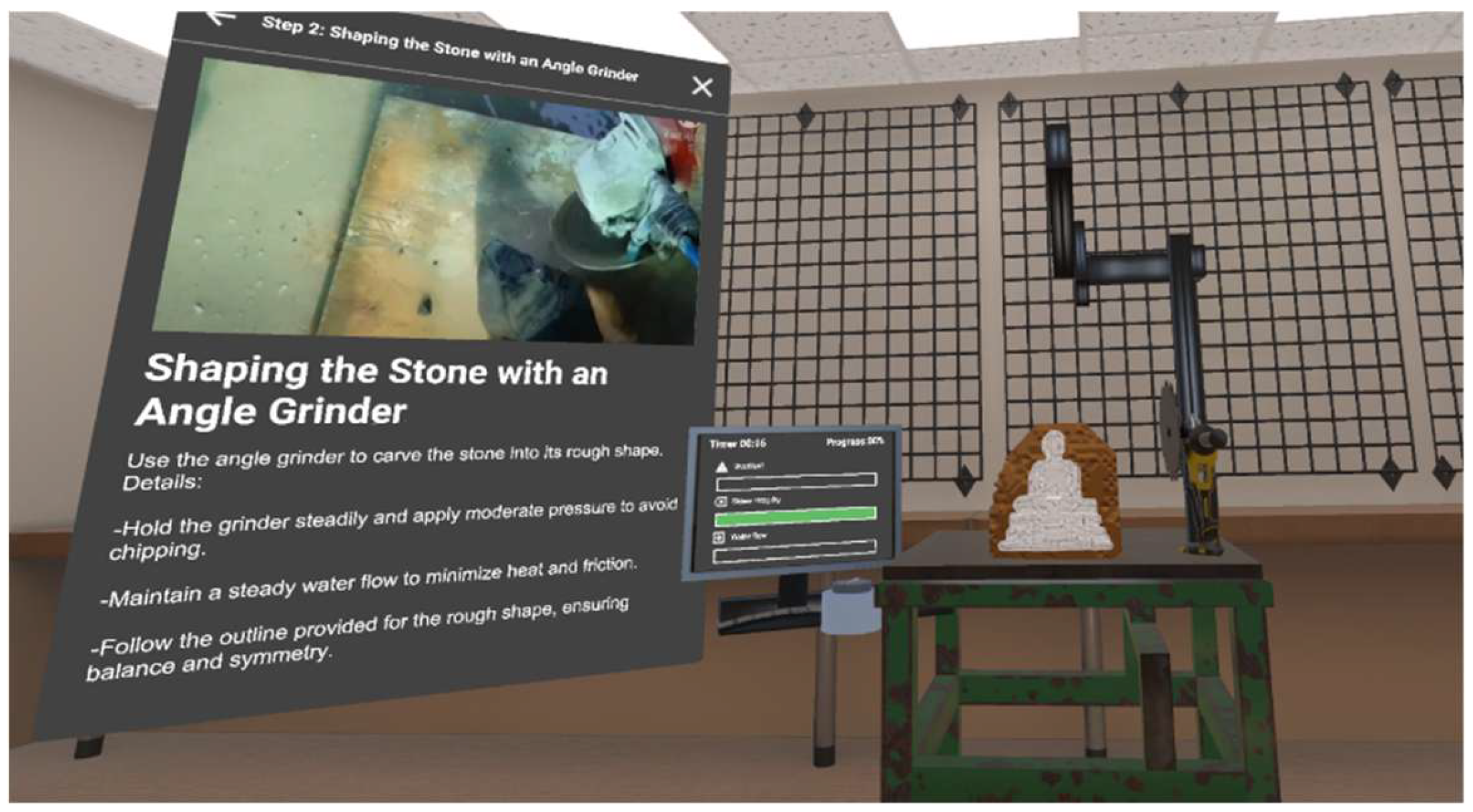
The VR prototype featured a fully functional simulation of a carving workshop, including virtual carving tools, a workspace, and interactive cultural displays. Users could select tools, adjust settings, and practice carving on virtual materials, receiving real-time feedback on their actions. Guided tutorials provided instructions on carving techniques, while interactive elements offered insights into the history and cultural importance of Buddha carving. The prototype was tested extensively with professional artisans to validate its authenticity and usability. Their feedback informed refinements, such as improving tool handling accuracy and enhancing the clarity of instructional content. The prototype of virtual reality shown in Figure 3, Figure 4 and Figure 5.
3.3. Materials and Instruments
To evaluate the VR system, a structured satisfaction questionnaire was developed as the primary instrument. The questionnaire comprised five dimensions: usability, authenticity, cultural relevance, immersion, and perceived learning potential. Each dimension was rated on a 5-point Likert scale, ranging from 1 (very dissatisfied) to 5 (very satisfied). The instrument also included open-ended questions to gather qualitative feedback. The VR environment, including hardware (headset, haptic controllers, and Leap Motion device), was demonstrated in a controlled setting to ensure consistency in the evaluation process. Feedback was collected immediately after the demonstration to capture first impressions and detailed observations.
3.4. Participants
The evaluation involved a panel of 10 experts selected based on their expertise in traditional crafts, education, or VR technology. The panel included experienced Buddha carvers, educators specializing in traditional art forms, and VR technologists familiar with immersive learning systems. This diverse group ensured a comprehensive assessment of the VR environment. Experts were recruited through professional networks and academic affiliations, and their participation was voluntary. All participants provided informed consent and were briefed on the study’s objectives before engaging with the VR system.
4. Results
This section presents the findings from the expert evaluations of the Virtual Reality (VR) training environment for learning the art of Buddha carving. The results are organized according to the key dimensions assessed: usability, authenticity, cultural relevance, immersion, and perceived learning potential.
4.1. Usability
The usability of the VR environment was rated highly by the expert panel, with an average score of 4.6 out of 5 on the Likert scale. Experts praised the intuitive interface and clear navigation, noting that the integration of visual and auditory guidance significantly enhanced the user experience. However, two experts suggested minor improvements, such as simplifying menu navigation and incorporating more explicit instructions for tool settings.
4.2. Authenticity
The authenticity of the tool simulations and carving processes received an average score of 4.8 out of 5, indicating strong approval from the expert panel. Professional artisans highlighted the accuracy of tool design and functionality, as well as the realistic simulation of carving techniques. One artisan noted, “The virtual tools feel remarkably similar to actual carving tools in terms of precision and handling.” A minor limitation identified was the lack of tactile feedback when interacting with different material textures, which could be addressed in future iterations.
4.3. Cultural Relevance
Cultural relevance was rated at 4.7 out of 5, with experts appreciating the integration of historical narratives and symbolic meanings within the VR environment. Educators commented on the effective presentation of cultural elements, noting that the VR tool provided an engaging platform for learners to understand the spiritual and historical significance of Buddha carving. Suggestions for improvement included adding more diverse examples of regional carving styles to enhance the system’s cultural depth
4.4. Immersion
The sense of immersion in the VR environment was rated at 4.5 out of 5. Experts found the hand-tracking technology and dynamic feedback particularly engaging, which contributed to a realistic carving experience. Comments highlighted the effective use of soundscapes and visual cues to replicate the ambiance of a traditional carving workshop. However, one VR technologist suggested that incorporating advanced haptic feedback could further enhance the sense of physical presence during carving tasks.
4.5. Perceived Learning Potential
The perceived learning potential of the VR system was rated at 4.9 out of 5, the highest among all dimensions. Experts agreed that the system provided a highly effective platform for skill acquisition, particularly for beginners. They highlighted the value of real-time feedback and guided tutorials, which allowed users to correct mistakes and refine techniques. One educator remarked, “The VR system could revolutionize how traditional crafts are taught, especially for those without access to physical workshops.”
4.6. Overall Feedback
Qualitative feedback emphasized the potential of the VR environment to preserve and teach traditional skills while engaging a broader audience. Experts unanimously agreed on the system’s promise as a learning tool, although they suggested iterative enhancements to address minor usability and feedback limitations. The panel recommended further evaluations involving novice users to better understand the system’s learning outcomes across different skill levels.
5. Discussion
This section discusses the results in relation to existing literature, highlighting the strengths, challenges, and opportunities identified in the evaluation of the VR environment for teaching Buddha carving.
5.1. Usability and User Experience
The VR environment received high usability ratings, emphasizing its intuitive interface and seamless navigation. Experts particularly noted the effectiveness of step-by-step tutorials, which provided clear guidance and minimized user confusion. This finding is consistent with Guan et al. (2023), who highlighted the importance of instructional clarity in VR learning systems to reduce cognitive load and enhance engagement. Visual and auditory feedback was praised for helping users correct mistakes in real-time, a feature also emphasized by Yang et al. (2023) as critical for skill acquisition. However, some experts suggested refinements in menu navigation and more explicit labeling of tool settings, reflecting ongoing challenges in ensuring universal usability (Partarakis et al., 2020). The usability design in VR environments must balance simplicity with functionality, as overly complex interfaces can deter new users, particularly those with limited technical experience.
5.2. Authenticity of Craft Simulation
The authenticity of the VR system, particularly in replicating the tools and techniques of Buddha carving, was a standout feature. Experts commended the accurate modeling of carving tools and the realistic simulation of their use, which they felt closely mimicked real-world carving experiences. This aligns with Zabulis et al. (2020), who emphasize that cultural authenticity in VR craft systems is key to preserving intangible heritage. The ability of the system to simulate intricate carving techniques allowed users to practice precision and control, crucial for developing fine motor skills. Despite this, the absence of advanced tactile feedback, such as texture differentiation and resistance during carving, was highlighted as a limitation. This limitation is consistent with challenges identified by Hallberg and Hirsto (2020), who argue that current haptic technologies are insufficient for replicating the nuanced physical sensations of crafting. Addressing this gap could significantly enhance the system’s realism and effectiveness.
5.3. Cultural Relevance and Heritage Preservation
Cultural relevance was a major strength of the VR system, with experts appreciating the integration of historical and symbolic narratives about Buddha carving. This feature not only enhanced the learning experience but also fostered a deeper appreciation for the craft’s cultural significance. Studies by Ringas et al. (2022) and Yang et al. (2023) similarly emphasize that VR systems capable of embedding cultural storytelling can transform them into powerful tools for heritage preservation. The interactive design allowed users to explore the spiritual and historical context of Buddha carving, connecting practical skills to their cultural roots. However, experts suggested the inclusion of diverse regional styles of Buddha carving to represent the broader cultural landscape. This recommendation echoes findings by Skovfoged et al. (2019), who advocate for inclusive digital archives that capture the diversity of traditional crafts. Expanding the VR system to incorporate these variations could increase its educational value and global relevance.
5.4. Immersion and Engagement
The VR system’s immersive capabilities were well-received, with hand-tracking and dynamic feedback being particularly praised for enhancing the sense of realism. These features created an engaging environment where users could focus entirely on the carving process, replicating the ambiance of a traditional workshop. This finding supports the work of Partarakis et al. (2021), who argue that immersion is a critical factor in the success of VR-based craft education. The inclusion of ambient sounds and responsive visual cues further contributed to the feeling of presence, helping users stay engaged throughout the learning experience. Despite these strengths, the lack of advanced haptic feedback was identified as a limitation, with one expert noting that the absence of resistance or texture sensations reduced the system’s physical realism. As Yang et al. (2023) suggest, the integration of multisensory feedback could significantly enhance engagement by providing a holistic learning experience.
5.5. Learning Potential and Educational Impact
The perceived learning potential of the VR system received the highest scores, reflecting its effectiveness in teaching practical skills and cultural knowledge. Experts agreed that the system’s real-time feedback, guided tutorials, and immersive design made it an ideal tool for beginners. This aligns with findings by Guan et al. (2023), who demonstrated that VR systems accelerate skill acquisition by providing opportunities for repetitive practice without material constraints. Furthermore, the system’s scalability and accessibility address significant barriers in traditional craft education, such as the availability of mentors and workshop space. Zabulis et al. (2020) highlight that VR’s ability to democratize access to education makes it particularly valuable for preserving endangered crafts. Experts also noted that the VR system could complement traditional methods by serving as a preparatory tool, allowing learners to familiarize themselves with techniques before handling real materials.
5.6. Challenges and Future Opportunities
While the VR system demonstrated significant potential, several challenges were identified. The lack of advanced haptic feedback, which limits the replication of tactile sensations during carving, remains a critical limitation. This challenge aligns with broader technological constraints in VR development, as highlighted by Hallberg and Hirsto (2020). Additionally, the system’s cultural scope was deemed narrow, with experts recommending the inclusion of regional variations to provide a more comprehensive learning experience. Addressing these challenges could involve collaborations with haptic technology developers and cultural experts to enhance the system’s capabilities. Future iterations could also explore the integration of artificial intelligence for personalized feedback and augmented reality to blend virtual and physical learning experiences. Involving novice users in subsequent evaluations, as suggested by Partarakis et al. (2021), could provide valuable insights into the system’s effectiveness across different learner profiles.
5.7. Implications for Cultural Preservation
The findings underscore the potential of VR as a tool for preserving and teaching traditional crafts like Buddha carving. By digitizing the skills and techniques of artisans, the VR system ensures that these practices are documented and accessible to future generations. This aligns with the work of Ringas et al. (2022) and Zabulis et al. (2020), who highlight the role of VR in safeguarding intangible heritage through interactive digital archives. Moreover, the system’s educational application could inspire similar initiatives for other endangered crafts, fostering a global movement toward cultural preservation through technology. By bridging the gap between tradition and innovation, the VR environment represents a transformative approach to keeping cultural heritage alive in the modern era.
6. Conclusion
This study demonstrated the potential of a Virtual Reality (VR) training environment as an innovative solution for learning and preserving the art of Buddha carving. By integrating authentic tool simulations, guided tutorials, and cultural narratives, the VR system effectively addressed key challenges in traditional craft education, such as accessibility and the decline of artisan mentors. Expert evaluations highlighted its strengths in usability, authenticity, cultural relevance, and learning potential, underscoring its ability to replicate intricate carving techniques and foster cultural appreciation. The findings reinforce VR’s transformative role in bridging heritage crafts and modern educational methods, while also contributing to broader cultural preservation efforts by making traditional practices accessible to a global audience.
Despite its strengths, the study identified areas for improvement, including the need for enhanced haptic feedback to replicate tactile sensations and the inclusion of diverse regional styles to broaden its cultural representation. Addressing these limitations could further enhance the system’s effectiveness and realism. Expanding the evaluation to include novice learners would provide deeper insights into its educational impact across different skill levels. Overall, the VR environment offers a scalable and impactful tool not only for preserving Buddha carving but also for safeguarding other endangered crafts. With ongoing technological advancements and interdisciplinary collaboration, VR can play a pivotal role in the preservation and education of cultural heritage in the digital age.
Author Contributions
Conceptualization, Phichete Julrode; Methodology, Phichete Julrode; Software, Phichete Julrode; Validation, Phichete Julrode; Formal analysis, Phichete Julrode; Investigation, Piyapat Jarusawat; Resources, Piyapat Jarusawat; Data curation, Piyapat Jarusawat; Writing – original draft, Phichete Julrode; Writing – review & editing, Phichete Julrode.
Data Availability Statement
The data presented in this study are available on request from the corresponding author.
References
- Guan, X. Analysis of fusion application of 3D virtual technology in arts and crafts design. In IEEE Xplore; 2023. [Google Scholar] [CrossRef]
- Partarakis, N.; Zabulis, X.; Antona, M. Transforming heritage crafts to engaging digital experiences; Springer, 2020. [Google Scholar] [CrossRef]
- Yang, H. Research on the application of interaction design in the digital education of traditional crafts; Springer, 2023. [Google Scholar] [CrossRef]
- Zabulis, X.; Partarakis, N.; Demeridou, I. A roadmap for craft understanding, education, training, and preservation; MDPI, 2023. [Google Scholar] [CrossRef]
- Guan, X. Analysis of fusion application of 3D virtual technology in arts and crafts design. In IEEE Xplore; 2023. [Google Scholar] [CrossRef]
- Hallberg, S.; Hirsto, L. Challenges in traditional craft education and the impact of modernization. Heliyon 2020, 6(7). Available online: https://www.cell.com/heliyon/fulltext/S2405-8440(20)31548-6.
- Partarakis, N.; Zabulis, X.; Antona, M. Enhancing craft education through immersive technologies; Springer, 2021; Available online: http://users.ics.forth.gr/~partarak/img/publications/TransformingHeritageCrafts.pdf.
- Ringas, C.; Tasiopoulou, E.; Kaplanidi, D. Traditional craft training in museums using VR; MDPI, 2022. [Google Scholar] [CrossRef]
- Skovfoged, M. M.; Rossau, I. G. Safeguarding traditional craftsmanship with virtual tools. IJIH. 2019. Available online: https://www.ijih.org/retrieve/volume/14/ENG#page=107.
- Yang, H. Virtual Reality applications in preserving endangered crafts; Retrieved from; Springer, 2023. [Google Scholar] [CrossRef]
- Zabulis, X.; Partarakis, N.; Meghini, C. Representation and preservation of heritage crafts; MDPI, 2020. [Google Scholar] [CrossRef]
- Guan, X. Analysis of fusion application of 3D virtual technology in arts and crafts design. In IEEE Xplore; 2023. [Google Scholar] [CrossRef]
- Hallberg, S.; Hirsto, L. Challenges in traditional craft education and the impact of modernization. Heliyon 2020, 6(7). Available online: https://www.cell.com/heliyon/fulltext/S2405-8440(20)31548-6.
- Partarakis, N.; Patsiouras, N.; Evdemon, T. Enhancing craft education through immersive technologies; Springer, 2021. [Google Scholar] [CrossRef]
- Ringas, C.; Tasiopoulou, E.; Kaplanidi, D. Traditional craft training in museums using VR; MDPI, 2022. [Google Scholar] [CrossRef]
- Skovfoged, M. M.; Rossau, I. G. Safeguarding traditional craftsmanship with virtual tools. IJIH. 2019. Available online: https://www.ijih.org/retrieve/volume/14/ENG#page=107.
- Yang, H. Virtual Reality applications in preserving endangered crafts; Retrieved from; Springer, 2023. [Google Scholar] [CrossRef]
- Zabulis, X.; Partarakis, N.; Meghini, C. Representation and preservation of heritage crafts; MDPI, 2020. [Google Scholar] [CrossRef]
Figure 1.
The requirement step to gather the design of virtual reality.
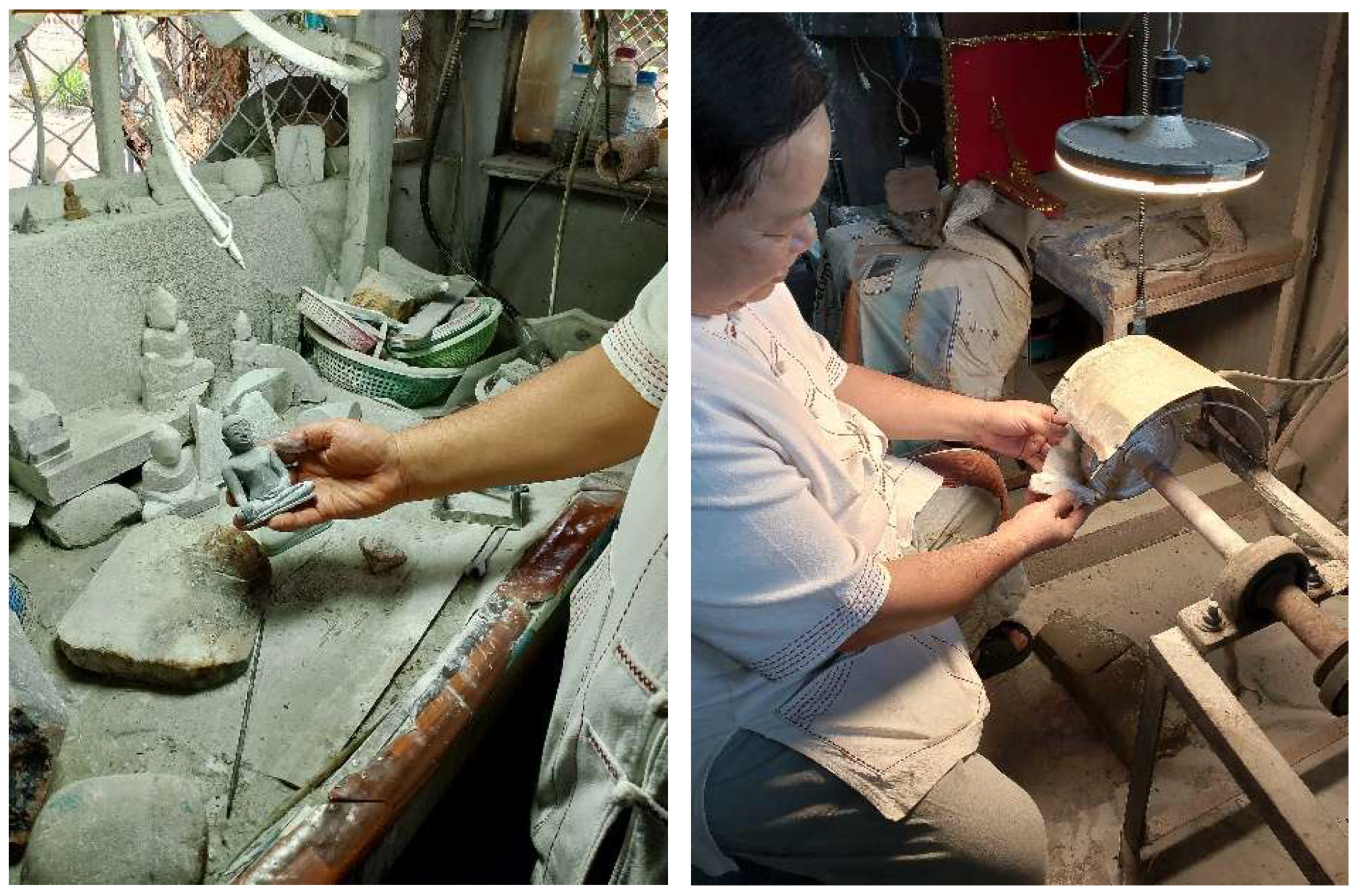
Figure 2.
The design of virtual reality of Buddha carver.
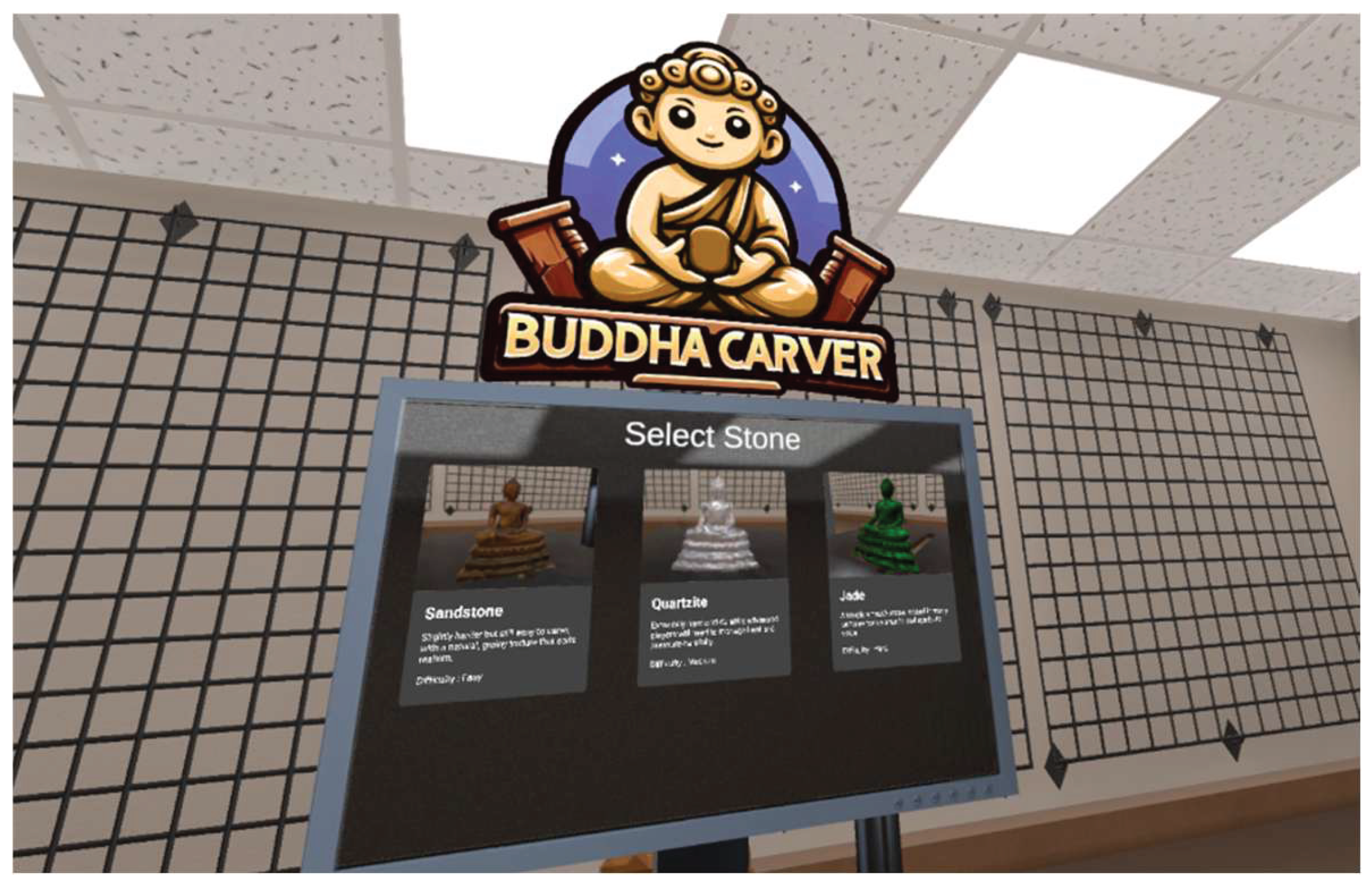
Figure 3.
Example of Adding Details with a Fine Drill.
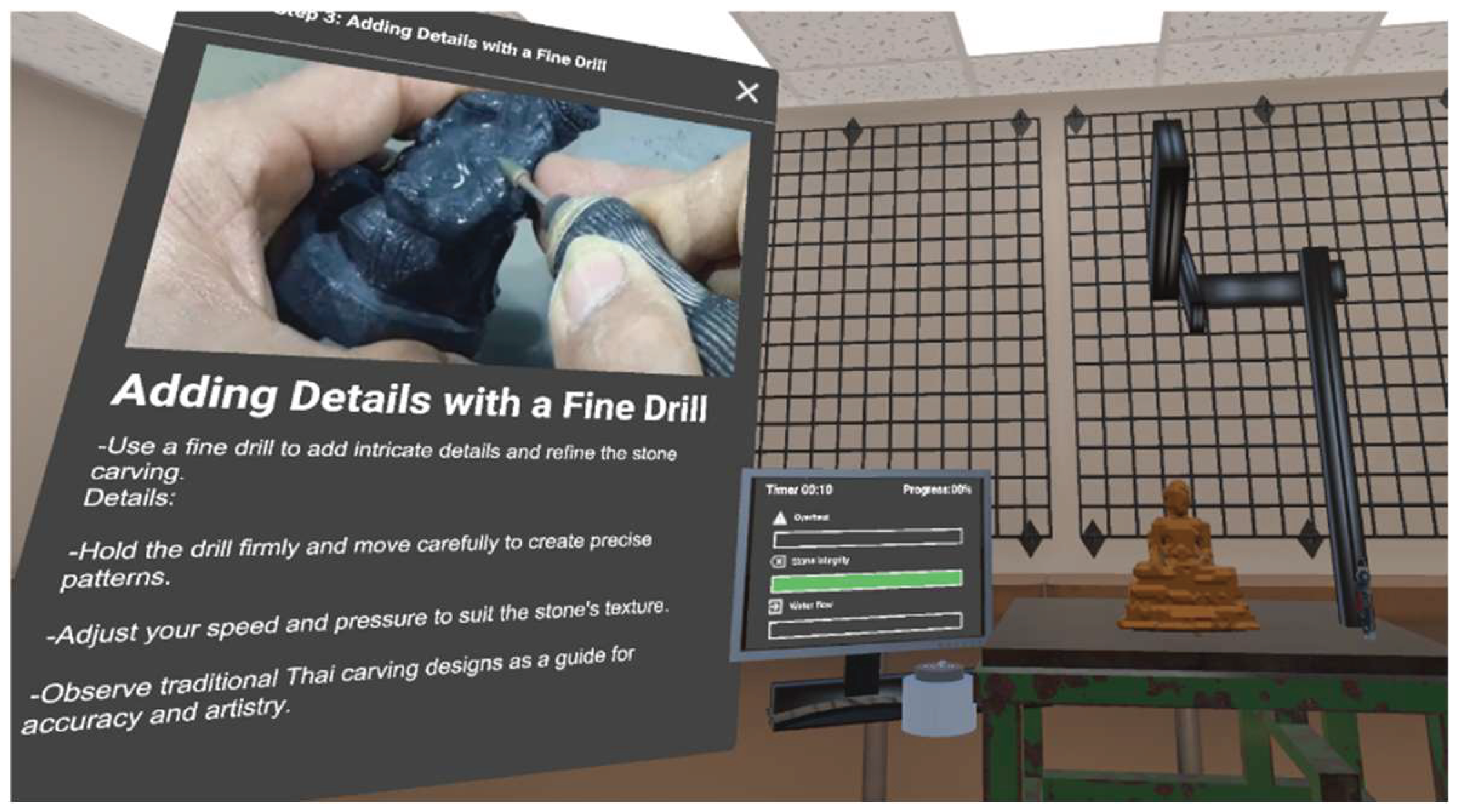
Figure 4.
Example of Cutting Big Stone to Smaller Chunks.
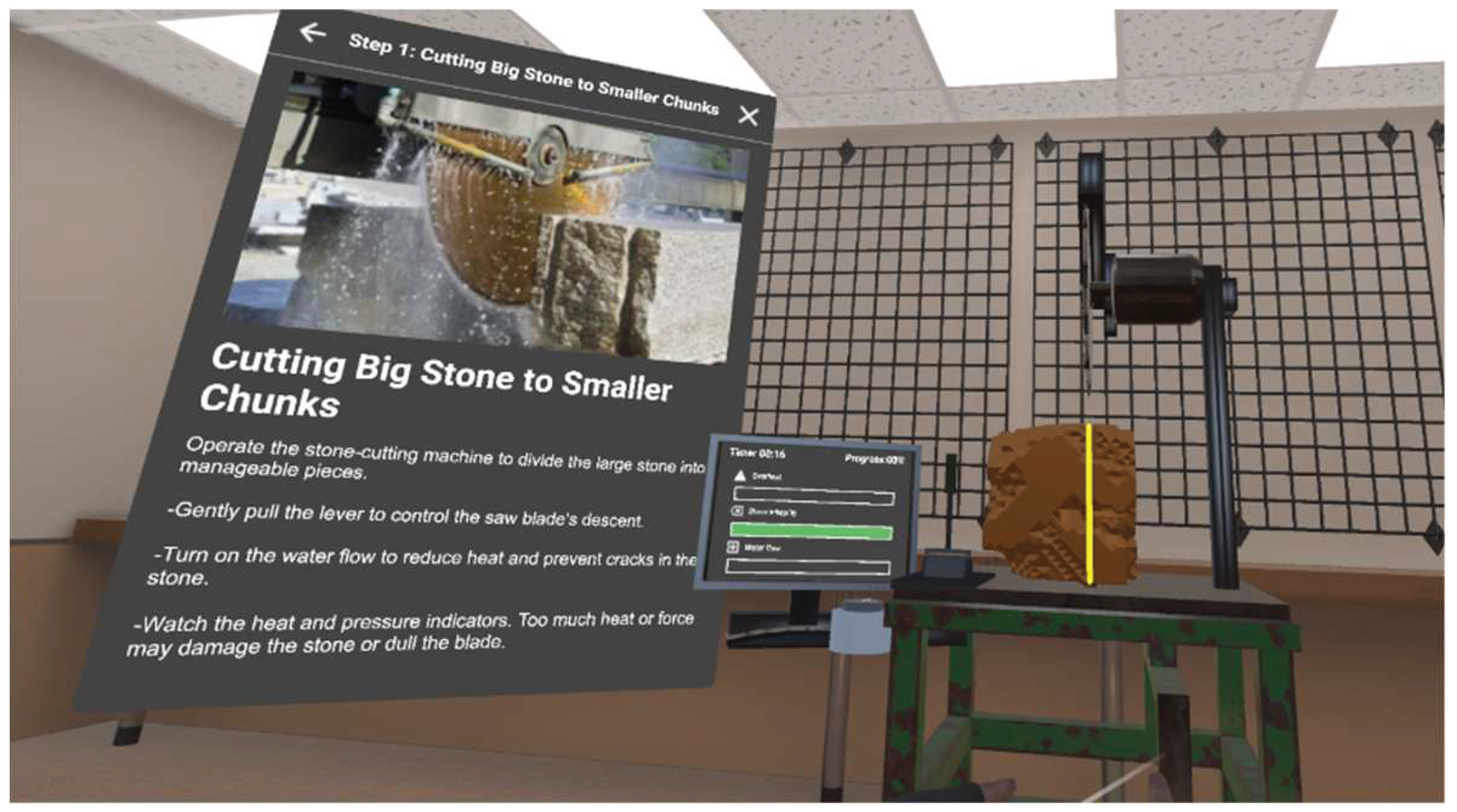
Figure 5.
Shaping the Stone with an Angle Grinder.
Disclaimer/Publisher’s Note: The statements, opinions and data contained in all publications are solely those of the individual author(s) and contributor(s) and not of MDPI and/or the editor(s). MDPI and/or the editor(s) disclaim responsibility for any injury to people or property resulting from any ideas, methods, instructions or products referred to in the content. |
© 2026 by the authors. Licensee MDPI, Basel, Switzerland. This article is an open access article distributed under the terms and conditions of the Creative Commons Attribution (CC BY) license (http://creativecommons.org/licenses/by/4.0/).
Copyright: This open access article is published under a Creative Commons CC BY 4.0 license, which permit the free download, distribution, and reuse, provided that the author and preprint are cited in any reuse.


