

Submitted:
18 February 2026
Posted:
26 February 2026
You are already at the latest version
Abstract
A cornerstone in transferring a classical Liquid Chromatography (LC) with UltraViolet/Visible (UV/Vis) detector into a greener and, beyond, towards a sustainable analytical method should consider the safety and health of the used organic solvent in the method. Toxic organic solvent portions used in the mobile phase can be replaced by an eco-friendly green solvent that is ideally bio-based and biodegradable to increase the greenness index of the method. However, the implementation of a new organic solvent for High Performance Liquid Chromatography (HPLC-UV/Vis) and/or UltraHigh Performance Liquid Chromatography (UHPLC-UV/Vis) requires not only a simple consideration of its environmental and health impact, cost-effectiveness, user-friendliness, and impact on the analytical performance of the method but rather a systematic evaluation of its chromatographic suitability. Existing greenness, blueness, and redness metrics expressing whiteness for evaluating the sustainability of liquid chromatographic methods after solvent replacement overlook the chromatographic suitability of the selected green solvent, potentially leading to suboptimal solvent replacement and an incomplete view of its capabilities. In this work, the authors present a Universal Suitability and Sustainability Index (USSI), a sixteen-parameter scoring system that quantifies four main factors for complete evaluation of a new solvent for implementation in liquid chromatography. This index is even beyond the white analytical chemistry principle. The four main factors are chromatographic suitability, greenness, blueness, and redness. Three of these factors, namely greenness, blueness, and redness, are based on available tools and metrics to evaluate the environmental and health, impact on the practicability, and the analytical performance of the method. The fourth factor is added as an important criterion to judge the suitability of the solvent to liquid chromatographic analysis and to give an overview about its analytical chromatography-oriented applicability. The new index has been used to evaluate traditional solvent-based liquid chromatographic methods as well as those based on alternative emerging green solvents and compare the factors together to give a universal overview that aids users to drive a rapid imprison on the weakness and strength aspects and makes it easier to judge the selection of the solvent and the evaluation of the overall method sustainability.
Keywords:
sustainable and suitable analytical chemistry
; green chemistry
; white chemistry
; blueness
; greenness
; redness
1. Introduction
Nowadays, liquid chromatography is considered as principal method in analytical chemistry for pharmaceutical, environmental, forensic, and food analysis. Classical liquid chromatographic analysis is mainly based on the consumption of toxic organic solvents in the mobile phase, such as acetonitrile, hexane, and methanol. Therefore, chromatography has always lived with a paradox: tons of these toxic organic solvents are consumed every year in industrial and research laboratories using LC instruments; thus, solvents that deliver exquisite separations often carry the steepest environmental and safety cost[1,2]. Even worse, additives such as trifluroacetic acid (TFA) may be considered as “forever chemicals” (PFAS).
Thus, there is a significant demand for replacing toxic and/or persistent substances with greener alternatives to protect the environment and living creatures from the negative impact of the widespread use of these harmful organic solvents. A few assessment tools have been developed to evaluate the greenness of methods and to compare the greenness of new eco-friendly solvent-based methods to that of a reported classical method that utilizes toxic organic solvents in the mobile phase[1,2].
In the late 20th century, Anastas and Wagner first introduced the 12 principles of green chemistry, providing a universal framework for minimizing the environmental and health impact of chemical processes. These principles were adapted for analytical sciences as the 12 Principles of Green Analytical Chemistry by Galuszka et al. in 2013[3]. Building on this foundation, practical assessment tools have emerged to translate abstract principles into measurable scores. Green Environmental Assessment and Rating for Solvents (GEARS), is a tool used to evaluate organic solvents in research and industry from environmental, functional, and economical perspectives via 10 parameters which are; toxicity, biodegradability, renewability, volatility, thermal stability, recyclability, flammability, efficiency, environmental impact, and affordability of solvents. It is worth mentioning the tools that are commonly used to evaluate the organic solvents[4] (Figure 1) including Analytical GREEnness (AGREE)[5], Red-Green-Blue 12 (RGB12)[6], G-score, Weighted Hazards Number (WHN), carbon footprint[7] and Green Environmental Assessment and Rating for Solvents (GEARS).
In 2026 a recent study has been published by Bocian, evaluating a selective eco-friendly solvent and their implementation in pharmaceutical analysis, outlining progress toward sustainable practices and future steps for broader adoption of green chromatography. The evaluation is based on a comparison of physical and chemical properties of the selective solvents as well as using the GEARS score[4].
While AGREE centers on analytical method greenness, the RGB12 tool integrates three factors: analytical quality, represented by red color; environmental impact, represented by green color; and practicality and cost, represented by blue color. The three factors (colors) fuse into a single whiteness outcome, enabling solvent choices that preserve operability and performance while reducing hazard. This tool can be used for method ranking during solvent substitution, particularly in LC workflows[5].
The G-score is a metric intended to give a quick but informative measure for the sustainability of a solvent by combining several sub-criteria such as health, safety, environmental impact, and functional properties. It assigns a 0-10 sustainability score to individual solvents. A high the value of the G-score is an indication of a greener solvent and thus a preferable replacement[7,8,9].
Similarly, the WHN is a numerical tool of intrinsic hazard[8]. It was developed to translate the multiple hazard statements derived from the Globally Harmonized System of Classification and Labelling of Chemicals (GHS)[10] or solvent’s Safety Data Sheet (SDS) into a single, comparable value[11].
Furthermore, impacts of carbon dioxide emission related to the instrument used for analysis and the solvent production and incineration have been also considered. Nowak et al. published an interesting article highlighting the significant effect of carbon dioxide emission related to analytical devices compared to household devices, electric cars, petroleum cars, and humans. Methods to calculate the carbon footprint related to the energy consumption of the analytical instrument have been used to give an overview of the carbon footprint of the analytical method[12].
In 2024, a simple strategy to convert classical liquid chromatographic-based HPLC or UHPLC methods into more sustainable, greener, bluer, and whiter one was proposed by El Deeb[7]. This review emphasized the importance of developing structured strategies for implementing sustainability in analytical chemistry workflows. For example, sustainable chromatographic method development can be approached through a stepwise process that includes solvent selection, column miniaturization, solvent implementation, method optimization, and validation (Figure 2)[7]. This systematic framework highlights the necessity of integrating environmental, operational, and analytical factors during method development rather than treating solvent substitution as an isolated decision.
Additionally, there are many international frameworks and guidelines that play a critical role in shaping sustainability practices within analytical chemistry. The International Organization for Standardization (ISO 14040 and ISO 14044) standards form the essential basis of Life Cycle Assessment (LCA), which in turn provides a structured methodology for evaluating the environmental impacts of different processes and products, including those used in analytical fields. Therefore, by evaluating these impacts across the entire life cycle, starting from the raw material to the finished product and ending with end-of-life disposal, these standards support the core objectives of green analytical and sustainable chemistry[13,14]. The adaptation of this concept to analytical methods was suggested by Parr and Schmidt[15] and is now integrated into reference works e.g. United States Pharmacopoeia (USP). Complementary, the United Nations Environment Program (UNEP) has issued a green and sustainable chemistry manual. This manual is not an ISO standard; instead, it provides a comprehensive overview and guidance for embedding sustainability principles into chemical practice, thus offering broader perspectives that align well with LCA-based approaches. Together, these international initiatives emphasize the need for technical rigor in standardized assessments and provide the strategic direction necessary to advance sustainable analytical science[16,17].
This highlighted the urge to develop an index that integrated sustainability metrics-tools that simultaneously score environmental burden, health impact, analytical performance, and practical feasibility rather than ad hoc heuristics. Solvent replacement decisions are made with an index that integrates different evaluation tools together to provide a comprehensive evaluation of the analytical method and solvent used. Each evaluation tool gives helpful information about the environmental burden, health and safety hazards, or analytical performance, but none alone offers a comprehensive evaluation that considers different aspects to truly lead to a universal lens for decision-making. A comprehensive tool to evaluate analytical methods is essential to ensure that innovation in sustainable and green chemistry translates into practical, high-performing laboratory and industrial applications by considering various parameters. On the other hand, some tools, including AGREE, RGB12, G-score, and WHN, evaluate the greenness of analytical methods from different perspectives, but none of them provides a comprehensive evaluation. Therefore, they often overlook the integration of analytical performance and method readiness into a single quantitative framework. To address this gap, an index called the Universal Suitability and Sustainability Index (USSI) was developed to provide a comprehensive, unified evaluation model that balances analytical efficiency, environmental impact, cost-effectiveness, and operational feasibility. To bridge the gap between different tools, we introduce the Universal Suitability and Sustainability Index (USSI). The USSI is a novel metric designed to unify safety, performance, suitability, and sustainability into one standardized score. Thereby, the USSI harmonizes analytical efficiency with health and environmental responsibilities. This work aims at pushing analytical chemistry to more sustainable applications that aid in supporting the United Nations’ vision of sustainability development goals for 2030. Thus, we propose an extended sustainability evaluation metrics, the Universal Suitability and Sustainability Index (USSI). It allows for a quantitative complement to the above-mentioned by introducing a unified numerical approach that integrates chromatographic suitability, environmental greenness, cost-effectiveness and method readiness. The USSI not only aligns with the principles considered in sustainable method development workflows but also extends them by offering a standardized, data-driven evaluation system that supports informed decision-making across different analytical platforms.
2. Results and Discussion
2.1. Evaluation Dimensions and Parameters for USSI Metrics
The Universal Suitability and Sustainability Index (USSI) was developed to provide a multidimensional assessment of solvents and chromatographic methods. The index integrates four equally weighted factors, each contributing 25% to the overall score (Figure 4).
The first factor, chromatographic suitability, evaluates solvent purity, detector compatibility, solubility in the aqueous phase, and elution power. The second factor, environmental greenness, incorporates widely accepted green chemistry indicators, including AGREE, G-Score, Workplace Hazard Number (WHN), and instrument carbon footprint. The carbon footprint was calculated according to Equation (1):
kg CO₂ eq=∑Instrument Power (kW)×Analysis Time (h)×Emission Factor (kg CO₂/kWh)(1)
Instrument power values were obtained from manufacturer specifications, while the electricity emission factor was taken as 0.247 kg CO₂/kWh[13].
The third factor, cost-effectiveness, and user-friendliness (blueness), considers analytes per run, throughput (runs per hour), sample preparation complexity, and instrument complexity. The fourth factor, method readiness (redness), addresses application scope, limit of detection (LOD) and limit of quantitation (LOQ), precision, and accuracy.
Each factor was standardized to a 0–100 scale through built-in equations in a spreadsheet-based calculator, which also automatically generates graphical summaries to support interpretation.
2.2. Application of USSI Metrics for Solvent Selection
2.2.1. USSI Evaluation of Selected Methods
To demonstrate the applicability and versatility of the USSI, selected analytical methods were assessed. Each method was evaluated across the four factors, including chromatographic suitability, environmental greenness, cost-effectiveness and user-friendliness (blueness), and method readiness (redness), along with their corresponding sub-criteria. The resulting USSI scores offer a holistic picture of the greenness, suitability, and sustainability of the analytical methods and solvents. Therefore, the USSI score serves as a decision-support tool that guides researchers and scientists towards developing and selecting analytical methods that are not only greener but also robust, efficient, and adaptable to modern laboratory demands.
The USSI framework was applied to classical and alternative green methods Table 1. Cyrene’s The method using cyrene achieved the highest overall USSI score (85.63), driven by favorable AGREE, RGB12, and WHN values. Ethanol and methanol methods also scored highly, though methanol’s toxicity moderated its overall profile. Propylene carbonate demonstrated strong sustainability (high G-Score) but was penalized by a relatively high carbon footprint. Traditional solvents such as hexane and chloroform methods scored poorly, largely due to elevated WHN values.
2.2.2. USSI and Whiteness
A strong positive association was observed between the Whiteness and USSI scores of the tested solvents, indicating that the overall analytical method sustainability tends to improve in parallel with the method’s visual and operational balance (Figure 5). Cyrene, methanol, and ethyl acetate showed the highest correlation between Whiteness and USSI values, reflecting their favorable combination in chromatographic performance and environmental compatibility. In contrast, traditional normal phase solvents such as chloroform and hexane scored the lowest in both indices, confirming their limited suitability under green chemistry criteria. This trend supports the concept that the Universal Suitability and Sustainability Index (USSI) can effectively complement existing whiteness-based assessments by providing a multidimensional, data-driven representation of solvent sustainability and analytical fitness.
2.2.3. Comparison of USSI and AGREE
A moderate positive correlation was observed between the AGREE and USSI scores (Figure 6.), indicating that methods with higher greenness, as quantified by AGREE, generally also achieved higher overall sustainability in the USSI framework. However, the relationship was not statistically significant, suggesting that AGREE alone cannot fully predict USSI outcomes. This reflects the broader, multidimensional nature of USSI, which integrates additional factors such as workplace hazard (WHN), carbon footprint, cost-effectiveness, and chromatographic suitability. For instance, methanol achieved a high AGREE score (0.83) and correspondingly strong USSI performance (85.38), while propylene carbonate, despite a moderate AGREE score (0.66), scored similar in USSI (82.44) due to favorable G-Score and WHN values. These findings highlight that while AGREE contributes meaningfully to an overall sustainability assessment, comprehensive indices such as USSI provide a more balanced and discriminating evaluation across environmental, economic, and analytical dimensions.
3. Materials and Methods
3.1. Developmentment of USSI
Existing evaluation tools emphasize environmental or economic sustainability but fail to address chromatographic applicability. The USSI was therefore developed as a holistic tool, designed to integrate greenness, blueness, redness, and chromatographic suitability. One of the critical components in evaluating analytical methods is chromatographic suitability, as it ensures that sustainable choices do not compromise the fundamental quality of separation. Factors that directly influence peak resolution, reproducibility, and sensitivity are solvent purity, detector compatibility, solubility, and elution power. These factors are essential for generating reliable results. Furthermore, some analytical methods have high scores in greenness; however, they perform poorly in chromatographic suitability, which in turn may result in ultimate failure in practical applications and consequently lead to ambiguous data, misidentification of analytes, and reduced confidence in results. Therefore, incorporating chromatographic suitability within the index (USSI) framework guarantees that environmental and economic benefits are balanced with analytical performance.
The hierarchical structure of the USSI is visualized in a sunburst diagram (Figure 3), which also displays the proportional contribution of each principal’s factors and its corresponding sub-factors. The outer segments represent the specific measurable variables such as solvent purity, elution power, AGREE score, G-score, and others, while the inner layers illustrate their integration into the four core factors. Each factor contributes equally (25%) to the overall USSI, ensuring a balanced weighting between chromatographic performance, environmental sustainability, cost-efficiency, and analytical readiness. This visual representation facilitates understanding of how diverse quantitative and qualitative factors collectively define the overall suitability and sustainability of analytical methods.
The USSI spreadsheet is designed as a comprehensive, user-friendly tool to evaluate chromatographic methods based on four key factors: chromatographic suitability, cost-effectiveness, environmental greenness, and method readiness. Each factor includes carefully selected sub-criteria that are either directly measured, estimated, or input by the researcher. The accompanying spreadsheet folder provides all details of USSI index calculations. Along with illustrative examples of its application to selected analytical methods it is available in the supplementary section of this paper. Additionally, there is an interactive calculator also provided in the spreadsheet, which the researchers and practitioners can directly use to evaluate their own analytical methods against the USSI index. Using built-in scoring scales and conversion equations, all inputs are standardized into a unified USSI score, enabling an objective comparison and selection of analytical methods. This approach not only minimizes uncertainty but also promotes informed decision-making and sustainable method development in analytical chromatography. By streamlining complex evaluation criteria into a numerical format, the USSI tool empowers researchers to optimize their methods for performance, cost, environmental impact, and practical applicability.
3.2.1. Chromatographic Suitability
The first factor of the USSI spreadsheet focuses on evaluating the chromatographic suitability of the analytical method. Four values are included in this factor. Solvent purity is entered by the researcher as a percentage (0-100%), directly reflecting the solvent grade and used without modification in the calculator. UV/Vis detectors compatibility were represented by the solvent’s cut-off wavelength nanometer (nm). Values are added); values were input by the user and automatically converted into a standardized USSI score using a predefined interval scale. Solubility in the aqueous phase is particularly important when conducting reverse phase chromatography[18] was characterized by the Kamlet–Taft π* parameter, which was entered as reported in the literature and likewise transformed into a USSI score via the spreadsheet algorithm. Finally, elution power is estimated by the researcher on a 0–100 scale, based on the chromatographic system, stationary phase, and mobile phase employed. This factor provided a quantitative measure of the solvent’s ability to elute analytes effectively.
3.2.2. Cost-Effectiveness and User-Friendliness
The second factor of the USSI framework evaluates cost-effectiveness and user-friendliness (blueness) through four sub-criteria. The number of analytes per run is entered as an integer, reflecting analytical efficiency, and automatically converted into a USSI score. Throughput is assessed as the number of runs per hour, also entered as an integer and transformed into a standardized score. Sample preparation complexity was quantified as the number of preparation steps required prior to analysis, with higher values reducing the USSI contribution. Finally, instrument complexity was estimated from the approximate cost of the chromatographic instrument; higher costs were considered to correspond to higher operational complexity, yielding a lower score. All inputs are converted into a 0–100 scale by the spreadsheet calculator.
3.2.3. Environmental Greenness
The third factor focuses on environmental greenness, incorporating multiple green chemistry indicators. The G-Score is entered directly from published solvent databases, while the Workplace Hazard Number (WHN) reflects laboratory safety concerns. The AGREE score, based on the twelve principles of green analytical chemistry, is also entered as reported. In addition, the carbon footprint is calculated within the spreadsheet using equation (1), which accounts for instrument power, analysis time, and the electricity emission factor (0.247 kg CO₂/kWh) [7]. These values are automatically standardized into USSI scores, ensuring comparability across solvents and methods.
3.2.4. Method Readiness
The final factor addresses method readiness (redness), which reflects the robustness and practical applicability of a chromatographic method. Four sub-criteria are considered. Application scope is scored by the researcher on a scale of 0–100, depending on whether the method was narrow (single analyte or matrix) or broad (multiple analytes and matrices). Sensitivity is assessed through solvent Limits Of Detection (LOD) and Limits Of Quantitation (LOQ), expressed as scores out of 100. Precision is integrated as a repeatability/reproducibility score (0–100), and accuracy as the closeness of results to true values (0–100). All four inputs were processed through built-in equations to yield standardized USSI scores.
4. Conclusion
The Universal Suitability and Sustainability Index (USSI) provides a comprehensive evaluation framework for method selection in liquid chromatography. By integrating chromatographic suitability with environmental, economic, and analytical performance criteria, USSI offers a balanced and practical decision-making tool. The method using Cyrene emerged as the most promising green method, while methods using traditional solvents such as chloroform and hexane performed poorly. The findings highlight the importance of adopting multidimensional indices over single-criterion assessments to support sustainable method development.
Given the worldwide demand for methods that are both suitable and sustainable, the findings of this work highlight the potential of the Universal Suitability and Sustainability Index (USSI) as more than a chromatography-specific tool. The comprehensive and multidimensional nature of the index provides a solid foundation for further development into a generalized sustainability assessment framework. With future refinement, the USSI concept will be extended beyond chromatographic methods to encompass other areas of analytical chemistry and even broader scientific and industrial applications. This opens a pathway toward the creation of a universal, cross-disciplinary index capable of guiding decision-making in diverse fields where sustainability and applicability are equally critical. Additionally, incorporating such an index with digital automation and machine learning models that can predict sustainability scores based on experimental or simulated data will have a significant impact on the index, as they may increase its accuracy while keeping it aligned with modern trends of integrating machine learning and artificial intelligence into various scientific fields. This will result in the expansion of the database of evaluated methods, thereby further strengthening its reliability and allowing the establishment of benchmark values across different analytical techniques used in various industries, such as pharmaceutical, food, and environmental sectors. In the near future, the USSI is expected to evolve into a universal language for evaluating and comparing different analytical methods from multiple perspectives, i.e., performance, sustainability, and applicability, thereby promoting innovation that harmonizes scientific excellence with environmental responsibility.
Overall, this index provides a comprehensive and multivariate assessment of chromatographic methods, extending beyond solvent evaluation to encompass the entire analytical workflow. It integrates critical parameters such as the type and efficiency of the instrument employed, the physicochemical characteristics of the solvent, the time and energy consumption, and the number and complexity of procedural steps as well as the health and environmental evaluation. By combining these factors, the index enables a holistic evaluation of both the methodological suitability and the overall sustainability performance of chromatographic techniques.
Supplementary Materials
The following supporting information can be downloaded at the website of this paper posted on Preprints.org.
Author Contributions
Conceptualization, S.E.; methodology, S.E.; formal analysis S.E., M.A., R.A., investigation, S.E., M.A., R.A., validation S.E., M.A., R.A.; supervision, S.E., M.P.; writing-original draft preparation, S.E., M.B., R.A., writing-review and editing, S.E, M.P. All authors have read and agreed to the published version of the manuscript.
Funding
This research received no external funding.
Acknowledgments
Professor El Deeb thanks Merck Life Science KGaA, Darmstadt, Germany, for kindly supporting research activities on sustainable analytical chemistry. Mr. Mohammed Al Broumi acknowledge the State of Oman for the PhD fellowship. ChatGPT has been used as an AI in this article to enhance readability and improve grammar.
Conflicts of Interest
The authors declare no conflict of interest.
Abbreviations
The following abbreviations are used in this manuscript:
| USSI | Universal Suitablity and Sustainability Index |
| HPLC-UV/Vis | High Performance Liquid Chromatography- UltraViolet/Visible |
| UHPLC-UV/Vis | Ultra-High Performance Liquid Chromatography |
| GEARS | Green Environmental Assessment and Rating for Solvents |
| AGREE | Analytical GREEnness |
| RGB12 | Red-Green-Blue 12 |
| WHN | Weighted Hazards Number |
| LCA | Life Cycle Assessment |
| LOD | Limits Of Detection |
| LOQ | Limits Of Quantification |
| ISO | International Organization for Standardization |
| LCA | Life Cycle Assessment |
| GHS | Globally Harmonized System |
| UNEP | United Nations Environment Program |
| USP | United States Pharmacopoeia |
References
- Barceló, D.; Eljarrat, E.; Petrovic, M. MASS SPECTROMETRY | Environmental Applications. In Encyclopedia of Analytical Science (Second Edition); Worsfold, P., Townshend, A., Poole, C., Eds.; Elsevier: Oxford, 2005; pp. 468–475. [Google Scholar]
- Mastovska, K. FOOD AND NUTRITIONAL ANALYSIS | Pesticide Residues, in Encyclopedia of Analytical Science (Second Edition); Worsfold, P., Townshend, A., Poole, C., Eds.; Elsevier: Oxford, 2005; pp. 251–261. [Google Scholar]
- Gałuszka, A.; Migaszewski, Z.; Namieśnik, J. The 12 principles of green analytical chemistry and the SIGNIFICANCE mnemonic of green analytical practices. TrAC Trends in Analytical Chemistry 2013, 50, 78–84. [Google Scholar] [CrossRef]
- Bocian, S.; Studzińska, S. Solvents for green pharmaceutical liquid chromatography - possibilities and limitations. Journal of Pharmaceutical and Biomedical Analysis 2026. 269, 117238. [Google Scholar] [CrossRef] [PubMed]
- Pena-Pereira, F.; Wojnowski, W.; Tobiszewski, M. AGREE-Analytical GREEnness Metric Approach and Software. Analytical Chemistry 2020, 92(14), 10076–10082. [Google Scholar] [CrossRef] [PubMed]
- El Deeb, S.; Abdelsamad, K.; Parr, M. Whiter and Greener RP-HPLC Method for Simultaneous Determination of Dorzolamide, Brinzolamide, and Timolol Using Isopropanol as a Sustainable Organic Solvent in the Mobile Phase. Separations 2024, 11, 1–13. [Google Scholar] [CrossRef]
- El Deeb, S. Enhancing Sustainable Analytical Chemistry in Liquid Chromatography: Guideline for Transferring Classical High-Performance Liquid Chromatography and Ultra-High-Pressure Liquid Chromatography Methods into Greener, Bluer, and Whiter Methods. Molecules 2024, 29(13). [Google Scholar] [CrossRef] [PubMed]
- Kannaiah, K.P.; Chanduluru, H.K. Exploring sustainable analytical techniques using G score and future innovations in green analytical chemistry. Journal of Cleaner Production 2023, 428, 139297. [Google Scholar] [CrossRef]
- (OPEG), O.P.a.E.G. Online. Available online: https://green-solvent-tool.herokuapp.com/?utm_source.
- Chem, P. Available online: https://pubchem.ncbi.nlm.nih.gov/ghs/.
- GmbH, D.G.-E.C. Available online: https://tge-consult.de/en/services/safety-data-sheet?gad_source=1&gad_campaignid=62654881&gbraid=0AAAAAD2LEy1x5EbJYxNru8pCcLr_sgz4r&gclid=Cj0KCQjw267GBhCSARIsAOjVJ4GffMvzAp26n54Od7_fNm_IcCj0gxi_EqWtRHaqjgSaO0o8o6EVT6oaAtd2EALw_wcB.
- Nowak, P.M. Carbon footprint of the analytical laboratory and the three-dimensional approach to its reduction. Green Analytical Chemistry 2023, 100051. [Google Scholar] [CrossRef]
- Walter, C. Root Sustainability. Available online: https://root-sustainability.com/blogs/iso-14040-and-14044-standards/.
- Lalonde, E. Available online: https://helpcenter.ecochain.com/en/articles/9515835-explained-lca-standards.
- Parr, M.K.; Schmidt, A.H. Life cycle management of analytical methods. Journal of Pharmaceutical and Biomedical Analysis 2018, 147, 506–517. [Google Scholar] [CrossRef] [PubMed]
- Programme, U.N.E., Green and Sustainable Chemistry 2025.
- Programme, U.N.E., Green and Sustainable Chemistry. 2020.
- Wiederschain, G. Advances in Chromatography (Brown, P. R., and Grushka, E., eds., Vol. 40, Marcel Dekker, N. Y., 2000, 651 p., $225); Biochemistry-moscow - BIOCHEMISTRY-ENGL TR, 2002; Volume 67, pp. 383–383. [Google Scholar]
Figure 1.
Illustration for tools that are used in the assessment of methods and solvents sustainability, which are AGREE, a comprehensive evaluation of the whole method considering the 12 principles of green chemistry; The G-score is represented by the Hansen Space map, which serves as a solvent selection guide; RGB12 reflects analytical performance (Red), environmental contribution (Green), and economic factors (Blue); WHN summarizes hazardous classification and GEARS evaluates organic solvents in research and industry .
Figure 1.
Illustration for tools that are used in the assessment of methods and solvents sustainability, which are AGREE, a comprehensive evaluation of the whole method considering the 12 principles of green chemistry; The G-score is represented by the Hansen Space map, which serves as a solvent selection guide; RGB12 reflects analytical performance (Red), environmental contribution (Green), and economic factors (Blue); WHN summarizes hazardous classification and GEARS evaluates organic solvents in research and industry .
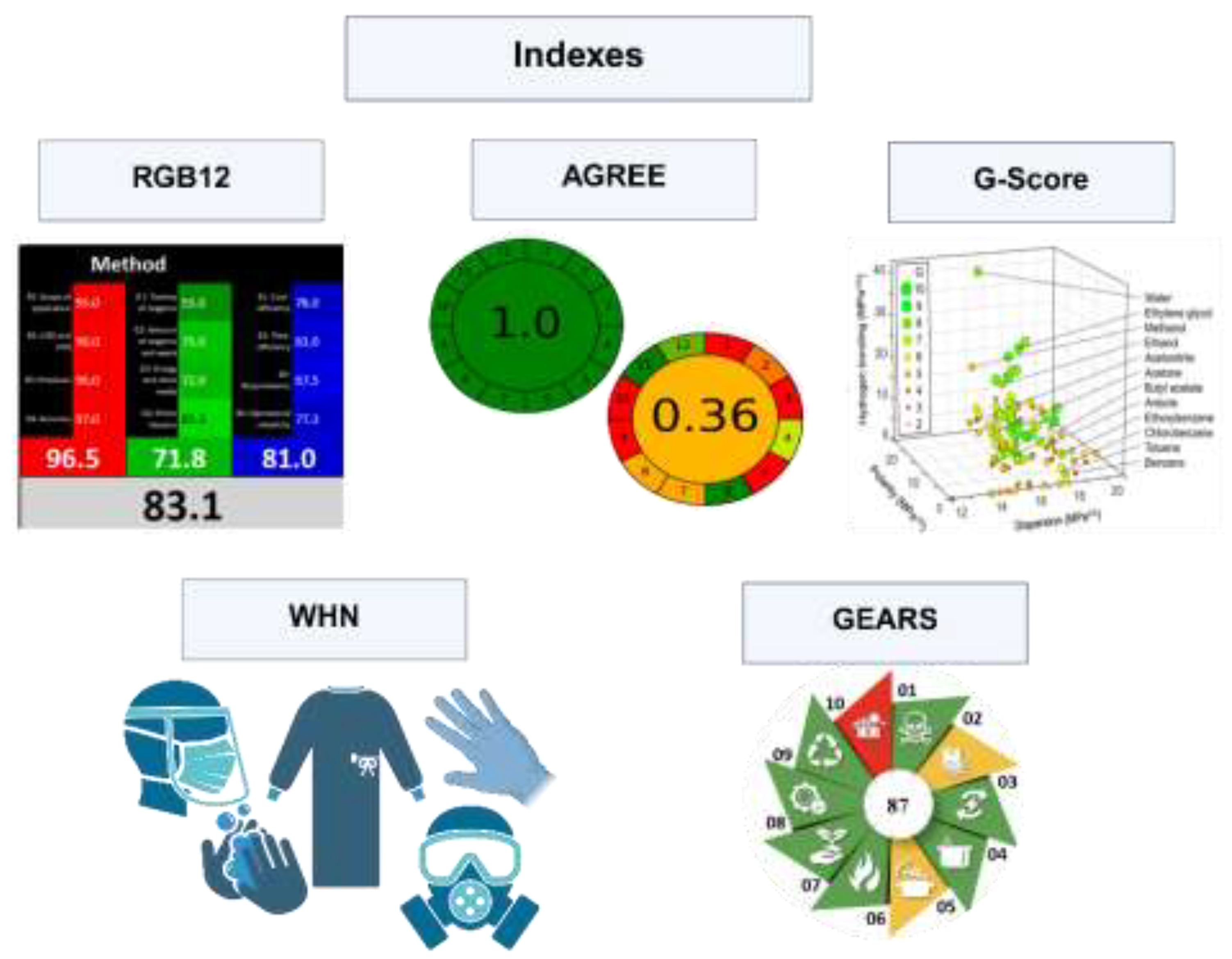
Figure 2.
Conceptual framework for sustainable chromatographic method development, illustrating the sequential stages of solvent implementation, method optimization, and validation. This structured workflow supports the rationale behind developing the Universal Suitability and Sustainability Index (USSI) as a comprehensive decision-making tool.
Figure 2.
Conceptual framework for sustainable chromatographic method development, illustrating the sequential stages of solvent implementation, method optimization, and validation. This structured workflow supports the rationale behind developing the Universal Suitability and Sustainability Index (USSI) as a comprehensive decision-making tool.
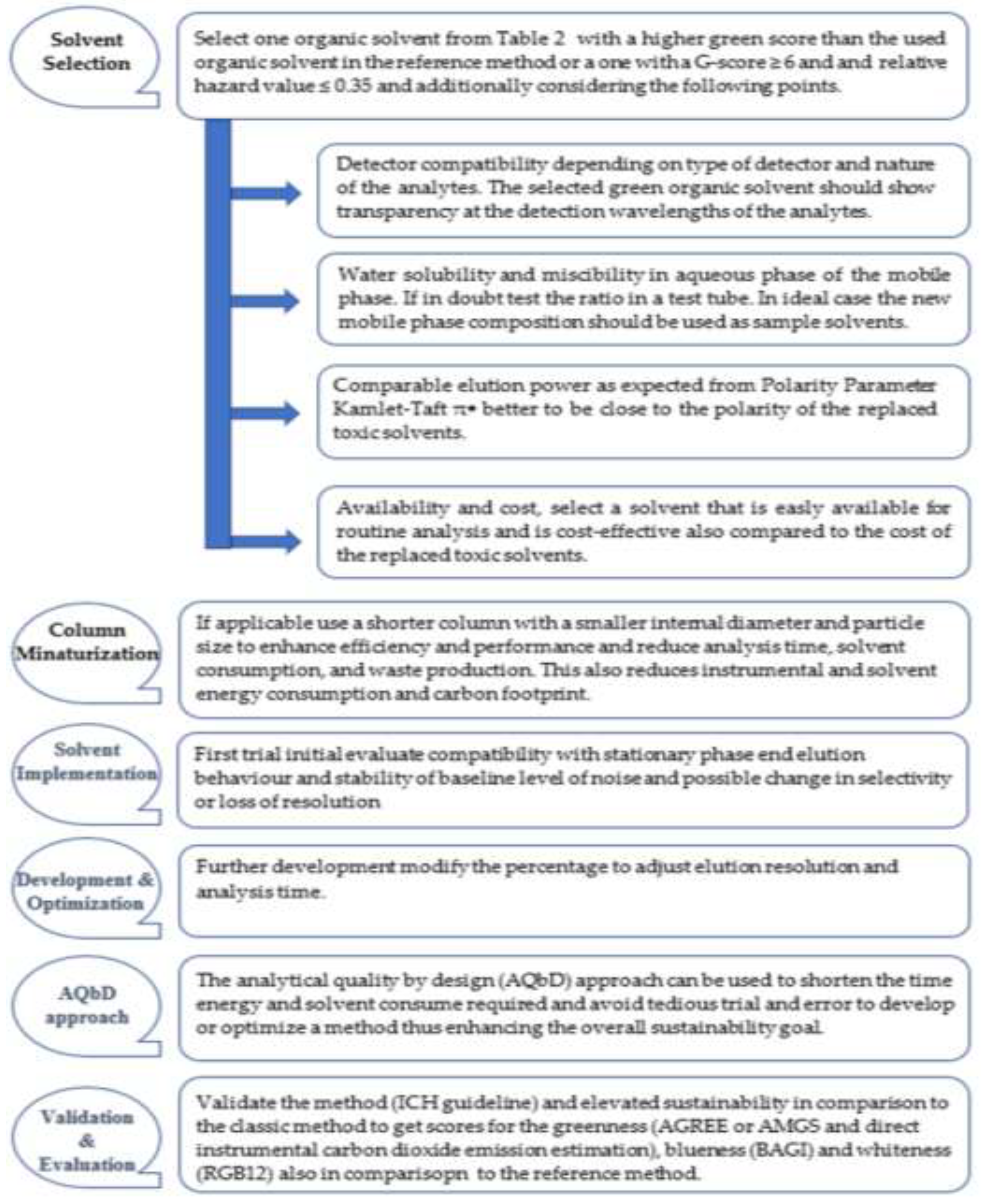
Figure 4.
Summarizes the different factors used in the evaluation of USSI, which are grouped into four equally weighted factors: chromatographic suitability, environmental greenness, cost-effectiveness & user-friendliness (blueness), and method readiness (redness). Each factor consists of four sub-criteria, with 6.25% to the overall score.
Figure 4.
Summarizes the different factors used in the evaluation of USSI, which are grouped into four equally weighted factors: chromatographic suitability, environmental greenness, cost-effectiveness & user-friendliness (blueness), and method readiness (redness). Each factor consists of four sub-criteria, with 6.25% to the overall score.
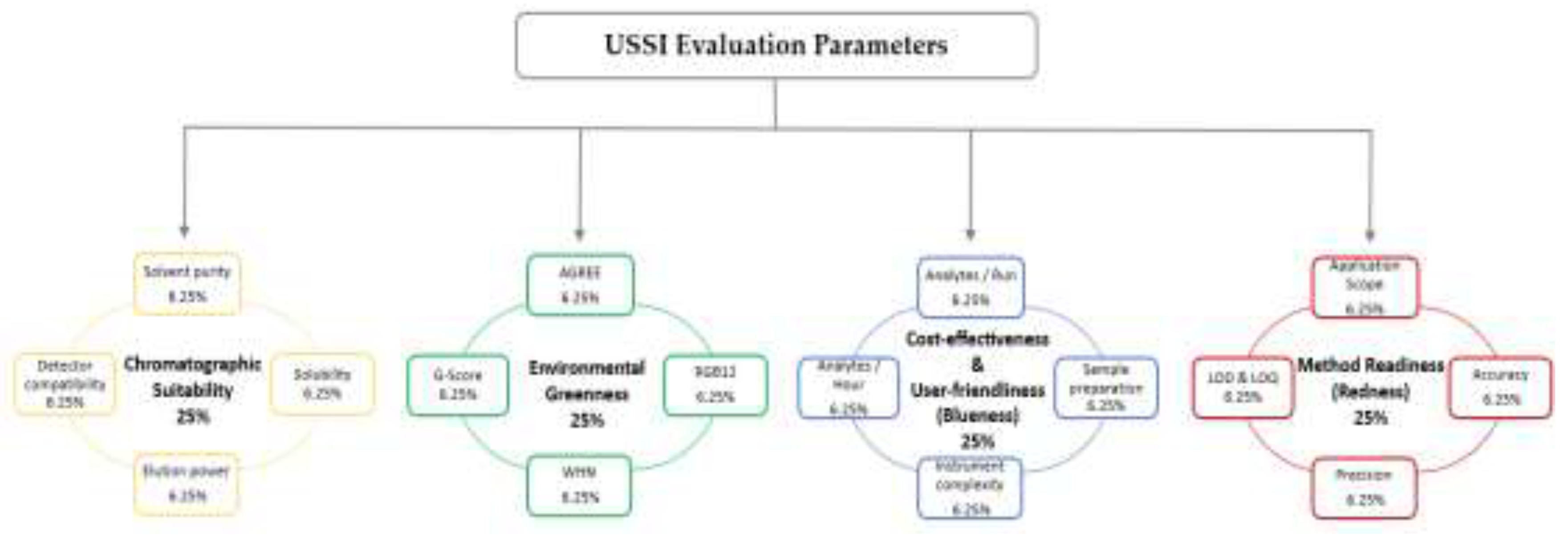
Figure 5.
Dual bar chart illustrating the relationship between the Universal Suitability and Sustainability Index (USSI) and method Whiteness across ten selected method’s solvents. Higher Whiteness scores generally correspond with elevated USSI values, indicating that solvents with better overall analytical balance tend to exhibit superior sustainability performance.
Figure 5.
Dual bar chart illustrating the relationship between the Universal Suitability and Sustainability Index (USSI) and method Whiteness across ten selected method’s solvents. Higher Whiteness scores generally correspond with elevated USSI values, indicating that solvents with better overall analytical balance tend to exhibit superior sustainability performance.
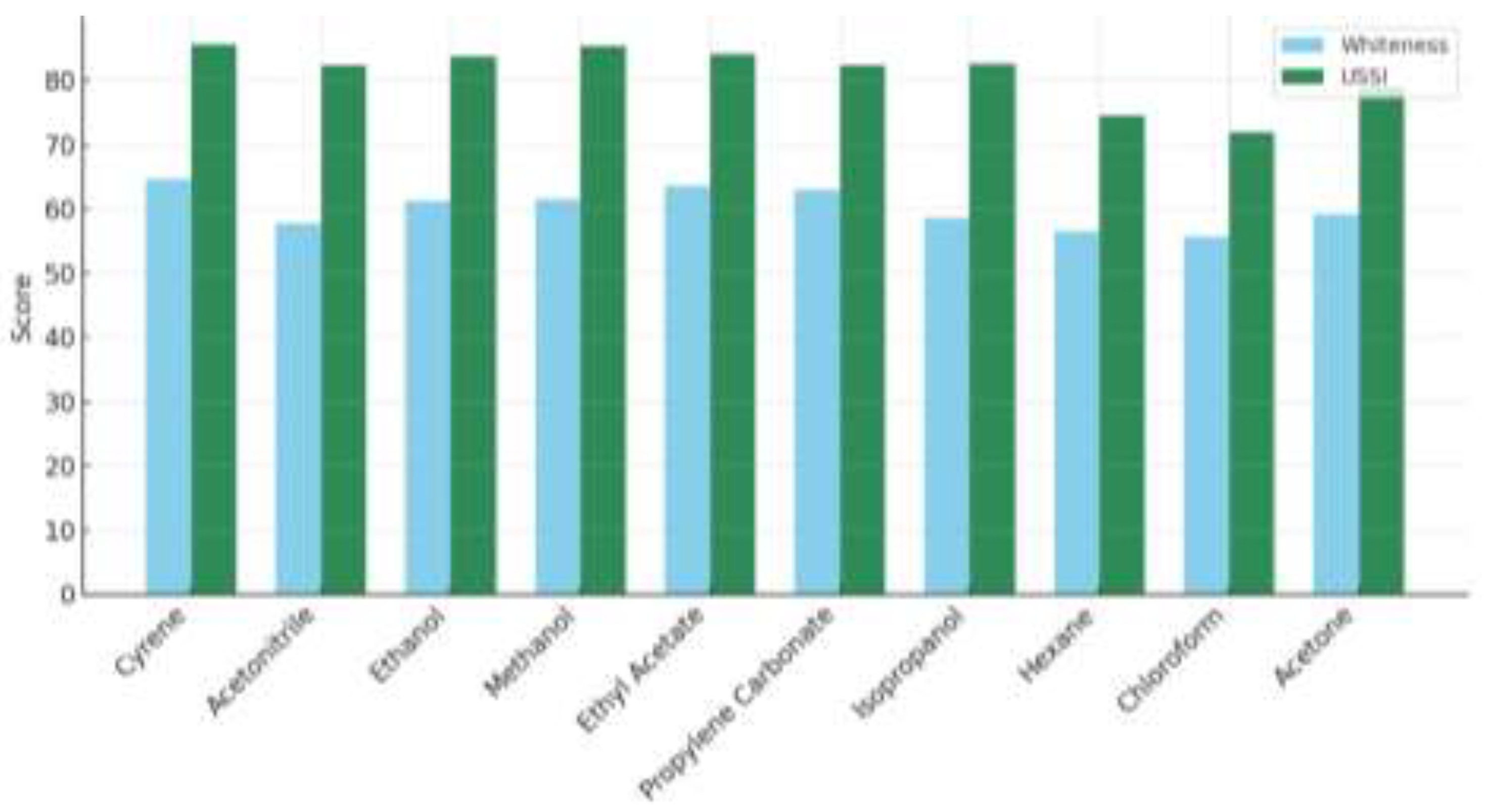
Figure 6.
Comparison of AGREE (blue) and USSI (green) scores for ten selected methods using different solvents. The AGREE values (given in % and scaled to 0–100 to ease comparison) generally align with the USSI trend, however USSI shows a better overall scoring.
Figure 6.
Comparison of AGREE (blue) and USSI (green) scores for ten selected methods using different solvents. The AGREE values (given in % and scaled to 0–100 to ease comparison) generally align with the USSI trend, however USSI shows a better overall scoring.
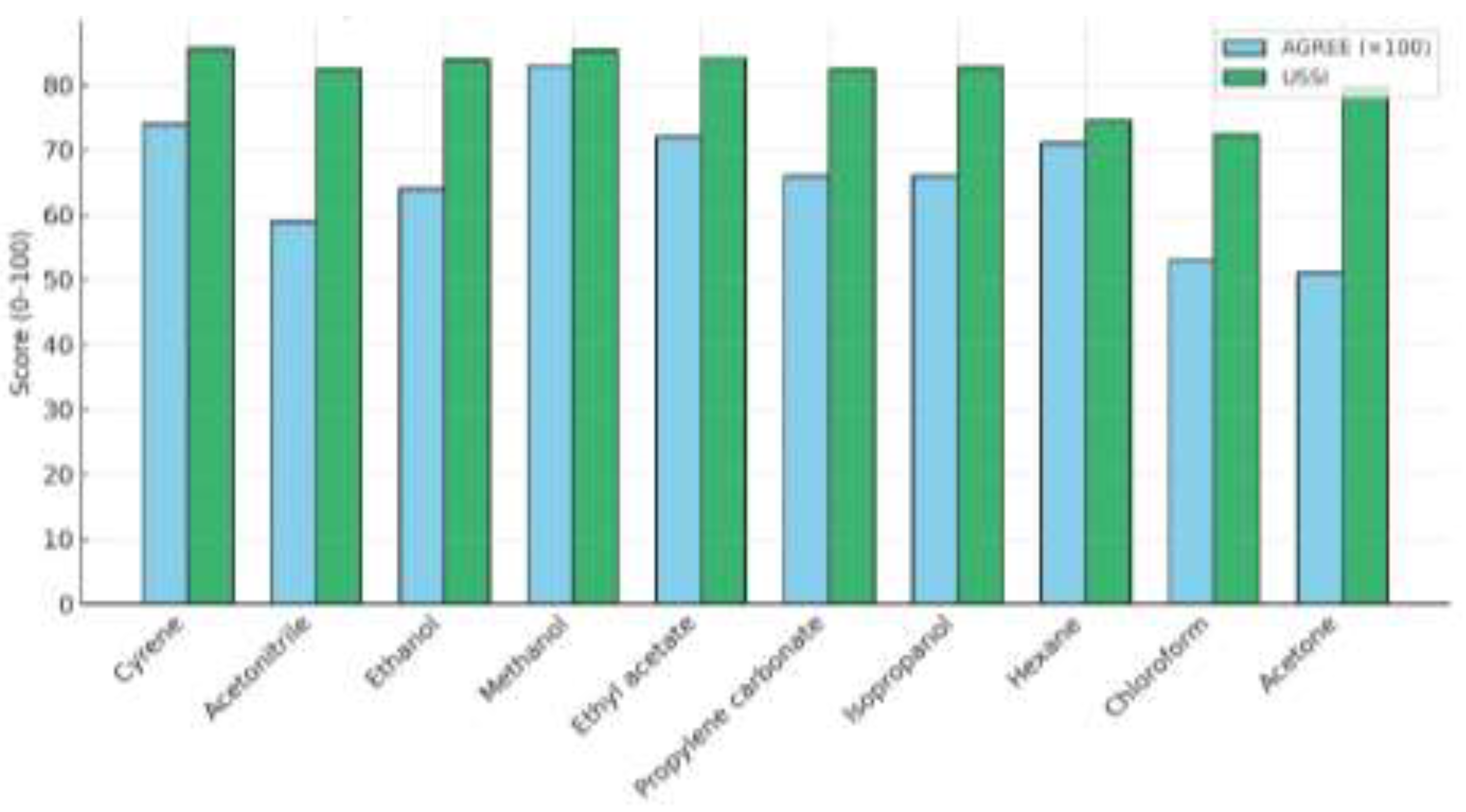
Figure 3.
A sunburst chart representing the Universal Suitability and Sustainability Index (USSI). The innermost circle shows the total score (100%), which is then divided outward into four equal factors of 25% each. Each factor is further subdivided into four sub-criteria (6.25% each), integrating analytical performance, sustainability, and suitability into a unified evaluation framework.2.2. Spreadsheet Implementation (Calculator).
Figure 3.
A sunburst chart representing the Universal Suitability and Sustainability Index (USSI). The innermost circle shows the total score (100%), which is then divided outward into four equal factors of 25% each. Each factor is further subdivided into four sub-criteria (6.25% each), integrating analytical performance, sustainability, and suitability into a unified evaluation framework.2.2. Spreadsheet Implementation (Calculator).
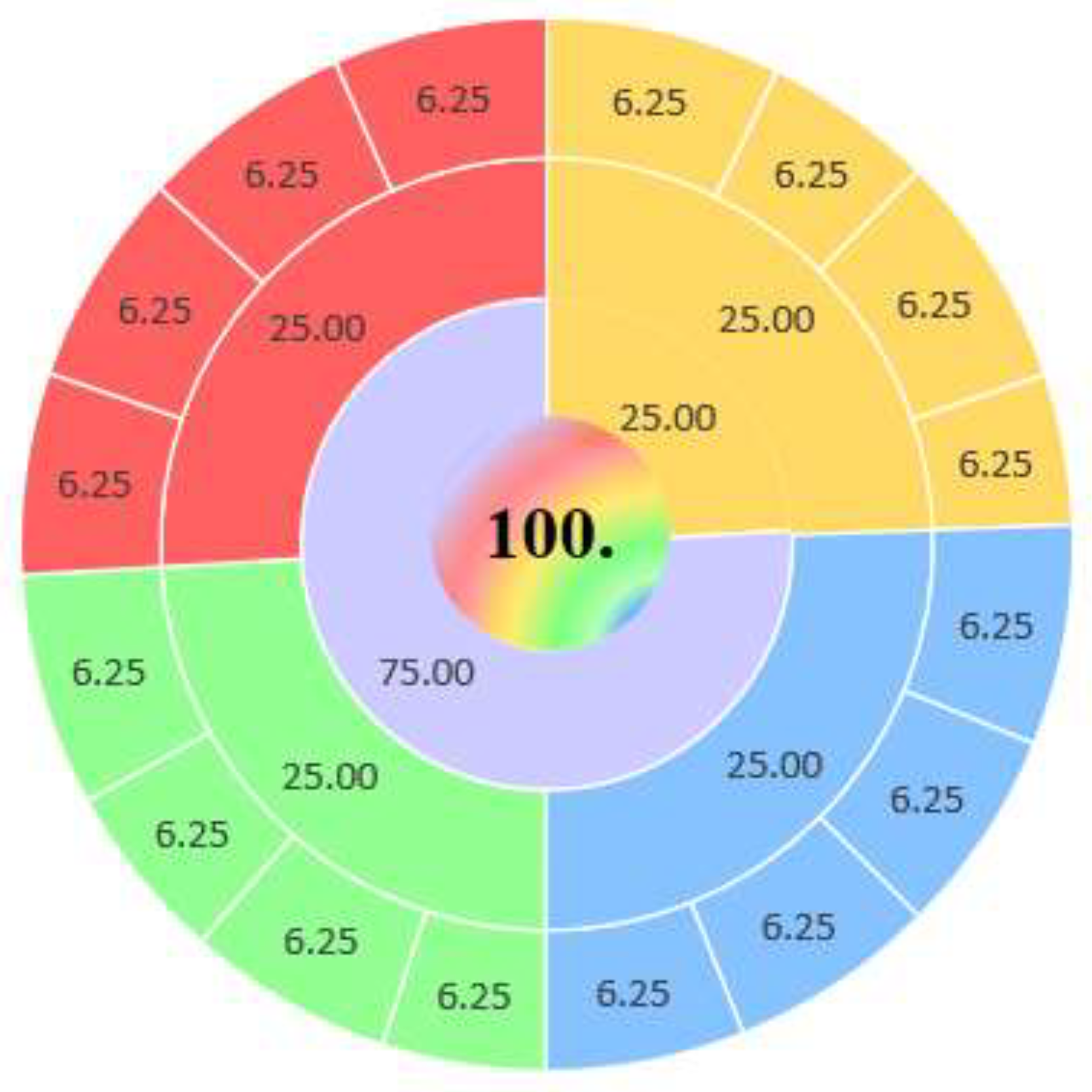

Table 1.
USSI scores and contributing parameters for selected methods.
| Solvent | AGREE (0–1) | RGB12 (0–100) |
G-Score (0–10) |
WHN (0–1) |
C-Footprint (kg CO₂) | USSI (0–100) |
Reference |
|---|---|---|---|---|---|---|---|
| Cyrene | 0.74 | 95.0 | 6.9 | 0.13 | 0.018 | 85.63 | https://doi.org/10.3390/ph16101488 |
| Acetonitrile | 0.59 | 80.2 | 5.8 | 0.39 | 0.018 | 82.44 | https://doi.org/10.3390/ph16101488 |
| Ethanol | 0.64 | 83.0 | 6.7 | 0.26 | 0.018 | 83.83 | https://doi.org/10.3390/ph16101488 |
| Methanol | 0.83 | 81.1 | 5.8 | 0.57 | 0.032 | 85.38 | https://doi.org/10.1021/acsomega.1c04613 |
| Ethyl acetate | 0.72 | 84.1 | 6.8 | 0.35 | 0.014 | 84.16 | https://doi.org/10.1016/j.greeac.2024.100128 |
| Propylene carbonate | 0.66 | 85.3 | 8.8 | 0.13 | 0.045 | 82.44 | https://doi.org/10.1016/j.jcoa.2022.100046 |
| Isopropanol | 0.66 | 79.4 | 6.5 | 0.35 | 0.018 | 82.67 | https://doi.org/10.3390/separations11030083 |
| Hexane | 0.71 | 77.3 | 4.8 | 0.78 | 0.018 | 74.52 | https://doi.org/10.1021/acsomega.1c04613 |
| Chloroform | 0.53 | 80.4 | 4.4 | 1.00 | 0.014 | 72.38 | https://doi.org/10.1016/j.greeac.2024.100128 |
| Acetone | 0.51 | 84.3 | 5.9 | 0.35 | 0.054 | 79.60 | DOI 10.1002/jssc.201401324 |
Disclaimer/Publisher’s Note: The statements, opinions and data contained in all publications are solely those of the individual author(s) and contributor(s) and not of MDPI and/or the editor(s). MDPI and/or the editor(s) disclaim responsibility for any injury to people or property resulting from any ideas, methods, instructions or products referred to in the content. |
© 2026 by the authors. Licensee MDPI, Basel, Switzerland. This article is an open access article distributed under the terms and conditions of the Creative Commons Attribution (CC BY) license (http://creativecommons.org/licenses/by/4.0/).
Copyright: This open access article is published under a Creative Commons CC BY 4.0 license, which permit the free download, distribution, and reuse, provided that the author and preprint are cited in any reuse.


