

Submitted:
22 February 2026
Posted:
25 February 2026
You are already at the latest version
Abstract
This paper investigates the implementation of lean practices in Singapore's manufacturing industry. The primary objective is to evaluate the adoption of lean methodologies across Singapore's precision manufacturing sector. To facilitate this assessment, questionnaires were distributed to companies of various sizes, including small and medium-sized enterprises and large corporations in Singapore. The results reveal that approximately 50% of manufacturers perceive adopting lean practices as challenging. Our study shows that most small and medium-sized enterprises (SMEs) face significant obstacles in implementing lean manufacturing practices. The findings indicate that barriers to implementation related to experience, skill sets, and knowledge pose considerable impediments. Furthermore, our research has established that management support is pivotal to effective lean implementation. Additionally, factors such as employee training, goal alignment, and the establishment of a supportive environment are significant contributors. While the use of tools and external expertise is relevant, internal resources and organizational culture are more important.
Keywords:
lean manufacturing
; lean production
; small-medium enterprise
1.0. Introduction
Lean manufacturing is frequently utilized to attain a company’s operational or manufacturing excellence (LIKER, 2004). It has roots in Japan and gained significant recognition through Womack’s publication, “The Machine That Changed the World”(Womack & Jones, 1996; Womack et al., 2007). Lean Manufacturing, or Lean Management, relies on the foundational principles, methods, and tools of the Toyota Production System (TPS), pioneered by the Japanese engineers Taiichi Ohno and Shigeo Shingo at Toyota Motor Company (Hopp & Spearman, 2021; Stone, 2012). This approach to operational excellence is also widely acknowledged as “The Toyota Way”(Lander & Liker, 2007; LIKER, 2004).
In this article, Lean principles and methodologies are considered tools for implementing Lean Manufacturing methods. In contrast, Lean Thinking refers to an organization’s philosophical approach (Stone, 2012). This article will use Lean Manufacturing as the general term for producing goods within an organization, rather than Lean production.
In Lean Thinking, waste is “any human activity that consumes resources without producing value.” Conversely, value is “a capability delivered to a customer at the appropriate time and a reasonable price, as determined by the customer.” Furthermore, it embodies an organizational philosophy that systematically emphasizes value-adding activities for customers while persistently eliminating waste throughout the value chain (Ohno, 2019; Womack & Jones, 2008).
The term “Lean” was first suggested by John Krafcik (Holweg, 2007) as a team member of the International Motor Vehicle Program (IMVP) at MIT, who wrote the paper “Triumph of the Lean Production System”. Since then, the Lean concept has transitioned from automotive manufacturing to various other industries and sectors (Gupta et al., 2016) encompassing healthcare (Poksinska, 2010), service (Andrés-López et al., 2015), construction (Salem et al., 2006), and food manufacturing (Costa et al., 2018). Its implementation has significantly influenced numerous organizations that adopt this methodology (Netland & Powell, 2016). The significance and advantages of lean practices have been recognized across various fields and sectors (Chen & Meng, 2010).
Companies must remain competitive in a challenging global landscape. To achieve this, they analyze costs, quality, delivery, service, and flexibility (Shah & Ward, 2003). Organizations in Singapore are facing significant challenges in costs, productivity, and the availability of skilled labor. Nevertheless, our interactions with various institutions reveal, somewhat unexpectedly, that a large majority do not incorporate Lean methodologies and principles into their daily operations. Some employ these methods only when necessary, such as during audits or in response to customer demands, while others cease applying them after a few years. Furthermore, some organizations find it difficult to implement these methodologies, and many believe these practices do not yield substantial benefits for their operations.
It has come to our attention that numerous government initiatives prioritize adopting digital technologies and artificial intelligence, often neglecting the fundamental need to ensure stable and organized operations before pursuing digitalization as a path to operational excellence. Many supporting institutions, consultancies, and training providers concentrate on the tools and methodologies required for implementation (Mamoojee-Khatib et al., 2025). However, after completing training programs, there is often a lack of ongoing support for organizations. This represents a significant gap, explaining why many organizations face challenges. Moreover, there is a common misconception among companies that merely adopting technology will resolve their issues (Hensley, 2017). Another critical challenge these organizations face is their reluctance to allow employees to learn, adapt, and develop, which leads to difficulties retaining skilled personnel (Mishra, 2023; Xuecheng et al., 2022)
One of the most studied manufacturing systems is Lean Manufacturing. Its implementation has been widely followed, debated, and discussed among practitioners, academia, and the public and private sectors in many industries (Burgess & Radnor, 2013; Erthal & Marques, 2018; Freitas et al., 2018; Knapić et al., 2024; Poksinska, 2010; Radnor & Osborne, 2013; Rodgers & Antony, 2019). Organizations ranging from small businesses to large corporations have embraced Lean Manufacturing principles (Hu et al., 2015; Pech & Jelínková, 2025; Samuel et al., 2015).
The research questions explored in this manuscript are:
RQ1: What lean manufacturing tools and methodologies are widely employed within the manufacturing sector in Singapore?
RQ2: What factors contribute to the lack of adoption of lean manufacturing tools and methods within the manufacturing industries of Singapore?
RQ3: To what extent are small and medium-sized enterprises (SMEs) in Singapore implementing this methodology?
RQ4: What factors contribute to the limited implementation of this approach within small and medium-sized enterprises (SMEs)?
2.0. Literature Review
Over the past decade, Singapore’s manufacturing sector has evolved from mass production to high-technology processes, leading to a shift toward high-mix, low-volume production (Sekmokas, 2019). Numerous traditional manufacturing methods have undergone significant transformation, with many enterprises relocating to regions with lower operational costs or entirely ceasing their operations (Athukorala & Ekanayake, 2024).
Although Lean Manufacturing has been widely implemented across various industries in Singapore, there is a paucity of research evidence on its application and success (Lai et al., 2020; Zhang et al., 2016). The first identifiable scientific paper on the implementation of Lean practices in Singapore was published (Dulaimi & Tanamas, 2001), which focused on the construction sector and examined prerequisites, barriers, and partial adoption of Lean principles. The work presented by Xu (Xu et al., 2013) is the earliest empirical examination of Lean implementation specifically within Singaporean small and medium enterprises (SMEs), identifying contextual barriers, enablers, and practical challenges, and noting common tools used by multinational corporations (MNCs) that significantly impact SMEs. The study highlighted the following Lean tools: value stream mapping (VSM), 5S (Sort, Set in Order, Shine, Standardize, and Sustain), Visual Management (VM), and Standardization. Numerous suggestions were made to support Lean implementation, particularly for SMEs.
A survey conducted by Xu & Wang (Xu & Wang, 2017) examined how Lean principles were implemented in Singaporean SMEs, focusing on practical lessons learned from real-world industrial cases. The paper highlights that although Lean is widely promoted in Singapore, SMEs face distinct challenges compared to large firms, including limited resources, a lack of internal expertise, and difficulties sustaining improvements. According to the same paper, Lean can significantly improve productivity in Singaporean SMEs, but success depends heavily on sustained management support and the development of internal Lean competencies. In line with this finding, consultants at the Singapore Institute of Manufacturing Technology (SIMTech) identified four essential lessons from the study and emphasized that top management’s commitment and involvement are key to enabling the team to adopt these lean practices. Other relevant conclusions pointed out by the authors are the following: (i) allocating adequate time for an organization to implement necessary changes; (ii) understanding the problem-solving methodologies used to address operational issues is of significantly greater importance than the A3 tool (a structured one page problem solving tool originating from Toyota Production System); (iii) establishing a formal Lean committee is crucial for the sustainability of the whole Lean program; (iv) empowering employees to participate in the continuous improvement initiatives is vital; (v) promoting an organization characterized by transparency and respect for all individuals should be a priority.
A dedicated research paper on Singapore’s shipbuilding industry examines the obstacles to implementing Lean practices successfully (Lai et al., 2020). The study identifies a lack of knowledge as the principal factor contributing to failures in this context. Moreover, the study highlights that management support and organizational culture are substantial contributors to the effective adoption of Lean methodologies.
Singapore’s Lean ecosystem is dominated by government programs rather than academic research, as the latest Singapore-Lean scientific paper (Lai et al., 2020) was published more than 5 years ago. Nevertheless, many government programs have changed names as priorities shift to meet current needs. Unlike most countries, where Lean spreads naturally within industries, Singapore takes a very different path – its government agencies, such as ASTAR and the Ministry of Manpower, actively steer the process by funding, promoting, and coordinating Lean capability development across sectors (JTC, 2024; MOM, 2018).
Some Singaporean policies, including the Productivity and Innovation Credit Scheme (PIC) and the Lean Enterprise Development Scheme (LEDS), promote lean adoption and productivity improvements for organizations in the country. These policies encourage organizations to enhance productivity by adopting Lean practices that lower operating costs and optimize manufacturing processes. Although the PIC scheme expired in 2018, other schemes, particularly for small and medium enterprises, remain available, such as the Enterprise Development Grant (EDG) and the Productivity Solutions Grant (PSG).
Due to the country’s high labour costs, the government has also emphasized adopting highly capital-intensive methods such as digitization (Singapore, 2021). To maintain cost competitiveness in challenging global markets, the government has introduced numerous support opportunities for companies in the manufacturing sector. Government assistance for these businesses includes future employee training to upgrade skills, an enterprise financing scheme, and additional support for these organizations (Fung, 2020; Fung et al., 2021).
A major challenge for many firms, particularly SMEs, is the substantial upfront costs of Lean transformation (Alston, 2017). Nevertheless, if SMEs choose to implement small-scale initiatives rather than fully commit to Lean processes, the costs of adopting these practices become more manageable (Bhamu & Singh Sangwan, 2014). More critically, resistance to change emerges, particularly among employees accustomed to traditional practices (Nordin et al., 2012; Xu et al., 2013). Furthermore, Singapore’s multicultural workplace dynamics suggest that employees’ diverse cultural backgrounds may significantly impact their readiness to embrace Lean practices (Lai et al., 2020). A senior manager from a larger SME noted, “We are unable to effectively train the operators due to their limited proficiency in the language.”
While larger organizations may possess the resources necessary for a comprehensive implementation of lean practices, small and medium-sized enterprises (SMEs) often encounter difficulties due to financial constraints, a limited workforce, and a deficiency in specialized knowledge regarding Lean methodologies (Dorota Rymaszewska, 2014; Hu et al., 2015; Noel et al., 2025). An earlier finding indicates that the presence of qualified personnel well-versed in Lean principles is essential to ensuring a successful Lean transformation. Although government initiatives may address some of these concerns, acquiring the specific knowledge required to implement Lean practices effectively remains challenging. Furthermore, research indicates that successful Lean implementation requires sustained commitment from management, which can be challenging when top executives prioritize short-term financial gains (Alefari et al., 2017; Lodgaard et al., 2016).
Based on our literature review in Singapore’s manufacturing context, we aim to examine the tools and methods widely employed (RQ1), the implementation challenges (RQ2), the extent to which SMEs have adopted this methodology (RQ3), and the specific challenges they face (RQ4).
3.0. Methodology
This research adopts a quantitative approach, using a survey to examine the extent and nature of Lean Manufacturing implementation in Singapore’s manufacturing industry. A survey is appropriate because it effectively collects data from a large sample, offering insights into prevailing practices, challenges, and outcomes associated with adopting Lean methodologies.
A cross-sectional survey design will be utilized to obtain a comprehensive overview of Lean Manufacturing implementation practices at a designated point in time. This design facilitates assessing the current state of Lean adoption, identifying emerging trends, and examining relationships among various factors.
The target population consists of manufacturing enterprises operating in Singapore. This includes companies across diverse sectors such as electronics, precision engineering, and manufacturing. A comprehensive list of manufacturing firms was sourced from the Singapore Manufacturing Federation (SMF) and the Singapore Precision Engineering and Trade Association (SPETA), which provide a reliable, up-to-date listing of businesses in Singapore.
The research methodology required distributing a survey to over 150 companies in the electronics and precision engineering manufacturing sectors. The survey comprises 22 questions about the company’s size, revenue, and primary business operations. The survey encompasses both closed-ended and open-ended questions was created to gather data regarding:
Company demographics, including size, sector, and other characteristics.
Awareness and understanding of Lean Manufacturing principles.
The extent of Lean implementation (tools and techniques used, areas of application)
Drivers and barriers to Lean adoption.
Outcomes and benefits of Lean implementation (e.g., productivity improvement, cost reduction, quality enhancement).
Key success factors for Lean implementation.
The survey was administered online via Microsoft Forms and by email. This methodology provides cost-effectiveness, extensive reach, and facilitates ease of data analysis. However, the survey yielded limited results. Conversely, we identified a successful strategy for engaging senior management in organizations through LinkedIn profiles. A total of thirty-six responses were obtained.
Figure 1 outlines the procedural flow of the methodological design pertaining to the survey questions:
Participation in the survey was voluntary, and respondents received a comprehensive explanation of the research objectives along with assurances of the confidentiality of their responses. All data collected was treated with strict confidentiality and utilized exclusively for research purposes. Respondents’ anonymity was preserved when disseminating the findings. Furthermore, data is securely stored in accordance with ethical guidelines and data protection regulations.
4.0. Results and Discussion
The predominant segment of survey participants holds managerial-level or higher positions. Over two-thirds of these respondents are categorized as owners, managers, or directors (Refer to Figure 2).
As depicted in Figure 3, the composition includes a balanced representation of multinational corporations (MNCs), small and medium enterprises (SMEs), and larger SMEs. Approximately one-third of the entities represented are MNCs.
As exhibited in Figure 4, only 40% of respondents do not implement Lean methodologies within their organizations. The survey results show a significant reluctance among many SMEs to adopt Lean manufacturing tools and techniques. It implies that either awareness of Lean or perceived relevance to It within these organizations is lacking, or that various barriers hinder its adoption. Organizations with less than 1 year of Lean experience account for 12%, and 9% of respondents have 2 to 5 years of experience, suggesting a growing interest in Lean methodologies. These entities may still be in the process of comprehending and integrating Lean principles into their operations. Among organizations that reported implementing Lean for 5 to 10 years (18%) and 10 to 15 years (6%), 24% have achieved a moderate level of Lean implementation maturity. These entities are likely to derive consistent benefits from Lean practices and typically represent the largest local corporations. A smaller proportion of organizations have maintained Lean practices for 15 to 20 years (6%) or for more than 20 years (9%). Such organizations are likely to be highly experienced and deeply integrated into the Lean philosophy, often comprising multinational corporations (MNCs).
In the survey, the prevailing solutions and methodologies employed in corporate operations are identified as 3S (Sort, Sweep, and Standardize) and 5S, followed by a cause-and-effect diagram and Failure Mode and Effects Analysis (FMEA). Other notable responses included Value Stream Mapping (VSM), Kaizen, and continuous improvement (refer to Figure 5). These instruments are pivotal to Lean practices, focusing on organization and process visualization to eliminate waste and enhance efficiency. The prominence of 5S, VSM, and Kaizen underscores foundational Lean tools that are both comprehensible and readily implementable. These methodologies are likely to yield prompt, visible enhancements, making them favorable options. The limited application of the Internet of Things (IoT) and Industry 4.0 tools suggests a potential deficiency in integrating digital transformation with Lean practices. This observation may indicate an underutilized opportunity to integrate Lean principles with contemporary technologies to achieve greater efficiency.
Based on the subsequent response, our analysis indicates that organizations with implementation durations exceeding five to ten years are predominantly multinational corporations or larger companies. In contrast, small and medium-sized enterprises either lack implementation plans, are in the planning phase, or are unsure where to begin. This observation accounts for nearly one-third of the responses (Figure 6).
The bar chart exhibited in Figure 7 shows the tools and methodologies that the surveyed organizations expect to incorporate in the future. This information offers valuable insights into their strategic orientations and priority areas. A significant proportion of respondents indicate their intention to implement Kaizen, Continuous Improvement, and the 3S/5S methodologies. The preference for Kaizen/Continuous Improvement emerges as the leading choice for future implementation, highlighting a widespread aspiration to cultivate a culture of continuous enhancement and operational efficiency. The methodologies of 5S and Kanban are closely ranked in popularity, reflecting a commitment to maintaining workplace organization and efficiently managing workflow processes. Tools such as Visual Management, Root Cause and Effect Analysis, Value Stream Mapping (VSM), and Problem-Solving Techniques are expected to achieve moderate levels of adoption. These tools are essential to Lean practices, and the expected uptake indicates that organizations are striving to advance their Lean initiatives.
Advanced methodologies, including Six Sigma, Hoshin Kanri, and Total Productive Maintenance (TPM), exhibit relatively low rates of planned adoption. This observation implies that these approaches are regarded as requiring greater expertise or as less immediately efficacious. The corresponding chart shows limited interest in Industry 4.0 and digital innovations, such as the Internet of Things (IoT), automated systems, and advanced analytics. This finding aligns with the prior chart, indicating a gradual integration of digital solutions within Lean initiatives.
Based on Figure 8, it can be inferred that organizations that do not intend to implement Lean manufacturing tools and methodologies consider their current systems satisfactory and see no rationale for change. This situation presents a significant obstacle to transformation and indicates a deeply rooted resistance to change stemming from their contentment with the status quo. Entities in this category may lack motivation to invest in Lean tools because they do not perceive an immediate need for improvement. An additional critical decision concerns management; this initiative is unlikely to be pursued if management does not acknowledge potential benefits. This may suggest insufficient leadership support, a lack of awareness of the advantages of lean methodologies, or conflicting priorities. Nonetheless, feedback from organizations that do not plan to implement lean practices indicates some level of interest, though they face challenges attracting the personnel, tools, and applications needed. This highlights a skills gap or difficulty in accessing suitable talent for adopting lean practices. SMEs may find it difficult to compete for skilled professionals or may lack adequate internal training mechanisms.
Another parameter of interest is the benefits companies perceive that developing a Lean program can bring. Figure 9 shows the main benefits stated by the surveyed organizations that implement Lean manufacturing tools and techniques. They tend to perceive productivity and quality enhancement as their primary benefits. This observation illustrates that Lean practices significantly influence process optimization and waste reduction. Furthermore, improving product and process quality is another essential outcome, highlighting Lean’s dedication to minimizing defects and maintaining high standards.
The survey results also point to other notable advantages, including increased profitability, shortened lead times, and enhanced revenue. These factors demonstrate that Lean methodologies can provide considerable benefits to an organization. The adoption of Lean practices also drives financial improvements, underscoring their importance to profitability; the focus on reducing bottlenecks accelerates delivery and production cycles. By optimizing processes, enterprises can enhance outcomes that prioritize customer satisfaction.
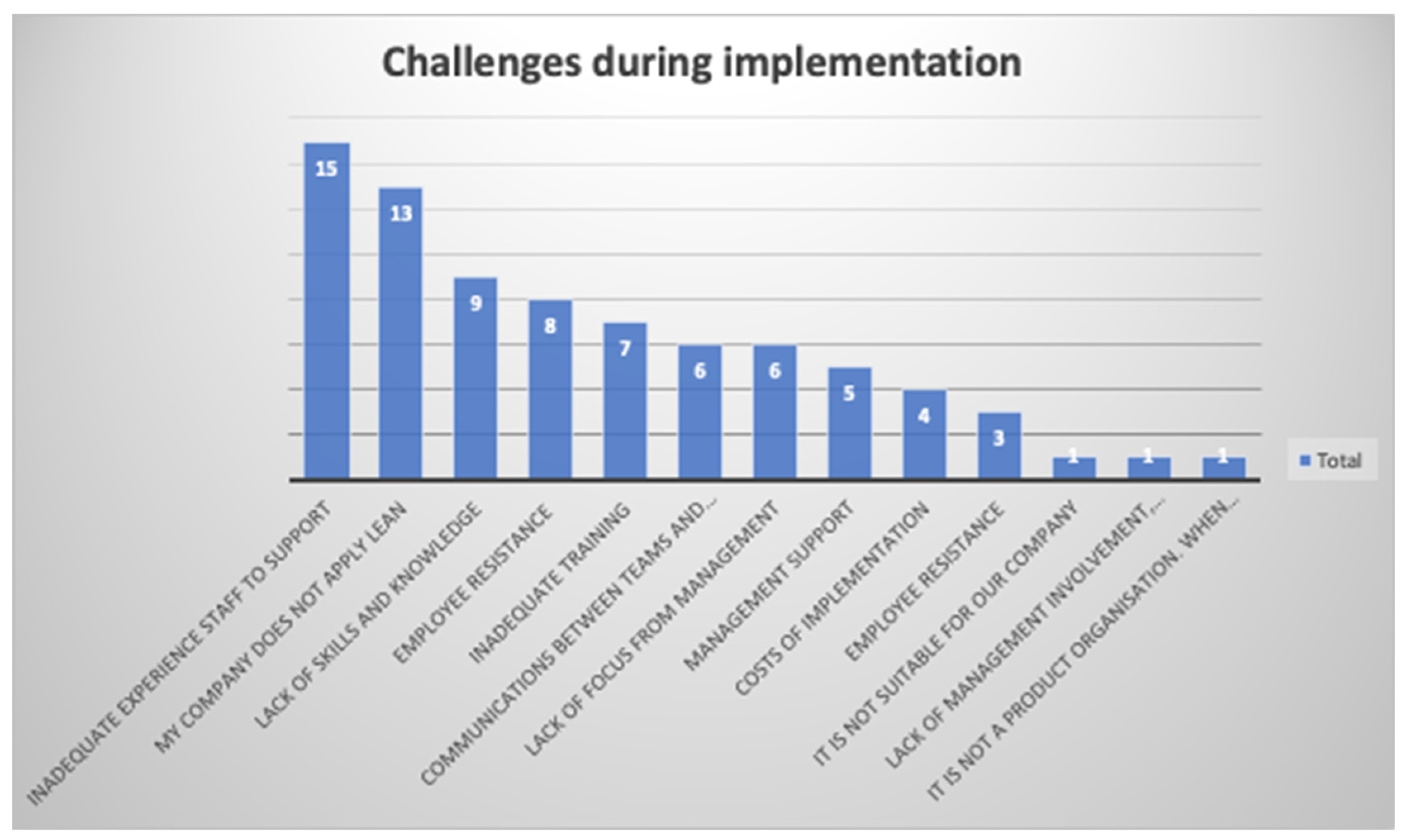
The chart in Figure 10 indicates that the principal challenges and obstacles in implementing and maintaining a Lean program are “Inadequate or Insufficient Staff to Support” and “My Company Does Not Know What Lean is.” These challenges suggest that resource limitations, a shortage of knowledgeable personnel, and a general lack of awareness or understanding of lean principles present significant barriers.
Additional notable challenges identified in the survey include: “Deficiency of Skills and Knowledge,” which highlights the necessity for training and upskilling to ensure effective implementation; “Employee Engagement,” wherein resistance or reluctance from personnel represents a significant obstacle; and “Interdepartmental Communication” in conjunction with “Insufficient Management Focus,” both of which underscore the importance of internal alignment and a concentrated leadership direction as pivotal elements.
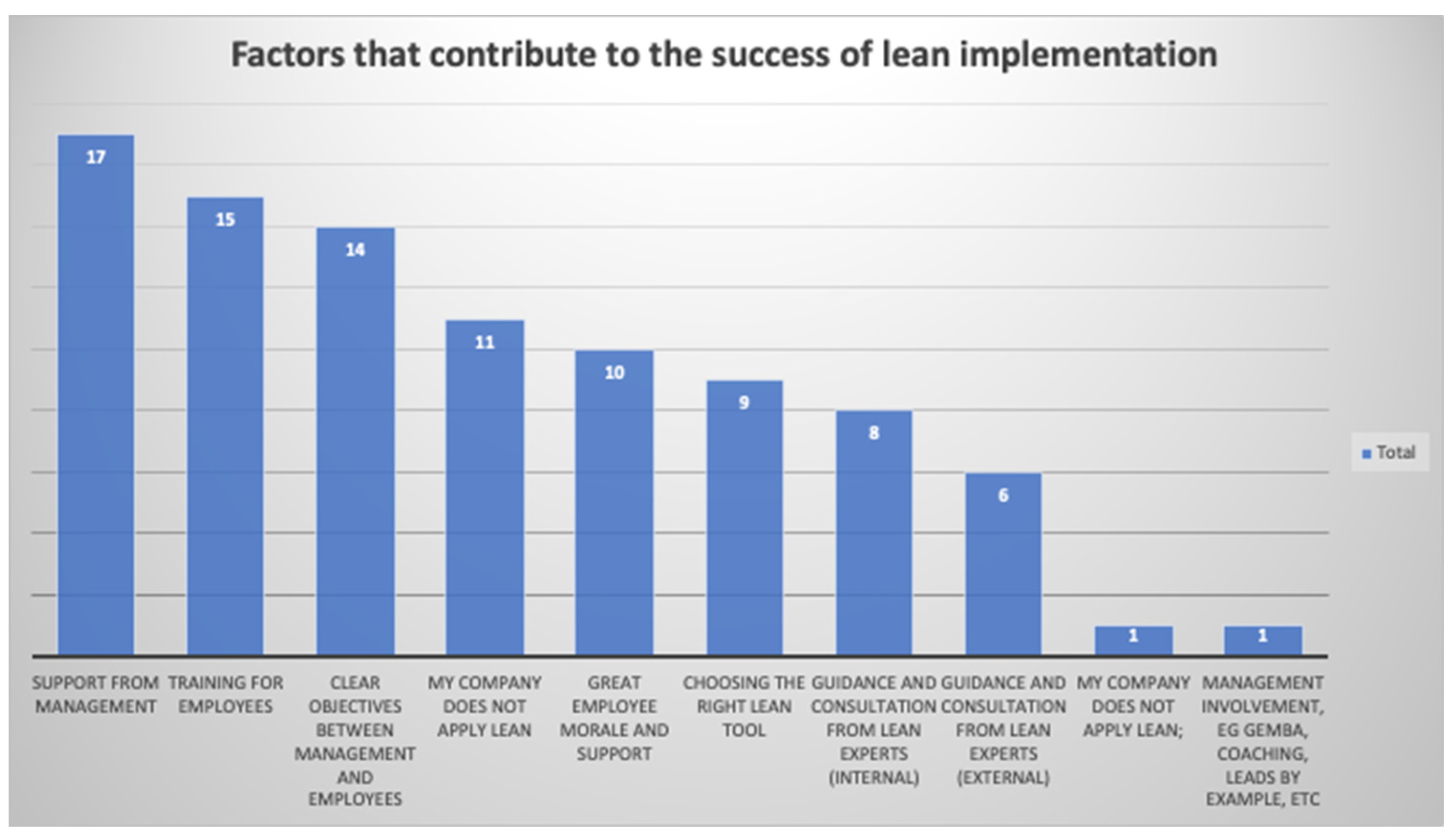
The survey findings indicate that managerial support is the most crucial factor in the successful implementation of Lean practices, followed by employee training and the establishment of clear objectives between management and employees. The prominence of managerial support as the most vital component of effective Lean implementation underscores the importance of strong leadership commitment in facilitating Lean initiatives. Furthermore, the significance of employee training, ranked second, underscores the need to equip employees with the skills and knowledge needed for success. Finally, the establishment of transparent objectives between management and employees, identified as the third most significant factor, underscores the importance of aligning and clarifying organizational goals at all levels.
Recalling the research questions that drove this study:
RQ1: What lean manufacturing tools and methodologies are widely employed within the manufacturing sector in Singapore?
RQ2: What factors contribute to the lack of adoption of lean manufacturing tools and methods within the manufacturing industries of Singapore?
RQ3: To what extent are small and medium-sized enterprises (SMEs) in Singapore implementing this methodology?
RQ4: What factors contribute to the limited implementation of this approach within small and medium-sized enterprises (SMEs)?
Figure 11.
Importance of the factors that contribute to the success of Lean implementation.
Based on our survey (RQ1), the most widely adopted tools and methodologies are 3S, 5S, the cause-and-effect diagram, and FMEA. The significant adoption of VSM and Kaizen is also prominent in the manufacturing industry. These tools and methods are the foundation of lean and continuous improvement. Main challenges in skills and knowledge for implementation include resource limitations, a shortage of knowledgeable personnel, and a general lack of awareness or understanding of lean principles, which present significant barriers (RQ2). The survey indicates that a substantial number of organizations, particularly SMEs, have not fully adopted lean manufacturing methodologies due to these challenges (RQ4). It is also interesting to find that more than half of SMEs have not yet embraced lean manufacturing due to challenges and limited understanding of its benefits (RQ3). It is evident that SMEs that have embraced this methodology attribute their success to factors such as comprehensive training and supportive management.
5.0. Conclusions and Recommendations
Lean manufacturing has exerted a significant influence worldwide. Almost all regions have conducted comprehensive research and endorsed adopting lean principles, thereby expanding these methodologies beyond manufacturing to diverse industries. The primary aim is to enhance organizational and business performance at every operational level by reducing waste and focusing on processes that add value in delivering services or producing goods.
Each organization’s journey toward achieving and sustaining continuous improvement is unique. The foremost challenge is determining the appropriate timing and methodology for initiation. As this journey begins, attention shifts to strategies that foster sustained progress and ensure the implementation’s sustainability. Additionally, numerous tools and methodologies are relevant to both application and execution. The diverse challenges posed by varying cultures, industries, and environments significantly contribute to the distinctiveness of these journeys. The overarching objective remains the continuous exploration and evaluation of strategies tailored to each organization across a wide range of industries and nations.
Lean manufacturing is widely recognized as a prominent concept in the manufacturing sector. However, many individuals express skepticism about its benefits for organizations, especially for small and medium-sized enterprises. While numerous organizations endeavor to implement this methodology, various size-related factors hinder their success.
In conclusion, our study’s findings indicate that implementation challenges, particularly related to experience, skill sets, and knowledge, remain significant barriers. Our research has established that management support is essential to the effective implementation of lean methodologies. Moreover, employee training, objective alignment, and the establishment of a supportive environment are critical factors. While the use of tools and external expertise is relevant, internal resources and organizational culture appear to be even more significant.
These organizations require guidance but often lack the resources to engage experts in their respective fields. Even when they consult with specialists, many find it difficult to grasp the complexities of these entities’ objectives. Most specialists assert that positive outcomes will ultimately ensue if the appropriate tools are employed.
The following recommendations, derived from our research, are presented for consideration:
Recommendation 1: It is imperative to strengthen leadership commitment by ensuring active, visible management participation in lean activities, thereby establishing a supportive tone throughout the organization.
Recommendation 2: It is advisable to invest in personnel development by providing training programs tailored to lean principles and practices.
Recommendation 3: Leadership must clarify and align organizational goals by setting clear objectives that foster connectivity between management and staff, ensuring a unified approach to shared outcomes.
Recommendation 4: Management is encouraged to enhance employee morale by cultivating a culture that values staff contributions and promotes engagement with lean initiatives.
Recommendation 5: Collaboration with external partners may be necessary to identify and select suitable tools for assessing and implementing lean methodologies consistent with the company’s requirements and objectives. Recommendation 6: Management is encouraged to leverage internal expertise by fostering capacity building through training and mentorship, rather than relying solely on external consultants.
A network of research institutions should be established to facilitate the ongoing examination of a specific country’s culture and its execution.
One limitation of this study is the relatively small sample size. Most small and medium-sized enterprises (SMEs) surveyed opted not to participate due to time constraints. Furthermore, the survey focuses exclusively on the manufacturing sector. Other challenges SMEs face may also exist.
6.0. Future Studies
It is recommended that the principles of lean manufacturing be integrated into Singapore’s higher education institutions. Educational institutions should collaborate to promote research initiatives within the industry. Singapore is a unique nation, characterized by a diverse population from multiple cultural backgrounds. A significant number of multinational corporations, small and medium-sized enterprises, and startups from various cultures and regions have established operations in the country.
The government is promoting the digitalization of businesses; however, the structural integrity will remain jeopardized without the establishment of essential organizational standards. A failure in this aspect is imminent. Accordingly, a robust foundation is imperative for companies to flourish and attain success. The principles of waste elimination and value creation must be thoroughly integrated into the foundational framework of these enterprises through higher education, upstream workforce preparation, and downstream executive education.
References
- Alefari, M.; Salonitis, K.; Xu, Y. The role of leadership in implementing lean manufacturing. Procedia CIRP 2017, 63, 756–761. [Google Scholar] [CrossRef]
- Alston, F. Lean implementation: Applications and hidden costs; CRC Press, 2017. [Google Scholar]
- Andrés-López, E.; González-Requena, I.; Sanz-Lobera, A. Lean service: reassessment of lean manufacturing for service activities. Procedia engineering 2015, 132, 23–30. [Google Scholar] [CrossRef]
- Athukorala, P.-c.; Ekanayake, R. (2024). International Production and Industrial Transformation: The Singapore Story.
- Bhamu, J.; Singh Sangwan, K. Lean manufacturing: literature review and research issues. International journal of operations & production management 2014, 34(7), 876–940. [Google Scholar]
- Burgess, N.; Radnor, Z. Evaluating Lean in healthcare. International journal of health care quality assurance 2013, 26(3), 220–235. [Google Scholar] [CrossRef] [PubMed]
- Chen, L.; Meng, B. The application of value stream mapping based lean production system. International journal of business and management 2010, 5(6), 203. [Google Scholar] [CrossRef]
- Costa, L. B. M.; Godinho Filho, M.; Fredendall, L. D.; Paredes, F. J. G. Lean, six sigma and lean six sigma in the food industry: A systematic literature review. Trends in Food Science & Technology 2018, 82, 122–133. [Google Scholar] [CrossRef]
- Dorota Rymaszewska, A. The challenges of lean manufacturing implementation in SMEs. Benchmarking: An International Journal 2014, 21(6), 987–1002. [Google Scholar] [CrossRef]
- Dulaimi, M. F.; Tanamas, C. The principles and applications of lean construction in Singapore. 9th International Group for Lean Construction 2001, 1–14. [Google Scholar]
- Erthal, A.; Marques, L. National culture and organisational culture in lean organisations: a systematic review. Production Planning & Control 2018, 29(8), 668–687. [Google Scholar] [CrossRef]
- Freitas, R. d. C.; Freitas, M. d. C. D.; Gomes de Menezes, G.; Odorczyk, R. S. Lean Office contributions for organizational learning. Journal of Organizational Change Management 2018, 31(5), 1027–1039. [Google Scholar] [CrossRef]
- Fung, M. Developing a robust system for upskilling and reskilling the workforce: Lessons from the SkillsFuture movement in Singapore. Anticipating and preparing for emerging skills and jobs: Key issues, concerns, and prospects 2020, 321–327. [Google Scholar]
- Fung, M.; Taal, R.; Sim, W. SkillsFuture: The roles of public and private sectors in developing a learning society in Singapore; Springer: Singapore, 2021; Vol. 58, pp. 195–208. [Google Scholar]
- Gupta, S.; Sharma, M.; Sunder M, V. Lean services: a systematic review. International Journal of productivity and performance management 2016, 65(8), 1025–1056. [Google Scholar] [CrossRef]
- Hensley, C. Lean misconceptions: Why many lean initiatives fail and how you can avoid the mistakes; Productivity Press, 2017. [Google Scholar]
- Holweg, M. The genealogy of lean production. Journal of operations management 2007, 25(2), 420–437. [Google Scholar] [CrossRef]
- Hopp, W. J.; Spearman, M. S. The lenses of lean: Visioning the science and practice of efficiency. Journal of Operations Management 2021, 67(5), 610–626. [Google Scholar] [CrossRef]
- Hu, Q.; Mason, R.; Williams, S. J.; Found, P. Lean implementation within SMEs: a literature review. Journal of Manufacturing Technology Management 2015, 26(7), 980–1012. [Google Scholar] [CrossRef]
- JTC. (2024). Achieving efficiency with Lean Manufacturing. Jurong Innovation District.
- Knapić, V.; Licul, G.; Jelenc, L. A literature review of lean methods and tools: research trends and issues. International Journal of Productivity and Quality Management 2024, 43(3), 320–349. [Google Scholar] [CrossRef]
- Lai, E.; Yun, F.; Arokiam, I.; Joo, J. Barriers affecting successful lean implementation in Singapore’s shipbuilding industry: a case study. Operations and Supply Chain Management: An International Journal 2020, 13(2), 166–175. [Google Scholar] [CrossRef]
- Lander, E.; Liker, J. K. The Toyota Production System and art: making highly customized and creative products the Toyota way. International Journal of Production Research 2007, 45(16), 3681–3698. [Google Scholar] [CrossRef]
- LIKER, J.K.; HILL, Mc. The Toyota way 14 management principles from the world’s greatest; CWL Publishing Enterprises, Inc.: Madison, WI, 2004. [Google Scholar]
- Lodgaard, E.; Ingvaldsen, J. A.; Gamme, I.; Aschehoug, S. Barriers to lean implementation: perceptions of top managers, middle managers and workers. Procedia CIRP 2016, 57, 595–600. [Google Scholar] [CrossRef]
- Mamoojee-Khatib, H.; Antony, J.; Teeroovengadum, V.; Garza-Reyes, J. A.; Tortorella, G. L.; Foster, M.; Cudney, E. A. A systematic review of lean implementation frameworks and roadmaps: lessons learned and the way forward. The TQM Journal 2025, 37(1), 264–287. [Google Scholar] [CrossRef]
- Mishra, P. The impact of learning and development on employee retention in organizations. International Journal of Scientific Research in Engineering and Management (IJSREM 2023, 7. [Google Scholar] [CrossRef]
- MOM. (2018). Companies that have tapped on the Lean Enterprise Development Scheme.
- Netland, T. H.; Powell, D. J. The Routledge companion to lean management; Routledge, 2016. [Google Scholar]
- Noel, A.; Buics, L.; Sós, E. Examining Lean Management Principles in SMEs Through Empirical Data Analysis and Systematic Review. Engineering Proceedings 2025, 113(1), 54. [Google Scholar] [CrossRef]
- Nordin, N.; Deros, B. M.; Wahab, D. A.; Rahman, M. N. A. A framework for organisational change management in lean manufacturing implementation. International Journal of Services and Operations Management 2012, 12(1), 101–117. [Google Scholar] [CrossRef]
- Ohno, T. Toyota production system: beyond large-scale production; Productivity press, 2019. [Google Scholar]
- Pech, M.; Jelínková, E. Adoption of Lean Management Principles in Small, Medium-Sized and Large Manufacturing Enterprises. Quality Innovation Prosperity 2025, 29(3), 1–17. [Google Scholar] [CrossRef]
- Poksinska, B. The current state of Lean implementation in health care: literature review. Quality management in healthcare 2010, 19(4), 319–329. [Google Scholar] [CrossRef] [PubMed]
- Radnor, Z.; Osborne, S. P. Lean: a failed theory for public services? Public management review 2013, 15(2), 265–287. [Google Scholar] [CrossRef]
- Rodgers, B.; Antony, J. Lean and Six Sigma practices in the public sector: a review. International journal of quality & reliability management 2019, 36(3), 437–455. [Google Scholar]
- Salem, O.; Solomon, J.; Genaidy, A.; Minkarah, I. Lean construction: From theory to implementation. Journal of management in engineering 2006, 22(4), 168–175. [Google Scholar] [CrossRef]
- Samuel, D.; Found, P.; Williams, S. J. How did the publication of the book The Machine That Changed The World change management thinking? Exploring 25 years of lean literature. International Journal of Operations & Production Management 2015, 35(10), 1386–1407. [Google Scholar]
- Sekmokas, M. An analysis of the capacity of Singapore’s industry transformation programme (ITP) to meet the transformation expectations: the case study of precision engineering industry. In Institute for Adult Learning (IAL); 2019. [Google Scholar]
- Shah, R.; Ward, P. T. Lean manufacturing: context, practice bundles, and performance. Journal of operations management 2003, 21(2), 129–149. [Google Scholar] [CrossRef]
- Singapore, S. (2021). Skills demand for the future economy.
- Stone, K. B. Four decades of lean: a systematic literature review. International Journal of Lean Six Sigma 2012, 3(2), 112–132. [Google Scholar] [CrossRef]
- Womack, J.; Jones, D. Lean Thinking; Simon & Schuster: New York, NY, 1996. [Google Scholar]
- Womack, J. P.; Jones, D. T. Lean thinking. Banish waste and create wealth in your corporation; ProdPress.com: Wroclaw, 2008. [Google Scholar]
- Womack, J. P.; Jones, D. T.; Roos, D. The machine that changed the world: The story of lean production--Toyota’s secret weapon in the global car wars that is now revolutionizing world industry; Simon and Schuster, 2007. [Google Scholar]
- Xu, L. X. X.; Wang, F.; Lim, R.; Toh, M.; Valliappan, R. (2013). Lean implementation in small and medium enterprises—A Singapore context. In Proceedings of the 2013 IEEE International Conference on Industrial Engineering and Engineering Management.
- Xu, L. X. X.; Wang, F. Y. (2017). Applying lessons learned from lean implementation for SMEs—Singapore context. In Proceedings of the 2017 IEEE International Conference on Industrial Engineering and Engineering Management (IEEM).
- Xuecheng, W.; Iqbal, Q.; Saina, B. Factors affecting employee’s retention: Integration of situational leadership with social exchange theory. Frontiers in psychology 2022, 13, 872105. [Google Scholar] [CrossRef]
- Zhang, A.; Luo, W.; Shi, Y.; Chia, S. T.; Sim, Z. H. X. Lean and Six Sigma in logistics: a pilot survey study in Singapore. International Journal of Operations & Production Management 2016, 36(11), 1625–1643. [Google Scholar] [CrossRef]
Figure 1.
The procedural flow of the methodological design of the survey questions.
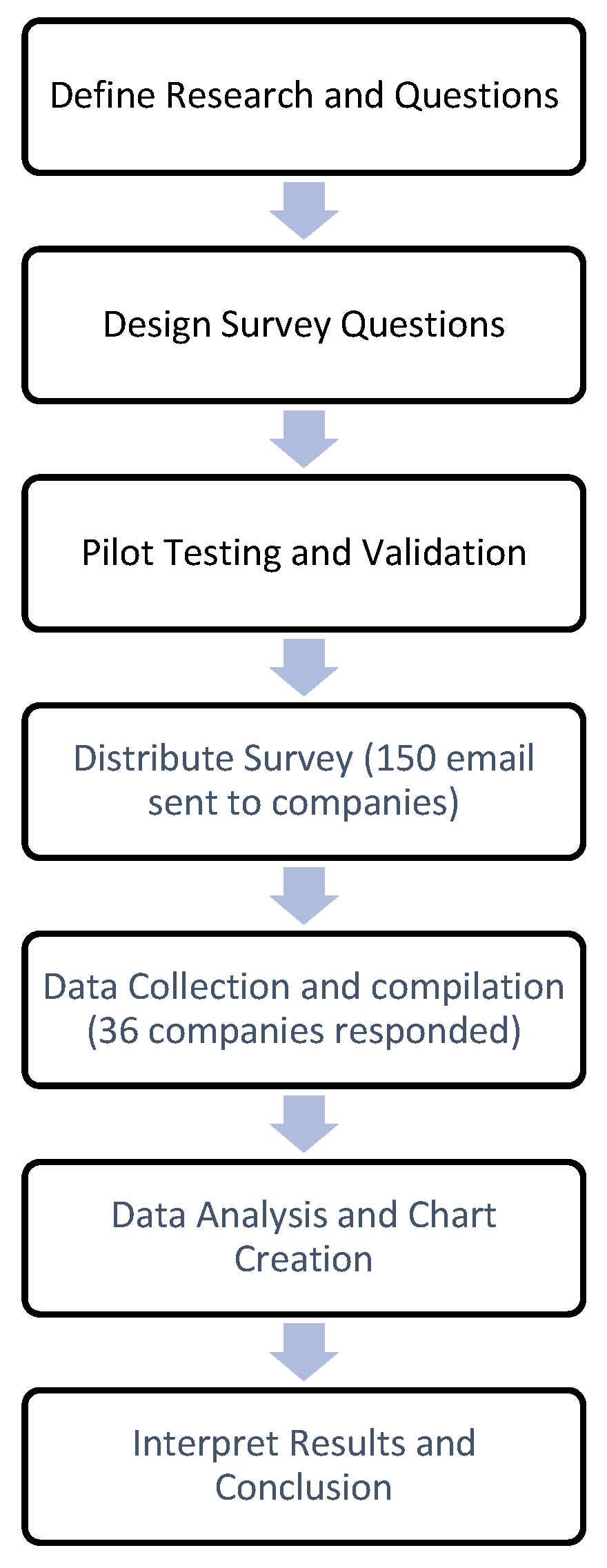
Figure 2.
Proportion of survey responses by position/title.
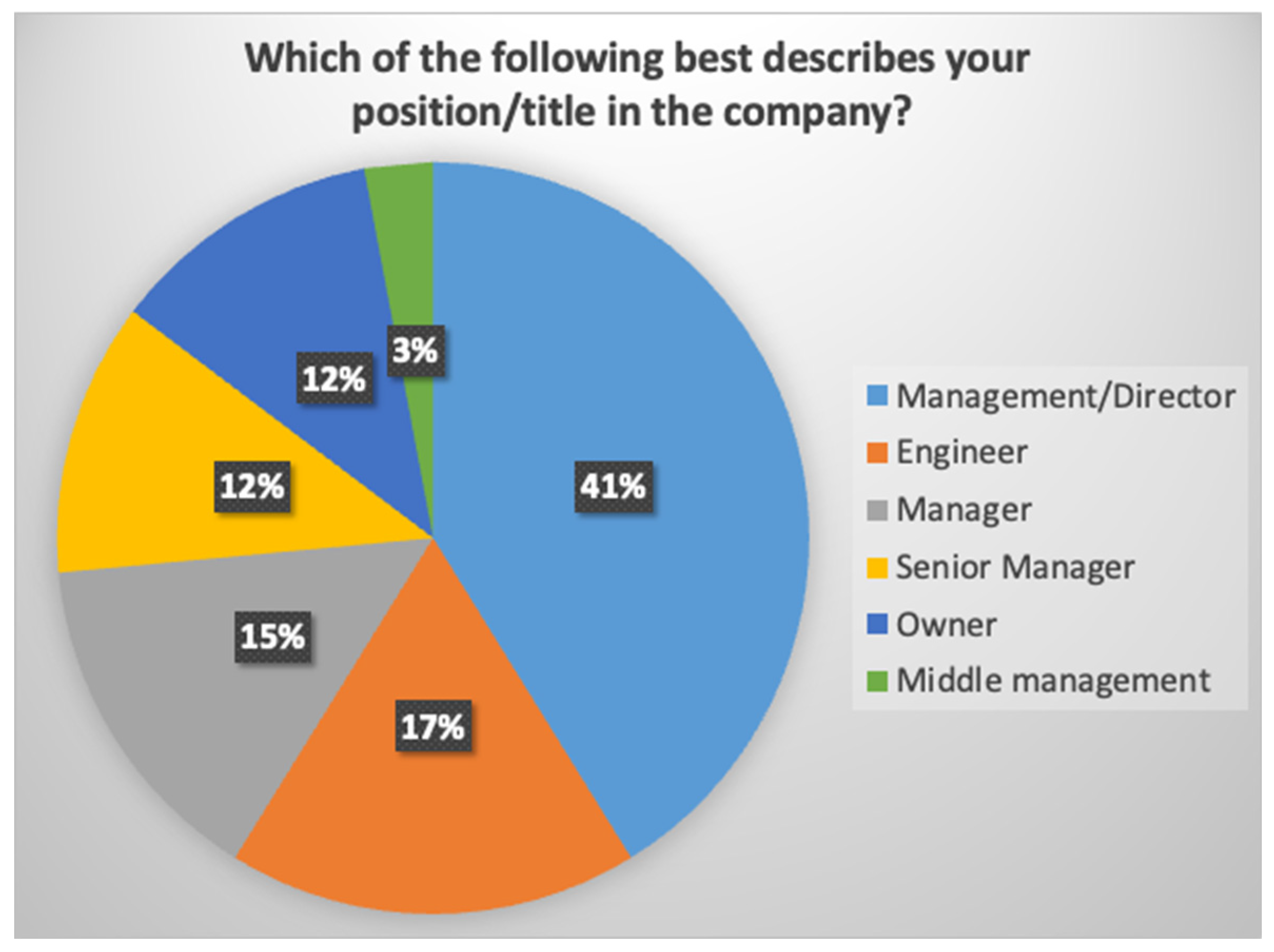
Figure 3.
Proportion of survey responses according to the size of the company.
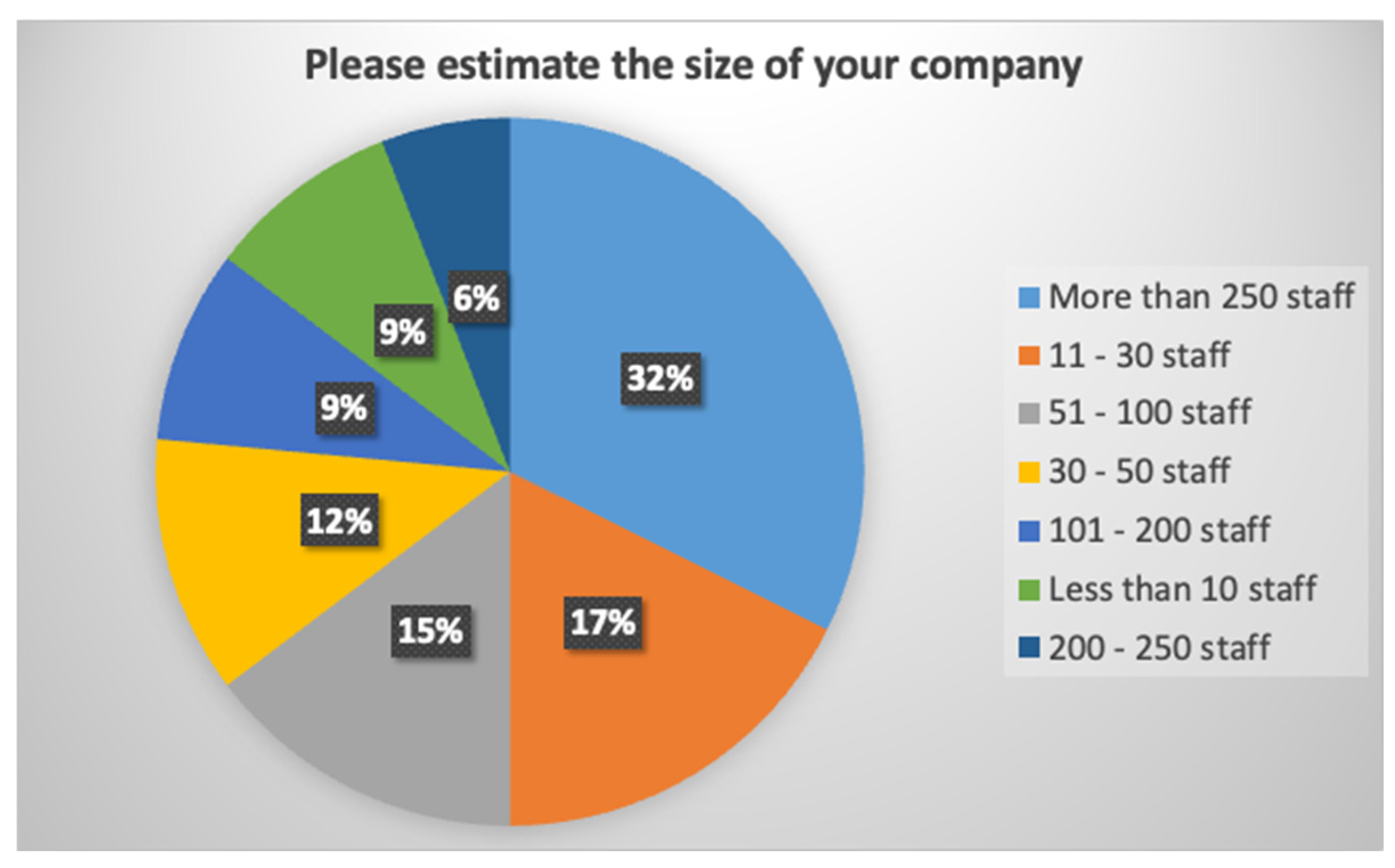
Figure 4.
Number of years of Lean implementation in the organization.
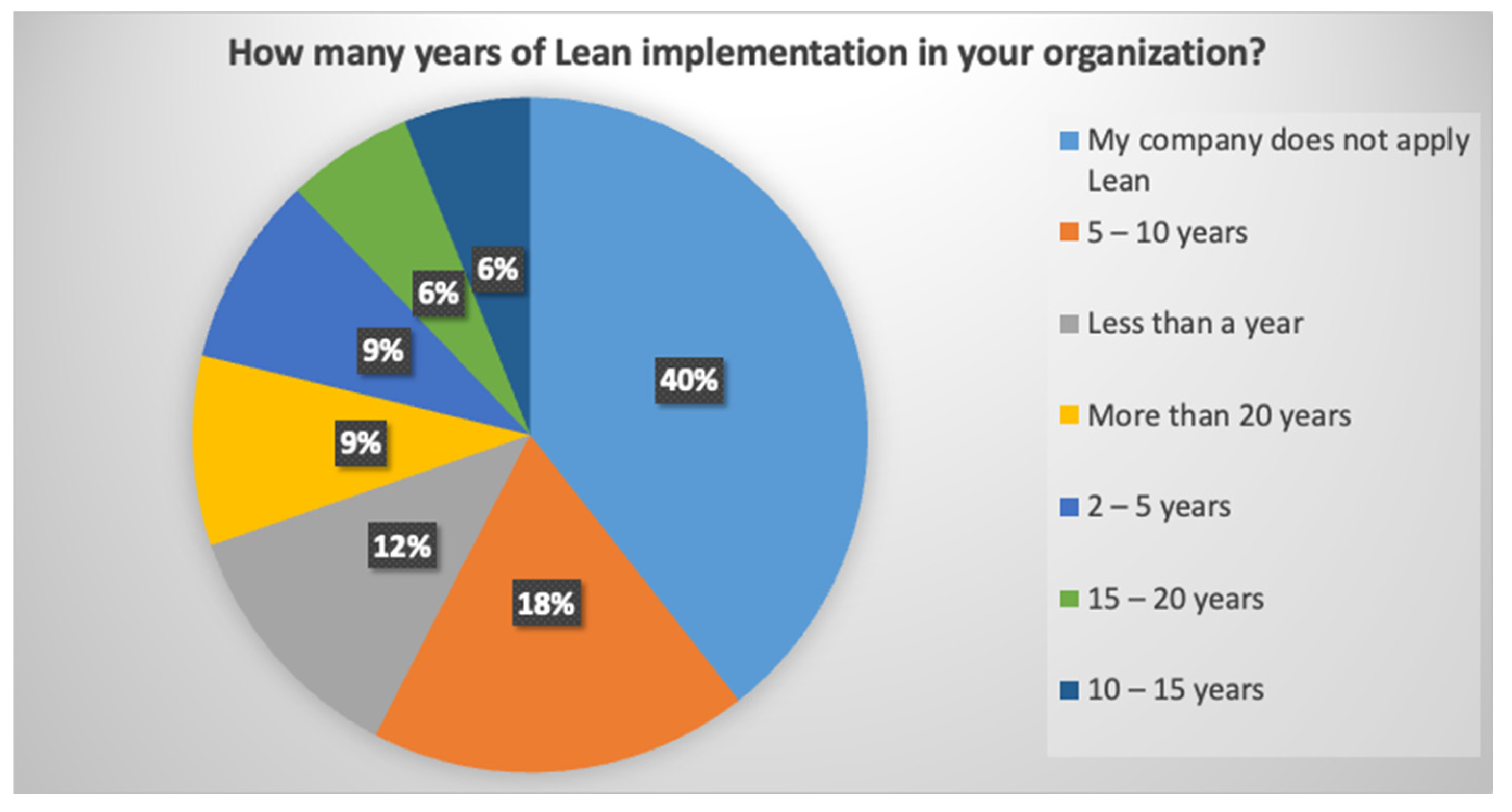
Figure 5.
Solutions and methods most often applied in operations.
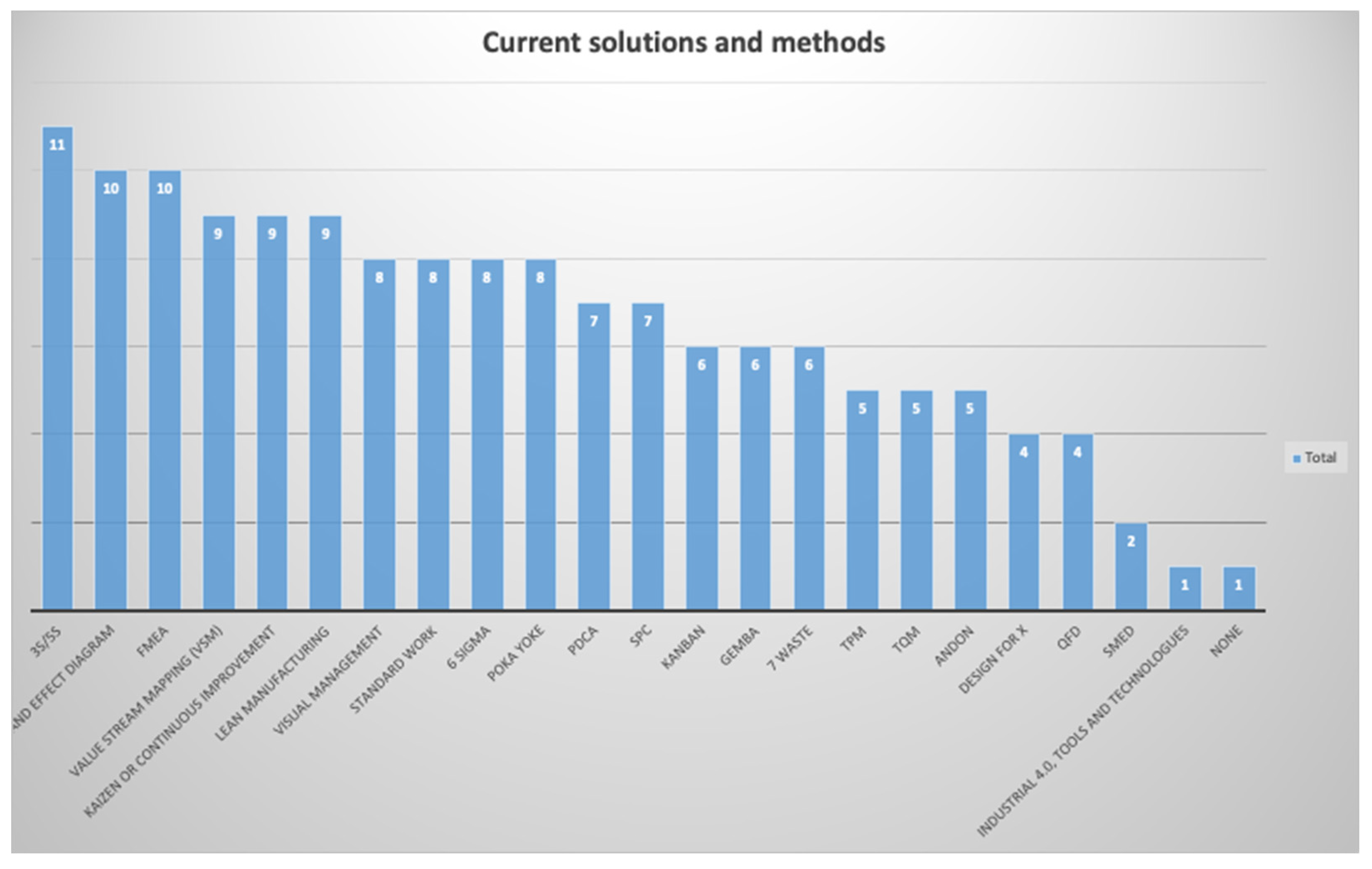
Figure 6.
How many years implementing lean manufacturing tools?
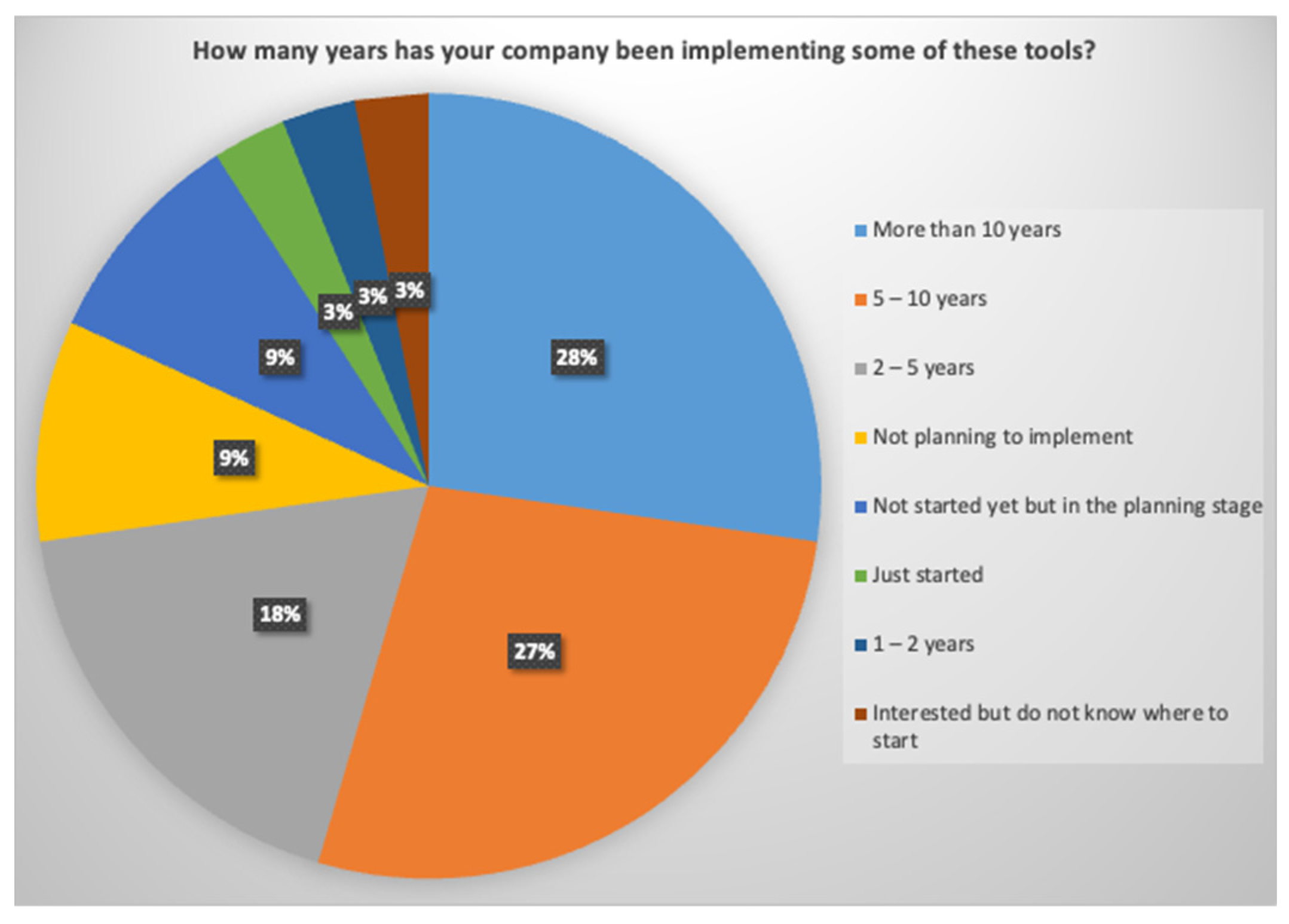
Figure 7.
Future tools and methods.
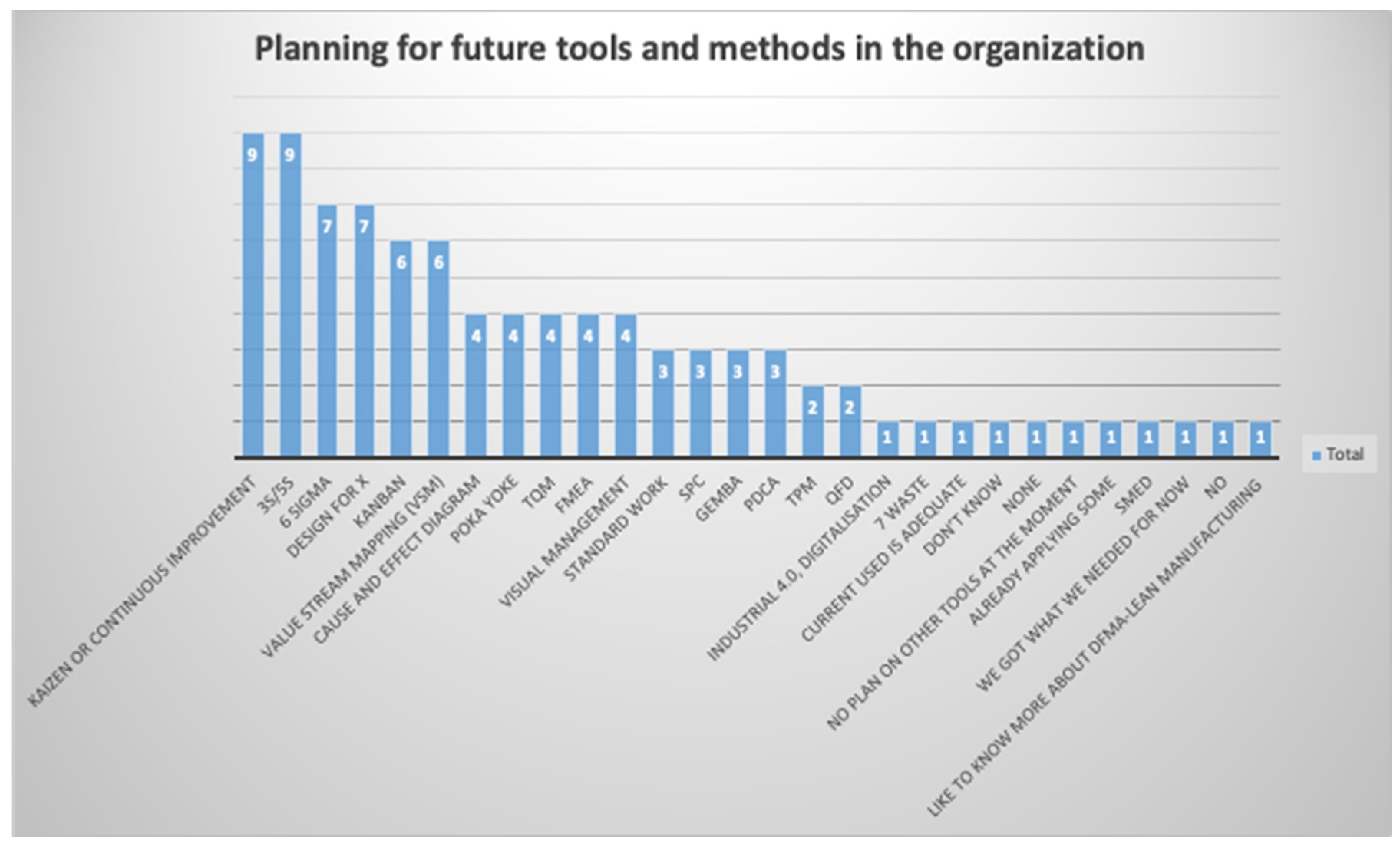
Figure 8.
Reasons for not applying Lean manufacturing tools and methods.
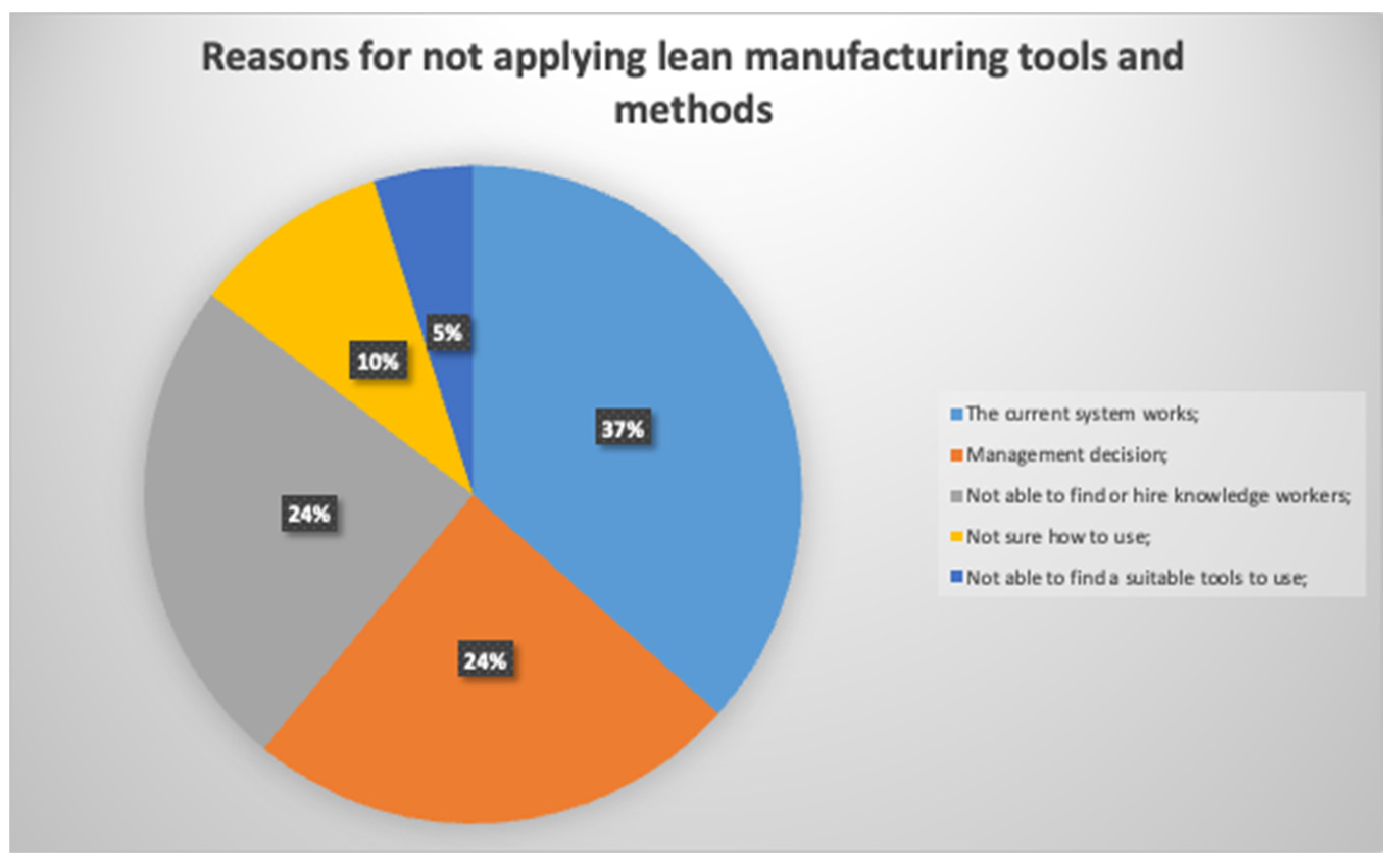
Figure 9.
Lean implantation success and benefits.
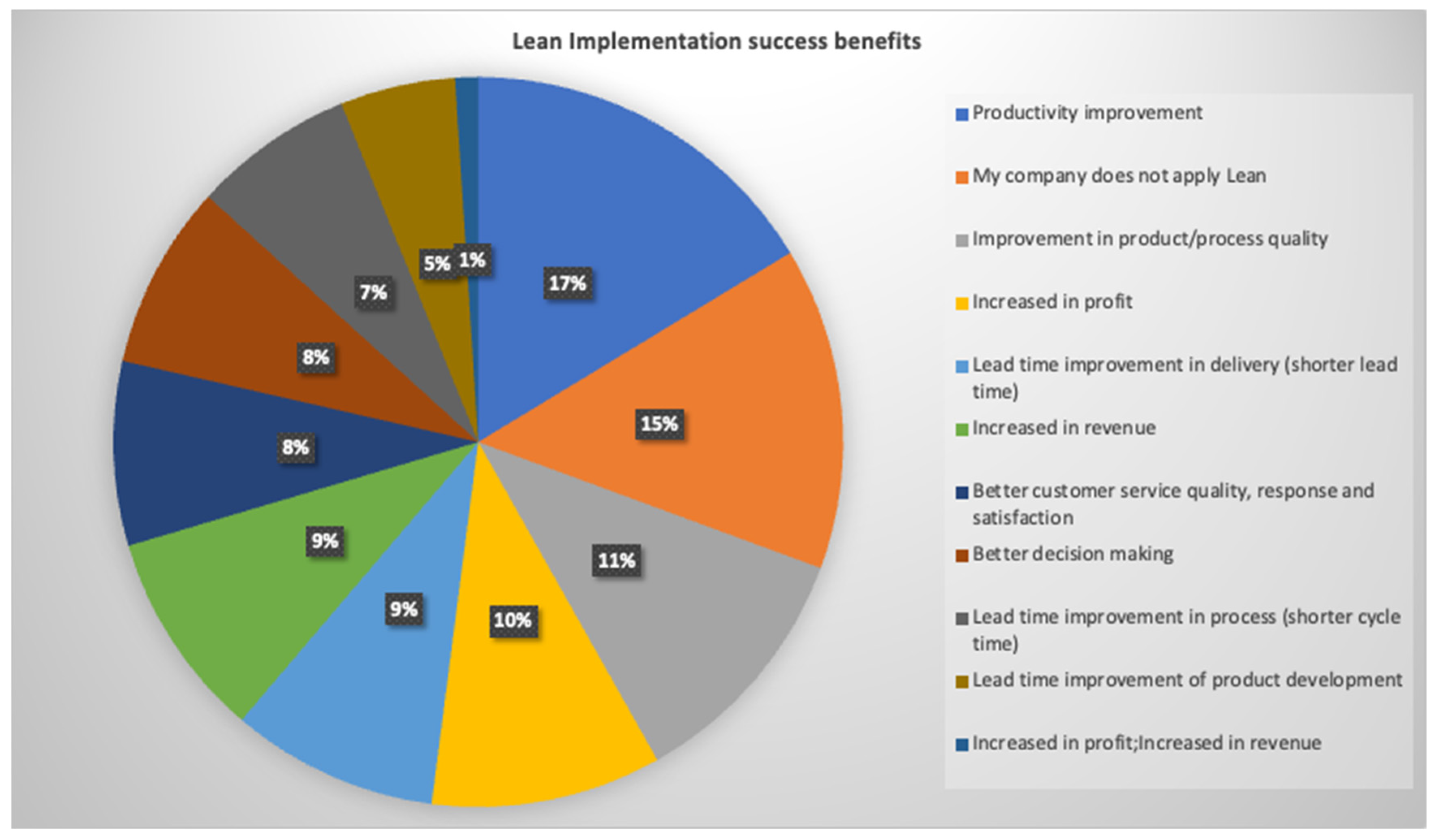
Figure 10.
Main challenges to effectively implement Lean methods and tools.
Disclaimer/Publisher’s Note: The statements, opinions and data contained in all publications are solely those of the individual author(s) and contributor(s) and not of MDPI and/or the editor(s). MDPI and/or the editor(s) disclaim responsibility for any injury to people or property resulting from any ideas, methods, instructions or products referred to in the content. |
© 2026 by the authors. Licensee MDPI, Basel, Switzerland. This article is an open access article distributed under the terms and conditions of the Creative Commons Attribution (CC BY) license.
Copyright: This open access article is published under a Creative Commons CC BY 4.0 license, which permit the free download, distribution, and reuse, provided that the author and preprint are cited in any reuse.


