
Submitted:
23 February 2026
Posted:
24 February 2026
You are already at the latest version
Abstract
The study of airborne pollen and spores from regions, communities, and campuses has gained importance in recent times in Nigeria. Aerospora sampling was carried out from November 2012 to February 2013 on the University of Ibadan campus Watch Tower. The Tower is the tallest building on the campus, with a height of 253.8 m. An Aero sampler was used to collect aeropalynomorphs from the location. The recovered residues were acetolysed and studied microscopically. Meteorological data for this location were obtained from the Nigerian Meteorological Agency (NiMet) for the prevailing weather conditions. Statistical analysis using the Pearson Correlation Coefficient was used to evaluate the relationship between airborne pollen and spores, and meteorological parameters. A variety of palynomorphs, characteristic of rainforest, secondary/open forest, savanna, and freshwater vegetation types, were recovered. The dominant ones belonged to the Arecaceae, Anacardiaceae, Amaranthaceae/Chenopodiaceae, Euphorbiaceae, Moraceae, and Poaceae families, as well as fungal spores. Pollen counts with meteorological data revealed variations in palynomorph types and abundance, which reflected the influence of the location of the aerosampler, impact of weather parameters, and the degree of human activities, apart from the floral composition of the area. This work is the first aero sampling of the University of Ibadan campus and a contribution to the aeropalynological data of campuses across Southwest Nigeria.
Keywords:
aeropalynology
; pollen and spores
; weather parameters
; health
; Ibadan
; Southwest Nigeria
1. Introduction
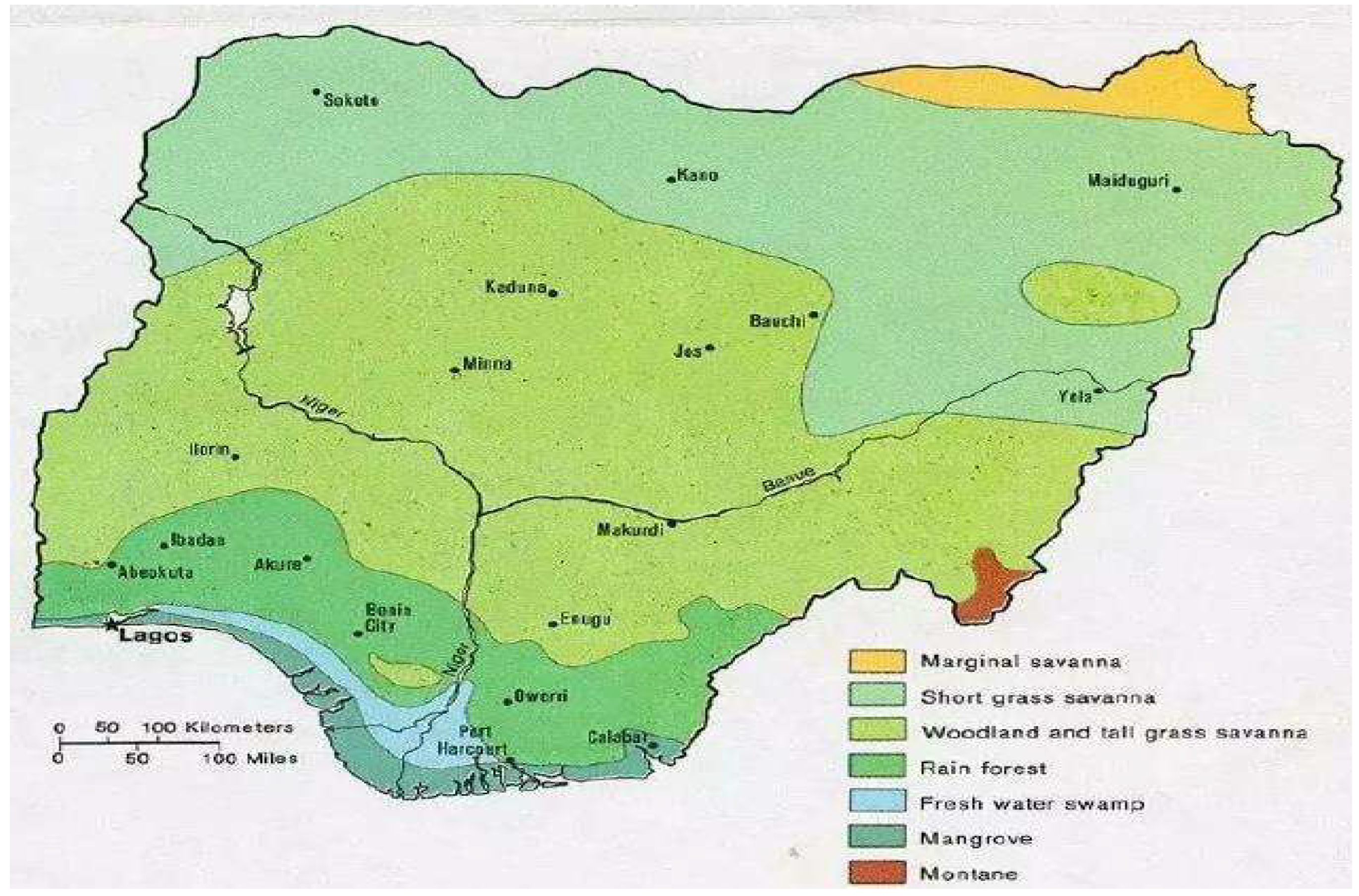
Palynology, as defined by Traverse (2007), refers to the study of modern and fossil pollen, spores, phytoplankton, chitinozoans, and other organic-walled acid-resistant microstructures, collectively called palynomorphs. Aeropalynology is a branch of palynology that deals with the study of pollen grains and spores found freely in the atmosphere (Wodehouse, 1935; Erdtman 1969). Wodehouse (1935) pioneered work on aeropalynological study and its connection to allergies, particularly hay fever is pivotal to the current research in palynology. Airborne palynomorphs including pollen and fungal spores, are significant triggers for respiratory allergic diseases. Their concentrations vary in the different seasons depending upon the flowering and climatic conditions (Singh and Mathur, 2012). In Nigeria, a tropical wet and dry climatic season is experienced. There are eight (8) vegetation zones associated with this climatic condition, from the southernmost through to the Northernmost part. These are Mangrove forest, Freshwater swamp forest, Lowland rainforests, derived savanna, Guinea savanna, Sudan savanna, Sahel savanna, and Montane forests (Akpan-Ebe, 2017). Interestingly, airborne pollen and spores, which have been recorded across the zones, are a typical representation of the climatic conditions associated with these vegetation zones. Thus, the transition from the rainy season to the dry Harmattan season drastically alters the atmospheric load of these aeropalynomorphs. The recovered airborne pollen grains and spores by Agwu and Osibe (1992), Agwu et al., (2004), Njokuocha (2006), Adekanmbi and Ogundipe (2010), Adeonipekun and John (2011), Adeonipekun and Olowokudejo, (2012), Adeonipekun, (2012), Ajikah et al., (2015, 2017), Adekanmbi et al., (2017), Alebiosu et al., (2017), Adeniyi et al., (2014 , 2017, 2018), Essien and Ige, (2019), Ibigbami and Adeonipekun, (2020), Ajikah et al., (2021) and Akasoro et al.,(2025) were found to be dependent on several factors particularly vegetation cover and the prevailing weather conditions at the time of recovery, such as atmospheric humidity, rainfall, temperature, wind velocity and wind direction. These works have contributed to the knowledge of the prevalent aeropalynomorphs in the studied areas at a specific period of time in Nigeria. Some of these studies were carried out in the campuses of the University of Nigeria, Nsukka (Agwu, 2004), and the University of Lagos, (Adekanmbi and Ogundipe,2010; Ajikah et al., 2015; Ajikah et al, 2017) and in different vegetation zones, ranging from the Southwestern (Adeonipekun and John, 2011; Adeonipekun, 2012; Adeniyi et al., 2014; Essien and Ige, 2019; Ibigbami and Adeonipekun, 2020; Ajikah et al., 2021; Ibigbami et al. 2022, Akasoro et al.,(2025) through Southeastern (Agwu and Osibe, 1992; Agwu et al, 2004; Njokuocha, 2006; Adeonipekun and Olowokudejo,.2012) to the Southernmost part (Adekanmbi et al.,2017) as well as from the Northern part of Nigeria (Alebiosu et al., 2017). From these studies, the most predominant aeropalynomorphs were the pollen of Poaceae, Elaeis guinnensis (Arecaceae), Casuarina equisetifolia (Casuarinaceae), Alchornea cordifolia (Euphorbiaceae), Milicia excelsa (Moraceae), Amaranth/Chenopod and Combretaceae/Melastomaceae, Asteraceae and spores of the fungi of Alternaria, Cladosporium, and Aspergillus spp.
Adeonipekun and John (2011) in their palynological study of the haze dust which was collected on the bonnet of the car of one of the authors in March 2010 in Ayetoro-Itele area of Ogun State, recorded an abundance of pollen grains and spores with high proportions of the pollen of Vitex cf. doniana and Isoberlina doka, which are Southern Guinea savanna and derived savanna trees, along with freshwater diatoms of the Sahara desert. Adeonipekun and John (2011) rightly inferred that the dust was harmattan-borne, which was blown a good distance south by the North East Trade Winds. A comparative study carried out a year after, to confirm the results of Adeonipekun and John (2011), revealed that the harmattan storm was indeed due to the North East Trade Winds because of the absence of Vitex cf. doniana, Isoberlina doka, and Parinari spp. (Southern Guinea/Sudan savanna) pollen grains in the subsequent year (Adeonipekun, 2012).
Aeropalynological study of the University of Lagos campus by Adekanmbi and Ogundipe (2010) revealed the prevalence of pollen of Poaceae, Asteraceae, Mimosaceae, Elaeis guineensis, and Alchornea cordifolia. The abundance of airborne palynomorphs in the recovery was attributed to the effect of climatic conditions, especially rainfall, on the university campus. From another three-month aeropalynological study in the University of Lagos campus, from April to June 2014, though at a different site, Ajikah et al. (2015) also reported similar results, that Poaceae, Cyperaceae, Mimosaceae, Elaeis guineensis, and Alchornea cordifolia were the dominant pollen within the campus.
The University of Ibadan campus, the location of the present work, is adorned with aesthetic, tall trees, shrubs and herbs such as Terminalia superba, Triplochiton scleroxylon, Plumeria spp., Poaceae, Asteraceae, Alchornea cordifolia, Delonix regia, Ceasalpina pucherrima, Hura crepitans, Milicia excelsa, Azadirachta indica, Elaeis guineensis, Cola millenii, Pinus carribea, Morinda lucida, Polyaltia longifolia, Tectona grandis, Cassia spp. Bombax buonopozense, etc. The area has an equatorial climate with two seasons, the tropical dry and wet seasons. The dry season is from November to March, while the wet season extends from April through to the end of October. The average daily temperature ranges between 25 °C (77.0 °F) and 35 °C (95.0 °F) while the mean maximum and minimum temperatures are 26.46 °C and 21.42 °C, respectively. The mean total annual rainfall is estimated to be 1420.06 mm, and the relative humidity is 74.58%. (Nigerian Meteorological Agency, 2013).
Despite the availability of aerospora data in some university campuses and many popular cities in Nigeria, there is no known published aerospora data for the University of Ibadan campus, Ibadan, the largest city in West Africa. The only known aeropalynological study in Ibadan was the combined approcach of demography, meteorology and aeropalynology of Ibadan metropolis by Akasoro et al., (2025).
This present study, therefore, aimed to ascertain the atmospheric pollen grains and spores, factors influencing their occurrence and distribution within the University of Ibadan campus, Ibadan, Southwest Nigeria. Results from this research will constitute an important addition to Nigeria’s aerospora data.
Figure 1.
Map of Nigeria showing the location of the University of Ibadan, Ibadan, Oyo state.
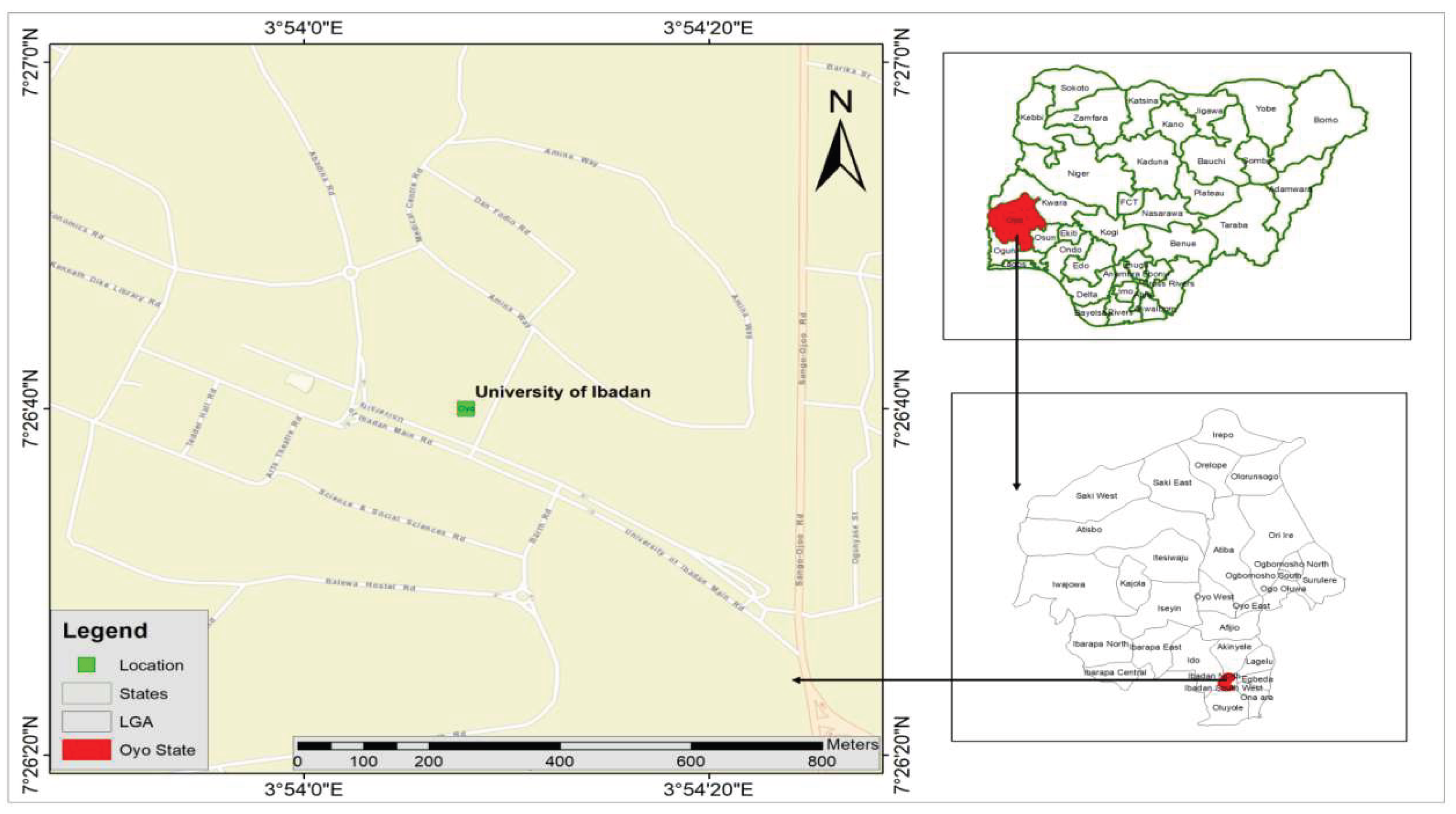
Figure 2.
Vegetation Map of Nigeria (Adapted from Akpan-Ebe IN, 2017).
2. Materials and Methods
2.1. The Study Site
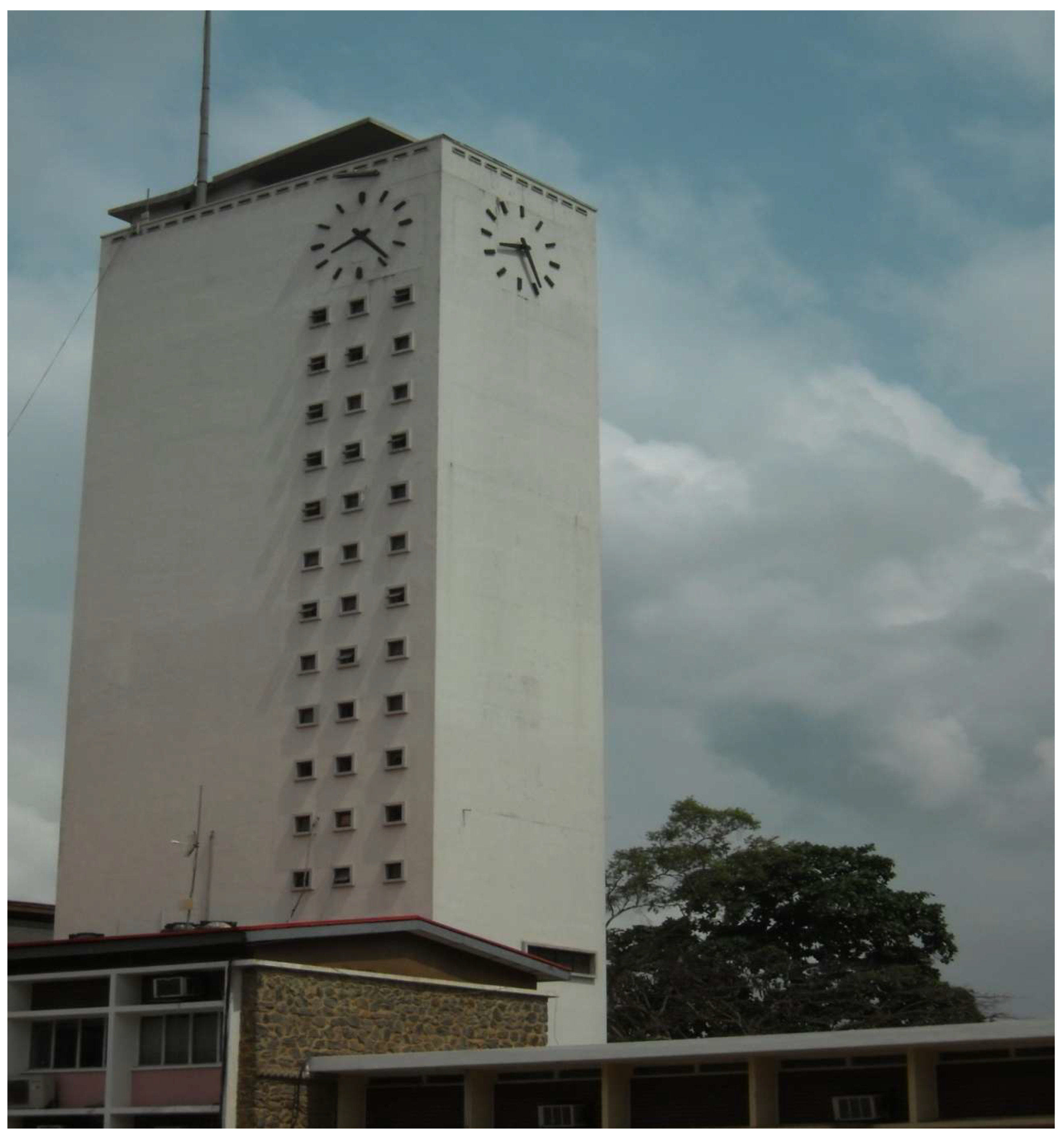
Airborne pollen and spores were recovered from the tallest structure in the University of Ibadan campus, Ibadan, Oyo State. It is known as the Watch Tower and forms part of the main Administrative block of the University. The pollen sampler was placed on the topmost part of the Tower, which lies at 7o 26’ 40” N and 3o 54’ 8” E at a height of 253.8m above sea level. The period for collecting airborne pollen and spores was during the dry season, from November 2012 through to February 2013.
Figure 3.
University of Ibadan tower
Vegetation Reconnaissance
A vegetation reconnaissance of the sampled area was undertaken before and during study. Notable arboreal species were Delonix regia, Terminalia superba, Triplochiton scleroxylon, Plumeria spp., Alchornea cordifolia, Hura crepitans, Milicia excelsa, Azadirachta indica, Elaeis guineensis, Cola millenii, Pinus carribea, Polyaltia longifolia, Tectona grandis, Cassia spp. Bombax buonopozense, Albizia lebbeck, Thevetia peruviana, Tridax procumbense, Gomphrenia celosoides, Acalypha spp, Duranta repens, Murraya paniculata, Ixora coccinea and Chromolaena odorata.
2.2. Pollen Sampler
An improvised Pollen sampler made of a cylindrical tin 30cm high and 15cm wide, was placed at the topmost part of the Tower for recovering palynomorphs. A mixture of chemicals, consisting of 50ml glycerol, 10ml formaldehyde, and 5ml phenol, was poured into the sampler following the methods used by Adekanmbi and Ogundipe (2010) and Adeonipekun and Olowokudejo (2012).
2.3. Palynomorph Analysis
The palynomorph analysis was carried out in the Palynology Laboratory, Department of Archaeology and Anthropology, University of Ibadan, Ibadan, Nigeria. The content of the sampler was washed with distilled water and poured into four 15ml centrifuge tubes; usually, four tubes were used for each sample. The contents of the tubes were centrifuged for 20minutes at 4000rpm, and the supernatant was decanted. A second rinsing with distilled water was carried out by combining the residue in the four centrifuge tubes into one tube, thoroughly mixed with an electric mixer, centrifuged, and was decanted. The third rinsing with distilled water also followed the same processes. Dark residues (sediments and some charred particles) were observed. 10ml glacial acetic acid was added to the residues in the centrifuge tubes, mixed, centrifuged for 10minutes and decanted.
The residues were subjected to the acetolysis technique (Erdtman, 1969; Faegri and Iversen, 1989), which consists of the mixture of nine parts of glacial Acetic anhydride and one part of Tetraoxosulphate (VI) acid. The resulting acetolysis mixture was added to the residues and boiled for 10minutes in a water bath in the fume cupboard. The mixtures were centrifuged at 4000rpm for 15minutes and decanted. This was washed with distilled water three times. 50% glycerol was added to the residues, centrifuged at 4000rpm for 20minutes, the supernatant was decanted and allowed to settle. A known volume of 100% glycerol was added to the residues, mixed, and the final volume was made up to 2ml. They were transferred into labeled vials according to locations and periods of collection. Then 10µl were taken and mounted on slides, gently covered with cover slips, and sealed with translucent nail polish. Two slides were made for each sample collection for microscopic studies. The microscopic analysis of recovered palynomorphs was carried out using an Olympus CH 30 microscope and photomicrographs of some of the recovered palynomorphs were taken at X400 and X1000 magnifications with a digital camera DCM 500 attached to the microscope.
Quantitative and qualitative analyses of the recovered residues were carried out. The percentage abundance of each species was estimated. Identification of recovered palynomorphs was done with the aid of albums of photomicrographs, reference slides collection of more than 4000 pollen types in the Palynology Laboratory of the Department of Archaeology and Anthropology, University of Ibadan, as well as published works of Sowunmi (1973, 1995), Adekanmbi and Ogundipe (2010), and Adeonipekun and John (2011),
2.4. Weather Data
Meteorological data, which consist of atmospheric temperature, wind speed, rainfall, and relative humidity, were obtained from the Nigerian Meteorological Agency (NiMet) in Oyo State, to complement the results of the palynological findings.
3. Results
A variety of palynomorphs, characteristic of rainforest, secondary/open forest, savanna and freshwater vegetation types were recovered (Table 1). From the pollen analysis, a total number of 1195 palynomorphs were counted and studied from the slides belonging to 31 families (Table 2). Out of these, 30 palynomorphs were identified to species level, 16 to genus level, while others were only identified to the family level. The palynomorphs that could not be identified were grouped as pollen and spores indeterminate.
The dominant aeropalynomorphs were fungal spores of Alternaria sp. and Cladosporium sp., the pollen from Poaceae, Euphorbiaceae, and Arecaceae. Anacardiaceae, Amaranthaceae, and Moraceae (Table 3). The monthly variations in the recovery of palynomorphs showed that the highest number of airborne palynomorphs was collected in December, while the lowest number was in February (Table 3).

Table 1.
Meteorological parameters and palynomorphs of the study area.
| Temperature (o C) |
Rainfall (mm) | Wind (km/hr) | Rel. Hum (%) |
Pollen grains | Fungal spores | Pteridophyte spores | |
|---|---|---|---|---|---|---|---|
| Nov. | 28 | 54.9 | 91 | 82 | 263 | 59 | 42 |
| Dec. | 28.7 | 0 | 104.8 | 71 | 334 | 212 | 12 |
| Jan. | 28.9 | 3.3 | 120.9 | 61 | 129 | 65 | 37 |
| Feb | 29.5 | 64.4 | 147.7 | 73 | 101 | 32 | 21 |
Table 2.
Palynomorphs recovered in the month of November, 2012.
| FAMILY | SPECIES | Qty |
|---|---|---|
| Arecaceae | Elaeis guineensis | 14 |
| Asteraceae | Tridax procumbense | 4 |
| Asteraceae | 2 | |
| Amaranthaceae | 9 | |
| Anacardiaceae | Spondias monbin | 3 |
| Anacardiaceae | 12 | |
| Bignoniaceae | 1 | |
| Combretaceae/Melastomaceae | Combret/Melastom | 1 |
| Cyperaceae | Cyperus sp. | 1 |
| Euphorbiaceae | Alchornea cf. cordifolia | 62 |
| Meliaceae | Azadirachta indica | 1 |
| Mimosaceae | Peltophorum pterocarpum | 1 |
| Moraceae | cf. Milicia excelsa | 27 |
| Casuarinaceae | Casuarina sp. | 14 |
| Poaceae | Zea mays | 30 |
| Poaceae | 33 | |
| Rubiaceae |
Borreria sp. Morinda lucida |
1 |
| Sapindaceae | Paulinia pinnata | 1 |
| Solanaceae | 4 | |
| Ulmaceae | Cf. Cladosporium sp. Cf. Alternaria sp. |
32 27 |
| TOTAL | 20 | 322 |
Table 3.
Dominant taxa in the recovered aeropalynomorphs.
| Family\Month | November | December | January | February |
|---|---|---|---|---|
| Arecaceae | 14 | 45 | - | - |
| Euphorbiaceae | 62 | 92 | 9 | 12 |
| Poaceae | 63 | 73 | 11 | 7 |
| Fungal spores | 59 | 224 | 102 | 38 |
| Moraceae | - | - | 44 | - |
Table 4.
Total monthly variations in abundance of aeropalynomorphs.
| Month | Nov. 2012 | Dec. 2012 | Jan.2013 | Feb. 2013 | Total |
| Aeropalynomorphs | 322 | 546 | 194 | 133 | 1195 |
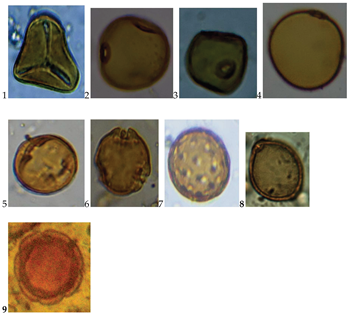 | |||||
| Plate 1. Legend. 1. Elaeis guineensis; 2-4. Zea mays; 5. Alchornea cordifolia (equatorial view); 6. A. cordifolia (polar view); 7. Amaranthaceae; 8. Milicia excelsa; 9. Borreria sp. (Magnification X400). | |||||
4. Discussion
Plant species are known to have high diversity in the Tropical rainforests. This is reflected in the types and variety of recovered palynomorphs in aeropalynological studies from the tropics. Variations were recorded in the recovered aeropalynomorphs for this location during the study month (Table 2, Table 5, Table 6 and Table 7). The most abundant pollen grains recovered were those from Asteraceae (Tridax procumbense, Chromolaena odorata, Ageratum conyzoides), Arecaceae (Elaeis guineensis), Euphorbiaceae (Alchornea cordifolia), Amaranthaceae/Chenopodiaceae, and Poaceae (Table 3). These plants were also recorded during the vegetation reconnaissance of the study area. Thus, their recovery in the samples was a result of the tall tree species, herbs, and shrubs in this location, most of which were noticeable for flowering during the study. This agrees with the views of Adekanmbi and Ogundipe (2010) and Adeonipekun (2012), whose works showed the abundance of these palynomorphs within the same vegetation zone. Akasoro et al., (2025) also reported similar recovery from three (3) different locations in Ibadan. Agwu et al., (2004), Adekanmbi and Ogundipe (2010), and Akasoro et al., (2025) in their separate regional investigations, also affirmed a strong influence of the local vegetation on the pollen types recovered in their samplings, such as Alchornea cordifolia and Elaeis guineensis. The effect of the height of the pollen sampler had also been noted by Njokuocha (2006). This confirms that, studying palynomorphs in the air, depending on the aims, especially for climatic and agricultural studies, samplers must be placed at such considerable heights to get a fuller picture of palynomorphs in the air. Most of the pollen grains recovered are wind–dispersed. This showed that, as is to be expected, wind-borne pollen grains are more abundant in the atmosphere than insect-dispersed pollen grains. Insect-dispersed pollen grains, such as those of Delonix regia and Ixora sp., were discovered to be very low in the study. These plants have abundant flowers and are high pollen producers. Hence, their presence in the air might be due to their being dropped in transit by their pollinators (birds and insects). They are both ornamental plants with flamboyant flowers that attract pollinators.
Table 5.
Palynomorphs recovered in December 2012.
| FAMILY | PALYNOMORPHS | Qty |
|---|---|---|
| Arecaceae | Elaeis guineensis | 45 |
| Asteraceae |
Tridax procumbense Chromolaena odorata Vernonia sp. |
1 7 1 |
| Asteraceae | 4 | |
| Amaranthaceae | 9 | |
| Anacardiaceae | Spondias monbin | 3 |
| Caesalpinaceae | Cassia sp. | 4 |
| Celastraceae | Cassine sp. | 1 |
| Combretaceae/Melastomaceae | Combret/Melastom | 7 |
| Euphorbiaceae |
Alchornea cordifolia Mallotus subulatus Phyllantus sp. Tetrochidium didymostemon |
81 6 3 2 |
| Malvaceae | Sida cf. acuta | 2 |
| Moraceae | 20 | |
| Myrtaceae | Psidium guajava | 1 |
| Myricaceae | Casuarina sp. | 1 |
| Poaceae | Zea mays | 1 |
| Poaceae | 72 | |
| Pteridophyte | Monolete sp. Trilete sp. Tetrad spores |
1 7 2 |
| Rosaceae | 1 | |
|
Rubiaceae |
Borreria sp. Ixora sp |
2 4 |
| Solanaceae | 3 | |
| Tiliaceae | Grewia sp. | 1 |
| Ulmaceae | 25 | |
| Cf. Cladosporium sp. Cf. Alternaria sp. Spores |
144 68 12 |
|
| Epiphytic fern | 5 | |
| TOTAL | 546 |
Table 6.
Palynomorphs recovered in February, 2013.
| FAMILY | SPECIES | Qty |
|---|---|---|
| Arecaceae | Elaeis guineensis | 3 |
|
Asteraceae |
Tridax procumbense Chromolaena odorata |
1 1 |
| Anacardiaceae |
Spondias monbin Mangifera indica |
1 1 |
| Anacardiaceae | 1 | |
| Caesalpinaceae | Cassia sp. | 3 1 |
| Combretaceae/Melastomaceae | Combret/Melastom | 3 |
| Euphorbiaceae |
Alchornea cf. cordifolia Mallotus cf. subulatus Phyllanthus sp. |
7 2 3 |
| Mimosaceae | Piptadeniastrum africanum | 1 |
| Moraceae | Cf.Milicia excelsa | 2 |
| Casuarina sp. | 1 | |
| Poaceae | 7 | |
| Rubiaceae | 4 | |
| Sapotaceae | Chrysophyllum sp. | 3 2 |
| Sterculiaceae | Cola sp. | 2 |
| Ulmaceae | Celtis sp. | 2 |
| Cf. Cladosporium sp. Cf. Alternaria sp. Spores indeterminate |
43 15 21 |
|
| Pollen indeterminate | 3 | |
| TOTAL | 133 |
Table 7.
Palynomorphs recovered January, 2013.
| FAMILY | SPECIES | Qty |
|---|---|---|
| Arecaceae | Elaeis guineensis | 6 |
|
Asteraceae |
Ageratum connyzoides | 2 |
| Anacardiaceae | Spondias monbin | 1 |
| Caesalpinaceae | Cassia sp. | 1 |
| Combretaceae/Melastomaceae | Combret/Melastom | 5 |
| Cyperaceae | Cyperus sp. | 2 |
| Euphorbiaceae |
Alchornea cf. cordifolia Mallotus cf. subulatus |
2 7 |
| Euphorbiaceae | 1 | |
| Moraceae |
Bosqueia sp. |
40 4 |
| Myricaceae | Casuarina sp. | 3 |
| Poaceae | 11 | |
| Pteridophyte | Pteridophyte spores | 1 |
| Rubiaceae | Ixora sp. | 3 |
| Rubiaceae | 2 | |
| Epiphytic fern | 1 | |
| Cf. Cladosporium sp. Cf. Alternaria sp. Spores Indeterminate |
45 20 37 |
|
| 194 |
The presence of pollen grains of Alchornea cordifolia, Azadirachta indica, Morinda lucida, Zea mays, Psidium guajava, Vernonia amygdalina, Amaranthaceae, Asteraceae, and Elaeis guineensis is noteworthy. They indicate open vegetation resulting from bush clearance and farming purposes, which is a result of human impact on the environment (Akasoro et al., 2025). These species are either preserved for their economic values or are common weeds associated with farming activities (Agwu and Osibe, 1992; Agwu, 1997, 2001; Agwu et al., 2004; Akasoro et al., 2025). Various parts of most of these species are consumed in their raw form, used as medicine, or cooked as food for consumption purposes. For instance, the leaves of Vernonia amygdalina have anti-oxidant and anti-inflammatory properties (Adedapo et al., 2014), while various parts of the plant species of Azadirachta indica are known for their therapeutic roles in disease prevention and treatment (Alzohairy, 2016). Zea mays is also consumed as food by humans.
The abundance of fungal spores (Alternaria sp. and Cladosporium sp.) recovered is worthy of attention. The University has various Halls of residence and flats or houses where students and staff live. The abundance of these spores in the air indicated the level of waste being generated within the environment, while showing the risk the inhabitants expose themselves to, resulting from poor waste management. Some of the fungal spores may also come from farm wastes. Some of the recovered pollen grains, such as Alchornea cordifolia, Azadirachta indica, Zea mays, Delonix regia, Amaranthus hybridus, Cocos nucifera, Catharanthus roseus, and Carica papaya, have been recorded to be allergenic (Banik and Chanda, 1992; Waqar et al., 2010; Adeniyi et al., 2017, 2018). The allergenic constituents of some of these aeropalynomorphs pose health risks to residents (Adeonipekun and Olowokudejo, 2012) and have been linked to the various cases of symptoms of allergies in Ibadan metropolis, including the University of Ibadan campus (Akasoro et al., 2025). Catarrh, which is the most reported case and prevalent symptom of allergies, within the metropolis of Ibadan, has been reported by Akasoro et al., (2025) to be a result of the presence of these airborne pollen and spores in the area of study.
Comparing the palynomorph counts with weather parameters during the months of study (Table 1), temperature increased within a range, which indicates an appreciable increase in the intensity of the heat (Figure 3). There was an intermittent fluctuation in the rainfall patterns (Figure 5) during the recoveries. This shows an irregular pattern of rainfall decrease and subsequent increase during the study months. When rain falls, most atmospheric components, both biological and chemical, will be washed away as a result of rain splash. This supported the view of McDonald (1962), who described the physical removal of pollen grains by raindrops. Thus, the increase in the intensity of the heat and decrease in the amount of rainfall reduced the moisture content in the atmosphere (Figure 6). It can be affirmed from this study that an increase in the intensity of the heat and in the dryness of the atmosphere are favourable for the flowering of plant species in the studied area. It is noteworthy that the submissions by Agwu and Okeke (1997) and Agwu et al. (2004) suggest that many plants in the tropics flower during periods of lesser rainfall, when the sun shines more brightly, and atmospheric humidity is lower, which supports this finding.
To evaluate the relationship between airborne palynomorphs and the prevailing weather conditions in the study area, a Pearson correlation coefficient (r) analysis was performed (Galán et al., 2017). A strong negative correlation between pollen grains and wind speed (Table 8) was recorded. As wind speed increased, the pollen count decreased significantly. This might suggest that high winds in this period acted to disperse pollen concentration during the study. The negative relationship with wind speed, as evaluated, might be an indication of a dilution effect, where higher wind velocities disperse more palynomorphs to another location, reducing the concentration captured by the pollen sampler (Raynor et al., 1974). A moderate-to-strong negative correlation of pollen with temperature was recorded, although pollen counts were higher in the drier months (November to December).
Table 8.
Pearson Correlation Coefficient (r) between pollen and spores and meteorological data.
| Aeropalynomorphs | Temperature (oC) |
Rainfall (mm) |
Wind Speed (km/hr) | Rel. Humidity (%) |
|---|---|---|---|---|
| Pollen Grains | -0.681 | -0.356 | -0.814 | +0.415 |
| Fungal Spores | -0.201 | -0.701 | -0.430 | -0.101 |
| Pteridophyte Spores | -0.526 | +0.247 | -0.343 | +0.139 |
These results suggest that during the study period, pollen concentrations tended to decrease as wind speed and temperature increased, as observed by Agwu and Njokuocha (2004) in tropical savannah regions where peak flowering precedes the hottest months.
A strong negative correlation between fungal spores and rainfall was noted. Interestingly, for this specific four-month dry-season window, higher rainfall (in Nov and Feb) coincided with lower fungal counts, while the driest month (Dec) saw the highest fungal spike. This suggests that during this transition into the dry season, fungal release may have been triggered by the drying of substrates rather than by immediate moisture, a phenomenon characteristic of “dry-weather” spores such as Cladosporium and Alternaria (Troutt & Levetin, 2001). The relationship between fungi and temperature, as well as relative humidity, showed very weak correlations, suggesting these were not the primary drivers of fungal fluctuations during this specific period (Adhikari et al., 2004). Just like pollen, pteridophyte spores showed a moderate negative correlation with temperature. However, unlike pollen and fungi, pteridophytes showed a weak positive correlation with rain, reflecting their biological dependence on moisture for growth and spore dispersal (Njokuocha, 2006).
5. Conclusion
The recovery of palynomorphs in this location was remarkable. These findings underscore the need for seasonal health alerts and improved waste-mitigation strategies in high-risk areas. The findings demonstrate a high concentration of airborne palynomorphs, which peaked during the onset of the Harmattan period. The Harmattan season poses the greatest risk for respiratory health due to high airborne pollen grain and spore loads. The study highlights that while total counts are driven by meteorological factors, the clinical impact is location-dependent. This study is a pilot study. Thus, it needs to be followed up with studies for other locations to get a more comprehensive picture of the aeropalynomorphs in Ibadan city. The health risks associated with the abundant fungal spores and pollen in the studied areas should be further evaluated. The variation in the recovery was a result of the weather patterns, the nature of local vegetation, and the intensity of human activities.
Future Research
Future studies should extend the sampling period to a full 12-month cycle. This would allow for a better understanding of the rainy season fungal peaks and provide the sample size necessary for higher statistical significance in Pearson correlations. Incorporating clinical tests, such as Skin Prick Tests (SPT) or ELISA for specific IgE, would help confirm which specific pollen or fungal taxa identified in this study are the primary drivers of the reported symptoms. Future aerobiological traps should be paired with PM2.5 and PM10 sensors to distinguish between biological particles (such as pollen/spores) and environmental pollutants (including smoke/soot/dust).
Author Contributions
Akasoro Muyideen Olumide: Project conceptualization, visualisation, field and laboratory analysis, Data curation, Writing – original draft, Sowunmi M. Adebisi: Project administration, Supervision, edited original draft, approved final draft. Adeonipekun Peter Adegbenga: Writing – review & editing, improved on, and approved final draft.
Funding
This research was not funded by any agency, organization, or financial institution.
Data Availability Statement
The original contributions presented in this study are included in the article/supplementary material. Further inquiries can be directed to the corresponding author(s).
Acknowledgments
The authors acknowledged the assistance of Mr. Opara P.C. and Emmanuel Nwagbara of the Palynology Laboratory of the Department of Archeology and Anthropology, University of Ibadan, for their assistance during the laboratory analysis. The authors also thank Dr Orijemie E.O. for his contribution during the pollen identification in this study.
Conflicts of Interest
The authors declare no conflict of interest.
References
- Adedapo, A. A.; Aremu, O. J.; Oyegbemi, A. A. Anti-oxidant, anti-inflammatory and antinociceptive properties of the acetone leaf extract of Vernonia amygdalina in some laboratory animals. Advanced Pharmaceutical Bulletin 2014, 4(2), 591–598. [Google Scholar] [CrossRef]
- Adekanmbi, O.; Ogundipe, O. Aeropalynological studies of the University of Lagos Nigeria. Notulae Scientia Biologicae 2010, 2(4), 34–39. [Google Scholar] [CrossRef]
- Adekanmbi, O. H.; Alebiosu, O. S.; Ajikah, L. B. A survey of atmospheric palynomorphs in relation to weather and vegetation at selected study sites in South Southern Nigeria. Nigerian Journal of Botany 2017, 30(2), 153–169. [Google Scholar]
- Adeniyi, T. A.; Adeonipekun, P. A.; Olowokudejo, J. D.; Akande, S. I. Airborne pollen records of Shomolu Local Government Area in Lagos State. Notulae Scientia Biologicae 2014, 6(4), 428–432. [Google Scholar] [CrossRef]
- Adeniyi, T. A.; Adeonipekun, P. A.; Olowokudejo, J. D.; Akande, S. I. Allergenicity of dominant aeropollen in Nigeria. Part 1. Current Allergy & Clinical Immunology 2017, 30(4), 264–269. [Google Scholar]
- Adeniyi, T. A.; Adeonipekun, P. A.; Olowokudejo, J. D.; Akande, S. I. Allergenicity of dominant aeropollen in Nigeria. Part 11. Current Allergy & Clinical Immunology 2018, 31(3), 178–183. [Google Scholar]
- Adeonipekun, P. A. Comparative aeropalynology of Ota, Nigeria. Journal of Ecology and the Natural Environment 2012, 4(12), 314–320. [Google Scholar] [CrossRef]
- Adeonipekun, A. P.; Olowokudejo, J. D. Pollen rain at offshore locations in the eastern Niger delta, implications on geologic sedimentation, vegetation reconstruction and allergy-A preliminary study. Global Journal of Science Frontier Research Biological Science 2012, 12(5), 27–33. [Google Scholar]
- Adeonipekun, P. A.; John, M. Palynological investigation of haze dust in Ayetoro-Ota, south-west, Nigeria. Journal of Ecology and the Natural Environment 2011, 3(14), 455–460. [Google Scholar] [CrossRef]
- Adhikari, A.; Sen, M. M.; Gupta-Bhattacharya, S.; Chanda, S. Volumetric assessment of airborne fungi in two sections of a rural indoor environment in West Bengal, India. World Mycotoxin Journal 2004, 7(1), 89–95. [Google Scholar]
- Agwu, C. O. C. A study of Niger Delta environment through airborne palynomorphs. African Palaeoecology 27 2001, 191–205. [Google Scholar]
- Agwu, C. O. C.; Okeke, G. I. Pollen analytical and thin-layer chromatographic study of honey from three savanna zones of Northern Nigeria. Nigerian Journal of Botany 10 1997, 25–36. [Google Scholar]
- Agwu, C. O. C.; Osibe, E. E. Airborne palynomorphs of Nsukka during the months of february-April 1990. Nigerian Journal of Botany 5 1992, 177–185. [Google Scholar]
- Agwu, C. O. C.; Njokuacha, R. C.; Mezue, O. The study of airborne pollen and spores circulating at “Head Level” in Nsukka environment. Bio-Research 2004, 2(2), 7–14. [Google Scholar] [CrossRef]
- Agwu, C. O. C.; Njokuocha, R. C. Monitoring of airborne pollen and spores in Nsukka, Nigeria. Nigerian Journal of Botany 17 2004, 107–114. [Google Scholar]
- Ajikah, L.; Ogundipe, O. T.; Bamgboye, O. Palynological survey of airborne pollen and spores in the University of Lagos, Akoka campus, South-western Nigeria. Ife Journal of Science 2015, 17(3), 643–655. [Google Scholar]
- Ajikah, L. B.; Alebiosu, O. S.; Adekanmbi, O. H.; Oshinlaja, E. O.; Ogundipe, O. T. Aeropalynological investigation of three local governments in Lagos, South West Nigeria. Nigerian Journal of Botany 2017, 30(7), 107–118. [Google Scholar]
- Ajikah, L. B.; Neumann, F. H.; Alebiosu, O. S.; Ogundipe, O. T. Relevance of aerobiological studies in Nigeria: A two-year aerospora record of Lagos. Aerobiologia 37 2021, 597–613. [Google Scholar] [CrossRef]
- Akpan-Ebe, N. I. Reforestation in Nigeria: History, current practice and future perspectives. Reforesta 3 2017, 105–115. [Google Scholar] [CrossRef]
- Alebiosu, O. S.; Adekanmbi, O. H.; Nodza, G. I.; Ogundipe, O. T. Aeropalynological study of two selected locations in North-Central Nigeria. Aerobiologia 2017, 34(2), 187–202. [Google Scholar] [CrossRef]
- Al-Qura’n, S. Analysis of airborne pollen falls in Tafileh, Jordan. 2002-2003. World Applied Sciences Journal 2008, 4(5), 730–735. [Google Scholar]
- Alzohara, M. A. Therapeutic role of Azadirachta indica (Neem) and their active constituents in diseases prevention and treatment; Evidence-Based Complementary and Alternative Medicine, 2016. [Google Scholar] [CrossRef]
- Banik, S.; Chanda, S. Airborne pollen survey of Central Calcutta, India in relation to allergy. Grana 1992, 31(1), 73–75. [Google Scholar] [CrossRef]
- Erdtman, G. Handbook of palynology. An introduction to the study of pollen grains and spores; Munksgaard, Copenhagen, 1969. [Google Scholar]
- Essien, B. C.; Ige, O. E. Comparative study of dominant aeropollen and allergy-related cases in Akoko Environment, Ondo state, Nigeria. European Journal of Medical and Health Sciences 2019, 1(2), 15–23. [Google Scholar] [CrossRef]
- Faegri, K.; Iversen, J. Textbook of pollen analysis; John Wiley and Sons Ltd, 1989. [Google Scholar]
- Galán, C.; Ariatti, A.; Tormo, R.; Domínguez-Esmoris, E. Meteorological parameters and their influence on airborne pollen concentrations. Aerobiologia 2017, 33(1), 1–15. [Google Scholar] [CrossRef]
- Ibigbami, T.; Adeonipekun, A. Comparative aeropalynology of two communities in Lagos State, South western, Nigeria. Notulae Scientia Biologicae 2020, 12(3), 729–740. [Google Scholar] [CrossRef]
- Nigerian Meteorological Agency. Oyo State, 2013.
- Njokuocha, R. C. Airborne pollen grains in Nsukka, Nigeria. Grana 2006, 45(1), 73–80. [Google Scholar] [CrossRef]
- Njokuocha, R. C. Airborne pollen grains and spores in the atmosphere of Nsukka. Nigerian Journal of Botany 2006, 19(1), 121–128. [Google Scholar]
- Raynor, G. S.; Hayes, J. V.; Ogden, E. C. Mesoscale transport and dispersion of airborne pollens. Journal of Applied Meteorology and Climatology 1974, 13(1), 87–95. [Google Scholar] [CrossRef]
- Singh, A. B.; Mathur, C. An aerobiological perspective in allergy and asthma. Asia Pacific Allergy 2 2012, 210–222. [Google Scholar] [CrossRef]
- Sowunmi, M. A. Pollen of Nigerian Plants I woody species. Grana 13 1973, 145–186. [Google Scholar] [CrossRef]
- Sowunmi, M. A. Pollen of Nigerian Plants II: Woody Species. Grana 34 1995, 120–141. [Google Scholar] [CrossRef]
- Traverse, A. Paleopalynology; Springer, 2007. [Google Scholar]
- Troutt, C.; Levetin, E. Correlation of air-borne spore concentrations with meteorological variables of Tulsa, Oklahoma. International Journal of Biometeorology 2001, 45(2), 102–110. [Google Scholar] [CrossRef]
- Waqar, M. A.; Khan, M.; Saleem, A.; Muhammad Hasnain, S. Possible effects of cultivated plants in the development of allergy in population of Sindh, Pakistan. Journal of the Chemical Society of Pakistan 2010, 32(1), 95–100. [Google Scholar]
- Wodehouse, R. P. Pollen grains, their structure, identification and significance in science and medicine; Hafner Publishing Co, 1935. [Google Scholar]
Disclaimer/Publisher’s Note: The statements, opinions and data contained in all publications are solely those of the individual author(s) and contributor(s) and not of MDPI and/or the editor(s). MDPI and/or the editor(s) disclaim responsibility for any injury to people or property resulting from any ideas, methods, instructions or products referred to in the content. |
© 2026 by the authors. Licensee MDPI, Basel, Switzerland. This article is an open access article distributed under the terms and conditions of the Creative Commons Attribution (CC BY) license (http://creativecommons.org/licenses/by/4.0/).
Copyright: This open access article is published under a Creative Commons CC BY 4.0 license, which permit the free download, distribution, and reuse, provided that the author and preprint are cited in any reuse.


