

Submitted:
20 February 2026
Posted:
27 February 2026
You are already at the latest version
Abstract
Background: The impact of autistic traits on well-being is often misunderstood, particularly the effect that sleep quality has on this relationship. Hence, this review aimed to consolidate findings from past research, exploring the relationship among autistic traits, sleep quality, and well-being to identify areas requiring further research. Methods: The findings of prior research were presented in a narrative review with systematic elements, closely following PRISMA guidelines. Results: Twenty studies met the inclusion criteria. Overall, little research was found on the topic; however, the findings from the studies included in the review highlighted the need for better, more refined scales to deepen understanding of the relationship among autistic traits, sleep quality, and well-being. Findings from these studies were relatively consistent, suggesting that autistic characteristics and sleep quality have a significant impact on well-being and mental health. Some studies provided a potential mechanism to explain this relationship. Most studies investigated ASD rather than exploring the impact of autistic traits. Conclusion: While the narrative review of research found no age-related differences in autistic characteristics, it also highlighted the importance of studying these variables among university students, considering factors that affect student well-being, such as academic stress and workload. Finally, using scores of individual items rather than an overall scale score may aid a more refined understanding of the relationship among autistic traits, sleep quality, and well-being.
Keywords:
autistic traits
; broad autism phenotype
; sleep quality
; well-being
; adults
; university students
; ADHD
; depression
; anxiety
1. Introduction
While our understanding of the well-being of autistic individuals is improving, little is understood about the individuals who present autistic traits without receiving a diagnosis of autism spectrum disorder (ASD), and the role sleep quality plays in the relationship between autistic traits and well-being. Individuals who fall under the broad autistic phenotype (BAP) display autistic characteristics but are not diagnosed with ASD. This distinction is essential as individuals in the BAP are rarely studied, and hence seldom receive the support they may need to cope with their autistic traits. These autistic traits are similar to the symptoms of ASD, namely social camouflaging, cognitive rigidity, repetitive behaviours, sensory sensitivity, communication, and social interaction. These traits can be identified through the Comprehensive Autistic Traits Inventory (CATI) [1], which highlights the autistic traits that may be most prominent in each individual. Different autistic characteristics may impact the individual’s well-being in numerous ways. However, often the outcomes remain the same (feeling depressed and anxious) as individuals feel isolated from their peers, feel like they do not belong and feel like they are different from others. Despite the similarities between BAP and ASD, it is essential to investigate whether they affect well-being in the same manner.
The well-being process model (WBPM) (Table 1), based on the DRIVE model, effectively summarises the predictors, mediators, and outcomes of well-being that help draw associations between autistic traits and several aspects of well-being impacted by them. In short, the WBPM breaks out well-being into general characteristics (positive: social support; negative: demands), appraisals (positive: life satisfaction; negative: perceived stress), individual characteristics (negative: negative coping; upbeat: positive personality) and outcomes (positive: happiness; negative: anxiety and depression) [2,3]. These factors are captured by the Well-being Process Questionnaire (WBPQ), which includes items representing different aspects of well-being. In the WBPQ, predictors are social support, positive coping, negative coping, resilience, psychological capital, student stressors, academic stress, work–life balance, flow, and rumination. The mediators are stress and life satisfaction. Ultimately, the outcomes include positive well-being, negative well-being, flourishing, physical health, anxiety, and depression.
As noted, the WBPQ considers factors such as student stressors, academic stress and work-life balance that are specific to students, often those in university. The well-being of university students with autistic traits is seldom researched, as most autism research focuses on children or adults. However, it is essential to understand the impact that the stress of university life may have on an individual’s well-being, with or without autistic traits. The transition from school to university can be challenging, as students are expected to adapt to changes in their environment while managing their workload and engaging in numerous social interactions [4,5]. A good balance among these factors can predict positive well-being, as effective coping strategies are associated with it. However, if performance in any of these aspects is lacking, students may feel academic dissatisfaction, loneliness, depression, and anxiety [3].
When examining research on autistic university students, students found time management challenging due to cognitive rigidity and a need for routine [3,4]. Autistic students often found university to be an overwhelming experience, due to overwhelming sensory inputs and their need to mask, which caused them to experience more depression and anxiety than neurotypical students [4,5,6]. While these studies investigated autistic students, little has been reported about students with autistic traits. Due to this, it is difficult to conclude on the similarities and differences between the experiences of autistic individuals and people with autistic traits.
While the WBPQ considers many factors that predict well-being, one factor that is not considered, but has a significant impact on well-being, is sleep quality. Defined as personal satisfaction with the overall sleep experience, sleep quality encompasses various aspects of sleep, including sleep duration, difficulty falling asleep, nighttime awakenings, and daytime sleepiness [3,7]. Sleep quality significantly impacts well-being; fatigue from poor sleep can lead to irritability and difficulty focusing. Autistic students also have varying experiences with their sleep, where some report having no significant difference in their sleep upon starting university, and others report a significant decline in their sleep quality after starting university [3,8]. However, studies on the association between autistic traits and well-being are inconclusive, as some suggest that autistic individuals struggle with their sleep. In contrast, others report no change in sleep quality regardless of the presence of autistic traits [3]. However, given that autistic traits correlate with various well-being predictors and outcomes, and that sleep quality has been found to affect well-being, further research in this area can deepen understanding of the relationship among the three variables. Additionally, it is essential to consider the impact of sleep quality when studying university students, as their sleep is often disrupted by academic stress, heavy workloads, and difficulty with time management [8].
While this is not a significant part of this research, it is essential to consider other co-occurring mental disorders when studying well-being, as their presence can aid understanding. Some co-morbid disorders that are common in autistic individuals are depression and anxiety, which the WBPQ quantifies. Another disorder to consider is attention deficit hyperactivity disorder (ADHD), which has the highest co-morbidity rate, with a pooled prevalence of 28% in autistic individuals, compared to any other disorder, with depression at 11% and anxiety at 20% pooled prevalence [3,9]. ADHD and ASD have some overlap in symptoms, such as difficulties in peer interactions and difficulty maintaining attention, which can explain their co-morbidity. Hence, the presence of either or both disorders can be correlated with depression and anxiety, as individuals feel isolated, like they are a burden and find it challenging to keep up with workload demands and social interactions.
Consequently, this narrative review uses systematic elements by incorporating the Preferred Reporting Items for Systematic Reviews and Meta-Analyses (PRISMA) 2020 guidelines [10] to collate the findings of past research on the relationship between autistic traits, well-being, and sleep quality in adults and university students, and gather an understanding of what areas are widely researched and those that require further research. Additionally, this review will offer recommendations for future research to enhance our understanding of the relationship between the variables. This review was completed as part of a PhD thesis; hence, some elements, such as protocol registration, had to be omitted due to time constraints, making it unfit to be a conventional systematic review. To achieve these aims, the following research question was developed to frame the review: What role does sleep quality play in understanding the well-being of adults and university students with autistic traits?
2. Methods
2.1. Research Scope
The primary objective of this narrative review was to systematically synthesise past research on the relationship between autistic traits, sleep quality, and well-being among university students. This helped in developing the inclusion and exclusion criteria and the search strategy. More specifically, the search terms attempted to find research for autistic traits, not ASD, as past research has suggested a difference in how each of these presents. However, due to minimal research conducted on autistic traits, some studies on ASD needed to be included, especially those that investigate the impact of autistic traits, such as sensory sensitivity, in autistic people. Understanding sleep quality involves studies that also explore factors such as daytime sleepiness and difficulty falling asleep. As well-being is a vast and complex concept, it was narrowed down to mental, emotional and psychological well-being, alongside other established well-being outcomes such as depression and anxiety. This review closely followed the PRISMA guidelines to ensure appropriate decision-making for inclusion and exclusion criteria, to develop a refined search strategy, and to help avoid bias in screening, selection, and data extraction [10]. This review was completed as part of a PhD thesis; hence, it was conducted by a single reviewer under the supervision of a second reviewer and did not include a registered protocol or a risk-of-bias assessment, as this was not feasible.
2.2. Inclusion/Exclusion Criteria
The key terms ‘autism’, ‘mental well-being’ and ‘sleep quality’ were initially identified, and any synonyms of these words that are relevant to the present study were found. In addition, population age and comorbidities were included to refine the search. To further refine the search, ‘autism’ was replaced with ‘autistic traits’- Table 2 lists all the terms that were included and excluded in the search.
2.3. Search Strategy
The search was conducted in five databases: Journals @ Ovid Full Text, APA PsycINFO, Ovid Medline (R) All, APA PsycARTICLES Full Text, and Cardiff University Full Text Journals. A search strategy was developed to refine the search for relevant key terms using Boolean operators. Many strings of terms were used before finalising the search strategy:
(((autistic trait? or broad autism phenotype) and (well-being or mental well-being or emotional well-being or psychological well-being) and (sleep or sleep quality or poor sleep quality or sleep problems or daytime sleepiness) and depression and anxiety and (adults or university students)) not (child? or toddler)).mp.
These terms fully encompassed the research objective and scope, narrowing the search to reports that are relevant to the review. No language limits were set for the search; however, all reports produced by the search strategy were in English.
2.4. Screening and Selection Process
The PRISMA 2020 flow diagram (Figure 1) summarises the selection and screening process [10]. The search strategy above produced 218 results from five databases (all published studies), including 157 reports identified through citation searching of a link to another journal, the Journal of Nervous & Mental Disease. When understanding the relationship between autistic traits, sleep quality, and well-being in university students, other aspects of the report besides the findings are important to consider, such as the design, the scales used, the factors considered for each variable, and the populations involved. Reports that examined autistic traits (including those in autistic people), sleep quality, and well-being (specifically mental health) were selected for screening.
Two reports were excluded in the identification process as the authors of the current review authored them. A total of twenty-six reports were selected based on their titles and abstracts for further review. Reports exploring genetic and biological explanations for autism, sleep, and/or well-being were excluded to ensure the search remained focused on understanding the correlation among these variables. Additionally, reports investigating the role of gut-related disorders, skin disorders, and other mental disorders, such as epilepsy and schizophrenia, were also excluded at this stage. While these disorders have a significant impact on well-being, the review aimed to understand how autistic traits specifically correlate with established well-being outcomes such as depression and anxiety. Finally, twenty reports were chosen based on the content of the paper and relevance to the objective of the review, i.e., understanding the relationship between autistic traits, sleep quality and well-being, and data extraction was conducted. The reports excluded at this stage did not provide information about the associations between the established variables. All titles, abstracts and full texts were screened by a single reviewer under supervision, which introduces the risk of selection bias. Disagreements were not systematically recorded.
2.5. Data Extraction
Information on the associations among autistic traits, well-being, and sleep quality was extracted from the twenty selected reports. More specifically, information detailing the experiences of autistic people in terms of sleep quality, fatigue, insomnia, depression, anxiety, stress, suicidal ideation, interpersonal needs, burnout, social problems, social well-being, loneliness, significant life changes, physical health, life satisfaction, psychological well-being, and alexithymia was extracted. Some information on differences caused by age and sex was also extracted. Finally, information on the scales used to measure each variable was extracted to account for the credibility of the data collected in these studies. While reviewing research on university students was the primary focus, any information on the relationship between the aforementioned variables was extracted to understand better how these factors interact.
3. Results
Twenty reports were selected from Journals @ Ovid Full Text through systematic searches to understand the associations between autistic traits, sleep quality, and well-being. The reports were divided into sections based on their findings.
Four of these reports (Table 3) investigate the correlations among autistic traits, sleep quality, and well-being [11,12,13,14]. Three of these studies highlighted that autistic traits and depression were highly correlated, where the individuals’ depression and suicidal behaviour were often linked to their autistic traits [11,12,13]. One of these studies highlighted the association between sleep quality, autistic traits, and well-being, suggesting that autistic traits were positively correlated with fatigue and negatively correlated with sleep quality. Additionally, autistic traits were found to be positively associated with depression and anxiety, and negatively correlated with life satisfaction and psychological well-being [12]. Finally, one of the studies highlighted the overlap between ADHD and autistic traits (inattentiveness and need for routine) and that these traits positively correlated with social and cognitive challenges, negatively correlating with overall well-being [14].
Four reports (Table 4) explore the associations between ASD and different aspects of well-being, such as burnout, social pain, suicidality and psychiatric disorders [15,16,17,18]. Three of these studies indicate that autistic individuals experience depression and anxiety, which tends to hurt their well-being [15,16,17], out of which two studies suggest that this is associated with the individuals feeling like a burden, feeling rejected, and overall lack of social support [16,17]. Though one of these studies used a qualitative approach, it highlighted the importance of interviewing autistic individuals to understand their autism experiences fully and the struggles they face because of it [17]. Finally, one of these studies explores the role of alexithymia, suggesting that while burnout and alexithymia are positively correlated, this does not impair an individual’s emotional awareness [18]. It must be noted that autistic burnout was a prominent factor that was considered in this section. While this has different mechanisms from depression and anxiety, these studies reported how autistic burnout can lead to heightened levels of depression and anxiety, which significantly impact how autistic individuals cope with feelings of burnout [15].
Three studies (Table 5) investigated the relationships between sleep quality and well-being [19,20,21]. All three reports suggest that poor sleep quality was correlated with negative well-being and worse cognitive function. Individuals with poor sleep quality experienced greater depression and anxiety, and this relationship is bidirectional, as greater depression and anxiety could be predictors of sleep disorders [20]. One of these studies also highlights sex differences in sleep, noting that increased hours of sleep in men and decreased hours in women were associated with a decline in cognitive function [19].
Four studies (Table 6) explored the correlation between ASD, sleep quality and aspects of well-being such as suicidality, social well-being, stress, depression and anxiety [22,23,24,25]. All four studies reported that autistic individuals experience poor sleep and fatigue, which was correlated with experiencing greater depression and anxiety, and social disconnectedness. Two of these studies highlighted differences caused by the sex of an individual, suggesting that females experience, or are at a higher risk of experiencing, problems with their sleep and experiencing greater depression and anxiety [23,24]. While one of these studies used more unconventional methods, i.e., analysis of their national medical registers, it provides a variety of methodologies to understand how autistic individuals experience sleep and mental health problems, which may vary by sex [24].
In addition to empirical data, six articles (Table 7) provided theoretical frameworks to aid understanding of autistic traits and autistic burnout [26,27]. One report explained that sleep issues are common in autistic people, affecting about 80% autistic people compared to about 45% in the general population. Poor sleep is strongly correlated with anxiety, depression and suicidality in both autistic and non-autistic people. Autistic people already experience high suicidality, mental health struggles, loneliness and social isolation, and camouflaging and burnout. However, it is unclear how improving sleep quality may impact the well-being of autistic individuals [28].
One study that explained the association between ASD and well-being also proposed a conceptual framework to aid our understanding of how autistic individuals experience depression and suicidal ideation. It is based on the Interpersonal Theory of Suicide, which suggests that suicidal thoughts come from thwarted belonging and perceived burdensomeness. Through network analysis, it was established that this can be applied to autistic people as they report more loneliness, anxiety and depression. This theory helped in developing complex pathways to understanding how suicidal thoughts form in autistic people [16].
The Conceptual Model of Autistic Burnout (CMAB) illustrates how risk factors, such as stress and masking, interact with protective factors, including stimming or social support, and broader social environments to influence the likelihood of autistic burnout. The primary established causes of autistic burnout were masking or camouflaging autistic traits, sensory overload, social stigma and discrimination, mental health struggles (anxiety, depression, trauma), unrealistic social or work expectations and lack of autism-friendly spaces [26].
Similarly, a review explored the sex differences in autism by considering the differences in how males and females experience autistic traits. Notable sex differences in ASD were that males are more likely to externalise behaviours, such as hyperactivity and aggression and have higher language/motor scores. On the other hand, females are more likely to internalize anxiety and depression, better at maintaining eye contact, display fewer repetitive behaviours and experience higher masking. These factors contribute to a diagnosis bias where girls and women may be misdiagnosed or underdiagnosed [29].
Finally, two articles explained the common traits experienced by autistic individuals and their impact on well-being. Some standard features in autistic adults are social difficulties, rigid thinking, and special interests. They often struggle with emotional regulation, understanding social cues and adapting to change. Autistic individuals have high rates of co-morbidity with depression, anxiety disorders, OCD, ADHD and bipolar disorder [27,30].
4. Integration and Future Recommendations
This review offers insight into the relationship among autistic traits, sleep quality, and well-being across age groups. The results from these studies were relatively consistent, suggesting that autistic traits and sleep quality have a significant impact on well-being and mental health. Some studies provided a potential mechanism to explain this relationship, mainly providing frameworks for the relationship between autistic traits, autistic burnout and suicidality. While this does not directly help in answering the research question, autistic burnout and suicidality are major contributors to the mental well-being of autistic individuals and are quite commonly experienced, as noted from findings of some reviewed reports [15,16]. It is difficult to conclude whether these frameworks apply to individuals with autistic traits; however, reports that explored the relationship between autistic traits, sleep quality and well-being (Table 3) demonstrated that suicidal behaviour can be linked to the individual’s autistic traits, alongside their experiences of fatigue and impact on life satisfaction, which are common symptoms of autistic burnout.
Nonetheless, the theoretical frameworks suggested in Table 7 help formulate mechanisms for the relationship among autistic traits, well-being, and sleep quality, underscoring the importance of understanding how autistic traits affect well-being and how the sleep experience of autistic individuals differs from that of neurotypicals. This is supported by the consistency in findings in research on ASD, sleep quality and well-being (Table 5), suggesting that autistic people experience problems with their sleep, which negatively impacts their well-being and vice versa. However, to deepen our understanding of this relationship, it is recommended that correlations between individual autistic traits and each sleep component be examined. Similarly, past research has focused on overall scale scores rather than on the correlations between individual items within these scales. While this may provide an overall understanding of the correlations among variables such as autistic traits, sleep quality, and well-being, separating these scales into their individual items can deepen this understanding, making it easier to precisely identify the factors of well-being, autistic traits, and sleep quality that correlate significantly.
Most studies investigated ASD rather than exploring the impact of autistic traits. While only some research explored the presence of autistic traits rather than an ASD diagnosis, reviewing research on the experiences of autistic individuals aids in understanding the role that autistic traits may have on well-being. It must be noted that some of the factors included in the review, such as studies exploring the impact of ASD rather than autistic traits, with varying age groups rather than university students, sleep disorders and the impact of ADHD traits in autistic people, were listed in the exclusion criteria. Despite providing information on different experiences and populations, these studies help gauge the impact these traits and factors can have on well-being.
While the primary difference, among others, between the experiences of people with autistic traits and autistic individuals is support needs, the studies reviewed have provided useful information on how differences between the groups may be blurred by their impact on sleep quality and/or well-being. Additionally, the presentation of autistic traits may vary over age groups; however, the review provides evidence that regardless of the autistic presentation and experience, the impact on well-being remains quite consistent through different ages, such as their experiences with depression, anxiety, suicidality, burnout and experiencing difficulty in social settings. This is evident in studies that included age as a factor [13,15,23] but found no significant differences.
Only one study [14] explicitly examined university students, and its findings appeared consistent with those from studies of other age groups. While this suggests that university students may have experiences similar to those of the age groups studied in prior research, none of these studies considered university-specific factors in their analyses of well-being, such as academic stress and time management. By considering these factors in student well-being research, we may be able to paint a more comprehensive picture of how well-being is compromised and how it can be improved. These factors are considered in the WBPQ, alongside other aspects of well-being such as life satisfaction, work-life balance, and psychological capacity, which were absent from most of the reviewed studies. Considering these aspects helps develop a more rounded understanding of well-being, how sleep quality and autistic traits may play a role, and how the experiences of university students may differ from those of autistic individuals in other age groups.
Nevertheless, it is essential to note that past research does not always consider these factors together, and researchers define variables differently. For example, while CATI was suggested as a measure of autistic traits, studies often use the Autism Spectrum Quotient (AQ) as it has been widely used in autism research, making it a scale with high credibility and consistency. CATI has not been used as extensively as AQ; however, it considers individual autistic traits, unlike AQ, making it easier for researchers to draw associations between each autistic trait and different aspects of well-being and to gain a deeper understanding of each trait’s characteristics. Similarly, the WBPQ is not as widely used, possibly because well-being is a complex, multifaceted concept, and each study examines different aspects of it. The appropriate use of these scales depends on the research aims. However, given the aims of this review, it still does not address the well-being of university students, which was a focus of past research. Since the WBPQ addresses students’ stressors, it may be more appropriate for research on university students.
The findings of this review have significant implications for the healthcare of autistic individuals and people with autistic traits. Regardless of age and diagnosis, the presence of autistic traits has a significant impact on individuals’ mental health, having correlations with depression, anxiety and suicidal ideation across multiple past research. Autistic traits have been found to affect various aspects of the individuals’ lives, such as their social interactions, hindrance due to the need for routine, dissatisfaction due to social camouflaging/masking, alexithymia, and autistic burnout. Theoretical frameworks proposed in some articles in this review also explain this link, highlighting the importance of further research in this area [16,26,28]. It must also be noted that every autistic trait affects individuals differently and with varying severities. Hence, further research in this area will deepen our understanding of the support needs that autistic individuals and individuals with autistic traits have and implement appropriate interventions to assist them with the struggles they face in their day-to-day lives.
Despite the useful findings, the review process has some limitations. One reviewer conducted the search, screening, selection, and extraction process under the supervision of another. This introduces selection bias and possible misinterpretation of findings, as the reports were reviewed from a single point of view. It should be noted that the current reviewers adhered to the review’s scope and selected only reports relevant to its aims and objectives. While the reviewers followed the PRISMA checklist meticulously and attempted to be unbiased in the types of reports selected and the data extracted, a larger group of reviewers could help eliminate these biases by providing a more nuanced analysis that takes different perspectives into account. Finally, a risk-of-bias assessment was not conducted due to time constraints, which may have limited the credibility of the reports reviewed in this review. It is important to consider this as a limitation which should be rectified in future reviews.
5. Conclusions
This narrative review used systematic methods to provide a clear understanding of the correlation among autism, sleep quality, and well-being; however, this knowledge can be further deepened by investigating the factors that influence these variables. Past research highlighted the importance of considering sex as a factor when studying autism due to varying experiences between males and females. However, the importance of age has not been widely acknowledged, specifically in terms of how the experiences of university students may differ from those of children and adults, as the autistic experience varies with age, depending on the person and other factors such as health and stress that they may experience over different stages of their lives. By accounting for factors specific to university students, such as academic stress and time management, research can highlight the importance of examining multiple aspects of an individual’s life when investigating well-being.
Funding
This research received no external funding.
Institutional Review Board Statement
Not applicable.
Informed Consent Statement
Not applicable.
Data Availability Statement
No new data were created or analysed in this study. Data sharing does not apply to this article.
Conflicts of Interest
The authors declare no conflicts of interest.
References
- English, M. C.; Gignac, G. E.; Visser, T. A.; Whitehouse, A. J.; Enns, J. T.; Maybery, M. T. The Comprehensive Autistic Trait Inventory (CATI): Development and validation of a new measure of autistic traits in the general population. Molecular autism 2021, 12(1), 37. [Google Scholar] [CrossRef] [PubMed]
- Smith, A. A combined effects approach to the Demands-Resources-Individual Effects (DRIVE) model of well-being. International Journal of Humanities, Social Sciences and Education 2021, 8(9), 28–38. [Google Scholar]
- Lunia, D.; Smith, A. P. Exploring the associations between autistic traits, sleep quality and well-being in university students: A narrative review. Healthcare 2024, Vol. 12(No. 20), 2027. [Google Scholar] [CrossRef]
- Flegenheimer, C.; Scherf, K. S. College as a developmental context for emerging adulthood in autism: A systematic review of what we know and where we go from here. Journal of Autism and Developmental Disorders 2022, 52(5), 2075–2097. [Google Scholar] [CrossRef] [PubMed]
- Alaghband-Rad, J.; Hajikarim-Hamedani, A.; Motamed, M. Camouflage and masking behaviours in adults with autism. Frontiers in psychiatry 2023, 14, 1108110. [Google Scholar] [CrossRef]
- Lane, S. J.; Leão, M. A.; Spielmann, V. Sleep, sensory integration/processing, and autism: A scoping review. Frontiers in psychology 2022, 13, 877527. [Google Scholar] [CrossRef] [PubMed]
- Nelson, K. L.; Davis, J. E.; Corbett, C. F. Sleep quality: An evolutionary concept analysis. Nursing forum, 2022, January; Vol. 57, pp. 144–151. [Google Scholar]
- Li, W.; Chen, J.; Li, M.; Smith, A. P.; Fan, J. The effect of exercise on academic fatigue and sleep quality among university students. Frontiers in Psychology 2022, 13, 1025280. [Google Scholar] [CrossRef]
- Lai, M. C.; Kassee, C.; Besney, R.; Bonato, S.; Hull, L.; Mandy, W.; Ameis, S. H. Prevalence of co-occurring mental health diagnoses in the autism population: a systematic review and meta-analysis. The Lancet Psychiatry 2019, 6(10), 819–829. [Google Scholar] [CrossRef]
- Page, M. J.; McKenzie, J. E.; Bossuyt, P. M.; Boutron, I.; Hoffmann, T. C.; Mulrow, C. D.; Moher, D. The PRISMA 2020 statement: an updated guideline for reporting systematic reviews. BMJ 2021, 372. [Google Scholar] [CrossRef]
- Grant, S.; Norton, S.; Hoekstra, R. A. Central Sensitivity Symptoms and Autistic Traits in Autistic and Non-Autistic Adults. Autism Research 2025, 18(3), 660–674. [Google Scholar] [CrossRef] [PubMed]
- Lodi-Smith, J.; Rodgers, J. D.; Kozlowski, K.; Khan, S.; Marquez Luna, V.; Long, C. J.; Thomeer, M. L. Autism characteristics and self-reported health in older adulthood. The Journals of Gerontology: Series B 2021, 76(9), 1738–1744. [Google Scholar] [CrossRef]
- Sampson, K. N.; Upthegrove, R.; Abu-Akel, A.; Haque, S.; Wood, S. J.; Reniers, R. Co-occurrence of autistic and psychotic traits: implications for depression, self-harm and suicidality. Psychological medicine 2021, 51(8), 1364–1372. [Google Scholar] [CrossRef] [PubMed]
- Nankoo, M. M.; Palermo, R.; Bell, J. A.; Pestell, C. M. Examining the rate of self-reported ADHD-related traits and endorsement of depression, anxiety, stress, and autistic-like traits in Australian university students. Journal of Attention Disorders 2019, 23(8), 869–886. [Google Scholar] [CrossRef] [PubMed]
- Mantzalas, J.; Richdale, A. L.; Li, X.; Dissanayake, C. Measuring and validating autistic burnout. Autism Research 2024, 17(7), 1417–1449. [Google Scholar] [CrossRef]
- Pelton, M. K.; Crawford, H.; Bul, K.; Robertson, A. E.; Adams, J.; De Beurs, D.; Cassidy, S. The role of anxiety and depression in suicidal thoughts for autistic and non-autistic people: A theory-driven network analysis. Suicide and Life-Threatening Behavior 2023, 53(3), 426–442. [Google Scholar] [CrossRef] [PubMed]
- Levi, M. K.; Schreuer, N.; Granovsky, Y.; Bar-Shalita, T.; Weissman-Fogel, I.; Hoffman, T.; Gal, E. “Feeling unwanted, when nobody wants you around”: Perceptions of social pain among people with autism. The American Journal of Occupational Therapy 2023, 77(2), 7702185050. [Google Scholar] [CrossRef]
- Augustin, M.; Eichhammer, P.; Haas, J.; Schiekofer, S.; Busch, V. Increased alexithymia but no profound emotion processing disorder in burnout syndrome. The Journal of Nervous and Mental Disease 2020, 208(10), 794–802. [Google Scholar] [CrossRef]
- Lian, Y.; Zhang, J.; Jia, C. X. Sleep duration change and cognitive function: a national cohort study of Chinese people older than 45 years. The Journal of Nervous and Mental Disease 2020, 208(6), 498–504. [Google Scholar] [CrossRef]
- Tanielian, M.; Doghramji, K.; Certa, K. Obstructive sleep apnea in psychiatric inpatients. The Journal of nervous and mental disease 2020, 208(3), 190–193. [Google Scholar] [CrossRef]
- Yildiz, E.; Sac, R.; Işik, Ü.; Özaydin, M. S.; Taşar, M. A.; Cakir, I.; Alioglu, B. Comparison of the sleep problems among adolescents who attempted suicide and healthy adolescents. The Journal of nervous and mental disease 2020, 208(4), 294–298. [Google Scholar] [CrossRef]
- Richdale, A. L.; Chetcuti, L.; Hayward, S. M.; Abdullahi, I.; Morris, E. M.; Lawson, L. P. The impact of sleep quality, fatigue and social well-being on depressive symptomatology in autistic older adolescents and young adults. Autism Research 2023, 16(4), 817–830. [Google Scholar] [CrossRef] [PubMed]
- Charlton, R. A.; McQuaid, G. A.; Bishop, L.; Lee, N. R.; Wallace, G. L. Predictors of sleep quality for autistic people across adulthood. Autism research 2023, 16(4), 757–771. [Google Scholar] [CrossRef] [PubMed]
- Martini, M. I.; Kuja-Halkola, R.; Butwicka, A.; Du Rietz, E.; D’Onofrio, B. M.; Happé, F.; Taylor, M. J. Sex differences in mental health problems and psychiatric hospitalization in autistic young adults. JAMA psychiatry 2022, 79(12), 1188–1198. [Google Scholar] [CrossRef]
- Williams, Z. J.; Gotham, K. O. Current and lifetime somatic symptom burden among transition-aged autistic young adults. Autism Research 2022, 15(4), 761–770. [Google Scholar] [CrossRef]
- Mantzalas, J.; Richdale, A. L.; Dissanayake, C. A conceptual model of risk and protective factors for autistic burnout. Autism Research 2022, 15(6), 976–987. [Google Scholar] [CrossRef]
- Weir, E.; Allison, C.; Baron-Cohen, S. Identifying and managing autism in adults. Prescriber 2020, 31(2), 12–16. [Google Scholar] [CrossRef]
- Richdale, A. L.; Morris, E. M.; Lawson, L. P. Suicidality in Autistic Adolescents and Adults: Sleep the Unexplored Connection? Autism Research 2025, 18(3), 468–475. [Google Scholar] [CrossRef]
- Santos, S.; Ferreira, H.; Martins, J.; Gonçalves, J.; Castelo-Branco, M. Male sex bias in early and late onset neurodevelopmental disorders: Shared aspects and differences in Autism Spectrum Disorder, Attention Deficit/Hyperactivity Disorder, and Schizophrenia. Neuroscience & Biobehavioral Reviews 2022, 135, 104577. [Google Scholar] [CrossRef]
- Vannucchi, G.; Masi, G.; Toni, C.; Dell’Osso, L.; Marazziti, D.; Perugi, G. Clinical features, developmental course, and psychiatric comorbidity of adult autism spectrum disorders. CNS spectrums 2014, 19(2), 157–164. [Google Scholar] [CrossRef]
Figure 1.
PRISMA 2020 flow diagram for new systematic reviews, which included only searches of databases and registers.
Figure 1.
PRISMA 2020 flow diagram for new systematic reviews, which included only searches of databases and registers.
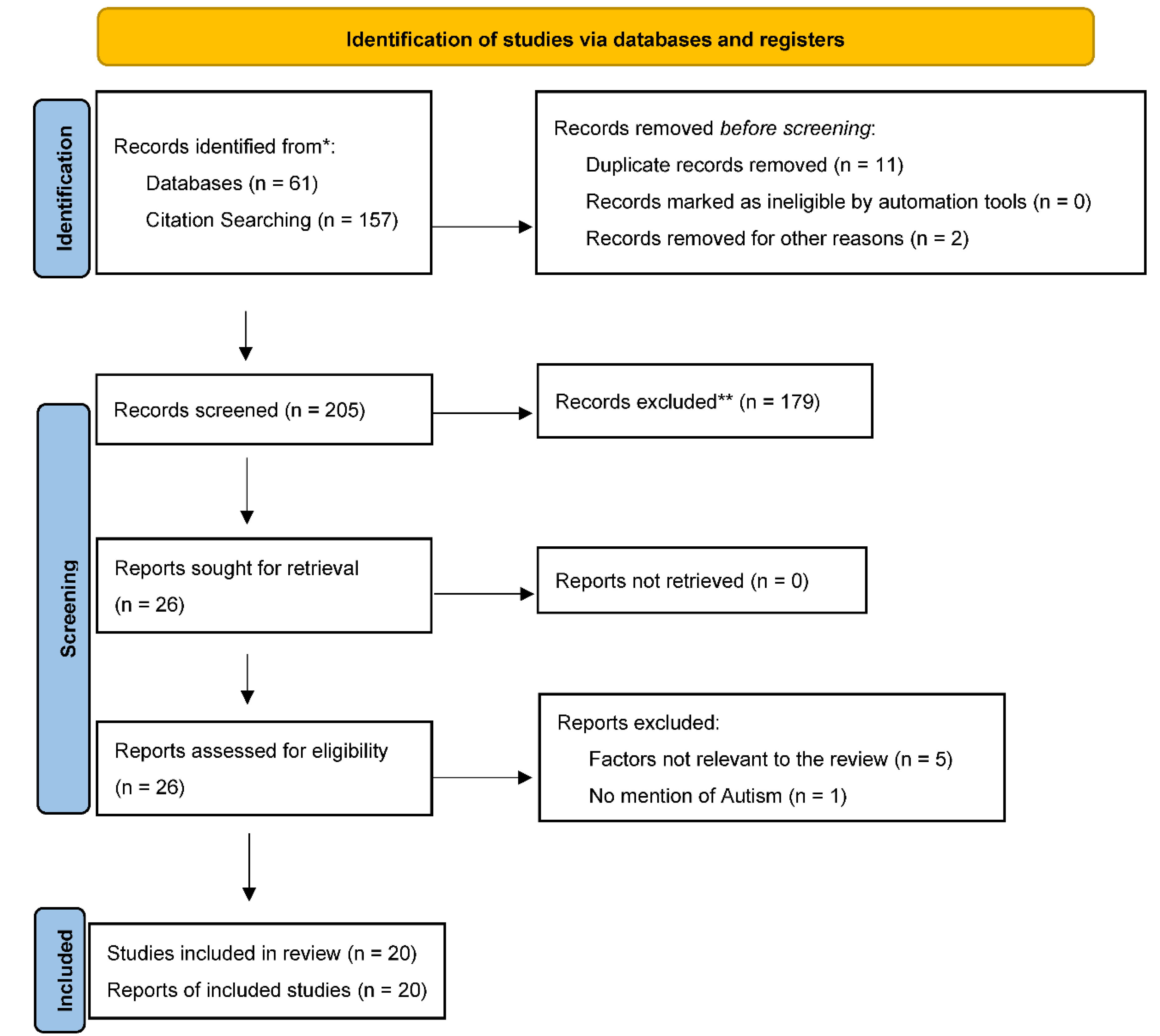

Table 1.
Well-being Process Model.
| POSITIVE | NEGATIVE | |
|---|---|---|
| General Characteristics | Social support | Demands |
| Appraisals | Life satisfaction | Perceived stress |
| Individual characteristics | Positive personality | Negative coping |
| Outcomes | Happiness | Anxiety and Depression |
Table 2.
Inclusions and Exclusions.
| Inclusion | Exclusion | |
|---|---|---|
| Well-being | Well-being, mental well-being, emotional well-being, psychological well-being, social well-being | Physical health, specifically gut problems, and skin disorders |
| Co-morbidities | Depression, Anxiety | ADHD, Epilepsy, Schizophrenia |
| Autistic Traits | Autistic trait, autistic traits, broad autism phenotype | Autism, autism spectrum disorder |
| Sleep Quality | Sleep, sleep quality, poor sleep quality, sleep problems, daytime sleepiness | Sleep disorders such as sleep apnea and delayed sleep-wake phase disorder |
| Age | Adults, university students | Child, children, toddler, toddlers |
| Study type | Reviews, experiments, qualitative research | Brain imaging |
Table 3.
Characteristics of four reports exploring the relationship between autistic traits, sleep quality and/or well-being.
Table 3.
Characteristics of four reports exploring the relationship between autistic traits, sleep quality and/or well-being.
| Authors and year | Objective | Demographic information | Design | Measures |
|---|---|---|---|---|
| Grant, Norton & Hoekstra (2025) [11] | Understand the impact of sensory sensitivity in autistic individuals | 534 adults aged 18 or over. | Online, self-report Survey | Central Sensitisation Inventory (CSI) Sensory Perception Quotient (SPQ) Autism Spectrum Quotient (AQ) PHQ-9 GAD-7 |
| Lodi-Smith et al. (2021) [12] | Exploring the relationship between autistic traits, fatigue and psychological well-being | 294 adults, aged 53 to 96 (average age: approx. 70); 97% white and 57% female. |
Online, self-report Survey | AQ-Short Patient-Reported Outcomes Measurement Information System (PROMIS) Behavioural Risk Factor Surveillance System (BRFSS) PROMIS Depression and Anxiety Scales Satisfaction With Life Scale (SLS) Ryff Psychological Well-Being Scale (short form) |
| Sampson et al. (2021) [13] | Exploring the co-occurrence of autistic traits and psychotic traits | 653 adults, aged between 18 and 65; approx. 81% female | Online, self-report Survey | AQ Community Assessment of Psychic Experiences- positive dimensions (CAPE-p) Centre for Epidemiological Study Depression Scale – Revised (CESDS-R) Deliberate Self-Harm Inventory (DSHI) Suicide Behaviours Questionnaire – Revised (SBQ-R) |
| Nankoo et al. (2019) [14] | Examining the overlaps between autistic traits and ADHD traits, their impact on well-being | 332 university students aged between 17 and 49 (average age: 22) | Lab self-report survey | Adult ADHD Self-Report Scale DASS-21 AQ short with 28 items |
Table 4.
Characteristics of four reports exploring the relationship between ASD and well-being.
| Authors and year | Objectives | Demographic information | Design | Measures |
|---|---|---|---|---|
| Mantzalas et al. (2024) [15] | Understanding the autistic burnout experience and its impact on well-being | 238 autistic adults aged between 18 and 75; 71% female | Online self-report survey | AASPIRE Autistic Burnout Measure Copenhagen Burnout Inventory |
| Pelton et al. (2023) [16] | Exploring the role of depression and suicidal thoughts in autistic people | 805 adults; 463 autistic and 342 non-autistic. | Online self-report survey | PHQ-9 GAD-7 Interpersonal Needs Questionnaire – 10-item version (INQ-10 Suicidal Behaviours Questionnaire – Revised (SBQ-R) Autism Spectrum Quotient – Short Form) (AQ-short) |
| Levi et al. (2023) [17] | Understanding the experience of social pain in autistic people | 15 autistic adults aged between 18 and 45. | Qualitative research based on interviews | NA |
| Augustin et al. (2020) [18] | Exploring the impact of alexithymia on mental health and well-being. | 60 adults (average age: 42 years) | Mixed methods: interviews, questionnaires and performance tests | Maslach Burnout Inventory (MBI) Beck Depression Inventory (BDI-II) State-Trait Anxiety Inventory (STAI) Toronto Alexithymia Scale (TAS-26) Childhood Trauma Questionnaire (CTQ) |
Table 5.
Characteristics of three reports exploring the relationship between sleep quality and well-being.
Table 5.
Characteristics of three reports exploring the relationship between sleep quality and well-being.
| Authors and year | Objectives | Demographic information | Design | Measures |
|---|---|---|---|---|
| Lian, Zhang & Jia (2020) [19] | Exploring the impact of sleep duration on brain function and mental health | 5,811 adults aged 45 or over (average age 57.3 years); 56.2% female. | Mixed methods: self-report surveys, cognitive tasks and interviews; longitudinal study. |
Measure developed by CHARLS that includes background, family, health status and functioning, work and retirement, income and expenditure, and COVID-19. |
| Tanielian, Doghramji & Certa (2020) [20] | Exploring the risk factors and predictors of obstructive sleep apnea | 91 adult psychiatric inpatients (59% male, average age 43) | In-person self-report survey. | STOP-BANG questionnaire Epworth Sleepiness Scale (ESS) |
| Yildiz et al. (2020) [21] | Understanding the Correlation between Sleep Problems and Suicidality | 100 participants between the ages of 12 and 18 | Mixed methods: questionnaire and interviews | Pittsburgh Sleep Quality Index (PSQI) Epworth Sleepiness Scale (ESS) Children’s Sleep Habits Questionnaire |
Table 6.
Characteristics of four reports exploring the relationship between ASD, sleep quality and well-being.
Table 6.
Characteristics of four reports exploring the relationship between ASD, sleep quality and well-being.
| Authors and year | Objectives | Demographic information | Design | Measures |
|---|---|---|---|---|
| Richdale et al. (2023) [22] | Exploring the impact of sleep quality, fatigue and well-being on depression in autistic adults | 114 autistic people between the ages of 15 and 25 | Online self-report longitudinal study | Pittsburgh Sleep Quality Index (PSQI) Flinders Fatigue Scale (FFS) Hospital Anxiety and Depression Scale – Depression (HADS-D) Social Integration and Social Contribution Scales (SWS-I, SWS-C) |
| Charlton et al. (2022) [23] | Investigating the risk factors of poor sleep quality in autistic people and their impact on mental health | 730 autistic adults aged between 18 and 78 (60% female) recruited through SPARK | Online self-report survey | Pittsburgh Sleep Quality Index (PSQI) GAD-7 PHQ-9 Perceived Stress Scale (PSS) AQ-28 |
| Martini et al. (2022) [24] | Exploring the differences in sex in autistic adults, understanding the impact on well-being and sleep quality | Over 1.3 million people, including 1.6% autistic individuals, are between the ages of 16 and 25. 34% female | Investigative analysis of Swedish medical registers | NA |
| Williams & Gotham (2022) [25] | Investigating the impact of sleep problems on mental health and quality of life in autistic people | 290 autistic young adults between the ages of 18 and 26 (average age: 23) recruited through SPARK | Online self-report survey | Modified PHQ-1 Social Responsiveness Scale – Second Edition (SRS-2) Beck Depression Inventory – Second Edition (BDI-2 GAD-7 World Health Organisation Quality of Life – 4-item version (WHOQoL-4) |
Table 7.
Understanding Autism and Theoretical Frameworks.
| Authors and year | Proposed conceptual framework |
|---|---|
| Richdale, Morris & Lawson (2025) [28] | Evidence-based commentary explaining that autistic people often have sleep issues, which strongly correlate with suicidality, anxiety and depression. |
| Pelton et al. (2023) [16] | Theoretical framework based on the Interpersonal Theory of Suicide explaining the association between autism and suicidality. |
| Mantzalas, Richdale & Dissanayake (2022) [26] | Theoretical framework linking autistic traits to autistic burnout. |
| Santos et al. (2022) [29] | A review of sex differences between males and females suggests that females are more likely to be misdiagnosed or underdiagnosed. |
| Weir, Allison & Baron-Cohen (2020) [27] | Screening and diagnostic article explaining the common traits of autism and their impact on well-being. |
| Vannucchi et al. (2014) [30] | Review article reporting standard features of autism and their implications. |
Disclaimer/Publisher’s Note: The statements, opinions and data contained in all publications are solely those of the individual author(s) and contributor(s) and not of MDPI and/or the editor(s). MDPI and/or the editor(s) disclaim responsibility for any injury to people or property resulting from any ideas, methods, instructions or products referred to in the content. |
© 2026 by the authors. Licensee MDPI, Basel, Switzerland. This article is an open access article distributed under the terms and conditions of the Creative Commons Attribution (CC BY) license (http://creativecommons.org/licenses/by/4.0/).
Copyright: This open access article is published under a Creative Commons CC BY 4.0 license, which permit the free download, distribution, and reuse, provided that the author and preprint are cited in any reuse.


