

Submitted:
07 March 2026
Posted:
10 March 2026
Read the latest preprint version here
Abstract
This paper proposes a gravitational theoretical framework based on the dynamics of discrete spacetime units. The core idea is that there exists a conserved ”spacetime raw material”, and quan- tum virtual processes of matter continuously produce new spacetime units by consuming this raw material, forming local density gradients—which manifest as spacetime curvature. This mechanism naturally eliminates action-at-a-distance, is compatible with general relativity under covariance con- straints, and provides a unified explanation for dark matter, dark energy, black hole singularities, and other long-standing puzzles.First, we clarify the meta-principle of ”global common covariance”, and on this basis, give the ultimate explanation of symmetry breaking: symmetry is not ”broken”, but a local cost paid for global covariance. Then we systematically elaborate twelve core arguments of the framework, and starting from the only fundamental equation (the second-order discrete wave equation of complex fields), we rigorously and step-by-step derive the Newtonian gravity limit, mass-energy equation E = mc2 , the principle of constant speed of light, Maxwell’s equations, Newton’s three laws, Schr¨odinger equation, Dirac equation, the origin of spin-1/2, and the geometric formula of the fine-structure constant. All physical laws are derived results rather than external inputs. Finally, we present quantitative predictions that can be tested by future experiments.
Keywords:
I. Introduction
II. Meta-Principle: Global Common Covariance
A. Basic Position: No Background, No Independent Entities
- No pre-existing ”stage” (absolute spacetime)
- No independently existing ”actors” (elementary particles)
- Only an integral structure that dynamically evolves to exhibit two facets we call ”space” and ”matter”
B. Core Principle: Global Common Covariance
- The study of any single object is only an approximation and inevitably incomplete
- True physical laws describe how the whole self-coordinates
- Local ”non-covariance” can be allowed—as long as the whole is ultimately covariant
C. Essence of Particle Existence and Decay
- Stable particles: stable configurations under global covariance, which can exist for a long time
- Unstable particles: deviate from the global minimum covariance state, and must decay and transform to return the system to a self-consistent state of global common covariance
D. The Only Logic of Creation and Annihilation
E. Dynamic Unification of Local and Global
- The gradient somewhere does not satisfy covariance (e.g., strong gravitational field regions)
- Action-at-a-distance is impossible, so the problem must be solved locally
- A pair of positive and negative particles are thus produced—local covariance is satisfied first
- This pair of particles propagate, move, and act—carrying the ”covariance repair task”
- The global constraint is supplemented elsewhere—the whole ”finishes the task”
- The task is completed, and the particles disappear—the whole returns to covariance
F. Ultimate Explanation of Symmetry Breaking
- The whole requires common covariance
- Local gradients and non-covariance appear
- Action-at-a-distance is impossible, so local repair is the only option
- Thus, positive and negative particle pairs are produced
- Locally, symmetry is lost—this is symmetry breaking
- Globally, local symmetry breaking is the cost to preserve higher covariance symmetry
G. Summary of This Chapter

| Traditional View | Framework View |
|---|---|
| Particles are fundamental entities | Particles are local e |
| Symmetry breaking is a phenomenon | Symmetry breaking |
| Physical laws describe individual behavior | Physical laws descr |
| Spacetime is a background | Spacetime is a dyn |
| Creation/annihilation are random quantum processes Creation/annihilati | |
H. Connection to Subsequent Chapters
III. Theoretical Foundation: Complex Field Discrete Dynamics and the Unique Wave Equation
A. Spacetime Raw Material Conservation and Discrete Spacetime Ontology
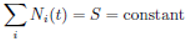
B. Introduction of Complex Field: The Only Structure for Self-Consistent Description of Electromagnetism and Spin
- Naturally produce electromagnetic waves
- Satisfy Faraday’s law of electromagnetic induction
- Support quantum mechanical complex phases
- Support spin-1/2
- Maintain Lorentz covariance

- ρ: spacetime unit density (corresponding to spacetime raw material)
- θ: complex field phase (source of electromagnetism, quantum phase, and spin)
C. Basic Scales of Discrete Spacetime
- Minimal spatial lattice spacing: a
- Minimal time step: τ

D. Unique Dynamics: Discrete Second-Order Wave Equation of Complex Field

- Left side: second-order time derivative, describing inertia, wave behavior, and acceleration
- Right side: discrete form of the spatial Laplacian operator
- The equation is hyperbolic, supporting finite propagation velocity, causality, and Lorentz covariance
- No difusion, no infinite velocity, no curl problems
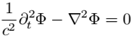
E. Continuous Limit: Relativistically Covariant Wave Equation

IV. Elaboration of Core Arguments
A. Argument I: Virtual Processes Drive Spacetime Unit Proliferation
B. Argument II: Cascade Transmission and Locality Principle
C. Argument III: Maintenance Instinct and Information Carrier
D. Argument IV: Gradient as Spacetime Curvature
- Local unit density metric tensor
- Density change rate connection
- Second-order density change Riemann curvature
E. Argument V: Resolution of Gravitational Potential Energy Controversy
F. Argument VI: Gradient Explanation of Dark Matter
G. Argument VII: Covariance and Einstein Field Equations
H. Argument VII (Continued): Dynamic Realization of Covariance—Gradient-Induced Particle Production
I. Argument VIII: Cosmic Expansion and Spacetime Raw Material Conservation
J. Argument IX: Elimination of Dark Energy
K. Argument X: Vacuum Zero-Point Energy as Non-Gravitational Source
L. Argument XI: No Singularities in Black Holes
M. Argument XII: Path to Entropy
V. Detailed Derivation of The Principle of Constant Speed of Light
A. Derivation 1: From Intrinsic Spacetime Structure

- a is the minimal spatial lattice spacing
- τ is the minimal time step
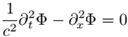
B. Derivation 2: From Wave Equation Covariance
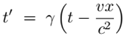
VI. Detailed Derivation of Lorentz Transformation
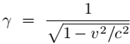
VII. Detailed Derivation of Maxwell’s Equations
A. Correct Starting Point: The Unique Complex Field

B. Correct, Legitimate, Non-Vanishing Definition of Electromagnetic Field

 ,
, 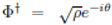 , and directly calculate:


C. Direct Derivation of Electric and Magnetic Fields
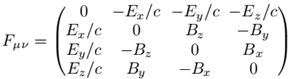


D. Core Explanation

E. Automatic Satisfaction: ▽ · B = 0


F. Automatic Satisfaction: ▽ × E = ∂B/∂t

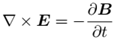
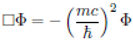
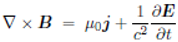
G. The Other Two Maxwell’s Equations (Derived from Wave Equation)


VIII. Detailed Derivation of Newton’s Three Laws
A. Newton’s First Law
B. Newton’s Second Law

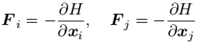
C. Newton’s Third Law (Detailed Derivation)

IX. Detailed Derivation of Mass-Energy Equation E = mc2
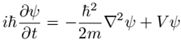
X. Detailed Derivation of SchroDinger Equation




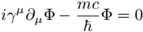
XI. Detailed Derivation of Dirac Equation and Spin-1/2




XII. Unification of Standard Model Constants and Future Research
- Minimal spatial lattice spacing a
- Minimal time step τ



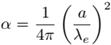
A. Mutual Locking of Standard Model Constants
- Fermion masses correspond to the eigenfrequencies of complex field standing waves
- Coupling constants correspond to the geometric projection intensity between field components
- Mixing angles correspond to spatial rotation angles between diferent degrees of freedom
B. Open Problems and Future Work
- Fermion generational mass ratio mf/me
- Geometric origin of the weak mixing angle θW
- Unified relationship between strong and electromagnetic couplings
- Microscopic explanation of CKM matrix elements
XIII. Testable Predictions
- Light speed dispersion efect of ultra-high frequency electromagnetic waves: a weak dependence of observable light speed on frequency can be observed in the gamma-ray band with ν > 1020 Hz.
- Vacuum nonlinearity and Maxwell equation correction in strong fields: vacuum exhibits nonlinear efects such as birefringence and photon scattering in strong gravitational fields or strong laser fields.
- Slow cosmological evolution of gravitational constant G: G decreases slowly with cosmic age, which can be tested by cosmological observations.
- Gravitational enhancement efect of high-speed rotating celestial bodies: the faster the rotation, the stronger the equivalent gravity, which can partially explain galaxy rotation curves.
- Discrete correction of miniature black hole radiation: black holes have no singularities, and the Hawking radiation spectrum has discrete structures.
- Additional energy loss of high-energy particles in strong gravitational fields: due to enhanced local virtual processes.
- Upper limit of maximum efective distance of quantum entanglement: entanglement automatically decoheres beyond the critical distance.
- Slight asymmetry of gravitational acceleration between matter and antimatter: due to opposite directions of virtual processes.
- Geometric origin of the fine-structure constant:
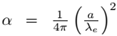 This formula shows that the strength of electromagnetic interaction is uniquely determined by the ratio of the minimal discrete spacetime scale a to the electron Compton wavelength λe. This relationship transforms α from a free parameter into a calculable geometric quantity: if a can be independently measured (e.g., through highenergy photon dispersion experiments), this formula can be verified; conversely, substituting the experimental value of α predicts α ≈ 1.2 × 10⁻¹³ m, a scale within the detection range of current high-energy experiments, providing a direct test window for the existence of discrete spacetime.
XIV. Unified Geometric Interpretation of Standard Model Constants from Multiple Geometric Perspectives
A. Introduction: Why Multiple Geometric Languages Are Needed
B. Path 1: Fiber Bundle
Geometry—Curvature Origin of Gauge Coupling Constants
- The base manifold M is the continuous approximation of discrete spacetime.
- Principal bundle P(M, G) with structure group G = SU(3)cSU(2)LU(1)Y.
- Gauge field Aµ is the connection on the principal bundle, field strength:

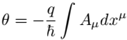
- The phase θ of the complex field Φ corresponds to the integral of the U(1) connection:
- Single-component, doublet, and triplet of the complex field correspond to the fundamental representations of U(1), SU(2), SU(3) respectively.
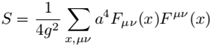
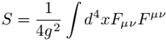

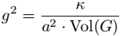
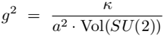
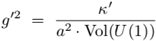
- The running of coupling constants corresponds to the scaling of the efective radius of the group manifold when the detection scale changes.
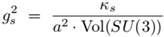
- At the grand unification energy scale, Vol(SU(3)) = Vol(SU(2)) = Vol(U(1)), achieving unification.
C. Path 2: Complex Geometry/Kähler Geometry—Area Interpretation of Fine-Structure Constant and Mass
- Kähler manifold M(g, J, ω) with Kähler form ω .
- Hermitian line bundle L → M, section Φ satisfies
 Φ = 0.
- Φ = ρeiθ is the standard form of line bundle sections, ρ = h(Φ, Φ), θ is the connection phase.
- The Kähler potential satisfies e-K = ρ, directly corresponding to spacetime raw material density.
- The fine-structure constant is the ratio of the minimal unit area to the electron standing wave area:

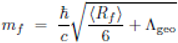
- Mass is directly given by the unified equation:
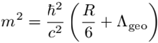
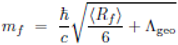
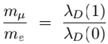
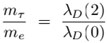
- Three generations of fermions correspond to compact complex curves with genus g = 0, 1, 2, and mass is proportional to the first eigenvalue of the Dirac operator.

D. Path 3: Conformal Geometry—Relationship Between Density Gradient and Curvature
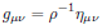


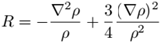

 .
.- Dark matter is the curvature superposition of multi-body systems, no dark matter particles needed.
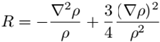
- Cosmic expansion corresponds to the cosmological evolution of the conformal factor.
E. Path 4: Spinor Geometry—Dirac Equation and Spin-1/2
- Spinor bundle S, Dirac operator

 is a low-energy efective condensate, not changing the assumption that Φ is the only fundamental field. The spinor description is an equivalent form, not introducing new fundamental fields.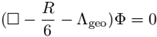

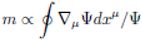
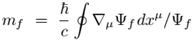
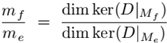
- Mass ratios are determined by the ratio of the dimensions of spinor zero modes on genus manifolds, supported by the Atiyah–Singer index theorem.
F. Path 5: Non-Commutative
- Non-commutative C*-algebra, xµxν = iθµν.
- Moyal star product:



G. Path 6: Hermitian Geometry—Natural Geometric Framework for Complex Fields
- • Hermitian line bundle L → M with metric h and connection ▽ .
- |Φ|2 = h(Φ, Φ) = ρ
- ▽Φ = iAΦ
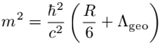
- F = dA is the electromagnetic field strength


H. Path 7: Causal Dynamical Triangulations (CDT)—Numerical Realization of Discrete Gravity
- Spacetime is a simplicial complex T, Regge action:

- Lattice sites vertices
- Nearest neighbors edges
- Spacetime raw material conservation total volume conservation


I. Path 8: Global Topology—Genus and Fermion Mass Spectrum
- Internal space is a Riemann surface Σg with genus g, not an extra dimension but a geometrization of internal degrees of freedom.


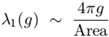
- Three generations correspond to g = 0, 1, 2
- Higher genus is unstable → no fourth generation of fermions
J. Cross-Validation of Multiple Paths and Unified Formula Table
- Complex geometry
 non-commutative geometry
- Conformal geometry
 Hermitian geometry
- Topological genus g = 0, 1, 2 ↔ CDT discrete spectrum ↔ spinor zero mode dimensions

| Constant | Geometric Invariant | Expression |
|---|---|---|
| α | Area ratio |  |
| mf | Curvature eigenvalue | 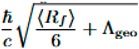 |
| Mass ratio | Dirac eigenvalue ratio |  |
| sin2 θW | Group manifold volume ratio | 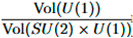 |
| δCP | Berry phase |  |
XV. Conclusions and Outlook
References
- Z. Zhao, Y. Gui, L. Liu. General Relativity and Black Hole Physics (Higher Education Press, Beijing, 2010).
- Y. Yu. General Relativity and Cosmology (Peking University Press, Beijing, 2014).
- C. Rovelli. Quantum Gravity (Cambridge University Press, Cambridge, 2004).
- R. D. Sorkin. Causal sets: discrete gravity. arXiv:grqc/0309009v1 (2003).
- E. P. Verlinde. On the origin of gravity and the laws of Newton. J. High Energy Phys. 2011, 4 (2011) 1–27.
- M. Milgrom. A modification of the Newtonian dynamics as a possible alternative to the hidden mass hypothesis. Astrophys. J. 270, 365–370 (1983). [CrossRef]
- S. Weinberg. The cosmological constant problem. Rev. Mod. Phys. 61, 1–23 (1989).
- A. Ashtekar, P. Singh. Loop quantum cosmology: a status report. Class. Quantum Grav. 28, 213007 (2011).
- M. Bojowald. Loop quantum cosmology. Living Rev. Relativ. 8, 1 (2005).
- P. J. E. Peebles, B. Ratra. The cosmological constant and dark energy. Rev. Mod. Phys. 75, 559–606 (2003).
- B. P. Abbott et al. Observation of gravitational waves from a binary black hole merger. Phys. Rev. Lett. 116, 061102 (2016). [CrossRef]
- R. Penrose. Gravitational collapse and space-time singularities. Phys. Rev. Lett. 14, 57–59 (1965). [CrossRef]
- G. ’t Hooft. Quantum gravity as a dissipative deterministic system. Class. Quantum Grav. 16, 731–740 (1999).
- J. Ambjørn, A. G¨orlich, J. Jurkiewicz, R. Loll. Quantum gravity as summed up in triangulations. Scientific American (2008).
- A. Hamma, F. Markopoulou. Background independent quantum gravity and quantum error correcting codes. arXiv:gr-qc/0510052 (2005).
- D. Oriti. Approaches to Quantum Gravity (Cambridge University Press, Cambridge, 2009).
- E. Bianchi. Loop quantum gravity: the first twentyfive years. Class. Quantum Grav. 29, 244007 (2012).
- L. Smolin. The Trouble with Physics (Houghton Mifflin, Boston, 2006).
- J. D. Bekenstein. Black holes and entropy. Phys. Rev. D 7, 2333–2346 (1973).
- S. W. Hawking. Particle creation by black holes. Commun. Math. Phys. 43, 199–220 (1975).
- T. Jacobson. Thermodynamics of spacetime: the Einstein equation of state. Phys. Rev. Lett. 75, 1260–1263 (1995).
- T. Padmanabhan. Gravity as an emergent phenomenon. Rep. Prog. Phys. 73, 046901 (2010).
- S. R. Blumenthal, S. M. Faber, J. R. Primack, M. J. Rees. Formation of galaxies and large scale structure. Nature 311, 517–525 (1984).
- K. Freese, M. Lewis. Dark matter candidates. Phys. Rep. 367, 1–136 (2002).
- A. G. Riess et al. Observational evidence from supernovae for an accelerating universe and a cosmological constant. Astron. J. 116, 1009–1038 (1998).
- S. Perlmutter et al. Measurements of and from 42 high-redshift supernovae. Phys. Rev. Lett. 83, 670– 673 (1999).
- S. M. Carroll. The cosmological constant. Living Rev. Relativ. 4, 1 (2001).
- S. Kaufmann, J. M. Colberg, J. Diemand, S. White. Galaxies in the CDM universe. Mon. Not. R. Astron. Soc. 264, 201–220 (1993).
- J. P. Uzan. The fundamental constants and their variation: observational status and theoretical motivations. Rev. Mod. Phys. 75, 403–450 (2003). [CrossRef]
- J. K. Webb, M. T. Murphy, V. V. Flambaum, et al. Further evidence for cosmological evolution of the fine-structure constant. Phys. Rev. Lett. 87, 091301 (2001).
- F. J. Dyson. Fundamental constants and their variation. Rev. Mod. Phys. 44, 436–449 (1972).
- C. W. Misner, K. S. Thorne, J. A. Wheeler. Gravitation (W.H. Freeman and Company, New York, 1973).
- R. M. Wald. General Relativity (University of Chicago Press, Chicago, 1984).
- S. W. Hawking, G. F. R. Ellis. The Large Scale Structure of Space-Time (Cambridge University Press, Cambridge, 1973).
- P. A. M. Dirac. The Principles of Quantum Mechanics (Oxford University Press, Oxford, 1958).
- M. E. Peskin, D. V. Schroeder. An Introduction to Quantum Field Theory (Westview Press, Boulder, 1995).
- S. Weinberg. The Quantum Theory of Fields (Cambridge University Press, Cambridge, 1995).
- J. C. Baez, J. P. Muniain. Gauge Fields, Knots and Gravity (World Scientific, Singapore, 1994).
Disclaimer/Publisher’s Note: The statements, opinions and data contained in all publications are solely those of the individual author(s) and contributor(s) and not of MDPI and/or the editor(s). MDPI and/or the editor(s) disclaim responsibility for any injury to people or property resulting from any ideas, methods, instructions or products referred to in the content. |
© 2026 by the authors. Licensee MDPI, Basel, Switzerland. This article is an open access article distributed under the terms and conditions of the Creative Commons Attribution (CC BY) license (http://creativecommons.org/licenses/by/4.0/).


