

Submitted:
16 February 2026
Posted:
18 February 2026
You are already at the latest version
Abstract
The valorization of agricultural by-products as functional feed additives represents a promising strategy for sustainable aquaculture. This study evaluated the effects of dietary fermented longan peel (FLP), produced through enzymatic hydrolysis and Lactiplantibacillus plantarum fermentation, on growth performance, digestive physiology, gut morphology, innate immunity, and gene expression in Nile tilapia (Oreochromis niloticus) cultured under a biofloc system. Five experimental diets were formulated with graded FLP levels (0, 5, 10, 20, and 40 g kg-1) and fed to fish for eight weeks. Growth indices, including final weight, weight gain, and specific growth rate, improved significantly in fish receiving 20 g kg-1 FLP, following a strong quadratic response pattern. In vitro di-gestibility assays showed enhanced carbohydrate and protein digestibility, coinciding with increased intestinal amylase and protease activities. Histological analysis indicated that moderate FLP inclusion (10–20 g kg-1) promoted villus height, crypt depth, and epithelial organization. Innate immune parameters, including lysozyme, peroxidase, and alternative complement activity, were markedly elevated in serum and mucus, partic-ularly at 20–40 g kg-1 after eight weeks. Gene expression profiling revealed significant up-regulation of growth-related (IGF-1, GH, NPY-α, Galanin), immune-related (TLR-7, TNF-α, NFκB), and antioxidant-related (hsp70, Keap-1, nrf-2, GST-α) genes in fish fed higher FLP levels, with responses plateauing beyond 20 g kg-1. Overall, FLP supple-mentation at 20 g kg-1 optimally enhanced growth, digestive efficiency, intestinal health, and innate immune status. These findings demonstrate the potential of fermented longan peel as a cost-effective, bioactive, and sustainable functional feed ingredient for tilapia and other warm-water aquaculture species.
Keywords:
fermented longan peel
; Nile tilapia
; digestive enzymes
; Immune response
; Biofloc
1. Introduction
Aquaculture is the fastest-growing food production sector worldwide and plays a crucial role in ensuring global food security, nutrition, and rural employment [1]. It currently supplies more than half of the fish consumed by humans and is projected to expand further as capture fisheries reach their limits [2]. However, intensive aquaculture production faces significant challenges, including the high cost of conventional feed ingredients, dependence on fishmeal and fish oil, and the increasing occurrence of disease outbreaks [3]. These issues underscore the need for sustainable feed alternatives that can improve growth, immunity, and environmental performance while supporting a circular bioeconomy [4]. Among cultured species, Nile tilapia (Oreochromis niloticus) is one of the most economically important freshwater fish due to its rapid growth, omnivorous feeding behavior, and tolerance to various farming conditions [5]. It is widely cultivated in Asia, Africa, and Latin America and represents a major protein source for human consumption [6]. Nonetheless, intensive rearing systems often expose tilapia to environmental stress, poor water quality, and pathogenic infections, leading to impaired immunity and reduced productivity [5,7]. In this context, the use of natural functional feed additives derived from agricultural by-products has been recognized as a promising strategy to enhance fish health and sustainability in tilapia farming.
Longan (Dimocarpus longan Lour.) is a tropical fruit widely grown in Thailand, Vietnam, and China [8], with annual global production approximately of 3.44 million tons [9,10]. Longan peel account 12.4–19.6% of the whole fruit weight [11]. During longan pulp processing, tens of thousands of tons of peel and seeds are discarded annually, causing environmental pollution and resource wastage. Thus, the reuse of longan peel and seeds has significant development potential, but there is a lack of a systematic review of the active ingredients, health benefits and applications of longan plants [8]. Studies indicate that the longan peel and seeds are rich in polyphenols, flavonoids, and polysaccharides with antioxidant, antityrosinase, antibacterial, antifungal, antidiabetic, and other activities [12,13]. The longan peel phenolic compounds including ellagic acid, gallic acid and corilagin in free, esterified- and etherified forms [14]. Recent studies demonstrated that longan peel powder improved growth performance, immune activity, and gene expression in Nile tilapia, suggesting its potential as a functional feed additive [15]. Nevertheless, its high fiber and antinutrient contents may limit digestibility and nutrient absorption [8,14]. Fermentation represents an efficient bioprocessing approach to enhance the nutritional and functional value of plant-based ingredients [16,17]. Through microbial metabolism, fermentation degrades complex carbohydrates and antinutritional factors, increases bioactive compound availability, and produces beneficial metabolites such as organic acids and enzymes [18,19]. Fermented plant materials have been shown to improve feed utilization, gut health, and immune status in aquaculture species [20,21,22,23]. In particular, fermentation with lactic acid bacteria like Lactobacillus enhances antioxidant potential and contributes to the production of probiotics that positively influence the intestinal microbiota of fish [24,25].
In addition to functional feeds, the biofloc technology (BFT) system has gained prominence as an environmentally friendly aquaculture practice that promotes nutrient recycling, microbial biomass formation, and disease resistance [26]. BFT supports beneficial microbial consortia that improve digestion, water quality, and immunity in cultured fish, making it an excellent platform for testing functional additives [27]. Integrating fermented agro-industrial by-products with biofloc systems can provide synergistic benefits, enhancing nutrient bioavailability, stimulating immune responses, and reducing production costs. Despite increasing evidence on the benefits of both longan peel and fermented plant materials in aquaculture, the effects of fermented longan peel supplementation in Nile tilapia cultured under biofloc systems remain unexplored. Understanding how fermentation-derived metabolites and biofloc microorganisms interact to influence fish physiology is essential for optimizing feed strategies that align with sustainable production goals. Therefore, this study aimed to evaluate the effects of dietary fermented longan peel (FLP) supplementation on growth performance, digestive enzyme activity, intestinal morphology, immune response, and expression of growth-, immune-, and antioxidant-related genes in Nile tilapia reared under a biofloc system. The findings are expected to advance knowledge on the functional application of fruit by-products in aquafeeds and contribute to sustainable aquaculture practices through the combined use of fermentation and biofloc technology.
2. Materials and Methods
2.1. Production of Fermented Longa Peel
2.1.1. Sample Preparation
The longan peel material was first collected and thoroughly cleaned. It was then dehydrated in a hot-air oven at 50 °C for 48 h to remove moisture. The dried peels were milled into a fine powder and passed through a 100-mesh sieve to ensure uniform particle size. The processed powder was kept in sealed containers at 4 °C until further processing.
2.1.2. Pretreatment Process
Longan peel powder (10 g) was combined with a 0.5% sodium hydroxide solution and then treated using a high-pressure system at 50 MPa for either 5 or 20 minutes. Following pressurization, the material was thoroughly washed with deionized water to remove residual alkali, dried in a hot-air oven at 80 °C for 24 hours, and subsequently kept at 4 °C until further analysis, following the general approach described by Sahare, Singh, Laxman and Rao [28].
2.1.3. Enzymatic Hydrolysis
The pressure-treated longan peel (4 g) was suspended in 40 mL of 0.1 M citrate buffer (pH 4.8) and subjected to enzymatic digestion using iKnowZyme PXC at a dosage of 100 µg per gram of substrate. The mixture was incubated at 55 °C with shaking at 150 rpm for 72 h. After hydrolysis, the suspension was centrifuged at 12,000×g for 10 min, and the clarified supernatant was collected for quantification of reducing sugars and antioxidant properties [29].
2.1.4. Preparation of Starter Cultures for Fermentation
The bacterial starter culture was prepared using Lactiplantibacillus plantarum TISTR 2265, obtained from the Thailand Institute of Scientific and Technological Research. This strain has been highlighted for its biotechnological potential, including rapid proliferation and the ability to influence GABA production, total phenolic content, and antioxidant capacity [30]. The culture was initially grown in MRS broth at 37 °C for 24 h. A 5% (v/v) aliquot of this culture was then transferred into fresh MRS broth and incubated again until the optical density at 600 nm reached 0.6–0.8. Cells were harvested by centrifugation at 6000 ×g for 15 min at 4 °C, rinsed twice with 0.9% NaCl, and adjusted to a final density of approximately 7–8 log CFU mL⁻¹.
2.1.5. Production of Fermented Longan Peel
After completion of the 72-h enzymatic hydrolysis, the longan peel mixtures were sterilized at 121 °C for 15 min. Once cooled, they were inoculated aseptically with 5% (w/v) of the prepared L. plantarum TISTR 2265 culture. Fermentation was conducted at 30 °C for 72 h. The fermented mixtures were centrifuged at 6000 rpm for 15 min, and the resulting solid fraction was collected for further analyses.
The proximate composition and bioactive compound profile of the fermented longan peel (FLP) are presented in Table 1 and Table 2. Moisture, dry matter, ash, crude protein, and lipid contents were determined according to AOAC procedures [31]. Quantification of key phenolic constituents followed the methods described by Dhanani, Shah and Kumar [32] and Pereira, Câmara, Cacho and Marques [33]. Antioxidant activity, including ABTS⁺ scavenging ability, FRAP, total flavonoids, DPPH (IC₅₀), and total phenolics, was evaluated using established protocols [34,35].
2.2. Experiment Diets
A basal diet was formulated based on the established nutrient requirements of Nile tilapia, following the guidelines described by Wannavijit, Outama, Le Xuan, Lumsangkul, Lengkidworraphiphat, Tongsiri, Chitmanat and Doan [36] (Table 3). Experimental treatments were produced by supplementing this basal formulation with graded levels of fermented longan peel (FLP). All dry ingredients were finely milled, accurately weighed, and blended thoroughly using a mechanical mixer to achieve a uniform mixture. Fish oil and soybean oil were then added gradually to ensure even distribution across the feed matrix. Distilled water (approximately 300 mL per kg of diet) was introduced slowly to obtain the desired consistency for pelleting. The moistened mixtures were processed through a pelletizer (Siam Farm Services Co., Ltd.) to generate uniform pellets. The resulting pellets were dried and stored appropriately until use.
2.3. Experiment Design
Male Nile tilapia fingerlings were obtained from PC Farm, Thailand. Upon arrival, the fish were acclimated by feeding a commercial diet (CP 9950) for 30 days, followed by a two-week feeding period with the control diet. After acclimation, a total of 300 fish (initial weight: 15.04 ± 0.03 g) were randomly allocated to 15 aerated tanks (150 L each), with 20 fish per tank. The experiment followed a Completely Randomized Design (CRD) consisting of five dietary treatments, each with three replicates. Fish were fed their respective experimental diets to apparent satiation twice daily at 08:30 and 16:30 for a duration of eight weeks.
2.4. Biofloc Water Preparation and Management
Two weeks before the experiment, each tank was supplemented with 2 g of fish feed, 400 g of salt, 5 g of dolomite, and 5 g of molasses to initiate biofloc formation. Throughout the trial, the carbon-to-nitrogen (C:N) ratio was maintained at 15:1 by adding molasses (containing 40% carbon) daily, following the recommendations of Avnimelech [37]. The C:N ratio was calculated based on the residual nitrogen in each tank and the nitrogen input from the diet, as outlined by Cardona, Lorgeoux, Chim, Goguenheim, Le Delliou and Cahu [38].
2.5. Growth Performance Measurements
Growth and survival indices of Nile tilapia were assessed using standard aquaculture performance metrics. Calculations included: Weight gain (WG) = final weight (g)—initial weight (g); Specific growth rate (SGR %) = 100 x (ln final weight - ln initial weight)/total duration of experiment; Feed conversion ratio (FCR) = feed given (dried weight)/weight gain (wet weight), and Survival rate (%) = (final fish number/initial fish number) x 100
2.6. In Vitro Digestibility and Digestive Enzyme Activity
2.6.1. Crude Enzyme Extraction
Crude enzyme extracts were prepared by homogenizing small intestinal tissue with 0.2 M phosphate buffer (pH 8.0) at a ratio of 1:3 (w/v), following the method of Rungruangsak-Torrissen [39]. The homogenate was centrifuged at 15,000 ×g for 15 minutes at 4 °C, and the supernatant, carefully collected to avoid the upper lipid layer, was used as the crude enzyme extract. Samples were stored at −80 °C until further analysis [40].
2.6.2. Digestive Enzyme Assays
Amylase activity was quantified following Areekijseree, Engkagul, Kovitvadhi, Thongpan, Mingmuang, Pakkong and Rungruangsak-Torrissen [41], using 5% soluble starch as the substrate; absorbance at 540 nm was compared with maltose standards and expressed as mg maltose h⁻¹ mg⁻¹ protein. Lipase activity was measured according to Rungruangsak-Torrissen [39], with 0.01 M p-nitrophenyl palmitate as the substrate; absorbance at 410 nm was referenced to p-nitrophenol standards and expressed as µmol p-nitrophenol h⁻¹ mg⁻¹ protein. Total protease activity was assayed using 5% azocasein following Areekijseree, Engkagul, Kovitvadhi, Thongpan, Mingmuang, Pakkong and Rungruangsak-Torrissen [41], where one enzyme unit (U) corresponded to a 1.0-unit increase in absorbance at 440 nm under assay conditions, expressed as U h⁻¹ mg⁻¹ protein. Trypsin activity was assessed with 1.25 mM benzoyl-DL-arginine-p-nitroanilide as the substrate [39], and absorbance at 410 nm was compared with a p-nitroanilide calibration curve, expressed as µmol p-nitroaniline h⁻¹ mg⁻¹ protein.
2.6.3. In Vitro Digestibility
Crude enzyme extracts were dialyzed overnight in 50 mM phosphate buffer (pH 8.0) prior to use in the in vitro digestibility assay. Experimental diets were finely ground to serve as substrates. Protein and carbohydrate digestibility were evaluated using crude intestinal enzymes from fish, following a modified protocol of Rungruangsak-Torrissen, Rustad, Sunde, Eiane, Jensen, Opstvedt, Nygård, Samuelsen, Mundheim and Luzzana [42].
For each assay, 5 mg of dried diet powder were mixed with 10 mL of 50 mM phosphate buffer (pH 8.0), 50 μL of 0.5% chloramphenicol, and 125 μL of dialyzed crude enzyme extract. The mixture was incubated at 25 °C in a shaking incubator for 24 h to mimic digestion in tropical fish. A baseline control (T0) was obtained by withdrawing 0.5 mL of the reaction mixture before enzyme addition, immediately heating it at 100 °C for 5 min to stop all enzymatic activity, and storing it at −80 °C for subsequent analysis. Digestion was initiated by adding 0.5 mL of dialyzed enzyme extract with standardized trypsin activity. After 24 h of incubation, 1 mL of the digested suspension was collected, heat-inactivated (100 °C, 5 min), and preserved at −80 °C for further measurements.
Protein digestibility was quantified using the trinitrobenzene sulphonic acid (TNBS) method, which detects free amino groups released during hydrolysis. A 200 μL aliquot of the digested sample was mixed with 2 mL of phosphate buffer (50 mM, pH 8.0) and 1 mL of 0.1% TNBS, followed by incubation in the dark at 60 °C for 1 h. The reaction was stopped with 1 mL of 1 M HCl, and absorbance was measured at 420 nm. Values were calculated using a DL-alanine standard curve and expressed as µmol DL-alanine per g of feed per unit of trypsin activity, correcting for enzyme variability [43].
Carbohydrate digestibility was determined by measuring reducing sugars using the dinitrosalicylic acid (DNS) assay. One milliliter of digested sample was reacted with 500 μL of DNS reagent, boiled for 5 min, cooled, and read at 540 nm. Reducing sugar concentrations were derived from a maltose standard curve and expressed as mg maltose per g of feed per unit of amylase activity, enabling comparisons across treatments [43].
2.7. Intestinal Morphology
During sampling, mid-intestinal segments were collected from six fish in each treatment group. Tissues were gently rinsed with phosphate-buffered saline (PBS; pH 7.4) and fixed in 10% neutral-buffered formalin for 24 h. After fixation, samples were processed for routine histology: they were dehydrated, embedded in paraffin, sectioned at 4 μm thickness, and stained with hematoxylin and eosin (H&E) following the procedure outlined by Srinual, Chotipuntu, Tantikitti and Areechon [44]. Prepared slides were examined under a compound microscope (Leica DM750, Leica Microsystems, Wetzlar, Germany) at 20× magnification. Morphometric parameters, including villus height (VH), villus width (VW), and crypt depth (CD), were quantified using Leica LAS X imaging software (Leica Microsystems, Wetzlar, Germany).
2.8. Evaluation of Innate Immune Responses
2.8.1. Sample Preparation
Fish samples (three per tank) were collected at weeks 4 and 8 for analyses of skin mucus and serum immune parameters.
Skin mucus collection followed a modified version of Quade and Roth [45] as adapted by Van Doan, Hoseinifar, Naraballobh, Paolucci, Wongmaneeprateep, Charoenwattanasak, Dawood and Abdel-Tawwab [46]. Fish were anaesthetized with clove oil (5 mL L⁻¹) and placed in polyethylene bags containing 10 mL of 50 mM NaCl. Gentle downward strokes along the body surface for approximately one minute facilitated mucus release. The solution was transferred to 15-mL tubes and centrifuged at 1,500 × g for 10 min at 4 °C. About 1 mL of the supernatant was aliquoted into Eppendorf tubes and stored at −80 °C until analysis.
Serum samples were obtained following Van Doan, Wannavijit, Tayyamath, Quynh, Sumon, Linh, Seesuriyachan, Phimolsiripol, Esteban and Gisbert [25]. Blood was drawn from the caudal vein using 1-mL syringes, left to clot at room temperature for 1 h, and then refrigerated at 4 °C for several hours. Serum was separated and stored at −80 °C for later assays.
2.8.2. Lysozyme Activity
2.8.3. Peroxidase Activity
2.8.4. Alternative Complement Pathway Activity (ACH50)
2.9. Genes Expression Analysis
Relative expression levels of immune- and antioxidant-related genes were evaluated using two fish from each tank. Fish were anesthetized with clove oil (100 mg mL⁻¹), after which the liver, hindgut, and head kidney were dissected and immediately processed for RNA extraction. Total RNA was isolated using either TRIzol Reagent (Life Technologies) or the PureLink™ RNA Mini Kit (Invitrogen). RNA concentration and purity were assessed with a NanoDrop™ One spectrophotometer by measuring absorbance at 260 and 280 nm.
A total of 1,000 ng RNA from each sample was reverse-transcribed into cDNA using the iScript™ cDNA Synthesis Kit (BIO-RAD, USA). Primer sequences for all target and reference genes are presented in Table 4. Quantitative real-time PCR (qRT-PCR) was performed in triplicate using 100 ng cDNA, 400 µM of each primer, and iTaq Universal SYBR Green Supermix (2×) on a CFX96 Touch Deep Well Real-Time PCR System (BIO-RAD, USA). The PCR cycling parameters followed Le Xuan, Vu Linh, Wannavijit, Outama, Lubis, Machimbirike, Chromkaew, Phimolsiripol and Van Doan [50]; an initial denaturation at 95 °C for 30 s, followed by 40 cycles at 95 °C for 15 s and 60 °C for 30 s, and a melt-curve stage consisting of 95 °C for 15 s, 60 °C for 60 s, and 95 °C for 15 s. Relative gene expression was calculated using the 2^–ΔΔCt method Livak and Schmittgen [51], supported by standard-curve validation for amplification efficiency. by, with standard curve analysis.
2.10. Statistical Analysis
Data normality was examined using the Kolmogorov–Smirnov test. One-way ANOVA was performed to assess treatment effects, and significant differences among means were identified using Duncan’s multiple range test. All analyses were conducted using GraphPad Prism version 10 (GraphPad Software, San Diego, CA, USA). Statistical significance was set at P < 0.05.
3. Results
3.1. Growth Parameters
The growth performance and feed utilization indices of Nile tilapia (O. niloticus) fed diets containing graded levels of fermented longan peel (FLP) for eight weeks are summarized in Table 5 and Figure 1. Initial body weights (IW) were comparable among all groups, ranging from 15.00 to 15.08 g, indicating uniformity at the start of the trial.
After eight weeks, final body weight (FW) increased progressively with higher dietary FLP inclusion, with the FLP20 group achieving the greatest weight (61.53 ± 0.55 g), compared with the control group (56.87 ± 0.94 g). This improvement exhibited a significant quadratic response (p < 0.05, R² = 0.821), and the estimated optimal inclusion level was 21.87%.
A similar trend was observed for weight gain (WG), which increased from 41.78 ± 0.92 g in the control diet to 46.52 ± 0.55 g in the FLP20 treatment. WG also followed a significant quadratic pattern (p < 0.05, R² = 0.8318), with an estimated optimum of 21.91% dietary inclusion.
Specific growth rate (SGR) improved correspondingly, reaching a maximum of 2.35 ± 0.01%/day in the FLP20 group, compared with 2.21 ± 0.02%/day in the control. This parameter also demonstrated a significant quadratic effect (p < 0.05, R² = 0.8616), with the optimal inclusion level estimated at 21.83%.
Feed conversion ratio (FCR) showed a numerical reduction from 1.09 ± 0.02 (control) to 1.05 ± 0.02 (FLP20), following a quadratic trend (R² = 0.7095) with an estimated optimum of 20.64%, although the differences were not statistically significant (p > 0.05).
Survival rate (SR) remained consistently high across all treatments, ranging from 91.67% to 96.67%, with no significant differences among groups (p > 0.05).
3.2. In Vitro Digestibility
The in vitro digestibility values are presented in Table 6. After the 8-week feeding trial, significant differences in intestinal carbohydrate digestion were detected among treatments, with values ranging from 2.35 ± 0.05 to 2.91 ± 0.03 μmol maltose/g feed per unit of amylase activity. The FLP20 diet produced the highest carbohydrate digestibility (2.91 ± 0.03), followed by FLP40 (2.72 ± 0.05), and both were significantly greater than the control group (FLP0; 2.35 ± 0.05) (p < 0.05). Protein digestibility showed a comparable trend, increasing markedly with FLP supplementation. The FLP20 group exhibited the maximum protein digestibility (28.62 ± 1.10), which was significantly higher than the control (23.54 ± 0.13) (p < 0.05). Although FLP5 and FLP40 fish also displayed elevated protein digestibility relative to the control, their values did not differ significantly from those of FLP20. Overall, these findings demonstrate that inclusion of fermented longan peel in the diet improves both carbohydrate and protein digestion efficiency in Nile tilapia.
3.3. Digestive Enzyme Activity
The in vitro digestibility values are presented in Table 7. After the 8-week feeding trial, significant differences in intestinal carbohydrate digestion were detected among treatments, with values ranging from 2.35 ± 0.05 to 2.91 ± 0.03 μmol maltose/g feed per unit of amylase activity. The FLP20 diet produced the highest carbohydrate digestibility (2.91 ± 0.03), followed by FLP40 (2.72 ± 0.05), and both were significantly greater than the control group (FLP0; 2.35 ± 0.05) (p < 0.05). Protein digestibility showed a comparable trend, increasing markedly with FLP supplementation. The FLP20 group exhibited the maximum protein digestibility (28.62 ± 1.10), which was significantly higher than the control (23.54 ± 0.13) (p < 0.05). Although FLP5 and FLP40 fish also displayed elevated protein digestibility relative to the control, their values did not differ significantly from those of FLP20. Overall, these findings demonstrate that inclusion of fermented longan peel in the diet improves both carbohydrate and protein digestion efficiency in Nile tilapia.
The intestinal digestive enzyme activities of Nile tilapia fed diets containing different levels of fermented longan peel (FLP) for eight weeks are summarized in Table 7. Amylase activity showed a significant dietary effect (p < 0.05), increasing from 48.05 ± 2.22 µmol maltose/hr./mg protein in the control group to a maximum of 57.15 ± 1.88 in the FLP20 group. Fish fed FLP5, FLP10, and FLP40 exhibited intermediate amylase activities that did not differ significantly from either the control or FLP20. Lipase activity remained statistically similar among all treatments (p > 0.05), with values ranging from 0.13 ± 0.01 to 0.15 ± 0.01 µmol p-nitrophenol/hr./mg protein, indicating no detectable effect of FLP inclusion on lipid digestion.
Protease activity differed significantly among treatments (p < 0.05). The highest protease activity was recorded in the FLP20 group (3.24 ± 0.06 U/hr./mg protein), followed by FLP40 (3.06 ± 0.06). Both were significantly higher than the control (2.77 ± 0.08). The FLP10 group showed the lowest value among treatments (2.58 ± 0.03). Trypsin activity was also significantly enhanced by dietary FLP (p < 0.05). Fish fed FLP20 demonstrated the highest trypsin activity (9.58 ± 0.06 µmol p-nitroaniline/hr./mg protein), while all other groups showed similar, lower activities (8.30–8.48), with no significant differences among them.
3.4. Intestinal Morphology
Histological examination revealed well-preserved intestinal structures across all treatments, characterized by normal villi and crypt organization (Figure 2 and Table 8). Fish fed FLP-supplemented diets showed improved gut morphology relative to the control group. Notably, the FLP10 and FLP20 treatments exhibited longer, more orderly villi, deeper crypts, and denser enterocyte arrangement. In contrast, the control (FLP0) and the highest inclusion level (FLP40) displayed shorter and less compact villi. These observations suggest that moderate FLP inclusion (10–20 g kg⁻¹) promotes favorable intestinal structural development in Nile tilapia.
3.5. Innate Immune Response
3.5.1. Mucosal Immune Response
Dietary supplementation with FLP did not produce significant changes in skin mucus lysozyme activity (MLA) or peroxidase activity (MPA) during the first 4 weeks of feeding (Table 9). However, after 8 weeks, both immune parameters increased markedly in fish receiving higher FLP inclusion levels (FLP20 and FLP40) compared with the control group (p < 0.05; Table 9). At week 4, MLA and MPA values remained comparable across all treatments (p > 0.05). By week 8, MLA reached its highest level in fish fed FLP40 (17.32 ± 0.62 μg/mL), significantly surpassing the control group (12.03 ± 0.33 μg/mL) (p < 0.05), whereas fish in the FLP10 and FLP20 groups showed intermediate but statistically similar responses. Likewise, although MPA did not vary among diets at week 4, a significant increase was recorded in the FLP20 group at week 8 (0.52 ± 0.02), more than doubling the activity observed in control fish (0.25 ± 0.02) (p < 0.05).
3.5.2. Serum Immune Responses
Dietary supplementation with fermented longan peel (FLP) led to significant improvements in several serum innate immune parameters in Nile tilapia after both 4 and 8 weeks of feeding (p < 0.05; Table 10). After 4 weeks, serum lysozyme activity (SLA) was markedly higher in fish receiving the 40 g/kg FLP diet compared with the control group (p < 0.05), while the remaining treatments showed intermediate, non-significant differences. By week 8, SLA was significantly elevated in fish fed 20 and 40 g/kg FLP relative to the control, whereas other FLP levels produced moderate responses without statistical differences.
Serum peroxidase activity (SPA) also responded to FLP inclusion. At week 4, SPA was significantly increased in the 20 g/kg group compared with the control fish (p < 0.05). At week 8, however, only the 5 g/kg FLP group exhibited a significantly higher SPA value relative to the control group.
Alternative complement pathway activity (ACH50) showed a consistent enhancement, with the 20 g/kg FLP diet producing significantly higher ACH50 titres at both sampling points than their respective controls (p < 0.05). Other FLP treatments generally yielded intermediate responses, although the 5 g/kg group at week 4 was significantly lower than the 20 g/kg group.
Overall, FLP supplementation—especially at 20 g/kg—substantially improved non-specific serum immune responses, demonstrating a clear immunostimulatory effect towards the end of the feeding trial.
3.6. Intestinal Growth, Immune, and Antioxidant-Related Gene Expression
The influence of dietary fermented longan peel (FLP) on the transcription of genes associated with growth regulation, immune function, and antioxidant defense in the intestinal tissue of Nile tilapia is presented in Figure 3. Overall, fish receiving FLP-supplemented diets, particularly those fed 20 and 40 g kg-1, showed pronounced elevations in several target genes (p < 0.05). Marked increases were detected for IGF-1, GH, Ghrelin, NPY-α, Galanin, hsp70, Keap-1, nrf-2, GST-α, Ef-α, TLR-7, TNF-α, and NFκB, demonstrating broad enhancement of physiological pathways associated with growth, immune competence, and oxidative stress mitigation.
Growth-related markers such as NPY-α and Galanin exhibited the strongest responses, with transcript abundance in FLP 20 and FLP 40 groups approximately 1.5–2.1 times greater than that of the control, and significantly higher than responses observed in fish fed lower inclusion levels (FLP 5 and FLP 10). Antioxidant-related genes (hsp70, Keap-1, nrf-2, GST-α, and Ef-α) also showed clear upregulation in the FLP 20 and FLP 40 treatments, reflecting enhancements of roughly 1.2–1.7-fold over the control group, indicating improved cellular protective capacity. In contrast, fish receiving 5 or 10 g kg-1 FLP generally did not exhibit significant changes relative to unsupplemented fish.
Immune-regulatory genes, namely TLR-7, TNF-α, and NFκB, likewise increased by approximately 1.3–1.6-fold in the FLP 20 and FLP 40 groups, whereas expression levels in FLP 0, FLP 5, and FLP 10 remained statistically similar. Moderate, non-significant improvements were observed for certain genes (e.g., IGF-1, GH, Ghrelin) in fish fed 10 g/kg FLP, but these responses did not differ meaningfully from either the control or FLP 5 groups.
Notably, no substantial differences were detected between the FLP 20 and FLP 40 groups for most evaluated genes, suggesting that the transcriptional response tends to plateau beyond 20 g/kg dietary inclusion. The lowest gene expression levels consistently occurred in the control and FLP 5 treatments.
In summary, incorporating 20–40 g kg-1 FLP into Nile tilapia diets markedly stimulated intestinal gene expression related to growth regulation, innate immune function, and antioxidative defense—reaching increases of up to ~2.5-fold relative to the control—while lower supplementation levels produced limited or negligible effects.
4. Discussion
Sustainable aquaculture increasingly depends on innovative nutritional strategies that not only enhance fish growth, health, and resilience but also align with environmental and economic sustainability goals [52]. One promising direction involves the valorization of agro-industrial by-products as functional feed ingredients, which contributes to waste reduction and supports a circular bioeconomy. Among various approaches, fermentation of plant residues has gained growing attention for its ability to improve the nutritional quality, digestibility, and bioactive potential of feed materials. Fermented products often exhibit enhanced antioxidant and immunomodulatory properties owing to the breakdown of complex polysaccharides, reduction of antinutritional factors, and enrichment of beneficial metabolites [53]. In this context, the present study demonstrated that dietary inclusion of fermented longan peel (FLP) markedly improved growth performance, digestive enzyme activity, immune responses, and the expression of key growth-, immune-, and antioxidant-related genes in Nile tilapia (Oreochromis niloticus).
Growth performance plays a vital role and is of utmost importance in aquaculture practices, as it directly reflects the efficiency of nutrient utilization, feed quality, and overall health status of cultured species [54]. Present study indicated that, fish receiving 20 g kg-1 of FLP showed significant improvements in growth performance and feed efficiency compared to the control group. Although this is among the first studies to assess the effects of fermented longan peel (FLP) in fish nutrition, comparable growth-promoting outcomes have been documented with other fermented agro-industrial by-products. For instance, dietary inclusion of fermented corn cob improved growth rate and feed efficiency in Nile tilapia [22], while fermented sweet potato residue enhanced nutrient utilization and immune status in common carp (Cyprinus carpio) [55]. Similarly, growth enhancement have been reported in European seabass (Dicentrarchus labrax) [56] fed solid-state fermented brewer’s spent grain; Nile tilapia fed fermented rice bran [57], fermented Sargassum muticum [21], fermented soybean meal [58], and fermented corn husk [25]. The improvement in growth performance observed with fermented plant-based ingredients can be attributed to several possible modes of action. Fermentation enhances the nutritional value of feed ingredients by breaking down complex carbohydrates, reducing fiber content, and degrading antinutritional factors such as tannins and phytates [59]. This process increases nutrient digestibility and bioavailability, leading to better protein and energy utilization [24]. Moreover, fermentation enriches substrates with beneficial metabolites, including organic acids, enzymes, and bioactive peptides, that stimulate digestive enzyme secretion and improve gut morphology [60]. The presence of lactic acid bacteria, such as Lactiplantibacillus plantarum, may also contribute to the modulation of gut microbiota, fostering a balanced microbial community that supports nutrient absorption and intestinal health [61,62]. Enhanced activities of digestive enzymes, particularly amylase, protease, and trypsin, in Nile tilapia fed the FLP20 diet provide a strong mechanistic explanation for the improved growth performance observed in this study. Similar stimulatory effects on digestive physiology have been reported with other phytogenic feed additives and fermented plant products [63,64]. The improvement in enzymatic activity may be attributed to several interrelated mechanisms. First, the fermentation process enhances nutrient bioavailability by degrading complex polysaccharides and antinutritional factors, thereby increasing substrate accessibility for digestive enzymes [17,65]. Second, fermentation by Lactiplantibacillus plantarum generates bioactive metabolites, such as organic acids, enzymes, and short-chain peptides, which can stimulate the secretion of endogenous digestive enzymes through modulation of the gut mucosa [66,67]. Third, FLP likely influences the intestinal microbiota composition, promoting beneficial bacterial populations that secrete hydrolytic enzymes and indirectly enhance the host’s digestive efficiency [68,69]. Additionally, phenolic and flavonoid compounds present in longan peel may interact with intestinal epithelial cells to upregulate gene expression related to enzyme synthesis and nutrient transport [14].
The intestinal histological observations revealed that Nile tilapia fed diets supplemented with fermented longan peel (FLP) exhibited clear improvements in intestinal structure compared with the control group. All fish showed normal mucosal architecture with well-preserved villi and crypt regions; however, those in the FLP10 and FLP20 groups displayed taller and more organized villi, deeper crypts, and tightly aligned enterocytes, indicative of enhanced intestinal health and absorptive capacity. In contrast, fish in the control (FLP0) and high-dose (FLP40) groups exhibited relatively shorter and less compact villi, suggesting that moderate FLP inclusion levels (10–20 g kg-1) are most beneficial for maintaining optimal intestinal morphology. Improvements in villus height and crypt depth are key indicators of intestinal functional efficiency, as elongated villi increase the absorptive surface area for nutrient uptake, while well-developed crypts reflect enhanced epithelial cell renewal and mucosal integrity [70]. The improved morphology observed in the FLP-fed groups may result from the combined effects of fermentation and bioactive compounds naturally present in longan peel. Fermentation by Lactiplantibacillus plantarum likely reduced indigestible fiber and antinutritional factors while releasing bioactive metabolites such as organic acids, enzymes, and peptides, which can stimulate enterocyte proliferation and maintain mucosal integrity [71,72]. Moreover, polyphenols and flavonoids in FLP possess anti-inflammatory and antioxidant properties that protect intestinal tissues from oxidative and microbial stress, thereby sustaining epithelial structure and function [73,74]. Similar enhancements in intestinal morphology have been reported in fish fed diets containing fermented additives, such as African catfish (Clarias gariepinus) fed fermented spent coffee ground [75], spotted seabass (Lateolabrax maculatus) fed compound probiotics fermented soybean meal [58], Nile tilapia (Oreochromis niloticus) fed fermented rice hulls [76] and fermented Sargassum muticum [21]. These studies collectively support the notion that fermentation-derived metabolites and plant bioactives act synergistically to promote gut health and morphology. In the present study, the superior intestinal architecture observed in the FLP10 and FLP20 groups aligns with the observed improvements in growth performance and digestive enzyme activities, suggesting that better nutrient absorption and digestive efficiency contributed to the enhanced growth outcomes. Conversely, the less favorable villus structure in the high-dose FLP40 group may be attributed to excessive fiber or residual fermentation metabolites that could induce mild mucosal stress or reduce nutrient digestibility [24,77].
Fish rely heavily on their skin mucus and serum innate immune components as the first line of defense against environmental, physical, and pathogenic challenges [78,79]. In aquaculture, dietary supplementation with functional feed additives has been recognized as an effective approach to enhance growth, reduce production costs, and strengthen both innate and adaptive immune responses [80,81]. In the present study, dietary inclusion of fermented longan peel (FLP) significantly increased lysozyme, peroxidase, and alternative complement (ACH50) activities in both serum and skin mucus of Nile tilapia, particularly in the FLP20 and FLP40 groups, indicating potentiation of the fish’s first-line immune defenses. The elevated ACH50 activity, more than 1.5-fold higher in the FLP20 group than in controls, suggests improved bacteriolytic and opsonization capacity, thereby enhancing nonspecific immune protection. Comparable immunostimulatory effects have been documented with other fermented feed additives, such as fermented Sargassum muticum [21], fermented corn husk and corn cob [22,25], fermented soybean meal [58], and pomelo (Citrus grandis) peel and soybean meal co-fermented protein [82]. The mechanisms underlying the immune enhancement observed in FLP-fed fish are likely multifactorial. First, fermentation enhances the bioavailability of phenolic and flavonoid compounds (Table 1), which can act as natural antioxidants and redox modulators, protecting immune cells from oxidative stress and improving their functional efficiency [83]. Second, the fermentation process generates bioactive metabolites, such as lactic acid, peptides, and exopolysaccharides, which may serve as immunostimulants by activating macrophages, complement pathways, and pattern-recognition receptors [84,85,86]. Third, probiotic microorganisms like Lactiplantibacillus plantarum present in the fermented substrate may directly modulate gut-associated lymphoid tissue (GALT) and promote mucosal immune responses through improved microbial balance and short-chain fatty acid production [87,88]. Additionally, these metabolites can enhance the expression of cytokines such as TNF-α and NF-κB, further stimulating innate defense mechanisms [89]. Examining gene expression profiles provides valuable insight into the molecular mechanisms [90] by which dietary fermented longan peel (FLP) enhances physiological performance in Nile tilapia. In this study, FLP supplementation significantly upregulated genes associated with growth (IGF-1, GH, Ghrelin, NPY-α, and Galanin), immunity (TLR-7, TNF-α, NFκB), and antioxidant defense (hsp70, Keap-1, nrf-2, GST-α, and Ef-α), with the most pronounced transcriptional activation observed in the FLP20 and FLP40 groups. These findings indicate that FLP exerts multifaceted regulatory effects at the molecular level. Upregulation of the GH/IGF axis suggests stimulation of somatotropic signaling, promoting protein synthesis, nutrient utilization, and growth, which aligns with the enhanced growth performance observed in this study [91,92,93]. Similar effects have been reported in fish fed fermented plant-based additives, such as fermented rice bran [57], fermented corn husk and corn cob [25], fermented Sargassum muticum [21], and fermented spent coffee ground [94]. The increased expression of Ghrelin, NPY-α, and Galanin may further contribute to improved feed intake and digestive activity, suggesting a role of FLP in appetite regulation and energy metabolism. Upregulation of immune-related genes, including TLR-7, TNF-α, and NFκB, indicates activation of pattern recognition receptors and downstream inflammatory signaling, reflecting an enhanced innate immune readiness [95,96]. This molecular response corresponds with the elevated lysozyme, peroxidase, and complement activities observed in serum and mucus, demonstrating that transcriptional activation translated into functional immune enhancement. Similar immunostimulatory effects have been described with mango peel and unfermented longan peel, likely mediated by phenolic compounds and fermentation-derived metabolites that act as redox modulators and immune stimulants [97]. Additionally, the significant upregulation of antioxidant-related genes such as hsp70, Keap-1, nrf-2, GST-α, and Ef-α reflects activation of the Nrf2–Keap1 signaling pathway, a key regulator of cellular redox balance and oxidative stress tolerance [98]. Enhanced expression of these genes likely improved the antioxidant capacity of fish tissues, protecting them from reactive oxygen species and supporting overall cellular homeostasis. The combined upregulation of growth-, immune, and antioxidant-related genes suggests that phenolics, flavonoids, and fermentation-derived peptides in FLP may interact synergistically with intracellular transcription factors to regulate metabolic and immune pathways. These coordinated molecular responses underpin the physiological improvements observed in growth, enzyme activity, and immunity, highlighting the potential of fermented longan peel as a multifunctional feed additive for enhancing fish health, performance, and resilience in sustainable aquaculture systems.
5. Conclusions
The present study demonstrates that dietary supplementation with fermented longan peel (FLP) at an optimal inclusion level of approximately 20 g kg-1 effectively enhances growth performance, digestive enzyme activity, innate immune responses, and the expression of growth-, immune-, and antioxidant-related genes in Nile tilapia (Oreochromis niloticus) reared under a biofloc system. These improvements indicate that fermentation not only enhances the nutritional and functional value of longan peel but also facilitates better nutrient digestibility and physiological resilience. However, higher inclusion levels (≥40 g/kg) did not confer additional molecular or physiological benefits, suggesting a saturable biological response beyond the optimal threshold. Collectively, the results highlight the potential of FLP as a sustainable and multifunctional phytogenic feed additive, contributing to improved fish health and production efficiency while promoting the valorization of fruit-processing by-products within a circular bioeconomy framework. Future research should focus on evaluating the long-term effects of FLP on disease resistance, oxidative stress mitigation, and gut microbiota modulation under commercial-scale farming conditions to further validate its applicability in sustainable aquaculture practices.
Author Contributions
Supreya Wannavijit: Methodology; Formal analysis; Investigation; Data curation; Writing original draft. Punika Ninyamasiri: Sample collection and Data curation. Wanarsa Nonkrathok: Sample collection and Data analysis. Sudaporn Tongsiri: Methodology and Data analysis. Phisit Seesuriyachan: Methodology and Resources. Yuthana Phimolsiripol: Methodology and Resources. Seyed Hossein Hoseinifar: Data curation and Writing—review & editing. Hien Van Doan: Conceptualization; Project administration; Funding acquisition; Methodology; Supervision; Investigation; Data curation; Writing—original draft; Writing—review & editing; Visualization. Marina Paolucci: Data curation and Writing—review & editing.
Institutional Review Board Statement
All experimental procedures involving Nile tilapia (Oreochromis niloticus) were conducted in accordance with the ethical guidelines for animal care and use established by the Faculty of Agriculture, Chiang Mai University, Thailand. The study protocol was reviewed and approved by the Institutional Animal Care and Use Committee (IACUC) of Chiang Mai University (Approval No.: [RAGIACUC001/2567]). Fish were handled with utmost care to minimize stress, and anesthesia was applied prior to sampling to ensure animal welfare.
Data Availability Statement
The data that support the findings of this study are available from the corresponding author upon reasonable request.
Acknowledgments
The authors would like to express their sincere gratitude to the Faculty of Agriculture, Chiang Mai University, Thailand, for providing research facilities and technical support.
Conflicts of Interest
The authors declare no conflicts of interest.
References
- X. Jiang, P. Zheng, I. Soto, F.J. Oficialdegui, D. Gu, P.J. Haubrock, Z. Sun, J. Wang, L. Ren, L. Ji, Global economic costs of invasions related to aquaculture: Addressing knowledge gaps and underestimated expenses, Aquaculture 611 (2026) 743028.
- N. Xia, Adapting legal regimes: Ensuring access, equity, and protection of genetic resources in Chinese aquaculture, Aquaculture 600 (2025) 742245.
- M.-S. Vidza, M. Budka, W.K. Chai, M. Thrush, M. Teixeira Alves, The applications of complex network analysis in aquaculture and capture fisheries: a systematic review of trends, challenges, and future directions, Sustainable Futures 10 (2025) 101382.
- M. Sabaghi, M.M. Seyedalmoosavi, Applications of sustainable proteins in food and feed, and perspectives on health and circular bioeconomy, International Journal of Biological Macromolecules 309 (2025) 143193.
- W. Emam, H. Lambert, C. Brown, The welfare of farmed Nile tilapia: a review, Frontiers in Veterinary Science Volume 12 - 2025 (2025).
- A.-F.M. El-Sayed, K. Fitzsimmons, From Africa to the world—The journey of Nile tilapia, Reviews in Aquaculture 15(S1) (2023) 6-21.
- Z. Abdul Kari, Abiotic and biotic factors affecting the immune system of aquatic species: A review, Comparative Immunology Reports 9 (2025) 200230.
- Y. Hu, X. Zhang, D. Li, C. Ma, L. Dong, Y. Luo, X. Hu, F. Chen, A review on the chemical composition, biological activity, and potential health benefits applications of Longan (Dimocarpus longan Lour.), Food Chemistry 493 (2025) 145985.
- T. Sarkar, M. Salauddin, A. Roy, N. Sharma, A. Sharma, S. Yadav, V. Jha, M. Rebezov, M. Khayrullin, M. Thiruvengadam, Minor tropical fruits as a potential source of bioactive and functional foods, Critical Reviews in Food Science and Nutrition 63(23) (2023) 6491-6535.
- S. Zeng, K. Wang, X. Liu, Z. Hu, L. Zhao, Potential of longan (Dimocarpus longan Lour.) in functional food: A review of molecular mechanism-directing health benefit properties, Food Chemistry 437 (2024) 137812.
- S. Sruamsiri, P. Silman, Chemical composition and in vitro digestibility of by-products from longan production, J. Agric. Res. Ext. 32(2) (2015) 50-58.
- Y.-C. Chung, H.-C. Chiang, H. Chang, C.-C. Lin, L.-T. Lo, A.-Y. Wang, K.-F. Chou, C.-P. Hsu, Longan flower proanthocyanidins induce apoptosis in HT-29 colorectal carcinoma spheroids, Journal of Cancer Research and Therapeutics 14(Suppl 2) (2018) S388-S393.
- P. Paul, P. Biswas, D. Dey, A.S.M. Saikat, M.A. Islam, M. Sohel, R. Hossain, A.A. Mamun, M.A. Rahman, M.N. Hasan, Exhaustive plant profile of “dimocarpus longan lour” with significant phytomedicinal properties: a literature based-review, Processes 9(10) (2021) 1803.
- K. Rakariyatham, D. Zhou, N. Rakariyatham, F. Shahidi, Sapindaceae (Dimocarpus longan and Nephelium lappaceum) seed and peel by-products: Potential sources for phenolic compounds and use as functional ingredients in food and health applications, Journal of Functional Foods 67 (2020) 103846.
- S. Wannavijit, P. Outama, C. Le Xuan, C.M. Fontana, M. Paolucci, M.A. Ahmed Sumon, E. El-Haroun, H. Van Doan, Evaluation of longan (Dimocarpus longan) peel powder as fruit by-product additive in Nile tilapia (Oreochromis niloticus) feed: Effects on growth, immunity, and immune-antioxidant gene expressions, Heliyon (2025) e41609.
- E.D. Khosroshahi, S.H. Razavi, M. Salami, A. Ubeyitogullari, Recent advances in bioprocessing of medicinal plants through fermentation: A promising approach to maximize nutritional/functional value, bioactive potential, and health benefits, Food Bioscience 70 (2025) 107045.
- J.A. Valerozo, D. Rice, D.S. Bucao, R.J.D. Ramil, S.C. Agrupis, A.K. Anal, Integrative approaches in microbial fermentation of underutilized crops for enhanced nutritional and bioactive functionalities, Food Bioscience 69 (2025) 106941.
- Z. Chi, Y. Feng, J. Wang, G. Lv, X. Fang, T. Teng, B. Shi, Enhancing small peptide content and improving the microbial community and metabolites in corn gluten meal with solid-state fermentation using keratinase-producing Bacillus strains, International Journal of Food Microbiology 441 (2025) 111320.
- S. Fitsum, G. Gebreyohannes, D.B. Sbhatu, Bioactive compounds in fermented foods: Health benefits, safety, and future perspectives, Applied Food Research 5(2) (2025) 101097.
- G.-L. Lai, Y.-R. Lin, T.-J. Yang, Y.-T. Chu, F.-H. Nan, Y.-F. Hu, Effects of feed supplementation with fermented Broussonetia papyrifera leaves on non-specific immune responses, resistance to Vibrio parahaemolyticus, growth, intestinal histology, and microbiota of white shrimp (Penaeus vannamei), Fish & Shellfish Immunology 167 (2025) 110901.
- M. Radwan, A.E. Mekky, M.A. Moussa, M. Fares, W.M. Al-Otaibi, Potential effects of dietary fermented Sargassum muticum on growth performance, intestinal health, immune-antioxidant related gene responses, and resistance to bacterial infection in Nile tilapia, Fish & Shellfish Immunology 167 (2025) 110695.
- H. Van Doan, S. Wannavijit, K. Tayyamath, T.T.D. Quynh, P. Ninyamasiri, N.V. Linh, S. Wongmaneeprateep, C. Rodkhum, P. Seesuriyachan, Y. Phimolsiripol, S.H. Hoseinifar, Effects of fermented corn cob on growth performance, digestive enzyme, immune response, and gene expression of nile tilapia (Oreochromis niloticus) raised in biofloc system, Fish & Shellfish Immunology 163 (2025) 110413.
- U.M. Padeniya, D.A. Davis, D.E. Wells, C.E. Harrison, B.R. LaFrentz, B.H. Beck, L.A. Roy, M. Farmer, T.J. Bruce, Influence of dietary fermented yeast products (Saccharomyces cerevisiae) on performance, health and microbiome of Nile tilapia (Oreochromis niloticus) and the influence of discharge water in the production of romaine lettuce (Lactuca sativa), Animal Feed Science and Technology 325 (2025) 116348.
- B. Li, A. Boukhennou, J. Shao, L. Miao, Y. Du, J. Chen, Application status and development prospect of fermented ingredients in aquaculture, Aquaculture Reports 42 (2025) 102842.
- H. Van Doan, S. Wannavijit, K. Tayyamath, T.T.D. Quynh, M.A.A. Sumon, N.V. Linh, P. Seesuriyachan, Y. Phimolsiripol, M.Á. Esteban, E. Gisbert, Partial replacement of soybean meal with fermented corn husk enhances growth, digestive enzymes, immune response, and growth-, immune-, and antioxidant-related gene expression in Nile tilapia (Oreochromis niloticus) reared in biofloc system, Aquaculture 611 (2026) 743032.
- M.A. Halim, D. Aziz, A. Arshad, N.L. W. S. Wong, M.M. Nabi, M.A. Islam, F. Syukri, A systematic analysis of recirculating aquaculture systems (RAS) and biofloc technology (BFT) for white leg shrimp (Litopenaeus vannamei) in the indoor farming system, Aquacultural Engineering 110 (2025) 102544.
- N. Rai, A. Panigrahi, J.M. Julka, F.-H. Nan, S.P. Das, Biofloc technology for sustainable aquaculture: Microbial regulation, nutrient dynamics, and integrated system approaches, Journal of Water Process Engineering 78 (2025) 108730.
- P. Sahare, R. Singh, R.S. Laxman, M. Rao, Effect of Alkali Pretreatment on the Structural Properties and Enzymatic Hydrolysis of Corn Cob, Applied Biochemistry and Biotechnology 168(7) (2012) 1806-1819.
- W. Sun, X. Li, J. Zhao, Y. Qin, Pretreatment Strategies to Enhance Enzymatic Hydrolysis and Cellulosic Ethanol Production for Biorefinery of Corn Stover, International Journal of Molecular Sciences 23(21) (2022) 13163.
- Kawee-ai, P. Seesuriyachan, Optimization of fermented Perilla frutescens seeds for enhancement of gamma-aminobutyric acid and bioactive compounds by Lactobacillus casei TISTR 1500, Preparative Biochemistry & Biotechnology 49(10) (2019) 997-1009.
- AOAC, Official methods of analysis, Association of Official Analytical Chemists, Arlington, 1998.
- T. Dhanani, S. Shah, S. Kumar, A validated high-performance liquid chromatography method for determination of tannin-related marker constituents gallic acid, corilagin, chebulagic acid, ellagic acid and chebulinic Acid in four Terminalia species from India, J Chromatogr Sci 53(4) (2015) 625-32.
- V. Pereira, J.S. Câmara, J. Cacho, J.C. Marques, HPLC-DAD methodology for the quantification of organic acids, furans and polyphenols by direct injection of wine samples, J Sep Sci 33(9) (2010) 1204-15.
- P. Khamphasan, K. Lomthaisong, B. Harakotr, D. Ketthaisong, M.P. Scott, K. Lertrat, B. Suriharn, Genotypic variation in anthocyanins, phenolic compounds, and antioxidant activity in cob and husk of purple field corn, Agronomy 8(11) (2018) 271.
- J. Dong, L. Cai, X. Zhu, X. Huang, T. Yin, H. Fang, Z. Ding, Antioxidant activities and phenolic compounds of cornhusk, corncob and Stigma maydis, Journal of the Brazilian Chemical Society 25 (2014) 1956-1964.
- S. Wannavijit, P. Outama, C. Le Xuan, C. Lumsangkul, P. Lengkidworraphiphat, S. Tongsiri, C. Chitmanat, H.V. Doan, Modulatory effects of longan seed powder on growth performance, immune response, and immune-antioxidant related gene expression in Nile tilapia (Oreochromis niloticus) raised under biofloc system, Fish & Shellfish Immunology 123 (2022) 460-468.
- Y. Avnimelech, Biofloc technology: a practical guide book, World Aquaculture Society2009.
- E. Cardona, B. Lorgeoux, L. Chim, J. Goguenheim, H. Le Delliou, C. Cahu, Biofloc contribution to antioxidant defence status, lipid nutrition and reproductive performance of broodstock of the shrimp Litopenaeus stylirostris: Consequences for the quality of eggs and larvae, Aquaculture 452 (2016) 252-262.
- K. Rungruangsak-Torrissen, Digestive efficiency, growth and qualities of muscle and oocyte in Atlantic salmon (Salmo salar L.) fed on diets with krill meal as an alternative protein source, Journal of Food Biochemistry 31(4) (2007) 509-540.
- J. Keereelang, K. Mangumphan, C. Chitmanat, S. Tongsiri, N. Vu Linh, H. Van Doan, Dietary effect of Lactobacillus plantarum (TISTR 912) on digestive enzyme activity, growth performance, immune response, and disease resistance of black sharkminnow (Labeo chrysophekadion) against Aeromonas hydrophila infection, Aquaculture Reports 27 (2022) 101409.
- M. Areekijseree, A. Engkagul, U. Kovitvadhi, A. Thongpan, M. Mingmuang, P. Pakkong, K. Rungruangsak-Torrissen, Temperature and pH characteristics of amylase and proteinase of adult freshwater pearl mussel, Hyriopsis (Hyriopsis) bialatus Simpson 1900, Aquaculture 234(1-4) (2004) 575-587.
- K. Rungruangsak-Torrissen, A. Rustad, J. Sunde, S.A. Eiane, H.B. Jensen, J. Opstvedt, E. Nygård, T.A. Samuelsen, H. Mundheim, U. Luzzana, In vitro digestibility based on fish crude enzyme extract for prediction of feed quality in growth trials, Journal of the Science of Food and Agriculture 82(6) (2002) 644-654.
- K. Thongprajukaew, U. Kovitvadhi, S. Kovitvadhi, P. Somsueb, K. Rungruangsak-Torrissen, Effects of different modified diets on growth, digestive enzyme activities and muscle compositions in juvenile Siamese fighting fish (Betta splendens Regan, 1910), Aquaculture 322 (2011) 1-9.
- P. Srinual, P. Chotipuntu, C. Tantikitti, N. Areechon, Histological changes and intestinal morphology of Nile tilapia (Oreochromis niloticus) fed diets supplemented with probiotics, Songklanakarin Journal of Science and Technology 41(2) (2019) 245-252.
- M.J. Quade, J.A. Roth, A rapid, direct assay to measure degranulation of bovine neutrophil primary granules, Veterinary Immunology and Immunopathology 58(3-4) (1997) 239-48.
- H. Van Doan, S.H. Hoseinifar, W. Naraballobh, M. Paolucci, S. Wongmaneeprateep, S. Charoenwattanasak, M.A.O. Dawood, M. Abdel-Tawwab, Dietary inclusion of watermelon rind powder and Lactobacillus plantarum: Effects on Nile tilapia’s growth, skin mucus and serum immunities, and disease resistance, Fish & Shellfish Immunology 116 (2021) 107-114.
- R.M. Parry Jr, R.C. Chandan, K.M. Shahani, A rapid and sensitive assay of muramidase, Proceedings of the Society for Experimental Biology and Medicine 119(2) (1965) 384-386.
- M.J. Quade, J.A. Roth, A rapid, direct assay to measure degranulation of bovine neutrophil primary granules, Veterinary immunology and immunopathology 58(3-4) (1997) 239-248.
- T. Yano, Y. Ando, M. Nakao, A simple and rapid hemolytic complement assay for the alternative pathway activity in the serum of teleosts, Bulletin of the Japanese Society of Scientific Fisheries 54(5) (1988) 869-872.
- H. Le Xuan, N. Vu Linh, P. Wannavijit, V. Outama, E. Lubis, C. Machimbirike, Y. Chromkaew, Y. Phimolsiripol, H. Van Doan, Dietary supplementation strategies to enhance immune response in Nile tilapia (Oreochromis niloticus), Aquaculture Reports 23 (2022) 101046.
- K.J. Livak, T.D. Schmittgen, Analysis of Relative Gene Expression Data Using Real-Time Quantitative PCR and the 2−ΔΔCT Method, Methods 25(4) (2001) 402-408.
- K.C. Abeysinghe, A.G.P.T. Weerarathne, D.K.C. Colonne, B.K.A. Bellanthudawa, Sustainable development goals (SDGs), climate change, and the development of aquaculture and fisheries industries, Environmental Reviews 33 (2025) 1-24.
- G. Li, A. Ji, E. Yilmaz, Q. Wang, J. Tong, X. Liu, Molecular approaches for enhancing fermented bamboo-derived feed additives: A sustainable nutritional innovation for poultry, Poultry Science 104(11) (2025) 105766.
- Y. Dai, Y. Wang, Y. Dai, J. Tang, Q. Xu, N. Xie, The influence of different aquaculture systems on growth performance, morphological characteristics, texture profile and nutritional components of Genetically Improved Farmed Tilapia (GIFT), Aquaculture Reports 42 (2025) 102859.
- Y. Feng, H. Cai, X. Liu, C. Zhang, Y. Yang, M. Wen, Effects of fermented sweet potato residue on growth performance, immune organ morphology, antioxidant capacity and nonspecific immunity in common carp (Cyprinus carpio), Aquaculture Reports 36 (2024) 102153.
- T. Estevão-Rodrigues, H. Fernandes, S. Moutinho, M. Ferreira, C. Castro, I. Belo, J.M. Salgado, A. Oliva-Teles, H. Peres, Effect of Solid-Fermented Brewer’s Spent Grain on Growth, Metabolism, and Oxidative Status of European Seabass (Dicentrarchus labrax), Fishes 10(2) (2025) 49.
- M. Phinyo, P. Khlaithim, T. Boonsrangsom, P. Pongpadung, S. Janpoom, S. Klinbunga, K. Sujipuli, Improved growth and immunity in Nile tilapia Oreochromis niloticus fed a fermented rice bran supplement, Animal Feed Science and Technology 319 (2025) 116160.
- B.-Y. Zhang, Z.-H. Yuan, H.-X. Yu, H.-L. Yang, G.-H. Cai, C.-X. Zhang, J. Su, Y.-Z. Sun, Functional potential of compound probiotics fermented soybean meal partially replacing fish meal in spotted seabass (Lateolabrax maculatus): Insights through growth, immunity, antioxidant capacity and intestinal health, Aquaculture 598 (2025) 742021.
- J.A.C. Bento, M.F. Rossetti Rogerio, P.Z. Bassinello, B.D. Oomah, The use of fermentation in the valorization of pulses by-products, Trends in Food Science & Technology 159 (2025) 104957.
- M.A.B. Siddik, B.B. Julien, S.M.M. Islam, D.S. Francis, Fermentation in aquafeed processing: Achieving sustainability in feeds for global aquaculture production, Reviews in Aquaculture 16(3) (2024) 1244-1265.
- Q. Huang, J. Xing, F. Tang, J. Ren, C. Wang, F. Xue, Recombinant Lactiplantibacilllus plantarum modulate gut microbial diversity and function, BMC Microbiol 24(1) (2024) 423.
- Y. Jiao, W. Huang, Q. Zhang, L. Liu, J. Zhao, Y. Chen, Inactivated Lactiplantibacillus plantarum Ps-8 enhances growth performance and intestinal health in broiler chickens via gut microbiota and serum metabolite modulation, Poultry Science 104(10) (2025) 105611.
- A.M. El-Sayed, M.S. Fagnon, A.M. Hamdan, T. Chabrillat, S. Kerros, S.M.S. Zeid, Dietary Plant-Based Mixture Improves Feed Efficiency, Gross Profit, Physiological Performance, Gene Expression and Gut Health of Nile Tilapia (Oreochromis niloticus), Biology (Basel) 14(2) (2025).
- J. Wang, L. Deng, M. Chen, Y. Che, L. Li, L. Zhu, G. Chen, T. Feng, Phytogenic feed additives as natural antibiotic alternatives in animal health and production: A review of the literature of the last decade, Animal Nutrition 17 (2024) 244-264.
- N.V. Kanimozhi, M. Sukumar, Harnessing probiotic fermentation to enhance the bioavailability and health impact of dietary phytochemicals, Food Wellness 1(1) (2025) 100018.
- Z. Zhang, H. Niu, Q. Qu, D. Guo, X. Wan, Q. Yang, Z. Mo, S. Tan, Q. Xiang, X. Tian, H. Yang, Z. Liu, Advancements in Lactiplantibacillus plantarum: probiotic characteristics, gene editing technologies and applications, Critical Reviews in Food Science and Nutrition 65(29) (2025) 6623-6644.
- N. Garcia-Gonzalez, N. Battista, R. Prete, A. Corsetti, Health-Promoting Role of Lactiplantibacillus plantarum Isolated from Fermented Foods, Microorganisms 9(2) (2021).
- Y. Bai, Y. Zhou, X. Li, R. Zhang, F. Huang, B. Fan, L. Tong, F. Wang, M. Zhang, Longan pulp polysaccharides regulate gut microbiota and metabolites to protect intestinal epithelial barrier, Food Chemistry 422 (2023) 136225.
- C. Xia, X. Xu, R. Zhang, D. Su, X. Jia, M. Deng, Y.-K. Lee, M. Zhang, F. Huang, Effects of molecular weight on simulated digestion and fecal fermentation of polysaccharides from longan pulp in vitro, International Journal of Biological Macromolecules 306 (2025) 141711.
- J. Wang, Y. Wu, T. Zhou, Y. Feng, L.A. Li, Common factors and nutrients affecting intestinal villus height-A review, Anim Biosci 38(8) (2025) 1557-1569.
- T. Xia, T. Wang, J. Zhang, H. Li, J. Sun, S. Liu, F. Yun, K. Teng, S. Jin, S. Wang, Z. Fu, J. Zhong, In-depth proteomic analysis of alfalfa silage inoculated with Lactiplantibacillus plantarum reveals protein transformation mechanisms and optimizes dietary nitrogen utilization, International Journal of Biological Macromolecules 309 (2025) 142638.
- S. Perveen, S. Akhtar, M. Qamar, W. Saeed, R. Suleman, M. Younis, T. Ismail, T. Esatbeyoglu, The effect of Lactiplantibacillus plantarum fermentation and blanching on microbial population, nutrients, anti-nutrients and antioxidant properties of fresh and dried mature Moringa oleifera leaves, Journal of Agriculture and Food Research 18 (2024) 101366.
- S. Jawhara, How Do Polyphenol-Rich Foods Prevent Oxidative Stress and Maintain Gut Health?, Microorganisms 12(8) (2024).
- K. Jomova, S.Y. Alomar, R. Valko, J. Liska, E. Nepovimova, K. Kuca, M. Valko, Flavonoids and their role in oxidative stress, inflammation, and human diseases, Chemico-Biological Interactions 413 (2025) 111489.
- N.A. Roslan, S.A.M. Sukri, L.S. Wei, M. Shahjahan, M.F. Rohani, C.S. Yea, M.A. Kabir, A. Guru, K.W. Goh, P. Kallem, Z. Abdul Kari, Replacement of fishmeal by fermented spent coffee ground: Effects on growth performance, feed stability, blood biochemistry, liver, and intestinal morphology of African catfish (Clarias gariepinus), Aquaculture Reports 36 (2024) 102073.
- M.S. El-Ghafloul, M.A. Ibrahim, I.M. Abd El-Razek, S.E. Abdo, A.A. Amer, A.I. Zaineldin, M.S. Gewaily, M.A.O. Dawood, The growth performance, feed efficiency, intestinal histo-morphological indices, antioxidat ive status, and related genes of Nile tilapia (Oreochromis niloticus) fed fermented rice hulls, Aquaculture 606 (2025) 742586.
- Tolas, Z. Zhou, Z. Zhang, T. Teame, R.E. Olsen, E. Ringø, I. Rønnestad, A fishy gut feeling – current knowledge on gut microbiota in teleosts, Frontiers in Marine Science Volume 11 - 2024 (2025).
- J.-M. Zhang, P. Li, C.-Z. Chen, L. Liu, Z.-H. Li, Toxic effects of emerging pollutants on mucosal organs of teleost fish: A review focusing on mucosal microbiota, physical barrier and immune barrier, Science of The Total Environment 978 (2025) 179431.
- S.L. Semple, G. Heath, T. Rodríguez-Ramos, J.L. Betancourt, B. Dixon, The Immune System of Bony Fish, in: P.M. Kaye (Ed.), Encyclopedia of Immunobiology (Second Edition), Academic Press, Oxford, 2026, pp. 897-907.
- S. Vijayaram, E. Ringø, A. Zuorro, H. van Doan, Y. Sun, Beneficial roles of nutrients as immunostimulants in aquaculture: A review, Aquaculture and Fisheries 9(5) (2024) 707-720.
- M.S. Banu, N.K. Yadav, H. Saha, A.B. Patel, Culinary Spices as Functional Feed Additives in Aquaculture: Growth, Immunity, and Health Perspectives, Comparative Immunology Reports (2025) 200256.
- J.-M. Xu, Z.-Z. Zhao, P. Liang, Z. Chen, G.-H. Cai, H.-L. Yang, K.-L. Lu, J.-B. Lin, Y.-Z. Sun, Pomelo (Citrus grandis) peel and soybean meal co-fermented protein improved immune response and intestinal health, but not growth performance in largemouth bass (Micropterus salmoides), Aquaculture Reports 41 (2025) 102660.
- M. Khan, M. Mushtaq, M. Usman, M.A.U. Rahman, G. Quan, Oxidative stress-induced cytotoxicity and the role of dietary antioxidants in farm animals: A review, Advances in Redox Research 16 (2025) 100138.
- H. Zhu, L. Guo, D. Yu, X. Du, New insights into immunomodulatory properties of lactic acid bacteria fermented herbal medicines, Front Microbiol Volume 13 - 2022 (2022).
- L. Chen, D. Wang, W. Liu, S. Zhou, Q. Gu, T. Zhou, Immunomodulation of exopolysaccharide produced by Lacticaseibacillus rhamnosus ZFM216 in cyclophosphamide-induced immunosuppressed mice by modulating gut microbiota, International Journal of Biological Macromolecules 283 (2024) 137619.
- S. Liang, X. Wang, C. Li, L. Liu, Biological Activity of Lactic Acid Bacteria Exopolysaccharides and Their Applications in the Food and Pharmaceutical Industries, Foods 13(11) (2024).
- F. Gao, G. Mu, Y. Tuo, Lactiplantibacillus plantarum Y44 Complex Fermented Milk Regulates Lipid Metabolism in Mice Fed with High-Fat Diet by Modulating Gut Microbiota, Journal of Agricultural and Food Chemistry 72(46) (2024) 25767-25781.
- Ferrocino, I. Biasato, S. Dabbou, E. Colombino, K. Rantsiou, S. Squara, M. Gariglio, M.T. Capucchio, L. Gasco, C.E. Cordero, E. Liberto, A. Schiavone, L. Cocolin, Lactiplantibacillus plantarum, lactiplantibacillus pentosus and inulin meal inclusion boost the metagenomic function of broiler chickens, Animal Microbiome 5(1) (2023) 36.
- X.F. Liu, J.H. Shao, Y.T. Liao, L.N. Wang, Y. Jia, P.J. Dong, Z.Z. Liu, D.D. He, C. Li, X. Zhang, Regulation of short-chain fatty acids in the immune system, Front Immunol 14 (2023) 1186892.
- S. Qian, Y. Zhao, F. Liu, L. Liu, Q. Zhou, S. Zhang, Y. Cao, Identification of key genes for fish adaptation to freshwater and seawater based on attention mechanism, BMC Genomics 26(1) (2025) 875.
- J. Pérez-Sánchez, P. Simó-Mirabet, F. Naya-Català, J.A. Martos-Sitcha, E. Perera, A. Bermejo-Nogales, L. Benedito-Palos, J.A. Calduch-Giner, Somatotropic Axis Regulation Unravels the Differential Effects of Nutritional and Environmental Factors in Growth Performance of Marine Farmed Fishes, Front Endocrinol (Lausanne) 9 (2018) 687.
- C.B. Ndandala, M. Dai, U.F. Mustapha, X. Li, J. Liu, H. Huang, G. Li, H. Chen, Current research and future perspectives of GH and IGFs family genes in somatic growth and reproduction of teleost fish, Aquaculture Reports 26 (2022) 101289.
- M. Caputo, S. Pigni, E. Agosti, T. Daffara, A. Ferrero, N. Filigheddu, F. Prodam, Regulation of GH and GH Signaling by Nutrients, Cells 10(6) (2021).
- N.A. Roslan, Z.A. Kari, S.A.M. Sukri, M.I. Khoo, N.I.M. Sani, R. Rashid, M.A. Kabir, S.K. Nandi, N.N.A. Zakaria, K. Ghosh, H.C. Harun, E.-S.H. Eissa, Fermented spent coffee ground in African catfish (Clarias gariepinus) diets: Effects on growth performance, digestive enzyme, protein digestibility, amino acid profile, and immune-related gene, Aquaculture 603 (2025) 742383.
- R. Banerjee, M. Samanta, S. Das, NF-κB signaling induces inductive expression of the downstream molecules and IgD gene in the freshwater carp, Catla catla, 3 Biotech 10(10) (2020) 445.
- M.U. Ghani, J. Chen, Z. Khosravi, Q. Wu, Y. Liu, J. Zhou, L. Zhong, H. Cui, Unveiling the multifaceted role of toll-like receptors in immunity of aquatic animals: pioneering strategies for disease management, Front Immunol Volume 15 - 2024 (2024).
- B.A. Pudota, N. Tambireddy, R. Chennu, L. Chethurajupalli, H. Shaik, R.K. Nadella, N.S. Chatterjee, A.P. Paturi, Exploring the perspectives of phytobiotics and their role in aquaculture: Present status and future trends, The Microbe 8 (2025) 100496.
- D.D. Bian, X. Zhang, X.R. Zhu, W.H. Tang, Q. Peng, Y.H. Chen, G. Wang, D.Z. Zhang, B.P. Tang, Q.N. Liu, The Nrf2-Keap1/ARE signaling pathway in aquatic animals, Int J Biol Macromol 308(Pt 3) (2025) 142595.
Figure 1.
Growth performance and feed utilization of Nile tilapia fed with different dietary levels of fermented longan peel. Polynomial regression curves show the relationship between diet and (a) final body weight, (b) weight gain, (c) specific growth rate, and (d) feed conversion ratio. Optimal dietary levels are indicated by red arrows.
Figure 1.
Growth performance and feed utilization of Nile tilapia fed with different dietary levels of fermented longan peel. Polynomial regression curves show the relationship between diet and (a) final body weight, (b) weight gain, (c) specific growth rate, and (d) feed conversion ratio. Optimal dietary levels are indicated by red arrows.
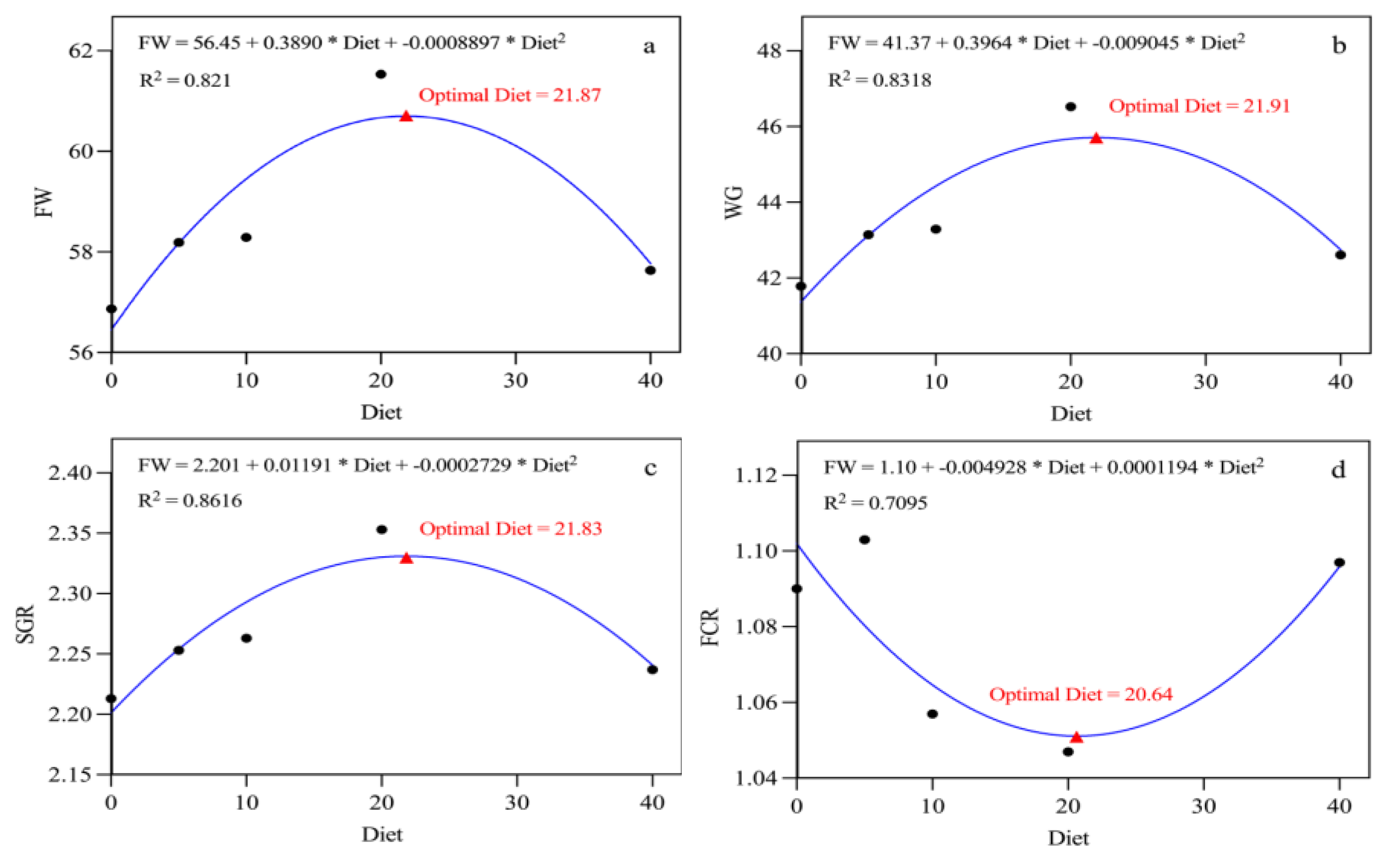
Figure 2.
Histological representations of the H&E-stained intestinal sections of Nile tilapia. (a) Control group (FLP0), (b) FLP5: fermented longan peel at 5 g/kg diet, (c) FLP10: fermented longan peel at 10 g/kg diet, (d) FLP20: fermented longan peel at 20 g/kg diet, and (e) FLP40: fermented longan peel at 40 g/kg diet. Morphological features including villus height and crypt depth were observed across treatments. Scale bars represent 100 μm.
Figure 2.
Histological representations of the H&E-stained intestinal sections of Nile tilapia. (a) Control group (FLP0), (b) FLP5: fermented longan peel at 5 g/kg diet, (c) FLP10: fermented longan peel at 10 g/kg diet, (d) FLP20: fermented longan peel at 20 g/kg diet, and (e) FLP40: fermented longan peel at 40 g/kg diet. Morphological features including villus height and crypt depth were observed across treatments. Scale bars represent 100 μm.
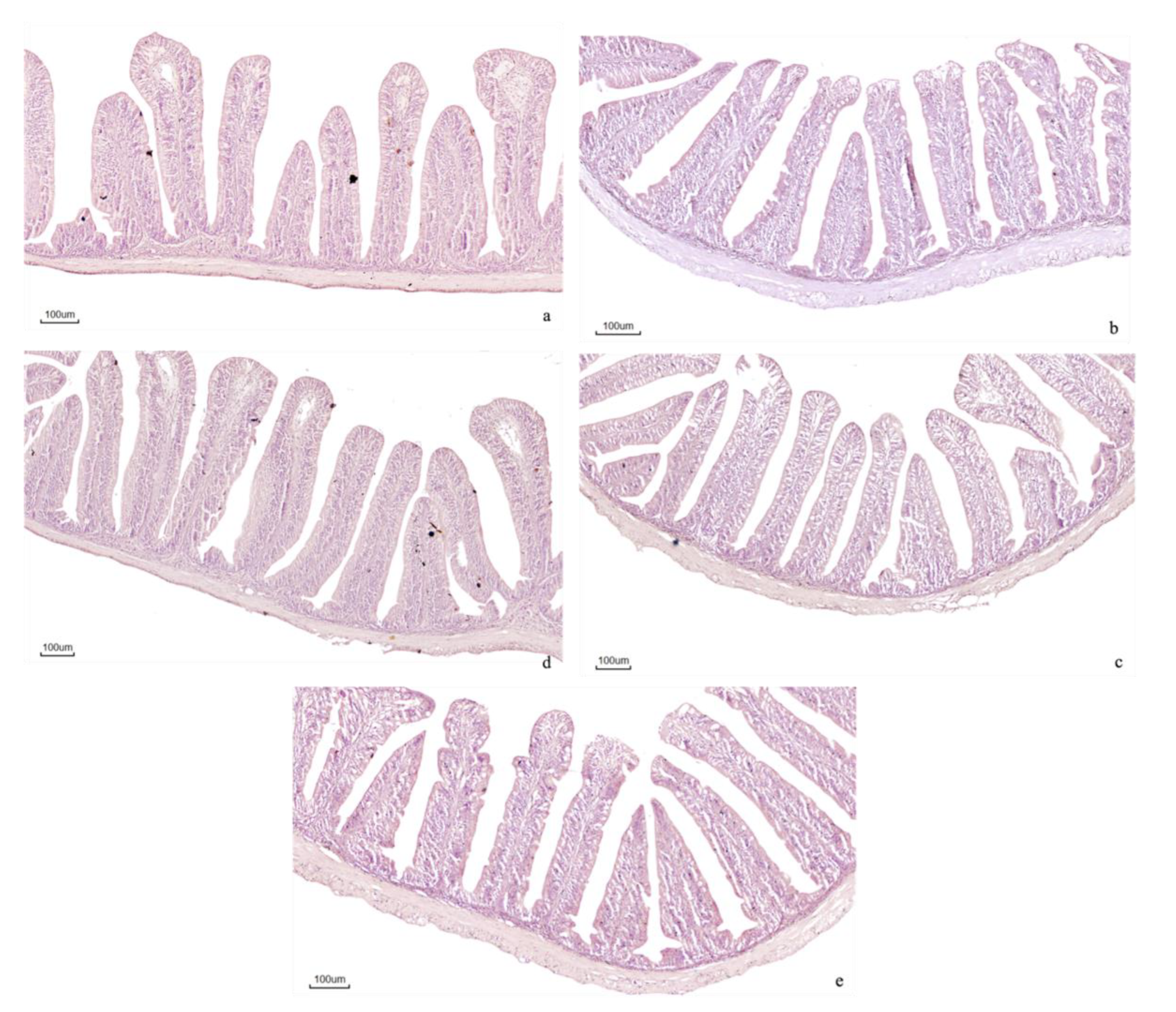
Figure 3.
Relative transcript expression levels of growth, immune, and antioxidant-related genes in the intestine of Nile tilapia after 8 weeks feeding trial with fermented longan peel (FLP). B-actin was used as an internal reference gene. Data are presented as mean ± SEM. Different superscript letters indicate statistically significant differences (p < 0.05).
Figure 3.
Relative transcript expression levels of growth, immune, and antioxidant-related genes in the intestine of Nile tilapia after 8 weeks feeding trial with fermented longan peel (FLP). B-actin was used as an internal reference gene. Data are presented as mean ± SEM. Different superscript letters indicate statistically significant differences (p < 0.05).
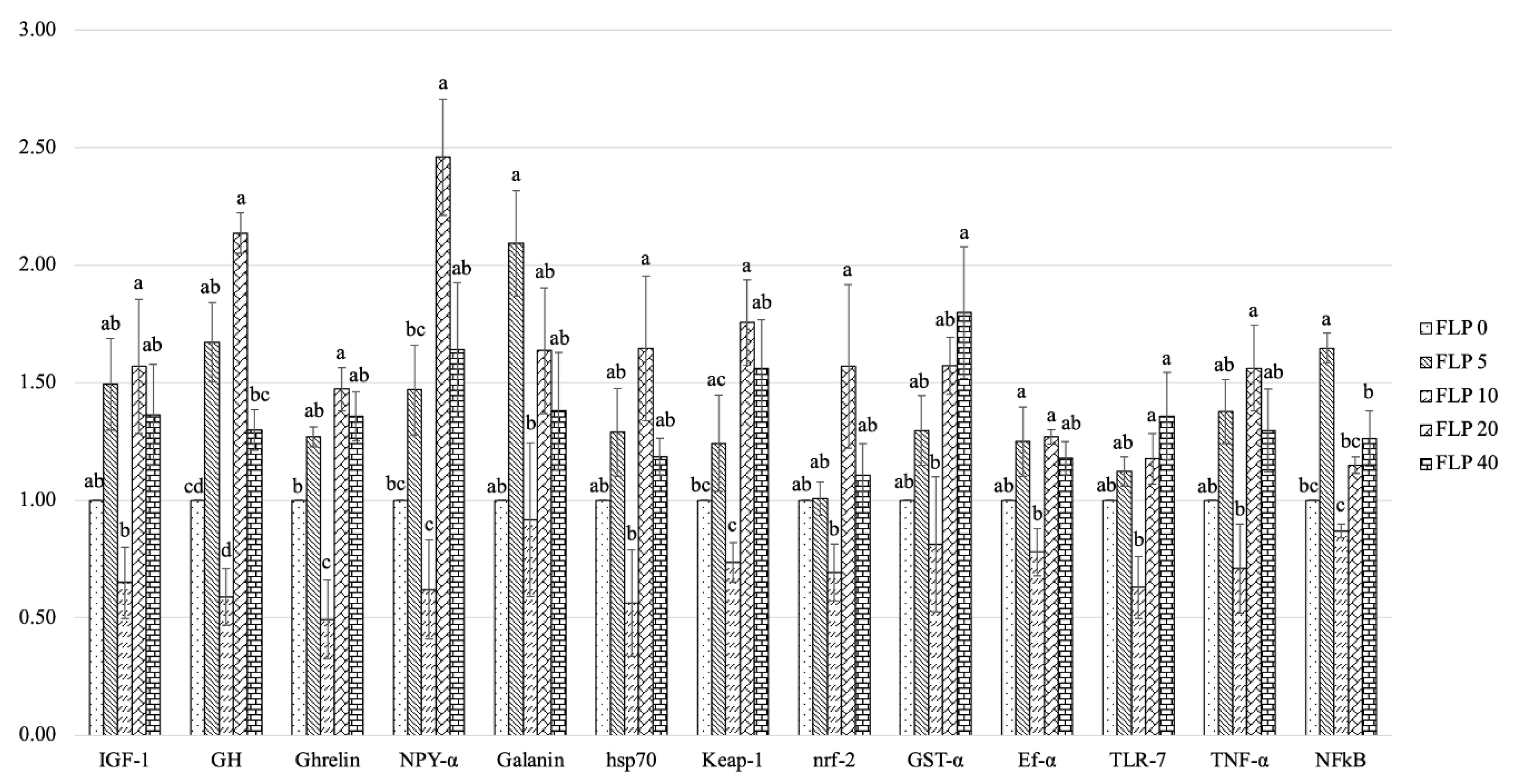

Table 1.
Table 1. Proximate analysis of fermented longan peel (FLP).
| Parameter | FLP |
| Moisture (%) | 8.2 |
| Protein (%) | 12.4 |
| Fat (%) | 1.19 |
| Fiber (%) | 48.3 |
| Ash (%) | 9.64 |
Table 2.
Table 2. Phenolic compounds of fermented longan peel (mg/100 g dry weight).
| Compound | Results | Methods |
| Gallic acid | 29.57 | HPLC-PDA |
| Rosmarinic acid | 11.07 | HPLC-PDA |
| O-coumaric acid | 8.52 | HPLC-PDA |
| Quercetin | 10.19 | HPLC-PDA |
Table 3.
Feed ingredients and proximate composition (g kg−1) of Fermented longan peel (FLP).
| FLP 0 | FLP 5 | FLP 10 | FLP 20 | FLP 40 | ||
| Fish meal | 150 | 150 | 150 | 150 | 150 | |
| Corn meal | 200 | 200 | 200 | 200 | 200 | |
| Soybean meal | 390 | 390 | 390 | 390 | 390 | |
| Wheat flour | 70 | 70 | 70 | 70 | 70 | |
| Rice bran | 150 | 145 | 140 | 130 | 110 | |
| FLP | 0 | 5 | 10 | 20 | 40 | |
| Binder | 20 | 20 | 20 | 20 | 20 | |
| Soybean oil | 2 | 2 | 2 | 2 | 2 | |
| Premix1 | 10 | 10 | 10 | 10 | 10 | |
| Vitamin C2 | 8 | 8 | 8 | 8 | 8 | |
| Proximate composition of the experimental diets (% of dry matter basis) | ||||||
| Dry matter | 94.18 | 93.99 | 94.19 | 94.18 | 93.79 | |
| Crude protein | 31.39 | 32.01 | 31.32 | 31.56 | 31.23 | |
| Crude lipid | 1.49 | 1.51 | 1.40 | 1.59 | 1.52 | |
| Ash | 8.67 | 8.41 | 8.52 | 8.48 | 8.14 | |
| Fiber | 4.32 | 4.67 | 4.75 | 5.34 | 5.93 | |
| GE (kcal/g)3 | 4.03 | 4.04 | 4.02 | 4.03 | 4.01 | |
1 Vitamin and trace mineral mix supplemented as follows (IU kg–1 or g kg–1 diet): retinyl acetate 1,085,000 IU; cholecalciferol 217,000 IU; D, L-a-tocopherol acetate 0.5 g; thiamin nitrate 0.5 g; pyridoxine hydrochloride 0.5 g; niacin 3 g; folic 0.05 g; cyanocobalamin 10 g; Ca pantothenate 1 g kg-1; inositol 0.5 g; zinc 1 g; copper 0.25 g; manganese 1.32 g; iodine 0.05 g; sodium 7.85 g; 2 Vitamin C 98% 5 g; 3 GE = gross energy.
Table 4.
Primer sequences, amplicons, and associated information for quantitative real-time PCR of fermented longan peel.
Table 4.
Primer sequences, amplicons, and associated information for quantitative real-time PCR of fermented longan peel.
| Gene | Sequence | Accession Number |
| Beta-actin |
F: CAGCAAGCAGGAGTACGATGAG R: TGTGTGGTGTGTGGTTGTTTTG |
XM_003443127.4 |
| IGF-I: Insulin-growth factor 1 |
F: GTCTGTGGAGAGCGAGGCTTT
R: CACGTGACCGCCTTGCA |
NM_001279503 |
| GH: Growth hormone |
F: TCGGTTGTGTGTTTGGGCGTCTC
R: GTGCAGGTGCGTGACTCTGTTGA |
XM_003442542 |
| Ghrelin |
F: GTGGTGCAAGTCAACCAGTG
R: CATGGCTTGGCGACCAATTC |
AB104859.1 |
| NPY-α F |
F: TCTCGCTCACTGCTGTCCC
R: CAGAGGCGTGGTGTTCGTT |
XM_003448854.5 |
| Galanin | F: TGTTAGGGCCCCATGGACTA R: GAAGTCCTCCTCCTGGCCTA |
XM_003453581.5 |
| HSP70 = Heat Shock Protein 70 | F: TTCAAGGTGATTTCAGACGGAG R: CTTCATCTTCACCAGGACCATG |
XM_019357557.1 |
| keap1 |
F: CTTCGCCATCATGAACGAGC
R: CACCAACTCCATACCGCACT |
XM_003447926.3 |
| Nrf2 |
F: CTGCCGTAAACGCAAGATGG
R: ATCCGTTGACTGCTGAAGGG |
XM_003447296.4 |
| GST-a |
F: ACTGCACACTCATGGGAACA
R: TTAAAAGCCAGCGGATTGAC |
XM_019350598.2 |
| EF-α |
F: CTACAGCCAGGCTCGTTTCG
R: CTTGTCACTGGTCTCCAGCA |
AB075952 |
| keap1 |
F: CTTCGCCATCATGAACGAGC
R: CACCAACTCCATACCGCACT |
XM_003447926.3 |
| Nrf2 |
F: CTGCCGTAAACGCAAGATGG
R: ATCCGTTGACTGCTGAAGGG |
XM_003447296.4 |
| TLR-7 |
F: TCAGCAGGGTGAGAGCATAC
R: ACATATCCCAGCCGTAGAGG |
XM_005477981.1 |
| TNFɑ |
F: CCAGAAGCACTAAAGGCGAAGA
R: CCTTGGCTTTGCTGCTGATC |
NM_001279533.1 |
| nf-κB | F: GAACATCAGACCGACGACCA R: TCTCCGCCAGTTTCTTCCA |
XM_003457469.4 |
Table 5.
Growth Performance of utilization of Nile tilapia fed with different dietary levels of fermented longan peel.
Table 5.
Growth Performance of utilization of Nile tilapia fed with different dietary levels of fermented longan peel.
| FLP 0 | FLP 5 | FLP 10 | FLP 20 | FLP 40 | |
| IW (g) | 15.08±0.02a | 15.05±0.03a | 15.00 ± 0.00a | 15.02±0.02a | 15.02±0.02a |
| FW (g) | |||||
| 4 weeks | 30.72±1.05a | 32.53±0.32a | 30.95±0.93a | 31.97±0.88a | 29.9±2.06a |
| 8 weeks | 56.87±0.94b | 58.19±0.58ab | 58.29±1.34ab | 61.53±0.55a | 57.63±0.73ab |
| WG (g) | |||||
| 4 weeks | 15.63±1.05a | 17.48±0.30a | 15.95±0.93a | 16.95±0.88a | 14.88±2.07a |
| 8 weeks | 41.78±0.92b | 43.14±0.61ab | 43.29±1.34ab | 46.52±0.55a | 42.61±0.73ab |
| SGR (%/day) | |||||
| 4 weeks | 2.37±0.11a | 2.57±0.03a | 2.41±0.10a | 2.52±0.09a | 2.28±0.24a |
| 8 weeks | 2.21±0.02b | 2.25±0.02ab | 2.26±0.04ab | 2.35±0.01a | 2.24±0.02b |
| FCR | |||||
| 4 weeks | 0.72±0.02a | 0.66±0.02a | 0.66±0.00a | 0.64±0.03a | 0.68±0.04a |
| 8 weeks | 1.09±0.02a | 1.10±0.03a | 1.06±0.02a | 1.05±0.02a | 1.10±0.05a |
| SR (%) | |||||
| 4 weeks | 93.33±1.67a | 91.67±3.33a | 96.67±3.33a | 96.67±1.67a | 96.67±1.67a |
| 8 weeks | 95.00±2.89a | 91.67±3.33a | 96.67±3.33a | 93.33±3.33a | 93.33±6.67a |
IW = initial fish weight, FW: final fish weight, WG: weight gain, SGR: specific fish growth rate-1, FCR: feed conversion ratio, SR: survival rate. Different letters in the same row indicate significant differences (P < 0.05).
Table 6.
In vitro digestibility of carbohydrate (μmol maltose g feed− 1amylase activity−1) and protein (μmol DL-alanine equivalent g feed− 1 trypsin activity− 1) in intestine of Nile tilapia after eight weeks of feeding with diets containing different levels of fermented longan peel (FLP).
Table 6.
In vitro digestibility of carbohydrate (μmol maltose g feed− 1amylase activity−1) and protein (μmol DL-alanine equivalent g feed− 1 trypsin activity− 1) in intestine of Nile tilapia after eight weeks of feeding with diets containing different levels of fermented longan peel (FLP).
| FLP 0 | FLP 5 | FLP 10 | FLP 20 | FLP 40 | |
| Carbohydrate | 2.35±0.05c | 2.69±0.05b | 2.39±0.03c | 2.91±0.03a | 2.72±0.05ab |
| Protein | 23.54±0.13c | 26.8±0.26ab | 25.49±0.44bc | 28.62±1.10a | 28.07±0.72ab |
Different letters in a row denote significant differences (P < 0.05) and means ± SE.
Table 7.
Intestinal digestive enzymes activities of Nile Tilapia fed diets with different levels of fermented longan peel (FLP) for eight weeks. Different letters in the same row indicate significant differences (p < 0.05).
Table 7.
Intestinal digestive enzymes activities of Nile Tilapia fed diets with different levels of fermented longan peel (FLP) for eight weeks. Different letters in the same row indicate significant differences (p < 0.05).
| FLP 0 | FLP 5 | FLP 10 | FLP 20 | FLP 40 | |
| Amylase activity | 48.05±2.22b | 54.85±2.52ab | 51.98±1.32ab | 57.15±1.88a | 54.77±1.35ab |
| Lipase activity | 0.15±0.01a | 0.14±0.00a | 0.13±0.01a | 0.13±0.01a | 0.14±0.01a |
| Protease activity | 2.77±0.08bc | 2.73±0.14bc | 2.58±0.03c | 3.24±0.06a | 3.06±0.06ab |
| Trypsin activity | 8.31±0.14b | 8.48±0.11b | 8.30±0.20b | 9.58±0.06a | 8.46±0.09b |
Amylase activity (μmol maltose/hr./mg protein), Lipase activity (μmol p-nitrophenol/hr./mg protein), Protease activity (U/hr./mg protein), and Trypsin activity (μmol p-nitroaniline/hr./mg protein).
Table 8.
Impact of dietary supplementation with fermented longan peel on intestinal morphology.
| FLP 0 | FLP 5 | FLP 10 | FLP 20 | FLP 40 | |
| VH (μm) | 445.40±13.29b | 485.80±11.37ab | 449.40±25.36b | 500.60±3.50ab | 523.60±14.62a |
| VW (μm) | 88.51±0.57b | 92.88±0.63ab | 90.81±1.84ab | 93.73±0.65a | 93.05±1.01ab |
| CD (μm) | 33.74±0.92a | 30.08±3.15a | 31.39±2.85a | 28.11±1.28a | 30.32±0.79a |
| VH:CD | 13.34±0.68b | 16.53±1.36ab | 14.5±0.60ab | 18.06±1.06a | 17.53±0.12a |
VH: villus height; VW: villus width; CD: crypt depth; VH:CD: villus height per crypt depth ratio.
Table 9.
Skin mucus lysozyme and peroxidase activities of Nile tilapia after 4 and 8 weeks feeding with experimental fermented longan peel (FLP).
Table 9.
Skin mucus lysozyme and peroxidase activities of Nile tilapia after 4 and 8 weeks feeding with experimental fermented longan peel (FLP).
| FLP 0 | FLP 5 | FLP 10 | FLP 20 | FLP 40 | ||
| 4 weeks | SMLA | 12.47±1.13a | 11.27±1.56a | 9.99±0.66a | 11.38±0.99a | 11.72±1.36a |
| SMPA | 0.29±0.03a | 0.25±0.04a | 0.32±0.03a | 0.38±0.04a | 0.33±0.05a | |
| 8 weeks | SMLA | 12.03±0.33b | 11.62±1.29b | 13.67±1.39ab | 13.29±1.30ab | 17.32±0.62a |
| SMPA | 0.25±0.02b | 0.44±0.07ab | 0.32±0.08ab | 0.52±0.02a | 0.39±0.04ab |
SMLA: Skin mucus lysozyme activity (μg mL-1); SMPA: Skin mucus peroxidase activity (μg mL-1). Different letters in the same row indicate significant differences (P < 0.05).
Table 10.
Serum lysozyme and peroxidase activities of Nile tilapia after 4 and 8 weeks feeding with experimental fermented longan peel (FLP).
Table 10.
Serum lysozyme and peroxidase activities of Nile tilapia after 4 and 8 weeks feeding with experimental fermented longan peel (FLP).
| FLP 0 | FLP 5 | FLP 10 | FLP 20 | FLP 40 | ||
| 4 weeks | SLA | 6.68±0.65b | 7.88±0.2ab | 7.69±0.36ab | 8.46±0.33ab | 9.15±0.73a |
| SPA | 0.12±0.04b | 0.37±0.07ab | 0.33±0.07ab | 0.43±0.04a | 0.29±0.10ab | |
| ACH50 | 282.60±22.20bc | 253.60±44.57c | 306.70±49.20ab | 446.10±12.97a | 423.10±23.74ab | |
| 8 weeks | SLA | 5.65±0.21b | 7.12±0.39ab | 6.97±0.17ab | 7.46±0.43a | 7.13±0.22a |
| SPA | 0.12±0.05b | 0.49±0.02a | 0.35±0.13ab | 0.44±0.02ab | 0.18±0.09ab | |
| ACH50 | 280.90±27.92b | 357.70±15.59ab | 300.90±39.71b | 491.50±26.94a | 354.00±34.93ab |
SLA: Serum lysozyme activity (μg mL-1); SPA: Serum peroxidase activity (μg mL-1); ACH50: Alternative complement activity. Different letters in the same row indicate significant differences (p < 0.05).
Disclaimer/Publisher’s Note: The statements, opinions and data contained in all publications are solely those of the individual author(s) and contributor(s) and not of MDPI and/or the editor(s). MDPI and/or the editor(s) disclaim responsibility for any injury to people or property resulting from any ideas, methods, instructions or products referred to in the content. |
© 2026 by the authors. Licensee MDPI, Basel, Switzerland. This article is an open access article distributed under the terms and conditions of the Creative Commons Attribution (CC BY) license (http://creativecommons.org/licenses/by/4.0/).
Copyright: This open access article is published under a Creative Commons CC BY 4.0 license, which permit the free download, distribution, and reuse, provided that the author and preprint are cited in any reuse.


