

Submitted:
14 February 2026
Posted:
26 February 2026
You are already at the latest version
Abstract
The paper describes a new research approach to sustainability research: qualitative meta-research. The researcher is the main research instrument. He designs research questions, seek answers for them, reflects and evaluates the research. This in important when making observations in nature, about plants and their development, and building natural historical knowledge on own observations about Wild Edible Plants (WEPs). I live about six months in Helsinki (from April October) and six months in Puerto de la Cruz (from November to the end of March). I forage in both localities. That is why, I can write about WEPs in both areas. I used academic search engines like Google Scholar to find relevant research on Wild Edible Plants (WEPs) from Popper's WORLD 3 (cultural objects). I found a couple of useful new sources to me. I used also Copilot Artificial Intelligence. I checked the quality of the answers using other tools. Because the researcher is an established researcher in WEPs research, both Google Scholar and Copilot Artificial Intelligence found his works as the best sources to WEPs in both localities. The new feature in the qualitative meta-research is to use auditing to check the quality of research. Auditing improves credibility and trustworthiness.
Keywords:
sustainability
; wild edible plants
; biodiversity
; food systems
; ecosystem services
; qualitative meta-research
; concept mapping
1. Introduction
At the beginning, I will show the essential concepts and their most important links as an improved concept map (Figure 1).
The list of essential concepts
- Locality
- Wild Edible Plants (WEPs)
- Biodiversity
- Food Systems
- Sustainable development.
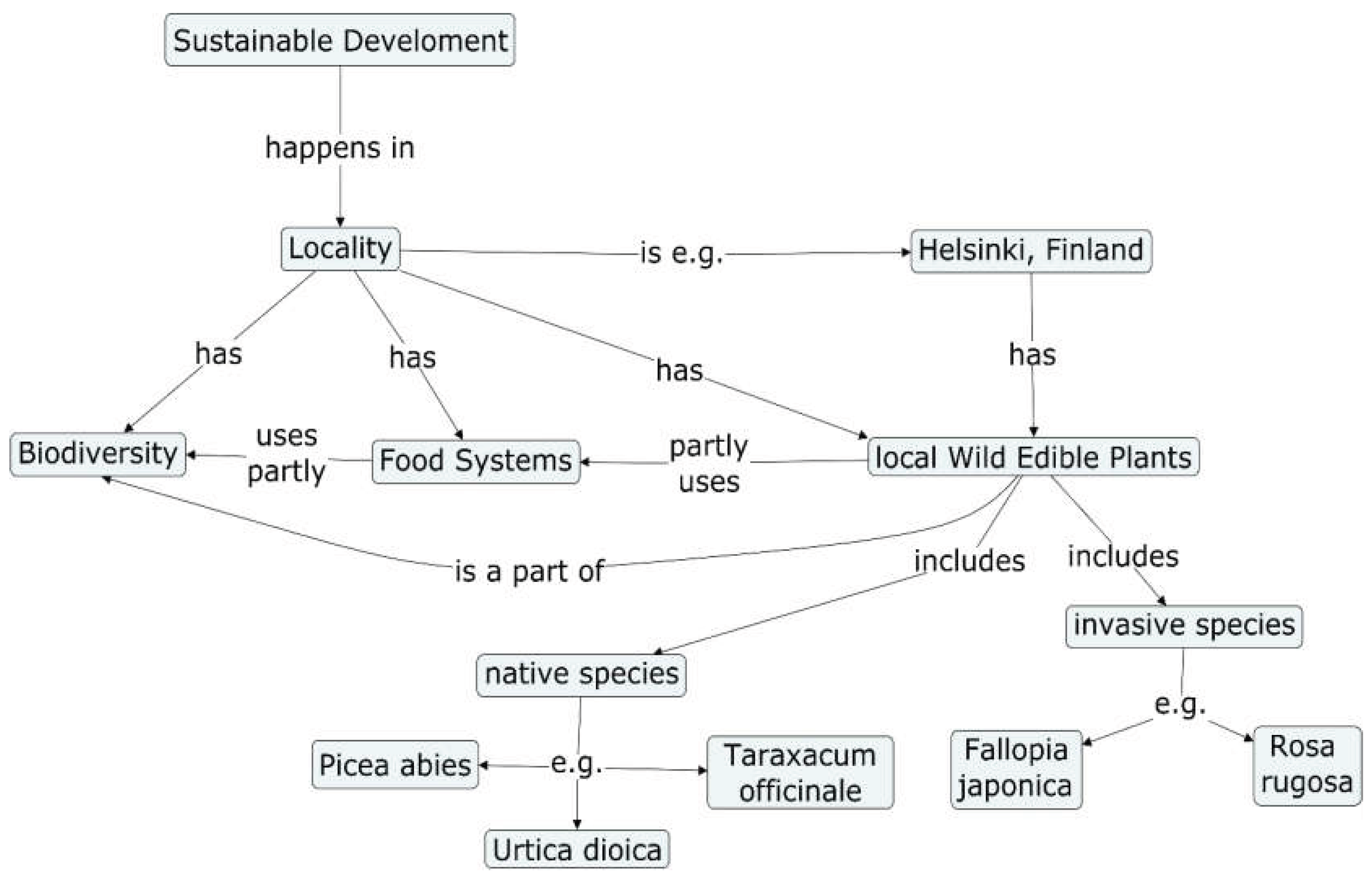
The first improved concept map shows the most essential concepts and their links (Figure 1). The second improved concept map (Figure 2) provides a more detailed overview of the structure of this paper.
Why eat WEPs? According to Åhlberg [1,2,3] and Pereira [4], Wild edible plants (WEPs) have been consumed throughout human evolution. Their use increased after the Neolithic Revolution in agriculture [5,6,7]. WEPs are non-domesticated plants that grow naturally, particularly in forests and bushlands, near fields. The best of them are edible weeds. They provide food after wars, climate change, and catastrophes. Increasingly, WEPs are recognized as potential food sources because of their nutritional value. They have positive health effects according to experimental research. WEPs offer innovative food applications. As native plants, they are better suited to different climatic conditions and to biotic and abiotic factors. They offer cultivation opportunities because they require less investment than other commercially cultivated plants. WEPs are promising sources of essential compounds for the human diet, including carbohydrates, proteins, and lipids. WEPs contain substances with health-promoting properties, ions, plant primary and secondary products (phytochemicals). Cultivation of WEPs is a good option for conserving biodiversity. WEP domestication often reduces its nutritional value.
According to Crozier, Clifford & Ashihara [8], major classes of phytochemicals are: (1) Phenolics — Compounds with one or more phenol rings; potent antioxidants, polyphenols, flavonoids, phenolic acids, tannins, lignans. (2) Terpenoids (Isoprenoids), for instance, carotenoids, monoterpenes, and saponins. (3) Alkaloids. They contain nitrogen. (4) Sulfur-containing compounds, for instance, glucosinolates. (4) Glycosides, for instance, anthraquinone glycosides. (5) Other nitrogen-containing compounds — Non-alkaloid nitrogenous phytochemicals. Examples: betalains, cyanogenic glycosides.
Resveratrol belongs to polyphenols. According to Vanhakylä [9] more than 10,000 plant polyphenols have been identified. Also, ellagitannins are polyphenols. Petals and hips of rugosa rose (Rosa rugosa) contain ellagitannins.
Åhlberg [1,10,11] presented evidence on why WEPs promote health is that they contain health/promoting substances.
According to Åhlberg [1,10,11], the list of 65 shared health-promoting substances in all green vascular plants is:
- acetylcholine, 2) alpha-linolenic acid, 3) antheraxanthin, 4) ascorbic acid, 5) beta-carotene, 6) betasitosterol, 7) biotin, 8) caffeic acid, 9) calcium, 10) carotenoids, 11) chlorophylls, 12) chloride, 13) choline, 14) citric acid, 15) copper, 16) dietary fibers, 17) fatty acids, 18) flavonoids, 19) folic acid, 20) galactolipids, 21) glutathione, 22) iron, 23) lignins, 24) linoleic acid, 25) lutein, 26) manganese, 27) magnesium, 28) melatonin, 29) molybdenum, 30) neoxanthin, 31) niacin, 32) nickel, 33) nitrates, 34) oleic acid, 35) oxylipins, 36) pantothenate, 37) phenolic acids, 38) phenolic compounds, 39) phenylpropanoids, 40) phospholipids, 41) phosphorus, 42) phylloquinone, 43) phytic acid, 44) phytosterols, 45) plant fatty acids, 46) plant lipids, 47) plant proteins, 48) polyphenols, 49) polysaccharides, 50) potassium, 51) pyridoxine, 52) riboflavin, 53) salicylic acid, 54) selenium, 55) silicon, 56) sodium, 57) sphingolipids, 58) sulfur, 59) terpenoids, 60) thiamin, 61) tocopherols, 62) violaxanthin, 63) xanthophylls, 64) zeaxanthin, and 65) zinc.
I audited the list above to increase credibility and trustworthiness. I used Google Scholar and the keywords: <the name of a health-promoting substance> <essential in plant metabolism>.
From this list, at least the following 18 substances prevent Alzheimer’s disease:
1) alpha-linolenic acid, 2) ascorbic acid, 3) caffeic acid, 4) carotenoids, 5) choline, 6) dietary fibers, 7) flavonoids, 8) lutein, 9) melatonin, 10) phenolic acids, 11) phenolic compounds, 12) phenylpropanoids, 13) phytic acid, 14) polyphenols, 15) polysaccharides, 16) silicon, 17) terpenoids, and 18) tocopherols.
In Åhlberg [1], I classified health-promoting substances into two categories: (I) shared health-promoting substances and (II) species-specific health-promoting substances. Since my doctoral dissertation (Åhlberg [13], I have developed a research approach, which I call qualitative meta-research. I use Mario Bunge’s critical scientific realism and Karl Popper’s idea of WORLD 3 to gather and analyze the research documents on the Internet (WORLD 3). I use as profound research questions as possible. I apply the answers to the real world (WORLD 1). This research approach is described in detail in Åhlberg [1]. In Åhlberg [12], I developed an improved concept map for qualitative research, which I have applied to the concept maps of this article. In Åhlberg [10], I divided health-promoting substances into two categories and coined the terms ‘shared health-promoting substances’ and ‘species-specific health-promoting substances. In Åhlberg [1,10,11], I developed the idea of information boxes. I called them “first vignettes” because that is the name they are often given in qualitative research. Unconventionally, I included references in the information boxes to make them more convincing from the first reading. Each green vascular plant also has species-specific health-promoting substances, such as alkaloids, as in purple loosestrife (Lythrum salicaria).
In Åhlberg [3], I explicitly began using myself as the main research tool. It is customary in qualitative research because the researcher can only invent research questions and find their own answers. Only the researcher can reflect and evaluate the value of the research. Also, only a researcher can make observations in nature and build natural historical knowledge from their observations. In Åhlberg [3], I introduced auditing as the primary method for evaluating research quality. Each reader has the greatest possible opportunity to audit the research report. It increases credibility and trustworthiness.
Purple loosestrife (Lythrum salicaria) contains health-promoting alkaloids. It is an example of a species-specific health-promoting substance. In Europe, purple loosestrife (Lythrum salicaria) is a good WEP to forage. In North America, purple loosestrife (Lythrum salicaria) is classified as an invasive species.
| Box 1. Alkaloids. |
| FOR HUMANS: According to Singh et al. (2025), “Numerous studies have also highlighted the health benefits of FOR HUMANS: According to Singh et al. (2025), “Numerous studies have also highlighted the health benefits of these metabolites (alkaloids) for humans.” The authors do not use any examples of WEPs. Heinrich, Mah. Amirkia (2021, 8) gives a WEP example: Yarrow (Achillea millefolium) has an extensive distribution, contains fewer than 10 identified simple alkaloids, and is not a classical source of alkaloid-containing drugs. According to Åhlberg (2020a – 2022a), yarrow (Achillea millefolium) is an acknowledged health-promoting WEP. According to Chauhan. & al. (2010) reported that purple loosestrife (Lythrum salicaria) contains alkaloids with antidiabetic activity.metabolites (alkaloids) for humans.” The authors do not use any examples of WEPs. Heinrich, Mah. Amirkia (2021, 8) gives a WEP example: Yarrow (Achillea millefolium) has an extensive distribution, contains fewer than 10 identified simple alkaloids, and is not a classical source of alkaloid-containing drugs. According to Åhlberg (2020a – 2022a), yarrow (Achillea millefolium) is an acknowledged health-promoting WEP. According to Chauhan. & al. (2010) reported that purple loosestrife (Lythrum salicaria) contains alkaloids with antidiabetic activity. |
| IN PLANTS: According to Singh et al. (2025), alkaloids (1) play crucial roles in plant development, serving as (2) protectants against UV radiation, (2) defensive agents against pathogens, (3) structural components of the cell wall, and (4) pigments that facilitate plant-pollinator interactions. REFERENCES Chauhan, A., et al. 2010. Plants having potential antidiabetic activity: A review. Der Pharmacia Lettre, 2010, 2(3), 369–387. Heinrich, M., Mah, J., & Amirkia, V. (2021). Alkaloids used as medicines: Structural phytochemistry meets biodiversity—An update and forward look. Molecules 26,1836. https://doi.org/10.3390/molecules26071836 Singh, D. & al. 2025. Transcriptional regulation of secondary plant product biosynthesis: insights into flavonoid, alkaloid, and terpenoid pathways. Plant Cell, Tissue and Organ Culture (PCTOC) 160:6; https://doi.org/10.1007/s11240-024-02925-z |
Some species, such as Japanese knotweed (Fallopia japonica), rugosa rose (Rosa rugosa), and Norway spruce (Picea abies), contain resveratrol, a shared health-promoting compound. Resveratrol is found in plants in different forms, and its health-promoting properties differ. That is why I present an information box of two distinct varieties of resveratrol. Japanese knotweed (Fallopia japonica) is an invasive plant. Its leaves contain resveratrol. It is wise to add its leaves to boiled WEP mixtures. Annual shoots of Norway Spruce (Picea abies) and petals of rugosa rose (Rosa rugosa) contain resveratrol. Resveratrol is a species-specific health-promoting substance.
| Box 2. Resveratrol. |
| According to Alesci & al. (2022), Wu & al. (2022), Zhu & al. (2022), Alauddin & al. (2021), Grinan-Ferre & al. (2021), Xiong & al. (2021), Kumar & al. (2020), Matsuno & al. (2020), Martínez & al. (2019) and Singh, A. & al (2019a), resveratrol has following health-promoting properties: 1) antioxidant, 2) anti-inflammatory, 3) anticancer, 4) antiviral, 5) antidiabetic, 6) anti-obesity, 7) antimetabolic syndrome, 8) cardiovascular protective, 9) antiplatelet, 10) anti-hypertension, 11) antiaging, 12) protects against neurodegenerative diseases, such as Alzheimer’s disease, 13) antistroke, 14) nephroprotective, 15) hepatoprotective, 16) delays the progression of osteoarthritis, and 17) maintains genome stability, promoting a longer and healthier life. According to Zhua et al. (2019), resveratrol has protective effects on stress-induced depression and anxiety. They present a molecular biological mechanism for it. According to Grinan-Ferre et al. (2021), resveratrol is a powerful antioxidant and “possesses pleiotropic actions, exerting its activity through various molecular pathways.” Kumar et al. (2020) state that resveratrol can cross the blood-brain barrier. Neuroinflammation is a part of Alzheimer’s disease. Resveratrol prevents neuroinflammation. |
| REFERENCES Alauddin, M., et al. (2021). Potential of nutraceuticals in preventing the risk of cancer and metabolic syndrome from the perspective of nutritional genomics. Cancer Plus, 3(2), 1–18. Alesci, A., et al. (2022). Resveratrol and immune cells: A link to improve human health. Molecules, 27(2), 24. https://doi.org/10.3390/molecules27020424 Grinan-Ferré, A., et al. (2021). The pleiotropic neuroprotective effects of resveratrol in cognitive decline and Alzheimer’s disease pathology: From antioxidant to epigenetic therapy. Aging Research Reviews, 67, Article 101271, 1–24. Kumar, S., et al. (2020). Resveratrol, a molecule with anti-inflammatory and anticancer activities: Natural product to chemical synthesis. Current Medicinal Chemistry, 27, 1–14. Matsuno, Y., et al. (2020). Resveratrol and related polyphenols help maintain genome stability. Scientific Reports, 10, Article 5388, 1–10. Wu, S., et al. (2022). Effects and mechanisms of resveratrol in the prevention and management of cancer: An updated review. Critical Reviews in Food Science and Nutrition. https://doi.org/10.1080/10408398.2022.2101428 Xiong, G., et al. (2021). Effect of resveratrol on abnormal bone remodelling and angiogenesis of subchondral bone in osteoarthritis. International Journal of Clinical and Experimental Pathology, 14(4), 417–425. Zhu, H., et al. (2022). Resveratrol protects against chronic alcohol-induced liver disease in a rat model. STEMedicine, 3(3), e133. https://doi.org/10.37175/stemedicine.v3i3.133 |
| Box 3. Resveratrol, polydatin, and piceid |
| According to Sirohi & al. (2021), Tang (2021), Wu & al. (2020b), Chen & al. (2015) and Du & al. (2013, 1347), polydatin is 1) anti-inflammatory, 2) antioxidant, 3) anti-cancer, 4) neuroprotective, 5) hepatoprotective, 6) nephroprotective, 7) immune regulating, immunostimulatory, 8) anti-platelet aggregation, 9) cardioprotective, 10) regulates lipid metabolism, 11) anti-atherosclerosis, 12) protects against Alzheimer’s disease. According to Wang et al. (2015), polydatin and resveratrol can interconvert; polydatin is a more potent antioxidant than resveratrol. According to Wu et al. (2020b), polydatin exerts its anti-atherosclerotic effects through three mechanisms: anti-inflammatory effects, regulation of lipid metabolism, and antioxidant activity. Wu et al. (2020b) present the pharmacological mechanism of polydatin in the treatment of atherosclerosis. According to PubChem (2021), polydatin and piceid are synonyms. According to Chen et al. (2015), polydatin (piceid) and resveratrol may interconvert in living organisms. Basholli-Salihu et al. (2016) describe in detail how this happens. |
| REFERENCES Cheng, C. K., Luo, J.-Y., Lau, C. W., Chen, Z.-Y., Tian, X. Y., & Huang, Y. (2019). Pharmacological basis and new insights of resveratrol action in the cardiovascular system. British Journal of Pharmacology. Advance online publication. https://doi.org/10.1111/bph.14801 PubChem. 2026. Resveratrol. https://pubchem.ncbi.nlm.nih.gov/compound/Resveratrol Sirohi, P., et al. (2021). The polyphenolic phytoalexin polydatin inhibits amyloid aggregation of recombinant human prion protein. RSC Advances, 11, 25901–25911. Tang, K. (2021). Protective effects of polydatin against dementia-related disorders. Current Neuropharmacology, 19(2), 127–135 Zhou, Y., et al. (2013). Synergistic anticancer effects of curcumin and resveratrol in Hepa1-6 hepatocellular carcinoma cells. Oncology Reports, 29(5), 1851–1858. https://doi.org/10.3892/or.2013.2310 (Note: Oncology Reports volume/issue inferred from page range; adjust if needed.) |
Fireweed (Epilobium angustifolium) and the hips and petals of rugosa rose (Rosa rugosa) are examples of WEPs, which contain ellagitannins.
| Box 4. Ellagitannins. |
| According to Chen & al. (2022), García-Villalba & al. (2022), Gopalsamy & al. (2022), Al-Harbi & al. (2021), D’Amico & al. (2021), Hoseinynejad & al. (2021), Miloševic & al. (2021), Yüksel & al. (2021), Dreger & al. (2020), Li & al. (2020), Luca (2019, 17), Yoshida & al. (2018), Muthukumaran & al. (2017, 240 - 241), and Sangiovanni & al. (2013), ellagitannins have the following health-promoting properties: 1) antioxidant, 2) anti-inflammatory, 3) antimicrobial, 4) antiglycative, 4) hepato-protective, 5) beneficial effects on kidney diseases, 4) anti-virus, 5) cardioprotective, 6) neuroprotective, 7) prebiotic, 8) chronic disease prevention, 7) anticancer, 8) antidiabetic, 9) beneficial effects on chronic tissue inflammation, 10) beneficial effects on metabolic syndrome) 11) beneficial effects on obesity-mediated metabolic complications, 12) beneficial effects on gastrointestinal diseases, 13) beneficial effects on eye diseases, 14) beneficial effects on depression, 15) muscle mass protective effects, and 16) beneficial effects on Alzheimer’s disease and other neurodegenerative diseases. Schink et al. (2018) describe how ellagitannins prevent inflammation using molecular biology. |
| REFERENCES Al-Harbi, S.& al. 2021.Urolithins: The gut-based polyphenol metabolites of ellagitannins in cancer prevention, a review. Frontiers in Nutrition, Volume 8, article 647582, 1 – 15. Chen P. et al. (2022). Recent advances and perspectives on the health benefits of urolithin B, a bioactive natural product derived from ellagitannins. Frontiers in Pharmacology 13:917266 D’Amico, D., et al. (2021). Impact of the Natural Compound Urolithin A on Health, Disease, and Aging. Trends in Molecular Medicine 27(7), 687 – 699. Dreger, M. & al. 2020. Pharmacological properties of fireweed (Epilobium angustifolium L.) and bioavailability of ellagitannins. A review. Herba Polonica 66(1), 52 – 64. García-Villalba, R. et al. (2022). Ellagitannins, urolithins, and neuroprotection: Human evidence and the possible link to the gut microbiota. Molecular Aspects of Medicine. Available online 5 August 2022, 101109. In Press, Corrected Proof. https://doi.org/10.1016/j.mam.2022.101109 Gopalsamy, R., et al. (2022). Health functions and related molecular mechanisms of ellagitannin-derived urolithins, Critical Reviews in Food Science and Nutrition. https://doi.org/10.1080/10408398.2022.2106179 Li, Q. & al. 2020. Anti-renal fibrosis and anti-inflammation effect of urolithin B, ellagitannin-gut microbial-derived metabolites in unilateral ureteral obstruction rats. Journal of Functional Foods, Volume 65, article 103748, 1 – 13. Milošević M. et al. (2021). Memorable food: fighting age-related neurodegeneration by precision nutrition. Frontiers in Nutrition, Volume 8, article 688086, 1 – 13. Sangiovanni, E. et al. 2013. Ellagitannins from Rubus berries for the control of gastric inflammation: in vitro and in vivo studies. PLoS ONE, Volume 8(8), article e71762, 1 – 12. Yüksel, A. & al. 2021. Phytochemical, phenolic profile, antioxidant, anticholinergic, and antibacterial properties of Epilobium angustifolium (Onagraceae). Journal of Food Measurement and Characterization. Published online 12. 7. 2021, 1 – 10. Yoshida, T et al. 2018. The chemical and biological significance of oenothein B and related ellagitannin oligomers with macrocyclic structure. Molecules, Volume 23, article 552, 1–21. |
Dandelion (Taraxacum officinale) contains tocopherols, a group of health-promoting compounds. Tocopherols are an example of shared health –promoting substances that all green vascular edible plants contain.
| Box 4. Tocopherols. |
| FOR HUMANS: According to Tkacz & al. (2021) The National Institutes of Health (2021) Arroz, & al. (2020) Azzi (2018) Morris, M. & al. (2015) and Kamal-Eldin & Appelqvist (1996) tocopherols (vitamin E) have the following health-promoting properties: 1) antioxidants, 2) prevent cardiovascular disease, 3) prevent neurodegenerative disease, 4) prevent macular degeneration, 5) prevent cancer, 6) anti-inflammatory, 7) immune-boosting compound, 8) protect against non-alcoholic hepato-steatosis, 9) regulate cell-signaling, 10) modulate gene transcription, and 11) the combination of dietary tocopherols, rather than individual tocopherols, has the strongest protective relation to the development of Alzheimer’s disease. |
| IN PLANTS, according to Munné-Bosch & Alegre (2002), tocopherols and tocotrienols are lipid-soluble molecules that perform several functions. Tocopherols and tocotrienols are essential to maintain plant cell membrane integrity. Alpha-tocopherol is the primary form found in plant green parts, while tocotrienols are found in seeds. All wild edible plants contain tocopherols. These compounds are antioxidants; thus, they protect the plant from oxygen toxicity. According to Ma et al. (2020), in green plants, tocopherols are vital to the plant’s stress response. |
| REFERENCES Arroz, A. et al. (2020). Comparative effects of alpha- and gamma-tocopherol on mitochondrial functions in Alzheimer’s disease in vitro model. Scientific Reports, volume 10, article 8962, 1 – 14. Kamal-Eldin, A. & Appelqvist, L. (1996). The chemistry and antioxidant properties of tocopherols and tocotrienols. Lipids 31. Ma, J. & al. 2020. Diverse roles of tocopherols in response to abiotic and biotic stresses and strategies for genetic biofortification in plants. Molecular Breeding, volume 40(18) 1 – 15. Morris, M. et al. (2015). Brain tocopherols related to Alzheimer’s disease neuropathology in humans. Munné-Bosch, S. & Alegre, L. 2002. The function of tocopherols and tocotrienols in plants. Critical Reviews in Plant Sciences 21(1) 31 – 57 The National Institutes of Health. 2020. Tocopherols-Fact Sheet for Consumers. https://ods.od.nih.gov/ factsheets/VitaminE-HealthProfessional/ Tkacz, K. & al. 2021. Phytoprostanes, phytofurans, tocopherols, tocotrienols, carotenoids, free amino acids, and the biological potential of sea buckthorn juice. Journal of the Science of Food and Agriculture, First published online: 01 June 202, 1 – 13. https://doi.org/10.1002/jsfa.11345 |
Stinging nettles (Urtica dioica) contain nitrates, a shared health-promoting compound. Nitrates are an example of a species-specific health-promoting compound that is shared by only a limited number of species.
| Box 4. Nitrates. |
| FOR HUMANS: According to Butler (2015), Bryan & Ivy (2015), Sindelar & Milkowski (2012), Bahra et al. (2012), and Bryan et al. (2012), plant-derived nitrates and nitrites are harmless to healthy adults and may even be indispensable nutrients. According to the reviews of Raubenheimer & al. (2019) and Lundberg & al (2018, 9) nitrates and nitrites that come from plant food have the following health-promoting properties: 1) lower blood pressure, 2) improve endothelial function, 3) increase exercise performance, 4) reverse of metabolic syndrome, 5) antidiabetic, 6) counteract inflammation and 7) promote homeostasis of the immune and vascular systems. Karwowska & Kononiuk (2020) present a balanced overview of the benefits and potential risks of nitrates in the human body. The threats mainly stem from the use of nitrates and nitrites in meat products. Avoiding processed meat products and using Mediterranean boiled mixtures of wild edible plants can optimize the benefits of nitrates and minimize risks. |
| IN PLANTS: According to Hou & al. (2020) Wang &al. (2019) Noguero & Lacombe (2016) Stitt & al. (2002) and Stitt (1999): 1) plant roots assimilate nitrate, nitrogen (N) from the soil; 2) nitrate is translocated to leaves, where nitrates take part in amino acid and protein synthesis; 3) nitrate (NO3-is an essential source of nitrogen for plant development and metabolism; 4) Nitrogen takes part in leaf photosynthesis. 5) Nitrogen takes part in the synthesis of numerous cellular components, such as a) chlorophyll and b) nucleic acids. 6) Nitrates take part in pH regulation. 7) Nitrates take part in the sugar supply of the leaves. 6) Nitrate is also a signal molecule in controlling many physiological processes, plant growth, and crop yield. 8) Nitrate participates in the regulation of lateral root development and architecture. 9) Nitrate participates in the regulation of leaf development. 9) Nitrate participates in the flowering induction, and 10) Nitrate participates in seed dormancy regulation. 10) Nitrate is a signal molecule that can trigger widespread changes in gene expression, resulting in changes in nitrogen and carbon metabolism to facilitate the uptake and assimilation of nitrate; 11) Nitrogen contributes to plant defence responses by the regulation of primary metabolites of plants, such as carbohydrates, amino acids, and lipids; 12) Nitrogen affects the mechanical strength of cell walls by changing the amount of plant cellulose and lignin to prevent pathogen penetration and limit disease development. |
| REFERENCES Hou, W., et al. (2020). Diagnosis of nitrogen nutrition in rice leaves influenced by potassium levels. Frontiers in Plant Science, volume 11, article 165, 1 – 13. Noguero, M., & Lacombe, B. (2016). Transporters involved in root nitrate uptake and sensing by Arabidopsis. Frontiers in Plant Science, 7, 1391. https://doi.org/10.3389/fpls.2016.01391 Stitt, M. (1999). Nitrate regulation of metabolism and growth. Current Opinion in Plant Biology 2(3) 178 – 186. Stitt, M., et al. (2002). Steps towards an integrated view of nitrogen metabolism. Journal of Experimental Botany 53(370) 959 – 970. Wang, M., et al. (2019). Plant primary metabolism regulated by nitrogen contributes to plant–pathogen interactions. Plant and Cell Physiology 60(2) 329–342. |
In this article, I focus on foraging for WEPs in my local environment. This approach allows me to be concrete in promoting my health, a good environment, and sustainable development. During decades of observations of plants in my locality, I know them in detail. I know how they look young. I can forage In this article, I focus on foraging for WEPs in my local environment. This approach allows me to be concrete in promoting my health, a good environment, and sustainable development. Over decades of observing plants in my locality, I have come to know them well. I know how they look young. I can forage right after the snow has melted. Because I am retired, I can spend winters in Tenerife and forage for WEPs there. I recognize over 50 WEPs there. These are common in subtropical vegetation zones. I have been in Southern Italy and in Costa del Sol (Spain), and I have found many of the same species there. From April to October, I spend time in Finland, mainly in Helsinki. Finland is a Paradise for foragers of WEPs. We have plenty of fallow fields in which WEPs are growing. We have everyone’s right to forage. In Helsinki, I recognize over 75 WEPs, which are widely distributed. To promote the SUSTAINABILITY Special Issue, I am available to supervise potential authors in both Tenerife and Helsinki. I recognize WEPs in both localities. I have focused on WEPs with extensive distribution. Very probably, many of these species grow in your localities. I am also ready, along with my close colleagues Eija and Jouko Lehmuskallio, to visit your localities if travel and accommodation are paid for. Our supervision is free for potential authors of articles. In the summer of 2025, we supervised Professor Anne Bellows (Syracuse University, USA) and a doctoral student, Chloe Griffiths (Aberystwyth University, United Kingdom).
Research questions
- What wild edible plants (WEPs) grow (a) in Helsinki, (b) in other parts of Finland?
- What wild edible plants grow (a) in Puerto de la Cruz and (b) in other parts of Tenerife?
- How do you recognize a WEP?
- What parts of these WEPs are used, and how to cook them?
- How to guarantee sustainable use of these WEPs?
2. Materials and Methods
My qualitative meta-research uses all the research documents in Karl Popper ‘s WORLD 3 (research publications). Research papers were sought using Google Scholar and Copilot, an Artificial Intelligence Tool. The research question was used as keywords, e.g., < What wild edible plants (WEPs) grow (a) in Helsinki, (b) in other parts of Finland?>. Because the author is an internationally recognized expert in WEPs, he evaluated the results and provided useful guidance to improve this article. This paper also draws on the author’s first-hand observations to build knowledge of local WEPs. This research approach allows readers to check most of the results by themselves. This is called auditing in qualitative research. Auditing promotes two other features of validity in qualitative research, credibility and trustworthiness. The improved concept maps are drawn according to the instructions given by Åhlberg [14]. I used CmapTools®, an inexpensive tool available for download at https://cmap.ihmc.us/. I have used concept maps since 1989. I have used CmapTools® since 2004. Cmaptools® is easy to learn and use. I am ready to help any serious researchers who want to analyze and develop their thinking using concept maps and who are writing an article for my Sustainability Special Issue.
Results and discussion
Answer to the first research question: What wild edible plants (WEPs) grow (a) in Helsinki, (b) in other parts of Finland?
I start with meta-research questions: (I) What WEPs grow in (a) Helsinki and (b) Finland according to Google Scholar? and (II) What WEPs grow in (a) Helsinki and (b) Finland according to Microsoft’s free Copilot artificial intelligence?
Google Scholar found an excellent, but unknown to me, research article: Pohjanmies [15]. I checked it and found a couple of edible species to my list. I did not include my list of WEPs Leucanthemum vulgare or Hierochloe australis. The flowers of Leucanthemum vulgare are edible, although not tasty. Hierochloe australis can be used to spice alcohol.
Copilot suggests the following species:
“Common edible plants you can find in and around Helsinki include:
Nettle (Urtica dioica) — used as a cooked green or in soups.
Dandelion (Taraxacum officinale) — young leaves, buds, and roots are edible.
Wood sorrel (Oxalis acetosella) — lemony leaves and flowers.
Red clover (Trifolium pratense) — edible flowers and leaves.
Juniper (Juniperus communis) — berries and young shoots are used as a spice.
Birch leaves (Betula spp.) — often used for herbal teas.
Angelica (Angelica archangelica) — aromatic stems and roots used traditionally.
Goldenrod flowering tops (Solidago spp.) — used for herbal teas.
Wild berries such as blueberries, lingonberries, raspberries, and cloudberries (in suitable habitats).
Edible mushrooms in season (chanterelles, boletes, etc.), though identification must be precise.”
Mushrooms do not belong to WEPs. Angelica (Angelica archangelica) grows both in the seashores of southern Finland and in Lapland. Only in Lapland do the edible subspecies grow. Goldenrod flowering tops (Solidago spp.) do not belong to WEPs. The roots of any plant do not belong in Everybody’s right to dig. This is totally against the law and an unsustainable practice. Otherwise, this list is acceptable information.
I ask Copilot, “What is the best book to learn about WEPS in Helsinki and Finland?” The answer is excellent. The University of Helsinki hosts an active research program on Wild Edible Plants, led by Mauri Åhlberg, which has produced four books and several peer reviewed articles. These are explicitly about WEPs in Finland.”
The four books to learn to recognize WEPs are
- Åhlberg, M. K. (2019). Totuus syötävistä luonnonkasveista eli miksi uskallan syödä lähiluonnon kasveista kestävästi keräämääni ruokaa: Osa I: Tieteellisiä perusteita käytännönläheisesti [The truth about wild edible plants – why I am not afraid of eating food that I have made from plants in the local nature that I have foraged sustainably]. Eepinen Oy.
- Åhlberg, M. K. (2020a). Local Wild Edible Plants (WEP). Practical conclusions from the latest research: Healthy food from local nature. Helsinki: Oy Wild Edibles Ab. International distribution: Amazon.com.
- Åhlberg, M. K. (2020b). Field guide to local Wild Edible Plants (WEP): practical conclusions from the latest research: healthy food from local nature. Helsinki: Oy Wild Edibles Ab. International distribution: Amazon.com.
- Åhlberg, M. K. (2022a). Terveyttä lähiluonnosta [Health from local nature]. Helsinki: Readme. fi. (The book presents 75 common WEPs. Their health-promoting substances are in English.)
The refereed research articles referred to https://www.preprints.org/manuscript/202410.1307are:
- Åhlberg, M. K. (2021). A profound explanation of why eating green (wild) edible plants promotes health and longevity. Food Frontiers, 2, 240–267.
- Åhlberg, M. K. (2022b). An update of Åhlberg (2021a): A profound explanation of why eating green (wild) edible plants promotes health and longevity. Food Frontiers, 3, 366–379.
- Åhlberg, M. K. (2025a). Wild edible plants: Ensuring sustainable food security in an era of climate change. Foods, 14(9), 1611. https://doi.org/10.3390/foods14091611
An important preprint:
Åhlberg, M. K. (2025b). The Number of Shared Health-Promoting Substances Found in All Edible Vascular Plants and Species-Specific Health-Promoting Substances in Five Wild Edible Plants. https://www.preprints.org/manuscript/202410.1307.
I founded the R&D group for WEPs in 2016, after my sister had died because of Alzheimer’s disease in 2015. I had learnt that WEPs contain substances that prevent Alzheimer’s disease and promote health in many ways. I have been interested in wild and cultivated plants since my early childhood. I learnt in primary school age, for instance, the use of ground elder (Aegopodium podagraria). In our cottage garden, I grew, for instance, borage (Borago officinalis). Since 2015, I have focused my research on qualitative meta-research on WEPs. I founded a special R&D group for it at the University of Helsinki. In 2016, I took part in many courses on foraging WEPs.
For sustainability reasons, I do not recommend foraging for Polypodium vulgare.
Following is an annotated list of WEPs available in Finland. All WEPs can be used in the boiled mixtures.
| IA WEP species | Suggested use |
| Acer platanoides | Flowers are tasty. Good for salads. |
| Achillea millefolium | This plant grows from the south of Finland to the shores of the North Atlantic ocean. |
| Aegopodium podagraria | Young leaves and shoots are tasty, especially in salads. |
| Alchemilla vulgaris | |
| Alliaria petiolata | It has a garlic scent when leaves are crushed. |
| Allium schoenoprasum | Leaves and flowers are good for salads. |
| Allium ursinum | |
| Angelica archangelica | Leaves are good for salads. |
| Angelica sylvestris | |
| Anthriscus sylvestris | |
| Arctous alpina | Berries are edible. |
| Argentina anserina, earlier Potentilla anserina | |
| Armoracia rusticana | |
| Artemisia vulgaris | |
| Barbarea vulgaris | Young shoots and flowers are tasty. Good fos salads. |
| Bellis perennis | |
| Betula pendula | |
| Betula pubescens | |
| Bidens pilosa | |
| Borago officinalis | |
| Cakile maritima | Young shoots and flowers are tasty. Good fos salads. |
| Calendula arvensis | |
| Calluna vulgaris | Flowers can be used for tea. |
| Capsella bursa-pastoris | |
| Cardamine pratensis | |
| Carum carvi | |
| Chenopodium album | |
| Cirsium arvense | |
| Cirsium heterophyllum | |
| Corylus avellana | |
| Empetrum nigrum | Berries are edible. |
| Epilobium angustifolium | Young shoots are tasty. |
| Epilobium hirsutum | |
| Equisetum arvense | A good tea can be cooked from the spring shoots. |
| Fallopia japonica | Has resveratrol. |
| Filipendula ulmaria | Dried flowers taste good in vanilla ice cream. |
| Fragaria vesca | Berries and young leaves are edible. |
| Geranium sylvaticum | Flowers are healthy. |
| Hippophaë rhamnoides | Berries and leaves are edible and healthy. |
| Humulus lupulus | Young shoots are tasty. Leaves and female flowers are edible. |
| Hylotelephium telephium | |
| Impatiens glandulifera | Seeds are tasty. Leaves and flowers can be used for health-promoting decoction. |
| Juniperus communis | Berries are tasty. |
| Lactuca alpina | Good for salads. |
| Lactuca muralis | |
| Lactuca serriola | |
| Lamium album | |
| Lamium purpureum | |
| Levisticum officinale | Good for salads. |
| Linaria vulgaris | Flowers are edible. |
| Lyhtrum salicaria | Flowers are tasty and healthy. |
| Malus species | Young leaves, flowers and fruits edible. |
| Matricaria discoidea | Good scent. Tasty. Good for salads. |
| Matteuccia struthiopteris | Fiddleheads, tightly coiled young fronds are tasty after steaming. |
| Mentha arvensis | Good for salads. |
| Myrrhis odorata | Good scent. Good for salads. |
| Origanum vulgare | |
| Oxalis acetosella | Good for salads. |
| Picea abies | The annual shoots are healthy and tasty. |
| Pimpinella saxifraga | |
| Pinus sylvestris | Female flowers are tasty. |
| Plantago lanceolata | |
| Plantago major | |
| Polygonum aviculare | |
| Prunella vulgaris | |
| Prunus padus | Berry pulp is edible. Seeds are toxic. |
| Ribes nigrum | Both berries and leaves are tasty and promote health. |
| Ribes rubrum | Berries are edible. Leaves are not edible. |
| Rosa rugosa | Petal and hips are tasty and promote health. |
| Rubus arcticus | Berries and leaves edible. |
| Rubus chamaemorus | Berries and leaves edible. |
| Rubus idaeus | Young shoots can be used in boiled mixtures of WEPs. |
| Rubus saxatilis | Berries are tasteless. Leaves can be used in boiled mixtures of WEPs. |
| Rumes acetosa | Good for salads. |
| Rumex acetosella | Good for salads. |
| Rumex obtusifolius | |
| Silene vulgaris | |
| Sonchus arvensis | |
| Sonchus asper | |
| Sonchus oleraceus | |
| Sorbus aucuparia | Buds, leaves, flowers and berries are edible. |
| Stellaria media | Good for salads. |
| Syringa vulgaris | Blossoms are edible. |
| Tanacetum vulgare | |
| Taraxacum officinale | Flowers and leaves are edible. Young leaves are good for salads. |
| Trifolium pratense | Flowers and leaves are edible. |
| Trifolium repens | Flowers and leaves are edible. |
| Urtica dioica | Leaves dry easily in shade. Crushed leaves make good green powder into all food. |
| Vaccinium myrtillus | Both berries and leaves are healthy. |
| Vaccinium oxycoccus | Berries are edible. |
| Vaccinium uloginosum | Berries are edible. |
| Vaccinium vitis-idea | |
| Veronica arvensis | |
| Veronica beccabunga | |
| Veronica chamaedrys | |
| Veronica longifolia | |
| Veronica officinalis | |
| Veronica persica | |
| Viburnum opulus | Ripe berries are edible after frost. |
| Viola arvensis | |
| Viola tricolor | Flowers are beautiful and tasty. |
I know that Typha latifolia and Phragmites australis are edible. However, I did not include them to the list of WEPs, because they are known accumulators of toxic substances.
Answer to the research question: What wild edible plants are in Tenerife, especially in Puerto de la Cruz?
I have stayed foraged and meta-researched WEPs in Puerto de la Cruz from October to April since 2017. Before that, I visited Thailand, Florida, Southern Italy, and Costa de Sol, Spain, from 2015 to 2016.
Using the keyword best sources/books for Wild Edible Plants, Copilot found a couple of sources: (1) Andrews, S. (2023). A nutritious guide to edible weeds in Tenerife, Spain. https://remedygrove.com/supplements/Edible-weeds-in-Tenerife-some-have-medicinal-properties-too (2) Bastgen, C., Schröder, B., Zurlutter, S., & Insua, E. (2019). Plantas silvestres comestibles. Omega.
Neither Copilot nor Google Scholar finds my research–based books, but they also include Tenerife and other subtropical vegetation zones:
Åhlberg, M. K. (2020a). Local Wild Edible Plants (WEP). Practical conclusions from the latest research: Healthy food from local nature. Helsinki: Oy Wild Edibles Ab. International distribution: Amazon.com.
Åhlberg, M. K. (2020b). Field guide to local Wild Edible Plants (WEP): practical conclusions from the latest research: healthy food from local nature. Helsinki: Oy Wild Edibles Ab. International distribution: Amazon.com.
Using Google Scholar, I found Morales & Gil [16]. A couple of new edible species were added to the following list.
| Acyranthes aspera | |
| Amaranthus viridis | |
| Antirrhinum majus | Flowers are tasty. |
| Arbutus canariensis | Fruits are tasty. |
| Asparagus acutifolius | |
| Beta macrocarpa | |
| Bidens pilosa | Flowers are tasty. |
| Brassica oleracea | Young shoots are tasty. |
| Calendula arvensis | |
| Capsella bursa-pastoris | |
| Carpobrotus edulis | |
| Chenopodium album | |
| Chenopodium murale | |
| Crithmum maritimum | |
| Emex spinosa | |
| Eriobotrya japonica | Fruits are tasty. |
| Erodium cicutarium | |
| Eruca vesicaria | |
| Ficus carica | Fruits are tasty. |
| Foeniculum vulgare | Leaves have good scent and they are tasty. |
| Fumaria officinalis | |
| Galinsoga quadriradiata | |
| Galium apare | |
| Malva neglecta | |
| Malva parviflora | |
| Malva sylvestris | |
| Mesembryanthemum crystallinum | |
| Opuntia ficus-indica | Fruits are tasty, but full of small spikes. |
| Oxalis pes-caprae | |
| Papaver rhoeas | |
| Plantago lanceolata | |
| Plantago major | |
| Portulaca oleracea | Leaves are good for salad. |
| Rubus ulmifolius | Berries are tasty. |
| Rumex crispus | |
| Rumex lunaria | |
| Rumex obtusifolius | |
| Sechium edule | Fruit is tasty when fried with salt and black pepper. |
| Silene vulgaris | |
| Sonchus asper | |
| Sonchus oleraceus | |
| Stellaria media | |
| Tagetes species | |
| Taraxacum officinale | |
| Tetragonia tetragonioides | Leaves are good for salad. |
| Trifolium pratense | |
| Tropaeolum majus | Flowers and leaves are tasty. |
| Tropaeolum majus | |
| Urtica urens | |
| Veronica persica |
In the parks you may find the following WEPs.
| Bauhinia variegata ja Bauhinia purpurea. | Flowers are edible. |
| Carissa macrocarpa | Fruits are tasty. |
| Coccoloba uvifera | Fruits are edible. |
| Dovyalis caffra | Fruits are tasty. |
Answer to the research question: How to recognize a WEP?
In my books, Åhlberg, M. K. (2020a). Local Wild Edible Plants (WEP). Practical conclusions from the latest research: Healthy food from local nature. Helsinki: Oy Wild Edibles Ab. International distribution: Amazon.com. and Åhlberg, M. K. (2020b). Field guide to local Wild Edible Plants (WEP): practical conclusions from the latest research: healthy food from local nature. Helsinki: Oy Wild Edibles Ab. International distribution: Amazon.com. I have instructions on recognizing a WEP species and identifying the health-promoting substances it contains. I always check the correctness of my recognition using NatureGate.com and GBIF, e.g., NatureGate <scientific name> and GBIF <scientific name>. In GBIF, I always check each species’ photo gallery.
Which parts of these WEPs are used, and how are they cooked?
In Mediterranean countries, the traditional way is to use boiled mixtures of WEP leaves, shoots, and flowers. You can eat them as is with extra-virgin olive oil, lemon juice, and salt. Often, I make a green pie with goat cheese or feta cheese, or cook a soup. Another traditional dish is eaten in salads. When foraging, you can also have snacks of them, e.g., flowers of Sonchus species, Bidens pilosa, Calendula arvensis, young shoots of Epilobium angustifolium, petals and hips of Rosa rugosa, seeds and leaves of Foeniculum vulgare. Foragers can cook shoots and leaves of Himalayan balsam (Impatiens glandulifera) for 1) tonic, 2) cooling the body, 3) expectorant, 4) sleep-promoting drink, and 5) to heal depression.
Answer to the research question: How to recognize a WEP? Answer to the research question: How to recognize a WEP?
In my books, Åhlberg, M. K. (2020a). Local Wild Edible Plants (WEP). Practical conclusions from the latest research: Healthy food from local nature. Helsinki: Oy Wild Edibles Ab. International distribution: Amazon.com. and Åhlberg, M. K. (2020b). Field guide to local Wild Edible Plants (WEP): practical conclusions from the latest research: healthy food from local nature. Helsinki: Oy Wild Edibles Ab. International distribution: Amazon.com. I have instructions on recognizing a WEP species and identifying the health-promoting substances it contains. I always check the correctness of my recognition using NatureGate.com and GBIF, e.g., NatureGate <scientific name> and GBIF <scientific name>. In GBIF, I always check each species’ photo gallery.
How to guarantee sustainable use of these WEPs?
Never dig the roots of any plant, because it destroys the site. For instance, Armoracia rustica, Hylotelephium telephium, and Silene vulgaris have edible roots, but it is not sustainable to dig them up and consume them. In Finland, Armoracia rustica has a very special genotype that can be preserved only there. Hylotelephium telephium is a food plant for the large and endangered Apollo butterfly. Polypodium vulgare has an edible rhizome, but it is unsustainable to dig up and consume. The sweetness of the rhizome is not caused by sugar, but a phytochemical called osladin. According to Jizba et al. (1971), osladin is sweet, but not a sugar. WEP species can be cultivated, but it is not wise to domesticate them. They lose many of their health/promoting properties in domestication.
4. Discussion
Authors should discuss the results and how they can be interpreted from the perspective of previous studies and of the working hypotheses. The findings and their implications should be discussed in the broadest context possible. Future research directions may also be highlighted.
Discussion and Conclusions
I have written this article as an introduction to the Sustainability Special Issue. If you focus on the WEPs of your own locality/localities, you may become the first researcher to do so. You are free to adapt my article to your purposes. You may be uncertain if you recognize the WEPs. I am offering a free course to all potential writers on WEP identification and recognition. Please, send me an email inquiry to the address mauri.ahlberg@gmail.com. I can try with my close colleagues, Eija and Jouko Lehmuskallio, to design a course for you. You must pay your travel costs and accommodation. But in summertime, the hotels offer bargain prices. Helsinki is very beautiful in the summertime. It is a paradise for WEP foragers. In future research, I plan to inquiry why local restaurants, neither I Helsinki nor Puerto de la Cruz do not serve dishes cooked from WEPs. Once in Tenerife, we saw an announcement of a restaurant about a soup made from the local WEPs. When he asked it, we were told that is finished. I wonder, because if there is demand, it is very easy to cook and freeze dishes in advance. The soup often tastes even better, it is first frozen and then heated in microwave oven.
Funding
This research received no external funding.
Data Availability Statement
We encourage all authors of articles published in MDPI journals to.
Acknowledgments
I am grateful for my friends (Eija Lehmuskallio, Jouko Lehmuskallio, Kalevi Kortelainen and Kaija Katajamäki) joining me in nature searching for wild edible plants.
Abbreviation
The following abbreviation is used in this manuscript:
| GBIF | Global Biodiversity Information Facility |
References
- Åhlberg, M.K. The Number of Health-Promoting Substances That All Edible Vascular Plants Contain Compared to the Total Number of Health-Promoting Substances of Five Wild Edible Plants (WEPs). 2025. Submitted manuscript. Available online: https://www.preprints.org/manuscript/202410.1307.
- Åhlberg, M.K. Wild Edible Plants: Ensuring Sustainable Food Security in an Era of Climate Change. Foods 2025, 14, 1611. [Google Scholar] [CrossRef] [PubMed]
- knowledge from the Published Research Articles on the Internet. Int. J. Qual. Methods 2026. accepted.
- Pereira, A.G.; Fraga-Corral, M.; García-Oliveira, P.; Jiménez-López, C.; Lourenço-Lopes, C.; Carpena, M.; Otero, P.; Gullón, P.; Prieto, M.A.; Simal-Gandara, J. Culinary and Nutritional Value of Edible Wild Plants from Northern Spain, Rich in Phenolic Compounds with Potential Health Benefits. Food Funct. 2020, 11, 8493–8515. [Google Scholar] [CrossRef] [PubMed]
- Åhlberg, M.K. The Number of Health-Promoting Substances That All Edible Vascular Plants Contain Compared to the Total Number of Health-Promoting Substances of Five Wild Edible Plants (WEPs). 2025. Submitted manuscript. Available online: https://www.preprints.org/manuscript/202410.1307.
- Britannica Editors. Neolithic. 2026. Available online: https://www.britannica.com/event/Neolithic.
- Blakemore, E. What Was the Neolithic Revolution? Also Called the Agricultural Revolution, the Shift to Agriculture from Hunting and Gathering Changed Humanity Forever. Natl. Geogr. Mag. 2023. Available online: https://www.nationalgeographic.com/culture/article/neolithic-agricultural-revolution.
- Sadowski, R.F. Neolithic Revolution. In Encyclopedia of Food and Agricultural Ethics; Thompson, P., Kaplan, D., Eds.; Springer: Dordrecht, The Netherlands, 2017. [Google Scholar] [CrossRef]
- Crozier, A.; Clifford, M.N.; Ashihara, H. (Eds.) Plant Secondary Metabolites: Occurrence, Structure and Role in the Human Diet; Blackwell Publishing: Oxford, UK, 2006. [Google Scholar] [CrossRef]
- Vanhakylä, S. Distribution of Foliar Plant Polyphenols across the Plant Phylogeny. Ph.D. Thesis, University of Turku, Department of Chemistry, Turku, Finland, 2025. [Google Scholar]
- Popper, K.R. Objective Knowledge: An Evolutionary Approach; Oxford University Press: Oxford, UK, 1972. [Google Scholar]
- Åhlberg, M.K. A Profound Explanation of Why Eating Green (Wild) Edible Plants Promotes Health and Longevity. Food Front. 2021, 2, 240–267. [Google Scholar] [CrossRef]
- Åhlberg, M.K. An Update of Åhlberg (2021a): A Profound Explanation of Why Eating Green (Wild) Edible Plants Promotes Health and Longevity. Food Front. 2022, 3, 366–379. [Google Scholar] [CrossRef]
- Åhlberg, M.K. Kasvatustavoitteiden Teoreettinen Kehikko ja Sen Empiiristä Koettelua [A Theoretical Framework for Educational Objectives and Its Empirical Testing]. Ph.D. Thesis, Helsingin Yliopisto, Kasvatustieteen Laitos, Tutkimuksia Nro 117, Helsinki, Finland, 1988. [Google Scholar]
- Åhlberg, M.K. Concept Mapping, Concept Matrices, Link Tables, and Argumentation Analysis Are Techniques for Educational Research on Textbooks and Educational Discourse, and as Tools for Teachers and Their Pupils in Their Everyday Work. In Research on Texts at School; Julkunen, M.-L., Selander, S., Author, M., Eds.; Research Reports of the Faculty of Education No. 37; University of Joensuu: Joensuu, Finland, 1991; pp. 89–154. [Google Scholar]
- Pohjanmies, T.; Jaskova, A.; Hotanen, J.-P.; Manninen, O.; Salemaa, M.; Tolvanen, A.; Merilä, P. Abundance and Diversity of Edible Wild Plants in Managed Boreal Forests. For. Ecol. Manag. 2021, 491, 119151. [Google Scholar] [CrossRef]
Figure 1.
The paper’s main concepts and their most essential links.
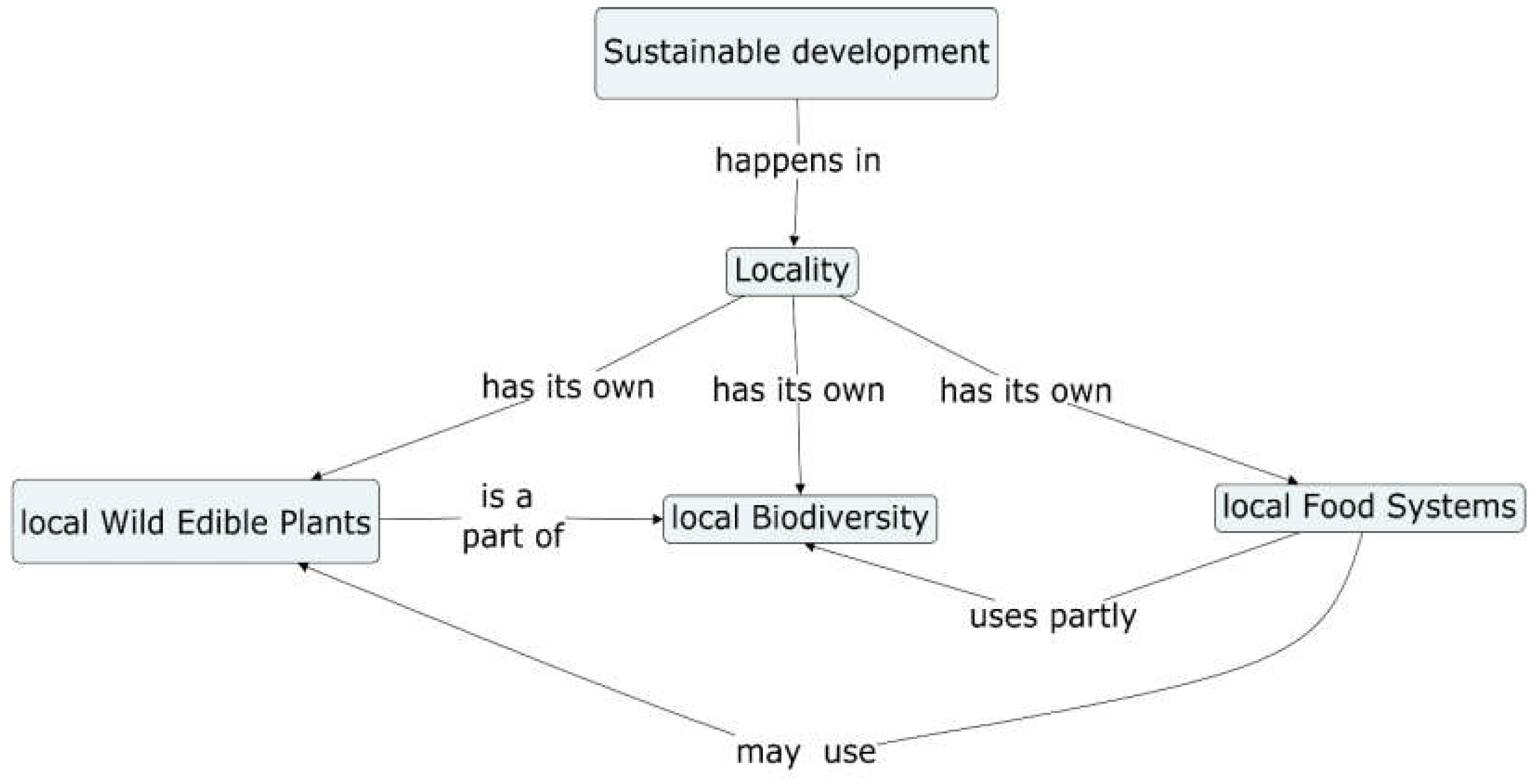
Figure 2.
An enlarged improved concept map of the paper’s theme. The most essential concept in this concept map is ‘Local Wild Edible Plants’. Removing it from the concept map causes the most significant damage to the conceptual structure in Karl Popper’s [9] WORLD 2 (the mental world).
Figure 2.
An enlarged improved concept map of the paper’s theme. The most essential concept in this concept map is ‘Local Wild Edible Plants’. Removing it from the concept map causes the most significant damage to the conceptual structure in Karl Popper’s [9] WORLD 2 (the mental world).
Disclaimer/Publisher’s Note: The statements, opinions and data contained in all publications are solely those of the individual author(s) and contributor(s) and not of MDPI and/or the editor(s). MDPI and/or the editor(s) disclaim responsibility for any injury to people or property resulting from any ideas, methods, instructions or products referred to in the content. |
© 2026 by the authors. Licensee MDPI, Basel, Switzerland. This article is an open access article distributed under the terms and conditions of the Creative Commons Attribution (CC BY) license (http://creativecommons.org/licenses/by/4.0/).
Copyright: This open access article is published under a Creative Commons CC BY 4.0 license, which permit the free download, distribution, and reuse, provided that the author and preprint are cited in any reuse.


