

Submitted:
26 February 2025
Posted:
27 February 2025
You are already at the latest version
Abstract
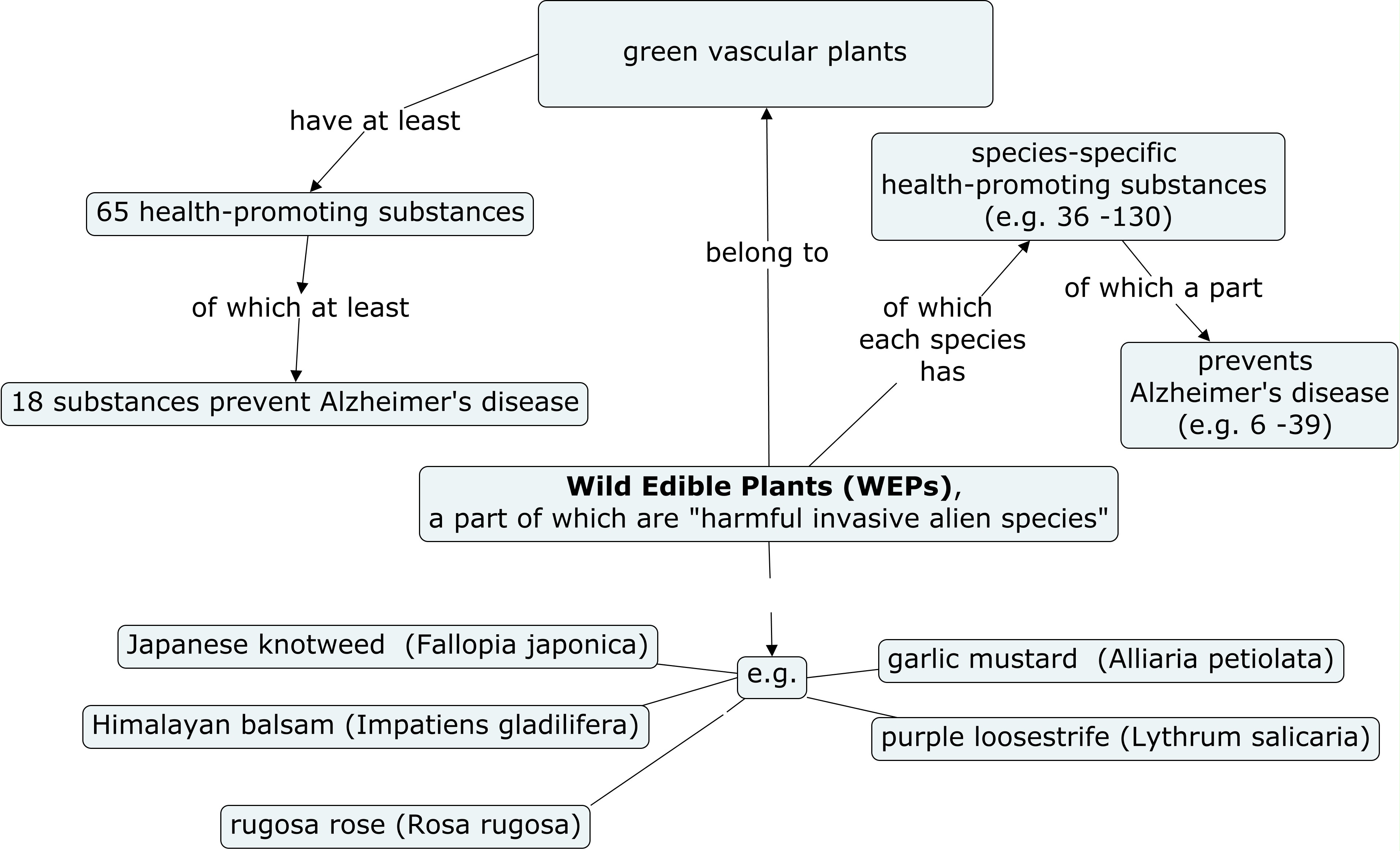
Introduction: The research results of wild edible plants (WEPs) and their health-promoting substances are scattered over separate research fields and sources, such as phytochemical studies, nutrition sciences, ethnobotany, and plant sciences. In my meta-research, I integrate separate fields for foraging practice. The results are new and practical. The research questions: (1) How did I find 65 shared health-promoting substances in all green vascular WEPs? (2) According to experimental research, how many shared health-promoting substances prevent Alzheimer's disease? (3) How many species-specific health-promoting substances do five selected invasive WEPs contain? (4) How many Alzheimer’s disease-preventing, species-specific health-promoting substances do these five selected invasive WEPs have? Methods: Data is sought using research databases. All claims are referenced so accurately that every researcher can check the results. Results: All green vascular WEPs contain at least 65 health-promoting substances, and at least 18 prevent Alzheimer’s disease. Five exemplary WEPs contain a species-specific number (101 – 130) of health-promoting substances, at least 24 -57 preventing Alzheimer’s disease. These five species are alien invasive species. They provide ecosystem services like food for humans. Conclusions: The results offer profound reasons for using for-aged WEPs and cultivated green edible vascular plants to promote health and longevity. Using the five alien invasive species researched for culinary purposes is wise.
Keywords:
Wild Edible Plants
; Wild Food Plants
; Functional Food
; Foraging
; Mediterra-nean Diet
; Health
; Longevity
; Phytochemicals
; Good Environment
; Sustainability
1. Introduction
In the title and the graphical abstract, I use the botanical term ‘vascular plants.’ The practical definition of ‘vascular plants’ is the following. Flowering plants, gymnosperms, horsetails (Equisetum), and ferns are all vascular plants. They possess vascular tissues and have true stems, leaves, and roots. Vascular tissues transport water, minerals, and photosynthesis products throughout the plant. Some algae and lichens are edible. They do not belong to vascular plants. They do not have vascular tissue. Algae and lichens have no root system, stem, or leaves.
I introduce the concepts of (1) “shared health-promoting substances” and (2) “species-specific health-promoting substances.” My search engine research discovered that these terms were used exclusively in my Preprint dated 6.1.2025 (Åhlberg 2025) or its earlier versions. This new distinction is helpful because I will show in this paper that all green vascular plants contain at least 65 health-promoting substances essential for their structure and metabolism. Based on my books of WEPs (Åhlberg 2020a -2022a), I know that each species also contains other health-promoting substances that I call “species-specific health-promoting substances.”.The meta-research questions are: (1)How many of them promote health, according to experimental research? and (2) Which of them are preventing Alzheimer’s disease?
The Mediterranean diet, a widely studied and highly beneficial diet, underpins my research (Åhlberg (2021, 2022b). Initially, the Mediterranean diet included Wild Edible Plants (WEPs). According to numerous research reports, this diet 1) promotes health and longevity and 2) prevents various modern diseases, including coronary and Alzheimer’s disease. A vital component of this diet is consuming locally available green plants, which are rich in health-promoting substances. According to Volinia & al. (2024) and Åhlberg (2019 -2024), foraging WEPs has become essential in Europe for many reasons, like promoting sustainability, a good environment, a good life, health, and longevity.
Invasive WEPs are an emotional theme. The ecosystem services they provide need a rational discussion. All WEPs that I meta-researched belong to alimurgic plants. Three species are invasive in Europe and two in North America. The European invasive WEPs are Fallopia japonica, Impatiens glandulifera and Rosa rugosa. The American invasive WEPs are Alliaria petiolata and Lythrum salicaria. They all provide many ecosystem services, such as wild food for humans.
Capurso (2024) wrote a historical analysis of the Mediterranean diet. He calls the earliest known version a “bread-olive oil-wine” triad with legumes, cheeses, and sheep and goat meat. Capurso (2024) does not mention Wild Edible Plants (WEPs) in his overview. He mentions, “barbarian populations, between 400 and 800 CE, made the diet enriched with products from wild, uncultivated areas, meat from game and pigs, and vegetables”. Wild vegetables are mentioned in the quotation.
de Cortes Sánchez-Mata et al. (2016) and Åhlberg (2019, 2020a, 2020b, and 2022a) provide knowledge of the Mediterranean diet from the viewpoint of wild edible plants (WEPs). There is plenty of evidence that WEPs have been consumed since prehistoric times in the Mediterranean countries. I want to highlight the foundational importance of the handbook of de Cortes Sánchez-Mata & Tardío (Eds.) (2016) Mediterranean Wild Edible Plants. ethnobotany and Food Composition Tables. New York: Springer. It integrates knowledge of hundreds of research reports from the Mediterranean region. I have integrated knowledge from worldwide for the WEPs of boreal, temperate, and subtropical zones in Åhlberg (2019-2022a)
In this paper, I build on the results from earlier publications. Without success, I have tried to find other meta-researchers on WEPs of boreal, temperate, and subtropical vegetation zones. Because I am the only meta-researcher on WEPs, I must build on the knowledge I created earlier.
Åhlberg (2019) compared ethnobotanical lists of WEPs foraged and consumed in different parts of the world. Many of the best WEPs are edible weeds spread nearly globally through agriculture, such as Taraxacum officinale, Sonchus arvensis, Sonchus oleraceus, Chenopodium album, Achillea millefolium, and Artemisia vulgaris. Because they are practically global, they are local almost everywhere. I have found no other article or book where this data and conclusions are clearly expressed. This is important knowledge for survival in boreal, temperate, and subtropical vegetation zones.
Åhlberg (2020a and 2020b) searched for WEPs that have 1) a long history of use, 2) an extensive distribution, and 3) experimental research that shows that the species is not toxic and promotes health. The result was 94 species in the boreal, temperate, and subtropical vegetation zones. In these books, I refer to many biochemical mechanisms of health-promoting substances when they are described in the latest research articles.
In Åhlberg (2022a), I selected 75 species, many from the earlier 94 species, for a book dedicated to the Finnish context. The book also includes the latest research results on health-promoting substances of WEPs in English. Initially, this knowledge is scattered in hundreds of research articles. I have integrated the latest knowledge of some of the best health-promoting substances, like ellagitannins, resveratrol, and polyphenols, into Vignettes.
Sustainable global food chains require safeguarding the future of food sources and the environment. Applying Paura & Marzio (2022), Monari & al. (2021), and Marrelli & al. (2020), WEPs are examples of alimurgic plants. In times of famine caused by war, drought, plant diseases, pests, or any other cause, alimurgic plants provide food. When there is little else to eat, edible weeds and other WEPs, such as alimurgic plants, provide health-promoting raw materials for food. Top chefs use these plants to create tasty and healthy portions (e.g., Egebjerg & al. (2018) and Tallberg & al., 2023). Since 2016, after the handbook of de Cortes Sánchez-Mata & Tardío (Eds.) (2016) Mediterranean Wild Edible Plants. Ethnobotany and Food Composition Tables. New York: Springer, research has grown exponentially.
Nowadays, we often know in detail many of the health-promoting chemical constituents of WEPs. Research has also revealed many biochemical mechanisms on how these substances promote health. Christodoulou & al. (2023) and Åhlberg (2022) classify WEPs as natural functional foods.
Biodiversity decline, climate change, war, famine, overpopulation, hunger, obesity pandemic, and Alzheimer’s disease are examples of current crises. In these crises, some people are worried about invasive alien species. The European Union has developed a strategy to eradicate them. The latest EU document on this theme is the European Commission (2022a).
I present the latest research on three invasive alien WEPs in Europe and two in North America. The three invasive alien WEPs in Europa are Japanese knotweed (Fallopia japonica), Himalayan balsam (Impatiens glandulifera), and rugosa rose (Rosa rugosa). The two invasive alien WEPs in North America are garlic mustard (Alliaria petiolata) and purple loosestrife (Lythrum salicaria).
From the sustainability viewpoint, I forage mainly soft new aerial parts of these WEPs. I eat rose petals and hips raw. I never gather all plant material. I allow WEPs to grow new leaves, petals, and hips. As described in Åhlberg (2019, 2020 a, 2020b, and 2022a), tender leaves of other foraged WEPs I usually boil first because 1) it kills possible bacteria and parasites, 2) it removes antinutrients such as water-soluble oxalic acid and extra nitrates, 3) it increases the availability of many health-promoting substances by breaking cell walls. Boiling is ordinary in Mediterranean countries (Arias-Rico al. 2020; Seal al. 2023; Sergio al. 2020).
The following research questions structure the paper:
(1) How did I find 65 health-promoting substances in all green vascular WEPs?
(2) According to experimental research, how many of these substances prevent Alzheimer’s disease?
(3) How many species-specific health-promoting substances do five selected invasive WEPs contain?
(4) How many Alzheimer’s disease-preventing, species-specific health-promoting substances do these five selected invasive WEPs have?
I created a code for the research questions. The first number is the order of the question. The second number is the code for species; in this example, rugosa rose (Rosa rugosa) is the third meta-researched species. The third number is the order of analyzed properties of rugosa rose (Rosa rugosa).
The answer to the research question (3.3.1.): How many health-promoting substances do the petals of rugosa rose (Rosa rugosa) contain?
The answer to the research question (3.3.2.): How many health-promoting substances do the rugosa rose (Rosa rugosa) hips contain?
The answer to the research question (4.3.1.): How many Alzheimer’s disease-preventing substances do the petals of rugosa rose (Rosa rugosa) contain?
The answer to the research question (4.3.2.): How many Alzheimer’s disease-preventing substances do the hips of rugosa rose (Rosa rugosa) contain?
2. Materials and Methods
2.1. Research Approach
In 2016, I established the R&D program for meta-research on WEPs at the University of Helsinki. (LINK: https://researchportal.helsinki.fi/en/projects/rd-program-for-meta-research-on-weps-wild-edible-plants.
A handbook for this emerging research approach is Published: Oancea, A. & al.(Eds.) 2024. Handbook of Meta-Research. Cheltenham: Edward Elgar Publishing. “My approach to meta-research is like Steven Hill’s (Hill (2024): “Meta-research is a relatively new construct, fundamentally practical, applied, and trans-disciplinary research field. As a result, meta-research as a research practice is deeply entwined with the needs and interests of its users and stakeholders. In this chapter, I argue that meta-research should be understood as a specific example of evidence generation for policy development.” My meta-research is secondary research about primary research on WEPs. In my meta-research, I use search engines across all fields of research, for instance, (a) ethnobiological research, (b) prehistorical and historical research, (c) phytochemical research, (d) chemical research, (e) medicinal research, (f) toxicological research, (g) physiological research, and so on. In reviews, I would not do these kinds of searches. Primary research is empirical (including experimental) research on WEPs. It can be ethnobotanical research, phytochemical research on what phytochemicals the plant contains, or experimental research on certain phytochemicals to test whether they promote health or prevent diseases. Meta-research has always a specific purpose. My Meta-Research R&D program aims to promote learning, understanding, and use of WEPs to benefit humankind, a good life, a good environment, and sustainable development.
2.2. Data
I searched the Internet for the latest digital and printed texts based on WEPs research using research search engines like Google Scholar and others named in the Methods chapter.
2.3. Methods
I used the listed research databases and search engines to find relevant research reports to answer my research questions. Reading and interpreting research reports from many fields requires basic knowledge of chemistry, biochemistry, biology, plant sciences, plant systematics, plant species knowledge, botany, human physiology, nutrition science, and so on. It demands hard intellectual work to find lists of substances in the aerial parts of the plants, excluding the lists of substances in underground parts. (From the viewpoint of sustainability, I recommend that foragers use only the soft aerial parts of the plants. Collecting underground parts may endanger the species’ existence) in the site. Cultivating WEP species provides safe opportunities for collecting the underground parts.)
In Åhlberg (2022b), I described my methods for finding ‘shared health-promoting substances’: “I followed the procedure described in Åhlberg (2021a): When I found chemical constituents of plants that I guessed, based on my biology studies at the university, whether all edible plants share them, I used keywords <the name of phytochemical>, <plant metabolism>, and <plant biology>. I integrated and developed ideas deeper and broader using Google Scholar, PubMed, Europe PMC, SpringerLink, and ScienceDirect.”
Everybody can check all claims of species and their health-promoting substances using the following research databases, which I have used in my research:
1) Europe PMC: https://europepmc.org/
2) Google Scholar: https://scholar.google.com/
3) PubMed: https://pubmed.ncbi.nlm.nih.gov/
4) PubChem: https://pubchem.ncbi.nlm.nih.gov/
5) HMDB: Human Metabolome Database: https://hmdb.ca/
6) Science Direct: https://www.sciencedirect.com/
7) Web of Science Core Collection: https://clarivate.com/products/scientific-and-academic-research/research-discovery-and-workflow-solutions/web-of-science/web-of-science-core-collection/
8) Wiley Online Library: https://www.onlinelibrary.wiley.com/
I have used keywords: <the scientific name of plant species>, <chemical constituents>, <name of the specific substance>, <health>, and <Alzheimer’s disease>.
2.4. Evaluation of the Quality of Research
In quantitative research, it is customary to evaluate validity and reliability. My research is qualitative, based on research reports and partly my observations. I rely on my interpretations of text and photos in research reports. The qualitative research tradition has many options for evaluating research quality. I have selected (1) auditability, which increases (2) credibility, and (3) trustworthiness. I give readers tools to check (audit) all my claims. According to Åhlberg (2020a), all scientific research claims are tentative and prone to continual testing, checking, rechecking, and improvement. In science, truth stands up to continual critical examination and testing.
3. Results
3.1. Research Question (1): How Did I Find 65 Health-Promoting Substances in All Green Vascular WEPs?
I remember two exciting events when I developed my approach to compare the roles of health-promoting substances in plants and humans:
While reading Harborne (1980, 439), I realized: “One end-product of phenolic metabolism in all vascular plants is the lignin of the cell wall, a complex co-polymer of phenylpropanoid units…” After this finding, I checked what later experimental research found about lignin’s health benefits. Then, I checked what research has found about lignin’s role in plants. Conclusion: Lignin is one of the human health-promoting substances that all green vascular plants have.
Huang & al. (2020) compared substances that plants and humans need in their article ‘Plant Nutrition for Human Nutrition.’ According to Huang & al. (2020, 825), “…there is a difference in number of mineral elements required between plants and humans (Takahashi, 1993). Plants only require 14 essential mineral elements while humans require 23 (Table 1) (Takahashi, 1993).” Huang & al. (2020)’s source is a Japanese textbook, “Takahashi, 1993”. Huang & al. (2020) focus on the transport systems of mineral elements in rice. They do not compare the role of these mineral elements in plant or human metabolism. I took Huang & al.’s list (2020, 826) as hypotheses to test plant and human health-promoting metabolism. I found interesting new experimental research on how these mineral elements were vital for plant and human metabolism. From my university-level botany studies, I knew that magnesium (Mg) is a central element in chloroplasts, and iron (Fe) is a central element in hemoglobin. I started to meta-research whether there are other shared substances in all green plants, chloroplasts, or other cell structures or in plant metabolism, which in the human body are health-promoting substances.
In my books on WEPs (Åhlberg 2019 – 2022a), I was not interested in the role of health-promoting substances in plants, only for humans. I invented this integrating meta-research theme when I wrote my first research article on this theme (Åhlberg 2021). First, I found one health-promoting substance claimed to be in every green vascular plant; then I found 24, and finally, 52 health-promoting substances (Åhlberg 2021). From Åhlberg (2021 and 2022b), we know that all edible green vascular plants contain at least 57 health-promoting substances, according to experimental research. In Åhlberg (2021), the number of health-promoting substances is 52. The publisher’s final editing of Åhlberg (2022b) was so time-consuming and painful that I had no energy to check the last printed version. In the first version of Åhlberg (2022b), I had four new health-promoting substances: 1) acetylcholine, 2) choline, 3) phytic acid, and 4) terpenoids. In the last version of Åhlberg (2022b), I found the fifth one: tocopherols. However, this Figure 57 was only in the text; according to the abstract, the figure was 56.
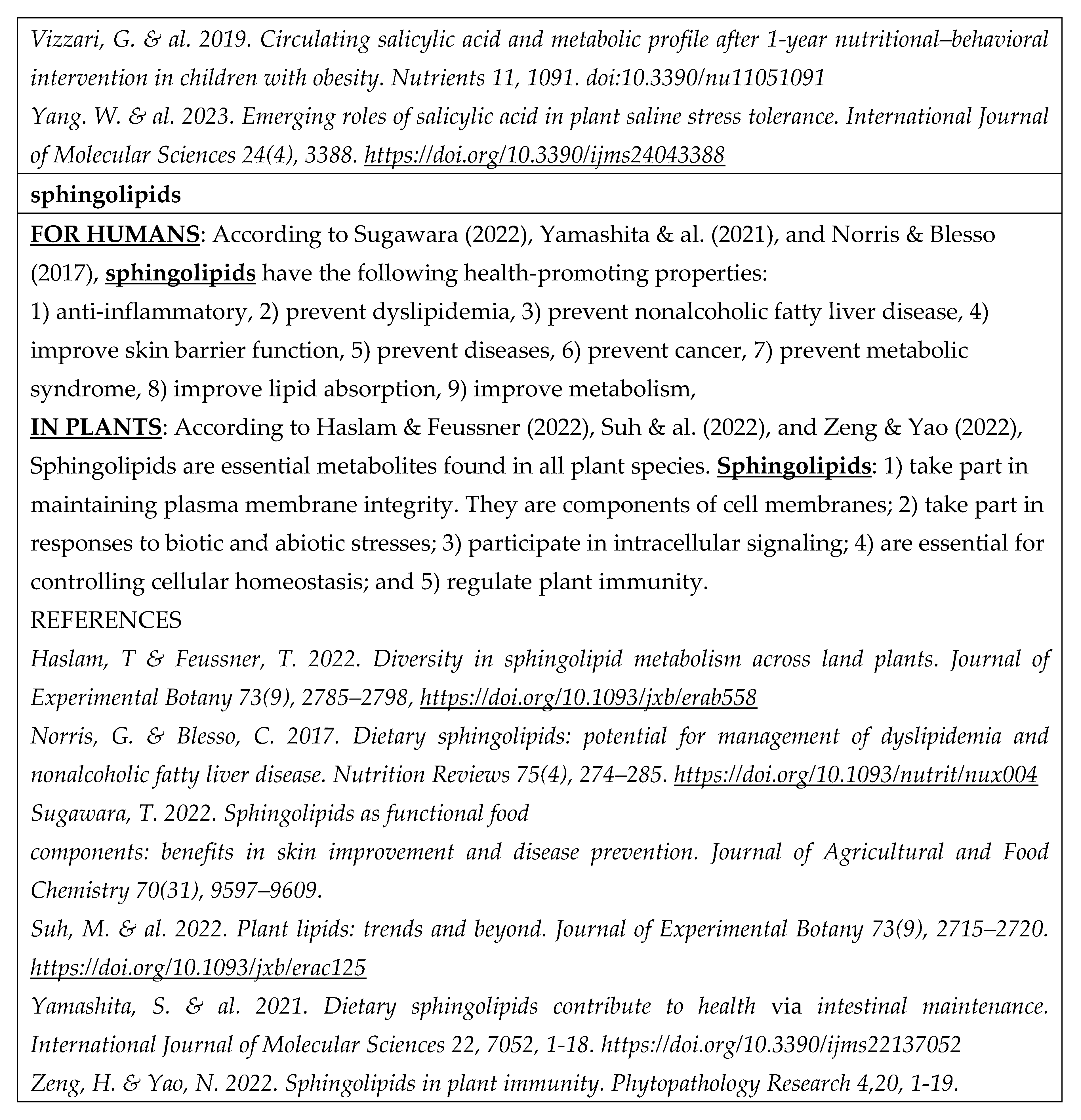
While reading the research sources for the current paper, I realized that all vascular green edible plants contain at least eight more health-promoting substances. There is experimental evidence that 1) galactolipids, 2) oxylipins, 3) phenylpropanoids, 4) phospholipids, 5) plant fats, 6) plant lipids, 7) salicylic acid, and 8) sphingolipids belong to the new list of 65 health-promoting substances that all green edible vascular plants contain. Of these 65 health-promoting substances, at least 18 prevent Alzheimer’s disease, according to experimental research articles. I have written a vignette about these eight new substances.
According to Haslam & Feussner (2022) and Suh & al. (2022), all land plants contain (1) sphingolipids. According to Dong & Lin (2021), all green vascular plants have (2) phenylpropanoids. According to Kim (2020) and Suh & al. (2022), all green vascular plants contain (3) oxylipins, (4) phospholipids, (5) plant fatty acids, (6) plant lipids, and (7) galactolipids. According to Ding & al. (2023), Jia & al. (2023), Mishra & Baek (2021), and Yang & al. (2023), both bacteria and plants, in particular land plants, produce (8) salicylic acid. Salicylic acid is one of the most essential plant hormones. According to the research databases, all eight substances promote human health. Plant lipids are the overarching concept covering plant fatty acids, galactolipids, and sphingolipids. Lipid synthesis involves several cell organelles. Fatty acids are synthesized in chloroplasts. Fatty acids are directly combined with glycerol to become galactolipids, a significant component of the chloroplast membrane. Fatty acids are transferred to the cytoplasm to bind with glycerol in the endoplasmic reticulum to become phospholipids of the cell membrane. I present vignettes of these eight health-promoting substances that all (wild) edible vascular plants contain: 1) galactolipids, 2) oxylipins, 3) phenylpropanoids, 4) phospholipids, 5) plant fatty acids, 6) plant lipids, 7) salicylic acid, and 8) sphingolipids. The references inside the vignettes follow the style of my earlier vignettes in Åhlberg (2020a, 2020b, 2021, 2022a, and 2022b). For a convincing presentation, I use vignettes with (1) the claims on how each substance promotes health, (2) what is their function in plants, and (3) references that support these claims.
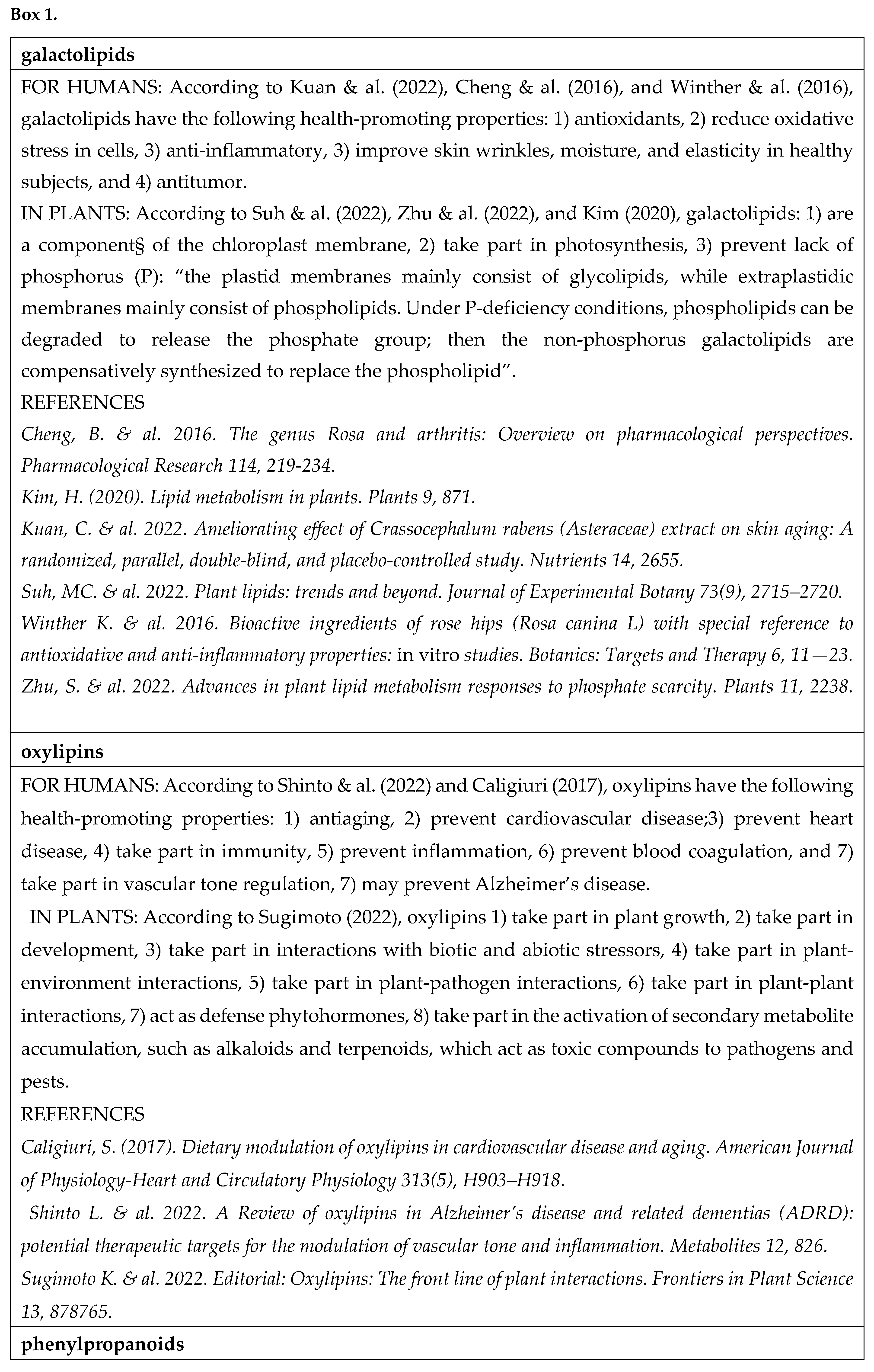
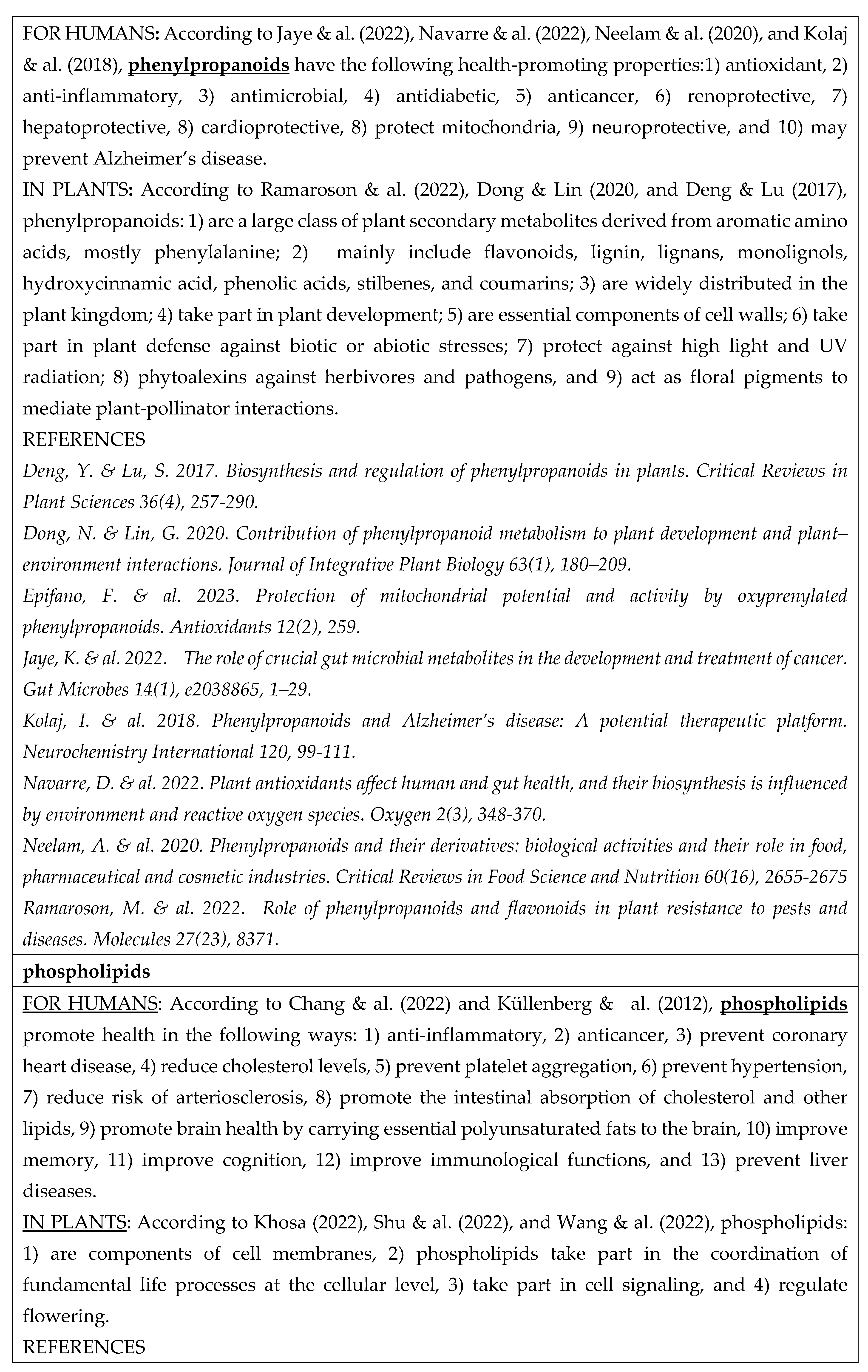
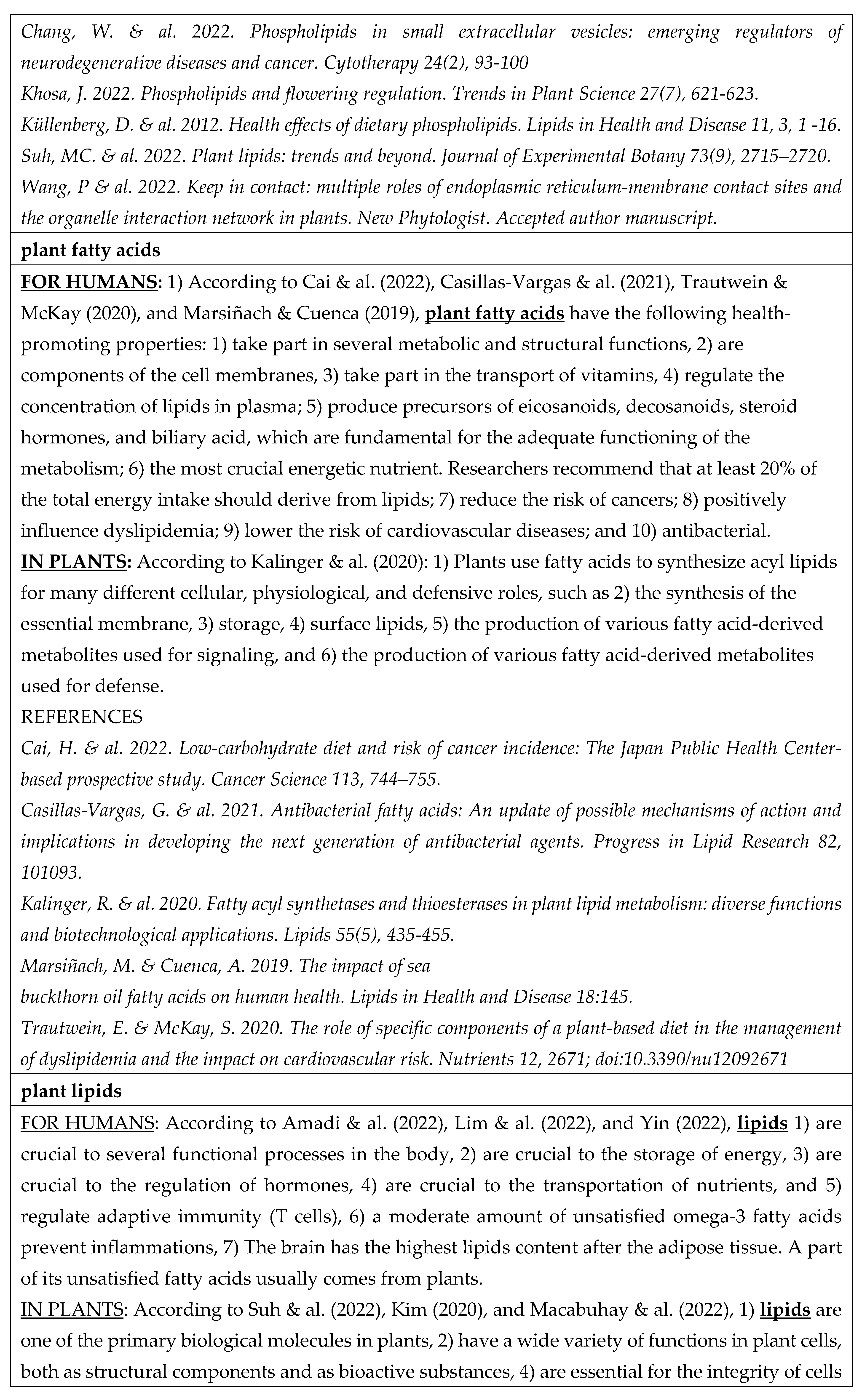

According to Åhlberg (2021, 2022b and the evidence presented above), the list of 65 health-promoting substances that all green vascular (wild) edible plants contain is as follows: 1) acetylcholine, 2) alpha-linolenic acid, 3) antheraxanthin, 4) ascorbic acid, 5) beta-carotene, 6) beta-sitosterol, 7) biotin, 8) caffeic acid, 9) calcium, 10) carotenoids, 11) chlorophylls, 12) chloride, 13) choline, 14) citric acid, 15) copper, 16) dietary fibers, 17) fatty acids, 18) flavonoids, 19) folic acid, 20) galactolipids, 21) glutathione, 22) iron, 23) lignins, 24) linoleic acid, 25) lutein, 26) manganese, 27) magnesium, 28) melatonin, 29) molybdenum, 30) neoxanthin, 31) niacin, 32) nickel, 33) nitrates, 34) oleic acid, 35) oxylipins, 36) pantothenate, 37) phenolic acids, 38) phenolic compounds, 39) phenylpropanoids, 40) phospholipids, 41) phosphorus, 42) phylloquinone, 43) phytic acid, 44) phytosterols, 45) plant fatty acids, 46) plant lipids, 47) plant proteins, 48) polyphenols, 49) polysaccharides, 50) potassium, 51) pyridoxine, 52) riboflavin, 53) salicylic acid, 54) selenium, 55) silicon, 56) sodium, 57) sphingolipids, 58) sulfur, 59) terpenoids, 60) thiamin, 61) tocopherols, 62) violaxanthin, 63) xanthophylls, 64) zeaxanthin, 65) zinc.
3.2. Research Question (2): How Many Alzheimer’s Disease-Preventing Health-Promoting Substances Do All Green Vascular Plants Have, According to Experimental Research?
After reviewing experimental research of these 65 substances shared by all green vascular plants, I have concluded that all edible green vascular plants include at least the following 18 substances that prevent Alzheimer’s disease: 1) alpha-linolenic acid, 2) ascorbic acid, 3) caffeic acid, 4) carotenoids, 5) choline, 6) dietary fibers, 7) flavonoids, 8) lutein, 9) melatonin, 10) phenolic acids, 11) phenolic compounds, 12) phenylpropanoids, 13) phytic acid, 14) polyphenols, 15) polysaccharides, 16) silicon, 17) terpenoids, and 18) tocopherols.
3.3. How Many Species-Specific Health-Promoting Substances Do Five Selected WEPs Contain?
Harborne (2000) claims that almost all plant species have a unique collection of phytochemicals. I have meta-researched reports of over one hundred WEPs (Åhlberg 2020a and 2022a). They all have a different set of phytochemicals. Those species that belong to the same plant Genus have more similar profiles of phytochemicals than those that belong to different plant Genera or plant Families. This is understandable because each species has different genes and DNA. DNA guides on what substances plant cells produce.
In this paper, I will meta-research five invasive WEPs as examples of WEPs in general. They are ordinary plants and WEPs, but some environmentalists and administrators have classified them as invasive or even harmful invasive species. Foragers regard some of them as excellent WEPs, raw materials for cooking. I meta-researched WEPs that some researchers and environmental administrators label as “invasive alien species” warranting eradication. Foragers and WEP researchers strongly disagree. Like any other WEP, these five invasive species provide ecosystem services, including health-promoting foods. I reviewed recent research on the health-promoting compounds found in these five plants for this paper.
In the following alien-invasive WEP presentations, I use expressions like “142 (65+77) health-promoting substances…”. In parentheses, Figure 65 is the number of health-promoting substances common to all wild edible vascular plants according to Åhlberg (2021, 2022b, and the evidence presented in this article). The second figure of the sum is the species-specific substances that promote health, according to the evidence presented in this article. The example of 77 species-specific substances is from the aerial parts of Japanese knotweed (Fallopia japonica).
The five species presented in this article are attached with the list of substances that prevent Alzheimer’s disease. I show the number of substances in the following form: 60 (18 + 42). This example is from Japanese knotweed (Fallopia japonica). In parentheses, the first figure is 18. All green vascular wild edible plants contain 18 substances that prevent Alzheimer’s disease, according to Åhlberg (2021, 2022a, 2022b, and the evidence presented in this article). The second figure (42) after the plus operator is the number of species-specific substances in the aerial parts of Japanese knotweed (Fallopia japonica). that prevent Alzheimer’s disease, according to experimental research.
Three Invasive Alien WEPs in Europe
Japanese knotweed (Fallopia japonica)
DISTRIBUTION: According to GBIF (2024), Japanese knotweed (Fallopia japonica) is widely distributed globally.
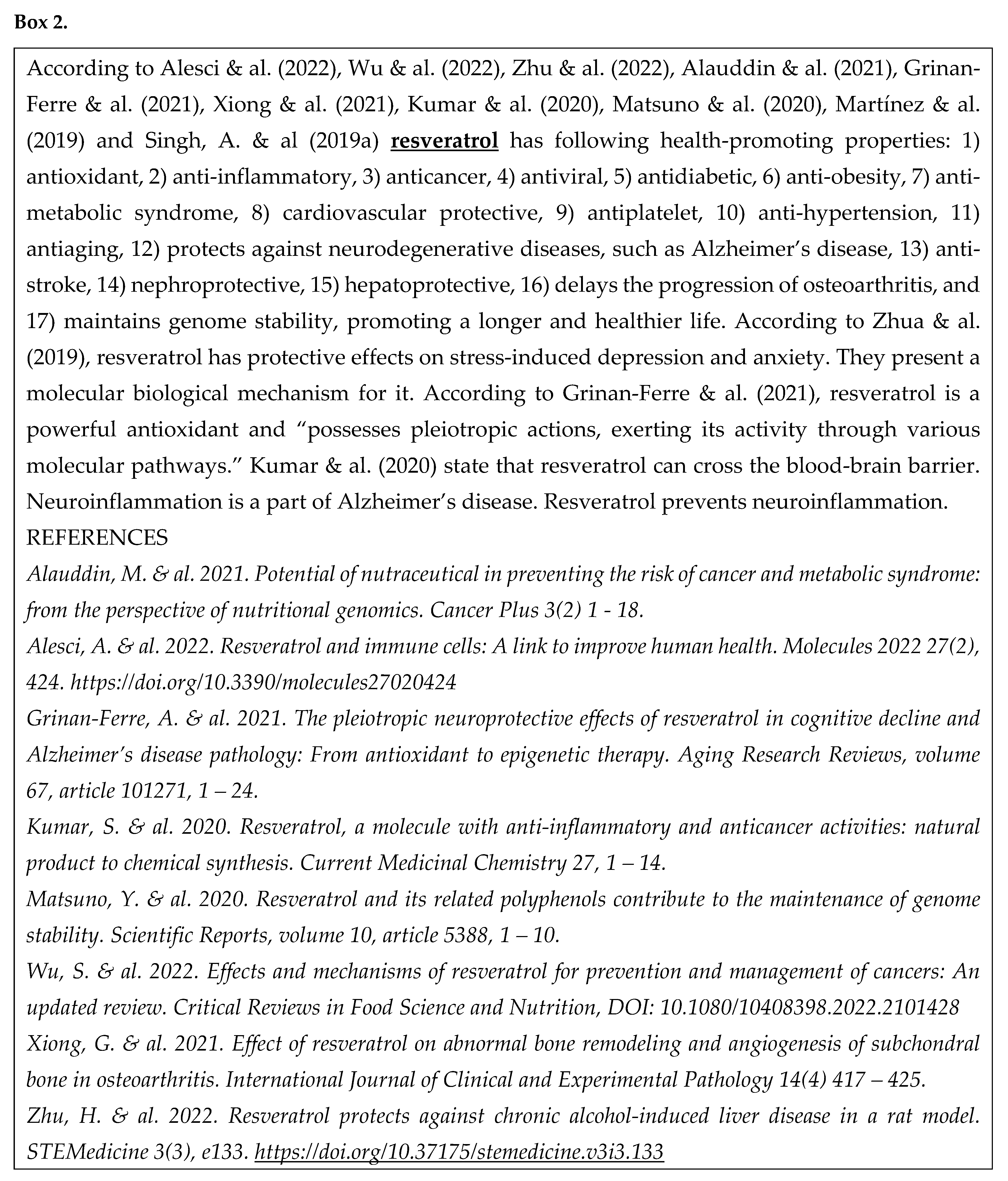
HEALTH-PROMOTING PROPERTIES: I meta-researched experimental studies and found that the aerial parts of Japanese knotweed (Fallopia japonica) have at least 142 (65+77) health-promoting substances that promote health. I take resveratrol as an example because all tissues of Japanese knotweed contain it. Resveratrol promotes health in the following ways: 1) antioxidant, 2) anti-inflammatory, 3) anticancer, 4) antiviral, 5) antidiabetic, 6) anti-obesity, 7) anti-metabolic syndrome, 8) cardiovascular protective, 9) antiplatelet, 10) anti-hypertension, 11) antiaging, 12) protects against neurodegenerative diseases, such as Alzheimer’s disease, 13) anti-stroke, 14) nephroprotective, 15) hepatoprotective, 16) delays the progression of osteoarthritis, and 17) maintains genome stability, promoting a longer and healthier life. (Leaves of Japanese knotweed (Fallopia japonica) contain 57 (18 + 39) substances that prevent Alzheimer’s disease. I list them at the end of the species description.)
WARNINGS: Japanese knotweed (Fallopia japonica) contains oxalic acid. It is wise to use it with calcium (Ca) and magnesium (Mg) sources, such as cheese or yogurt.
SUGGESTIONS FOR USE: A wise option is to use leaves and shoots of Japanese knotweed (Fallopia japonica) in the Mediterranean-style boiled mixtures of wild edible plants.
According to Ke & al. (2023), the Chinese have used thousands of years of rhizomes of Japanese knotweed (Fallopia japonica, synonyms Polygonum cuspidatum, and Reynoutria japonica) as medicine. They need to learn research on aerial parts of Japanese knotweed (Fallopia japonica) for food. In the conclusion of Ke & al. (2023) article, they express the need: “… aerial parts should receive more attention.” Åhlberg (2020a, 2020b, and 2023) has focused on research on aerial parts. I will present the results below.
Milanovića & al. (2020) and Cucu (2021) regard Japanese knotweed (Fallopia japonica) as a harmful invasive alien species. However, this species also provides ecosystem services, which I will present evidence of. Milanovića & al. (2020) present a general framework for discussion but do not understand the importance of foraging this species for food. According to Shimoda and Yamasaki (2016), in the homeland of this species, it is valued as a wild edible plant. It was recorded in the oldest history book in Japan in 720 AD.
According to Cucu (2021), a particular ecological service of Japanese knotweed (Fallopia japonica) is that bees create health-promoting honey from the nectar of the female flowers. Female flowers of Japanese knotweed (Fallopia japonica) are a great source of nectar, which is rich in fructose and glucose. Therefore, pollinating insects, such as bees, visit the flowers.
According to Shimoda & Yamasaki (2016, 449), from 927, there were written instructions on gathering Japanese knotweed (Fallopia japonica) spring shoots for the emperor. According to these over thousand-year-old guidelines, subjects conserve shoots in salt for later cooking. According to Shimoda & Yamasaki (2016, 453), the Japanese still use spring shoots of Japanese knotweed (Fallopia japonica) for cooking. In Japan, it is a trendy wild edible plant in spring. According to Nyman (2018, 6), Japanese knotweed (Fallopia japonica) was brought to Great Britain in the 19th century as an ornamental plant and as a food and medicinal plant. In Europe, its use of food has remained insignificant. I hope this will change because of the new experimental research on health-promoting substances of Japanese knotweed (Fallopia japonica).
Kallas (2023, 199 – 230) discusses Japanese knotweed (Fallopia japonica) as a WEP. According to Kallas (2023, 225): “I have found no historical or scientific records of people eating the leaves of our knotweeds, so I assume that they are not edible.” Åhlberg (2020a and 2022a) and Osawa (2024) found research evidence of the edibility of Japanese knotweed (Fallopia japonica) leaves.
According to Lachowicz & Oszmiański (2019), Japanese knotweed leaves and stems (Fallopia japonica) contain health-promoting substances suitable as raw materials for functional food. According to Lachowicz & al. (2019, 700), leaves of Japanese knotweed (Fallopia japonica) are an excellent source of resveratrol and piceid. According to Chen & al. (2015), piceid is polydatin. Polydatin (piceid) and resveratrol may change each other in the living organism. Basholli-Salihu & al. (2016) describe in detail how this happens. According to Chen & al. (2015), polydatin protects the nervous system. Japanese researchers Kurita & al. (2016, 31) recommend using young leaves of Japanese knotweed (Fallopia japonica) for food, as they do in Japan. They published their research in the Italian Journal of Food Science.
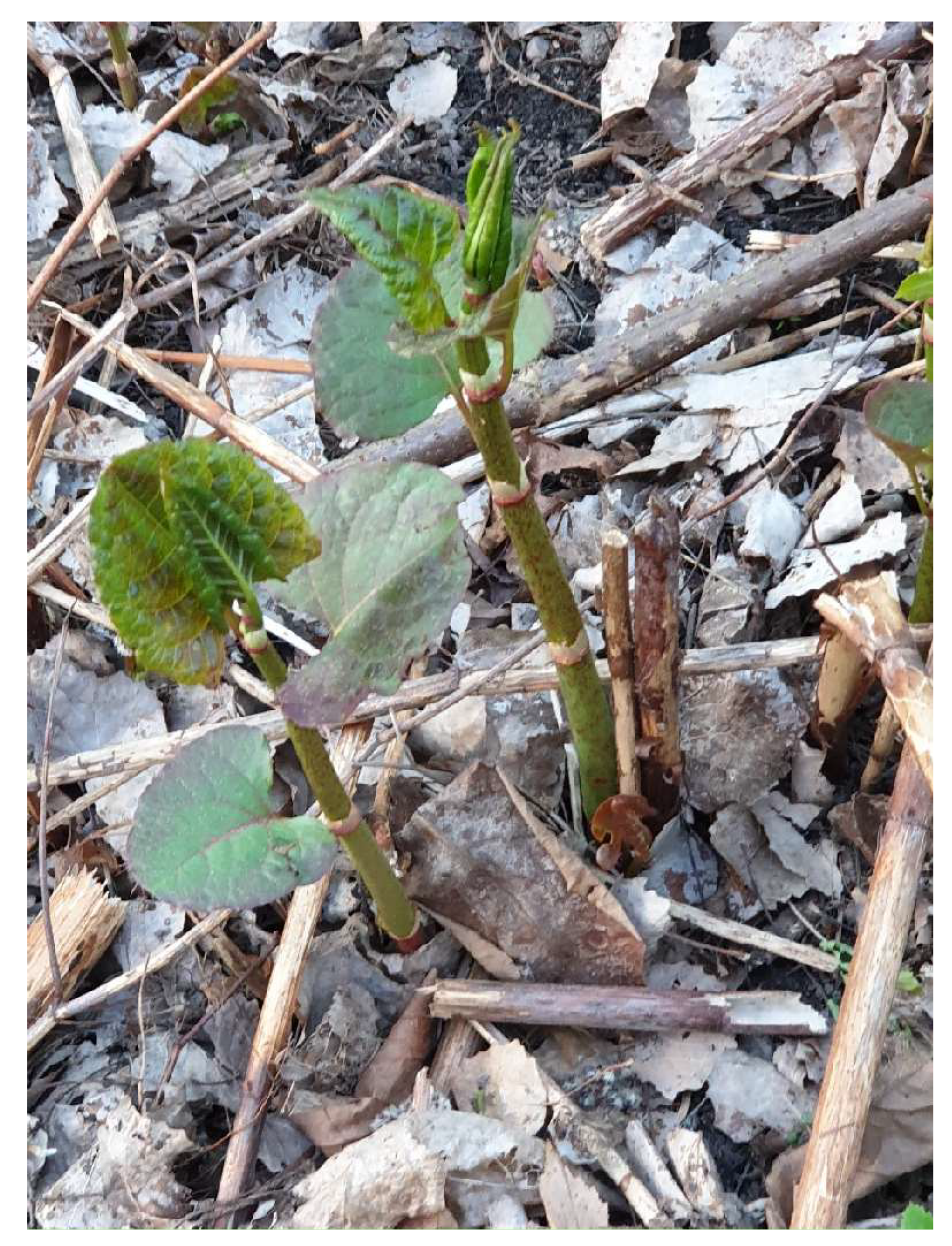
Figure 1.
Foragers can use the soft new leaves of Japanese knotweed (Fallopia japonica) in Mediterranean-style boiled mixtures of WEPs. These leaves are non-toxic and contain many health-promoting substances, including resveratrol. (Photo © Mauri K.Åhlberg).
Figure 1.
Foragers can use the soft new leaves of Japanese knotweed (Fallopia japonica) in Mediterranean-style boiled mixtures of WEPs. These leaves are non-toxic and contain many health-promoting substances, including resveratrol. (Photo © Mauri K.Åhlberg).
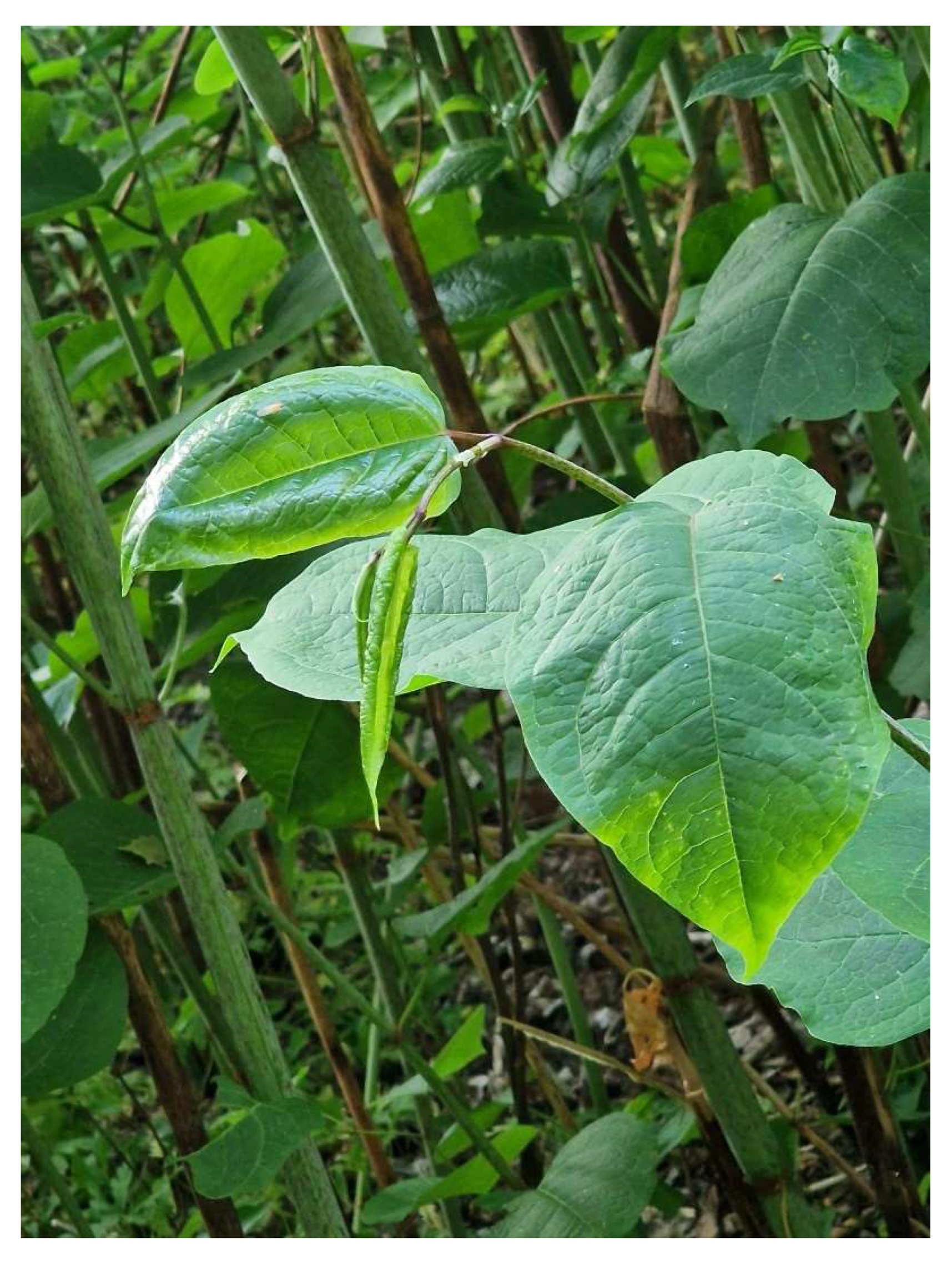
Figure 2.
The Japanese boil or fry spring shoots of Fallopia japonica. They contain oxalates. Japanese knotweed spring shoots are used with food containing calcium and magnesium ions, such as cheese, whole-grain bread, or both. (Photo © Mauri K.Åhlberg).
Figure 2.
The Japanese boil or fry spring shoots of Fallopia japonica. They contain oxalates. Japanese knotweed spring shoots are used with food containing calcium and magnesium ions, such as cheese, whole-grain bread, or both. (Photo © Mauri K.Åhlberg).
Kurita & al. (2016) found plenty of neochlorogenic acid in the leaves of Japanese knotweed (Fallopia japonica). Leaf extract of Japanese knotweed (Fallopia japonica) is a potent antioxidant. Kurita & al. (2016, 31) recommend using young leaves of Japanese knotweed (Fallopia japonica) for food, as they do in Japan. They published their research in the Italian Journal of Food Science. According to Lachowicz & al. (2019, 700), leaves of Japanese knotweed (Fallopia japonica) are an excellent source of resveratrol and piceid. According to Chen & al. (2015), piceid is polydatin. Resveratrol may change to polydatin (piceid), and polydatin may change to resveratrol in the living organism. Basholli-Salihu & al. (2016) describe in detail how this happens. According to Chen & al. (2015), polydatin protects the nervous system. According to Girardi & al. (2022, 923), “emodin and resveratrol were detected in all plant tissues” of Fallopia japonica. Both emodin and resveratrol promote health.
Japanese knotweed (Fallopia japonica) contains 142 (65+77) health-promoting substances. I have listed the 77 species-specific health-promoting substances at the end of this species description.
Resveratrol is an excellent example of the 142 health-promoting substances of Japanese knotweed (Fallopia japonica). I present resveratrol in more detail in the following vignette.
The answer to the research question (3.1.1.): How many health-promoting substances do the aerial parts of Japanese knotweed (Fallopia japonica) contain?
In this paper, I have presented evidence that all vascular green plants contain at least 65 health-promoting substances. In addition to these, Cucu & al. (2021), Lachowicz & al. (2019), Lachowicz & Oszmiański (2019), Mikulic-Petkovsek & al. (2022), and Åhlberg (2020a) found from published research the following 77 health-promoting, species-specific substances in aerial parts of Japanese knotweed (Fallopia japonica): 1) 3-feruloylquinic acid, 2) 3-p-coumaroylquinic acid, 3) 4-caffeoylquinic acid, 4) 5-caffeoylquinic acid, 5) 5-p-coumaroylquinic acid, 6) anthraquinones, 7) apigenin, 8) astringin, 9) betulinic acid, 10) caffeoylquinic acids, 11) caftaric acid, 12) catechin gallate, 13) chlorogenic acid, 14) cis-resveratroloside, 15) coumarins, 16) dicaffeoylquinic acid, 17) emodin, 18) epicatechin, 19) ferulic acid, 20) flavanols, 21) flavones, 22) flavonols, 23) gallic acid, 24) galloylhexoside, 25) isorhamnetin hexoside, 26) kaempferol, 27) kaempferol hexoside, 28) kaempferol-3-rhamnoside, 29) kaempferol-3-rutinoside, 30) lignans, 31) luteolin, 32) luteoxanthin, 33) myricetin-3-rhamnoside, 34) neochlorogenic acid, 35) neochrome, 36) neoxanthin, 37) oleanolic acid, 38) p-coumaric acid, 39) piceatannol hexoside, 40) piceid, 41) polydatin, 42) proanthocyanidins, 43) procyanidin B2, 44) procyanidin dimer 1, 45) procyanidin dimer 2, 46) procyanidin dimer 3, 47) procyanidin tetramer 1, 48) procyanidin tetramer 2, 49) procyanidin tetramer 3, 50) procyanidin tetramer 4, 51) procyanidin trimer 1, 52) procyanidin trimer 2, 53) procyanidin trimer 3, 54) procyanidin trimer 4, 55) procyanidin trimer 5, 56) procyanidin trimer 6, 57) procyanidin trimer 7, 58) quercetin, 59) quercetin acetyl hexoside, 60) quercetin dihexoside, 61) quercetin-3-arabinofuranoside, 62) quercetin-3-arabinopyranoside, 63) quercetin-3-galactoside, 64) quercetin-3-glucoside (isoquercitrin) , 65) quercetin-3-rhamnoside (quercitrin), 66) quercetin-3-xyloside, 67) quinones, 68) resveratrol, 69) rutin (quercetin-3-rutinoside), 70) stilbenes, 71) syringic acid, 72) t-cinnamic acid, 73) trans-coutaric acid, 74) trans-piceid 1, 75) trans-piceid 2, 76) trans-resveratroloside, and 77) ursolic acid.
The answer to the research question (4.1.1.): How many Alzheimer’s disease-preventing substances do the aerial parts of Japanese knotweed (Fallopia japonica) contain?
Out of the total 142 (65+77) health-promoting substances that Japanese knotweed (Fallopia japonica) has, the aerial parts of Japanese knotweed (Fallopia japonica) contain the following 57 (18 + 39) substances that prevent Alzheimer’s disease: 1) alpha-linolenic acid, 2) ascorbic acid, 3) caffeic acid, 4) carotenoids, 5) choline, 6) dietary fibers, 7) flavonoids, 8) lutein, 9) melatonin, 10) phenolic acids, 11) phenolic compounds, 12) phenylpropanoids, 13) phytic acid, 14) polyphenols, 15) polysaccharides, 16) silicon, 17) terpenoids, 18) tocopherols, 19) 4-caffeoylquinic acid, 20) 5-caffeoylquinic acid, 21) anthraquinones, 22) apigenin, 23) betulinic acid, 24) caffeoylquinic acids. 25) catechin, 26) chlorogenic acid, 27) coumarins, 28) dicaffeoylquinic acid, 29) emodin, 30) epicatechin, 31) essential oils, 32) ferulic acid, 33) flavanols, 34) flavones, 35) flavonols, 36) gallic acid, 37) isoquercitrin, 38) kaempferol, 39) lignans, 40) luteolin, 41) luteoxanthin, 42) neochlorogenic acid, 43) neoxanthin, 44) oleanolic acid, 45) p-coumaric acid, 46) piceid, 47) polydatin, 48) proanthocyanidins, 49) procyanidin B2, 50) quercetin, 51) quercitrin, 52) quinones, 53) resveratrol, 54) rutin, 55) stilbenes, 56) syringic acid, and 57) ursolic acid.
CONCLUSION: Chemical research has shown that the aerial parts of Japanese knotweed (Fallopia japonica) contain at least 142 health-promoting substances of which 57 prevent Alzheimer’s disease. The delicate aerial parts of Japanese knotweed (Fallopia japonica) can be used as ingredients for healthy food.
Himalayan balsam (Impatiens glandulifera)
DISTRIBUTION: According to GBIF (2024), Himalayan balsam (Impatiens glandulifera) is widely distributed globally.
GENERAL HEALTH-PROMOTING PROPERTIES: From published research, I have found 137(65 + 72) substances in aerial parts of Himalayan balsam (Impatiens glandulifera) that promote health according to experimental research in the following ways: 1) antioxidant, 2) anti-inflammatory, 3) antimicrobial, 4) antifungal, 5) antiviral, 6) antitumor, 7) anticancer, 8) cardioprotective, 9) anti-obesity, 10) arthritis-protective, 11) pulmonary and asthma-protective, 12) ovary-protective, 13) UV-protective, 14) antidepressant, 15) neuroprotective. 16) Aerial parts of Himalayan balsam (Impatiens glandulifera) contain 46 substances that prevent Alzheimer’s disease, according to experimental research.
WARNINGS: Himalayan balsam (Impatiens glandulifera) has sharp needle-shaped oxalate crystals in almost all tissues. They are called raphides of calcium oxalate, which can irritate the intestine’s mucous membrane. That is why it is not wise to eat leaves or stems. They can be vomiting (emetic). (The seeds may be an exception because many researchers have reported that children eat seeds of Himalayan balsam (Impatiens glandulifera).) Himalayan balsam (Impatiens glandulifera) is a toxic cadmium (Cd) hyperaccumulator. Researchers have found cadmium (Cd) in all researched parts of Himalayan balsam (Impatiens glandulifera). Accordingly, only in clean, healthy environments is it wise to forage leaves, flowers, and seeds of Himalayan balsam (Impatiens glandulifera).
SUGGESTIONS FOR USE: Use boiling water to make water-infusion (water decoction) of Himalayan balsam (Impatiens glandulifera) fresh or dried leaves, shoots, and flowers. This herbal water extract is health-promoting. Start with small doses. Taste a flower, whether you can eat it fresh. It is worth trying because flowers contain many health-promoting substances. Seeds, both raw and mature, are tasty and healthy. Seeds have more unsaturated omega-3 fatty acids than unsaturated omega-6 fatty acids. This proportion promotes health.
Himalayan balsam (Impatiens glandulifera) is an invasive alien species with an extensive distribution (Figure 3).
Milanovića & al. (2020) regard Himalayan balsam (Impatiens glandulifera) mainly as a harmful invasive alien species. However, this species also provides ecosystem services, which I will present evidence of. Milanovića & al. (2020) present a general framework for discussion but do not understand the importance of foraging this species for food.
Himalayan balsam has large inflorescences. It blooms in late summer. Prdun & al. (2022) state that Himalayan balsam (Impatiens glandulifera) is a significant nectar source for bees in late summer. It produces plenty of nectar with pollen and sugars. It attracts plenty of bees.
Leaves and flowers of Himalayan balsam (Impatiens glandulifera) are best in boiled-water extracts. Almost all parts of this plant have raphides (needle-like sharp calcium oxalate crystals). I have not found any research on raphides in flowers or seeds. Children eat seeds without any harm, as I have done. Raphides do not enter drinks, which are tonic, refreshing, and full of health-promoting substances. Juice (water extract) of flowers of Himalayan balsam (Impatiens glandulifera) is cooling and tonic. (Tonic means medicine for invigorating: increasing physical or mental strength.) Drink only in moderate doses.
According to Kayani & al. (2015, 192), Pakistanis make decoction out of flowers and leaves of Himalayan balsam (Impatiens glandulifera). According to Kayani & al. (2015, 192), Pakistanis make a powder after drying the Himalayan balsam (Impatiens glandulifera) flowers and leaves. They use this powder to make juice with health-promoting properties: 1) it provides a cooling effect, 2) it improves sleep, and 3) it heals depression.
According to Balogh (2008, 133):” The nut flavored seeds and cooked young leaves, and shoots said (sic!) to be edible.” Balogh (2008, 133 presents no research references. According to Kraehmer & Bauer (2013, 378 and 382), leaves and shoots contain raphides of calcium oxalate (oxalate crystals, which have a sharp needle-like shape), which may irritate the intestine’s mucous membrane. According to Hoover and Wijesinha (1945), intestinal calcium oxalate is insoluble. In their ethnobotanical research, Qureshi & al. (2007, 2278) found that infusions of Himalayan balsam (Impatiens glandulifera) flowers are cooling and tonic. Ch & al. (2013, 247 – 248) found that locals use flower juice as a cooling agent and tonic in their ethnobotanical research.
Without any sources, Singh & Arora (1978, 82) claim that the seeds of Himalayan Balsam (Impatiens glandulifera): “The seeds, which taste like nuts, are eaten raw.” Srivastava (1988, 205) conducted an ethnobotanical study on the consumption of Himalayan balsam (Impatiens glandulifera) seeds eaten raw in India. According to Nasim & Shabbir (2012, 63) Himalayan balsam (Impatiens glandulifera) seeds are eaten raw in Pakistan. According to Nasim & Shabbir (2012, 63),” … its flavor is famous in young ones.”
According to ethnobotanical research by Thakur & al. (2017, 3), locals in the Himalayan mountains eat Himalayan balsam (Impatiens glandulifera) fruits. According to Nasim & Shabbir (2012, 63), Pakistanis boil young shoots and leaves of Himalayan balsam (Impatiens glandulifera) into expectorant. Kumar & al. (2009, 1254) conducted ethnobotanical research on medicinal plants in India. People they interviewed allocated Himalayan balsam (Impatiens glandulifera) into the same category as common dandelion (Taraxacum officinale) and pomegranate (Punica granatum), which are used as 1) tonic, 2) appetizer, and 3) cooling agents. According to Gairola & al. (2014, 634 and 655), Indian people use Himalayan balsam as a tonic and aphrodisiac. According to Orzelska-Górka & al. (2019, 206 -207), extracts made of Himalayan balsam (Impatiens glandulifera) have the following health-promoting properties: (1) antioxidant, (2) antimicrobial, (3) cytostatic, (4) anti-anxiety, and 5) antidepressant. According to Szewczyk & al. (2018b, 11), extracts made of aerial parts of Himalayan balsam (Impatiens glandulifera) are (6) anti-inflammatory.
Himalayan balsam (Impatiens glandulifera) has oxalate crystals in its tissues that have a sharp needle-like shape. They are called raphides of calcium oxalate, which can irritate the intestine’s mucous membrane. According to Kraehmer & Bauer (2013, 378 and 382), researchers have found calcium oxalate raphides in almost all Himalayan balsam tissues (Impatiens glandulifera). They present only one photograph of raphides of calcium oxalate. In the photo, there are many sharp raphides between cells. According to Ch & al (2013, 248), leaves of Himalayan balsam (Impatiens glandulifera), when eaten fresh (raw), are emetic. In medicine, emetic means that a substance is vomiting. The cause for emitting is probably raphides of calcium oxalate, which are in almost all tissues of Himalayan balsam (Impatiens glandulifera).
According to Kumar & al. (2009, 1254), (Nasim & Shabbir 2012, 63), and (Kayani & al. 2015, 192), foragers can cook shoots and leaves of Himalayan balsam (Impatiens glandulifera) for 1) tonic, 2) cooling the body, 3) expectorant, 4) sleep-promoting drink, and 5) to heal depressions. The sharp raphides of calcium oxalate probably remain in plant tissues if only the liquid is drunk. According to Guil & al. (1997, 102), most of the insoluble oxalates in other high-oxalate plants like spinach (Spinacia oleracea) and rhubarb (Rheum rhaponticum) do not solve into water. According to Coakley & al. (2019), Himalayan balsam (Impatiens glandulifera) is a hyperaccumulator of toxic cadmium (Cd). All researched parts of Himalayan balsam (Impatiens glandulifera) accumulate cadmium (Cd). Accordingly, only in clean and healthy environments is it wise to forage leaves, flowers, and seeds of Himalayan balsam (Impatiens glandulifera).
I have selected phenolic acids to represent health-promoting substances in Himalayan balsam (Impatiens glandulifera). According to Szewczyk & Olech (2017), Himalayan balsam (Impatiens glandulifera) contains significant phenolic acids. According to Åhlberg (2022a), all main edible parts of Himalayan balsam (Impatiens glandulifera) contain phenolic acids: leaves, flowers, and seeds.
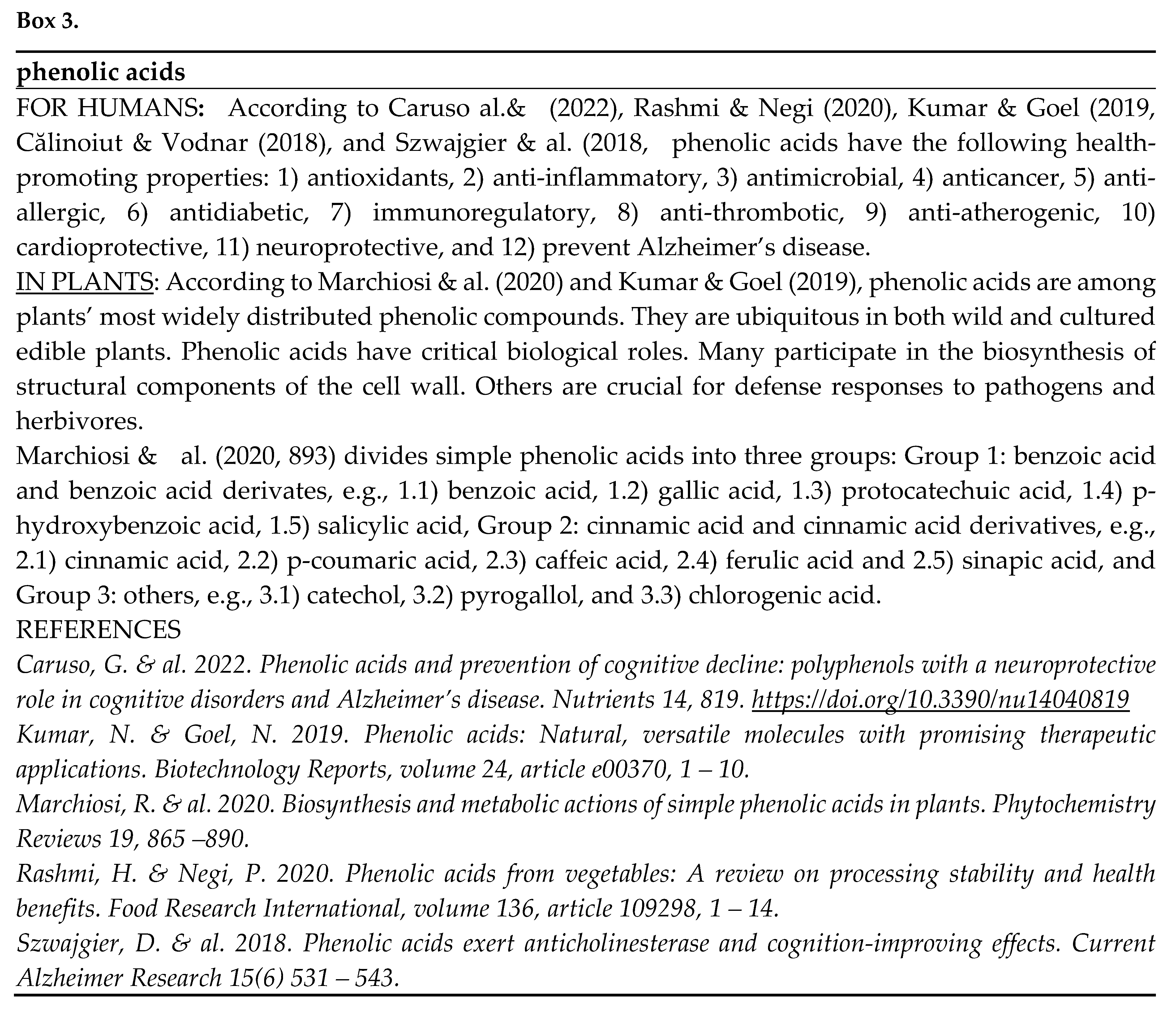
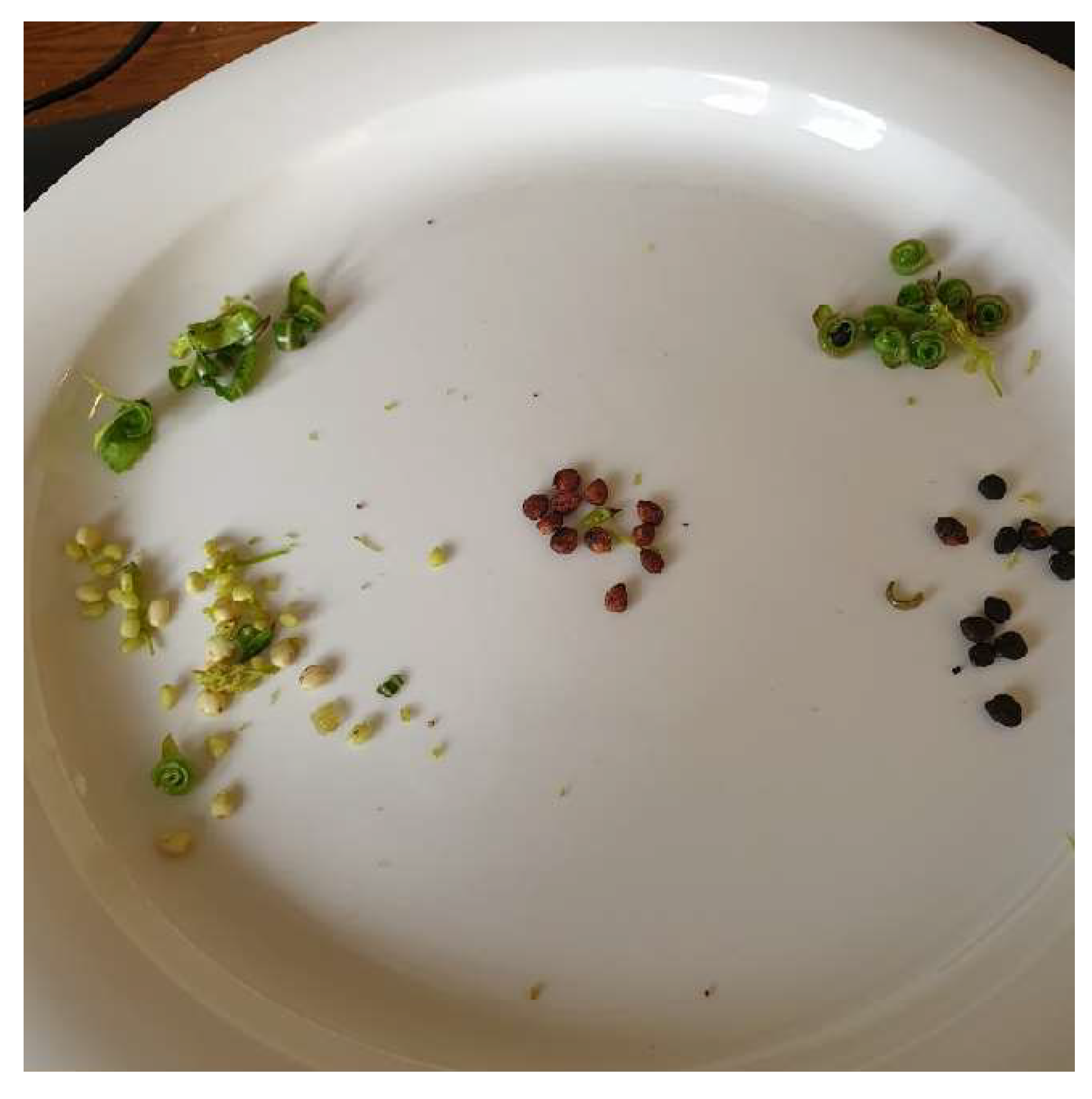
Figure 5.
Seeds of Himalayan balsam (Impatiens glandulifera). On the left are green raw seeds, half-mature seeds in the middle, and mature dark seeds on the right. All these seeds are edible. (Photo © Mauri K.Åhlberg).
Figure 5.
Seeds of Himalayan balsam (Impatiens glandulifera). On the left are green raw seeds, half-mature seeds in the middle, and mature dark seeds on the right. All these seeds are edible. (Photo © Mauri K.Åhlberg).
Seeds of Himalayan balsam (Impatiens glandulifera) contain over three times more omega-3-unsaturated fatty acids than omega-6-unsaturated fatty. This ratio promotes health. Seeds also contain oleic acid, the primary health-promoting fatty acid in extra-virgin olive oil.
According to Granado-Casa & Didac (2019), oleic acid is the primary monounsaturated fatty acid in olive oil and nuts, two essential foods in the Mediterranean diet. According to Gavahiana & al. (2019, 222), extra virgin olive oil contains oleic acid. It promotes healthy bacterial diversity in the gut. Wild edible plants often contain oleic acid. According to Granado-Casa & Didac (2019) and Sales-Campo & al. (2013), oleic acid has the following health-promoting properties: 1) prevents metabolic syndrome, 2) prevents high blood pressure, 3) prevents overweight (obesity), 4) prevents hyperglycemia, 5) prevents atherogenic lipid profile, 6) prevents insulin resistance, 7) prevents inflammation, 8) prevents prothrombotic alterations, 9) bactericidal, 10) fungicidal, 11) anticancer, and 12) attenuation of the effects of autoimmune diseases.
The answer to the research question (3.2.1.): How many health-promoting substances do the aerial parts of Himalayan balsam (Impatiens glandulifera) contain?
According to Szewczyk & al. (2016), Szewczyk & Olech (2017), Szewczyk & al. (2018), Szewczyk & al. (2019a), Szewczyk & al. (2019b), Orzelska-Górka & al. (2019), Vieira & al. (2016), and Åhlberg (2020a and 2022): Aerial parts (leaves, shoots, flowers) of Himalayan balsam (Impatiens glandulifera) contain 137 (65+72) health-promoting substances: 1) (E)-ligustilide, 2) (Z)-ligustilide, 3) 4-ethylguaiacol, 4) 4-hydroxybenzoic acid, 5) alpha-copaene, 6) alpha-phellandrene, 7) alpha-selinene, 8) alpha-terpineol, 9) alpha-terpinyl acetate, 10) astragalin, 11) beta-elemene, 12) beta-ionone epoxide, 13) beta-phellandrene, 14) borneol, 15) bornyl acetate, 16) butylphthalide, 17) campesterol, 18) carvacrol, 19) carvone, 20) chondrillasterol, 21) coumarins, 22) delta-cadinene, 23) eriodictyol, 24) essential oils, 25) gallic acid, 26) gamma-cadinene, 27) gamma-elemene, 28) gamma-muurolene, 29) gamma-terpinene, 30) gentisic acid, 31) geranyl acetate, 32) glanduliferin A, 33) glanduliferin B, 34) guaiacol, 35) heptacosane, 36) heptanal, 37) hexahydrofarnesyl, 38) hyperoside, 39) isoquercitrin, 40) kaempferol, 41) limonene, 42) linalool, 43) methyl palmitate, 44) monoterpene hydrocarbons, 45) myricetin, 46) myristic acid, 47) naphthoquinones, 48) oxygenated monoterpenes, 49) oxygenated sesquiterpenes, 50) palmitic acid, 51) p-coumaric acid, 52) p-cymene, 53) phellandral, 54) phytol, 55) piperitone, 56) p-isopropylbenzaldehyde, 57) protocatechuic acid, 58) quercetin, 59) saponins, 60) sitostanols, 61) sitosterols, 62) spinasterol, 63) syringic acid, 64) terpinen-4-ol, 65) terpinen-7-al, 66) terpinolene, 67) T-muurolol, 68) trans-carveol, 69) trans-ferulic acid, 70) trans-piperitol, 71) tricosane, and 72) vanillic acid.
The answer to the research question (3.2.2): How many health-promoting substances do the flowers of Himalayan balsam (Impatiens glandulifera)) contain?
FLOWERS: Applying Åhlberg (2020a, 2022a, and 2023), Pires & al. (2021), Szewczyk & Olech (2017), and Vieira & al. (2016, 119), flowers of Himalayan balsam (Impatiens glandulifera) contain 82 (65 + 17) health-promoting substances. The 17 substances that are specific for the flowers of Himalayan balsam (Impatiens glandulifera) are 1) 4-hydroxybenzoic acid, 2) astragalin, 2) coumarins, 3) eriodictyol, 4) essential oils, 5) gallic acid, 6) gentisic acid,7) hyperoside, 8) isoquercitrin, 9) kaempferol, 10) myricetin, 11) naphthoquinones, 12) p-coumaric acid, 13) protocatechuic acid, 14) quercetin, 15) syringic acid, 16) trans-ferulic acid, and 17) vanillic acid.
The answer to the research question (3.2.3.): How many health-promoting s-substances do the seeds of Himalayan balsam (Impatiens glandulifera)) contain?
SEEDS: According to Åhlberg (2020a, 2022a) and Szewczyk & al. (2018), seeds of Himalayan balsam (Impatiens glandulifera) contain 80 (65+15) health-promoting substances. The specific health-promoting 15 compounds in seeds are 1) 9,19-cyclolanostan-3-ol, 24-methylene-, acetate, (3beta), 2) arachidonic acid, 3) azelaic acid, 4) beta-amyrin acetate, 5) campesterol, 6) caprylic acid, 7) chondrillasterol, 8) ergosta-7,22-dien-3-o l, 9) gamma-linolenic acid, 10) oleic acid, 11) palmitic acid, 12) sitostanol, 13) spinasterol, 14) stigmasterol, and 15) triterpenes.
The answer to the research question (4.2.1.): How many Alzheimer’s disease-preventing substances do the aerial parts of Himalayan balsam (Impatiens glandulifera) contain?
The 137 health-promoting substances of Himalayan balsam (Impatiens glandulifera) include 46 (18+28) chemicals that prevent Alzheimer’s disease according to experimental research: 1) alpha-linolenic acid, 2) ascorbic acid, 3) caffeic acid, 4) carotenoids, 5) choline, 6) dietary fibers, 7) flavonoids, 8) lutein, 9) melatonin, 10) phenolic acids, 11) phenolic compounds, 12) phenylpropanoids, 13) phytic acid, 14) polyphenols, 15) polysaccharides, 16) silicon, 17) terpenoids, 18) tocopherols, 19) (E)-ligustilide, 20) (Z)-ligustilide, 21) 4-ethylguaiacol, 22) alpha-selinene, 23) alpha-terpineol, 24) alpha-terpinyl acetate, 25) astragalin, 26) borneol, 27) butylphthalide, 28) carvacrol, 29) carvone, 30) coumarins, 31) eriodictyol, 32) essential oils, 33) gamma-terpinene, 34) guaiacol, 35) hydroxycinnamic acids, 36) hyperoside, 37) isoquercitrin, 38) kaempferol, 39) limonene, 40) linalool, 41) myricetin, 42) naphthoquinones, 43) p-cymene, 44) protocatechuic acid, 45) quercetin, and 46) saponins.
The answer to the research question (4.2.2.): How many Alzheimer’s disease-preventing substances do the flowers of Himalayan balsam (Impatiens glandulifera) contain?
The 81 health-promoting substances of the flowers of Himalayan balsam (Impatiens glandulifera include the next 26 (18 + 8) substances that prevent Alzheimer’s disease: 1) alpha-linolenic acid, 2) ascorbic acid, 3) caffeic acid, 4) carotenoids, 5) choline, 6) dietary fibers, 7) flavonoids, 8) lutein, 9) melatonin, 10) phenolic acids, 11) phenolic compounds, 12) phenylpropanoids, 13) phytic acid, 14) polyphenols, 15) polysaccharides, 16) silicon, 17) terpenoids, 18) tocopherols, 19) coumarins, 20) essential oils, 21) gallic acid, 22) kaempferol, 23) myricetin, 24) protocatechuic acid, 25) quercetin, and 26) vanillic acid.
The answer to the research question (4.2.3.): How many health-promoting substances do the seeds of Himalayan balsam (Impatiens glandulifera)) contain?
The seeds of Himalayan balsam contain 18 (18 + 0) substances that prevent Alzheimer’s disease: 1) alpha-linolenic acid, 2) ascorbic acid, 3) caffeic acid, 4) carotenoids, 5) choline, 6) dietary fibers, 7) flavonoids, 8) lutein, 9) melatonin, 10) phenolic acids, 11) phenolic compounds, 12) phenylpropanoids, 13) phytic acid, 14) polyphenols, 15) polysaccharides, 16) silicon, 17) terpenoids, and 18) tocopherols.
CONCLUSION: Himalayan balsam can be a nasty invasive plant if it grows near water. However, if it does not spread uncontrolled, it can be a beautiful addition to local flora. Therefore, keeping it away from water, especially running water, is good practice. Experimental research has shown that Himalayan balsam (Impatiens glandulifera) contains at least the following number of health-promoting substances: 80 (seeds), 82 (flowers), and 137(aerial parts), including phenolic acids in its main edible parts: leaves, flowers, and seeds. Delicate aerial parts can be used for healthy, invigorating decoctions (a concentrated liquor from boiling delicate aerial parts). Flowers can be used as edible decorations. Seeds (light-colored, brown, and black) can be consumed raw. Seeds contain oleic acid, the primary health-promoting fatty acid in extra-virgin olive oil.
Rugosa rose (Rosa rugosa)
DISTRIBUTION: According to GBIF (2024), rugosa rose (Rosa rugosa) is widely distributed globally.
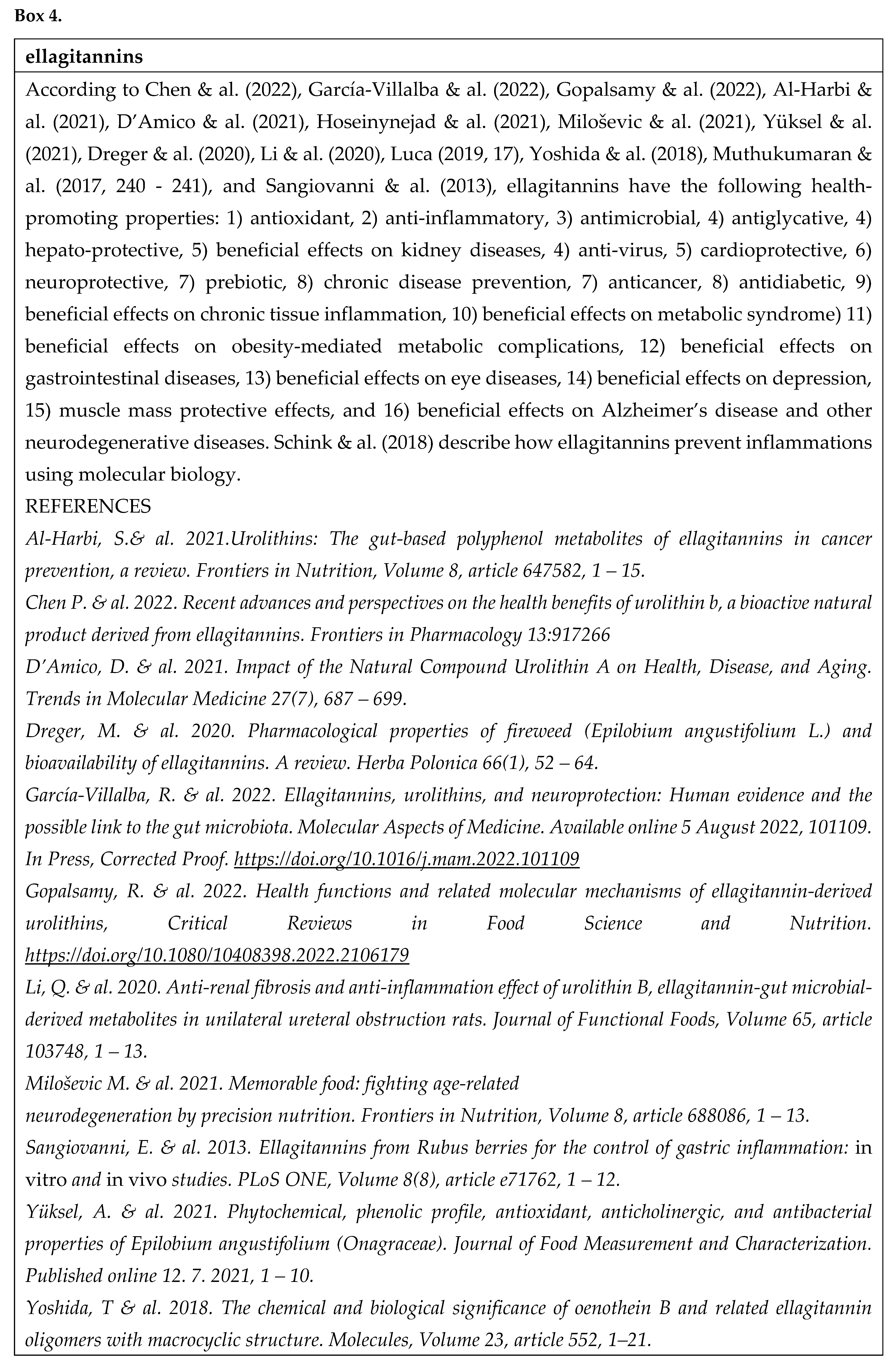
HEALTH-PROMOTING PROPERTIES of petals and hips of rugosa rose (Rose rugosa), according to health-promoting properties of ellagitannins: 1) antioxidant, 2) anti-inflammatory, 3) antimicrobial, 4) antiglycative, 4) hepato-protective, 5) beneficial effects on kidney diseases, 4) anti-virus, 5) cardioprotective, 6) neuroprotective, 7) prebiotic, 8) chronic disease prevention, 7) anticancer, 8) antidiabetic, 9) beneficial effects on chronic tissue inflammation, 10) beneficial effects on metabolic syndrome) 11) beneficial effects on obesity-mediated metabolic complications, 12) beneficial effects on gastrointestinal diseases, 13) beneficial effects on eye diseases, 14) beneficial effects on depression, 15) muscle mass protective effects, and 16) prevent Alzheimer’s disease and other neurodegenerative diseases.
WARNINGS: I used to warn about salicylic acid before I learned while writing this paper that all green vascular plants contain salicylic acid. According to experimental research, plant salicylic acid promotes health.
SUGGESTIONS FOR USE: The flowers and fruits (rose hips) of the rugosa rose (Rosa rugosa) are widely used in salads or the traditional Mediterranean-style boiled mixtures of wild edible plants. Foragers can use petals for healthy dish decoration.
According to Kelager& al. (2013), Rosa rugosa is (1) native to East Asia, (2) one of the most troublesome invasive plant species in natural or semi-natural habitats of northern Europe, and (3) very difficult to control.
According to Dobreva & Nedeltcheva-Antonova (2023, 1), Rosa rugosa has been cultivated in East Asia for thousands of years.
Rosa rugosa provides many ecosystem services for humans, including 1) petals and 2) rose hips for food. It is an important ornamental and economical plant. Its essential oil is expensive and has high economic value. According to Katekar & al. (2022), “… the production of rose essential oil and rose water is a lucrative source of revenue for rural communities.”
Rosa rugosa may have both flowers (petals) and fruits (hips) simultaneously. According to Xie & al. (2022), Rosa rugosa purple line flowers from spring to autumn. Medveckienė & al. (2023) call Rosa rugosa purple line a genotype ‘Rubra.’ Usually, foragers and growers gather rose petals and hips for different purposes. Rarely have petals and rose hips have been used in the same dish. Strangely, two recent research articles (Razgonova & al. 2022 and Wangg & al. 2022) combined the chemical constituents of rose petals and rose hips. In these two papers, all found phytochemicals are listed, regardless of research results, whether they promote health. I have searched separately for the kinds of health-promoting substances Rosa rugosa petals and rose hips contain.
According to Cendrowski & al. (2017): “The main polyphenol fraction in Rosa rugosa petals was ellagitannins constituting from 69 to 74% of the total petals’ polyphenols.”
The answer to the research question (3.3.1.): How many health-promoting substances do the petals of rugosa rose (Rosa rugosa) contain?
According to (Cendrowski & al. (2017), Dobreva & Nedeltcheva-Antonova (2023), Dobson & al. (1990), Feng & al. (2014), Katekar & al. (2022), Lu & Wang (2018), Maciąg & Kalemba (2015), Manjiro & al. (2008), Nowak & al. (2014), Olech & al. (2019), Sulborska & al. (2012), and Zhang & al. (2019), the petals of rugosa rose (Rosa rugosa) contain the following 130 health-promoting substances in addition of the 65 health-promoting substances that all green vascular plants contain: 1) (+)-catechin (cianidanol), 2) )aliphatic alcohols, 3) alpha-cadinol, 4) alpha-curcumene, 5) alpha-glucans, 6) alpha-phellandrene, 7) alpha-pinene, 8) alpha-terpineol, 9) anthocyanins, 10) apigenin, 11) apigenin 7-O-glucoside, 12 astragalin, 13) avicularin, 14) beta-caryophyllene, 15) beta-caryophyllene oxide, 16) beta-citronellol, 17) beta-glucans, 18) beta-pinene, 19) borneol, 20) bornyl acetate, 21) cadalene, 22) camphene, 23) caprylic acid, 24) catechin, 25) cis-linalool oxide, 26) cyanidins, 27) docosanal, 28) docosanol, 29) dodecanol, 30) eicosane, 31) ellagic acid, 32) ellagitannins, 33) essential oils, 34) eugenol, 35) euscaphic acid, 36) flavan-3-ols, 37) flavones, 38) flavonoid glycosides, 39) flavonols, 40) gallic acid, 41) gamma-muurolene, 42) gentisic acid, 43) geranial, 44) geranic acid, 45) geraniol, 46) geranyl acetate, 47) geranyl formate, 48) glycosides, 49) hemiterpenes, 50) heneicosane, 51) heptanal, 52) hexacosane, 53) hydrolyzable tannins, 54) hyperoside, 55) isocaryophyllene, 56) isoquercitrin, 57) isorhamnetin 3-O-glucoside, 58) kaempferol, 59) kaempferol 3,4-di-O-glucoside, 60) kaempferol derivatives, 61) kaempferol-3-O-rutinoside, 62) lauric acid, 63) limonene, 64) linalool, 65) linalyl acetate, 66) methyl eugenol, 67) methyl jasmonate, 68) monoterpene acids, 69) monoterpene esters, 70) monoterpene hydrocarbons, 71) monoterpene oxygenated, 72) monoterpenes, 73) myrcene, 74) myricetin 3,5-di-O-glucoside, 75) nonadecene, 76) nerol, 77)neryl acetate, 78) neryl acetone, 79) octyl butyrate, 80) oleic acid, 81) p-coumaric acid, 82) p-cymen-8-ol, 83) p-cymen-9-ol, 84) pelargonidins, 85) pentacosane, 86) pentadecan-2-one, 87) peonidin 3,5-di-O-glucoside, 88) peonidin 3,5-di-O-glucoside, 89) peonidin 3-O-glucoside, 90) peonidin 3-osophoroside, 91) peonidins, 92) phenylacetaldehyde, 93) phenylethyl salicylate, 94) proanthocyanidins, 95) procyanidins, 96) protocatechuic acid, 97) quercetin, 98) quercetin 3,4-di-O-glucoside, 99) quercetin 3,4-O-diglucoside, 100) quercetin 3-O-glucosyl-xyloside, 101) quercetin 3-O-rhamnoside, 102) quercetin derivatives, 103) quercitrin, 104) quinine, 105) rosamultin, 106) rose oxides, 107) rugosin D, 108) rutin, 109) sabinene, 110) salicylic acid, 111) sanguiin, 112) sanguiin H-2, 113) sesquiterpene, 114) sesquiterpene hydrocarbons, 115) sesquiterpene oxygenated, 116) sinapic acid, 117) stearic acid, 118) tannins, 119) tellimagradin II, 120) terpenoid alcohols, 121) terpenoids, 122) terpinen-4-ol, 123) tetracosane. 124) thymol, 125) tiliroside, 126) T-muurolol, 127) tormentic acid, 128) tricosane, 129) triterpenoids, and 130) undecanal.
Conclusion: Total number of health-promoting substances in rose petals is at least 195 (65 + 130).
The answer to the research question (3.3.2.): How many health-promoting substances do the rugosa rose (Rosa rugosa) hips contain?
According to Singh & Gairola (2023), edible wild rose hips have great potential for food security.
According to Zhou & al. (2023), people are becoming more health-conscious about the nutritional and health benefits of rose hips. “The rosehip is an underutilized and sustainably produced fruit with great potential to generate value-added products.”
According to Olech & al. (2017), Rosa rugosa provides one of the most enormous hips for food products. They are tasty.
According to Olech & al. (2019), Rosa rugosa hips are the most abundant source of health-promoting polysaccharides such as alpha-glucan and beta-glucan.
According to Skrypnik & al. (2019): “This study showed the high nutritional value of rose hips, especially of the species Rosa rugosa Thunb.”
Stuper-Szablewska & al. (2023) state that Rosa rugosa hips have antifungal and antiviral properties.
The answer to the research question (3.3.2.): How many health-promoting substances does the rugosa rose (Rosa rugosa) hips contain?
According to Åhlberg (2020a and 2022a), Al-Yafeai & al. (2018), Cunja & al. (2016), Dashbaldan & al. (2021), Medveckienė & al. (2023), Milala & al. (2021), Nijat & al. (2021), Nowak, R. (2005, Nowak (2006), Olech & al. (2017), Olech & al. (2019), Olech & al. (2023), Stuper-Szablewska & al. (2023), Xie & al. (2022), the hips of rugosa rose (Rosa rugosa) contain the following 100 health-promoting-substances in addition of the 65 health-promoting substances that all green vascular plants contain: 1) 2-hexenoic acid methyl ester, 2) 2-octenal, 3) 3-feruloylquinic acid, 4) 24-methylenecycloartanol, 5) afzelin, 6) alpha-amyrenone, 7) alpha-amyrin, 8) alpha-cryptoxanthin, 9) alpha-farnesene, 10) alpha-glucans, 11) alpha-pinene, 12) apigenin, 13) astragalin, 14) avicularin, 15) beta-amyrin, 16) beta-cryptoxanthin, 17) beta-glucans, 18) beta-ionone, 19) beta-myrcene, 20) betulinic acid, 21) butyric acid, 22) campesterol, 23) caprylic acid methyl ester, 24) catechin, 25) cholesta-3,5-dien-7-one, 26) cis-3-hexenal, 27) corosolic acid, 28) cyanidin-3-glucoside, 29) decanal, 30) decanoic acid, 31) docosane, 32) dodecanoic acid, 33) edulan, 34) ellagic acid, 35) ellagitannins, 36) erythrodiol, 37) essential oils, 38) farnesyl acetone, 39) flavanols, 40) flavanols, 41) fumaric acid, 42) gallic acid, 43) gamma-terpinene, 44) geranial, 45) geraniol, 46) guaiacol, 47) heneicosane, 48) hexadecanoic acid, 49) hexahydrofarnesyl acetone, 50) isofucosterol, 51) juglanin, 52) kaempferol, 53) lauric acid methyl ester, 54) limonene, 55) linalool, 56) linolenic acid methyl ester, 57) lupeol, 58) luteolin, 59) lycopene, 60) maslinic acid, 61) methyl caprate, 62) myristic acid, 63) naringenin, 64) neral, 65) nonanal, 66) obtusifoliol, 67) octanal, 68) oleanolic acid, 69) oleanolic aldehyde, 70) palmitic acid methyl ester, 71) p-cymene, 72) pentacosane, 73) phloridzin, 74) phytoene, 75) pomolic acid, 76) procyanidins, 77) quercetin, 78) quercetin-3-O-sophoroside, 79) quercitrin, 80) quinic acid, 81) rutin, 82) safranol, 83) scutellarin, 84) sitostenone, 85) steroids, 86) stigma sta-3.5-dien-7-one, 87) stigmasterol, 88) stilbenoids, 89) tannins, 90) terpinolene, 91) tetracosane, 92) trans-geranyl-acetone, 93) tricosane, 94) triterpenoid acids, 95) triterpenoids, 96) ursolic acid, 97) ursolic aldehyde, 98) uvaol, 99) vitexin, and 100) Z-nerolidol.
Conclusion: According to experimental studies, rose hips contain at least 165 (65+100) health-promoting substances.
Milanovića & al. (2020, 3) present rugosa rose (Rosa rugosa) as a harmful invasive alien species. However, they understand that this species also provides many ecosystem services (seven listed) and disservices (two listed). Foragers have found that rugosa rose (Rosa rugosa) provides food for humans and other ecosystem services, of which I’ll present evidence. Milanovića & al. (2020) present a general framework for discussion but do not fully understand the importance of foraging this species for food. According to Zhanga & al. (2019, 938) and Olech & al. (2019,2), in different cultures, petals, and rosehips of rugosa rose (Rosa rugosa) have been used for a long time as a health-promoting food. The petals of rugosa roses (Rosa rugosa) are bigger than many others and smell and taste good. Often, there are plenty of them. Also, the hips of the rugosa rose (Rosa rugosa) are the biggest I have seen in roses.
According to Ng & al (2005), Rosa rugosa-flower extract increases the activities of antioxidant enzymes and their gene expression and reduces lipid peroxidation. According to Aisa & al. (2019), the edible and medicinal properties of rugosa rose (Rosa rugosa) are widely applied in the world: rose oil, rose sauce, rose cake, rose wine, rose tea, rose herbs, and other applications According to Cendrowski & al. (2017), “the petals of Rosa rugosa are a valuable source of bioactive compounds and can be considered a healthy, valuable resource.” According to Nowak & al. (2013, 1), their utilization could be much higher despite the wide availability of raw materials from Rosa rugosa. This situation is likely to result from poor knowledge about the nutritional and medicinal properties of the species and a lack of comprehensive information on its chemical composition.
Figure 6.
The rugosa rose (Rosa rugosa) is also known as the “beach rose” in English because it thrives on sandy beaches. Its petals and hips promote health and longevity and are an essential ecosystem service. (Photo © Mauri K.Åhlberg).
Figure 6.
The rugosa rose (Rosa rugosa) is also known as the “beach rose” in English because it thrives on sandy beaches. Its petals and hips promote health and longevity and are an essential ecosystem service. (Photo © Mauri K.Åhlberg).
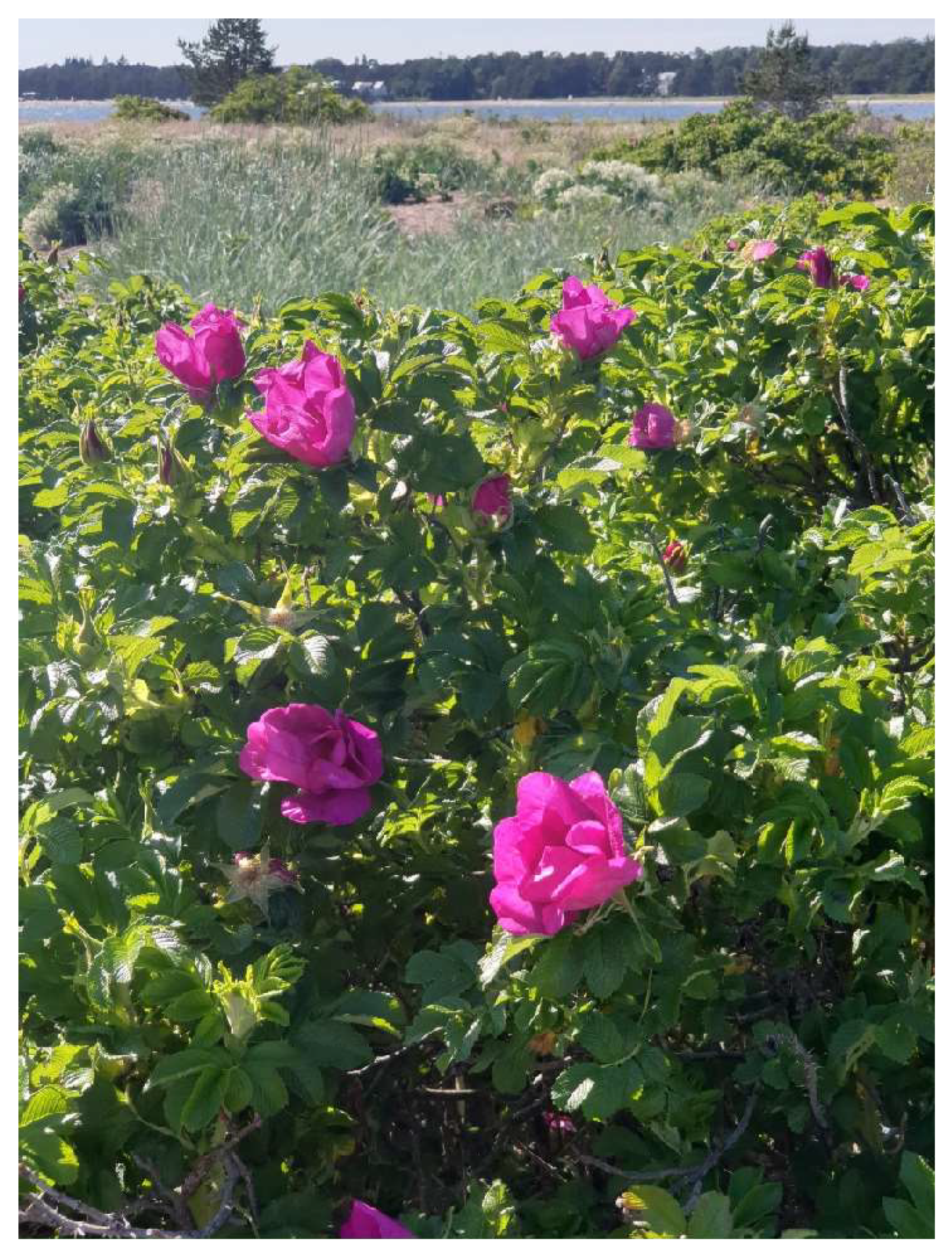
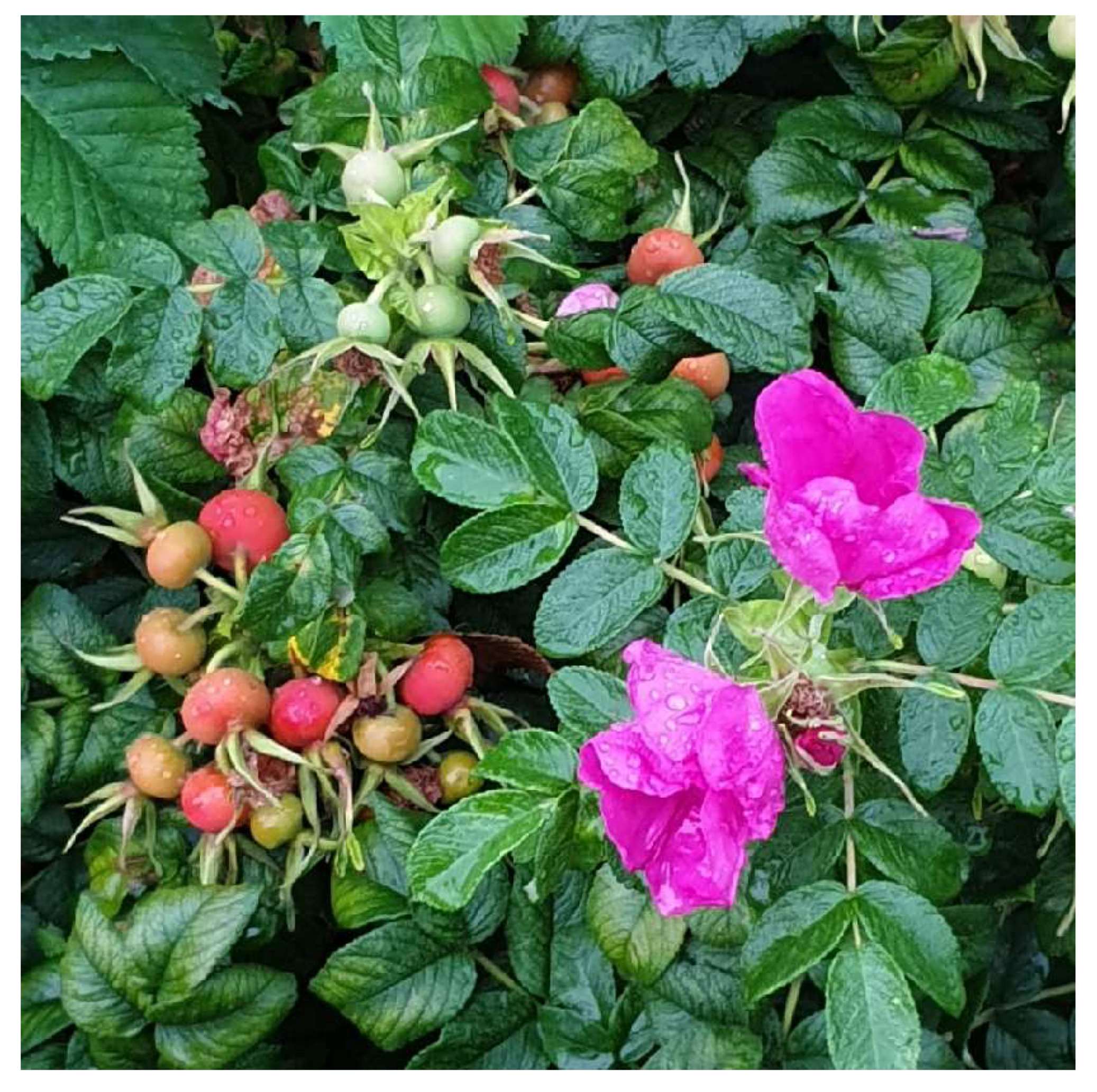
Figure 7.
Rugosa rose (Rosa rugosa, purple line) has flowers and rosehips from early summer to late autumn in a good environment. It provides plenty of beautiful flowers and hips containing more health-promoting substances than other WEPs. (Photo © Mauri K.Åhlberg).
Figure 7.
Rugosa rose (Rosa rugosa, purple line) has flowers and rosehips from early summer to late autumn in a good environment. It provides plenty of beautiful flowers and hips containing more health-promoting substances than other WEPs. (Photo © Mauri K.Åhlberg).
Cendrowski & al. (2017): “Due to the high content of bioactive compounds, especially polyphenolic compounds, including anthocyanins, flavonols, and ellagitannins, Rosa rugosa petals can be a valuable raw material for the production of health preparations.”
Cendrowski & al. (2017): “. Fresh petals of Rosa rugosa were collected from the industrial-scale plantation of the company “Polska Roza” located in Kotlina Kłodzka (Poland) in June 2011, June 2012, and June 2013.”
Both petals and hips of rugosa rose (Rosa rugosa) contain ellagitannins. I have selected ellagitannins as an example of over 165 (hips)-195 (petals) health-promoting substances that this invasive plant (Rosa rugosa) provides for humans as a free ecosystem service. I present them in more detail in the following vignette.
The answer to the research question (4.3.1.): How many Alzheimer’s disease-preventing substances do the petals of rugosa rose (Rosa rugosa) contain?
The rugosa rose (Rosa rugosa) petals contain at least 195 health-promoting substances. They include the next 35 (18 + 17) compounds that prevent Alzheimer’s disease according to experimental research: 1) alpha-linolenic acid, 2) ascorbic acid, 3) caffeic acid, 4) carotenoids, 5) choline, 6) dietary fibers, 7) flavonoids, 8) lutein, 9) melatonin, 10) phenolic acids, 11) phenolic compounds, 12) phenylpropanoids, 13) phytic acid, 14) polyphenols, 15) polysaccharides, 16) silicon, 17) terpenoids, 18) tocopherol, 19) anthocyanins, 20) apigenin, 21) catechin, 22) ellagic acid, 23) ellagitannins, 24) essential oils, 25) flavonols, 26) gallotannins, 27) isorhamnetin, 28) kaempferol, 29) limonene, 30) linalool, 31) myricetin, 32) procyanidins, 33) quercetin, 34) rutin, and 35) sinapic acid.
The answer to the research question (4.3.2.): How many Alzheimer’s disease-preventing substances do the rugosa rose (Rosa rugosa) hips contain?
The rosehips of rugosa rose (Rosa rugosa) contain over 165 health-promoting compounds and ions; they include the following 39 (18+ 21) compounds that prevent Alzheimer’s disease according to experimental research: 1) alpha-linolenic acid, 2) ascorbic acid, 3) caffeic acid, 4) carotenoids, 5) choline, 6) dietary fibers, 7) flavonoids, 8) lutein, 9) melatonin, 10) phenolic acids, 11) phenolic compounds, 12) phenylpropanoids, 13) phytic acid, 14) polyphenols, 15) polysaccharides, 16) silicon, 17) terpenoids, 18) tocopherol, 19) anthocyanins, 20) apigenin, 21) beta-caryophyllene, 22) catechin, 23) chlorogenic acid, 24) ellagitannins, 25) essential oils, 26) hespiridin, 27) hydroxycinnamic acids, 28) isorhamnetin, 29) kaempferol, 30) kaempferol-3-o-glucoside, 31) linalool, 32) luteolin, 33) lycopene, 34) myricetin (raw fruits), 35) naringin, 36) nobiletin, 37) quercetin, 38) rutin, and 39) taxifolin.
CONCLUSION: Rosa rugosa is regarded as a harmful invasive species. However, from the viewpoint of foraging, it is a welcome addition to a local flora: Its petals and hips contain more health- and longevity-promoting substances than many other foraged plants. Chemical research has shown that rugosa rose (Rosa rugosa) contains at least 195 (petals) and 165 (hips) health-promoting substances, including ellagitannins in its main edible parts: petals and rose hips. Its flowers and hips are also tasty and beautiful. They can be consumed raw or cooked. In nature, straight from the bushes, they are delicious snacks.
Invasive alien species in North America
Garlic Mustard (Alliaria petiolata)
DISTRIBUTION: According to GBIF (2024), garlic Mustard (Alliaria petiolata) is widely distributed globally.
HEALTH-PROMOTING PROPERTIES: Garlic mustard (Alliaria petiolata) has 101 (65+36) health-promoting substances. One of them is apigenin, which promotes health in the following ways: 1) antioxidant, 2) anti-inflammatory, 3) antidiabetic, 4) beneficial role in amnesia and Alzheimer’s disease, neuroprotective agent against Alzheimer’s and Parkinson’s diseases, 5) beneficial effects in depression and insomnia, 6) anticancer, protects from cancer in many ways, 7) mitigates rheumatoid arthritis, 8) alleviates autoimmune disorders, and 9) in elderly males increases androgen production for health; improves testosterone production, contributing to normal spermatogenesis and preventing age-related degenerative diseases associated with testosterone deficiency. Garlic mustard (Alliaria petiolata) has at least 24 substances that prevent Alzheimer’s disease.
WARNINGS: Earlier, researchers warned about erucic acid. Nowadays, experimental research shows that it promotes health.
SUGGESTIONS FOR USE: The leaves of garlic mustard (Alliaria petiolata) smell like garlic. As with all wild edible weeds, it is wise to use only reasonable amounts in boiled mixtures of wild edible plants, preferably in the Mediterranean way.
According to Garcia-Herrera & Sanches-Mata (2016, 148), garlic mustard (Alliaria petiolata) belongs to traditional Mediterranean wild edible plants. When the new leaves of garlic mustard (Alliaria petiolata) are crushed, they have a garlic odor. According to Fleischhauer & al. (2016, 126–127), Central Europeans use garlic mustard (Alliaria petiolata) in salads, soups, and other dishes. According to Lucchetti & al. (2019, 4), Italians use flowers and leaves of garlic mustard (Alliaria petiolata) in salads and to decorate dishes. According to Motti & al. (2022), Italians use garlic mustard as a vegetable.
According to Egebjerg & al. (2018, 134), leaves of garlic mustard (Alliaria petiolata) contain erucic acid, 31 percent of all lipids, and 0,5 % dry weight. According to Mira & al. (2019, 5), seeds of garlic mustard (Alliaria petiolata) contain erucic acid, over 40 % of the total lipid content, 28%. According to EU CONTAM (2017, 1), the safe use of erucic acid is 7 mg per kg body weight. According to experimental research by Takahashi & al. (2021), erucic acid ameliorates obesity-induced metabolic disorders. According to Altinoz & Ozpinar (2019), Dawkins & al. (2023), Galanty & al. (2023), Goya & al. (2023), Kim & al. (2016), Repsold & al. (2018), and Takahashi & al. (2021), (1) erucic acid is a health-promoting compound, and (2) erucic acid prevents Alzheimer’ disease.
According to Sajna (2017), (1) in Europe, garlic mustard (Alliaria petiolata) is a “native humble understorey species.” Its habitats are forest understorey, forest edge, and ruderal site. (2) In North America, it is an invasive species.
In Europe, garlic mustard (Alliaria petiolata) has a patchy distribution. Where it grows, it can be expected. People spread it in Europe because it is an excellent wild edible plant. In North America, people regard it as a harmful invasive plant. Arrington (2020) suggests people could forage it and cook food in big cities like New York. Arrington (2020) understands that edible invasive plants provide ecosystem services.
According to Cavers & al. (1979, 221), garlic mustard (Alliaria petiolata) came to Canada probably with the first immigrants, who valued it as a culinary and medicinal plant. According to Rahman & al. (2018), Australians use garlic mustard (Alliaria petiolata) in salads.
According to Fleischhauer & al. (2016, 126 - 127), Central Europeans use garlic mustard (Alliaria petiolata), like other wild vegetables, in various dishes, including salads and soups. According to Ivanova & al. (2023), Bulgarians eat garlic mustard in salads and dishes of boiled wild edible plants. According to Lucchetti & al. (2019, 4), Italians use leaves and flowers of garlic mustard (Alliaria petiolata) to flavor salads and other dishes. Also, other Europeans use garlic mustard (Alliaria petiolata) in various dishes as an edible green and aromatic spice.
According to Rahman & al. (2018), garlic mustard (Alliaria petiolata) is an invasive species in Australia. Australians use leaves of garlic mustard (Alliaria petiolata) in salads.
According to Grieve (1959, 221), “Alliaria petiolata was probably introduced from Europe by the early colonists who valued it as a medicinal and salad plant.”
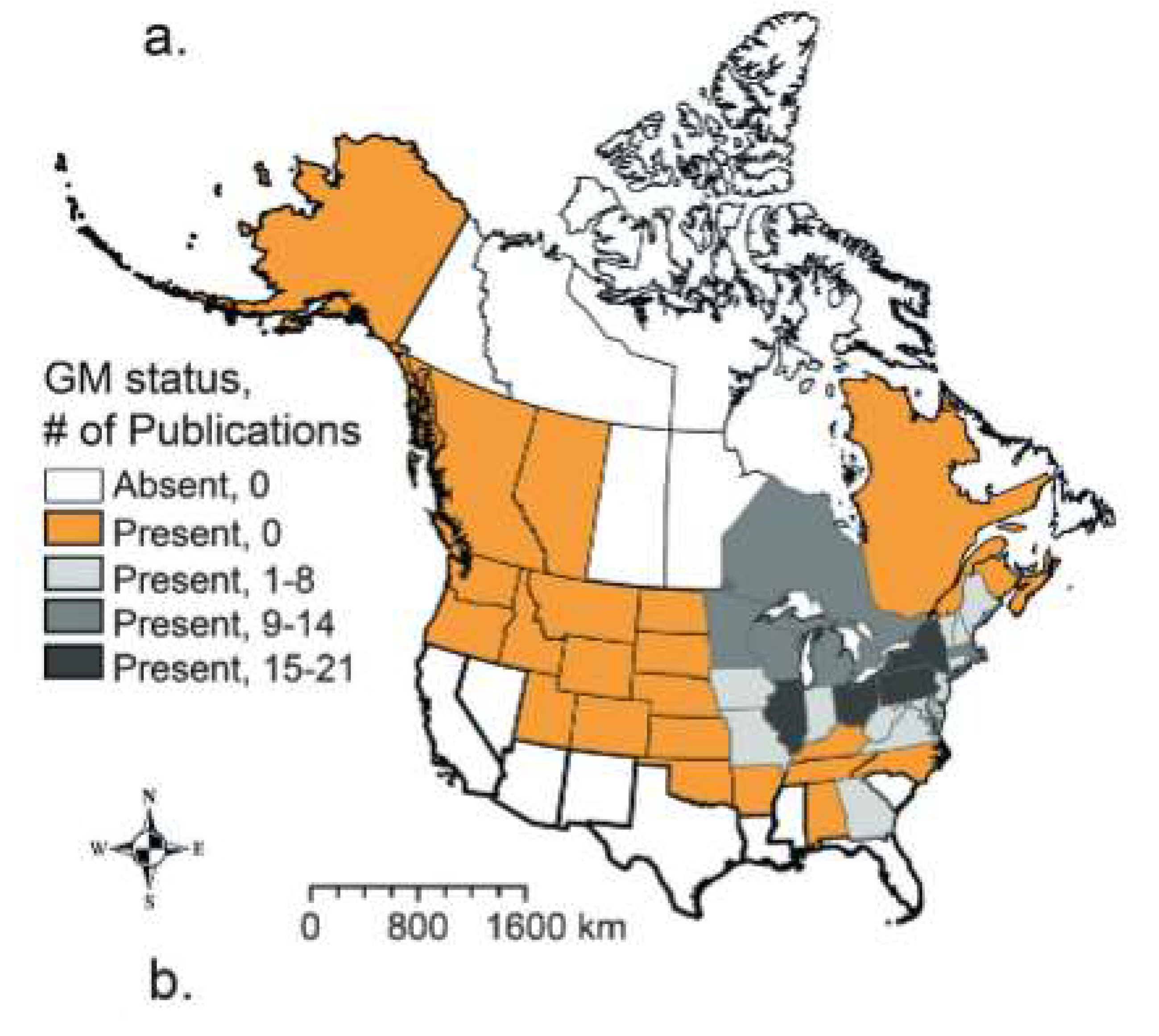
According to Rodgers & al. (2022, 521), “As a western Eurasian plant, garlic mustard was likely introduced to North America by early colonists as a medicinal plant and garlic substitute (Grieve 1959). … Garlic mustard was first formally identified in North America in the 1860s in Long Island, New York, and has since invaded a range of forest understorey and edge communities across the continent …”
Figure 8.
Distribution of garlic mustard (Alliaria petiolata) in North America. Source: Rodgers & al. (2022, 522). This open-access article is distributed under the terms of the Creative Commons Attribution license (http://creativecommons.org/licenses/by/4.0/ ), which permits unrestricted reuse, distribution, and reproduction in any medium provided the original work is properly cited. https://doi.org/10.1093/biosci/biac012.
Figure 8.
Distribution of garlic mustard (Alliaria petiolata) in North America. Source: Rodgers & al. (2022, 522). This open-access article is distributed under the terms of the Creative Commons Attribution license (http://creativecommons.org/licenses/by/4.0/ ), which permits unrestricted reuse, distribution, and reproduction in any medium provided the original work is properly cited. https://doi.org/10.1093/biosci/biac012.
According to Harris & al. (2022), garlic mustard (Alliaria petiolata) produces the secondary compound sinigrin, a type of glucosinolate that defends against herbivores and pathogens and is toxic to North American plants and butterflies.
According to Cavers & al (1979, 218):
“Beneficial – Potentially, the greatest use of Alliaria petiolata may be as a green vegetable. The leaves and top just before flowering have a higher value of vitamin C, on a weight basis than oranges (Zennie and Ogzewalla 1977). Zennie and Ogzewalla also reported that the leaves at all times of the year have a higher value of vitamin A than spinach (which has the highest level of all the widely marketed garden vegetables). Fernald [Fernando] & al. (1958) suggested that A. petiolata may be used as a salad green or in sandwiches and may be substituted for garlic in cooking. Grieve (1959) reported that some countries use the plant in sauces and salads. They called it “sauce alone.”
According to Haribal & Renwick (2001), leaves of garlic mustard (Alliaria petiolata) contain apigenin. According to Dourado & al. (2020), Martin & Touaibia (2020), Kim & al. (2019), Salehi & al. (2019), Nabavi & al. (2018), Madunić & al. (2018) and Ali & al. (2017a), apigenin has the following astounding health-promoting properties: 1) antioxidant, 2) anti-inflammatory, 3) antidiabetic, 4) beneficial role in amnesia and Alzheimer’s disease, neuroprotective agent against Alzheimer’s and Parkinson’s diseases, 5) beneficial effects in depression and insomnia, 6) anticancer, protects from cancer in many ways, 7) mitigates rheumatoid arthritis, 8) alleviates autoimmune disorders, and 9) in elderly males increases androgen production for health; improves testosterone production, contributing to normal spermatogenesis and preventing age-related degenerative diseases associated with testosterone deficiency. Apigenin is safe, even at high doses, and researchers have found no toxicity. Salehi & al. (2019) present molecular biological mechanisms for these properties. According to DeRango-Adem & Blay (2021), in natural sources, apigenin is commonly found as an apigenin-glucoside, such as 7-O-glucoside, 6-C-glucoside, or 8-C-glucoside. After ingesting the plant material, these apigenin-glucosides are enzymatically metabolized in vivo into free apigenin (i.e., the aglycone form) and subsequently absorbed.
According to Blazevic and Mastelic (2008), garlic mustard contains more health-promoting isothiocyanates than other volatile substances. According to Wu (2009), isothiocyanates are small molecules formed from glucosinolate precursors of cruciferous vegetables, such as garlic mustard (Alliaria petiolata). I present isothiocyanates in the following vignette.
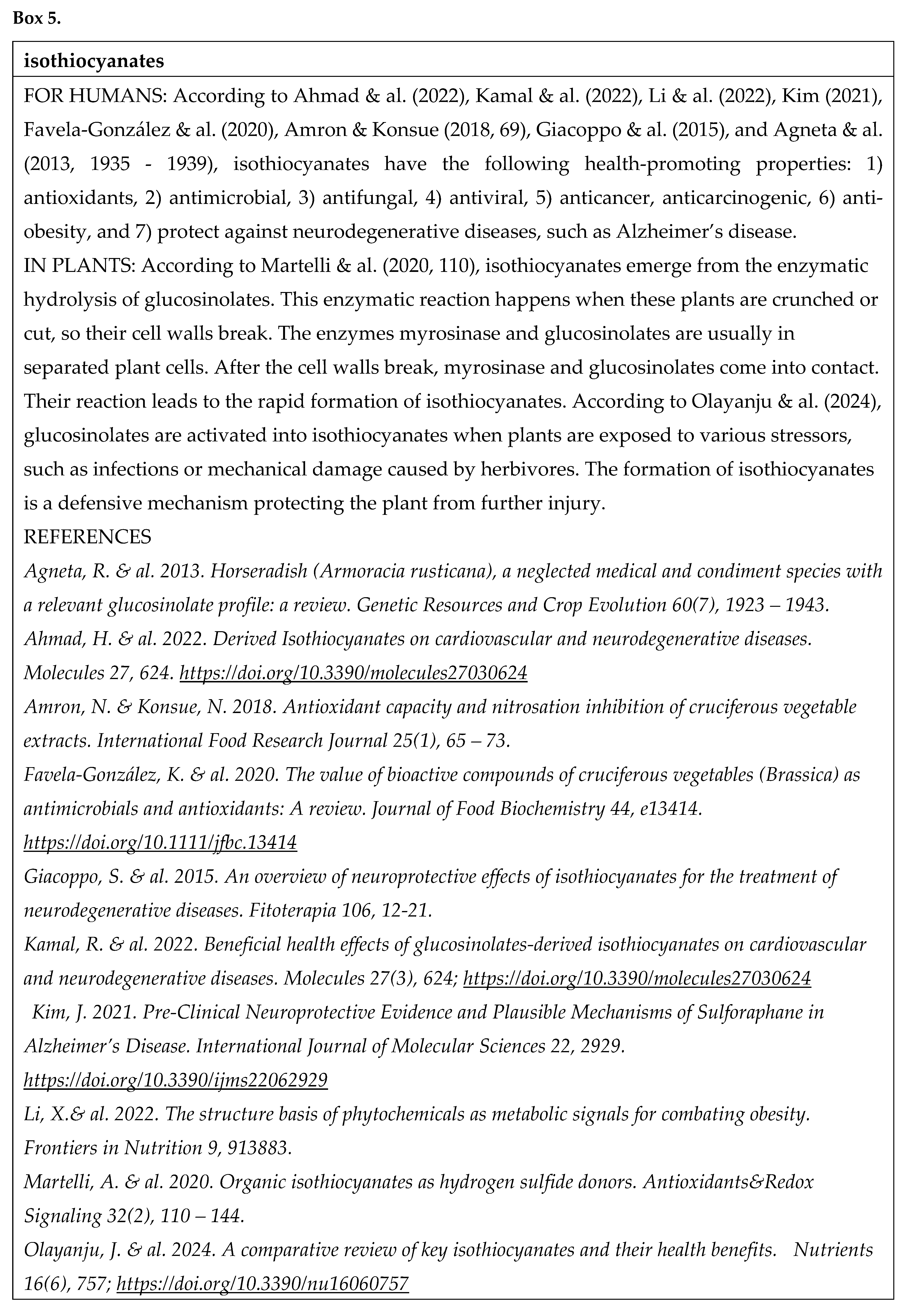
According to Egebjerg & al. (2018, 134), (1) leaves of garlic mustard (Alliaria petiolata) contain erucic acid, 31 % of the total fats, and 0.5 % of dry weight. According to EU CONTAM (2017, 1), a tolerable daily intake of erucic acid is below 7 mg/kg body weight/day. When foragers eat garlic mustard (Alliaria petiolata) as a flavoring substance, spice, or ingredient in mixed vegetables, erucic acid intake is clearly below this limit.
According to Egebjerg & al. (2018, 134), leaves of garlic mustard (Alliaria petiolata) contain sinigrin, a cyanogenic compound. The same is true with many other wild edible plants. The amounts that healthy adults get are so small that there are no problems. A couple of fresh leaves can be eaten raw without any health risks. According to Åhlberg (2019, 23, and 34), wild edible plants are used mainly in boiled mixtures of wild edible plants in Mediterranean countries. According to Encyclopaedia Britannica (2018), the boiling point of hydrogen cyanide is 26 °C. In cooking, hydrogen cyanide evaporates out of food into the air.
According to Guil-Guerrero et al. (2007, 288 and 292), garlic mustard (Alliaria petiolata) contains oxalic acid, but it also includes plenty of calcium (Ca) and magnesium (Mg). Calcium and magnesium oxalates are insoluble. They do not pass through the body outside the intestine; they pass through the body inside the intestine, so they cannot harm health.
Conclusion: Garlic mustard (Alliaria petiolata), consumed in the Mediterranean way of boiled mixtures of wild edible plants, makes food tasty and promotes health, well-being, and longevity.
The answer to the research question (4.4.1.): How many health-promoting substances do the aerial parts of garlic mustard (Alliaria petiolata) contain?
According to Åhlberg (2020a, 2022a), Egebjerg & al. (2018, 134), Cámara & al. (2016, 190), Cipollini & Cipollini (2016), de Cortes Sánchez-Mata & al. (2016, 122), Manchali & al. (2012, 97), Björkman & al. (2011, 540), Dinică. & al. (2010), Lupoae & al. (2010), Blaevi & Masteli (2008), Blazevic & Mastelic (2008), Haribal & Renwick (2001), and Guil-Guerrero & al. (1999) aerial parts of garlic mustard (Alliaria petiolata) contain 36 species-specific health-promoting substances of garlic mustard (Alliaria petiolata) are: 1) 2-phenylethyl alcohol, 2) 2-vinyl-4H-1,3-dithiin, 3) allyl isothiocyanate, 4) allyl thiocyanate, 5) alpha-ionone, 6) apigenin, 7) benzyl isothiocyanate, 8) benzyl thiocyanate, 9) capric acid, 10) caprylic acid, 11) diallyl disulfide, 12) diallyl sulfide, 13) erucic acid, 14) flavone 6-C-glycosides, 15) glucosinolate, 16) isoorientin, 17) isothiocyanates, 18) isovitexin-6-O″β-D-glucoside, 19) lauric acid, 20) methyl palmitate, 21) minerals, 22) myristic acid, 23) nonanal, 24) omega-3 polyunsaturated fatty acids, 25) omega-6 polyunsaturated fatty acids, 26) oxazolidinethiones, 27) palmitic acid, 28) pentadecanoic acid, 29) phytol, 30) polyunsaturated fatty acids, 31) quercetin, 32) sinigrin, 33) swertiajaponin, 34) swertisin, 35) undecanoic acid, and 36) vitamin A.
Figure 9.
Two flowering second-year garlic mustards (Alliaria petiolata) and beneath them the first-year seedlings. Both are tasty and healthy to flavor Mediterranean mixtures of boiled wild edible plants. (Photo © Mauri K.Åhlberg).
Figure 9.
Two flowering second-year garlic mustards (Alliaria petiolata) and beneath them the first-year seedlings. Both are tasty and healthy to flavor Mediterranean mixtures of boiled wild edible plants. (Photo © Mauri K.Åhlberg).
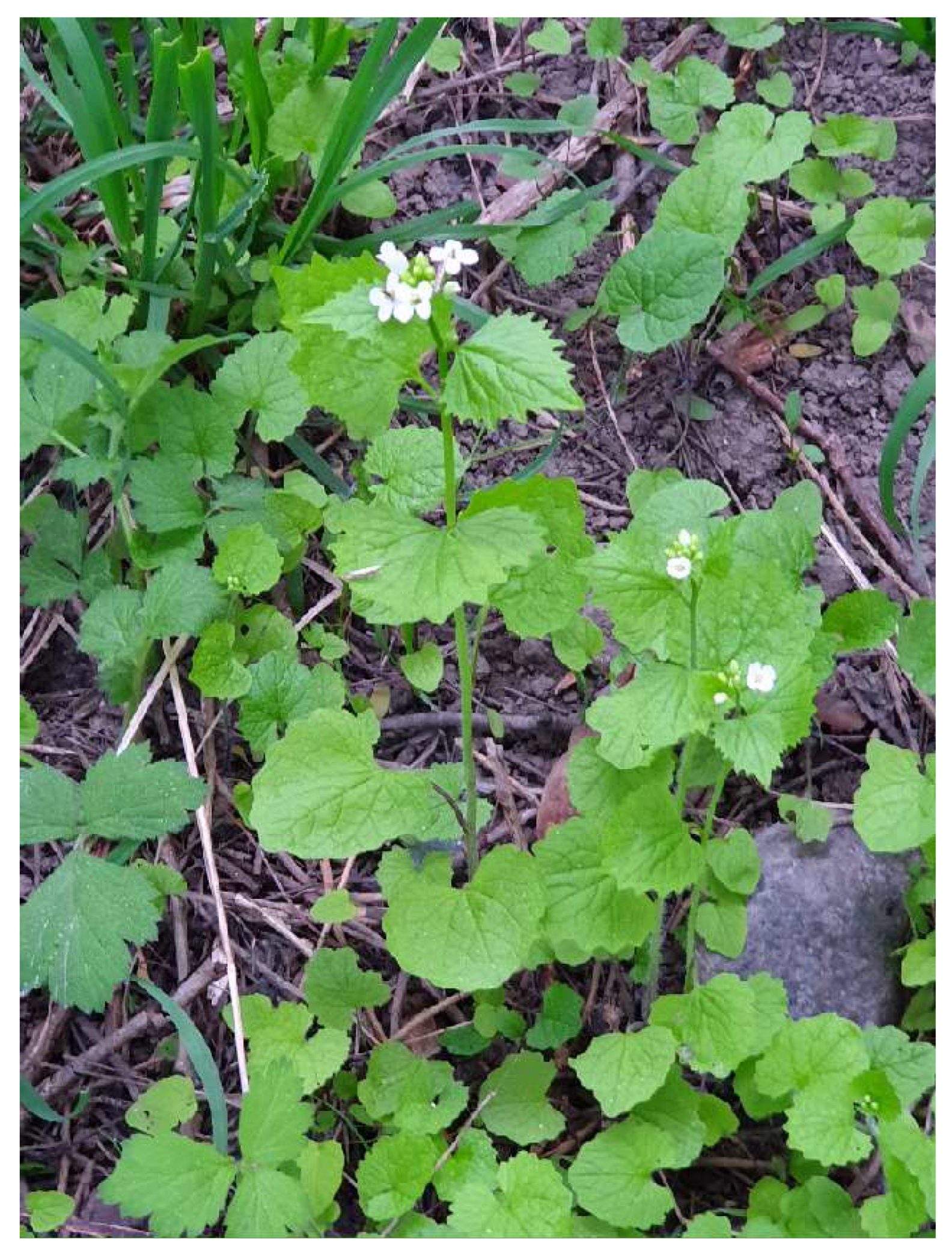
Answer to the research question (4.4.1.): How many Alzheimer’s disease-preventing substances do the aerial parts of garlic mustards (Alliaria petiolata) have?
The 101 (65+36) health-promoting substances of the aerial parts of garlic mustard (Alliaria petiolata) contain 24 (18 + 6) substances that prevent Alzheimer’s disease: 1) alpha-linolenic acid, 2) ascorbic acid, 3) caffeic acid, 4) carotenoids, 5) choline, 6) dietary fibers, 7) flavonoids, 8) lutein, 9) melatonin, 10) phenolic acids, 11) phenolic compounds, 12) phenylpropanoids, 13) phytic acid, 14) polyphenols, 15) polysaccharides, 16) silicon, 17) terpenoids, 18) tocopherols, 19) apigenin, 20) diallyl sulfide, 21) erucic acid, 22) essential oils, 23) isothiocyanates, and 24) quercetin.
CONCLUSIONS: The aerial parts of garlic mustard (Alliaria petiolata) contain 101 (65 + 36) health-promoting substances, of which 24 prevent Alzheimer’s disease, according to experimental research. Garlic mustard (Alliaria petiolata) suits boiled WEP mixtures. It can also be used for other culinary purposes, such as salads. It is a good WEP, not one of the best from the viewpoint of health-promoting properties.
Purple loosestrife (Lythrum salicaria)
DISTRIBUTION: According to GBIF (2023), purple loosestrife (Lythrum salicaria) is widely distributed globally.
HEALTH-PROMOTING PROPERTIES: I found that the aerial parts of purple loosestrife (Lythrum salicaria) have at least 162 (65+97) health-promoting substances that promote health, according to experimental studies, in the following ways:
Aerial parts of purple loosestrife (Lythrum salicaria) have the following health-promoting properties: 1) antioxidant, 2) anti-inflammatory, 3) antimicrobial, 4) anticancer, 5) painkiller (analgesic), 6) antitussive and bronchodilatory, 7), antidiarrheal, 8) painkiller (antinociceptive), 9) anticoagulant and 10) externally used extracts of purple loosestrife (Lythrum salicaria) promote skin health.
WARNINGS: None.
SUGGESTIONS FOR USE: The leaves and flowers of purple loosestrife (Lythrum salicaria) are wise to use in Mediterranean-style boiled mixtures of wild edible plants. Foragers use fresh flowers to decorate dishes. I use young shoots, leaves, and flowers of purple loosestrife (Lythrum salicaria) in Mediterranean-style boiled mixtures of wild edible plants and fresh in salads. Foragers may use flowers to decorate dishes and drinks. While walking in nature, I often nibble soft flowering shoots of purple loosestrife (Lythrum salicaria). They are tasty and healthy. They contain more polyphenols than other aerial parts.
Purple loosestrife (Lythrum salicaria) is an invasive species in the USA. Wu & Colautti (2022, 3) present a map of thousands of observations of purple loosestrife (Lythrum salicaria) in North America over 150 years. Most specimens collected are in the Eastern states. The Mid-West also has plenty of observations. The Western states have the fewest specimens collected. The authors do not allow copying and presenting their excellent map in other publications. They use the most restrictive license: Creative Commons Attribution-Noncommercial-No Derivatives License 4.0 (CC BY-NC-ND).
Purple loosestrife (Lythrum salicaria) is a good WEP in Europe and Asia. According to Fleischhauer & al. (2016, 195), Central Europeans eat flowers, young, soft shoots, and leaves of purple loosestrife (Lythrum salicaria). Red flowers of purple loosestrife (Lythrum salicaria) have a pleasant aroma. Foragers use fresh flowers to decorate dishes. Central Europeans use young, soft shoots and leaves of purple loosestrife (Lythrum salicaria) in salads and young, tender shoots and leaves in boiled mixtures of wild edible plants. According to Couplan (2017, 187), humans have consumed purple loosestrife (Lythrum salicaria) in salads from ancient Greek and Roman times. Couplan (2017, 187) has traveled broadly, and according to him, Asians use purple loosestrife (Lythrum salicaria) as a vegetable in soups. According to Korean researchers Kim & al. (2022), “The aerial part of L. salicaria L. would be the most appropriate for food development.”
According to WFO (2023), purple loosestrife (Lythrum salicaria) belongs to the same family, Lythraceae, as a grenade (Punica granatum). Both species have many health-promoting substances.
According to Šutovská & al. (2012), flowering parts of purple loosestrife (Lythrum salicaria) contain polysaccharide-polyphenolic conjugates. According to Šutovská & al. (2012), these polysaccharide-polyphenolic conjugates have antitussive activity and bronchodilatory effect.
According to toxicological tests by Iancu & al. (2021), aerial parts of purple loosestrife (Lythrum salicaria) are not toxic. They contain many health-promoting substances, such as tannins and polyphenols, including anthocyanins. Spectrophotometric determinations of total polyphenols, tannins, and anthocyanins content revealed quantitative values of 16.39% in polyphenols, 10.53% in tannins, and 0.36% in anthocyanins.
Figure 10.
Flowering purple loosestrife (Lythrum salicaria). The aerial parts are edible. The plant contains 162 health-promoting substances, including 41 chemicals that prevent Alzheimer’s disease. (Photo © Mauri K.Åhlberg).
Figure 10.
Flowering purple loosestrife (Lythrum salicaria). The aerial parts are edible. The plant contains 162 health-promoting substances, including 41 chemicals that prevent Alzheimer’s disease. (Photo © Mauri K.Åhlberg).
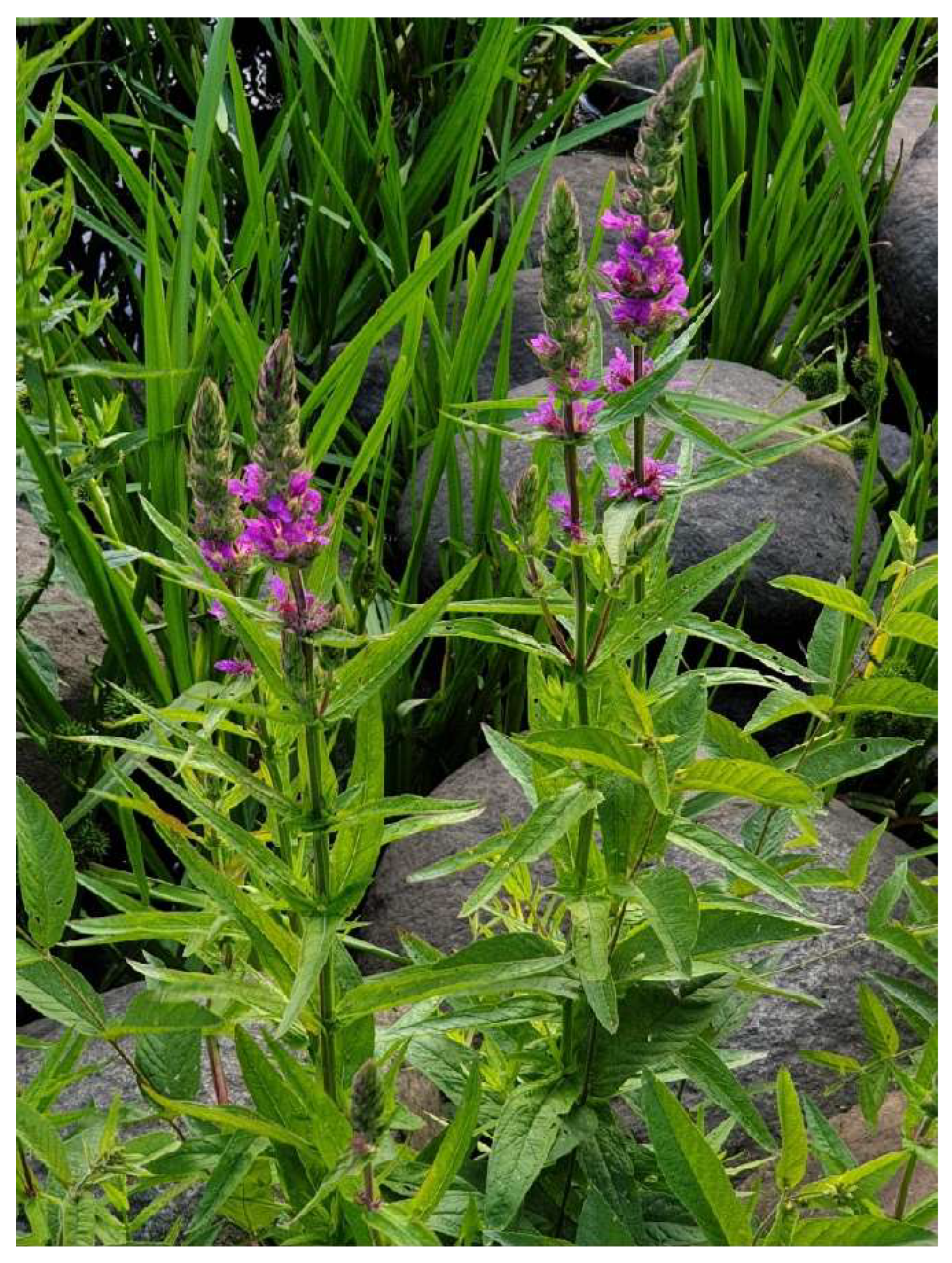
According to The Local Food-Nutraceuticals Consortium (2005, 358-359), Spaniards eat the aerial parts of purple loosestrife (Lytrum salicaria). It contains more polyphenols than the other 126 studied Mediterranean wild edible plants and fungi.
According to Pirvu & al. (2014), “Lytrum salicaria L. (Fam. Lythraceae), or purple loosestrife, is described with high amounts of polyphenols compounds (up to 18%).” According to Bencsik. & al. (2011), in purple loosestrife (Lytrum salicaria): (1) the highest flavonoid content was measured in the leaves, and (2) total polyphenol contents were higher in the flowering branch tips than in the other organs.
According to the research evidence in this paper, purple loosestrife (Lythrum salicaria) contains 161 health-promoting substances. The following vignette presents an overview of polyphenols as an example.
In this paper, I have presented evidence that all vascular green plants contain 65 health-promoting substances, and purple loosestrife (Lythrum salicaria) has 97 species-specific health-promoting substances.
The answer to the research question (3.5.1.): How many health-promoting substances do the aerial parts of purple loosestrife (Lythrum salicaria) contain?
According to Al-Snafi (2019), Becker & al. (2015), Iancu & al. (2021), Jiang & al. (2015), Manayi & al. (2013), Manayi & al. (2014), Pirvu & al. (2014), Piwowarski & al. (2015), Rauha & al. (2001), Srećković & al. (2020), Šutovská & al. (2012), Tong & al. (2019) and Tunalier & al. (2007), purple loosestrife (Lyhtrum salicaria) contains the following 97 health-promoting substances: 1) 1,6-di-O-galloylglucose, 2) 1H-pyrrole-2,5-dione, 3) 1-octen-3-ol, 4) 3,3’,4’-tri-O-methylellagic acid, 5) 3,3’,4’-tri-O-methylellagic acid-4-O-β-D-glucopyranoside, 6) alkaloids, 7) alpha-terpineol, 8) anthocyanins, 9) apigenin, 10) arabinogalactan, 11) apiin, 12) arabinose, 13) aurantiamide, 14) benzoic acid, 15) beta-ionone, 16) betulinic acid, 17) betulinic acid methyl ester, 18) buntansin, 19) castalagin, 20) catechin, 21) cinnamic acid, 22) chlorogenic acid, 23) corosolic acid, 24) coumarins, 25) cyanidin-3-galactoside, 26) cyanidin-3-O-glucoside, 27) daucosterol, 28) decanoic acid, 29) eicosane, 30) ellagic acid, 31) ellagitannins, 32) erythrodiol, 33) esculetin, 34) essential oils, 35) eugenol, 36) ferulic acid, 37) flavan-3-ols, 38) flavone-C-glycosides, 39) galactose, 40) galacturonan, 41) gallic acid, 42) gallotannins, 43) galloyl-bis-HHDP-glucose, 44) galloyl-HHDP-glucose, 45) heneicosane, 46) heptanoic acid, 47) hyperoside, 48) isochlorogenic acid, 49) isoorientin, 50) isovitexin, 51) lactones, 52) limonene, 53) linalool 54) loliolide, 55) luteolin, 56) lythrine, 57) malvidin, 58) methyl gallate, 59) monoterpenes, 60) muramine, 61) myristic acid, 62) n-hexadecanoic acid, 63) nonadecane, 64) nonanoic acid, 65) o-cresol, 66) octadecane, 67) octanoic acid, 68) oleanolic acid, 69) orientin, 70) p-coumaric acid 71) p-cresol, 72) pentadecane, 73) pedunculagin, 74) pentacosane, 75) peucedanin, 76) phytol, 77) polysaccharide-polyphenolic conjugate, 78) quercitrin, 79) rhamnogalacturonan, 80) rosmarinic acid, 81) rutin, 82) salicairine, 83) salicarinin A, 84) sesquiterpenes, 85) rosmarinic acid, 86) steroids (plant), 87) syringic acid, 88) tannins, 89) tricosane, 90) triterpenes, 91) triterpenoids, 92) umbeliferone-6-carboxylic acid, 93) uronic acids, 94) ursolic acid, 95) vanillic acid, 96) vescalagin, and 97) vitexin.
Conclusion: The aerial parts of purple loosestrife (Lythrum salicaria) contain 162 (65+97) health-promoting substances.
I want to present a short presentation of alkaloids because the aerial parts of purple loosestrife (Lythrum salicaria) contain alkaloids.
Alkaloids are not substances that all green vascular WEPs have. In Åhlberg (2025), it is mentioned two times: 1) in the context of sphingolipids and 2) as one of the species-specific substances of purple loosestrife (Lyhtrum salicaria). I make a vignette for this species-specific health-promoting substance. Encyclopaedia Britannica (2025) states, “alkaloid is a chemical compound … any of a class of naturally occurring organic nitrogen-containing bases. Alkaloids have diverse and important physiological effects on humans and other animals. … as many as one-quarter of higher plants are estimated to contain alkaloids, of which several thousand different types have been identified. … The chemical structures of alkaloids are extremely variable.”
The answer to the research question (4.5.2.): How many Alzheimer’s disease-preventing substances do the aerial parts of purple loosestrife (Lythrum salicaria) contain?
The 162 health-promoting substances of purple loosestrife (Lythrum salicaria) include the next 41 (18 + 23) compounds that prevent Alzheimer’s disease: 1) alpha-linolenic acid, 2) ascorbic acid, 3) caffeic acid, 4) carotenoids, 5) choline, 6) dietary fibers, 7) flavonoids, 8) lutein, 9) melatonin, 10) phenolic acids, 11) phenolic compounds, 12) phenylpropanoids, 13) phytic acid, 14) polyphenols, 15) polysaccharides, 16) silicon, 17) terpenoids, 18) tocopherols, 19) alpha-terpineol, 20) anthocyanins, 21) apigenin, 22) aurantiamide, 23) catechin, 24) chlorogenic acid, 25) coumarins, 26) ellagic acid, 27) ellagitannins, 28) essential oils, 29) gallotannins, 30) hyperoside, 31) isovitexin, 32) kaempferol, 33) linalool, 34) luteolin, 35) myricetin, 36) myristic acid, 37) oleanolic acid, 38) p-coumaric acid, 39) rutin, 40) vanillic acid, and 41) vitexin.
CONCLUSIONS: Purple loosestrife (Lythrum salicaria) is an invasive species in North America. In Europe, Purple loosestrife (Lythrum salicaria) is an excellent WEP. Its aerial parts have at least 162 (65+97) health-promoting substances, of which at least 41 (18+23) prevent Alzheimer’s disease. It contains plenty of polyphenols. The aerial parts of purple loosestrife suit boiled WEP mixtures. The top of an inflorescence is tasty and contains more health-promoting polyphenols than other parts. Flowers can be used to decorate dishes.
Discussion
In this paper, I have discussed three invasive wild edible species in Europe: Fallopia japonica, Impatiens glandulifera, and Rosa rugosa, and two invasive wild edible species in North America: garlic mustard (Alliaria petiolata) and purple loosestrife (Lythrum salicaria). Applying Milanović & al. (2020), I have presented evidence that these species provide ecosystem services.
In Table 1, I compare these five invasive WEP species regarding the number of health-promoting substances they contain. This is a coarse measure of their effectiveness in sustaining and promoting health and longevity. All are good WEPs, but there are apparent differences in health-promoting potential.
In Table 2, I compare these five WEPs regarding the number of substances they have that prevent Alzheimer’s disease, according to experimental research. All WEPs have many substances that prevent Alzheimer’s disease. The order of the best species is surprising. The clear winner is Japanese knotweed (Fallopia japonica). The second species is also a surprise. It is Himalayan balsam (Impatiens glandulifera).
According to Kanmaz & al. (2023), Himalayan balsam (Impatiens glandulifera) is an invasive species in Europe and North America. Kanmaz & al. (2023) are realists: “Preventive measures and monitoring are needed to keep the current distribution under control and prevent further spread to habitats that are already under the impact of global environmental change.” It is easier to eradicate this species in the early phases of its spreading than later when it has conquered large areas. If people value its beauty and other ecosystem services, they may restrict this species to strictly controlled areas.
According to Åhlberg (2020a, 2020b, and 2022a), Alliaria petiolata and Lythrum salicaria are excellent wild edible plants in Europe. Arrington (2021) has a rational approach to these species: Ecosystem services like foraging for food must be balanced for invasive species management, which may be needed occasionally.
Many of these invasive species provide great possibilities as raw materials for food and other uses. For example, according to Wens & Geuens (2022), Japanese knotweed (Fallopia japonica) produces antifungal material against phytopathogenic fungi. The researchers compared extracts of aerial parts from nine plant species. The extract of Japanese knotweed (Fallopia japonica) was the most efficient. In the experiments of Anžlovar & al. (2020), the extracts of Japanese knotweed (Fallopia japonica) were efficient again against some phytopathogenic fungi species.
According to Kunkel & Chen (2021): “The invasive species Alliaria petiolata threatens forest understories as it alters soil nutrients and microbial composition, thereby changing the local plant community.” Blossey & al. (2001) discuss differences in distributions of garlic mustard (Alliaria petiolata) in Europe and the USA. In Europe, garlic mustard (Alliaria petiolata) usually grows in separate small patches, but this plant may cover hectares of woodland in the USA.
Rogers & al. (2022) call purple loosestrife (Lythrum salicaria) a “purple menace.” This strong expression is because, in the USA, purple loosestrife (Lythrum salicaria) forms large monocultures. In Europe, this species usually grows in separate small patches.
It is best to forage wild edible plants for food from separate patches. Applying Åhlberg (2019 – 2022a), the reason is that the healthiest way to consume wild edible plants is in mixtures of wild edible plants. They are first boiled, then frozen, and when needed, used in small portions in different dishes. For commercial use, more enormous monocultures are beneficial. Only rugosa rose (Rosa rugosa) has been grown and utilized commercially. The other four plants offer great possibilities for humankind, but in my mind, mainly administrative regulations prevent their large-scale use in the food industry.
Salo & al. (2023) discuss global and local wild species harvest. Salo & al. (2023) state that wild species are “important resources for people worldwide, and their harvest is a major driver of ecosystem change.” In Åhlberg (2020a), I found that many wild edible plants have an almost global distribution and could be used locally. In Western countries, wild species harvest is a nationally neglected opportunity. Salo & al. (2023) and Åhlberg (2019, 2020a, 2020b, 2021, 2022a, 2022b, and this article) try to increase the sustainable use of wild edible plants locally and globally.
According to Marrelli & al. (2020): “The alimurgic flora represents a strategic resource to which it is possible to associate many positive agri-food, ecological, and sociocultural values: food source, organic crops, low environmental impact, enhancement of local resources, conservation of biodiversity, conservation of traditional knowledge, income support to medium-sized companies, and introduction into the diet of new species with medicinal and nutraceutical potential.”
Future meta-research will find more health-promoting substances from WEPs because:
- (1)
- According to Huang & Dudareva (2023), there are over 200 000 plant-specialized metabolites (phytochemicals) involved in plant defense, including terpenoids, alkaloids, glucosinolates, cyanogenic glucosides, phenylpropanoids, and fatty-acid derivatives. All of them except cyanogenic glucosides contain known health-promoting substances (Åhlberg 2019 - 2022b; Tahir & al. 2024).
- (2)
- According to Forterre (2024) and Huang & Dudareva (2023), plants and animals (including humans) have similar metabolic processes. This is why plant-specialized metabolites (phytochemicals) involved in plant defense often protect and promote human health and longevity.
5. Conclusions
To meta-research on WEPs: ‘I have introduced two new “compound concepts”, meaning a concept with many words as a term (label): (1) ‘shared health-promoting substances’ and (2) ‘species-specific health-promoting substances.’ I expect that they will be used in the future meta-research.
For culinary purposes, I have presented profound reasons for using plenty of varied edible green plants, both wild and cultivated, both native and alien. They promote health and longevity. Many WEPs are edible weeds that have spread globally through human agriculture. Edible weeds are an excellent addition to ordinary harvests, like an extra harvest. If there is a harvest loss because of war, drought, or some other catastrophe, the edible weeds provide functional food for those who know how to gather them and cook healthy and tasty meals. Learning to know WEPs is rewarding. When you know local WEPs, you may forage WEPs, where and when foraging is legally allowed. While walking in a healthy environment, a forager may pick and consume the best parts of WEPs as snacks.
Acknowledgments
I thank Producer Eija Lehmuskallio and Photographer Jouko Lehmuskallio from Naturegate® online services, Oy Wild Edibles Ab, and my WEPs Meta-research Group at the University of Helsinki for their interest and company of our foraging trips in Nordic nature.
Conflicts of Interest
The author declares no conflicts of interest.
Abbreviations
The following abbreviations are used in this manuscript:
| WEPs | Wild Edible Plants |
| GBIF | Global Biodiversity Information Facility |
References
- hlberg, M. K. (2019). Totuus syötävistä luonnonkasveista eli miksi uskallan syödä lähiluonnon kasveista kestävästi keräämääni ruokaa: OSA I: Tieteellisiä perusteita käytännönläheisesti. (Translated title of the contribution: The truth about wild edible plants - why I am not afraid of eating food that I have made about plants from the local nature that I have foraged sustainably.) Helsinki: Eepinen Oy.
- hlberg, M. K. (2020a). Local Wild Edible Plants (WEP). Practical conclusions from the latest research: Healthy food from local nature. Helsinki: Oy Wild Edibles Ab. International distribution: Amazon.com.
- hlberg, M. K. (2020b). Field guide to local Wild Edible Plants (WEP): practical conclusions from the latest research: healthy food from local nature. Helsinki: Oy Wild Edibles Ab. International distribution: Amazon.com.
- hlberg, M. K. A profound explanation of why eating green (wild) edible plants promotes health and longevity. Food Frontiers. 2021, 2, 240–267. [Google Scholar]
- hlberg, M. K. (2022a). Terveyttä lähiluonnosta [Health from local nature]. Helsinki: Readme. fi. (The book presents 75 common WEPs. Their health-promoting substances are in English.
- hlberg, M. K. (2022b). An update of Åhlberg (2021a): A profound explanation of why eating green (wild) edible plants promotes health and longevity. Food Frontiers 2022, 3, 366–379. [Google Scholar]
- hlberg, M. (2024). The number of health-promoting substances that all edible vascular plants contain compared to the total number of health-promoting substances of five Wild Edible Plants (WEPs). https://www.preprints.org/manuscript/202410.1307/v1.
- hlberg, M. (2025). The number of health-promoting substances that all edible vascular plants contain compared to the total number of health-promoting substances of five Wild Edible Plants (WEPs).•. [CrossRef]
- Al-Snafi, A. (2019). Chemical constituents and pharmacological effects of Lythrum salicaria- A Review. IOSR Journal of Pharmacy 9(6), 51-59.
- Al-Yafeai, A.; Bellstedt, P.; Böhm, V. Bioactive Compounds and Antioxidant Capacity of Rosa rugosa Depending on Degree of Ripeness. Antioxidants 2018, 7, 134. [Google Scholar] [CrossRef]
- Anžlovar, S.; Janeš, D.; Koce, J.D. The Effect of Extracts and Essential Oil from Invasive Solidago spp. and Fallopia japonica on Crop-Borne Fungi and Wheat Germination. Food Technol. Biotechnol. 2020, 58, 273–283. [Google Scholar] [CrossRef] [PubMed]
- Arias-Rico, J.; Macías-León, F.J.; Alanís-García, E.; Cruz-Cansino, N.d.S.; Jaramillo-Morales, O.A.; Barrera-Gálvez, R.; Ramírez-Moreno, E. Study of Edible Plants: Effects of Boiling on Nutritional, Antioxidant, and Physicochemical Properties. Foods 2020, 9, 599. [Google Scholar] [CrossRef] [PubMed]
- Arrington, A. Urban foraging of five non-native plants in NYC: Balancing ecosystem services and invasive species management. Urban For. Urban Green. 2020, 58, 126896. [Google Scholar] [CrossRef]
- Arrozi, A.P.; Shukri, S.N.S.; Murshid, N.M.; Shahzalli, A.B.A.; Ngah, W.Z.W.; Damanhuri, H.A.; Makpol, S. Alpha- and Gamma-Tocopherol Modulates the Amyloidogenic Pathway of Amyloid Precursor Protein in an in vitro Model of Alzheimer’s Disease: A Transcriptional Study. Front. Cell. Neurosci. 2022, 16, 846459. [Google Scholar] [CrossRef]
- Becker, H.; Scher, J.M.; Speakman, J.-B.; Zapp, J. Bioactivity guided isolation of antimicrobial compounds from Lythrum salicaria. Fitoterapia 2005, 76, 580–584. [Google Scholar] [CrossRef]
- Bencsik, T. , & al. (2011). Total flavonoid, polyphenol, and tannin contents vary in some Lythrum salicaria populations. Natural Product Communications 6(10), 1417 – 1420. Vol. 6 No. 10 1417 – 1420.
- Blaevi, I. , & Masteli, J. Free and bound volatiles of garlic mustard (Alliaria petiolata). Croatica Chemica Acta 2008, 81, 607–613. [Google Scholar]
- Blazevic, I. , & Mastelic, J. (2008). Free and bound volatiles of garlic mustard (Alliaria petiolata). Croatica Chemica Acta 81 (4) 607-613.
- Blossey, B. , & al. Developing biological control of Alliaria petiolata (M. Bieb.) Cavara and Grande (garlic mustard). Natural Areas Journal 2001, 21, 357–367. [Google Scholar]
- Cámara, M. , & al. (2016). Wild edible plants are sources of carotenoids, fibre, phenolics, and non-nutrient bioactive compounds. In de Cortes Sánchez-Mata, M., & Tardío, J. (Eds.) Mediterranean Wild Edible Plants. ethnobotany and Food Composition Tables. New York: Springer, 187 – 205.
- Capurso, A. The Mediterranean diet: a historical perspective. Aging Clin. Exp. Res. 2024, 36, 1–6. [Google Scholar] [CrossRef] [PubMed]
- Cavers, P. , & al. ( 1979). The biology of Canadian weeds 35. Alliaria petiolata (M. Bieb.) Cavara and Grande. Canadian Journal of Plant Science 59, 217–229.
- Cendrowski, A.; Ścibisz, I.; Mitek, M.; Kieliszek, M.; Kolniak-Ostek, J. Profile of the Phenolic Compounds ofRosa rugosaPetals. J. Food Qual. 2017, 2017, 1–10. [Google Scholar] [CrossRef]
- Chen, C.-S.; Hsu, Y.-A.; Lin, C.-H.; Wang, Y.-C.; Lin, E.-S.; Chang, C.-Y.; Chen, J.J.-Y.; Wu, M.-Y.; Lin, H.-J.; Wan, L. Fallopia Japonica and Prunella vulgaris inhibit myopia progression by suppressing AKT and NFκB mediated inflammatory reactions. BMC Complement. Med. Ther. 2022, 22, 1–13. [Google Scholar] [CrossRef] [PubMed]
- Christodoulou, E.; Deligiannidou, G.-E.; Kontogiorgis, C.; Giaginis, C.; Koutelidakis, A.E. Natural Functional Foods as a Part of the Mediterranean Lifestyle and Their Association with Psychological Resilience and Other Health-Related Parameters. Appl. Sci. 2023, 13, 4076. [Google Scholar] [CrossRef]
- Cimmino, A.; Mathieu, V.; Evidente, M.; Ferderin, M.; Banuls, L.M.Y.; Masi, M.; De Carvalho, A.; Kiss, R.; Evidente, A. Glanduliferins A and B, two new glucosylated steroids from Impatiens glandulifera, with in vitro growth inhibitory activity in human cancer cells. Fitoterapia 2016, 109, 138–145. [Google Scholar] [CrossRef] [PubMed]
- Coakley, S.; Petti, C. Impacts of the Invasive Impatiens glandulifera: Lessons Learned from One of Europe’s Top Invasive Species. Biology 2021, 10, 619. [Google Scholar] [CrossRef]
- Cucu, A.-A.; Baci, G.-M.; Dezsi, Ş.; Nap, M.-E.; Beteg, F.I.; Bonta, V.; Bobiş, O.; Caprio, E.; Dezmirean, D.S. New Approaches on Japanese Knotweed (Fallopia japonica) Bioactive Compounds and Their Potential of Pharmacological and Beekeeping Activities: Challenges and Future Directions. Plants 2021, 10, 2621. [Google Scholar] [CrossRef]
- Cunja, V.; Mikulic-Petkovsek, M.; Weber, N.; Jakopic, J.; Zupan, A.; Veberic, R.; Stampar, F.; Schmitzer, V. Fresh from the Ornamental Garden: Hips of Selected Rose Cultivars Rich in Phytonutrients. J. Food Sci. 2016, 81, C369–79. [Google Scholar] [CrossRef]
- Dashbaldan, S. , & al. ( 2021). Distribution of triterpenoids and steroids in developing rugosa rose (Rosa rugosa Thunb.) accessory fruit. Molecules 26, 5158.
- Dawkins, E.; Derks, R.J.; Schifferer, M.; Trambauer, J.; Winkler, E.; Simons, M.; Paquet, D.; Giera, M.; Kamp, F.; Steiner, H. Membrane lipid remodeling modulates γ-secretase processivity. J. Biol. Chem. 2023, 299, 103027. [Google Scholar] [CrossRef] [PubMed]
- de Cortes Sánchez-Mata, M. , & Tardío, J. (Eds.) (2016) Mediterranean Wild Edible Plants. ethnobotany and Food Composition Tables. New York: Springer.
- DeRango-Adem, E. & Blay, J. 2021. Does oral apigenin have real potential for a therapeutic effect in the context of human gastrointestinal and other cancers? Frontiers in Pharmacology 12, 681477.
- Dinică, R. , & al. (2010). Quantitative determination of polyphenol compounds from raw extracts of Allium, Alliaria, and Urtica genus. A comparative study. Journal of Faculty of Food Engineering, Ştefan cel Mare University – Suceava 9(4), 85 – 89.
- Dobreva, A.; Nedeltcheva-Antonova, D. Comparative Chemical Profiling and Citronellol Enantiomers Distribution of Industrial-Type Rose Oils Produced in China. Molecules 2023, 28, 1281. [Google Scholar] [CrossRef]
- Dobson, H, & al. (1990). Differences in fragrance chemistry between flower parts of Rosa rugosa Thunb. (Rosaceae). Israel Journal of Plant Sciences 39(1-2), 143-156.
- Dong, N.Q.; Lin, H.X. Contribution of phenylpropanoid metabolism to plant development and plant–environment interactions. J. Integr. Plant Biol. 2021, 63, 180–209. [Google Scholar] [CrossRef] [PubMed]
- Dourado, N.S.; Souza, C.d.S.; de Almeida, M.M.A.; da Silva, A.B.; dos Santos, B.L.; Silva, V.D.A.; De Assis, A.M.; da Silva, J.S.; Souza, D.O.; Costa, M.d.F.D.; et al. Neuroimmunomodulatory and Neuroprotective Effects of the Flavonoid Apigenin in in vitro Models of Neuroinflammation Associated With Alzheimer’s Disease. Front. Aging Neurosci. 2020, 12, 119. [Google Scholar] [CrossRef]
- Egebjerg, M. & al. 2018. Are wild and cultivated flowers served in restaurants or sold by local producers in Denmark safe for the consumer? Food and Chemical Toxicology 120, 129-142.
- Encyclopaedia Britannica (2025). Alkaloid. https://www.britannica.com/science/alkaloid. Retrieved 14.2.2025.
- EU CONTAM (2017). Scientific opinion: Erucic acid in feed and food. EFSA Journal 2016; 14(11): 4593. The scientific opinion was adopted: on 21.9.2016, and the amended version was readopted on 5.4.2017. [Google Scholar]
- European Commission (2022a). Invasive alien species. Retrieved February 10, 2023, from https://ec.europa.eu/environment/nature/invasivealien/list/index_en.htm.
- European Commission (2022b). Annex. List of invasive alien species of Union concern. Retrieved 10.2.2023, from https://eur-lex.europa.eu/legal-content/EN/TXT/PDF/?
- Feng, L.; Chen, C.; Li, T.; Wang, M.; Tao, J.; Zhao, D.; Sheng, L. Flowery odor formation revealed by differential expression of monoterpene biosynthetic genes and monoterpene accumulation in rose (Rosa rugosa Thunb.). Plant Physiol. Biochem. 2014, 75, 80–88. [Google Scholar] [CrossRef]
- Fernando, M. , & al. (1958). Edible wild plants of eastern North America. New York: Harper & Row.
- Forterre, P. The Last Universal Common Ancestor of Ribosome-Encoding Organisms: Portrait of LUCA. J. Mol. Evol. 2024, 92, 550–583. [Google Scholar] [CrossRef] [PubMed]
- Frisch, T.; Motawia, M.S.; Olsen, C.E.; Agerbirk, N.; Møller, B.L.; Bjarnholt, N. Diversified glucosinolate metabolism: biosynthesis of hydrogen cyanide and of the hydroxynitrile glucoside alliarinoside in relation to sinigrin metabolism in Alliaria petiolata. Front. Plant Sci. 2015, 6, 926. [Google Scholar] [CrossRef]
- Galanty, A.; Grudzińska, M.; Paździora, W.; Paśko, P. Erucic Acid—Both Sides of the Story: A Concise Review on Its Beneficial and Toxic Properties. Molecules 2023, 28, 1924. [Google Scholar] [CrossRef]
- GBIF (2023). The distribution map of purple loosestrife (Lythrum salicaria) is based on museum data and observations (538,402 occurrences). Retrieved 26.5.2023 from https://www.gbif.org/species/3188736.
- Girardi, J.P.; Korz, S.; Muñoz, K.; Jamin, J.; Schmitz, D.; Rösch, V.; Riess, K.; Schützenmeister, K.; Jungkunst, H.F.; Brunn, M. Nitrification inhibition by polyphenols from invasive Fallopia japonica under copper stress. J. Plant Nutr. Soil Sci. 2022, 185, 923–934. [Google Scholar] [CrossRef]
- Goya, A. , & al. Erucic acid: a possible therapeutic agent for neurodegenerative diseases. Current Molecular Medicine published online 9.5. 2023.
- Grieve, M. (1959). A modern herbal. Volume 2. New York: Hafner Publishing.
- Guo, Y.; Wang, M.; Liu, Q.; Liu, G.; Wang, S.; Li, J. Recent advances in the medical applications of hemostatic materials. Theranostics 2023, 13, 161–196. [Google Scholar] [CrossRef] [PubMed]
- Harborne, J.B. Arsenal for survival: secondary plant products. Taxon 2000, 49, 435–449. [Google Scholar] [CrossRef]
- Huang, S.; Wang, P.; Yamaji, N.; Ma, J.F. Plant Nutrition for Human Nutrition: Hints from Rice Research and Future Perspectives. Mol. Plant 2020, 13, 825–835. [Google Scholar] [CrossRef]
- Haribal, M.; Renwick, J.A.A. Seasonal and Population Variation in Flavonoid and Alliarinoside Content of Alliaria petiolata. J. Chem. Ecol. 2001, 27, 1585–1594. [Google Scholar] [CrossRef]
- Harris, M. ,&al. ( 2022). Effects of intraspecific density and plant size on garlic mustard (Alliaria petiolata) sinigrin concentration. Biological Invasions 24, 3785–3797.
- Hill, S. 2024. Changing research policy and practice with evidence: the relationships between meta-research and its stakeholders. In Oancea, A. & al. (Eds.) 2024. Handbook of Meta-Research. Cheltenham: Edward Elgar Publishing, 90–103.
- Hoover, A.A.; Wijesinha, G.S. Influence of pH and Salts on the Solubility of Calcium Oxalate. Nature 1945, 155, 638–638. [Google Scholar] [CrossRef]
- Huang, S.; Wang, P.; Yamaji, N.; Ma, J.F. Plant Nutrition for Human Nutrition: Hints from Rice Research and Future Perspectives. Mol. Plant 2020, 13, 825–835. [Google Scholar] [CrossRef] [PubMed]
- Huang, X.-Q.; Dudareva, N. Plant specialized metabolism. Curr. Biol. 2023, 33, R473–R478. [Google Scholar] [CrossRef] [PubMed]
- Iancu, I. , & al. (2021). Phytochemical evaluation and cytotoxicity assay of Lythri herba extracts. ( 69(1), 51–58.
- Ivanova, T. , & al. (2023). Catching the green - diversity of ruderal spring plants traditionally consumed in Bulgaria and their potential benefit for human health. Diversity 15, 435.
- Jiang, B. , & al. Chemical constituents from Lythrum salicaria L. Journal of Chinese Pharmaceutical Sciences. 2015, 50, 1190–1195. [Google Scholar]
- Kalemba-Drożdż, M. , & Ciernia, A. Antioxidant and genoprotective properties of extracts from edible flowers. Journal of Food and Nutrition Research 2018, 58, 42–50. [Google Scholar]
- Kallas, J. , (2023). Wild edible plants. Wild foods from foraging to feasting. Layton: Gibbs Smith.
- Kanmaz, O.; Şenel, T.; Dalfes, H.N. A Modeling Framework to Frame a Biological Invasion: Impatiens glandulifera in North America. Plants 2023, 12, 1433. [Google Scholar] [CrossRef]
- National list of harmful invasive alien species. (2023). Retrieved June 20, 2023, from Invasive Alien Species – Invasive Alien Species Portal (vieraslajit.fi).
- Katekar, V.P.; Rao, A.B.; Sardeshpande, V.R. Review of the rose essential oil extraction by hydrodistillation: An investigation for the optimum operating condition for maximum yield. Sustain. Chem. Pharm. 2022, 29. [Google Scholar] [CrossRef]
- Kayahan, S.; Ozdemir, Y.; Gulbag, F. Functional Compounds and Antioxidant Activity of Rosa Species Grown In Turkey. Erwerbs-Obstbau 2022, 65, 1079–1086. [Google Scholar] [CrossRef]
- Ke, J.; Li, M.-T.; Xu, S.; Ma, J.; Liu, M.-Y.; Han, Y. Advances for pharmacological activities of Polygonum cuspidatum - A review. Pharm. Biol. 2023, 61, 177–188. [Google Scholar] [CrossRef] [PubMed]
- Kelager, A.; Pedersen, J.S.; Bruun, H.H. Multiple introductions and no loss of genetic diversity: invasion history of Japanese Rose, Rosa rugosa, in Europe. Biol. Invasions 2012, 15, 1125–1141. [Google Scholar] [CrossRef]
- Kim, E.; Ko, H.J.; Jeon, S.J.; Lee, S.; Lee, H.E.; Kim, H.N.; Woo, E.-R.; Ryu, J.H. The memory-enhancing effect of erucic acid on scopolamine-induced cognitive impairment in mice. Pharmacol. Biochem. Behav. 2016, 142, 85–90. [Google Scholar] [CrossRef]
- Kim, E. , & al. (2022). Variations in the antioxidant, anticancer, and anti-inflammatory properties of different Rosa rugosa organ extracts. 12, 238.
- Kim, H. (2020). Metabolism in plants. Plants 9(7), 871, 1–4.
- Kim, H. , & al. (2022). Analysis of components in the different parts of Lythrum salicaria L.
- Journal of the Korean Herbal Medicine Society 37(5), 89-96.
- Kim, M.; Jung, J.; Jeong, N.Y.; Chung, H.-J. The natural plant flavonoid apigenin is a strong antioxidant that effectively delays peripheral neurodegenerative processes. Anat. Sci. Int. 2019, 94, 285–294. [Google Scholar] [CrossRef]
- Kim, M.W.; Kang, J.-H.; Jung, H.J.; Park, S.Y.; Le Phan, T.H.; Namgung, H.; Seo, S.-Y.; Yoon, Y.S.; Oh, S.H. Allyl Isothiocyanate Protects Acetaminophen-Induced Liver Injury via NRF2 Activation by Decreasing Spontaneous Degradation in Hepatocyte. Nutrients 2020, 12, 3585. [Google Scholar] [CrossRef]
- Klewicka, E.; Piekarska-Radzik, L.; Milala, J.; Klewicki, R.; Sójka, M.; Rosół, N.; Otlewska, A.; Matysiak, B. Antagonistic Activity of Lactic Acid Bacteria and Rosa rugosa Thunb. Pseudo-Fruit Extracts against Staphylococcus spp. Strains. Appl. Sci. 2022, 12, 4005. [Google Scholar] [CrossRef]
- Kunkel, D. , & Chen, G. (2021). The invasive species Alliaria petiolata threatens forest understories as it alters soil nutrients and microbial composition, thereby changing the local plant community. Journal of the Pennsylvania Academy of Science (2020) 94(1-2): 73–90.
- Kurita, D. , & al. (2016). Identification of neochlorogenic acid as the predominant antioxidant in Polygonum cuspidatum leaves. Italian Journal of Food Science 28, 25 – 31.
- Lachowicz, S.; Oszmiański, J.; Wojdyło, A.; Cebulak, T.; Hirnle, L.; Siewiński, M. UPLC-PDA-Q/TOF-MS identification of bioactive compounds and on-line UPLC-ABTS assay in Fallopia japonica Houtt and Fallopia sachalinensis (F.Schmidt) leaves and rhizomes grown in Poland. Eur. Food Res. Technol. 2018, 245, 691–706. [Google Scholar] [CrossRef]
- Lachowicz, S. , & Oszmiański, J. Profile of bioactive compounds in the morphological parts of wild Fallopia japonica (Houtt) and Fallopia sachalinensis (F. Schmidt) and their antioxidative activity. Molecules 2019, 24, 1436. [Google Scholar]
- Lachowicz, S. , & Oszmiański, J. Profile of bioactive compounds in the morphological parts of wild Fallopia japonica (Houtt) and Fallopia sachalinensis (F. Schmidt) and their antioxidative activity. Molecules 2019, 24, 1436. [Google Scholar] [PubMed]
- Lu, J.; Wang, C. Medicinal Components and Pharmacological Effects of Rosa rugosa. Rec. Nat. Prod. 2018, 12, 535–543. [Google Scholar] [CrossRef]
- Lupoae, M. , & al. (2010). Quantification of carotenoids and chlorophyll leaf pigments from autochthones dietary. Food and Environment Safety - Journal of Faculty of Food Engineering, Ştefan cel Mare University – Suceava 9(4), 42 – 47.
- Maciąg, A.; Kalemba, D. Composition of rugosa rose (Rosa rugosa thunb.) hydrolate according to the time of distillation. Phytochem. Lett. 2015, 11, 373–377. [Google Scholar] [CrossRef]
- Manjiro, K. , & al. 2008. Effects of Rosa rugosa petals on intestinal bacteria. Bioscience, Biotechnology, and Biochemistry 72(3), 773-777.
- Manayi, A. , & al. (2013). Cytotoxic effect of the main compounds of Lythrum salicaria L. Zeitschrift für Naturforschung C 68(9-10), 367-375.
- Manayi, A. , & al. (2014). Comparative study of the essential oil and hydrolate composition of Lythrum salicaria L. obtained by hydro-distillation and microwave distillation methods. Research Journal of Pharmacognosy 1(2), 33-38.
- Marrelli, A. , & al. (2020). A review of biologically active natural products from Mediterranean wild edible plants: benefits in the treatment of obesity and its related disorders. Molecules 25(3), 649.
- Martin, L.J.; Touaibia, M. Improvement of Testicular Steroidogenesis Using Flavonoids and Isoflavonoids for Prevention of Late-Onset Male Hypogonadism. Antioxidants 2020, 9, 237. [Google Scholar] [CrossRef]
- Medveckienė, B. ,&al. Effect of harvesting in different ripening stages on the content of the mineral elements of rosehip (Rosa spp.) fruit flesh. Horticulturae 2022, 8, 467. [Google Scholar]
- Medveckienė, B. ,&al. Changes in pomological and physical parameters in rosehips during ripening. Plants 2023, 12, 1314. [Google Scholar]
- Mikulic-Petkovsek, M. ,&al. (2022). HPLC-DAD-MS identification and quantification of phenolic components in Japanese knotweed and American pokeweed extracts and their phytotoxic effect on seed germination. Plants 2022, 11, 3053. [Google Scholar]
- Milala, J. ,&al. Rosa spp. extracts as a factor that limits the growth of Staphylococcus spp. bacteria, a food contaminant. Molecules 2021, 26, 4590. [Google Scholar]
- Milanović, M. ,&al. ( 2020). Linking traits of invasive plants with ecosystem services and disservices. Ecosystem Services 42, 101072.
- Mira, S.; Nadarajan, J.; Liu, U.; González-Benito, M.E.; Pritchard, H.W. Lipid Thermal Fingerprints of Long-term Stored Seeds of Brassicaceae. Plants 2019, 8, 414. [Google Scholar] [CrossRef] [PubMed]
- Molgaar, P. (1986). Food plant preferences by slugs and snails: a simple method to evaluate the relative palatability of the food plants. Biochemical Systematics and Ecology, 14(1), 113-121.
- Monari, S.; Ferri, M.; Montecchi, B.; Salinitro, M.; Tassoni, A. Phytochemical characterization of raw and cooked traditionally consumed alimurgic plants. PLOS ONE 2021, 16, e0256703. [Google Scholar] [CrossRef]
- Motti, R.; Paura, B.; Cozzolino, A.; de Falco, B. Edible Flowers Used in Some Countries of the Mediterranean Basin: An Ethnobotanical Overview. Plants 2022, 11, 3272. [Google Scholar] [CrossRef]
- Nattagh-Eshtivani, E.; Barghchi, H.; Pahlavani, N.; Barati, M.; Amiri, Y.; Fadel, A.; Khosravi, M.; Talebi, S.; Arzhang, P.; Ziaei, R.; et al. Biological and pharmacological effects and nutritional impact of phytosterols: A comprehensive review. Phytotherapy Res. 2021, 36, 299–322. [Google Scholar] [CrossRef]
- Ng, T.B.; Gao, W.; Li, L.; Niu, S.M.; Zhao, L.; Liu, J.; Shi, L.S.; Fu, M.; Liu, F. Rose (Rosa rugosa)-flower extract increases the activities of antioxidant enzymes and their gene expression and reduces lipid peroxidation. Biochem. Cell Biol. 2005, 83, 78–85. [Google Scholar] [CrossRef] [PubMed]
- Nijat, D.; Lu, C.-F.; Lu, J.-J.; Abdulla, R.; Hasan, A.; Aidarhan, N.; Aisa, H. Spectrum-effect relationship between UPLC fingerprints and antidiabetic and antioxidant activities of Rosa rugosa. J. Chromatogr. B 2021, 1179, 122843. [Google Scholar] [CrossRef]
- Nowak, R. (2005) Chemical composition of hips essential oils of some Rosa L. species. Zeitschrift für Naturforschung C 60(5-6), 369-378.
- Nowak, R. Determination of ellagic acid in pseudofruits of some species of roses. 2007, 63, 289–92. [Google Scholar]
- Nowak, R.; Olech, M.; Pecio, Ł.; Oleszek, W.; Los, R.; Malm, A.; Rzymowska, J. Cytotoxic, antioxidant, antimicrobial properties and chemical composition of rose petals. J. Sci. Food Agric. 2013, 94, 560–567. [Google Scholar] [CrossRef]
- Olech, M.; Nowak, R.; Pecio, Ł.; Łoś, R.; Malm, A.; Rzymowska, J.; Oleszek, W. Multidirectional characterisation of chemical composition and health-promoting potential of Rosa rugosa hips. Nat. Prod. Res. 2016, 31, 667–671. [Google Scholar] [CrossRef]
- Olech, M. , & al. (2019). Polysaccharide-rich fractions from Rosa rugosa Thunb. —Composition and chemopreventive potential. Molecules, 24(7), 1354.
- Olech, M.; Cybulska, J.; Nowacka-Jechalke, N.; Szpakowska, N.; Masłyk, M.; Kubiński, K.; Martyna, A.; Zdunek, A.; Kaczyński, Z. Novel polysaccharide and polysaccharide-peptide conjugate from Rosa rugosa Thunb. pseudofruit – Structural characterisation and nutraceutical potential. Food Chem. 2022, 409, 135264. [Google Scholar] [CrossRef] [PubMed]
- Oancea, A. & al.(Eds.) 2024. Handbook of Meta-Research. Cheltenham: Edward Elgar Publishing.
- Orzelska-Górka, J.; Szewczyk, K.; Gawrońska-Grzywacz, M.; Kędzierska, E.; Głowacka, E.; Herbet, M.; Dudka, J.; Biała, G. Monoaminergic system is implicated in the antidepressant-like effect of hyperoside and protocatechuic acid isolated from Impatiens glandulifera Royle in mice. Neurochem. Int. 2019, 128, 206–214. [Google Scholar] [CrossRef]
- Osawa, Y. Ethnobotanical review of traditional use of wild food plants in Japan. J. Ethnobiol. Ethnomedicine 2024, 20, 1–27. [Google Scholar] [CrossRef]
- Paura, B. , & Marzio, P. (2022). Making a virtue of necessity: the use of wild edible plant species (also toxic) in bread making in times of famine according to Giovanni Targioni Tozzetti (1766). Biology, 11(2).
- Pirvu, L.; Hlevca, C.; Nicu, I.; Bubueanu, C. Comparative studies on analytical, antioxidant, and antimicrobial activities of a series of vegetal extracts prepared from eight plant species growing in Romania. JPC – J. Planar Chromatogr. – Mod. TLC 2014, 27, 346–356. [Google Scholar] [CrossRef]
- Piwowarski, J. , & al. (2015). Lythrum salicaria L.—Underestimated medicinal plant from European traditional medicine. A review. Journal of Ethnopharmacology 170, 226-250.
- Prđun, S.; Flanjak, I.; Svečnjak, L.; Primorac, L.; Lazarus, M.; Orct, T.; Bubalo, D.; Rajs, B.B. Characterization of Rare Himalayan Balsam (Impatiens glandulifera Royle) Honey from Croatia. Foods 2022, 11, 3025. [Google Scholar] [CrossRef] [PubMed]
- PubChem (2015) Description of alkaloids. https://pubchem.ncbi.nlm.nih.gov/compound/alkaloid. Retrieved 14.2.2025.
- Rahman, M.; Khatun, A.; Liu, L.; Barkla, B.J. Brassicaceae Mustards: Traditional and Agronomic Uses in Australia and New Zealand. Molecules 2018, 23, 231. [Google Scholar] [CrossRef]
- Razgonova, M. , & al. (2022). Rosa davurica Pall., Rosa rugosa Thumb., and Rosa acicularis Lindl. Originating from Far Eastern Russia: Screening of 146 Chemical Constituents in Three Species of the Genus Rosa. Applied Sciences, 12, 9401.
- Repsold, B.P.; Malan, S.F.; Joubert, J.; Oliver, D.W. Multi-targeted directed ligands for Alzheimer’s disease: design of novel lead coumarin conjugates. SAR QSAR Environ. Res. 2018, 29, 231–255. [Google Scholar] [CrossRef]
- Rodgers, V.L.; E Scanga, S.; Kolozsvary, M.B.; E Garneau, D.; Kilgore, J.S.; Anderson, L.J.; Hopfensperger, K.N.; Aguilera, A.G.; A Urban, R.; Juneau, K.J. Where Is Garlic Mustard? Understanding the Ecological Context for Invasions of Alliaria petiolata. BioScience 2022, 72, 521–537. [Google Scholar] [CrossRef]
- Rogers, J.; Humagain, K.; Pearson, A. Mapping the purple menace: spatiotemporal distribution of purple loosestrife (Lythrum salicaria) along roadsides in northern New York State. Sci. Rep. 2022, 12, 1–12. [Google Scholar] [CrossRef]
- Sajna, N. Habitat Preference Within Its Native Range and Allelopathy of Garlic Mustard Alliaria petiolata. Pol. J. Ecol. 2017, 65, 46–56. [Google Scholar] [CrossRef]
- Salo, M. , & al. (2023). Diagnosing wild species harvest - resource use and conservation. Amsterdam: Elsevier.
- Seal, T.; Pillai, B.; Chaudhuri, K. EFFECT OF COOKING METHODS ON TOTAL PHENOLICS AND ANTIOXIDANT ACTIVITY OF SELECTED WILD EDIBLE PLANTS. Int. J. Pharm. Pharm. Sci. 2023, 20–26. [Google Scholar] [CrossRef]
- Sergio, L.; Boari, F.; Pieralice, M.; Linsalata, V.; Cantore, V.; Di Venere, D. Bioactive Phenolics and Antioxidant Capacity of Some Wild Edible Greens as Affected by Different Cooking Treatments. Foods 2020, 9, 1320. [Google Scholar] [CrossRef] [PubMed]
- Shim, Y.J.; Shin, M.K.; Jung, J.; Koo, B.; Jang, W. An in-silico approach to studying a very rare neurodegenerative disease using a disease with higher prevalence with shared pathways and genes: Cerebral adrenoleukodystrophy and Alzheimer’s disease. Front. Mol. Neurosci. 2022, 15, 996698. [Google Scholar] [CrossRef]
- Singh, K. , & Gairola, S. (2023). Nutritional potential of wild edible rose hips in India for food security. In A. Kumar & al. (Eds.), Agriculture, Plant Life and Environment Dynamics (pp. 163–179). Springer, Singapore.
- Sirše, M. Effect of Dietary Polyphenols on Osteoarthritis—Molecular Mechanisms. Life 2022, 12, 436. [Google Scholar] [CrossRef] [PubMed]
- Skrypnik, L. , &al. Evaluation of the rose hips of Rosa canina L. and Rosa rugosa Thunb. as a valuable source of biological active compounds and antioxidants on the Baltic Sea coast. Polish Journal of Natural Sciences 2019, 34, 395–413. [Google Scholar]
- Srećković, N.; Stanković, J.S.K.; Matić, S.; Mihailović, N.R.; Imbimbo, P.; Monti, D.M.; Mihailović, V. Lythrum salicaria L. (Lythraceae) as a promising source of phenolic compounds in the modulation of oxidative stress: Comparison between aerial parts and root extracts. Ind. Crop. Prod. 2020, 155. [Google Scholar] [CrossRef]
- Stuper-Szablewska, K.; Szablewski, T.; Przybylska-Balcerek, A.; Szwajkowska-Michałek, L.; Krzyżaniak, M.; Świerk, D.; Cegielska-Radziejewska, R.; Krejpcio, Z. Antimicrobial Activities Evaluation and Phytochemical Screening of Some Selected Plant Materials Used in Traditional Medicine. Molecules 2022, 28, 244. [Google Scholar] [CrossRef]
- Sulborska, A.; Weryszko-Chmielewska, E.; Chwil, M. Micromorphology of Rosa rugosa Thunb. petal epidermis secreting fragrant substances. Acta Agrobot. 2012, 65, 21–28. [Google Scholar] [CrossRef]
- Šutovská, M.; Capek, P.; Fraňová, S.; Pawlaczyk, I.; Gancarz, R. Antitussive and bronchodilatory effects of Lythrum salicaria polysaccharide-polyphenolic conjugate. Int. J. Biol. Macromol. 2012, 51, 794–799. [Google Scholar] [CrossRef]
- Szewczyk, K.; Kalemba, D.; Komsta, Ł.; Nowak, R. Comparison of the Essential Oil Composition of Selected Impatiens Species and Its Antioxidant Activities. Molecules 2016, 21, 1162. [Google Scholar] [CrossRef]
- Szewczyk, K.; Olech, M. Optimization of extraction method for LC–MS based determination of phenolic acid profiles in different Impatiens species. Phytochem. Lett. 2017, 20, 322–330. [Google Scholar] [CrossRef]
- Szewczyk, K.; Bonikowski, R.; Maciąg-Krajewska, A.; Abramek, J.; Bogucka-Kocka, A. Lipophilic components and evaluation of the cytotoxic and antioxidant activities of Impatiens glandulifera Royle and Impatiens noli – tangere L. (Balsaminaceae). Grasas y Aceites 2018, 69, e270. [Google Scholar] [CrossRef]
- Szewczyk, K.; Kalemba, D.; Komsta, Ł.; Nowak, R. Comparison of the Essential Oil Composition of Selected Impatiens Species and Its Antioxidant Activities. Molecules 2016, 21, 1162. [Google Scholar] [CrossRef] [PubMed]
- Szewczyk, K. , & al. (2019b). SUPPLEMENTARY MATERIAL: Phenolic constituents of the aerial parts of Impatiens glandulifera Royle (Balsaminaceae) and their antioxidant activities. Natural Product Research, 33(19).
- hretoğlu, D. , & al. Recent advances in chemistry, therapeutic properties and sources of polydatin. Phytochemistry Reviews 2018, 17, 973–1005. [Google Scholar]
- Tahir, F.; Ali, E.; Hassan, S.A.; Bhat, Z.F.; Walayat, N.; Nawaz, A.; Khaneghah, A.M.; Phimolsiripol, Y.; Khan, M.R.; Aadil, R.M. Cyanogenic glucosides in plant-based foods: Occurrence, detection methods, and detoxification strategies – A comprehensive review. Microchem. J. 2024, 199. [Google Scholar] [CrossRef]
- Takahashi, A.; Ishizaki, M.; Kimira, Y.; Egashira, Y.; Hirai, S. Erucic Acid-Rich Yellow Mustard Oil Improves Insulin Resistance in KK-Ay Mice. Molecules 2021, 26, 546. [Google Scholar] [CrossRef]
- Tallberg, S. , Lehmuskallio, E. & Lehmuskallio, J. 2023. The forager’s cookbook Flora. Helsinki: Superluonnollinen Oy.
- Thakur, M. , & al. (2020). Phytochemicals: Extraction process, safety assessment, toxicological evaluations, and regulatory issues. In B. Prakash (Ed.), Functional and Preservative properties of Phytochemicals (pp. 341-361).
- The Local Food-Nutraceuticals Consortium. (2005). Understanding local Mediterranean diets: A multidisciplinary pharmacological and ethnobotanical approach. 2005.
- Tong, X.; Wang, X.; He, X.; Sui, Y.; Shen, J.; Feng, J. Effects of antibiotics on nitrogen uptake of four wetland plant species grown under hydroponic culture. Environ. Sci. Pollut. Res. 2019, 26, 10621–10630. [Google Scholar] [CrossRef]
- Tunalier, Z.; Koşar, M.; Küpeli, E.; Çaliş, I.; Başer, K.H.C. Antioxidant, anti-inflammatory, anti-nociceptive activities and composition of Lythrum salicaria L. extracts. J. Ethnopharmacol. 2007, 110, 539–547. [Google Scholar] [CrossRef]
- Vieira, M.N.; Winterhalter, P.; Jerz, G. Flavonoids from the flowers of Impatiens glandulifera Royle isolated by high performance countercurrent chromatography. Phytochem. Anal. 2016, 27, 116–125. [Google Scholar] [CrossRef]
- Volinia, P.; Mattalia, G.; Pieroni, A. Foraging Educators as Vectors of Environmental Knowledge in Europe. J. Ethnobiol. 2024, 44, 234–246. [Google Scholar] [CrossRef]
- Wang, Y.; Zhao, Y.; Liu, X.; Li, J.; Zhang, J.; Liu, D. Chemical constituents and pharmacological activities of medicinal plants from Rosa genus. 2022, 14, 187–209. [CrossRef]
- Wens, A. & Geuens, J. 2022. In vitro and in vivo antifungal activity of plant extracts against common phytopathogenic fungi. Journal of Bioscience and Biotechnology 11(1), 15-21.
- WFO (2023): World Flora Online. Published on the Internet; http://www.worldfloraonline.org. Accessed on: 27 May 2023.
- Wu, X. , & al. (2009). Are isothiocyanates potential anti-cancer drugs? Acta Pharmacologica Sinica 30, 501–512.
- Wu, Y.; Colautti, R.I. Evidence for continent-wide convergent evolution and stasis throughout 150 y of a biological invasion. Proc. Natl. Acad. Sci. 2022, 119. [Google Scholar] [CrossRef] [PubMed]
- Xie, J. ,&al. Chemical compounds, anti-aging and antibacterial properties of Rosa rugosa purple branch. Industrial Crops & Products 2022, 181, 114814. [Google Scholar]
- Zennie, T.M.; Ogzewalla, D. Ascorbic acid and Vitamin A content of edible wild plants of Ohio and Kentucky. Econ. Bot. 1977, 31, 76–79. [Google Scholar] [CrossRef]
- Zhang, C.; Zhao, F.; Li, R.; Wu, Y.; Liu, S.; Liang, Q. Purification, characterization, antioxidant and moisture-preserving activities of polysaccharides from Rosa rugosa petals. Int. J. Biol. Macromol. 2019, 124, 938–945. [Google Scholar] [CrossRef]
- Zhang, Y. , & al. Novel functional food from an invasive species Polygonum cuspidatum: safety evaluation, chemical composition, and hepatoprotective effects. Food Quality and Safety 2022, 6, 1–12. [Google Scholar]
- Zhou, M.; Sun, Y.; Luo, L.; Pan, H.; Zhang, Q.; Yu, C. Road to a bite of rosehip: A comprehensive review of bioactive compounds, biological activities, and industrial applications of fruits. Trends Food Sci. Technol. 2023, 136, 76–91. [Google Scholar] [CrossRef]
Figure 3.
Extensive distribution of Impatiens glandulifera. The native range and the invaded range. This map is from Coakley & Petti (2021), an open-access article distributed under the Creative Commons Attribution License, which permits unrestricted use, distribution, and reproduction in any medium, provided the original work is properly cited. https://doi.org/10.3390/biology10070619.
Figure 3.
Extensive distribution of Impatiens glandulifera. The native range and the invaded range. This map is from Coakley & Petti (2021), an open-access article distributed under the Creative Commons Attribution License, which permits unrestricted use, distribution, and reproduction in any medium, provided the original work is properly cited. https://doi.org/10.3390/biology10070619.
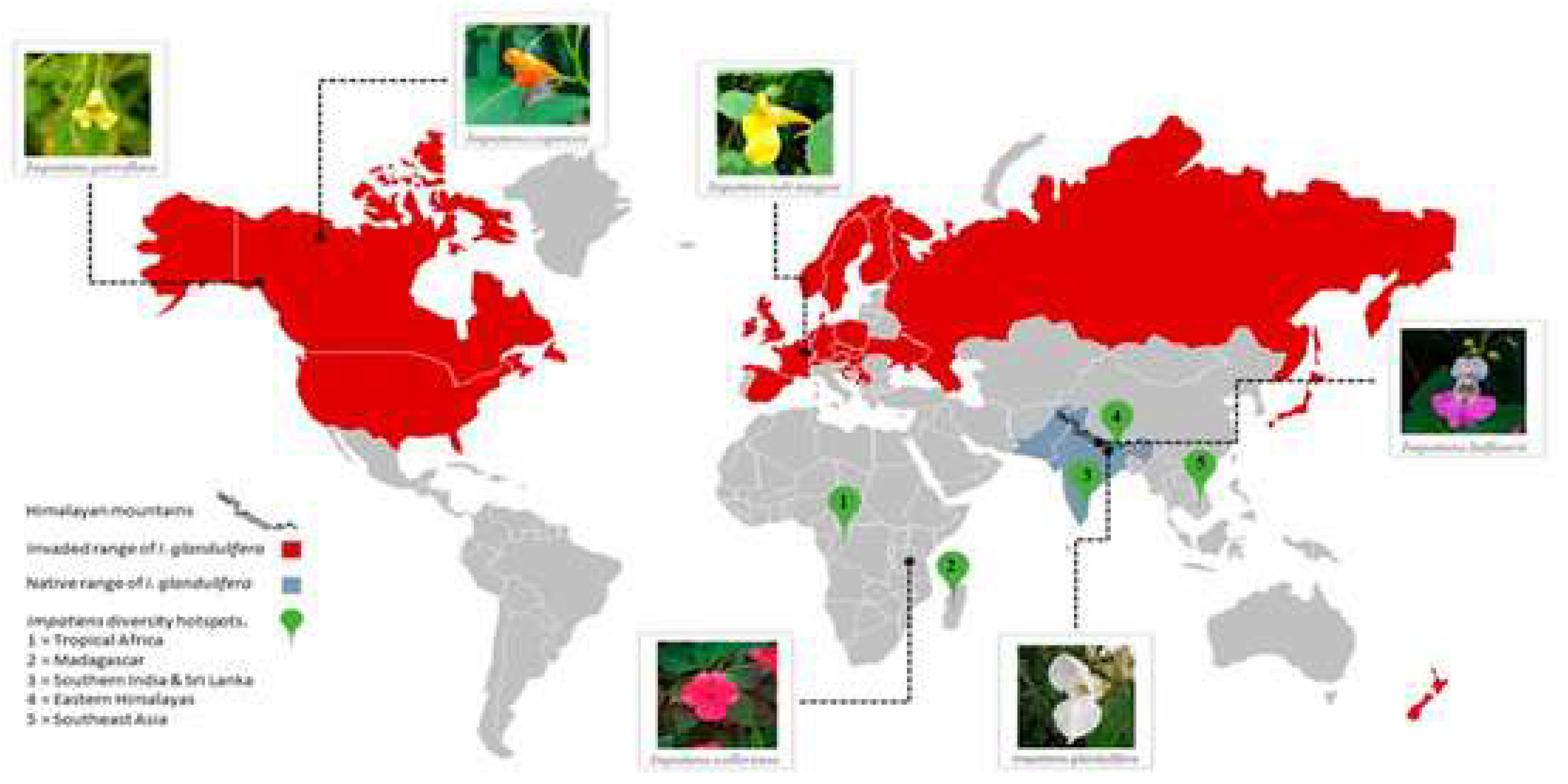
Figure 4.
Flowering Himalayan balsam (Impatiens glandulifera). Using only water decoctions or infusions of shoots is wise because all tissues have sharp needle-like oxalate crystals. (Photo © Mauri K.Åhlberg).
Figure 4.
Flowering Himalayan balsam (Impatiens glandulifera). Using only water decoctions or infusions of shoots is wise because all tissues have sharp needle-like oxalate crystals. (Photo © Mauri K.Åhlberg).
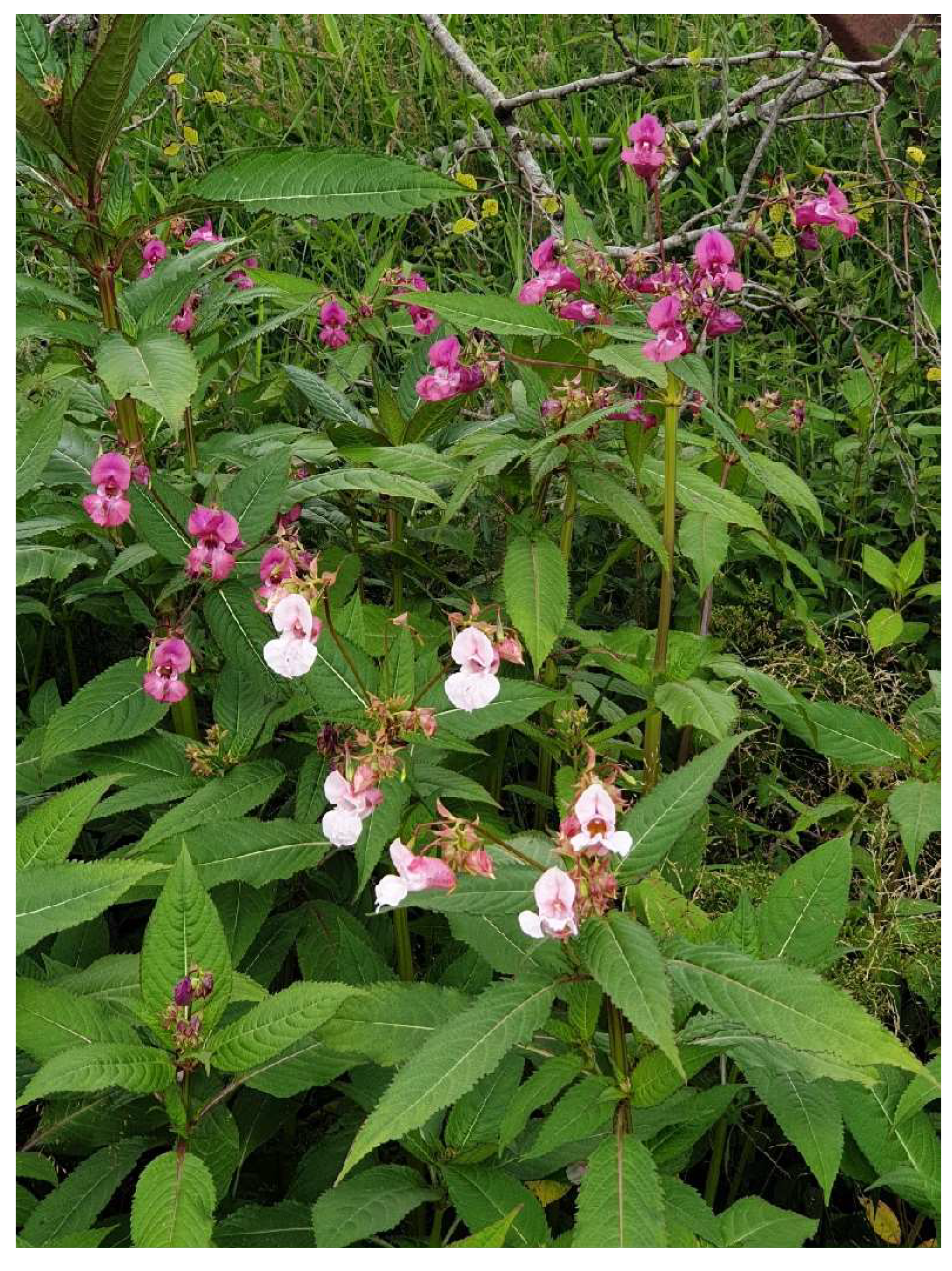

Table 1.
Five invasive WEP species in order of their health-promoting substances.
| WEP species, aerial parts | Total number of health-promoting substances |
| Rosa rugosa petals | 195 (65+130) |
| Rosa rugosa hips | 165 (65+100) |
| Lythrum salicaria | 162 (65+97) |
| Fallopia japonica | 142 (65+77) |
| Impatiens glandulifera | 137 (65+72) |
| Alliaria petiolata | 101 (65+36) |
Table 2.
Five invasive WEP species, in order of their health-promoting substances, that prevent Alzheimer’s disease.
Table 2.
Five invasive WEP species, in order of their health-promoting substances, that prevent Alzheimer’s disease.
| WEP species, aerial parts | the number of substances preventing Alzheimer’s disease |
| Fallopia japonica | 57 (18+39) |
| Impatiens glandulifera | 46 (18+28) |
| Lythrum salicaria | 41 (18+23) |
| Rosa rugosa hips | 39 (18+21) |
| Rosa rugosa petals | 35 (18+17) |
| Alliaria petiolata | 24 (18+6) |
Disclaimer/Publisher’s Note: The statements, opinions and data contained in all publications are solely those of the individual author(s) and contributor(s) and not of MDPI and/or the editor(s). MDPI and/or the editor(s) disclaim responsibility for any injury to people or property resulting from any ideas, methods, instructions or products referred to in the content. |
© 2025 by the authors. Licensee MDPI, Basel, Switzerland. This article is an open access article distributed under the terms and conditions of the Creative Commons Attribution (CC BY) license (http://creativecommons.org/licenses/by/4.0/).
Copyright: This open access article is published under a Creative Commons CC BY 4.0 license, which permit the free download, distribution, and reuse, provided that the author and preprint are cited in any reuse.


