

Submitted:
19 June 2025
Posted:
23 June 2025
You are already at the latest version
Abstract
The objective is to present the theoretical contributions offered by the methodology for studying sustainable tourism in protected natural areas, capable of promoting environmental protection and sustainable local development in communities. The research was carried out in Machalilla National Park. The deductive method was applied, which allowed for the analysis of the problem, the consultation of general theories related to the topic studied, and the establishment of premises and objectives that led to conclusions on the topic studied. A mixed research approach was used, integrating contributions from the analyses carried out for the treatment and processing of in-formation. The techniques used included a survey of tourism stakeholders, a semantic differential for tourists, and an expert evaluation method to validate the proposal under study. Theoretical and methodological systematisation of tourism sustainability in protected natural areas was achieved. The results show the need to broaden the scientific debate and transfer knowledge on the relevance of sustainable tourism as an alternative for sustainable development in rural communities.
Keywords:
tourism
; sustainable development
; responsible tourism
; sustainable tourism practices
; sustainable development goals
1. Introduction
The environment is a tourist resource par excellence. It offers the landscapes, ecosys-tems and conditions required for various leisure and recreational activities. In this sense, its preservation is essential to ensure the continuity of tourism and the sustainable pro-gress of local communities [1,2].
Tourist destinations such as beaches, mountains, jungles and deserts depend on the natural environment. The conservation of natural spaces promotes ecotourism and sus-tainable tourism. Indigenous communities depend on ecological balance to maintain their customs and livelihoods as part of their cultural traditions [3,4].
Effective tourism management requires responsible economic management and the proper use of resources, the equitable distribution of benefits and the reduction of environmental impact in the interests of community progress [5].
Tourism development has a significant impact on the local community economy. Its implementation promotes the diversification of employment sources by increasing com-petitiveness and encouraging the development of tourist infrastructure. It is an important source of income and contributes to the socio-economic and environmental development of localities, especially those located within protected natural areas [6].
Sustainable eco-tourism is a type of tourist activity that seeks to reduce the impact on the environment, preserve biodiversity and benefit local communities. In contrast to traditional tourism, ecotourism focuses on environmental education, effective resource management and the direct involvement of host communities in promoting tourism [7].
Nature tourism is a type of activity focused on the exploration and enjoyment of natural environments, which seeks to preserve the environment and promote appreciation of biodiversity. It is distinguished by its development in protected natural areas, rural areas and unique ecosystems, where tourists can engage in outdoor activities with the least possible ecological impact [8].
Sustainability in the tourism sector is based on the promotion of the effective and effi-cient use of natural resources and the preservation of biodiversity for the benefit of local communities. It promotes long-term economic viability to ensure that tourism is profitable without jeopardising the well-being of future generations [9].
Protected natural areas are areas established and managed for the purpose of pre-serving biodiversity, ecosystems and natural resources, restricting human actions that may alter their stability. These places are essential for environmental protection, sustainable tourism and environmental education [10].
There are several types of protected natural areas. These include national parks, which are areas of significant ecological value that are strictly protected; nature reserves, which are created in areas designated for the conservation of specific species and ecosys-tems; and natural monuments, which are areas with unique geological or biological characteristics. Biosphere reserves created in protected areas capable of balancing conservation and human development. Wildlife sanctuaries created for the protection of critical habitats for endangered species. Marine protected areas located in ocean areas protected for the conservation of marine ecosystems [10].
Today, sustainable tourism is essential for social progress due to its cultural, environmental and socio-economic impact. Conventional methodologies related to the study of tourism question the sustainability of territories due to their high consumption of energy and natural resources and the generation of social inequalities [11].
Tourism as a socio-economic activity provides employment for 200 million people and accounts for 4.4% of global gross domestic product. The sector can support sustainable management at the community level as a market-focused alternative and provide ser-vices to a growing number of travellers seeking to discover, understand and enjoy the natural environment through sustainable tourism in the context of protected natural areas [12].
With outdated and poorly paid agricultural production systems, Latin America is experiencing a socio-economic depression with a high degree of social marginalisation. In this context, the search for socio-economic alternatives that allow for an increase in family income through responsible tourism practices stands out [13].
Methodologies are needed to promote a type of tourism that respects nature and hu-manity, reduces the consumption of natural resources and puts an end to the excessive production of pollutants in the soil, air and water basins [14].
It is necessary to appeal to what is known as complementary tourism, within which sustainable tourism in protected natural areas is an interesting option as an appropriate way of diversifying destinations linked to new forms of leisure [15].
Tourism is undergoing a progressive diversification of products and destinations, with an increase in demand for nature tourism, ecotourism activities, visits to protected natural areas and community-based rural tourism. In order for the travel experience to be meaningful, tourists seek direct contact with the local culture, cultural authenticity, con-nection with local communities and direct contact with flora, fauna, exceptional ecosys-tems, nature in general and its preservation [12].
In protected natural areas, the relationships arising from tourism are always com-plicated and sometimes conflictive. However, it is feasible to regulate them in an environment where there is an appropriate balance between tourism management, environ-mental protection interests and the benefits to society.
Based on criteria such as environmental preservation, social equity, quality of life and respect for cultural identity, ecotourism and forms of sustainable tourism are becoming increasingly important in the sustainable development paradigm [16,17].
The authors Flores and Guerrero [18,19] proposed methodologies for studying tour-ism sustainability in protected natural areas and refer to the existence of theoretical gaps in the formulation of sustainable tourism principles. Companies and businesses in the tourism sector often adopt voluntary and fragmented strategies, without a defined meth-odology to ensure their overall effectiveness in economic, environmental and social as-pects [20].
Based on the above analysis, the research problem consists of: What is the contribution of the methodology for studying sustainable tourism in protected natural areas in the interests of environmental protection, sociocultural inclusion, participatory governance and sustainable and endogenous local economic development of communities?
The analysis of the research problem aims to fill the gaps and offer a theoretical con-tribution related to the application of sustainable tourism in protected natural areas, in order to provide the foundations for the design of more efficient and sustainable strategies.
Based on the problem, the objective of the research is to specify the theoretical and methodological contribution to the study of sustainable tourism in protected natural are-as, capable of promoting environmental protection and sustainable local development in host communities.
The starting point is the premise that large investments in tourism infrastructure are not required and that the approach is based on the satisfaction of resources through an endogenous perspective, the protection of natural resources and the preservation of nature to encourage visitors to engage in rewarding activities and consume local resources that are attractive and offer unique experiences for tourists.
The tourism sector is highly cross-cutting, which must be taken into account when focusing on research. In this case, we will focus on the theoretical and methodological contributions of the methodology for studying tourism sustainability in protected natural areas.
1.1. Literature Review
1.1.1. Definition and Background of Protected Natural Areas
A protected area is a land or sea territory dedicated to the preservation and protection of biological diversity and related natural and cultural resources. It is generally managed through legal instruments and other effective territorial, national and international regulations. Some protected areas share the context of a rural area [21].
Protected natural areas are a cultural construct with a long history. In India, they emerged two millennia ago to identify particular areas dedicated to the preservation of natural resources [22]. A millennium ago, they were used in Europe to protect the hunting grounds of the rich and powerful. In other regions, they are used to protect places with special characteristics, such as the traditional Tapu areas in Pacific communities and in Africa for the protection of sacred forests [23].
During the Renaissance, European kings and other leaders decreed the first protected areas. Subsequently, the public gradually began to visit places declared as protected areas, the foundations of tourism were laid, and community participation was linked to these areas [12].
In 1832, in the United States of America, the creation of a state park for environmental conservation was proposed, but it was not until 1872 that Yellowstone Park was created as a public space or recreational area for the benefit and enjoyment of the population [12,24].
In Australia, in 1866, a 2,000-hectare environmental reserve was established for pro-tection and tourism [25]. In 1885, Canada decreed the protection of the hot springs in the Rockies, which later became Banff National Park, where railway companies saw an op-portunity to create a park and stimulate growth in the number of travellers and tourism. At the end of the 19th century, several forest reserves were created in South Africa. In 1894, Tongariro National Park was created in New Zealand [12].
A common feature of all protected natural areas is that they were created on govern-ment initiative, with large areas of natural environments set aside for public enjoyment, which is why the promotion of tourism was a key factor in their creation [12].
The connection between the population, their customs and culture with the land and natural resources as part of the concept of protected natural areas is a key element in achieving the proposed environmental protection objectives [26].
In the 20th century, the declaration of protected areas spread globally. Almost all countries published laws and designated certain areas for protection. At the beginning of the 21st century, around 44,000 areas were designated as protected, representing ap-proximately 10% of the Earth's surface [26].
The evolution of the concept and significance of protected natural areas has been in-fluenced by the development of ecology, which has led to a more comprehensive under-standing of resource planning and management with a systematic and systemic ap-proach. This has enabled the adequate classification of protected natural areas, reframing biodiversity protection as a starting point and recognising the importance of tourism as a key aspect for the promotion of social culture [27].
The relevance of protected natural areas is enhanced by the introduction of tourism, which, due to its endogenous nature, could be understood as part of the park tourism sys-tem. The economic importance of protected natural areas is increasingly valued in terms of their environmental performance, which includes controlling the effects of climate change and providing drinking water [28,29].
Since the adoption of the Convention on Biological Diversity in 1992, greater attention has been paid to protected natural areas as a means of conserving biodiversity and for other purposes [30].
Some protected natural areas are part of international networks, which may be global or regional in scope. There are calls for recognition of the role of indigenous peoples in re-lation to these areas [31], as well as for the promotion of international cooperation in transboundary protected natural areas [32].
Recreation and tourism management are among the purposes of the categories of protected natural areas, except for category Ia, which corresponds to strict nature reserves managed for scientific purposes. Biodiversity protection is not the only purpose, although a special policy to protect and maintain biodiversity is required [33].
Marine protected areas have gained greater recognition in recent years. There are more than 2,000 marine protected areas, covering approximately 2.5 million km2. These include terrestrial areas, reefs, seagrass beds, shipwrecks, archaeological sites, coastal brackish lagoons, mudflats, marshes, mangroves and rock platforms [34].
The complexity of managing protected natural areas indicates that much remains to be done to improve the effectiveness of their management [35]. A key consideration is that when tourism is developed, precise management frameworks and strategies should be established to ensure that the natural and cultural values of protected natural areas are maintained.
Regardless of the tourist activities carried out in the context of protected natural areas, access to other areas for tourism purposes must be carefully monitored. This is a significant challenge that involves making complex judgements about the trade-offs between tourism development, the protection of resource values and the interests of the local community [35].
Tourism in protected natural areas is being revitalised based on the concept of tour-ists. The need for close encounters with others in order to interact with exotic populations and landscapes and the search for a return to nature as a source of physical and mental health are ideological concepts that favour the choice of tourism based on the unique en-vironment of protected natural areas [36].
Sustainable tourism in the context of protected natural areas seeks to offer interesting spaces and leisure activities that emerge from unique experiences based on the exchange of diverse cultures and the enjoyment of natural landscapes, satisfying tourists prefer-ences and a return to nature [36].
In the management of tourism in the context of protected natural areas, in addition to the activities that allow direct contact with local functions and resources, cultural ex-change is important as it encourages an insight into manifestations rooted in ancestral culture that form an inseparable part of the identity of peoples. Visits to museums play an important role in education and the preservation of local, regional and national identity [37,38]. Visits to archaeological areas and sites are particularly attractive to visitors who prefer to enjoy the historical and cultural values of the community [39].
Figure 1 shows the categorical classification of protected natural areas.
1.1.2. Los Espacios Naturales Protegidos en Ecuador
In Ecuador, protected natural areas were established in accordance with Article 24, paragraph 7 of the Organic Code on the Environment, which declares the integration of protected natural areas into the subsystems of the National System of Protected Areas and defines the categories, guidelines, tools and mechanisms for their management [41].
In Ecuador, tourism in protected natural areas emerged in the 1980s due to the influx and boom of rural and indigenous tourism, which emerged as a response by indigenous peoples and montubio nationalities to the exploitation of natural resources by large oil and agricultural companies, which sowed poverty and environmental pollution at the cost of depleting the country's natural resources [42].
The first manifestation of tourism in protected natural areas in Ecuador occurred in 1979 in the community of Agua Blanca, located in Machalilla National Park in the province of Manabí [43], but weak promotion of this type of tourism prevented the experiences from becoming known, and failed to consider that tourism could represent an interesting offer for the demand profile related to nature tourism and indigenous tourism.
Currently, the priority is to promote sustainable tourism in the context of Ecuador's protected natural areas, based on STI and the principles of the circular economy. The adoption of environmental protection protocols capable of filling the gaps and shortcomings of other tourism models and methodologies is encouraged, as well as the creation of a management environment based on innovation and endogenism to address the challenges posed by today's changing world, through compliance with the institutional regulatory framework, self-regulation linked to protection and high environmental awareness that guarantee the success of tourism in the context of protected areas [44].
The opening up of Ecuadorian tourism in protected natural areas can be facilitated by the experiences of research carried out in the community of Bigodi on the African continent. The results showed that residents considered tourism to be capable of creating community social development, generating income and good fortune for the community [45].
Another experience that may be useful for the development of tourism in Ecuador's protected natural areas is the research carried out in Turkey in 2011, which served to identify limitations related to tourism due to the lack of identification and classification of natural tourism resources. This allowed for the identification and classification of a group of natural resources and the determination of their tourism value. The results showed that the level of environmental degradation in the study area was very low, which required an approach that revealed a high potential for tourism development [46]. Other studies with similar objectives were carried out in Latin America in Belize [47], Dominica [48], Peru [49] and Brazil [50].
1.1.3. Dimensions and Indicators of Sustainability
Loor-Bravo, Plaza-Macías and Medina-Valdés reflected on the challenges facing tourism and consider that the sector's sustainability cannot be sustained by unrealistic discourse and projects that deviate from the dimensions and fulfilment of sustainability indicators [51].
Sustainable tourism aims to balance economic, social, environmental, cultural and educational dimensions to ensure long-term benefits for the local community and visitors.
Tourism sustainability indicators are metrics used to assess and measure the eco-nomic, social and environmental impact of tourism activities on the environment. They are essential to ensure that tourism practices are sustainable in the long term, to benefit local communities and the environment, and to meet visitors' expectations [52].
The methodology for studying tourism sustainability in protected natural areas is based on compliance with a set of indicators that place environmental protection and community development at the centre of the debate and determine the sustainability of tourism management in the context of protected natural areas, this allows for a process of continuous evaluation and improvement, which will enable the evaluation and improvement of tourism activity based on the actual situation in which it takes place [53].
The importance of sustainability indicators for tourism lies in the fact that they are tools used to ensure that tourism is not only a source of income and development for communities, but also an environmentally friendly and socially responsible activity [55].
Tourism sustainability indicators enable the identification of areas for continuous improvement and the implementation of more sustainable and efficient practices. They promote transparency and accountability in management, and improve trust and support from the community and visitors. They provide essential information for informed deci-sion-making by tourism stakeholders, governments and non-governmental organisations. They enable the identification of areas for improvement and the implementation of sus-tainable and efficient practices. They help to promote and disseminate good practices and serve as a reference for other tourism projects [55].
Figure 3 shows the indicators of sustainable tourism.
2. Materials and Methods
2.1. Spatial and Temporal Delimitation
The development of tourism in Ecuador as an economic activity began in 1930 with the enactment of the Tourism Promotion Act. At the end of the first half of the 20th century, operations began with the creation of the first travel agency called Ecuadorian Tours, which started to develop different types of mass tourism. In subsequent years, other forms of alternative tourism emerged as an important socio-economic factor in economically and socially vulnerable areas, especially those in rural environments [56].
The study population is made up of the National System of Protected Areas of Ecuador, which covers 26,208,785.38 ha and represents 19.42% of the territory. Due to the country's geographical location, there is a high level of biodiversity. It has 14 national parks: Machalilla, Cayambe, Coca, Cotacachi-Cayapas, Cotopaxi, Llanganates, Sangay, El Cajas, Podocarpus, Yacuri, Antisana, Sumaco-Napo-Galeras, Río Negro Sopladora and Yasuní T/T [57]. Figure 4 shows a map with the geographical location of Ecuador, which reflects the location of protected natural areas.
The sample is intentionally non-probabilistic based on the study objectives and pop-ulation characteristics and consists of Machalilla National Park (PNM), which, according to Ecuadorian law, is a protected natural area (ANP) located in the coastal territory of the province of Manabí. It occupies part of the municipal territories of Puerto López and Jipijapa, in the parishes of Puerto Cayo, Machalilla, Julcuy and Puerto López [57].
Figure 5 shows a map of Ecuador with the location of the province of Manabí, where Machalilla National Park is located.
On 26 July 1979, a community tourism establishment was founded in the community of Agua Blanca, located within the boundaries of Machalilla National Park [39], which is part of Ecuador's national system of protected areas. It takes its name from one of the ear-liest cultures that inhabited the Pacific coast of Ecuador between 1800 and 1000 BC. It co-vers a large land and sea area with significant biodiversity of flora and fauna, due to the presence of the country's last tropical dry forest, with more than 150 endemic species. The marine environment is a nesting site for the four species of turtles registered in Ecuador and a mating ground for humpback whales [57].
Tourist attractions in the PNM include Los Frailes beach, Isla de la Plata and the community of Agua Blanca. There are important archaeological sites that document hu-man occupation dating back 5,000 years, making the archaeological museum in Agua Blanca a special attraction for visitors.
The families living on the boundaries of the PNM are engaged in activities related to agriculture, small livestock farming, artisanal fishing, and some women spend their time making handicrafts. The social situation is not satisfactory, and it is common to find small towns with a high degree of socioeconomic vulnerability. The communities of Salaite and Pueblo Nuevo are located on the coast and their main economic activity is artisanal fishing. The rest are surrounded by mountainous terrain and subsist on small farms, as is the case in San Isidro, Cerro Mero, Julcuy, Platanales and El Pital. The site known as Guale stands out, where the Agua Blanca tourist facility is located, which has achieved a certain level of sustainable development in terms of the enhancement of its natural and cultural resources from a community-based organisational structure that is closely linked to the environment in a sustainable manner [57,58].
Hence the importance of addressing sustainable tourism as a key element for the sustainability of family and local socio-economic development, which is one of the deter-mining factors of the PNM as a tourist destination. This can represent a demand profile for visitors interested in this type of tourism, which guarantees safety and unique and un-repeatable experiences. The research was conducted between 10 March and 30 November 2024.
2.2. Methodology Applied
It takes a mixed approach, combining qualitative and quantitative research, which enabled the problem to be analysed based on premises of sustainability applied to tourism in protected natural areas located within national parks, in order to reach accurate con-clusions on the subject studied. The method of consulting experts on sustainable tourism in protected natural areas was considered.
The research is based on the deductive method, which enabled the assessment of the research problem, the contextualisation and reinforcement of general theories related to sustainable tourism in protected natural areas, the operationalisation of variables, their dimensions and indicators, the analysis and statistical processing of data, and the draw-ing of accurate conclusions on the meaning of sustainable tourism, as well as the need to integrate these concepts into tourism research
to contribute to the reinforcement of existing theories and the advancement of science for local development in communities.
Figure 6 presents the diagram of the methodology applied for the research.
The research is deductive, analytical, descriptive and explanatory, which allowed for the analysis of the literature consulted to discover the significance of sustainable tourism in the context of protected natural areas. The contributions of qualitative and quantitative analyses are integrated into the treatment and processing of the survey results and the as-sessment of the experts.
Among the methods applied is historical-logical analysis, which allowed for the examination of tourism development in protected areas located in natural parks from its beginnings as an economic activity and the emergence of tourism as an alternative for rural communities.
A comprehensive systematic review of the literature and primary source documents was conducted, which allowed for the analysis of scientific articles, theses, books, and other documents related to the subject of study from their different conceptual denominations. The selection of documents included a rigorous review of the related literature, with special attention to publications from 2018 to 2024. Descriptive statistical analysis was applied in the study using the statistical package for social sciences SPSS version 25.0.
A geographic information system was used to collect, manage, analyse and visualise geographic information related to the area studied [59].
A structured survey was conducted on a non-probabilistic sample of 30 volunteers involved in tourism management in the territory, of whom 10 were from the PNM tourism sector and 20 were tourism stakeholders in the province of Manabí. The survey consisted of a Likert scale on sustainable tourism indicators, in the specific conditions of protected natural areas, consisting of five values where 1 meant the highest degree of disagreement and 5 the highest degree of agreement with the indicators to be evaluated.
A semantic differential survey related to sustainable tourism indicators was admin-istered to 20 tourists enjoying the tourist attractions of Agua Blanca and Los Frailes beach, with the aim of verifying the significance of sustainable tourism for community develop-ment, poverty reduction and the precarious situation of families in the specific conditions of protected natural areas. The instruments were applied throughout 2024. The semantic differential was developed in Spanish, English and French to facilitate its application and processing.
A mixed research approach relevant to the nature of the object of study was used, in-tegrating the strengths of the qualitative and quantitative approaches [60].
The research provides theoretical assessments of the methodology for studying tour-ism sustainability in protected natural areas as an alternative form of development, which is set to become a key economic activity based on the use of endogenous resources, the re-placement of extractive, exploitative and environmentally polluting economic activities, in order to reduce poverty and social insecurity in the localities located within the boundaries of protected natural areas.
In theoretical terms, the result is based on the theoretical and methodological sys-tematisation of other models and methodologies related to rural tourism, community tourism and sustainable tourism, in line with the results of the research carried out by [61,62,63]. As a practical scientific result, a methodology for the study of sustainable tourism in protected natural areas is presented and validated by expert criteria, as well as a graphic illustration of the stages and phases that comprise it and its rationale.
2.3. Expert Evaluation Method
Experts were selected to carry out assessments related to sustainable tourism in the context of protected natural areas. A structured survey with a Likert scale was used, which allowed for the examination of elements related to the methodology for studying tourism sustainability in protected natural areas. SPSS version 25.0 software was used for statistical management.
The selection of the sample of experts was based on a target population of 21 experts in sustainable tourism. A non-probabilistic technique was used to select nine experts, with the aim of collecting significant data that would enable the evaluation of the proposed methodology and its contribution as a scientific result, based on a system of evaluative in-dicators.
The inclusion criteria were the selection of those who demonstrated the highest levels of competence (K), with proven prestige and professionalism recognised by society, who had had a teaching or practical working relationship in sustainable tourism and nature tourism in protected areas for five years or more, and who were representative of their places of origin.
The level of competence was used to assess the experts' experience, using the coeffi-cient k = ½ (kc + ka), where kc represents a measure of the level of knowledge on the subject under investigation and ka a measure of the sources of argumentation [64]. This method was developed by [65] to establish an acceptance level higher than 0.8.
Equation 1 was applied to select the experts.
where:
M→number of experts
i→desired level of accuracy (0.10).
P→estimated proportion of errors made by the experts (0.01).
K→constant whose value is associated with the chosen confidence level (8.8584).
Substituting the values in the expression, the result is that nine experts are needed.
Another criterion for the inclusion of the nine selected experts was their informed consent and agreement to participate in the study. Those who did not express their in-formed consent to participate in the research were excluded. A gender approach was ap-plied to achieve parity, resulting in five female and four male experts.
For the evaluation of the methodology by the experts, various indicators related to validity criteria were taken into account, such as practical value, feasibility, practical ap-plicability, development prospects, significance, innovative nature and versatility.
The criteria for use address: integrative capacity, simplicity and ease of use, affordability for participants, adoption of international regulations, general structural definition, and adaptability to changes in the environment.
To assess the correspondence of the experts' criteria, the following hypothesis was established: H0: R1= R2=… Rn, where the average ranks of the experts' evaluations are similar to each other. H1: At least one of the average ranks of the experts' evaluations differs from the rest. Critical region: asymptotic sigma ≤ 0.05 (5% significance). Similarly, the analysis of the average ranks was established to determine the differences in assessments in the aforementioned criteria, referring to the criteria of validity and use. The analysis is complemented by the determination of the medians per criterion, which allows the central tendency measures to be confirmed.
In the interest of evaluating the methodology for studying tourism sustainability in protected natural areas, the components to be evaluated by the experts were established through descriptive statistics, in order to rate the validity criteria and the use criteria.
For the evaluation of the proposed methodology, the components to be evaluated by the experts through descriptive statistics were established in order to examine the content of the validity criteria and the criteria for use illustrated in the tables and graphs.
3. Results
3.1. Survey of Tourism Managers
All tourism managers in the territory who were selected for the sample participated voluntarily. Fifty-seven per cent of participants were male and 43 per cent female. Thirty-two per cent had completed higher education, 55 per cent had completed secondary education and 13 per cent had completed basic education.
In terms of age, 86.5% were between 21 and 35 years old.
Table 1 shows the results of the survey conducted among tourism managers in the territory on the assessment of basic indicators of sustainable tourism in protected natural areas.
Figure 7 shows the average ratings given by tourism managers in the territory for the basic indicators of sustainable tourism.
3.2. Tourist Survey
The sample of 20 selected tourists consists of visitors who volunteered to participate in the survey on condition of anonymity. Forty-five per cent are male and 55 per cent female. Eighty per cent are domestic tourists and 20 per cent are international tourists from Peru and Spain. Twenty-five per cent have completed higher education, 50% have completed secondary education, and 25% have completed primary education. In terms of age, 30% are under 20 years old, 40% are between 21 and 35 years old, 20% are between 36 and 60 years old, and 10% are over 60 years old.
Table 2 shows the results of the semantic differential applied to the sample of tourists on the assessment of sustainable tourism indicators in protected natural areas.
Figure 8 shows a graphical analysis related to semantic differential on the assessment of sustainable tourism indicators.
3.3. Expert Assessment
The experts carried out the assessments and awarded the corresponding scores in the survey using a Likert scale, where 1 represented the highest level of disagreement and 5 the highest level of agreement on the elements to be assessed in relation to the methodology, validity criteria and use.
Table 3 shows the results of the experts' assessment of the validity criteria of the methodology for studying tourism sustainability in protected natural areas.
Figure 9 shows the mean and median corresponding to the validity criteria, with the mean shown in “A” and the median in “B”.
Table 4 shows the results of the experts' assessment of the criteria for using the methodology to study tourism sustainability in protected natural areas.
Figure 10 shows the mean and median corresponding to the usage criteria. “A” shows the mean and “B” shows the median.
3.4. Methodology Design
Based on the findings of the research, which incorporated elements related to the study of tourism sustainability in protected natural areas, the proposed methodology is presented below.
Figure 11 shows the methodology for studying tourism sustainability in protected natural areas.
4. Discussion
During the research, the results of a group of authors who conducted research related to sustainable tourism in the context of protected natural areas located in national parks were considered, which allowed for an appreciation of the importance of their understanding and practical adaptability for the design of the proposed methodology [62,63,79].
During the assessment of the basic indicators of sustainable tourism, it was found that 80% of the tourism managers surveyed agreed and strongly agreed that sustainable tourism in the context of protected natural areas generates additional economic income that benefits the community through job creation and sustained maintenance, which contributes to the diversification of sources of economic growth, contributing to poverty reduction and improving the living conditions of citizens, in line with the results of research carried out by [12,25,26,27]. Despite this, the study found that 13% of tourism stakeholders were unable to provide a definition and 7% disagreed, which may be due to a lack of knowledge and preparation among some tourism stakeholders regarding the economic impact of the sector's activity in the context of protected natural areas, in line with research carried out by [66,67,68,69].
In relation to sociocultural indicators, it was found that 83% of tourism managers agree or strongly agree that tourism involves participation and provides clear social benefits for the local community. It promotes education and awareness of sustainable practices in the local community and among visitors, as well as improving the quality of life of families and the local community, in line with the analysis carried out by [13].
However, it was found that 13% of the tourism stakeholders surveyed were indifferent and 3% disagreed with the above statement. This problem may be influenced by the lack of knowledge among some tourism stakeholders about the social impact of sustainable tourism on families, the community and visitors themselves, in line with the analysis carried out by [14].
With regard to environmental indicators, it was found that 70% of the tourism managers surveyed agree and strongly agree that tourism promotes the protection of soil, water and biodiversity, based on an endogenous notion that favours environmental practices and waste management, recycling and reuse of resources, promotes efficient use of energy and the use of renewable sources, which was corroborated by [7,30] in the results of their research. Despite this, it was found that in some cases there is little information on the relationship between environmental impact and social responsibility in tourism, as well as the objectives that can be achieved with its introduction, in line with the analysis by [70,72].
With regard to governance as an expression of the capacity to meet environmental protection objectives, 83% of the tourism managers surveyed agree and strongly agree that the involvement of the local community in tourism makes it possible and encourages appropriate decision-making, in line with the research carried out by [4,22].
Transparency and access to timely information are analysed as facilitating the proper management of the enterprise, as well as accountability to the community as a control tool for continuous improvement. They appreciate the equitable and fair distribution of benefits as an element that enables the strengthening of performance in tourism [85].
Some tourism managers consider it very important to integrate protection policies with sectoral policies [42] to ensure the proper performance of sustainable tourism management, as well as the long-term maintenance of the protected area's resources and services in the interest of ensuring the sustainability of tourism [12,86,89].
In relation to the ratings given by tourism sector managers to the basic indicators of sustainable tourism, it can be seen that the most favoured are the socio-cultural indicators, which obtain an average rating of 4.3 points, followed by the governance indicators with 4.1 points. This is due to the impact of sustainable tourism on poverty reduction, improved living conditions, higher education, raising awareness among visitors and the community in general about the maintenance and conservation of the environment and historical and cultural traditions, governance as an instrument for the implementation of public policies that benefit the community, and orderly land-use planning to promote tourism, compliance with environmental regulations, and the promotion of innovation and continuous improvement, according to research by [22,42,44].
The least favourable indicators, but with scores close to 4 points, are economic and environmental. A group of barriers related to the high operating costs necessary for the implementation of sustainability in the tourism sector, the lack of material resources and issues related to the management and organisation of enterprises, the state and condition of infrastructure, the type of ownership, the origin of human resources, fear of undertaking administrative procedures, inadequate interpretation of legal requirements, and lack of preparation and knowledge on the part of tourism managers about sustainable tourism. These difficulties have been highlighted in research carried out by [66,67,68,69,70,71,72,73].
The results of the semantic differential on sustainable tourism revealed that 95% of the tourists surveyed believe that it is capable of generating jobs for the local community [36]. Ninety per cent considered that it generates additional income, encourages waste management and resource recycling, and promotes efficient energy use and savings [39]. Eighty-five per cent said that it generates social benefits for the community and contributes to improving community living conditions [1]. Eighty per cent said that it is capable of promoting environmental protection and encouraging soil, water, diversity and endogenism conservation [44]. Seventy-five per cent stated that it is capable of promoting the use of renewable energy sources. However, there is a small group that showed an indifferent attitude towards the issues reflected in the survey and another smaller group that was unable to recognise issues such as the capacity of sustainable tourism to ensure the promotion of environmental protection and the potential for promoting soil, water, diversity and endogenism protection.
The analysis carried out through the research confirmed the cross-cutting and highly diverse nature of sustainable tourism, which was confirmed by consulting the research in [74].
It was verified that previous research has predominantly focused on the economic approach and vision and on the quality of life of communities. There is also research that focuses on ecological and environmental elements, as well as on the entrepreneurial perspective [75,76,77,78].
The design of the methodology for studying tourism sustainability in protected natural areas is of significant importance given the beneficial effects it can have on socio-environmental and economic aspects, ensuring the sustainability of the sector and the territory. It consists of applying a pattern of ethical behaviour that contributes to sustainable development and is reflected in the safeguarding of the environment through nature protection and regenerative tourism practices to support local communities through employment, the promotion of local culture and the improvement of infrastructure for the promotion of conscious trade, respect for human rights and the fight against exploitative or predatory tourism, in accordance with the analysis by the authors [80,81,82].
The methodology for studying tourism sustainability in protected natural areas seeks to establish indicators to guide tourism activity in protected areas, ensuring that it is responsible and balanced in accordance with the criteria expressed by [83].
It is proposed to establish a permanent assessment of environmental, socio-cultural and economic impacts and impacts on governance, as well as the effects on the biodiversity of host communities, in order to facilitate an informed decision-making process for continuous improvement. The aim is for tourists to experience life in a direct and unforgettable way in a protected natural environment, in line with the analysis carried out by [84,85,86].
The starting point is the experience of countries such as Hungary, which applies similar measures to tourism by modifying its National Tourism Development Strategy 2.0, with the aim of implementing a type of tourism that is sustainable and of high quality, benefits the local population and promotes the comprehensive development of the territory [87].
The preparation of the methodology for studying tourism sustainability in protected natural areas is a crucial step in ensuring the thoroughness, structure and feasibility of the project. Proper organisation facilitates the definition of precise goals, appropriate techniques and the resources required to enable the project's success [88].
The benefits of good project preparation include clarity in addressing conflicts arising from tourism in the context of protected natural areas, the appropriate structuring of the theoretical framework that enables the collection of relevant information and data to support the methodology, allowing the definition of objectives and hypotheses, and the appropriate choice of methods, techniques and instruments necessary to ensure the optimisation of all types of resources [89].
Preparation for the application of the methodology for the study of tourism sustainability in protected natural areas is conceived as the implementation of a set of organisational and preparatory activities that ensure the collection of data and information related to sustainable tourism indicators, the socio-economic and environmental situation of the context, the real learning needs of the people involved, possible links with research centres, universities and higher technology centres, as well as compliance with the corrective measures prior to the study, in accordance with the analysis carried out by [90].
4.1. First Stage: Design Aspects and Awareness Raising
The successful application of the methodology for studying tourism sustainability in protected natural areas requires the development of a process to raise awareness among participants and a robust methodological design. These two components ensure that the project is relevant, scientifically accurate and has a positive effect in the field of application.
Awareness-raising involves an information process that seeks to engage key stakeholders (researchers, tourism stakeholders, institutions, producers and communities) and generate commitments on their part. It is a process that generates interest and a willingness to participate, ensuring a more effective study based on the compartmentalisation of information, the collection of the required data and the collaborative support of the participants. All of this reduces resistance and fear of change and allows the immediate application of the results, in line with the research carried out by [91].
The first stage involves the design and awareness-raising of the project, which allows the definition of the general and specific objectives, as well as the analysis of general theories related to sustainable tourism in protected natural areas. This makes it possible to identify gaps that have not been addressed or answered in previous studies and research, and thus enables the design of the hypothesis [60,74].
4.2. Second Stage: Diagnosis
The stage known as diagnosis marks the beginning of the practical application of the methodology for studying tourism sustainability in protected natural areas. Through fieldwork and direct observation, a diagnosis of the situation presented by the sustainable tourism indicators is carried out. Special attention is given to the analysis of the externalities of the tourism sector. Overtourism and its negative consequences in the social and environmental context, precarious working conditions that do not offer basic safety measures, gender inequality and actions or omissions that contribute to the worsening of climate change, the state of preservation and improvement of natural capital, the optimisation of resource use, the promotion of efficiency, waste reduction, the state of innovation and digitalisation, as well as the creation of value through regenerative cycles.
In this sense, the general objective could be to analyse the negative externalities generated by the tourism sector in the context of protected natural areas [92]. The status of strategies to prevent greenwashing and greenhushing should be assessed, in line with the studies carried out by [74].
It is particularly important to identify and examine the barriers that hinder tourism activity in the context of protected natural areas, the lack of material resources, the state of infrastructure, the type of ownership and the lack of understanding on the part of tourism stakeholders and society in general, aspects that have been addressed in other studies [93,94,95,96].
At this stage of the methodology, the socio-economic and environmental problems faced by the community are determined in the field, as well as compliance with environmental regulations established by the country and internationally. This situation must be considered during the development of the strengths, weaknesses, opportunities and threats (SWOT) matrix, which allows the identification of internal and external factors that may affect the project. The theoretical and empirical methods to be used, the methodological approach, and the techniques and instruments to be implemented are defined [97].
The selection of the population and sample for the study are key activities that ensure the validity, reliability and representativeness of the results. An appropriately selected sample makes it possible to obtain valid conclusions without having to study the entire population [98].
4.3. Third Stage: Practical Application of the Methodology
The third stage is called the practical application of the methodology for the study of tourism sustainability in protected natural areas. It is characterised by a set of practical actions aimed at achieving the strategic integration of responsible tourism with community actors and the general population, with the aim of training and preparing the people involved in the project as a basic requirement for the development of tourism activities.
The lack of knowledge on the part of tourism managers and stakeholders about the sustainability of the sector is one of the problems that has been studied by other authors [68,69,70].
In this stage, working groups are set up as a space for discussion and collaboration, where experts and participants analyse, debate and build knowledge related to sustainable tourism in the context of protected natural areas. Their performance is key to enriching the analysis, validating the findings and strengthening the decision-making process [99].
The assessment of experts as part of the methodology procedures allows for practical verification to ensure the quality, reliability and relevance of the project, particularly when it comes to the design of methodologies, models, results studies and the formulation of conclusions. In this case, experts in sustainable tourism review, analyse and issue value judgements on the proposed methodology. At the same time, tables and graphs are generated through the management of descriptive statistics related to validity and use criteria, which will be used to measure results based on sustainable tourism indicators in protected natural areas [100,101].
4.4. Fourth Stage. Analysis Of results and Discussion
The analysis of the results and discussion is a fundamental phase of the methodology for studying tourism sustainability in protected natural areas, as it allows for the understanding, structuring and detailing of the data collected in the study in relation to sustainable tourism in the context of protected areas [102].
The analysis consists of an essential procedure that allows the organisation, processing and interpretation of the information and data obtained in order to reach relevant, comprehensible and verifiable conclusions, which enable the formulation of hypotheses, the detection of trends and the creation of new knowledge [103]. The discussion allows for the comparison and contrast of previous findings with existing theories to determine whether the objectives set have been met. Patterns are identified, trends are explained and possible implications are explored, in accordance with the analysis carried out by [104].
As part of the structure of the analysis and discussion, tables, graphs and diagrams are shown to illustrate and describe the project's findings. The interpretation and discussion focus on contrasting the results with previous studies and presenting patterns and trends, which enable a coherent evaluation of the results and the initial hypothesis [105].
The identification and definition of barriers is essential to anticipate difficulties, develop effective tactics and ensure the achievement of the proposed objectives. In this regard, barriers, challenges and their possible causes are identified, as well as resource constraints and the need for preparation for tourism in the context of protected natural areas [106].
Finally, a report is prepared with the results of the work. This consists of a document containing the findings of the study. A clear and structured written report supported by evidence is required. It should include the following elements: a cover page and general information, title, authors, affiliations, date of presentation, summary, an introduction reflecting the context of the problem, the general objective and specific objectives, as well as the justification, the methodology setting out the analysis of the population and study sample, the techniques and instruments used and the procedures for analysis, results, discussion and interpretation, conclusions, recommendations, bibliographical references and any annexes deemed necessary [107].
4.5. Fifth Stage. Feedback
The establishment of cooperation for the proper implementation of the methodology for the study of tourism sustainability in protected natural areas seeks to involve all stakeholders in the sector and society in general, with the aim of achieving the knowledge, skills and resources required to achieve the proposed common goals efficiently and effectively [108].
Cooperation enhances the strengths of the methodology and optimises results. It facilitates the optimal use of knowledge, infrastructure and the efficient use of material and financial resources, enhances creative capacities by promoting innovation, expanding the most outstanding ideas and assisting in the decision-making process [109].
Cooperation acts as a facilitator of communication and coordination to promote a continuous flow of information, preventing confusion and optimising work structuring. From a community perspective, it produces beneficial environmental effects and expands the application of initiatives [110].
For the purposes of the methodology, monitoring results is a crucial systematic procedure, as it facilitates progress assessment, timely problem identification and ensures that objectives are achieved effectively. It is a tool that prevents deviations from the initial plan and allows corrective action to be taken in a timely manner. It facilitates budget improvement, time management and efficient use of staff. It optimises decision-making with up-to-date, evidence-based information. It promotes the identification of the project's strengths and weaknesses. It increases clarity and accountability and promotes the sustainability of results, in line with the analysis by [111].
The continuous improvement plan is implemented as an organised procedure that seeks to constantly increase the efficiency, quality and results of the methodology during its application. It is based on the recognition of possible improvements and the implementation of corrective and preventive measures that will be carried out on an ongoing basis [112,113].
4.6. Output Results
The results of applying the methodology are the effects or benefits derived from sustainable tourism in the context of protected natural areas through the introduction of sustainable strategies and good practices aimed at providing benefits to businesses, the community and the environment. The adoption of responsible management in the tourism sector guarantees economic, social and environmental benefits.
Achieving competitiveness and distinction is based on attracting customers who are aware of the environmental and social impact. Broader access to financial incentives from governments and international entities is achieved. The reduction in operating costs resulting from actions to conserve water, energy and other resources.
In socio-economic terms, sustainable tourism in the context of protected natural areas promotes the hiring of local employees, boosting the economic growth of the community. It helps to strengthen social infrastructure, education and the well-being of the inhabitants. It fosters local culture, traditions and customs through responsible tourism and promotes the inclusion of vulnerable communities in activities related to the tourism sector.
From an environmental protection perspective, it promotes pollution reduction, waste reduction, efficient use of resources and recycling, as well as the abandonment of exploitative and predatory tourism models. It minimises the carbon footprint associated with tourism and encourages good practices among visitors, communities and workers.
5. Conclusions
Based on the results of the research, a methodology for studying tourism sustainability is provided, which constitutes a theoretical contribution aimed at filling a gap related to resolving the conflictive relationship generated by tourism activity in the context of protected natural areas and, at the same time, offering viable solutions for promoting sustainable development for the benefit of local communities and the environment, without neglecting the reasonable profitability of the tourism sector.
The methodological contribution is demonstrated by exposing and demonstrating the close relationship between sustainable tourism and the preservation of natural capital, the promotion of efficiency, the reduction of waste and the creation of regenerative cycles that form the basis of tourism sustainability. Innovation and digitalisation, as well as the optimisation of resource use, are other principles that are closely associated with sustainable tourism.
Ecuador's protected natural areas are located in rural areas characterised by poverty, unemployment and precariousness, with low economic returns from agriculture, livestock and other activities such as fishing and handicrafts. The application of sustainability principles in protected natural areas is an alternative that allows for income diversification to improve the socioeconomic situation of communities, with the potential to reduce poverty and improve wealth redistribution.
The scientific contribution lies in the methodological nature of the approach itself, as it combines indicators of sustainable tourism and the improvement of living conditions in local communities, filling a gap in the theoretical study of tourism in protected natural areas, where tourism often generates environmental conflicts that are a concern for society.
The scientific observation method and information collection techniques applied during the fieldwork revealed that most of the tourism managers surveyed recognise the potential of sustainable tourism in the context of protected natural areas as a viable solution for diversifying economic income, thereby reducing poverty and improving the living conditions of the community. They agree that it benefits families and the local community from a social point of view by raising environmental awareness, promoting soil, water and biodiversity conservation, and sustaining resources in a community-based and participatory manner that favours proper resource management and recycling, energy efficiency and the use of renewable sources.
The application of semantic differentiation to tourists revealed that most consider sustainable tourism in the context of protected natural areas to be a socio-economic solution that generates additional income for rural families, promotes employment and provides social benefits for the community by promoting sustainable practices, environmental protection, the proper use of energy resources and the use of renewable energy sources.
Tourism in the context of protected natural areas is characterised by the close link between tourist leisure and activities in rural environments and other agricultural work, as well as the notion of endogenous rural development to meet the demand for tourist resources, as conditions that allow sustainable tourism and the principles of the circular economy to be harmonised with the requirements established for protected natural areas, in the interest of achieving sustainable community development in rural areas, which seeks to meet visitors' expectations through rewarding experiences, environmental protection, socio-economic benefits for host communities and respect for the culture and traditions of the area, without leaving a negative footprint for future generations.
Sustainable tourism in the context of protected natural areas is capable of having a comprehensive and holistic synergistic effect on tourism activity, by integrating environmental protection and unforgettable life experiences, which enable the generation of a novel result that is superior from a qualitative and quantitative point of view, reducing poverty and precarious living conditions in communities, creating better conditions for the environmental preservation of the protected area and contributing to the fulfilment of the Sustainable Development Goals and the 2030 Agenda.
The relevance of the research lies in the nature of its results, which allow for the assessment of sustainable tourism in the context of protected natural areas as a scientific and innovative alternative that enables the diversification of economic income for producers, reduces poverty, guarantees greater job opportunities and reduces precariousness in the territory by creating better conditions that favour compliance with established environmental protection measures and regulations.
The research seeks to reopen the scientific debate and transfer knowledge on the relevance of sustainable tourism in the context of protected natural areas, which, due to environmental regulations, are limited in their ability to undertake other forms of tourism that would allow them to diversify their sources of income, generate jobs, improve living conditions and contribute to the sustainable development of rural communities.
The main limitation of the study is that, despite the economic, social, cultural and environmental benefits offered by tourism, the reality of the territorial context in protected natural areas is that they lack adequate infrastructure and operators and tourism stakeholders have little knowledge about the sustainability of the sector. This implies the need for training and capacity building, as well as the articulation of government support policies that promote and boost tourism as an effective tool for sustainable development. This is influenced by the lack of integration of stakeholders in the ministries of agriculture, tourism, water and the environment, as well as the participation of government bodies, coordination with communities and their participation in endogenous development projects in the context of sustainable tourism.
One limitation may be the lack of studies addressing the comprehensive relationship between tourism sustainability in the context of protected natural areas. The size of the sample selected and the selection and structuring of the group of experts may constitute another limitation.
It is considered useful to continue in-depth research aimed at improving the methodology for studying tourism sustainability in protected natural areas and, at the same time, to continue the debate on sustainable tourism, based on new experiences that allow for a more complete and specific analysis of the socio-economic, environmental, governance and examples of good practices for achieving appropriate synergies in the community environment that favour the endogenous development of sustainable tourism in host communities.
Developing future research that delves deeper into innovation and the role of the technological revolution in sustainable tourism projects is a challenge for moving towards smart tourist destinations in the context of protected natural areas.
Author Contributions
The article has two authors who made the following contributions: Conceptualization, BMLV; methodology, NPE; software, BMLV; validation, BMLV and NPE; NPE; investigation, BMLV; resources, BMLV; data curation, NPE; writing—original draft preparation, BMLV and NPE; writing—review and editing, BMLV; visualization, BMLV; supervision, NPE; project administration, BLMV; funding acquisition, BMLV. All authors have read and agreed to the published version of the manuscript.
Funding
The research was funded by the authors themselves, with a budget of USD 4,000.
Institutional Review Board Statement
Not applicable.
Informed Consent Statement
Not applicable.
Data Availability Statement
The data can be provided by the corresponding author upon request.
Acknowledgments
The authors would like to thank the authorities at the Universidad Estatal del Sur de Manabí and the Universidad Técnica de Manabí for their collaboration during the research that made this work possible.
Conflicts of Interest
The author declares no conflict of interest.
References
- Jinhai, M.; Jie, Z.; Li, L.; Zhanjing, Z.; Jingrong, S.; Qilou (Bill), Z.; Yuling Z. Study on Livelihood Assets-Based Spatial Differentiation of the Income of Natural Tourism Communities. Sustainability. 2018, 10.2. 353. [CrossRef]
- Saura, P. J. Turismo activo y medio ambiente: una implicación necesaria. Aspectos jurídicos. Cuadernos de turismo. 2010, 26. 153-176. https://revistas.um.es/turismo/article/view/116321/110081.
- Elliot-Spivack, S. M. Turismo y medio ambiente: dos realidades sinérgicas. Papers de turisme 2014, 3. https://www.turisme.gva.es/ojs/index.php/Papers/article/viewFile/204/171. (accessed on 26 June 2024).
- Whitford, M.; Ruhanen, L. Indigenous tourism research, past and present: where to from here? Sustainable Tourism and Indigenous Peoples. Routledge, 2019. 14-33. https://n9.cl/1mcfov.
- Vacacela, A. Factores relevantes para la gestión de pequeñas empresas agroturísticas. Polo del Conocimiento. 2023, Vol 8, No 9. [CrossRef]
- Landeta-Bejarano, N.; Vásquez-Farfán, B.; Ullauri-Donoso, N. Turismo sensorial y agroturismo: Un acercamiento al mundo rural y sus saberes ancestrales. Revista Investigaciones Sociales. 2018, 4.11. 46-58. https://n9.cl/23bvfb.
- Baloch, Q. B.; Shah, S. N.; Iqbal, N.; Sheeraz, M.; Asadullah, M.; Mahar, S.; Khan, A. U. Impact of tourism development upon environmental sustainability: a suggested framework for sustainable ecotourism. Environmental Science and Pollution Research. 2023 30.3. 5917-5930. [CrossRef]
- Capdevilla, D.; Vargas, F.; Restrepo, J. J. El turismo de naturaleza: educación ambiental y beneficios tributarios para el desarrollo de Caquetá. Aglala. 2020, 11.1. 107-132. https://revistas.uninunez.edu.co/index.php/aglala/article/view/1568.
- Makian, S.; Hanıfezadeh, F. Current challenges facing ecotourism development in Iran. Journal of Tourismology. 2021, 7.1, 123-140. https://dergipark.org.tr/en/pub/iuturizmoloji/issue/64058/812194. [CrossRef]
- Becerra, A.; Lastra, X. Los espacios naturales protegidos. Concepto, evolución y situación actual en España/Protected natural areas. Concept, evolution and current situation in Spain." M+ A: Revista Electrónica de Medioambiente. 2008, 5. https://ucm.es/data/cont/media/www/pag-41228/ART%20A.TOLON%20X.%20LASTRA.pdf.
- Higgins-Desbiolles, F. Sustainable tourism: Sustaining tourism or something more? Tourism Management Perspectives. 2018, 25(1), 157-160. [CrossRef]
- Eagles P. F. J.; Stephen F. M.; Christopher, D. H. Sustainable tourism in protected areas Planning and management guidelines. United Nations Environment Programmed, World Tourism Organization and IUCN – World Conservation Union. 2002. https://www.institutobrasilrural.org.br/download/20120219144738.pdf. (Accessed 20 November 2024).
- Pelegrín-Entenza, N.; Vázquez-Pérez, A.; Pelegrín-Naranjo, A. Rural agrotourism development strategies in less favored areas: The case of Hacienda Guachinango de Trinidad. Agriculture. 2022, 12.7. 1047. [CrossRef]
- Gauna, Carlos. Percepción de la problemática asociada al turismo y el interés por participar de la población: caso Puerto Vallarta. El periplo sustentable. 2017, 33, 251-290. https://rperiplo.uaemex.mx/article/view/4858.
- Castiñeira, C. J. La oferta turística complementaria en los destinos turísticos alicantinos: implicaciones territoriales y opciones de diversificación. Investigaciones Geográficas (Esp). 1998, 19, 85-103. https://www.redalyc.org/pdf/176/17654249005.pdf.
- Vera-Rebollo, J. F.; Baños-Castiñeira, C. J. Turismo, territorio y medio ambiente. La necesaria sostenibilidad. Universidad de Alicante. 2004. https://rua.ua.es/dspace/bitstream/10045/132322/1/Vera_Banos_2004_PapEconEsp.pdf. (Accessed 15 October 2024).
- Gordan, M. I.; Popescu, C.A.; C˘alina, J.; Adamov, T.C.; M˘anescu, C.M.; Iancu, T. Spatial Analysis of Seasonal and Trend Patterns in Romanian Agritourism Arrivals Using Seasonal-Trend Decomposition Using LOESS. Agriculture 2024, 14, 229. https:// doi.org/10.3390/agriculture1402022.
- Flores, D. Competitividad sostenible de los espacios naturales protegidos como destinos turísticos: un análisis comparativo de los parques naturales Sierra de Aracena y Picos de Aroche y Sierras de Cazorla, Segura y Las Villas. Universidad de Huelva, 2007. https://n9.cl/o2lls. (Accessed 10 October 2024).
- Guerrero, V. Los espacios naturales protegidos como recurso turístico: metodología para el estudio del Parque Nacional de Sierra Nevada. Estudios turísticos. 2001, 147. 57-84. [CrossRef]
- Madueño, J.; Larrán, M.; Lechuga, M. P.; Martínez-Martínez, D. Responsabilidad social en las pymes: análisis exploratorio de factores explicativos. Revista de contabilidad. 2016, 19.1 31-44. [CrossRef]
- Ferrero, B. G. Tras una definición de las áreas protegidas: Apuntes sobre la conservación de la naturaleza en Argentina. Revista Universitaria de Geografía. 2018, 27.1. 99-117. http://www.scielo.org.ar/scielo.php?pid=S1852-42652018000100006&script=sci_arttext.
- Oli, K. P.; Chaudhary, S.; Raj, U. Are governance and management effective within protected areas of the Kanchenjunga landscape (Bhutan, India and Nepal). Parks. 2013, 19.1. 25-36. https://npshistory.com/newsletters/parks/parks-1901.pdf. [CrossRef]
- Holdgate, M. The green web: a union for world conservation. Routledge, 2014. https://n9.cl/mdvcf.
- Ceruti, M. Yellowstone. Patrimonio y paisaje. Estudios del Patrimonio Cultural. 2016, 15. 40-55. https://dialnet.unirioja.es/servlet/articulo?codigo=5720561.
- De Contreras, M. E. Una mirada a los Parques Nacionales en el mundo. Caso: Parques nacionales en Venezuela y en el Estado Mérida. Visión Gerencial. 2011, 2. 405-418. https://www.redalyc.org/pdf/4655/465545891014.pdf.
- Kelleher, G. Directrices para áreas marinas protegidas. Ed, Comisión Mundial de Áreas Protegidas (CMAP). 1999. (Accessed 5 October 2024). [CrossRef]
- Dudley, N. Directrices para la aplicación de las categorías de gestión de áreas protegidas. Ed. Iucn, 2008. https://n9.cl/xwrx2. (Accessed 5 December 2024).
- Cifuentes, M.; Izurieta, A.; Henrique, H. Medición de la efectividad del manejo de áreas protegidas. WWF IV. IUCN. V. GTZ. VI. Título. VII. 2000. 105 p. https://awsassets.panda.org/downloads/wwfca_measuring_es.pdf. (Accessed 5 August 2024).
- Zambrano, R.; López, M. Breve historia y perspectivas para el futuro del Sistema Nacional de Áreas Protegidas del Ecuador (SNAP). VIII Jornadas Académicas Turismo y Patrimonio, Compartiendo lo nuestro con el mundo. Memorias Contribuciones Científicas. Memorias 42. 2015. https://n9.cl/s1v13. (Accessed 6 August 2024).
- ONU. Convenio sobre la diversidad Biológica. Organización de las Naciones Unidas. 1992. https://www.cbd.int/doc/legal/cbd-es.pdf. (Accessed 7 August 2024).
- Márquez, J. F. Reglamentos indígenas en áreas protegidas de Bolivia: el caso del Pilón Lajas. Revista de derecho. 2016, 46, 71-110. [CrossRef]
- Sandwith, T.; Lawrence, H.; David, S. Protected areas for peace and co-operation. Best practice protected area guidelines. Ed. Adrian Phillips, series 7 2001. http://web.bf.uni-lj.si/students/vnd/knjiznica/Skoberne_literatura/gradiva/zavarovana_obmocja/IUCN_TBPA.pdf. (Accessed 15 September 2024).
- Íñiguez, L. I.; Jiménez, C. L.; Sosa, J.; Ortega-Rubio, A. Categorías de las áreas naturales protegidas en México y una propuesta para la evaluación de su efectividad. Investigación y ciencia. 2014, 22.60, 65-70. https://www.redalyc.org/pdf/674/67431160008.pdf.
- Green, M. J. B.; James, P. State of the World's Protected Areas at the End of the Twentieth Century. Ed. UICN. 1997. https://aquadocs.org/handle/1834/867. (Accessed 16 September 2024).
- Hockings, M.; Sue, S.; Nigel D. Evaluating effectiveness: a framework for assessing the management of protected areas. Ed. UICN, No. 6. 2000. https://espace.library.uq.edu.au/view/UQ:162233. (Accessed 16 September 2024).
- Hiernaux-Nicolas, D.; Cordero, A.; Duynen-Montijn, L. Imaginarios Sociales y Turismo Sostenible. Cuaderno de Ciencias Sociales 123; Sede Académica, Costa Rica. Facultad Latinoamericana de Ciencias Sociales FLACSO: San José, Costa Rica, 2002. (Accessed 20 September 2024). http://biblioteca.clacso.edu.ar/Costa_Rica/flacso-cr/20120815033220/cuaderno123.pdf.
- Light, D.; Cretan, R.; Dunca, A. M. Museums and transitional justice: Assessing the impact of a memorial museum on young people in post-communist Romania. Societies. 2021, 11, 43. [CrossRef]
- Popescu, L.; Albă, C. Museums as a means to (re)make regional identities: The Oltenia museum (Romania) as case study. Societies. 2022, 12, 110. [CrossRef]
- Ruiz, E.; Solís, D. Turismo Comunitario en Ecuador Desarrollo y Sostenibilidad Social, 1st ed.; Abya-Yala: Quito, Ecuador, 2007. p. 333. https://n9.cl/g0luh. (Accessed 19 September 2024).
- Dávalos, L. I. Í.; Sierra, C. L. J.; Ramírez, J. S.; Ortega-Rubio, A. Categorías de las áreas naturales protegidas en México y una propuesta para la evaluación de su efectividad. Investigación y ciencia, 2014, vol. 22, no 60, p. 65-70.
- Asamblea Nacional Legislativa. Código Orgánico del Ambiente. Registro Oficial Suplemento 983. Estado: Vigente. 2017. https://www.emaseo.gob.ec/documentos/lotaip_2018/a/base_legal/Codigo_organico%20de%20ambiente_2017.pdf. (Accessed 26 September 2024).
- Mendoza-Montesdeoca, I.; Rivera-Mateos, M.; Doumet-Chilán, Y. Políticas públicas ambientales y desarrollo turístico sostenible en las áreas protegidas de Ecuador. Revista de Estudios Andaluces. 2022, 43, 106-124. [CrossRef]
- Prieto, M. Espacios en Disputa: El turismo en Ecuador, 1st ed.; Flacso, Quito, Ecuador. 2011, p. 232. Available online: http://190.57.147.202:90/xmlui/handle/123456789/1881. (Accessed 7 October 2024).
- Hiwasaki, L. Community-based tourism: A pathway to sustainability for Japan’s protected areas. Soc. Nat. Resour. 2006, 19, 675–692. [CrossRef]
- Lepp, A. Residents attitudes towards tourism in Bigodi village, Uganda. Tour. Manag. 2007, 28, 876–885. [CrossRef]
- Alaeddinoglu, F.; Can, A. S. Identification and classification of nature-based tourism resources: Western Lake Van basin, Turkey. Procedia Soc. Behav. Sci. 2011, 19, 198–207. [CrossRef]
- Timothy, D. J.; Blanco, K. Community-based ecotourism development ion the periphery of Belize. Curr. Issues Tour. 1999, 2, 226–243. [CrossRef]
- Patterson, T.; Gulden, T.; Cousins, K.; Kraev, E. Integrating environmental, social and economic systems: A dynamic model of tourism in Dominica. Ecol. Model. 2004, 175, 121–136. [CrossRef]
- Zorn, E.; Farthing, L. C. Communitarian tourism. Hosts and mediators in Peru. Ann. Tour. Res. 2007, 34, 673–689. [CrossRef]
- Guerreiro, E. M. O turismo como agente de desenvolvimento social e a comunida de Guaraninas Ruínas Jesuíticas de Sao Miguel das Missoes. Pasos: Rev. Tur. Patrim. Cult. 2007, 5, 343–352. [CrossRef]
- Loor-Bravo, L.; Plaza-Macías, N.; Medina-Valdés, Z. Turismo comunitario en Ecuador: Apuntes en tiempos de pandemia. Rev. De Cienc. Soc. 2021, 27, 265–277. [CrossRef]
- Fuentes, F.; Montero, R.; Rodríguez, S.; León, K. Agroturismo: Una alternativa sostenible para el desarrollo local en San Francisco de Milagro, Guayas, Ecuador. Ciencia Latina Revista Científica Multidisciplinar. 2023, 7.2, 4768-4789. [CrossRef]
- Rodríguez, A. C.; Nazareno, R.; Sánchez, G. A. Agroturismo para el Desarrollo Sostenible en fincas ecuatorianas. Un estudio documental. Dominio de las Ciencias. 2021, 7.4. 183. [CrossRef]
- Portilla, J. V. Agroturismo, una alternativa sostenible para el sector rural en Floridablanca, Santander. Human Review, 2022, Vol 12, Issue 6, p1. [CrossRef]
- Haro, J. R. Agroturismo y Turismo Sostenible en la comunidad de Tolóntag, parroquia Píntag, cantón Quito, provincia de Pichincha. Tesis de grado. Riobamba: Universidad Nacional de Chimborazo Ecuador., 2023. http://dspace.unach.edu.ec/handle/51000/11873. (Accessed 11 October 2024).
- Caiza, R.; Edison, M. Análisis histórico de la evolución del turismo en territorio ecuatoriano. RICIT: Revista Turismo, Desarrollo y Buen Vivir. 2012, 4, 6-24. https://dialnet.unirioja.es/servlet/articulo?codigo=4180961.
- Represa, F.; Macías-Zambrano, L. H. Sostenibilidad social en Áreas Naturales Protegidas. Estudio de caso en el Parque Nacional Machalilla (Manabí, Ecuador). Revista Científica Ciencia y Tecnología. 2022, Vol 23. No 37 págs. 61- 81. http://cienciaytecnologia.uteg.edu.ec/revista/index.php/cienciaytecnologia/article/view/586.
- Reyes, J.; Ruiz, E. Resiliencia Socioecológica: aportaciones y retos desde la Antropología. Revista de antropología social. 2011, 20. 109-135. https://www.redalyc.org/pdf/838/83821273005.pdf.
- Villa, V.; Valencia, C. Precisión y exactitud en los sistemas de información geográfica (SIG) en las investigaciones históricas. O Retorno dos Mapas. 2016, 223-256. https://surl.li/zkxhtq. (Accessed 19 October 2024).
- Hernández, R.; Fernández, C.; Baptista, L. Metodología de la Investigación. Sexta edición. McGRAW-HILL / Interamericana Editores, S.A. DE C.V. 2014. https://n9.cl/l0j5h. (Accessed 21 October 2024).
- Naranjo, M. R. Theoretical Model for the Analysis of Community-Based Tourism: Contribution to Sustainable Development. Sustainability. 2022, 14, 10635. [CrossRef]
- Rivera-Hernández, J. E. El ecoturismo y el turismo rural en la región de las altas montañas de Veracruz, México: Potencial, retos y realidades. Agro Productividad. 2018, 11(8). [CrossRef]
- Díaz-Pompa, F.; Leyva-Fernández, L. C.; Ortiz-Pérez, O. L.; Sierra-Mulet, Y. El turismo rural sostenible en Holguín. Estudio prospectivo panorama 2030. El Periplo Sustentable. 2020, (38), 174-193. [CrossRef]
- Cruz-Ramírez, M.; Martínez-Cepena, M. C. Perfeccionamiento de un instrumento para la selección de expertos en las investigaciones educativas. Revista electrónica de investigación educativa, 2012, 14(2), 167-179. https://www.redalyc.org/articulo.oa?id=15525013012.
- Marín-González, F.; Pérez-González, J.; Senior-Naveda, A.; García-Guliany, J. Validación del diseño de una red de cooperación científico-tecnológica utilizando el coeficiente K para la selección de expertos. Información tecnológica. 2021, 32.2. 79-88. [CrossRef]
- Bramwell, B.; Alletorp, L. Attitudes in the Danish tourism industry to the roles of business and government in sustainable tourism. International Journal of Tourism Research. 2001, 3(2), 91-103. [CrossRef]
- McNamara, K. E., y Gibson, C. Environmental sustainability in practice? A macro-scale profile of tourist accommodation facilities in Australia's coastal zone. Journal of sustainable tourism. 2008, 16(1), 85-100. [CrossRef]
- Sheldon, P. J.; Park, S. Y. An exploratory study of corporate social responsibility in the US travel industry. Journal of travel research. 2011, 50(4), 392-407. [CrossRef]
- Garay, L.; Font, X. Razones, prácticas y relaciones de la responsabilidad social corporativa en la pequeña y mediana empresa turística. Turismo y sostenibilidad: V jornadas de investigación en turismo. 2012, p 583-605. https://idus.us.es/items/5fe5e95e-b557-4d53-bb56-1040689eb384. (Accessed 25 October 2024).
- Sampaio, A. R.; Thomas, R.; Font, X. Why are some engaged and not others? Explaining environmental engagement among small firms in tourism. International Journal of Tourism Research. 2012, 14(3), 235-249. [CrossRef]
- Manente, M.; Minghetti, V.; Mingotto, E.; Casarin, F. Consumer confidence in responsible tourism: How business reporting systems can encourage respectful behaviour. Hospitality, Travel, and Tourism: Concepts, Methodologies, Tools, and Applications. IGI Global Scientific Publishing, 2015. 1406-1427. [CrossRef]
- Ibarra-Cisneros, M. A.; Vela-Reyna, J. B.; Hernández-Perlines, F. La importancia de la responsabilidad social corporativa y la gestión de la calidad total en los hoteles de México. Dirección y Organización. 2022, 43-57. [CrossRef]
- Coles, T.; Fenclova, E.; Dinan, C. Tourism and corporate social responsibility: A critical review and research agenda. Tourism Management Perspectives. 2013, 6, 122-141. [CrossRef]
- Poveda-Pareja, E.; Marco-Lajara, B.; Úbeda-García, M.; Manresa-Marhuenda, E. The paradox between means and end: workforce nationality diversity and a strategic CSR approach to avoid greenwashing in tourism accommodations. Journal of Sustainable Tourism. 2024, 1-21. [CrossRef]
- Mora, L. L., Díaz, N. P. M.; Vergara, D. A. El turismo en la matriz productiva de Ecuador: resultados y retos actuales. Revista Universidad y Sociedad. 2018, 10.5, 255-262. http://scielo.sld.cu/scielo.php?pid=S2218-36202018000500255&script=sci_arttext&tlng=en.
- Nolivos, S.; Vergara, A.; Sorhegui, R. A. Responsabilidad social corporativa y el turismo sostenible. Revista científica ECOCIENCIA. 2020, 7.2. 1-20. [CrossRef]
- Padrón-Ávila, H. La medición del impacto económico del turismo: Metodología y principales resultados de la Cuenta Satélite del Turismo en la Unión Europea. Revista Investigaciones Turísticas, 2020, nº 20, pp. 79-96. [CrossRef]
- Vargas, A. R. B.; Villarreal, L. Z.; Ramírez, C. A. P.; Rosano, C. M. La gestión comunitaria del turismo. Análisis desde el enfoque de los bienes comunes y los sistemas socio-ecológicos. Revista Ra Ximhai. 2018, 14.1. 149-161. [CrossRef]
- Cardoso-Cabrera, D. A.; Vázquez-Erazo, E. J.; Ramón-Poma, G. M. (2021). Marketing experiencial aplicado al turismo rural del cantón Morona como componente de la Economía Naranja. Cienciamatria. 2021, 7(12), 381-410. https://dialnet.unirioja.es/servlet/articulo?codigo=7915365. [CrossRef]
- Ficapal, J.; Harold, G. Hacia un turismo responsable y sostenible. Harvard Deusto Business Review, 2013, Núm. 224, p. 40-50. http://hdl.handle.net/20.500.14342/4356.
- Quintana, V. El turismo de naturaleza: un producto turístico sostenible. Arbor. 2017, 193.785. a396-a396. [CrossRef]
- Rodríguez, G.; Martínez, C. C. Turismo responsable: propuesta para gestionar destinos turísticos regionales en la etapa post-covid-19. Revista Universidad y Sociedad. 2022, 14.1. 128-136. http://scielo.sld.cu/scielo.php?pid=S2218-36202022000100128&script=sci_arttext.
- Hernández-Mogollón, J.; Campón-Cerro, A.; Leco-Berrocal, F.; Pérez-Diaz, A. Diversificación agrícola y sostenibilidad de los sistemas agrícolas: posibilidades para el desarrollo del agroturismo. Revista de Ingeniería Ambiental y Gestión. 2011, 10, 1911-1921. [CrossRef]
- Migliorini, P.; Galioto, F.; Chiorri, M.; y Vazzana, C. An integrated sustainability index based on agro-ecological and socio-economic indicators. A case study of organic agriculture without livestock in Italy. Agroecology and Sustainable Food Systems. 2018, 42, 859 - 884. [CrossRef]
- Apaza-Panca, C.; Arévalo, J.; Apaza-Apaza, S. Agroturismo: Alternativa para el desarrollo rural sostenible. Dominio de las Ciencias. 2020, 6. 207-227.
- Utama, I. Revisión de Estudios Elemento Clave de la Gestión del Agroturismo. Seminario Complementario. Foro Nacional Manajemen Indonesia. Vol. 1. 2023. [CrossRef]
- Szabó, L.; Balogh, A.; Huszár, P.; Tóth, A.; Bánhegyi, A. The possible development of the rural - agrotourism in Hungary. Екoнoміка І Управління Бізнесoм. Тoм 11, № 4. 2020. [CrossRef]
- Estupiñán, R. J.; Leyva, M. Y.; Marcial, C. R.; Figueroa, S. E. Importancia de la preparación de los académicos en la implementación de la investigación científica. Conrado. 2021, 17.82. 337-343. http://scielo.sld.cu/scielo.php?pid=S1990-86442021000500337&script=sci_arttext&tlng=en.
- Barriga, A. Percepciones de la gestión del turismo en dos reservas de biosfera ecuatorianas: Galápagos y Sumaco. Investigaciones Geográficas, Boletín del Instituto de Geografía, 2017. 93 110-125. [CrossRef]
- Henríquez, E.; Zepeda, M. I. Preparación de un proyecto de investigación. Ciencia y enfermería. 2003. 9.2. 23-28. [CrossRef]
- Elizondo, M. B.; Biviano, E.; Abirrached, M. T. Importancia de la sensibilización social para promover el potencial económico local en San Miguel Canoa Puebla, México. Revista de Administración, Psicología e Ingeniería Industrial. 2022, Año 8, No. 26, 152. https://n9.cl/cwt72.
- Monsalve-Pelaez, M.; Tovar-Meléndez, A.; Salazar-Araujo, E. Revisión Documental sobre el Turismo Sostenible en el Marco de los ODS. Revista Turismo & Desenvolvimento (RT&D) /Journal of Tourism & Development. 2023, 40. https://n9.cl/wbnil.
- Frey, N.; George, R. Responsible tourism management: The missing link between business owners' attitudes and behaviour in the Cape Town tourism industry. Tourism management. 2010, 31(5), 621-628. [CrossRef]
- Bohdanowicz, P.; Zientara, P.; Novotna, E. International hotel chains and environmental protection: an analysis of Hilton's we care! programme (Europe, 2006–2008). Journal of Sustainable Tourism. 2011, 19(7), 797-816. [CrossRef]
- Miranda, D. D. P.; Cantallops, A. S. Responsabilidad social empresarial en el sector turístico. Estudio de caso en empresa de alojamiento de la ciudad de Santa Marta, Colombia. Estudios y Perspectivas en Turismo. 2012, 21(6), 1456-1480. https://n9.cl/efobg.
- Apospori, E.; Zografos, K. G.; Magrizos, S. SME corporate social responsibility and competitiveness: a literature review. International Journal of Technology Management, 2012. 58(1/2), 10-31. [CrossRef]
- Ávila, A. J. M.; Suarez, A. K. B.; Pacheco-Martínez, Z. K.; Gonzaga, J. A. R.; Calderón, J. E. Z.; Suárez, C. E. C. Diseños de investigación. Educación y salud boletín científico Instituto de Ciencias de la Salud Universidad Autónoma del Estado de Hidalgo. 2019, 8.15. 119-122. [CrossRef]
- Mucha-Hospinal, L. F.; Chamorro-Mejía, R.; Oseda-Lazo, M. E.; Alania-Contreras, R. D. Evaluación de procedimientos empleados para determinar la población y muestra en trabajos de investigación de posgrado." Desafíos. 2021, 12.1, 50-57. [CrossRef]
- Von, L. S. Mesas de trabajo con enfoque de gobernanza: su implementación de garantía de la participación ciudadana y prevención de conflictos sociales." Tesis de grado. Universidad La Salle. Arequipa Perú. 2024. http://repositorio.ulasalle.edu.pe/handle/20.500.12953/222. (Accessed 29 October 2024).
- Castillo, V.; Peláez, M.; López, L. Valoración del territorio para el fomento del turismo: una aproximación desde los actores en cuestión. Conocimiento global. 2021, 6.2. 247-261. [CrossRef]
- Ponce, W. P.; Ramírez, J. F.; Pérez, I. Evaluación del turismo sostenible a partir de criterio de expertos en las costas de Manabí, Ecuador. Avances. 2019, 21.1. 59-78. https://dialnet.unirioja.es/servlet/articulo?codigo=6789901.
- García-González, J. R.; Sánchez-Sánchez, P. A. Diseño teórico de la investigación: instrucciones metodológicas para el desarrollo de propuestas y proyectos de investigación científica. Información tecnológica. 2020, 31.6. 159-170. [CrossRef]
- Perdigón, R.; Pérez, M. T. Herramientas de código abierto para el análisis estadístico en investigaciones científicas. Anales de la Academia de Ciencias de Cuba. 2022, 12.3. http://scielo.sld.cu/scielo.php?pid=S2304-01062022000300022&script=sci_arttext&tlng=en.
- Eslava-Schmalbalch, J.; Alzate, P. Cómo elaborar la discusión de un artículo científico. Revista Colombiana de Ortopedia y Traumatología. 2011, 25.1, 14-7. https://n9.cl/ffjlb.
- Manterola, C.; Pineda, V. ¿Cómo presentar los resultados de una investigación científica? Revista chilena de cirugía. 2007, 59.2. 156-160. [CrossRef]
- Nieves, R.; García-Ramos, A. Barreras y oportunidades para la inserción laboral de las personas con discapacidad en el sector turístico de la provincia de Alicante." Cuadernos de Turismo. 2022, 49. 51-76. [CrossRef]
- Ceballos-Herrera, F. A. El informe de investigación con estudio de casos. Magis. Revista internacional de investigación en educación. 2009, 1.2. 413-423. https://www.redalyc.org/pdf/2810/281021548015.pdf.
- Rodríguez, F.; Serna, H. M.; Naranjo, J. C. Redes empresariales locales, investigación y desarrollo e innovación en la empresa. Cluster de herramientas de Caldas, Colombia. Estudios Gerenciales. 2013, 29.127. 247-257. [CrossRef]
- Aguado, R. Cooperación en investigación y desarrollo en las empresas industriales andaluzas. Economía Industrial. 2001, No 338. https://rabida.uhu.es/dspace/bitstream/handle/10272/10814/Cooperacion_en_investigacion.pdf?sequence=2. (Accessed 29 October 2024).
- Feld, A.; Kreimer, P. Latinoamericanos en proyectos europeos: Asimetrías en la cooperación científica internacional. Ciencia, tecnología y política. 2020, Año 3 | N°4. [CrossRef]
- Paz, I. I.; Valles, M. A. Dashboard digital para el monitoreo de indicadores y metas de los proyectos de consultores San Martín EIRL." Revista científica de Sistemas e Informática. 2021, 1.1. 24-36. [CrossRef]
- Barreras, I. La mejora continua: Elemento de competitividad empresarial. Revista electrónica sobre cuerpos académicos y grupos de investigación. 2022, 9.17. http://mail.cagi.org.mx/index.php/CAGI/article/view/253.
- Muñiz, D. E. Medidas correctivas y preventivas implementadas con la información generada por los programas de hemovigilancia. Rev Mex Med Transfus. 2022, 14(Suppl: 1): s60-63. https://www.medigraphic.com/cgi-bin/new/resumen.cgi?IDARTICULO=107027.
Figure 1.
Protected area management categories [40].
Figure 1.
Protected area management categories [40].
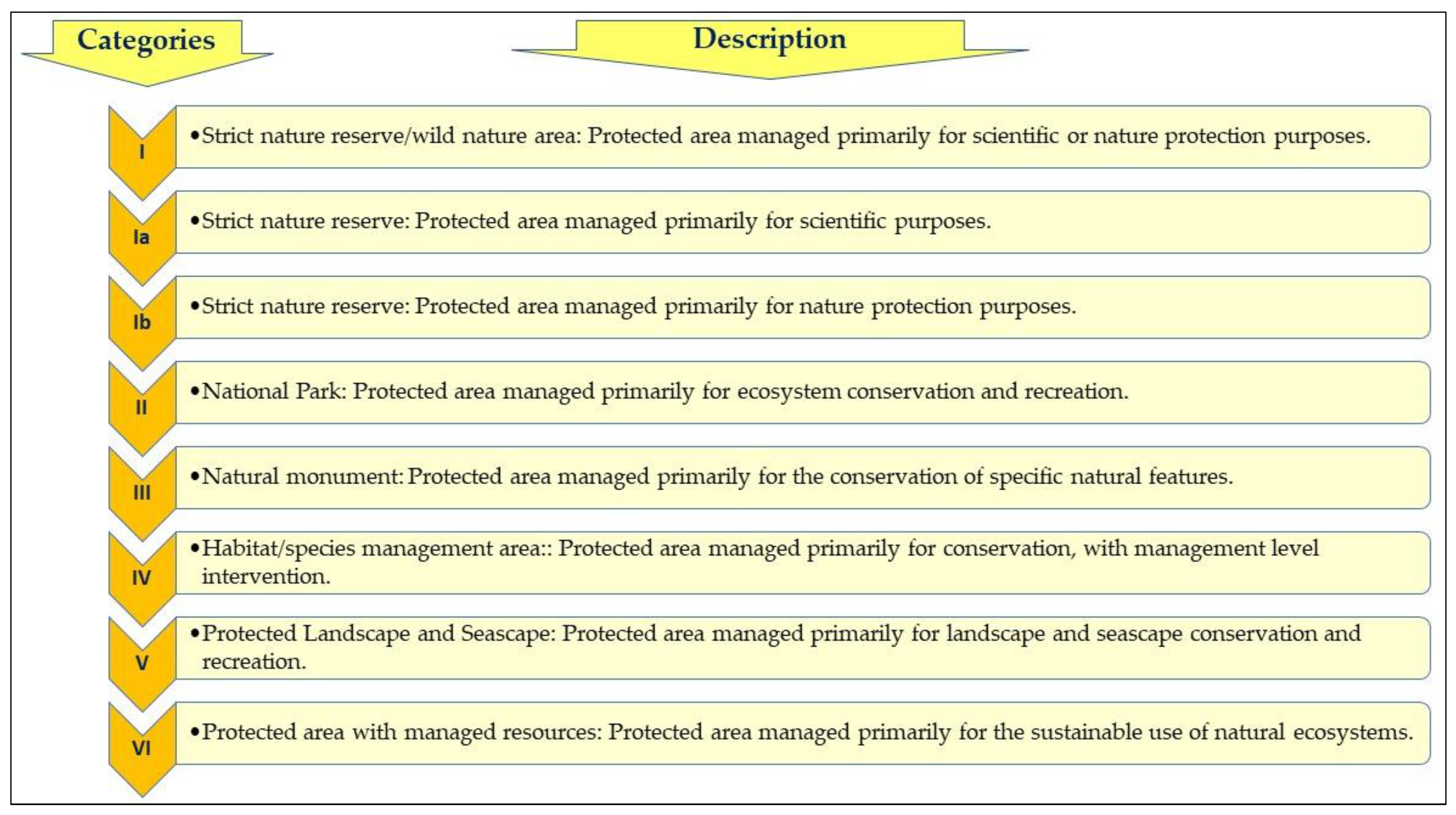
Figure 2.
Dimensions of tourism sustainability. Note: Based on [54].
Figure 2.
Dimensions of tourism sustainability. Note: Based on [54].
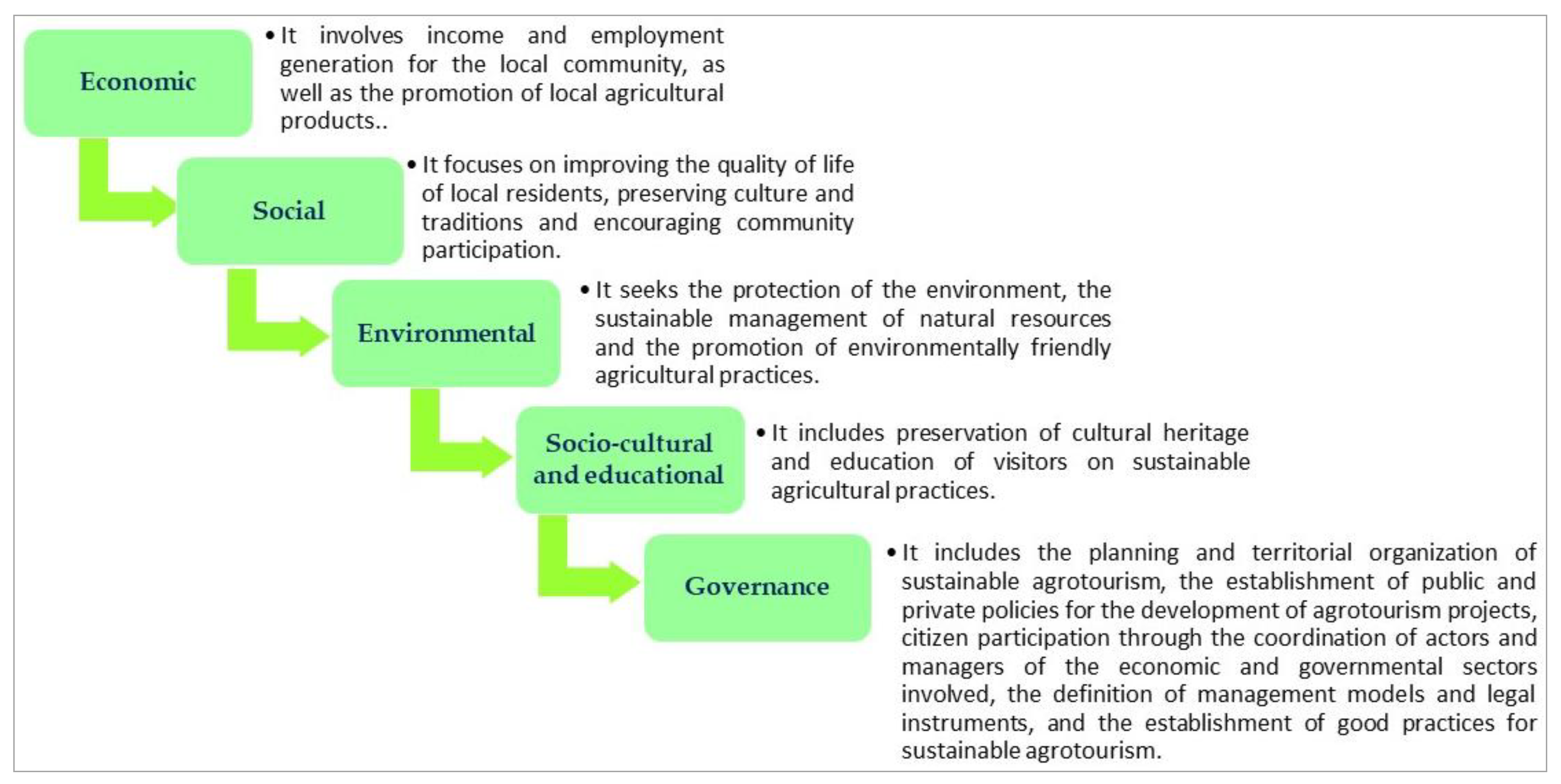
Figure 3.
Sustainable tourism indicators. Note: Prepared internally based on [55].
Figure 3.
Sustainable tourism indicators. Note: Prepared internally based on [55].
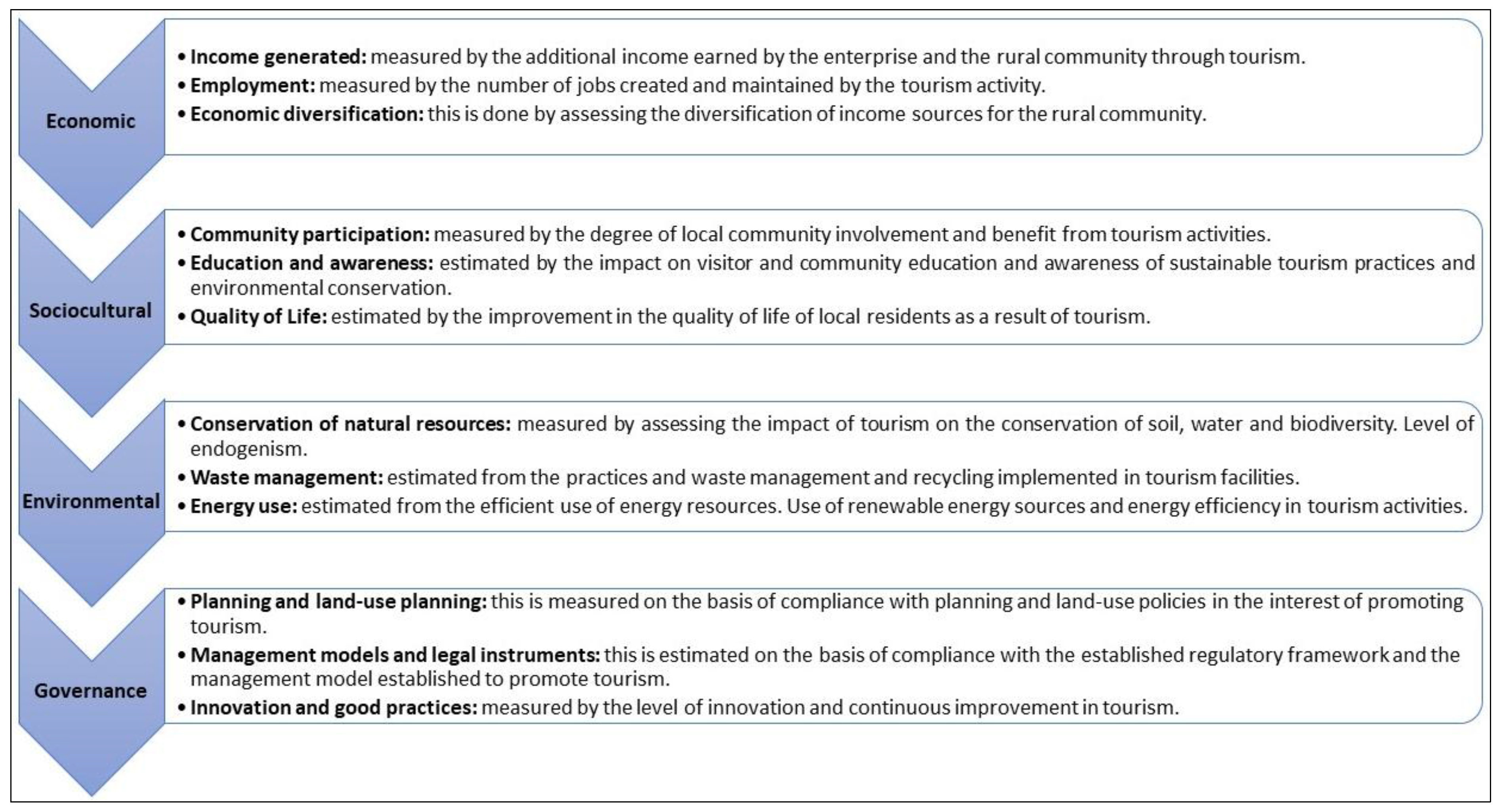
Figure 4.
Protected natural areas in Ecuador.
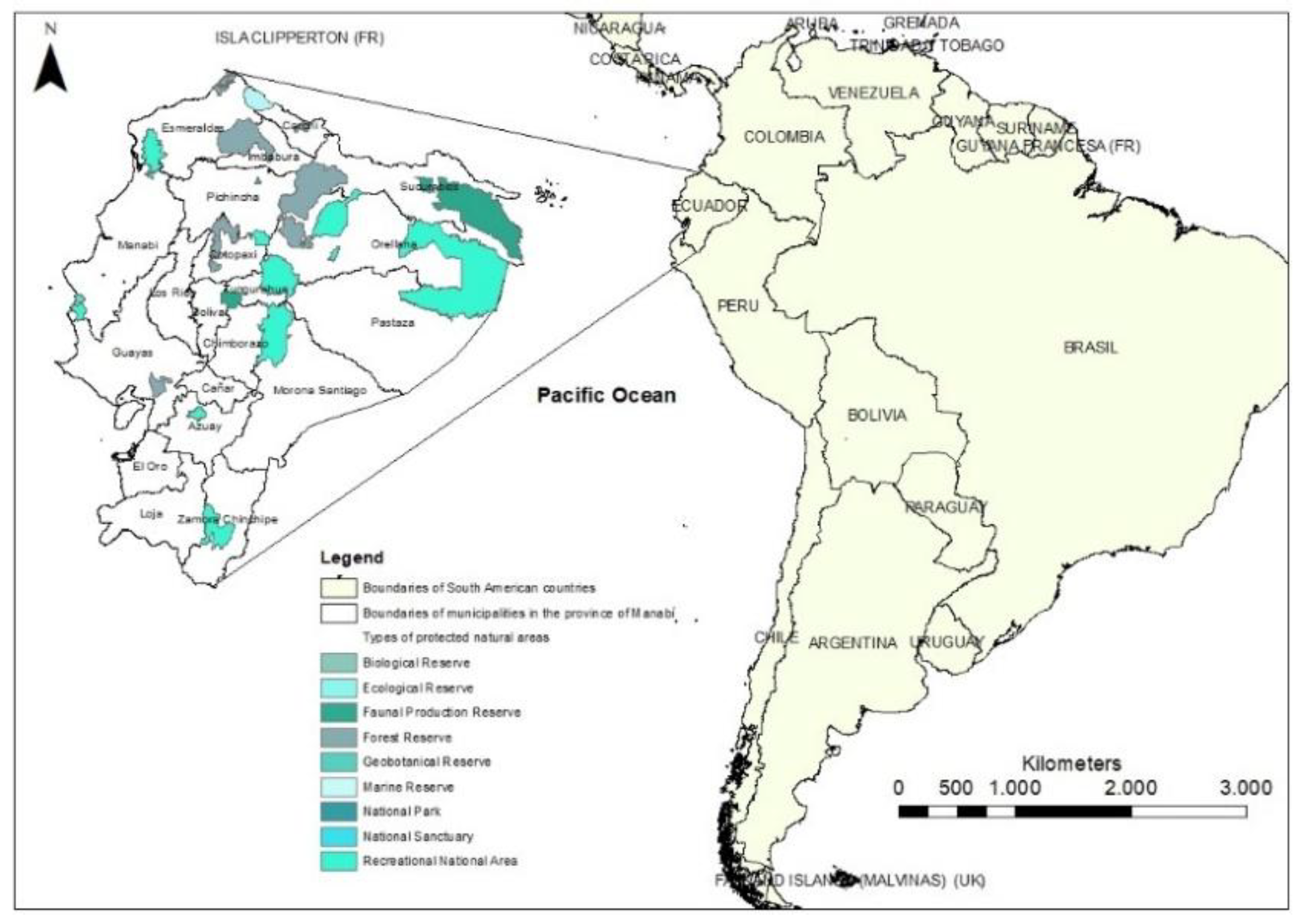
Figure 5.
Map of Ecuador with the province of Manabí, where Machalilla National Park is located.
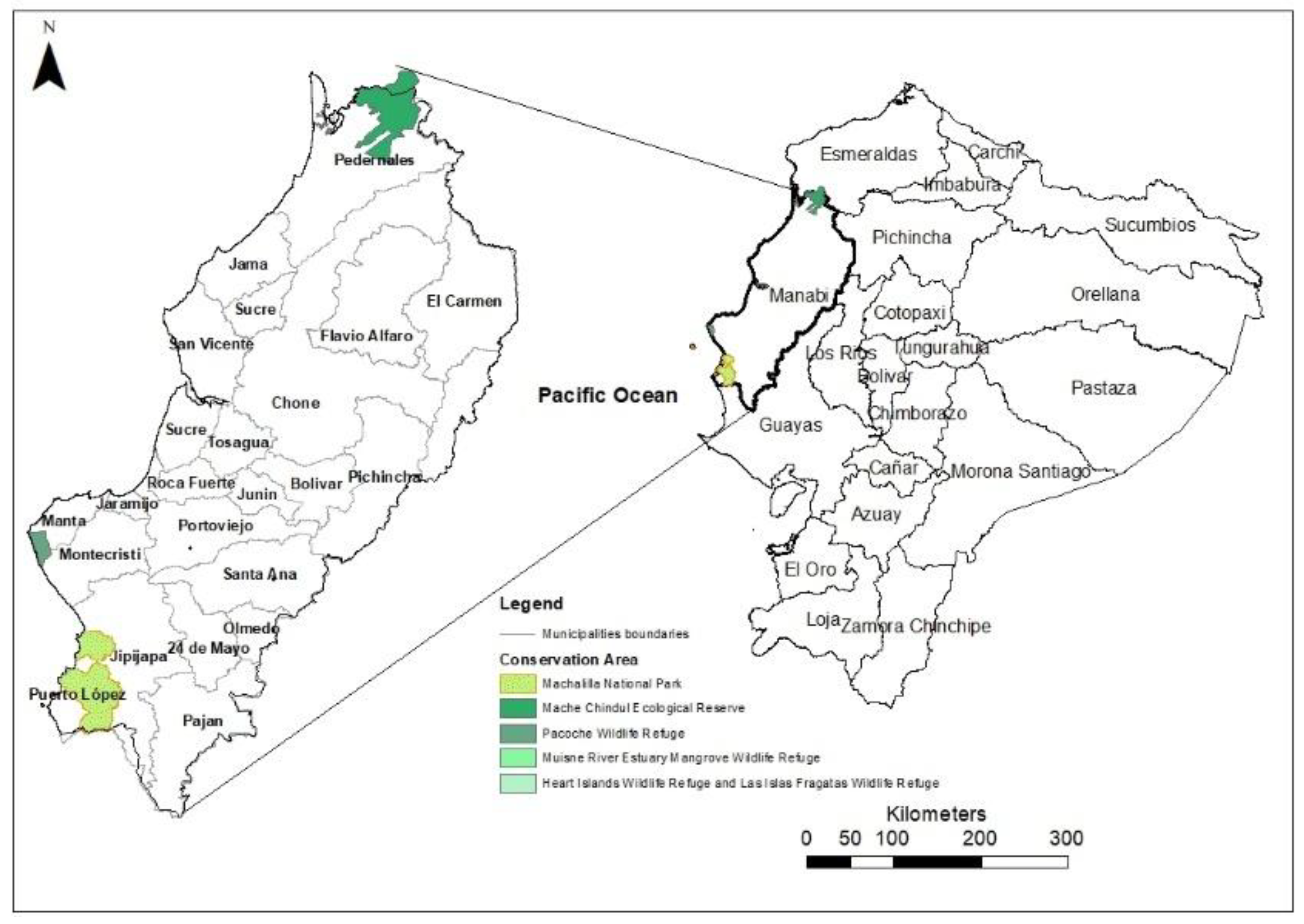
Figure 6.
Diagram of the research methodology.
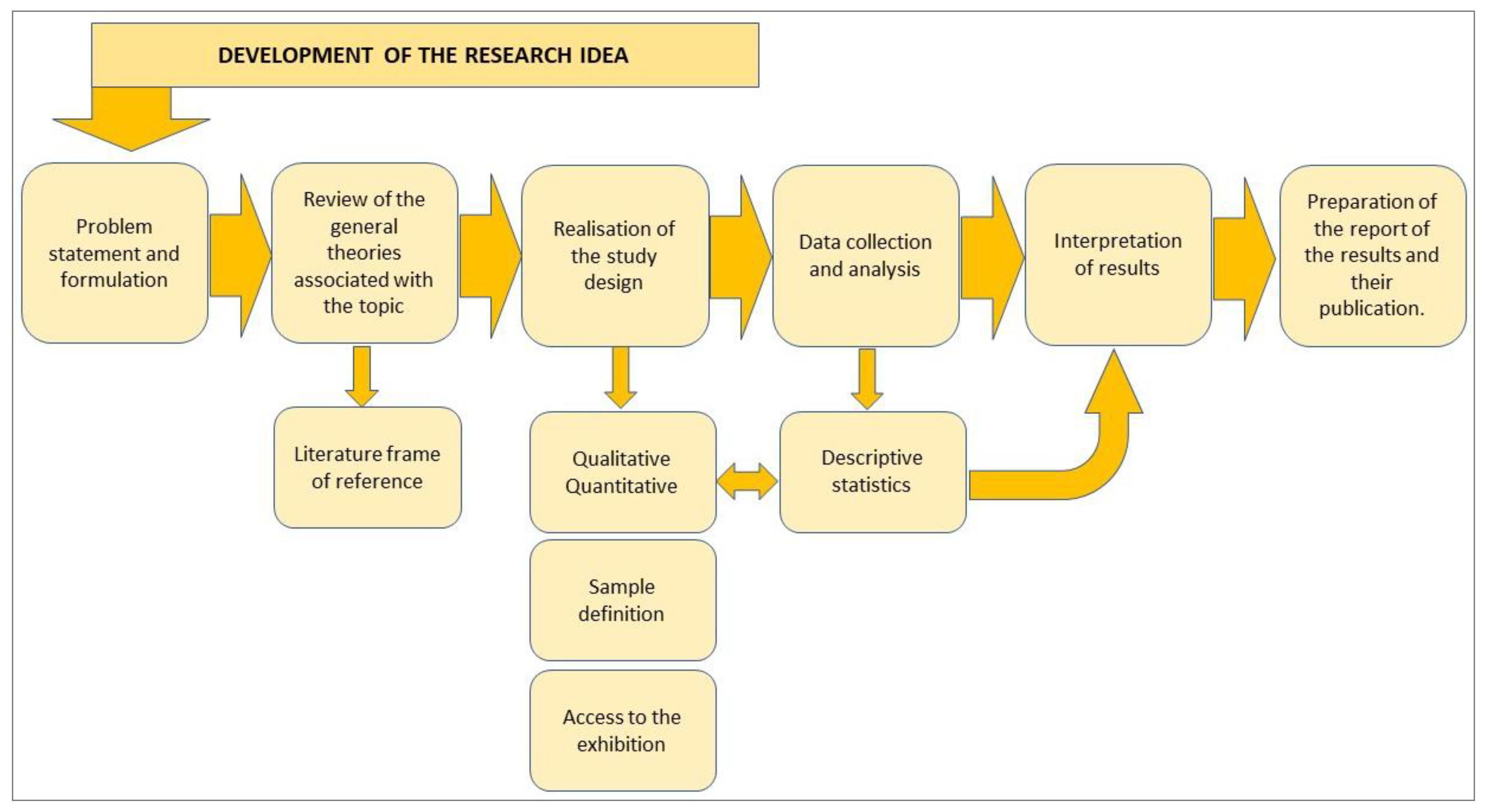
Figure 7.
Average scores for basic indicators for sustainable tourism.
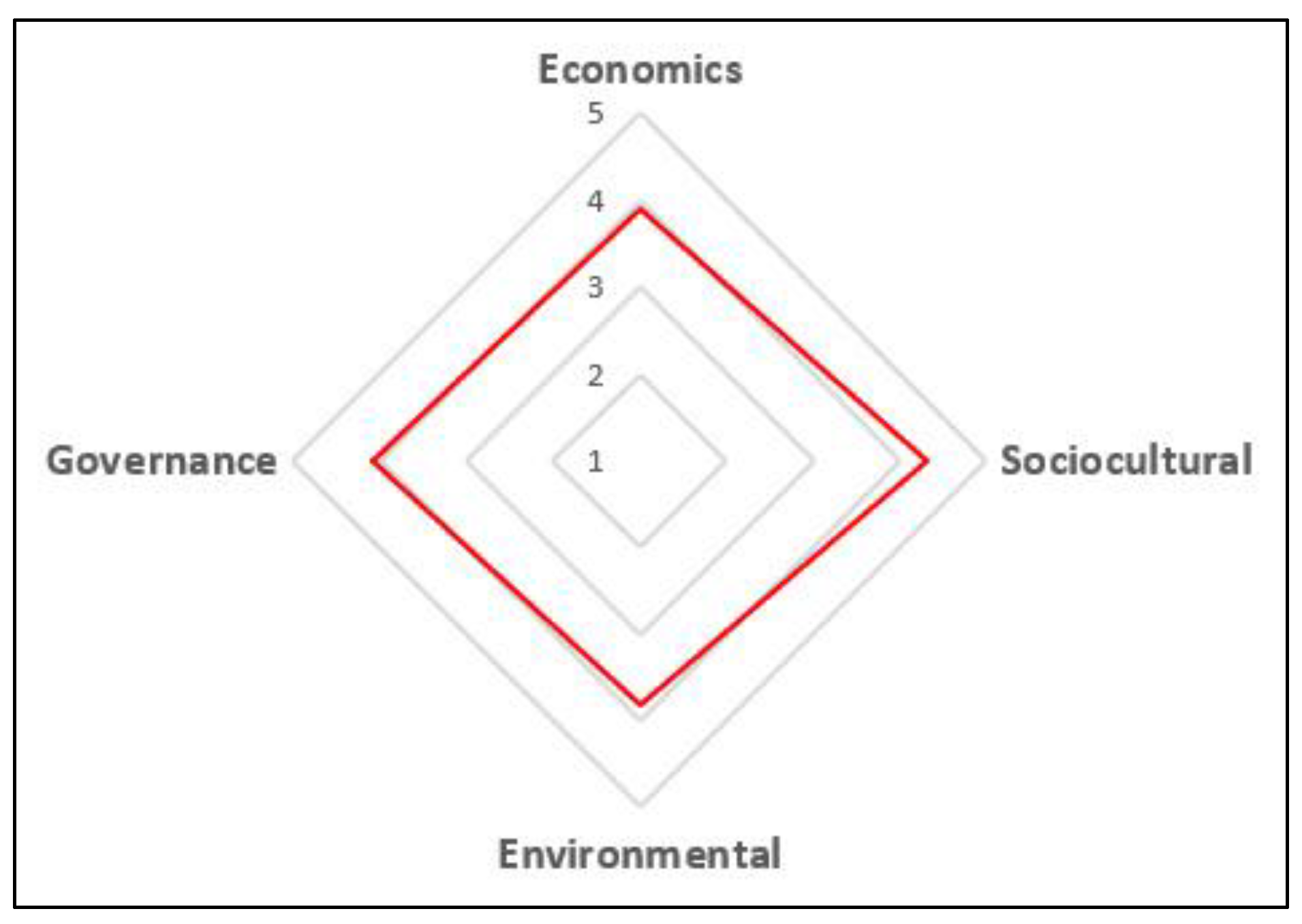
Figure 8.
Results of the semantic differential analysis.
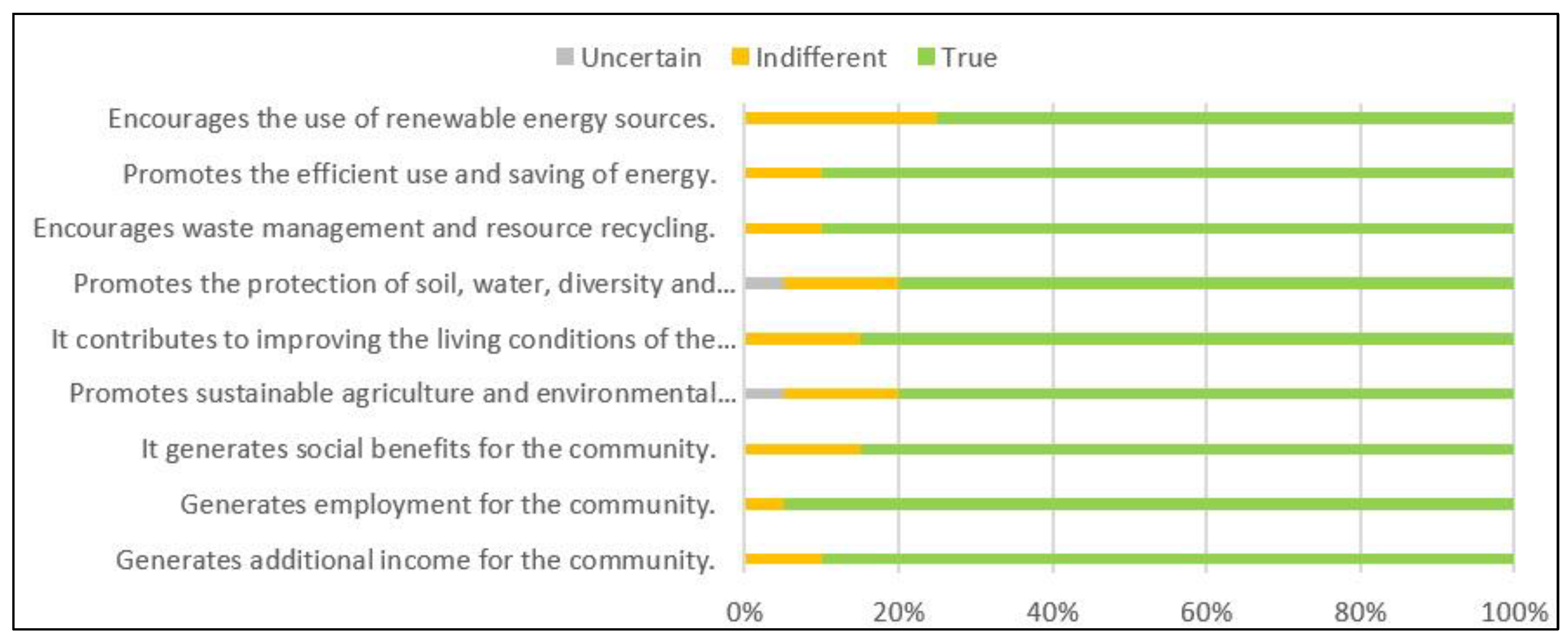
Figure 9.
“A”. Average validity criteria. “B”. Median validity criteria.
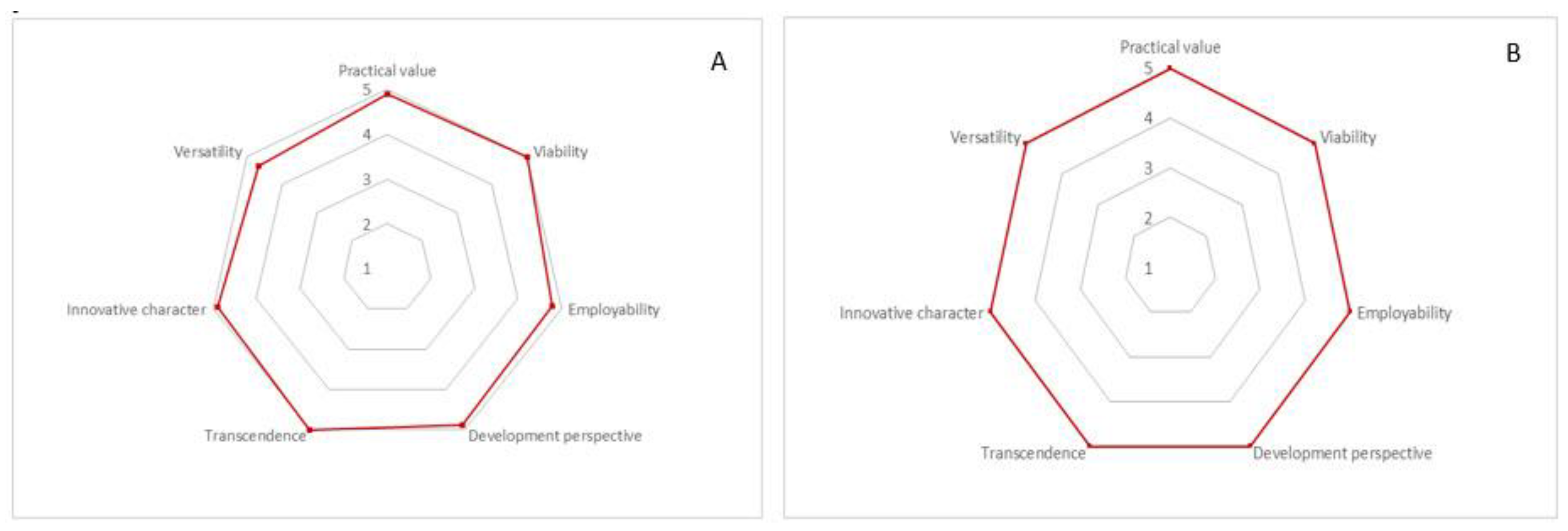
Figure 10.
“A”. Average of usage criteria. “B”. Median of usage criteria.
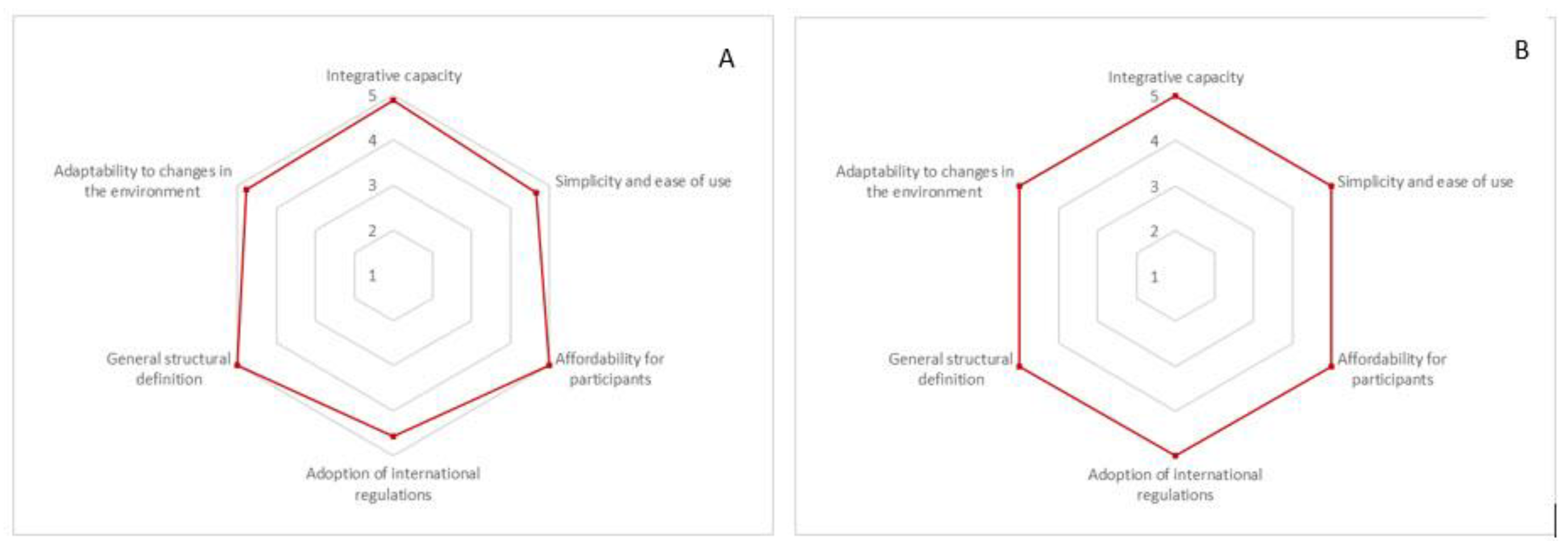
Figure 11.
Methodology for studying tourism sustainability in protected natural areas.
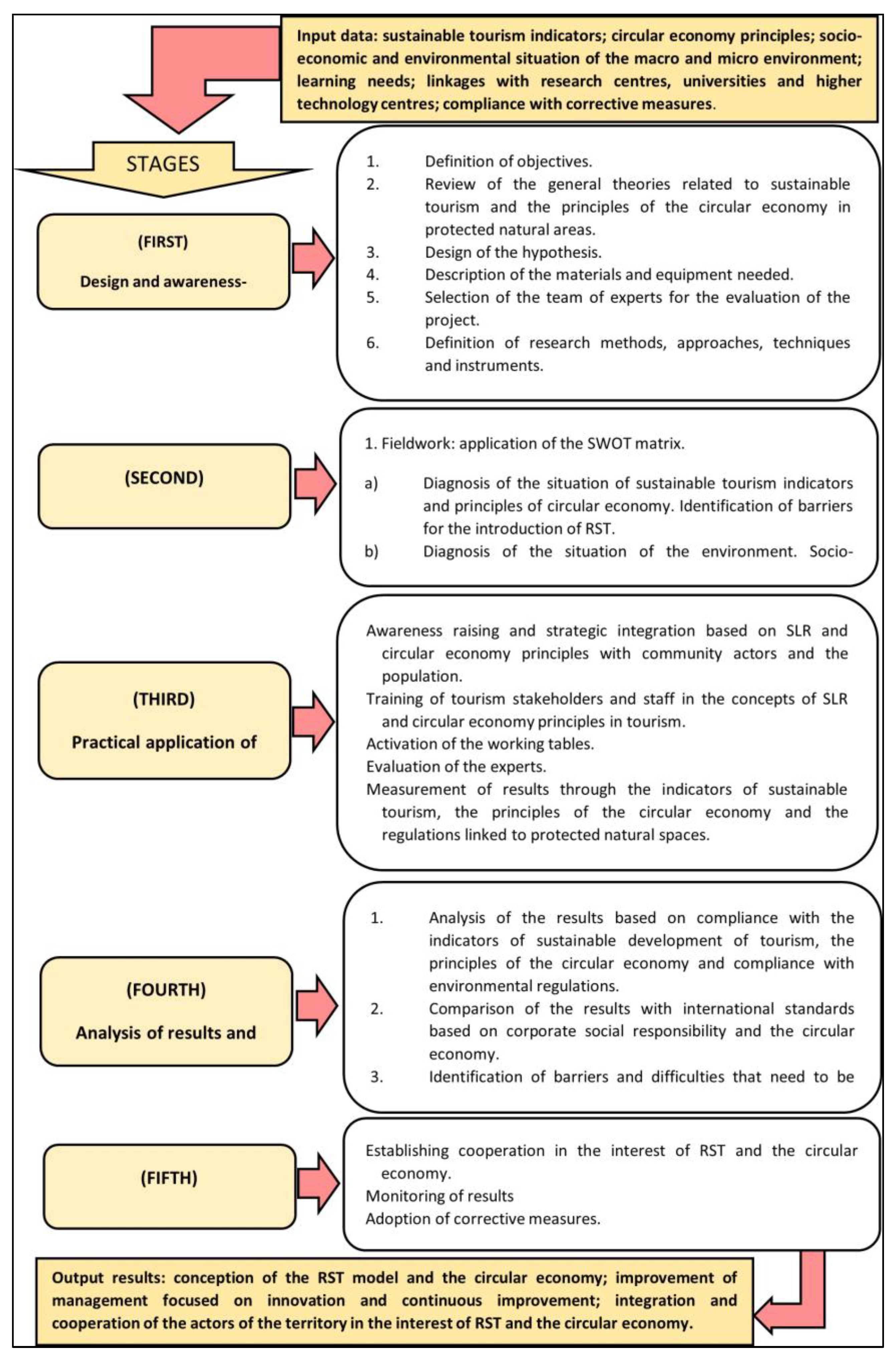

Table 1.
Assessment of basic indicators of sustainable tourism in the PNM.
| Indicators | Description | Frequencies | Participation | ||||
|---|---|---|---|---|---|---|---|
| Strongly disagree | Disagree | Neither agree nor disagree (indifferent) | Agree | Strongly agree | |||
| (1 point) | (2 points) | (3 points) | (4 points) | (5 points) | |||
| Economic | Tourism generates additional income for the community. | 30 | 0 | 2 | 4 | 18 | 6 |
| Sociocultural | The local community is involved and benefits from tourism, with a higher level of environmental awareness. | 0 | 1 | 4 | 10 | 15 | |
| Environmental | Tourism promotes soil, water and biodiversity conservation. It encourages endogenism, the use of renewable sources, recycling and the reuse of resources. | 1 | 3 | 5 | 12 | 9 | |
| Governance | Land use planning and management policies and the regulatory framework promote tourism, innovation and continuous improvement in the sector. | 2 | 1 | 2 | 13 | 12 | |
Table 2.
Results of the semantic differential.
| Indicators | Participation | ||
| Uncertain | Indifferent | True | |
| Generates additional income for the community. | 0 | 2 | 18 |
| Generates employment for the community. | 0 | 1 | 19 |
| It generates social benefits for the community. | 0 | 3 | 17 |
| Promotes sustainable agriculture and environmental protection. | 1 | 3 | 16 |
| It contributes to improving the living conditions of the community. | 0 | 3 | 17 |
| Promotes the protection of soil, water, diversity and endogenism. | 1 | 3 | 16 |
| Encourages waste management and resource recycling. | 0 | 2 | 18 |
| Promotes the efficient use and saving of energy. | 0 | 2 | 18 |
| Encourages the use of renewable energy sources. | 0 | 5 | 15 |
Table 3.
Evaluation of validity criteria.
| Indicators | Rating according to expert judgement | W de Kendall 0.181 Chi-square 6.5 Asymptotic sig 0.37 |
||||||||||
| E1 | E2 | E3 | E4 | E5 | E6 | E7 | E8 | E9 | ||||
| Practical value | 5 | 4 | 5 | 5 | 5 | 5 | 5 | 5 | 5 | |||
| Viability | 5 | 5 | 5 | 5 | 5 | 5 | 5 | 5 | 5 | |||
| Employability | 5 | 5 | 5 | 5 | 4 | 5 | 5 | 5 | 4 | |||
| Development perspective | 5 | 5 | 4 | 5 | 5 | 5 | 5 | 5 | 5 | |||
| Transcendence | 5 | 5 | 5 | 5 | 5 | 5 | 5 | 5 | 5 | |||
| Innovative character | 5 | 5 | 4 | 5 | 5 | 5 | 5 | 5 | 5 | |||
| Versatility | 5 | 5 | 5 | 5 | 4 | 5 | 5 | 5 | 4 | |||
| W de Kendall 0.063 |
Chi-square 2.222 |
Asymptotic sig 0.818 |
||||||||||
Table 4.
Evaluation of usage criteria.
| Indicators | Rating according to expert judgement | W de Kendall 0.1 Chi-square 3.6 Asymptotic sig 0.731 |
||||||||||
| E1 | E2 | E3 | E4 | E5 | E6 | E7 | E8 | E9 | ||||
| Integrative capacity | 5 | 5 | 5 | 5 | 5 | 5 | 4 | 5 | 5 | |||
| Simplicity and ease of use | 5 | 4 | 5 | 5 | 5 | 4 | 4 | 5 | 5 | |||
| Affordability for participants | 5 | 5 | 5 | 5 | 5 | 5 | 5 | 5 | 5 | |||
| Adoption of international regulations | 4 | 5 | 5 | 4 | 5 | 4 | 5 | 4 | 5 | |||
| General structural definition | 5 | 5 | 5 | 5 | 5 | 5 | 5 | 5 | 5 | |||
| Adaptability to changes in the environment | 5 | 4 | 5 | 5 | 4 | 5 | 5 | 5 | 5 | |||
| W de Kendall 0.209 |
Chi-square 7.308 |
Asymptotic sig 0.199 |
||||||||||
Disclaimer/Publisher’s Note: The statements, opinions and data contained in all publications are solely those of the individual author(s) and contributor(s) and not of MDPI and/or the editor(s). MDPI and/or the editor(s) disclaim responsibility for any injury to people or property resulting from any ideas, methods, instructions or products referred to in the content. |
© 2025 by the authors. Licensee MDPI, Basel, Switzerland. This article is an open access article distributed under the terms and conditions of the Creative Commons Attribution (CC BY) license (http://creativecommons.org/licenses/by/4.0/).
Copyright: This open access article is published under a Creative Commons CC BY 4.0 license, which permit the free download, distribution, and reuse, provided that the author and preprint are cited in any reuse.


