
Submitted:
12 February 2026
Posted:
13 February 2026
You are already at the latest version
Abstract
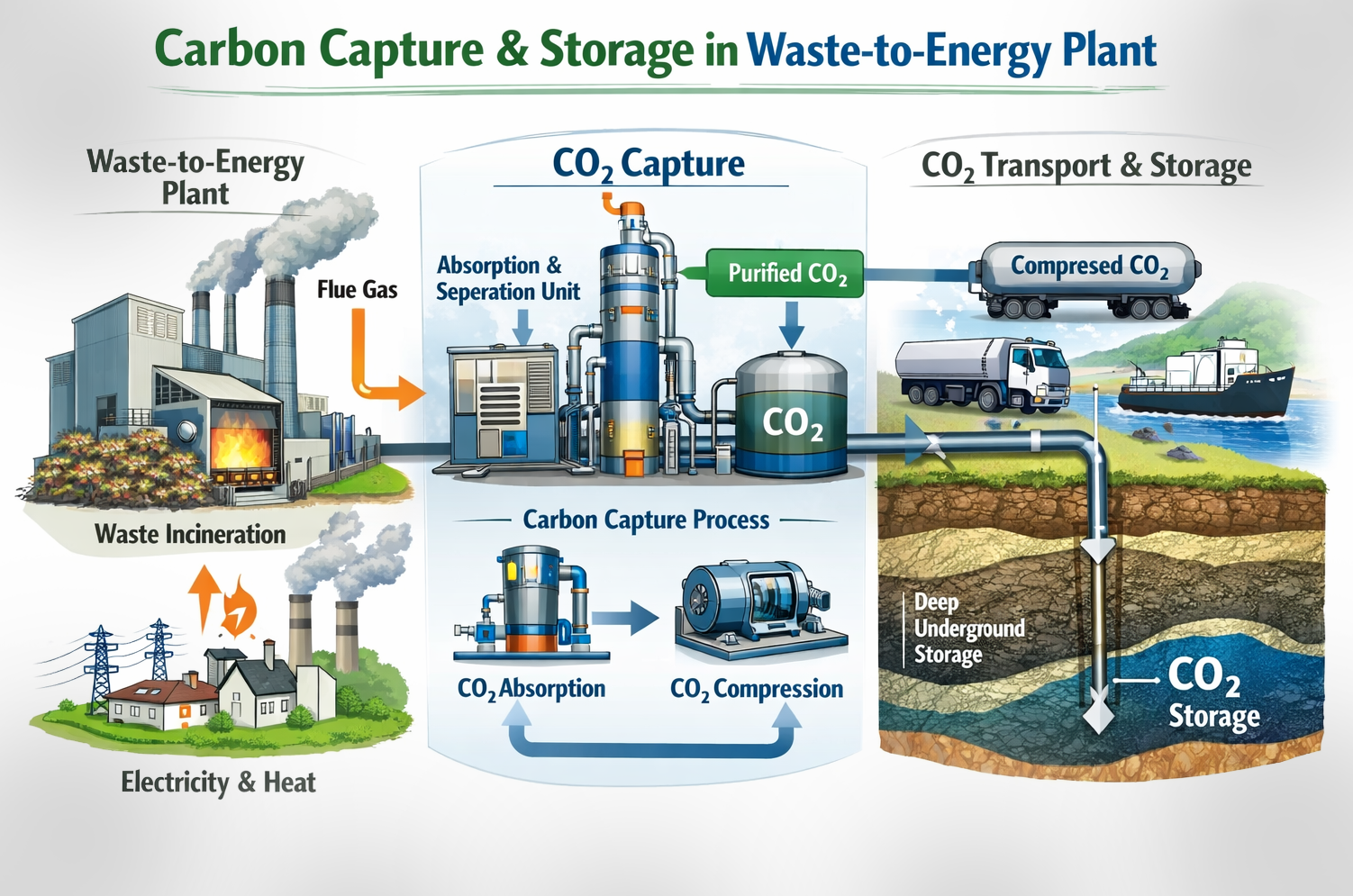
Waste-to-energy (WtW) systems constitute a complex thermochemical interface between energy production and waste management. This can be done by generating CO2 streams of mixed biogenic and fossil origin. Net-negative emissions can be achieved by integrating carbon capture and storage (CCS) into WtE plants. However, the physical chemistry of the capturing process under heterogeneous conditions is not yet fully understood. This review analyzes the molecular and thermodynamic foundations of CO2 capture in WtE contexts and emphasizes solvent-solute interactions, reaction equilibria, and energy landscapes governing sorption and regeneration. Moreover, the chemistry of amine-based systems, ionic liquids, and solid sorbents will be examined, with respect to flue gas composition, impurity tolerance and degradation pathways, as well as the thermodynamic and kinetic frameworks for CO2 compression, phase behavior and geochemical storage reactions. The present review presents WtE–CCS as a particular field where the principles of physical chemistry contribute substantially to the development of sustainable approaches to environmental management.
Keywords:
waste-to-energy
; carbon capture
; carbon storage
; sustainability
; physical chemistry
Copyright: This open access article is published under a Creative Commons CC BY 4.0 license, which permit the free download, distribution, and reuse, provided that the author and preprint are cited in any reuse.


