Preprint
Article

This version is not peer-reviewed.

Comparative Genomics Reveals Unique Genetic Determinants of Biofilm Formation in Campylobacter

Submitted:

09 February 2026

Posted:

12 February 2026

You are already at the latest version

Abstract

Biofilm is a complex microbial community that provides protection to bacterial cells against various stress conditions, including harsh environments, antimicrobial treatments, and host immune responses. This protective mechanism enhances Campylobacter survival during food processing and storage and promotes transmission to humans. Despite its significance, the molecular mechanisms underlying Campylobacter biofilm formation and its impact on pathogen persistence remain poorly understood. In this study, we characterized the biofilm-forming ability of 18 C. jejuni and C. coli strains isolated from retail meat and performed whole-genome sequencing and comparative genomic analysis to identify strain-specific genes contributing to biofilm formation and maintenance. Phenotypic analysis revealed that C. jejuni strains YH001 and YH027 exhibited the strongest biofilm-forming capacity, producing the highest biomass among all isolates. Phylogenetic analysis indicated a close genetic relationship between these two strains, while pangenome analysis identified 19 unique genes/proteins specific to these strains. Functional annotation indicated their critical roles in adhesion, extracellular matrix production, and stress response. These findings demonstrate strain-specific biofilm formation in Campylobacter and highlight genetic determinants that may serve as targets for novel therapeutic approaches and intervention strategies to disrupt biofilms, improve food safety, and reduce persistent infections.

Keywords: 
;  ;  ;  

Introduction

Campylobacter is one of the most common foodborne pathogens worldwide and a leading cause of human gastroenteritis, with typical symptoms including diarrhea, abdominal pain, fever, and nausea. According to the Centers for Disease Control and Prevention (CDC), approximately 1.5 million cases of Campylobacter infection occur each year in the United States, making it a major public health concern [1]. Among the various species, Campylobacter jejuni and C. coli are most commonly associated with human illness [2]. These species are prevalent in poultry and other animal-derived food and can also be found in eggs, unpasteurized milk, and untreated water. The primary routes of transmission to humans include consumption of undercooked poultry, cross-contamination in kitchens, and ingestion of contaminated water or raw milk [3,4].
Biofilms are structured microbial communities, in which cells are aggregated and embedded in a matrix of extracellular polymeric substances (EPS). This matrix, produced either by the cells themselves or by surrounding bacteria, consists of polysaccharides, structural proteins (e.g., flagella and pili), nucleic acids (extracellular DNA (eDNA) and RNA (eRNA)), lipids, and other biomolecules [5]. Polysaccharides are essential for biofilm formation contributing to cell adhesion to surfaces and maintenance of structural integrity [6]. Biofilm proteins play important roles in biofilm development and survival of the cells by facilitating access to nutrients and regulating biofilm integrity. They are involved in attaching cells to surfaces, developing three-dimensional biofilm structures, and maintaining biofilm stability through interactions with exopolysaccharide and nucleic acids [7,8]. As a key component of biofilm structure, eDNA contributes to biofilm formation, adhesion, and structural integrity by binding and connecting cells within biofilms [9].
Biofilms formed by pathogenic bacteria present a major challenge in the food processing industry. Common foodborne pathogens, including Campylobacter, Salmonella, Escherichia coli O157:H7, Listeria monocytogenes, and Staphylococcus aureus, readily develop biofilms on both biotic and abiotic surfaces during food processing and storage. These biofilms significantly enhance bacterial resistance to environmental stresses, disinfectants, and antibiotics, making intervention and eradication efforts difficult [10]. It has been reported that biofilm embedded cells can exhibit remarkably higher (10-1000-fold) resistance to antimicrobials compared with planktonic cells due to the protective properties of the matrix and altered physiology. Consequently, biofilms contribute to persistent contamination, reduced sanitation efficacy, and elevated food safety risks across production environments.
Campylobacter is a Gram-negative, spiral-shaped, microaerophilic bacterium that thrives in low-oxygen environments, typically requiring 3-10% oxygen, 5-10% CO2 and temperature of 37-42 °C for optimal growth. These physiological constraints favor its persistence in niches such as the gastrointestinal tract of animals, as well as in water systems and plumbing within animal husbandry facilities and food processing plants. In these environments, Campylobacter frequently forms biofilms. Studies have shown that C. jejuni cells encased in a biofilm matrix exhibit significantly greater stress tolerance compared to planktonic cells. This enhanced resilience makes biofilm-associated Campylobacter extremely difficult to eradicate, leading to persistent contamination in food processing facilities and increasing the risk of foodborne infections [11,12,13,14].
Campylobacter biofilm formation exhibits significant strain-to-strain variation, influenced by genetic factors and environmental conditions such as low nutrients, extracellular DNA, aerobic/microaerobic conditions, and the presence of co-cultivated bacteria [15,16]. Our current understanding of the molecular mechanisms underlying Campylobacter biofilm formation remains limited. Although some genes involved in flagella synthesis, stress response, and quorum sensing have been reported to influence biofilm development, the overall genetic basis and regulatory networks remain poorly characterized [17,18,19].
Given the implications for public health, identifying the specific genes and proteins involved in biofilm formation is crucial for developing targeted interventions to disrupt biofilm development, reduce antibiotic resistance, and reduce pathogen contamination in food systems.
To address these gaps, we conducted comprehensive genomic and phenotypic analyses of Campylobacter biofilms formed by different strains isolated from retail meat products. A total of18 Campylobacter isolates including 9 C. jejuni and 9 C. coli were examined for their biofilm-forming ability. Whole-genome sequencing, phylogenetic analysis, and pan-genomic profiling were employed to identify genes and proteins associated with biofilm formation and to elucidate genetic relationships among the strains. Furthermore, the functions of unique genes identified exclusively in biofilm-forming strains were annotated to clarify their roles in biofilm formation and maintenance. Together, these findings advance our understanding of the genetic determinants of Campylobacter biofilms and inform the design of targeted strategies to improve food safety.

Materials and Methods

Sample Preparation

C. jejuni and C. coli strains were isolated from retail meat, including chicken meat, chicken livers, and beef livers, collected between 2011 and 2023 using previously described methods [20]. Briefly, 450 g of meat was combined with 250 mL buffered peptone water (BPW) and homogenized using a stomacher. The homogenate was centrifuged and the pellet was enriched in Bolton broth supplemented with horse blood and selective antibiotics (cefoperazone, trimethoprim, vancomycin, and cycloheximide) at 42 °C for 24 h under microaerobic conditions (5% O2, 10% CO2, and 85% N2) using a CampyPak (Becton, Dickinson and Company, Franklin Lakes, New Jersey) in an airtight jar. Following enrichment, passive filtration onto Brucella agar was employed for strain isolation based on the highly motile nature of Campylobacter. Colonies were re-streaked twice for strain purification, and genus and species identification was performed using a multiplex qPCR assay previously developed for differentiating C. jejuni and C. coli [21].

Biofilm Formation

Campylobacter isolates were streaked from −80 °C frozen stocks onto Mueller-Hinton (MH) agar plates and incubated overnight under microaerobic conditions (5% O2, 10% CO2, 85% N2) at 42 °C. Fresh colonies were scraped from the agar plates and resuspended in 2 mL of MH broth, followed by overnight incubation under the same conditions. Subsequently, 50 mL of the overnight culture was inoculated into 5 mL of MH broth and homogenized. Two aliquots of 2 mL of the diluted culture were transferred into 10 cm2 /10mL polystyrene tissue culture tubes with a flat surface and vent cap (Techno Plastic Products AG, Canton Schaffhausen, Switzerland) and incubated horizontally for 5 days to allow biofilm development. All incubations were performed under microaerobic conditions at 42 °C.

Biofilm Quantification

Biofilm cultures were filtered onto a 40 mm cell strainer fitted on a 50 mL conical tube. The strainer containing aggregated cells was rinsed with 2 mL of fresh MH broth, transferred to a 6-well plate and then submerged in 6 mL 0.1% crystal violet solution. After a 30-min incubation at room temperature, the strainers and aggregates were rinsed three times with 5 mL of sterile water and photographed on a light box. The strainer was then placed in a fresh 6-well plate and submerged in 6 mL of 100% ethanol. After 30 min of incubation at room temperature with gentle shaking, a pipette was used to dislodge aggregates from the strainer surface and mix the ethanol. The absorbance of the ethanol solution (200 mL in each well, in triplicate) was measured at 590 nm using a Cytation 5 plate reader (BioTek/Agilent Life Sciences, Winooski, Vermont).

Genome Sequencing, Assembly, and Annotation

Genomic DNA was extracted using the Qiagen genomic tip 100/G kit (Valencia, CA) and quantified with a Qubit 3.0 fluorometer (Thermo Fisher Scientific, Waltham, MA) following the manufacturers’ instructions. Whole-genome sequencing was performed using Illumina MiSeq and Pacific Biosciences (PacBio) RSII and/or Sequel platforms. Genome assemblies were generated from PacBio long reads using Canu v2.2 [26]. Overhangs of assembled contigs were trimmed and reoriented using Circlator v1.5.5 [27] to produce complete circularized genomes.
In a few cases where reorientation and trimming failed, Illumina MiSeq reads were used to correct sequencing errors in assembled contigs: MiSeq reads were mapped to Canu assemblies using BWA v0.7.17-r1188 [28]; errors were corrected using Pilon v1.22 [29]; pilon correction was repeated iteratively until no errors were detected. Finally, the assemblies were trimmed and reoriented using Circlator v1.5.5 to generate complete circular genomes.
Table 1 summarizes the source and assembled genome information for C. jejuni and C. coli isolates. For each strain, the complete genome of approximately 1.6–1.8 Mbp, consistent with the size of previously reported Campylobacter chromosomes, was annotated using the RAST server [30,31]. Chromosomal integrity was verified by confirming the presence of the start gene dnaA, three copies of rRNA operons (23S, 16S, and 5S rRNA), and minimal repeat sequences. Smaller contigs were assessed for potential plasmid sequences.

Pangenome & Phylogenetic Analysis

The Campylobacter pangenome was constructed using the KBase web server [32]. First, genome assemblies were annotated with RASTtk v1.073, then the pangenome was constructed using Ortho-MCL v0.0.8 [33]. To investigate the relatedness of different genome clusters, we constructed a phylogenetic parsimony tree from all SNPs using kSNP4 v4.1 [34] with a k-mer size of 19. Bootstrap support values were calculated with IQ-Tree v 2.1.2 [35] on the CIPRES Scientific Gateway [36]. Briefly, a maximum likelihood consensus tree was built using a General Time Reversible (GTR) model with a correction for Ascertainment bias. The kSNP4 parsimony tree was served as the starting tree, and a non-parametric bootstrap analysis was performed with 1000 replicates to assess branch support. Whole-genome sequences (accession numbers) used for this analysis are listed in Table 1. The resulting phylogenetic tree was visualized using Iroki [37].
To determine which genes were unique or shared among the Campylobacter genomes, we constructed a pangenome using OrthoMCL, based on RASTtk annotations generated through the KBase Server. Heatmaps depicting gene presence/absence and the number of shared genes among the genomes were generated in R v4.4.0 (R Core Team 2024) using the ggplot2 and viridis packages [38].

Results and Discussion

1. Determination of Biofilm-Forming Ability of C. jejuni and C. coli Food Isolates

Biofilm formation was examined in 18 food-derived Campylobacter isolates (9 C. jejuni and 9 C. coli). After incubating duplicate samples in polystyrene tubes under microaerobic conditions at 42 °C for five days, adherent cells were washed and stained with crystal violet solution. The results are shown in Figure 1. Biofilm-forming ability varied significantly among the strains: C. jejuni YH001 and YH027 produced the largest amount of biofilm biomass, as indicated by crystal violet staining, whereas C. coli YH504 and YH507 formed moderate biofilms. The remaining strains showed negligible biofilm under the same conditions. The stronger adhesion and aggregation observed in C. jejuni YH001 and YH027 compared to other isolates indicate that biofilm formation in Campylobacter is strain-dependent, a finding consistent with prior studies showing variability across strains and species [39].

2. Comparison Between Genetic Relatedness and Biofilm Formation of Campylobacter Isolates

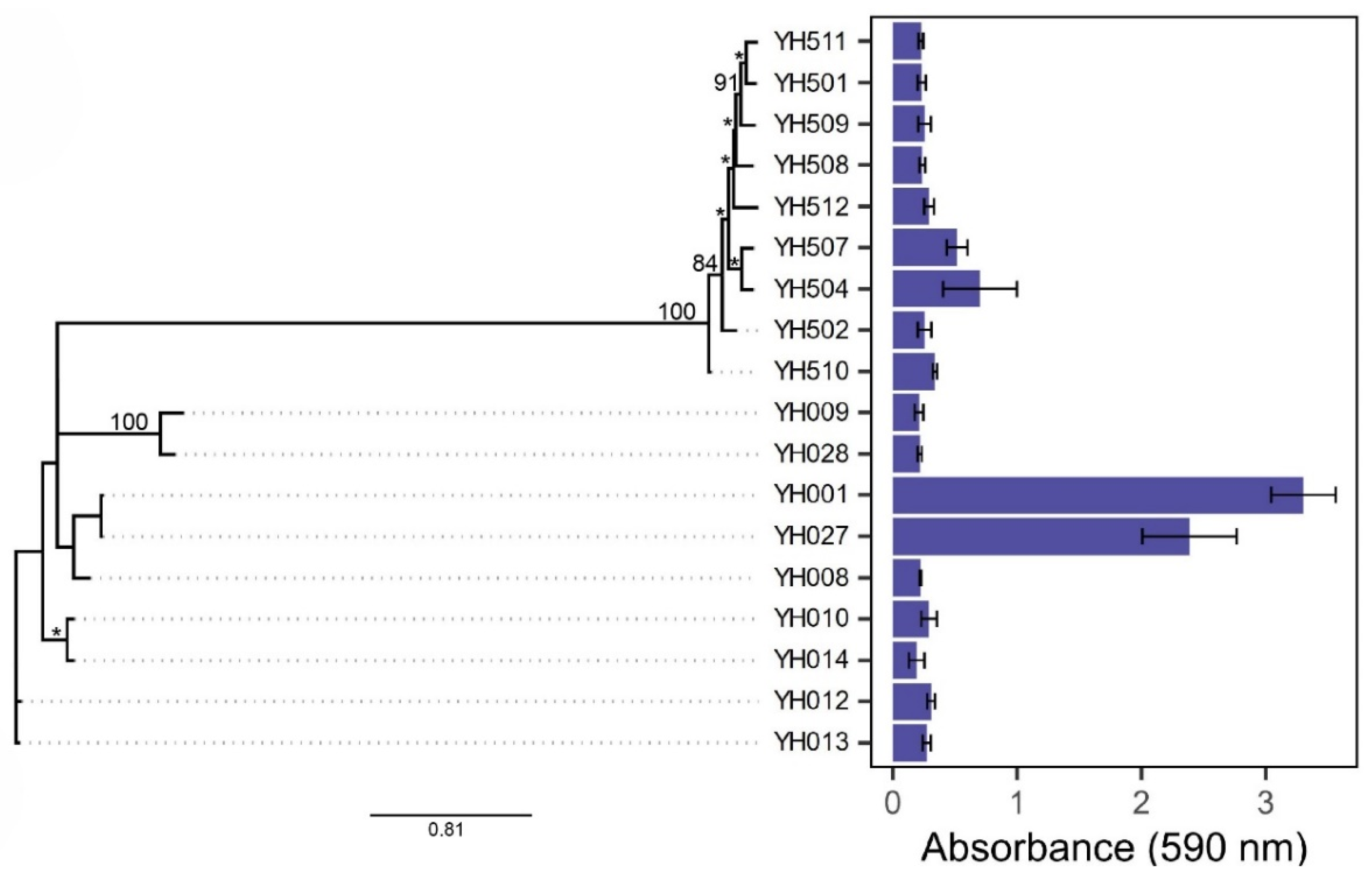
After crystal violet staining, the biofilm biomass was dislodged and quantified by measuring absorbance at 590 nm. The results confirmed that C. jejuni YH001 and YH027 were the strongest biofilm-forming strains, whereas C. coli YH504 and YH507 formed moderate biofilms among 18 Campylobacter food isolates (Figure 2, right panel).
Biofilm formation in bacteria can be influenced by genetic background, environmental adaptation, and regulatory mechanisms. To compare the genotypic traits associated with Campylobacter biofilm formation, a phylogenetic tree was constructed based on SNPs derived from whole-genome sequences of C. jejuni and C. coli isolates (Figure 2, left panel). Interestingly, C. jejuni YH001 and YH027 (two strongest biofilm producers) were clustered together in the tree, indicating close genetic relatedness and shared genomic elements. Similarly, C. coli YH504 and YH507 (two moderate biofilm producers) were also clustered closely in the tree. These findings suggest that biofilm-forming ability may correlate with genetic similarity, supporting the observed strain-dependent variability in Campylobacter biofilm formation.

3. Genetic Traits Associated with Biofilm Formation and Stability

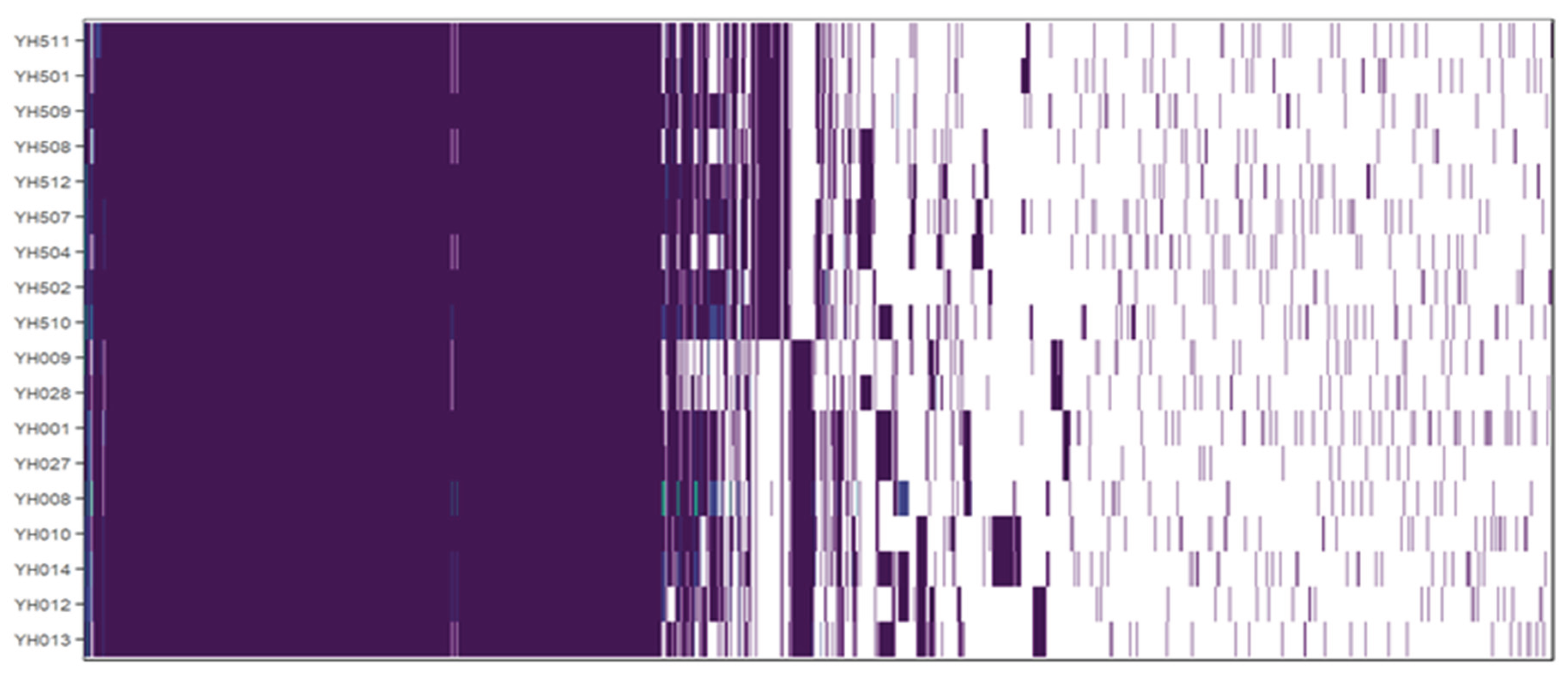
To identify core genes shared by all 18 Campylobacter isolates and variable genes unique to specific strains, a pangenome analysis was performed. The complete results are provided in Supplemental Table S1. The heatmap in Figure 3 illustrates the presence and absence of genes across C. jejuni and C. coli isolates, revealing highly diverse genetic profiles with no two strains exhibiting identical genome patterns.

Identification of Strain-Specific Genes Associated with Biofilm Formation

To identify genes potentially involved in Campylobacter biofilm formation, we searched for strain-specific genes and annotated proteins using the complete pangenome dataset (Supplemental Table S1). This analysis revealed 19 unique genes/proteins, including 5 hypothetical proteins, present in C. jejuni YH001 and YH027, two isolates characterized as strong biofilm producers (Table 2).
Functional annotation revealed that these proteins play important roles in biofilm formation and/or maintenance, primarily by mediating cell adhesion to surfaces, extracellular matrix production, and signaling pathways that regulate biofilm stability.
Specifically, Dihydrolipoamide dehydrogenase (DLDH) is a central metabolic enzyme that converts pyruvate to acetyl-CoA for energy production, which is critical for bacterial survival and growth under nutrient-limited conditions. This enzyme is also essential for bacterial adherence, biofilm development, structure integrity, and virulence, and it has been detected in the exopolysaccharide (EPS) of Pseudomonas aeruginosa biofilms [40].
FAD-dependent NAD(P)-disulfide oxidoreductases catalyze disulfide bond formation, which stabilizes biofilm matrix proteins and therefore enhances cohesion and resilience within the biofilm. They also participate in polysaccharide biosynthesis, contributing to the extracellular polymeric substance (EPS) that forms the biofilm matrix [41,42].
DD-carboxypeptidase is a key enzyme in peptidoglycan (PG) biosynthesis. PG is a major structural component of bacterial cell walls and is essential for biofilm formation and function by providing cell structural integrity and shape. Proper PG synthesis supports cell-cell interactions and surface attachment [43,44]. Studies have shown that, in C. jejuni, mutations in DD-carboxypeptidase lead to defective PG assembly and impaired biofilm formation [45].
DNA-binding protein Roi is important in structuring the biofilm matrix, which is formed largely by extracellular DNA (eDNA) along with exopolysaccharides (EPS) and other components. DNA-binding proteins act as molecular glues, linking eDNA to other matrix components and cells within the biofilm, which is a function critical for biofilm formation and maintaining structural integrity [46].
NiFe hydrogenases have been identified in diverse biofilm communities by metagenomic studies. They are involved in a variety of metabolic pathways within biofilms, including hydrogen metabolism and energy conversion [47].
L-Proline/Glycine betaine transporter (ProP) facilitates the transport of proline and glycine betaine across the cell membrane, enabling cells to maintain osmotic balance and survive under stressful conditions. It plays a crucial role in biofilm formation as it enhances surface attachment and the synthesis of exopolysaccharides necessary for biofilm structure [48].
The YraQ family of membrane proteins facilitates cell adhesion and contributes to the overall structure and stability of the biofilm. Specifically, YraQ family proteins can be involved in initial cell attachment and the production of extracellular polymeric substance (EPS) matrix, which is a key component of biofilms [49].
Alpha-ketoglutarate permease (KgtP) transports α-ketoglutarate across cell membranes. KgtP is involved in carbon and nitrogen utilization, which is crucial for bacterial survival and adaptation. In a biofilm environment, cells often experience nutrient limitations and stress. By enabling the efficient uptake of α-ketoglutarate, KgtP may contribute to the growth and survival of bacteria within a biofilm, potentially influencing biofilm development and structure [50].
Efflux proteins can export EPSs, the primary components of the biofilm matrix, potentially impacting the structure and density of the biofilm. In addition, efflux pumps can contribute to biofilm development by exporting quorum sensing (QS) molecules, regulating transcriptional factors involved in biofilm formation, and facilitating bacterial aggregation and adhesion to surfaces by exporting molecules that affect these processes [51,52].
Ammonium transporters mediate the transport of ammonium across bacterial cell membranes, which are essential for biofilm physiology, facilitating nutrient acquisition, waste removal, and potentially influencing biofilm development through their interactions with biofilm components and other regulatory mechanisms. The activity of ammonium transporters can influence biofilm structure and function, impacting the growth and survival of microorganisms within the biofilm [53].
Sodium-dependent phosphate transporters are important for biofilm formation by enabling bacteria to acquire and utilize phosphate, a vital nutrient for cell metabolism and growth. The PstS protein, a subunit of the Pst phosphate transporter, is particularly important in this process, as it not only facilitates phosphate uptake but also influences the structure of bacterial biofilms [54].
Multi-antimicrobial extrusion proteins (MATEs) are essential components of bacterial defense mechanisms, particularly within biofilms. Their ability to extrude various antimicrobial substances contributes to the high levels of resistance and tolerance observed in biofilms [51,55].
Potassium-transporting ATPase A chain is involved in bacterial biofilm formation and maintenance by transporting potassium and maintaining proper intracellular potassium levels for essential functions like membrane potential, pH balance, and cell growth. Biofilms are complex communities of bacteria encased in a self-produced extracellular matrix, and disrupting potassium transporters can alter biofilm development and function [56].
Cytochrome c family proteins are essential for electron transfer, redox balancing, and energy production in bacteria, which is important for biofilm formation and cell respiration within the biofilm [57].
Together, these functional attributes underscore the importance of these proteins in promoting Campylobacter biofilm matrix production, structural integrity, and stability under diverse conditions. Future research should focus on functional validation of these candidate genes and proteins, elucidating their regulatory networks, and exploring innovative biofilm disruption strategies, including targeted inhibitors or environmental interventions, to mitigate Campylobacter persistence in food production systems. Additionally, given the association between biofilm formation and increased antimicrobial tolerance, further studies are needed to assess the role of these mechanisms in antimicrobial resistance and their impact on public health.

Conclusion

This study demonstrates the strain-specific nature of biofilm formation in Campylobacter spp., identifying two strong biofilm-forming strains among 18 food isolates. Through whole-genome sequencing and comparative genomic analysis of biofilm-forming and non-forming strains, we uncovered key genes and pathways associated with biofilm development and stability, providing new insights into the genetic determinants underlying this phenotype. Phylogenetic and pangenomic analyses provided valuable insights into the genetic basis of biofilm formation, and highlighted strain-specific ability to utilize this mechanism for survival in challenging conditions, particularly those encountered during food processing and storage. Importantly, the identification of specific proteins linked to both biofilm formation and pathogenesis in C. jejuni strains YH001 and YH027 offers promising molecular targets for novel therapeutic approaches and intervention strategies aimed at disrupting biofilms. These findings not only advance our understanding of the molecular basis of Campylobacter biofilms but also have significant implications for improving food safety and reducing the risk of persistent contamination and chronic infections.

Supplementary Materials

The following supporting information can be downloaded at the website of this paper posted on Preprints.org.

Author Contributions

Yiping He, Gretchen Dykes, Chin-Yi Chen and Joseph Capobianco: design and perform experiments, analyze data, interpret results, and prepare manuscript. Heather Koppenhofer: conduct experiments, analyze results, and review manuscript.

Data Availability Statement

All the assembled genome sequences of Campylobacter isolates were deposited and are available in GenBank, NCBI under the accession numbers listed in Table 1.

Acknowledgments

This research was supported by the U.S. Department of Agriculture, Agricultural Research Service (USDA-ARS), National Program 108, Current Research Information System numbers 8072-42000-093 and 8072-42000-094, and used resources provided by the SCINet project and/or the AI Center of Excellence of USDA-ARS, project numbers 0201-88888-003-000D and 0201-88888-002-000D. The mention of trade names or commercial products in this publication is solely for the purpose of providing specific information and does not imply recommendation or endorsement by the USDA. All opinions expressed are the authors’, and do not necessarily reflect the policies or views of the USDA. The USDA is an equal opportunity provider and employer.

Conflicts of Interest

The authors declare no conflict of interest.

References

  1. Centers for Disease Control and Prevention. About Campylobacter Infection. Available online: https://www.cdc.gov/campylobacter/about/index.html (accessed on 28 January 2026).
  2. Tikhomirova, A.; McNabb, E.R.; Petterlin, L.; Bellamy, G.L.; Lin, K.H.; Santoso, C.A.; Daye, E.S.; Alhaddad, F.M.; Lee, K.P.; Roujeinikova, A. Campylobacter jejuni virulence factors: Update on emerging issues and trends. J. Biomed. Sci. 2024, 31, 45. [Google Scholar] [CrossRef]
  3. World Health Organization (WHO) Fact Sheet on Campylobacter. Available online: https://www.who.int/news-room/fact-sheets/detail/campylobacter.
  4. Veronese, P.; Dodi, I. Campylobacter jejuni/coli Infection: Is It Still a Concern? Microorganisms 2024, 12, 2669. [Google Scholar] [CrossRef] [PubMed]
  5. Karygianni, L.; Ren, Z.; Koo, H.; Thurnheer, T. Biofilm Matrixome: Extracellular Components in Structured Microbial Communities. Trends Microbiol. 2020, 28, 668–681. [Google Scholar] [CrossRef]
  6. Ryder, C.; Byrd, M.; Wozniak, D.J. Role of polysaccharides in Pseudomonas aeruginosa biofilm development. Curr. Opin. Microbiol. 2007, 10, 644–648. [Google Scholar] [CrossRef]
  7. Lasa, I.; Penades, J.R. Bap: A family of surface proteins involved in biofilm formation. Res. Microbiol. 2006, 157, 99–107. [Google Scholar] [CrossRef] [PubMed]
  8. Fong, J.N.C.; Yildiz, F.H. Biofilm Matrix Proteins. Microbiol. Spectr. 2015, 3. [Google Scholar] [CrossRef]
  9. Panlilio, H.; Rice, C.V. The role of extracellular DNA in the formation, architecture, stability, and treatment of bacterial biofilms. Biotechnol. Bioeng. 2021, 118, 2129–2141. [Google Scholar] [CrossRef] [PubMed]
  10. Bai, X.; Nakatsu, C.H.; Bhunia, A.K. Bacterial Biofilms and Their Implications in Pathogenesis and Food Safety. Foods 2021, 10, 2117. [Google Scholar] [CrossRef]
  11. Buswell, C.M.; Herlihy, Y.M.; Lawrence, L.M.; McGuiggan, J.T.; Marsh, P.D.; Keevil, C.W.; Leach, S.A. Extended survival and persistence of Campylobacter spp. in water and aquatic biofilms and their detection by immunofluorescent-antibody and -rRNA staining. Appl. Environ. Microbiol. 1998, 64, 733–741. [Google Scholar] [CrossRef]
  12. Teh, A.H.; Lee, S.M.; Dykes, G.A. Does Campylobacter jejuni form biofilms in food-related environments? Appl. Environ. Microbiol. 2014, 80, 5154–5160. [Google Scholar] [CrossRef]
  13. Reeser, R.J.; Medler, R.T.; Billington, S.J.; Jost, B.H.; Joens, L.A. Characterization of Campylobacter jejuni biofilms under defined growth conditions. Appl. Environ. Microbiol. 2007, 73, 1908–1913. [Google Scholar] [CrossRef]
  14. Ica, T.; Caner, V.; Istanbullu, O.; Nguyen, H.D.; Ahmed, B.; Call, D.R.; Beyenal, H. Characterization of mono- and mixed-culture Campylobacter jejuni biofilms. Appl. Environ. Microbiol. 2012, 78, 1033–1038. [Google Scholar] [CrossRef]
  15. Melo, R.T.; Mendonca, E.P.; Monteiro, G.P.; Siqueira, M.C.; Pereira, C.B.; Peres, P.; Fernandez, H.; Rossi, D.A. Intrinsic and Extrinsic Aspects on Campylobacter jejuni Biofilms. Front. Microbiol. 2017, 8, 1332. [Google Scholar] [CrossRef]
  16. Silha, D.; Sirotkova, S.; Svarcova, K.; Hofmeisterova, L.; Korycanova, K.; Silhova, L. Biofilm Formation Ability of Arcobacter-like and Campylobacter Strains under Different Conditions and on Food Processing Materials. Microorganisms 2021, 9, 2017. [Google Scholar] [CrossRef]
  17. Puning, C.; Su, Y.; Lu, X.; Golz, G. Molecular Mechanisms of Campylobacter Biofilm Formation and Quorum Sensing. Curr. Top. Microbiol. Immunol. 2021, 431, 293–319. [Google Scholar]
  18. Korkus, J.; Salata, P.; Thompson, S.A.; Paluch, E.; Bania, J.; Walecka-Zacharska, E. The role of cydB gene in the biofilm formation by Campylobacter jejuni. Sci. Rep. 2024, 14, 26574. [Google Scholar] [CrossRef]
  19. Svensson, S.L.; Pryjma, M.; Gaynor, E.C. Flagella-mediated adhesion and extracellular DNA release contribute to biofilm formation and stress tolerance of Campylobacter jejuni. PLoS ONE 2014, 9, e106063. [Google Scholar] [CrossRef]
  20. He, Y.; Capobianco, J.; Armstrong, C.M.; Chen, C.Y.; Counihan, K.; Lee, J.; Reed, S.; Tilman, S. Detection and Isolation of Campylobacter spp. from Raw Meat. J. Vis. Exp. 2024. [Google Scholar] [CrossRef] [PubMed]
  21. He, Y.P.; Yao, X.M.; Gunther, N.W.; Xie, Y.P.; Tu, S.I.; Shi, X.M. Simultaneous Detection and Differentiation of Campylobacter jejuni, C. coli, and C. lari in Chickens Using a Multiplex Real-Time PCR Assay. Food Anal. Method. 2010, 3, 321–329. [Google Scholar] [CrossRef]
  22. He, Y.; Yan, X.; Reed, S.; Xie, Y.; Chen, C.Y.; Irwin, P. Complete Genome Sequence of Campylobacter jejuni YH001 from Beef Liver, Which Contains a Novel Plasmid. Genome Announc. 2015, 3, e01492-14. [Google Scholar] [CrossRef] [PubMed]
  23. He, Y.; Kanrar, S.; Reed, S.; Lee, J.; Capobianco, J. Whole Genome Sequences, De Novo Assembly, and Annotation of Antibiotic Resistant Campylobacter jejuni Strains S27, S33, and S36 Newly Isolated from Chicken Meat. Microorganisms 2024, 12, 159. [Google Scholar] [CrossRef]
  24. He, Y.; Reed, S.; Yan, X.; Zhang, D.; Strobaugh, T.; Capobianco, J.; Gehring, A. Complete Genome Sequences of Multidrug-Resistant Campylobacter coli Strains YH501, YH503, and YH504, from Retail Chicken. Microbiol. Resour. Announc. 2022, 11, e0023722. [Google Scholar] [CrossRef] [PubMed]
  25. Ghatak, S.; He, Y.; Reed, S.; Strobaugh, T., Jr.; Irwin, P. Whole genome sequencing and analysis of Campylobacter coli YH502 from retail chicken reveals a plasmid-borne type VI secretion system. Genom. Data 2017, 11, 128–131. [Google Scholar] [CrossRef] [PubMed]
  26. Koren, S.; Walenz, B.P.; Berlin, K.; Miller, J.R.; Bergman, N.H.; Phillippy, A.M. Canu: Scalable and accurate long-read assembly via adaptive k-mer weighting and repeat separation. Genome Res. 2017, 27, 722–736. [Google Scholar] [CrossRef] [PubMed]
  27. Hunt, M.; Silva, N.D.; Otto, T.D.; Parkhill, J.; Keane, J.A.; Harris, S.R. Circlator: Automated circularization of genome assemblies using long sequencing reads. Genome Biol. 2015, 16, 294. [Google Scholar] [CrossRef]
  28. Li, H.; Durbin, R. Fast and accurate short read alignment with Burrows-Wheeler transform. Bioinformatics 2009, 25, 1754–1760. [Google Scholar] [CrossRef]
  29. Walker, B.J.; Abeel, T.; Shea, T.; Priest, M.; Abouelliel, A.; Sakthikumar, S.; Cuomo, C.A.; Zeng, Q.; Wortman, J.; Young, S.K.; et al. Pilon: An integrated tool for comprehensive microbial variant detection and genome assembly improvement. PLoS ONE 2014, 9, e112963. [Google Scholar] [CrossRef]
  30. Aziz, R.K.; Bartels, D.; Best, A.A.; DeJongh, M.; Disz, T.; Edwards, R.A.; Formsma, K.; Gerdes, S.; Glass, E.M.; Kubal, M.; et al. The RAST Server: Rapid annotations using subsystems technology. BMC Genom. 2008, 9, 75. [Google Scholar] [CrossRef]
  31. Overbeek, R.; Olson, R.; Pusch, G.D.; Olsen, G.J.; Davis, J.J.; Disz, T.; Edwards, R.A.; Gerdes, S.; Parrello, B.; Shukla, M.; et al. The SEED and the Rapid Annotation of microbial genomes using Subsystems Technology (RAST). Nucleic Acids Res. 2014, 42, D206-14. [Google Scholar] [CrossRef]
  32. Arkin, A.P.; Cottingham, R.W.; Henry, C.S.; Harris, N.L.; Stevens, R.L.; Maslov, S.; Dehal, P.; Ware, D.; Perez, F.; Canon, S.; et al. KBase: The United States Department of Energy Systems Biology Knowledgebase. Nat. Biotechnol. 2018, 36, 566–569. [Google Scholar] [CrossRef]
  33. Li, L.; Stoeckert, C.J., Jr.; Roos, D.S. OrthoMCL: Identification of ortholog groups for eukaryotic genomes. Genome Res. 2003, 13, 2178–2189. [Google Scholar] [CrossRef]
  34. Hall, B.G.; Nisbet, J. Building Phylogenetic Trees From Genome Sequences With kSNP4. Mol. Biol. Evol. 2023, 40, msad235. [Google Scholar] [CrossRef]
  35. Nguyen, L.T.; Schmidt, H.A.; von Haeseler, A.; Minh, B.Q. IQ-TREE: A fast and effective stochastic algorithm for estimating maximum-likelihood phylogenies. Mol. Biol. Evol. 2015, 32, 268–274. [Google Scholar] [CrossRef]
  36. Miller, M.A.; Pfeiffer, W.; Schwartz, T. Creating the CIPRES Science Gateway for inference of large phylogenetic trees. In Proceedings of the Gateway Computing Environments Workshop (GCE), New Orleans, LA, USA, 14 November 2010; pp. 1–8. [Google Scholar]
  37. Moore, R.M.; Harrison, A.O.; McAllister, S.M.; Polson, S.W.; Wommack, K.E. Iroki: Automatic customization and visualization of phylogenetic trees. PeerJ 2020, 8, e8584. [Google Scholar] [CrossRef]
  38. Ginestet, C. ggplot2: Elegant Graphics for Data Analysis. J. Roy. Stat. Soc. A 2011, 174, 245. [Google Scholar] [CrossRef]
  39. Sulaeman, S.; Le Bihan, G.; Rossero, A.; Federighi, M.; De, E.; Tresse, O. Comparison between the biofilm initiation of Campylobacter jejuni and Campylobacter coli strains to an inert surface using BioFilm Ring Test. J. Appl. Microbiol. 2010, 108, 1303–1312. [Google Scholar] [CrossRef] [PubMed]
  40. Sauer, K.; Camper, A.K.; Ehrlich, G.D.; Costerton, J.W.; Davies, D.G. Pseudomonas aeruginosa displays multiple phenotypes during development as a biofilm. J. Bacteriol. 2002, 184, 1140–1154. [Google Scholar] [CrossRef]
  41. Flemming, H.C.; van Hullebusch, E.D.; Little, B.J.; Neu, T.R.; Nielsen, P.H.; Seviour, T.; Stoodley, P.; Wingender, J.; Wuertz, S. Microbial extracellular polymeric substances in the environment, technology and medicine. Nat. Rev. Microbiol. 2025, 23, 87–105. [Google Scholar] [CrossRef] [PubMed]
  42. Selles Vidal, L.; Kelly, C.L.; Mordaka, P.M.; Heap, J.T. Review of NAD(P)H-dependent oxidoreductases: Properties, engineering and application. Biochim. Biophys. Acta Proteins Proteom. 2018, 1866, 327–347. [Google Scholar] [CrossRef]
  43. Pal, S.; Jain, D.; Biswal, S.; Rastogi, S.K.; Kumar, G.; Ghosh, A.S. The physiological role of Acinetobacter baumannii DacC is exerted through influencing cell shape, biofilm formation, the fitness of survival, and manifesting DD-carboxypeptidase and beta-lactamase dual-enzyme activities. FEMS Microbiol. Lett. 2024, 371, fnae079. [Google Scholar] [CrossRef]
  44. Peters, K.; Kannan, S.; Rao, V.A.; Biboy, J.; Vollmer, D.; Erickson, S.W.; Lewis, R.J.; Young, K.D.; Vollmer, W. The Redundancy of Peptidoglycan Carboxypeptidases Ensures Robust Cell Shape Maintenance in Escherichia coli. mBio 2016, 7, e00819-16. [Google Scholar] [CrossRef]
  45. Iwata, T.; Watanabe, A.; Kusumoto, M.; Akiba, M. Peptidoglycan Acetylation of Campylobacter jejuni Is Essential for Maintaining Cell Wall Integrity and Colonization in Chicken Intestines. Appl. Environ. Microbiol. 2016, 82, 6284–6290. [Google Scholar] [CrossRef]
  46. Das, T.; Sehar, S.; Manefield, M. The roles of extracellular DNA in the structural integrity of extracellular polymeric substance and bacterial biofilm development. Environ. Microbiol. Rep. 2013, 5, 778–786. [Google Scholar] [CrossRef]
  47. Greening, C.; Biswas, A.; Carere, C.R.; Jackson, C.J.; Taylor, M.C.; Stott, M.B.; Cook, G.M.; Morales, S.E. Genomic and metagenomic surveys of hydrogenase distribution indicate H2 is a widely utilised energy source for microbial growth and survival. ISME J. 2016, 10, 761–777. [Google Scholar] [CrossRef]
  48. Kapfhammer, D.; Karatan, E.; Pflughoeft, K.J.; Watnick, P.I. Role for glycine betaine transport in Vibrio cholerae osmoadaptation and biofilm formation within microbial communities. Appl. Environ. Microbiol. 2005, 71, 3840–3847. [Google Scholar] [CrossRef]
  49. Typas, A.; Banzhaf, M.; Gross, C.A.; Vollmer, W. From the regulation of peptidoglycan synthesis to bacterial growth and morphology. Nat. Rev. Microbiol. 2011, 10, 123–136. [Google Scholar] [CrossRef]
  50. Doucette, C.D.; Schwab, D.J.; Wingreen, N.S.; Rabinowitz, J.D. alpha-Ketoglutarate coordinates carbon and nitrogen utilization via enzyme I inhibition. Nat. Chem. Biol. 2011, 7, 894–901. [Google Scholar] [CrossRef] [PubMed]
  51. Piddock, L.J. Multidrug-resistance efflux pumps—Not just for resistance. Nat. Rev. Microbiol. 2006, 4, 629–636. [Google Scholar] [CrossRef] [PubMed]
  52. Zhang, L.; Mah, T.F. Involvement of a novel efflux system in biofilm-specific resistance to antibiotics. J. Bacteriol. 2008, 190, 4447–4452. [Google Scholar] [CrossRef]
  53. Ardin, A.C.; Fujita, K.; Nagayama, K.; Takashima, Y.; Nomura, R.; Nakano, K.; Ooshima, T.; Matsumoto-Nakano, M. Identification and functional analysis of an ammonium transporter in Streptococcus mutans. PLoS ONE 2014, 9, e107569. [Google Scholar] [CrossRef] [PubMed]
  54. Neznansky, A.; Blus-Kadosh, I.; Yerushalmi, G.; Banin, E.; Opatowsky, Y. The Pseudomonas aeruginosa phosphate transport protein PstS plays a phosphate-independent role in biofilm formation. FASEB J. 2014, 28, 5223–5233. [Google Scholar] [CrossRef] [PubMed]
  55. Alav, I.; Sutton, J.M.; Rahman, K.M. Role of bacterial efflux pumps in biofilm formation. J. Antimicrob. Chemother. 2018, 73, 2003–2020. [Google Scholar] [CrossRef] [PubMed]
  56. Epstein, W. The roles and regulation of potassium in bacteria. Prog. Nucleic Acid. Res. Mol. Biol. 2003, 75, 293–320. [Google Scholar]
  57. Gray, H.B.; Winkler, J.R. Electron flow through metalloproteins. Biochim. Biophys. Acta 2010, 1797, 1563–1572. [Google Scholar] [CrossRef] [PubMed]
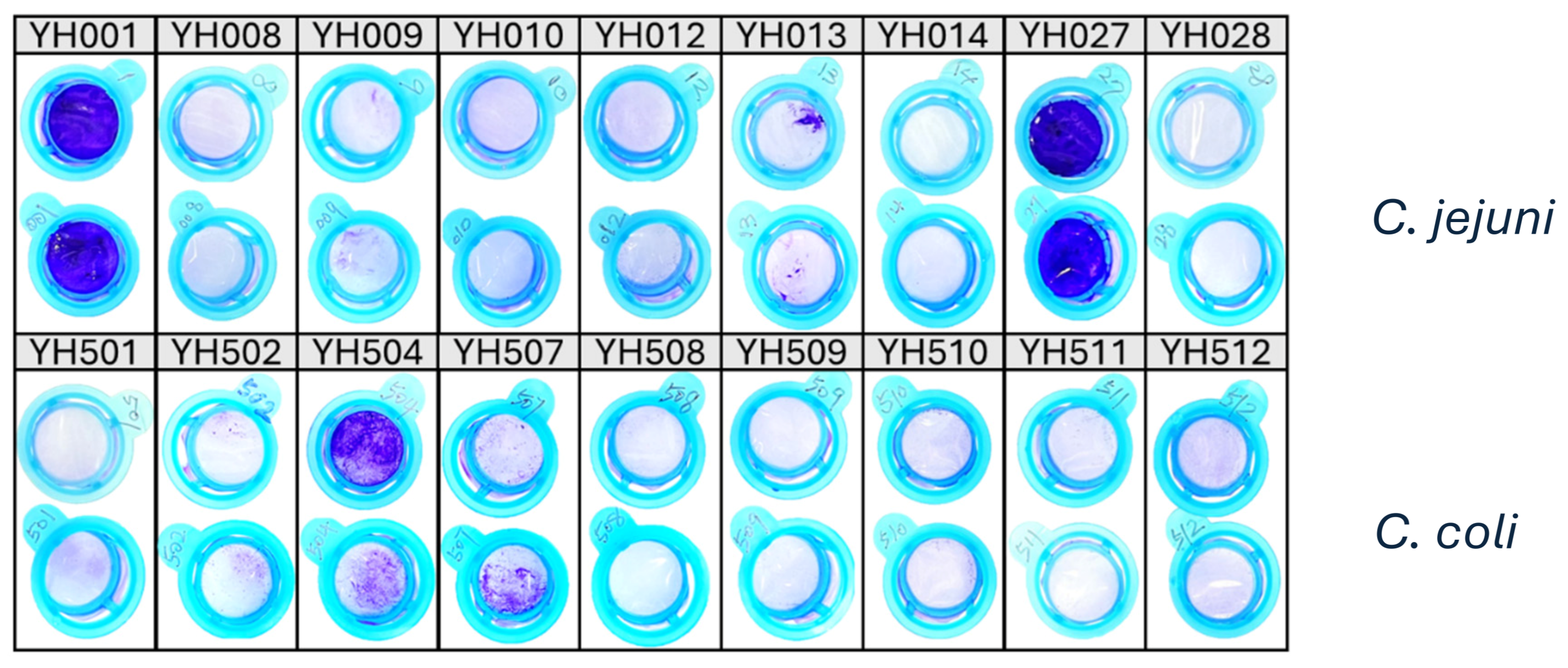
Figure 1. Biofilms of C. jejuni (upper panel) and C. coli (low panel) strains stained with crystal violet. Biofilms were developed in duplicate samples under microaerobic conditions at 42 °C for five days and visualized after staining.
Preprints 198261 g001
Figure 2. SNP-based phylogenetic tree and biofilm quantification of C. jejuni and C. coli isolates. Left panel: SNP-based phylogenetic tree constructed from whole-genome sequences of C. jejuni (YH001–YH028) and C. coli (YH501–YH512) isolates. Bootstrap values on branches correspond with maximum likelihood consensus tree. * indicates a bootstrap value of 100. Right panel: Biofilm formation quantified by crystal violet staining after 5 days of growth in Mueller–Hinton broth under microaerobic conditions at 42 °C without shaking. Absorbance at 590 nm was averaged from two biofilm samples with triplicate measurements each. Error bars represent the standard deviation of the mean.
Preprints 198261 g002
Figure 3. Pangenome analysis of C. jejuni and C. coli isolates. The heatmap shows the presence (purple) and absence (white) of genes or gene clusters across C. jejuni and C. coli genomes. The x-axis represents gene clusters, but their position does not correspond to chromosomal location. This visualization highlights the genetic diversity among isolates.
Preprints 198261 g003
Table 1. Sources and genome information of C. jejuni and C. coli isolates.
Strain and Species Source Genome Size (bp) %GC Accession No. Reference
C. jejuni YH001 Veal livers 1,712,361 30.5 CP010058 [22]
C. jejuni YH008 Drumsticks 1,792,424 30.5 CP172380 This work
C. jejuni (S27Cj) YH009 Chicken thighs 1,663,226 30.5 CP131444 [23]
C. jejuni (S33Cj) YH010 Chicken thighs 1,748,761 30.5 CP131442 [23]
C. jejuni YH012 Chicken livers 1,698,963 30.5 CP172815 This work
C. jejuni YH013 Chicken livers 1,691,848 30.5 CP172379 This work
C. jejuni YH014 Chicken livers 1,802,039 30.5 CP172376 This work
C. jejuni YH027 Calf livers 1,710,959 30.5 CP172352 This work
C. jejuni YH028 Beef livers 1,667,698 30.5 CP172351 This work
C. coli YH501 Drumsticks 1,668,523 31.5 CP015528 [24]
C. coli YH502 Drumsticks 1,718,974 31.0 CP018900 [25]
C. coli YH504 Drumsticks 1,722,143 31.0 CP091644 [24]
C. coli YH507 Chicken livers 1,756,096 31.0 CP172392 This work
C. coli YH508 Chicken thighs 1,703,740 31.5 CP172391 This work
C. coli YH509 Chicken livers 1,697,113 31.5 CP172390 This work
C. coli YH510 Chicken livers 1,812,356 31.0 CP172387 This work
C. coli YH511 Chicken livers 1,674,288 31.5 CP172385 This work
C. coli YH512 Chicken livers 1,754,135 31.5 CP172384 This work
Table 2. Annotated proteins uniquely present in C. jejuni strains YH001 and YH027.
Annotated Proteins YH001 YH027 The Rest Strains
Putative Dihydrolipoamide dehydrogenase (EC 1.8.1.4); Mercuric ion reductase (EC 1.16.1.1); PF00070 family, FAD-dependent NAD(P)-disulphide oxidoreductase 1 1 0
D-alanyl-D-alanine carboxypeptidase (EC 3.4.16.4) 1 1 0
FIG00471123: hypothetical protein 1 1 0
DNA-binding protein Roi 1 1 0
FIG00470265: hypothetical protein 1 1 0
FIG00471635: hypothetical protein 1 1 0
FIG00470314: hypothetical protein 1 1 0
hydrogenase, (NiFe)/(NiFeSe) small subunit family 1 1 0
L-Proline/Glycine betaine transporter ProP 1 1 0
Uncharacterized membrane protein, YraQ family 1 1 0
Alpha-ketoglutarate permease 1 1 0
Putative efflux protein 1 1 0
Ammonium transporter 1 1 0
C4-dicarboxylate transporter 1 1 0
Sodium-dependent phosphate transporter 1 1 0
Multi antimicrobial extrusion protein (Na(+)/drug antiporter), MATE family of MDR efflux pumps 1 1 0
Hypothetical protein Cj0566 1 1 0
Potassium-transporting ATPase A chain (EC 3.6.3.12) (TC 3.A.3.7.1) 1 1 0
Cytochrome c family protein 1 1 0
“1” and “0” indicated the presence and absence of the genes in the isolates, respectively.
Disclaimer/Publisher’s Note: The statements, opinions and data contained in all publications are solely those of the individual author(s) and contributor(s) and not of MDPI and/or the editor(s). MDPI and/or the editor(s) disclaim responsibility for any injury to people or property resulting from any ideas, methods, instructions or products referred to in the content.
Copyright: This open access article is published under a Creative Commons CC BY 4.0 license, which permit the free download, distribution, and reuse, provided that the author and preprint are cited in any reuse.
Prerpints.org logo

Preprints.org is a free preprint server supported by MDPI in Basel, Switzerland.

Subscribe

Disclaimer

Terms of Use

Privacy Policy

Privacy Settings

© 2026 MDPI (Basel, Switzerland) unless otherwise stated