

Submitted:
06 February 2026
Posted:
09 February 2026
You are already at the latest version
Abstract
Zirconia is known as a strong and bioinert load bearing material for dental implants. It usually exhibits no antibacterial activity. Inflammation is a crucial problem for dental implant surgery. About 3-5% of all dental implants experience inflammation. It is very central finding of the present study that fullerene C60 films as well as a tribomechanical loading of zirconia without the fullerene C60 topping can cause an improvement of antibacterial activity against gram-positive Staphylococcus aureus. The moderate antibacterial activity is especially important, because a strong antibacterial effect could disturb the sensitive oral bacterial flora and should be prevented. In the present study, different conditions of the fullerene C60 film were provided. In addition to fullerene C60 film in the “as deposited” condition, treatment in a nitrogen plasma as well as tribomechanical produced surface pattern without and with plasma post-treatment were testified. 85.8% reduction of gram-positive Staphylococcus aureus bacterial formation was measured on zirconia with fullerene C60 film. Plasma treatment of the C60 film effect an increase of the antibacterial impact of 72.2% only in comparison to zirconia without fullerene C60 film. Also, tribomechanical loaded fullerene C60 films suppress the growth of gram-positive Staphylococcus aureus. The tribomechanical loading seems to compensate the effect of a plasma treatment. ZrO2 samples with fullerene C60 film and tribomechanical loading achieve an increase of antibacterial impact of 83.36%. Furthermore, surprisingly yttria-stabilized zirconia bioceramic without fullerene C60 film also shows a high antibacterial effectivity after a tribomechanical patterning procedure. Due to surficial patterning the ZrO2 by scratching microgroove arrangements with a diamond tip, its antibacterial effect against gram-positive Staphylococcus aureus was increased 70.46%.
Keywords:
zirconia bioceramic
; gram-positive bacteria
; cytotoxicity analysis
; Raman spectroscopy
; fullerene C60
; surface pattern
1. Introduction
Zirconia ZrO2 is an important bioceramic [1]. It is considered as bioinert. Bioinert ceramics are chemically stable with no harmful effects on living tissue nor lead to any immune response when implanted in the body. Bioinert behavior does also mean, there is no cell growth promoting effect. At the same time, ZrO2 bioceramics show no or slight antibacterial activity, however, ZrO2 nanoparticles were proven to exert antibacterial action towards both Gram-positive and Gram-negative bacteria [2,3,4]. Good wear resistance, high compressive strength and good fracture toughness, which is further improved by yttria-stabilization make this ceramic extraordinarily suitable for dental implants [5]. Although, the quality of zirconia dental implants is on a high level, biofilm formation and inflammation can lead to serious problems [6]. Oral Streptococci are the first microorganisms which colonize oral surfaces. They are considered as resistant and important microorganisms in the human mouth that need to be in balance for preventing penetrate as pathogens into the human body. Various systemic diseases, such as infective endocarditis, purulent infections, brain hemorrhage, intestinal inflammation, and autoimmune diseases, as well as bacteremia can be caused by unbalanced and strong bacteria penetration into the human body from the oral cavity [6,7].
Unbalanced biofilm formation contributes to inflammation. It is also important for wear resistance of the zirconia implant. Figueiredo-Pina et al. [5] report about the influence of a biofilm of Streptococcus salivarius on the tribomechanical properties. S. salivarius is a Gram-positive bacterium that is part of the normal flora of the human mouth. S. salivarius plays an essential role in preventing inflammation and tooth decay. It is known for its antibacterial properties, which restrain growth of harmful bacteria like Streptococcus mutans, the primary reason for tooth decay [6,8].
2. Materials and Methods
2.1. Preparation of the Fullerene C60 Films
Fullerene C60 films were generated on cylindrical medical grade ZrO2 with 3 mol.% yttria. The samples had a diameter of 14 mm and a height of 2 mm. The bioceramic samples were provided by the company Moje Keramik-Implantate GmbH und Co. KG (Germany). The surface of the bioceramic samples were used after pressing ceramic powder in steel dies with a final pressure of 135 MPa. After debinding and sintering at a top temperature of 1250 °C for 2 h, six cylindric samples were placed in a quartz tube as well as a quartz crucible with the fullerene C60 powder. It had a purity of 99.9% and was placed in the centre of a quartz tube. The quartz tube was evacuated to a pressure of 1.4 · 10-6 mbar. Due to the heating up of the quartz crucible to a top temperature of 540 °C, vacuum sublimation of the C60 molecules occurred. This sublimation process at 540 °C was allowed for 4 h before the whole quarz tube cooled down for 12 h.
2.2. Generation of Surface Patterns by Diamond-Pin Sliding
The tribomechanical patterning was performed with the Anton Paar Scratch tester RST 100 (Anton Paar GmbH, Switzerland). A standardized diamond tip with a tip radius of 0.2 mm and a cone angle of 120° was loaded with 5 N normal force and moved with a velocity of 10 mm/min along the surface of the samples. The generated tribomechanical pattern is shown in Figure 1.
2.3. Plasma Treatment of Samples
Plasma treatment of the samples was done in the plasma cleaner “Zepto One” of the company Diener GmbH, Germany. A nitrogen plasma was generated and kept stable during a gas flow of 0.75 sccm measured with a needle valve. At 13.56 MHz the power output is adjustable between 0-200 W. A borosilicate glass round with a diameter of 105 mm and a volume of approx. 2.6 l serves as a vacuum chamber. The electrodes for plasma generation are placed outside this vacuum chamber. Nitrogen plasma treatment endured 10 min for the uncoated ZrO2 samples and the ZrO2+C60 samples with and without tribomechanical patterns.
2.4. Microscopic Characterization
For the microscopic characterization, the optical microscope Leica DM4 B (Leica Microsystems GmbH, Germany) was available with magnifications of 5x, 20x or 50x. Furthermore, the digital microscope KEYENCE VXH950 was utilized for receiving 3dimensional images of the sliding traces of the tribomechanical patterned samples.
2.5. Raman Spectroscopic Characterization
Raman spectroscopy was performed using Renishaw inVia QZZ5394 (Renishaw GmbH, Deutschland) equipped with a 45 mW monochromatic 532 nm doubled Nd:YAG laser with ~1.0 cm-1 spectral resolution. The cylindrical samples were placed on a motorized stage with ±1 µm X-Y repeatability and accuracy. Each measurement was done at a 50x magnification level with an acquisition time of 10 s and 5 accumulations. Spectral ranges of 100-900 cm-1 or 100-3200 cm-1 were used to examine peaks of interest. Spectra were analyzed and processed with the Renishaw software Wire.4.4. Each spectral array underwent baseline correction to remove the background noise. Peaks position, amplitude, and HWHM were collected for different peaks in each spectrum.
2.6. Cell Culture Experiments
Cytotoxicity of the tested samples was assessed using a normal human fetal osteoblast cell line (hFOB 1.19) obtained from ATCC (American Type Culture Collection). Cells were cultured in DMEM/Ham F12 (Sigma-Aldrich Chemicals, Poland) without phenol red supplemented with 10% fetal bovine serum (Pan-Biotech GmbH, Germany), 100 µg/ml streptomycin, 100 U/ml penicillin (Sigma-Aldrich Chemicals, Poland), 2.5 mM L-glutamine, and 300 µg/ml G418 at 34 °C in a humidified atmosphere of 5% CO2.
2.6.1. Cytotoxicity Assessment
The cytotoxicity of the synthesized samples was evaluated according to ISO 10993-5:2009 and ISO 10993–12:2021 standards. Briefly, 3 cm2 of each tested sample was immersed in 1 ml of DMEM/Ham F12 for 24 h at 37 °C to prepare samples extracts. Simultaneously, 100 µl of hFOB 1.19 cells at a concentration of 1.5 × 10⁵ cells/ml were seeded in flat bottom 96-multiwell plates and cultured for 24 h. Afterwards, 100 µl of the culture medium in each well was replaced with an equal volume of the prepared extract, and cells were further cultured for 24 h. Following incubation, cytotoxicity was analyzed using WST-8 and LDH total assays (Sigma-Aldrich Chemicals, Warsaw, Poland) in accordance with manufacturers’ protocols. Additionally, the cytotoxicity was assessed using Live/Dead Double Staining Kit (SigmaAldrich Chemicals, St. Louis, MO, USA) in direct contact with biomaterials. For this purpose, the tested biomaterials were placed in flat bottom 24-multiwell plates, and 500 µl of hFOB 1.19 cells at a concentration of 1.5 × 10⁵ cells/ml were seeded per material. After 72 h of culture, hFOB 1.19 cells were stained with calcein-AM and propidium iodide according to the manufacturer protocol and visualized using a confocal laser scanning microscope (CLSM, Olympus Fluoview equipped with FV1000, Olympus Corporation, Tokyo, Japan).
2.7. Microbiological Experiment
To assess the antibacterial properties of the biomaterials, the following bacterial strains were employed: Gram-negative Escherichia coli ATCC 25922 and Gram-positive Staphylococcus aureus ATCC 25923. The strains were initially cultured on Petri dishes containing fresh Mueller-Hinton agar (MHa, Biomaxima, Lublin, Poland) and incubated at 37 °C for 24 hours. Subsequently, a single colony from each strain was transferred into Mueller-Hinton broth (MHb, Biomaxima, Lublin, Poland) and incubated under the same conditions. The resulting bacterial suspensions were then appropriately diluted to achieve the required cell density for further analysis.
2.7.1. Test in Direct Contact with the Material
The antibacterial properties of materials were evaluated by determining number of viable bacteria following direct contact with the sample surface. The procedure followed the OECD guidelines for non-porous materials (Standard No. 202, JT03360420). Each tested material was evaluated in triplicate. To prepare the bacterial inoculum, a 0.5 McFarland suspension was diluted 1:250 using a 1/50 dilution of MHb in distilled water. This 1/50 dilution was chosen based on experimental results, as the 1/500 dilution recommended by the OECD standard did not sustain sufficient bacterial viability on control samples (polystyrene disc lacking antibacterial activity) after 24 hours. The final inoculum had a density of 6 × 10⁵ CFU/ml. The inoculum was applied onto the surface of each sample and covered with a polyethylene film to ensure uniform contact. Samples were placed in Petri dishes and incubated at 37 °C for 24 hours. Half of the control samples were analyzed immediately after inoculation. After 24-hour incubation, the bacteria were collected from the tested samples and control material by pipetting the surfaces multiple times with Eugon LT 100 broth (neutralizer, BTL, Poland). The recovered bacteria were quantified using serial dilutions and the pour plate method. Plates were incubated for 24 hours at 37 °C, after which bacterial colonies were counted using a Scan 300 colony counter. Antibacterial effectiveness was expressed as both a percentage and logarithmic reduction in bacterial counts.
3. Results
3.1. Optical Microscopy
Using optical microscopy, no obvious difference between zirconia “as delivered” and plasma treated ZrO2 can be seen (Figure 2a,b). Some irregularities at the surface of the ZrO2 dental bioceramic give a brighter impression. As described before, the dental bio-ceramic was used in the “as delivered” condition that is produced by the industrial company. Following deposition of fullerene C60 molecules by vacuum sublimation, the surface is covered completely with Buckminster fullerenes (Figure 2c). After plasma treatment, the surface appears more homogeneously. Tribomechanical loading of the uncovered ZrO2 surface by the diamond tip with a normal force of 5 N shows brigth scratches with irregular edges (Figure 2e). The scratch edges appear smoother for ZrO2 with fullerene C60 film (Figure 2f).
3.2. Raman Spectroscopy
Zirconia is a polymorph ceramic material. It does appear in three different crystalline structures, the monoclinic phase, the tetragonal and the cubic phase. At room temperature, the monoclinic phase is stable. However, the addition of yttria, in the present study 3 mol-% yttria are added, does extend the stability of the tetragonal crystalline modification of zirconia to room temperature. The most prominent Raman peaks for each crystalline modification of zirconia according to references [9,10,11] are summarized in Table 1. In addition, the position of the specific Raman peaks for the different zirconia samples of the present study are included. All samples of zirconia show Raman peaks typical for the tetragonal crystalline modification. The Raman curves in Figure 3 are very similar for the different surface conditions. In comparison to the ZrO2 in the “as delivered” state, the plasma treatment as well as the sliding of the diamond tip with a normal force of 5 N did not change the crystalline modifications. In addition, the Raman peaks positions do not shift. Therefore, no evidence of any residual stresses can be found, even after tribomechanical loading with a normal force of 5 N.
Raman spectroscopy of the fullerene C60 coated sample was done on positions without and with tribomechanical loading. Position (1) in Figure 4 was located at the surface of the ZrO2+C60 sample without any tribomechanical impact. The prominent region of fullerene C60 pentagon pinch mode Ag(2) can be deconvoluted into 1,461.0 cm-1, 1,466.2 cm-1 and 1,479.6 cm-1 contributions (Table 2, Figure 5 and Figure 6). The Raman signal at around 1461 cm-1can be correlated to dimer formation of fullerene C60 buckyballs [12]. The monomeric fullerene C60 molecules give a typical Raman signal position around 1,466 cm-1 if excitation occurred with a green laser source of 532 nm wavelength. It can be seen from Figure 6 that the peak at 1,466.2 cm-1 is smaller, and intensity is lower in comparison to the dimer peak at 1,461.0 cm-1. This points to the fact that the fraction of monomeric C60 is lower in comparison to dimers. The Raman signal at 1,479.6 cm-1 gives evidence of a considerable red shift of the pentagonal pinch mode in fullerene C60. It was observed before, if monomeric fullerene C60 experienced a strong excitation by laser l,ight which led to the partly deformation of the buckyball cage [12]. A substantial red shift of the high-frequency Ag(2) pentagonal pinch mode was reported by Chase 1992 [13]. These shifts, which increase in the series Au, Cu, and Ag, were attributed, in part, to charge transfer to the fullerene by Chase et al.. As reported before by us [12], a red shift of the high-frequency Ag(2) mode to 1479.2 cm-1 can occur due to laser irradiation with 22 mW Nd-YAG laser of fullerene C60 powder without contact to noble metals. In previous investigations, we reported that Laser irradiation causes the generation of C60 cage opening and graphene flake generation accompanied by graphitization with D-peak (disorder peak of sp2-hybrised graphite) and G-peak (breath mode of sp2-hybridized graphite) formation. In the present study, a partly degradation of fullerene C60 may be a reason of Ag(2) peak substantial red shift 1.479.6 cm-1. On the other hand, the almost exact consensus of the peak position in the present study and the peak position of former tests at 1479 cm-1 points to a specific state of the fullerene C60 not only the subsequent opening of the C60 cage.
At the edge of the scratch, the pentagon pinch mode shifts to 1464.7 cm-1. Furthermore, an essential broadening of peaks at 1,406.1 cm-1 and 1,594.7 cm-1 can be seen. Rambabu et al. [14] observed a peak broadening for fullerene C60 functionalized with sulfonic acid (-SO3H) groups. Also, the transformation Due to tribomechanical loading the pressure and the temperature in the micro-areas of the tribological contact between diamond and zirconia with C60 film can reach high pressure and increased temperatures. Raman spectra of fullerene C60 show profound changes if sufficient high pressure and different temperatures are acting [15,16]. There were very broad peaks between 1,200 and 1,800 cm-1 with the highest intensity and between 1,500 and 1,600 cm-1, which is typical for highly disordered or amorphous carbon systems [15,16,17]. Fullerene-like amorphous carbons contain curved and curled nano-islands of crystalline carbon atoms arranged in hexagonal and/or pentagonal order embedded in amorphous carbon arrangements [17,18,19].
For fivefold rings, the before mentioned carbon disorder D mode was calculated by Doyle et al. [20] to be located at 1,444 cm-1, while for six-membered rings, which are the most stable structure, the D band was calculated to be at 1360 cm-1, and at 1303 cm-1 for seven-membered carbon rings [20]. In the present study, the center of the extremely broad D band is located at 1,406.1 cm-1. It points to the fact that the majority of the disorder carbon rings consists of fivefold residual rings from the fullerene C60 cages. After the transformation of fullerene C60 into amorphous carbon, Staresinic et al. [17] find the G-peak position at 1,590.0 cm-1. This finding of Staresinic et al. is also very close to the results of the present study with a central position of the G peak at 1,594.7 cm-1 (Figure 7).
Also visible in Figure 7, at the edge of the scratch produced by the diamond tip on top of the ZrO2+C60, the residual Ag(2) Raman peak at 1,464.7 cm-1 is slightly blue shifted in comparison to the C60 film without any tribomechanical loading. It is positioned between the typical dimer C60 peak around 1,462 cm-1 and the monomer peak position around 1,466 cm-1.
3.3. Cytotoxicity Tests
The indirect cytotoxicity test, performed in accordance with ISO 10993-5, showed non-cytotoxicity of any of the tested biomaterials. According to ISO 10993-5, a biomaterial is considered as non-toxic if its 100% extract does not cause a reduction in cell viability by more than 30%. Both WST-8 and LDH total assays revealed high cells viability (> 95%), indicating the absence of cytotoxic effects on eukaryotic cells for all samples modifications (Figure 8). Due to bioinert character of the zirconia, the obtained results were consistent with the literature reports [21]. Additionally, fullerene C60 films, tribomechanical loading, and plasma treatment of zirconia did not negatively affect the cell viability. Comparable results were obtained in the direct cytotoxicity Live/Dead test. CLSM images after 72 hours of cells culture on the materials showed that all samples were non-toxic, as no dead cells (red nuclei) were observed. Moreover, the tested biomaterials promoted cell adhesion on their surface, as evidenced by good cell spreading and the normal morphology of osteoblasts. All tested samples were fully covered by the cells, indicating the high biocompatibility of materials.
3.4. Microbiological Test
The composition of the resident oral microflora is dominated by bacteria, both Gram-negative and Gram-positive. It performs many important functions, including protecting the host against colonization by exogenous populations, which are often pathogenic [22]. Poor oral hygiene, a diet high in sugar or antibiotic therapy may predispose to oral diseases due to the overgrowth of microorganisms that previously constituted a minority of the microflora [22]. Microorganisms in the oral cavity can also cause disease in other parts of the body, acting as opportunistic pathogens. Zirconia is often recommended as an implant material with a wide range of uses in dentistry. Several authors reported that, in comparison to titanium, zirconium exhibited superior resistance to bacterial adhesion and biofilm formation [23].
The antibacterial activity of the biomaterials was assessed in direct contact, in accordance with the EOCD standard for non-porous materials. This activity was determined based on the reduction in the number of viable bacteria after incubation on the implant surface with potential antibacterial properties compared to the control material (without any antibacterial activity). The ZrO2+C60, ZrO2+ C60 plasma, ZrO2+C60 tribo, ZrO2+C60 tribo,plasma and ZrO2+tribo materials showed moderate antibacterial activity with a CFU reduction of 70–86% (log reduction 0.53–0.85) against the Gram-positive bacteria S. aureus (Table 4).
Figure 9.
Representative photo of the CFU number of S. aureus recovered after 24 hours of incubation on the materials surfaces, determined by the serial dilution and the pour plate method.
Figure 9.
Representative photo of the CFU number of S. aureus recovered after 24 hours of incubation on the materials surfaces, determined by the serial dilution and the pour plate method.
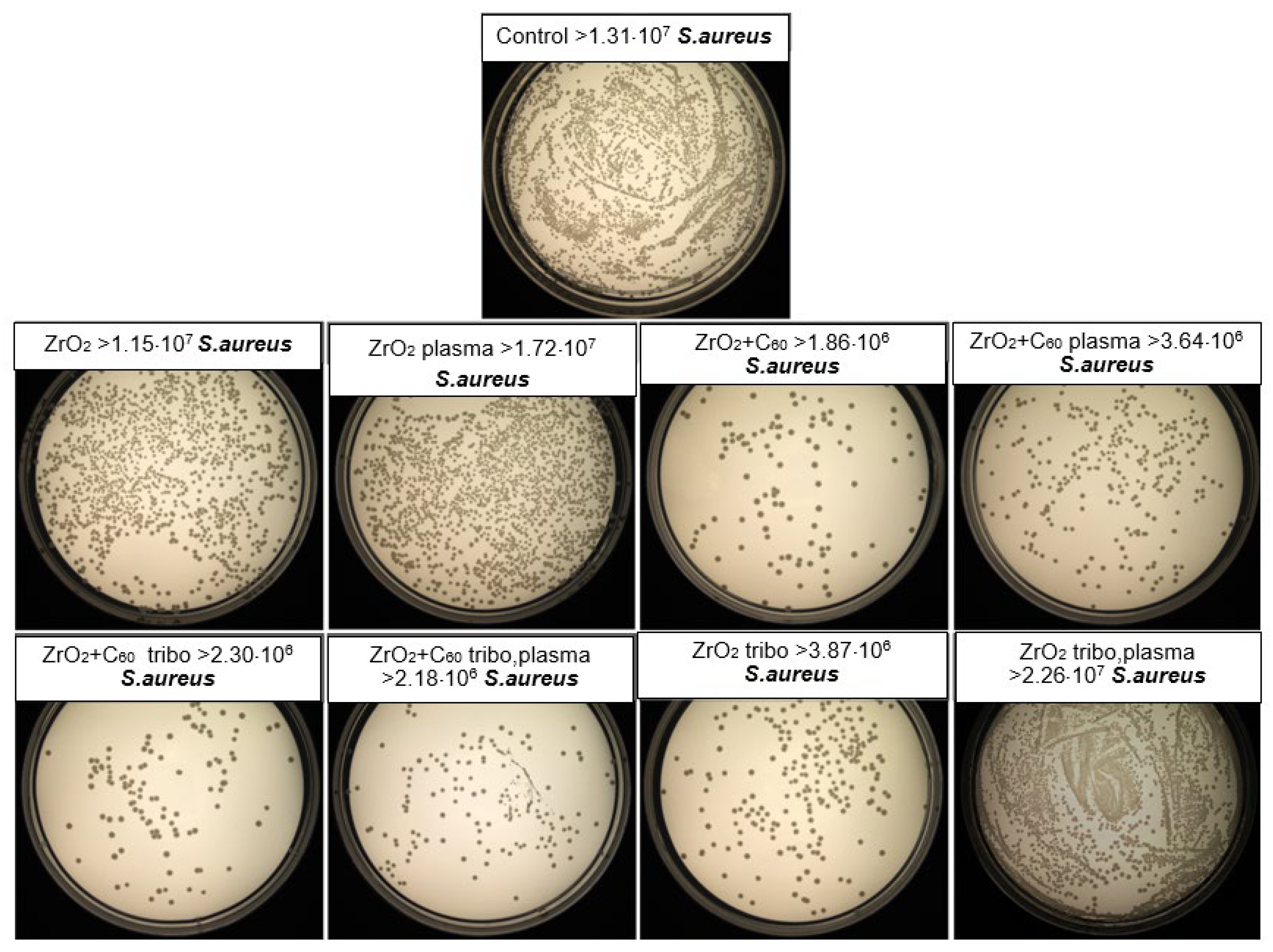
Figure 10.
Representative photo of the CFU number of E. coli recovered after 24 hours of incubation on the materials surfaces, determined by the serial dilution and the pour plate method.
Figure 10.
Representative photo of the CFU number of E. coli recovered after 24 hours of incubation on the materials surfaces, determined by the serial dilution and the pour plate method.
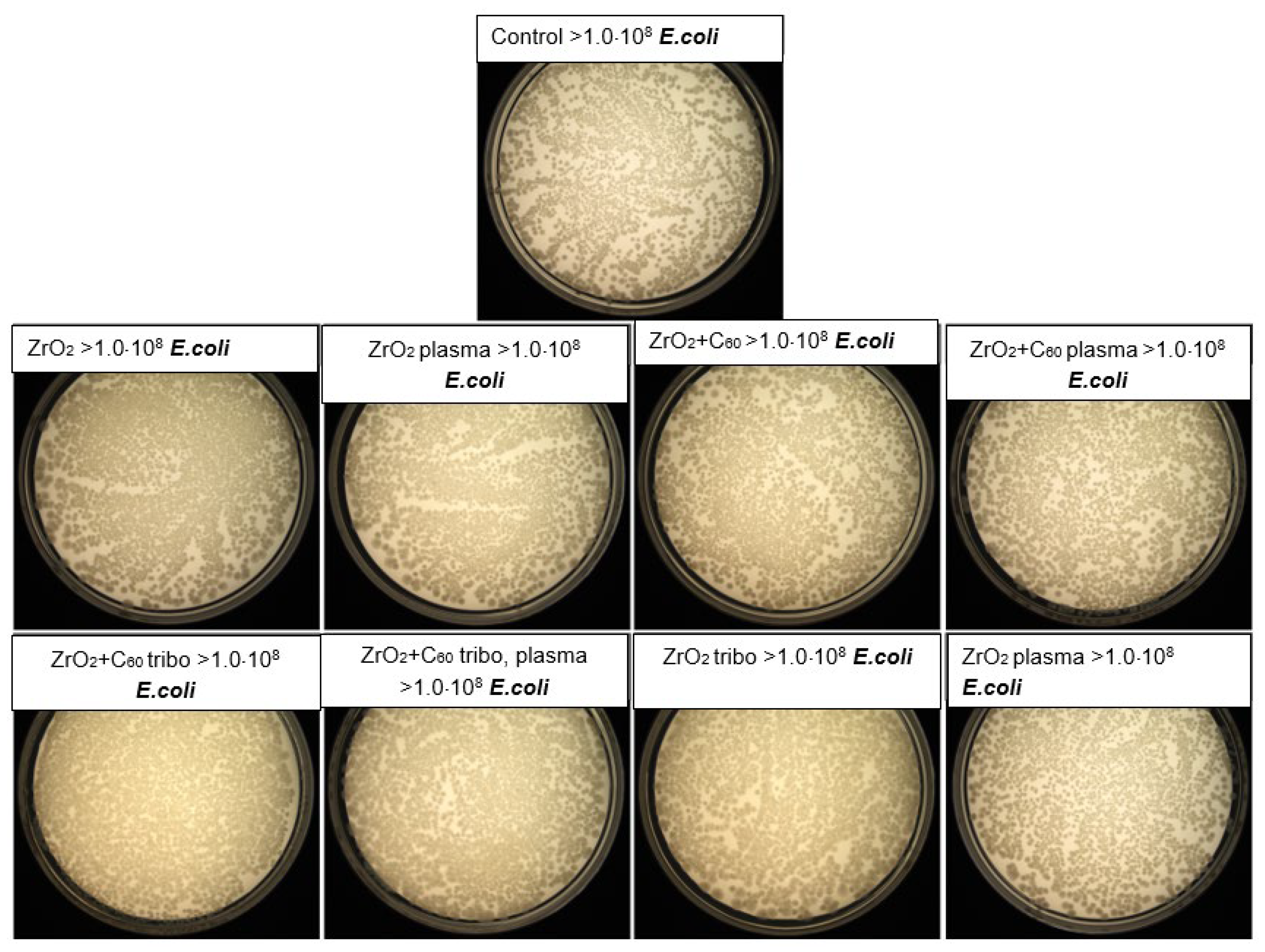
ZrO2 ceramics itself demonstrated very slight antibacterial properties, while their modification with a tribomechanical pattern increased bacterial CFU reduction by up to 70% (log reduction 0.53). Interestingly, plasma treatment did not affect the antibactericidal properties of the implants. No antibacterial activity was observed for any of the tested materials against Gram-negative E. coli. The ZrO2+C60, ZrO2+C60 plasma, ZrO2+C60 tribo, and ZrO2+C60 tribo,plasma materials likely owed their antibacterial properties towards S. aureus due to modification with a fullerene C60 layer. Fullerenes are characterized by their ability to penetrate microbial cells and then interact with cellular structures. When exposed to light, fullerenes belonging to photosensitizers, produce highly reactive singlet oxygen, the presence of which led to cell death [24]. Research reports indicated that Gram-positive bacteria were susceptible to inactivation using photosensitizers, whereas Gram-negative bacteria exhibited greater resistance, particularly to neutral or anionic photosensitizers. Scientists emphasized that photosensitizers were less effective against Gram-negative bacteria due to the presence of a complex outer membrane with a negative surface charge. The outer membrane constituted a barrier that hindered the interaction of photosensitizing compounds with the cytoplasmic membrane, thus blocking the negative effects of reactive oxygen species (ROS) activity [25]. Moreover, according to the literature, zirconium oxide itself (ZrO2), possesses certain antibacterial properties. However, these abilities of zirconia have not been thoroughly studied in the literature [26,27]. Moderate antimicrobial activity may be beneficial in particular circumstances due to a reduced risk of harming beneficial oral microflora, which could lead to microbial imbalance. It is worth noting that the antibacterial effect was achieved while maintaining a complete lack of cytotoxicity to eukaryotic cells. Whereas, highly antibacterial surfaces, especially those containing potent agents, are often cytotoxic to host tissues [28,29].
4. Discussion
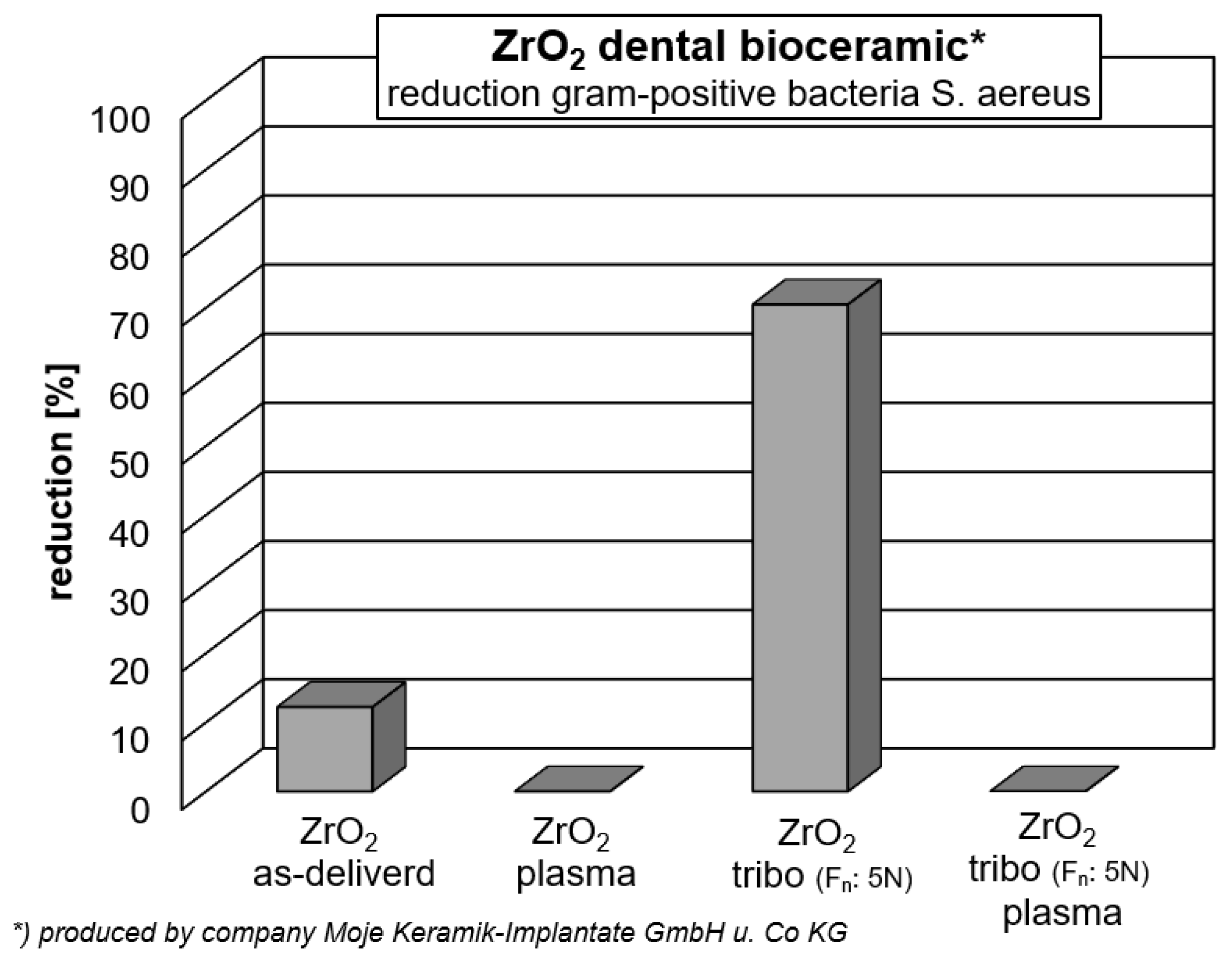
In the present study, two important mechanisms for reduction of inflammation due to inappropriate bacterial expansion are included. Firstly, after tribomechanical loading with 5 N, strong antiseptic behavior of zirconia was found. In comparison to the polystyrene control, there is a reduction of gram-positive Staphylococcus aureus bacteria of 70.46% (Table 4, Figure 9 and Figure 12).
As discussed before [3], zirconia nanoparticles are found to be antiseptic. Nano zirconia ZrO2 has shown biologically active effects primarily due to its unique physicochemical properties at the nanoscale. As shown, in the actual study, the bulk zirconia in the “as delivered” condition without coating or tribomechanical loading gave an increased bacterial activity of 12.21%. When ZrO2 particles are nanosized, there is an amplified surface area, altered surface chemistry as well as an enhanced reactivity compared to their bulk counterparts. Zirconia can release Zr4+ ions into the liquid surrounding, leaving back ion vacancies and negatively charged oxygen in the lattice what results in a negatively charged defective zirconia nanoparticle [30,31,32]. Lv et al. [31] describe an electrostatic adsorption of positively charged ions on defective zirconia nanoparticles. In the present study, due to the tribomechanical loading with 5 N normal force, the generation of wear debris and particles inclusive nanoparticles of the ceramic zirconia is quite expectable. Such tribomechanical induced nanoparticles may be one possible reason for the strong increase of antibacterial activity after the sliding of the diamond tip. If one considers that there was just a small section of the surface of zirconia scratched by the diamond tip, more and stronger antibacterial activity can be expected, if the whole surface is properly tribomechanical loaded and stimulated due to restricted surface cracking and nanoparticle formation of the brittle ceramic material.
Furthermore, zirconia in nano-scale dimensions show enhanced piezoelectricity in dependence on the size [33,34,35]. Roy et al. [34] generated ZrO2 films with 10 nm, 20 nm and 40 nm thickness by pulsed laser deposition. The zirconia films with 10 nm and 20 nm thickness retain high out-of-plane residual strain. Roy et al. confirm tetragonal phase of zirconia without any doping but residual strain due to compression of the energetic ion bombardment during the ZrO2 film generation via pulsed laser deposition. The 40 nm thick ZrO2 film exhibited relaxation phase transition into monoclinic structure without any piezoelectricity and polarisation. In the present study, zirconia in the tetragonal phase were determined by Raman spectroscopy in the “as delivered” condition as well as after tribomechanical loading with 5 N (Figure 3). It needs to be taken into consideration that the medical grad zirconia of the present study was stabilized by 3 mol.% yttria (see point 2.1 Materials). Obviously, it maintained the tetragonal structure during the stresses acting meanwhile tribomechanical loading. So, there are at least two reasons for antibacterial activities of the medical grade zirconia based bioceramic: (1) The piezoelectricity of loaded surface regions; (2) The generation of nano-zirconia particles with increased surface activity and Zr4+ ion release. Considering reason (1), the stresses during the tribomechanical loading may favour the piezoelectricity and lead to increased electric charging effects and interaction with bacteria. At that stage, the extend of generating wear debris and their size distribution needs further investigations in future research.
Figure 11.
Reduction of Gram-positive S.aureus bacteria on medical* grade ZrO2. *) ZrO2 with 3 mol.% yttria.
Figure 11.
Reduction of Gram-positive S.aureus bacteria on medical* grade ZrO2. *) ZrO2 with 3 mol.% yttria.
However, in the present study, no antibacterial activity of zirconia against gram-negative bacteria Escherichia coli were measured (Table 4, Figure 10). It is known that the charge and chemical moieties of the outer membrane of Gram-positive bacteria (i.e., S. aureus) and Gram-negative bacteria (i.e., E. coli) differ significantly. Sant et al. [36] present the result that showed ZrO2 nanoparticles antibacterial activity only against Gram-negative E.coli bacteria and no activity against S.aureus. This finding is quite the opposite to the results of the present study. Here, there was no antibacterial activity against Gram-negative bacteria E.coli measured (Table 4, Figure 10). Sant et al. argue that that not only the size of the ZrO2 nanoparticles, but also different shapes i.e., different active facets do influence the antimicrobial activity.
By chemical modification of Zr4+ ions different amino acids as ligands were synthesised by Sant et al. [36]. Their Zr4+ ions with amino acid ligands exhibited antibacterial activity against both Gram-negative and Gram-positive bacteria. Amino acids contain an amino group (-NH2) and a carboxyl group (-COOH). Amino acids differ essentially in structure, chirality, polarity or side chains. A mere generation of functional groups due to a bombardment with nitrogen ions in a nitrogen plasma (see point 2.3 Plasma treatment of samples) as done in the actual study is obviously not sufficient for generation of antibacterial activities against Gram-positive S.aureus or Gram-negative E.coli bacteria (Table 4, Figure 9 and Figure 10). The plasma treatment of medical grade ZrO2 and of ZrO2+C60 did not result in any antibacterial effect.
Fullerene C60 is hydrophobic and a strong electron acceptor. The interaction with negatively charged electron donating agents can be expected to be high. One of the simplest explanations of reduction in bacterial activity may be the simple repulsion due to equal electric loading of electron attracting fullerene C60 cages against the negatively charged
All ZrO2 surface conditions with presence of fullerene C60 did show a clear increase of antibacterial activity against Gram-positive S.aureus bacteria, but not against Gram-negative E.coli. Both Gram-positive and Gram-negative bacteria obsess a negative surfaces charge. However, one can expect that the intensity of negative surface charge differs between S.aureus and E.coli bacteria. Also, every bacterial cell surface adsorbs and desorbs ions and molecules from its surrounding solution; thus, its surface charge characteristics is dependent on its solution milieu. The mere net surface charge of bacteria can be determined by measuring their electrophoretic mobility or ion adsorption [41]. In addition to a completely different built-up of outer membrane of Gram-negative and Gram-positive bacteria (Figure 12), a unlike level of negative surface charge certainly influences the interaction with charged surfaces and interfaces like i.e., ion deficient zirconia or electron accepting fullerene C60. In addition, C60 fullerene promote surficial interactions through the π-π-orbital overlapping [42,43].
In the present study, no cytotoxic effect of all C60 coated samples were observed. On the contrary, the total assays revealed high cells viability (> 95%) (Figure 8). Fullerene in not excited states does gentle stimulate cell growth and even stem cell differentiation most probably due to electric charge interactions [44]. In the present study it was shown by Raman spectroscopy that the fullerene C60 coating consists of monomeric molecules mainly (Figure 5 and Figure 6, Table 2). The antibacterial activity is highest for such “as deposited” mainly monomeric fullerene C60 film. Plasma treatment leads to the adsorption of molecules at the surface (see supplementary part S1) that may shield the fullerene C60 surface, increase the distance between bacteria and reduce electrical interaction with the Buckminster cages. The covering with functional groups is reduced if time pass by which is true for the tribomechanical loaded ZrO2+C60 samples. Therefore, their antibacterial effect against Gram-positive S.aureus increased again (Figure 13).
The Fullerene molecules do well absorb UV light but also moderate visible light [45,46]. By light adsorption, it reaches excited states. In water milieu C60 show highest absorption in the ultraviolet (265 nm, 345 nm) range; two peaks which are less in magnitude are in blue (450 nm) and red (600 nm) regions of the visible light [46].
It is known that another very relevant feature of C60 is the ability to quench various free radicals, acting as a ‘‘free radical consumer’’ [47,48]. Photosensitization of C60 leads to its transition to a long-lived triplet excited state and the subsequent energy or electron transfer to molecular oxygen, yielding highly reactive singlet oxygen (1O2) or superoxide anion (O2), respectively. These reactive oxygen species (ROS) react with a wide range of biological targets. They cause oxidative stress and disturb bacteria and cells. Such an excited state can be reached by UV radiation, while C60 adsorbs less in the wavelength range of visible light. As there was no cell damage in the present and all previous of our cell compatibility studies in the “as deposited” state of fullerene C60, one can conclude that excitation dosage by normal day light does stimulate but not excite extensively the molecules. Stimulation may be sufficient for moderate antibacterial effects. In our study, for reducing the amount of Gram-negative S.aureus.
5. Conclusions
Zirconia surfaces can be tailored for reaching an optimal antibacterial effect against Gram-positive and Gram-negative bacterial by understanding and tailoring their surface topography. Nano-scale zirconia particle with suitable shape and crystallinity are able to interact with bacteria in different ways.
Fullerene C60 films deposited on medical grade zirconia needs to provide a close contact to the bacterial surface. The adsorption of other molecules, functional groups change the electric charge and electron transfer and reduces interactions with bacteria.
The ability of ion and molecule absorption is dependent on the liquid environment, the bacteria membrane structure and charge level and bacteria outer membrane topography and roughness.
The fullerene C60 coatings in the mainly monomeric state do not show any harmful effect on cells after moderate illumination by visible light. On contrary, C60 coatings
However, as such C60 coatings can be excited and produce reactive oxygen species, they could be irradiated immediately after implantation of biomaterials for reaching an initial high antiseptic effect, followed by support of cell growth without further excitement.
Supplementary Materials
The following supporting information can be downloaded at the website of this paper posted on Preprints.org.
Author Contributions
Conceptualization, A.D.-R.;T.W.;J.M.; methodology, A.D.-R.;A.Z.; validation, J.M.;E.F.;U.R;A.Z.; investigation, J.C.;E.F.;V.V.;M.T.;J.L.;A.D.-R.;A.P.; resources, A.P.;A.D.-R.;J.M.;T.W.;A.Z.; writing—original draft preparation, A.D.-R.; M.T.,V.V.; J.L.; review and editing, A.Z.; A.P.; J.L.;U.R.;T.W.; supervision, A.D.-R. & J.L.; J.C.; funding acquisition, A.D.-R.;U.R.;J.M.;T.W.; visualization, J.L.; T.M.; V.V.; E.F.; data curation, M.T.;A.D.-R.;J.L.;V.V.;U.R.;A.P.;A.Z.; All authors have read and agreed to the published version of the manuscript.
Funding
The bilateral Chinese-Germany project was supported by the International Science and Technology Cooperation Program of China (2018YFE0194100) as well as by German Ministry for Research and Technology (Bundesministerium für Bildung und Forschung, BMBF, grant no. 13GW0401). The authors a thankful for the financial support.
Conflicts of Interest
“The authors declare no conflicts of interest.”.
Abbreviations
The following abbreviations are used in this manuscript:
| MDPI | Multidisciplinary Digital Publishing Institute |
| C60 | Fullerene molecule with 60 carbon atoms |
| ZrO2 | Zirconia |
| TLA | Three letter acronym |
| LD | Linear dichroism |
References
- Sonowal, L.; Gautam, S.; Mambiri, L.T.; Depan, D. Advancements of bioceramics in biomedical applications. Next Materials 2025, 9, 101010. [Google Scholar] [CrossRef]
- Tabassum, N.; Kumar, D.; Verma, D.; Bohara, R.A.; Singh, M.P. Zirconium oxide (ZrO2) nanoparticles from antibacterial activity to cytotoxicity: A next generation of multifunctional nanoparticles. Materials today Communications 2021, 26, 102156. [Google Scholar] [CrossRef]
- Bahammam, H.A.; Bahammam, L.A.; Baghdadi, A.M.; Saddiq, A. Antimicrobial activity of Nanozirconium oxide. ACS OMEGA 2024, 9, 2945–2952. [Google Scholar] [CrossRef]
- Annu, A.; Sivasannkari, C.; Krupasankar, U. Synthesis and characterization of ZrO2 nanoparticles by leaf extract bioreduction process for its biological studies. Materials Today Proceedings 2020, 33, 5317–5323. [Google Scholar] [CrossRef]
- Figueireda-Pina, C.G.; Rodrigues, I.; Seueira, J.; Guedes, M.; Carneira, C. Does the presence of a S. Salivarius biofilm influence the tooth-zirconia pair triboactivity? An in-vitro study. Wear 2019, 430-431, 50–56. [Google Scholar] [CrossRef]
- Yumoto, H.; Hirota, K.; Hirao, K.; Ninomiya, M.; Murakami, K.; Fujii, H.; Miyake, Y. The pathogenic factors from oral streptococci for systemic diseases. International Journal of Molecular Sciences 2025. [Google Scholar] [CrossRef]
- Kreth, J.; Giacamen, R.A.; Raghavan, R.; Merritt, J. The road less travelled – defining molecular commensalism with Streptococcus sanguinis. Molecular oral microbiology 2017, 3(32), 181–196. [Google Scholar] [CrossRef]
- Fang, Y.; Chen, X.; Chu, C.H.; Yu, O.Y.; He, J.; Li, M. Roles of streptococcus mutans in human health: beyond dental caries. Frontiers in Microbiology 2024, 15, 1503657. [Google Scholar] [CrossRef] [PubMed]
- Pezzotti, G.; Porporati, A.A. Raman spectroscopic analysis of phase-transformation and stress patterns in zirconia hip joints. Journal of Biomedical Optics 2004, 9/2, 372–384. [Google Scholar] [CrossRef]
- Müller Ramos, C.; Tabata, A.-S.; Cesar, P.F.; Rubo, J.H.; Silveira Fracisconi, P.A.; Sanches Borges, A. F. Applocation of mircor-Raman spectroscopy to the study of yttria-stabilized tetragonal zirconia polycrystal (Y-TZP) phase transformation. Applied Spectroscopy 2015, 69/7, 810–814. [Google Scholar] [CrossRef] [PubMed]
- Yi, M.; Zhang, Y.; Xu, J.; Deng, D.; Mao, Z.; Meng, X.; Shi, X.; Zhao, B. Surface-enhanced Raman scattering activity of ZrO2 nanoparticles: Effect of tetragonal and monoclinic phases. Nanomaterials 2021, 11, 2162. [Google Scholar] [CrossRef] [PubMed]
- Dorner-Reisel, A.; Ritter, U.; Moje, J.; Freiberger, E.; Scharff, P. Effect of fullerene C60 thermal and tribomechanical loading on Raman signals. Diamond & Related Materials 2022, 126, 109036. [Google Scholar] [CrossRef]
- Chase, S.J.; Bacsa, W.S.; Mitch, M.G.; Pilione, L.J.; Lannin, J.S. Surface-enhanced Raman scattering and photoemission of C60 on noble-metal surfaces. Phys. Rev. B 1992, 46, 7873–7877. [Google Scholar] [CrossRef] [PubMed]
- Rambabu, G.; Nagaraju, N.; Bhat, S.D. Functionalized fullerene embedded in Nafion matrix: A modified composite membrane electrolyte for direct methanol fuel cells. Chem. Eng. J. 2016, 306, 43–46. [Google Scholar] [CrossRef]
- Zhang, S.; Wu, Y.; Kuo, K.; Liu, B.; Shu, Y.; Zhang, Y.; Sun, L.; Gao, Y.; Ma, M.; Li, Z.; Li, B.; Ying, P.; Zhao, Z.; Hu, W.; Benavides, V.; Chernogorova, O.P.; Soldatov, A.V.; He, J.; Yu, D.; Xu, B.; Tian, Y. Narrow-gap, semiconducting, superhard amporphous carbon with high toughness, derived from C60 fullerene. Cell Reports Physical Science. [CrossRef]
- Zygouri, P.; Spyrou, K.; Mitsari, E.; Barria, M.; Macovez, R.; Patila, M.; Stamatis, H.; Verginadis, I.I.; Velalopoulou, A.P.; Evangelou, A.M.; Sideratou, Z.; Gournis, D.; Rudolf, P. A facile approach to hydrophilic oxidized fullerenes and their derivatives as cytotoxic agents and supports for nanobiocatalytic systems. Nature Scientific Reports 2020, 10, 8244. [Google Scholar] [CrossRef]
- Staresinic, D.; Dominko, D.; Rakic, I.S.; Milat, O.; Ristric, D.; Ivanda, K.; Radic, T.M.; Clement, A.; Saint-Paul, M.; Kozlov, M.E.; Biljakovic, K. Fractal nature of hard carbon prepared from C60 fullerene. Carbon 2017, 124, 708–721. [Google Scholar] [CrossRef]
- Hellgren, N.; Johansson, M.P.; Broitman, E.; Hultman, L.; Sundgren, J.-E. Role of nitrogen in the foramtion of hard and elasstic CNx thin films by reactive magnetron sputtering. Phys. Rev. B 1999, 59, 5162. [Google Scholar] [CrossRef]
- Dorner-Reisel, A.; Kübler, L.; Irmer, G.; Reisel, G.; Schöps, S.; Klemm, V.; Müller, E. Characterisation of nitrogen modified diamond-like carbon films deposited by radio-frequency plasma enhanced chemical vapour deposition. Diamond & Related Materials 2005, 14, 1073–1077. [Google Scholar] [CrossRef]
- Doyle, T.E.; Dennison, J.R. Vibrational dynamics and structure of graphitic amorphous carbon modelled using an embedded-ring approach. Phys. Rev. B 1995, 51, 196. [Google Scholar] [CrossRef]
- Sharanraj, V.; Ramesha, C.M.; Naveen Kumar, M. Zirconia: As a biocompatible biomaterial used in dental implants. Advances in Applied Ceramics: Strucutral, Functional and Bioceramics. 2021, 120(2), 63–68. [Google Scholar] [CrossRef]
- Marsh, P.D.; Percival, R.S. The oral microflora. International Dental Journal 2006, 56, 233–239. [Google Scholar] [CrossRef]
- Zhai, S.; Tian, Y.; Shi, Y.; Kiu, Y.; You, J.; Yang, Z.; Wu, Y.; Chu, S. Overview of strategies to improve the antibacterial property of dental implants. Frontiers in Bioengineering and Biotechnology 2023. [Google Scholar] [CrossRef]
- Bolshakova, O.; Lebedev, V.; Mikhailova, E.; Zherebyateva, O.; Aznabaeva, L.; Burdakov, V.; Kuvelis, Y.; Yevlampieva, N.; Mirinov, A.; Miroshnichenko, I.; Sarantseva, S. Fullerenes on a nanodiamond platform demonstrate antibacterial activity with low cytotoxicity. Pharmaceutics 2023, 15(7), 1984. [Google Scholar] [CrossRef] [PubMed]
- Heredia, D.A.; Durantini, A.M.; Durantini, J.E.; Durantini, E.N. Fullerene C60 derivatives as antimicrobial photodynamic agents. Journal of photochemistry & photobiology, C: Photochemistry reviews 2022, 51, 100471. [Google Scholar] [CrossRef]
- Zhu, Y.; Liu, K.; Deng, J.; Ye, J.; Ai, F.; Ouyang, H. 3D printed zirconia ceramic hip joints with precise structure and broad-spectrum antibacterial properties. International journal of nanomedicine 2019, 14, 5977–5987. [Google Scholar] [CrossRef]
- Huang, H.L.; Chang, Y.-Y.; Chen, Y.-C.; Chen, M.Y.C. Cytocompatibility and antibacterial properties of zirconia coatings with different silver contents on titanium. Thin solid films 2013, 549, 108–116. [Google Scholar] [CrossRef]
- Necula, B.S.; van Leeuwen, J.P.T.M.; Fratila-Apachitei, L.E.; Zaat, S.A.J.; Apachitei, I.; Duszczyk, J. In vitro cytotoxixity evaluation of porous TiO2-Ag antibacterial coatings for human fetal osteablasts. Acto Biomater. 2012, 8(11), 4191–4197. [Google Scholar] [CrossRef] [PubMed]
- Eto, S.; Miyamoto, H.; Shobuike, T.; Noda, I.; Akiyama, T.; Tsukamoto, M.; Ueno, M.; Someya, S.; Kwano, S.; Sonohata, M.; Mawatari, M. Silver oxide-containing hydroxyapatite coating supports osteoblast function and enhances implant anchorage strenth in rat femur. Journal of orthopaedic research 2015, 22(9), 1391–1397. [Google Scholar] [CrossRef]
- Rezaei, N.; Taniyama, T.; Ogawa, T.; et al. Biological and osseointegration capabilities of hierarchically (meso-/micro-/nano-scale) roughened zirconia. International Journal Nanomedicine 2018, 13, 3381–3395. [Google Scholar] [CrossRef] [PubMed]
- Lv, X.D.; Li, H.T.; Dai, X.; Sun, X.N.; Zhang, H.Y.; Zheng, Y.Z.; Tao, X.; Yang, L.H. Micron-scale ultrathin two-dimension zirconia nanosheets towards enhancing anticorrosion performance of epoxy coatings. Tungsten 2021, 3(4), 459–469. [Google Scholar] [CrossRef]
- Ganser, R.; Bongarz, S.; von Mach, A.; Antunes, L.A.; Kersch, A. Piezo- and pyroelectricity in zirconia with machine-learned force fields. Phys. Rev. Applied 2022, 18, 054066. [Google Scholar] [CrossRef]
- Silva, A.; Ganser, R.; Silver, J.P.B.; Kersch, A.; Lenzim, V.; Marques, L. Ab initio study of doping effects on the ferrelectric and piezoelectric propeteis of ZrO2. Acta Materilia 2025, 301, 121584. [Google Scholar] [CrossRef]
- Roy, D.; Panda, B.K.; Parashar, C.K.; Chakraborty, M. Comparative thickness dependent structural, dielectric and ferroelectric property study of PLD deposited ZrO2 thin films. Materials Science & Eng. B 2026, 325, 119143. [Google Scholar] [CrossRef]
- El Boutaybi, A.; Maroutian, T.; Largeau, N.; Findling, N.; Brusbach, J.; Cervasio, R.; Degezelle, A.; Matzen, S.; Vivien, P.; Roy, P.; Karamanis, P.; Rerat, M.; Lecaeur, P. Ferroelectricity in epitaxial tetragonal ZrO2 thin films. Adv. Electron. Mater. 2024, 10, 2300516. [Google Scholar] [CrossRef]
- Sant, L.J.; Stalin, K.; Dilbaghi, N.; Kumar, S.; Tawale, J.; Singh, S.P.; Pasricha, R. Antimicrobial activity of zirconia (ZrO2) nanoparticles and zirconium complexes. J. Nanosci. Nanotechnology 2012, 12, 7105–7112. [Google Scholar]
- Chen, C.; Dorner-Reisel, A.; Wang, T.; Freiberger, E.; Schneider, D.; Ritter, U.; Moje, J. Tribomechanical promotion of photon emission on the fullerene C60 coated titanium surfaces. Diamond & Related Materials 2025, 154, 112227. [Google Scholar] [CrossRef]
- Balog, S.; de Almeida, M. S.; Taladriz-Blanco, P.; Rothen-Rutishauser, B.; Petri-Fink, A. Does the surface charge of the nanoparticles drive nanoparticle-cell membrane interactions? Current Opinion in Biotechnology 2024, 87, 103128. [Google Scholar] [CrossRef]
- Rodgiuez-Lejarraga, P.; Martin-Iglesias, S.; Moneo-Cocuera, A.; Colom, A.; Rendono-Morata, L.; Giannotti, M.I.; Petrenko, V.; Moleón-Guinot, I.; Mata, Manuel; Silvan, U.; Lanceros-Mendez, S. The surface charge of electrostatic materials governs cell behaviour through its effect on protein deposition. Acta Biomaterialia 2024, 184, 201–209. [Google Scholar] [CrossRef] [PubMed]
- Pedersen, K. Electrostatic interaction chromatography, a method for assaying the relative surface charges of bacteria. FEMS Microbiology Letters 1980, 12, 365–367. [Google Scholar] [CrossRef]
- Wilhelm, M.J.; Sharifian Gh, M.; Wu, T.; Li, Y; Chang, C.-M.; Ma, J.; Dai, H.-L. Determination of bacterial surface charge density via saturation of adsorbed ions. Biophysical Journal 2020, 120, 2461–2470. [Google Scholar] [CrossRef]
- Partha, R.; Conyers, J.L. Biomedical application of functionalized fullerene-based nanomaterials. Int. J. Nanomed. 2009, 4, 261–275. [Google Scholar] [CrossRef]
- Ratnikova, O.V.; Tarasova, E.V.; Melenevskaya, E.Y.; Zgonnik, V.N.; Baranovskaya, I.A.; Klenin, S.I. Behavior of poly-N-vinylpyrrolidone-fullere C60 composites in aqueous solutions. Polym. Sci. Ser. A 2004, 46, 752–756. [Google Scholar]
- Dorner-Reisel, A.; Wang, T.; Freiberger, E.; Ritter, U.; Moje, J.; Zhao, M.; Scharff, P. Fullerene C60 films on dental implants: Durability study after in vitro short-term exposure. Diamond & Related Materials 2023, 135, 109886. [Google Scholar] [CrossRef]
- Saraswati, T.E.; Setiawan, U.H.; Ihsan, M.R.; Isnaeni, I.; Herbani, Y. The study of the optical properties of C60 fullerene in different organic solvents. Open Chem. 2019, 17, 1198–1212. [Google Scholar] [CrossRef]
- FRanskevynch, D.; Palyvoda, K.; Petukhov, D.; Prylutska, S.; Grynyuk, I.; Schuetze, C.; Drobot, L.; Matyshevska, O.; Ritter, U. Fullerene C60 penetration into Leukemic cells and its photoinduced cytotoxic effects. Nanoscale research letters 2017, 12(40). [Google Scholar] [CrossRef]
- Markovic, Z.; Trajkovic, V. Biomedical potential of the reactive oxygen species generation and quenching by fullerenes (C60). Biomaterials 2008, 29, 3561–3573. [Google Scholar] [CrossRef]
- Zhang, Y.; Wu, M.; Zhu, J.; Zhang, X. Multifunctional carbon-based nanomaterials: Application in biomolecular imaging and therapy. ACS Omega 2018, 3(8), 9126–9145. [Google Scholar] [CrossRef]
Figure 1.
Patterns* for tribomechanical loading of ZrO2 surfaces w/o C60 and ZrO2+C60 surfaces. *) not true to scale.
Figure 1.
Patterns* for tribomechanical loading of ZrO2 surfaces w/o C60 and ZrO2+C60 surfaces. *) not true to scale.
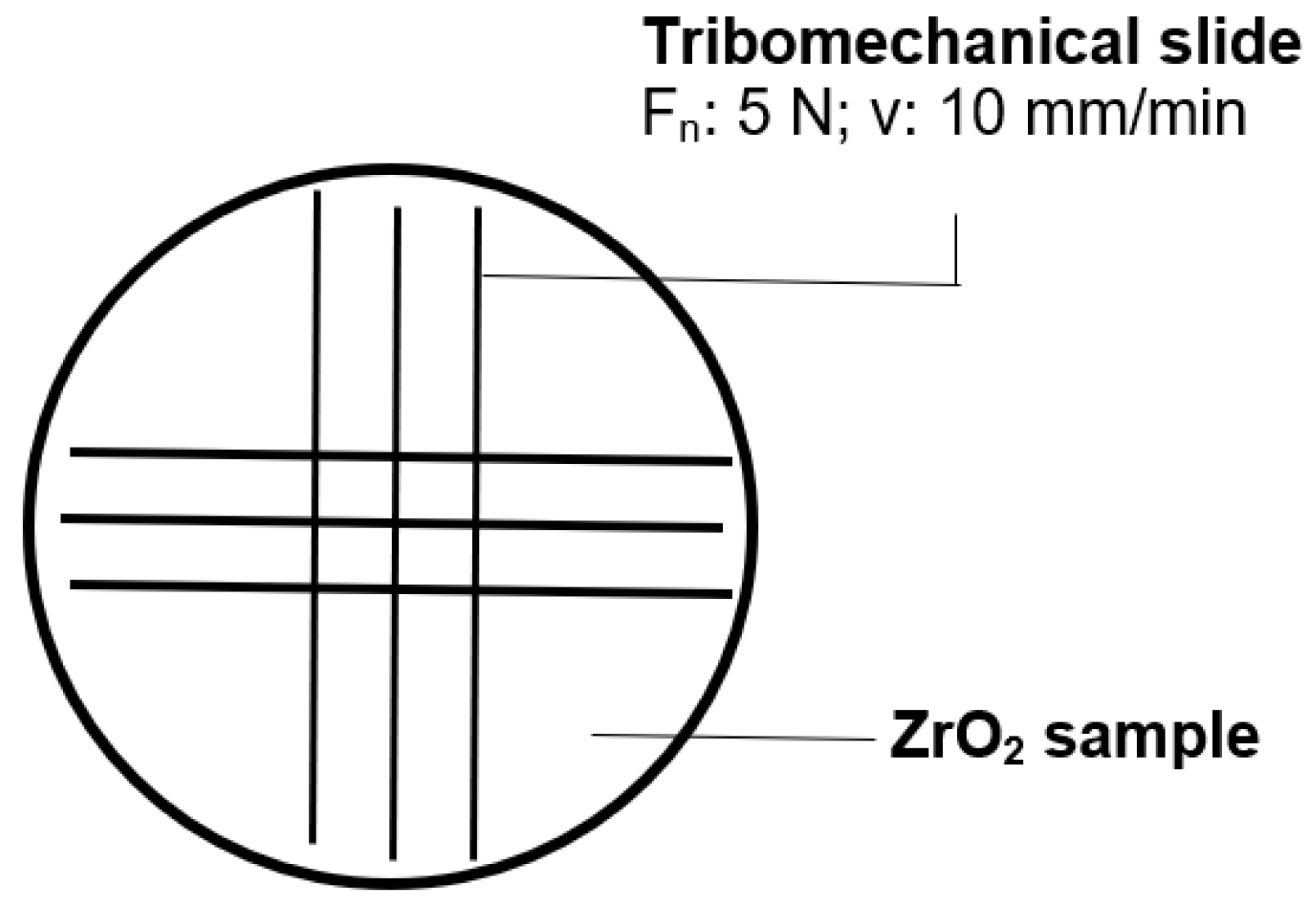
Figure 2.
Surface images of several samples: (a) ZrO2 “as delivered”; (b) ZrO2 after plasma treatment; (c) ZrO2 with fullerene C60 film; (d) ZrO2 with C60 film after the plasma treatment; (e) ZrO2 after tribomechanical loading & plasma treatment; (f) ZrO2 with C60 film and after tribomechanical.
Figure 2.
Surface images of several samples: (a) ZrO2 “as delivered”; (b) ZrO2 after plasma treatment; (c) ZrO2 with fullerene C60 film; (d) ZrO2 with C60 film after the plasma treatment; (e) ZrO2 after tribomechanical loading & plasma treatment; (f) ZrO2 with C60 film and after tribomechanical.
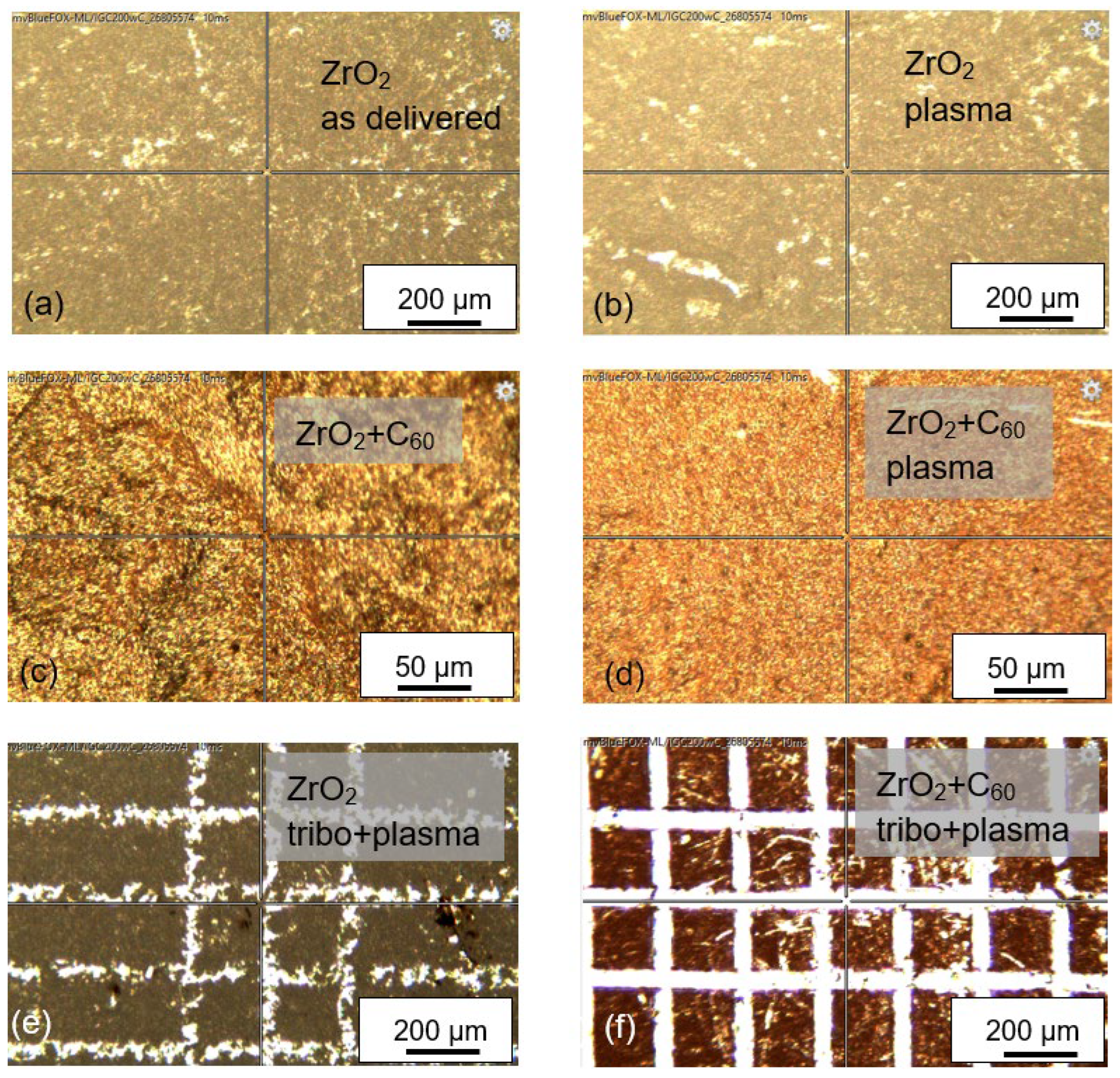
Figure 3.
Raman spectra of zirconia without fullerene C60 coating.
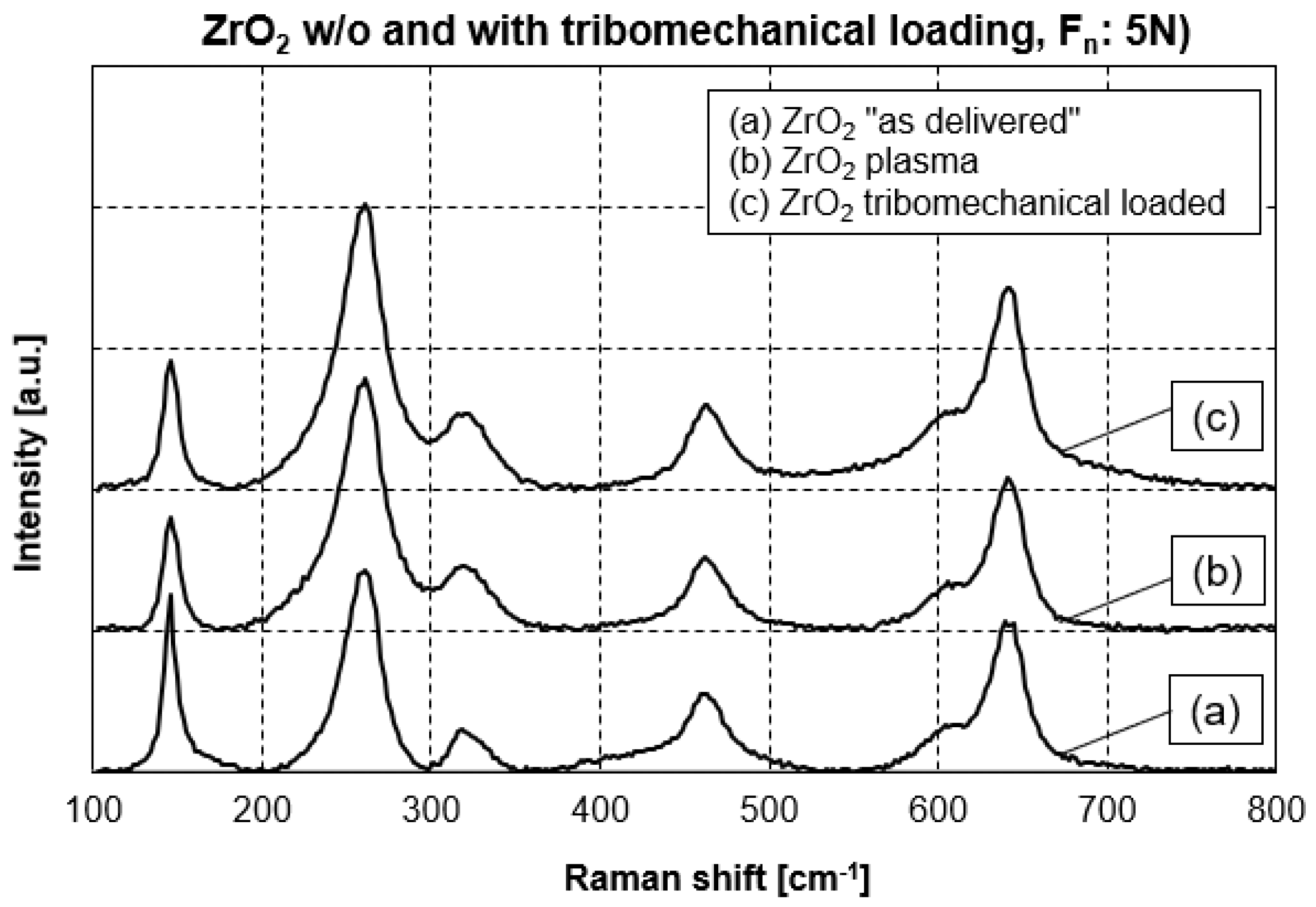
Figure 4.
Raman spectra of zirconia without fullerene C60 coating.
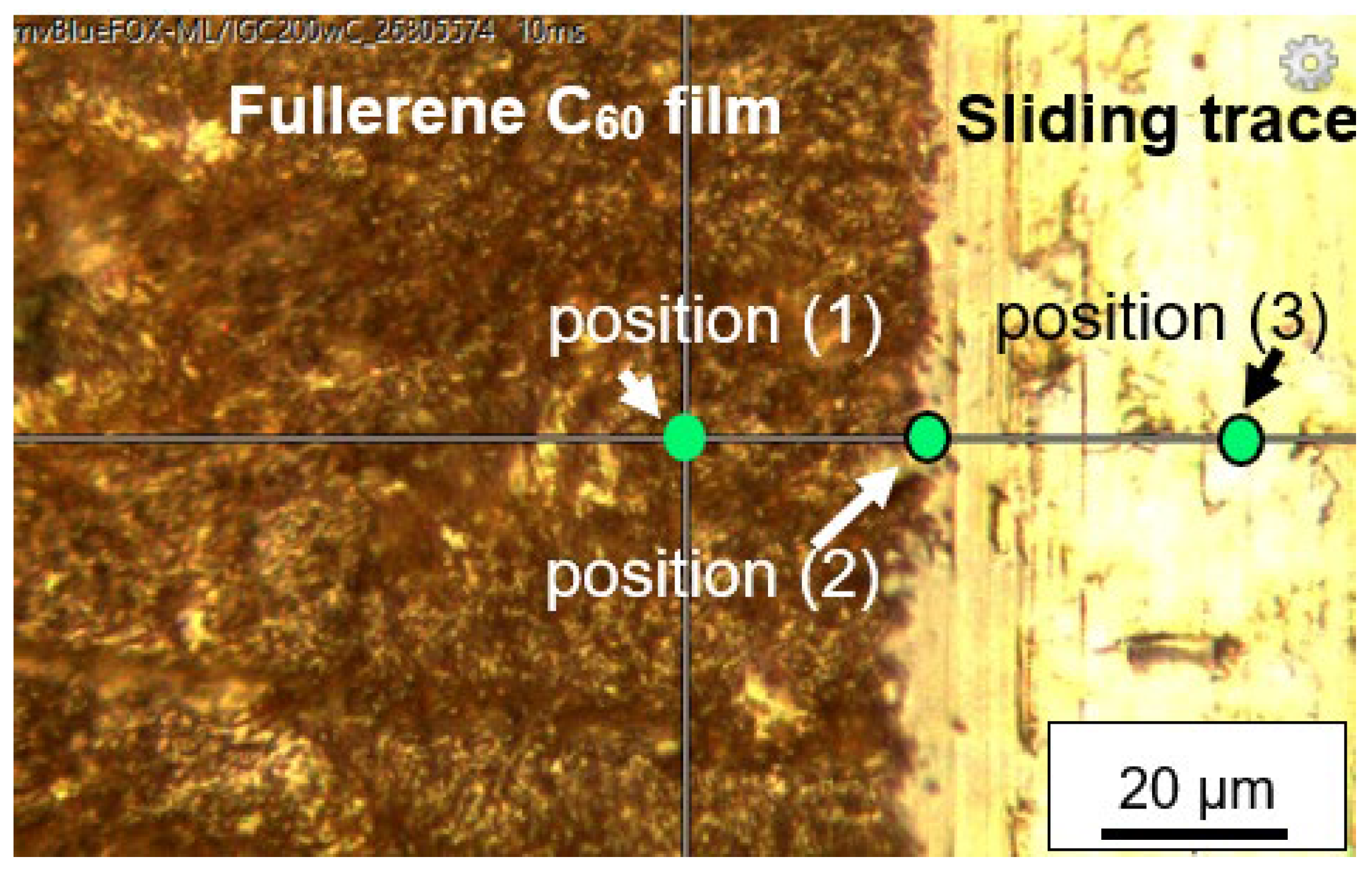
Figure 5.
Raman spectra of fullerene C60 film on ZrO2.. position (1): ZrO2+C60 without tribomechanical sliding. position (2): ZrO2+C60 after tribomechanical sliding*: edge of the scratch. position (3): ZrO2+C60 after tribomechanical sliding* with a diamond tip. *) normal force 5 N; sliding velocity 10 mm/min.
Figure 5.
Raman spectra of fullerene C60 film on ZrO2.. position (1): ZrO2+C60 without tribomechanical sliding. position (2): ZrO2+C60 after tribomechanical sliding*: edge of the scratch. position (3): ZrO2+C60 after tribomechanical sliding* with a diamond tip. *) normal force 5 N; sliding velocity 10 mm/min.
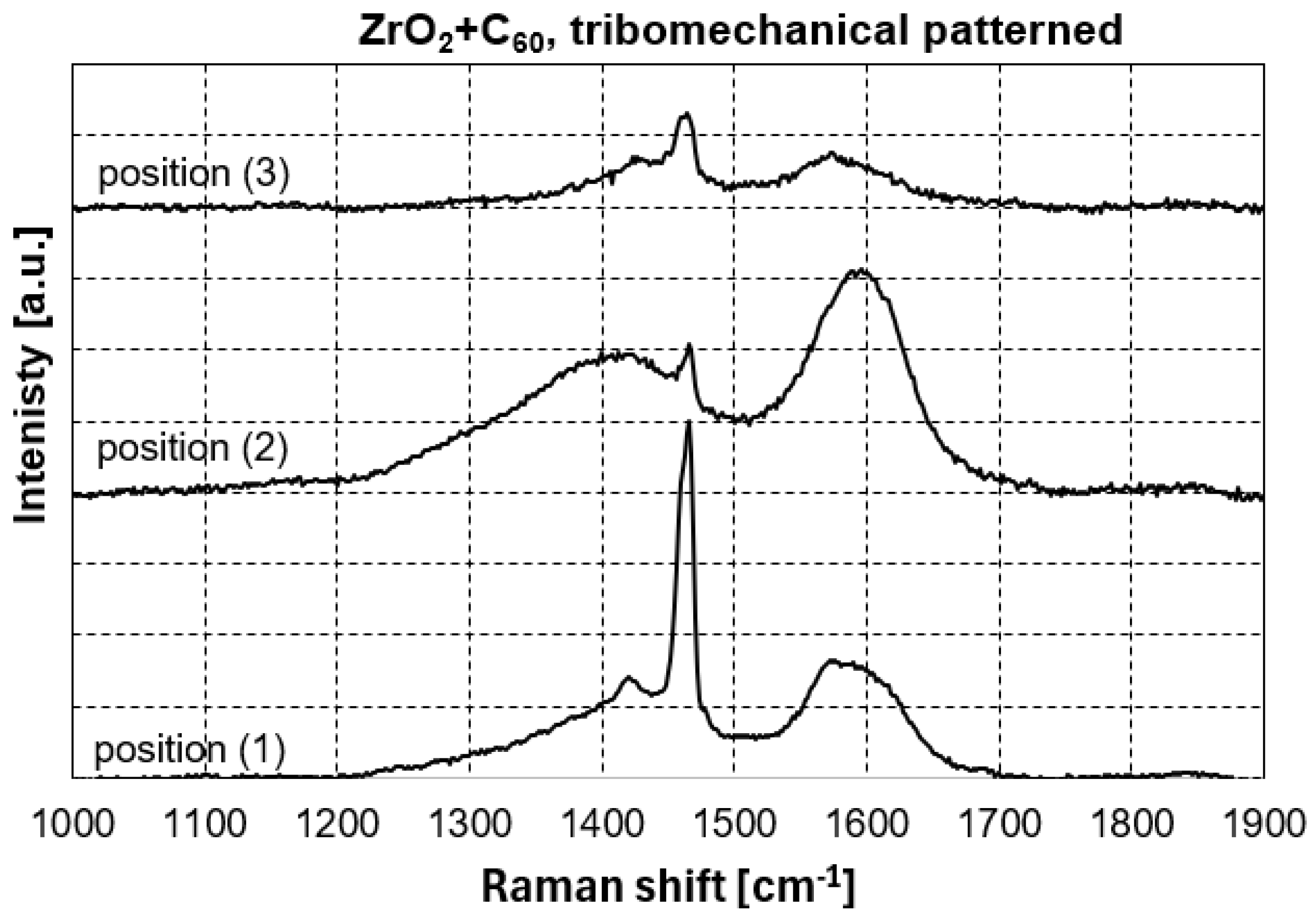
Figure 6.
Raman curve deconvolution of fullerene C60 film on ZrO2: (a): position (1): ZrO2+C60 without tribomechanical sliding. (b): position (3): ZrO2+C60 after tribomechanical sliding* with a diamond tip. *) normal force 5 N; sliding velocity 10 mm/min
Figure 6.
Raman curve deconvolution of fullerene C60 film on ZrO2: (a): position (1): ZrO2+C60 without tribomechanical sliding. (b): position (3): ZrO2+C60 after tribomechanical sliding* with a diamond tip. *) normal force 5 N; sliding velocity 10 mm/min
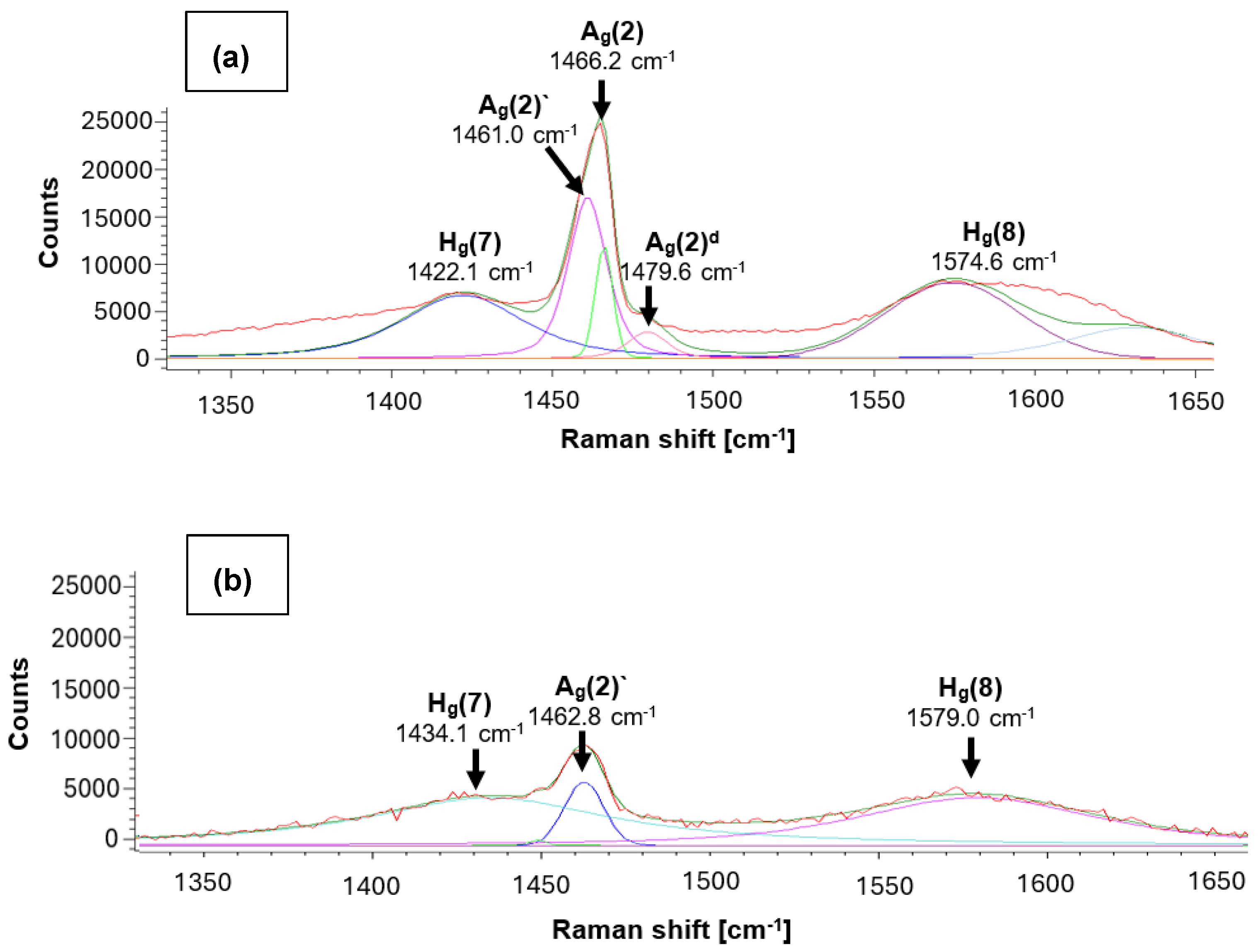
Figure 7.
Raman curve deconvolution of fullerene C60 film on ZrO2: ZrO2+C60 after tribomechanical sliding*: edge of the scratch. *) normal force 5 N; sliding velocity 10 mm/min.
Figure 7.
Raman curve deconvolution of fullerene C60 film on ZrO2: ZrO2+C60 after tribomechanical sliding*: edge of the scratch. *) normal force 5 N; sliding velocity 10 mm/min.
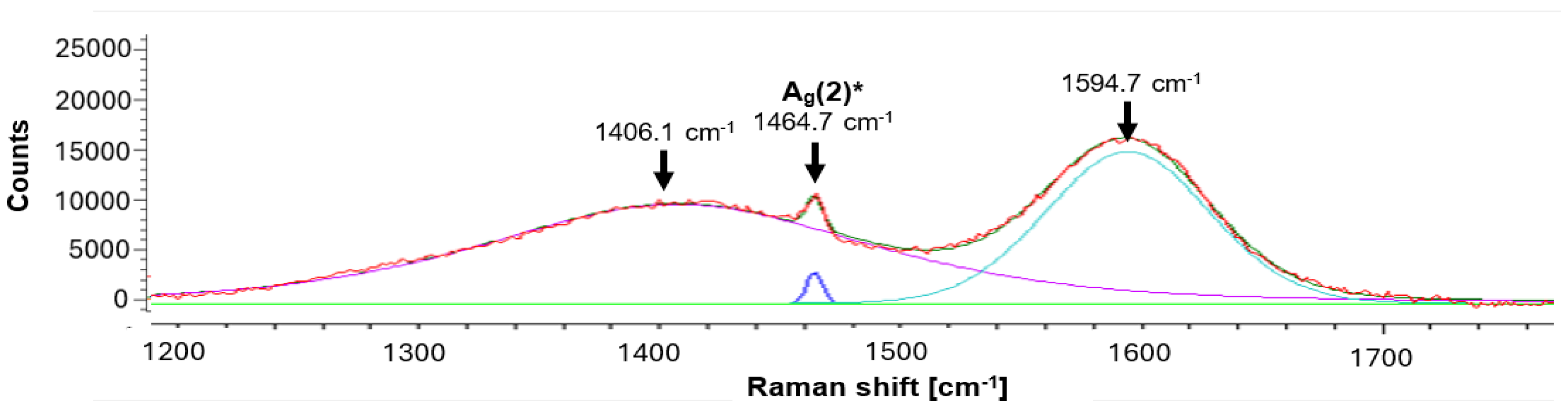
Figure 8.
In vitro cytotoxicity evaluation of the synthesized biomaterials against normal human fetal osteoblast cell line: (A) WST-8 and LDH total assays performed using biomaterials extracts; the red dashed line represents the ISO 10993-5 cytotoxicity threshold (control — cell treated with polystyrene extract); (B) CLSM images of the direct contact cytotoxicity test using the Live/Dead staining kit (red fluorescence – dead cells, green fluorescence – viable cells).
Figure 8.
In vitro cytotoxicity evaluation of the synthesized biomaterials against normal human fetal osteoblast cell line: (A) WST-8 and LDH total assays performed using biomaterials extracts; the red dashed line represents the ISO 10993-5 cytotoxicity threshold (control — cell treated with polystyrene extract); (B) CLSM images of the direct contact cytotoxicity test using the Live/Dead staining kit (red fluorescence – dead cells, green fluorescence – viable cells).
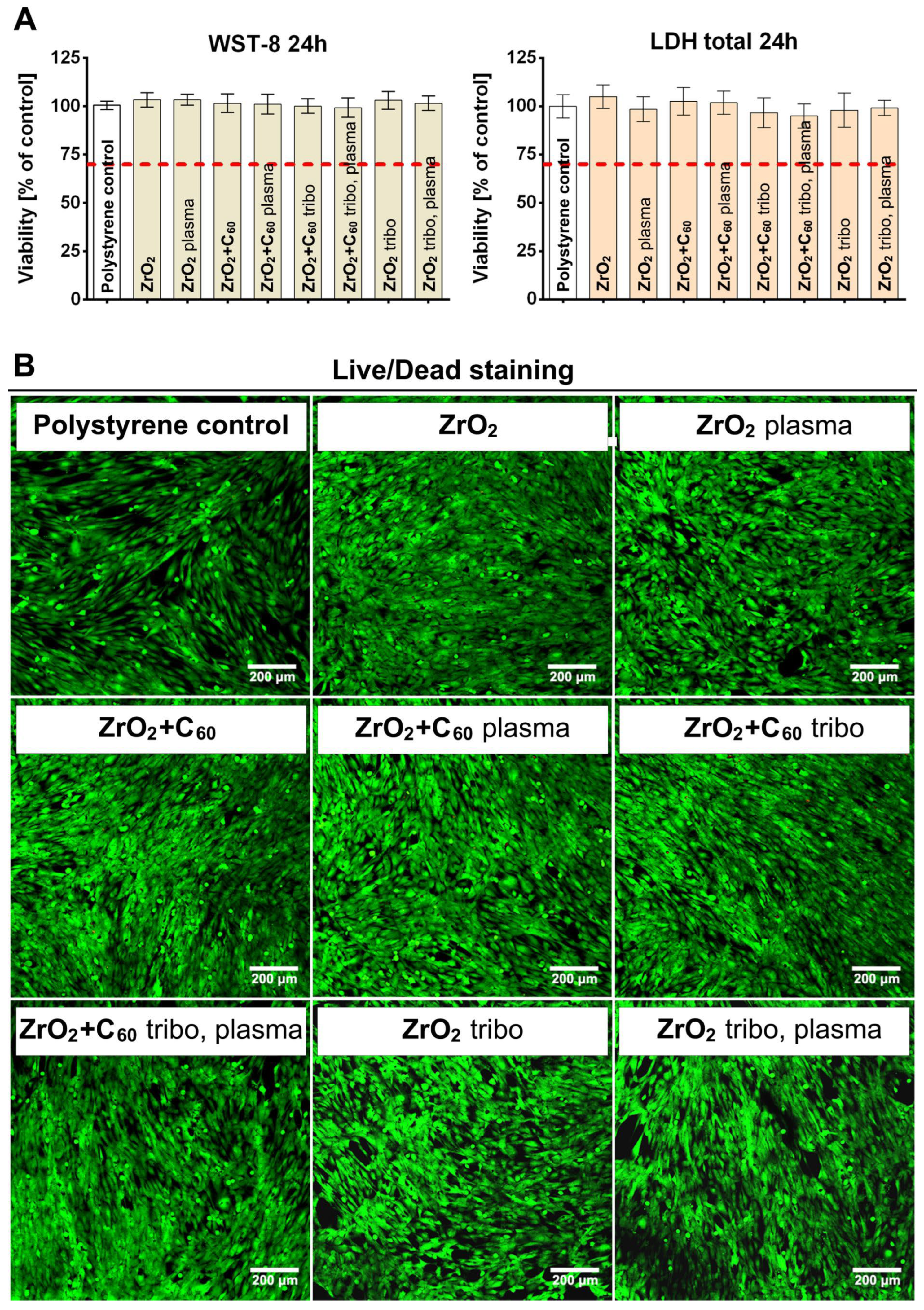
Figure 12.
Cell envelope of Gram-negative and Gram-positive bacteria.
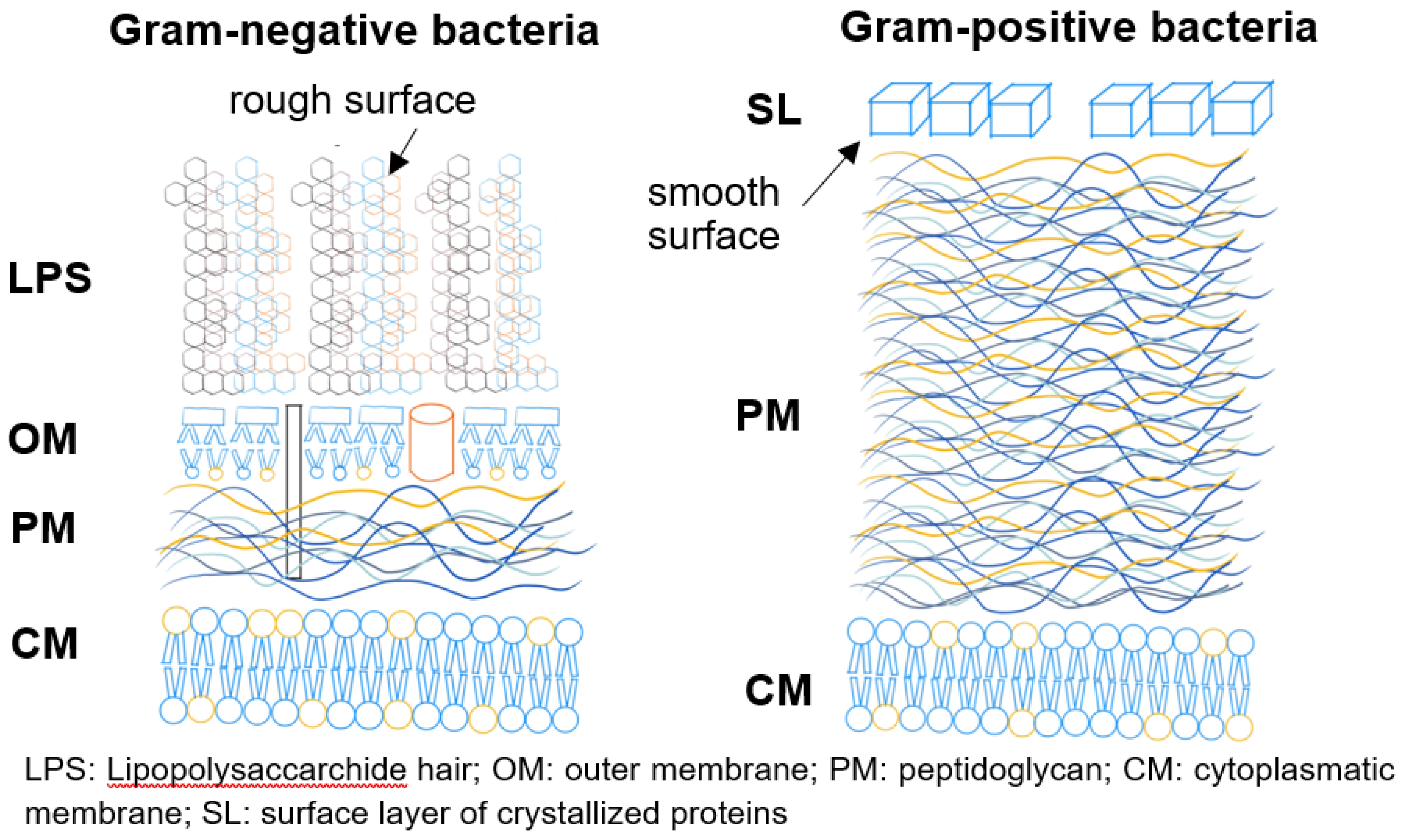
Figure 13.
Reduction of Gram-positive S.aureus bacteria on fullerene C60 coated ZrO2*. *) ZrO2 with 3 mol.% yttria
Figure 13.
Reduction of Gram-positive S.aureus bacteria on fullerene C60 coated ZrO2*. *) ZrO2 with 3 mol.% yttria
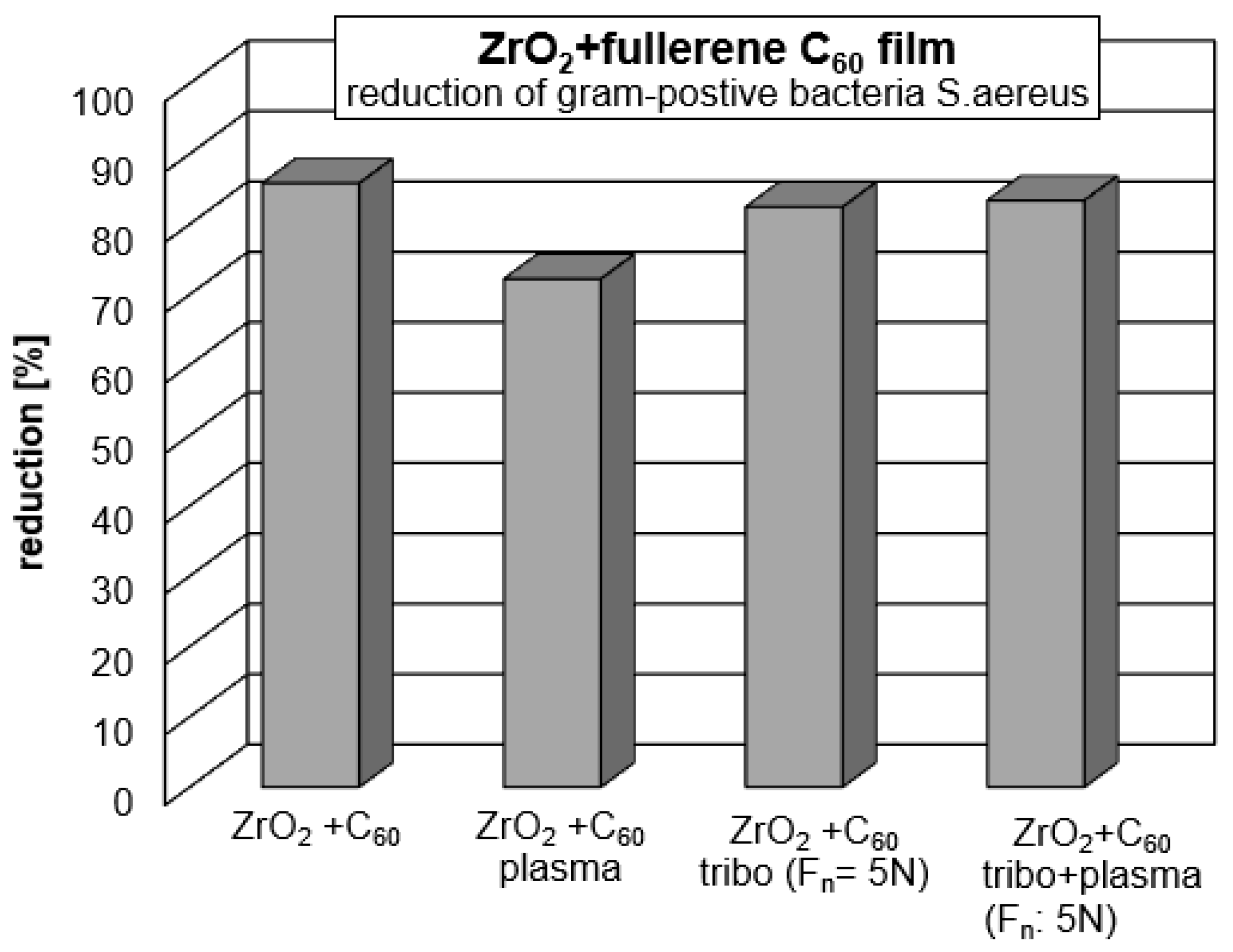

Table 1.
Raman peaks of tetragonal, monoclinic, and cubic polymorphs of ZrO2 in the “as delivered”condition and after different plasma treatment or tribomechanical loading by sliding of a diamond tip with 5 N normal force.
Table 1.
Raman peaks of tetragonal, monoclinic, and cubic polymorphs of ZrO2 in the “as delivered”condition and after different plasma treatment or tribomechanical loading by sliding of a diamond tip with 5 N normal force.
|
Crystalline structure of ZrO2 |
Reference peaks | Raman peak position | ||
|
[9,10,11] |
ZrO2 “as delivered” |
ZrO2 plasma |
ZrO2 Tribomecha-nical loaded |
|
| Tetragonal structure |
~142 cm-1 ~256 cm-1 ~320 cm-1 ~466 cm-1 ~637 cm-1 |
145 cm-1 259 cm-1 322 cm-1 462 cm-1 606 cm-1 641 cm-1 |
146 cm-1 259 cm-1 322 cm-1 463 cm-1 607 cm-1 641 cm-1 |
146 cm-1 259 cm-1 322 cm-1 463 cm-1 610 cm-1 641 cm-1 |
| Monoclinic structure |
~178 cm-1 ~190 cm-1 ~219 cm-1 ~303 cm-1 ~331 cm-1 ~345 cm-1 ~379 cm-1 ~474 cm-1 ~500 cm-1 ~534 cm-1 ~559 cm-1 ~615 cm-1 ~638 cm-1 |
- - - - - - - - - - - - - |
- - - - - - - - - - - - - |
- - - - - - - - - - - - - |
| Cubic structure ~628 cm-1 - - - | ||||
Table 2.
Raman results: ZrO2+C60 with tribomechanical pattern.
| Measurement position | Hg(7) | Ag(2) | Hg(8) | |
| Position (1) | 1,422.1 cm-1 | 1,461.0 cm-1 1,466.2 cm-1 1,479.6 cm-1 |
1,574.6 cm-1 | |
| Position (2) | 1,406.1 cm-1 | 1,464.7 cm-1 | 1,594.7 cm-1 | |
| Position (3) | 1,434.1 cm-1 | 1,462.8 cm-1 | 1,579 cm-1 | |
Table 4.
Assessment of antibacterial activity in direct contact according to the OECD standard.
| Bacteria strain |
Mean of the number of viable bacteria (CFU/sample) |
Antibacterial activity | ||||
|
Control material t=0 |
Control material t=24h |
Designation of tested materials | Tested materials | % CFU reduction | Log CFU reduction | |
| S. aureus | 3.43·104 | 1.31·107 | ZrO2 | 1.15·107 | 12.21 | 0.06 |
| ZrO2 plasma |
1.72·107 | - | - | |||
| ZrO2+C60 | 1.86·106 | 85.80 | 0.85 | |||
| ZrO2+C60 plasma |
3.64·106 | 72.21 | 0.56 | |||
| ZrO2+C60 tribo |
2.3·106 | 82.44 | 0.76 | |||
| ZrO2+C60 tribo, plasma |
2.18·106 | 83.36 | 0.78 | |||
| ZrO2 tribo |
3.87·106 | 70.46 | 0.53 | |||
| ZrO2 tribo, plasma |
2.26·107 | - | - | |||
| E.coli | 1.63·105 | >1·108 (number of bacteria above detection) | ZrO2 | >1·108 | - | - |
| ZrO2 plasma |
>1·108 | - | - | |||
| ZrO2+C60 | >1·108 | - | - | |||
| ZrO2+C60 plasma | >1·108 | - | - | |||
| ZrO2+C60 tribo |
>1·108 | - | - | |||
| ZrO2+C60 tribo, plasma |
>1·108 | - | - | |||
| ZrO2 tribo |
>1·108 | - | - | |||
| ZrO2 plasma |
>1·108 | - | - | |||
Disclaimer/Publisher’s Note: The statements, opinions and data contained in all publications are solely those of the individual author(s) and contributor(s) and not of MDPI and/or the editor(s). MDPI and/or the editor(s) disclaim responsibility for any injury to people or property resulting from any ideas, methods, instructions or products referred to in the content. |
© 2026 by the authors. Licensee MDPI, Basel, Switzerland. This article is an open access article distributed under the terms and conditions of the Creative Commons Attribution (CC BY) license (http://creativecommons.org/licenses/by/4.0/).
Copyright: This open access article is published under a Creative Commons CC BY 4.0 license, which permit the free download, distribution, and reuse, provided that the author and preprint are cited in any reuse.