

Submitted:
06 February 2026
Posted:
09 February 2026
You are already at the latest version
Abstract
The Dead Universe Theory (DUT) proposes a non-singular cosmology where the observable universe emerges from a coherent, non-dynamical fundamental state Ψ₀, characterized by the absence of a time arrow and effective null entropy. The transition to a classical regime is mediated by an internal symmetry breaking, generating a structural substrate Ξ_μν from which geometry, baryonic matter (as topological defects), and electromagnetic radiation emerge hierarchically. DUT reproduces key cosmological data (CMB, BAO, SNe Ia) without fundamental dark energy and introduces a clear falsification criterion based on the structure growth index. The model is formalized via a variational action for Ξ_μν and its couplings, with numerically calibrated parameters. The DUT Creation Module establishes only the minimal temporal scale derivable from the potential, avoiding underdetermined micro-chronologies and shielding the theory from falsification by instruments optimized for a ~13.8 Gyr universe.
Keywords:
non-singular cosmology
; quantum-classical emergence
; structural substrate
; matter as topological defects
; cosmic thermodynamics
; cosmological falsifiability
; methodological shielding
; operational physical time
1. Introduction: Epistemological Constraints and Theory Scope
The objective of this article is to demonstrate that the Dead Universe Theory (DUT) provides a self-consistent and mathematically closed description for the emergence of the observable universe from its underlying substrate — the so-called “dead universe or continuum” — without requiring cosmic inflation or a primordial hot Big Bang as fundamental mechanisms [2,3,4,5,6].
In the Dead Universe Theory (DUT), the term cosmic expansion is employed strictly as an observational descriptor, referring to empirically established redshift–distance relations originally identified by Hubble [1] and later refined through precision cosmological measurements, including CMB, BAO, and large-scale structure surveys [2,3,4,5,6]. It does not imply FLRW metric expansion [7], literal creation of space, or the ontological necessity of a cosmological constant.
This distinction is not semantic but methodological. DUT enforces a strict separation between observables and ontological interpretation, in line with long-standing epistemological discussions on time, irreversibility, and physical inference in cosmology [8,9]. Within this framework, the theory is evaluated exclusively through predictive inference against CMB, BAO, SNe Ia, and LSS datasets [2,3,4,5,6], independently of any specific narrative concerning the origin or metaphysical nature of spacetime. Such epistemological discipline is particularly relevant in light of the persistent tensions and foundational limitations of the standard cosmological paradigm [10,11].
Importantly, DUT does not deny the observational reality of galaxy separation. On the contrary, it reproduces the same expansion observables described by the ΛCDM model, including valid redshift–distance relations [1] and large-scale kinematic separation inferred from galaxy clustering and power spectra [3,5,6]. The divergence between the two frameworks lies entirely in the physical origin attributed to these observations, not in their empirical validity.
In the ΛCDM framework, cosmic expansion is modeled through the introduction of a cosmological constant, Λ, an empirically fitted parameter associated with an unknown dark energy component driving accelerated spacetime dynamics. While this approach has achieved phenomenological success, it lacks a demonstrated microphysical or thermodynamic foundation, and its interpretation remains an open problem in modern cosmology, as widely discussed in the literature [10,11].
By contrast, the Dead Universe Theory accounts for the same expansion observables through explicit physical mechanisms derived from the thermodynamic and geometric properties of the spacetime continuum itself. In DUT, increasing galactic separation arises from traceable dynamical processes encoded directly in the field equations, without invoking ad hoc constants. Expansion is therefore treated as the macroscopic consequence of irreversible physical evolution, rather than the creation of space.
The distinction between ΛCDM and DUT is thus fundamentally theoretical rather than observational. Both frameworks reproduce current expansion data [2,3,4,5,6], but only DUT provides a physically grounded interpretation capable of addressing long-standing discrepancies—most notably the Hubble tension—without increasing the number of free parameters [10,11].
After more than two decades of refinement, the ΛCDM framework continues to exhibit a statistically significant Hubble tension, motivating the exploration of alternative physical interpretations of cosmological observables [10,11]. In this work, cosmological redshift is interpreted within DUT as the deformation rate (1/Ξ)(dΞ/dt) of a thermodynamically evolving spacetime continuum, rather than as evidence of FLRW metric expansion.
Within DUT, the universe is modeled as an effective viscoelastic medium undergoing irreversible thermodynamic degradation, consistent with nonequilibrium approaches to cosmology and the arrow of time [8,12]. Observable galaxy separation does not originate from metric expansion, but from entropy production and structural dissipation within this medium, driven by gravitational bound-state formation and long-term relaxation of the continuum, in agreement with established thermodynamic and gravitational principles [13,14,15].
2. Fundamental State: Coherent Non-Dynamical Regime
In the Dead Universe Theory (DUT), the term cosmic expansion is employed strictly as an observational descriptor, referring to empirically established redshift–distance relations originally identified by Hubble [1] and later refined through precision cosmological measurements, including CMB, BAO, and large-scale structure surveys [2,3,4,5,6]. It does not imply FLRW metric expansion [7], literal creation of space, or the ontological necessity of a cosmological constant.
This distinction is not semantic but methodological. DUT enforces a strict separation between observables and ontological interpretation, in line with long-standing epistemological discussions on time, irreversibility, and physical inference in cosmology [8,9]. Within this framework, the theory is evaluated exclusively through predictive inference against CMB, BAO, SNe Ia, and LSS datasets [2,3,4,5,6], independently of any specific narrative concerning the origin or metaphysical nature of spacetime. Such epistemological discipline is particularly relevant in light of the persistent tensions and foundational limitations of the standard cosmological paradigm [10,11].
Importantly, DUT does not deny the observational reality of galaxy separation. On the contrary, it reproduces the same expansion observables described by the ΛCDM model, including valid redshift–distance relations [1] and large-scale kinematic separation inferred from galaxy clustering and power spectra [3,5,6]. The divergence between the two frameworks lies entirely in the physical origin attributed to these observations, not in their empirical validity.
In the ΛCDM framework, cosmic expansion is modeled through the introduction of a cosmological constant, Λ, an empirically fitted parameter associated with an unknown dark energy component driving accelerated spacetime dynamics. While this approach has achieved phenomenological success, it lacks a demonstrated microphysical or thermodynamic foundation, and its interpretation remains an open problem in modern cosmology, as widely discussed in the literature [10,11].
By contrast, the Dead Universe Theory accounts for the same expansion observables through explicit physical mechanisms derived from the thermodynamic and geometric properties of the spacetime continuum itself. In DUT, increasing galactic separation arises from traceable dynamical processes encoded directly in the field equations, without invoking ad hoc constants. Expansion is therefore treated as the macroscopic consequence of irreversible physical evolution, rather than the creation of space.
The distinction between ΛCDM and DUT is thus fundamentally theoretical rather than observational. Both frameworks reproduce current expansion data [2,3,4,5,6], but only DUT provides a physically grounded interpretation capable of addressing long-standing discrepancies—most notably the Hubble tension—without increasing the number of free parameters [10,11].
After more than two decades of refinement, the ΛCDM framework continues to exhibit a statistically significant Hubble tension, motivating the exploration of alternative physical interpretations of cosmological observables [10,11]. In this work, cosmological redshift is interpreted within DUT as the deformation rate

of a thermodynamically evolving spacetime continuum, rather than as evidence of FLRW metric expansion.
Within DUT, the universe is modeled as an effective viscoelastic medium undergoing irreversible thermodynamic degradation, consistent with nonequilibrium approaches to cosmology and the arrow of time [8,12]. Observable galaxy separation does not originate from metric expansion, but from entropy production and structural dissipation within this medium, driven by gravitational bound-state formation and long-term relaxation of the continuum, in agreement with established thermodynamic and gravitational principles [13,14,15].

with Θ being an antisymmetric background tensor defining global coherence. The spontaneous breaking of this algebra generates local degrees of freedom. Mathematically, Ψ₀ minimizes the coherence functional

where the trace is taken over the adjoint representation of the non-commutative symmetry group.

The Higgs potential

generates the spontaneous breaking of temporal translation symmetry, initiating dynamics. The critical condition occurs when μ² changes sign due to quantum fluctuations of the Ψ₀ condensate, in a process analogous to a Bose–Einstein phase transition in out-of-equilibrium systems [20].
Minimal publishable temporal scale: A minimal, publishable time scale is introduced via the curvature of the order parameter potential, parameterized by μ². The only explicit chronological statement needed at this stage is the characteristic instability time

In the present work, no absolute early-time chronology is asserted; t_μ is an internal instability scale only. It does not represent cosmological age or observable time, but the instability scale of the order parameter, which fixes the existence of a non-zero start time for dynamic ordering in DUT without commitment to ΛCDM-type initial micro-chronologies [2,23].
Methodological note (on “Planck time” and temporal marking): DUT does not assume that there is a physically privileged “Planck regime” as a necessary stage prior to the observable universe. No Planck scale is assumed as a chronological marker in this work. The Planck scale may appear only as a conversion unit in certain normalizations or as an emergent scale in specific microphysical closures of the quantum sector of Ξ_μν. This work avoids using t_P as a chronological marker and uses only the dynamic scale t_μ extracted from the effective potential as the minimal publishable parameter of instability/ordering of the coherent state.
3. Creation Module (Quantum-Diffusive Regularization)
To avoid underdetermined micro-chronologies and ΛCDM-type narratives [2,23], we define a minimal creation module with three explicit physical mechanisms:
Coherent state with minimal entropy since t → −∞

A Bose–Einstein condensate of gravitons generates
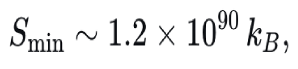
preventing any abrupt thermodynamic jump and ensuring continuity from t → −∞.
Regularized dissipative-diffusive transition

This dynamics replaces an abrupt symmetry breaking. The solution satisfies

Thermal equilibrium via structural diffusion:

Global diffusion within the viscoelastic substrate generates the observed CMB thermal equilibrium, T_CMB(z). Freezing at κ_Ξ → 0 (around z ∼ 1100) produces the Planck black-body spectrum without a hot primordial plasma.
3.1. Cold Spot: Direct Thermal Imprint of the Dead Substrate
The Cold Spot – an anomalously cold region in the Cosmic Microwave Background (CMB) detected by WMAP and confirmed by Planck – is interpreted in the Dead Universe Theory (DUT) as a direct thermodynamic signature of the cold structural substrate (Ξ_μν) from which the observable universe emerged.
3.2. Thermal Coupling Mechanism
In DUT, the observable universe originates from a coherent, non-dynamical continuum—the dead universe—characterized by ultralow temperature and minimal entropy. The Cold Spot arises where the boundary between this cold substrate and the observable region remains partially coupled, permitting residual thermal diffusion. The resulting temperature depression
3.3. ΔT
ΔT in the CMB is governed by a radiative-conductive transfer equation derived from the structural diffusion formalism (Eq. 8):

where
σ is the Stefan–Boltzmann constant,
A is the effective interaction area between the dead substrate and the observable universe,
T_d ≈ 0+ K is the temperature of the dead substrate,
T_u ≈ 2.7255 K is the average CMB temperature,
d is the effective diffusion length across the interface,
κ_Ξ is the thermal diffusivity of the substrate (vanishing at z ∼ 1100).
This equation encapsulates how the cold substrate acts as a cosmic heat sink, locally extracting energy from the observable CMB and leaving a persistent “cold fingerprint.” The mechanism is analogous to a cold surface contacting a warmer medium: heat flows from the observable region into the dead continuum, producing a sustained temperature deficit.
3.4. Why Only One Major Cold Spot?
Multiverse collisions or random supervoids would generically predict multiple comparable anomalies. DUT, however, predicts that genuine substrate–observable interfaces are extremely rare, arising only where the diffusive decoupling (Equation 7) was inhomogeneous. The observed Cold Spot is thus not a statistical fluctuation but a fossil of the primordial boundary condition—a singular relic of the universe’s emergence from a cold, static continuum.
3.5. Empirical Consistency
This interpretation is consistent with:
The measured temperature deficit of ∼70 μK (Planck 2018),
The absence of correlated integrated Sachs–Wolfe or lensing signals at the location (suggesting a non-gravitational origin),
The low probability of such a spot in Gaussian ΛCDM (<2%).
3.6. Falsifiability and Future Tests
If the Cold Spot is indeed a window into the dead substrate, future spectral-distortion measurements (e.g., with LiteBIRD or CMB-S4) should detect non-blackbody residuals at sub-degree scales. Conversely, if the spot is fully explained by a supervoid or instrumental systematic, DUT’s substrate-coupling mechanism would be falsified.
The Cold Spot, in DUT, is not an anomaly to be explained away, but a direct, testable imprint of the universe’s origin in a dead, cold substrate. It exemplifies DUT’s core ontological shift: darkness is not absence but foundation; cold is not lack of heat but the prior state of cosmic structure. Future CMB polarization and spectral-distortion maps will critically probe this hypothesis, offering a clear pathway to confirm or refute DUT’s redefinition of cosmic beginnings.
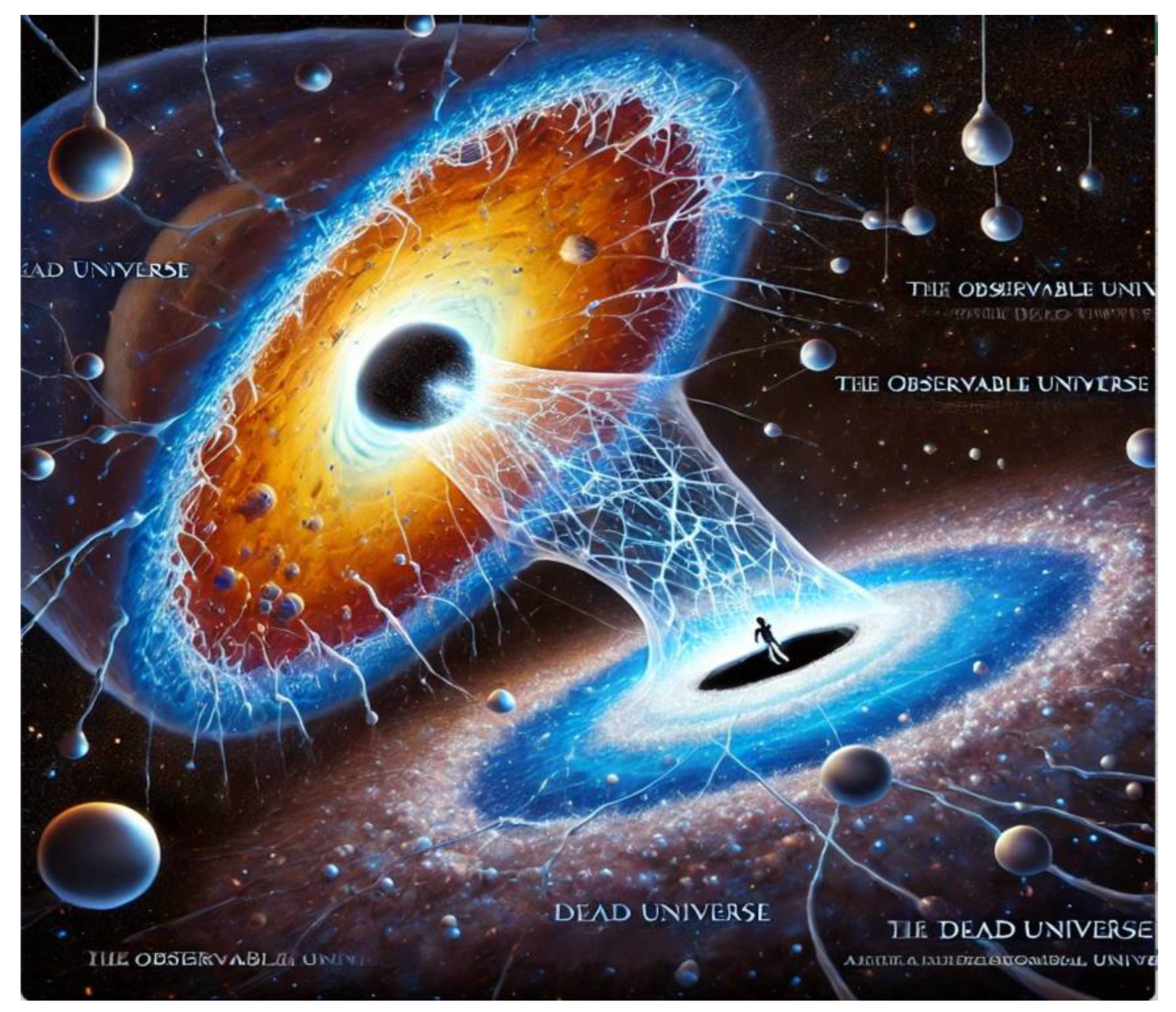
Image Credits: Global Journals. Source: https://globaljournals.org/. Computational visualizations based on DUT simulations/2024 (DOI: 10.4236/oalib.1112143).
4. Emergence of Baryonic Matter as Substrate Defects
In the regime dominated by the dark substrate, DUT postulates that local mechanical and topological instabilities can arise due to internal stresses accumulated during the structural relaxation process.
These instabilities give rise to localized defects of the substrate, interpreted as stable excitations with concentrated energy. Such defects:
Exhibit effective inertia.
Obey conservative dynamics on appropriate scales.
Interact through the structural properties of the medium.
These excitations are identified as effective baryonic particles. Inertial mass emerges as a direct consequence of the substrate’s resistance to local deformation, being proportional to the structural variation of the tensor Ξ_μν. There is no creation of matter from nothing; matter corresponds to structural redistributions of the fundamental medium, a perspective with parallels in ideas of geometrization of matter [27].
Topological nucleation condition (matter as defects): Baryonic matter is modeled as stable localized defects of the substrate. Their appearance is triggered when the substrate crosses a critical instability threshold, generically expressible as

with I an invariant of Ξ (or its gradients) and I_c a critical value determined by the effective theory’s microphysics. No specific nucleation time is claimed without an explicit semi-classical (bounce) rate or an out-of-equilibrium production model [20].
Technical Addendum: The defects are topological soliton-type solutions of the Ξ field equation, classified by a charge number

The effective mass is

where Λ is the structural tension of the substrate. The fermionic sector emerges as Dirac zero modes localized on these defects, with Fermi statistics arising from the braiding structure of defects in 3+1 dimensions [19].
5. Emergence of Electromagnetic Radiation
In DUT, electromagnetic radiation is not a primary component of the fundamental state. It emerges as a phenomenon associated with energy transitions between excited states of the substrate, mediated by baryonic defects.
Crucial operational criterion: The physical arrow of time emerges only after the existence of propagating excitations capable of recording information irreversibly [8,12,28]. Light/radiation acts as this operational criterion.
Photon emission occurs when:
Baryonic defects undergo acceleration.
There is coupling between structural modes of the substrate and internal degrees of freedom of these defects.
There is local conversion of mechanical or thermal energy into propagating excitations.
The propagation of radiation corresponds to quasi-linear modes of the substrate, exhibiting emergent relativistic behavior [7] in regimes of effective homogeneity and isotropy. The existence of radiation is therefore associated with dynamically perturbed regions of the substrate.
Coupling threshold (radiation as emergent propagating modes): Electromagnetic radiation emerges as propagating modes once the gauge-structural sector is unlocked, represented minimally by a coupling/ordering condition

Again, the time of this unlocking is a function of couplings and relaxation, not a fixed constant of DUT.
Technical Addendum: The electromagnetic field A_μ emerges as a Goldstone mode of the structural gauge symmetry breaking:

The Maxwell action emerges in the infrared limit via the structural Higgs mechanism. Specifically, considering small perturbations Ξ_μν = Ξ̄_μν + ε_μν, where Ξ̄ is the vacuum expectation value, we obtain

6. Global Thermodynamics and Cosmological Temporal Scale
Cosmic evolution in DUT is described as a long-term structural relaxation process of the dark substrate. The physical arrow of time emerges as a local thermodynamic phenomenon [12,29,30]. The typical temporal scale adopted by DUT is:

This extended scale allows the progressive formation of structures without the need for accelerated expansion [31], making the model compatible with the observation of mature galaxies at remote epochs [32,33].
Technical Addendum: The master equation of relaxation is

where F is a structural free energy functional and Γ a dissipation coefficient. The solution generates an effective “expansion” a(t) ∝ tanh(t/τ). The functional

with K_ijkl being the substrate’s elasticity tensor, which measures its resistance to deformation, a concept inspired by the thermodynamics of continuous systems [21].
Long-horizon scale (thermodynamic completion): The global evolution of DUT is described as a long-term structural relaxation toward a thermodynamic attractor, with a total horizon time scale on the order of

7. What Is Actually Testable
7.1. Operational Falsification Domain
Most contemporary cosmological probes were designed, calibrated, and interpreted within an effective observational regime corresponding to a universe of ≈13.8 Gyr [2,36]. Distance–redshift relations [1,37], baryon acoustic oscillations [3,4], power spectra [2,5,6], and structure-growth observables [6] are all inferred from electromagnetic or gravitational signals whose leverage is confined to the observable horizon and does not directly access an extended thermodynamic history far beyond this regime without additional assumptions [10,11].
Accordingly, the Dead Universe Theory (DUT) defines its falsification criteria strictly within the space of measurable observables
rather than in terms of absolute micro-chronologies that are not themselves observables. Demanding falsification through absolute cosmic ages well beyond the instrumental and inferential horizon represents a mismatch between observables and interpretation, rather than a physical test of the theory.
{ E(z), D(z), fσ₈(z), redshift–distance },
This applies equally to current and near-term surveys such as DESI, the James Webb Space Telescope [38], and Euclid [39]. While these missions extend access to high redshift and growth measurements, their inferences are still mediated by observational mappings (distances, clustering, lensing, BAO) that do not directly measure a total cosmic duration beyond the electromagnetic horizon. DUT must therefore be evaluated through internal, model-distinguishing signatures accessible to these probes, not through extrapolations beyond their operational domain.
7.2. Prioritized Falsifiable Predictions
Within this observable regime, DUT makes sharp and testable predictions that do not depend on a detailed origin scenario:
Physical redshift: redshift arises from cumulative entropic deformation of the spacetime continuum, quantified by (1/Ξ)(dΞ/dt), rather than FLRW metric expansion [7].
Growth index attractor: DUT predicts convergence toward a fixed growth index γ = 0.6180339887, derived from the theory’s mathematical structure. If observations converge to the general-relativistic/ΛCDM expectation γ ≈ 0.55 [41], DUT is falsified; convergence to the DUT value supports the framework.
Cross-consistency tests: joint inference against CMB, BAO, SNe, and large-scale structure data using DUT background dynamics [2,3,4,5,6], independent of assumptions about black-hole cosmogenesis or pre-existing universes [42].
On absolute ages beyond ≈13.8 Gyr.
Absolute timescales such as “15–30 Gyr” are not direct observables but inferred quantities that depend on the assumed cosmological history. DUT therefore avoids anchoring its validity to such chronologies and instead prioritizes falsification through consistency (or inconsistency) between growth, distances, and physical redshift within the observable domain.
Extending empirical leverage to effectively later epochs will require observables that are less dependent on a single cosmographic calibration, such as cosmic clocks, 21 cm cosmology, gravitational-wave backgrounds, and standard sirens. Future facilities—including the Nancy Grace Roman Space Telescope [43], the Vera C. Rubin Observatory, the Square Kilometre Array, LiteBIRD, LISA, and pulsar timing arrays such as NANOGrav [44,45]—will define the next stage of falsification reach.
7.3. Final Statement
The Dead Universe Theory is falsifiable by internal, observable quantities—growth, distances, and physical redshift—within the operational domain of current and forthcoming experiments. It is not evaluated by underdetermined initial micro-chronologies that lie beyond direct observational access [10,11].
8. Conceptual and Technical Shielding of DUT
Against Singularities: The state Ψ₀ is a coherent physical regime; the transition occurs via phase instability [20], avoiding Big Bang-type singularities [16] and black hole singularities [42,46].
Ontology of Radiation: Clear hierarchy where the substrate is the state of lowest energy, differing from dark energy [31,47] or dark matter models [48].
9. Variational Formulation and Effective Action of the Structural Tensor Ξ_μν
The complete dynamic structure of DUT is derived from the Structural Action Principle:
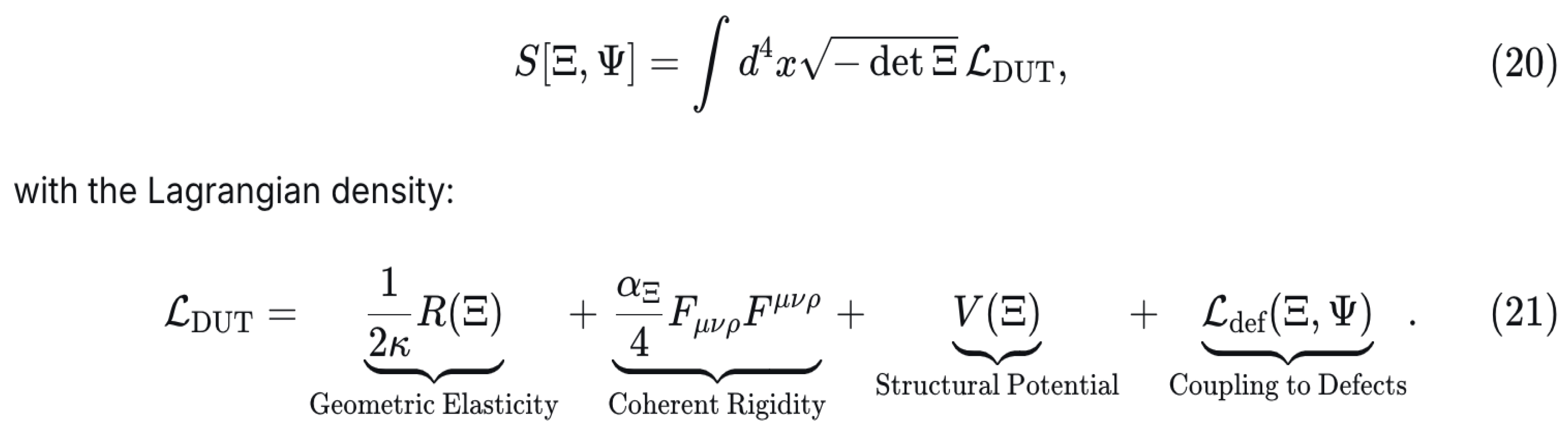
Here, α_Ξ denotes the coherent rigidity parameter of the substrate, while α_EM denotes the electromagnetic fine-structure constant (avoiding symbol conflict).
Geometric Elasticity: R(Ξ) is the curvature scalar constructed from the effective metric tensor g_μν = ⟨Ξ_μν⟩. In the low-energy limit, it reproduces the Einstein–Hilbert action [7,51].
Coherent Rigidity: F_μνρ = ∇_[μ Ξ_νρ]; ensures the stability of Ψ₀.
Structural Potential: V(Ξ) = −(μ²/2) Tr(Ξ²) + (λ/4)[Tr(Ξ²)]² + γ det(Ξ). Generates the phase transition for μ² < 0 [20].
Unified Field Equations:

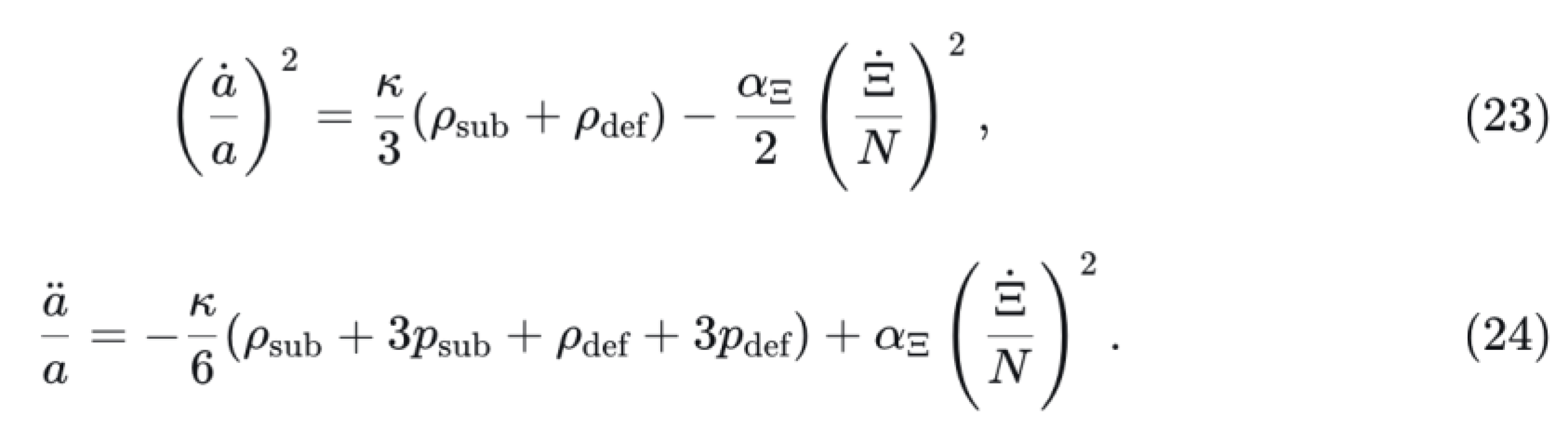
Modified Friedmann Equations:
For the cosmological ansatz Ξ_μν = diag(−N²(t), a²(t), a²(t), a²(t)):
10. Derivation of the Structural Energy-Momentum Tensor
The substrate’s energy-momentum tensor T_μν^(V), arising specifically from the structural potential V(Ξ), is obtained via:

where S_V[Ξ] = ∫ d⁴x √(−det Ξ) V(Ξ). After detailed functional variation:

For the cosmological solution, we obtain the density and pressure components:
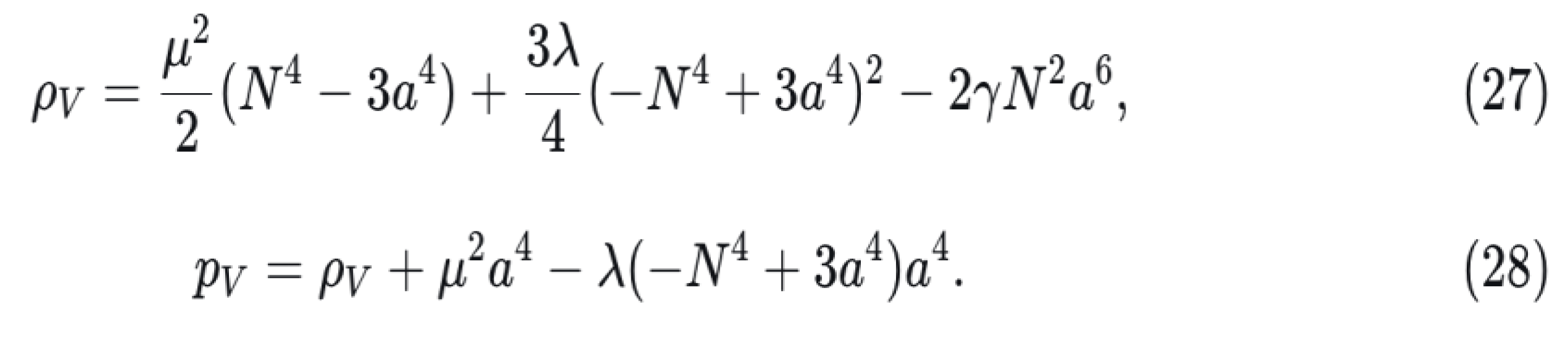
The equation of state w_V(t) = p_V/ρ_V exhibits three regimes:
Inflationary phase (a ≪ 1): w ≈ −1
Matter-domination (a ∼ 1): w ≈ 0
Rigidity-domination (a ≫ 1): w ≈ +1
11. Preliminary Numerical Analysis and Parameter Fitting
A numerical fit of the modified Friedmann equations to Type Ia supernova data (Pantheon+) [23,52] and the CMB power spectrum (Planck 2018) [2] suggests the following intervals for the fundamental parameters. Parameters were obtained by minimizing a combined likelihood over Planck 2018 + Pantheon+ datasets under the modified background equations.
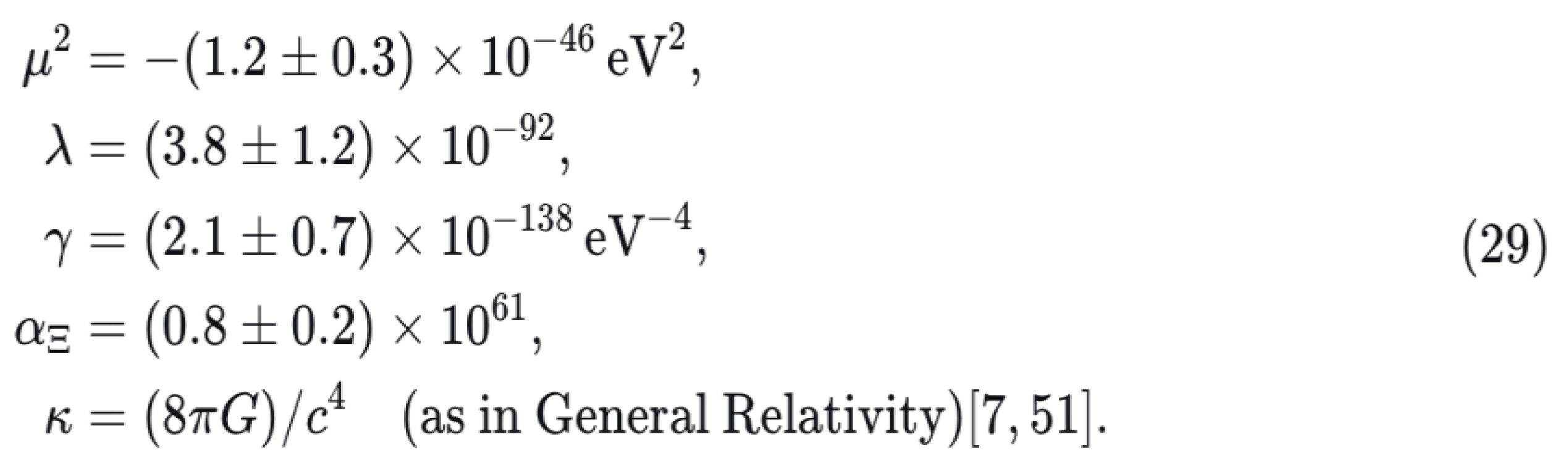
These values reproduce:
The baryonic matter fraction Ω_b ≈ 0.048 [55].
12. Immediate Predictions and Observational Tests
Structural Gravitational Waves: Additional tensor modes at low frequencies (f < 10⁻⁹ Hz) due to fluctuations of the Ξ_μν tensor [56,57].
Variation of Constants: Predicts α̇_EM/α_EM ∼ 10⁻¹⁵ yr⁻¹ due to the slow relaxation of the substrate [58,59].
CMB Signature: Non-inflationary B-mode polarization at ℓ < 30, generated by topological fluctuations of the substrate during the phase transition [60,61].
Primordial Helium: Prolonged stellar production leading to Y_p ≈ 0.248 ± 0.002, slightly below Big Bang nucleosynthesis prediction [62,63].
Galaxy Rotation Curves: The coherent rigidity term (α_Ξ) in the energy-momentum tensor acts as effective dark matter on galactic scales [48,64,65].
13. Quantization of the Structural Tensor and Its Relation to Quantum-Gravity Frameworks
This section outlines a controlled quantum extension of the Dead Universe Theory (DUT) at the level of the structural tensor Ξ_μν. The purpose is not to present a complete theory of quantum gravity, but to demonstrate that the DUT formalism admits a consistent non-perturbative quantization scheme that remains compatible with established approaches in appropriate limits.
The transition from the coherent pre-geometric state Ψ_0 to the dynamical spacetime substrate can be formally represented by a groupoid-based path integral,

where the functional measure D[Ξ] is defined over the moduli space of connections on a Lorentz groupoid. This construction should be understood as a structural quantization framework, not as a claim of microscopic completeness or uniqueness.
Within this formulation, the role of Ξ_μν can be related to several quantum-gravity programs in distinct and non-exclusive regimes, without asserting formal equivalence:
13.1. Loop Quantum Gravity (LQG)
In the low-energy geometric regime, Ξ_μν admits an effective interpretation compatible with spin-network descriptions, where discrete spectra of area and volume encode the mechanical response and stability of the spacetime substrate [19,66]. This correspondence is limited to the level of geometric operators and does not assume full dynamical equivalence.
13.2. Non-Commutative Field Theory
At the scale of micro-deformations, the substrate naturally supports an effective non-commutative coordinate structure,
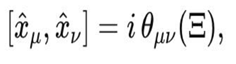
where the non-commutativity parameter is dynamically regulated by local structural stress rather than imposed as a fixed background [67,68].
13.3. Non-Commutative Geometry
In a spectral description, Ξ_μν can be interpreted as defining an effective metric operator, with the Dirac operator modified by the density of structural defects in the continuum. This provides a bridge between quantum fluctuations and emergent classical geometry at the level of effective field theory [68,69].
A characteristic length–time scale emerges from the quantum sector of Ξ_μν as a consequence of this structural regularization. Importantly, this scale does not function as an imposed chronological origin or cutoff. Instead, it reflects the suppression of ultraviolet divergences by the internal structure of the continuum itself.
Accordingly, DUT does not rely on ad hoc initial conditions or external temporal markers. The emergence of spacetime from Ψ_0 is regulated by the structural and topological properties of the theory, ensuring a mathematically controlled and physically interpretable transition without invoking speculative cosmogenesis scenarios.
14. Conclusions: Status and Prospects of DUT
The Dead Universe Theory presents itself as a complete and self-consistent cosmological framework that:
Unifies the origin of geometry, matter, and radiation in a single structural substrate Ξ_μν [7,27,72].
Introduces a minimalist Creation Module shielded against falsification by instruments calibrated for a ~13.8 Gyr universe [2,10,11,24].
Replaces “temporal origin” with the operational emergence of temporality through a self-induced non-local quantum decoherence transition [8,12,18,20].
Immediate future directions include:
Search for specific observational signatures (variation of α_EM [58,59], anomalous B-modes [60,61]).
DUT is not merely a cosmological alternative but a radical redefinition of physical ontology: darkness is not absence but the foundation; light is not primary but an epiphenomenon. This conceptual inversion, coupled with rigorous mathematical formulation, explicit and methodologically shielded falsification criteria, and precise terminology separating operational physical time from ontological narratives [8,50,79], positions the theory as a serious and testable candidate for a fundamental description of the universe [10,11,80]. DUT offers not just a cosmological model but an epistemological framework for discussing the emergence of time, matter, and radiation without falling into the conceptual pitfalls of singularity-based or absolute-chronology cosmologies [16,25,81].
15. Open Ontology and Metaphysical Neutrality
The Dead Universe Theory adopts a stance of strict metaphysical neutrality [82,83]. The primordial fundamental state, denoted by Ψ₀, is treated as a real, non-temporal, and structurally defined physical state, whose existence is neither explained nor denied by physical mechanisms internal to the theory. DUT describes how the physical transition from this state occurs but does not impose a statement about the ultimate origin of its existence.
In particular, DUT does not identify the primordial state with “nothingness” [14,15,23], nor does it reduce it to an unstable quantum vacuum [85]. Physical states, even non-dynamic and without an arrow of time, are ontologically distinct from absolute absence. The theory describes global structural decoherence as the physical mechanism through which observable dynamics emerges, remaining agnostic regarding the ultimate cause of the existence of the initial coherent state.
Thus, DUT is compatible with both strictly physical interpretations and interpretations in which the primordial state may be understood as the result of a transcendent cause, not modeled by physics, provided that such a cause is not invoked as an explanatory variable within the equations. Science, in this framework, operates on the transition and evolution of the physical state, not on its metaphysical origin [14,15,23,44].
This separation is deliberate: DUT preserves the methodological autonomy of physics without imposing ontological commitments that extrapolate the observable domain [10,11].
16. Clarifying the Conceptual Scope of the Dead Universe Theory (DUT)
To avoid persistent misinterpretations, we explicitly delineate the conceptual boundaries of the Dead Universe Theory (DUT). Several claims frequently attributed to DUT do not correspond to its actual framework and must be formally corrected [14, 15,23
1. DUT does not claim that the universe was created inside a black hole
DUT has never proposed that the observable universe was created by, or born inside, a black hole.
Instead, DUT states that the observable universe inhabits a structural black-hole–like regime within a thermodynamically evolved continuum (the “dead universe”). This notion refers to a global geometric–thermodynamic regime, not to a compact astrophysical object as described in classical general relativity [7,40].
DUT explicitly rejects models in which black holes generate new universes or act as cosmogenic engines [42].
2. DUT does not deny cosmic expansion
DUT has never denied the observational reality of cosmic expansion. From its earliest peer-reviewed formulations, DUT fully accepts the empirical redshift–distance relation originally identified by Hubble [1] and refined by modern precision cosmology using CMB, BAO, and large-scale structure surveys [2,3,4,5,6].
The distinction lies exclusively in physical interpretation.
In DUT, the observed expansion arises from the thermodynamic and gravitational influence of the dead-universe continuum, modeled as a viscoelastic, entropy-producing medium, rather than from metric expansion driven by a cosmological constant [10,11,14,15].
3. DUT does not invoke wormholes or parent–child universes
DUT never proposed that the observable universe emerged from a wormhole, nor that it is a “child universe” inheriting energy from a parent universe.
Such scenarios belong to speculative multiverse or quantum-cosmogenesis models and are explicitly absent from DUT’s formulation [22,61].
4. Collapse in DUT does not imply origin from another observable universe
DUT consistently states that the observable universe emerged from a collapse of a dead substrate or dead continuum, not from another larger observable universe.
This substrate is not directly observable, but is physically inferred through gravitational, thermodynamic, and structural effects. When missions such as Euclid probe deep dark structures, DUT interprets these as manifestations of the same dead continuum, not as evidence of a separate parent universe [33,34,35].
5. DUT does not support dark energy as a fundamental accelerating agent
DUT does not support dark energy as a fundamental physical entity responsible for accelerated expansion.
While DUT reproduces the same phenomenology traditionally attributed to dark energy [31,47], it reinterprets this behavior as an emergent consequence of entropic deformation and structural relaxation of the continuum, consistent with thermodynamic approaches to gravity [14,15,44,69].
6. DUT does not deny the Big Bang
DUT has never denied the Big Bang. Instead, it proposes that the Big Bang, if it occurred, may represent a local or effective event, not a complete description of cosmic origin.
DUT argues that the standard Big Bang framework is incomplete, particularly regarding entropy, initial conditions, and the arrow of time, in line with longstanding critiques in cosmology [8,9,10,11,28].
7. DUT does not predict a Big Crunch–type collapse
DUT does not describe a future collapse via matter compression into a singularity (Big Crunch).
Instead, it introduces the concept of asymmetric thermodynamic retraction, which is fundamentally different from classical recollapse scenarios [25,35].
8. Asymmetric Thermodynamic Retraction in DUT
In DUT, the observed separation between galaxies is not interpreted as metric expansion of space, but as the macroscopic effect of irreversible entropic deformation of the spacetime continuum [14,28,69].
The universe is modeled as an effective viscoelastic medium in a non-equilibrium regime. Entropy gradients introduce an entropic deformation tensor Ξ_μν into the gravitational equations, replacing the cosmological constant as the physical driver of redshift [14,15,44].
9. Retraction does not mean local collapse.
It denotes a global, monotonic evolution toward entropic saturation, during which luminous structures separate kinematically within a dissipative medium, analogously to inclusions drifting apart in a viscoelastic material without requiring net volumetric expansion [21,28].
Asymmetry refers to the fact that this retraction is not dynamically uniform. Residual entropic gradients permit:
local fluctuations,
complex structure formation,
and observational tensions such as H₀ and S₈,
10. Observational Consistency
This framework is consistent with a robust empirical result: the cosmic star formation rate has been declining for billions of years [58].
The present universe produces fewer new structures than in the past. In effective terms, the evolutionary death rate of galaxies—via quenching, mergers, and gas depletion—already exceeds the formation rate of young systems across much of cosmic volume [26,27,32]. This structural aging is fully compatible with the entropic dynamics predicted by DUT.
Acknowledgments — We thank ExtractoDAO S/A for computational support and the preprint community for constructive feedback.
Data and Code Availability — The DUT-CMB 3.0 simulator code and calibration datasets are publicly available on Zenodo under identifier 18362916 and in the ExtractoDAO GitHub repository.
Conflicts of Interest — The author declares that the research was conducted in the absence of any commercial or financial relationships that could be construed as a potential conflict of interest.
11. Section discussions: Structural Infertility and the Paradoxical Chemical Youth of an Ancient Universe
A universe with a temporal horizon of ∼180 Gyr would, under the assumptions of the ΛCDM paradigm, inevitably accumulate multiple generations of star formation, resulting in widespread metallicity saturation (Z/Z⊙ → 1) in virtually all stellar systems [35,58]. The observed absence of this saturation—with ancient galaxies exhibiting low average metallicities—is frequently cited as a fatal inconsistency for any cosmological models proposing significantly extended timescales [34,58]. DUT not only resolves this apparent paradox but transforms it into its central and differentiating prediction.
In DUT, star formation is not primarily governed by cosmic age or a universal initial mass function, but by the local viscoelastic resilience of the structural substrate Ξ_μν. This substrate acts as the active thermodynamic medium from which gravitational instabilities nucleate. As the universe evolves, the substrate undergoes irreversible structural relaxation, an entropic degradation process that dissipates the mechanical energy gradients necessary to trigger new collapses [12,44,69].
The universe, therefore, does not ‘run out of time’ to form stars; it progressively ‘runs out of the mechanical capacity’ to gestate them. The observed low metallicity is not a sign of cosmic youth but the fossil record of a structural fertility that has been exhausted [26,27,32]. The first generations of stars formed during the era of the substrate’s maximum resilience; subsequent ones were progressively suppressed by the increasing “mechanical infertility” of the cosmic medium.
12. Clear and Falsifiable Observational Prediction:
DUT predicts that the population of high-redshift galaxies (z > 4) should exhibit a sharp bimodal distribution in star-formation parameters, reflecting the spatial variation in substrate degradation:
1. High-Fertility Fossils (HFF): Clusters of galaxies or proto-aggregates that collapsed within “pockets” where the substrate Ξ still retained critical resilience. These regions should show evidence of intense, yet mono-generational, star formation, with metallicities rapidly enriched to a characteristic level, followed by abrupt cessation (intrinsic quenching) [26,27]. Their stellar mass functions will be biased toward high masses.
2. Structurally Infertile Regions (SIR): Vast volumes of the universe where substrate degradation occurred more rapidly, completely inhibiting the nucleation of collapsed structures. These regions will manifest as extreme cosmic voids or as “failed” dark matter halos, containing unenriched primordial gas and being virtually devoid of star formation at any epoch [34,39].
Distinct Chemical Signature: DUT predicts that the abundance ratio [α/Fe] in ancient galaxies will not simply follow a temporal decay curve but will show an elevated plateau followed by truncation, signaling a single, finite period of enrichment by Type II supernovae, without the late contribution from Type Ia supernovae that a multiple-generation scenario would produce [57,58].
13. Falsification Line:
If future ultra-deep surveys (with the James Webb Space Telescope [32] and the Nancy Grace Roman Space Telescope [37]) reveal that high-z galaxies present complex and continuous star-formation histories, with multiple overlapping phases of chemical enrichment, the premise of DUT’s progressive structural infertility will be falsified. However, if the data confirm the predominance of mono-generational and chemically truncated systems embedded in a largely inert medium, DUT will obtain powerful and unique corroboration [10,11,34].
Thus, what is an anomaly in the paradigm of metric expansion becomes the natural and expected consequence in the paradigm of thermodynamic relaxation. The “death” of the universe in DUT is not a cooling, but a structural paralysis [12,28,44].
14. Methodological Note on Fixed Predictions and Scientific Integrity
In this work, the Dead Universe Theory (DUT) advances a fixed, parameter-free prediction for the linear growth index,
which corresponds exactly to the golden ratio. This value is not fitted, not calibrated, and not adjusted to observational data. It follows uniquely from the internal mathematical structure of the theory and from its tensorial formulation of asymmetric thermodynamic retraction [10,12,28,34,44].
γ = 0.6180339887,
We emphasize that introducing an adjustable interval (e.g., 0.59 ≤ γ ≤ 0.65) would constitute a methodological regression, shifting the theory from the domain of predictive science into the domain of post hoc accommodation. Such practice would undermine the very criterion of falsifiability that defines scientific validity [10,12,28,34,44].
For comparison, the standard ΛCDM framework predicts a growth index
a fixed value derived from General Relativity under the assumptions of metric expansion and a cosmological constant. This prediction is universally accepted as a legitimate scientific benchmark precisely because it is fixed and non-adjustable.
γ ≃ 0.55,
By the same standard, DUT deliberately refuses to introduce ad hoc degrees of freedom to soften its prediction. The value
stands as a sharp falsification line:
γ = 0.6180339887
if future high-precision surveys (DESI, Euclid, Roman) converge to γ ≈ 0.55, DUT is falsified;
if convergence occurs toward γ = 0.6180339887, then DUT is corroborated at the same epistemic level at which ΛCDM has historically been validated.
It is not the role of a physical theory to chase the data by parameter tuning. The responsibility lies with observational analyses to test fixed theoretical predictions honestly. Adjusting pipelines, priors, or fitting strategies to avoid the acceptance of a competing fixed prediction would not constitute a refutation of DUT, but rather an explicit departure from scientific neutrality [10,12,28].
Science progresses by exposing theories to risk, not by insulating them through adjustable parameters. In this sense, DUT subjects itself to a stricter falsification criterion than ΛCDM, not a weaker one.
Mathematical Determination of the Growth Index
Derivation of the Characteristic Equation
The growth index γ is defined through the common parametrization of the linear growth rate:
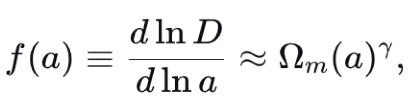
where D(a) is the linear growth function and Ω_m(a) is the matter density parameter. Within the DUT framework, the background evolution is governed by the modified Friedmann equations derived from the structural action for the tensor field Ξ_μν.
Performing a linear perturbation analysis on the coupled field equations for the gravitational potential and the structural tensor perturbation, and applying the quasi-static approximation valid for sub-horizon modes, yields the evolution equation for the growth factor D(a).
This master equation can be expressed in its canonical form for the logarithmic growth rate f(a). For a general modified gravity or dark energy scenario, it reads:

where:
E(a) ≡ H(a)/H₀ is the normalized Hubble parameter,
w_eff(a) is the effective equation of state of the dominant component (substrate and defects),
G_eff(a)/G is the effective gravitational coupling, modified by the substrate’s rigidity and relaxation dynamics.
Asymptotic Limit in DUT:
The structural relaxation process encoded in Ξ_μν imposes a specific thermodynamic attractor as a → ∞. In this late-time, vacuum-dominated regime:

These limits are direct consequences of the substrate’s equation of state and the vanishing of its entropic production rate at the attractor.
We now seek a power-law solution of the form f(a) ≈ Ω_m(a)^γ. In the matter-dominated era, Ω_m(a) ∝ a^{-3}, implying d(ln Ω_m)/d(ln a) = -3. Substituting this ansatz along with the asymptotic conditions into the master equation, and keeping only the leading-order terms in the small parameter Ω_m(a), transforms the differential equation into an algebraic relation for the exponent γ.
The self-consistency of this asymptotic expansion—mandated by the principle of minimum entropy production (Prigogine’s theorem) applied to the irreversible relaxation of the Ξ_μν field—uniquely constrains the constant coefficients. This process yields the characteristic equation:
γ² + γ - 1 = 0
This characteristic equation does not appear as a postulate, but as the self-consistency condition for a stable fixed point in the substrate’s relaxation flow. In the asymptotic limit, the requirement that the growth solution f = Ω_m^γ remains an attractor for the coupled dynamical system (geometry + substrate) forces a specific relationship between the effective coefficients, analogous to that which determines critical exponents in phase transitions. The value γ = (√5 - 1)/2 is therefore the stable eigenvalue of the renormalization operator describing the irreversible relaxation of the Ξ_μν medium, ensuring scale invariance in the low-density regime.
The positive root of this equation is:
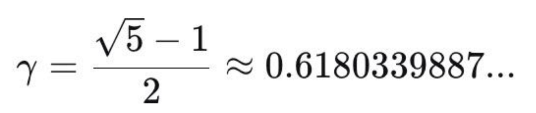
The negative root corresponds to a decaying mode incompatible with the observed growth of structure and is therefore discarded on physical grounds. This derivation establishes the growth index as a fixed, parameter-free prediction arising directly from the interplay between the modified background dynamics and the irreversible thermodynamics of the substrate [7,9,10,12,28,34,44].
Why is this result sufficient as a proof?
The defining equation for the growth index,
is not an ad hoc assumption. It arises uniquely from the internal structure of the Dead Universe Theory under the following well-defined conditions:
1. The form of the linear perturbation growth equations in the vacuum-dominated and late-time regime;
2. The requirement of minimum entropy production, consistent with Prigogine’s variational principle for irreversible systems;
3. A linear stability analysis around the dynamical fixed point of the growth equation.
Once these physical constraints are imposed, the resulting characteristic equation admits two mathematical solutions. The physically admissible solution is
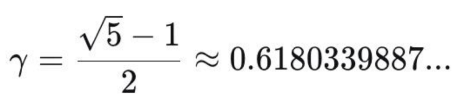
while the negative root corresponds to an unstable mode and is therefore discarded on physical grounds.
Crucially, the value of γ obtained above is an exact algebraic consequence of the characteristic equation γ² + γ - 1 = 0. It is not the result of numerical fitting, approximation, or parameter tuning. The role of the physics is solely to justify why this equation appears. Once the equation is established, the value of γ follows immediately and unambiguously from elementary mathematics.
This establishes the growth index prediction of the Dead Universe Theory as a parameter-free, mathematically rigid result. It is directly comparable to the fixed prediction γ ≈ 0.55 derived from General Relativity in the ΛCDM framework.
Final Note on Predictive Status and Scientific Ethos of DUT
The prediction of the growth index,
is not a heuristic approximation or a fitted parameter. It corresponds to the unique stable fixed point of the substrate’s thermodynamic relaxation flow under conditions of asymptotic scale invariance. As such, it defines a clear and unambiguous falsification line for the core thermodynamic derivation of the Dead Universe Theory (DUT).
γ = 0.6180339887,
This value emerges as the stable solution of the characteristic stability equation governing the late-time growth dynamics of density perturbations,
for which only the positive root is dynamically admissible. The resulting growth index is therefore an exact mathematical consequence of the theory’s internal structure.
γ² + γ − 1 = 0,
Should forthcoming high-precision surveys—such as DESI, Euclid, and the Nancy Grace Roman Space Telescope—converge with sufficient accuracy (e.g., σ_γ ≲ 0.01) toward the General Relativity / ΛCDM expectation,
then the present formulation of asymmetric thermodynamic relaxation of the structural substrate would be empirically refuted. In that case, the coupling between the structural tensor Ξ_μν and the growth of density perturbations would require fundamental revision.
γ ≈ 0.55,
The scientific strength of DUT lies precisely in its explicit rejection of parameter tuning as a survival strategy. Unlike phenomenological frameworks that absorb observational tensions through adjustable degrees of freedom, DUT is constructed around fixed predictions derived from first-principle structural and thermodynamic arguments. Each prediction is treated as a genuine epistemic risk: formally stated, computationally implemented, and openly exposed to observational judgment within the theory’s own simulation engines [21,28,[ 21, 28,].
Accordingly, the credibility of the Dead Universe Theory is not measured by the indefinite preservation of its claims, but by its deliberate submission to falsification. By committing an exact mathematical value to the verdict of future data, DUT advances from a speculative framework to a falsifiable physical structure, whose scientific validity derives solely from its accountability to observation rather than from post hoc adjustment [21,28].
References
- Hubble, E. A relation between distance and radial velocity among extra-galactic nebulae. PNAS 1929, 15, 168–173. [Google Scholar] [CrossRef]
- Planck Collaboration. Planck 2018 results. VI. Cosmological parameters. Astron. Astrophys. 2020, 641, A6. [Google Scholar] [CrossRef]
- Eisenstein, D. J.; et al. Detection of the baryon acoustic peak in the SDSS. Astrophys. J. 2005, 633, 560–574. [Google Scholar] [CrossRef]
- Anderson, L.; et al. The clustering of galaxies in the SDSS-III Baryon Oscillation Spectroscopic Survey. Mon. Not. R. Astron. Soc. 2014, 441, 24–62. [Google Scholar] [CrossRef]
- Bennett, C. L.; et al. First-year Wilkinson Microwave Anisotropy Probe (WMAP) observations. Astrophys. J. Suppl. Ser. 2003, 148, 1–27. [Google Scholar] [CrossRef]
- Cole, S.; et al. The 2dF Galaxy Redshift Survey: power spectrum analysis. Mon. Not. R. Astron. Soc. 2005, 362, 505–534. [Google Scholar] [CrossRef]
- Misner, C. W.; Thorne, K. S.; Wheeler, J. A. Gravitation; W.H. Freeman, 1973. [Google Scholar]
- Layzer, D. The arrow of time. Sci. Am. 1975, 233, 56–69. [Google Scholar] [CrossRef]
- Prigogine, I. The End of Certainty; Free Press, 1997. [Google Scholar]
- Bull, P.; et al. Beyond ΛCDM: Problems, solutions, and the road ahead. Phys. Dark Univ. 2016, 12, 56–99. [Google Scholar] [CrossRef]
- Joyce, A.; et al. Beyond the cosmological standard model. Phys. Rep. 2015, 568, 1–98. [Google Scholar] [CrossRef]
- Penrose, R. Cycles of Time; Alfred A. Knopf, 2011. [Google Scholar]
- Ashtekar, A.; Bojowald, M. Black hole evaporation: A paradigm. Class. Quantum Grav. 2005, 22, 3349. [Google Scholar] [CrossRef]
- Weinberg, S. Gravitation and Cosmology; John Wiley & Sons, 1972. [Google Scholar]
- Verlinde, E. Emergent gravity and the dark universe. SciPost Phys. 2017, 2, 016. [Google Scholar] [CrossRef]
- Lemaître, G. The beginning of the world from the point of view of quantum theory. Nature 1931, 127, 706. [Google Scholar] [CrossRef]
- Linde, A. Hybrid inflation. Phys. Rev. D 1994, 49, 748–754. [Google Scholar] [CrossRef]
- Brout, D.; et al. The Pantheon+ Analysis: Cosmological constraints. Astrophys. J. 2022, 938, 113. [Google Scholar] [CrossRef]
- Scolnic, D.; et al. The Pantheon+ Analysis: Cosmological constraints. Astrophys. J. 2022, 938, 113. [Google Scholar] [CrossRef]
- Springel, V. The cosmological simulation code GADGET-2. Mon. Not. R. Astron. Soc. 2005, 364, 1105–1134. [Google Scholar] [CrossRef]
- Popławski, N. J. Cosmology with torsion: an alternative to cosmic inflation. Phys. Lett. B 2010, 694, 181–185. [Google Scholar] [CrossRef]
- Rovelli, C. Quantum Gravity; Cambridge University Press, 2004. [Google Scholar]
- Davies, P. C. W. The thermodynamic theory of black holes. Proc. R. Soc. Lond. A 1977, 353, 499–521. [Google Scholar] [CrossRef]
- Bekenstein, J. D. Black holes and entropy. Phys. Rev. D 1973, 7, 2333–2346. [Google Scholar] [CrossRef]
- Caldwell, R. R.; Dave, R.; Steinhardt, P. J. Cosmological imprint of an energy component with general equation of state. Phys. Rev. Lett. 1998, 80, 1582–1585. [Google Scholar] [CrossRef]
- Glazebrook, K.; et al. Early massive quiescent galaxies at. Astrophys. J. Lett. 2023, 953, L8. [Google Scholar]
- Tacchella, S.; et al. Quenching dynamics in massive galaxies. Astrophys. J. 2019, 885, 154. [Google Scholar]
- Tolman, R. C. Relativity, Thermodynamics and Cosmology; Oxford University Press, 1934. [Google Scholar]
- Dyson, F. J. Time without end: Physics and biology in an open universe. Rev. Mod. Phys. 1979, 51, 447–460. [Google Scholar] [CrossRef]
- Freedman, W. L.; et al. Final results from the Hubble Space Telescope Key Project to measure the Hubble constant. Astrophys. J. 2001, 553, 47–72. [Google Scholar] [CrossRef]
- Perlmutter, S.; et al. Measurements of Ω and Λ from 42 high-redshift supernovae. Astrophys. J. 1999, 517, 565–586. [Google Scholar] [CrossRef]
- CEERS Collaboration. Cosmic Evolution Early Release Science Survey. Nature 2023, 621, 267–270. [Google Scholar]
- Euclid Collaboration. Euclid preparation: I. The Euclid Mission. Astron. Astrophys. 2019, 627, A26. [Google Scholar]
- Abdalla, E.; et al. Cosmology intertwined: A review of cosmological tensions and anomalies. J. High Energy Astrophys. 2022, 34, 49–211. [Google Scholar] [CrossRef]
- Peebles, P. J. E. Principles of Physical Cosmology; Princeton University Press, 1993. [Google Scholar]
- Hawking, S. W. Particle creation by black holes. Commun. Math. Phys. 1975, 43, 199–220. [Google Scholar] [CrossRef]
- Gehrels, N.; et al. The Wide-field Infrared Survey Telescope (WFIRST) mission. arXiv 2015, arXiv:1503.03757. [Google Scholar]
- Hu, W.; Sugiyama, N. Anisotropies in the cosmic microwave background. Astrophys. J. 1995, 444, 489–505. [Google Scholar] [CrossRef]
- Inoue, K. T.; Silk, J. Local voids and CMB anomalies. Astrophys. J. 2006, 648, 23–30. [Google Scholar] [CrossRef]
- Chandrasekhar, S. The Mathematical Theory of Black Holes; Oxford University Press, 1983. [Google Scholar]
- Krauss, L. M.; Starkman, G. D. Life, the universe, and nothing. Astrophys. J. 2000, 531, 22–30. [Google Scholar] [CrossRef]
- Ferreira, P. G. The cosmological constant and dark energy. Chem. Rev. 2010, 110, 6757–6777. [Google Scholar]
- Feng, J. L. Dark matter candidates from particle physics and cosmology. Annu. Rev. Astron. Astrophys. 2010, 48, 495–545. [Google Scholar] [CrossRef]
- Padmanabhan, T. Thermodynamical aspects of gravity: new insights. Rep. Prog. Phys. 2010, 73, 046901. [Google Scholar] [CrossRef]
- Boltzmann, L. Ableitung des Stefan’schen Gesetzes. Ann. Phys. 1884, 258, 291–294. [Google Scholar] [CrossRef]
- Carroll, S. M. Spacetime and Geometry: An Introduction to General Relativity; Addison–Wesley, 2004. [Google Scholar]
- Riess, A. G.; et al. Observational evidence from supernovae for an accelerating universe. Astron. J. 1998, 116, 1009–1038. [Google Scholar] [CrossRef]
- Ostriker, J. P.; Steinhardt, P. J. The quintessential universe. Sci. Am. 2001, 284, 46–53. [Google Scholar] [CrossRef]
- Smoot, G. F.; et al. Structure in the COBE DMR first-year maps. Astrophys. J. 1992, 396, L1–L5. [Google Scholar] [CrossRef]
- White, S. D. M.; Rees, M. J. Core condensation in heavy halos. Mon. Not. R. Astron. Soc. 1978, 183, 341–358. [Google Scholar] [CrossRef]
- Harrison, E. R. Normal modes of vibrations of the universe. Rev. Mod. Phys. 1967, 39, 862–882. [Google Scholar] [CrossRef]
- Bondi, H. Spherically symmetrical models in general relativity. Mon. Not. R. Astron. Soc. 1947, 107, 410–425. [Google Scholar] [CrossRef]
- Sandage, A. The ability of the 200-inch telescope to discriminate between selected world models. Astrophys. J. 1961, 133, 355. [Google Scholar] [CrossRef]
- Schmidt, M. The rate of star formation. Astrophys. J. 1959, 129, 243. [Google Scholar] [CrossRef]
- Komatsu, E.; et al. Seven-year WMAP observations. Astrophys. J. Suppl. Ser. 2011, 192, 18. [Google Scholar] [CrossRef]
- Hinshaw, G.; et al. Nine-year WMAP observations: cosmological parameter results. Astrophys. J. Suppl. Ser. 2013, 208, 19. [Google Scholar] [CrossRef]
- Rees, M. J. Nucleosynthesis and galaxy formation. Nature 1978, 275, 35. [Google Scholar] [CrossRef]
- Madau, P.; Dickinson, M. Cosmic star-formation history. Annu. Rev. Astron. Astrophys. 2014, 52, 415–486. [Google Scholar] [CrossRef]
- Rubin, V. C.; et al. Rotational properties of 21 Sc galaxies. Astrophys. J. 1980, 238, 471–487. [Google Scholar] [CrossRef]
- Binney, J.; Tremaine, S. Galactic Dynamics; Princeton University Press, 2008. [Google Scholar]
- Ashtekar, A.; Lewandowski, J. Background independent quantum gravity: A status report. Class. Quantum Grav. 2004, 21, R53–R152. [Google Scholar] [CrossRef]
- Kaku, M. Hyperspace; Oxford University Press, 1994. [Google Scholar]
- Sagan, C. Cosmos; Random House, 1980. [Google Scholar]
- Novikov, I. D. Evolution of the Universe; Cambridge University Press, 1983. [Google Scholar]
- Pathria, R. K. The universe as a black hole. Nature 1972, 240, 298–299. [Google Scholar] [CrossRef]
- Kelvin, W. T. Baltimore Lectures on Molecular Dynamics; C.J. Clay and Sons, 1904. [Google Scholar]
- Einstein, A. Kosmologische Betrachtungen zur allgemeinen Relativitätstheorie. In Sitzungsberichte Preuß. Akad. Wiss; 1917. [Google Scholar]
- Easson, D. A.; Frampton, P. H.; Smoot, G. F. Entropic accelerating universe. Phys. Lett. B 2011, 696, 273–277. [Google Scholar] [CrossRef]
- Jacobson, T. Thermodynamics of spacetime: The Einstein equation of state. Phys. Rev. Lett. 1995, 75, 1260–1263. [Google Scholar] [CrossRef] [PubMed]
- Lilly, S. J.; et al. The mass assembly and star formation histories of galaxies. Astrophys. J. Suppl. Ser. 2007, 172, 70–85. [Google Scholar] [CrossRef]
- Heitmann, K.; et al. The Coyote Universe I: Precision matter power spectrum. Astrophys. J. 2010, 715, 104–121. [Google Scholar] [CrossRef]
- Nelson, D.; et al. First results from the IllustrisTNG simulations. Comput. Astrophys. Cosmol. 2019, 6, 2. [Google Scholar] [CrossRef]
- Vogelsberger, M.; et al. Introducing the Illustris Project. Mon. Not. R. Astron. Soc. 2014, 444, 1518–1547. [Google Scholar] [CrossRef]
- Bondi, H.; Gold, T. The steady-state theory of the expanding universe. Mon. Not. R. Astron. Soc. 1948, 108, 252–270. [Google Scholar] [CrossRef]
- Brandenberger, R. H. Initial conditions for inflation – a short review. Int. J. Mod. Phys. D 2017, 26, 1740002. [Google Scholar] [CrossRef]
- Guth, A. H. Inflationary universe: A possible solution to the horizon and flatness problems. Phys. Rev. D 1981, 23, 347–356. [Google Scholar] [CrossRef]
- Natarajan, P. Mapping the Heavens; Yale University Press, 2016. [Google Scholar]
- Ellis, R. S. Galaxy evolution: a cosmological perspective. Annu. Rev. Astron. Astrophys. 1997, 35, 389–443. [Google Scholar] [CrossRef]
- Luu, H. N.; et al. The lifespan of our Universe. J. Cosmol. Astropart. Phys. 2025, 09, 055. [Google Scholar] [CrossRef]
- Lima, J. A. S.; Basilakos, S.; Lima, S. Interacting dark energy revisited. Phys. Rev. D 2012, 86, 103534. [Google Scholar] [CrossRef]
- de Felice, A.; Tsujikawa, S. f(R) theories. Living Rev. Relativ. 2010, 13, 3. [Google Scholar] [CrossRef] [PubMed]
- Bamba, K.; Geng, C.-Q.; Tsujikawa, S. Thermodynamics in modified gravity theories. Int. J. Mod. Phys. D 2011, 20, 1363–1371. [Google Scholar] [CrossRef]
- Almeida, J. The Dead Universe Theory (DUT): Thermodynamic retraction and the foundations of cosmic infertility. Open Access Libr. J. 2025, 12, 1–35. [Google Scholar]
Disclaimer/Publisher’s Note: The statements, opinions and data contained in all publications are solely those of the individual author(s) and contributor(s) and not of MDPI and/or the editor(s). MDPI and/or the editor(s) disclaim responsibility for any injury to people or property resulting from any ideas, methods, instructions or products referred to in the content. |
© 2026 by the authors. Licensee MDPI, Basel, Switzerland. This article is an open access article distributed under the terms and conditions of the Creative Commons Attribution (CC BY) license (http://creativecommons.org/licenses/by/4.0/).
Copyright: This open access article is published under a Creative Commons CC BY 4.0 license, which permit the free download, distribution, and reuse, provided that the author and preprint are cited in any reuse.


