

Submitted:
03 February 2026
Posted:
05 February 2026
You are already at the latest version
Abstract
This study examined the relationships among norm perceptions about innovation, innovation source and customer satisfaction with sample data from small-scale hospi-tality businesses in Ghana. We adopted the quantitative approach and correlational survey design using sample data from 465 small-scale hospitality firms. Partial Least Squares Structural Equation Modelling was used to analyze the data. Results showed that a significant negative relationship exists between subjective norms about innova-tion adoption and customer satisfaction. However, a significant positive relationship was found to exist between subjective norm perceptions about innovation adoption and innovation source. A significant positive relationship was also found to exist be-tween innovation source and customer satisfaction. Innovation source positively me-diated the relationship between subjective norm perceptions about innovation adop-tion and customer satisfaction. The study's findings are relevant for owners and managers of small-scale hospitality firms seeking to align innovation decisions with customer needs, as well as for policy makers aiming to strengthen industry support systems. It offers insights into how social influences and innovation sources can be leveraged to enhance service quality and customer satisfaction in small hospitality business.
Keywords:
subjective norms
; innovation source
; customer satisfaction
; small-scale hospitality firms
; theory of planned behaviour
1. Introduction
The adoption of innovation has fast emerged as a key influencer of organisational survival and competitiveness in the modern hospitality industry, particularly among small and medium scale enterprises (SMEs), operating in highly dynamic, customer-oriented environments (Chotisarn & Phuthong, 2025). The dramatic pace of technological development, ever-increasing customer service requirements and changing market conditions have altered the concept of innovation from a competitive advantage to a necessity for the sustainable future of SMEs (Giannoukou, 2024). In this context the small-scale hospitality business’s ability to innovate is a critical determinant not only of its operating efficiencies but also of its capability of responding to changing customer preferences and environmental constraints (D’Souza et al., 2023). However, the adoption of innovation in the small-scale hospitality enterprise is heavily influenced by social, psychological and environmental conditions which affect the interpretation by managers and their responses to pressures for innovation (Hagger & Hamilton, 2024). Among the social influences, subjective norms as defined and understood as the perceived social expectations affecting managerial behaviour becomes a strong determinant of how managers accept and implement innovations (Chan et al., 2023). Accordingly, the examination of subjective norms and their effects on the adoption of innovation, and the impact which the adoption has on customer satisfaction has become an essential part of improving performance and securing the future sustainability of small-scale hospitality firms (Richardson et al., 2023; Guo et al., 2024).
In the small-scale hospitality environment, innovation adoption takes place in a complex and intertwined environment of social relationships which create the correctly motivated managerial intention to innovate (Burton et al., 2025). Li et al. (2025) attests that, the innovative behaviour of owners and managers of small-scale hospitality firms is influenced by the expectations and behaviour of relevant peer groups including customers, peers, competitive enterprises and professional associations. These social pressures form the basis of the subjective norms framework that either motivates or inhibits innovation behaviour in small hospitality environments (Polat et al., 2021). Small hospitality operators do not have formalised structures and research and development units as found in large corporations but rather innovate reactively according to the constraints of what is compatible or acceptable in their own small business eco-systems (Yang et al., 2022).
The relationship that exists between innovation adoption and customer satisfaction is complex and contextually determined. Although studies argue that innovations are generally associated with improvement of service quality, efficiency and customer satisfaction, the positive outcomes are not always guaranteed (Mutuku, 2019; Richardson et al., 2023). Ref argues that the extent to which innovation improves customer satisfaction depends also on the source of the innovation, which establishes whether it is internally developed or externally acquired or sourced (Khassawneh, 2024; Mutuku, 2019). Internally developed innovations are generally considered to be more compatible with the culture, operational processes and customer expectations of the firm as opposed to externally sourced innovations e.g. franchised innovation technologies or imported business models etc. which offer proven solutions (Sigala, 2017; Kaewkamol & Chen, 2023).
Empirical studies in hospitality literature consistently emphasize the significant role of social and psychological parameters in innovation behavior (Chen et al., 2021; Rodríguez-Sánchez et al., 2022). That notwithstanding, most of these studies have focused on the context of large companies, such that, small-scale hospitality firms, which are more reliant on social legitimacy and peer pressure, remain woefully under-studied (Fu et al., 2019; Lin, 2023). While customer satisfaction remains paramount in hospitality studies, there has been limited research on the effect of subjective norm perceptions about innovation adoption on customer satisfaction (Chan et al., 2022) as well as the mediating effect of innovation source on these relationships (Latip et al., 2023), thereby creating a research gap. This research gap limits theoretical and practical understanding of how social influence mechanisms may be utilized strategically by small-scale hospitality firms in Ghana to adopt appropriate innovation that enhances improvements in customer satisfaction (Baba, 2025). This study therefore seeks to achieve the following objectives:
- To examine the effect of subjective norm perceptions about innovation on the satisfaction of small-scale hospitality firm guests.
- To examine the effect of subjective norms perceptions about innovation on innovative source among small-scale hospitality firms.
- To examine the effect of innovative source on customer satisfaction among small-scale hospitality firms.
- To examine the mediating role of innovation source on the relationship between subjective norm perceptions about innovation on customer satisfaction.
2. Literature Review
2.1. Theoretical Framework
The theory of planned behaviour forms the theoretical lense for this research. The theory proposed by Icek Ajzen (1991), has established itself as a widely recognized model for the explanation of the mechanisms of intentional human action in organizational and consumer contexts and particularly the adoption of innovative solutions in hospitality context. TPB argues that behavior is mainly influenced by behavioral intentions defined as being determined by three main components namely: attitudes towards the behavior, subjective norms and perceived behavioral control (Ashaduzzaman et al., 2022).
Attitude refers to an individual's positive or negative evaluation of performing a behaviour, shaped by beliefs about its outcomes (Djafarova & Foots, 2022). Subjective norms represent the perceived social pressure from important others, such as family, peers, or supervisors regarding whether one should or should not engage in the behaviour (Wang et al., 2023).
Perceived behavioural control reflects a person’s belief in their ability to perform the behaviour, considering available resources, skills, and external constraints (Alhamad & Donyai, 2021; Fauzi et al., 2024). In this study, the subjective norm component of TPB serves as the central theoretical foundation, guiding the explanation of how social expectations shape managerial decisions about innovation adoption within small-scale hospitality firms. This is because, since innovation-related choices are often socially visible and influenced by professional networks, the subjective norm construct provides a relevant lens for understanding why managers respond to industry pressures, peer practices, and customer expectations when sourcing innovations (Liu et al., 2025; Sharafuddin et al., 2022).
By emphasizing the role of socially endorsed behaviours, the study draws on subjective norms to explain how external approval influences not only the intention to innovate but also the selection of credible innovation sources that ultimately contribute to enhanced customer satisfaction. The subjective component of TPB is justified for this study because perceptions of subjective norms about innovation can directly affect customer satisfaction since managers and owners of small-scale hospitality firms could be motivated by social pressures to adopt innovation feel pressured to engage in behaviours that accommodate stakeholder expectations and enhance customer satisfaction. Furthermore, subjective norms affect not just customer satisfaction but dictate the source of innovation based on the social norms regarding the expectations of peers, network or competitors as to whether the firm ought to pursue an internally developed or externally created innovation. The source of innovation, in turn, has a direct effect on customer satisfaction since the relevance, congruency and utility of the innovation adopted directly facilitates service quality. The source of innovation mediates the relationship between subjective norms and customer satisfaction by translating the effect of social pressure into a hard outcome in the form of a decision about the type of innovation to adopt which in turn determines the quality of service the customer experiences.
2.2. Conceptual Review
The subjective norm perception of innovation adoption refers to the perception an individual has about whether significant others (such as peers, customers, regulators, and networks of practice) approve or expect them to introduce an innovation (Sullivan et al., 2022). These perceptions are relevant social motivators and help form the intention and subsequent behaviour of managers and owners of a business within the organizational context by communicating what is seen to be legitimate or desirable behavior in given environments (Shou et al., 2023). In the context of small-scale hospitality firms in Ghana, subjective norm perceptions is contextualized as a high level of sensitivity to the established practices operating within the industry and the consequential influence and pressure imposed upon the businesses by significant norm-giving stakeholders and reference groups (Awusiedu, 2024). For hospitality enterprises, therefore, adoption of innovation is not the result of rational assessment of their experiences, or the availability of resources, but a result of normative pressures to conform, achieve competitive parity or meet the heightened expectations of customers (Quaye, 2024).
Employee perception of service encounter quality is the extent to which a service employee will rate a particular customer interaction as ranging from poor to excellent, based on the employee's subjective assessment of both the interpersonal treatment and behavior provided by the customer (e.g. respect, civility, cooperation) versus the employee's mistreatment (e.g. rudeness, hostility, verbal aggression) and the employee's instantaneous emotional response during or immediately after the interaction (e.g. feeling valued and safe vs. being tense, demeaned or emotionally drained) (Rout, Piramanayagam & Mallya, 2025). This conceptualization is derived from research on customer incivility, customer aggression and customer related social stressors that have demonstrated that customer misconduct resulting in disrespected behavior results in the depletion of employees' emotional resources and influences service outcomes (Alola, Olugbade, Avci & Ozturen 2019; Rout, et al., 2025). Historically, the service encounter quality was evaluated from the customer's perspective, with a focus on whether customers were satisfied with employees' competence, responsiveness and courtesy (Asante, Tang, Kwamega & Asante, 2022). Nevertheless, increasing research recognize the importance of evaluating service encounters from the employee's viewpoint, particularly in high contact environments such as hotels, where guest behaviors and emotions can be intense (Xiao, Liang, Liu,& Zheng 2022). When customers are polite, patient and cooperative, employees tend to perceive the interaction as socially safe and affirming (Xiao et al., 2022; Nguyen & Malik, 2022). Employees frequently report that customers can "establish the mood" of the encounter, and there is evidence in hospitality research to indicate that customers' behaviour can influence the atmosphere of the encounter (Jesni & Patah, 2021). Establishing a respectful tone increases the likelihood of establishing meaning for the encounter, whereas a negative disposition may negatively affect the atmosphere and potentially result in conflict (Dalgıç, 2022). Conversely, when a customer is rude, uncooperative or aggressive and acts in a manner that violates norms of mutual respect and courtesy, the employee's experience of the interaction typically changes from providing service to protecting himself/herself and regulating his/her emotions (Rout et al., 2025). Under those circumstances, the employee may be expected to provide "customer service with a smile", suppress feelings of anger, fear or humiliation, and appear to be friendly, which illustrates the emotional labour required in hospitality employment (Jesni & Patah, 2021; Hochschild, 2012). Customer incivility and mistreatment research has established a connection between the perceived level of rude or hostile customer behavior and increased levels of emotional exhaustion and decreased levels of service performance due to the fact that managing one's emotions during such experiences consume limited psychological resources (Dalgıç, 2022; Doğantekin et al., 2023). At its most extreme, abusive conduct is consistently connected to higher job stress and burnout, lower morale and job satisfaction (Alola et al., 2019). In practical terms, an employee who feels attacked or belittled is much more likely to determine that the encounter was poor quality, and this is not due to incompetence, but rather due to the interaction communicated disrespect, diminished control over the situation, and created residual emotional distress that remained after the customer departed (Rout et al., 2025).
Innovation source refers to the specific origins from which an organization obtains new ideas, technologies, or practices to improve efficiency, competitiveness, and customer experience (Sonmez Cakir et al., 2024). According to Hervas-Oliver et al. (2021), internal innovation sources emerge from within the firm, driven by employee creativity, operational problem-solving, experiential learning, and incremental process improvements that align closely with the organization’s unique culture and customer needs. External innovation sources originate outside the firm and include inputs from customers, suppliers, competitors, consultants, franchisors, tourism associations, and digital technology providers (Pessot et al., 2025; Audretsch & Belitski, 2023; Amato et al., 2022). For small-scale SMEs in Ghana’s hospitality industry, innovation sources are particularly important because these firms often face financial and technical constraints (Alhassan et al., 2025). As a result, internal sources help leverage staff expertise and local knowledge, while external sources provide accessible, cost-effective solutions such as digital booking tools, service innovations, or training programs (Adu-Yeboah et al., 2022).
2.3. Hypotheses Development
2.3.1. Subjective norm perceptions about innovation adoption and customer satisfaction
Empirical studies have indicated that, subjective norm perceptions about innovation adoption have significant positive implications on customer satisfaction (Kim & Han, 2022). Subjective norms are a major motivator for organizations to utilize new technologies and innovative procedures which facilitate stakeholder acceptance and customer satisfaction (Irimia-Diéguez et al., 2023). In a study conducted by Du et al. (2025), it was found that, that subjective norms enhance innovative adoption of smart hotel technologies and result in a better guest experience which is a clear precursor for higher customer satisfaction. Sun et al. (2020) attests that, when organizational managers perceive an optimum time for innovative operational activity because of strong peer or societal subjective norms pressures, the adoption of innovative practices such as such as mobile payment systems and self-service technology which are directly impactful on service ratings enhance customer satisfaction. A study conducted by Lahap et al. (2021) also indicate that subjective norms are positively and significantly associated with customer purchase intention and satisfaction among hospitality firms. Elgarthy and Abou Shouk (2024) assert that subjective norms impact on both innovation adoption and quality of customer experience, which translates into customer satisfaction. Based on studies conducted by Du et al. (2025), Elgarthy and Abou Shouk (2024), Irimia-Diéguez et al. (2023), Kim and Han (2022), Lahap et al. (2021) and Sun et al. (2020), the study hypothesizes that: H1: There is a significant positive relationship between subject norm perceptions about innovation adoption and customer satisfaction.
2.3.2. Subjective norm perceptions about innovation adoption and innovation source
Fu et al. (2020) found that subjective and social information, strongly influence how decision-makers of firms evaluate and select both internal and external innovation sources in their innovation adoption decisions. Mustofa (2025) extended technology acceptance model by showing that perceived social pressures affect whether firms choose high-quality external innovation source or develop internal innovation sources when taking decision on innovation adoption. In a study conducted by Baba et al. (2025), the results showed that, subjective norms have a strong positive effect on innovation source strategies and encourage the adoption of solutions that have been validated by the sector's reference groups and the business community. Studies by Amato et al. (2022) and Chou et al. (2025) grounded in social exchange and open innovation theories, reveals that stronger subjective norms related to external partnerships and industry best practices increase a firm’s tendency to source innovations from outside rather than rely solely on internal solutions. This finding highlights the influential role of peer and stakeholder approval in shaping organizational innovation sourcing decisions (Chou et al., 2025). Based on studies conducted by Mustofa (2025), Baba et al., (2025), Chou et al. (2025), Amato et al. (2022) and Fu et al. (2020), the study hypothesizes that: H2: There is a significant positive relationship between subjective norm perceptions about innovation and customer satisfaction.
2.3.3. Innovation source and customer satisfaction
A study conducted by Khassawneh (2024) provides strong support that eco-innovation sources, typically available externally, can greatly increase customer satisfaction when integrated with service quality improvements in hospitality firms. Aljawarneh et al. (2025) indicate that, both product/service and process innovations, regardless of whether developed internally or externally, exhibit statistically significant positive relationships with hotel guest satisfaction. Amoako et al. (2023) found that online innovation, such as the application of digital platforms and service automation, which frequently employs strategic external technological alliances, enhances customer experience, which directly improves customer satisfaction and repurchase intention in the Ghanaian hotel industry. Further, Lee et al. (2021) emphasized that open innovation, employed through the collaboration of external partners as well as customers, provide hotels with a better understanding of guest needs and also with the means to present increasing personal value, thereby leading to greater customer satisfaction and competitive differentiation. Based on studies conducted by Aljawarneh et al. (2025), Khassawneh (2024), Amoako et al. (2023) and Lee et al. (2021), the study hypothesizes that: H3: There is a significant positive relationship between innovation source and customer satisfaction.
2.3.4. Mediating role of innovation source
Research shows that innovations obtained from trusted social contacts, peer networks, and collaborative partners enhance organizational confidence in adopting new practices (Wan et al., 2022). Such innovation sources also strengthen positive social norm conditions when managers assess customer-related issues (Quratulain et al., 2021). The credibility and legitimacy of internal and external innovation sources enhance customer trust and satisfaction and increase the likelihood of adoption of these innovations recommended by their social and or professional networks (Truong et al., 2020). In the hospitality industry, innovations promoted by reputable industry sources, stakeholders, networking or industry groups tend to translate social norm expectations into actual improvements in customer service quality and customer satisfaction (Karim, Rabiul, & Kawser, 2024). Latip and Sharkawi (2021) highlight that the adoption of novel and commercially viable innovations derived from socially validated sources enhances their relevance, strengthens customer confidence, and increases the perceived service value. Their findings indicate that innovation source functions as a key mediating mechanism through which social reference effects translate into improved customer satisfaction outcomes (Latip & Sharkawi, 2021). Based on studies conducted by Karim et al. (2024), Wan et al. (2022), Quratulain et al. (2021), Latip and Sharkawi (2021) and Truong et al. (2021), the study hypothesizes that: H4: Innovation source mediates the relationship between subjective norm perceptions about innovation and customer satisfaction.
2.4. Conceptual Framework
The aforementioned reviews objectives and hypotheses lead to the research model illustrated in Figure 1.
4. Methodology
This research adopted the positivist research paradigm which rests on a foundation of objectivity, empirical measurement, and the application of scientific methods in the assessment of social phenomena (Abdala & Elnadeef, 2025). The positivist research paradigm was most appropriate because, the study sought to establish measurable and verifiable relationships between subjective norms about innovation adoption, innovation source and customer satisfaction among small scale hospitality firms in Ghana. A quantitative research approach was also adopted to facilitate the empirical collection of numerical data, statistical analysis and interpretation (Jamieson et al., 2023), to examine the direct and mediating relationships between subjective norms about innovation adoption, innovation source and customer satisfaction among small scale hospitality firms in Ghana. The study also adopted a cross-sectional survey research design (Chen et al., 2022), which ensured that responses from respondents were obtained at one point in time, to facilitate the exploration of the relationships existing between subjective norms about innovation adoption, innovation source, and customer satisfaction in the specific context of Ghanaian small scale hospitality firms. The adoption of the cross-sectional survey design also enabled the researchers the capacity to obtain a realistic and relatively large representation of small-scale hospitality firms in Ghana. The population of the study comprised all small-scale hospitality firms that operated in the Ashanti region of Ghana. According to the Ghana Tourism Authority (2022) approximately 1100 licensed hospitality firms exist in the region, out of which 750 are approximately deemed as small-scale comprising of lodges, guest houses and restaurants. From this population, a sample size of 465 participants was determined using Slovin’s formula (Slovin, 1960) to ensure statistical reliability at a 97% confidence level with a margin of error of 0.03.
Where:
n = required sample size
N = population size (750)
e = margin of error (0.03)
Substituting in the values yields:
From a population of 750, a sample of 465 respondents were selected to participate in the study to ensure a high statistical level of reliability. A stratified random sampling technique was adopted to ensure proportional representation, and at the same time limit selection bias (Nguyen et al., 2021). The population was initially stratified based on the districts that constitute the entire region, after which random selection was conducted within each stratum using the official register of hospitality enterprises provided by the Ghana Tourism Authority. This sampling design enhances both the representativeness and the generalisability of the findings to the regional context (Zaman & Bulut, 2023). Furthermore, by ensuring that the diverse characteristics of hospitality businesses were proportionately captured, the approach strengthens the validity and reliability of the results obtained. Data were primarily collected through a structured questionnaire developed by the researchers based on existing literature on the variable’s subjective norm perceptions about innovation adoption (Sullivan et al., 2022; Shou et al., 2023), innovation source (Pessot et al., 2025; Sonmez Cakir et al., 2024; Hervas-Oliver et al., 2021) and customer satisfaction (Singh et al., 2023; Agag et al., 2024). The questionnaire was structured into sections, comprising demographic information such as gender, age, race, education, business characteristics, followed by items measuring the main variables namely, subjective norms toward adoption of innovation, innovation source and customer satisfaction. The questionnaire items were recorded on a six-point likert scale where 1=Strongly Disagree, 2=Disagree, 3=Slightly Disagree, 4=Slightly Agree, 5=Agree and 6=Strongly Agree. The questionnaire was piloted with 40 respondents to enable the researchers to effectively deal with all issues pertaining to ambiguity of questionnaire items and thereby enhance content validity (Khanal & Chhetri, 2024). Data collection was conducted primarily through visits to participating small scale hospitality firms in the Ashanti Region of Ghana. Researchers self-administered the questionnaires to respondents, explained the purpose of the study, and clarified items when needed. To ensure that ethical principles were followed during data collection, participants were informed that participation was voluntary and that their responses would remain strictly confidential (Akhurst & Leach, 2023). Data analysis was undertaken by using the Statistical Package for the Social Sciences (SPSS) version 28 and Smart PLS version 4. Descriptive statistics was conducted using the SPSS software, version 28 for the demographic variables of the study using frequencies and percentages. Smart PLS 4 was used to conduct Partial Least Squares (PLS) Structural Equation Modelling (SEM) for the direct and mediating relationships between subjective norms about innovation, innovation source and customer satisfaction among small scale hospitality firms. This analytical approach was deemed highly appropriate because of its strong capacity to handle complex models and estimate multiple relationships simultaneously, thereby offering a more comprehensive understanding of the phenomenon under investigation (Sarstedt et al., 2021)
3. Results
The results of the study are presented using both descriptive statistics (frequencies and percentages) and PLS-SEM. Out of a total of 456, questionnaires administered, a total of 450 were retrieved, indicating a 98.7%.
3.1. Demographics
The demographic and business characteristics described in Table 1. provides profile of the respondents and businesses owned and managed by them. The sample offered a fair and dependable profile of small-sized operators in the hospitality industry in the Ashanti Region of Ghana. There were slightly more female (55.8%) than male respondents (44.2%), suggesting a trend towards more female entrepreneurs and managerial participation in the industry. The age distribution was heavily tipped to the economically active 35 – 45 years’ age category (74.6%), indicating that the industry was managed mostly by people in or around mid-career age bracket. Educational levels of the respondents varied widely but the fact that most had at least a diploma or degree emphasises that there is improving skills base for the small-scale hospitality ecosystem. Demographic results further indicated that, most respondents conducted business in the Food and beverage (32.7%) and lodging (26.6%) space which are mainstay of Ghana’s hospitality business. More than half (57.1%) did not have formal star rating attached to their business, indicative of the largely informal/semi-formal nature of many SMEs in Ghana. Business longevity was strong, as more than 72% have been at it for over five years, indicating resilience and stable presence. Managers dominated the response rate (59.1%) than owners (40.9%) respondents. The dominance of sole proprietorships (83.8%) suggests that the operating dynamics were founded on a personalized decision-making structure as expected of most SMEs in Ghana.
3.2. Construct Validity
Construct validity concerns how much a scale represents a construct or theoretical concept, that it is supposed to measure (Hair et al., 2019). Construct validity appears to exist when items strongly load on their respective constructs and show little association with unrelated constructs (Hair et al., 2019). Based on factor loadings from Table 2, the three constructs show evidence of construct validity. Customer Satisfaction items load well (between 0.770 and 0.917), indicating that the items assess reasonably well. Subjective Norms items load substantially (0.890-0.950). Innovation Source items load between 0.723 and 0.929. Importantly, all factor loadings are greater than the acceptable minimum of 0.70, indicating the constructs are being measured reliably with no threats of cross-loading.
3.3. R2 statistics
R2 in PLS-SEM, signifies the proportion of variance explained in an endogenous construct by its predictor variables (Ardi, 2020). It reflects the explanatory power of the model, with larger values signifying higher predictive accuracy (Ardi, 2020). From results in Table 3, subjective norm perceptions explained 16.3% variance in customer satisfaction and 12.5% for innovation source.
3.4. F2 (Effect Size)
F2 in PLS-SEM measures the impact that an exogenous variable has on endogenous variable in PLS-SEM (Hossan et al., 2020). It is the degree to which R2 for the endogenous construct would change as each specific predictor is either included or part of the model, (Hossan et al., 2020). Following Cohen’s guidelines, 0.02 is a small effect, 0.15 indicates medium effect values and larger effect sizes are interpreted as 0.35 (Gülkesen et al., 2022). Innovation source has a medium size effect on customer satisfaction (F2=0.195). Subjective norms have a small effect size on customer satisfaction (F2 =0.028). However, subjective norms have a medium effect size on innovation source (F2=0.143).

Table 4.
F2 (Effect Size).
| Path | F2 |
|---|---|
| Innovation source -> Customer satisfaction | 0.195 |
| Subjective norms -> Customer satisfaction | 0.028 |
| Subjective norms -> Innovation source | 0.143 |
3.5. Reliability and convergent validity
Reliability refers the degree of internal consistency of items to measure a unitary construct (Aburumman et al., 2022). Common measures of reliability are Cronbach’s alpha and composite reliability (Aburumman et al., 2022). Convergent validity is the degree to which a construct correlates well with similar constructs, often measured using Average Variance Extracted (AVE) with values above 0.50 indicating good convergence (Cheah et al., 2018). The results attained (see Table 5) indicate strong reliability and convergent validity in all constructs. Customer satisfaction has acceptable reliability with Cronbach’s alpha of 0.800 and strong composite reliability (0.882). Innovation source and subjective norm have excellent reliability with Cronbach's alpha for innovation source at 0.908 and subjective norm at 0.974. All composite reliability values exceed 0.70. Convergent validity was also achieved with AVE of customer satisfaction at 0.715, innovation source at 0.736, and subjective norm at 0.864, all above 0.50 signifying that constructs explain a good portion of variance in their items.
3.6. Discriminant Validity: Heterotrait-Monotrait Ratio (HTMT)
Discriminant validity using Heterotrait-Monotrait Ratio (HTMT) compares the average correlations between items of different constructs to the correlations of items within the same construct (Roemer et al., 2021). Discriminant validity is achieved when HTMT is below 0.85 (strict criterion) or 0.90 (lenient criterion) (Roemer et al., 2021). From the results, it could be deduced that, discriminant validity was achieved among all constructs. The Heterotrait-Monotrait values (see Table 6) between innovation source and customer satisfaction (0.431), subjective norms and customer satisfaction (0.050), and subjective norms and innovation source (0.366) are all way below the 0.85 benchmark.
3.7. Direct and Mediating Effects
As can be seen from Table 7 and Figure 2, the study found that a significant negative relationship exists between subjective norms about innovation adoption and customer satisfaction (β=-0.164, p<0.05). Hypothesis 1 was therefore not supported. However, a significant positive relationship was found to exist between subjective norm perceptions about innovation adoption and innovation source among small scale hospitality firms in Ghana (β=0.354, p<0.05). A significant positive relationship was also found to exist between innovation source and customer satisfaction among small scale hospitality firms in Ghana (β=0.431, p<0.05). Hypothesis 3 was therefore supported. Finally, innovation source positively mediated the relationship between subjective norm perceptions about innovation adoption and customer satisfaction (β=0.153, p<0.05). Hypothesis 4 was therefore supported.
4. Discussion
The finding that significant negative relationship exists between subjective norms and customer satisfaction within small-scale hospitality firms in Ghana contradicts expectations of the Theory of Planned Behaviour (TPB) (Ajzen, 1991), which stipulates that perceived social pressures positively affect behavioural outcomes. While previous studies have found that subjective norms positively affect both innovation and customer satisfaction in the hospitality context (Kim & Han, 2022; Du et al., 2025; Sun et al., 2020), the negative relationship ascertained by this study indicates that external social pressure to adopt innovations may not prove beneficial within Ghanaian small scale hospitality firms. Rather small firms could adopt innovations within Ghana, such as digital booking systems or mobile payment systems, for compliance purposes, to conform to peer pressure, customer demand or industry norms, in the absence of both the availability of funds and strategies to use the innovations most effectively. Such a compliance-driven approach in firms can lead to ill-founded innovations, poorly implemented, leading to neither service improvements nor enhanced customer experience (Elgarthy & Abou Shouk, 2024; Lahap et al., 2021). Within the framework of the TPB, this sound more of normative compliance rather than internalised motivation, which results in operational inefficiencies and lower customer satisfaction. In Ghana’s hospitality environment, where small scale hospitality firms are technically and financially constrained, it may be the case that normative pressures inhibit rather than enhance customer value creation and customer satisfaction.
The finding that a significant positive relationship exists between subjective norm perceptions about innovation adoption and innovation within small-scale hospitality firms in Ghana confirms previous empirical findings as well as the subjective norm component of the Theory of Planned Behaviour (TPB) (Ajzen, 1991). The TPB argues that subjective norms which constitute the perceived social expectations from others of influence are determinants of behavioural intentions and strategic thinking in terms of decisions, such as innovations sources (Chou et al., 2025). Empirical studies suggest that managers’ choices of innovation are conditioned by social networks and collective attitudes both within and outside the firms (Fu et al., 2020). Mustofa (2025) has found that strong normative pressures towards modernisation result in firms’ preference towards external sources of innovation, particularly in instances whereby such sources have been endorsed by peers or industry standard sources. Baba et al. (2025) and Amato et al. (2022) indicate that it is the recognition by peer organisations and the validation by stakeholders which assists managers towards adopting externally approved innovations which enhance its legitimatisation and competitiveness. Thus, this positive relationship indicates that subjective norms act as social facilitators or catalysts which inform the choices made by small-scale hospitality managers in Ghana as to seeking credible innovations, from externally determined sources which are affirmatory of existing norms prevailing and stakeholder expectation or pressure.
The result which indicated a significant and positive relationship between innovation source and customer satisfaction in small scale hospitality firms in Ghana is consistent with empirical literature and the subjective norms component of the Theory of Planned Behaviour (TPB) (Ajzen, 1991). Within the framework of the TPB, subjective norms which constitute perceived social expectations from key stakeholders define the managerial intentions and guide how firms choose and make use of sources of innovation in the meeting of market and consumer expectations. Empirical studies suggest that innovations which are derived from externally sourced validations enhance service quality and satisfaction, in that the innovations are indicative of the general usage of industry-leading ideas used to enhance the quality of customer satisfaction (Lee et al., 2021). Khassawneh (2024) has shown that eco-innovations stemming from external pressure enhances customer satisfaction. Studies from Aljawarneh et al. (2025) and Amoako et al. (2023) shows that external digital innovative sources affect innovative operational processes, arising from technological schedules, which predict positively of a high level of customer satisfaction and customer loyalties. Lee et al. (2021) elaborates on this showing that it is the open innovation partnerships which allows hotel’s innovative sources a better understanding of the needs of customers and a personalisation of product offering, leading to enhanced customer satisfaction. The results indicate that credible external sources of innovation correspond most appropriately with the requirements of small-scale hospitality firms attempting to react to social pressure and dynamic market trends for modernisation. From a TPB perspective, subjective norms guide the indirect firm selection of where to source for innovation and induce a preference for socially acceptable, and externally endorsed, course of action. This externalised innovation makes service offerings more relevant and improves service quality, thereby enhancing customer satisfaction.
The finding that innovative source positively mediates the relationship between subjective norm perceptions about innovation adoption and customer satisfaction among small-scale hospitality firms in Ghana aligns with empirical literature and theory of planned behaviour. Relating the result with empirical literature, it could be deduced that the finding affirms the potency of socially derived innovation sources on service outcomes, such that innovations from valued external contacts improve managerial comfort and effective implementation, leading to customer satisfaction (Wan et al., 2022). The finding also support that socially approved innovation sources increase the positive conditions of norms and factor into decision-making for customer-related issues, enhancing customer satisfaction (Quratulain et al., 2021). In hospitality contexts, innovations from ‘endorsed’ sources (i.e., suppliers, industry players, and stakeholder networks) facilitate service upgrades and improve customer satisfaction (Karim, Rabiul, & Kawser, 2024). Studies by Latip and Sharkawi (2021) indicate that innovations perceived as emanating from socially valued ties increase perceived service value such that these shared values between norms and customers yield customer satisfaction. The results also confirm the subjective norm dimension of the Theory of Planned Behaviour (TPB), which suggests that that individuals and organisations make considerations in response to social pressures in forming behavioural intention. The mediation effect demonstrates that it is the subjective norm that influence what sources of innovation the firms draw from and how that impacts customer satisfaction, thus activating the impulse of social expectations to service enhancing innovations in Ghana’s small-scale hospitality context.
5. Conclusions
This research examined the relationships between subjective norm perceptions about innovation adoption, innovation source and customer satisfaction among small-scale hospitality firms in Ghana and deduced the following conclusions. Firstly, the efficient use of innovation sources offers an avenue for enhancing the service quality and competitiveness of small-scale hospitality firms in Ghana. This is because, by drawing on credible internal and external sources, small-scale hospitality firms are better able to pursue innovations that respond to the changing needs of customers and the market in general. Secondly, the service context shapes managerial choices over how innovations are sourced and adopted. The social expectations, norms and opinions of peers, customers, suppliers and professional associations in the hospitality industry support a climate of expectations that encourages firms to seek the most reliable and validated sources of innovation. Thirdly, hospitality firms benefit greater from engaging directly and consciously with professional networks, stakeholder and interest groups, and platforms that expose them to best practices, market-driven innovations. These engagements empower small-scale hospitality firms to improve their service offerings and keep abreast with competition despite their resource constraints. Finally, the extent to which firms can translate social pressures into conscious choice over how they source innovations hints to a core mechanism for ameliorating customer experiences and satisfaction. Thus, by commensurately satisfying normative expectations with their sourcing practice, small-scale hospitality firms can improve the value of their service offerings, cultivate customer loyalty and sustain performance in the long run.
The result of this study has important theoretical implications for the Theory of Planned Behaviour (TPB) (Ajzen, 1991). First, the significant negative association between subjective norms and customer satisfaction refutes the assumption of the TPB that social pressures will characteristically lead to effective behavioural outcomes. In the small-scale hospitality sector of Ghana, it is frequently the case that firms adopt innovations largely to conform to peer pressure, customer trends or industry expectations rather than through the agency of conviction or strategic intent. Such compliance behaviour frequently results in the adoption of innovative technologies or practices which are ill-suited to the operational capacity or consumer preferences of the firm and ultimately negatively affects consumer satisfaction. Thus the present study extends TPB by showing that subjective norms may influence negative behavioural outcomes when the adoption of innovations is externally influenced rather than internally integrated. Second, the positive relationship between subjective norms and source of innovation supports the assertion of TPB that perceived social pressures influence behavioural intentions. In the Ghanaian context, this indicates that business owners need to employ socially validated sources of the innovations such as recommendations from industry networks or successful competitors when making innovation adoption decisions. This finding enhances the explanatory power of TPB by showing how subjective norms influence behaviours associated with strategic sources of innovation. Furthermore, the study extends the subjective norm component of the theory of planned behaviour, demonstrating that social pressures not only influence intentions to adopt innovation, but also influence the choice of innovation sources, which in turn translates into customer-related outcomes. Thus. by demonstrating that managers of small-scale hospitality firms rely on socialising credible innovation sources as a basis for improving service quality and customer satisfaction, the current study extends the subjective norm component of theory of planned behaviour beyond behavioural intention to encompass strategic sourcing. In this regard, the positive mediation path illustrates that subjective norm influences customer satisfaction indirectly through innovation sourcing thus revealing a nuanced way through which society expectations are transposed into performance-enhancing innovations in small-scale hospitality firms in Ghana.
The practical implications of this study are profound for managers and policymakers in Ghana’s small-scale hospitality industry. First, the negative effect of subjective norms on customer satisfaction shows that managers should refrain from introducing innovations in reaction to peer or industry pressures. Innovation decisions must be made based on customer needs and relevance. In this regard, small-scale hospitality firms must perform customer need analyses and pilot studies before implementing technology or service innovations to be sure they fit their capacity and clientele. Second, the positive effect of subjective norms on innovation source shows that social networks and industry conventions play an important role in determining innovation practice. Managers should utilize these networks not only as a source of social pressure, but also as a means of knowledge-sharing, collaboration and mentorship. Enabling partnerships with reputable suppliers, industry participants and tourism boards would facilitate the introduction of high-quality innovations which have intrinsic value to the firms’ operations. Third, the positive effect of innovation sources on customer satisfaction indicates that firms should make use of credible, relevant and customer-friendly sources of innovation. Small-scale hospitality firms should choose innovation providers who offer support and customisation in the locality, ensuring that innovations adopted enhance service effectiveness, personalisation and positive customer experience. Finally, the positive mediation of sources of innovation indicates that small-scale Ghanaian hospitality firms would achieve better customer satisfaction by giving priority to access credible sources of both external and internal innovation which are perceived as socially approved by peers, industrial associations and customer networks. Managers must liaise with suppliers, tourism bodies, and professional groups to identify the socially validated source of an innovation used in their services that contributes to improved service quality and customer satisfaction.
While this study has made a substantial contribution to the greater understanding of the direct and mediating relationships between subjective norms, innovation source and customer satisfaction among small-scale hospitality firms, it is coupled with various limitations. First the theoretical framing focused only on the subjective norm component of the Theory of Planned Behaviour. while this provides interesting insights into the extent to which social pressures influence sourcing decisions for innovations, future studies that incorporate the attitude and perceived behavioural control components of TPB will provide comprehensive understanding of the behaviour determinants that account for innovation adoption by small-scale hospitality firms. Second, the considered customer satisfaction as the only outcome variable; while this is important, it represents a partial view of customer response. In this regard, the inclusion other customer focused outcome variables such as customer loyalty, customer retention, customer service value and customer repurchase in future studies could enhance detailed understanding of broader customer related outcomes in the small-scale hospitality industry. Finally, the employed a purely quantitative research approach was effective in establishing the direct and mediating relationships among the variables under study. However, it failed to explain why such relationships exist or the experiences of respondents regarding the variables under investigation. Therefore, future studies could adopt a mixed approach methodology, where qualitative measures such as interviews and focus group discussions could provide an in-depth understanding of how subjective norms about innovation adoption enhance innovation source and customer satisfaction.
Author Contributions
Conceptualization, R.A., D.YD. and D.C.; methodology, R.A., D.YD. and D.C; software, R.A., D.YD. and D.C; validation, R.A., D.YD. and D.C.; formal analysis, R.A., D.YD. and D.C; investigation, R.A., D.YD. and D.C; resources, R.A., D.YD. and D.C; data curation, R.A; writing—original draft preparation, R.A.; writing—review and editing, D.YD.; visualization, R.A.; supervision, D.YD. and D.C; project administration, D.Y.D; funding acquisition, D.Y.D. All authors have read and agreed to the published version of the manuscript.
Funding
No specific grants were received for the research.
Institutional Review Board Statement
“The study was conducted in accordance with the Declaration of Helsinki and approved by the Ethics Committee of Faculty of Management Sciences, Central University of Technology, Free State, South (FMSEC201222 on 4th March 2025).”
Informed Consent Statement
“Informed consent was obtained from all subjects involved in the study.”
Data Availability Statement
The datasets for the current study are not publicly available due to confidentiality agreements with research participants but are available from the corresponding author upon reasonable re-quest.
Acknowledgments
This paper is based on the primary data collected during first author’s unpublished PhD thesis titled “The impact of abusive customer behaviour on the customer-oriented behaviours of frontline hotel employees in Ghana: the mediated moderation effects of employee alienation and perceived supervisor support”.
Conflicts of Interest
We have no known competing financial interests or personal relationships that could influence the work reported in this paper.
References
- Abdala, A. H. E. H.; Elnadeef, E. A. E. Inculcating the Positivism Paradigm of Research and Inquiry-Based Science among King Khalid University’s Students Action Research. International Journal of Linguistics, Literature and Translation 2025, 8(3), 150–163. [Google Scholar] [CrossRef]
- Abekah-Nkrumah, G.; Yaa Antwi, M.; Braimah, S. M.; Ofori, C. G. Customer relationship management and patient satisfaction and loyalty in selected hospitals in Ghana. International Journal of Pharmaceutical and Healthcare Marketing 2021, 15(2), 251–268. [Google Scholar] [CrossRef]
- Aburumman, O. J.; Omar, K.; Al Shbail, M.; Aldoghan, M. How to deal with the results of PLS-SEM? In International conference on business and technology; Springer International Publishing: Cham, March 2022; pp. 1196–1206. [Google Scholar] [CrossRef]
- Adu-Yeboah, S. S.; Jiang, Y.; Frempong, M. F.; Hossin, M. A.; Amoako, R. Corporate sustainability and firm performance in small and medium enterprises in Ghana: Mediating role of green innovation. Journal of Psychology in Africa 2022, 32(4), 311–318. [Google Scholar] [CrossRef]
- Adzinyo, O.; Dzansi, D. Y.; Strydom, A. J. Service quality facets and hotel customer retention in Ghana: Evidence from the Volta Region. International Journal of Research in Business & Social Science 2024, 5 13(2). [Google Scholar] [CrossRef]
- Agag, G.; Shehawy, Y. M.; Almoraish, A.; Eid, R.; Lababdi, H. C.; Labben, T. G.; Abdo, S. S. Understanding the relationship between marketing analytics, customer agility, and customer satisfaction: A longitudinal perspective. Journal of Retailing and Consumer Services 2024, 77, 103663. [Google Scholar] [CrossRef]
- Ajzen, I. The theory of planned behavior. Organizational behavior and human decision processes 1991, 50(2), 179–211. [Google Scholar] [CrossRef]
- Akhurst, J. E.; Leach, M. M. Confidentiality, informed consent, and multiple relationships in four emerging regions. Ethics & Behavior 2023, 33(3), 175–182. [Google Scholar] [CrossRef]
- Alhamad, H.; Donyai, P. The validity of the theory of planned behaviour for understanding people’s beliefs and intentions toward reusing medicines. Pharmacy 2021, 9(1), 58. [Google Scholar] [CrossRef] [PubMed]
- Alhassan, N.; Bell, R.; Andrews, S.; Salifu, I.; Majeed, M. Learning of innovation opportunities: sources and processes of open innovation for sustaining SME hotels. In The Learning Organization; 2025. [Google Scholar] [CrossRef]
- Aljawarneh, N. M.; Alazzam, M. F.; Al Rawashdeh, O. M. Technology Application and Hotel Innovating Performance: The Moderating Role of Smart Hotel Systems. Mutah Journal of Humanities and Social Sciences (MJHSS) 2025, 40(2). [Google Scholar] [CrossRef]
- Al-Shidhani, S. S. S.; Tumati, R. The Impact of Service Quality on Customer Satisfaction and Loyalty in Luxury Hotels in Muscat. Global Business & Management Research 2021, 13(3). [Google Scholar]
- Amato, S.; Ricotta, F.; Basco, R. Family-managed firms, external sources of knowledge and innovation. Industry and Innovation 2022, 29(6), 701–733. [Google Scholar] [CrossRef]
- Amoako, G. K.; Doe, J. K.; Neequaye, E. K. Online innovation and repurchase intentions in hotels: the mediating effect of customer experience. International Hospitality Review 2023, 37(1), 28–47. [Google Scholar] [CrossRef]
- Ardi, N. Structural equation modelling-partial least square to determine the correlation of factors affecting poverty in Indonesian provinces. In IOP Conference Series: Materials Science and Engineering; IOP Publishing, 2020; 15 Vol. 846, No. 1, p. 012054. [Google Scholar] [CrossRef]
- Ashaduzzaman, M.; Jebarajakirthy, C.; Weaven, S. K.; Maseeh, H. I.; Das, M.; Pentecost, R. Predicting collaborative consumption behaviour: a meta-analytic path analysis on the theory of planned behaviour. European Journal of Marketing 2022, 56(4), 968–1013. [Google Scholar] [CrossRef]
- Audretsch, D. B.; Belitski, M. Evaluating internal and external knowledge sources in firm innovation and productivity: An industry perspective. R&D Management 2023, 53(1), 168–192. [Google Scholar] [CrossRef]
- Awusiedu, R. O. A.; Amenumey, E. K.; Ankor, P.; Sakyi, R. Innovative Utilization of Information and Communication Technology in Hotels: Perspectives of Managers of Star-Rated Hotels in the Kumasi Metropolitan Area. African Journal of Hospitality and Tourism Management 2024, 4(1), 84–101. [Google Scholar] [CrossRef]
- Baba, R.; Keling, W.; Yap, C. S. The effect of subjective norms, attitude and start-up capital on the entrepreneurial intention of the Indigenous people in Malaysia. Journal of Enterprising Communities: People and Places in the Global Economy 2025. [Google Scholar] [CrossRef]
- Boateng, F.; Adesi, M.; Yeboah, E.; Oduro, L. M.; Sackey, M. M.; PMB, K. Customer satisfaction and customer loyalty in the post-crisis banking sector of Ghana. Journal of Marketing and Customer Research 2021, 76, 20–25. [Google Scholar] [CrossRef]
- Burton, A. M.; Pikkemaat, B.; Dickinger, A. Unlocking sustainable tourism: Exploring the drivers and barriers of social innovation in community model destinations. Journal of Destination Marketing & Management 2025, 36, 100996. [Google Scholar] [CrossRef]
- Chan, W. W.; Luo, J. Y.; Tang, I. L.; Chan, I. L.; Lau, C. Enabling the adoption of innovative mask in hotels: Adapted diffusion model. Journal of the Knowledge Economy 2023, 14(4), 4754–4779. [Google Scholar] [CrossRef]
- Cheah, J. H.; Sarstedt, M.; Ringle, C. M.; Ramayah, T.; Ting, H. Convergent validity assessment of formatively measured constructs in PLS-SEM: On using single-item versus multi-item measures in redundancy analyses. International journal of contemporary hospitality management 2018, 30(11), 3192–3210. [Google Scholar] [CrossRef]
- Chen, M.; Zhang, B.; Cai, Z.; Seery, S.; Gonzalez, M. J.; Ali, N. M.; Jiang, Y. Acceptance of clinical artificial intelligence among physicians and medical students: a systematic review with cross-sectional survey. Frontiers in medicine 2022, 9, 990604. [Google Scholar] [CrossRef]
- Chotisarn, N.; Phuthong, T. Impact of artificial intelligence-enabled service attributes on customer satisfaction and loyalty in chain hotels: Evidence from coastal tourism destinations in western Thailand. Social Sciences & Humanities Open 2025, 11, 101306. [Google Scholar] [CrossRef]
- Chou, S. F.; Horng, J. S.; Liu, C. H.; Yu, T. Y.; Huang, Y. C.; La, Q. P.; Ng, Y. L. Comparison of hotel fine dining and chain restaurant consumer perceived service quality and satisfaction predictions. Journal of Hospitality and Tourism Insights 2025, 8(5), 1927–1953. [Google Scholar] [CrossRef]
- D’Souza, E.; D’Souza, K. A study on the impact of innovative technologies in the hospitality industry. Journal of Tourism, Hospitality and Culinary Arts 2023, 15(1), 1–23. Available online: https://ir.uitm.edu.my/id/eprint/87652.
- Djafarova, E.; Foots, S. Exploring ethical consumption of generation Z: Theory of planned behaviour. Young Consumers 2022, 23(3), 413–431. [Google Scholar] [CrossRef]
- Du, H.; Li, J.; So, K. K. F.; King, C. Artificial intelligence in hospitality services: examining consumers’ receptivity to unmanned smart hotels. Journal of Hospitality and Tourism Insights 2025, 8(11), 55–78. [Google Scholar] [CrossRef]
- Elgarhy, S. D.; Abou-Shouk, M. The influence of co-creation and subjective norms on customer loyalty: Customer satisfaction as a mediator. Journal of Quality Assurance in Hospitality & Tourism 2024, 25(5), 1328–1348. [Google Scholar] [CrossRef]
- Fauzi, M. A.; Hanafiah, M. H.; Kunjuraman, V. Tourists' intention to visit green hotels: building on the theory of planned behaviour and the value-belief-norm theory. Journal of Tourism Futures 2024, 10(2), 255–276. [Google Scholar] [CrossRef]
- Fu, J. S.; Shumate, M.; Contractor, N. Organizational and individual innovation decisions in an interorganizational system: Social influence and decision-making authority. Journal of Communication 2020, 70(4), 497–521. [Google Scholar] [CrossRef]
- Ghana Tourism Authority. 2022 Tourism Report. 2022. Available online:extension://efaidnbmnnnibpcajpcglclefindmkaj/https://ghana.travel/wp-content/uploads/2023/04/TOURISM-REPORT-2022-Final.pdf.
- Giannoukou, I. Revolutionizing hospitality: Strategic integration of innovation management embracing technological innovation for enhanced customer experiences. Technium Business and Management 2024, 7, 24–39. Available online: https://www.techniumscience.com. [CrossRef]
- Gülkesen, K. H.; Bora, F.; Ilhanli, N.; Avsar, E.; Zayim, N. Cohen's d and Physicians’ Opinion on Effect Size: A Questionnaire on Anemia Treatment. Journal of Investigative Medicine 2022, 35 70(3), 814–819. [Google Scholar] [CrossRef]
- Guo, Q.; Zhu, D.; Li, F.; Wang, X.; Shu, Y. Tourists’ adoption of extended reality technologies: a Meta Analytical structural equation modelling. Journal of Hospitality & Tourism Research 2024, 48(3), 450–463. [Google Scholar] [CrossRef]
- Hagger, M. S.; Hamilton, K. Longitudinal tests of the theory of planned behaviour: A meta-analysis. European Review of Social Psychology 2024, 35(1), 198–254. [Google Scholar] [CrossRef]
- Hair, J. F.; Risher, J. J.; Sarstedt, M.; Ringle, C. M. When to use and how to report the results of PLS-SEM. European business review 2019, 31(1), 2–24. [Google Scholar] [CrossRef]
- Hervas-Oliver, J. L.; Sempere-Ripoll, F.; Boronat-Moll, C. Technological innovation typologies and open innovation in SMEs: Beyond internal and external sources of knowledge. Technological Forecasting and Social Change 2021, 162, 120338. [Google Scholar] [CrossRef]
- Hossan, D.; Aktar, A.; Zhang, Q.; 40. A study on partial least squares structural equation modeling (PLS-SEM) as emerging tool in action research. LC International Journal of STEM (ISSN: 2708-7123) 2020, 1(4), 130–146. [Google Scholar] [CrossRef]
- Irimia-Diéguez, A.; Velicia-Martín, F.; Aguayo-Camacho, M. Predicting FinTech innovation adoption: the mediator role of social norms and attitudes. Financial Innovation 2023, 9(1), 36. [Google Scholar] [CrossRef]
- Jamieson, M. K.; Govaart, G. H.; Pownall, M. Reflexivity in quantitative research: A rationale and beginner's guide. Social and Personality Psychology Compass 2023, 17(4), e12735. [Google Scholar] [CrossRef]
- Kachwala, T. The impact of sustainable hospitality supply chain on customer satisfaction and customer loyalty. Journal of Hospitality Application & Research 2023, 18(2). [Google Scholar]
- Karim, R. A.; Rabiul, M. K.; Kawser, S. Linking green supply chain management practices and behavioural intentions: the mediating role of customer satisfaction. Journal of Hospitality and Tourism Insights 2024, 7(2), 1148–1168. [Google Scholar] [CrossRef]
- Khanal, B.; Chhetri, D. B. A pilot study approach to assessing the reliability and validity of relevancy and efficacy survey scale. Janabhawana Research Journal 2024, 3(1), 35–49. [Google Scholar] [CrossRef]
- Khassawneh, O.; Mohammad, T.; Bouchon, F.; Behery, M. Eco-innovation and customer satisfaction in the hospitality industry in Dubai: the role of green leadership. Journal of Human Resources in Hospitality & Tourism 2024, 23(3), 413–438. [Google Scholar] [CrossRef]
- Kim, J. J.; Han, H. Hotel service innovation with smart technologies: Exploring consumers’ readiness and behaviors. Sustainability 2022, 14(10), 5746. [Google Scholar] [CrossRef]
- Lahap, J.; Saudi, N. S.; Said, N. M.; Zaeimoedin, T. Z.; Mashuri, M. A.; Mahat, F. Customer Attitude, Subjective Norms, And Perceived Behavioral Control Towards Customer Purchase Intention: A Case Study of Fast-Food Restaurant in Penang Malaysia. International Journal of Academic Research in Business and Social Sciences 14(11), 28–39. [CrossRef] [PubMed]
- Latip, M.; Sharkawi, I. The influence of attitude, subjective norm, perceived behavioral control, and perceived attributes of innovation towards environmental management practices intention among SMEs. Malays. J. Consum. Fam. Econ 2021, 26, 207–229. [Google Scholar]
- Lee, S. H.; Yun, J. J.; Díaz, M. M.; Duque, C. M. Open innovation through customer satisfaction: A logit model to explain customer recommendations in the hotel sector. Journal of Open Innovation: Technology, Market, and Complexity 2021, 7(3), 180. [Google Scholar] [CrossRef]
- Li, S.; Fong, L. H. N.; Zhang, C. X.; Chen, M. Investigating the motivations and constraints of Chinese peer-to-peer accommodation hosts. International Journal of Contemporary Hospitality Management 2021, 33(1), 305–326. [Google Scholar] [CrossRef]
- Liu, P.; Yuan, L.; Liu, Z.; Yuan, J. Shaping innovation normative pressure: how algorithmic management drives employee innovation. Leadership & Organization Development Journal 2025. [Google Scholar] [CrossRef]
- Mustofa, R. H.; Kuncoro, T. G.; Atmono, D.; Hermawan, H. D. Extending the technology acceptance model: The role of subjective norms, ethics, and trust in AI tool adoption among students. Computers and Education: Artificial Intelligence 2025, 8, 100379. [Google Scholar] [CrossRef]
- Nguyen, T. D.; Shih, M. H.; Srivastava, D.; Tirthapura, S.; Xu, B. Stratified random sampling from streaming and stored data. Distributed and Parallel Databases 2021, 39(3), 665–710. [Google Scholar] [CrossRef]
- Paulose, D.; Shakeel, A. Perceived experience, perceived value and customer satisfaction as antecedents to loyalty among hotel guests. Journal of quality assurance in hospitality & tourism 2022, 23(2), 447–481. [Google Scholar] [CrossRef]
- Pessot, E.; Zangiacomi, A.; Sacco, M. Exploring SMEs innovation paths with augmented and virtual reality technologies. European Journal of Innovation Management 2025, 28(3), 1181–1201. [Google Scholar] [CrossRef]
- Polat, İ.; Erdoğan, D.; Sesliokuyucu, O. S. The impact of attitude and subjective norm on airline passengers’ travel intention in the covid-19 era: mediating role of perceived risk. Brazilian Annals of Tourism Studies: ABET 2021, 11(1), 15. [Google Scholar]
- Quaye, W. Technology adoption, competitiveness and new market development among SMEs in Ghana. Technology in Society 2024, 78, 102548. [Google Scholar] [CrossRef]
- Quaye, W.; Akon-Yamga, G.; Akuffobea-Essilfie, M.; Onumah, J. A. Technology adoption, competitiveness and new market access among SMEs in Ghana: What are the limiting factors? African Journal of Science, Technology, Innovation and Development 2024, 16(7), 1023–1037. Available online: https://hdl.handle.net/10520/ejc-aa_ajstid_v16_n7_a1023. [CrossRef]
- Quratulain, S.; Al-Hawari, M. D. A.; Bani-Melhem, S. Perceived organizational customer orientation and frontline employees' innovative behaviors: exploring the role of empowerment and supervisory fairness. European Journal of Innovation Management 2021, 24(2), 533–552. [Google Scholar] [CrossRef]
- Richardson, S.; Jovanka, F.; Zabrina, P. K.; Adiati, M. P.; Rosman, D. The consequences of digital concierge chatbots acceptance on hotel guest experience and satisfaction at ihg hotel and resort. 2023 International Conference on Digital Applications, Transformation & Economy (ICDATE), 2023; IEEE; pp. 1–5. [Google Scholar] [CrossRef]
- Roemer, E.; Schuberth, F.; Henseler, J. HTMT2–an improved criterion for assessing discriminant validity in structural equation modeling. Industrial management & data systems 2021, 121(12), 2637–2650. [Google Scholar] [CrossRef]
- Sarstedt, M.; Ringle, C. M.; Hair, J. F. Partial least squares structural equation modelling. In Handbook of market research; Springer International Publishing: Cham, 2021; pp. 587–632. [Google Scholar]
- Sharafuddin, M. A.; Madhavan, M.; Chaichana, T. The effects of innovation adoption and social factors between sustainable supply chain management practices and sustainable firm performance: A moderated mediation model. Sustainability 2022, 14(15), 9099. [Google Scholar] [CrossRef]
- Shou, Y.; Shan, X.; Dai, J.; Xu, D.; Che, W. Actions speak louder than words? The impact of subjective norms in the supply chain on green innovation. International Journal of Operations & Production Management 2023, 43(6), 879–898. [Google Scholar] [CrossRef]
- Singh, V.; Sharma, M. P.; Jayapriya, K.; Kumar, B. K.; Chander, M. A. R. N.; Kumar, B. R. Service quality, customer satisfaction and customer loyalty: A comprehensive literature review. Journal of Survey in Fisheries Sciences 2023, 10(4S), 3457–3464. [Google Scholar]
- Sonmez Cakir, F.; Kalaycioglu, O.; Adiguzel, Z. Examination the effects of organizational innovation and knowledge management strategy in information technology companies in R&D departments on service quality and product innovation. Information Technology & People 2024, 37(4), 1540–1559. [Google Scholar] [CrossRef]
- Sullivan, Z. Z.; Holahan, P. J.; Ma, J. Adopting technological innovations in work organisations: the role of attitude, subjective norm, and procedural fairness. International Journal of Business Information Systems 2022, 40(3), 357–375. [Google Scholar] [CrossRef]
- Sun, S.; Law, R.; Schuckert, M. Mediating effects of attitude, subjective norms and perceived behavioural control for mobile payment-based hotel reservations. International Journal of Hospitality Management 2020, 84, 102331. [Google Scholar] [CrossRef]
- Truong, N. T.; Dang-Pham, D.; McClelland, R. J.; Nkhoma, M. Service innovation, customer satisfaction and behavioural intentions: a conceptual framework. Journal of Hospitality and Tourism Technology 2020, 11(3), 529–542. [Google Scholar] [CrossRef]
- Wan, Y.; Gao, Y.; Hu, Y. Blockchain application and collaborative innovation in the manufacturing industry: Based on the perspective of social trust. Technological Forecasting and Social Change 2022, 177, 121540. [Google Scholar] [CrossRef]
- Wang, Q. C.; Ren, Y. T.; Liu, X.; Chang, R. D.; Zuo, J. Exploring the heterogeneity in drivers of energy-saving behaviours among hotel guests: Insights from the theory of planned behaviour and personality profiles. Environmental Impact Assessment Review 2023, 99, 107012. [Google Scholar] [CrossRef]
- Yang, M.; Luu, T. T.; Qian, D. Can developmental culture enhance team service innovation? Quantitative and qualitative analyses in the hospitality industry. International Journal of Contemporary Hospitality Management 2022, 34(10), 3881–3909. [Google Scholar] [CrossRef]
- Zaman, T.; Bulut, H. An efficient family of robust-type estimators for the population variance in simple and stratified random sampling. Communications in Statistics-Theory and Methods 2023, 52(8), 2610–2624. [Google Scholar] [CrossRef]
Figure 1.
The Research Model.
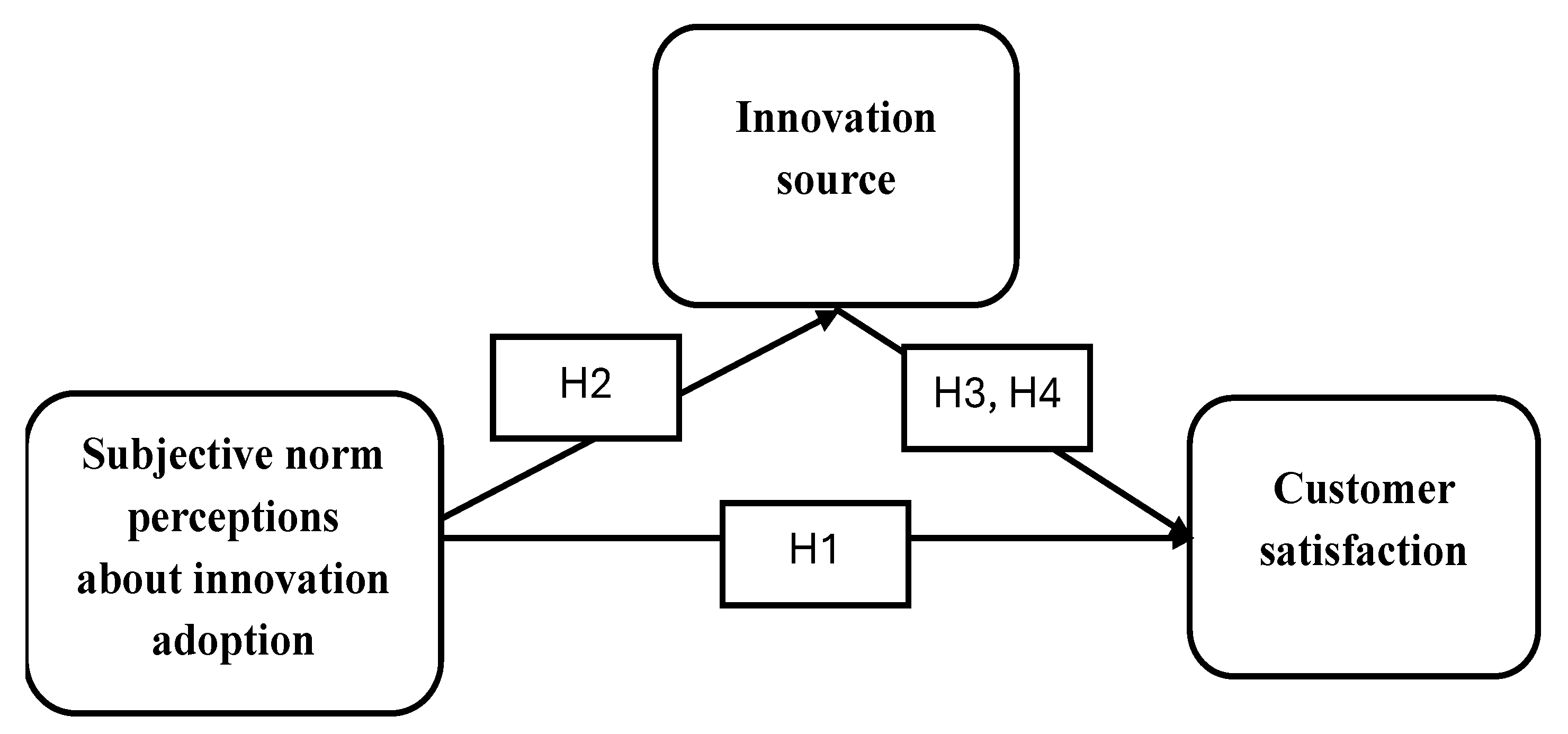
Figure 2.
PLS-SEM results.
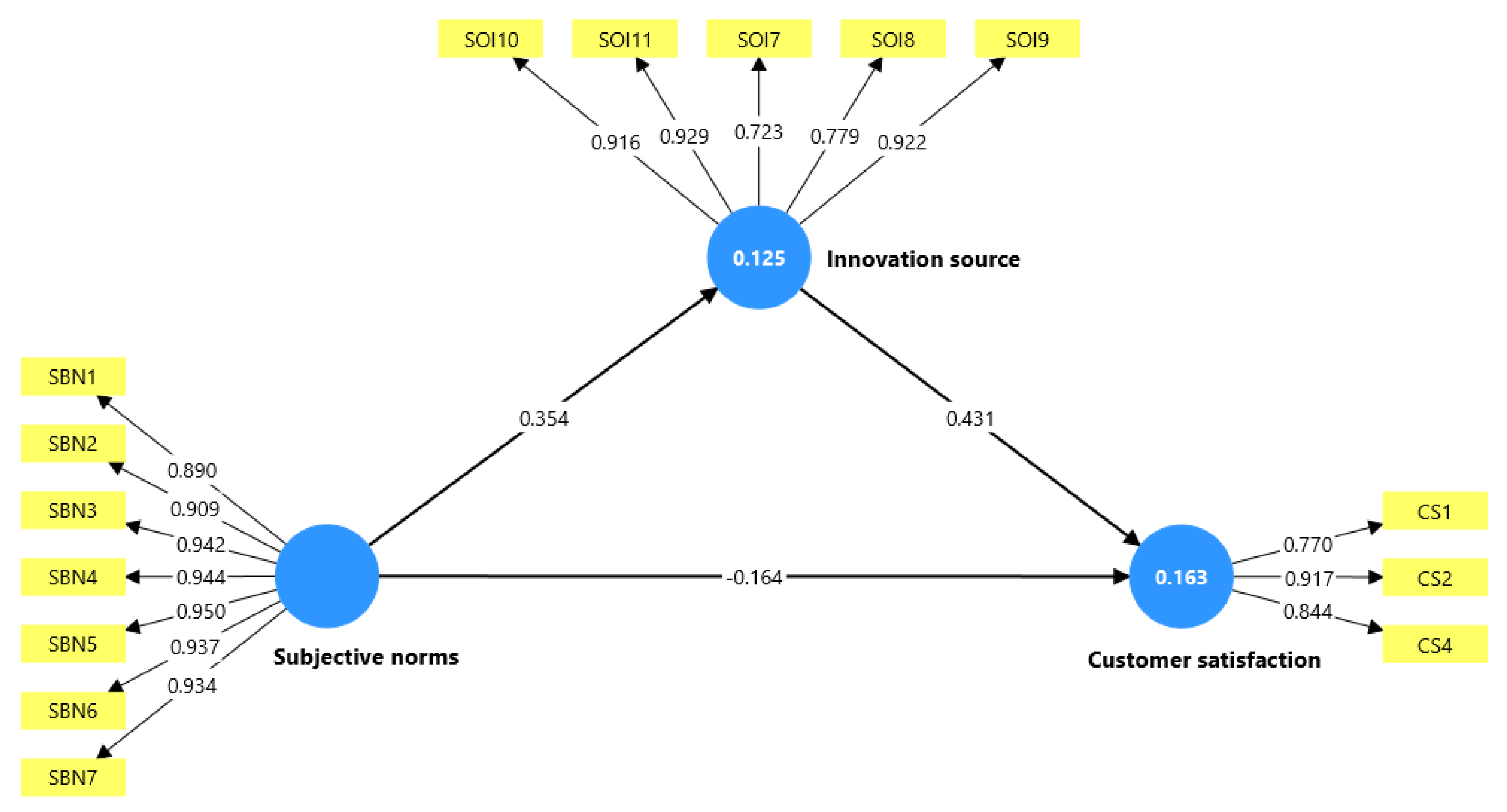
Table 1.
Owner/ Manager and Business Characteristics.
| Variable | Category | Frequency (n) | Percentage (%) |
|---|---|---|---|
| Gender | Male | 199 | 44.2 |
| Female | 251 | 55.8 | |
| Age | 25–35 years | 24 | 5.4 |
| 35–45 years | 335 | 74.6 | |
| 45–55 years | 91 | 20.0 | |
| Highest Educational Level | Master’s degree | 35 | 7.8 |
| Bachelor’s degree | 161 | 35.8 | |
| Diploma | 111 | 24.7 | |
| SSCE/WASSCE/technical/vocational | 112 | 24.9 | |
| Junior high school | 22 | 4.9 | |
| No formal education | 9 | 2.0 | |
| Type of Hospitality Business | Food and beverage | 147 | 32.7 |
| Lodging | 120 | 26.6 | |
| Recreation | 51 | 11.3 | |
| Travel and tourism | 82 | 18.2 | |
| Meetings and Events | 50 | 11.2 | |
| Star Rating of Business | No star rating | 257 | 57.1 |
| One star | 85 | 18.9 | |
| Two star | 108 | 24.0 | |
| Years of Operation | 2–5 years | 125 | 27.8 |
| 5–10 years | 139 | 30.9 | |
| More than 10 years | 186 | 41.3 | |
| Role in the Business | Owner/founder | 184 | 40.9 |
| Manager | 266 | 59.1 | |
| Ownership Structure | Sole proprietorship | 377 | 83.8 |
| Partnership | 73 | 16.2 |
Table 2.
construct validity.
| Construct | Customer satisfaction | Innovation source | Subjective norms |
|---|---|---|---|
| CS1 | 0.770 | ||
| CS2 | 0.917 | ||
| CS4 | 0.844 | ||
| SBN1 | 0.890 | ||
| SBN2 | 0.909 | ||
| SBN3 | 0.942 | ||
| SBN4 | 0.944 | ||
| SBN5 | 0.950 | ||
| SBN6 | 0.937 | ||
| SBN7 | 0.934 | ||
| SOI10 | 0.916 | ||
| SOI11 | 0.929 | ||
| SOI7 | 0.723 | ||
| SOI8 | 0.779 | ||
| SOI9 | 0.922 |
Table 3.
R2 statistics.
| Construct | R2 | R2 adjusted |
|---|---|---|
| Customer satisfaction | 0.163 | 0.159 |
| Innovation source | 0.125 | 0.123 |
Table 5.
Reliability and convergent validity.
| Construct | Cronbach's Alpha | Composite reliability (rho_a) | Composite reliability (rho_c) | Average variance extracted (AVE) |
|---|---|---|---|---|
| Customer satisfaction | 0.800 | 0.830 | 0.882 | 0.715 |
| Innovation source | 0.908 | 0.917 | 0.933 | 0.736 |
| Subjective norms | 0.974 | 0.976 | 0.978 | 0.864 |
Table 6.
Heterotrait-monotrait ratio (HTMT).
| Path | Heterotrait-monotrait ratio (HTMT) |
|---|---|
| Employee self-estrangement <-> Employee service encounter quality | 0.201 |
| Supervisor's performance feedback <-> employee service encounter quality | 0.611 |
| Supervisor's performance feedback <-> employee self-estrangement | 0.484 |
Table 7.
Direct and Mediating Effects.
| Hypotheses | Β-value | T-statistics | P-values | Decision |
|---|---|---|---|---|
| H1: Subjective norms -> Customer satisfaction | -0.164 | 3.651 | 0.000 | Not supported |
| H2: Subjective norms -> Innovation source | 0.354 | 8.343 | 0.000 | Supported |
| H3: Innovation source -> Customer satisfaction | 0.431 | 8.877 | 0.000 | Supported |
| H4: Subjective norms -> Innovation source -> Customer satisfaction | 0.153 | 6.602 | 0.000 | Supported |
Disclaimer/Publisher’s Note: The statements, opinions and data contained in all publications are solely those of the individual author(s) and contributor(s) and not of MDPI and/or the editor(s). MDPI and/or the editor(s) disclaim responsibility for any injury to people or property resulting from any ideas, methods, instructions or products referred to in the content. |
© 2026 by the authors. Licensee MDPI, Basel, Switzerland. This article is an open access article distributed under the terms and conditions of the Creative Commons Attribution (CC BY) license.
Copyright: This open access article is published under a Creative Commons CC BY 4.0 license, which permit the free download, distribution, and reuse, provided that the author and preprint are cited in any reuse.


