

Submitted:
04 February 2026
Posted:
05 February 2026
You are already at the latest version
Abstract
Antimicrobial resistance (AMR) remains a persistent threat in this century. While public debate often focuses on human medicine, the agricultural sector plays a crucial role in the emergence and mitigation of antimicrobial resistance. The growth of intensive livestock farming has encouraged antibiotic use across all animal sectors, including poultry production. Research on poultry meat in various regions of the world has revealed high levels of AMR, exceeding required standards. Encouragingly, significant progress has been made in recent years in reducing antibiotic use in livestock farming, particularly in poultry production. Despite ongoing efforts, AMR continues to spread in many countries, highlighting the urgent need to implement antibiotic reduction strategies. Robust surveillance systems and responsible antimicrobial use are essential. Without them, progress made in some regions risks being undone by uncontrolled practices. This article summarizes scientific research on antimicrobial resistance in poultry meat in different countries and its consequences for public health.
Keywords:
antimicrobial resistance (AMR)
; poultry meat
; public health
Introduction
Antibiotics are used as the primary means of combating bacterial infections in veterinary medicine, whether in livestock farming or for treating companion animals. In poultry farming in particular, antimicrobial therapy is an essential tool for reducing the enormous losses in the poultry industry caused by bacterial infections (Kozacinski et al., 2006; Castanon 2007; Hue et al., 2010; Heetun et al., 2015;).
In this context, the use of antibiotics has two objectives: therapeutic and zootechnical. Antibiotics are used therapeutically to eradicate an existing infection or prevent a potential infection, such as during transport, vaccination, or other stressors. The main classes of antibiotics are represented, but the number of molecules is very limited compared to those used for human purposes. Alongside this therapeutic use, there is a zootechnical application specific to livestock. Small amounts of antibiotics or coccidiostats are incorporated into the feed during the animals' growth period to improve weight gain ( Bornert, 2000; Alvarez et al., 2002; Huart, 2003 Daube, 2005; Hedman, 2020). This effect is primarily observed in farms with poor hygiene and tends to decrease as sanitary conditions improve. The choice of antibiotics is still too often made without prior antibiogram testing. The immediate consequence of AMR in livestock is treatment failure (Institut Pasteur, 2017; Michel Briand, 2012; Sanders et al., 2012;; Abdul Samad, 2022; OMS, 2020). Furthermore, there is growing concern that the use of antimicrobials in animals could impact human health if resistant bacteria develop in these animals and are transmitted to humans through the food chain or the environment. However, there is still no scientific consensus on the precise role of antibiotics administered to animals in the development of resistance and its transfer to bacteria that can affect humans (Alvarez et al., 2002; OMS and FAO, 2003; ANR 2022; Sharafat et al., 2025). Any indiscriminate use of antibiotics leads sooner or later to the selection of resistant bacteria. Constant changes have been observed in recent years. These include, firstly, an increase in the frequency of resistant bacteria and an increase in multi-resistance. Currently, in intensive livestock farming, bacteria isolated during disease outbreaks are mostly resistant to several antibiotics from different families. Thus, if a bacterium is resistant to several antibiotics from different families, the use of just one of these antibiotics will promote the selection and spread of that bacterium, as well as the various resistance mechanisms to other families. This is known as co-selection. AMR is widespread in bacterial isolates worldwide. Continuous monitoring of these resistances provides useful data for choosing which molecules to use. The gut microbiota is the main reservoir for resistance genes. In short, the more antibiotics are used irrationally, the greater the likelihood that bacteria will acquire resistance. This is how some techniques for producing chicken without antibiotics were developed. The future will reveal their success or failure. (Ajibola et al., 2025).
The objective of this article is to demonstrate the impact of AMR in poultry meat and the consequences for public health, thanks to the different investigations carried out by different researchers around the world.
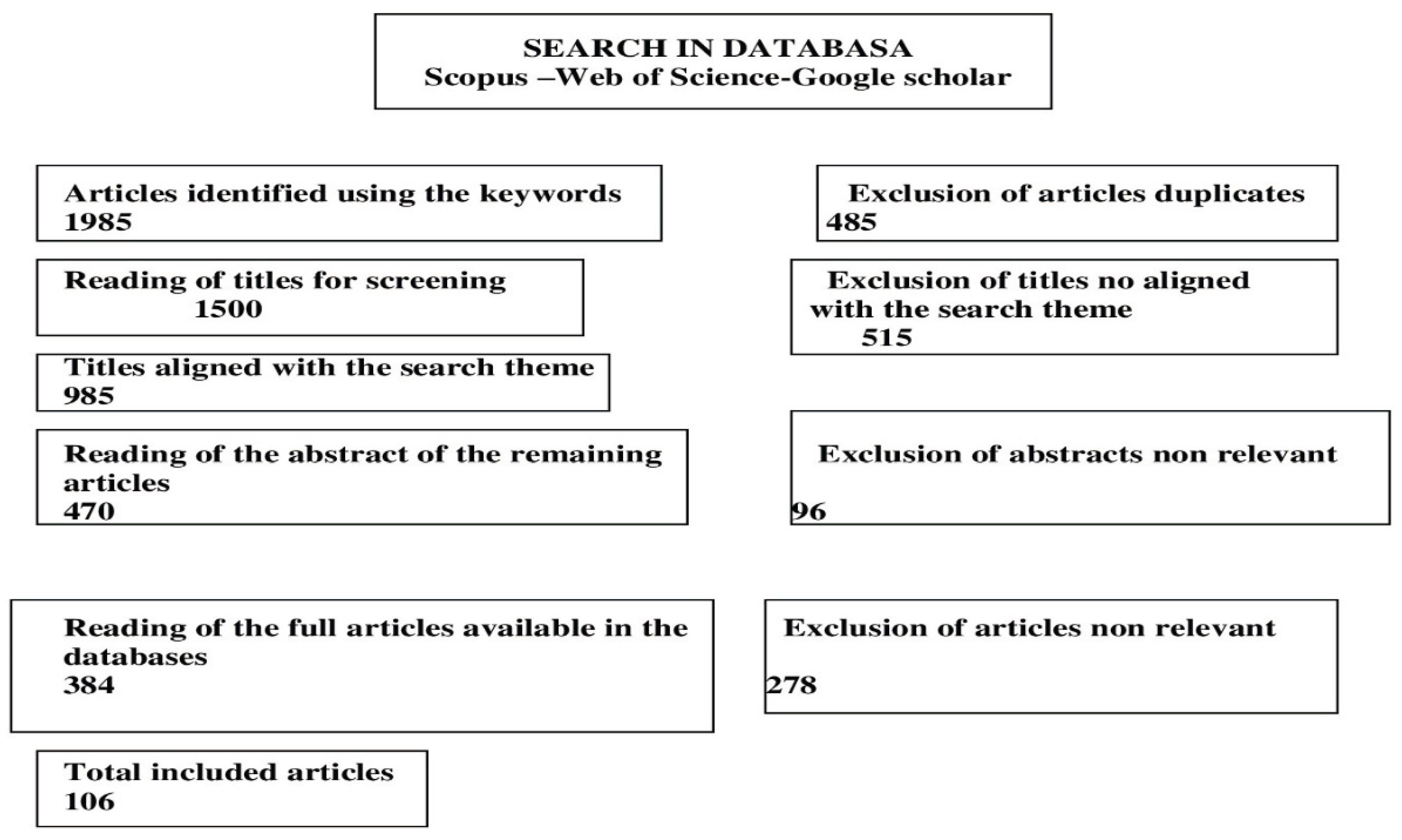
Figure 1.
Diagram of the bibliographic research protocol
Antimicrobial Resistance (AMR) of Bacteria Contaminating Poultry Meat
Salmonella Resistance to Antibiotics
Salmonella is the second leading cause of foodborne illness in humans and remains the most frequent cause of foodborne outbreaks of bacterial origin in Europe (Bornert, 2000b). The main reservoir of Salmonella is the gastrointestinal tract of mammals and birds. Transmission to humans occurs primarily through the consumption of contaminated raw or undercooked food. For the most susceptible individuals, salmonellosis is treated with antibiotics. However, bacteria can acquire antibiotic resistance and thus resist treatment. This phenomenon poses a threat to public health (Abdelli et al., 2011; Marault, 2016; Abba, 2017; Venkitanarayanan et al., 2019; Rau et al., 2021; Tilahun et Efa, 2025).
Controlling salmonella in the field to ensure food safety is a daunting and costly task. Several authors have demonstrated that salmonella control on the farm is largely ineffective if product integrity is not maintained between the farm and the consumer's table (Colin, 1992; Cardinale et al., 2000a; Heba et al., 2017; Das Merces Santos et al., 2022). Achieving food safety (meat, eggs) must be a shared responsibility between the poultry farmer, the slaughterhouse, and the consumer. Epidemiological studies of these pathogens must consider their significant persistence in the environment (Korsak et al., 2014; Lailler et al.,2015; Souza et al.,2020; Van Immersee et al., 2005)l Although these salmonella strains are susceptible to various disinfectants, several authors attest to the difficulty of controlling environmental contamination in the field, particularly during disinfection operations in poultry houses and slaughterhouses ( Alloui et al., 2005; Delhalle et al., 2008; Mahato et al., 2019). With current technology, the probability of eradicating all pathogens that cause foodborne illnesses is very low. Even the development of new technologies to ensure rigorous biosecurity can sometimes fail, especially during cooking.
The level of resistance to each antibiotic, as exhibited by Salmonella isolates from poultry, is detailed in Table 1.
Antibiotic Resistance of Escherichia coli
Escherichia coli (E. coli) are Gram-negative bacilli belonging to the Enterobacteriaceae family and the Escherichia genus. The majority of E. coli strains are simple commensals of the digestive tract of humans and warm-blooded animals. However, some E. coli strains are enteropathogenic. They can also cause extraintestinal diseases (meningitis, urinary tract infections) (Dromigny, 2011).
E. coli can be detected in animal feed, in animals used for food production, and in animal products intended for human consumption. This bacterium is frequently used as an indicator in surveillance and monitoring programs because it provides information on potential reservoirs of antibiotic resistance genes that can be transferred to pathogenic bacteria (OIE, 2000a).
In poultry, while some strains of Escherchia coli are truly pathogenic, this bacterium is most often opportunistic, associating with other pathogens. Antibiotic treatment greatly improves the health of the animals, but careful antibiotic selection is crucial because resistance is common (Malcolm-Reid, 2001).
Multidrug resistance appears to be common for E. coli and geographically widespread. The emergence of multiple antimicrobial-resistant strains is often coupled with resistance to quinolones and third-generation cephalosporins in some regions (Gad, 2018, Liu et al., 2025).
Thus, the emergence of strains carrying extended-spectrum beta-lactamases (ESBLs) was first observed in clinical isolates of E. coli and then, shortly thereafter, through monitoring systems at slaughterhouses. Resistance rates to cefotaxime in E. coli are increasing very rapidly in poultry production, as this type of resistance was not observed before 2005 and affected more than 4% of strains isolated from ceca of broiler chickens randomly sampled at slaughterhouses in 2007. The risks associated with the emergence of this new resistance phenotype are twofold:
For animal health, there is a risk of loss of clinical efficacy of beta-lactams used to treat colibacillosis in animals, with the possibility of developing multidrug-resistant strains that are impossible to treat.
For public health, the spread to humans of resistant Salmonella and/or transmissible resistance genes occurs either through contact with animals or via food. Indeed, a large proportion of E. coli present in the human intestinal flora originates from our diet (Sanders, 2010; Ajibola et al., 2025). The level of resistance to each antibiotic, as exhibited by E. coli isolates from poultry, is detailed in Table 2
Antibiotic Resistance of Staphylococcus aureus
While it is one of the most common commensal bacteria in our normal flora, Staphylococcus aureus is a formidable pathogen that has developed resistance to every new antibiotic introduced over the past half-century (Benrabia et al., 2011; Titouche et al., 2016). The plasticity of its genome allows it to adapt to all environmental conditions, and in particular to acquire antibiotic resistance genes and develop regulatory mechanisms to adapt to increasing antibiotic concentrations. Thus, penicillin-resistant staphylococci appeared as early as 1941, thanks to the acquisition of a plasmid-mediated penicillinase, an enzyme that degrades penicillin. Penicillin resistance initially confined to hospital settings, spread very quickly in the community and now affects more than 90% of S. aureus strains. During the 1950s, multidrug-resistant strains of Staphylococcus aureus emerged: resistance to penicillin was associated with resistance to streptomycin, erythromycin, tetracycline, chloramphenicol, and sulfonamides. The introduction in 1959 of methicillin, a semi-synthetic derivative of penicillin, for the treatment of staphylococcal infections raised great hopes. But barely a year later, the first hospital-acquired strains of methicillin-resistant Staphylococcus aureus (MRSA) appeared in a hospital in Great Britain.
Thus, apart from spontaneous mutations, S. aureus diversifies its genome through the exchange of genetic material with other bacterial species via horizontal gene transfer (Dumitrescu, 2010; Khalaf et al., 2014).
In recent years, studies conducted in the European Union have shown the presence of methicillin-resistant Staphylococcus aureus (MRSA) strains in animals. Numerous studies carried out in the Netherlands and Germany have contributed to a better characterization of this risk. Most strains belong to a specific clonal complex (CC398) found in carriage in pigs and other animal species, posing a risk of carriage for people working in contact with animals (farmers, veterinarians, slaughterhouse workers). The potential risk to public health is that these strains may acquire virulence factors, making them more pathogenic to humans or animals (Sanders, 2010; Faraj et al., 2025).
The level of resistance to each antibiotic displayed by Staphylococcus aureus isolates from poultry is detailed in Table 3
Listeria monocytogene Resistance to Antibiotics
Listeria monocytogene is a bacterium responsible for a zoonotic disease called listeriosis (Genigeoris et al., 1990; Gohil t al., 1995). This bacterium is naturally present in the environment and in some foods consumed by humans. This Gram-positive bacterium is the causative agent of listeriosis. Ingestion of food contaminated with Listeria monocytogenes leads to septicemia, severe gastroenteritis, and central nervous system infections, particularly in the elderly and immunocompromised individuals. In pregnant women, Listeria infection can result in miscarriages, premature births, and perinatal infections (AFSSA, 2000, Ribet, 2010).
The main source of Listeria monocytogenes contamination of food before distribution to consumers appears to be the production environment ( Bouhamed, 2010; Bouayad , 2012; Messad, 2016). Listeria monocytogenes can survive for a long time, sometimes from one to three years, or even longer, or even indefinitely. Furthermore, some Listeria monocytogenes clones may be better adapted to raw meat and to the environments and finished products in the meat industry (Dromigny, 2011; Chen et al, 2024).
This pathogenic bacterium possesses an extraordinary capacity to adapt to both environmental stresses, allowing it, for example, to survive and multiply in soil, and to the various treatments it encounters in the food chain (salt addition, freezing, etc.). This adaptability results from an arsenal of genes it possesses, the expression of which it finely regulates through various mechanisms that allow it to detect its entry into an organism and thus express genes critical for its virulence (Duval, 2019; Zhang et al., 2023).
The level of resistance to each antibiotic exhibited by Listeria monocytogenes isolates from poultry is detailed in Table 4.
Practices Promoting the Emergence of AMR in Poultry Farming
Increasing the size of animal groups or raising animals at high densities increases the risk of disease emergence and therefore antibiotic consumption (Sanders al., 2012; ANSES, 2014; EFSA, 2015; OIE, 2020b).
The increased prevalence and spread of resistance is a predictable outcome of the growing use of antibiotic therapy (Muylaert et Mainil, 2012).
The use of antibiotics in animal husbandry to increase productivity also represents a major challenge. (Daube, 2002; Cardinal et al., 2000b ; Chanteau, 2008; Djeffal, 2010; Weiss, 2002).
Therefore, in the case of prophylaxis, the goal is to protect a group against infection before it occurs within the group, and in the case of metaphylaxis, to protect a group against infection after it occurs within the group (ANSES, 2014; FAO, 2019)..
The uncontrolled use of antibiotics can lead to the selection of resistant pathogenic bacteria (Sanders et al., 2012).
The types of antibiotic treatments can influence the risk of developing antibiotic resistance (ANSES, 2014, EFSA, 2015).
The most significant consequence of using low-dose antibiotics in poultry is the development of multidrug-resistant strains of bacterial pathogens (Venkitanarayana, 2019).
Antibiotics are a powerful factor in the selection of AMR in bacteria. (Acar et Moulin, 2012). During preventive treatment, the risk associated with the selection pressure exerted on commensal bacteria is present in all treated animals, whereas the therapeutic benefit depends on the actual presence of the pathogenic bacterium, which is only suspected. Risks associated with the use of antimicrobials in poultry as a growth promoter
More than 110 assessed countries, mostly developing and emerging economies, still lack rigorous and relevant legislation regarding the appropriate conditions for the import, manufacture, distribution, and use of veterinary products, including antimicrobials.
Legislation is sometimes completely absent. When it exists, it is very often not enforced due to a lack of public resources for monitoring. (OIE, 2020b)
In Africa, 16 countries authorize antibiotics as growth promoters, primarily due to a lack of legislation, and tetracyclines are the most commonly used. (OIE, 2017)
In these countries, antimicrobials are most often directly or indirectly accessible to everyone without restrictions. Even more seriously, these products, circulating like ordinary goods, are most often adulterated (lower dosage than indicated on the bottle, different active ingredient, or a complete placebo). Thousands of tons of adulterated antimicrobial products intended for animals are in circulation worldwide. (OIE, 2020b).
Food additives containing antibiotics for animal feed have been banned in Europe since January 1, 2006 (Sanders et al., 2012), but are still permitted for preventive and curative purposes, particularly collectively for groups of animals, due to the close quarters in industrial farming, which make individual treatment impossible (Courvalain, 2008).
The cessation of the use of growth promoters in Europe in 2006 led to a decrease in bacterial resistance isolated in animals, food, and humans (Molbak, 2004).
Transmission to Humans via Poultry Consumption
Concern about AMR in bacteria and the resulting difficulty in treating certain human infections has led to a surge in research in recent years focusing on resistance in livestock, food, the environment, and humans (Bantawa et al., 2018; Cohen et al., 2007). Similarly, investigations have focused on the mechanisms of transfer between bacteria of genetic traits encoding resistance, as well as the risk factors and/or parameters that promote the spread of resistance (Wooldridge, 2012).
The gut microbiota of animals can constitute a reservoir of antibiotic-resistant bacteria capable of infecting or colonizing humans through the food chain (van Vuuren, 2001).
The risk of transfer of genetic elements encoding resistance between bacteria in mixed populations can open up diverse, numerous, and complex pathways for transmission (Allerberger, 2016). Currently, considerable evidence suggests that direct transfer of resistance traits to humans, via the food chain and animal products, is one of the pathways for resistance spread .
According to Ajiboye (2009), multidrug-resistant (MDR) bacteria can be transmitted between animals and humans. Furthermore, there is a risk of transfer to humans of resistant bacteria present in animals, which generally occurs through food (Aidara-Kane, 2012). These strains are frequently found in animals intended for human consumption, including poultry (Faye 2005; AFSSA, 2006).
It is clear that some human resistance problems originate directly from the animal world (Salmonella, Campylobacter, Enterococcus...) (Weiss, 2002).
Currently, considerable evidence indicates that the direct transfer of resistance traits to humans, via the food chain and animal products, constitutes one of the pathways for the spread of resistance (Mahbub, 2019).
The use of antimicrobial agents in humans, as well as in animals raised for human consumption, has major consequences for human and animal health, as it can promote the development of resistant bacteria (pathogenic and/or commensal bacteria carrying genes encoding resistance) (Aidara-Kane, 2012).
Bacterial contamination of chicken carcasses generally occurs during slaughter and processing. These microorganisms can survive in the product sold to the consumer (vanVuuren, 2001).
The development of resistance in animal bacteria that can lead to foodborne (Salmonella, Campylobacter) or opportunistic (E. coli, Enterococcus sp., Staphylococcus aureus) infections must be monitored within the context of a comprehensive public health approach (Sanders, 2012).
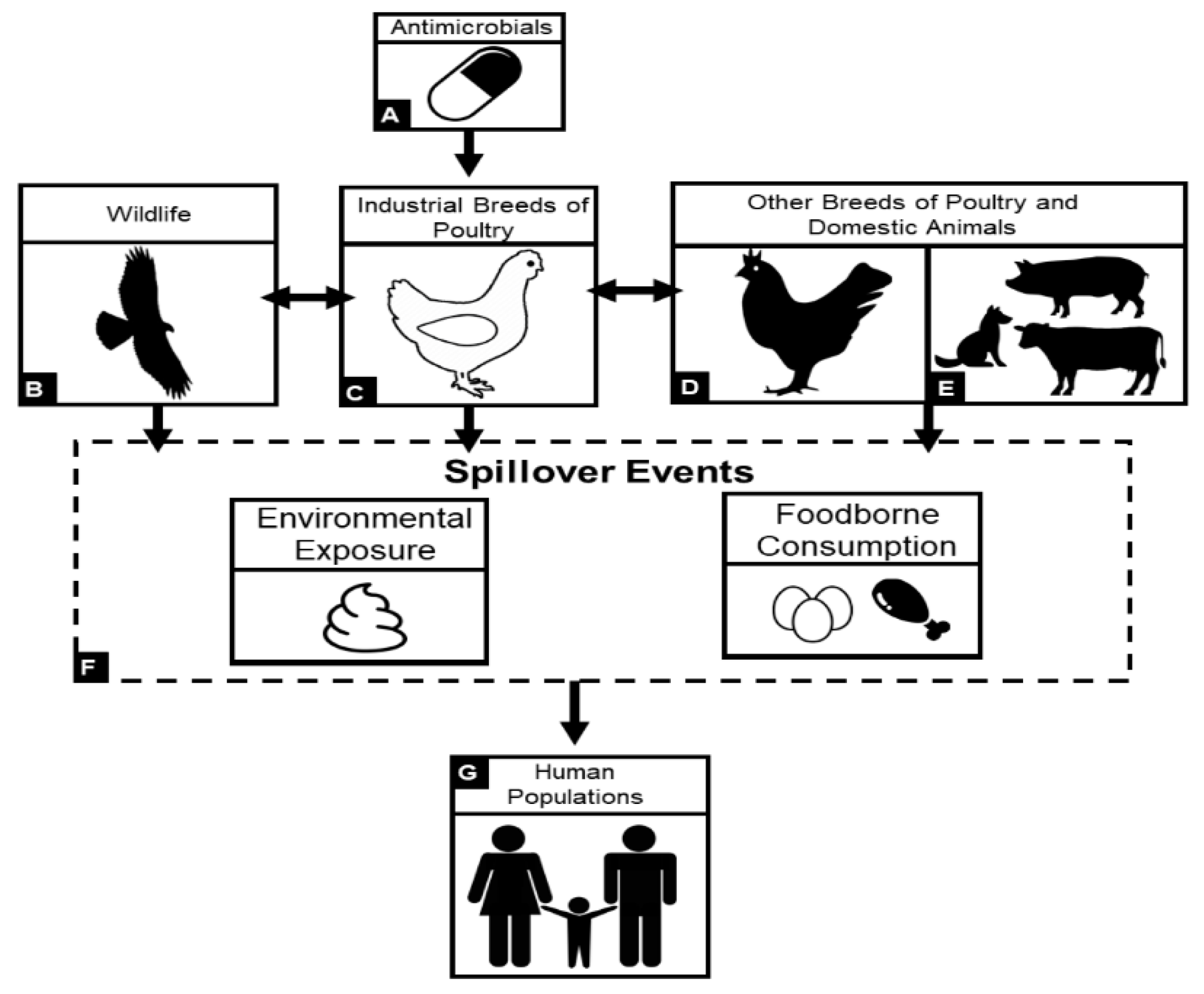
Bacteria can be transferred (white arrows) between animals and humans via water and food, direct contact, or the environment. Antibiotic resistance, on the other hand, is exchanged via the transfer of genetic material between bacteria within a single compartment, but also between bacteria in different compartments. (Muylaert et Mainil, 2012).
Figure 2.
Conceptual graph illustrating AMR associated with intensive poultry production (Hedman et al.,, 2020).
Figure 2.
Conceptual graph illustrating AMR associated with intensive poultry production (Hedman et al.,, 2020).
Action Plan to Combat AMR
In May 2015, the WHO, FAO and OIE adopted a global action plan to combat antimicrobial resistance within the framework of “One Health “. It is summarized in five key areas:
- -
- raising awareness among healthcare workers and the public
- -
- strengthening surveillance and research
- -
- implementing sanitation, hygiene, and infection prevention measures
- -
- optimizing the use of antimicrobials in human and animal health
- -
- supporting sustainable investments in the development of new treatments, diagnostics, and vaccines
Antimicrobial resistance, considered by the World Health Organization to be critically important in human medicine, particularly with fluoroquinolones, third- and fourth-generation cephalosporins, and macrolides, is evolving in a particularly worrying manner (Carle, 2009; Aidara-Kane, 2012; CDC, 2013; FAO, 2019).
The WHO encourages the agriculture, food production, animal health, and public health sectors to cooperate in order to eliminate the burden of AMR resulting from the misuse of these agents in livestock intended for human consumption (Aidara-Kane, 2012; ).
Therefore, reducing this use is one important lever for action, but it should not be the only one to control the risk associated with AMR in animals (Barthe et Cardina, 2003; ANSES, 2014). Concerted efforts must be made to reduce the inappropriate use of these agents (for example, as growth promoters) and to limit the spread of resistant bacteria (Aidara-Kane, 2012).
The risk of developing antibiotic resistance can only be reduced through appropriate regulations and policies (Thapa, 2019).
Reducing antibiotic use is one way to control resistance to these agents. However, this objective requires the implementation of a wide range of appropriate measures (WHO 2014; Codex alimentarus, 2008; Acar., 2012, Guergueb et al., 2014).
Conclusion
The fight against AMR is shared a responsibility across sectors, borders, and generations. Agriculture has a critical role to play and the progress made so far proves that change is possible. With continued innovation education and collaboration the poultry industries can protect both public health and food security ensuring a sustainable future for all.
Ethical considerations
Not applicable
Conflict of interest
The author declares that they have no know competing financial interests or personal relationships that could have appeared to influence the work reported in this paper.
References
- Abba, H. S. Prévalence et susceptibilité aux antibiotiques des souches de Salmonella spp. non typhiques isolées de la viande de poulets au Tchad. Int. J. Biol.Chem.Sci. 2017, 11(1), 107–117. [Google Scholar] [CrossRef]
- Abdelli, M.K.; Ain Baziz, H. Recherche de Salmonella et d’Escherichia coli dans les carcasses de poulet et évaluation de l’antibiorésistance; Magister en Sciences Vétérinaires. ENSV. Alger, 2011. Available online: http://depot.ensv.dz:8080/jspui/handle/123456789/349 (accessed on 22 April 2024).
- Samad, Abdul. Antibiotics resistance in poultry and its solution. Devotion J. Res. Community Serv. 2022, 3(10), 999–1020. [Google Scholar] [CrossRef]
- Acar, J.F.; Moulin, G. Antimicrobial resistance: a complex issue. Rev. sci. tech. Off. int. Epiz 2012, 31(1), 23–31. [Google Scholar] [CrossRef] [PubMed]
- AFSSA. Rapport de la Commission d’étude des risques liés à Listeria monocytogenes. 2000. Available online: https://www.anses.fr/fr/system/files/MIC-Ra-Listeria2000.pdf (accessed on 22 April 2024).
- AFSSA. Usages vétérinaires des antibiotiques, résistance bactérienne et conséquences pour la santé humaine. 2006. Available online: https://www.anses.fr/system/files/SANT-Ra-ABR.pdf (accessed on 22 April 2024).
- Aidara-Kane, A. Containment of antimicrobial resistance due to use of antimicrobial agents in animals intended for food: WHO perspective. Rev. sci. tech. Off. int. Epiz 2012, 31(1), 277–287. Available online: https://scispace.com/pdf/containment-of-antimicrobial-resistance-due-to-use-of-45bj0c98ui.pdf (accessed on 22 April 2024). [CrossRef]
- Ajibola, A.T.; de Lagarde, M.; Ojo, O.E.; Balogun, S.A; Vanier, G.; Fairbrother, J.M.; Shittu, O.B. Antimicrobial resistance and virulence gene profiles of Escherichia coli isolated from poultry farms using One Health perspective in Abeokuta, Nigeria. BMC Microbiol. 2025, 25, 440. [Google Scholar] [CrossRef] [PubMed]
- Ajiboye, R. M.; Solberg, O.D; Lee, B.L; Raphael, E.; Debroy, C.; Riley, L.W. Global spread of mobile antimicrobial drug resistance determinants in human and animal Escherichia coli and Salmonella strains causing community-acquired infections. Clin. Infect. Dis. 2009, 49(3), 365–71. [Google Scholar] [CrossRef]
- Akbar, A.; Anal, A.K. Prevalence and antibiogram study of Salmonella and Staphylococcus aureus in poultry meat. Asian Pac. J. Trop. Biomed. 2013, 3(2), 163–168. [Google Scholar] [CrossRef]
- Allerberger, F. Corrigendum to ‘Poultry and humain infections ‘. Clin.Microbiol.Infect 2016, 22(2), 101–102. [Google Scholar] [CrossRef]
- Alloui, N.; Ayachi, A.; Krim, A.; Nouicer, F. Comparaison of tow initial method of desinfection in a poutry slaughterhouse. XII International Congress ISAAH, Warsaw. Poland; 2005; pp. 56–59. Available online: https://www.researchgate.net/publication/242240961 (accessed on 22 April 2024).
- Alvarez-Astorga, M.; Capita, R.; Alonso-Calleja, C.; Moreno, B.; Del, M.; García-Fernández, C. Microbiological quality of retail chicken by-products in Spain. Meat Sci. 2002, 62(1), 45–50. [Google Scholar] [CrossRef]
- ANR. La resistance aux antibiotiques. Les cahiers de l’agence nationale de la recherche, 14, pp108. 2022, 14, p. pp108. Available online: https://anr.fr/fileadmin/documents/2022/ANR_cahier_14_antibioresistance.pdf (accessed on 22 April 2024).
- ANSES. Évaluation des risques d’émergence d’antibiorésistances liées aux modes d’utilisation des antibiotiques dans le domaine de la santé animale. 2014. Available online: https://www.anses.fr/system/files/SANT2011sa0071Ra.pdf (accessed on 22 April 2024).
- Awad, A; Gwida, M; Khalifa, E; Sadat, A. Phenotypes, antibacterial-resistant profile, and virulence-associated genes of Salmonella serovars isolated from retail chicken meat in Egypt. Vet. World 2020, 13(3), 440–445. [Google Scholar] [CrossRef]
- Bantawa, K.; Rai, K.; Subba Limbu, D.; Khanal, H. Food-borne bacterial pathogens in marketed raw meat of Dharan, eastern Nepal. BMC Research Notes 2018, 11(1), 618. [Google Scholar] [CrossRef]
- Barthe, C.; Cardina, P.D. Lignes directrices pour l'interprétation des résultats analytiques en microbiologie alimentaire; Ste-Foy, Québec, 2003. Available online: http://www.mapaq.gouv.qc.ca/fr/Publications/recueil.pdf (accessed on 22 April 2024).
- Benrabia, I.; Oumouna, M. Dépistage de Staphylococcus aureus résistant à la méticilline (mRSA) chez la dinde et le poulet de chair: dépistage et risque zoonotique. Magister en Sciences Vétérinaires. ENSV. 2011. Available online: http://depot.ensv.dz:8080/jspui/handle/123456789/257 (accessed on 22 April 2024).
- Bornert, G. Importance des bactéries psychrotrophes en hygiène des denrées alimentaires. Revue Médicine. Vétérinaire 2000a, 151(11), 1003–1010. Available online: https://www.academia.edu/108077987/ (accessed on 22 April 2024).
- Bornert, G. Le poulet sans salmonelles: mythe ou réalité ? Rev. Méd. Vét 2000b, 15(12), 1083–1094. Available online: https://fr.scribd.com/document/489535670/ (accessed on 22 April 2024).
- Bouayad, L. H. T. Étude de la prévalence, de la sensibilité aux antibiotiques et caractérisation moléculaire des souches de Listeria isolées dans les viandes de volailles dans la région d'Alger; These Doctorat. ENSV. Alger, 2012. Available online: https://theses-algerie.com/1460547483569785/ (accessed on 12 September 2024).
- Bouhamed, R.H. Contribution à l'étude de la prévalence de Campylobacter spp. avec antibiogramme chez la dinde dans la région d'Alger et ses environs.1er Symposium des Sciences avicoles. Batna. Université El Hadj Lakhder Batna. 2010. Available online: https://www.researchgate.net/publication/285600055 (accessed on 12 September 2024).
- Cadirci, O.; Gucukoglu, A.; Gulel, G.; Uyanik, T.; Girgin, K. Genotyping and serotyping of Listeria monocytogene isolated from poultry meat. Fresenius Environ. Bull. 2020, 29(7), 5399–5407. Available online: https://aperta.ulakbim.gov.tr/records/4651 (accessed on 12 September 2024).
- Cardinale, E.; Perrier, J.D.; Aidara, A.; Tall, F.; Coudert, C.; Gueye, I.L.; Konte, M. Identification d'une nouvelle salmonelle multirésistante dans une viande de poulet de chair au Sénegal. Rev. Elev. Méd. Vet. Pays Trop. 2000a, 53(1), 5–8. [Google Scholar] [CrossRef]
- Cardinale, E.; Tall, F.; Kané, P.; Konté, M. Consommation de poulets de chair au Sénégal et risque pour la santé publique. International Workshop on Food Safety Management in Developing Countries; CIRAD. Montpellier. France, 2000b. Available online: https://agritrop.cirad.fr/509480 (accessed on 12 September 2024).
- Carle, S. La résistance aux antibiotiques: un enjeu de santé publique important ! Pharmactuel, 2009; Vol. 42, Supplément 2, pp. 6–21. Available online: https://pharmactuel.com/index.php/pharmactuel/article/view/977 (accessed on 12 September 2024).
- Castanon, J.I.R. History of the use of antibiotic as growth promoters in European poultry feeds. Poult Sci. 2007, 86(11), 2466–2471. [Google Scholar] [CrossRef]
- CDC. Antibiotic resistance threats in the United States. Centers for Disease Control and Prevention. 2013. Available online: https://www.cdc.gov/drugresistance/pdf/ar-threats-2013-508.pdf (accessed on 25 November 2024).
- Chanteau, S. Rapport d’activite de l’Institut Pasteur de Nouvelle Caledonie. 2008. Available online: https://www.institutpasteur.nc/wp-content/uploads/2012/08/Rapport_final_2008.pdf (accessed on 25 November 2024).
- Chen, P.; Cheng, F.; Huang, Q.; Dong, Y.; Sun, P.; Peng, Q. Distribution and antimicrobial resistance characterization of Listeria monocytogenes in poultry meat in Jiading District, Shanghai. J. Food Prot. 2024, 87(3), 100234. [Google Scholar] [CrossRef]
- Codex alimentarius. Projet de Code d’usages en matière d‘hygiène pour la viande. FAO. Rome. 2008. Available online: https://www.fao.org/4/y5454f/y5454f14.pdf (accessed on 25 November 2024).
- Cohen, N.; Ennaji, H.; Bouchrif, B.; Hassar, M.; Karib, H. Comparative study of microbiological quality of raw poultry meat at various seasons and for different slaughtering processes in Casablanca (Morocco). J. Appl. Poultry Res 2007, 16(4), 502–508. [Google Scholar] [CrossRef]
- Colin, P. Salmonella et qualité des produits avicoles. Manuel de pathologie aviaire de Brugère-Picoux.J. ENV.d'Alfort. 1992. Available online: https://enva.hal.science/hal-04053725/ (accessed on 25 November 2024).
- Courvalin, P. La résistance des bactéries aux antibiotiques: combinaisons de mécanismes biochimiques et génétiques. Bull. Acad. Vét. France 2008, 161((1)), 7–12. [Google Scholar] [CrossRef]
- Dan, S.D; Tabaran, A; Mihaiu, L; Mihaiu, M. Antibiotic susceptibility and prevalence of foodborne pathogens in poultry meat in Romania. J. Infect. Dev. Ctries 2015, 9, 035–041. [Google Scholar] [CrossRef]
- das Mercês Santos, A.F.; Vieira Amparo, L.F.; Machado, S.C.A.; Salles Dias, T.; Lucia Berto, L.H.; da Costa Abreu, D.L.; Cosendey de Aquino, M.H.; dos Prazeres Rodrigues, D.; de Almeida Pereira, V.L. Salmonella serovars associated with human salmonellosis in Brazil (2011-2020). Res. Soc. Dev. 2022, v11(n. 8), e28011830533. [Google Scholar] [CrossRef]
- Daube, G. Micro-organismes pathogènes et viande - la traçabilité alliée de la sécurité. Bull. Soc. R.Sci. Liège 2002, 71(1), 11–30. Available online: https://popups.uliege.be/0037-9565/index.php?id=1022 (accessed on 25 November 2024).
- Daube, G. Qualité sanitaire des produits de porcs et de volailles: importance des agents zoonotiques. Cinquième journée des productions porcines et avicoles.Liège. 2005. Available online: https://orbi.uliege.be/bitstream/2268/203779/1/Expos%c3%a9_GD.pdf (accessed on 25 November 2024).
- Delhalle, L.; Saegerman, C.; Farnir, F.; Korsak, N.; Daube, G. L’évaluation quantitative du risque microbiologique: revue de trois modèles liées à Salmonella dans les aliments. Ann. Méd. Vét 2008, (152), 116–129. Available online: https://www.researchgate.net/publication/286774165 (accessed on 25 November 2024).
- Djeffal, S.; A., L. Appreciation de la qualité bactériologique des carcasses de poulets de chair frais destinées à la consommation humaine. 1er Symposium National des Sciences Avicoles. Université de Hadj-Lakhdar – Batna. 2010. Available online: https://vrlex-ar.univ-batna.dz/images/proceeding/sciences_avicole/sciences_avicoles1.pdf (accessed on 25 November 2024).
- Dromigny, E. Les critères microbiologiques des denrées alimentaires: Réglementation- Agent microbien- Autocontrole. 2 eme Edition. TEC & DOC. 2011. Available online: https://bibliotheque.ensv.dz/index.php?lvl=notice_display&id=19026 (accessed on 25 November 2024).
- Dumitrescu, O.; Dauwalder, O.; Boisset, S.; Reverdy, M.É.; Tristan, A.; Vandenesch, F. Résistance aux antibiotiques chez Staphylococcus aureus: les points-clés en 2010 [Staphylococcus aureus resistance to antibiotics: key points in 2010]. Med./Sci. 2010, (11), 943–9. [Google Scholar] [CrossRef]
- Duval, M.; Cossart, P. Un nouveau mécanisme de résistance aux antibiotiques: Le recyclage des ribosomes. Méd./Sci 2019, 35(8-9), 611–613. [Google Scholar] [CrossRef] [PubMed]
- EFSA. Rapport de synthèse communautaire sur les foyers de toxi-infection alimentaire au sein de l'Union européenne en 2007. 2009. Available online: https://www.efsa.europa.eu/sites/default/files/corporate_publications/files/ar07fr.pdf (accessed on 25 November 2024).
- EFSA. The European Union summary report on trends and sources of zoonoses, zoonotic agents and food-borne outbreaks in 2013. EFSA Journal 2015, 13(1), 3991. [Google Scholar] [CrossRef]
- FAO. Taking a multisectoral, one health approach: A tripartite guide to addressing zoonotic diseases in countries. 2019. Available online: https://openknowledge.fao.org/items/870b5a92-2fc4-430e-87a9-f8086335acc6 (accessed on 25 November 2024).
- Faraj, R.; Ramadan, H.; Bentum, K.E.; Alkaraghulli, B.; Woube, Y.; Hassan, Z.; Samuel, T.; Adesiyun, A.; Jackson, C.R.; Abebe, W. Antimicrobial Resistance, Virulence Gene Profiling, and Spa Typing of Staphylococcus aureus Isolated from Retail Chicken Meat in Alabama, USA. Pathogens 2025, 14, 107. [Google Scholar] [CrossRef]
- Faye, K. Le point sur l’usage vétérinaire des antibiotiques: impact sur l’antibiorésistance des bactéries en santé animale et humaine. Antibiotiques 2005, 7(1), 45–52. [Google Scholar] [CrossRef]
- Gad, F.; Eliora, Z.R. Escherichia coli, a Versatile Pathogen. In Current tropic in microbiology and immunology; Springer book, 2018. [Google Scholar] [CrossRef]
- Genigeorgis, C.A.; Oanca, P.; Dutulescu, D. Prevalence of Listeria spp. in turkey meat at the supermarket and slaughterhouse level. J Food Prot. 1990, 53(4), 282–288. [Google Scholar] [CrossRef]
- Gohil, V.S.; Ahmed, M.A.; Davies, R.; Robinson, R.K. Incidence of Listeria spp. in retail foods in the United Arab Emirates. J Food Prot. 1995, 58(1), 102–104. [Google Scholar] [CrossRef]
- Gücükoğlu, A.; Çadirci, O.; Terzi Gülel, G.; Uyanik, T.; Kanat, S. Serotyping and antibiotic resistance profile of Listeria monocytogenes isolated from organic chicken meat. Kafkas Univ Vet Fak Derg 2020, 26(4), 499–505. [Google Scholar] [CrossRef]
- Guergueb, N.; Alloui, N.; Ayachi, A.; Bennoune, O. Effect of slaughterhouse hygienic practices on the bacterial contamination of chicken meat. Sci. J. Vet. Adv. 2014, 3(5), 71–76. [Google Scholar] [CrossRef]
- Gundogan, N.; Citak, S.; Yucel, N.; Devren, A. A note on the incidence and antibiotic resistance of Staphylococcus aureus isolated from meat and chicken samples. Meat Sci. 2005, 69(4), 807–810. [Google Scholar] [CrossRef]
- Ahmed, Heba A.; Gharieb, Rasha M.; Mohamed, Mohamed E.M.; Amin, Magda A.; Mohamed, Rehab E. Bacteriological and molecular characterization of Salmonella species isolated from humans and chickens in Sharkia Governorate, Egypt. Zagazig Vet. J. 2017, 45(S1), 48–61. [Google Scholar] [CrossRef]
- Hedman, H.D.; Vasco, K.A.; Zhang, L. A Review of antimicrobial resistance in poultry farming within low-resource settings. animals (Basel) 2020, 10(8), 1264. [Google Scholar] [CrossRef]
- Heetun, I.; Goburdhun, D.; Neetoo, H. Comparative microbiological evaluation of raw chicken from markets and chilled outlets of Mauritius. J. World's Poult. 2015, 5(1), 10–18. Available online: https://jwpr.science-line.com (accessed on 25 November 2024).
- Huart, A. Technologie post recolte. Centre Agronomique et Vétérinaire Tropical de Kinshasa (CAVTIK). 2003. Available online: https://buv.isfad-gn.org/daoa.html (accessed on 12 September 2024).
- Hue, O.; Le Bouquin, S.; Laisney, M.J.; Allain, V.; Lalande, F.; Petetin, I.; Rouxel, S.; Quesne, S.; Gloaguen, P.Y.; Picherot, M.; Santolini, J.; Salvat, G.; Bougeard, S.; Chemaly, M. Enquête sur la contamination de Campylobacter spp. des carcasses de poulets de chair en France en 2008 et les facteurs associés. Bull. Epedemio. Santé Anim. Alim 2010, 41, 9–11. Available online: https://be.anses.fr/sites/default/files/BEP-mg-BE41-art3.pdf (accessed on 25 November 2024).
- Hussain, A.; Shaik, S.; Ranjan, A.; Nandanwar, N.; Tiwari, S.K.; Majid, M.; Baddam, R.; Qureshi, I.A.; Semmler, T.; Wieler, L.H.; Islam, M.A.; Chakravortty, D.; Ahmed, N. Risk of transmission of antimicrobial resistant Escherichia coli from commercial broiler and free-range retail chicken in India. Front. Microbiol. 2017, 8, 2120. [Google Scholar] [CrossRef] [PubMed]
- Institut-Pasteur. Résistance aux antibiotiques. 2017. Available online: https://www.pasteur.fr/fr/centre-medical/fiches-maladies/resistance-aux-antibiotiques (accessed on 25 November 2024).
- Khallaf, M.; Benbakhta, B.; Nasri, I.; Sarhane, B.; Senouci, S.; Ennaji, M.M. Prévalence du Staphylococcus aureus isolé à partir de la viande de poulet commercialisée au niveau de Rabat, Maroc. Int. J. Innov.Appl. Stud. 2014, 7(4), 1665–1670. Available online: https://ijias.issr-journals.org/abstract.php?article=IJIAS-14-181-01 (accessed on 25 November 2024).
- Kim, S.; Kim, H.; Kim, Y.; Kim, M.; Kwak, H; Ryu, S. Antimicrobial resistance of Escherichia coli from retail poultry meats in Korea. J.Food Prot 2020, 83(10), 1673–1678. [Google Scholar] [CrossRef] [PubMed]
- Korsak, N.; Clinquar, T. A.; Daube, G. Salmonella spp. dans les denrées alimentaires d’origine animale un réel problème de santé publique ? Ann. Méd. Vét 2014, (148), 174–193. Available online: http://www.facmv.ulg.ac.be/amv/articles/2004_148_4_03.pdf (accessed on 25 November 2024).
- Kozačinski, L.; Hadžiosmanović, M.; Zdolec, N. Microbiological quality of poultry meat on the Croatian market. Veterinarski Arhiv 2006, 76(4), 305–313. Available online: https://wwwi.vef.hr/vetarhiv/papers/2006-76-4-4.pdf (accessed on 25 November 2024).
- Lailler, R.; Moury, F.; Leclerc, V.; Bohnert, M.; Cadel-Six, S.; Brisabois, A. Surveillance de Salmonella dans la chaîne alimentaire pour la détection d’émergences en France. Bull. Epidemiol., Santé Anim. Alim 2015, 68, 11–16. Available online: https://be.anses.fr/sites/default/files/BEP-mg-BE68-art6.pdf (accessed on 25 November 2024).
- Liu, X.; Li, X.; Liu, J.; Chen, R.; Liu, R.; Zhao, R.; Zhao, J.; Hao, J.; Yang, S.; Luo, A.; Chen, A. Antimicrobial resistance of Escherichia coli from broilers in large-scale poultry farms in Shandong Province. Front. Microbiol. 2025. [Google Scholar] [CrossRef] [PubMed]
- Alvarez-Astorga, M.; Capita, R.; Alonso-Calleja, C.; Moreno, B.; Del, M.; García-Fernández, C. Microbiological quality of retail chicken by-products in Spain. Meat Sci. 2002, 62(1), 45–50. [Google Scholar] [CrossRef] [PubMed]
- Mahato, S. Relationship of sanitation parameters with microbial diversity and load in raw meat from the outlets of the Metropolitan City Biratnagar. Nepal Int. J. Microbio. 2019, (8), 1–17. [Google Scholar] [CrossRef] [PubMed]
- Alam, Mahbub U; Rahman, Mahbubur; -Al-Masud, Abdullah; Aminul Islam, Mohammad; Asaduzzaman, Muhammad; Sarker, Supta; Rousham, Emily; Unicomb, Leanne. Human exposure to antimicrobial resistance from poultry production: Assessing hygiene and waste-disposal practices in Bangladesh. Intern. J. of Hygiene and Environ. Health 2019, 222(8), 1068–1076. [Google Scholar] [CrossRef]
- Malcolm Reid, W.; Pesti Gene, M.; Hargis, B.; Moore, R.; Vohra, P.; Dean, W. F.; Hammarlund, M.A. L’élevage de volailles saines. Ed. Christian Veterinary Mission. 2001. Available online: https://share.google/k0ZvgUjIKIW9elxSn (accessed on 6 November 2023).
- Marault, M.; Itié-Hafez, S.; Morel, V.; Berta-Vanrullen, I.; Granier, S.; Born., C.; Danan, C. Surveillance programmée de la contamination par Salmonella spp. des viandes fraîches de volaille au stade de l’abattoir et de la résistance aux antibiotiques des souches isolées en 2014. Bull. Epidemiol., Santé Anim. Alim 2016, 77, 70–74. Available online: https://www.researchgate.net/publication/313920096 (accessed on 6 November 2023).
- Maung, A.T.; Mohammadi, T.N.; Nakashima, S.; Liu, P.; Masuda, Y.; Honjoh, K.I.; Miyamoto, T. Antimicrobial resistance profiles of Listeria monocytogene isolated from chicken meat in Fukuoka, Japan. Int. J Food Microbiol. 2019, 304, 49–57. [Google Scholar] [CrossRef]
- Megraud, F.; Denis, J.B.; Ermel, G.; Federighi, M.; Gallay, A.; Kempf, I.; Leclercq, A.; Weber, P. Appréciation des risques alimentaires liés aux campylobacters, Application au couple poulet / Campylobacter jejuni. 2004. Available online: https://www.vie-publique.fr/rapport/26521-appreciation-des-risques-alimentaires-lies-aux-campylobacters-applicat (accessed on 6 November 2023).
- Messad, S. Campylobacter thermotolérants dans les élevages et abattoirs de poulet de chair: caractérisation phénotypique et antibiorésistance des souches isolées. Thèse de Doctorat.ENSV; Alger, 2016. Available online: https://depot.ensv.dz:8443/jspui/handle/123456789/55?locale=fr (accessed on 12 September 2024).
- Michel-Briand, Y. Aspects de la résistance bactérienne aux antibiotiques. Ed. L'Harmattan.France. 2012. Available online: https://api.pageplace.de/preview/DT0400.9782296508897_A24228559/preview-9782296508897_A24228559.pdf (accessed on 6 November 2023).
- Miranda, J.M.; Vázquez, B.I.; Fente, C.A.; Calo-Mata, P.; Cepeda, A.; Franco, C.M. Comparison of antimicrobial resistance in Escherichia coli, Staphylococcus aureus, and Listeria monocytogenes strains isolated from organic and conventional poultry meat. J Food Prot. 2008, 71(12), 2537–42. [Google Scholar] [CrossRef]
- Moawad, AA; Hotzel, H; Awad, O; Tomaso, H; Neubauer, H; Hafez, HM; El-Adawy, H. Occurrence of Salmonella enterica and Escherichia coli in raw chicken and beef meat in northern Egypt and dissemination of their antibiotic resistance markers; Gut Pathog, 2017. [Google Scholar] [CrossRef]
- Molbak., K. Spread of resistant bacteria and resistance genes from animals to humans–the public health consequences. J. Vet. Med., Series B 2004, 51(8-9), 364–369. [Google Scholar] [CrossRef]
- Muylaert, A.; Mainil, J.G. Résistances bactériennes aux antibiotiques: les mécanismes et leur contagiosité. Ann. Méd. Vét 2012, 156, 109–123. Available online: http://www.facmv.ulg.ac.be/amv/articles/2012_156_2_04.pdf (accessed on 6 November 2023).
- OIE. Normes, lignes directrices et résolution de l’OIE sur l’antibiorésistance et l’utilisation des agents antimicrobiens. 2020a. Available online: https://www.woah.org/fileadmin/Home/fr/Media_Center/docs/pdf/Portal%20AMR/FR-book-AMR.pdf (accessed on 6 November 2023).
- OIE. Risques liés à l’usage des antimicrobiens chez l’animal au niveau mondial. 2020b. Available online: https://www.woah.org/app/uploads/2015/02/d13696.pdf (accessed on 6 November 2023).
- OIE. second OIE annual report on the use of antimicrobial agents. 2017. Available online: https://www.woah.org/app/uploads/2023/05/a-seventh-annual-report-amu-final.pdf (accessed on 7 November 2025).
- FAO; OMS. Garantir la sécurité sanitaire et la qualité des aliments. 2003. Available online: https://openknowledge.fao.org/server/api/core/bitstreams/873070db-010e-4e5c-9524-d8fcfff49486/content (accessed on 7 November 2025).
- WHO. Antimicrobial resistance: global report on surveillance. 2014. Available online: https://www.who.int/publications/i/item/9789241564748 (accessed on 7 November 2025).
- OMS. Résistance aux antibiotiques. 2020. Available online: https://www.who.int/fr/news-room/fact-sheets/detail/antibiotic-resistance (accessed on 7 November 2025).
- Pesavento, G.; Ducci, B.; Comodo, N.; Lo Nostro, A. Antimicrobial resistance profile of Staphylococcus aureus isolated from raw meat: A research for methicillin resistant Staphylococcus aureus (MRSA). Food Control 2007, 18(3), 196–200. [Google Scholar] [CrossRef]
- Rahman, M. A.; Rahman, A. K. M. A.; Islam, M. A.; Alam, M. M. Detection of multi–drug resistant Salmonella from milk and meat in bangladesh. Bangl.J.Vet.Med 2018, 16(1), 115–120. [Google Scholar] [CrossRef]
- Rau, R.B; Ribeiro, A.R; dos Santos, A.; Barth, A.L. Antimicrobial resistance of Salmonella from poultry meat in Brazil: results of a nationwide survey. Epidemiol. Infect. 2021, 149(e228), 1–8. [Google Scholar] [CrossRef]
- Ribet, D.; Cossart, P. Listeria en lutte avec SUMO. Med /Sci 2010, 26, 545–547. [Google Scholar] [CrossRef]
- Sanders, P. Résistance aux antibiotiques chez les bactéries d’origine animale. Méd./Sci 2010, 26(11), 930–935. Available online: https://www.medecinesciences.org/fr/articles/medsci/pdf/2010/10/medsci20102611p930.pdf (accessed on 7 November 2025). [CrossRef]
- Sanders, P.; Granier, S.A; Gonnet, A.B.; Santolini, J. Les Plans de Surveillance de l’antibiorésistance en santé animale: le contexte européen et les évolutions récentes. Bull. Epidémiol 2012, 53, 25–29. Available online: https://anses.hal.science/hal-00751503v1 (accessed on 7 November 2025).
- Sharafat, S.; Kalhoro, D.H.; Kalhoro, M.S.; Abro, S.H.; Mangi, M.H.; Laghari, A.A; Nizamani, A.R.; Soomro, A.A.; Wagan, R.; Kaka, A.; Channo, A.; Kolachi, H.A; Panhwar, M.I.; Mehkar, H. Prevalence and antimicrobial resistance of Staphylococcus aureus, Salmonella and Escherichia coli Isolated from poultry meat in Tandojam, Hyderabad, Pakistan. Pak. J. Zool. 2025, 57(2), 501–507. [Google Scholar] [CrossRef]
- Souza, A.I.S.; Saraiva, M.M.S.; Casas, M.R.T.; Oliveira, G.M; Cardozo, M.V; Benevides, V.P.; Barbosa, F.O. Freitas; Neto, O.C.; Almeida, A.M.; Berchieri Junior, A. High occurrence of β-lactamase-producing Salmonella Heidelberg from poultry origin. PLoS ONE 2020, 15(3), e0230676. [Google Scholar] [CrossRef] [PubMed]
- Ta, Y.T.; Nguyen, T.T.; To, P.B.; Pham da, X.; Le, H.T.; Thi, G.N.; Alali, W.Q.; Walls, I.; Doyle, M.P. Quantification, serovars, and antibiotic resistance of Salmonella isolated from retail raw chicken meat in Vietnam. J. Food Prot. 2014, 77(1), 57–66. [Google Scholar] [CrossRef]
- Thapa., S.P.; Srestha, S.; Anal, A.K. Addressing the antibiotic resistance and improving the food safety in food supply chain (farm-to-fork) in Southeast Asia. Food Control 2019, 108(4), 106809. [Google Scholar] [CrossRef]
- Tilahun, H.E.; Efa, D.A. Antimicrobial resistance profiling of Salmonella and Escherichia coli isolates from conventional poultry farms in Hossana Town, Central Ethiopia. BMC Vet Res 2025. [Google Scholar] [CrossRef] [PubMed]
- Titouche, Y.; Hakem, A.; Salmi, D.; Yabrir, B.; Chergui, A.; Meheut, T.; Vingadassalon, N.; Chenouf, N.; Chenouf, A.; Hennekinne, J.; Houali, K.; Auvray, F. Le portage de staphylocoque aureus constitue-t-il une menace pour la securite des aliments en filiere avicole ? VI eme Symposium de la Recherche en Sciences Avicoles. Constantine. Researchgate.net/publication/317021724. (accessed 7 November 2025).
- Van Immerseel, F.; De Buck, J.; Boyen, F.; Pasmans, F.; Bertrand, S.; Collard, J.M.; Saegerman, C.; Hooyberghs, J.; Haesebrouck, F.; Ducatelle, R. Salmonella dans la viande de volaille et dans les oeufs: un danger pour le consommateur qui demande la mise en place d’un programme de lutte efficace. Ann. Méd. Vét. 2005, pp. 34–48 (149. Available online: http://www.facmv.ulg.ac.be/amv/articles/2005_149_1_04.pdf (accessed on 7 November 2025).
- Venkitanarayanan, K.; Thakur, S.; Ricke, S.C. Food safety in poultry meat production; Springer International Publishing, 2019; p. 301. [Google Scholar] [CrossRef]
- Van Vuuren, M. Résistance aux antibiotiques, notamment en aviculture. 14 eme conférence regionale de l'OIE pour l’Afrique sur l'antibiorésistance. Arusha. Tanzania 2001, 15, 151–157. Available online: https://rr-africa.woah.org/app/uploads/2020/01/14conf_arusha2001rapfin.pdf (accessed on 7 November 2025).
- Weiss, K. La résistance bactérienne: la nouvelle guerre froide. Le Médecin du Québec 2002, 37((3)), 1–8. Available online: https://epe.bac-lac.gc.ca (accessed on 7 November 2025). accessed.
- Wooldridge, M. Evidence for the circulation of antimicrobial-resistant strains and genes in nature and especially between humans and animals. Rev Sci Tech 2012, 31(1), 231–247. [Google Scholar] [CrossRef] [PubMed]
- Yang, X.; Huang, J.; Zhang, Y.; Liu, S.; Chen, L.; Xiao, C.; Zeng, H.; Wei, X.; Gu, Q.; Li, Y.; Wang, J.; Ding, Y.; Zhang, J.; Wu, Q. Prevalence, abundance, serovars and antimicrobial resistance of Salmonella isolated from retail raw poultry meat in China. Sci Total Environ. 2020, 713, 136385. (accessed on 7 November 2025). accessed. [Google Scholar] [CrossRef]
- Zhang, H.; Luo, X.; Aspridou, Z.; Misiou, O.; Dong, P.; Zhang, Y. The prevalence and antibiotic-resistant of Listeria monocytogenes in livestock and poultry meat in China and the EU from 2001 to 2022: A Systematic Review and Meta-Analysis. Foods 2023, 12, 769. [Google Scholar] [CrossRef] [PubMed]

Table 1.
Antibiotic resistance of salmonella isolated from poultry meat taken from butcher shops.
| Groups | Antibiotics | Prevalence (%) | Country | Reference |
|
Quinolones + Fluoroquinolones |
Ciprofloxacin | 18,9 | China | (Yang et al.,, 2020) |
| 17,24 | Bangladesh | (Rahman et al.., 2018) | ||
| 3,5 | Vietnam | (Ta et al., 2014) | ||
| Nalidixic Acid | 100 | Brazil | (Souza et al., 2020) | |
| 72,3 | China | Yang et al.,, 2020) | ||
| Enrofloxacin | 20 | Brazil | (Souza et al., 2020) | |
| 21,1 | China | (Yang et al.,, 2020) | ||
| Norfloxacin | 0 | Egypt | (Awad et al.,, 2020) | |
| Aminoglycosides | Amikacin | 7,5 | China | (Yang et al.,, 2020) |
| 34,48 | Bengladesh | (Rahman et al.,2018) | ||
| Kanamycin | 19,2 | China | (Yang et al.,, 2020) | |
| 3,1 | Vietnam | (Ta et al., 2014) | ||
| Streptomycin | 95 | Brazil | (Souza et al., 2020) | |
| 48,7 | China | Yang et al.,, 2020) | ||
| 80,65 | Egypt | (Awad et al.,, 2020) | ||
| Gentamicin | 17,9 | China | Yang et al.,, 2020) | |
| 3,23 | Egypt | (Awad et al.,, 2020) | ||
| 13,79 | Bangladesh | (Rahman et al.,2018) | ||
| 5,7 | Vietnam | (Ta et al., 2014) | ||
| Pénicillins | Ampicilin | 85 | Brazil | (Souza et al., 2020) |
| 55 | Chine | (Yang et al.,, 2020) | ||
| 41,6 | Vietnam | (Ta et al., 2014) | ||
| Amoxilin | 85 | Brazil | ((Souza et al., 2020) | |
| 67,8 | Egypt | (Awad et al.,, 2020) | ||
| 44,83 | Bangladesh | (Rahman et al.,2018) | ||
| Carbapenem | Imipenem | 0,3 | China | ((Souza et al., 2020) |
| Cephalosporins | Ceftiofur | 75 | Brazil | (Souza et al., 2020) |
| 14,5 | China | (Yang et al.,, 2020) | ||
| Cefotaxim | 85 | Brazil | (Souza et al., 2020) | |
| 14,8 | China | (Yang et al.,, 2020) | ||
| Cefoxitin | 85 | Brazil | (Souza et al., 2020) | |
| 1,9 | China | (Yang et al.,, 2020) | ||
| Β- Lactam/Β- Lactamase Inhibitor | Amoxilin-Clavulanate |
85 | Brazil | (Souza et al., 2020) |
| 9,7 | China | (Yang et al.,, 2020) | ||
| 83,88 | Egypt | (Awad et al.,, 2020) | ||
| Nitrofurans | Nitrofurantoin | 45 | Brazil | (Souza et al., 2020) |
| Phenicol | Chloramphenicol | 25,8 | China | (Yang et al.,, 2020) |
| 37,4 | Vietnam | (Ta et al., 2014) | ||
| Tetracycline | Tetracycline | 100 | Brazil | (Souza et al., 2020) |
| 47,8 | China | (Yang et al.,, 2020) | ||
| 66,67 | Bangladesh | (Rahman et al.,2018) | ||
| 59,1 | Vietnam | (Ta et al., 2014) | ||
| Sulfonamides | Sulfamethoxazole-Trimethoprim | 93,55 | Egypt | (Awad et al.,, 2020) |
| 75,86 | Bangladesh | (Rahman et al.,2018) | ||
| 34,6 | Vietnam | (Ta et al., 2014) |
Table 2.
Antibiotic resistance of E. coli isolated from poultry meat taken from butcher shops.
| Groups | Antibiotics | Prevalence (%) | Country | Reference |
|---|---|---|---|---|
|
Quinolones and Fluoroquinolones |
Ciprofloxacin | 96 | India | (Hussain et al.., 2017) |
| 26,66 | Égypt | (Moawad et al., 2017) | ||
| 33,33 | Romania | (Dan et al.,2015) | ||
|
Nalidixic acid |
75,5 | Korea | (Kim et al.,., 2020) | |
| 33,33 | Égypt | (Moawad et al.,2017) | ||
| 44,44 | Romania | (Dan et al.,2015) | ||
| Enrofloxacin | 13,33 | Égypt | (Moawad et al.,2017) | |
| Aminoglycosides | Kanamycin | 0 | Romania | (Dan et al.,2015) |
| Streptomycin | 60 | Égypt | (Moawad et al.,2017) | |
| Gentamicin | 11,11 | Romania | (Dan et al.,2015) | |
| 23 | India | (Hussain et al, 2017) | ||
| Penicillins | Ampicilin | 69,1 | Korea | (Kim et al,2020) |
| 80 | Égypt | (Moawad et al, 2017) | ||
| 27,7 | Romania | (Dan et al,2015) | ||
| Amoxilin | 27,7 | Romania | (Dan et al.,2015) | |
| Céphalosporins | Cefotaxim |
40 | Égypt | (Moawad et al.,2017) |
| 0 | Romania | (Dan et al.,2015) | ||
| Ceftazidim | 33,33 | Égypt | (Moawad et al.,2017) | |
| Ceftriaxon | 20 | Égypt | (Moawad et al.,2017) | |
| Β- Lactamase | Amoxilin-Clavulanate | 66,66 | Égypt | (Moawad et al.,2017) |
| Phenicol |
Chloramphenicol |
9 | India | (Hussain et al, 2017) |
| 20 | Égypt | (Moawad et al.,2017) | ||
| 22,22 | Romanie | (Dan et al., 2015) | ||
| Tetracycline | Tetracycline | 64 | Korea | (Kim. et al.,2020) |
| 80 | Égypt | (Moawad. et al.,2017) | ||
| 93 | India | (Hussain. et al.,2017) | ||
| 66,66 | Romania | (Dan et al.,2015) | ||
| Sulfonamides | Sulfamethoxazole-Trimethoprim | 61 | India | (Hussain. et al.,2017) |
| 66,66 | Égypt | (Moawad et al.,2017) | ||
| 22,22 | Romania | (Dan et al.,2015) |
Table 3.
Antibiotic resistance of Staphylococcus aureus in poultry meat samples taken from butcher shops.
Table 3.
Antibiotic resistance of Staphylococcus aureus in poultry meat samples taken from butcher shops.
| Grups | Antibiotics | Prevalence (%) | Country | Reference |
|---|---|---|---|---|
| Beta-lactams | Methicillin | 0 | Italy | (Pesavento et al., 2007) |
| 76,4 | Turkey | (Gundogan et al., 2005) | ||
| Oxacillin | 7,89 | Thaïland | (Akbar et Anal., 2013) | |
| 70 | Spain | (Miranda. et al.,2008) | ||
| 66,66 | Italy | (Pesavento et al., 2007) | ||
| Ampicillin | 55,26 | Thaïland | (Akbar et Anal., 2013) | |
| 58,33 | Italy | (Pesavento et al.,2007) | ||
| Penicilin G | 25 | Italy | (Pesavento et al., 2007) | |
| 52,9 | Turkey | (Gundogan et al, 2005) | ||
| Cefalotine | 0 | Italy | (Pesavento et al.,2007) | |
| Quinolones | Ciprofloxacin | 7,89 | Thaïland | (Akbar et Anal, 2013) |
| 17,8 | Spain | (Miranda et al., 2008) | ||
| Aminosides (Aminoglycosides) | Gentamicin | 13,15 | Thaïland | (Akbar et Anal, 2013) |
| 0 | Spain | (Miranda et al.,2008) | ||
| 16,66 | Italy | (Pesavento. et al.,2007) | ||
| Streptomycin | 18,42 | Thaïland | (Akbar et Anal, 2013) | |
| Phenicol |
Chloramphenicol | 21,05 | Thaïland | (Akbar et Anal, 2013) |
| 2 | Spain | (Miranda et al.,2008) | ||
| Sulfonamides | Sulfamethoxazole/ trimethoprim |
28,94 | Thaïland | (Akbar et Anal,2013) |
| 8,33 | Italy | (Pesavento. et al.,2007) | ||
| Sulfisoxazole | 24,8 | Spain | (Miranda et al.,2008) | |
| Cyclin | Tetracycline | 44,73 | Thaïland | (Akbar et Anal,2013) |
| 8,33 | Italy | (Pesavento et al.,, 2007) | ||
| Doxycycline | 58,4 | Spain | (Miranda et al.,2008) | |
| Lincosamides | Clindamycin | 67,3 | Spain | (Miranda et al,2008) |
| 8,33 | Italy | (Pesavento et al,2007) | ||
| Macrolides | Erythromycin | 20,8 | Spain | (Miranda. et al.,2008) |
| 8,33 | Italy | (Pesavento et al., 2007) | ||
| 5,8 | Turkey | (Gundogan et al., 2005) | ||
| Nitrofurans | Nitrofurantoïn | 28,7 | Spain | (Miranda et al.,2008) |
| Glycopeptides | Teicoplanin | 0 | Italy | (Pesavento. et al.,2007) |
| Vancomycin | 0 | Italy | (Pesavento et al.,2007) | |
| Polypeptides | Bacitracin | 100 | Turkey | (Gundogan et al.,2005) |
Table 4.
Antibiotic resistance of Listeria monocytogene in poultry meat samples taken from butcher shops.
Table 4.
Antibiotic resistance of Listeria monocytogene in poultry meat samples taken from butcher shops.
| Grups | Antibiotics | Prevalence ( %) |
Country | Reference |
|---|---|---|---|---|
| Beta-lactams | Oxacillin | 82,9 | Japan | (Maung et al.,., 2019) |
| Ampicillin | 27 | Turkey | (Gucukoglu et al., 2020) | |
| 3,63 | Turkey | (Cadirci et al., 2020) | ||
| 0 | Japan | (Maung et al., 2019) | ||
| Penicilin G | 12,5 | Turkey | (Gucukoglu et al., 2020) | |
| 18,18 | Turkey | (Cadirci et al., 2020) | ||
| Amoxicillin/ Clavunate |
9,3 | Turkey | (Gucukoglu et al., 2020) | |
| 1,81 | Turkey | (Cadirci et al., 2020) | ||
| Cefoxitin | 100 | Japan | (Maung et al., 2019) | |
| Phenicol |
Chloramphenicol |
3,1 | Turkey | (Gucukoglu et al., 2020) |
| 14,54 | Turkey | (Cadirci et al., 2020) | ||
| Sulfonamides | Sulfamethoxazole/ Trimethoprim |
13,5 | Turkey | (Gucukoglu et al., 2020) |
| 45,45 | Turkey | (Cadirci et al., 2020) | ||
| Cyclin |
Tetracycline |
14,5 | Turkey | (Gucukoglu et al., 2020) |
| 3,63 | Turkey | (Cadirci et al., 2020) | ||
| Oxytetracycline | 5,2 | Turkey | (Gucukoglu et al., 2020) | |
| 1,81 | Turkey | (Cadirci et al., 2020) | ||
| Macrolides | Erythromycin | 4,1 | Turkey | (Gucukoglu et al., 2020) |
| 1,81 | Turkey | (Cadirci et al., 2020) | ||
| Glycopeptides | Vancomycin | 7,2 | Turkey | (Gucukoglu et al., 2020) |
| Carbapinem | Merpenem | 23,9 | Turkey | (Gucukoglu et al., 2020) |
| 14,54 | Turkey | (Cadirci et al., 2020) | ||
| Cephalosporin | Céfoxitin | 100 | Japan | (Maung et al., 2019) |
Disclaimer/Publisher’s Note: The statements, opinions and data contained in all publications are solely those of the individual author(s) and contributor(s) and not of MDPI and/or the editor(s). MDPI and/or the editor(s) disclaim responsibility for any injury to people or property resulting from any ideas, methods, instructions or products referred to in the content. |
© 2026 by the authors. Licensee MDPI, Basel, Switzerland. This article is an open access article distributed under the terms and conditions of the Creative Commons Attribution (CC BY) license (http://creativecommons.org/licenses/by/4.0/).
Copyright: This open access article is published under a Creative Commons CC BY 4.0 license, which permit the free download, distribution, and reuse, provided that the author and preprint are cited in any reuse.