Preprint
Review

This version is not peer-reviewed.

A Review on the Potential of Water Hyacinth to Enhance Ruminant Performance

Submitted:

03 February 2026

Posted:

06 February 2026

You are already at the latest version

Abstract

The utilization of unconventional feed resources offers a sustainable strategy to mitigate feed shortages particularly in tropical and subtropical regions where access to conventional feeds is often limited. Therefore, among these, water hyacinth (Eichhornia crassipes) has drawn attention due to its dual role as a problematic invasive weed and a potential livestock feed resource. As one of the world's most aggressive aquatic weeds, water hyacinth poses significant environmental and agricultural challenges by reducing water quality and quantity through excessive evapotranspiration, while also contributing to biodiversity loss and economic damage in farming systems. At the same time, its high capacity for nutrient-absorption makes it a viable source of protein and energy for ruminants when properly harvested and processed into forms such as hay, dried leaves, and silage. However, its utilization requires caution, as the plant can accumulate toxins and heavy metals from polluted water, which may harm animal health if unprocessed. Addressing global feed shortages particularly in the tropics during dry seasons requires innovative solutions. This review aims to synthesize the current knowledge on the potential of water hyacinth to enhance ruminant performance while contributing to sustainable weed management and improved agricultural resilience.

Keywords: 
;  ;  ;  ;  

1. Introduction

Ruminants such as cattle, goats and sheep are vital to agriculture and food security due to their ability to convert plant materials to protein for human consumption. Their importance to human lives often translates beyond food security and, in many parts of the world, ruminants are well embedded within cultural and societal norms. The common challenge within ruminant farming is feed availability and quality – a limiting factor in animal production around the world. This is more expressed in the tropics, where ruminants suffer from a lack of forage and pasture quality, especially during the dry season when natural vegetation has poor nutritional value [1,2]. Thus, it is often suggested that during the dry season, non-conventional feed resources should be considered [1,3]. This often includes the use of supplements and other alternative methods such as water hyacinth (WH) (Eichhornia crassipes) that has been used as an alternative feed particularly by smallholder livestock farmers [2,4].
Water hyacinth is a wild freshwater fern belonging to the family Pontederiaceae. It is an erect, free-floating, stoloniferous, perennial weed that lives at the air-water interface, forming two distinct canopies: leaf canopies comprising above-water structures and root canopies comprising below-water structures [5]. The plant is native to South America but has been naturalized in many tropical and subtropical regions of the world. It grows and reproduces (by seeds and by daughter plants) at a high rate and can tolerate a wide range of environmental conditions such as temperature, humidity, light, pH, salinity, wind, current, and drought [6].
Free-floating WH plants biomass dense mats that block navigation and interfere with irrigation, fishing, recreation, and power generation [5]. These mats also prevent sunlight penetration and aeration of the water, leading to oxygen deficiency, competitively exclude submersed plants, and reduce biological diversity. Water hyacinth contains between 300 and 600 g/kg nitrogen-free extract (NFE) and between 200 and 300 g/kg crude fibre [5]. Tham et al. [7] documented the use of WH as manure to enhance mulching and soil fertility. In addition, the potential of WH to produce animal fodder, aqua feed, and fertilizer, in water purification and biogas production, and even as food for humans has received considerable attention [8].
Water hyacinth is available throughout the year, and considering its nutritive potential, using it as a feed alternative resource is also a way of controlling or reducing its spread. Water hyacinth, with no amendment apart from sun drying, is suitable for small-scale use, with minor nutrient losses at low cost and effort. For better results, ensiling or fermenting the plant can lead to higher animal acceptability and subsequent higher returns. Since it grows in polluted water with organic contaminants, there is a need to process it before it can be used as feed for livestock, to avoid harmful effects to animals [9]. The objective of the review is to valorise the potential of water hyacinth as an energy and fibre source for ruminants. The review focuses on water hyacinth, its uses, nutritive value, benefits, impact on animal performance, and challenges facing the use of water hyacinth as feed. Moreover, the research seeks to promote the sustainable utilization of water hyacinth in livestock farming, potentially offering an ecological remedy to its proliferation while improving feed accessibility, especially for smallholder farmers. The benefits of this review are being able to document the potential and sustainable use of water hyacinth as a way of controlling their invasion within rivers and dams. As a result, this review will assist rural and commercial farmers, agricultural organizations, and government departments in improving ruminant production while improving the surface waters and the environment.

2. Methodology

This review discusses the potential use of water hyacinth (Eichhornia crassipes) as an unconventional feed for ruminant diets through a synthesis of published scientific evidence. A review of literature was carried out through searching in databases like Scopus, Web of Science, Science Direct, Google Scholar, and with FAO archives with keywords and boolean strings such as water hyacinth, Eichhornia crassipes, ruminants, nutritional value, processing methods, animal performance, and anti-nutritional factors. A total of 210 studies were found with the first search, and after removal of duplicates and irrelevant papers, 132 articles were assessed for full-text eligibility and finally 96 articles were included in this review. Eligible literature was composed of original research, review articles, theses and technical reports focused on nutritional composition, processing and detoxification methods, growth performance, or nutrient digestibility, rumen fermentation and nitrogen use efficiency in animal production, including reproduction and milk yield properties.

3. Ecology of Water Hyacinth

Water hyacinth is botanically known as Eichhornia crassipes (Mart.) Solms-Laubach [10] and is a member of the monocotivonal family Pontederiaceae [11]. It is a freshwater plant (Figure 1) originating in the Amazon Basin and naturalized in tropical and South American subtropical countries [12]. It is recognized by its lavender flowers with six petals, and its leaves are connected to broad, shiny, thick, and oval stems, which are usually bulbous, long, and fluffy, with feathery roots [5]. The plant can tolerate both fresh and salt water [13], so that there are no aquatic boundaries to its growth and spread. It lives at the interface of air and water and forms two separate canopies – the leaf canopy develops above the water surface and the root canopy below the water surface [14]. The rate of its growth and reproduction by seed and daughter plants is very high, resulting in an increase in plant mass up to 100-400 Mt/ha per year. This forms dense mats that block navigation and interfere with irrigation, fishing, recreation, and energy production [5]. These mats also protect against sun penetration and aeration of the water resulting in a reduced water oxygen levels resulting in a competitive removal of underwater plants and a reduced biodiversity [15].
Water hyacinth is considered the worst aquatic weed in the world due to its ability to form dense and impenetrable floating mats on the water surface [16]. Its invasion reduces the total biodiversity in terms of richness and evenness. Factors such as temperature, availability of nutrients, salinity, light, wind, water currents, carbon dioxide levels, waves, turbidity, and water level changes can accelerate and encourage or limit and slow down infection of water hyacinths [17].
Elevated water temperatures, nitrogen, and phosphorus content promote the growth of water hyacinth [17,18]. Higher salinity in the water limits the reproduction and growth of water hyacinths and increases their mortality, making it difficult for coastal invasion. In cases where there is a difference between salinity and nutrients, nutrients have a greater effect on the number of leaves, while the total biomass is limited [19]. Higher levels of dissolved oxygen due to turbulence similarly limit plant growth. Water hyacinth reduces phytoplankton productivity by reducing dissolved oxygen and chlorophyll-a concentrations in water bodies covered by plants. This has a significant ecological impact on polluted water when the food web of aquatic organisms is disturbed, leading to a reduction in species composition and biodiversity of water bodies [18]. Thus, WH is an aquatic weed that harms the environment in many ways. It acts as a catalyst through sexless reproduction, demonstrates high survival adaptation, and rapid growth in waters rich in nutrients such as organic matter. As it grows on the water surface and directly absorbs sunlight and oxygen, this hinders the absorption of sunlight and oxygen by aquatic organisms, resulting in a significant reduction in the dissolved oxygen content of the water. When the water is polluted and dissolved oxygen is not timeously replenished, anaerobic bacteria in the water body will rapidly multiply, leading to the indirect killing of microorganisms and organisms in the water [20].
In general, it is known as a notorious plant that causes severe environmental degradation and is an economic burden requiring management. However, it provides significant exploitable opportunities for communities where it is available. High temperatures, eutrophic conditions, and other environmental factors promote the proliferation of the plant. The WH root also collects a significant quantity of inorganic nitrogen and phosphate, making it an excellent source of compost or inorganic fertilizer [18]. It can be a feasible solution for feed due to its ability to absorb nutritional elements. In addition, WH can be used as a source of energy as its leaves can be anaerobically converted into biogas [20].
Nonetheless, WH is recognised as one of the world’s most aggressive and destructive aquatic invasive weeds, posing severe ecological and socio-economic challenges in infested regions [21]. Its rapid vegetative growth and adaptability make complete eradication nearly impossible without an integrated management strategy. Effective control requires a combination of biological control, chemical treatments, mechanical removal, water level regulation, and long-term community participation [11]. Sustainable management of water hyacinth can be achieved by empowering local communities and the creation of incentives through value-added utilisation such as compost production, animal feed, and bio-energy generation which promote pro-environmental behaviour aimed at enhancing their livelihoods [18]. Such community-based approaches not only contribute to ecological restoration but also address socio-economic challenges associated with invasive weed proliferation.

4. The Uses of Water Hyacinth

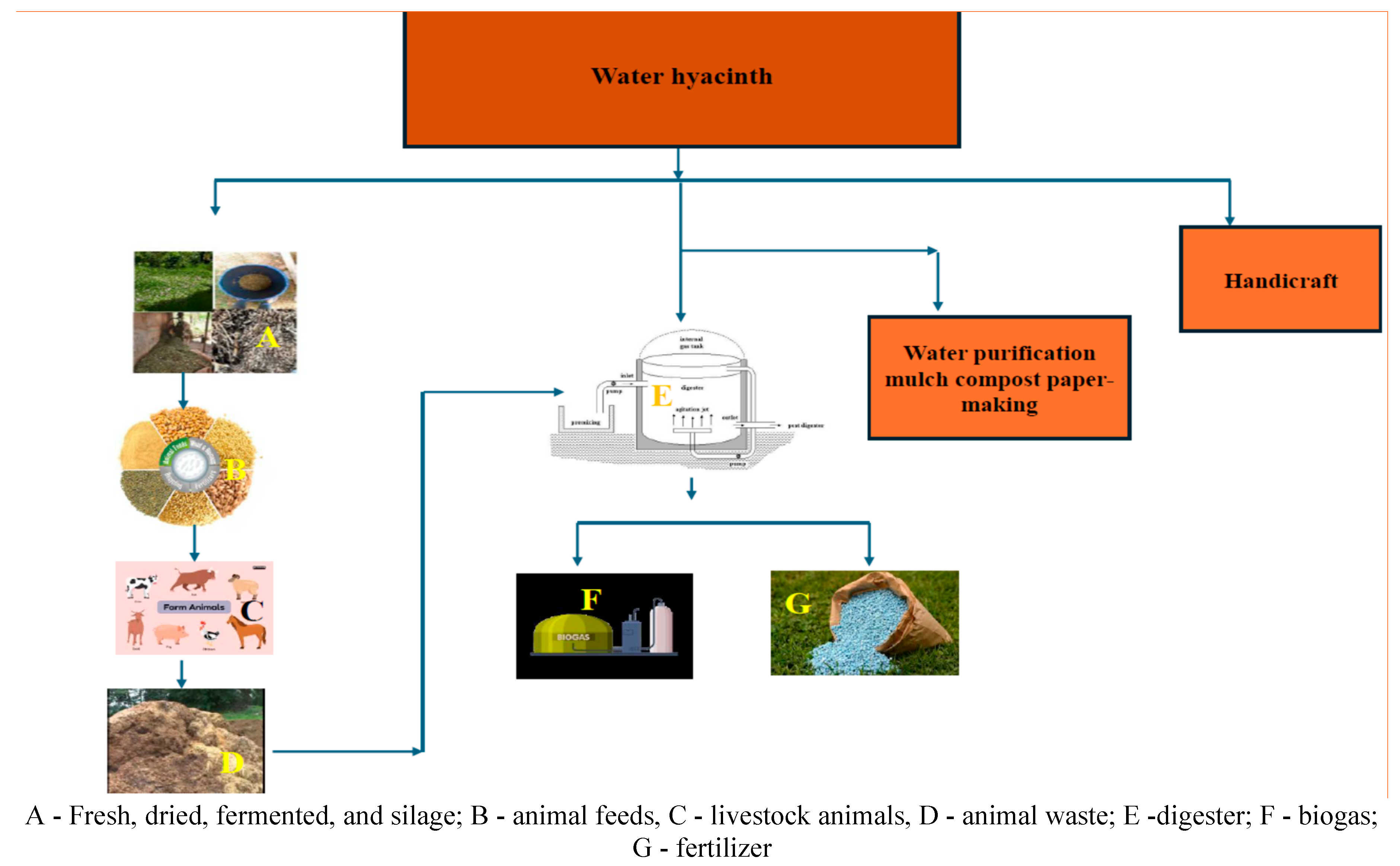
Even though water hyacinth is responsible for major environmental and economic problems, the weed has been exploited for several beneficial uses. As indicated in Figure 2, water hyacinth may be use in the production of fertilizers [20], animal feed [2,4], bio-energy [16,22], medicine [23], paper [24,25] and treated water [26,27,28]. Among these benefits, the nutritional potential of water hyacinth as animal feed has drawn more attention because of its high protein content, fibre composition and mineral levels [2,4]. Because of these qualities, it can be used as a feed resource, particularly in areas where traditional feed ingredients are expensive or hard to obtain. Thus, the use of WH as feed not only promotes sustainable environmental management by slowing the growth of an invasive weed but also improves livestock nutrition [16].

5. Nutritive Value

The nutritional value of feed varies significantly depending on its variety, processing methods, and source. Forage quality, including its fibre content, digestibility, and nutrient availability, is essential for ruminant health and overall productivity. Enhancing digestion and nutrient absorption is made possible by high-quality forage, which guarantees that livestock can maintain optimal health and performance levels. However, poor-quality feed can result in significant economic losses resulting from digestive problems and decreased productivity. On the other hand, feeding ruminants overly mature grasses increases the production of methane, which is strongly correlated with the carbon-to-nitrogen ratio in plant [30].

5.1. Proximate Composition of Water Hyacinth

The chemical composition of water hyacinth is affected by and varies with the environment in which it grows, such as the quality of the water, temperature, humidity, salinity, and pH [31]. Thus, the chemical composition of water hyacinth leaves, stems, and roots shows differences in chemical profiles [32].
Table 1. Proximate composition of water hyacinth (g/kg DM).
By-product DM CP CF EE Ash Moisture Carbohydrates References
Fermented - 200.4 - 47.6 105.6 - - [33]
Dried - 214.4 376.6 2.3 111.1 117.0 178.6 [34]
Dried - 90.4 579.9 2.2 180.0 30.0 117.5 [34]
Forage 186.1 135.1 - - 33.1 966.9 284.5 [35]
Dried leaves 94.0 240 115.0 17.0 129.0 - - [36]
Sun dried - 105.1 226.6 114.5 97.5 - - [2]
Fermented 915.2 145.6 259.1 43.5 191.2 - - [37]
Silage 84.5 123.4 - - 146.4 853.6 355.6 [38]
Dried - 137.3 96.0 23.7 66.3 - - [39]
Fodder 923.4 109.1 - 54.2 108.8 - 71.65 [40]
Abbreviations: DM, dry matter; CP, crude protein; CF, crude fibre; EE, ether exact, WH, water hyacinth; g, grams; kg, kilogram.

5.2. Amino Acid Profile of Water Hyacinth

Amino acids are the fundamental building blocks of proteins that are crucial for multiple metabolic functions including health and immune responses, growth, development, lactation, reproduction and survival. Amino acids are referred to as essential or as non-essential. Essential amino acid such as histidine, isoleucine, leucine, lysine, methionine, phenylalanine, tryptophan, threonine and valine are amino acids that are acquired by an animal via their diet, while non-essential amino acid such as serine, glycine, alanine, proline, glutamic acid and aspartic acid are amino acids are produced in the body from other amino acids or other substances [41,42].
Amino acids in ruminants are derived from the synthesis of microbial protein in the rumen, whereafter they are microbially catabolised before their absorption by the host animal [43]. Methionine and lysine are the most limiting amino acids in animal diets as they are crucial for growth and lactation [44]. Arginine is crucial for immune function and reproductive health, while glutamine serves as an energy source for the intestinal cells [43]. Amino acids are essential for ruminants and have to be supplemented in their diet because an imbalance of amino acids can reduce growth, increase nitrogen emission, lower performance, and leave the animals vulnerable to disease. Feed augmented with WH is a potentially rich source of amino acids and the amino acid profile of water hyacinth leaves, stem and roots is shown in Table 2.

5.3. Anti-Nutritional Factors of Water Hyacinth

Anti-nutritional factors (ANF) are substances present in feed ingredients that act against the digestibility and absorption of nutrients in animal feed. Anti-nutrients limit the potential of nutrient utilization, especially proteins, vitamins, and minerals. This prevents a feed nutrient from being used to its full potential and lowers its nutritional value [47]. Available anti-nutrients in water hyacinth includes tannin that binds proteins, making them less available for digestion; Phytic acid that is bound to minerals such calcium and zinc, reducing their availability; oxalates that interfere with calcium absorption and possibly cause digestive issues, and cyanide that is present in small quantities but can be toxic if consumed in high concentrations [48,49]. Fortunately, the majority of anti-nutrient compounds in plants can be eliminated by treating the plants with different processing techniques, such as drying, soaking, germination, boiling, fermentation [50].
The anti-nutritional composition of WH include tannins (0.56 mg/g), phytate (0.33 mg/g), oxalate (4.06 mg/g) and cyanide (0.38 mg/g) [51]. Adelakun et al. [52] phytochemically analysed water lily and reported presence and levels of alkaloids (2.77 mg/g), tannins (0.27 mg/g), flavonoids (0.03 mg/g), sapanin (1.27 mg/g) and catachin (0.47 mg/g). Water spinach contains more alkaloids (4.12 mg/g) compared to other aquatic plants such as water hyacinth (2.77 mg/g), water lettuce (3.86 mg/g) and (2.68 mg/g) water lily [52]. There is a need to find ways to eliminate anti-nutrients found in different feeds without compromising their nutritional value. Table 3 shows the anti-nutritional factors present in water hyacinth and their effects.

6. Processing and Pre-Treatment Methods for Water Hyacinth

The use of WH as ruminant feed has some limitations. Water hyacinth contains a high fibre concentration [55] and since it grows in water polluted with organic contaminants, Valk. [9] suggested that it needs pre-treatment before it can be used as livestock feed, so as to avoid harmful effects to the animals, including disease and malnutrition, who receive such feed. Water hyacinth can be processed in different ways to improve its acceptability to livestock.
Natural sun drying is a simple and affordable method for producing dried products with a longer shelf life. Compared to fresh water hyacinth, sun drying increases the nutritive value of WH by significantly concentrating its nutrients, by reducing its water content, which leaving a large proportion of protein, minerals, and other essential components in the dried biomass, making it more suitable as animal feed [4,8,56].
Fermentation is a metabolic process involving microorganisms such as bacteria and yeast that convert carbohydrates into other compounds under anaerobic or aerobic conditions. Fermentation is an important application to plants that are used as feed as the treated plants show a higher nutritional value, increased digestibility and absorption of nutrients, improved rumen microflora balance, and increased resistance to pathogenic microorganisms [57]. During the fermentation process, plant protein is converted to amino acids, and they and ammonia and fats generate peptides, volatile fatty acids and carbon dioxide [58].
Another fermentation method is silage, an important means by which plants can be used effectively for feed production [59]. This involves fresh forage crops, grass, and crop by-products used to create a high water-content storage feed under anaerobic conditions together with additives such as molasses to improve palatability and nutritional value [60]. The application of plant silage can avoid the loss of nutrients and enable long-term storage, thereby solving the problem of livestock production during winter or drought seasons when feed is in short supply [61].

7. Effect of Water Hyacinth When Fed to Ruminants

The use of water hyacinth (Eichhornia crassipes) as a feed resource in ruminant diets has drawn increasing interest due to its wide availability, high biomass yield, and acceptable nutrient profile when properly processed. Though traditionally regarded as an invasive aquatic weed, water hyacinth has demonstrated potential as a cost-effective feed supplement for various ruminant species, including goats, sheep, cattle, and calves. The effect of water hyacinth on ruminants when included in their diet encompasses the following: growth performance of ruminants, nutrient digestibility, nitrogen utilization, rumen fermentation, blood metabolites, reproduction performance, milk production, carcass characteristics and meat production [58,62,63,69].

7.1. Growth Performance of Ruminants

The growth performance in ruminants is the rate and efficiency at which the animal gains weight. The availability of nutrients, diet composition, and rumen health are some of the factors that influence growth performance. It is measured through the average weight gain per day and feed conversion efficiency, reflecting how the animal converts feed into body mass over time [64]. Fitrihidajati and Ratnasari [65] reported that fermented WH has the potential to increased weight gain of goats by 2.07 kg per month. Feeding West African Dwarf goats with WH added to up to 10% in their diets had favourable effects on growth performance, with body weight gain of 21.26 g/day and final body weight gain of 8.29 kg [2]. The highest body weight gain (71.66 kg) with the total feed intake of 40.43 kg was observed at 20% inclusion of WH, and it can be included in the goat diet up to 40% without any adverse effects on growth performance [35]. Moreover, Isnawati et al, [62] reported that 20% fermented WH and corncob showed the highest weight gain (5.96 kg) in male sheep, while 30% fermented WH and corncob produced highest quality spermatozoa. Amit [66] reported that using feed consisting of Napier grass augmented to 20% with WH for 14 weeks improved the growth performance of dairy calves who showed an accumulated body weight gain of 40.81 kg. In addition, fermented WH, palm fronds, and sago stems improved average feed consumption (5.46 kg/day), feed efficiency (6.23%), and average weight gain (43.92 kg) of young Acehnese cattle [67]. More studies in the inclusion levels, supplementation and replacement of water hyacinth on feeding ruminants is required.

7.2. Nutrient Digestibility

Digestibility of nutrients in ruminants is the process by which the body breaks down feed nutrients for absorption and use by the animal. Animal diet, temperature, age, feed processing, and other environmental factors influence this process. Environmental factors such as disease, parasite infestation, climate and other causes of stress can affect the digestibility of nutrients. Nutrient balance in the diet and the amount of nutrients available in the feed can affect productivity. The ability of ruminants to digest food can be increased by warm temperatures, but high temperatures can decrease the digestibility of nutrients. Digestibility of nutrients is expressed as a percentage of the feedstuff or ration that enters the system, in relation to the excreted feed that is indigestible [68].
Water hyacinth can be fed to cattle as fresh forage, hay, and silage. Dong and Van Thu [69] reported that feeding Local Yellow cattle with 50% of fresh WH with rice straws and multi nutrient cake improves nutrient digestibility compared to 25% and 75% inclusion of fresh WH. These digestibility findings were lower compared those in swamp buffaloes when fed on 50% fresh WH with para grass and urea-molasses cake. This may be ascribed to the fact that compared to cattle, buffalo have a higher digestibility, larger rumen capacity and better potential adaptation to metabolising fibrous aquatic plants.
Fanta et al. [70] reported that goats fed grass hay and concentrated feed that included 12.5% WH showed higher feed digestibility compared to sheep. These results suggest that goats utilize nutrients more efficiently than sheep. In contrast, these findings were lower than those reported by Mekuriaw et al. [71] involving sheep fed 50% wilted WH with 50% feed concentrate. Nguyen [72] also reported similar findings with sheep, which were even lower when fed 15% ensiled water hyacinth and para grass. The variation in the digestibility may be due to the rumen function, microbial flora, and activities of digestive enzymes, which ruminants use to process and absorb nutrients from their diet. Table 4 below shows the feed digestibility of ruminants fed on water hyacinth-based diet.

7.3. Nitrogen Utilisation

Nitrogen is a vital nutrient contributing towards ruminant productivity. Microbial protein synthesis requires sufficient rumen ammonia levels, and a lack of nitrogen reduces protein synthesis, fibre digestion, and feed intake. For ruminants, the capacity of the rumen micropopulation to use ammonia for amino acid synthesis requires sufficient available energy for nitrogen metabolism. About 55% of rumen bacteria can use either ammonia or amino acids, while 26% of rumen bacteria need only ammonia, and nearly 80% of bacteria use ammonia as their only source of nitrogen for growth [73]. Nitrogen intake is the total amount of nitrogen consumed from feed and nitrogen retention is the amount of ingested nitrogen that the body retains and use.
Nguyen. [72] reported that nitrogen intake and nitrogen retention ranged from 1.81 to 7.94 g/day and from 0.639 to 0.809 g/kg, respectively, when ensiled WH replaced para grass fed to sheep. Ensiling water hyacinth with breadfruit produced nitrogen intake and nitrogen retention that ranged from 2.47 to 3.39 g/day and 0.09 to 0.12 g/kg, respectively, when fed to West African Dwarf goats [74]. This was similar to results published by Mako and Ikusika [58], who reported that nitrogen intake and retention ranged from 6.4 to 7.02 g/day and 0.1 to 0.107 g/kg, respectively, when fungal-treated WH was fed to West African Dwarf goats. Boer crossbred goats fed with ensiled WH to replace elephant grass produced nitrogen intake and nitrogen retention that ranged from 14.3 to 14.9 g/day and 0.58 to 0.76 g/kg, respectively. Few studies are published that describe the nitrogen balance of WH in ruminants and more research is required to clarify the impact of WH on its effect on ruminants.

7.4. Rumen Fermentation

The process of rumen fermentation is crucial to ruminant nutrition due to its affects on the production of volatile fatty acids (VFAs), which are necessary for energy metabolism, and the effectiveness of feed utilization. However, abnormal rumen fermentation can result in a number of health problems, such as rumen acidosis and bloat, which can have detrimental effects on the productivity and welfare of animals. A potential solution to these issues is nutritional manipulation, which controls rumen fermentation, increases feed efficiency, and lowers the prevalence of rumen disorders [75].
Ruminal microorganisms enable ruminants to digest forage by producing enzymes required for fermentation [76]. Ruminants obtain their protein and energy from the rumen, a natural bioreactor for degradation, where microbes play a crucial role of degrading fibre, by producing volatile fatty acids and bacterial proteins through anaerobic fermentation [75]. In the rumen, microbial degradation of fibre produces volatile fatty acids, which account for over 70% of ruminant energy [77]. The quantity of bacteria in the rumen, species and forage type affect the ratio of butyrate, propionate and acetate formed in the rumen [75,78]. Acetate and butyrate are used to fatten animals and to synthesize long-chain fatty acids, while propionate is used to provide glucose for gluconeogenesis. The intestinal tract absorbs microbial protein and uses it as a source of protein [79].
Tumambing et al. [63] reported that WH can be feed to ruminants without any effect on rumen metabolism. Mako and Ikusika [58] reported that fungal-treated water hyacinth improve ruminal fluid parameters, which was in line with study results reported by Nguyen [72] as to the effects of WH silage in diets on feed intake, digestibility and rumen parameters of sheep. This author concluded that ensiled WH can be used to feed growing sheep without adverse effects on rumen parameters. Dong and Van Thu [69] also reported that rumen environment of cattle supplemented with fresh WH is good for the rumen microbial activities. Table 5 below shows the ruminal characteristics of ruminants fed on water hyacinth-based diet.

7.5. Blood Metabolites of Ruminants

Feeding and production systems play a crucial role in the values of haematological and serum biochemical variables in raising ruminants. Feed is an essential aspect of livestock production, and the importance of feed supplementation in animal production has substantially increased in recent years [81,82]. The biochemical determination of serum constituents and blood examination provides important diagnostic information associated with nutrition and environmental factors, thereby influencing the performance and general well-being of animals. Supplementation with different concentration levels and energy sources was shown to influence blood biochemical profiles of cattle [82].
The haematological profile of animals plays a critical role in understanding their physiological status, diagnosing disease, monitoring treatment, and evaluating the impact of environmental and nutritional factors. These variables indicate the quality of feed offered and nutrient absorption, mineral deficiencies, and feed digestibility of the animals [2]. Moreover, haematological indices in livestock species are influenced by both genetic and non-genetic factors. Species-specific genetic variations may lead to significant difference in haematological profiles, particularly in red blood cells production, haemoglobin levels, and other blood components [2].
Fanta et al. [70] reported that goats fed a diet containing 25% dried WH and 75 % concentrate showed improved haematological indices, with white blood cells (19.22 x 10⁹/L), haemoglobin (8.83 g/dL), red blood cell (0.82 x 10⁶/L) and packed cell volume (2.83%), while the haematology of sheep were white blood cells (24.76 x 10⁹/L), haemoglobin (10.58 g/L), red blood cell (2.82 x 10⁶/L) and packed cell volume (11.18%). A 10% inclusion of WH in the diets of goats improved the haematology parameters further, with values for white blood cells (6.58 x 10⁹/L), haemoglobin (120.8 g/L), red blood cells (6.08 x 10¹²/L), packed cell volume (36.25%). A 15% inclusion rate improved serum biochemistry, increasing total protein (64.8 g/L), albumin (37.8 g/L) and globulin (26.8 g/L) [2]. Similarly, Tawose et al. [83] found that goats fed 10% of WH in a cassava peel and poultry dropping silage had haematology indices as follows: white blood cells (13.52 x 10³/L), haemoglobin (13.52 g/L), red blood cells (13.82 x 10⁶/L), packed cell volume (29.73%), neutrophils (38.11%). The serum biochemistry values also improved with total protein (42.24 g/L), albumin (25 g/L), glucose (58.03 mg/dl), and globulin (17.24 g/L).
Despite these findings, there is a paucity of data on the blood metabolites of cattle, with only limited studies available on sheep and goats. Further studies are necessary to bridge this knowledge gap and better understand the effect of alternative feed resources on the blood profiles of ruminants.

7.6. Reproduction Performance in Male Ruminants

Under-nutrition primarily affects male reproductive performance, particularly in ruminants due to feed scarcity and poor quality forage. Reproduction is a multifunctional process influenced by age, species, breed, management, genetics, and nutrition. Among these, nutrition is known to be significant since it has a direct impact on physiological processes and reproductive efficiency. Poor nutrition can negatively impact an animal's ability to reproduce and so the relationship between nutrition and reproduction has gained attention [84]. Furthermore, healthy diets for ruminants is associated with higher-quality sperm and lower chances of abnormalities in parameter such as motility, sperm concentration and sperm count [84].
Isnawati et al. [62] reported that inclusion of fermented WH at 30% in the diet of rams significantly improved their reproduction performance, producing spermatozoa of superior quality characterized by increased ejaculate volume (1.05 ml) and high mass motility. These findings align with the research published by Ratnasari et al. [85] who observed that inclusion in feed of fermented WH at 35% improved spermatozoa quality for goats when compared to conventional feeding regimes. This indicates that feed quality affects spermatozoa quality, which is critical for successful fertilization. There is no information on the effect of WH in female ruminants as to reproduction. Therefore, further studies are necessary to evaluate how water hyacinth supplementation influences reproductive performance in both male and female ruminants.

7.7. Milk Production

Improving the production of high-quality dairy and livestock products is one of the most significant strategies for advancing animal husbandry worldwide [86]. Milk is a highly nutritious substance, containing essential macro- and micro-nutrients, as well as bioactive compounds that play a important in human nutrition and health maintenance. However, milk composition differ from one milk to another due to factors such as age, feed, breed, disease, lactation stage and milking methods [87]. In relation to the use of unconventional feed resources such as WH, limited evidence exists as to their impact on milk yield and quality.
Tumambing et al. [63] conducted a study where dairy cows were fed a diet supplemented with 40% WH and banana pseudostem. The findings indicated improvements in milk yield, with the average daily production ranging between 9.09 and 9.33 liters per day. Additionally, the study reported favorable changes in milk composition, including milk fat (3.21–4.39%), solids-not-fat (8.22–8.82%), total solids (11.83–12.98%), protein (3.12–3.33%), and sugar content (1.39–1.79 mg/ml), without adverse effects on animal performance. In spite of these promising results this remains the only study conducted on the effect of WH supplementation on milk production. This highlights the need to investigate the role of WH inclusion levels in ruminant diets and its potential impact on both milk yield and quality.

7.8. Carcass Characteristics and Meat Production

The assessment of beef carcasses serves as a critical benchmark for judging the commercial value of livestock, and is one of the most common quality control measurements within the meat industry. Carcass evaluation typically involves two major components: quality and composition evaluation. Quality evaluation includes parameters such as tenderness, cut size, fat cover, marbling, and both meat and fat colour. In contrast, composition evaluation is concerned with quantifying saleable meat yield and proportions of fat, lean and bone [88]. Carcass evaluation provides a standardized approach to describe the suitability of ruminant meat for different commercial purposes. This process is particularly important in determining the economic value of carcasses across multiple supply chain stages, from wholesale to retail, and in guiding the production of both fresh retail cuts and processed meat products [88,89]. Furthermore, carcass characteristics are strongly influenced by genetic factors, nutrition, management practices, and the age at slaughter, all of which contribute to variations in meat yield and quality attributes [90].
Mani et al. [66] reported that dietary inclusion of 10% WH improved carcass characteristics in Awassi sheep, where animals exhibited higher live weight (31.50 g/kg), hot carcass dressing percentage (50.90%), slaughter weight (29.33 g/kg), longissimus dorsi length (15.73 cm) and eye muscle area (404.1 mm) which means a greater meat yield when WH was fed to Awassi sheep. Fitrihidajati and Isnawati [65] reported the nutritive value of goat meat to be crude protein (18.8%) crude fat (2.28%), ash (1.06%), calcium (2.32%), metabolize energy (977.78 kj/kg), when fed WH at 35% with dried green kangkong and solid dregs of tofu. This improved meat yield, with goat meat protein at 1 - 1.5%. The effects of WH on the performance of livestock is shown in Table 6.

8. Challenges of Using Water Hyacinth as Feed for Ruminants

The use of water hyacinth (Eichhornia crassipes) as a feed resource for ruminants presents several challenges that limit its effectiveness as a sole dietary component. When fed alone for extended periods, fresh WH cannot maintain body weight in animals, resulting in malnutrition, renal failure and death [70]. One major concern is its ability to absorb and accumulate toxic substances. Growing WH readily takes up heavy metals and pollutants such as lead, chromium, arsenic, mercury, and fluorine from contaminated water bodies, posing a serious risk of toxicity when consumed by ruminants [94]. The roots of the plant, in particular, were shown to concentrate up to three times more toxic elements than other plant parts, making root removal essential before use as feed [95].
Another limitation is the plant’s low palatability compared to conventional feed resources, necessitating its combination with other ingredients to improve intake and acceptance [70]. Additionally, water hyacinth is bulky and high in crude fibre, reducing its digestibility in ruminants. The presence of anti-nutritional factors such as hydrolysable tannins, oxalate crystals, and other secondary metabolites further interferes with digestion and nutrient absorption [96]. These factors collectively reduce the feed efficiency and limit the potential of water hyacinth as a sustainable sole feed source for ruminants.

9. Future Research Directions

Although existing studies highlight the potential of water hyacinth (Eichhornia crassipes) as an alternative feed resource for ruminants, major scientific and practical gaps remain. Future research must therefore adopt a holistic approach that evaluates both biological responses and the feasibility of use by smallholder farmers.
Biologically, future studies should identify optimal inclusion levels for different species and breeds through long-term feeding trials, building on findings that moderate inclusion (10 – 30%) of WH improves growth performance in goats, sheep, calves, and cattle [2,35,62,65,66,67]. Research should also clarify the mechanisms influencing nutrient digestibility, which varies with species, processing method, and inclusion level [69,70,71,72]. This includes evaluating the roles of anti-nutritional factor reduction, microbial adaptation, and fermentation characteristics.
Further investigation is needed on nitrogen utilization and rumen fermentation, where existing evidence is still limited. Studies have shown improvements in nitrogen retention with ensiled or treated WH [58,72,74], and no adverse effects on rumen fermentation were shown when WH was properly processed [63,69]. Future studies should explore microbial protein synthesis, rumen ammonia dynamics, methane emissions, and changes in rumen microbiome composition.
Major gaps remain in animal health and production. Very few studies describe blood metabolite responses, and findings are not comprehensive. Research should therefore evaluate the effects of WH on metabolic markers such as glucose, BUN, liver enzymes, minerals, and oxidative stress. Critically, there is no direct evidence on reproductive performance; future studies must assess effects on oestrous cycles, fertility, semen quality, pregnancy outcomes, and neonatal survival [62]. Similarly, controlled lactation trials are required to determine impacts on milk yield, milk composition, udder health, and the risk of heavy metal transfer into milk. Carcass-related studies should also investigate dressing percentage, meat quality traits, fatty acid profiles, and potential contaminant residues.
Importantly, future research must also determine how smallholder farmers can practically access, harvest, process, and adopt water hyacinth. This includes assessing low-cost harvesting techniques suitable for rural settings, developing simple processing methods such as sun-drying, chopping, fermentation, or ensiling, and evaluating the economic viability of WH-based feeds compared to conventional feeds. Community-led models such as cooperatives or shared feed-processing centres should be explored to reduce labour and improve adoption. Research should also ensure that harvesting aligns with environmental sustainability, contributing to waterway restoration rather than ecological disturbance.
By integrating biological performance evaluation with practical farmer-access strategies, future research will be essential for establishing WH as a safe, effective, and sustainable feed resource for ruminant production, especially within smallholder farming communities in tropical regions.
10. Conclusions
It can be concluded that utilizing WH as feed for ruminants represents one of the most sustainable approaches for controlling its spread, and it is advisable to remove the roots before feeding, since they contain toxins from polluted water sources. Processing methods such as chopping, making silage, hay, and fermenting enhance the palatability and acceptability of WH, so that combining it with other feed ingredients, such as molasses, wheat bran, citrus pulp help to improve nutrients balances and taste in rations. Nevertheless, further research is required to fully understand the nutritive value, determine safe inclusion levels, and assess potential risks to ensure the health and performance of ruminants.

Author Contributions

Investigations, review writing and structuring, K.M.R.; Review structuring, writing, editing and supervision, T.R.N.; Review editing and supervision, L.T.N. and Review editing and supervision, N.O.M. and M.C. All authors have read and agreed to the publication of this manuscript.

Funding

No funding was received for this manuscript.

Institutional Review Board Statement

Not applicable.

Informed Consent Statement

Not applicable.

Data Availability Statement

No new data were created or analyzed in this study.

Acknowledgments

The authors would like to thank the University of South Africa.

Conflicts of Interest

The authors declare no conflict of interests.

References

  1. Yusuf, A.O.; Mlambo, V.; Iposu, S.O. A nutritional and economic evaluation of Moringa oleifera leaf meal as a dietary supplement in West African Dwarf goats. S. Afr. J. Anim. Sci. 2018, 48, 81. [Google Scholar] [CrossRef]
  2. Yusuf, A.O.; Owolabi, A.J.; Adebayo, K.O.; Aina, A.B.J.; Sowande, O.S.; Ajayi, T.O. Growth performance of goats fed diets containing varying levels of water hyacinth. Agric. Trop. Subtrop. 2021, 54, 228–237. [Google Scholar] [CrossRef]
  3. Lamidi, A.A.; Ologbose, F.I. Dry season feeds and feeding: A threat to sustainable ruminant animal production in Nigeria. J. Agric. Soc. Res. 2014, 14, 17–30. [Google Scholar]
  4. Su, W.; Sun, Q.; Xia, M.; Wen, Z.; Yao, Z. The resource utilization of water hyacinth (Eichhornia crassipes [Mart.] Solms) and its challenges. Res. 2018, 7, 46. [Google Scholar] [CrossRef]
  5. Sadique, J.; Pandey, A.; Kumar, N. Effect of molasses-fermented water hyacinth feed on growth and body composition of common carp, Cyprinus carpio. J. Entomol. Zool. Stud. 2018, 6, 1161–65. [Google Scholar]
  6. Hossain, M.E.; Hillol Sikder, H.S.; Kabir, M.H.; Sarma, S.M. Nutritive value of water hyacinth (Eichhornia crassipes). online J. Anim. Feed Res. 2015, 40–44. [Google Scholar]
  7. Tham; Ho Thanh, T.; Van Man, N.; Pauly, T. Fermentation quality of ensiled water hyacinth (Eichhornia Crassipes) as affected by additives. Asian-Australas. J. Anim Sci. 2013, 26, 195. [Google Scholar] [CrossRef]
  8. Gunnarsson, C.C.; Petersen, C.M. Water hyacinths as a resource in agriculture and energy production: A literature review. Waste Manag. 2007, 27, 117–29. [Google Scholar] [CrossRef]
  9. Valk, V.A. Valorization of water hyacinth as a renewable source of animal feed and biogas: A business case for Lake Victoria, Kenya. 2015. [Google Scholar]
  10. Pérez, E.A.; Coetzee, J.A.; Téllez, T.R.; Hill, M.P. A first report of water hyacinth (Eichhornia crassipes) soil seed banks in South Africa. S. Afri. J. Bot. 2011, 77, 795–800. [Google Scholar] [CrossRef]
  11. Patel, S. Threats, management and envisaged utilizations of aquatic weed Eichhornia crassipes: An overview. Rev. Environ. Sci. Biotechnol. 2012, 11, 249–59. [Google Scholar] [CrossRef]
  12. Penfound, W.T.; Earle, T.T. The biology of the water hyacinth. Ecol. Monogra 1948, 447–472. [Google Scholar] [CrossRef]
  13. Aquatic Ecosystem Restoration Foundation (AERF) 2005. Best Management Practices Handbook for Aquatic Plant Management in Support of Fish and Wildlife Habitat. Aquatic Ecosystem Restoration Foundation, Flint, MI.
  14. Downing-Kunz, M.A.; Stacey, M.T. Observations of mean and turbulent flow structure in a free-floating macrophyte root canopy. Limnol. Oceanogr. Fluids Environ. 2012, 2, 67–79. [Google Scholar] [CrossRef]
  15. El-Sayed, Abdel Fattah M. Effects of fermentation methods on the nutritive value of water hyacinth for Nile Tilapia Oreochromis Niloticus (L.) Fingerlings. Aquac. 2003, 218, 471–78. [Google Scholar] [CrossRef]
  16. Bote, M.A.; Naik, V.R.; Jagdeeshgouda, K.B. Production of biogas with aquatic weed water hyacinth and development of briquette making machine. Mater. Sci. Energy Technol. 2020, 3, 64–71. [Google Scholar] [CrossRef]
  17. Zarkami, R.; Esfandi, J.; Sadeghi, R. Modelling occurrence of invasive water hyacinth (Eichhornia Crassipes) in wetlands. Wetlands 2021, 41, 1–13. [Google Scholar] [CrossRef]
  18. Harun, I.; Pushiri, H.; Amirul-Aiman, A.J.; Zulkeflee, Z. Invasive water hyacinth: Ecology, impacts and prospects for the rural economy. Plants 2021, 10, 1613. [Google Scholar] [CrossRef]
  19. Bick, E.; de Lange, E.S.; Kron, C.R.; da Silva Soler, L.; Liu, J.; Nguyen, H.D. Effects of salinity and nutrients on water hyacinth and its biological control agent, Neochetina Bruchi. Hydrobiologia 2020, 847, 3213–24. [Google Scholar] [CrossRef]
  20. Wang, Y., 2022. The environmental impacts and high-effective solutions of invasion of water hyacinth. In IOP Conference Series: Earth. Environ. Sci. 1011, 012045.
  21. Villamagna, A.M.; Murphy, B.R. Ecological and socio-economic impact of invasive water hyacinth (Eichhornia crassipes): a review. Freshwater biology 2010, 55, 282–298. [Google Scholar] [CrossRef]
  22. Alagu, K.; Venu, H.; Jayaraman, J.; Raju, V.D.; Subramani, L.; Appavu, P.; Dhanasekar, S. Novel water hyacinth biodiesel as a potential alternative fuel for existing unmodified diesel engine: Performance, combustion and emission characteristics. Energy 2019, 179, 295–305. [Google Scholar] [CrossRef]
  23. Sharma, A.K.; Sharma, V.; Sharma, V.; Sharma, J.K.; Singh, R. Multifaceted potential of Eichhornia crassipes (Water Hyacinth) ladened with numerous value aided and therapeutic properties. Plant Arch. 2020, 20, 2059–2065. [Google Scholar]
  24. Islam, M.N.; Rahman, F.; Papri, S.A.; Faruk, M.O.; Das, A. K.; Adhikary, N.; Debrot, A.O.; Ahsan, M.N. Water hyacinth (Eichhornia crassipes (Mart.) Solms.) as an alternative raw material for the production of bio-compost and handmade paper. J. Environ. Manag. 2021, 294, 113036. [Google Scholar] [CrossRef]
  25. Charoensopa, K.; Ploysri, W. Making paper from water hyacinth for products and home decorations. J. Posit. Sch. Psychol. 2022, 6, 5916–5921. [Google Scholar]
  26. Zheng, J.C.; Liu, H.Q.; Feng, H.M.; Li, W.W.; Lam, M.H.W.; Lam, P.K.S.; Yu, H.Q. Competitive absorption of heavy metals by water hyacinth roots. Environ. Pollut. 2016, 219, 837–845. [Google Scholar] [CrossRef] [PubMed]
  27. Shen, J.; Huang, G.; An, C.; Song, P.; Xin, X.; Yao, Y.; Zheng, R. Biophysiological and factorial analyses in the treatment of rural domestic wastewater using multi-soil-layering systems. J. Environ. Manag. 2018, 226, 83–94. [Google Scholar] [CrossRef]
  28. Du, Y.; Wu, Q.; Kong, D.; Shi, Y.; Huang, X.; Luo, D.; Chen, Z.; Xiao, T.; Leung, J. Y.S. Accumulation and translocation of heavy metals in water hyacinth: Maximising the use of green resources to remediate sites impacted by e-waste recycling activities. Ecol. Indic. 2020, 115, 106384. [Google Scholar] [CrossRef]
  29. Tham, H.T., 2012. Water Hyacinth (Eichhornia crassipes) Biomass Production, Ensilability and Feeding Value to Growing Cattle. Faculty of Veterinary Medicine and Animal Science Department of Animal Nutrition and Management Uppsala. Doctoral Thesis Swedish University of Agricultural Sciences Uppsala 2012.
  30. Xiao, D.; Meng, T. Nutritional value evaluation and processing technology of feed and nutrition regulation measures for ruminants. Anim. 2024, 14, 3153. [Google Scholar] [CrossRef]
  31. Ilo, O.P.; Simatele, M.D.; Nkomo, S.P.L.; Mkhize, N.M.; Prabhu, N.G. The benefits of water hyacinth (Eichhornia crassipes) for Southern Africa: A review. Sustain. 2020, 12, 9222. [Google Scholar] [CrossRef]
  32. Chaiwarit, T.; Chanabodeechalermrung, B.; Kantrong, N.; Chittasupho, C.; Jantrawut, P. Fabrication and evaluation of water hyacinth cellulose-composited hydrogel containing quercetin for topical antibacterial applications. Gels 2022, 8, 767. [Google Scholar] [CrossRef] [PubMed]
  33. Sayed-Lafi, R.M.; Al-Tameemi, R.A.; Gowdet, A.I. Evaluation of raw and fermented water hyacinth (Eichhornia Crassipes) incorporated diets on growth and feed efficiency of young Grass Carp (Ctenopharyngodon Idella). Basrah J. Agric. Sci. 2018, 31, 31–39. [Google Scholar] [CrossRef]
  34. Enyi, C.N.; Uwakwe, A.A.; Wegwu, M.O. Nutritional potentials of water hyacinth (Eichhornia crassipes). Direct Res. J. Public Health Environ. Technol. 2020, 5, 14–18. [Google Scholar]
  35. Tiwari, M.R.; Karki, M.; Pandey, L.N.; Poudel, N. Replacement of concentrate mixture with different levels of water hyacinth (Eichhornia Crassipes) in basal diet on feed intake and production performance of piglets. J. Agric. Nat. Res. 2020, 3, 205–17. [Google Scholar] [CrossRef]
  36. Rufchaei, R.; Abbas-Mohammadi, M.; Mirzajani, A.; Nedaei, S. Evaluation of the chemical compounds and antioxidant and antimicrobial activities of the leaves of Eichhornia crassipes (water hyacinth). J. Nat. Pharm. Prod. 2022, 17, 101436. [Google Scholar] [CrossRef]
  37. Emshaw, Y.; Getahun, A.; Geremew, A. The effect of Aspergillus niger on the nutritive value of water hyacinth as fish feed using solid state fermentation. Ethiop. J. Biol. Sci. 2021, 20, 143–154. [Google Scholar]
  38. Dong, N.T K.; Van Thu, N. Effects of using water hyacinth (Eichhornia crassipes L.) in the diet of Swamp Buffaloes on nutrient digestibility, rumen environment, purine derivatives, and nitrogen retention. J. Buffalo Sci. 2023, 12, 21–27. [Google Scholar] [CrossRef]
  39. Al-Aboudi, A.M.; Hamodi, S.J. Improving the nutritional value of water hyacinth leaves (WHL) and adding it to broiler diets and its effect on the productive performance. Iraqi J. Agric. Sci. 2023, 54, 1497–1508. [Google Scholar] [CrossRef]
  40. Fanta, Y.U., Kebede, Y.K., Asfaw, N.Y., 2024. Effects of feeding water hyacinth (Eichhornia crassipes) fodder with or without commercial concentrate on zoo-technical performance and profitability in tropical goats and sheep. bioRxiv, 2024-10.
  41. Wu, G.; Bazer, F.W.; Dai, Z.; Li, D.; Wang, J.; Wu, Z. Amino acid nutrition in animals: protein synthesis and beyond. Annu. Rev. Anim. Biosci. 2014, 2, 387–417. [Google Scholar] [CrossRef]
  42. Lopez, M.J.; Mohiuddin, S.S. Biochemistry, essential amino acids. In StatPearls [Internet]; StatPearls Publishing, 2024. [Google Scholar]
  43. Gilbreath, K.R., Bazer, F.W., Satterfield, M.C., Wu, G., 2021. Amino acid nutrition and reproductive performance in ruminants. Amino Acids in Nutrition and Health: Amino Acids in the Nutrition of Companion, Zoo and Farm Animals. Cham: Springer International Publishing. 43-61.
  44. Cao, Y., Yao, J., Sun, X., Liu, S., Martin, G.B., 2021. Amino acids in the nutrition and production of sheep and goats. Amino Acids in Nutrition and Health: Amino Acids in the Nutrition of Companion, Zoo and Farm Animals. 63-79.
  45. Adeyemi, O.; Osubor, C.C. Assessment of nutritional quality of water hyacinth leaf protein concentrate. Egypt. J. Aquat. Res. 2016, 42, 269–72. [Google Scholar] [CrossRef]
  46. Hontiveros, G.J.S.; Serrano, A.E. Nutritional value of water hyacinth (Eichhornia crassipes) leaf protein concentrate for aquafeeds. Aquacult. Aquarium Conserv. Legis. 2015, 8, 26–33. [Google Scholar]
  47. Thakur, A.; Sharma, V.; Thakur, A. An overview of anti-nutritional factors in food. Int. J. Chem. Stud. 2019, 7, 2472–2479. [Google Scholar]
  48. Moses, T.; Barku, V.Y.A.; Kyereme, C.; Odoi, F.N.A. Composition of water hyacinth (Eichhornia crassipes) plant harvested from the Volta lake in Ghana and its potential value as a feed ingredient in rabbit rations. Adv. Anim. Vet. Sci. 2021, 9, 230–237. [Google Scholar] [CrossRef]
  49. Duraiswamy, A.; Sneha A, N.M.; Jebakani K, S.; Selvaraj, S.; Pramitha J, L.; Selvaraj, R.; Kumar P, R. Genetic manipulation of anti-nutritional factors in major crops for a sustainable diet in future. Front. Plant Sci. 2023, 13, 1070398. [Google Scholar] [CrossRef] [PubMed]
  50. Okaiyeto, S.A., Liu, D., Zhang, C., Bai, J.W., Chen, C., Sharma, P., Venugopal, A.P., Asiamah, E., Ketemepi, H.K., Imadegbor, F.A. and Gabriel, O.T., 2025. Anti-nutrients of plant-based food: physicochemical properties, effects on health and degradation techniques-a comprehensive review. J. Future Foods.
  51. Suleiman, M.; Khadija, A.Y.; Nasiru, Y.; Garba, A.A.; Alhassan, M.; Bello, H. Proximate, minerals and anti-nutritional composition of water hyacinth (Eichhornia Crassipes) grass. Earthline J. Chem. Sci. 2020, 3, 51–59. [Google Scholar] [CrossRef]
  52. Adelakun, K.M.; Mustapha, M.K.; Muazu, M.M.; Omotayo, O.L.; Olaoye, O. Phytochemical screening and antibacterial activities of crude extract of Nymphaea lotus (water lily) against fish pathogens. J. Biomed. Sci. 2015, 2, 38–42. [Google Scholar] [CrossRef]
  53. Saha, S.; Ray, A.K. Evaluation of nutritive value of water hyacinth (Eichhornia crassipes) leaf meal in compound diets for rohu, Labeo rohita (Hamilton, 1822) fingerlings after fermentation with two bacterial strains isolated from fish gut. Turk. J. Fish. Aquat. Sci. 2011, 11. [Google Scholar] [CrossRef]
  54. Dharmawati, S.; Hartutik, H.; Sjofjan, O.; Natsir, M.H. Effect of the level freshwater snail flesh (Pomacea paludosa) Soaked in biochar in feed on the performance and digestives tract of male Alabio Ducks (Anas Plathyrhyncos Borneo). Iran. J. Appl. Anim. Sci. 2023, 13. [Google Scholar]
  55. Saputra, A.H.; Putri, R.A. The determination of optimum condition in water hyacinth drying process by mixed adsorption drying method and modified fly ash as an adsorbent. AIP Conference Proceedings 2017, 1840, 100005. [Google Scholar]
  56. Priya, P.; Nikhitha, S.O.; Anand, C.; Nath, R.D.; Krishnakumar, B. Biomethanation of water hyacinth biomass. Biores. Techn 2018, 255, 288–292. [Google Scholar] [CrossRef]
  57. Missotten, J.A.M.; Michiels, J.M.; Degroote, J.; De Smet, S. Fermented liquid feed for pigs: An ancient technique for the future. J. Anim. Sci. Biotech. 2015, 6, 1–9. [Google Scholar] [CrossRef]
  58. Mako, A.A.; Ikusika, O.O. Utilization of Pleurotus sajor-caju biodegraded water hyacinth (Eichhornia crassipes) in a solid state fermentation by West African Dwarf goats in the humid tropics. Trop. Agric. 2020, 97. [Google Scholar]
  59. Du, Z.; Yang, F.; Fang, J.; Yamasaki, S.; Oya, T.; Nguluve, D.; Cai, Y. Silage preparation and sustainable livestock production of natural woody plant. Front. Plant Sci. 2023, 14, 1253178. [Google Scholar] [CrossRef] [PubMed]
  60. Muck, R.E.; Nadeau, E.M.G.; McAllister, T.A.; Contreras-Govea, F.E.; Santos, M.C.; Kung, L. Silage review: Recent advances and future uses of silage additives. J. Dairy Sci. 2018, 100, 3980–4000. [Google Scholar] [CrossRef] [PubMed]
  61. Tao, H.; Si, B.; Xu, W.; Tu, Y.; Diao, Q. Effect of Broussonetia papyrifera L. silage on blood biochemical parameters, growth performance, meat amino acids and fatty acids compositions in beef cattle. Asian-Australas. J. Anim. Sci. 2020, 33, 732–741. [Google Scholar] [CrossRef]
  62. Isnawati, I., Ni’matuzahroh N., Surtiningsih, T., Khaleyla, F., 2021. “Effect of Fermented Water Hyacinth (Eichhornia Crassipes) on Palatability, Performance and Spermatozoa Quality on Male Sheep (Ovis Aries).” Atlantis Press 209(Ijcse):350–56.
  63. Tumambing, C.R.; Degoma, M.K.P.; Bacorro, T.J.; Abes, E.E.C.; Manulat, G.L.; Villar, T.D.; Angeles, A.A. Ruminal volatile fatty acids, total sugars, milk yield and quality of dairy cows fed water hyacinth [Eichhornia crassipes (Mart.) Solms] and banana (Musa sp.) pseudostem. Philipp. J. Vet. Anim. Sci. 2019, 45, 140–145. [Google Scholar]
  64. Chen, C. Z.; Li, P.; Wang, W.B.; Li, Z.H. Response of growth performance, serum biochemical parameters, antioxidant capacity, and digestive enzyme activity to different feeding strategies in common carp (Cyprinus carpio) under high-temperature stress. Aquac. 2022, 548, 737636. [Google Scholar] [CrossRef]
  65. Fitrihidajati, H.; Isnawati, E.R. Effectiveness of ruminant feed formula from the fermented water hyacinth (Eichhornia Crassipes) to produce the high level protein of goat meat. Adv. Sci. Lett. 2017, 23, 11972–75. [Google Scholar] [CrossRef]
  66. Amit, N.C. Effect of feeding different inclusion rates of water hyacinth [Eichhornia crassipes (Mart.) Solms] on the body weight gain of growing dairy bull calves. Int. J. Res- granthaalayah. 2019, 7, 293–298. [Google Scholar] [CrossRef]
  67. Yaman, M.A., Koesmara, H., Raskita, R., 2024. Production efficiency of young Acehnese cattle by giving fermented of water hyacinth (Eichhornia crassipes), palm fronds, and sago stems with addition of digestive enzymes. In IOP Conference Series: Earth. Environ. Sci. 1341, 012105.
  68. Patil, P.V.; Patil, M.K. Factors affecting nutrient digestibility in animals. J. Agri. 2022, 2, 1–6. [Google Scholar]
  69. Dong, N.T.K.; Van Thu, N. The use of water hyacinth (Eichhornia crassipes) for improving metabolizable energy intake, nutrient digestibility and economic return of local yellow cattle. Tạp chí Khoa học Công nghệ Chăn nuôi 2020, 116, 42–47. [Google Scholar]
  70. Fanta, Y.; Kechero, Y.; Yemane, N. Nutritional response to water hyacinth (Eichhornia crassipes) challenges via blood biochemical profiles in goats and sheep. Heliyon 2024, 10. [Google Scholar] [CrossRef]
  71. Mekuriaw, S.; Tegegne, F.; Tsunekawa, A.; Ichinohe, T. Effects of substituting concentrate mix with water hyacinth (Eichhornia crassipes) leaves on feed intake, digestibility and growth performance of Washera sheep fed rice straw-based diet. Trop. Anim. heal. prod. 2018, 50, 965–972. [Google Scholar] [CrossRef]
  72. Nguyen, V.T. Effects of water hyacinth silage in diets on feed intake, digestibility and rumen parameters of sheep (Ovis aries) in the Mekong Delta of Vietnam. J. Innov. Sustain. Dev. 2016, 02, 8–12. [Google Scholar]
  73. Zurak, D.; Kljak, K.; Aladrović, J. Metabolism and utilisation of non-protein nitrogen compounds in ruminants: A review. J. Cent. Eur. Agri. 2023, 24, 1–14. [Google Scholar] [CrossRef]
  74. Abegunde, T.O.; Akinropo, T.F. Growth performance, nutrient digestibility and haematological parameters of West African Dwarf Goats fed water hyacinth ensiled with breadfruit. J. Anim. Vet. Adv. 2018, 18, 260–269. [Google Scholar] [CrossRef]
  75. Wang, L.; Zhang, G.; Li, Y.; Zhang, Y. Effects of high forage/concentrate diet on volatile fatty acid production and the microorganisms involved in VFA production in cow rumen. Anim. 2020, 10, 223. [Google Scholar] [CrossRef] [PubMed]
  76. Castillo-GonzálezA, R.; Burrola-Barraza, M.E.; Domínguez-Viveros, J.; Chávez-Martínez, A. Rumen microorganisms and fermentation. Arch. Med. Vet. 2014, 46, 349–361. [Google Scholar] [CrossRef]
  77. Beckett, L.; Gleason, C.B.; Bedford, A.; Liebe, D.; Yohe, T.T.; Hall, M.B.; White, R.R. Rumen volatile fatty acid molar proportions, rumen epithelial gene expression, and blood metabolite concentration responses to ruminally degradable starch and fiber supplies. J. Dairy Sci. 2021, 104, 8857–8869. [Google Scholar] [CrossRef]
  78. Bharanidharan, R.; Arokiyaraj, S.; Kim, E.B.; Lee, C.H.; Woo, Y.W.; Na, Y.; Kim, K.H. Ruminal methane emissions, metabolic, and microbial profile of Holstein steers fed forage and concentrate, separately or as a total mixed ration. PloS ONE 2018, 13, e0202446. [Google Scholar] [CrossRef]
  79. Ungerfeld, E.M. Metabolic hydrogen flows in rumen fermentation: principles and possibilities of interventions. Front. Microbiol. 2020, 15, 589. [Google Scholar] [CrossRef] [PubMed]
  80. Trung, T.T.; Nhan, P. Using silaged water hyacinth to replace elephant grass in the diet of Boer crossbred goats. Adv. Anim. Vet. Sci. 2025, 13, 1191–1199. [Google Scholar] [CrossRef]
  81. Mamun, M.A.; Hassan, M.M.; Shaikat, A.H.; Islam, S.A.; Hoque, M.A.; Uddin, M.; Hossain, M.B. Biochemical analysis of blood of native cattle in the hilly area of Bangladesh. Bangladesh J. Vet. Med. 2013, 11, 51–56. [Google Scholar] [CrossRef]
  82. Xuan, N.H.; Loc, H.T.; Ngu, N.T. Blood biochemical profiles of Brahman crossbred cattle supplemented with different protein and energy sources. Vet. World 2018, 11, 1021. [Google Scholar] [CrossRef]
  83. Tawose, O.M.; Oluwadele, J.F.; Ekeocha, A.H. Haematological and biochemical responses of West African Dwarf goats fed water hyacinth and Cassava peel silage. Niger. J. Anim. Prod. 2023, 50, 109–128. [Google Scholar] [CrossRef]
  84. Ibtisham, F.; Nawab, A.A.; Li, G.; Xiao, M.; An, L.; Naseer, G. Effect of nutrition on reproductive efficiency of dairy animals. Med. weter. 2018, 74, 356–361. [Google Scholar] [CrossRef]
  85. Ratnasari, E.; Fitrihidajati, H.; Isnawati, I. Improving the quality of goat sperm through the implementation of fermented feed based on water hyacinth: fermege formula 3. In Int. Conf. Sci. Technol.; Atlantis Press, 2018; pp. 101–104. [Google Scholar]
  86. Gorelik, O.V., Galushina, P.S., Knysh, I.V., Bobkova, E.Y., Grigoryants, I.A., 2021. March. Relationship between cow milk yield and milk quality indicators. In IOP Conference Series: Earth Environ. Sci. 677, 032013.
  87. Ahmedsham, M.; Amza, N.; Tamiru, M. Review on milk and milk product safety, quality assurance and control. Int. J. Livest. Prod. 2018, 9, 67–78. [Google Scholar] [CrossRef]
  88. Ojha, K.S.; Kerry, J.P.; Tiwari, B.K. Emerging technologies for the meat processing industry. Adv. Technol. Meat Process. 2017, 297–318. [Google Scholar]
  89. Hocquette, J.F.; Ellies-Oury, M.P.; Lherm, M.; Pineau, C.; Deblitz, C.; Farmer, L. Current situation and future prospects for beef production in Europe—A review. Asian-Austral. J. Anim. Sci. 2018, 31, 1017. [Google Scholar] [CrossRef]
  90. Warner, A., 2020. Utilization of cotton byproducts in cattle finishing diets: impacts on performance, carcass traits, and ruminal degradability of diet components. MS thesis. Oklahoma state University.
  91. Mani, A.M. Utilization leaf meal of water hyacinth (Eichhornia crassipes) as a replacement protein source for growing Awassi lambs. Inter. J. Vet. Sci. 2019, 8, 54–60. [Google Scholar]
  92. Yosef, O.M. Estimation of nutritive value and apparent digestibility factor for water hyacinth silage in Awassi Sheep rations. Jordan. J. Agri. Sci. 2021, 17, 399–410. [Google Scholar] [CrossRef]
  93. De Vasconcelos, G.A.; Véras, R.M.L.; de Lima Silva, J.; Cardoso, D.B.; de Castro Soares, P.; de Morais, N.N.G.; Souza, A.C. Effect of water hyacinth (Eichhornia crassipes) hay inclusion in the diets of sheep. Trop. Anim. health prod. 2016, 48, 539–544. [Google Scholar] [CrossRef] [PubMed]
  94. Wimalarathne, H.D.A.; Perera, P.C.D. Potential of Water Hyacinth as livestock feed in Sri Lanka. Indian. J. Weed. Sci. 2019, 51, 101–105. [Google Scholar] [CrossRef]
  95. Guo, Yan. Water Hyacinth: Environmental Challenges, Management and Utilization; CRC Press, 2017. [Google Scholar]
  96. Pandiya, R.; Jona, S.E.; Dhinakaran, S.; Dinesh, J.; Deepika, R.; Aruna, S.; Manikandavelu, D. Water hyacinth a sustainable source of feed, manure and industrial products: A review. Agric. Rev. 2023, 44, 389–392. [Google Scholar]
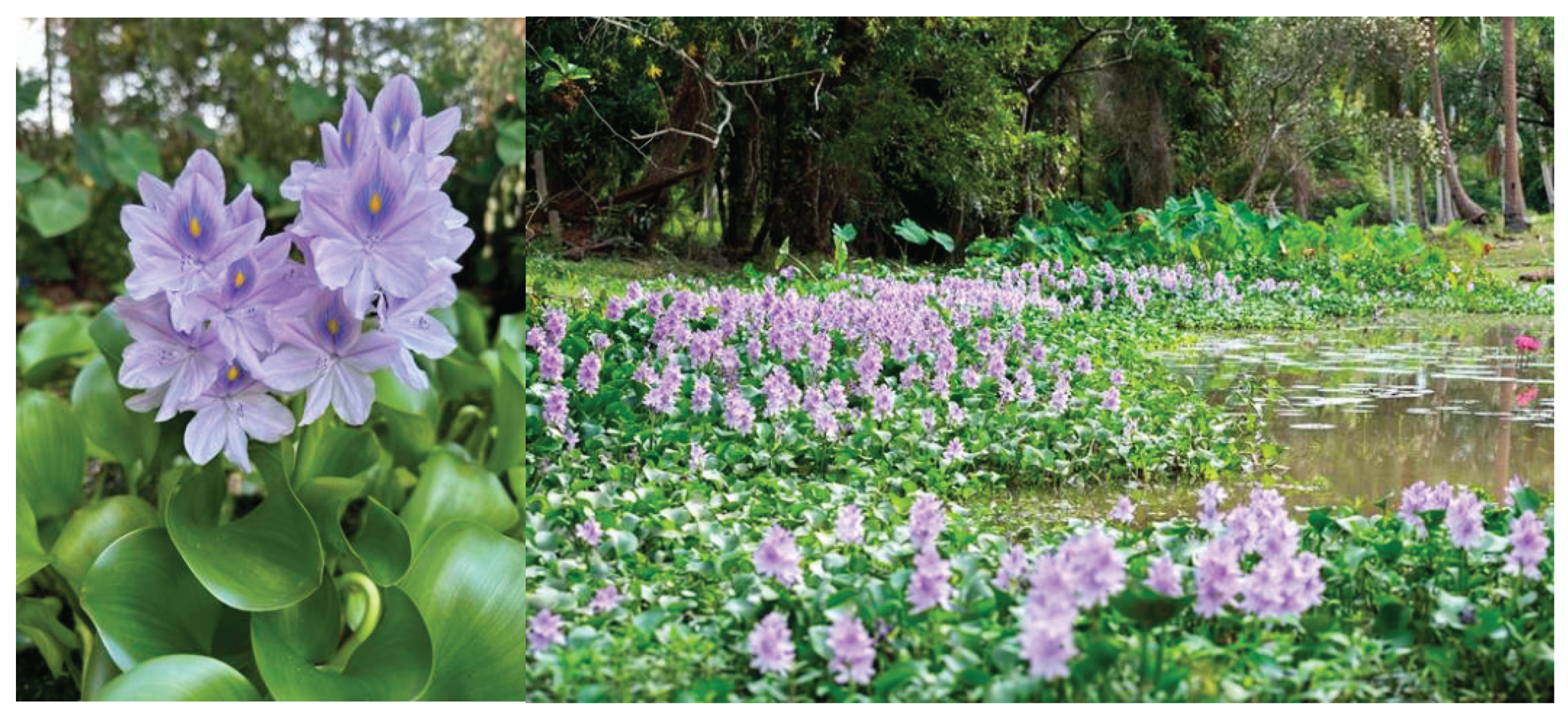
Figure 1. Fresh water hyacinth plants.
Preprints 197376 g001
Figure 2. Schematic diagram of the uses of water hyacinth [29].
Preprints 197376 g002
Table 2. Amino acid profile of the leaf, stem and root of water hyacinth.
Amino acid (mg/100g) Leaf Stem Leaf Leaf
Glycine 4.67 6.07 3.00 6.51
Alanine 6.98 6.77 3.20 6.45
Serine 4.20 4.25 2.25 10.21
Proline 2.68 2.40 2.72 5.62
Valine 3.36 3.09 2.81 7.46
Threonine 4.38 3.22 2.60 5.27
Isoleucine 3.06 4.58 2.29 5.47
Leucine 7.02 8.08 5.01 9.56
Asparagine 8.40 7.59 4.96 10.21
Lysine 7.73 5.21 3.72 5.06
Methionine 2.09 1.33 1.34 1.31
Glutamine 15.13 11.95 6.04 7.31
Phenylalanine 4.29 4.53 3.67 6.01
Histidine 2.93 2.01 1.10 2.22
Arginine 5.25 8.06 3.80 6.58
Tyrosine 2.20 2.33 2.20 2.92
Cysteine 1.78 2.31 0.72 0.38
References [35] [35] [45] [46]
Table 3. Anti-nutritional factors present in water hyacinth and their effects.
ANF Effect Presence in WH References
Oxalates Bind calcium, may cause kidney stones and reduce mineral bio-availability High [47,48]
Tannins Reduce protein digestibility by binding proteins and inhibiting digestive enzymes Moderate to high [51]
Phytates (Phytic Acid) Bind essential minerals such as iron, zinc, calcium, to reduce their absorption Moderate [52,53]
Saponins Interfere with nutrient absorption and may have toxic effects at high levels Present in small amounts [54]
Alkaloids Some may be toxic or interfere with metabolism Trace [47]
Cyanide Can be toxic if consumed in high concentrations Present in small amounts [48,49]
Abbreviation: ANF - anti-nutritional factor; WH, water hyacinth.
Table 4. Nutrient digestibility of ruminants fed on processed WH.
Species CP (%) OM (%) DM (%) NDF (%) References
Sheep 78.4 68.8 66.4 66.1 [72]
Sheep 79.2 73.2 72.8 71.8 [71]
Cattle 67.3 65.4 63 64.3 [69]
Buffaloes 71.6 73.4 72.4 72.7 [38]
Goat 82.72 76.97 75.32 73.61 [70]
Sheep 75.32 70.40 68.80 71.42 [70]
Abbreviations: CP, crude protein; OM, organic matter; DM, dry matter; NDF, neutral detergent fibre.
Table 5. Ruminal characteristics of ruminants fed with water hyacinth.
Ruminal parameters
Animal WH Inclusion (%) pH N-NH3 (mg/100g) VFAs (mmol) References
Goats Silage 25, 50 & 75 7.05 - 7.50 23.1 - 27.7 73.5 - 85.2 [80]
Cattle Fresh 0, 25, 50 & 75 7.03 -7.10 20.8 - 22.8 84.6 - 91.0 [69]
Sheep Silage 0, 15, 30 & 45 6.87 - 7.08 34.6 - 38.5 108 - 115 [72]
Goats Fungal-treated 0, 30, 45, 60 & 90 6.15 - 6.31 20.1 - 25.6 55.2 - 76.1 [58]
Buffaloes Fresh 25, 50, 75 & 100 6.95 -7.05 17.5 - 25.2 74.2 - 87.2 [38]
%, percentage; N-NH3, ammonia nitrogen; VFAs, volatile fatty acids, mg, milligram; g, gram; mmol, millimole; WH, water hyacinth.
Table 6. Effect of processed water hyacinth meal on ruminant performance.
Species Inclusions levels (%) Processing Response References
Sheep 0, 50, 75 & 100 Wilted Wilted WH leaves substitute concentrate mix up to 75% results in the optimum growth of Washera sheep. [71]
Sheep 0, 10, 20 & 30 Fermented 20% fermented WM and corncob have the highest palatability and WG in male sheep.
Sheep fed 30% fermented WH and corncob produced spermatozoa with the highest quality.
[62]
Sheep 0, 25, 50 & 75 Silage 25% replacement of WH silage had a positive effect on TDE, DE and ME. [92]

Sheep and goats

0, 12.5, 25 & 37.5

Fodder
Sheep had a high FI, and goats had a low FI.
37.5% replacement with WH enhances nutritive intake, digestibility, and body weight gain.

70]

Sheep

0, 20, 40, 60 & 80

Hay
WH hay decreased the amount of certain nutrients that the sheep could consume and digest.
[93]

Awassi Lamb

0, 5, 10 & 20

Fodder
WH leaf substitute concentrate mix up to 10% has optimum growth of Awassi sheep.
[91]

Dwarf Goats

0, 15, 30, 45 & 60

Silage
The optimal level of WH supplementation for West African Dwarf goats was determined to be 15%, as this level resulted in the best hematology and biochemical indices, with no negative impact on their blood indices.
[83]

West African dwarf goats

0, 5, 10 & 15

Sun dried
Feeding West African dwarf goats with WH up to 10% in their diets had favourable effects on growth performance, health, and possibly immune response as well as profitability.
[2]

Goats

0, 20, 30 & 40

Forage
Highest body weight gain observed at 20% inclusion levels.
The study suggested that WH can be included in the goat diet only up to 40% without any adverse effects on growth performance.

[35]
Goats 0, 50, 60, 70, 80 & 90 Chopped and Silage 60% WH diets ensiled with 30% breadfruit improved DWG and FCR. [74]

Swamp buffaloes

0, 25, 50, 75 & 100

Silage
WH can replace para grass in the buffalo diet up to 100%.
50% of WH replacement improves utilization of nutrients and energy, lowers feed cost, and improves the environment.

[38]

Dairy bull calves

0, 10, 20 & 40
40% WH inclusion increased intake in calves but did not have any effect on the BWG of the calves.
A WH inclusion rate of 10 - 20% DM basis can substitute for Napier grass.

[66]

Young Acehnese cattle

50

Fermented
Fermented WH, palm fronds, and sago stems improve average consumption, feed cost, and daily body weight gain.
[67]

Local yellow cattle

0, 25, 50 & 75

Fresh
Fresh WH improves dietary nutrient digestibility, metabolizable energy, and positive live weight change.
The optimum level of WH replacement to rice straw in cattle diet is 50%.

[69]
Abbreviations: WH, water hyacinth; FWH, fermented water hyacinth; WHS, water hyacinth silage; TDN, total digestible nutrients; %, percentage; DE, digestible energy; ME, metabolic energy; WG, weight gain; FI, feed intake.
Disclaimer/Publisher’s Note: The statements, opinions and data contained in all publications are solely those of the individual author(s) and contributor(s) and not of MDPI and/or the editor(s). MDPI and/or the editor(s) disclaim responsibility for any injury to people or property resulting from any ideas, methods, instructions or products referred to in the content.
Copyright: This open access article is published under a Creative Commons CC BY 4.0 license, which permit the free download, distribution, and reuse, provided that the author and preprint are cited in any reuse.
Prerpints.org logo

Preprints.org is a free preprint server supported by MDPI in Basel, Switzerland.

Subscribe

Disclaimer

Terms of Use

Privacy Policy

Privacy Settings

© 2026 MDPI (Basel, Switzerland) unless otherwise stated