

Submitted:
30 January 2026
Posted:
02 February 2026
You are already at the latest version
Abstract
Soil contamination by heavy metals (HMs) [or potential toxic elements (PTEs)] poses serious risks to ecosystems and human health. Metals persist in the environment and can reach groundwater and freshwater as the food-chain. In soils, anthropogenic inputs dominate over geogenic sources; unfortunately, HMs cannot be easily destroyed by biogeochemical processes as other contaminants. Metal mobility is strongly controlled by factors such as pH, mineralogy, and erosion processes that transport metal‑bearing clay fractions. Erosion due to wind and water can transport soil clay component, clay can usually bind contaminants such as HMs. Remediation technologies are broadly classified as ex-situ and in-situ, with trade‑offs in cost, duration, and site disruption; the optimal choice depends on contaminant speciation, concentration, soil properties, and climate. In-situ remediation using phosphates are among Nature based Solutions (NbS), waste from phosphatic rock mine activity and/or from fertilizer industry is a way to apply the circular economy principle; it is a cost-effective stabilization strategy for mobile and exchangeable fraction of metals. Using waste material is a tool suggested from the circular economy, so waste is becoming a valuable resource. This study evaluates the immobilization efficiency and mechanisms of four phosphate materials applied to a brownfield site, combining chemical speciation analyses and leaching tests to assess reductions in metal mobility and potential for safe site reuse. Results clarify which phosphate amendments most effectively stabilize target HMs and inform practical, circular remediation strategies for contaminated urban soils.
Keywords:
phosphate
; contaminated soils
; heavy metals
; in-situ remediation
; industrial site
; circular economy
; Nature based Solutions
1. Introduction
Soil contamination by heavy metals (HMs) is a pervasive environmental problem worldwide and cleaning-up a brownfield is a hard task because HMs are non-degradable, persistent, and often difficult to remove in a brownfield. Heavy metal inputs arise from anthropogenic activities—mining, smelting, industrial manufacturing, fossil fuel combustion, waste disposal, and certain agricultural practices—as well as natural processes such as rock weathering, volcanic emissions, and wildfire deposition. Once in the soil, the fate of a given metal is governed by its speciation and interactions with soil constituents: adsorption to mineral surfaces and organic matter, incorporation into secondary minerals, complexation with organic ligands, and precipitation as insoluble phases [1]. These processes determine mobility, bioavailability, and potential for plant uptake. Importantly, the mineralogical form of the metal (for example, adsorbed ion, sulphide, carbonate, or phosphate phase) and the local soil chemistry (pH, redox potential, ionic strength, and organic carbon content) strongly influence both short-term behaviour and long-term stability. Many methodologies have been suggested and developed for cleaning-up contaminated soils, but many ex-situ approaches are costly, energy intensive, or disruptive to soil structure and function. To keep a treatment cost-efficiency it is necessary to achieve an in-situ solution which allows the reuse of soil for activities like agriculture. Indeed, soil is a resource defined non-renewable, erosion and pollution affect this fragile ecosystem.
In situ stabilization aims to reduce metal mobility and bioavailability while leaving soil in place, offering a pathway to cost-effective remediation that preserves soil resources. For remediation to be sustainable, treatments should minimize energy and material inputs, enable subsequent land uses (notably agriculture or green infrastructure), and ideally contribute to broader ecosystem services such as carbon sequestration and biodiversity support.
Due to the increasing of population the increasing of food production is necessary to reach the goals from Agenda 2030 therefore soil is becoming an increasingly resource day by day; land-change use can’t be the suitable way. Soil is of primary importance for agriculture activity and for climate change, soil can sorb carbon dioxide (CO2) from the atmosphere increasing soil organic carbon (SOC) concentration and this can be achieved through Nature based Solutions (NbS), a way to improve the quality and health of soil.
Phosphate-based immobilization is a widely studied in situ strategy that reduces metal mobility by promoting the formation of low-solubility metal-phosphate minerals or by enhancing sorption to phosphate-rich phases. This approach can be implemented using commercial phosphate amendments or by valorising phosphate-rich wastes (e.g., certain industrial by-products, bone meal, or recycled fertilizers), aligning remediation with circular economy principles. The effectiveness of P-induced immobilization is site specific: it depends on the identity and concentration of target metals, competing ions, soil pH and redox conditions, and the mineralogical form of both the contaminant and the phosphate source. Crucially, the particle size distribution and chemical reactivity of the phosphate amendment control dissolution kinetics and P availability, which in turn govern the rate and extent of metal-phosphate precipitation and long-term stabilization. Despite promising results in many field and laboratory studies, several knowledge gaps limit wider adoption of phosphate-based remediation. These include limited understanding of long-term stability of metal-phosphate phases under fluctuating environmental conditions, the influence of amendment physical properties (such as particle size and surface area) on reaction pathways, potential unintended consequences for nutrient leaching or eutrophication, and the performance of waste-derived phosphate materials compared with purified reagents. Addressing these gaps requires integrated studies that combine mineralogical characterization, geochemical modelling, controlled experiments, and field trials to evaluate both efficacy and ecological safety.
This study aims to (1) characterize how phosphate source properties—particularly particle size distribution and mineralogy—influence dissolution behaviour and P availability in representative soils; (2) quantify the resulting pathways of heavy metal immobilization, including precipitation versus sorption mechanisms; and (3) assess the persistence of immobilization under variable pH and redox regimes relevant to real-world sites. By linking amendment properties to mechanistic outcomes, the work seeks to inform cost-effective, reuse-oriented remediation strategies that preserve soil function while reducing metal risks.
2. Materials and Methods
2.1. Studied Area
Soil samples were taken in the surroundings of the “Rieti basin” where the factory “Nuova Rayon S.p.A.” and some plots of “Immobiliare SNIA S.r.l.” are located (Figure 1).
This complex was used for the production of rayon during the twenties of XXth century. The production of this material means the use of carbon disulphide (CS2), sulphuric acid, Zn sulphate and Ti dioxide. Nowadays this site is considered highly dangerous and polluted according the Italian law D.L. 17/08/1999 # 334.
2.2. Soil Sampling
Sampling was carried out on the wastes from the past industrial activity. These sediments from landfill do not have all the pedological characteristics of a soil; here the term soil is used in a broad meaning as in [2,3]. Sampling area was from industrial area “Nuova- Snia” (central Italy) (Figure 2).
These samples, labelled with Roman and Arabic numbers, were taken directly from some accumulation wastes before the inertization treatment. The choice of these two different types of identification is from the society (Frankar srl) in charge of the inertization treatment. Arabic numbers stand for samples with a high concentration of hydrocarbons from the past activity, the presence of hydrocarbons was estimated at the limit quantity for hydrocarbons of 750 mg/kg, as imposed by Italian Ministerial Decree No. 471/1999 (Table 1). The Ron numbers stand for sample with no hydrocarbons.
2.3. Amendments
Phosphates used as amendments are: synthetic apatite (HA) commercially synthesized from Alfa Aesar, named Calcium phosphate tribasic; Fluroapatite (FLO) is supplied from CT Industries, Inc (Plant city, FL-USA); and two Moroccan phosphate rocks from the Moroccan plateau named MR and MN (black coloured because of the amount of organic material). Phosphate rocks (FLO) are wastes from fertilizer industry (Florida-USA), this rock comes from the Hawthorne Formation (Lower-Middle Miocene), which outcrops extensively in Florida. It consists primarily of sands, silt, clays, and organic phosphate deposits.
MR and MN are from mine activity (Morocco). Moroccan phosphate rocks were sampled[1] in 2004 near the town of Youssofia (Phosphate Plateau). The Phosphate Plateau constitutes a sector of the central Moroccan Meseta; these phosphatic rocks are from the Ganntour Basin. In this area, phosphates are associated with clays, sulphates, and abundant organic material (Figure 3).
2.4. Sample Preparation
About 200 g for each sample has been interacted with hydrogen peroxide (H2O2) to oxidize the organic matter. Later, samples were washed with distilled water and dispersed in H2O2. This procedure was repeated twice. Samples were oven-dried (T=40 °C) and weighed. Afterwards, samples were dispersed again in 500 ml of distilled water and subjected to mechanical agitation for 5 hours using a Falc ATM agitator. Last step is the sieving to separate coarse fraction (> 2 mm) from fine fraction (< 2 mm), exsiccated in oven (40 °C) and weighted.
2.5. Granulometric Analysis
Granulometric analysis have been carried out on eight samples (I, II, IV, VIII, 2, 6, 20, 26) randomly chosen with an Endecotts EFL mk3.
The main particle size fraction is represented by the one over 4 phi, or particles with a diameter smaller than 62 microns, with values between 27 and 59%. The remaining fractions rate between a minimum of 0% and a maximum of approximately 6% (supplementary data 1).
2.6. Chemical Composition
Sample fine fraction (~ 0.3 g) was pulverized in an agate mortar. Fine fraction bound most of the HMs because of a large specific surface area [5,6] and, HMs associated with the finer soil fraction are more mobile, subject to long-range transport and consequently also more likely to pollute groundwater and freshwater [7].
Chemical attack on this fraction was performed using a Milestone MLS-1200 MEGA microwave mineralizer in Teflon pressure vessels. The soil samples were in a solution of HNO3 + HCl + HF and heated for approximately 45 minutes, until dryness began to develop. The residue was then dissolved in a 10% HNO3 deionized water solution. The resulting solutions were poured into calibrated glass flasks to a volume of 100 ml. For each soil sample, three solutions were prepared and subjected to chemical analysis by ICP-AES Varian Vista RL CCD Simultaneous to verify the reproducibility of the analytical data. ICP-AES detection limits are 0.01 ppm for Cd, 0.026 ppm for Co, 0.015 ppm for Cr, 0.027 ppm for Cu, 0.0087 ppm for Mn, 0.044 ppm for Ni, 0.25 ppm for Pb, 0.014 ppm for Zn, 0.026 for Ca, 0.73 ppm for K, 0.005 ppm for Mg, and 0.14 ppm for K. The analytical error was estimated to be in the order of 3%.
Synthetic HA characterization is from Alfa-Aesar, only Ca and P concentration is valued, to reckon differences among the amendments. The other three phosphates have been characterized too. Calcium and phosphorus values were determined to calculate Ca/P ratio, this ratio ranges from 1.51 (FLO) to a maximum value of 1.91 (MN). The amount of Ca in the amendment is important parameter to infer the metal concentration that could be immobilize (Table 2).
MN phosphate rock showed higher values of Cd, Ni, Zn and Cr than MR amendment. FLO phosphate rock showed Ga, As and Cs values close to the detection limit, whereas U, Rb, Sr, Y, Zr, Nb, Mo, Sb, Ba, La, Ce, Pr are well detected (supplementary data 2).
Soil chemical analyses don’t apparently show a relationship between hydrocarbons presence/absence and metal content. From the results, Mn, Pb and Zn show high values, whereas Cd is generally under the detection limit, Co show values between 2 ppm and 13 ppm, Cr shows higher values. The range of Cu values is slightly wider (1–44 ppm). Ni contents vary between 10 and 30 ppm (supplementary data 3).
2.7. Metal Mobility in Soils
The HMs mobility was valued through leaching tests in solutions at different pH values. These tests were carried out at room temperature (25 ± 2 °C) interacting soil samples with solutions of pH 4, 5, 6, and 7 in Nalgene beakers for about 24h and stirring the suspensions by magnetic stirrer at 500 rpm. Suspension pH was measured with a Eutec 510 pH meter and maintained at previous defined values adding HNO3 or NaOH to the solution. After 24h, suspensions were filtered through 0.2 μm Nucleopore polycarbonate membranes. These solid materials were collected and analysed by XRD and SEM-EDS, supernatants were analyzed by ICP-AES to determine the concentrations of the eight heavy metals.
In soils, at acidic pH (=4) Cd, Cr and Ni results to be mobile, whereas increasing pH mobility decreases. On the other hand, Co mobility doesn’t seem to depend on pH, whereas Cu, Mn, Pb and Zn are not mobile at all. On the contrary, Ni results to be mobile at pH=4 and 6. Samples have been randomly analysed through XRD and it is possible to inferred a rarely partial dissolution of calcite (supplementary data 4).
2.8. Metal Immobilization Experiments
The immobilization of heavy metals through phosphates in soil was conducted at room temperature (25 ± 2 °C) for a time t = 24h. Soil-phosphate interactions were conducted using suspensions prepared with 5 g of soil and a predetermined amount of phosphate based on results from preliminary tests. Soil was interacted with different amounts of phosphate (0.2, 0.5, 1, 1.5, 2, and 5 g) for each amendment with deionized water up to 100 ml in Nalgene beakers. The suitable amount of amendment is inferred as in [8]. pH suspension was measured at the beginning and end of the interaction period of 24h based on the results of previous studies [9]; pH is not superimposed to mimic a real situation during the remediation process. All the solutions were analysed by ICP-AES, to improve the quality of the analysis in determining HMs concentration (Cd, Cr, Cu, Mn, Ni, Pb and Zn) they were acidified (10% HNO3).
2.9. Dose of Amendment
To determine the suitable amount of phosphate, tests have been carried out on 5 g of soil randomly chosen (sample IV and 26), for FLO, MN and MR, and 5 different amounts have been chosen: 2; 5; 10; 15 and 20 g/L. Previous results show that the suitable amount of phosphate is about 1.0–1.5 g of phosphate [8,10,11].
Results from interaction tests between soil and phosphate from Florida (FLO) show a variability due to HMs amount in soil, composition of the amendment and interaction time (t=24h). From the chemical analyses on the supernatants Cd is always under the detection limits; Co, Cr, Cu, Ni and Zn are well immobilized with 1.5 g of amendment, whereas Mn shows a different behaviour. Indeed, Mn is better immobilized with a low amount of amendment (0.5 g) and increasing this amount it is observed a release of this metal. Lead shows a strange behaviour, not always it is well immobilized as in previous studies [2,12,13].
One of the rocks from Morocco (MR) is not a good amendment as in a previous study [14]. The immobilization is influenced by pH and amendment concentration, resulting in variable outcomes. A good Co immobilization were obtained with 0.2 and 0.5 g of MR, unfortunately immobilization for Cr and Cu are under 20%, also Pb is not well immobilized. On the contrary Zn show a good immobilization; Mn shows the same behaviour as using FLO as amendment. High amount of amendment doesn’t increase the immobilization. Ni shows contrasting results according the samples. The second Moroccan rock (MN) shows better results than the previous one but not higher as FLO. Cobalt is well immobilized as Cu, whereas Cr immobilization depends on the amendment concentration but not high values. Mn shows always the same behaviour, increasing amendment concentration a decreasing of the immobilization is observed. On the contrary, Pb shows a very good immobilization as in previous studies [2,13,15,16,17]. Increasing the amount of the amendment doesn’t increase Ni immobilization. For this amendment, Zn shows a very low percentage of immobilization.
2.10. Phosphate Uptake Kinetic
The immobilization reaction from phosphate amendment is very rapid eg. Pb is partially immobilized in 1h, HMs such as Co and Ni needs 24h to be completely immobilized [9,18], so that the suitable time (t) in this study was 24h for all of the HMs, in agreement with previous studies [10,17].
The removal capacity q (mg ion metal/g phosphate) was calculated as follows:
where C0 and Ce are the initial and equilibrium metal ion concentrations (mg/L), respectively, V is the volume of the solution and M the weight of amendment. The percentage sorption of heavy metals from solution was computed using the equation:
q = (C0 − Ce) × (V / M)
% Sorption = (C0 − Ce) / C0 × 100
2.11. pH Adjustment
pH values in soil/phosphate system influences the HMs mobility and phosphate dissolution too, showing low solubility at high pH [19]. The sorption mechanism is pH dependent, as a matter of fact pH increases and also the ionic exchange process and surface complexation [20]; whereas the amount and crystallinity of the products decrease with the increasing of pH [8,10,21].
However, pH has not been adjusted, first of all to assess the efficiency in a real in situ case where it is not always simple to adjust it [8,17]. Secondly, recent study has demonstrated that pH values between 4-7 do not influence the P sorption capacity, on the contrary, to increase Pb immobilization pH must be at pH=2-3, modifying the soil characteristics. Lead is well immobilized by phosphate amendments in the human stomach where pH can vary from 1.7 to 7 as stated in [22].
Anyway, pH increases after P application, even though it decreases at the beginning. This increase is due to phosphate dissolution and because of protonation of functional groups [18]:
≡PO-+H +→≡POH0
2.12. SEM-EDS Analysis
Soil samples, phosphates and solid residues extracted from the metal immobilization experiments were randomly selected and analysed by SEM-EDS (Scanning Electron Microscopy—Energy Dispersive System) ZEISS MD 940. Each sample was mounted on a stub and layered with graphite. SEM analyses for HA show a spherical and plane morphology, whereas natural phosphate rocks (FLO, MR and MN) show only a spherical dress (supplementary data 5 a,b,c,d).
Sample EDS analyses mainly show the peak of Ca, Na, K, and Si. Metals were detected only in a few samples and mostly are Fe and Al peaks. Lead peak is in association with S peak indicating that Pb occurs as galena (Figure 4). Porosity on calcium carbonate particles would indicate rainwater erosion and the action of pouring acids into the soil, done it for a very long time (Figure 5).
2.13. XRD Analysis
Mineralogical characterization was performed using X-ray analyses. These analyses were carried out using a SEIFERT MZ IV automatic powder diffractometer with Cu K-α radiation operating at 35 kV and 20 mA. Measurements were performed using a step-scanning technique with a fixed interval of 2 sec/0.025° 2θ, and a range from 5 to 60° 2θ. Diffractometric analyses were performed on powders obtained by finely grinding each sample on an agate mortar.
Synthetic hydroxyapatite XRD has not impurities, as certified from Alfa-Aesar. Concerning the phosphatic rocks, they show the presence of calcite, quartz, for FLO, MR and MN.
Rocks from Florida have F-hydroxyapatite, whereas rocks from Morocco have F-Cl-hydroxyapatite and very rarely dolomite (supplementary data 6a,b,c,d).
Soil samples present mainly calcite and quartz, in some cases they are associated with gypsum and sphalerite (Figure 6).
3. Results
3.1. Soil chemical composition
From the chemical analyses on the soils, it can be inferred that Cd is generally under the detection limit, while in samples 6, 19, VIII and III it shows values between 0.1 and 0.3 ppm. Co shows values between 2 and 13 ppm, both Cr and Ni show values between 10 and 30 ppm; Cu has values between 1 and 44 ppm, Mn, Pb and Zn show high values between 70 and more than 700 ppm. Besides a relation among hydrocarbons and the concentration of metals seems not to exist.
3.2. XRD Results
Results from XRD analysis on leached samples don’t show a different mineralogical composition (Figure 7), in few cases it was observed a calcite dissolution phenomenon.
XRD on amended soils don’t show a new mineral phase, therefore the presence of amorphous or less crystalline phase is a feasible hypothesis [10,23] (Figure 8). Pyromorphite crystallinity is pH dependent, so that at pH values close to neutrality (6-7) the precipitation of amorphous mineral is more presumable [20,24].
3.4. SEM-EDS
SEM analyses on soils don’t show any difference before and after phosphate interaction, whereas EDS analyses indicate HMs presence on the surface of phosphates in all samples and some encrustations of Fe, Co, and Ni were highlighted on phosphate surface. The peak intensity suggests HMs are on phosphate surface with a different amount. The semi-quantitative nature of this analytical methodology does not allow further considerations on the significance of the observations (Figure 9).
3.5. ICP-AES Analyses
The ICP-AES on supernatants, after phosphate interaction, shows HA can immobilized HMs quite well, natural amendments show variable results (Table 3; Figure 10). In particular, Cd immobilization ranges from 35-99% and natural apatites display high results than the synthetic one, the efficiency immobilization is FLO > MN > MR ≈ HA.
The immobilization percentages of Co generally range between approximately 15 and 99%, with the exception of three samples where FLO immobilized less than 1% of the metal. In few samples natural apatites are more efficient than synthetic apatite. The two Moroccan apatites have substantially similar immobilization capacities. In general, phosphate efficiency is: HA > FLO > MR > MN.
The immobilization of Cr varies between 8 and 99%, with average values over 40%. HA is less efficient than natural apatites, the immobilization efficiency is MN > FLO > HA > MR.
The immobilization percentages for Cu range between 3.5 and 99%, with values generally greater than 10%. All phosphates have similar efficiencies in immobilizing the element.
Mn is immobilized by phosphates with values ranging from <1 to 99%, HA is more effectively. The immobilization efficiency can be: HA > MR > MN > FLO.
The immobilization percentages for Ni vary between <1 and 99%, with values generally greater than 40%. In most cases, HA, MR, and MN provided excellent results, efficiency is as follows: HA > MR > MN > FLO.
Pb was immobilized by phosphates in percentages ranging from <1 to 99%, with values typically above 70%. All phosphates generally provided good results.
The immobilization percentages for Zn ranged from <1 to 99%, with values typically above 40%. In general, the efficiency ranking was HA > MR > MN > FLO.
4. Discussion
In sediment, a threshold pH controls heavy metal mobility; therefore, metals can exhibit different mobilities even at similar pH values. Under alkaline conditions, the relative potential mobility of metal decrease in the order Cd > Cr > Zn = Mn = Ni = Pb, which differs from the sequence reported by [25] Zn > Cd > Ni > As > Cu > Pb.
The mobile fraction of Cd is highly variable, it ranges from 39.72% to 0.09%, whereas Cu, Mn, Ni, Pb and Zn typically show mobile fraction near 0.01%. Finally, Cr values range from 0.01% to 2%.
Metal immobilization by sorption is a primary in reducing the pollutant mobility. Sorption encompasses processes from adsorption to precipitation and vice versa [26], so selecting a suitable and sustainable amendment aligns with Nature based Solutions, defined as actions to sustainably manage and restore natural and modified ecosystems, is essential.
Soil pH variation can break bonds between metal ions and organic and inorganic compounds in soils [27,28,29]. Generally, at low pH the competition between H+ and dissolved metals for ligands (OH−, CO3 2−, SO4 2− and phosphates) intensifies, reducing adsorption capacity and increasing metal bioavailability and mobility as stated from [25]. Imposed pH experiments, show HMs mobility is highest at pH=4; and decrease as pH rises to 5-7 [30]. Rising pH favours formation of less soluble hydroxide and phosphate minerals, which lowers metal solubility [31,32]. Cd shows a higher mobility at low pH (~ 4), possibly because of calcium carbonate deficiency [28,33]; increasing pH, Cd mobility due to enhanced sorption. In the presence of phosphate Cd is rapidly sorbed onto phosphate (hydroxyapatite) via a rapid surface complexation and in a second moment trough Ca ion exchange [10]. Lead shows a different behaviour, near-neutral pH promotes precipitation as carbonate and phosphate [28,34]. Zn results as a very mobile element in soil [35], but in presence of phosphate it can be retained by surface sorption through ion exchange mechanism with Ca [3,36].
Contaminants and amendments undergo an aging effect characterized by progressive diffusion into remote sites via downward migration [37,38,39,40] and, may further immobilize metals, partly through phosphate migration [37,38,39,40,41,42]. Phosphate adsorption in soil typically decreases with increasing pH. Actually, at high pH in presence of calcareous soil, hydroxyapatite may precipitate and later sorb HMs; on the other hand, iron oxides often dominate phosphate retention, accounting for roughly 80-90% of phosphate adsorption [43]. The sorption and desorption dynamics therefore affect bioavailability and mobility of both metals and amendments. Some soil constituents, responsible for sorption of cation and anions, also govern phosphate retention like iron and aluminium [43]. Moreover, soil organic matter, phyllosilicate and Mn-oxide also contribute to sorption process of cation and anion [26]. pH alters the number of available sites for HMs sorption [26] and a phenomenon defined as a competition for these sites is observed: in particular internal competition between ions of the same metal, competition with H+ and competition among each different cation for precipitation and adsorption on these sites [8,20].
Furthermore, pH influences sorption mechanism and particularly, the quantity and crystallinity of the products, which tend to change with pH [20]. At high pH, phosphate solubility decreases from the interaction between the solution and applied amendments. In particular, initial pH values range from 7-9 (alkaline condition) and phosphate-application induced a slight pH increase, whereas reductions are observed only rarely. Phosphate addition doesn’t seem to decrease pH value as in [13], nor did it increase HMs solubility; therefore, under alkaline conditions, hydroxypyromorphite precipitation could be unlikely excluded.
XRD patterns do not indicate the precipitation of crystalline precipitates, which supports the earlier conclusion that precipitation occurred as amorphous products [8]. Normally, XRD cannot detect phases at concentration lower than 1% of the sample matrix, so poorly crystalline or low-concentration products may remain undetected.
SEM observations revealed no discernible morphological changes between the solid residues and the starting amendments. EDS analyses however, detected heavy metals associated with the phosphate amendments, corroborating previous findings. [21,44]. Together, these results suggest that heavy metals are present on the amendment surfaces but are either amorphous, poorly crystalline, or below XRD detection limits.
The ICP-AES analysis indicates that phosphate amendments promote the transformation of metals from soluble forms to stable forms, therefore the minimization of potential migration of contaminants through in-situ stabilization results effective. In particular the greatest HMs immobilization was observed at the amendment dose 10g/L; in few cases the increasing of phosphate dose shows a reduction of HMs immobilization such as: Ni, Mn and Cr; and occasionally Pb and Co show the same behaviour. These findings agree with the results in [45,46,47], whereas, Cd is consistently well immobilized.
Metal uptake typically produced a modest increase of pH solution (less than 1 unit change) [45,47]. Concerning Cd immobilization, it ranges from 35-99%, with natural amendments showing a superior performance, the immobilization order is FLO>MN>MR≈HA. Co is generally well immobilized (15-99%) by HA, FLO, MR and MN amendments. Cr immobilization ranges from 8-99%, with values usually above 40%; the efficiency order is MN>FLO>HA>MR. Cu shows immobilization values over 10%, ranging from 3.5-99%. The four amendments show a good efficiency overall, whereas in some samples FLO and MR are less efficient. Mn (1-99%), results show values generally over 20% and is well immobilized by HA, in a few cases natural amendments are better; the general order is HA>MR>MN>FLO. Ni (1-99%) shows values over 40% following the efficiency order HA>MR>MN>FLO. Pb is consistently well sorbed over 70%, across all of the amendments. Zn shows immobilization values over 40%, the efficiency order is HA>MR>MN>FLO.
The uptake mechanism is well known, it may occur as: ion exchange, surface complexation, dissolution of phosphate minerals and precipitation of new metal phosphate, and coprecipitation via substitution of Ca in phosphate minerals by other metals during recrystallization. The relative contribution of each mechanism is not fully determined, particularly in case of a multi-metal matrix such as polluted soils, where all of the mechanisms could occur with different importance as stated in [47]. However, sorption process is divided in two steps that is a first rapid uptake (surface complexation) on binding site of phosphates, and a second step with a slower uptake to reach the equilibrium with the precipitation of a metal-containing phosphate according the chemical reaction:
Generally, the sorption equilibrium is reached in 24 h for many metals as already stated. Time is therefore a critical parameter in case of the remediation treatment. Sorption mechanism is also influenced from external physico-chemical factors such as pH, temperature, pollutant concentration, and solubility of the amendment; whereas the internal factors are cohesive energy, lattice energy, Gibbs free energy [17]. In particular sorption increases with increasing pH as stated from [30], pH control is either or not applicable, or very difficult to realized.
Metal composition strongly affects metal retention onto solid surfaces. HMs sorption is governed by the internal competition, a competition with H+ and among HMs for the adsorption sites and for precipitation [20]. These competitive interactions can substantially alter immobilization efficiencies in multi-metal systems.
Indeed, HMs immobilization mechanism was by the above-mentioned two-step process, either in a multi-metal contaminated matrix enriched in hydrocarbon. In matrices contaminated with hydrocarbons, the presence of hydrocarbons does not appear to interfere significantly with the immobilization process.
This study simultaneously evaluated the immobilization of Cd, Co, Cr, Cu, Pb, Ni, Mn, and Zn using a cost-effective phosphate amendment. Results demonstrate that phosphate amendments provide an effective, economical strategy for stabilizing multiple heavy-metal contaminants in multi-element contaminated soils.
5. Conclusion
Soil is a non-renewable resource: forming a single centimetre can take on the order of a thousand years [51], which makes soil protection and restoration an urgent environmental and societal priority. Nature-based solutions (NbS) integrated with circular-economy principles [52] offer a coherent framework to preserve soil functions—supporting food and biomass production, carbon and nitrogen storage, and overall ecosystem resilience—while reducing reliance on virgin materials.
Circular economy is based on the maximization of resources and products and on a sustainable waste management reusing by-products and wastes as the amendments attempting to reduce the demand for further resources, and a remediated brownfield could be re-use [53,54].
This work investigated the sorption removal of bivalent metal ions (Ni2+, Mn2+, Co2+, Pb2+, Cu2+, Cd2+, Zn2+) from industrial polluted soils by phosphate sorbents of different chemical composition. The phosphate sequesters heavy metals forming a metal-phosphate reducing HMs mobility and bioavailability in soil and water [26]. Parameters which affect the sorption parameters are pH, amendment properties, cations and anions in soil; competition for sorption sites among HMs and H+ is also important, regulating HMs mobility, sorption on these sites and precipitation of new minerals. To evaluate equilibrium conditions and the speed with which equilibrium is achieved is of primary importance, kinetic experiments reveal that while initial sorption can be fast, full stabilization and mineral transformation may require extended contact times and favourable geochemical conditions to ensure long-term permanence.
Using phosphate-rich wastes aligns remediation practice with circular-economy goals by converting by-products into valuable amendments, reducing landfill disposal and the demand for virgin phosphate resources. Integrating NbS into regulatory frameworks and land-use planning can accelerate brownfield regeneration, enabling safe reuse for agriculture, biomass production, or urban redevelopment while delivering co-benefits such as habitat restoration and carbon sequestration.
Phosphate-based in-situ stabilization represents a scalable, cost-sensitive, and circular approach to managing multi-metal contamination in brownfields. When guided by rigorous site assessment, appropriate amendment selection, and sustained monitoring, this strategy can convert contaminated land from a liability into a reusable resource, contributing to food security, renewable biomass production, and broader sustainability goals.
Supplementary Materials
The following supporting information can be downloaded at: Preprints.org.
Author Contributions
Coccia: collected and analysed soil samples (Master thesis) supervised by Prof. Mignardi. This manuscript is the continuation of Ph.D. Corami’s thesis. Dr. Corami: conceptualization, designed the structure, wrote, edited and revised the manuscript. (All authors read and approved the final manuscript.).
Funding
This research received no external funding.
Data Availability Statement
The original contributions presented in this study are included in the article/supplementary material. Further inquiries can be directed to the corresponding author.
Acknowledgments
The authors are indeed thankful with Prof. V. Ferrini (retired) for his supervision along the project and the writing The authors are thankful to T. Coppola (ICP-AES lab), S. Stellino and S. Fiori (XRD lab), Dt. G. Gaglianone (Sedimentology Lab), Dt. Sottili and Dt. C. Aurisicchio (SEM-EDS lab), for their laboratory assistance. Thanks, are also extended to “Francar S.r.l.”, particularly to Ing. Avezzù, L. Carnielutti and Simeoni. Thanks also to ARPA Rieti and Dt. Millesimi for helping during the sampling.
Conflicts of Interest
The authors declare no conflict of interest.
| 1 | Sampling was out from some of the authors for Corami’s Ph.D. |
References
- Chaturvedi, P. K.; Seth, C. S.; Misra, V. Sorption kinetics and leachability of heavy metal from the contaminated soil amended with immobilizing agent (humus and hydroxyapatite). Chemosphere 2006, 64, 1109–1114. [Google Scholar] [CrossRef] [PubMed]
- Ma, L.Q.; Logan, T.J.; Traina, S.J. Lead immobilization from aqueous solutions and contaminated soils using phosphate rocks. Environ. Sci. Technol. 1995, 29, 1118–1126. [Google Scholar] [CrossRef] [PubMed]
- Cao, X.; Ma, L. Q.; Rhue, D. R.; Appel, C. S. Mechanisms of lead, copper, and zinc retention by phosphate rock. Environmental Pollution 131 2004, 435–444.
- El Bamiki, R.; Raji, O.; Ouabid, M.; Elghali, A.; Khadiri Yazami, O.; Bodinier, J. L. Phosphate rocks: A review of sedimentary and igneous occurrences in Morocco. Minerals 2021, 11(10), 1137. [Google Scholar] [CrossRef]
- Queralt, I.; Plana, F.; Eijsackers, H.J.P.; Hamers, T. Partioning of heavy metals in particles size fractions: A tool to predict metal mobility and distribution in the environment. Pp.276278; 8ed.) first European Conference on Integrated Research for Soil and Sediment Protection and Remediation. Kluwer Academic Publ.: Dordrecht, the Netherlands, 1992. [Google Scholar]
- Shen, Q.; Xiang, J.; Zhang, M. Distribution and chemical speciation of heavy metals in various size fractions of aggregates from zonal soils. International Journal of Environmental Analytical Chemistry 2022, 102(16), 4272–4287. [Google Scholar] [CrossRef]
- Ma, L.Q.; Rao, G.N. Effects of phosphate rock on sequential chemical extraction of lead in contaminated soils. J. Environ. Qual. 1997, 26, 788–794. [Google Scholar] [CrossRef]
- Corami; Mignardi, S.; Ferrini, V. Copper and Zinc decontamination from single- and binary- metal solutions using hydroxyapatite. Journal of Hazardous Materials 146 2007, 164–170. [CrossRef]
- Gómez del Río, J. A.; Morando, P. J.; Cicerone, D. S. Natural materials for treatment of industrial effluents: comparative study of the retention of Cd, Z, and Co by calcite and hydroxyapatite. Journal of Environmental Management 71 2004, 169–177.
- Mignardi, Corami S.; Ferrini, V. Cadmium removal from single- and multi-metal (Cd+Zn+Pb+Cu) solutions by sorption on hydroxyapatite. Journal of Colloid and Interface Science 317 2008, 402–408.
- Mignardi, S.; Corami, A.; Ferrini, V. Evaluation of the effectiveness of phosphate treatment for the remediation of mine waste soils contaminated with Cd, Cu, Pb, and Zn. Chemosphere 2012, 86(4), 354–360. [Google Scholar] [CrossRef]
- Ma, Q. Y.; Logan, T. J.; Traina, S. J. Lead immobilization from aqueous solutions and contaminated soils using phosphate rocks. Environmental science & technology 1995, 29(4), 1118–1126. [Google Scholar]
- Melamed, R.; Cao, X.; Chen, M.; Ma, L. Q. Field assessment of lead immobilization in a contaminated soil after phosphate application. Science of the Total Environment 2003, 305(1-3), 117–127. [Google Scholar] [CrossRef]
- Corami. Phosphate-induced heavy metals immobilization in aqueous solution and soils. Ph.D. thesis, 2005. [Google Scholar]
- Miretzky, P.; Fernandez, A. Phosphates for Pb immobilization in soils: a review. Organic Farming, Pest Control and Remediation of Soil Pollutants: Organic farming, pest control and remediation of soil pollutants 2009, 351–370. [Google Scholar]
- Osborne, L. R.; Baker, L. L.; Strawn, D. G. Lead immobilization and phosphorus availability in phosphate-amended, mine-contaminated soils. Journal of environmental quality 2015, 44(1), 183–190. [Google Scholar] [CrossRef]
- Raicevic, S.; Kaludjerovic-Radoicic, T.; Zouboulis, A. I. In situ stabilization of toxic metals in polluted soils using phosphates: theoretical prediction and experimental verification. Journal of Hazardous Materials B117 2005, 41–53. [CrossRef] [PubMed]
- Smičiklas; Dimović, S.; Plećaš, I.; Mitrić, M. Removal of Co2+ from aqueous solutions by hydroxyapatite. Water Research vol 40(issue 12 2006), 2267–2274. [CrossRef] [PubMed]
- Cao, X.; Ma, L. Q.; Chen, M.; Singh, S. P.; Harris, W. G. Impacts of phosphate amendments on lead biogeochemistry at a contaminated site. Environmental Science and Technology 2002, vol. 36(no. 24), 296–304. [Google Scholar] [CrossRef] [PubMed]
- Chen, X.; Wright, J. V.; Conca, J. L.; Perrung, L. M. Effects of pH on heavy metal sorption on mineral apatite. Environmental Science and Technology 1997, 31 3, 624–631. [Google Scholar] [CrossRef]
- Corami, A.; Mignardi, S.; Ferrini, V. Removal of lead, copper, zinc and cadmium from water using phosphate rock. Acta Geologica Sinica-English Edition 2008, 82(6), 1223–1228. [Google Scholar] [CrossRef]
- Tang, X. Y.; Zhu, Y. G.; Chen, S. B.; Tang, L.L.; Chen, X. P. Assessment of the effectiveness of different phosphorous fertilizers to remediate Pb-contaminated soil using in vitro test. Environmental International 30 2004, 531–537.
- Singh, S. P.; Ma, L. Q.; Harris, W. G. Heavy metal interaction with phosphatic clay: sorption and desorption behaviour. Journal of Environmental Quality 30 n 6 2001, 1961–1968.
- Laperche, V.; Logan, T. J.; Gaddam, P.; Traina, S. J. Chemical mineralogical characterization of Pb in a contaminated soil: reactions with synthetic apatite. Environment Science and Technology 1996, 30, 3321–3326. [Google Scholar]
- Peng, J-f-; Song, Y-h; YuanX, P. YuanX-y; Cui, G-l.; Qiu. The remediation of heavy metals contaminated sediments. Journal of Hazardous Materials 161, 2009 633–640. [CrossRef] [PubMed]
- Caporale, A. G.; Violante, A. Chemical processes affecting the mobility of heavy metals and metalloids in soil environments. Current Pollution Reports 2016, 2(1), 15–27. [Google Scholar]
- Oburgera, E; Vergara Cida, C; Schwertbergera, D; Roschitza, C; Wenzel, WW. Response. 2020. [Google Scholar]
- of tungsten (W) solubility and chemical fractionation to changes in soil pH and soil aging. Sci.
- Total Environ. 2020, 731, 139224.
- Kicińska, A.; Pomykała, R.; Izquierdo-Diaz, M. Changes in soil pH and mobility of heavy metals in contaminated soils. European Journal of Soil Science 2022, 73(1), e13203. [Google Scholar] [CrossRef]
- Xu, T; Nan, F; Jiang, X; Tang, Y; Zeng, Y; Zhang, W; Shi, B. Effect of soil pH on thetransport, fractionation, and oxidation of chromium (III). Ecotoxicol Environ Saf. 2020, 195, 110459. [Google Scholar] [CrossRef]
- Elzahabi, M.; Yong, R.N. pH influence on sorption characteristics of heavy metal in the vadose zone. Engineering Geology 2001, 60, 61–68. [Google Scholar] [CrossRef]
- Puga, A.P.; Abreu, C.A.; Melo, L.C.A.; Beesley, L. Biochar Application to a Contaminated Soil Reduces the Availability and Plant Uptake of Zinc, Lead and Cadmium. J. Environ. Manag. 2015, 159, 86–93. [Google Scholar] [CrossRef]
- Mbasabire, P.; Murindangabo, Y. T.; Brom, J.; Byukusenge, P.; Ufitikirezi, J. D. D. M.; Uwihanganye, J.; Umurungi, S. N.; Ntezimana, M. G.; Karimunda, K.; Bwimba, R. Remediation of Heavy Metal-Contaminated Soils Using Phosphate-Enriched Sewage Sludge Biochar. Sustainability 2025, 17(16), 7345. [Google Scholar]
- Martinez, CE; Motto, HL. Solubility of lead, zinc and copper added to mineral soils. 2000. [Google Scholar] [CrossRef]
- Environmental Pollution 107, 153–158.
- Rieuwerts, JS; Ashmore, MR; Farago, ME; Thornton, I. The influence of soil characteristics on the extractability of Cd, Pb and Zn in upland and moorland soils. Science of The Total Environment 2006, 366(2–3), 864–875. [Google Scholar] [CrossRef] [PubMed]
- Udovic, M.; Lestan, D. Pb, Zn and Cd mobility, availability and fractionation in aged soil remediated by EDTA leaching. Chemosphere 2009, 74(10), 1367–1373. [Google Scholar] [CrossRef]
- Maslova, M. V.; Ivanenko, V. I.; Yanicheva, N. Y.; Mudruk, N. V. Comparison of the sorption kinetics of lead (II) and zinc (II) on titanium phosphate ion-exchanger. International Journal of Molecular Sciences 2020, 21(2), 447. [Google Scholar] [CrossRef]
- Dumontet, S.; Levesque, M.; Mathur, S. P. Limited downward migration of pollutant metals (Cu, Zn, Ni, and Pb) in acidic virgin peat soils near a smelter. Water, Air, and Soil Pollution 1990, 49(3), 329–342. [Google Scholar] [CrossRef]
- Corami, A. Soil Pollution and Phytoremediation. Environmental Science and Engineering 2017, vol. 11. [Google Scholar]
- Liu, J.; Tang, L.; Peng, Z.; Gao, W.; Xiang, C.; Chen, W.; Jiang, J.; Guo, J.; Xue, S. The heterogeneous distribution of heavy metal (loid) s at a smelting site and its potential implication on groundwater. Science of The Total Environment 2024, 948, 174944. [Google Scholar] [CrossRef] [PubMed]
- Liu, C.; Chen, L.; Ni, G.; Yuan, X.; He, S.; Miao, S. Prediction of heavy metal spatial distribution in soils of typical industrial zones utilizing 3D convolutional neural networks. Scientific Reports 2025, 15(1), 396. [Google Scholar] [CrossRef] [PubMed]
- Ciapparelli, I. C.; de Iorio, A. F.; García, A. R. Phosphorus downward movement in soil highly charged with cattle manure. Environmental earth sciences 2016, 75(7), 568. [Google Scholar]
- Wang, Y.; Chen, F.; Zhao, H.; Xie, D.; Ni, J.; Liao, D. Characteristics of agricultural phosphorus migration in different soil layers on purple soil sloping cropland under natural rainfall conditions. Frontiers in Environmental Science 2023, 11, 1230565. [Google Scholar] [CrossRef]
- Tang, Z.; Chi, Z.; Jiang, F.; Zhao, M.; Fu, S.; Wei, L.; Feng, Q.; Wu, Y.; Xu, N. Mechanisms and Implications of Phosphate Retention in Soils: Insights from Batch Adsorption Experiments and Geochemical Modeling. Water 2025, 17(7), 998. [Google Scholar] [CrossRef]
- McGrellis, S.; Serafini, J-N.; JeanJeanJ, J. JeanJeanJ-L.; Pastol, M.; Fedoroff. Influence of the sorption protocol on the uptake of cadmium ions in calcium hydroxyapatite. Separation and Purification Technology vol 24, 1-2 2001 129-138.
- Boisson, J.; Ruttens, A.; Mench, M.; Vangronsveld, J. Evaluation of hydroxyapatite as a metal immobilizing soil additive for the remediation of polluted soils. Part 1. Influence of hydroxyapatite on metal exchangeability in soil, plant growth and plant metal accumulation. Environmental Pollution 104 1999, 225–233. [CrossRef]
- Conca, J.L.; Lu, N.; Parker, G.; Moore, B.; Adams, A.; Wright, J.; Heller, P. Second International Conference on Remediation of chlorinated and recalcitrant compounds. Monterey CA USA, 22-25 May 2000; pp. 319–326. [Google Scholar]
- Knox, S.; Kaplan, D. I.; Adriano, D. C.; Hinton, T. G.; Wilson, M. D. Apatite and phillipsite as sequestering agents for metals and radionuclide. Journal of Environmental Quality 2003, 32, 515–525. [Google Scholar] [CrossRef] [PubMed]
- Xu, Y.; Schwartz, F. W.; Traina, S. J. Sorption of Zn 2+ and Cd 2+ on hydroxyapatite surfaces. Environmental Science Technology 1994, 28, 187–206. [Google Scholar]
- Da Rocha, N. C. C.; De Campos, R. C.; Rossi, A. M.; Moreira, E. L.; Barbosa, A.; Moure, G. T. Cadmium uptake by hydroxyapatite synthesized in different conditions and submitted to thermal treatment. Environmental Science Technology 36, 2002 1630–1635.
- Mouflih, Aklil M.; Sebti, M. S. Removal of heavy metal ions from water by using calcined phosphate as new adsorbent. Journal Hazardous Material 112 2004, 183–190.
- FAO. 2017. Available online: https://www.fao.org/newsroom/story/cherishing-the-ground-we-walk-on/en.
- Stefanakis, A. I.; Calheiros, C. S.; Nikolaou, I. Nature-based solutions as a tool in the new circular economic model for climate change adaptation. Circular Economy and Sustainability 2021, 1(1), 303–318. [Google Scholar] [CrossRef]
- Breure, A. M.; Lijzen, J. P. A.; Maring, L. Soil and land management in a circular economy. Science of the Total Environment 2018, 624, 1125–1130. [Google Scholar] [PubMed]
- Gómez-Sagasti, M. T.; Anza, M.; Hidalgo, J.; Artetxe, U.; Garbisu, C.; Becerril, J. M. Recent trends in sustainable remediation of Pb-contaminated shooting range soils: rethinking waste management within a circular economy. Processes 2021, 9(4), 572. [Google Scholar] [CrossRef]
Figure 1.
Map of Italy (a) and a picture of Snia Viscosa (nowadays) (b).
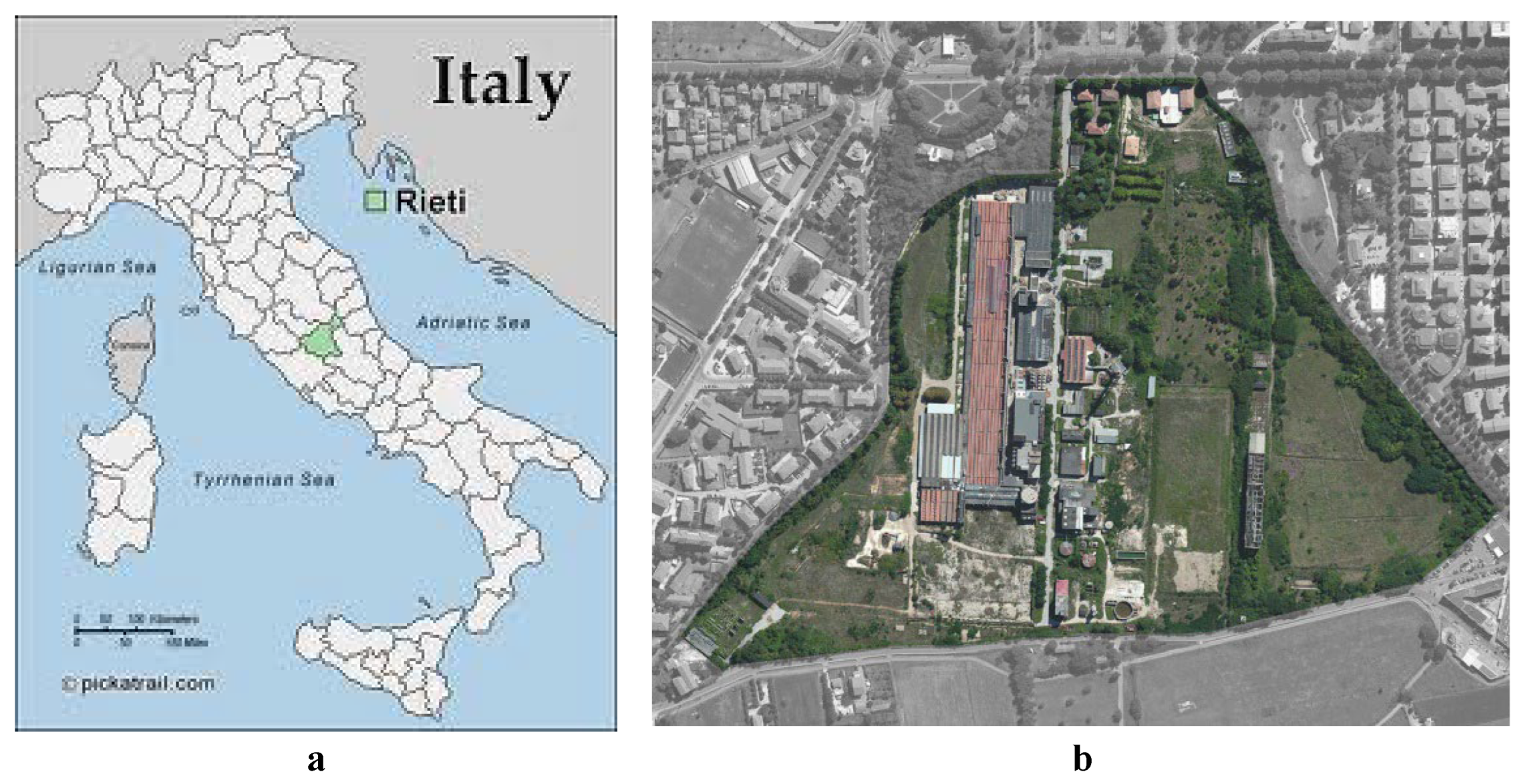
Figure 2.
Example of waste material. Example of sampled waste material with high concentration of hydrocarbons, (dimensions: 23m x 20m x 8m)1 Ministerial Decree n. 471/99 (D.M. 471/99) previous legislation on contaminated sites management. According to this legislation a site was defined as contaminated if screening values (called limit values) were exceeded and those values also represented the targets for remediation.
Figure 2.
Example of waste material. Example of sampled waste material with high concentration of hydrocarbons, (dimensions: 23m x 20m x 8m)1 Ministerial Decree n. 471/99 (D.M. 471/99) previous legislation on contaminated sites management. According to this legislation a site was defined as contaminated if screening values (called limit values) were exceeded and those values also represented the targets for remediation.
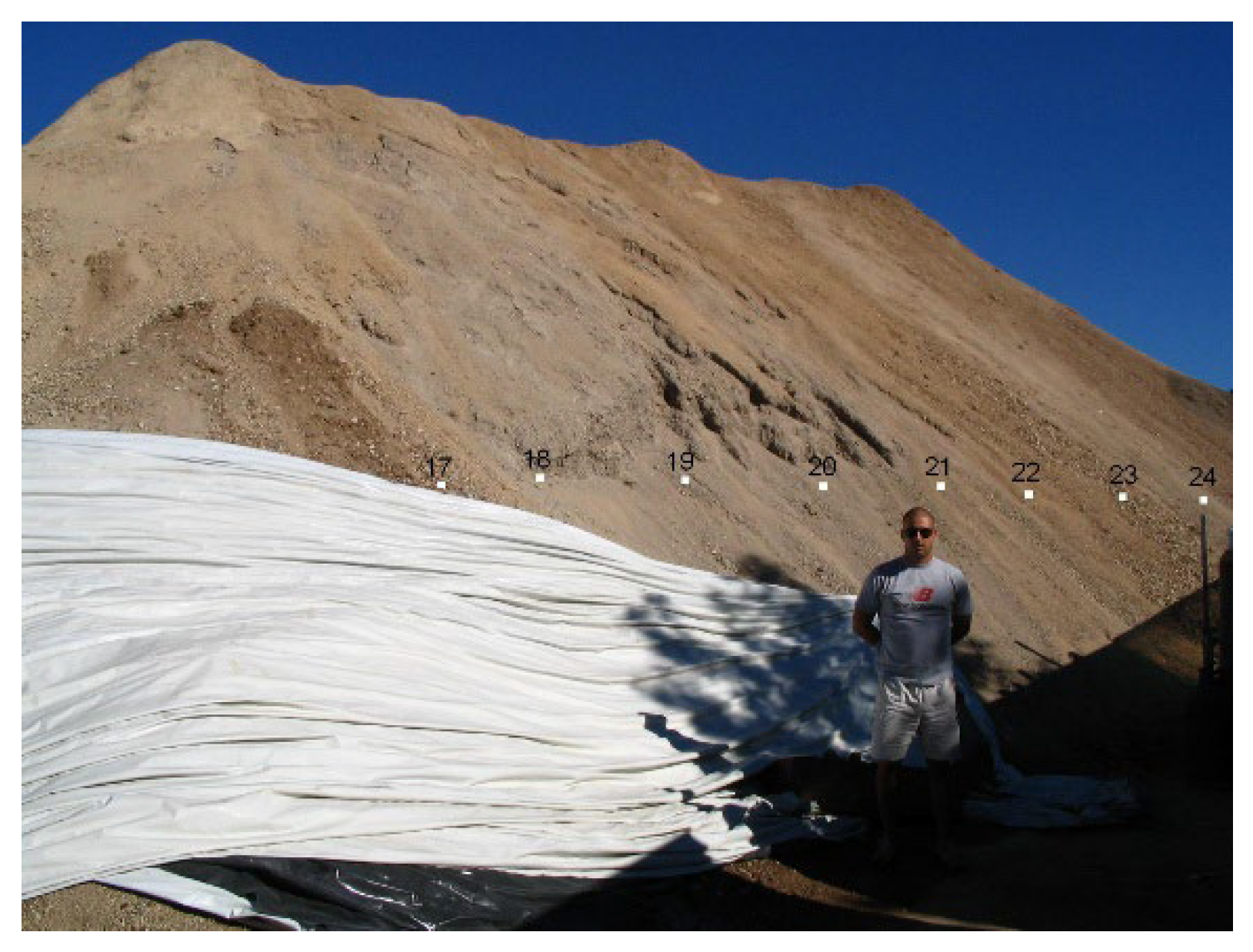
Figure 3.
Map of the Phosphate plateau [4].
Figure 3.
Map of the Phosphate plateau [4].
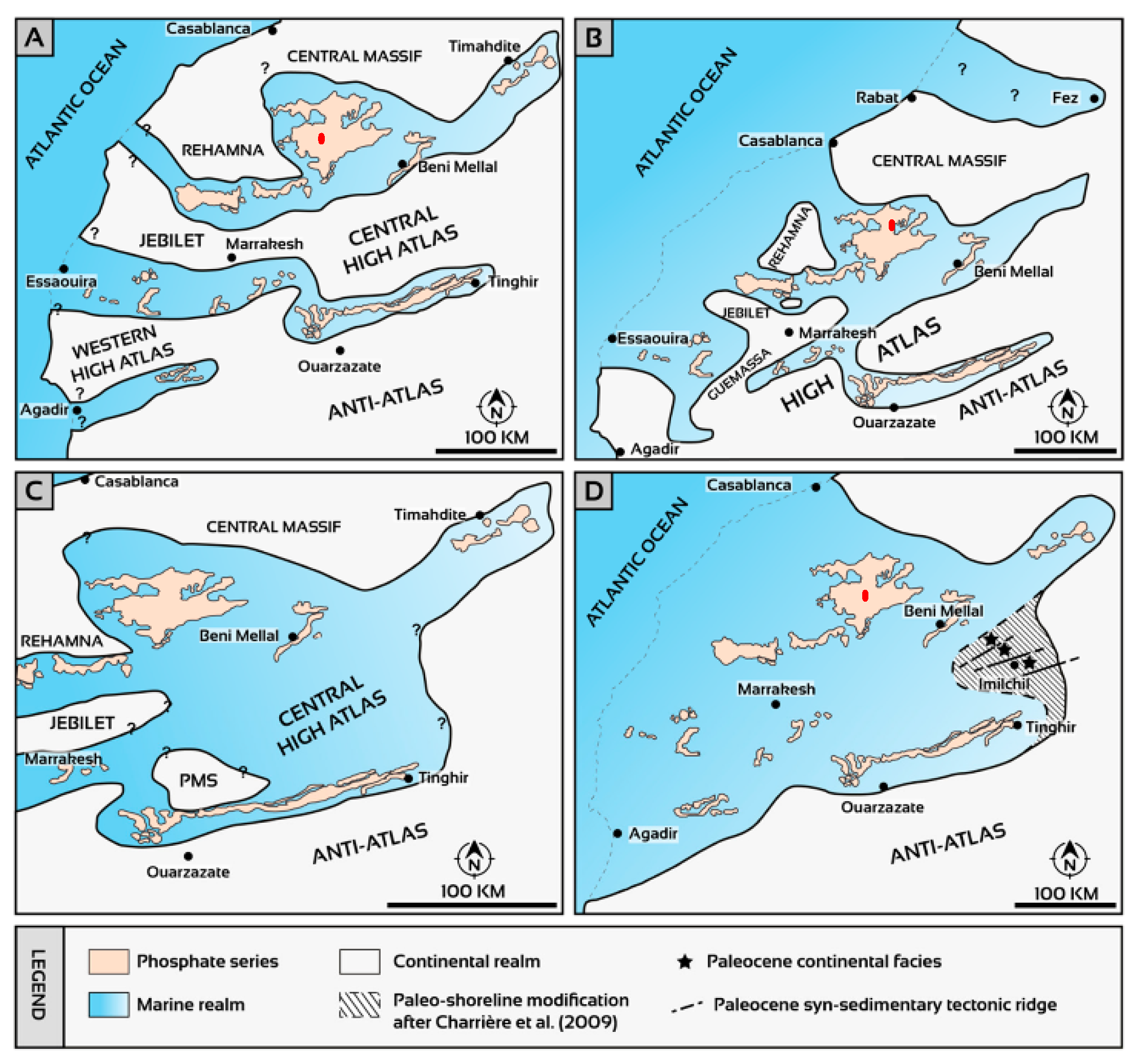
Figure 4.
EDS spectrum from sample #2 where Pb and S peaks are visible.
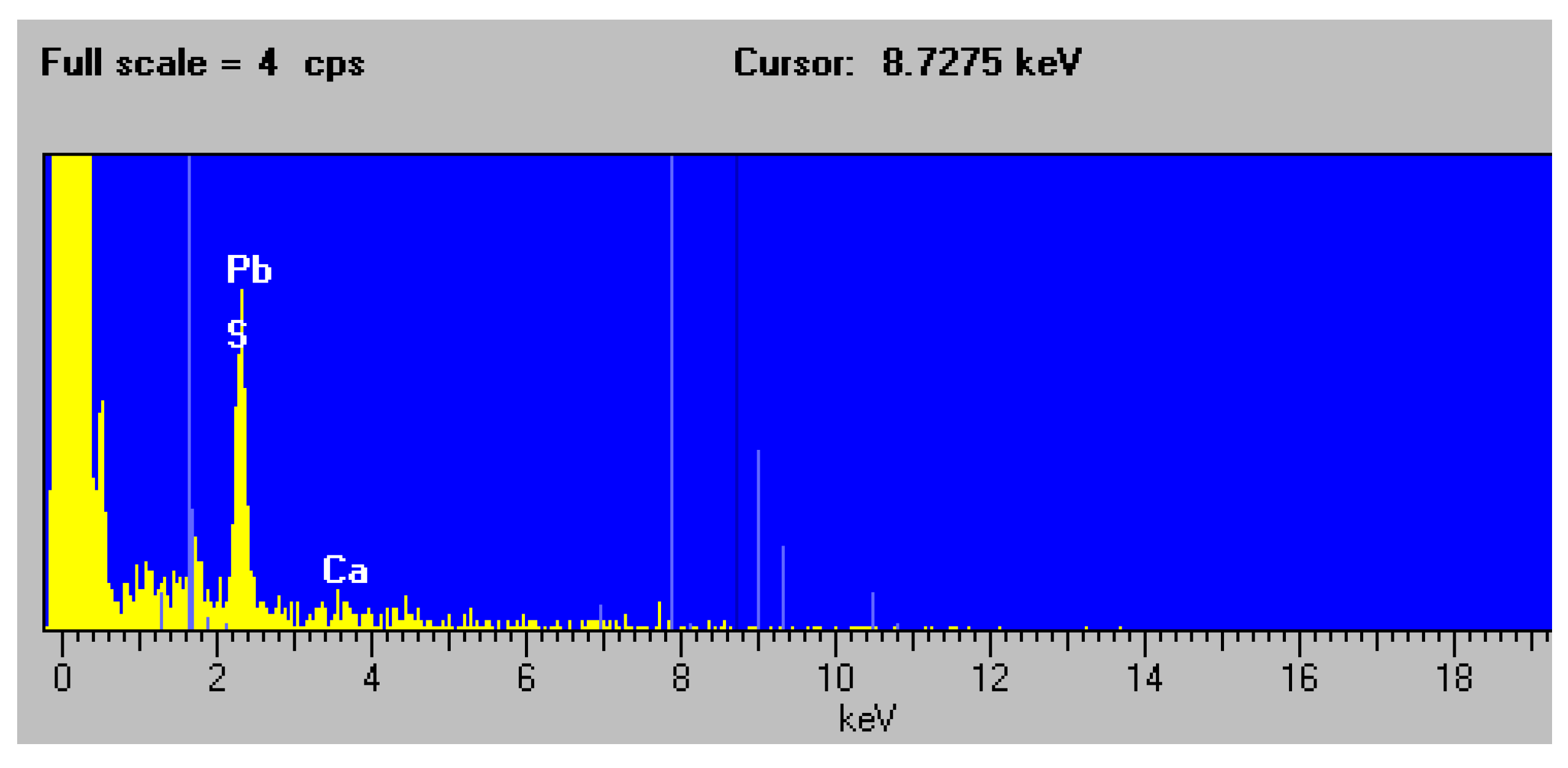
Figure 5.
SEM picture of sample #1. Porosity on CaCO3 particle is visible.
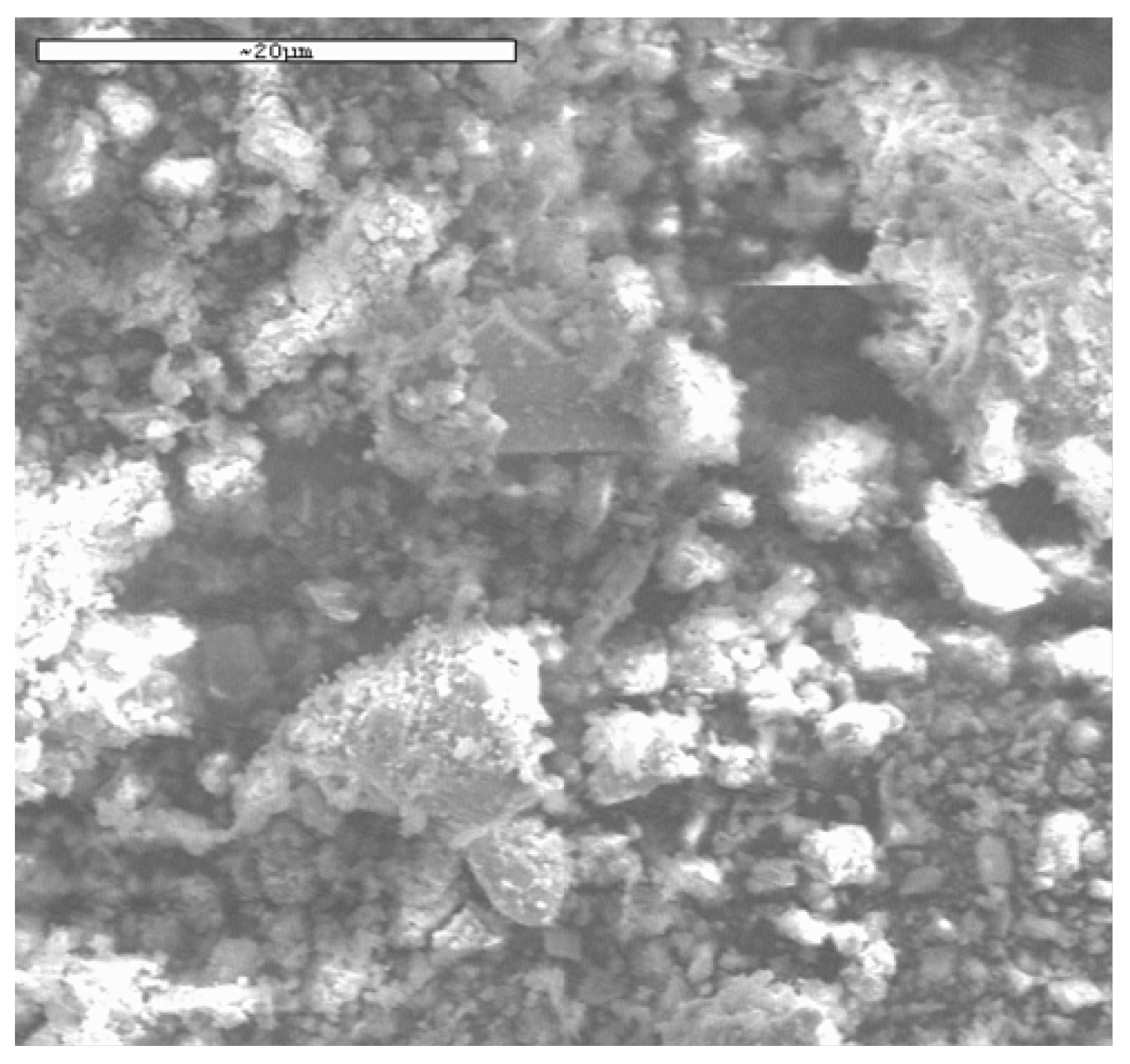
Figure 6.
Example of two spectra from soil (#1,2), showing the same mineralogical composition as far as the other samples.
Figure 6.
Example of two spectra from soil (#1,2), showing the same mineralogical composition as far as the other samples.
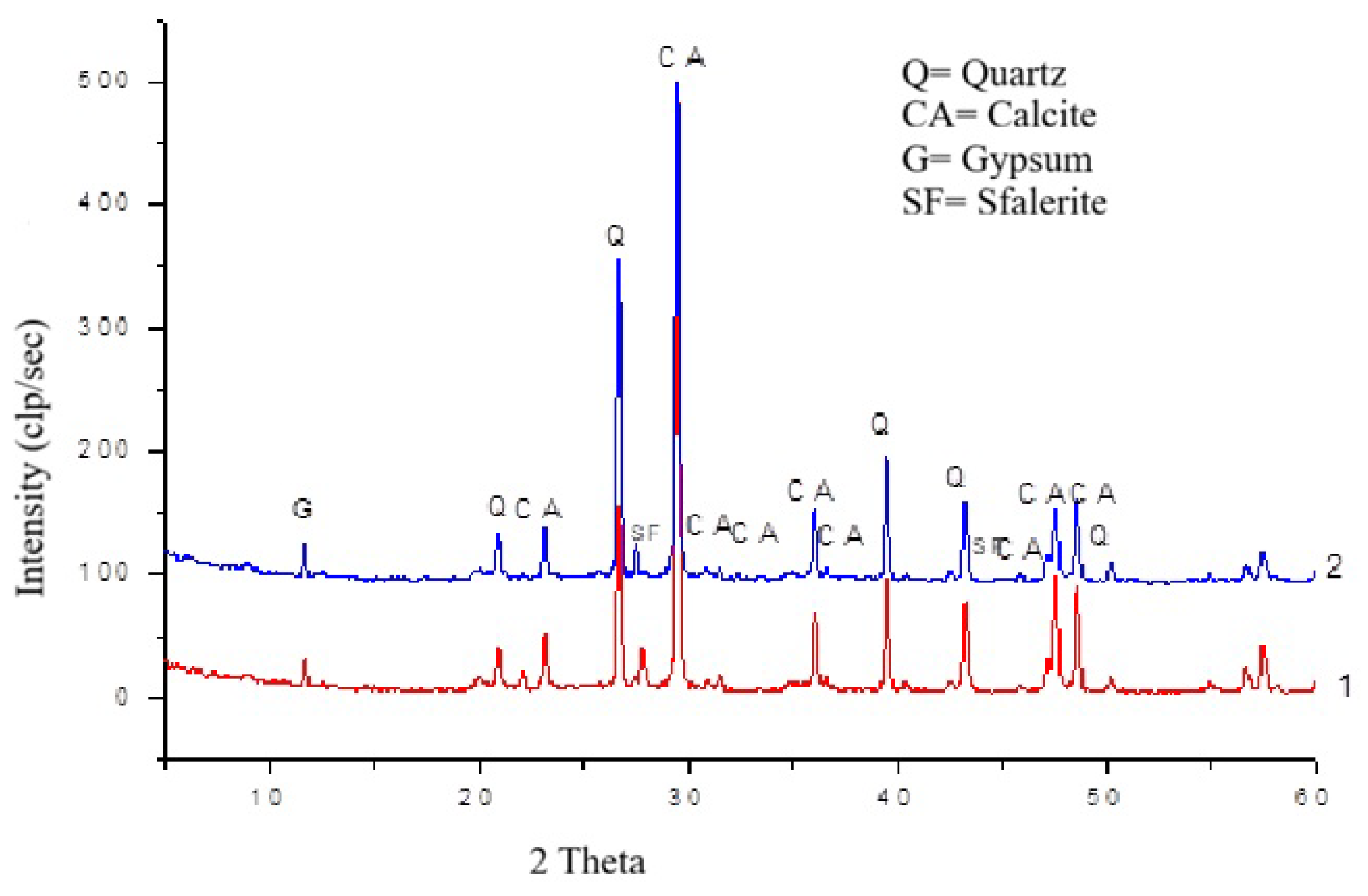
Figure 7.
XRD examples on two sample #VIII (a) and #|26 (b) before and after leaching test, representing the two typologies of samples.
Figure 7.
XRD examples on two sample #VIII (a) and #|26 (b) before and after leaching test, representing the two typologies of samples.
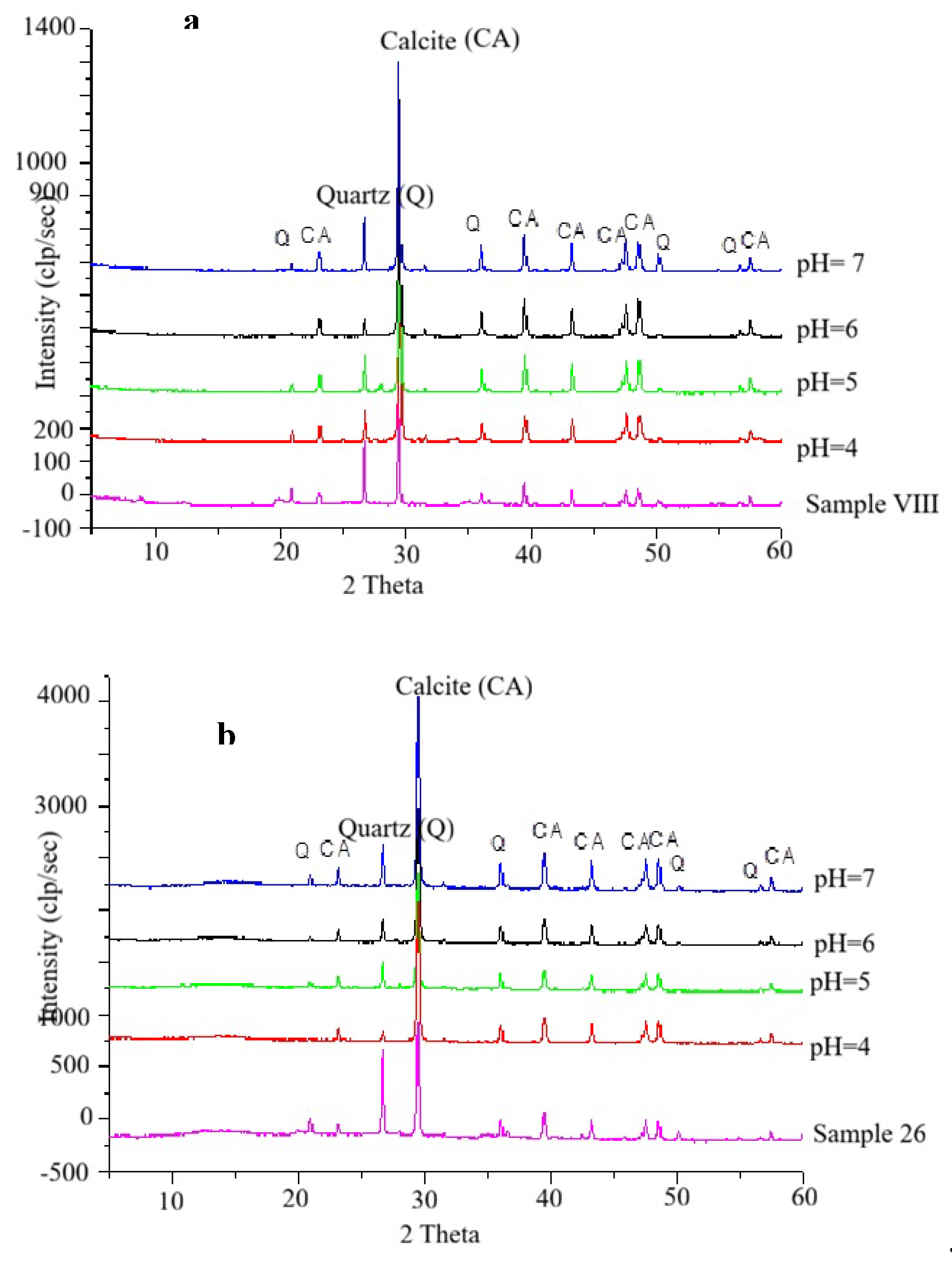
Figure 8.
XRD examples on two samples #|6and #VI, representing the two typologies of samples, before and after the reaction with the four amendments.
Figure 8.
XRD examples on two samples #|6and #VI, representing the two typologies of samples, before and after the reaction with the four amendments.
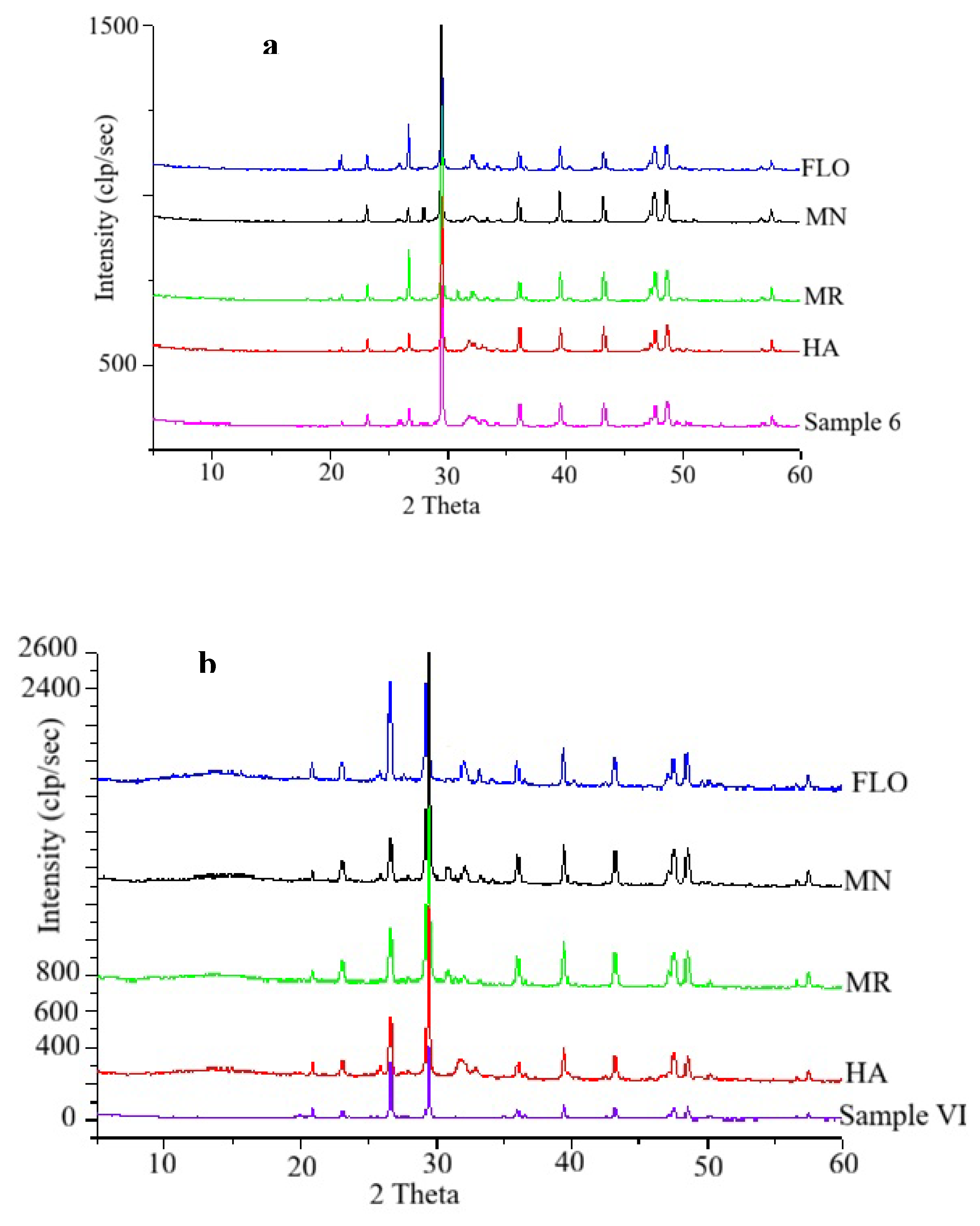
Figure 9.
examples of SEM images. (a): sample #VI after interaction with phosphate MR. (b): sample #26 after interaction with the MN phosphate. The light areas indicate Fe, Co, Ni encrustations on the apatite (backscattered electrons image). (c): EDS spectrum of Fe, Co and Ni encrustations for sample 26.
Figure 9.
examples of SEM images. (a): sample #VI after interaction with phosphate MR. (b): sample #26 after interaction with the MN phosphate. The light areas indicate Fe, Co, Ni encrustations on the apatite (backscattered electrons image). (c): EDS spectrum of Fe, Co and Ni encrustations for sample 26.
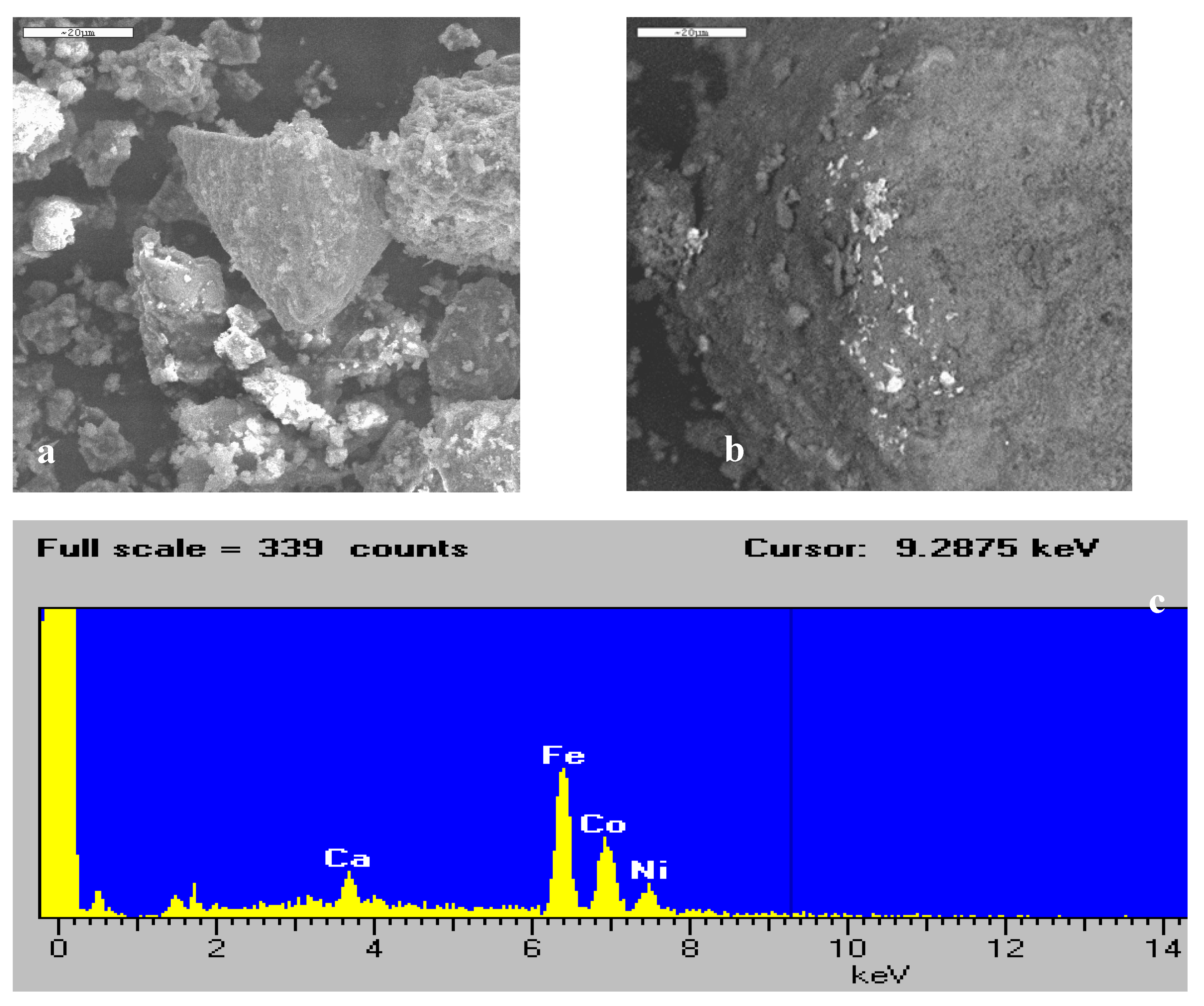
Figure 10.
Examples of the immobilization in sample #6.
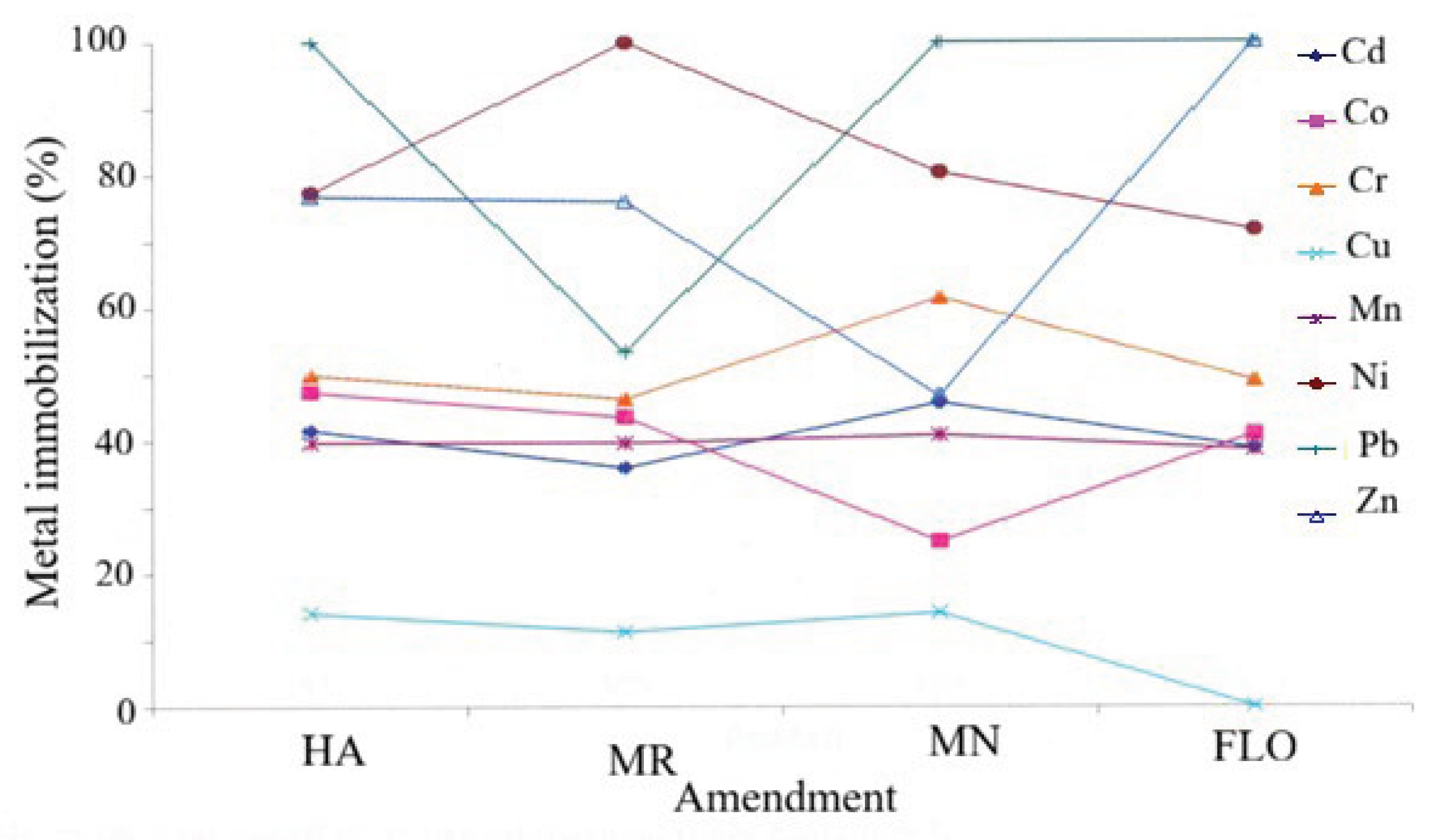

Table 1.
List of samples.
| Samples (with hydrocarbons) | Samples (no hydrocarbons) |
| 1; 2; 6; 7; 9; 18; 19; 20; 26 | I; II; III; IV; V; VI; VIII |
Table 2.
Ca and P amount and Ca/P ratio in the four amendments.
| HA | FLO | MN | MR | |
|---|---|---|---|---|
| Ca (%) | 38.30 | 42.12 | 44.40 | 46.53 |
| P (%) | 16.80 | 27.81 | 23.50 | 28.35 |
| Ca/P | 1.67 | 1.51 | 1.91 | 1.66 |
Table 3.
Sample metal immobilization (%) listed; pH values before and after the interaction between sample and amendment; the amendment amount is 1g over 5g of sample; the interaction time is about 24h.
Table 3.
Sample metal immobilization (%) listed; pH values before and after the interaction between sample and amendment; the amendment amount is 1g over 5g of sample; the interaction time is about 24h.
| Sample | Amendment | Metal immobilization (%) | pH | ||||||||
|---|---|---|---|---|---|---|---|---|---|---|---|
| 1 | Cd | Co | Cr | Cu | Mn | Ni | Pb | Zn | Ini. | End | |
| HA | ------- | > 99 | > 99 | > 99 | 87,63 | > 99 | > 99 | > 99 | 7,78 | 8,86 | |
| MR | ------- | > 99 | > 99 | > 99 | 69,09 | > 99 | > 99 | > 99 | 9,17 | 9,72 | |
| MN | ------- | > 99 | > 99 | > 99 | 36,36 | > 99 | > 99 | > 99 | 9,08 | 9,66 | |
| FLO | ------- | > 99 | > 99 | 36,06 | > 99 | > 99 | > 99 | > 99 | 9,08 | 9,48 | |
| 2 | HA | ------- | > 99 | > 99 | > 99 | 87,63 | > 99 | > 99 | > 99 | 7,78 | 8,86 |
| MR | ------- | > 99 | > 99 | > 99 | 69,09 | > 99 | > 99 | > 99 | 9,17 | 9,72 | |
| MN | ------- | > 99 | > 99 | > 99 | 36,36 | > 99 | > 99 | > 99 | 9,08 | 9,66 | |
| FLO | ------- | > 99 | > 99 | 36,06 | > 99 | > 99 | > 99 | > 99 | 9,08 | 9,48 | |
| 6 | HA | 41,66 | 47,72 | 50 | 14,28 | 39,77 | 77,39 | > 99 | 76,92 | 8,06 | 9,67 |
| MR | 36,11 | 43,69 | 46,42 | 11,42 | 39,77 | > 99 | 53,45 | 76,15 | 10,1 | 10,8 | |
| MN | 45,83 | 24,93 | 61,6 | 14,28 | 40,9 | 80,43 | > 99 | 46,92 | 10,05 | 10,78 | |
| FLO | 38,88 | 41,01 | 49,1 | <1 | 38,63 | 71,74 | > 99 | > 99 | 9,67 | 9,48 | |
| 7 | HA | ------- | > 99 | 34,54 | 23,8 | 35,22 | 75,86 | > 99 | 50 | 8,43 | 9,09 |
| MR | ------- | 32,81 | 49,09 | 28,57 | 38,63 | > 99 | 76,31 | > 99 | 10,1 | 10,4 | |
| MN | ------- | 15,62 | 45,45 | 28,57 | 39,77 | 58,62 | > 99 | 59,16 | 10,13 | 10,54 | |
| FLO | ------- | 28,12 | 43,63 | 9,52 | 39,77 | 62,06 | > 99 | <1 | 9,93 | 9,81 | |
| 9 | HA | ------- | > 99 | 77 | > 99 | > 99 | > 99 | > 99 | > 99 | 9,04 | 9,87 |
| MR | ------- | > 99 | 77 | > 99 | > 99 | > 99 | > 99 | > 99 | 10,06 | 10,7 | |
| MN | ------- | > 99 | 90,5 | > 99 | 88,83 | > 99 | > 99 | > 99 | 10,1 | 10,6 | |
| FLO | ------- | > 99 | 83,6 | > 99 | 92,9 | > 99 | > 99 | > 99 | 9,64 | 9,54 | |
| 18 | HA | ------- | 25,71 | 40,37 | <1 | 38,63 | > 99 | > 99 | 44,93 | 8,92 | 8,68 |
| MR | ------- | 31,42 | 47,69 | 3,57 | 38,63 | > 99 | > 99 | 92,72 | 9,28 | 9,59 | |
| MN | ------- | 32,85 | 28,87 | <1 | 38,63 | > 99 | 90,71 | > 99 | 9,6 | 9,62 | |
| FLO | ------- | 30 | 41,42 | <1 | 38,63 | 47,77 | > 99 | > 99 | 9,77 | 9,86 | |
| 19 | HA | 67,5 | 27,02 | 48,56 | <1 | 20 | > 99 | > 99 | > 99 | 8,7 | 9,36 |
| MR | 67,5 | 35,13 | 59,87 | <1 | 27,5 | > 99 | > 99 | > 99 | 9,83 | 9,87 | |
| MN | 70,62 | 22,97 | 54,73 | <1 | 25 | > 99 | 88,51 | > 99 | 9,82 | 9,87 | |
| FLO | 72,5 | 33,78 | 52,67 | <1 | 28,75 | 28,75 | > 99 | > 99 | 9,57 | 9,61 | |
| 20 | HA | ------- | > 99 | > 99 | > 99 | 95,26 | > 99 | > 99 | > 99 | 8,79 | 9,06 |
| MR | ------- | > 99 | > 99 | > 99 | 89,35 | > 99 | > 99 | > 99 | 9,21 | 9,24 | |
| MN | ------- | 63,47 | > 99 | > 99 | > 99 | > 99 | > 99 | > 99 | 8,73 | 9,28 | |
| FLO | ------- | 47,39 | > 99 | > 99 | > 99 | > 99 | 95,83 | > 99 | 9,12 | 9,13 | |
| 26 | HA | ------- | > 99 | > 99 | > 99 | > 99 | > 99 | > 99 | > 99 | 8,13 | 8,92 |
| MR | ------- | 50,74 | 15,68 | 16,12 | 51,13 | <1 | > 99 | > 99 | 9,68 | 9,72 | |
| MN | ------- | 94,77 | 39,21 | > 99 | 85,45 | > 99 | > 99 | <1 | 9,57 | 9,13 | |
| FLO | ------- | 74,62 | 95,15 | > 99 | 36,36 | > 99 | 31,42 | > 99 | 9,2 | 9,21 | |
| II | HA | ------- | 79,82 | 78,13 | > 99 | 28,7 | 54,09 | > 99 | 92,28 | 8,43 | 8,53 |
| MR | ------- | 91,22 | 95,24 | > 99 | 29,62 | > 99 | > 99 | 76,57 | 9,8 | 9,91 | |
| MN | ------- | 89,47 | 59,12 | > 99 | 13,8 | 81,31 | > 99 | 58,85 | 9,89 | 9,09 | |
| FLO | ------- | 95,96 | 86,59 | 66,73 | 5,55 | 86,72 | > 99 | 50,28 | 9,6 | 9,86 | |
| III | HA | 36,48 | 47,26 | 57,05 | 55,26 | 44 | > 99 | <1 | 37,34 | 8,77 | 8,72 |
| MR | 44,59 | 53,34 | 62,65 | 44,73 | 41 | > 99 | > 99 | 39,24 | 8,44 | 8,81 | |
| MN | 35,13 | 40,16 | 54,24 | 48,68 | 34 | > 99 | 65,38 | 92,08 | 9,67 | 9,68 | |
| FLO | 47,29 | 57,4 | 57 | 42,1 | 19 | 76 | > 99 | 77,84 | 9,57 | 9,77 | |
| IV | HA | ------- | > 99 | > 99 | > 99 | > 99 | > 99 | > 99 | > 99 | 8,45 | 8,91 |
| MR | ------- | 86,62 | 7,95 | 8,69 | 58,24 | 7,5 | 96,23 | > 99 | 8,84 | 8,77 | |
| MN | ------- | > 99 | 28,87 | > 99 | 68,13 | > 99 | > 99 | <1 | 9,54 | 8,79 | |
| FLO | ------- | 77,14 | 74,89 | > 99 | 62,08 | 85 | > 99 | > 99 | 9,33 | 9,91 | |
| VI | HA | ------- | 67,3 | 96,67 | 74,69 | 19,44 | 87,3 | > 99 | 68,88 | 8,95 | 8,96 |
| MR | ------- | 56,66 | 62,05 | 87,75 | 24,07 | 81,9 | <1 | 49,62 | 9,85 | 9,88 | |
| MN | ------- | 56,66 | 97,34 | > 99 | 9,26 | 47,61 | 68,75 | 82,96 | 9,77 | 9,83 | |
| FLO | ------- | 91,6 | 99,28 | 69,38 | 10,18 | > 99 | > 99 | 46,29 | 9,53 | 8,9 | |
| VIII | HA | > 99 | 72,97 | 70,56 | > 99 | 16,32 | 86,31 | > 99 | 81,27 | 8,15 | 8,97 |
| MR | > 99 | 93,24 | 71,73 | 61,5 | 20,4 | > 99 | 38,09 | > 99 | 9,81 | 9,26 | |
| MN | > 99 | 68,91 | 76,6 | 58 | 14,28 | 80,7 | > 99 | 96,21 | 9,74 | 9,5 | |
| FLO | > 99 | 75,94 | 72,7 | 87,5 | 8,16 | 43,86 | > 99 | <1 | 9,68 | 9,6 | |
Disclaimer/Publisher’s Note: The statements, opinions and data contained in all publications are solely those of the individual author(s) and contributor(s) and not of MDPI and/or the editor(s). MDPI and/or the editor(s) disclaim responsibility for any injury to people or property resulting from any ideas, methods, instructions or products referred to in the content. |
© 2026 by the authors. Licensee MDPI, Basel, Switzerland. This article is an open access article distributed under the terms and conditions of the Creative Commons Attribution (CC BY) license (http://creativecommons.org/licenses/by/4.0/).
Copyright: This open access article is published under a Creative Commons CC BY 4.0 license, which permit the free download, distribution, and reuse, provided that the author and preprint are cited in any reuse.


