
Submitted:
29 January 2026
Posted:
30 January 2026
You are already at the latest version
Abstract
Cosmic radiation represents a critical barrier to long-term human presence beyond Earth’s magnetosphere, particularly in lunar and Martian environments [1]. Traditional shielding materials—such as regolith, water, and metallic alloys— face significant logistical, economic, and structural limitations [2]. This study investigates the potential of fungal melanin, a biological pigment known for its radiation-shielding properties in extreme environments (e.g., Chernobyl and spaceflight), as a lightweight and sustainable alternative for space architecture [3,4,5]. We propose an architectural framework for integrating fungal melanin into bio-inspired coatings, analyzing species-specific variations and production feasibility [6]. Comparative assessments indicate that melanin offers superior mass efficiency and architectural flexibility over conventional materials [7]. The research concludes with a roadmap for hybrid material integration and experimental validation, establishing a biologically-driven paradigm for resilient extraterrestrial habitats [8,9].
Keywords:
space architecture
; fungal melanin
; cosmic radiation shielding
; bio-inspired design
; radiotrophic fungi
; extraterrestrial habitats
; in-situ resource utilization (ISRU)
; sustainable construction
1. Introduction
The primary threat to deep-space exploration is ionizing radiation, specifically Galactic Cosmic Rays (GCRs) and Solar Particle Events (SPEs) [10]. The absence of significant magnetic fields or dense atmospheres on the Moon and Mars necessitates advanced shielding strategies to protect human health and structural integrity [11]. In space architecture, radiation mitigation is a fundamental design driver, dictating habitat geometry and material selection [12]. Figure 1 illustrates the interaction between cosmic radiation and a conceptual habitat envelope.
2. Conventional Radiation Shielding Materials
Current passive shielding relies on material mass to attenuate radiation [13]:
Figure 2 demonstrates conventional shielding strategies for space habitats.
3. Comparative Analysis of Shielding Materials
Table 1 evaluates melanin against traditional shielding materials, highlighting its advantages in density and sustainability.
This table emphasizes fungal melanin as a lightweight, sustainable, and architecturally flexible alternative.
4. Biological Responses to Ionizing Radiation
Extremophilic organisms, specifically melanized fungi, have demonstrated unique survival capabilities in high-radiation zones such as the Chernobyl exclusion zone and low-Earth orbit [18,19,20]. Melanin within the fungal cell wall functions as a biological shield that absorbs and dissipates ionizing energy, thereby minimizing cellular damage [21]. Figure 3 shows melanin-rich fungal cells exposed to radiation.
5. Radiotrophic Fungi and Melanin Functionality
"Radiotrophic" fungi utilize melanin to convert radiation into metabolic energy, suggesting an active functional interaction with ionizing particles [22]. The aromatic structure of melanin allows for efficient energy dissipation, oxidative stress mitigation, and potential thermal regulation [23,24]. Figure 4 shows radiotrophic fungi in high-radiation condi
6. Research Gap: From Biology to Architecture
While the microbiological properties of melanin are well-documented, its application in architectural systems remains largely unexplored [25]. Current literature lacks a framework for translating these biological traits into functional coatings or composite materials suitable for large-scale space construction [26,27]. Figure 5 visualizes the research gap between biology and architectural applications.
7. Proposed Concept: Melanin-Based Architectural Coatings
This research proposes the development of melanin-derived bio-coatings for habitat envelopes [28]. Produced terrestrially or via bio-reactors, these coatings can be stabilized and applied as a passive radiation layer [29]. This approach is designed to be synergistic, augmenting existing regolith or structural systems to provide a multi-layered defense [30]. Figure 6 depicts a conceptual melaninbased coating applied to a space habitat envelope.
8. Architectural Implications
Melanin-based coatings facilitate the design of lightweight, adaptive space habitats [31]. Beyond radiation protection, these coatings enhance thermal regulation and material durability, reducing the mass-to-orbit requirements for protective structures [32]. Figure 7 illustrates bio-inspired adaptive space architecture integrating melanin-based coatings.
9. Challenges and Future Research Directions
Implementation requires addressing the following challenges [33]:
- *
- Stability: Behavior under vacuum and extreme thermal cycling.
- *
- Scalability: Optimization of large-scale melanin synthesis.
- *
- Hybridization: Integrating melanin with polymeric composites or regolith.
- *
- Validation: Testing under simulated Martian/Lunar radiation conditions.
Figure 8 projects potential bio-integrated space habitats leveraging melaninbased coatings.
10. Conclusion and Recommendations
Fungal melanin provides a sustainable, bio-inspired pathway for radiation shielding in space [34]. By bridging biological resilience with architectural material science, melanin-based coatings offer significant reductions in structural mass and enhanced multifunctional protection [35].
Recommendations:
- *
- Initiate in-situ testing under simulated extraterrestrial radiation.
- *
- Develop hybrid melanin-PLA or melanin-regolith composite systems.
- *
- Tailor species-specific melanin types for diverse environmental stressors.
- *
- Integrate coatings into modular habitat designs for flexible architecture.
References
- National Research Council. (2008). Managing Space Radiation Risks in the New Era of Space Exploration. National Academies Press.
- Spill Antini, P., et al. (2007). Shielding from cosmic radiation for interplanetary missions. Radiation Measurements.
- Dadachova, E., & Casadevall, A. (2008). Ionizing radiation: how fungi cope, adapt, and exploit with the help of melanin. Current Opinion in Microbiology.
- Zhdanova, N. N., et al. (2000). Ionizing radiation resistance of fungi from the Chernobyl reactor. Mycological Research.
- Dadachova, E.; et al. Ionizing Radiation Changes the Electronic Properties of Melanin and Enhances the Growth of Melanized Fungi. PLoS ONE 2007. [Google Scholar] [CrossRef] [PubMed]
- Cordero, R. J., et al. (2017). Melanin-based fertilizers as a potential strategy for space agriculture. Life Sciences in Space Research.
- Shunkov, V., et al. (2020). Evaluation of the shielding properties of fungal melanin against ionizing radiation. Materials Science and Engineering.
- Rothschild, L. J. (2016). Synthetic Biology: The Best Way to Live off the Land in Space. AIAA SPACE.
- Averesch, N. J. H., et al. (2020). A Biological Solution to Radiation Shielding on the Moon. Life.
- Durante, M., & Cucinotta, F. A. (2011). Physical basis of radiation protection in space travel. Reviews of Modern Physics.
- Simonsen, L. C., et al. (2020). NASA's Artemis program: Space radiation risks and protection. Journal of Space Safety Engineering.
- Howe, A. S.; et al. Radiation shielding for a lunar habitat. Journal of Aerospace Engineering 2013. [Google Scholar]
- Cucinotta, F. A., et al. (2013). Space radiation cancer risk projections for exploration missions. NASA/TP.
- Benaroya, H. (2018). Building Habitats on the Moon. Springer Praxis Books.
- Zeitlin, C., et al. (2013). Measurements of energetic particle radiation in transit to Mars on the MSL. Science.
- Wilson, J. W., et al. (1995). Shielding from solar particle events: optimized configurations. Health Physics.
- Kim, M. Y., et al. (2006). Comparison of multi-layer shielding materials for space radiation. Radiation Measurements.
- Tugay, T., et al. (2006). The influence of ionizing radiation on spore germination and emergent hyphal growth of fungi from Chernobyl. Mycological Research.
- Romsos, C.; Romsos, J. Radiotrophic Fungi on the International Space Station. Astrobiology Journal. 2020. [Google Scholar]
- Shcherbakov, S. V.; et al. Fungal growth under high radiation environments: from Chernobyl to Orbit. International Journal of Astrobiology 2021. [Google Scholar]
- Schweitzer, A. D.; et al. Melanin-covered nanoparticles for protection of bone marrow during radiation therapy. International Journal of Radiation Oncology 2009. [Google Scholar] [CrossRef] [PubMed]
- Robertson, K. L., et al. (2012). Adaptation of Fungi to Ionizing Radiation in a Low-Nutrient Environment. Applied and Environmental Microbiology.
- Meredith, P., & Sarna, T. (2006). The physical and chemical properties of eumelanin. Pigment Cell Research.
- Solano, F. Melanin: A Long-Lasting History with Some Recent Breakthroughs. International Journal of Molecular Sciences 2014. [Google Scholar]
- Imhof, B.; et al. Biologically inspired space architecture. Acta Astronautica 2017. [Google Scholar]
- Armstrong, R. (2015). Vibrant Architecture: Matter as a Co-designer of Living Structures. De Gruyter.
- Mohanty, S. (2021). The potential of biomaterials in extraterrestrial habitat construction. Space Policy.
- Senst, N., et al. (2021). Microbial production of melanin for radiation shielding applications. Frontiers in Bioengineering and Biotechnology.
- Goshu, G. M.; et al. Stabilization of fungal melanin in polymer composites for space applications. Materials Letters 2021. [Google Scholar]
- Montalbán, M. G., et al. (2022). Synergistic effects of regolith-melanin composites for Mars shielding. Advanced Space Research.
- Sherwood, B. (2019). Principles for Human Lunar Architecture. New Space.
- Cohen, M. M. (2002). The aesthetics of space architecture. AIAA Space Conference.
- Korthals Altes, S. Engineering Challenges for Living Materials in Extreme Environments. Journal of Biotechnology 2020. [Google Scholar]
- Shrestha, R. K., et al. (2021). Fungal biomaterials: A sustainable future for space habitats. Biomaterials Science.
- NASA Technology Roadmaps. (2020). TA 06: Human Health, Life Support, and Habitation Systems.
Figure 1.
Cosmic radiation interaction: Fungal cells with melanin absorbing ionizing radiation.
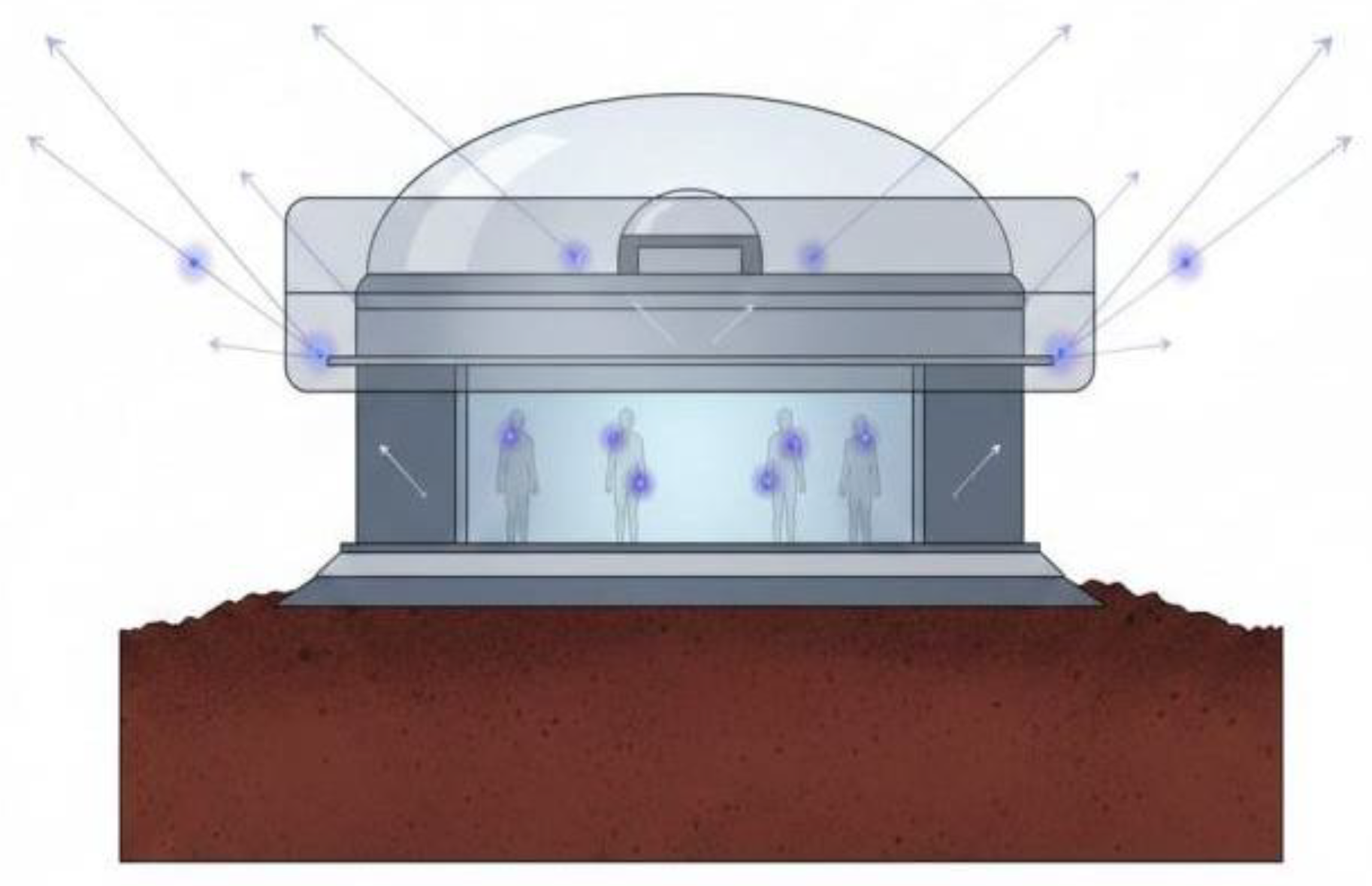
Figure 2.
Conventional shielding methods: Comparison of traditional radiation shielding materials for space habitats, including regolith, water layers, and thick walls.
Figure 2.
Conventional shielding methods: Comparison of traditional radiation shielding materials for space habitats, including regolith, water layers, and thick walls.
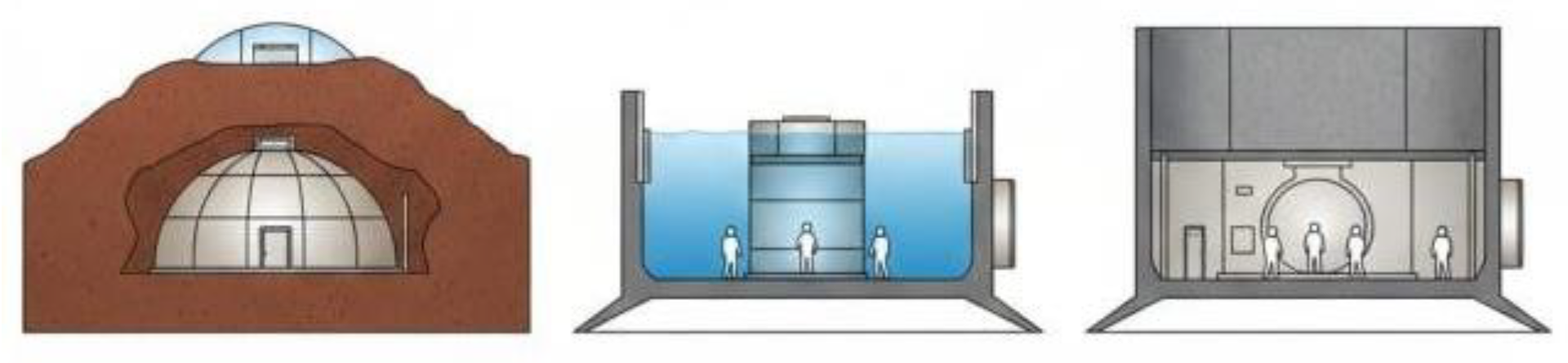
Figure 3.
Melanin-rich fungal cells under radiation: Close-up of fungal cells showing melanin interacting with radiation.
Figure 3.
Melanin-rich fungal cells under radiation: Close-up of fungal cells showing melanin interacting with radiation.
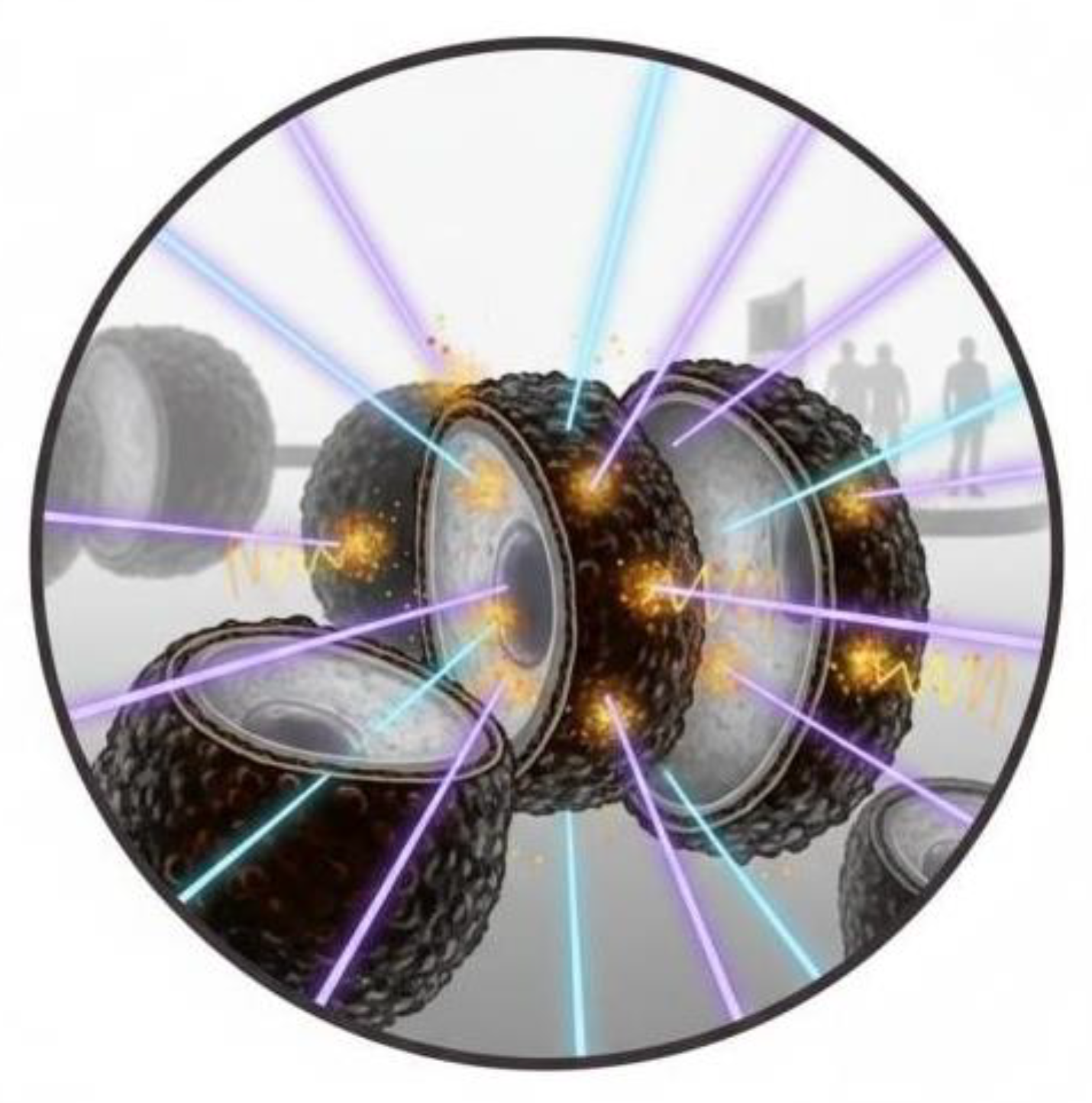
Figure 4.
Radiotrophic fungi concept: Radiotrophic fungi growing in a high-radiation environment, highlighting melanin.
Figure 4.
Radiotrophic fungi concept: Radiotrophic fungi growing in a high-radiation environment, highlighting melanin.
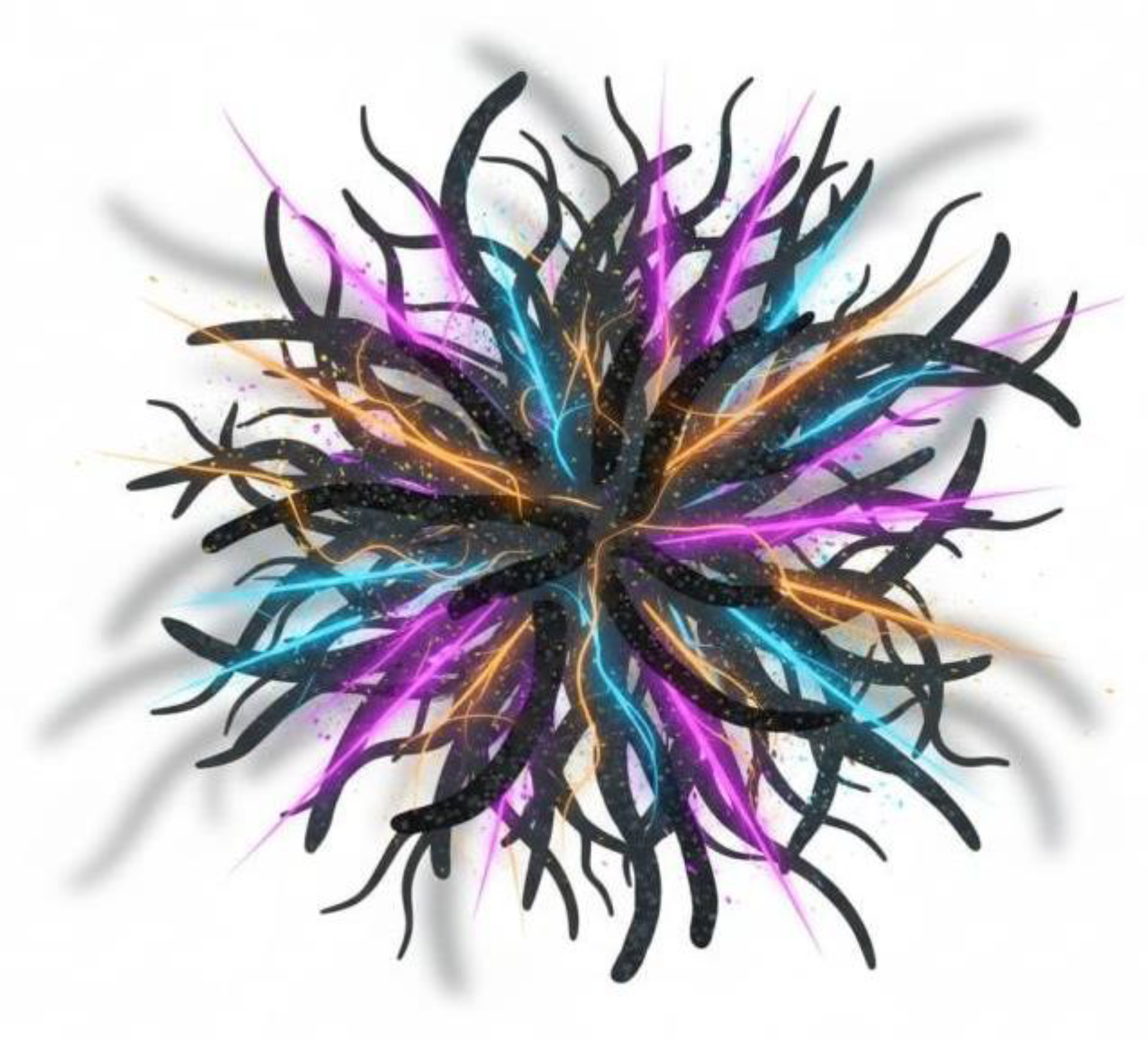
Figure 5.
Research gap diagram: Gap between biological radiation protection studies and space.
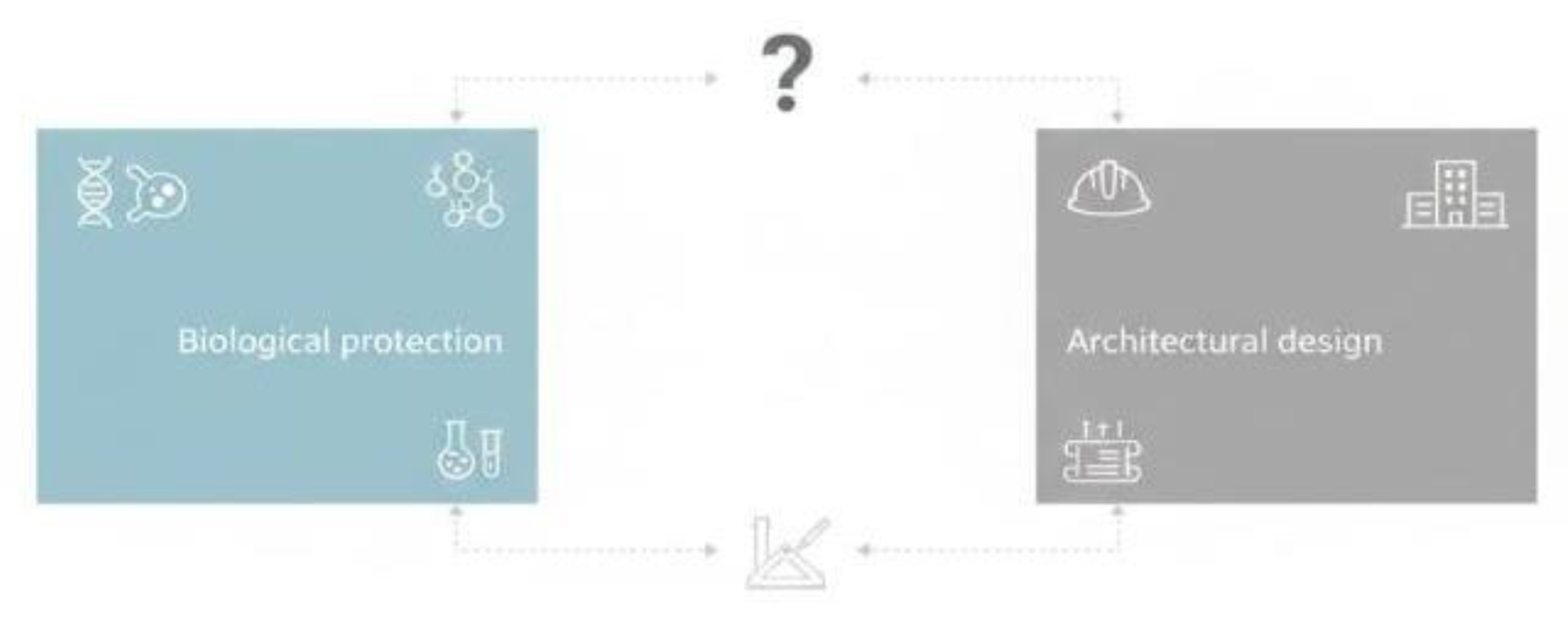
Figure 6.
Melanin-based coating on habitat envelope: Space habitat section showing a melanin coating absorbing radiation.
Figure 6.
Melanin-based coating on habitat envelope: Space habitat section showing a melanin coating absorbing radiation.
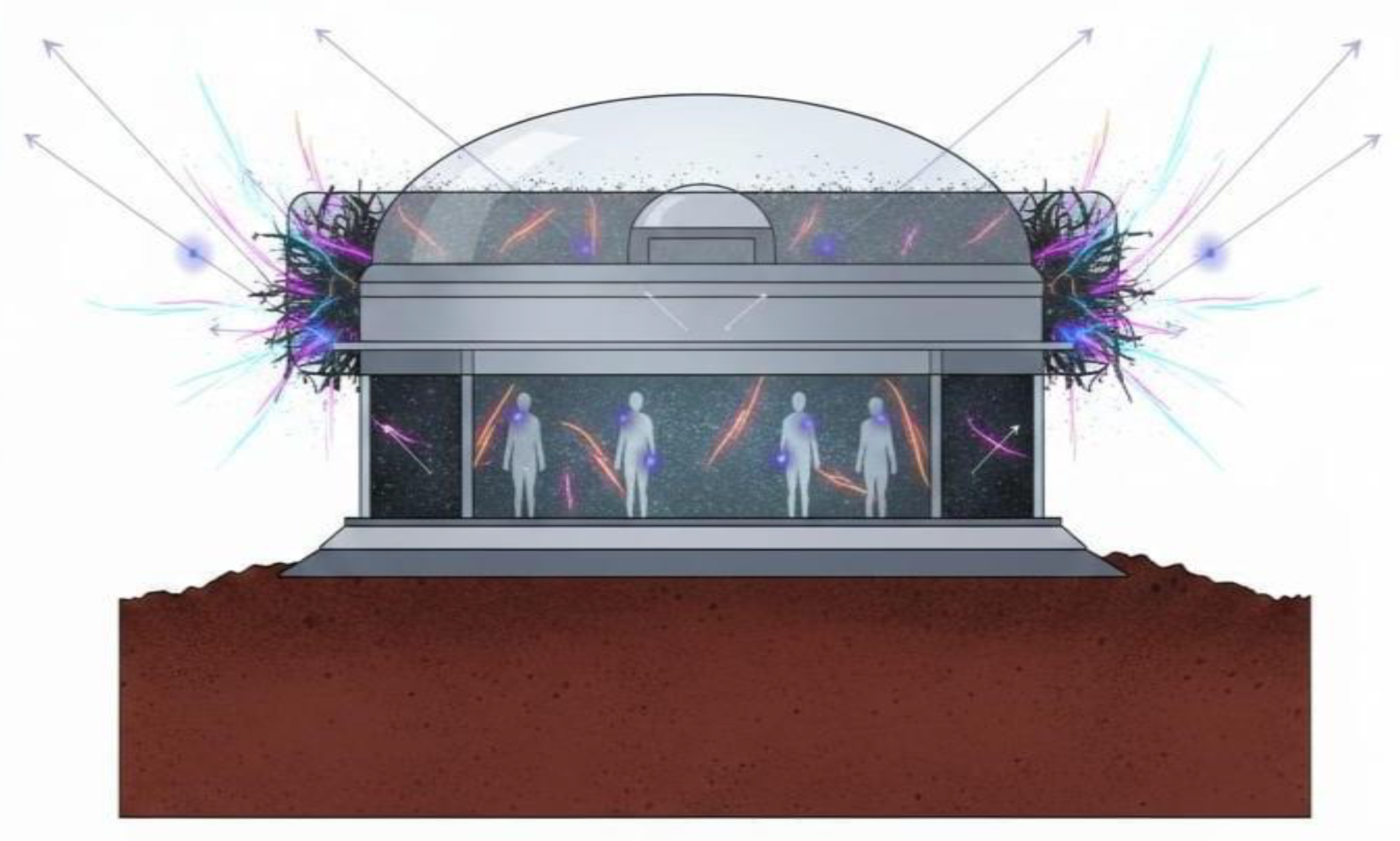
Figure 7.
Adaptive bio-inspired space habitat concept: Futuristic space habitat with adaptive envelope inspired by biological materials.
Figure 7.
Adaptive bio-inspired space habitat concept: Futuristic space habitat with adaptive envelope inspired by biological materials.
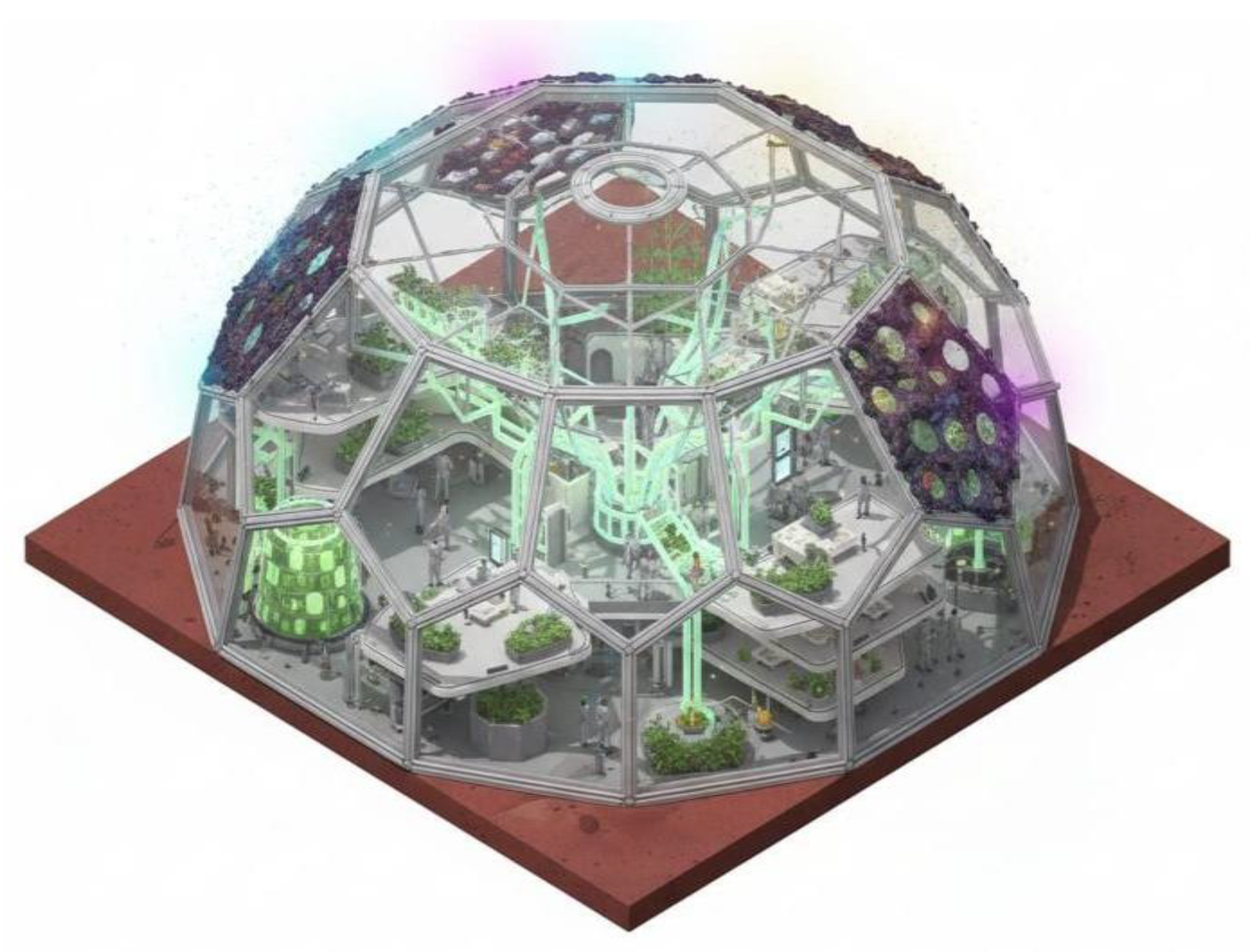
Figure 8.
Future bio-integrated habitats: Future space habitats using bio-grown materials and living coatings for radiation protection.
Figure 8.
Future bio-integrated habitats: Future space habitats using bio-grown materials and living coatings for radiation protection.
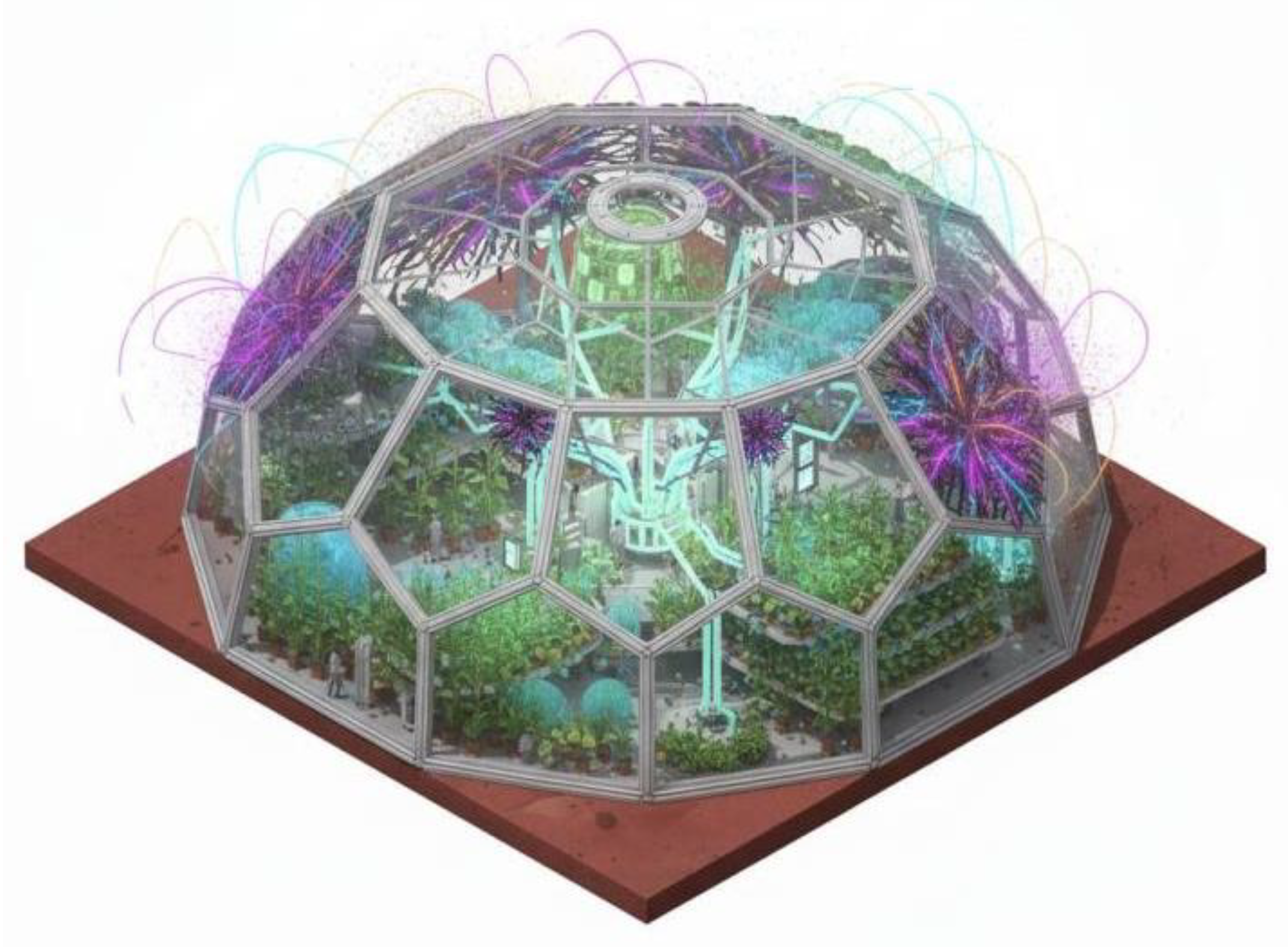

Table 1.
Comparative Analysis of Space Radiation Shielding Materials.
| Material | Radiation Protection Mechanism |
Mass/ Density Impact |
Sustainability | Architectur al Flexibility |
Limitations | Reference |
|---|---|---|---|---|---|---|
| Regolith |
High mass attenuation |
High | Very High | Moderate |
H eavy excavation, structural load |
[14] |
| Water | Hydrogen-rich shielding | High | Medium | Low |
Storage & leakage |
[15] risks |
| Polyethyle ne |
H ydrogen content |
Medium | Medium | Medium | Degradation, aging | [15] |
| Aluminum |
S tructural shielding |
Medium | Low | Medium |
S econdary radiation |
[16] |
| fungal Melanin |
R adiation absorption & interaction |
Low | High | High | R equires stabilization & integration | [5,6] |
Disclaimer/Publisher’s Note: The statements, opinions and data contained in all publications are solely those of the individual author(s) and contributor(s) and not of MDPI and/or the editor(s). MDPI and/or the editor(s) disclaim responsibility for any injury to people or property resulting from any ideas, methods, instructions or products referred to in the content. |
© 2026 by the authors. Licensee MDPI, Basel, Switzerland. This article is an open access article distributed under the terms and conditions of the Creative Commons Attribution (CC BY) license (http://creativecommons.org/licenses/by/4.0/).
Copyright: This open access article is published under a Creative Commons CC BY 4.0 license, which permit the free download, distribution, and reuse, provided that the author and preprint are cited in any reuse.


