Preprint
Article

This version is not peer-reviewed.

Ultra-Processed Food Consumption Among Caregivers and Children in the “Happy Smile” Project: Associations with Family Dietary Patterns and Periodontal Health–Related Quality of Life

A peer-reviewed article of this preprint also exists.

Submitted:

29 January 2026

Posted:

30 January 2026

You are already at the latest version

Abstract

Background/Objectives: The consumption of ultra-processed foods (UPFs) has increased markedly in recent decades and has been associated with adverse health outcomes. In childhood, the family environment plays a central role in shaping dietary habits and oral health behaviors. This study investigated the association between UPF consumption by caregivers and children, its relationship with caregivers’ periodontal health–related quality of life and described children’s dietary practices and oral hygiene habits. Methods: This cross-sectional observational study was conducted with caregivers of children participating in the Happy Smile Project in Birigui, São Paulo, Brazil. UPF consumption was assessed using a questionnaire based on the NOVA classification, considering intake in the 24 hours prior to data collection. Caregivers’ periodontal health–related quality of life was evaluated using the OHIP-14-PD. Statistical analyses included the Mann–Whitney U test, Spearman correlation, and binary logistic regression adjusted for caregiver education level and household income. Results: A high frequency of UPF consumption was observed among both caregivers and children. Children whose caregivers had high UPF consumption were more likely to also present high consumption (OR = 8.66; 95% CI: 5.00–14.99; p < 0.001). Higher caregiver education was associated with lower odds of high UPF consumption among children. Children in the high-consumption group were older and showed higher consumption of sweetened milk beverages (p < 0.001). Risk behaviors for oral health, such as nighttime use of sweetened bottles and absence of toothbrushing afterward, were frequently reported. Regarding periodontal health–related quality of life, only the physical disability domain of the OHIP-14-PD showed significantly higher scores among caregivers with high UPF consumption (p = 0.014). Conclusions: In conclusion, high consumption of ultra-processed foods by caregivers significantly increased the odds of children’s consumption and was associated with a greater negative impact on caregivers’ periodontal health–related quality of life. In addition, children exhibited a high frequency of oral health–damaging behaviors. These findings highlight the importance of family-centered strategies aimed at reducing the intake of ultra-processed foods and promoting healthier oral health behaviors to improve overall quality of life.

Keywords: 
;  ;  ;  ;  

1. Introduction

In recent decades, transformations in the global food system have led to a substantial rise in the consumption of ultra-processed foods (UPFs) [1]. According to the NOVA classification, these products are defined as industrials formulations composed predominantly of refined ingredients, additives, and substances intended exclusively for industrial use. They are characterized by high energy density, elevated concentrations of sugars, fats, and sodium, and limited nutritional value [2,3]. The growing consumption of UPFs has been consistently linked to adverse health outcomes, including metabolic disorders, chronic inflammatory conditions, obesity, diabetes, and rheumatoid arthritis [4,5,6]. Such associations have been observed across different age groups, affecting both adult and pediatric populations.
During childhood, the family environment plays a pivotal role in shaping dietary habits and oral hygiene behaviors, which directly influence the risk of developing oral diseases [7,8]. Parental practices such as role modeling, shared family meals, and responsive feeding strategies have been identified as key mechanisms in the development of children’s eating behaviors, highlighting the domestic environment as a determinant of healthier or less healthy dietary patterns [9].
Among oral diseases, dental caries and periodontal conditions remain among the most prevalent chronic disorders across the life course. Dental caries affect up to half of children under five years of age, whereas periodontitis impacts more than 60% of the adult population, with substantial consequences on quality of life and health systems [10,11,12]. Both conditions present a multifactorial etiology involving alterations in the dental biofilm as well as sociais and environmental determinants, and may progress to the destruction of dental and periodontal tissues when not adequately prevented or treated [13,14,15].
Recent evidence suggests an association between the consumption of ultra-processed foods (UPFs) and an increased risk of dental caries, particularly in childhood, as well as potential links with gingival and periodontal inflammatory processes in adults [4,16]. Although it remains unclear whether these effects are amplified in family environments where UPFs are widely available and incorporated into daily routines, the domestic context has been recognized as a central determinant of children’s eating behavior [17].
Despite growing interest in this topic, there is still a paucity of studies investigating, in an integrated manner, the relationship between parental or caregiver consumption of UPFs and its influence on children’s dietary intake. Furthermore, it is essential to understand the impact of high UPF consumption on adults’ periodontal health–related quality of life. Clarifying these associations is crucial to inform health promotion strategies that address common risk factors for oral and systemic diseases, particularly in interventions targeting early childhood.

2. Materials and Methods

The study was approved by the Research Ethics Committee (CAAE: 89127725.0.0000.5420), in accordance with Resolution No. 466/2012 of the Brazilian National Health Council. All participants were informed about the objectives, procedures, risks, and benefits of the study and provided written informed consent. Anonymity, confidentiality of information, and the right to withdraw at any time without penalty were guaranteed.
This cross-sectional observational study was conducted with legal caregivers of preschool children participating in the Happy Smile Project in the municipality of Birigui, São Paulo, Brazil. Schools were selected based on their geographic distribution across the city (Figure 1).
Sample size was calculated using the online calculator of the School of Dentistry of Bauru (University of São Paulo), considering a confidence level of 95%, a sampling error of 5%, and an estimated proportion of 20%, based on previous studies on ultra-processed food consumption in Brazil. A finite population of 4,720 children enrolled in the Happy Smile project was considered. The minimum required sample size was estimated at 234 participants, with an additional 0.5% added for potential losses, totaling 235 individuals.
Legal caregivers of children within the established age range who agreed to participate and signed the informed consent form were included. Individuals who refused to participate or who did not adequately complete the questionnaires were excluded. For each analysis, participants with missing data were excluded pairwise.
Data collection was performed in person before parent–teacher meetings at the schools by a previously trained researcher.

2.1. Sociodemographic and Health Data

Caregivers provided sociodemographic information, including sex, age, education level, monthly household income, and number of residents in the household. Weight and height were self-reported for body mass index (BMI) calculation. Information on self-reported health conditions, such as arterial hypertension, diabetes mellitus, and hypercholesterolemia, was also collected.

2.2. Assessment of Ultra-Processed Food Consumption

Ultra-processed food (UPF) consumption was assessed using a structured questionnaire based on the NOVA classification and previous studies [3,18]. The instrument included 12 groups of UPFs: soft drinks; industrialized fruit juices (box or can); powdered drinks; chocolate-flavored beverages; flavored yogurts; packaged snacks or salted crackers; industrialized desserts (chocolate, ice cream, gelatin, or flan); processed meats (sausages, mortadella, ham); industrialized breads (sliced bread, hot dog or hamburger buns); industrialized sauces (mayonnaise, ketchup, or mustard); margarine; and ready-to-eat or semi-ready foods, such as instant noodles, packaged soups, and frozen meals. Participants reported whether each food group had been consumed in the 24 hours prior to questionnaire administration, both for themselves and for their children. UPF consumption was categorized as high when five or more food groups were reported and low when fewer than five groups were consumed.

2.3. Children’s Dietary Practices, Oral Hygiene Habits, and Caregivers’ Perceptions

Information on children’s dietary and oral hygiene practices was collected using a questionnaire developed by the researchers. Data included nighttime bottle use, addition of sugar or chocolate powder to milk, and toothbrushing after bottle feeding. The questionnaire also included items on caregivers’ knowledge about ultra-processed foods, frequency of consumption, and perceived difficulties in offering a healthy diet and maintaining adequate oral hygiene for their children.

2.4. Periodontal Health–Related Quality of Life

The impact of caregivers’ periodontal condition on quality of life was assessed using the Brazilian validated version of the Oral Health Impact Profile for periodontal disease (OHIP-14-PD) [19]. The instrument consists of 14 items distributed across seven domains: functional limitation, physical pain, psychological discomfort, physical disability, psychological disability, social disability, and social disadvantage. Responses were recorded on a five-point Likert scale ranging from 0 (“never”) to 4 (“almost always”), with higher scores indicating greater negative impact. For analysis, item scores within each domain were summed, generating continuous quantitative domain scores.

2.5. Statistical Analysis

Data were analyzed using SPSS software, version 21.0 (SPSS Inc., Chicago, IL, USA), adopting a significance level of 5% (α = 0.05). Primary variables were ultra-processed food consumption by caregivers and children. Secondary variables included caregivers’ periodontal health–related quality of life and children’s oral health risk behaviors. Data normality was assessed using the Shapiro–Wilk test and visual inspection of histograms. Categorical variables were described using absolute and relative frequencies.
Associations between variables were evaluated using the Mann–Whitney U test and Spearman correlation coefficient. Binary logistic regression was performed to estimate odds ratios (ORs) and 95% confidence intervals (95% CI) for high UPF consumption among children, adjusted for caregiver education level and monthly household income.

3. Results

A total of 392 caregivers of children participating in the Happy Smile Project in Birigui, São Paulo, Brazil, were included and classified as low or high consumers of ultra-processed foods (UPFs). Participants with missing data were excluded from specific analyses as appropriate.

3.1. Caregivers’ Sociodemographic and Clinical Characteristics

Most caregivers were female (325/390), with similar distribution between low and high UPF consumption groups (p = 0.463). Regarding education (n = 376), most participants had completed high school (n = 231), followed by higher education (n = 73), elementary education (n = 51), and postgraduate studies (n = 21), with no significant differences between groups (p = 0.060). Monthly household income (n = 385) was most frequently between BRL 2,500 and BRL 8,000 (n = 179), and no participants reported income above BRL 20,000. Household size was predominantly three to four residents (n = 230), with no significant difference between consumption groups (p = 0.760). Mean age was 32.4 ± 7.2 years in the low-consumption group and 31.2 ± 7.3 years in the high-consumption group (p = 0.184). Regarding body mass index (BMI) (n = 312), most caregivers were classified as normal weight (n = 99) and overweight (n = 96), followed by obese class I (n = 72), followed by, with no significant differences between groups (p = 0.681). No significant associations were found between UPF consumption and self-reported hypertension (p = 0.955), diabetes mellitus (p = 0.353), or hypercholesterolemia (p = 0.743) (Table 1).

3.2. Children’s Sociodemographic and Behavioral Characteristics

Sex distribution did not differ between consumption groups (p = 0.838). Although median age was identical in both groups (36 months), age distribution differed significantly (p < 0.001). Nighttime bottle use was highly prevalent and not associated with UPF consumption (p = 0.893). In contrast, consumption of sweetened milk beverages (milk with sugar, chocolate powder, or similar) was significantly associated with higher UPF consumption (p = 0.0001), being more frequent in the high-consumption group. No significant association was observed between UPF consumption and toothbrushing after nighttime bottle use, although a borderline difference was detected (p = 0.058) (Table 2).

3.3. Frequency of UPF Intake

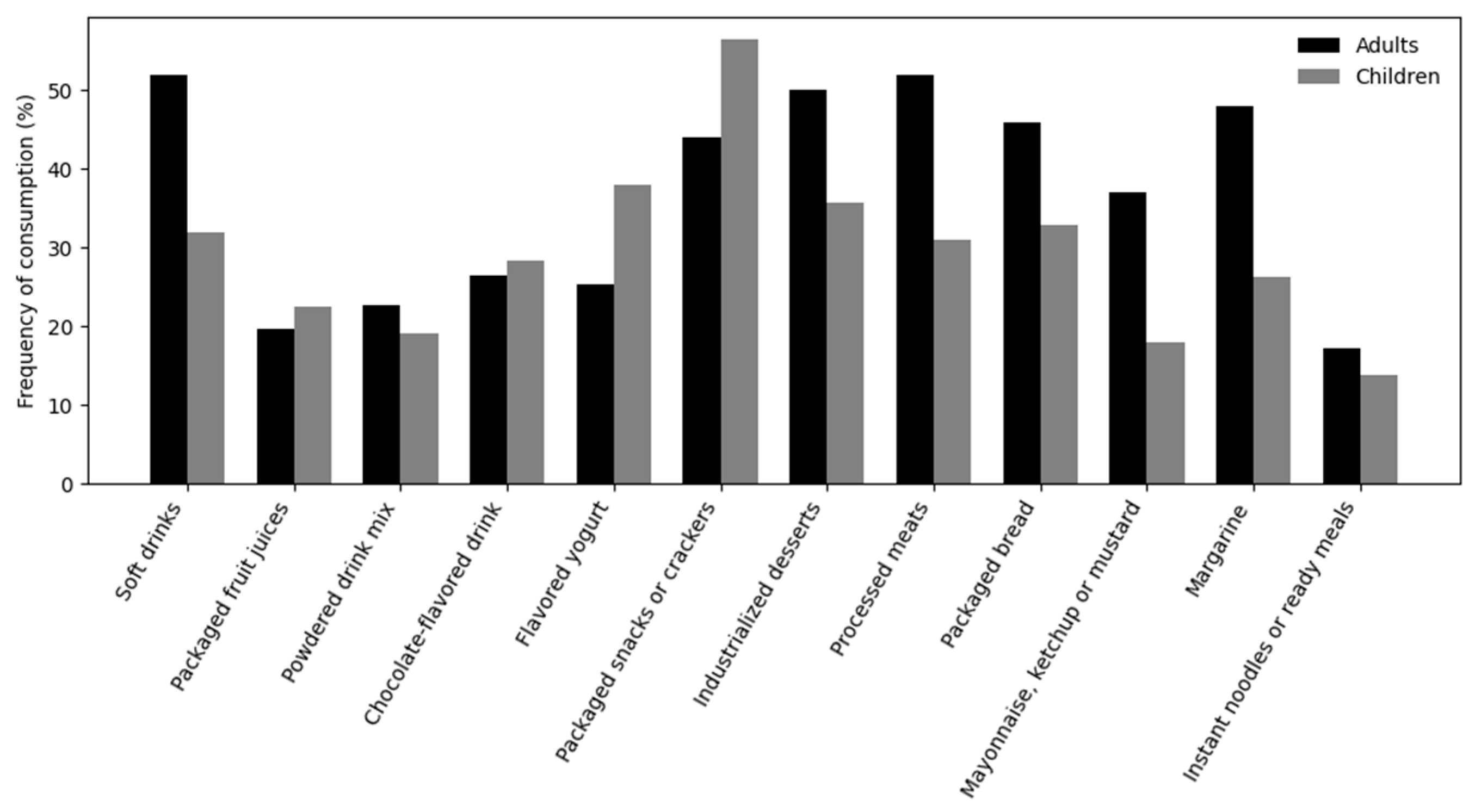
All UPF groups showed significant correlation with overall UPF consumption among caregivers and children (p < 0.001), confirming consistency of the ultra-processed dietary pattern.Among caregivers, the most frequently consumed UPFs were soft drinks (52.2%), processed meats (51.9%), industrialized desserts (49.9%), and margarine (47.8%), followed by industrialized breads (45.8%) and packaged snacks (44.0%). Among children, the most frequently consumed UPFs were packaged snacks or salted crackers (56.4%), flavored yogurts (38.0%), industrialized desserts (35.7%), and industrialized breads (32.9%). Soft drinks were consumed by 31.9% of children and chocolate-flavored beverages by 28.3%. Instant noodles, packaged soups, and frozen ready-to-eat meals presented the lowest consumption frequencies (<17%) in both groups (Graph 1).

3.4. Association Between Caregivers’ and Children’s UPF Consumption

Table 3 presents binary logistic regression adjusted for caregiver education and household income included 372 participants. Children whose caregivers had high UPF consumption were significantly more likely to also present high consumption (OR = 8.66; 95% CI: 5.00–14.99; p < 0.001). Caregiver education level showed a protective effect: compared with elementary education, high school education (OR = 0.39; 95% CI: 0.19–0.81; p = 0.012) and higher education (OR = 0.17; 95% CI: 0.06–0.47; p = 0.001) were associated with lower odds of high UPF consumption among children. Postgraduate education was not significantly associated with the outcome. Household income was not significantly associated with children’s UPF consumption and remained in the model only as an adjustment variable. The income category above BRL 20,000 was excluded due to absence of observations.

3.5. Reported Difficulties in Offering a Healthy Diet and Oral Hygiene

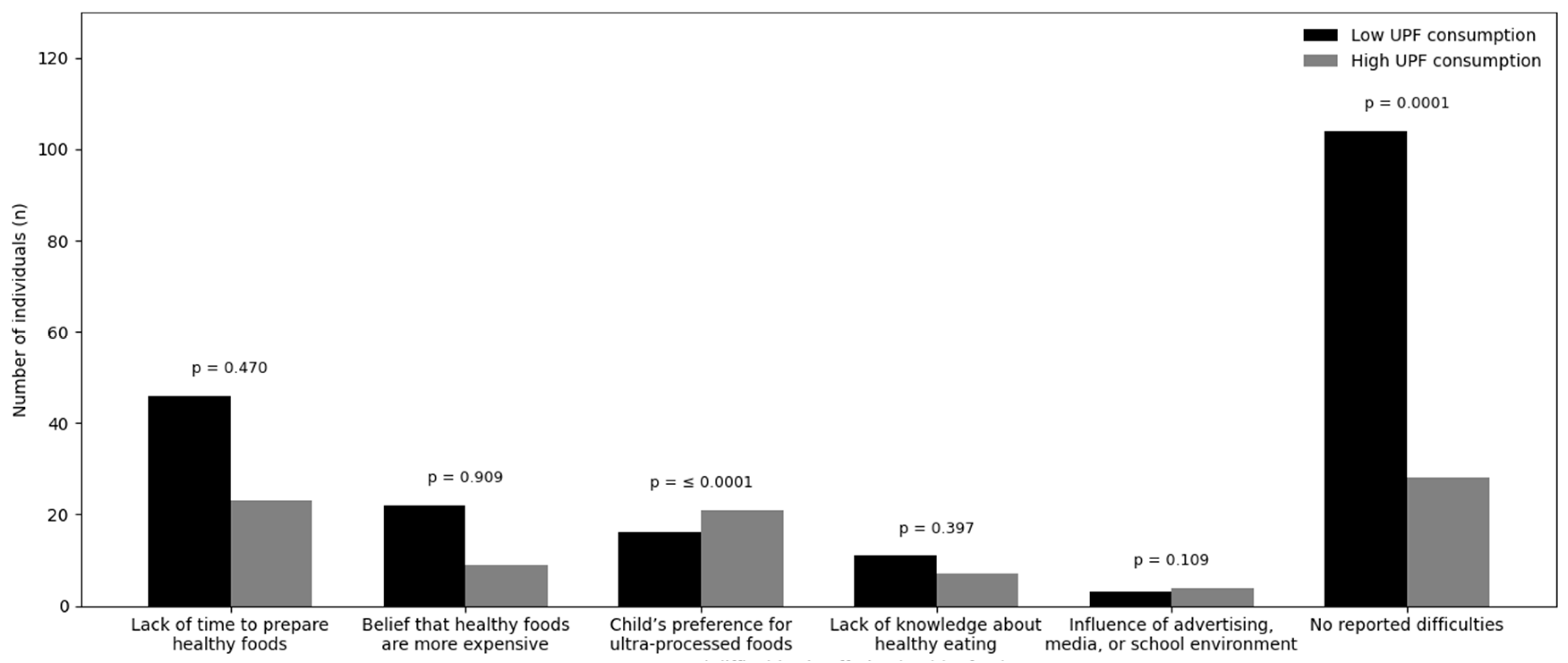
Lack of time to prepare healthy foods (p = 0.470), belief that healthy foods are more expensive (p = 0.909), lack of knowledge about healthy eating (p = 0.397), and influence of advertising or school environment (p = 0.109) were not associated with children’s UPF consumption Graph 3. In contrast, children’s preference for UPFs was significantly correlated with higher UPF consumption (p < 0.001) and was more frequently reported among caregivers of children in the high-consumption group Graph 3. The absence of reported difficulties in offering a healthy diet was more frequent among caregivers of children with low UPF consumption (p < 0.001) (Graph 3).
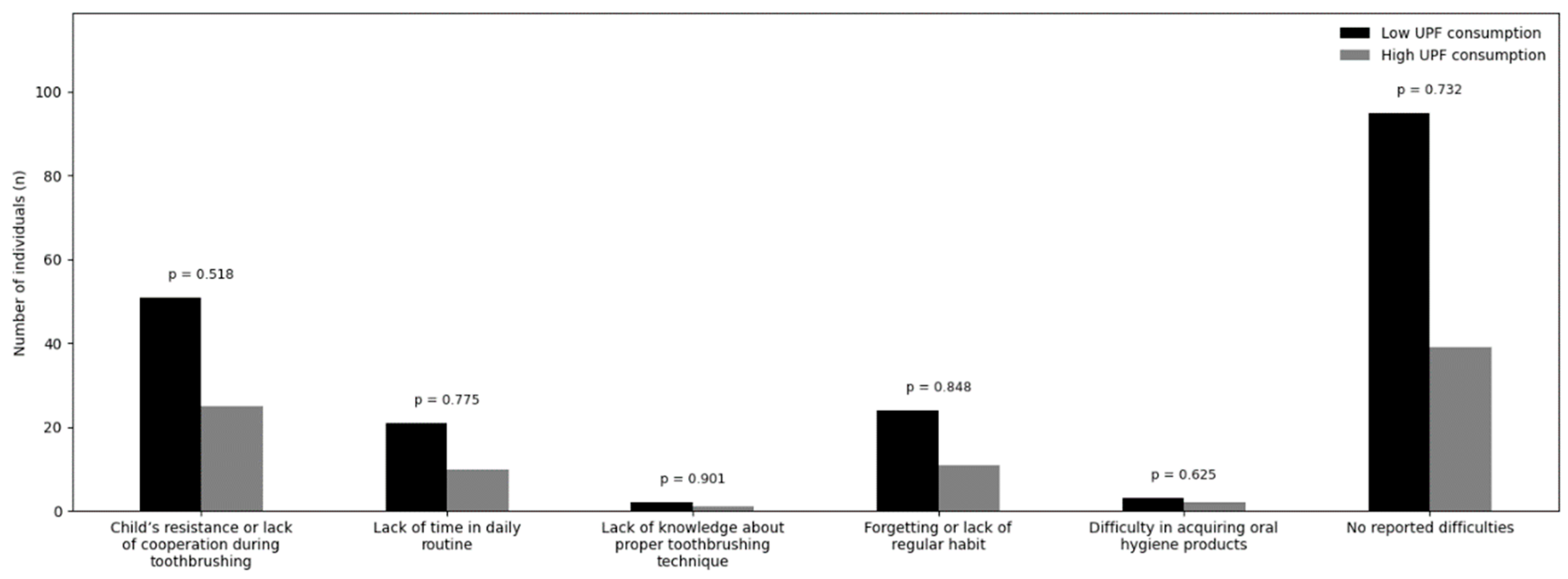
Regarding oral hygiene, resistance or lack of cooperation during toothbrushing, lack of time, lack of knowledge of brushing technique, forgetting brushing, difficulty obtaining hygiene products, and absence of reported difficulties did not differ between low and high UPF consumption groups (p > 0.05 for all) (Graph 4).

3.6. Knowledge, Frequency, and Motives Related to UPF Consumption

Most caregivers (74.2%) reported knowing what UPFs are; however, 59.2% reported regular consumption. Practicality was the most frequently reported reason for consumption (36%), followed by personal preference (27.6%), taste (21.4%), and cost (13.5%). In addition, 25.3% reported never having reflected on the reasons for consuming UPFs.

3.7. Association Between UPF Consumption and Periodontal Health–Related Quality of Life

Scores of the OHIP-14-PD domains showed asymmetric distributions with predominance of low values and median scores equal to zero in most domains. No differences were observed between consumption groups for functional limitation, psychological discomfort, psychological disability, social disability, or social disadvantage (p > 0.05). Physical pain showed median values of 2.0 in both groups, with similar interquartile ranges (p > 0.05). Physical disability was the only domain that differed significantly between groups, with higher scores among caregivers with high UPF consumption (median 1 [IQR 4]) compared with low consumption (median 0 [IQR 3]) (p = 0.014) (Table 4).

4. Discussion

For the first time in the literature, the influence of parental or caregiver consumption of ultra-processed foods on children’s dietary intake has been systematically investigated. The study demonstrated a high frequency of ultra-processed food (UPF) consumption among both caregivers and children participating in the Happy Smile Project. Children whose caregivers presented high UPF consumption were almost nine times more likely to also consume these foods. These findings underscore the role of the family food environment in shaping children’s eating habits, indicating that caregivers’ dietary practices determine food availability and children’s consumption patterns, favoring the normalization of UPF intake.
The magnitude of the observed association suggests that UPF consumption in the household reflects a shared context of food choices, product availability, and family routines [20,21,22]. Previous studies confirm that children tend to reproduce dietary patterns observed in their caregivers, especially in early childhood, a period marked by dependence on parental decisions [9,17]. In addition, the contemporary food environment, including digital platforms and food delivery applications, has been described as strongly promoting UPF consumption, favoring its normalization within families. Factors such as wide availability, convenience, and lower relative cost contribute to high consumption, regardless of household income [23]. Daily childhood behaviors, such as longer screen time and reduced time spent in school settings, have been associated with lower consumption of fresh or minimally processed foods and higher intake of ultra-processed foods [24].
In this study, household income was not significantly associated with UPF consumption, although the literature reports heterogeneous findings between developed and developing countries. In high-income countries such as the United Kingdom, Canada, and the United States, higher UPF consumption has been associated with poorer socioeconomic conditions [25,26,27]. Conversely, in low- and middle-income countries such as Brazil and Colombia, studies indicate an inverse association, whereby populations with higher purchasing power show higher UPF consumption [28,29,30]. Thus, income alone is not a determining factor, and other aspects such as access and urbanicity may influence food choices [22].
Caregivers’ educational level showed a protective effect against UPF consumption, with higher education associated with lower odds of high consumption among children. However, national literature reports opposite trends, suggesting that as UPFs become more accessible, their consumption tends to spread across different educational strata [1,31].
A discrepancy between knowledge and UPF consumption was observed. This mismatch has been described in different contexts, indicating that knowledge alone is insufficient to modify eating behaviors and is counteracted by factors such as accessibility, preferences, and convenience [32,33]. Educational interventions without structural changes also show limited effectiveness, reinforcing that opportunity and motivation exert greater influence on food choices than acquired knowledge [34].
Although this study did not directly evaluate the prevalence of dental caries, certain risk behaviors—such as the nighttime use of sweetened bottles and the absence of subsequent toothbrushing—were identified and found to be associated with frequent consumption of ultra-processed foods (UPFs). Extensive evidence indicates that a higher intake of these products substantially increases the risk of early childhood caries [16,35]. Furthermore, family dietary patterns and caregivers’ oral health status may exacerbate this risk, underscoring the complex interrelationship between nutritional practices and oral health outcomes [36]. Sugar intake facilitates bacterial fermentation, resulting in acid production that promotes enamel demineralization. The frequent consumption of UPFs, particularly those rich in sugars and refined starches, renders these foods especially detrimental to oral health [35,36,37].
Increased UPF consumption was associated with older child age, in agreement with previous studies [38,39]. As children grow older, they gain greater dietary autonomy and increased exposure to environments outside the household, such as schools, social activities, and digital media, as well as greater influence from peers and food marketing strategies [40,41].
The investigation of the relationship between UPF consumption and periodontal health–related quality of life was innovative in this study and showed significant effects in the physical disability domain, such as gingival bleeding and chewing difficulties. Although inconsistent, evidence suggests that pro-inflammatory dietary patterns characterized by high intake of sugars and saturated fats are associated with increased risk of periodontal inflammation, whereas healthier dietary patterns exert a protective effect [42,43,44].
The cross-sectional design and the use of self-reported information are subject to perception and recall biases, which represent limitations of this research, as well as the absence of clinical periodontal examination of caregivers and dental caries assessment in children.
These findings indicate the need for strategies to promote healthy eating that take into account the family, social, and economic environment. Extension projects such as the Happy Smile Project represent strategic settings for broader educational actions directed at caregivers and children, favoring healthier dietary practices. In this context, dentists occupy a strategic position in the promotion of comprehensive health; however, gaps still exist in dental education regarding the approach to dietary factors and common risk factors for oral and systemic diseases.

5. Conclusions

This study demonstrated that high consumption of ultra-processed foods by caregivers significantly increased the odds of children’s consumption and was associated with a greater negative impact on caregivers’ periodontal health–related quality of life. In addition, children exhibited a high frequency of oral health–damaging behaviors. These findings highlight the importance of family-centered strategies aimed at reducing the intake of ultra-processed foods and promoting healthier oral health behaviors to improve overall quality of life.

Author Contributions

conceptualization, V.H.G.S. and D.A.B; methodology, A.R.A., G.A.S. and V.H.G.S; software, D.A.B.; validation, V.H.G.S., G.A.S. and D.A.B.; formal analysis, V.H.G.S. and D.A.B.; investigation, V.H.G.S, C.A.S, and A.R.A.; resources, C.A.S.; data curation, A.L.G.S.M. and V.H.G.S.; writing—original draft preparation, V.H.G.S.; writing—review and editing, V.H.G.S. and D.A.B.; visualization, L.H.T. and A.M.A.; supervision, D.A.B.; project administration, V.H.G.S. and D.A.B.; funding acquisition, C.A.S. All authors have read and agreed to the published version of the manuscript.

Funding

Happy Smile Project: Strengthening Primary Oral Health Care in Early Childhood Education in the State of São Paulo – DRSII", by the School of Dentistry of Araçatuba (Process 3450/2023).

Institutional Review Board Statement

The study was conducted in accordance with the Declaration of Helsinki and approved by Research Ethics Committee of São Paulo State University (UNESP), School of Dentistry, Araçatuba (CAAE: 89127725.0.0000.5420), in accordance with Resolution No. 466/2012 of the Brazilian National Health Council.

Informed Consent Statement

Informed consent was obtained from all subjects involved in the study. Written informed consent has been obtained from the caregivers to publish this paper.

Data Availability Statement

The dataset for this current consent is available from the corresponding authors upon reasonable request. Requests must justify the need for the data, ensuring it is for research purposes, while adhering to privacy, legal, or ethical restrictions that prevented immediate, open access.

Acknowledgments

The authors would like to express their sincere gratitude to the schools and caregivers who participated in this study. We also thank the Municipal Department of Education of Birigui for its collaboration and support throughout the data collection process. In addition, we acknowledge the “Happy Smile” project for its support and the necessary funding and resources for this research.

Conflicts of Interest

The authors declare no conflicts of interest. The funders had no role in the design of the study; in the collection, analyses, or interpretation of data; in the writing of the manuscript; or in the decision to publish the results.

Abbreviations

The following abbreviations are used in this manuscript:
BMI Body Mass Index
OHIP-14-PD Oral Health Profile applied to Periodontal Diseases
OR Odds Ratio
SPSS Statistical Package for the Social Sciences
SD Standard Deviation
UPF Ultra-processed food
UPFs Ultra-processed foods

References

  1. de Menezes, R.C.E.; Oliveira, J.S.; Almendra, R.; de Lira, P.I.C.; Costa, E.C.; Leal, V.S.; Santana, P. Influence of Food Environment on Ultra-Processed Drinks Consumption among an Economically Vulnerable Population in a Metropolitan Area in Brazil: A Multilevel Analysis. Health Place 2022, 77, 102869. [CrossRef]
  2. Monteiro, C.A.; Levy, R.B.; Claro, R.M.; Castro, I.R.R. de; Cannon, G. A New Classification of Foods Based on the Extent and Purpose of Their Processing. Cad. Saúde Pública 2010, 26, 2039–2049. [CrossRef]
  3. Resende Cunha, V.C.; Borges, C.A.; Canella, D.S. Incorporação da classificação NOVA na produção científica em alimentação e nutrição na América Latina: uma revisão cienciométrica. Arch. Latinoam. Nutr. 2022, 72, 109–124. [CrossRef]
  4. Cassiano, L.S.; Peres, M.A.; Motta, J.V.S.; Demarco, F.F.; Horta, B.L.; Ribeiro, C.C.; Nascimento, G.G. Periodontitis Is Associated with Consumption of Processed and Ultra-Processed Foods: Findings from a Population-Based Study. Nutrients 2022, 14, 3735. [CrossRef]
  5. Whelan, K.; Bancil, A.S.; Lindsay, J.O.; Chassaing, B. Ultra-Processed Foods and Food Additives in Gut Health and Disease. Nat. Rev. Gastroenterol. Hepatol. 2024, 21, 406–427. [CrossRef]
  6. Zhu, Y.; Garcia-Larsen, V.; Bromage, S.; Martinez-Steele, E.; Curi-Hallal, A.L.; Rebholz, C.M.; Matsuzaki, M. Association Between Ultraprocessed Food Intake and Self-Reported Arthritis. Am. J. Prev. Med. 2025, 68, 1109–1119. [CrossRef]
  7. Castilho, A.R.F. de; Mialhe, F.L.; Barbosa, T. de S.; Puppin-Rontani, R.M. Influence of Family Environment on Children’s Oral Health: A Systematic Review. J. Pediatr. (Rio J.) 2013, 89, 116–123. [CrossRef]
  8. Cavalcante, M.B.; Franco, R.D.S.; Costa, S.K.; Meira, G.D.F. A influência dos pais ou responsáveis na saúde bucal de crianças de 0 a 12 anos. Res. Soc. Dev. 2022, 11, e161111638207. [CrossRef]
  9. Mahmood, L.; Flores-Barrantes, P.; Moreno, L.A.; Manios, Y.; Gonzalez-Gil, E.M. The Influence of Parental Dietary Behaviors and Practices on Children’s Eating Habits. Nutrients 2021, 13, 1138. [CrossRef]
  10. Lima, L.H.G.; Rocha, N.B.D.; Antoniassi, C.P.; Moura, M.S.D.; Fujimaki, M. Prevalência e severidade da cárie dentária em escolares do Ensino Fundamental de um município vulnerável. Rev. Odontol. UNESP 2020, 49, e20200063. [CrossRef]
  11. Nascimento, G.G.; Alves-Costa, S.; Romandini, M. Burden of Severe Periodontitis and Edentulism in 2021, with Projections up to 2050: The Global Burden of Disease 2021 Study. J. Periodontal Res. 2024, 59, 823–867. [CrossRef]
  12. Trindade, D.; Carvalho, R.; Machado, V.; Chambrone, L.; Mendes, J.J.; Botelho, J. Prevalence of Periodontitis in Dentate People between 2011 and 2020: A Systematic Review and Meta-Analysis of Epidemiological Studies. J. Clin. Periodontol. 2023, 50, 604–626. [CrossRef]
  13. Khan, M.W.; Cruz De Jesus, V.; Mittermuller, B.-A.; Sareen, S.; Lee, V.; Schroth, R.J.; Hu, P.; Chelikani, P. Role of Socioeconomic Factors and Interkingdom Crosstalk in the Dental Plaque Microbiome in Early Childhood Caries. Cell Rep. 2024, 43, 114635. [CrossRef]
  14. Papapanou, P.N.; Sanz, M.; Buduneli, N.; Dietrich, T.; Feres, M.; Fine, D.H.; Flemmig, T.F.; Garcia, R.; Giannobile, W.V.; Graziani, F.; et al. Periodontitis: Consensus Report of Workgroup 2 of the 2017 World Workshop on the Classification of Periodontal and Peri-Implant Diseases and Conditions. J. Clin. Periodontol. 2018, 45. [CrossRef]
  15. Villoria, G.E.M.; Fischer, R.G.; Tinoco, E.M.B.; Meyle, J.; Loos, B.G. Periodontal Disease: A Systemic Condition. Periodontol. 2000 2024, 96, 7–19. [CrossRef]
  16. Cascaes, A.M.; Silva, N.R.J. da; Fernandez, M. dos S.; Bomfim, R.A.; Vaz, J. dos S. Ultra-Processed Food Consumption and Dental Caries in Children and Adolescents: A Systematic Review and Meta-Analysis. Br. J. Nutr. 2023, 129, 1370–1379. [CrossRef]
  17. Savage, J.S.; Fisher, J.O.; Birch, L.L. Parental Influence on Eating Behavior. J. Law Med. Ethics J. Am. Soc. Law Med. Ethics 2007, 35, 22–34. [CrossRef]
  18. Costa, C.D.S.; Sattamini, I.F.; Steele, E.M.; Louzada, M.L.D.C.; Claro, R.M.; Monteiro, C.A. Consumo de alimentos ultraprocessados e associação com fatores sociodemográficos na população adulta das 27 capitais brasileiras (2019). Rev. Saúde Pública 2021, 55, 47. [CrossRef]
  19. Martins-Cruz, T.M.; Soares, K.H.; Leal, J.H.G.; Flecha, O.D.; Douglas-De-Oliveira, D.W.; Gonçalves, P.F. Brazilian Version of the OHIP 14 Periodontal Disease Questionnaire: Cross Cultural Adaptation and Validation. Braz. Oral Res. 2025, 39, e002. [CrossRef]
  20. Dutra, L.V.; Lopes, L.J.; Rodrigues, C.T.; Franceschini, S.D.C.C.; Novaes, J.F.D.; Vieira, L.L.; Priore, S.E. Disponibilidade domiciliar de alimentos por grau de processamento e formas de aquisição no Brasil: uma análise da interferência socioeconômica e territorial. Segur. Aliment. E Nutr. 2025, 31, e024038. [CrossRef]
  21. Levy, R.B.; Andrade, G.C.; Cruz, G.L.D.; Rauber, F.; Louzada, M.L.D.C.; Claro, R.M.; Monteiro, C.A. Três décadas da disponibilidade domiciliar de alimentos segundo a NOVA – Brasil, 1987–2018. Rev. Saúde Pública 2022, 56, 75. [CrossRef]
  22. Silveira, V.N.C.; Dos Santos, A.M.; França, A.K.T.C. Determinants of the Consumption of Ultra-Processed Foods in the Brazilian Population. Br. J. Nutr. 2024, 132, 1104–1109. [CrossRef]
  23. Dias, L.R.; Baptista, J.A.G.; Levy, R.B.; Leite, M.A. Alimentos ultraprocessados e preparações culinárias em promoções no maior aplicativo de delivery de alimentos do Brasil. Ciênc. Saúde Coletiva 2025, 30, e07512023. [CrossRef]
  24. Viola, P.C.D.A.F.; Ribeiro, S.A.V.; Carvalho, R.R.S.D.; Andreoli, C.S.; Novaes, J.F.D.; Priore, S.E.; Carvalho, C.A.D.; Franceschini, S.D.C.C. Socioeconomic Status, Screen Time, and Time Spent at School, and Children’s Food Consumption. Ciênc. Saúde Coletiva 2023, 28, 257–267. [CrossRef]
  25. Baraldi, L.G.; Martinez Steele, E.; Canella, D.S.; Monteiro, C.A. Consumption of Ultra-Processed Foods and Associated Sociodemographic Factors in the USA between 2007 and 2012: Evidence from a Nationally Representative Cross-Sectional Study. BMJ Open 2018, 8, e020574. [CrossRef]
  26. Heuchan, G.N.; Conway, R.E.; Tattan-Birch, H.; Heggie, L.; Llewellyn, C.H. Social and Economic Patterning in Ultra-Processed Food Intake in Toddlerhood and Middle Childhood: Longitudinal Data From the Gemini Cohort in the United Kingdom. J. Acad. Nutr. Diet. 2025, 125, 922-934.e11. [CrossRef]
  27. Pozveh, S.H.; Aktary, M.L.; Polsky, J.Y.; Moubarac, J.-C.; Vanderlee, L.; Olstad, D.L. Socioeconomic Inequalities in Intakes of Ultraprocessed and Minimally Processed Foods in Nationally Representative Samples of Adults in Canada: An Analysis of Trends between 2004 and 2015. J. Nutr. 2024, 154, 3088–3104. [CrossRef]
  28. Khandpur, N.; Cediel, G.; Obando, D.A.; Jaime, P.C.; Parra, D.C. Sociodemographic Factors Associated with the Consumption of Ultra-Processed Foods in Colombia. Rev. Saúde Pública 2020, 54, 19–19. [CrossRef]
  29. Silva, M.A.; Milagres, L.C.; Castro, A.P.P.; Filgueiras, M.D.S.; Rocha, N.P.; Hermsdorff, H.H.M.; Longo, G.Z.; Novaes, J.F. O consumo de produtos ultraprocessados está associado ao melhor nível socioecocômico das famílias das crianças. Ciênc. Saúde Coletiva 2019, 24, 4053–4060. [CrossRef]
  30. Simões, B.D.S.; Barreto, S.M.; Molina, M.D.C.B.; Luft, V.C.; Duncan, B.B.; Schmidt, M.I.; Benseñor, I.J.M.; Cardoso, L.D.O.; Levy, R.B.; Giatti, L. Consumption of Ultra-Processed Foods and Socioeconomic Position: A Cross-Sectional Analysis of the Brazilian Longitudinal Study of Adult Health. Cad. Saúde Pública 2018, 34. [CrossRef]
  31. Dicken, S.J.; Qamar, S.; Batterham, R.L. Who Consumes Ultra-Processed Food? A Systematic Review of Sociodemographic Determinants of Ultra-Processed Food Consumption from Nationally Representative Samples. Nutr. Res. Rev. 2024, 37, 416–456. [CrossRef]
  32. Pedro-Botet, L.; Muns, M.D.; Solà, R.; Fontané, L.; Climent, E.; Benaiges, D.; Flores-Le Roux, J.A.; Pedro-Botet, J. Level of Understanding and Consumption of Ultra-Processed Food in a Mediterranean Population: A Cross-Sectional Study. Nutr. Metab. Cardiovasc. Dis. 2022, 32, 889–896. [CrossRef]
  33. Ponce-Carreón, A.; Monrroy-Campos, R.; Rucano Paucar, F.H.; Talavera-Mendoza, F. Associations between Ultra-Processed Food Consumption and Food Literacy in Preadolescents. Discov. Food 2025, 5, 296. [CrossRef]
  34. Rusfianti, A.; Widyaningsih, V.; Hikmayani, N.H. The Impact of Video Nutrition Education on Nutrition Knowledge, Food Selection, and Ultra-Processed Food Consumption in Adolescents. AcTion Aceh Nutr. J. 2025, 10, 603. [CrossRef]
  35. da Silva, N.R.J.; de Camargo, M.B.J.; dos Vaz, J.S.; Correa, M.B.; Matijasevich, A.; da Silva dos Santos, I.; Cascaes, A.M. Ultra-Processed Food Consumption and Dental Caries in Adolescents from the 2004 Pelotas Birth Cohort Study. Community Dent. Oral Epidemiol. 2023, 51, 1180–1186. [CrossRef]
  36. Rocha, A.C.; Crema, A.F. de A.; Menoncin, B.L.V.; Fraiz, G.M.; Crispim, S.P.; Fraiz, F.C. Consumption of Cariogenic Ultra-Processed Foods and Maternal Report of Dental Caries and Dental Pain among Preschool Children. Pesqui. Bras. Em Odontopediatria E Clínica Integrada 2025, 25, e240112. [CrossRef]
  37. Crema, A.F. de A.; Menoncin, B.L.V.; Crispim, S.P.; Fraiz, F.C. Factors Associated with the Intake of Ultra-Processed Cariogenic Foods by Preschoolers During the COVID-19 Pandemic. Pesqui. Bras. Em Odontopediatria E Clínica Integrada 2023, 23, e220080. [CrossRef]
  38. Ribeiro, G.J.S.; de Araújo Pinto, A. Consumption of Ultra-Processed Foods in Brazilian Children: An Analysis of Regional Trends. J. Pediatr. Nurs. 2021, 61, e106–e111. [CrossRef]
  39. Sparrenberger, K.; Friedrich, R.R.; Schiffner, M.D.; Schuch, I.; Wagner, M.B. Ultra-Processed Food Consumption in Children from a Basic Health Unit. J. Pediatr. (Rio J.) 2015, 91, 535–542. [CrossRef]
  40. Moran, A.J.; Khandpur, N.; Polacsek, M.; Rimm, E.B. What Factors Influence Ultra-Processed Food Purchases and Consumption in Households with Children? A Comparison between Participants and Non-Participants in the Supplemental Nutrition Assistance Program (SNAP). Appetite 2019, 134, 1–8. [CrossRef]
  41. Yeum, D.; Hua, S.; Thapaliya, G.; Duck, S.A.; Melhorn, S.J.; Roth, C.L.; Schur, E.A.; Carnell, S.; Sewaybricker, L.E. The Impact of Eating Behaviors on Ultraprocessed Food Consumption Over 12 Months in Children. Obesity 2025, 33, 1704–1712. [CrossRef]
  42. Alghamdi, R.A.; Alzamil, H.A.; Alzamil, H.A.; Alotaibi, R.Y.; Albishi, S.M.; Sallam, A.M.; Alhufaiyan, N.S.; Alahdal, E.M.; Baeesa, D.A.; Aljohani, S.M. Exploring the Interplay between Diet and Oral Inflammation. Int. J. Community Med. Public Health 2024, 11, 3245–3248. [CrossRef]
  43. Casarin, M.; Da Silveira, T.M.; Bezerra, B.; Pirih, F.Q.; Pola, N.M. Association between Different Dietary Patterns and Eating Disorders and Periodontal Diseases. Front. Oral Health 2023, 4, 1152031. [CrossRef]
  44. Fan, R.-Y.; Chen, J.-X.; Chen, L.-L.; Sun, W.-L. Assessing Periodontitis Risk from Specific Dietary Patterns: A Systematic Review and Meta-Analysis. Clin. Oral Investig. 2025, 29, 43. [CrossRef]
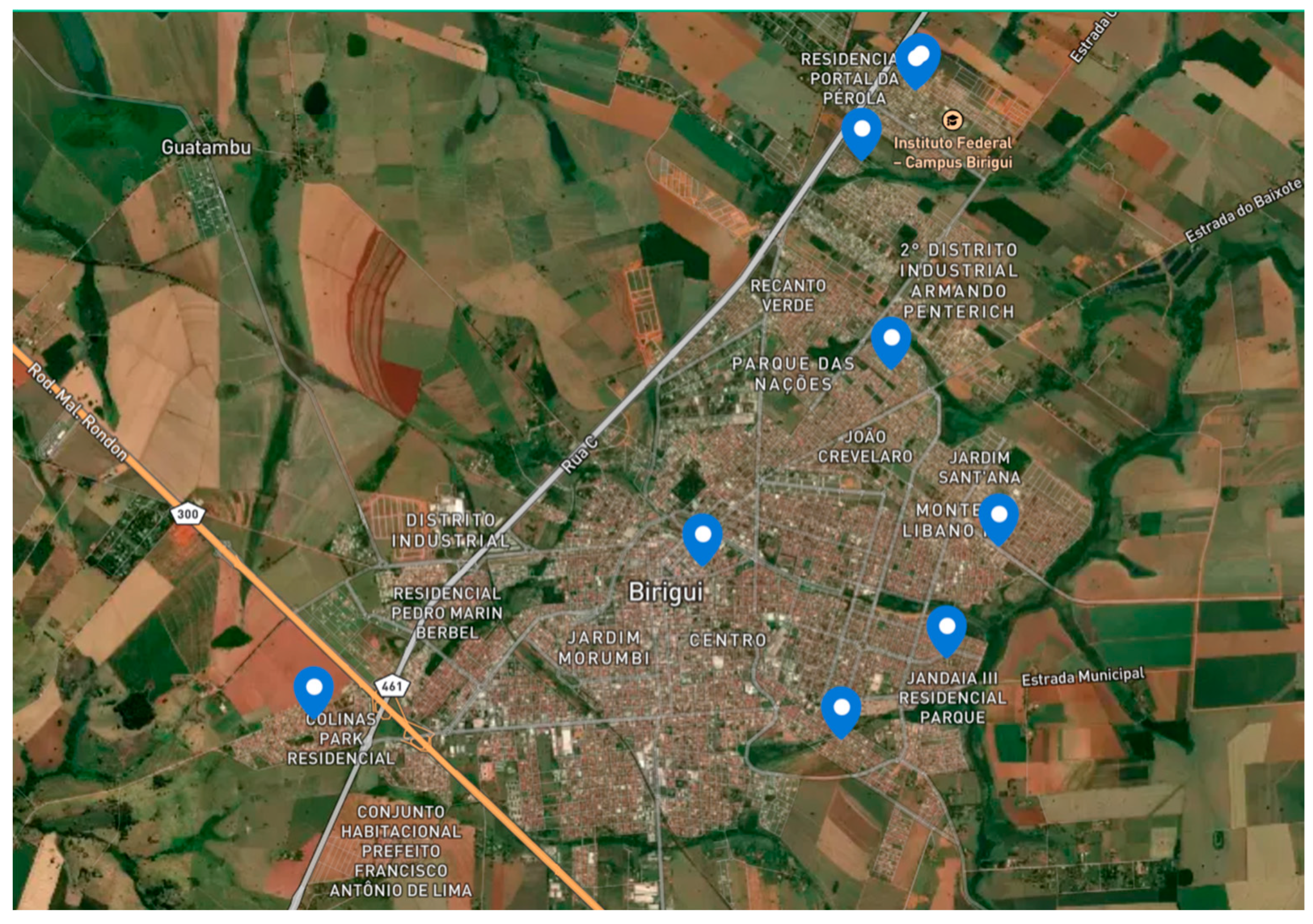
Figure 1. Geographic distribution of the participating schools on the map of Birigui – SP.
Preprints 196713 g001
Graph 1. Frequency of consumption of ultra-processed food groups among adults and children.
Preprints 196713 gr001
Graph 3. Difficulties in offering healthy food according to ultra-processed food consumption.
Preprints 196713 gr003
Graph 4. Difficulties in maintaining adequate toothbrushing according to ultra-processed food consumption.
Preprints 196713 gr004
Table 1. Sociodemographic and clinical characteristics of caregivers according to the consumption of ultra-processed foods.
Demographic data Low consumption of UPFs High consumption of UPFs Total Spearman's correlation (p-value)
Gender (n= 390)
Female
Male
Not specified

179
39
1

146
25
0

325
64
1
0,463
Education level (n= 376)
Elementary school
High school
Undergraduate degree
Postgraduate degree

22 130 47 11

29 101 26 10

51 231 73 21
0,06
Income (n= 385)
Below R$1000
R$1000 e R$2500
2500 a 8000
R$8.000 e R$20.000
Above R$20.000

16
82
105
11
0

19
71
74
7
0

35
153
179
18
0
0,130
N° of residents (n= 309)
Up to 2 people
3-4 people
5 people or more

19
127
22

19
103
19

38
230
41
0,760
Age - mean (SD)(n=353) 32,4 (7,2) 31,2 (7,3) 353 0,184
BMI(n=312)
Underweight
Normal weight
Overweight
Obesity class I
Obesity class II
Obesity class III

4
56
59
43
16
10

1
42
37
29
10
5

5
99
96
72
26
15
0,681
Hypertension (n= 392)
No
Yes

192
27

152
21

344
48
0,955
Diabetes (n= 392)
No
Yes

201
18

163
10

364
28
0,353
Hypercholesterolemia (n= 392)
No
Yes


210
9


167
6


377
15
0,743
1Data are presented as absolute values. The comparison between low and high ultra-processed food consumption groups was performed using Spearman's correlation test.
Table 2. Sociodemographic and behavioral characteristics of children according to the consumption of ultra-processed foods (n=392).
Demographic data Low consumption of UPFs High consumption of UPFs Total Spearman's correlation (p-value)
Gender (n=392)
Male
Female

142
134

61
55

203
189

0,838
Age (months) - Median (IQR) (n=351) 36 (25) 36 (24) 387
0,001
Nighttime bottle-feeding (n=392)
No
Yes

99
177

44
72

143
249

0,893
Milk flavored with sugar, chocolate powder, or similar items (n= 392)
No
Yes

176
100

43
73

219
173
0,0001
Toothbrushing after nighttime bottle-feeding (n= 392)
No
Yes


155
121


53
63


208
184
0,058
2 Values expressed as n, median (IQR). Age comparison performed using the Mann–Whitney U test; associations evaluated by Spearman's correlation coefficient. (α = 0,05).
Table 3. Association between caregivers' consumption of ultra-processed foods and high consumption of these foods by children (n= 372).
Caregiver's consumption of ultra-processed foods
OR IC 95% p value
Low Consumption 1,00 - -
High Consumption 8,66 5 – 14,99 < 0,001
Caregiver's educational level
OR IC 95% p value
Elementary school 1,00 - -
High school 0,39 0,19-0,81 0,012
Undergraduate degree 0,17 0,06-0,47 0,001
Postgraduate degree 0,44 0,12-1,6 0,22
Family income
OR IC 95% p value
Below R$ 1.000,00 1,00 - -
R$ 1.000,00 – R$ 2.500,00 0,6 0,24 – 1,48 0,27
R$ 2.500,00 – R$ 8.000,00 0,42 0,16 – 1,06 0,06
R$ 8.000,00 – R$ 20.000,00 0,38 0,07 – 1,98 0,25
3Binary logistic regression model adjusted for caregiver's educational level and monthly family income. OR = odds ratio; 95% CI = 95% confidence interval. Income category above R$ 20,000.00 was not included in the model due to a lack of observations. p-values < 0.05 were considered statistically significant.
Table 4. Comparison of OHIP-14-PD domains according to caregivers' consumption of ultra-processed foods
Domain Low UPFs consumption High UPFs consumption p-value
Functional limitation 0 (0-2) 0 (0-2) 0,999
Physical pain 2 (1-4) 2 (1-4) 0,889
Psychological discomfort 0 (0-2) 0 (0-2) 0,174
Physical disability 0 (0-3) 1 (0-4) 0,014
Psychological disability 0 (0-2) 0 (0-3) 0,509
Social disability 0 (0-0) 0 (0-0) 0,107
Social disadvantage 0 (0-3) 0 (0-0) 0,275
4 Mann–Whitney U test. Values expressed as median and interquartile range.
Disclaimer/Publisher’s Note: The statements, opinions and data contained in all publications are solely those of the individual author(s) and contributor(s) and not of MDPI and/or the editor(s). MDPI and/or the editor(s) disclaim responsibility for any injury to people or property resulting from any ideas, methods, instructions or products referred to in the content.
Copyright: This open access article is published under a Creative Commons CC BY 4.0 license, which permit the free download, distribution, and reuse, provided that the author and preprint are cited in any reuse.
Prerpints.org logo

Preprints.org is a free preprint server supported by MDPI in Basel, Switzerland.

Subscribe

Disclaimer

Terms of Use

Privacy Policy

Privacy Settings

© 2026 MDPI (Basel, Switzerland) unless otherwise stated