
Submitted:
28 January 2026
Posted:
29 January 2026
You are already at the latest version
Abstract
Advanced Design, as a discipline focused on exploring future opportunities, has the potential to significantly enhance New Product Development, understood as the process of designing and introducing new products to the market. However, organizations such as COTECMAR -the Science and Technology Corporation for the Development of the Naval, Maritime, and Riverine Industry, a mixed public and private organization- despite their extensive experience and capabilities in New Product Development, have traditionally concentrated their design efforts on addressing immediate and operational challenges. While the automotive industry has long employed concept cars to anticipate future scenarios, this practice has not been widely adopted within the shipbuilding sector, and even less so in Colombia. Within this context, an opportunity emerged to develop vision concepts - analogous to concept cars but applicable across industries -to explore potential future pathways for COTECMAR in Colombia’s Pacific Region. Through the application of DIVE, an Advanced Design technique, this research project explored and articulated ten diverse vision concepts. These range from an amphibious boat operating in conjunction with a health center built on stilts to improve access to quality visual healthcare services, to integrated tourism mobility systems composed of small yacht cruises, floating stations, and collectible tickets that connect travelers and local communities with the region’s natural and cultural assets. Across these explorations, it became evident that Advanced Design holds substantial potential to strengthen COTECMAR’s New Product Development processes. It can unlock new creative opportunities by expanding the Corporation’s product portfolio, fostering the adoption of a product–service systems approach, and enabling engagement with a broader and more diverse set of target markets.
Keywords:
advanced design
; new product development
; shipbuilding
; COTECMAR
; Colombia’s Pacific region
1. Introduction
The Movement Industries sector encompasses the automotive, shipbuilding, and aerospace segments, all of which play a crucial role in Colombia’s social and economic development [1]. Production and export activities within this sector not only generate employment opportunities but also contribute significantly to national economic growth. Moreover, the sector has demonstrated a strong capacity for innovation by actively incorporating advanced technologies and manufacturing processes aimed at enhancing product efficiency and quality [1].
Specifically, the shipbuilding area is dedicated to the construction, repair, and maintenance of vessels and naval equipment [2]. Opportunities within this segment are closely linked to Colombia’s geographical advantages, as well as to significant public and private investments aimed at improving the navigability of the country’s river systems, as reported by Colombia Productiva [1]. These river systems comprise more than 1,600 rivers distributed across four major basins -the Pacific, Caribbean, Orinoco, and Amazon- with particular emphasis on the Magdalena and Amazon rivers and their numerous tributaries. In addition, efforts to enhance river navigability are complemented by the strategic utilization of the nation’s coastlines, especially along the Caribbean Sea, which extends approximately 1,760 kilometers, and the Pacific Ocean, which spans about 1,300 kilometers.
COTECMAR
A key institution within this sector is COTECMAR, the Science and Technology Corporation for the Development of the Naval, Maritime, and Riverine Industry. With more than 23 years of experience, this non-profit mixed public and private organization develops scientific and technological capabilities through innovation in products, services, and processes, with the objective of comprehensively addressing the needs of the naval, maritime, and fluvial industry and leading the segment’s sustainable growth within a framework of social responsibility, as stated in COTECMAR’s mission [3].
These capabilities are supported by the Research, Development, and Innovation (R&D+i) Division, which “is dedicated to the guidance, planning, coordination, implementation, and oversight of innovation management, as well as research and technological development within the Corporation […] to sustain [its] leadership position within the National System of Science, Technology, and Innovation” [4]. This division works in close coordination with the Design and Engineering Division, which is “committed to the design of ships and naval vessels and for providing specialized consultancy and project development services to the naval, maritime, and offshore industries [5] . Together, these divisions mobilize multidisciplinary teams to implement New Product Development (NPD) processes in accordance with standard practices and procedures prevalent in the industry.
The NPD process, aimed at introducing new products to the market, encompasses a strategic planning phase -comprising idea generation and evaluation- followed by the design stage, which includes conceptual, basic, detailed, interior, and systems design. It further involves business analysis, product development, and eventual commercialization [6]. All stages are specifically tailored to the shipbuilding sub-sector, addressing the distinct technical, operational, and regulatory requirements associated with both fluvial and oceanic environments.
While COTECMAR possesses extensive experience and strong capabilities in the NPD process to address the strategic objectives of the shipbuilding segment -including activities such as technological surveillance and state-of-the-art reviews during the conceptual design phase- it has been recognized within these two divisions that a longer-term design perspective is required. This entails a shift from design practices primarily focused on addressing immediate or current problems toward approaches that explore future-oriented opportunities. Such a forward-looking perspective is expected to enhance the efficiency of the conceptual design phase, enrich the overall NPD process, and ultimately strengthen the Corporation’s innovation capacity.
2. Approach and Method: Advanced Design
To address this need for a long-term perspective within the NPD process, this research project adopts an Advanced Design approach that involves the creation and dissemination of fictional objects intended to explore alternative futures. Designing with a forward-looking orientation is aligned with the Research through Design approach, which enables designers to generate new insights and bridge gaps in existing knowledge by engaging with research-driven inquiries, while simultaneously addressing specific challenges through design-oriented questions [7]. This approach encourages the construction and evaluation of diverse prototypes, thereby facilitating the production of new knowledge while concurrently contributing to problem-solving processes [8].
Within this approach, several authors [9,10,11,12] distinguish design that looks further into the future from other design practices, characterizing it as a domain in which designers engage with fictional or imaginary contexts. This form of design establishes a problem space that is free from the constraints of commercial product development and largely independent of immediate market forces; consequently, it does not seek to generate tangible products intended for mass production. Instead, these imaginary contexts materialize as alternative artifacts or representations of possible futures. Through the diverse modalities of future-oriented design, designers foster “a creation process that unlocks people’s imagination” [11] by posing hypothetical questions and constructing alternative scenarios. Such future-oriented exercises “utilize fictional objects at the center of [their explorations]” [9] in order to stimulate dialogue with broad and diverse audiences [13]. The literature has extensively examined the functions served by these speculative design practices, indicating that they can facilitate critical reflection, challenge established norms, and envision alternative possibilities [11,12], act as provocations and critiques [14], and serve as sources of inspiration, aesthetic exploration [11], speculation about potential futures [15], and catalysts for change [16].
My previous research [17] has shown that a range of practices oriented toward design that looks further into the future can be identified across different contexts. In academic settings, this approach is commonly referred to as Speculative Design; within strategic consulting, it is known as Design Futures; and in the automotive sector, it is recognized as Advanced Design.
Advanced Design constitutes a design-led futures approach aimed at the creation and dissemination of fictional artifacts, commonly referred to as concept cars [18,19]. A variety of actors within the automotive industry -including design studios, suppliers, and original equipment manufacturers- employ Advanced Design as a means of navigating future uncertainties and supporting decision-making in the present [20,19]. Notably, Advanced Design is typically situated within the fuzzy front-end of the New Product Development process, specifically in its exploratory phase [17]. This term denotes the initial, ambiguous, and exploratory stage of the process, during which organizations identify opportunities, generate and evaluate ideas, define preliminary concepts, and determine which proposals should advance to subsequent stages of development [21].
Building on my previous investigations, Advanced Design can be understood as encompassing a structured set of making and sharing activities. “The making activities start with the analysis of the future context factors through observations, interviews, and focus groups. In view of these factors, they define, in alignment with company’s values and strategic direction, an image of the future. Based on this vision, designers make sketches and rough prototypes, at different scales and resolutions, to create, develop, test, select, and share ideas with several people within the company. When the final idea is selected, they make a refined prototype and video to visualize the concept car and its iteration with its users within the future context” [17]. Following these activities, the organization disseminates the prototype and the visuals to enable a broad range of actors involved in change -both within and beyond the enterprise- to experience the concept car and to stimulate discussions about its implications for both future and present contexts [17].
Concept cars (see an example in Figure 1 [22]) are “fictional artifacts used to render tangible images of a preferable future incorporating avant-garde style and cutting-edge technology” [20]. These fictional objects are typically embodied in prototypes, with innovative interactions illustrated through videos and other visual media. The combination of physical artifacts and visual narrative forms enables organizations to communicate concrete visions of the future that are accessible and compelling to a wide range of audiences. This includes internal discussions supported by focus groups involving employees from different organizational levels, as well as external engagement with the public during automotive exhibitions and shows. Such multimodal narratives are capable of eliciting strong emotional responses, thereby fostering active participation and meaningful dialogue around future-oriented concepts.
I identify three distinct categories of concept cars [17]. The first category comprises concepts that reflect the current state of the world and anticipate incremental modifications to forthcoming production vehicles; these are typically expected to enter the market within approximately one year of their initial presentation. The second category consists of near-future concept cars, which are intended to inspire new vehicle typologies [19] within a medium-term horizon of up to five years by combining established knowledge with emerging technological and societal trends. In contrast, speculative future concept cars are highly visionary prototypes that project design and technological possibilities at least fifteen years into the future, advancing concepts that may not yet be technically or commercially feasible. Taken together, these three categories of concept cars embody the brand’s values and strategic intent, while simultaneously extending the boundaries of automotive design and technological innovation.
DIVE
Building on insights derived from the automotive industry, and with the objective of enabling organizations beyond this sector to apply Advanced Design principles, the researcher developed DIVE (Design, Innovation, Vision, and Exploration), a design-led futures technique that supports the development of vision concepts [17,23,24] (see Figure 2 for an illustration of its structure).
DIVE promotes active participation in creative practices through direct engagement in making actions, followed by structured discussions that address both future possibilities and present conditions through collaborative sharing. In previous applications, DIVE has been integrated into the NPD process by providing a structured framework of ideas that strengthens and enriches the conceptual design phase.
Vision concepts are analogous to concept cars and can be applied across diverse industries to explore future scenarios [25]. Given the differences in budgets and technological capabilities between automotive manufacturers and organizations in other sectors, vision concepts may take the form of various types of prototypes, ranging from low-fidelity to high-fidelity representations. Nevertheless, they serve an equivalent function and can be presented through a variety of formats and media.
Within the DIVE framework [26], organizations begin by (i) acknowledging their current state to establish a temporal horizon and define a relevant research domain. Subsequently, through the analysis of contextual factors, a preferred future is envisioned, leading to the formulation of a vision that (ii) links the present with the future. Based on this vision, conceptual frameworks are developed through narratives and low-fidelity prototypes, thereby (iii) prototyping the desired future. Finally, these narratives and prototypes provide the foundation for structured discussions about both future possibilities and present conditions, thus (iv) bridging the future back to the present and enabling the identification of opportunities within the NPD process.
3. Results: Vision Concepts to Explore Opportunities in the Colombia’s Pacific Region for COTECMAR
Upon recognizing the potential of DIVE as an Advanced Design technique and of vision concepts as its primary outcomes, this section applies the technique to explore prospective opportunities for COTECMAR in Colombia’s Pacific Region. In doing so, it seeks to provide insights into how Advanced Design approaches can be integrated to strengthen and enhance the NPD process within the Corporation.
3.1. Colombia’s Pacific Region
Colombia’s Pacific Region holds significant strategic importance for COTECMAR, as it encompasses the area of the country with the highest density of water bodies, including the Pacific Ocean and the numerous rivers that flow into it. The region is also distinguished by its substantial cultural richness and exceptional biological diversity.
Its cultural wealth is reflected in a distinctive ethnic composition, comprising 158 community councils and 273 indigenous reserves [27]. The region is home to eight indigenous languages, and approximately 31% of the population identifies with an ethnic background, of whom 21.4% are Afro-Colombian and 9.0% are indigenous [28]. These communities are deeply committed to preserving their ancestral traditions and cultural practices. In addition, the region is characterized by notable culinary diversity and a vibrant musical heritage, with a strong presence of indigenous instruments and musical expressions.
Colombia’s Pacific Region hosts approximately 10% of the world’s biological diversity [29]. It supports a remarkable variety of species, including around 600 bird species, 200 mammal species, 100 amphibian species, and 120 reptile species, with the Chocó biogeographic region standing out as a key center of endemism [29]. The ProAves Foundation [30] identifies this region as one of the world’s 25 biodiversity hotspots. In addition, the Pacific Region contains approximately 210,000 hectares of mangrove ecosystems, representing nearly 73% of Colombia’s total mangrove area.
Despite this substantial natural and cultural wealth, Colombia’s Pacific Region faces numerous and persistent challenges. Among the most pressing are precarious health conditions resulting from widespread poverty and historical neglect, as well as severe environmental pressures associated with illicit activities. Moreover, ongoing environmental degradation continues to undermine the quality of life of local communities. By underscoring these challenges, this analysis seeks to highlight the urgent need for targeted and context-sensitive interventions in the region. Although both governmental and non-governmental organizations have undertaken various initiatives, significant additional efforts are required to ensure that all inhabitants have access to high-quality health services that are appropriately adapted to their specific social, cultural, and geographic conditions.
Environmental degradation in the region is driven largely by unchecked deforestation, significantly influenced by the trafficking of exotic timber and the expansion of illegal mining activities. Deforestation rates increased markedly, from 9,405 hectares in 2018 to 16,985 hectares in 2020, thereby posing severe challenges to biodiversity conservation and ecosystem resilience. Illegal mining further exacerbates environmental damage, undermining efforts to protect fragile ecosystems and sustainable land use practices.
In light of both the region’s substantial natural and cultural wealth and the pressing social and environmental challenges it faces, COTECMAR is presented with a broad range of opportunities to develop alternatives for sustainable territorial development in Colombia’s Pacific Region. Such alternatives must effectively address precarious health conditions and environmental degradation, while simultaneously respecting local ways of life and the unique ecological, cultural, and geographic characteristics of the territory.
3.2. Methodology
The explorations developed within the framework of this project are organized into two strategic initiatives for COTECMAR. The first comprises four vision concepts that explore near-future scenarios related to health sovereignty, with the aim of ensuring the availability of innovative services to support the health and well-being of populations in Colombia’s Pacific Region. The second consists of six vision concepts that examine alternative near-future scenarios associated with the bioeconomy, seeking to promote sustainable territorial development in the region through the responsible use and conservation of biodiversity and its associated ecosystem services.
These explorations were carried out by groups of three to four junior designers affiliated with the Design Observatory of Sustainable Mobility at the Faculty of Arts, National University of Colombia, as well as participants in the Strategic Experience Design course offered by the Faculty of Architecture and Design at the Pontifical Javeriana University. The Design Observatory aims to “enable students to comprehend complex contexts through a systemic approach in order to develop sustainable mobility projects” [31]. The Strategic Experience Design course seeks to “equip students with the ability to employ diverse tools for proposing products and strategies, positioning experience design as a resource for competitively engaging with target markets” [32]. Both courses form part of the final stage of training within the undergraduate Industrial Design programs.
It is noteworthy that Óptica Alemana E y H Schmidt -a company whose mission is to “improve the quality of life of its clients by enabling them to perceive a better world through the sense of sight” [33]- played a significant role in the exploration of future-oriented health scenarios. The company’s Chief Executive Officer actively accompanied the teams involved in these exercises. All explorations were conducted under the guidance of the researcher, who acted as a senior mentor and expert in Advanced Design, with additional support from faculty members specializing in Mobility and Experience Design.
Throughout each exploration, the design teams, in collaboration with their respective professors and mentor, applied the DIVE framework over a 16-week period, devoting an average of 24 hours per week to the project. During phase (i), Acknowledging the current state, the teams conducted secondary-source research and, in some cases, carried out fieldwork in various locations across Colombia’s Pacific Region. This fieldwork informed the development of maps representing the territory, its inhabitants, and the organizations operating within each area. In phase (ii), Linking the present to the future, the designers produced diagrams to visualize contextual factors, encompassing the description and analysis of demographic, political, economic, social, technological, and environmental dimensions, based on both primary and secondary data. In phase (iii), Prototyping the desired future, the teams articulated future-oriented visions and developed vision concept prototypes that explored how COTECMAR could create new products tailored to the specific characteristics and needs of these territories. Finally, in phase (iv), Bridging the future back to the present, the designers formulated strategic roadmaps comprising a set of recommendations to guide COTECMAR in the initiation of NPD initiatives.
These visions, the corresponding vision concepts, summaries of the design process, and the recommendations formulated for the Corporation were compiled into technical sheets for each project, accompanied by a low-fidelity prototype of each vision concept. Subsequently, both the technical sheets and the prototypes were evaluated by internal experts -comprising professors and the mentor associated with each course- as well as by external experts from COTECMAR’s R&D+i; Design and Engineering; Construction; and Commercial divisions.
The evaluation was conducted using an assessment framework developed in one of my previous studies [17], which includes four criteria: (i) the extent to which the artifacts appear plausible within a future context; (ii) their alignment with the Corporation’s strategic objectives; (iii) their capacity to inspire new opportunities beyond product development by providing clear strategic direction for stakeholders; and (iv) the degree to which human-centered considerations are integrated into the proposed solutions. Following the selection process, the most relevant vision concepts were further analyzed using a range of analytical diagrams to strategically assess the significance and potential contribution of each project within an Advanced Design perspective aimed at strengthening the Corporation’s NPD process.
3.3. Vision Concepts
This section provides a concise description of the vision concepts and a summary of their respective contexts, followed by an analysis aimed at elucidating their strategic value for COTECMAR. Detailed technical sheets for each project are included in the appendix; however, the final strategic roadmap delivered to COTECMAR is not presented in this manuscript due to confidentiality considerations.
3.3.1. Mirá
Mirá is a mobility system designed to facilitate access to high-quality visual healthcare services for both rural and urban populations in Buenaventura through the integration of an amphibious vessel (see Figure 3) and a health center constructed on stilts. The vessel is equipped with a compact consultation room for ocular diagnostics, a stretcher, an access ramp for patients, and a foldable amphibious mechanism that enables effective operation along coastal and riverine environments.
In Buenaventura, the precarious living conditions of rural communities are particularly evident in their limited access to healthcare services. High service costs, a shortage of medical specialists in the region, and inadequate infrastructure constitute significant barriers to accessing visual healthcare. Within this context, the Mirá project illustrates how COTECMAR could explore the development of amphibious products capable of addressing these challenges and potentially scaling such solutions to broader territorial and sectoral applications.
3.3.2. Ve+allá
Ve+allá is a modular, well-equipped suitcase (see Figure 4) designed for the storage and transportation of advanced medical devices and supplies intended to deliver essential visual healthcare services to rural communities in Buenaventura. The system enhances the mobility of medical personnel by facilitating access to remote areas characterized by significant geographical constraints, thereby ensuring the safe, efficient, and high-quality provision of care.
In rural areas of Buenaventura, challenging terrain and the absence of adequate road infrastructure severely limit the ability of healthcare professionals to reach local populations. These constraints, in combination with social and political factors, further impede access to healthcare services for many low-income communities. Within this context, the Ve+allá concept highlights potential opportunities for COTECMAR to explore new directions in product development at alternative scales, focusing on specialized equipment specifically designed to operate under extreme environmental and logistical conditions.
3.3.3. UMO
UMO represents a modular shelter system (see Figure 5) designed to provide complementary visual healthcare services in Buenaventura, including optometric examinations and diagnoses, the production of lenses and eyeglasses, and patient follow-up that incorporates traditional knowledge practices. The shelters are conceived to be flexible, transportable, adaptable, and interconnectable through access ramps, enabling their deployment in diverse territorial conditions.
In Buenaventura, access to visual healthcare services is constrained by inadequate infrastructure, high service costs, and the limited quality of eyeglasses available in local markets. In addition, many healthcare practices in the region continue to rely on traditional knowledge transmitted across generations. In alignment with this concept, UMO reflects opportunities for COTECMAR to collaborate with multiple stakeholders to strengthen service provision for civil society, particularly by addressing the needs of vulnerable populations through integrated and context-sensitive solutions.
3.3.4. Uramba
Uramba is a floating barge (see Figure 6) designed to deliver healthcare services to riverside communities along the Atrato River. The large-scale barge provides accessible spaces for health-related discussions, medical consultations, gardens dedicated to medicinal plants, and kitchens for the preparation of traditional remedies.
The Atrato River serves as a critical connection between Quibdó and numerous rural communities in Chocó, many of which face significant barriers to accessing healthcare services that are often provided only in a rudimentary manner at municipal centers, necessitating prolonged river travel. In response to these limitations, local communities have developed robust systems of traditional knowledge that rely on the use of natural resources and ancestral practices to address health-related needs. Within this context, the Uramba concept underscores the importance for COTECMAR of recognizing vulnerable communities as experts in their own environments. This perspective opens opportunities to explore service-oriented solutions that extend beyond transportation alone, integrating healthcare delivery with cultural knowledge and community participation.
3.3.5. Boga
Boga is a tourism-oriented mobility system conceived for the municipality of Tumaco, designed to foster meaningful connections between visitors and the everyday life, culture, and biodiversity of Colombia’s Pacific Region. The system comprises a specialized vessel (see Figure 7) and a network of tourism routes that facilitate immersive experiences. The vessel is designed in accordance with eco-design principles, incorporating recycled materials, and is developed through participatory design processes that enable customization according to local contexts and needs.
Tumaco, a coastal municipality in the department of Nariño, is characterized by a constellation of islands that link tropical forests with marine environments, hosting a rich diversity of terrestrial and marine species. Tourism constitutes a key component of the local economy and presents significant opportunities for community-based development. In this context, the Boga vision concept proposes an integrated production model that combines diverse capabilities: a metallic laminated structure manufactured by COTECMAR, complemented by customizable wooden components produced by the local community. This approach highlights the potential for collaborative value creation, local empowerment, and sustainable tourism development.
3.3.6. Nuká
Nuká is a floating tourism system that integrates accommodation and transportation with the aim of positioning Chocó as a high-quality destination for sustainable tourism. The concept centers on a floating lounge platform (see Figure 8) that functions both as a means of transport and as an experiential space through which visitors can engage with the region’s biodiversity -via activities such as whale and bird watching- and its cultural heritage, including dance and traditional music workshops.
Chocó is widely recognized for its rich cultural landscape and the strong participation of local communities in artistic and traditional practices. Concurrently, ecotourism represents a strategic instrument for fostering sustainable development and environmental conservation in regions characterized by high ecological diversity. Within this framework, the Nuká vision concept explores avenues through which COTECMAR could integrate local communities into its value chain, proposing a collaborative production model in which the Corporation manufactures the primary structural components, while local actors are responsible for the fabrication of the enclosing panels.
3.3.7. Jaaiba
Jaaiba is a two-story luxury catamaran (see Figure 9) conceived as a floating restaurant that offers visitors to Bahía Solano an immersive gastronomic experience. The concept proposes a culinary journey in which each dish functions as a narrative device, engaging diners with local traditions, indigenous flavors, and the cultural stories of the region.
Bahía Solano, located in the department of Chocó, is recognized as an emerging tourist destination, attracting visitors in part through its distinctive culinary heritage. Despite the richness of traditional flavors present in the region, the diversity of dishes and customary culinary practices remains relatively limited in formal tourism offerings. Within this context, the Jaaiba vision concept suggests that COTECMAR could benefit from incorporating Experience Design as a strategic approach, emphasizing the quality of interaction between users and maritime products. Such an approach may open new avenues for innovation by expanding COTECMAR’s role beyond vessel construction to the design of holistic, experience-driven solutions.
3.3.8. Movitur
Movitur is a system of floating interchange docks designed to enhance mobility within Buenaventura. The docks (see Figure 10) are strategically configured to facilitate seamless transfers between multiple modes of transportation -including land, maritime, and riverine systems- through modular arrangements tailored to the specific operational requirements of each mode. These modules incorporate essential facilities such as ticket offices, seating areas, turnstiles, lighting, and other support infrastructure to ensure efficient and user-friendly operation.
Buenaventura serves as the principal maritime port of Colombia’s Pacific Region, handling nearly 60% of the country’s import and export cargo. In addition, its proximity to bays, beaches, and protected natural areas endows the region with considerable ecological value, making it particularly attractive for ecotourism. Within this context, the Movitur vision concept underscores the importance for COTECMAR of integrating Universal Design principles into its projects, thereby reinforcing its commitment to equitable, inclusive, and accessible mobility and tourism infrastructure.
3.3.9. Navegando el Pacífico
Navegando el Pacífico is a tourism-oriented mobility system designed to connect visitors and local communities with the natural and cultural wealth of Buenaventura and its surrounding Pacific coastal attractions. The system seeks to deliver a seamless, comfortable, and authentic travel experience through the integration of small yacht cruises (see Figure 11), floating stations, and collectible tickets as narrative artifacts.
Although Buenaventura primarily functions as a transit hub to other attractive tourist destinations in the region, it is often perceived as an unsafe and polluted environment characterized by inadequate infrastructure and limited mobility, factors that constrain its potential as a tourist destination in its own right. Within this context, Navegando el Pacífico suggests that COTECMAR could strategically integrate the cultural richness of local communities -such as traditional navigation and boat-building practices using local materials- with contemporary technologies, including sustainable propulsion systems and efficient resource management. Furthermore, the concept emphasizes the importance of design approaches that prioritize comfort, accessibility, and user experience, thereby positioning tourism mobility as a vehicle for social, cultural, and territorial transformation.
3.3.10. Ibis
Ibis is a mobility system designed to enable tourists to access the San Cipriano Natural Reserve in a safe and regulated manner, ensuring controlled visitor capacity while minimizing ecological impact. The system is based on a lightweight electric train (see Figure 12), complemented by designated stations and dedicated rail infrastructure. The train is equipped with cushioned seating for up to 20 passengers, access to natural light, a circulation-based ventilation system, and a multi-information display, among other amenities intended to enhance comfort and safety.
San Cipriano, a natural reserve located near Buenaventura, is widely recognized for its crystal-clear rivers and rich biodiversity. At present, access to the reserve is primarily provided by informal, unregulated platforms adapted to run on rail tracks and powered by combustion engines, conditions that negatively affect both visitor safety and the overall organization and environmental management of the site. Within this vision concept, Ibis highlights an opportunity for COTECMAR to expand into the development of land-based mobility solutions in areas of high ecological value, emphasizing the importance of assessing environmental impacts from the earliest stages of the design process.
4. Discussion: Enhancing New Product Development (at COTECMAR), a Visionary Approach Through Advanced Design
This section examines how Advanced Design can enhance the NPD process at COTECMAR, while also highlighting its applicability to other shipbuilding organizations. The discussion begins by outlining how vision concepts can open new creative pathways within NPD. It then reflects on the processes of creation and dissemination, analyzing how these activities may contribute to strengthening NPD practices within the Corporation. Finally, the section concludes with a reflection on the adoption of a long-term perspective in NPD, emphasizing the potential to envision new opportunities in the Pacific Region that address existing challenges and foster learning through a Research through Design approach.
4.1. Vision Concepts as an Strategy to Expand Possibilities in NPD
As discussed in the Advanced Design section, the outcomes of these exploratory activities play a significant role in fostering creativity. This was evidenced in the case of COTECMAR, which, through the present research project, gained valuable insights into (i) the expansion of its product portfolio, (ii) the need to adopt a product–service systems perspective, and (iii) the importance of broadening its target user groups and stakeholders.
4.1.1. Enlarging the Product Portfolio
The proposed vision concepts explore a diverse range of products, some of which align closely with COTECMAR’s existing product portfolio, while others diverge to a greater extent. Nevertheless, all of them contribute novel insights that have the potential to expand and enrich the NPD process.
The concepts that exhibit the strongest alignment with COTECMAR’s current capabilities are characterized by relatively small scale and by production processes similar to those already employed by the Corporation. Representative examples include the specialized vessel Boga and the Movitur floating dock system.
Vision concepts that diverge more substantially from the Corporation’s established product portfolio can be grouped into two categories. The first includes products that differ significantly from the types of vessels traditionally designed and built by COTECMAR, thereby posing considerable challenges in terms of design adaptation and production reorganization. Examples within this category are the light electric train Ibis and the modular suitcase Ve+allá. Despite these differences, these concepts were retained among the selected visions, as they remain connected to the Corporation’s core competencies and strategic scope. The second category comprises vision concepts oriented toward the luxury market segment, such as the sophisticated catamaran Jaaiba and the avant-garde yacht cruise Navegando el Pacífico. These proposals involve design characteristics and production requirements that fall outside the Corporation’s current experience; however, they may be approached as strategic opportunities to challenge existing capabilities and to enhance and diversify the product portfolio.
The remaining vision concepts occupy an intermediate position in terms of their distance from COTECMAR’s existing product range. Projects such as Mirá, the amphibious healthcare vessel; UMO, the modular shelter system; Uramba, the floating platform; and Nuká, the floating lounge platform, could be integrated into the Corporation’s product line with relative ease, albeit requiring targeted adjustments in design approaches and production processes.
4.1.2. Adopting a Product-Service Systems Logic
While the adjustments to COTECMAR’s product portfolio discussed above are substantial, the most critical contribution of the vision concepts generated through the explorations of Colombia’s Pacific Region lies in the adoption of a Product–Service System (PSS) logic. According to Lingegård [34], PSS constitute value propositions that “combine tangible products with intangible services,” in which products function as enablers for the delivery of services.
Both sets of explorations -those focused on visual health and on the bioeconomy- include vision concepts that can be categorized under different PSS configurations. Some concepts correspond to products surrounded by services. For instance, Ve+allá, the modular suitcase, and Boga, the vessel designed for navigation within bays, exemplify products that could be integrated as components within broader service systems. Other concepts represent products that integrate and contain services, such as Jaaiba, the catamaran housing a floating restaurant, and Uramba, the floating platform that accommodates a range of healthcare services. In addition, Movitur, the dock system equipped with multiple amenities, and UMO, the modular shelter system designed to deliver mobile assistance to diverse communities, illustrate PSS configurations in which the product is replicated as a module in order to provide a service.
The remaining vision concepts may be understood as complex systems composed of interconnected products and services. Examples of such comprehensive configurations include Navegando el Pacífico, which combines yacht cruises with floating stations and collectible tickets; Nuká, the floating lounge platform operating in conjunction with land-based restaurants and lounges; Ibis, the light electric train complemented by stations and railway infrastructure; and Mirá, the amphibious vessel integrated with a health center constructed on stilts.
An analysis of the full set of vision concepts reveals that, although they originate from distinct projects, they can be interrelated from both systemic and strategic perspectives. Collectively, they may be understood as constituting a macro-system; a system composed of multiple, interconnected Product–Service Systems.
Figure 13 illustrates the macro visual health system, which may be anchored in two primary locations. The first is a water-based anchor, represented by the large floating platform Uramba, deployed in rivers or bays to provide permanent healthcare and care-related services. The second is a land-based anchor, embodied by the modular UMO shelters, which can be temporarily installed in coastal towns to extend service coverage. Within this system, Mirá, conceived as an emergency solution, may operate as a rapid amphibious ambulance, while Ve+allá, the modular suitcase designed for transporting specialized medical equipment during health brigades, can be employed to support service delivery and enhance connectivity between these anchor points and the most remote communities.
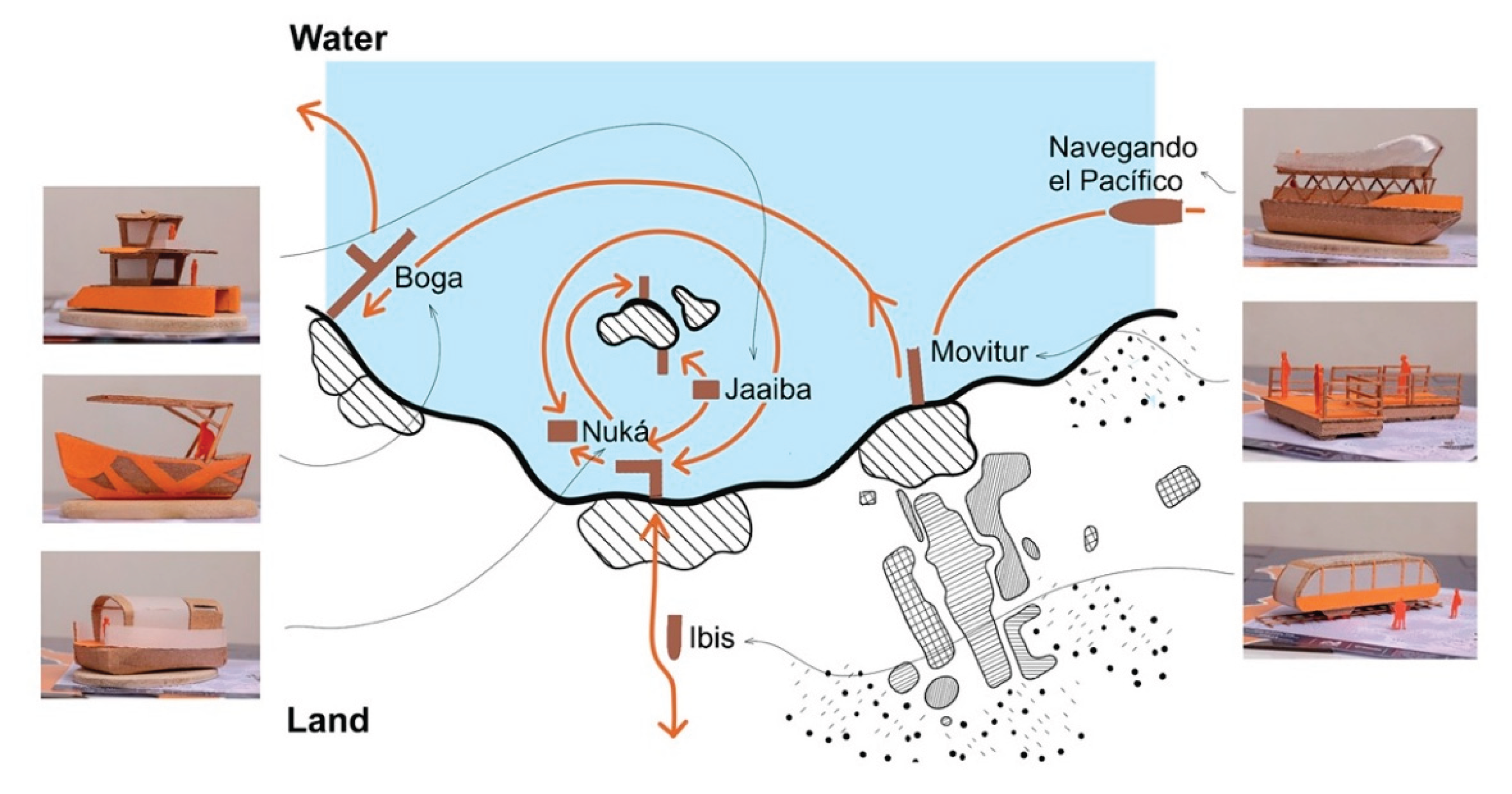
Figure 14 depicts the macro bioeconomy system, which is structured around yacht cruises -designated as Navegando el Pacífico- capable of docking at a network of modular ports known as Movitur. This configuration facilitates the transfer of passengers between different modes of tourism transportation, including connections to intermediate vessels and platforms offering a range of tourism-related services. These services may include dining experiences aboard the floating restaurant Jaaiba, birdwatching excursions within bays operated by Boga, or overnight accommodations provided en route on Nuká. From these nodes, visitors may continue their journeys to inland natural reserves using light electric trains, referred to as Ibis, thereby enabling integrated, low-impact access to mainland ecosystems and attractions.
In conclusion, recognizing that the future of the Corporation lies in products complemented by meaningful and well-integrated services, COTECMAR must broaden its perspective and acquire new capabilities to embrace the NPD of PSS. This shift underscores the need to transition from a product-centered NPD approach toward one that systematically incorporates additional service-related and experiential components.
In the context of visual health, the Corporation may draw inspiration from a holistic strategy that connects land- and water-based solutions. Such a system not only ensures access to essential healthcare services but also fosters a sense of collective support and inclusion, particularly for remote and underserved populations. Similarly, within the bioeconomy domain, the vision concepts demonstrate how an integrated system of services can substantially enrich the overall travel experience by seamlessly combining diverse tourism offerings. By linking passengers to differentiated experiences -ranging from gastronomic encounters to nature-based activities such as birdwatching- these concepts enhance the attractiveness and value of coastal exploration. Ultimately, the coherent interaction among these components reframes travel as an experience in which the journey itself becomes as meaningful as the destination.
This discussion extends beyond the current systems design perspective adopted by the Design and Engineering Division. It highlights the imperative to deliberately integrate service components alongside product development, thereby facilitating the adoption of a comprehensive PSS perspective within COTECMAR’s NPD processes.
4.1.3. Broadening COTECMAR Target Audience: Addressing Vulnerable Communities and High-End Consumers
The target audience emerges as a key differentiating factor among the proposed vision concepts. Several of these initiatives are explicitly oriented toward supporting vulnerable communities, particularly ethnic minorities that have historically been marginalized by centralized governmental structures. This category includes all vision concepts related to visual health -Mirá, Ve+allá, UMO, and Uramba- as well as one bioeconomy-oriented concept, Movitur.
In contrast, other vision concepts are directed toward visitors with medium purchasing power, as exemplified by Boga and Ibis, both situated within the bioeconomy domain. Additionally, a set of concepts targets high-end markets, including Jaaiba, Nuká, and Navegando el Pacífico.
These diverse audiences imply the development of projects and products with distinct characteristics, performance requirements, and value propositions. For the primary target group -vulnerable communities- there is a clear need for robust and durable products designed for long-term use. Such projects typically involve multiple stakeholders, including governmental bodies and development agencies. COTECMAR possesses substantial experience in the conceptualization, formulation, and implementation of initiatives with these attributes, positioning the Corporation favorably to address the needs of these communities while coordinating complex, multi-actor projects.
The secondary target group -tourists with middle purchasing power- requires the design of products whose aesthetics and functional attributes are aligned with the branding strategies of tourism operators. It is anticipated that these initiatives will involve private-sector actors who seek to implement such projects and who would perceive the Corporation as a reliable and competent partner for the design, development, and production of the required products. This segment represents a business domain in which COTECMAR already possesses considerable experience and, therefore, one that it could manage effectively within its current operational framework.
The tertiary target group -high-end markets- demands highly customized product specifications and a strong emphasis on experience-oriented design aimed at meeting elevated expectations of quality, exclusivity, and service. These projects typically operate under a buyer–supplier model, which may present challenges for COTECMAR due to its limited familiarity with this type of clientele. Addressing this segment would require the acquisition of new skill sets, as well as the integration of resources and multidisciplinary teams that are not presently part of the Corporation’s structure.
Considering these differentiated approaches to the NPD process, the Corporation stands at a pivotal juncture. Capitalizing on its extensive experience in developing solutions for vulnerable communities, while progressively building capabilities to engage with higher-end markets, will be essential for future business development. As COTECMAR navigates the complexities of stakeholder engagement and adapts to the demands of upscale clientele, it must embrace innovation, organizational learning, and skill enhancement. By doing so, the Corporation can bridge the gap between diverse market needs and its operational capacities, fostering sustainable growth and generating meaningful impact across all targeted segments.
4.2. Amplify Diverse Design Perspectives to Gain Flexibility at NPD
The ten vision concepts developed throughout this research broaden the panorama of how the Design and Engineering division could apply diverse design perspectives when embarking on an NPD process. Some of these vision concepts were conceived through a predominantly human-centered design approach, while others emphasize production processes or environmental considerations.
Examples of vision concepts that adopt a more human-centered approach include Mirá, UMO, Ve+allá, and Uramba, particularly within the healthcare context. These projects employ co-design strategies that improve access for medical personnel facing mobility challenges, either by enabling professionals to reach remote villages or by facilitating the movement of patients to care centers. Within the bioeconomy context, Boga emphasizes participatory design, allowing for customization; Movitur applies principles of universal design to create artifacts usable by all people; and Jaaiba explicitly engages with experience design, aiming to optimize interactions between people and artifacts over time.
Other vision concepts place a stronger emphasis on production conditions and processes. Boga and Nuká, for instance, explore the integration of components manufactured by COTECMAR with elements produced by local communities. Movitur highlights modularity as a strategy to enable scalability and adaptability, while Mirá exemplifies the application of innovative technologies, particularly in the development of amphibious vessels.
Finally, several vision concepts foreground environmental considerations. Boga incorporates eco-design principles and the use of recycled materials, while Ibis proposes a mobility service designed to minimize negative impacts on sensitive ecosystems.
In summary, these vision concepts illustrate a multifaceted approach to design within the Design and Engineering division, demonstrating how innovative thinking can balance and integrate human needs, production capabilities, and environmental responsibility within the NPD process.
4.3. Embracing Collaboration in a Long-Term Perspective
Acknowledging that COTECMAR does not possess the necessary resources and expertise to simultaneously undertake all proposed new projects, it is prudent to implement these initiatives in a phased manner, thereby establishing a roadmap for NPD. Such a roadmap would be beneficial for the Design and Engineering, as well as the R&D+i divisions, as it would facilitate the effective allocation of resources and coordination of team efforts toward a unified strategic objective. Although the roadmap itself cannot be included due to confidentiality considerations, the following are some of the recommendations derived from that process.
It is advisable to integrate Advanced Design within the NPD process as well as offer it as a consultancy service. The exploratory activities undertaken by Advanced Design, structured as Research through Design exercises, encompass both research and creation -fundamental domains for each division involved. This underscores the necessity for the R&D+i division and the Design and Engineering division to collaborate closely. Although such collaboration is currently underway, it is imperative that these two divisions collectively form a dedicated Advanced Design cell, convening periodically to conduct explorations of this nature. This team would address internal initiatives, employing Advanced Design methodologies during the fuzzy front-end of the NPD process, as well as undertake external ventures as part of the consultancy services portfolio for regional clients.
This challenge necessitates the acquisition of new knowledge related to Advanced Design, as well as PSS as previously mentioned, in addition to contact update exercises that are aligned with the Corporation’s mission.
In summary, it is essential for COTECMAR to adopt a phased approach to NPD, prioritize the integration of Advanced Design both as a core component of the process and as a consultancy service, and foster a dedicated, collaborative cell bridging R&D+i with Design and Engineering. By working together and gradually building expertise in Advanced Design and related domains, COTECMAR will be well-positioned to optimize resource allocation, spur innovation, and meet the evolving needs of its clients. Through this unified and forward-thinking strategy, the organization can confidently navigate future challenges and seize new opportunities for growth and impact.
5. Conclusions
This manuscript presents ten vision concepts conceived to identify potential opportunities for COTECMAR in Colombia’s Pacific Region. These concepts were developed through the application of DIVE, an Advanced Design technique, within the context of the Colombian shipbuilding industry. Overall, these explorations provide a foundation for discussion on strategies to enhance NPD within the Corporation and among other stakeholders in the Movement Industries sector.
The discussion highlights how vision concepts can function as a strategic mechanism to expand the scope of NPD by extending the Corporation’s product portfolio, encouraging the adoption of a PSS approach, and broadening target audiences. In this sense, Advanced Design enables the integration of diverse design perspectives, increasing flexibility within COTECMAR’s NPD processes and opening the possibility for more collaborative, long-term approaches.
Although this research project has consistently received support from the Corporation, the projects were developed by external design teams. Consequently, future iterations are expected to involve personnel from the R&D+i division, as well as from Design and Engineering, fostering internal capabilities and deeper organizational learning.
In the near future, the Advanced Design strategy -including the NPD roadmap- is expected to be presented to COTECMAR’s board of directors. Additionally, this research project intends to continue contributing to Advanced Design initiatives by examining how this design perspective can support territorial development. In the short term, planned actions include the production of a documentary video to disseminate this design approach more broadly, as well as the development of a digital version of DIVE to facilitate the adoption of this technique within the Corporation.
Funding
This project was made possible through funding provided by the Ministry of Science, Technology, and Innovation of Colombia, under the framework of the Call for Mission-Oriented Postdoctoral Stays 934 of 2023.
Data Availability Statement
We encourage all authors of articles published in MDPI journals to share their research data. In this section, please provide details regarding where data supporting reported results can be found, including links to publicly archived datasets analyzed or generated during the study. Where no new data were created, or where data is unavailable due to privacy or ethical restrictions, a statement is still required. Suggested Data Availability Statements are available in section “MDPI Research Data Policies” at https://www.mdpi.com/ethics.
Acknowledgments
The project was executed at COTECMAR, the Science and Technology Corporation for the Development of Naval, Maritime, and Riverine Industry, with the full support of the R&D+i Division, as well as the Design and Engineering Division. Collaboration was established with the Faculty of Arts at the National University of Colombia and the Faculty of Architecture and Design at the Pontifical Javeriana University for the project’s development. The contributions of professors—Juan Mendoza-Collazos, David Artemio Rios, José Ramírez, Paola Sánchez, Edgar Hernández, and Giovanni Ferroni—and the students associated with each project were instrumental to its success. Óptica Alemana E y H Schmidt also played a significant role in developing projects related to visual health, particularly through the involvement of its Chief Executive Officer, Gonzalo Gómez.
Conflicts of Interest
The authors declare no conflicts of interest.
Abbreviations
The following abbreviations are used in this manuscript:
| COTECMAR | The Science and Technology Corporation for the Development of the Naval, Maritime, and Riverine Industry |
| R&D+i | Research, Development, and Innovation |
| NPD | New Product Development |
| DIVE | Design, Innovation, Vision, and Exploration |
| PSS | Product–Service System |
Appendix A
Detailed technical sheets for the four vision concepts that explore near-future scenarios related to health sovereignty (in Spanish) are included here: https://drive.google.com/drive/folders/12x7pklI39QCBQex8apJNZ_O_h2oJmNSS?usp=sharing
Appendix B
Detailed technical sheets for the six vision concepts that examine alternative near-future scenarios associated with the bioeconomy (in Spanish) are included here: https://drive.google.com/drive/folders/1D45gGOk6uammqj7ox1v9RX6BMAbNMpP2?usp=sharing
References
- Colombia Productiva, “Guías sectoriales,” 2020. [Online]. Available: https://www.innpulsacolombia.com/centro-de-recursos/documentos/. [Accessed 2025].
- D. N. d. P. d. Colombia, Política nacional de reindustrialización, Bogotá: Consejo Nacional de Política Económica y Social, 2023.
- COTECMAR, “¿Quiénes somos? COTECMAR,” 2022. [Online]. Available: https://www.cotecmar.com/quienes-somos. [Accessed 2025].
- COTECMAR, “I+D+i COTECMAR,” 2022. [Online]. Available: https://www.cotecmar.com/ciencia-y-tecnologia. [Accessed 2025].
- COTECMAR, “Design and Engineering division COTECMAR,” 2022. [Online]. Available: https://www.cotecmar.com/diseno_ingenieria. [Accessed 2025].
- N. Tzokas, E. J. Hultink and S. Hart, “Navigating the new product development process,” Industrial marketing management, vol. 33, no. 7, pp. 619-626, 2004.
- P. J. Stappers, “Doing design as a part of doing research,” Design Research Now, p. 81–91, 2007.
- P. J. Stappers and E. Giaccardi, “Research through design,” The Encyclopedia of Human-Computer Interaction, vol. 2nd, 2017.
- J. Auger, Why robot?: speculative design, the domestication of technology and the considered future, London: Royal College of Art, 2012.
- A. Dunne, Hertzian tales: Electronic products, aesthetic experience, and critical design, London, U.K.: The MIT Press, 2008.
- A. Dunne and F. Raby, Speculative everything: design, fiction, and social dreaming, Cambridge, MA: MIT Press, 2013.
- G. Ceppi, “Understanding the Past While Planning the Future: Times and Ambitions About AdvanceDesign,” in Advanced Design Cultures: Long-Term Perspective and Continuous Innovation, Milano, Italy, Springer International Publishing, 2014, pp. 53-67.
- M. Mollon and A. Gentes, “The Rhetoric of Design for Debate: triggering conversation with an” uncanny enough” artefact,” Design’s Big Debates: Pushing the Boundaries of Design Research-DRS 2014, vol. II, no. 2014, pp. 1049-1061, 2014.
- D. Hales, “Design fictions an introduction and provisional taxonomy,” Digital Creativity, vol. 1, no. 24, pp. 1-10, 2013.
- A. Deserti, “Maps and Tools for AdvanceDesign,” in Advanced Design Cultures: Long-Term Perspective and Continuous Innovation, Milano, Italy, Springer International Publishing, 2014, pp. 37-51.
- M. Celi, “Preliminary Studies on AdvanceDesign,” in Advanced Design Cultures: Long-Term Perspective and Continuous Innovation , Milano, Italy, Springer International Publishing, 2014, pp. 19-36.
- J. R. Mejia Sarmiento, Vision Concepts for Small- and Medium-Sized Enterprises: Developing a Design-Led Futures Technique to Boost Innovation, Delft: TUDelft, 2018.
- J. R. Mejia Sarmiento, G. Pasman, E. J. Hultink and P. J. Stappers, “‘Concept cars’ as vehicles for change in SMEs,” Temes de Disseny, Design Futures Now: Literacies and Making, vol. 36, no. III, pp. 40-69, 2020.
- N. Crea, “Advanced transportation design,” in Advanced Design Cultures: Long-Term Perspective and Continuous Innovation, Milano, Italy, Springer International Publishing, 2014, pp. 97-107.
- J. R. Mejia Sarmiento, E. J. Hultink, G. Pasman and P. J. Stappers, “Concept cars as a design-led futures technique,” in 23rd Innovation and Product Development Management Conference, Glasgow, U.K., 2016.
- E. Sanders and P. J. Stappers, Convivial toolbox: Generative research for the front end of design, Amsterdam: BIS Publishers, 2012.
- Mercedes Benz, “Revelation of luxury: Vision Mercedes-Maybach 6 Cabriolet,” 2017. [Online]. Available: https://www.mercedes-benz.com/en/design/concept-cars/revelation-of-luxury-vision-mercedes-maybach-6-cabriolet/ . [Accessed 2026].
- J. R. Mejia Sarmiento, A. Chitiva, T. Van Bruinessen and W. Verhoeff, “DIVE in SMEs: a design-led technique to explore product and service futures,” Touchpoint, The Journal of Service Design, vol. 10, no. 2, p. 56–61, 2019.
- J. R. Mejia Sarmiento, “DIVE 2.0,” 2022. [Online]. Available: https://dive.pktweb.com/dive-2-0-es/. [Accessed 2025].
- J. R. Mejia Sarmiento, L. W. L. Simonse and E. J. Hultink, “Design of vision concepts to explore the future: Nature, context and design techniques,” in 5th CIM –Creativity and Innovation Management– Community Workshop, Enschede, The Netherlands, 2015.
- J. R. Mejia Sarmiento, G. Pasman, E. J. Hultink and P. J. Stappers, “Developing DIVE, a design-led futures technique for SMEs,” in IASDR Conference Re: Research, Cincinnati, Ohio, USA, 2017.
- N. E. Mosquera Perea, El Chocó en vivo, Bogotá: Editorial Manual Arroyave, 2022.
- Fondo Banca de Desarrollo Territorial, “Razones socioeconómicas para mayor calidad de vida,” Bogotá, 2022.
- N. Bohórquez, C. Guerrero, M. A. Manga and D. Romero Torres, “Instituto Humboldt Colombia,” 2008.
- K. G. Borja-Acosta and S. Córdoba-Córdoba, “Colecciones biológicas Instituto Humboldt,” 2021.
- J. C. Mendoza-Collazos and J. R. Mejia Sarmiento, Programa del Observatorio de diseño 7: Movilidad Sostenible, Bogotá: Universidad Nacional de Colombia, 2024.
- P. Sánchez, Programa del curso Diseño de experiencias con enfoque estratégico, Bogotá: Pontificia Universidad Javeriana, 2024.
- “Óptica Alemana E y H Schmidt,” [Online]. Available: https://opticaalemanahsm.com/nosotros/. [Accessed 2026].
- S. Lingegård, “Product Service Systems,” in Business models towards a circular economy, 2020.
Figure 1.
Concept car: Vision Mercedes Maybach 6 Cabriolet; this non-commercial imaginary artifact explores the blending between a sophisticated luxury grand tourer and an all-electric powerful engine. Image courtesy of the Mercedes Benz webpage.
Figure 1.
Concept car: Vision Mercedes Maybach 6 Cabriolet; this non-commercial imaginary artifact explores the blending between a sophisticated luxury grand tourer and an all-electric powerful engine. Image courtesy of the Mercedes Benz webpage.
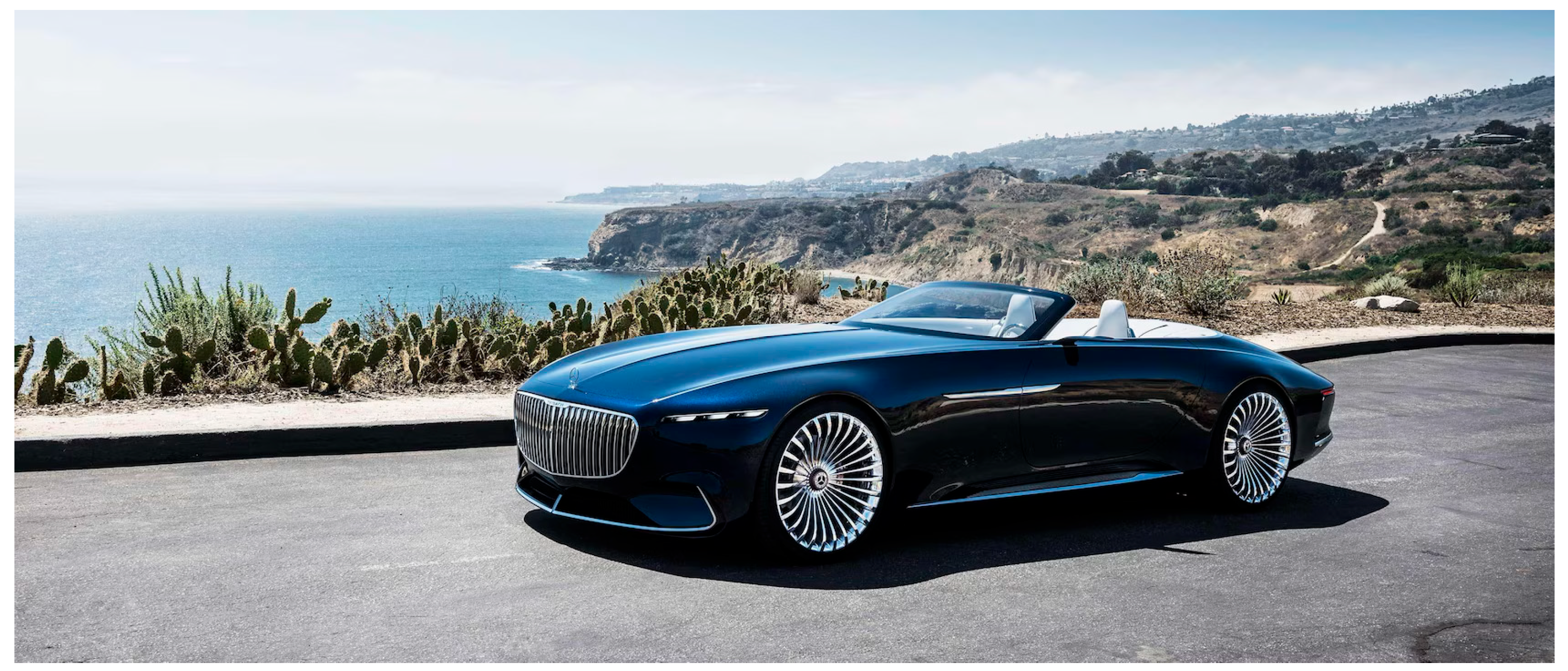
Figure 2.
Overall structure of DIVE. Image provided by the author.
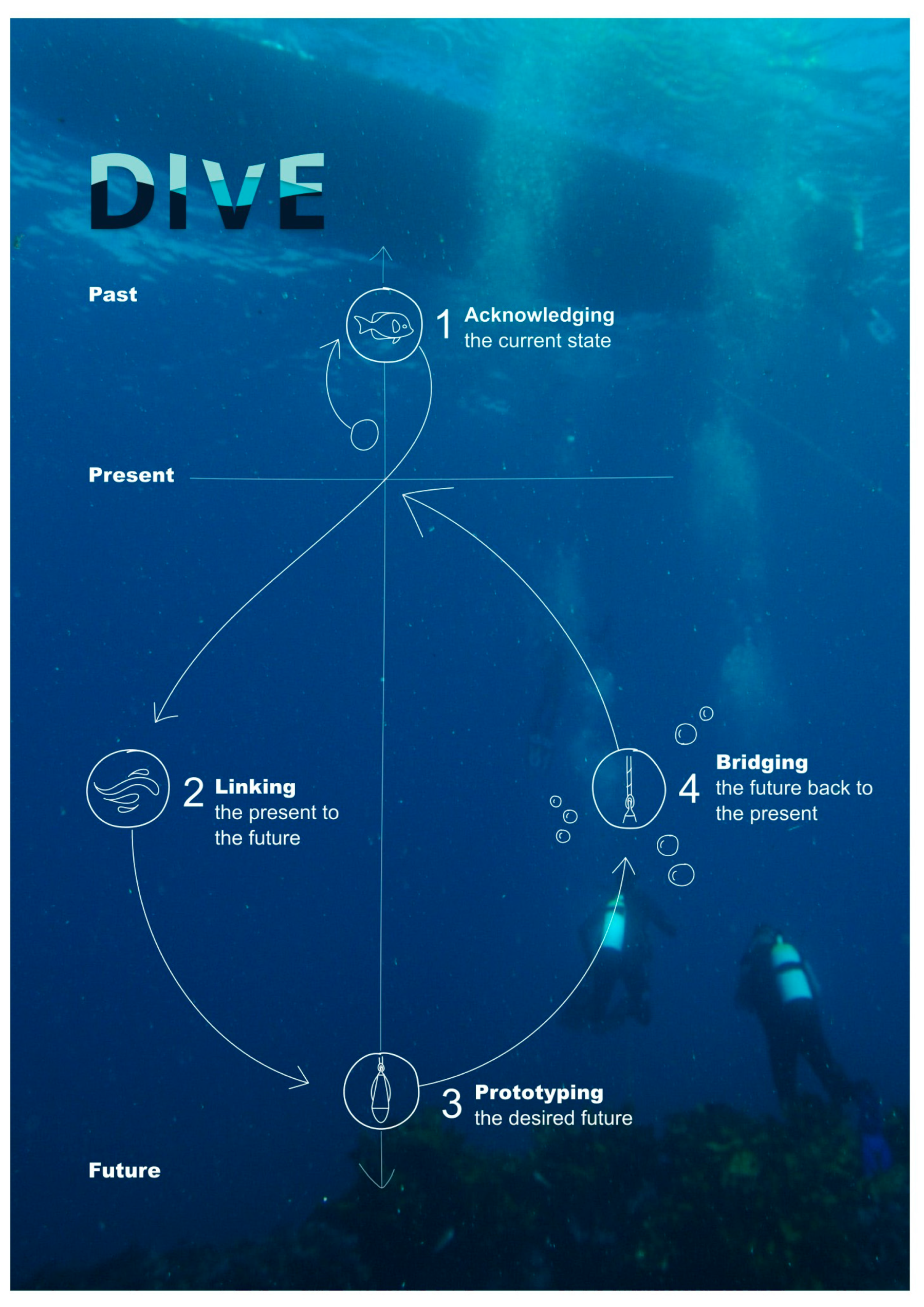
Figure 3.
A low-resolution prototype of the vision concept Mirá. The authors are Cristian Sarmiento, Rodrigo Martínez, and Jairo Medina. The image was captured by Esteban Rios, and the model was created by Felipe Páez.
Figure 3.
A low-resolution prototype of the vision concept Mirá. The authors are Cristian Sarmiento, Rodrigo Martínez, and Jairo Medina. The image was captured by Esteban Rios, and the model was created by Felipe Páez.
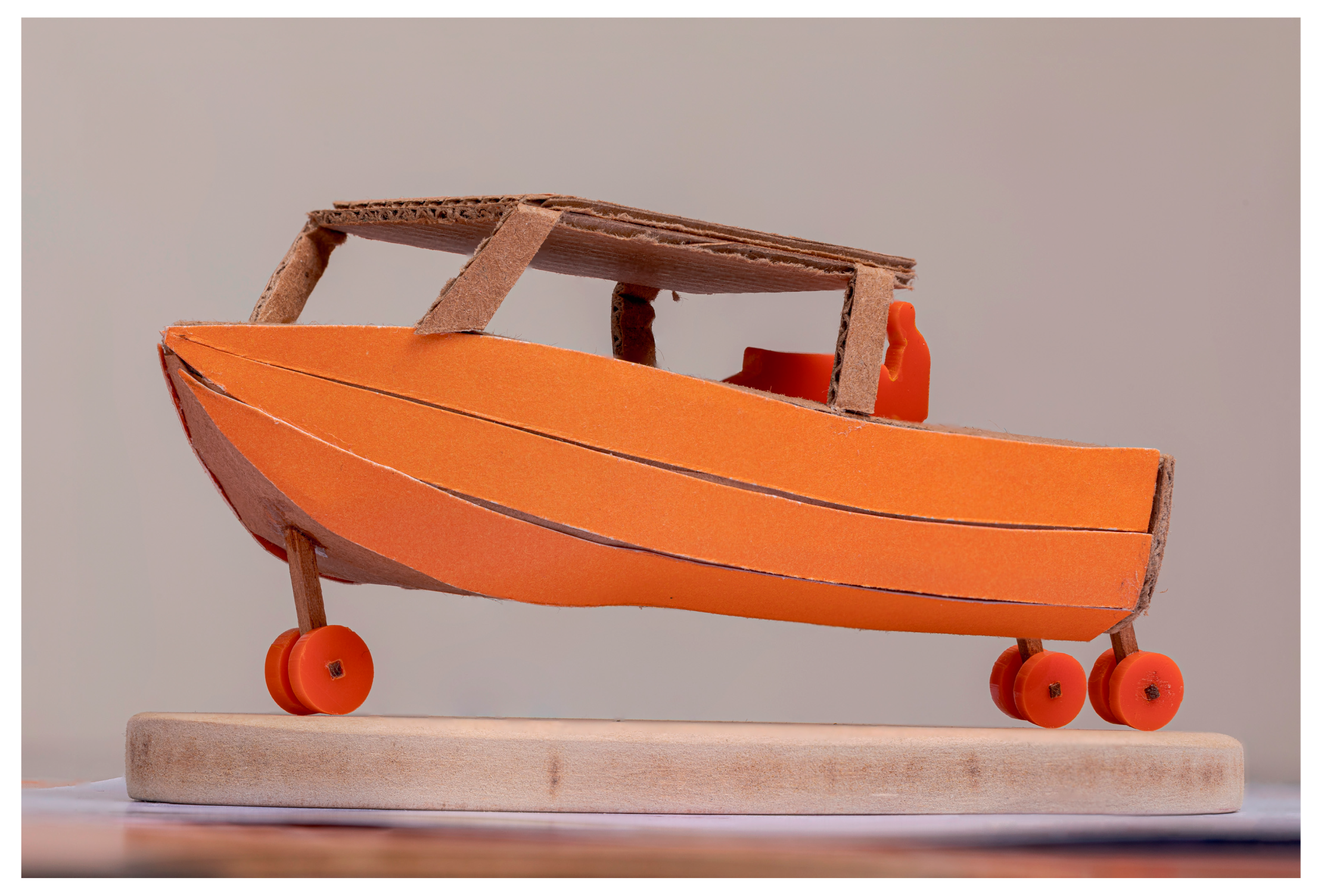
Figure 4.
A low-resolution prototype of the vision concept Ve+allá. The authors are Angie Vanessa García Cuero, Mayerlin Gasca Iglesias, and Daniela Burgos Jimenez. The image was captured by Esteban Rios, and the model was created by Felipe Páez.
Figure 4.
A low-resolution prototype of the vision concept Ve+allá. The authors are Angie Vanessa García Cuero, Mayerlin Gasca Iglesias, and Daniela Burgos Jimenez. The image was captured by Esteban Rios, and the model was created by Felipe Páez.
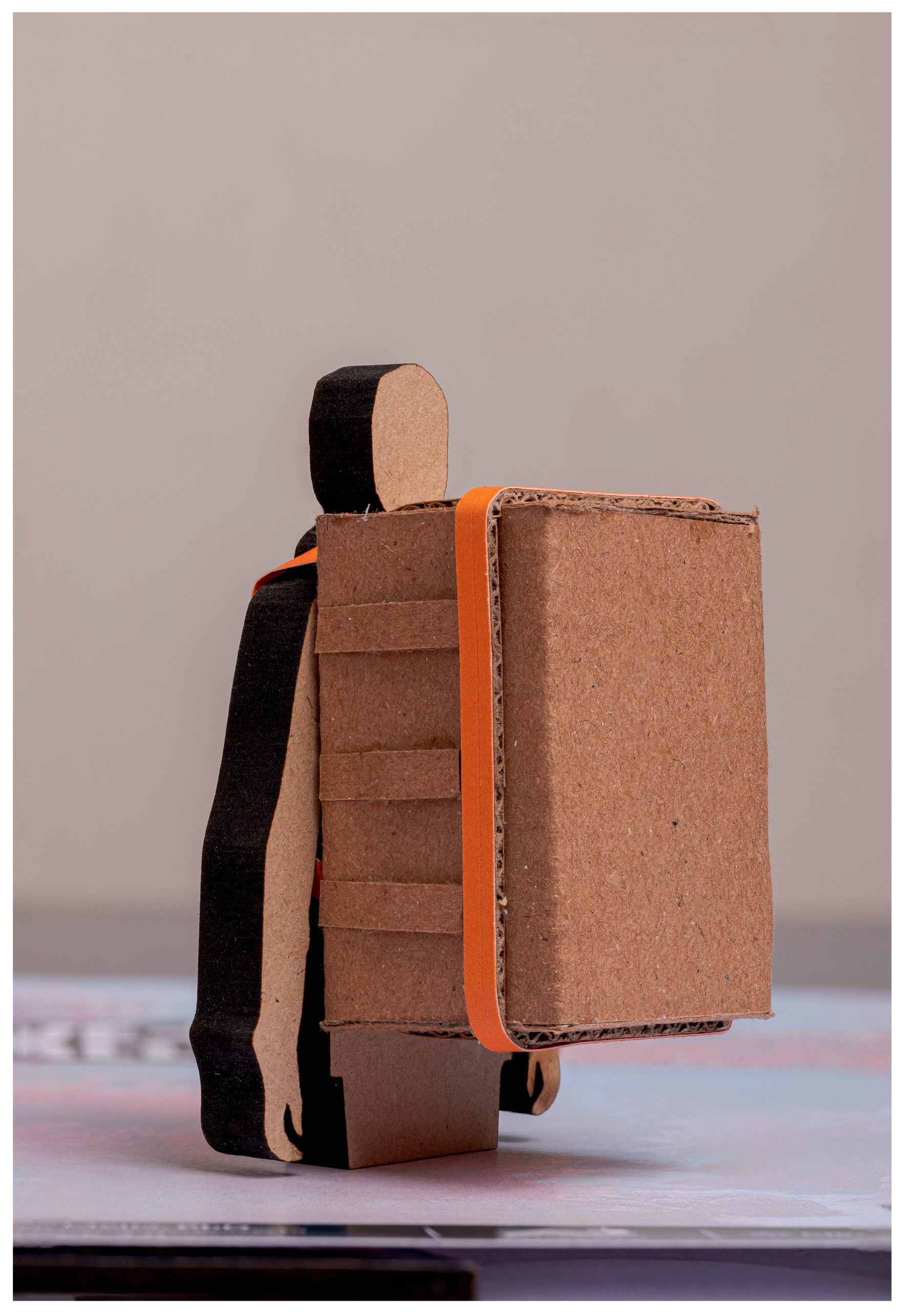
Figure 5.
A low-resolution prototype of the vision concept UMO. The authors are Vanesa Andrade, Mateo Belalcázar, and David Muñoz. The image was captured by Esteban Rios, and the model was created by Felipe Páez.
Figure 5.
A low-resolution prototype of the vision concept UMO. The authors are Vanesa Andrade, Mateo Belalcázar, and David Muñoz. The image was captured by Esteban Rios, and the model was created by Felipe Páez.
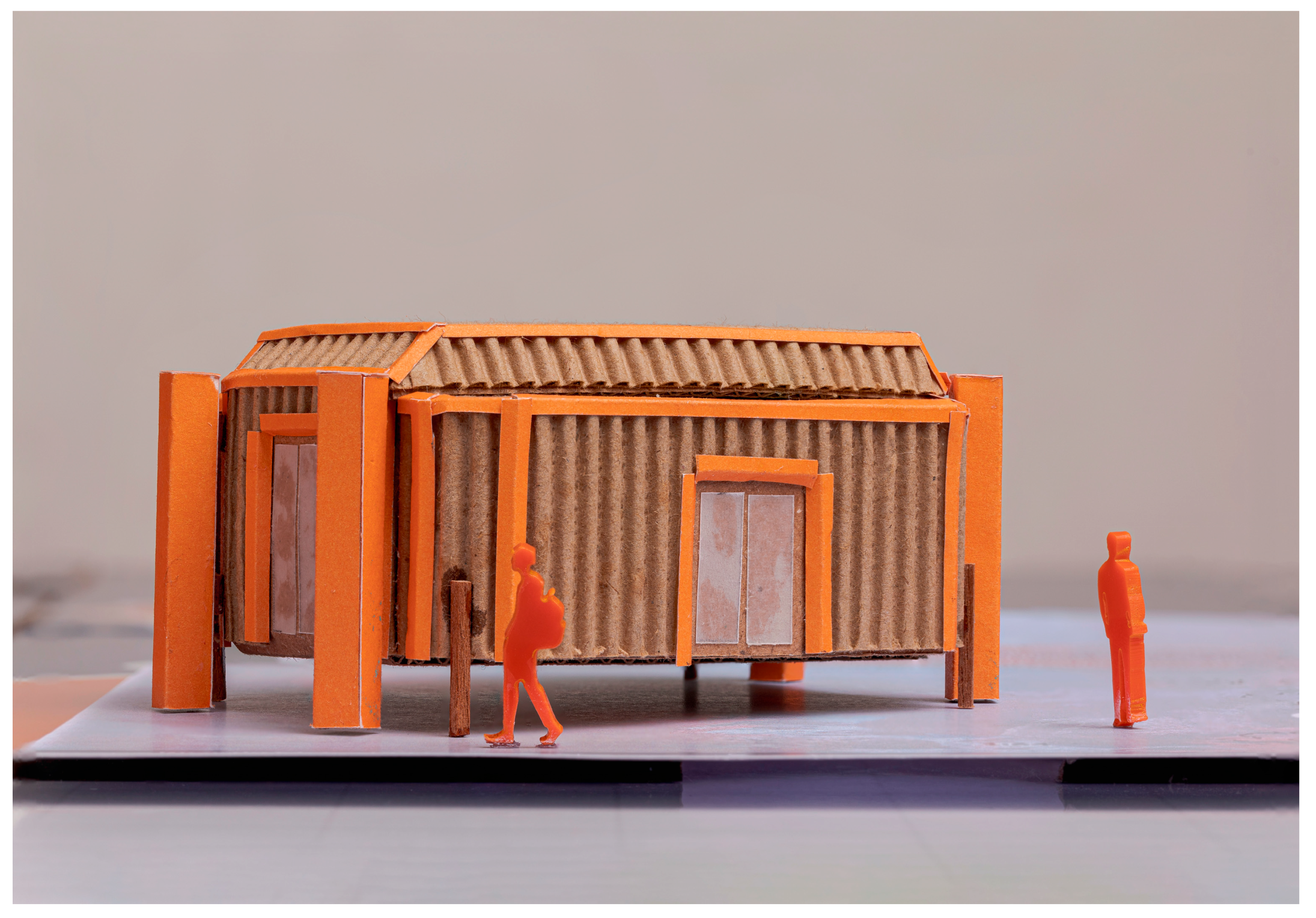
Figure 6.
A low-resolution prototype of the vision concept Uramba. The authors are Maday Ramirez, Oscar Quiroga, and Felipe Páez. The image was captured by Esteban Rios, and the model was created by Felipe Páez.
Figure 6.
A low-resolution prototype of the vision concept Uramba. The authors are Maday Ramirez, Oscar Quiroga, and Felipe Páez. The image was captured by Esteban Rios, and the model was created by Felipe Páez.
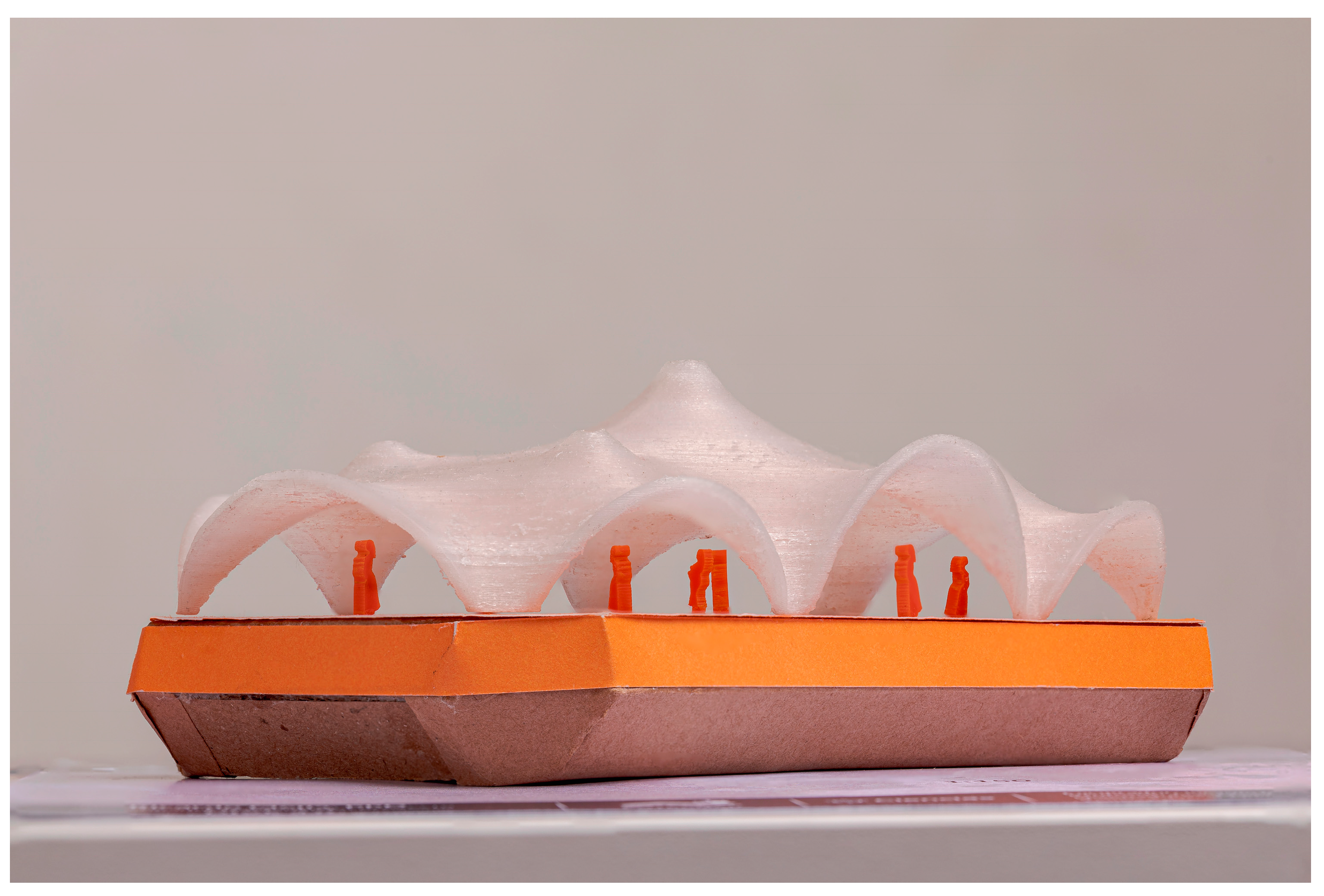
Figure 7.
A low-resolution prototype of the vision concept Boga. The authors are Jaisson Galindo, Miguel Navarro, and Maria Paula Pacheco. The image was captured by Esteban Rios, and the model was created by Felipe Páez.
Figure 7.
A low-resolution prototype of the vision concept Boga. The authors are Jaisson Galindo, Miguel Navarro, and Maria Paula Pacheco. The image was captured by Esteban Rios, and the model was created by Felipe Páez.
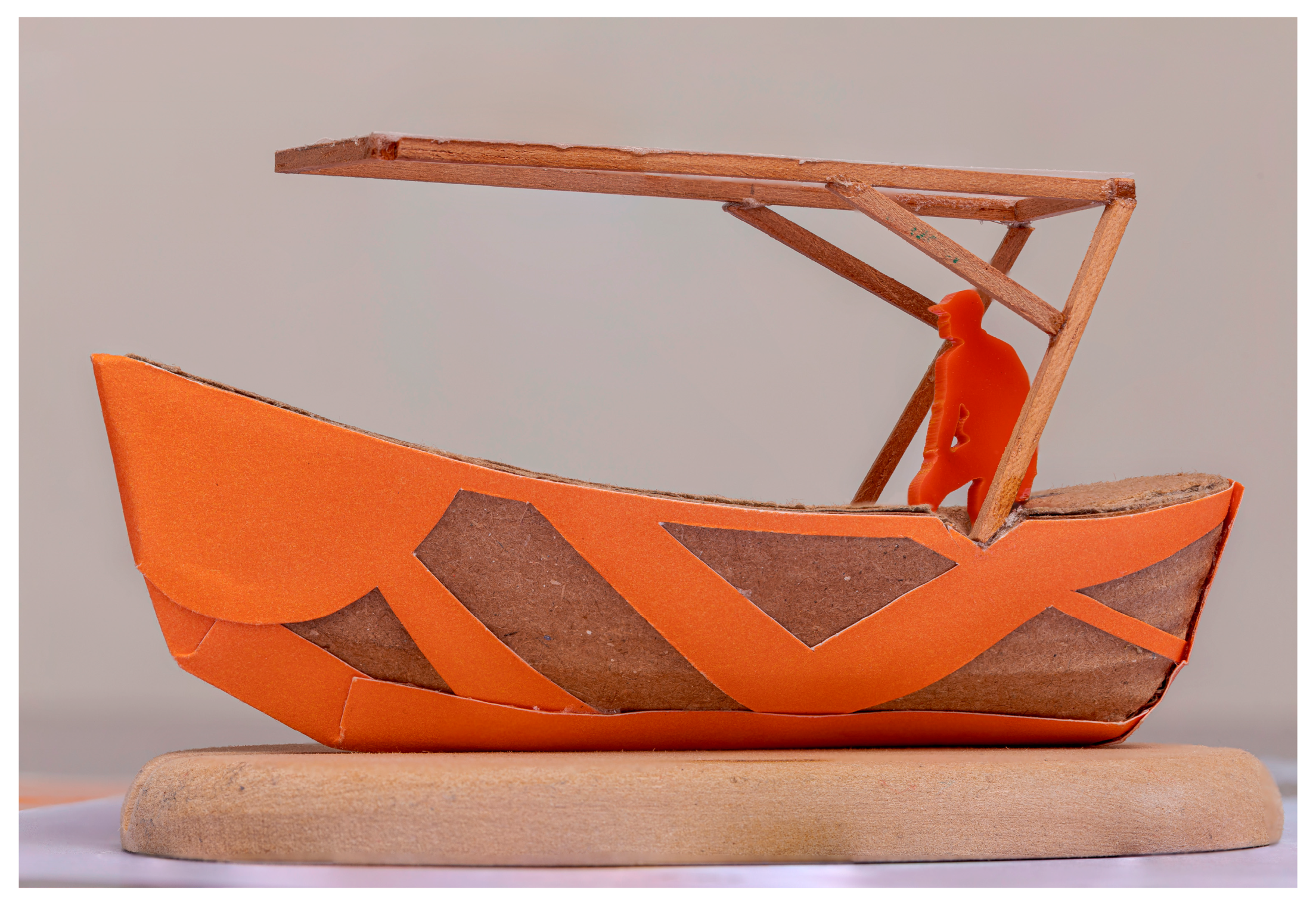
Figure 8.
A low-resolution prototype of the vision concept Nuká. The authors are Germán León, Catalina Moreno, and Sarah Velasco. The image was captured by Esteban Rios, and the model was created by Felipe Páez.
Figure 8.
A low-resolution prototype of the vision concept Nuká. The authors are Germán León, Catalina Moreno, and Sarah Velasco. The image was captured by Esteban Rios, and the model was created by Felipe Páez.
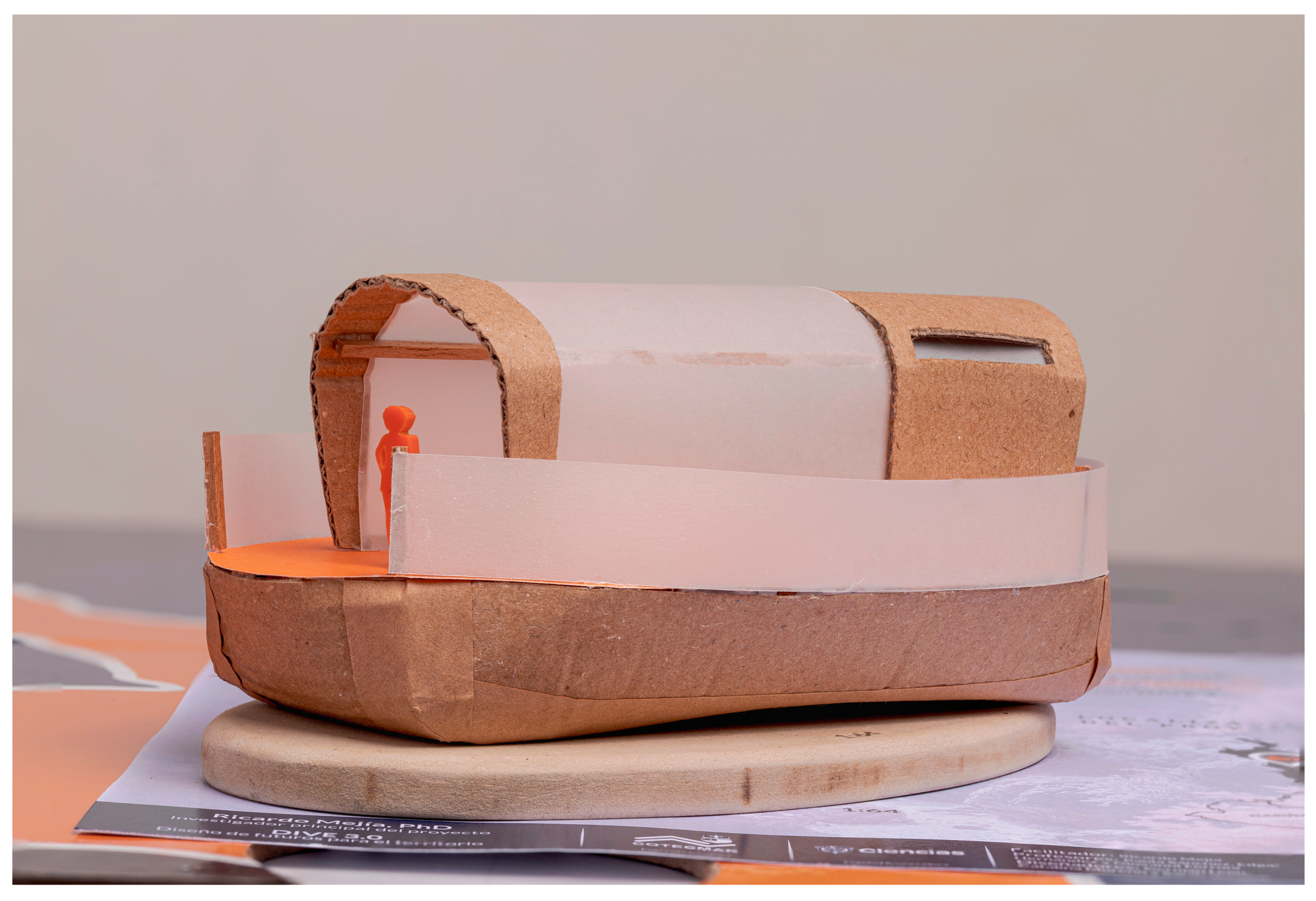
Figure 9.
A low-resolution prototype of the vision concept Jaaiba. The authors are Sara Forero, Sofía Jamaica, Estefanía Munar, and María José Benítez. The image was captured by Esteban Rios, and the model was created by Felipe Páez.
Figure 9.
A low-resolution prototype of the vision concept Jaaiba. The authors are Sara Forero, Sofía Jamaica, Estefanía Munar, and María José Benítez. The image was captured by Esteban Rios, and the model was created by Felipe Páez.
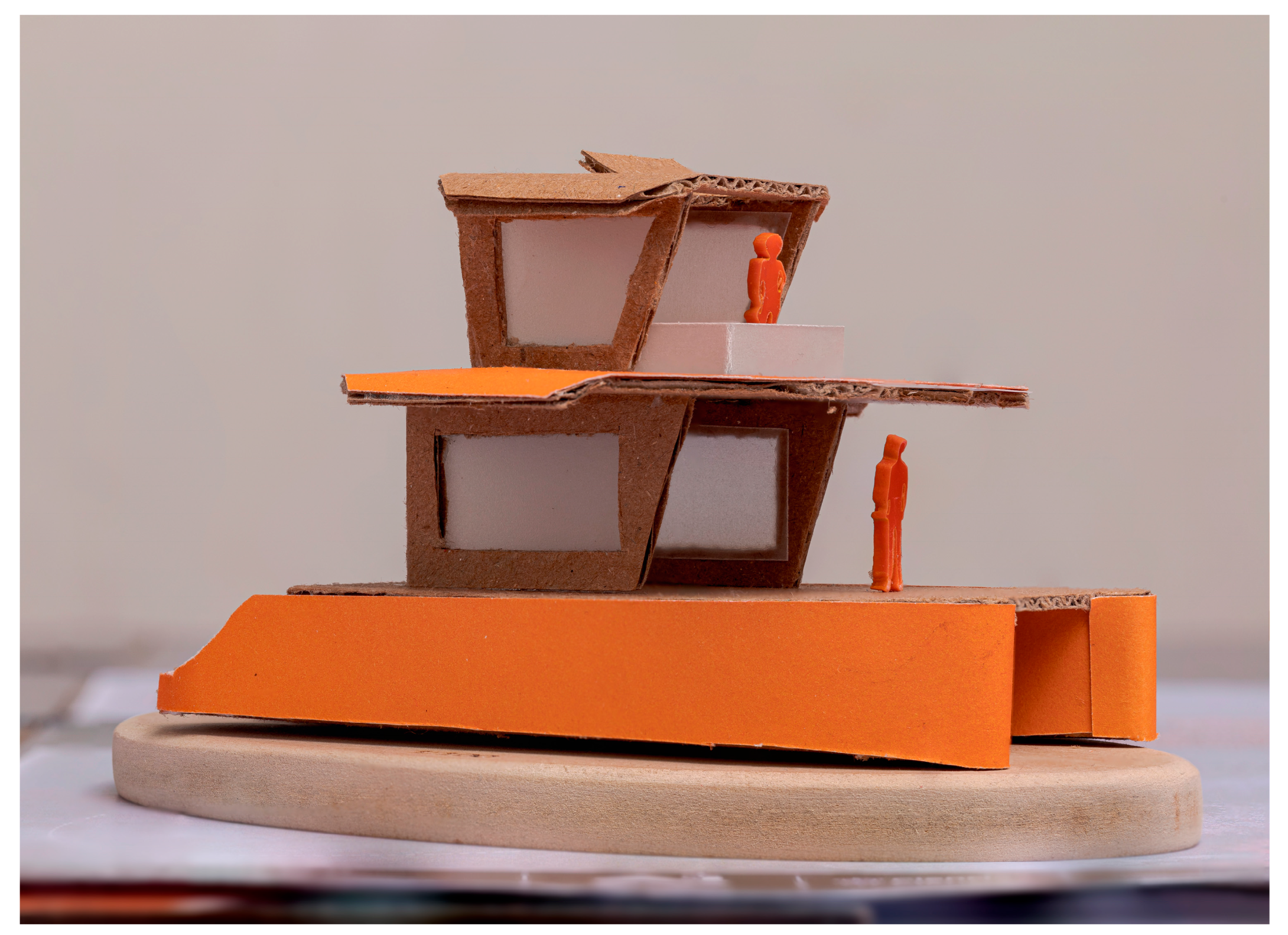
Figure 10.
A low-resolution prototype of the vision concept Movitur. The authors are Jeferson Avalo, Brayan Ortiz, Camila Ramos, and Yeimy Guerrero. The image was captured by Esteban Rios, and the model was created by Felipe Páez.
Figure 10.
A low-resolution prototype of the vision concept Movitur. The authors are Jeferson Avalo, Brayan Ortiz, Camila Ramos, and Yeimy Guerrero. The image was captured by Esteban Rios, and the model was created by Felipe Páez.
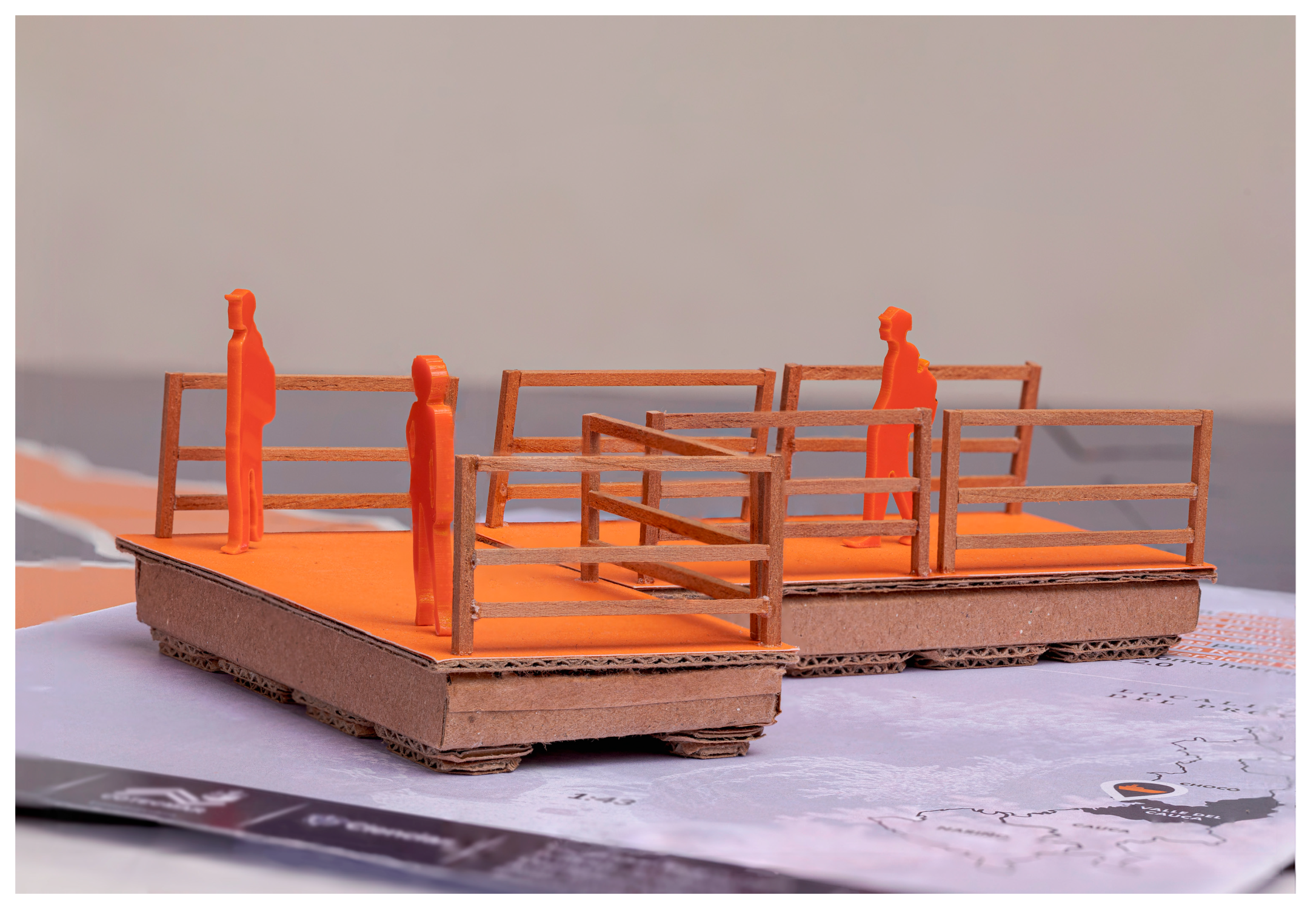
Figure 11.
A low-resolution prototype of the vision concept Navegando el Pacífico. The authors are Gabriela Acevedo, Santiago Díaz, and Emanuel Mendoza. The image was captured by Esteban Rios, and the model was created by Felipe Páez.
Figure 11.
A low-resolution prototype of the vision concept Navegando el Pacífico. The authors are Gabriela Acevedo, Santiago Díaz, and Emanuel Mendoza. The image was captured by Esteban Rios, and the model was created by Felipe Páez.
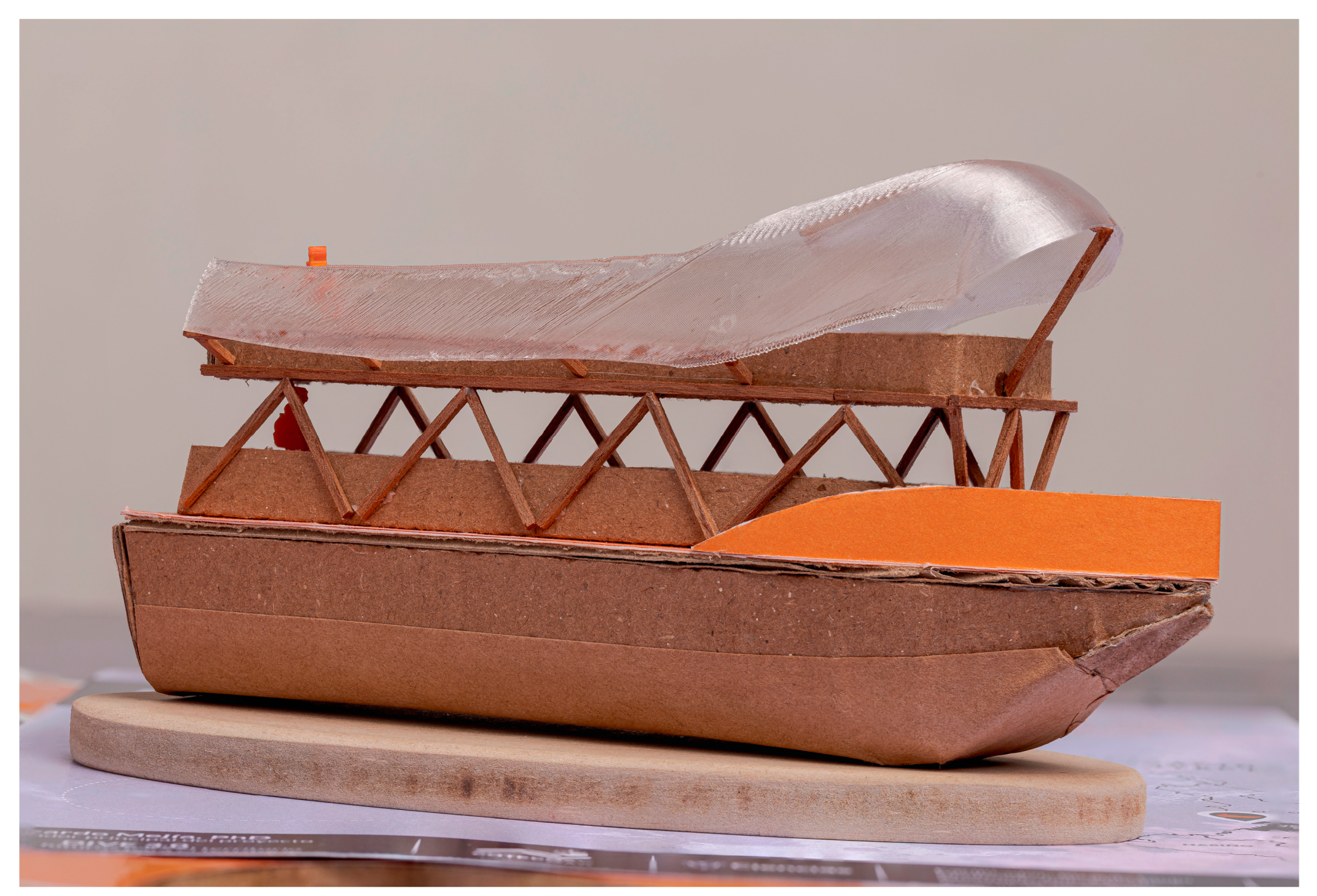
Figure 12.
A low-resolution prototype of the vision concept Ibis. The authors are Laura Pantoja, Gabriela Londoño, and María Alejandra Amaya. The image was captured by Esteban Rios, and the model was created by Felipe Páez.
Figure 12.
A low-resolution prototype of the vision concept Ibis. The authors are Laura Pantoja, Gabriela Londoño, and María Alejandra Amaya. The image was captured by Esteban Rios, and the model was created by Felipe Páez.
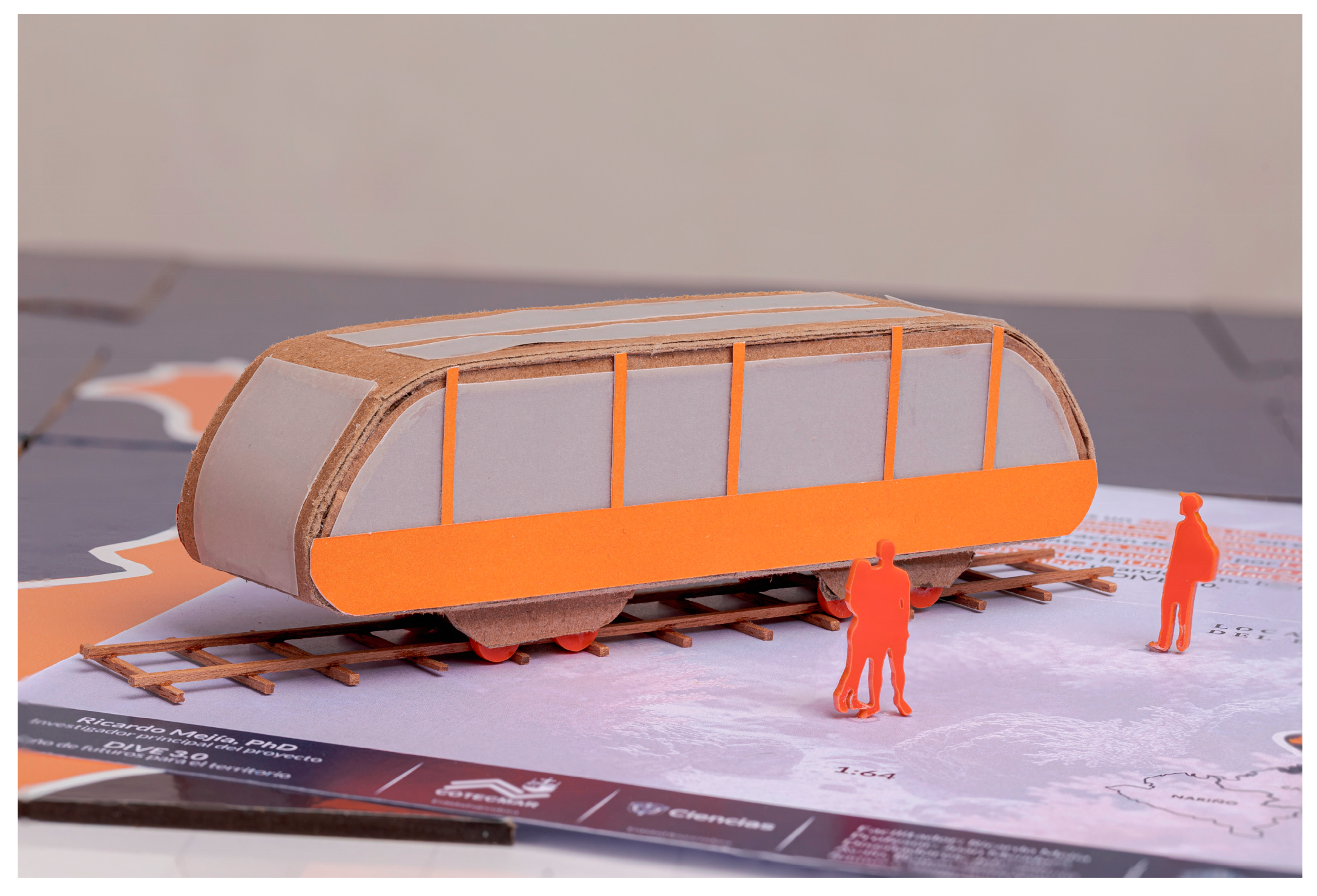
Figure 13.
An illustration of the macro (visual) health system. Image courtesy of the author.
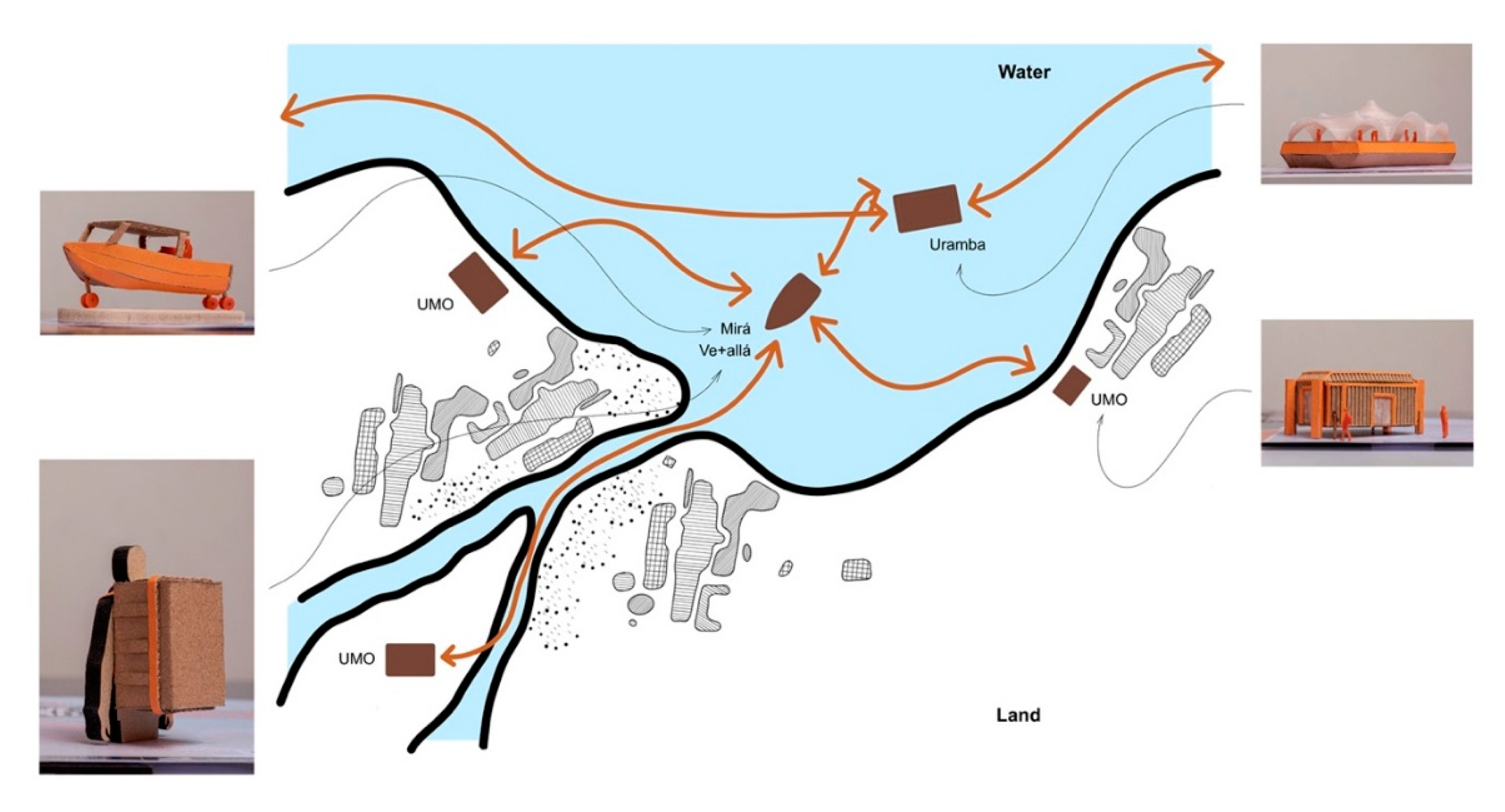
Figure 14.
An illustration of the macro bioeconomy system. Image courtesy of the author.
Disclaimer/Publisher’s Note: The statements, opinions and data contained in all publications are solely those of the individual author(s) and contributor(s) and not of MDPI and/or the editor(s). MDPI and/or the editor(s) disclaim responsibility for any injury to people or property resulting from any ideas, methods, instructions or products referred to in the content. |
© 2026 by the authors. Licensee MDPI, Basel, Switzerland. This article is an open access article distributed under the terms and conditions of the Creative Commons Attribution (CC BY) license (http://creativecommons.org/licenses/by/4.0/).
Copyright: This open access article is published under a Creative Commons CC BY 4.0 license, which permit the free download, distribution, and reuse, provided that the author and preprint are cited in any reuse.


