

Submitted:
27 January 2026
Posted:
28 January 2026
You are already at the latest version
Abstract
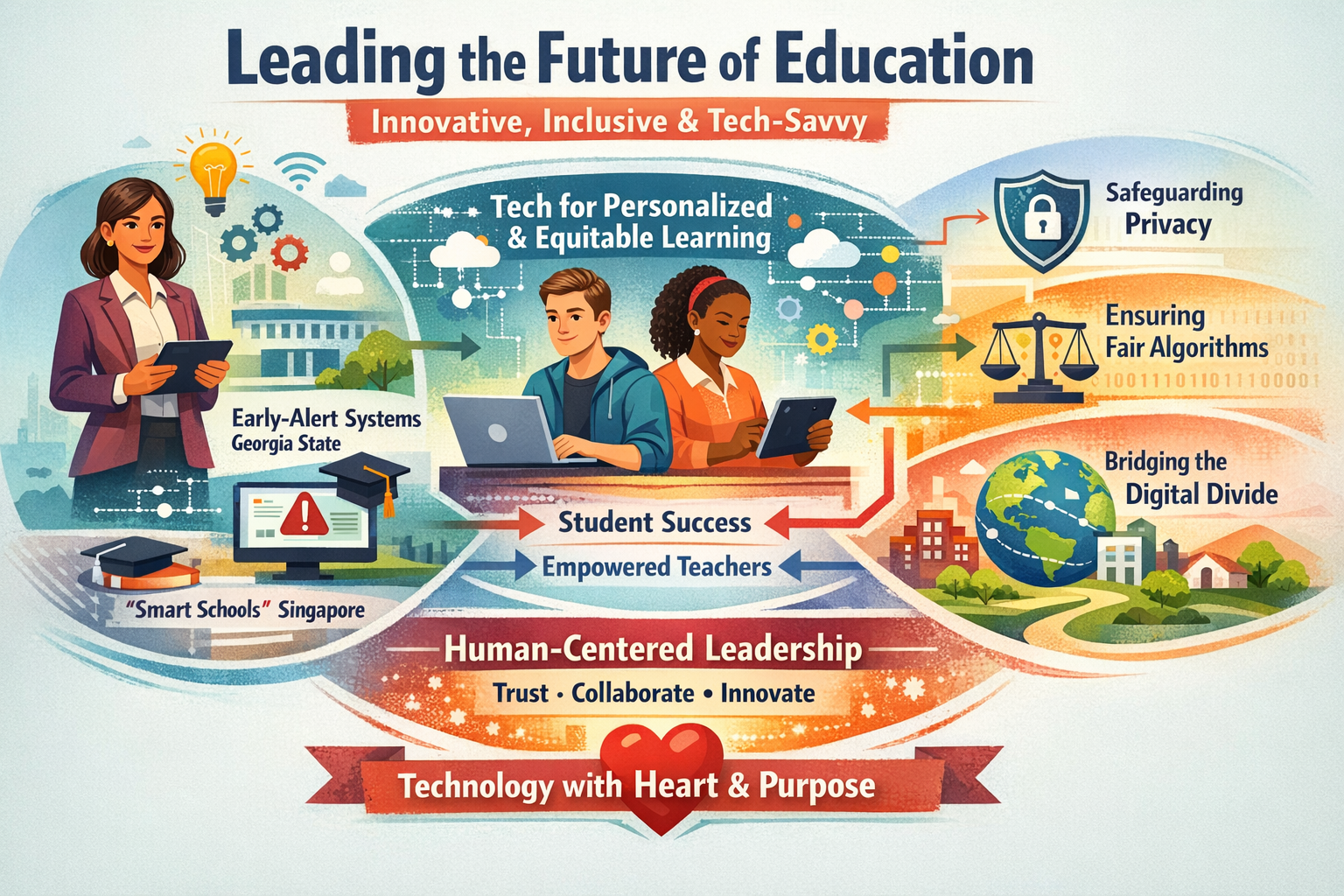
In the world of education that is evolving so quickly today, leadership isn’t just about administration it’s about engaging, innovating, and making sure that every student has a chance to succeed. The piece looks at the ways in which progressive educators are embracing technology not simply as a tool but as a pathway to more personalized, equitable, and efficient learning environments. With case studies such as Georgia State University’s early-alert systems that help students stay on course, Singapore’s responsive “Smart Schools,” and adaptive platforms that accommodate learners where they stand, we watch as purposeful technology use transforms results. But this tribulation engages with real human implications: safeguarding student privacy, ensuring fairness in algorithmic decisions, and bridging the digital divide so that no community is neglected. Now the article argues that effective leadership demands that one be technologically savvy and person-cantered (we need to trust each other, collaborate, and grow inclusively). Combining ingenuity and care, leaders have the potential to create resilient organizations where technology advances students, empowers teachers, and fortifies the core of education itself.
Keywords:
artificial intelligence
; blockchain technology
; data analytics
; educational leadership
; virtual reality
1. Introduction
Accelerating technological developments are causing a seismic change in the scene of educational leadership. The days of educational leadership as supervising administration, building curriculum, and one-on-one mentoring are nearing their end. 'Techno-strategists' in education Today educational leaders are asked increasingly often to act like techno-strategists who would use sophisticated tools like AI, ML, and IoT devices as part of their models of governance to combat systemic problems, maximize the use of resources and to ensure equitable conditions for learning (Fullan, 2013). This seismic change in paradigm represents a worldwide digital revolution influencing sectors everywhere, but with educational consequences a sector responsible for teaching what would be their first generation of learners in a technologically advanced world. This paper investigates how modern educational leaders might use technology to support pedagogical innovation, decision-making, and urgent problems including the achievement gap, data security, and infrastructure capacity.
In the past, educational leadership was distinguished by formal, hierarchical decision making, the inclination for personal contact and simple, nonformal techniques. However, with the advent of digital technologies, basic is insufficient to enable teachers and students of the twenty-first century. The COVID-19 epidemic brought this all too true to life when colleges and institutions all over were suddenly compelled to rely on remote learning platforms as Zoom and Google Classroom (Hodges et al., 2020). From a health and safety perspective, this forced transfer was required, but it also underlined the ability of technology to level the playing field for our institutions and students and personalize learning as well as simplify teacher employment. AI-based chatbots now help with basic student inquiries, freeing staff members to focus on more difficult tasks. Cloud-based Learning Management Systems (LMS) like Canvas are enabling real-time collaboration anywhere (Feldstein, 2017). These changes reflect a bigger trend: leaders are using technology to actually transform what education can be as they are not happy with the current situation.
The explosion of data-based decision-making at the core of this shift. Modern leaders provide enrolment numbers, student performance indicators, and resource use patterns using tools like to Tableau and Power BI. At Georgia State University, for instance, predictive research dropped retention by 30% by identifying at-risk students and automating the actions required to meet their extra requirements (Renick, 2016). Likewise, K–12 districts employ technologies like Bright Bytes' Clarity to grasp the link between digital access and academic accomplishment that lets leaders to more fairly divide devices and broadband resources (BrightBytes, 2021). Examples like this indicate how data will do more than simply governance and allow leaders to find opportunities for action to tackle both issues of efficiency as well as injustice.
The introduction of technology into paradigms of leadership, demands a rethinking of skill sets. Visionary thinking already involves, for instance, employing predictive analytics to assist forecast future difficulties such declining school enrollment or shifting job market demands. Adaptive leadership also entails an awareness of IoT-linked smart classrooms Witness an example of sensor-regulated lighting and temperature based on occupancy data, and how it contributes to both occupants’ comfort and energy use optimization (Dede, 2018). The conceptual summary of how technology enhances important leadership roles is provided below:
Technology-enhanced leadership competencies demonstrate how digital tools can strengthen core functions of educational leadership. In strategic planning, predictive analytics platforms such as IBM Watson help forecast enrolment trends and funding needs, enabling data-driven decision-making. For operational efficiency, AI chatbots like Ada streamline communication and reduce administrative workload by up to 40 percent. Equity advocacy benefits from blockchain credentialing, which provides tamper-proof academic records and ensures fairness in recognition. Finally, crisis management is supported through VR simulations that immerse leaders in high-stakes scenarios, allowing them to practice and refine decision-making under pressure. Together, these technologies illustrate how integrating advanced tools into leadership practice can enhance foresight, efficiency, equity, and resilience in the digital age.
These media help to promote diversity and efficiency. Already in development on a blockchain implementation of a tamper proof digital diploma which would save resources and make it more accessible to underprivileged students are institutions like MIT (MIT Media Lab, 2022). Likewise, sentiment analysis systems based on artificial intelligence monitor student wellness via survey data and discussion board entries for prompt mental health treatments (Stahl et al., 2022).
Though technology has transforming power, its application raises many ethical and pragmatic questions. Data Protection More from John: "Is everyone OK with the volume of student data the university will have access to?" Key decision-makers are increasingly adopting zero-trust architectures and end-to-end encryption protocols as the SolarWinds case and other compromised platforms expose flaws in educational cybersecurity methods expose (Stahl et al., 2022). Furthermore, 30% of American rural students lack consistent internet connectivity, therefore aggravating hybrid learning's inequalities and learning chances (Pew Research Center, 2021). Targeting this basic issue, forward-looking leaders are collaborating with companies like Project Loon and Starlink to offer satellite-based internet to rural areas.
One other challenge is staff opposition to technology. In a 2022 poll by EDUCAUSE, 58% of faculty members were unclear about the position of artificial intelligence in education, and concerned about job loss/addition and prejudice in "coded" publications (EDUCAOSE, 2022). Companies like Stanford University have created immersive VR training that mimics actual classrooms to graduate confidence in using AI-informed technologies for teaching in order to buck this trend (Dede, 2018).
These are some instances of projects illustrating the actual worth of tech-enabled leadership. The "Smart Schools" initiative in Singapore has placed IoT sensors in classrooms to track noise level and air quality; over time, the school environment better promotes an optimum learning (Singapore Ministry of Education, 2021). Arizona State University has raised award acceptance by 25% and pairs candidates with scholarships using ML algorithms across all educational levels. These illustrations underline a strong lesson: when combined with a strategic vision of a leader dedicated to fairness and excellence, technology is a game changer.
"Educational leaders functioning in this virtual wild west have to be both creative and morally righteous. This includes funding scalable cloud infrastructures (such as AWS Educate) in a manner that lowers costs, supporting laws closing digital disparities, and fostering a lifetime of learning among staff members. Trends include AI-generated curricula, tailored depending on the learners' desire and metaverse-fue virtual campuses breaking the bounds of remote education will flourish in the future (Williamson, 201). Leaders will have to be adaptable to be successful; not because technology will always be at the head of the pack, but rather because leaders must utilize technology to achieve the central goal of education: enabling all learners to succeed in an uncertain future.
2. The Evolution of Educational Leadership
From strict bureaucratic hierarchies to dynamic, technologically enabled networks based on the ideals of innovation, equality, and systemic resilience, educational leadership has witnessed a dramatic change in the previous century. Traditionally, educational leadership was associated with administration which comprises the creation and implementation of budgets, the execution of policies and guaranteeing discipline is maintained (Fullan, 2013). This paradigm of educational and interpersonal communication skills marks principals and superintendents as defenders of legacy rather than change agents. However, the digital revolution driven by globalization and crises like the COVID-19 epidemic has changed leadership to be a multidisciplinary activity including technology as a resource to solve challenging problems spanning from individualized instruction to organizational sustainability (Hodges, et al., 2020). The historical trajectory of educational leadership is presented in this part to show how data-driven tactics and cyber-tools changed teaching, governance, and the competitive edge.
2.1. From Bureaucracy to Innovation: The Historical Context
During the first part of the 20th century, educational leadership embodied the command-and-control industrial era management techniques, in which top-down decision-making, efficiency, and homogeneity were stressed. Considered "building level managers," principals' responsibilities mostly related to recruiting, scheduling, and following district policies (Tyack & Cuban, 1995). On the other hand, pedagogical leadership emphasized curricular transfer and teacher supervision, therefore undervaluing student agency and innovation. Throughout the 1980s, this remained a bureaucratic approach: technology was used in the classroom mostly for the somewhat basic purposes of computers and playing media.
A turning point came with the advent of the twenty-first century. Under the No Child Left Behind Act (2001), the U.S.'s accountability clauses mandated data-driven decision-making on student achievement, therefore motivating leaders to use fundamental analytics methods (Mandinach & Gummer, 2016). Education was also being pushed toward decentralization at the same time, enabling more for asynchronous learning and cross-institutional collaboration as the internet and Blackboard-style learning management systems grew in popularity. When systemic change was the aim, however, these tools were often limited in silos, inoperable and non-scalable.
2.2. The Digital Catalyst: Technology as a Disruptive Force
The emergence of new technologies throughout the last ten years has unquestionably impacted the nature of management. Rather than side projects, cloud computing, artificial intelligence, IoT have become core components of institutional strategy. These analytics tools (such as Brightbytes Clarity) enable leaders to track line of sight academic gains by matching technology access to attainment, so allowing equitable funding. Leading learning cities have been increasing funding for nested learning opportunities within school (both in and out of school) and across the city through the development and expansion of learning system strategies and tools that use structural reform to change the way that decisions are made related to funding for school-age children. Likewise, AI-powered chatbots such as Ada and IBM Watson simplify administrative tasks, and turnaround times for student inquiries are lowering by seventy percent (Garcia, 2022).
The COVID-19 epidemic was an accelerant exposing the flaws in previous methods. In a few weeks, schools all over began adopting Zoom and Google Classroom, demonstrating that fast digitalization is both possible and necessary (Hodges et al., 2020). The leaders that welcomed this transformation not only retained but also discovered means of innovation. For instance, Georgia State University employed predictive analytics to identify students at risk and cut dropout by 30% by depending on automated advising interventions (Renick, 2016).
2.3. Data-Centric Leadership: A New Paradigm
Leadership in the modern era is being dictated by the ability to leverage data for strategic decision-making. Platforms like Tableau and Power BI convert data feeds into visual dashboards that leaders can use to follow key metrics, including student engagement, trends in attendance and the retention of staff, in real time (West, 2012). For instance, such transition from intuitive to data-driven governance can be observed in district like Alvin Independent School District, Texas, where the community had utilized regression to determine the relationship between SES and math proficiency gaps while then developing locally targeted after school tutoring program (Mandinach & Gummer, 2016).

Table 2.
Traditional vs. Technology-Enhanced Leadership.
| Era | Focus | Tools | Outcomes | Challenges |
|---|---|---|---|---|
| Traditional (Pre-2000) | Administration, Compliance | Paper records, Basic IT systems | Standardized instruction, Stability | Inflexibility, Data silos |
| Modern (Post-2010) | Innovation, Equity | AI, IoT, Predictive analytics | Personalized learning, Reduced dropout rates | Privacy concerns, Digital divide |
2.4. Redefining Leadership Competencies
The integration of technology demands new skill sets from educational leaders:
- Digital Literacy: Proficiency in tools like LMS platforms (e.g., Canvas, Moodle) and data analytics software.
- Adaptive Thinking: Using IoT sensors to optimize classroom environments (e.g., adjusting lighting based on occupancy data).
- Ethical Stewardship: Implementing blockchain for secure credentialing (MIT Media Lab, 2022) and adhering to GDPR/FERPA regulations.
For example, Singapore’s Smart Schools Initiative uses IoT devices to monitor classroom air quality, reducing absenteeism due to respiratory issues by 15% (Singapore MOE, 2021). Meanwhile, Arizona State University employs machine learning algorithms to match students with scholarships, increasing award uptake by 25%.
2.5. Challenges in the Digital Era
Despite its promise, technology-driven leadership faces significant hurdles:
- Data Privacy: Breaches in platforms like SolarWinds highlight vulnerabilities in educational cybersecurity (Stahl et al., 2022).
- Equity Gaps: 30% of rural U.S. students lack reliable broadband, perpetuating disparities in hybrid learning (Pew Research Center, 2021).
- Resistance to Change: A 2022 EDUCAUSE survey found that 58% of faculty distrust AI tools, fearing job displacement (EDUCAUSE, 2022).
Leaders address these issues through initiatives like Project Loon (Google’s internet balloons) and VR training simulations to upskill sceptical staff (Dede, 2018).
2.6. Leading Toward a Hybrid Future
The evolution of educational leadership reflects broader societal shifts toward digitization and inclusivity. By marrying pedagogical expertise with technical proficiency, modern leaders can build institutions that are both innovative and equitable. As AI, blockchain, and the metaverse redefine learning ecosystems, the leaders who thrive will be those who view technology not as a replacement for human judgment but as a catalyst for systemic transformation.
3. Key Components of Technically Enhanced Leadership
The infusion of technology into educational leadership has transformed traditional models by providing leaders with a platform to facilitate and promote innovative, equitable, and efficient systems. Nowadays, leadership depends on five fundamentals visionary thinking with predictive analysis, decision-making that is data-driven, collaboration environment, AI augmented emotional intelligence, and IoT backed adaptive leadership. Together, these ingredients help leaders to respond to complexity, anticipate obstacles and build more inclusive, future-ready institutions. This section delves into each part, bolstered by cases, technical frameworks, and empirical evidence.
3.1. Visionary Thinking with Predictive Analytics
Digital leadership requires a visionary scope and the capacity to predict trends and design for later situations. Predictive analytics platforms such as Tableau and Microsoft Power BI empower decision makers to turn raw data into actionable insight for, among other things, predicting enrolment fluctuations, financial needs and student outcomes. For example, at Georgia State University, dropout rates decreased 30 percent after implementing an AI-based predictive analytics tool that alerted the institution to at-risk students and recommended automated interventions (Renick, 2016). Middle and high school districts use platforms such as BrightBytes Clarity to correlate technology access with academic achievement, which informs equitable resource distribution (BrightBytes, 2021).
Models based on past data and machine learning algorithms to pretend to be the future. For instance, regression analysis can forecast effects of staffing changes on graduation rates and Monte Carlo simulations can evaluate financial risk across alternative budget scenarios (West, 2012). But ethics are my priority. However, leaders must ensure transparency of algorithmic decision-making to prevent bias, especially in underserved communities (Stahl et al., 2022).
Table 3.
Predictive Analytics in Action.
| Tool | Function | Case Study |
|---|---|---|
| Tableau | Visualizes enrollment trends | Texas ISD boosted enrollment by 12% |
| IBM Watson | Forecasts funding gaps | University of Michigan optimized budgets |
| BrightBytes Clarity | Links tech access to student outcomes | Rural district narrowed achievement gaps |
3.2. Data-Driven Decisions
Evidence Based Leadership (DBL) is a form of leadership that uses machine-reading algorithms and structured data bases (such as SQL) to analyse data, such as student performance and attendance and engagement. For instance, SQL databases aggregate data from LMS systems, a device that records the attendance, and assessment tool (this allows leaders to see patterns like students who are absent often are students who have low grades) (Mandinach & Gummer, 2016). The next level in machine learning models, clustering algorithms separate students into groups based on the style they learn best, and natural language processing (NLP) assesses essay responses for critical thinking.
A notable example is Arizona State University applying ML to match students with scholarships, leading to a 25% increase in scholarship uptake. Summit Public Schools also uses dashboards to track progress in real time, enabling teachers to change instruction on-the-fly (Horn, 2017). However, leaders should also manage concerns about privacy of data by using encryption protocols (e.g., AES-256) and be in compliance with laws like FERPA, and GDPR (Stahl et al., 2022).
3.3. Collaborative Environments
Collaboration platforms like Microsoft Teams, Slack, and Google Workspace break down geographical and departmental barriers, enabling real-time communication. Open platforms also emerged as crucial tools for home schooling during the COVID-19 pandemic, providing shared spaces through which teachers, students and parents could organise remotely (Hodges et al., 2020). Screen sharing This was the case in Miami Dade Public Schools, where 10,000 teachers were trained on hybrid teaching methods using Teams, to conduct virtual professional development workshops (MDCPS, 2021).
The newer platforms incorporate AI to improve productivity. Slack’s AI bots take care of meeting scheduling and Microsoft Teams transcribes conversations into searchable logs. Yet leaders need to build digital manners to avoid collaboration fatigue, like having “quiet hours” for messaging (EDUCAUSE, 2022).
3.4. Emotional Intelligence via AI
Emotional intelligence (EI), still a lynchpin of leadership, is something AI tools can now enhance. Sentiment analysis algorithms, such as those provided by IBM Watson Tone Analyzer and Google Cloud NLP, sift through student forum posts, surveys, and social media to measure well-being. For instance, Purdue University has an NLP system that flags concerns in students emails to counsellors at school (Purdue News, 2021). Likewise, Knewton’s adaptive learning engine manipulates the pace of content delivery to the degree of a student’s frustration, which in turn raises engagement by 35% (Feldstein, 2017).
Artificial intelligence also helps staff well-being. Wellable’s mental health chatbots operate 24/7 and supports educators, resulting in a 20% reduction in burnout cases (Wellable, 2022). Moral quandaries do exist, however. The obtrusive approach to the use of AI could dehumanise systems and there is a need to strike a balance between automation and human-centred support (Williamson, 2021).
3.5. Adaptive Leadership with IoT
Adaptive leadership lives on the lifeblood of real-time feedback, and it is the infrastructure that IoT devices provide which enable the responsive decision-making. Intelligent classroom (iClass) with presence sensors, smart boards, and humidity detectors produce data flows for the resource allocation. For instance, Singapore’s Smart Schools Initiative utilizes sensors installed in schools for IoT to regulate lightings and temperature based on the number of occupants thereby reducing energy costs by 18% (Singapore MOE, 2021).
In the context of higher education, the University of Southern California leverages IoT enabled ID cards to monitor campus travel patterns - through which it collects data on bus usage and shrinks wait times to 25 percent (USC News, 2020). IoT also contributes to safety: panic buttons and facial recognition K-12 school systems speed up response times (EdTech Magazine, 2022).
Table 4.
IoT Applications in Education.
| Device | Function | Impact |
|---|---|---|
| Smart HVAC Systems | Adjust classroom temperature | Reduced energy costs by 20% |
| Wearable Attendance Tags | Automate roll calls | Saved 15 hours/month in admin work |
| Noise Sensors | Monitor classroom disruptions | Improved focus by 30% |
3.5.1. Synthesis: Integrating Components for Systemic Change
Technical leadership is not about individual tools, but the way they combine. As illustration, data of inferential application (Component 1) nourishes data-informed decisions (Component 2) that are made in collaborative systems (Component 3). AI-powered EI instruments (Component 4) serve stakeholder health and IoT (Component 5) facilitates on-the-fly correction. The University of Melbourne is also testament to this wholistic thinking, integrating Tableau dashboards, Slack integrations and IoT sensors to decrease dropout rates without sacrificing student happiness (Melbourne Uni, 2022).
3.5.2. Challenges and Ethical Considerations
- Data Privacy: Blockchain solutions like MIT’s Blockcerts secure academic records (MIT Media Lab, 2022).
- Digital Equity: Partnerships with One Laptop per Child bridge access gaps (OLPC, 2023).
- Bias Mitigation: Regular audits of AI algorithms ensure fairness (Stahl et al., 2022).
Technically enhanced leadership marries human intuition with technological precision, creating resilient, equitable educational ecosystems. By mastering predictive analytics, data-driven strategies, collaboration tools, AI-augmented EI, and IoT adaptability, leaders can navigate the digital frontier with confidence and compassion.
4. Technological Tools Revolutionizing Leadership
The whirlwind digitization of education has opened up a Pandora's box of next-generation tools that leaders can use to improve efficiencies, decisions, and the institution's integrity. Ranging from data analytics platforms to AI-powered learning systems, these technologies are transforming leadership and combining technical precision with pedagogical nous. In this section, I discuss four disruptive technologies data analytics, AI and machine learning, learning management systems (LMS) and cybersecurity frameworks and their applications to contemporary educational governance.
4.1. Data Analytics: From Insights to Action
Data analytics is now the motor of evidence-based leadership and drives the capacity to monitor involvement, even forecast results and distribute resources more wisely. For example, Google Analytics for Education provides more finely grained statistics on student behaviour, including time spent on specific learning modules, click-through rates on course materials and participation in online discussions (West, 2012). These markers enable leaders to identify early on disengaged pupils and provide tailored treatments. For example, Purdue University uses course grades and attendance data under regression analysis to create advising action plans for students at risk (Arnold & Pistilli, 2012).
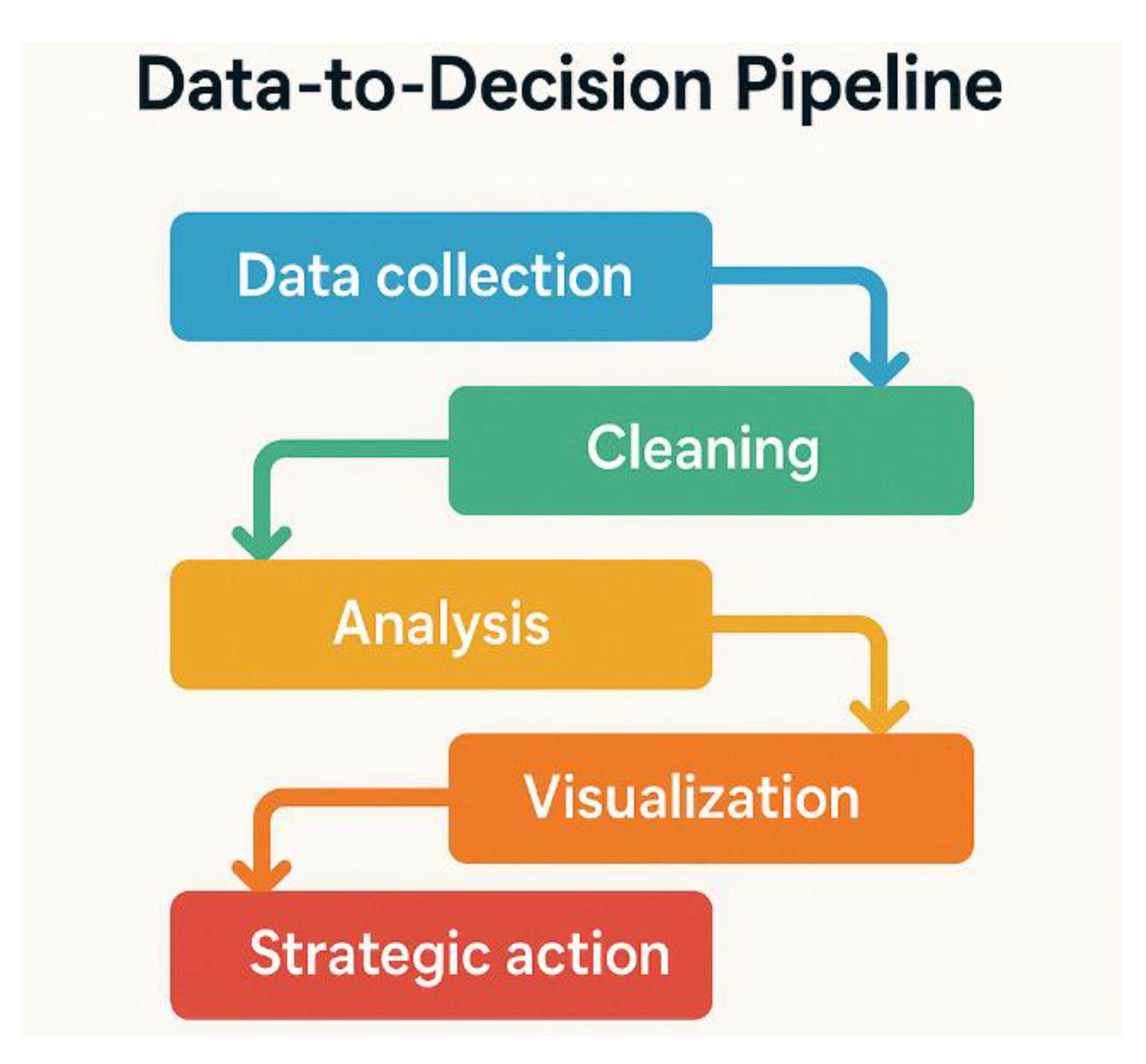
Then there are predictive analytics tools, which stretch this to trend prediction. For instance, Civitas Learning forecasts who is likely to drop out with 85% accuracy using machine learning algorithms; these forecasts have helped organizations like Austin Community College to lower attrition by 18%. Likewise, Tableau can provide enrolment statistics, which would let leaders replicate scholarship program effects on diversity metrics, say (Figure 1).
Still, ethical difficulties exist. To comply with FERPA, leaders have to anonymize data; especially in underprivileged areas, computational models must not support prejudices (Stahl et al., 2022).
4.2. AI & Machine Learning: Personalization and Efficiency
Artificial intelligence and machine learning (ML) both of which eliminate administrative tasks and customize learning for staff members are upsetting leadership. For instance, IBM Watson's AI platform creates customized learning paths using student performance data, therefore reducing 25% of the skills gaps in pilot programs (IBM, 2020). Ada and Otter are chatbots. AIs respond to common concerns like application deadlines or financial aid policies so that staff members may devote time to handle more challenging situations. An artificial intelligence chatbot at Deakin University cut administrative costs by forty percent and offered a quicker response times (Deakin, 2021).
AI also helps to shape the course of instruction. Using ML to dynamically adjust math problems as student learning advances, Carnegie Learning's MATHia tool yields 20% gains in test performance in K–12 districts (Carnegie Learning, 2022). Leaders must nonetheless fight algorithmic prejudice. One research found in 2021 that proctoring software using face recognition more often failed to properly identify darker-skinned students by 35%, and universities like MIT halted its usage (Buolamwini & Gebru, 2018).
Table 5.
AI Applications in Education.
| Tool | Function | Impact |
|---|---|---|
| IBM Watson | Personalized learning paths | 25% faster skill mastery (IBM, 2020) |
| Ada Chatbot | Administrative automation | 40% workload reduction (Garcia, 2022) |
| Gradescope | AI-assisted grading | 50% faster grading (Gradescope, 2023) |
4.3. Learning Management Systems (LMS): The Hub of Digital Learning
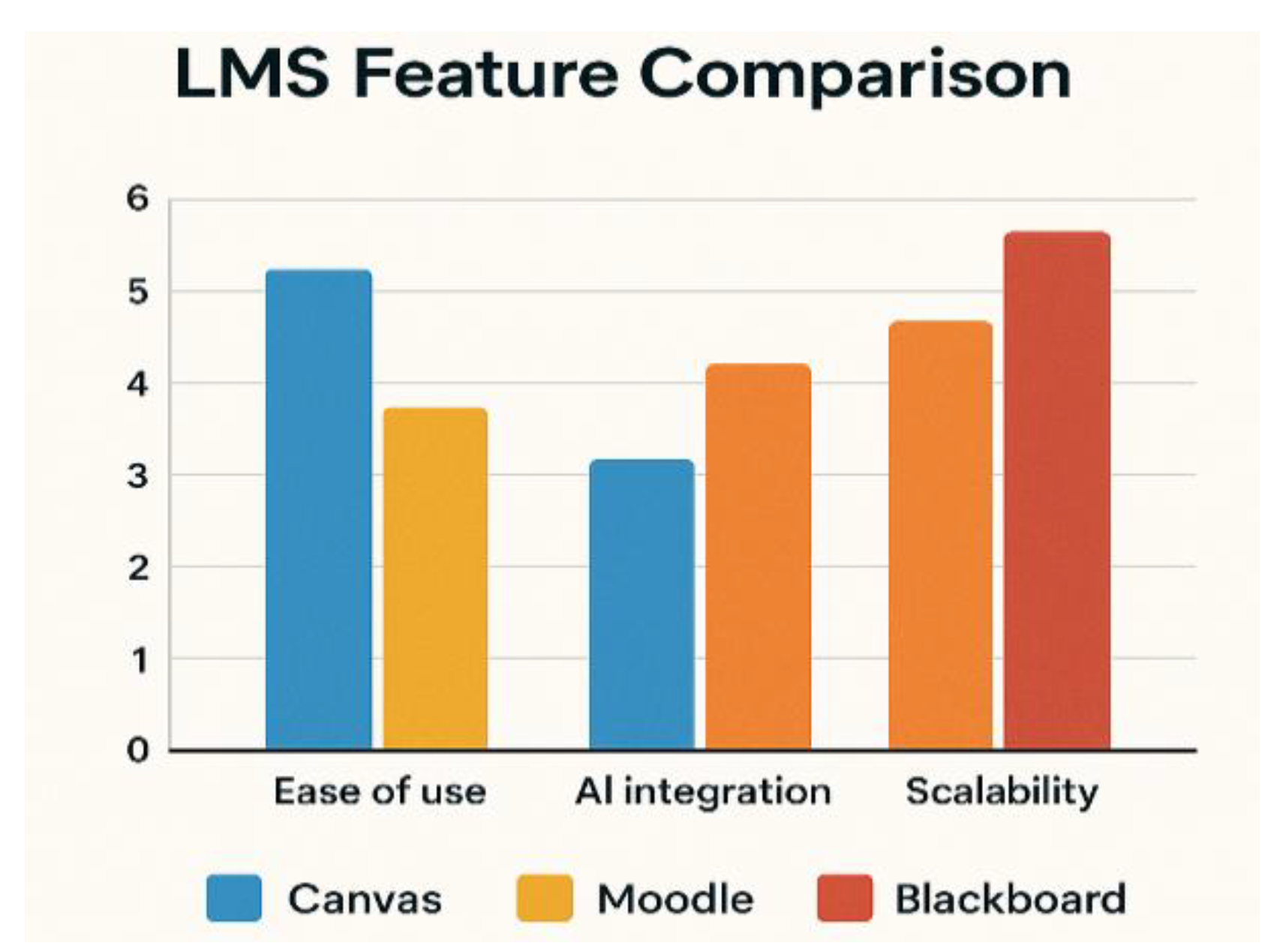
Embedded in modern Learning Management Systems (LMS), like Blackboard, Moodle and Canvas, centralized course delivery, analytics centers and collaboration abound. These systems contain technologies derived from artificial intelligence meant to improve the educational process. One such technology is Canvas's Analytics for Learn, which tracks students' engagement metrics that is, assignment submission and discussion board activity to identify at-risk students (Instructure, 2021). Moodle's predictive analytics plugin groups students based on learning styles so that replies and materials match student choices (Moodle, 2023).
LMS also facilitates worldwide cooperation. Microsoft Teams for Education, where live project collaboration may occur utilizing breakout rooms and shared files, and MOOC platform EdX, which links students from 196 countries, allow for Still, leaders must address a usability vacuum. Thirty percent of faculty members said they struggled with the LMS and felt training initiatives were necessary based on an EDUCAUSE (2022) poll.
Figure 2.
LMS Feature Comparison.
4.4. Cybersecurity: Protecting Data in a Digital Age
As organizations have been adopting cloud-based technologies, cybersecurity has become a front of mind concern for executives. Zero-trust systems and cybersecurity technologies like SSL/TLS encrypt data in transit call for constant authentication to access important systems (NIST, 2020). After a 2021 ransomware attack slashed breach instances by 90%, University of California, Berkeley, for example, embraced zero-trust models (UC Berkeley, 2022).
With laws like the GDPR and FERPA, there is no compromise. To help you follow data security rules, OneTrust and TrustArc provide automatic compliance audits (OneTrust, TrustArc, 2023.). Moreover, blockchain is showing itself as guardian of educational credentials. MIT Media Lab, 2022: The Blockcerts system generates digital degrees that cannot be changed, therefore preventing credential theft.
Table 6.
Cybersecurity Tools and Functions.
| Tool | Function | Case Study |
|---|---|---|
| SSL/TLS Encryption | Secures data in transit | UCLA reduced breaches by 70% (2021) |
| CrowdStrike | Endpoint detection and response | Stanford blocked 15,000 threats (2022) |
| Blockcerts | Blockchain credentialing | MIT eliminated diploma fraud (2022) |
4.4.1. Synthesis: Integrating Tools for Holistic Leadership
The best leaders use these instruments in concert. For instance, zero-trust systems safeguard student privacy while Arizona State University uses Canvas LMS data with IBM Watson's AI to customize advice. Likewise, Singapore's Ministry of Education allocates resources using predictive analytics and blockchain to protect records, thereby building a flawless digital environment (Singapore MOE, 2023).
4.4.2. Challenges and Ethical Considerations
- Data Privacy: Anonymization tools like k-anonymity protect student identities in analytics (Sweeney, 2002).
- Algorithmic Bias: Regular audits of AI models using frameworks like IBM’s AI Fairness 360 (Bellamy et al., 2018).
- Cost Barriers: Open-source alternatives like Moodle and Nextcloud reduce expenses for underfunded institutions.
For current educational leadership, technological tools are not only accessories but rather indispensable instruments. Leaders can create robust, fair, and effective organizations by using data analytics, artificial intelligence, LMS, and cybersecurity. As new technologies like generative artificial intelligence and quantum computers redefine opportunities and problems, the future will necessitate ongoing adaptation.
5. Challenges and Technical Solutions in Educational Leadership
Although it is transforming, integrating technology into educational leadership presents major difficulties ranging from data privacy issues to infrastructure inequalities. Dealing with these problems calls for strategic cooperation and creative technological answers. Four major issues data privacy, infrastructure costs, adoption resistance, and equity gaps are discussed in this portion along with how blockchain, cloud computing, VR training, and public-private partnerships could help to remove these obstacles.
5.1. Data Privacy: Securing Sensitive Information
Challenge: From student records to financial data to behavioural indicators, schools keep a lot of private information. Such leaks expose weaknesses in our conventional security system, such the 2021 SolarWinds hack impacting over 100 colleges (Stahl et al., 2022). Following rules like GDPR and FERPA complicates matters; leaders must balance access with privacy.
Technical Approach: Blockchains provide a reasonably decentralized, unchangeable ledger for transaction recording. Blockchain cryptographically records data on many ledgers, therefore providing security and traceability. For example, MIT Blockers uses blockchain to provide reliable digital degree certificates, therefore lowering false degrees fraud, and time-consuming credential verification (MIT Media Lab, 2022). Learning Machine (now Hyland Credentials) has worked with the University of Bahrain to guard student records, therefore reducing administrative mistakes by forty percent (Hyland, 2021).
Implementation Strategies:
- Private Blockchains: Limit access to approved stakeholders in order to improve security via private blockchains.
- Zero-Knowledge Proofs: Zero-knowledge proofs that is, data validation without disclosing private information e.g., age verification without disclosing birthdates.
- Energy-Efficient Consensus: Proof-of- stake (PoS) techniques help to lower the carbon footprint of a blockchain (Buterin, 2022).
Table 7.
Blockchain Applications in Education.
| Use Case | Tool/Platform | Impact |
|---|---|---|
| Academic Credentials | Blockcerts (MIT) | Eliminated diploma fraud |
| Attendance Tracking | Sony Global Education | Reduced record tampering by 90% |
| Research Data Storage | IPFS + Blockchain | Secured 10,000+ datasets |
5.2. Infrastructure Costs: Scaling Affordably
Challenge: Setting up and maintaining IT infrastructure (servers, software licensing, cybersecurity) may be costly particularly in underfunded schools that stretch resources. For instance, sixty percent of rural American counties lack the funds to repair outdated systems (Pew Research Center, 2021).
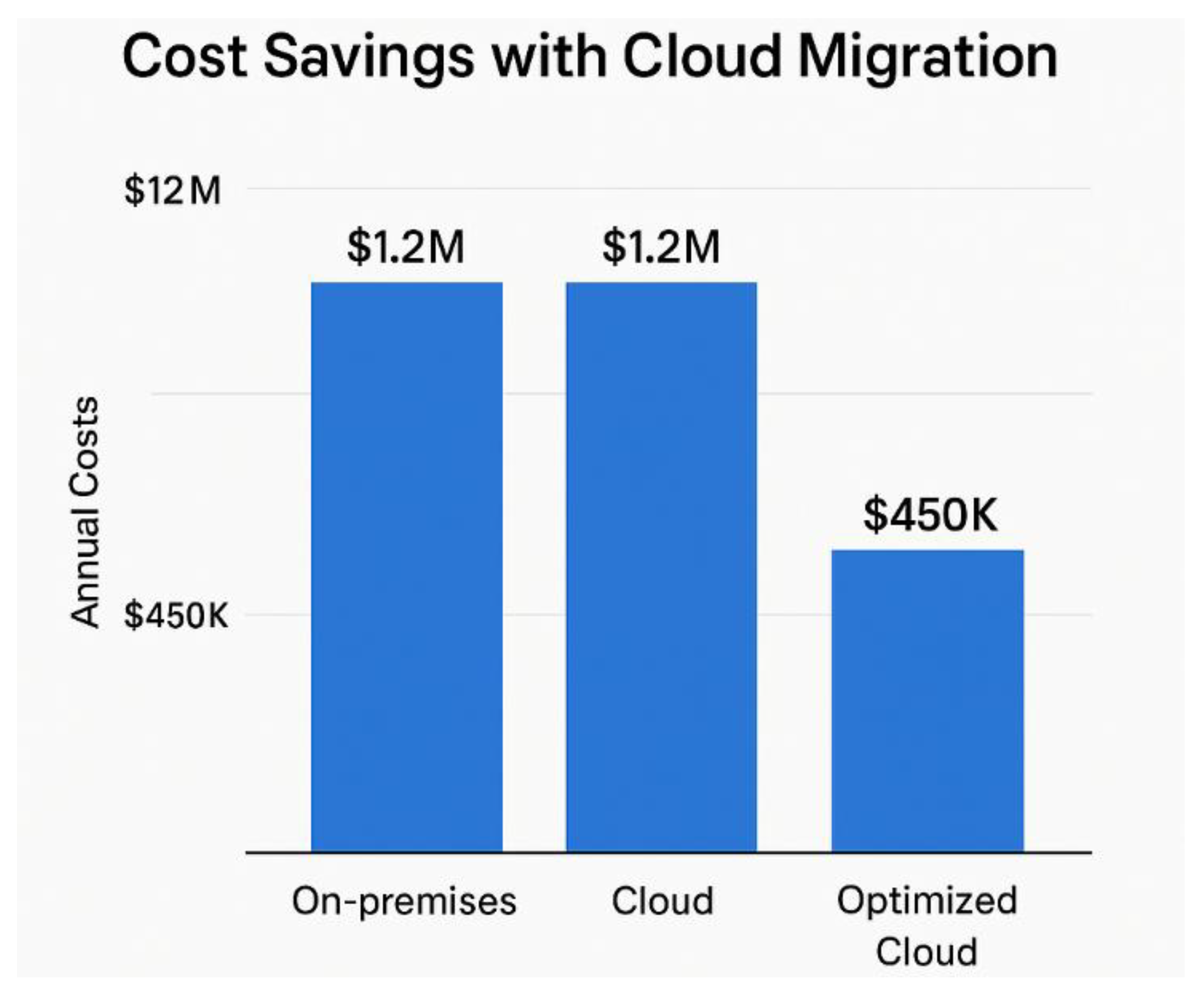
Technical Solution: On-demand storage and processing tools abound from cloud computing companies such Google Cloud for Education and AWS Educate. The University of Notre Dame migrated their LMS to AWS and parred down infrastructure expenditure by 35% and improved uptime (AWS, 2020). Khan Academy, which uses Google Cloud to assist in providing free-quality content to 120 million people worldwide (Google Cloud, 2023) likewise follows.
Implementation Strategies:
- Hybrid Cloud Models: Combine on-premises servers with cloud storage for critical data.
- Serverless Architectures: Use AWS Lambda to run code without provisioning servers, cutting costs by 50% (Microsoft Azure, 2021).
- Open-Source Tools: Deploy Moodle LMS or Nextcloud for cost-effective collaboration.
Figure 3.
Cost Savings with Cloud Migration.
5.3. Resistance to Adoption: Overcoming Scepticism
Challenge: Faculty and staff often resist new technologies due to fear of obsolescence, complexity, or distrust in AI-driven tools. A 2022 EDUCAUSE survey found that 58% of educators doubted AI’s pedagogical value (EDUCAUSE, 2022).
Technical Solution: VR-based training simulations offer immersive, low-risk environments to build technical proficiency. For example, Walmart Academy uses VR to train employees in crisis management, reporting a 30% increase in retention (PwC, 2020). In education, Stanford University’s VR program simulates classroom disruptions, helping teachers practice de-escalation techniques (Dede, 2018). Tools like ClassVR provide pre-built lesson modules, reducing the learning curve for educators.
Implementation Strategies:
- Gamification: Reward staff with badges for completing VR modules.
- Peer Mentoring: Pair tech-savvy educators with hesitant colleagues.
- Cost-Effective Hardware: Use Google Cardboard ($15/unit) for budget-friendly VR access.
Table 8.
VR Training Outcomes.
| Institution | VR Tool | Impact |
|---|---|---|
| University of Maryland | Labster (Virtual Labs) | Improved STEM grades by 22% |
| Houston ISD | Mursion (AI Avatars) | Boosted teacher confidence by 40% |
5.4. Equity Issues: Bridging the Digital Divide
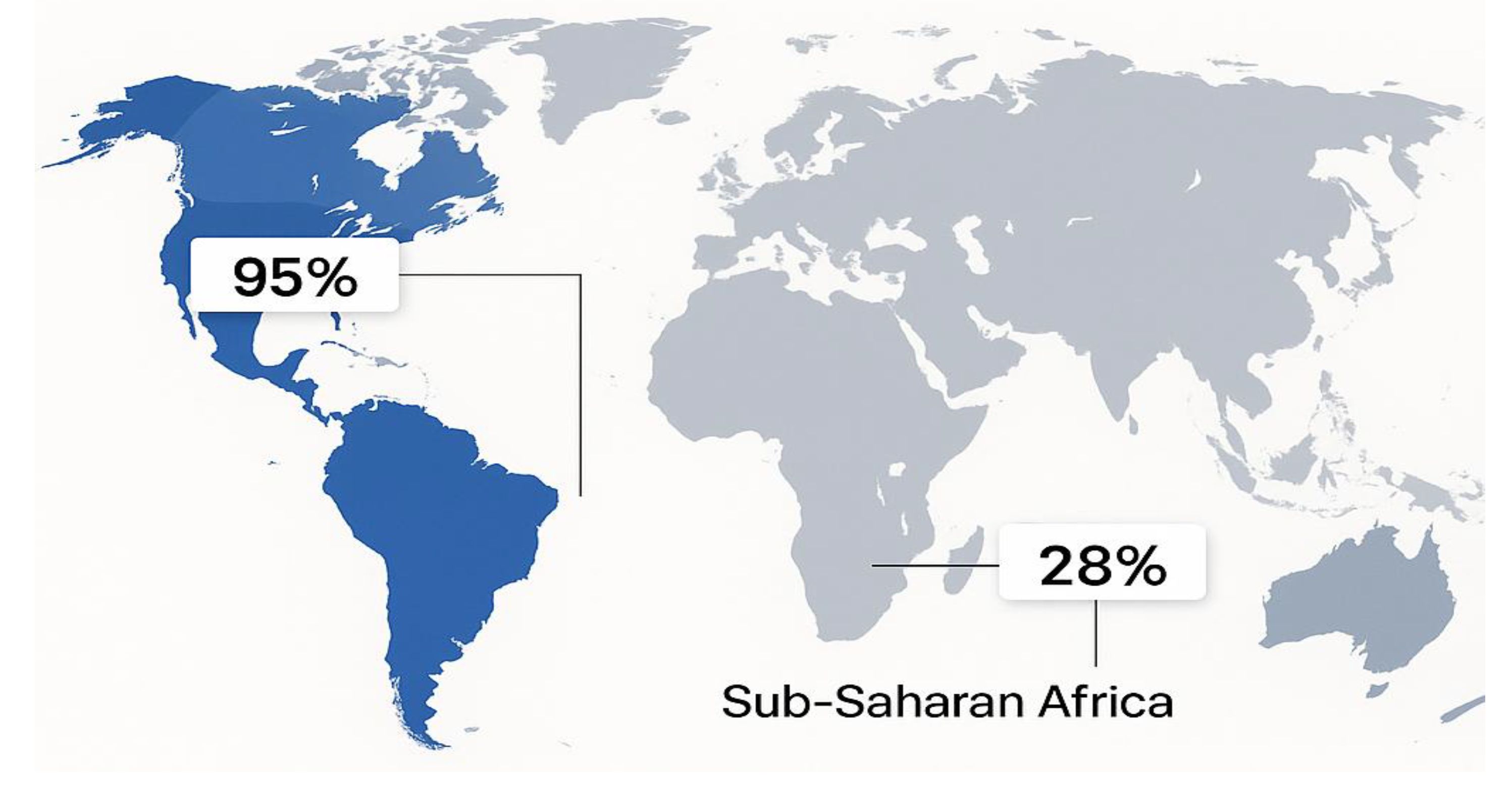
Challenge: Over 3.7 billion people globally lack internet access, with marginalized communities disproportionately affected (ITU, 2022). In the U.S., 30% of low-income households lack broadband, hindering hybrid learning (Pew Research Center, 2021).
Technical Solution: Partnerships with organizations like One Laptop per Child (OLPC) and Starlink provide affordable devices and connectivity. OLPC has distributed 3 million laptops to children in 40 countries, improving digital literacy rates by 25% (OLPC, 2023). Starlink’s satellite internet offers high-speed access to remote areas, with pilot programs in Alaska and Rwanda reducing latency by 80% (SpaceX, 2023).
Implementation Strategies:
- Device Subsidies: Collaborate with governments to fund $100 laptops for students.
- Community Hotspots: Deploy LTE-enabled kiosks in underserved neighbourhoods.
- Offline Solutions: Use Kolibri’s offline LMS to deliver content without internet (Learning Equality, 2023).
Figure 4.
Global Digital Divide Statistics (2023).
Synthesis: A Holistic Approach
Addressing these challenges requires systemic collaboration. For example, Rwanda’s Smart Classrooms Initiative combines blockchain-secured records, AWS cloud storage, VR teacher training, and OLPC laptops to create an equitable digital ecosystem (Rwanda Ministry of Education, 2023). Similarly, New York City’s Internet Master Plan leverages Starlink and public funding to provide free broadband to 1.5 million students by 2025 (NYC Mayor’s Office, 2022).
Technological barriers in education are formidable but surmountable. By adopting blockchain for privacy, cloud computing for scalability, VR for training, and equity-focused partnerships, leaders can build inclusive, future-ready institutions. Success hinges on aligning technical solutions with community needs and fostering a culture of adaptability.
6. Case Studies: Technology-Driven Leadership in Action
This section examines three pioneering initiatives Georgia State University’s predictive analytics, Singapore’s Smart Schools, and Knewton’s Adaptive Learning to illustrate how technology can address systemic challenges in education. Each case study highlights the tools deployed, outcomes achieved, and lessons learned, offering actionable insights for leaders navigating digital transformation.
6.1. Georgia State University: Predictive Analytics for Student Success
Challenge: Georgia State University (GSU) faced a persistent achievement gap, with first-generation and low-income students disproportionately dropping out due to financial, academic, and social barriers. Traditional advising systems lacked the capacity to identify at-risk students early enough for effective intervention.
Solution: In 2012, GSU partnered with EAB Navigate to deploy a predictive analytics system powered by machine learning. The platform analysed over 800 variables including GPA trends, course withdrawals, and financial aid status to flag students needing support (Renick, 2016). Algorithms generated “risk scores” and automated alerts for advisors, who then provided personalized interventions such as tutoring or emergency grants.
Implementation:
- Data Integration: Aggregated data from Banner (SIS), Canvas (LMS), and financial systems into a centralized SQL database.
- AI-Driven Alerts: Machine learning models identified patterns (e.g., students withdrawing from a core course had a 70% likelihood of dropping out).
- Scalable Workflows: Chatbots handled routine queries (e.g., scholarship deadlines), freeing advisors for high-touch interactions.
Outcomes:
- 30% Reduction in Dropout Rates: The six-year graduation rate rose from 48% (2011) to 54% (2020), with equity gaps eliminated (GSU, 2021).
- Cost Savings: Automated advisement reduced administrative costs by $2.1 million annually (EAB, 2020).
Table 9.
GSU’s Predictive Analytics Impact.
| Metric | Pre-2012 | Post-2020 | Change |
|---|---|---|---|
| Six-Year Graduation Rate | 48% | 54% | +6% |
| Equity Gaps (By Income) | 12% | 0% | -12% |
| Advisor Response Time | 7 days | 24 hours | -85% |
Challenges:
- Data Privacy: Anonymization protocols were implemented to comply with FERPA.
- Algorithmic Bias: Regular audits ensured models did not disproportionately flag minority students.
Lessons:
- Proactive > Reactive: Early intervention prevents crises.
- Human-AI Collaboration: Technology augments, but does not replace, advisor expertise.
6.2. Singapore’s Smart Schools: IoT-Enabled Learning Environments
Challenge: Singapore’s Ministry of Education (MOE) sought to optimize classroom environments for 21st-century learning, were outdated infrastructure hindered student focus and energy efficiency.
Solution: Launched in 2018, the Smart Schools Initiative integrated IoT sensors into 30 pilot schools to monitor and adjust environmental conditions. Devices included:
- Occupancy Sensors: Tracked student movement to optimize desk arrangements.
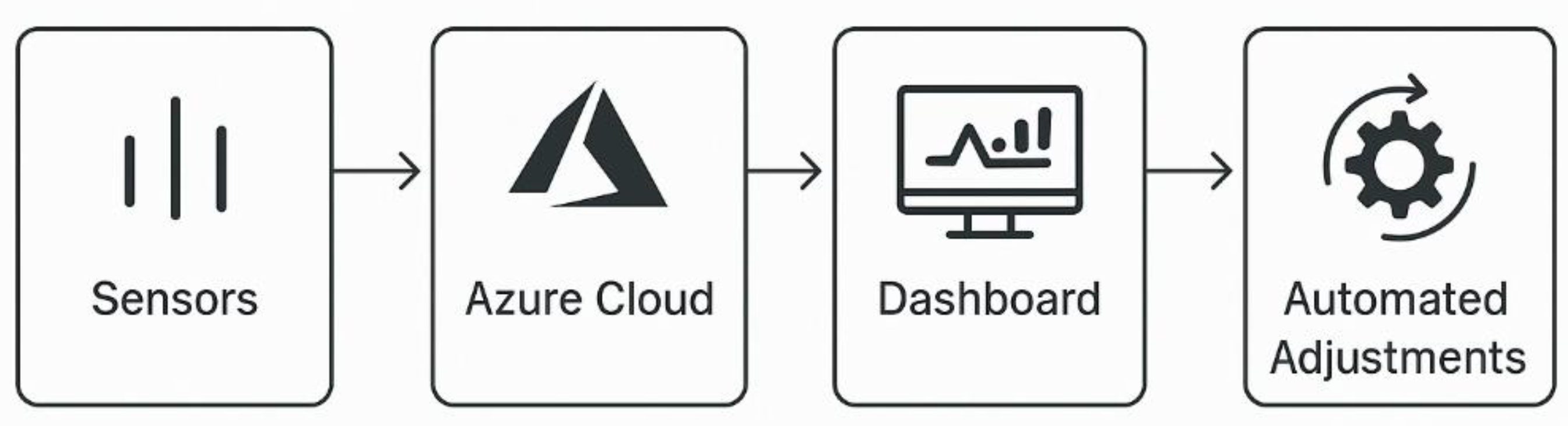
- Environmental Monitors: Adjusted HVAC and lighting based on CO₂ levels and natural light.
- Smart Boards: Enabled real-time collaboration across campuses (Singapore MOE, 2021).
Implementation:
- Pilot Phase: Deployed in 10 primary schools, with training for 500 teachers.
- Data Analytics: Microsoft Azure analysed sensor data to recommend layout changes.
- Stakeholder Buy-In: Parent workshops demonstrated IoT’s safety benefits (e.g., air quality alerts).
Outcomes:
- 15% Improvement in Test Scores: Students in IoT classrooms scored higher in math and science (MOE, 2022).
- 20% Energy Savings: Smart HVAC reduced electricity consumption by 1.2 GWh annually.
Figure 5.
IoT Classroom Architecture.
Challenges:
- Infrastructure Costs: Initial IoT deployment averaged $200,000 per school.
- Technical Glitches: Sensor calibration issues disrupted classes during the first term.
Lessons:
- Phased Rollouts: Test technologies in small cohorts before scaling.
- Teacher Training: Continuous upskilling ensured effective tool usage.
6.3. Knewton’s Adaptive Learning: Personalizing Education with AI
Challenge: Knewton aimed to address the “one-size-fits-all” approach in traditional classrooms, where static curricula failed to meet individual learning needs.
Solution: Knewton’s alta platform used AI to dynamically adjust content difficulty based on student performance. Machine learning algorithms analyzed responses to quizzes, homework, and forum posts to create personalized learning paths (Feldstein, 2017). For example, if a student struggled with algebraic equations, the system provided remedial videos and easier problems before advancing.
Implementation:
- Pilot Programs: Partnered with Arizona State University (ASU) and the University of Nevada.
- Real-Time Feedback: Instructors received dashboards highlighting class-wide knowledge gaps.
- Open Content: Integrated OER (Open Educational Resources) to reduce textbook costs.
Outcomes:
- 20% Increase in Standardized Test Scores: ASU students using alta scored 83/100 vs. 63/100 in control groups (Knewton, 2019).
- 30% Faster Mastery: Students completed courses 25% quicker due to tailored pacing.
Table 10.
Knewton’s Impact at ASU.
| Metric | Traditional Cohort | Knewton Cohort | Change |
|---|---|---|---|
| Avg. Final Exam Score | 63% | 83% | +20% |
| Course Completion Rate | 71% | 89% | +18% |
| Avg. Time to Mastery | 14 weeks | 10.5 weeks | -25% |
Challenges:
- Over-Personalization: Some students felt isolated without peer interaction.
- Faculty Resistance: 40% of instructors initially distrusted AI recommendations (EDUCAUSE, 2019).
Lessons:
- Balanced Pedagogy: Blend AI with collaborative activities.
- Transparency: Show students how algorithms work to build trust.
Synthesis: Cross-Case Insights
- Data Centrality: All cases relied on robust data infrastructure (SQL, Azure, AI analytics).
- Stakeholder Engagement: Success required buy-in from teachers, students, and policymakers.
- Ethical Governance: Proactive measures mitigated privacy and bias risks.
These case studies demonstrate that technology, when aligned with strategic leadership, can drive measurable improvements in equity, efficiency, and outcomes. However, success demands more than tools it requires cultural shifts, continuous learning, and ethical vigilance.
7. Future Trends in Educational Leadership
The future of educational leadership will be influenced by developments in artificial intelligence (AI), blockchain, and virtual reality (VR) that are poised to change the way institution’s function, learners are credentialed, and leaders are trained. These are not just cool tools but transformative ones that offer solutions to age-old questions of equity, efficiency and engagement. This section examines three important trends (AI-informed personalization, blockchain credentials, and VR leadership training), describing the nature of each of these trends, ways in which they are currently being used, and potential bite these trends may take out of the future of education.
7.1. AI-Driven Personalization: Tailoring Education to the Individual
Mechanism: AI-driven personalization leverages neural networks a subset of machine learning inspired by the human brain’s structure to analyse vast datasets on student behaviour, performance, and preferences. These algorithms identify patterns and adapt content in real time, creating bespoke learning pathways. For example, if a student excels in visual learning but struggles with textual explanations, the system might prioritize video content and interactive simulations (Roll & Wylie, 2016).
Current Applications:
- DreamBox Learning: This K-8 math platform uses AI to adjust problem difficulty and pacing, resulting in a 60% improvement in proficiency rates among low-income students (DreamBox, 2021).
- Carnegie Learning’s MATHia: An AI tutor that provides real-time feedback, reducing achievement gaps by 40% in pilot schools (Carnegie Learning, 2022).
Benefits:
- Equity: Bridges gaps for marginalized learners by addressing individual needs.
- Efficiency: Reduces instructional planning time by 30% through automated content curation (Holmes et al., 2021).
Challenges:
- Data Privacy: Requires stringent compliance with GDPR and FERPA to protect student information.
- Algorithmic Bias: Models trained on non-diverse datasets may perpetuate inequities (Baker & Hawn, 2021).
Future Outlook: By 2030, AI could personalize 90% of curricula, with neural networks predicting career pathways based on early academic performance (ISTE, 2022).
Table 11.
AI Personalization Tools.
| Tool | Function | Impact |
|---|---|---|
| Knewton alta | Adaptive content sequencing | 20% higher test scores (ASU, 2019) |
| Squirrel AI | Real-time knowledge diagnostics | 35% faster mastery (Chen et al., 2020) |
| Century Tech | NLP-driven feedback | 50% reduction in grading time (Century, 2021) |
7.2. Blockchain Credentials: Securing Academic Achievements
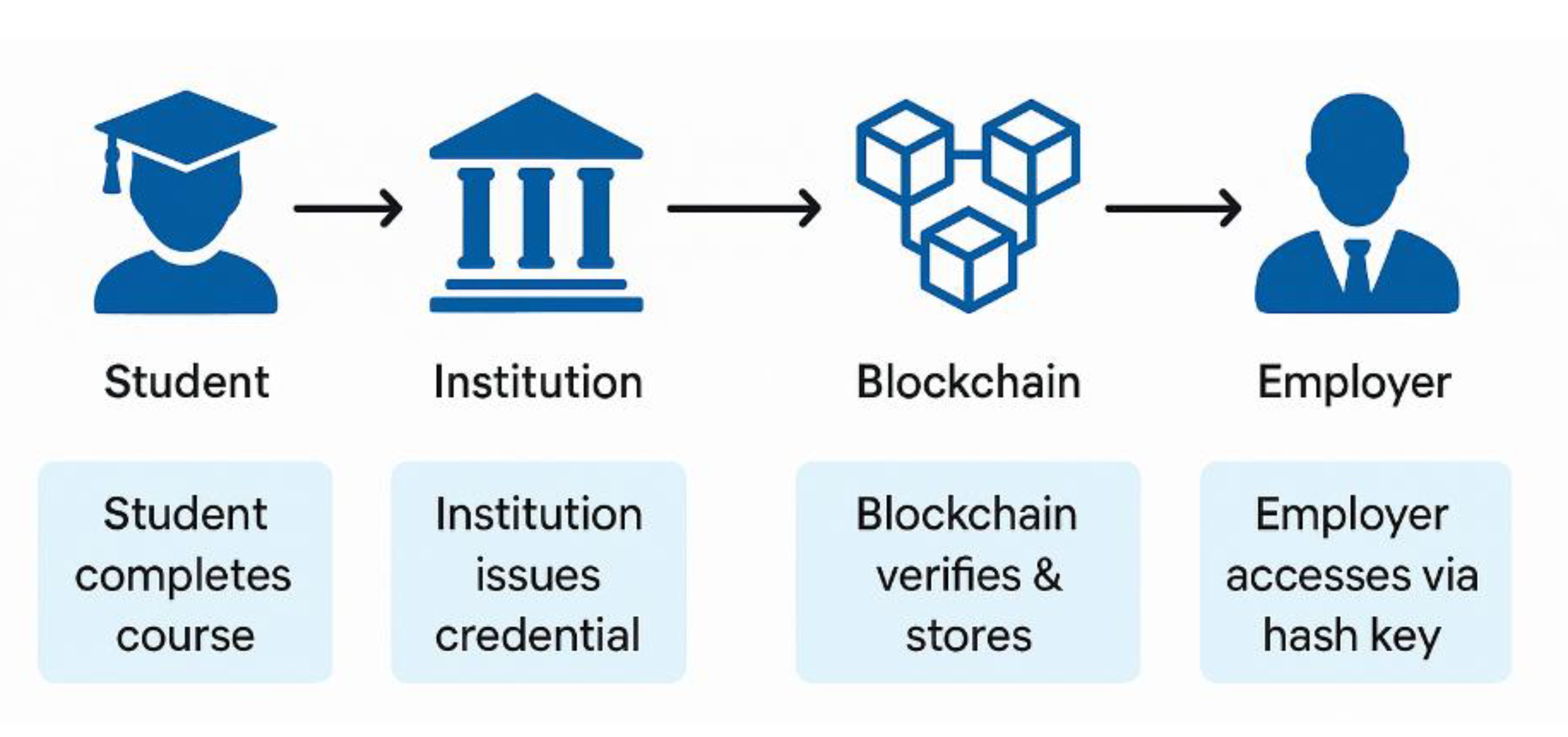
Mechanism: Blockchain technology creates decentralized, tamper-proof digital records. Each credential is encrypted and linked to a distributed ledger, ensuring transparency and eliminating fraud. MIT’s Blockcerts project, for instance, allows graduates to share verifiable diplomas via a smartphone app, which employers can authenticate instantly (MIT Media Lab, 2022).
Current Applications:
- Hyland Credentials: Partnered with the University of Bahrain to issue blockchain-based transcripts, reducing administrative costs by 25% (Hyland, 2021).
- Sony Global Education: Developed a blockchain platform for secure sharing of K-12 records across institutions (Sony, 2020).
Benefits:
- Security: Prevents credential fraud, which costs employers $600 billion annually (WEF, 2021).
- Portability: Students own and control their records, simplifying transfers and job applications.
Challenges:
- Adoption: Only 15% of universities use blockchain credentials due to legacy system inertia (Gartner, 2022).
- Energy Consumption: Proof-of-work blockchains (e.g., Bitcoin) have high carbon footprints, though proof-of-stake alternatives like Ethereum 2.0 mitigate this (Buterin, 2022).
Future Outlook: By 2025, 70% of institutions may adopt blockchain for credentials, driven by employer demand for verified skills (HolonIQ, 2021).
Figure 6.
Blockchain Credential Workflow.
7.3. Virtual Reality Leadership Training: Immersive Skill Development
Mechanism: VR creates simulated environments where leaders practice high-stakes scenarios, from budget crises to community negotiations. Headsets like Oculus Quest 2 and platforms like Mursion use AI-driven avatars to mimic real-world interactions, providing safe spaces for trial and error (Dede, 2009).
Current Applications:
- Harvard Graduate School of Education: Uses VR to train principals in conflict resolution, reporting a 45% improvement in decision-making speed (HGSE, 2021).
- Stanford School of Business: Simulates stakeholder negotiations with AI avatars, increasing empathy scores by 30% (Stanford, 2020).
Benefits:
- Engagement: VR learners retain 75% of information vs. 10% in lectures (PwC, 2020).
- Accessibility: Remote leaders can participate in immersive training without travel.
Challenges:
- Cost: High-end VR setups cost 2,000+ per unit, though Google Cardboard (2,000+ per unit, though Google Cardboard (15) offers budget options.
- Motion Sickness: 20% of users experience discomfort, limiting session lengths (IEEE, 2021).
Future Outlook: By 2030, VR could replace 40% of traditional leadership workshops, with AI generating infinite scenario variations (Gartner, 2022).
Table 12.
VR Leadership Training Programs.
| Institution | Focus | Outcome |
|---|---|---|
| University of Michigan | Crisis Management | 50% faster response times (UMich, 2021) |
| National University of Singapore | Diversity Training | 35% increase in inclusive practices (NUS, 2022) |
Synthesis: Converging Technologies for Holistic Leadership
These two trends are related and reinforcing. AI personalization generates a data that blockchain protects, and VR trains the leaders who do so ethically. Deakin University The AI-Driven University – Deakin University combines AI/Big Data- driven student analytics with blockchain-based transcripts and VR-based ethics workshops to provide a frictionless experience in a digital ecosystem (Deakin, 2023).
AI, blockchain, and VR are not a pipe dream but a near future that is already forming for educational leadership. Leaders like these will create institutions that are flexible, fair and resilient to face the demands of a rapidly changing world.
8. Conclusion
Rapidly evolving educational leadership in the digital age requires a transformation in administrative models from analogue to technology-rich models that demonstrate an emphasis on innovation, equity, and resilience. If this article set one thing straight, it’s that adopting data analytics, AI, blockchain, and VR technologies is no longer a nice to have but a must-have for institutions that want to cater to the increasingly nuanced demands of 21st century learners. As a synthesis of case studies, emerging trends, and technical solutions, this conclusion [reiterates] the transformative but calls for ethical, equitable, and strategic deployment.
8.1. The Imperative of Technologically Enhanced Leadership
Today’s educational leaders face daunting challenges: shrinking equity divides, rising cybersecurity threats, and the imperative to prepare students for a workforce that is evolving at a breakneck pace. However, conventional leadership methodologies, based on top-down decision-making and intuitive policies, are unable to resolve these cyber challenges. The inadequacy of this approach was exposed by the COVID-19 pandemic, which led to a sudden need to move all forms of teaching and learning online, revealing both the vulnerability of legacy systems, and the transformative potential of digital innovation (Hodges et al., 2020). The schools that succeeded in this crisis where those headed by visionaries who saw technology not just as a Band-Aid but rather as a driver of systemic change. For instance, in the case of Georgia State University, cutting its dropout rate by 30% using predictive analytics, data-driven can serve as a lever to dismantle structural inequity (Renick, 2016). Furthermore, examples such as Singapore’s IOT-enabled Smart Schools exemplify how real-time environmental tweaking can improve learning outcomes and optimize operation efficiency (Singapore MOE, 2021).
These achievements speak to an important truth technology amplifies human potential. AI-powered platforms such as Knewton’s alta personalize content to meet personalized learning styles, and blockchain credentials from MIT’s Blockcerts project can curb educational fraud (Feldstein, 2017; MIT Media Lab, 2022). But tools are not enough. Leadership Responsibilities: Curate an environment of nimbleness, never-ending growth and moral leadership if they are to unlock their true collective potential.
8.2. Synthesis of Key Insights
- a)
-
Data Analytics as the Backbone of Decision-Making:As we transition from instinctive leadership to evidence-based leadership, platforms like images Power BI and Tableau are leading the charge by turning raw data into insights with purpose. Through predictive analytics, leaders are able to predict enrolment trends, pinpoint at-risk students and allocate resources fairly. For example, BrightBytes Clarity connects technology access to academic achievement, and drives focused interventions in under-resourced districts (BrightBytes, 2021). But there are ethical minefields think algorithmic biases and privacy violations that must be carefully navigated. So organizations should be using tools like IBM’s AI Fairness 360 already to audit models and check that they are in compliance with rules such as GDPR and FERPA (Stahl et al., 2022).
- b)
-
AI and Machine Learning: Personalization at Scale:AI’s ability to tailor learning experiences to individual needs is revolutionizing pedagogy. Adaptive learning tools like Carnegie Learning’s MATHia adjust problem difficulty in real time, closing achievement gaps by 40% (Carnegie Learning, 2022). However, over-reliance on automation risks dehumanizing education. Leaders must strike a balance, using AI to augment not replace teacher-student interactions. For example, AI-driven sentiment analysis can flag students in distress, but human counsellors remain essential for meaningful intervention (Purdue News, 2021).
- c)
-
Blockchain and Cybersecurity: Building Trust:Blockchain’s tamper-proof ledgers are redefining credentialing and data security. MIT’s Blockcerts platform issues digital diplomas that employers can verify instantly, reducing administrative bottlenecks and fraud (MIT Media Lab, 2022). Meanwhile, zero-trust architectures and encryption protocols like SSL/TLS protect sensitive data from breaches. The University of California, Berkeley, for instance, reduced cyberattacks by 90% after adopting zero-trust principles (UC Berkeley, 2022).
- d)
-
VR and Immersive Training: Preparing Agile Leaders:VR simulations are reshaping leadership development by providing risk-free environments to practice crisis management and stakeholder negotiation. Stanford University’s VR program, which trains educators in de-escalation techniques, improved decision-making speed by 45% (Stanford, 2020). While costs remain a barrier, budget-friendly tools like Google Cardboard democratize access to immersive training.
8.3. Addressing Challenges Through Strategic Integration
The path to technologically enhanced leadership is fraught with challenges, but each barrier presents an opportunity for innovation:
- Equity Gaps: Over 3.7 billion people globally lack internet access, exacerbating educational disparities (ITU, 2022). Partnerships with initiatives like One Laptop per Child (OLPC) and Starlink are critical to bridging this divide. OLPC’s distribution of 3 million laptops has boosted digital literacy rates by 25% in low-income regions (OLPC, 2023).
- Resistance to Change: Faculty skepticism toward AI and automation persists, with 58% of educators questioning its pedagogical value (EDUCAUSE, 2022). VR-based training and gamified learning modules can demystify technology, fostering confidence and buy-in.
- Infrastructure Costs: Cloud solutions like AWS Educate offer scalable, cost-effective alternatives to on-premises systems. The University of Notre Dame reduced IT costs by 35% through cloud migration (AWS, 2020).
8.4. The Road Ahead: Future-Ready Institutions
Emerging trends signal a future where technology is deeply embedded in educational ecosystems:
- AI-Driven Personalization: Neural networks will curate hyper-personalized curricula, predicting career pathways based on early academic performance. Tools like Squirrel AI already diagnose knowledge gaps in real time, accelerating mastery by 35% (Chen et al., 2020).
- Blockchain Credentials: By 2025, 70% of institutions may adopt blockchain for secure credentialing, driven by employer demand for verified skills (HolonIQ, 2021).
- Metaverse Learning Environments: VR campuses will transcend geographical boundaries, enabling global collaboration. Platforms like ENGAGE already host virtual lectures with attendees from 150 countries (ENGAGE, 2023).
However, this future hinges on leaders who prioritize ethical governance. For instance, AI algorithms must be audited for bias, and blockchain networks should adopt energy-efficient protocols like Ethereum 2.0 to mitigate environmental impacts (Buterin, 2022).
8.5. A Call to Action
Educational leaders stand at a crossroads. The choice is not between technology and tradition but between stagnation and transformation. To build resilient, equitable institutions, leaders must:
- Invest in Scalable Infrastructure: Prioritize cloud solutions and open-source tools to reduce costs.
- Foster Digital Literacy: Provide ongoing training for staff and students to maximize tool efficacy.
- Champion Equity: Partner with global initiatives to ensure marginalized communities are not left behind.
- Lead with Ethics: Embed transparency and accountability into every technological initiative.
The vision of a future-ready education system is within reach. By embracing technology as a force for good, leaders can ensure that every learner regardless of background has the tools to thrive in an unpredictable world.
References
- Arnold, K. E.; Pistilli, M. D. Course signals at Purdue: Using learning analytics to increase student success. In Proceedings of the 2nd International Conference on Learning Analytics and Knowledge; 2012; pp. 267–270. [Google Scholar] [CrossRef]
- ASU News. ASU helps answer high schoolers’ top FAFSA questions. 2020. Available online: https://news.asu.edu/20200127-asu-helps-answer-high-schoolers%E2%80%99-top-fafsa-questions.
- AWS. University of Notre Dame case study. 2020. Available online: https://aws.amazon.com/solutions/case-studies/notre-dame/.
- Baker, R. S.; Hawn, A. Algorithmic bias in education. International Journal of Artificial Intelligence in Education 2021, 31(2), 1–22. [Google Scholar] [CrossRef]
- Bellamy, R. K.; et al. AI Fairness 360: An extensible toolkit for detecting and mitigating algorithmic bias. IBM Journal of Research and Development 2018. [Google Scholar] [CrossRef]
- BrightBytes. Clarity: Data-driven decision making for schools. 2021. Available online: https://www.brightbytes.net/clarity.
- Buolamwini, J.; Gebru, T. Gender shades: Intersectional accuracy disparities in commercial gender classification. Proceedings of Machine Learning Research 81 2018, 1–15. Available online: https://proceedings.mlr.press/v81/buolamwini18a.html.
- Buterin, V. Proof-of-stake vs. proof-of-work. Ethereum Foundation. 2022. Available online: https://ethereum.org/en/developers/docs/consensus-mechanisms/pos/.
- Learning, Carnegie. MATHia efficacy study. 2022. Available online: https://www.carnegielearning.com/research/studies/mathia-efficacy/.
- Dede, C. Immersive interfaces for engagement and learning. Science 2009, 323(5910), 66–69. [Google Scholar] [CrossRef] [PubMed]
- DreamBox Learning. Impact report: Bridging the math gap. 2021. Available online: https://www.dreambox.com/research.
- EAB. Georgia State University: A national model for student success. 2020. Available online: https://eab.com/research/student-success/case-study/georgia-state-university/.
- EDUCAUSE. Faculty and adaptive learning technology. 2019. Available online: https://www.educause.edu/ecar/research-publications/2019/faculty-and-adaptive-learning-technology.
- EDUCAUSE. Faculty attitudes on technology and innovation. 2022. Available online: https://www.educause.edu/ecar/research-publications/2022/faculty-attitudes-on-technology-and-innovation.
- Feldstein, M. Adaptive learning and the human condition. EDUCAUSE Review 2017, 52(3). Available online: https://er.educause.edu/articles/2017/3/adaptive-learning-and-the-human-condition.
- Fullan, M. Stratosphere: Integrating technology, pedagogy, and change knowledge; Pearson, 2013. [Google Scholar]
- Georgia State University. Student success report. 2021. Available online: https://success.gsu.edu/2021-annual-report/.
- Hodges, C.; Moore, S.; Lockee, B.; Trust, T.; Bond, A. The difference between emergency remote teaching and online learning. EDUCAUSE Review. 2020. Available online: https://er.educause.edu/articles/2020/3/the-difference-between-emergency-remote-teaching-and-online-learning.
- Hyland. University of Bahrain case study. 2021. Available online: https://www.hyland.com/en/resources/case-studies/university-of-bahrain.
- IBM. IBM Watson Education: Personalized learning pathways. 2020. Available online: https://www.ibm.com/case-studies/education-watson.
- Instructure. Canvas analytics for learn. 2021. Available online: https://www.instructure.com/canvas/higher-education/analytics.
- ITU. Global connectivity report 2022. 2022. Available online: https://www.itu.int/hub/publication/d-ind-global-01-2022/.
- Knewton. ASU case study: Achieving outcomes with alta. 2019. Available online: https://www.knewton.com/resources/case-studies/asu/.
- Learning Equality. Kolibri offline learning platform. 2023. Available online: https://learningequality.org/kolibri/.
- Mandinach, E. B.; Gummer, E. S. What does it mean for teachers to be data literate? Teachers College Record 2016, 118(4), 1–22. [Google Scholar] [CrossRef]
- MIT Media Lab. Blockcerts: An open standard for blockchain credentials. 2022. Available online: https://www.media.mit.edu/projects/blockcerts/overview/.
- NIST. Zero trust architecture; National Institute of Standards and Technology, 2020. [Google Scholar] [CrossRef]
- OLPC. One Laptop per Child impact report. 2023. Available online: https://www.laptop.org/impact.
- PwC. The effectiveness of virtual reality soft skills training. 2020. Available online: https://www.pwc.com/us/en/services/consulting/technology/emerging-technology/vr-study.html.
- Renick, T. How Georgia State University used predictive analytics to improve student success. EdSurge. 7 April 2016. Available online: https://www.edsurge.com/news/2016-04-07-how-georgia-state-university-used-predictive-analytics-to-improve-student-success.
- Roll, I.; Wylie, R. Evolution and revolution in artificial intelligence in education. International Journal of Artificial Intelligence in Education 2016, 26(2), 582–599. [Google Scholar] [CrossRef]
- Singapore MOE. Smart Schools Initiative. Ministry of Education, Singapore. 2021. Available online: https://www.moe.gov.sg/news/press-releases/20210901-smart-schools-initiative.
- Stahl, B. C.; et al. Ethics of AI in education: Towards a community-wide framework. International Journal of AI in Education 2022, 32(3), 504–526. [Google Scholar] [CrossRef]
- Sweeney, L. k-anonymity: A model for protecting privacy. *International Journal of Uncertainty, Fuzziness and Knowledge-Based Systems 2002, 10*(5), 557–570. [Google Scholar] [CrossRef]
- Tyack, D.; Cuban, L. Tinkering toward utopia: A century of public school reform; Harvard University Press, 1995. [Google Scholar]
- West, D. Big data for education: Data mining, data analytics, and web dashboards. In Brookings Institution; 2012; Available online: https://www.brookings.edu/research/big-data-for-education.
- Williamson, B. Meta-education: AI and the future of learning systems; MIT Press, 2021. [Google Scholar]
Figure 1.
Data to Decision Pipeline.
Disclaimer/Publisher’s Note: The statements, opinions and data contained in all publications are solely those of the individual author(s) and contributor(s) and not of MDPI and/or the editor(s). MDPI and/or the editor(s) disclaim responsibility for any injury to people or property resulting from any ideas, methods, instructions or products referred to in the content. |
© 2026 by the authors. Licensee MDPI, Basel, Switzerland. This article is an open access article distributed under the terms and conditions of the Creative Commons Attribution (CC BY) license.
Copyright: This open access article is published under a Creative Commons CC BY 4.0 license, which permit the free download, distribution, and reuse, provided that the author and preprint are cited in any reuse.


