

Submitted:
27 January 2026
Posted:
28 January 2026
You are already at the latest version
Abstract
Background: This study investigates the biomechanical and physiological demands of the pumping maneuver in Laser-class sailing, a dynamic technique requiring coordinated upper and lower body oscillations to generate propulsion in marginal wind conditions. The proposed framework utilizes a mixed-methods approach combining musculoskeletal simulation, kinematic analysis, ergonomic assessment, and subjective evaluation.
Methods: Thirty-six experienced Laser sailors completed a questionnaire quantifying perceived discomfort using the Borg CR-10 scale across three temporal phases: during pumping, immediately post-sailing, and the following day. The pumping motion was replicated on land by an experienced sailor and analyzed using marker-based motion capture and Delmia® musculoskeletal simulation software. REBA ergonomic assessment was performed to evaluate postural risk.
Results: Musculoskeletal simulation revealed maximal normalized activation (100.0%) in seven deep trunk stabilizers and left latissimus dorsi. Pronounced lateral asymmetry was observed, with right-sided trunk dominance. Lower extremity activation was moderate on the right and minimal on the left. Kinematic analysis identified substantial lumbar excursions (45.3° flexion-extension, 38.7° lateral flexion, 42.1° axial rotation). REBA assessment yielded a score of 11 (Very High Risk). Questionnaire data revealed a paradoxical relationship between objective activation and subjective fatigue: maximal trunk activation corresponded to lower perceived fatigue, while moderate lower limb activation corresponded to higher perceived fatigue. Musculoskeletal discomfort prevalence was 72.2%, concentrated in the lower back, shoulders, and knees.
Conclusions: Findings highlight the deep trunk stabilizers, latissimus dorsi, and lower extremities as primary contributors to pumping execution, while emphasizing pronounced lateral asymmetry and high ergonomic risk. The activation-fatigue paradox suggests differential physiological mechanisms between trunk stabilizers and lower limb muscles. These insights can guide training interventions, injury prevention strategies, and ergonomic modifications to optimize performance and reduce injury risk in competitive sailing.
Keywords:
laser sailing
; pumping maneuver
; discomfort
; Borg CR-10 scale
; musculoskeletal simulation
; muscle activation
; REBA analysis
; ergonomics
; postural risk
1. Introduction
The Laser dinghy class has maintained its position as one of the most widely contested single-handed Olympic sailing disciplines for over five decades, attracting competitors across all levels of expertise and geographical regions [1]. The physical and technical demands placed upon Laser sailors are considerable, requiring not only refined boat-handling skills and tactical acumen but also exceptional muscular endurance, explosive power, and postural control. Within the repertoire of maneuvers executed during competitive racing, pumping occupies a distinctive position. This technique —characterized by rhythmic, coordinated oscillations of both sail and sailor’s body mass— serves to generate supplementary propulsion when natural wind conditions prove marginal or unstable. Whilst pumping is regulated under World Sailing Racing Rules of Sailing [2], permitting its use only under specific circumstances, mastery of this maneuver remains integral to competitive success, particularly in light and variable wind regimes.
From a biomechanical standpoint, pumping presents a complex motor task. The sailor must execute rapid, repetitive flexion-extension cycles involving the upper limbs, trunk, and lower limbs in a coordinated sequence, whilst simultaneously maintaining dynamic equilibrium on an inherently unstable platform [3]. These movements generate substantial musculoskeletal loads, with force transmission occurring through multiple kinetic chains and across numerous anatomical structures. The cyclical nature of pumping—alternating between concentric and eccentric muscle actions at high frequency—distinguishes it fundamentally from the more extensively studied hiking position. Hiking, by contrast, involves sustained isometric contraction of the knee and trunk extensors to counterbalance heeling moments, and has been the subject of considerable research attention over the past three decades [4,5]. Pumping, however, has received comparatively little systematic investigation, despite anecdotal reports from athletes and coaches suggesting that it imposes unique physiological stresses and may contribute to specific patterns of musculoskeletal discomfort and injury.
The existing body of literature on sailing biomechanics has yielded valuable insights into several aspects of dinghy performance. Early mathematical modelling efforts by Putnam established foundational understanding of the forces acting upon sailors during hiking, demonstrating that knee extensor moments could reach magnitudes several times body weight during maximal effort [4]. Subsequent experimental work by De Vito et al. [6] employed electromyographic and force measurement techniques to characterize hiking mechanics in elite Laser athletes, proposing that this activity should be conceptualized as a form of low-velocity resistance exercise with implications for training prescription. Mackie and Legg [5] conducted field-based assessments of force demands in Laser racing, whilst Maïsetti et al. [7,8] investigated neuromuscular responses during sustained hiking postures, revealing specific adaptations in highly skilled sailors. More recent contributions have examined factors influencing hiking performance, including anthropometric characteristics, muscular strength and endurance capacities, and technical proficiency. Tan et al. explored relationships between physiological attributes and hiking duration [9], whilst Caraballo et al. synthesized evidence regarding performance determinants in the Laser class more broadly [10]. Manzanares and colleagues addressed sex-based differences in performance [11], and Kiss and Kiss introduced novel instrumentation for hiking technique assessment [12].
Notwithstanding these advances, the biomechanical demands of pumping remain inadequately characterized. This gap in knowledge is particularly salient given emerging evidence from related aquatic sports suggesting that repetitive, high-intensity dynamic movements can precipitate early-onset muscular fatigue, metabolic disturbances including lactate accumulation, and microtraumatic tissue damage [13]. Epidemiological data compiled by Neville and Folland indicate that sailing carries a non-negligible injury burden, with reported incidence rates of approximately 0.2 injuries per athlete per year among elite competitors [14]. Nathanson and colleagues documented injury and illness patterns through survey methodology, identifying musculoskeletal complaints as predominant concerns [15]. Specific anatomical regions appear particularly vulnerable: Kostański et al. reported elevated prevalence of lower back pain among youth Optimist sailors [16], whilst Jansen et al. investigated discomfort associated with prolonged hiking and proposed ergonomic interventions to enhance comfort and reduce injury risk [17].
The aetiology of sailing-related musculoskeletal disorders likely reflects the interaction of multiple factors, including repetitive loading, sustained awkward postures, exposure to environmental stressors, and potentially inadequate physical conditioning or technical proficiency [18]. Pumping, with its distinctive biomechanical profile, may contribute to this injury burden through mechanisms that differ from those associated with hiking or other sailing maneuvers. The rapid acceleration and deceleration of body segments during pumping cycles generate substantial inertial forces, whilst the requirement for precise timing and coordination may expose sailors to elevated risk during phases of fatigue or suboptimal technique. Furthermore, the regulatory constraints governing pumping use—limiting its application to specific wind and wave conditions—mean that sailors may have fewer opportunities to develop technical mastery and physiological adaptation compared with more frequently practiced maneuvers.
Assessment of biomechanical loading and injury risk in occupational and sporting contexts has been advanced considerably through development of standardized ergonomic evaluation tools. The Rapid Entire Body Assessment (REBA) method, introduced by Hignett and McAtamney, provides a systematic framework for quantifying postural risk based on joint angles, force requirements, coupling characteristics, and activity duration [19]. REBA has been validated across diverse applications and demonstrates acceptable inter-rater reliability and sensitivity to intervention effects. Madani and Dababneh conducted a comprehensive literature review of REBA applications, confirming its utility for identifying high-risk postures and prioritizing ergonomic interventions [20]. Whilst REBA was originally developed for occupational settings, its principles are readily transferable to sports biomechanics, where similar concerns regarding repetitive loading and awkward postures arise.
Complementing subjective and observational assessment methods, computational biomechanical modelling has emerged as a powerful approach for estimating internal loading conditions that are difficult or impossible to measure directly. Digital human modelling (DHM) platforms enable reconstruction of complex movements from kinematic data, typically obtained through motion capture or video analysis, and subsequent calculation of joint reaction forces, muscle forces, and activation patterns through inverse dynamics and optimization algorithms. These computational tools offer particular advantages when studying dynamic, whole-body movements in ecologically valid environments where laboratory-based measurement would be impractical or would fundamentally alter the task being studied [21].
Despite the availability of these methodological approaches, no previous investigation has integrated subjective Discomfort assessment, kinematic analysis, ergonomic evaluation, and musculoskeletal simulation to provide a comprehensive characterization of pumping biomechanics in Laser sailing. This multidimensional gap constrains our understanding of the physiological and mechanical demands imposed by this maneuver, limits our capacity to identify specific risk factors for injury, and hinders development of evidence-informed training protocols and equipment design modifications.
The present study was designed to address these limitations through the application of a multifaceted analytical framework. The objectives were fourfold: (i) to quantify patterns of perceived muscular discomfort across different anatomical regions during and following the execution of the pumping maneuver; (ii) to characterize the kinematic and postural features of pumping through controlled land-based simulations and video-based analysis; (iii) to assess ergonomic risk associated with the maneuver using the Rapid Entire Body Assessment (REBA) method; and (iv) to estimate muscle activation patterns and joint loading through validated computational musculoskeletal modeling techniques. On the basis of the mechanical requirements of pumping, it was postulated that the upper limbs, trunk, and lumbar region would be subjected to the highest levels of discomfort and biomechanical loading, reflecting their central role in force generation, transmission, and postural stabilization during the maneuver [22,23]. The combined application of subjective assessment, kinematic analysis, ergonomic evaluation, and computational modeling was adopted to enable a comprehensive and methodologically robust characterization of the physical demands associated with the pumping maneuver.
2. Materials and Methods
2.1. Procedure
The methodological framework employed a sequential multi-platform approach to postural analysis, integrating two-dimensional kinematic assessment with advanced three- dimensional ergonomic simulation and comprehensive muscle activation analysis. The initial phase involved the acquisition of high-resolution video data (60 fps) from sub- jects maintaining the standardized pumping position on a stationary Laser vessel. These recordings were simultaneously captured from orthogonal perspectives to establish a quasi- three-dimensional reference frame and were rigorously post-processed utilizing Kinovea® software for semi-automated marker tracking and angular measurement. To address the inherent limitations of planar kinematic analysis when evaluating complex multi-axial movements, the investigation implemented a comprehensive ergonomic simulation protocol within the Delmia® software (version V5-6R2017, Dassault Systèmes, Vélizy-Villacoublay, France). This computational platform facilitated the construction of a dimensionally accurate Laser class vessel in accordance with ILCA 2024 specifications, populated with anthropometrically scaled digital human models (DHMs) that were parametrized using the body part measures of participants. The experimental protocol was systematically executed through a land-based methodology wherein athletes’ characteristic pumping postures were precisely replicated and analyzed. A standard Laser sailing dinghy was positioned on a stable surface with photogram- metric acquisition points strategically arranged at multiple angles to ensure comprehensive documentation of postural configurations and relevant anatomical parameters (neck, upper arms, trunk, leg, and thighs). Participating athletes performed standardized simulations of the pumping position while simultaneously completing structured questionnaires designed to collect anthropometric data and subjective assessments of perceived discomfort. These subjective evaluations were systematically recorded for several body regions and at different times: immediately prior to training sessions, during active pumping, and throughout the post- exercise recovery period. This tripartite temporal framework enabled the quantification of both acute and residual physiological responses to the postural demands of pumping.
Quantitative data regarding musculoskeletal effort were derived through integrated analysis of both the land-based experimental measurements and the virtual Delmia® simulations, facilitating the identification of anatomically critical regions. Validation of these findings was accomplished through supplementary offshore investigations conducted under real sailing conditions, with video documentation of athletes during active training sessions. Despite the methodological challenges inherent in dynamic recording environments, frame-by-frame analysis of these video sequences provided corroborative evidence that substantiated the results obtained through the controlled experimental and computational approaches. Additionally, muscle activation patterns were quantified using the AnyBody ® Modeling System™ (version 7.3, AnyBody Technology A/S, Aalborg, Denmark), which generated comprehensive estimates of muscle effort, maximum voluntary contraction percentage (%MVC) across 129 distinct muscles, enabling detailed analysis of regional activation patterns and bilateral asymmetries during the standardized pumping position. This musculoskeletal modeling approach allowed the identification of primary activation patterns in the trunk and upper limbs, as well as the quantification of significant bilateral asymmetries that would have remained undetected through conventional observational or subjective assessment methodologies.
2.2. Participants
A total of 36 Laser class sailors participated in the survey, comprising 28 males and 8 females. Only athletes with a minimum of five years of competitive sailing experience were included in the study. The sample size of the athletes was determined to ensure adequate representativeness of the target population, namely competitive Laser class sailors with a minimum of five years of experience at national and international levels. The athletes were selected based on their extensive racing experience and technical proficiency in the Laser class, ensuring a representative cohort of elite-level practitioners. This criterion was defined as national-squad or equivalent professional-status sailors meeting at least two criteria among top-20 national ranking or national podium, participation in Grade 1/World Championship events, and verified ≥5 years structured training with ≥200 on-water hours annually. The inclusion of high-performance sailors was essential to accurately assess the physical demands and discomfort patterns experienced during competitive sailing conditions. An offshore sub-sample of 8 sailors participated, selected based on availability during scheduled sessions and predefined operational safety criteria (acceptable sea–weather limits, mandatory equipment, absence of recent injuries). This sub-sampling was motivated by logistical and safety constraints and does not alter the primary analyses conducted on the full sample.
2.3. Questionnaire and Data Analysis
Informed consent, in accordance with ethical standards of the University of Salerno, was obtained from all participants before their inclusion in the study. Each athlete received detailed information about the research protocol and voluntarily agreed to participate by signing the consent form. The experimental setup began with the request to participants (both competitive and pre-competitive sailors) to fill out an anonymized questionnaire. The questionnaire collected demographic information, including gender, age, and sailing experience, as well as anthropometric measurements such as height and hip height (see Table 1). No missing data were observed for any variable reported in Table 1.
Subjects were informed of the nature of the tests and their written consent, in accordance with the Ethical standards of the University of Salerno, was obtained. The assessment of perceived discomfort was conducted using the established Borg CR10 scale [24] which ranges from 1 to 10 and is widely recognized for quantifying subjective exertion and discomfort. For practical implementation in the field setting, a simplified five-point rating scale (from 1 = no discomfort to 5 = extreme discomfort) was employed, with values rescaled to maintain correspondence with the Borg scale indicators. This scaling factor allowed for standardized comparison across different conditions while preserving the clinical relevance of the Borg scale. Specifically, a rating of 3 on the simplified scale corresponded to approximately 5–6 (‘Strong’ to ‘Very Strong’) on the Borg CR10 scale, while a rating of 5 represented the maximum intensity (9–10 or ‘Extremely Strong’ on the Borg scale). To understand how discomfort evolved over time, the Discomfort assessment was performed under three distinct conditions: (A) during the hiking position, (B) immediately after sailing, and (C) the day following sailing [25].
2.4. Set up
Due to the practical constraints in obtaining on-water video recordings of all surveyed athletes, a controlled laboratory-based video acquisition was performed using a representative 50th percentile male sailor, based on anthropometric standards. This sailor was instructed to recreate the pumping gesture multiple times on land, aiming to capture the natural variability of the movement. The experimental setup included three synchronized video cameras, strategically positioned to ensure comprehensive motion capture from multiple angles (see Figure 1). This video footage serves as a reference for the kinematic analysis of the pumping gesture and for validating the biomechanical interpretation of discomfort patterns identified in the survey data.
2.5. Simulation of the Pumping Gesture
Due to the technical limitations in capturing high-quality, plane-orthogonal video footage during actual sailing—particularly in aligning cameras perpendicularly to the sagittal, transverse, and frontal planes of the athlete—the pumping gesture was reproduced through digital human modeling (DHM) using Delmia® software. The simulation aimed to analyze variations in key joint angles during the execution of the gesture across a representative range of body types. A REBA analysis was performed to evaluate the ergonomic risk associated with the most critical posture observed during the pumping gesture. The REBA method was chosen for its suitability in analyzing dynamic postures involving both upper and lower limbs, which is characteristic of the pumping action in sailing. The analysis was conducted using the posture identified as the most biomechanically demanding, based on joint angles obtained from the Delmia® simulation. The resulting REBA score provides an estimate of the level of musculoskeletal risk associated with the gesture, supporting the interpretation of discomfort data collected in the survey phase and offering insights into potential injury risk or ergonomic improvements.
2.6. Muscle Activation Analysis
Muscle activation data were collected using AnyBody®, a validated musculoskeletal modeling software that enables detailed analysis of internal body mechanics [26]. A representative pumping posture was recreated in the software based on kinematic data collected from experienced competitive sailors. The forces applied during the simulation of the pumping maneuver were measured using a dynamometer and ranged from 183 to 307 N (approximately 19–31 kg); therefore, the mean value was used in the model simulation. The model calculated muscle activation levels, expressed as a percentage of maximum voluntary contraction (%MVC), for 129 individual muscles across the body. These included muscles of the upper limbs, trunk, and lower limbs, with separate values for the right (DX) and left (SX) sides where applicable.
3. Results
3.1. Subjective Evaluation
Across all three body regions, females tended to report higher regional discomfort than males at the end of training, with a distribution more concentrated toward the upper range of the Borg CR-10 scale (Figure 2). In the upper limbs, female medians clustered around 7, whereas males centered closer to 5, with a wider spread that included lower scores, suggesting a subset of male sailors experienced only moderate fatigue. A similar pattern was evident at the trunk: male ratings were more dispersed from low to high values, while female ratings were tightly grouped around 6–7, indicating consistently elevated trunk discomfort in women. In the lower limbs both genders reported the greatest fatigue, but again female scores were slightly higher and less variable, with most values between 7 and 9, whereas males showed a broader distribution extending down to lower levels of perceived effort. Taken together, these distributions suggest that, for a comparable training load, female athletes experienced more homogeneous and generally higher regional muscular fatigue, particularly in the upper body and trunk, while male athletes showed greater inter-individual variability with a subset reporting relatively lower discomfort. These findings suggest a potential gender-related variation in perceived exertion and fatigue response, although the relatively small female sample size warrants cautious interpretation.
Box plots illustrating the distribution of discomfort scores in each scenario are presented in Figure 3 and Figure 4.
During pumping, the body regions reporting the highest levels of discomfort were both quadriceps, hamstrings, abdominals, and both arms. This is consistent with the biomechanical demands of the pumping motion, which strongly engages both upper and lower body musculature. Conversely, regions such as the head, neck, and glutes were associated with lower discomfort levels.
Immediately after sailing, athletes reported increased overall discomfort, likely due to acute muscle fatigue. The lower limbs were particularly affected, reflecting their continuous engagement during sailing maneuvers.
The day after training, discomfort remained elevated in the quadriceps, hamstrings, abdominals, and arms, suggesting the persistence of delayed onset muscle soreness in the most heavily used muscle groups.
Detailed analysis of perceived muscular engagement across body zones during pumping maneuvers identified substantial regional variation. During the execution of pumping, discomfort scores tended to be moderate and varied considerably across zones, with median values typically falling between 3 and 5 on the Borg CR-10 scale. In contrast, ratings collected the day after training were systematically higher and more homogeneous, indicating that delayed-onset muscular fatigue was more pronounced than the acute discomfort experienced during the activity. The right shoulder demonstrated the highest mean engagement score (5.36 ± 2.34), followed by the abdomen (4.81 ± 2.92), neck (4.30 ± 2.34), back (4.19 ± 2.72), and right forearm (3.86 ± 2.95). Conversely, the left leg (3.36 ± 2.93), left thigh (2.89 ± 2.45), and right leg (3.36 ± 2.53) exhibited the lowest engagement scores during pumping (Table 2). This asymmetric pattern reflects the biomechanical asymmetry inherent to pumping technique, wherein the dominant upper limb and ipsilateral shoulder complex bear disproportionate mechanical load.
Comparison of perceived muscular engagement during pumping with residual fatigue reported on the subsequent day revealed notable temporal dynamics Whilst certain zones—particularly the shoulders and back—demonstrated elevated engagement during pumping, the lower limbs exhibited disproportionately higher fatigue scores on the following day. This temporal dissociation suggests that delayed-onset muscular fatigue may be more pronounced in regions subjected to sustained isometric loading rather than dynamic, high-intensity contractions. Furthermore, the abdomen and trunk regions demonstrated relatively consistent scores across both time points, indicating sustained muscular demand throughout the training session and into the recovery period. A substantial majority of participants (91.7%) reported also that perceived exertion varied considerably as a function of meteorological conditions, particularly wind velocity. The primary factor attributed to increased exertion under high-wind conditions was the augmented force required to execute pumping maneuvers, followed by increased frequency of pumping actions. This finding highlights the dynamic nature of sailing biomechanics and underscores the necessity for adaptive training protocols that account for variable environmental demands.
3.2. Objective Evaluation
Four digital simulations of the pumping maneuver were conducted in Delmia® using anthropometrically scaled digital human models representing a 50th percentile male (Figure 5).
The simulations enabled quantitative evaluation of the principal joint angles associated with the pumping maneuver using the Delmia® Posture Editor. For the 50th percentile male model, the minimum, mean, and maximum values of the main joint angles are reported in Table 3. These parameters provide an objective description of the postural demands imposed by the maneuver across the upper limbs, trunk, and lower limbs.
Analysis of joint kinematics across all anthropometric percentiles led to several observations. First, the magnitude of quadriceps flexion angles indicates a high level of mechanical demand on the knee extensor musculature, suggesting a potential source of discomfort during pumping. Similarly, the large variability observed in arm and forearm flexion angles reflects the dynamic nature of upper-limb involvement, in agreement with the elevated discomfort reported in the survey during active pumping. Second, trunk axial rotation exhibited a markedly negative minimum value with a high absolute magnitude, indicating that the trunk is frequently positioned in non-neutral, rotated postures that may contribute to discomfort and increased mechanical strain in the lumbar region. The remaining joint angles showed relatively limited variability and lower absolute values, consistent with the lower levels of perceived discomfort reported for these regions in the questionnaire data.
3.2.1. Ergonomic Risk Assessment
To evaluate the ergonomic risk associated with the pumping maneuver, a Rapid Entire Body Assessment was performed [27]. Postural angles were extracted from the DELMIA® simulations by identifying the most biomechanically demanding posture during the pumping cycle.
For Group A (neck, trunk, and legs), the neck flexion angle ranged between 0° and 20°, corresponding to a score of 1, while the trunk inclination angle also fell within the 0°–20° range, yielding a score of 2. The lower limbs were characterized by bilateral weight support (score 1) combined with knee flexion exceeding 60° (score 3). These values resulted in an initial Group A score of 4. Considering the rapid development of force, a Load/Force Score of 3 was assigned, resulting in a final Score A of 7.
For Group B (upper arms, lower arms, and wrists), the upper arm posture ranged between 0° and 45° of flexion, corresponding to a base score of 2, which was increased to 4 due to shoulder elevation and abduction. The lower arm flexion angle ranged between 60° and 100°, yielding a score of 1, while wrist angles remained below 15°, also corresponding to a score of 1. Combining these values after accounting for the grip score, Score B was 5. .Scores A and B were combined, and considering the repetitive and dynamic nature of the task, the final REBA score was 11, corresponding to a “very high risk” classification and indicating the need for immediate corrective and preventive interventions.
3.2.2. Biomechanical Modeling
Analysis of the muscle activation data revealed distinct patterns of muscular recruitment during the hiking posture (Table 4).
The analysis identified the trunk musculature as the region of highest activation, with several deep stabilizers reaching maximal normalized activation (100.0%). Specifically, the right-side multifidus (100.0%), bilateral psoas major (100.0% right, 100.0% left), right quadratus lumborum (100.0%), bilateral oblique muscles (100.0% external oblique right, 100.0% internal oblique left), and right semispinalis (100.0%) demonstrated peak engagement. The right erector spinae exhibited 91.8% activation, while the left erector spinae showed 58.7% activation, reflecting pronounced lateral asymmetry in spinal stabilization demands. The shoulder girdle musculature demonstrated substantial activation predominantly on the left side, with the left latissimus dorsi reaching maximal activation (100.0%). The left rotator cuff muscles, including deltoid (56.2%), infraspinatus (56.2%), and supraspinatus (56.2%), exhibited moderate-to-high activation levels. The left serratus anterior (43.2%) and trapezius (43.2%) showed moderate engagement consistent with scapular stabilization requirements. This left-sided shoulder activation pattern contrasts with the right-sided trunk dominance, reflecting the asymmetric postural and force transmission demands of the pumping technique.
Upper extremity musculature exhibited moderate activation, with the left biceps brachii (56.2%) and left triceps brachii (56.2%) demonstrating comparable engagement levels. The rectus abdominis (34.1%) and transversus abdominis (32.5%) showed moderate activation, contributing to anterior core stability. The left sternocleidomastoid (33.1%) exhibited activation consistent with cervical stabilization and head positioning demands.
Lower extremity musculature demonstrated moderate activation across multiple muscle groups, with the right tibialis anterior (45.5%), peroneus tertius (45.5%), semimembranosus (45.5%), biceps femoris (45.5%), sartorius (45.5%), tensor fasciae latae (45.5%), gracilis (45.5%), plantaris (45.5%), and popliteus (45.5%) all exhibiting similar activation levels. The right gastrocnemius (26.6%) and hip stabilizers including gluteus medius (26.6%), gluteus minimus (26.6%), iliacus (26.6%), and piriformis (26,6%) showed lower but sustained activation.
To visually validate the fidelity of the digital human model, a qualitative comparison was performed between the simulated pumping posture and representative on-water postures acquired during real sailing conditions. As illustrated in Figure 6, the overall body configuration, trunk inclination, shoulder elevation, and lower-limb positioning observed in the AnyBody® simulation closely resemble those recorded during on-water pumping.
The activation pattern revealed pronounced lateral asymmetry, with right-sided dominance in trunk musculature and left-sided dominance in shoulder girdle musculature. This asymmetric loading reflects the biomechanical constraints of the pumping technique, in which the sailor maintains an asymmetric stance with differential force transmission through the right and left sides of the body. The maximal activation observed in multiple deep trunk stabilizers indicates that these muscles operate at or near their physiological capacity during pumping, suggesting substantial neuromuscular demand and potential fatigue accumulation with repeated execution.
The high activation of deep spinal stabilizers in conjunction with the global trunk muscles indicates coordinated engagement of both local and global stabilization systems. This pattern is consistent with the biomechanical requirements of maintaining spinal stability while generating and transmitting forces through the kinetic chain during the dynamic pumping motion. The moderate lower extremity activation suggests that while these muscles contribute to postural stability and force generation, they do not approach the same relative intensity as the trunk and shoulder musculature.
The relatively modest perceived engagement reported in the questionnaire responses, despite objectively maximal activation levels in multiple trunk stabilizers, suggests several possibilities: (i) experienced Laser sailors may have developed efficient muscular strategies that minimize the conscious perception of effort despite operating at physiological capacity; (ii) the distributed nature of muscular activation across multiple body regions may reduce the sensation of localized strain, even when individual muscles reach maximal activation; (iii) the dynamic and rhythmic nature of pumping may engage different muscle fibers sequentially, thereby delaying the onset of perceived fatigue despite sustained high-intensity activation in deep stabilizers.
The questionnaire data revealed regional variations in perceived fatigue, with the lower limbs reporting the highest values, followed by the upper limbs and trunk. This pattern diverges substantially from the simulation data, which identified the trunk musculature as the region of highest activation, with multiple muscles reaching 100.0% normalized activation. This discrepancy may be attributed to several factors. The lower limbs, whilst exhibiting moderate activation levels (45.5% right side, 4.46% left side), must sustain isometric and dynamic contractions throughout the pumping maneuver to maintain balance and body position on the board. The cumulative metabolic demand of these sustained contractions, combined with the postural stabilization requirements, may contribute disproportionately to perceived fatigue relative to peak activation magnitude. Additionally, the lower limbs must absorb and dissipate forces transmitted through the board from wave action and wind gusts, imposing additional neuromuscular demands not fully captured by the simulation model, which focuses on muscular activation during the pumping motion itself rather than reactive stabilization.
The trunk musculature, despite demonstrating the highest objective activation levels (100.0% in seven distinct muscles), received lower subjective fatigue ratings. This paradox may reflect the fact that deep spinal stabilizers, whilst operating at maximal capacity, are predominantly composed of slow-twitch oxidative fibers with high fatigue resistance. The sustained activation of these muscles, whilst biomechanically demanding, may not produce the same acute sensation of fatigue as the repetitive concentric-eccentric contractions performed by the lower extremity musculature. Furthermore, the proprioceptive feedback from deep trunk muscles may be less salient to conscious perception than feedback from superficial limb musculature, potentially contributing to the discordance between objective activation and subjective fatigue.
The observed alignment between the simulated outcomes and the empirical literature lends external validity to the virtual analyses presented here. The convergence in muscle-group patterns and activation magnitudes, particularly the maximal activation of deep trunk stabilizers and the pronounced lateral asymmetry, suggests that the simulation captures salient features of the task’s biomechanical constraints, thereby supporting the plausibility of the derived estimates. While definitive inference should ultimately rely on subject-level EMG in the target cohort and conditions, the present concordance between simulated maximal activations and quasi-isometric evidence on neuromuscular control under sustained loading indicates that the simulated values faithfully represent performance sailing demands and provide a scientifically grounded context for interpreting between-participant variability and the observed discordance between objective activation magnitude and subjective fatigue perception.
4. Discussion
The biomechanical analysis of the pumping maneuver in Laser-class sailing provides a comprehensive characterization of the neuromuscular, kinematic, postural, and ergonomic demands associated with this fundamental technique. By integrating musculoskeletal simulation, kinematic analysis, REBA ergonomic assessment, and questionnaire data collected from competitive sailors, this study offers a holistic perspective on both the objective mechanical loads and the subjective experience of pumping.
The musculoskeletal simulation revealed maximal normalized activation (100.0%) in several deep trunk stabilizers, including the right multifidus, bilateral psoas major, right quadratus lumborum, right external oblique, left internal oblique, and right semispinalis. High activation was also observed in the right erector spinae (91.8%), whereas the left erector spinae exhibited substantially lower activation (58.7%), highlighting a marked lateral asymmetry in spinal stabilization demands. In the upper body, the left latissimus dorsi reached maximal activation (100.0%), while the left rotator cuff musculature (deltoid, infraspinatus, supraspinatus) and the primary elbow flexors and extensors demonstrated moderate activation levels (56.2%). Lower-extremity musculature showed moderate activation on the right side (45.5% across muscles such as tibialis anterior, biceps femoris, and tensor fasciae latae) and minimal activation on the left side (4.46% for quadriceps components and hip stabilizers).
Collectively, these findings indicate a pronounced lateral asymmetry, characterized by right-sided dominance in trunk musculature and left-sided dominance in shoulder girdle muscles. The observation that multiple deep trunk stabilizers operate at or near their maximal capacity suggests a substantial neuromuscular demand during pumping, with potential implications for fatigue accumulation during repeated cycles. The concurrent high activation of both local stabilizers (e.g., multifidus, semispinalis, quadratus lumborum) and global trunk muscles (e.g., psoas major, obliques, erector spinae) reflects the need for coordinated spinal stabilization while generating and transmitting forces along the kinetic chain during this dynamic maneuver.
When considered alongside the questionnaire data, the simulation results revealed a complex relationship between objective muscle activation and subjective perception of fatigue. Sailors reported the highest perceived fatigue in the lower limbs, followed by the upper limbs and trunk, a pattern that contrasts with the simulation outcomes identifying the trunk musculature as the most highly activated region. This apparent discrepancy may be explained by several factors. Despite moderate activation levels, the lower limbs are required to sustain prolonged isometric and dynamic contractions to maintain balance and body position on the board. The cumulative metabolic cost of these sustained contractions, combined with continuous postural stabilization demands, may disproportionately contribute to perceived fatigue relative to peak activation magnitude. Furthermore, the lower extremities are exposed to additional reactive loading from wave action and wind gusts, which may not be fully captured by the simulation model focused primarily on the pumping motion itself.
In contrast, the trunk musculature, despite exhibiting the highest objective activation levels, received comparatively lower subjective fatigue ratings. This phenomenon may be attributed to the fiber-type composition of deep spinal stabilizers, which are predominantly slow-twitch and highly fatigue-resistant. Sustained activation of these muscles, while biomechanically demanding, may not elicit the same conscious perception of fatigue as the repetitive concentric–eccentric contractions performed by limb muscles. Additionally, proprioceptive feedback from deep trunk musculature may be less salient to conscious perception, further contributing to the observed dissociation between objective activation and subjective fatigue.
The relatively modest perceived trunk engagement reported by participants, despite maximal activation in multiple stabilizing muscles, suggests that experienced sailors may develop efficient neuromuscular strategies that attenuate the conscious sensation of effort even when operating near physiological limits. Moreover, the distributed nature of muscular loading across multiple regions and the rhythmic characteristics of pumping may delay the onset of localized fatigue sensations through alternating fiber recruitment patterns. Kinematic analysis revealed substantial joint excursions throughout the pumping maneuver. The lumbar spine exhibited the greatest ranges of motion, with flexion–extension reaching 45.3°, lateral flexion 38.7°, and axial rotation 42.1°. The thoracic spine demonstrated moderate excursions, while the cervical spine showed comparatively smaller ranges. The shoulder joints exhibited large angular displacements across all planes, reflecting their central role in sail control and force transmission. Hip, knee, and ankle joints displayed movement patterns consistent with balance maintenance and postural adjustment on an unstable platform.
The combination of large lumbar spine excursions and maximal activation of deep spinal stabilizers indicates that the lumbar region is subjected to both high mechanical loading and extensive angular displacement during pumping. This mechanical environment may help explain the high prevalence of lower back discomfort reported by competitive sailors. Additionally, the asymmetric activation pattern observed in the simulation suggests uneven loading of spinal structures, potentially contributing to asymmetric tissue stress and an elevated risk of overuse injuries over time.
The REBA ergonomic assessment yielded a total score of 11, corresponding to a “Very High Risk” classification and indicating the need for immediate intervention. Contributing factors included sustained trunk flexion with lateral bending and axial rotation, elevated and abducted shoulder postures, repetitive high-force movements, and prolonged isometric contractions in the lower extremities. This ergonomic risk profile is consistent with the simulation findings and underscores the cumulative injury risk associated with pumping, particularly in the lumbar spine.
Questionnaire data further contextualized these biomechanical findings by capturing sailors’ subjective experiences. Participants reported moderate-to-high perceived exertion during pumping, with regional fatigue ratings highest in the lower limbs, followed by the upper limbs and trunk. Notably, 72.2% of respondents reported musculoskeletal discomfort related to pumping, most commonly affecting the lower back, shoulders, and knees. These reports align closely with regions identified as mechanically demanding in both the simulation and kinematic analyses.
The concordance between the present simulation outcomes and existing empirical literature supports the external validity of the modeling approach. The identification of maximal activation in deep trunk stabilizers and pronounced lateral asymmetry mirrors patterns reported in experimental studies of sailing biomechanics. While direct EMG validation remains necessary, the agreement between simulated activation magnitudes and known neuromuscular control strategies under sustained loading conditions suggests that the model captures key features of pumping-related mechanical demands.
From an applied perspective, these findings have important implications for training, injury prevention, and performance optimization in competitive sailing. The consistently high activation of deep trunk stabilizers highlights the importance of targeted core training that addresses both local and global muscle systems. The observed asymmetries suggest that unilateral and asymmetrically loaded exercises may be particularly beneficial in preparing sailors for the specific demands of pumping. Furthermore, flexibility training focused on the lumbar spine and hips may help reduce injury risk by decreasing the muscular effort required to achieve necessary postures.
The high ergonomic risk identified by REBA underscores the potential value of technique refinement, equipment optimization, and workload management strategies. Education regarding the physiological demands of pumping and the importance of recovery may also help mitigate the disconnect between perceived effort and actual mechanical loading. Given the high prevalence of reported discomfort, structured injury-prevention programs should be considered an integral component of competitive sailing preparation.
Several limitations should be acknowledged. The musculoskeletal simulation was based on a single representative pumping cycle performed by one experienced sailor, and individual variability in technique and anthropometry was not captured. Additionally, the reliance on optimization algorithms introduces uncertainty regarding the estimation of muscle forces. Questionnaire data, while informative, are subject to recall bias and may not fully reflect acute physiological responses.
Future research should incorporate subject-specific EMG recordings to validate and refine simulation outputs and to better characterize inter-individual variability. Longitudinal investigations examining the relationship between pumping mechanics and injury incidence, as well as intervention studies assessing the effectiveness of targeted training and ergonomic modifications, would further advance evidence-based practice in competitive sailing.
5. Conclusions
This investigation provides a comprehensive characterization of the biomechanical demands and neuromuscular activation patterns experienced during the pumping maneuver in Laser-class sailing. Through the integration of subjective assessments, questionnaire data, ergonomic evaluation, and musculoskeletal simulation, a multidimensional profile of the physical and physiological challenges inherent to this fundamental sailing technique has been established.
Results demonstrate that the pumping maneuver imposes maximal neuromuscular demands on specific muscle groups, particularly the deep trunk stabilizers, which experience sustained activation at physiological capacity during execution. The musculoskeletal simulation identified maximal normalized activation in seven distinct trunk muscles, including the right multifidus, bilateral psoas major, right quadratus lumborum, bilateral obliques, and right semispinalis, alongside maximal activation in the left latissimus dorsi. This activation pattern demonstrates pronounced lateral asymmetry, with right-sided dominance in trunk musculature and left-sided dominance in shoulder girdle musculature. Lower extremity muscles exhibited moderate activation on the right side and minimal activation on the left side, reflecting the asymmetric postural demands of the pumping maneuver. The biomechanical parameters that have been quantified through musculoskeletal simulation and kinematic analysis establish reference values for muscular activation and joint excursions during the pumping position, providing objective metrics that can inform future ergonomic interventions. The kinematic analysis revealed substantial angular excursions across multiple joints, with the lumbar spine demonstrating the greatest range of motion. The combination of maximal trunk muscle activation and large lumbar excursions indicates that the lumbar region experiences both high mechanical loading and substantial angular displacement, creating a biomechanical environment conducive to injury. The observed configuration represents a functional compromise between maximizing force transmission through the sail and maintaining neuromuscular efficiency, highlighting the complex optimization problem that sailors must solve through their postural and movement adaptations.
The findings of this study have significant implications for multiple domains within sailing performance and athlete well-being. From a training perspective, they highlight the importance of targeted conditioning for the primary muscle groups involved in pumping, particularly focusing on developing strength and fatigue resistance in the deep trunk stabilizers (multifidus, transversus abdominis) and global movers (psoas major, obliques, erector spinae). Training programs should incorporate asymmetric loading patterns to prepare sailors for the specific lateral asymmetry demands identified in the simulation (right trunk 100.0%, left shoulder 100.0%). From a recovery point of view, they suggest that interventions should be region-specific, with particular attention to accelerating recovery in the lower limbs and shoulders, which demonstrate prolonged discomfort despite moderate activation levels. From an equipment design and technique modification perspective, they provide quantitative parameters that can guide the development of ergonomic modifications to redistribute mechanical load and potentially reduce localized strain. The REBA ergonomic assessment yielded a score of 11 (“Very High Risk”), indicating that immediate intervention is necessary to reduce ergonomic hazards through technique coaching, equipment adjustments, or activity pacing strategies.
Despite the valuable insights provided by this investigation, several methodological limitations need acknowledgment. The musculoskeletal simulation was based on a single representative pumping cycle performed by one experienced sailor, and individual variations in technique, anthropometry, and neuromuscular control may influence activation patterns. The absence of objective electromyographic data on muscular activation patterns limits our ability to validate the simulation-derived estimates and quantify inter-individual variability in neuromuscular strategies. The reliance on subjective discomfort ratings, while valuable for understanding the phenomenological experience of sailors, does not provide direct measurement of physiological strain or tissue loading. The simulation model, whilst anatomically detailed, relies on optimization algorithms to estimate muscle forces and may not fully capture the complexity of in vivo neuromuscular control strategies. The relatively modest sample size for the questionnaire data (n=36) constrains the generalizability of our findings and limits statistical power for subgroup analyses that might reveal important individual differences in biomechanical adaptations and discomfort patterns. Future investigations would benefit from a wider and more diversified sample to establish more robust normative data. The absence of comprehensive musculoskeletal load profiles represents a significant limitation. While regions of high activation and discomfort have been identified, the specific forces, moments, and tissue stresses experienced during pumping were not objectively quantified through experimental measurement. Such data would provide more precise targets for ergonomic interventions and training protocols. Our analysis did not fully account for the dynamic components of sailing, particularly the vibrational forces and impact loads experienced during wave interactions and boat movements. These transient forces may contribute to both acute discomfort and long-term tissue adaptation or injury risk.
Future research should build upon these findings by addressing these limitations and investigating the effectiveness of specific training interventions, recovery protocols, and equipment modifications in mitigating pumping-related discomfort and injury risk. Subject-level EMG measurements should be incorporated to validate simulation findings and characterize inter-individual variability in activation patterns. Longitudinal studies examining the relationship between pumping technique, muscular activation patterns, acute discomfort, and chronic injury development would provide valuable insights into the long-term implications of the biomechanical demands identified in this investigation. Intervention studies evaluating targeted training programs and technique modifications would advance performance optimization and athlete health in competitive sailing.
Author Contributions
Conceptualization, C.F., R.C., and A.N; methodology, R.C.; software, C.F. and N.L.; validation, C.F., R.C., A.N. and N.L.; formal analysis, C.F.; investigation, C.F.; resources, C.F.; data curation, C.F and R.C.; writing—original draft preparation, C.F.; writing—review and editing, C.F. and R.C; visualization, C.F.,R.C., and A.N. All authors have read and agreed to the published version of the manuscript.
Funding
This research received no external funding.
Institutional Review Board Statement
The study was conducted in full compliance with the ethical regulations and safeguarding guidelines of the Federazione Italiana Vela (FIV) and according to the official declaration provided by University of Salerno.
Informed Consent Statement
Written informed consent has been obtained from the participants to publish this paper.
Data Availability Statement
The data presented in this study are available on request from the corresponding.
Acknowledgments
This research has been made possible with the support of the Salerno’s Naval Association and Circolo Canottieri Irno A.S.D. and thanks to the volunteers who performed in-land and on-water activities.
Conflicts of Interest
The authors declare no conflicts of interest.
References
- Neville, V.; Folland, J.P. The Epidemiology and Aetiology of Injuries in Sailing. Sports Medicine 2009, 39. [Google Scholar] [CrossRef]
- International Sailing Federation. The Racing Rules of Sailing for 2005-2008. ISF International Sailing Federation 2004. [Google Scholar]
- Castagna, O.; Brisswalter, J. Assessment of Energy Demand in Laser Sailing: Influences of Exercise Duration and Performance Level. Eur. J. Appl. Physiol. 2007, 99. [Google Scholar] [CrossRef] [PubMed]
- Putnam, C.A. A Mathematical Model of Hiking Positions in a Sailing Dinghy. Med. Sci. Sports Exerc. 1979, 11. [Google Scholar] [CrossRef]
- Mackie, H.W.; Legg, S.J. Preliminary Assessment of Force Demands in Laser Racing. J. Sci. Med. Sport 1999, 2. [Google Scholar] [CrossRef] [PubMed]
- De Vito, G.; Di Filippo, L.; Felici, F.; Marchetti, M. Hiking Mechanics in Laser Athletes. Med. Sci. Sports Exerc. 1996, 28, 1531–1535. [Google Scholar]
- Maïsetti, O.; Guével, A.; Iachkine, P.; Legros, P.; Briswalter, J. Le Maintien de La Position de Rappel En Dériveur Solitaire. Sci. Sports 2002, 17, 234–246. [Google Scholar] [CrossRef]
- Maïsetti, O.; Boyas, S.; Guével, A. Specific Neuromuscular Responses of High Skilled Laser Sailors During a Multi-Joint Posture Sustained Until Exhaustion. Int. J. Sports Med. 2006, 27, 968–975. [Google Scholar] [CrossRef]
- Tan, B.; Aziz, A.R.; Spurway, N.C.; Toh, C.; Mackie, H.; Xie, W.; Wong, J.; Fuss, F.K.; Teh, K.C. Indicators of Maximal Hiking Performance in Laser Sailors. Eur. J. Appl. Physiol. 2006, 98. [Google Scholar] [CrossRef]
- Caraballo, I.; González-Montesinos, J.L.; Alías, A. Performance Factors in Dinghy Sailing: Laser Class. Int. J. Environ. Res. Public Health 2019, 16. [Google Scholar] [CrossRef]
- Manzanares, A.; Menayo, R.; Segado, F.; Salguero, A.; De la Vega, R. Analysis of the Anthropometric and Body Composition Profile of Sailors. Journal of Human Sport and Exercise 2015, 10, 815–826. [Google Scholar]
- Kiss, K.; Kiss, I. A New Method for Assessing Hiking Technique in Dinghy Sailing. Int. J. Sports Sci. Coach. 2018, 13, 408–415. [Google Scholar]
- Vogiatzis, I.; De Vito, G.; Rodio, A.; Madaffari, A.; Marchetti, M. The Physiological Demands of Sail Pumping in Olympic Level Windsurfers. Eur. J. Appl. Physiol. 2002, 86, 450–454. [Google Scholar] [CrossRef] [PubMed]
- Neville, V.; Folland, J.P. Upper-Body Electromyography during Sail Handling Tasks in Keelboat Crew. Appl. Ergon. 2009, 40, 1005–1011. [Google Scholar]
- Nathanson, A.T.; Baird, J.; Mello, M. Sailing Injury and Illness: Results of an Online Survey. Wilderness Environ. Med. 2010, 21, 291–297. [Google Scholar] [CrossRef]
- Kostański, L.; Frąckowiak, M.; Pospieszna, B. Back Pain in Optimist Sailors. Journal of Sports Medicine and Physical Fitness 2019, 59, 1045–1050. [Google Scholar]
- Jansen, A.; van Abbema, A.; Howe, C. Improving Comfort While Hiking in a Sailing Boat. Procedia Eng. 2012, 34, 355–360. [Google Scholar] [CrossRef]
- Fontana, C.; Naddeo, A.; Califano, R. Biomechanical and Physiological Implications of the Hiking Position in Laser Class Sailing. Applied Sciences (Switzerland) 2025, 15. [Google Scholar] [CrossRef]
- Hignett, S.; McAtamney, L. Rapid Entire Body Assessment (REBA). Appl. Ergon. 2000, 31, 201–205. [Google Scholar] [CrossRef]
- Madani, D.A.; Dababneh, A. Rapid Entire Body Assessment: A Literature Review. American Journal of Engineering and Applied Sciences 2016, 9, 107–118. [Google Scholar] [CrossRef]
- Shephard, R.J. Biology and Medicine of Sailing: An Update. Sports Medicine 1997, 23, 350–356. [Google Scholar] [CrossRef] [PubMed]
- Pan, D.; Zhong, B.; Guo, W.; Xu, Y. Physical Fitness Characteristics and Performance in Single-Handed Dinghy and 470 Classes Sailors. J. Exerc. Sci. Fit. 2022, 20, 9–15. [Google Scholar] [CrossRef] [PubMed]
- Pan, D.; Sun, K. Analysis of Sailing Variables and Performance of Laser Sailors with Different Rankings Under the Condition of Certain Wind Speed. Heliyon 2022, 8, e12345. [Google Scholar] [CrossRef] [PubMed]
- Shariat, A.; Cleland, J.A.; Danaee, M.; Alizadeh, R.; Sangelaji, B.; Kargarfard, M.; Ansari, N.N.; Sepehr, F.H.; Tamrin, S.B.M. Borg CR-10 Scale as a New Approach to Monitoring Office Exercise Training. Work 2018, 60. [Google Scholar] [CrossRef]
- Cleak, M.J.; Eston, R.G. Delayed Onset Muscle Soreness: Mechanisms and Management. J. Sports Sci. 1992, 10. [Google Scholar] [CrossRef]
- Damsgaard, M.; Rasmussen, J.; Christensen, S.T.; Surma, E.; de Zee, M. Analysis of Musculoskeletal Systems in the AnyBody Modeling System. Simul. Model. Pract. Theory 2006, 14. [Google Scholar] [CrossRef]
- Sehrt, J.; Rafati, M.; Cheema, C.; Garofano, D.; Hristova, D.; Jäger, E.; Schwind, V. Auto-REBA: Improving Postural Ergonomics Using an Automatic Real-Time REBA Score in Virtual Reality. Gerontechnology 2024, 23. [Google Scholar] [CrossRef]
Figure 1.
Lateral view—Position of the cameras, on the left; overhead view—Position of the cameras, on the right.
Figure 1.
Lateral view—Position of the cameras, on the left; overhead view—Position of the cameras, on the right.
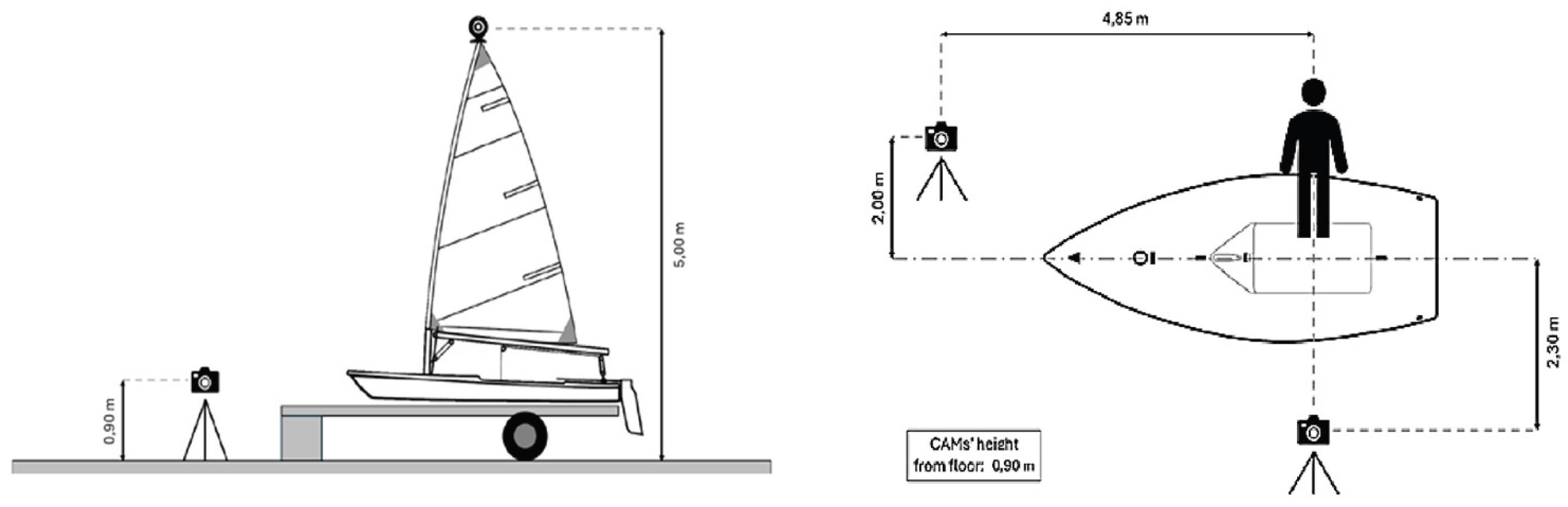
Figure 2.
Regional perceived discomfort at the end of training in sailing athletes, stratified by gender.
Figure 2.
Regional perceived discomfort at the end of training in sailing athletes, stratified by gender.
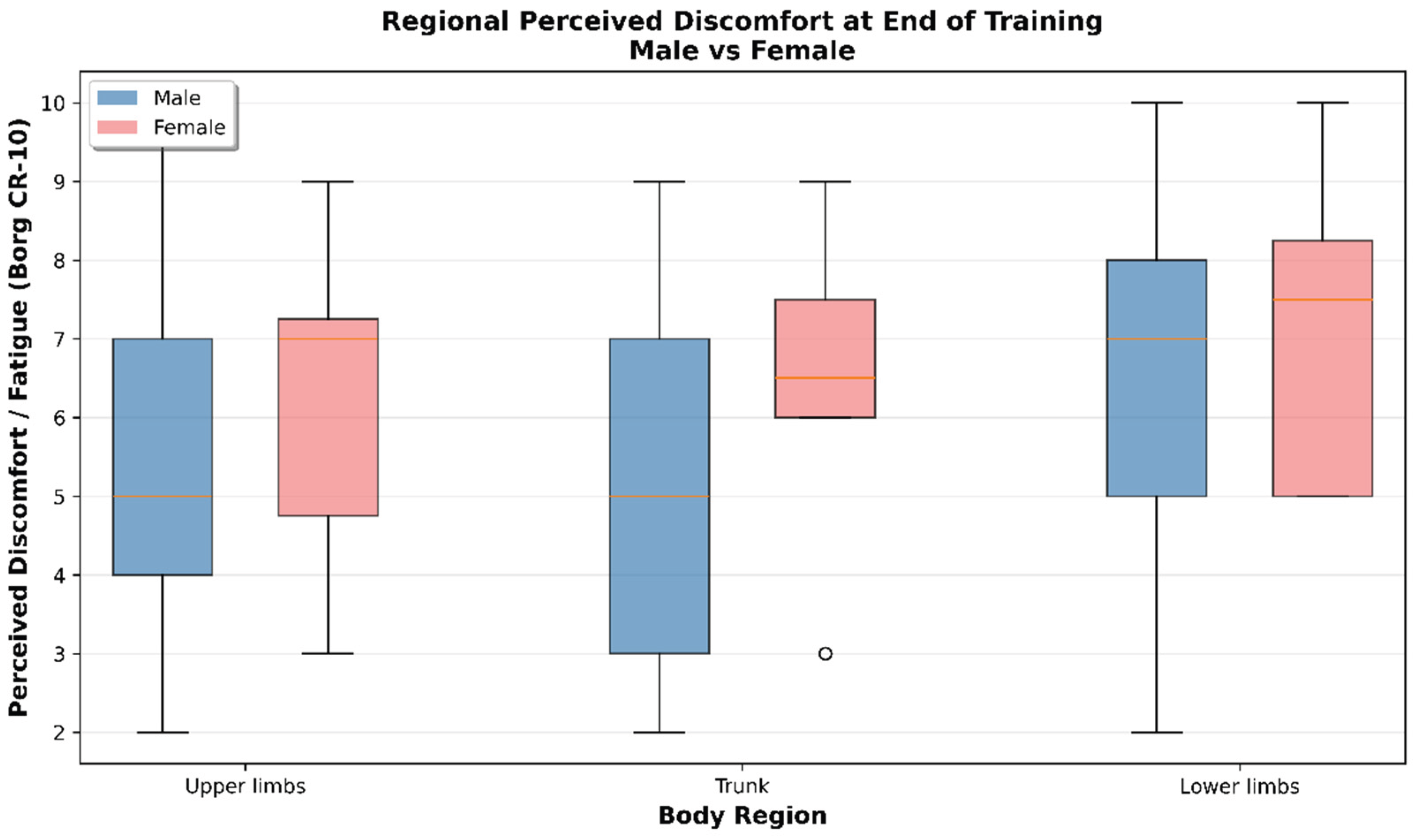
Figure 3.
Perceived regional discomfort in sailing athletes during pumping, at the end of training, and on the day following training.
Figure 3.
Perceived regional discomfort in sailing athletes during pumping, at the end of training, and on the day following training.
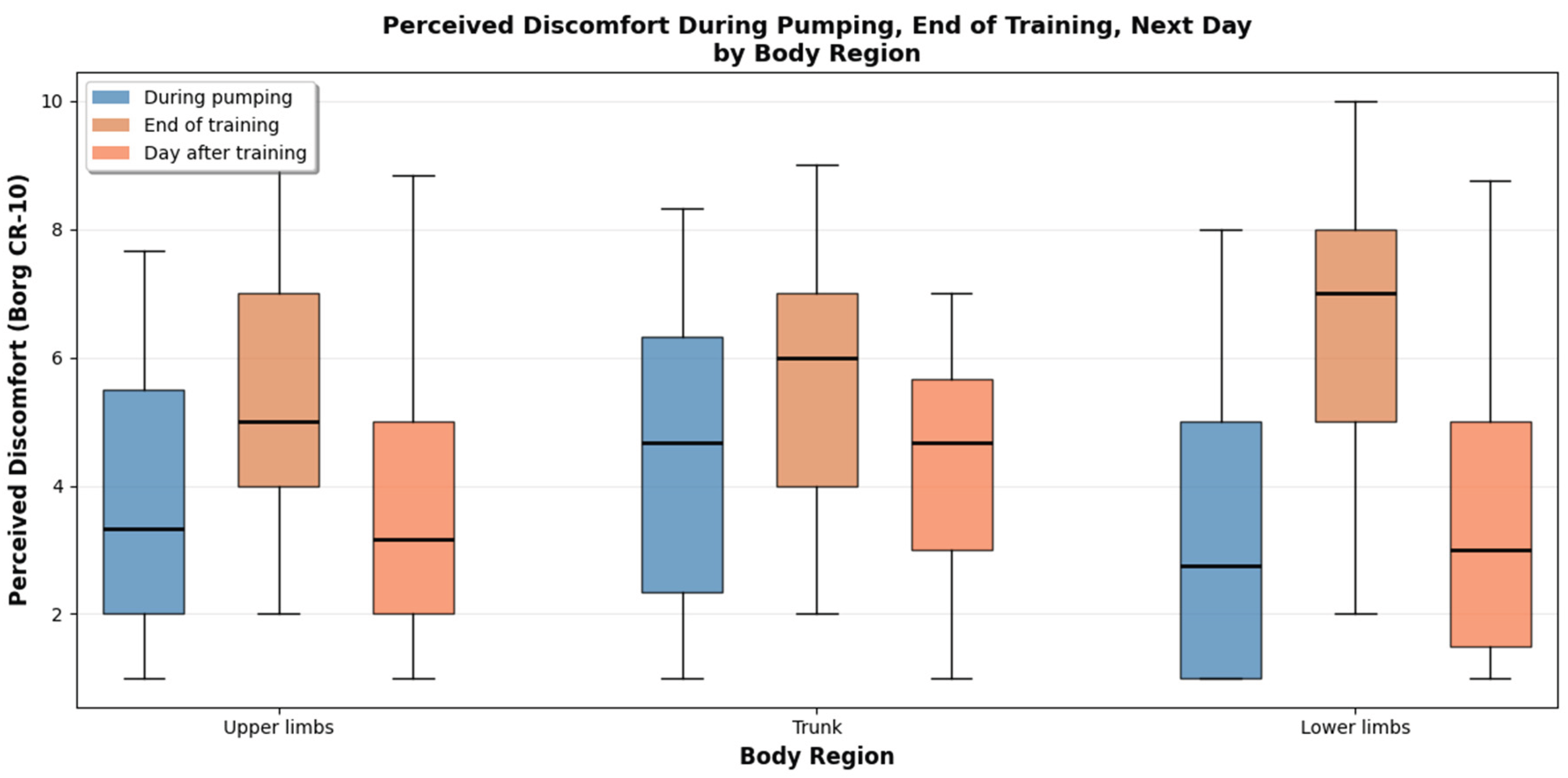
Figure 4.
Perceived discomfort during pumping and on the day following training across specific body zones in sailing athletes.
Figure 4.
Perceived discomfort during pumping and on the day following training across specific body zones in sailing athletes.
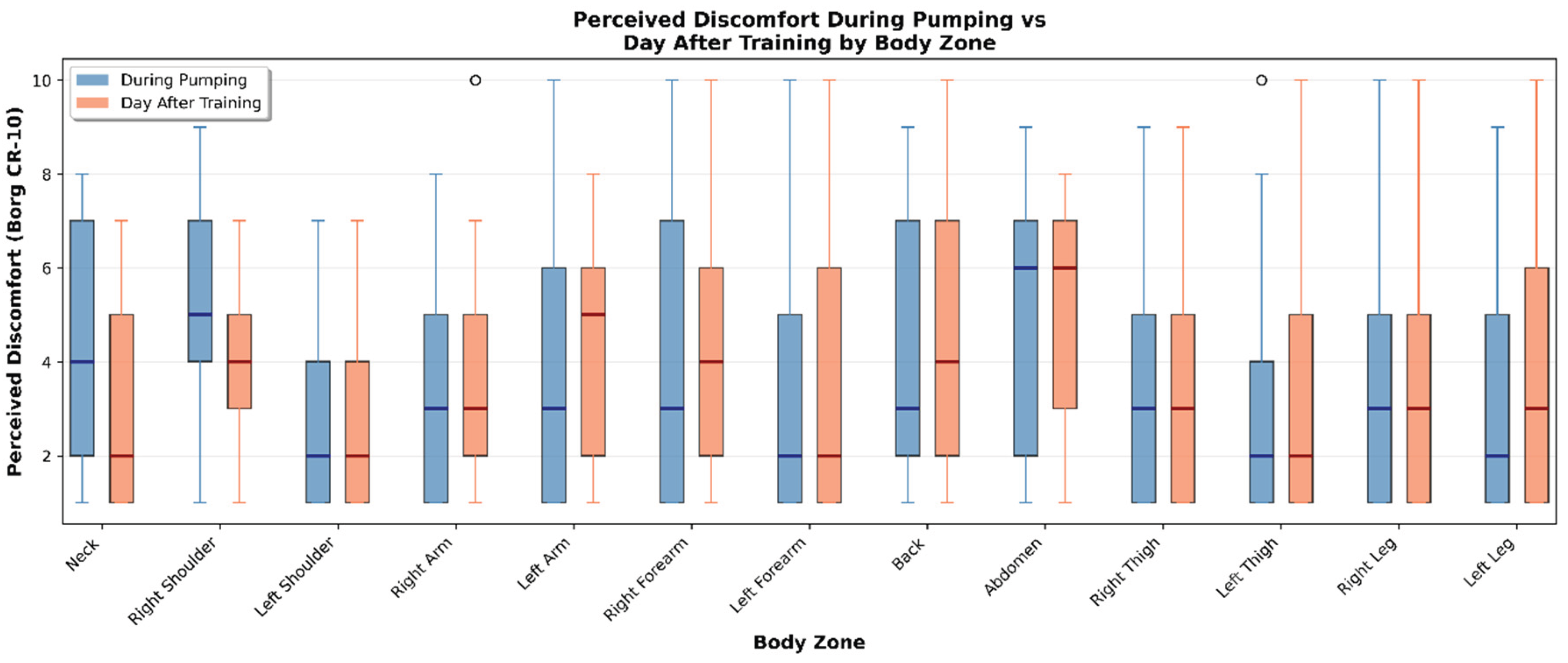
Figure 5.
Image extracted from the video simulation made in Delmia®.
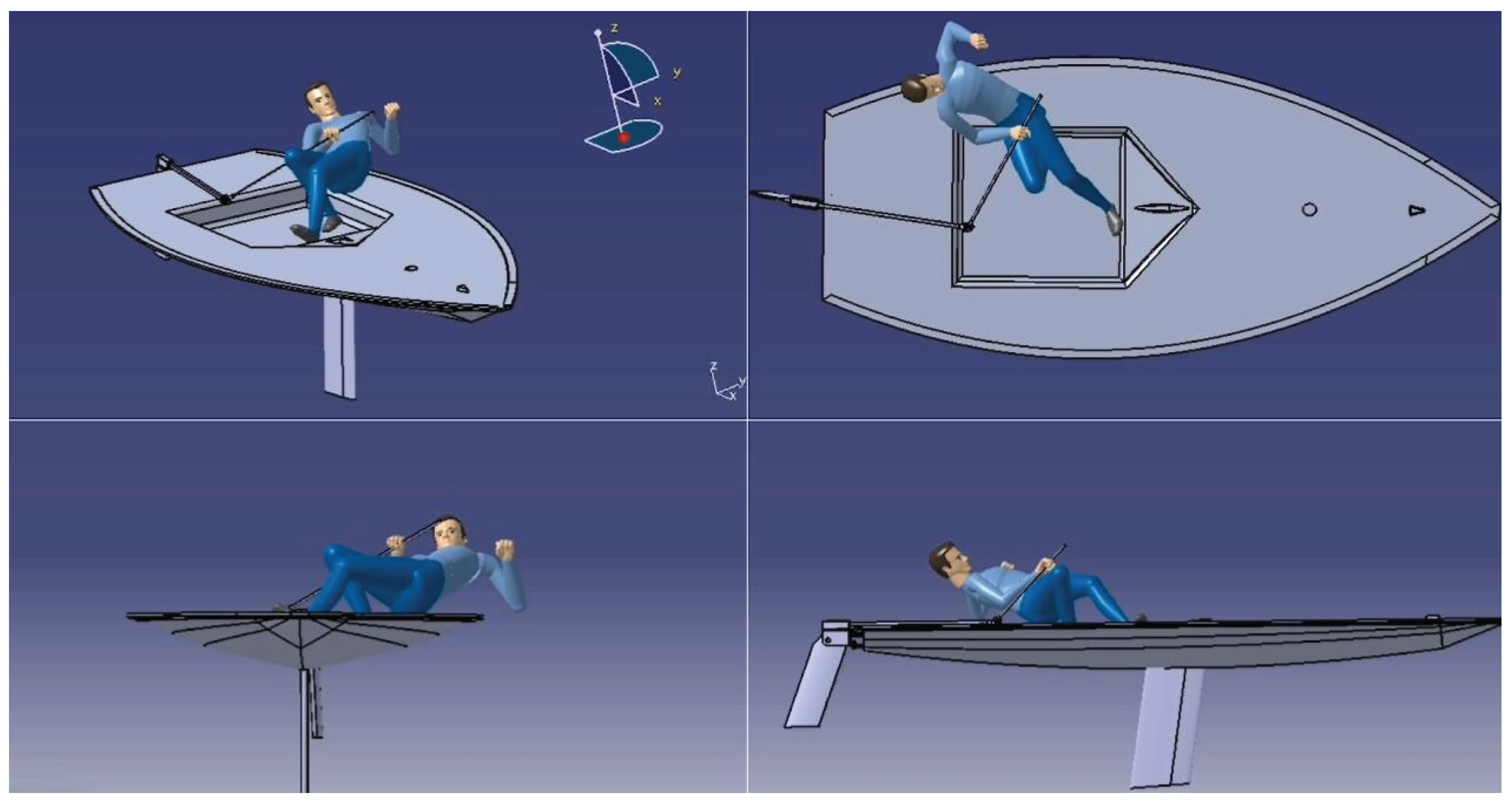
Figure 6.
Comparison between digital human model simulations and real on-water postures during the pumping maneuver in Laser-class sailing.
Figure 6.
Comparison between digital human model simulations and real on-water postures during the pumping maneuver in Laser-class sailing.
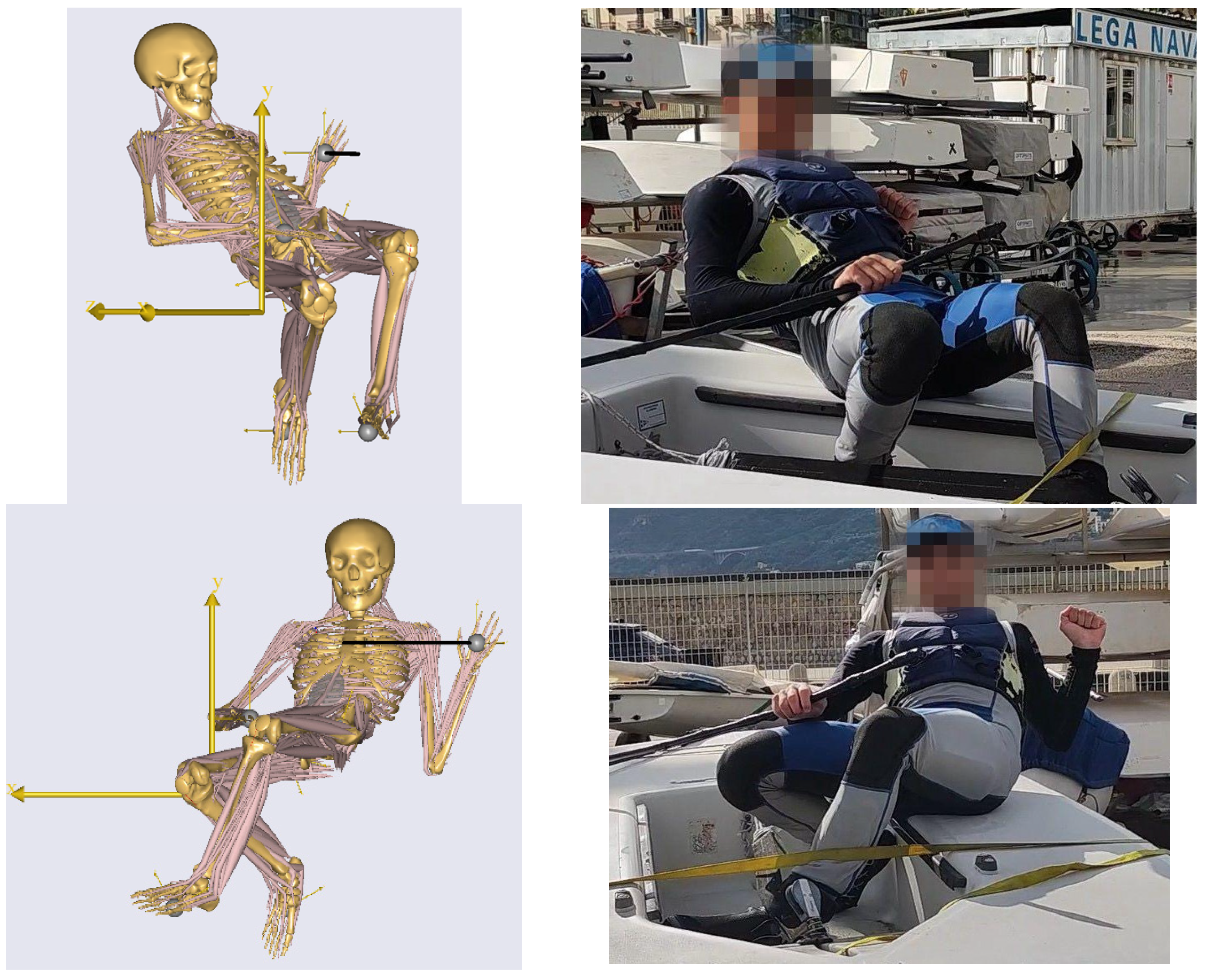
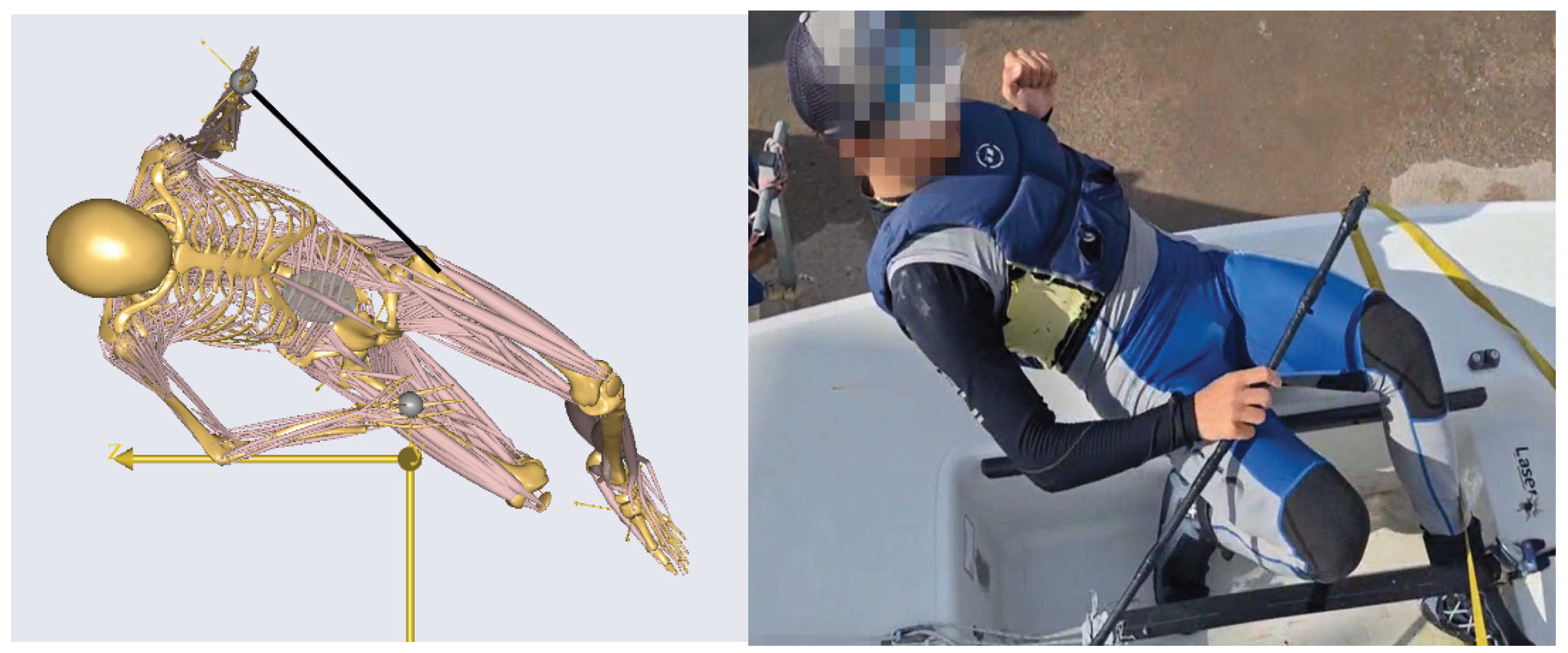

Table 1.
Anthropometric characteristics of Laser sailors. Anthropometric data are presented as mean ± standard deviation with range (minimum–maximum).
Table 1.
Anthropometric characteristics of Laser sailors. Anthropometric data are presented as mean ± standard deviation with range (minimum–maximum).
| Characteristic | Value | |
|---|---|---|
| Number of participants | 36 (28 Male; 8 Female) | |
| Mean ± SD | Range | |
| Age [year] | 16.95 ± 2.63 | 12–25 |
| Body mass [kg] | 66.48 ± 10.50 | 50–96 |
| Height [cm] | 173.45 ± 7.28 | 160–187 |
| Shoulder height [cm] | 142.95 ± 7.08 | 131–157 |
| Hip height [cm] | 97.23 ± 6.53 | 90–113 |
| Knee height, cm | 51.68 ± 3.40 | 46–60 |
| Foot size [EU] | 41.48 ± 2.49 | 36–45 |
| Sailing experience [year] | 7.68 ± 3.77 | 3–15 |
Table 2.
Mean and standard deviation of the discomfort levels experienced in different body areas across the three scenarios and two-way ANOVA test results.
Table 2.
Mean and standard deviation of the discomfort levels experienced in different body areas across the three scenarios and two-way ANOVA test results.
| Body Region | During (A) | Day After (B) | p-value |
|---|---|---|---|
| Neck | 4.30 ± 2.34 | 2.97 ± 1.93 | < 0.001 |
| Right Shoulder | 5.36 ± 2.34 | 3.64 ± 1.93 | < 0.001 |
| Left Shoulder | 2.86 ± 1.81 | 2.81 ± 1.89 | 0.899 |
| Right Arm | 3.33 ± 2.28 | 3.44 ± 2.35 | 0.839 |
| Left Arm | 3.67 ± 2.84 | 3.89 ± 2.20 | 0.712 |
| Right Forearm | 3.86 ± 2.95 | 3.94 ± 2.68 | 0.901 |
| Left Forearm | 3.08 ± 2.86 | 3.33 ± 2.61 | 0.700 |
| Back | 4.19 ± 2.72 | 4.44 ± 2.50 | 0.686 |
| Abdomen | 4.81 ± 2.92 | 4.94 ± 2.33 | 0.824 |
| Right Thigh | 3.22 ± 2.49 | 3.39 ± 2.21 | 0.764 |
| Left Thigh | 2.89 ± 2.45 | 3.17 ± 2.40 | 0.628 |
| Right Leg | 3.36 ± 2.53 | 3.58 ± 2.68 | 0.719 |
| Left Leg | 3.36 ± 2.93 | 3.64 ± 2.73 | 0.678 |
Table 3.
Joint kinematics during pumping maneuver execution. Values represent minimum, mean, maximum angular positions and range of motion (ROM) across a complete pumping cycle of a 50-percentile man.
Table 3.
Joint kinematics during pumping maneuver execution. Values represent minimum, mean, maximum angular positions and range of motion (ROM) across a complete pumping cycle of a 50-percentile man.
| Body Region | Joint Movement | Min (°) | Mean (°) | Max (°) | ROM (°) |
|---|---|---|---|---|---|
| Upper Limb—Shoulder | Right clavicular abduction | -3.12 | 18.89 | 40.49 | 43.61 |
| Upper Limb—Shoulder | Left clavicular abduction | 8.73 | 16.34 | 33.56 | 24.83 |
| Upper Limb—Arm | Right arm flexion | -1.81 | 40.84 | 86.37 | 88.18 |
| Upper Limb—Arm | Left arm flexion | -57.47 | 17.39 | 76.17 | 133.64 |
| Upper Limb—Forearm | Right forearm flexion | 11.06 | 64.3 | 93.5 | 82.44 |
| Upper Limb—Forearm | Left forearm flexion | 42.82 | 107.61 | 139.51 | 96.69 |
| Lower Limb—Hip | Right hip abduction | -14.57 | 8.74 | 27.41 | 41.98 |
| Lower Limb—Hip | Left hip abduction | -11.64 | 5.81 | 45 | 56.64 |
| Lower Limb—Knee | Right knee flexion | 45.24 | 83.23 | 105.63 | 60.39 |
| Lower Limb—Knee | Left knee flexion | 20.17 | 73.83 | 105.63 | 85.46 |
| Trunk—Sagittal | Trunk inclination | 14.2 | 22.29 | 29.67 | 15.47 |
| Trunk—Transverse | Trunk rotation | -71.7 | -19.54 | 17.4 | 89.1 |
Table 4.
Activation percentage of the most activated muscles.
| Body Region | Muscle (DX = Right Side; SX = Left Side) | Activation (%) |
|---|---|---|
| Trunk | multifidus_DX | 100.0 |
| Trunk | quadratus_lumborum_DX | 100.0 |
| Trunk | obliquus_externus_DX | 100.0 |
| Trunk | Semispinalis_DX | 100.0 |
| Shoulder Left | latissimus_dorsi_SX | 100.0 |
| Trunk | psoas_major_SX | 100.0 |
| Trunk | obliquus_internus_SX | 100.0 |
| Trunk | psoas_major_DX | 100.0 |
| Trunk | erector_spinae_DX | 91.8 |
| Trunk | erector_spinae_SX | 58.7 |
| Shoulder Left | supraspinatus_SX | 56.2 |
| Upper Limb Left | triceps_SX | 56.2 |
| Upper Limb Left | biceps_SX | 56.2 |
| Shoulder Left | infraspinatus_SX | 56.2 |
| Shoulder Left | deltoideus_SX | 56.2 |
| Trunk | multifidus_SX | 48.9 |
| Lower Limb Right | tensor_fasciae_latae_DX | 45.5 |
| Lower Limb Right | poplitues_DX | 45.5 |
| Lower Limb Right | plantaris_DX | 45.5 |
| Lower Limb Right | gracilis_DX | 45.5 |
| Lower Limb Right | semimembranosus_DX | 45.5 |
| Lower Limb Right | sartorius_DX | 45.5 |
| Lower Limb Right | biceps_femoris_DX | 45.5 |
| Lower Limb Right | peroneus_tertius_DX | 45.5 |
| Lower Limb Right | tibialis_anterior_DX | 45.5 |
| Shoulder Left | serratus_anterior_SX | 43.2 |
| Shoulder Left | trapezius_SX | 43.2 |
| Trunk | rectus_abdominis | 34.1 |
| Neck | sternoclaidomastoid_SX | 33.1 |
| Trunk | transversus | 32.5 |
| Lower Limb Right | adductor_brevis_DX | 26.6 |
| Lower Limb Right | pectineus_DX | 26.6 |
| Lower Limb Right | obturator_internus_DX | 26.6 |
| Lower Limb Right | obturator_externus_DX | 26.6 |
| Lower Limb Right | gemellus_superior_DX | 26.6 |
| Lower Limb Right | gemellus_inferior_DX | 26.6 |
| Lower Limb Right | quadratus_femoris_DX | 26.6 |
| Lower Limb Right | adductor_longus_DX | 26.6 |
| Lower Limb Right | piriformis_DX | 26.6 |
| Lower Limb Right | gluteus_medius_DX | 26.6 |
| Lower Limb Right | gluteus_minimus_DX | 26.6 |
| Lower Limb Right | iliacus_DX | 26.6 |
| Lower Limb Right | gastrocnemius_DX | 26.6 |
Disclaimer/Publisher’s Note: The statements, opinions and data contained in all publications are solely those of the individual author(s) and contributor(s) and not of MDPI and/or the editor(s). MDPI and/or the editor(s) disclaim responsibility for any injury to people or property resulting from any ideas, methods, instructions or products referred to in the content. |
© 2026 by the authors. Licensee MDPI, Basel, Switzerland. This article is an open access article distributed under the terms and conditions of the Creative Commons Attribution (CC BY) license (http://creativecommons.org/licenses/by/4.0/).
Copyright: This open access article is published under a Creative Commons CC BY 4.0 license, which permit the free download, distribution, and reuse, provided that the author and preprint are cited in any reuse.


