

Submitted:
22 January 2026
Posted:
26 January 2026
You are already at the latest version
Abstract
The objective of this study was to evaluate the impact of summer calving on reproductive performance, milk yield, and culling risk in U.S. organic dairy herds. Data were obtained from Dairy Herd Improvement records of 483 organic dairy herds across 31 states, com-prising 323,304 calving records from 2018 to 2022. Calving months were categorized as winter, spring, summer, or fall. Mixed models were used to analyze 305-d milk yield, 305-d energy corrected milk yield, peak milk DIM, peak test day milk yield and logistic re-gression and survival analyses were applied to analyze calving difficulty, abortion, preg-nancy diagnosis, and culling outcomes. Cows calving during summer had fewer days to first service and fewer days open compared with cows calving in other seasons; however, their odds of being diagnosed pregnant were significantly lower. Summer-calving cows produced lower 305-d milk and energy-corrected milk yields, reached peak milk produc-tion later, and had lower peak test-day milk yield. Calving during summer was also asso-ciated with increased odds of calving difficulty and a higher risk of culling. These findings indicate that summer calving poses distinct challenges for organic dairy cows, with cu-mulative effects on fertility, milk production, and survivability, underscoring the need for season-specific management strategies in organic dairy systems.
Keywords:
organic dairy
; Holstein
; heat stress
1. Introduction
Weather conditions, along with specific management practices, present significant challenges for dairy cattle during summer, greatly impacting fertility and milk production [1]. Elevated ambient temperatures combined with high humidity create thermal loads that exceed the cow’s capacity for heat dissipation, leading to both direct physiological disruptions and indirect effects via reduced dry matter intake (DMI) [2]. In organic dairy systems, cows are typically managed under USDA’s National Organic Program (NOP) regulations, which requires pasture access for a minimum of 120 days each year and that at least 30% of their dry matter intake (DMI) come from organic pasture during this period [3]. Therefore, most dairy farms put cows on pasture during the summer months when the pasture is available, which increases their direct exposure to ambient heat load and solar radiation compared with confinement systems. In addition, cows need to walk during grazing as well as to the pasture on a regular basis, leading to additional energy expenditure in this process. Consequently, cows calving during summer under organic management may experience sustained negative impact.
The temperature-humidity index (THI) is widely used to quantify this environmental stress, and heat stress is commonly initiated when THI values exceed thresholds of approximately 68-72, indicating combined thermal and humidity stress that suppresses physiological comfort [4,5]. Under these conditions, dry matter intake (DMI) declines, exacerbating negative energy balance (NEB) and further impairing reproductive processes such as ovarian activity and embryo development as an indirect effect [1,2]. Direct physiological consequences of heat stress include impaired follicular development, reduced steroidogenesis, compromised uterine environment, poor oocyte quality, and increased early embryonic loss [2,6]. Heat stress also disrupts estrous behavior and reduces the expression of estrus, which diminishes the accuracy of estrus detection and the timing of insemination [7,8], and has been shown experimentally to reduce pregnancy rates dramatically when THI is high at or near insemination (e.g., summer vs. winter comparisons) [9,10]. The impact of summer heat load on reproductive physiology extends beyond ovarian function to include alterations in hormonal profiles. Heat stress can diminish the pre-ovulatory surge of luteinizing hormone (LH) and reduce circulating estradiol concentrations, leading to poor follicle dominance and suboptimal conditions for ovulation and conception [11,12]. Progesterone synthesis and corpus luteum function may also be disrupted, further reducing the likelihood of embryonic survival and implantation [2,6]. These physiological effects help explain well-documented declines in conception rates of 20-30% during hot seasons compared with cooler months [2,9,13,14] and the characteristic seasonal trends in estrus detection, interval to first service, and overall fertility in dairy herds [2,10].
Cows that calve during summer are particularly vulnerable to these effects because their transition period, defined as the early postpartum period when a dairy cow is already energetically demanding, coincides with peak environmental heat load. For example, physiological studies have documented longer intervals from calving to first postpartum ovulation and altered endocrine function among cows calving in spring and summer compared with those calving in cooler periods [15]. Through both direct and indirect pathways, when the transition period falls within summer months, cows can have impaired production and fertility, such as conception rate, pregnancy rate, and increased days open, further complicating reproductive success [1,6,14,16].
Reproductive failure remains a leading cause of cow removal from herds, management policies often allow more opportunities for higher-producing cows to conceive before culling [17,18,19]. Seasonal trends are evident in estrus detection, interval to first service, and conception outcomes in dairy cows [9,14,20,21], with consistently reduced conception rates observed during the summer relative to winter leading to more cows getting out of herd due to reproductive failures. Research has documented that higher milk producing cows are often associated with low fertility, though the relationship between yield and the decision to cull remains complex [16].
Despite extensive documentation of the detrimental effects of summer calvings on reproductive efficiency and lactational performance in conventional dairy cattle [15,22], literature remains limited examining these patterns in organic dairy systems, where interventions including hormones and antibiotics are restricted. Understanding the interaction between calving period, production system, and herd performance is therefore critical, particularly for organic dairy herds that have significant significance of summer months. The objective of this study was to evaluate the impact of summer calving on reproductive measures, milk yield, and the culling risk of cows in organic dairy farms in the US.
2. Materials and Methods
2.1. Study Population
This study examined herd DHI lactation records from 483 organic dairy herds across 31 US states, comprising a total of 323,304 records of cow calving between January 2018 and December 2022. Organic dairies were recognized based on the price of milk. The dataset was provided by Dairy Records Management Systems (DRMS, Raleigh, NC) and included cow and herd level information such as birth date, calving date, parity, actual 305-d milk yield, 305-d energy corrected milk yield, peak milk DIM, peak test day milk yield, herd code and state, and breeding records, along with the recorded reason and date of culling.
2.2. Data Management
The individual cow related data within each farm include birth date, calving date, parity, actual 305-d milk yield, 305-d energy corrected milk yield, peak milk DIM, peak test day milk yield, herd code and state, and breeding records were obtained by combining separate lactation, breeding, and identification dataset received from DRMS. The culling date was identified as the last known reported status date with the code culling.
2.3. Measures of Interest
The dependent variable was calving season (summer and other). Other measures of interest were 305-d milk yield, 305-d energy corrected milk yield, peak milk DIM, peak test day milk yield, calving difficulty during calving, abortion risk during the current lactation [after summer calving], pregnancy diagnosis during the current lactation, and culling of cows from the herd in the current lactation. Calving season was defined as winter (January to March), spring (April to June), summer (July to September), and fall (October to December).
2.4. Statistical Analysis
The impact of summer calving on continuous variables (305-d milk yield, 305-d energy corrected milk (305 ECM) yield, peak milk DIM, peak test day milk yield) were analyzed using MIXED procedure in SAS (SAS Institute Inc., Cary, NC), with herd included as the random variable. The statistical model utilized included the fixed effects of calving season and parity. Logistic regression (PROC GLIMMIX) was used to assess the effect of season of calving on binary variables (calving difficulty, abortion, pregnancy diagnosis, and culling). The score of calving ease ranged from 1-5, with 1 being easiest (unassisted) and higher numbers indicating more difficulty (requiring assistance, mechanical pulls, or even Caesarian section) [23]. A new binary variable was created for calving difficulty with 0 for easy and 1 for difficult (calving ease 2,3,4, and 5).
Hazard distribution for culling by calving season was estimated using the Kaplan-Meier methods of LIFETEST procedure of SAS. Calving date was considered the origin of time in the estimation of hazard functions, and the cow surviving until the subsequent calving were censored at that point. The records ending with the culling date were censored at the culling date. Records missing a subsequent calving date or a culling event and date were considered censored at the last known event date. The hazard analysis was conducted for the period from 1 to 500 days after calving.
3. Results and Discussion
In the present study, cows calving during summer had fewer days (3.3%) to first service (58.4 vs 60.4 days, P < .0001) compared with cows calving in other seasons (Table 1) in organic dairy herds. In contrast, previous studies in conventional systems have reported delayed breeding during summer due to heat stress [16,17,24]. This difference may reflect improved estrus expression and detection associated with pasture-based management during summer in organic dairy systems. Cows with access to pasture and open areas exhibit more frequent and intense estrous behaviors, including mounting and standing to be mounted, compared with cows housed indoors on concrete flooring [25,26]. Environmental constraints in indoor housing, such as slippery floors, stress of close confinement, and higher lameness prevalence, reduce mounting activity and can suppress behavioral estrus expression, leading to delayed or missed inseminations [27]. Lameness, which is more prevalent in cows housed on concrete, is strongly associated with reduced estrus intensity and duration and may further compromise timely breeding [28]. These findings highlight that seasonal patterns in reproductive performance are strongly influenced by production system and management objectives, and results from conventional herds may not directly translate to organic dairy systems.
Cows calving during summer also had slightly fewer (0.64%) days open (168.7 vs 169.8 P = 0.04) compared with cows calving in other seasons. This finding is consistent with Oseni, Misztal, Tsuruta and Rekaya [17], who reported the lowest days open for cows calving between July and September and attributed seasonal variation in days open primarily to management decisions rather than physiological limitations. As discussed above, enhanced estrus expression and improved detection under pasture conditions likely contributed not only to fewer days to first service but also to the shorter days open observed among summer-calving cows. Earlier insemination following calving may consequently shorten the days open. Thus, in organic dairy systems, the behavioral and locomotor advantages of pasture access during summer may partially offset the negative reproductive impacts of seasonal heat load by facilitating earlier breeding events.
Summer-calving cows had 1.3% lower (P < 0.0001) 305-day milk yield and 0.3% lower (P < 0.05) 305-day energy-corrected milk yield compared with cows calving in other seasons. This finding is consistent with Torshizi [29], who reported the lowest 305-d milk yield for cows calved in summer and spring than the cows calved in autumn and winter. Similarly Ray, et al. [30] and Stojnov, et al. [31] also reported lowest lactation milk yield for cows calving during summer and the highest yield for spring-calving cows. Seasonal differences in milk production are commonly attributed to environmental and nutritional factors, including heat stress [32,33,34] and variation in pasture quality and access [34,35], which may be more pronounced in organic dairy production systems. Moreover, in organic systems, cows calving in summer often experience the transition period under heat stress while deriving a substantial proportion of their dry matter intake from pasture rather than nutritionally balanced total mixed ration (TMR), which may limit energy intake. Additionally, increased energy expenditure associated with walking to grazing areas and grazing activity [36,37] may further reduce energy availability for milk production. Previous studies have also shown that, at the individual cow level, higher milk production is associated with longer days to first service, days to conception, and calving interval, reflecting the well-established antagonistic relationship between milk yield and fertility [16,38,39]. Although causal relationships cannot be inferred, the lower 305-milk and ECM yields observed for summer-calving cows in the present study occurred alongside shorter intervals to first service and days open, highlighting the complex trade-offs between production and reproductive performance in organic dairyherds.
Cows calving during the summer reached peak milk production later than cows calving in other seasons (1.1 day longer; P < 0.0001). Although the numerical difference in peak time was small, the consistent delay suggests a seasonal influence on early-lactation milk production dynamics. This pattern likely reflects challenges during the transition period, including heat stress, increased physical activity associated with grazing and walking [36], and lower energy intake from pasture-based diets compared with nutritionally balanced total mixed ration (TMR) [40], which may delay metabolic adaptation to lactation and peak milk expression. A comparable seasonal pattern was reported by Torshizi [29], who observed that peak time occurred earlier in cows calving during spring and winter compared with those calving in summer and autumn. This delay in peak production among summer-calving cows may reflect greater physiological and metabolic challenges during early lactation under warm environmental conditions.
In addition to differences in peak timing, peak test-day milk yield was significantly lower for cows calving in summer compared with those calving in other seasons (1.1 d longer and 1.4 kg less milk during summer; P < 0.0001, Table 1). This result aligns with findings by Dědková and Němcová [41] and Torshizi [29] who reported the lowest peak milk yields for cows calving in summer and spring, whereas cows calving in autumn and winter achieved the highest peak yields. These patterns are commonly attributed to stressful summer conditions during early lactation in summer, which can limit feed intake and suppress milk synthesis [29]. However, seasonal effects on peak yield are not fully consistent across studies. Schei, et al. [42] reported higher peak yields for spring-calving Red Cattle compared with autumn-calving cows, indicating that breed, production system, and climatic region may modify the relationship between calving season and lactation curve characteristics. Together, these findings suggest that summer calving is generally associated with delayed peak milk production and reduced peak yield, but the magnitude and direction of these effects may vary depending on environmental conditions, breed, and management system.
The result showed that cows calving during summer had 13% higher odds of calving difficulty (P < 0.0001) compared with cows calving in other seasons (Table 2). Seasonal patterns of calving difficulty have been inconsistent across studies, with higher rates reported in late autumn and winter [43,44], in spring [45], or with minimal seasonal differences. Differences among studies likely reflect variation in production systems, housing conditions, supervision intensity, and herd composition. In organic dairy systems, stressful summer condition could increase the risk of dystocia. Parturient stress has been identified as an important intermediate cause of calving difficulty, along with fetal oversize, hypocalcemia, hypomagnesemia, and inadequate pelvic relaxation [46]. Environmental stressors can impair uterine motility, cervical dilation, and abdominal contractions, resulting in prolonged calving and dystocia [47,48]. Additionally, cows calving in summer experience late gestation during periods of elevated ambient temperatures, which may affect maternal condition or fetal development [49]. Together, these factors may contribute to the modest increase in odds of calving difficulty observed for summer-calving cows in the present study, while underscoring that calving difficulty is influenced by multiple interacting management and environmental factors beyond season alone.
Calving season was not significantly associated with abortion risk in organic dairy cows post calving (Table 2). Previous studies have reported higher abortion risk during warmer months. For example, Norman, et al. [50] observed increased abortion risk for cows calving between April and August, while European studies have reported the highest abortion frequencies during summer [51,52]. Similarly, Keshavarzi, et al. [53] reported increased odds of abortion during warm months, which they attributed to variation in environmental conditions and management systems. However, studies evaluating the effect of summer calvings in abortions during subsequent lactation are limited. Although the point estimate suggested lower odds of abortion for summer-calving cows, the wide confidence interval indicates substantial uncertainty, likely due to the low frequency of abortion events. The absence of a clear seasonal association in the present study suggests that, within organic dairy systems, abortion risk may be relatively stable across calving seasons.
Summer calving cows had 10% lower odds of being diagnosed pregnant (P<.0001) compared with cows calved in other seasons (Table 2). Seasonal differences in pregnancy likelihood observed in the present study are consistent with findings by Farin, et al. [54] and more recent results from [55], both of whom reported reduced pregnancy probability among cows calving in warmer seasons. Sasaki, et al., [55] attributed the particularly low pregnancy probability of spring-calving cows to breeding occurring during spring and summer, when heat stress reduces estrus expression and fertility. Although summer-calving cows in the present study had fewer days to first service, their odds of becoming pregnant remained lower than those of cows calving in other seasons, suggesting that timely breeding alone are insufficient to overcome seasonal reductions in fertility. While access to pasture and greater freedom of movement during summer likely enhance behavioral estrus detection, successful conception depends not only on mating opportunity but also on the cow’s underlying physiological and metabolic status. Summer-calving cows are often exposed to heat stress and experience greater negative energy balance during early lactation, conditions that have been associated with delayed postpartum ovulation, reduced progesterone production following ovulation, and impaired oocyte quality and uterine environment [15]. These physiological constraints may compromise fertilization and early embryo survival, thereby limiting pregnancy success despite more frequent or earlier inseminations. Collectively, these findings suggest that the interaction between calving season, subsequent breeding environment, and metabolic stress plays a critical role in determining reproductive outcomes. This pattern may be particularly relevant in organic dairy systems, where breeding is often seasonally structured and management flexibility is limited, making it more challenging to offset the combined effects of heat stress and negative energy balance on fertility.
Cows calving during the summer had a significantly higher risk of culling during the current lactation compared with cows calving in other seasons, as indicated by a 10% increase in culling risk (P < 0.0001). This finding is consistent with our previous work Shrestha, et al., [19], where we reported the highest live culling (22.3%) and death culling rates (3.4%) among summer-calving cows in U.S. organic dairy farms. We further observed a greater overall culling frequency for cows calving in summer (29.4%) compared with fall (27.1%), winter (25.4%), and spring (26.0%), with reproductive failure identified as the primary reason for removal. Similarly, Dechow and Goodling [56] reported that the unfavorable effect of calving season on cow survival was most pronounced for cows calving during the summer months. Seasonal susceptibility to culling may be particularly relevant in organic dairy systems, where cows are typically managed on pasture and are required to walk longer distances during grazing periods [37], increasing physical and environmental stress as walking incurrs expenditure of substantial energy [36]. Exposure to high ambient temperatures and humidity during the postpartum transition, when cows are in negative energy balance, may further exacerbate vulnerability to health disorders, contributing to increased death rates and involuntary culling among summer-calving cows, as previously reported by Vitali, et al. [57]. In contrast, Pinedo, Daniels, Shumaker and De Vries [18] reported the highest culling rates among spring-calving cows, followed by summer-calving cows, in conventional dairy herds. Collectively, these findings suggest that while summer calving is consistently associated with elevated culling risk, the magnitude and seasonal ranking of culling may vary depending on management practices, environmental exposure, and production system, with organic dairy cows appearing particularly sensitive to summer calving conditions due to specific management related stress during summer.
Figure 1 illustrates the estimated hazard of culling by days since calving for summer-calving and other seasons-calving cows. Culling risk remained low and similar between groups during early lactation, reflecting standard management practices that prioritize cow retention during the initial postpartum period. However, divergence in culling hazard became evident after approximately 250–300 days in milk, with summer-calving cows exhibiting a consistently higher risk of removal thereafter. The difference was most pronounced during late lactation, where the hazard of culling increased sharply for both groups but remained substantially higher for summer-calving cows. This pattern suggests that adverse effects associated with summer calving, such as lower lactational performance and reduced pregnancy likelihood, contribute more strongly to culling decisions that are typically implemented at the end of lactation, around the time of dry-off. These findings align with the observed increased odds of culling for summer-calving cows and highlight the importance of considering both timing and magnitude of culling risk when evaluating seasonal effects in organic dairy systems.
This study may present some important limitations that should be acknowledged when interpreting the findings. Although the analyses adjusted for key herd-level factors, possible unmeasured confounding may remain due to variables not captured in the dataset, such as individual cow health status, nutritional management details, or specific pasture composition. In addition, the lack of environmental data at the cow or herd level such as on-farm temperature, humidity, or solar radiation exposure, limits our ability to more precisely link seasonal effects to direct measures of heat stress. Finally, the study relied on management-recorded reproductive and production outcomes rather than direct hormonal or physiological measurements, precluding deeper investigation into the biological pathways underlying observed associations. As a result, causal mechanisms such as heat stress-induced endocrine disruption or metabolic challenges could not be directly evaluated and remain speculative despite consistent patterns reported in previous experimental studies. Future research including real-time environmental monitoring and cow-level physiological assessments would strengthen understanding of the mechanistic links between calving season, management system, and health outcomes in organic dairy cattle.
4. Conclusions
Although cows calving during summer experienced fewer days to first service and shorter days open as compared to cows calving in other seasons, their likelihood of becoming pregnant was reduced. Summer-calving cows also exhibited modest reductions in 305-d milk yield and energy-corrected milk yield, along with slightly delayed peak milk production and lower peak test-day milk yield for the lactation compared to cows calving in other season. Importantly, summer calving was associated with a higher risk of calving difficulty and culling during the lactation. Collectively, these findings indicate that despite earlier breeding, summer-calving cows experience compromised reproductive success, milk production, and survivability, suggesting that heat stress and associated metabolic and physiological challenges outweigh the benefits of improved estrus expression and timely insemination in organic dairy systems.
Author Contributions
Conceptualization, S.P.; methodology, B.S.; software, B.S.; validation, B.S., and S.P.; formal analysis, B.S.; investigation, B.S., and S.P.; resources, S.P.; data curation, B.S.; writing—original draft preparation, B.S.; writing—review and editing, S.P.; visualization, B.S.; supervision, B.S.; project administration, B.S. All authors have read and agreed to the published version of the manuscript.
Funding
This research received no external funding.
Institutional Review Board Statement
Not applicable.
Informed Consent Statement
Not applicable.
Data Availability Statement
Data supporting the findings of this study are available to anyone from the corresponding author upon request.
Acknowledgments
The authors appreciate the cooperation of Dairy Records Management Systems (Raleigh, NC) for providing the lactation records used in this study. The authors have reviewed and edited the output and take full responsibility for the content of this publication.
Conflicts of Interest
The authors declare no conflicts of interest.
Abbreviations
The following abbreviations are used in this manuscript:
| DMI | Dry Matter Intake |
| THI | Temperature - Humidity Index |
| NEB | Negative Energy Balance |
| ECM | Energy Corrected Milk |
| TMR | Total Mixed Ration |
References
- De Rensis, F.; Garcia-Ispierto, I.; López-Gatius, F. Seasonal heat stress: Clinical implications and hormone treatments for the fertility of dairy cows. Theriogenology 2015, 84, 659–666. [Google Scholar] [CrossRef]
- De Rensis, F.; Scaramuzzi, R.J. Heat stress and seasonal effects on reproduction in the dairy cow—a review. Theriogenology 2003, 60, 1139–1151. [Google Scholar] [CrossRef] [PubMed]
- USDA-AMS. National organic program (NOP); organic livestock and poultry practices. Federal Register 2017, 82, 7042–7090. Available online: https://www.federalregister.gov/documents/2023/11/02/2023-23726/national-organic-program-nop-organic-livestock-and-poultry-standards.
- Armstrong, D.V. Heat Stress Interaction with Shade and Cooling. J. Dairy Sci. 1994, 77, 2044–2050. [Google Scholar] [CrossRef] [PubMed]
- Becker, C.A.; Collier, R.J.; Stone, A.E. Invited review: Physiological and behavioral effects of heat stress in dairy cows. J. Dairy Sci. 2020, 103, 6751–6770. [Google Scholar] [CrossRef] [PubMed]
- Dash, S.; Chakravarty, A.K.; Singh, A.; Upadhyay, A.; Singh, M.; Yousuf, S. Effect of heat stress on reproductive performances of dairy cattle and buffaloes: A review. Vet World 2016, 9, 235–244. [Google Scholar] [CrossRef]
- Szalai, S.; Bodnár, Á.; Fébel, H.; Bakony, M.; Jurkovich, V. Effects of Heat Stress on Estrus Expression and Pregnancy in Dairy Cows. Animals (Basel) 2025, 15. [Google Scholar] [CrossRef]
- Dransfield, M.B.G.; Nebel, R.L.; Pearson, R.E.; Warnick, L.D. Timing of Insemination for Dairy Cows Identified in Estrus by a Radiotelemetric Estrus Detection System. J. Dairy Sci. 1998, 81, 1874–1882. [Google Scholar] [CrossRef]
- De Rensis, F.; Marconi, P.; Capelli, T.; Gatti, F.; Facciolongo, F.; Franzini, S.; Scaramuzzi, R.J. Fertility in postpartum dairy cows in winter or summer following estrus synchronization and fixed time AI after the induction of an LH surge with GnRH or hCG. Theriogenology 2002, 58, 1675–1687. [Google Scholar] [CrossRef]
- Schüller, L.K.; Burfeind, O.; Heuwieser, W. Impact of heat stress on conception rate of dairy cows in the moderate climate considering different temperature–humidity index thresholds, periods relative to breeding, and heat load indices. Theriogenology 2014, 81, 1050–1057. [Google Scholar] [CrossRef]
- Roth, Z. Influence of heat stress on reproduction in dairy cows-physiological and practical aspects. J Anim Sci. 2020, 98, S80–s87. [Google Scholar] [CrossRef]
- Wolfenson, D.; Roth, Z. Impact of heat stress on cow reproduction and fertility. Anim. Front. 2018, 9, 32–38. [Google Scholar] [CrossRef]
- Badinga, L.; Thatcher, W.W.; Diaz, T.; Drost, M.; Wolfenson, D. Effect of environmental heat stress on follicular development and steroidogenesis in lactating Holstein cows. Theriogenology 1993, 39, 797–810. [Google Scholar] [CrossRef] [PubMed]
- Cavestany, D.; El-Wishy, A.B.; Foote, R.H. Effect of Season and High Environmental Temperature on Fertility of Holstein Cattle. J. Dairy Sci. 1985, 68, 1471–1478. [Google Scholar] [CrossRef] [PubMed]
- Jonsson, N.N.; McGowan, M.R.; McGuigan, K.; Davison, T.M.; Hussain, A.M.; Kafi, M.; Matschoss, A. Relationships among calving season, heat load, energy balance and postpartum ovulation of dairy cows in a subtropical environment. Anim. Reprod. Sci. 1997, 47, 315–326. [Google Scholar] [CrossRef]
- De Vries, A.; Risco, C.A. Trends and Seasonality of Reproductive Performance in Florida and Georgia Dairy Herds from 1976 to 2002*. J. Dairy Sci. 2005, 88, 3155–3165. [Google Scholar] [CrossRef]
- Oseni, S.; Misztal, I.; Tsuruta, S.; Rekaya, R. Seasonality of Days Open in US Holsteins. J. Dairy Sci. 2003, 86, 3718–3725. [Google Scholar] [CrossRef]
- Pinedo, P.J.; Daniels, A.; Shumaker, J.; De Vries, A. Dynamics of culling for Jersey, Holstein, and Jersey × Holstein crossbred cows in large multibreed dairy herds. J. Dairy Sci. 2014, 97, 2886–2895. [Google Scholar] [CrossRef] [PubMed]
- Shrestha, B.; Neupane, R.; Pinedo, P.; Pineiro, J.; Paudyal, S. Dynamics of culling risk in organic dairy herds in the United States. J. Dairy Sci., 2025; p. 93. [Google Scholar]
- Ryan, D.P.; Prichard, J.F.; Kopel, E.; Godke, R.A. Comparing early embryo mortality in dairy cows during hot and cool seasons of the year. Theriogenology 1993, 39, 719–737. [Google Scholar] [CrossRef]
- Alnimer, M.; De Rosa, G.; Grasso, F.; Napolitano, F.; Bordi, A. Effect of climate on the response to three oestrous synchronisation techniques in lactating dairy cows. Anim. Reprod. Sci 2002, 71, 157–168. [Google Scholar] [CrossRef]
- Pinedo, P.; Santos, J.; Schuenemann, G.; Gilbert, R.; Galvao, K.; Rosa, G. Effect of season on fertility of dairy cows in four US regions. In Proceedings of the American Association of Bovine Practitioners Conference Proceedings, 2018; pp. 327–327. [Google Scholar]
- Berger, P.J. Genetic Prediction for Calving Ease in the United States: Data, Models, and Use by the Dairy Industry1. J. Dairy Sci. 1994, 77, 1146–1153. [Google Scholar] [CrossRef]
- DeJarnette, J.M.; Sattler, C.G.; Marshall, C.E.; Nebel, R.L. Voluntary Waiting Period Management Practices in Dairy Herds Participating in a Progeny Test Program. J. Dairy Sci. 2007, 90, 1073–1079. [Google Scholar] [CrossRef]
- Palmer, M.A.; Olmos, G.; Boyle, L.A.; Mee, J.F. Estrus detection and estrus characteristics in housed and pastured Holstein–Friesian cows. Theriogenology 2010, 74, 255–264. [Google Scholar] [CrossRef] [PubMed]
- Palmer, M.A.; Olmos, G.; Boyle, L.A.; Mee, J.F. A comparison of the estrous behavior of Holstein-Friesian cows when cubicle-housed and at pasture. Theriogenology 2012, 77, 382–388. [Google Scholar] [CrossRef] [PubMed]
- Boyle, L.A.; Mee, J.F.; Kiernan, P.J. The effect of rubber versus concrete passageways in cubicle housing on claw health and reproduction of pluriparous dairy cows. Appl. Anim. Behav. Sci. 2007, 106, 1–12. [Google Scholar] [CrossRef]
- Walker, S.L.; Smith, R.F.; Routly, J.E.; Jones, D.N.; Morris, M.J.; Dobson, H. Lameness, Activity Time-Budgets, and Estrus Expression in Dairy Cattle. J. Dairy Sci. 2008, 91, 4552–4559. [Google Scholar] [CrossRef]
- Torshizi, M.E. Effects of season and age at first calving on genetic and phenotypic characteristics of lactation curve parameters in Holstein cows. J. Anim. Sci. Technol. 2016, 58, 8. [Google Scholar] [CrossRef]
- Ray, D.E.; Halbach, T.J.; Armstrong, D.V. Season and lactation number effects on milk production and reproduction of dairy cattle in Arizona. J Dairy Sci 1992, 75, 2976–2983. [Google Scholar] [CrossRef]
- Stojnov, M.; Penev, T.; Dimov, D.; Marinov, I. Effect of Calving Season on Productive Performance of Dairy Cows. Dairy 2024, 5, 217–228. [Google Scholar] [CrossRef]
- St-Pierre, N.R.; Cobanov, B.; Schnitkey, G. Economic Losses from Heat Stress by US Livestock Industries1. J. Dairy Sci. 2003, 86, E52–E77. [Google Scholar] [CrossRef]
- Salfer, I.J.; Dechow, C.D.; Harvatine, K.J. Annual rhythms of milk and milk fat and protein production in dairy cattle in the United States. J. Dairy Sci. 2019, 102, 742–753. [Google Scholar] [CrossRef] [PubMed]
- Morales-Piñeyrúa, J.T.; Damián, J.P.; Banchero, G.; Sant’Anna, A.C. The effects of heat stress on milk production and the grazing behavior of dairy Holstein cows milked by an automatic milking system. J. Anim. Sci 2022, 100. [Google Scholar] [CrossRef] [PubMed]
- Menegazzi, G.; Mendina, G.R.; Grille, L.; Méndez, M.N.; Pons, V.; Pedemonte, A.; de Lourdes Adrien, M.; Meikle, A.; Gerrits, W.J.J.; Dijkstra, J.; et al. Performance of autumn- and spring-calving Holstein dairy cows confined indoors or managed with pasture and supplementation under various housing conditions. J. Dairy Sci. 2025, 108, 7179–7201. [Google Scholar] [CrossRef] [PubMed]
- Dohme-Meier, F.; Kaufmann, L.D.; Görs, S.; Junghans, P.; Metges, C.C.; van Dorland, H.A.; Bruckmaier, R.M.; Münger, A. Comparison of energy expenditure, eating pattern and physical activity of grazing and zero-grazing dairy cows at different time points during lactation. Livest. Sci. 2014, 162, 86–96. [Google Scholar] [CrossRef]
- Smid, A.-M.C.; Weary, D.M.; von Keyserlingk, M.A.G. The Influence of Different Types of Outdoor Access on Dairy Cattle Behavior. Front. Vet. Sci. 2020, 7–2020. [Google Scholar] [CrossRef]
- Dematawewa, C.M.B.; Berger, P.J. Genetic and Phenotypic Parameters for 305-Day Yield, Fertility, and Survival in Holsteins1. J. Dairy Sci. 1998, 81, 2700–2709. [Google Scholar] [CrossRef]
- Hansen, L.B. Consequences of Selection for Milk Yield from a Geneticist’s Viewpoint. J. Dairy Sci. 2000, 83, 1145–1150. [Google Scholar] [CrossRef]
- Kolver, E.S.; Muller, L.D. Performance and Nutrient Intake of High Producing Holstein Cows Consuming Pasture or a Total Mixed Ration1. J. Dairy Sci. 1998, 81, 1403–1411. [Google Scholar] [CrossRef]
- Dědková, L.; Němcová, E. Factors affecting the shape of lactation curves of Holstein cows in the Czech Republic. Czech J. Anim. Sci. 2003, 48, 395–402. [Google Scholar]
- Schei, I.; Harstad, O.; Karlengen, I.; Garmo, T.; Ødegård, J.; Klemetsdal, G. Effects of spring-calving compared to autumn-calving on the lactation curve and milk quality in Norwegian herds. J. Anim. Feed. Sci. 2007, 16, 156–160. [Google Scholar] [CrossRef]
- Meijering, A. Dystocia and stillbirth in cattle — A review of causes, relations and implications. Livest. Prod. Sci. 1984, 11, 143–177. [Google Scholar] [CrossRef]
- McGuirk, B.J.; Going, I.; Gilmour, A.R. The genetic evaluation of UK Holstein Friesian sires for calving ease and related traits. Anim. Sci. 1999, 68, 413–422. [Google Scholar] [CrossRef]
- Steinbock, L.; Näsholm, A.; Berglund, B.; Johansson, K.; Philipsson, J. Genetic Effects on Stillbirth and Calving Difficulty in Swedish Holsteins at First and Second Calving. J. Dairy Sci. 2003, 86, 2228–2235. [Google Scholar] [CrossRef]
- Mee, J.F. Prevalence and risk factors for dystocia in dairy cattle: A review. Vet. J. 2008, 176, 93–101. [Google Scholar] [CrossRef] [PubMed]
- Burton, J.; Weber, P.; Bush, A.; Neuder, L.; Raphael, W.; Erskine, R.; Carrier, J.; Godden, S. Parturient steroids and labor duration associate with dystocia and stillbirth. J. Anim. Sci. 2006, 84. [Google Scholar]
- O’Brien, T.; Stott, G. Prepartum serum hormone concentrations related to dystocia in Holstein heifers. J. Dairy Sci. 1977, 60, 249–253. [Google Scholar] [CrossRef]
- Tao, S.; Dahl, G.E.; Laporta, J.; Bernard, J.K.; Orellana Rivas, R.M.; Marins, T.N. Effects of heat stress during late gestation on the dam and its calf. J. Anim. Sci. 2019, 97, 2245–2257. [Google Scholar] [CrossRef]
- Norman, H.D.; Miller, R.H.; Wright, J.R.; Hutchison, J.L.; Olson, K.M. Factors associated with frequency of abortions recorded through Dairy Herd Improvement test plans. J. Dairy Sci. 2012, 95, 4074–4084. [Google Scholar] [CrossRef]
- Pitel, P.H.; Pronost, S.; Chatagnon, G.; Tainturier, D.; Fortier, G.; Ballet, J.J. Neosporosis in bovine dairy herds from the west of France: detection of Neospora caninum DNA in aborted fetuses, seroepidemiology of N. caninum in cattle and dogs. Vet. Parasitol. 2001, 102, 269–277. [Google Scholar] [CrossRef] [PubMed]
- Carpenter, T.E.; Chrièl, M.; Andersen, M.M.; Wulfson, L.; Jensen, A.M.; Houe, H.; Greiner, M. An epidemiologic study of late-term abortions in dairy cattle in Denmark, July 2000–August 2003. Prev. Vet. Med. 2006, 77, 215–229. [Google Scholar] [CrossRef]
- Keshavarzi, H.; Sadeghi-Sefidmazgi, A.; Kristensen, A.R.; Stygar, A.H. Abortion studies in Iranian dairy herds: I. Risk factors for abortion. Livest. Sci. 2017, 195, 45–52. [Google Scholar] [CrossRef]
- Farin, P.W.; Slenning, B.D.; Correa, M.T.; Britt, J.H. Effects of Calving Season and Milk Yield on Pregnancy Risk and Income in North Carolina Holstein Cows1. J. Dairy Sci. 1994, 77, 1848–1855. [Google Scholar] [CrossRef] [PubMed]
- Sasaki, Y.; Kaneda, S.; Minamino, T.; Honkawa, K.; Horii, Y. Effects of parity, calving season, and previous lactation’s milk yield on fertility of dairy cows on a commercial farm. Anim. Sci. J. 2024, 95, e13998. [Google Scholar] [CrossRef] [PubMed]
- Dechow, C.D.; Goodling, R.C. Mortality, Culling by Sixty Days in Milk, and Production Profiles in High- and Low-Survival Pennsylvania Herds. J. Dairy Sci. 2008, 91, 4630–4639. [Google Scholar] [CrossRef] [PubMed]
- Vitali, A.; Segnalini, M.; Bertocchi, L.; Bernabucci, U.; Nardone, A.; Lacetera, N. Seasonal pattern of mortality and relationships between mortality and temperature-humidity index in dairy cows. J. Dairy Sci. 2009, 92, 3781–3790. [Google Scholar] [CrossRef]
Figure 1.
Distribution of culling risk by days after calving and calving season (summer and other season).
Figure 1.
Distribution of culling risk by days after calving and calving season (summer and other season).
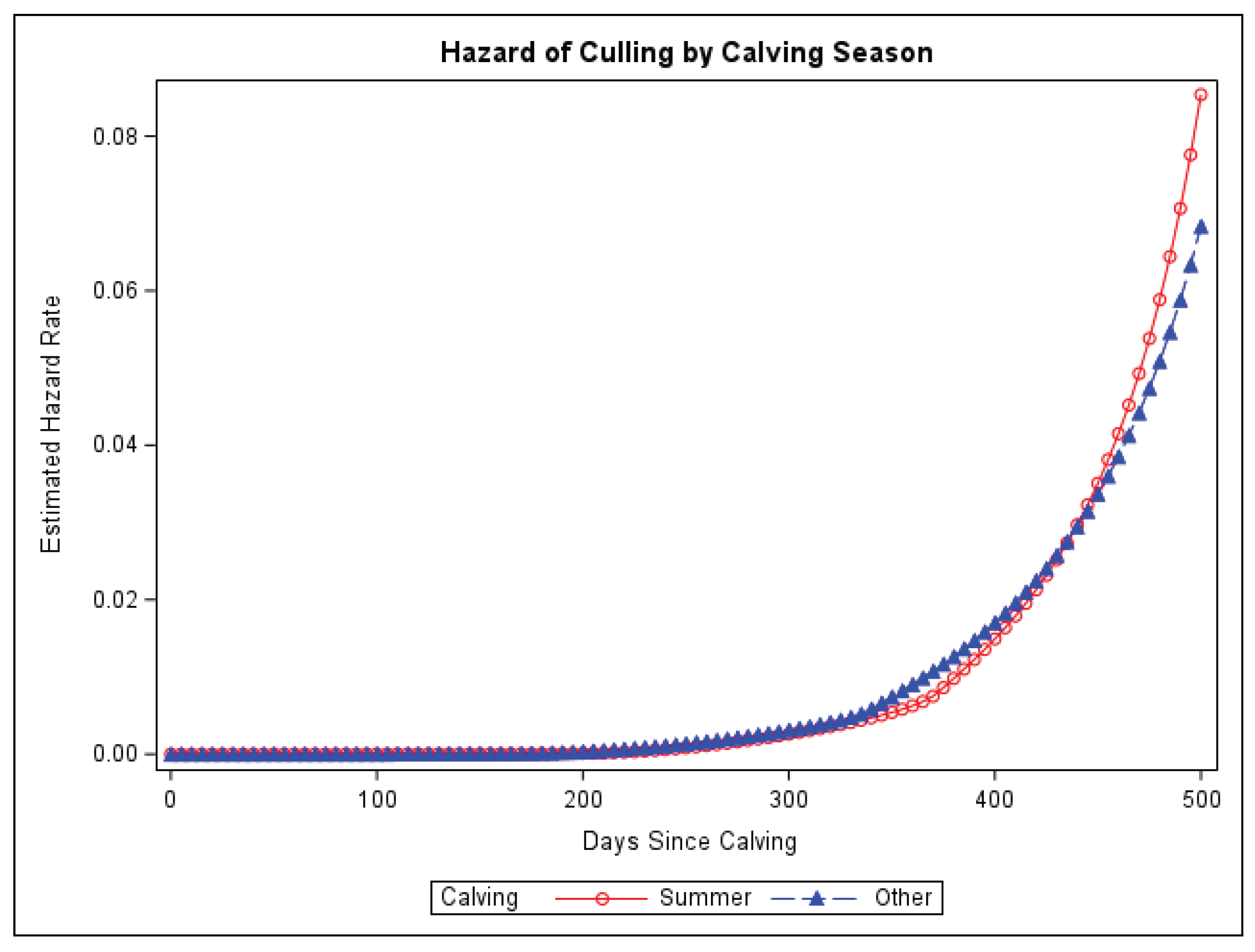

Table 1.
Results from mixed linear regression analysis for days until first service, days open, 305-day milk yield, 305-day ECM yield, peak DMI, peak test day milk yield for summer and other season calving cows.
Table 1.
Results from mixed linear regression analysis for days until first service, days open, 305-day milk yield, 305-day ECM yield, peak DMI, peak test day milk yield for summer and other season calving cows.
| Effect | LSM | SEM | P value |
|---|---|---|---|
| Days until first service (d) | |||
| Summer calving | 58.4 | 1.31 | <.0001 |
| Other season calving | 60.4 | 1.29 | |
| Days Open (d) | |||
| Summer calving | 168.7 | 3.05 | 0.04 |
| Other season calving | 169.8 | 3.02 | |
| 305-day milk yield (kg) | |||
| Summer calving | 6266 | 91.3 | <.0001 |
| Other season calving | 6346 | 91.1 | |
| 305-day ECM yield (kg) | |||
| Summer calving | 7054 | 92.0 | 0.02 |
| Other season calving | 7074 | 91.8 | |
| Peak milk DIM (d) | |||
| Summer calving | 62.1 | 0.53 | <.0001 |
| Other season calving | 61.0 | 0.48 | |
| Peak test day milk yield (kg) | |||
| Summer calving | 27.1 | 0.36 | <.0001 |
| Other season calving | 28.5 | 0.36 |
Table 2.
Results from mixed logistic regression analysis for calving difficulty, abortion, pregnancy diagnosis, and culling for summer and other seasons calving cows.
Table 2.
Results from mixed logistic regression analysis for calving difficulty, abortion, pregnancy diagnosis, and culling for summer and other seasons calving cows.
| Effect | OR | 95% CI | P value |
|---|---|---|---|
| Calving difficulty | |||
| Summer calving | 1.13 | 1.08-1.18 | <.0001 |
| Other season calving | Referent | ||
| Abortion | |||
| Summer calving | 0.21 | 0.01-2.65 | 0.22 |
| Other season calving | Referent | ||
| Pregnant | |||
| Summer calving | 0.90 | 0.86-0.95 | <.0001 |
| Other season calving | Referent | ||
| Culling | |||
| Summer calving | 1.04 | 1.02-1.06 | <.0001 |
| Other season calving | Referent |
Disclaimer/Publisher’s Note: The statements, opinions and data contained in all publications are solely those of the individual author(s) and contributor(s) and not of MDPI and/or the editor(s). MDPI and/or the editor(s) disclaim responsibility for any injury to people or property resulting from any ideas, methods, instructions or products referred to in the content. |
© 2026 by the authors. Licensee MDPI, Basel, Switzerland. This article is an open access article distributed under the terms and conditions of the Creative Commons Attribution (CC BY) license (http://creativecommons.org/licenses/by/4.0/).
Copyright: This open access article is published under a Creative Commons CC BY 4.0 license, which permit the free download, distribution, and reuse, provided that the author and preprint are cited in any reuse.


