

Submitted:
18 January 2026
Posted:
20 January 2026
You are already at the latest version
Abstract
This study examines the impact of digital transformation on the operational efficiency and sustained competitive advantage of SMEs in the context of a developing country. Rather than analyzing digitalization in isolation, this research integrates three key dimensions - digital strategic orientation, digital adaptive capability, and digital technology sophis-tication - into a comprehensive framework offering a holistic perspective on the effects of digital transformation in SMEs. Based on a survey of 216 Turkish SMEs, this research employs structural equation modeling using Smart PLS to assess the relationships be-tween these digital transformation dimensions and firm performance. The findings reveal that all three sub-categories of digital transformation positively influence operational efficiency. Furthermore, operational efficiency positively impacts sustained competitive advantage highlighting the transformative role of digital transformation in sustaining SME competitiveness. This multi-dimensional approach provides a comprehensive view of how digital transformation enhances SME efficiency beyond simple technology adoption. The study advances our theoretical understanding by demonstrating that digital transformation requires digital strategy integration into corporate strategy, awareness of emerging digital technologies, and the development of digital adaptive capabilities to drive SME performance. The findings suggest that SMEs should embed digitalization into daily business and e-commerce operations, enhance their capacity to adopt digital tools, and invest in technological infrastructure to achieve sustained competitiveness.
Keywords:
digitalization
; digital transformation
; SMEs
; operational efficiency
; competitive advantage
; e-commerce
; digital strategy
; emerging markets
1. Introduction
While the importance of digitalization is often acknowledged in today’s economy, its impact within SME competitive advantage frameworks - particularly in emerging markets – remains underexplored [1,2]. This study aims to fill this gap by providing empirical insights into how digital transformation improves SMEs’ efficiency and competitive advantage.
A central question in business research is: why do certain firms consistently outperform others? Over the years, two dominant theoretical perspectives have emerged to explain this phenomenon: Industrial Organization-Based Strategy (IO) and the Resource-Based View (RBV). The IO framework emphasizes external opportunities and threats, as seen in SWOT analysis, while the RBV focuses on internal strengths and weaknesses. These theories provide distinct yet complementary explanations for differences in firm performance [3]. In the context of digital transformation, these perspectives intersect—digitalization represents an external force that reshapes competition, requiring firms to develop internal capabilities to adapt and remain competitive.
The relationship between digitalization and operational efficiency is well established. Digital transformation enhances efficiency by enabling access to new markets [4] automating routine tasks, supporting internationalization, and facilitating long-term business strategies [5,6,7,8]. These benefits reduce operating costs and boost both operational and financial efficiency [8,9,10,11,12,13,14] ultimately contributing to business performance and business growth [4]. However, existing research lacks a comprehensive understanding of how digital transformation specifically drives competitive advantage for SMEs in emerging markets. This study addresses this gap by offering key contributions:
Rather than examining digitalization in isolation, we construct three subcategories to represent digital transformation, namely, digital strategic orientation, digital adaptive capability, and digital technology sophistication. This multi-dimensional approach provides a comprehensive view of how digitalization enhances SMEs beyond simple technology adoption.
Our study offers a novel contribution to the SME literature by demonstrating that digital transformation is not merely a technological upgrade but a strategic necessity for enhancing operational efficiency in a competitive business environment. This integration of digital transformation, efficiency, and competitiveness is a key contribution to the SME literature.
In this context, we argue that digitalization is both an external challenge and an internal capability-building tool. SMEs must integrate digital strategy into corporate strategy, understand available technologies, and develop adaptive capability to leverage digitalization for operational efficiency and competitive advantage. By adopting this integrated approach, firms can not only respond to external market pressures but also build distinctive capabilities that differentiate them from competitors.
2. Theoretical Framework
2.1. Digitalization
Digitalization and digital transformation are essential for enhancing firms’ efficiency, effectiveness, and performance. To leverage the opportunities presented by digitalization, organizations must fully integrate it into their operations. Key benefits of digitalization include access to new markets [4] automation of routine tasks, personalization of products and services [15], improved access to financial services, facilitate e-commerce, support for internationalization, and facilitation of long-term business strategies [5,6,7,8]. Pfister and Lehmann [16] identified five benefits of digital transformation: increased revenue-generating capacity, improved customer and employee satisfaction, greater efficiency, and higher productivity. Together, these factors enable SMEs to gain a competitive advantage [5,7,17,18,19,20,21,22].
Digitalization facilitates the utilization of digital information to enhance business performance, create new revenue streams, reduce operational costs [13], and improve customer experiences [15,23]. Digital strategic orientation reflects the degree to which firms embed digital technologies and digital thinking into their strategic planning and decision-making processes[16,24,25]. It offers significant value through the strategic application of digital technologies [26]. Additionally, digitally capable firms should demonstrate commitment and readiness to embrace new technologies, allowing them to develop innovative products that confer a sustained competitive advantage [2,12]. Although investments in and adoption of digital technologies may negatively impact short-term firm performance due to high cost, they positively affect firm performance in the long run [27,28]. Lee and Falahat [1] also suggest that firms should not expect immediate gains from digitalization, particularly with respect to price, as digitalization can be costly and may not yield short-term financial benefits.
The findings of Khalil and Belitski’[29] emphasize the critical importance of IT governance mechanisms in harnessing digital capabilities due to the substantial direct effect on firm performance compared to the operational domain. This implies that to achieve higher firm performance in sales and new product development, managers should prioritize the development of digital capabilities with an emphasis on digital skills within the managerial and strategic domains of IT governance. Ardiansyah [30] finds that technology awareness, resource availability, digital skills, and the regulatory environment significantly influence SMEs’ adoption of digital business models. These models enable the firms to expand market access, improve operational efficiency, broaden customer base, and strengthen competitiveness.
Merely prioritizing investment in digital technologies is insufficient; It is equally crucial to evaluate existing technologies and develop a digitalization roadmap [31]. This roadmap should include investment in digital skills and competencies [31], such as training and e-skills development [28,32,33], improvements in the efficiency of the firm’s information systems, and strategic IT budget allocation [28]. Additionally, fostering information literacy, and equipping managers responsible for growth with a combination of ICT, management, and entrepreneurship skills, are equally necessary [22,29]. A fully integrated approach is crucial for successful digital transformation [31]. Civelek et al. [33] emphasize that SME executives’ perceptions play a crucial role in addressing the challenges encountered throughout the digital transformation process. Digital strategic orientation encompasses management’s commitment to digitalization as a strategic priority, the alignment of digital initiatives with corporate objectives, and the use of digitalization to drive competitive positioning [31].
Wang and Bai [34] suggest that digitalization plays a significant role in the business recovery process of firms by enhancing restructuring outcomes. Specifically, digitalization positively moderates the relationship between asset and cost reductions and new product introductions, ultimately supporting renewed growth and improving the effectiveness of restructuring actions [19,23]. The results of Hwang and Kim [35] demonstrate that incorporating digital technologies (DTs) such as AI, Big Data, and robotics into production significantly boosts productivity for adopters compared to non-adopters. They also emphasize the importance of forming strategic alliances, which are crucial for SMEs looking to implement new technologies effectively.
Bai et al. [36] examined the relationship between IT capability, firm agility, and performance, finding that IT capability directly enhances agility and indirectly improves performance through agility, indicating a partial mediation effect. As a dynamic capability, IT enables firms to adapt to market changes, thereby fostering agility and strengthening competitive advantage.
Martinelli et al. [37] argue that digital transformation strategies must be shaped by redefining core business concepts—such as efficiency, performance, competitiveness, productivity, cost advantage, and economies of scale—through the lens of emerging digital technologies.
Neumeyer et al. [21] emphasize the role of digital literacy in enhancing technology absorption capacity, which positively influences technology adoption, leading to improved efficiency, value creation, and innovation. Similarly, Espina-Romero et al. [38] highlight digital competencies as the primary driver of digital transformation, directly impacting a firm’s ability to adopt and integrate new technologies. Alrub & Sánchez-Cañizares [39] further underscore the importance of digital capabilities and strategic planning for digital transformation.
2.2. Operational Efficiency
Operational Efficiency refers to performing tasks in the most optimal way, achieving the desired output with the least amount of resources (time, money, effort). It’s about doing things the “right way” by optimizing processes and minimizing waste. Operational Effectiveness generally means achieving the desired outcomes or goals. It involves doing the “right things” to deliver value, often in a way that maximizes impact with minimal resources (cost-effectiveness). Digitalization enhances efficiency and productivity by optimizing both input and output processes. It allows companies to increase output without raising input levels, reduce inputs while maintaining output, or achieve both simultaneously.
Kyshakevych et al. [13] analyzed European countries to assess digital adoption efficiency based on economic outcomes. Their findings reveal that, surprisingly, some countries with strong macroeconomic indicators exhibit lower digital efficiency, suggesting that less developed or developing countries may use digitalization more effectively. Additionally, they found that larger corporations are generally more efficient in their digital transformation than SMEs, with investments in digitalization yielding more impactful results for these larger firms. Specifically, digital transformation efforts in large businesses within EU countries have shown higher economic impacts, especially regarding economic growth, investment, and international trade, compared to those observed in SMEs. Their study demonstrates that digital transformation expenses are more effectively compensated by large firms than by SMEs in the EU [13].
Efficiency refers to the ratio of actual input (e.g., production, labor, capital utilization) to the potential output that could be achieved with existing resources, knowledge, and technology. It emphasizes maximizing output while minimizing resource use, effort, or waste [40,41,42]. Efficiency can be improved by increasing output while maintaining input levels, reducing inputs while keeping output constant, or simultaneously increasing output and reducing inputs. Additionally, firms may enhance efficiency by utilizing existing labor and capital more effectively, potentially at lower compensation levels.
Digitalization plays a crucial role in enhancing efficiency by enabling companies to optimize resource utilization, streamline processes, and automate repetitive tasks. By integrating digital technologies, firms can achieve higher output with fewer resources, reduce operational inefficiencies, and enhance decision-making through data-driven insights [12]. As a result, digital transformation not only improves cost efficiency but also boosts overall business performance and competitiveness. Hossain et al. [43] demonstrated that the adoption of e-commerce platforms among SMEs positively impacts entrepreneurial performance.
While efficiency focuses on optimal utilization of resources, effectiveness is concerned with achieving strategic goals and ensuring that outputs align with intended objectives—essentially, “doing the right things” [40,41,42]. In contrast, performance typically measures the ratio of actual output to a predefined standard or expected level [44].
2.3. Competitive Advantage
Competitive advantage refers to a firm’s ability to outperform its competitors by leveraging unique skills, competencies, resources, knowledge, strategies, or other assets that differentiate it in the marketplace. Competitive advantage is achieved when a firm creates more value for customers than that of its competitors [45,46]. Methods for gaining competitive advantage include offering competitive prices, delivering higher quality products or services, differentiating the markets, and responding more swiftly to changing customer demands. The literature suggests that businesses can follow three fundamental strategies to achieve competitive advantage: low-cost leadership, differentiation, and focus strategy which target only a specific market segment within the scope of these two approaches [47]. Competitive advantage can be achieved through strategies that either reduce costs while maintaining revenue, increase revenue through differentiation while holding costs steady, or adjust both costs and revenue simultaneously – known as ambidextrous strategies. In their eight case studies of German SMEs, Pfister and Lehmann [16] empirically demonstrated the strategic benefits of digitalization on firm performance.
The IO-based strategy, developed by Porter [47], is rooted in industrial economics and the Structure-Conduct-Performance (SCP) paradigm. According to this theory, competitive advantage is derived from the structure of the industry in which a firm operates. The key idea is that the structure of an industry—determined by factors such as competitive rivalry, entry barriers, and the bargaining power of buyers and suppliers—dictates the performance of firms within that industry. Firms with significant market power can set prices above competitive levels and protect their position through entry barriers. This leads to sustained performance differences among firms, with those in more protected or less competitive industries enjoying better performance [3]
In contrast, the Resource-Based View (RBV), developed by scholars such as Barney [48,49], Rumelt (1984), and Wernerfelt [50,51], focuses on the firm’s internal resources and capabilities. This theory argues that it is not the external environment but rather a firm’s unique resources—such as its knowledge, skills, competencies, and assets—that drive its competitive advantage. According to the RBV, firms possessing valuable, rare, inimitable, and non-substitutable (VRIN) resources can sustain superior performance because these resources are difficult for competitors to replicate [48]. Firms that effectively combine and leverage these resources can deliver greater value to customers, which in turn enhances their performance. The RBV explains performance differences between firms based on the heterogeneity of their resources and capabilities [52,53,54].
A study of Malaysian SMEs reveals that digitalization on its own cannot guarantee sustained competitive advantages in price, product, or service in international markets. Rather, it indirectly supports competitiveness by helping firms develop international capabilities, which in turn enhances product and service advantages. Thus, digitalization serves as an essential but indirect driver of SMEs’ international competitiveness [1].
Mishrif and Khan [25] reveals that continuous digital transformation is essential for SMEs to sustain customer satisfaction and remain competitive. Their study demonstrates a significant partial mediation effect of digitalization, technology adoption, and e-commerce usage on the relationship between operational factors (such as sales and customer satisfaction) and SMEs’ overall performance during COVID-19. COVID-19 accelerated the SME’s technology transformation process.
Digital technology sophistication captures the breadth, depth, and advancement of digital technologies deployed within an organization [55]. Oh and Kim [55] explores the impact of advanced digital technologies (ADTs) on firm performance indicators, such as sales growth, labor productivity, and exports. The study finds that the benefits of ADT adoption are influenced by a firm’s productivity level and performance types, with high-productivity firms seeing the most significant advantages due to their complementary assets and ability to leverage multiple technologies in synergy. This suggests that more productive firms gain greater benefits from ADT adoption [55,56]. Pfister and Lehmann [16] categorize the benefits of digitalization into two main areas: financial and strategic. Financial benefits include efficiency, cost reduction, productivity growth, improved competitive positioning, and increased sales. Strategic benefits involve enhanced customer satisfaction, access to new markets, innovation, brand awareness, strengthened security, improved employee satisfaction, environmental protection, and knowledge gains. The impact of digitalization on firm performance can be assessed through metrics such as market share, productivity increase, and cost reduction [16].
In this context, digitalization can be viewed through both theoretical lenses, highlighting its complex role in modern business strategy. From Porter’s [47] perspective, digitalization reshapes the industry structure, intensifying competition and reshaping interactions among market players. Digital technologies lower barriers to entry by reducing operational costs and enabling new entrants to challenge established firms like electric cars did in the automotive industry. Furthermore, digitalization empowers consumers with more information and choices, increasing their bargaining power, while suppliers can optimize their operations through digital platforms, shifting industry dynamics. Therefore, digitalization, in the industry structure framework, acts as an external force that reshapes the competitive landscape and firms’ relationships within it.
On the other hand, Barney’s resource-based view (RBV) considers digitalization as a firm-specific capability that can sustain competitive advantage. Firms that effectively integrate digital technologies—such as artificial intelligence, cloud computing, big data analytics, and automation—can develop unique and inimitable resources. These digital capabilities enhance operational efficiency, improve decision-making, and enable innovation, enabling firms to outperform competitors. When embedded in a firm’s strategy, digitalization becomes a valuable resource that is difficult for rivals to replicate, aligning with Barney’s criteria of resources being valuable, rare, inimitable, and non-substitutable (VRIN).
Bokša et al. [57] support Porter’s view, noting that during economic recessions, SMEs experience intensified pressure to increase efficiency, particularly benefiting those with advanced digitalization programs. On the other hand, during the economic boom, this pressure to enhance efficiency and optimize operations through digitalization is significantly reduced [57]. Similarly, Rajala and Hautala-Kankaanpää [58] find that the impact of platform-based digital connectivity depends on the level and type of environmental turbulence; in highly turbulent environments, PDC can improve operational performance. Additionally, Shahzad and Hafeez [59] discover that engaging with external actors facilitates SMEs in adopting emerging technologies which in turn helps them to achieve business model innovation and sustain competitive advantage. In contrast, Omrani et al. [31] suggest that SMEs’ digital technology adoption is driven primarily by internal factors, with external pressures playing a minimal role. Their findings align with Barney’s perspective, suggesting that digitalization acts as an internal resource enabling competitive advantage. The decision to adopt digital technologies is shaped primarily by the technological context—such as existing IT infrastructure and prior digital exposure among organization members—followed by the organizational context, which includes factors like innovation rate, employee skills, corporate regulations, and financial resources.
Digital adaptive capability represents a firm’s ability to effectively adapt to and integrate new digital technologies, platforms, infrastructures, and business models [60,61,62]. Digital adaptive capability and transformation play a critical role in enhancing firm performance in today’s digital-centric business environment. Findings by Prakasa and Jumani [60] indicate that digital capability not only enhances digital business transformation but also positively impacts e-commerce applications and overall business performance. Notably, digital business transformation (DBT) acts as a mediator, amplifying the impact of digital capability on business outcomes [60]. According to Schönberger [61] the transformative potential of AI enables SMEs to optimize business processes, drive innovation, and enhance their competitiveness.
Aaker [63] argues that achieving competitive advantage requires selecting appropriate strategies to develop and utilize a firm’s assets and capabilities. Furthermore, identifying competitive markets where these resources can be effectively leveraged, as well as mitigating the impact of competitors’ assets and capabilities, is essential for sustaining an advantage [63].
3. Materials and Methods
This section details the methodology and data collection. Figure 1 illustrates the flow diagram of the research methodology.
The research framework has been built up from the literature (Figure 2). There is no clear consensus in the literature regarding the subcategories of digital transformation. Digital transformation is defined as the change in business processes, models, and organizational structures through the adoption of digital technologies [64,65]. It enables cost savings, advanced technology applications, efficient resource allocation, and diversified innovation strategies [65].
To measure the impact of digital transformation on operational efficiency and sustained competitive advantage, rather than using a single variable, we construct three subcategories: digital strategy orientation, digital technology sophistication, and digital adaptation capability.
This study aims to analyze how strategic planning, the selection of a digital strategy aligned with corporate objectives, awareness of digital technologies, and the capability to adapt them contribute to operational efficiency—ultimately leading to a sustained competitive advantage. We argue that when firms implement various digital tools (e.g., big data, AI, cloud computing, social platforms) at different levels and integrate digitalization into both corporate and operational strategies gain the ability to:
- enter new markets and attract new customers,
- automate routine tasks and personalize products and services,
- enhance product and service quality and accelerate delivery time,
- improve access to financial services and support internationalization,
- conduct e commerce business applications and tools,
- facilitate long-term business strategies.
These benefits reduce cost, increase revenue, improve customer and employee satisfaction, enhance efficiency, and boost productivity. Improved operational efficiency ultimately leads to a sustained competitive advantage. Digital transformation plays a pivotal role in cost reduction, market expansion, and competitive positioning.
Based on these foundations, we propose the following hypotheses:
- H1. Digital strategic orientation has a positive impact on operational efficiency.
- H2. Digital adaptive capacity positively affects operational efficiency.
- H3. Digital technology sophistication positively influences operational efficiency.
- H4. Operational efficiency positively impacts sustained competitive advantage.
3.1. Survey and Data Gathering
To test the hypothesis and assess the impact of digitalization on SMEs’ operational efficiency and competitive advantage in Türkiye, a structured questionnaire was designed to capture key variables, including digitalization strategy, digital technology adaptation capacity, digital technology level, operational efficiency, and competitive advantage. Prior to full-scale data collection, a pilot study was conducted with 10 participants to verify the survey instrument’s clarity, validity, and reliability. Based on pilot feedback, minor revisions were made to improve question wording and structure.
To ensure linguistic accuracy and conceptual consistency, the survey was translated into Turkish using a back-translation technique. A second translator independently translated the Turkish version back into English, and discrepancies were resolved through discussion. This process minimized translation-related biases and improved the reliability of responses [66].
The study focused on SMEs in Türkiye’s manufacturing and service sectors, particularly those operating in Istanbul. Istanbul was selected due to its economic significance, hosting over half of Türkiye’s SME activity and serving as a hub for digital transformation. Firms were identified through databases from the Union of Chambers and Commodity Exchanges of Turkey and the Istanbul Chamber of Commerce, ensuring a representative sample of active businesses. Sectoral classifications were based on official data from the Social Security Institution to achieve a balanced industry representation.
A professional survey firm facilitated the data collection process using a simple random sampling method. The survey was administered online, and 500 firms were invited to participate. To enhance response rates, the survey firm conducted follow-ups and assured respondents of confidentiality. Out of the 500 firms contacted, 216 provided valid responses, yielding a response rate of 43.2%. This response rate is considered strong given the challenges of survey-based research, particularly in engaging senior management and addressing confidentiality concerns. Data collection involved a structured questionnaire with a 5-point Likert scale (1=strongly disagree, 2=disagree, 3=neither agree nor disagree, 4=agree, 5=strongly agree). Demographic questions about companies and participant profiles were also included.
Survey questions were adapted from established scales in the literature. To measure the impact of digitalization on operational efficiency, we used three key variables: digital strategic orientation (DSO) (adopted from Kahveci et al. [24] Nwaiwu et al. [67], digital adaptive capability (DTC) (adopted from Guo et al. [68], Kahveci et al. [24] and Khin & Ho [12]), and digital technology sophistication (DTS) (adopted from Guo et al. [68], Kahveci et al. [24] and Khin & Ho [12]). Consequently, operational efficiency (OE) (adopted from Kahveci et al. [69] Nwaiwu et al. [67]) and sustained competitive advantage (SCA) (adopted from Kahveci et al. [69] Nwaiwu et al. [67,69]).
4. Analysis
The majority of respondents (75.5%) were either the owner or a senior manager of the company. The sample comprises 23.3% manufacturing firms and 76.7% service firms. In terms of business longevity, 53.4% of firms have been operating for less than 14 years, while 46.6% have been in business for more than 14 years. Regarding firm size, 67.6% of the sample consists of micro-enterprises, while 23.3% are small and medium-sized enterprises (SMEs). Among the respondents, 54.4% were women, 62% held a bachelor’s degree or higher, and 69.1% had more than 10 years of experience at their company.
Detailed descriptive statistics about the participating enterprises are presented in Table 1.
We utilized variance-based structural equation modeling (PLS-SEM) to analyze the proposed research model (Figure 1) by using the Smart PLS software (Smartpls4) [70].
To ensure the validity of our constructs, we first conducted a confirmatory factor analysis (CFA). The results were then used to assess convergent and discriminant validity. Convergent validity reflects how well a given construct correlates with other indicators measuring the same underlying concept [71].
To evaluate this, we examined Cronbach’s alpha (α), Composite Reliability (CR), Average Variance Extracted (AVE), and factor loadings [72]. Table 2 presents the internal consistency reliability, where α values exceed the recommended threshold of 0.70 [73]. Additionally, CR values for all constructs surpass 0.80, reinforcing their reliability. Lastly, as all AVE values are above 0.50, convergent validity is supported [72].
The factor loadings of the indicators exceed the acceptable threshold of 0.70, confirming strong measurement quality [74]. Moreover, the Variance Inflation Factor (VIF) values for all constructs remain below 5, indicating the absence of multicollinearity and supporting the constructs` distinctiveness [73]. These findings validate the robustness of the measurement model, ensuring its reliability for subsequent structural analysis. exhibiting satisfactory validity and reliability, establishing a solid foundation for assessing the structural relationships between the constructs.
Figure 3 shows the statistical significance of the relationships between the variables. The arrows in the figure represent the path coefficients, illustrating both the direction and strength of the relationships among the variables. Factor loadings, which capture the correlation between each observed variable and its corresponding latent construct, further substantiate the validity and reliability of the measurement model.
Discriminant validity was assessed using the Fornell-Larcker criterion, which evaluates whether constructs are distinct from one another within the measurement model. According to this criterion, the square root of each construct’s AVE should exceed its highest correlation with any other construct [72].
As shown in Table 3, the square root of the AVE values (diagonal elements) for all constructs surpassed their corresponding inter-construct correlations (off-diagonal elements). For instance, the AVE square root for SCA was 0.858, exceeding its strongest correlation with OE (0.658). Similarly, the AVE square root for DTS was 0.784, higher than its strongest correlation of 0.655 with DAC. These results confirm that each construct is uniquely measured and sufficiently distinguished from others, providing strong evidence for discriminant validity and supporting the overall reliability and validity of the research findings.
Additionally, we applied the Heterotrait-Monotrait Ratio (HTMT) to further validate discriminant validity [75]. The HTMT threshold is 0.85., The values below this level indicate satisfactory discriminant validity. The HTMT matrix confirmed that all constructs met this criterion, with values ranging from 0.382 to 0.782—well within the acceptable range (Table 4). These results further strengthen the evidence for the model’s validity and reliability.
5. Results
Once the model’s reliability and validity were confirmed, we proceeded to evaluate the structural model by calculating the R² and Q² values, as illustrated in Table 5. The R² value represents the proportion of variance explained by the independent variables for each dependent construct, while the Q² value assesses the predictive relevance of the model [76].
As shown in Table 5, the R² values indicate that the model explains a substantial amount of variance in key constructs. Specifically, the R² value for SCA is 0.432, and for OE, it is 0.555, meaning that the model accounts for 43.2% and 55.5% of the variance in these constructs, respectively. According to Chin (1998), R² values above 0.33 indicate moderate explanatory power, while values above 0.50 suggest substantial explanatory strength. Therefore, the results suggest that the model has moderate to high explanatory power for these dependent variables.
To further assess the predictive relevance of the model, we examined the Q² values using the methodology outlined by Afum et al. [77]. As per Hair et al. [73], a Q² value greater than zero confirms that the model has predictive validity. The Q² value for SCA is 0.334, indicating moderate predictive relevance, while the Q² value for OE is 0.536, suggesting strong predictive power for this construct. These findings reinforce the robustness of the structural model in terms of both explanatory and predictive capabilities.
To test the hypotheses, we examined the path coefficients, t-statistics, and significance levels of the relationships in the model. The results, presented in Table 6, indicate that all proposed hypotheses were supported at a significance level of p < 0.01:
- DSO → OE: The effect of DSO on OE was found to be highly significant (β = 0.512, t = 10.154, p < 0.001), supporting H1 and demonstrating that digital strategies play a crucial role in enhancing organizational efficiency.
- DAC → OE: The relationship between DAC and OE was significant (β = 0.245, t = 4.072, p < 0.001), supporting the H2 that digital adaptive capabilities positively influence organizational efficiency.
- DTS → OE: The relationship between DTS and OE was also significant (β = 0.150, t = 2.613, p = 0.009), confirming H3 that digital technology sophistication has a positive impact on organizational efficiency.
These finding about digital transformation — categorized as DSO, DAC and DTS — align with Amankwah-Amoah et al. [9], Fauzi and Sheng [10] Kahveci and Tambunan [11], Khin & Ho [12], Kyshakevych et al. [13] Saáry et al. [14] Vide et al. [8], Matalamäki and Joensuu-Salo [4] and Guo and Xu [78]. These studies emphasize that digital transformation significantly improve operational efficiency and productivity by increasing revenue and improving customer and employee satisfaction. Together, these factors enable SMEs to gain a sustaind competitive advantage [5,7,17,18,21,22].
- OE → SCA: OE demonstrated a strong positive effect on SCA (β = 0.658, t = 11.688, p < 0.001), supporting H4 and conforming that increased operational efficiency significantly enhances competitive advantage. This finding is in line with previous studies by Ciurea et al. [17] Costa and Castro [5] Neumeyer et al., [21] Rossato and Castellani [7], Sousa-Zomer et al. [22], which found that operational efficiency, driven by digital factors, enables SMEs to gain a sustained competitive advantage. However, this result contradicts Lee and Falahat [1], who argued that digitalization do not have a direct impact on competitive advantage. This discrepancy highlights the importance of our study, which investigates the relationship between digital transformation and operational efficiency rather than the direct link from digitalization to sustained competitive advantage. Our findings suggest that digital transformation enables SMEs to conduct e-commerce business, reduces costs, increases revenue by expanding market reach and attracting new customers, enhances product and service quality, accelerates delivery time, and overall improves efficiency. Consequently, increased operational efficiency ultimately leads to a stronger competitive advantage.
6. Discussion
This study examined the relationship between digital transformation – categorized under three sub-variables — digital strategic orientation, digital adaptive capability, and digital technology sophistication — and organizational efficiency, as well as the link between operational efficiency and sustained competitive advantage. The findings confirm that digital transformation serves as a critical driver of operational efficiency, which, in turn, contributes to the enhancement of SMEs’ strategic positioning.
The results highlight the importance of a digitalization strategy that aligns with corporate objectives, supports prioritization, and integrates with the overall business strategy as it has a significant positive effect on organizational effectiveness. Companies that recognize digitalization as a strategic pillar (DSO1–DSO4) benefit from improved production stability (OE1), enhanced efficiency (OE2–OE4), and cost reductions (OE5–OE7).
Similarly, digital adaptive capability — which includes the ability to adapt to digital products, platforms, infrastructures, e-commerce business models, and management approaches (DAC1–DAC5)—also positively contributes to operational efficiency. Firms with strong adaptation capabilities demonstrate greater resilience and flexibility, enabling them to manage production processes effectively, adopt to e-commerce business models reduce delays, and optimize costs.
Furthermore, the digital technology sophistication – level of digital technology— measured through the adoption of big data, artificial intelligence, cloud computing, mobile technology, IoT, and platform development (DTS1–DTS7)—also positively contributes to organizational effectiveness. The results confirm that businesses leveraging advanced digital technologies experience greater reliability, efficiency, and optimization.
Finally, the study confirms that organizational efficiency serves as a key driver of sustained competitive advantage. Digital transformation enhances competitiveness (SCA1–SCA3) by adopting e-commerce business models, expanding market share, increasing sales, reducing costs, improving operational productivity, and enabling firms to enhance employee and customer satisfaction, gain knowledge, and respond more effectively to market challenges.
7. Conclusion
From the literature, we have identified three key dimensions of digital transformation: digital strategic orientation, digital adaptive capability, and digital technology sophistication. Our study demonstrates that SMEs that integrate digitalization strategy into their corporate strategy, possess a comprehensive understanding of available digital technologies, and successfully adapt these technologies into their business processes and e-commerce applications are more likely to achieve operational efficiency — ultimately gaining a sustained competitive advantage.
Our empirical results also establish that digital transformation is a fundamental driver of operational efficiency, which, in turn, contributes to competitive advantage. By examining the various dimensions of digital transformation and their collective impact on firm performance, the study offers both theoretical contributions and managerial insights, emphasizing the necessity of adopting a strategic approach to digital transformation.
From a theoretical perspective, this study significantly contributes to our understanding of the role of digital transformation in enhancing the operational efficiency and strategic success of SMEs, particularly in the context of an emerging economy. The findings highlight that awareness of available digital technologies, alignment of digital strategy with corporate strategy, and the capability to adapt these technologies are the three pillars of a successful digital transformation for SMEs. The empirical results validate that these three main drivers of digital transformation — enhance firm efficiency and long-term sustainability.
Beyond theoretical contributions, the study also offers managerial and policy implications. The results suggest that;
- SMEs should approach digital transformation holistically, treating it as a comprehensive business transformation process.
- Digitalization strategy should be an integral component of corporate strategy.
- SMEs should prioritize awareness and adoption of various digital technologies and e-commerce applications.
In practical terms, SMEs that fail to embrace digitalization as a core business strategy risk falling behind in today’s competitive marketplace.
Moreover, policymakers and industry leaders should create enabling environments to accelerate SMEs” digital transformation by providing;
- financial incentives to encourage investments in digital tools and e-commerce applications,
- training programs to raise awareness of digital transformation, and
- infrastructure support to facilitate digitalization.
Since SMEs are the main drivers of economic development in many emerging economies, fostering their digital transformation is not only beneficial at the firm level but also crucial for broader economic growth, competitiveness, and resilience.
Digital transformation has become a strategic necessity for SMEs to survive and succeed in today’s business context. By integrating digitalization strategy into a firm’s overall strategy and embedding technology tools into daily business and e-commerce operations, SMEs can reduce costs, increase market responsiveness, boost efficiency, and secure a long-term competitive edge.
8. Limitations and Future Research Directions
Despite its contributions, this study has several limitations that offer opportunities for future research. First, the study focuses on SMEs in Istanbul, Turkey’s economic and technological hub, where approximately 50% of the country’s SMEs operate. While this setting provides a relevant case for examining digital transformation in a developing country, the findings may not fully represent the experiences of SMEs in other regions and countries with different economic structures, institutional and cultural frameworks, digital maturity, and access to technological resources. Future research could adopt a cross-country comparative approach to explore how national policies, infrastructure, and innovation ecosystems influence SMEs’ digital transformation.
Second, the study adopts a cross-sectional design, capturing data at a single point in time. While the findings offer valuable insights into the relationship between digital transformation, operational efficiency, and sustained competitive advantage, longitudinal studies tracking SMEs’ digital transformation journeys over time would offer deeper insights.
Third, our research focuses on SMEs without sectoral differentiation. Different industries may face unique digitalization challenges and opportunities due to variations in technological infrastructure, regulatory environments, and competitive pressures. Future studies could conduct industry-specific analyses, comparing digital transformation strategies in manufacturing, retail, finance, and service sectors to uncover sector-based digitalization patterns.
Finally, while this study emphasizes digital strategic orientation, digital technology sophistication, and digital adaptive capability, other factors may also play a critical role in shaping digital transformation outcomes. Future research could explore additional variables such as awareness of digital technologies, organizational culture, leadership commitment, financial constraints, and external environmental factors (e.g., government policies, market competition, and supply chain digitalization). Incorporating such factors may provide a more holistic understanding of the impact of digital transformation on SMEs.
Author Contributions
Conceptualization, E.K..; methodology, E.K., and T.G.; software, T.G.; validation, T.G.; formal analysis, E.K., and T.G.; resources, E.K.; writing—original draft preparation, E.K..; writing—review and editing, T.G..; visualization, E.K..; supervision, E.K., and T.G. All authors have read and agreed to the published version of the manuscript.”.
Funding
“This research received no external funding”.
Institutional Review Board Statement
“The study was conducted in accordance with the Declaration of Helsinki and approved by the Research Advisory Board of SBS Swiss Business School (5 March 2024).”.
Informed Consent Statement
“Not applicable” .
Conflicts of Interest
“The authors declare no conflicts of interest.”.
Abbreviations
The following abbreviations are used in this manuscript:
| SME | Small Medium size Enterprise |
| IO | Organization-Based Strategy |
| RBV | Resource-Based View |
| DS DTAC DTL OE CA DT |
Digitalization Strategy Digital Technology Adaptation Capacity Digital Technology Level Operational Efficiency Competitive Advantage Digital Technologies |
References
- Lee, Y.Y.; Falahat, M. The Impact of Digitalization and Resources on Gaining Competitive Advantage in International Markets: Mediating Role of Marketing, Innovation and Learning Capabilities. Technol. Innov. Manag. Rev. 2019, 9, 26–38. [Google Scholar] [CrossRef]
- Zhang, X.; Xu, Y.; Ma, L. Research on Successful Factors and Influencing Mechanism of the Digital Transformation in SMEs. Sustainability 2022, 14, 2549. [Google Scholar] [CrossRef]
- McGahan, A.M.; Porter, M.E. How Much Does Industry Matter, Really? Strateg. Manag. J. 1997, 18, 15–30. [Google Scholar] [CrossRef]
- Matalamäki, M.J.; Joensuu-Salo, S. Digitalization and strategic flexibility – a recipe for business growth. J. Small Bus. Enterp. Dev. 2022, 29, 380–401. [Google Scholar] [CrossRef]
- Costa, J.; Castro, R. SMEs Must Go Online—E-Commerce as an Escape Hatch for Resilience and Survivability. J. Theor. Appl. Electron. Commer. Res. 2021, 16, 3043–3062. [Google Scholar] [CrossRef]
- Lányi, B.; Hornyák, M.; Kruzslicz, F. The effect of online activity on SMEs’ competitiveness. Compet. Rev. Int. Bus. J. 2021, 31, 477–496. [Google Scholar] [CrossRef]
- Rossato, C.; Castellani, P. The contribution of digitalisation to business longevity from a competitiveness perspective. TQM J. 2020, 32, 617–645. [Google Scholar] [CrossRef]
- Vide, R.K.; Hunjet, A.; Kozina, G. Enhancing Sustainable Business by SMEs’ Digitalization. J. Strateg. Innov. Sustain. 2022, 17. [Google Scholar] [CrossRef]
- Amankwah-Amoah, J.; Khan, Z.; Wood, G.; Knight, G. COVID-19 and digitalization: The great acceleration. J. Bus. Res. 2021, 136, 602–611. [Google Scholar] [CrossRef]
- Fauzi, A.A.; Sheng, M.L. The digitalization of micro, small, and medium-sized enterprises (MSMEs): An institutional theory perspective. J. Small Bus. Manag. 2022, 60, 1288–1313. [Google Scholar] [CrossRef]
- Kahveci, E.; Tambunan, T.T.H. Co-design Study: The Use of ICT by MSMEs in Turkey and Indonesia. Center for Industry, SME and Business Competition Studies, Policy Discussion Paper 11, 2023. Accessed: May 30, 2023. [Online]. Available: http://www.usakti-cisbucs.com/index.php/archives/policy-discussion-series/209-a-co-design-study-the-use-of-ict-by-msmes-in-turkey-and-indonesia.
- Khin, S.; Ho, T.C. Digital technology, digital capability and organizational performance: A mediating role of digital innovation. Int. J. Innov. Sci. 2019, 11, 177–195. [Google Scholar] [CrossRef]
- Kyshakevych, B.; Maksyshko, N.; Hrytsenko, K.; Voronchak, I.; Demediuk, B. ANALYZING THE EFFICIENCY OF DIGITALIZATION IN SMALL AND MEDIUM-SIZED ENTERPRISES ACROSS EU COUNTRIES USING DEA MODELS. Financ. Credit Act. Probl. Theory Pract. 2024, 3, 215–229. [Google Scholar] [CrossRef]
- Saáry, R.; Kárpáti-Daróczi, J.; Tick, A. Profit or less waste?: Digitainability in SMEs: A comparison of Hungarian and Slovakian SMEs. Serbian J. Manag. 2022, 17, 33–49. [Google Scholar] [CrossRef]
- Lähteenmäki, I.; Nätti, S.; Saraniemi, S. Digitalization-enabled evolution of customer value creation: An executive view in financial services. J. Bus. Res. 2022, 146, 504–517. [Google Scholar] [CrossRef]
- Pfister, P.; Lehmann, C. Measuring the Success of Digital Transformation in German SMEs. J. Small Bus. Strategy 2023, 33. [Google Scholar] [CrossRef]
- Ciurea, J.; Dinu, L.; Dinu, G. The Influence of Digitalisation on SMEs. “Ovidius” Univ. Ann. 2021, 21, 490–495. [Google Scholar] [CrossRef]
- Kahveci, E. Surviving COVID-19 and Beyond: a conceptual framework for SMEs in crisis. Bus. Theory Pract. 2021, 22, 167–179. [Google Scholar] [CrossRef]
- Khurana, I.; Dutta, D.K.; Ghura, A.S. SMEs and digital transformation during a crisis: The emergence of resilience as a second-order dynamic capability in an entrepreneurial ecosystem. J. Bus. Res. 2022, 150, 623–641. [Google Scholar] [CrossRef]
- Martínez-Peláez, R.; et al. Role of Digital Transformation for Achieving Sustainability: Mediated Role of Stakeholders, Key Capabilities, and Technology. Sustainability 2023, 15, 11221. [Google Scholar] [CrossRef]
- Neumeyer, X.; Santos, S.C.; Morris, M.H. Overcoming Barriers to Technology Adoption When Fostering Entrepreneurship Among the Poor: The Role of Technology and Digital Literacy. IEEE Trans. Eng. Manag. 2021, 68, 1605–1618. [Google Scholar] [CrossRef]
- Sousa-Zomer, T.T.; Neely, A.; Martinez, V. Digital transforming capability and performance: a microfoundational perspective. Int. J. Oper. Prod. Manag. 2020, 40, 1095–1128. [Google Scholar] [CrossRef]
- Radicic, D.; Petković, S. Impact of digitalization on technological innovations in small and medium-sized enterprises (SMEs). Technol. Forecast. Soc. Change 2023, 191, 122474. [Google Scholar] [CrossRef]
- Kahveci, E.; Avunduk, Z.B.; Daim, T.; Zaim, S. The role of flexibility, digitalization, and crisis response strategy for SMEs: Case of COVID-19. J. Small Bus. Manag. 2024, 1–38. [Google Scholar] [CrossRef]
- Mishrif, A.; Khan, A. Causal Analysis of Company Performance and Technology Mediation in Small and Medium Enterprises During COVID-19. J. Knowl. Econ. 2023, 14, 4730–4753. [Google Scholar] [CrossRef]
- Robledo, P. Process Digitalization in Digital Transformation - Albatian.” Accessed: Jul. 30, 2024. [Online]. Available: https://albatian.com/en/blog-ingles/process-digitalization-in-digital-transformation/.
- Gergin, Z.; et al. Industry 4.0 Scorecard of Turkish SMEs. in Proceedings of the International Symposium for Production Research 2018, N. M. Durakbasa and M. G. Gencyilmaz, Eds., Cham: Springer International Publishing, 2019, 426–437. [CrossRef]
- Roman, A.; Rusu, V.D. Digital Technologies and the Performance of Small and Medium Enterprises. Stud. Bus. Econ. 2022, 17, 190–203. [Google Scholar] [CrossRef]
- Khalil, S.; Belitski, M. Dynamic capabilities for firm performance under the information technology governance framework. Eur. Bus. Rev. 2020, 32, 129–157. [Google Scholar] [CrossRef]
- Ardiansyah, M. Analysis of Adoption and Impact of Digital Business Models: a Qualitative Study of the Experience and View of Small and Medium Enterprises (SMEs). J. Markcount Finance 2023, 2, 18–27. [Google Scholar] [CrossRef]
- Omrani, N.; Rejeb, N.; Maalaoui, A.; Dabić, M.; Kraus, S. Drivers of Digital Transformation in SMEs. IEEE Trans. Eng. Manag. 2024, 71, 5030–5043. [Google Scholar] [CrossRef]
- Al-Ajlouni, M.I.; Hijazi, R.; Nawafleh, S. A model of barriers, drivers, government responses, recovery expectations and expected future changes in SME performance: digitalisation as a moderator. Bus. Process Manag. J. 2024, 30, 699–725. [Google Scholar] [CrossRef]
- Civelek, M.; Krajčík, V.; Ključnikov, A. The impacts of dynamic capabilities on SMEs’ digital transformation process: The resource-based view perspective. Oeconomia Copernic. 2023, 14, 1367–1392. [Google Scholar] [CrossRef]
- Wang, J.; Bai, T. How digitalization affects the effectiveness of turnaround actions for firms in decline. Long Range Plann. 2024, 57, 102140. [Google Scholar] [CrossRef]
- Hwang, W.-S.; Kim, H.-S. Does the adoption of emerging technologies improve technical efficiency? Evidence from Korean manufacturing SMEs. Small Bus. Econ. 2022, 59, 627–643. [Google Scholar] [CrossRef]
- Bai, B.; Um, K.-H.; Lee, H. The strategic role of firm agility in the relationship between IT capability and firm performance under the COVID-19 outbreak. J. Bus. Ind. Mark. 2023, 38, 1041–1054. [Google Scholar] [CrossRef]
- Martinelli, E.M.; Farioli, M.C.; Tunisini, A. New companies’ DNA: the heritage of the past industrial revolutions in digital transformation. J. Manag. Gov. 2021, 25, 1079–1106. [Google Scholar] [CrossRef]
- Espina-Romero, L.; Chafloque-Céspedes, R.; Olmedo, J.I.; Taype, R.A.; Ochoa-Díaz, A. Driving Digital Transformation in Lima’s SMEs: Unveiling the Role of Digital Competencies and Organizational Culture in Business Success. Adm. Sci. 2025, 15, 19. [Google Scholar] [CrossRef]
- Alrub, Y.A.; Sánchez-Cañizares, S.M. Dynamic Capabilities and Digital Transformation: Toward Strategic Planning in the Digital Age—Evidence from Palestine. Adm. Sci. 2025, 15, 21. [Google Scholar] [CrossRef]
- Achabal, D.; Heineke, J.M.; McIntyre, S.H. Issues and Perspectives on Retail Productivity. J. Retail. 1984, 60, 107–129. [Google Scholar]
- Andrejić, M.M. Measuring efficiency in logistics. Vojnoteh. Glas. 2013, 61, 84–104. [Google Scholar] [CrossRef]
- Markovits-Somogyi, R.; Bokor, Z. ASSESSING THE LOGISTICS EFFICIENCY OF EUROPEAN COUNTRIES BY USING THE DEA-PC METHODOLOGY. TRANSPORT 2014, 29, 137–145. [Google Scholar] [CrossRef]
- Hossain, M.A.; Jahan, N.; Al Masud, A.; Nabi, M.N.; Hossain, M.S.; Ahmed, S. Dynamic effect of critical success factors of SMEs on entrepreneurial performance via e-commerce performance. J. High Technol. Manag. Res. 2024, 35, 100515. [Google Scholar] [CrossRef]
- Mentzer, J.T.; Konrad, B.P. An Efficiency/Effectiveness Approach to Logistics Performance Analysis - ProQuest. J. Bus. Logist. 1991, 12, 33–62. [Google Scholar]
- Feurer, R.; Chaharbaghi, K. Defining Competitiveness: A Holistic Approach. Manag. Decis. 1994, 32, 49–58. [Google Scholar] [CrossRef]
- Kaleka, A.; Berthon, P. Learning and locale: The role of information, memory and environment in determining export differentiation advantage. J. Bus. Res. 2006, 59, 1016–1024. [Google Scholar] [CrossRef]
- Porter, M.E. Competitive strategy: techniques for analyzing industries and competitors: with a new introduction, 1st Free Press ed.; Free Press: New York, 1998. [Google Scholar]
- Barney, J. Special Theory Forum The Resource-Based Model of the Firm: Origins, Implications, and Prospects. J. Manag. 1991, 17, 97–98. [Google Scholar] [CrossRef]
- Barney, J.B. Resource-based theories of competitive advantage: A ten-year retrospective on the resource-based view. J. Manag. 2001, 27, 643–650. [Google Scholar] [CrossRef]
- Wernerfelt, B. A resource-based view of the firm. Strateg. Manag. J. 1984, 5, 171–180. [Google Scholar] [CrossRef]
- Wernerfelt, B. From Critical Resources to Corporate Strategy. J. Gen. Manag. 1989, 14, 4–12. [Google Scholar] [CrossRef]
- Makadok, R.; Barney, J.B. Strategic Factor Market Intelligence: An Application of Information Economics to Strategy Formulation and Competitor Intelligence. Manag. Sci. 2001, 47, 1621–1638. [Google Scholar] [CrossRef]
- Peteraf, M.A. The Cornerstones of Competitive Advantage: A Resource-Based View. Strateg. Manag. J. 1993, 14, 179–191. [Google Scholar] [CrossRef]
- Teece, D.J.; Pisano, G.; Shuen, A. Dynamic capabilities and strategic management. Strateg. Manag. J. 1997, 18, 509–533. [Google Scholar] [CrossRef]
- Oh, I.; Kim, J. Frontiers and laggards: Which firms benefit from adopting advanced digital technologies? Manag. Decis. Econ. 2023, 44, 753–766. [Google Scholar] [CrossRef]
- Da Silva, A.; Cardoso, A.J.M. Value Creation in Technology-Driven Ecosystems: Role of Coopetition in Industrial Networks. J. Theor. Appl. Electron. Commer. Res. 2024, 19, 2343–2359. [Google Scholar] [CrossRef]
- Bokša, M.; Šaroch, S.; Bokšová, J. Digitalization of SMEs. Int. Adv. Econ. Res. 2020, 26, 175–177. [Google Scholar] [CrossRef]
- Rajala, A.; Hautala-Kankaanpää, T. Exploring the effects of SMEs’ platform-based digital connectivity on firm performance – the moderating role of environmental turbulence. J. Bus. Ind. Mark. 2023, 38, 15–30. [Google Scholar] [CrossRef]
- Shahzad, K.; Hafeez, S. Digitalization of SMEs: an ecosystem-based perspective. in Innovating in a digital world: XXXIII ISPIM Innovation Conference: 5-8 June 2022, Copenhagen, Denmark, in LUT scientific and expertise publications. Copenhagen, Denmark, 2022. [Online]. Available: https://www.proquest.com/docview/2694494442?accountid=14797.
- Prakasa, Y.; Jumani, Z.A. Linking digital capability to small business performance: the mediating role of digital business transformation. Cogent Bus. Manag. 2024, 11, 2342486. [Google Scholar] [CrossRef]
- Schönberger, M. Artificial Intelligence For Small And Medium-Sized Enterprises: Identifying Key Applications And Challenges. J. Bus. Manag. 2023, 21, 89–112. [Google Scholar] [CrossRef]
- Dymitrowski, A.; Mielcarek, P. Business Model Innovation Based on New Technologies and Its Influence on a Company’s Competitive Advantage. J. Theor. Appl. Electron. Commer. Res. 2021, 16, 2110–2128. [Google Scholar] [CrossRef]
- Aaker, D.A. Managing Assets and Skills: The Key to a Sustainable Competitive Advantage. Calif. Manage. Rev. 1989, 31, 91–106. [Google Scholar] [CrossRef]
- Galindo-Martín, M.-Á.; Castaño-Martínez, M.-S.; Méndez-Picazo, M.-T. Digital transformation, digital dividends and entrepreneurship: A quantitative analysis. J. Bus. Res. 2019, 101, 522–527. [Google Scholar] [CrossRef]
- Li, S.; Gao, L.; Han, C.; Gupta, B.; Alhalabi, W.; Almakdi, S. Exploring the effect of digital transformation on Firms’ innovation performance. J. Innov. Knowl. 2023, 8, 100317. [Google Scholar] [CrossRef]
- Gölgeci, I.; Gligor, D.M.; Tatoglu, E.; Arda, O.A. A relational view of environmental performance: What role do environmental collaboration and cross-functional alignment play? J. Bus. Res. 2019, 96, 35–46. [Google Scholar] [CrossRef]
- Nwaiwu, F.; Duduci, M.; Chromjakova, F.; Otekhile, C.-A.F. Industry 4.0 concepts wıthın the czech sme manufacturıng sector: an empırıcal assessment of crıtıcal success factors. Bus. Theory Pract. 2020, 21, 58–70. [Google Scholar] [CrossRef]
- Guo, H.; Yang, Z.; Huang, R.; Guo, A. The digitalization and public crisis responses of small and medium enterprises: Implications from a COVID-19 survey. Front. Bus. Res. China 2020, 14, 19. [Google Scholar] [CrossRef]
- Kahveci, E.; Akgul, A.K.; Daim, T.; Meissner, D. The Critical Mediator Role of Process Management for Effective Industry 4.0 Implementation in SMEs. IEEE Trans. Eng. Manag. 2024, 72, 1–15. [Google Scholar] [CrossRef]
- Ringle, C.M.; Wende, S.; Becker, J.-M. SmartPLS 4. Oststeinbek: SmartPLS.” Accessed: Aug. 15, 2023. [Online]. Available: https://www.smartpls.com/documentation/getting-started/cite.
- Hair, J.F.; Hult, G.T.M.; Ringle, C.M.; Sarstedt, M. A primer on partial least squares structural equation modeling (PLS-SEM); SAGE: Thousand Oaks, Los Angeles, CA, 2014. [Google Scholar]
- Fornell, C.; Larcker, D.F. Evaluating Structural Equation Models with Unobservable Variables and Measurement Error. J. Mark. Res. 1981, 18, 39–50. [Google Scholar] [CrossRef]
- Hair, J.F.; Hult, G.T.M.; Ringle, C.M.; Sarstedt, M. A primer on partial least squares structural equation modeling (PLS-SEM), Second edition; SAGE: Los Angeles London New Delhi Singapore Washington DC Melbourne, 2017. [Google Scholar]
- Malhotra, N.K. Marketing research: an applied orientation, Seventh edition, Global edition; Pearson: Harlow, England New York Munich, 2020. [Google Scholar]
- Henseler, J.; Hubona, G.; Ray, P.A. Using PLS path modeling in new technology research: updated guidelines. Ind. Manag. Data Syst. 2016, 116, 2–20. [Google Scholar] [CrossRef]
- Hair, J.F.; Howard, M.C.; Nitzl, C. Assessing measurement model quality in PLS-SEM using confirmatory composite analysis. J. Bus. Res. 2020, 109, 101–110. [Google Scholar] [CrossRef]
- Afum, E.; Agyabeng-Mensah, Y.; Sun, Z.; Frimpong, B.; Kusi, L.Y.; Acquah, I.S.K. Exploring the link between green manufacturing, operational competitiveness, firm reputation and sustainable performance dimensions: a mediated approach. J. Manuf. Technol. Manag. 2020, 31, 1417–1438. [Google Scholar] [CrossRef]
- Guo, L.; Xu, L. The Effects of Digital Transformation on Firm Performance: Evidence from China’s Manufacturing Sector. Sustainability 2021, 13, 12844. [Google Scholar] [CrossRef]
Figure 1.
Research Methodology Diagram.
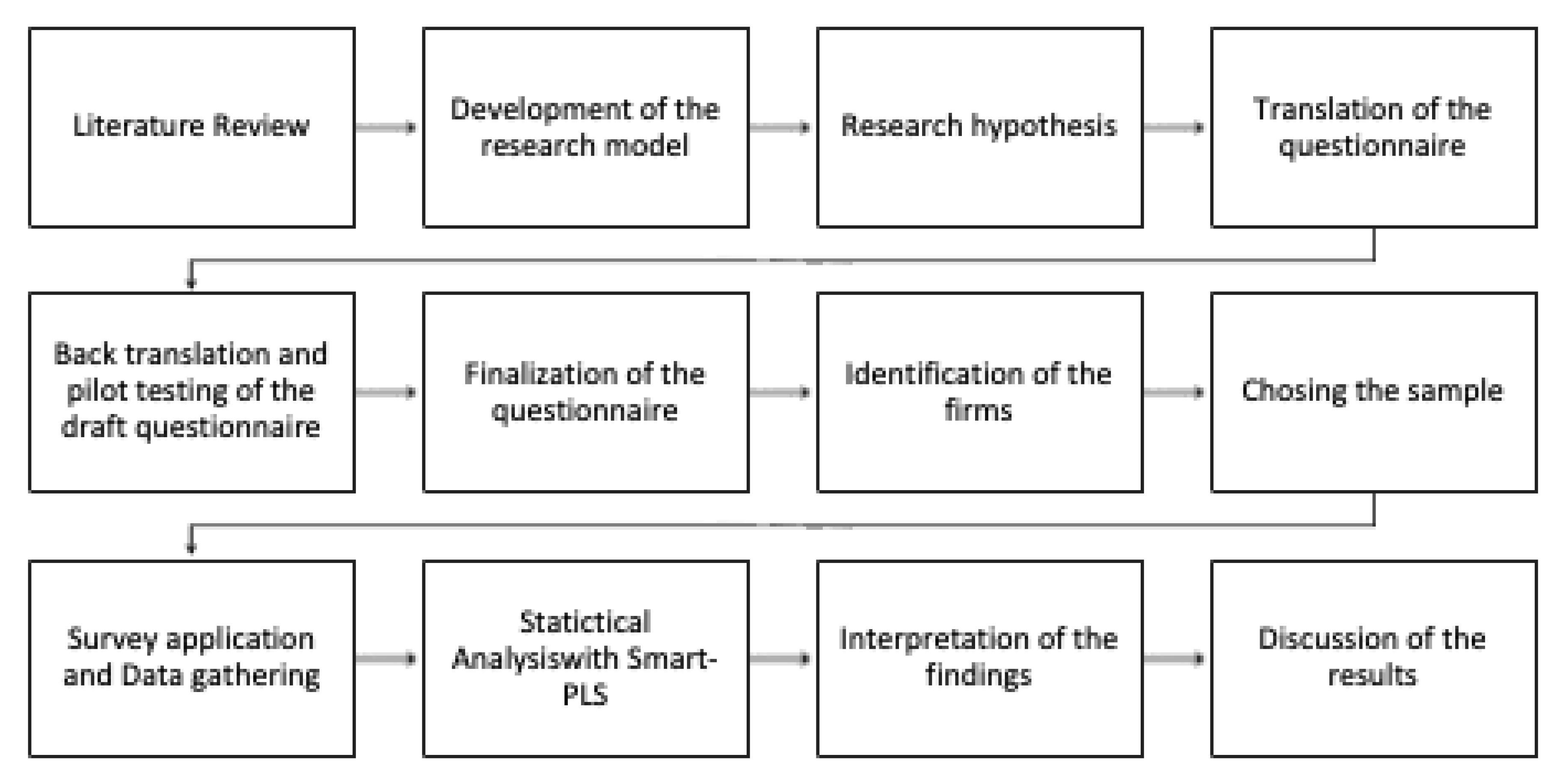
Figure 2.
: Research Model.
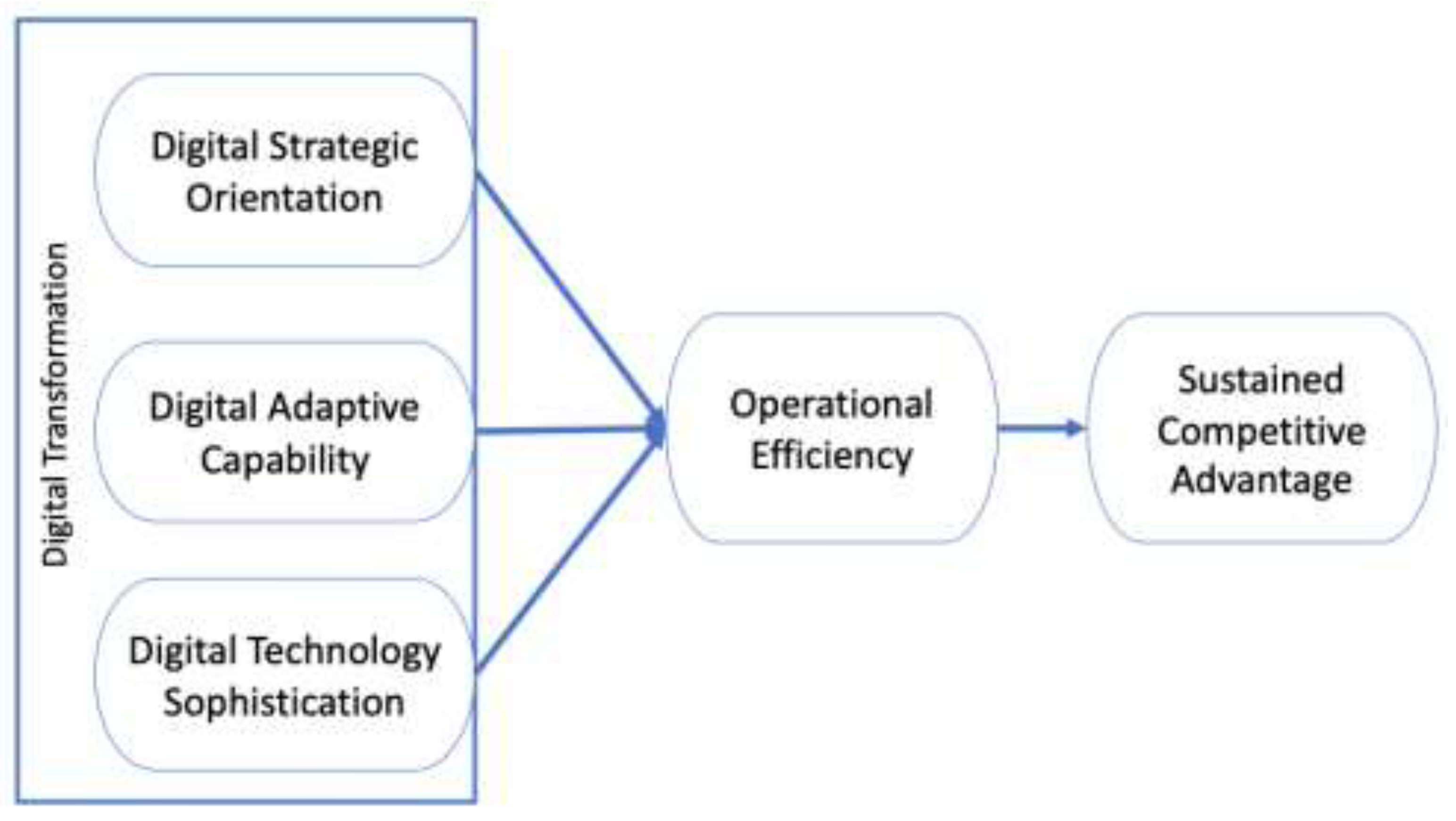
Figure 3.
Results of the structural model.
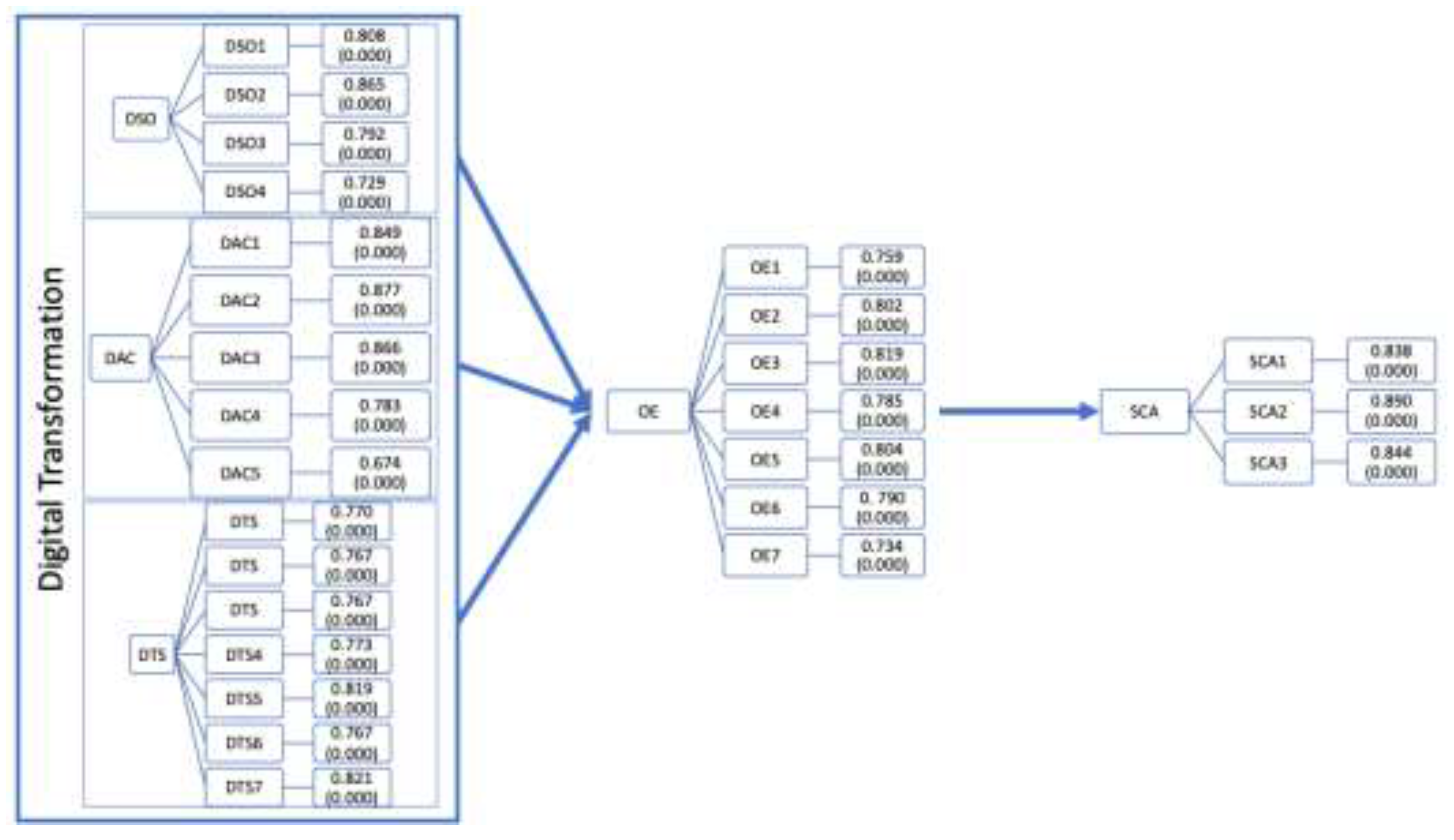

Table 1.
Demographic characteristics of the sample.
| Characteristics of the companies | Number | % |
|---|---|---|
| Company age (foundation year) | ||
| Established before 2010 | 96 | 46.6% |
| Established after 2010* | 110 | 53.4% |
| Industry | ||
| Manufacturing | 48 | 23.3% |
| Service | 158 | 76.7% |
| Number of employees | ||
| More than 10 people** | 70 | 32.4% |
| Less than 10 people | 146 | 67.6% |
| Total | 206 | 100% |
| Characteristics of the respondents | ||
| Gender | ||
| Women | 118 | 54.6% |
| Men | 98 | 45.3% |
| Level of education | ||
| Associate degree and below | 82 | 38.0% |
| Bachelor’s degree and above | 134 | 62.0% |
| Management level at the company | ||
| Owner/partner | 104 | 48.1% |
| Senior Manager | 59 | 27.4% |
| Manager | 53 | 24.5% |
| Total number of years at the company | ||
| More than 10 years | 149 | 69.0% |
| Less than 10 years*** | 67 | 31.0% |
| Total | 206 | 100% |
*2010 year included. **10th people included. ***10th years included.
Table 2.
Reliability of Scales.
| Constructs/Indicators | Mean | Std. Dev. | Loading | VIF | |
|---|---|---|---|---|---|
| DSO: α=0.811; CR=0.818; AVE=0.64 |
DSO1 Digitalization is important to corporate strategy | 0.807 | 0.028 | 0.808 | 1.862 |
| DSO2 Clearly defined digitalization strategy is important | 0.865 | 0.02 | 0.865 | 2.2 | |
| DSO3 Digitalization strategy aligned to corporate and organizational strategy | 0.791 | 0.035 | 0.792 | 1.597 | |
| DSO4 Digitalization strategy helps prioritization | 0.727 | 0.043 | 0.729 | 1.459 | |
| DAC: α=0.871; CR=0.89; AVE=0.66 | DAC1 Adaptation to digital products or services | 0.849 | 0.023 | 0.849 | 2.158 |
| DAC2 Adaptation to digital platforms | 0.878 | 0.022 | 0.877 | 3.128 | |
| DAC3 Adaptation to digital infrastructures | 0.865 | 0.021 | 0.866 | 2.973 | |
| DAC4 Adaptation to digital business models | 0.782 | 0.034 | 0.783 | 1.77 | |
| DAC5 Adaptation to Digital Management Models | 0.671 | 0.055 | 0.674 | 1.498 | |
| DTS: α=0.896; CR=0.899; AVE=0.614 | DTS1 Big data technology (such as big database, data analysis technology | 0.769 | 0.036 | 0.77 | 2.124 |
| DTS2 AI technology (such as machine learning) | 0.764 | 0.037 | 0.767 | 2.33 | |
| DTS3 Mobile technology (such as mobile Internet, wireless communications) | 0.766 | 0.032 | 0.767 | 1.877 | |
| DTS4 Cloud computing technology (such as cloud computing) | 0.772 | 0.036 | 0.773 | 2.017 | |
| DTS5 IoT technology (such as network distribution technology | 0.819 | 0.026 | 0.819 | 2.279 | |
| DTS6 Social technology (such as online commerce, and instant messaging) | 0.767 | 0.036 | 0.767 | 1.906 | |
| DTS7 Platform development technology (such as network platforms) | 0.82 | 0.027 | 0.821 | 2.277 | |
| OE: α=0.896; CR=0.898; AVE=0.616 | OE1 Digitalization enables reliability and stability of production | 0.758 | 0.034 | 0.759 | 1.972 |
| OE2 Digitalization enables more efficient production management | 0.801 | 0.027 | 0.802 | 2.218 | |
| OE3 Digitalization enables a higher level of efficiency | 0.819 | 0.024 | 0.819 | 2.314 | |
| OE4 Digitalization is a catalyst for higher production efficiency | 0.785 | 0.029 | 0.785 | 2.075 | |
| OE5 Digitalization enables manufacturing waste reduction | 0.803 | 0.034 | 0.804 | 2.304 | |
| OE6 Digitalization enables reducing manufacturing delays | 0.789 | 0.03 | 0.79 | 2.14 | |
| OE7 Digitalization helps reduce manufacturing cost | 0.733 | 0.038 | 0.734 | 1.769 | |
| SCA; α=0.820; CR=0.893; AVE=0.736 | SCA1 Digitalization improves competitiveness | 0.837 | 0.031 | 0.838 | 1.816 |
| SCA2 Digitalization enables competitiveness | 0.89 | 0.02 | 0.89 | 2.216 | |
| SCA3 Digitalization is a catalyst for a higher market share | 0.845 | 0.025 | 0.844 | 1.721 |
Table 3.
Discriminant validity- The Fornell and Larcker criterion.
| DAC | SCA | DSO | DTS | OE | |
|---|---|---|---|---|---|
| DAC | 0.813 | ||||
| SCA | 0.416 | 0.858 | |||
| DSO | 0.409 | 0.574 | 0.800 | ||
| DTS | 0.655 | 0.330 | 0.388 | 0.784 | |
| OE | 0.553 | 0.658 | 0.670 | 0.509 | 0.785 |
Table 4.
HTMT Ratio for assessing discriminant validity.
| DAC | SCA | DSO | DTS | OE | |
|---|---|---|---|---|---|
| DAC | |||||
| SCA | 0.489 | ||||
| DSO | 0.478 | 0.700 | |||
| DTS | 0.733 | 0.382 | 0.450 | ||
| OE | 0.615 | 0.765 | 0.782 | 0.561 |
Table 5.
R2 and Q2 metrics for endogenous variables.
| R-square | R-square adjusted | Q² | |
|---|---|---|---|
| SCA | 0.432 | 0.430 | 0.334 |
| OE | 0.555 | 0.548 | 0.536 |
Table 6.
Hypothesis Testing.
| Hypothesis | Path Coefficient | T statistics | P values | Results |
| H1: DSO -> OE | 0.512 | 10.154 | 0.000 *** | Supported |
| H2: DAC -> OE | 0.245 | 4.072 | 0.000 *** | Supported |
| H3: DTS -> OE | 0.150 | 2.613 | 0.009 *** | Supported |
| H4: OE -> SCA | 0.658 | 11.688 | 0.000 *** | Supported |
Disclaimer/Publisher’s Note: The statements, opinions and data contained in all publications are solely those of the individual author(s) and contributor(s) and not of MDPI and/or the editor(s). MDPI and/or the editor(s) disclaim responsibility for any injury to people or property resulting from any ideas, methods, instructions or products referred to in the content. |
© 2026 by the authors. Licensee MDPI, Basel, Switzerland. This article is an open access article distributed under the terms and conditions of the Creative Commons Attribution (CC BY) license (http://creativecommons.org/licenses/by/4.0/).
Copyright: This open access article is published under a Creative Commons CC BY 4.0 license, which permit the free download, distribution, and reuse, provided that the author and preprint are cited in any reuse.


