Preprint
Article

This version is not peer-reviewed.

Germination Potential of Stored and Freshly Harvested Seeds of Mandacaru (Cereus Jamacaru DC)

Submitted:

14 January 2026

Posted:

15 January 2026

You are already at the latest version

Abstract

Knowledge about the germination potential of Mandacaru seeds is fundamental for maintaining breeding programs and germplasm banks. Thus, we aimed to study the germination of stored and freshly harvested mandacaru seeds in order to investigate seed viability as a function of storage imposition, in addition to characterizing seed anatomy and conducting biochemical evaluation. Germination tests were conducted in a completely randomized design in a 2×6 factorial scheme, with two storage conditions and six temperatures (15, 20, 25, 30, 35, and 40°C), with 4 replications of 25 seeds each. Anatomical evaluation tests and biochemical tests had 5 and 10 replications for each storage condition, respectively. It is concluded that the range of 25-35°C is ideal for germination of C. jamacaru seeds, and temperatures below 20°C and above 35°C are detrimental to germination. X-ray computed microtomography was efficient for characterizing seed anatomy and differentiating their tissues, allowing accurate and clear evaluation of their internal structures, and proper storage was efficient in minimizing the deleterious effects of H₂O₂ and MDA accumulation.

Keywords: 
;  ;  ;  

1. Introduction

Cacti are among the most threatened plant groups on the planet, ranking as the fifth taxon with the highest proportion of species at risk of global extinction [1]. Brazil stands out as the world's third center of diversity for Cactaceae, hosting 39 genera (14 endemic) and 277 native species, of which 200 are endemic [2,3,4].
In the Brazilian semi-arid region, specifically in the Caatinga - an exclusively national biome of high biodiversity and endemism, characterized by long drought periods and water resource scarcity [5,6] - cacti demonstrate adaptation to efficient water use, playing fundamental ecological and economic roles as food, medicinal, and ornamental sources [7]. However, intense exploitation, illegal collection, agricultural and urban expansion, along with climate change, severely threaten the survival of these species [8,9,10]. The reduction of conserved areas intensifies the risk for natural populations, highlighting the need to expand protected areas and strengthen environmental education actions as essential strategies for conservation [10].
In this context of conservation and environmental recovery, practices such as ecological restoration and vegetation enrichment emerge as sustainable alternatives for the recovery of degraded areas and the promotion of ecosystem resilience. Among the promising native species for these initiatives, mandacaru (Cereus jamacaru DC.) stands out for its hardiness and wide adaptation, being valuable for animal and human food, medicinal use, and landscaping [11,12,13,14,15]. Its distribution spans several Brazilian states, being classified as Least Concern by IUCN [16].
The success of these recovery strategies is directly conditioned by knowledge about the germination performance and initial development of native species, especially in fragile environments like the Caatinga. The production of vigorous seedlings from seeds with high physiological potential is fundamental for reestablishing essential ecological functions, such as soil cover and protection, carbon increase, wildlife attraction, and promotion of natural regeneration [17]. In this context, the evaluation of seed germination potential - especially after long storage periods - becomes strategic for the formation of germplasm banks and for the success of conservation initiatives and sustainable use of genetic resources.
Despite the relevance of mandacaru for the Caatinga and the crucial role of seed storage in conservation, there is a gap in the literature regarding the germination viability of mandacaru seeds after long storage periods. This work aims to fill this gap by evaluating the germination viability of freshly harvested and stored seeds, contributing significantly to the sustainable use and conservation strategies of this emblematic Caatinga species.
The cacti of the Brazilian semi-arid region, for example, exemplify efficient water use in soil, having prospered in this environment and often serving as an important food resource for wild animals, domestic animals, and humans. Furthermore, cacti have been used by humans in folk medicine and for other purposes, though it is in ornamentation where we find their most promising use [7], a fact that leads to frequent collection of most species from their natural environment, with illegal collection remaining a significant threat to species of this family. Coupled with this, [8] exposes that climate change, together with human activities, impacts natural habitats and represents a major threat to biodiversity, especially in environments with high endemism rates where cacti are deeply adapted to specific environmental conditions. Additionally, the most significant threat factors to this plant group include land conversion for agriculture and aquaculture, and residential and commercial development.
However, due to all these uses, this biodiverse resource is at risk from intensive and indiscriminate exploitation, in addition to deforestation and fires resulting from urbanization and agricultural expansion, which reduce conserved areas in Brazil, keeping populations of these species critically affected [9,10]. Cacti are currently among the most vulnerable to human disturbance and constitute the fifth taxonomic group with the highest proportion of threatened species worldwide [1].
The importance of expanding the number of fully protected areas becomes evident, as it is also important to severely reduce the strong pressure of degradation and depredation of natural populations for the illegal cactus trade, associated with environmental education initiatives as a complementary and extremely important role in biodiversity conservation [10].
Faced with so many environmental concerns and aiming to prevent the degradation of available natural resources, the importance of implementing actions such as vegetation enrichment has stood out as an alternative for income generation and sustainable use in natural ecosystems, like the Caatinga for example. Among these native Caatinga species, mandacaru (C. jamacaru DC.) presents enormous economic potential due to its hardiness and good adaptation to the Biome [11].
For activities such as vegetation/forest enrichment and other recovery techniques to achieve good results, it is necessary to understand the performance of these species, particularly regarding their germination potential and initial development. Producing quality seedlings from high-vigor seeds should be capable of reestablishing important ecological processes and functions for area recovery, such as soil cover and protection, increased soil carbon, attraction of wildlife, and promotion of natural regeneration [17].
Mandacaru (C. jamacaru DC) is a native cactus of northeastern Brazil and its natural distribution area extends through various states, such as: Piauí, Pernambuco, Bahia, Rio Grande do Norte, Paraíba, Ceará, Sergipe, Alagoas, Goiás, and also in northern Minas Gerais, listed as Least Concern (LC) according to the IUCN Red List [16]. It is a highly versatile species, being a good alternative for feeding cattle, goats, and sheep during drought periods, as it remains green and succulent even during dry seasons [12], used in human food [13], widely employed as a medicinal resource [14], and has ornamental potential, possessing appropriate aesthetic elements for use in landscaping [15].
Knowledge about seed germination potential becomes fundamental as it represents material capable of stimulating plant breeding programs and fostering germplasm preservation banks of native species. Regarding the latter point, evaluating the vigor of seeds stored for long periods of time is necessary for the conservation and subsequent use of these materials.
In this regard, due to the scarcity of studies evaluating the germination potential of seeds stored for many years, this study aims to investigate the germination of stored and freshly harvested mandacaru seeds in order to study their viability as a function of storage.

2. Materials and Methods

2.1. Plant Material and Seed Collection

Seeds were collected from mother plants located at the Center for Agricultural Sciences (CCA) of the State University of Londrina (UEL), in Londrina, Paraná, Brazil. The Londrina region has a humid subtropical climate (Cfa according to Köppen and Geiger), characterized by an average annual temperature of 21.0°C and average annual rainfall of 1723 mm, with more intense rains in January (276 mm) and a drier period in August (65 mm). Relative air humidity ranges from 64.25% (September) to 80.75% (February). The predominant soil in the region is dystroferric Red Latosol of basaltic origin, which occupies 54% of the municipal area.
Seeds were manually extracted from mature fruits, classified as acrosarcs, with pinkish-yellowish skin and white pulp (Figure 1). Extraction was performed by opening the fruits and removing the pulp with seeds, rubbing it on filter paper, and subsequently drying in a shaded and ventilated location for 4 hours at room temperature. In April 2019, seeds were stored in a refrigerator at a temperature of 7.5 ± 1.0 °C and relative humidity of 26 ± 7% (STORED). In April 2025, other seeds were collected and extracted, corresponding to freshly harvested seeds (FRESH). Both seed sets were disinfected by immersion in a sodium hypochlorite solution with 1% active chlorine for 3 minutes, followed by washing in distilled water.

2.2. Germination Tests and Experimental Design

Seeds were placed for germination in transparent plastic boxes with lids (Gerbox®), measuring 11 × 11 × 3.5 cm, on two sheets of blotting paper, adding a water volume 2.5 times the weight of the paper to maintain moisture [18]. The weight of one thousand seeds (WTS) and seed moisture content were determined according to the Rules for Seed Analysis [18], using the average of three samples. Seeds were considered germinated when radicle protrusion reached a size greater than 2 mm.
The experiment was conducted in a completely randomized design (CRD) in a 2 × 6 factorial scheme, with two storage conditions (seeds stored for 6 years and freshly harvested seeds) and six temperatures (15, 20, 25, 30, 35, and 40 °C). Germination tests were performed in regulated germinators (BOD type) for constant temperature regimes, in the absence of light. Four replications with 25 seeds each were used for calculating all variables.

2.3. Germination Variables

At the end of the test, with daily data on the number of germinated seeds, the following variables were calculated, as suggested by [19]:
Germination Percentage (G) or Germinability:
G = (N/A) × 100
where: N = number of seeds germinated at the end of the test; A = total number of seeds placed for germination;
Germination Speed Index (GSI):
GSI = G1/N1 + G2/N2 + … + Gi/Ni
where: GSI = germination speed index; G1, G2, Gi = number of seeds germinated in the first, second, and last count; N1, N2, Ni = number of days from sowing to the first, second, and last count.
Mean Germination Time (t) in days:
t = ∑(niti)/(∑ni)
where: ni = number of seeds germinated per day; ti = incubation time;
Mean Germination Speed (MGS) in days:
MGS = 1/t
where: t = mean germination time;
Relative Germination Frequency, in percentage:
Fr = ni/(∑ni)
where: Fr = relative germination frequency; ni = number of seeds germinated per day; ∑ni = total number of germinated seeds;

2.4. Anatomical Analysis

For seed anatomical analysis, the methodology proposed by [20] was followed. Three-dimensional images of the seeds were performed at the X-Ray Applications Laboratory (LARX) of the State University of Londrina (UEL, Paraná, Brazil) using a SkyScan-Bruker microtomograph, model 1173, with a voltage of 45 kV, current of 140 µA, and resolution of 10 µm, without using a filter. Each projection was taken using an exposure time of one second, with an angular step of 0.3° over 180°. The projections were reconstructed using NRecon software, and the images were evaluated using CTVox software. Five seeds from each storage condition were used to verify the tegument, cotyledons, and structures such as the hilum, raphe, and micropyle.

2.5. Seedling Length Measurement

For seedling length calculation, at the end of the experiment (27 days after planting) we used 4 replications, with 5 seedlings each, for each storage condition.

2.6. Biochemical Analysis (Oxidative Stress)

The incidence of oxidative stress was determined by evaluating the hydrogen peroxide (H₂O₂) content and the malondialdehyde (MDA) content as a product of lipid peroxidation. To quantify H₂O₂ and MDA, 100 mg of seeds were collected and ground in a mortar with 1.5 mL of trichloroacetic acid (TCA 0.2%) diluted in methanol. After centrifugation at 13,700 × g at 4 °C for 5 minutes, the supernatant was used for H₂O₂ dosage, by reaction with potassium iodide in phosphate buffer [21]. MDA was determined by TBARS (thiobarbituric acid reactive substances) following the methodology described by [22]. Absorbance readings were taken at 532 nm and 600 nm. Subsequently, the nonspecific absorbance at 600 nm was subtracted from the absorbance at 532 nm and the concentration was determined based on an MDA standard curve. For this analysis, 10 replications were used for each storage condition (freshly harvested and stored), arranged in a completely randomized design.

2.7. Statistical Analysis

Data were subjected to analysis of variance (ANOVA). If significant, linear or non-linear regression analysis was performed (p < 0.05). The assumptions of normality of errors and homogeneity of variances were tested by Shapiro-Wilk and Levene, respectively. Several regression models were tested (polynomial, beta, Bragg, segmented, logistic and their variants) to find the fit that best represents the variable's behavior, using, in addition to graphical visualization of the curves, the AIC, BIC criteria, significance of coefficients and root mean square error (RMSE). All analyses were performed using R Software, using the AgroR [23] and AgroReg [24] packages.

3. Results

This study detailed the influence of storage conditions and different temperatures on the germination and initial development of C. jamacaru seeds, seeking to elucidate physiological, anatomical, and biochemical aspects governing seed viability and vigor. The obtained results allowed for an in-depth understanding of germination responses and seedling performance under different scenarios, providing crucial information for species conservation and management. A clear distinction was observed in the physical characteristics of seeds due to storage, which was reflected in their germination responses, seedling vigor, and oxidative stress physiology.
The weight of one thousand seeds was 3.02 g for freshly harvested seeds and 2.13 g for stored seeds, while moisture content was 10.50% and 7.40% respectively.
Table 1 presents the p-values from the analysis of variance for the four analyzed variables. In all cases, except for germination speed, significant interaction was found, indicating differences in responses between stored and non-stored seeds as a function of temperature. This finding was expected, since temperature plays a crucial role in the seed germination process, directly influencing high germination rate and uniformity, and seedling development.
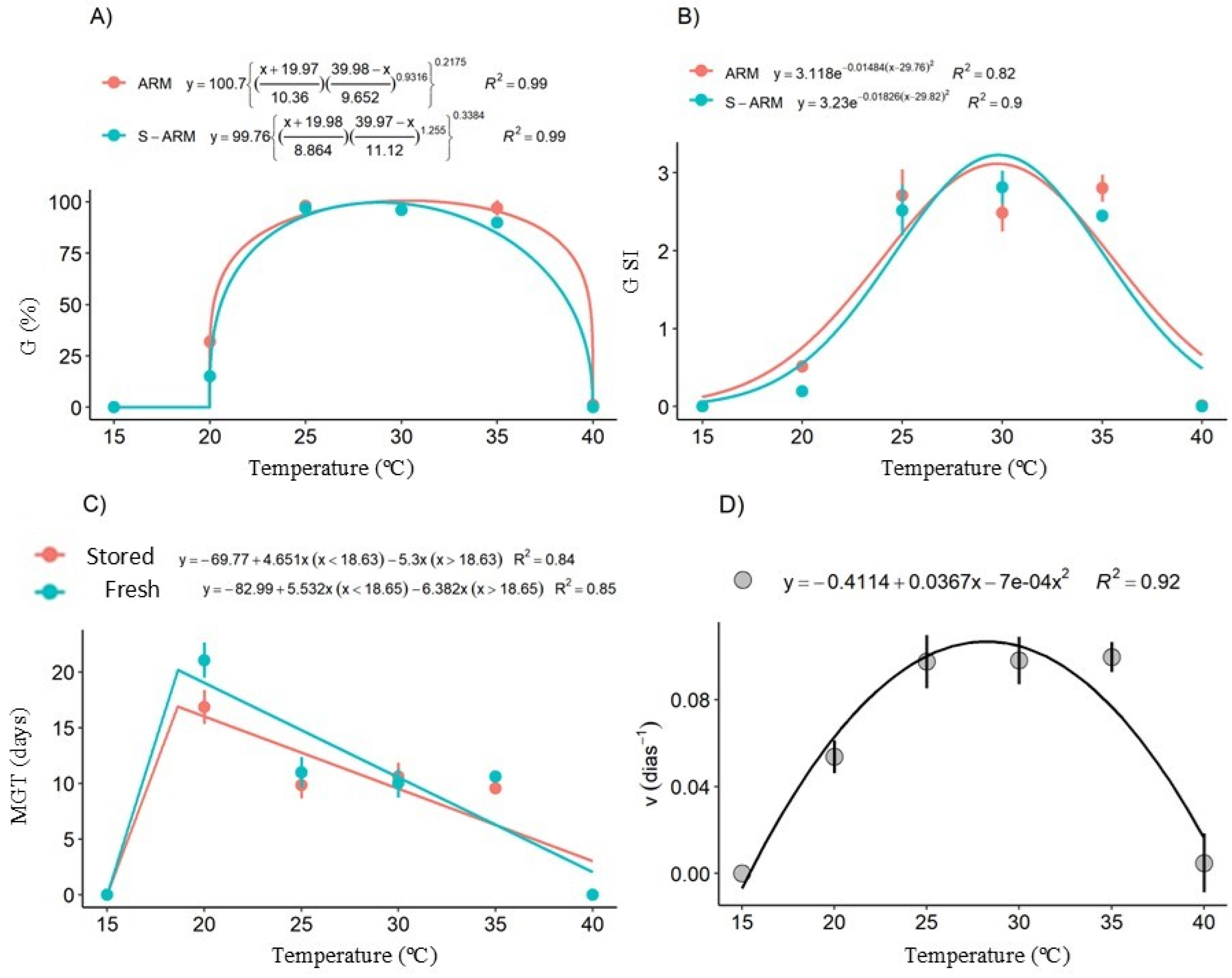
In the interaction breakdown, it was observed that both stored and non-stored seeds showed responses to temperature in germination (Figure 2A), with the beta regression model being adjusted for both cases in C. jamacaru seed germination. The maximum response was obtained at estimated temperatures of 30.33°C and 28.94°C for stored (STORED) and freshly harvested (FRESH) seeds, respectively, with 100% response in both cases. It is worth highlighting that STORED seeds showed a wider temperature range than FRESH seeds.
For the germination speed index (Figure 2B), in both cases, the Bragg model was adjusted, a reparameterization of the Gaussian function. The maximum responses were obtained at estimated temperatures of 29.78°C and 29.82°C for STORED and FRESH seeds, respectively, with responses of 3.12 and 3.23 in both cases. In this variable, FRESH seeds showed higher GSI at their estimated maximum point. A similar response was observed for MGT (Figure 2C), where FRESH seeds showed better response than STORED seeds, however, temperature values of 18.63°C and 18.64°C showed the best estimated responses.
Finally, for germination speed (Figure 2D), only a temperature effect was found, with maximum response at an estimated temperature of 28.2°C and estimated speed of 0.1067 days⁻¹.
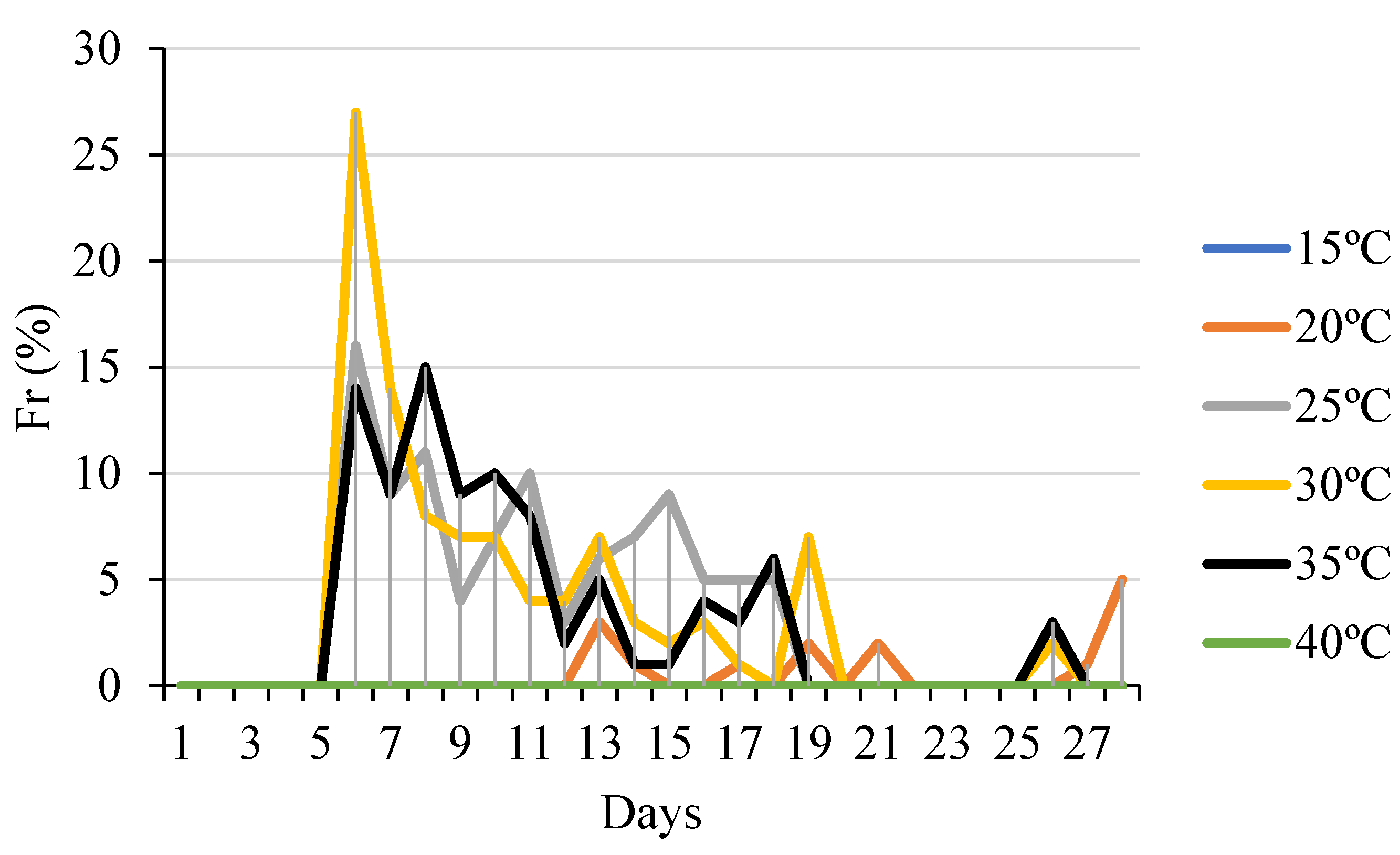
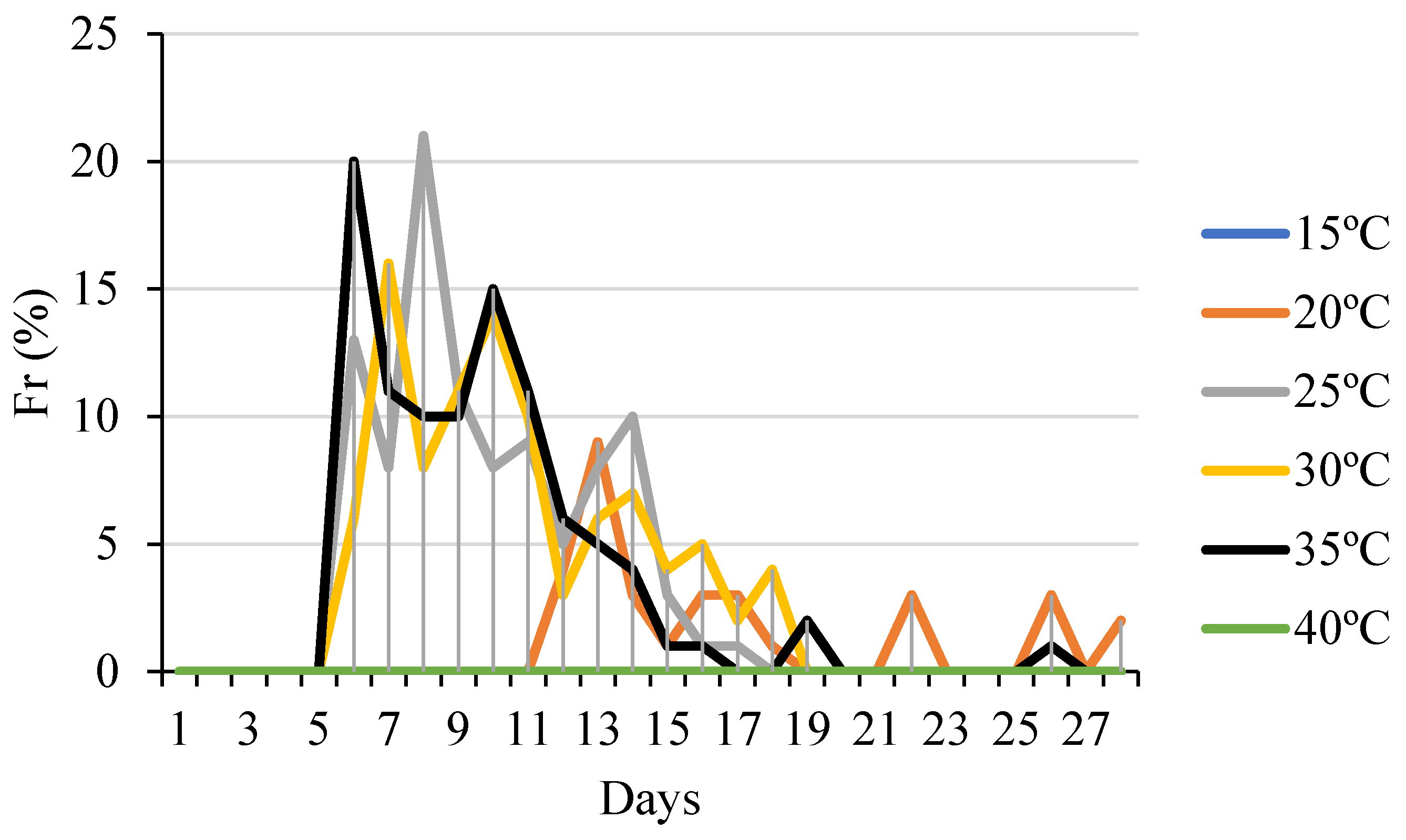
The germination frequencies of seeds for the two storage conditions (Figure 3 and Figure 4) indicated differentiation regarding the temperature promoting germination. For freshly harvested seeds, the temperature of 30°C was more favorable, generating a higher initial germination percentage, while for stored seeds, other temperatures (25 and 35°C) also played a prominent role in the formation of the initial seedling bank.
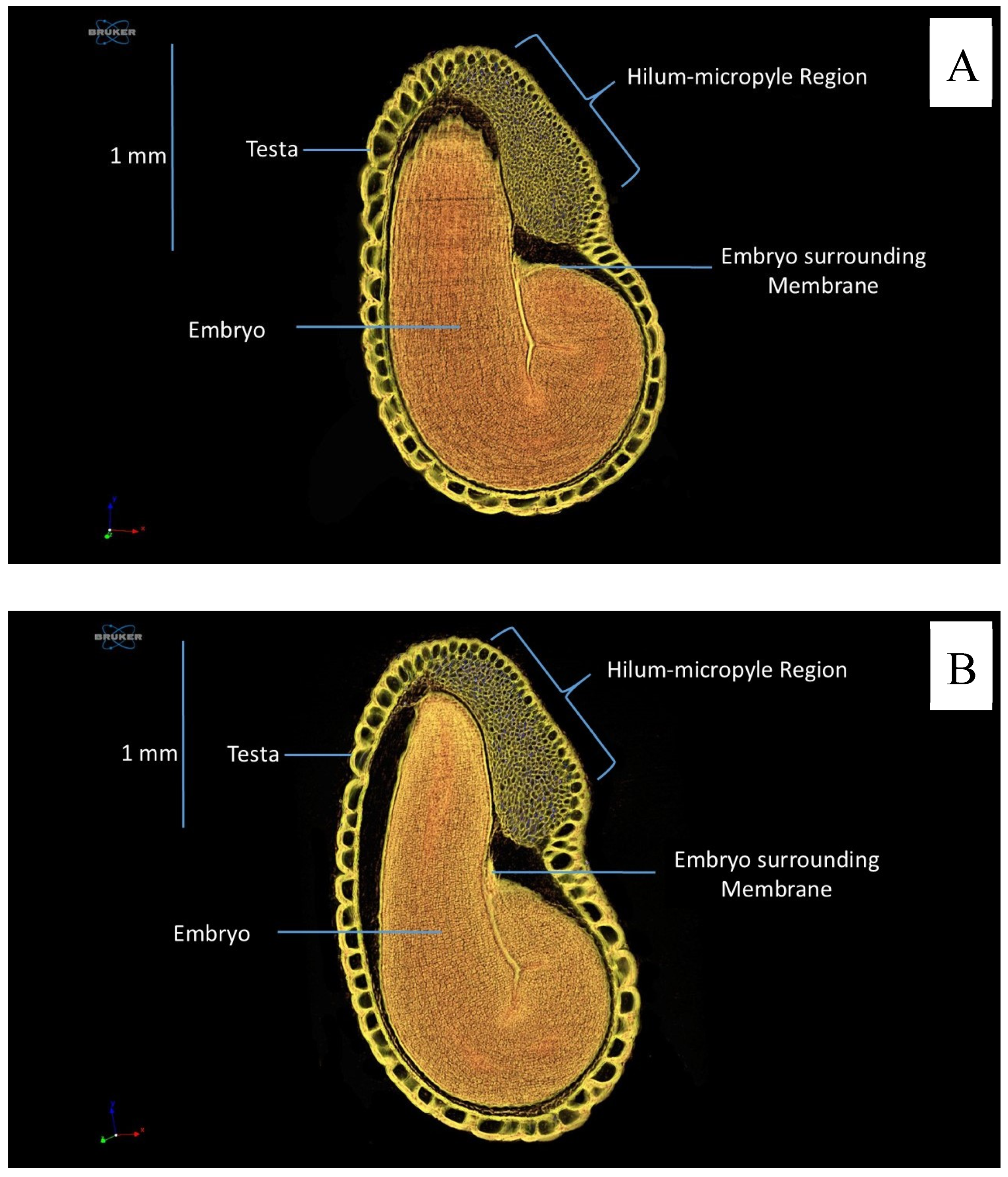
C. jamacaru seeds did not show significant differences in their anatomical constitution, consistent with the results found for seed moisture, showing shrinkage of internal tissues due to the reduction in water percentage, with freshly harvested seeds (FRESH) having a moisture content of 10.50% and stored seeds (STORED) having 7.40% (Figure 5 A and B).
Preprints 194389 i001
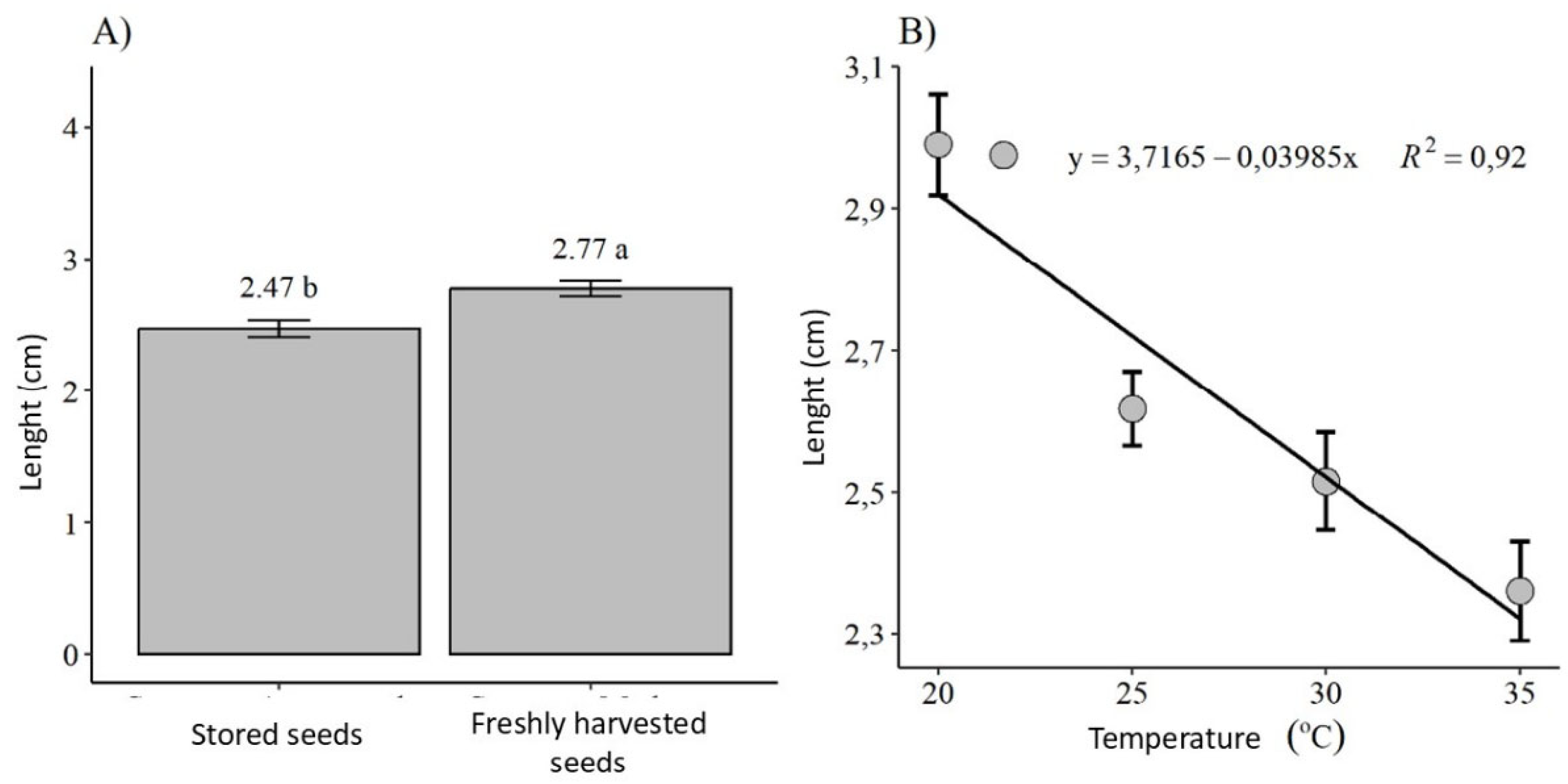
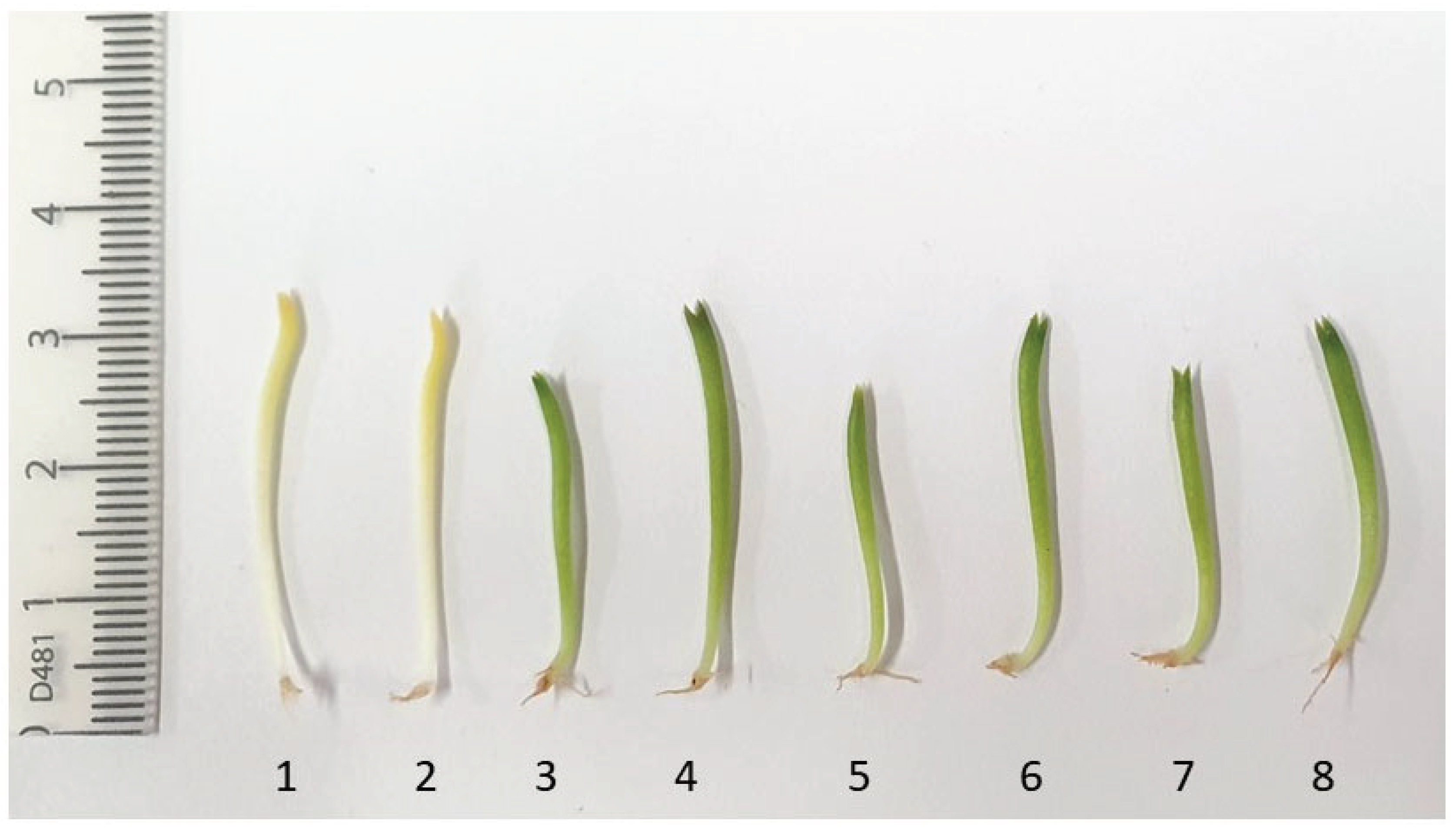
According to figure 6A and B, we observed statistical differentiation in seedling length from stored and non-stored seeds, generating greater lengths for seedlings produced from freshly harvested seeds. Although the largest sizes were identified at 20°C, this condition does not imply an ideal temperature for the germination of this cactus, since germination was 15% and 32% for FRESH and STORED respectively. In the range considered ideal for seed germination (25-35°C), the seedlings showed much similarity in development.
Figure 6. A and B. Statistical difference in seedling length from C. jamacaru seeds stored and not stored at different temperatures.
Preprints 194389 g006
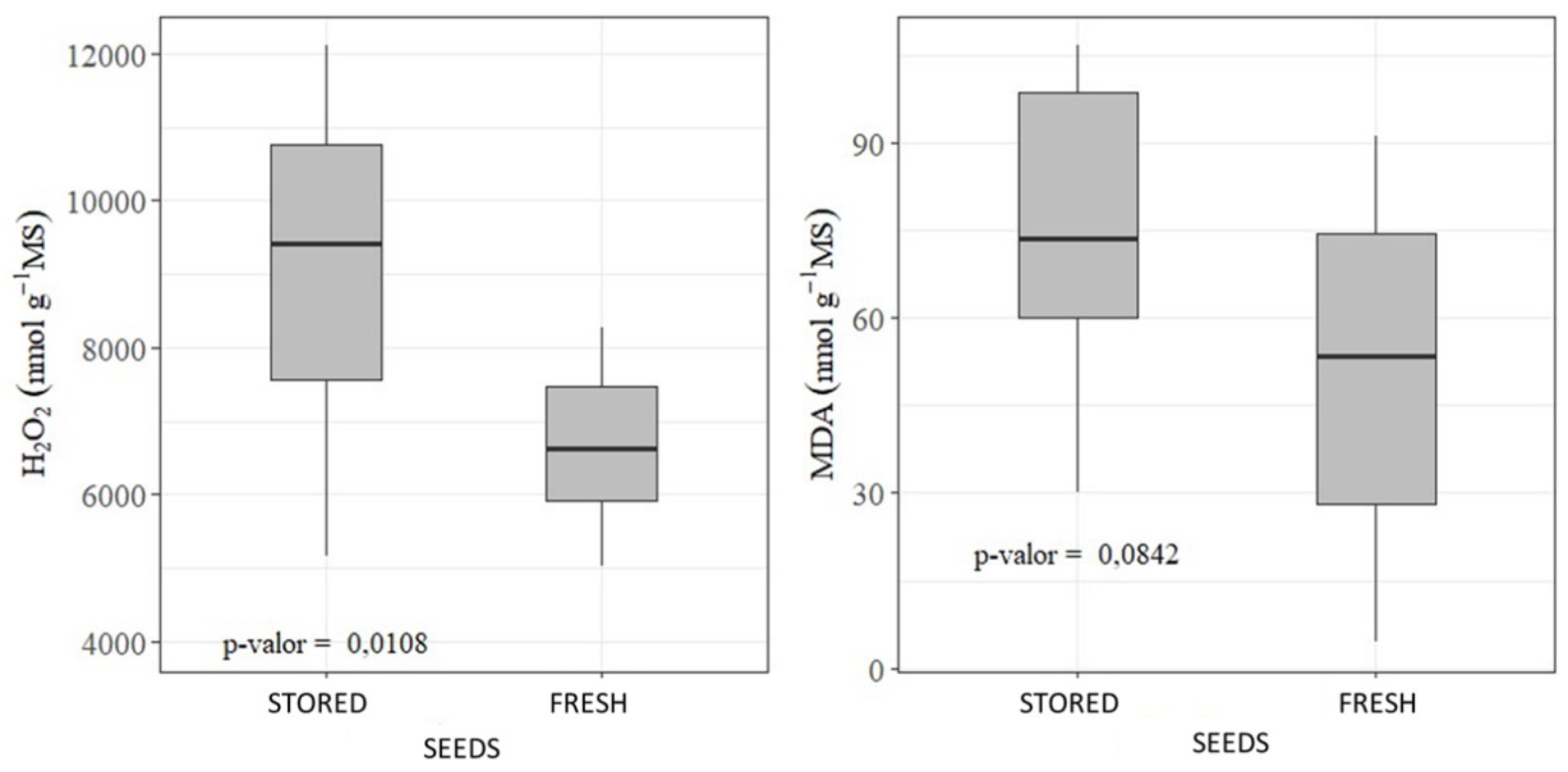
The hydrogen peroxide (H₂O₂) and malondialdehyde (MDA) contents observed in this study (Figure 7) evidence physiological changes associated with prolonged storage. Freshly harvested seeds showed lower concentrations of these substances, reflecting greater cellular integrity and efficient functioning of antioxidant defense systems, responsible for regulating redox balance and limiting ROS accumulation. In contrast, seeds stored for six years showed increased H₂O₂ and MDA contents.

4. Discussion

Variations in thousand-seed weight and moisture content values were found by Abud et al. (2013), who in their research found a mass of one thousand freshly harvested C. jamacaru seeds of 4.42 g, and water content of 10%.
The moisture value for stored seeds in this work (7.4%) was lower than that found by [25], whose value was 9.8% for seeds stored for six months, while [26] found values of 14.4% and 13.5% moisture for freshly harvested seeds in the Caatinga and Atlantic Forest regions, respectively. [27] found for C. jamacaru seeds harvested in different regions of the Caatinga in the Pernambuco hinterland, moisture content between 11% and 12%, while [28] found moisture content of 18% for freshly depulped seeds and report that water content in freshly harvested seeds of some cactus species can range from 6.3% to 23.7%.
Low temperatures (15 and 20°C) were not satisfactory for the germination of C. jamacaru seeds under both storage conditions. According to [29], low temperatures cause damage to the cell membrane and affect the physiological functions of plants; in addition to delaying or preventing the germination process. Among the negative effects generated by low temperatures, we can highlight the inhibition of metabolism, meaning that the biochemical and physiological reactions necessary for germination will occur at a slower pace, or even be interrupted. Low temperatures can affect the water absorption rate by seeds, delaying this process, which can result in slower hydration of seed tissues and consequently, slower germination. The possible damage caused to seed cell membranes can be negatively affected by intense cold, since cell membranes are mainly composed of lipids, this can lead to rupture or destabilization of membranes, compromising cell viability and hindering germination. Also according to [30], low temperatures (20°C and alternating 15°C and 25°C) were not beneficial for the germination of Carya illinoinensis seeds, with the highest occurrence of hard seeds, and they further conclude that low temperatures reduce the metabolic activity of seeds and decrease the production of gibberellin, which is an essential hormone for the germination process and seedling formation.
[31] found that Khaya grandifoliola seeds did not germinate at 20°C, a fact that according to the authors, when development temperatures are maintained below the optimum recommended for germination, the reorganization of the cell membrane system can become slower, influencing seed vigor and the delay in germination in response to low temperature is due to the elongation of phase II of the germination process, the phase in which new mRNA synthesis occurs, further concluding that under low temperature conditions seed imbibition may even occur, but embryo growth will not occur for most species. Thus, as already elucidated by [32], low temperature negatively affects germination, normal plant growth, development, and phenological events.
Damage caused by low temperature in soybean seeds was also verified by [33], in which low temperature (10°C) completely inhibited seed germination in all studied cultivars and as temperature increased, the number of germinated seeds also increased, and according to the authors, low temperatures reduce enzyme activity and delay nutrient mobilization, limiting the metabolic processes necessary for germination and development.
We also observed a drastic reduction in the germination potential of seeds at 40°C temperature, a fact similar to that observed by [34], who also observed a reduction in the germination potential of corn seeds as the germination temperature increased. According to the authors, the temperature of 37°C proved drastic for all seed lots, resulting in substantial decreases in germination potential.
High temperatures can decrease germination percentage due to effects on enzyme activity and restrictions on oxygen access, and the damage caused by high temperatures can be related to the protein denaturation process and membrane alteration, leading to progressive seed deterioration [35].
Temperature is a critical environmental factor in seed germination, thus the pace and rate of germination, which govern water absorption, can be affected by temperatures above or below the optimal range. In this way, we perceive that the number of germinated seeds increases linearly as temperature rises to an optimal level and then decreases linearly as temperature exceeds the limit [36].
Lower temperatures cause seed metabolism to slow down, resulting in slower growth. On the other hand, higher temperatures accelerate plant metabolism, dissipating seed energy that is essential for growth. According to the enthalpy approach, with increasing temperature, the energy in water grows, increasing diffusion pressure. This simultaneously intensifies metabolic and enzymatic activity, in addition to reducing the internal water potential of the seed, which favors increased water absorption. Thus, hydration occurs more rapidly at elevated temperatures, accelerating germination until the optimal temperature is reached [36].
As observed in this research, a similar report was made by [37], who showed that temperature significantly influenced the germination process of Aristolochia elegans seeds, observing that no germination occurred at 15°C temperature, for temperatures of 20 and 25°C the percentages of germinated seeds were 4.5% and 48% respectively, at 30°C temperature the percentage reached was 75% and at 35°C there was a decrease in the percentage of germinated seeds (54%). According to the authors, probably at 30°C temperature a more efficient degradation of reserves present in the seeds occurred, which favored germination and consequently seedling development.
Many cactus species occurring in Brazil, such as C. jamacaru, show similar final germination percentage between 25 and 30°C treatments, however, the mean germination time of this species indicates that germination is favored by 30°C temperature [38].
High percentages of C. jamacaru seed germination were also observed by [27], with percentages above 88% for temperatures of 25 and 30°C, and also other results such as 86% under 30°C temperature [39], 90% under 25°C, 88% under 30°C [12] and 98% under 25°C [40].
According to [41] the chronological age of seeds may not be the main determinant of deterioration, since in seeds environmental conditions are decisive for the speed of the deterioration process, thus, seed lots of the same chronological age can exhibit completely different performances by presenting different deterioration levels, determined by maturation, harvest, processing, storage conditions, that is, by their production history. In this way, seed lots already stored for some time may present superior performance to freshly harvested lots, indicating that the deterioration process in the latter may have been more intense due to specific environmental or management conditions.
As seen in this research, [27] concluded that the germination of C. jamacaru seeds was not influenced by temperatures of 25 and 30°C, however, the germination speed index and mean germination time stood out at 30°C temperature, a fact also observed by [42]. As seen in this research, the highest estimated GSI for STORED was 3.12 at estimated temperature of 29.78°C and for FRESH of 3.23 at estimated temperature of 29.82°C.
[43] reported that temperature is one of the main factors affecting germination percentage and speed, which acts directly through seed imbibition and the biochemical reactions that regulate metabolism involved in the germination process.
Our results confirmed that C. jamacaru seed germination occurs in a comparatively warm temperature range of 25-35°C, with an estimated optimal temperature of 30.33°C (STORED) and 28.94°C (FRESH), both with 100% germination. However, as expected, C. jamacaru seeds were sensitive to cold temperatures, as well as to the elevated temperature of 45°C, which caused the germination percentage, germination speed index, and mean speed to decrease drastically. As seen for the other variables, MGT did not suffer significant variation for temperatures in the 25-35°C range, with the best estimated values recorded being 11.60 days for STORED and 13.80 days for FRESH.
This germination characteristic is representative of ecoadaptability to their native habitats. The performance of C. jamacaru seeds was evaluated for orthodox seeds, those resistant to low water content and those maintained in refrigerated storage for a long period. The seeds maintained high viability after cold and dry storage and their high germinability at favorable temperatures was comparable to that of fresh seeds, also presenting fragility for non-optimal temperature ranges. This fact was discussed by [42], who reported that some fresh seeds commonly germinate within a particularly limited temperature range, which gradually expands with increasing seed storage. The authors found that after storage, the demand for high temperatures to obtain a higher germination percentage in fresh seeds was reduced, and furthermore, dry storage alleviated seed dormancy and expanded temperature demands for germination in Bromus tectorum Linn. and Prosopis juliflora (Swartz) DC.
C. jamacaru seeds are stenospermic, unialbuminous, with wrinkled black testa and slightly obovate-oblique shape, with size varying from 3-4 mm. The testa in superficial view has polyhedral cells of 4-6 faces, with more or less straight anticlinal walls, of variable size, gradually smaller toward the hilo-micropylar region (unique complex formed by the hilum and micropyle). The seeds are campylotropous, reniform, exotestal and bitegmic. The seed has a reduced amount of reserve material and curved embryo, with reduced cotyledons, surrounding the embryo there is a thin membrane, formed by cells that remained between the testa and the embryo during seed development. The embryo is easily visible and peripheral, white in color and occupies almost the entire seed space, being perispermous, cylindrical and large. It presents reserves in the convex cotyledons, white in color and firm consistency [44,45,46,47].
[48] points out that compared to freshly harvested seeds, stored seeds have a greater amount of internal air space, which can result in a smaller and irregularly shaped embryo.
Regarding seedling development, we present as the main hypothesis for this differentiation in length the water loss during storage and a possible incomplete rehydration during germination, where cells did not reach the appropriate level of turgor (internal pressure), compromising initial seedling growth. Such facts can affect the seed's ability to initiate the growth process optimally, resulting in less vigorous seedlings. This hypothesis is quite relevant, since dehydration can lead to destabilization of cell membranes, causing the formation of disorganized structures, which can impair membrane functionality during rehydration. It can also cause conformational changes in proteins, which can become inactive or less functional, this directly affects enzymes and other vital biochemical processes during germination. Particularities of C. jamacaru seedlings are that during their development, they are initially white and two short conical cotyledons are visible from the tenth day, when the hypocotyl is completely straight (Figure 8).
It is also possible that the deterioration process that results in the reduction of the physiological potential of seeds is mainly due to the progressive accumulation of reactive oxygen species (ROS), so that for maintaining viability and vigor it is important that antioxidant systems (enzymes superoxide dismutase, catalase and peroxidases, and non-enzymatic ones, such as tocopherol (vitamin E), ascorbic acid (vitamin C), flavonoids and glutathione) are acting at a satisfactory level, for example, in seeds stored under inadequate conditions, subjected to high temperatures and relative humidity, the progressive accumulation of oxidative damage to cells will reflect in reduction in germination and vigor, and may even cause embryo death [49].
Inadequate storage conditions can cumulatively increase ROS levels in seeds, this being the most important factor affecting seed aging, causing potential oxidative damage to lipids, proteins and DNA, leading to loss of viability [47].
The accumulation of H₂O₂ results in increased protein carbonylation and protein turnover, as well as a decrease in electron pressure in the mitochondrial electron transport chain, allowing the supply of reducing equivalents (NADPH) to the thioredoxin (Trx) system, which is involved in the regulation of seed germination and seedling development and affects hormonal balance by increasing GA and decreasing ABA/ethylene through 1-aminocyclopropane-1-carboxylic acid [50].
Among reactive aldehydes, malondialdehyde (MDA) is widely recognized as a marker of oxidative damage to cell membranes, frequently used as an indicator of lipid peroxidation, with the capacity to mediate protein oxidation, resulting in fragmentation, modification, aggregation and changes in protein conformation, and will eventually lead to alterations in protein functions [47,51].
These effects are characteristic of physiological seed aging, which directly affects viability and vigor, however although the concentration of MDA and H₂O₂ increased over seed storage time (20.64% and 46.66% respectively) we did not observe severe damage in the germination process under different temperatures and in the formation and development of seedlings, a fact favored by adequate seed storage in recent decades. [41] emphasize that seeds stored under inadequate conditions, subjected to high temperatures and relative humidity, the progressive accumulation of oxidative damage to cells will reflect in reduction in germination and vigor, and may even cause embryo death.
Although this study has advanced in understanding C. jamacaru seed germination under storage and different temperatures, future research could deepen the analysis by expanding the range of temperatures and sampling points in storage, in addition to including a broader spectrum of biochemical markers. It will be crucial to investigate the mechanisms that expand the germination range in stored seeds and better understand rehydration dynamics and its impact on seedling vigor. The correlation between origin factors, genotype and post-harvest management with seed longevity also represents a promising frontier, aiming for more effective conservation and management strategies.

5. Conclusions

  • The range of 25-35°C is ideal for the germination of C. jamacaru seeds. Temperatures below 20°C and above 35°C are detrimental to germination;
  • Seed lots of C. jamacaru stored for six years maintain viability and germinability at high percentages;
  • X-ray computed microtomography is efficient for characterizing seed anatomy, allowing accurate and clear evaluation of their internal structures;
  • Proper storage was efficient in minimizing the deleterious effects of H₂O₂ and MDA accumulation.

Author Contributions

Conceptualization, H.R.G., G.D.S., K.A.M., and M.H.S.P.; methodology, H.R.G., G.D.S., E.I.J. and D.G.G.; software, G.D.S. and E.I.J.; validation, H.R.G., G.D.S., E.I.J. and D.G.G.; formal analysis, H.R.G., G.D.S., E.I.J. and D.G.G.; investigation, H.R.G., M.H.S.P., H.V.S. and K.A.M.; data curation, G.D.S., E.I.J. and D.G.G.; writing—original draft preparation, H.R.G.; writing—review and editing, H.V.S., M.H.S.P. and K.A.M.; visualization, G.D.S. and E.I.J.; supervision, H.R.G.; project administration, H.R.G., G.D.S. and E.I.J. All authors have read and agreed to the published version of the manuscript.

Funding

This research received no external funding.

Institutional Review Board Statement

In this section, please add the Institutional Review Board Statement and approval number for studies involving humans or animals. You might choose to exclude this statement if the study did not require ethical approval. Please note that the Editorial Office might ask you for further information. Please add “The study was conducted in accordance with the Declaration of Helsinki, and approved by the Institutional Review Board (or Ethics Committee) of NAME OF INSTITUTE (protocol code XXX and date of approval).” for studies involving humans. OR “The animal study protocol was approved by the Institutional Review Board (or Ethics Committee) of NAME OF INSTITUTE (protocol code XXX and date of approval).” for studies involving animals. OR “Ethical review and approval were waived for this study due to REASON (please provide a detailed justification).” OR “Not applicable” for studies not involving humans or animals.

Informed Consent Statement

Not applicable.

Data Availability Statement

No new data were created or analyzed in this study. Data sharing is not applicable to this article.

Conflicts of Interest

The authors declare no conflicts of interest.

References

  1. Goettsch, B; Taylor, CH; Piñón, GC; Duffy, JP; Frances, A; Hernández, HM; Inger, R; Pollock, C; Schipper, J; Superina, M; Taylor, NP; Tognelli, M; Abba, AM; Arias, S; Nava, HJA; Baker, MA; Bárcenas, RT; Barrios, D; Braun, P; Butterworth, CA; Búrquez, A; Caceres, F; Basañez, MC; Díaz, RC; Perea, MV; Demaio, PH; Barros, WAD; Durán, R; Yancas, LF; Felger, RS; Maurice, BF; Maurice, WAF; Gann, G; Hinostrosa, CG; Torres, LRG; Griffith, MP; Guerrero, PC; Hammel, B; Heil, KD; Oria, JGH; Hoffmann, M; Ishihara, MI; Kiesling, R; Larocca, J; Luz, JLL; Loaiza, CR; Lowry, M; Machado, MC; Majure, LC; Ávalos, JGM; Martorell, C; Maschinski, J; Méndez, E; Mittermeier, RA; Nassar, JM; Ortiz, VN; Oakley, LJ; Baes, P; O Ferreira, ABP; Pinkava, DJ; Porter, JM; Martinez, RP; Gamarra, JR; Pérez, PS; Martínez, ES; Smith, M; J Manuel Sotomayor M del, C; Stuart, SM; Muñoz, JLT; Terrazas, T; Terry, M; Trevisson, M; Valverde, T; Devender, TRV; Pérez, MEV; Walter, HE; Wyatt, SE; Zappi, DC; Hurtado, JAZ; Gaston, KJ. High proportion of cactus species threatened with extinction. Nature plants 2015, 1, 1–7. [Google Scholar] [CrossRef]
  2. Silva, SRS; Zappi, D; Taylor, N; Machado, M. Plano de ação nacional para a conservação das Cactáceas – Série espécies ameaçadas. In Instituto Chico Mendes de Conservação da Biodiversidade, 1st ed.; ICMBIO: Brasília, Brasil, 2011; pp. 1–112. [Google Scholar]
  3. Cactaceae in Flora e Funga do Brasil 2020. Available online: https://floradobrasil.jbrj.gov.br/FB70 (accessed on 04 april 2025).
  4. Simões, SS; Zappi, DC; Aona, LYS. A família Cactaceae no Parque Nacional de Boa Nova, Estado da Bahia, Brasil. Hoehnea 2020, 47, 1–14. [Google Scholar] [CrossRef]
  5. Albuquerque, UP; Araújo, EL; El-Deir, ACA; Lima, ALA; Souto, A; Bezerra, BM; Ferraz, EMN; Freire, EMX; Sampaio, EVDSB; Las-Casas, FMG; Moura, GJB; Pereira, GA; Melo, JG; Ramos, MA; Rodal, MJN; Schiel, N; Neves, RML; Alves, RRN; Azevedo Junior, SM; Telino Junior, WR; Severi, W. Caatinga Revisited: Ecology and Conservation of an Important Seasonal Dry Forest. Sci. World J. 2012, 2012, 1–18. [Google Scholar] [CrossRef] [PubMed]
  6. Rocha, WJSF; Vasconcelos, RN; Costa, DP; Duverger, SG; Lobão, JSB; Souza, DTM; Herrmann, SM; Santos, NA; Rocha, ROF; Ferreira, JF; Oliveira, M; Barbosa, LS; Cordeiro, CL; Aguiar, WM. Towards Uncovering Three Decades of LULC in the Brazilian Drylands: Caatinga Biome Dynamics (1985–2019). Land 2024, 13, 1–18. [Google Scholar] [CrossRef]
  7. Cavalcante, A; Teles, M; Machado, M. Cactos do semiárido do Brasil: guia ilustrado; INSA: Campina Grande, Brasil, 2013; pp. 7–103. [Google Scholar]
  8. Barbosa, FA; Castro, NHA; Souza, VC; Barbosa, AS; Fonseca, WB; Silva, JHCS. Análise da estrutura e distribuição espacial de Pilosocereus pachycladus subsp. pernambucoensis em vegetação da Caatinga e de brejo de altitude. Ciência Florestal 2023, 33, 1–24. [Google Scholar] [CrossRef]
  9. Siegloch, A; Carvalho, LR; Prado, SO; Lima, RA. Potencial de espécies da família Cactaceae no brasil: uma revisão sistemática. Biodiversidade 2020, 19, 82–89. [Google Scholar]
  10. Carvalho, CE; Menezes, MOT; Araújo, FS; Sfair, JC. High endemism of cacti remains unprotected in the Caatinga. Biodiversity and Conservation 2022, 31, 1217–1228. [Google Scholar] [CrossRef]
  11. Lopes, IAP; Lopes, AS; Abreu, KG; Sousa, RR; Lacerda, AV; Roque, IA; Paiva, IAM. Enrichment strategy with Cereus jamacaru DC. in a clearing area introduced by vegetative propagation. Research, Society and Development 2021, 10, 1–8. [Google Scholar]
  12. Silva, JHCS; Azeredo, GA; Targino, VA. Resposta germinativa de sementes de cactáceas colunares sob diferentes regimes de temperatura e de potencial hídrico. Scientia Plena 2021, 16, 1–13. [Google Scholar] [CrossRef]
  13. Santos Neto, JP; Silva, VDN; Silva, PA; Santos, YMP; Monteiro, PHS; Silva, LASG. Características físico-químicas do fruto do mandacaru (Cereus jamacaru P. DC.) cultivado no sertão alagoano. Revista Craibeiras de Agroecologia 2019, 4, 1–4. [Google Scholar]
  14. Camara, NM; Oliveira, TLS. Uso medicinal do Cereus jamacaru DC. (mandacaru): uma revisão. RECIMA21-Revista Científica Multidisciplinar 2021, 2, 1–13. [Google Scholar]
  15. Cavalcante, MZB; Dultra, DFS; Silva, HLC; Cotting, JC; Silva, SDP; Siqueira Filho, JA. Potencial ornamental de espécies do Bioma Caatinga. Comunicata Scientiae 2017, 8, 43–58. [Google Scholar] [CrossRef]
  16. Cereus jamacaru, The IUCN Red List of Threatened Species 2017. Available online. (accessed on 04 April 2025). [CrossRef]
  17. Resende, AS; Chaer, GM. Recuperação ambiental em áreas de produção de petróleo e gás em terra na Caatinga, 1st ed.; Embrapa: Brasília, Brasil, 2021; pp. pp 1–149. [Google Scholar]
  18. Embrapa; Empresa Brasileira de Pesquisa Agropecuária. Regras para análise de sementes; Ministério da Agricultura, Pecuária e Abastecimento: Brasília, Brasil, 2025. [Google Scholar]
  19. Ferreira, TC; Oliveira, MRG; Perez-Marin, AM. Aportes metodológicos para a implantação e avaliação de experimentos com sementes em relação a germinação e ao vigor. BIOFIX Scientific Journal 2022, 7, 17–26. [Google Scholar] [CrossRef]
  20. Guariz, HR; Shimizu, GD; Paula, JCB; Sperandio, HV; Ribeiro Junior, WA; Oliveira, HC; Jussiani, EI; Andrello, AC; Marubayashi, RYP; Picoli, MHS; Ruediger, J; Couto, APS; Moraes, KAM. Anatomy and Germination of Erythrina velutina Seeds under a Different Imbibition Period in Gibberellin. Seeds 2022, 1, 210–220. [Google Scholar] [CrossRef]
  21. Alexieva, V; Sergiev, I; Mapelli, S; Karanov, E. The effect of drought and ultraviolet radiation on growth and stress markers in pea and wheat. Plant Cell Environ. 2001, 24, 1337–1344. [Google Scholar] [CrossRef]
  22. Camejo, G; Wallin, B; Enojärvi, M. Analyses of oxidation and antioxidants using microtiter plates. In Free Radical and Antioxidants Protocols; Amstrong, D., Ed.; Humana Press: Mölndal, Sweden, 1998; Volume 108, pp. 377–387. [Google Scholar]
  23. Shimizu, GD; Marubayashi, RYP; Gonçalves, LSA. AgroR: An R package and a Shiny interface for agricultural experiment analysis. Acta Scientiarum. Agronomy 2025, 47, 1–8. [Google Scholar] [CrossRef]
  24. Shimizu, GD; Gonçalves, LSA. AgroReg: Main regression models in agricultural sciences implemented as an R Package. Scientia Agricola 2023, 80, 1–11. [Google Scholar] [CrossRef]
  25. Rito, KF; Rocha, EA; Leal, IR; Meiado, MV. As sementes de mandacaru têm memória hídrica. Boletín de la Sociedad Latinoamericana y del Caribe de Cactáceas y otras Suculentas 2009, 6, 26–31. [Google Scholar]
  26. Targino, VA; Azerêdo, GA; Silva, JHCS; Souza, VC. Influence of the conservation condition on the germination of mandacaru seeds from the Caatinga and Atlantic Forest areas. Revista Brasileira de Ciências Agrárias 2021, 16, 1–9. [Google Scholar] [CrossRef]
  27. Jerônimo, REO; Nero, JDP; Martins, VA; Cabral, EFS; Azêredo, GA; Souza, VC. Germinação de sementes de Cereus jamacaru DC subsp. jamacaru oriundas do curimataú oriental paraíbano submetidas a diferentes temperaturas. Revista JRG de Estudos Acadêmicos 2024, 7, 1–14. [Google Scholar] [CrossRef]
  28. Silva, JHCS; Azeredo, GAD. Germinação de sementes de cactos sob estresse salino. Revista Caatinga 2022, 35, 79–86. [Google Scholar] [CrossRef]
  29. Guan, Y; Hu, J; Wang, X; Shao, C. Seed priming with chitosan improves maize germination and seedling growth in relation to physiological changes under low temperature stress. SeedScience Center 2009, 10, 427–433. [Google Scholar] [CrossRef] [PubMed]
  30. Hilgert, MA; Sá, LC; Medeiros Junior, JJ; Lazarotto, M; Souza, PVD. Luminosidade e temperatura na germinação de sementes de nogueira-pecã. Pesquisa Agropecuária Gaúcha 2021, 74–89. [Google Scholar] [CrossRef]
  31. Silva, RAN; David, AMSS; Figueiredo, JC; Pereira, KKG; Fogaça, CA; Alves, FRP; Soares, LM. Germinação e vigor de sementes de mogno africano sob diferentes temperaturas. Ciência Florestal 2020, 30, 1245–1254. [Google Scholar] [CrossRef]
  32. Bhattacharya, A. Effect of Low-Temperature Stress on Germination, Growth, and Phenology of Plants: A Review. In Physiological Processes in Plants Under Low Temperature Stress, 1st ed.; Springer: Singapore, 2022; Volume 1, pp. 1–106. [Google Scholar]
  33. Szczerba, A; Plazek, A; Pastuszak, J; Kopeć, P; Hornyák, M; Dubert, F. Effect of Low Temperature on Germination, Growth, and Seed Yield of Four Soybean (Glycine max L.) Cultivars. Agronomy 2021, 11, 1–17. [Google Scholar] [CrossRef]
  34. Sbrussi, CAG; Zucareli, C. Germinação sob altas temperaturas para avaliação do potencial fisiológico de sementes de milho. Ciência Rural 2015, 45, 1736–1741. [Google Scholar] [CrossRef]
  35. Marcos Filho, J. Fisiologia de sementes de plantas cultivadas, 2nd ed.; FEALQ: Piracicaba, Brasil, 2015. [Google Scholar]
  36. Sghaier, AH; Tarnawa, Á; Khaeim, H; Kovács, GP; Gyuricza, C; Kende, Z. The Effects of Temperature and Water on the Seed Germination and Seedling Development of Rapeseed (Brassica napus L.). Plants 2022, 11, 1–18. [Google Scholar] [CrossRef]
  37. Guariz, HR; Shimizu, GD; Castilho, IM; Paula, JCB; Ribeiro Junior, WA; Sperandio, HV. Germination of Aristolochia elegans Mast. seeds at different temperatures and concentrations of gibberellin. Comunicata Scientiae 2022, 13, 1–7. [Google Scholar] [CrossRef]
  38. Meiado, Marcos Vinicius. Germinação de sementes de cactos do Brasil: fotoblastismo e temperaturas cardeais. Informativo Abrates 2012, 22, 20–23. [Google Scholar]
  39. Bezerra, JWA; Silva, VB; Leandro, CS; Campos, NB; Muniz, JI; Costa, MHN; Ribeiro, TG; Linhares, KV; Tavares, SGS; Lima, EE; Feitosa, TKM; Silva Junior, JP; Pereira, MESS; Tavares, AB; Santos, MAF; Silva, MAP. Evaluation of pre-germinative treatments in seeds of Cereus jamacaru DC ssp. jamacaru (Cactaceae). Research, Society and Development 2020, 9, 1–18. [Google Scholar]
  40. Alves, CFG; Daibes, LF; Barbosa, FS; Moura, FBP; Silva, JV. Alterações fisiológicas e bioquímicas impulsionadas pela qualidade da luz durante a germinação e crescimento inicial do cacto mandacaru (Cereus jamacaru DC.). Braz. J. Bot. 2024, 47, 55–65. [Google Scholar] [CrossRef]
  41. Krzyzanowski, FC; Dias, DCFS; França Neto, JB. Deterioração e vigor da semente, 1st ed.; Embrapa: Londrina, Brasil, 2022; pp. 1–19. [Google Scholar]
  42. Guedes, RS; Alves, EU; Gonçalves, EP; Bruno, RDLA; Braga Júnior, JM; Medeiros, MS. Germinação de sementes de Cereus jamacaru DC. em diferentes substratos e temperaturas. Acta Scientiarum Biological Sciences 2009, 31, 159–164. [Google Scholar] [CrossRef]
  43. Guo, C; Shen, Y; Shi, F. Effect of Temperature, Light, and Storage Time on the Seed Germination of Pinus bungeana Zucc. ex Endl.: The Role of Seed-Covering Layers and Abscisic Acid Changes. Forests 2020, 11, 1–16. [Google Scholar] [CrossRef]
  44. Abud, FH; Pereira, MS; Gonçalves, NR; Pereira, DS; Bezerra, ME. Germination and morphology of fruits, seeds and plants of Cereus jamacaru DC. Journal of Seed Science 2013, 35, 310–315. [Google Scholar] [CrossRef]
  45. Alencar, NLM; Innecco, R; Gomes Filho, E.; Gallão, MI; Pizarro, JCA; Prisco, JT; Oliveira, ABD. Seed reserve composition and mobilization during germination and early seedling establishment of Cereus jamacaru D.C. ssp. jamacaru (Cactaceae). Anais da Academia Brasileira de Ciências 2012, 84, 823–832. [Google Scholar] [CrossRef] [PubMed]
  46. Almeida, OJG; Souza, LA; Moscheta, IS. Morfo-anatomia da plântula de indivíduos somaclones de Cereus hildmannianus Schumann (Cactaceae). Boletín de la Sociedad Latinoamericana y del Caribe de Cactáceas y otras Suculentas 2009, 6, 29–35. [Google Scholar]
  47. Becker, R; Ri, LD; Singer, RF; Singer, RB. Unveiling the germination requirements for Cereus hildmannianus (Cactaceae), a potential new crop from southern and southeastern Brazil. Acta Botanica Brasilica 2020, 2020(34), 765–771. [Google Scholar] [CrossRef]
  48. Zhang, K.; Zhang, Y.; Sun, J.; Meng, J.; Tao, J. Deterioration of orthodox seeds during ageing: Influencing factors, physiological alterations and the role of reactive oxygen species. Plant Physiology and Biochemistry 2021, 158, 475–485. [Google Scholar] [CrossRef]
  49. DIAS, DCFS Handouts: Curso de Fisiologia de Sementes; Abrates: Londrina, Brasil, 2017.
  50. Farooq, MA; Zhang, X; Zafar, MM; Ma, W; Zhao, J. Roles of reactive oxygen species and mitochondria in seed germination. Frontiers in plant science 2021, 12, 1–11. [Google Scholar] [CrossRef]
  51. Ebone, LA; Caverzan, A; Chavarria, G. Physiologic alterations in orthodox seeds due to deterioration processes. Plant Physiol. Biochem. 2019, 145, 34–42. [Google Scholar] [CrossRef]
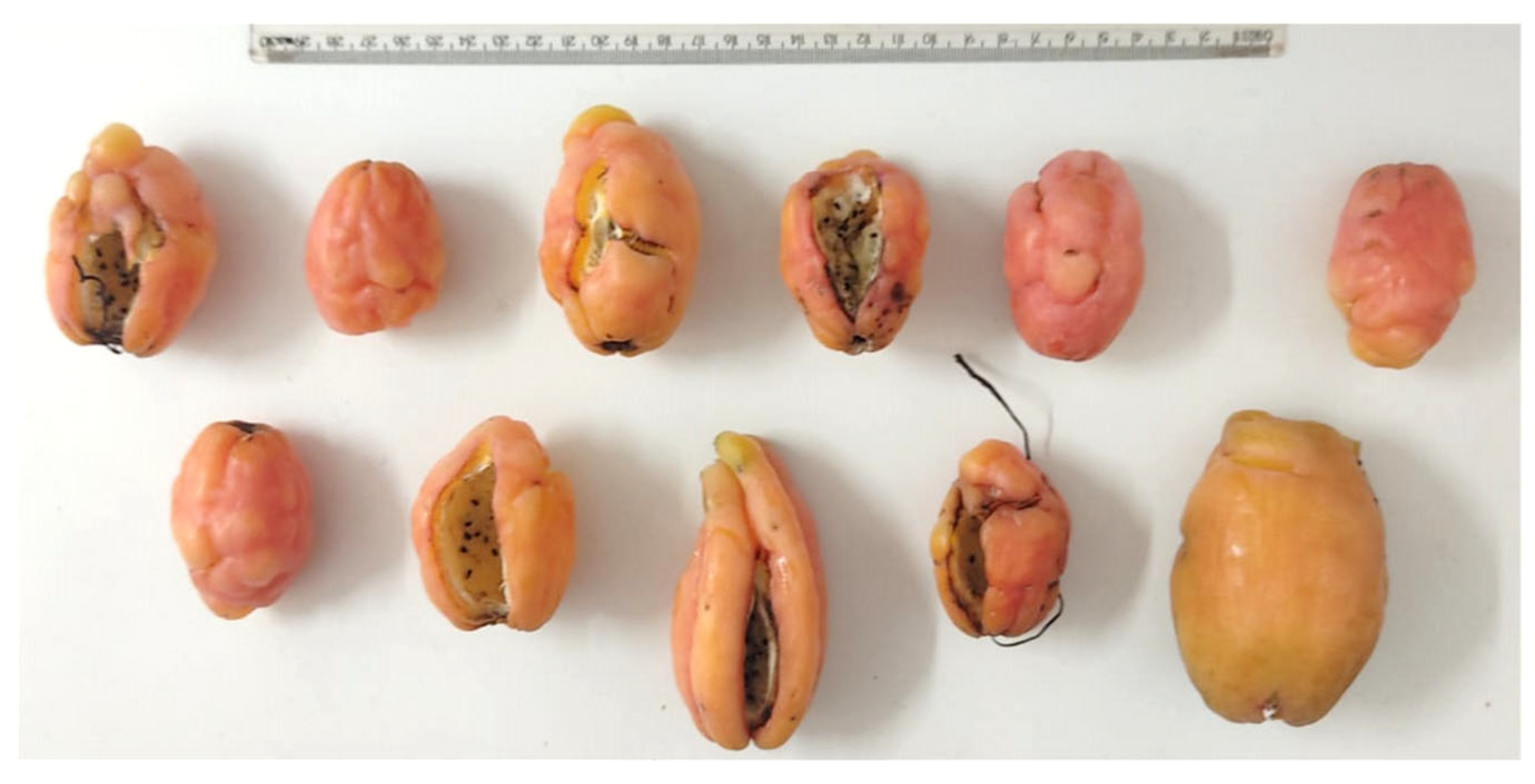
Figure 1. Mature fruits extracted from C. jamacaru mother plants.
Preprints 194389 g001
Figure 2. Germination (A), germination speed index (B), mean germination time (C), and germination speed (D) of stored (STORED) and non-stored (FRESH) mandacaru seeds under the effect of different temperatures.
Preprints 194389 g002
Figure 3. Relative frequency (Fr) of freshly harvested Cereus jamacaru DC seeds.
Preprints 194389 g003
Figure 4. Relative frequency (Fr) of stored Cereus jamacaru DC seeds.
Preprints 194389 g004
Figure 5. Anatomical characterization of freshly harvested seed (A) and with six years of storage (B) of C. jamacaru by microtomography.
Preprints 194389 g005
Figure 7. Hydrogen peroxide (H₂O₂) and malondialdehyde (MDA) concentration in C. jamacaru seeds under different storage conditions.
Preprints 194389 g007
Figure 8. Formation of C. jamacaru seedlings under different storage conditions and temperatures, 27 days after planting. Where: Even numbers - Stored seeds; odd numbers - non-stored seeds; 1 and 2 - 20°C; 3 and 4 - 25°C; 5 and 6 - 30°C; 7 and 8 - 35°C.
Preprints 194389 g008
Table 1. p-value from analysis of variance of variables: germination, germination speed index (GSI), mean germination time (MGT), and germination speed (v) of stored and non-stored mandacaru seeds as a function of different germination temperatures.
FV G (%) GSI MGT v
Storage (A) p<0,001 0,077 0,037 0,023
Temperature (B) p<0,001 p<0,001 p<0,001 p<0,001
A x B p<0,001 0,004 p<0,001 0,273
CV (%) 3,86 12,66 11,84 15,26
Disclaimer/Publisher’s Note: The statements, opinions and data contained in all publications are solely those of the individual author(s) and contributor(s) and not of MDPI and/or the editor(s). MDPI and/or the editor(s) disclaim responsibility for any injury to people or property resulting from any ideas, methods, instructions or products referred to in the content.
Copyright: This open access article is published under a Creative Commons CC BY 4.0 license, which permit the free download, distribution, and reuse, provided that the author and preprint are cited in any reuse.
Prerpints.org logo

Preprints.org is a free preprint server supported by MDPI in Basel, Switzerland.

Subscribe

Disclaimer

Terms of Use

Privacy Policy

Privacy Settings

© 2026 MDPI (Basel, Switzerland) unless otherwise stated