

Submitted:
14 January 2026
Posted:
15 January 2026
You are already at the latest version
Abstract
Intensive swine production contributes significantly to the global protein supply but generates considerable environmental pressure, particularly through greenhouse gas emissions and surplus slurry management. Anaerobic digestion (AD), especially (co-AD), has been widely investigated as a mitigation strategy to enhance renewable energy generation and nutrient recovery. This systematic review synthesizes life cycle assessment (LCA) studies published between 2019 and 2025 that evaluated AD systems treating swine slurry, following the PRISMA 2020 guidelines. Across diverse method-ological approaches and regional contexts, the literature consistently shows that AD can reduce global warming potential compared with conventional slurry management, with stronger environmental benefits when biogas is efficiently valorized and when the swine slurry is co-digested with complementary organic substrates. co-AD emerges as a key mitigation option by improving biogas yields, process stability, and overall envi-ronmental performance while also enabling better utilization of external organic waste. However, the results remain highly sensitive to operational factors such as methane leakage, digestate management, energy efficiency, and substrate selection. This review highlights the methodological inconsistencies among LCA studies and underscores the need for harmonized assessment frameworks and improved emission data. Overall, co-AD represents a promising pathway for enhancing the environmental sustainability of swine production systems when integrated into optimized, context-specific man-agement strategies.
Keywords:
Life Cycle Assessment
; pig slurry
; pig manure
; swine
; wastewater
; anaerobic co-digestion
; sustainability
; literature review
1. Introduction
The global population is growing, and although some efforts are being made towards more sustainable and environmentally friendly consumption, meat is still largely consumed, which leads to an increase in the number and scale of livestock farms [13].
Approximately 40% of meat consumption worldwide is from the swine industry [4]; therefore, intensive swine production plays a central role in the global supply of animal protein, but it is also associated with significant environmental impacts. The sector has been steadily increasing in the EU, with almost 21 million tons of meat produced in 2023, according to FAO [5]. It contributes substantially to greenhouse gas (GHG) emissions, nutrient surpluses (such as nitrogen and phosphorus), and the production of large volumes of swine slurry/manure, which require careful management to prevent further environmental damage [5,6]. Livestock systems account for approximately 14.5% of anthropogenic GHG emissions, with slurry management representing a major source of methane (CH4) and nitrous oxide (N2O) in swine production systems [7,8,9]. In regions where swine farming is geographically concentrated, slurry accumulation intensifies problems such as ammonia volatilization, nitrate leaching, soil eutrophication with nitrogen and phosphorus, and dissemination of pathogens and emerging contaminants [10,11].
Therefore, effective manure/slurry management is a critical component of sustainable swine production systems. Traditional practices, such as direct land application, remain common but are increasingly constrained by environmental regulations, nutrient limitations, and social concerns.
In this context, anaerobic digestion (AD) has emerged as a promising biotechnology for mitigating environmental impacts and enabling resource recovery [12,13]. By converting organic matter into biogas, AD reduces methane emissions from uncontrolled slurry storage, stabilizes organic matter, and produces a nutrient-rich digestate that can replace synthetic fertilizers [14,15]. Additionally, AD systems often incorporate environmental credits, especially when digestate replaces synthetic fertilizers or when biogas is upgraded or used to displace fossil-based energy [16]. These substitution effects can considerably modify the overall global warming potential and nutrient-related impacts of a system [17,18].
Despite these benefits, the environmental performance of AD systems can vary depending on the design parameters, energy rates, digestate management, and regional characteristics. One way of preventing misbehavior of AD systems in different regions and practices is anaerobic co-digestion (co-AD), as mixing different substrates may enhance biogas production by balancing carbon and nitrogen levels, thereby increasing biogas production and methane yield [19,20]. Although this is a relatively emerging topic, studies have already shown promising synergies between different agro-industrial residues and livestock manure in anaerobic co-digestion systems.
To understand the environmental impacts associated with the anaerobic co-digestion of swine manure/slurry with other wastes, several life cycle assessment (LCA) studies have been conducted, showing that co-AD can significantly reduce the overall carbon footprint of pig wastewater treatment systems when compared with conventional management practices, such as storage tanks or aerobic treatments [21,22]. Comparing different LCA of manure treatment technologies is essential to determine the conditions under which co-AD outperforms alternative strategies and to support evidence-based decision-making in swine production systems [23].
LCA is a standardized methodology for evaluating the environmental impacts associated with products, processes, and systems, and has become a central tool for assessing swine production and manure treatment technologies such as AD. ISO 14040:2006 [24] and ISO 14044:2006 [25] remain the primary methodological references guiding LCA practice, providing the principles, framework, and requirements needed to ensure analytical rigor, transparency, and comparability. When applied to the AD of pig slurry, several methodological aspects require particular attention.
A key element is the definition of system boundaries, which typically encompass the digestion process, biogas production and utilization, and handling, storage, and agricultural use of the resulting digestate. The functional unit generally reflects either the treatment of a defined mass or volume of swine manure or the production of a specific amount of biogas-derived energy [21,22]. Fugitive emissions, particularly methane losses from digesters, storage tanks, and digestate spreading, can substantially influence climate-related impact categories and must be quantified as accurately as possible [26].
Therefore, the present study aims to review and synthesize the state of the art regarding the application of LCA to co-AD with a focus on swine manure as one of the substrates, examining their methodological approaches, including system boundaries, functional units, allocation procedures, and impact assessment methods. In addition, this study aims to compare the environmental performance of co-AD with alternative manure treatment strategies and mono-digestion, assessing how technological configurations, digestate management options, and regional energy contexts influence overall outcomes, highlighting methodological gaps or inconsistencies to guide future LCA research in the swine sector.
2. Materials and Methods
2.1. Review Methodology
This review followed a systematic narrative approach to examine LCA studies conducted between 2019 and 2025, focusing on the anaerobic co-digestion of pig slurry. A literature search was conducted in the Scopus, Web of Science, ScienceDirect, and Google Scholar databases. The search terms were selected to reflect the scope of the review and included “anaerobic co-digestion”, “swine slurry”, “pig slurry” and “life cycle assessment”. These terms were combined through Boolean operators to build search strings such as “AND” and “OR”. Studies were included if they reported a full or partial LCA of co-AD applied to swine manure or pig slurry. Publications without environmental data or without a defined LCA methodology were excluded, as were works that applied co-digestion with substrates rather than pig manure/slurry. The selection process consisted of title and abstract screening, followed by full-text assessment, in accordance with the PRISMA 2020 guidelines [27]. The analysis of the LCA of PM treatment systems revealed up to 398 studies in the three databases assessed (Science Direct, Web of Science, and Google Scholar), based on the topics “life cycle assessment,” “pig slurry” or “pig manure” and “anaerobic co-digestion” from 2019 to 2025 (Figure 1). First, studies were excluded by duplication using EndNote (n=26). Most of the studies were found in ScienceDirect, but many of them were off-topic and were promptly discarded (n=184). From the remaining studies (n=188), 150 articles were excluded using the AI Rayyan [28]. Of these, ten studies were selected and are summarized in Table 1.
3. Results
3.1. Overview of the Selected Studies
Ten peer-reviewed studies on life cycle assessment (LCA) applied to pig manure–based anaerobic co-digestion (co-AD) systems were reviewed. These studies cover a wide range of geographic contexts, including East Asia (China and Taiwan), South Asia (Bangladesh), and Southern and Northern Europe (Portugal, Spain, Ireland, Denmark, Lithuania, and Finland). Most studies adopted a cradle-to-gate system boundary, focusing on manure management and biogas production processes, although two studies extended the analysis to a cradle-to-grave perspective, and one applied a gate-to-gate approach (Table 1). The functional units varied considerably among studies, reflecting differences in system scale and research objectives, and included mass-based units (e.g., tons of manure, kilograms of live weight), energy-based units (e.g., kWh or MJ of biogas energy), and system-scale units (e.g., annual waste or number of animals).
Table 1 summarizes the key methodological characteristics of recent LCA studies on pig manure–based AD systems, including functional units, system boundaries, impact assessment methods, and software and databases employed. Most studies relied on established LCIA methods, such as CML, ReCiPe, and IMPACT2002+, and commonly used SimaPro or OpenLCA software in combination with Ecoinvent databases, while some studies incorporated uncertainty analysis through Monte Carlo simulation.
Table 2 presents a comparative overview of life cycle assessment studies examining the anaerobic digestion of pig manure, with particular emphasis on mono- and co-digestion strategies, digestate management options, and their associated environmental performance. The selected studies encompass a range of system configurations, including conventional digestion pathways, co-digestion with various organic co-substrates, and advanced digestate treatment or upcycling technologies, allowing for comprehensive comparisons of alternative management approaches.
Overall, the reviewed studies consistently indicate that co-digestion strategies and innovative digestate management practices can improve the environmental performance of pig manure–based anaerobic digestion systems compared to mono-digestion and direct land application. Co-digestion with organic residues, such as food waste, grass silage, or agricultural by-products, generally enhances energy recovery and reduces environmental impacts, although the results are influenced by feedstock composition, system boundaries, and allocation choices. In addition, advanced digestate treatment pathways, including fractionation, microalgae cultivation, and nutrient recovery, show potential environmental benefits, but remain sensitive to operational conditions and technological maturity.
Duan et al. [30] evaluated digestate treatment technologies for biogas plants in China, highlighting that while direct land application remains the most economical option, upcycling strategies, such as fractionation followed by composting and microalgae cultivation, can provide environmental benefits, including energy savings and reduced ecological impacts. Co-digestion of swine slurry with microalgae also proved to be energetically favorable, as it led to saving 1.61x10³ MJ/primary energy per tonne of PM, underscoring the potential of circular approaches for more sustainable digestate management, although further optimization is still required. Although promising results were obtained for the different scenarios, the direct use of digestate remained the most environmentally friendly option [30].
Freitas et al. [20] assessed four different scenarios, showing that co-digestion of swine slurry increases biogas production by up to 50%, however, corn silage generated the highest environmental impacts due to the intensive fossil-energy demand of its production, while elephant grass silage performed better and biochar contributed to additional environmental improvements [20]. These findings are consistent with previous LCA studies by Balcioglu et al. [38] and Mirzaei et al. [39] who also reported high environmental impacts for energy crops such as corn silage.
Girón-Rojas et al. [31] compared pig slurry mono-digestion and co-digestion using pepper waste from nearby vegetable processing plant and showed that co-digestion produces 70% more electricity and offered 5.5 times higher economic benefits compared to mono-digestion. From the environmental categories assessed in the study, co-AD showed two to four times higher benefits per tonne of treated waste and at least 1.5 times the energy required for farm operations.
Hossain et al. [32] studied the co-digestion of livestock manure with food waste in Bangladesh, and the scenarios assessed showed benefits by reducing climate change by up to 117%, eutrophication potential by 54.5%, and terrestrial ecotoxicity by 55.7%. The main reduction was due to minimizing food waste that would have ended up in landfills. The downside of this co-digestion strategy is the higher amount of hydrogen sulfide and ammonia in the final biogas, which increases environmental burdens. Emerging hotspots include digestate storage and post-treatment of the resulting digestate and biogas.
Jiang et al. [33] compared the traditional management practices in such as direct land application of PM and composting and mono-digestion of FW with the co-digestion of both these substrates. The co-digestion scenario performed better in nine of the 11 environmental impact categories assessed, and the nitrogen availability in the digestate of the co-digestion scenario was 43% higher than that of the organic fertilizer obtained through current practices. There were reductions in GHG emissions, such as methane and ammonia, in the co-AD compared to direct land application; however, these remain hotspots with significant environmental impacts for digestate application to soil. Regarding the studied case, a farm production of 16 000 t/year of PM requires at least 2000 t/year of FW to ensure a negative GWP.
Pexas et al.[34] studied pig housing scenarios as levels of barn insulation, in-barn temperature, ventilation efficiency, slurry dilution, and frequency of removal and their interactions with slurry treatment pathways, such as slurry acidification, anaerobic digestion, and co-digestion with organic wastes. Their study concluded that AD significantly reduced environmental impacts for Non-Renewable Resource Use (34.1% compared to baseline), Non-Renewable Energy Use (40.1%), and Global Warming Potential (9.20%). Slurry acidification led to significant reductions in Acidification (28.1%) and Eutrophication Potential (14.2%). Slurry separation significantly reduced only Non-Renewable Energy Use (2.26%). The largest improvement was observed in the acidification potential by increasing slurry dilution.
Venlauskas et al. [35] conducted a consequential LCA study in Lithuania and showed that using surplus straw for heat generation delivers greater environmental benefits than biogas production, while partial substitution of mineral fertilizers with digestate reduces several impact categories. However, digestate availability was limited, covering only 8.3% of the farm’s cultivated land, preventing the full replacement of mineral fertilizers.
Zhang et al. [3] applied a LCA to compare conventional land application of PM with anaerobic digestion pathways (mono and co-digestion with grasss silage), followed by digestate land application under Irish conditions. By explicitly accounting for dynamic nutrient profiles, soil nutrient status, and regulatory constraints, the analysis demonstrated that co-AD delivered an overall environmental performance reduction in most impact categories, enhanced energy recovery, and reduced greenhouse gas emissions. The results further showed that nutrient availability in digestate, particularly nitrogen, is influenced by anaerobic processing, whereas phosphorus constraints largely determine land application requirements and transport distances.
Timonen et al. [37] study evaluated climate impacts of anaerobic digestion across the full value chain, explicitly accounting for both energy and digestate by applying different allocation methods. Using finnish conditions and three pig slurry–based co-digestion scenarios, the analysis showed that allocating emissions solely to energy overestimated climate benefits by neglecting digestate-related emissions and credits. While allocation choice strongly affects the distribution of emissions between energy and digestate, all scenarios achieved lower climate emissions than fossil energy and mineral fertilizers. The results highlight that co-feedstock choice, allocation method, and digestate management are critical factors, and that considering digestate use alongside energy production is essential for a balanced and robust sustainability assessment of anaerobic digestion systems.
3.1.1. Environmental Impact Categories
Another important aspect is the environmental impact categories (EIC) assessed in each study. As illustrated in Figure 2 and Figure 3, the number and type of impact categories varied widely across the reviewed LCAs, ranging from a single focus on climate change to more comprehensive assessments covering up to 14 midpoint indicators. Climate change is consistently included in nearly all studies, followed by acidification and eutrophication, which are frequently assessed. Impact categories related to human toxicity, ecotoxicity, and photochemical ozone formation have been included in several studies but show greater variability in coverage. In contrast, categories such as water use, land use, ionizing radiation, ecosystem quality, particulate matter formation, and odor emissions are rarely considered in the literature. This uneven distribution highlights a persistent lack of methodological harmonization in manure management LCAs and suggests that, despite adequate coverage of emission-driven impacts, broader environmental dimensions remain underrepresented in the current literature.
Across the reviewed studies, climate change was the only impact category assessed in all cases (i.e., 100%). Acidification and eutrophication were the second most frequently included categories (80%), followed by human toxicity and resource-use indicators (70%). Ecotoxicity-related impacts were considered in 60% of the studies, whereas photochemical ozone formation and ozone depletion were addressed in half of the studies. Water use, land use, ionizing radiation, particulate matter formation, and odor-related emissions were rarely assessed, appearing in less than 20% of the studies.
4. Discussion
The reviewed studies show that LCA has been widely applied to assess PM management through AD and co-AD, although substantial methodological variability exists. Differences in FU, system boundaries, LCIA methods, and allocation approaches reflect diverse research objectives and regional conditions, as stated by Ferreira et al. [40]. Most studies adopted cradle-to-gate system boundaries, while fewer extended the assessment to cradle-to-grave by including digestate LA, highlighting the importance of downstream processes for the overall environmental performance.
Across the literature, co-AD generally outperformed mono-digestion and conventional PM management practices, primarily due to higher biogas yields, improved energy recovery, and avoided emissions from alternative waste treatment routes, which is in line with the study carried out by the review of Tan et al. [41]. However, the environmental performance of AD systems is strongly influenced by co-feedstock selection, digestate handling strategies, and assumptions related to substitution credits and emission factors, as highlighted by Marefat et al. [42].
Studies consistently show that co-AD with certain residues achieves lower GWP and resource depletion impacts compared to mono-digestion; however, using food wastes, seaweed, or orange-peel wastes, can lead to lower environmental impacts when compared to energy crop-based systems, as reported by Negro et al. [43] and Usack et al. [44].
Biogas use and upgrading can significantly impact the overall results, even though they were not significantly discussed in the studies reviewed. Ferreira et al. [38] affirmed that utilizing biogas to produce diesel fuel or vehicular gasoline was preferred over electricity generation, as demonstrated by Balcioglu et al. [40] and Khan et al. [45]. Another important aspect of biogas is yield and consequently biomethane production, two factors that can be highly impacted by the time of substrate storage, as proven by Hollas et al. [46], a storage time lower than 5 days improved the power generation capacity of the system (up to 4.5 kWh of electricity per m3 of raw manure).
It is also important to highlight that when considering AD or co-AD of swine slurry or manure, its physicochemical composition varies widely depending on diet, animal age, housing, cleaning products, frequency, and even the time of storage, which can affect biogas yield and system performance [47,48]. The production stage also plays an important role in environmental impact. For example, Santos et al. [49] determined that the fodder production stage had the greatest impact, approximately 60 - 70% in the categories they assessed.
Digestate storage and LA consistently emerged as key environmental hotspots, particularly for nutrient-related EIC and ammonia emissions, indicating that energy recovery alone does not ensure environmental sustainability; however, digestate valorization depends highly on technical, economic, and environmental challenges [50]. Some strategies that can help reduce these emissions and further environmental impacts such as eutrophication are to acidify the digestate, as suggested by Beyers et al. [51] or at least considering that corporation in a soil with low moisture can also help prevent ammonia volatilization [11]
AD applied to PM appears widely as a high-impact waste treatment technology for GHG mitigation, where the main climate benefit comes from avoiding conventional manure emissions, in addition to energy production itself [52].
Analysis of EIC coverage indicates that climate change was assessed in all reviewed studies, followed by the effects of acidification and eutrophication. In contrast, land use, water use, particulate matter formation, ionizing radiation, and odor-related emissions were rarely considered. This uneven coverage limits cross-study comparability and may overlook the relevant environmental impacts associated with PM-based bioenergy systems. Overall, the findings underline the need for greater methodological harmonization in LCA studies and broader inclusion of EIC to support robust evaluations and decision-making for PM management pathways.
5. Conclusions
This review demonstrates that AD and co-AD are effective strategies for reducing the environmental impacts associated with PM management, particularly regarding GHG emissions, when biogas is efficiently utilized, and avoided emissions are accounted for. In most cases, co-AD outperforms mono-AD owing to higher energy recovery and improved system efficiency; however, the results remain highly sensitive to FU definition, system boundaries, allocation methods, digestate management, and co-feedstock selection. PM and digestate storage and their land application consistently emerge as environmental hotspots, indicating that energy recovery alone is insufficient to ensure sustainability and that further investigation should be conducted to understand how different storage and land application practices can help mitigate these impacts.
The analysis further revealed substantial methodological heterogeneity across LCA studies, with climate change being the only impact category assessed universally, while other relevant categories, such as land use, water use, and particulate matter formation, were rarely considered. This limited and uneven coverage constrains cross-study comparability and may obscure important environmental trade offs. Overall, greater harmonization of LCA methodologies, improved emission data, and broader EIC coverage are required to support robust sustainability assessments of AD and co-AD systems for PM management.
Author Contributions
Conceptualization, PE; methodology, PE, AF and JF; software, AF and JF; validation, AF and JF; investigation, PE; resources, AF and JF; writing—original draft preparation, PE; writing—review and editing, AF and JF; supervision, AF and JF. All authors have read and agreed to the published version of the manuscript.
Funding
This research received no external funding.
Data Availability Statement
All used datasets are available online and are openly accessible.
Acknowledgments
The authors thank the Portuguese Foundation for Science and Technology (FCT) for the financial support to the Research Centre for Natural Resources, Environment and Society — CERNAS (UIDB/00681/2025) DOI https://doi.org/10.54499/UID/00681/2025. P. Esperanço was supported by an FCT PhD grant (2025.07113.BDANA). During the preparation of this manuscript/study, the author(s) used [Rayyan] for the purposes of [selection/exclusion of articles for further review]. The authors have reviewed and edited the output and take full responsibility for the content of this publication.
Conflicts of Interest
The authors declare no conflicts of interest.
Abbreviations
The following abbreviations are used in this manuscript:
| AD | Anaerobic digestion |
| co-AD | Anaerobic co-digestion |
| AP | Acidification potential |
| CC | Climate change |
| CS | Corn Silage |
| CH4 | Methane |
| CHP | Combined heat and power |
| CML | Centrum voor Milieukunde Leiden impact assessment method |
| DEA–LCA | Data Envelopment Analysis–Life Cycle Assessment |
| EIC | Environmental impact category |
| EP | Eutrophication potential |
| FAO | Food and Agriculture Organization of the United Nations |
| FU | Functional unit |
| FW | Food waste |
| GHG | Greenhouse gas |
| GS | Grass silage |
| GWP | Global warming potential |
| HT | Human toxicity |
| ILCD | International Reference Life Cycle Data System |
| IPCC | Intergovernmental Panel on Climate Change |
| ISO | International Organization for Standardization |
| IR | Ionazing Radiation |
| LA | Land application |
| LCA | Life cycle assessment |
| LCC | Life cycle costing |
| LCIA | Life cycle impact assessment |
| LW | Live weight |
| MAE | Marine aquatic ecotoxicity |
| MJ | Megajoule |
| N2O | Nitrous oxide |
| NREU | Non-renewable energy use |
| NRRU | Non-renewable resource use |
| OR | Odour-Related |
| ODP | Ozone depletion potential |
| PBF | Powder Biofertilizer |
| PM | Pig manure/slurry |
| PMF | Particulate matter formation |
| PRISMA | Preferred Reporting Items for Systematic Reviews and Meta-Analyses |
| ReCiPe | Harmonised life cycle impact assessment method |
| SLCA | Social life cycle assessment |
| SS | Swine slurry |
| TE | Terrestrial ecotoxicity |
| WU | Water use |
References
- Shi, L.; Simplicio, W.S.; Wu, G.; Hu, Z.; Hu, H.; Zhan, X. Nutrient Recovery from Digestate of Anaerobic Digestion of Livestock Manure: A Review. Curr. Pollut. Rep. 2018, 4, 74–83. [Google Scholar] [CrossRef]
- Deng, L.; Zheng, D.; Zhang, J.; Yang, H.; Wang, L.; Wang, W.; He, T.; Zhang, Y. Treatment and utilization of swine wastewater—A review on technologies in full-scale application. Sci. Total Environ. 2023, 880, 163223. [Google Scholar] [CrossRef]
- Zhang, Y.; Jiang, Y.; Wang, S.; Wang, Z.; Liu, Y.; Hu, Z.; Zhan, X. Environmental sustainability assessment of pig manure mono- and co-digestion and dynamic land application of the digestate. Renew. Sustain. Energy Rev. 2021, 137, 110476. [Google Scholar] [CrossRef]
- Beily, M.; Young, B.J.; Bres, P.A.; Riera, N.I.; Wang, W.; Crespo, D.E.; Komilis, D. Relationships among physicochemical, microbiological, and parasitological parameters of pig slurry. Sustainability 2023, 15, 3172. [Google Scholar] [CrossRef]
- Food and Agriculture Organization of the United Nations (FAO). Pig meat production dataset. Our World in Data 2025. [Google Scholar]
- Treml, N.; Rudi, A.; Schultmann, F. Evaluating environmental impacts of pork production: A life cycle assessment. J. Clean. Prod. 2025, 503, 145408. [Google Scholar] [CrossRef]
- Gerber, P. J., Steinfeld, H., Henderson, B., Mottet, A., Opio, C., Dijkman, J., Falcucci, A., and Tempio, G. (2013). Tackling climate change through livestock: A global assessment of emissions and mitigation opportunities.
- Sejian, V., Hyder, I., Ezeji, T., Lakritz, J., Bhatta, R., Ravindra, J. P., Prasad, C. S., and Lal, R. (2015). Global Warming: Role of Livestock. Climate Change Impact on Livestock: Adapt. Mitig., 141–169. [CrossRef]
- Food and Agriculture Organization of the United Nations (2017). Livestock solutions for climate change | FAO. Www.fao.org. https://www.fao.org/family-farming/detail/en/c/1634679/.
- Sutton, M., Howard, C., Erisman, J., Billen, G., Bleeker, A., Grennfelt, P., Van Grinsven, H., and Grizzetti, B. (2011). The European Nitrogen Assessment Assessing our nitrogen inheritance. https://publications.tno.nl/publication/34627918/45o9AS/b11011.pdf.
- Jiménez-de-Santiago, D. E.; Ovejero, J.; Antúnez, M.; Bosch-Serra, A. D. Ammonia Volatilization from Pig Slurries in a Semiarid Agricultural Rainfed Area. Sustainability 2024, 16(1), 238. [Google Scholar] [CrossRef]
- Millati, R.; Wikandari, R.; Ariyanto, T.; Hasniah, N.; Taherzadeh, M. J. Anaerobic digestion biorefinery for circular bioeconomy development. Bioresour. Technol. Rep. 2023, 21, 101315. [Google Scholar] [CrossRef]
- Marami, H.; Khademi, S.; Rafiee, S.; Mobli, H.; Birkved, M.; Li, H.; Angelidaki, I.; Khoshnevisan, B. Upcycling anaerobic digestion streams into feed-grade protein for increased environmental sustainability. Renew. Sustain Energy Rev. 2025, 216, 115638. [Google Scholar] [CrossRef]
- Holm-Nielsen, J. B.; Al Seadi, T.; Oleskowicz-Popiel, P. The future of anaerobic digestion and biogas utilization. Bioresour. Technol. 2009, 100(22), 5478–5484. [Google Scholar] [CrossRef]
- Villavicencio-Gutiérrez, M. R.; Rogers-Montoya, N. A.; Martínez-Campos, R.; Gómez-Tenorio, G.; Martínez-Castañeda, F. E. The environmental performance of different pork production scenarios: a life cycle assessment study. Trop. Anim. Health and Prod. 2022, 54(1). [Google Scholar] [CrossRef]
- Jacob, S., Kundu, D., Anjani Devi Chintagunta, Nunne, S. K., Samanta, P., Chandan Mahata, Dey, S., RG Shibirathna, Arun Barathi, Kumar, S., Wang, Z. D., and Goel, G. (2025). Anaerobic Digestion-derived Digestate Valorization: Green Chemistry Innovations for Resource Recovery and Reutilization. Green Chem. [CrossRef]
- Bacenetti, J.; Fusi, A.; Negri, M.; Fiala, M. Anaerobic digestion of different feedstocks: Impact on energetic and environmental balances of biogas process. Sci. Total Environ. 2013, 463–464, 541–551. [Google Scholar] [CrossRef]
- Amon, T.; Amon, B.; Kryvoruchko, V.; Zollitsch, W.; Mayer, K.; Gruber, L. Methane production through anaerobic digestion of various energy crops grown in sustainable crop rotations. Bioresour. Technol. 2006, 98(17), 3204–3212. [Google Scholar] [CrossRef]
- Almomani, F.; Bhosale, R. R. Enhancing the production of biogas through anaerobic co-digestion of agricultural waste and chemical pre-treatments. Chemosphere 2020, 255, 126805. [Google Scholar] [CrossRef]
- Freitas, F. F.; Furtado, A. C.; Piñas, J.A.V.; Venturini, O. J.; Barros, R. M.; Lora, E. E. S. Holistic Life Cycle Assessment of a biogas-based electricity generation plant in a pig farm considering co-digestion and an additive. Energy 2022, 261, 125340–125340. [Google Scholar] [CrossRef]
- Styles, D.; Yesufu, J.; Bowman, M.; Prysor Williams, A.; Duffy, C.; Luyckx, K. Climate mitigation efficacy of anaerobic digestion in a decarbonising economy. J. Clean. Prod. 2022, 338, 130441. [Google Scholar] [CrossRef]
- Hijazi, O.; Munro, S.; Zerhusen, B.; Effenberger, M. Review of life cycle assessment for biogas production in Europe. Renew. Sustain. Energy Rev. 2016, 54, 1291–1300. [Google Scholar] [CrossRef]
- Sossidou, E. N.; Banias, G. F.; Batsioula, M.; Termatzidou, Sofia-Afroditi; Simitzis, Panagiotis; Patsios, S. I.; Broom, D. M. Modern Pig Production: Aspects of Animal Welfare, Sustainability and Circular Bioeconomy. Sustainability 2025, 17(11), 5184–5184. [Google Scholar] [CrossRef]
- ISO. (2006a). ISO 14040: Environmental management — Life cycle assessment — Principles and framework. International Organization for Standardization.
- ISO. (2006b). ISO 14044: Environmental management — Life cycle assessment — Requirements and guidelines. International Organization for Standardization.
- Hurtig, O.; Buffi, M.; Besseau, R.; Scarlat, N.; Carbone, C.; Agostini, A. Mitigating biomethane losses in European biogas plants: A techno-economic assessment. Renew. Sustain.e Energy Rev. 2024, 210, 115187. [Google Scholar] [CrossRef]
- Page, M. J.; McKenzie, J. E.; Bossuyt, P. M.; Boutron, I.; Hoffmann, T. C.; Mulrow, C. D.; Shamseer, L.; Tetzlaff, J. M.; Akl, E. A.; Brennan, S. E.; Chou, R.; Glanville, J.; Grimshaw, J. M.; Hróbjartsson, A.; Lalu, M. M.; Li, T.; Loder, E. W.; Mayo-Wilson, E.; McDonald, S.; McGuinness, L. A. The PRISMA 2020 statement: An updated guideline for reporting systematic reviews. BMJ 2021, 372(71). [Google Scholar] [CrossRef]
- Ouzzani, Mourad; Hammady, Hossam; Fedorowicz, Zbys; Elmagarmid, Ahmed. Rayyan — a web and mobile app for systematic reviews. Systematic Reviews 2016, 5, 210. [Google Scholar] [CrossRef]
- Haddaway, N. R.; Page, M. J.; Pritchard, C. C.; McGuinness, L. A. PRISMA2020: An R package and Shiny app for producing PRISMA 2020-compliant flow diagrams, with interactivity for optimised digital transparency and Open Synthesis Campbell. Syst. Rev. 2022, 18, e1230. [Google Scholar] [CrossRef] [PubMed]
- Duan, N.; Khoshnevisan, B.; Lin, C.; Liu, Z.; Liu, H. Life cycle assessment of anaerobic digestion of pig manure coupled with different digestate treatment technologies. Environ. Int. 2020, 137, 105522. [Google Scholar] [CrossRef] [PubMed]
- Girón-Rojas, C.; Alcobendas, A. I. P.; Cortés, J. G.; Ribal, J.; Sanjuan, N. Enhancing Energy Self-Sufficiency in Rural Regions: Environmental and Financial Assessment of Anaerobic Digestion of Pig Slurry. Waste and Biomass Valorization 2025. [Google Scholar] [CrossRef]
- Hossain, S.; Akter, S.; Saha, C. K.; Reza, T.; Kabir, K. B.; Kirtania, K. A comparative life cycle assessment of anaerobic mono- and co-digestion of livestock manure in Bangladesh. Waste Management 2022, 157, 100–109. [Google Scholar] [CrossRef]
- Jiang, Y.; Zhang, Y.; Wang, S.; Wang, Z.; Liu, Y.; Hu, Z.; Zhan, X. Improved environmental sustainability and bioenergy recovery through pig manure and food waste on-farm co-digestion in Ireland. J. Clean. Prod. 2021, 280, 125034. [Google Scholar] [CrossRef]
- Pexas, G.; Mackenzie, S. G.; Wallace, M.; Kyriazakis, I. Environmental impacts of housing conditions and manure management in European pig production systems through a life cycle perspective: A case study in Denmark. J. Clean. Prod. 2020, 253, 120005. [Google Scholar] [CrossRef]
- Venslauskas, K.; Navickas, K.; Rubežius, M.; Tilvikienė, V.; Supronienė, S.; Doyeni, M. O.; Barčauskaitė, K.; Bakšinskaitė, A.; Bunevičienė, K. Environmental Impact Assessment of Sustainable Pig Farm via Management of Nutrient and Co-Product Flows in the Farm. Agronomy 2022, 12(4), 760. [Google Scholar] [CrossRef]
- Wu, W.; Cheng, L.-C.; Chang, J.-S. Environmental life cycle comparisons of pig farming integrated with anaerobic digestion and algae-based wastewater treatment. J. Env. Manag. 2020, 264, 110512. [Google Scholar] [CrossRef]
- Timonen, K.; Sinkko, T.; Luostarinen, S.; Tampio, E.; Joensuu, K. LCA of anaerobic digestion: Emission allocation for energy and digestate. J. Clean. Prod. 2019, 235, 1567–1579. [Google Scholar] [CrossRef]
- Balcioglu, G.; Jeswani, H. K.; Azapagic, A. Evaluating the environmental and economic sustainability of energy from anaerobic digestion of different feedstocks in Turkey. Sustain. Prod. Consum. 2022, 32, 924–941. [Google Scholar] [CrossRef]
- Mirzaei, M.; Gorji Anari, M.; Saronjic, N.; Sarkar, S.; Kral, I.; Gronauer, A.; Mohammed, S.; Caballero-Calvo, A. Environmental impacts of corn silage production: influence of wheat residues under contrasting tillage management types. Environ. Monit. Assess. 2022, 195(1). [Google Scholar] [CrossRef]
- Ferreira, J.; Santos, L.; Ferreira, M.; Ferreira, A.; Domingos, I. Environmental Assessment of Pig Manure Treatment Systems through Life Cycle Assessment: A Mini-Review. Sustainability 2024, 16(9), 3521–3521. [Google Scholar] [CrossRef]
- Tan, W. E.; Liew, P. Y.; Bong; Fan, Y. V.; Tan, L. S.; Jamian, Nor Ruwaida. Life Cycle Assessment and Techno-Economic Assessment of Anaerobic Co-Digestion: A Short Review. Chem. Eng. Transactions 2021, 88, 907–912. [Google Scholar] [CrossRef]
- Marefat, A.; Golzary, A.; Takahashi, F.; Huisingh, D. Financial feasibility and optimization of anaerobic digestion systems for sustainable waste management: A comprehensive global analysis. Clean. Environ. Syst. 2025, 19, 100339. [Google Scholar] [CrossRef]
- Negro, V.; Ruggeri, B.; Fino, D.; Tonini, D. Life cycle assessment of orange peel waste management. Resour. Conserv. and Recycl. 2017, 127, 148–158. [Google Scholar] [CrossRef]
- Usack, J. G.; Gerber Van Doren, L.; Posmanik, R.; Labatut, R. A.; Tester, J. W.; Angenent, L. T. An evaluation of anaerobic co-digestion implementation on New York State dairy farms using an environmental and economic life-cycle framework. Appl. Energy 2018, 211, 28–40. [Google Scholar] [CrossRef]
- Khan, M. U.; Lee, J. T. E.; Bashir, M. A.; Dissanayake, P. D.; Ok, Y. S.; Tong, Y. W.; Shariati, M. A.; Wu, S.; Ahring, B. K. Current status of biogas upgrading for direct biomethane use: A review. Renew. Sustain. Energy Rev 2021, 149, 111343. [Google Scholar] [CrossRef]
- Hollas, C. E.; Bolsan, A.C.; Chini, A.; Venturin, B.; Bonassa, G.; Cândido, D.; Antes, F. G.; Steinmetz, R. L. R.; Prado, N. V.; Kunz, A. Effects of swine manure storage time on solid-liquid separation and biogas production: A life-cycle assessment approach. Renew. Sustain. Energy Rev 2021, 150, 111472–111472. [Google Scholar] [CrossRef]
- Makara, A.; Kowalski, Z. Selection of pig manure management strategies: Case study of Polish farms. J. Clean. Prod 2018, 172, 187–195. [Google Scholar] [CrossRef]
- Azevedo, A., Gominho, J., and Duarte, E. (2020). Performance of Anaerobic Co-digestion of Pig Slurry with Pineapple (Ananas comosus) Bio-waste Residues. Waste and Biomass Valorization. [CrossRef]
- Santos, L.; Ferreira, M.; Domingos, I.; Oliveira, V.; Rodrigues, C.; Ferreira, A.; Ferreira, J. Life Cycle Assessment of Pig Production in Central Portugal: Environmental Impacts and Sustainability Challenges. Sustainability 2025, 17(2), 426. [Google Scholar] [CrossRef]
- Martín-Sanz-Garrido, C.; Revuelta-Aramburu, M.; Santos-Montes, A. M.; Morales-Polo, C. A Review on Anaerobic Digestate as a Biofertilizer: Characteristics, Production, and Environmental Impacts from a Life Cycle Assessment Perspective. Appl. Sci. 2025, 15(15), 8635–8635. [Google Scholar] [CrossRef]
- Beyers, M.; Duan, Y.-F.; Jensen, L. S.; Bruun, S. Effect of natural and regulatory conditions on the environmental impacts of pig slurry acidification across different regions in Europe: A life cycle assessment. J. Clean. Prod. 2022, 368, 133072. [Google Scholar] [CrossRef]
- Lee, U.; Bhatt, A.; Hawkins, T. R.; Tao, L.; Benavides, P. T.; Wang, M. Life cycle analysis of renewable natural gas and lactic acid production from waste feedstocks. J. Clean. Prod. 2021, 311, 127653. [Google Scholar] [CrossRef]
Figure 1.
PRISMA 2020 flowchart built from a database of articles. Adapted from the PRISMA 2020 flow diagram [27,29] under the CC BY 4.0 license.: Authors, 2025. *records excluded using Rayyan AI [28].
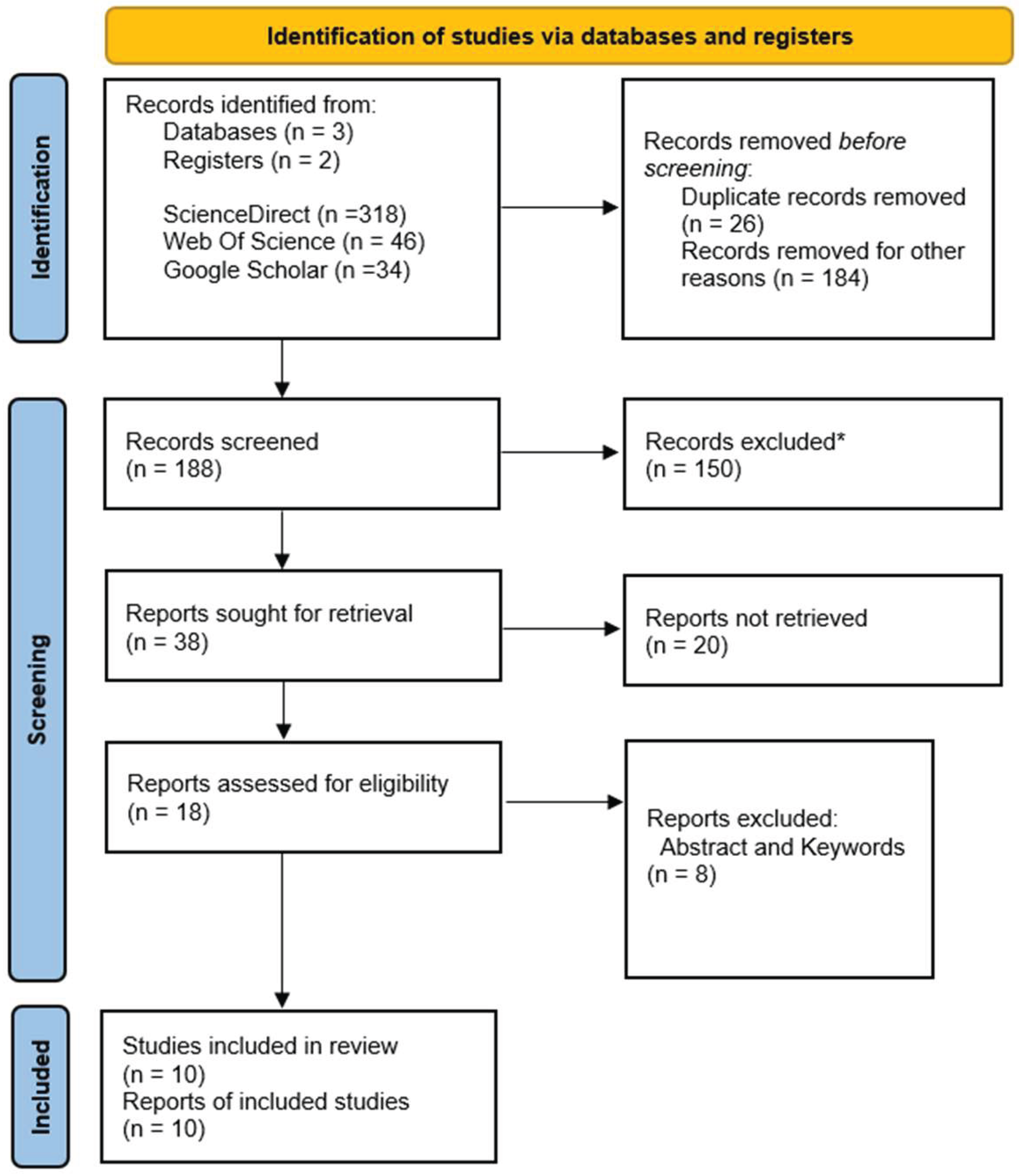
Figure 2.
Presence–absence heatmap of environmental impact categories assessed in life cycle–based studies on swine manure management and anaerobic digestion. Filled cells indicate the categories included in each study across the reviewed literature.
Figure 2.
Presence–absence heatmap of environmental impact categories assessed in life cycle–based studies on swine manure management and anaerobic digestion. Filled cells indicate the categories included in each study across the reviewed literature.
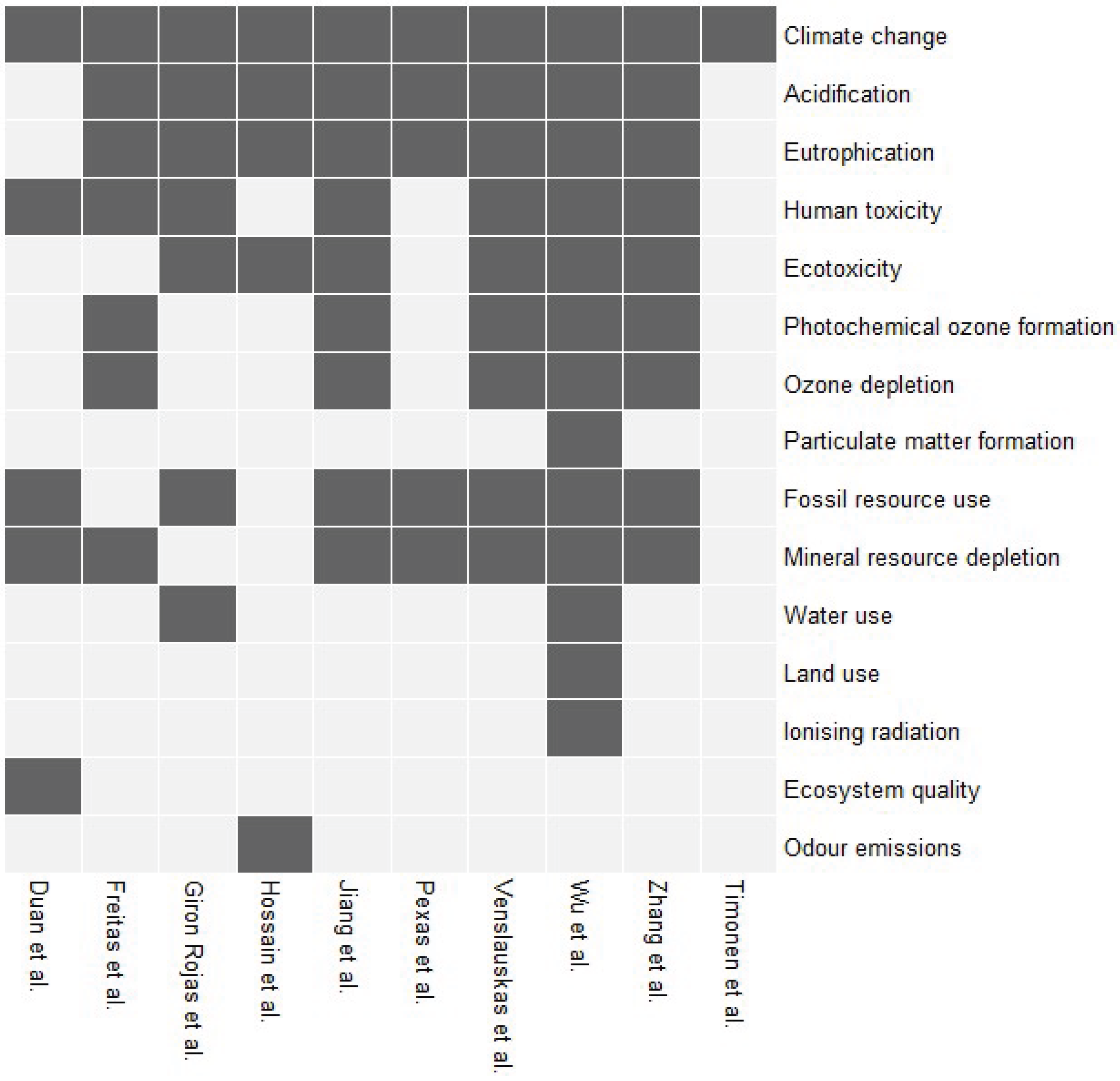
Figure 3.
Percentage of reviewed life cycle–based studies assessing each environmental impact category in swine manure management and anaerobic digestion systems. The percentage represents the share of studies (n = 10) that included each impact category, highlighting climate change as the most universally assessed category, followed by acidification, eutrophication, and resource use. Ionizing radiation was the least frequently considered impact category.
Figure 3.
Percentage of reviewed life cycle–based studies assessing each environmental impact category in swine manure management and anaerobic digestion systems. The percentage represents the share of studies (n = 10) that included each impact category, highlighting climate change as the most universally assessed category, followed by acidification, eutrophication, and resource use. Ionizing radiation was the least frequently considered impact category.
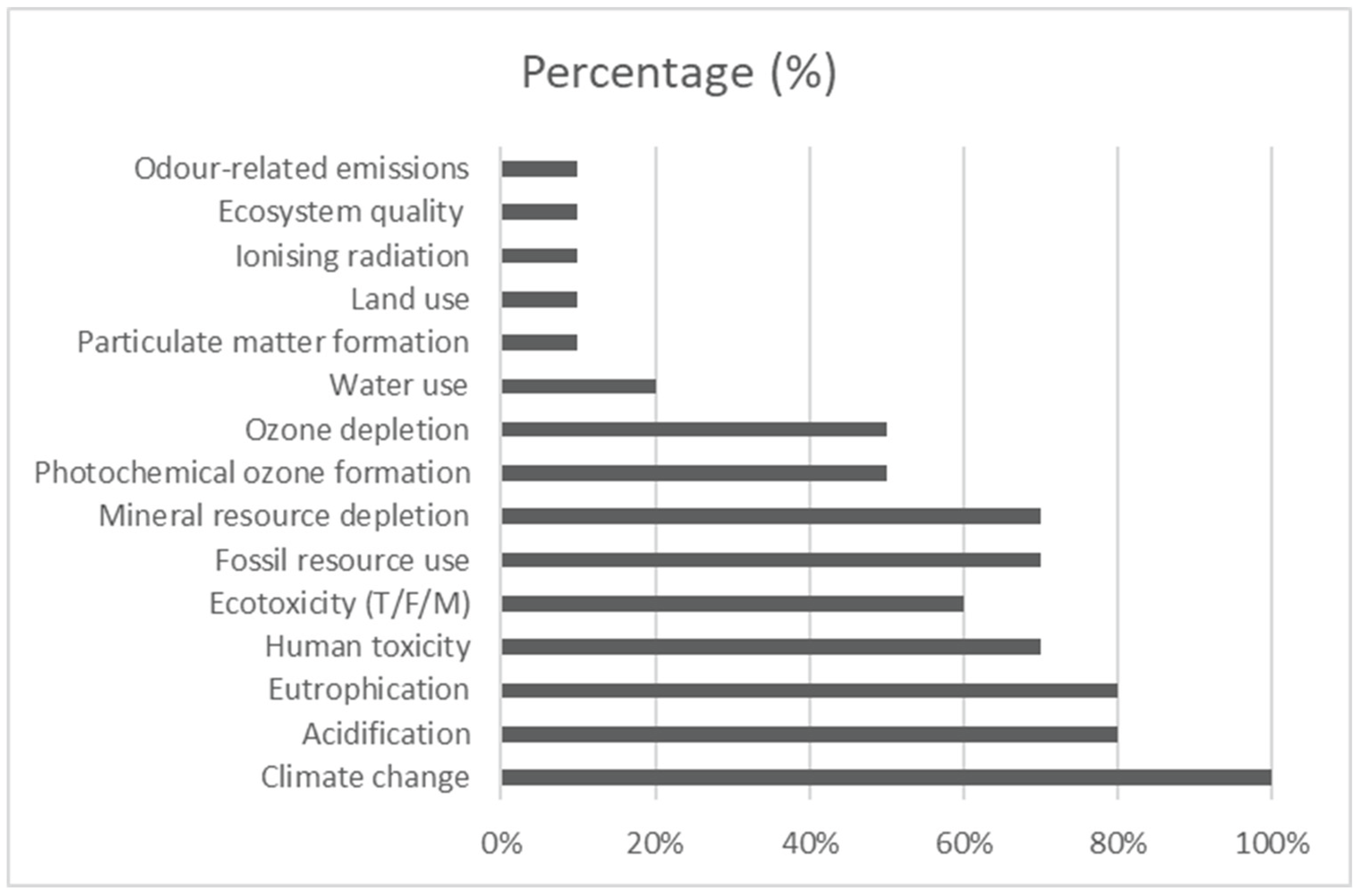

Table 1.
Summary of life cycle assessment (LCA) methodological characteristics of selected studies on pig manure–based anaerobic digestion systems.
Table 1.
Summary of life cycle assessment (LCA) methodological characteristics of selected studies on pig manure–based anaerobic digestion systems.
| No. | Study (Year) | Country | FU | System Boundary | Method | Software/Database | Ref. |
|---|---|---|---|---|---|---|---|
| 1 | Duan et al. (2020) | China | 1 t manure | Cradle-to-gate | IMPACT2002+ | Ecoinvent 3.3 | [30] |
| 2 | Freitas et al. (2022) | Portugal | 1 kWh / t manure | Cradle-to-gate | CML2 baseline 2000 | SimaPro 8.0 | [20] |
| 3 | Girón- Rojas et al., (2025) | Spain | Waste/year | Gate-to-gate | pLCA MonteCarlo simulation |
‘LCA for Experts 10.7’ EcoInvent 3.8 Sphera |
[31] |
| 4 | Hossain et al. (2023) | Bangladesh | 1 Mj of biogas energy | Cradle-to-gate | CML2 baseline | OpenLCA 1.10.3 | [32] |
| 5 | Jiang et al. (2021) | Ireland | 16 000ton/yr PM | Cradle-to-gate | ReCiPe Midpoint | SimaPro Ecoinvent 3.5 |
[33] |
| 6 | Pexas et al. (2020) | Denmark | 1 kg LW | Cradle-to-gate | CML-IA Baseline 3.05 MonteCarlo simulation |
SimaPro 8.5.0 EcoInvent 3 |
[34] |
| 7 | Venslauskas et al. (2022) | Lituania | 1000 fattening pigs | Cradle-to-gate | CML-I Baseline | SimaPro 9.2 Ecoinvent 3 |
[35] |
| 8 | Wu et al. (2020) | Taiwan China |
1000 kg LW | Cradle-to-gate | ReCiPe 1.13 | SimaPro Agri-foodprint 2.0 |
[36] |
| 9 | Zhang et al. (2021) | Ireland | MJenergy kgnitrogen |
Cradle-to-grave | CML-IA baseline | SimaPro 8.5.2 Ecoinvent |
[3] |
| 10 | Timonen et al. (2019) | Finland | 1 kg live weight | Cradle-to-grave | EU Renewable Energy Directive |
SimaPro v8.4 | [37] |
FU = functional unit; LCA = life cycle assessment; PM = pig manure; LW = live weight; MJ = megajoule; kWh = kilowatt-hour; t = tonne; yr = year; CML = Center of Environmental Science (Leiden University) impact assessment method; ReCiPe = harmonized life cycle impact assessment method; IMPACT2002+ = combined midpoint–endpoint LCIA method; pLCA = prospective life cycle assessment; AD = anaerobic digestion.
Table 2.
Summary of life cycle assessment studies on anaerobic digestion of pig manure, focusing on mono- and co-digestion strategies, digestate management, and environmental performance.
Table 2.
Summary of life cycle assessment studies on anaerobic digestion of pig manure, focusing on mono- and co-digestion strategies, digestate management, and environmental performance.
| No. | Study (Year) | Title | Focus | Scenarios (condensed) | Key Finding | Ref. |
|---|---|---|---|---|---|---|
| 1 | Duan et al. (2020) | LCA of anaerobic digestion of pig manure coupled with digestate treatment technologies | Digestate management | Direct LA; fractionation + MA co-AD; PBF | Fractionation improves performance; direct LA most favorable | [30] |
| 2 | Freitas et al. (2022) | Holistic LCA of a biogas-based electricity generation plant in a pig farm | Mono vs co-AD | PM mono-AD; co-AD with GS, CS, biochar | co-AD + biochar reduces impacts | [20] |
| 3 | Girón-Rojas et al. (2025) | Enhancing energy self-sufficiency in rural regions via AD of pig slurry | Mono vs co-AD | PM mono-AD; co-AD + pepper waste | co-AD improves environmental and economic performance | [31] |
| 4 | Hossain et al. (2023) | Comparative LCA of mono- and co-digestion of livestock manure | co-AD assessment | Mono-AD; co-AD with FW | co-AD reduces most impact categories | [32] |
| 5 | Jiang et al. (2021) | Environmental sustainability of on-farm PM and FW co-digestion | Baseline vs co-AD | Direct LA and composting; co-AD | co-AD outperforms baseline in 9/11 impacts | [33] |
| 6 | Pexas et al. (2020) | Environmental impacts of housing and manure management in pig production | Management pathways | Acidification; separation; AD and co-AD | AD significantly reduces impacts | [34] |
| 7 | Venslauskas et al. (2022) | Environmental impact assessment of a sustainable pig farm | Nutrient and co-product flows | Fertilization; co-product reuse | Digestate substitution lowers impacts | [35] |
| 8 | Wu et al. (2020) | LCA of pig farming integrated with AD and algae treatment | AD–algae systems with co-AD | Composting; AD+CHP; algae systems | Algae-based systems reduce emissions | [36] |
| 9 | Zhang et al. (2021) | Environmental sustainability of PM mono- and co-digestion | AD and co-AD Digestate LA | Direct LA; mono-AD; co-AD + LA | co-AD shows best overall performance | [3] |
| 10 | Timonen et al. (2019) | LCA of AD: emission allocation for energy and digestate | Allocation methods | PM co-AD with GS or FW | Results sensitive to allocation and digestate use | [37] |
AD = anaerobic digestion; co-AD = co-digestion; PM = pig manure; FW = food waste; CS = corn silage; GS = grass silage; MA = microalgae; LA = land application; PBF = powder biofertilizer.
Disclaimer/Publisher’s Note: The statements, opinions and data contained in all publications are solely those of the individual author(s) and contributor(s) and not of MDPI and/or the editor(s). MDPI and/or the editor(s) disclaim responsibility for any injury to people or property resulting from any ideas, methods, instructions or products referred to in the content. |
© 2026 by the authors. Licensee MDPI, Basel, Switzerland. This article is an open access article distributed under the terms and conditions of the Creative Commons Attribution (CC BY) license (http://creativecommons.org/licenses/by/4.0/).
Copyright: This open access article is published under a Creative Commons CC BY 4.0 license, which permit the free download, distribution, and reuse, provided that the author and preprint are cited in any reuse.


