

Submitted:
13 January 2026
Posted:
15 January 2026
You are already at the latest version
Abstract
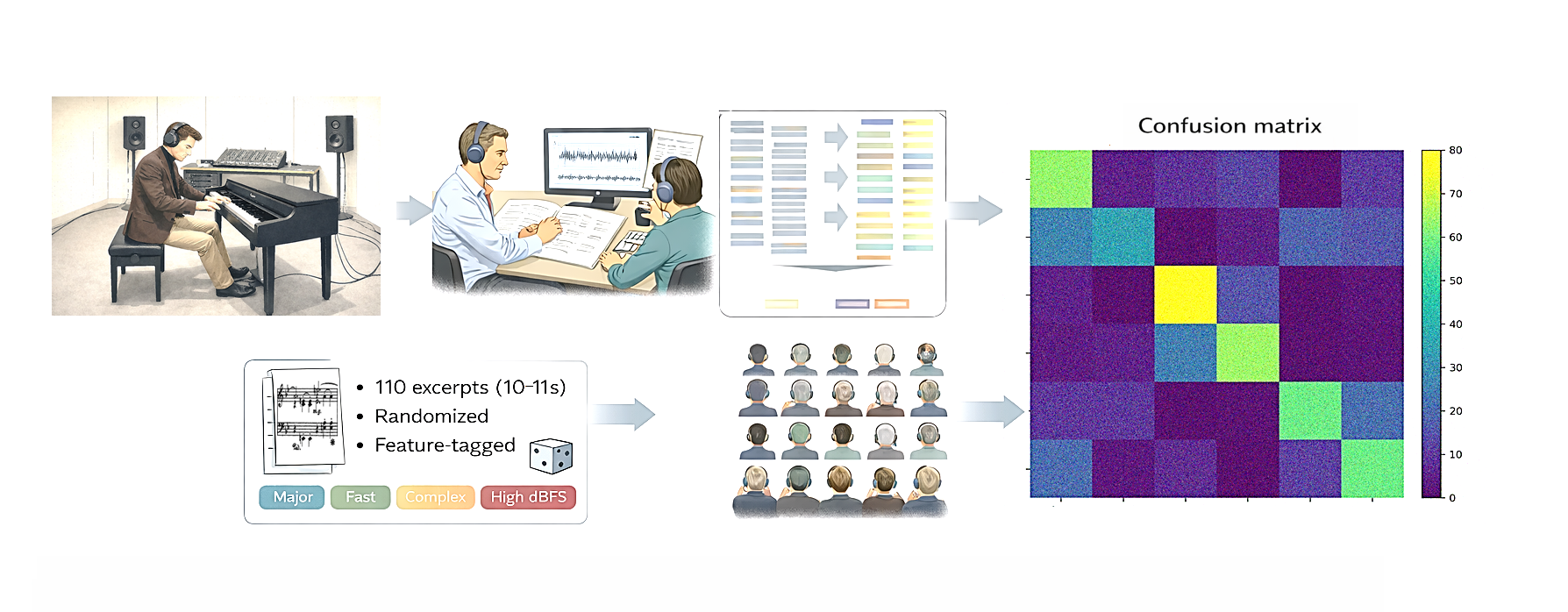
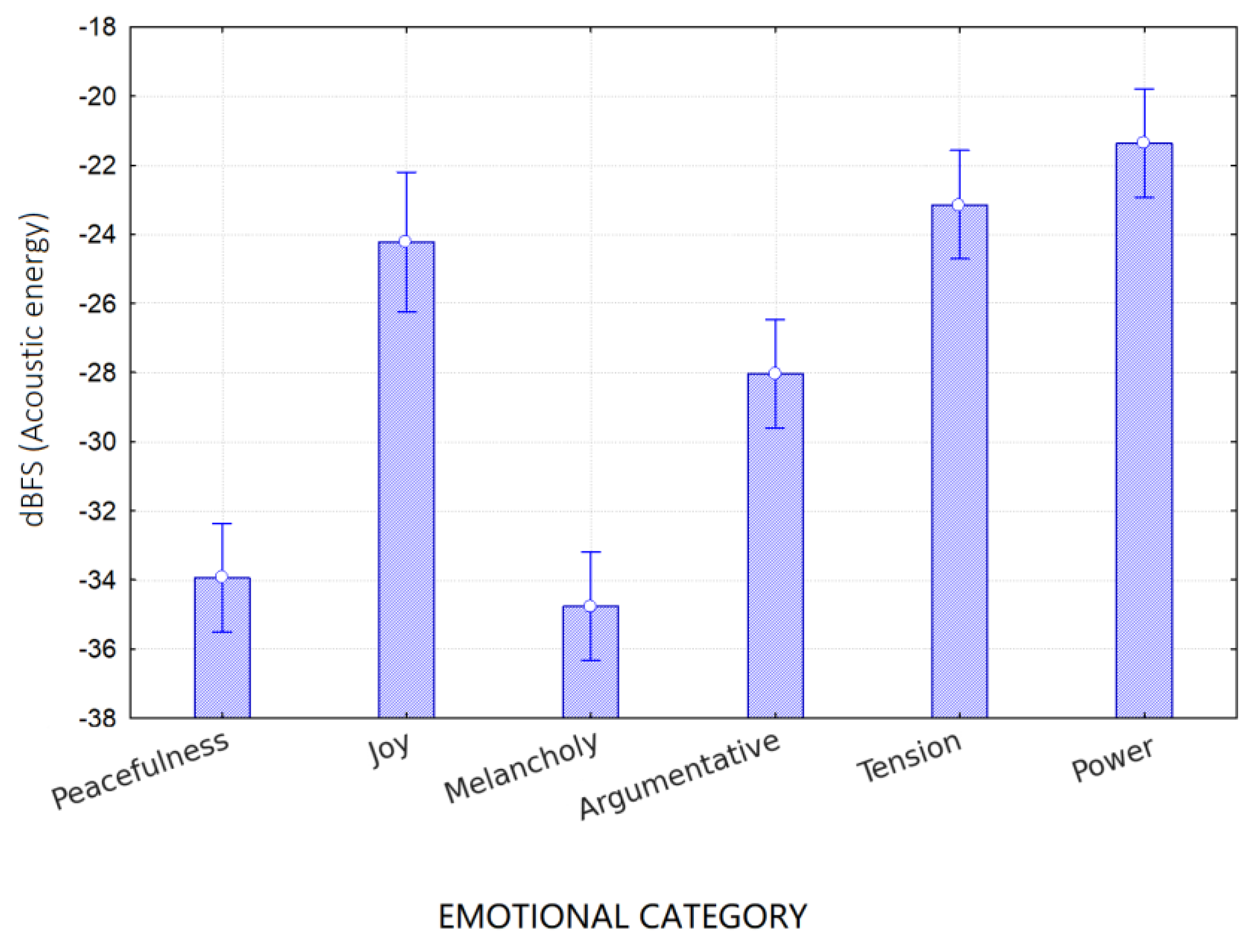
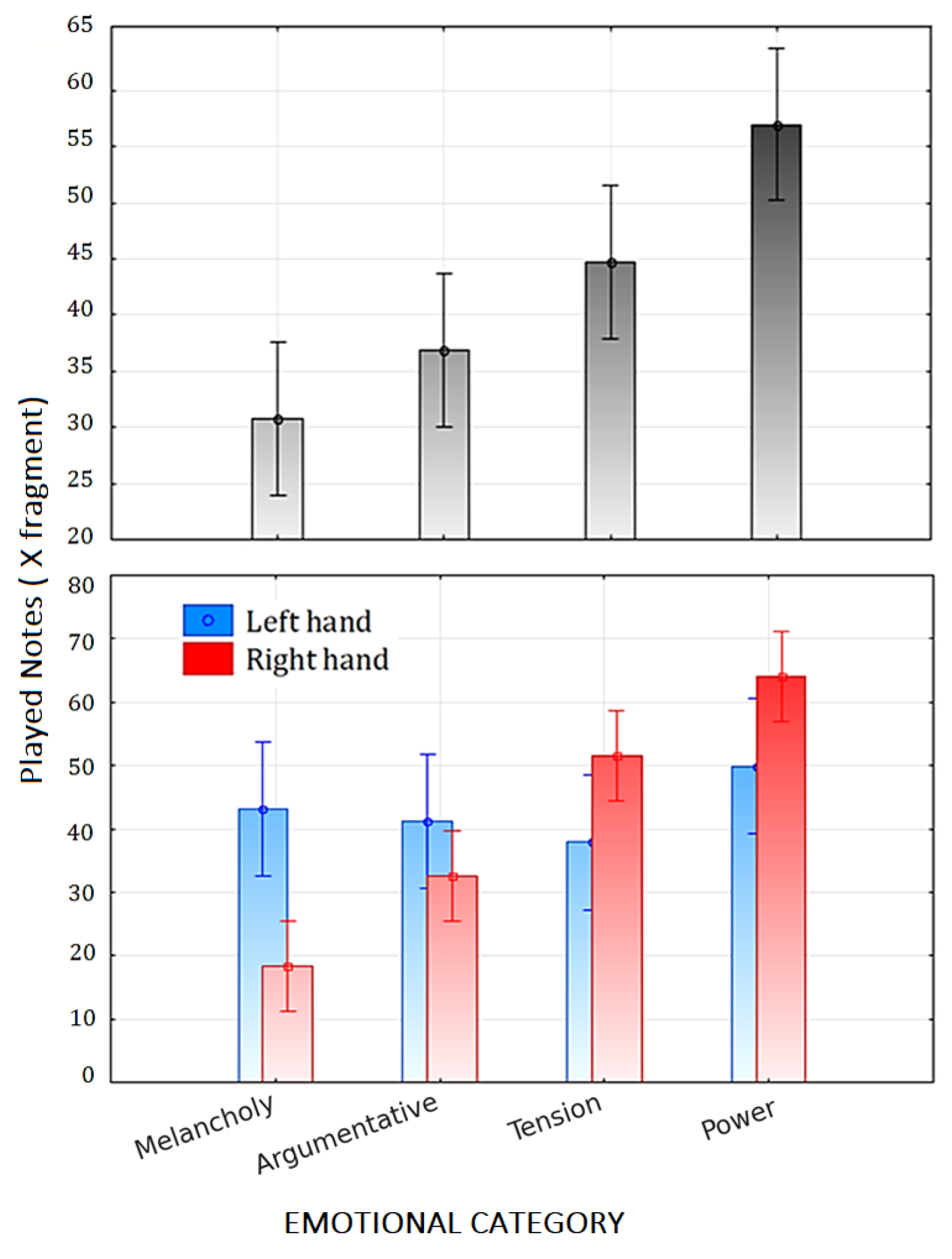
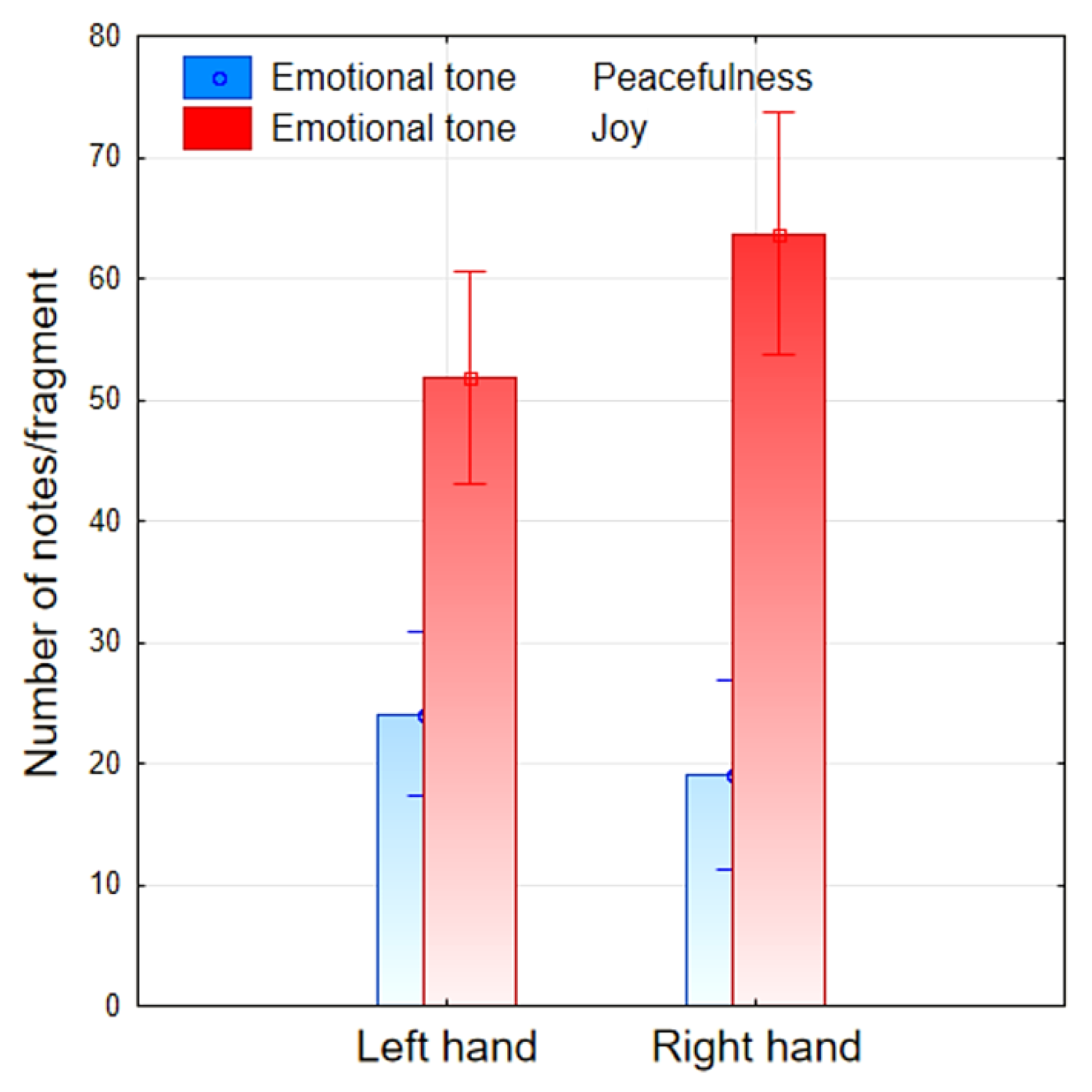
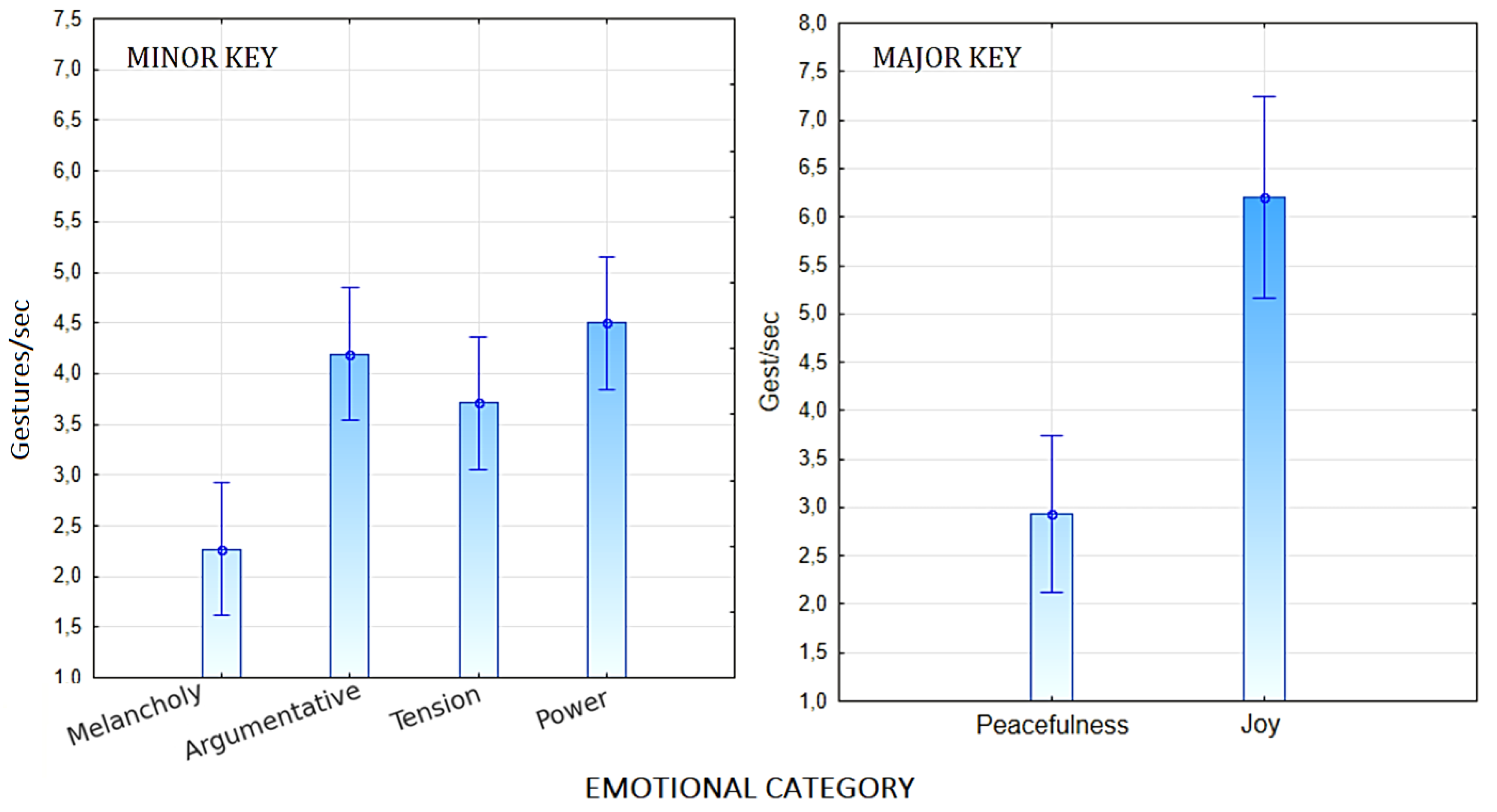
Music conveys emotion through a complex interplay of structural and acoustic cues, yet how these features map onto specific affective interpretations remains a key question in music cognition. This study explored how listeners, unaware of contextual information, categorized 110 emotionally diverse excerpts—varying in key, tempo, note density, acoustic energy, and expressive gestures—from works by Bach, Beethoven, and Chopin. Twenty classically trained participants labeled each excerpt using six predefined emotional categories. Emotion judgments were analyzed within a supervised multi-class classification framework, allowing systematic quantification of recognition accuracy, misclassification patterns, and category reliability. Behavioral responses were consistently above chance, indicating shared decoding strategies. Quantitative analyses of live performance recordings revealed systematic links between expressive features and emotional tone: high-arousal emotions showed increased acoustic intensity, faster gestures, and dominant right-hand activity, while low-arousal states involved softer dynamics and more left-hand involvement. Major-key excerpts were commonly associated with positive emotions—“Peacefulness” with slow tempos and low intensity, “Joy” with fast, energetic playing. Minor-key excerpts were linked to negative/ambivalent emotions, aligning with prior research on the emotional complexity of minor modality. Within the minor mode, a gradient of arousal emerged, from “Melancholy” to “Power,” the latter marked by heightened motor activity and sonic force. Results support an embodied view of musical emotion, where expressive meaning emerges through dynamic motor-acoustic patterns that transcend stylistic and cultural boundaries.
Keywords:
1. Introduction
2. Materials and Methods
2.1. Participants
2.2. Stimuli
2.3. Stimulus Structural Analysis and Selection
2.4. Experimental Procedure
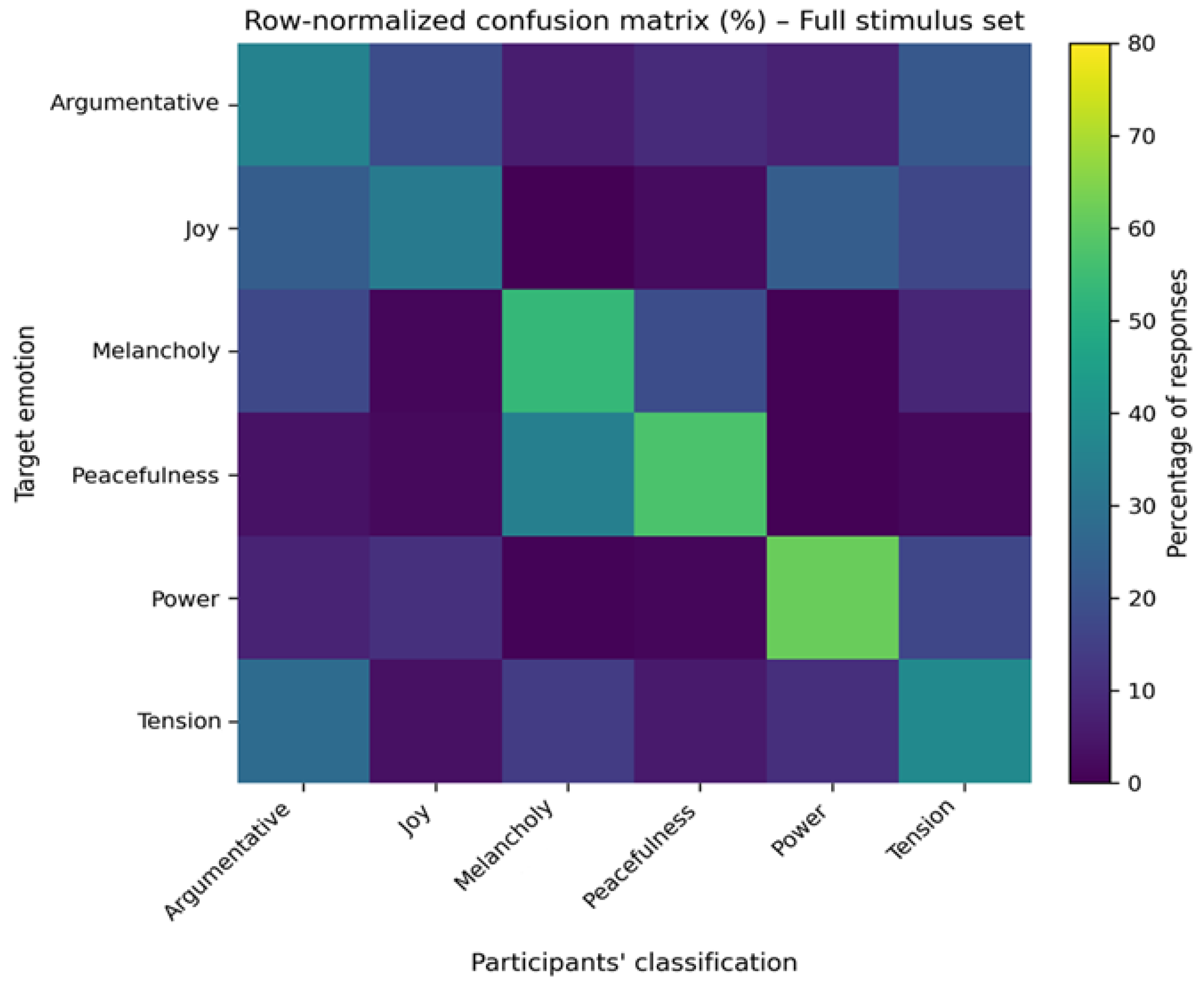
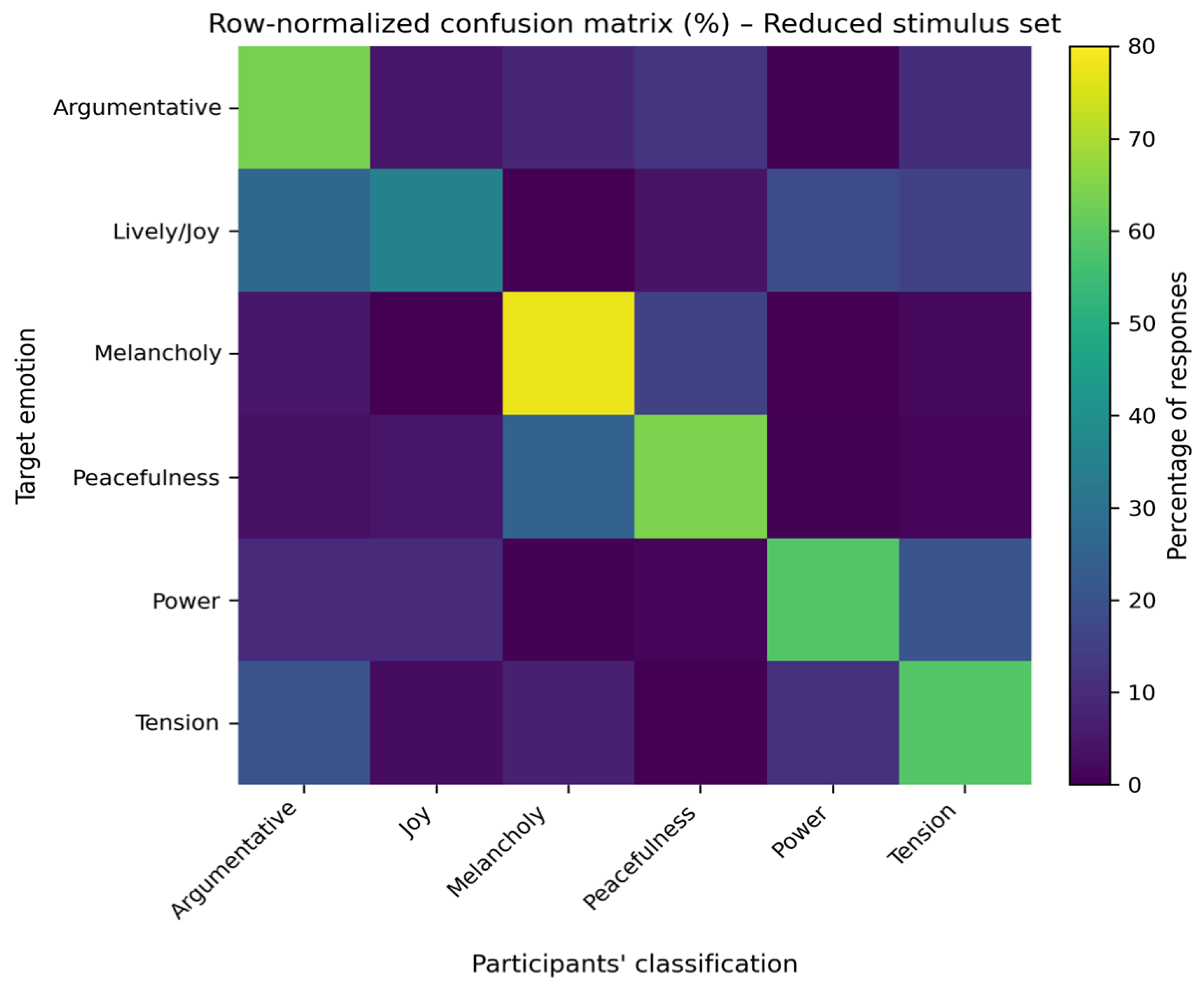
2.6. Statistical analyses
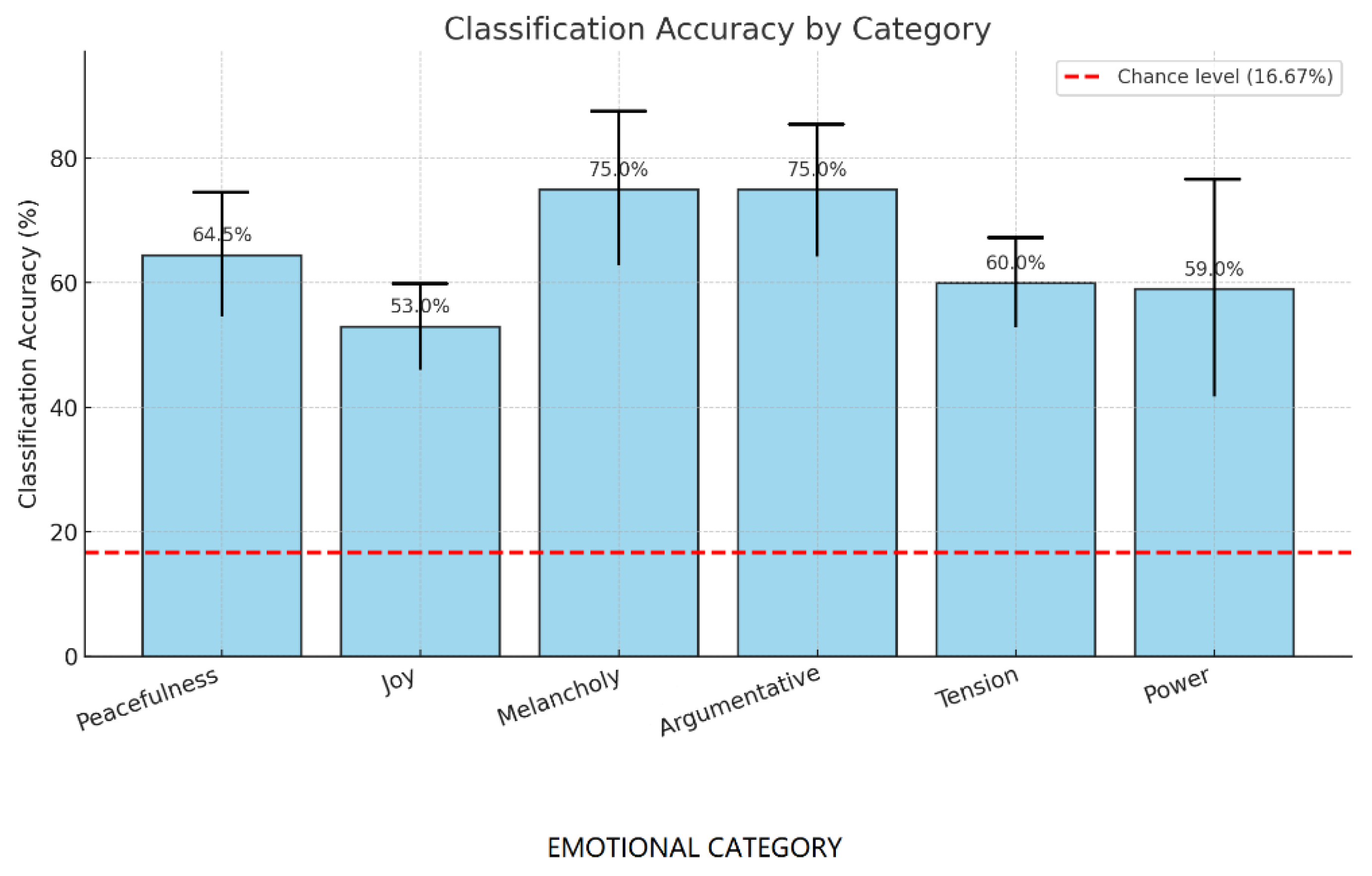
- Peacefulness: M = 64.5%, SD = 9.86, t(19) = 19.86, p < .001
- Joy: M = 53.0%, SD = 6.92, t(19) = 22.63, p < .001
- Melancholy: M = 75.0%, SD = 12.24, t(19) = 16.05, p < .001
- Argumentative: M = 75.0%, SD = 10.74, t(19) = 20.11, p < .001
- Tension: M = 60.0%, SD = 7.09, t(19) = 31.27, p < .001
- Power: M = 59.0%, SD = 17.33, t(19) ≈ 11.50, p < .001
3. Results
4. Discussion
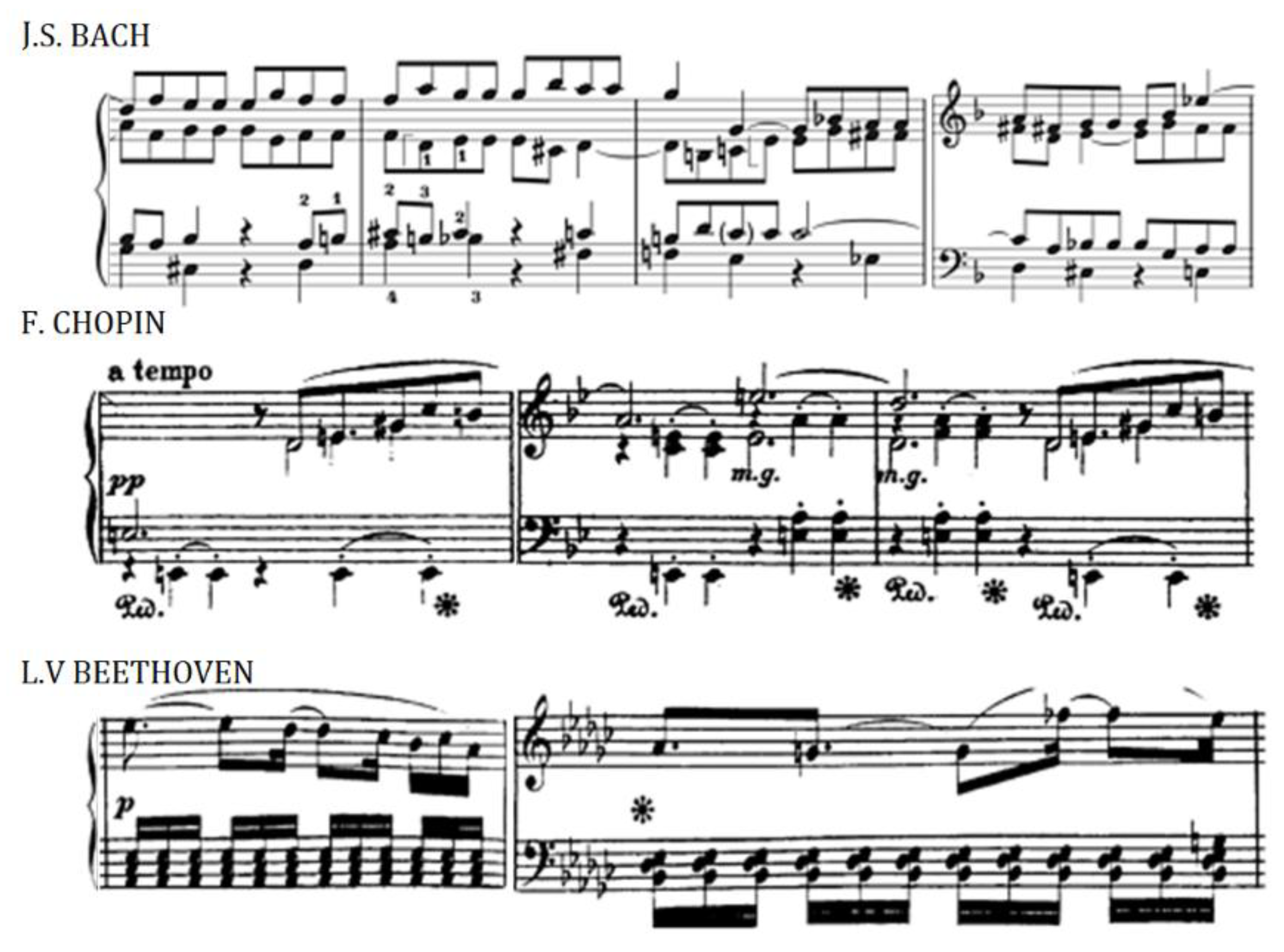
5. Conclusions
6. Study Limitations
Author Contributions
Funding
Institutional Review Board Statement
Informed Consent Statement
Data Availability Statement
Acknowledgments
Conflicts of Interest
Abbreviations
| ANOVA | Analysis of Variance |
| dBFS | Decibels relative to full scale |
| EEG | Electroencephalogram |
| LP | Late Positivity |
| FMRI | Functional Magnetic Resonance Imaging |
| SD | Standard Deviation |
References
- Koelsch, S. Brain correlates of music-evoked emotions. Nat. Rev. Neurosci. 2020, 5, 170–180. [Google Scholar] [CrossRef]
- Koelsch, S. A coordinate-based meta-analysis of music-evoked emotions. Neuroimage 2020, 223, 117350. [Google Scholar] [CrossRef]
- Juslin, P.N.; Laukka, P. Communication of emotions in vocal expression and music performance: Different channels, same code? Psychol. Bull. 2003, 129, 770–814. [Google Scholar] [CrossRef]
- Juslin, P.N.; Sloboda, J.A. Music and emotion. In The Psychology of Music, 3rd ed.; Deutsch, D., Ed.; Academic Press: London, UK, 2011; Vol. 3, pp. 583–645. [Google Scholar] [CrossRef]
- Brattico, E.; Brusa, A.; Dietz, M.; Jacobsen, T.; Fernandes, H.M.; Gaggero, G.; Toiviainen, P.; Vuust, P.; Proverbio, A.M. Beauty and the brain—Investigating the neural and musical attributes of beauty during naturalistic music listening. Neuroscience 2025, 567, 308–325. [Google Scholar] [CrossRef] [PubMed]
- Singh, M.; Mehr, S.A. Universality, domain-specificity, and development of psychological responses to music. Nat. Rev. Psychol. 2023, 2, 333–346. [Google Scholar] [CrossRef]
- Sievers, B.; Polansky, L.; Casey, M.; Wheatley, T. Music and movement share a dynamic structure that supports universal expressions of emotion. Proc. Natl. Acad. Sci. USA 2013, 110, 70–75. [Google Scholar] [CrossRef] [PubMed]
- Armitage, J.; Eerola, T.; Halpern, A.R. Play it again, but more sadly: Influence of timbre, mode, and musical experience in melody processing. Mem. Cogn. 2024. [Google Scholar] [CrossRef] [PubMed]
- Kwoun, S.J. An examination of cue redundancy theory in cross-cultural decoding of emotions in music. J. Music Ther. 2009, 46, 217–237. [Google Scholar] [CrossRef]
- Khalfa, S.; Schön, D.; Anton, J.-L.; Liégeois-Chauvel, C. Brain regions involved in the recognition of happiness and sadness in music. Neuroreport 2005, 16, 1981–1984. [Google Scholar] [CrossRef]
- Proverbio, A.M.; Piotti, E. Common neural bases for processing speech prosody and music: An integrated model. Psychol. Music 2022, 50, 1408–1423. [Google Scholar] [CrossRef]
- Irrgang, M.; Egermann, H. From motion to emotion: Accelerometer data predict subjective experience of music. PLoS ONE 2016, 11, e0154360. [Google Scholar] [CrossRef]
- Poon, M.; Schutz, M. Cueing musical emotions: An empirical analysis of 24-piece sets by Bach and Chopin documents parallels with emotional speech. Front. Psychol. 2015, 6, 1419. [Google Scholar] [CrossRef] [PubMed]
- Scherer, K.R.; Oshinsky, J.S. Cue utilisation in emotion attribution from auditory stimuli. Motiv. Emot. 1977, 1, 331–346. [Google Scholar] [CrossRef]
- Juslin, P.N. Perceived emotional expression in synthesized performances of a short melody: Capturing the listener’s judgment policy. Musicæ Sci. 1997, 1, 225–256. [Google Scholar] [CrossRef]
- Nordström, H.; Laukka, P. The time course of emotion recognition in speech and music. J. Acoust. Soc. Am. 2019, 145, 3058–3074. [Google Scholar] [CrossRef]
- Vieillard, S.; Peretz, I.; Gosselin, N.; Khalfa, S.; Gagnon, L.; Bouchard, B. Happy, sad, scary and peaceful musical excerpts for research on emotions. Cogn. Emot. 2008, 22, 720–752. [Google Scholar] [CrossRef]
- Proverbio, A.M. A unified mechanism for interpreting the emotional content of voice, speech and music: Comment on “The major-minor mode dichotomy in music perception”. Phys. Life Rev. 2025, 52, 107–108. [Google Scholar] [CrossRef] [PubMed]
- Carraturo, G.; Pando-Naude, V.; Costa, M.; Vuust, P.; Bonetti, L.; Brattico, E. The major-minor mode dichotomy in music perception. Phys. Life Rev. 2025, 52, 80–106. [Google Scholar] [CrossRef]
- Halpern, A.R.; Martin, J.S.; Reed, T.D. An ERP study of major–minor classification in melodies. Music Percept. 2008, 25, 181–191. [Google Scholar] [CrossRef]
- Huron, D. Distinguishing nature and nurture in understanding the sadness of the minor mode. Phys. Life Rev. 2025, 53, 144–146. [Google Scholar] [CrossRef]
- Jacobsen, P.-O.; Strauß, H.; Vigl, J.; Zangerle, E.; Zentner, M. Assessing aesthetic music-evoked emotions in a minute or less: A comparison of the GEMS 45 and the GEMS 9. Musicæ Sci. 2024, 29, 1. [Google Scholar] [CrossRef]
- Moore, B.C.J. The perception of emotion in music by people with hearing loss and people with cochlear implants. Philos. Trans. R. Soc. B 2024, 379, 20230258. [Google Scholar] [CrossRef]
- Vuilleumier, P.; Trost, W. Music and emotions: From enchantment to entrainment. Ann. N. Y. Acad. Sci. 2015, 1337, 212–222. [Google Scholar] [CrossRef] [PubMed]
- Jiménez Hernando, A. Constellations, Loss and Phantasy: A Study of the Melancholic Self and its Discourse in Hamlet, Ulysses and The Sound and The Fury. MA Thesis, 2022. [Google Scholar]
- Toth, R.; Dienlin, T. Bittersweet symphony: Nostalgia and melancholia in music reception. Music Sci. 2023, 6. [Google Scholar] [CrossRef]
- Varwig, B. One more time: J.S. Bach and seventeenth-century traditions of rhetoric. Eighteenth-Century Music 2008, 5, 179–208. [Google Scholar] [CrossRef]
- Davidson, R.J.; Irwin, W. The functional neuroanatomy of emotion and affective style. Trends Cogn. Sci. 1999, 3, 11–21. [Google Scholar] [CrossRef] [PubMed]
- Gainotti, G. Emotions and the right hemisphere: Can new data clarify old models? Neuroscientist 2019, 25, 258–270. [Google Scholar] [CrossRef]
- Hecht, D. Depression and the hyperactive right hemisphere. Neurosci. Res. 2010, 68, 77–87. [Google Scholar] [CrossRef]
- Altenmüller, E.; Schürmann, K.; Lim, V.K.; Parlitz, D. Hits to the left, flops to the right: Different emotions during listening to music are reflected in cortical lateralisation patterns. Neuropsychologia 2002, 40, 2242–2256. [Google Scholar] [CrossRef]
- Huron, D. Sweet Anticipation: Music and the Psychology of Expectation; MIT Press: Cambridge, MA, USA, 2008. [Google Scholar]
- Huron, D. Why is sad music pleasurable? A possible role for prolactin. Musicæ Sci. 2011, 15, 146–158. [Google Scholar] [CrossRef]
- Proverbio, A.M.; De Benedetto, F.; Guazzone, M. Shared neural mechanisms for processing emotions in music and vocalizations. Eur. J. Neurosci. 2020, 51, 1980–1992. [Google Scholar] [CrossRef]
- Proverbio, A.M.; Santoni, S.; Adorni, R. ERP markers of valence coding in emotional speech processing. iScience 2020, 23, 100933. [Google Scholar] [CrossRef]
- Proverbio, A.M. Cognitive Neuroscience of Music (Neuroscienze cognitive della musica); Zanichelli: Bologna, Italy.
- Juslin, P.N.; Västfjäll, D. Emotional responses to music: The need to consider underlying mechanisms. Behav. Brain Sci. 2008, 31, 559–575. [Google Scholar] [CrossRef] [PubMed]
- Koelsch, S. Brain correlates of music-evoked emotions. Nat. Rev. Neurosci. 2014, 15, 170–180. [Google Scholar] [CrossRef] [PubMed]
- Baumgartner, T.; Lutz, K.; Schmidt, C.F.; Jäncke, L. The emotional power of music: How music enhances the feeling of affective pictures. Brain Res. 2006, 1075, 151–164. [Google Scholar] [CrossRef]
- Trost, W.; Ethofer, T.; Zentner, M.; Vuilleumier, P. Mapping aesthetic musical emotions in the brain. Cereb. Cortex 2012, 22, 2769–2783. [Google Scholar] [CrossRef]
- Schmidt, L.A.; Trainor, L.J. Frontal brain electrical activity (EEG) distinguishes valence and intensity of musical emotions. Cogn. Emot. 2001, 15, 487–500. [Google Scholar] [CrossRef]
- Ekman, P. An argument for basic emotions. Cogn. Emot. 1992, 6, 169–200. [Google Scholar] [CrossRef]
- Brattico, E.; Alluri, V.; Bogert, B.; Jacobsen, T.; Vartiainen, N.; Nieminen, S.; Tervaniemi, M. A functional MRI study of happy and sad emotions in music with and without lyrics. Front. Psychol. 2011, 2, 308. [Google Scholar] [CrossRef]
- Patel, A.D. Music, Language, and the Brain; Oxford University Press: Oxford, UK, 2008. [Google Scholar]
- Limb, C.J. Structural and functional neural correlates of music perception. Anat. Rec. A 2006, 288, 435–446. [Google Scholar] [CrossRef]
- Zatorre, R.J.; Chen, J.L.; Penhune, V.B. When the brain plays music: Auditory–motor interactions in music perception and production. Nat. Rev. Neurosci. 2007, 8, 547–558. [Google Scholar] [CrossRef]
- Molnar-Szakacs, I.; Overy, K. Music and mirror neurons: From motion to “e”motion. Soc. Cogn. Affect. Neurosci. 2006, 1, 235–241. [Google Scholar] [CrossRef] [PubMed]
- Leman, M. Embodied Music Cognition and Mediation Technology; MIT Press: Cambridge, MA, USA, 2008. [Google Scholar]
- Freedberg, D.; Gallese, V. Motion, emotion and empathy in aesthetic experience. Trends Cogn. Sci. 2007, 11, 197–203. [Google Scholar] [CrossRef] [PubMed]
- Gallese, V.; Freedberg, D. Mirror and canonical neurons are crucial elements in aesthetic response. Trends Cogn. Sci. 2007. [Google Scholar] [CrossRef]

| Ss | Age | Sex | Music Training Major | Prof. Mus. | Famil. |
|---|---|---|---|---|---|
| 1 | 23 | F | Violin and piano | Yes | 3 |
| 2 | 50 | F | Opera singing, piano | Yes | 4 |
| 3 | 51 | F | Jazz singing, Composition | Yes | 1 |
| 4 | 37 | F | Musicology, Opera singing | - | 3 |
| 5 | 50 | F | Transverse Flute | Yes | 4 |
| 6 | 55 | F | Piano | Yes | 4 |
| 7 | 57 | F | Piano | Yes | 5 |
| 8 | 57 | F | Piano | Yes | 5 |
| 9 | 28 | F | Piano | Yes | 2 |
| 10 | 48 | F | Piano | - | 2 |
| 11 | 41 | F | Flute | Yes | 4 |
| 12 | 26 | F | Music pedagogy | Yes | 3 |
| 13 | 35 | M | Orchestra conduction | Yes | 4 |
| 14 | 63 | M | Piano | Yes | 5 |
| 15 | 26 | M | Piano | Yes | 4 |
| 16 | 50 | M | Piano | Yes | 4 |
| 17 | 27 | M | Piano | Yes | 2 |
| 18 | 47 | M | Viola da gamba | - | 4 |
| 19 | 37 | M | Clarinet and bass clarinet | Yes | 3 |
| 20 | 29 | M | Piano, Orchestra conduction | Yes | 3 |
| Emotional valence | Emotional feeling |
Key |
Tempo |
Energy/Arousal |
|---|---|---|---|---|
| Positive | Peacefulness | Major | Slow | Little |
| Positive | Joy | Major | Fast | Considerable |
| Negative | Melancholy | Minor | Slow | Little |
| Negative | Argumentative | Minor | Fast | Some |
| Negative | Tension | Minor | — | Considerable |
| — | Power | — | — | Strong |
| Emotional tone | Definition |
|---|---|
| Peacefulness | State of peace and serenity |
| Joy | Positive, joyful, and lively mood |
| Melancholy | Sad or Melancholy |
| Argumentative | Constructive or proactive narrative |
| Tension | Tension or conflict |
| Power | Power or intensity |
| Emotion category | Precision | Recall | F1-score |
|---|---|---|---|
| Argumentative | 0.54 | 0.64 | 0.58 |
| Joy | 0.49 | 0.35 | 0.41 |
| Melancholy | 0.65 | 0.78 | 0.71 |
| Peacefulness | 0.68 | 0.65 | 0.66 |
| Power | 0.71 | 0.59 | 0.64 |
| Tension | 0.57 | 0.59 | 0.58 |
Disclaimer/Publisher’s Note: The statements, opinions and data contained in all publications are solely those of the individual author(s) and contributor(s) and not of MDPI and/or the editor(s). MDPI and/or the editor(s) disclaim responsibility for any injury to people or property resulting from any ideas, methods, instructions or products referred to in the content. |
© 2026 by the authors. Licensee MDPI, Basel, Switzerland. This article is an open access article distributed under the terms and conditions of the Creative Commons Attribution (CC BY) license (http://creativecommons.org/licenses/by/4.0/).


