

Submitted:
12 January 2026
Posted:
13 January 2026
You are already at the latest version
Abstract
Housing inequalities remain a major challenge for contemporary urban governance, as they combine economic, social, spatial, and demographic dynamics that are difficult to capture through single indicators. This paper develops a data-driven assessment of housing inequalities in Portugal between 2015 and 2025, drawing on official national and European statistics and applying a Business Intelligence (BI) and urban analytics frame-work oriented towards policy monitoring.
Data from Statistics Portugal and Eurostat are integrated through an analytical pipeline including automated extraction via public APIs, data enrichment, and visual analytics. The workflow follows a CRISP-DM–inspired structure, creating a set of normalized indicators to capture different dimensions of housing conditions. The results point to a structurally polarized housing market. Housing valuations increased across all regions, but at uneven rates, reinforcing territorial disparities rather than convergence. Metropolitan and tourism-oriented regions experienced faster appreciation and indirect effects, while year-over-year growth in completed dwellings slowed after 2021–2022, indicating an un-even supply response. Beyond its empirical findings, the primary contribution of this study lies in demonstrating how BI and data science methodologies can be operationalized to monitor housing inequalities using official statistics. The proposed framework is replicable and can be adapted to other territorial and policy contexts.
Keywords:
housing inequalities
; territorial disparities
; urban analytics
; business intelligence
; visual analytics
; official statistics
1. Introduction
In the current socioeconomic landscape, housing is established as a fundamental right in the Constitution of the Portuguese Republic, playing a key role in promoting social cohesion and addressing structural inequalities. However, in recent decades, complex economic, demographic, and urban dynamics have intensified disparities in access to adequate housing conditions. Municipalities and central governments face rising pressures to mitigate the effects of soaring rental prices, a scarcity of affordable options, and gentrification phenomena, which have contributed to the intensification of urban polarization and the vulnerability of large population segments. These challenges are further amplified in metropolitan areas where the cost of living increasingly outpaces income growth. As the housing market continues to fluctuate, the ability to systematically identify and monitor these disparities has become essential for effective governance. In this context, monitoring social and economic inequalities becomes crucial, to raise public awareness and as pathway to a more inclusive society.
Housing inequalities constitute one of the most significant obstacles to social and economic progress. They affect not only access to housing, but also the quality of living conditions and their consequences for health, education, and community integration. The lack of adequate housing restricts both individual and collective opportunities, accentuating cycles of poverty and social exclusion while undermining territorial cohesion. In a context characterized by significant shifts in housing markets and demographic pressure in urban centers, a systematic approach is crucial to monitor these inequalities. Existing official data sources offer valuable insights into these dynamics but require careful integration. The resulting analysis can be used by public authorities to gain a deeper understanding of the structural challenges of this sector and create effective public policies aimed at mitigating social and economic inequalities.
PLANAPP – the Centre for Planning and Public Policy Evaluation1 – is a state body that aims to support the design and implementation of public policies and prospective analysis. Its main objective is to support and strengthen the different phases of the public policy cycle (planning, monitoring, evaluation and impact analysis) with the aim of improving public policy design and implementation. This study is a result of a collaboration between academia and PLANAPP, focused on developing an analytical framework to monitor social and economic inequalities in housing. The study uses data from official and internationally recognized sources, such as Statistics Portugal2 (INE, from Portuguese National Statistics Institute), Eurostat3, the Organization for Economic Co-operation and Development (OECD)4, and the Strategy and Planning Office5 (GEP, from the Portuguese name) from the Ministry of Labor, Solidarity and Social Security. The use and integration of multiple official sources enables a richer analysis and a comparison of indicators with different scales, granularity and context.
This study provides a data preparation and visualization approach that can be applied to other social and economic inequalities dimensions or adapted to other contexts to analyze official statistical data for better governance. This paper presents an analysis of housing inequalities in Portugal, examining the evolution of bank valuation values, the structure of the housing stock, and the dynamics of new construction between 2015 and 2025. Through this data-driven approach, the study contributes to ongoing efforts to enhance public policies and provides a replicable framework for understanding the reality of a national housing market.
Despite the growing research on housing inequalities, relatively few studies translate official statistical data into integrated and reproducible analytical workflows supporting continuous monitoring across territorial scales. In practice, many analyses remain descriptive or confined to a single spatial level, limiting their usefulness for tracking indirect and regional behavior over time. This paper addresses this gap by combining a multi-scale empirical analysis with a Business Intelligence (BI) and visual analytics framework designed for policy monitoring.
The remainder of the paper is structured as follows: Section 2 presents related work and the literature review on social and economic inequalities in housing. Section 3 describes the study area, data and method adopted. Section 4 presents the results, discussing their significance regarding territorial polarization and housing supply dynamics. Finally, Section 5 outlines the main conclusions and contributions of this study.
2. Related Work
Housing is widely recognized in the academic literature not merely as a physical shelter, but also as a determinant of health, well-being, and social inclusion [1]. Access to adequate housing is intrinsic to the realization of the United Nations Sustainable Development Goals (SDGs), particularly SDG 11 on sustainable cities and communities and SDG 10 on reducing inequalities. Despite its formal recognition as a basic human right, housing remains a major source of inequality worldwide.
Housing is one of the key domains where socioeconomic inequalities are reproduced and reinforced. Housing inequality research document persistent disparities in access, affordability, and housing quality, alongside the need for more inclusive housing policies and sustainable urban planning frameworks [1]. Empirical evidence indicates that vulnerable social groups face elevated risks of housing discrimination and deprivation even after accounting for socioeconomic characteristics, pointing to structural barriers within housing markets [2]. Evidence from Northern Europe also suggests that urban densification strategies do not automatically promote social inclusion, as they may entail socio-environmental trade-offs that require complementary policy measures to mitigate exclusionary outcomes [3].
Housing inequality is characterized by the unequal availability of safe, affordable, accessible, and dignified living spaces [4]. James et al. conceptualize housing inequality as an uneven distribution of housing opportunities and resources, manifested through inadequate living conditions, unaffordable rents or mortgages, and structural barriers limiting access to desirable residential environments [5]. These disparities are deeply intertwined with broader socioeconomic and demographic factors. Characteristics such as age, gender, ethnicity, education, and income are key determinants influencing both the probability of homeownership and the housing quality [6,7,8,9]. Furthermore, the rapid urbanization and market dynamics observed in recent decades have intensified these issues. The increasing demand in urban areas has driven housing prices beyond the reach of lower-income populations, increasingly relegating them to substandard living arrangements [10].
A critical dimension of housing inequality is discrimination, which creates barriers that extend beyond financial capacity. The literature distinguishes between taste-based discrimination, where housing providers exhibit preferences for members of their own social group, and statistical discrimination, whereby stereotypes are used to infer the reliability of potential tenants [11]. These mechanisms are particularly evident in the rental market.
Experimental studies across Europe, such as the work of [12] in Ireland, have revealed evidence of ethnic and gender bias, demonstrating that minority groups face disproportionate difficulties in securing dignified housing compared to the majority population. Closely related is the concept of housing deprivation, defined as a form of material deprivation associated with physical structural deficiencies (such as dampness or inadequate heating) and a lack of basic facilities [13]. This form of deprivation is not evenly distributed for all societal groups. Recent analyses also in Ireland, based on the Survey on Income and Living Conditions (SILC), indicate that vulnerable groups, including young adults aged 18 to 34, persons with disabilities, and single-parent households, are significantly more likely to experience these precarious conditions, even when controlling for other socioeconomic variables [2].
Parallel to social exclusion, the economic dimension of housing has become more prominent in European policy debates, often framed as persistent “housing crisis.” Le Goix et al. show that housing costs in major European cities have increased at a faster pace than household incomes since the 1990s, generating a widening gap in housing accessibility [14]. The concept of housing regimes, defined as the systematic interaction between housing systems, tenure structures, and welfare-state arrangements, has been used to explain these dynamics [15]. These regimes have undergone substantial transformation over the past decades, particularly in relation to tenure structures and market regulations. There has been a notable decline in homeownership in certain countries, accompanied by an unprecedented expansion of the private rental sector and the emergence of corporate landlords [16]. In contrast, countries like the Netherlands and France have attempted to stabilize ownership and affordability through regulatory reforms and renewed investments in social housing [17,18]. To assess these trends quantitatively, the Price-to-Income Ratio (PIR) remains a widely used indicator of housing affordability, relating housing prices to income levels, offering a clear metric for assessing financial pressure on households and informing housing policy intervention [19,20].
Recent European (EU) research shows that socioeconomic and housing inequalities are shaped by interactions between income distribution, household characteristics, territorial contexts, and institutional frameworks. Comparative studies reveal substantial EU cross-national variation in inequality of opportunity, particularly in labor markets, with estimates ranging from relatively low to markedly high levels, and little evidence that urban areas systematically function as “social elevators” relative to less urbanized regions [21]. These findings challenge simplified narratives regarding the equalizing effects of urbanization and highlight the importance of national and regional policy contexts.
Beyond aggregate income measures, the literature also focuses on household-level mechanisms that shape inequality. Unequal intra-household resource allocation has been shown to bias conventional poverty and inequality estimates downward, masking higher levels of deprivation and disproportionately disadvantaging women, particularly in Central and Eastern Europe [22]. Household composition, occupational sector, and degree of urbanization also emerge as key determinants of income inequality, with rural areas and low-wage sectors consistently associated with lower income levels across European countries [23]. Educational similarity bias in partner selection (i.e., mating) further amplifies household income inequality, especially in Eastern European contexts, while its effects appear more limited in Nordic countries due to stronger gender equality and more redistributive welfare regimes [24]. Territorial inequalities and measurement challenges also feature prominently in the European literature. Studies on regional poverty and inequality indicators demonstrate that standard measures often suffer from high uncertainty at sub-national scales, limiting their usefulness for policy design and evaluation [25].
Comparative and intergenerational perspectives highlight the growing role of housing wealth in deepening socioeconomic inequalities. Cross-city analyses reveal substantial variation in housing affordability across Europe, reflecting dynamics between housing prices and household incomes [14]. The increasing concentration of housing wealth reinforces both intergenerational and territorial inequalities, strengthening calls for fiscal and housing policies aimed at a more equitable redistribution of capital gains [26]. Multidimensional and extreme poverty approaches further identify specific household profiles (such as, unemployed individuals approaching retirement age and living alone) as being at heightened risk of deprivation, underscoring the importance of targeted housing and social policy interventions [27].
Analyzing these inequalities requires a granular understanding of income distribution that goes beyond national averages, which often mask significant territorial heterogeneity. [25] demonstrated that regional disparities in poverty and inequality are profound, with regions such as Southern Italy and Eastern Germany exhibiting much higher vulnerability than their respective national averages. Their findings suggest that standard indicators may suffer from high uncertainty at the sub-national level, advocating for the use of small-area estimation models, such as the Fay-Herriot model, to produce more stable estimates that can support targeted policy interventions. Equally important is the intra-household distribution of resources. Using small-area estimation techniques have improved the reliability of regional indicators, strengthening the empirical basis for targeted poverty-reduction strategies. Complementary approaches propose composite poverty indices to identify particularly vulnerable regions within the European Union, thereby supporting more effective spatial targeting of cohesion policies [28].
While this literature provides important insights into the drivers and consequences of housing inequalities, fewer studies focus on how these dynamics can be operationalized through integrated analytical frameworks using official statistics. In particular, challenges related to data fragmentation, scale mismatches, and indicator comparability remain underexplored. This gap is especially relevant for policy-oriented analysis, where reproducible and scalable monitoring tools are required.
3. Data and Method
3.1. Study Area
This research focuses on the housing market dynamics in Portugal, which is currently experiencing a severe housing crisis, market by shifts in real estate valuation and social accessibility. The analysis covers the entire national territory, focusing on the asymmetries between the coastal urban areas and the interior regions. According to the 2021 Census by Statistics Portugal (INE), the country is characterized by a "two-speed" demographic and economic reality. The metropolitan areas, specifically the Lisbon Metropolitan Area (AML, from Portuguese), the Porto Metropolitan Area (AMP, from Portuguese), the Península de Setúbal, and the Algarve, concentrate most of the population, economic activity, and tourism pressure. These regions have witnessed the most significant acceleration in bank valuation values, creating a widening gap compared to the interior.
Identifying and understanding territorial disparities is critical as housing is not only a market asset, but also a determinant of social cohesion. The study area is analyzed through a multidimensional approach, utilizing the NUTS 2024 classification (Nomenclature of Territorial Units for Statistics). The analysis drills down from the broad NUTS II regions (e.g., Norte, Centro, AML, Alentejo, Algarve) to the NUTS III level and, where granular data permits, to specific Municipalities. This granular approach is essential to unmask local inequalities, such as the indirect effects spreading from Lisbon to the adjacent area of Península de Setúbal, which are hidden in national averages.
3.2. Data Sources
This study relies exclusively on official data sources, integrating two primary data streams:
- INE (Statistics Portugal): This source provides detailed national data on housing characteristics, construction activity, and bank valuations. Key datasets include indicators on the number of completed dwellings, building permits, median bank appraisal values per square meter, and housing stock characteristics (e.g., typology, area). These data are used to characterize the supply side of the market and the financial valuation of properties across Portuguese municipalities;
- Eurostat: This source contextualizes the Portuguese reality within the European landscape, specifically regarding public expenditure on housing and harmonized social indicators. This allows for a comparative analysis of how Portugal positions itself in terms of public investment and housing affordability relative to other EU Member States.
By combining national micro-data with EU- level indicators, this study builds a multidimensional dataset that captures local housing dynamics, while positioning them with broader EU trends.
3.3. Method
Figure 1 illustrates the methodological workflow developed for this study, transforming raw data into actionable insights. The approach is grounded in the CRISP-DM (Cross-Industry Standard Process for Data Mining) methodology, adapted for social data analysis and public policy monitoring.
As depicted in Figure 1, the workflow is organized into three sequential stages:
- Data Acquisition (Sources): The process begins with the automated ingestion of data from INE and Eurostat via their respective APIs. This stage involves handling query parameters to retrieve specific indicators related to banking valuations, construction statistics, and government expenditure;
-
Dimensions of Analysis (Enrichment & Processing): This is the core transformation phase. Raw data is cleaned, normalized, and enriched across four dimensions:
- Housing Market Indicators: The primary focus, containing the hard metrics of value and supply;
- Socioeconomic Context: Adding layers of population density and income to understand the "demand" side;
- Geographical Hierarchy: Mapping data to NUTS II, NUTS III, and Municipalities (Concelhos, in Portuguese) to allow for spatial analysis;
- Temporal Context: Organizing data into consistent time series (2015–2025) to identify trends and shocks (e.g., COVID-19, inflation);
- Visualization & Analysis: The final output involves the calculation of additional indicators and the generation of visual storytelling elements to detect inequality trends and patterns.
3.4. Data Understanding
The Data Understanding phase focused on exploring the structure, granularity, and quality of the available data. An initial assessment of the INE API revealed that while data is extensive, it is often fragmented across different levels of detail that require careful mapping and aggregation. For instance, the indicator for Bank Valuation allows for segmentation by "Type of Building" (Apartments vs. Houses) and "Geography" (NUTS/Municipality).
An important outcome of this phase was the identification of temporal and spatial gaps. Unlike typical "big data" scenarios where missing values might be imputed, in the context of territorial inequality, a missing value (e.g., no bank valuations in a rural municipality for a specific month) is a finding indicates a dormant market or a lack of liquidity. Therefore, the strategy adopted was to preserve these nulls to highlight regional exclusion rather than masking them with artificial averages.
Data retrieval was performed through direct service invocations to the INE public API, where each request explicitly specifies the indicator code (varcd) and the relevant analytical dimensions. In the example shown in Figure 2, the parameter varcd=0012503 identifies the housing indicator under analysis, Dim1=S7A2021 defines the period of reference, and Dim2=111 constrains the extraction to a specific territorial unit at NUTS III level. The remaining parameters (Dim3 and Dim4) correspond to structural housing characteristics, namely the number of divisions and the dwelling area class, while the parameter lang=PT ensures consistency in metadata labelling.
This parameterized structure was consistently applied across all INE indicators used in the study, with variations only in the number and type of dimensions, depending on the statistical definition of each indicator. Such an approach guarantees full control over temporal and spatial disaggregation while maintaining comparability across datasets.
A similar approach was adopted for the extraction of EU-level data from Eurostat. Data was accessed through the Eurostat Statistics API, which allows programmatic queries with explicit control over temporal, spatial, and thematic dimensions. In this study, the dataset gov_10a_exp6 was used, focusing on the COFOG7 1999 function Housing and community amenities (GF06).
In the example shown in Figure 3, the parameter gov_10a_exp identifies the statistical dataset under analysis. The parameter cofog99=GF06 restricts the extraction to public expenditure associated with housing and community amenities, ensuring thematic alignment with the objectives of the study. The parameter time=2020 defines the temporal reference, while geo=PT limits the extraction to a specific territorial unit at national level. The parameters format=JSON and lang=en specify the response format and the language used for metadata labelling, respectively. This request retrieves public expenditure on housing and community amenities for a specific country and year, following the same principle of explicit dimensional control applied to the INE data. The same parameterized structure was used consistently across all Eurostat indicators included in the analysis, with adjustments limited to the temporal range (2019–2025), geographical scope, and, where applicable, additional analytical dimensions such as the unit of measurement or institutional sector.
Table 1 presents the key variables included in the final dataset, detailing their source, measurement unit, and role in the analysis. The study adopts a hierarchical territorial classification (NUTS II, NUTS III, and municipality) for spatial aggregation. The empirical analysis is restricted to Mainland Portugal (NUTS I) due to data limitations affecting the remaining NUTS I regions, namely the Autonomous Regions of the Azores and Madeira.
3.5. Data Enrichment
In the Data Enrichment phase, the objective was to transform isolated administrative figures into meaningful socioeconomic indicators. This process was implemented in Python, including data cleaning, standardization, spatial-temporal integration, and feature engineering through the calculation of synthetic indices.
The initial step of standardization entailed the harmonization of disparate coding systems from the primary data sources. Administrative codes returned by the APIs were mapped to human-readable designations using metadata dictionaries, ensuring that the final output was intelligible for decision-makers. Regarding missing data, unlike standard big data approaches that often impute missing values, this study explicitly preserved null values. In the context of housing inequality, the absence of transactional data in rural municipality is not a system error but a significant finding, signaling a dormant market, a lack of liquidity, or deep territorial exclusion.
Following standardization, the integration of spatial and temporal dimensions was necessary to visualize the "two-speed" reality of the Portuguese housing market. Geographically, all micro-data from INE was already aligned with the current NUTS 2024 classification system8 . This hierarchical mapping enabled the analysis to seamlessly drill down from broad national trends to specific NUTS II regions and, where data quality permitted, to the municipal level. Temporally, the disparity between monthly bank valuations and annual construction statistics was resolved by aggregating data into consistent quarterly and annual averages. This synchronization created a time series spanning from 2015 to 2025, enabling the correlation of housing market behaviors with macro-economic disruptions, such as the COVID-19 pandemic or fluctuations in interest rates.
To move the analysis beyond simple descriptive statistics, feature engineering was applied to create three metrics to capture the structural dimensions of inequality, based on the source variables displayed in Table 1.
First, the Average Number of Rooms per Person metric [30] was computed to assess the availability of residential space at the individual level and to capture potential housing pressure and crowding conditions within the housing stock (Equation (1)). This metric, used by Eurostat and the OECD in the analysis of housing conditions, relates the total number of habitable rooms in occupied dwellings to the total number of residents. Higher values indicate a greater availability of living space per person and are generally associated with higher housing standards and lower levels of overcrowding. Conversely, lower values suggest more constrained living conditions, reflecting higher residential density and increased pressure on the housing stock, typically observed in high-demand urban or metropolitan areas. By normalizing dwelling size by household composition, this indicator allows for consistent comparisons across regions with different demographic structures and settlement patterns.
Second, the Dwellings per Thousand Inhabitants indicator [31] was computed to assess the availability of housing stock relative to population size and to capture structural pressures in housing markets (Equation (2)). This indicator is widely used by the OECD in the analysis of housing supply conditions, housing adequacy, and long-term developments in residential construction. The indicator relates the total number of classic dwellings of habitual residence to the total resident population, expressing the result per 1 000 inhabitants. By measuring the housing stock relative to population, it provides a standardized indicator of housing supply intensity that allows for meaningful comparisons across countries and regions with different population sizes and demographic dynamics. Higher values indicate a relatively larger housing stock compared to the size of the population and are generally associated with lower structural housing shortages and greater availability of dwellings. Conversely, lower values suggest tighter housing markets, potentially reflecting insufficient housing supply, higher demographic pressure, or rapidly growing populations. By normalizing the number of dwellings by the number of inhabitants, this indicator enables consistent cross-country and cross-regional comparisons, independently of absolute population size.
Finally, the Normalized Housing Typology Diversity Index [32], based on Shannon Entropy, was computed using official housing data from the INE to assess the degree of heterogeneity in housing typologies across regions (Equation (3)). Specifically, using the indicator Number of Classic Dwellings of Habitual Residence (Cod: 0012503). Dwellings were then classified into six mutually exclusive typological categories (T0–T1, T2, T3, T4, T5, and T6+), constructed by combining information on useful floor area and number of rooms. This typological aggregation allows for a consistent representation of the structural composition of the housing stock while ensuring comparability across territorial units. The indicator captures the evenness of the distribution of housing units across typologies, rather than their absolute quantity. Higher values reflect a more diversified and balanced typological structure, indicating the coexistence of multiple housing typologies within the same region. Conversely, lower values signal a concentration of the housing stock in a limited number of typologies, suggesting a more specialized or homogeneous housing structure. To ensure comparability across regions and time, Shannon entropy is normalized by its theoretical maximum, in this case, ln(6), yielding a dimensionless index bounded between 0 and 1.
Where:
- pi denotes the proportion of housing units belonging to typology i, defined as:
4. Results and Analysis
This section presents the results of the analyses of housing inequalities in Portugal, organized into four dimensions: (1) evolution of housing market valuation; (2) spatial analysis at regional level; (3) characterization of the housing market; and (4) dynamics of new supply and construction.
4.1. Evolution of Housing Market Valuation
The "Median Bank Appraisal Value" (€/m2) is used as a proxy for monitoring housing market dynamics, reflecting both the financial sector's risk perception and credit demand. The analysis of the period between January 2019 and July 2025 reveals a structural transformation in the Portuguese housing market, characterized by a generalized increase in values and a deepening of inequalities between typologies and territories.
As illustrated in Figure 4, there is an upward trend across all regions, with a notable acceleration starting in 2022. However, this appreciation is not homogeneous. Apartments consistently present higher valuations per square meter when compared to houses. This disparity suggests that market pressure is concentrated on typologies associated with apartments, which are often the target of investment and demand. In regions where these differences were previously less pronounced, particularly Lisbon (Grande Lisboa), the Algarve, and the Oeste e Vale do Tejo regions, there has been a clear increase in apartment prices relative to house prices since 2024. The Península de Setúbal is the only region displaying a different pattern, as houses market values have consistently been higher than those of apartments; however, since 2025, this region has begun to exhibit a reversal of this trend.
The widening of this gap is quantified in Figure 5, which displays the price differential between Apartments and Houses. In almost all regions, living in an apartment has become progressively more expensive relative to houses, reinforcing barriers for young families and middle-income households seeking residence in consolidated urban areas. These trends suggest that recent housing policies have not been sufficient to mitigate pressure on the most sought-after market segments.
Beyond the typology gap, territorial inequality has intensified significantly. Figure 6 illustrates the continuous increasing of the differential between the most expensive and the cheapest region in the country. In 2019, this territorial gap was approximately 800–900 €/m2; by 2025, it approached 1,500 €/m2. This trend indicates that the market did not converge; instead, regions that were already expensive (such as, Grande Lisboa and Algarve) experienced much faster price growth than the rest of the country, intensifying socio-territorial inequalities.
To visualize the magnitude of this territorial gap in (€/m2), the heatmap in Figure 7 details the absolute values. The regions of Grande Lisboa, the Algarve, and the Península de Setúbal stand out as the territories with the highest absolute variations. Notably, the Península de Setúbal recorded growth exceeding 100% in six years, suggesting the indirect effects spreading from Lisbon to the southern bank of the Tagus River, impacting the regional housing affordability.
This transformation is succinctly captured in the radar chart in Figure 8, which compares the regional profiles of 2019 versus 2025. The chart highlights with a bubble mark the four specific regions that have detached from the national average, creating a polarized market structure in 2025 (namely, Grande Lisboa, Algarve, Região Autónoma da Madeira and Península de Setúbal).
4.2. Spatial Analysis at Regional Level
At the national level, housing valuations increased, with pronounced market polarization in the regions of Grande Lisboa, Península de Setúbal, Algarve, and the Região Autónoma da Madeira. The following sections will focus on a municipal-level analysis of Grande Lisboa and Península de Setúbal, as these regions provide the most comprehensive data at this level of spatial detail (from the official source).
In Grande Lisboa, the ranking of municipalities in 2025 (Figure 9) confirms a consolidated hierarchy. Lisbon9, Cascais, and Oeiras remain detached at the top, with values significantly higher than the regional average. However, all municipalities show a steady and continuous increase in housing valuation. Additionally, the dataset lacks information on houses in Amadora.
A comparison between the 2019 and 2025 snapshots, displayed in the heatmaps of Figure 10, shows that valuation averages in all municipalities are converging to the valuation of the Lisbon municipality (City of Lisbon). This expansion forces a trade-off for families between price, commuting time, and location quality, pushing demand further to the periphery. Even the peripheral regions such as Vila Franca de Xira, Sintra and Mafra have reached a significant increase in valuation levels since 2019.
The Península de Setúbal exhibits a rapid increase in housing valuations across all municipalities, as illustrated in Figure 11. Almada emerges as a particularly salient case, with valuation levels approaching those observed in Grande Lisboa. A comparison between 2019 and 2025 (Figure 12) reveals dynamics similar to the indirect effects previously identified in Lisbon and other municipalities within Grande Lisboa. Specifically, housing valuations in the Península de Setúbal increased by more than 100% over the six-year period, indicating a diffusion of price pressures from Lisbon to the southern bank of the Tagus River, with significant implications for regional housing affordability. Moreover, municipalities such as Seixal and Barreiro have substantially narrowed their valuation gap relative to Almada. This trajectory suggests that the southern bank of the Tagus River has transitioned from a predominantly low-cost, commuter-oriented area to an integral component of the high-valuation metropolitan core, thereby introducing new affordability challenges at the local level.
4.3. Characterization of the Housing Stock
Data on the characterization of the housing stock are drawn from the most recent population and housing Census (2021). At the national level, as shown in Figure 13, the Portuguese housing stock is predominantly composed of dwellings with four to five divisions (corresponding to T3 and T4 typologies) and 6 divisions (T5). In the Portuguese housing market, the “T” classification refers to the number of bedrooms. Figure 14 displays the same information using aggregated T typologies.
Figure 14 and Figure 15 show clear differences in housing typologies across regions in Portugal. The Norte, Centro and Oeste e Vale do Tejo regions exhibit a housing stock dominated by T4 typologies. Grande Lisboa, Península de Setúbal, Algarve and Madeira display a distribution curve characteristic of high-density urban environments, where T3 typologies prevail, and the supply of large properties (T5–T6+) contracts sharply. As previously discussed, these are the most expensive regions (see Figure 8). Notably, despite these regional asymmetries, T0–T1 units remain marginally represented across the entire territory, signaling a generalized undersupply of compact housing options suitable for smaller households.
Figure 16 displays the distribution of useful floor area, with a predominance of dwellings between 80 and 119 m2. Although dwellings with four to six divisions (T3–T5), as previously discussed, dominate the housing stock, their useful floor area is comparatively small for typologies of this size, suggesting a mismatch between dwelling classification and spatial adequacy.
The normalized Average Number of Rooms per Person reveals clear regional disparities in residential space availability across Portugal, as shown in Figure 17. Regions such as Centro and Alentejo display ratios above the national average, indicating a greater availability of housing space per resident, which is consistent with lower population density and more dispersed settlement patterns. In contrast, metropolitan areas, including Grande Lisboa and the Península de Setúbal, record systematically lower ratios, reflecting higher residential density and increased pressure on the housing stock. The Norte region remains close to the national benchmark, suggesting a relatively balanced housing structure. The autonomous regions, particularly Madeira, present the lowest normalized values, pointing to structural limitations in dwelling size and housing composition. Overall, the ratio highlights persistent territorial inequalities closely linked to urbanization and demographic concentration.
Complementing the previous evidence on internal dwelling space (Figure 17), Figure 18 reports Dwellings per Capita, capturing the intensity of the housing stock relative to the resident population. The indicator displays a comparatively narrower regional spread than the rooms-per-person ratio, suggesting that differences in housing space availability are more pronounced than differences in the number of housing units per inhabitant. Still, a clear ranking emerges: Alentejo and Algarve appear among the highest values, consistent with less compact settlement structures and a relatively larger housing stock per resident. Notably, Grande Lisboa also records a high dwellings-per-capita level, which should be interpreted cautiously, as this metric reflects total stock and may incorporate vacant or secondary dwellings rather than effective access or affordability. At the lower end, the autonomous regions—especially the Região Autónoma dos Açores —exhibit reduced values, pointing to tighter housing stock relative to population. Overall, Figure 18 suggests that regional disparities in housing conditions are not solely driven by the quantity of dwellings, but also by differences in dwelling size and occupancy patterns, reinforcing the need to interpret housing availability through multiple, complementary ratios.
The Normalized Housing Typology Diversity Index indicates consistently high levels of typological diversity across Portuguese regions in 2021, with values clustered between approximately 0.82 and 0.90. This pattern suggests a broadly balanced distribution of housing typologies nationwide and the absence of pronounced regional specialization. Slightly higher diversity levels are observed in the Autonomous Regions and in Alentejo, pointing to more heterogeneous housing structures, whereas metropolitan areas such as Grande Lisboa and the Península de Setúbal display marginally lower values, reflecting a more standardized typological composition. Despite these differences, the overall dispersion of the index remains limited, underscoring the strong structural similarity of regional housing stocks. These regional patterns are illustrated in Figure 19.
A granular analysis of the Municipality of Lisbon (Figure 20) reveals internal dualities. Peripheral parishes (e.g., Lumiar, Marvila, and Olivais) concentrate the stock of family-sized apartments (T3 and T4), while the historic center (e.g., Santa Maria Maior) is characterized by a prevalence of smaller typologies, reflecting spatial compression and the conversion of units for short-term tourism.
4.4. Dynamics of New Supply and Construction Patterns
The evolution of completed buildings and dwellings provides insight into the responsiveness of the supply side. Between 2015 and 2024, there was a consistent expansion in the number of completed buildings. However, as Figure 21 demonstrates, this growth relies on new construction, with rehabilitation (including the alteration, extension, and reconstruction types) playing a residual role. This pattern suggests a model of growth based on urban expansion rather than the renewal of the existing housing stock.
Analyzing the distribution of the number of completed dwellings (including new constructions and rehabilitations) in absolute values by region accumulated from 2019 and 2024, the Norte region dominates. The Pareto chart also in Figure 22, shows that regions of Norte, Centro, and Grande Lisboa account for approximately 70% of all completed dwellings. When adding the Península de Setúbal and the Oeste e Vale do Tejo regions, this figure exceeds 80%.
In continuation of the Pareto analysis (Figure 22), the ratio of the Number of Completed Dwellings / Resident Population (Figure 23) provides a relative measure of housing supply adjusted for demographic size. While Norte, Centro, and Grande Lisboa dominate in absolute numbers, the ratio reveals contrasting regional dynamics. Regions such as Algarve and Madeira show higher values considering the lower resident population, largely driven by tourism-related and non-permanent housing demand. Conversely, Grande Lisboa records the lowest ratio, indicating that housing supply has not kept pace with population pressures.
The year-over-year (YoY) growth rates of completed dwellings between 2019 and 2024 reveal substantial regional heterogeneity and volatility (Figure 24). Most regions experienced expansions followed by significant contractions, particularly around the 2021–2022 period. Despite continued increases in completed dwellings across all regions, YoY growth rates have decelerated, particularly from 2021 onwards (the exception is Oeste e Vale do Tejo). This behavior may be linked with the COVID pandemic. In contrast, regions such as Algarve and the Autonomous Regions display more cyclical patterns, consistent with investment- and tourism-driven construction dynamics. The widespread deceleration observed in 2022 highlights a generalized slowdown in housing supply growth. Overall, these patterns indicate an unstable and uneven supply response, reinforcing persistent regional disparities in housing availability.
The heatmap in Figure 25 confirms the persistence of this pattern over time. The Norte region maintains a high intensity of construction, while Grande Lisboa and Centro show gradual growth, particularly post-2021.
Zooming into Grande Lisboa (Figure 26), the temporal evolution of construction between 2019 and 2024 shows a shift from the center to the periphery. Municipalities like Mafra, Sintra, and Cascais have taken the lead in completed dwellings in 2024, surpassing the municipality of Lisbon. This decentralization reflects the scarcity of space and regulatory/cost constraints in the capital.
Finally, Figure 27 illustrates the spatial evolution of construction intensity in the Península de Setúbal. A comparison between 2019 and 2024 reveals a pronounced increase in construction activity in the regions closer to the two bridges connecting Lisbon to the south bank of the Tagus River: on one hand, Almada and Seixal (served by Ponte 25 de Abril) and Alcochete, Montijo and Moita (served by Ponte Vasco da Gama). This reflects the indirect effects from Lisbon and confirming the consolidation of the Península de Setúbal as a strategic expansion front of the metropolitan housing market, with direct implications for regional affordability and land-use planning.
5. Conclusions
This paper contributes to the study of housing inequalities by coupling empirical evidence with a reproducible, data science–oriented analytical architecture designed to monitor territorial dynamics. Using Portugal as a case study, the analysis shows how Business Intelligence (BI) and urban analytics methodologies can be used to transform fragmented official statistics into policy-relevant insights.
From an empirical perspective, the results reveal a structurally polarized housing market between 2015 and 2025. Housing valuations increased across all regions, yet at highly heterogeneous rates, reinforcing territorial inequalities rather than promoting convergence. Metropolitan and tourism-intensive regions—namely Grande Lisboa, Península de Setúbal, Algarve, and Região Autónoma da Madeira—experienced accelerated appreciation, while spatial spillover effects propagated housing pressure to adjacent territories. On the supply side, although completed dwellings continued to increase nationwide, year-over-year growth rates decelerated after 2021–2022, suggesting a weaker supply response to sustained demand pressures and growing demographic concentration.
From a methodological standpoint, the main contribution of this study is the design and implementation of a workflow, encompassing automated data ingestion from official statistical APIs, schema harmonization, spatial-temporal alignment, feature engineering, and visual analytics. This workflow follows a CRISP-DM-inspired process adapted to official public-sector data. This pipeline ensures adaptability and replicability, allowing the proposed framework to be used in other contexts and data sources.
One important methodological choice concerns data governance and the treatment of missing values. Rather than applying conventional imputation techniques, the framework explicitly preserves null observations when they reflect territorial realities, such as market inactivity or structural exclusion in low-liquidity regions. This decision avoids the artificial smoothing of spatial inequalities and aligns with best practices in small-area and territorial data analysis.
The feature engineering stage transforms raw administrative data into indicators that capture housing space availability, housing stock intensity, and typological diversity. These indicators enable multidimensional assessments of housing inequality that extend beyond price-based measures, capturing structural and spatial dimensions of housing adequacy. Their normalization allows consistent comparison across regions with heterogeneous population sizes, settlement patterns, and housing structures, reinforcing the robustness of cross-territorial analysis.
Visual analytics play an important role within this framework. Heatmaps, Pareto distributions, radar plots, and temporal growth visualizations are employed as exploratory and diagnostic instruments, supporting pattern recognition, anomaly detection, and the identification of non-linear dynamics in housing markets. This visual storytelling approach improves interpretability for decision-makers while preserving analytical depth, bridging the gap between advanced data processing and evidence-based urban governance.
Despite the contributions of this study, limitations should also be acknowledged. The reliance on aggregated data and the lack of granular household-level microdata prevented a direct causal analysis between socioeconomic characteristics and housing outcomes. Moreover, the limited availability and consistency of data at the municipal level restricted a more detailed spatial analysis, constraining the assessment of intra-regional disparities. Additional data gaps in specific NUTS II regions—most notably in the Algarve—further hindered a fully homogeneous territorial reading. These constraints constituted a major limitation of the study and ultimately led to a focus exclusively on the NUTS II of Mainland Portugal, as the available data for the Região Autónoma da Madeira and the Região Autónoma dos Açores were particularly scarce and fragmented.
These limitations point to several directions for future research. One relevant extension would be the integration of additional data sources, such as administrative microdata, geospatial information, or alternative indicators such as affordability (price-to-income ratios and housing overburden rates) and short-term rentals, to better capture emerging forms of housing pressure. Future work could also expand the analytical framework to a comparative, cross-country setting, enabling systematic assessments of housing inequalities. In this respect, the reliance on harmonized official statistics offers a clear advantage for international replication. Finally, the framework could be further developed to support prospective and scenario-based analysis, linking housing indicators to demographic projections, policy interventions, or macroeconomic conditions.
This work constitutes the foundation for the development of an online interactive visual storytelling tool developed for PLANAPP to support policy monitoring and communication of housing inequalities to policymakers and other stakeholders.
In conclusion, this study shows that integrating BI pipelines, data science methodologies, and urban analytics techniques into the analysis of official housing statistics substantially improves the capacity to diagnose, monitor, and communicate housing inequalities. The proposed framework is transferable across territorial contexts, offering a scalable template for data-driven housing observatories and public-sector analytics.
Author Contributions
Conceptualization, J.B. and E.C.; methodology, J.B. and E.C.; Data curation, A.C., J.B. and E.C.; formal analysis, A.C.; investigation, A.C.; visualization, A.C.; writing—original draft preparation, A.C., J.B. and E.C; writing—review and editing, J.B. and E.C.; supervision, J.B. and E.C..; project administration, J.B. and E.C.; funding acquisition, J.B. and E.C. All authors have read and agreed to the published version of the manuscript.
Funding
This research was funded by FCT - Fundação para a Ciência e Tecnologia, grant number 2024.07395.IACDC, project ISDAPPP - Sistemas de Informação e Análise de Dados para o Planeamento de Políticas Pública (in Portuguese).
Data Availability Statement
All data used in this study is publicly available from official sources. Details to access the data are provided under section 3 of this article.
Acknowledgments
This work is supported by UIDB/04466/2023, UIDP/04466/2023, and UID/04516/2025 with the financial support of FCT - Fundação para a Ciência e Tecnologia. During the preparation of this manuscript, the authors used AI-assisted tools for language editing and clarification. The authors have reviewed and edited the output and take full responsibility for the content of this publication.
Conflicts of Interest
The authors declare no conflicts of interest.
Abbreviations
The following abbreviations are used in this manuscript:
| AML | Lisbon Metropolitan Area |
| AMP | Porto Metropolitan Area |
| API | Application Programming Interface |
| BI | Business Intelligence |
| CRISP-DM | Cross-Industry Standard Process for Data Mining |
| EU | European |
| GEP | Strategy and Planning Office |
| INE | Statistics Portugal (from Portuguese, National Statistics Institute) |
| NUTS | Nomenclature of Territorial Units for Statistics |
| OECD | Organization for Economic Co-operation and Development |
| PLANAPP | Centre for Planning and Public Policy Evaluation |
| PIR | Price-to-Income Ratio |
| SGD | Sustainable Development Goals |
| 1 | |
| 2 | |
| 3 | |
| 4 | |
| 5 | |
| 6 | The dataset is available at https://ec.europa.eu/eurostat/databrowser/product/page/GOV_10A_EXP, with a persistent identifier https://doi.org/10.2908/GOV_10A_EXP. |
| 7 | COFOG is an international classification of general government expenditure by function; GF06 refers to Housing and community amenities.
|
| 8 | The previous NUTS classification system was valid since 2013. |
| 9 | At the municipality level, Lisbon is confined to the city of Lisbon, while the region of Grande Lisbon includes nine municipalities (as detailed in Figure 10). |
References
- Tayefi Nasrabadi, M.; Larimian, T.; Timmis, A.; Yigitcanlar, T. Mapping four decades of housing inequality research: Trends, insights, knowledge gaps, and research directions. Sustainable Cities and Society 2024, 113, 105693. [Google Scholar] [CrossRef]
- Grotti, R.; Russell, H.; Maître, B.; Gritti, D. The Experience of Housing Discrimination and Housing Deprivation Across Social Groups in Ireland. Social Indicators Research 2024, 175, 195–215. [Google Scholar] [CrossRef]
- Cavicchia, R. Are Green, dense cities more inclusive? Densification and housing accessibility in Oslo. Local Environment 2021, 26(10), 1250–1266. [Google Scholar] [CrossRef]
- Author 1, A.B.; Author 2, C.D. Title of the article. Abbreviated Journal Name Year, Volume, page range.
- Dorling, D. All that is solid: How the great housing disaster defines our times, and what we can do about it; Penguin: UK, 2014. [Google Scholar]
- James, L.; Daniel, L.; Bentley, R.; Baker, E. Housing inequality: a systematic scoping review. Housing Studies 2024, 39(5), 1264–1285. [Google Scholar] [CrossRef]
- Gupta, A.; Das, P.; Coulson, N. E.; Das, A. Salience of social identities in explaining homeownership patterns in India. Urban Studies 2024, 62(7), 1435–1463. [Google Scholar] [CrossRef]
- Sharma, M. Race/Ethnicity and Homeownership in an Emerging Immigrant Gateway of the US Southeast: A Neighborhood Scale Analysis. Social Sciences 2024, 13(11), 624. [Google Scholar] [CrossRef]
- Farahi, A.; Jiao, J. Analyzing racial disparities in the United States homeownership: A socio-demographic study using machine learning. Cities 2024, 152, 105181. [Google Scholar] [CrossRef]
- Vangeel, W.; Defau, L.; De Moor, L. Young Households’ Diminishing Access to Homeownership Attainment in Europe. Sustainability 2023, 15(8), 6906. [Google Scholar] [CrossRef]
- Zhang, L.; Ye, Y.; Chen, J. Urbanization, informality and housing inequality in indigenous villages: A case study of Guangzhou. Land Use Policy 2016, 58, 32–42, https://api.semanticscholar.org/CorpusID:156686838. [Google Scholar] [CrossRef]
- Flage, A. Ethnic and gender discrimination in the rental housing market: Evidence from a meta-analysis of correspondence tests, 2006–2017. Journal of Housing Economics 2018, 41, 251–273. [Google Scholar] [CrossRef]
- Gusciute, E.; Mühlau, P.; Layte, R. Discrimination in the rental housing market: a field experiment in Ireland. Journal of Ethnic and Migration Studies 2022, 48(3), 613–634. [Google Scholar] [CrossRef]
- Nolan, B.; Winston, N. Dimensions of Housing Deprivation for Older People in Ireland. Social Indicators Research 2011, 104(3), 369–385. [Google Scholar] [CrossRef]
- Le Goix, R.; Ysebaert, R.; Giraud, T.; Lieury, M.; Boulay, G.; Coulon, M.; Rey-Coyrehourcq, S.; Lemoy, R.; Ramasco, J. J.; Mazzoli, M.; Colet, P.; Theurillat, T.; Segessemann, A.; Marcińczak, S.; Bartosiewicz, B. Unequal housing affordability across European cities. The ESPON Housing Database, Insights on Affordability in Selected Cities in Europe. Cybergeo: European Journal of Geography 2021, 974. [Google Scholar] [CrossRef]
- Arbaci, S. Ethnic Segregation, Housing Systems and Welfare Regimes in Europe. European Journal of Housing Policy 2007, 7(4), 401–433. [Google Scholar] [CrossRef]
- Byrne, M. Generation rent and the financialization of housing: A comparative exploration of the growth of the private rental sector in Ireland, the UK and Spain. Housing Studies 2020, 35(4), 743–765. [Google Scholar] [CrossRef]
- Hochstenbach, C.; Ronald, R. (2020). The unlikely revival of private renting in Amsterdam: Re-regulating a regulated housing market. Environment and Planning A: Economy and Space 2020, 52(8), 1622–1642. [Google Scholar] [CrossRef]
- Wijburg, G. Privatised Keynesianism and the state-enhanced diversification of credit: the case of the French housing market. International Journal of Housing Policy 2019, 19(2), 143–164. [Google Scholar] [CrossRef]
- Kim, K.-H.; Renaud, B. The Global House Price Boom and its Unwinding: An Analysis and a Commentary. Housing Studies 2009, 24(1), 7–24. [Google Scholar] [CrossRef]
- Mueller, E.; Tighe, J. R. The affordable housing reader, 2nd ed.; Routledge, Taylor & Francis Group, 2022. [Google Scholar]
- Mogila, Z.; Melo, P. C.; Gaspar, J. M. Estimating labour-income-based inequality of opportunity for a selection of EU-SILC countries: National and urban–rural perspectives. Regional Science Policy & Practice 2022, 14(5), 1158–1188. [Google Scholar] [CrossRef]
- Fialová, K.; Mysíková, M. Intra-household distribution of resources and income poverty and inequality in Visegrád countries. International Journal of Social Economics 2021, 48(6), 914–930. [Google Scholar] [CrossRef]
- Baláková, I.; Stávková, J.; Hudec, P. Determinants of individual income in EU countries: implications for social policy targeting. Frontiers in Sociology 2023, 8. [Google Scholar] [CrossRef] [PubMed]
- Eeckhaut, M. C.; Stanfors, M. A. Educational assortative mating, gender equality, and income differentiation across Europe: A simulation study. Acta Sociologica 2019, 64(1), 48–69. [Google Scholar] [CrossRef]
- Benedetti, I.; Crescenzi, F. The role of income poverty and inequality indicators at regional level: An evaluation for Italy and Germany. Socio-Economic Planning Sciences 2023, 87, Part A, 101540. [Google Scholar] [CrossRef]
- Soaita, A.; Maclennan, D.; Gibb, K. The social and economic consequences of housing wealth inequalities. Housing Finance International 2020, 27–35, https://eprints.gla.ac.uk/227823/. [Google Scholar]
- Voronov, V. V.; Ruza, O. P; Stasane, J. Multidimensional Poverty in the Baltic States in the EU Context: Theoretical and Practical Aspects. Baltic Journal 2020, 12(3), 72–88. [Google Scholar] [CrossRef]
- Annoni, P.; Weziak-Bialowolska, D. A. Measure to Target Antipoverty Policies in the European Union Regions. Applied Research Quality Life 2016, 11, 181–207. [Google Scholar] [CrossRef]
- EU statistics on income and living conditions (EU-SILC) methodology - housing conditions. Available online: https://ec.europa.eu/eurostat/statistics-explained/index.php?title=EU_statistics_on_income_and_living_conditions_(EU-SILC)_methodology_-_housing_conditions (accessed on 10 January 2026).
- OECD Affordable Housing Database - HM1.1. Housing Stock and Construction. Available online: https://webfs.oecd.org/Els-com/Affordable_Housing_Database/HM1-1-Housing-stock-and-construction.pdf (accessed on 10 January 2026).
- Glossary: Shannon evenness index (SEI). Available online: https://ec.europa.eu/eurostat/statistics-explained/index.php?title=Glossary:Shannon_evenness_index_(SEI) (accessed on 10 January 2026).
Figure 1.
Overview of the study’s methodological workflow.
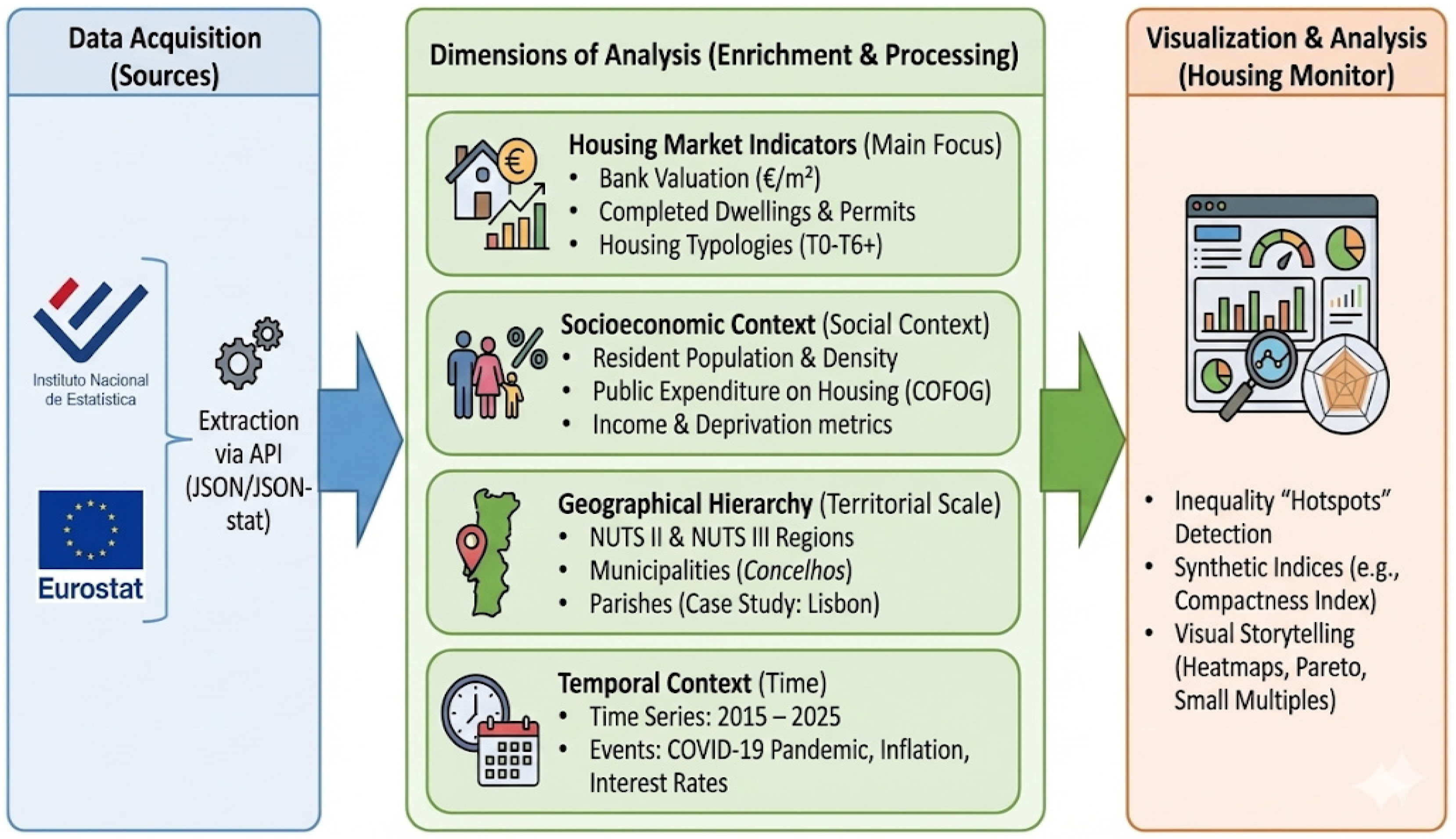
Figure 2.
Example of INE API service invocation used for data extraction.
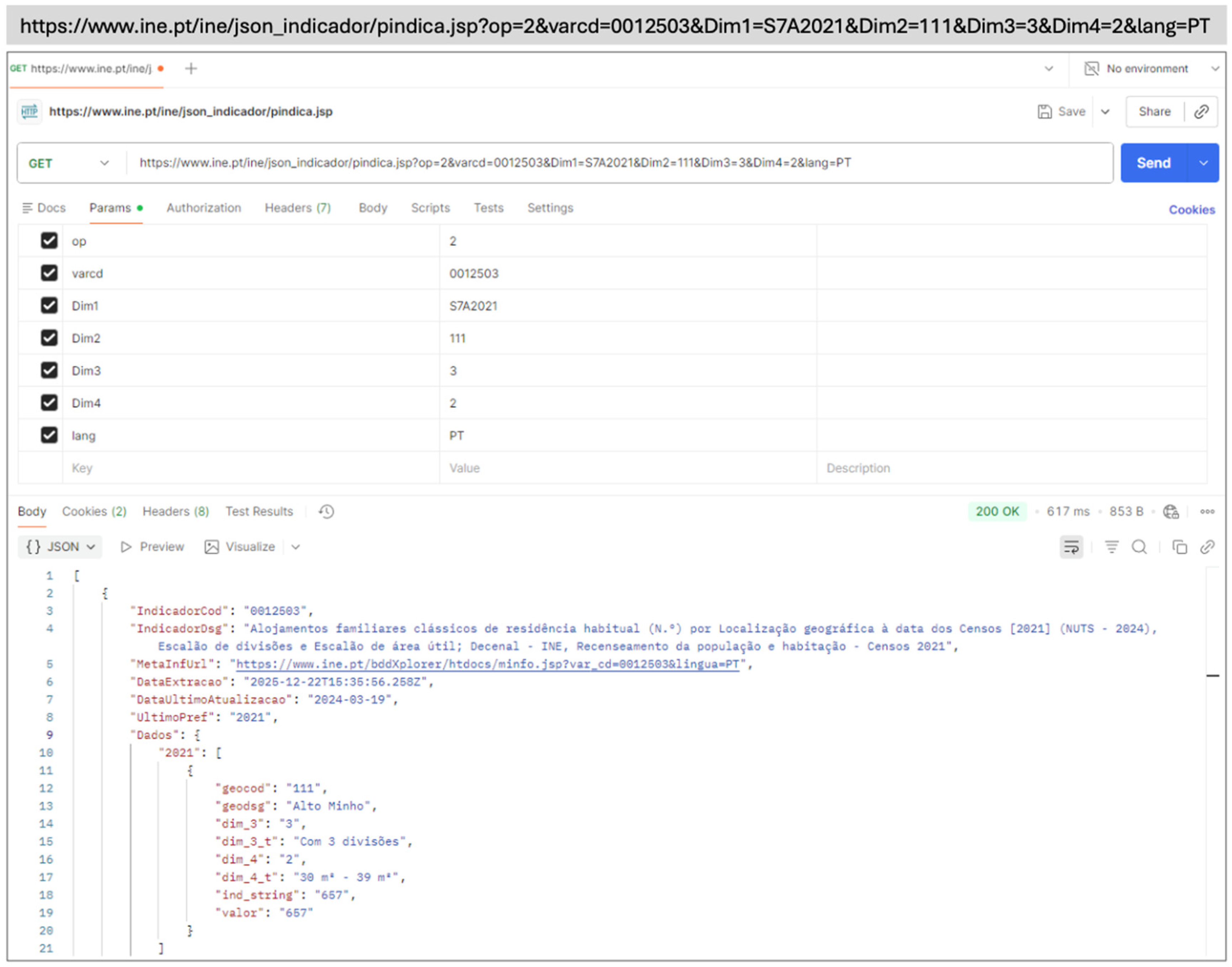
Figure 3.
Example of Eurostat API service invocation used for data extraction.
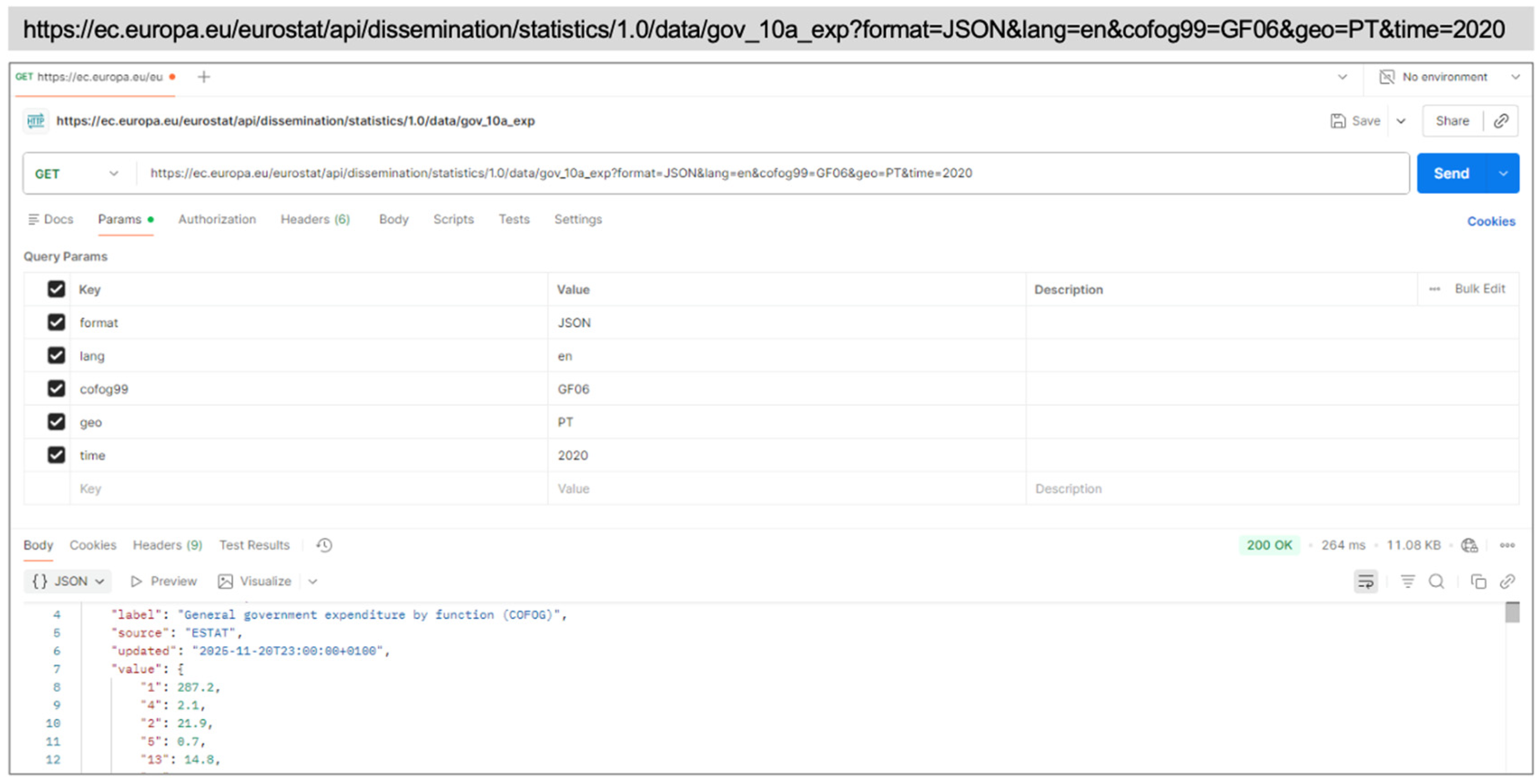
Figure 4.
Monthly Evolution of Median Bank Appraisal Value (2019–2025) by region NUTS2.
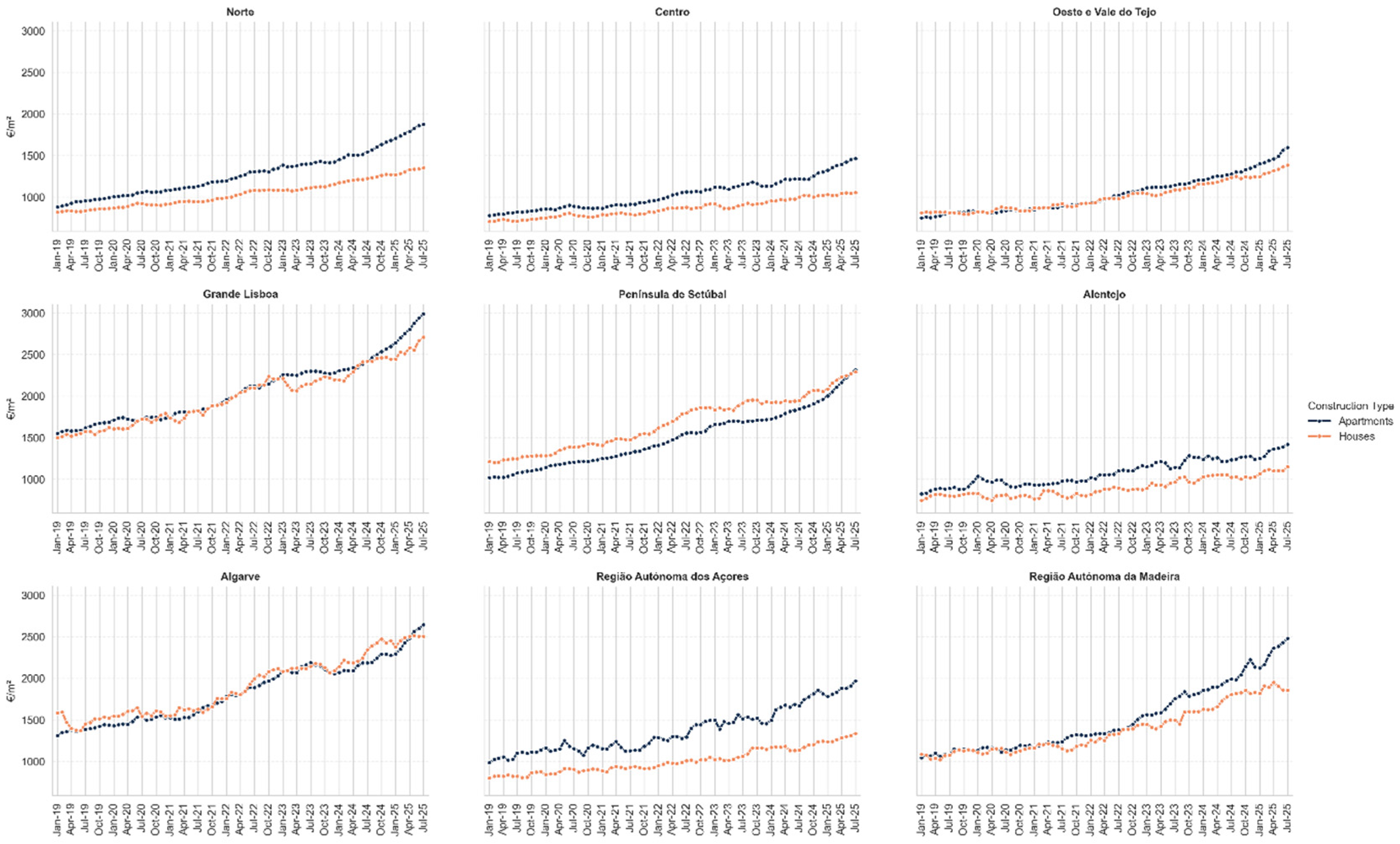
Figure 5.
Price Gap (€/m2) between Apartments and Houses by Region NUTS2 and Year.
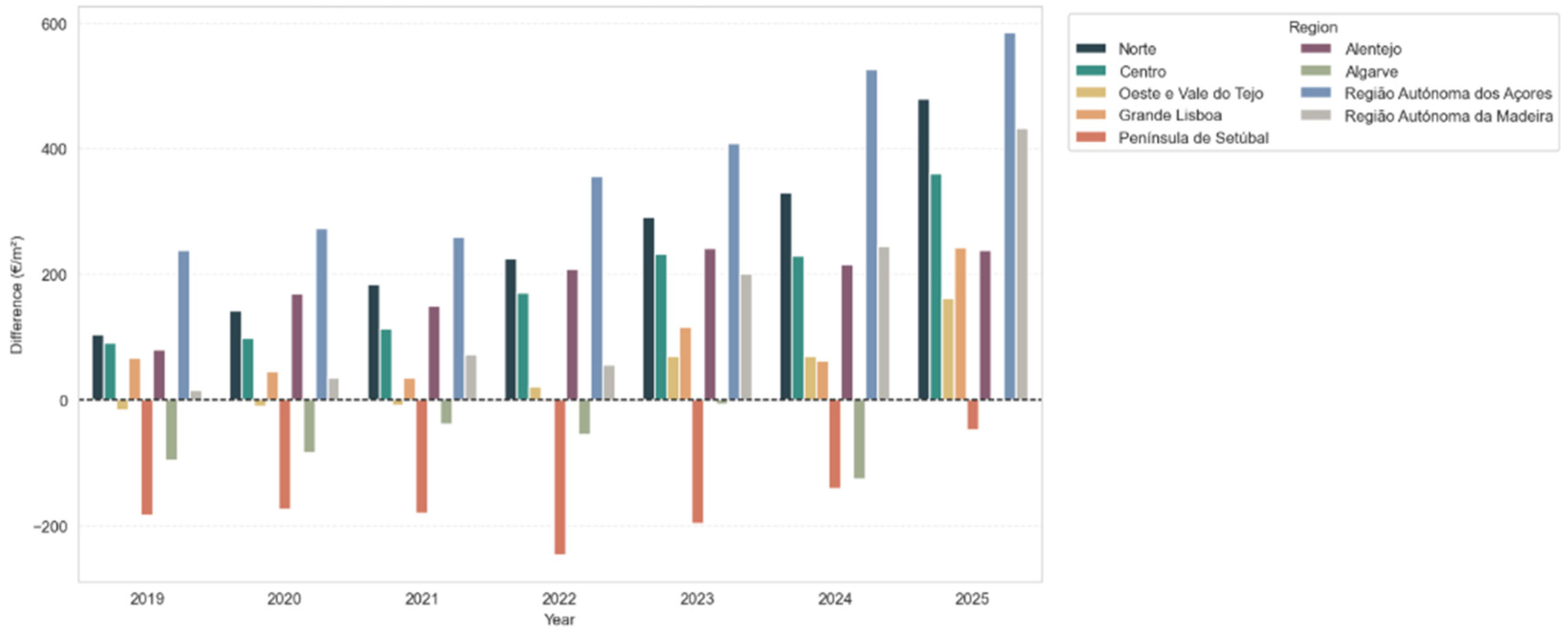
Figure 6.
Evolution of the Gap between the Most Expensive and Cheapest Regions (€/m2).
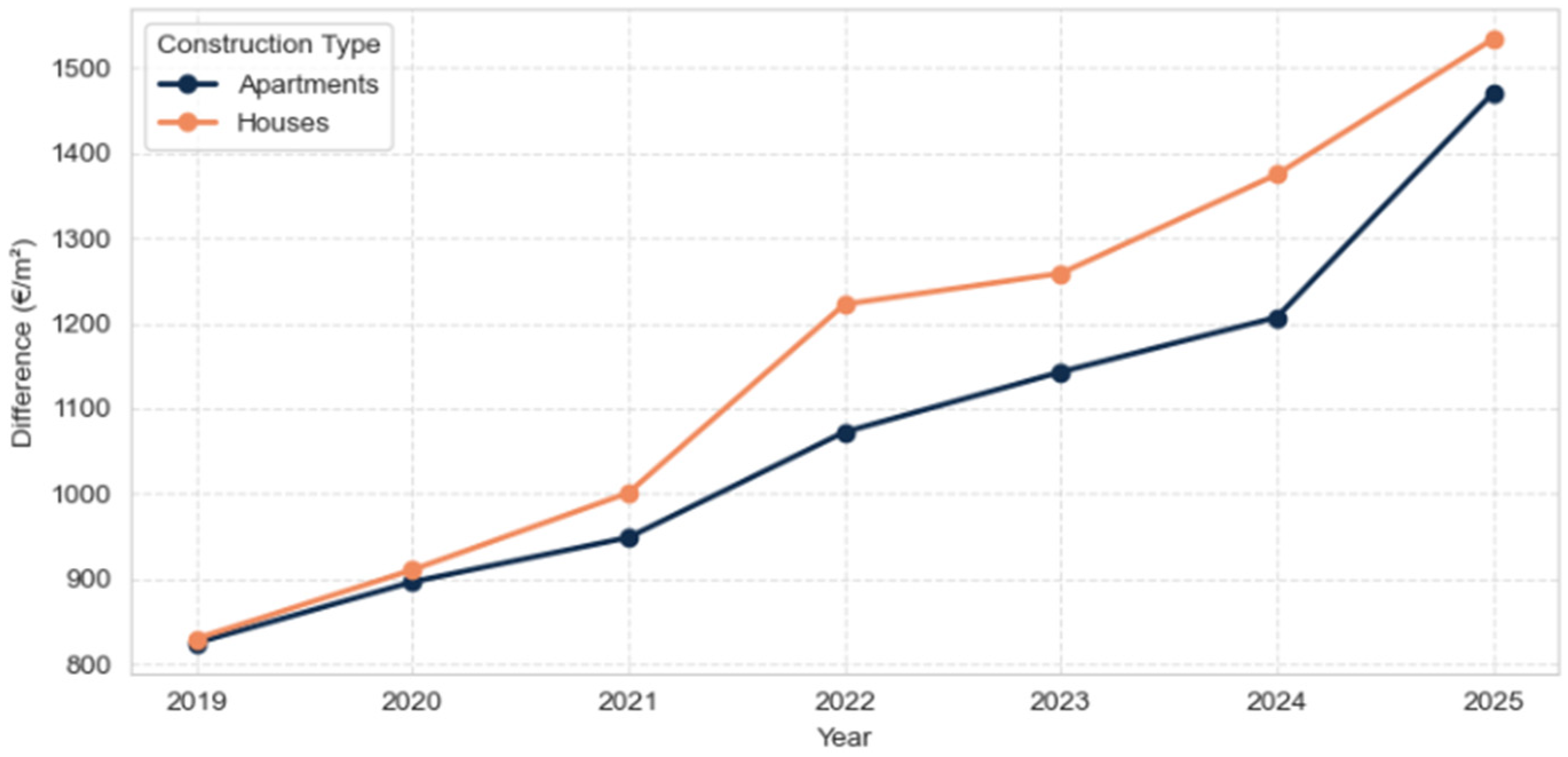
Figure 7.
Heatmap of Median Value (€/m2) for Apartments by region NUTS2.
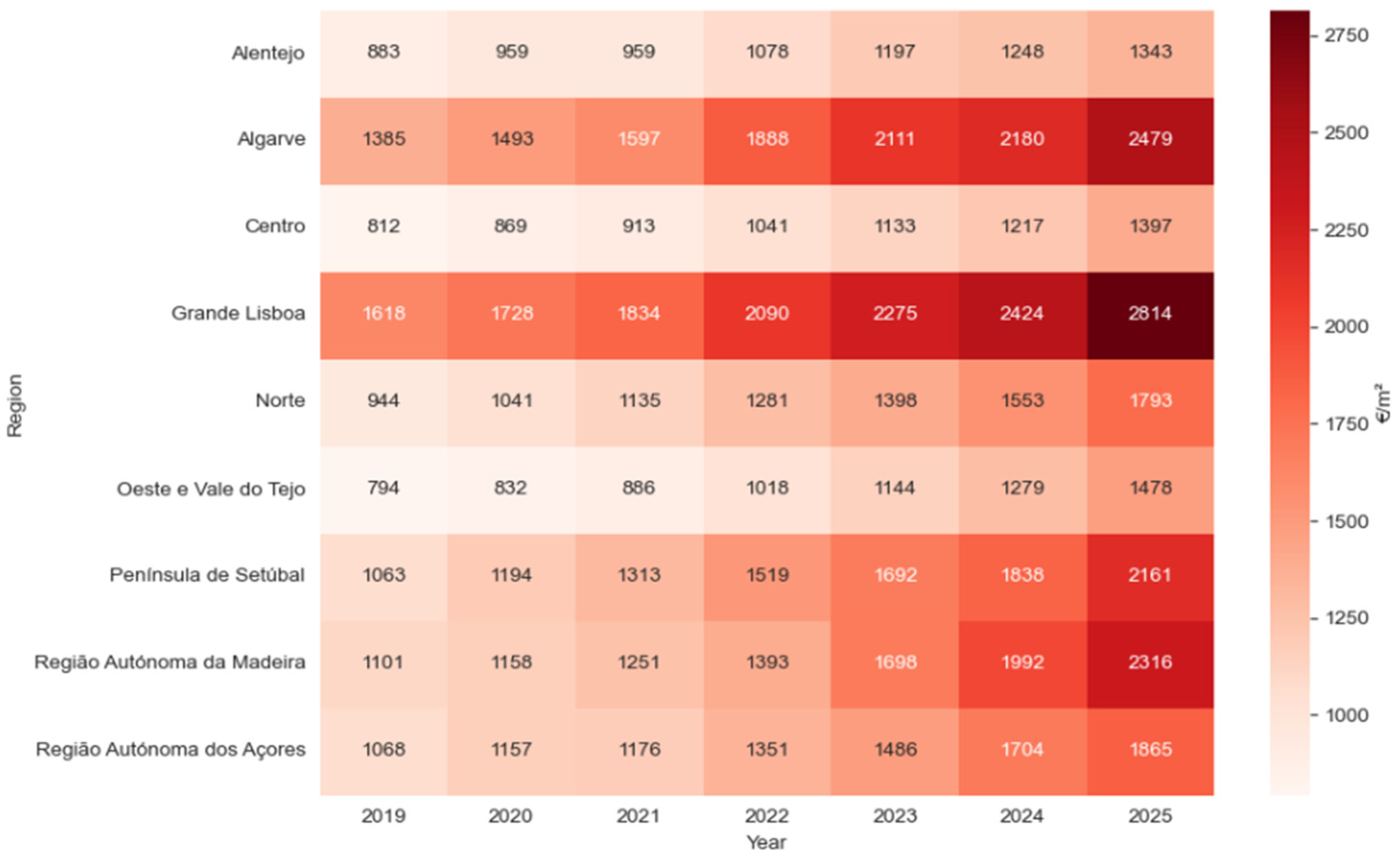
Figure 8.
Regional Comparison of Apartment Valuations (€/m2): 2019 vs 2025.
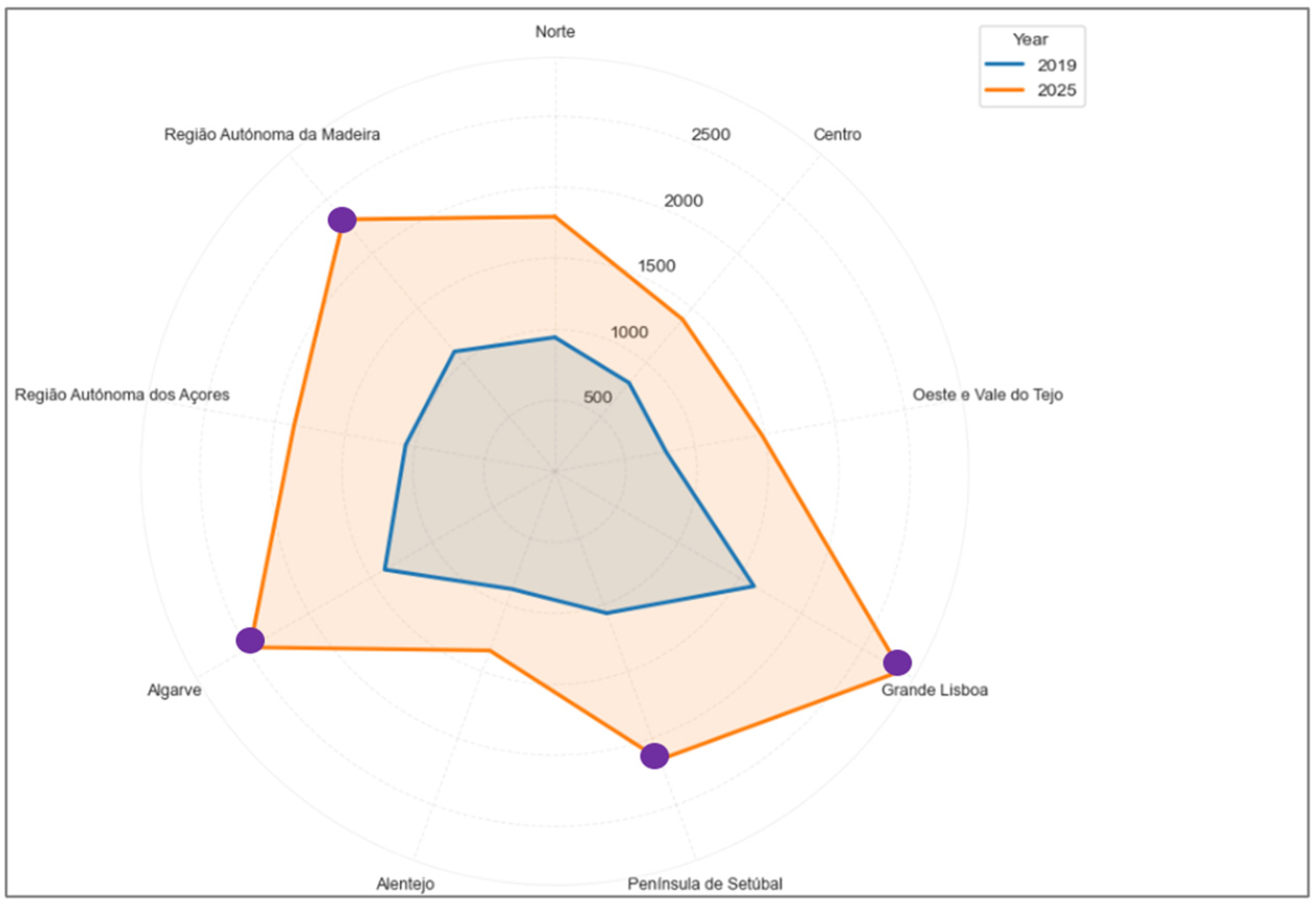
Figure 9.
Evolution of Median Bank Appraisal Value (2019–2025) by Municipalities in Grande Lisboa (€/m2).
Figure 9.
Evolution of Median Bank Appraisal Value (2019–2025) by Municipalities in Grande Lisboa (€/m2).
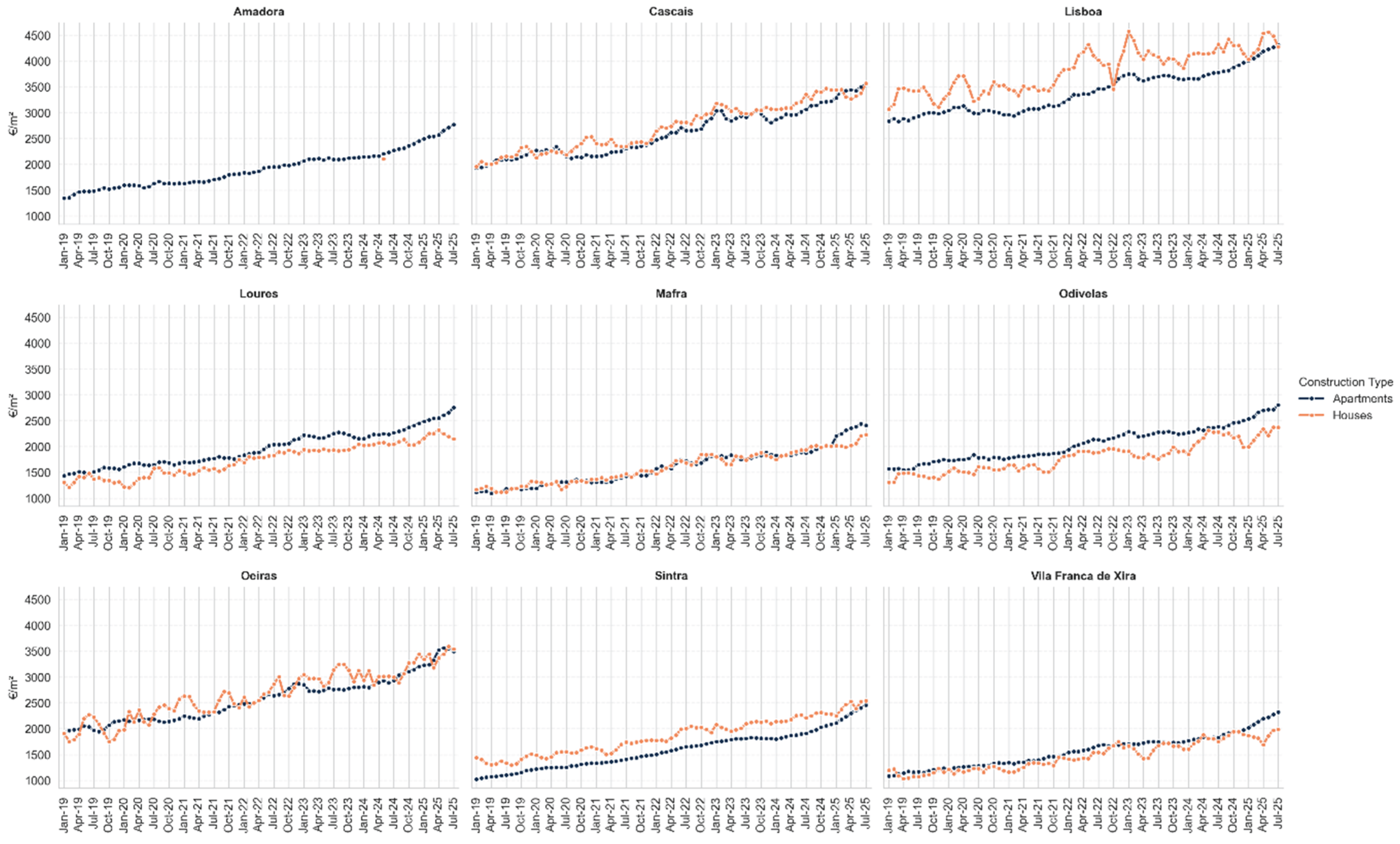
Figure 10.
Spatial distribution of Median Bank Appraisal Value in Grande Lisboa: 2019 (top) vs. 2025 (bottom).
Figure 10.
Spatial distribution of Median Bank Appraisal Value in Grande Lisboa: 2019 (top) vs. 2025 (bottom).
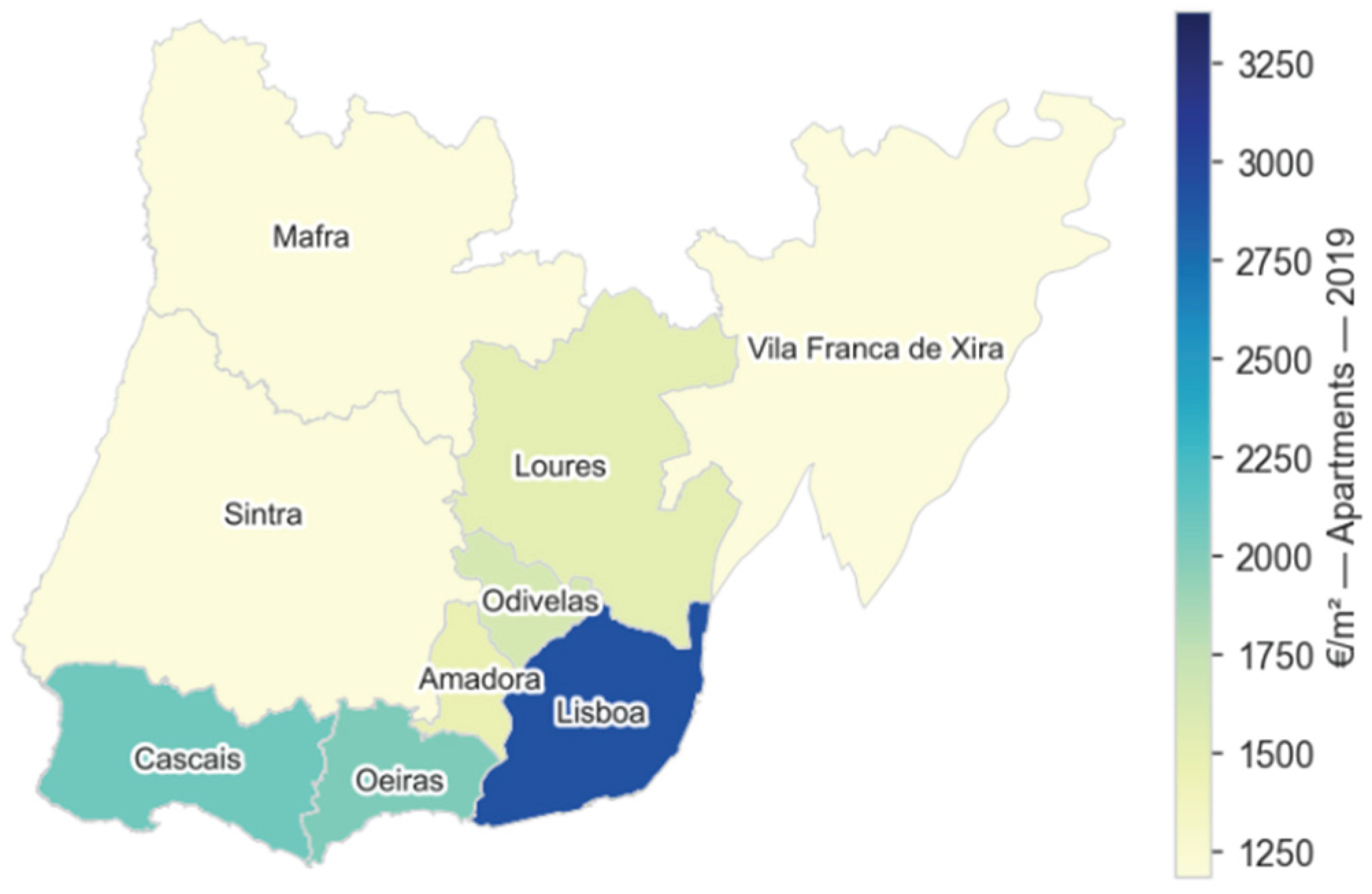
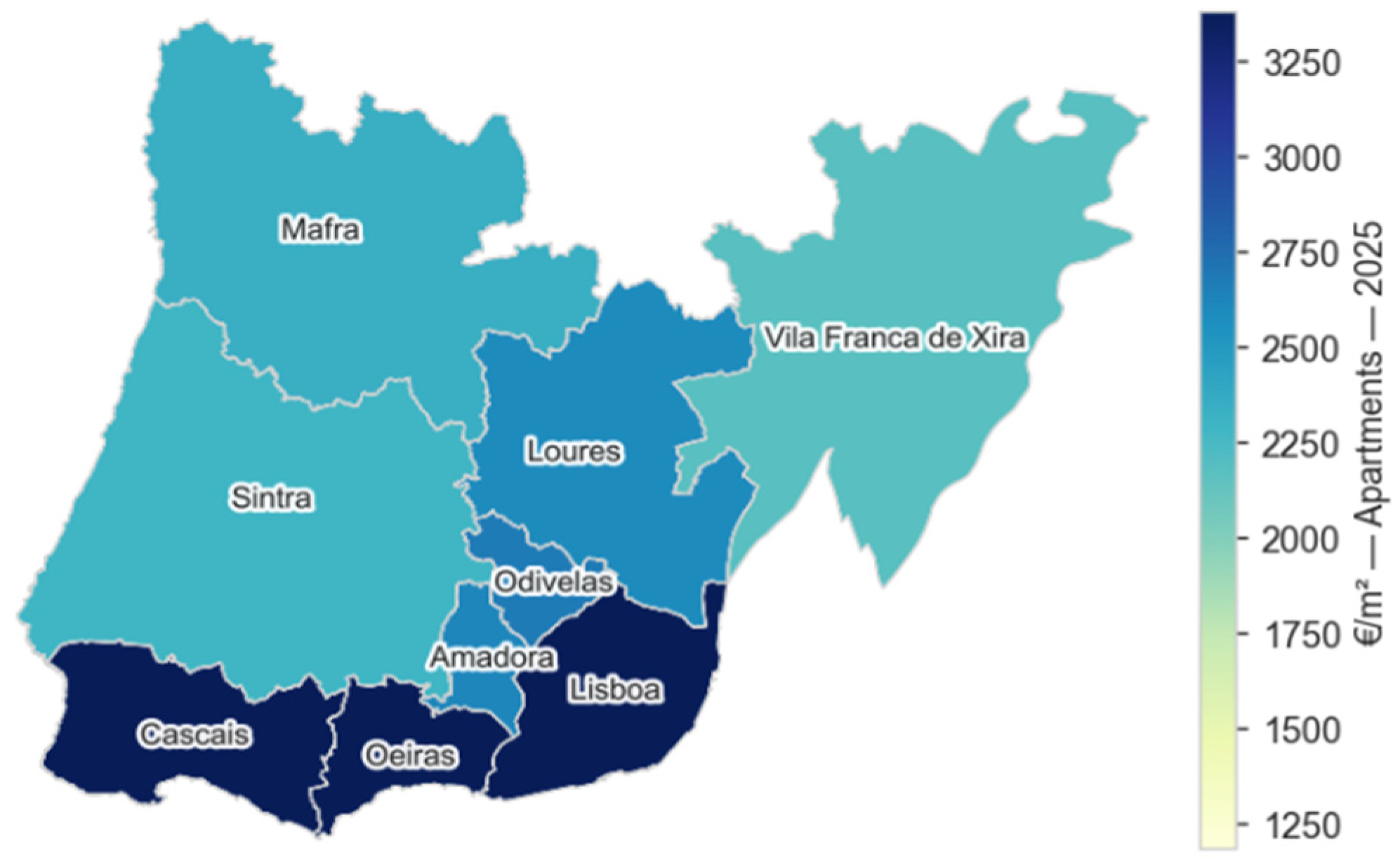
Figure 11.
Evolution of Median Bank Appraisal Value (2019–2025) by Municipalities in Península de Setúbal (€/m2).
Figure 11.
Evolution of Median Bank Appraisal Value (2019–2025) by Municipalities in Península de Setúbal (€/m2).
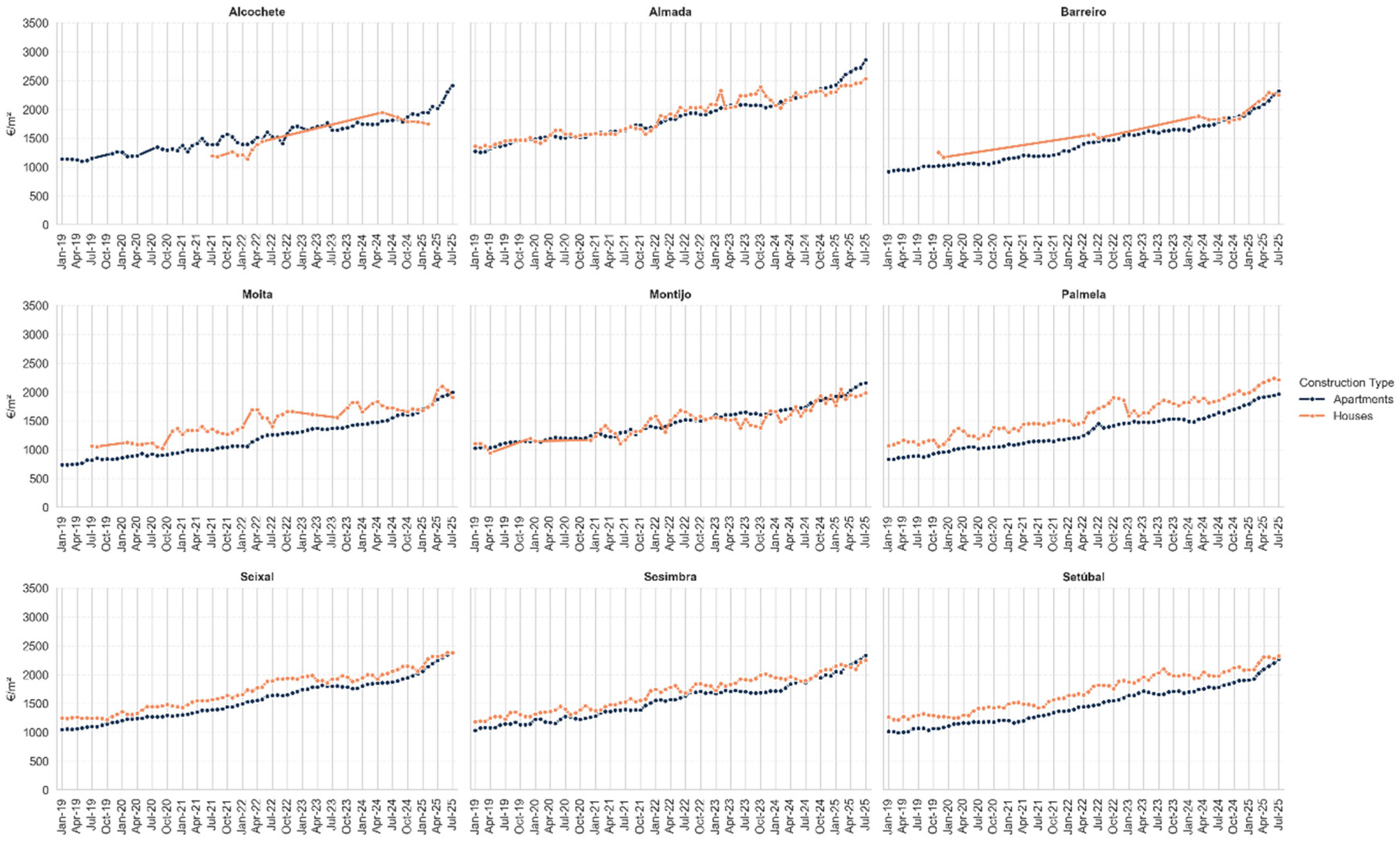
Figure 12.
Spatial distribution of Median Bank Appraisal Value in the Península de Setúbal: 2019 (top) vs. 2025 (bottom).
Figure 12.
Spatial distribution of Median Bank Appraisal Value in the Península de Setúbal: 2019 (top) vs. 2025 (bottom).
Figure 13.
Distribution of Dwellings by Number of divisions and region NUTS2 (2021).
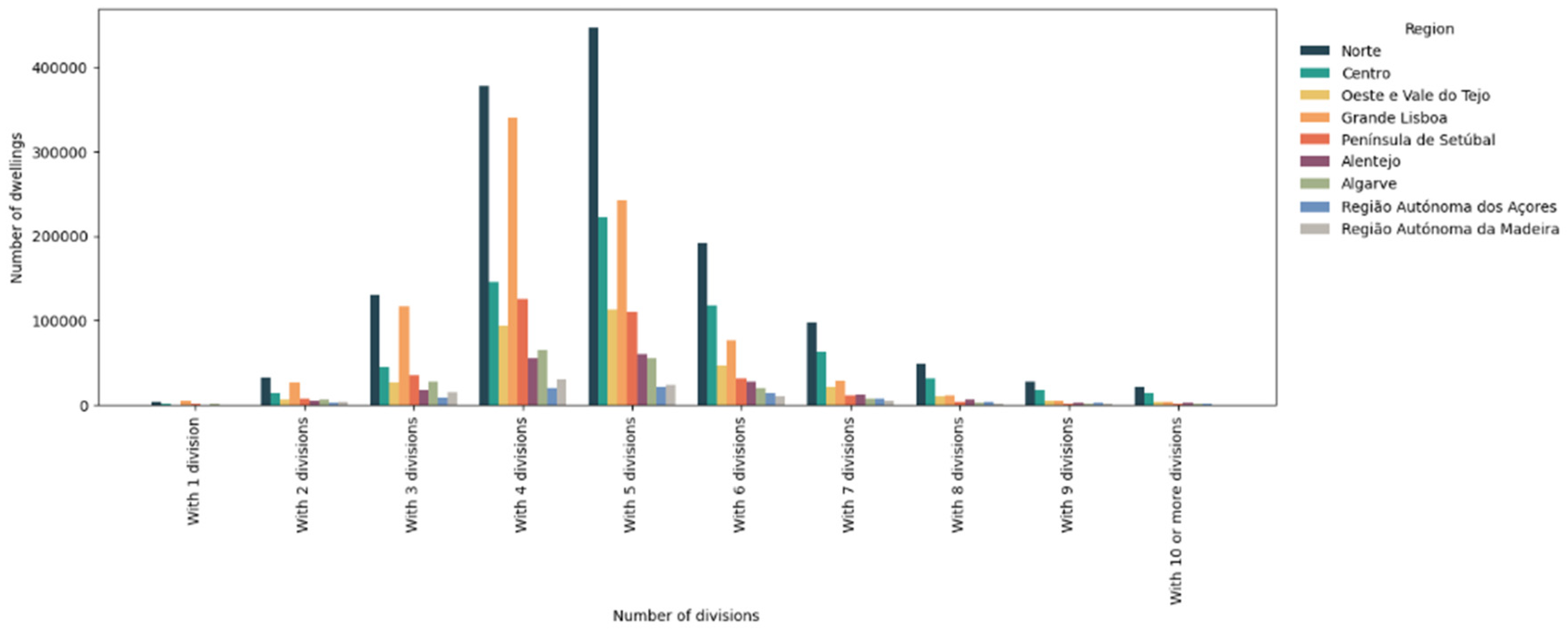
Figure 14.
Distribution of Dwellings by Housing Typology and region NUTS2 (2021).
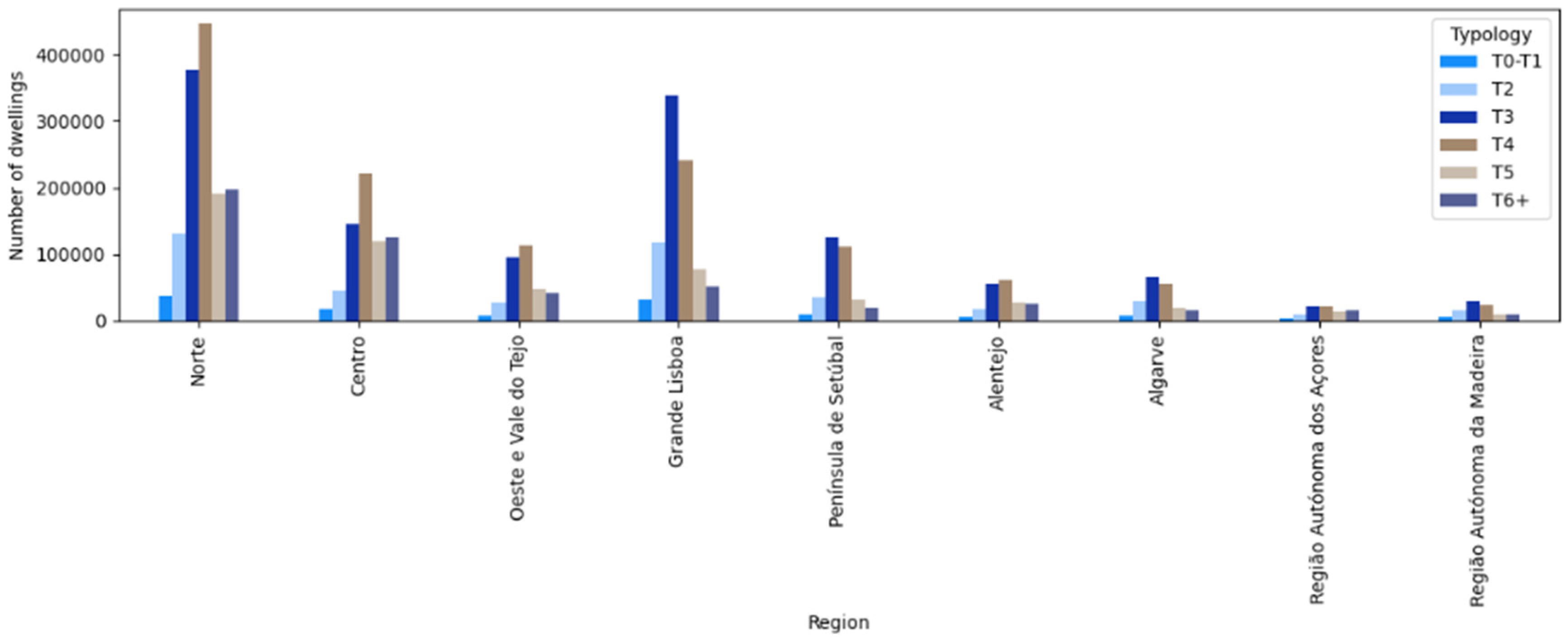
Figure 15.
Housing Typology Share by Region NUTS2 (2021).
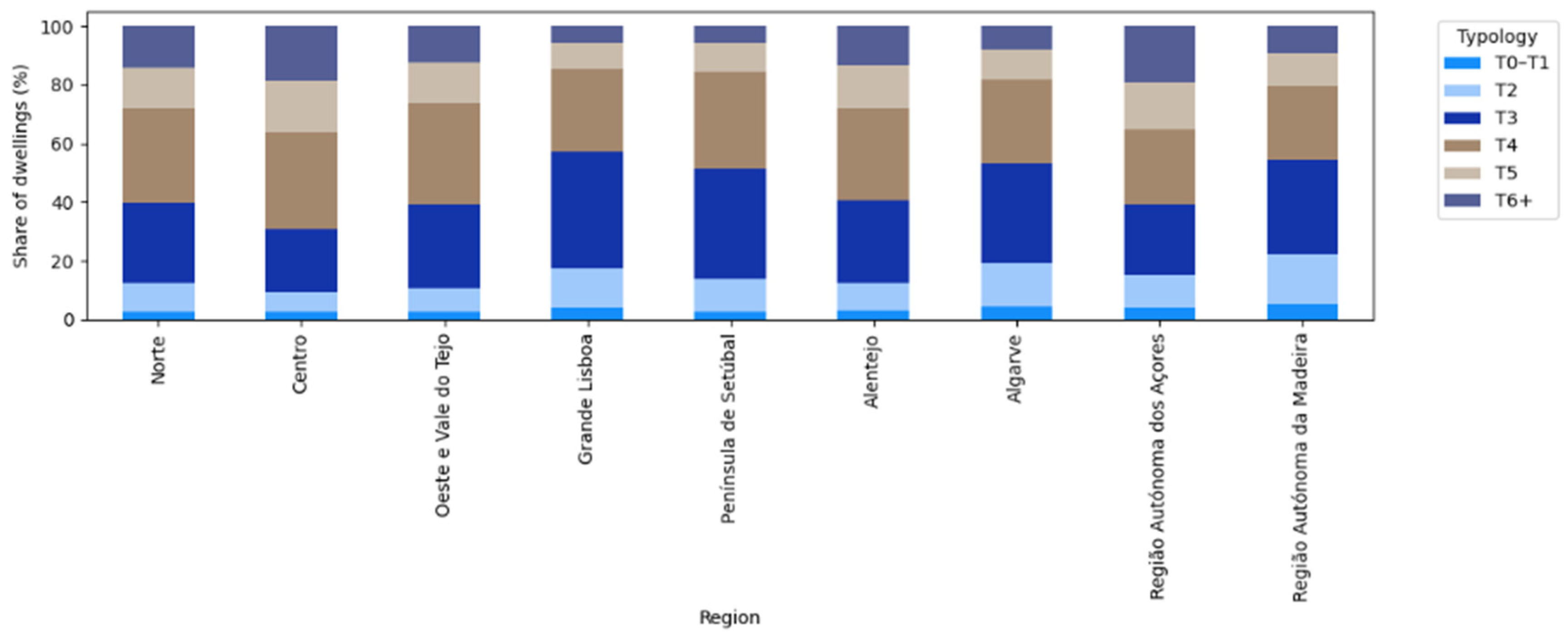
Figure 16.
Distribution of Dwellings by Useful Floor Area by region NUTS2 (2021).
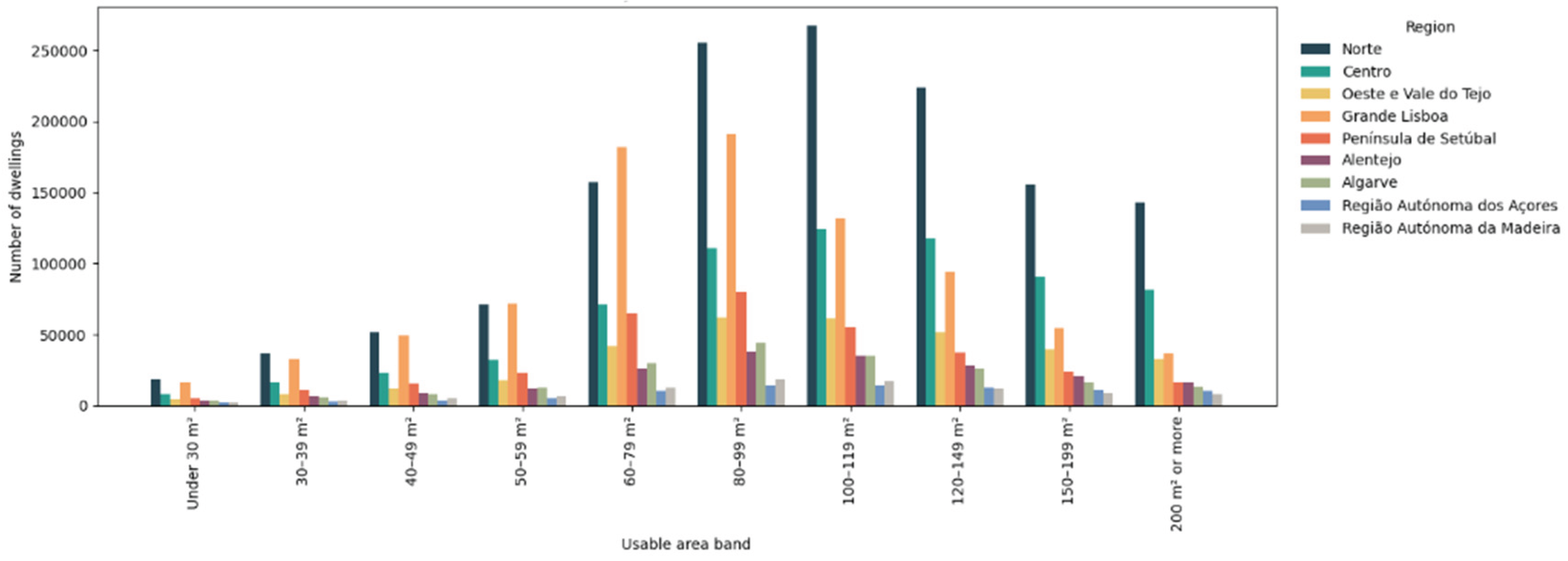
Figure 17.
Average Number of Rooms per Person by Region NUTS2 (2021).
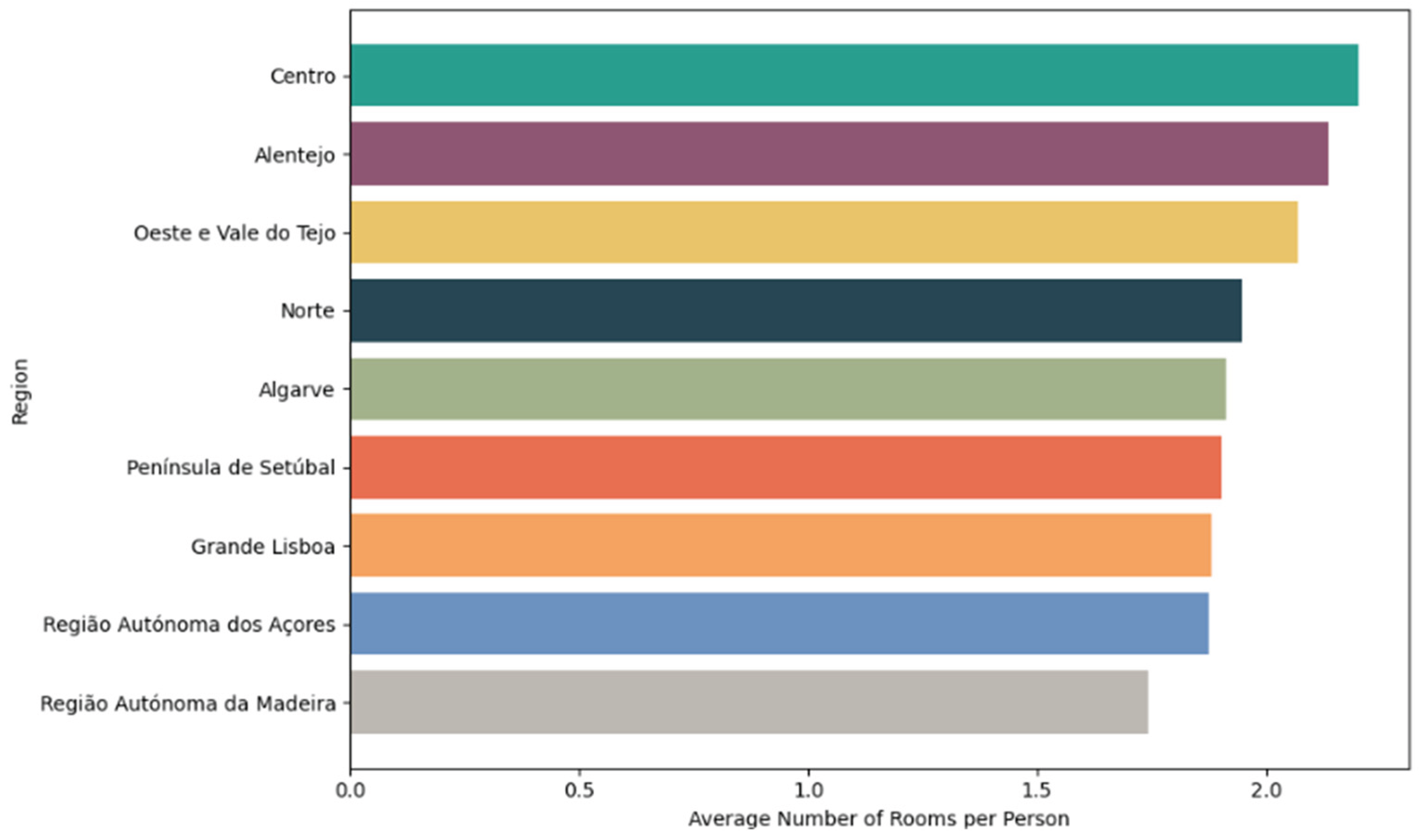
Figure 18.
Dwellings per Thousand Inhabitants by Region NUTS2 (2021).
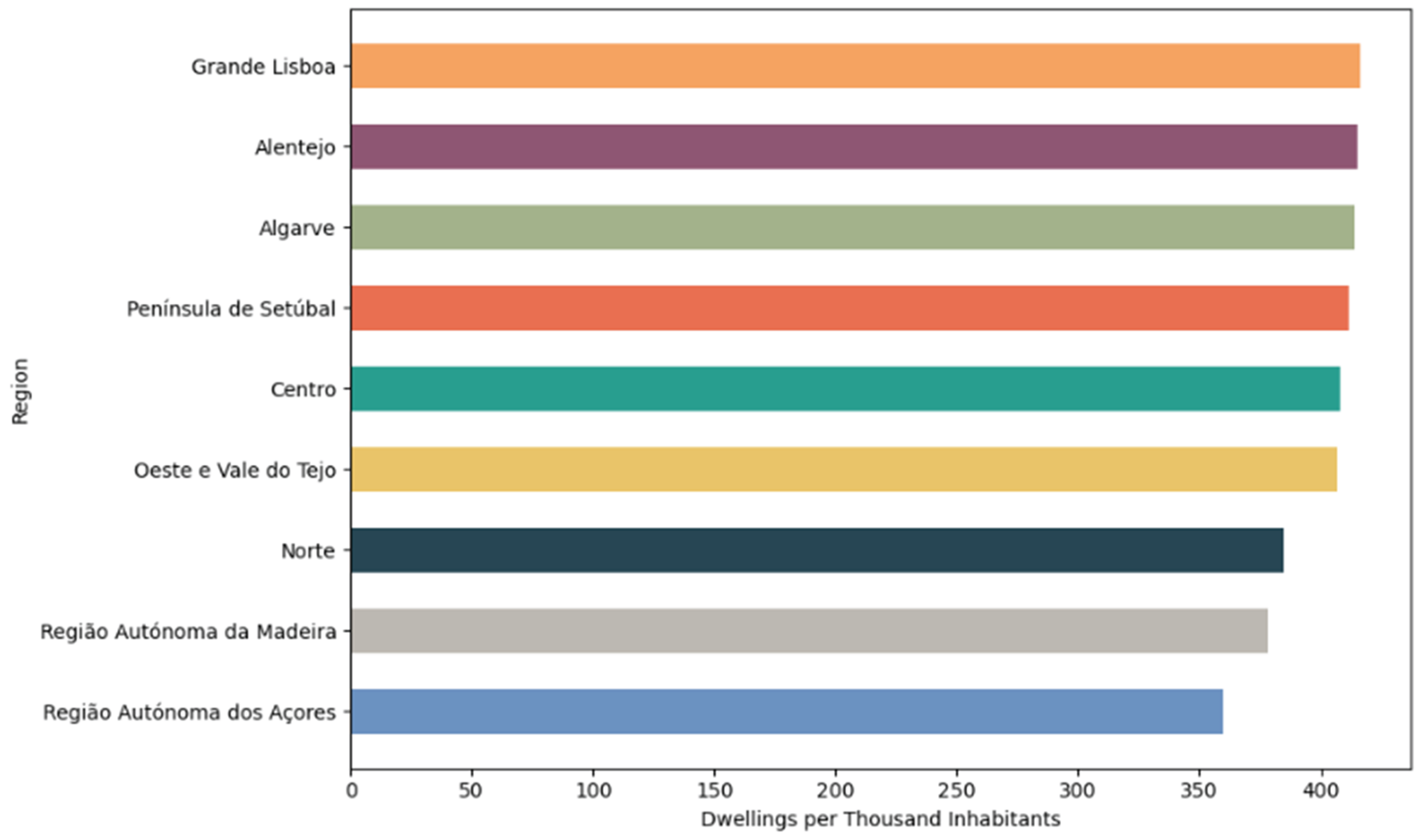
Figure 19.
Normalized Housing Typology Diversity Index by Region NUTS2 (2021).
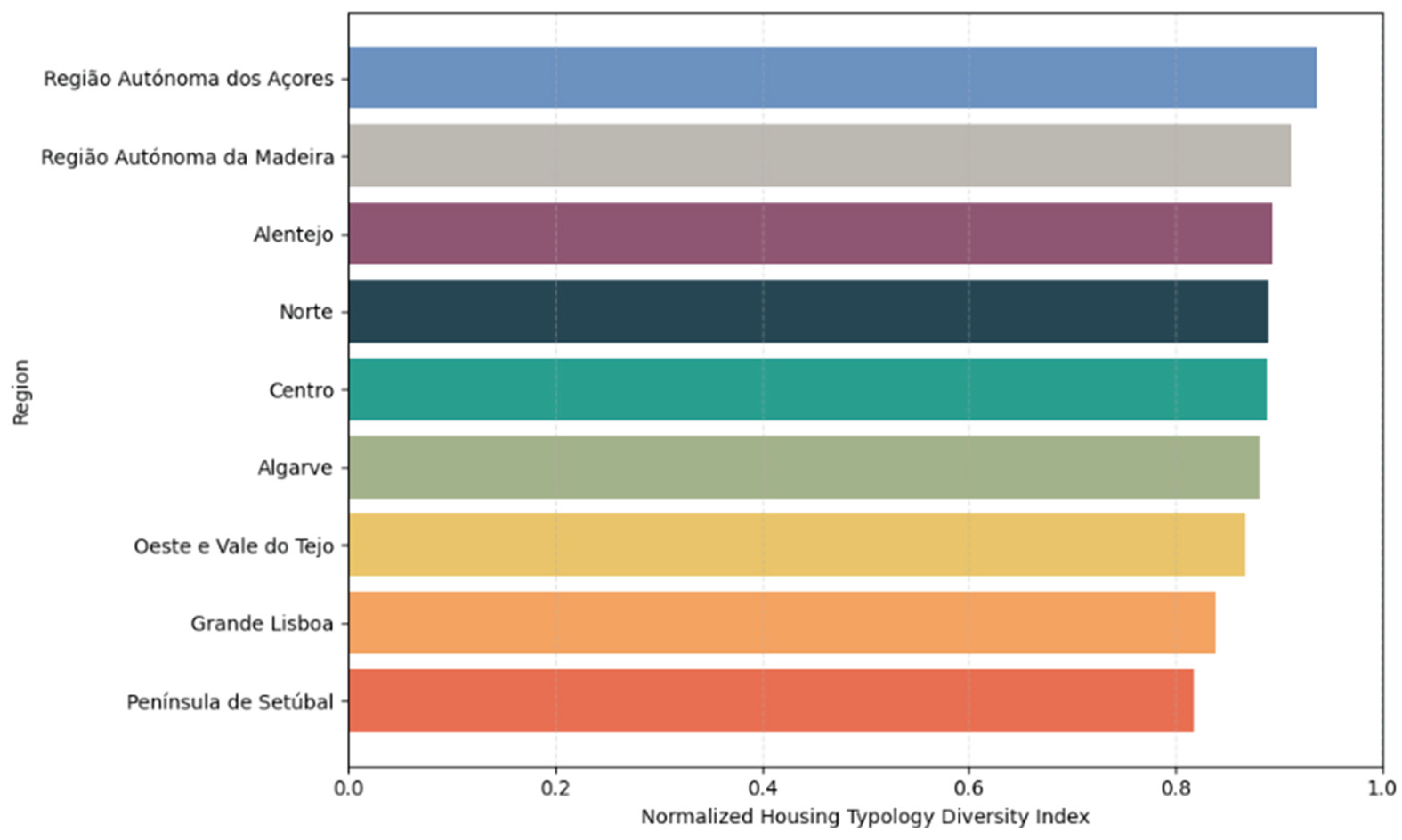
Figure 20.
Spatial distribution of housing typologies in the Municipality of Lisbon (2021).
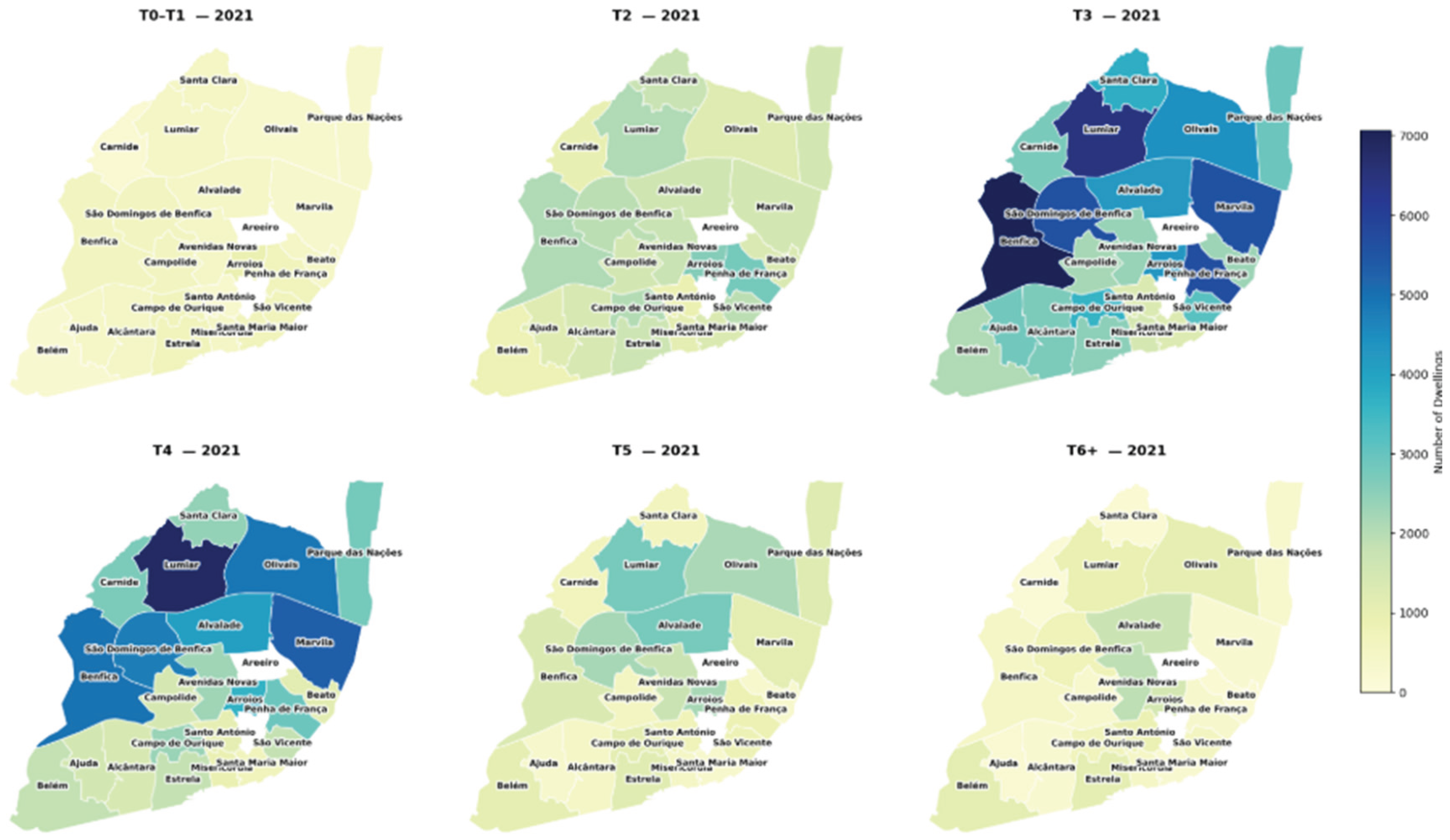
Figure 21.
Distribution of Building Works by Construction Type (2015–2024).
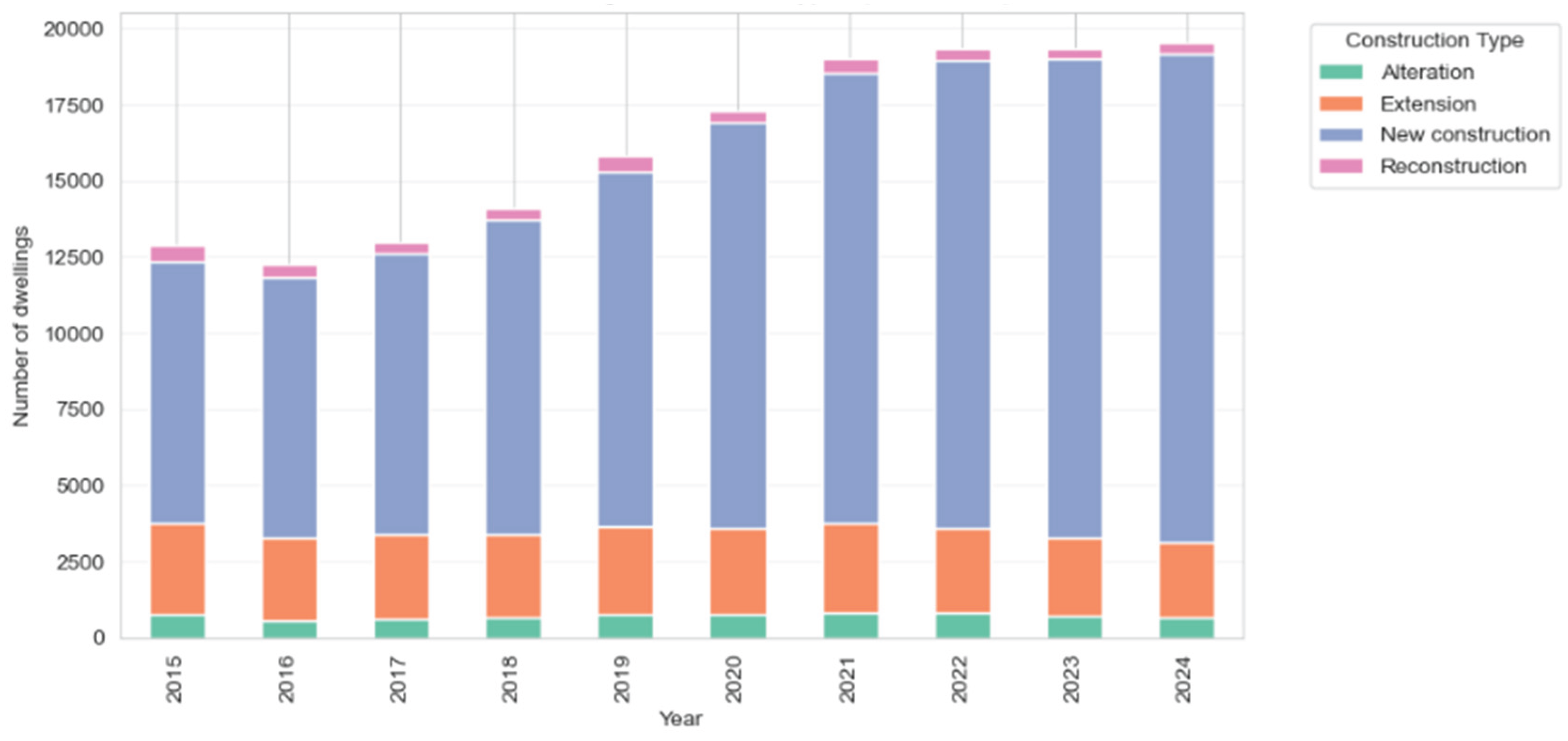
Figure 22.
Pareto Analysis of Completed Dwellings by Region NUTS2 (2019–2024).
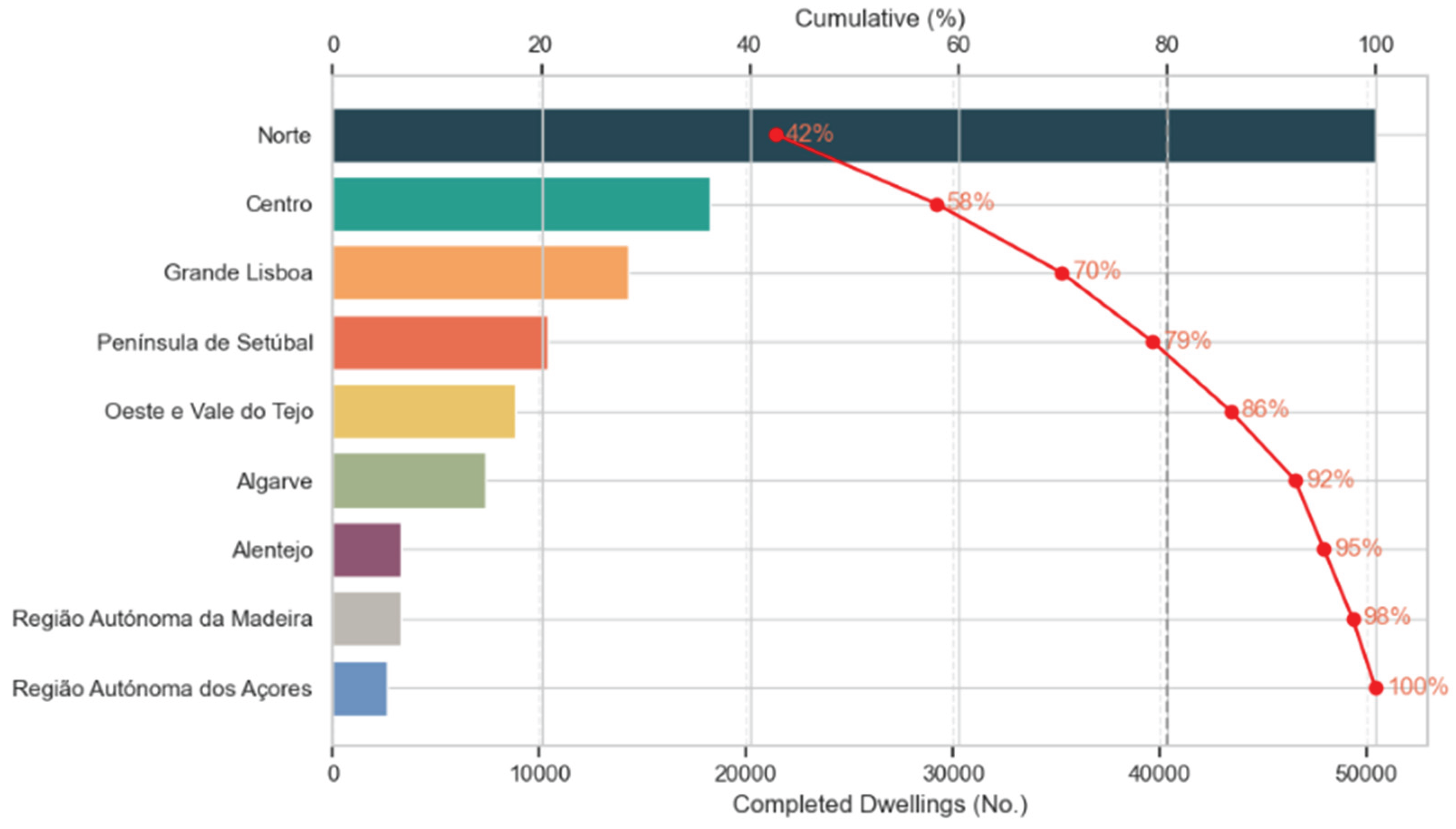
Figure 23.
Number of Completed Dwellings per 1,000 Inhabitants by Region NUTS2 (2019–2024).
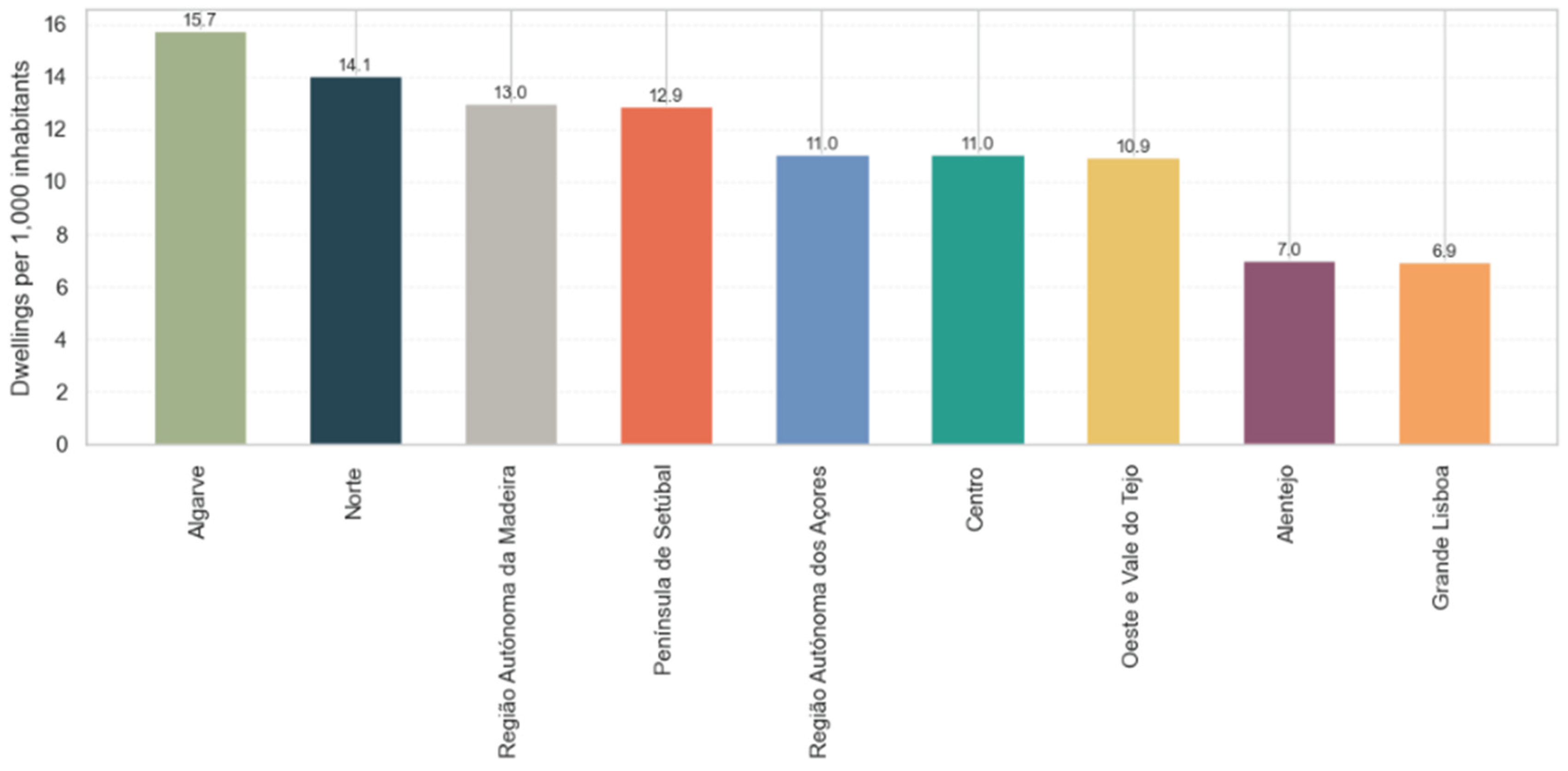
Figure 24.
Year-over-Year Growth Rate of Completed Dwellings by Region NUTS 2(2019-2024).
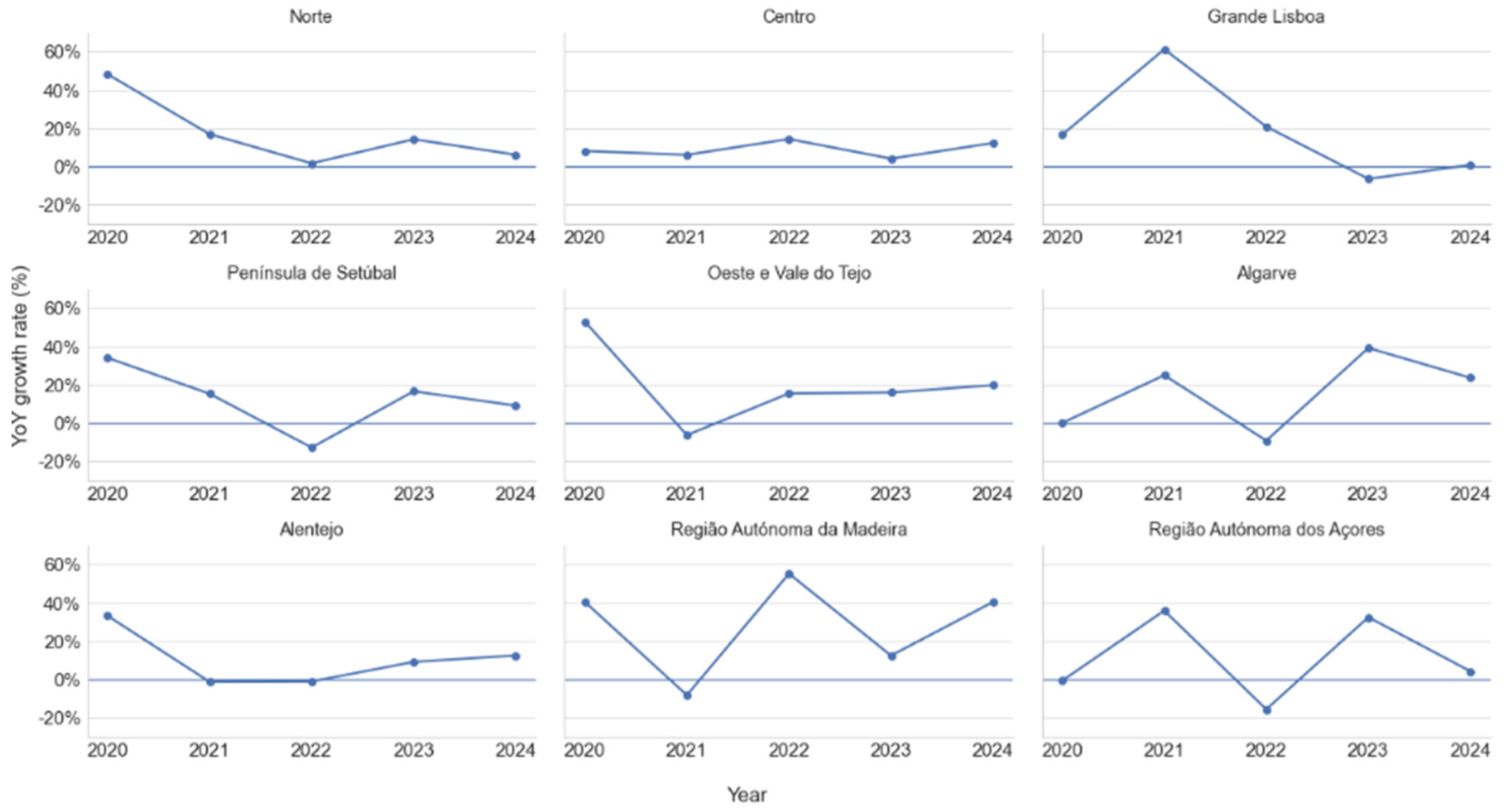
Figure 25.
Heatmap of Completed Dwellings by Year and Region.
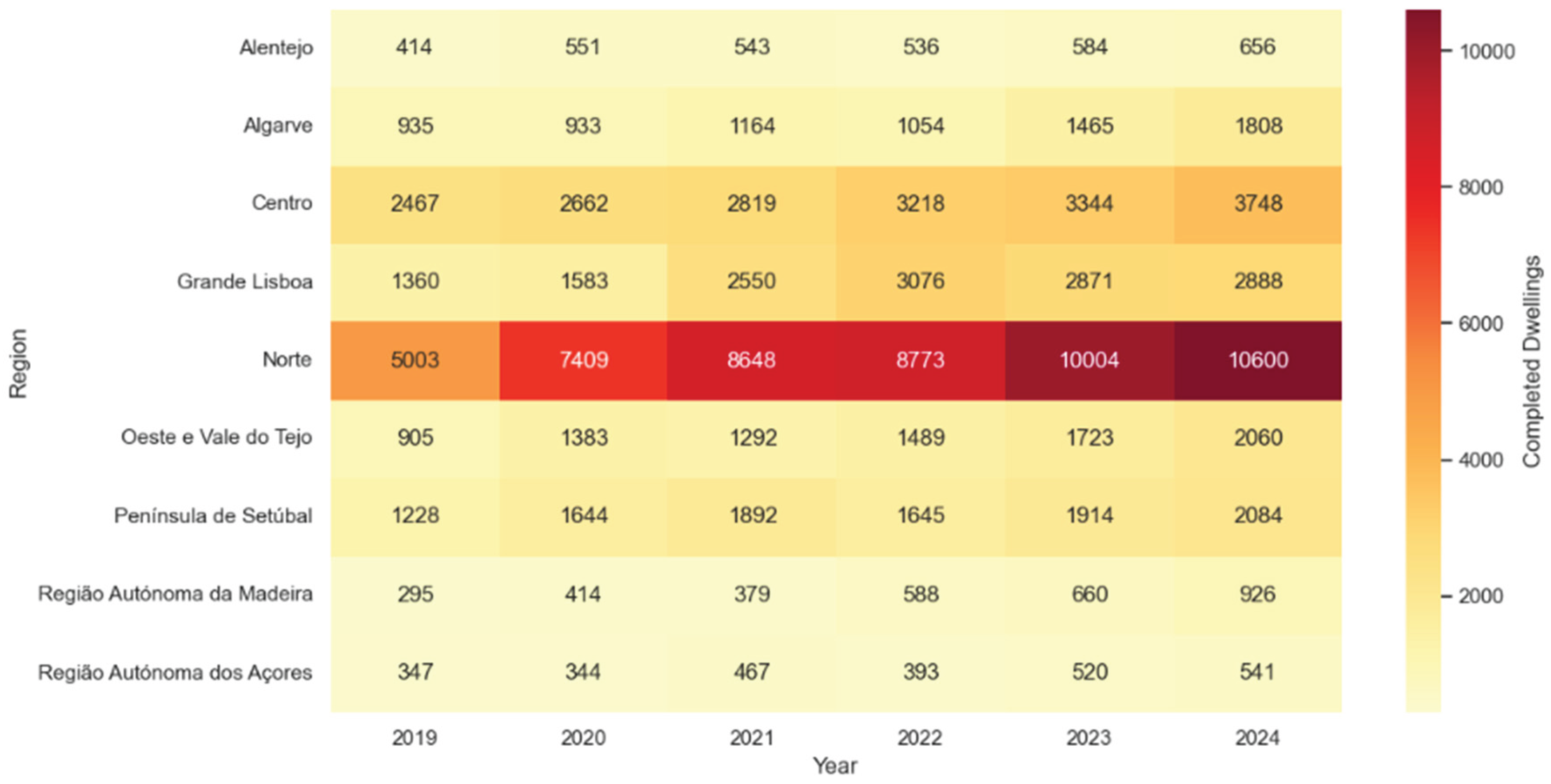
Figure 26.
Temporal Evolution of Completed Dwellings in Greater Lisbon Municipalities.
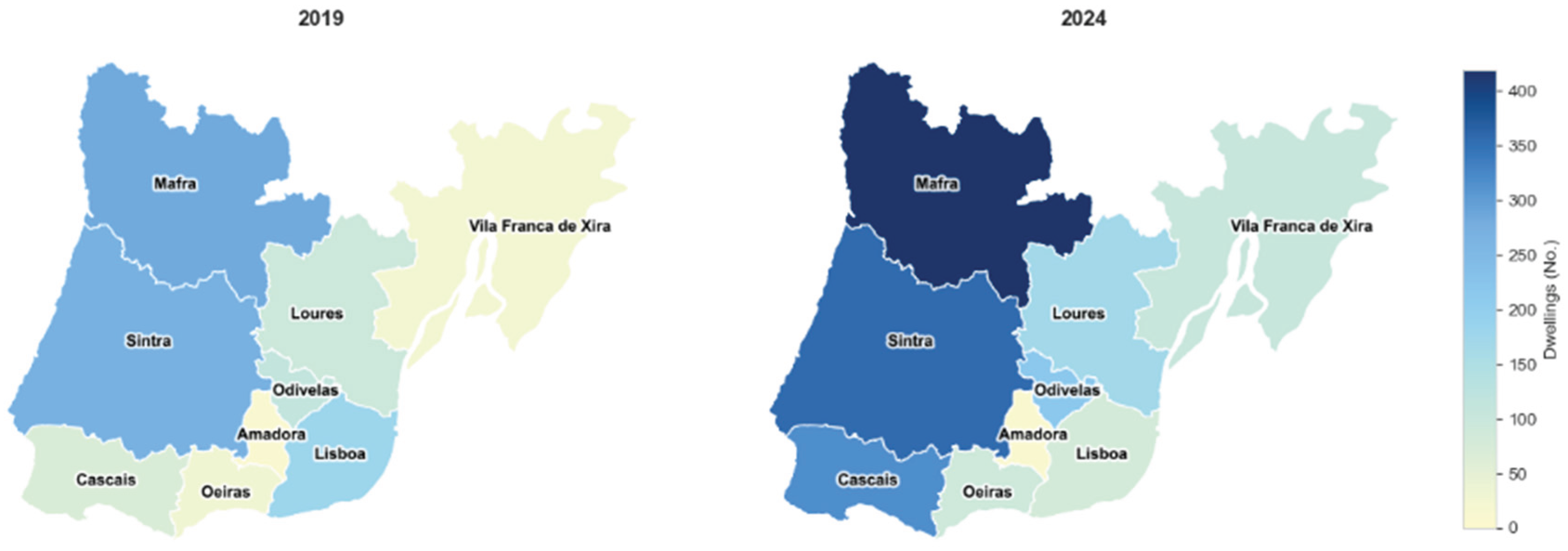

Table 1.
Housing Inequality Dataset Description.
| Variable Name | Source | Measurement | Description |
|---|---|---|---|
| Median Bank Valuation (Cod: 0012248) |
INE | €/m2 | The median value per square meter of dwellings is valued for mortgage purposes. Serves as the primary proxy for market prices. Detailed level: Geography (Municipality) and Time (2019-2025) |
| Number of Completed Dwellings (Cod: 0013255) |
INE | Number | Number of residential units completed in new constructions or rehabilitations during the reference year. Detailed level: Geography (Municipality) and Time (2015-2025) |
| Number of Building Permits (Cod: 0012778) |
INE | Number | Leading indicator of future supply, representing the number of licenses issued for new work. Detailed level: Geography (Municipality) and Time (2019-2025) |
| Number of Classic Dwellings of Habitual Residence (Cod: 0012503) |
INE | Number | Number of conventional family dwellings used as usual residence, by geographic location. Also named housing stock. Detailed level: Geography (NUTS 2024), Time (Census 2021), Typology of Number of Rooms (T0-T6+), and useful floor area |
| Number of Habitable Rooms on Occupied Dwellings (Cod: 0012853) |
INE | Number | Total number of rooms intended for habitation in occupied dwellings within a given geographic area, reflecting housing capacity and living conditions of the resident population. Detailed level: Geography (Municipality) and Time (Census 2021). |
| Resident Population (Cod. 13267) |
INE | Number | Total number of individuals usually residing in each geographic area at the reference date, serving as a key demographic indicator for territorial analysis and socio-economic planning. Detailed level: Geography (Municipality) and Time (Census 2021) |
| Housing Expenditure (GF06) | Eurostat | %GDP | General government expenditure on "Housing and community amenities" (COFOG), allowing EU-wide comparison |
Disclaimer/Publisher’s Note: The statements, opinions and data contained in all publications are solely those of the individual author(s) and contributor(s) and not of MDPI and/or the editor(s). MDPI and/or the editor(s) disclaim responsibility for any injury to people or property resulting from any ideas, methods, instructions or products referred to in the content. |
© 2026 by the authors. Licensee MDPI, Basel, Switzerland. This article is an open access article distributed under the terms and conditions of the Creative Commons Attribution (CC BY) license (http://creativecommons.org/licenses/by/4.0/).
Copyright: This open access article is published under a Creative Commons CC BY 4.0 license, which permit the free download, distribution, and reuse, provided that the author and preprint are cited in any reuse.


