
Submitted:
11 January 2026
Posted:
12 January 2026
You are already at the latest version
Abstract
This study numerically investigates how welding parameters influence the dynamic stability of medical equipment frames. A set of 30 frame models with varying weld bead sizes and heat inputs was analyzed using finite element modal and harmonic response analysis. The first natural frequency varied between 62 and 91 Hz depending on welding conditions, leading to up to 2.1-fold differences in resonance amplification factors. The findings indicate that welding design plays a critical role not only in static strength but also in dynamic performance and service life of medical equipment.
Keywords:
medical equipment frames
; welding parameters
; dynamic stability
; modal analysis
; finite element modeling
1. Introduction
Medical equipment frames, including imaging gantries, patient support systems and mobile diagnostic platforms, are required to maintain high structural stiffness, dimensional accuracy and long-term reliability under repeated operational and transport loads [1,2]. In such systems, dynamic stability directly affects imaging precision, positioning accuracy, and fatigue life, rather than merely influencing user comfort [3]. As medical devices continue to evolve toward lighter weight and more compact configurations, welded frame structures remain widely adopted because of their manufacturability, structural efficiency and cost effectiveness [4]. However, the vibration behavior of welded frames is highly sensitive to welding design choices and local joint characteristics, which cannot be fully characterized by nominal geometry alone [5]. Recent studies on medical devices and operational machinery have demonstrated that vibration performance is strongly influenced by the interaction between structural layout, joint characteristics, and dynamic excitation [6]. Investigations on rotating and vibration-sensitive medical structures have shown that residual unbalance effects and local stiffness variation can significantly amplify dynamic response and degrade vibration performance if not properly addressed at the design stage [7]. These findings indicate that vibration control in medical equipment frames should be considered as a structural design problem rather than treated solely through post-assembly tuning or operational mitigation.
Welding parameters affect structural dynamics through several coupled mechanisms. Welding heat input governs the thermal cycle experienced by the material and determines the distribution of residual stress and geometric distortion, which in turn modifies joint stiffness and effective boundary conditions [8]. At the same time, weld bead geometry—including reinforcement height, throat thickness, and toe profile—directly alters local stiffness and load transfer paths. These factors influence both global modal properties and frequency response characteristics. Experimental and numerical studies have shown that treating welded joints as ideal rigid connections can lead to noticeable errors in predicted natural frequencies and mode shapes, especially for frame-like structures with multiple welded connections [9,10]. As a result, joint-level modeling approaches that account for weld geometry and local compliance have been proposed to improve the accuracy of dynamic predictions. Progress in welding process simulation has further enabled more realistic representation of welding-induced effects. Refined heat source models and reduced-order thermo-mechanical frameworks allow efficient prediction of residual stress and deformation fields while maintaining acceptable computational cost [11]. These developments make it feasible to incorporate welding-induced characteristics into subsequent dynamic analyses at the structural level. In parallel, advances in frequency-domain fatigue assessment of welded structures have emphasized the importance of accurately representing weld details when operational excitation overlaps with structural resonances. Under such conditions, vibration-induced stress concentration at weld toes may dominate fatigue damage accumulation, making dynamic analysis essential for reliable service life evaluation [12].
Manufacturing-related treatments, such as vibratory stress relief and post-weld conditioning, have also been revisited using modern experimental and numerical tools. Recent studies indicate that these treatments can modify modal parameters and reduce variability associated with residual stresses, suggesting that the dynamic properties of welded frames may evolve during manufacturing or conditioning processes [13]. In addition, vibration-based modal analysis has been explored as a diagnostic tool for weld quality, demonstrating that small changes in joint integrity can be detected through shifts in natural frequencies and response amplitudes [14]. These observations further support the view that welding decisions influence dynamic behavior across multiple stages, from process physics to operational performance. Despite these advances, several limitations remain when medical equipment frames are considered. Many existing studies focus on static strength, residual stress reduction, or microstructural evolution, while the direct relationship between welding parameter variations and system-level dynamic response is often investigated using simplified joints or non-medical structures [15]. As a result, their conclusions are difficult to translate into practical design guidance for medical frames. Moreover, most investigations examine only a limited number of welding conditions, which restricts the ability to evaluate sensitivity and interaction effects between weld bead geometry and heat input [16]. Full-scale experimental testing of medical equipment frames is costly and time-consuming, further limiting systematic exploration of welding parameter spaces.
In this study, we conduct a numerical investigation of welding parameter effects on the dynamic stability of medical equipment frames. A set of thirty finite element frame models is established by systematically varying weld bead size and welding heat input within practical manufacturing ranges while maintaining identical global geometry. Modal analysis is performed to quantify changes in natural frequencies and mode shapes, followed by harmonic response analysis to evaluate resonance amplification under representative operational excitation. Through comparative analysis across the model set, the study clarifies how welding parameters influence dynamic behavior, identifies dominant factors controlling resonance risk, and provides quantitative support for welding-aware dynamic design of medical equipment frames, where vibration performance must be addressed at the design stage to ensure long-term reliability.
2. Materials and Methods
2.1. Samples and Study Object Description
The study focused on a welded steel frame used as a supporting structure in medical equipment, such as imaging and positioning devices. Thirty numerical frame samples were established for analysis. All samples shared the same global geometry, material properties, and boundary conditions, while welding-related parameters were varied between samples. The base material was structural steel commonly applied in medical device frames, with an elastic modulus of 210 GPa, a Poisson’s ratio of 0.30, and a density of 7850 kg·m-3. Welded joints were placed at primary load-transfer locations of the frame, where changes in joint stiffness are expected to influence dynamic behavior. The ranges of weld bead size and heat input were selected according to typical manufacturing practice to reflect realistic fabrication conditions.
2.2. Experimental Design and Control Configuration
A parametric numerical design was used to evaluate the influence of welding parameters on dynamic response. The analysis set included multiple frame models with different combinations of weld bead size and heat input. A reference model was defined as the control case, using standard welding parameters commonly adopted in industrial production. All other variables, including material constants, mesh strategy, and boundary constraints, were kept unchanged across models. This configuration allowed the effect of welding parameters on dynamic characteristics to be examined without interference from geometric or material variations.
2.3. Measurement Methods and Quality Control
Dynamic properties were obtained through finite element modal analysis and harmonic response analysis. Natural frequencies and mode shapes were extracted using eigenvalue analysis, while steady-state vibration responses were calculated under harmonic loading within the target frequency range. To ensure numerical reliability, mesh convergence tests were conducted, and local mesh refinement was applied in welded regions to capture stiffness variation near the joints. Solver parameters and convergence criteria were fixed for all simulations. Selected cases were recalculated with adjusted tolerances to verify result stability.
2.4. Data Processing and Model Formulation
Post-processing focused on quantifying the effect of welding parameters on key dynamic indicators. The relative change in the first natural frequency was calculated as:
where denotes the first natural frequency of a given model and is that of the reference frame. Resonance behavior was evaluated using the frequency response function. The resonance amplification factor A was defined as:
where is the maximum steady-state displacement at resonance and is the static displacement under the same load amplitude. These metrics were used to compare sensitivity to welding parameter variations.
2.5. Numerical Modeling Procedure
All simulations were performed using a commercial finite element solver. Welded joints were modeled with solid elements, and weld beads were explicitly represented to reflect their geometric contribution to joint stiffness. The effect of heat input was incorporated through equivalent stiffness adjustment based on established thermal–mechanical relationships. Fixed boundary conditions were applied at base connections, and harmonic excitation loads were imposed at locations associated with operational disturbances. The entire modeling and analysis process was standardized across all cases to maintain consistency and reproducibility.
3. Results and Discussion
3.1. Effect of Welding Parameters on Modal Characteristics
For the 30 analyzed frame configurations, the first natural frequency ranged from 62 Hz to 91 Hz, demonstrating a strong dependence on welding conditions. Frames with lower natural frequencies exhibited mode shapes that were more concentrated in welded load-transfer regions, indicating that joint compliance played a dominant role in the global stiffness. The observed frequency range is not negligible, as the ratio between extreme cases corresponds to a substantial stiffness variation. Such a shift can alter resonance margins and modify the interaction between structural modes and operational excitation. Similar trends have been reported in recent studies where welding-induced effects were explicitly included in dynamic models rather than assuming rigid joints [17,18]. In the present analysis, increasing weld bead size did not always lead to higher natural frequencies. In several cases, higher heat input resulted in reduced , suggesting that thermal effects can counteract geometric stiffening at welded joints.
3.2. Resonance Amplification Under Harmonic Excitation
Harmonic response analysis revealed that resonance amplification factors varied by up to 2.1 times among different welding conditions. The highest amplification levels were observed in cases where the first natural frequency approached the dominant excitation band and where the first mode exhibited strong participation at both the excitation and response locations (Figure 1). This result confirms that peak vibration response is governed not only by the frequency value itself but also by mode shape characteristics. Comparable behavior has been documented for welded frame structures, where small variations in joint stiffness lead to pronounced changes in dynamic response when excitation conditions are fixed [19,20]. The findings indicate that controlling resonance risk requires attention to both modal frequency placement and joint-related mode participation.
3.3. Interaction Between Weld Bead Geometry and Heat Input
The combined influence of weld bead geometry and heat input can be interpreted through competing mechanical mechanisms at joint regions. Larger weld beads generally increase local stiffness by enlarging the effective cross-section, which tends to raise natural frequencies. In contrast, higher heat input intensifies thermal gradients during welding, increasing the likelihood of residual stress concentration and geometric distortion. These effects can reduce the effective stiffness of the jointed region and modify load transfer paths. Previous studies have shown that residual stress fields and joint modeling assumptions significantly affect modal predictions when dominant modes are localized near welded connections [21]. The present results follow the same pattern, explaining why monotonic trends with respect to a single welding parameter are not consistently observed across the full parameter space.
3.4. Engineering Relevance and Comparison with Fatigue-Oriented Studies
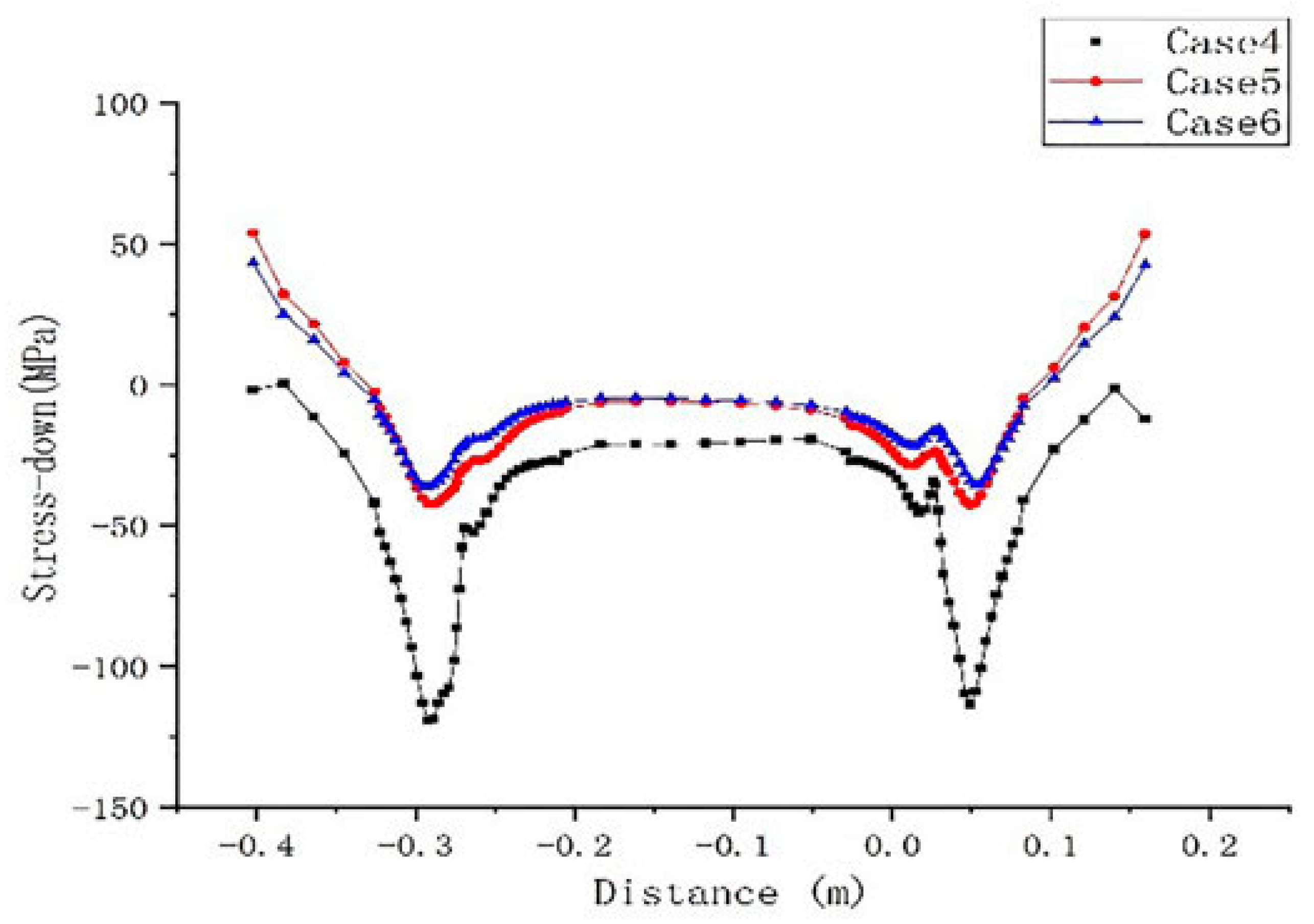
From an engineering perspective, the observed variation in resonance amplification implies notable differences in vibration-induced stress ranges at welded joints. Such differences are critical for high-cycle fatigue performance, even when static strength requirements are satisfied. Recent fatigue-oriented investigations have demonstrated that resonance-driven stress amplification can lead to markedly different damage accumulation rates in welded structures [22]. The current results support these findings and highlight the need to integrate welding parameter selection into dynamic design of medical equipment frames. Welding conditions should therefore be evaluated against operational excitation spectra, with particular attention to joints that dominate the first vibration mode (Figure 2). One limitation of the present study is that damping was treated uniformly across all models. In practical assemblies, damping may vary with joint condition and assembly details, which may affect absolute response levels but is unlikely to alter the relative sensitivity to welding parameters identified here.
4. Conclusions
This study analyzed the role of welding parameters in the dynamic behavior of medical equipment frames using numerical methods. Changes in weld bead size and heat input across thirty frame models led to marked differences in modal characteristics and resonance response. The first natural frequency varied over a broad range, and the corresponding resonance amplification differed by more than a factor of two under the same loading conditions. These results confirm that welding conditions can significantly modify dynamic performance even when the overall geometry and material properties are unchanged, and that such effects are not captured by static strength evaluation. The study provides a direct connection between practical welding parameters and system-level dynamic indicators through a consistent finite element procedure. By accounting for weld-related stiffness variation and thermal effects, the analysis shows how welding choices can shift dominant vibration modes and alter mode participation at critical joints. This offers quantitative support for treating welding design as an integral part of vibration-sensitive frame analysis rather than a secondary manufacturing detail.
References
- Mardanshahi, A.; Sreekumar, A.; Yang, X.; Barman, S.K.; Chronopoulos, D. Sensing techniques for structural health monitoring: A state-of-the-art review on performance criteria and new-generation technologies. Sensors 2025, 25, 1424. [Google Scholar] [CrossRef] [PubMed]
- Singh, A.B.; Khandelwal, C.; Dangayach, G.S. Revolutionizing healthcare materials: Innovations in processing, advancements, and challenges for enhanced medical device integration and performance. Journal of Micromanufacturing 2024, 25165984241256234. [Google Scholar] [CrossRef]
- Chen, F.; Liang, H.; Li, S.; Yue, L.; Xu, P. Design of Domestic Chip Scheduling Architecture for Smart Grid Based on Edge Collaboration. 2025. [Google Scholar] [PubMed]
- Hassan, H.Z.; Saeed, N.M. Advancements and applications of lightweight structures: a comprehensive review. Discover Civil Engineering 2024, 1, 47. [Google Scholar] [CrossRef]
- Nycz, A., Lee, Y., Noakes, M., Ankit, D., Masuo, C., Simunovic, S., ... & Fancher, C.M. (2021). Effective residual stress prediction validated with neutron diffraction method for metal large-scale additive manufacturing. Materials & Design 2021, 205, 109751. [CrossRef]
- Tamer, A.; Muscarello, V.; Quaranta, G.; Masarati, P. Cabin layout optimization for vibration hazard reduction in helicopter emergency medical service. Aerospace 2020, 7, 59. [Google Scholar] [CrossRef]
- Gui, H.; Zong, W.; Fu, Y.; Wang, Z. Residual Unbalance Moment Suppression and Vibration Performance Improvement of Rotating Structures Based on Medical Devices. 2025. [Google Scholar] [CrossRef] [PubMed]
- Tsai, C.L., Kim, D.S. (2005). Understanding residual stress and distortion in welds: an overview. Processes and mechanisms of welding residual stress and distortion, 3-31.
- Feng, H. High-Efficiency Dual-Band 8-Port MIMO Antenna Array for Enhanced 5G Smartphone Communications. Journal of Artificial Intelligence and Information 2024, 1, 71–78. [Google Scholar]
- Rinaldi, M.; Valvano, S.; Tornabene, F.; Dimitri, R. Numerical Homogenization Approach for the Analysis of Honeycomb Sandwich Shell Structures. Computers, Materials & Continua 2025, 83. [Google Scholar] [CrossRef]
- Wu, C.; Chen, H.; Zhu, J.; Yao, Y. Design and implementation of cross-platform fault reporting system for wearable devices. 2025. [Google Scholar] [PubMed]
- El-Khoury, O.; Adeli, H. Recent advances on vibration control of structures under dynamic loading. Archives of Computational Methods in Engineering 2013, 20, 353–360. [Google Scholar] [CrossRef]
- Singh, G.; Vasudev, H. A review on smart welding systems: AI integration and sensor-based process optimization. Journal of Advanced Manufacturing Systems 2025, 1–30. [Google Scholar] [CrossRef]
- Yuan, M., Wang, B., Su, S., Qin, W. (2025). Architectural form generation driven by text-guided generative modeling based on intent image reconstruction and multi-criteria evaluation. Authorea Preprints.
- Tremarin, R.C.; Pravia, Z.M.C. Analysis of the influence of residual stress on fatigue life of welded joints. Latin American Journal of Solids and Structures 2020, 17, e262. [Google Scholar] [CrossRef]
- Chen, F.; Liang, H.; Yue, L.; Xu, P.; Li, S. Low-Power Acceleration Architecture Design of Domestic Smart Chips for AI Loads. 2025. [Google Scholar] [PubMed]
- Sheu, J.B.; Gao, X.Q. Alliance or no alliance—Bargaining power in competing reverse supply chains. European Journal of Operational Research 2014, 233, 313–325. [Google Scholar] [CrossRef]
- Kadayath Bijukumar, V.; Andy, M.; Perukkavungal Kollerithodiyil, S.B.; Shaji, K.P. A critical overview on fracture mechanical characterization on marine grade structural materials and its welds. Welding international 2024, 38, 335–346. [Google Scholar] [CrossRef]
- Wu, S.; Cao, J.; Su, X.; Tian, Q. (2025, March). Zero-Shot Knowledge Extraction with Hierarchical Attention and an Entity-Relationship Transformer. In 2025 5th International Conference on Sensors and Information Technology (pp. 356-360). IEEE.
- Vecchiato, L. Theoretical development and experimental validation of the Peak Stress Method for the fatigue design of steel welded structures. 2022. [Google Scholar]
- Salerno, G.; Bennett, C.; Sun, W.; Becker, A.; Palumbo, N.; Kelleher, J.; Zhang, S.Y. On the interaction between welding residual stresses: a numerical and experimental investigation. International Journal of Mechanical Sciences 2018, 144, 654–667. [Google Scholar] [CrossRef]
- Narumi, K., Qin, F., Liu, S., Cheng, H.Y., Gu, J., Kawahara, Y., ... & Yao, L. (2019, October). Self-healing UI: Mechanically and electrically self-healing materials for sensing and actuation interfaces. In Proceedings of the 32nd Annual ACM Symposium on User Interface Software and Technology (pp. 293-306).
Figure 1.
First vibration mode and associated harmonic response of the medical equipment frame for different welding conditions, showing changes in resonance level caused by joint stiffness variation.
Figure 1.
First vibration mode and associated harmonic response of the medical equipment frame for different welding conditions, showing changes in resonance level caused by joint stiffness variation.
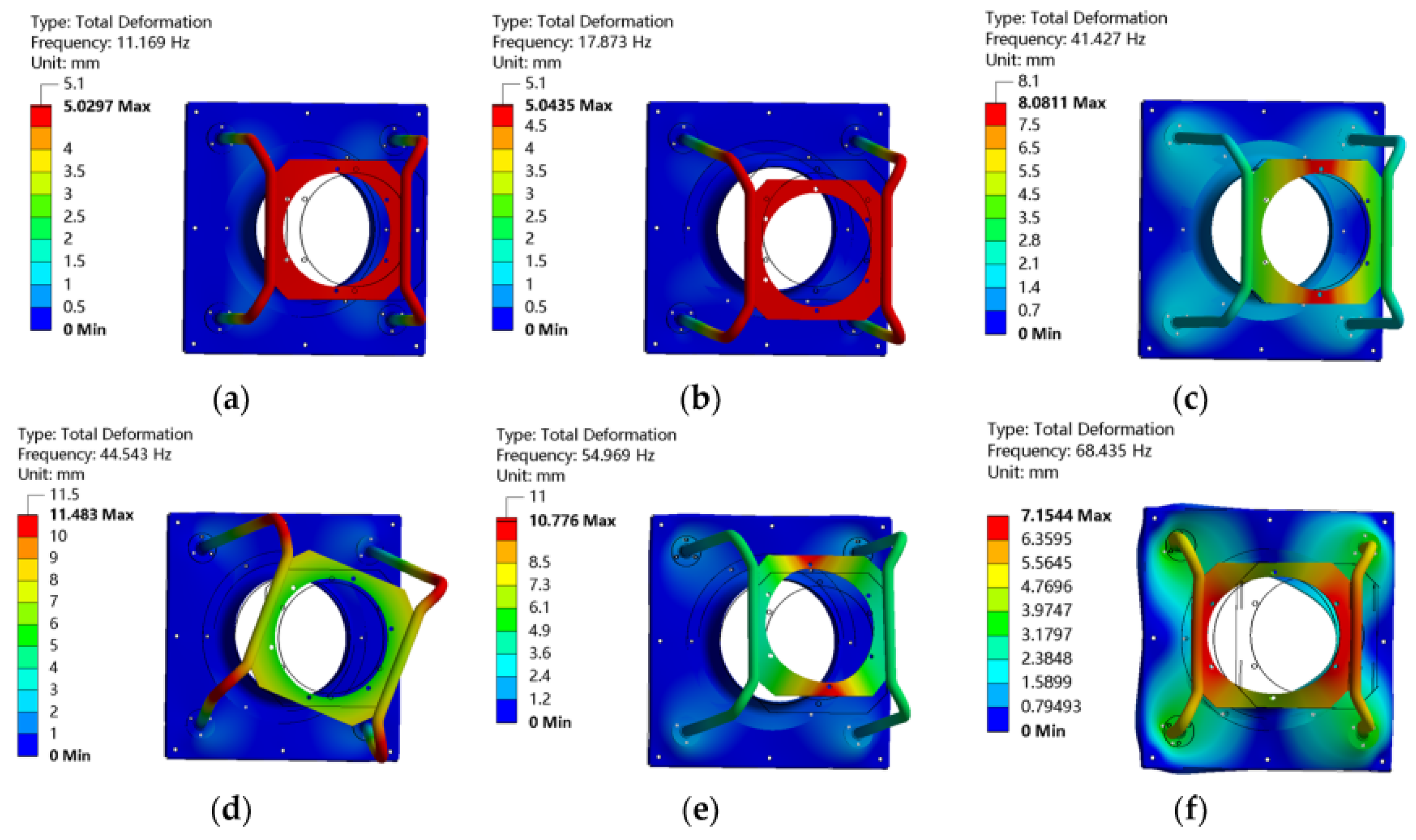
Figure 2.
Relationship between weld bead size, heat input, and the resulting first natural frequency and resonance amplification of the welded frame.
Figure 2.
Relationship between weld bead size, heat input, and the resulting first natural frequency and resonance amplification of the welded frame.
Disclaimer/Publisher’s Note: The statements, opinions and data contained in all publications are solely those of the individual author(s) and contributor(s) and not of MDPI and/or the editor(s). MDPI and/or the editor(s) disclaim responsibility for any injury to people or property resulting from any ideas, methods, instructions or products referred to in the content. |
© 2026 by the authors. Licensee MDPI, Basel, Switzerland. This article is an open access article distributed under the terms and conditions of the Creative Commons Attribution (CC BY) license (http://creativecommons.org/licenses/by/4.0/).
Copyright: This open access article is published under a Creative Commons CC BY 4.0 license, which permit the free download, distribution, and reuse, provided that the author and preprint are cited in any reuse.


