

Submitted:
11 December 2023
Posted:
11 December 2023
You are already at the latest version
Abstract
The plate heat exchanger (PHE) is a component that provides heat to be transferred from hot water to domestic cold water without mixing them with high efficiency. Over the lifetime of the PHE, cyclic pressures act on the brazing points and the plates, and this may lead to fatigue failure. The fatigue behaviour of the PHE, designed by using copper-brazed 316L stainless steel, was investigated in this study. First, the fatigue tests under the load ratio R = 0.1 were performed on the Vibrophore 100 testing machine to obtain the S-N curve of the analysed brazed joint. Based on the obtained experimental results, an appropriate material model of the analysed brazed joint has been created, which was validated with numerical calculation in the framework of a program code Ansys. A validated material model was then used for the subsequent numerical analysis of PHE. In order to carry out a numerical calculation using the finite element method (FEM), a 3D model of the heat exchanger was created based on the previous scanning of PHE-geometry. Thereafter, the geometry was parameterised, which allowed us to perform parametric simulations (monitoring different responses depending on the input geometry). Numerical simulations were carried out in the framework of the Ansys software, whereby the obtained results were analysed, and the responses were appropriately characterised according to previously determined load cases.
Keywords:
brazed joint
; fatigue
; experimental testing
; computational analyses
; heat exchanger
1. Introduction
In different engineering applications, different devices may be found to transfer heat from hot to cold water. One of them is a heat exchanger, which can be used for central heating of houses, heating of domestic water and many other purposes, including the provision for different kinds of industries, e.g., the food industry, the pharmaceutical industry, and others [1,2,3,4,5].
Due to high applicability, there are many different types of heat exchangers. Even though they all transfer heat, they use different methods to reach this goal. Heat exchangers may generally be divided into two main groups: recuperators and regenerators [6,7,8]. In the first case, the heat is transferred from hot to cold water simultaneously, while in the second case, a time delay due to the heat transferring method is used [9,10]. According to the aggregate state of the heat transferring medium, we also know single-phase and multi-phase heat exchangers [11,12,13]. In this study, a single-phase heat recuperator (plate heat exchanger) will be analysed, considering the assumption that water will be used for both mediums. Furthermore, mediums do not mix with each other.
A plate heat exchanger (PHE) is a component which enables heat to be transferred from hot to cold medium without mixing them [14,15,16,17]. Here, the total heat transfer surface of channel plates is very large, which enables a high efficiency of such a component. However, there are many parameters (i.e. the thickness of the channel plate, water flow rate, number of channel plates, the thermal conductivity of plate material, etc.) which may influence the final functionality and real efficiency of PHE [18,19,20].
PHEs are generally produced by vacuum brazing to join the channel plates to each other by using a filler material, which is usually copper, due to its ease of diffusion to steel, good wetting ability and corrosion resistance. This type of PHE consists of many parallel plates separating the hot and cold channels of PHE (see Figure 1). The number of plates, plate thickness and overall size depends mainly on the power which is needed for a certain scope of application. The commonly used materials for PHE production are 316L and 304L stainless steels [21,22,23,24].
As mentioned above, vacuum brazing technology is often used in the PHE industry. Vacuum brazing is a jointing process that is accomplished at high temperatures, usually between 930 °C and 1230 °C, by using pure copper or nickel-based alloy as a filler material [25,26]. In this production technology, the naturally formed oxide layers on the base metals can be decomposed in a vacuum atmosphere at high temperatures, which provides high strength and less porosity of brazed joints. In order to achieve a high-quality brazed joint, the braising parts must be closely fitted, and the base metal surfaces must be well-cleaned. Here, the suitable clearance between braising parts should not exceed 0.1 mm in order to reach a good capillary effect. Braising surface cleanliness is very important since contaminations on the surface can lead to insufficient wetting [27,28,29].
The brazed joint itself represents a possible weak spot where failure may occur due to external loading (i.e. fluid pressure) acting on the brazed channel plates. However, the failure may occur directly in the brazed joint (Figure 2a) or in the base steel plate (Figure 2b). In the case presented in Figure 2a (also considered in this study), failure occurs as a consequence of pressure inside the liquid medium which results in the dynamic tensile forces acting on the brazed joint. At the moment when the failure occurs in one of the PHE's brazed joints, the tensile stress on the remaining brazed joins in the surrounding area increases, which leads to a higher possibility of failure in those joints, and, consequently, reduces fatigue life of PHE [30].
In addition to the mechanical properties of the base material (stainless steel) and braze material (Cooper), the strength of brazed joints is also influenced by the dynamic character of external load (i.e. loading ratio R = smin/ smax), which varies with different applications of PHEs [31]. Furthermore, there are also some other influencing magnitudes which can have a significant impact on the fatigue behaviour of PHE: surface roughness, loading frequency, notch effects, temperature, etc. [32].
This study focused on the computational analyses of brazed heat exchangers loaded with dynamic internal pressure. The computational model is based on the previously developed material model of the analysed brazed joint. In order to carry out a numerical calculation in the framework of Ansys software [33], a 3D model of the heat exchanger was created based on the previous scanning of PHE geometry. Thereafter, the geometry was parameterised, which allowed us to perform parametric simulations, i.e. monitoring different responses depending on the input geometry. The obtained computational results are critically evaluated according to previously determined load cases.
2. Materials and Methods
2.1. Material and specimen geometry of the brazed joint
In this study, stainless steel 316L is used as a plate material (see Table 1). Cooper is being used as a connecting material, which connects plates together inside the heat exchanger. When preparing the specimens for quasi-static and fatigue tests, two bars made of stainless steel were vacuum brazed using a copper foil of thickness 0.1 mm (see Figure 3). The complete procedure of vacuum braising consisted of six stages (vacuuming, heating, solidification, slow cooling, fast cooling and room pressure). At the copper solidification temperature (≈1150 °C), the austenitic stainless steel came into the recrystallisation zone. To mitigate the level of recrystallisation and, consequently, the mechanical properties changes, the time of the solidification phases must be shortened as much as possible, which depends on the wettability and capillarity between cooper and austenitic stainless steel, geometry and clearness of the brazing area, etc.
2.2. Experimental testing of brazed joints
Experimental testing for both quasi-static and fatigue tests has been done on the Zwich/Roel Vibrophore 100 testing machine. The quasi-static tests were displacement-controlled using the mechanical extensometer with a constant displacement rate of 0.5 mm/min up to the final fracture of the specimen. Four quasi-static tensile tests were done to obtain the engineering stress-strain diagram of the analysed brazed joint.
The fatigue tests were performed at a room temperature of 20 °C under a loading ratio R = 0.1 and a loading frequency of approximately 98 Hz. All tests were performed in the high cycle fatigue regime (HCF), which means that the maximum stress in each loading cycle did not exceed the yield stress of the analysed brazed joint.
2.3. Computational analyses of the plate heat exchanger
The real geometry of the heat exchanger was captured by computed tomography (CT) technology. The scanned model was properly analysed in individual layers to find out where the non-brazed joints are located and what the surface and shape of the non-brazed joints are. Since we wanted to cover a larger area in our research, we decided to simplify and parameterise the numerical model. Thus, an analysis of the surfaces of brazed joints was made, where the average cross-sectional size of the brazed joint was determined. In the Ansys Space Claim and Solidworks software, a slightly more simplified geometry was created, which is shown in Figure 4
As mentioned above, the aim of the research was to investigate the influence of non-brazed joints on the lifetime of the heat exchanger. With the desire to investigate as large an area as possible, a hybrid "solid-surface" model was created, where the brazed joints were dimensioned as solid models, and the geometry of the “honeycomb” was in the form of a surface model. Thus, a hybrid solid-surface geometry was created, which was then extended and parameterised. Figure 5 shows the unit cell and parametric model which was used for the subsequent numerical analysis.
For parametric numerical study, five different geometries were made. One of the geometries was modelled as a defect-free geometry, while the other geometries contained defects that were distributed in different ways within the numerical model. All geometries of parametric numerical models are shown in Figure 6, where each geometry is named with an abbreviation, which is a puzzle of the initial letters of individual words that define the geometry of each model.
When creating the computational model, the material parameters obtained with experimental tests (see Section 2.2) have been considered. In the computational model, it was necessary to define contact points and, consequently, a “bonded contact”, which was created between the sheet metal and the brazed joints. Based on the theory of mechanical contact of two bodies, the brazed joint had the property of “contact body”, and the geometry of the sheet metal was defined as “target body”. The determination of the contacts was followed by the spatial discretisation (meshing) of the numerical model and the execution of a convergence analysis, based on which the global size of the finite element was determined. Thereafter, it was necessary to define the boundary conditions, which simulate the real loading conditions of PHE. The “fixed sup-ports” were prescribed on the lower and upper sides of the geometry of PHE (blue surfaces in Figure 7). The loading of PHE was prescribed in the form of a working pressure (15 bar). The pressure load was defined on the sheet metal and the locations where there were defects (i.e. non-brazed joints). At that point, we made another simplification because, in real conditions, the pressure load would affect the whole geometry, including the brazed joints. This simplification was used because the area of brazed joints is relatively small compared to sheet metal (i.e. "honeycombs").
3. Results and discussion
3.1. Quasi-static tensile tests of brazed joint
Figure 8 shows the engineering diagram s - e of quasi-static tests. Taking into account all the experimental results for all four tested specimens, it follows the following average values: Youngs modulus E = 198387 MPa, Poissons ratio n = 0.28, Yield stress Re = 237 MPa, ultimate tensile stress Rm = 437 MPa and elongation at break EL = 11.1 %.
3.2. High cycle fatigue tests of brazed joint
Fatigue tests have been done on the same machine as quasi-static tests (Zwich/Roel Vibrophore-100) using the same specimens (see Figure 3). The fatigue tests were performed at a room temperature of 20 °C under a loading ratio R = 0.1 and a loading frequency of approximately 98 Hz. All tests were performed in the high cycle fatigue regime (HCF), which means that the maximum stress in each loading cycle did not exceed the yield stress of the analysed brazed joint (i.e. Re = 237 MPa). Following this limitation, the maximal tensile stress between (0.6 … 0.8)·Re was selected. Figure 9 shows the S - N plot of fatigue tests where amplitude stress sa is given on the ordinate axis.
3.3. Computational analyses of the plate heat exchanger
As described in previous sections, the parametric simulations were performed to study how different configurations (different defects) affect the displacements, the equivalent von Mises stresses and the fatigue life of the analysed heat exchanger. Here, we were not focused on the absolute numerical values that we obtained in each numerical simulation but rather on how the numerical model responded to different load cases (different geometries) and how they differed from each other.
The displacements inside the heat exchanger depend mainly on the number of non-brazed joints, as shown by the comparative analysis of different numerical geometries. The results indicate that the absence of brazed joints in the vertical direction causes more movement and is a less favourable load case. Figure 10 shows the most critical configurations in regard to the displacement in the analysed PHE structures.
Figure 11 shows the von Misses equivalent stress in the analysed PHE structures for the two most critical configurations: VNBJD and TNBJD. In general, the parametric computational analyses have shown that the equivalent stress increases with the increase of the number of non-brazed joints, which confirms the thesis of load transfer to adjacent welded joints in the case of the presence of defects.
The determination of the fatigue life of a specific geometry was performed using the stress life approach. Considering this approach, it is assumed that failure occurs when the stress at a certain point reaches a critical value. Thus, based on the obtained computational results, a comparison with the strength properties of the material was made, and the fatigue life of the component was estimated. When determining the fatigue life of a component, it is also necessary to consider the mean stress effect. In the computational analyses presented in this study, the Goodman mean stress correction was applied considering the stress ratio R = 0.1. Furthermore, the surface finish factor of 0.7 has also been considered in the subsequent computational simulations. The computational results (Table 2) confirmed the hypothesis that the expected fatigue life is dependent on the number and configuration of defects (i.e. non-brazed joints) inside the analysed PHE structure. Considering this assumption, it is evident from Table 2 that the longest fatigue life corresponds to the perfect geometry of PHE without defects (i.e. PGOPH). On the other hand, the shortest fatigue life belongs to the TNBJD structure, which represents the structure with three defects distributed in the form of a triangle. The graphical presentation of the obtained fatigue life of the two most critical geometries (VNBJD and TNBJD) is shown in Figure 12.
4. Conclusions
The computational analysis of brazed heat exchangers loaded with dynamic internal pressure is presented in this study. The computational model is based on the material model of the brazed joint, which was determined previously using the appropriate quasi-static and fatigue tests of the brazed tensile specimens. Based on the theoretical study, experimental testing, and comprehensive computational analyses, the following conclusions can be made:
- Considering the experimental results for all four tensile specimens, the following average mechanical properties of the brazed joint have been obtained: Youngs modulus E = 198387 MPa, Poissons ratio n = 0.28, Yield stress Re = 237 MPa, ultimate tensile stress Rm = 437 MPa and elongation at break EL = 11.1 %.
- The fatigue tests of brazed tensile specimens under load ratio R = 0.1 at a room temperature of 20 °C were performed to obtain the S - N plot of the analysed brazed joint. The experimentally obtained S - N curve has then been used for the subsequent computational analyses of PHE with different geometrical configurations (i.e. different defects inside the PHE).
- The computational results based on the displacement and stress analyses of the analysed PHE have shown that individual defects (i.e. non-brazed joints in the structure) significantly influence the displacement and stress distribution near these defects. Namely, each non-brazed joint increases the stress field around the surrounding brazed joints, which leads to a shorter fatigue life of the whole structure of PHE.
- The developed material model of the brazed joint can be further used for the fatigue analyses of different PHEs. However, the computational model for the subsequent numerical analyses should be improved, considering the effect of temperature and boundary conditions (i.e. the connection of the PHE to the other components) on the fatigue behaviour of PHE. Furthermore, the experimental testing of the whole structure of PHE should be performed to confirm the computational results.
Author Contributions
Conceptualisation, S.G. and J.K.; methodology, B.H., J.K; validation, R.S.; investigation, B.H., J.K., B.N.; writing—original draft preparation, B.H., J.K; writing—review and editing, S.G., R.S.; visualisation, S.G.; supervision, S.G.; project administration, S.G.; All the authors have read and agreed to the published version of the manuscript.
Funding
This research was funded by the Slovenian Research Agency (ARRS), Research Core Funding No. P2-0063.
Data Availability Statement
The data presented in this study are available on request from the corresponding author.
Acknowledgments
The authors acknowledge the financial support of the Research Core Funding (No. P2-0063) from the Slovenian Research Agency. The authors also acknowledge the use of research equipment, a “High-frequency pulsator” within the project “Upgrading national research infrastructures—RIUM”, which was co-financed by the Republic of Slovenia, the Ministry of Education, Science and Sport and the European Union from the European Regional Development.
Conflicts of Interest
The authors declare no conflict of interest.
References
- Srimuang, W.; Amatachaya, P. A Review of the Applications of Heat Pipe Heat Exchangers for Heat Recovery. Renew. Sustain. Energy Rev. 2012, 16, 4303–4315. [Google Scholar] [CrossRef]
- Zhang, J.; Zhu, X.; Mondejar, M.E.; Haglind, F. A Review of Heat Transfer Enhancement Techniques in Plate Heat Exchangers. Renew. Sustain. Energy Rev. 2019, 101, 305–328. [Google Scholar] [CrossRef]
- Menni, Y.; Chamkha, A.J.; Ameur, H. Advances of Nanofluids in Heat Exchangers—A Review. Heat Transf. 2020, 49, 4321–4349. [Google Scholar] [CrossRef]
- Đurić, A.; Milčić, D.; Burzić, Z.; Klobčar, D.; Milčić, M.; Marković, B.; Krstić, V. Microstructure and Fatigue Properties of Resistance Element Welded Joints of DP500 Steel and AW 5754 H22 Aluminum Alloy. Crystals 2022, 12, 258. [Google Scholar] [CrossRef]
- Elsheikh, A.H.; Panchal, H.N.; Sengottain, S.; A. Alsaleh, N.; Ahmadein, M. Applications of Heat Exchanger in Solar Desalination: Current Issues and Future Challenges. Water 2022, 14, 852. [Google Scholar] [CrossRef]
- Hinze, J.F.; Nellis, G.F.; Anderson, M.H. Cost Comparison of Printed Circuit Heat Exchanger to Low Cost Periodic Flow Regenerator for Use as Recuperator in a S-CO2 Brayton Cycle. Appl. Energy 2017, 208, 1150–1161. [Google Scholar] [CrossRef]
- Reznicek, E.P.; Neises, T.; Braun, R.J. Optimization and Techno-Economic Comparison of Regenerators and Recuperators in SCO <math Altimg="si33.Svg" Display="inline" Id="d1e1791"> <msub> <mrow/> <mrow> <mn>2</Mn> </Mrow> </Msub> </Math> Recompression Brayton Cycles for Concentrating Solar Power. Sol. Energy 2022, 238, 327–340. [Google Scholar] [CrossRef]
- Dobrego, K.V.; Gnesdilov, N.N.; Kozlov, I.M.; Bubnovich, V.I.; Gonzalez, H.A. Numerical Investigation of the New Regenerator–Recuperator Scheme of VOC Oxidizer. Int. J. Heat Mass Transf. 2005, 48, 4695–4703. [Google Scholar] [CrossRef]
- Hewitt, G. F., Shires; Bott, T. Process Heat Transfer; CRC Press: New York, 1994. [Google Scholar]
- Mizokami, Y.; Igari, T.; Kawashima, F.; Sakakibara, N.; Tanihira, M.; Yuhara, T.; Hiroe, T. Development of Structural Design Procedure of Plate-Fin Heat Exchanger for HTGR. Nucl. Eng. Des. 2013, 255, 248–262. [Google Scholar] [CrossRef]
- Eshgarf, H.; Nadooshan, A.A.; Raisi, A. A Review of Multi-Phase and Single-Phase Models in the Numerical Simulation of Nanofluid Flow in Heat Exchangers. Eng. Anal. Bound. Elem. 2023, 146, 910–927. [Google Scholar] [CrossRef]
- Bae, S.J.; Kwon, J.; Kim, S.G.; Son, I.; Lee, J.I. Condensation Heat Transfer and Multi-Phase Pressure Drop of CO2 near the Critical Point in a Printed Circuit Heat Exchanger. Int. J. Heat Mass Transf. 2019, 129, 1206–1221. [Google Scholar] [CrossRef]
- Yao, J.; Zhu, P.; Guo, L.; Yang, F.; Zhang, Z.; Ren, J.; Wu, Z. Study of a Metal Hydride Based Thermal Energy Storage System Using Multi-Phase Heat Exchange for the Application of Concentrated Solar Power System. Int. J. Hydrogen Energy 2021, 46, 29332–29347. [Google Scholar] [CrossRef]
- Abu-Khader, M.M. Plate Heat Exchangers: Recent Advances. Renew. Sustain. Energy Rev. 2012, 16, 1883–1891. [Google Scholar] [CrossRef]
- H. Jamshak, S.; Dev Anand, M.; B. Akshay, S.; Arun, S.; Prajeev, J.; Prabhakaran, P. Design and Analysis of a Plate Heat Exchanger in the View of Performance Improvement and Cost Reduction. Int. J. Eng. Technol. 2018, 7, 440. [Google Scholar] [CrossRef]
- Arsenyeva, O.; Tovazhnyanskyy, L.; Kapustenko, P.; Klemeš, J.J.; Varbanov, P.S. Review of Developments in Plate Heat Exchanger Heat Transfer Enhancement for Single-Phase Applications in Process Industries. Energies 2023, 16, 4976. [Google Scholar] [CrossRef]
- Yasunaga, T.; Noguchi, T.; Morisaki, T.; Ikegami, Y. Basic Heat Exchanger Performance Evaluation Method on OTEC. J. Mar. Sci. Eng. 2018, 6, 32. [Google Scholar] [CrossRef]
- Pandya, N.S.; Shah, H.; Molana, M.; Tiwari, A.K. Heat Transfer Enhancement with Nanofluids in Plate Heat Exchangers: A Comprehensive Review. Eur. J. Mech. - B/Fluids 2020, 81, 173–190. [Google Scholar] [CrossRef]
- Kumar, V.; Tiwari, A.K.; Ghosh, S.K. Application of Nanofluids in Plate Heat Exchanger: A Review. Energy Convers. Manag. 2015, 105, 1017–1036. [Google Scholar] [CrossRef]
- Zhang, Y.; Jiang, C.; Shou, B.; Zhou, W.; Zhang, Z.; Wang, S.; Bai, B. A Quantitative Energy Efficiency Evaluation and Grading of Plate Heat Exchangers. Energy 2018, 142, 228–233. [Google Scholar] [CrossRef]
- Laurent, M.; Estevez, R.; Fabrègue, D.; Ayax, E. Thermomechanical Fatigue Life Prediction of 316L Compact Heat Exchanger. Eng. Fail. Anal. 2016, 68, 138–149. [Google Scholar] [CrossRef]
- Deen, K.M.; Virk, M.A.; Haque, C.I.; Ahmad, R.; Khan, I.H. Failure Investigation of Heat Exchanger Plates Due to Pitting Corrosion. Eng. Fail. Anal. 2010, 17, 886–893. [Google Scholar] [CrossRef]
- Tuo, L.-F.; Zhou, G.-S.; Yu, Z.-Q.; Kang, X.-T.; Wang, B.-W. Extrusion Process of 304L H-Shaped Stainless Steel Used in Passive Residual Heat Removal Heat Exchanger. Nucl. Sci. Tech. 2019, 30, 61. [Google Scholar] [CrossRef]
- Rai, R.; Elmer, J.W.; Palmer, T.A.; DebRoy, T. Heat Transfer and Fluid Flow during Keyhole Mode Laser Welding of Tantalum, Ti–6Al–4V, 304L Stainless Steel and Vanadium. J. Phys. D. Appl. Phys. 2007, 40, 5753–5766. [Google Scholar] [CrossRef]
- Groover, M.P. Fundamentals of Modern Manufacturing; John Wiley & Sons Inc: New Jersey, 2010. [Google Scholar]
- Kowalewski, J. Issues in Vacuum Brazing; 2006.
- Jiang, W.; Gong, J.M.; Tu, S.T. Effect of Holding Time on Vacuum Brazing for a Stainless Steel Plate–Fin Structure. Mater. Des. 2010, 31, 2157–2162. [Google Scholar] [CrossRef]
- Jiang, W.; Gong, J.; Tu, S.; Chen, H. Modelling of Temperature Field and Residual Stress of Vacuum Brazing for Stainless Steel Plate-Fin Structure. J. Mater. Process. Technol. 2009, 209, 1105–1110. [Google Scholar] [CrossRef]
- Li, Y.; Wang, J.; Ma, L.; Liu, Y.; Zhan, X. Thermal-Fluid-Solid Coupling Analysis of Vacuum Brazing Process for a Titanium Alloy Plate-Fin Structure. Vacuum 2023, 218, 112612. [Google Scholar] [CrossRef]
- Takeshita, K.; Terakura, Y. A Novel Approach for Predicting the Tensile Strength of Brazed Joints. Metall. Mater. Trans. A 1998, 29, 587–592. [Google Scholar] [CrossRef]
- Fedorov, V.; Uhlig, T.; Wagner, G. Investigation of Fatigue Damage in Aluminum/Stainless Steel Brazed Joints. Weld. World 2018, 62, 609–616. [Google Scholar] [CrossRef]
- Hayta Y. Investigation of the Fatigue Behaviour of Metallic Components Used in Plate Heat Exchangers under Variable Dynamic Loads; Graduate School of Engineering and Science of Izmir Institute of Technology, 2020.
- Ansys Mechanical Finite Element Analysis (FEA) Software for Structural Engineering 2023.
Figure 1.
Schematic presentation of the brazed plate heat exchanger.
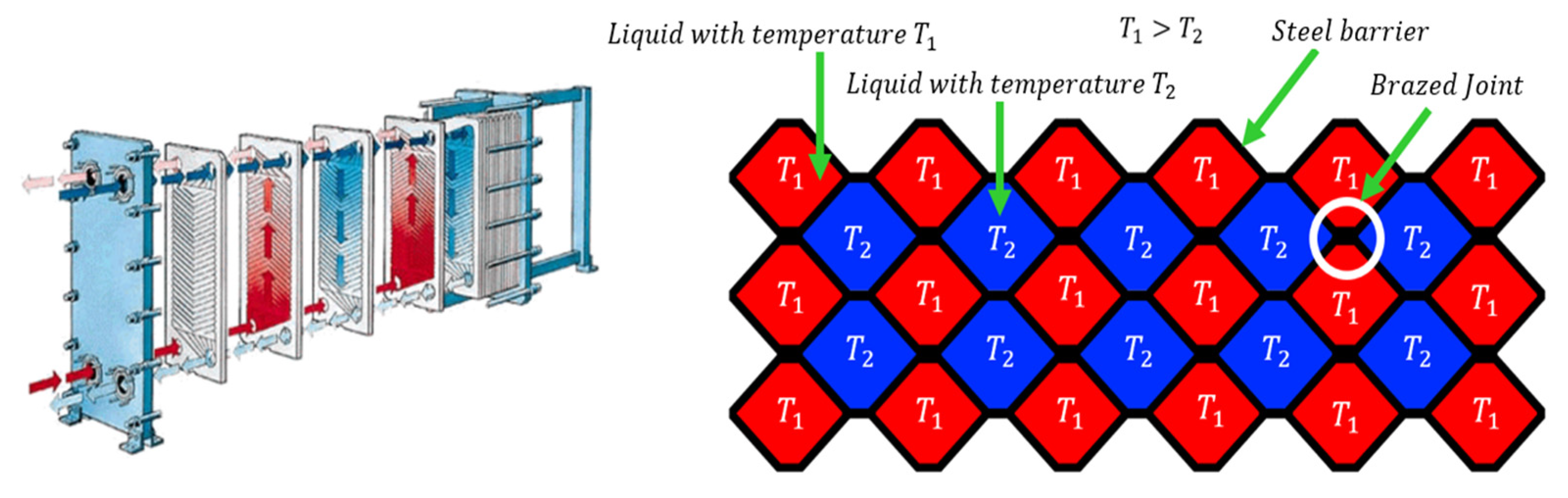
Figure 2.
Two types of failure in PHE: a) Failure in the brazed joint, b) Failure in the steel plate.
Figure 2.
Two types of failure in PHE: a) Failure in the brazed joint, b) Failure in the steel plate.

Figure 3.
Specimen preparation: a) Uniaxial tension specimen, b) Assembly for vacuum brazing
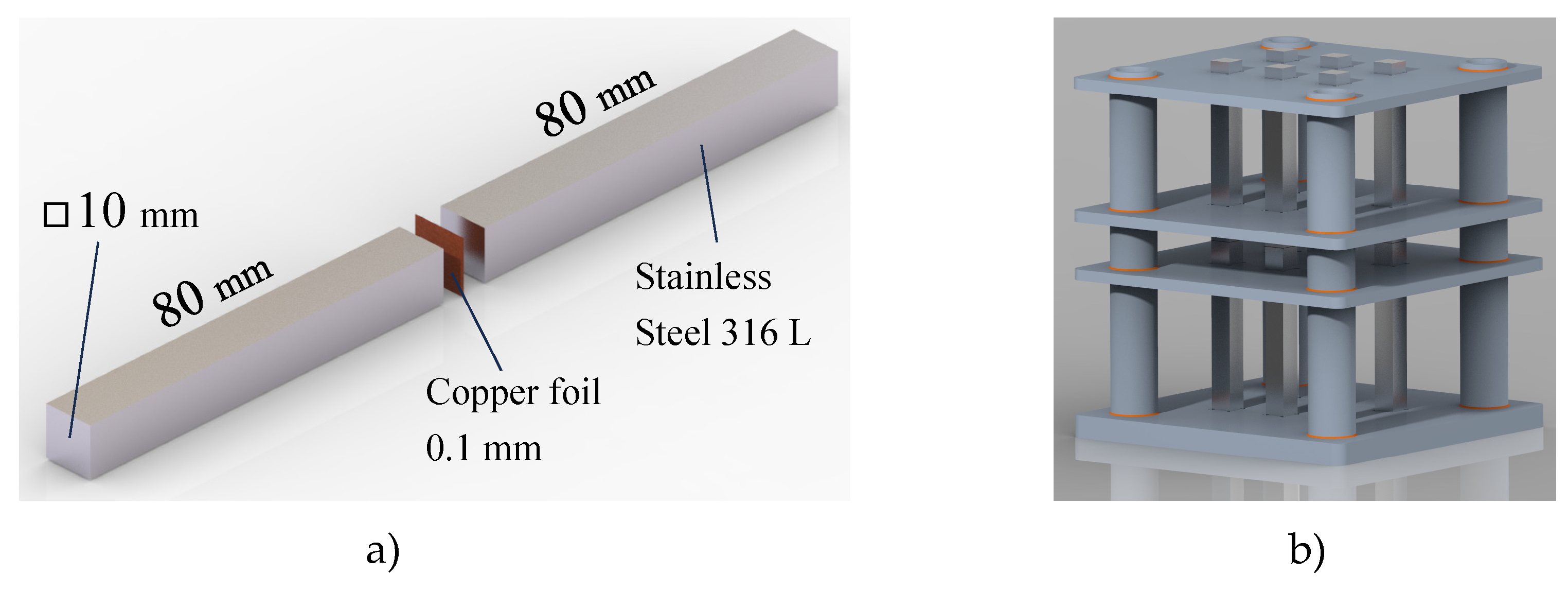
Figure 4.
CT geometry (left) and simplified unit cell model (right).
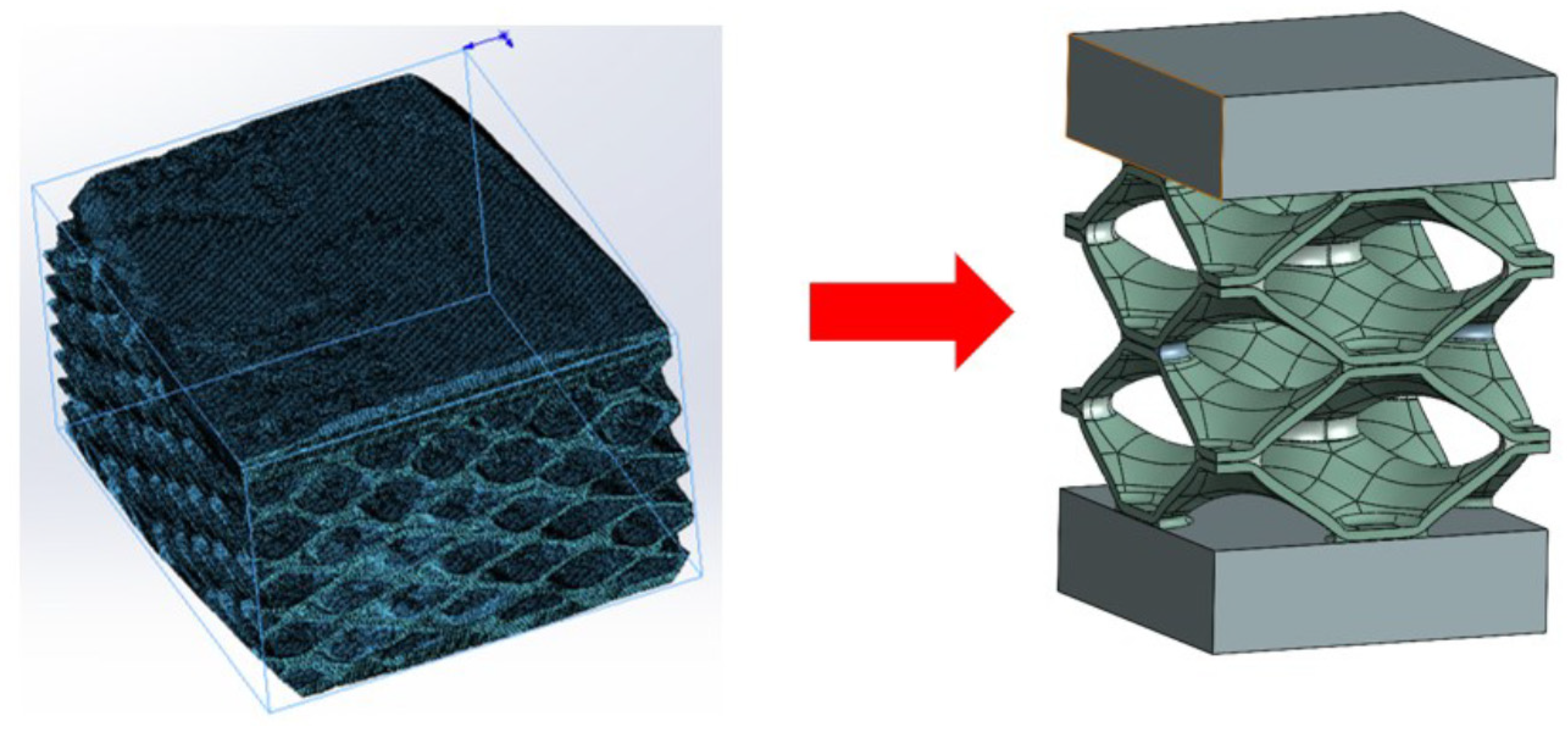
Figure 5.
Unit cell of heat exchanger (left) and geometry of numerical parametric model (right).
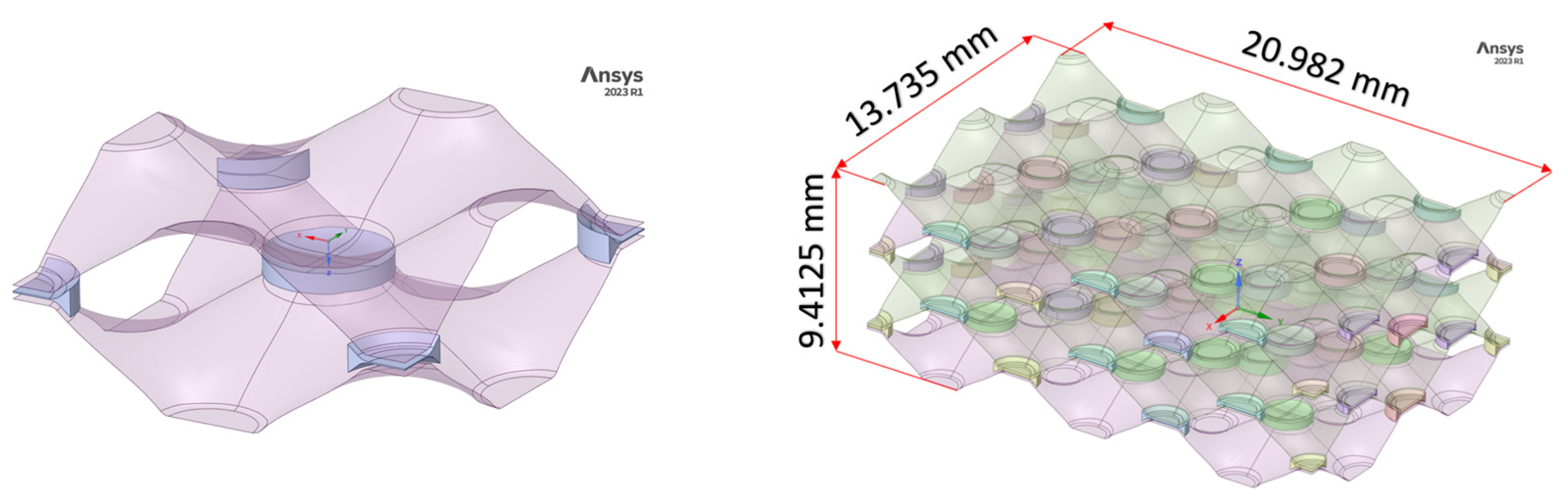
Figure 6.
Parametric geometries of PHE.
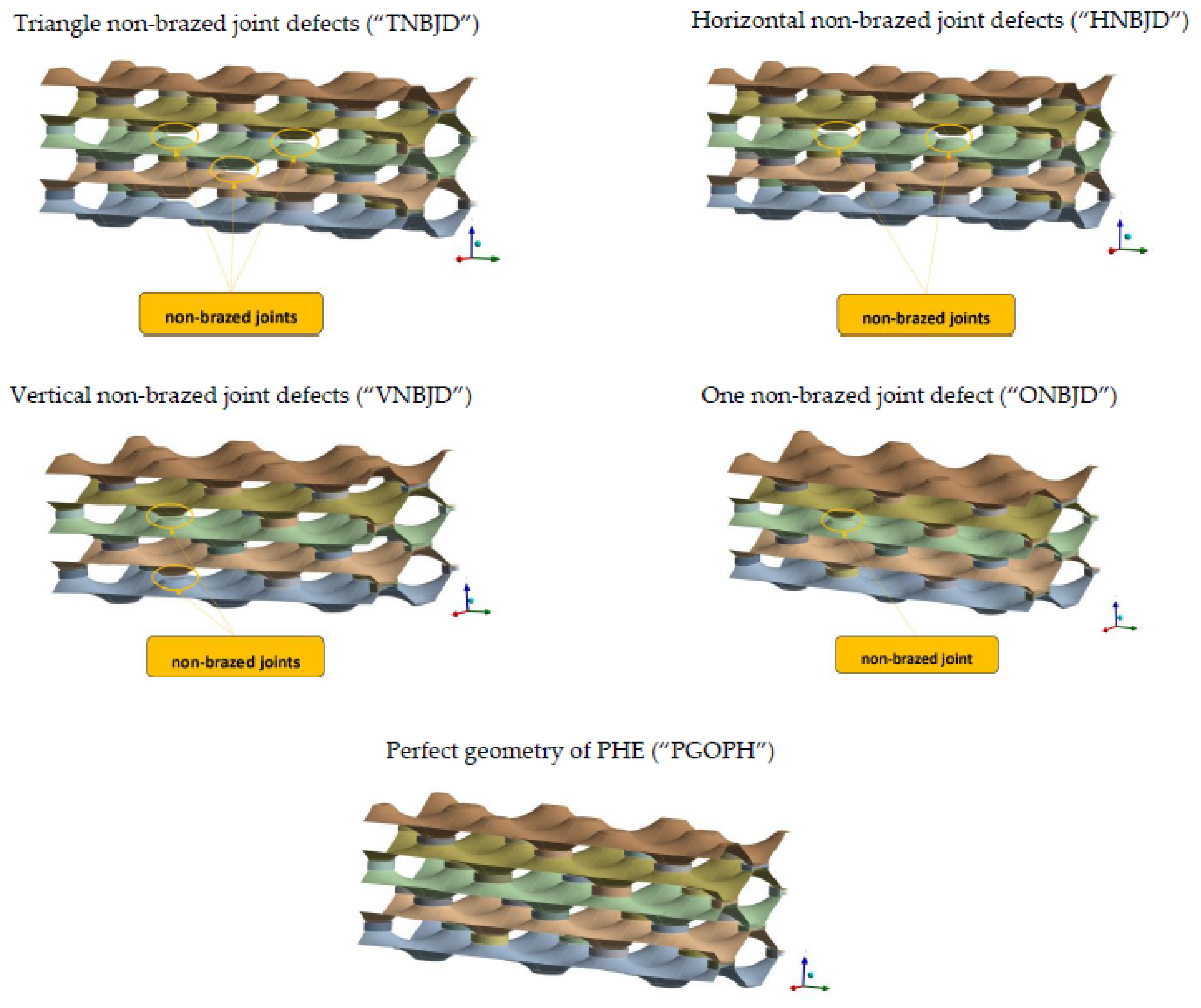
Figure 7.
Prescribed boundary conditions and FE-mesh of numerical model.

Figure 8.
Engineering diagram s - e of quasi-static tests.
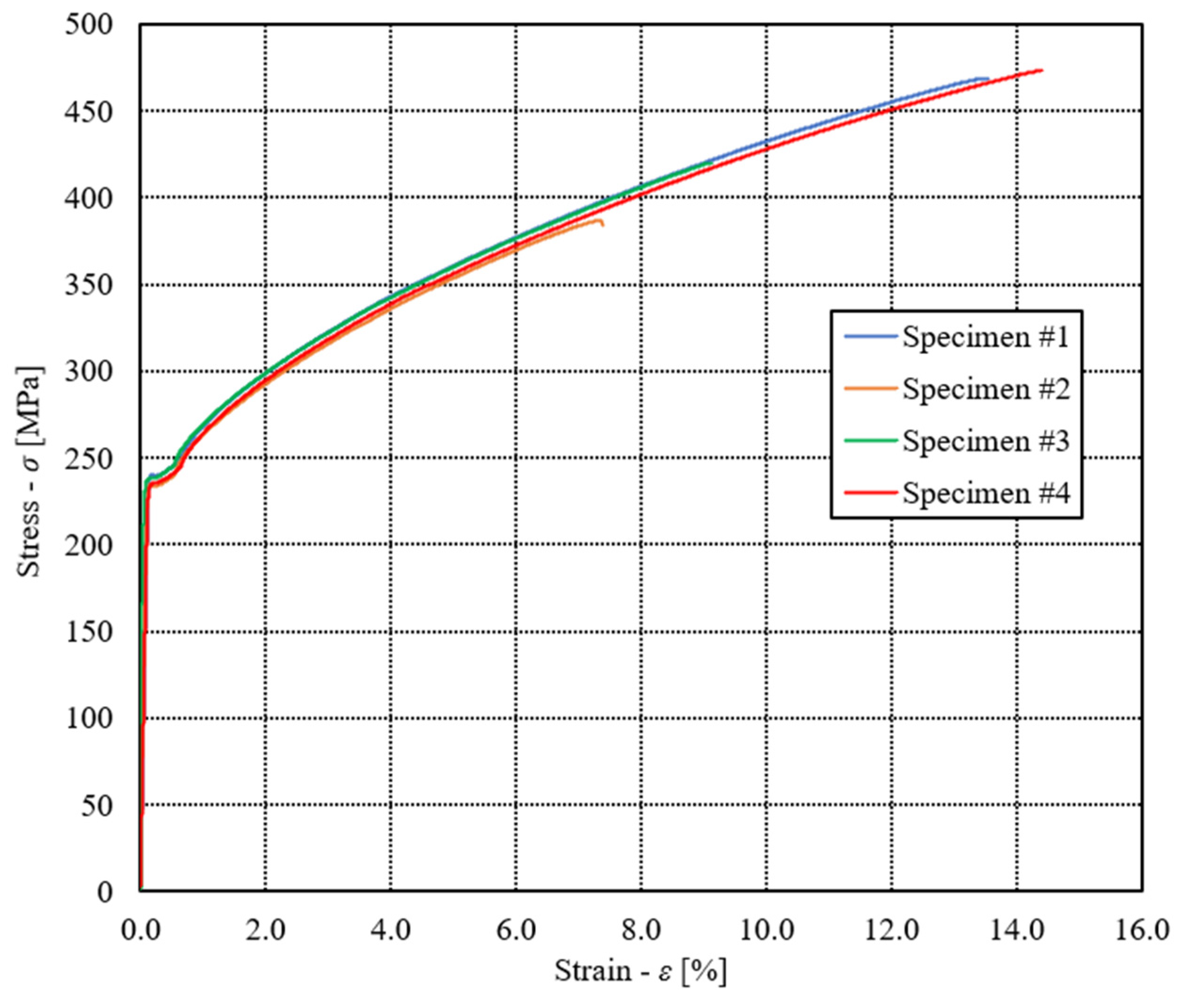
Figure 9.
The S - N plot of the analysed brazed joints.
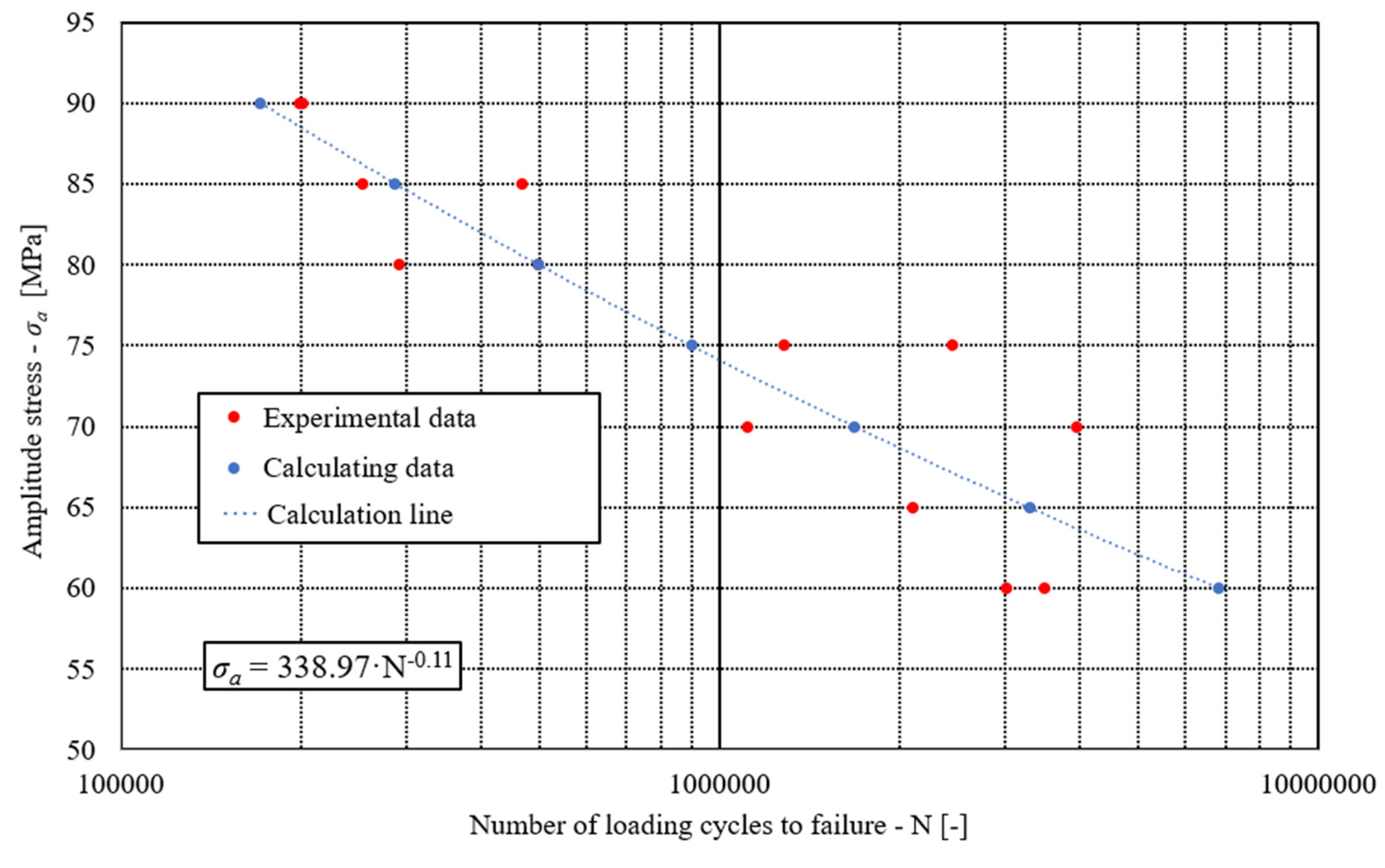
Figure 10.
Displacements in the analysed PHE-structures in [mm]: a) VNBJD structure, b) TNBJD structure.
Figure 10.
Displacements in the analysed PHE-structures in [mm]: a) VNBJD structure, b) TNBJD structure.
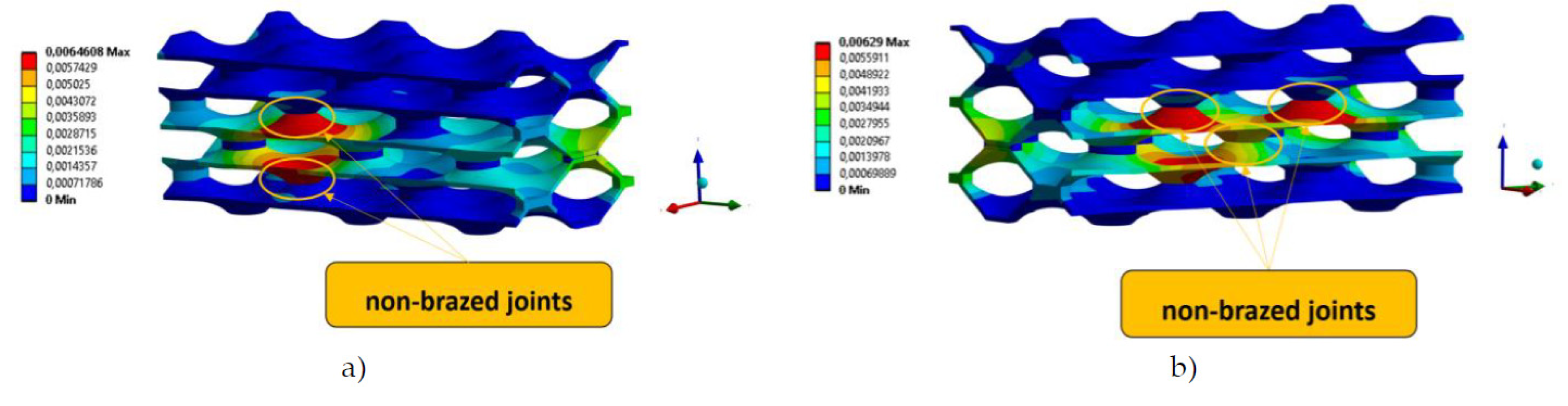
Figure 11.
Von Misses equivalent stress in the analysed PHE-structures: a) VNBJD structure, b) TNBJD structure.
Figure 11.
Von Misses equivalent stress in the analysed PHE-structures: a) VNBJD structure, b) TNBJD structure.
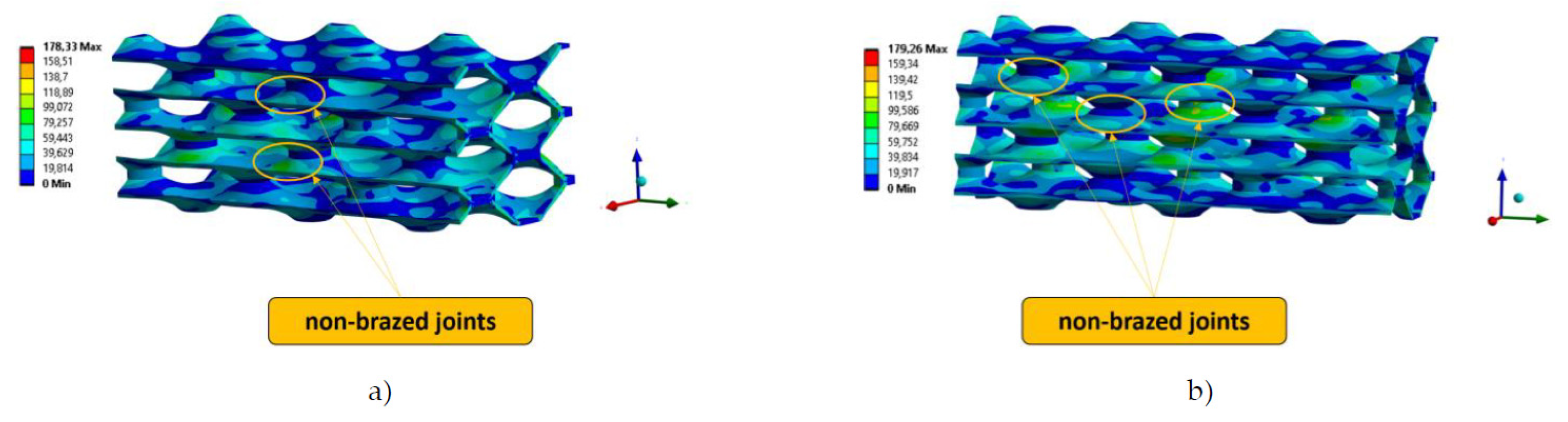
Figure 12.
The fatigue life of two most critical geometries: a) VNBJD structure, b) TNBJD structure.
Figure 12.
The fatigue life of two most critical geometries: a) VNBJD structure, b) TNBJD structure.


Table 1.
The chemical composition of stainless steel 316L in wt. %.
| C | Si | Mn | P | S | Cr | Mo | Ni | N |
| ≤ 0.03 | ≤ 1.0 | ≤ 2.0 | ≤ 0.045 | ≤ 0.015 | 16.5-18.5 | 2.0-2.5 | 10.0-13.0 | ≤ 0.11 |
Table 2.
Computational results for the fatigue life of analysed PHE structures.
| Geometry configuration | Fatigue life N [cycles] |
| PGOPH | 42.7·106 |
| ONBJD | 5.3·106 |
| HNBJD | 2.0·106 |
| VNBJD | 1.9·106 |
| TNBJD | 1.7·106 |
Disclaimer/Publisher’s Note: The statements, opinions and data contained in all publications are solely those of the individual author(s) and contributor(s) and not of MDPI and/or the editor(s). MDPI and/or the editor(s) disclaim responsibility for any injury to people or property resulting from any ideas, methods, instructions or products referred to in the content. |
© 2023 by the authors. Licensee MDPI, Basel, Switzerland. This article is an open access article distributed under the terms and conditions of the Creative Commons Attribution (CC BY) license (http://creativecommons.org/licenses/by/4.0/).
Copyright: This open access article is published under a Creative Commons CC BY 4.0 license, which permit the free download, distribution, and reuse, provided that the author and preprint are cited in any reuse.


