

Submitted:
09 January 2026
Posted:
13 January 2026
You are already at the latest version
Abstract
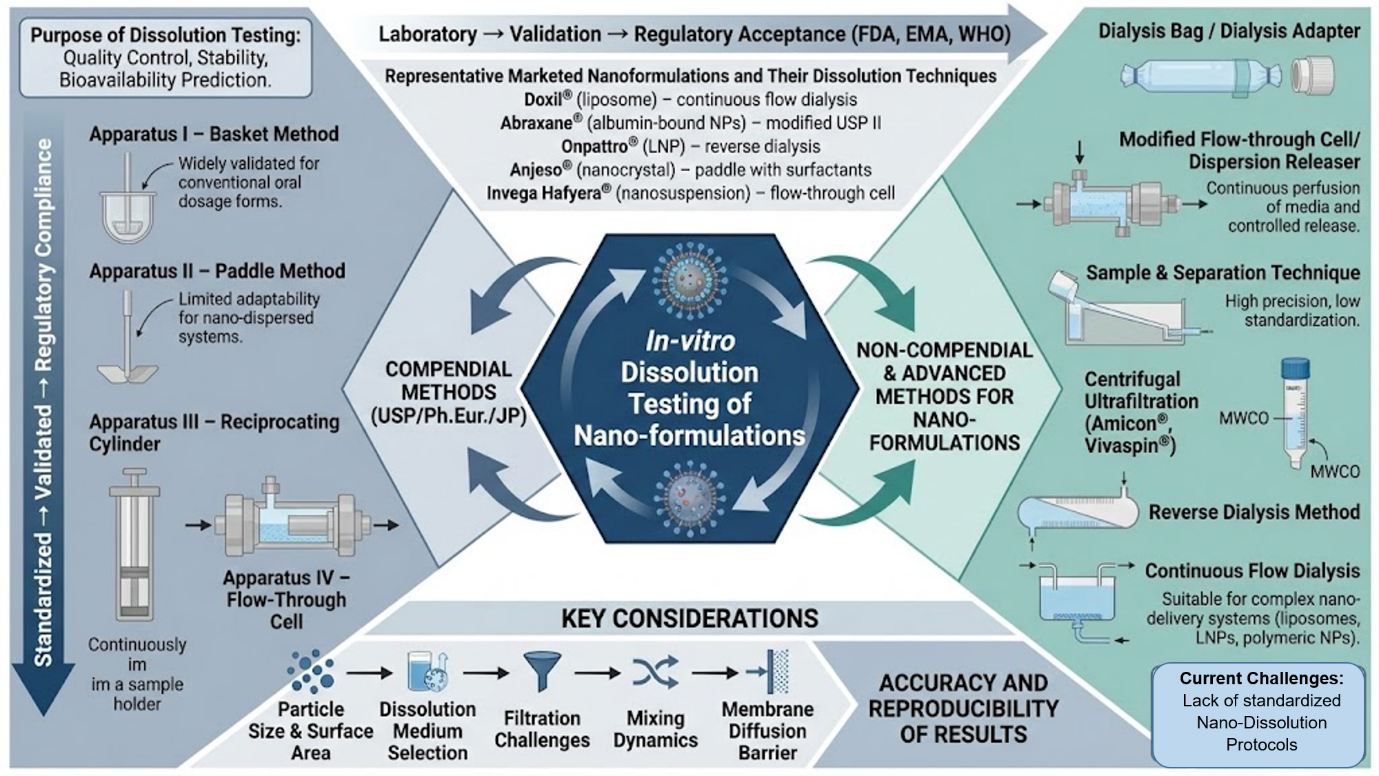
In-vitro dissolution study is crucial for quality assurance and stability, serving as a surrogate test for evaluating in-vivo performance of a drug. The dissolution procedure should be designed using an appropriate validated approach, depending on the type of dosage form. Dissolution testing is crucial to regulatory decision-making in a number of aspects. Conventional formulations have validated regulatory-compliant dissolution methods, conversely novel drug formulations like nanoparticles and microparticles lack standard validated procedures for the same. The present article provides information about the various compendial and non-compendial methods available for in-vitro dissolution testing of nano-formulations including the selection of dissolution media, different factors affecting the release, advancements in the dissolution procedures and also included the recently developed marketed nano-formulations.
Keywords:
1. Introduction
1.1. Recent Advances in Marketed Nano Formulations to Improve the Therapeutic Efficacy of Drugs
1.2. Important Considerations for Dissolution Testing of Nanoparticles
1.2.1. Particle Size and Surface Area
1.2.2. Selection of Dissolution Medium
1.2.3. Filtration of Aliquots
2. Non-Compendial Dissolution Methods
2.1. Dialysis Membrane Method
2.2. Sample and Separation Method
3. Compendial Dissolution Methods and Its Modifications
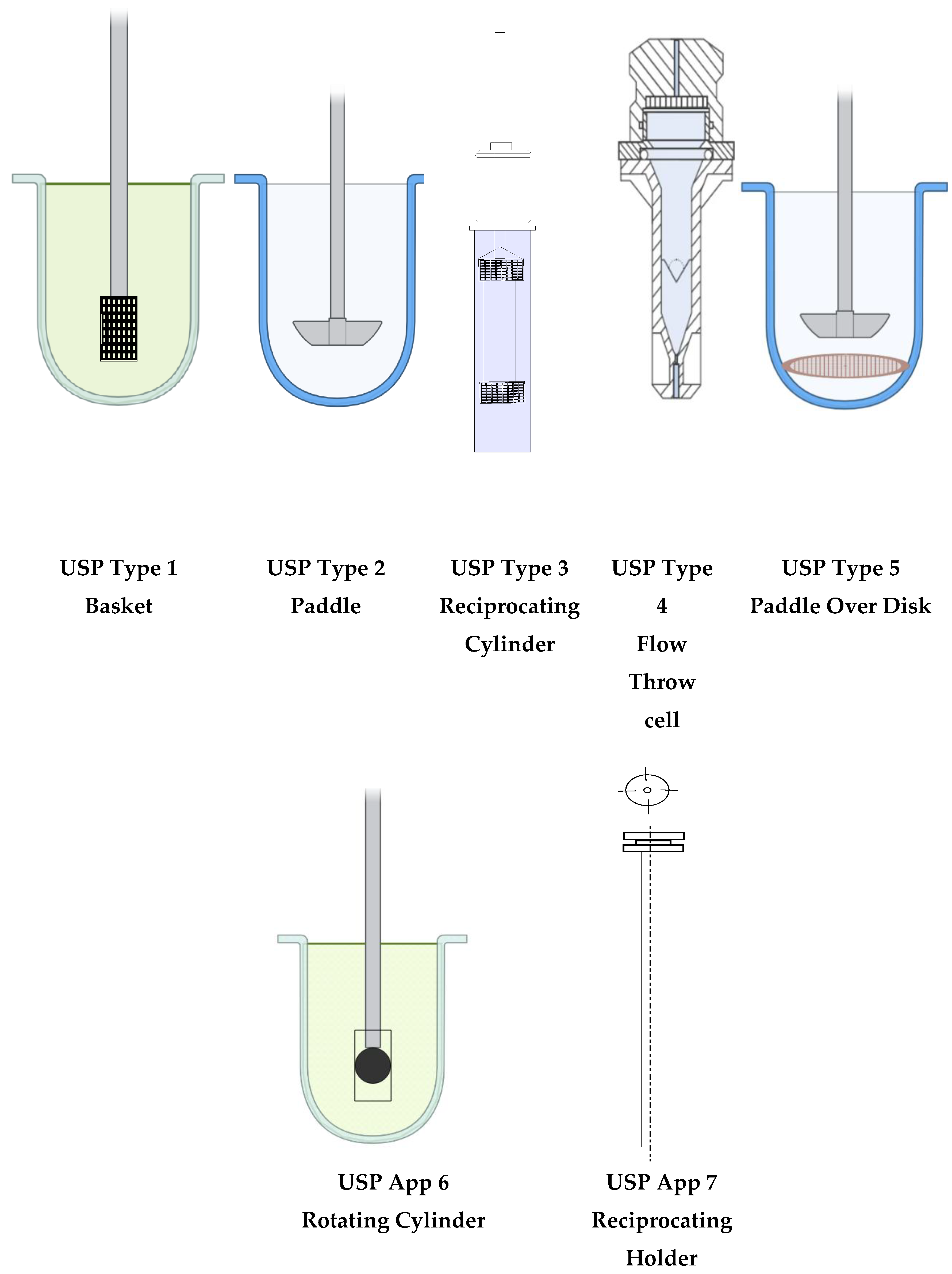
3.1. USP Type-I (Basket) Apparatus
3.1.1. Modified Cylinder in USP Type-I Apparatus
- It can be used to perform test under sink conditions
- It can resemble in-vitro dissolution profiles with in-vivo drug release mechanisms up to the maximum extent.
- It can distinguish between release profiles from formulations with variable composition.
- It can distinguish and help understand the in-vitro drug release mechanism from nanoparticles in various media with low standard deviation in dissolution data compared to dialysis bag method.
- Use of modified cylinder in standard dissolution test apparatus is advantageous than dialysis bag [89].
3.2. USP Type-II (Paddle) Apparatus
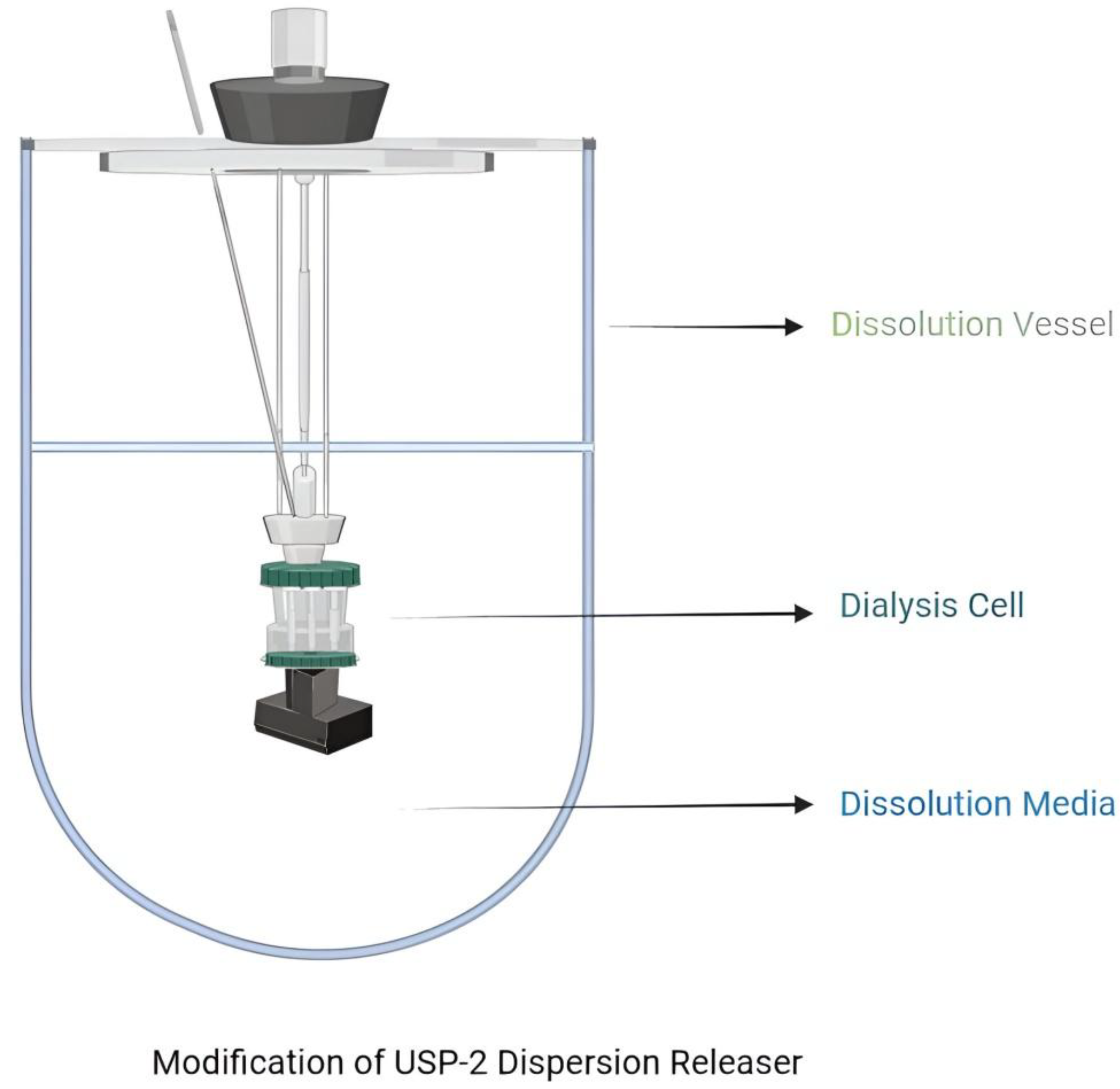
3.2.1. Modified Dispersion Releaser in USP Type-II Apparatus
3.3. USP Type-IV (Flow-Through Cell) Apparatus
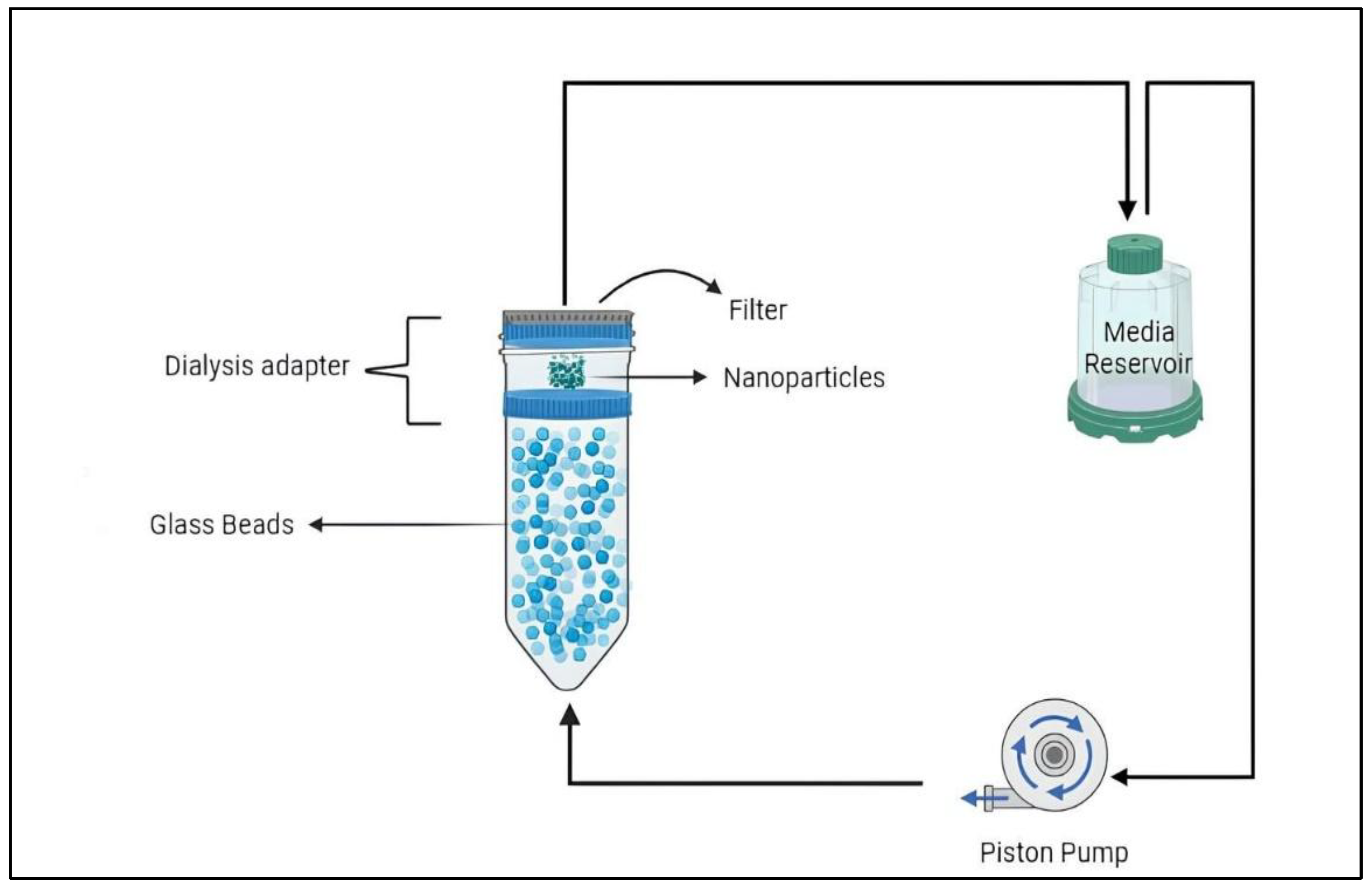
3.3.1. Modified Dialysis Adaptor in USP Type-IV Apparatus
4. Factors Affecting Dissolution Rate of Nanoformulations
4.1. Composition of Dissolution Medium: pH, Ions, and Concentration
4.2. Solubility of Drug in Dissolution Medium
4.3. Surface Area-to-Volume Ratio
4.4. Kinetic Size Effects
4.5. Presence of Strong Oxidants
4.6. Aggregation of Particles
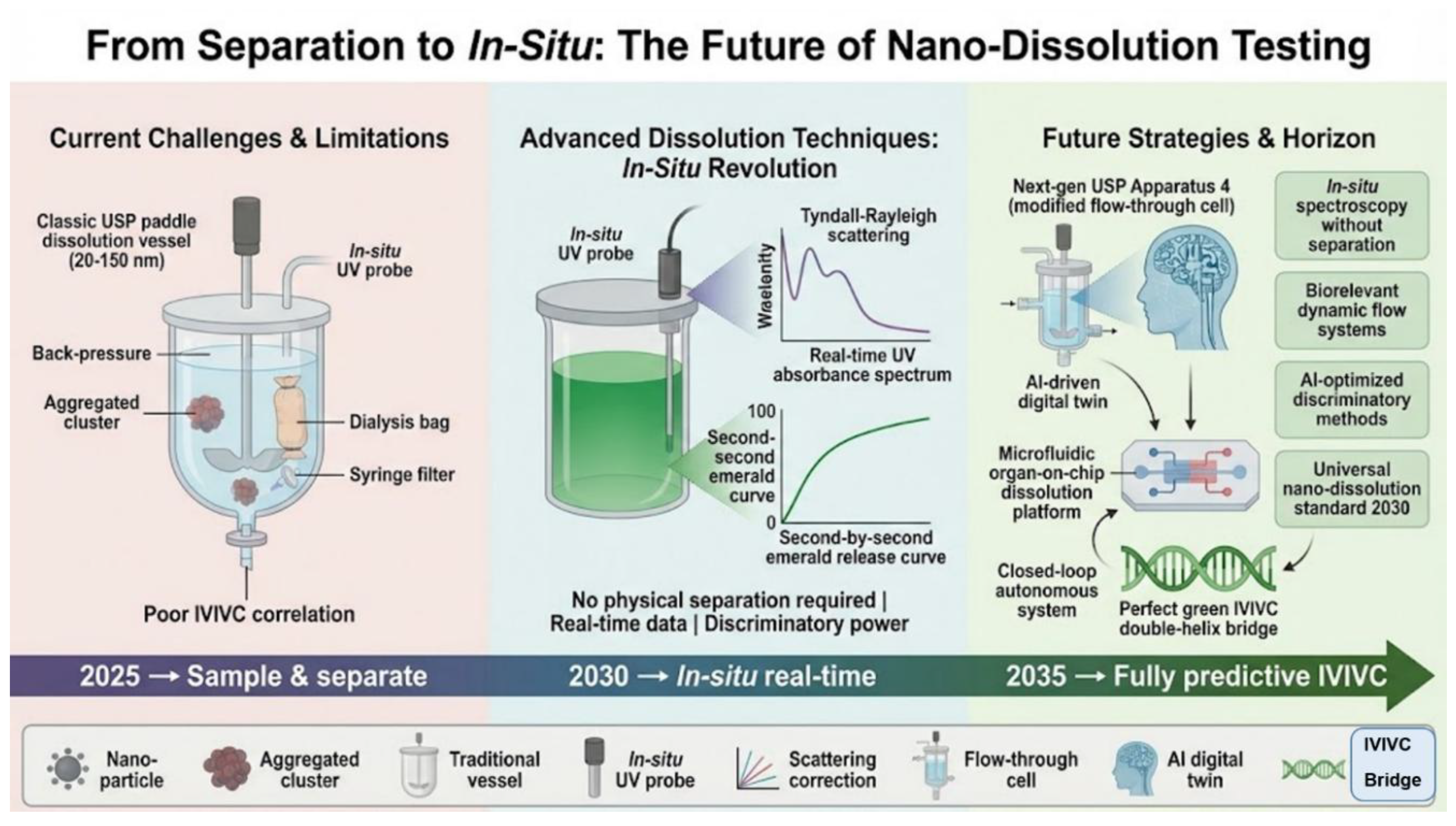
5. Advanced Dissolutiontechniques
6. Conclusions
Acknowledgments
References
- MG, K.; V, K.; F, H. History and Possible Uses of Nanomedicine Based on Nanoparticles and Nanotechnological Progress. J. Nanomed. Nanotechnol. 2015, 6(6). [Google Scholar] [CrossRef]
- Pathak, K.; Raghuvanshi, S. Oral Bioavailability: Issues and Solutions via Nanoformulations. Clin. Pharmacokinet. 2015, 54(4), 325–357. [Google Scholar] [CrossRef] [PubMed]
- Sahoo, S. K.; Dilnawaz, F.; Krishnakumar, S. Nanotechnology in Ocular Drug Delivery. Drug Discov. Today 2008, 13(3–4), 144–151. [Google Scholar] [CrossRef] [PubMed]
- Müller, R.H.; Gohla, S.; Keck, C. M. State of the Art of Nanocrystals – Special Features, Production, Nanotoxicology Aspects and Intracellular Delivery. Eur.J.Pharm.Biopharm. 2011, 78(1), 1–9. [Google Scholar] [CrossRef]
- Haleem, A.; Javaid, M.; Singh, R.P.; Rab, S.; Suman, R. Applications of Nanotechnology in Medical Field: A Brief Review. Glob. Health J. 2023, 7(2), 70–77. [Google Scholar] [CrossRef]
- Rizvi, S. A. A.; Saleh, A. M. Applications of Nanoparticle Systems in Drug Delivery Technology. Saudi Pharm.J. 2018, 26(1), 64–70. [Google Scholar] [CrossRef]
- Deng, Y.; Zhang, X.; Shen, H.; He, Q.; Wu, Z.; Liao, W.; Yuan, M. Application of the Nano-Drug Delivery System in Treatment of Cardiovascular Diseases. Front. Bioeng. Biotechnol. 2020, 7. [Google Scholar] [CrossRef]
- Jeevanandam, J.; Chan, Y.S.; Danquah, M. K. Nano-Formulations of Drugs: Recent Developments, Impact and Challenges. Biochimie 2016, 128–129, 99–112. [Google Scholar] [CrossRef]
- Padma, D. V.; et al. Targeted Drug Delivery: Concepts and Design. In Advances in Delivery Science and Technology; Springer International Publishing: Cham, 2015. [Google Scholar] [CrossRef]
- Krishnaiah, Y. S. R. Pharmaceutical Technologies for Enhancing Oral Bioavailability of Poorly Soluble Drugs. J.Bioequiv. Bioavailab. 2010, 2(2). [Google Scholar] [CrossRef]
- Kesisoglou, F.; Panmai, S.; Wu, Y. Nanosizing — Oral Formulation Development and Biopharmaceutical Evaluation. Adv. Drug Deliv. Rev. 2007, 59(7), 631–644. [Google Scholar] [CrossRef]
- Amidon, G.L.; Lennernäs, H.; Shah, V.P.; Crison, J.R. A Theoretical Basis for a Biopharmaceutic Drug Classification: The Correlation of in-vitro Drug Product Dissolution and in-vivo Bioavailability. Pharm.Res 1995, 12(3), 413–420. [Google Scholar] [CrossRef]
- D'Souza, S. A Review of In-vitro Drug Release Test Methods for Nano-Sized Dosage Forms. Adv.Pharm 2014, 2014, 1–12. [Google Scholar] [CrossRef]
- De Villiers, M.M.; Aramwit, P.; Kwon, G.S. (Eds.) Nanotechnology in Drug Delivery; Springer New York: New York, NY, 2009. [Google Scholar] [CrossRef]
- Ram, B.G.; Mishra, V.; Raj, S. Nanoparticle Technology for Drug Delivery, 1st ed.; CRC Press: Boca Raton, 2006. [Google Scholar] [CrossRef]
- Fahr, A.; Liu, X. Drug Delivery Strategies for Poorly Water-Soluble Drugs. Expert Opin. Drug Deliv. 2007, 4(4), 403–416. [Google Scholar] [CrossRef]
- Sahu, T.; Ratre, Y. K.; Chauhan, S.; Bhaskar, L. V. K. S.; Nair, M. P.; Verma, H. K. Nanotechnology Based Drug Delivery System: Current Strategies and Emerging Therapeutic Potential for Medical Science. J. Drug Deliv. Sci. Technol. 2021, 63, 102487. [Google Scholar] [CrossRef]
- Attari, Z.; Kalvakuntla, S.; Reddy, M. S.; Deshpande, M.; Rao, C. M.; Koteshwara, K. B. Formulation and Characterisation of Nanosuspensions of BCS Class II and IV Drugs by Combinative Method. J. Exp.Nanosci. 2015, 11(4), 276–288. [Google Scholar] [CrossRef]
- Jambhekar, S.S.; Breen, P. J. Drug Dissolution: Significance of Physicochemical Properties and Physiological Conditions. Drug Discov. Today 2013, 18(23–24), 1173–1184. [Google Scholar] [CrossRef]
- Anand, O.; Yu, L. X.; Conner, D. P.; Davit, B. M. Dissolution Testing for Generic Drugs: An FDA Perspective. AAPSJ. 2011, 13(3), 328–335. [Google Scholar] [CrossRef]
- Zhang, W.; Xiao, C.; Xiao, Y.; Tian, B.; Gao, D.; Fan, W.; Li, G.; He, S.; Zhai, G. An Overview of In-vitro Dissolution Testing for Film Dosage Forms. J. Drug Deliv. Sci. Technol. 2022, 71, 103297. [Google Scholar] [CrossRef]
- Barsagade, P.; Khetade, R.; Nirwan, K.; Agrawal, T.; Gotafode, S.; Lade, U. Review Article of Dissolution Test Method Development and Validation of Dosage Form by Using RP-HPLC. Int. J. Pharm. Sci. Rev. Res. 2021, 70(1), 28–38. [Google Scholar] [CrossRef]
- Stetten, L.; Mackevica, A.; Tepe, N.; Hofmann, T.; von der Kammer, F. Towards Standardization for Determining Dissolution Kinetics of Nanomaterials in Natural Aquatic Environments: Continuous Flow Dissolution of Ag Nanoparticles. Nanomaterials 2022, 12(3), 519. [Google Scholar] [CrossRef]
- Heng, D.; Ogawa, K.; Cutler, D. J.; Chan, H.-K.; Raper, J.A.; Ye, L.; Yun, J. Pure Drug Nanoparticles in Tablets: What Are the Dissolution Limitations? J. Nanopart. Res. 2010, 12(5), 1743–1754. [Google Scholar] [CrossRef]
- Cardot, J.-M.; Beyssac, E.; Alric, M. In-vitro–In-vivo Correlation: Importance of Dissolution in IVIVC. Dissolution Technol. 2007, 14(1), 15–19. [Google Scholar] [CrossRef]
- Akinc, A; Maier, MA; Manoharan, M; Fitzgerald, K; Jayaraman, M; Barros, S; Ansell, S; Du, X; Hope, MJ; Madden, TD; Mui, BL. The Onpattro story and the clinical translation of nanomedicines containing nucleic acid-based drugs. Nature nanotechnology 2019, 14(12), 1084–7. [Google Scholar] [CrossRef]
- Drummond, DC; Noble, CO; Guo, Z; Hong, K; Park, JW; Kirpotin, DB. Development of a highly active nanoliposomal irinotecan using a novel intraliposomal stabilization strategy. Cancer research 2006, 66(6), 3271–7. [Google Scholar] [CrossRef]
- Brown, MB; Blair, HA. Liposomal Irinotecan: A Review as First-Line Therapy in Metastatic Pancreatic Adenocarcinoma. Drugs 2025, 1–8. [Google Scholar] [CrossRef]
- Svanberg, A; Birgegård, G. Addition of aprepitant (Emend®) to standard antiemetic regimen continued for 7 days after chemotherapy for stem cell transplantation provides significant reduction of vomiting. Oncology 2015, 89(1), 31–6. [Google Scholar] [CrossRef] [PubMed]
- Li, J; Rodriguez, A; Wang, K; Olsen, K; Wang, Y; Schwendeman, A. In vitro and in vivo characterization of Invega Sustenna®(paliperidone palmitate long-acting injectable suspension). European Journal of Pharmaceutics and Biopharmaceutics 2025, 207, 114613. [Google Scholar] [CrossRef] [PubMed]
- International Neoral Renal Transplantation Study Group. Cyclosporine microemulsion (Neoral®) absorption profiling and sparse-sample predictors during the first 3 months after renal transplantation. American Journal of Transplantation 2002, 2(2), 148–56. [Google Scholar] [CrossRef]
- Italia, JL; Bhatt, DK; Bhardwaj, V; Tikoo, K; Kumar, MR. PLGA nanoparticles for oral delivery of cyclosporine: Nephrotoxicity and pharmacokinetic studies in comparison to SandimmuneNeoral®. Journal of Controlled Release 2007, 119(2), 197–206. [Google Scholar] [CrossRef] [PubMed]
- Stone, NR; Bicanic, T; Salim, R; Hope, W. Liposomal amphotericin B (AmBisome®): A review of the pharmacokinetics, pharmacodynamics, clinical experience and future directions. Drugs 2016, 76, 485–500. [Google Scholar] [CrossRef]
- Motamed, K; Said, N. Polymeric albumin-free paclitaxel intraperitoneal therapy demonstrates superior efficacy over nab-paclitaxel intravenous therapy in a mouse model of metastatic ovarian cancer. Cancer Research 2015, 75 (15_Supplement), 5532. [Google Scholar] [CrossRef]
- Hermosilla, J; Alonso-García, A; Salmerón-García, A; Cabeza-Barrera, J; Medina-Castillo, AL; Pérez-Robles, R; Navas, N. Analysing the in-use Stability of mRNA-LNP COVID-19 vaccines Comirnaty™(Pfizer) and Spikevax™(Moderna): A comparative study of the particulate. Vaccines 2023, 11(11), 1635. [Google Scholar] [CrossRef] [PubMed]
- Kayode, OR; Babatunde, OA. Cabenuva®: Differentiated service delivery and the community Pharmacists’ roles in achieving UNAIDS 2030 target in Nigeria. Saudi Pharmaceutical Journal 2021, 29(8), 815–9. [Google Scholar] [CrossRef]
- Ehret, MJ; Davis, E; Luttrell, SE; Clark, C. Aripiprazole lauroxilnanoCrystal® dispersion technology (Aristada Initio®). Clinical schizophrenia & related psychoses 2018, 12(2), 92–6. [Google Scholar] [CrossRef] [PubMed]
- Ma, J; Huang, J; Zou, C; Wu, Q; Xie, J; Zhang, X; Yang, X; Yang, S; Wu, Z; Jiang, Y; Yu, S. A phase I study to evaluate the safety, tolerability, and pharmacokinetics of novel intravenous formulation of meloxicam (QP001) in healthy Chinese subjects. Drug Design, Development and Therapy 2023, 2303–13. [Google Scholar] [CrossRef]
- Gabizon, AA; Gabizon-Peretz, S; Modaresahmadi, S; La-Beck, NM. Thirty years from FDA approval of pegylated liposomal doxorubicin (Doxil/Caelyx): An updated analysis and future perspective. BMJ oncology 2025, 4(1), e000573. [Google Scholar] [CrossRef] [PubMed]
- Keating, GM. Ferric carboxymaltose: A review of its use in iron deficiency. Drugs 2015, 75, 101–27. [Google Scholar] [CrossRef] [PubMed]
- Lou, PH; Lucchinetti, E; Zhang, L; Affolter, A; Gandhi, M; Zhakupova, A; Hersberger, M; Hornemann, T; Clanachan, AS; Zaugg, M. Propofol (Diprivan®) and Intralipid® exacerbate insulin resistance in type-2 diabetic hearts by impairing GLUT4 trafficking. Anesthesia& Analgesia 2015, 120(2), 329–40. [Google Scholar] [CrossRef]
- Ayesha, A; Wallace, RT; Mai, AP; Simpson, RG; Chaya, CJ. Iris atrophy after administration of Dexycu: Additional evidence and possible mechanism for a rare complication. American Journal of Ophthalmology Case Reports 2023, 30, 101806. [Google Scholar] [CrossRef]
- Migliorati, JM; Jin, J; Zhong, XB. siRNA drug Leqvio (inclisiran) to lower cholesterol. Trends in pharmacological sciences 2022, 43(5), 455–6. Available online: https://www.sciencedirect.com/science/article/pii/S016561472200027X. [CrossRef]
- James, J; Tang, K; Wei, T. Tesetaxel, a novel, oral taxane, crosses intact blood-brain barrier (BBB) at therapeutically relevant concentrations. Cancer Research 2019, 79 (13_Supplement), 3078. [Google Scholar] [CrossRef]
- Peters, L; Dyer, M; Schroeder, E; D’Souza, MS. Invega Hafyera (paliperidone palmitate): Extended-release injectable suspension for patients with schizophrenia. Journal of Pharmacy Technology 2023, 39(2), 88–94. [Google Scholar] [CrossRef]
- Blair, HA. Paliperidone palmitate intramuscular 6-monthly formulation in schizophrenia: A profile of its use. Drugs & Therapy Perspectives 2022, 38(8), 335–42. [Google Scholar] [CrossRef]
- Lewis, AL; McEntee, N; Holland, J; Patel, A. Development and approval of rybelsus (oral semaglutide): Ushering in a new era in peptide delivery. Drug delivery and translational research 2022, 12(1), 1–6. [Google Scholar] [CrossRef] [PubMed]
- Desai, N. Nanoparticle albumin-bound paclitaxel (Abraxane®). In InAlbumin in medicine: Pathological and clinical applications 2016 Nov 2; Springer Singapore: Singapore, 2016; pp. 101–119. [Google Scholar] [CrossRef]
- Marques, M. R. C.; Loebenberg, R.; Almukainzi, M. Simulated Biologic Fluids with Possible Application in Dissolution Testing. Dissolution Technol. 2011, No. August 15–28. [Google Scholar] [CrossRef]
- Kumar, P.; Choonara, Y.E.; du Toit, L.C.; Singh, N.; Pillay, V. In-vitro and in Silico Analyses of Nicotine Release from a Gelisphere-Loaded Compressed Polymeric Matrix for Potential Parkinson’sDisease Interventions. Pharmaceutics 2018, 10(4), 1–17. [Google Scholar] [CrossRef] [PubMed]
- Delplace, C.; Kreye, F.; Klose, D.; Danède, F.; Descamps, M.; Siepmann, J.; Siepmann, F. Impact of the Experimental Conditions on Drug Release from Parenteral Depot Systems:From Negligible to Significant. Int.J.Pharm. 2012, 432(1–2), 11–22. [Google Scholar] [CrossRef]
- Liu, P.; De Wulf, O.; Laru, J.; Heikkilä, T.; van Veen, B.; Kiesvaara, J.; Hirvonen, J.; Peltonen, L.; Laaksonen, T. Dissolution Studiesof Poorly Soluble Drug Nanosuspensions in Non-Sink Conditions. AAPSPharmSciTech 2013, 14(2), 748–756. [Google Scholar] [CrossRef]
- Fecioru, E.; Klein, M.; Krämer, J.; Wacker, M.G. In-vitro Performance Testing of Nanoparticulate Drug Products for Parenteral Administration. Dissolution Technol. 2019, 26(3), 28–40. [Google Scholar] [CrossRef]
- Gao, Y.; Zuo, J.; Bou-Chacra, N.; Pinto, T. de J. A.; Clas, S.D.; Walker, R. B.; Löbenberg, R. In-vitro Release Kinetics of Antituberculosis Drugs from Nanoparticles Assessed Using a Modified Dissolution Apparatus. Biomed Res.Int 2013, 2013, 1–9. [Google Scholar] [CrossRef]
- Sievens-Figueroa, L.; Pandya, NatashaBhakay; Bhakay, A.; Keyvan, G.; Michniak-Kohn, B.; Bilgili, E.; Davé, R. N. Using USPI and USP IV for Discriminating Dissolution Rates of NanoandMicroparticle-Loaded Pharmaceutical Strip-Films. AAPSPharmSciTech 2012, 13(4), 1473–1482. [Google Scholar] [CrossRef]
- Liu, P.; De Wulf, O.; Laru, J.; et al. Dissolution Studies of Poorly Soluble Drug Nanosuspensions in Non-sink Conditions. AAPS PharmSciTech 2013, 14, 748–756. [Google Scholar] [CrossRef]
- Yang, Guang-Zhi; Li, Jiao-Jiao; Yu, Deng-Guang; He, Mei-Feng; Yang, Jun-He; Williams, Gareth R. Nanosized sustained-release drug depots fabricated using modified tri-axial electrospinning. ActaBiomaterialia 2017, Volume 53, Pages 233–241. [Google Scholar] [CrossRef]
- Fecioru, E.; Klein, M.; Krämer, J.; Wacker, M.G. In-vitro Performance Testing of Nanoparticulate Drug Products for Parenteral Administration. Dissolution Technol. 2019, 26(3), 28–39. [Google Scholar] [CrossRef]
- Heng, D.; Cutler, D. J.; Chan, H.-K.; Yun, J.; Raper, J.A. What Is a Suitable Dissolution Method for Drug Nanoparticles? Pharm.Res 2008, 25(7), 1696–1701. [Google Scholar] [CrossRef]
- Boda, K. The Next Challenge in Dissolution–Nanoparticles. Pharm.Technol 2023, 47(5). [Google Scholar]
- Kwok, C. L. P.; Chan, H.-K. Nanotechnology Versus Other Techniques in Improving Drug Dissolution. Curr. Pharm.Des 2014, 20(3), 474–482. [Google Scholar] [CrossRef]
- Diaz, DA; Colgan, ST; Langer, CS; Bandi, NT; Likar, MD; Van Alstine, L. Dissolution similarity requirements: How similar or dissimilar are the global regulatory expectations? The AAPS Journal 2016, 18(1), 15–22. [Google Scholar] [CrossRef] [PubMed]
- Weng, J.; Tong, H. H. Y.; Chow, S.F. In-vitro Release Study of the Polymeric Drug Nanoparticles: Development and Validation of a Novel Method. Pharmaceutics 2020, 12(8), 732. [Google Scholar] [CrossRef]
- Gupta, R; Chen, Y; Xie, H. In vitro dissolution considerations associated with nano drug delivery systems. Wiley Interdisciplinary Reviews: Nanomedicine and Nanobiotechnology 2021, 13(6), e1732. [Google Scholar] [CrossRef]
- Jena, SK; Singh, C; Dora, CP; Suresh, S. Development of tamoxifen-phospholipid complex: Novel approach for improving solubility and bioavailability. International journal of pharmaceutics 2014, 473(1-2), 1–9. [Google Scholar] [CrossRef]
- de la Torre-Iglesias, PM; García-Rodriguez, JJ; Torrado, G; Torrado, S; Torrado-Santiago, S; Bolás-Fernández, F. Enhanced bioavailability and anthelmintic efficacy of mebendazole in redispersible microparticles with low-substituted hydroxypropylcellulose. Drug Design, Development and Therapy 2014, 1467–79. [Google Scholar] [CrossRef]
- Johnsen, E; Brandtzaeg, OK; Vehus, T; Roberg-Larsen, H; Bogoeva, V; Ademi, O; Hildahl, J; Lundanes, E; Wilson, SR. A critical evaluation of Amicon Ultra centrifugal filters for separating proteins, drugs and nanoparticles in biosamples. Journal of pharmaceutical and biomedical analysis 2016, 120, 106–11. [Google Scholar] [CrossRef]
- Nguyen, HV; Campbell, K; Painter, GF; Young, SL; Walker, GF. Data on the uptake of CpG-loaded amino-dextran nanoparticles by antigen-presenting cells. Data in brief 2021, 35, 106883. [Google Scholar] [CrossRef] [PubMed]
- Reguera, G; Leschine, S. Fast and efficient elution of proteins from polyacrylamide gels using nanosep® centrifugal devices. Department of Microbiology, University of Massachusetts-Amherst, Amherst. 2009.
- Modi, S.; Anderson, B. D. Determination of Drug Release Kinetics from Nanoparticles: Overcoming Pitfalls of the Dynamic Dialysis Method. Mol. Pharmaceutics 2013, 10(8), 3076–3089. [Google Scholar] [CrossRef] [PubMed]
- Yu, M.; Yuan, W.; Li, D.; Schwendeman, A.; Schwendeman, S.P. Predicting Drug Release Kinetics from Nanocarriers inside Dialysis Bags. J. Controlled Release 2019, 315, 23–30. [Google Scholar] [CrossRef]
- Zambito, Y.; Pedreschi, E.; Di Colo, G. Is Dialysis a Reliable Method for Studying Drug Release from Nanoparticulate Systems?—A Case Study. Int.J.Pharm. 2012, 434(1–2), 28–34. [Google Scholar] [CrossRef] [PubMed]
- Boyd, B. J. Characterisation of Drug Release from Cubosomes Using the Pressure Ultrafiltration Method. Int.J.Pharm. 2003, 260(2), 239–247. [Google Scholar] [CrossRef]
- Min, KH; Lee, HJ; Kim, K; Kwon, IC; Jeong, SY; Lee, SC. The tumor accumulation and therapeutic efficacy of doxorubicin carried in calcium phosphate-reinforced polymer nanoparticles. Biomaterials 2012, 33(23), 5788–97. [Google Scholar] [CrossRef]
- Wang, L; Wang, X; Shen, L; Alrobaian, M; Panda, SK; Almasmoum, HA; Ghaith, MM; Almaimani, RA; Ibrahim, IA; Singh, T; Baothman, AA. Paclitaxel and naringenin-loaded solid lipid nanoparticles surface modified with cyclic peptides with improved tumor targeting ability in glioblastoma multiforme. Biomed. Pharmacother. 2021, 138(111461), 10–16. [Google Scholar] [CrossRef]
- Fonte, P; Andrade, F; Araújo, F; Andrade, C; Neves, J; Sarmento, B. Chitosan-coated solid lipid nanoparticles for insulin delivery. Methods in Enzymology 2012, 508, 295–314. [Google Scholar] [CrossRef]
- Kumar, N; Goindi, S. Development and optimization of itraconazole-loaded solid lipid nanoparticles for topical administration using high shear homogenization process by design of experiments: In vitro, ex vivo and in vivo evaluation. AAPS PharmSciTech 2021, 22, 1–21. [Google Scholar] [CrossRef]
- Bhardwaj, U; Burgess, DJ. A novel USP apparatus 4 based release testing method for dispersed systems. International journal of pharmaceutics 2010, 388(1-2), 287–94. [Google Scholar] [CrossRef]
- Moreno-Bautista, G; Tam, KC. Evaluation of dialysis membrane process for quantifying the in vitro drug-release from colloidal drug carriers. Colloids and Surfaces A: Physicochemical and Engineering Aspects 2011, 389(1-3), 299–303. [Google Scholar] [CrossRef]
- Cetin, M.; Atila, A.; Kadioglu, Y. Formulation and In-vitro Characterization of Eudragit® L100 and Eudragit® L100-PLGA Nanoparticles Containing Diclofenac Sodium. AAPS PharmSciTech 2010, 11(3), 1250–1256. [Google Scholar] [CrossRef]
- Nothnagel, L.; Wacker, M.G. How to Measure Release from Nanosized Carriers? Eur.J.Pharm.Sci. 2018, 120, 199–211. [Google Scholar] [CrossRef]
- https://www.oecd.org/content/dam/oecd/en/publications/reports/2020/07/guidance-document-for-the-testing-of-dissolution-and-dispersion-stability-of-nanomaterials-and-the-use-of-the-data-for-further-environmental-testing-and-assessment_988b598b/f0539ec5-en.pdf.
- Budhian, A.; Siegel, S.J.; Winey, K.I. Controlling the in-vitro Release Profiles for a System of Haloperidol-Loaded PLGA Nanoparticles. Int.J.Pharm. 2008, 346(1–2), 151–159. [Google Scholar] [CrossRef] [PubMed]
- U.S. Pharmacopeia 38, National Formulary 33; United States Pharmacopeial Convention: Rockville, MD, 2015; Vol. 1, pp 487–490.
- Heng, D.; Cutler, D. J.; Chan, H.K.; Yun, J.; Raper, J.A. What Isa Suitable Dissolution Method for Drug Nanoparticles? Pharm.Res 2008, 25(7), 1696–1701. [Google Scholar] [CrossRef] [PubMed]
- Wacker, M. G. Challenges in the Drug Release Testing of Next-Generation Nanomedicines – What Do We Know? Mater. Today: Proc. 2017, 4 Supplement 2, S214–S217. [Google Scholar] [CrossRef]
- Gao, Y.; Zuo, J.; Bou-Chacra, N.; Pinto, T. D. J. A.; Clas, S.-D.; Walker, R. B.; Löbenberg, R. In-vitro Release Kinetics of Antituberculosis Drugs from Nanoparticles Assessed Using a Modified Dissolution Apparatus. BioMed Res.Int 2013, 2013, 136590. [Google Scholar] [CrossRef]
- Sievens-Figueroa, L.; Pandya, N.; Bhakay, A.; Keyvan, G.; Michniak-Kohn, B.; Bilgili, E.; Davé, R. N. Using USP I and USP IV for Discriminating Dissolution Rates of Nano- and Microparticle-Loaded Pharmaceutical Strip-Films. AAPS PharmSciTech 2012, 13(4), 1367–1376. [Google Scholar] [CrossRef]
- Jung, F; Nothnagel, L; Gao, F; Thurn, M; Vogel, V; Wacker, MG. A comparison of two biorelevant in-vitro drug release methods for nanotherapeutics based on advanced physiologically-based pharmacokinetic modelling. EurJPharmBiopharm 2018, 127, 462–470. [Google Scholar] [CrossRef] [PubMed]
- C. Janas, M. P. Mast, L. Kirsamer, C. Angioni, F. Gao, W. Mantele, J. Dressman,M. G. Wacker, Eur. J. Pharm. Biopharm. [Epub ahead ofprint] (2017).
- L. Jablonka, M. Thurn, M. G. Wacker, GPEN Conference (Kansas, USA) (2016).
- JonasHedberg; BlombergInger, Eva; OdnevallWallinder. In the Search for Nanospecific Effects of Dissolution of Met al.et al.lic Nanoparticles at Freshwater-Like Conditions: A Critical Review. Environ. Sci. Technol. 2019, 53(8), 4030–4044. [Google Scholar] [CrossRef]
- Heng, D.; Cutler, D. J.; Chan, H.-K.; Yun, J.; Raper, J.A. What Is a Suitable Dissolution Method for Drug Nanoparticles? Pharm.Res 2008, 25(7), 1696–1701. [Google Scholar] [CrossRef]
- Latif, M.S.; Nawaz, A.; Asmari, M.; Uddin, J.; Ullah, H.; Ahmad, S. Formulation Development and In-vitro/In-vivo Characterization of Methotrexate-Loaded Nanoemulsion Gel Formulations for Enhanced Topical Delivery. Gels 2023, 9(1), 3. [Google Scholar] [CrossRef] [PubMed]
- Bhardwaj, U.; Burgess, D. J. A Novel USP Apparatus 4 Based Release Testing Method for Dispersed Systems. Int.J.Pharm. 2010, 388(1–2), 287–294. [Google Scholar] [CrossRef]
- Utembe, W.; Potgieter, K.; Stefaniak, A.B.; Gulumian, M. Dissolution and Biodurability: Important Parameters Needed for Risk Assessment of Nanomaterials. Part. Fibre Toxicol. 2015, 12(1), 11. [Google Scholar] [CrossRef]
- Spitzmüller, L.; Nitschke, F.; Rudolph, B.; Berson, J.; Schimmel, T.; Koh, T. Dissolution Control and Stability Improvement of Silica Nanoparticles in Aqueous Media. J. Nanopart. Res. 2023, 25(1), 40. [Google Scholar] [CrossRef]
- Bhadra, S.; Prajapati, A.B.; Bhadra, D. Development of pH-Sensitive Polymeric Nanoparticles of Erythromycin Stearate. J.Pharm.BioalliedSci. 2016, 8(2), 135–140. [Google Scholar] [CrossRef]
- Jain, S.; Bharti, S.; Bhullar, G.K.; Tripathi, S.K. pH-Dependent Drug Release from Drug Conjugated PEGylated CdSe/ZnS Nanoparticles. Mater. Chem. Phys. 2020, 240, 122162. [Google Scholar] [CrossRef]
- Misra, S.K.; Dybowska, A.; Berhanu, D.; Luoma, S.N.; Valsami-Jones, E. The Complexity of Nanoparticle Dissolution and Its Importance in Nanotoxicological Studies. Sci. Total Environ. 2012, 438, 225–232. [Google Scholar] [CrossRef] [PubMed]
- Borm, P.; Klaessig, F. C.; Landry, T. D.; Moudgil, B.; Pauluhn, J.; Thomas, K.; Trottier, R.; Wood, S. Research Strategies for Safety Evaluation of Nanomaterials, Part V: Role of Dissolution in Biological Fate and Effects of Nanoscale Particles. Toxicol. Sci. 2006, 90(1), 23–32. [Google Scholar] [CrossRef]
- Levard, C.; Mitra, S.; Yang, T.; Jew, A. D.; Badireddy, A. R.; Lowry, G. V.; Brown, G. E. Effect of Chloride on the Dissolution Rate of Silver Nanoparticles and Toxicity to E. coli. Environ. Sci.Technol 2013, 47(11), 5738–5745. [Google Scholar] [CrossRef] [PubMed]
- MalekiDizaj, S; ZhVazifehasl; Salatin, S; KhAdibkia; Javadzadeh, Y. Nanosizing of drugs: Effect on dissolution rate. Res PharmSci 2015, 10(2), 95–108. Available online: https://pmc.ncbi.nlm.nih.gov/articles/PMC4584458/.
- JernejŠtukelj, SamiSvanbäck, MikaelAgopov, KorbinianLöbmann, ClareJ.Strachan, ThomasRades, JoukoYliruusi. Direct Measurement of Amorphous Solubility.Anal. Chem. 2019, 91, 11, 7411–7417. [CrossRef]
- https://manufacturingchemist.com/dissolution-of-an-immediate-release-nanoparticle-formulation-using#:~:text=One%20of%20the%20major%20challenges,with%20an%20expected%20higher%20bioavailability.
- Bian, S.-W.; Mudunkotuwa, I. A.; Rupasinghe, T.; Grassian, V. H. Aggregation and Dissolution of 4 nm ZnO Nanoparticles in Aqueous Environments: Influence of pH, Ionic Strength, Size, and Adsorption of Humic Acid. Langmuir 2011, 27(10), 6059–6068. [Google Scholar] [CrossRef]
- Pozzi, Maria; Dutta, SarodiJonak; Kuntze, Mia; Bading, Jeannette; Rüßbült, Johanna S.; Fabig, Cornelius; Langfeldt, Malte; Schulz, Florian; Horcajada, Patricia; Parak, Wolfgang J. Visualization of the High Surface-to-Volume Ratio of Nanomaterials and Its Consequences. J. Chem. Educ. 2024, 101(8), 3146–3155. [Google Scholar] [CrossRef] [PubMed]
- Nakarani, M.; Misra, A.; Patel, J.; Vaghani, S. Itraconazole Nanosuspension for Oral Delivery: Formulation, Characterization and in-vitro Comparison with Marketed Formulation. DARUJ.Pharm.Sci. 2010, 18(2), 84–90. [Google Scholar]
- Sun, J.; Wang, F.; Sui, Y.; She, Z.; Zhai, W.; Wang, C.; Deng, Y. Effect of Particle Size on Solubility, Dissolution Rate, and Oral Bioavailability: Evaluation Using Coenzyme Q10 as Naked Nanocrystals. Int. J. Nanomedicine 2012, 7, 5733–5744. [Google Scholar] [CrossRef]
- Vogelsberger, W.; Schmidt, J.; Roelofs, F. Dissolution Kinetics of Oxidic Nanoparticles: The Observation of an Unusual Behaviour. Colloids Surf., A 2008, 324(1), 51–57. [Google Scholar] [CrossRef]
- Vogelsberger, W.; Schmidt, J. Studies of the Solubility of BaSO4 Nanoparticles in Water: Kinetic Size Effect, Solubility Product, and Influence of Microporosity. J. Phys. Chem. C 2010, 115(5), 1388–1397. [Google Scholar] [CrossRef]
- Liu, J.; Sonshine, D. A.; Shervani, S.; Hurt, R.H. Controlled Release of Biologically Active Silver from Nanosilver Surfaces. ACSNano 2010, 4(11), 6903–6913. [Google Scholar] [CrossRef] [PubMed]
- Abraham, P. M.; Barnikol, S.; Baumann, T.; Kuehn, M.; Ivleva, N. P.; Schaumann, G. E. Sorption of Silver Nanoparticles to Environmental and Model Surfaces. Environ. Sci.Technol 2013, 47(10), 5083–5091. [Google Scholar] [CrossRef]
- Jin, X.; Li, M.; Wang, J.; Marambio-Jones, C.; Peng, F.; Huang, X.; Damoiseaux, R.; Hoek, E. M. V. High-Throughput Screening of Silver Nanoparticle Stability and Bacterial Inactivation in Aquatic Media: Influence of Specific Ions. Environ. Sci.Technol 2010, 44(19), 7321–7328. [Google Scholar] [CrossRef]
- Liu, J.; Hurt, R. H. Ion Release Kinetics and Particle Persistence in Aqueous Nano-Silver Colloids. Environ. Sci.Technol 2010, 44(6), 2169–2175. [Google Scholar] [CrossRef]
- He, D.; Bligh, M.W.; Waite, T. D. Effects of Aggregate Structure on the Dissolution Kinetics of Citrate-Stabilized Silver Nanoparticles. Environ. Sci.Technol 2013, 47(16), 9148–9156. [Google Scholar] [CrossRef]
- Rubasinghege, G.; Lentz, R. W.; Park, H.; Scherer, M. M.; Grassian, V. H. Nanorod Dissolution Quenched in the Aggregated State. Langmuir 2009, 26(3), 1524–1527. [Google Scholar] [CrossRef]
- Kittler, S.; Greulich, C.; Diendorf, J.; Köller, M.; Epple, M. Toxicity of Silver Nanoparticles Increases during Storage Because of Slow Dissolution under Release of Silver Ions. Chem. Mater. 2010, 22(16), 4548–4554. [Google Scholar] [CrossRef]
- Balzus, B.; Colombo, M.; Sahle, F. F.; Zoubari, G.; Staufenbiel, S.; Bodmeier, R. Comparison of Different in-vitro Release Methods Used to Investigate Nanocarriers Intended for Dermal Application. Int.J.Pharm. 2016, 513(1–2), 247–254. [Google Scholar] [CrossRef] [PubMed]
- Teleki, A.; Nylander, O.; Bergström, C. A. S. Intrinsic Dissolution Rate Profiling of Poorly Water-Soluble Compounds in Biorelevant Dissolution Media. Pharmaceutics 2020, 12(6), 493. [Google Scholar] [CrossRef] [PubMed]

| Sr. No. | Nano formulation | Drug | Developed company | Brand name | Therapeutic use | BCS class of drug | Type of dissolution study implemented for formulation development | Dissolution media used | Reference |
| 1 | Lipid nanoparticle | Patisiran (siRNA) | Alnylam Pharmaceuticals | Onpattro® | Hereditary transthyretin-mediated amyloidosis | Not applicable (nucleic acid) | Membrane dialysis method | Simulated biological fluids (pH 7.4 PBS) | [26] |
| 2 | Liposomal nanoformulation | Irinotecan | Ipsen Biopharmaceuticals | Onivyde® | Metastatic pancreatic cancer | Class IV | Reverse dialysis bag technique | Bio relevant media (FaSSGF, FaSSIF) | [27,28] |
| 3 | Polymeric nanoparticle | Aprepitant | Merck | Emend® | Chemotherapy-induced nausea and vomiting | Class IV | USP Apparatus 4 (flow-through cell) | pH gradient method (pH 1.2, 4.5, 6.8) | [29] |
| 4 | Nanosuspension | Paliperidone palmitate | Janssen Pharmaceuticals | Invega Sustenna® | Schizophrenia | Class II | Sample and separate method | Phosphate buffer (pH 7.4) with 0.2% SLS | [30] |
| 5 | Nanoemulsion / PLGA nanoparticles | Cyclosporine A | Novartis | Neoral® | Immunosuppression | Class II | USP Apparatus 2 with membrane | Biorelevant media with lipolysis components | [31,32] |
| 6 | Solid lipid nanoparticle | Amphotericin B | Sun Pharma Advanced Research | AmBisome® | Systemic fungal infections | Class IV | Dialysis bag diffusion technique | Phosphate buffer (pH 7.4) with 2% sodium deoxycholate | [33] |
| 7 | Polymeric micelle | Paclitaxel | Sorrento Therapeutics | Cynviloq™ | Various cancers | Class IV | USP Apparatus 4 with dialysis adapter | Simulated plasma with 4% albumin | [34] |
| 8 | Lipid nanoparticle | mRNA-1273 (COVID-19 vaccine) | Moderna | Spikevax® | COVID-19 prevention | Not applicable (nucleic acid) | Dialysis membrane technique | PBS (pH 7.4) | [35] |
| 9 | Nanocrystal | Cabotegravir | ViiV Healthcare | Cabenuva® | HIV treatment | Class II | USP Apparatus 2 with enhancer cell | Acetate buffer (pH 4.5) with 0.1% polysorbate 20 | [36] |
| 10 | Surface-modified PLGA nanoparticle | Risperidone | Alkermes | Aristada® | Schizophrenia | Class II | Flow-through cell with dialysis membrane | Phosphate buffer (pH 7.4) with 0.5% SDS | [37] |
| 11 | Nanocrystal | Meloxicam | Recro Pharma | Anjeso® | Moderate to severe pain | Class II | USP Apparatus 2 | Phosphate buffer (pH 6.8) with surfactants | [38] |
| 12 | Liposomal nanoformulation | Doxorubicin | Sun Pharmaceutical | Doxil®/Caelyx® | Various cancers | Class III | Continuous flow dialysis | Plasma simulating media with 4% albumin | [39] |
| 13 | Iron-carbohydrate nanocomplex | Ferric carboxymaltose | Vifor Pharma | Injectafer®/Ferinject® | Iron deficiency anemia | Class III | Membrane diffusion method | Phosphate buffer (pH 7.4) | [40] |
| 14 | Nanoemulsion | Propofol | Fresenius Kabi | Diprivan® | Anesthesia | Class II | Reverse dialysis | Simulated plasma media with lipoproteins | [41] |
| 15 | Solid lipid nanoparticle | Dexamethasone | Pacira Biosciences | Dexycu® | Postoperative inflammation | Class II | Sample and separate method | Simulated vitreous humor | [42] |
| 16 | Lipid nanoparticle | Inclisiran | Novartis | Leqvio® | Hypercholesterolemia | Not applicable (nucleic acid) | Dialysis sac technique | PBS with 5% human serum | [43] |
| 17 | Polymeric nanoparticle | Docetaxel | Eagle Pharmaceuticals | Tesetaxel® | Metastatic breast cancer | Class IV | USP Apparatus 4 with dialysis adapter | Simulated plasma with albumin | [44] |
| 18 | Nanocrystal | Paliperidone | Janssen Pharmaceuticals | Invega Hafyera® | Schizophrenia | Class II | Flow-through cell | Phosphate buffer (pH 7.4) with 0.5% SLS | [45,46] |
| 19 | Nanoemulsion | Semaglutide | Novo Nordisk | Rybelsus® | Type 2 diabetes | Class III | USP Apparatus 3 (reciprocating cylinder) | Biorelevant media with pH transition | [47] |
| 20 | Albumin-bound nanoparticle | Nab-paclitaxel | Celgene | Abraxane® | Various cancers | Class IV | Continuous flow dialysis | Human plasma | [48] |
| Dissolution method | Advantages | Limitations |
| Dialysis membrane method | Most popular approach due to the lack of compendial methods for the in-vitro release study of nano-formulations | Nano-formulations may face permeation kinetics problem for free drug in the donor compartment to pass through the dialysis membrane. This results in slower permeation than release of drug in the donor compartment. It affects the accuracy and actual release profile of the drug since the acceptor compartment does not reflect the same release. These problems create non-sink conditions for further release of drug from nanoparticles inside the dialysis bag [13]. |
| Sample and separation method | This approach is close to conventional compendial in-vitro release method. This method found to be superior over the dialysis membrane method in evaluating release kinetics of nano-formulation and discriminating release profile based on particle size. It offers more accuracy and precision in demonstrating actual release profiles and uses sample separation techniques such as centrifugation, and centrifugal ultracentrifugation methods, instead of membrane [82,83]. | Shear-sensitive particles are susceptible for forced release during this centrifugation method. Release of drug may also continue during separation process. Filtration techniques with small syringe-pore size are preferred to limit the entry of nanoparticles. This method proved to be effective, simple, and time-efficient. Here, the complete separation of the free drug from nanocarrier is the concern [81]. |
| Compendial method | Type of nano-formulation | Applications |
| 1) USP type-1 (basket) a) Modified cylinder type |
Nanoparticles E.g. Cefuroxime axetil or griseofulvin nanoparticles. |
Highlighted the problem of nanoparticle containment in the basket approach due to aggregation. An initial rapid dissolution rate was followed by a slow dissolution rate. Modified cylinder approach was used to investigate the dissolution and release kinetics of drug loaded nanoparticles in different media. |
| 2) USP type-2 (paddle) a) Modified dispersion releaser |
Nanosuspension E.g. Indomethacin nanosuspension. Dispersion releaser filled with nanoparticles loaded with an orange dye. |
It is challenging to determine the exact release rate using the paddle approach. Non-sink conditions have reportedly been used, and were found to be superior than sink conditions while comparing indomethacin nanosuspensions with three different particle sizes. Research findings indicated that the dispersion releaser aids in the discriminating nanoparticulate drug products based on variations in formulation composition. |
| 3) USP type-4 (flow through cell) a) Flow through cell with closed loop b) Flow through cell with open loop c)Dialysis adaptor |
Nanosuspension and Liposomes E.g. (i) Griseofulvin nanoparticles, Celecoxib nanosuspension. (ii) Liposomes (dexamethasone release from different liposomal compositions) |
USP 4 has been reported to be the most efficient method for analysing dissolution of nanoparticles. Modified USP 4 has been used for characterization of dexamethasone-loaded suspensions and liposomes. |
Disclaimer/Publisher’s Note: The statements, opinions and data contained in all publications are solely those of the individual author(s) and contributor(s) and not of MDPI and/or the editor(s). MDPI and/or the editor(s) disclaim responsibility for any injury to people or property resulting from any ideas, methods, instructions or products referred to in the content. |
© 2026 by the authors. Licensee MDPI, Basel, Switzerland. This article is an open access article distributed under the terms and conditions of the Creative Commons Attribution (CC BY) license (http://creativecommons.org/licenses/by/4.0/).