

Submitted:
11 January 2026
Posted:
12 January 2026
You are already at the latest version
Preprints on COVID-19 and SARS-CoV-2
Abstract
Background: The COVID-19 pandemic has underscored the importance of understanding the transmission dynamics of the virus between humans and animals. The One Health model, which recognizes the interconnectedness of human, animal, and environmental health, is crucial for understanding and addressing zoonotic diseases. This scoping review aims to explore the literature on animal-to-human transmission of COVID-19 in Southern Africa, with a focus on identifying neglected facets in transmission dynamics informed by the One Health model. Methods: A scoping review of empirical studies and surveillance reports from December 2019 to December 2024 was conducted. Eligible literature addressing SARS-CoV-2 infection in domestic animals within Southern Africa was systematically identified, charted using a structured extraction template, and synthesized narratively through thematic analysis. Results: The findings demonstrate that dogs and cats are the most consistently vulnerable domestic species in Southern Africa, with infections varying from asymptomatic to mild symptomatic cases. Limited and sporadic evidence suggests potential exposure in livestock species, including cattle, though data remain scarce. Genomic surveillance in South Africa has further revealed the emergence of Omicron lineages, underscoring the risk of variant evolution at the human–animal interface. Comparatively, Europe and North America have reported severe outbreaks in farmed mink, prompting large-scale culling, while Asia has emphasized wildlife market regulations and biosecurity measures. Conclusion: Southern Africa demonstrates strengths in genomic monitoring and case-based detection but faces the challenges of limited infrastructure, small sample sizes, and geographic gaps. Strengthening coordinated One Health surveillance, expanding animal testing, and addressing geographic and infrastructural gaps are essential to reduce spillover risks and improve preparedness for future zoonotic threats.
Keywords:
COVID-19
; SARS-CoV-2
; domestic animals
; One Health
; reverse zoonosis
; Southern Africa
Introduction
The COVID-19 pandemic remains a public health threat, with the World Health Organization (WHO) reporting that as of May 2025, global COVID-19 activity was increasing, with a test positivity rate of 11%—the highest since July 2024 (World Health Organization [WHO], 2025). The disease has highlighted the importance of understanding the transmission dynamics of the virus between humans and animals (Edvard, 2023). Multiple studies have documented the transmission of COVID-19 from humans to domestic animals, including dogs and cats (Newman et al., 2020; Sit et al., 2020). Specifically, Fang et al. (2024) posit that COVID-19 is more widespread in animals than previously thought, and it may be able to infect a wider range of domestic and wild species.
Severe acute respiratory syndrome coronavirus 2 (SARS-CoV-2), which originated in Wuhan, China, in 2019, is responsible for the COVID-19 pandemic (Bogoch et al., 2020; Zhou et al., 2020). Wild fauna, probably bats, are implicated as the initial reservoir of the virus (Abdel-Moneim & Abdelwhab, 2020), but little is known about the role domestic animals play in the spread of the disease in human communities, given its ability to infect some domestic animals.
The prevalence of COVID-19 in domestic animals has been documented in Italy (Patterson et al., 2020), France (Sailleau et al., 2020), China (Chen et al., 2020), the Netherlands (Oreshkova et al., 2020), Switzerland (Klaus et al., 2021), Kazakhstan (Sadikaliyeva et al., 2024), Panama (Pacheco et al., 2025), and various African nations, including Namibia (Molini et al., 2025), South Africa (Haider et al., 2020), and Nigeria (Happi et al., 2023). While the transmission of COVID-19 from animals to humans is considered rare, it is essential to understand the dynamics of transmission to develop effective interventions (WHO, 2020).
Studies have shown that COVID-19 can be transmitted from humans to animals through close contact (Oreshkova et al., 2020). The virus has been detected in various domestic animals, including dogs, cats, and livestock (Almendros, 2020; Gao et al., 2024; Patterson et al., 2020). Joseph et al. (2024) found a spillover of previously circulating variants of concern (VOC) to household pets from their infected owners and showed an urgent need for more intense surveillance to be carried out globally to monitor the evolution of SARS-CoV-2 coronaviruses as a result of human–pet association.
Research on COVID-19 in domestic animals has primarily concentrated on the epidemiology and transmission dynamics of the virus (Newman et al., 2020; Sit et al., 2020). Nonetheless, a thorough examination of the literature regarding COVID-19 in domestic animals in Southern Africa is essential to comprehend the transmission dynamics and existing interventions.
Recent studies have highlighted the importance of understanding the role of domestic animals in the transmission of COVID-19 (Bosco-Lauth et al., 2020; Temmam et al., 2020). The World Health Organization (WHO) has also emphasized the need for further research on the transmission of COVID-19 between humans and animals (WHO, 2020).
While the emergence of the virus is now well-documented, important questions regarding the transmissibility of the disease among human and animal populations remain to be answered. The current scoping review aims to address the need for a comprehensive review of the literature on COVID-19 in domestic animals in Southern Africa. The review will provide insights into the transmission dynamics of COVID-19 between humans and domestic animals, prevalence, and available interventions.
Research Questions:
1. What is the prevalence of COVID-19 in domestic animals in Southern Africa?
2. What are the transmission dynamics of COVID-19 between humans and domestic animals in Southern Africa?
3. What interventions are available to prevent and control COVID-19 in domestic animals in Southern Africa?
Materials and Methods
Study Design
The review was conducted according to the methodological approach for scoping reviews provided by the Joanna Briggs Institute (JBI) manual for evidence synthesis (2024), and was reported in accordance with the PRISMA Extension for Scoping Reviews (PRISMA-ScR). The review focused on studies evaluating COVID-19 transmission between humans and domestic animals, prevalence, and available interventions in Southern Africa. In this review, we define an intervention as a single or a combination of COVID-19 prevention program elements or strategies designed to reduce the spread of the disease among the human population. A formal protocol was not registered, but objectives, eligibility criteria and data extraction plans were defined prior to conducting the search.
Eligibility Criteria
Eligibility criteria were defined using the Population–Concept–Context (PCC) framework recommended for scoping reviews. The population comprised domestic animals, including companion animals (e.g., dogs and cats) and livestock species. The concept focused on SARS-CoV-2 infection, transmission dynamics and interventions to mitigate transmission. The context was limited to countries within Southern Africa. Only peer-reviewed articles and grey literature published in English between December 2019 and 31 December 2024 were eligible. We excluded conference abstracts, study protocols, systematic reviews, editorials, commentaries and studies conducted outside Southern Africa. Table 1 summarizes the inclusion and exclusion criteria.
Information Sources
To identify relevant evidence, we searched the following electronic databases: PubMed, Scopus, Google Scholar, ResearchGate and African Journals Online. We also searched official websites of public health organizations and animal health agencies, including the Centers for Disease Control and Prevention (CDC), National Institutes of Health (NIH), World Health Organization (WHO) and UNICEF. We additionally screened reference lists of included studies and relevant reviews to capture any other eligible studies. Searches were limited to literature published between December 2019 and 31 December 2024.
Search Strategy
The search was conducted using a combination of keywords, including “COVID-19”, “SARS-CoV-2”, “domestic animals”, “transmission dynamics”, “prevalence”, “interventions”, “Southern Africa”, “dogs”, “cats”, “livestock”, and “human-animal transmission”. Specific keyword combinations used in the search included: (“COVID-19” OR “SARS-CoV-2”) AND (“domestic animals” OR “pets” OR “dogs” OR “cats” OR “livestock”) AND (“transmission dynamics” OR “prevalence” OR “epidemiology”) AND (“Southern Africa” OR “Sub-Saharan Africa”). By using these keyword combinations, the search aimed to capture a wide range of studies related to COVID-19 in domestic animals in Southern Africa, including studies on transmission dynamics, prevalence, and available interventions.
Study Selection
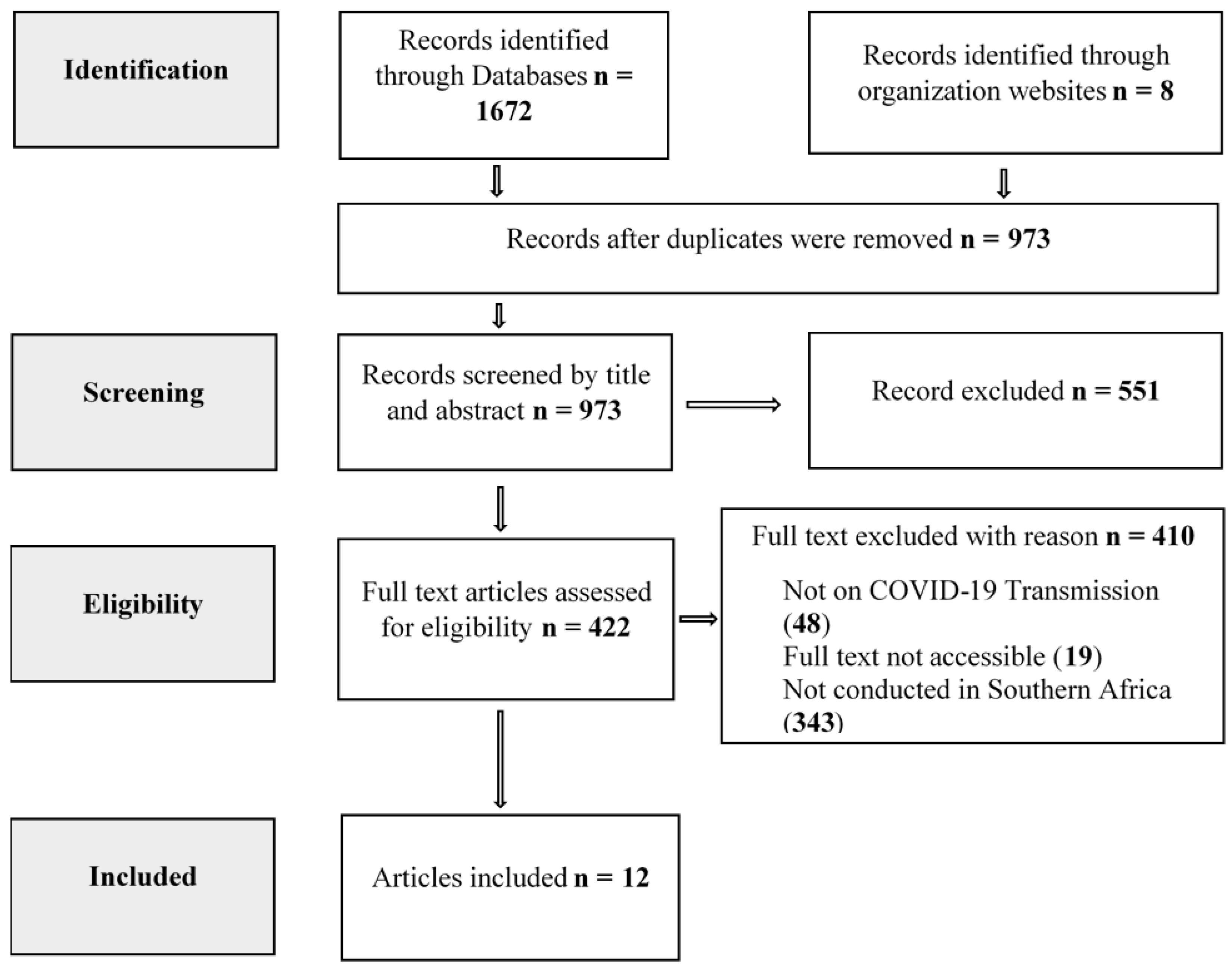
Search results were imported into reference management software, and duplicates were removed. Two reviewers independently screened titles and abstracts against the eligibility criteria. The full texts of potentially eligible articles were then assessed independently by both reviewers. Disagreements at any stage were resolved by discussion and consensus.
Data Charting and Extraction
A structured data extraction form was piloted and refined using a subset of included studies. For each study we extracted: author, publication year, country, study design, animal species investigated, sample size, diagnostic method, reported outcomes (prevalence, transmission pathways) and details of interventions. Data extraction was performed by one reviewer and verified by a second reviewer to ensure accuracy.
Data Synthesis
Extracted data were synthesized narratively and thematically. We summarized species susceptibility, transmission routes and reported interventions across countries and highlighted patterns and research gaps rather than pooling data quantitatively.
Ethical Considerations
Because this review was based solely on published literature and did not involve direct contact with animals or humans, formal ethical approval was not required. We ensured that all included studies had obtained appropriate ethical approvals and that the data were handled responsibly. In addition, all sources were appropriately cited and are included in a comprehensive reference list.
Figure 1.
Flow chart of the article selection process and sources of evidence.
Results
Table 2 presents the characteristics of studies that were considered in this scoping review, with most of them being done in South Africa and Namibia, while countries such as Zambia, Zimbabwe, Malawi, Mozambique, and Angola have no published data on SARS-CoV-2 in domestic animals. Predominantly, the studies used polymerase chain reaction (PCR), serological assays, and genome sequencing involving dogs, cats and goats in multiple samples. Studies were predominantly done between 2021 and 2025
Table 3 highlights that transmission of COVID-19 in Southern Africa is overwhelmingly reverse zoonosis, as we noted human-to-domestic animal patterns. Dogs and cats are consistently identified as susceptible, with cats showing higher vulnerability. Prognosis is generally mild, but symptomatic cases (Botswana dog) highlight variability. Importantly, genomic surveillance in South Africa links animal interfaces to variant emergence risks, underscoring the One Health imperative. These studies show that Southern Africa faces both reverse zoonosis in pets and reservoir risks in livestock/wildlife, complicating disease management.
Table 4 shows the interventions highlighted from studies we scooped on this subject. We noted that Southern Africa’s interventions are fragmented but growing. South Africa leads with genomic surveillance and zoo monitoring, Namibia and Botswana contribute targeted domestic animal studies, and regional initiatives emphasize One Health. Challenges include limited infrastructure, small sample sizes, and weak veterinary surveillance systems, which hinder systematic monitoring of domestic animals. Poultry studies show low susceptibility but highlight economic vulnerabilities due to high contact with humans.
Discussion
Geographical Distribution of Studied and Common Methods Used
Across Southern African studies, the most frequently employed methods for detecting SARS-CoV-2 or related coronaviruses in domestic animals include polymerase chain reaction (PCR), serological assays, and genome sequencing (Koeppel et al., 2022; Molini et al., 2022; Molini et al., 2025). Consistently, Sit et al. (2020) confirmed infections in dogs and cats in Hong Kong using PCR, while Patterson et al. (2020) employed serological assays to detect antibodies in Italian pets. Experimental infections in cats and dogs have also been conducted using controlled laboratory methods (Bosco-Lauth et al., 2020; Meekins et al., 2021). Choga et al. (2023) sequenced the SARS-CoV-2 Delta variant from a symptomatic dog in Botswana. These methods mirror global approaches, where PCR and sequencing remain the gold standard for confirming infections in both humans and animals (Decaro et al., 2021; Hobbs & Reid, 2020).
Even with these improvements, there are still big gaps in the data, since most of it comes from South Africa, Namibia, and Botswana (Maganga et al., 2022). Countries such as Zambia, Zimbabwe, Malawi, Mozambique, and Angola have no published data on SARS-CoV-2 in domestic animals. This scenario contrasts with Europe, Asia, and North America, where multiple countries have reported infections in pets and farmed animals (Abdel-Moneim & Abdelwhab, 2020; Newman et al., 2020; Oreshkova et al., 2020). The absence of systematic surveillance in many Southern African countries creates blind spots in the regional epidemiology of zoonotic and reverse zoonotic transmission.
Domestic Animal Species Susceptibility
Evidence consistently shows that dogs and cats are the most studied and susceptible domestic animals in Southern Africa. Dogs in Namibia (Molini et al., 2022) and Botswana (Choga et al., 2023) tested positive, with outcomes ranging from asymptomatic to symptomatic but recovering. Cats, both domestic and zoo species, have shown susceptibility in South Africa (Decaro et al., 2021; Koeppel et al., 2022). Namibia has now implicated livestock species like cattle and antelopes (Molini et al., 2025), albeit with a mild prognosis. Similarly, cats are globally recognised as highly susceptible (Fritz et al., 2021; Patterson et al., 2020; Sit et al., 2020), whereas dogs generally show lower viral loads and milder outcomes (Newman et al., 2020). Comparatively, in other regions such as Europe and North America, mink have demonstrated severe disease and high susceptibility, leading to culling campaigns (Hobbs & Reid, 2020; Oreshkova et al., 2020; Prince et al., 2021). Interestingly, some studies in other world regions report an absence of infection in pets despite close contact with infected humans (Temmam et al., 2020), highlighting regional differences in species vulnerability, with domestic animals or pets dominating in Southern Africa while farmed animals dominated in Europe/North America.
Interventions and Challenges Across Regions
Southern Africa has made notable progress in genomic surveillance and case-based veterinary reporting, with South Africa leading the genomic monitoring of variants (Tegally et al., 2022), while Namibia has expanded surveillance to both pets and livestock (Molini et al., 2022; Molini et al., 2025). Botswana contributes through genome sequencing in dogs (Choga et al., 2023). However, globally, interventions vary across regions. Europe and North America, for example, have implemented large-scale culling and systematic farm surveillance (Oreshkova et al., 2020; Prince et al., 2021). Italy and France have performed household-level serological surveys in pets (Fritz et al., 2021; Patterson et al., 2020). Asia has emphasized wildlife market regulation and farm biosecurity (Jo et al., 2021). These regions benefit from stronger infrastructure and funding, enabling broader surveillance and rapid interventions. Egypt has reported infections in cats and dogs, which points to the importance of broader surveillance in Africa beyond Southern regions (Abdel-Moneim & Abdelwhab, 2020). The World Health Organization (2020) has highlighted the importance of integrated surveillance and biosecurity measures across regions.
To address the identified challenges, Southern Africa should prioritize the following: the expansion of surveillance to Zambia, Zimbabwe, and Malawi, which currently lack data; the augmentation of sample sizes and systematic monitoring of domestic animals; the enhancement of veterinary infrastructure and laboratory capacity; and the improvement of One Health’s collaboration to integrate human, animal, and environmental surveillance. Molini et al. (2025) contend that the risk of reverse zoonosis and the formation of reservoirs is considerable; therefore, Southern Africa must prioritize livestock–wildlife interfaces and companion animal surveillance, as these represent the most likely pathways for variant evolution and spillover.
Conclusion
Reviewed evidence from Southern Africa and comparative global studies demonstrates that SARS-CoV-2 transmission at the human–animal interface is a genuine concern, with dogs and cats emerging as the most consistently susceptible domestic species, while livestock such as cattle may act as potential reservoirs. However, significant geographic gaps remain, with countries such as Zambia, Zimbabwe, Malawi, Mozambique, and Angola lacking published data. Compared to Europe and North America, where systematic surveillance and farm-level interventions (e.g., mink culling, household serological surveys) have been implemented, Southern Africa’s strengths lie in genomic monitoring and targeted case detection. Nevertheless, reliance on small sample sizes and limited infrastructure constrains broader epidemiological understanding. Future studies should prioritize under-represented countries in the region, increase sample sizes, and systematically monitor domestic animals across households and farms. Integrating veterinary and public health systems under a strengthened One Health framework will be critical to detect early spillover events and mitigate risks of variant evolution. By combining genomic surveillance with systematic animal monitoring, Southern African countries can build a more comprehensive defense against zoonotic threats and learn from global experiences in biosecurity, farm-level interventions, and policy-driven responses.
Authors’ Contributions
CM conceptualized and drafted the original protocol, in which JS participated in writing. CM and JS independently searched and reviewed records for suitability for inclusion, only meeting to resolve disputed records. CM also conducted analysis and drafted the reporting of findings. JS reviewed the manuscript and improved the flow of ideas and improved the presentation of the findings, tables and the general presentation. All authors read and agreed to publish the manuscript.
Funding
This study did not receive any funding.
Data Availability
The data reported and supporting this paper were sourced from existing literature and are therefore available through a detailed reference list.
Acknowledgments
The authors express their gratitude to the journal editors for their technical support.
Conflicts of Interest
The authors declare that there is no conflict of interest regarding the publication of this article.
References
- Abdel-Moneim, A.S.; Abdelwhab, E.M. Evidence for SARS-CoV-2 Infection of Animal Hosts. Pathogens 2020, 9, 529. [Google Scholar] [CrossRef]
- Agusi, E.R.; Allendorf, V.; Eze, E.A.; Asala, O.; Shittu, I.; Dietze, K.; Busch, F.; Globig, A.; Meseko, C.A. SARS-CoV-2 at the Human–Animal Interface: Implication for Global Public Health from an African Perspective. Viruses 2022, 14, 2473. [Google Scholar] [CrossRef]
- Almendros, A. Can companion animals become infected with Covid-19? Vet. Rec. 2020, 186, 388–389. [Google Scholar] [CrossRef]
- JBI Manual for Evidence Synthesis; JBI: North Adelaide, South Australia, Australia, 2024.
- Bogoch, I.I.; Watts, A.; Thomas-Bachli, A.; Huber, C.; Kraemer, M.U.G.; Khan, K. Pneumonia of unknown aetiology in Wuhan, China: potential for international spread via commercial air travel. J. Travel Med. 2020, 27. [Google Scholar] [CrossRef]
- Bosco-Lauth, A.M.; Hartwig, A.E.; Porter, S.M.; Gordy, P.W.; Nehring, M.; Byas, A.D.; VandeWoude, S.; Ragan, I.K.; Maison, R.M.; Bowen, R.A. Experimental infection of domestic dogs and cats with SARS-CoV-2: Pathogenesis, transmission, and response to reexposure in cats. Proc. Natl. Acad. Sci. USA 2020, 117, 26382–26388. [Google Scholar] [CrossRef] [PubMed]
- Chen, D.; Sun, J.; Zhu, J.; Ding, X.; Lan, T.; Zhu, L.; Xiang, R.; Ding, P.; Wang, H.; Wang, X.; et al. Single-cell screening of SARS-CoV-2 target cells in pets, livestock, poultry and wildlife. bioRxiv 2020. [Google Scholar] [CrossRef]
- Choga, W.T.; Letsholo, S.L.; Marobela-Raborokgwe, C.; Gobe, I.; Mazwiduma, M.; Maruapula, D.; Rukwava, J.; Binta, M.G.; Zuze, B.J.L.; Koopile, L.; et al. Near-complete genome of SARS-CoV-2 Delta variant of concern identified in a symptomatic dog (Canis lupus familiaris) in Botswana. Veter- Med. Sci. 2023, 9, 1465–1472. [Google Scholar] [CrossRef]
- Decaro, N.; Balboni, A.; Bertolotti, L.; Martino, P.A.; Mazzei, M.; Mira, F.; Pagnini, U. SARS-CoV-2 Infection in Dogs and Cats: Facts and Speculations. Front. Veter- Sci. 2021, 8, 619207. [Google Scholar] [CrossRef]
- Edvard, Danila. Zoonotic Infections: Understanding Transmission Dynamics and Preventive Measures. Clinical Infectious Diseases: Open Access 7 (1). 2023. Available online: https://www.hilarispublisher.com/open-access/zoonotic-infections-understanding-transmission-dynamics-and-preventive-measures.pdf.
- Fang, R.; Yang, X.; Guo, Y.; Peng, B.; Dong, R.; Li, S.; Xu, S. SARS-CoV-2 infection in animals: Patterns, transmission routes, and drivers. Eco-Environment Heal. 2023, 3, 45–54. [Google Scholar] [CrossRef] [PubMed]
- Fritz, M.; Rosolen, B.; Krafft, E.; Becquart, P.; Elguero, E.; Vratskikh, O.; Denolly, S.; Boson, B.; Vanhomwegen, J.; Gouilh, M.A.; et al. High prevalence of SARS-CoV-2 antibodies in pets from COVID-19+ households. One Health 2020, 11, 100192. [Google Scholar] [CrossRef]
- Gao, J.; Zhang, C.; Wheelock, Å.M.; Xin, S.; Cai, H.; Xu, L.; Wang, X.-J. Immunomics in one health: understanding the human, animal, and environmental aspects of COVID-19. Front. Immunol. 2024, 15, 1450380. [Google Scholar] [CrossRef] [PubMed]
- Haider, N.; Rothman-Ostrow, P.; Osman, A.Y.; Arruda, L.B.; Macfarlane-Berry, L.; Elton, L.; Thomason, M.J.; Yeboah-Manu, D.; Ansumana, R.; Kapata, N.; et al. COVID-19—Zoonosis or Emerging Infectious Disease? Front. Public Heal. 2020, 8, 596944. [Google Scholar] [CrossRef]
- Happi, A.N.; Ayinla, A.O.; Ogunsanya, O.A.; Sijuwola, A.E.; Saibu, F.M.; Akano, K.; George, U.E.; Sopeju, A.E.; Rabinowitz, P.M.; Ojo, K.K.; et al. Detection of SARS-CoV-2 in Terrestrial Animals in Southern Nigeria: Potential Cases of Reverse Zoonosis. Viruses 2023, 15, 1187. [Google Scholar] [CrossRef]
- Hobbs, E.C.; Reid, T.J. Animals and SARS-CoV-2: Species susceptibility and viral transmission in experimental and natural conditions, and the potential implications for community transmission. Transbound. Emerg. Dis. 2020, 68, 1850–1867. [Google Scholar] [CrossRef]
- Jo, W.K.; De Oliveira-Filho, E.F.; Rasche, A.; Greenwood, A.D.; Osterrieder, K.; Drexler, J.F. Potential zoonotic sources of SARS-CoV-2 infections. Transbound. Emerg. Dis. 2020, 13872. [Google Scholar] [CrossRef]
- Joseph, O.O.; Dahunsi, S.O.; Okoh, A. SARS-CoV-2 infection of domestic animals and their role in evolution and emergence of variants of concern. New Microbes New Infect. 2024, 62, 101468. [Google Scholar] [CrossRef]
- Klaus, J.; Meli, M.L.; Willi, B.; Nadeau, S.; Beisel, C.; Stadler, T.; Team, E.S.-C.S.; Egberink, H.; Zhao, S.; Lutz, H.; et al. Detection and Genome Sequencing of SARS-CoV-2 in a Domestic Cat with Respiratory Signs in Switzerland. Viruses 2021, 13, 496. [Google Scholar] [CrossRef] [PubMed]
- Koeppel, K.N.; Mendes, A.; Strydom, A.; Rotherham, L.; Mulumba, M.; Venter, M. SARS-CoV-2 Reverse Zoonoses to Pumas and Lions, South Africa. Viruses 2022, 14, 120. [Google Scholar] [CrossRef]
- Maganga, G.D.; Ngoubangoye, B.; Koumba, J.P.; Lekana-Douki, S.; Kinga, I.C.M.; Tsoumbou, T.A.; Beyeme, A.M.M.; Mebaley, T.G.N.; Lekana-Douki, J.-B. Evidence of SARS-CoV-2 infection in pets, captive non-human primates and farm animals in Central Africa. Asian Pac. J. Trop. Med. 2022, 15, 232–235. [Google Scholar] [CrossRef]
- Meekins, D.A.; Gaudreault, N.N.; Richt, J.A. Natural and Experimental SARS-CoV-2 Infection in Domestic and Wild Animals. Viruses 2021, 13. [Google Scholar] [CrossRef]
- Molini, U.; Coetzee, L.M.; Engelbrecht, T.; de Villiers, L.; de Villiers, M.; Mangone, I.; Curini, V.; Khaiseb, S.; Ancora, M.; Cammà, C.; et al. SARS-CoV-2 in Namibian Dogs. Vaccines 2022, 10, 2134. [Google Scholar] [CrossRef] [PubMed]
- Molini, U.; Coetzee, L.M.; Hemberger, M.Y.; Jago, M.; Khaiseb, S.; Shapwa, K.; Lorusso, A.; Cattoli, G.; Dundon, W.G.; Franzo, G. Bovine coronavirus presence in domestic bovine and antelopes sub-Saharan Africa: evidence from Namibia. BMC Veter- Res. 2025, 21, 1–9. [Google Scholar] [CrossRef]
- Newman, A.; Smith, D.; Ghai, R.R.; Wallace, R.M.; Torchetti, M.K.; LoIacono, C.; Murrell, L.S.; Carpenter, A.; Moroff, S.; Rooney, J.A.; et al. First Reported Cases of SARS-CoV-2 Infection in Companion Animals — New York, March–April 2020. Morb. Mortal. Wkly. Rep. (MMWR) 2020, 69, 710–713. [Google Scholar] [CrossRef]
- Oreshkova, N.; Molenaar, R.J.; Vreman, S.; Harders, F.; Munnink, B.B.O.; Der Honing, R.W.H.-V.; Gerhards, N.; Tolsma, P.; Bouwstra, R.; Sikkema, R.S.; et al. SARS-CoV-2 infection in farmed minks, the Netherlands, April and May 2020. Eurosurveillance 2020, 25, 2001005. [Google Scholar] [CrossRef] [PubMed]
- Pacheco, S.D.C.; Jimenez, A.J.; Rangel, G.A.; Rengifo-Herrera, C.D.C. One Health serosurveillance of anti-SARS-CoV-2 antibodies in domestic animals from the metropolitan area of Panama. Veter- World 2025, 18, 1082–1089. [Google Scholar] [CrossRef]
- Patterson, E.I.; Elia, G.; Grassi, A.; Giordano, A.; Desario, C.; Medardo, M.; Smith, S.L.; Anderson, E.R.; Prince, T.; Patterson, G.T.; et al. Evidence of exposure to SARS-CoV-2 in cats and dogs from households in Italy. Nat. Commun. 2020, 11, 6231. [Google Scholar] [CrossRef] [PubMed]
- Prince, T.; Smith, S.L.; Radford, A.D.; Solomon, T.; Hughes, G.L.; Patterson, E.I. SARS-CoV-2 Infections in Animals: Reservoirs for Reverse Zoonosis and Models for Study. Viruses 2021, 13, 494. [Google Scholar] [CrossRef]
- Sadikaliyeva, S.; Shorayeva, K.; Abay, Z.; Jekebekov, K.; Shayakhmetov, Y.; Kalimolda, E.; Omurtay, A.; Kopeyev, S.; Nakhanov, A.; Yespembetov, B.; et al. Detection of coronavirus among domestic animals. Research for Rural Development 2024: annual 30th international scientific conference; LOCATION OF CONFERENCE, COUNTRYDATE OF CONFERENCE; pp. 62–66.
- Sailleau, C.; Dumarest, M.; Vanhomwegen, J.; Delaplace, M.; Caro, V.; Kwasiborski, A.; Hourdel, V.; Chevaillier, P.; Barbarino, A.; Comtet, L.; et al. First detection and genome sequencing of SARS-CoV-2 in an infected cat in France. Transbound. Emerg. Dis. 2020, 67, 2324–2328. [Google Scholar] [CrossRef]
- Sit, T.H.C.; Brackman, C.J.; Ip, S.M.; Tam, K.W.S.; Law, P.Y.T.; To, E.M.W.; Yu, V.Y.T.; Sims, L.D.; Tsang, D.N.C.; Chu, D.K.W.; et al. Infection of dogs with SARS-CoV-2. Nature 2020, 586, 776–778. [Google Scholar] [CrossRef]
- Tegally, H.; Moir, M.; Everatt, J.; Giovanetti, M.; Scheepers, C.; Wilkinson, E.; Subramoney, K.; Makatini, Z.; Moyo, S.; Amoako, D.G.; et al. Emergence of SARS-CoV-2 Omicron lineages BA.4 and BA.5 in South Africa. Nat. Med. 2022, 28, 1785–1790. [Google Scholar] [CrossRef]
- Temmam, S.; Barbarino, A.; Maso, D.; Behillil, S.; Enouf, V.; Huon, C.; Jaraud, A.; Chevallier, L.; Backovic, M.; Pérot, P.; et al. Absence of SARS-CoV-2 infection in cats and dogs in close contact with a cluster of COVID-19 patients in a veterinary campus. One Heal. 2020, 10, 100164–100164. [Google Scholar] [CrossRef] [PubMed]
- Uyanga, V.A.; Onagbesan, O.M.; Onwuka, C.F.I.; Emmanuel, B.; Lin, H. Coronavirus Disease 2019 (COVID-19) and Poultry Production: Emerging issues in African Countries. World's Poult. Sci. J. 2021, 77, 153–174. [Google Scholar] [CrossRef]
- World Health Organization. Disease Outbreak News; COVID-19 - Global situation. 2025. Available online: https://www.who.int/emergencies/disease-outbreak-news/item/2025-DON572.
- Zhou, P.; Yang, X.-L.; Wang, X.-G.; Hu, B.; Zhang, L.; Zhang, W.; Si, H.-R.; Zhu, Y.; Li, B.; Huang, C.-L.; et al. A pneumonia outbreak associated with a new coronavirus of probable bat origin. Nature 2020, 579, 270–273. [Google Scholar] [CrossRef] [PubMed]

Table 1.
Inclusion and exclusion criteria for the review of WASH interventions.
| Criteria | Inclusion | Exclusion |
| Study design | Studies focused on COVID-19 transmission | Studies not focused on COVID-19 transmission |
| Type of Study | Journal articles, grey literature, and situation reports on COVID-19 transmission | Conference proceedings, study protocols, Systematic reviews, editorials, or commentaries, and blogs on COVID-19 |
|
Setting |
Studies with topics reporting on COVID-19 transmission, and interventions conducted in Southern African countries: single- or multi-country studies | Studies with topics reporting on COVID-19 transmission and interventions conducted in non-Southern African countries. |
| Language | Studies written in English | Studies not written in English |
| Period (year) | Studies published from 2019 to 2024 | Studies published below 2019 |
Table 2.
Characteristics of Southern African Studies.
| Author/Year | Methods Used | Country | Sample Size | Animal Studied |
| Molini et al., (2022) | PCR, serology | Namibia | 20 | Dogs |
| Molini et al., (2025) | PCR, sequencing | Namibia | 50+ | Cattle, Antelopes |
| Choga et al. (2023) | Genome sequencing | Botswana | 1 | Dog |
| Decaro et al. (2021) (Southern African cases cited) | Case studies | South Africa | Multiple | Dogs, Cats |
| Koeppel et al. (2022) | Molecular detection | South Africa | 2 | Zoo cats (pumas, lions) |
| Meekins et al. (2021) | Experimental infection | South Africa (collaborative) | Multiple | Cats, ferrets |
| Tegally et al. (2022) | Genomic surveillance | South Africa | Thousands | Human-animal interface |
| Maganga et al. (2022) | Field surveillance | Central Africa (includes Southern sites) | Multiple | Dogs, Cats, Goats |
| Uyanga et al. (2021) | Poultry production review | Southern Africa | Not specified | Chickens |
| Joseph et al. (2024) | Case reports | South Africa | Multiple | Dogs, Cats |
| Agusi et al. (2022) | African surveillance | Southern Africa subset | Multiple | Domestic animals |
| Local veterinary reports (2021–2023) | Case surveillance | South Africa | Dozens | Dogs, Cats |
Table 3.
Transmission Dynamics.
| Author | Transmission Type | Most Susceptible Animal | Prognosis |
| Molini et al. (2022) | Human → Dog | Dogs | Mild/asymptomatic |
| Choga et al. (2023) | Human → Dog | Dog | Symptomatic, recovered |
| Decaro et al. (2021) | Human → Dogs/Cats | Cats | Mild |
| Koeppel et al. (2022) | Human → Zoo cats | Big cats | Mild/moderate |
| Meekins et al. (2021) | Experimental human → cats/ferrets | Cats | Susceptible, moderate illness |
| Tegally et al. (2022) | Human → Human (variant spillover risk) | Indirect interface | Omicron BA.4/BA.5 |
| Maganga et al. (2022) | Human → Pets/farm animals | Dogs, goats | Mild |
| Joseph et al. (2024) | Human → Domestic animals | Dogs, cats | Variant evolution risk |
| Agusi et al. (2022) | Human-animal interface | Multiple | Re-emergence potential |
Table 4.
Interventions & Challenges.
| Country/Region | Interventions | Challenges |
| South Africa (Koeppel, Tegally, Decaro, Meekins) | Zoo surveillance, genomic monitoring, veterinary case reports | Resource constraints, variant evolution |
| Namibia (Molini et al., 2022) | Dog testing, serology | Limited infrastructure |
| Botswana (Choga et al., 2023) | Genome sequencing in dogs | Case-based, limited sequencing |
| Regional (Agusi et al., 2022; Joseph et al., 2024) | One Health surveillance, domestic animal monitoring | Underreporting, weak veterinary networks |
| Southern Africa poultry sector (Uyanga et al., 2021) | Monitoring poultry production | Minimal susceptibility, economic stress |
Disclaimer/Publisher’s Note: The statements, opinions and data contained in all publications are solely those of the individual author(s) and contributor(s) and not of MDPI and/or the editor(s). MDPI and/or the editor(s) disclaim responsibility for any injury to people or property resulting from any ideas, methods, instructions or products referred to in the content. |
© 2026 by the authors. Licensee MDPI, Basel, Switzerland. This article is an open access article distributed under the terms and conditions of the Creative Commons Attribution (CC BY) license.
Copyright: This open access article is published under a Creative Commons CC BY 4.0 license, which permit the free download, distribution, and reuse, provided that the author and preprint are cited in any reuse.