
Submitted:
06 January 2026
Posted:
06 January 2026
You are already at the latest version
Abstract
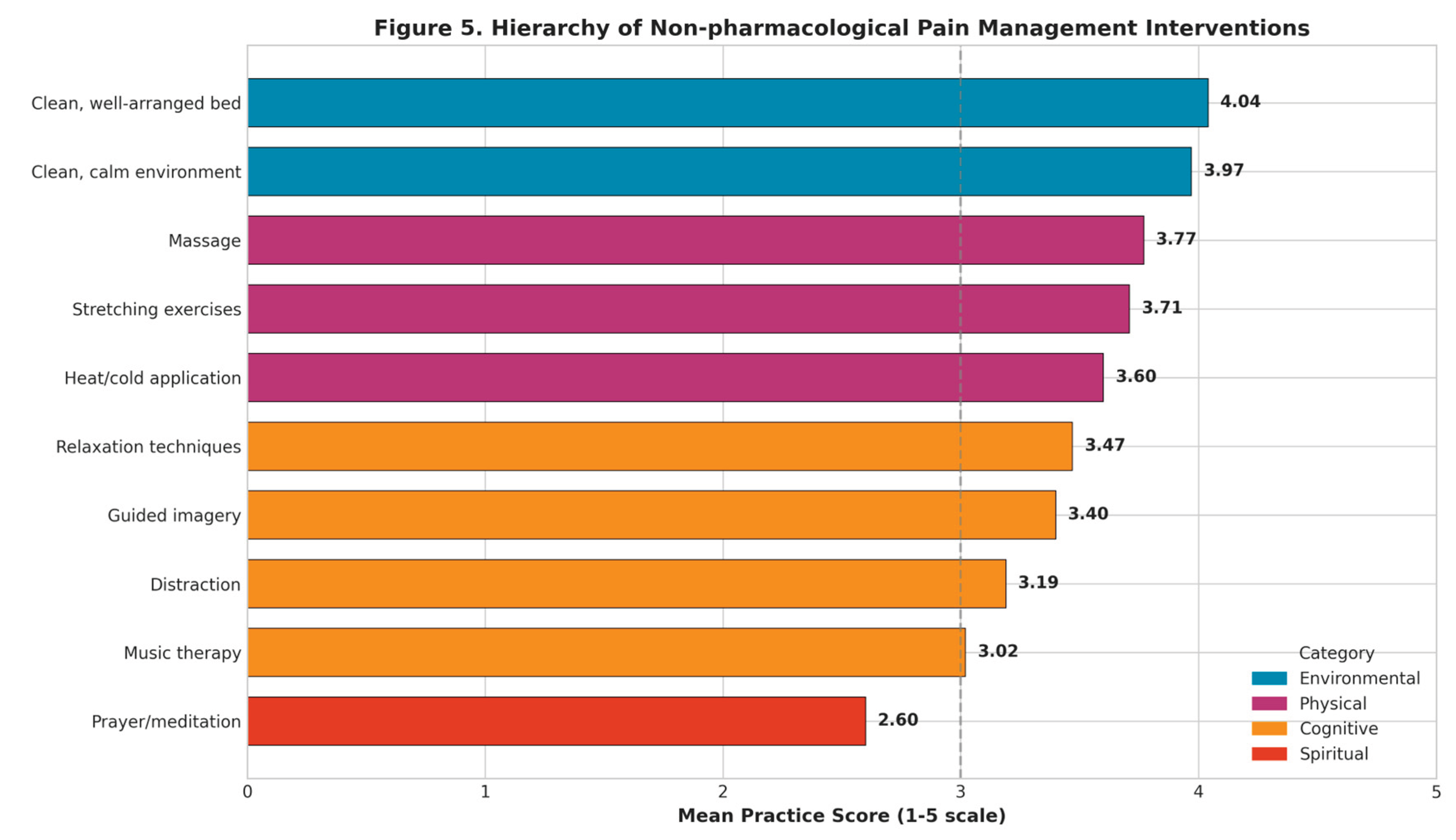
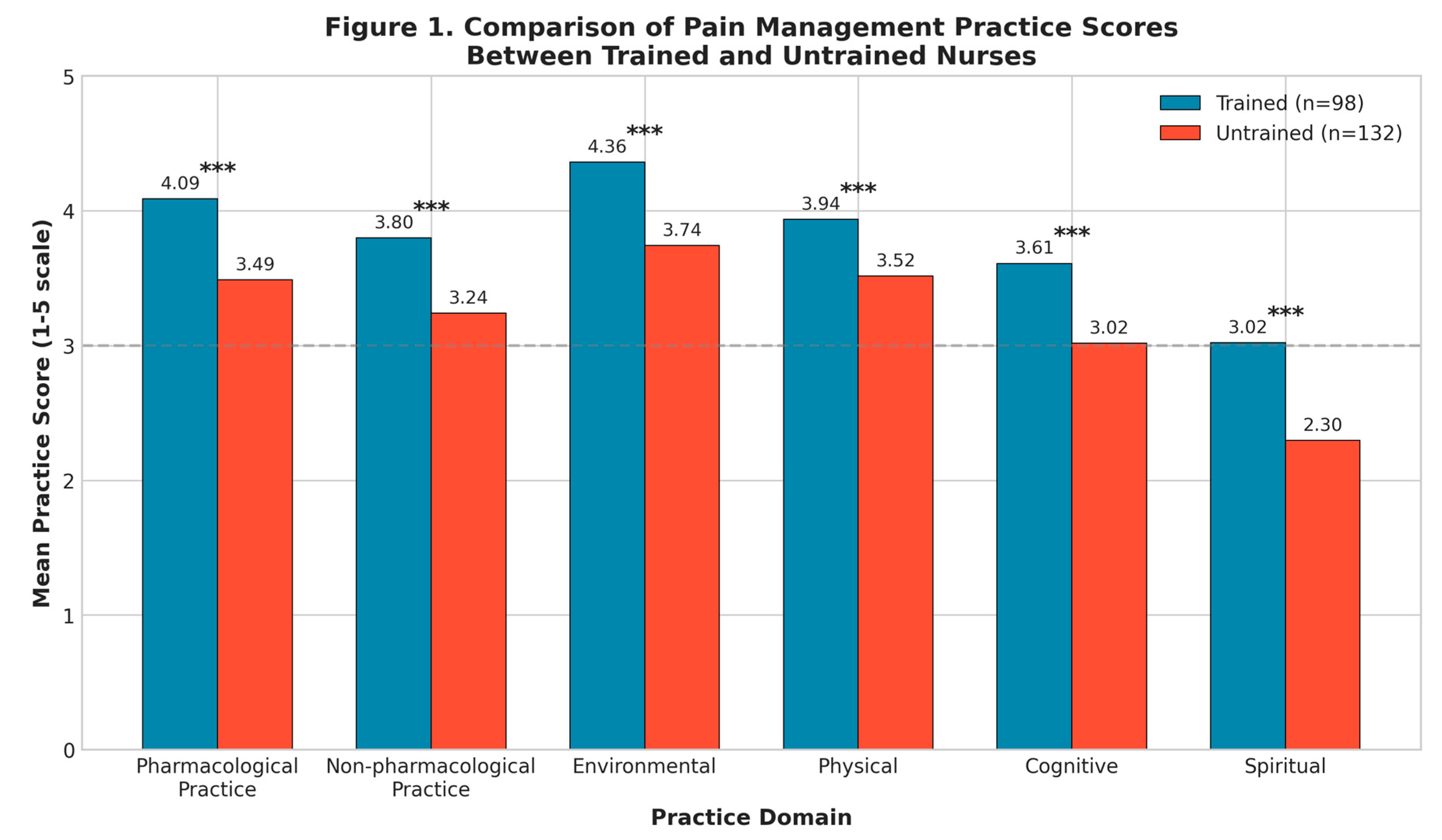
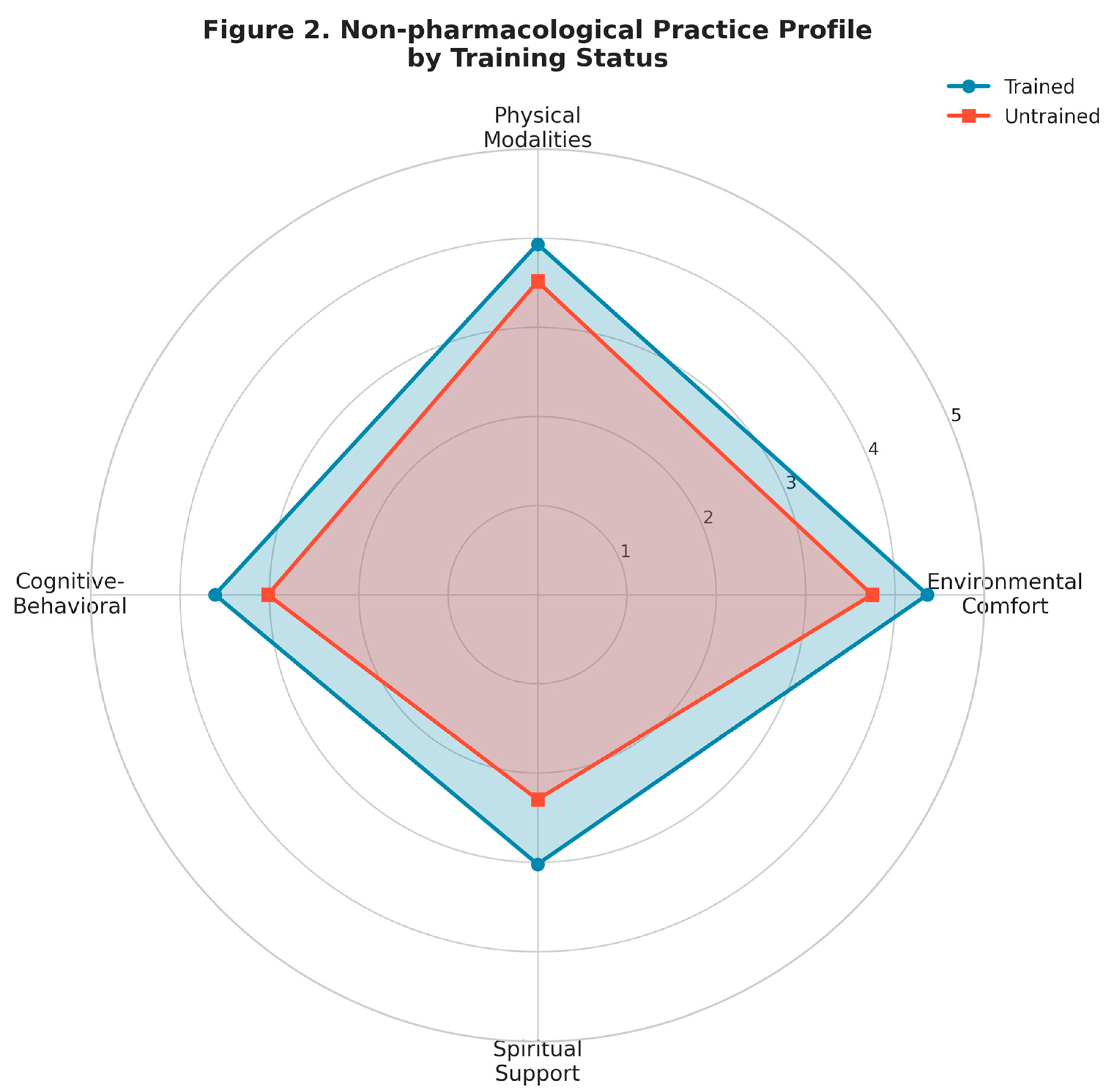
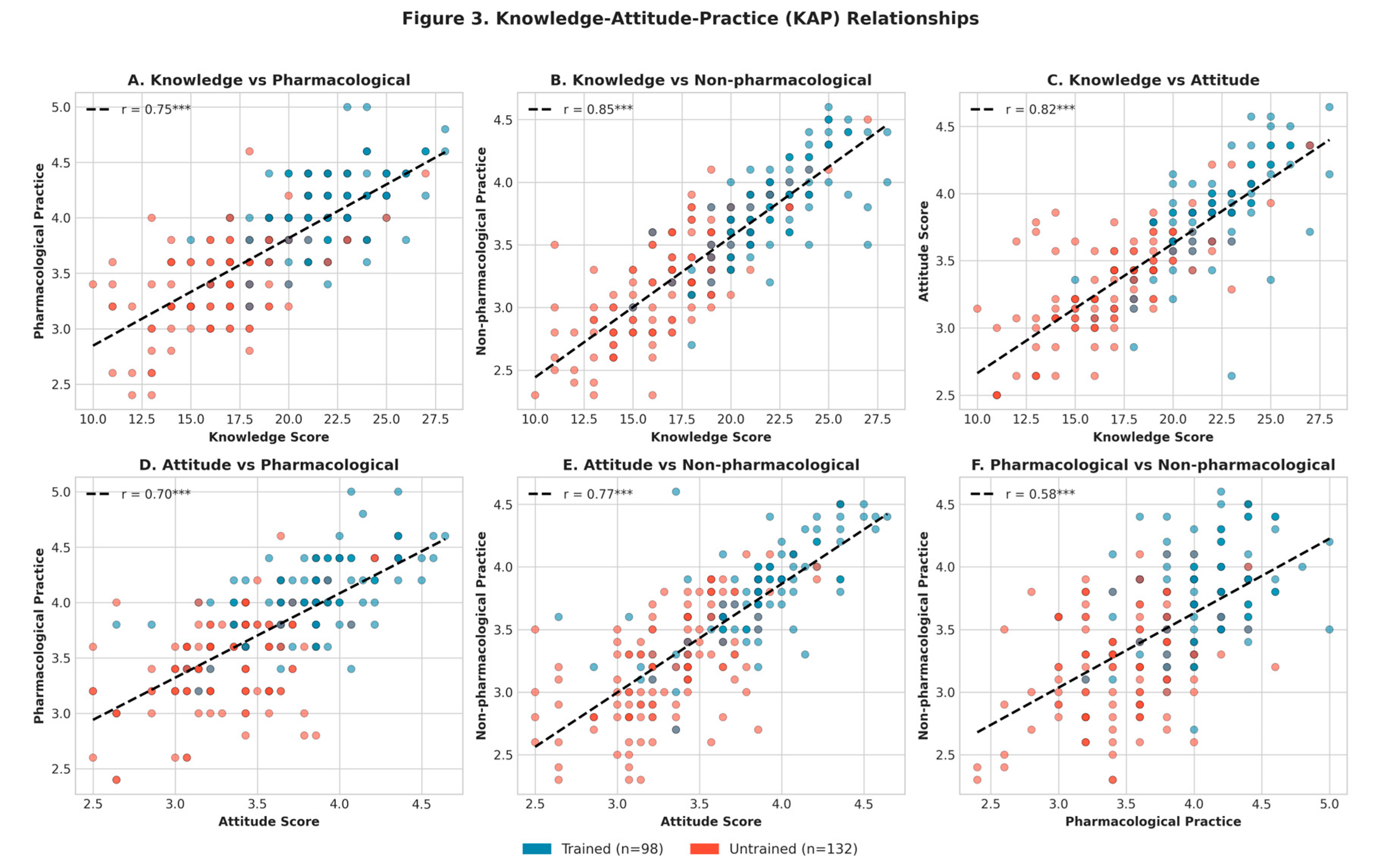
Background/Objectives: Despite extensive research on nurses' knowledge and attitudes toward pain management globally, limited evidence exists regarding the actual implementation of multimodal pain management practices among Vietnamese nurses. This study aimed to (1) assess nurses' implementation of pharmacological and non-pharmacological pain management interventions, (2) examine the relationships among knowledge, attitude, and practice (KAP), and (3) identify predictors of competent practice with attention to the relative contributions of formal training versus clinical experience. Methods: A cross-sectional survey was conducted among 230 nurses from two tertiary public hospitals in Ho Chi Minh City, Vietnam, between April and June 2024. Pain management knowledge, attitudes, and practices were assessed using validated instruments. Independent samples t-tests compared trained versus untrained nurses. Multiple linear regression identified predictors of practice competency. Effect sizes (Cohen's d) quantified the magnitude of training effects. Results: Nurses demonstrated moderate-to-good competency, with pharmacological interventions (M = 3.74) implemented more consistently than non-pharmacological interventions (M = 3.48, p < 0.001). Trained nurses significantly outperformed untrained nurses across all domains with large effect sizes (Cohen's d = 1.34–1.54). A clear hierarchy emerged in non-pharmacological practice: environmental (M = 4.01) > physical (M = 3.69) > cognitive-behavioral (M = 3.27) > spiritual (M = 2.60). Strong KAP correlations were observed (r = 0.70–0.85, p < 0.001). Prior training was the strongest predictor of both pharmacological (β = 1.31, p < 0.001) and non-pharmacological practice (β = 0.58, p < 0.001), while clinical experience showed no significant effect (p > 0.40). Conclusions: This study provides novel evidence that formal training—not clinical experience—drives competent pain management practice among Vietnamese nurses, with large effect sizes demonstrating practical significance. The strong KAP relationships support targeted educational interventions addressing knowledge gaps to improve practice. These findings have direct implications for nursing education policy in Vietnam and similar healthcare settings.
Keywords:
1. Introduction
2. Materials and Methods
2.1. Study Design and Setting
2.2. Participants
2.3. Study Instruments
2.4. Data Collection Procedure
2.5. Ethical Considerations
2.6. Data Analysis
3. Results
3.1. Participant Characteristics
3.2. Pain Management Practices: Overall Findings
3.3. Impact of Prior Training on Practice
3.4. Hierarchy of Non-Pharmacological Interventions
3.5. Pharmacological Pain Management Practices
3.6. Knowledge-Attitude-Practice (KAP) Relationships
3.7. Predictors of Pain Management Practice
4. Discussion
4.1. Novel Contributions
4.2. The Critical Role of Formal Training
4.3. KAP Relationships and Educational Implications
4.4. Hierarchy of Non-Pharmacological Interventions
4.5. Ethical Concerns
4.6. Limitations
5. Conclusions
Author Contributions
Institutional Review Board Statement
Informed Consent Statement
Data Availability Statement
Conflicts of Interest
References
- Tiruneh, A.; Tamire, T.; Kibret, S. The magnitude and associated factors of post-operative pain at Debre Tabor comprehensive specialized hospital, Debre Tabor Ethiopia, 2018. SAGE Open Med. 2021, 9, 20503121211014730. [Google Scholar] [CrossRef] [PubMed]
- Belay, M.Z.; Yirdaw, L.T. Management of postoperative pain among health professionals working in governmental hospitals in South Wollo Zone, Northeast Ethiopia. Prospective cross sectional study. Ann. Med. Surg. 2022, 80, 104148. [Google Scholar] [CrossRef] [PubMed]
- Coll, A.-M.; Jones, R. Role of the nurse in the assessment and management of post-operative pain. Nurs. Stand. 2020, 35, 53–58. [Google Scholar] [PubMed]
- Marchesi, N.; Govoni, S.; Allegri, M. Non-drug pain relievers active on non-opioid pain mechanisms. Pain Pract. 2022, 22, 255–275. [Google Scholar] [CrossRef] [PubMed]
- Zeleke, S.; Kassaw, A.; Eshetie, Y. Non-pharmacological pain management practice and barriers among nurses working in Debre Tabor Comprehensive Specialized Hospital, Ethiopia. PLoS ONE 2021, 16, e0253086. [Google Scholar] [CrossRef] [PubMed]
- Negash, T.T.; Belete, K.G.; Tlilaye, W.; Ayele, T.T.; Oumer, K.E. Knowledge, attitudes and practices of health professionals towards postoperative pain management at a referral hospital in Ethiopia. Ann. Med. Surg. 2022, 73, 103167. [Google Scholar] [CrossRef] [PubMed]
- Adams, S.-D.M.; Varaei, S.; Jalalinia, F. Nurses' knowledge and attitude towards postoperative pain management in Ghana. Pain Res. Manag. 2020, 2020, 4893707. [Google Scholar] [CrossRef] [PubMed]
- Vu, P.H.; Tran, D.V.; Le, Y.T.; Thu Do, H.T.; Vu, S.T.; Dinh, H.T.; Nguyen, T.H. Postoperative pain management among registered nurses in a Vietnamese hospital. Sci. World J. 2020, 2020, 6829153. [Google Scholar] [CrossRef] [PubMed]
- Tran, T.Q. Knowledge and attitudes related to pain management for post-operative patients at the orthopedic unit Viet Duc university hospital. J. Nurs. Sci. 2020, 3, 7. [Google Scholar]
- Mohamed Bayoumi, M.M.; Khonji, L.M.A.; Gabr, W.F.M. Are nurses utilizing the non-pharmacological pain management techniques in surgical wards? PLoS ONE 2021, 16, e0258668. [Google Scholar] [CrossRef]
- Launiala, A. How much can a KAP survey tell us about people's knowledge, attitudes and practices? Some observations from medical anthropology research on malaria in pregnancy in Malawi. Anthropol. Matters 2009, 11, 1–13. [Google Scholar] [CrossRef]
- Menlah, A.; Garti, I.; Amoo, S.A.; Ameho, J.K. Knowledge, attitudes and practices of nurses regarding postoperative pain management in Cape Coast Teaching Hospital, Ghana. Int. J. Caring Sci. 2018, 11, 965–976. [Google Scholar]
- Cohen, J. Statistical Power Analysis for the Behavioral Sciences, 2nd ed.; Lawrence Erlbaum Associates: Hillsdale, NJ, USA, 1988. [Google Scholar]
- Ehwarieme, T.A.; Josiah, U.; Abiodun, O.O. Postoperative pain assessment and management among nurses in selected hospitals in Benin City, Edo State, Nigeria. J. Integr. Nurs. 2023, 5, 203–209. [Google Scholar] [CrossRef]

| Characteristic | n (%) or Mean (SD, Range) |
|---|---|
| Age (years) | 37.3 (6.67, 22–53) |
| Work experience (years) | 13.7 (5.84, 1–28) |
| Sex | |
| Male | 43 (18.7) |
| Female | 187 (81.3) |
| Educational level | |
| Diploma | 27 (11.7) |
| Bachelor's | 195 (84.8) |
| Master's | 8 (3.5) |
| Prior pain management training | |
| Yes | 98 (42.6) |
| No | 132 (57.4) |
| Variable | Trained (n=98) | Untrained (n=132) | t | p | Cohen's d |
|---|---|---|---|---|---|
| Pharmacological Practice | 4.09 (0.37) | 3.49 (0.42) | 11.55 | <0.001 | 1.54 |
| Non-pharmacological Practice | 3.80 (0.41) | 3.24 (0.43) | 10.01 | <0.001 | 1.34 |
| Environmental | 4.36 (0.60) | 3.74 (0.67) | 7.25 | <0.001 | 0.97 |
| Physical | 3.94 (0.54) | 3.52 (0.63) | 5.28 | <0.001 | 0.70 |
| Cognitive-behavioral | 3.61 (0.51) | 3.02 (0.56) | 8.06 | <0.001 | 1.08 |
| Spiritual | 3.02 (1.20) | 2.30 (1.27) | 4.38 | <0.001 | 0.58 |
| Knowledge Score | 22.11 (2.89) | 17.11 (2.91) | 12.95 | <0.001 | 1.73 |
| Attitude Score | 3.85 (0.35) | 3.33 (0.38) | 10.66 | <0.001 | 1.42 |
| Practice Item | Mean (SD) |
|---|---|
| I give opioids on a regular schedule | 3.90 (0.75) |
| I administer subsequent doses to suit individual patient's response | 3.85 (0.74) |
| I give analgesics when the patient asks for medication | 3.84 (0.78) |
| I encourage early ambulation/exercise with analgesia | 3.80 (0.71) |
| I give sterile water by injection (placebo) to determine if pain is real | 3.34 (1.07) |
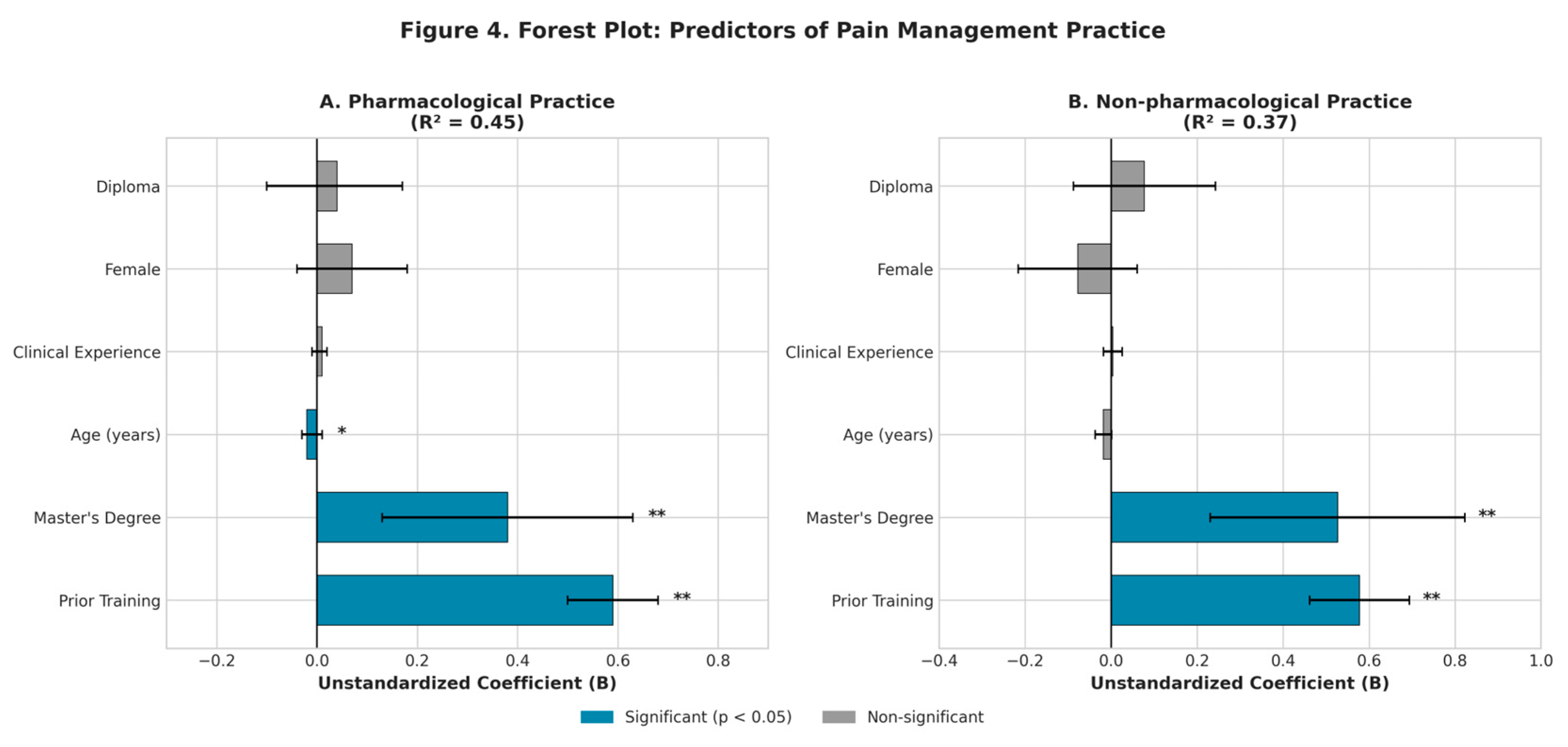
| Predictor | Pharmacological (R² = 0.45) | Non-pharmacological (R² = 0.37) | ||||||
|---|---|---|---|---|---|---|---|---|
| B | SE | β | p | B | SE | β | p | |
| Prior training | 0.59 | 0.05 | 1.31 | <.001 | 0.58 | 0.06 | 1.16 | <.001 |
| Master's degree | 0.38 | 0.13 | 0.85 | .003 | 0.53 | 0.15 | 1.05 | .001 |
| Age | −0.02 | 0.01 | −0.26 | .033 | −0.02 | 0.01 | −0.24 | .064 |
| Clinical experience | 0.01 | 0.01 | 0.09 | .442 | 0.004 | 0.01 | 0.05 | .718 |
Disclaimer/Publisher’s Note: The statements, opinions and data contained in all publications are solely those of the individual author(s) and contributor(s) and not of MDPI and/or the editor(s). MDPI and/or the editor(s) disclaim responsibility for any injury to people or property resulting from any ideas, methods, instructions or products referred to in the content. |
© 2026 by the authors. Licensee MDPI, Basel, Switzerland. This article is an open access article distributed under the terms and conditions of the Creative Commons Attribution (CC BY) license.